



Olive skin can be fussy in a way people do not always expect. Put a flat brown next to it and the face can look tired; push the warmth too hard and the skin can swing sallow or a little orange around the nose and cheeks. The sweet spot is narrower than most salon mood boards admit.
Caramel brown subtle highlights for olive skin sit right in that narrow lane. They bring just enough warmth to wake up the complexion, but they keep enough brown in the mix that the hair still reads rich, grounded, and expensive-looking instead of stripy or bleached out. The difference between “nice color” and “that color makes her skin glow” usually comes down to placement, not drama.
And placement is where this gets fun. A half-inch shift around the face changes everything. A gloss that leans beige instead of honey changes everything. Even the amount of contrast between the base and the highlight matters more than people think, especially on olive undertones that can lean green, golden, neutral, or some messy little blend of all three. The looks below stay in that sweet lane, but each one handles the warmth differently.
Why These Shades Look Better Soft Than Loud
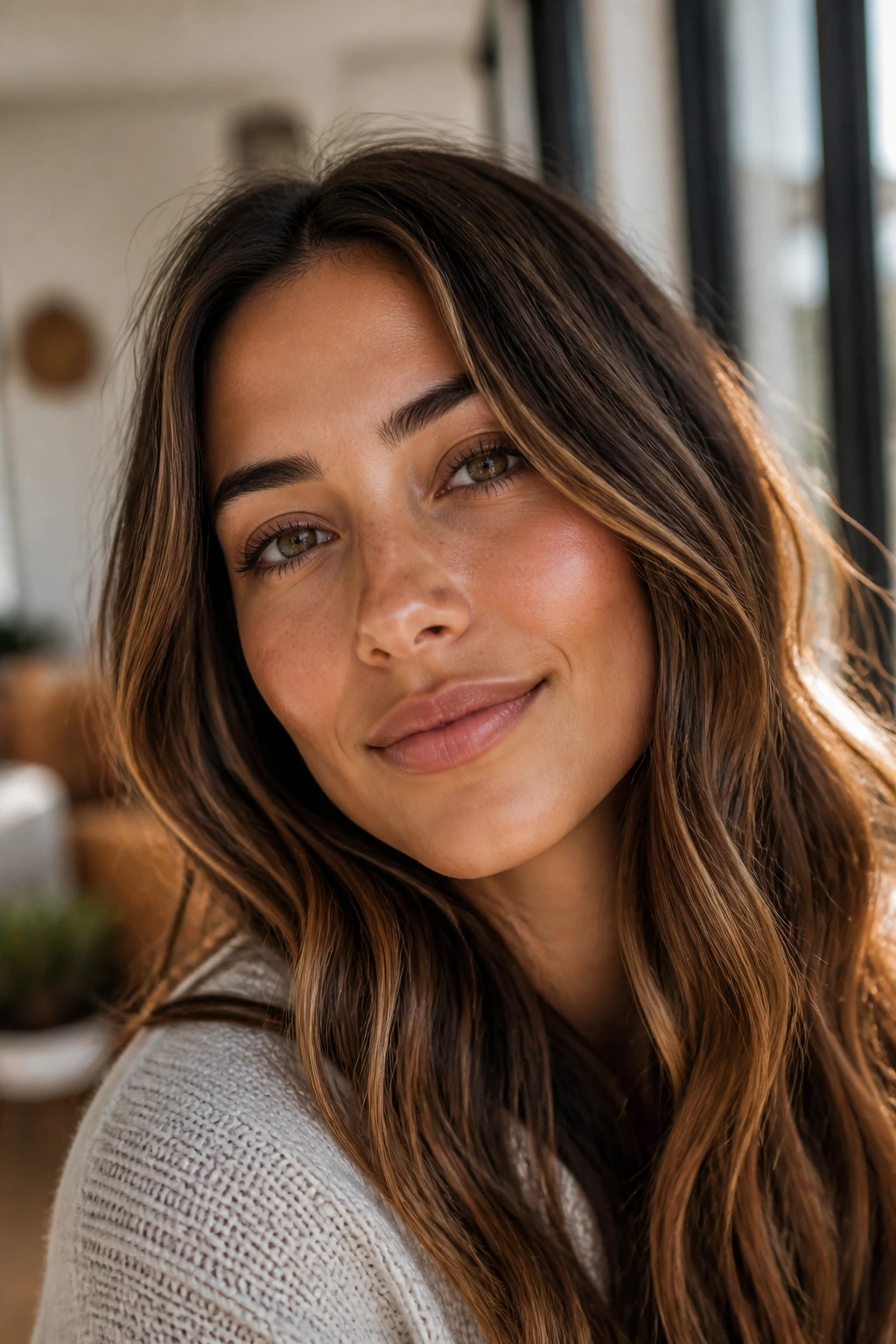
These shades earn their keep by staying quiet. They do not fight olive undertones; they work with them.
- Warmth Without Brass: A good caramel shade sits between gold and brown, so it brightens olive skin without tipping the face into that over-yellow, cafeteria-light look.
- Low Contrast Keeps It Natural: Subtle highlights preserve the depth at the root, which stops the hair from looking striped once it grows out a half-inch.
- Beige-Caramel Is Often the Smartest Pick: On green-olive skin, beige or toasted caramel usually reads softer than a loud honey blonde.
- Placement Does Half the Work: Ribbons around the face, crown, and upper layers move with the hair; chunky block highlights usually do not.
- Grow-Out Is Easier: Softer highlights do not leave a hard line at the root after a few weeks, which is a blessing if you hate constant touch-ups.
The trick here is not to make the hair lighter for the sake of it. It’s to make the skin look clearer, the hair look shinier, and the whole head look like it belongs together. That’s the real win.
1. Soft Face-Framing Caramel Veil
A few whisper-thin caramel pieces around the face can do more than a whole head of louder color. This look keeps the base dark and rich, then adds narrow ribbons at the temples, cheekbones, and just under the part so the face gets a soft halo of light.
Why it flatters olive skin
The veil effect works because it brightens the skin without putting a bright band directly against it. On olive undertones, that matters. You get lift around the eyes and cheekbones, but the overall tone stays calm and balanced.
Ask for highlight pieces that are only 1 to 2 shades lighter than your base if you want the softest result. If your hair is a deep brunette, the caramel can sit in that beige-toffee zone instead of a sunny blonde. That keeps the look polished instead of striped.
2. Cinnamon Ribbon Balayage
This one feels like movement. Long caramel ribbons are painted through the mid-lengths and ends, with a warmer cinnamon-brown tone that shows up most when the hair swings or catches side light.
The color is especially good on olive skin with a warmer lean because the cinnamon note keeps the caramel from looking flat. It has just enough spice to wake up the complexion, but not enough red to fight it.
If you wear waves or loose bends, this style is hard to beat. The highlights break apart visually as the hair moves, so you get dimension without that obvious “I got highlights” striping that some foil work can leave behind.
3. Honey Money Piece on a Deep Brunette Base
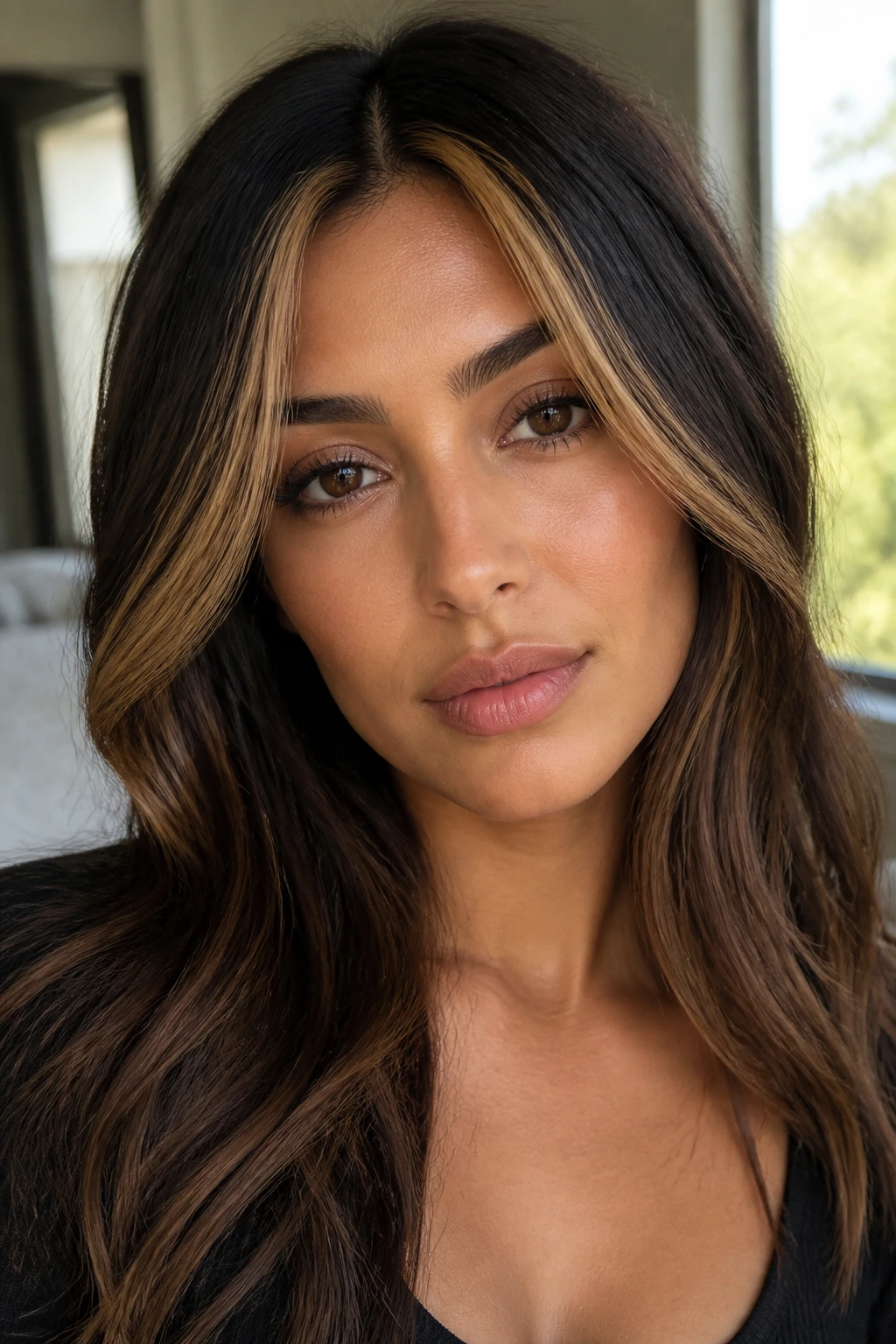
This is the bolder cousin of the face-framing veil. The money piece is brighter, a little wider, and placed right where the part falls and where the hair sweeps away from the face. On a deep brunette base, the contrast is the whole point.
For olive skin, the key is keeping the honey tone from going neon. You want honey with brown in it, not yellow with attitude. When the tone is controlled, the face looks lit from the front, not washed out.
Best for
- People who want the front of the hair to read brighter in photos
- Medium to deep olive skin that can handle a little more contrast
- Side parts, curtain bangs, and blowouts with movement
If you like a little makeup-like framing around the face, this is the one to save.
4. Beige Babylights Through the Crown
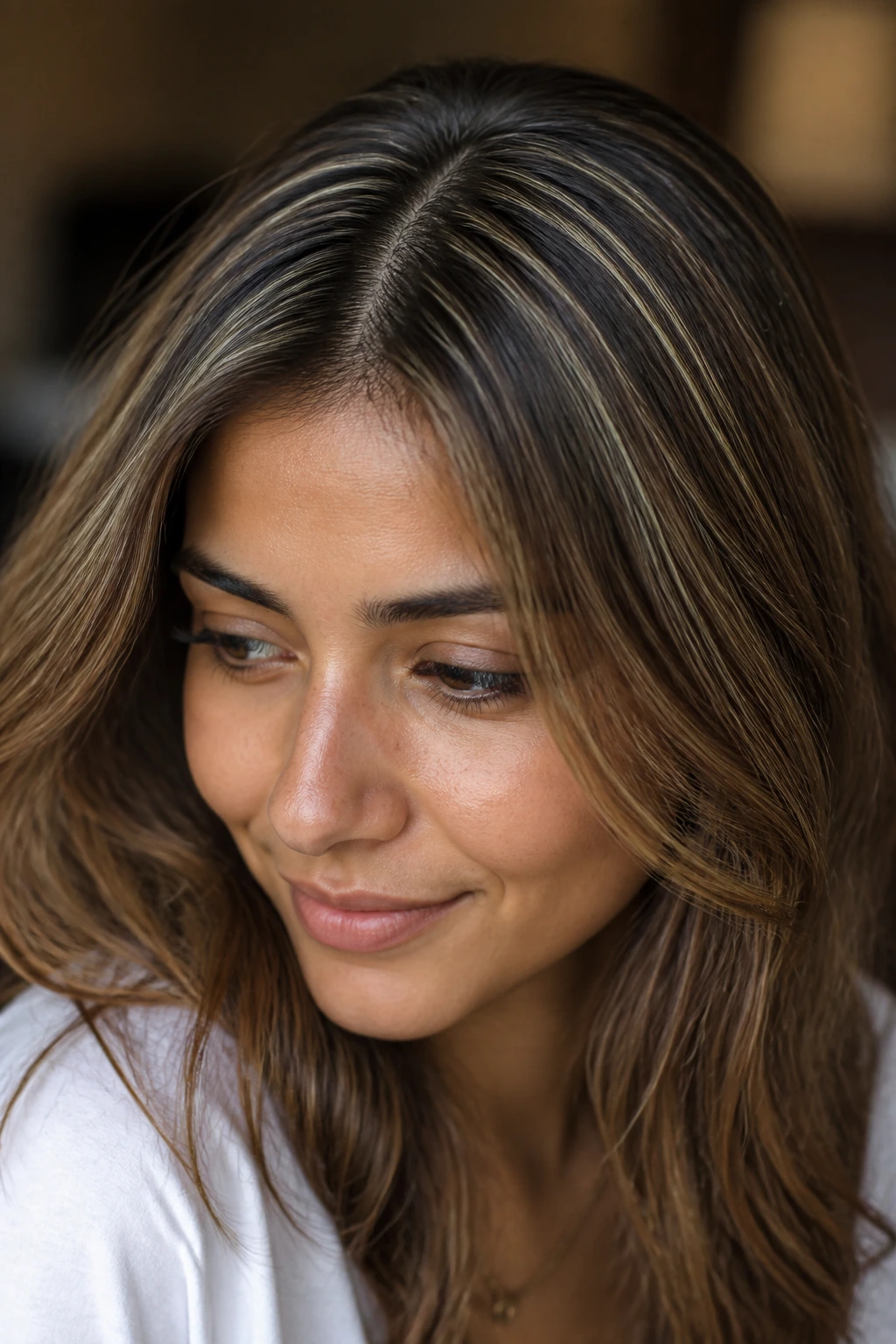
Babylights are tiny, almost threadlike highlights, and that is exactly why they work so well here. When they run through the crown, the result is less “highlight” and more “hair with a soft reflective glaze.”
On olive skin, beige babylights are one of the safest bets. They add light without a lot of color noise. The crown area gets a gentle lift, which keeps darker brunettes from looking too heavy at the top.
This style is ideal if you hate visible lines in the hair. Up close, the color reads like a fine, expensive weave of beige-caramel strands. From a few feet away, it just looks like healthy shine.
5. Toasted Toffee Ends
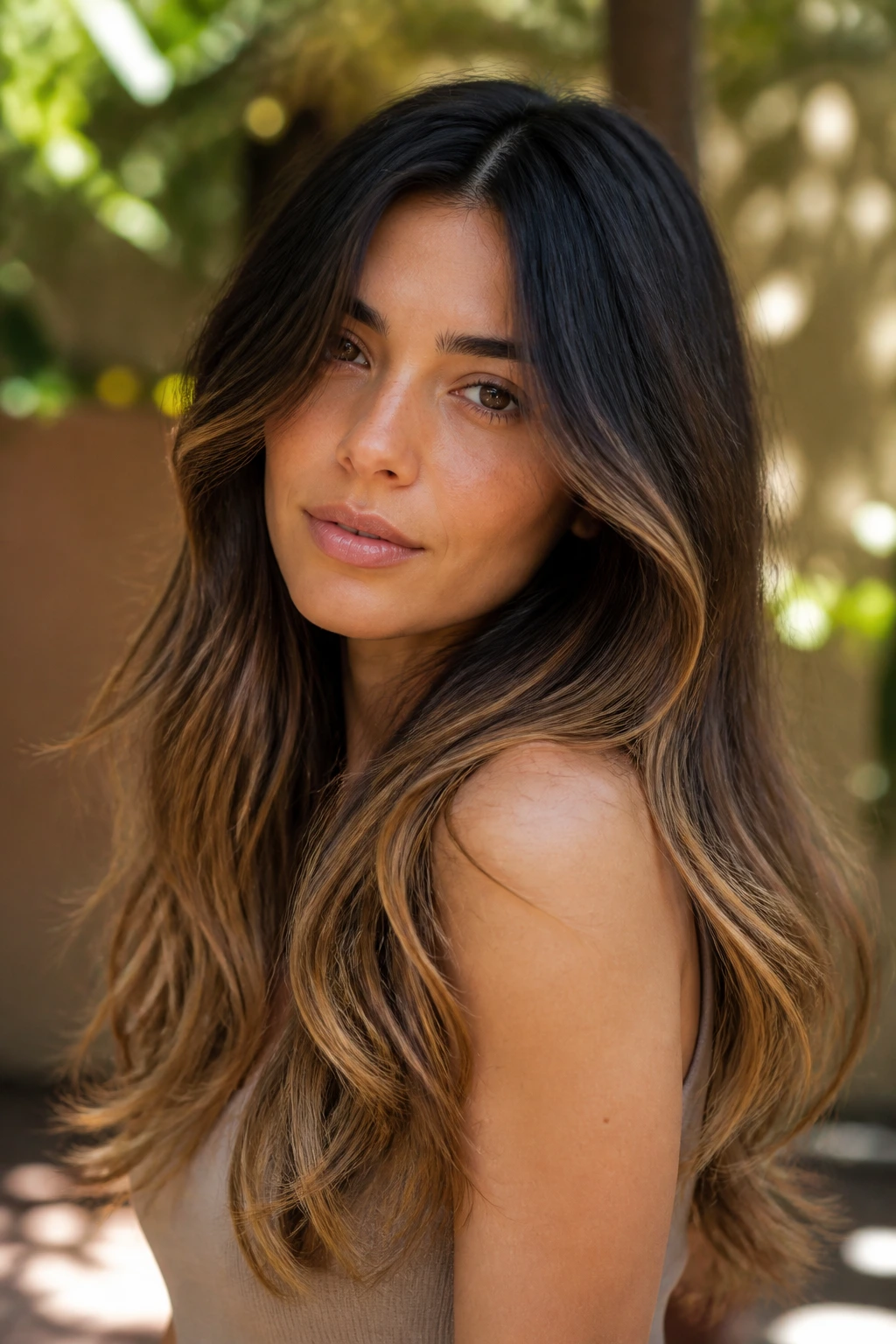
A lot of subtle color lives in the ends, and that’s not a lazy choice. It’s deliberate. When the highlights begin lower on the shaft, the root stays deep, the grow-out stays soft, and the lighter tone acts almost like a warm finish on the length.
Toasted toffee is especially good if your olive skin leans neutral. The shade has warmth, yes, but it still belongs to the brown family. That keeps the look from feeling too sunny.
This one works beautifully on long layers. The ends pick up movement, and the lighter pieces only really show when the hair is bent, curled, or tucked behind the shoulder. That restraint is the whole point.
6. Mocha Melt with Caramel Threads
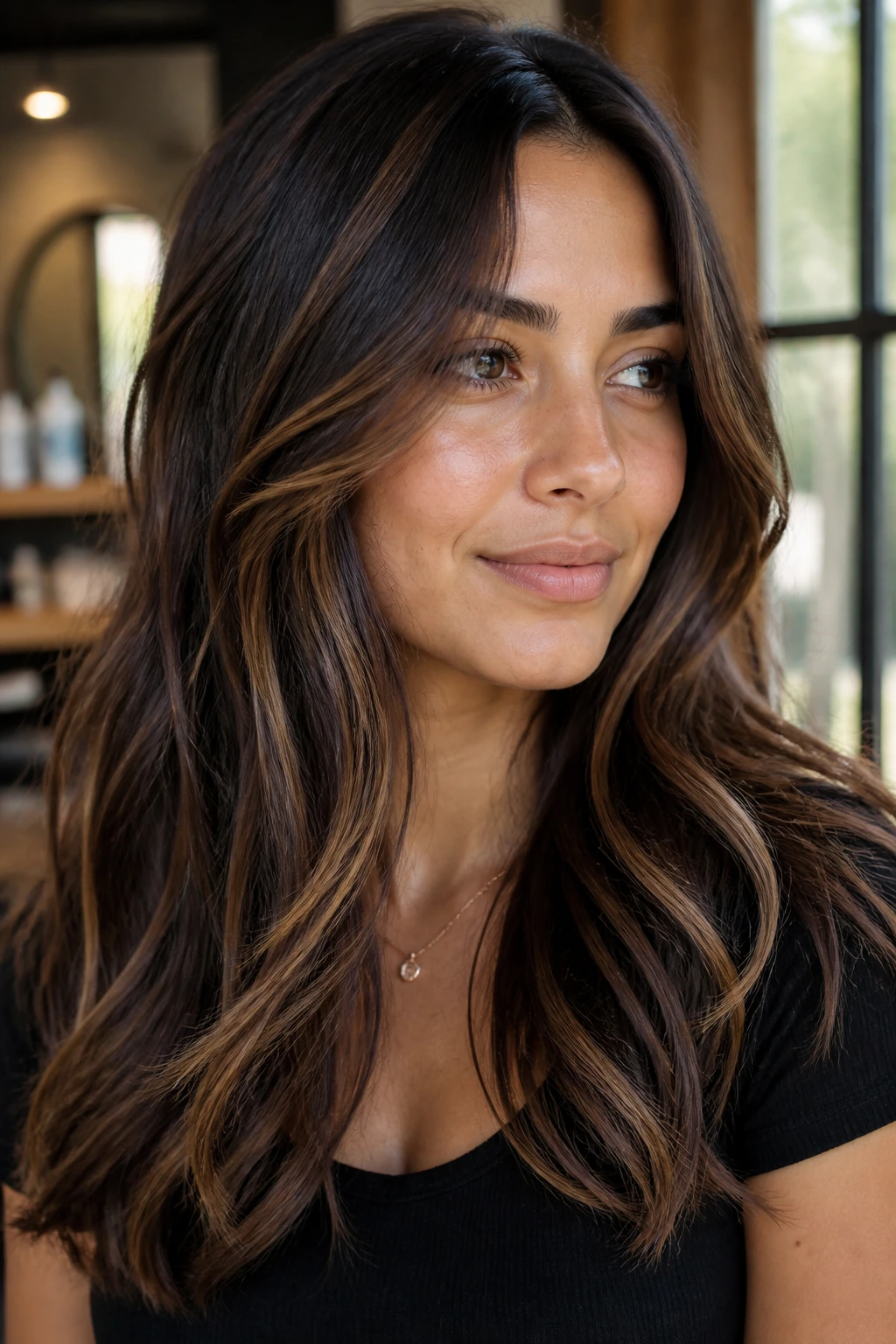
This is the look for someone who wants dimension without obvious contrast. The base stays mocha or espresso-brown, then the caramel shows up as very fine threads that seem to melt into the darker color instead of sitting on top of it.
The result is understated, but not boring. The caramel catches along the mid-lengths and ends, which keeps the hair from reading like one solid block of brown. On olive skin, that tiny bit of warmth helps the complexion look less flat.
If your hair is naturally dark and you do not want to lose that richness, this is a smart direction. The whole style feels like the color was always there and only showed itself once the light hit it.
7. Chestnut Slice Highlights
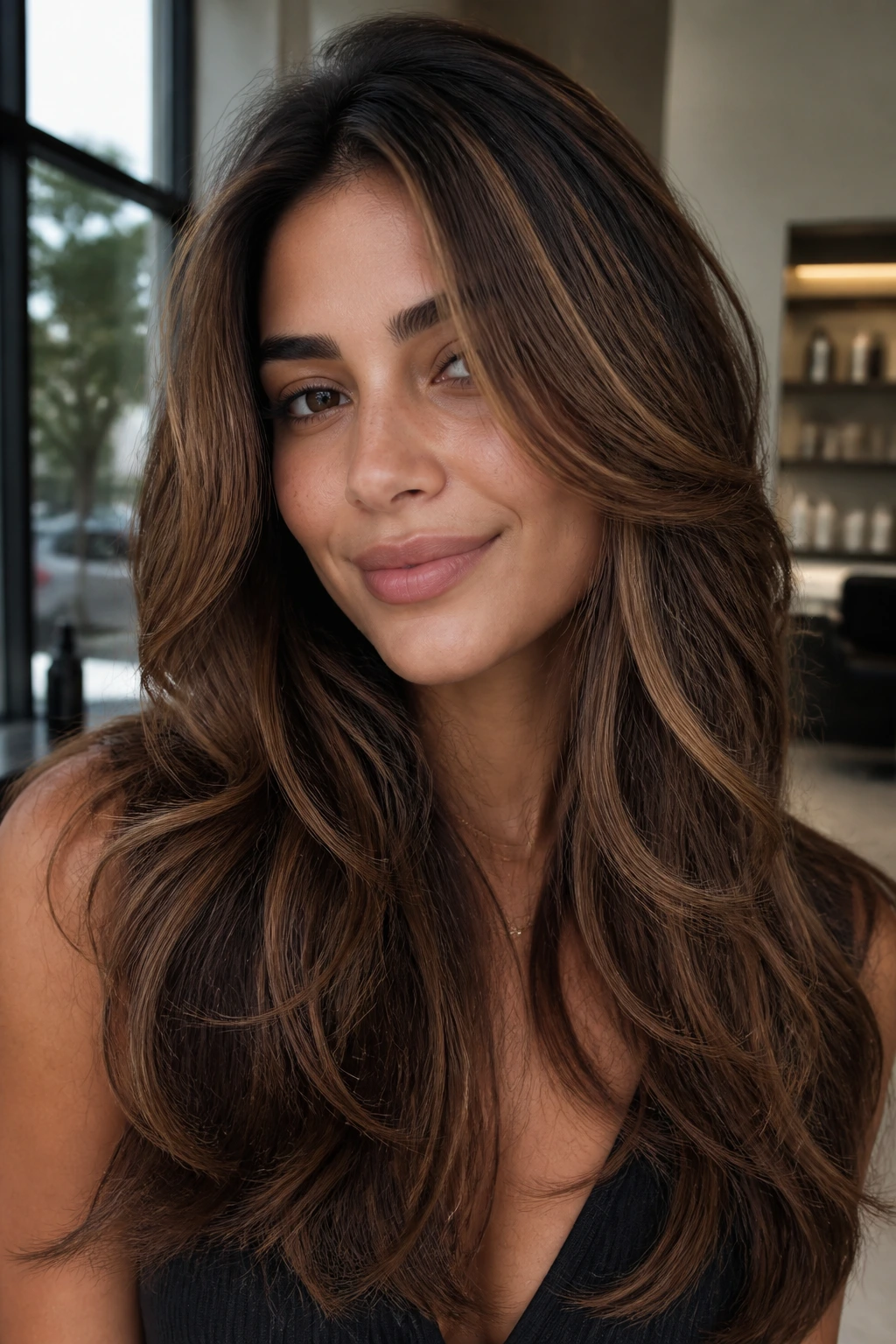
Slices are wider than babylights and softer than chunky streaks. That middle ground gives you more visible dimension, which helps if your hair is straight or fine and tends to swallow tiny highlights.
Chestnut-caramel slices are especially friendly to olive skin because chestnut keeps the warmth earthy. No plastic gold. No orange edge. Just a warm brown that sits close enough to the base to look believable.
How to ask for it
Ask for thin sliced highlights around the top and sides, with the warmest pieces kept away from the roots if you want the grow-out to stay gentle. That little detail makes the color last much longer in real life.
8. Sun-Kissed Caramel Around the Part
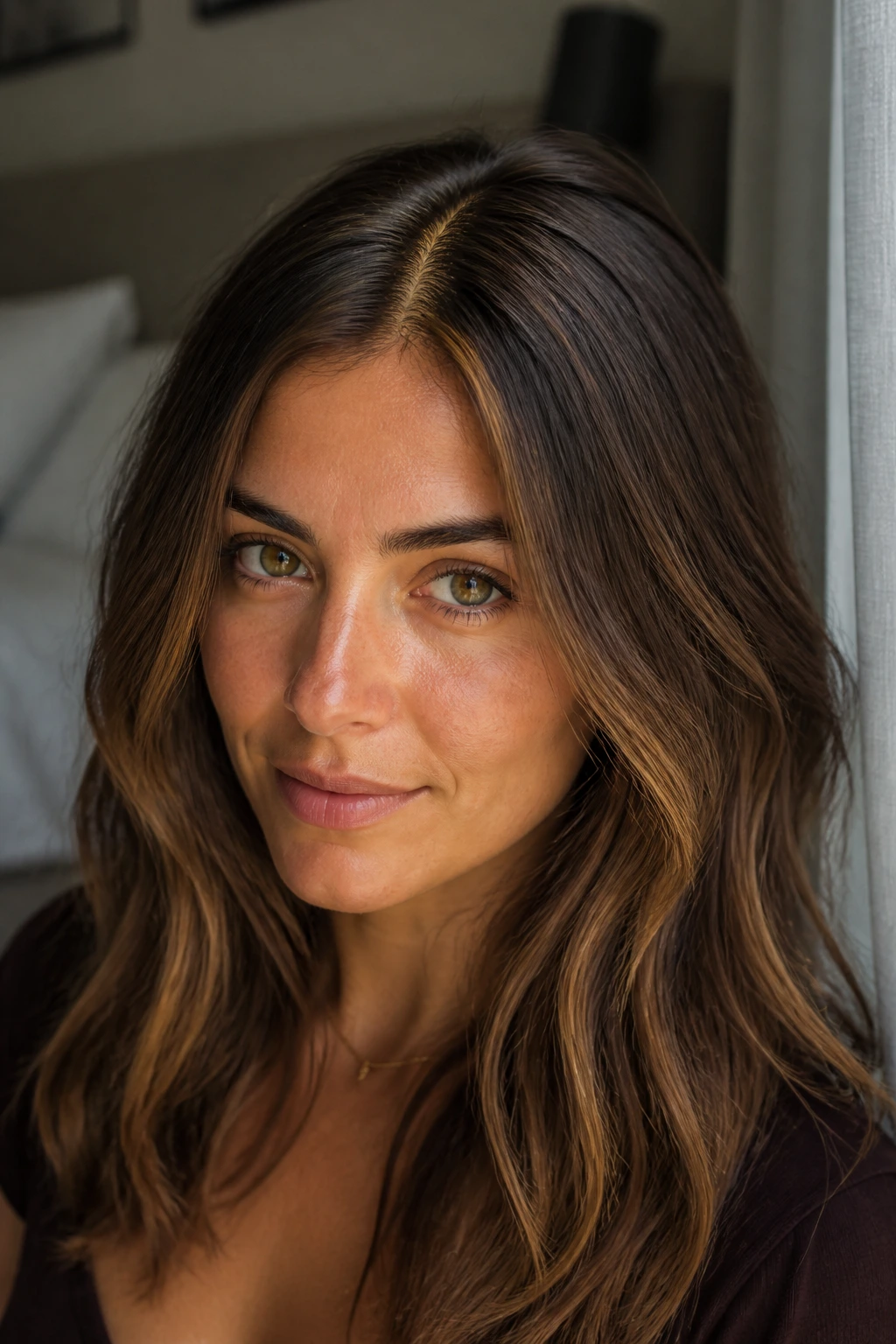
A soft line of highlights along the part can do more for olive skin than a blanket of lighter color everywhere. It opens up the top of the hair, brightens the scalp area a touch, and makes the whole style look fresher.
This is one of those looks that reads subtle in the mirror but strong in motion. The highlights show when the hair separates, so the color never feels loud. It just feels awake.
If your part is always in the same place, this is a clever choice. The light lands where your eye already goes, which means you get the effect without needing a dramatic amount of lift.
9. Mushroom Brown with Caramel Veins
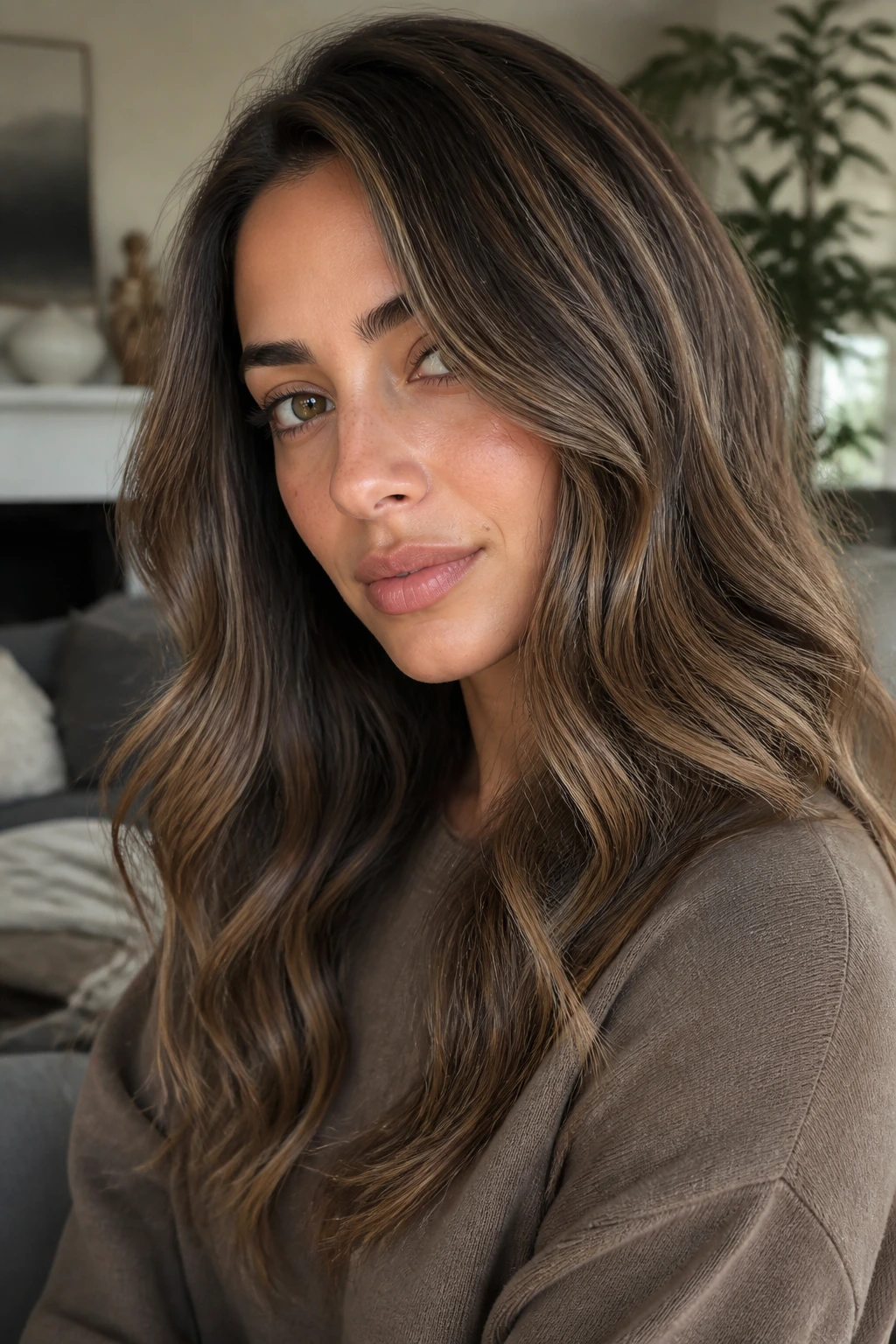
Mushroom brown can sound cool, even a little gray, but the caramel veins keep it from going flat. That mix is useful on olive skin that leans slightly cooler or neutral because it avoids too much yellow warmth.
The look is earthy and soft, which I like on people who wear minimal makeup or natural brows. It does not compete with the face. It just quietly improves it.
What makes it different
- The base stays muted and brown
- The caramel is softened, not golden
- The highlight placement is scattered, not stripey
- The finish looks best with a beige or neutral gloss
If you’ve ever thought warm highlights were too sunny for you, this is the bridge between warm and cool.
10. Glossed Bronde Ribbons
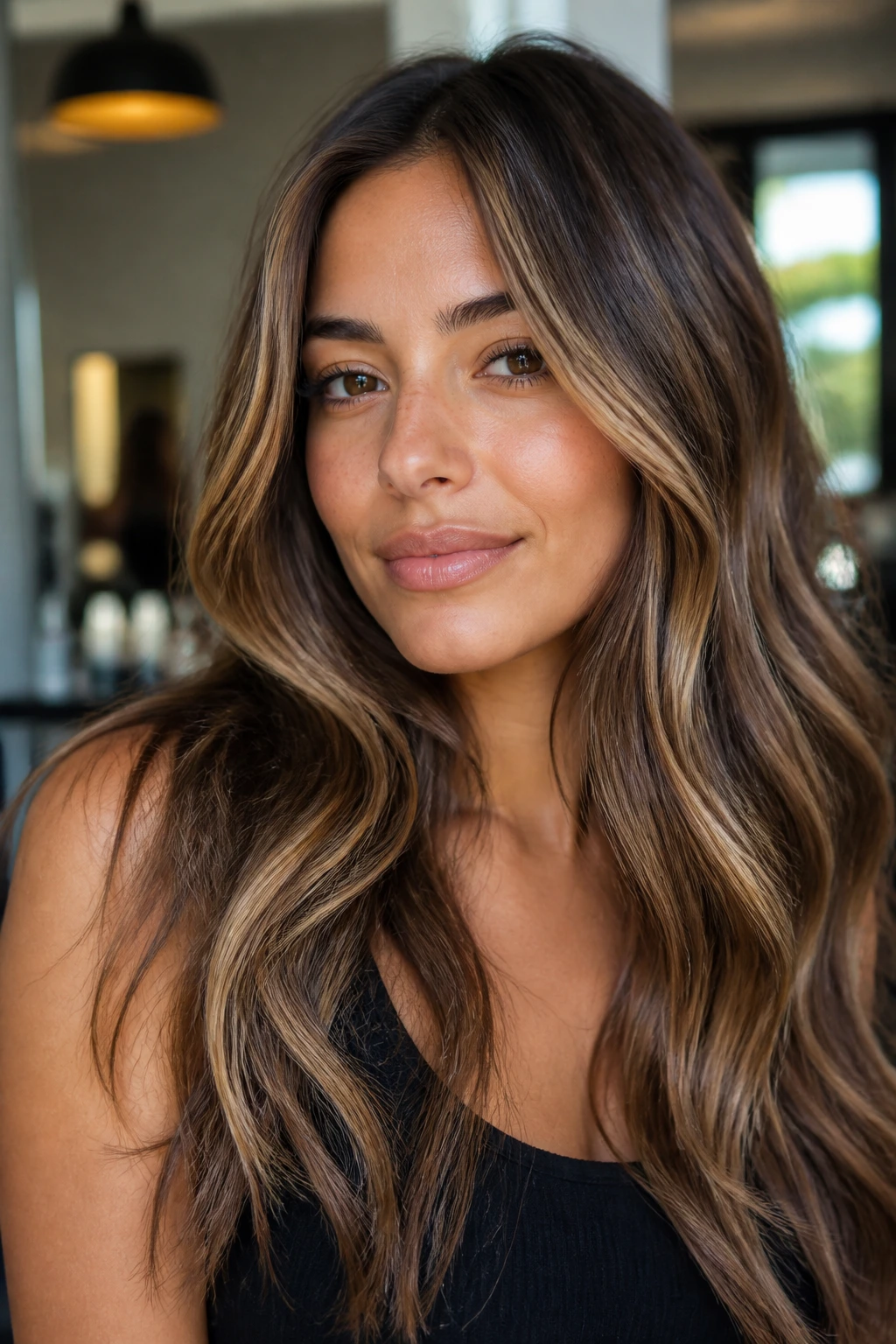
Bronde can get messy fast if it turns too blonde. Here, the trick is to keep it brown-led and use caramel ribbons as the brighter thread running through it.
On olive skin, that keeps the complexion from getting overwhelmed. The brown base protects depth, while the caramel adds enough lift that the hair still feels lively. It’s a smart option if you want dimension but do not want to look like you’ve left brunette territory entirely.
This style looks especially good after a gloss. A clear or beige gloss gives the whole head that slick, reflective finish that makes the ribbons look intentional rather than over-processed.
11. Smoked Caramel on a Dark Base
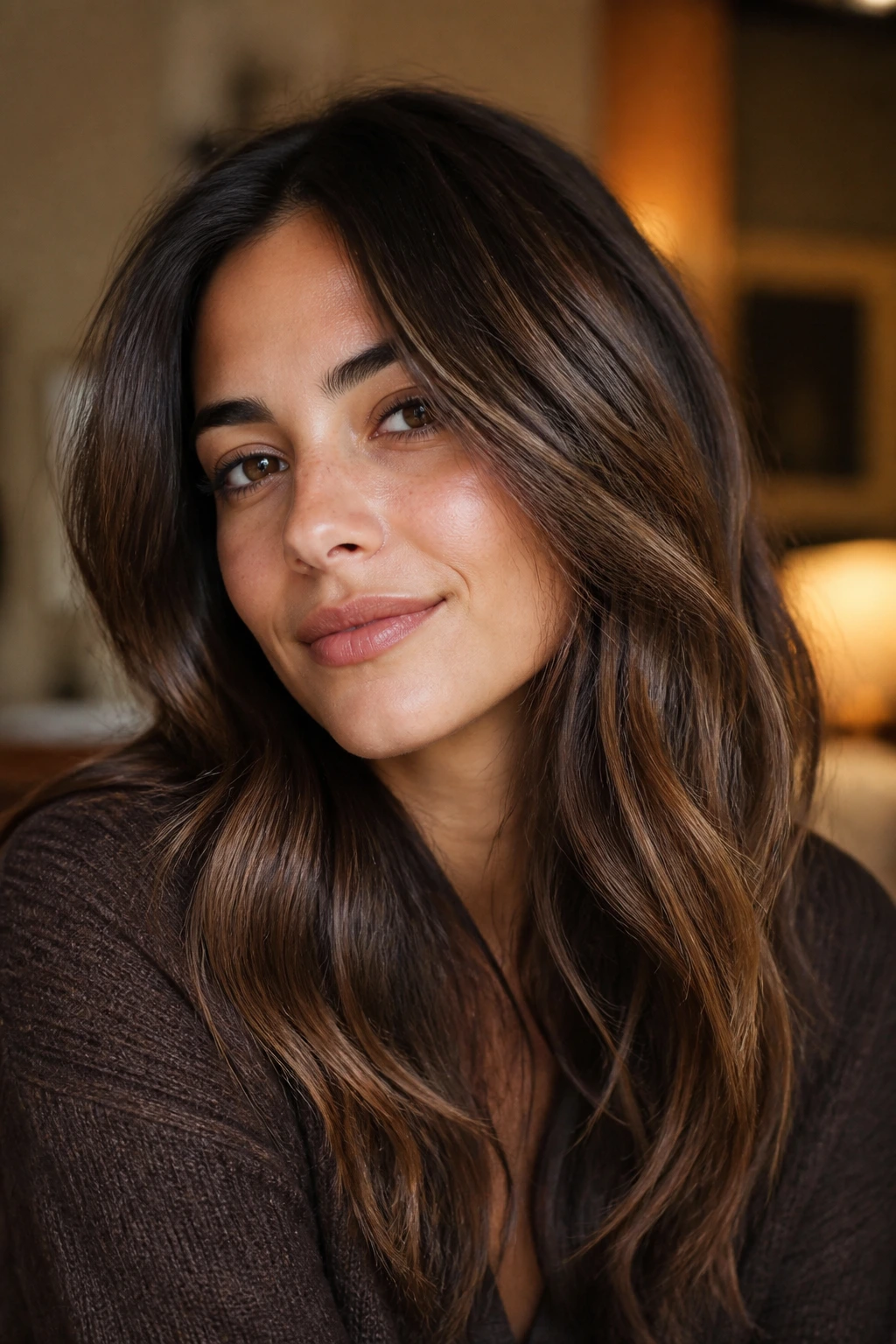
This one is for deep brunettes who want softness, not contrast. The caramel is muted with smoky brown so it doesn’t pop like gold foil against dark hair.
It’s a nice match for deeper olive skin because the warmth sits low and velvety. The skin still gets a little glow, but the hair keeps its depth. That balance matters when you do not want the color to pull too light or too sunny.
I’d skip this look if you want obvious brightness. It’s more about the feeling of movement than visible streaks. Think of it as a tint of light, not a stripe.
12. Latte Caramel Over Layers
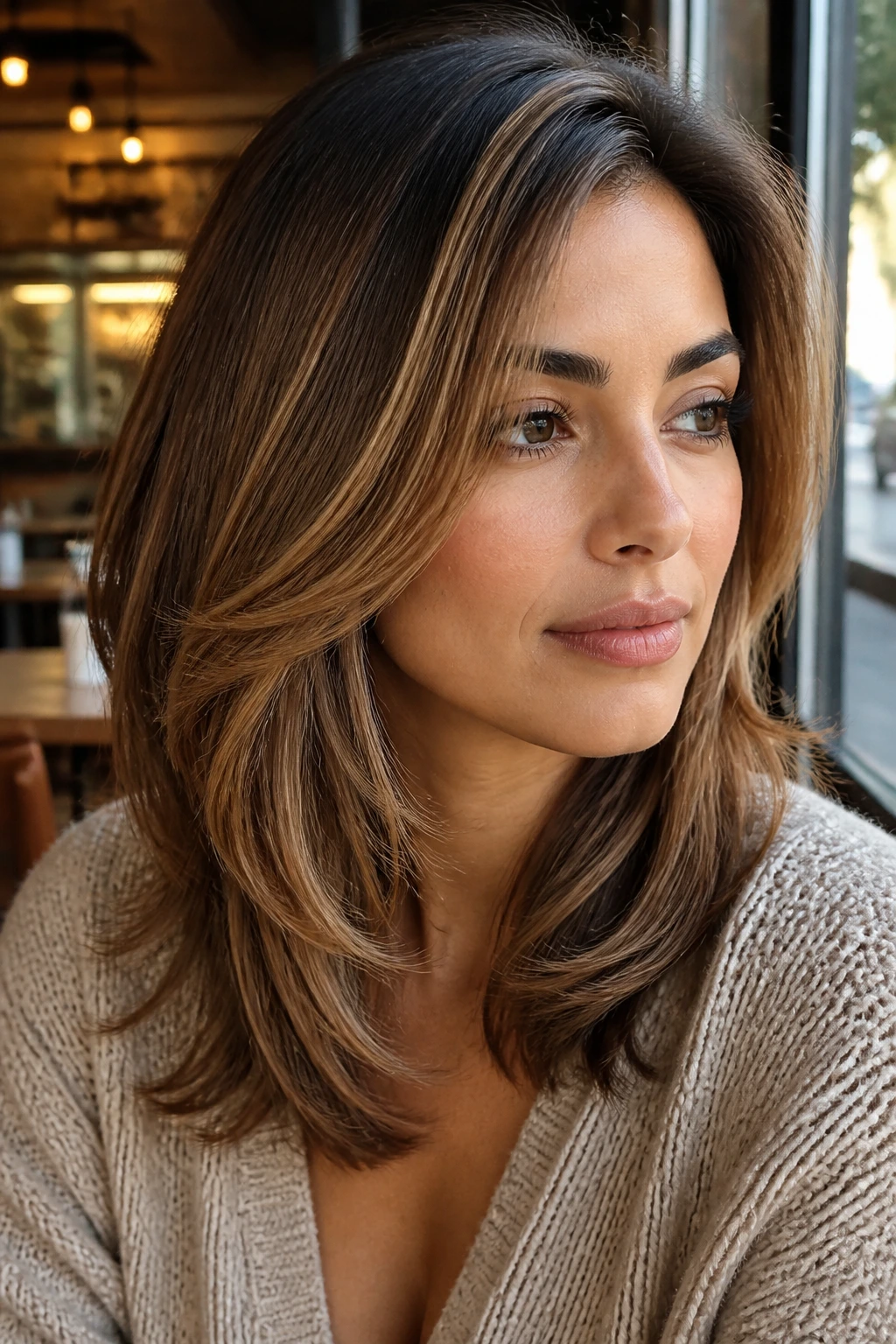
Layered cuts give highlights somewhere to live. Without layers, a lot of subtle color hides inside the shape of the hair and disappears. With layers, the caramel shows up on the bends and edges where it can actually do something.
Latte caramel sits in a sweet place for olive skin: warm, but softened with brown. It brightens without making the face look overly golden. The result is especially good on medium-length cuts that already have some swing.
If your hair is blunt and heavy, this style may feel too hidden. On layered hair, though, it comes alive with very little effort.
13. Walnut Balayage with Barely-There Glow
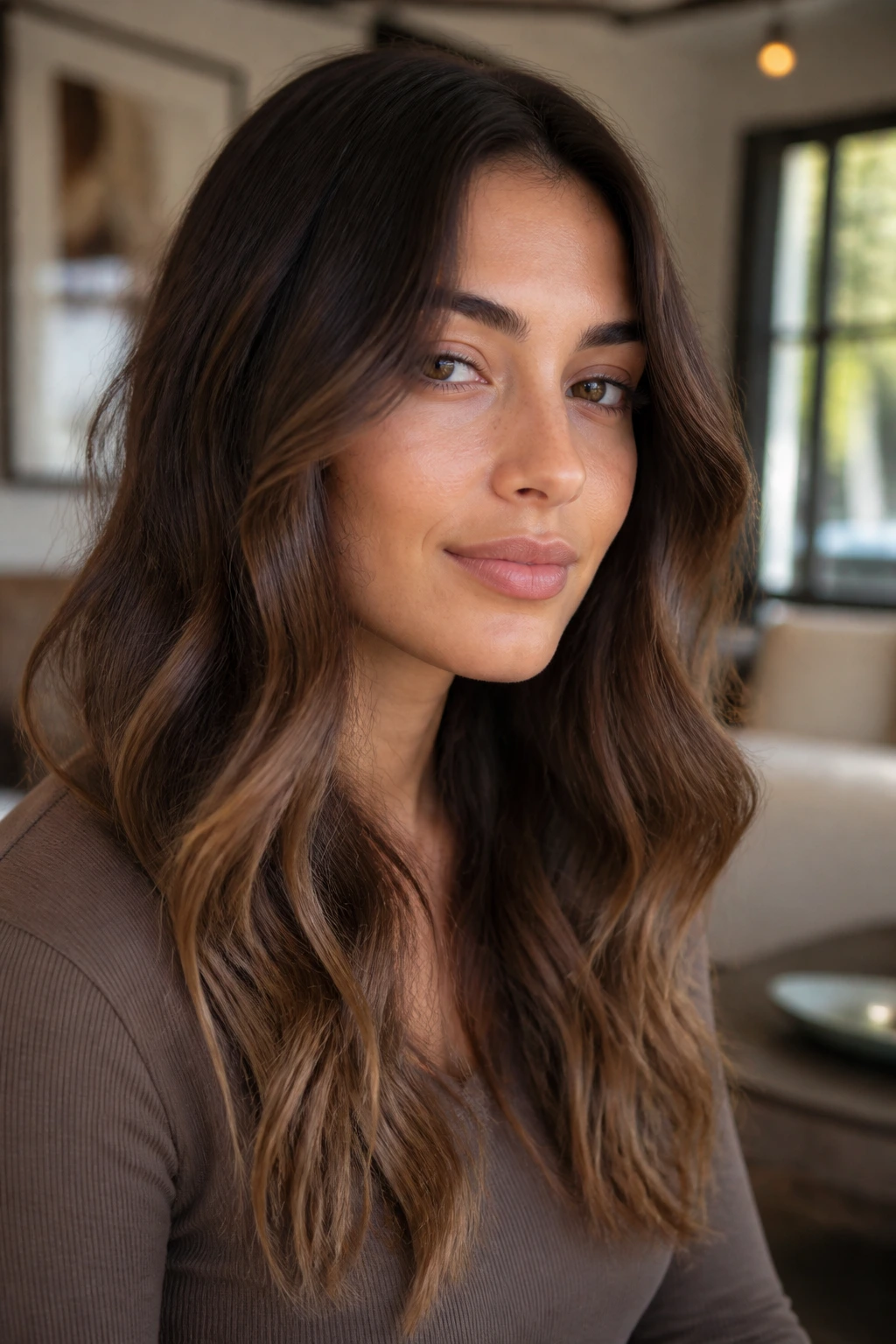
This is the shyest look in the bunch, and I mean that as a compliment. Walnut brown with a whisper of caramel gives you dimension only when the light moves across the hair.
Why it works
Because the contrast stays tiny, olive skin gets a little lift without any color fighting. If your undertone is strong and you hate obvious warmth, this is a safe lane.
It’s especially good for people who want their hair to look expensive in a low-key way. Not shiny in the synthetic sense. More like healthy, smooth, and softly reflective at the ends.
14. Rooted Caramel Face Halo
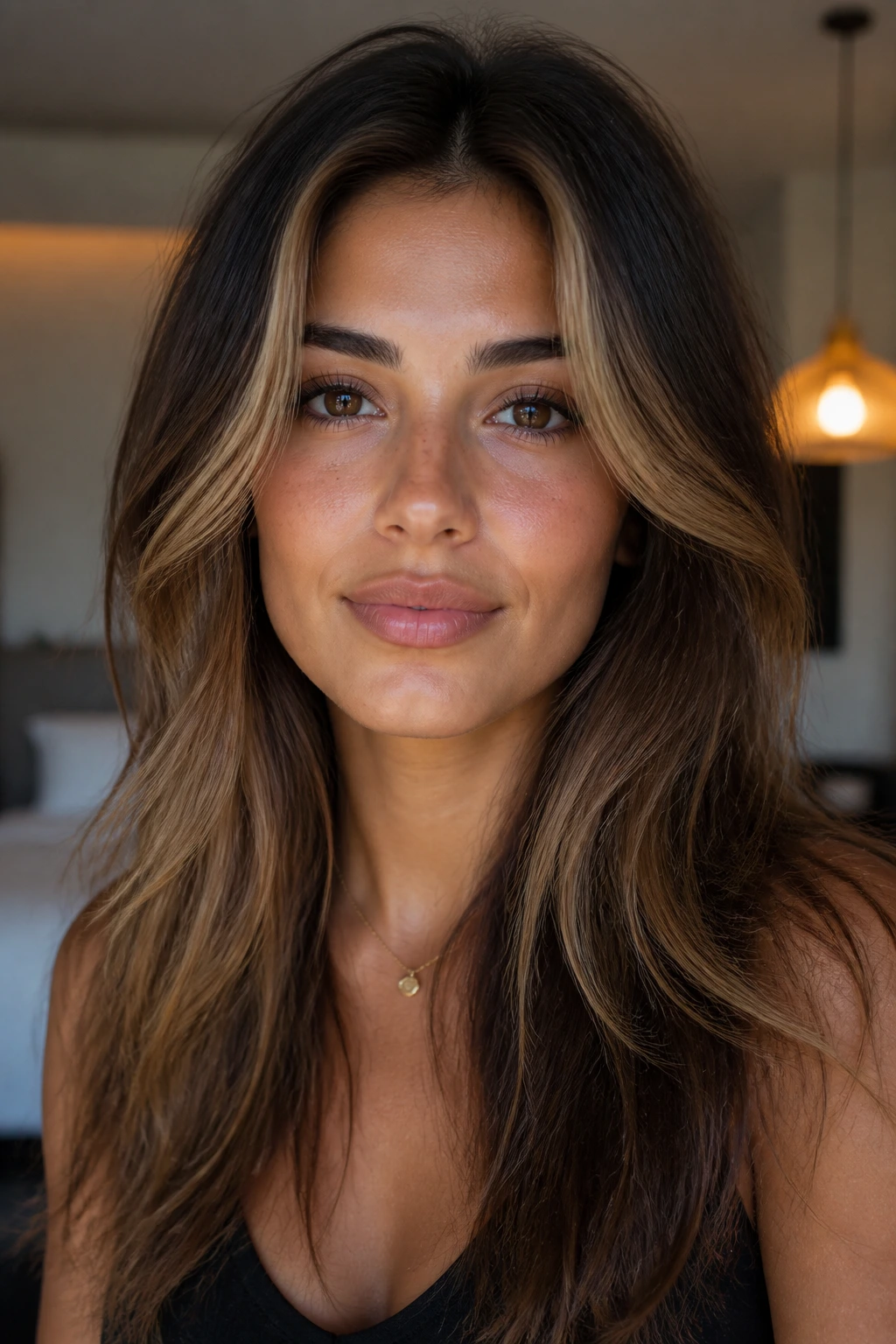
A rooted face halo keeps the base deeper at the scalp and concentrates the caramel in a ring around the face and upper crown. The root shadow is doing a lot of the heavy lifting here, and that’s what makes the color feel natural.
On olive skin, the halo gives you light where the eye wants it most. The face looks more open, especially around the eyes and jawline. The deeper root keeps the rest of the head grounded so the brightness doesn’t spread everywhere.
This is the kind of look that photographs well from the front and still makes sense when you turn your head. That’s a rare thing.
15. Butterscotch Touches on a Wavy Lob
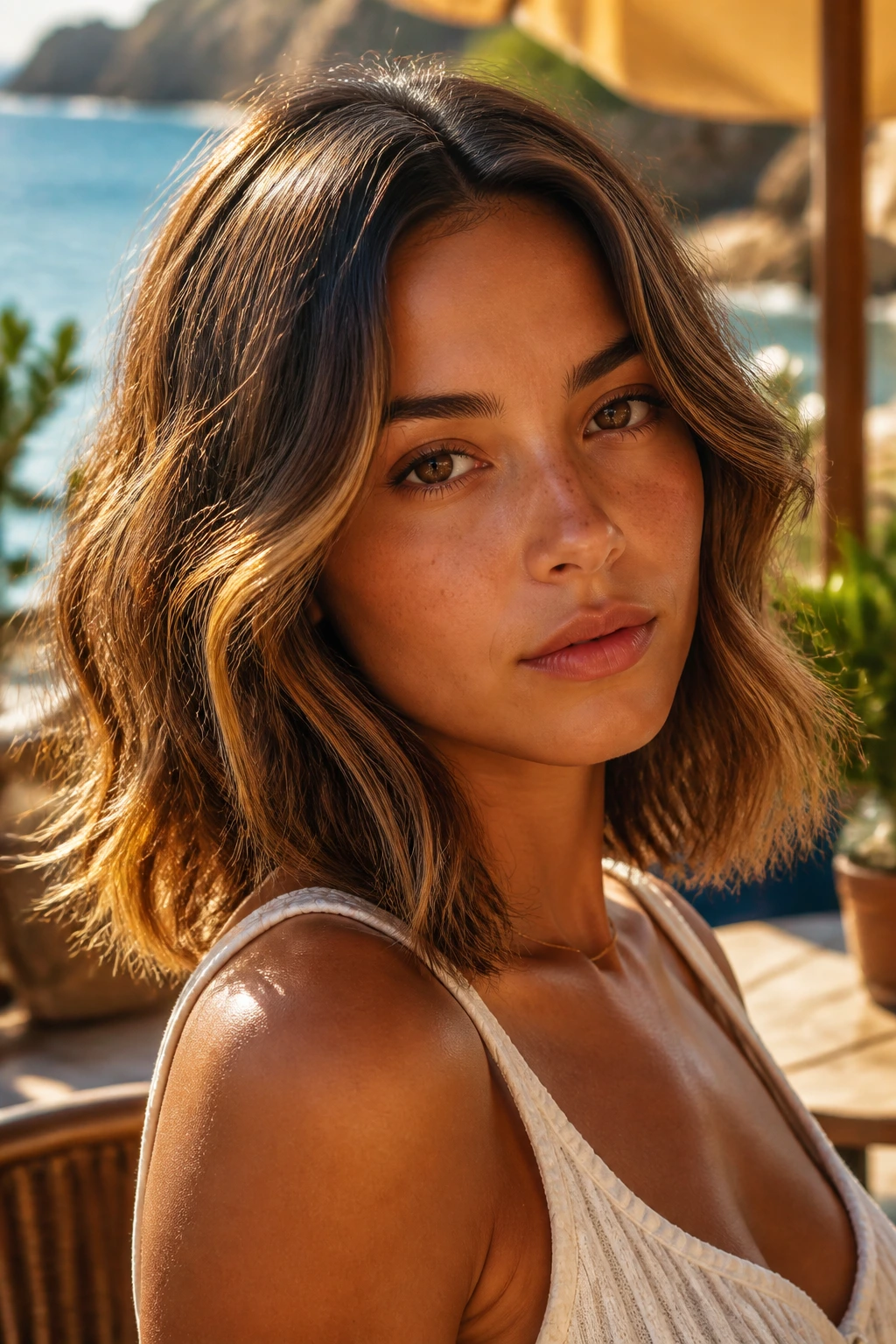
A lob gives you a clean little canvas, and butterscotch touches keep it from looking too blunt. The highlights sit around the waves, so every bend reveals a new piece of color.
Butterscotch works best on warm or neutral olive skin. It has enough gold to glow, but the caramel backbone keeps it from turning neon. If you like your hair to feel a little sweet but not sugary, this is the one.
Best styling partner
Loose, air-dried waves. That texture makes the highlight placement look casual and expensive at the same time. Straightening the hair can make the pieces look sharper, which may be too much if you want subtlety.
16. Neutral Almond Highlights
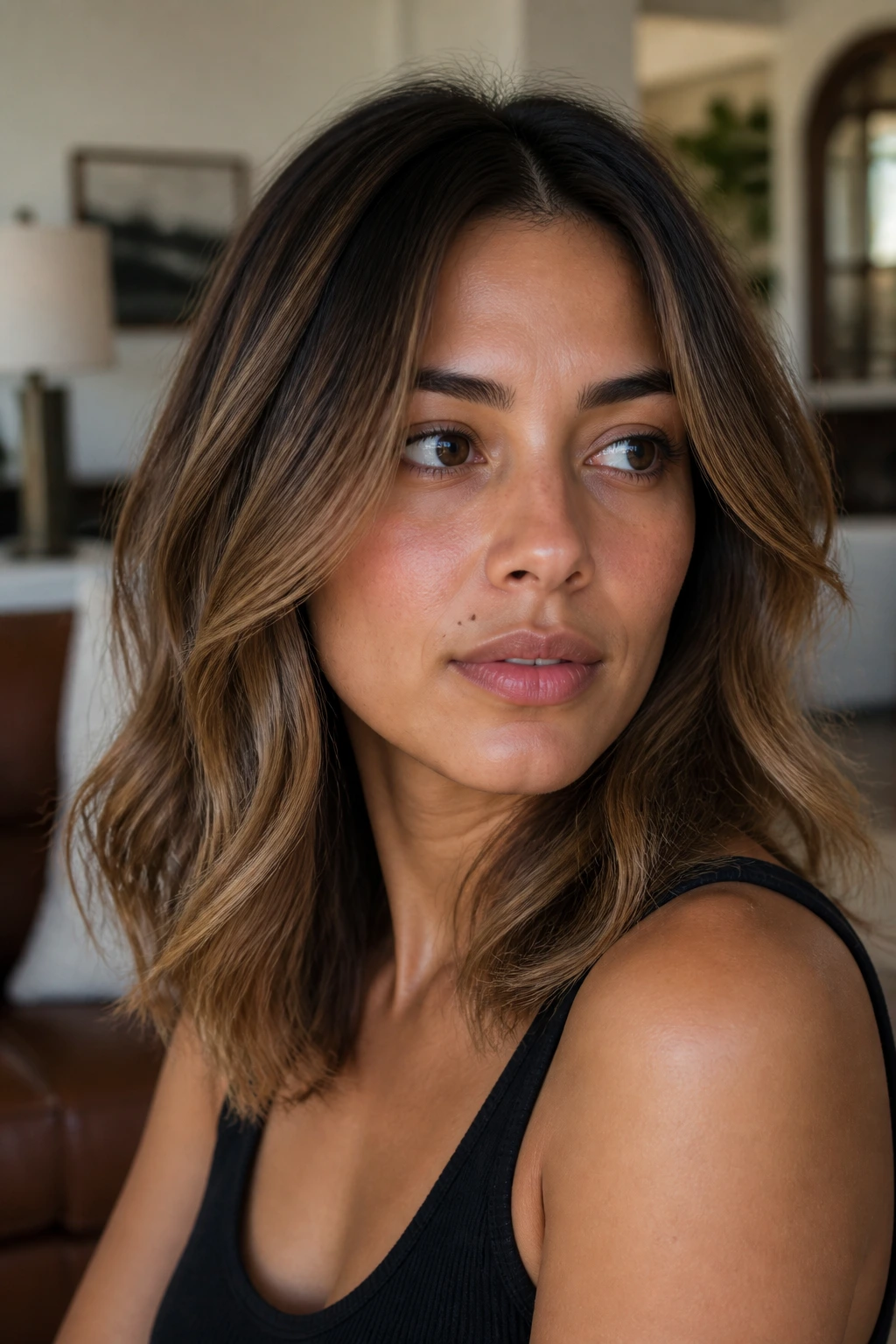
Almond caramel is one of my favorite tones for olive skin that leans neutral. It’s warmer than ash brown, but not so warm that it turns orange in daylight.
The color works because it stays centered. A good almond tone reads as beige-brown, which means it adds light without screaming for attention. That makes it easier to wear if you already have strong brows, dark lashes, or a face that carries color well on its own.
If your skin changes a lot between indoor and outdoor light, almond is a smart compromise. It doesn’t swing wildly either way.
17. Subtle Auburn-Caramel Hints
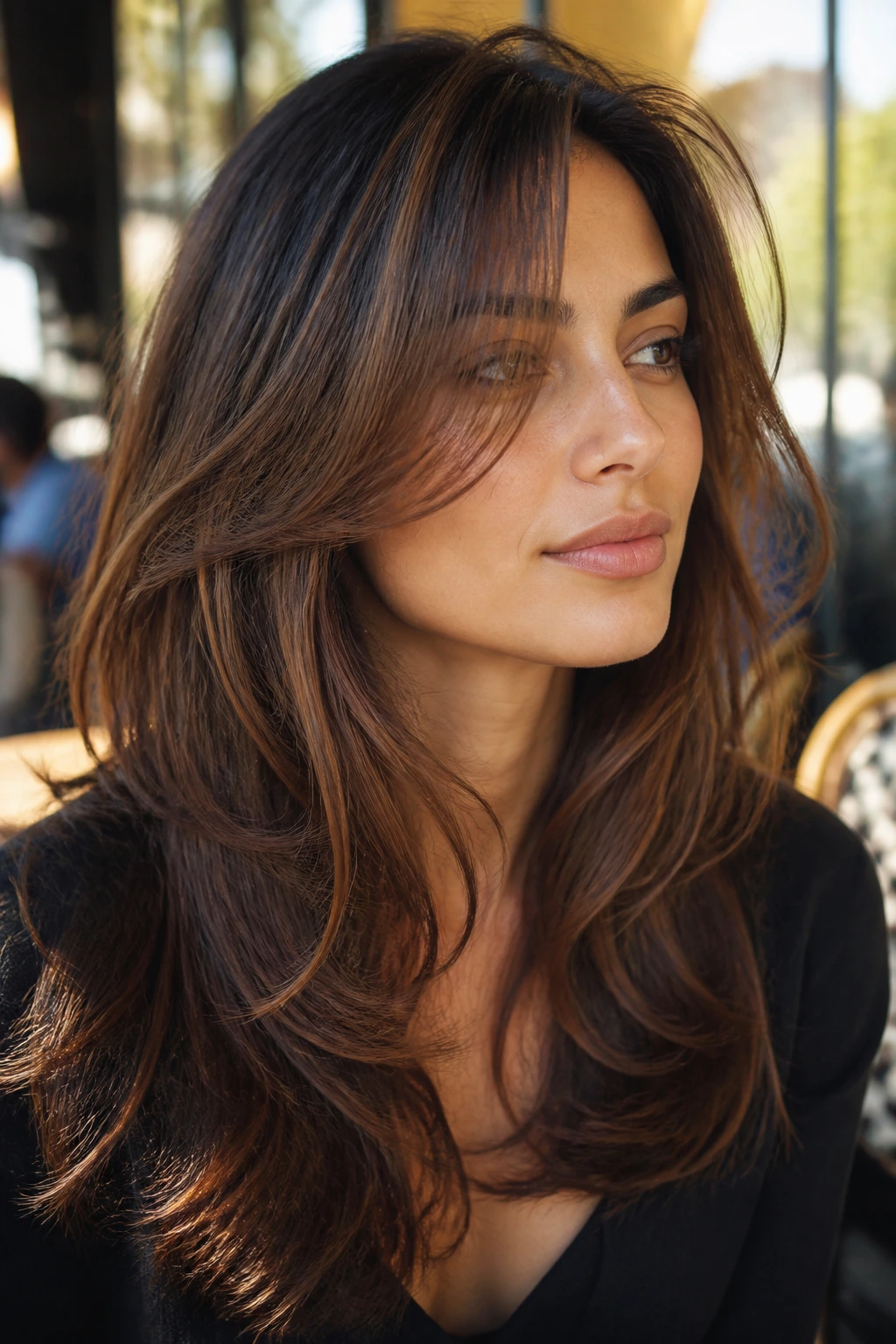
A little auburn can be lovely on olive skin, but only when it’s restrained. Too much red and the whole head starts feeling coppery in a way that can make the skin look ruddy. The trick is keeping the auburn as a faint undertone inside the caramel.
This is a strong choice for darker olive skin and brown eyes. There’s enough warmth to feel rich, but the red note adds life instead of harsh brightness. It looks especially good on layered cuts and soft waves.
If you usually wear bronze makeup or terracotta blush, this shade family tends to harmonize nicely. Just keep it subtle. Aubrun should whisper here.
18. Dimensional Espresso with Caramel Dusting
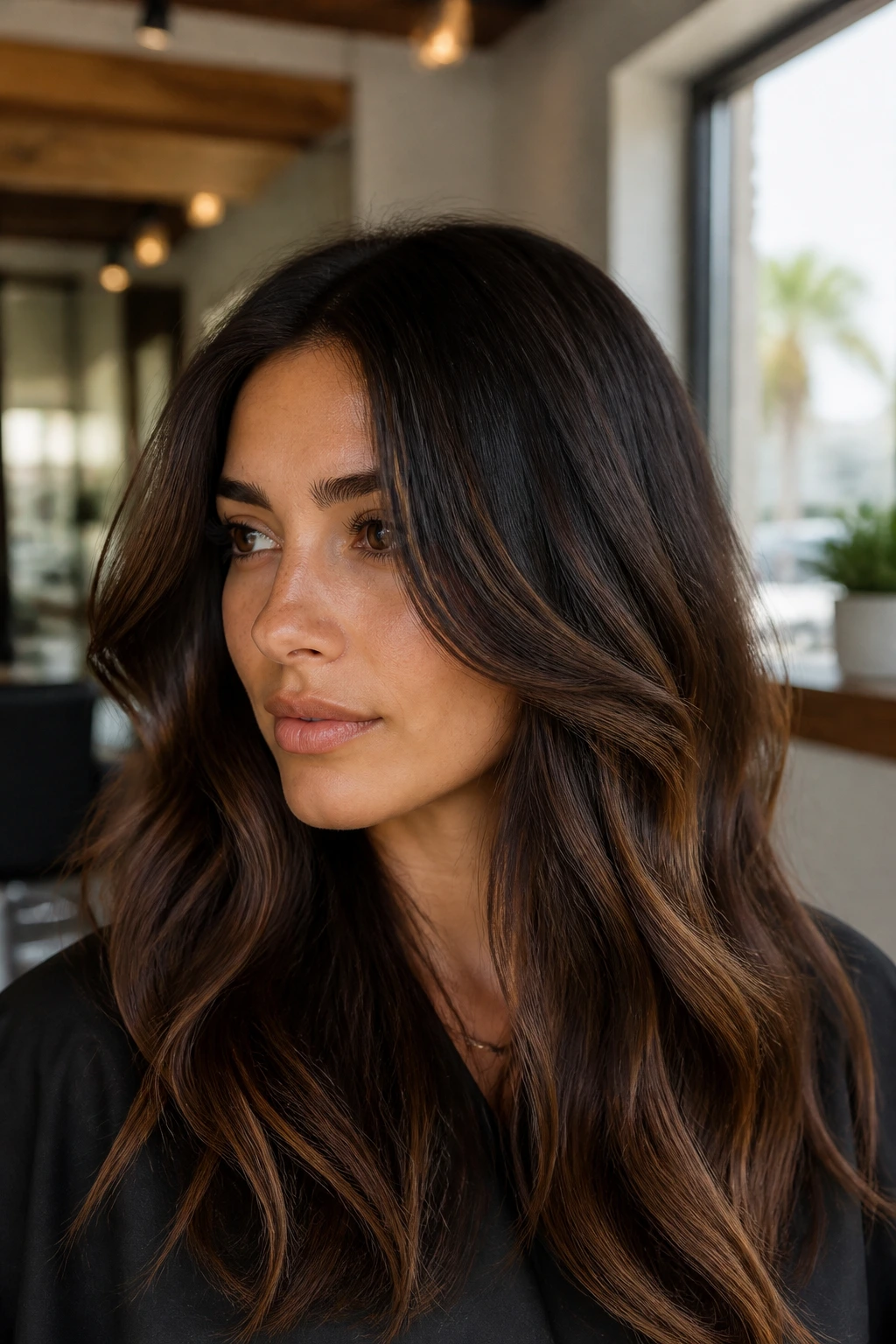
Espresso hair needs very little to feel dimensional. A dusting of caramel through the mid-lengths and ends can break up that depth without taking away the drama of the dark base.
On olive skin, this is a clean, elegant option because it keeps the overall look brown and expensive rather than light and busy. The highlights are sparse enough that they show mainly in movement, which is what keeps the style from becoming fussy.
A lot of people go too bright on espresso bases. I would not. The darker the base, the more a tiny amount of caramel matters.
19. Soft Contour Highlights at the Cheekbone
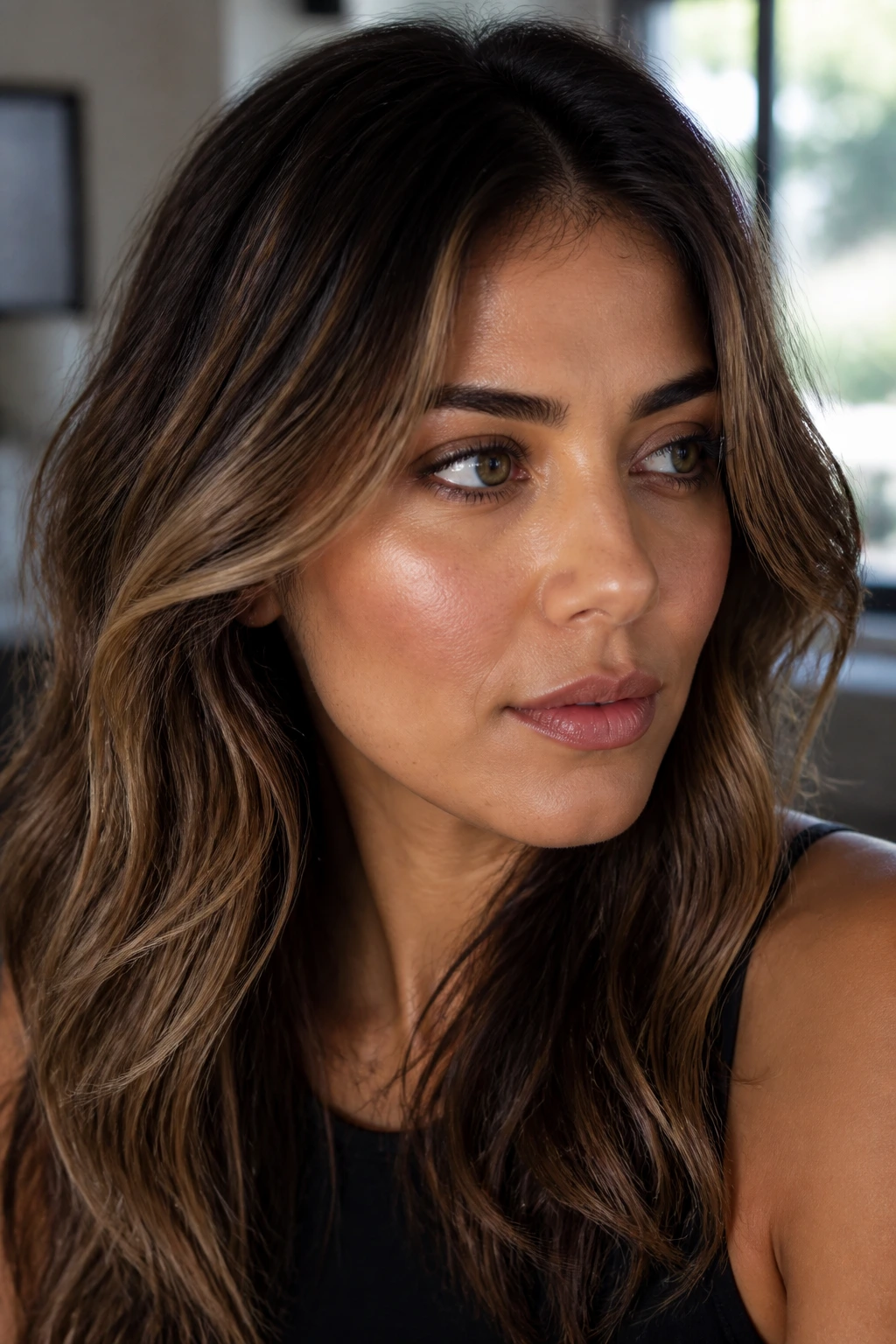
This is placement with a purpose. Instead of spreading highlights evenly everywhere, the brightest pieces sit around the cheekbone area and curve back toward the temples, almost like hair contouring.
The result on olive skin is a lifted frame that draws attention upward. It can make the face look narrower and more polished without relying on makeup tricks. The caramel should stay soft and brown, because the placement is already doing the work.
This look is especially nice if you wear your hair behind one ear a lot. The highlighted pieces show just enough to keep the style from looking flat.
20. Golden-Toffee Ends for Long Hair
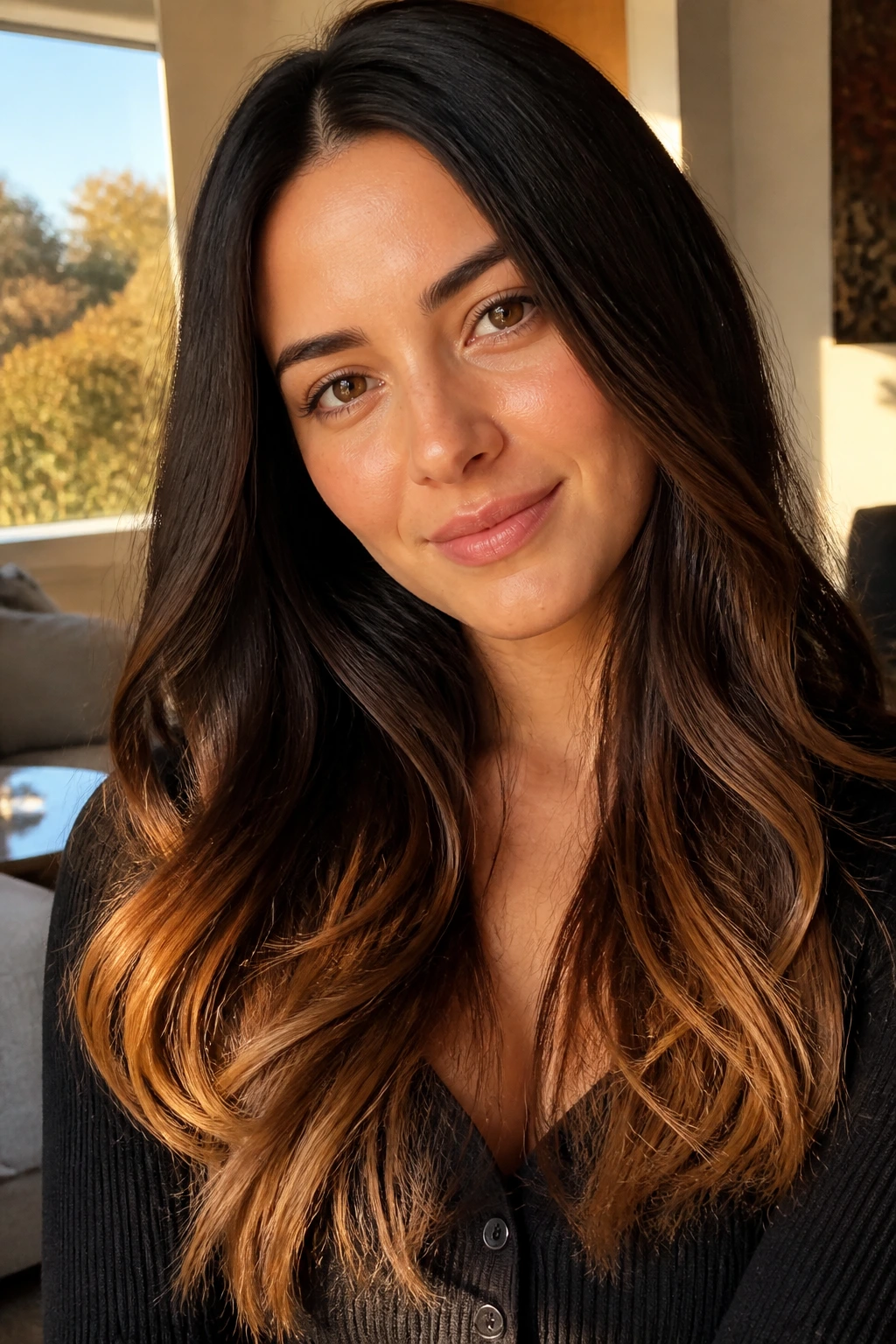
Long hair can swallow subtle color unless the highlights have somewhere to land. Golden-toffee ends solve that by keeping the top deeper and letting the lighter tone bloom only at the bottom third of the length.
The effect is soft and flattering on olive skin because the warmth stays away from the root and builds gradually. That gradual shift is what keeps the look from turning brassy.
If your hair is very long and one-length, this is a better move than scattering highlights all over the head. It gives the eye a place to rest, then a place to travel.
21. Taupe-Brown Caramel Blend
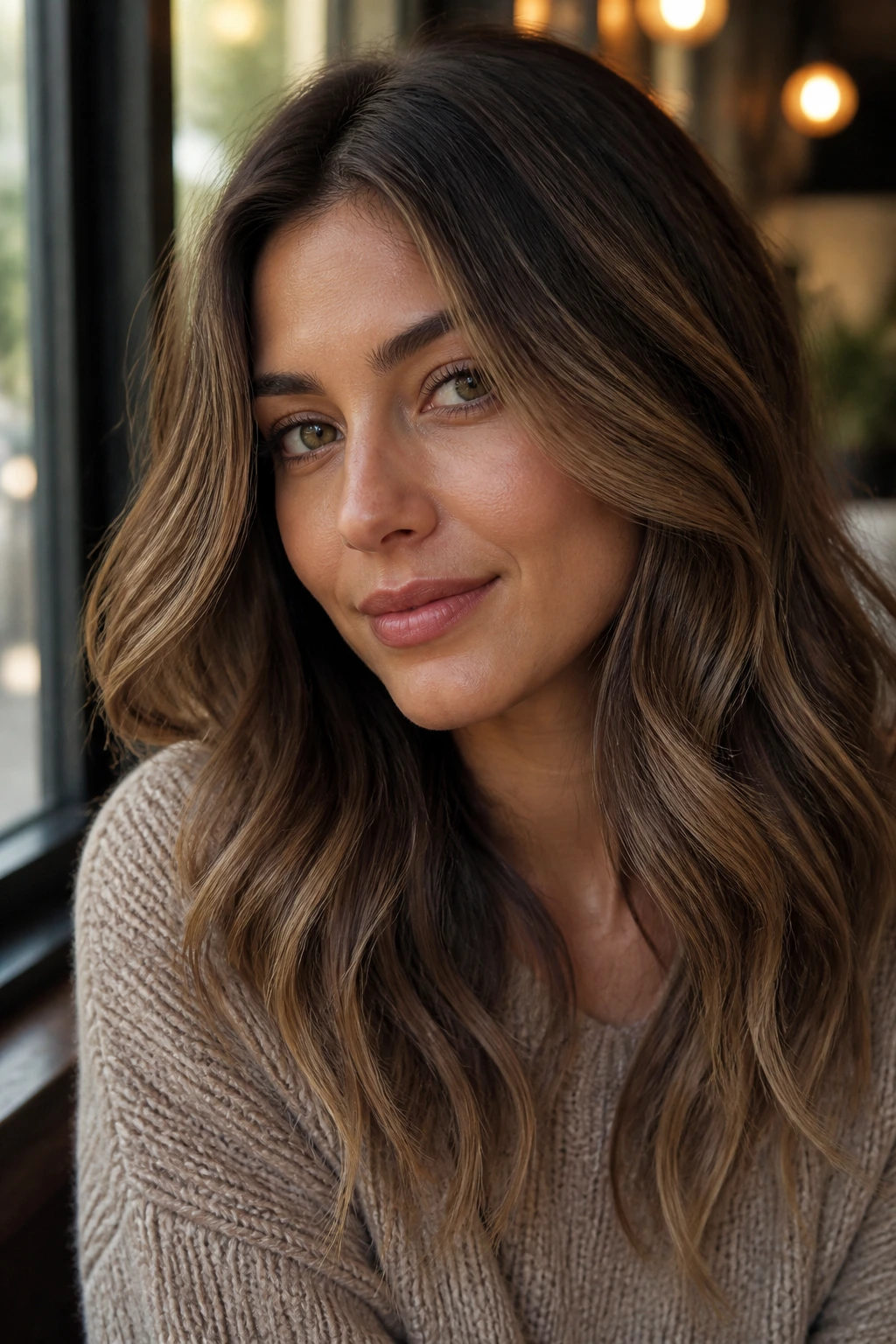
Taupe sounds cool, but in this case the taupe works like a soft filter over the caramel. The warmth is still there, just muted enough for olive skin that leans neutral-cool.
This is one of the best choices if you dislike honey tones but still want lightness. The whole look stays earthy. No shine that feels yellow. No brown that feels dusty. Just a middle-ground tone that settles in quietly.
A quick way to think about it
If honey caramel is sunshine, taupe caramel is late afternoon. Softer, more matte, less loud. Some people will like that immediately. Others won’t, and that’s fine.
22. Melted Sandstone Balayage
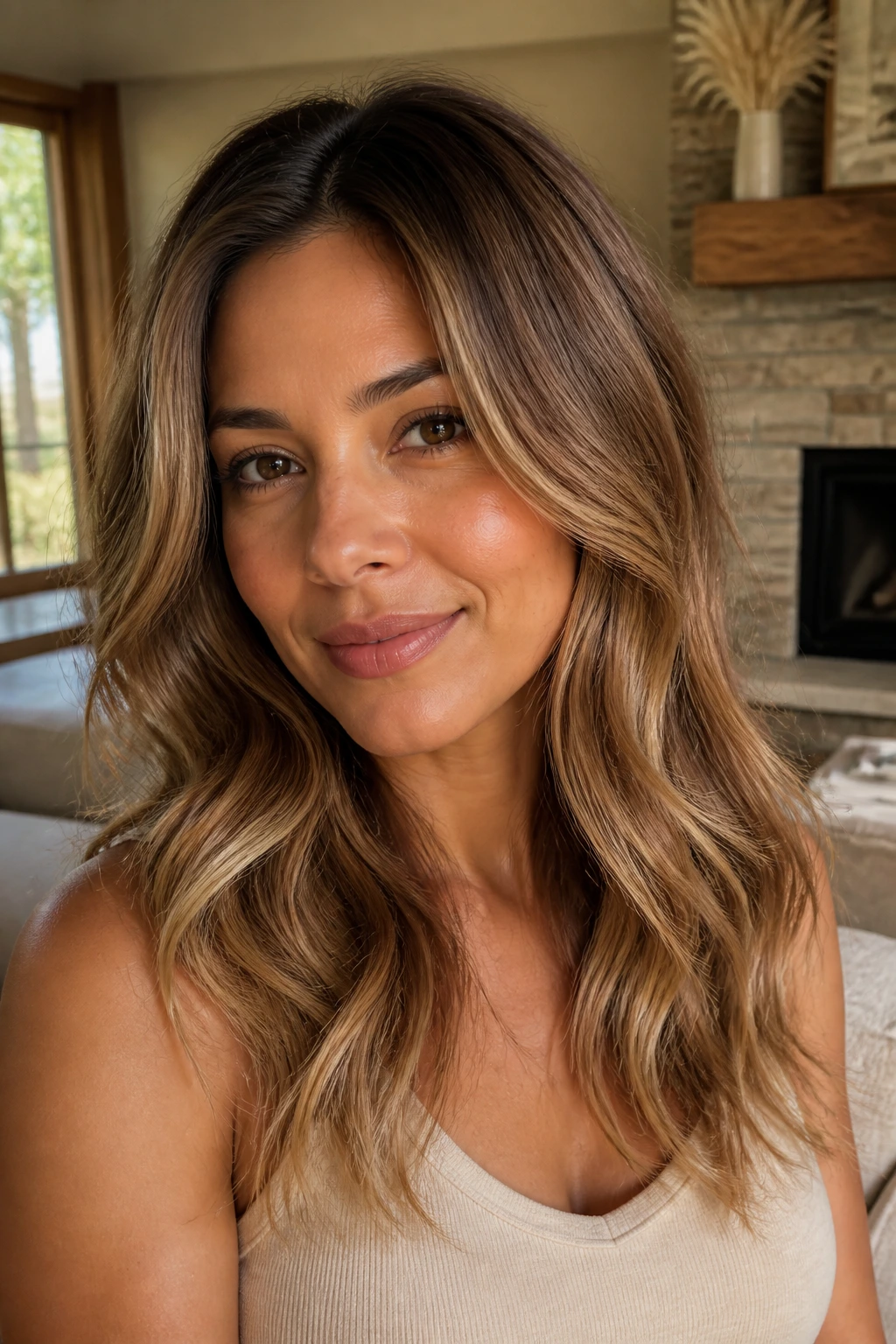
Sandstone caramel has a dry, mineral feel to it. The warmth is present, but it’s tempered by beige and brown so the tone reads more like sun-warmed stone than sugar.
On olive skin, that balance is useful because it prevents the face from looking too yellow. The balayage placement keeps the highlight diffused through the lengths, which makes it look natural even as the hair grows.
If you want a softer cousin of honey highlights, this is it. It has enough glow to matter, but the edge is rounded off.
23. Crescent Highlights Around the Hairline
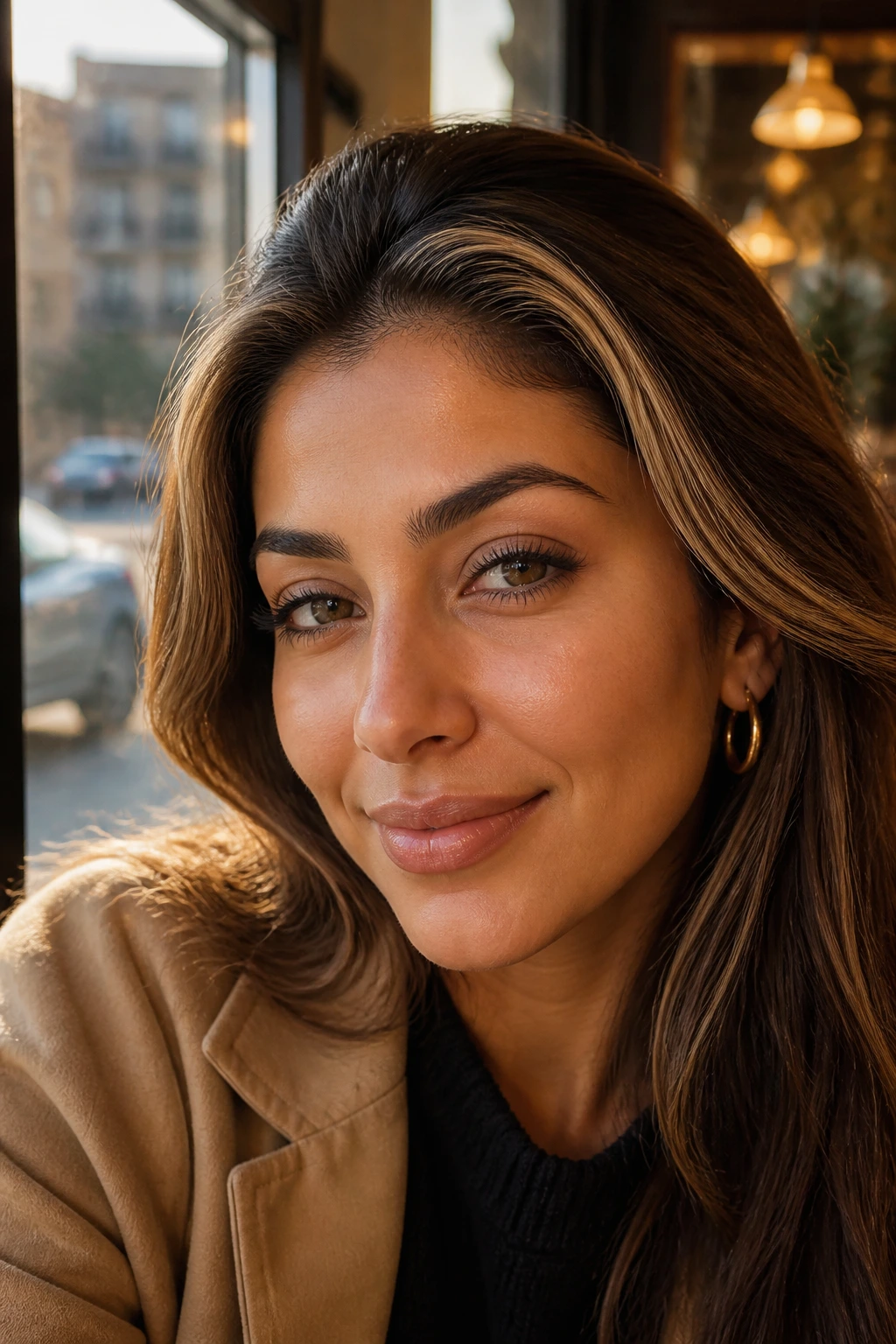
These are the little curved pieces that sweep from the temples toward the front sections of the hairline. The shape matters almost as much as the tone. A crescent placement gives the eye a soft arc to follow, which makes the face look brighter without needing heavy contrast.
The caramel should stay in the beige-toffee range for most olive skin tones. That keeps the hairline from looking harsh. It also means the highlights can sit close to the skin without pulling too orange.
This is one of those styles that looks understated until you put the hair up. Then it suddenly has more shape than people expect.
24. Smoky Bronde with Caramel Lifts
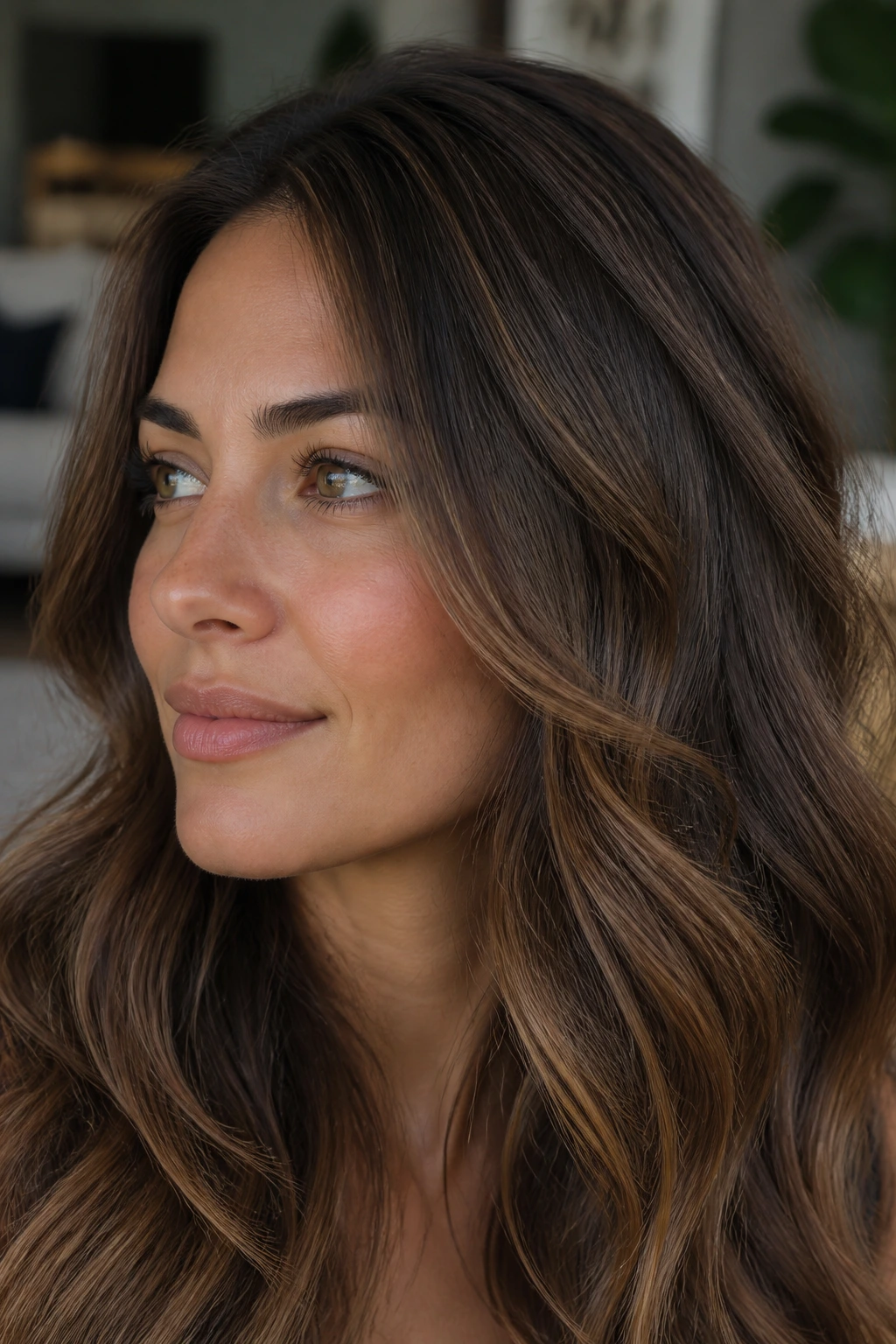
Smoky bronde is for people who want the brown to stay in charge. The caramel lifts are just enough to keep the hair from reading solid, but they never steal the show.
That restraint is good on olive skin because it avoids the two common problems: too much gold or too much ash. Smoky bronde sits in the middle and lets the skin decide how warm the whole look feels.
It’s a practical choice, too. The grow-out is kinder, and the color still looks deliberate after several weeks because the contrast never got too high in the first place.
25. Low-Contrast Caramel Gloss Blend
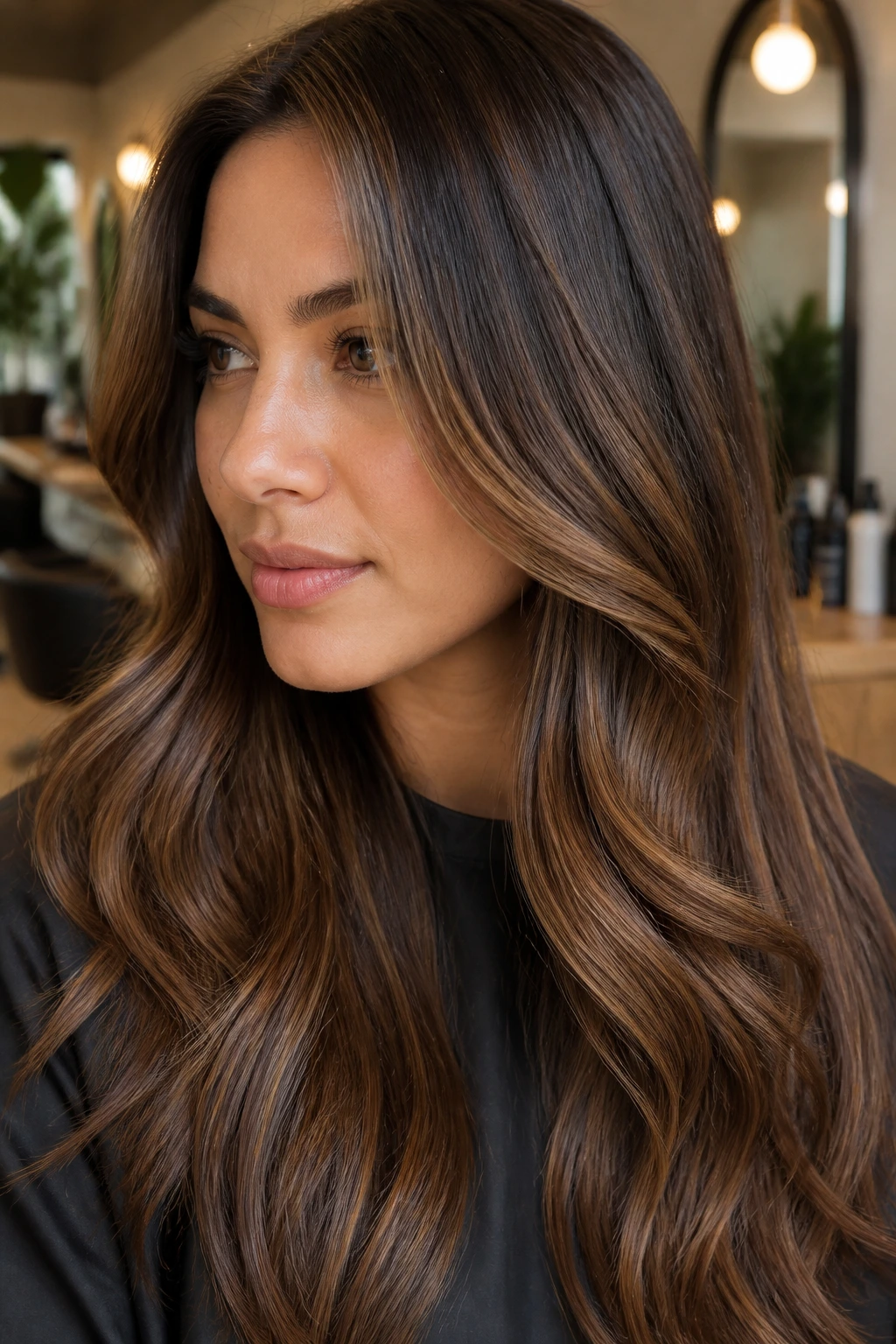
If you want the softest possible finish, this is the one. The base and highlight are close in level, and the final gloss pulls everything together so the color reads as one smooth, warm brunette with dimension instead of visible streaks.
For olive skin, low contrast can be the smartest move of all. It brightens the hair in a way that flatters the face without stealing attention from brows, eyes, or skin texture. The whole look feels calm. Not boring. Calm.
This is the style I’d hand to someone who says, “I want people to notice my hair looks better, but I do not want them to know exactly why.” That’s the brief, and this one nails it.
Why Caramel Sits So Well Against Olive Undertones
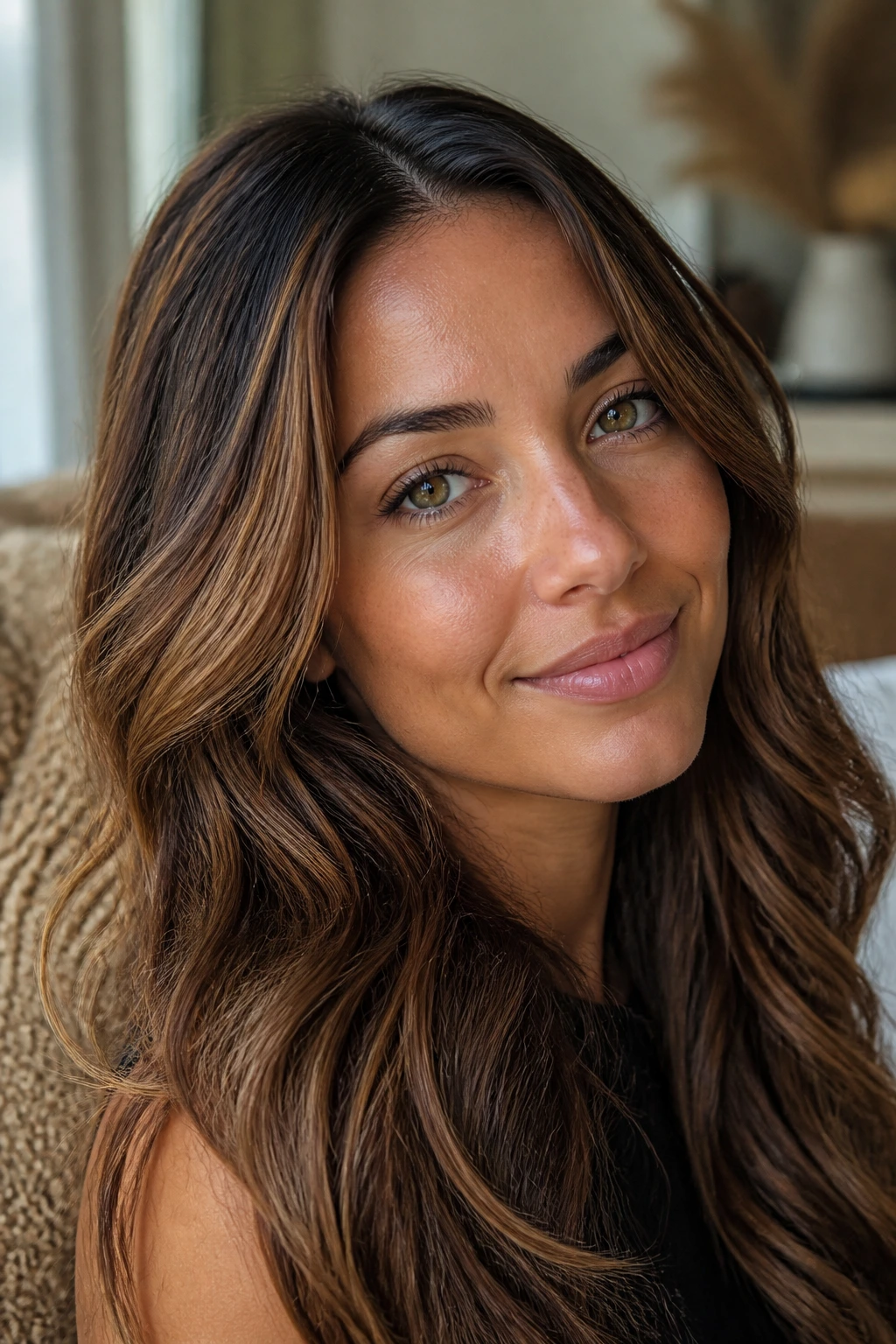
Olive skin has a little trickery built into it. The undertone can lean green, gold, gray, or some hard-to-name blend that shifts depending on the shirt you wear and the light you’re standing in. That’s why a caramel brown highlight can look perfect on one olive-toned person and just a little off on another.
The best caramel highlights do two things at once: they add warmth, and they keep enough brown in the formula to avoid reading yellow. Beige caramel, toffee caramel, muted honey, and smoky chestnut-caramel all live in that useful middle zone. Bright gold usually pushes too far. Heavy ash can make the skin look tired or muddy. Middle ground wins.
Placement matters almost as much as tone. Olive skin usually looks best when the brighter pieces sit where the face naturally curves: around the temples, cheekbones, crown, and the ends that move. If the highlights are too evenly spread, the head can look flat. If they are too chunky, the effect goes stripey fast.
I also like caramel because it keeps brunette depth intact. Olive skin often looks strongest when the hair still has richness at the root. That darker base acts like a frame. The caramel is the light inside it.
What to Bring to the Salon Chair
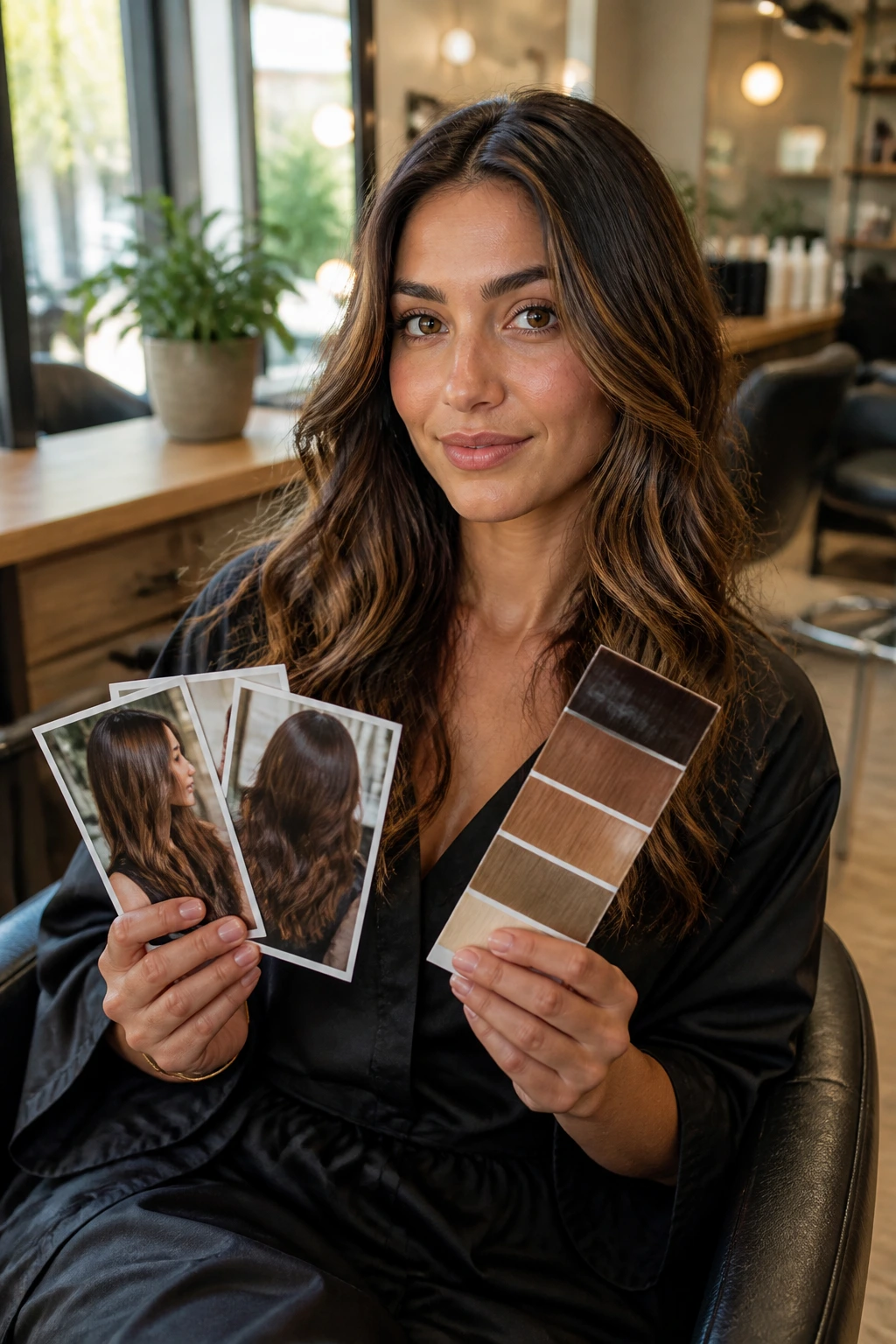
A good color appointment is part science, part visual translation. Bring the right references and you save yourself a lot of “not quite that” later.
- Two to four reference photos: One should show the placement you like, and one should show the tone. Those are not always the same photo.
- A note about your base color: Tell the colorist whether your natural hair is level 3, 4, 5, or 6, or just describe it as deep brunette, medium brown, or soft brown.
- One sentence about warmth: Say whether you want beige, honey, toffee, or smoky caramel. That narrows the conversation fast.
- A photo of your hair in natural light: Indoor screenshots lie. Natural light shows the real contrast.
- A list of what you hate: Stripy roots, orange warmth, too-blonde ends, or a chunky money piece. Saying what you do not want is often more useful than naming the exact finish.
If your hair is already colored, bring that up early. Previous dye changes how caramel lifts, tones, and fades. That detail saves a lot of guesswork.
How to Wear the Color So It Reads Soft in Real Life
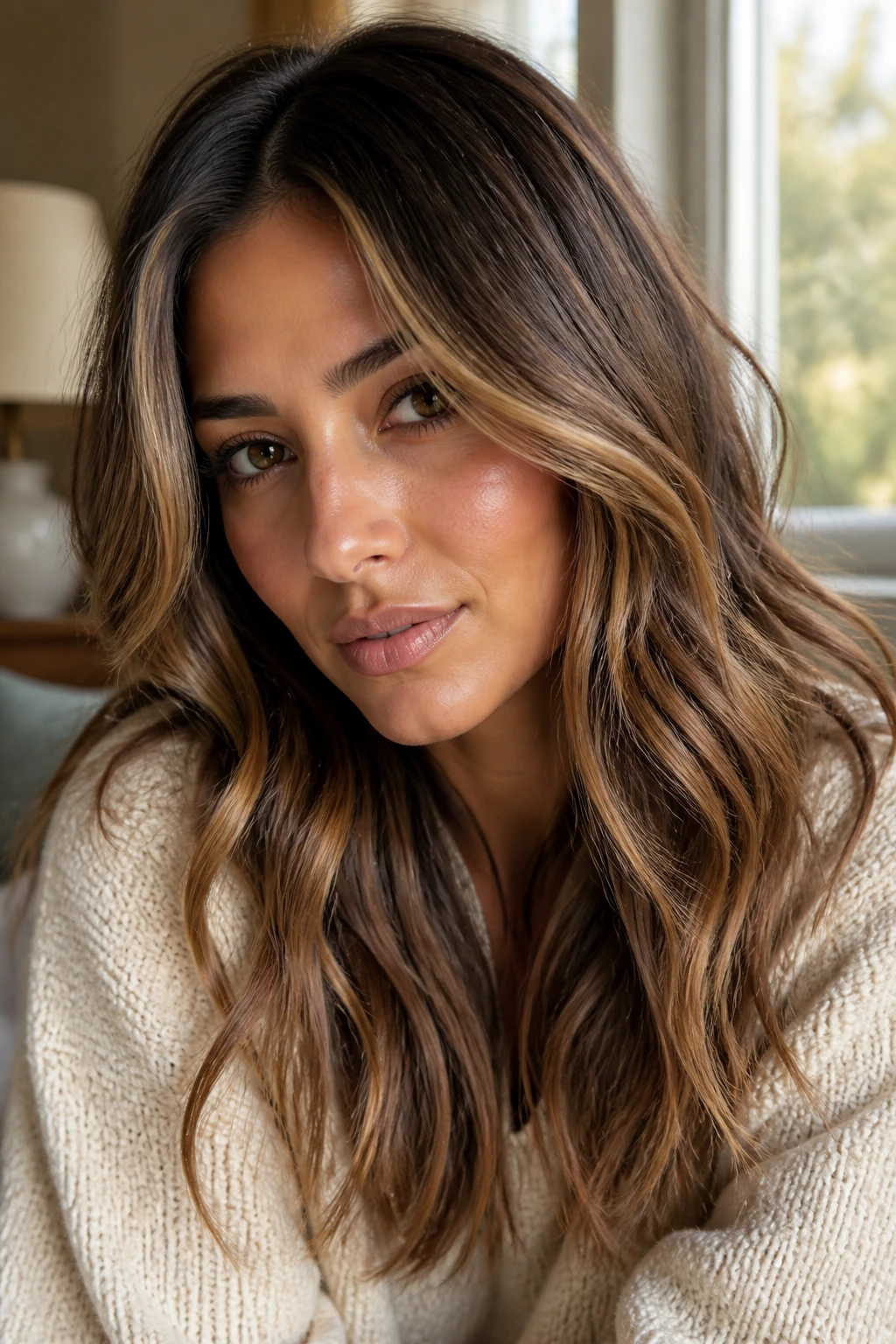
Parting: A center part shows off face-framing highlights and crown brightness. A side part pushes the caramel to one side and makes the whole style look a little richer and more relaxed.
Styling: Loose bends or soft waves usually show caramel best. Pin-straight hair can still look good, but the placement needs to be more refined or the lines can show too clearly.
Texture: On curls and coils, larger painted ribbons tend to read better than tiny microfoils because the curl pattern breaks up the color naturally. On fine straight hair, finer pieces protect the subtle effect.
Lighting: Judge the tone in daylight. Bathroom bulbs love to lie. A caramel that looks perfect under warm vanity lights may suddenly go orange in the sun, and that is the moment to know whether the formula needs more beige.
A simple cream sweater, a clean black top, or a soft olive shirt usually makes this color family look richer. Loud neon clothing can throw the tone off and make it harder to read.
Small Tone Tweaks That Change Everything
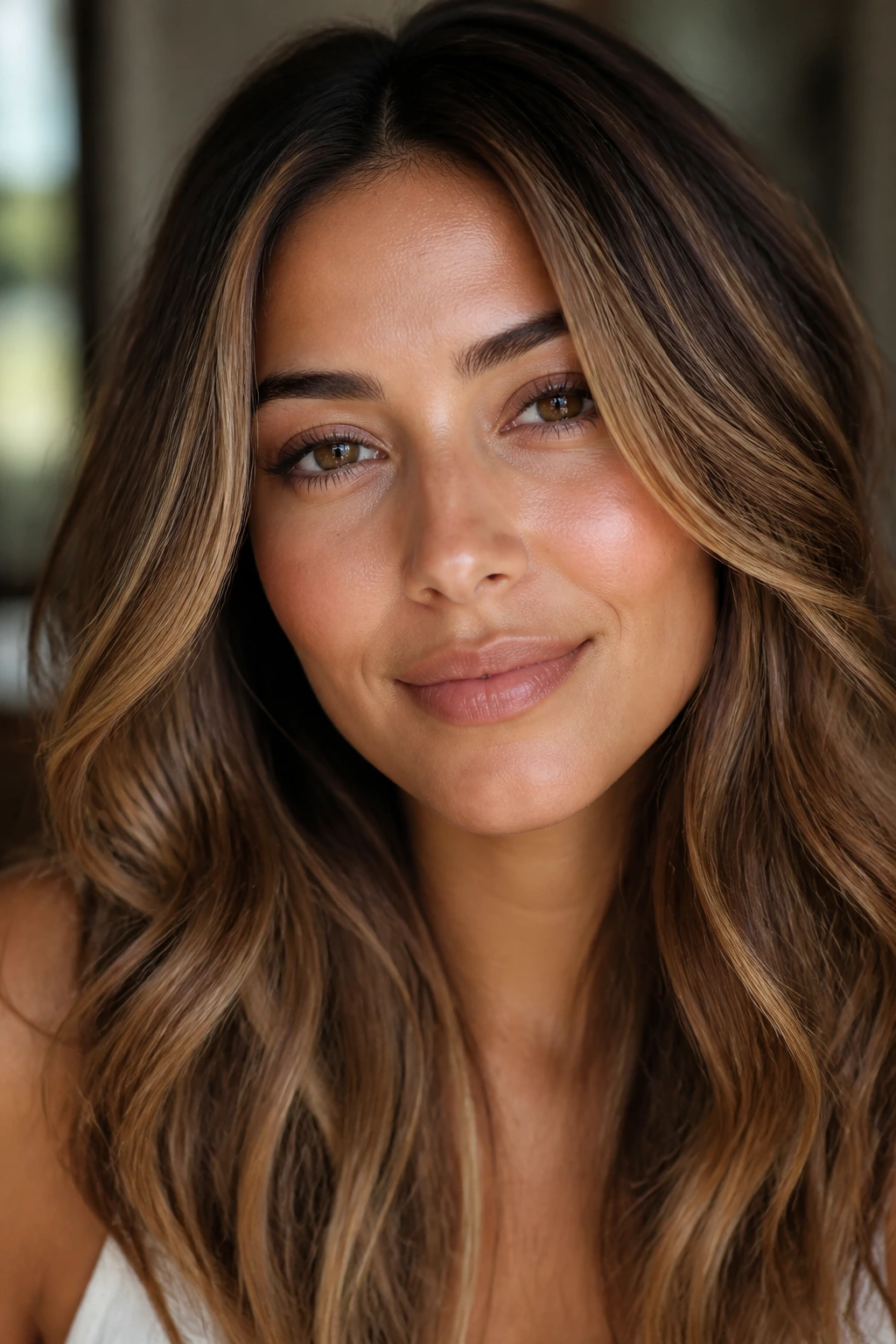
Tone Control: If your olive skin leans green or gray, ask for beige-caramel or almond-caramel instead of bright honey. That small shift keeps the highlights from turning too yellow near the cheeks.
Contrast: The most flattering subtle highlights usually sit only one to three levels lighter than the base. Bigger jumps can be gorgeous, but they stop being subtle very fast.
Placement Trick: Keep the brightest pieces near the face and crown, then let the color taper toward the back. That gives you brightness where people look first without turning the whole head into a billboard.
Styling Move: A light bend from the mid-length down breaks up the highlight pattern. That’s especially useful if the color was placed in tidy ribbons and you want it to feel softer.
Make-It-Yours: For warmer olive skin, lean honey and toffee. For neutral olive skin, beige and almond usually sit better. For deeper olive skin, smoky caramel and chestnut keep the warmth rich instead of loud.
Mistakes That Make Olive Skin Look Flat or Orange
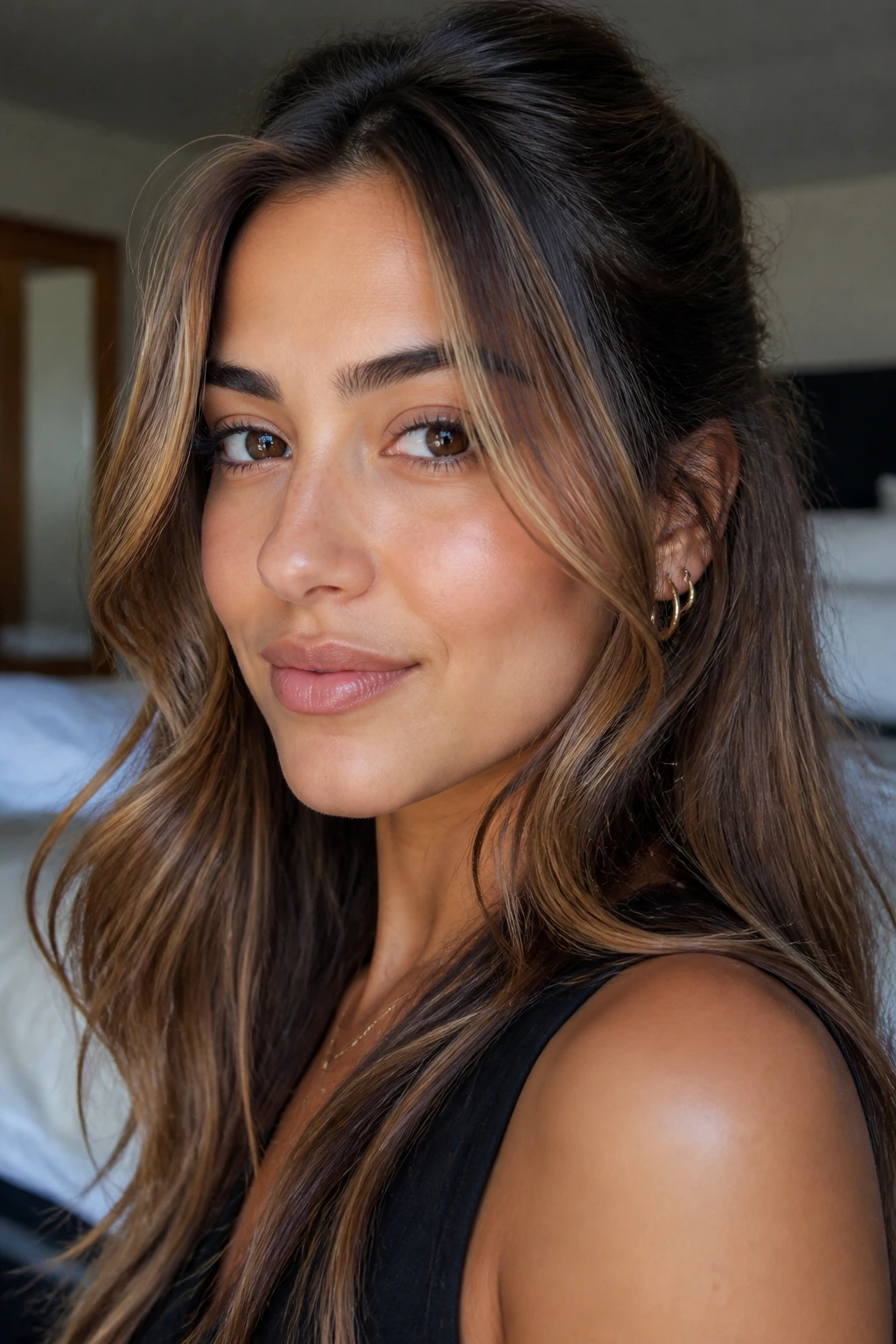
The most common problem is choosing caramel that is too gold. It sounds flattering in theory, but on olive skin it can go yellow around the forehead and cheeks. The fix is simple: ask for a beige or muted caramel gloss after the lightening step.
Another miss is placing the highlights too close to the scalp everywhere. That creates a striped effect as the hair grows. Keep some root depth, especially if the base is brunette, and let the brighter pieces begin lower through the lengths.
A lot of people also over-lighten. The hair does not need to jump from deep brown to soft blonde to feel fresh. Usually it looks better when the lightness stays controlled and the brown remains the main story.
Then there is toner overkill. Too much ash or too much purple shampoo can turn warm caramel into a dull khaki shade. If the warmth is drifting orange, use a targeted blue shampoo or a salon gloss instead of trying to strip everything cool all the time.
Other Ways to Wear the Same Caramel Idea
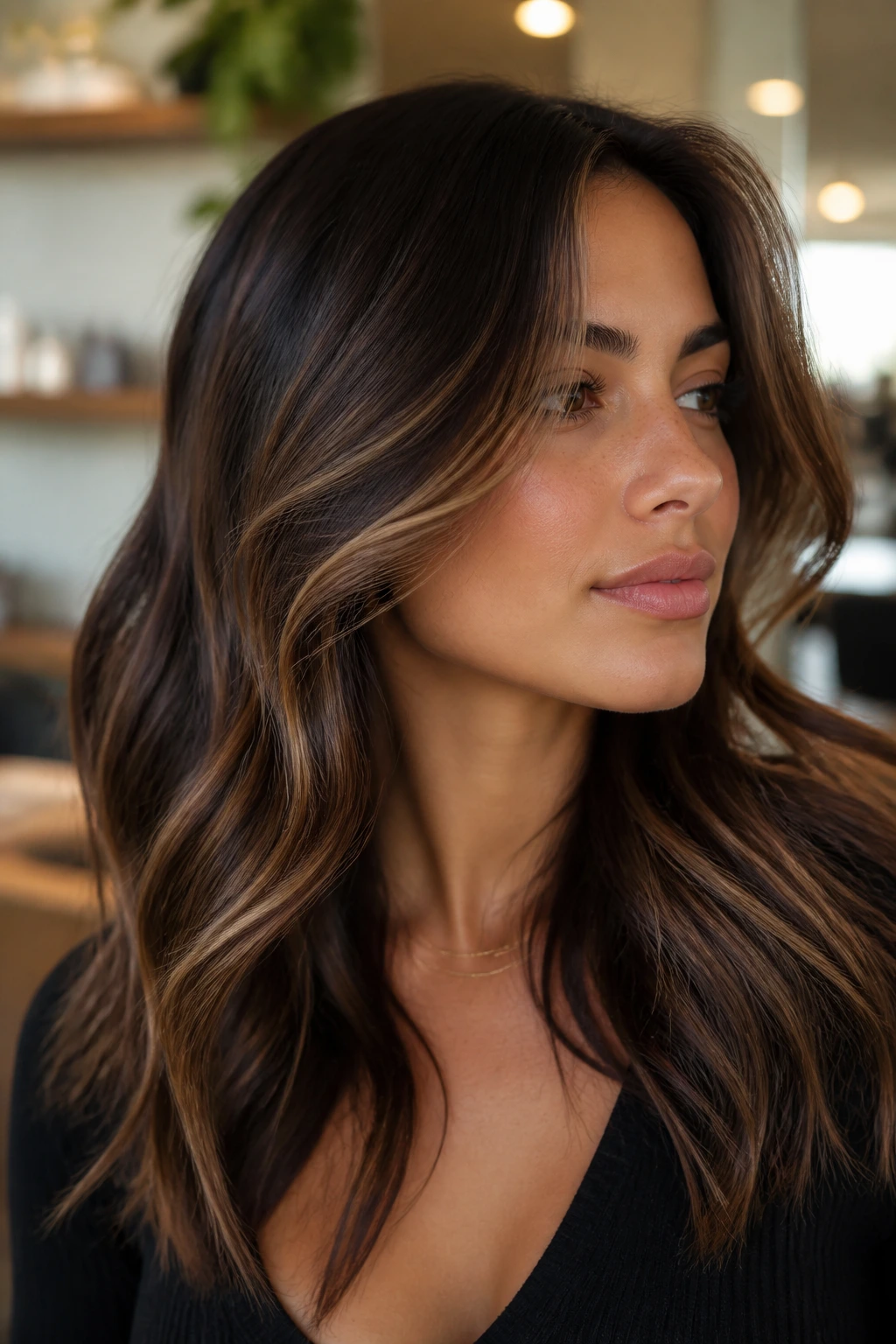
Deep Brunette Smoke: Keep the base level 3 or 4 and use only the faintest caramel threading. This is the best version if you want movement without losing depth.
Warm Olive Honey: Let the caramel lean a touch more golden, but keep the placement soft and around the face. Good for olive skin that already runs warm and handles sunlight well.
Mushroom Caramel Blend: Mix in cooler brown tones so the finish lands earthy and muted. This works when golden highlights feel too sunny on your skin.
Curly Ribbon Caramel: Paint wider ribbons through curls and coils so the dimension shows after shrinkage. Tiny highlights can vanish inside a dense curl pattern.
Gloss-First Brunette: If you do not want visible highlights at all, use a sheer caramel gloss over a brunette base. The result is more sheen than streak, which is a smart move for first-timers.
Keeping the Shine and Warmth Between Visits
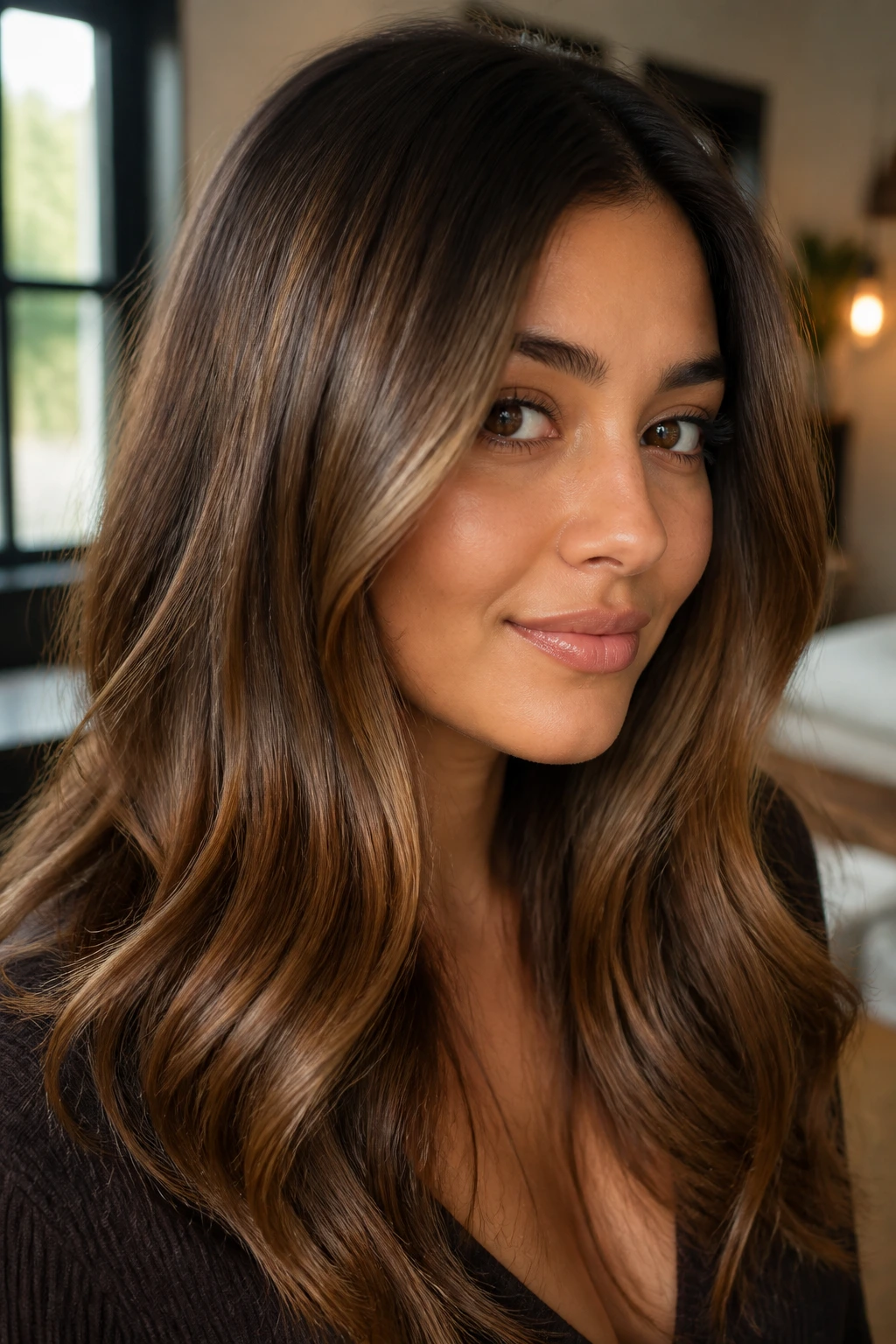
Color like this does not need to be babied, but it does need a little discipline. Wash with a color-safe shampoo two or three times a week if you can. Daily washing strips the gloss faster than most people expect, especially if the water is hot.
A toner or gloss refresh every 6 to 8 weeks keeps the caramel from drifting too gold or too dull. If your base is very dark, you may be able to stretch that a bit longer. If your highlights lift quickly, the warmer tones may need attention sooner.
Purple shampoo has a job, but it is not the hero here. Use it only when the highlights start looking too yellow. If the hair is turning orange, a blue shampoo is usually the better fit. Use both sparingly. Overdoing either one can leave the caramel flat and dusty.
Heat styling is fine, but keep a heat protectant on hand and use a lower setting than you think you need. Blowouts, curling wands, and flat irons can make caramel look shinier, but they can also fade the tone faster if you run the heat too high. Swimming, sun, and hard water all pull color down too, so a rinse and a leave-in conditioner before the pool can save you a lot of grief.
Frequently Asked Questions About Caramel Highlights on Olive Skin
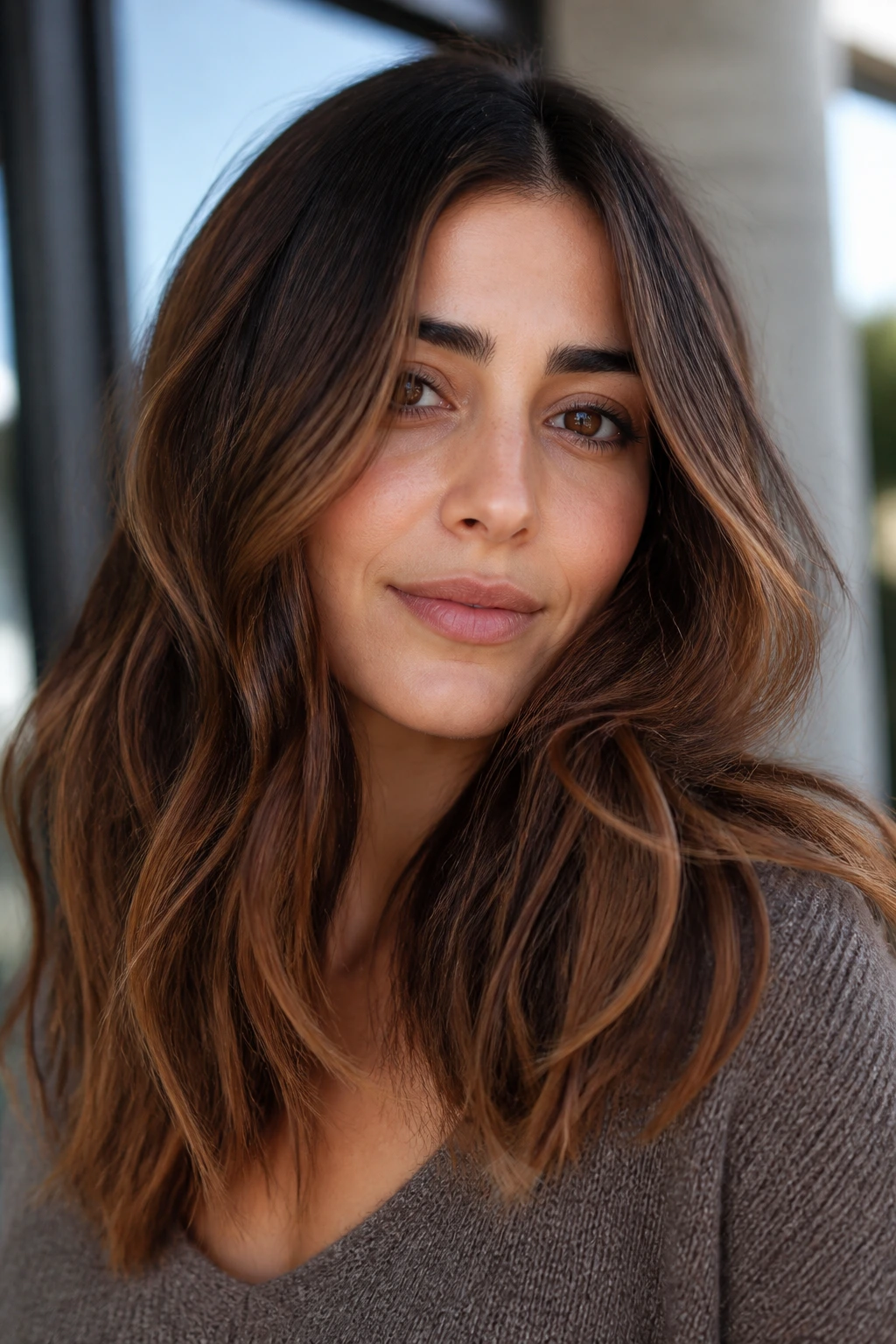
Do caramel highlights make olive skin look warmer?
Usually, yes, but the right kind of warmth matters. Beige, toffee, and muted honey tend to wake up olive skin without pushing it into orange territory. If the highlight is too yellow or too copper, the skin can look off instead of glowing.
Should olive skin go for gold, beige, or honey caramel?
Beige caramel is the safest starting point. Honey works well when the olive undertone leans warm, and gold can look good if it is softened with brown. The issue is not warmth itself; it is warmth with too little brown in it.
How light can I go and still keep the look subtle?
For most brunettes, staying one to three levels lighter than the base keeps the color soft. Once you push beyond that, the highlights start reading more blonde than caramel. That can still be nice, but it is no longer the same quiet effect.
Are balayage or foils better for this look?
Balayage gives the softest grow-out and the most blurred finish. Foils are better if you want a bit more lift near the face or crown. A lot of the prettiest versions use both: foils for precision, balayage for softness.
Can this work on black hair?
Yes, but the caramel usually needs to stay deeper and more diffused. On black hair, a light hand matters because very bright highlights can look harsh against olive skin. Deep mocha-caramel or smoky toffee is often the better starting point.
What if the highlights turn orange?
That usually means the warmth lifted too far or the toner faded. A salon gloss with beige or neutral brown tones can bring it back into range. At home, a blue shampoo once in a while can help, but do not try to fight orange with constant purple shampoo.
How often should I refresh the color?
Most subtle caramel highlights hold up well with a gloss every 6 to 8 weeks and a trim every 8 to 12 weeks. If your hair grows fast or your base is very dark, you may want a root-blend touch-up a little sooner. The nice part is that softer placement gives you room to breathe.
Do I need lowlights too?
Not always, but they can help if your hair has been lightened a few times and feels too flat. A few lowlights in a chestnut or mocha shade restore depth and make the caramel look richer. On olive skin, that extra brown often makes the whole color feel more natural.
The Soft Spot
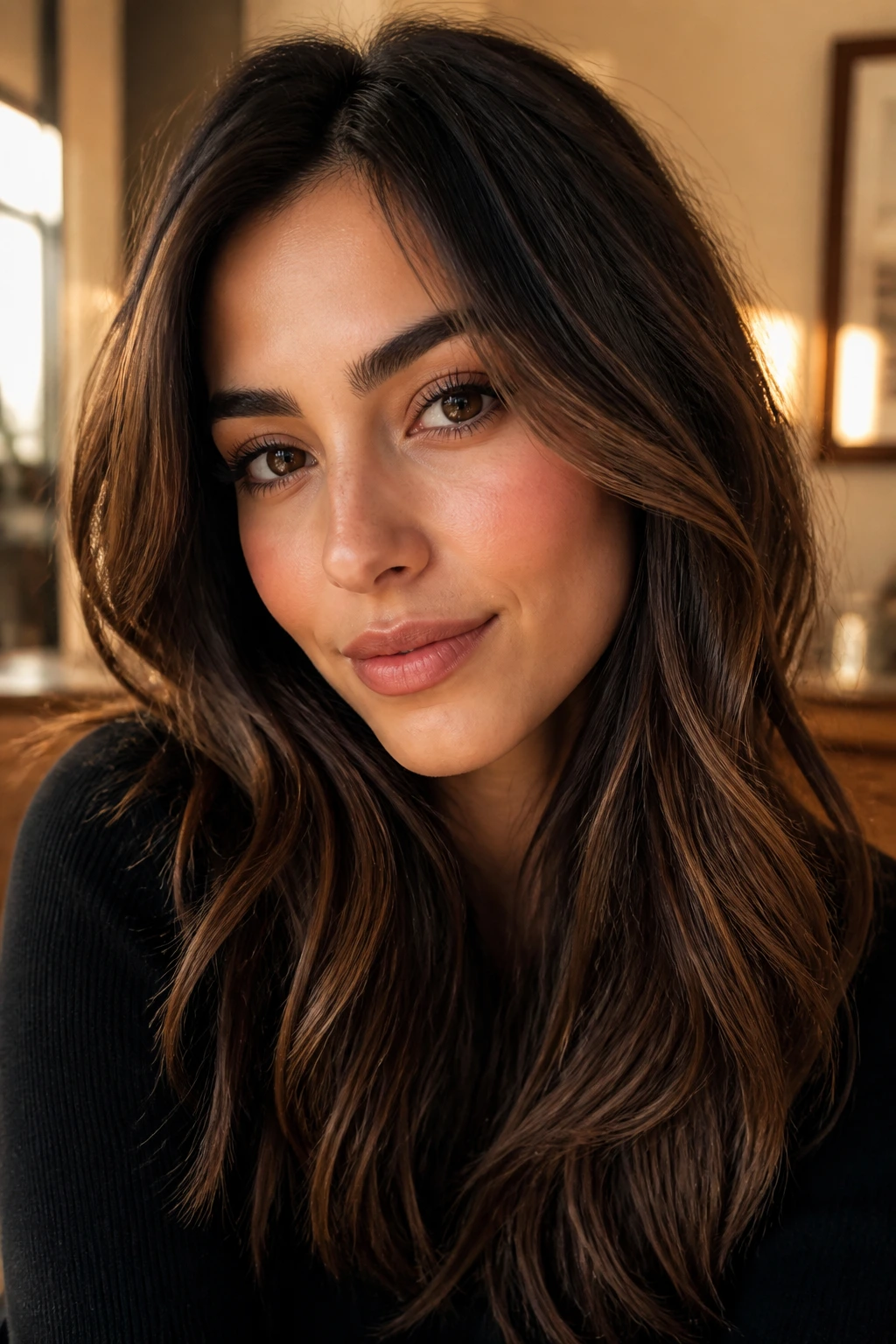
The prettiest caramel on olive skin is rarely the loudest one in the room. It is the version that sits a little closer to brown, keeps the root soft, and lets the warmth show up in movement instead of shouting from across the salon.
That is why these subtle highlights work so well: they respect the skin first, then add light where the eye naturally goes. If you take one thing from the whole pile of options, let it be this—ask for caramel with restraint, not caramel with volume. The color will last longer, grow out cleaner, and look better on a random Tuesday than it does under perfect salon lighting.
Bring a photo of the placement you want, a photo of the tone you want, and one blunt sentence about what you hate. That little bit of clarity gets you closer to the right caramel much faster than a vague “make it warmer” ever will.