



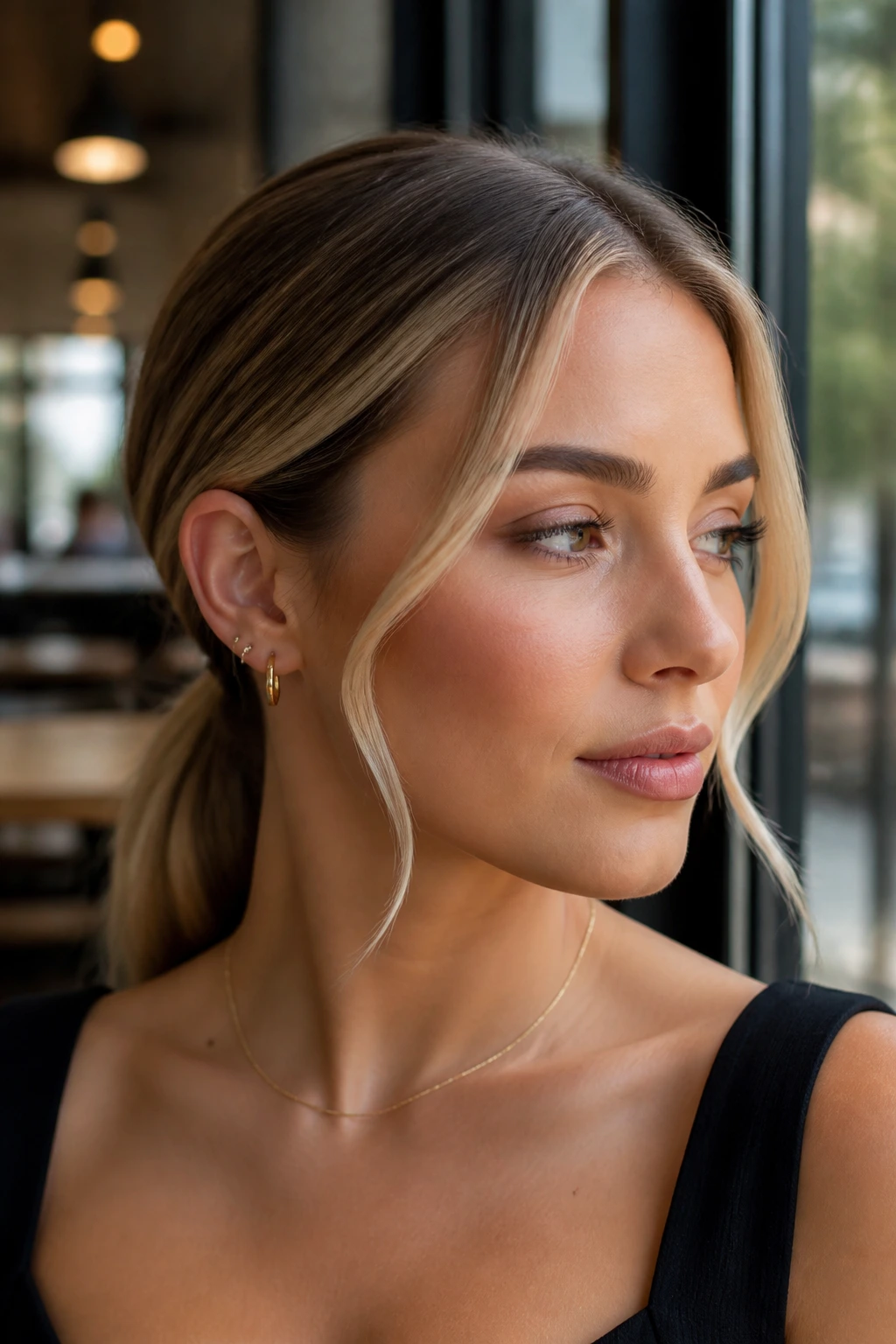
A low ponytail can look plain until the money piece highlights catch the light at the temples and the whole style sharpens up. Those front pieces are doing a lot of the flirting for you. They frame the cheeks, break up a slick crown, and keep the pony from disappearing into the back of the head.
That matters on date night. A bun can feel too severe. Loose hair can collapse by dessert. A low ponytail sits in the middle: neat enough to look intentional, relaxed enough to move when you turn your head, and low enough to keep earrings and necklines in the conversation.
My favorite versions aren’t the plastered-down ones. A little bend in the ends, a clean part, and a money piece curled away from the face can change the whole mood. The shape matters more than the spray. So does the placement. Put the ponytail too high and the vibe changes; tuck it just above the nape and suddenly the style has room to breathe.
Why Low Ponytails Make Money Piece Highlights Work So Well
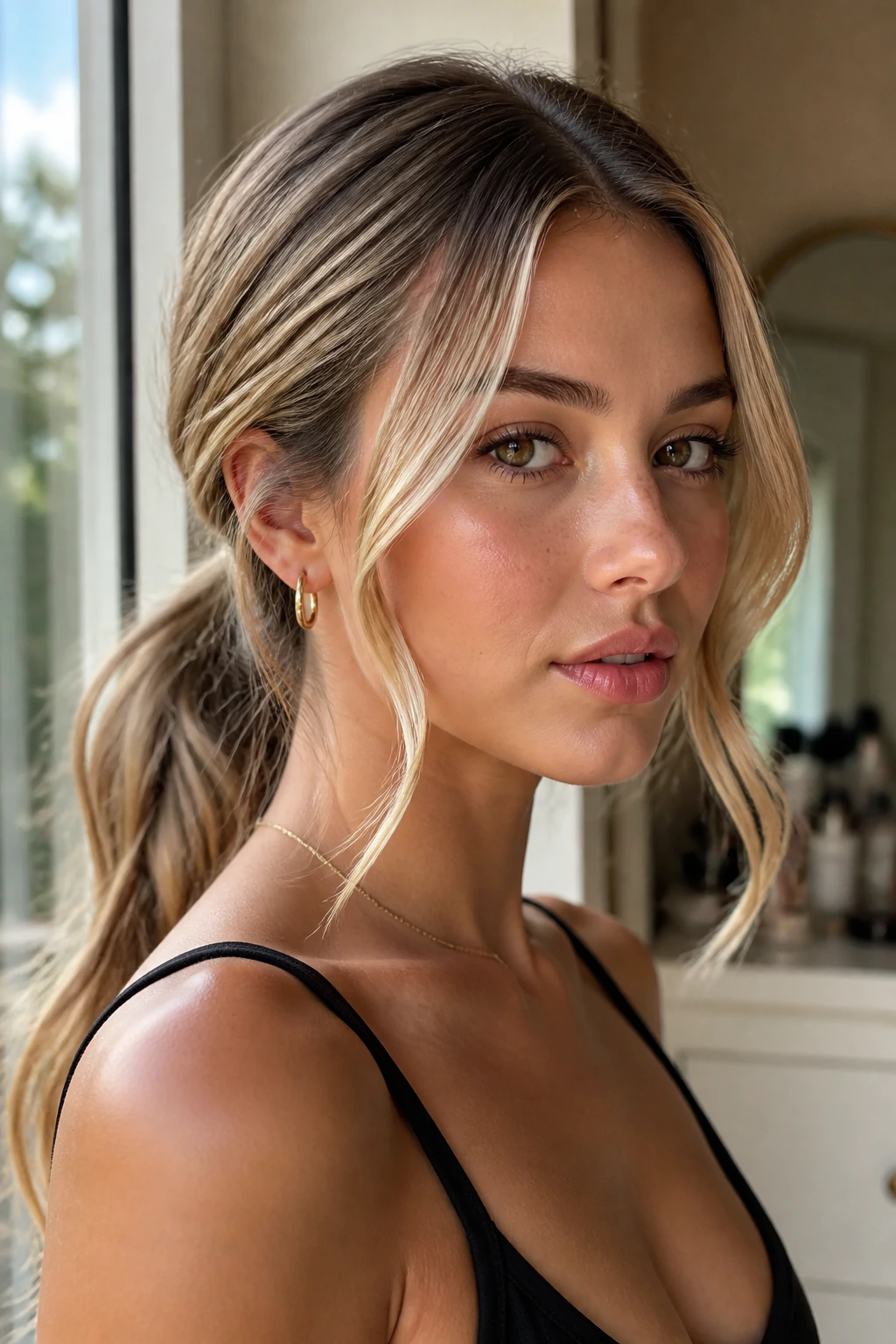
Face-framing highlights stay visible. A low ponytail leaves the brightest strands in front, which means the money pieces don’t disappear into the tail the way they can with a braid or a bun.
The neckline stays open. That little gap at the nape gives the hair some negative space, and the highlights read cleaner against skin, earrings, and a collarbone-bearing neckline.
The style can go polished or soft. A sleek crown turns the look sharp. A textured tail makes it feel more relaxed. The front pieces do the heavy lifting either way.
It suits day-two hair better than most updos. Slightly lived-in roots give the ponytail grip, and the money piece can still be bent fresh with a flat iron or curling iron right before you leave.
It keeps the focus on your face, not the back of your head. That sounds obvious, but a lot of ponytails swallow the best part of the haircut. This one does the opposite.
1. Sleek Center-Part Low Ponytail With Bright Face Frames
A clean center part is the most direct way to let money piece highlights do their job. The lighter front strands fall like a border around the face, and the low ponytail behind them stays quiet. Nothing competes. That’s the appeal.
This version works best when the crown is brushed flat and the tail is tied at the hollow of the neck. Use a pea-size amount of smoothing cream, then chase it with a boar-bristle brush so the surface lies down instead of puffing. I like the money piece curled away from the face with a flat iron, just enough to give it a soft bend.
The result is sharp without feeling severe. If the rest of the outfit is busy — sequins, a bold neckline, statement earrings — this ponytail gives the look a place to land.
2. Soft-Bend Low Ponytail With Curled Front Pieces
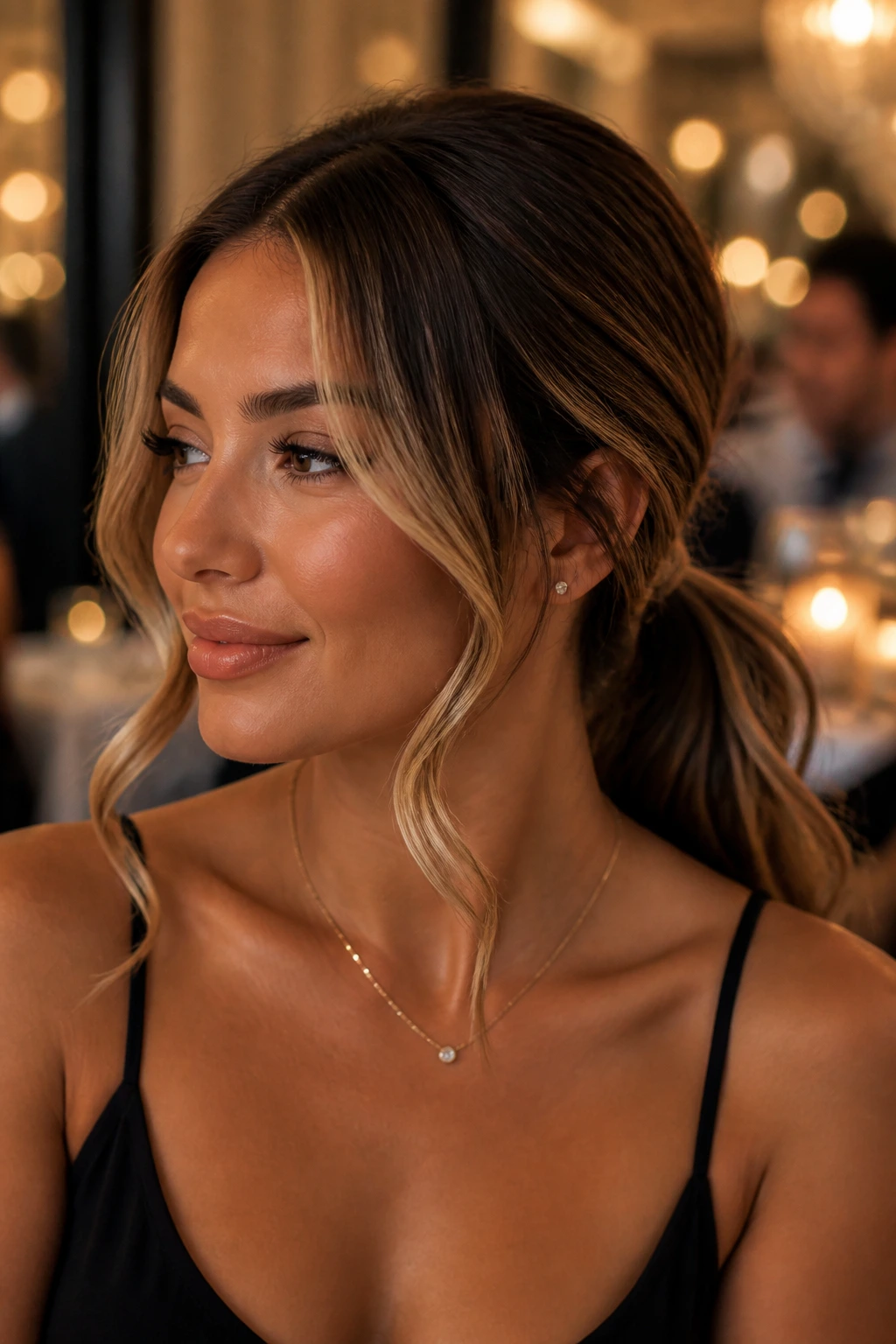
Straight lines can feel a little too hard for dinner out. A soft bend changes that fast. The money piece highlights curve away from the cheeks, and the ends of the ponytail get a loose C-shape that keeps the style from looking stiff.
I like this version on hair that’s been blown out the day before. Second-day texture gives the ponytail grip, and the bend in the front pieces keeps everything from flattening against the face. A 1-inch curling iron is enough; hold each front section for about 5 seconds, then let it cool in your hand before brushing it out.
It’s the kind of style that looks like you had a plan but not a panic. That matters. A ponytail that looks too perfect can feel formal in the wrong way. This one keeps a little motion.
3. Wrapped-Strand Minimalist Ponytail
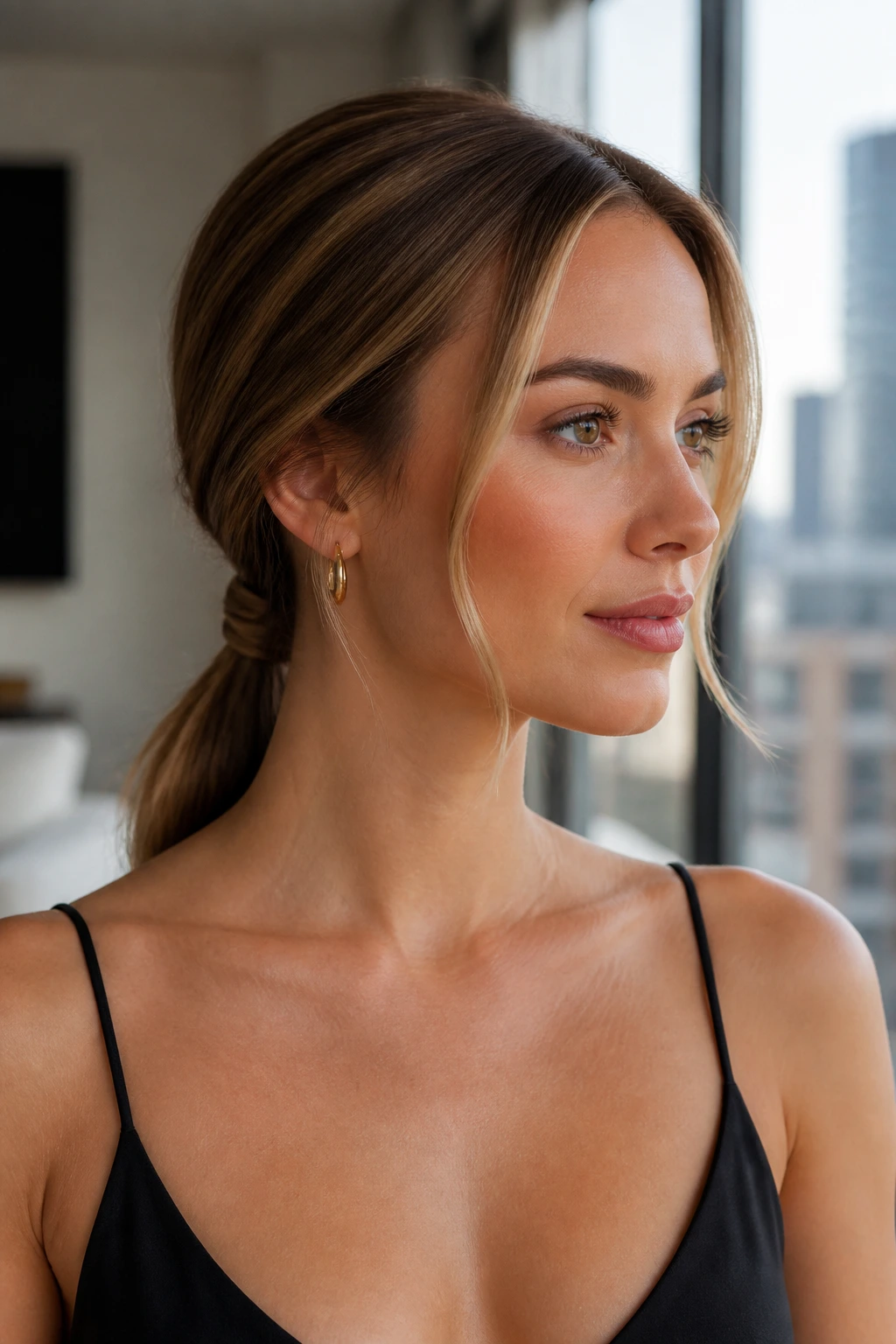
A wrapped elastic makes a low ponytail look finished in the way a hem does on a good pair of trousers. Tiny detail. Big payoff. The money pieces stay loose in front, while one strand from underneath hides the elastic and makes the whole thing look cleaner.
This is one of my go-to versions when the highlights are fresh and bright around the face. The wrapped strand gives the tail a little polish, but the style still feels modern, not overworked. It’s also kind to hair that’s been curled or smoothed earlier in the week, because you don’t need much more than a brush and two bobby pins.
If your date-night look is minimal — black top, gold hoops, neat liner — this ponytail fits without trying to outdress the rest of you.
4. Bubble Low Ponytail With a Soft Money Piece
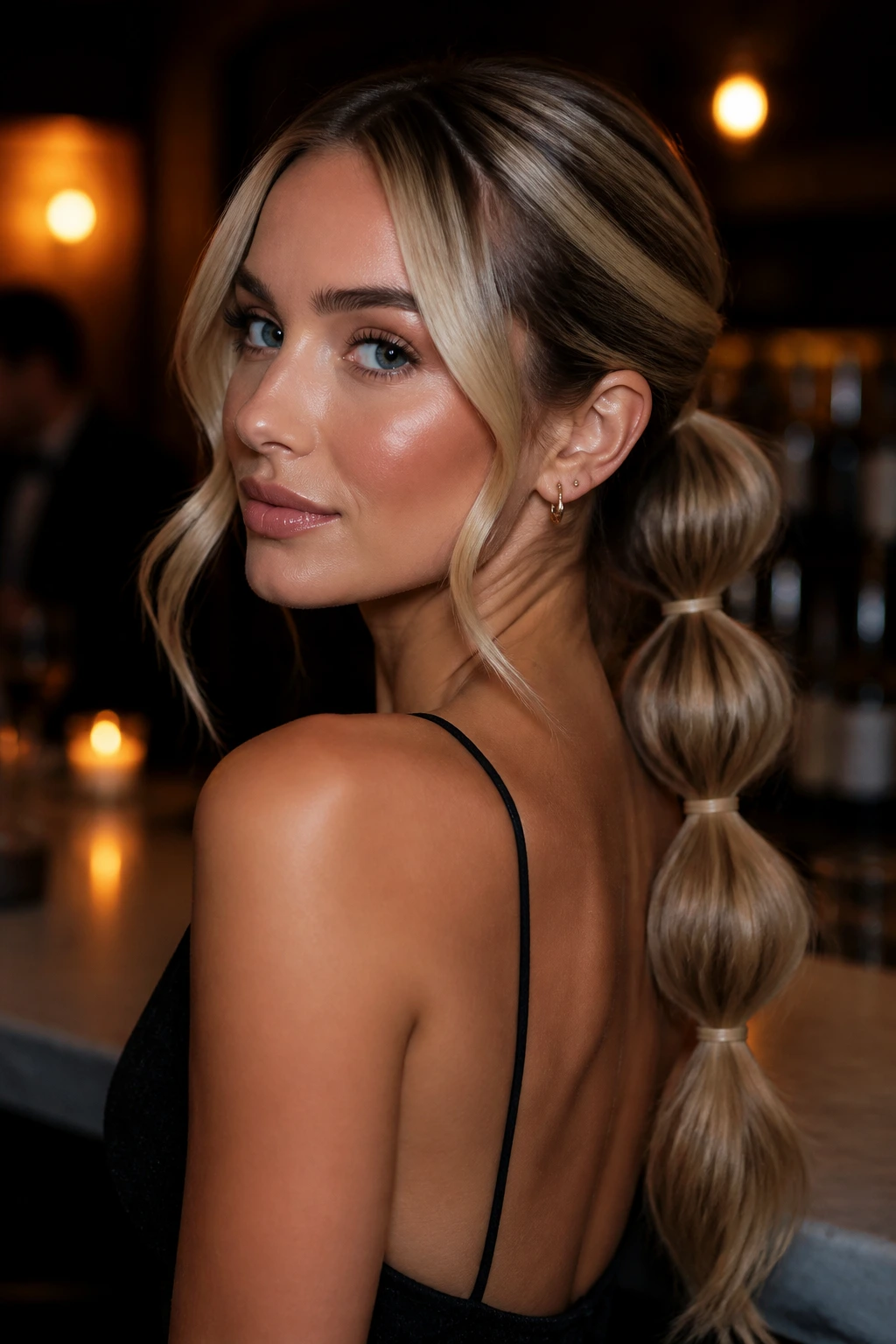
Bubble ponytails usually sound playful, and they can be. But at a low placement, they become sleek enough for dinner and drinks. The trick is to keep the bubbles wide and the elastics spaced evenly, about 2 to 3 inches apart, so the shape reads controlled instead of cartoonish.
The money piece highlights help balance the volume. They frame the face while the tail breaks into soft little sections down the back. If your hair is fine, tease each section lightly before securing the next elastic. If your hair is thick, skip the teasing and use clear elastics so the shape stays smooth.
This style is a good choice when you want movement without loose lengths brushing your shoulders all night. It has a little swing. That’s the point.
5. Deep Side-Part Glam Ponytail
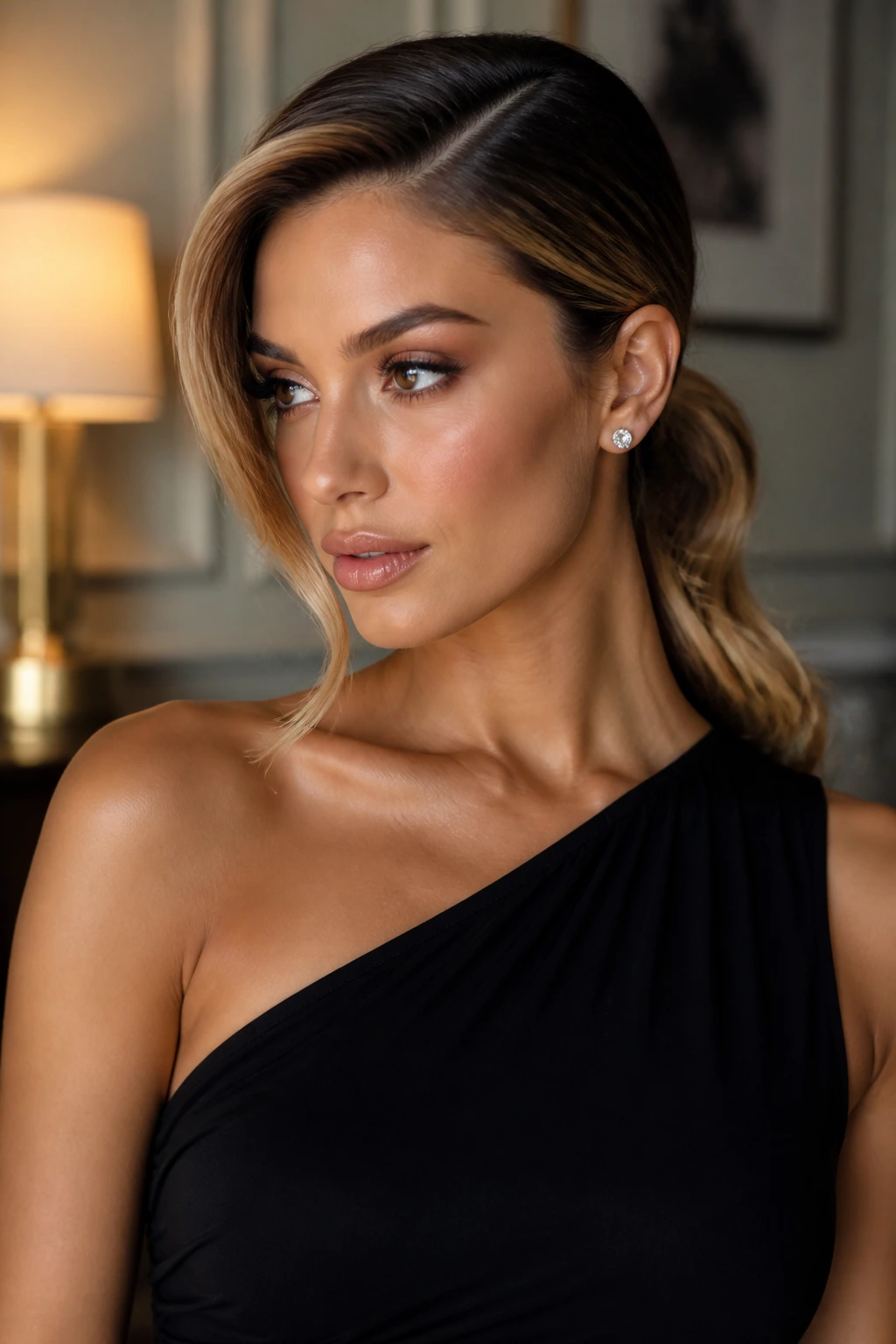
A deep side part changes the whole face shape of a low ponytail. It shifts the money piece highlights over one cheekbone, then lets the tail sit slightly off-center so the style feels more sculpted and less expected.
This one is excellent when the front pieces are thicker. A side part gives them room to sweep, and it keeps the highlight line visible from the front and the side. I like using a round brush or a curling iron to build a little bend at the root before securing the ponytail. If the crown is too flat, the side part loses its attitude.
This is the ponytail I’d reach for with a one-shoulder top or a dress that already has asymmetry. It echoes the shape instead of fighting it.
6. Twisted Crown Low Ponytail
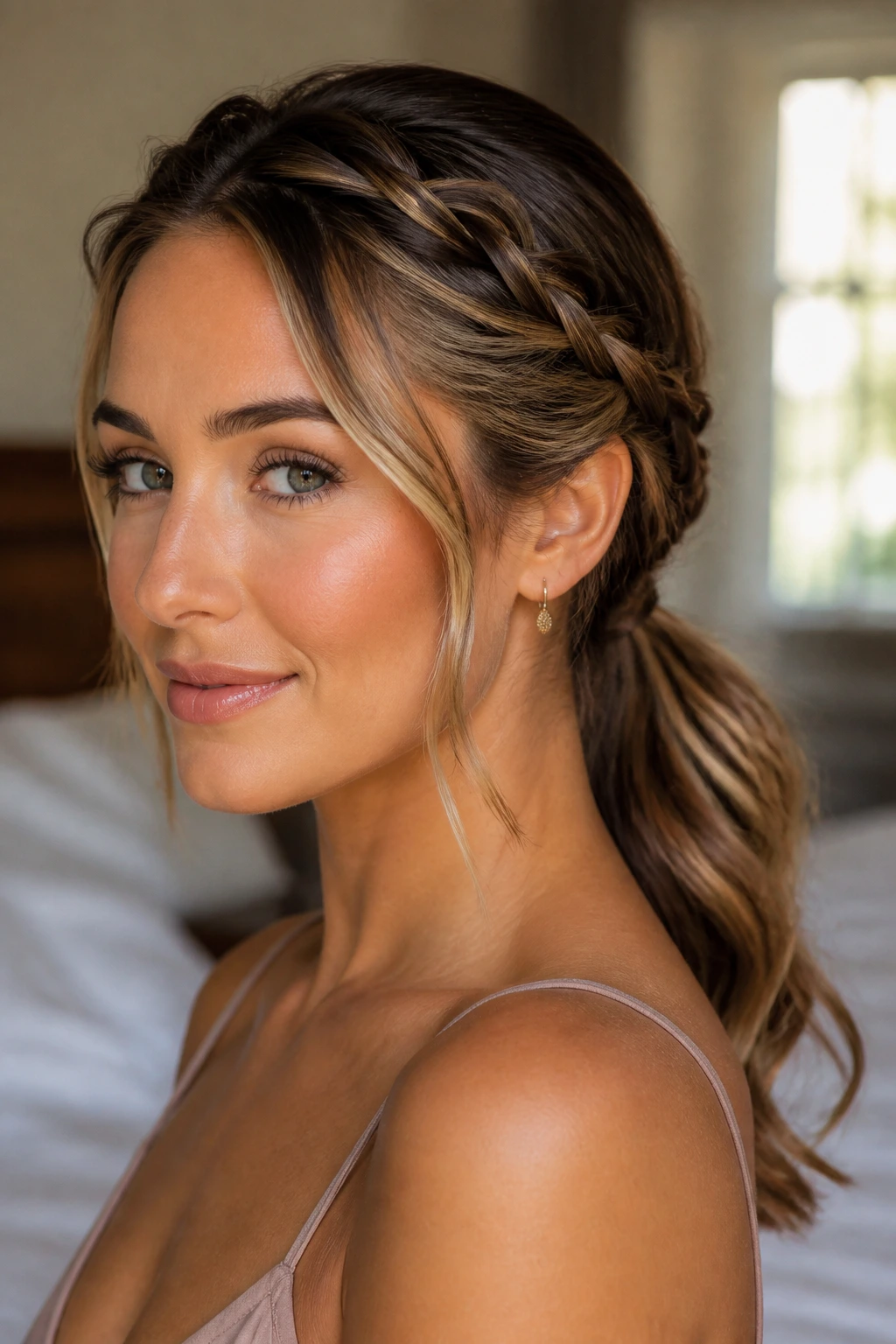
A small twist on each side of the part can make a plain ponytail feel styled, not just tied. The money piece highlights still fall forward, but the twists pull a little structure into the hairline so the face gets a softer frame.
I like this version when the hair has a bit of grit. Clean, slippery hair can make twists unravel. Day-old hair, or hair misted with texturizing spray, holds better. Twist back the front sections toward the ears, secure each side with a discreet pin, then gather the rest into a low ponytail.
It has a slightly romantic feel without drifting into prom territory. That line is worth respecting. Too many curls and pins can push the style into costume. Two tidy twists and a low tail? Enough.
7. Ribbon-Tied Low Ponytail
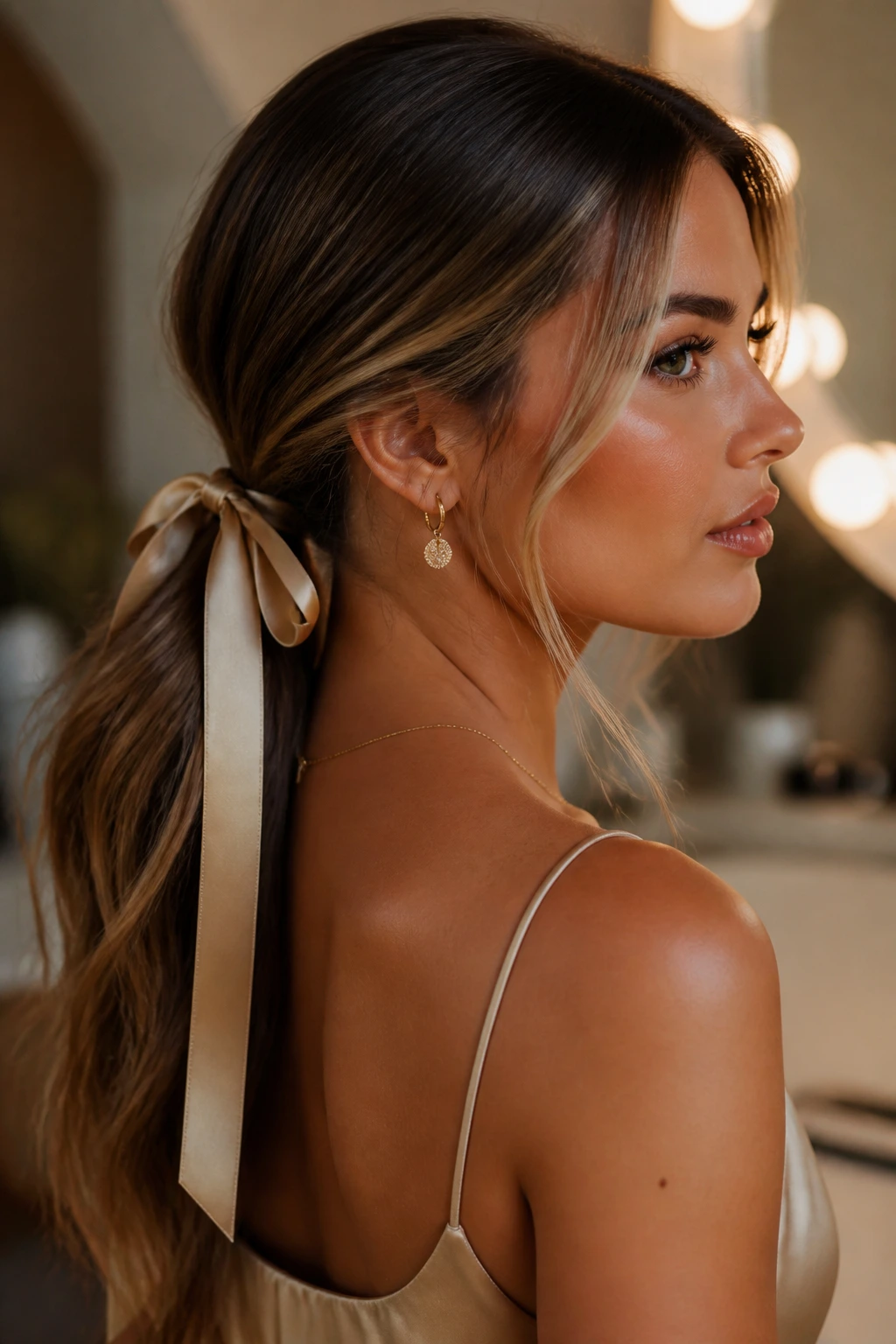
A ribbon changes the mood immediately. Satin feels dressy. Velvet feels deeper and a little richer in low light. Either one gives the low ponytail a softer finish, and the money piece highlights keep the front from disappearing into the fabric.
This works well when you don’t want a lot of hardware. Let the hair itself stay simple, then tie the ribbon around the elastic and leave the tails hanging a few inches down the back. If the ribbon is wide, keep the pony low and neat so the look doesn’t get bulky.
I like this version with a simple lip and bare shoulders. It has an old-fashioned charm that doesn’t feel costume-y if the rest of the styling stays clean.
8. Loose Wave Low Ponytail
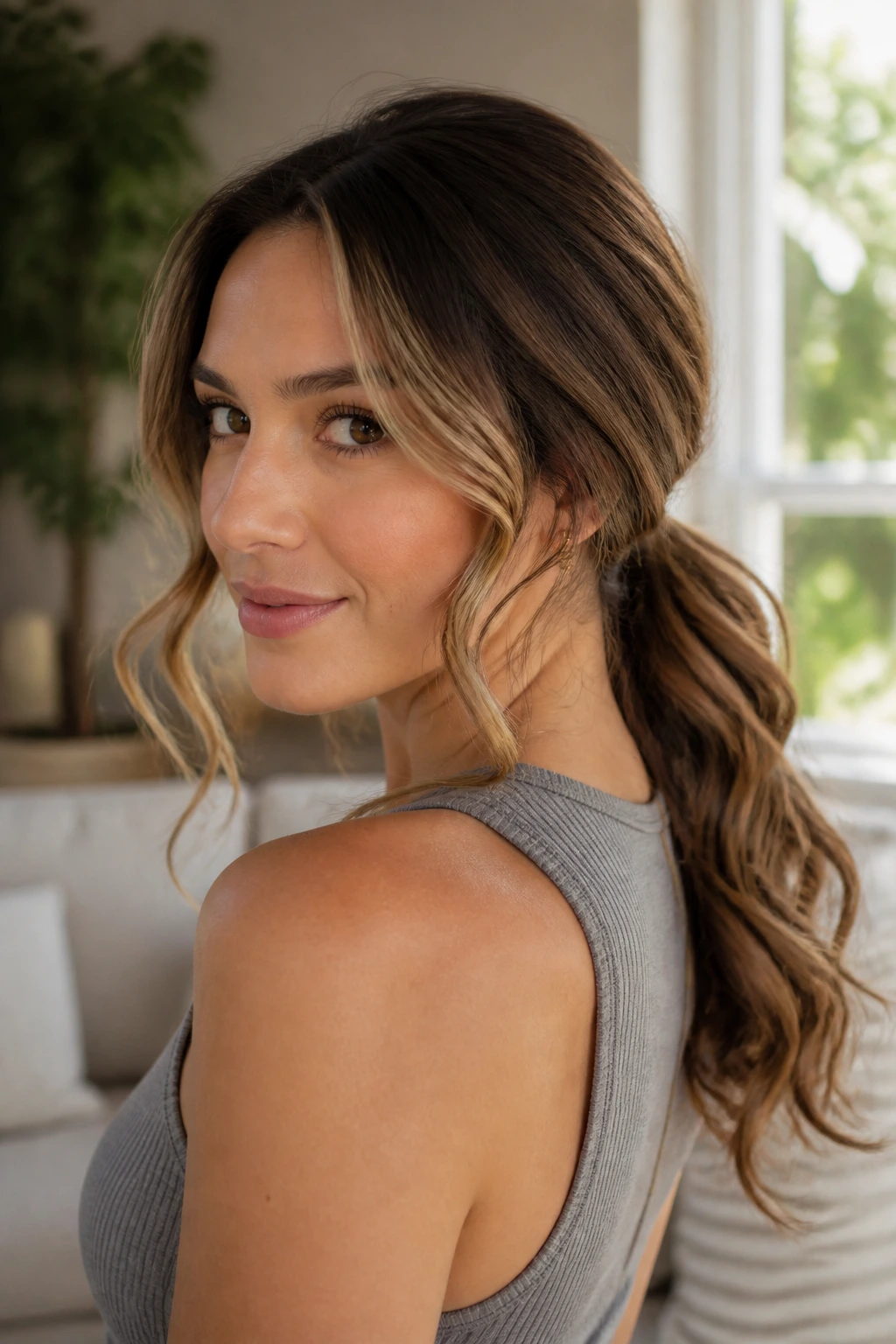
Loose waves make money piece highlights look more obvious because the bends catch light at different angles. The face-framing pieces can be curled a little tighter than the rest, then brushed out so they fall in soft arcs against the cheeks.
This is one of the most forgiving low ponytails in the bunch. The waves hide a bit of frizz, and the tail can be as full or as soft as you want. Use a 1-inch iron for structured waves or a wider iron if you want a looser pattern. Let each curl cool before you touch it. That matters more than people think.
It’s easy to wear, but not lazy. There’s a difference. The wave pattern gives the ponytail enough life that the highlights don’t need much help.
9. Braided-Base Low Ponytail
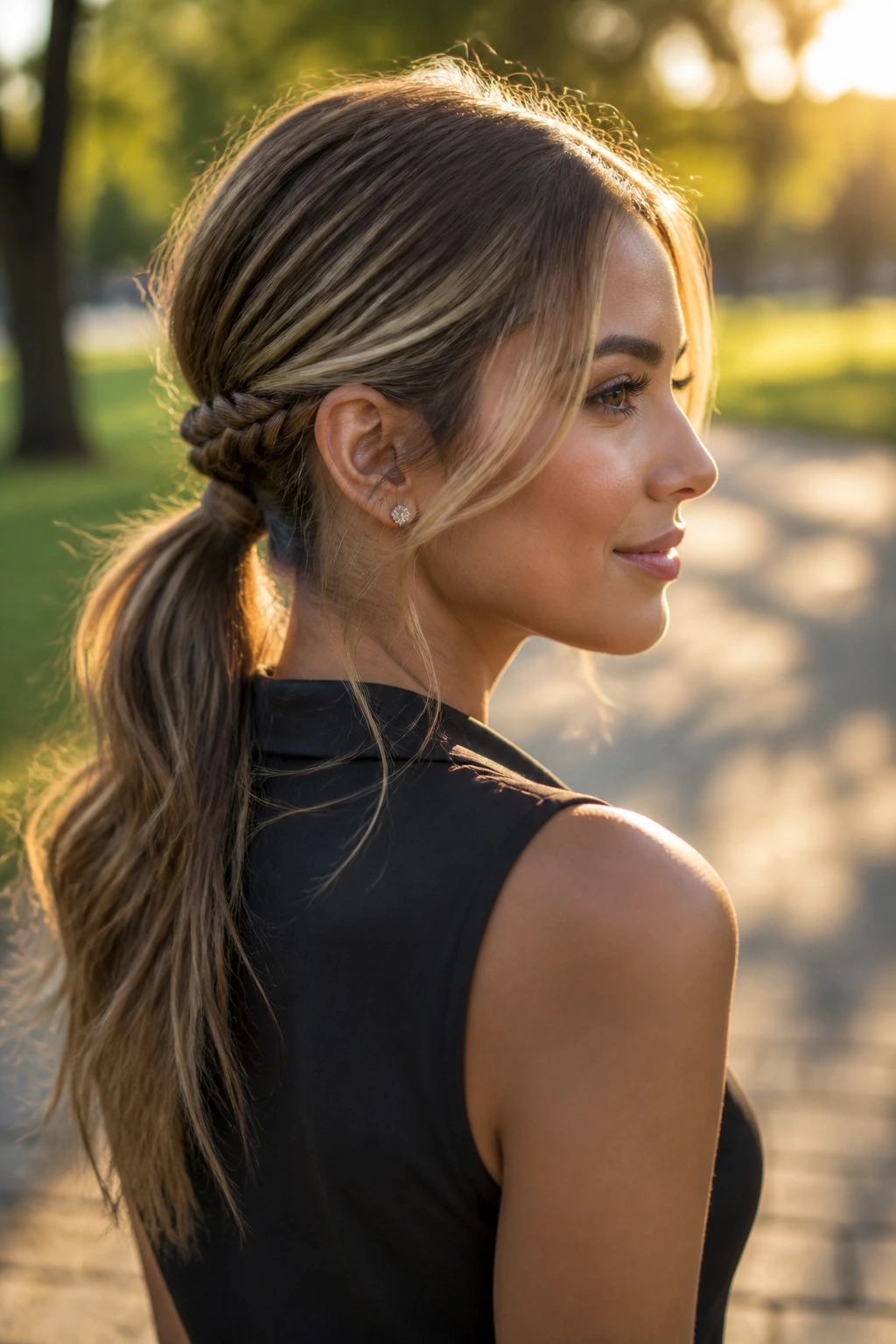
A tiny braid at the base of the ponytail adds texture right where a lot of styles go boring. You can braid a small section from the hairline into the tail or wrap a braid around the elastic. Either way, the money piece highlights stay forward while the back gains a little pattern.
This is a good choice when the hair is thick or layered. The braid gives the shorter pieces something to do instead of letting them pop out around the nape. It also helps the ponytail hold on a windy walk to dinner, which is a real-world detail most glossed-up hairstyle posts skip.
I’d keep the braid slim. A chunky braid can start to compete with the face-framing pieces, and the whole point here is to let those brighter strands stay visible.
10. Flipped-Under Low Ponytail
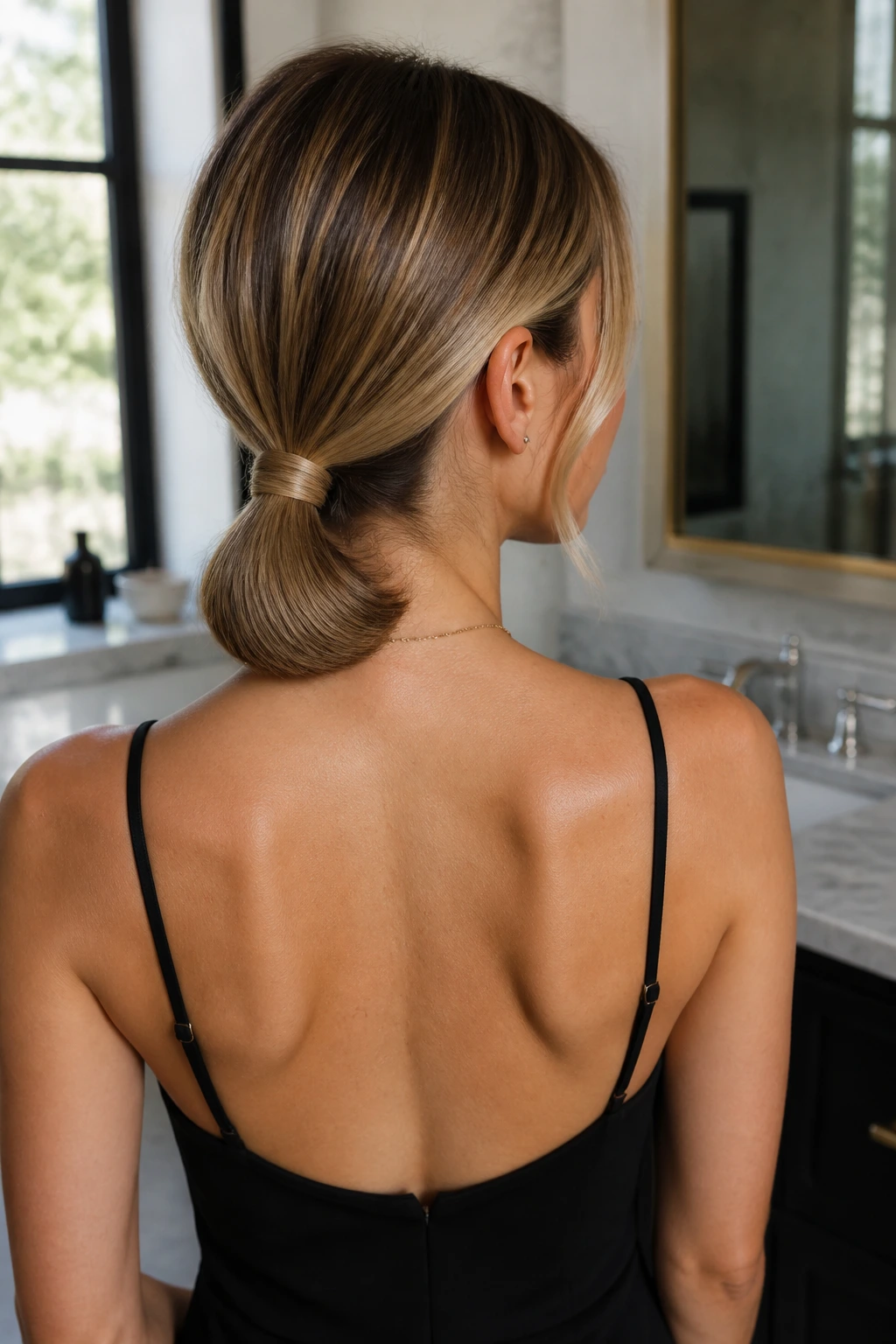
A flipped-under tail brings a bit of retro polish to the table. The ends tuck under instead of hanging straight down, which makes the silhouette feel neat and a little more deliberate. The money piece highlights give the front a soft glow so the style doesn’t look too severe.
This works especially well with medium-length hair. The flip at the end shows off the cut, and it keeps the tail from looking limp against the back. Use a flat iron or a round brush to bend the last 2 to 3 inches under, then mist with a light flexible spray.
It’s one of those styles that looks restrained in the best way. No fuss. No extra noise. Just a clean shape and a face-framing color story that does the talking.
11. Glossy Wet-Look Low Ponytail
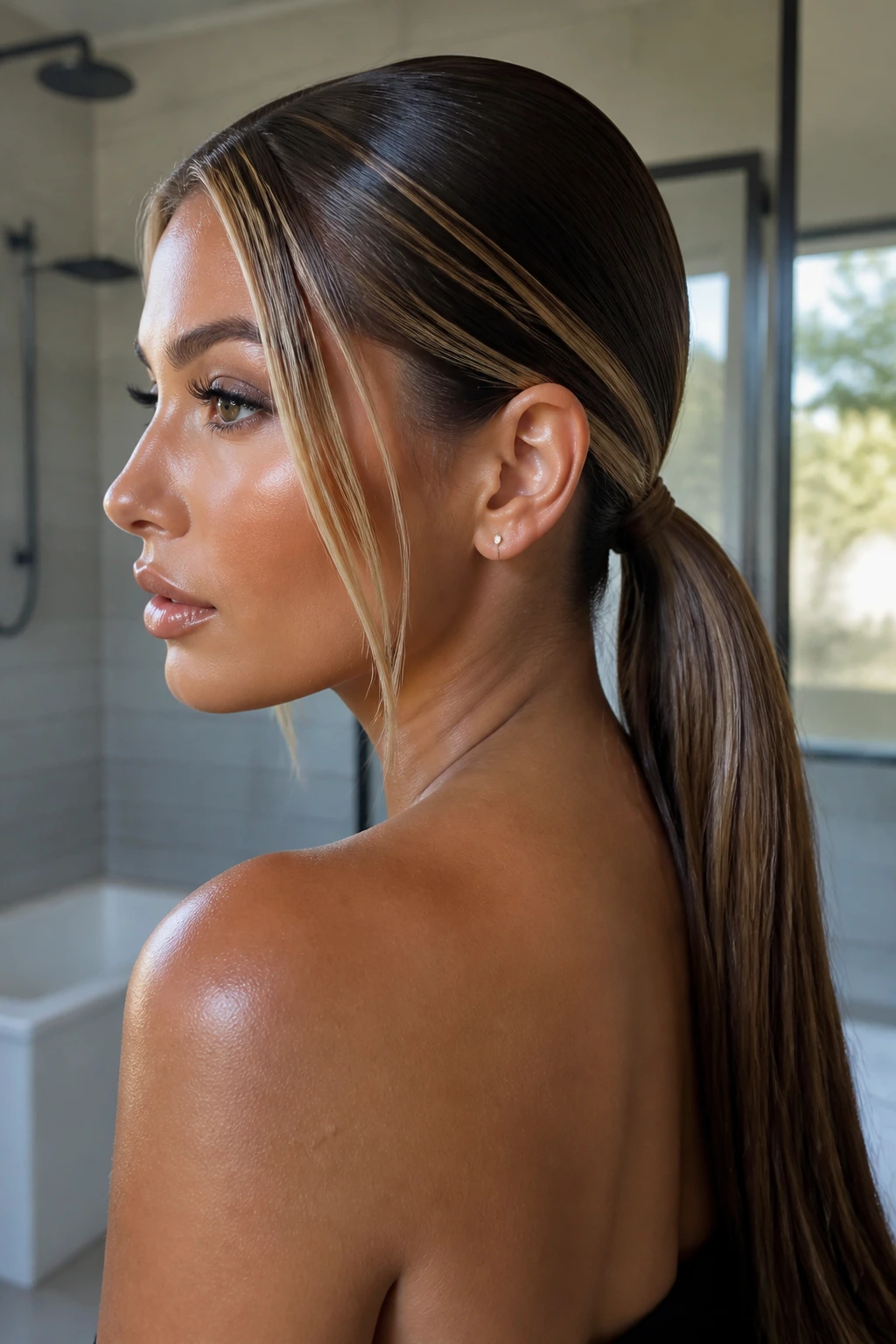
A wet-look ponytail can be tricky, but when it’s done with a low placement it reads chic rather than harsh. The shine reflects off the money piece highlights, so the front sections pop even if the rest of the hair is slicked back close to the scalp.
The crown needs a thin layer of gel or styling cream, brushed through with a fine-tooth comb so the finish stays smooth. Don’t pile product on. That’s the fast way to make the hair look greasy instead of glossy. The tail itself can stay straighter and softer, which keeps the style from turning into a helmet.
Best with clean lines. Best with a strong brow or a sharp outfit. It has edge, but it doesn’t need to shout.
12. Curtain-Bang Low Ponytail
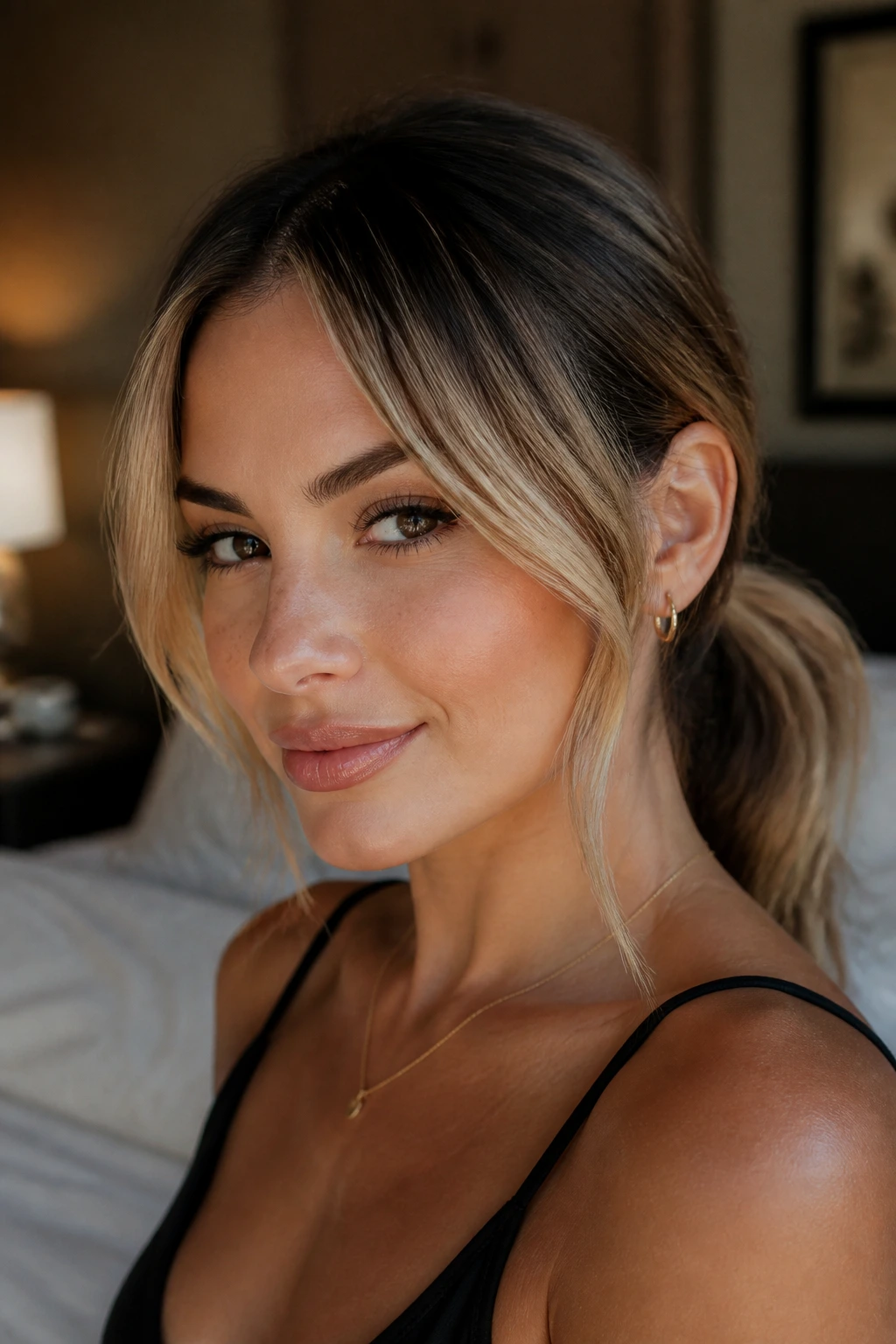
If you already wear curtain bangs or long face layers, a low ponytail turns them into part of the style instead of something you have to hide. The money piece highlights merge with the bangs and create one long frame around the face.
This is the most flattering option when you want movement close to the eyes and cheeks. Leave the front sections loose, then tuck the pony low and smooth the rest back. A quick bend through the bangs keeps them from sitting flat against the forehead. If they are too straight, the whole style loses softness.
It’s a little less formal than a sleek pony, and that’s fine. Date night doesn’t need to look staged. Sometimes the best hair is the one that seems to fall into place without being sloppy.
13. Rope-Twist Low Ponytail
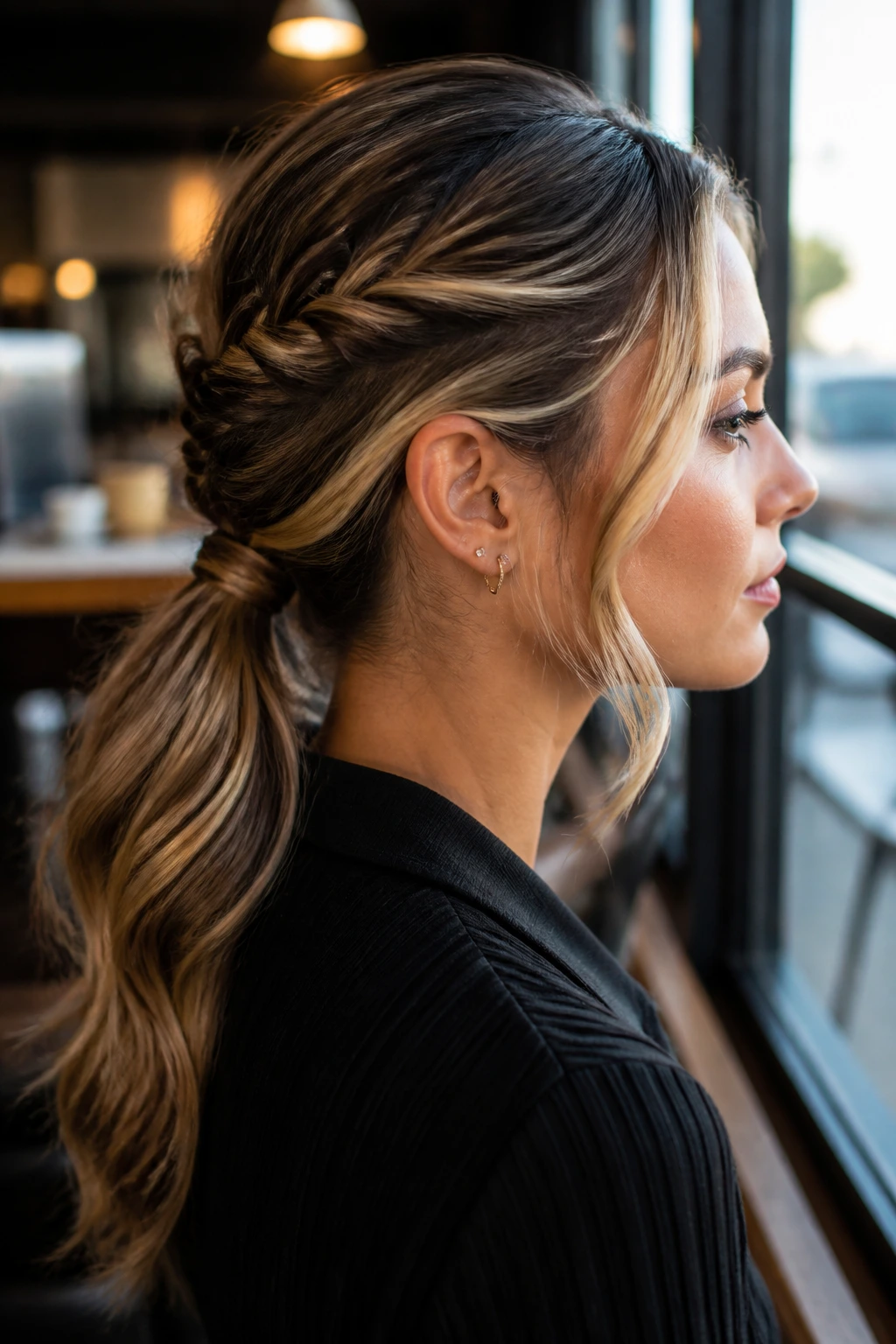
A rope twist has a cleaner, narrower look than a braid, which is useful when the highlights are already doing a lot visually. Twist two sections from each side back toward the nape, secure them together, and let the ponytail fall below.
The money piece highlights stay at the front like lit edges, while the rope twist creates a subtle path leading into the tail. I like this version on medium-density hair because it gives shape without stealing volume. If your hair is fine, keep the twist fairly snug. If it’s thick, loosen the twist a touch so the ponytail doesn’t feel compressed.
It has a tailored feel. Not fussy. Just put together enough to make a dinner reservation seem like a better idea than takeout.
14. Voluminous Blowout Low Ponytail
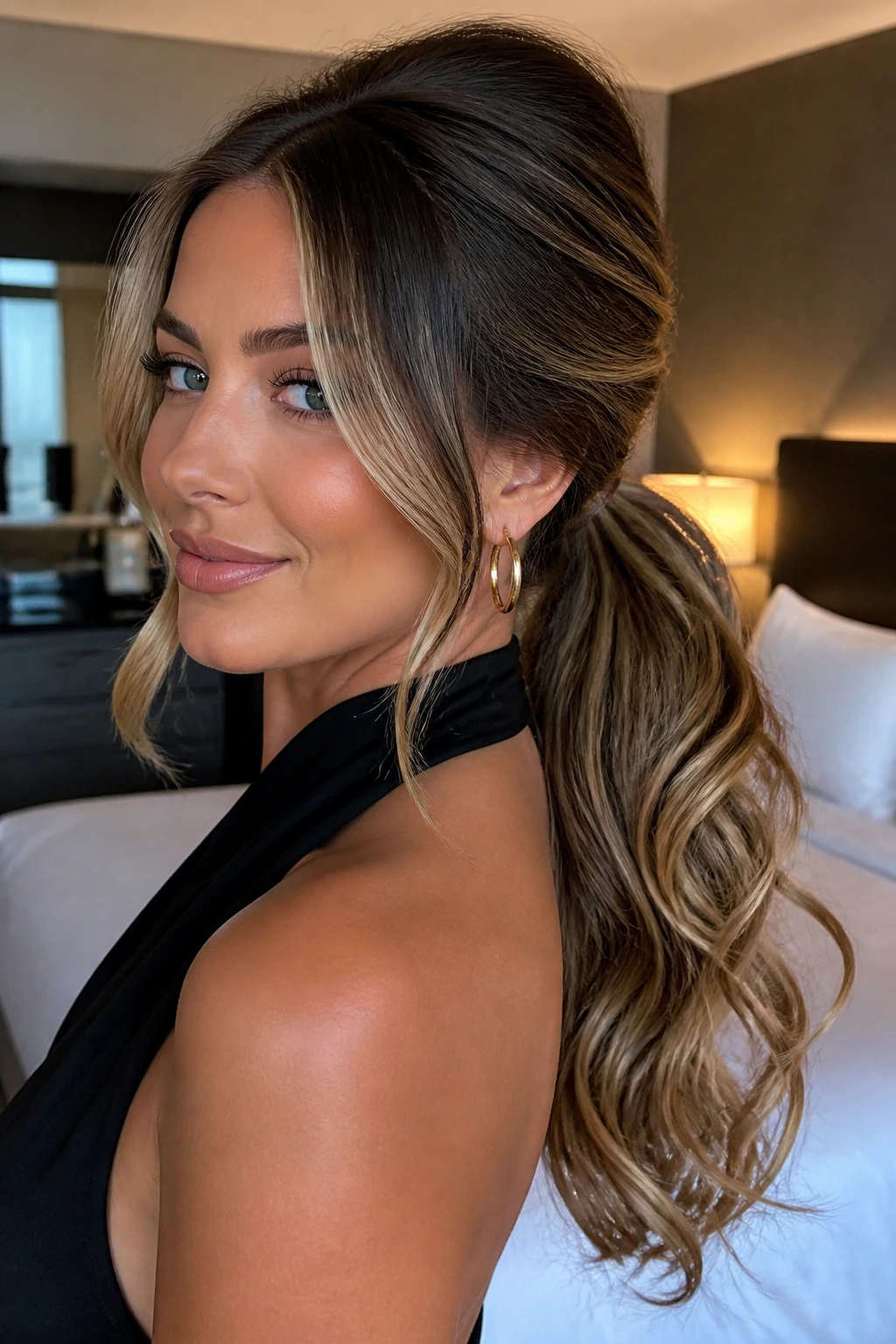
A low ponytail does not have to be flat. In fact, it looks better when the crown has a little air in it. A soft blowout at the roots and a rounded tail make the money piece highlights glow instead of just sitting there.
This version starts with volume at the crown, then moves into loose, brushed-out curls through the tail. I like a round brush and a blow-dryer nozzle for the front section, then a large-barrel iron on the lengths. The point is not springy curls. The point is a smooth bend with lift at the roots.
It’s the most dressy of the group without becoming stiff. If you want the ponytail to feel special rather than simply tidy, this is the one to build.
15. Pearl-Pinned Low Ponytail
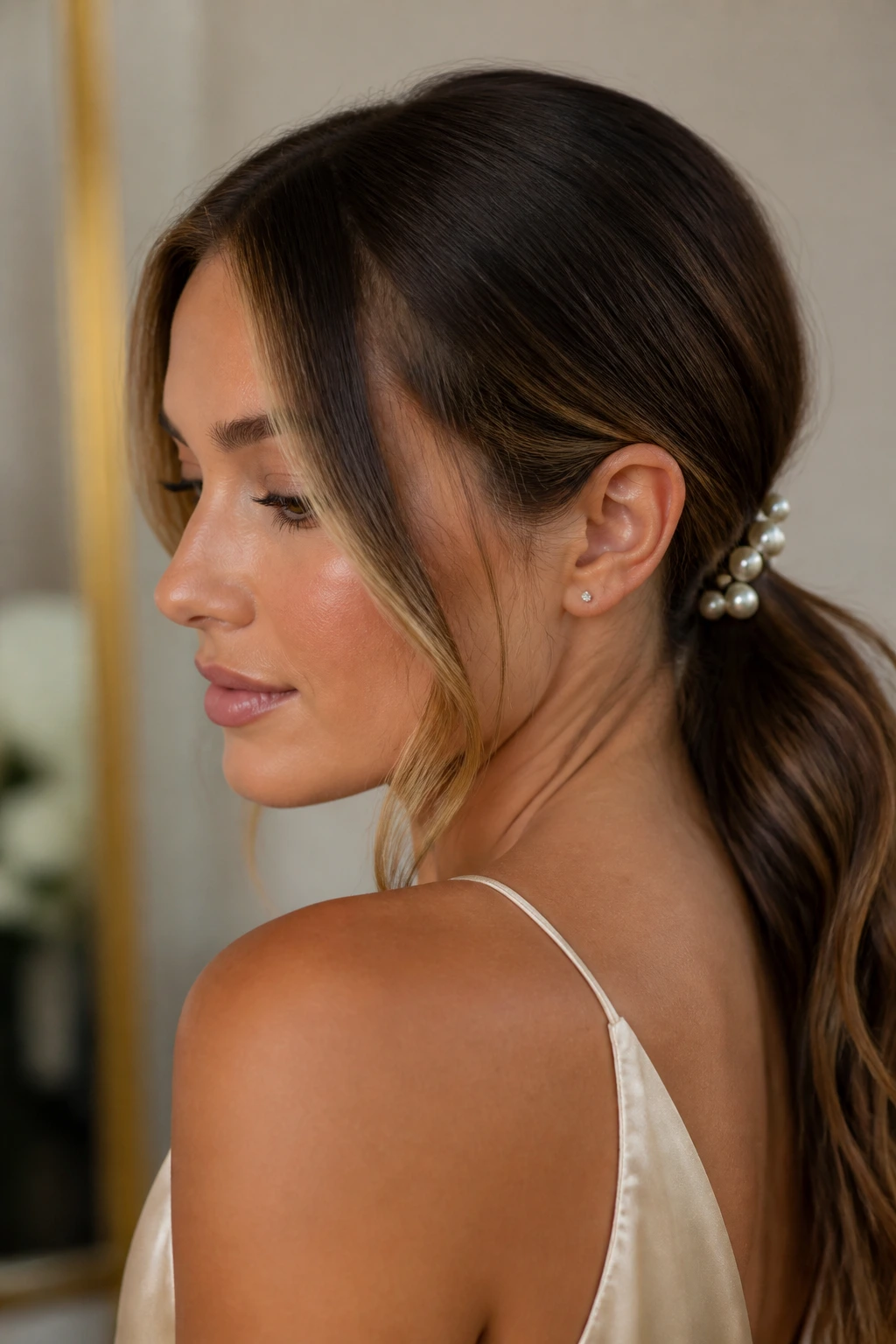
Pearl pins can make a plain low ponytail feel deliberate in seconds. Place a few near the base, or tuck them along one side of the ponytail where they catch the light near the money piece highlights.
This style works best when the rest of the hair is simple. Too many extras and the pearls start to feel crowded. A sleek tail, a neat part, and two or three pins are enough. If the hair is textured, keep the pearls clustered near the smoothed crown so the contrast stays clean.
I like this with a simple dress and a little shine on the cheeks. The hairstyle quietly echoes jewelry, which is exactly the sort of thing that makes a look feel finished without looking overplanned.
16. S-Curve Low Ponytail
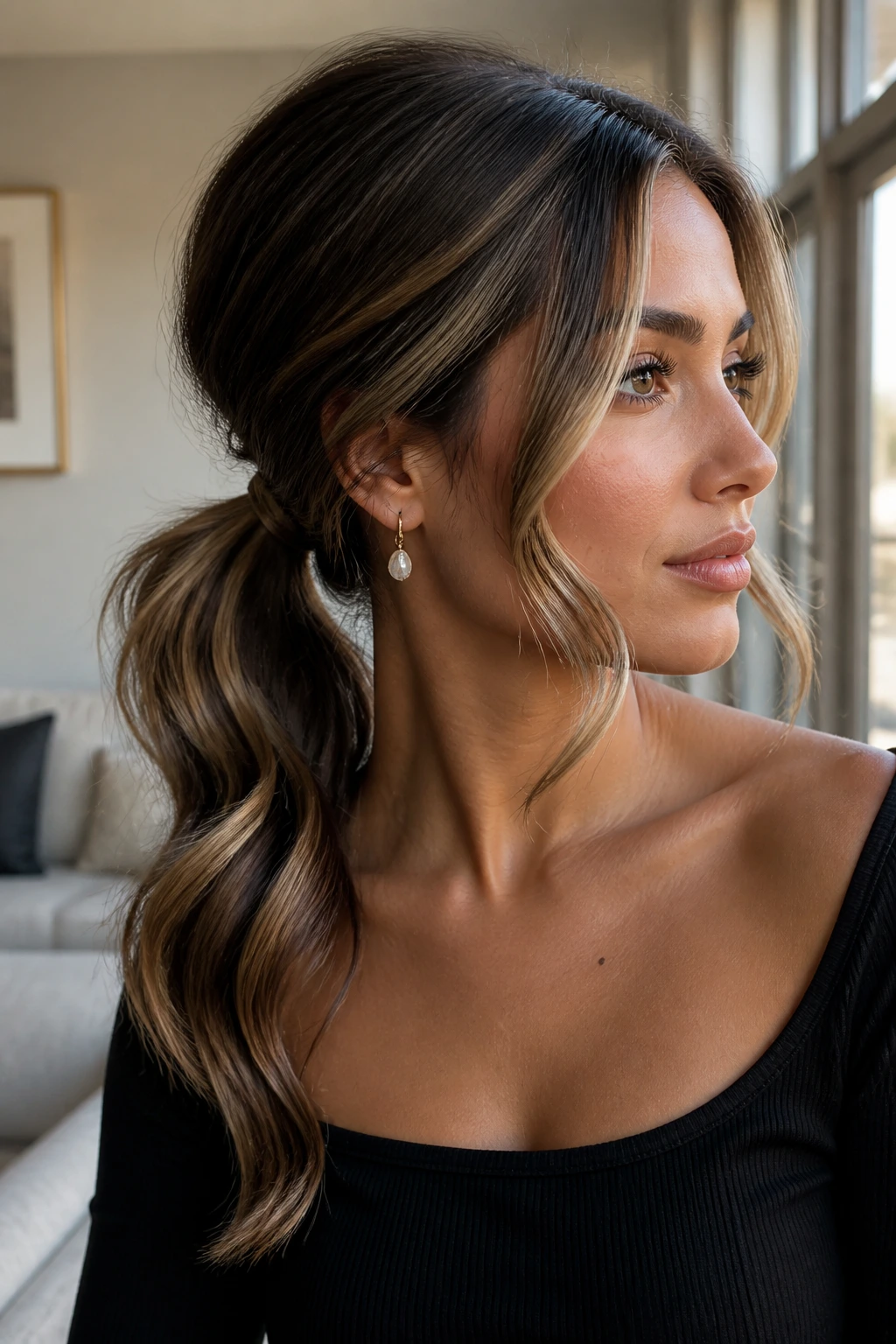
An S-curve sounds technical, but it’s really just a soft wave pattern that bends in alternating directions. The money piece highlights pick up that movement fast, especially when the front pieces are curled away from the face and then slightly inward near the ends.
This is a strong choice if you want texture that feels refined. Use a curling iron to create one wave, then change direction on the next section so the bend forms that subtle S shape. Brush it out lightly. Don’t destroy the pattern. Just soften the edges.
It gives the ponytail a more editorial look than a standard curl, and yet it still feels wearable. I’d choose it when the outfit is simple and the hair can carry a little more of the mood.
17. Half-Sleek, Half-Soft Low Ponytail
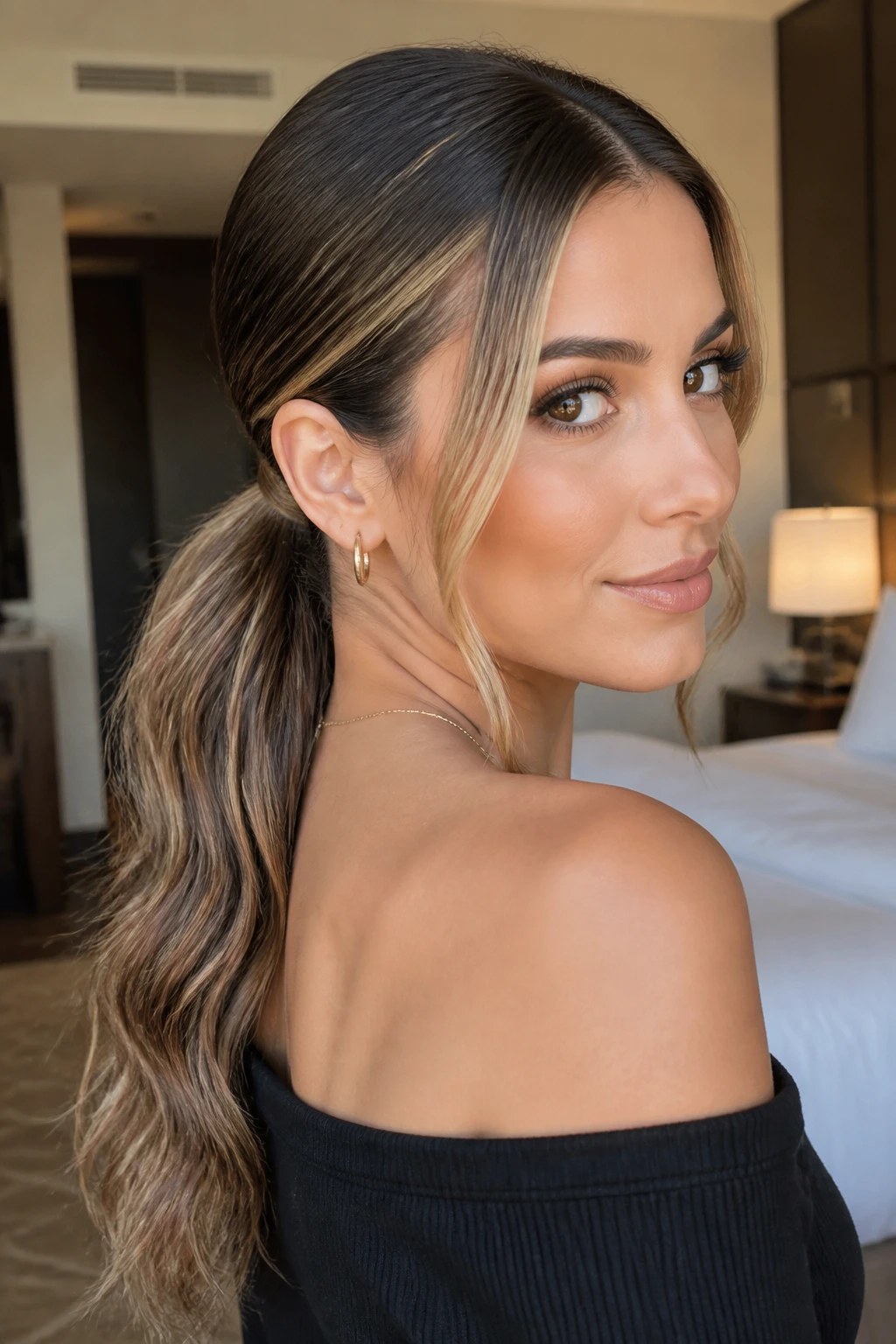
This one is all about contrast. The crown and sides are smoothed close to the head, but the money piece highlights and tail keep a bit of softness and movement. That tension makes the style interesting.
It’s a smart option if your hair tends to frizz at the surface but holds shape through the lengths. Smooth the top with cream and a brush, then leave the ponytail itself lightly waved or slightly undone. The front pieces should still be visible and bright, not pinned back so tightly that they disappear.
This is the hairstyle version of a structured jacket over a soft top. I like that mix. It keeps the look from leaning too hard in either direction.
18. Tucked-Under Nape Ponytail
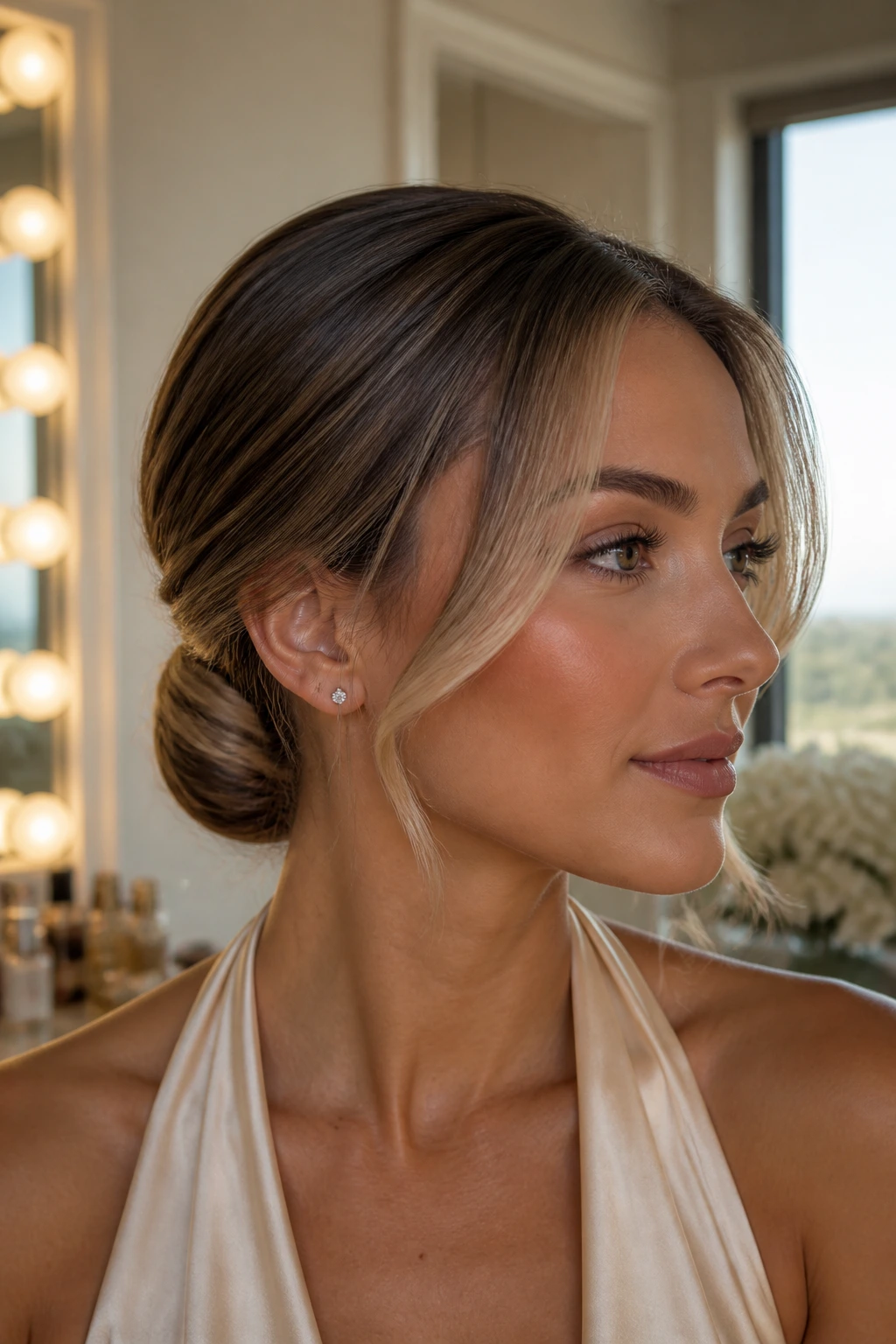
A tucked-under ponytail folds the tail back toward the nape and pins it, almost like a soft roll. The shape sits low and compact, which means the money piece highlights can stay loose in front and do more visual work than the tail itself.
The style reads polished, but it doesn’t feel old or stiff if you keep the front pieces soft. This is a good move for shorter tails or hair that doesn’t swing well when left long. It also keeps the ends off the shoulders, which matters if you’re wearing a high neckline or a jacket that keeps catching the hair.
There’s a neatness to it that I like. Not perfect, neat. Just finished. That difference shows up fast in person.
19. Messy-Chic Low Ponytail
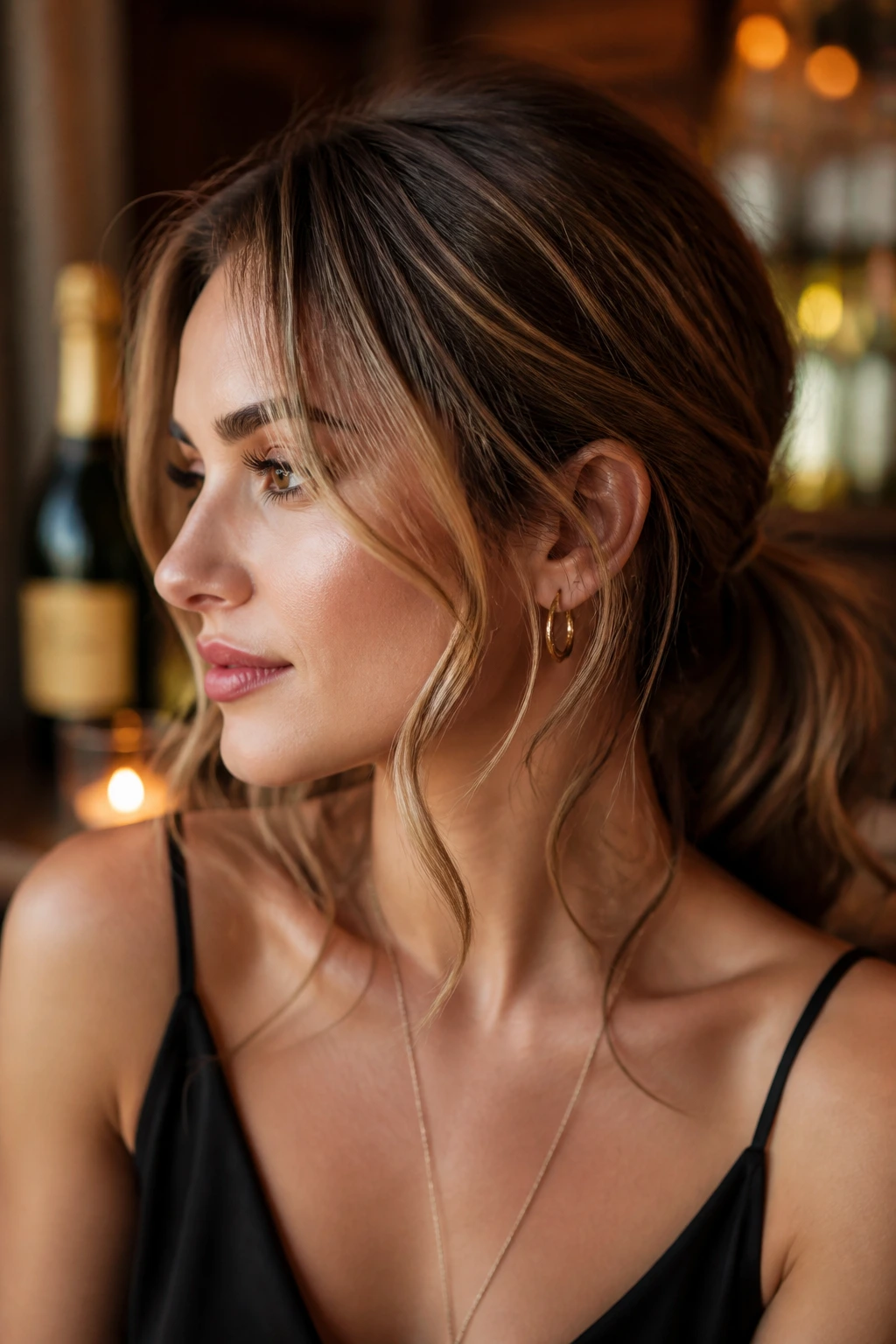
Messy-chic only works when the mess is placed on purpose. The crown should still be shaped, the money piece highlights should still frame the face, and the tail should still have some texture control. Otherwise it just looks like you gave up halfway through.
Pull a few strands loose around the temples and nape. Leave the tail piece-y rather than brushed into a single sheet. A texturizing spray helps here, because it gives the hair a bit of bend without turning it crunchy. The highlight pieces catch more light when they aren’t glued to the face.
This is the one for a late dinner, a casual wine bar, or a night when you want the hair to feel easy. Easy, not undone. There’s a difference.
20. Side-Swept Romantic Low Ponytail
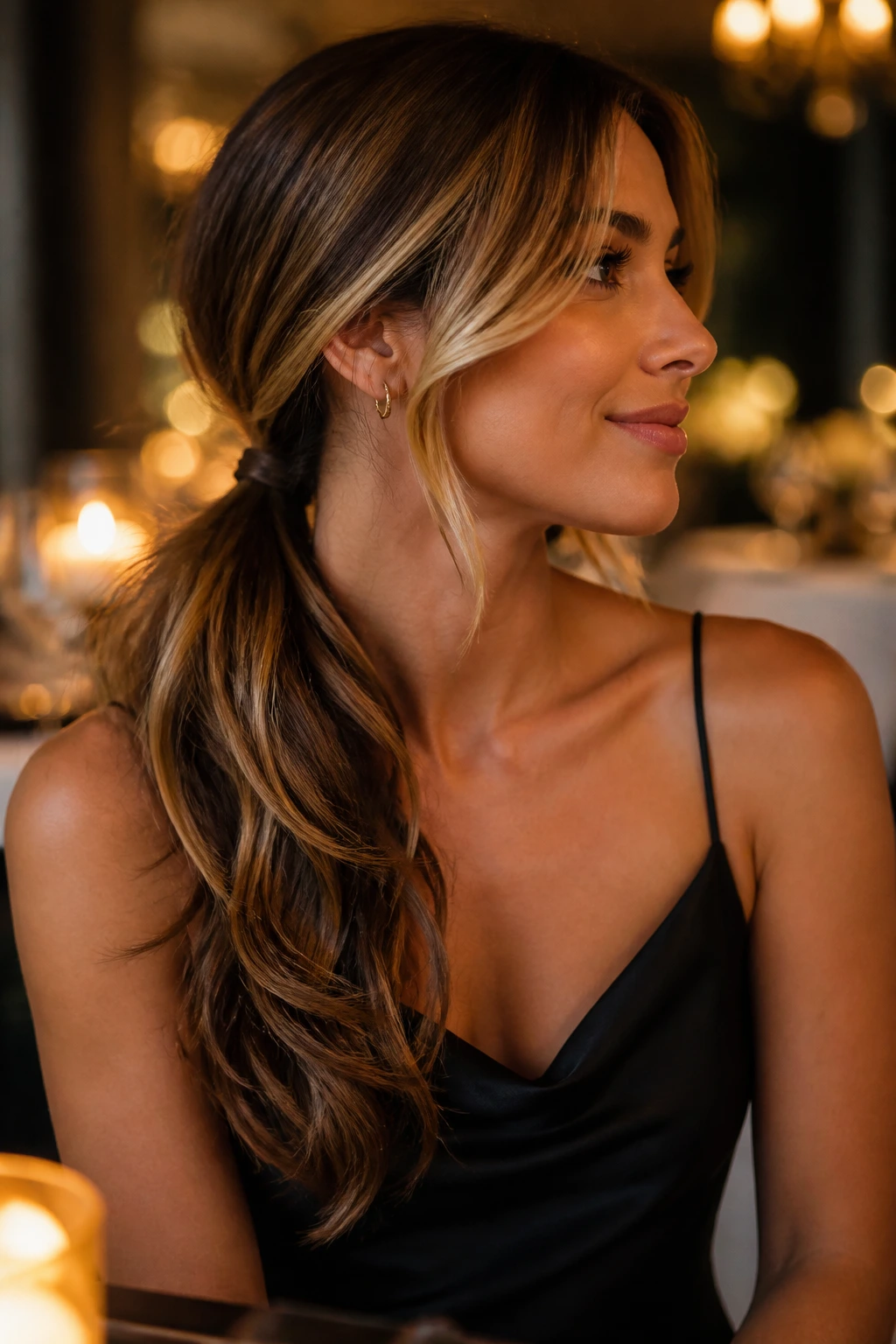
A side-swept ponytail softens the whole face in a way a center part never quite does. The money piece highlights sweep with the front sections, then the tail lands over one shoulder or just off to the side of the neck.
It’s flattering if you like a little asymmetry. The shift in placement gives the style a quieter kind of drama, and it’s one of the easiest ways to keep long hair from lying flat against the back of the dress. Curl the ends away from the face, then brush them so they hang in soft waves instead of ringlets.
This is the ponytail I’d choose for a date where the outfit already has some softness — lace, satin, a cowl neck, anything with movement. The hair should echo that, not fight it.
21. Textured Low Ponytail With Loose Tendrils
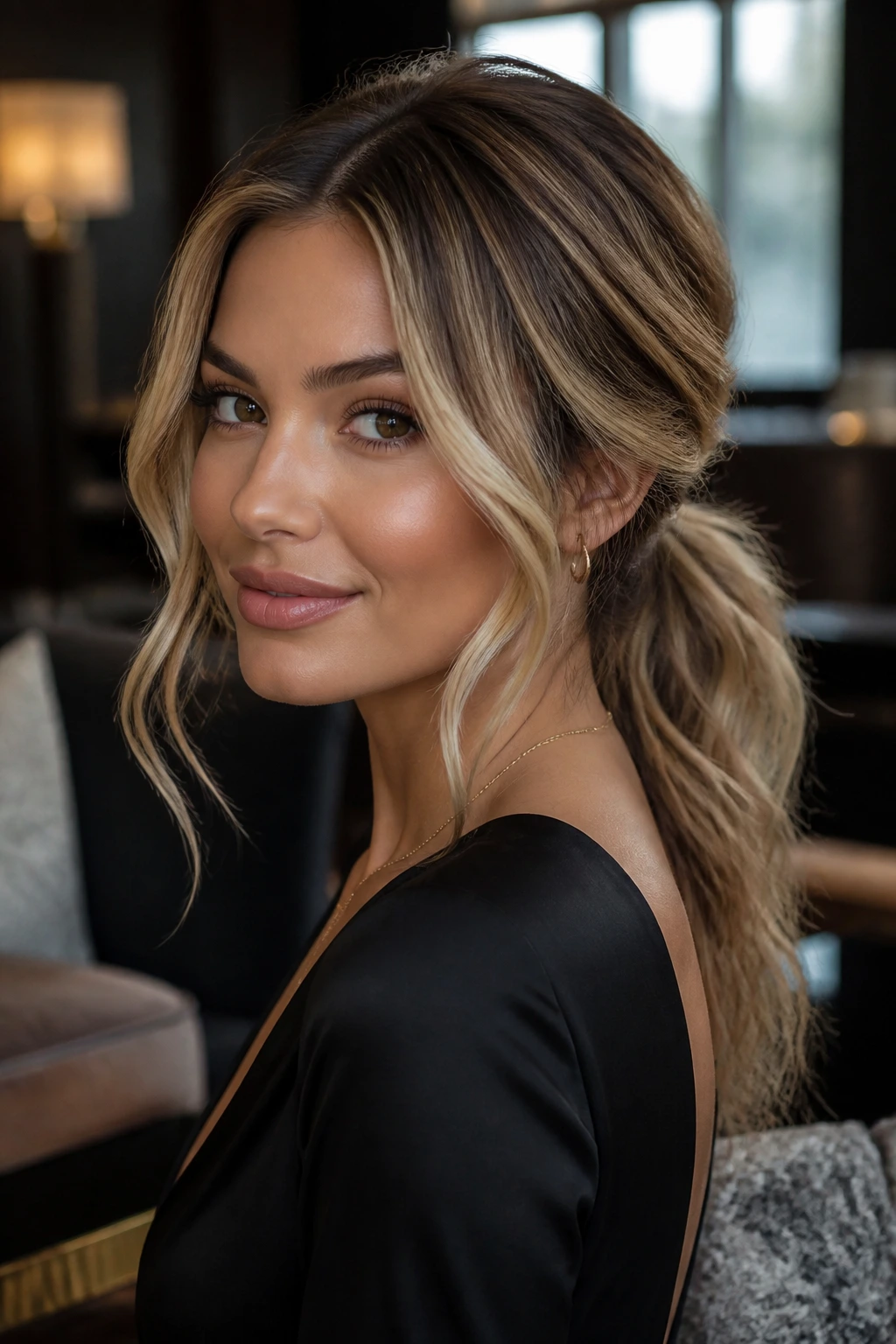
This version leaves a couple of tendrils free near the temples and cheekbones, which lets the money piece highlights sit in the front where they belong. The tail itself can be lightly curled, rough-dried, or brushed out depending on how polished you want it.
The tendrils matter. If they’re too thin, they look accidental. If they’re too thick, the ponytail can start to feel heavy around the face. I like one section on each side, curled loosely and softened with fingers. That’s enough to create shape without hiding the hairline.
It’s a good middle ground for anyone who wants some softness but not a full halo of loose hair. The structure is still there. It just doesn’t announce itself.
22. Soft Knot-Wrapped Low Ponytail
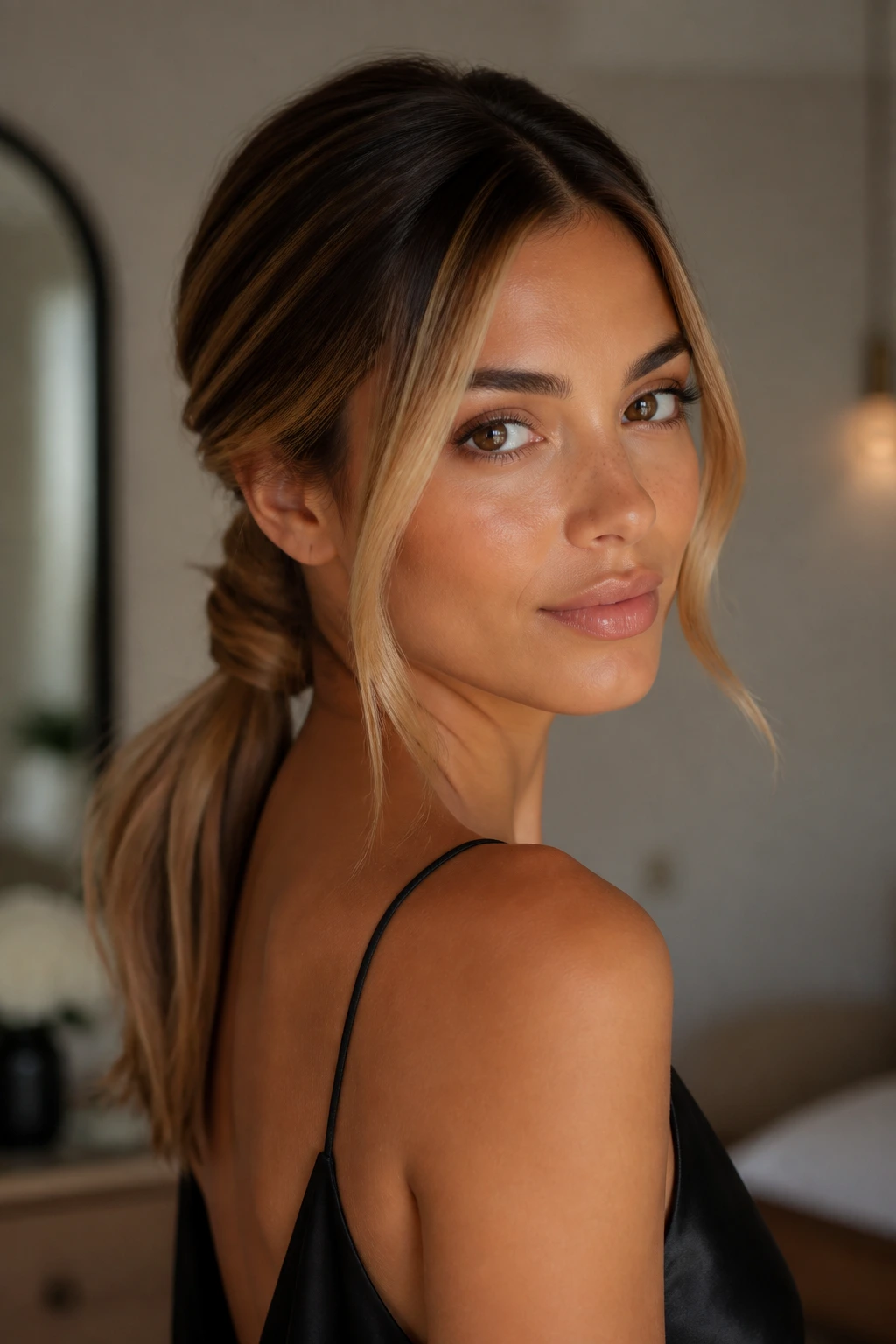
A knot-wrapped ponytail gives the base a little sculptural detail without adding extra accessories. The elastic is hidden, then the front pieces and money piece highlights stay loose and bright around the face while the tie itself looks like a small knot of hair.
This is a strong choice when the rest of the styling is minimal. It feels a touch more thoughtful than a standard wrap, but it doesn’t take over the style. Use a thin section of hair from beneath the ponytail, cross it over the elastic, and tuck the end under the wrap so it disappears into the base. A couple of bobby pins, hidden low, will keep it from slipping.
It’s the kind of detail people notice without being able to name. That’s a nice place for a date-night hairstyle to live.
Why This Low-Ponytail Collection Works
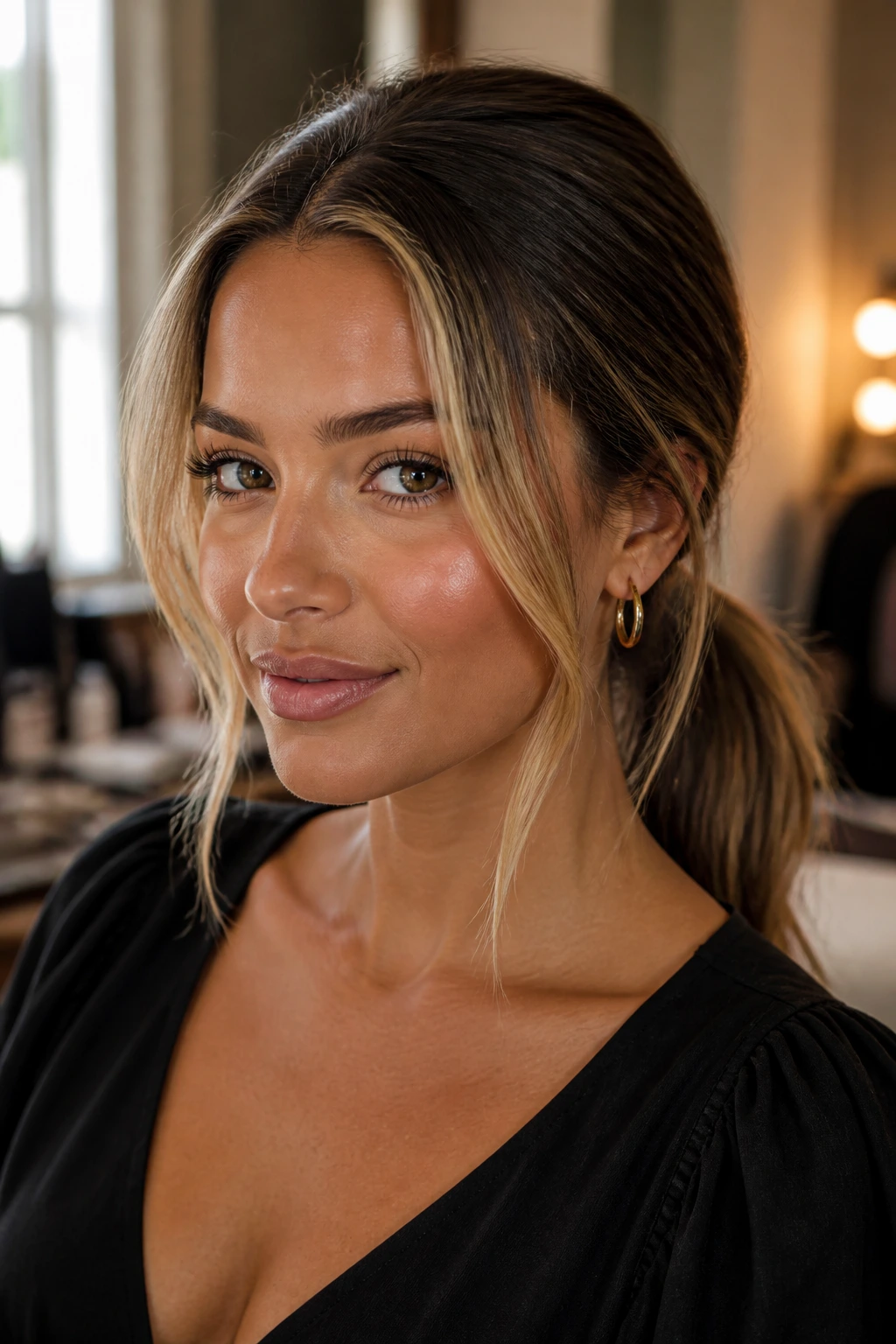
The best thing about these styles is that they don’t hide the money piece highlights; they use them as structure. A low ponytail keeps the front bright and the neck open, which is exactly where face-framing color looks richest. The highlights read louder against the skin than they do buried inside a braid or pinned into a bun.
There’s also a practical angle that matters more than people admit. Low ponytails hold up when you’re sitting, walking, leaning over a table, or tugging on a jacket. High ponytails get bouncy and sporty. Loose hair gets tired. A low tie stays calm.
And calm can still look dressed up. That’s the sweet spot here.
The Tools That Keep These Styles Clean
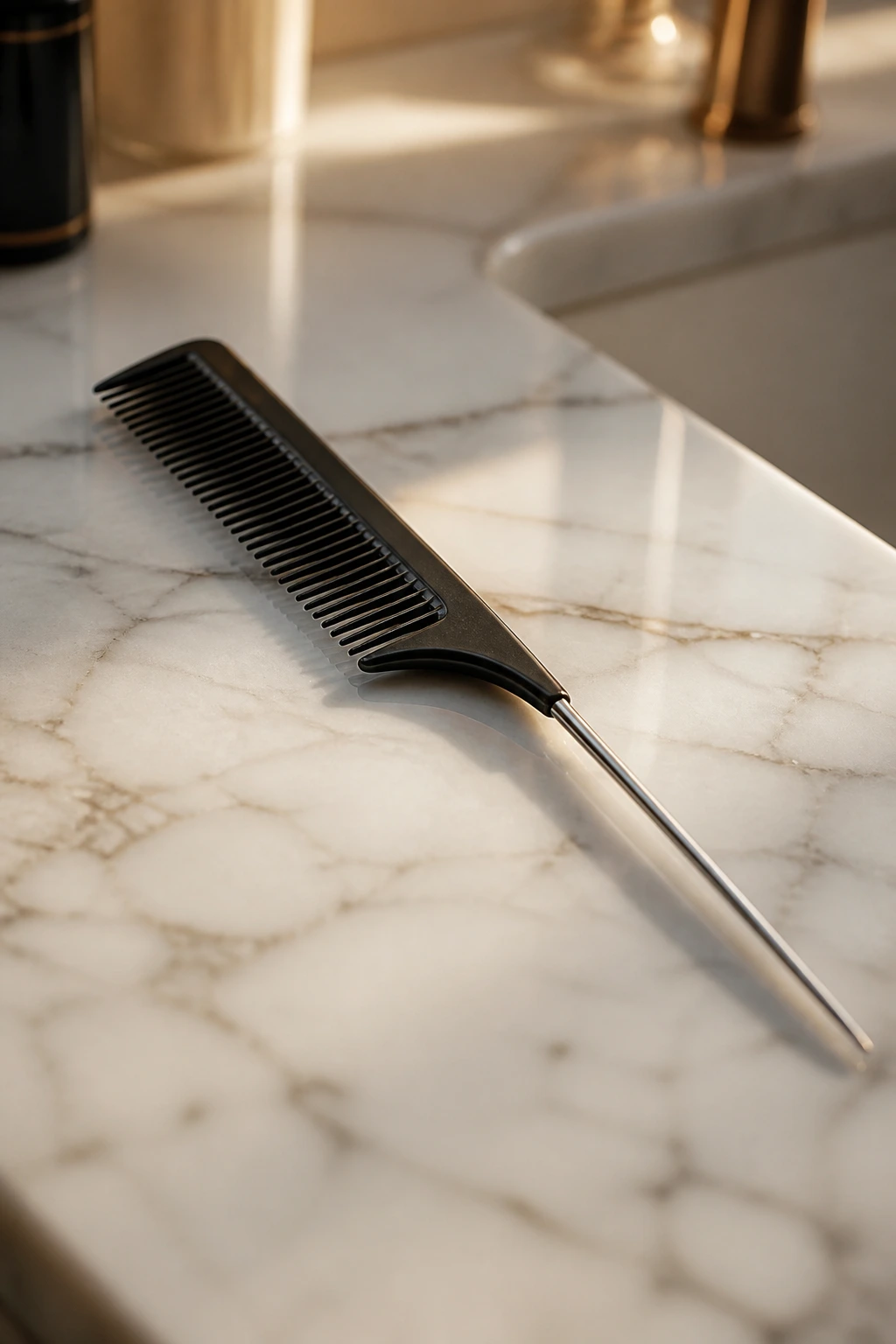
- Tail comb: Makes center parts, side parts, and clean sections without tearing the crown apart.
- Boar-bristle or mixed bristle brush: Smooths the top layer and helps the ponytail sit flat without big ridges.
- Snag-free elastics: Clear or fabric-covered ties hold the ponytail without chewing up the ends.
- Bobby pins: Useful for wrapped strands, twisted sections, and any ponytail that needs a hidden anchor.
- 1-inch curling iron or flat iron: Gives the money pieces that soft bend around the face.
- Heat protectant spray: Keeps the front strands from looking fried after repeated touch-ups.
- Lightweight smoothing cream or serum: A small amount tames flyaways without turning the crown greasy.
- Flexible-hold hairspray: Holds the shape while still letting the hair move.
- Texturizing spray: Helps second-day hair grip, especially for bubble, braid, or rope-twist styles.
- Satin ribbon or velvet tie: Optional, but useful when you want the style to feel more finished.
Product Picks That Help the Hair Sit Right
The smartest products for low ponytails are the ones that do one job well and stop there. A heavy oil can make the crown slip. A crunchy spray can make the money piece feel stiff. Neither one helps.
For fine hair, start with a root-lifting mist or a light texturizing spray at the crown, then use a soft smoothing cream only on the top layer. Fine hair usually needs grip before shine. For thicker or frizz-prone hair, a small amount of serum on the outer layer can calm the surface, but keep it away from the roots unless you want the ponytail to slide.
If your front pieces are colored, bleached, or freshly lightened, a heat protectant matters more than a fancy finishing spray. The money piece sits right where flat irons and curling irons touch it the most. That repeated heat shows fast. A good heat protectant with a light slip keeps the ends from looking rough by the third or fourth touch-up.
And please, use elastics without metal. That little metal seam can snag the highlight pieces right where they’re most visible. Cheap ties are fine if they’re smooth. Snagging is the real enemy.
How to Wear These Styles on a Date Night
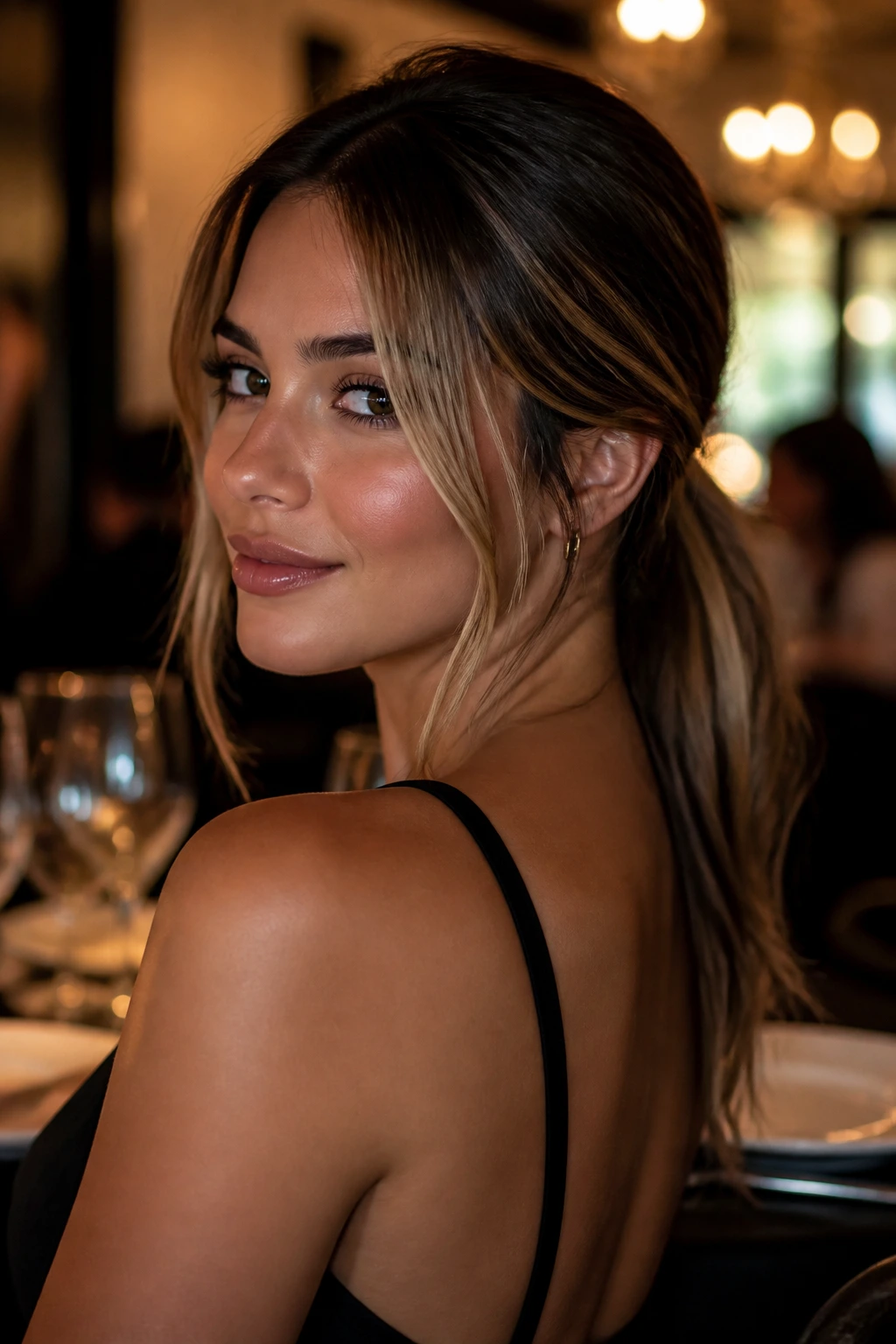
Presentation: Keep the ponytail sitting at the hollow of the neck or just above it. That placement shows off the shoulders and gives the money piece highlights room to frame the face instead of being swallowed by the length.
Outfit Pairings: Low ponytails work best with necklines that need a little breathing room — scoop necks, square necks, one-shoulder tops, satin camisoles, and open-collar shirts. If the clothes already have a lot going on, choose one of the sleeker ponytail versions.
Accessory Pairing: Small hoops, slim drop earrings, pearl pins, or a ribbon can all live comfortably with this hairstyle. If your earrings are bold, keep the ponytail cleaner. If the hair is more textured, the jewelry can stay simple.
Best Mood: These styles suit dinners, drinks, gallery nights, and any evening where you want the hair to stay in place without looking locked down. The ponytail should look touched, not armored.
The Small Styling Moves That Change Everything
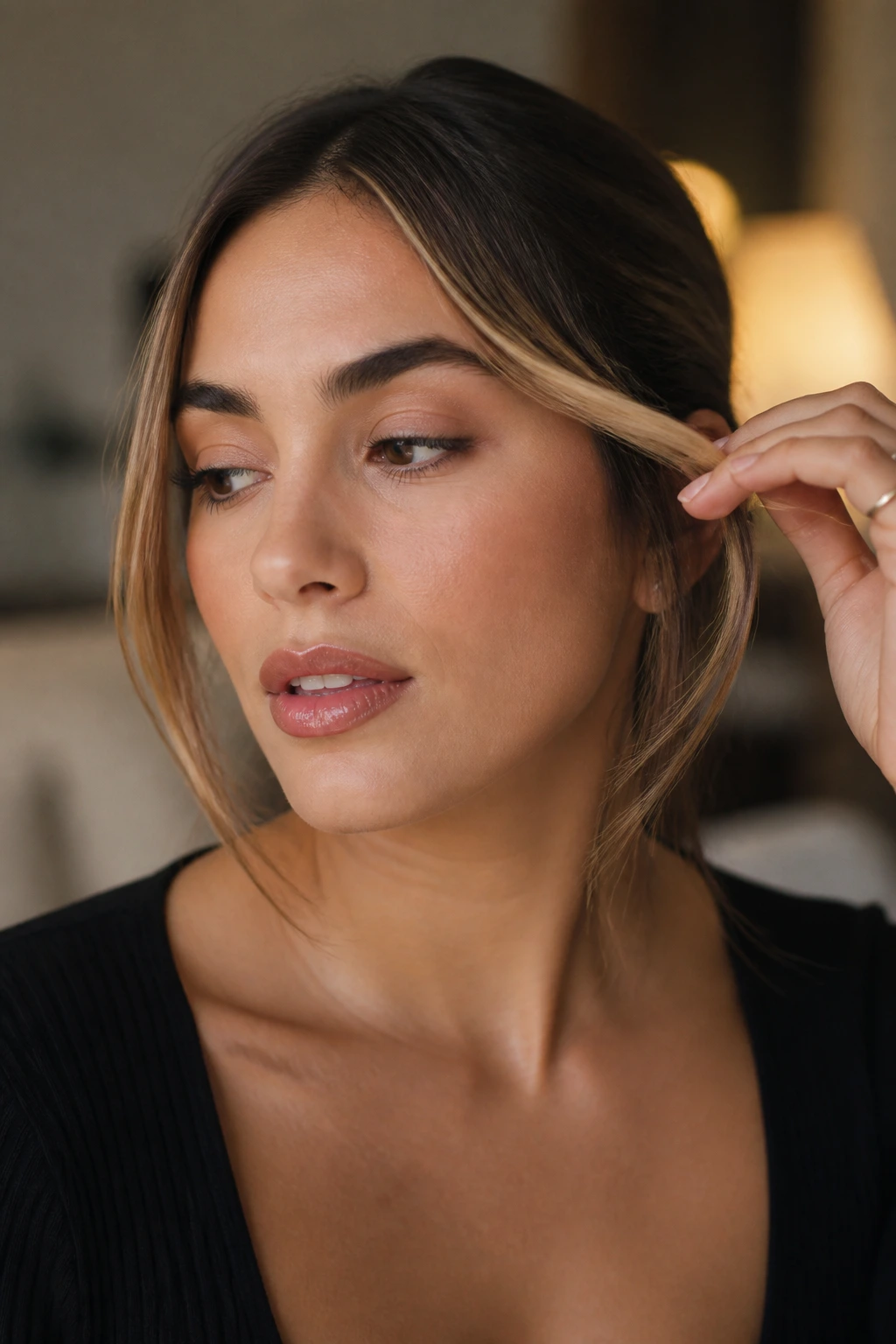
Shine Boost: A half-drop of serum rubbed between your palms and skimmed over the top layer is enough. Use more and the crown goes limp. Less usually works better here.
Customization: Curl the money piece away from the face for a softer look, or bend it toward the cheekbone if you want a little more drama. That tiny direction change changes the whole mood.
Accessory Choice: Choose the accessory based on the neckline, not just the hair. A wide ribbon can balance a simple dress. Pearl pins can soften a sharp blazer. A plain elastic is fine when the outfit already carries the visual load.
Make-It-Yours: If you wear glasses, keep the front pieces a touch shorter so they don’t sit on the frame. If you like earrings, leave the money piece a little longer so the two details don’t fight. If your hair is fine, keep the ponytail narrower and cleaner. If it’s thick, give the crown a little more lift and stop trying to flatten it into submission.
Keeping the Style Fresh Past the First Few Hours
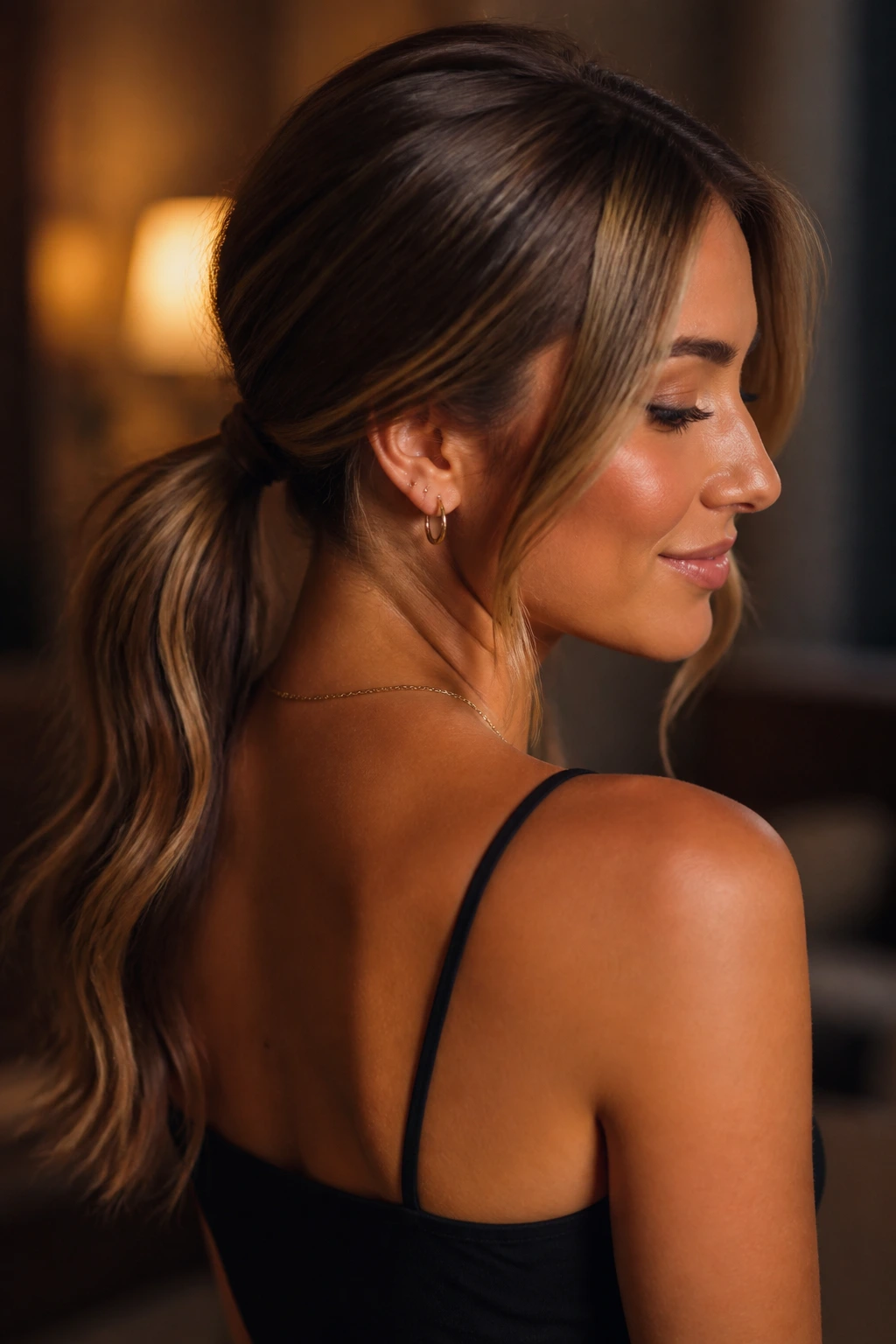
A low ponytail can hold through an evening if you prep it right. The crown usually stays neat for 8 to 12 hours when the hair is smoothed, the elastic is snug, and the front pieces are heat-shaped before you leave. Textured versions can carry into the next day, but sleek ones need a quick comb-through if you sleep on them.
For a next-day refresh, unhook the elastic, shake out the tail, and mist the money piece with a little water before re-bending it with a flat iron. You do not need to rewash the whole head. That’s the slow path to dryness and frizz. A dry shampoo at the roots can revive the lift, and a touch of serum on the ends can bring back the shine.
If you want to prep ahead, style the front pieces and apply the smoothing product, then gather the ponytail loosely and retie it when you’re ready to go. Hair does not love being yanked into place twice, so keep the first tie soft.
Variations and Adaptations to Try
Fine-Hair Lift: Backcomb the crown in a 1-inch section, spray lightly, then smooth the top layer over it. The money piece will look brighter because the root has a little height.
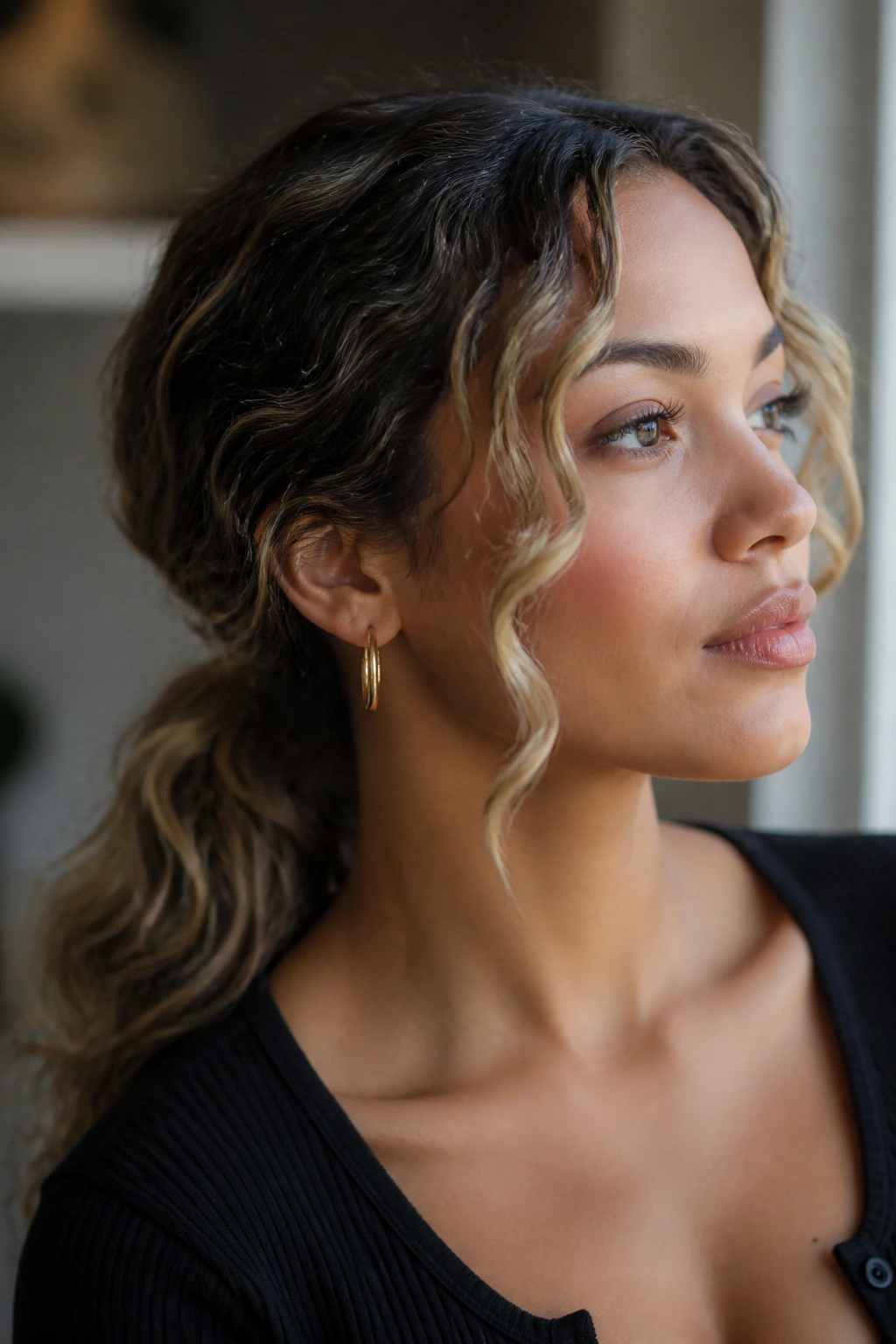
Curly-Hair Glow: Let the curl pattern stay visible at the front and use a soft gel or cream to define the money piece instead of flattening it. The ponytail should sit low and loose enough to keep the texture alive.
Short-Hair Fix: Use a small clip-in ponytail piece or keep the tail compact and tucked under. A few loose face-framing strands make the style read intentional even when the length is limited.
Heat-Free Version: Braid damp hair loosely the night before, then take the braids out and gather the hair low in the morning. The money piece will keep a softer bend and the ponytail will have a lived-in texture.
Ultra-Sleek Formal Version: Flat iron the front pieces, use a clean middle part, and wrap the elastic with a narrow strand of hair. This one works when the outfit is sharp and the hair needs to match the lines.
Rainy-Night Insurance: Use a humidity-resistant spray around the crown and leave the money piece slightly softer than the rest. If the air turns messy, the front still looks designed instead of frayed.
Common Mistakes That Flatten the Look
Too much product at the roots. The hair goes shiny in the wrong way and the ponytail slides. Use a pea-size amount of cream or a light mist of spray, not a heavy coating.
Pulling the front pieces too tight. The money piece highlights should frame the face, not disappear into the elastic. Leave a little slack near the temples so the style keeps softness.
Putting the ponytail too low. If it sits at the very bottom of the nape, the style can drag the face down. Aim for the hollow above the neck bone instead.
Skipping the front bend. Straight money pieces can look flat against the face. A 5-second curve with a curling iron adds shape and keeps the highlights visible from the front.
Using an elastic with a rough seam. It catches hair, leaves a kink, and makes the wrapped strand harder to hide. Smooth elastics cost little and save a lot of frustration.
Forgetting the crown. If the top puffs up, the whole style looks unfinished. Brush the crown in the direction you want it to lie before you gather the ponytail, not after.
Frequently Asked Questions
What exactly is a money piece highlight?
It’s the lighter section placed around the front hairline, usually near the temples and cheekbones. In a low ponytail, those pieces stay visible in front, which is why they matter so much here.
Should I choose a center part or a side part?
A center part gives the strongest frame and the cleanest symmetry. A side part softens the look and can be easier if your money piece is thicker on one side or if your face shape benefits from a little asymmetry.
Can fine hair pull off a low ponytail with money piece highlights?
Yes, but keep the crown light and the tail narrow. A bit of texturizing spray at the roots and a soft bend in the front pieces usually helps more than heavy smoothing cream.
How do I stop the crown from puffing up?
Brush the top layer back while the hair is still slightly damp or lightly misted, then secure it before flyaways start setting up their own agenda. A soft bristle brush and a little flexible spray usually solve the problem.
Should the money piece be curled toward or away from the face?
Away from the face is the safer move. It opens the cheekbones and keeps the highlight visible. Toward the face can work if you want a heavier, more dramatic frame, but it can also close the look in fast.
Can I wear these styles with extensions?
Yes. Clip-ins or a small ponytail piece can add fullness, especially for bubble, blowout, or ribbon-tied versions. Just keep the attachment point low and hidden under the wrap or elastic.
What if my hair is curly or coily?
Keep the front pieces defined and avoid forcing them flat. The best low ponytail on curly hair respects the pattern near the face and keeps the tail controlled, not pressed into a shape it never wanted.
How do I keep the style looking good through dinner?
Start with a secure elastic, use only a small amount of serum, and choose one or two bobby pins to lock down any loose sections. If the front pieces are shaped before you leave, they usually hold better than the tail itself.
The Low Ponytail Advantage
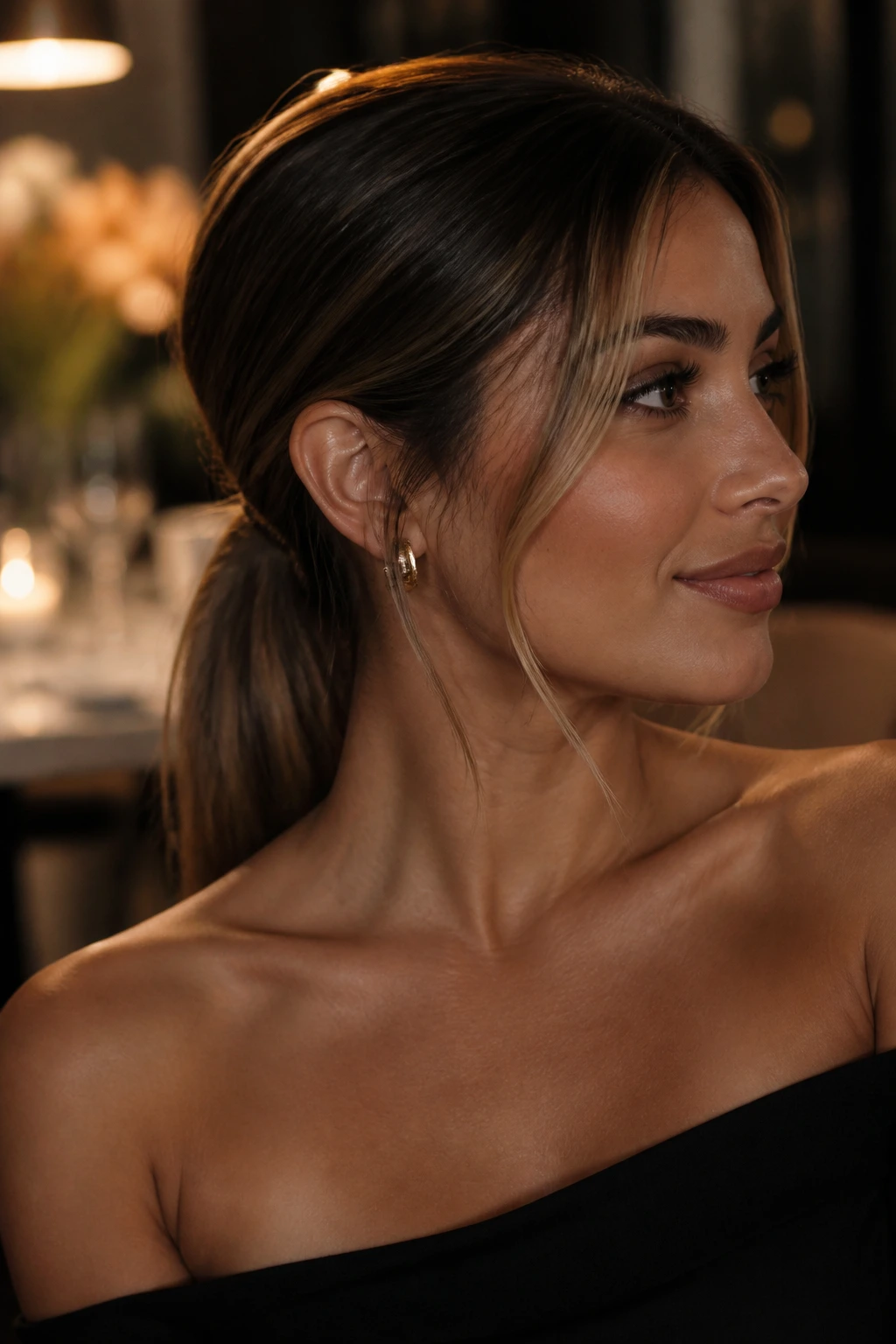
The low ponytail is one of those styles that gets better the more you pay attention to the details. The money piece highlights are the obvious star, but the real work comes from the part, the placement, and the way the front strands bend around the face. Get those three things right and the style can lean sleek, romantic, or a little undone without losing its shape.
That’s why this cut-and-color combo keeps showing up in date-night hair. It lets the color stay up front, where it can do something useful, and it keeps the rest of the hair calm enough to last through a long evening. No drama. No fussy finish. Just a ponytail that knows how to show up.
Try the version that matches your neckline first. The rest can wait their turn in the mirror.