



A pale face can disappear into very light hair. Add a dark ribbon at the temple, though, and the whole thing clicks: eyes look clearer, cheekbones get a little more shape, and the hair stops floating around the face like an afterthought.
That is the appeal of dark framing face highlights for fair skin. You are not chasing a full brunette makeover, and you do not need chunky zebra stripes either. The sweet spot sits somewhere between the two: a cooler mocha, espresso, walnut, ash-brown, or deep chestnut panel placed where the light naturally hits the face first. On fair skin, that contrast can look crisp and polished when the placement is soft; if the line is too wide or too black, it turns blunt fast.
Most color mistakes with this look come from one thing: people ask for darkness without asking for shape. Shape is the whole point. A narrow money piece, a curtain-fringe veil, or a subtle lowlight at the temples changes how the face reads in daylight, in office lighting, and in photos with flash. The best versions do not shout. They sharpen.
Why These Dark Framing Looks Work on Fair Skin
-
Contrast does the shaping: A front piece that sits two or three levels deeper than your base can outline the face the way a contour stick does, only softer and less fussy.
-
Placement matters more than darkness: A narrow ribbon at the cheekbone reads cleaner than a wide block at the hairline, especially on very fair skin where heavy pieces can look pasted on.
-
Undertone changes everything: Ash brown and mushroom brown calm pink skin; walnut, chestnut, and cedar brown warm ivory skin; slate and truffle sit in the middle and are easier to wear than pure black.
-
The grow-out is kinder: Dark front pieces usually blur into the base more softly than light blonde money pieces, so you can go a few more weeks before the line starts bothering you.
-
They work with makeup you already own: Peach blush, soft brown brows, and a lip stain are enough. You do not need a new face just because your hair got darker at the front.
-
This is not a one-note look: Straight hair shows the line, waves soften it, and curls turn it into a shadow frame. Same color, different mood. That flexibility is a big reason this style keeps showing up.
1. Soft Espresso Money Piece
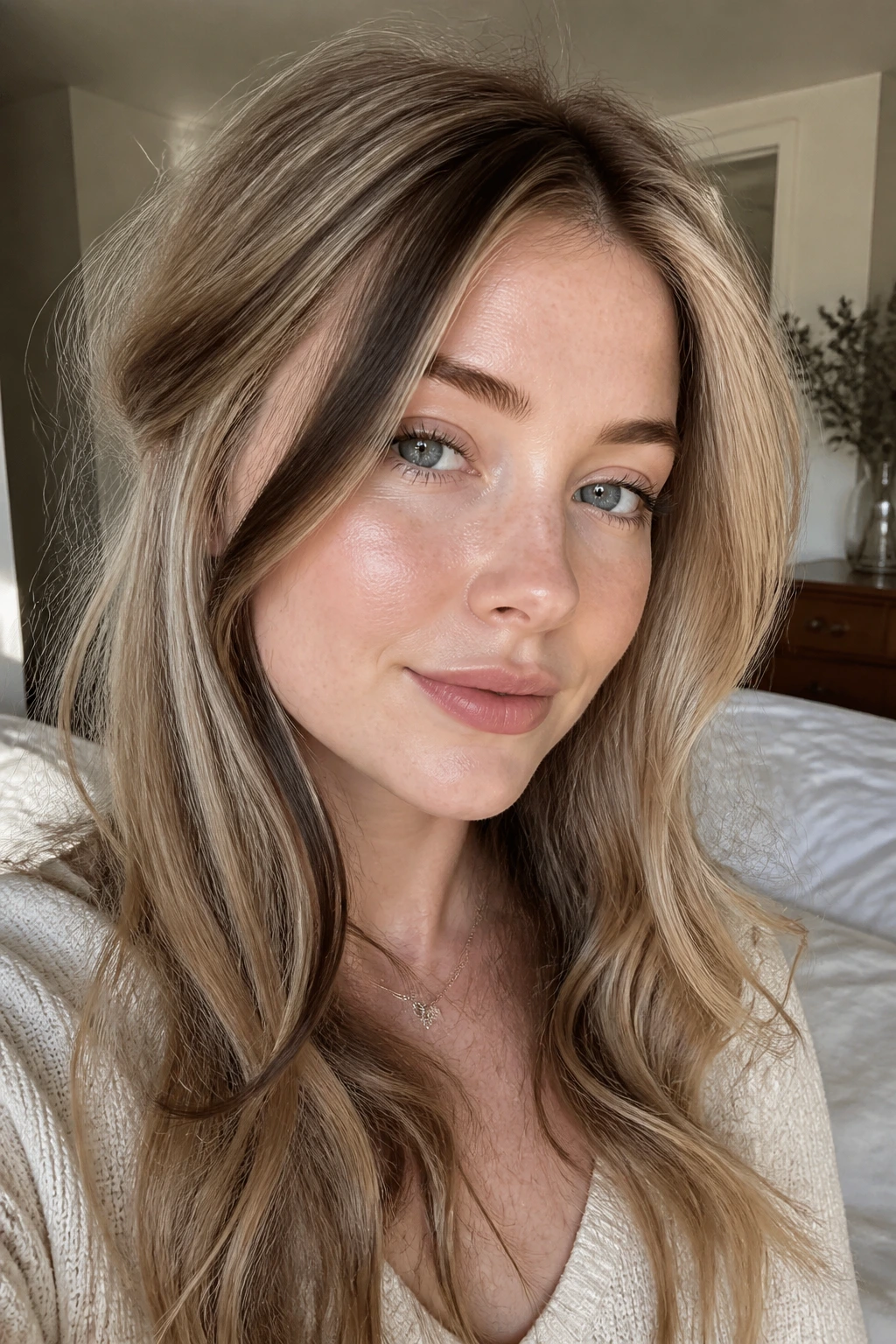
Soft espresso is the safest place to start if you want dark framing face highlights for fair skin without a hard jump. Ask for a narrow panel that begins around the temple and fades toward the cheekbone, not a thick slab at the hairline. On pale skin, that extra softness matters. It keeps the contrast sharp enough to shape the face, but not so harsh that the front pieces take over the whole haircut.
Why It Works
A soft espresso money piece sits in that useful middle zone between brunette and near-black. If your natural base is light brown or dark blonde, it creates enough separation to make the eyes stand out, but it still reads believable in daylight. I like it most on layered cuts where the front pieces can bend a little. The line looks intentional. Not painted on.
What to Ask For
- Level: Ask for a level 4 or 5 espresso at the front, not jet black.
- Width: Keep the panel around half an inch to one inch wide.
- Finish: Request a gloss so the ends look shiny, not flat.
If your hair is very fine, keep the money piece narrow and feathered. The smaller the front slice, the cleaner the result.
2. Mushroom Brown Curtain Frame
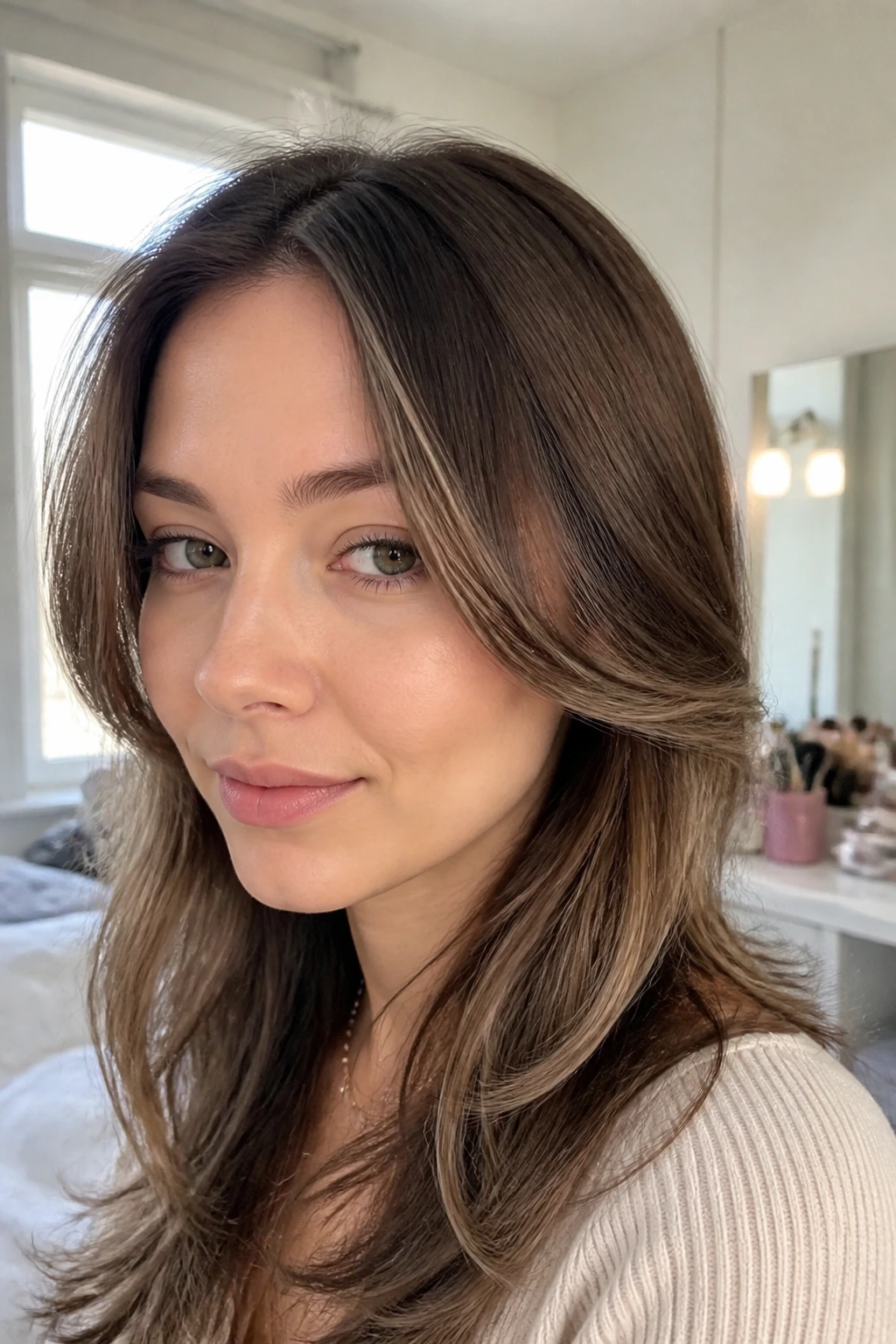
Mushroom brown is the cool-toned answer when fair skin runs pink or porcelain. It has that smoky taupe note that keeps the front pieces from turning orange under indoor light, which is a real problem with warmer browns. On curtain bangs, the effect is especially good: the color sits like a shadow at the cheekbones and makes the center part look deliberate instead of plain.
Best for Cool Undertones
Cool skin can get washed out by gold. Mushroom brown avoids that. It has just enough gray in the mix to sit beside light skin without fighting it, and the frame looks especially clean if you wear soft bends around the face.
How to Wear It
Try this look with a middle part and loose waves. The movement breaks up the darker front pieces so they read as contour, not a line. If you straighten your hair every day, leave the ends a touch lighter than the root area; that keeps the whole frame from looking too dense.
3. Walnut Ribbon Highlights
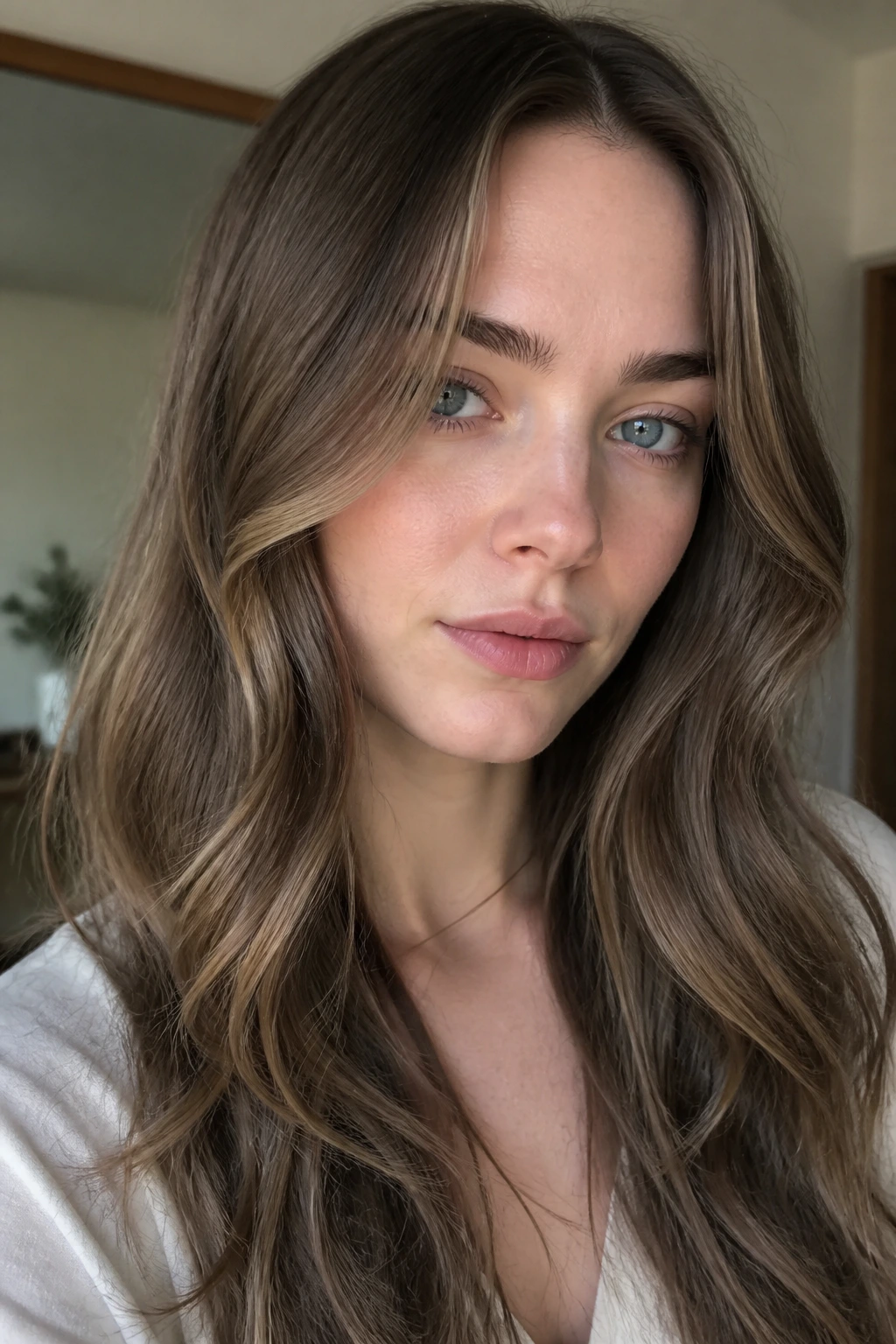
Walnut ribbons are a little warmer than mushroom brown, but still deep enough to shape the face. Think of them as thin brunette streaks running through the front layers, not a solid curtain. On fair skin, walnut has a nice way of making freckles and blush show up more clearly. The complexion looks awake, not chalky.
What Makes It Different
Unlike a blocky money piece, walnut ribbons can sit inside the haircut and move with it. That makes them a smart choice for wavy hair or long layers. The color catches light at the bend of the wave, then disappears again. The result feels softer and more expensive-looking than a stripe.
Quick Notes
- Best on shoulder-length hair and longer.
- Good if you want warmth without copper.
- Easier to grow out than a thick front panel.
If your hair is naturally dark blonde, ask for walnut placed mostly in the top half of the front layers. That keeps the lower sections from looking muddy.
4. Smoky Mocha Veils
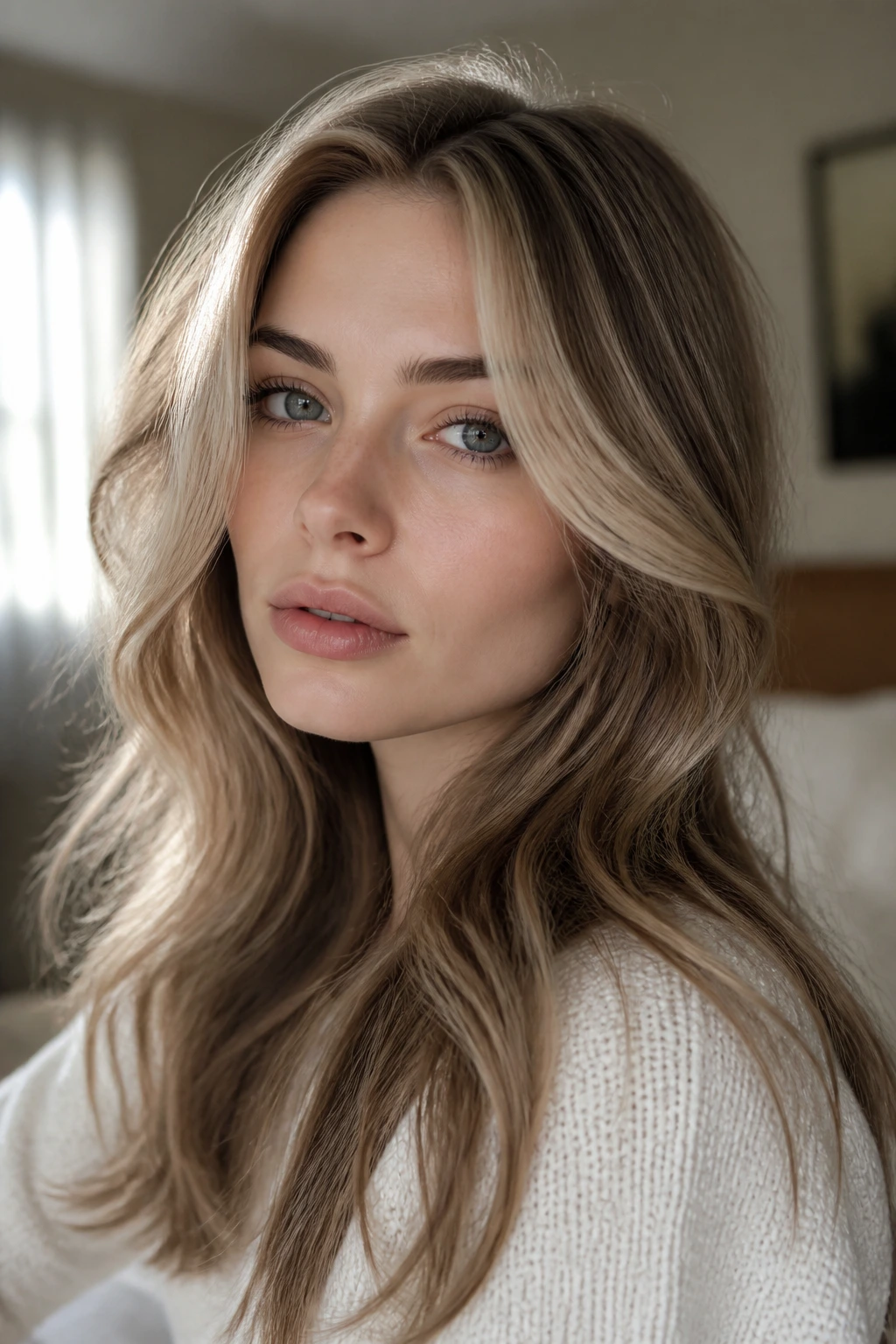
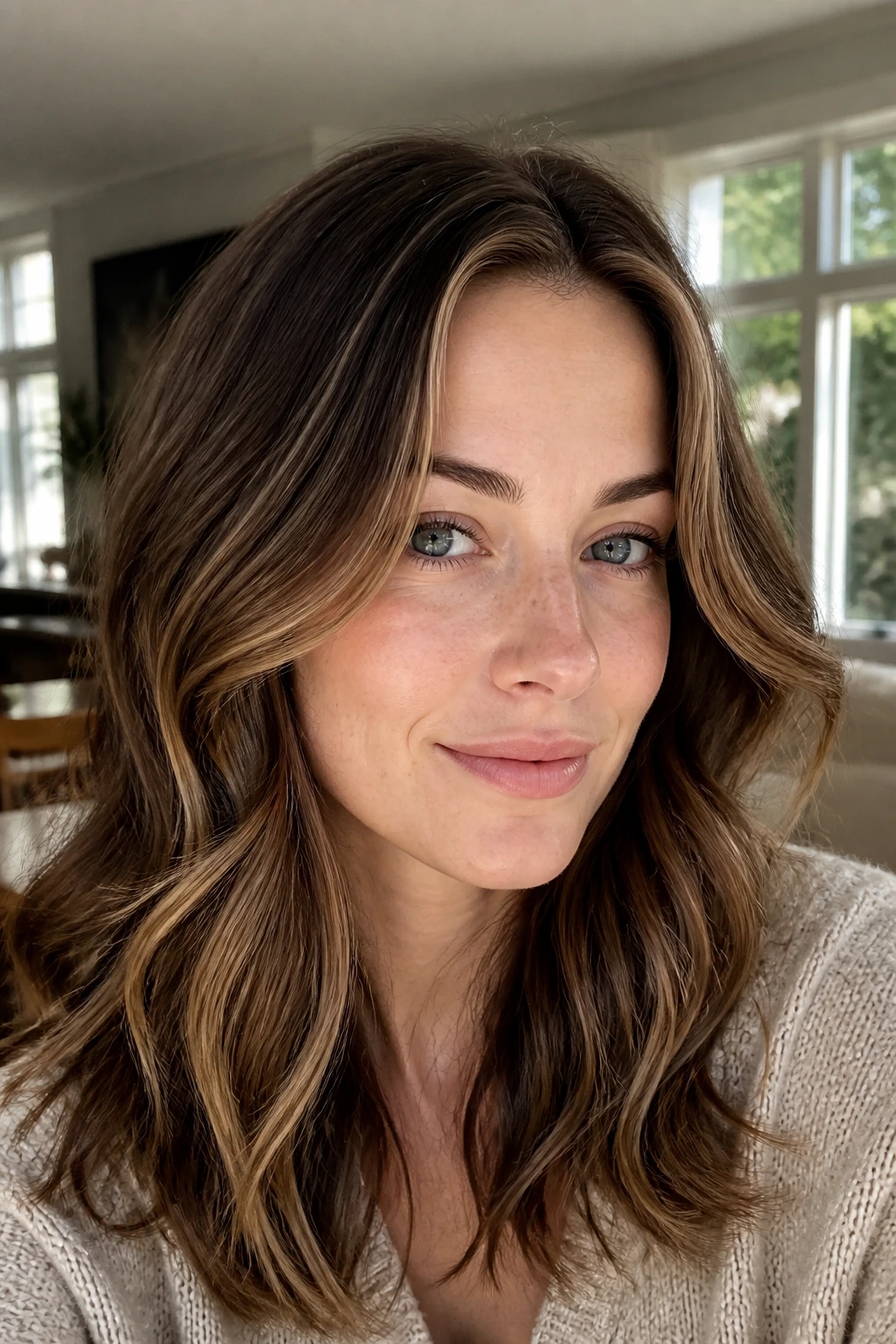
This is the version I reach for on fine hair. Instead of bold stripes, the colorist paints translucent mocha veils under the top layer, so the face gets contour without looking chopped up. On fair skin, that matters. Heavy contrast can make fine hair look thinner at the front, while veils create depth without exposing too much scalp.
Why It Flatters Fair Skin
Smoky mocha sits between cool and warm. It does not drag the skin pink, and it does not lean orange. The softness also helps if your complexion is very light and you wear little makeup. The hair still frames the face, but it does not demand a full glam face to match.
A loose blowout shows this one best. The ends flick out enough to catch the darker tone, and the whole style looks airy instead of blocky.
5. Deep Chestnut Peekaboo Streaks

Peekaboo chestnut is the sneaky one. You barely see it when the hair is still, then it flashes through when you tuck one side behind your ear or turn your head. That makes it a smart dark framing choice for fair skin if you want interest without a front-and-center stripe.
Best When You Want Movement
This works especially well on medium-length cuts with layers around the jaw. The chestnut sits just beneath the surface, so the color appears and disappears as the hair moves. It is less obvious than a money piece, which is exactly why some people prefer it.
If your job leans conservative, this is the safest darker-frame option in the bunch. The look reads polished in a ponytail and more noticeable in curls. That kind of two-for-one behavior is useful.
6. Ash Brown Front Panels
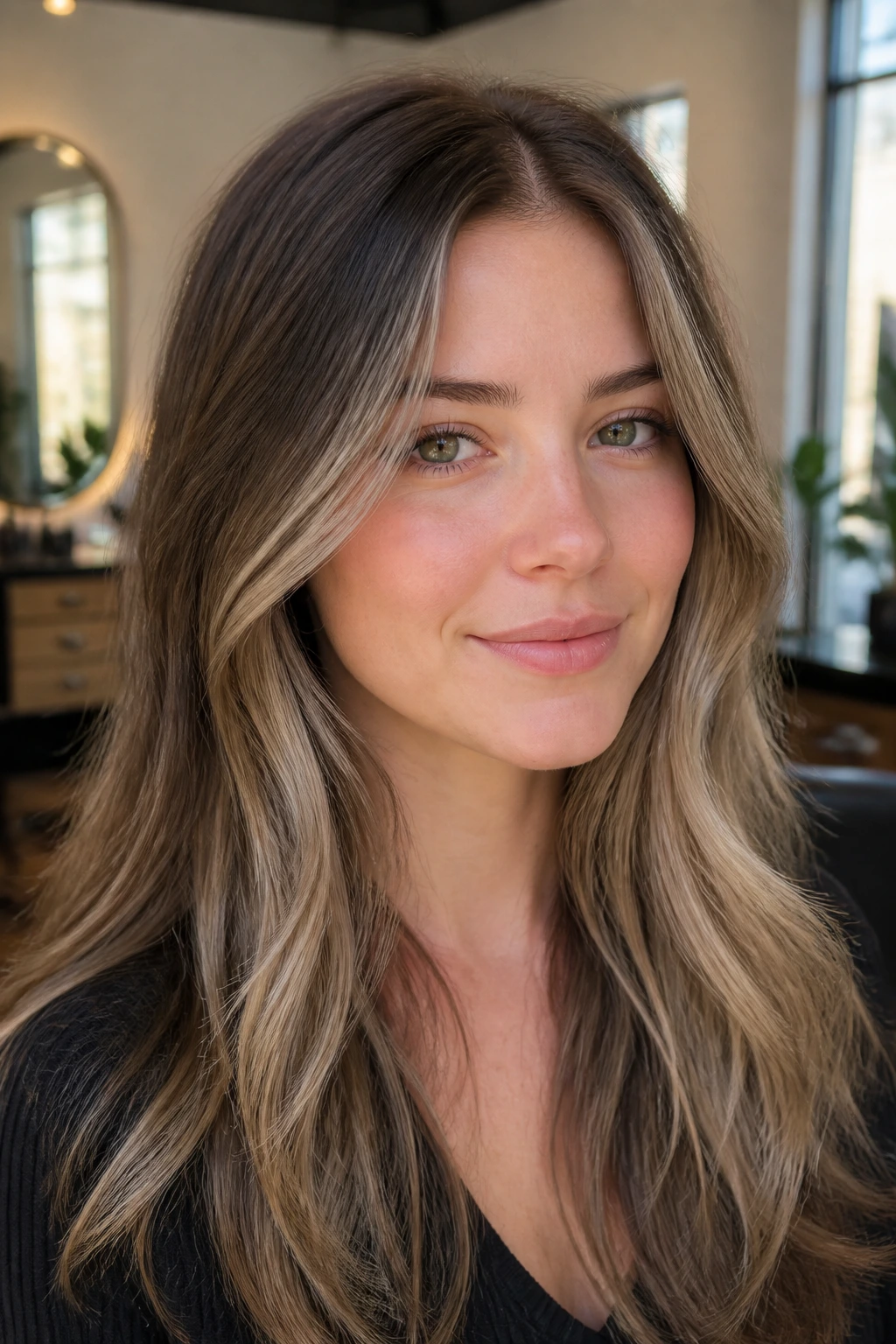
Ash brown front panels are the antidote to redness. If fair skin flushes easily around the nose and cheeks, a cool front panel can calm the whole picture in a way warmer browns cannot. The trick is keeping the ash tone soft, not gray and muddy.
What to Ask Your Colorist
Ask for panels that start just off the hairline and taper as they move down the face. That keeps the color from sitting like a helmet around your forehead. A demi-permanent ash brown is usually safer than a permanent one if your hair tends to grab pigment fast.
Best Fit
- Pink or cool skin
- Straight or lightly waved hair
- Cuts with face layers or curtain bangs
If the ash goes too dark, it can look flat. A little dimension at the ends keeps it from turning heavy.
7. Cool Cocoa Balayage
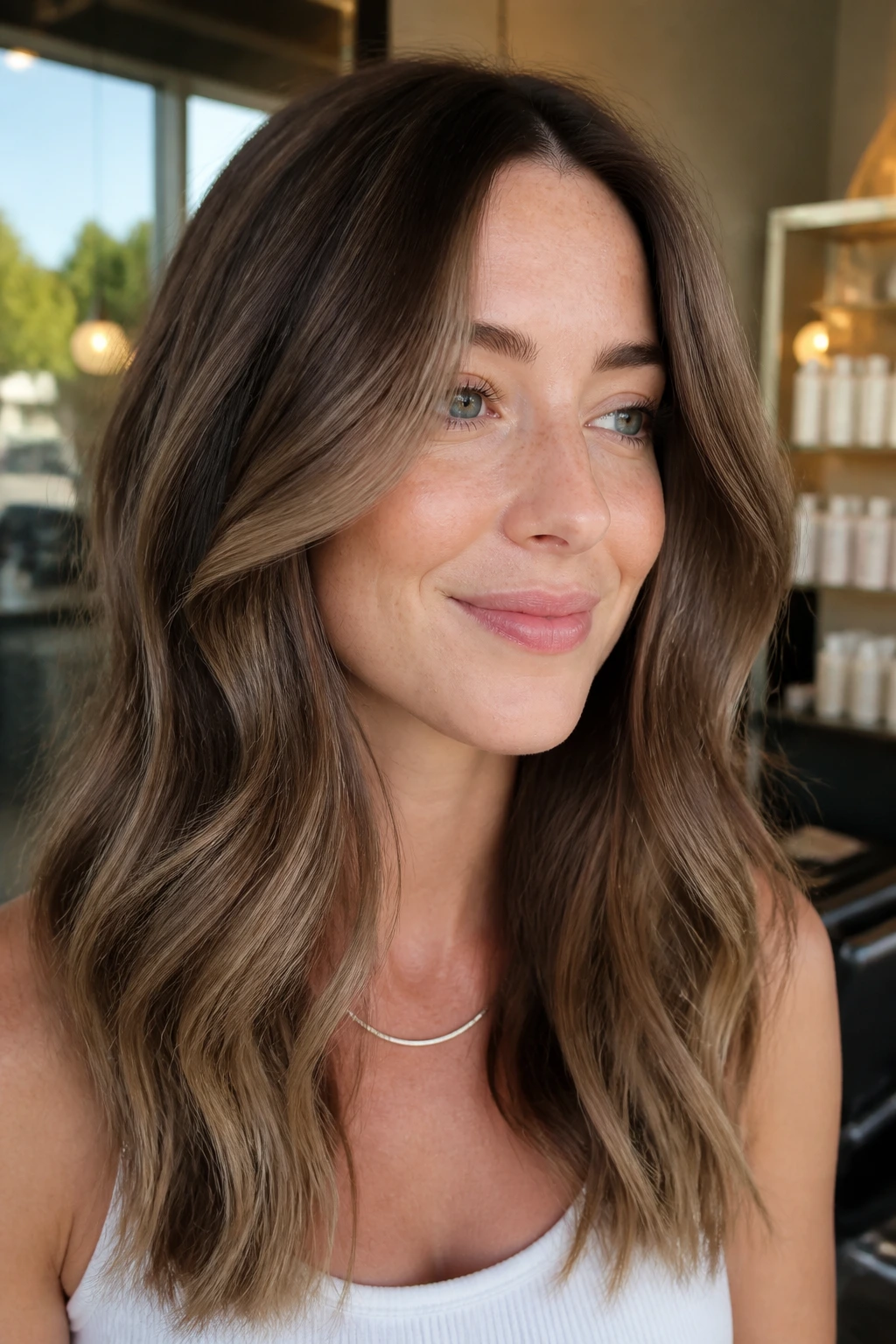
Cool cocoa balayage is for the person who wants a darker frame but hates a hard line. The color sweeps from the temples into the front lengths, then melts into the rest of the hair. On fair skin, that low-contrast transition keeps the look soft while still giving the face a clear outline.
Why It Works
Balayage gives the colorist room to paint the front in a way that follows the haircut, not fights it. That is why it looks good on long layers. The cocoa shade has enough depth to ground pale skin, but the hand-painted placement keeps the front pieces from looking like separate objects.
Wear It With
Loose curls are the sweet spot here. The bends break up the darker pigment and make the face frame look natural. A straight blowout works too, but it will read stronger and more defined.
8. Rooted Sable Frame
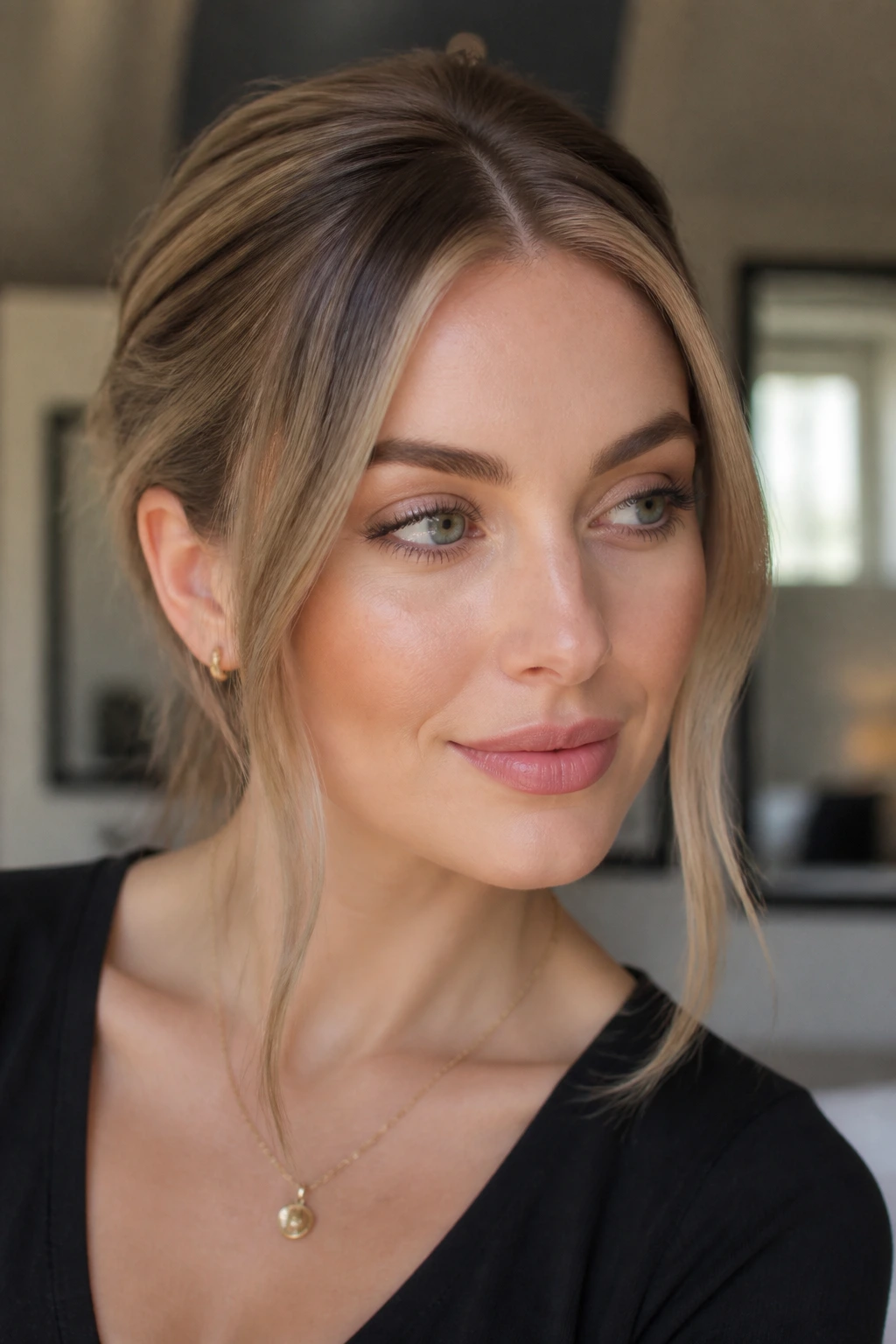
A rooted sable frame is for anyone who wants grow-out to behave. The root stays deeper, the front pieces stay dark, and the transition between the two is blurred on purpose. On fair skin, that soft root shadow helps because it keeps the hairline from screaming for attention every few weeks.
The Low-Maintenance Angle
This is the kind of color that forgives a missed salon appointment. The darker root gives the eye somewhere to land, and the sable pieces around the face still look deliberate as the hair grows. If you do not like touching up color often, this should be on your shortlist.
The best version is not overly glossy at the scalp. Let the root look lived-in, then shine up the ends with a clear gloss.
9. Midnight Brown Ribbons
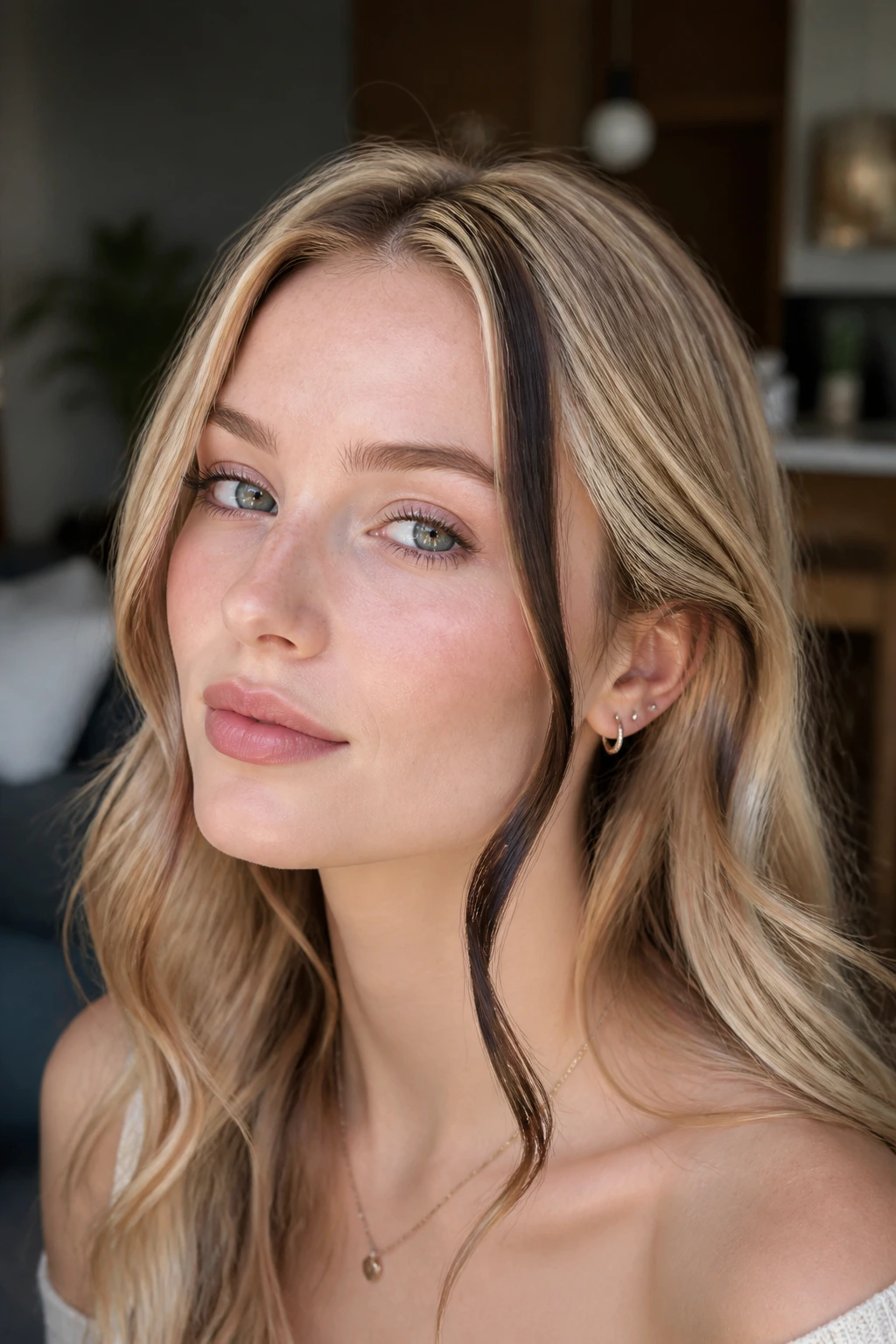
Midnight brown ribbons carry more drama than walnut or mocha. They are deeper, cooler, and a little moodier, but still brown enough to avoid the bluntness of black. On fair skin, this contrast can look striking if the ribbons are kept thin and set inside the haircut rather than pasted across the front.
Where It Shines
This one is strong on straight hair and long bob cuts. The dark ribbon catches the outline of the cheekbone and jaw, especially when the front pieces are tucked slightly behind the ear. If you like polished, graphic hair, this gets the job done.
Watch the Width
Too much midnight brown turns into a wall. Keep the ribbons narrow and spaced. The space between them is doing as much work as the color itself.
10. Coffee Bean Skunk-Line Stripe
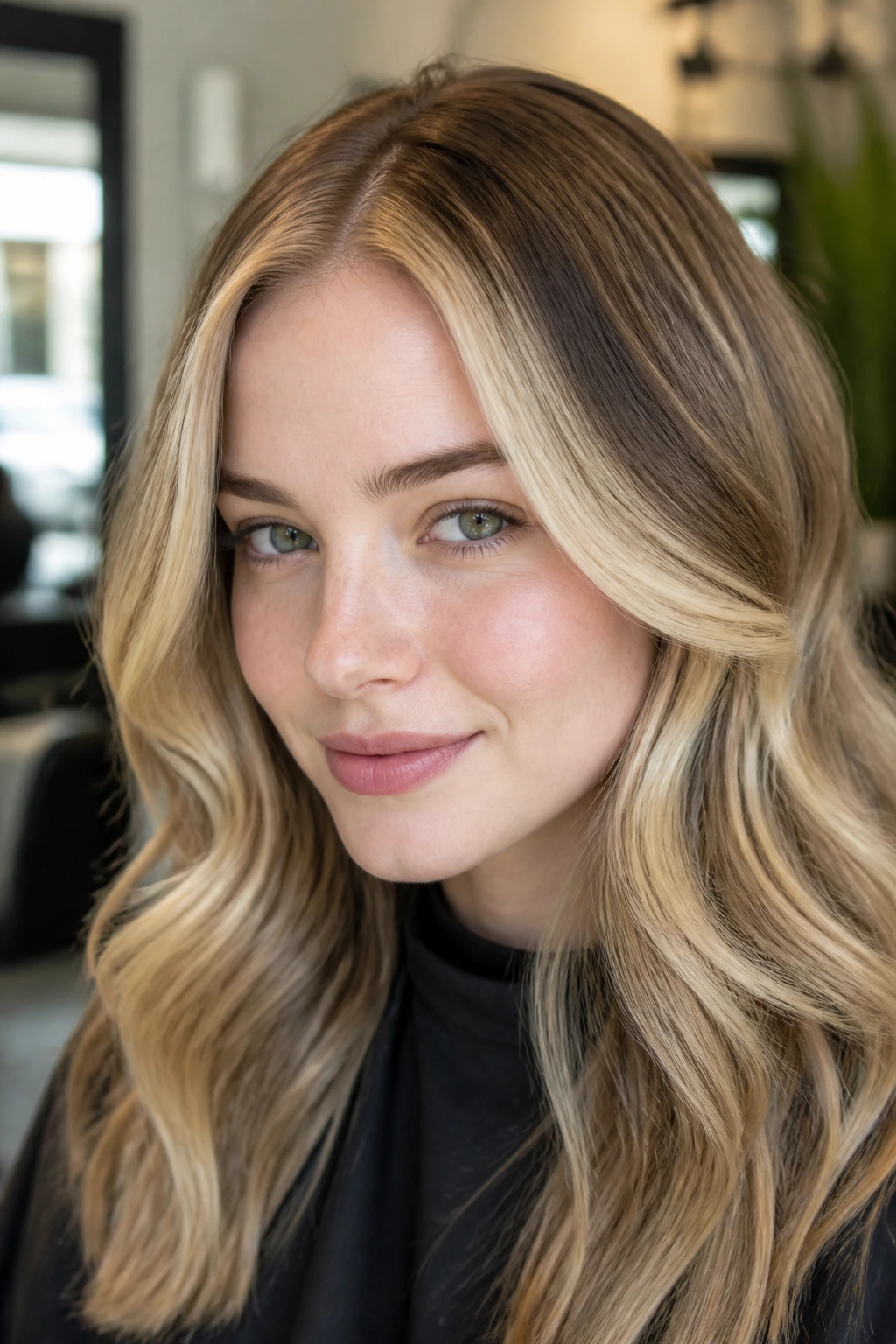
Skunk-line color is a bold choice, and fair skin can wear it when the stripe is kept thin and the finish is soft. The look starts with a lighter base and a darker line right along the front part or money-piece path. It is sharp. Very sharp. Which is the point.
Why It Can Work
On a blunt cut, that single darker line gives the hair a clear edge. It feels fashion-forward rather than fussy. If your features are delicate, the contrast can actually help the face read more clearly, especially when the rest of the hair is smooth and glossy.
Keep the stripe narrow. That is non-negotiable. If it gets too wide, the style tips from graphic into harsh.
11. Hazelnut Face-Framing Lows
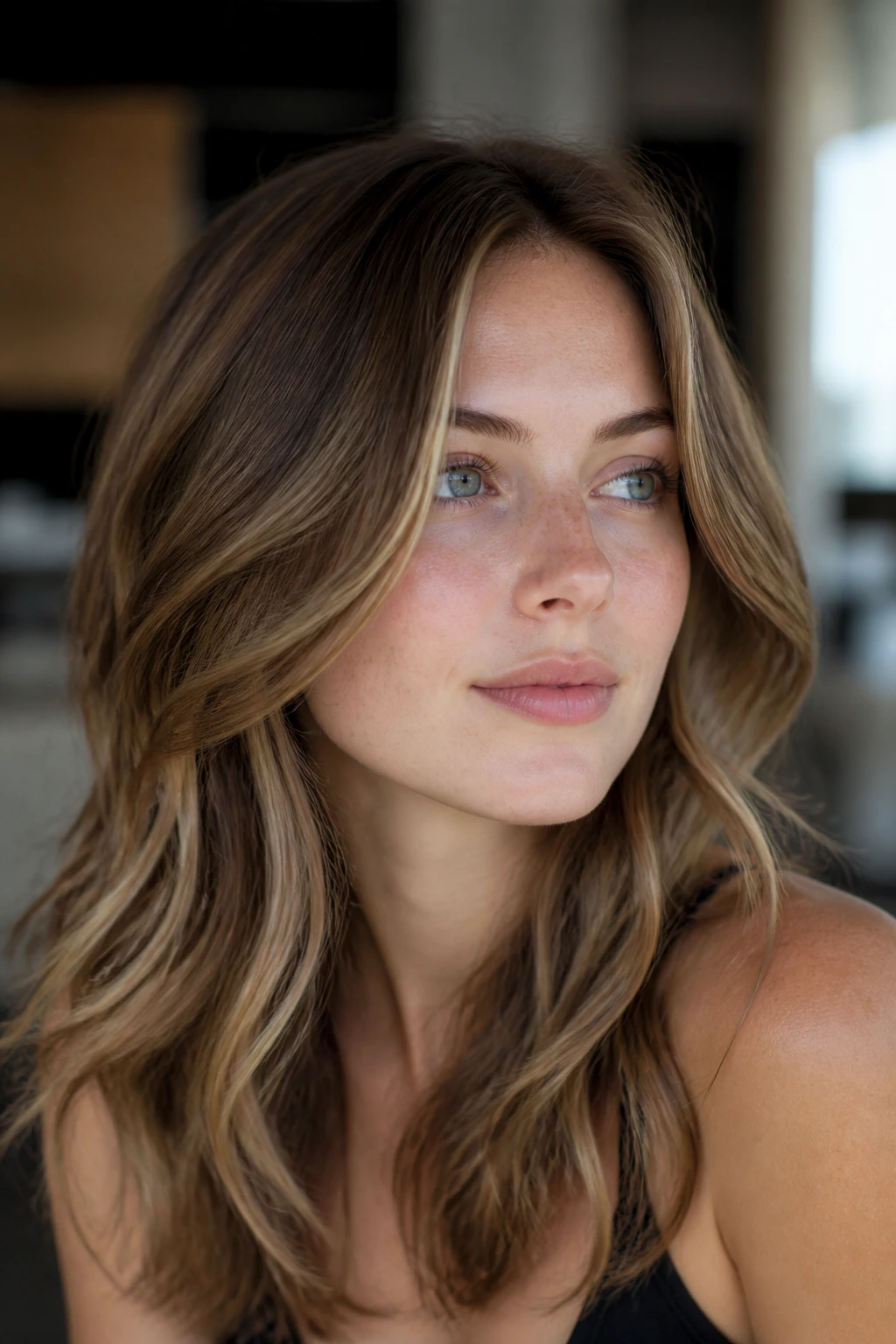
Hazelnut is warmer and softer than espresso, which makes it a good match for fair skin with freckles or peach undertones. It gives the face a gentle outline without dragging the complexion cooler than it wants to be. On layered hair, hazelnut lowlights around the face can look like sunlight that has gone a little darker, which is oddly flattering.
Best For Warm or Neutral Skin
If mushroom brown looks a little dusty on you, hazelnut is the pivot. It still brings dimension, but it has enough warmth to keep skin from looking flat. The look is especially nice with cream tops, gold jewelry, and soft brown brows.
A note worth making: hazelnut is not copper. If it starts reading orange, the toner is wrong.
12. Pewter Brown Money Piece
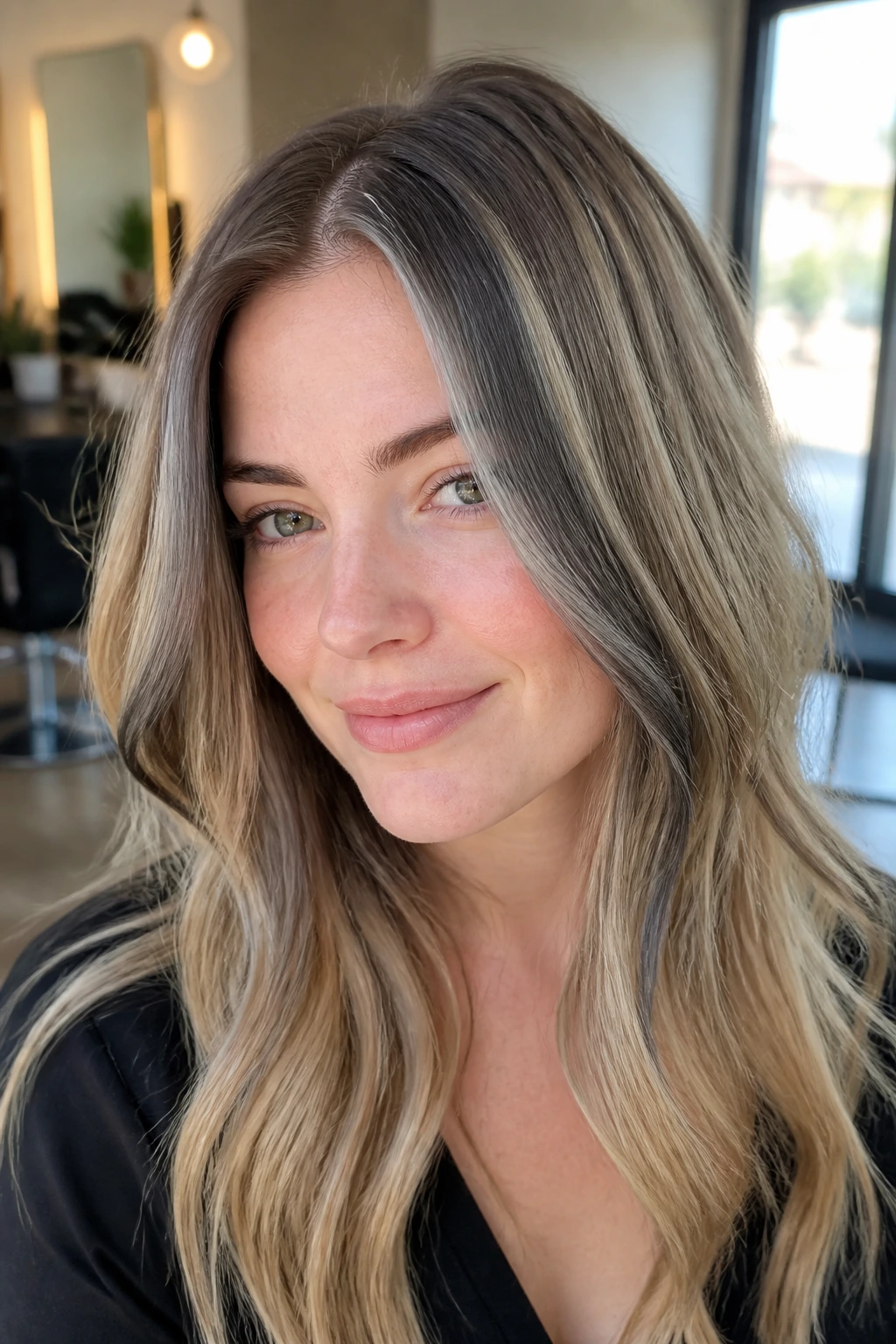
Pewter brown is what I’d call a smoke-forward money piece. It sits cooler than mocha and softer than charcoal, which gives fair skin a clean frame without leaning into black. It is a smart pick if your eyes are gray, blue, or green and you like a little edge near the face.
Why It Stands Out
The slight metallic note in pewter brown keeps the color from feeling flat under daylight. That matters more than people think. A dead, flat brown can make pale skin look tired; pewter keeps the front pieces dimensional, especially when there is a gloss on top.
Styling Cue
Wear it with a soft bend instead of pin-straight hair. The tiny curve in the front pieces gives the pewter color more life. Straight hair can still work, but it will show the line more clearly.
13. Dark Chocolate Curtain Pieces
Dark chocolate is the classic. No tricks, no gimmicks. On fair skin, a dark chocolate curtain frame can look elegant because the shade is rich rather than jetty, and the curtain placement softens the contrast around the nose and cheeks.
Why It Works So Easily
The beauty of dark chocolate is that it gives shape without strange undertones. If your skin runs neutral, this is one of the easiest shades to wear. It also pairs well with long curtain bangs because the color helps the fringe separate from the rest of the hair.
I like this most on medium to thick hair. There is enough body to support the darker front pieces, so the whole look feels balanced. Thin hair can wear it too, but the panels should stay narrow.
14. Smoke-Dipped Balayage Ends
This one pushes the darkness lower, which is a good move if you want the face frame but do not want the front to feel heavy. The roots stay lighter and cleaner, while the lower front lengths dip into smoky brown. The effect is more gradual than a money piece and less obvious than a stripe.
When to Choose It
If your hair is long and you wear it down a lot, smoke-dipped balayage keeps the front from looking plain. The darker tone near the ends creates a shadow that gives length some shape, especially in motion. On fair skin, it helps the face stand out without crowding the forehead.
This is also a smart option if you often wear half-up styles. The darker lower pieces peek out and keep the color visible even when the top is pulled back.
15. Mahogany Edge Lights
Mahogany edge lights are a little warmer, a little richer, and they flatter fair skin best when the complexion has some pink or peach in it. The red-brown note gives the front pieces life. It should not look coppery. It should look deep, like polished wood.
Who It Suits
If you have pale skin, dark brows, and warm lipstick tones, mahogany can be a lovely match. The color has enough depth to frame the face, but the red undertone keeps it from getting swallowed by very light skin. The result can look especially good in low light, where the warmth softens.
A Small Caution
Mahogany can pull brassy if the maintenance slips. If your hair tends to fade fast, ask for a gloss plan before you leave the chair. That one detail saves the look.
16. Taupe Brunette Side Frame
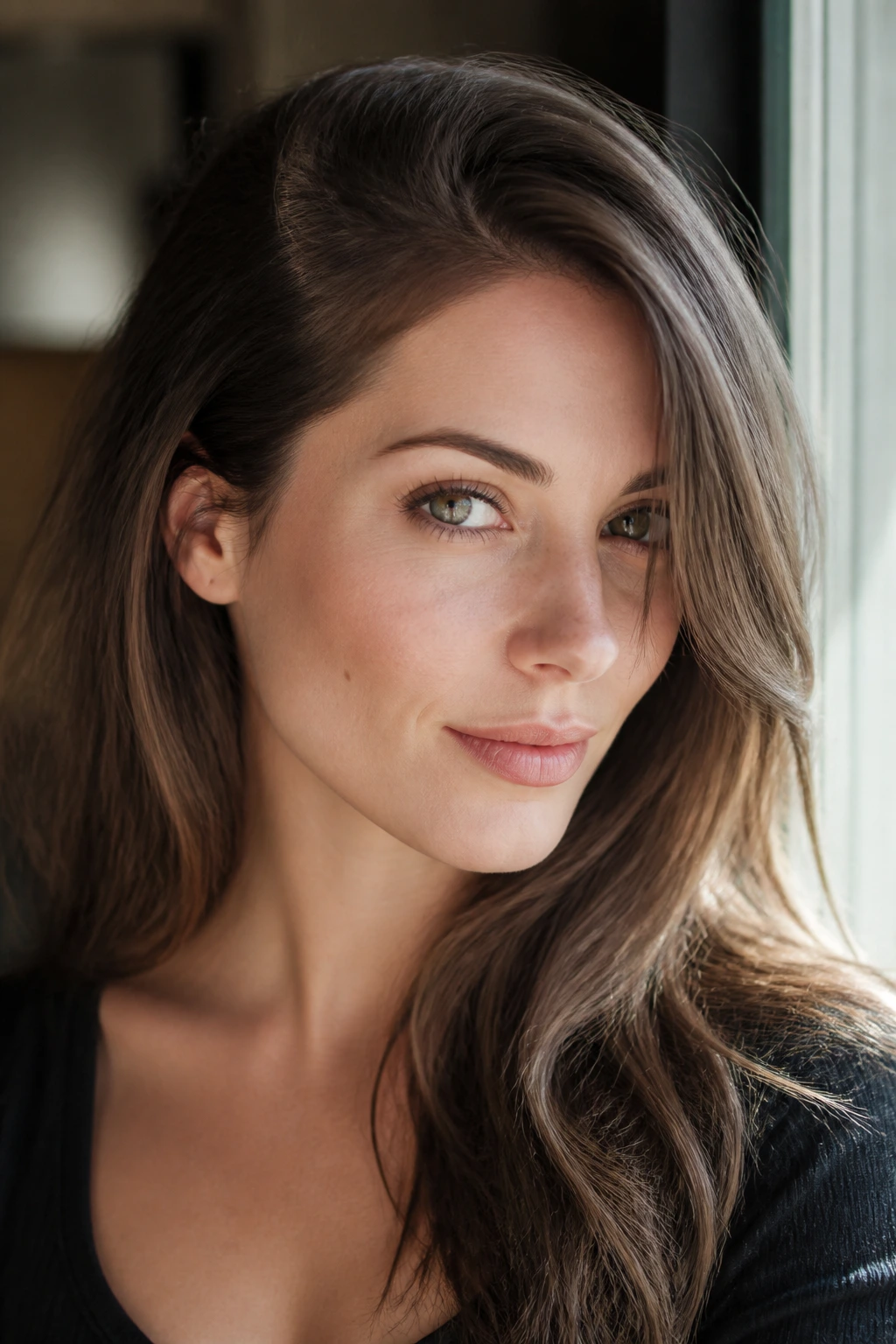
A side frame is underrated because it changes the shape of the face without shouting. Put the darker piece on the heavier side of a deep side part, and suddenly the cheekbone line looks more intentional. Taupe brunettes are especially good here because they stay muted and clean against fair skin.
Best For Asymmetry
If your face is round or heart-shaped, a side frame can work better than a centered money piece. The darker section draws the eye diagonally, which breaks up width and adds a little lift. It is a subtle trick, but a useful one.
What to Tell Your Stylist
Ask for the color to sit along the front layer that naturally falls forward when you part your hair. If the dark piece is placed on a section that always gets tucked back, you lose the whole effect.
17. Mocha Melt With Shadow Root
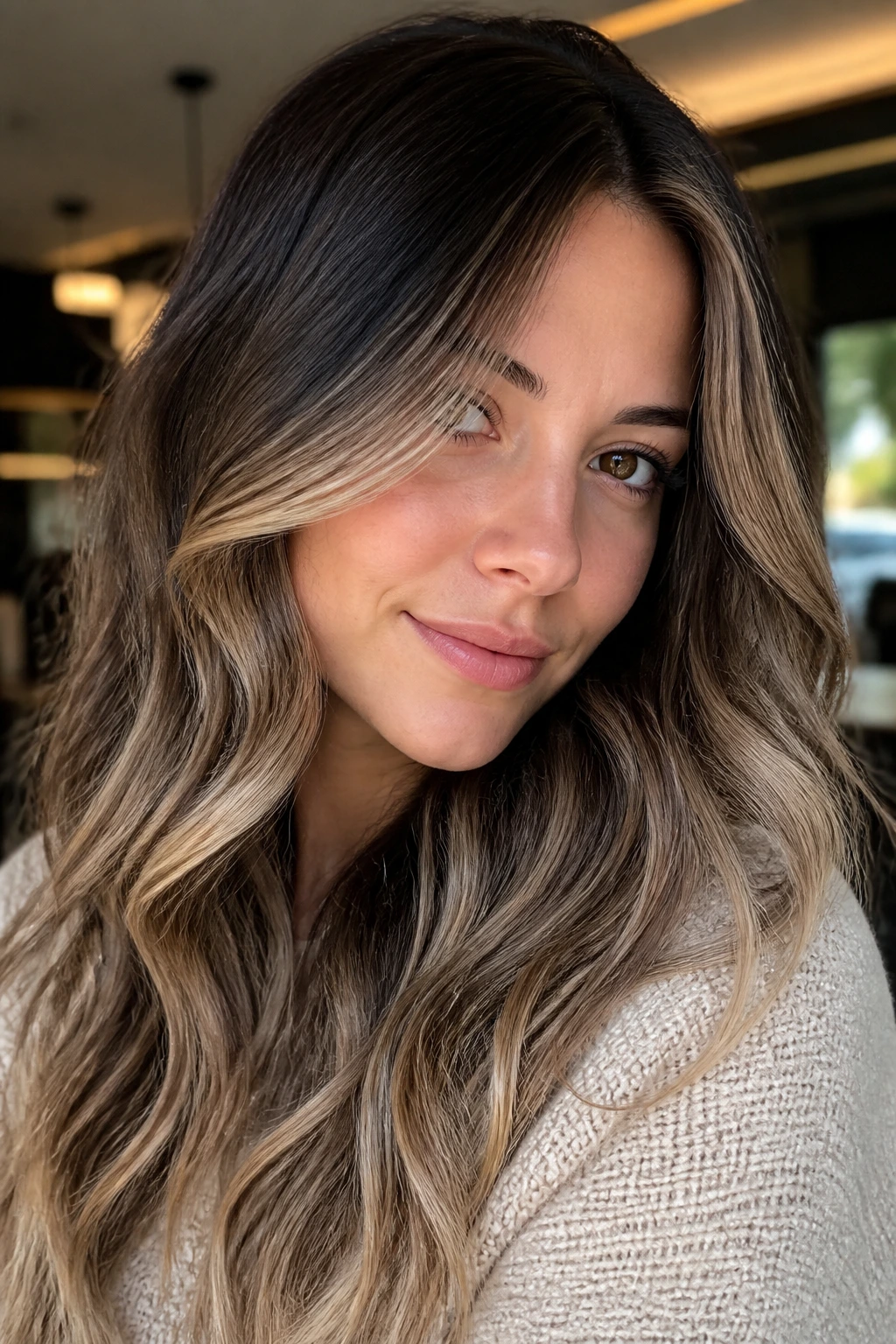
This is probably the most salon-friendly option in the whole set. The shadow root keeps the base deep, then the mocha front pieces melt out of it instead of starting with a harsh line. On fair skin, that softness matters because the eye sees the blend first, not the pigment.
Why It Lasts
A shadow root grows out better than a stark front panel. You can wear it longer before the regrowth looks obvious, and the front frame still keeps the face from disappearing into the hair. If you want a color that can sit through a few weeks of real life without looking messy, this is a sensible pick.
I would choose this for someone who wants dark framing but hates obvious maintenance. It is not flashy. It is practical. That is not a bad word in hair color.
18. Walnut Lowlight Sweep
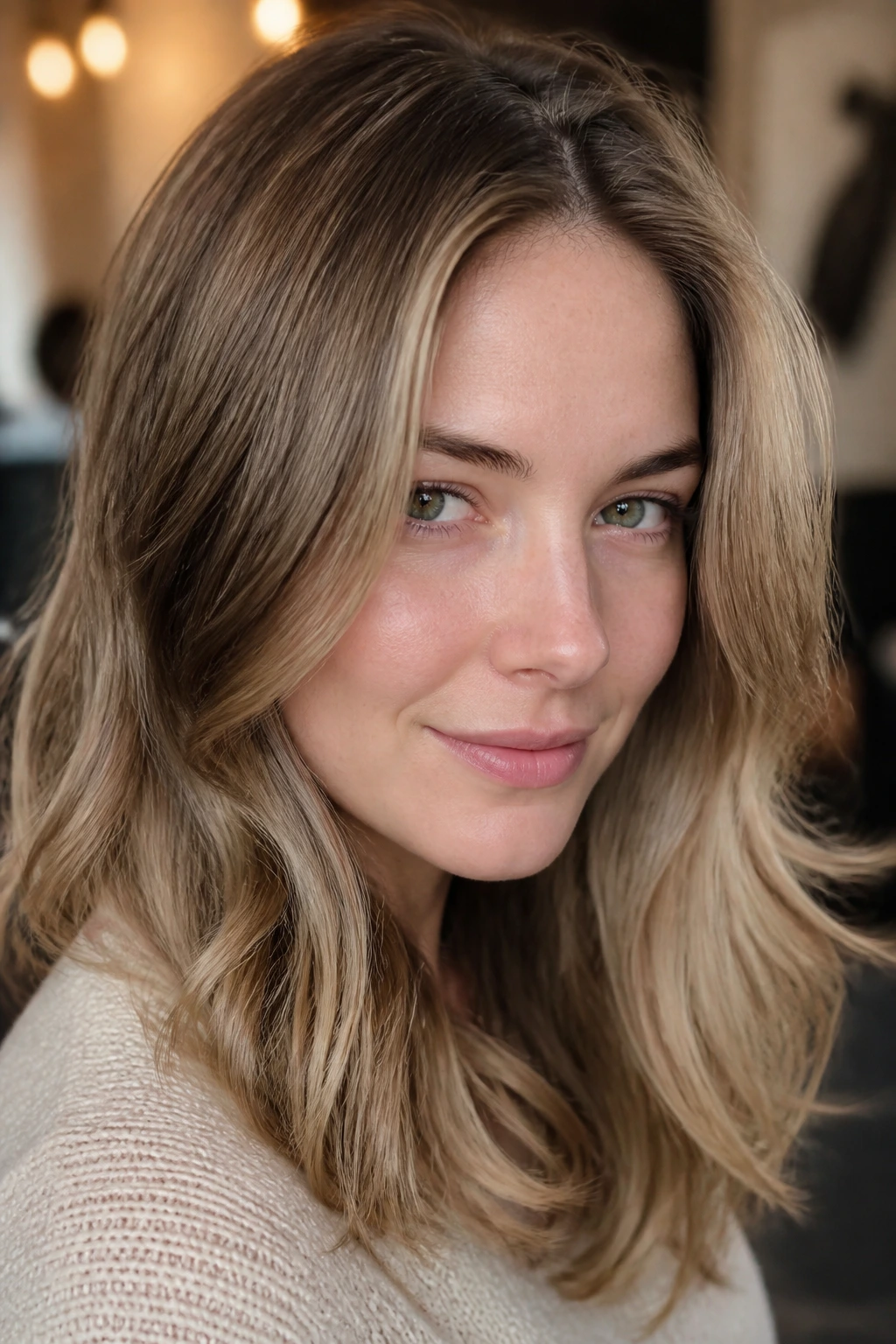
Lowlights instead of highlights sound backwards, but the effect is the same: the front gets edge and depth. A walnut sweep through the face frame can make fair skin look clearer because the darker strands give the eye a place to stop. On over-lightened hair, this can be a relief.
Why It Helps Thin or Flat Hair
If the front of your hair is too pale, it often looks thinner than it is. Walnut lowlights add visual weight without changing the whole head. The result is a better outline around the face, especially if your hair tends to lie flat at the roots.
Ask for the sweep to stay concentrated around the temples and cheek area. Spreading it too far back can dull the whole style.
19. Charcoal Brown Side Pieces
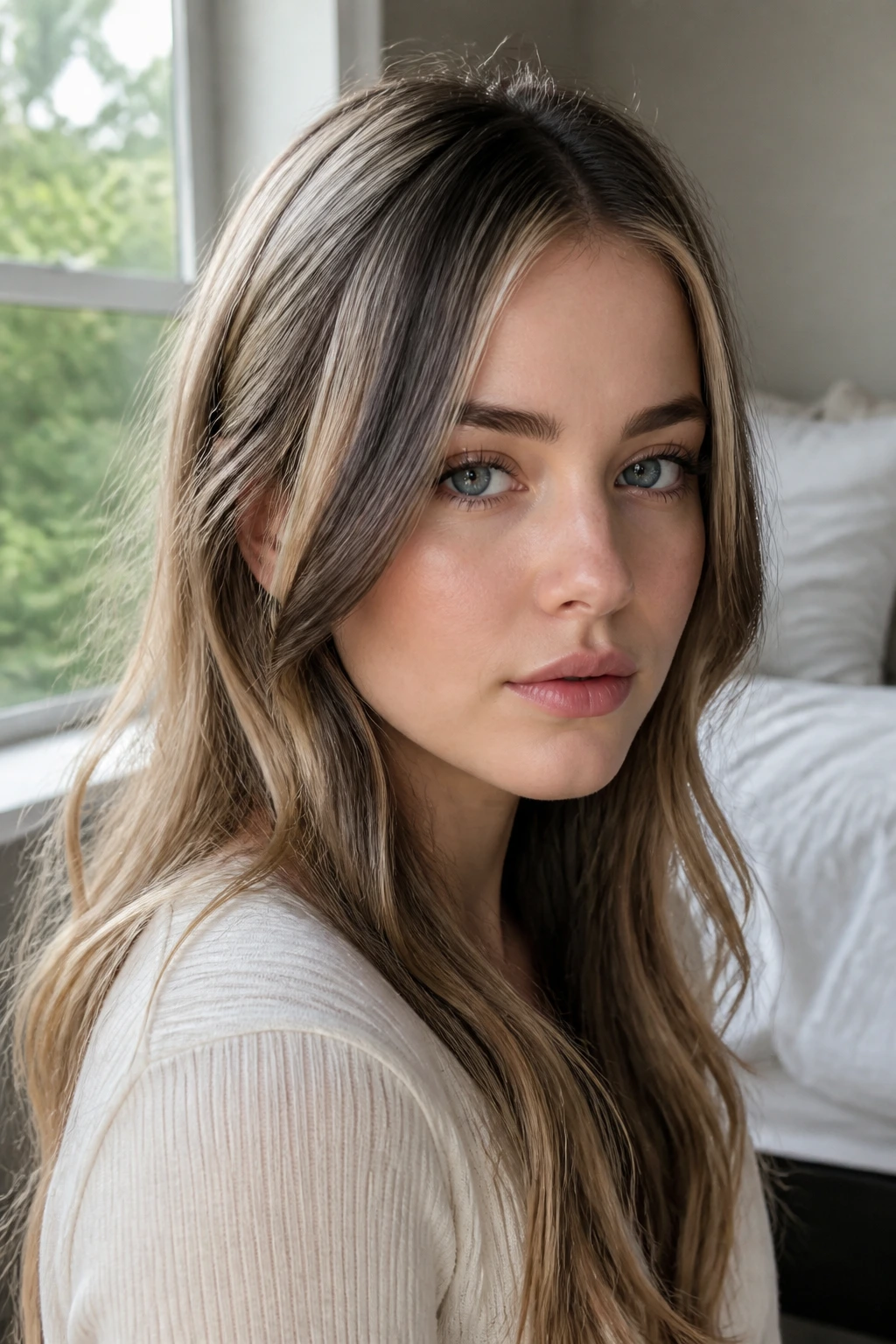
Charcoal brown is cooler and grayer than espresso, which is why it can look so clean on fair skin. It gives the face a sharp edge without going fully black. If your eyes are blue or gray, this shade can make them look more noticeable because the hair and skin are already in a cool conversation.
Best With Sleek Styling
Charcoal side pieces are strongest when the hair is smooth. The color line stays visible, and the darker tone feels deliberate instead of accidental. It is not the softest look in the list, but some people want a little bite near the face.
If your skin is very pale, keep the charcoal closer to the front than the crown. Too much of it overhead can flatten the whole head of hair.
20. Velvet Espresso Veil
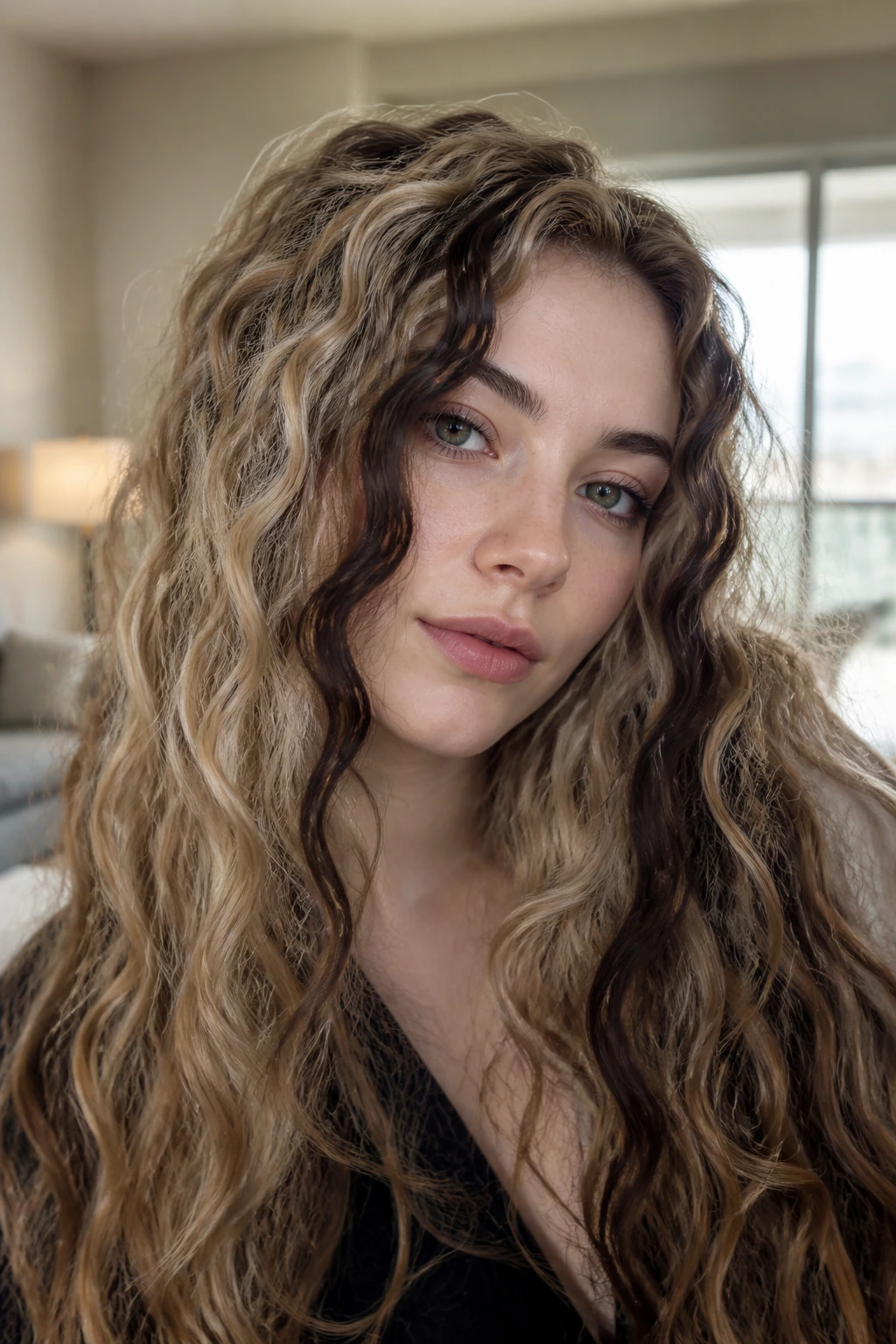
Velvet espresso is all about sheen. The color is dark, yes, but the placement is diffused so it reads like a soft veil around the face instead of a stripe. On curls and bends, the look gets even better because the hair catches the shade in pieces rather than all at once.
Why It Flatters Curly Hair
Curly hair needs shadow and light to show shape. A velvet espresso veil does that without making the front heavy. On fair skin, the contrast can be striking in the best way, especially if the curls are defined and the roots are clean.
A diffuser helps. So does a light oil on the ends. Too much product, though, can make the front look greasy, and this shade loses its plush feel fast when that happens.
21. Cappuccino Shadow Frame
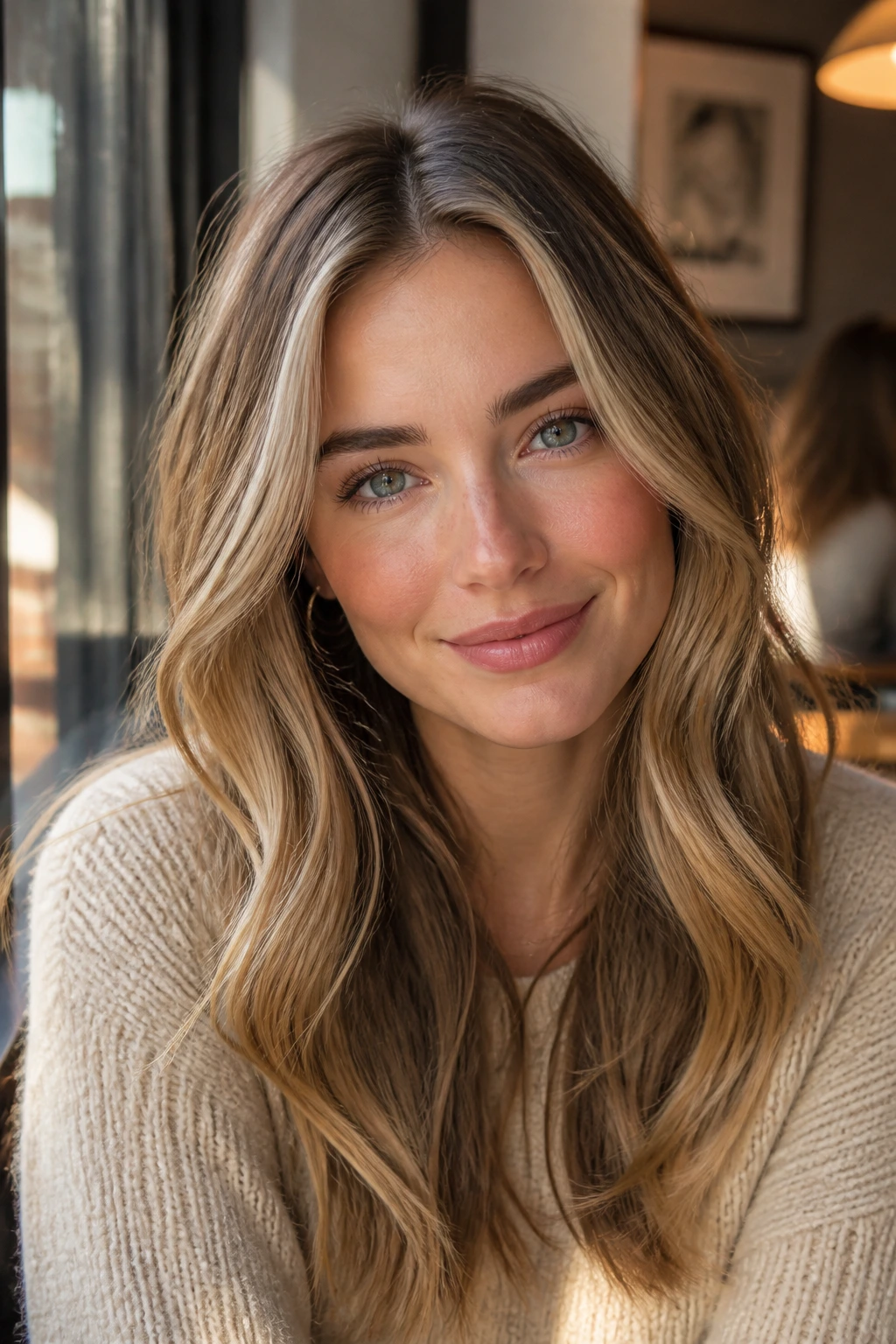
Cappuccino is the softer cousin of mocha. It has that milky brown edge that keeps the frame from looking flat, especially on fair skin with neutral or beige undertones. The shadow at the roots makes the front pieces sit like a contour, not a block.
The Difference You Feel
This is one of those colors that reads calmer in person than it does in photos. The front still darkens the face, but the milkier tone keeps it from feeling severe. If you want something that works at brunch and in office lighting, cappuccino is a smart middle path.
What It Pairs With
Soft blush, clean brows, and a loose wave. That combo keeps the face frame from becoming the only thing anyone notices.
22. Cedar Brown Face Bands
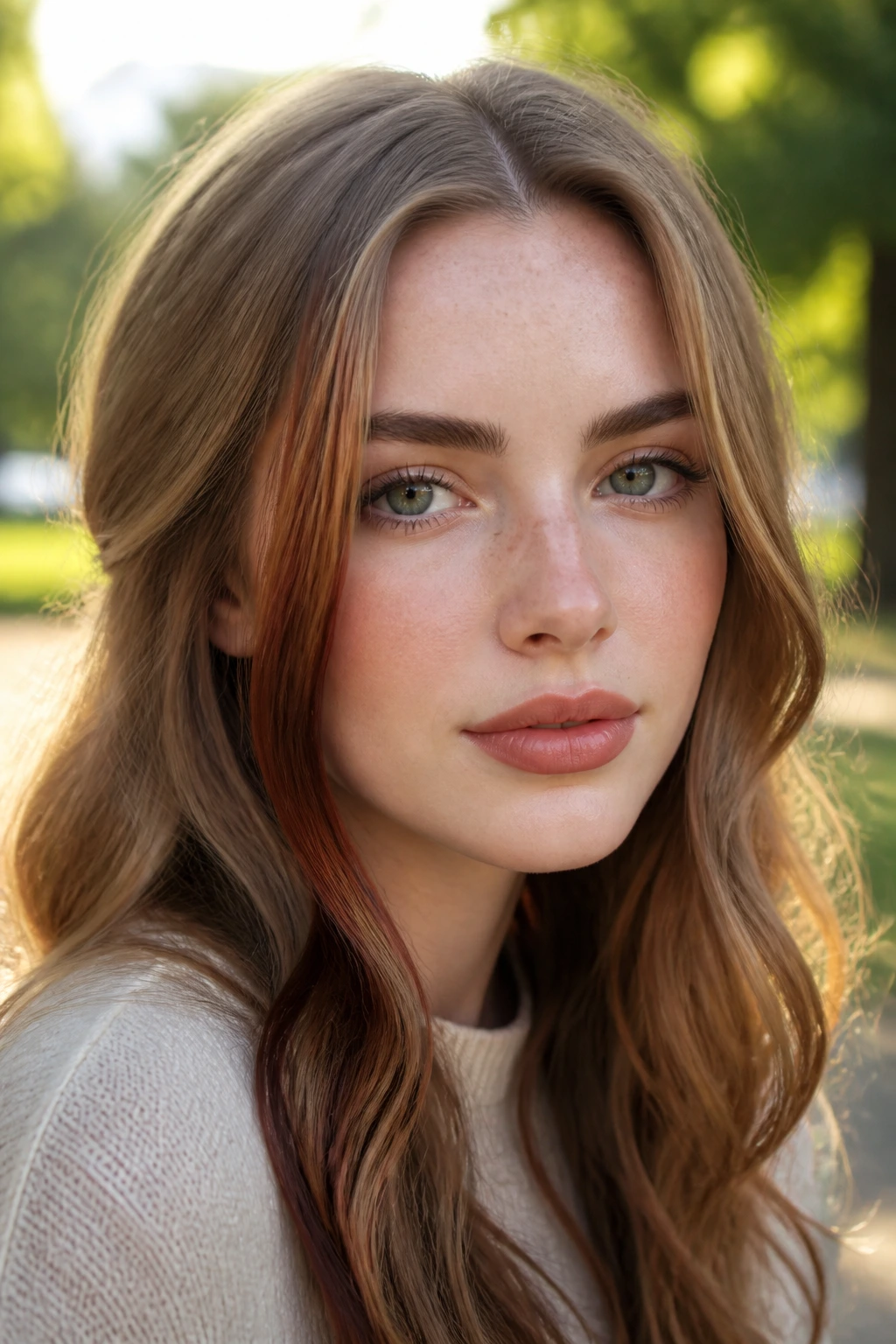
Cedar brown has a woodsy warmth that can rescue very pale skin from looking too gray. It is darker than auburn but not as red as mahogany, which makes it easier to wear if you want warmth without the copper family. On fair skin with freckles, cedar can look alive.
When It Makes Sense
If ash tones make you look drained, cedar can put a little color back into the face frame. It works especially well with earthy makeup shades and warm lip colors. The front pieces get the job of defining the face, while the warmth keeps the whole look human.
That said, cedar is not the right call for everyone. If your wardrobe and makeup are all cool gray, the warmth can feel disconnected.
23. Cool Truffle Money Piece
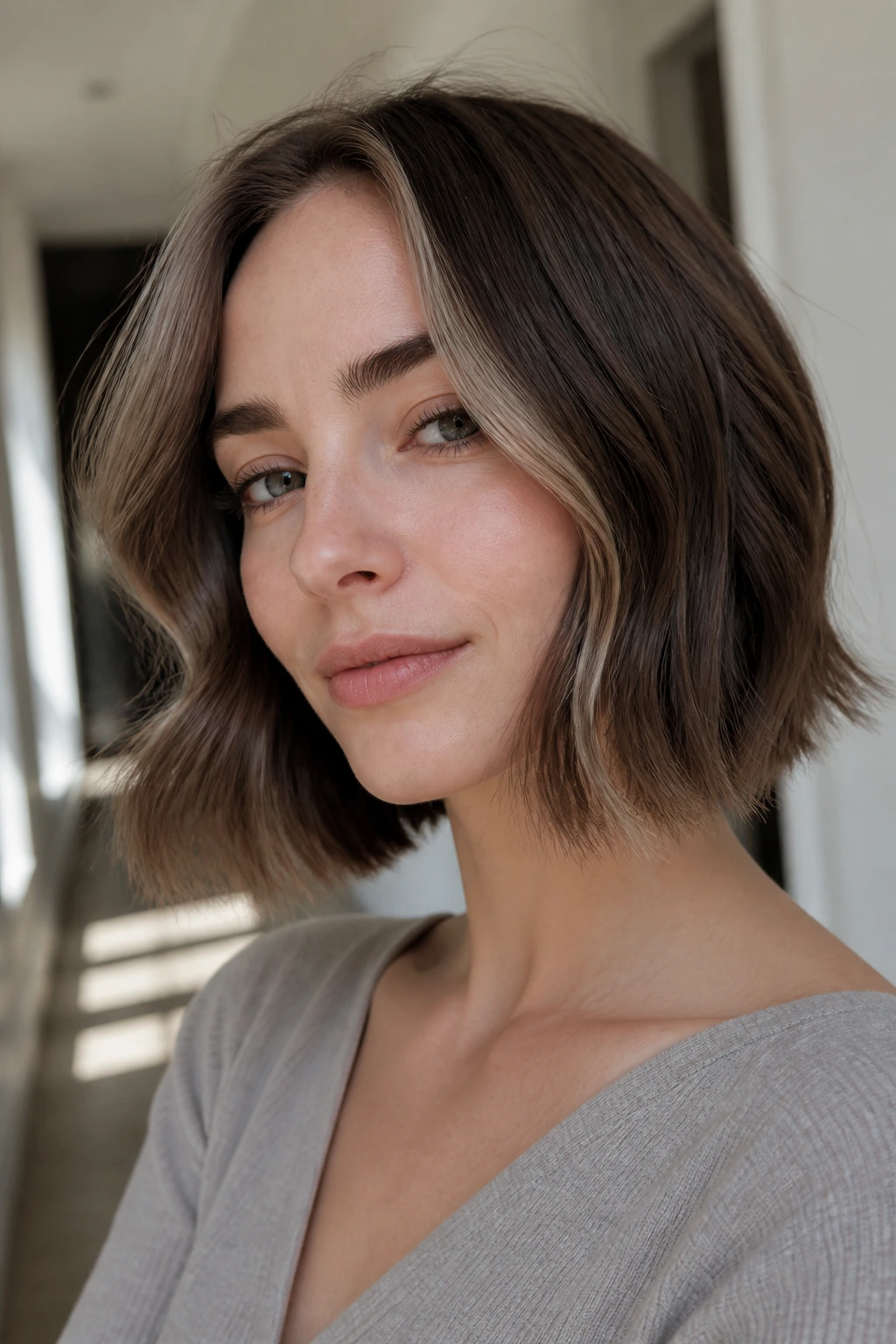
Truffle is deep, muted, and a little glossy. On fair skin, it looks deliberate rather than stark, which is why I keep coming back to it for people who want contrast but not drama. A cool truffle money piece is also easy to read in daylight. No muddy orange, no black helmet.
Best For Clean, Quiet Contrast
This shade works especially well on lobs and layered bobs. The front piece can sit close to the cheekbone and still feel light enough for the cut. If you like a neat, polished finish, truffle gives you that without a lot of extra effort.
One small trick: keep the ends slightly softer than the roots. That little shift keeps the piece from looking too blocky.
24. Dark Roast Peekaboo
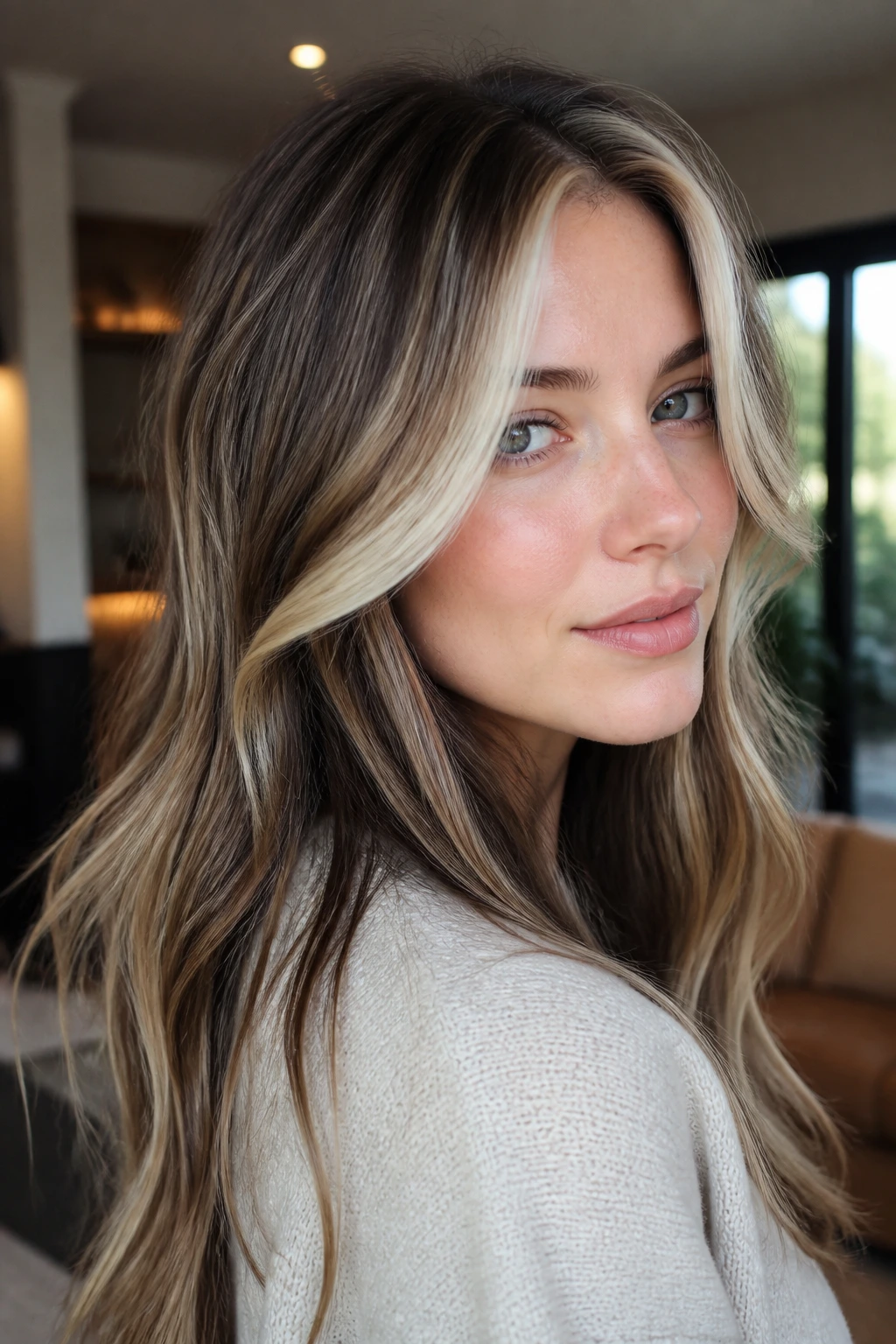
Dark roast peekaboo gives you drama under the surface. The darker strands hide beneath lighter top layers, then flash through when the hair moves. On fair skin, that hidden depth keeps the look from feeling flat even when the front isn’t screaming for attention.
Why It’s Fun
This is a good choice if you like surprises in your hair but do not want constant front-facing contrast. It can live quietly under a ponytail or show up in waves and twists. The face frame still exists; it just works in a softer, less obvious way.
It is especially nice for people who wear clips, half-up styles, or messy buns. The color keeps peeking out in places that feel a little accidental, which is half the charm.
25. Slate Brown Frame
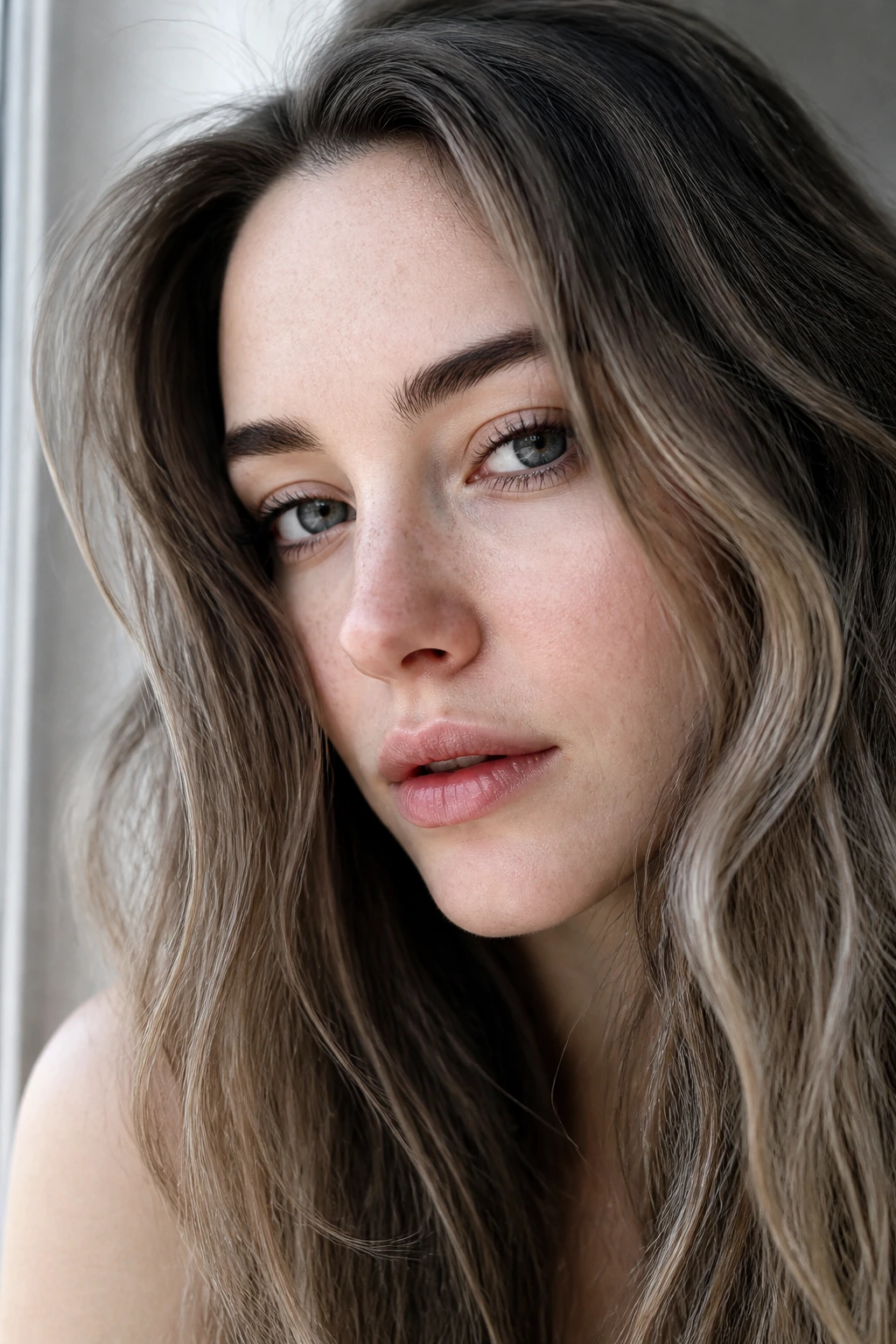
Slate brown is what you choose when you want neutral. Not warm. Not icy. Just clean, smoky brown with enough depth to frame the face on very light skin. That neutrality is the point. It does not fight pinkness, and it does not turn golden skin muddy.
Why Neutral Browns Earn Their Keep
A lot of pale complexions sit somewhere in between undertones, and slate brown does not force a decision. It acts like a quiet outline around the face. That makes it a strong option for people who wear a mix of gold and silver jewelry or switch makeup shades depending on the day.
If you are nervous about dark framing highlights, slate is a good middle step. It has edge, but it keeps its manners.
26. Ink Brown Front Streaks
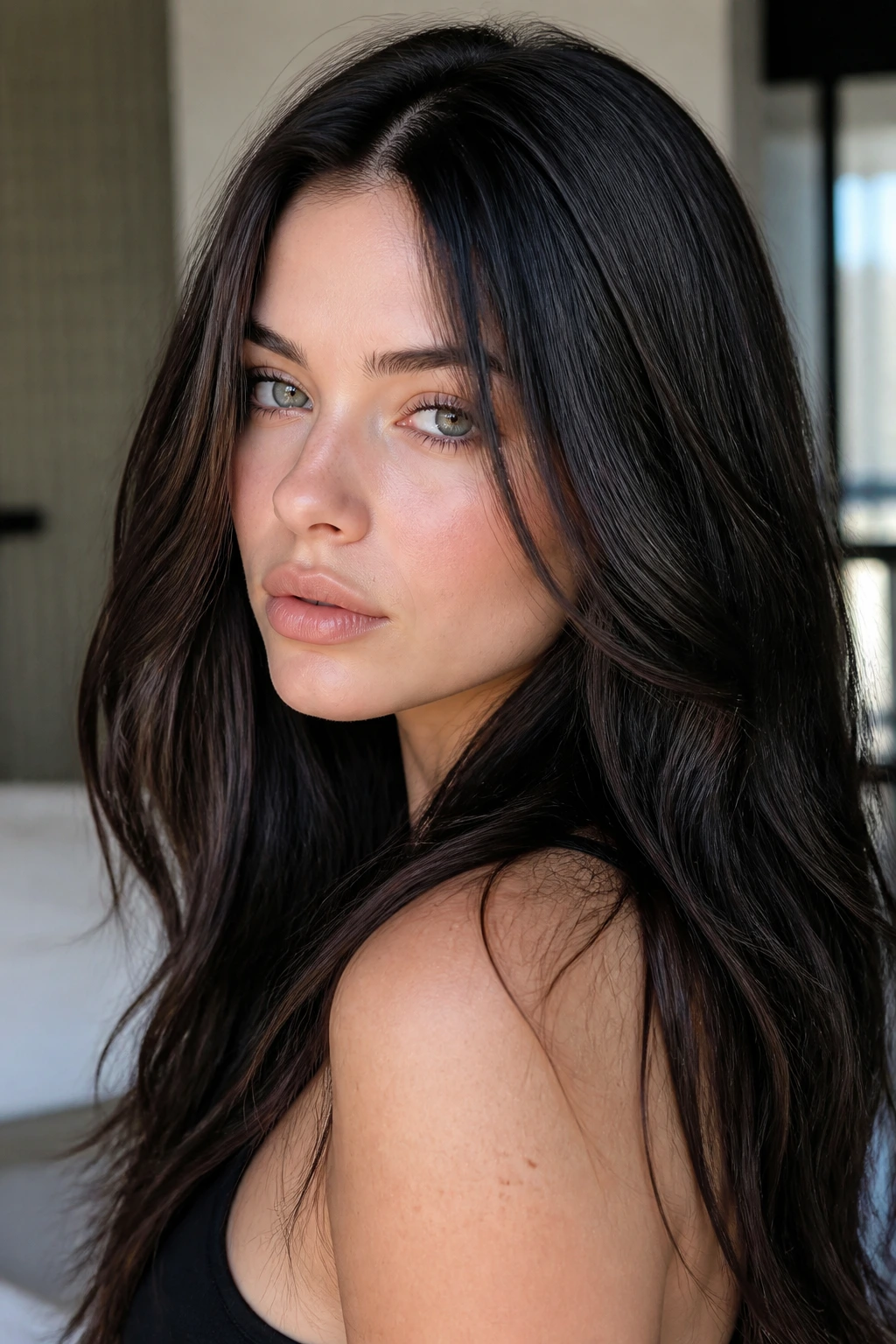
Ink brown gets close to black, which means placement matters more than shade. Ask for very thin streaks and a soft gloss so the line does not go cartoonish. On fair skin, ink brown can look chic and dramatic, especially if the haircut has blunt ends or curtain bangs.
Best For Thick Hair
Thick hair can carry the weight of this shade better than fine hair. The volume keeps the dark pieces from swallowing the face. If your hair is airy and wispy, ink brown may be too much unless the streaks are kept feather-light.
A little shine goes a long way here. Matte ink brown can look dusty. Gloss makes it feel expensive.
27. Soft Cinder-Brunette Frame
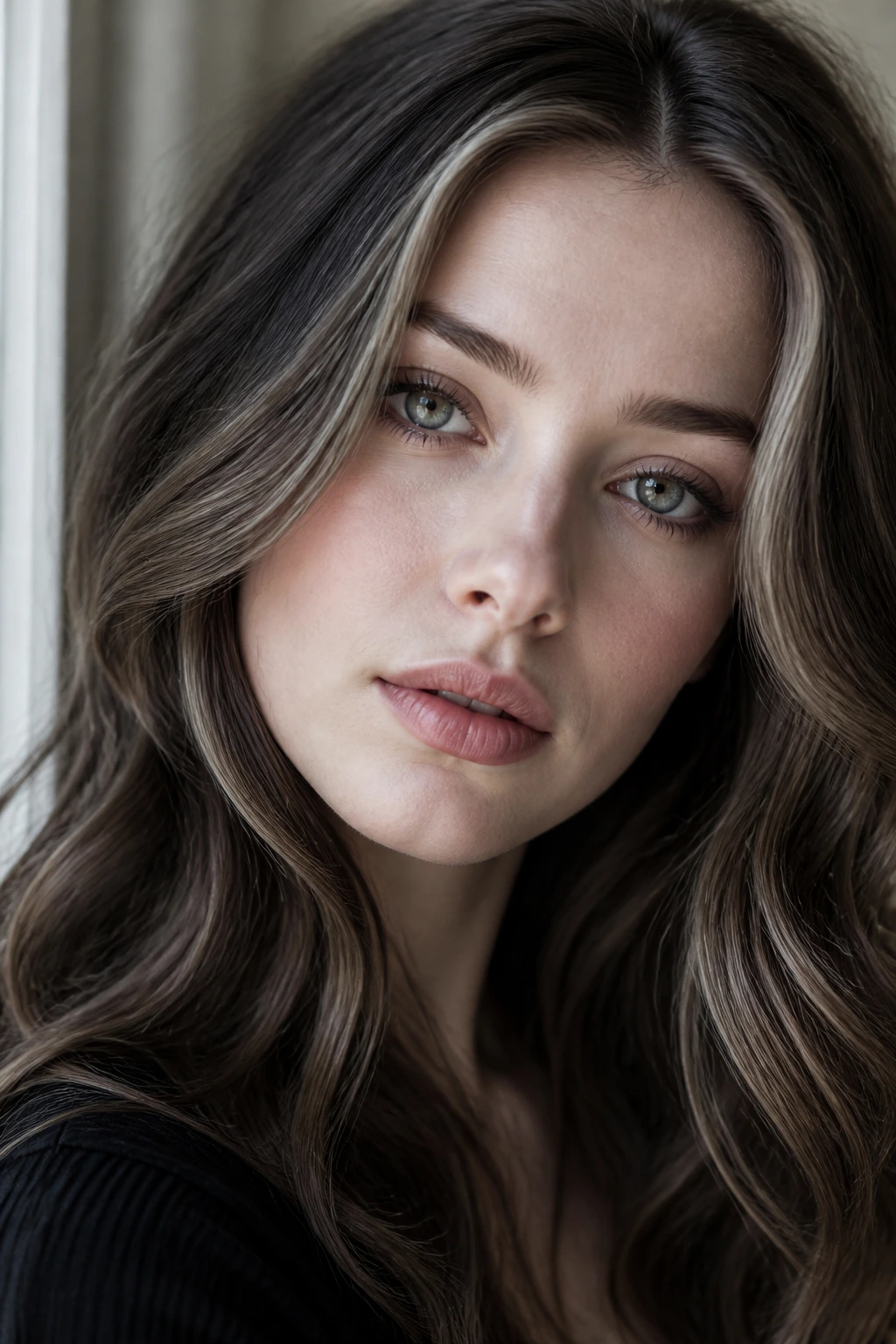
Soft cinder-brunette is ashier and lighter than ink, but still dark enough to pull the eye inward. It is a smart pick for porcelain skin or skin that burns before it tans because it gives shape without adding warmth that can compete with the complexion.
What Makes It Different
This shade sits in the smoky lane, which means it plays nicely with soft waves and barely-there makeup. The frame looks more like shadow than color, which is a useful trick on fair skin. If you want the face to look slimmer and the features a touch more defined, cinder does that quietly.
It is one of the easier choices to live with if you do not want the front pieces to dominate every mirror check.
28. Black Tea Fringe Lights
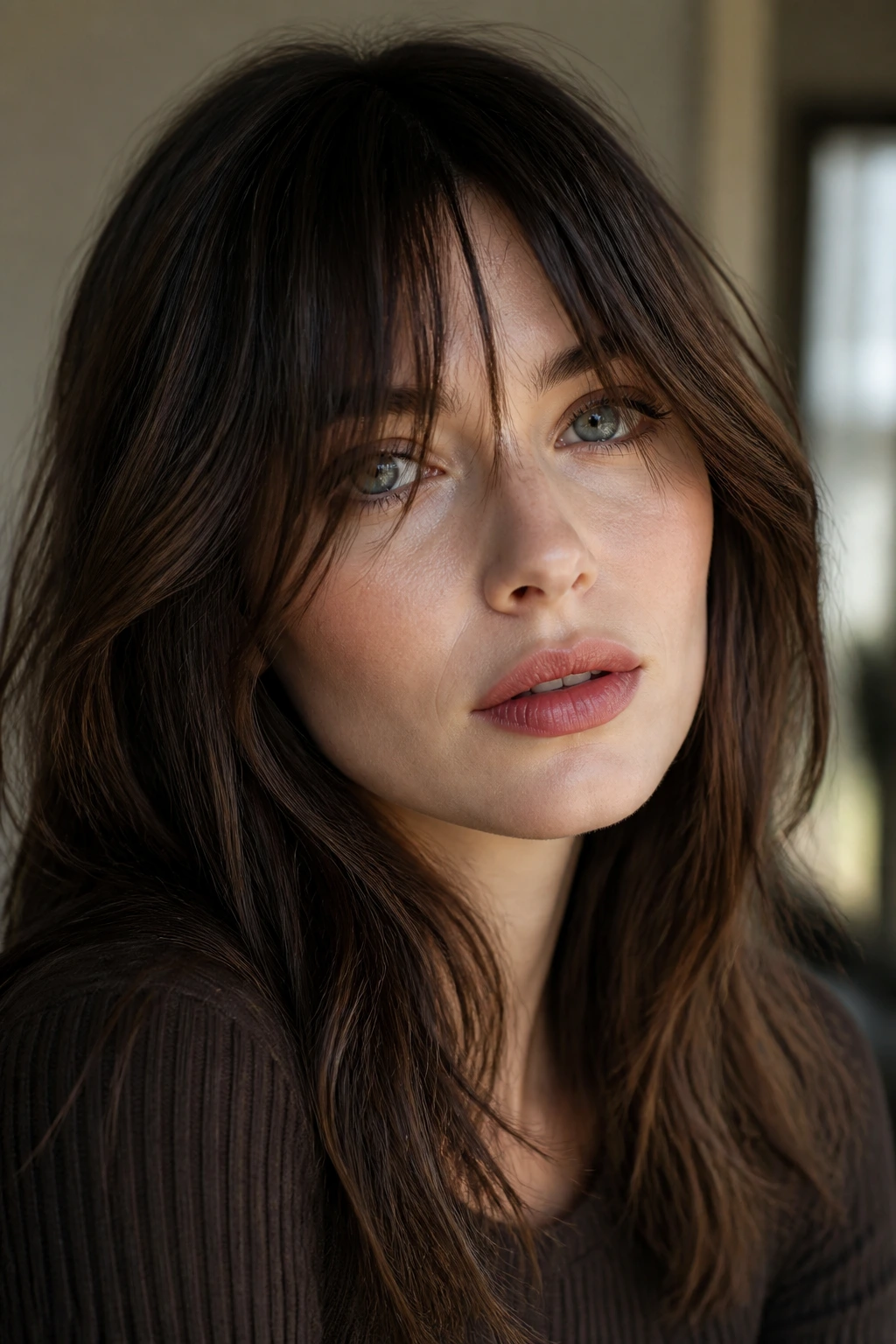
Black tea is the last stop before true black. I like it around curtain bangs or broken fringe because the texture of the cut keeps the darkness from feeling flat. On fair skin, this look can be moody in the best sense: soft enough to wear, dark enough to matter.
Why It Lands Well
The fringe does a lot of the work here. The broken line of a bang or wispy front layer breaks up the density of the dark color, so the face still feels open. If you want the frame to look chic and a little mysterious, this is the closest thing to a shortcut.
Keep the rest of the makeup light and clean. Too much smokiness around the eyes can push this one over the edge.
Why Dark Framing Highlights Feel So Good on Fair Skin
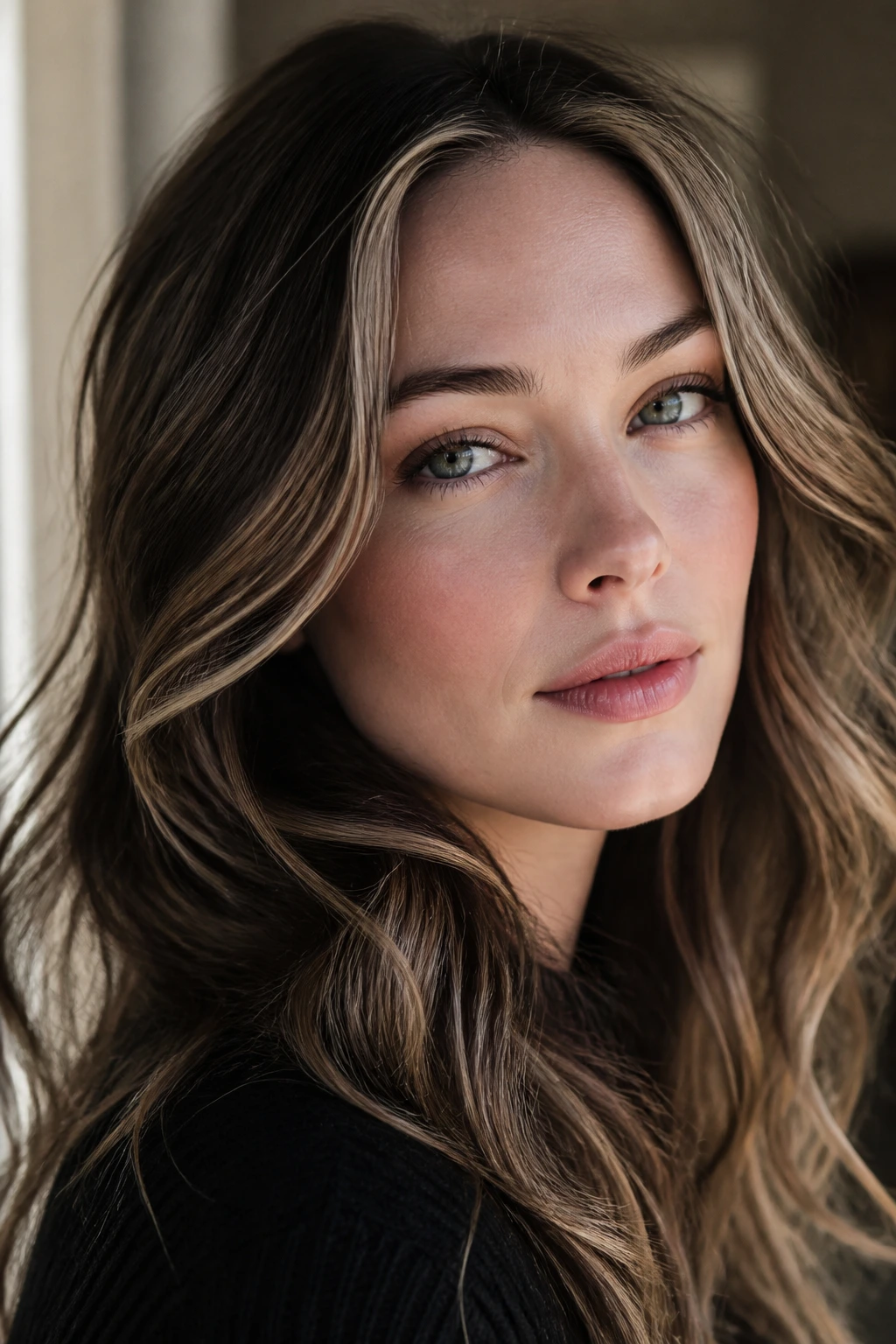
The best dark face-framing color has a simple job: it gives pale skin something to push against. Without that contrast, very light hair can wash out the edges of the face and make features look softer than they really are. With it, the jawline gets a little more structure, the cheekbones read faster, and even a basic ponytail looks thought through.
The shade choice matters, but placement matters more. A narrow panel at the temple can do more than a wide strip at the hairline. A shadow root can make a front piece feel softer than a fully painted stripe. And if you ignore that part, the whole look starts to feel heavy.
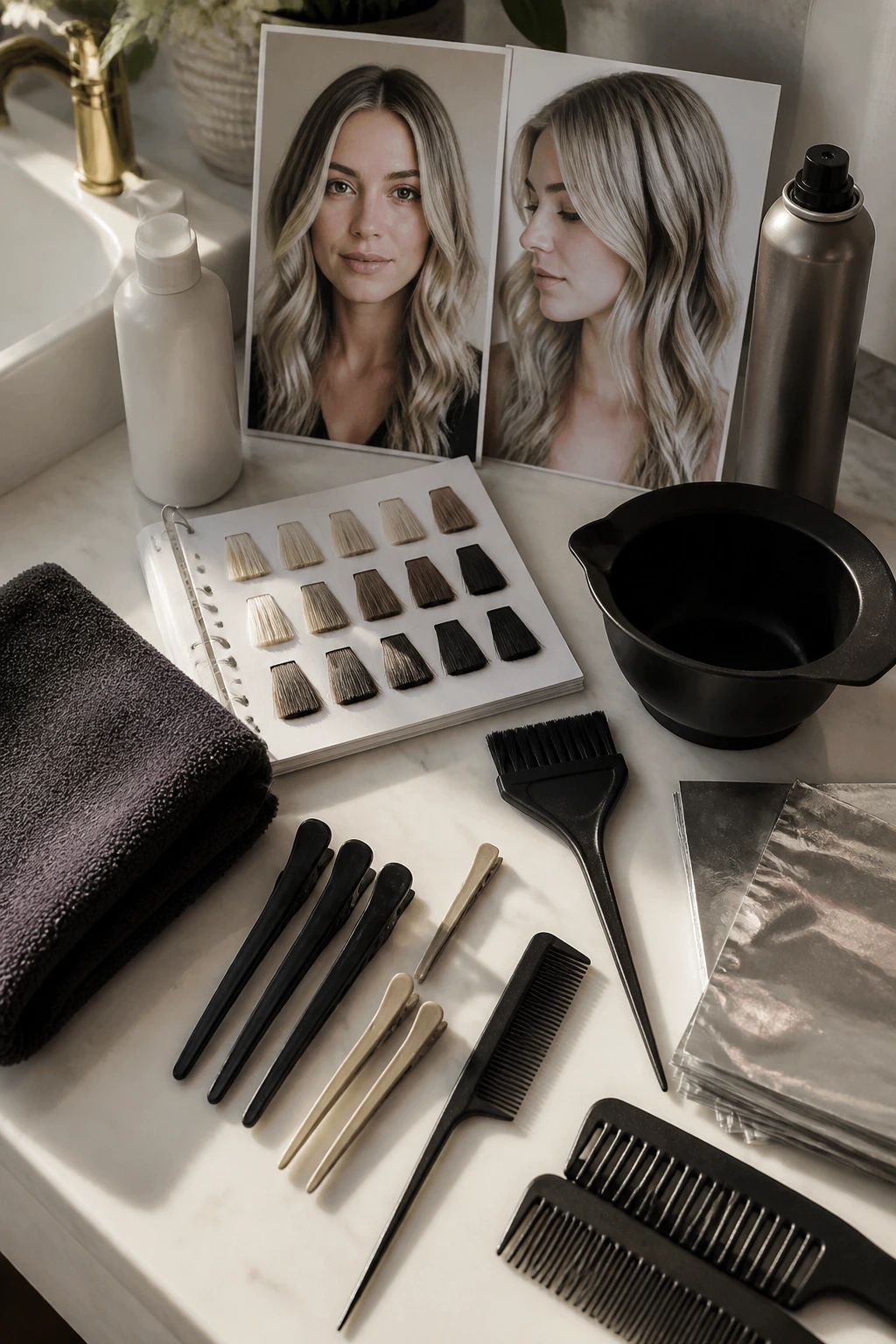
Essential Tools for the Salon Chair and the Bathroom Shelf
-
Reference photos in natural light: Bring 2 or 3, not 20. The goal is to show tone and placement, not build a mood board for the colorist.
-
A level chart or swatch book: This helps you talk about whether you want espresso, mocha, walnut, truffle, or something closer to black.
-
Tail comb: Clean parting is everything with face-framing color, especially if the front pieces need to sit in a very specific spot.
-
Sectioning clips: These keep the front panels separate while you style or dry them.
-
Tint brush and bowl: Useful if your colorist is doing a gloss or if you are refreshing tone at home.
-
Foils or balayage paddle: Foils create sharper contrast; a paddle gives a softer sweep. The tool changes the look more than people think.
-
Color-safe shampoo: A sulfate-free formula helps keep the darker pigments from washing out too fast.
-
Heat protectant spray: The front pieces are usually the first to fade because they get the most heat.
-
Wide-tooth comb: Better for detangling wet hair without stretching the color through the lengths.
-
Microfiber towel: Less friction, less frizz, less dullness at the front.
How to Choose the Right Shade Family for Your Undertone
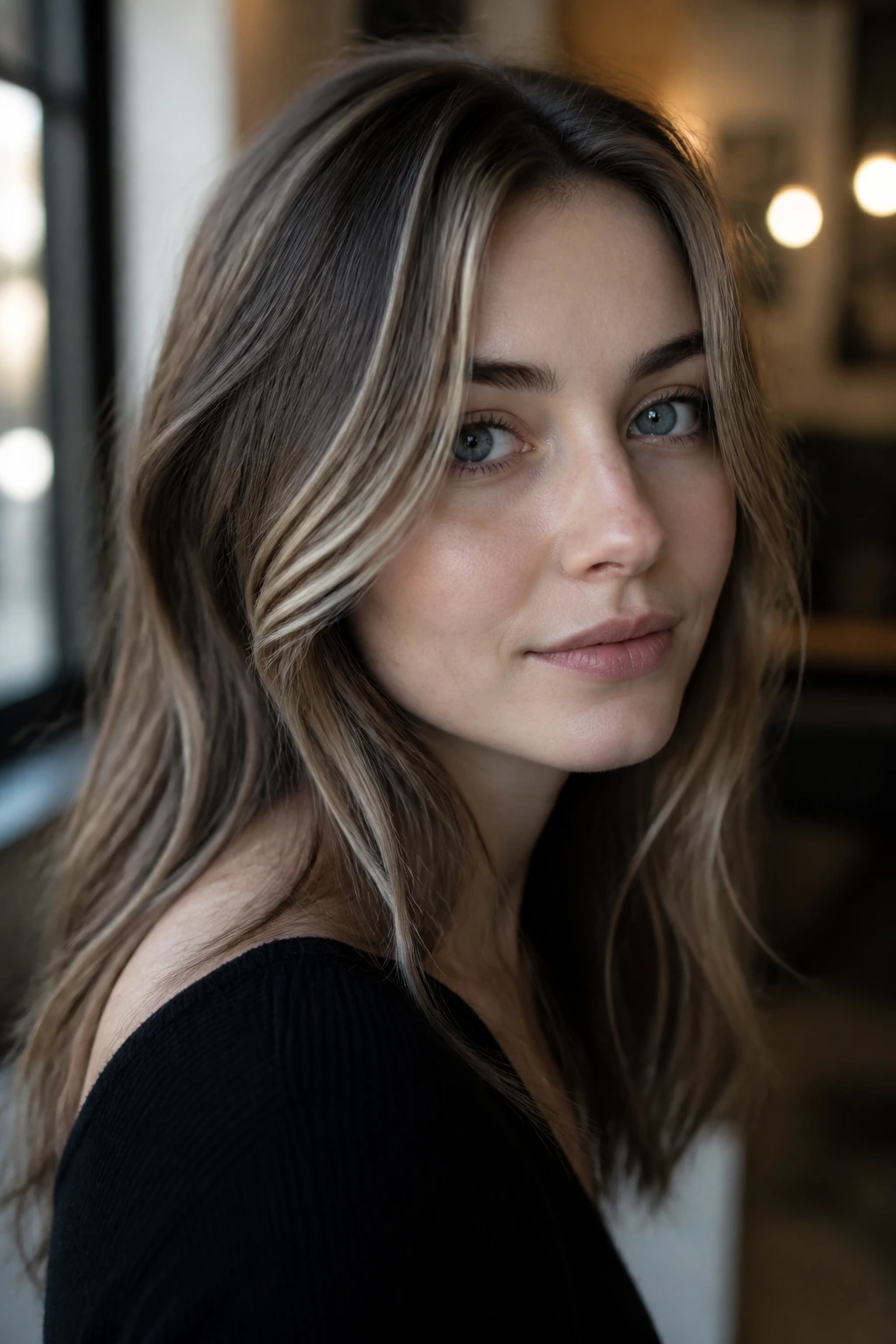
Fair skin is not one thing. Some faces lean pink, some lean beige, some pick up peach, and some sit so neutral that the wrong brown can make them look oddly tired. That is why the same dark framing face highlights for fair skin can look sharp on one person and muddy on another. The shade family has to match the undertone.
Cool skin: Go for ash brown, mushroom brown, slate, pewter, or soft cinder. These shades keep the front from going orange, which is the fastest way to make pale skin look off. If your veins read blue and silver jewelry looks better on you, stay in the cooler lane.
Neutral skin: Mocha, truffle, walnut, and cappuccino are the easy bets. They do not drag the face warm or cold, so the color stays usable under different lighting. Neutral skin usually has the widest range, which is lucky, because you can play a little bolder with contrast.
Warm skin: Chestnut, hazelnut, cedar, and mahogany keep the frame from fighting the warmth already in the face. If your skin freckles easily or gold jewelry looks better than silver, this group is usually safer. One warning: if you already flush red, do not let the front pieces go too coppery. That is where the line between flattering and messy gets thin.
Bring a salon photo that shows both the front and the part line. That matters. A lot of hair photos hide the root area, and the root is where bad color shows first.
How to Wear and Style the Frame
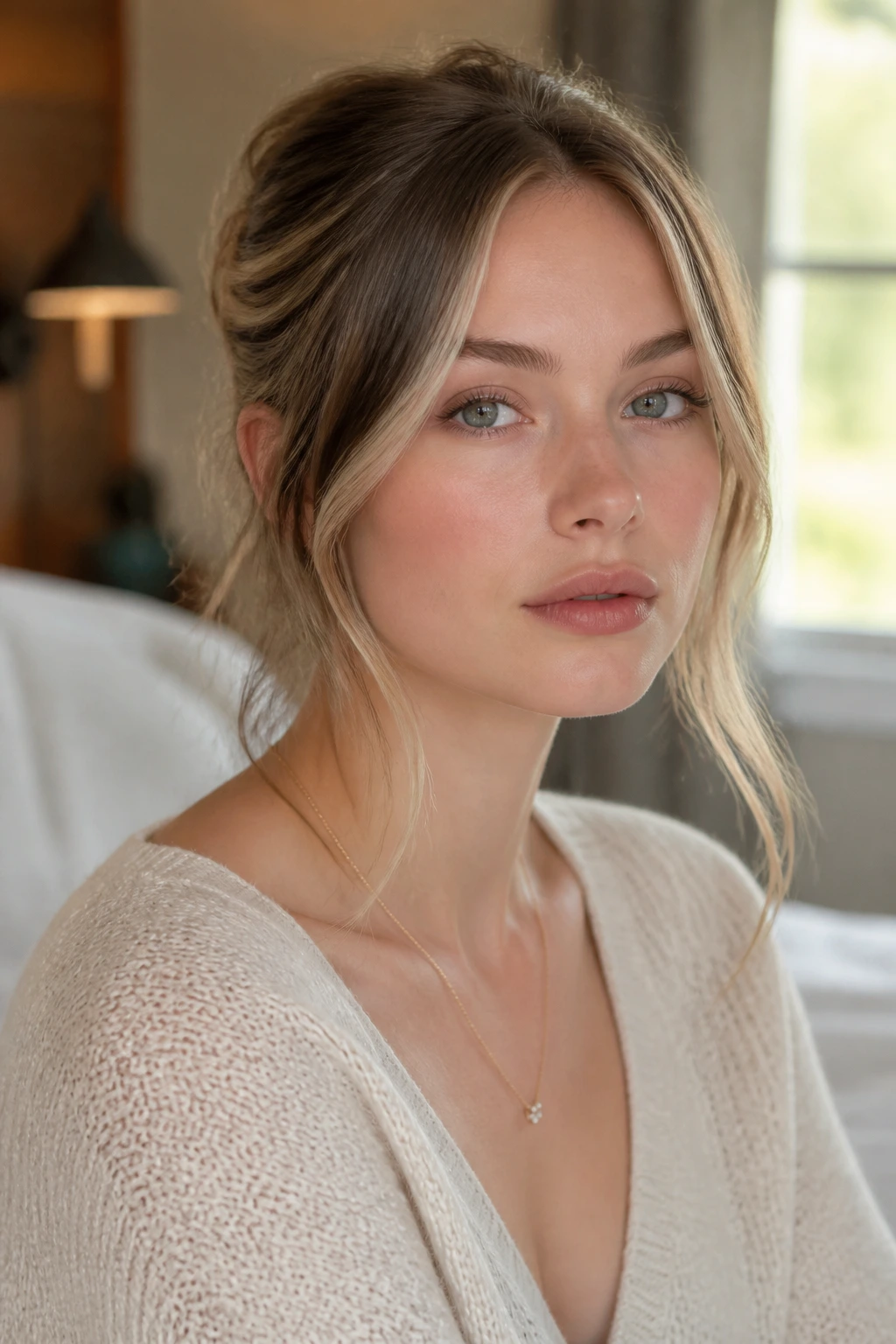
Placement: Keep the darkest pieces one to two finger-widths from the hairline if you want a softer contour. Push them closer to the face if you want a bolder, editorial edge. The difference is small on paper and big in the mirror.
Styling: A smooth blowout gives the cleanest look. Loose waves blur the line and make the frame feel more blended. If you wear your hair straight, ask for finer slices. If you wear curls, the pieces can be a touch thicker because the texture will break them up.
Makeup Match: Soft brows, a little cream blush, and a lip shade with some life in it are enough for most of these looks. Very cool front pieces can make the face look paler, so a warm blush or peachy lip often helps. Very warm front pieces can read too rich, so a mauve lip can pull them back.
Outfit and Neckline: Crew necks, square necks, and open collars show the face frame best. High turtlenecks can hide the shape, which is annoying if you paid for the color to show. Earrings matter too. Small hoops or drop earrings echo the line of the frame without competing with it.
Additional Tips and Tone Boosters
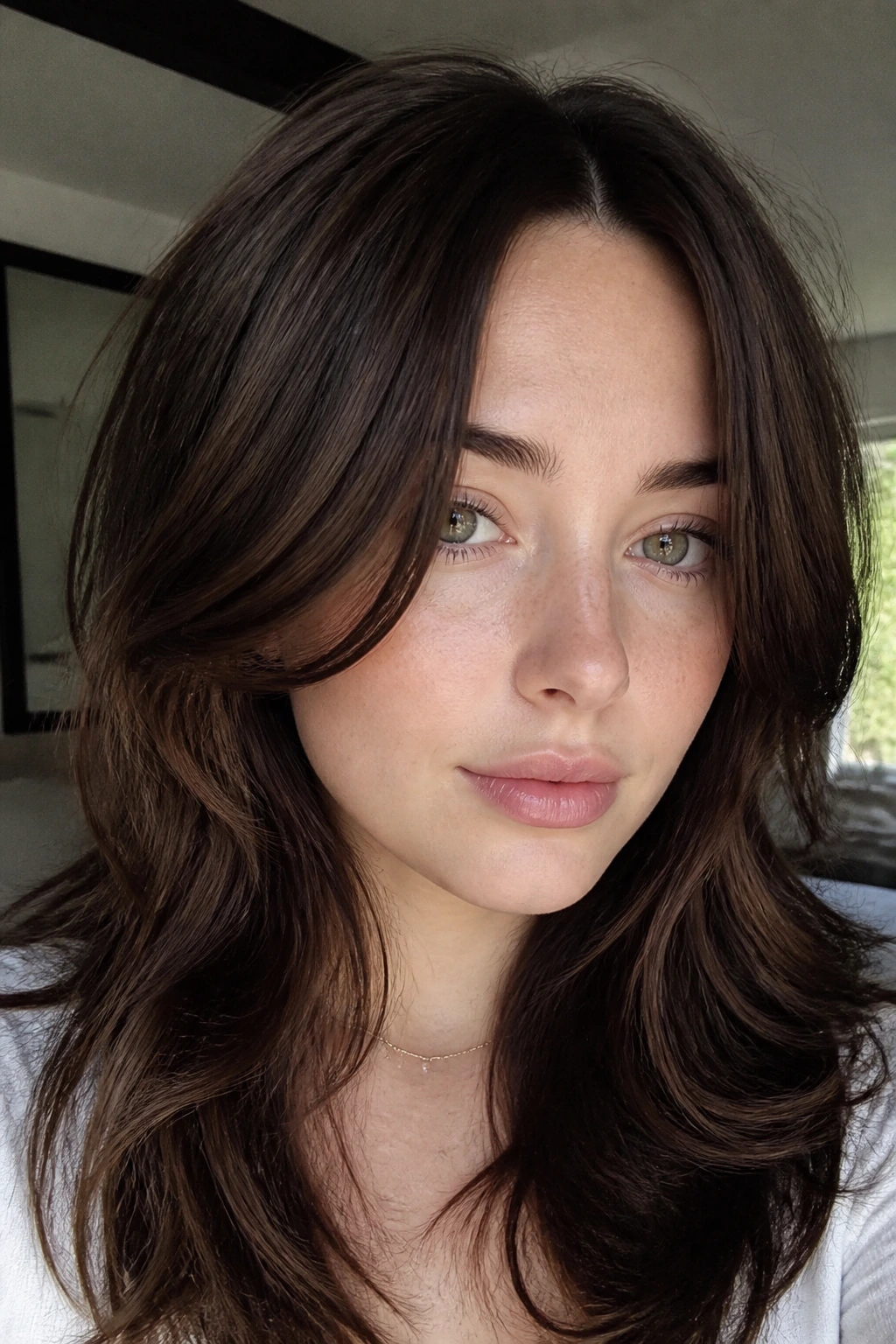
Face Brightening: If your skin is very light, keep the front pieces one or two shades deeper than the base, not five. That gives contour without turning the hairline into a black border.
Texture Trick: The frame looks better when the front has some bend. Even a slight wave at the jawline helps the darker color catch and release light.
Color Balance: Do not let the brows out-darken the hairline. If the front pieces are espresso, brows in deep brown often look cleaner than black pencil on fair skin.
Make-It-Yours: For a soft, everyday finish, choose walnut, cappuccino, or mocha. For something sharper, go toward truffle, charcoal, or ink brown. The same haircut can handle both, but your maintenance tolerance has to match the shade.
A small gloss can change the whole mood. Matte brunette looks heavier; shiny brunette looks cleaner. That difference matters more near the face than anywhere else.
Maintenance, Fading, and Grow-Out
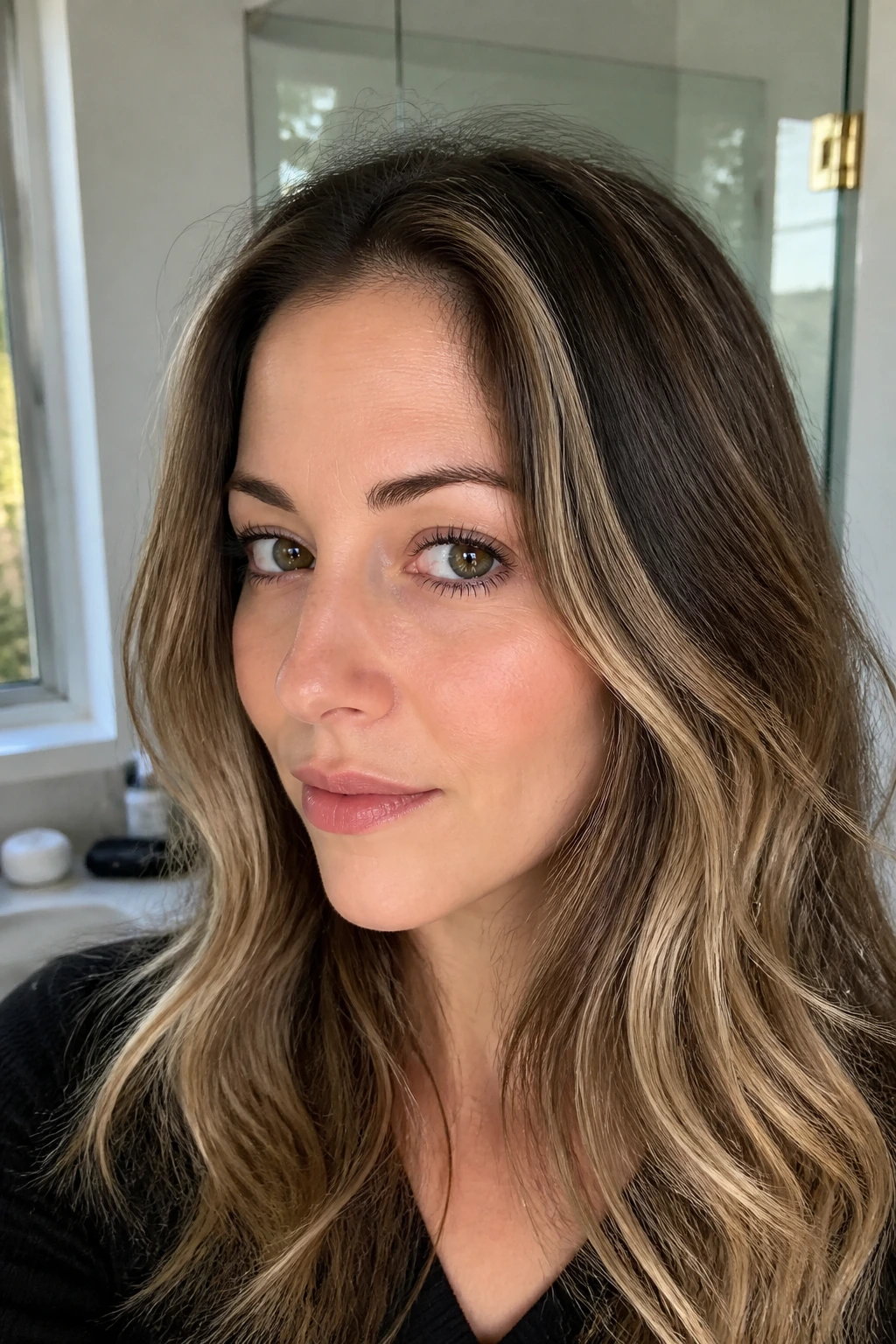
Dark front pieces fade in a different way than blonde pieces. They do not usually turn brassy in the same obvious way, but they can go flat, ashy, or a little muddy if you ignore them. The first thing that helps is boring but useful: wash less often, use color-safe shampoo, and keep the water lukewarm instead of hot. Hot water opens the cuticle and drags pigment out faster.
In the first 48 to 72 hours after coloring, skip clarifying shampoo and heavy scalp scrubs. Give the pigment time to settle. After that, a gentle sulfate-free shampoo and a moisturizing conditioner are enough for most people. If the front pieces are cool-toned, a blue-leaning brunette conditioner can keep warmth from creeping in. If they lean warm, a gloss every 4 to 6 weeks usually keeps the shade from flattening out.
Root grow-out is less dramatic with these looks, which is part of their charm. Still, the face frame can start to look disconnected if the root gets too far from the front tone. For many people, a salon refresh every 8 to 12 weeks is enough. If your hair grows fast or your part changes a lot, you may want the front pieces checked earlier.
Heat is the other thief. A curling iron at too high a temperature will strip shine from the front pieces first because that hair gets the most styling. Keep your heat protectant on the sink, not in a drawer you forget about. You will use it more if it is easy to reach.
Variations and Adaptations to Try
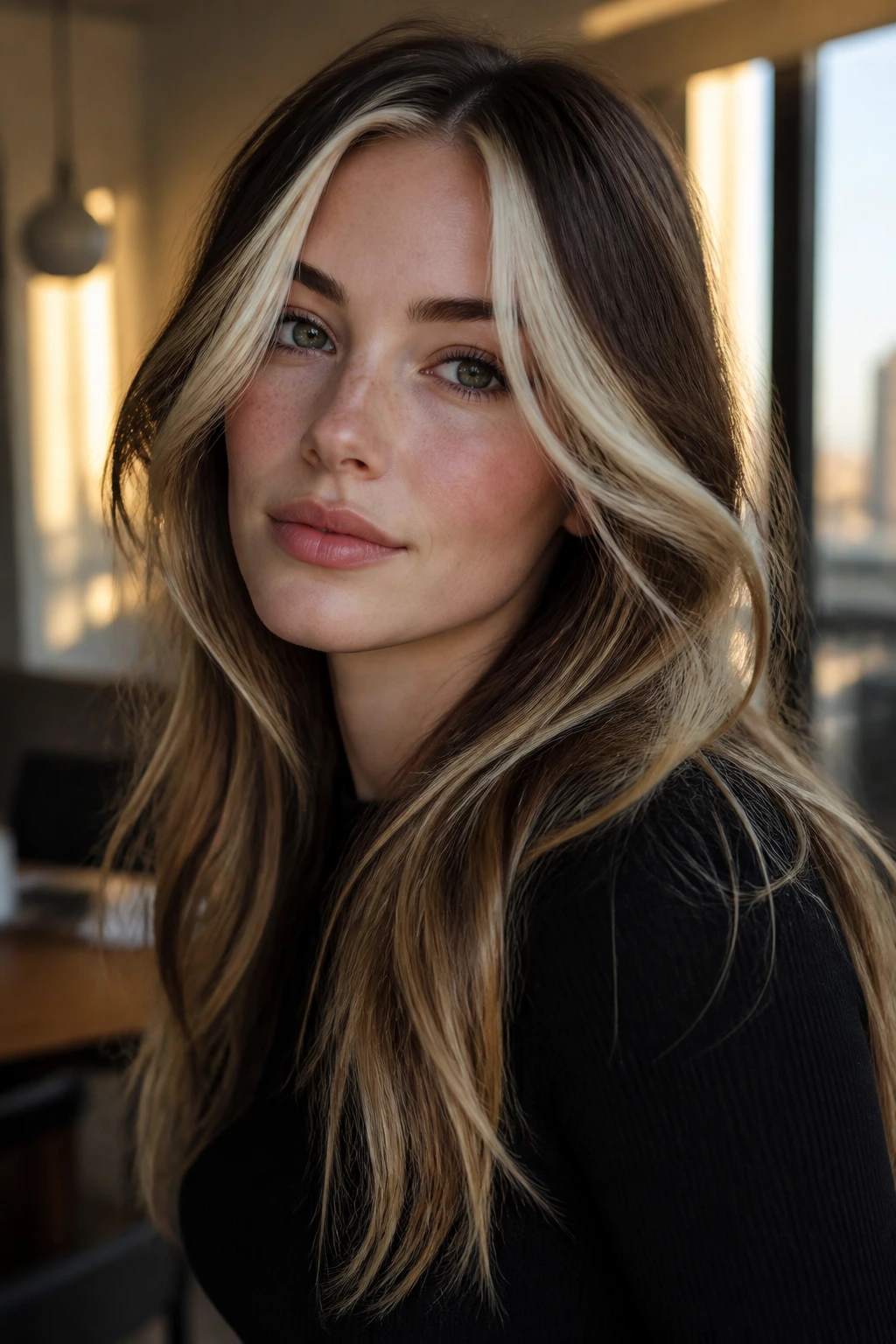
Soft-Blur Curtain Frame: Ask for the darkest pigment to stay under the curtain layers, not on top of them. This softens the contrast and works well if you want a frame that shows mostly in motion.
High-Drama Money Piece: Keep the front pieces a shade or two deeper and a little wider, but stop before they turn black. This version is for blunt cuts, strong brows, and people who like hair that enters the room before they do.
Grey-Blending Brunette: Let the front pieces be cool, muted, and slightly smoky. This is useful if you are blending a few early greys and want the color to look intentional, not patched.
Curly Halo Contrast: Place the darker pieces around the top third of curls so the ringlets keep the color from reading as a block. This gives curly hair shape without making it heavy.
Low-Maintenance Glossed Frame: Use a demi-permanent brunette gloss instead of a more aggressive dye. The result is softer, the grow-out is kinder, and the color fades in a slower, more graceful way.
Warm Neutral Pivot: If ash browns drain you, move toward chestnut, cedar, or hazelnut. That tiny shift can make a huge difference on fair skin that needs a bit of warmth near the face.
Common Mistakes to Avoid
-
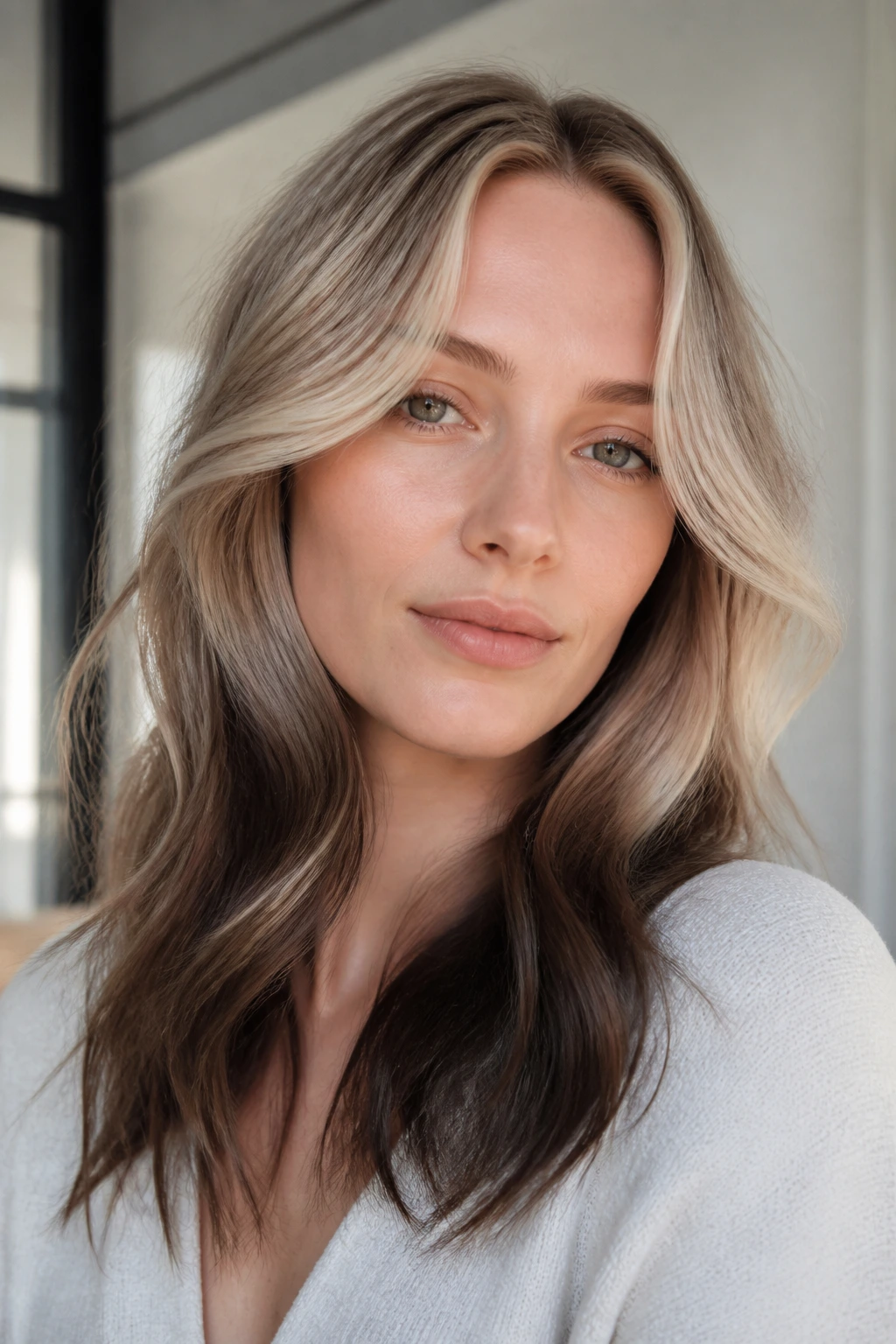
Going too black too fast: If the front pieces look like a sharp marker line, the shade is too deep or the panel is too wide. Ask for espresso, truffle, or charcoal brown instead of true black.
-
Making the pieces too chunky: Thick front panels can overpower fair skin and make the hair look striped. Narrower slices usually contour better and grow out more gracefully.
-
Ignoring undertone: Mushroom brown on warm skin can look dusty, while mahogany on cool skin can read red in the wrong way. Match the shade family to the skin first, then adjust the level of darkness.
-
Skipping gloss maintenance: Dark brunette can go dull faster than people expect. A gloss every few weeks keeps the front frame shiny and stops the color from looking flat.
-
Placing the dark pieces too far back: If the color starts behind the cheekbone, the face does not get the shaping effect. Move the frame forward where the light naturally hits.
-
Forgetting the makeup balance: If the hairline gets darker, the brows and blush usually need a small adjustment. Not a full face redo. Just enough so the hair and skin still speak the same language.
Frequently Asked Questions
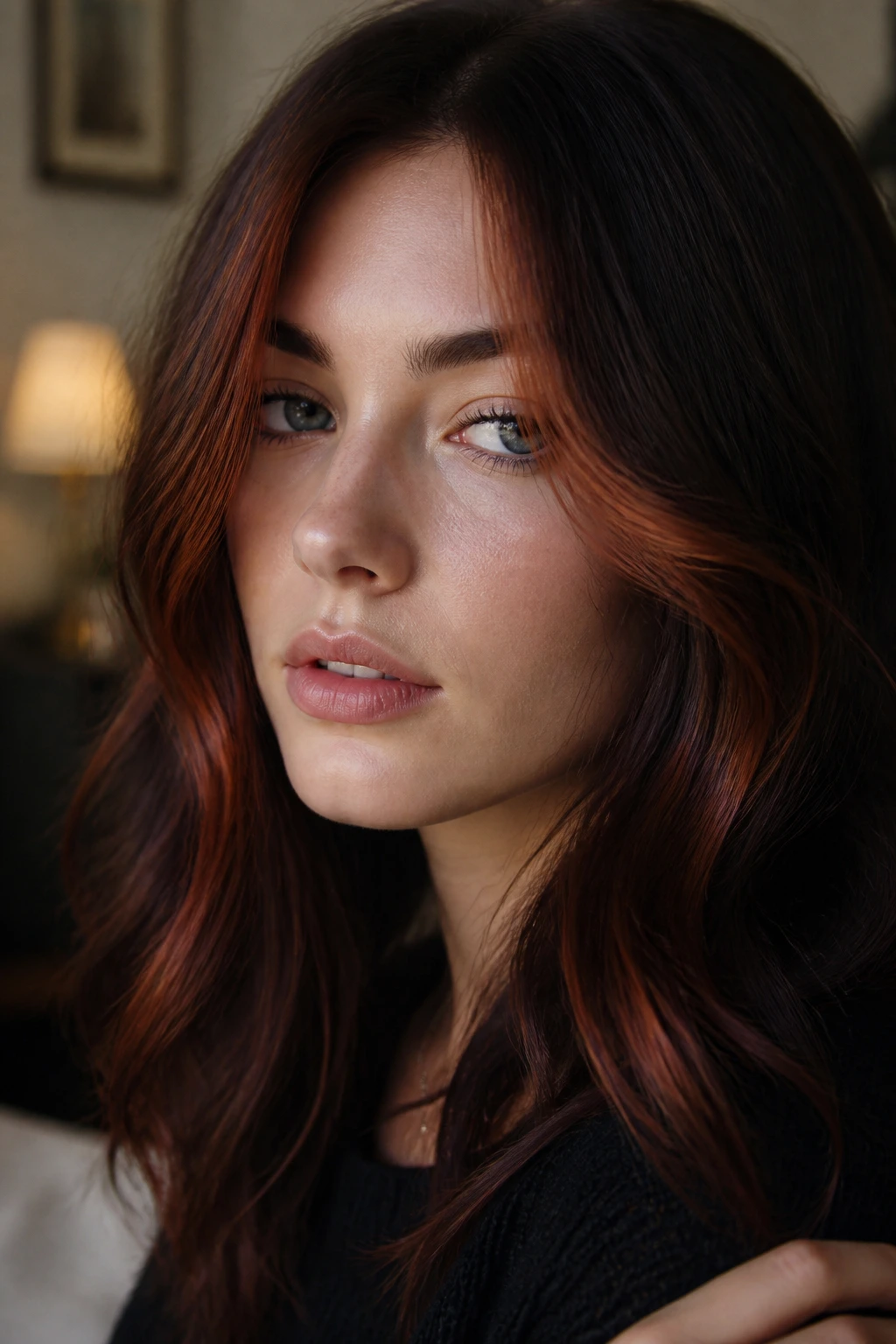
Will dark framing highlights make fair skin look washed out?
Not if the shade and placement are right. The safest versions are espresso, mocha, walnut, and truffle placed in narrow slices around the temples and cheekbones, not heavy blocks at the hairline.
What shade depth works best on very pale skin?
Usually one to three levels deeper than your base is enough. Once you get much darker than that, the contrast can look sharp unless your haircut is blunt and your styling is polished.
Can I ask for this look if my hair is already blonde?
Yes, and that is often where it looks most dramatic. The colorist may need to add lowlights or a shadow root first so the darker front pieces do not look pasted on top of a very pale base.
Is this better on straight hair or wavy hair?
Both work, but in different ways. Straight hair shows the line cleanly, while waves and curls soften the contrast and make the frame feel more blended.
How often will I need to refresh the color?
A gloss every 4 to 6 weeks is a common rhythm, with a fuller touch-up around 8 to 12 weeks. If you wash daily or use a lot of heat, expect the color to soften sooner.
What if the front pieces turn warm or brassy?
Ask for a cooler gloss or toner rather than repainting the whole section darker. Brass around the face is usually a tone problem, not a depth problem.
Can I do this with short hair?
Yes, especially on bobs, lobs, and pixie-length crops with longer front sections. Short hair actually makes the frame more visible because there is less length competing for attention.
Should I change my brows if I go darker at the front?
Only a little. Usually a softer brown brow pencil or gel is enough. Going too dark on the brows can make fair skin look harder than the hair ever will.
The Frame That Does the Talking
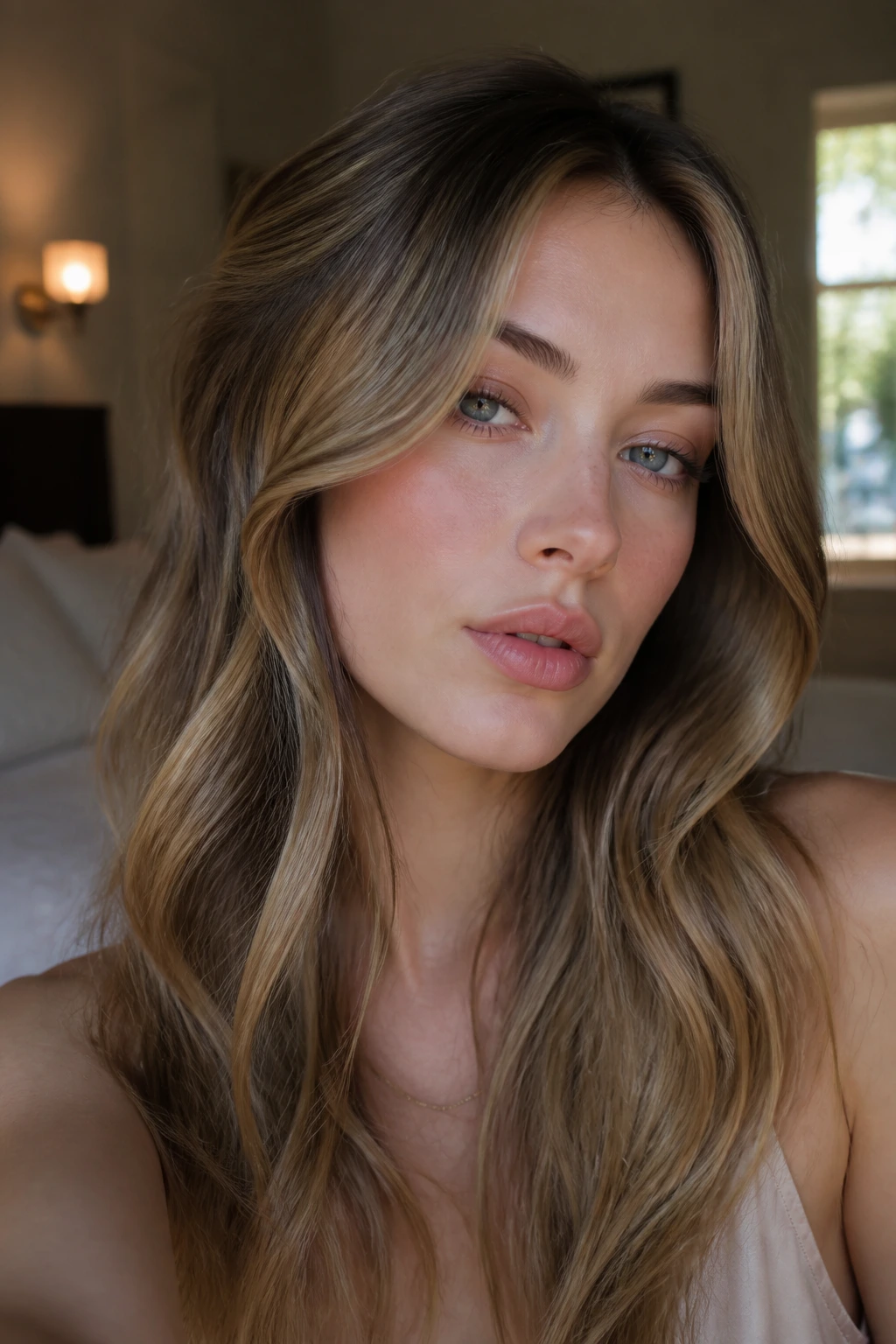
Dark framing highlights for fair skin work because they do one honest thing: they give light skin a line to stand against. That line can be soft, smoky, cool, warm, glossy, or bold, but it should always look placed with intention. When the front pieces match your undertone and your haircut, the whole face looks more awake.
The nicest part is that you do not have to commit to one dramatic identity. A narrow espresso money piece, a mushroom curtain frame, a walnut ribbon, or a subtle shadow root can all live in the same family without feeling repetitive. Pick the version that matches how much contrast you actually want to see in the mirror, then let the color do the quiet work.