



Chestnut caramel highlights have a very particular trick: they make warm skin look more alive without screaming for attention. On golden, peach, olive, and bronze undertones, the right mix of brown depth and soft caramel shine acts like light hitting coffee in a window. The wrong mix, though, can go flat fast. Too pale and it starts to look streaky. Too orange and the whole thing turns brassy, which is a different problem entirely.
That’s why this color family has so much staying power. Chestnut gives the hair a grounded, expensive-looking base. Caramel brings the movement, the gleam, the little flashes that catch when you turn your head. Put them together with warm skin and you get dimension that reads polished from across the room and even better up close, where you can see the ribbons and the depth between them.
The real sweet spot is placement. A few careful face-framing pieces. A softer melt through the mid-lengths. A lowlight or two tucked underneath so the lighter strands have something to sit against. Those details matter more than people think, and they’re exactly where chestnut caramel starts to look custom instead of generic.
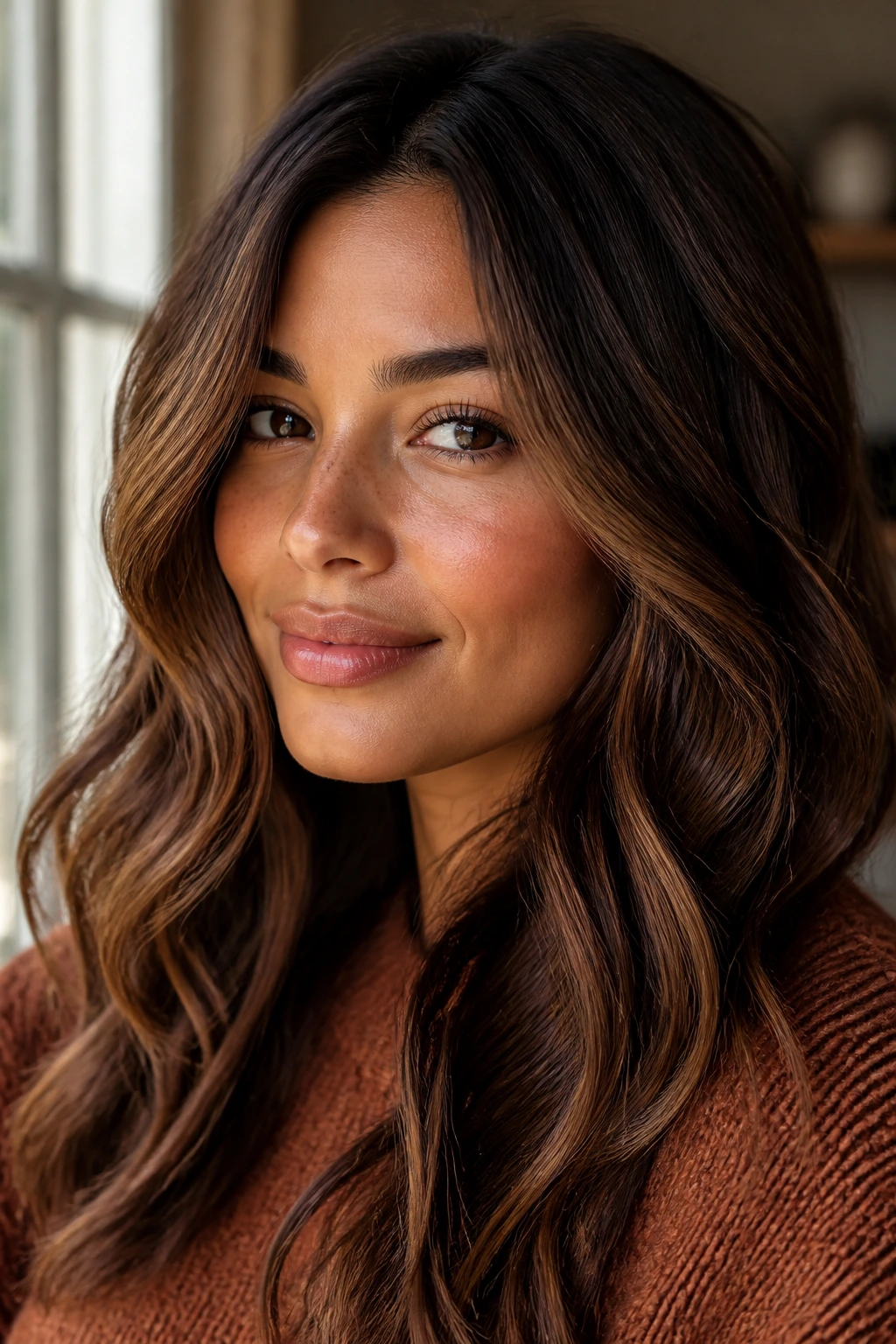
Why Chestnut Caramel Works So Well on Warm Skin
-
Warm undertones need warmth in the hair: Golden, peach, and olive skin usually looks livelier beside caramel that leans honey, toffee, or toasted sugar rather than icy beige.
-
Chestnut gives the highlights somewhere to land: A medium-brown chestnut base keeps caramel from floating on top like stripes; the darker depth makes the lighter pieces look woven in.
-
The contrast can be soft or bold: Warm skin can take a wide range, from barely-there babylights to stronger money-piece contrast, as long as the tones stay within the same warm family.
-
Lowlights keep the color from turning flat: A few darker strands under the top layer stop caramel from reading one-note, especially on thick or curly hair.
-
The grow-out is kinder than all-over lightening: Balayage, ribbons, and root-shadow placement fade in a smoother way than blunt foil stripes, which means fewer harsh lines between visits.
1. Soft Face-Framing Ribbons That Light Up the Cheekbones
A pair of chestnut caramel ribbons around the face can change the whole mood of the cut. They brighten the cheek area, soften heavier jawlines, and keep the color from disappearing into the lengths. On warm skin, I like these ribbons to stay in the honey-gold corner of caramel, not the pale beige corner that can look chalky against bronze undertones.
What to ask for at the chair
Ask for two to four brighter pieces on each side, starting around the cheekbone and blending down through the front layers. A colorist can keep the root area slightly deeper, so the bright bits don’t look pasted on. If your hair is darker, this usually works best with a level 7 or 8 caramel rather than something icy or pale.
The effect is small on paper. It’s not small in the mirror.
This look is the move when you want something visible but not loud. Hair pulled back into a clip still shows the front pieces. A middle part gives a clean frame. A soft bend with a 1-inch iron makes the ribbons flick forward and backward instead of sitting in one flat stripe.
2. Long-Layer Balayage with a Chestnut Base
Long layers are where chestnut caramel gets to stretch out and show off. The color can move from a richer root through warm brown mid-lengths into caramel-washed ends, and the haircut does half the work for you. When the layers are cut cleanly, the highlights fall in broken pieces instead of a single band, which is far more flattering on warm skin.
Balayage also keeps the lightness soft at the root. That matters. Heavy contrast near the scalp can look harsh if your skin leans golden or peachy, especially in strong daylight. A chestnut base with painted caramel ends feels easier on the eye and usually grows out with less drama.
Why it suits warm undertones
- The deeper base keeps the color from going too blonde.
- The caramel pieces pick up warmth from the skin instead of fighting it.
- Long layers create movement, so the highlights look intentional rather than chunked in.
If your hair is thick and one-length, this is one of the better ways to stop chestnut caramel from feeling blocky. The movement in the cut matters almost as much as the color. Without it, even good color can look heavy.
3. Babylights at the Crown for Fine Hair
Fine hair can go flat fast if the highlight placement is too broad. Babylights solve that problem with tiny, closely woven strands that look more like natural sun-kissed variation than obvious coloring. On warm skin, these delicate caramel threads make the hair shimmer instead of stripe.
The crown is the money area here. A few very fine lights through the top give the illusion of density because they break up one solid brown mass. Chestnut underneath keeps the whole thing grounded, so it never drifts into pale blonde territory.
What makes this version work
Babylights are about patience. Lots of small sections. Thin slices of hair. A careful lift that stops before the caramel turns too yellow. If you’re asking for this look, tell the colorist you want soft dimension you can only really notice when the light hits the top of your head.
That’s the nice part. It reads subtle in the room and clearer outside.
A side part makes these top pieces show a little more, while a center part keeps everything soft and even. Either way, this is one of the easiest chestnut caramel options for someone who wants warmth without obvious streaks.
4. A Bold Money Piece With Chestnut Depth
The money piece gets attention because it sits right where people look first. Around warm skin, a caramel front section can brighten the eyes and make the face look a touch more open, especially if the rest of the hair stays chestnut and rich. I like this version when the client wants a cleaner, sharper contrast than a full head of delicate highlights.
A strong money piece does need balance. If the front is bright and the rest of the hair is too dark and flat, the whole look can feel disconnected. The fix is to weave a few smaller chestnut caramel pieces just behind the front section so the bright strip has a softer place to fade into.
Ask for it like this
Tell your colorist you want the front to be visibly lighter, but still in the warm caramel lane. Level 8 to 9 caramel works for many medium brunettes; darker hair usually needs a little more lift and a gloss afterward so the tone stays soft instead of brassy.
This one plays nicely with ponytails, claw clips, and blowouts that sweep away from the face. If you like your hair to make a statement before you even say hello, this is the one.
5. Toasted Pecan Ribbons Through Thick Hair
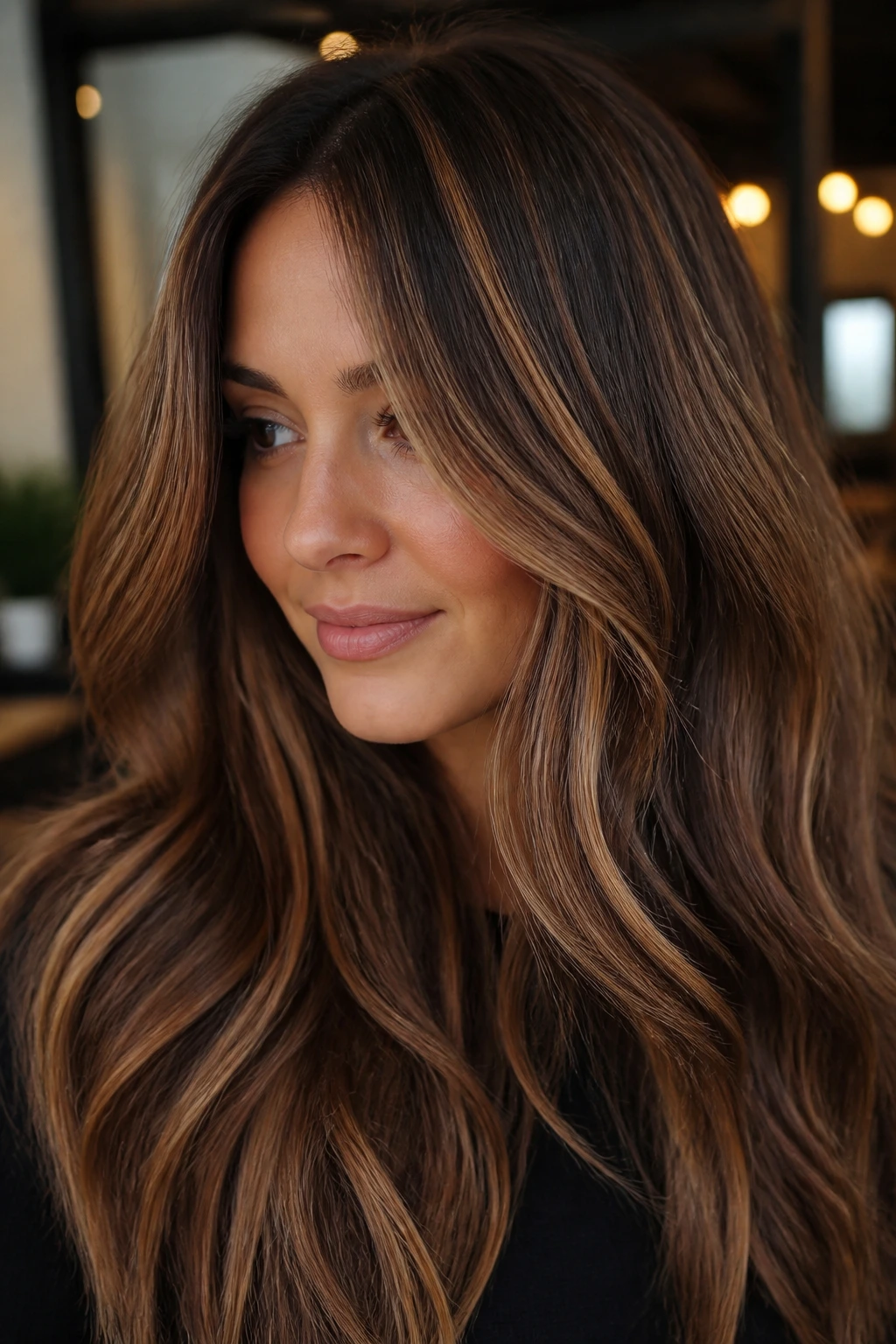
Thick hair is a blessing and a headache. There’s plenty of canvas, but there’s also enough density to swallow weaker highlight placement whole. Toasted pecan ribbons solve that by threading warm caramel through chestnut strands in visible, medium-width pieces that don’t disappear under the weight of the cut.
The nice thing about thicker hair is that it can handle more contrast without looking busy. You can place the lighter ribbons underneath the top layer and still get movement when the hair swings. The trick is spacing. Too much caramel too close together turns the whole head light in one patchy sweep. Too little and the depth just eats the dimension.
A colorist might use a mix of painted ribbons and a few foils near the front for brightness. That mix keeps the highlights from looking too hand-painted or too striped. On warm skin, the pecan-like tones flatter because they sit in that brown-gold zone that feels rich rather than yellow.
6. Curly Hair With Caramel Halo Pieces
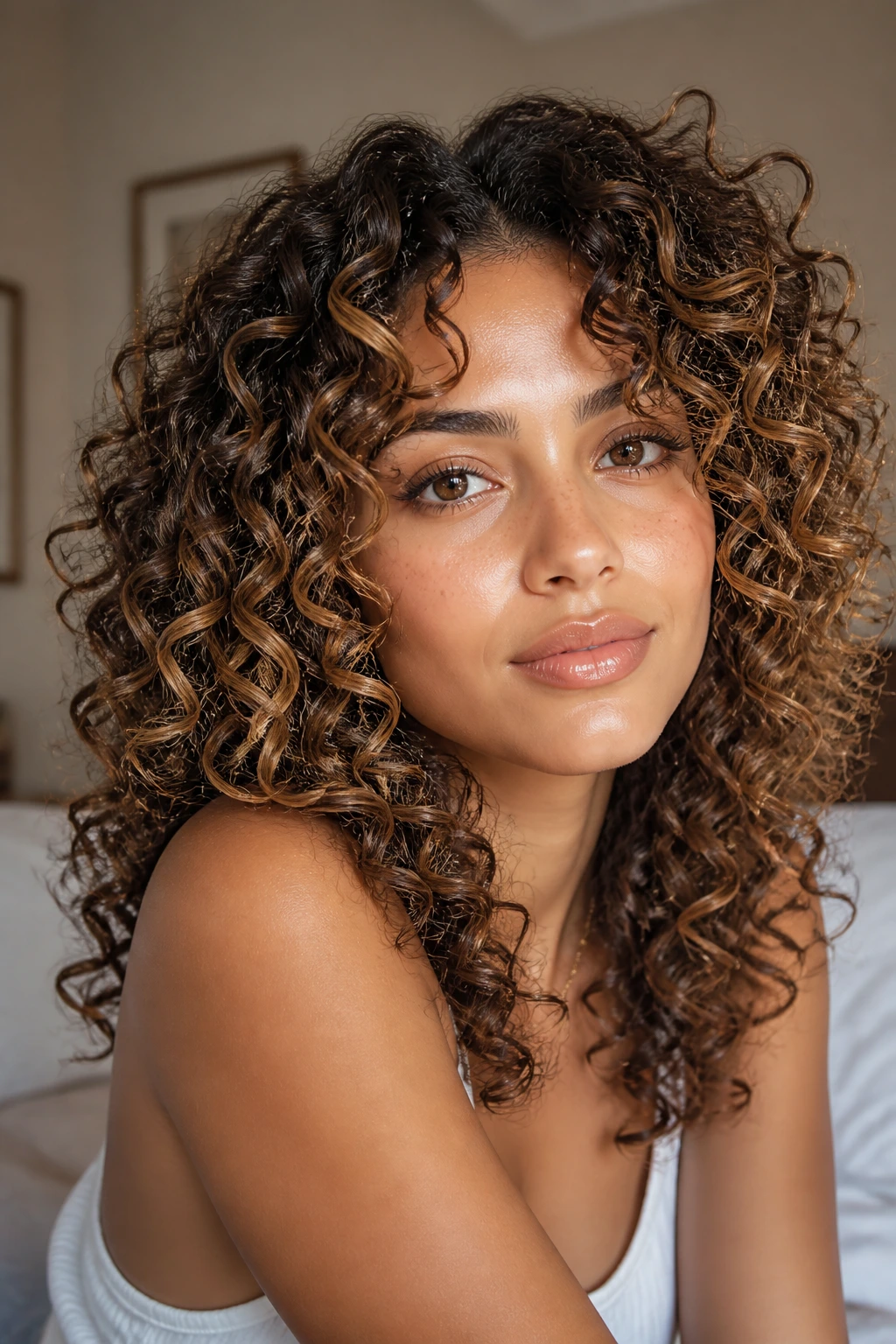
Curly hair deserves a different approach. The pattern of the curl does half the styling, so the color has to work with that twist, not fight it. Chestnut caramel halo pieces sit around the outer curve of the curls and catch light where the ringlets stack, which makes the texture look fuller and more defined.
Why this placement matters
Curly hair shrinks. A lot. So the highlight pattern needs enough spacing to survive the shrinkage once the hair dries. If the caramel is packed too tightly, the curls can blur into one bright patch. If it’s spaced well, each coil keeps its own shape and the warm pieces peek through in little flashes.
This version is especially good when the face is surrounded by curls that need a bit of lift near the front. The lighter pieces can sit on the top half of the curl pattern, while chestnut lowlights underneath preserve depth. The result looks dimensional even when the hair is second-day and a little airy around the ends.
Diffused drying helps here. So does a light glossing cream, not a heavy oil. Heavy oil can mute the highlights and make the curl pattern collapse into a shiny sheet.
7. Chestnut Melt With a Soft Caramel Gloss
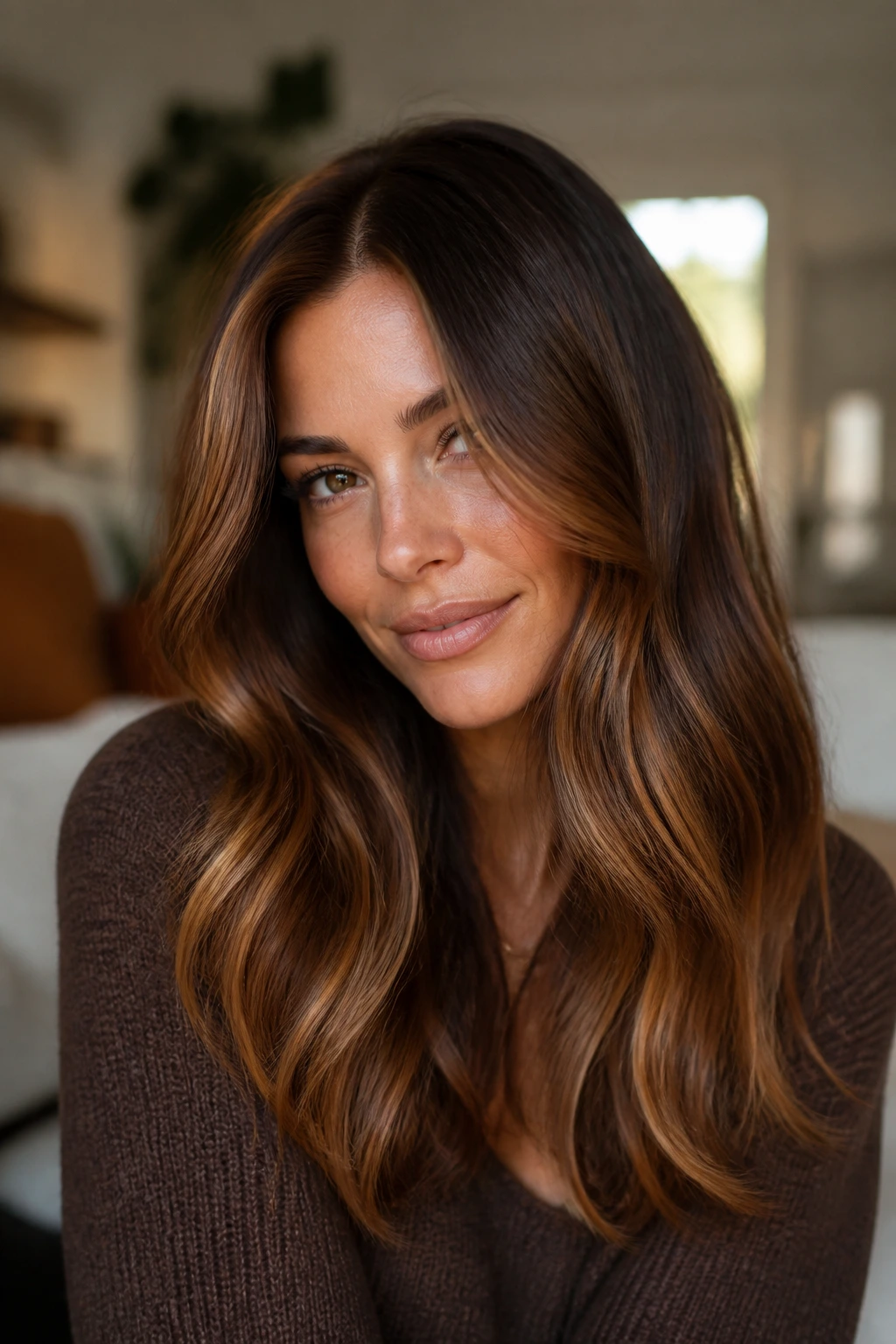
Not every chestnut caramel look needs obvious light pieces. A glossed melt keeps the whole head in the same family and relies on tone more than contrast. The base stays chestnut, the mid-lengths shift a half-step warmer, and the ends pick up a soft caramel sheen that shows up as movement instead of streaks.
This is the look for someone who wants polish without obvious lightening. Warm skin tones often love it because it echoes the natural warmth already in the complexion. Nothing screams. Nothing fights. It just makes brown hair look healthier and a little richer.
A clear or golden gloss can be the difference between “nice brown hair” and “that hair has something going on.” The shine matters, but so does the undertone. If the gloss drifts too coppery, it can get loud. If it leans too beige, it loses warmth. The middle is the sweet spot.
8. Bronde Transition for Medium Brown Bases
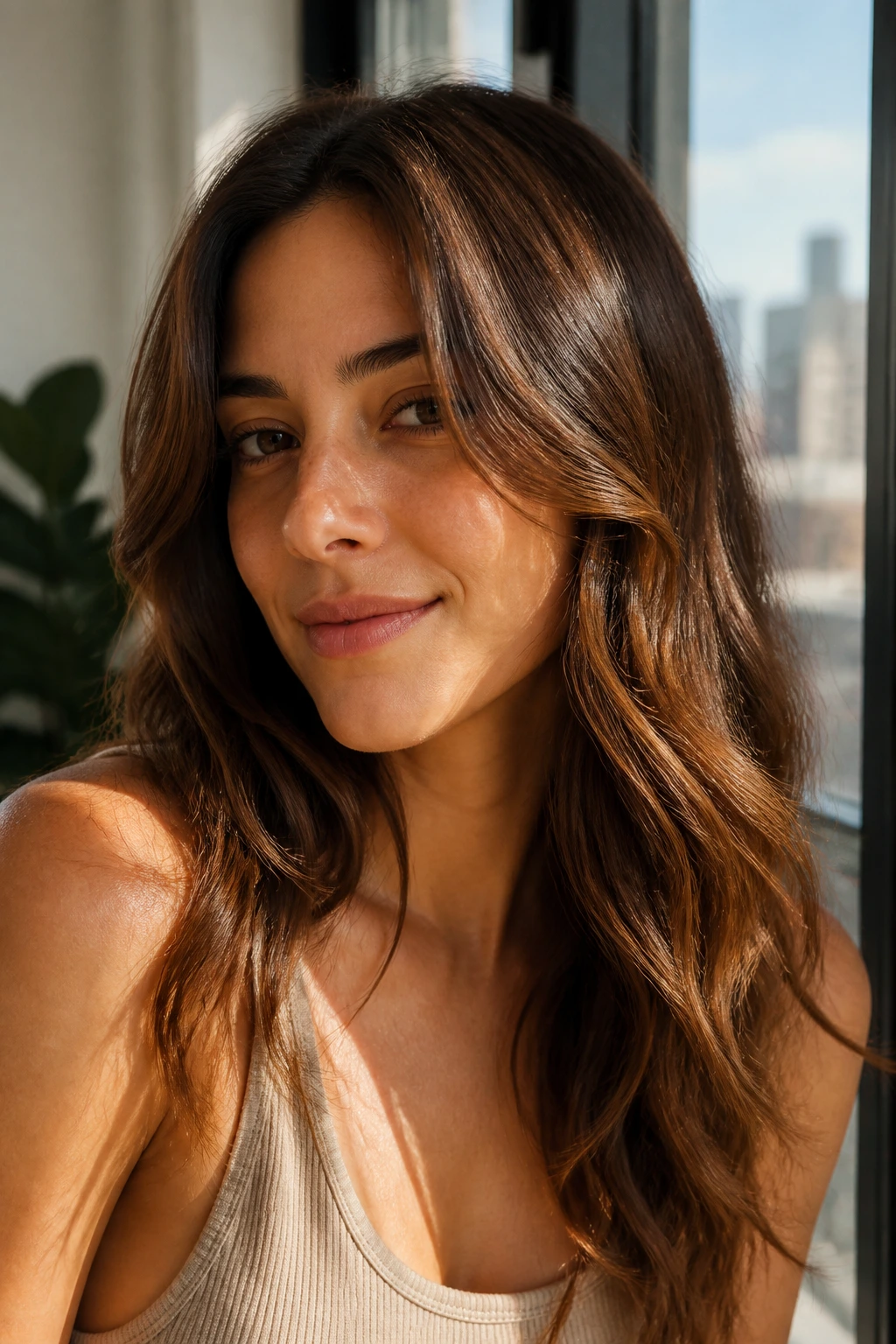
If your hair sits between medium brown and dark blonde, bronde is the bridge that lets chestnut caramel feel gradual rather than dramatic. The base stays chestnut, the highlights live in the caramel range, and the transition between the two is soft enough that the grow-out does not create a hard line.
This is a good choice for warm skin because it keeps the brightness close to the face without pushing the whole head into blonde territory. It works especially well on layered cuts where the lighter pieces can catch movement through the mid-lengths. Think of it as warmth with a softer landing.
Best for
- Medium brown hair that looks dull with just one flat shade
- Warm complexions that can handle a gentle glow
- Anyone who wants lighter ends without losing a brunette identity
Bronde can go wrong when the caramel gets too ash-heavy. On warm skin, that cooler beige note can look strange beside the complexion, like the hair forgot which direction it wanted to go. Keep the tones golden, toasted, or honeyed, and the whole thing stays coherent.
9. Copper-Kissed Chestnut Streaks
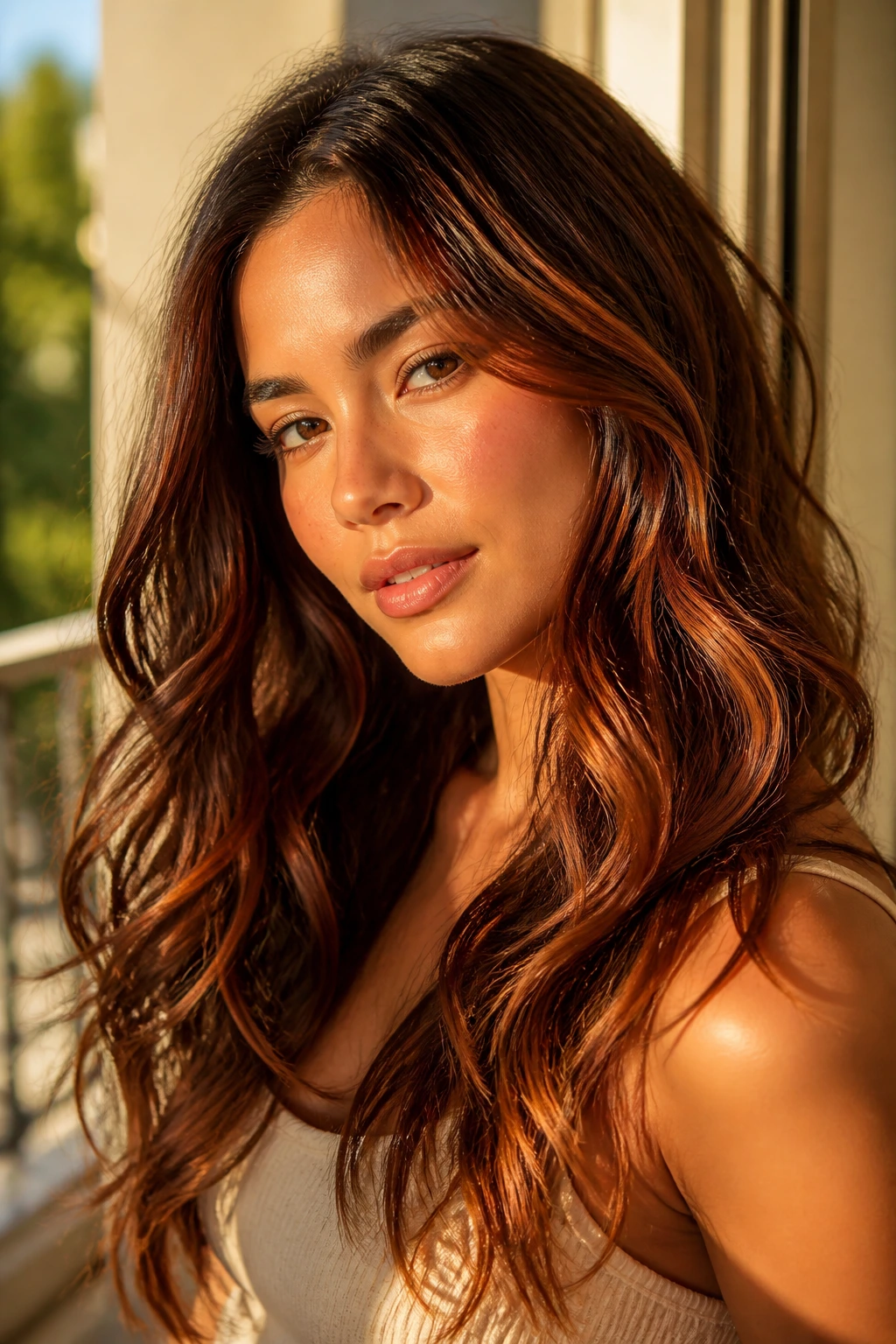
A little copper in the caramel changes the mood fast. Not red. Not orange. Just enough copper to make the highlights glow when the hair hits sunlight. On warm skin, that extra warmth can be beautiful because it echoes the undertones in the face instead of trying to fight them.
This version works best when the base is a true chestnut brown with some red-brown richness already in it. The copper-kissed streaks should live as accents, not the whole story. Too much copper and the color can look intense in a way that wears the person instead of flattering them.
I like this look on wavy hair, where the bends show off the red-gold reflect. In a straight blowout, it looks smoother and more polished. Either way, the effect is more vivid than standard caramel, but still grounded enough for everyday wear.
10. A Rooted Lob With Warm Caramel Ends
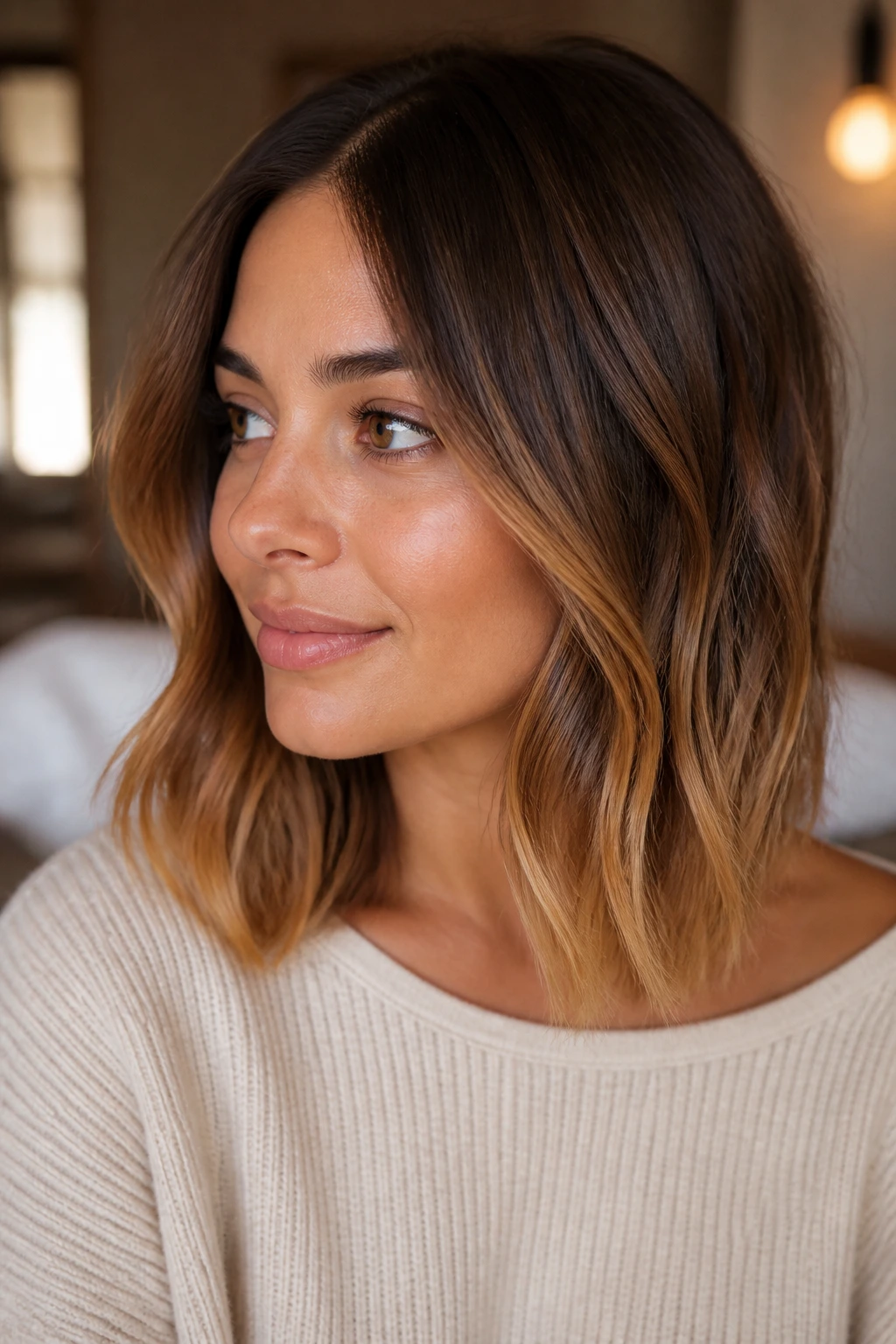
The lob gives chestnut caramel a clean shape. Shoulder-length hair has enough room for color, but not so much that the highlights disappear into endless length. A rooted version keeps the top chestnut and lets the caramel appear mostly through the ends and outer panels, which gives the haircut a crisp, finished look.
For warm skin tones, the rooted base matters. It stops the color from floating and keeps the complexion from getting washed out. The caramel ends can be soft and bright, but the root shadow keeps everything believable. That root-to-end fade is especially nice on a blunt or slightly textured lob.
A side part makes the brighter ends swing forward. A center part makes the shape feel more symmetrical and modern. If you want easy styling, this is one of the least fussy chestnut caramel options on the list. It grows out with grace, which is more than I can say for many salon colors.
11. Chunky 90s Panels Made Softer
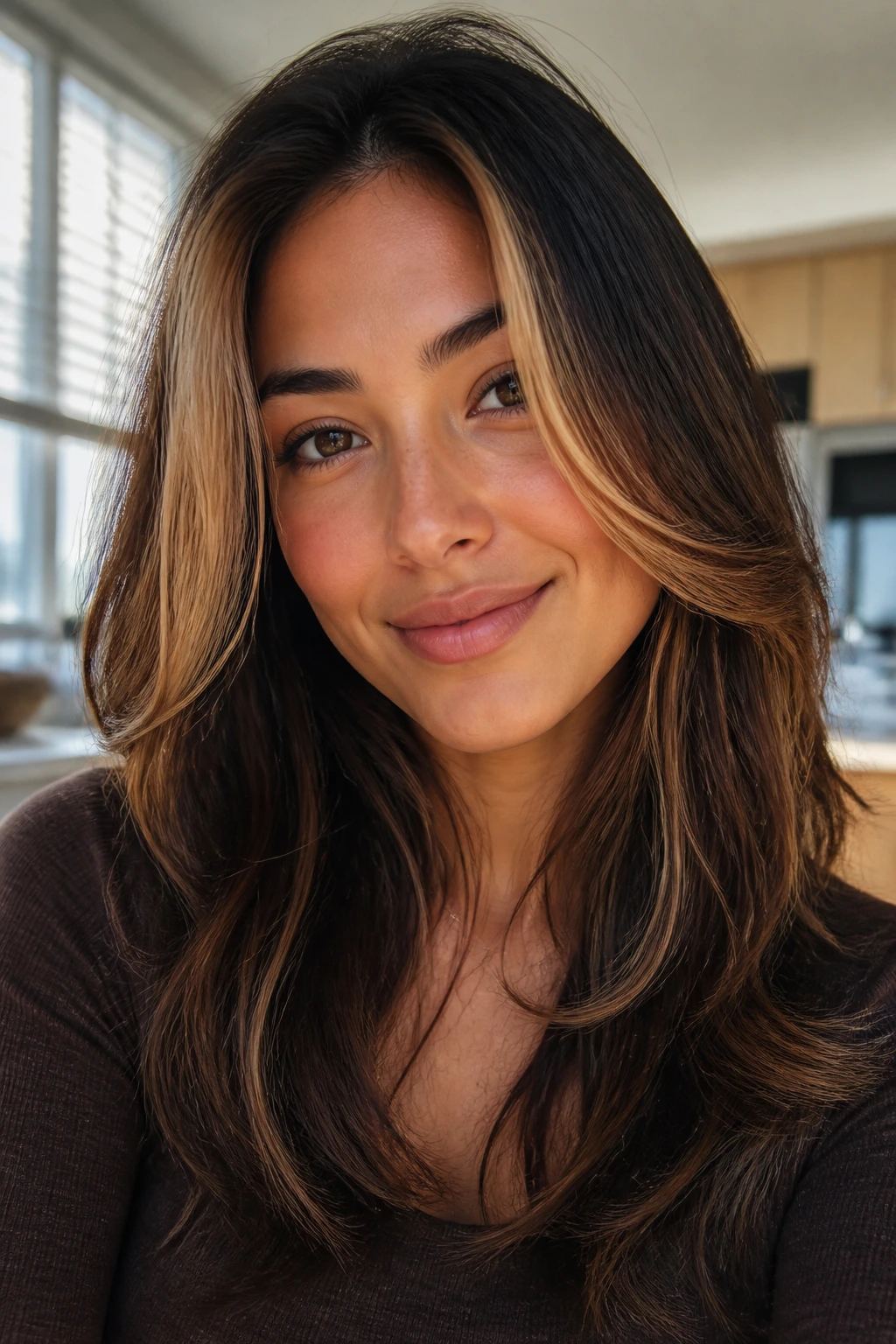
Chunky highlights are back, but the best versions are smarter than the old stripy ones. Chestnut caramel panels can be broad and visible without looking dated if the color is blended into a rich base and toned to stay warm rather than yellow. Warm skin can carry this look well because the contrast feels lively instead of harsh.
The key is restraint in the placement. A few deliberate panels around the face and through the upper layers are enough. You want the effect of visible color blocks, not the effect of someone missing the foils by half an inch. The chestnut underneath has to stay dominant.
This version has attitude. No apologies. If you wear bold lipstick, sharp brows, or big sunglasses, it makes sense. If you prefer whisper-soft hair color, keep scrolling. That is not a flaw in the look; it’s a matter of personality.
12. Sunlit Ends on a Shag Cut
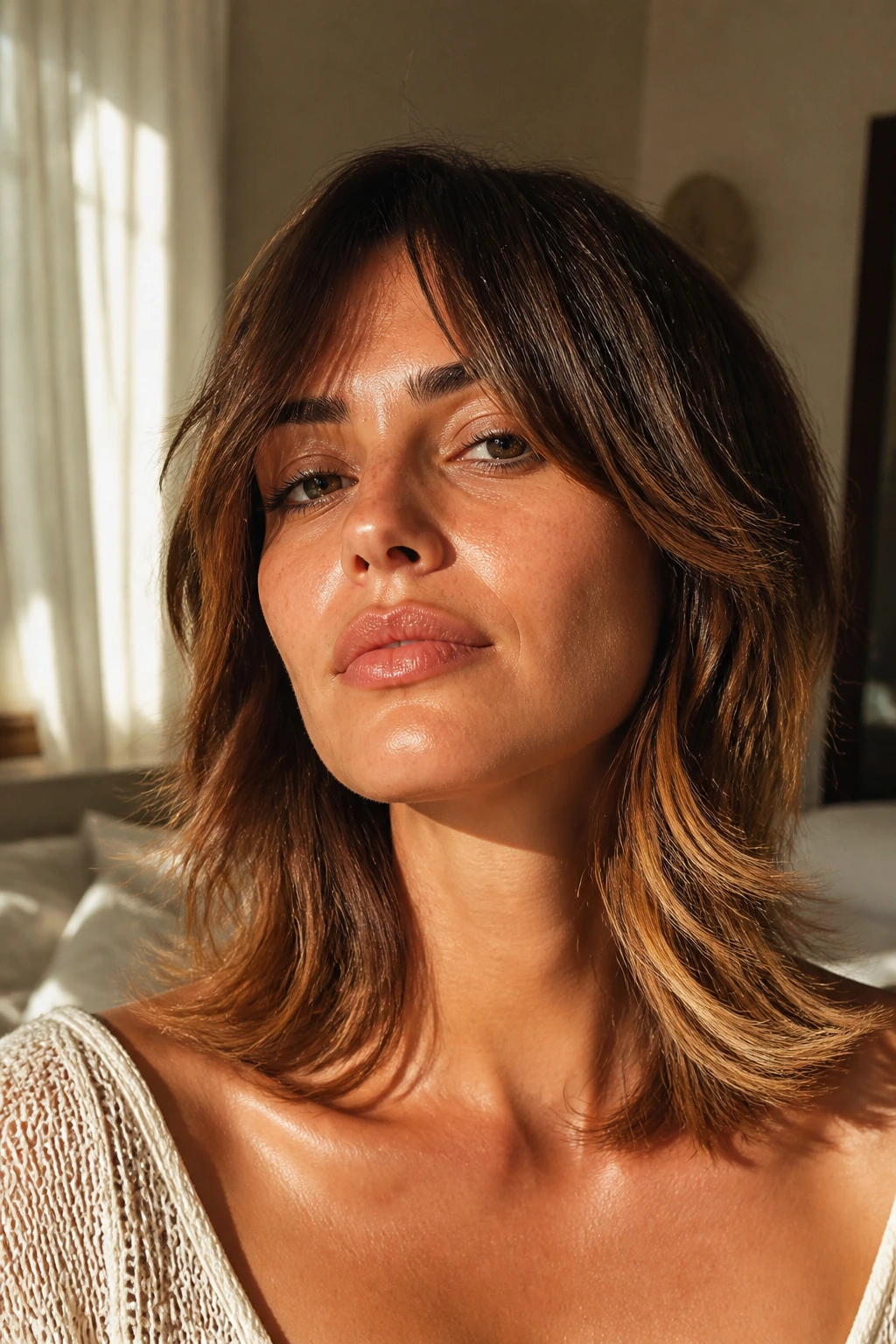
A shag cut gives the highlights so much help that the color almost feels animated. The layers, the texture, the broken edges — all of it lets chestnut caramel show up in fragments instead of one broad statement. On warm skin, the slightly undone feel of a shag pairs well with golden-brown warmth because it looks lived-in rather than overstyled.
I especially like sunlit ends on shag layers that flip out a little at the collarbone or the jaw. The caramel catches those little bends and makes the haircut look more expensive than it is. That sounds shallow, but hair is allowed to have fun. It’s part of the job.
If the cut is very choppy, keep the highlight pieces fine and irregular. Wide panels can fight the texture. Smaller pieces move with the cut and keep the ends from turning into a bright helmet. That’s the difference between chic and loud.
13. Peekaboo Caramel Underlayers
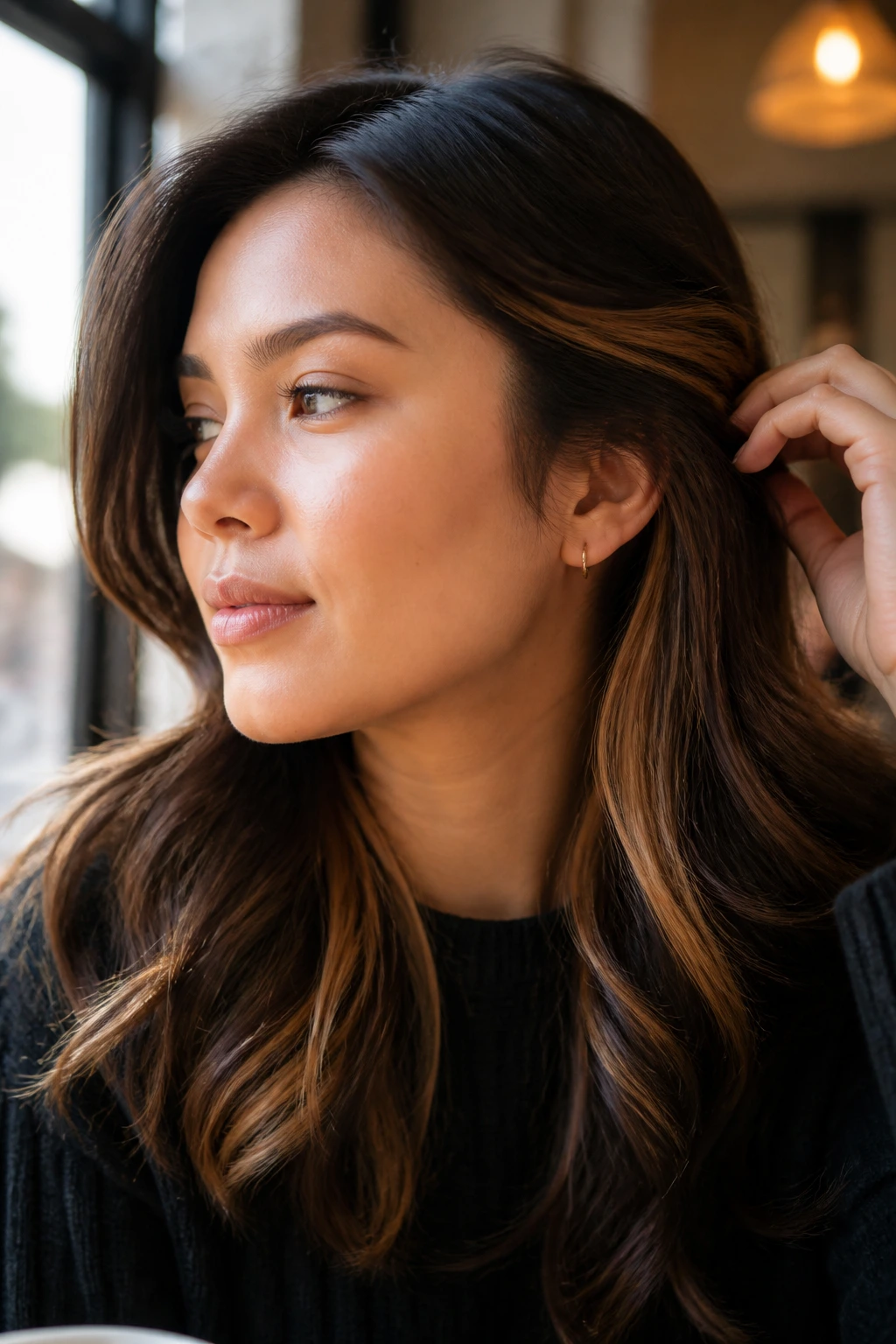
Peekaboo highlights are for the person who wants dimension without seeing it every second of the day. The caramel sits underneath the top chestnut layer, so it flashes when the hair moves, gets tucked behind the ear, or is braided. Warm skin tones still benefit because the color shows as a warm glint instead of a flat hidden stripe.
This approach is smart on medium to thick hair. The top layer protects the brightness a little and softens the maintenance. If the hair is worn down most days, the effect stays subtle. If it’s worn up, the contrast becomes a little more playful.
There’s also a practical advantage here. Underlayers tend to survive grow-out looking less obvious than front-heavy highlights. If you like the idea of color but not the constant upkeep, peekaboo placement is one of the easier ways to get there.
14. Soft Ombré From Chestnut Roots to Caramel Ends
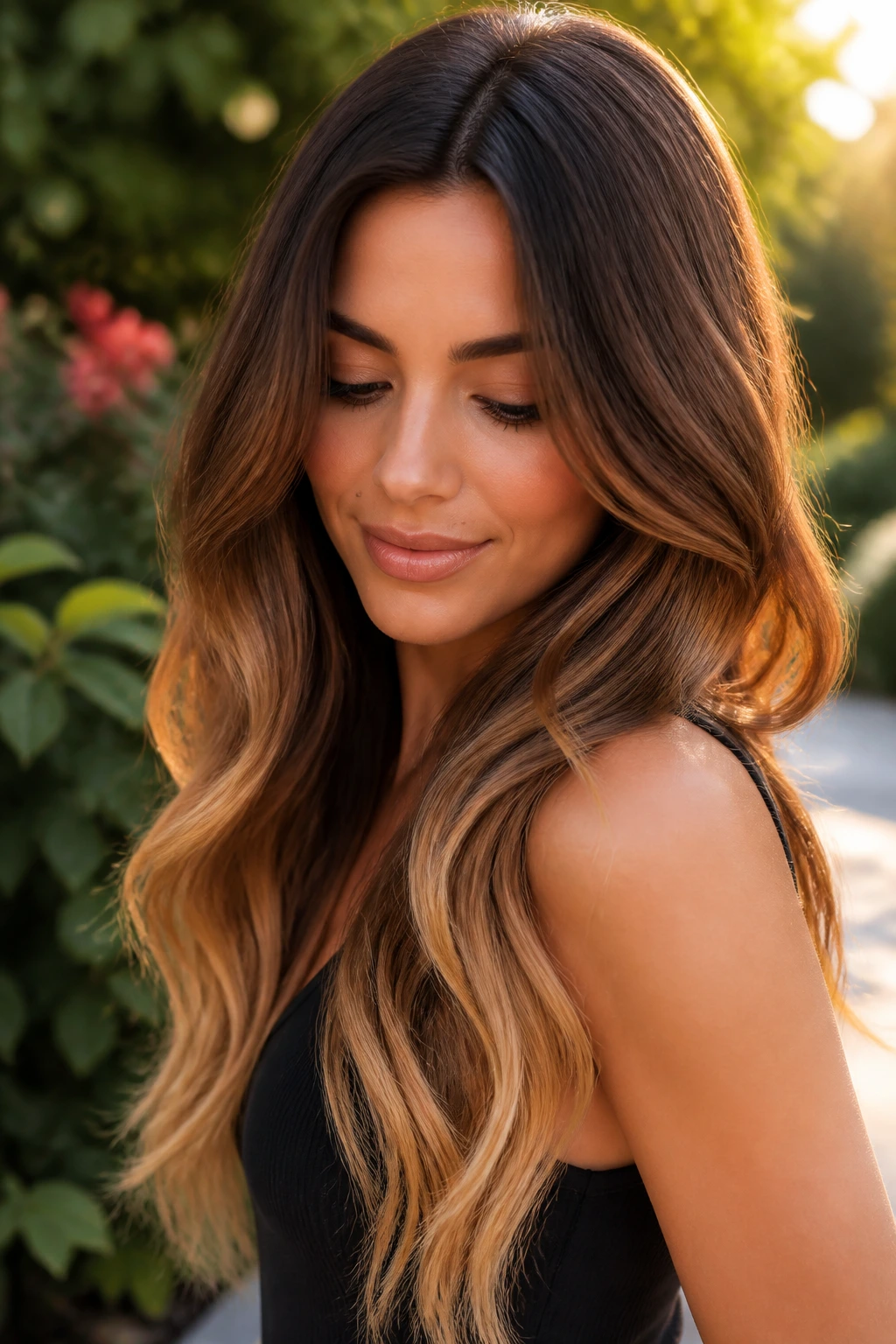
Ombré can look very soft when the transition is handled carefully. The roots stay chestnut, the mids pick up warmth, and the ends drift into caramel without a blunt change line. On warm skin, that gradual shift feels easy on the eyes because the tone stays in one family from top to bottom.
The color has to be layered with enough patience to avoid the old dip-dye effect. That hard line at the halfway point? Not flattering. Not here. A good ombré should look as if the sun spent a long time on the ends and mostly ignored the roots.
This is a strong choice for long hair that tends to look heavy near the ends. Lightening the bottom half can make the cut feel more lifted without losing the brunette identity. If you curl the ends, the caramel shows even more, and the whole shape reads softer.
15. Walnut Ribboning for Very Dark Brunettes
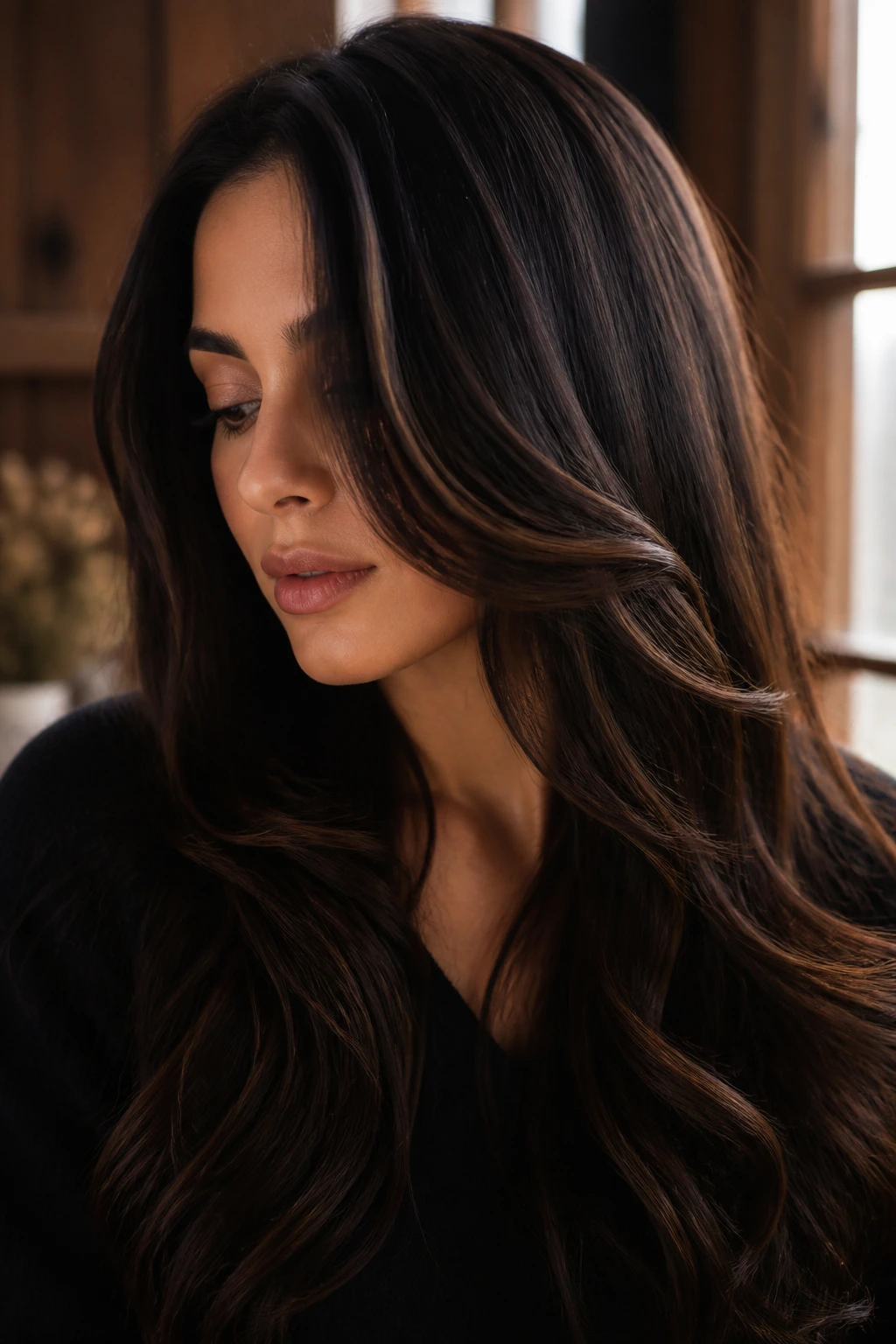
Very dark brunettes sometimes need a different path. Instead of jumping straight to bright caramel, walnut ribboning keeps the depth and adds a warm brown lift that still shows up on warm skin. It’s closer to toasted nut than blonde, which is exactly why it works.
What makes it different
The lighter strands are only a step or two off the base, so the contrast stays believable. That makes the hair look denser and glossier, not over-processed. On deep brown hair, this is often the more flattering move because it respects the natural darkness instead of trying to fight it.
A little brightness around the front can still help, but the main point is refinement. The color should look like a richer version of your own brunette, not a wholesale rewrite. If you want subtle warmth with depth, walnut ribbons are often the smartest way in.
16. Contour Highlights Around the Cheekbones
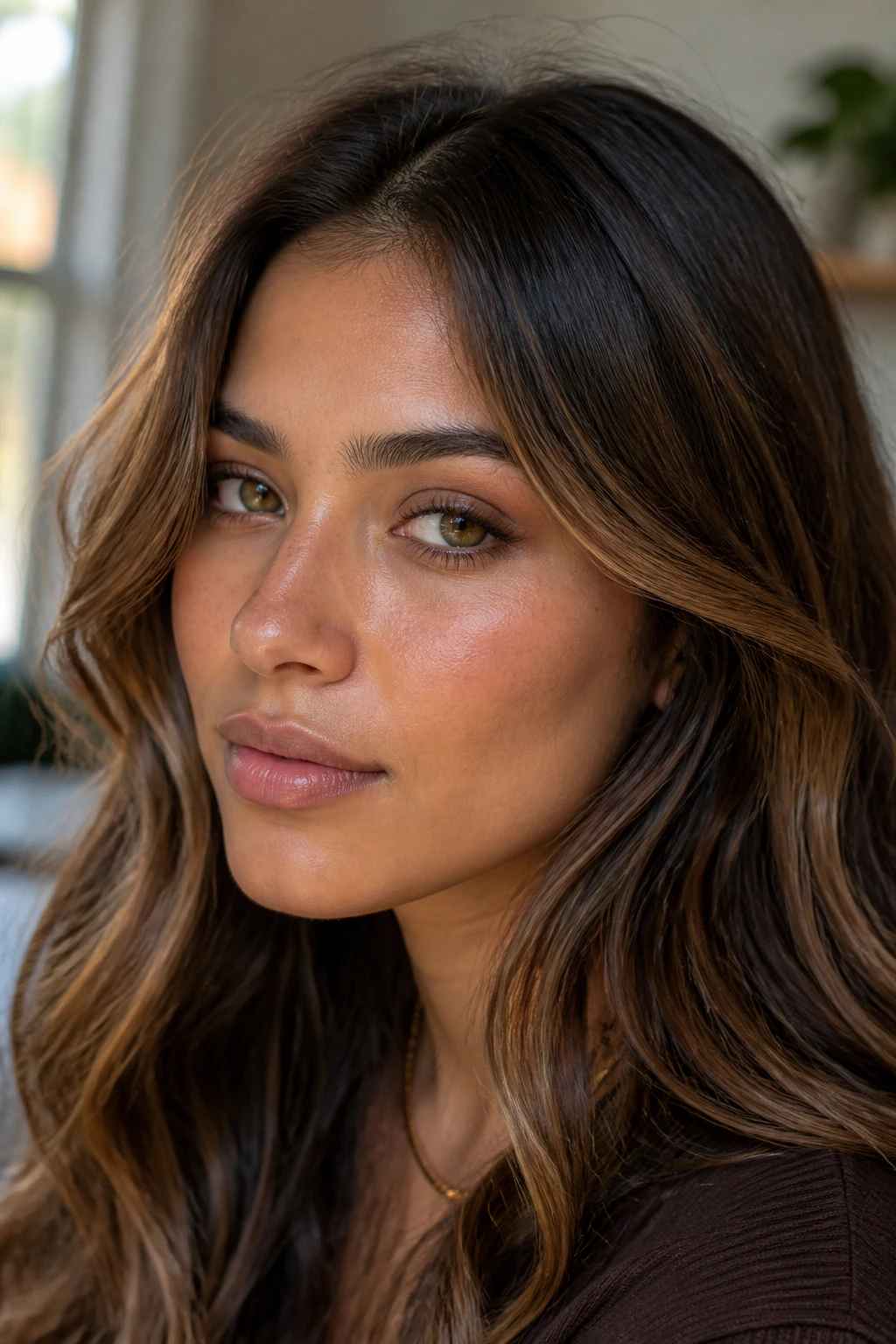
Contour highlights borrow the logic of makeup: place light where you want the eye to travel. Around warm skin, chestnut caramel pieces that start near the cheekbone and sweep downward can make the face look lifted and more open. The warmth matters here because the highlight sits right beside the face and needs to flatter skin that already has golden or peach undertones.
This look works best with movement around the front. A tucked-behind-the-ear style shows the framing. Loose waves make the contour pieces drift naturally into the rest of the color. Straight hair can work too, but the placement needs to be clean or the effect gets lost.
I like this one for mid-length cuts and layered lobs because the front shape does a lot of the work. If your haircut has no movement, the highlight has fewer places to go.
17. Caramel Highlights for Coily Hair
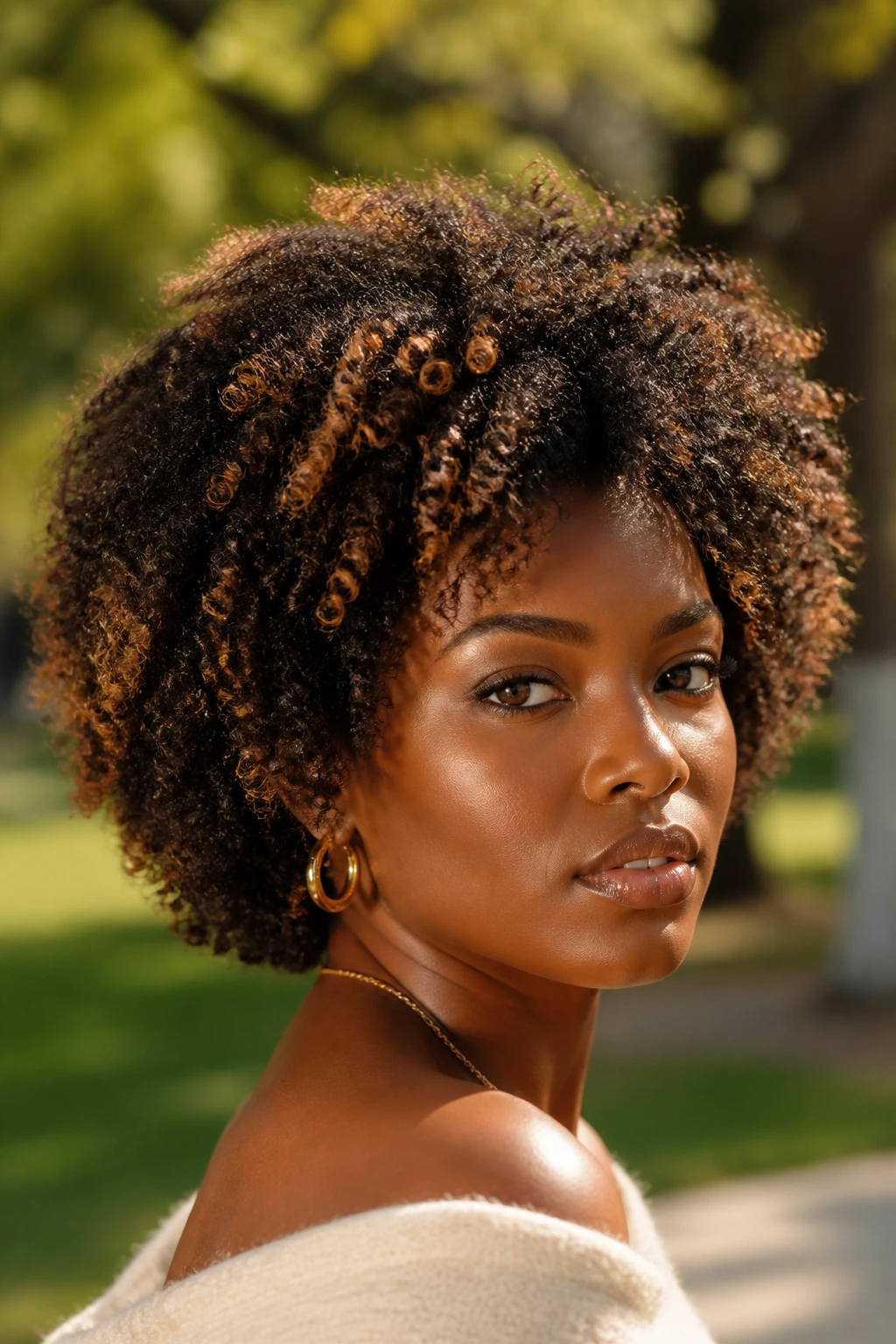
Coily hair shows color in a different rhythm. The curl pattern creates tiny shadows and flashes all by itself, so chestnut caramel needs to be placed with that density in mind. The best versions use strategic ribbons through the outer coils and a little extra brightness near the face and crown, where the shape naturally opens.
Warm skin and coily texture are a strong combination when the caramel is kept rich. A toasted, golden-brown highlight can make each coil look more defined because the contrast lives inside the texture rather than sitting on top of it. The result has movement even when the hair is packed tightly.
This look asks for patience at the salon. Sectioning matters. So does toning. A caramel piece that looks soft on a straight strand can read much brighter once it curls up, so a good colorist usually keeps the lift controlled and the tone warm, not pale.
18. Buttery Ends on a Blunt Cut
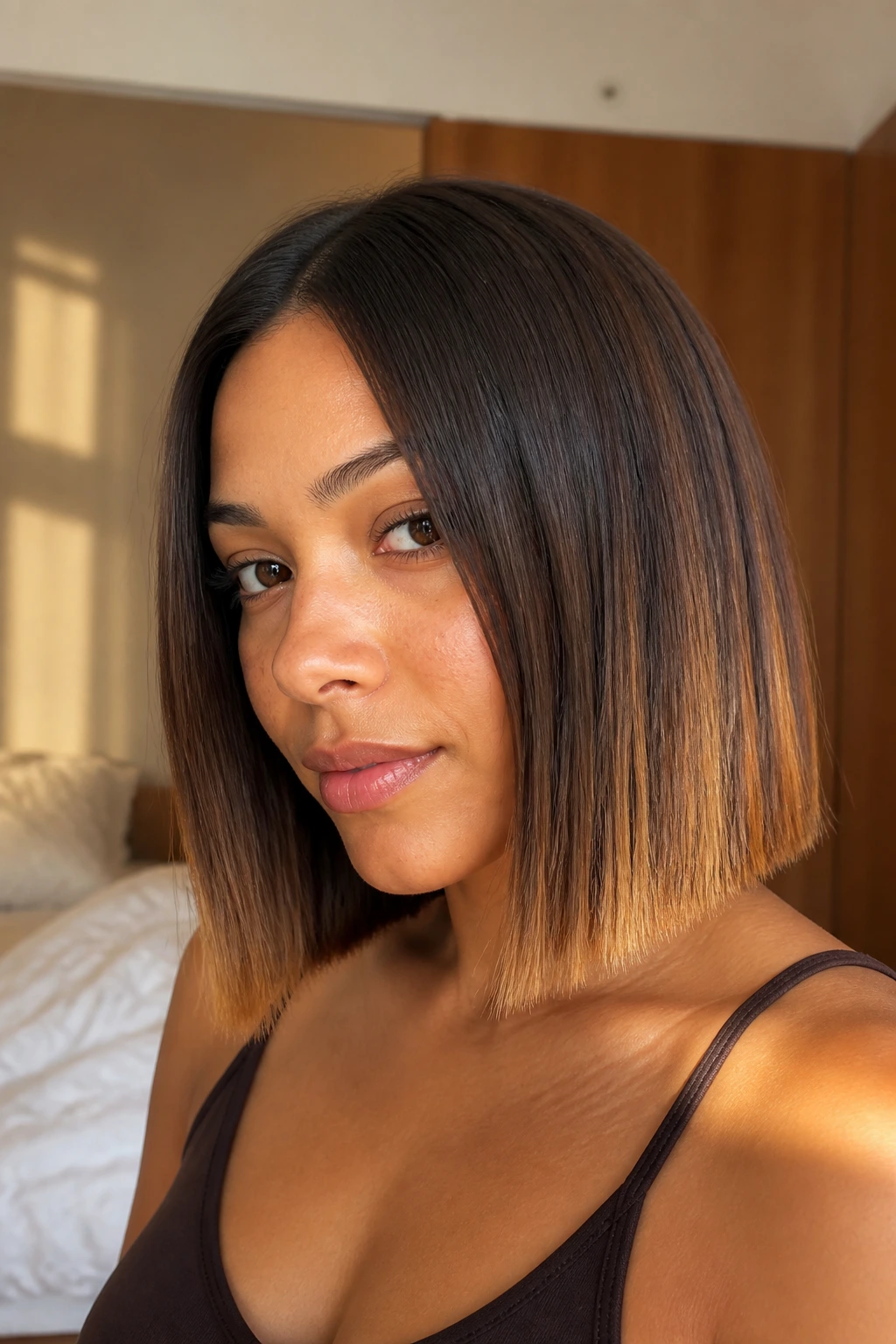
A blunt cut can make color look cleaner, almost sharper. Chestnut caramel on blunt ends works because the straight edge gives the highlights a crisp boundary, which helps the warmth stand out without needing a lot of volume. On warm skin, that contrast can look polished and expensive in the plainest sense of the word.
I like buttery ends when the base is chestnut and the final two to four inches carry most of the caramel. That keeps the top from getting noisy. The color comes into focus at the edge, which suits a clean haircut.
This is not the place for messy placement. If the ends are too light in too many places, the clean line gets blurred. Keep the warmth intentional and the cut does the rest.
19. Herringbone Placement for a Seamless Finish
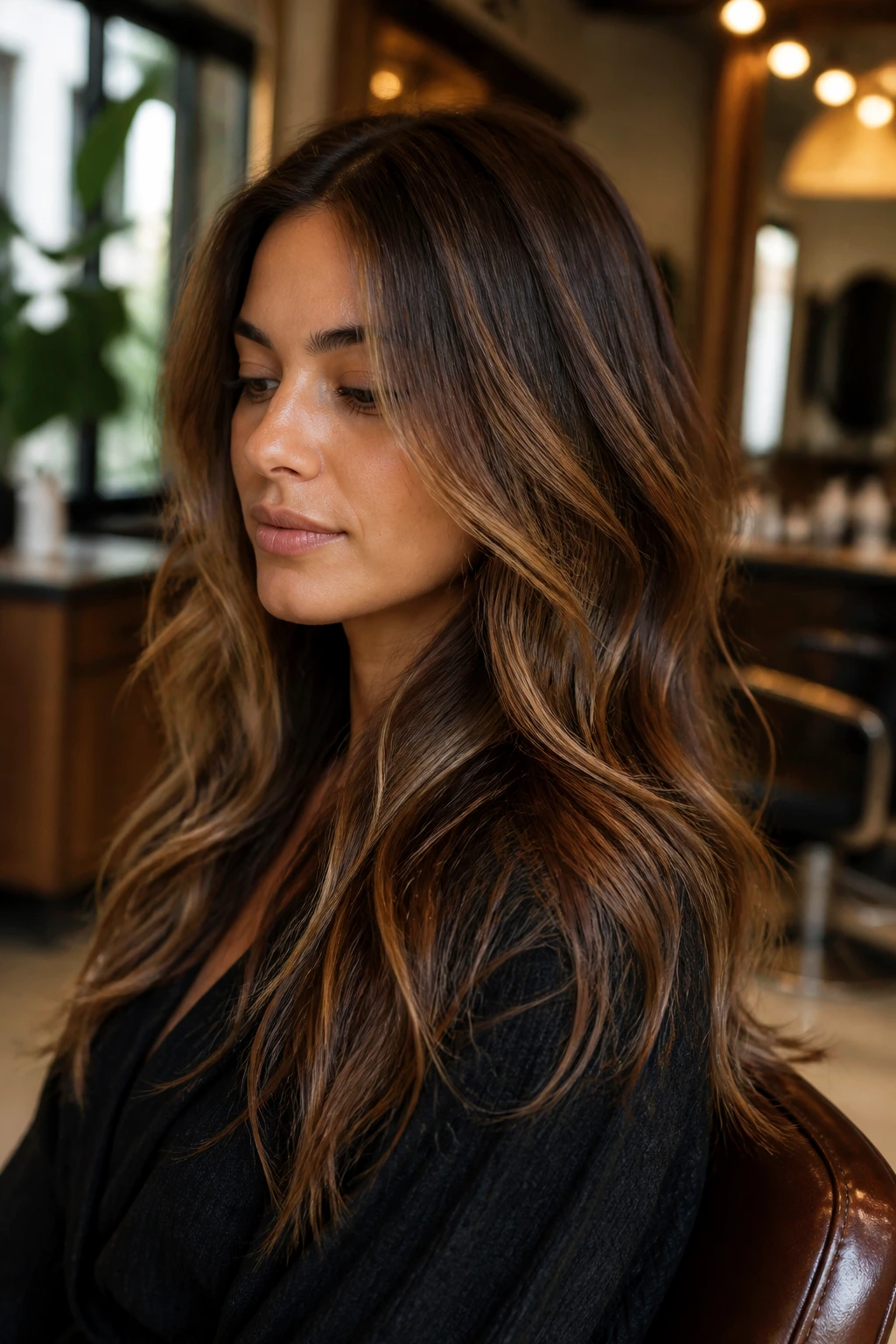
Herringbone highlighting is the kind of placement most people never notice by name, only by the way the hair looks expensive without looking “done.” The sections overlap in a broken pattern, which lets chestnut caramel blend through the hair with very little obvious striping. For warm skin, that matters because a seamless finish tends to look more natural and less stark beside golden or peach undertones.
This technique shines on medium to long hair where the color can travel through layers. It also works well when someone wants warmth but hates the idea of visible foil lines. The result is more woven than painted, more textured than chunky.
You might not ask for herringbone by name, and that’s fine. Just ask for a soft, blended placement with no obvious stripes. Any good colorist will know the move.
20. Espresso Roots With a Caramel Veil
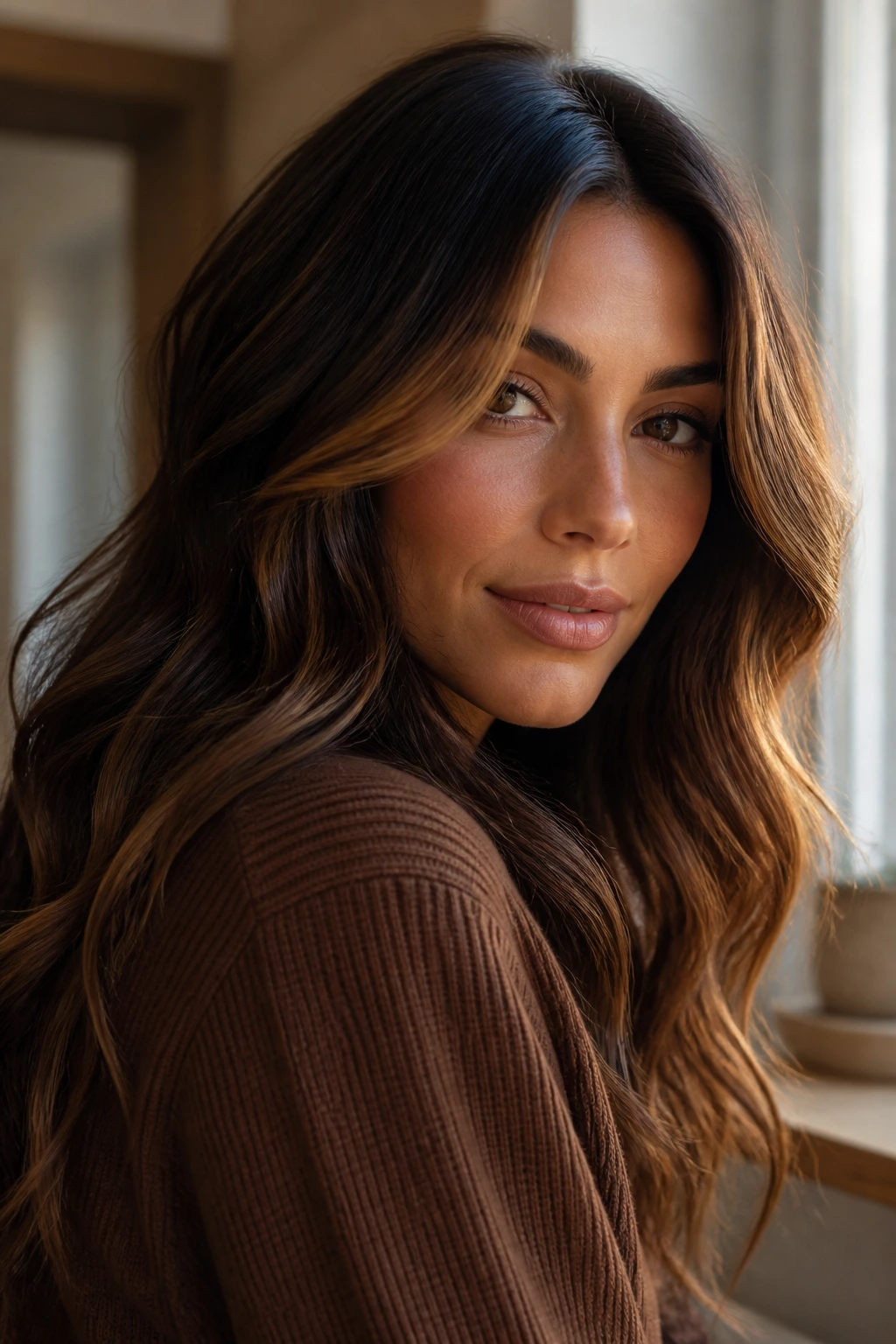
If you like depth, keep it. Espresso roots with a thin caramel veil through the surface layer can be beautiful on warm skin because the contrast stays controlled. The dark base gives the face intensity; the caramel veil keeps it from feeling heavy or one-dimensional.
Best when you want subtle brightness
This version is for someone who still wants to look brunette first. The highlights sit in the top layer, catching light when you move, rather than turning the whole head lighter. That means less maintenance and less risk of the color drifting too orange between appointments.
It’s also useful when the hair has been lightened before and needs a gentler path back to richness. Instead of going brighter, the color gets smarter. A veil of caramel can make worn-out brunette hair look intentional again, which is a nice fix when the ends have been through a lot.
21. Golden Pixie Highlights That Keep Short Hair Alive
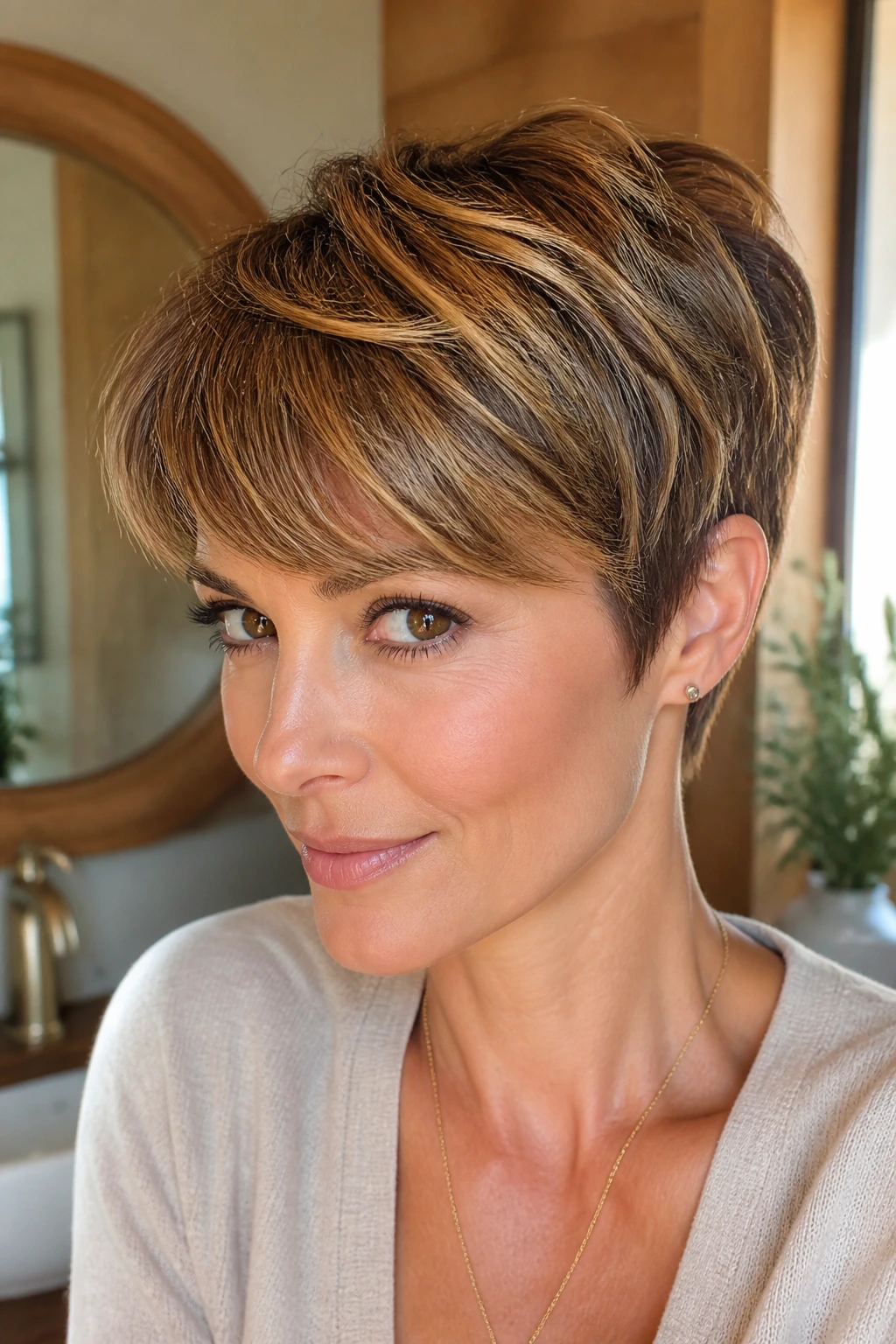
Short hair needs color to work harder because there’s less length for the eye to travel through. On a pixie or cropped cut, chestnut caramel highlights should sit where the texture breaks: the fringe, the crown, the edges around the ears. That keeps the warm pieces visible even when the cut is close to the head.
Warm skin tones often benefit from the extra softness a caramel fringe brings to a short cut. It stops the style from looking too severe. A golden or toffee tone is usually better than a pale blonde, which can pull all the attention away from the face instead of toward it.
The beauty of short hair color is how fast it changes the whole read of the cut. One careful placement at the crown can make a pixie look textured and airy instead of just short.
22. Gray-Blend Chestnut Caramel
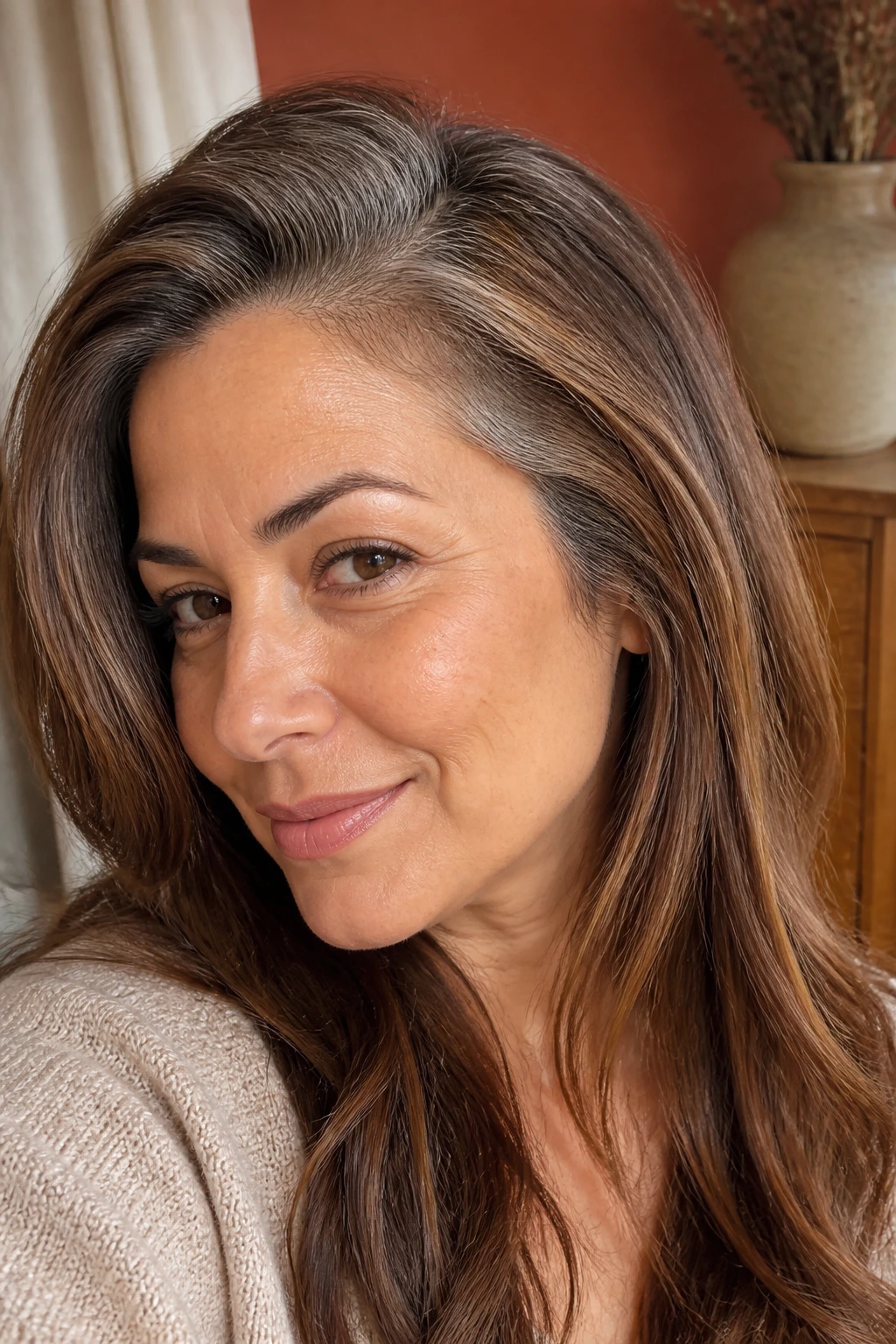
Gray blending is one of the smartest uses of chestnut caramel. The goal isn’t to erase silver strands; it’s to tuck them into a warmer brunette story so they blend instead of shouting. Chestnut lowlights, caramel highlights, and natural gray together can create a softer overall look than full coverage ever could.
Warm skin tones often love this because the silver gets warmed down with honeyed and brown tones rather than being left stark and cool. That keeps the whole color family coherent. The result can be especially good around the temples and hairline, where regrowth tends to show first.
This approach is kinder to maintenance too. Instead of chasing total coverage, you’re working with contrast and softness. That means fewer hard lines, fewer panic appointments, and a more natural grow-out.
23. Reverse Balayage for Highlights That Went Too Light
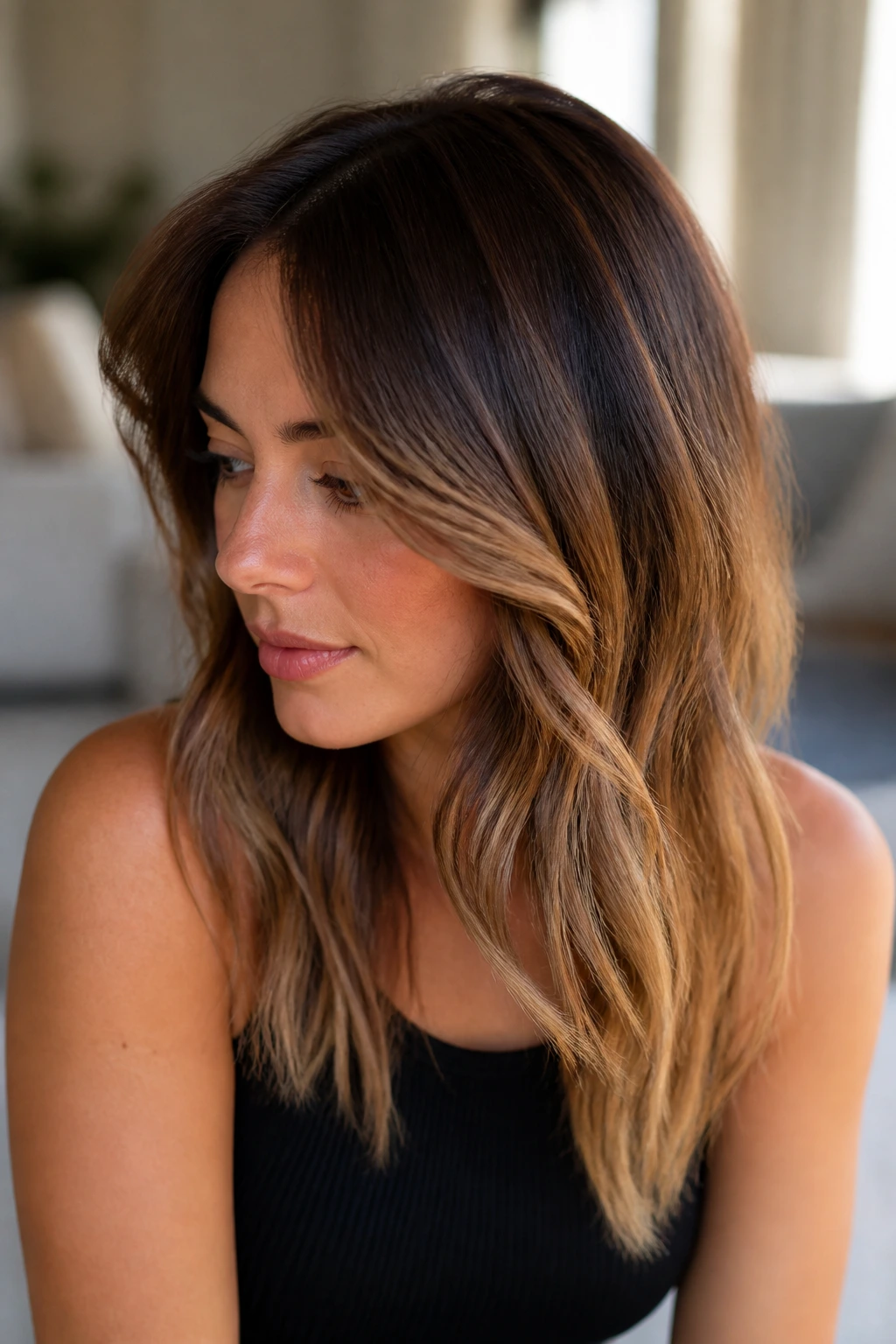
Sometimes the smartest chestnut caramel look is a repair job. Reverse balayage adds deeper chestnut tones back into hair that has gone too blonde, too flat, or too bright. The caramel pieces don’t disappear; they just get a richer frame so they can read warm instead of washed out.
This is especially useful if warm skin has started looking a little tired next to over-lightened hair. Too much pale blonde can drain warmth from the face. Putting depth back into the mids and roots restores contrast and makes the caramel feel earned instead of pasted on.
A gloss afterward is usually part of the fix. Without it, the darker pieces can look dry or muddy. With it, they look intentional. And yes, sometimes the best highlight is the one that gives the hair back its shadow.
24. Refreshing Faded Color Without Going Darker
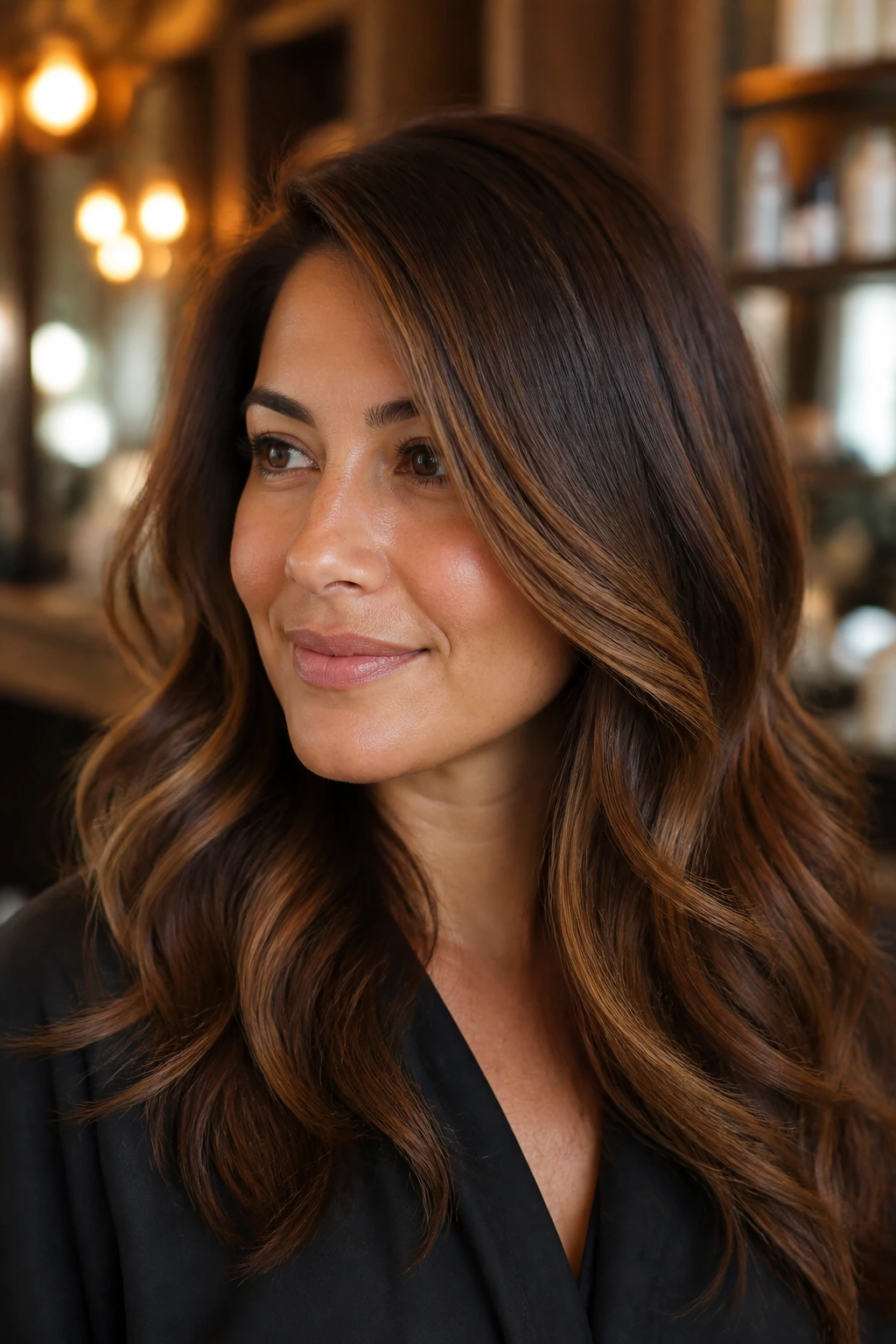
Faded chestnut caramel doesn’t always need a full highlight appointment. Sometimes it needs a tonal refresh: a warm gloss, a clear glaze with a gold-brown tint, or a few micro-pieces near the front to wake the whole thing up. That can be enough to bring back the warmth on skin that looks best with brown-gold reflect.
This is a practical choice for people who don’t want to keep lifting the hair. Once caramel has faded too pale, it can start reading dull instead of luminous. Re-toning keeps the finish soft and warm without changing the whole structure of the color.
If your hair feels rough at the ends, this is often a better move than more lightening. A polish beats a punch sometimes. Hair that already has dimension usually only needs the warmth reset, not a total rewrite.
25. The Minimalist Chestnut Glow-Up
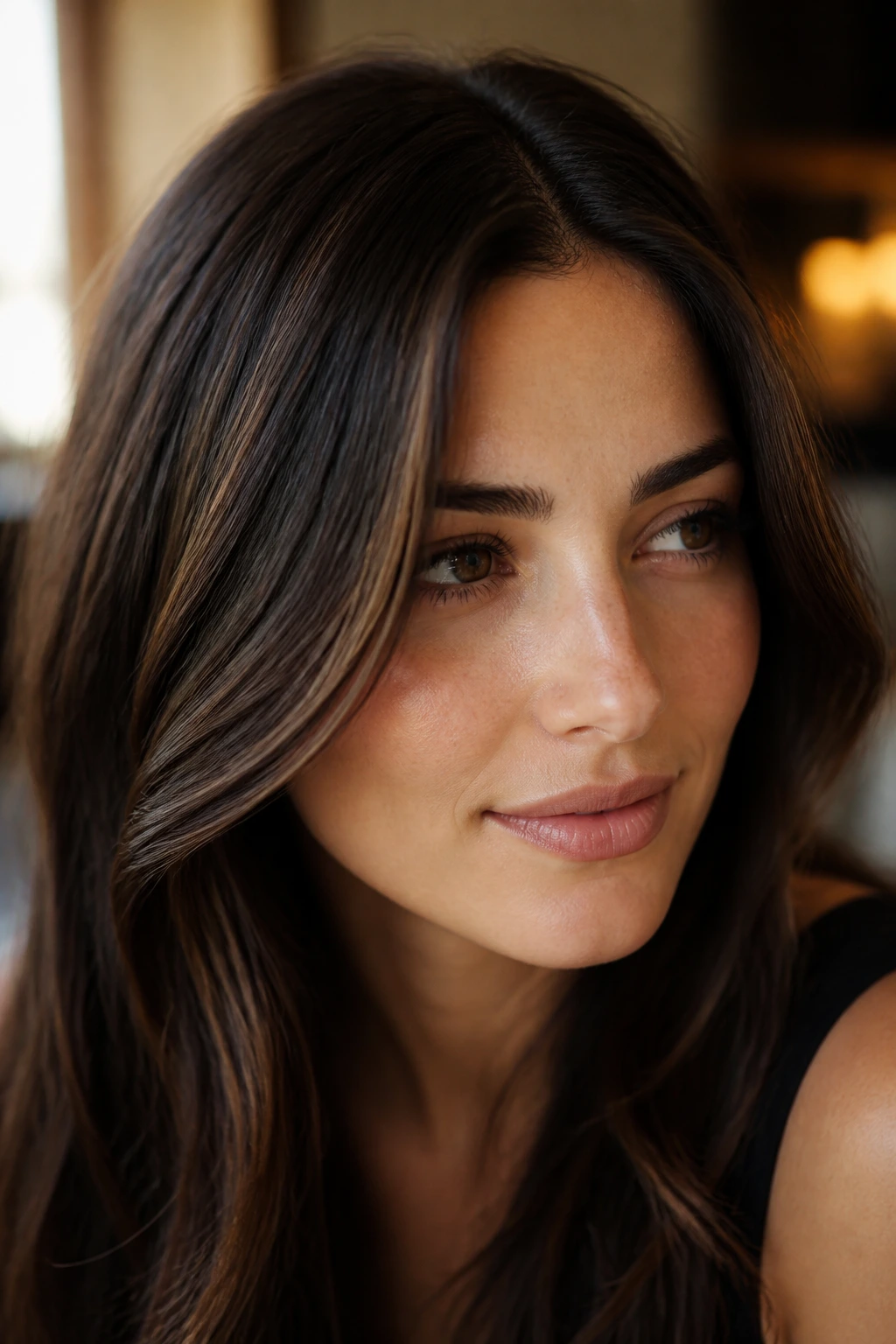
Not every good highlight look needs a front piece, a wide ribbon, and a dramatic contrast line. The minimalist version uses only a few carefully placed chestnut caramel strands through the top and around the part, then stops. That’s it. The hair stays brunette, but it no longer looks one-color and flat.
Warm skin tones often look best with this kind of restraint because the color sits close to what the complexion already wants. It’s especially nice if you wear a lot of cream, camel, rust, olive, or chocolate tones in your clothes. The whole look comes together without effort from the color itself.
A minimalist glow-up works best when the finish is healthy. Shine matters here. So does a neat cut. If the ends are ragged, the subtle color gets swallowed. If the cut is clean, the warm highlights read as soft light instead of noise.
Why the Placement Matters More Than the Shade Name
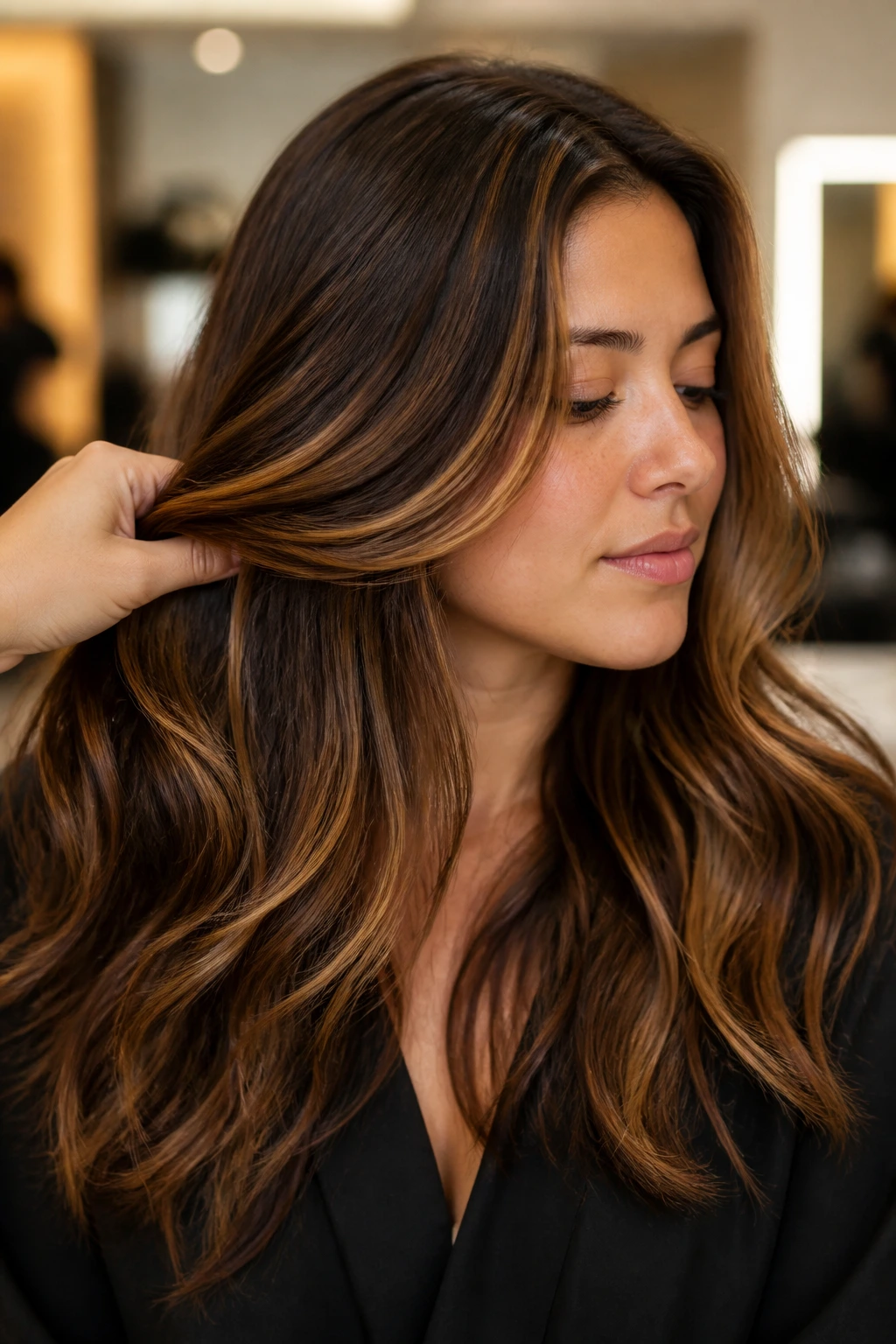
Chestnut caramel sounds straightforward, but the real work happens in the placement. Two clients can ask for the same color and walk out with completely different results because one gets front-heavy ribbons and the other gets hidden dimension through the underlayers. Warm skin tends to look best when the color feels woven through the hair, not painted onto it in one obvious stripe.
The base also matters more than people expect. A chestnut base that still has a little red-brown depth can make caramel look richer. A flatter brown can make the same caramel look ordinary. That is why good color usually starts with the root and mids, not the brightest pieces.
Tools, Brushes, and Products That Make the Job Easier
-
Foils or balayage boards: Foils give you cleaner lift; balayage boards help with painted ribbons and soft transitions.
-
Tail comb: Sectioning tiny babylights or contour pieces gets much easier with a fine tail comb and a steady hand.
-
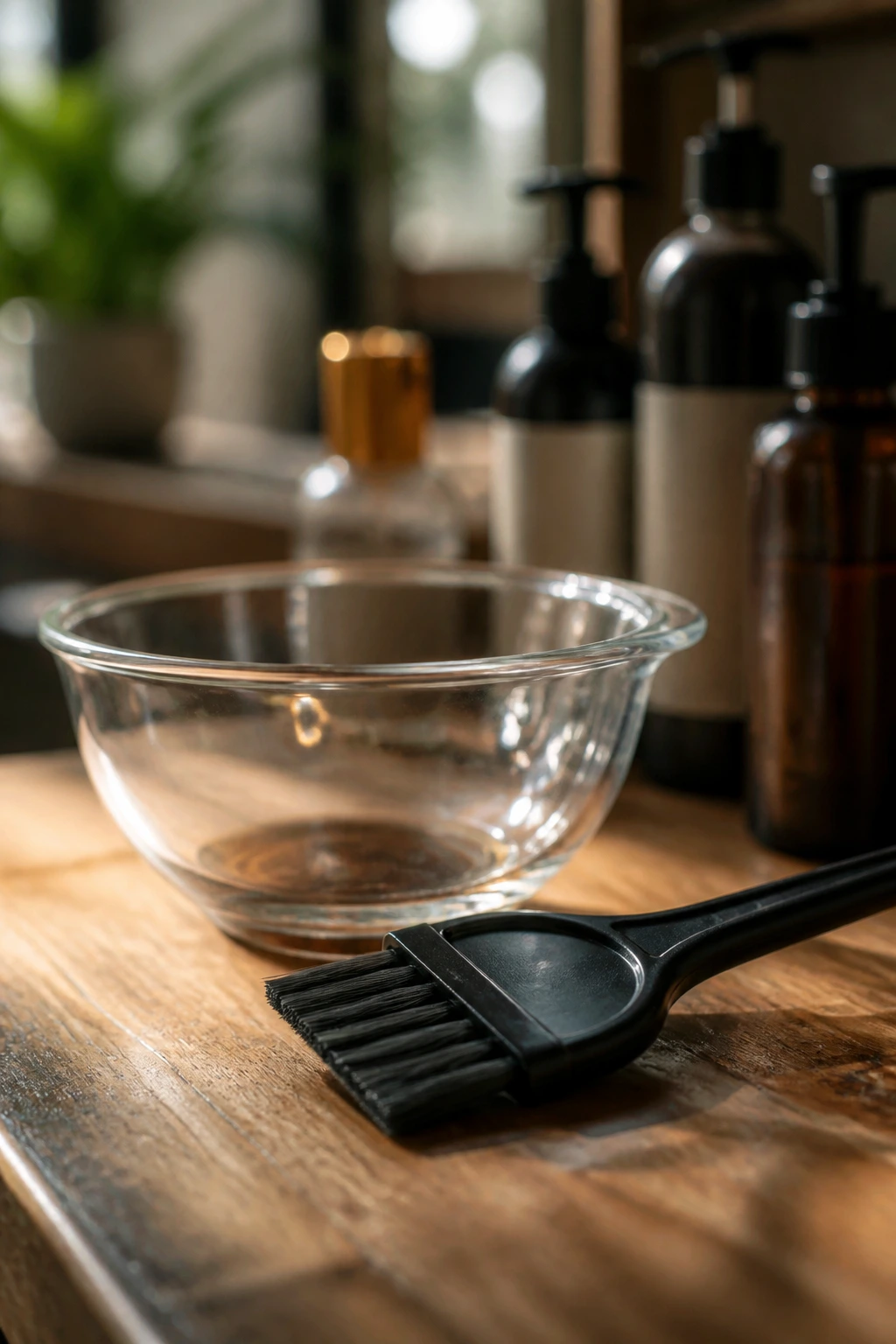
Color bowl and brush: The brush should be stiff enough to paint cleanly but not so hard that it drags the product.
-
Gloves you can actually work in: Cheap floppy gloves make precise placement annoying fast.
-
Color-safe shampoo and conditioner: Sulfate-free is not magic, but it helps the tone last longer and keeps the hair from feeling stripped.
-
Heat protectant spray: Caramel shows damage fast on the ends, so blow-dry and iron work should always have a shield in between.
-
Gloss or glaze: A clear or warm-tinted gloss keeps chestnut caramel from fading into a dull brown.
-
Wide-tooth comb or detangling brush: Helpful for curls, waves, and any hair that tangles when wet.
How to Choose the Right Chestnut-Caramel Formula
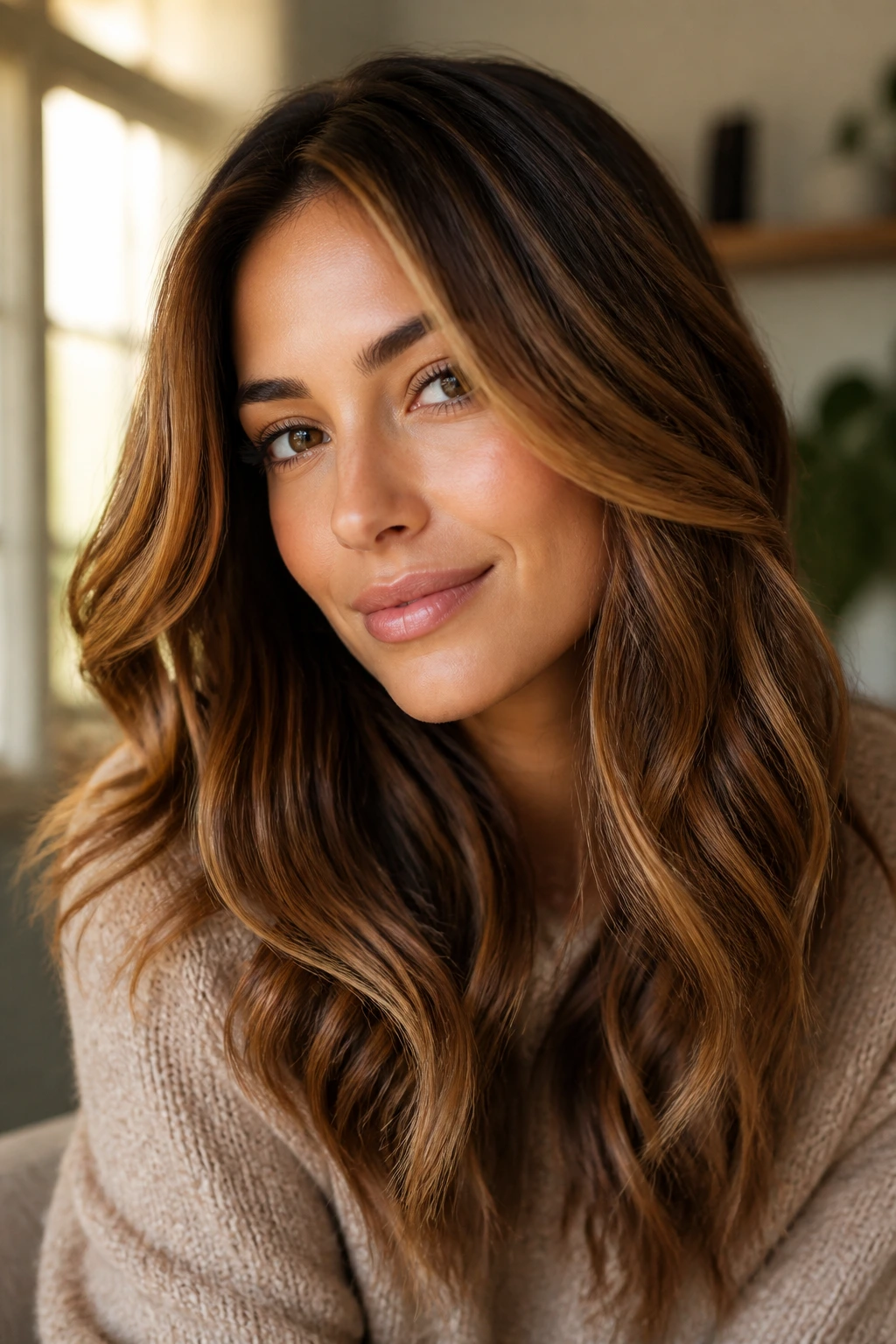
Warm skin does not need every warm color. That’s the trap. If the caramel is too orange, it can look loud against the face. If it’s too yellow, it can feel thin and brassy. The best formula usually lands in the middle: honey, toffee, toasted sugar, brown-sugar gold. Those shades have warmth without looking sunburned.
Base level matters too. Dark hair often needs more than one session or a softer transition through balayage and gloss. Medium brunettes can usually jump to visible caramel faster. Fine hair may need less lift to look bright because the lighter pieces show more easily, while thick hair can carry more contrast without going flat.
One more thing. If your skin has a lot of olive in it, too much orange can fight the undertone. Keep the warmth brown-based. If your skin is peachy or golden, a touch more gold in the caramel can be lovely. The point is not to chase one “universal” caramel. The point is to make the warmth in the hair look like it belongs next to your skin.
How to Wear Chestnut Caramel Highlights So They Read Warm, Not Brassy
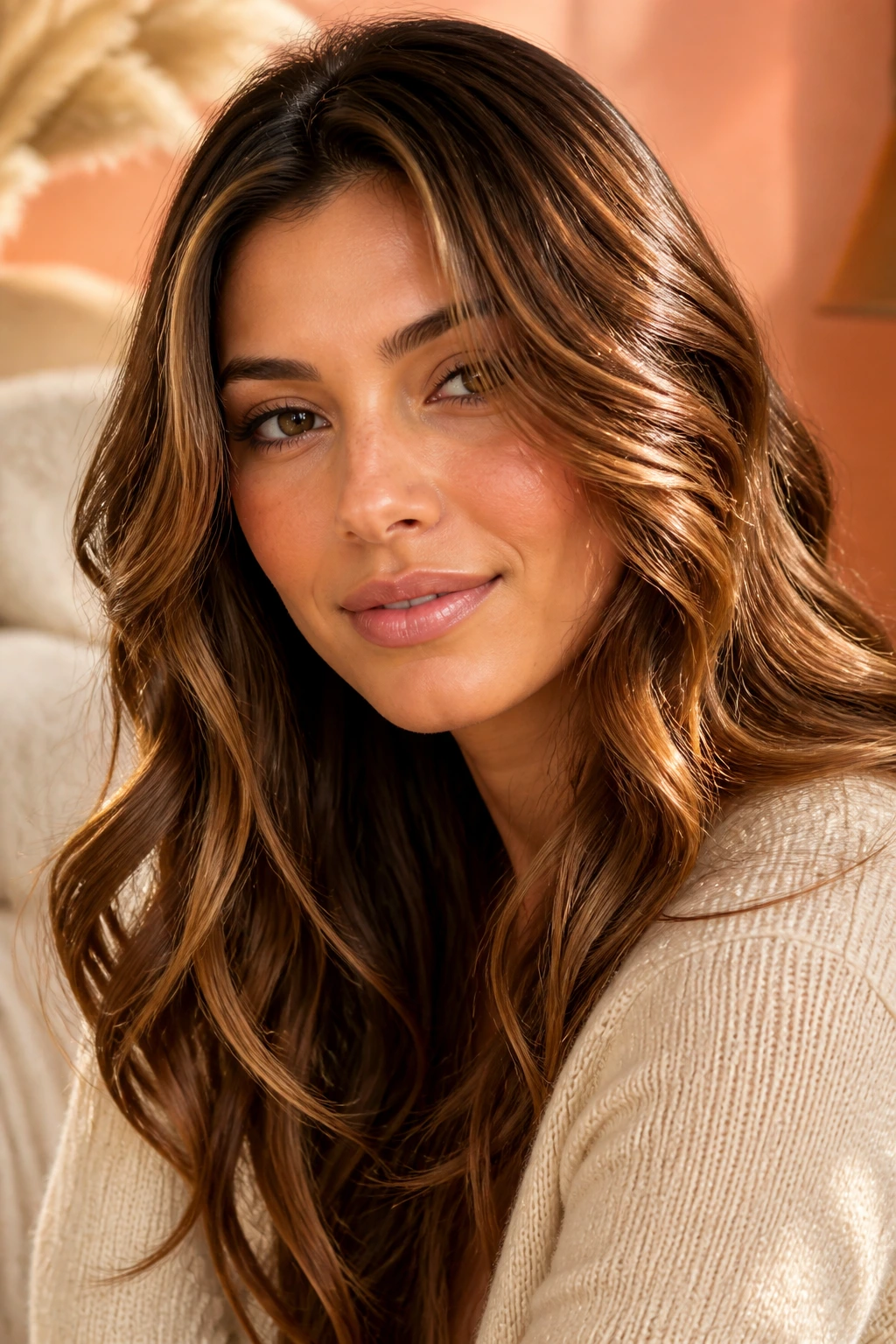
Presentation: Soft waves show the ribbons best, because the bends catch light at different points and make the caramel appear richer. A sleek blowout looks cleaner and more polished, while a half-up clip reveals the money piece and crown highlights.
Accompaniments: Warm hair color loves warm styling around it — cream knits, camel coats, rust tops, gold jewelry, and peach or bronzed makeup all make the dimension read clearer. A blunt cut can sharpen the look, while loose layers make it feel softer and more lived-in.
Coverage: If you want subtle, ask for a light veil through the top and a few face-framing pieces. If you want something obvious, ask for a stronger money piece or wider ribbons through the mids. The amount of visible contrast should match how often you’re willing to maintain it.
Finish: A light glossing cream, a shine spray on the ends, or a clear glaze between appointments helps the caramel stay soft. Skip heavy oils at the root; they can make the warm tones look greasy instead of glossy.
Additional Tips and Color Boosters
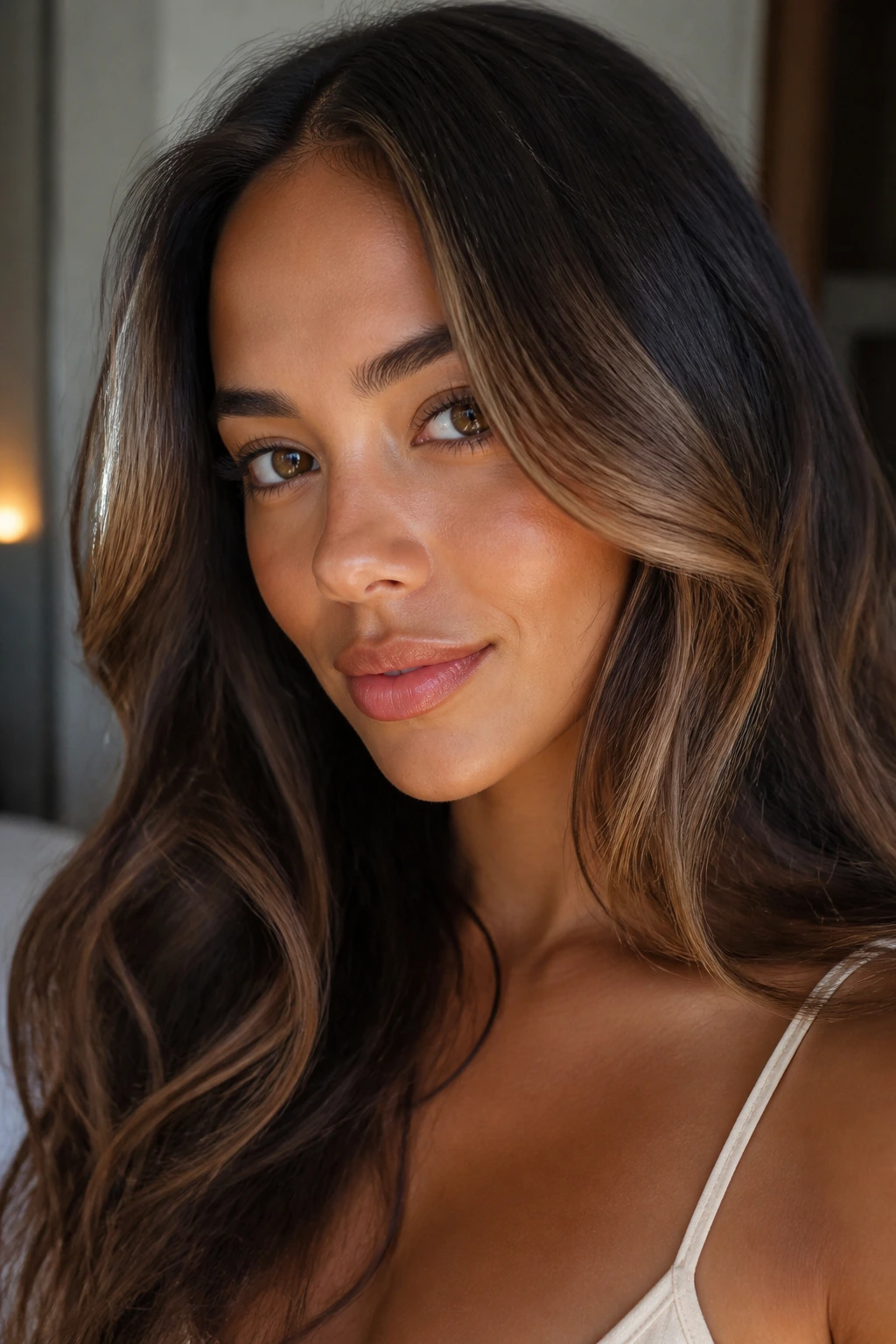
Tone Enhancement: A warm gloss 4 to 8 weeks after the service can bring chestnut caramel back to life without lifting the hair again. If the color starts looking flat, this is the first move I’d make.
Customization: Add a few lowlights if your hair is very light at the ends, or a root shadow if the grow-out line feels too sharp. Both keep the highlight family grounded and help warm skin keep its natural glow.
Serving Suggestions: Soft bends, a tucked-behind-the-ear side, or a loose braid will show off the different tones better than a stiff, static style. The hair needs motion to read as dimensional.
Make-It-Yours: For curls, keep the highlight pieces broader and more spaced out. For straight hair, finer ribbons usually look better because they stop the color from appearing stripey. If you’re gray-blending, lean richer and softer rather than trying to cover every silver thread.
Common Mistakes That Flatten the Color
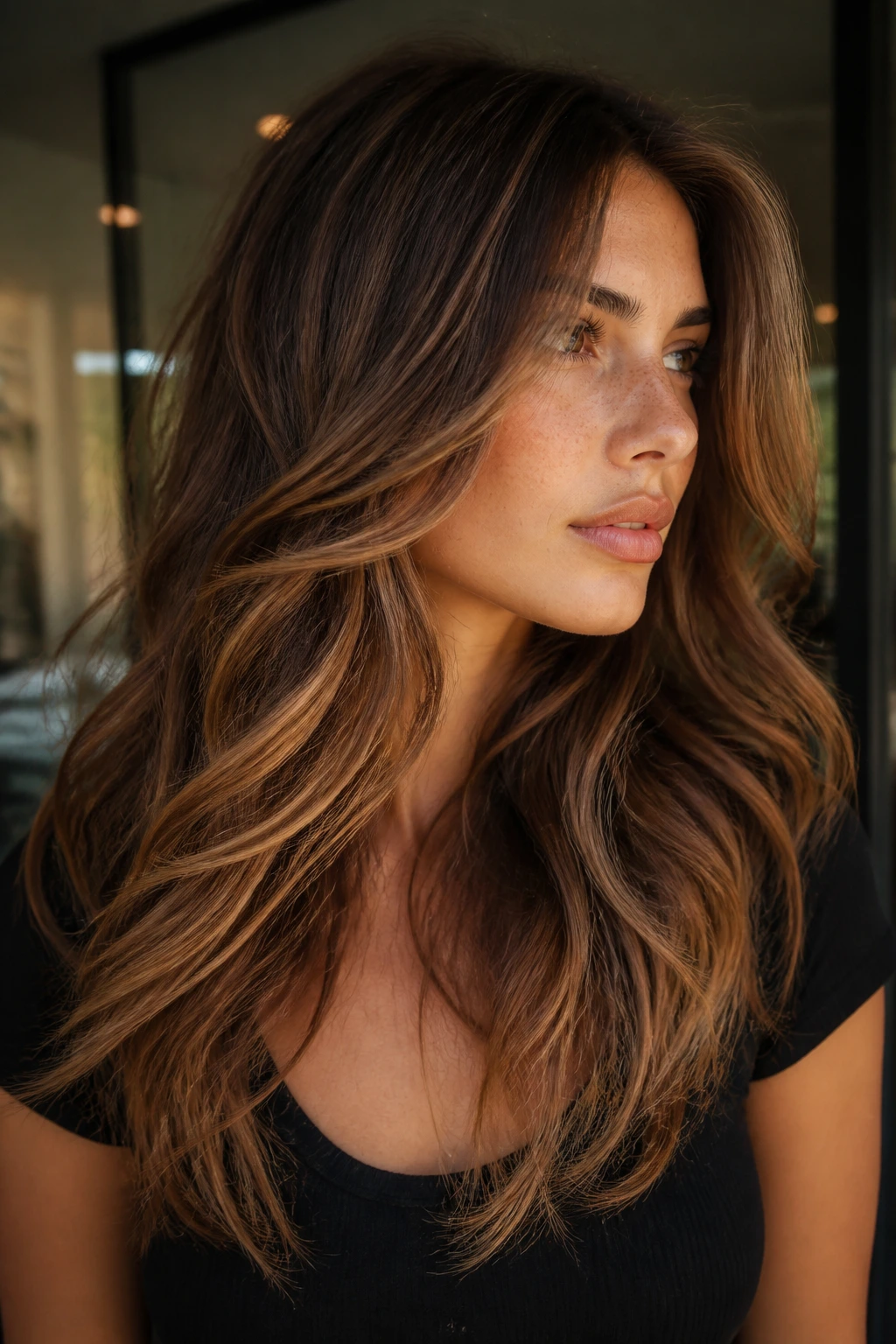
The first mistake is choosing caramel that’s too pale. On warm skin, a beige-blonde stripe can look disconnected, especially if the base is chestnut and the skin already has gold in it. The fix is simple: stay in the honey, toffee, or golden-brown lane.
The second mistake is skipping depth. People sometimes ask for highlight after highlight and end up with a noisy, light head of hair that loses the chestnut piece entirely. The hair needs shadow. It needs somewhere for the lighter pieces to sit.
The third mistake is over-lightening dark brunettes in one sitting. Caramel should still feel warm and brown-based, not like the hair was dragged to blonde and toned back in a panic. If your base is very deep, give the color time and keep the transition gradual.
The fourth mistake is forgetting that the haircut changes everything. A blunt one-length cut can make wide panels look heavy. A layered cut can make tiny babylights disappear. Color and cut have to talk to each other or they end up arguing on your head.
Variations and Adaptations to Try
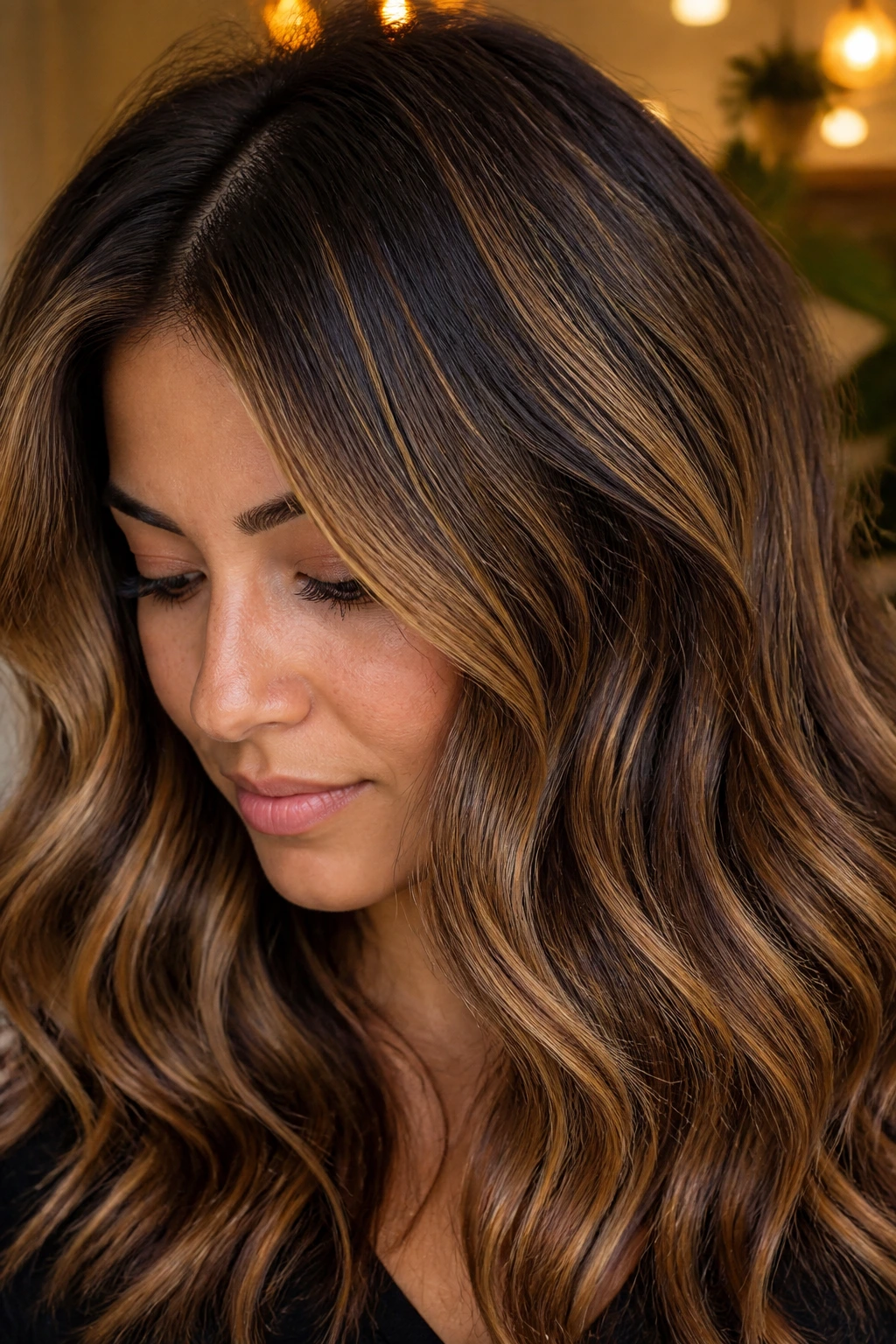
Golden Toffee Drift: This version leans a little lighter and sweeter, with more honey-gold than brown-red in the caramel. It suits peachy warm skin that can handle a brighter finish.
Spiced Chestnut Melt: Add a touch more red-brown to the base and mids for a richer look that feels deeper under indoor light. It’s a good fit if your complexion looks best beside rust, terracotta, and bronze.
Bronzed Balayage for Curls: Use broader painted pieces through the outer curl pattern and keep the root area deeper. The shape of the curls will show the bronze-caramel movement without needing heavy contrast.
Gray-Blend Glow: Keep the highlights softer and weave them into the silver rather than covering it. This gives a warmer, more natural result that still looks polished.
Low-Maintenance Veil: Ask for minimal lightening, a soft root shadow, and a warm gloss at the end. It’s subtle, but it keeps the whole head looking fresh for longer between appointments.
Keeping the Warmth Soft Between Appointments
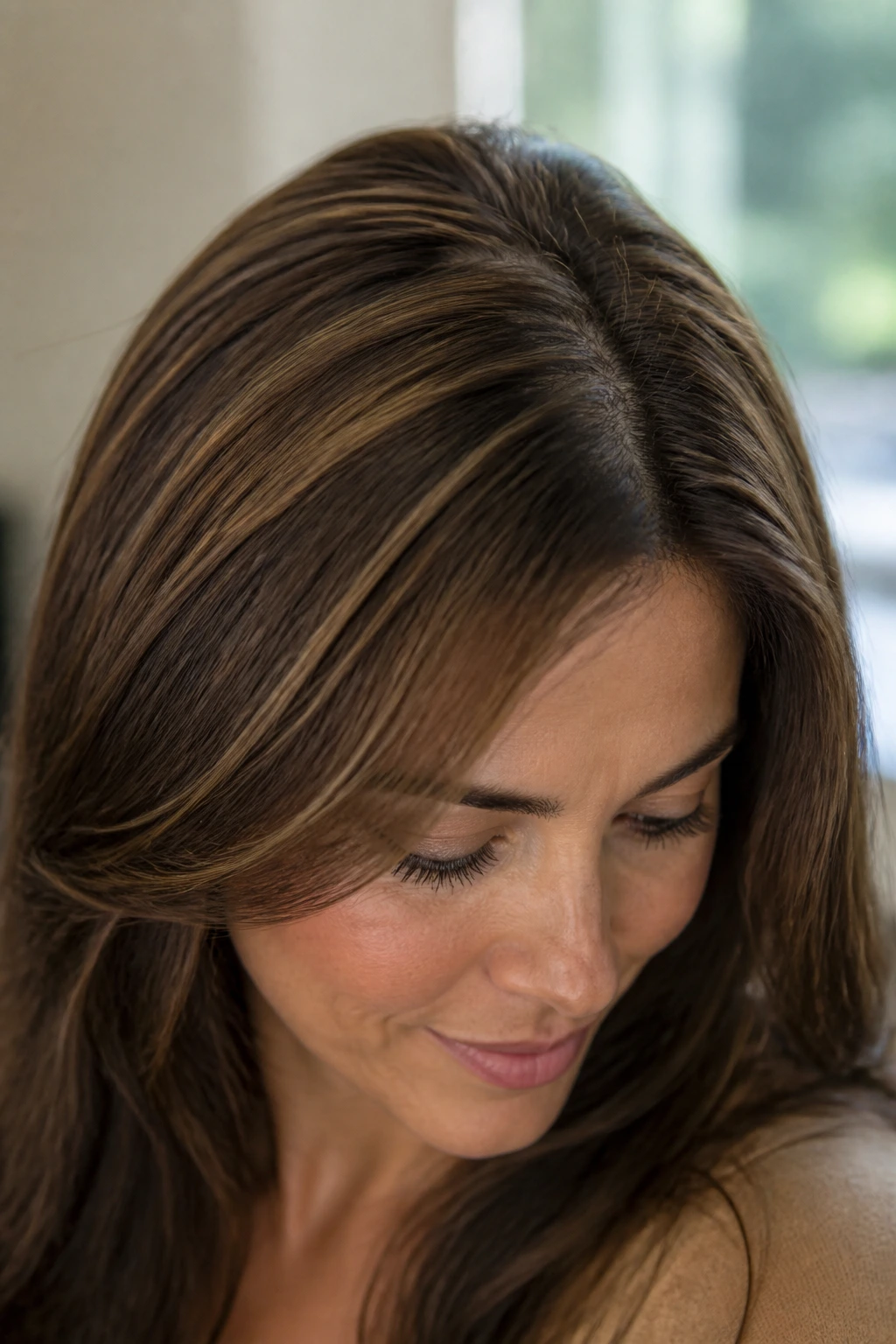
The biggest secret to chestnut caramel is that it hates neglect. Not dramatic neglect. Just the usual kind — too much heat, rough shampoo, and one too many skipped trims. Warm brown tones fade toward flatness faster than people expect, and caramel can start to look dusty if the ends get dry.
Use a color-safe shampoo and don’t scrub the mids and ends like you’re cleaning a skillet. Focus the lather at the scalp, let the rinse carry it down, and keep conditioner on the areas that actually need slip. A weekly mask helps, but don’t drown the roots in heavy products or you’ll lose the shine that makes the color work.
Heat styling should be protected every time. Every time. A blow-dryer or iron without heat protectant can cook the caramel into a dull, rough-looking finish. If the ends start feeling crunchy, you’re already past the point where a little serum will solve everything. Trim them.
Frequently Asked Questions
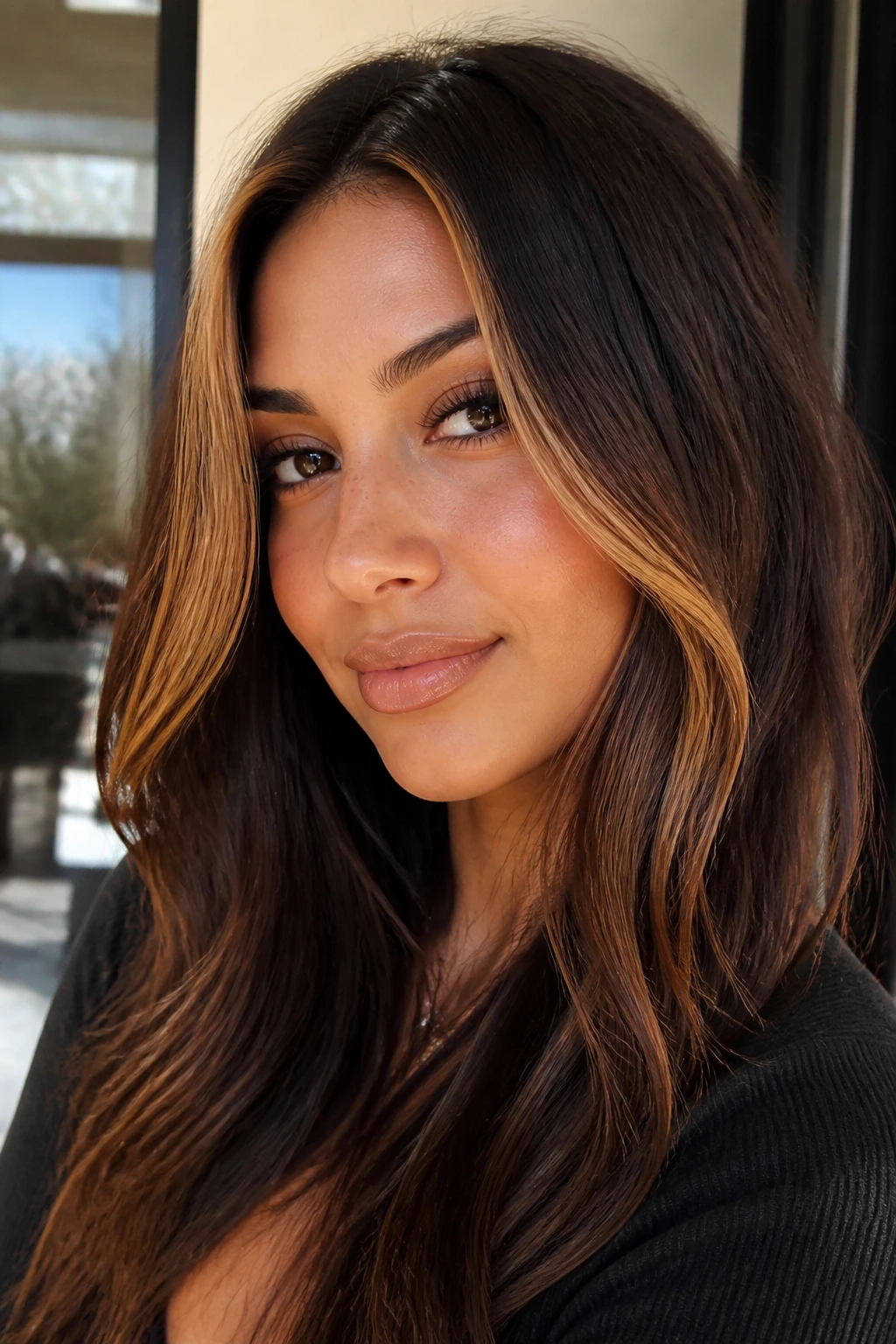
Will chestnut caramel highlights suit olive skin?
Usually, yes — as long as the caramel stays brown-based and not too orange. Olive skin often looks better with warmth that feels toasted or golden rather than bright yellow.
How light should the caramel be on dark brown hair?
For very dark bases, a level 7 to 8 caramel is often a better starting point than going straight to pale blonde. It shows up as warmth and movement without making the hair look patched or over-lightened.
Are balayage highlights better than foils for this look?
Balayage gives a softer grow-out and works well for blended chestnut caramel. Foils give more lift and a brighter result, which helps if you want the front pieces to pop.
Can curly hair handle chestnut caramel without looking stripey?
Yes, but the placement has to respect the curl pattern. Wider spacing, softer ribbons, and a few brighter pieces near the face usually work better than lots of tiny foils all over.
How often should I refresh the color?
Many chestnut caramel looks need a gloss every 6 to 8 weeks and a more noticeable touch-up around 8 to 12 weeks, depending on how much contrast you started with. The more visible the highlights, the more upkeep they usually ask for.
What if the caramel turns orange?
That usually means the tone was too warm or the lift exposed too much underlying pigment. A glaze or toner with a brown-gold balance can calm it down, but if the orange is strong, a colorist may need to add depth back in.
Can I ask for lowlights too?
Absolutely, and often you should. Lowlights help chestnut caramel keep its shape, especially on thick, curly, or very lightened hair where the highlights need shadow to sit against.
Does this color work on short hair?
It does, but placement matters more because there’s less length to show the transition. Keep the lightest pieces where the cut has movement — around the fringe, crown, or front edge — so the warmth reads clearly.
The Warm Brunette Glow That Stays Put
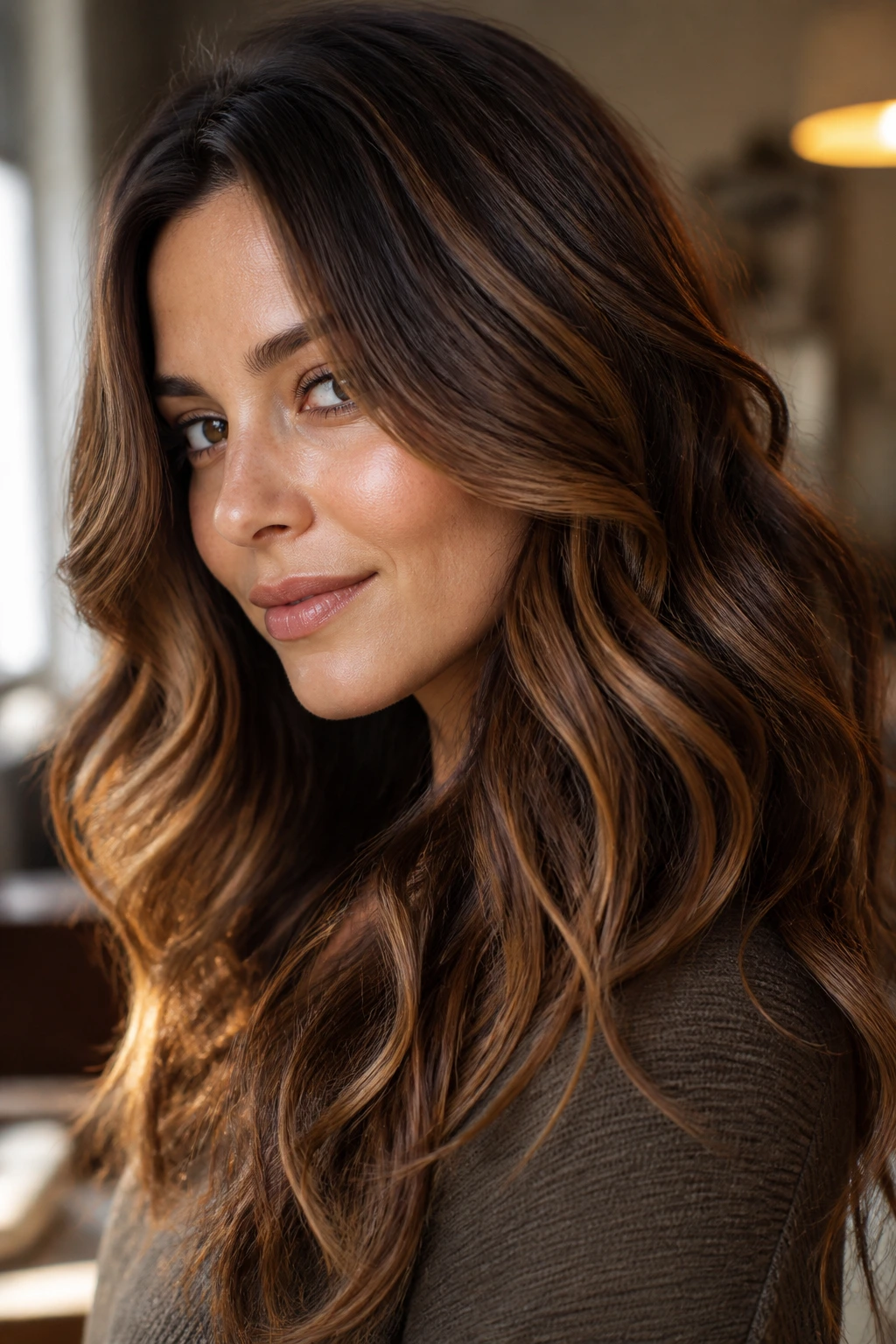
Chestnut caramel highlights work because they respect the shape of warm skin instead of competing with it. The brown depth keeps the color grounded. The caramel brings the shine. And the best versions always seem to have a little shadow tucked underneath, the way good makeup does when it’s been applied by someone who understands faces.
If you want the color to last, think in layers: base, highlight, lowlight, gloss, maintenance. That’s the whole game. Not louder. Smarter. A warm brunette can look soft and dimensional for a long time when the tone is chosen well and the placement is given some breathing room.
The next time you ask for chestnut caramel, ask for warmth with restraint. That combination tends to age better on the head, in the mirror, and in the grow-out.