



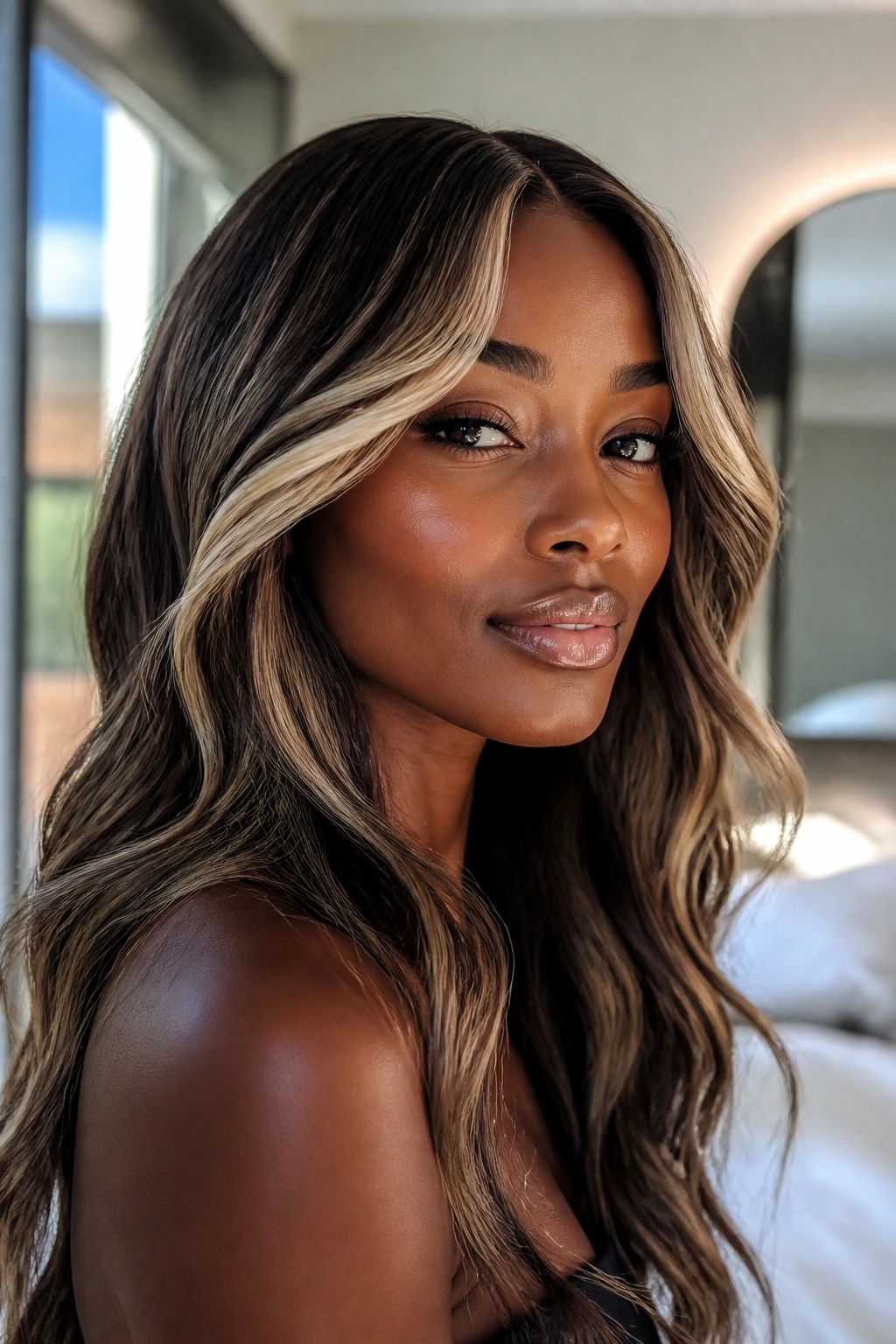
Cool blonde highlights on deep skin tones can look razor-sharp when the tone stays smoky, pearly, or beige—and flat when the lightening is too loud or the placement is too broad. That’s the whole game. Not the blond itself. The way it sits against the base, the way it catches the cheekbone, the way a root shadow keeps the color from floating off the head like a sticker.
I trust cool blonde on deep complexions when it has depth underneath it. A dark espresso root with pearl ribbons through the crown looks intentional; a solid slab of white at the front usually does not. The best versions have some grit in them—ash, smoke, silver, mushroom, beige-gray—so the blonde feels alive instead of bleached to death.
And yes, deep skin tones can wear icy blonde, silver blonde, and cool champagne without losing warmth in the face. The trick is placement and tone control. A little lowlight goes a long way. So does a soft melt at the roots, especially if you want the hair to move instead of sit there and glare at you in harsh bathroom light.
Why Cool Blonde Highlights Work So Well on Deep Skin
-
Depth makes the blonde look brighter: A dark base gives ash, pearl, and platinum something to push against, which is why the same blonde can look chic on one head of hair and chalky on another.
-
Placement matters more than brightness: Thin ribbons around the hairline, part line, and crown catch light where people actually look first, so the color reads clean instead of stripy.
-
Cool toner keeps brass from taking over: Blue-violet glosses pull yellow back into beige or silver, which matters a lot once hair has been lifted past level 7.
-
Texture gives the highlights shape: Waves, curls, and coils break up the light pieces, so the blonde looks dimensional instead of like one flat band.
-
Lowlights are the secret weapon: A few darker strands between bright pieces keep the overall look anchored against deep skin and stop the head from turning into one giant pale block.
-
The finish can be soft or bold: You can go pearl and understated, or push into platinum and silver, and both can work if the root area still holds some shadow.
The Consultation Notes That Save the Tone
The chair is where this either looks expensive or turns into a correction job. Bring photos, yes, but bring the right photos: one shot in window light, one under indoor light, and one that shows the exact root depth you want. Cool blonde changes fast under different lighting, and a picture taken with a filter on it can lie to everybody in the room.
Undertone: Ask whether your skin reads warm, neutral, or cool to the person doing the color. That matters more than people admit. Pearl, beige, and smoky champagne usually sit better than a stark white-blonde when the goal is softness, while silver-leaning pieces can look gorgeous if the rest of the color has depth.
Placement: Decide where you want the eye to land. A money piece brightens the face. Babylights whisper. Balayage gives movement on the ends. If you ask for “blonde highlights” without pointing to the exact zones, you may end up with too much brightness in the wrong place.
Maintenance: Be blunt about your patience. A cool blonde with a root melt can stretch longer between appointments. A high-lift platinum front piece needs more toner visits and more discipline with heat. I like the honest answer here better than the flattering one.
1. Platinum Money Piece With a Soft Shadow Root
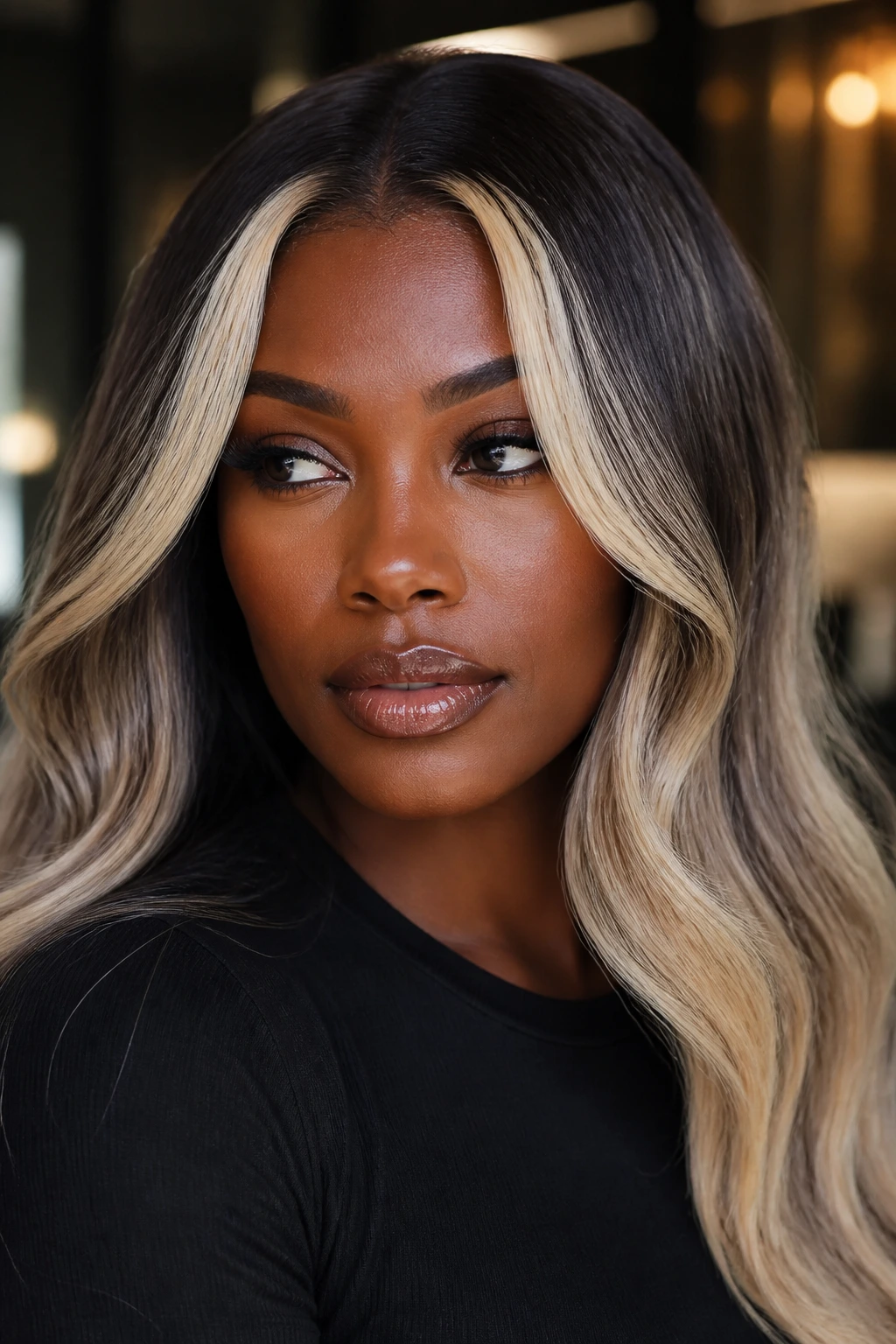
A bright front piece can look electric on deep skin, but only if the root is kept soft. A half-inch shadow root gives the platinum somewhere to land, so the blonde frames the face instead of cutting it off. It’s the kind of highlight that makes cheekbones look sharper and eyes look brighter in one shot.
I prefer this on deeper bases when the rest of the hair stays espresso, chestnut, or dark cocoa. The contrast is the point. Ask for the front sections to lift the highest, then melt the first inch back into beige or ash so the line doesn’t look pasted on.
Best for someone who likes a clear, face-framing hit of brightness and doesn’t mind toner every 4 to 6 weeks.
2. Ash-Balayage Waves on a Deep Brown Base
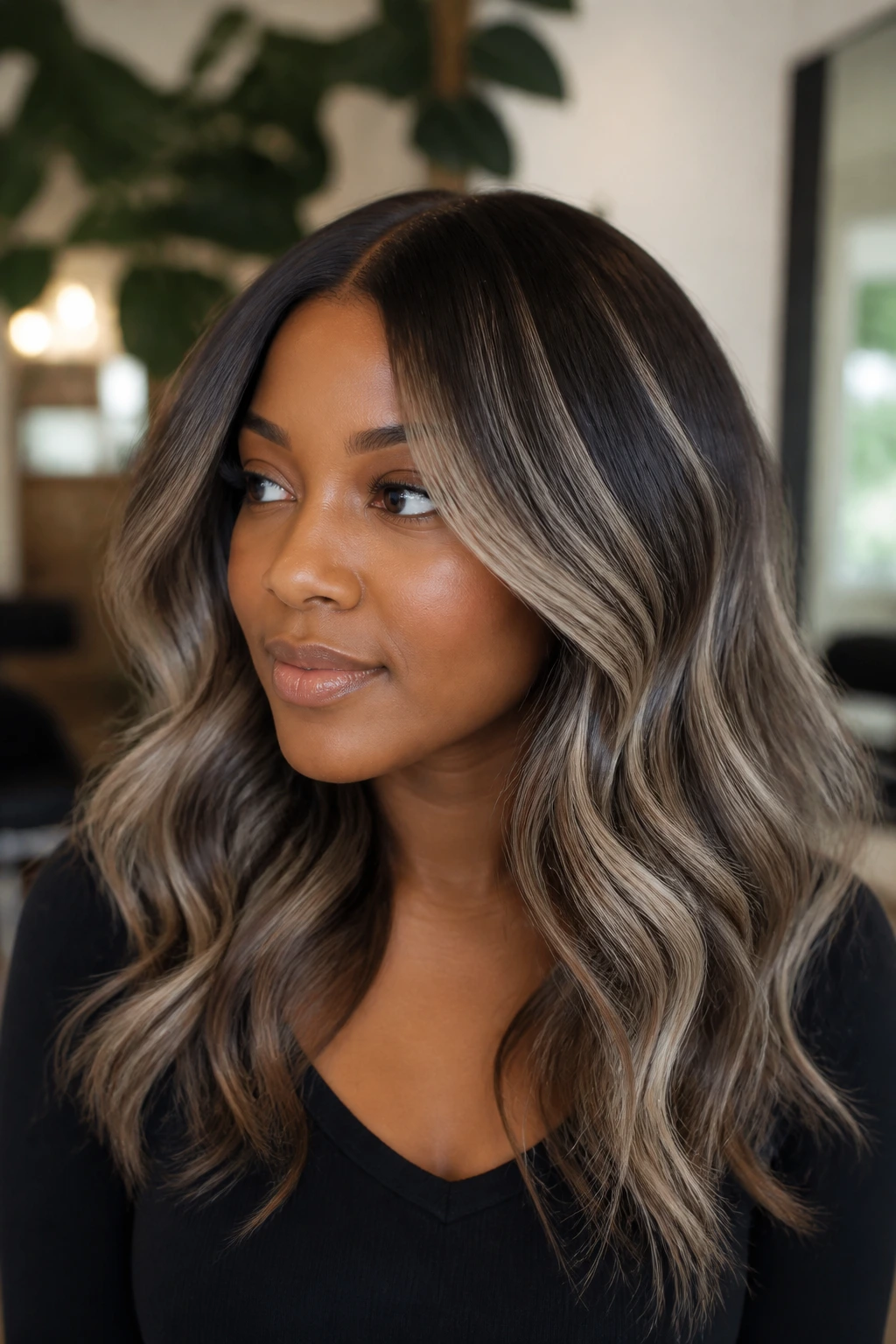
Want the most forgiving cool blonde? Ash balayage is usually it. The colorist paints ribbons through the surface, leaves the root darker, and keeps the lift concentrated where the hair bends. On deep skin, that dark base stops the blonde from looking brittle.
Why It Reads So Clean
The softest version starts a few inches below the root and gets lighter toward the ends. That means grow-out stays quiet, and the highlight doesn’t fight the natural depth in the hairline. Wavy styling helps too; the bends make each ribbon look deliberate instead of striped.
This is the style I point people toward when they want cool blonde without living in the salon chair. It’s polished, but it doesn’t shout.
3. Pearl Babylights Around the Hairline
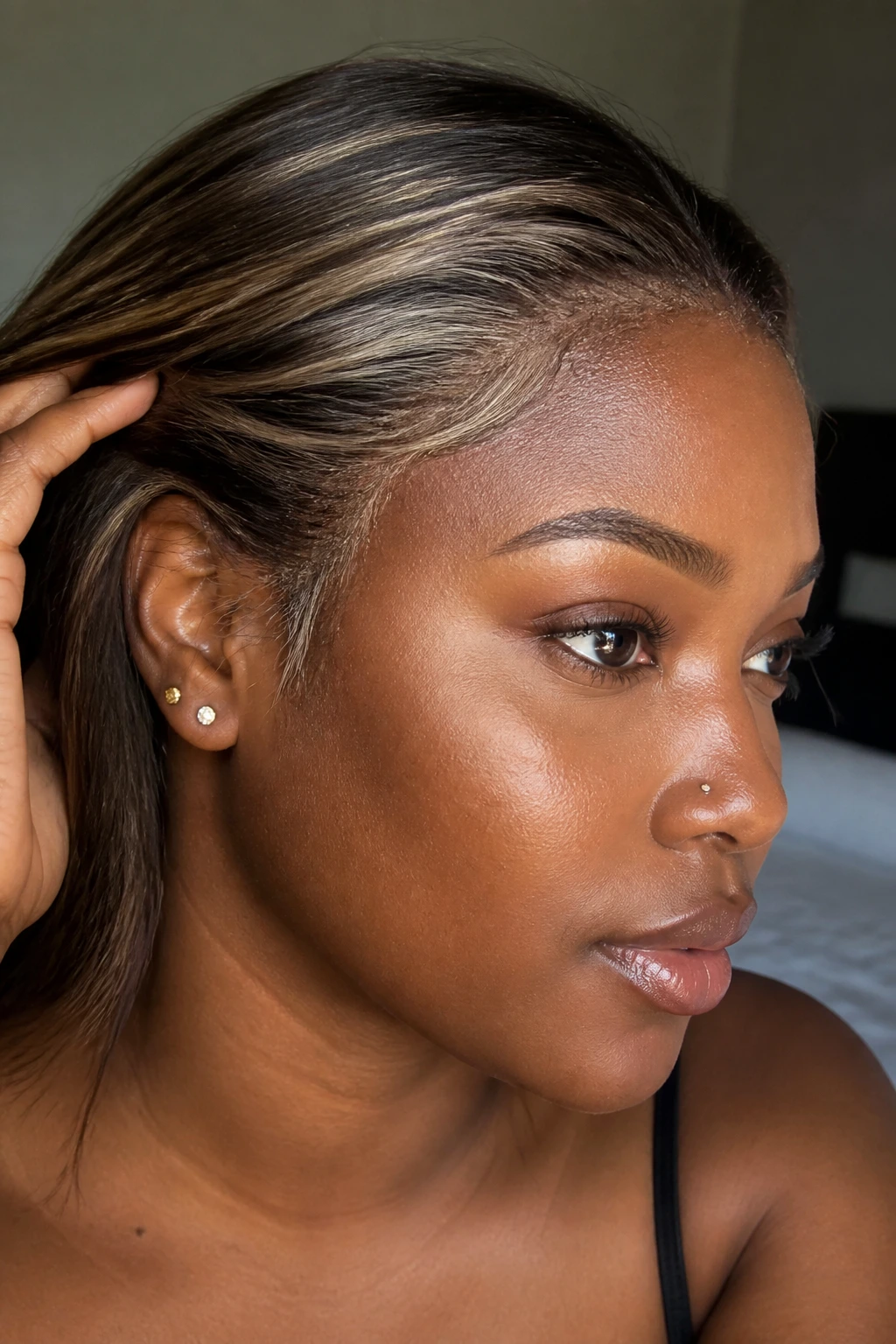
When you tuck your hair behind one ear and catch a tiny flash of pearl at the temple, the whole face wakes up. That’s the appeal of babylights. They’re so fine they barely announce themselves, but they change how the light falls across deep skin.
Where the Light Sits
- Thin foils, almost threadlike, along the part line
- A few pieces at the temples and around the ears
- A soft pearl or beige gloss, not white toner
This look is one of the best choices for people who want subtle brightness and a grown-out finish that doesn’t turn brassy in two washes. It’s also a good starting point if you’ve never worn blonde before and want the color to flirt instead of commit.
4. Mushroom Blonde Ribbons on Long Layers
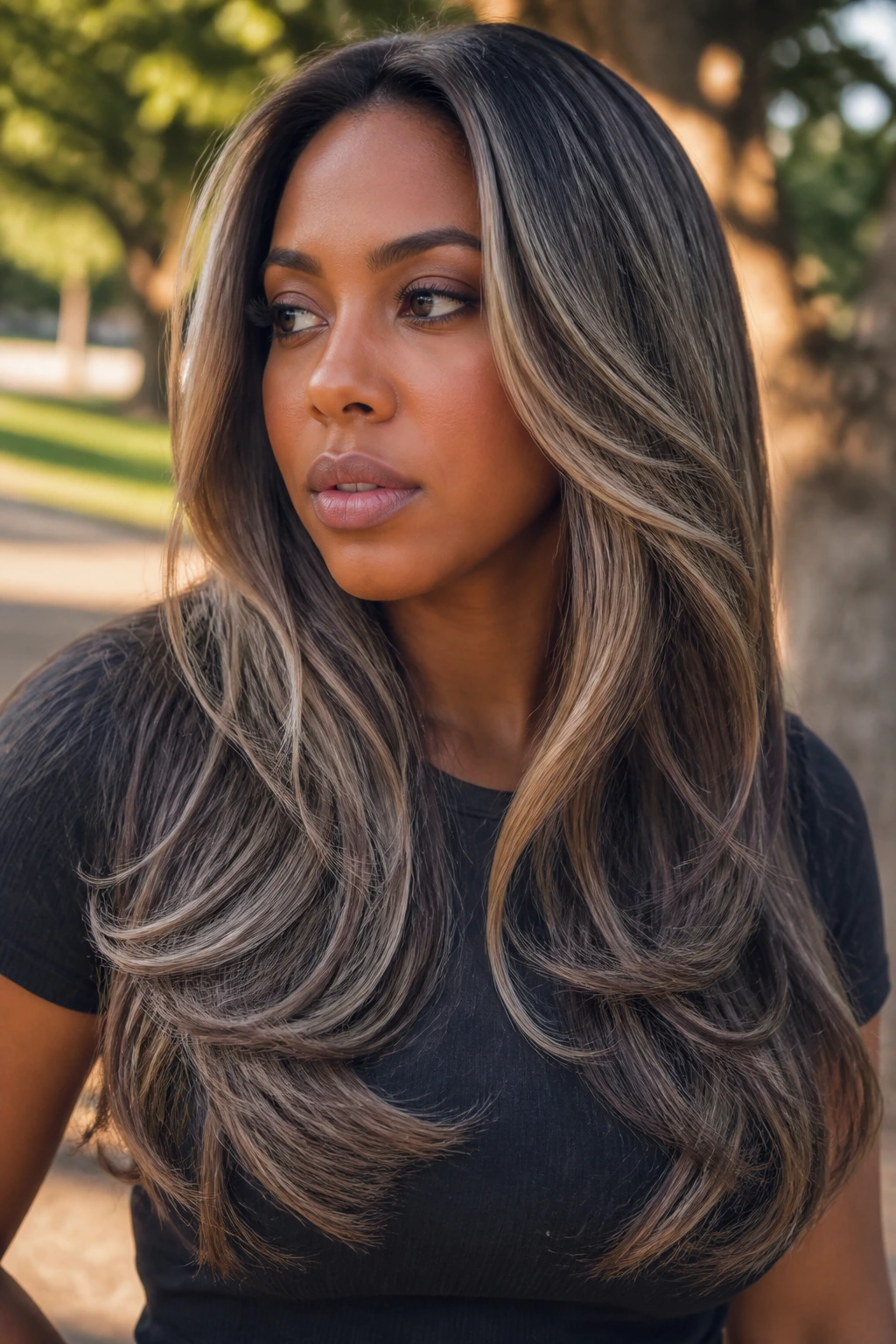
Mushroom blonde is one of those shades that makes people lean in. It sits between taupe, ash, and beige, which means it doesn’t flash gold and it doesn’t go flat gray. On long layers, the ribbons show best where the hair swings—mid-lengths, ends, and around the shoulders.
The reason this works on deep skin is simple: the shade has enough smoke in it to feel cool, but not so much silver that it drains the complexion. Long layers keep it from looking like a single band of color. The movement does the rest.
I like this for someone who wants something more grown-up than platinum and less obvious than chunky highlights. It has edge, but quiet edge.
5. Silver-Frame Highlights for a Curly Bob
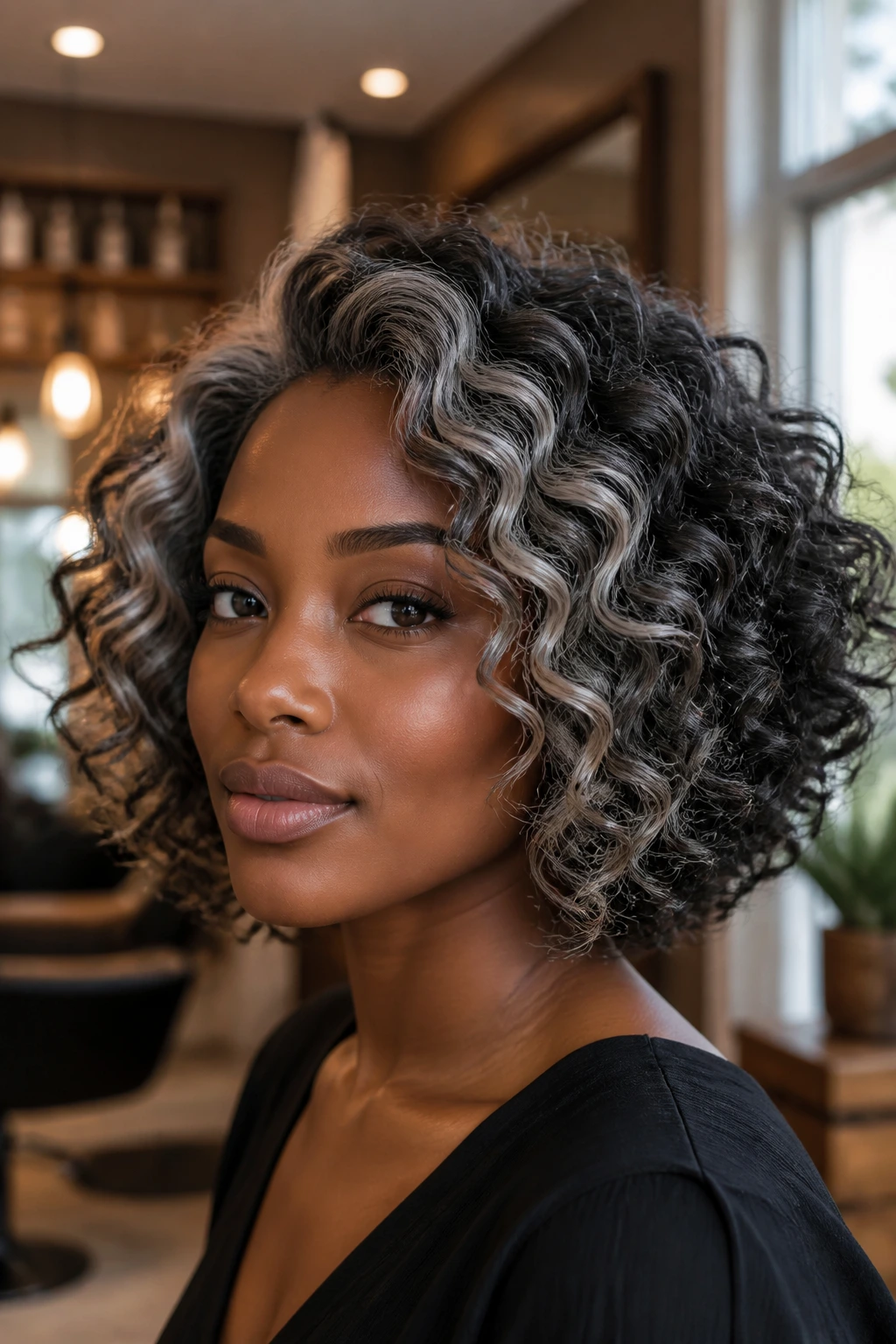
A curly bob with silver pieces around the face looks like jewelry. That’s the easiest way to think about it. The brighter sections should sit where the curls bend outward—near the temples, around the cheekbone line, and at the crown—so the shape gets lifted, not flattened.
What Makes It Different
Silver tones can be harsh if they’re spread everywhere. On a bob, the trick is restraint. A few strategic panels are enough to pull the eye upward, and the curls break the brightness into little flashes instead of one flat shine.
If your hair leans warm, ask for a smoky silver gloss rather than a pure icy finish. It keeps the front pieces cool without making the whole head feel cold.
6. Beige Blonde Panels on a Silk Press
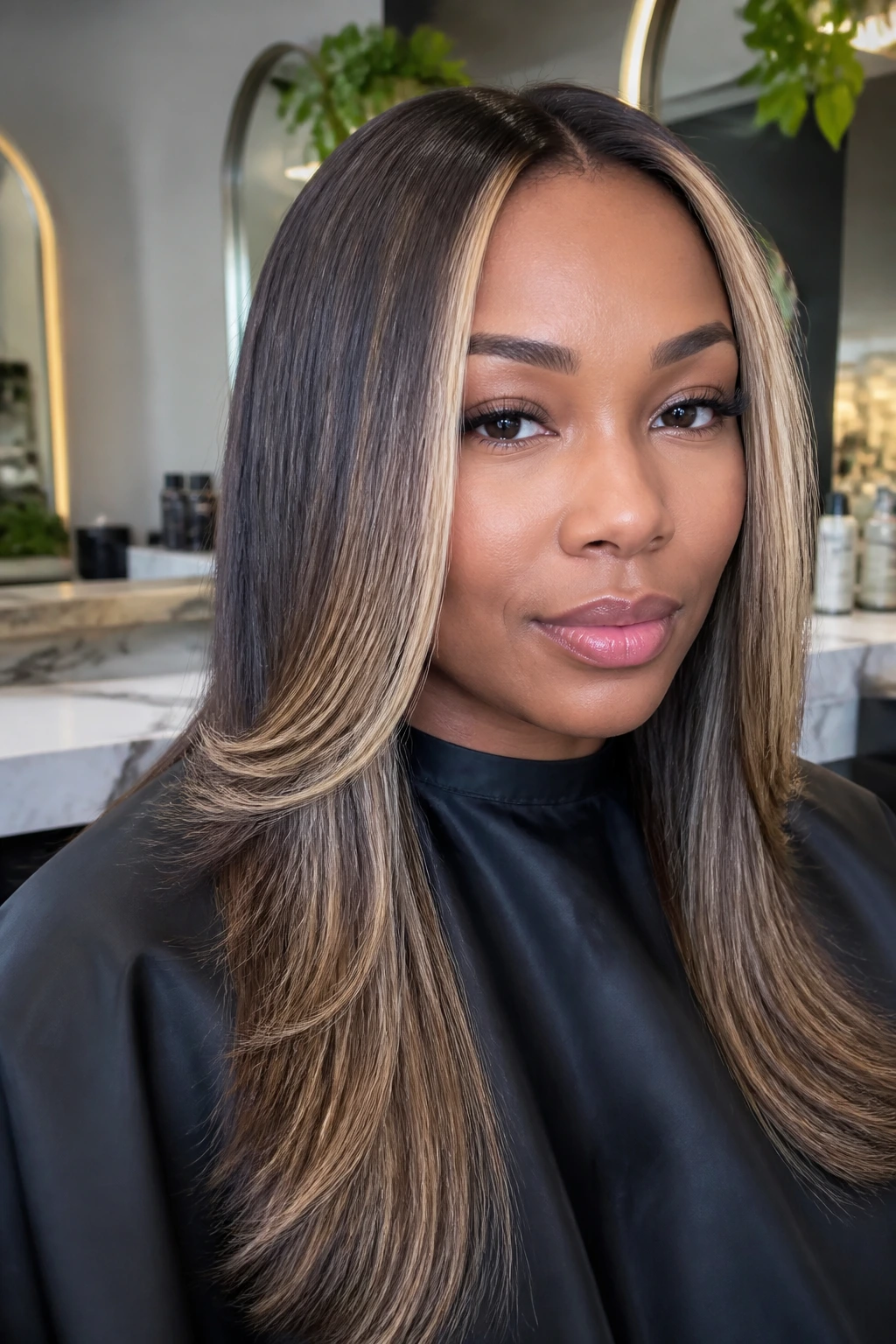
A silk press shows everything. Every ribbon. Every tone shift. Every uneven foil. Which is why beige blonde panels can look so good here—they’re clean, soft, and easy for the eye to read on sleek hair.
Beige is one of my favorite cool-adjacent shades for deep skin because it doesn’t scream “bleach.” It reads like light, not paint. If the panels are placed through the top layer and around the face, the hair still has depth at the underlayer, and that depth matters.
This is a good option if you wear your hair straight most of the time and want the color to move from day to day without needing a dramatic cut.
7. Frosted Ends on Waist-Length Curls
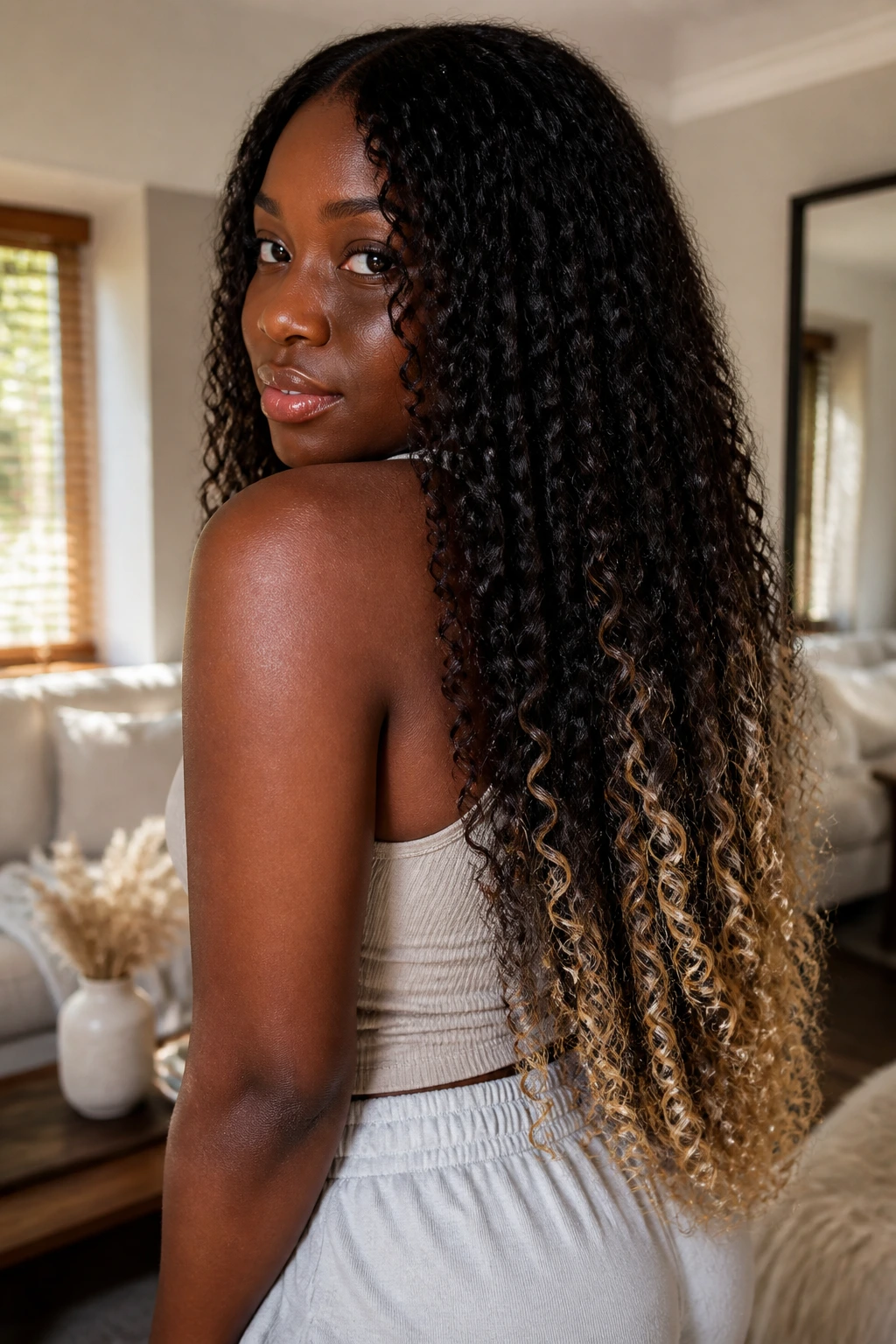
If you want brightness without living at the salon, keep the lightness at the ends. Frosted ends leave the root and mid-lengths alone, then lift just the last 4 to 6 inches into a cool blonde or smoky beige. The result looks like the hair caught winter light at the bottom.
Long curls handle this especially well because the shape of the curl keeps the blonde from looking blunt. It spreads out in the bend, which gives you a softer gradient than straight hair can usually manage.
This is one of the easiest ways to try blonde on deep skin without overcommitting. The base stays rich. The ends do the talking.
8. Smoke-and-Cream Color Melt
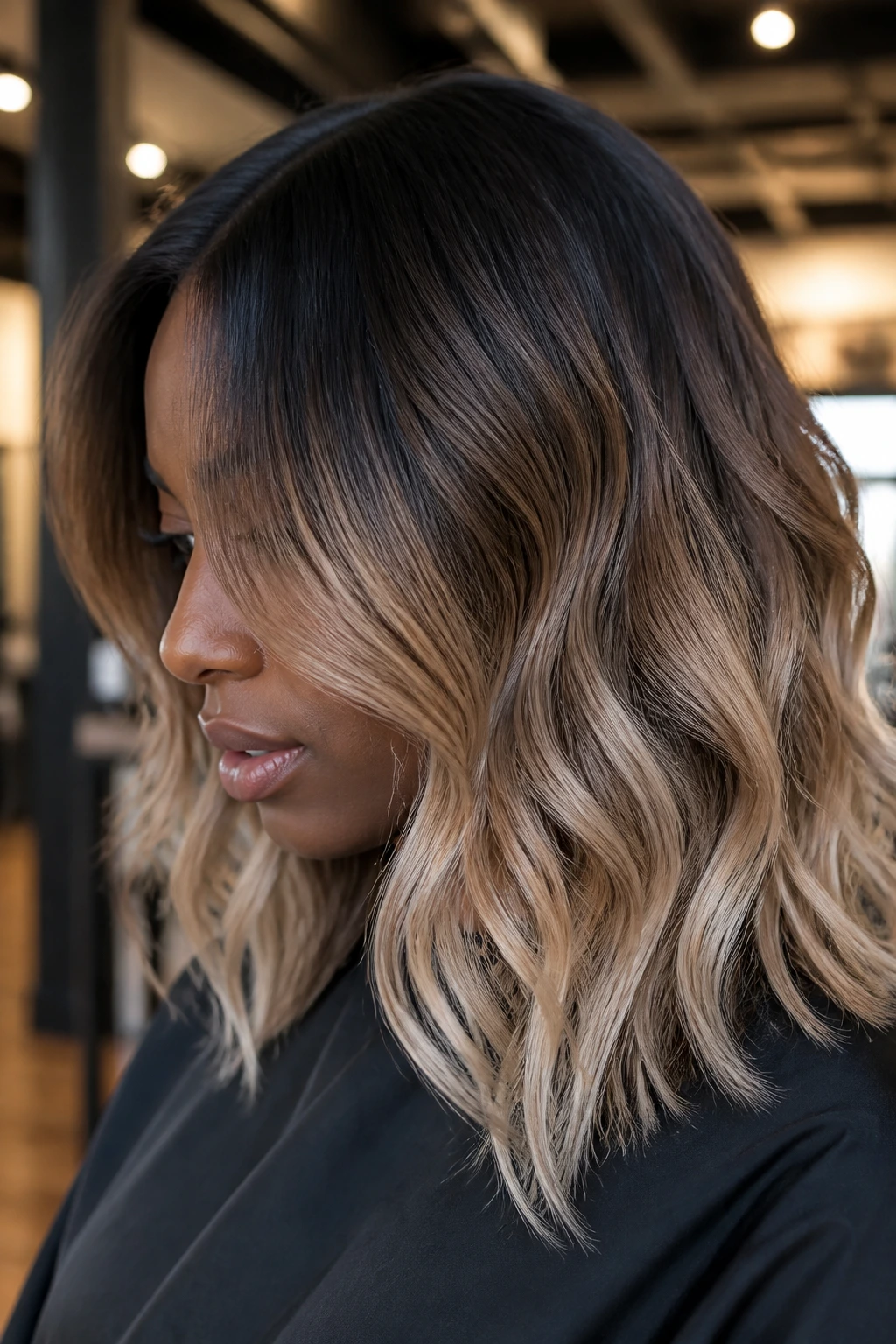
A good color melt is all about the middle. Not the root, not the very end—the middle where the shades meet and the eye decides whether the whole thing looks smooth or patchy. Smoke-and-cream works because the top stays deeper and cooler, while the ends turn creamy beige instead of yellow.
Unlike streaky highlights, a melt doesn’t ask you to notice each foil. It asks you to notice the flow. That matters on deep skin, where abrupt blonde can look disconnected if there isn’t a thoughtful fade behind it.
This is one of those styles that looks even better when it grows out a little. The line between shades softens, and the hair gets more movement, not less.
9. Chunky 90s Blonde Strips With a Cool Toner
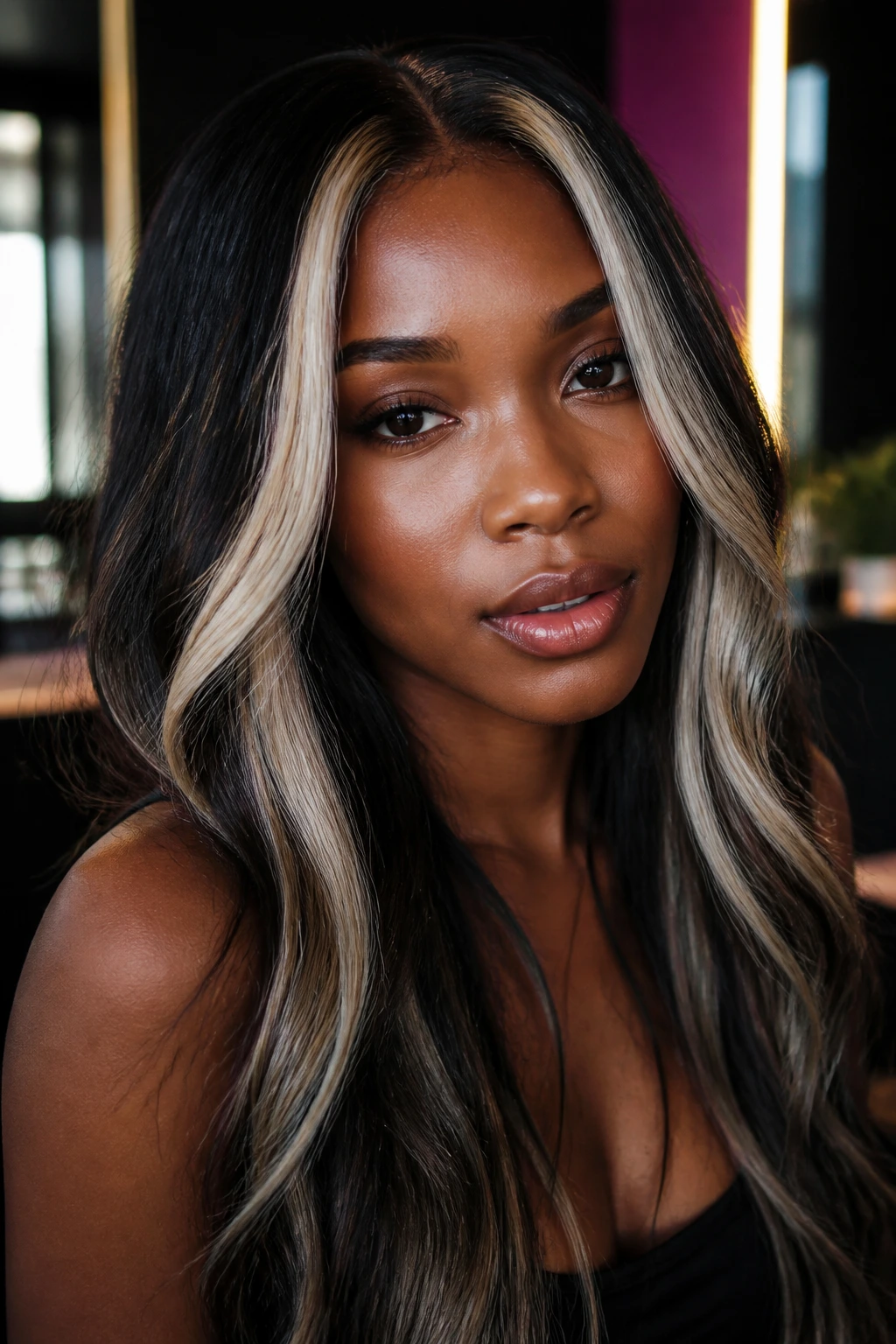
Chunky blonde strips are not the problem. Bad toner is. On deep skin, a bold strip can look sharp and fashion-forward if the blonde stays cool, the root stays deep, and the spacing between pieces is deliberate. If the strips are too yellow or too dense, the look goes straight to costume.
How to Keep the Stripes Soft
- Keep the lightest pieces mostly at the front and surface layers
- Leave darker space between the foils so the base can show through
- Ask for a smoky beige or pearl toner after lifting, not a flat yellow-blind adjustment
I like this option for someone who wants contrast and doesn’t mind a louder hair moment. It’s not subtle. That’s the point.
10. Vanilla Ribbon Lights on a Pixie Cut
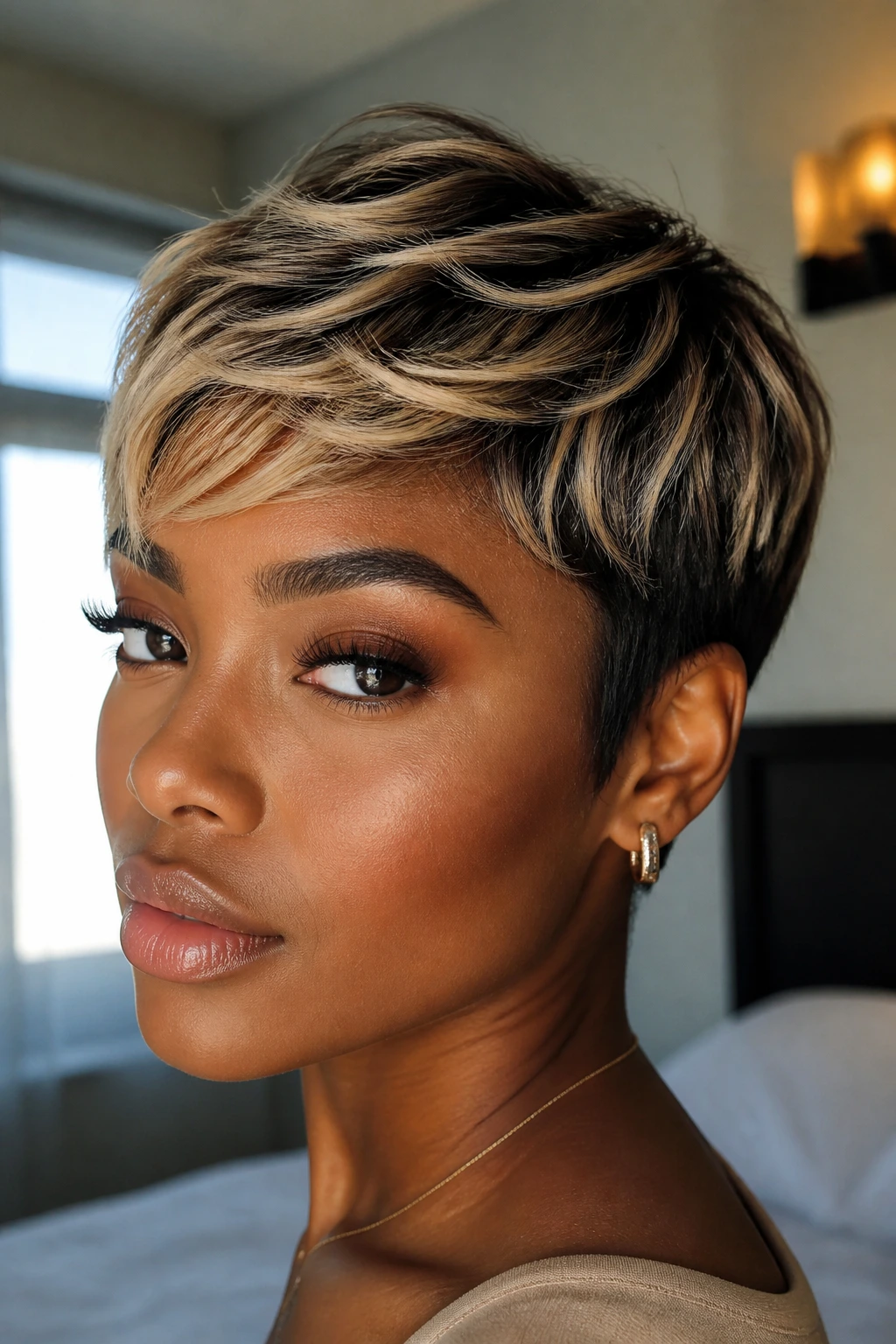
Short hair makes blonde easier to read, which is why a pixie can carry cool blonde ribbons so well. The pieces should be thin and piecey, placed mostly through the top and fringe, with the sides kept a little deeper so the cut keeps its shape.
Vanilla blonde is softer than platinum and cooler than gold, so it sits nicely on deep skin without turning the whole cut pale. The color lives in the movement of the texture. A matte styling cream or a light pomade makes the ribbons look separated instead of fuzzy.
This is a sharp choice if you want the hair to feel modern and quick to style. It’s also less of a maintenance beast than bright all-over blonde.
11. Champagne Ash Foilyage on Coils
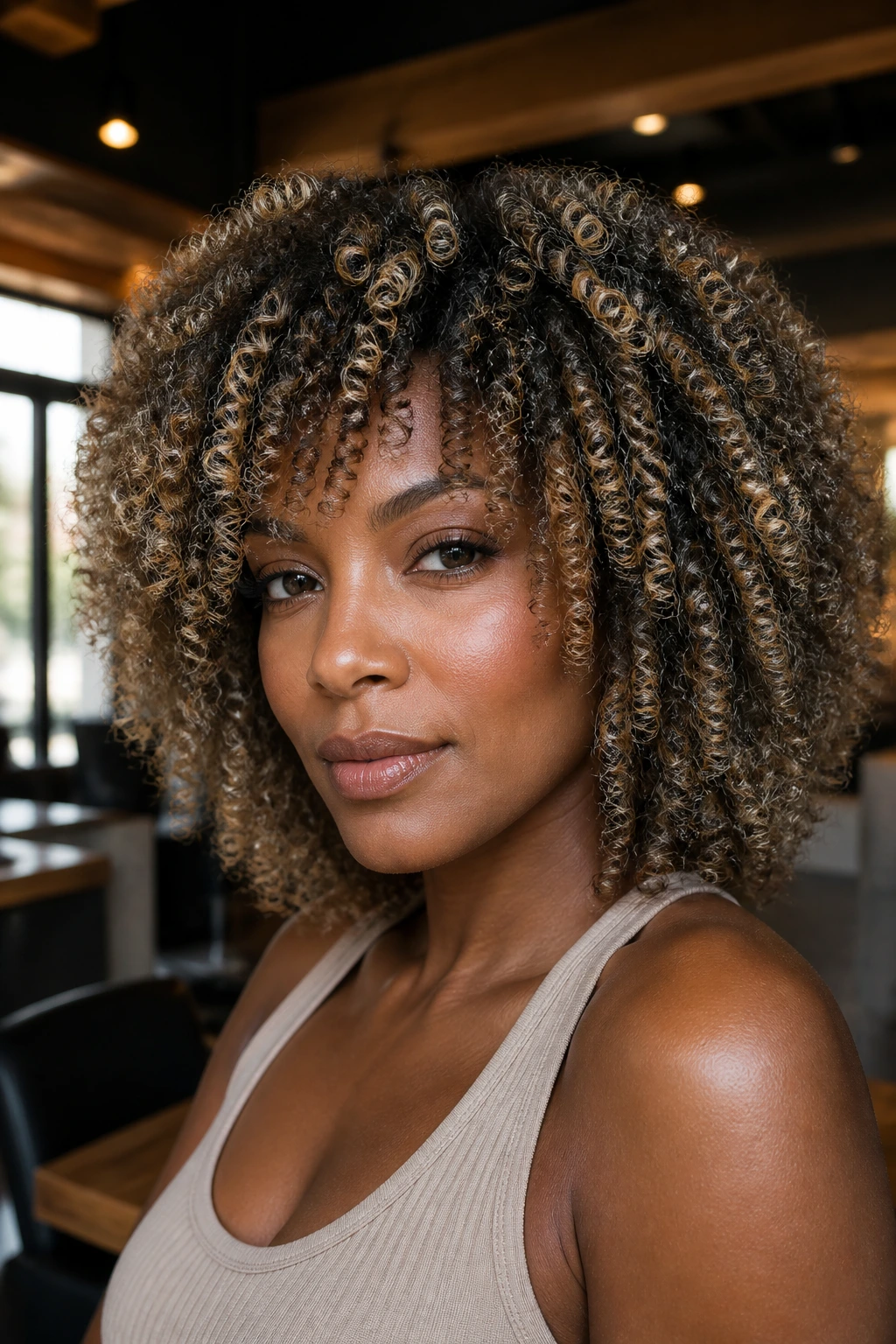
Coils can take cool blonde in a way people often underestimate. Foilyage lets the color lift enough to show, while the hand-painted parts keep the curl pattern intact. The result is not one bright sheet; it’s a spread of reflective pieces that live inside the shape.
Champagne works here only when it leans smoky. Too warm, and it can go honey. Too icy, and it can flatten the curl. The sweet spot is a soft, cool champagne with enough ash to keep the finish clean.
This is a strong choice if you like big texture. The color should follow the curl, not fight it.
12. Soft Platinum Contour Highlights
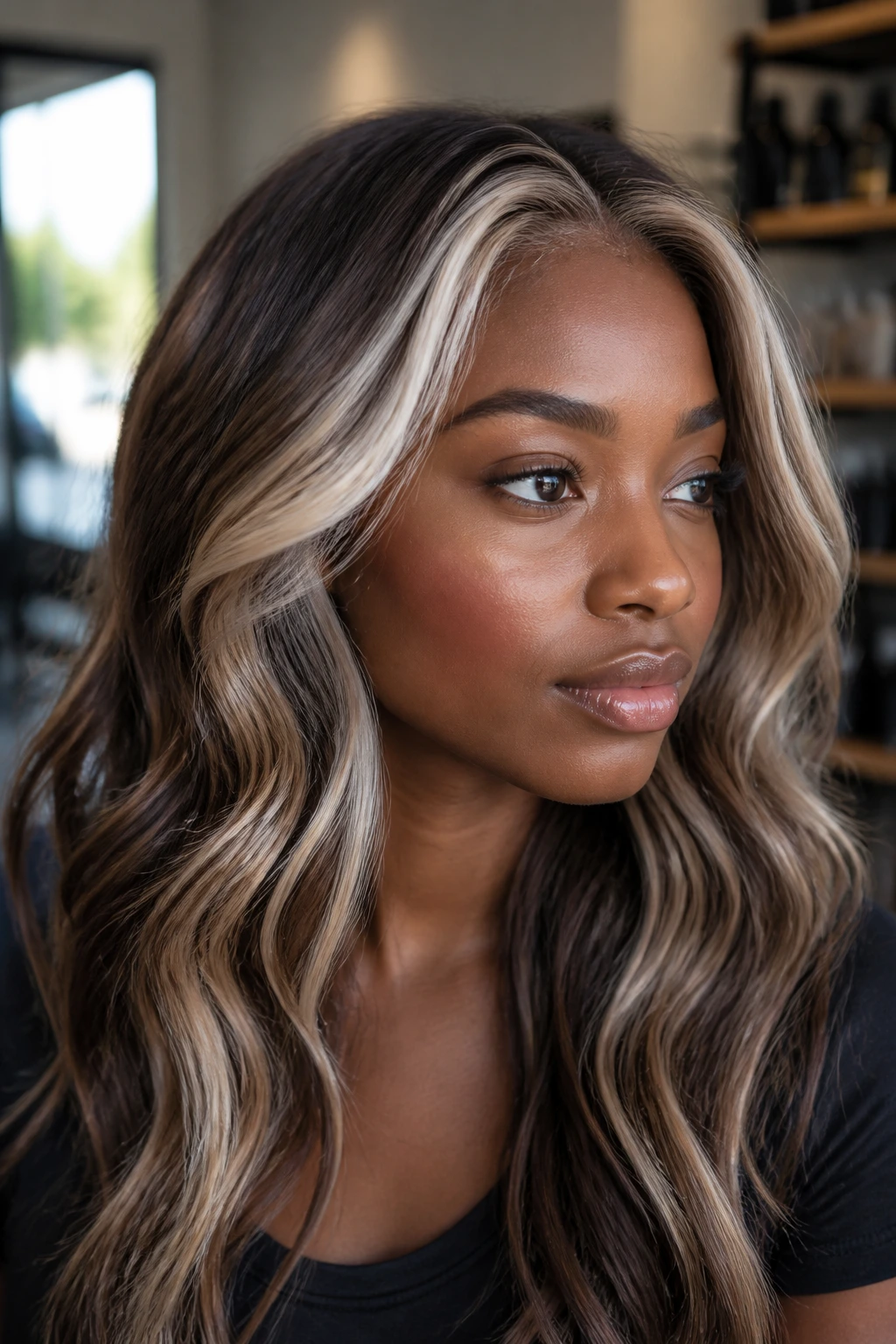
Think of these the way you’d think of face contour in makeup. The highlights go where the structure of the face needs lift: temples, front layers, crown, and just enough through the sides to keep the shape from feeling boxy. On deep skin, that placement gives the platinum a job.
The beauty of contour highlights is that they don’t require the whole head to go light. The base can stay rich and grounded, which keeps the platinum from overwhelming the complexion. If the front pieces are the brightest and the rest tapers down into ash, the eye reads the shape first and the blonde second.
Good for layered cuts. Good for photos. Good for anyone who likes the idea of platinum but not the upkeep of an all-over blonde job.
13. Beige-Gray Peekaboo Panels
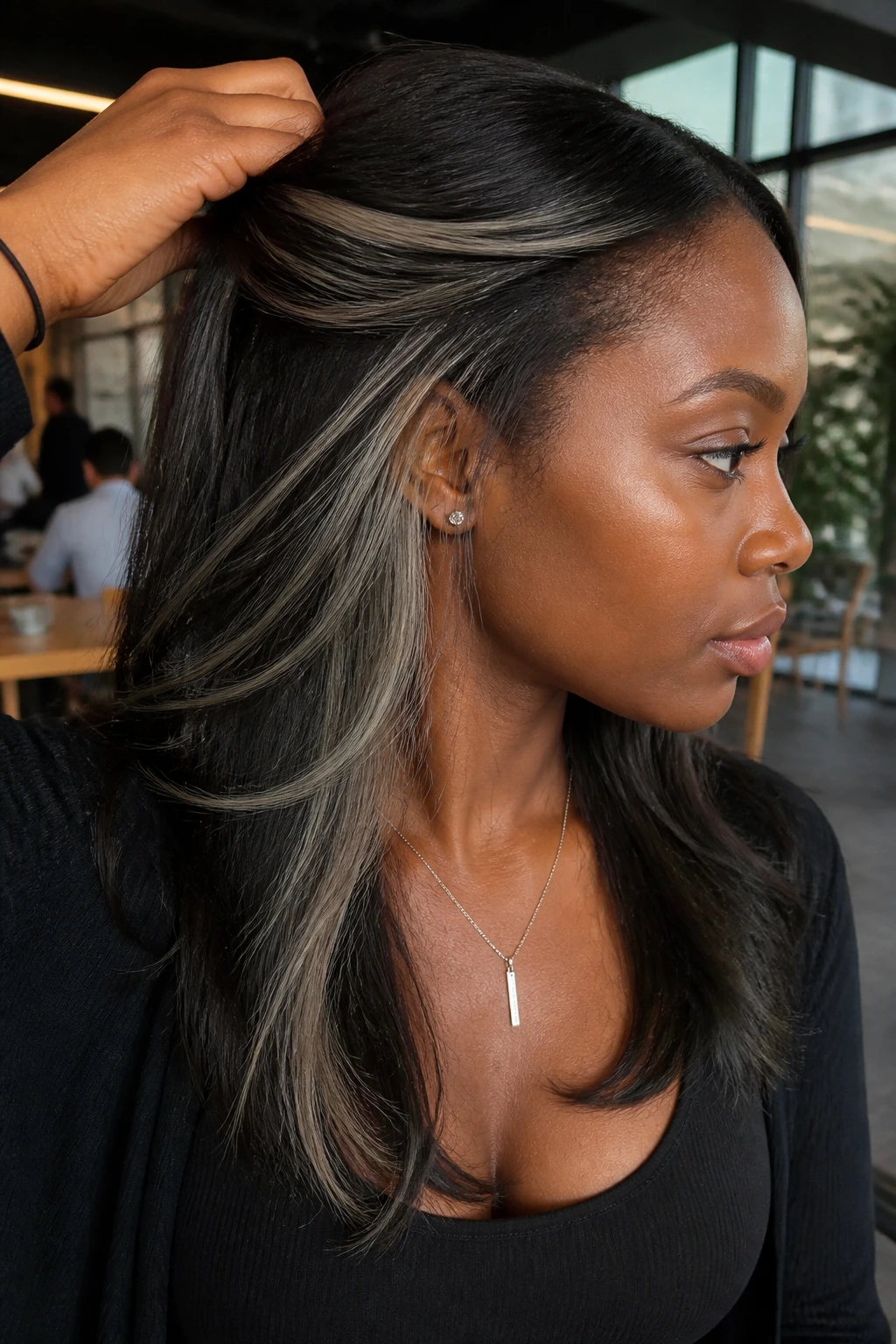
Peekaboo color is one of the smartest ways to wear cool blonde on deep skin. The lighter panels sit under the top layer, so they only flash when the hair moves, flips, or gets tucked behind the ear. You get the brightness without the full-time exposure.
Beige-gray is the right family here because it stays cool without turning metallic. It has enough softness that the hidden panels don’t look harsh when they show. On deeper complexions, that matters. Bright hidden color works best when the shade feels smoky, not neon.
This is a very good choice if you need something office-friendly or just prefer your color with a little mystery.
14. Cool Blonde Ombré on a Lob
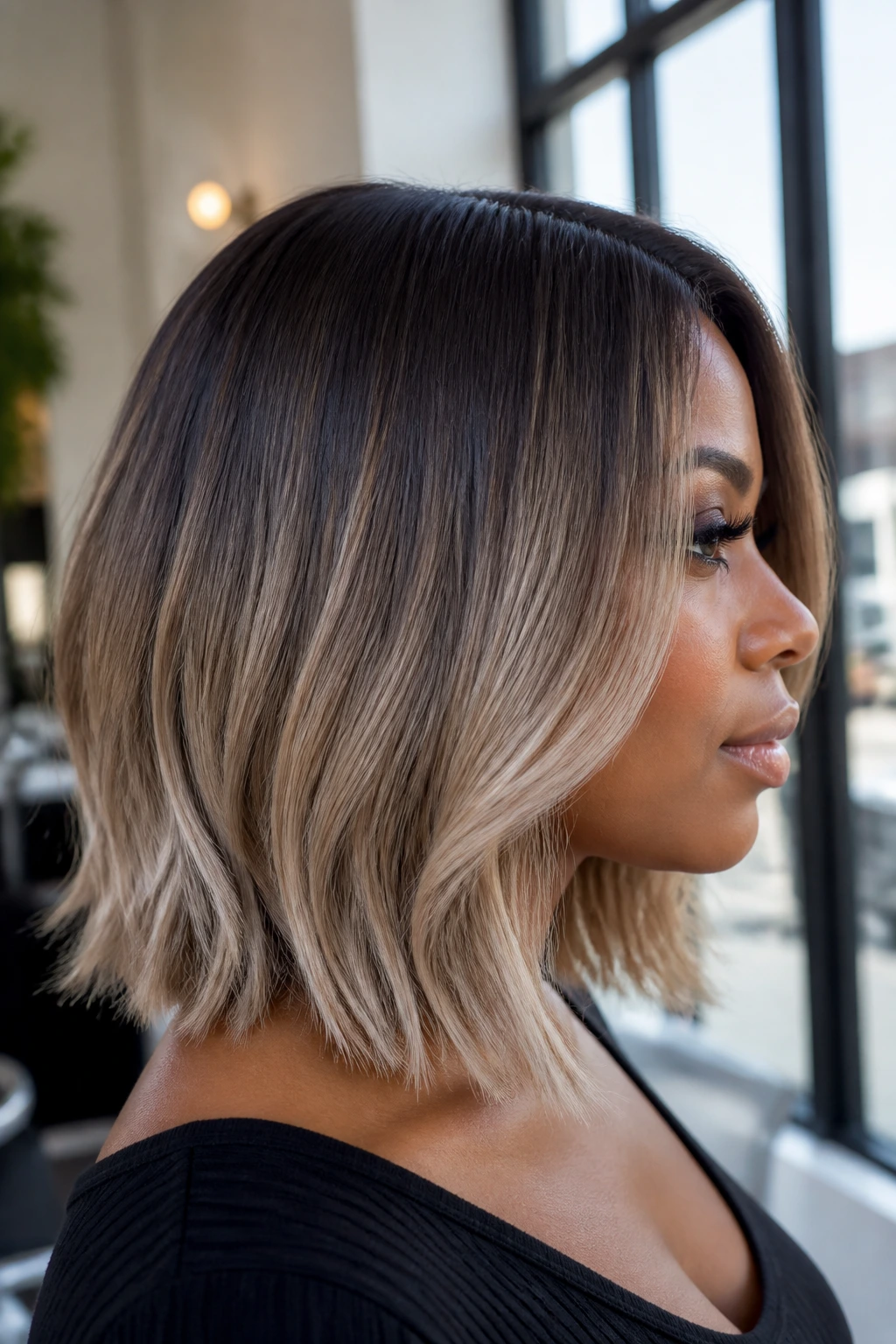
A lob gives ombré a shape to live in. Darker roots, cooler mids, and brighter ends create a clean line through the cut, and the length keeps the transition visible. On deep skin, that graduated shift stops the blonde from looking like a harsh block at the scalp.
The trick is not to drag the blonde too high. Let the transition start a little below the cheekbone line, then fade into beige or ash at the bottom third of the hair. That keeps the face open while leaving enough depth near the root to hold the whole look together.
This is one of the easier styles to maintain if you like a cut that can be worn straight, bent, or curled.
15. Curtain Bang Brightening Pieces
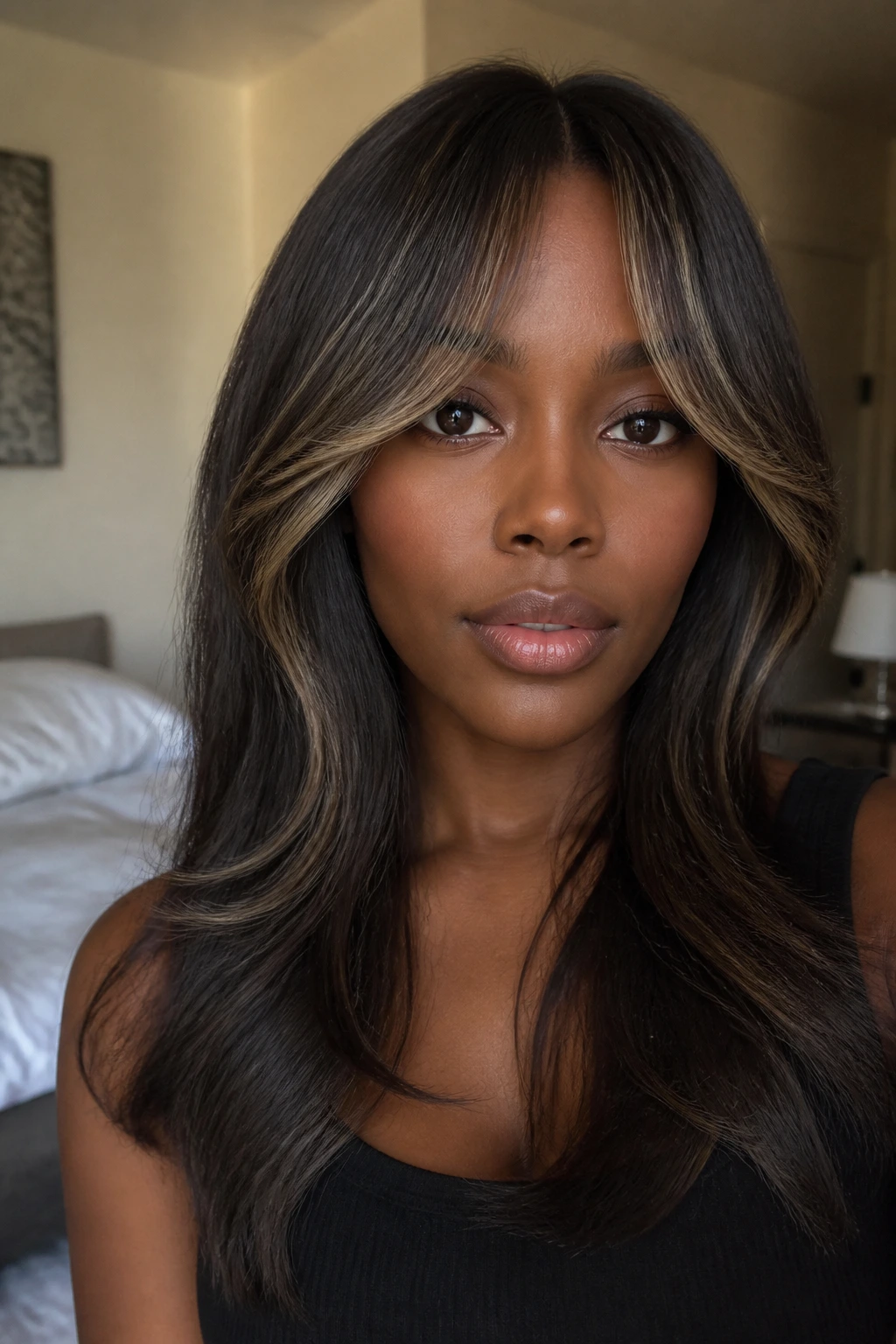
Curtain bangs can get lost if the color is too heavy at the root, so the brightening pieces need to follow the drape of the fringe. A few fine highlights right where the bangs split can make the eyes look brighter and the front of the cut feel lighter.
What you do not want is a hard stripe across the bang line. That reads blunt fast. Instead, keep the light pieces diffused, then let the rest of the fringe stay a touch deeper so the shape still has shadow.
This is a smart low-commitment move if you want a visible change without redoing the whole head. Small placement, big payoff.
16. Ice Blonde Foils on Long Layers
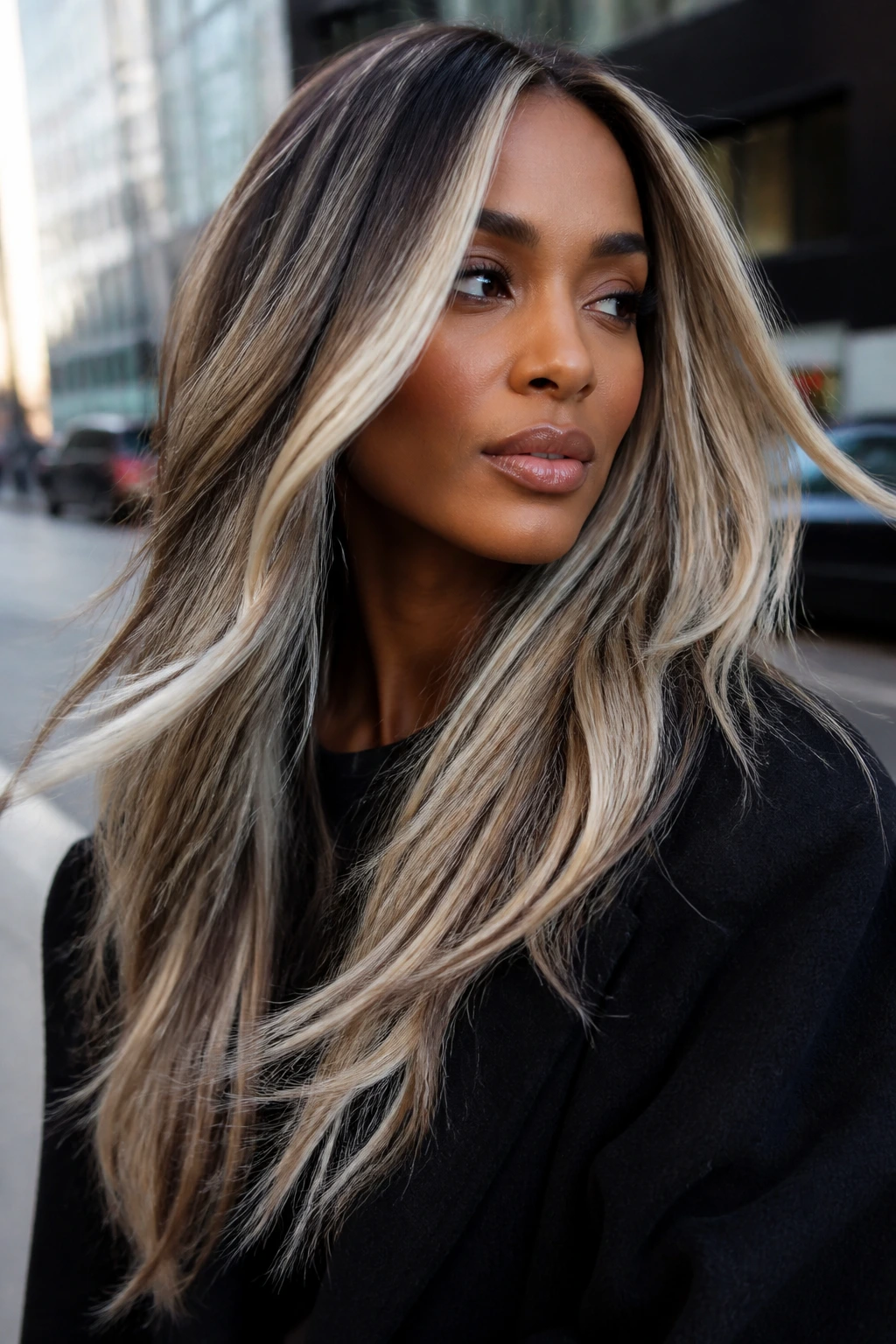
Long layers can carry more brightness than most people think, especially when the foils are spaced with intention. Ice blonde on deep skin works best when the brightest pieces are placed where the hair moves most—around the face, through the top layer, and at the ends of the longest sections.
Where the Brightness Goes
- Denser foils around the front layer
- More spacing through the back so the base stays visible
- A cool root shadow to keep the ice from looking pasted on
This is the kind of blonde that needs upkeep, no question. But if you like a high-contrast finish and you wear your hair in motion, the result can be stunning in a very clean, hard-edged way.
17. Shadow-Root Blonde With Dimensional Lowlights
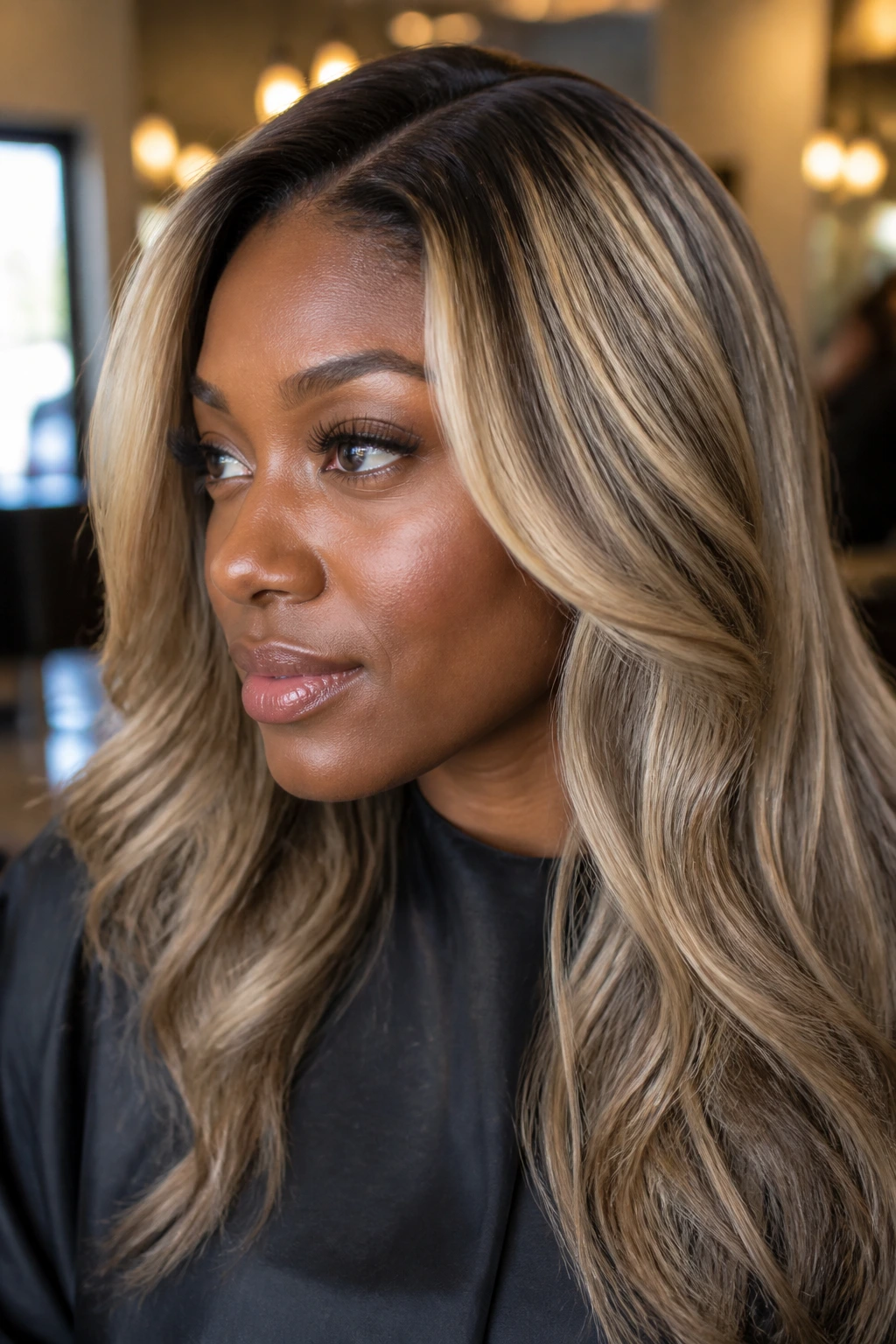
This is the style I trust when someone says, “I want blonde, but I still want my hair to look like hair.” The shadow root keeps the scalp area deep, and the lowlights between the bright ribbons keep the blonde from turning into one flat sheet.
On deep skin, that dimension is the whole trick. Without it, a cool blonde can start to feel disconnected from the face. With it, the color reads expensive and deliberate. You see depth first. Blonde second.
It’s also kinder as it grows. The root line softens, the lowlights continue doing their job, and you don’t get that abrupt band of new growth screaming for attention.
18. Pearl Smoke Highlights on a Tapered Cut
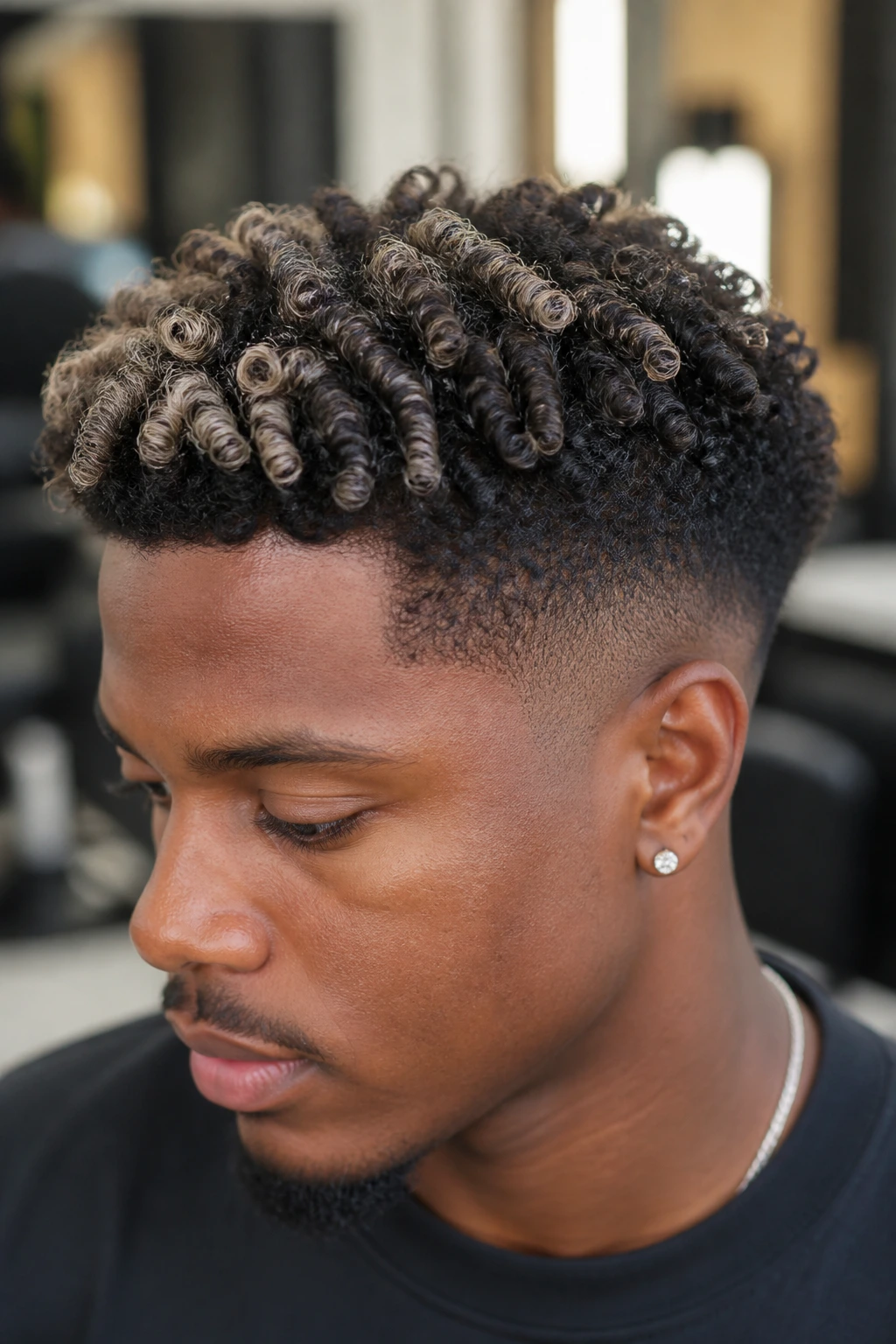
A tapered cut gives the highlights a built-in stage. The top is where the brightness belongs, and the sides can stay deeper so the shape still feels clean. Pearl smoke is a good shade family here because it has enough lightness to pop, but enough gray-beige in it to keep the finish cool.
I like this look when the top layers are textured and slightly separated. The light pieces catch the edge of each twist or wave, and that makes the cut look more sculpted. It’s short, but not plain.
If you wear short natural hair, this is one of the more striking ways to add blonde without giving up the structure of the cut.
19. Platinum Streaks Through a Twist-Out
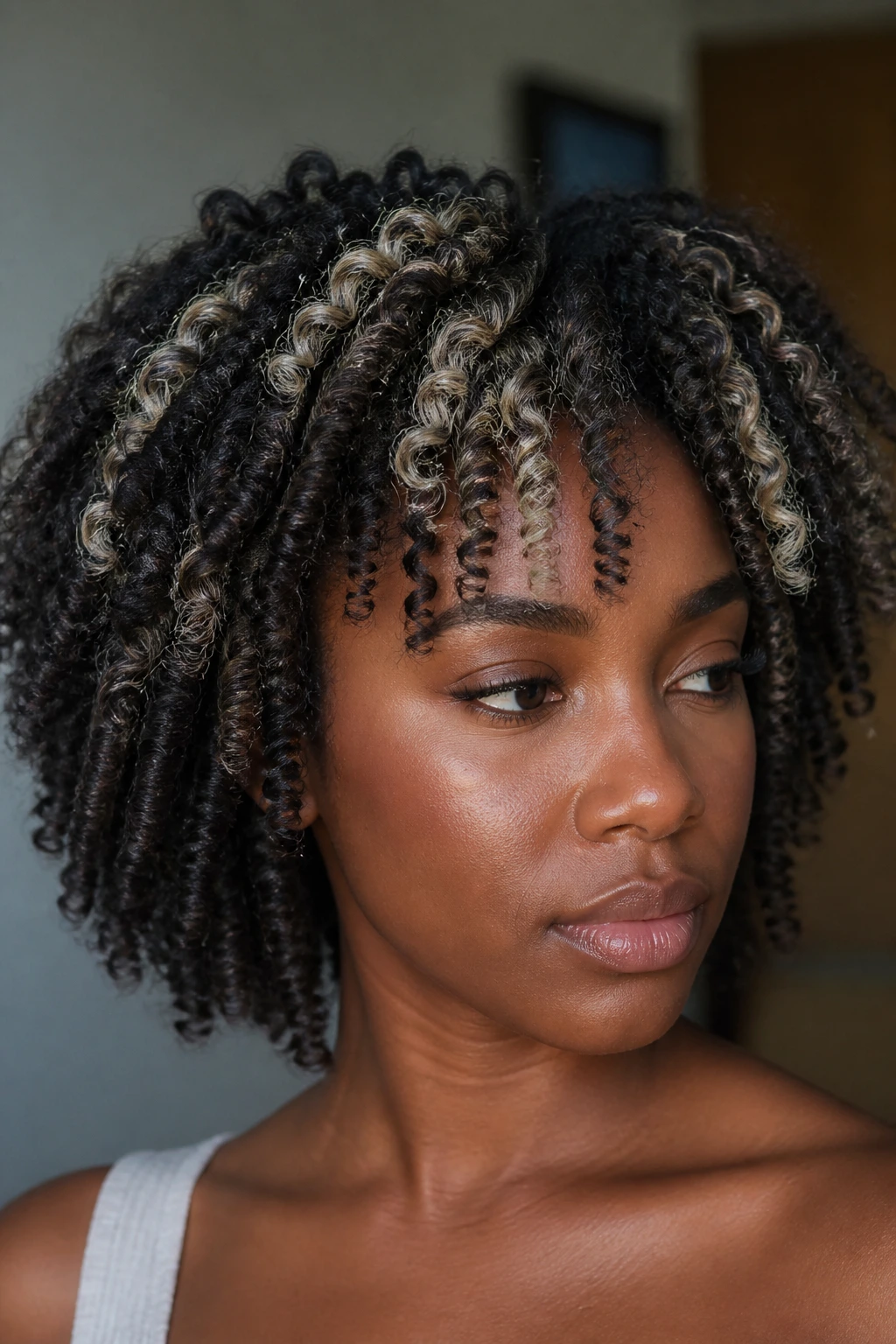
A twist-out already gives you built-in rhythm, so the blonde should follow that rhythm instead of fighting it. Narrow platinum streaks placed along the twist pattern look like light moving through the hair, not a random stripe dropped on top.
The bright pieces should stay selective. Too many, and the curl definition gets muddy. A few well-placed streaks near the front, crown, and outer edges do more than a full head of overworked foils ever will.
This style looks especially good when the twist-out is fully set and separated by hand, not brushed out into puff. The shape matters. The blonde needs the coil pattern to make sense.
20. Scandinavian Micro-Highlights
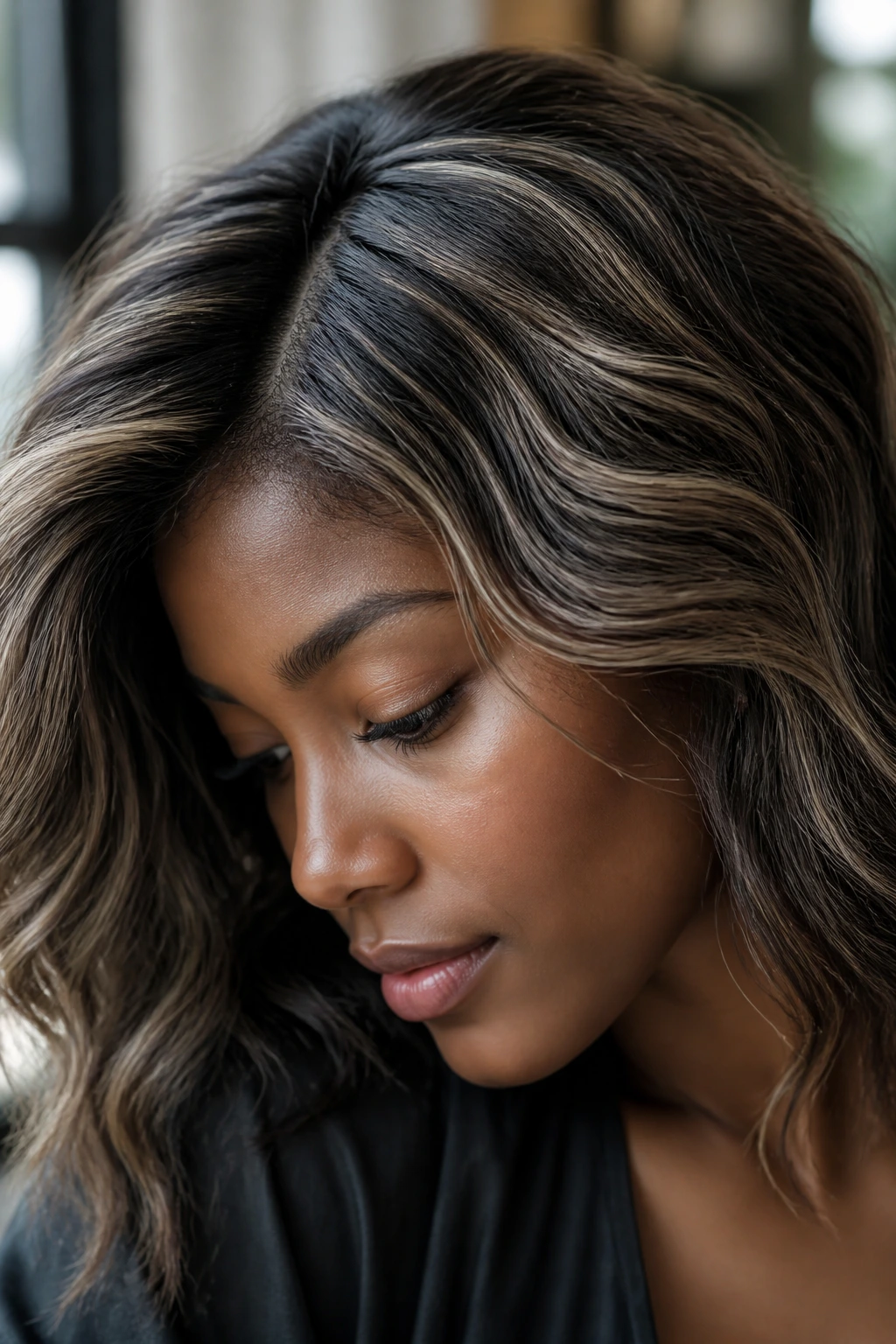
Micro-highlights are tiny, dense, and easy to underestimate. They work because each piece is so fine that the whole head gets brighter without looking obviously striped. On deep skin, that soft lift can read very natural—well, as natural as blonde gets.
The Scandinavian version leans airy and pale, but the base should still hold depth. If the highlights are woven closely through the top and crown, the hair gets a pale shimmer instead of a block of bleach. That shimmer can be gorgeous on curly, wavy, or straight textures.
This is a good choice if you want the color to feel expensive and quiet rather than loud. It’s also one of the easier ways to grow out a blonde look gracefully.
21. Cool Beige Face Frame With Diffused Ends
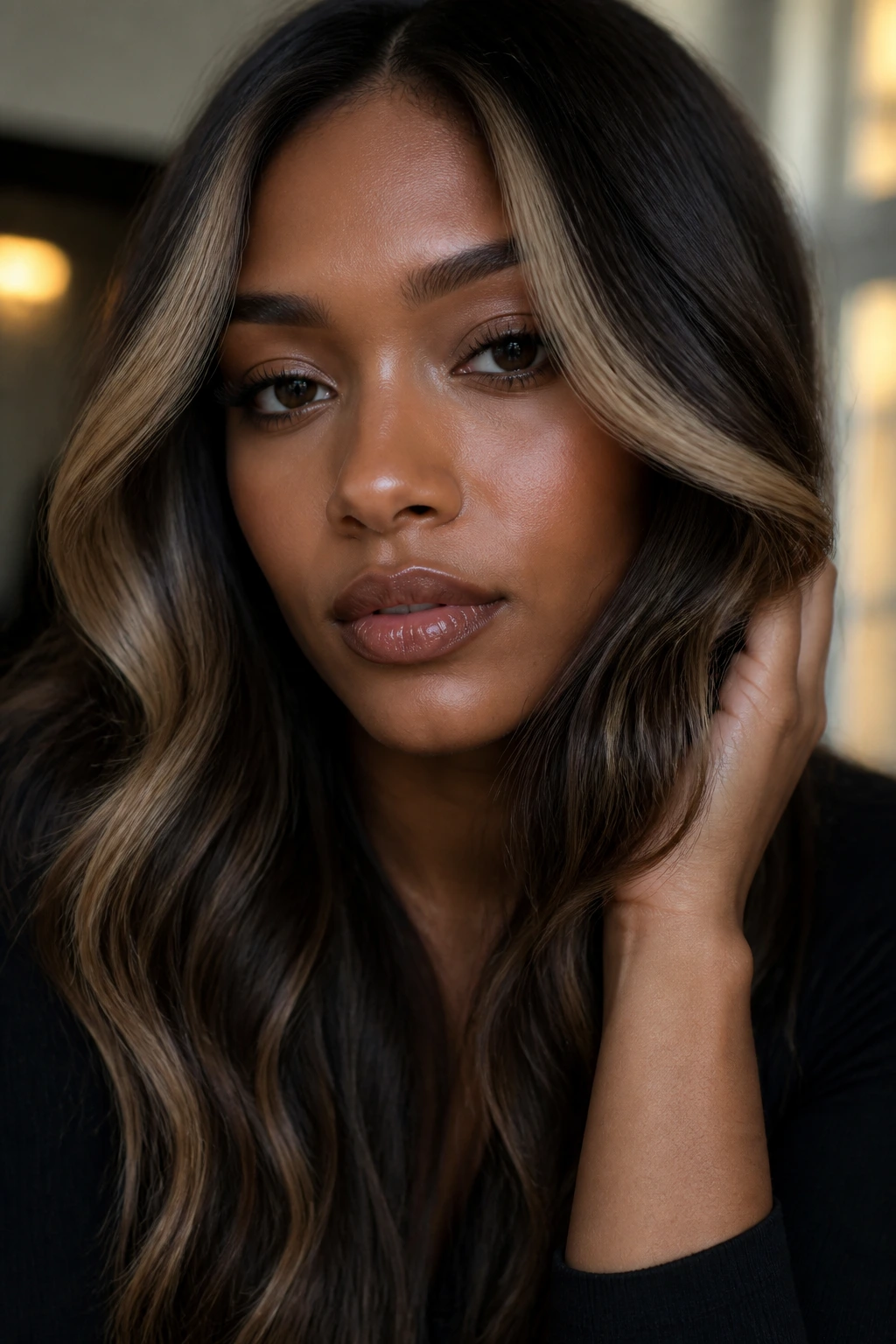
Why let the whole head do the work when the front pieces can carry the whole look? A cool beige face frame brightens the temples and cheek line, then the color diffuses as it moves down the hair. The ends stay softer, which keeps the finish from feeling harsh.
This style is nice for anyone who wants the face to pop but doesn’t want bright blonde all through the back. The beige tone sits comfortably against deep skin, especially when the front is paired with a deeper root and a little sheen at the ends.
It’s one of the easiest styles to wear on a daily basis. The contrast lives near the face, where it matters most.
22. Silver Ribbon Highlights on a Rounded Afro
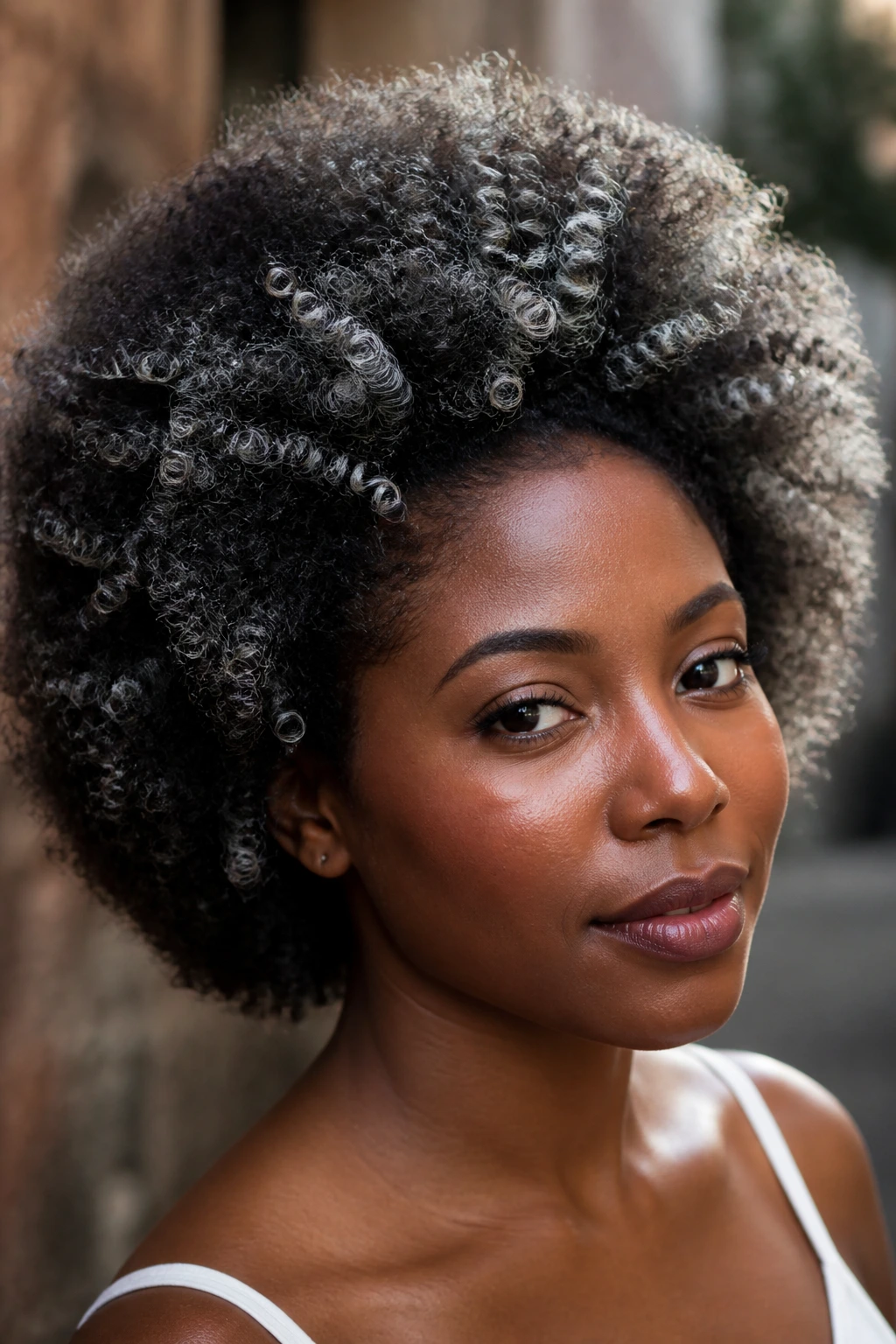
A rounded afro loves thin silver ribbons because they follow the shape instead of fighting it. The brighter pieces should sit on the outer halo and a few spots near the crown, so the silhouette reads luminous when it turns.
Best Placement Map
Put the brightest ribbons where the light hits the edges first. Leave the interior a little deeper. That gives the afro depth, and the silver looks like it’s moving instead of sitting on top of the texture like frosting.
This is one of the prettiest ways to wear cool blonde on deep skin if you want shape, brightness, and texture all talking at once.
23. Ashy Vanilla Highlights on Straight Hair
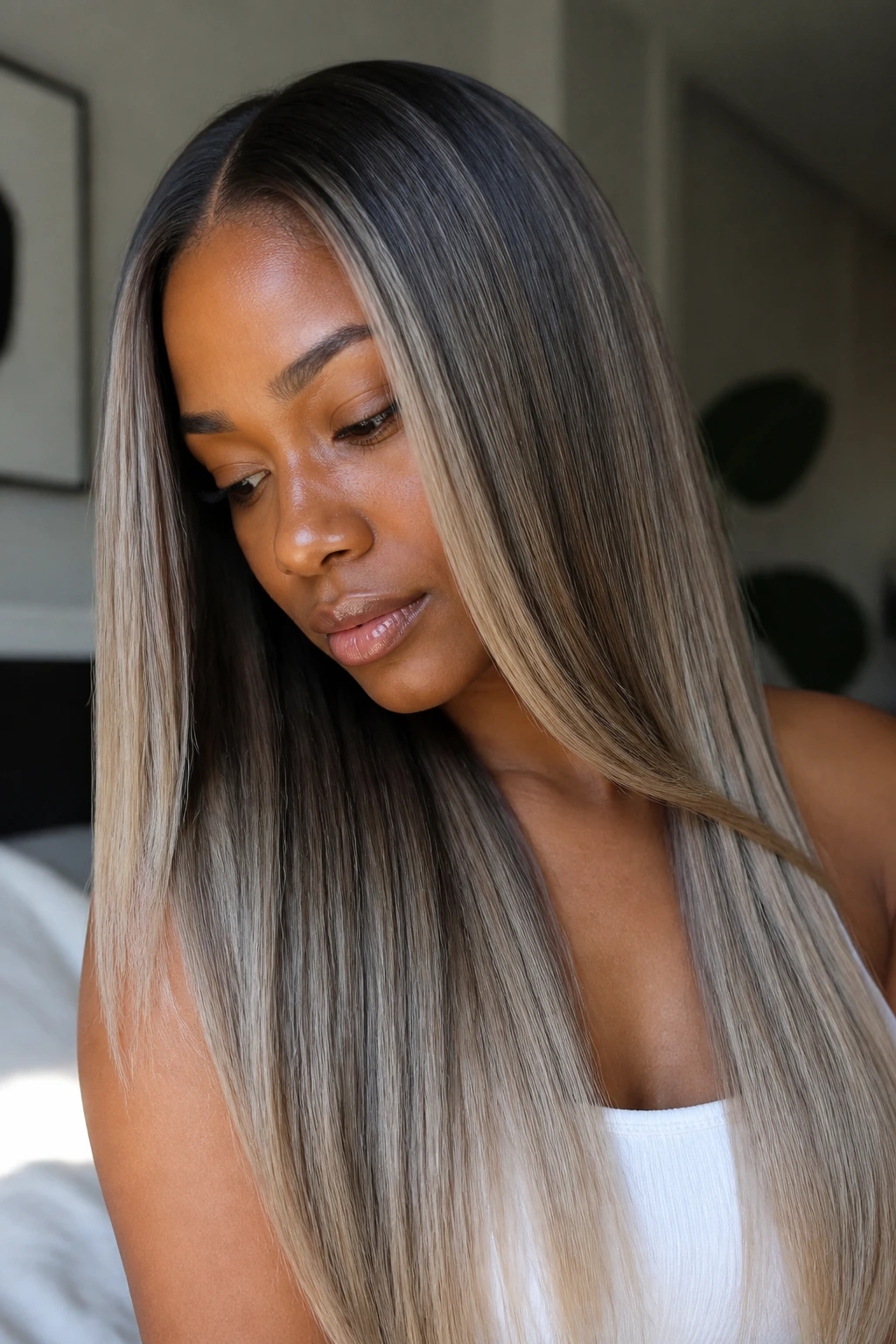
Straight hair shows every line, which is both the problem and the opportunity. The lines need to be soft, narrow, and deliberate, because wide blonde panels can look harsh fast on sleek lengths. Ashy vanilla keeps the tone cool, but not stark.
A gloss matters here. Straight hair reflects light cleanly, so if the tone is off by even a little, you’ll notice it right away. I’d keep the pieces finer around the face and slightly more spaced through the back so the hair still feels long, not striped.
This is a good choice if you wear blowouts often and want a smooth finish that stays readable from root to end.
24. Glazed White-Blonde Panels
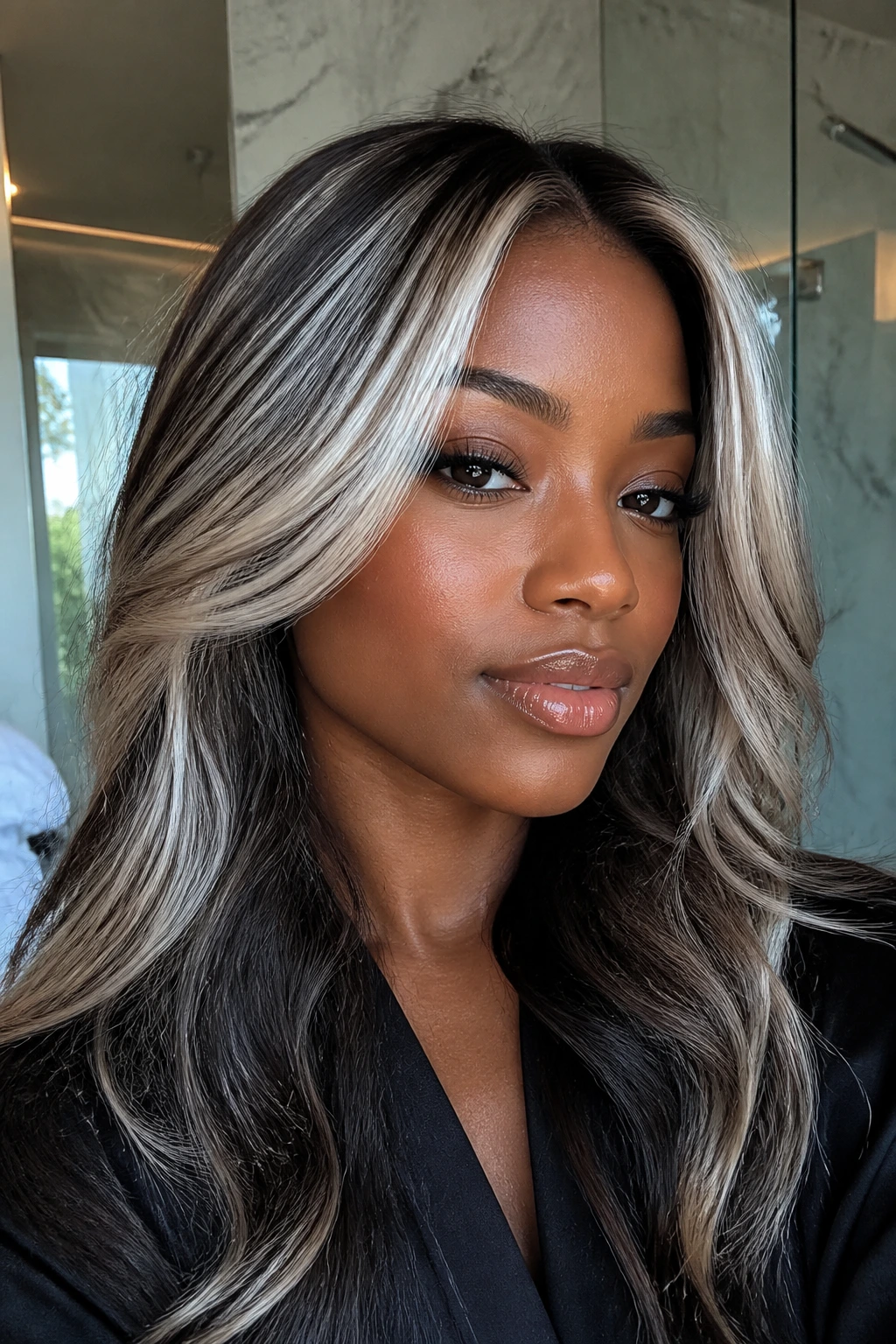
This is the boldest end of the spectrum. White-blonde panels can look striking on deep skin when they’re controlled—meaning they’re placed in a few exact zones, not scattered everywhere. Think front pieces, crown accents, or narrow panels through a layered cut.
The glaze is the part that makes this work. Without a cool toner, white-blonde can veer yellow or flat. With the right gloss, it looks icy and intentional. You will need more maintenance here than with beige or ash, and there’s no point pretending otherwise.
If you want the blonde to be a statement, this is the version that makes the statement loudly.
25. Smoke Blonde Highlights on Shoulder-Length Coils
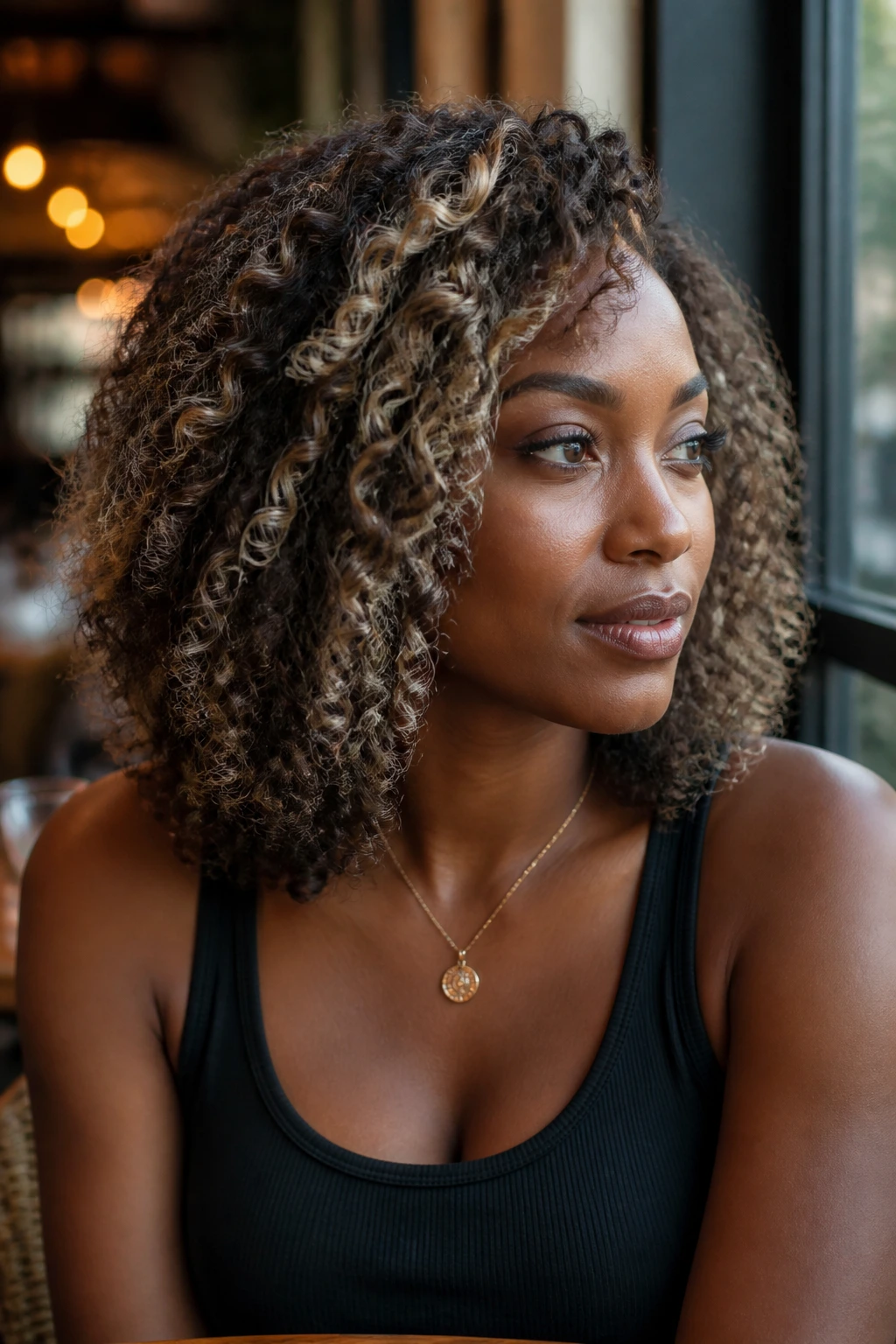
Shoulder-length coils have enough movement to show smoke blonde, but not so much length that the brightness gets lost. The tone should stay cool and muted, closer to smoky beige than golden blonde, so it blends into the texture rather than hovering above it.
This is one of the easiest lengths for a dimensional blonde because the coils stack and separate in a way that lets light and shadow keep trading places. A little lowlight underneath helps too. It keeps the shape rounded and the blonde from looking one-note.
If you like a lived-in result that still reads clearly in photos, this is a strong one.
26. Cool Champagne Highlights With a Root Melt
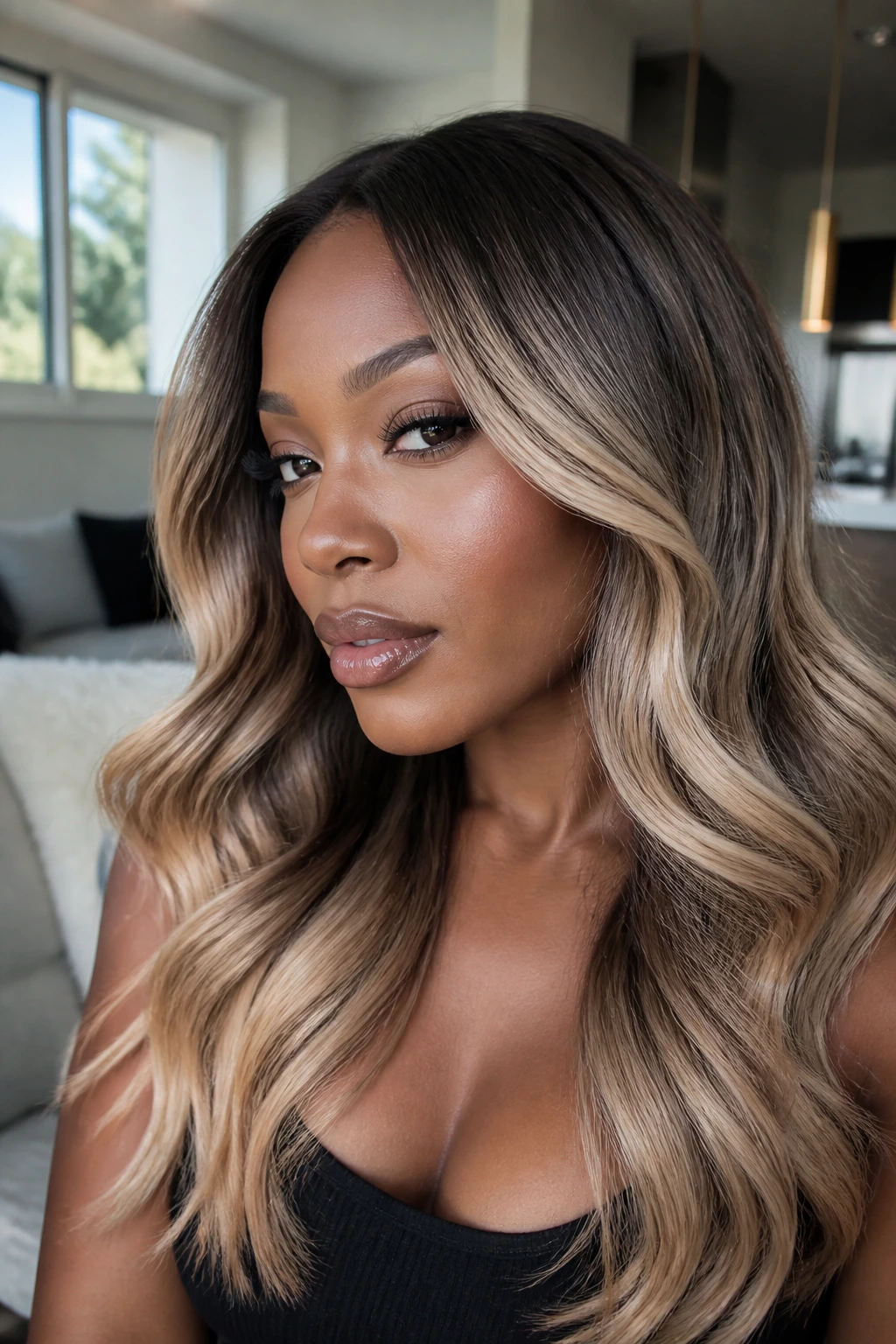
Cool champagne is a useful middle ground. It gives you brightness and softness in the same breath, which is why it tends to flatter deep skin when platinum feels too hard and beige feels too quiet. The root melt keeps the scalp area deep enough to anchor the look.
The melt matters. It keeps the champagne from sitting like a bright cap on top of the head. With the color sliding from dark root to smoky gold-beige mid-lengths and cooler ends, the whole head reads smooth, not chopped up.
This is one of the best options if you want blonde that still feels wearable on a Tuesday morning.
27. Frosted Underlayer Highlights
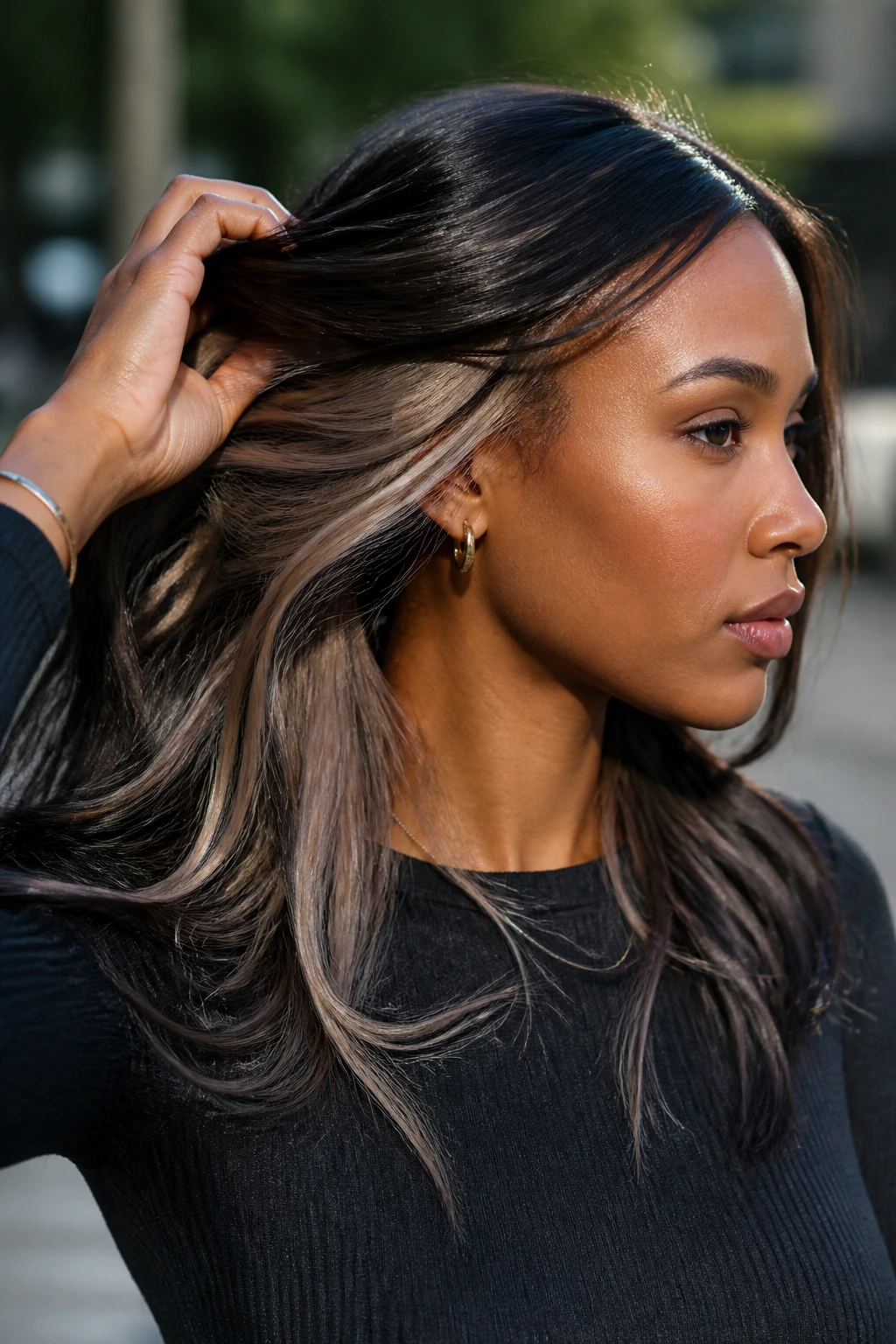
Hidden color has a way of making people smile when they catch it in motion. Frosted underlayer highlights sit below the top layer, so they show up when the hair moves, flips, or gets tied back. On deep skin, that little flash of brightness can be enough.
Why the Hidden Layer Matters
The top stays dark and rich, which keeps the face grounded. The underlayer does the playful work. That balance makes the style easier to wear long term because you’re not staring at a bright head of hair every day.
It’s also a good move if you want blonde to feel a little less formal. There’s something fun about a color that only shows itself when the hair shifts.
28. Linen Blonde Ends on Soft Waves
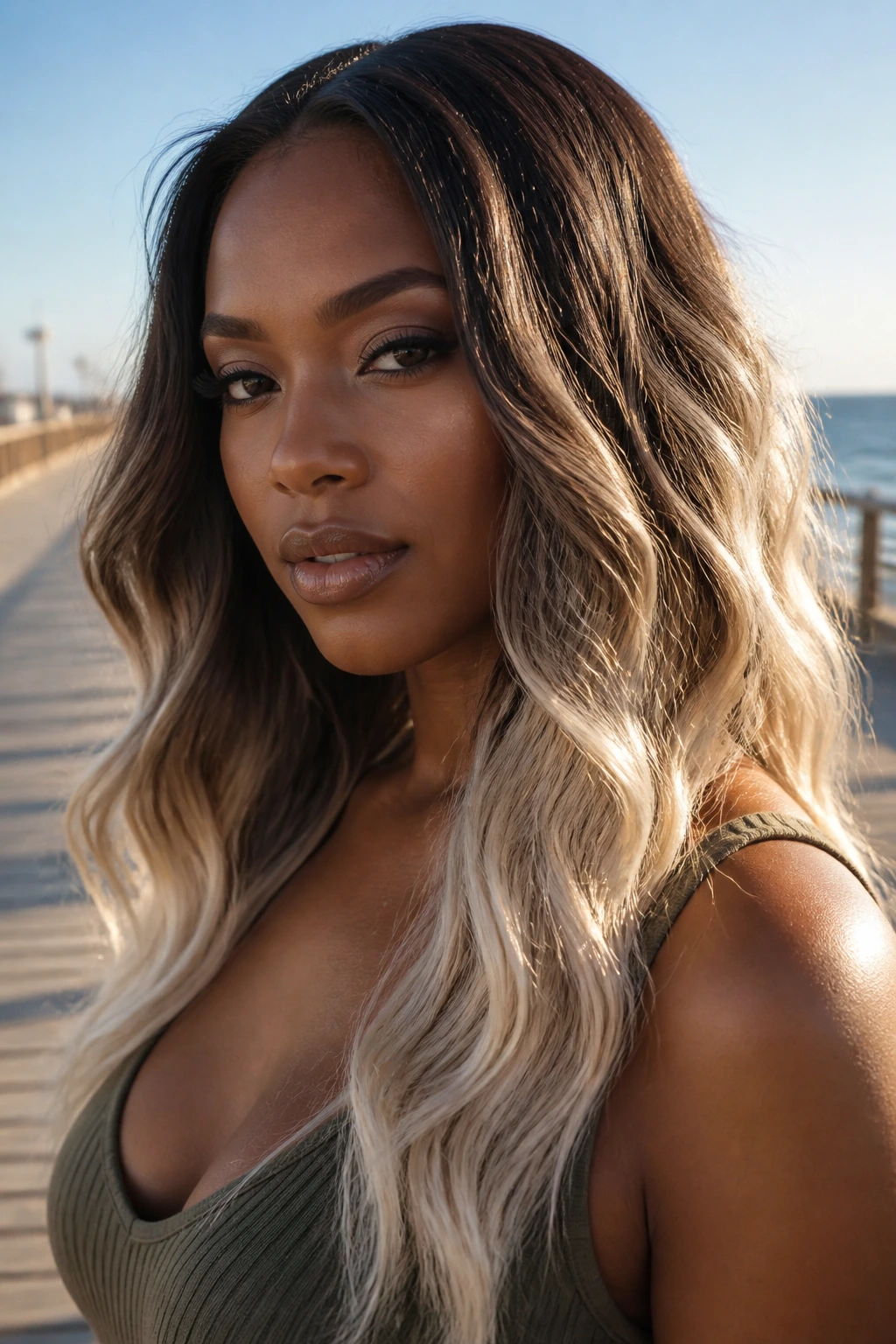
Linen blonde is pale, cool, and matte in the best possible way. It doesn’t have the shiny gold cast that can fight deep skin, and it doesn’t need to be spread through the whole head to make an impact. On soft waves, the ends catch the light and read almost like fabric.
This is a nice final-note shade because it feels airy rather than harsh. Let the base stay grounded, let the ends brighten, and keep the wave pattern loose enough that the blonde breaks into soft bends instead of blunt lines.
If you want a cool blonde finish that feels light on the eyes, this one is worth a look.
How to Keep Cool Blonde Highlights Brass-Free
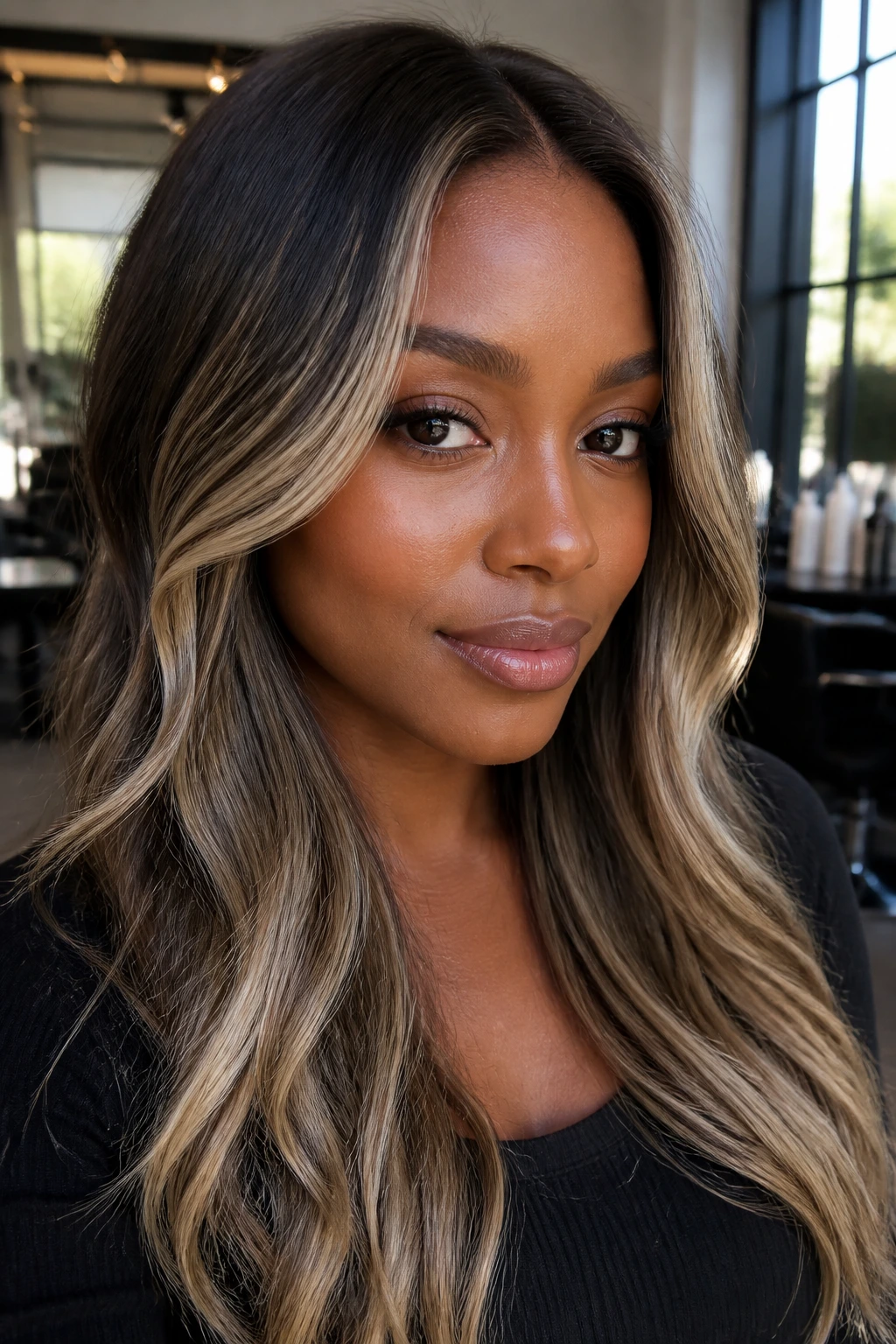
Cool blonde needs a little discipline. The color can hold its tone, but it will not stay cool on autopilot, especially once bleach, hard water, heat, and friction start taking bites out of the toner. Washing less often helps more than people expect. Two to three shampoos a week is usually easier on the color than daily washing, and the blonde tends to stay cleaner in tone between salon visits.
Purple shampoo is useful, but it’s not a religion. Use it every second or third wash if the hair has a yellow cast, and back off if the blonde starts looking dusty, gray, or flat. A good deep conditioner once a week keeps the lightened hair from getting rough at the ends, which matters more than shine spray ever will.
Heat is another quiet thief. Flat irons above 375°F can rough up the cuticle and make toner fade faster, so a heat protectant is not optional. If you swim, wet the hair with fresh water first and add a leave-in before the pool; that keeps chlorine from biting into the blonde as hard. Hard-water buildup can dull cool tones too, so a chelating shampoo every couple of weeks can save a lot of frustration.
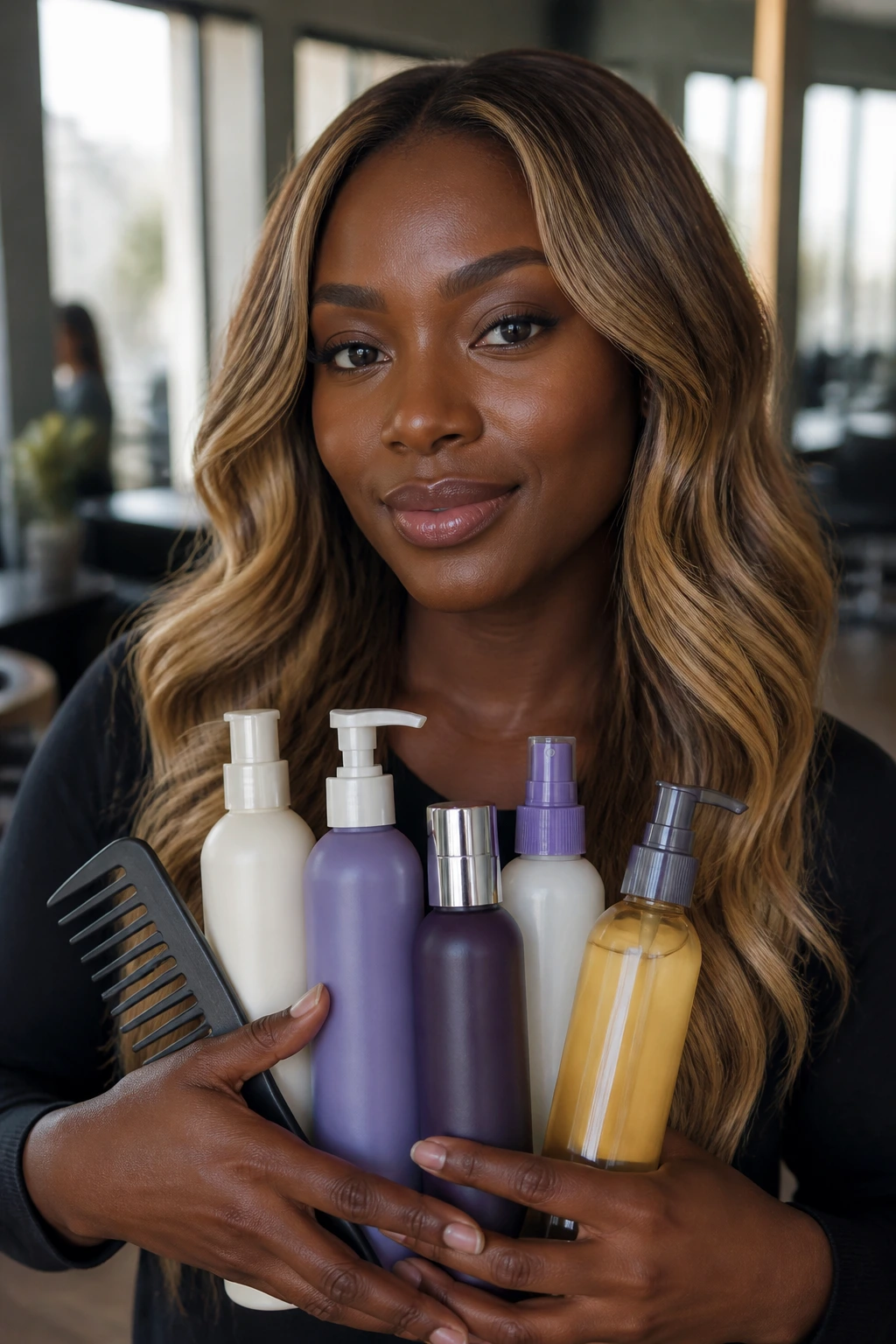
Essential Tools and Color-Care Products
-
Color-safe sulfate-free shampoo: Keeps the toner from rinsing out too fast and helps the blonde stay cooler between washes.
-
Purple shampoo: Useful for yellow drift, but it should be used sparingly so the color doesn’t go flat or gray.
-
Deep conditioner or bond repair mask: Bleached hair needs moisture and structure; once a week is a solid rhythm.
-
Heat protectant spray or cream: Essential if you blow-dry, flat-iron, or use curling tools.
-
Leave-in conditioner: Helps the lightened pieces stay soft and keeps the ends from snagging.
-
Wide-tooth comb: Better than a brush on wet curls, coils, or heavily highlighted lengths.
-
Microfiber towel or soft cotton T-shirt: Reduces frizz and friction around the brightest pieces.
-
Shower filter or chelating shampoo: Worth it if your water runs hard or your blonde keeps turning dull too fast.
-
Sectioning clips: Useful for styling, toning, and keeping highlight placement visible while you work.
How to Style Cool Blonde Highlights So They Read Clean
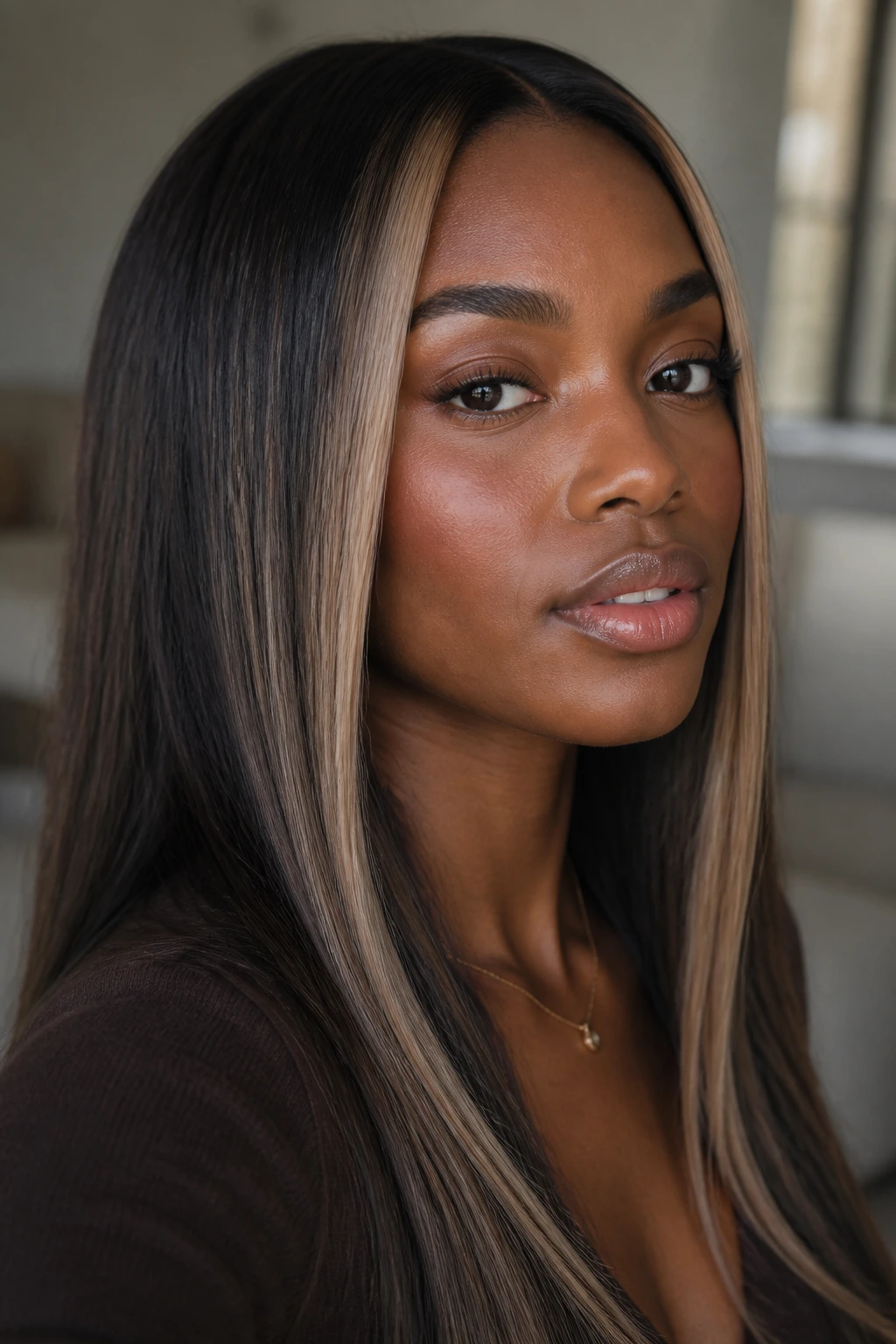
The style changes the whole mood of the color. On curls and coils, the blonde looks softer because the texture breaks up the light pieces. On straight hair, every ribbon shows, so the finish needs to be neater and the toner needs to be exact. That’s not a small thing; it changes whether the color feels soft or stripey.
Curly and coily hair: Diffuse until about 80% dry, then let the curls finish air-drying if you can. A light curl cream or mousse keeps the bright pieces separated so they don’t clump into one pale section.
Straight and blown-out hair: Use a round brush or a single-pass flat iron at a moderate heat, and keep serum only on the ends. Too much shine near the roots can make cool blonde look oily instead of glossy.
Updos and ponytails: Leave a few face-framing pieces out if you want the blonde to show. Hidden panels and underlayer highlights come alive here, which is why those styles are such a smart choice if you wear your hair tied back a lot.
Variations and Adaptations to Try

Barely-There Babylight Veil: This version uses ultra-fine foils from the part line through the crown, with a beige or pearl gloss. It’s the one to choose if you want a whisper of light rather than a visible blonde map.
Rooted Ice Melt: Keep the roots deep, shift the mids into smoky beige, and let the ends lean icy. It takes more upkeep, but the gradient looks clean on long layers and lob-length cuts.
Curly Halo Placement: Brighten only the outer ring of curls and a few spots near the crown. The shape stays full, and the blonde reads as a halo instead of a streaky overlay.
Hidden Underlayer Blonde: Leave the top layer dark and place the brightest pieces underneath. It’s a smart option for work settings, because the blonde only flashes when the hair moves.
High-Contrast Editorial Strips: Keep the foil placement deliberate and the toner smoky, then let the blonde sit in thicker sections. This one is for people who want a sharper, bolder result and don’t mind attention.
Common Mistakes That Flatten the Color
-
Going too white, too fast: On deep skin, an all-over white blonde can erase the depth that makes the contrast interesting. Fix it with a shadow root or a beige gloss, and keep the lightest pieces in a few chosen zones.
-
Using purple shampoo like a daily cleanser: If the hair turns gray, dusty, or oddly matte, you’re overdoing it. Cut back to once every 1 to 2 weeks and use a regular color-safe shampoo in between.
-
Ignoring porosity: Hair that has been lightened before grabs toner unevenly. The symptom is patchy brightness or ends that go smoky while the roots stay yellow; a stylist can usually smooth that out with a gloss and a more careful placement plan.
-
Putting bright pieces everywhere: Too many foils can erase depth and make the style look busy. Keep the brightest blonde near the face, crown, or ends, and let the rest of the head keep some darkness.
-
Skipping the maintenance plan: Cool blonde can fade into brass faster than people expect if heat and hard water are doing their thing. Book the toner refresh before the color starts looking tired.
Frequently Asked Questions
Can deep skin tones really wear cool blonde highlights?
Absolutely, but the tone has to be chosen with care. Pearl, ash, beige, and smoky champagne usually flatter deep complexions better than a flat white-blonde because they keep some softness in the finish.
Is balayage or foils better for cool blonde on deep skin?
Balayage gives a softer grow-out and works well if you want movement. Foils give more lift and brightness, which helps if you want platinum, silver, or a strong money piece.
Will cool blonde make warm undertones look washed out?
Not if the blonde has enough beige or pearl in it and the root stays deep. The problem is usually tone control, not the fact that the hair is blonde.
How often does cool blonde need toner?
Most cool blonde shades need a refresh every 4 to 8 weeks, depending on how light they are and how often you wash. The lighter and more icy the blonde, the faster it usually needs attention.
Can I keep my curls or coils and still do this?
Yes, and the texture often makes the blonde look better because it breaks up the color. Just make sure the hair is strong enough for lightening, and work with a stylist who knows how curl pattern changes during processing.
What if my highlights turn yellow after a few washes?
That usually means the toner faded, not that the whole color failed. A gloss or toner refresh is the fix; purple shampoo can help in between, but it won’t rebuild the tone on its own.
Is this too much maintenance for someone who wears a lot of heat?
It can be, especially with platinum or icy silver. If you use hot tools often, stay closer to beige, ash, or rooted blonde so the grow-out and heat damage are easier to manage.
Can I ask for only face-framing cool blonde and leave the rest alone?
Yes, and that’s one of the smartest low-commitment options. A strong money piece or a soft contour highlight can change the whole face without making the entire head pay for it.
The Cool Blonde Finish That Still Feels Like You
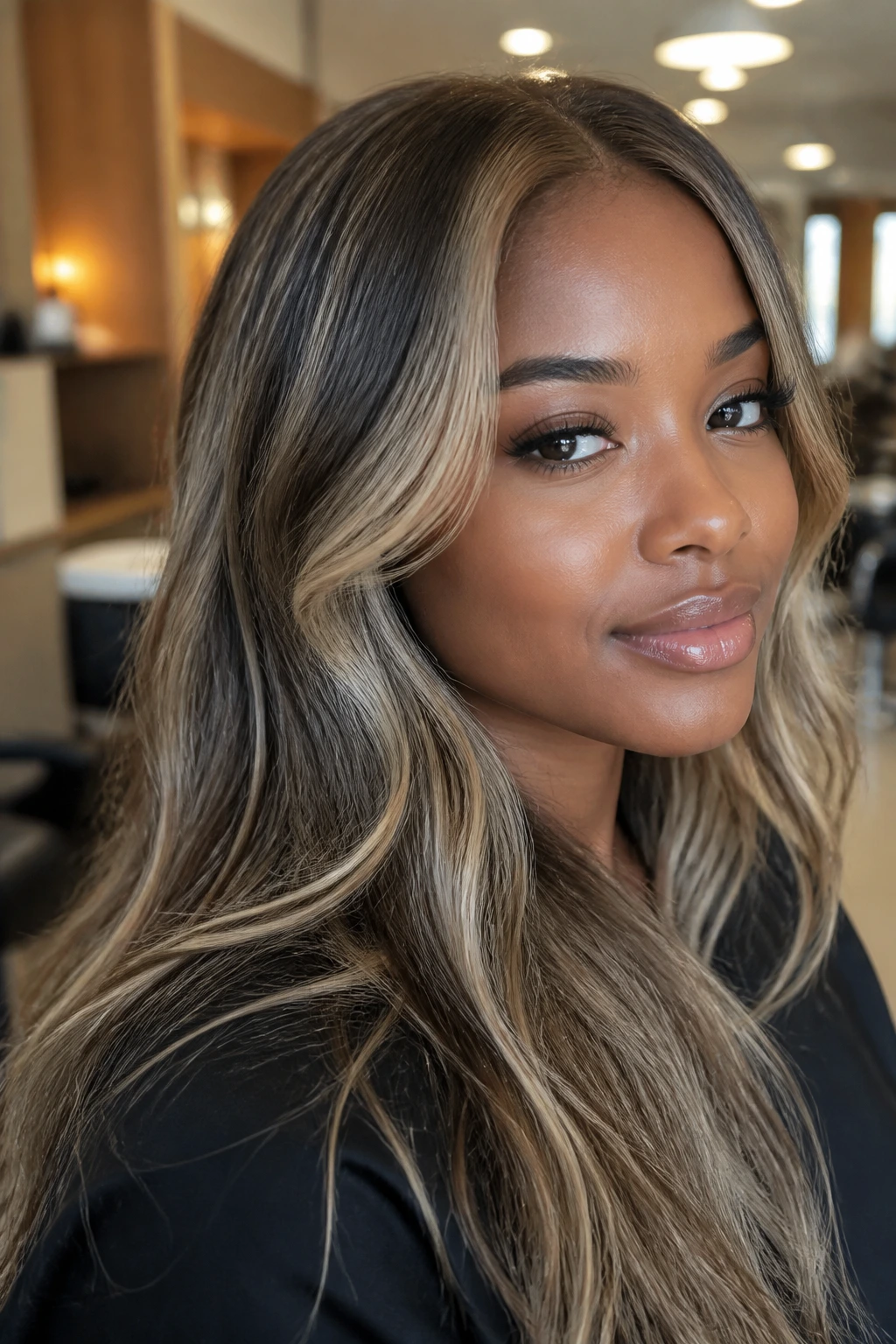
The best cool blonde on deep skin does not erase the base. It lights it from the edges. That’s why the shadow root, the beige gloss, the pearl ribbon, and the lowlight all matter more than people want to admit. The blonde is the bright part. The depth is what makes it look intentional.
Bring that idea to the chair and the whole process gets easier. Ask for the placement you want, name the tone you actually like in natural light, and be honest about how much upkeep you’ll tolerate. That conversation does more for the final look than chasing the palest shade on the color ring ever will.