



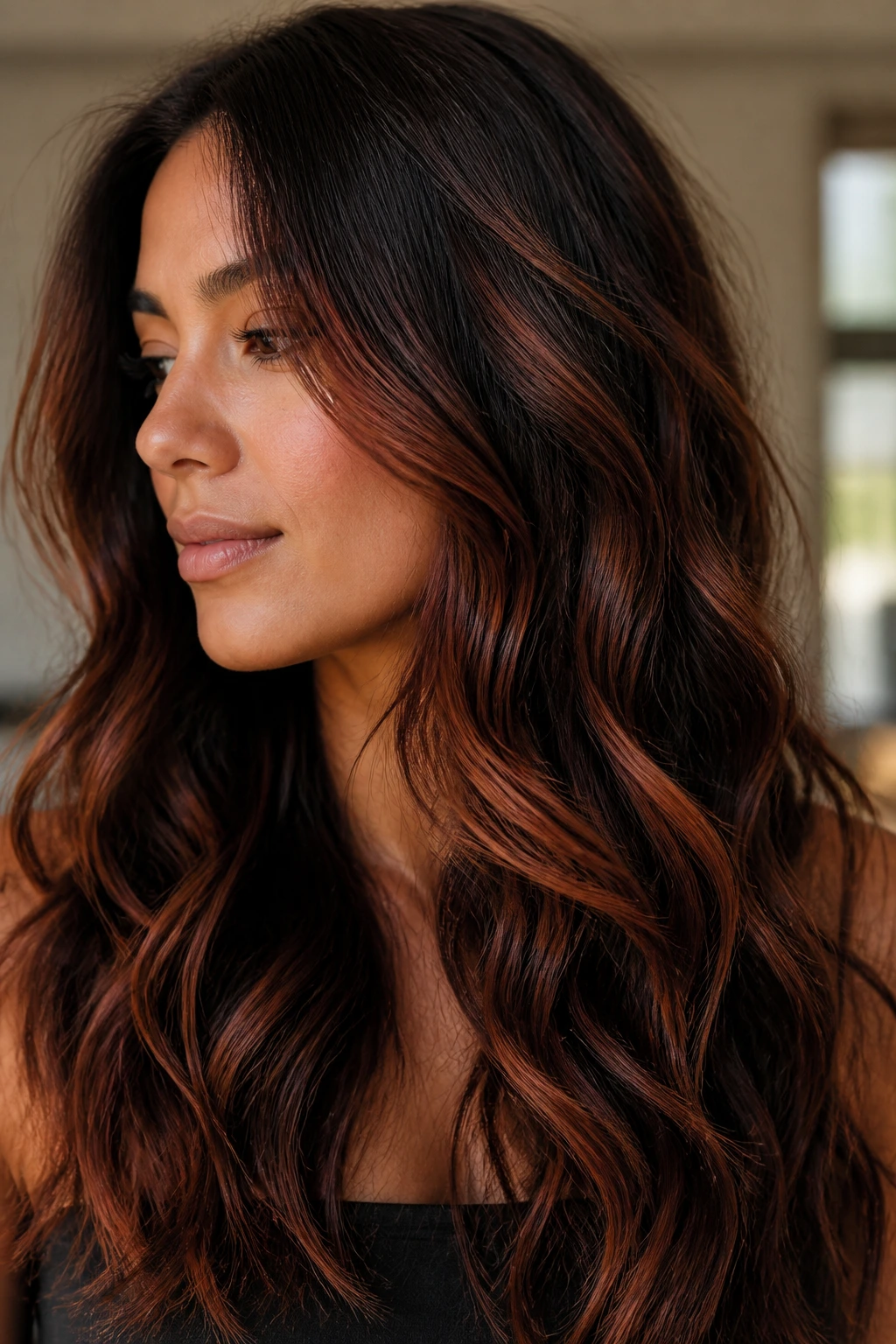
Dark wavy hair gives caramel red highlights a shortcut most colorists love: the bends in the wave break up the color, so warm pieces read as ribbons instead of stripes. On straight hair, a copper line can look blunt fast. On dark waves, the same placement can look soft, moody, and expensive without trying too hard.
The catch is that warm red tones need more thought than beige blonde. Go too bright against a black-brown base and the result can drift into orange; go too flat and the whole head just looks brown with a rusty note. The best versions keep the root deeper, let the mids carry the warmth, and put the brightest caramel-red pieces where the hair naturally flips and folds.
That’s why this color family works so well on wavy hair. The movement does half the styling for you, and the dark base keeps the red grounded instead of loud. The sweet spot is somewhere between cinnamon, copper, and toasted sugar — and once you start seeing how many ways that can be placed, the options get a lot more interesting.
Why Caramel Red Feels Made for Dark Waves
-
Waves break up the color for you: A bend in the hair turns one highlight into a few visible flashes, so the red reads softer than it would on pin-straight strands.
-
The dark base does the heavy lifting: Espresso, mocha, and deep brown roots give caramel red a frame, which keeps the warmth looking rich instead of washed out.
-
Placement matters more than saturation: A few finely painted ribbons around the face and mids can show more dimension than a solid block of color ever will.
-
Grow-out looks cleaner with shadow roots: Leaving the root slightly deeper keeps the regrowth line from feeling harsh after a few washes.
-
You can go subtle or loud without changing the whole formula: The same caramel-red family can lean cinnamon, copper, auburn, cherry, or rust depending on how much lift and deposit you use.
1. Cinnamon-Caramel Balayage on Espresso Waves
Cinnamon-caramel balayage is the safest place to start if you want warmth that still feels believable on very dark hair. The color sits in soft ribbons from mid-length to ends, and the waves make each sweep look hand-painted instead of obvious. On a deep espresso base, the cinnamon note keeps the finish grounded. It never looks like you tried to become a redhead overnight.
Why It Works on Waves
The hand-painted placement lets the bright pieces land where the hair bends, which matters more than people think. Loose waves catch the light on the top of each curve, so even a few cinnamon strands can show up from across the room.
Best ask for: Fine balayage ribbons, a 1-inch root shadow, and slightly brighter ends than mids.
Best for: Medium to long wavy hair that wants warmth without a lot of visible regrowth.
Watch for: If your ends are porous, keep the caramel piece a shade deeper there or they can look chalky after a few washes.
2. Copper Money Piece on Deep Brunette Waves
A copper money piece is the fast-cut answer for dark waves that need brightness near the face. The front sections get the punchiest red-caramel tone, while the rest of the hair stays quieter. That contrast is the whole point. It pulls the eye forward and makes the skin look warmer without repainting the full head.
The best versions are not thick, chunky front streaks. They’re narrow enough to move with the wave pattern, with a little depth left underneath so the copper doesn’t look pasted on.
How to Wear It
Ask your colorist for a soft face frame that starts around the cheekbone, not right at the root. That keeps the grow-out soft and avoids the “why is my hair banded?” problem that happens when front pieces are lifted too high.
If you wear your hair in loose side parts or tucked behind one ear, this look does a lot of the work for you. It’s sharp, but not fussy.
3. Auburn Ribbon Highlights Through Dark Chocolate Layers
Auburn ribbons are the quietest kind of red, and that is exactly why they work. On dark chocolate hair, the tone sits just above brown, so the result looks layered instead of obvious. Wavy hair makes it better, because every bend shows the auburn differently — one section reads copper, another reads chestnut, and the whole head feels alive.
What Makes It Different
This is not the look for someone chasing a bright red moment. It’s for someone who wants depth, especially if the hair is layered and already has movement. Fine ribboning keeps the contrast gentle, which matters on dark brunette bases that can swallow bold color.
- Ask for: Thin foils or babylights, placed through the mids and around the perimeter.
- Skip: Thick slices if your hair is fine; they can look heavy on a wavy pattern.
- Best finish: A glossy blowout or brushed-out wave that lets the auburn flash in the light.
4. Toffee-Red Ends with a Soft Root Shadow
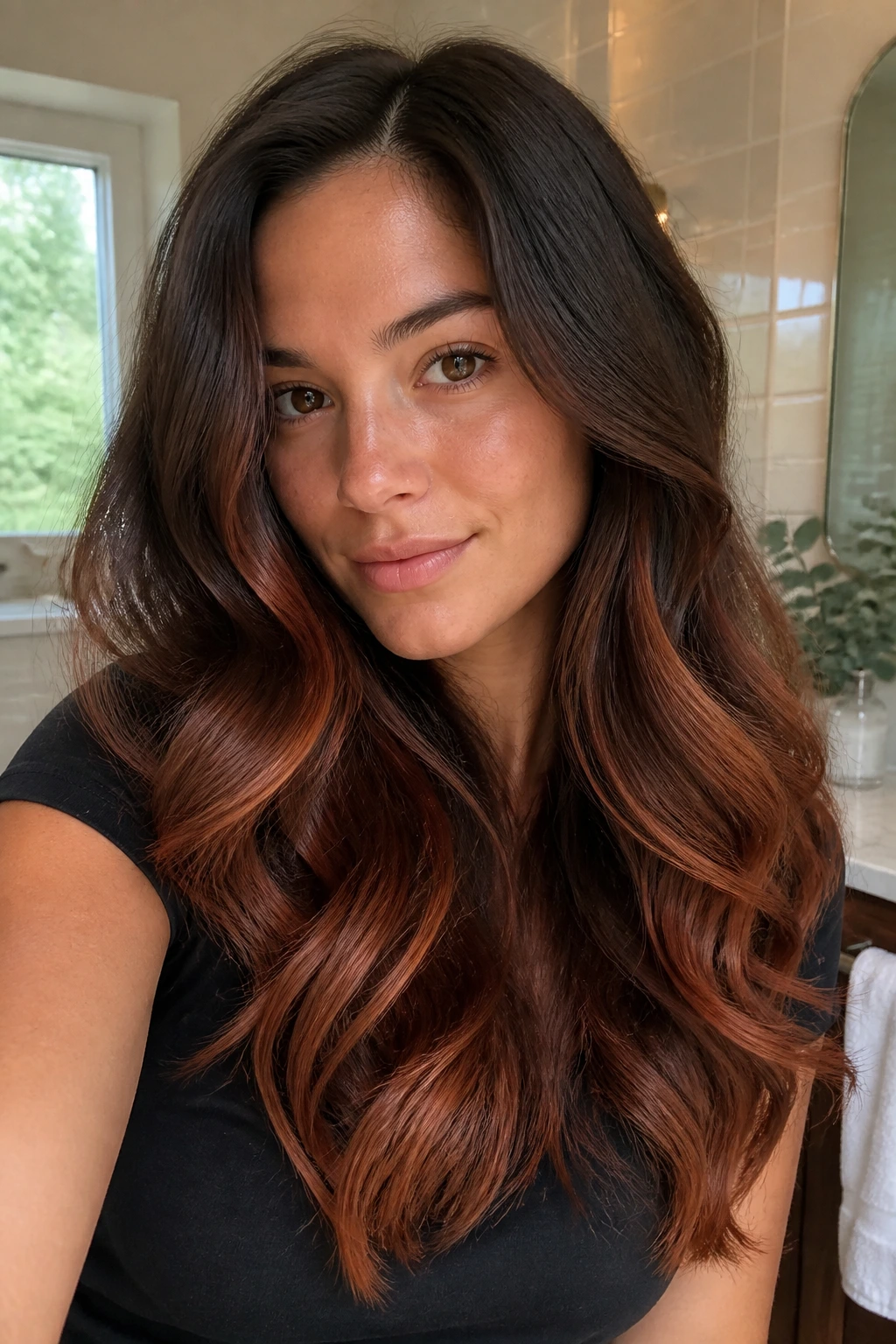
Toffee-red ends give you the warm payoff without painting the whole head. The upper half stays deep and dark, then the color eases into caramel-red warmth toward the bottom third. On long waves, this looks especially good because the ends flip and stack, which makes the color feel fuller than it is.
The root shadow is doing real work here. It keeps the grow-out line buried, and it stops the bright ends from looking detached from the rest of the hair. If your hair tends to feel heavy, this is a smart way to create movement without aggressive lightening near the scalp.
5. Peekaboo Cherry-Caramel Panels
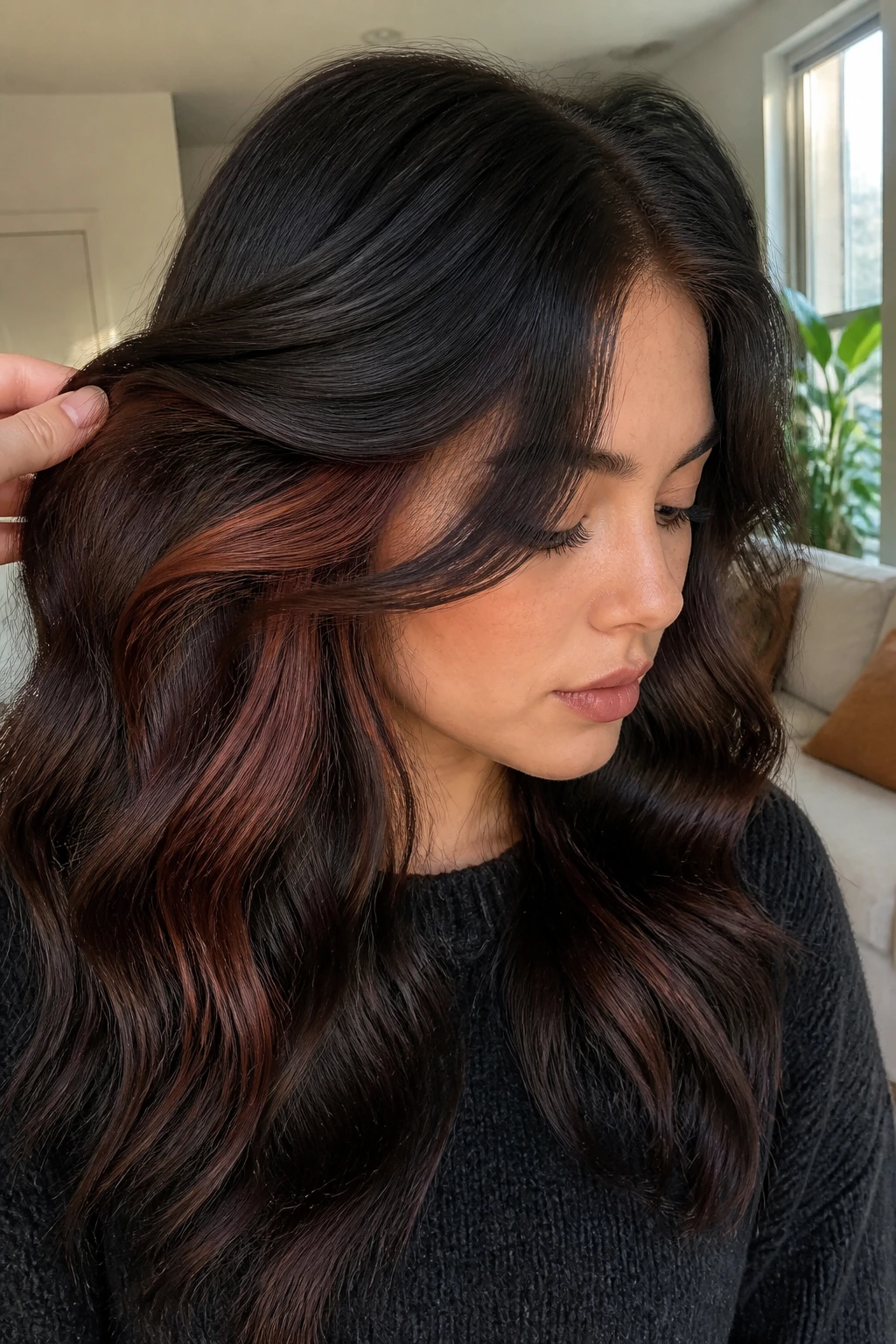
Peekaboo panels are for the person who likes a little surprise. The top layer stays dark, and the cherry-caramel tone hides underneath, showing only when the hair swings or is pulled half up. On waves, that hidden color shows up in the creases of the bend, which makes it feel more playful than a straight panel ever could.
This one works best if you want color that doesn’t shout at you from every angle. It is also one of the easiest ways to test red tones before committing to brighter placement on the surface.
Good fit if you:
- Wear half-up styles or clips a lot
- Want a more private pop of color
- Like red tones but do not want to change the whole head
A shoulder-grazing wave or layered lob makes this placement especially satisfying.
6. Smoky Mahogany Lowlights with Copper Veils
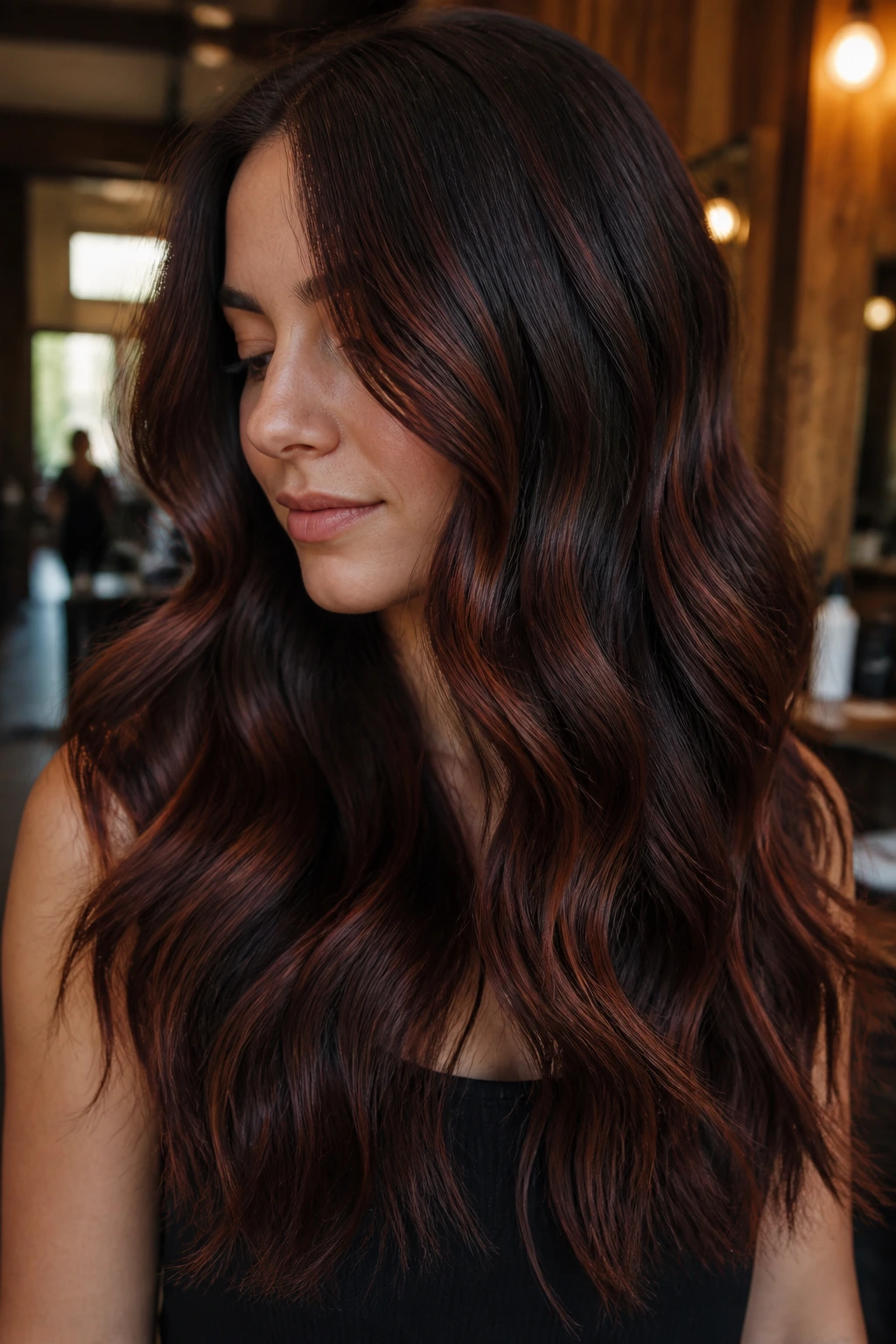
Here’s the trick most people miss: caramel red does not always need to be the brightest thing on the head. Smoky mahogany lowlights deepen the base, and tiny copper veils on top keep the whole look from going flat. On dark wavy hair, that contrast reads plush. Almost velvet-like, if that does not sound too dramatic.
This version is strong on thicker hair because the darker strands help control all that bulk. A little red warmth on top keeps the texture visible, but the mahogany underneath gives the shape more weight. If your hair is already dark and you’ve got dense waves, this is a smarter move than trying to lift everything.
7. Velvet Copper Contouring Around the Face
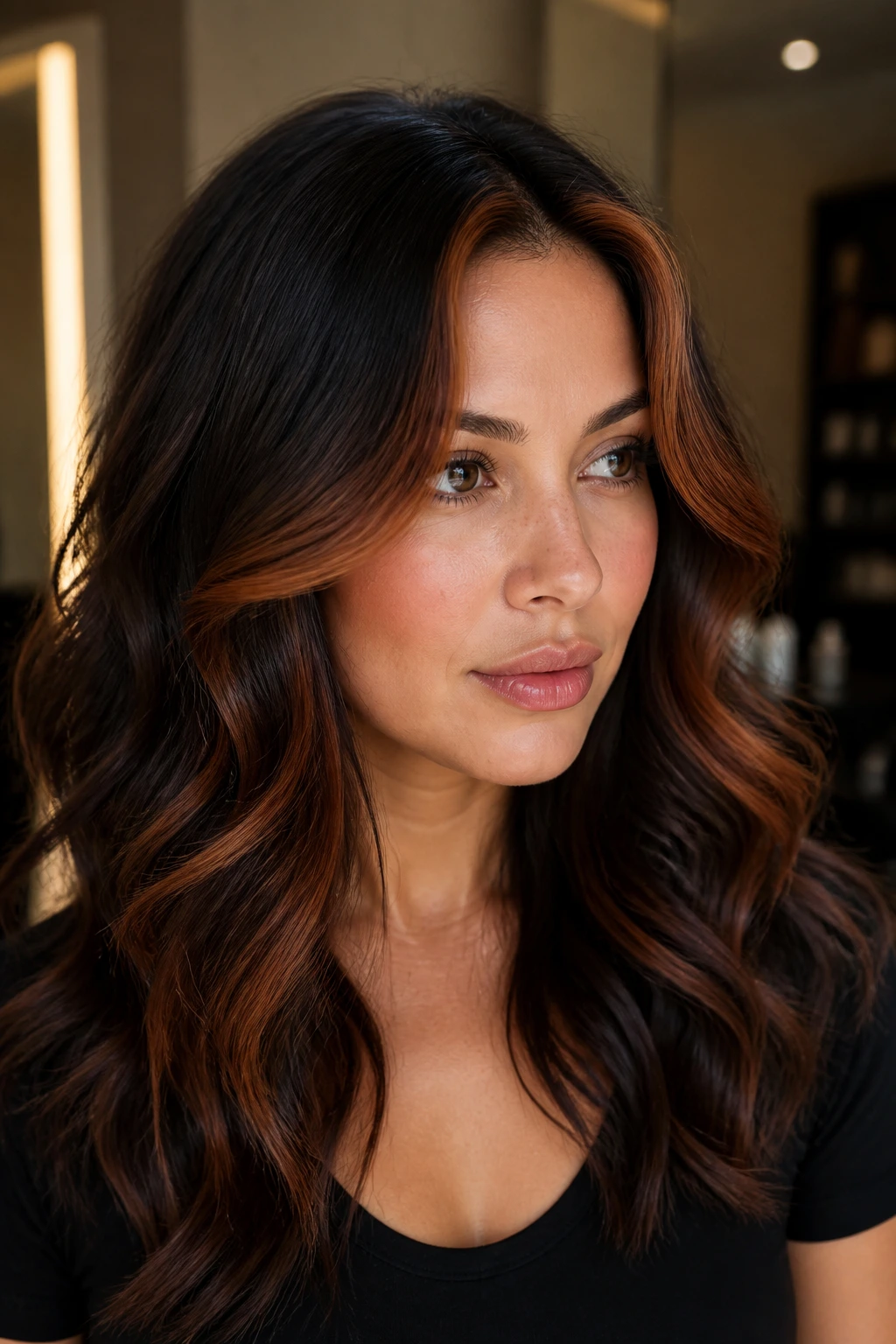
Copper contouring is what I reach for when someone wants the face to light up but doesn’t want a full bright frame. The copper pieces trace the temples, cheekbones, and the first few inches of the front wave, then soften as they move back. On dark hair, that sculpted placement can do more than a heavy highlight job ever will.
Wavy hair helps because the front sections don’t sit flat. They fold, tuck, and move, which blurs the color edge just enough to keep it flattering. If your face shape is round or heart-shaped, this kind of placement can be especially nice because the brighter pieces land where the eye naturally goes.
8. Ginger-Glow Foilayage on Mocha Waves
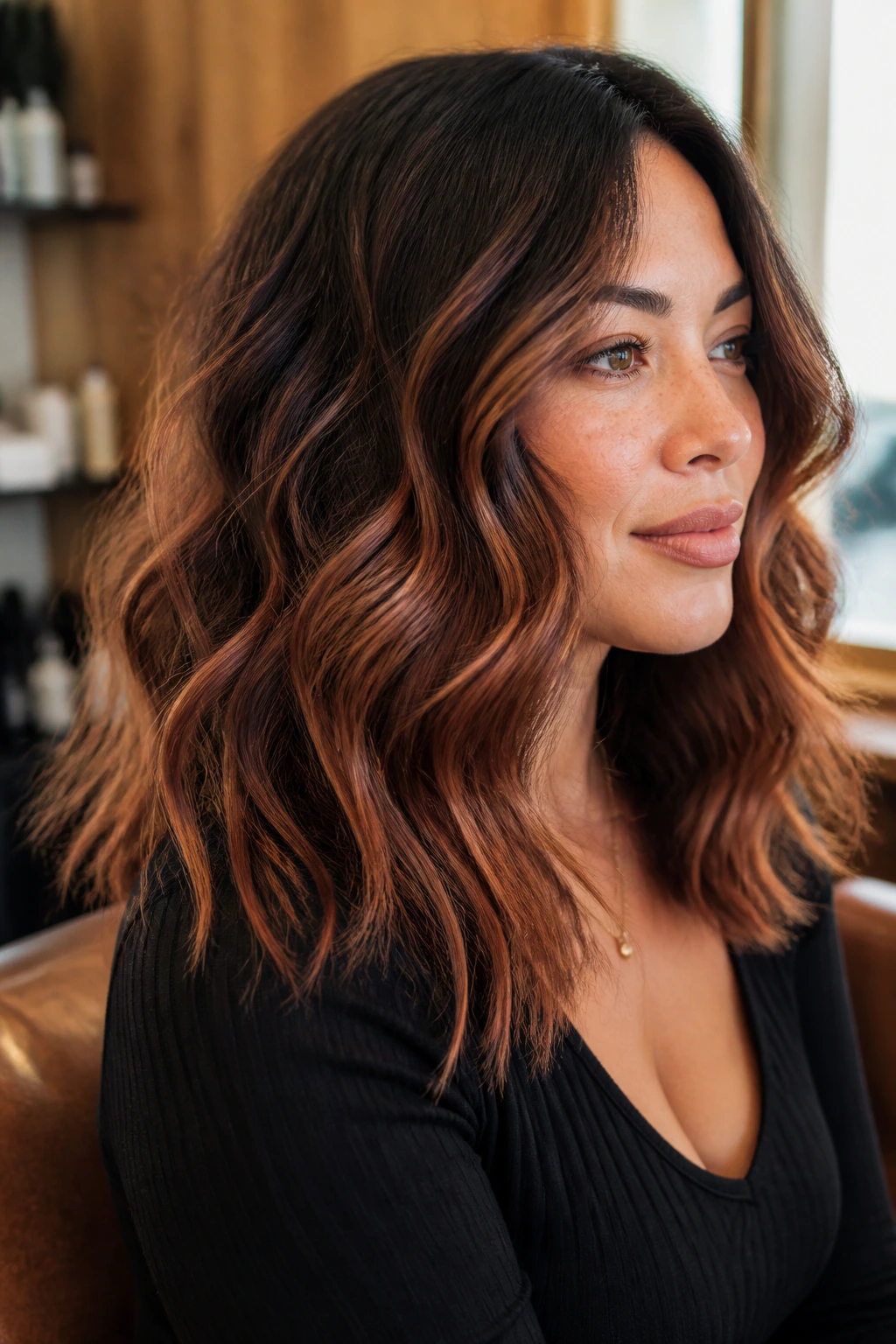
Foilayage gives you a little more lift than freehand balayage, which matters when the base is mocha and you want the red to stay visible. Ginger-glow pieces are woven through the mids and ends, then softened at the root so they do not look harsh. The result is brighter than cinnamon, but still wearable.
This is a good middle ground for someone who feels balayage is too subtle and full copper is too much. The foil helps the warmth show against a dark base, while the wavy finish keeps it from looking like streaks. If your hair has been colored before, foilayage also gives a colorist more control over which strands get the strongest lift.
9. Merlot-Red Slices for a Moody Brunette
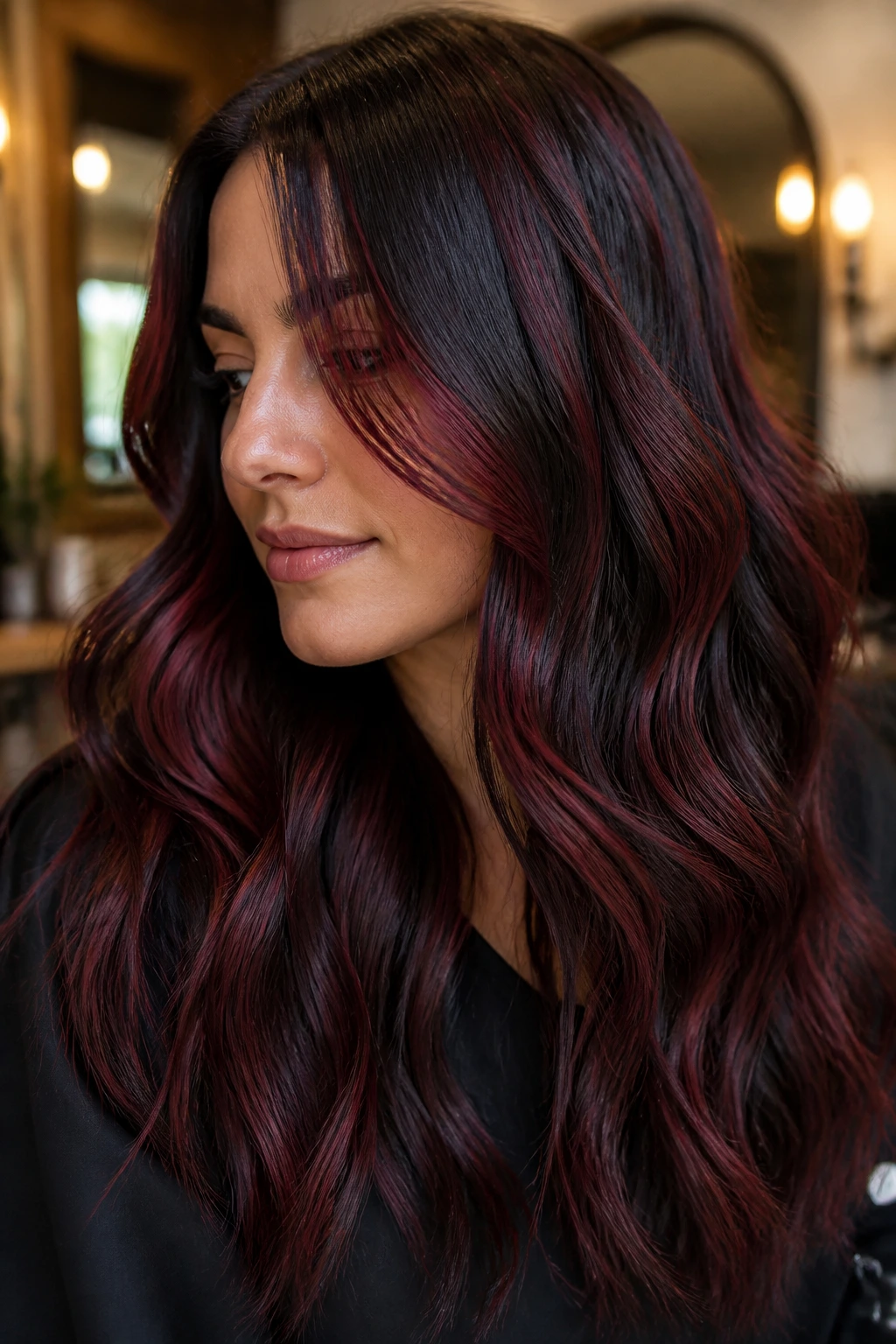
Merlot-red slices are one of the bolder choices here, and they work because the red is deep, not neon. On dark brunette waves, the color lands somewhere between wine and caramel, which gives it more depth than a flat cherry shade. The slice technique means the color appears in ribbons that are easier to track through waves and layers.
Best for: Thick hair, long layers, or anyone who wants the red to show in indoor light.
Why I like it: It has movement even when the hair is worn down and still. That matters. A lot of red shades only look good in sunlight, and this one doesn’t have that problem.
If you have finer hair, keep the slices fewer and thinner. Too many bold panels can take over the wave pattern.
10. Burnt Sugar Highlights on a Wavy Lob
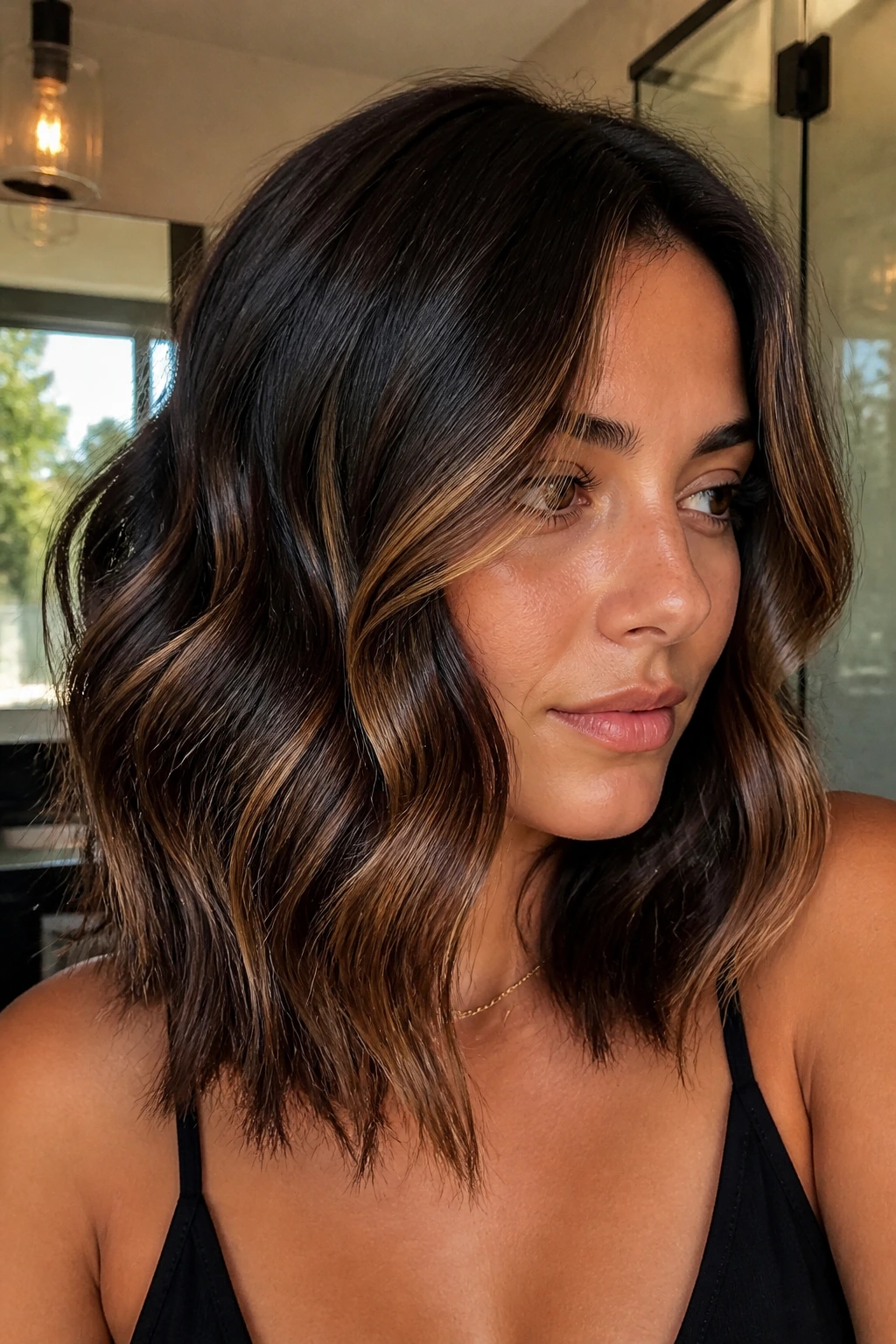
A wavy lob is a nice home for burnt sugar highlights because the cut already has bounce. The caramel-red tone sits between toasted brown and soft copper, and on shorter length it feels lively instead of heavy. Every flip of the ends shows a new piece of color, which is exactly what you want on a lob.
This is one of those cuts where placement matters more than brightness. Keep the brightest bits near the front and the top layers, then let the underside stay deeper. That keeps the hair from looking overdone when you tuck it behind the ears or throw on a clip.
11. Rose-Copper Sheen on Walnut Hair
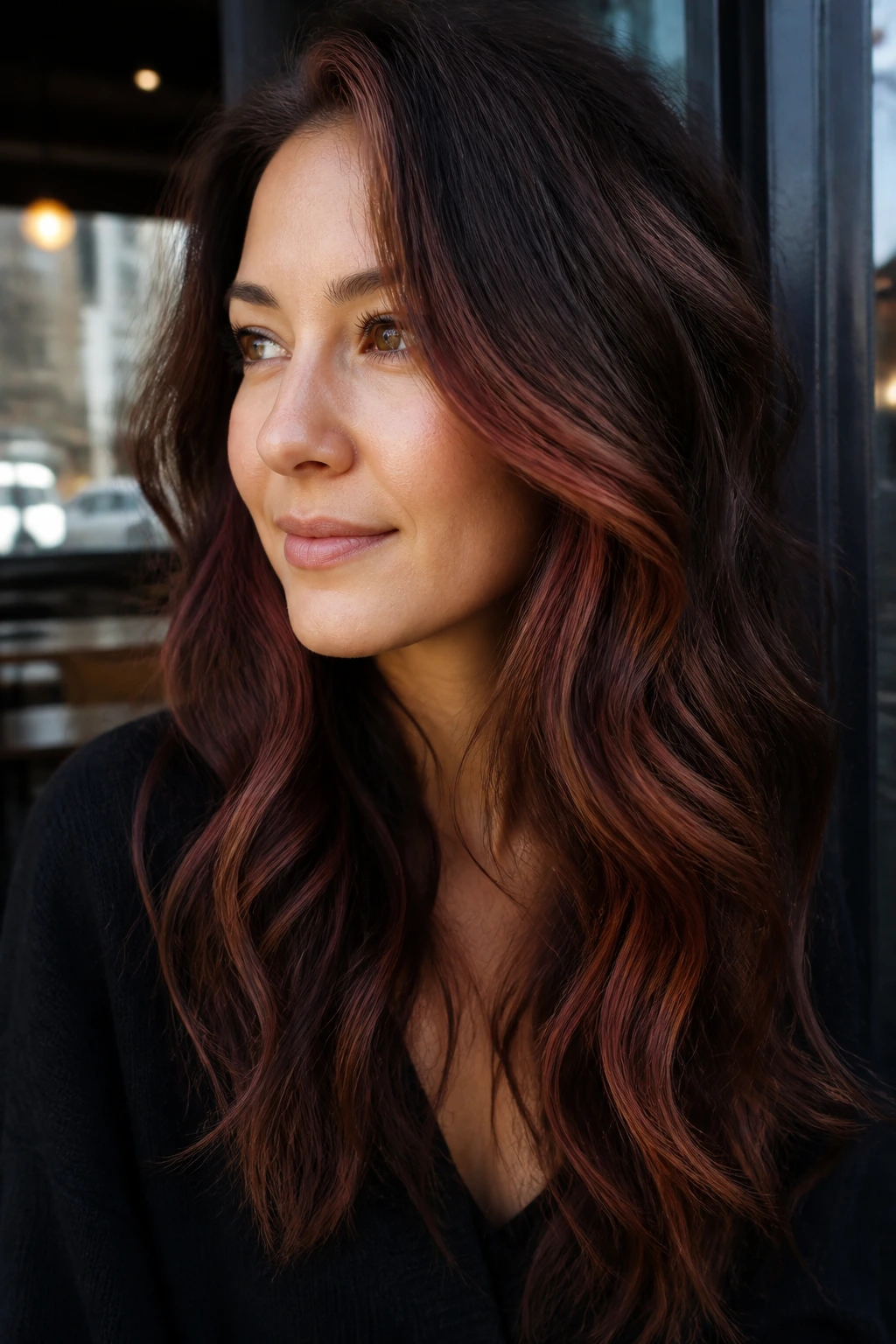
Rose-copper sheen is the quieter cousin in the caramel-red family. It adds warmth, but with a faint rosy cast that can keep dark walnut hair from tipping too orange. On waves, the sheen catches along the curve of the strand, so the color feels reflective instead of striped.
This is a smart choice if your skin runs cool or neutral and you’re nervous about going too warm. It also wears well on medium-length cuts where the waves already give the style shape. The whole effect is softer than copper, less sweet than caramel, and easier to live with if you like polish without a big contrast jump.
12. Peekaboo Rust Underlayers
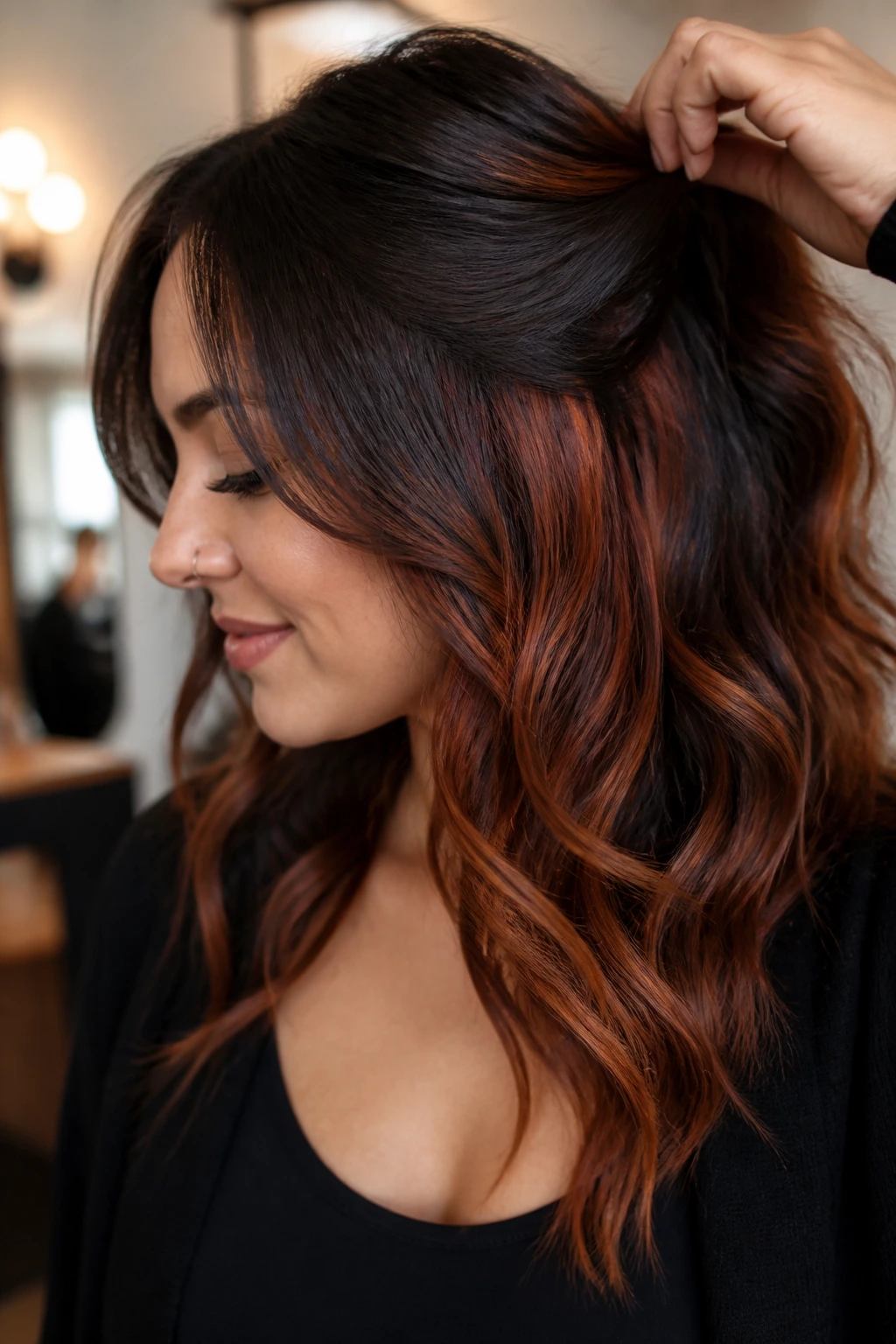
Rust underlayers are the sneaky version of red for people who like some edge. The top stays dark and calm, while the rust pieces live beneath it, visible in movement or in a half-up twist. Wavy hair is the right texture for this because the bends reveal and hide the color naturally.
When it makes sense
- You want color that shows in motion, not all day every day
- Your workplace leans conservative
- You like tying your hair up and want the color to surprise you there
Rust reads warmer and earthier than cherry, which keeps it from looking costume-like. It also fades in a softer way than bright red, so grow-out is less annoying. That is a win.
13. Sliced Amber Highlights on a Layered Shag
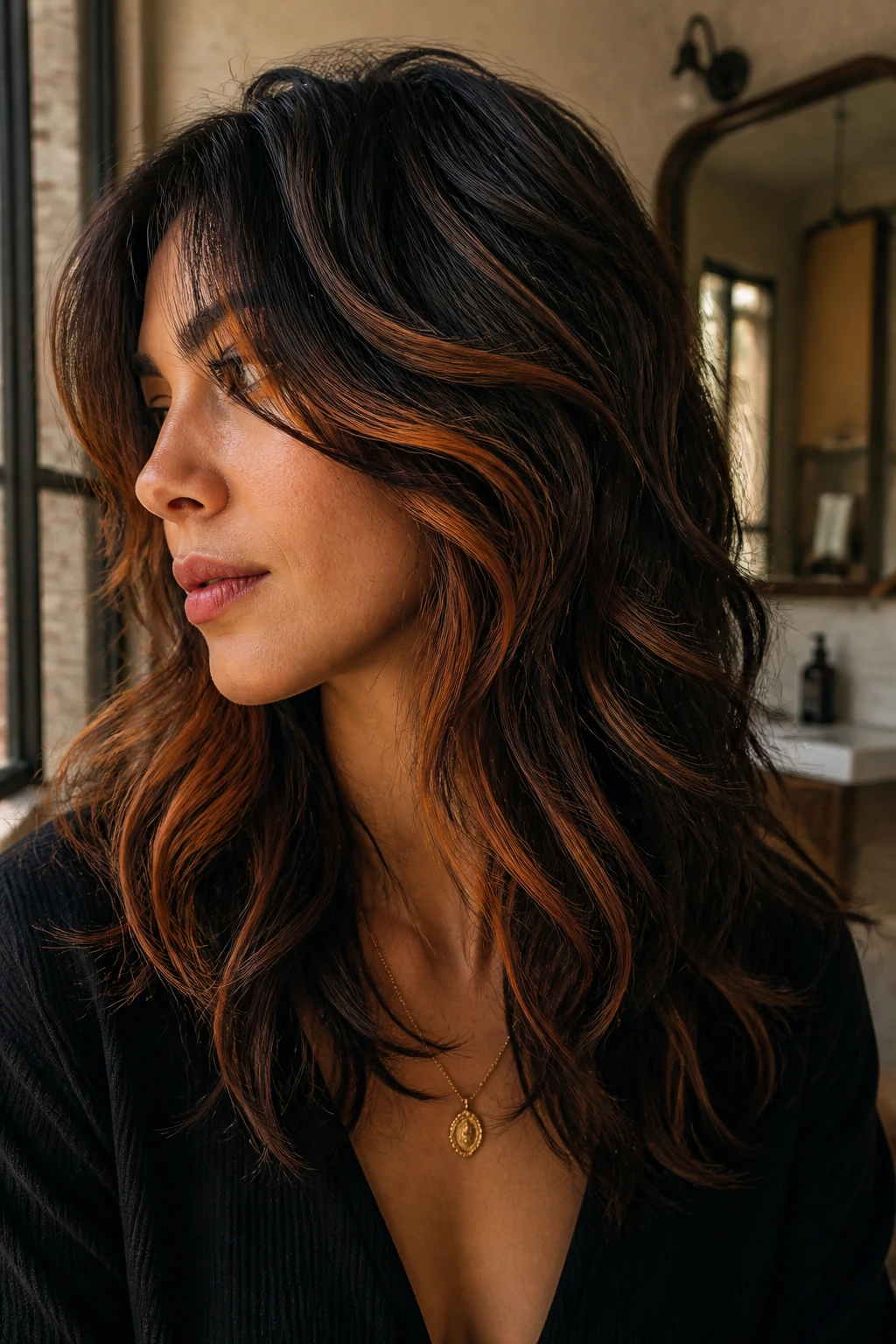
A shag cut loves sliced amber highlights because both the cut and the color are built on movement. The layers separate the amber ribbons so they do not sit on top of each other, and the wavy texture makes every slice show at a different depth. That gives the hair a little flicker when you turn your head.
If your shag has curtain bangs or shorter crown layers, ask for lighter placement there and finer pieces through the sides. Too much amber at the crown can make the top look busy. Keep the bottom half warmer, and the cut does the rest.
14. Toasted Cinnamon Money Pieces
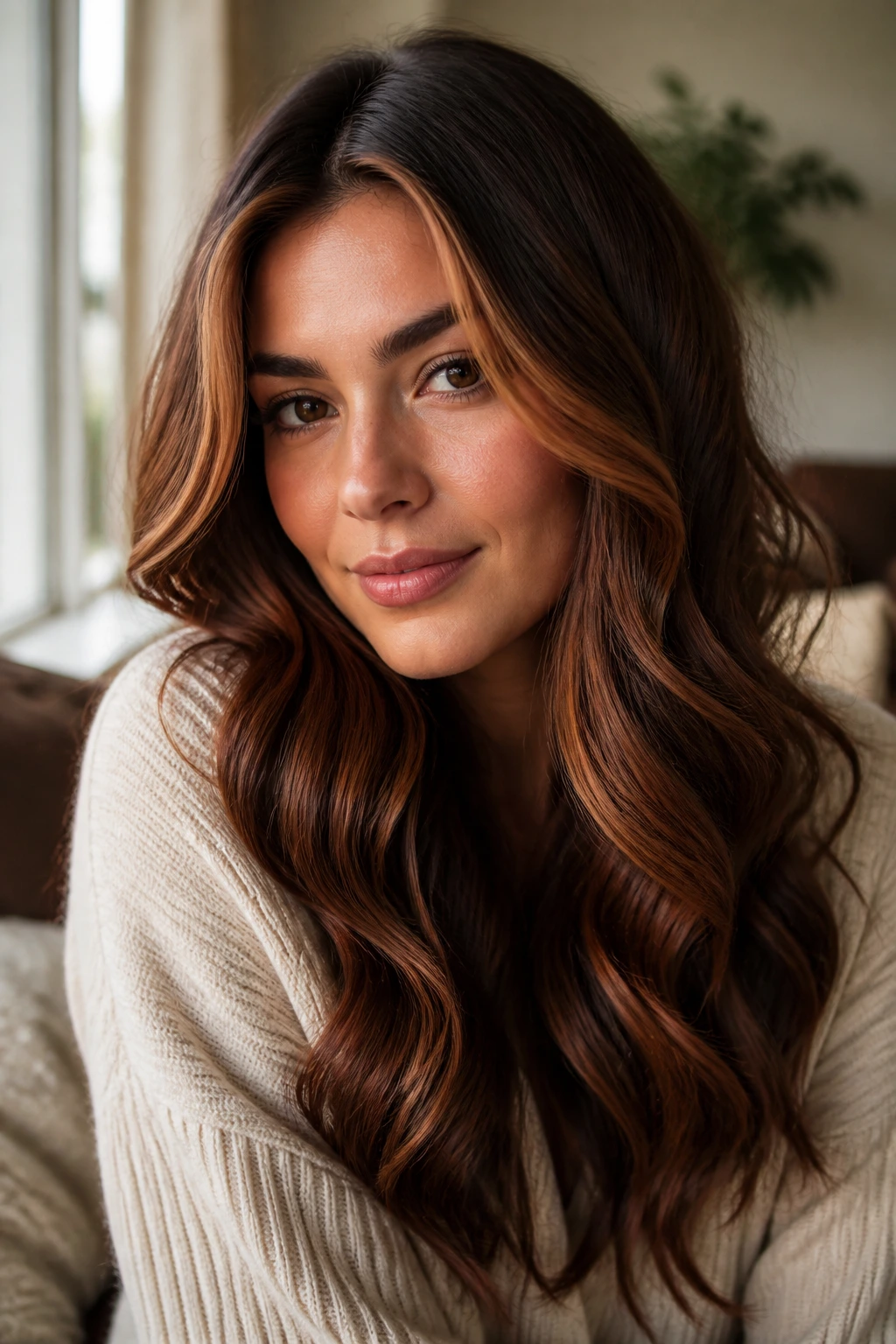
Toasted cinnamon money pieces are softer than a bright copper frame, and that softness helps on dark hair. The front sections get a warm cinnamon-red lift, but the tone stays grounded enough to sit beside espresso roots without screaming for attention. On waves, the pieces bend and curve, which makes them feel more natural than a blunt front streak.
This is one of the easiest versions to live with if you wear your hair parted in the middle. The center line gives the warm pieces symmetry, and the waves keep the front from looking too severe. If you want a face frame that shows warmth but still looks polished, this is the one I’d start with.
15. Cherry-Cola Caramel Melt
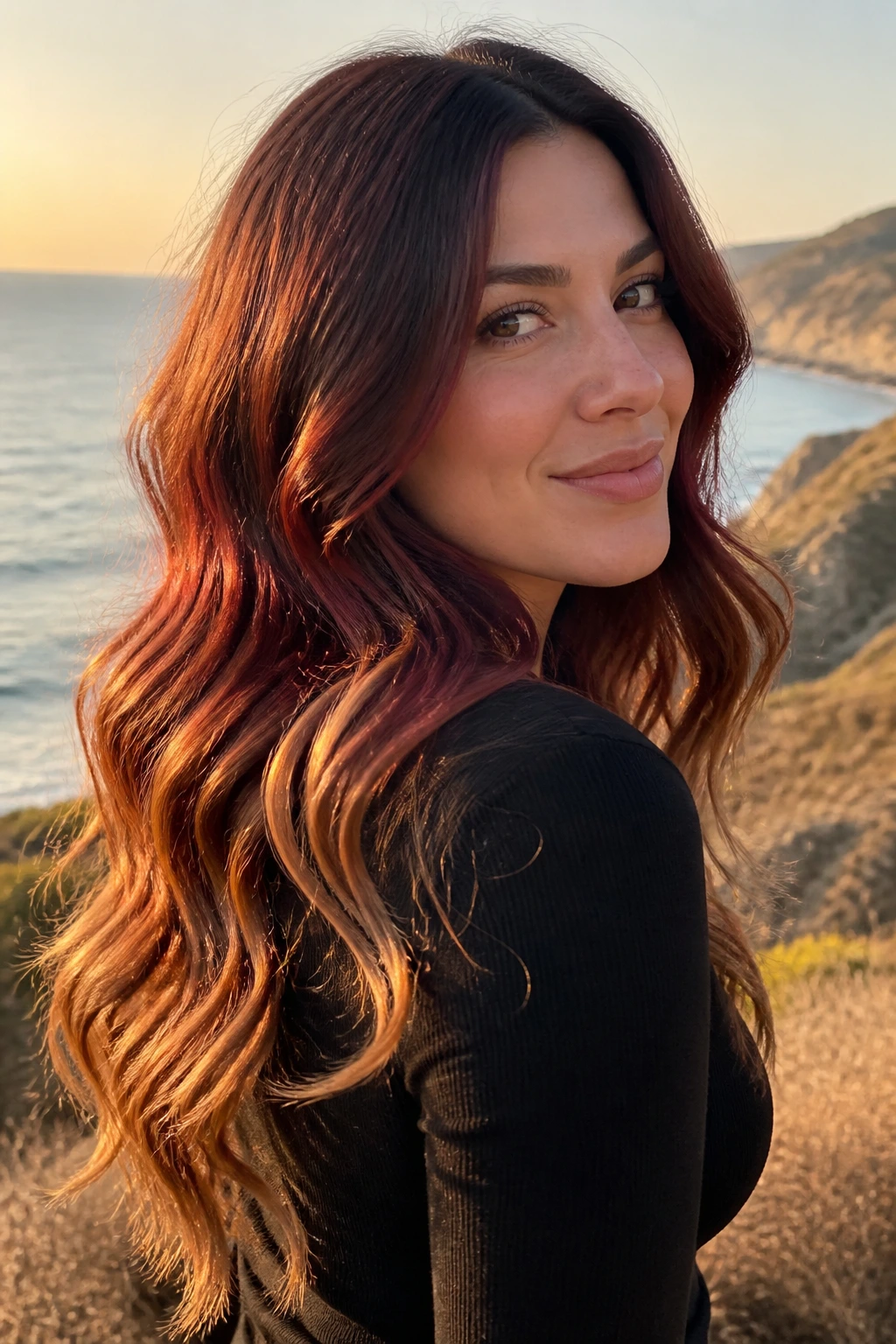
Cherry-cola caramel melt is rich, deep, and a little glossy-looking if it’s done well. The root stays dark, the mid-lengths pick up cherry warmth, and the ends drift into caramel-red. On long waves, that gradient can be gorgeous because every bend shows the color shift at a different point.
It’s a stronger look than cinnamon or auburn, but it doesn’t feel loud if the transition is blended correctly. Ask for the red to stay deeper near the root and softer at the ends if you want something that grows out with less drama. If you love a warm red lip or dark denim, this color family tends to play nicely with that wardrobe.
16. Paprika-Red Glow Through Dark Waves
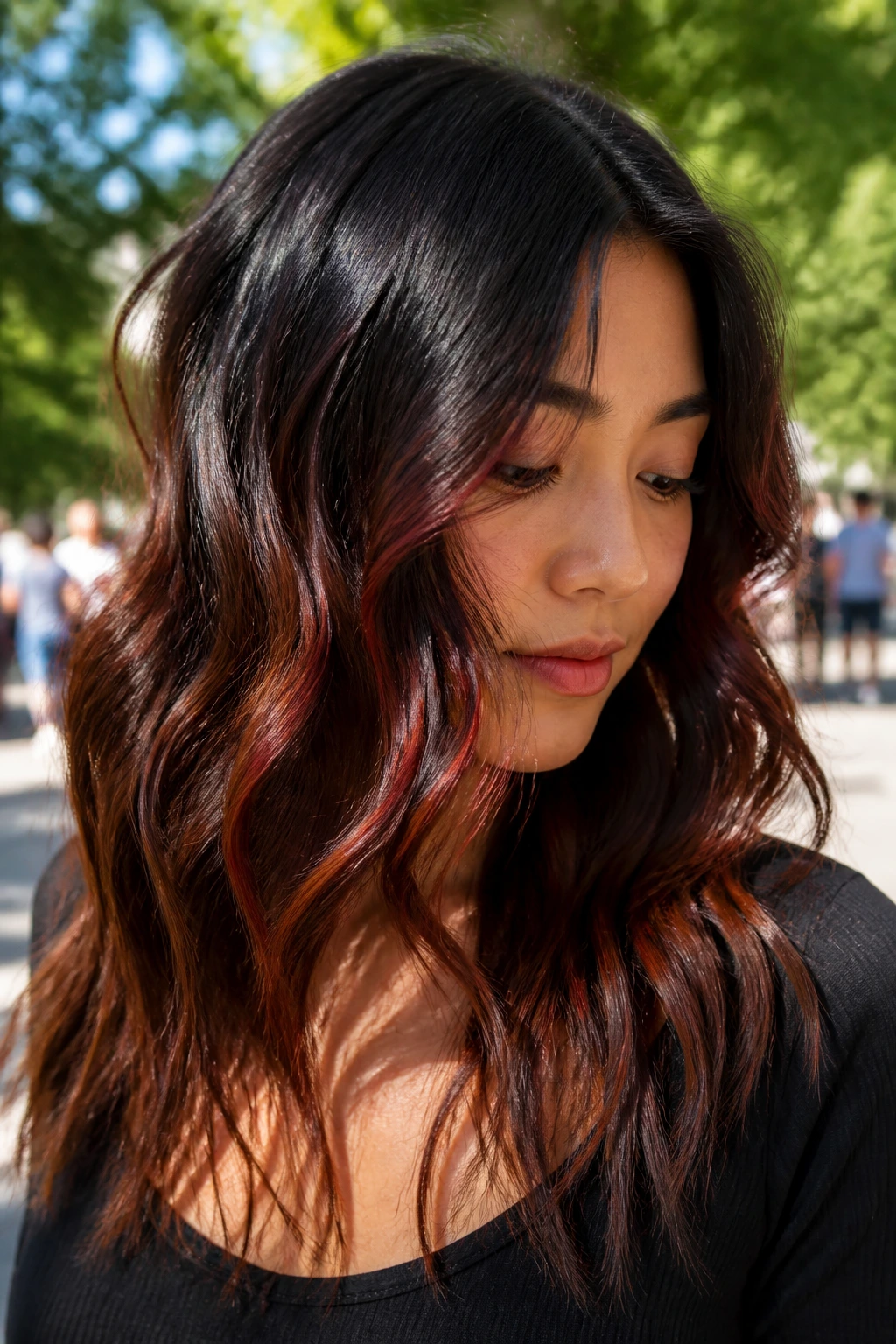
Paprika-red glow is the “I want people to notice something is different, but not know exactly what” option. The warmth sits low in the hair, more like a glow than a stripe, which makes it a good match for dark waves that already have texture. In daylight, the red wakes up. Indoors, it looks like a richer brunette.
This is one of my favorite choices for people who do not want to bleach a lot of hair. The warmth can be placed in thinner ribbons or even through a glossed veil over pre-lightened pieces. It works best when the colorist keeps the overall shape soft and does not over-saturate the ends.
17. Maple-Copper Contour Balayage
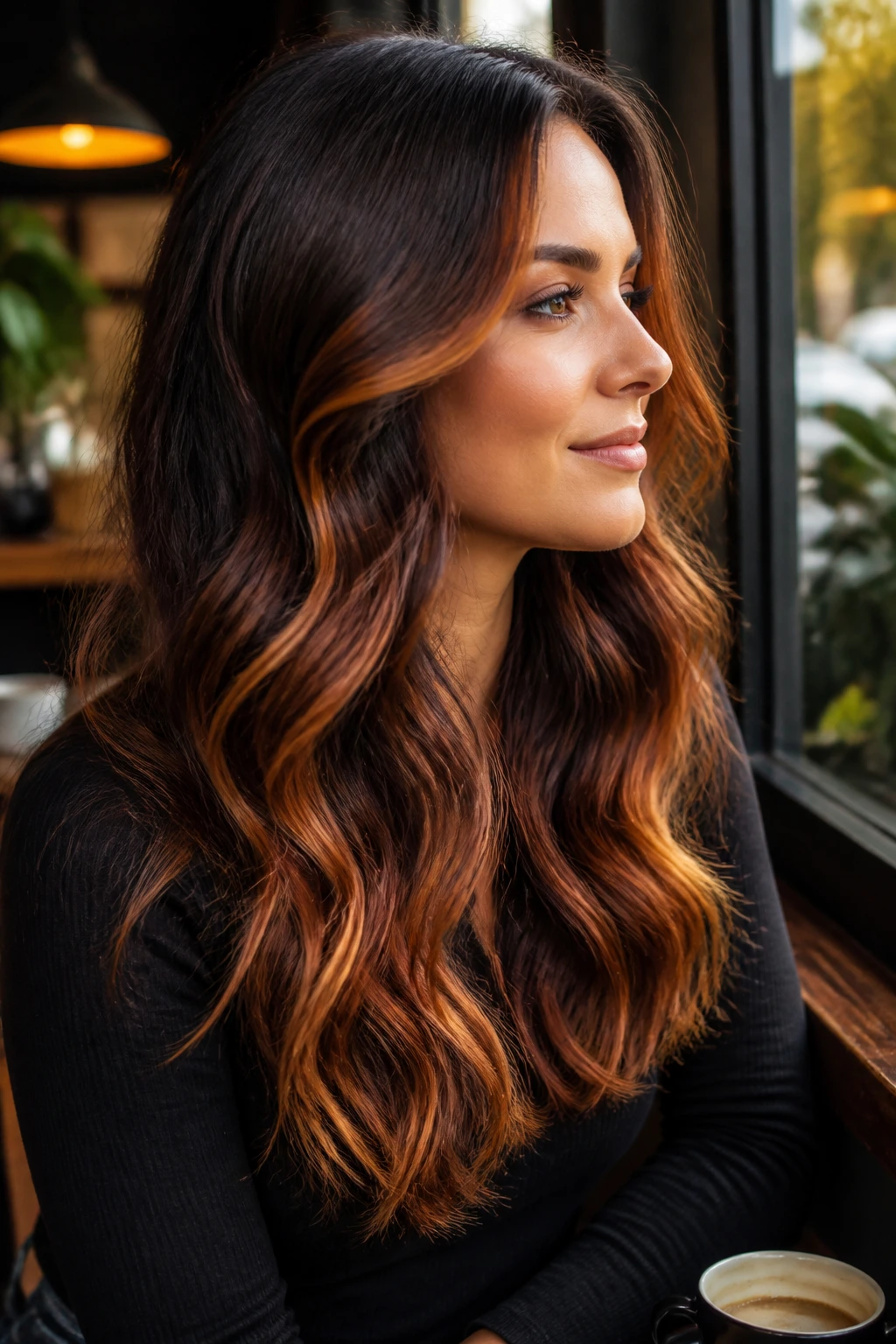
Maple-copper contouring is a slightly fuller version of face framing. Instead of only brightening the front, the colorist follows the perimeter of the hair — around the face, over the outer layers, and through the first sweep of the waves. The result is more noticeable when the hair moves side to side.
This is ideal for long layers and thick wavy hair because the perimeter catches the most light. Keep the inner sections deeper so the copper reads as contour, not all-over brightness. If you tend to wear your hair loose most of the time, this style gives you a lot of payoff without demanding a full head of lightness.
18. Flame-Tipped Balayage on Long Waves
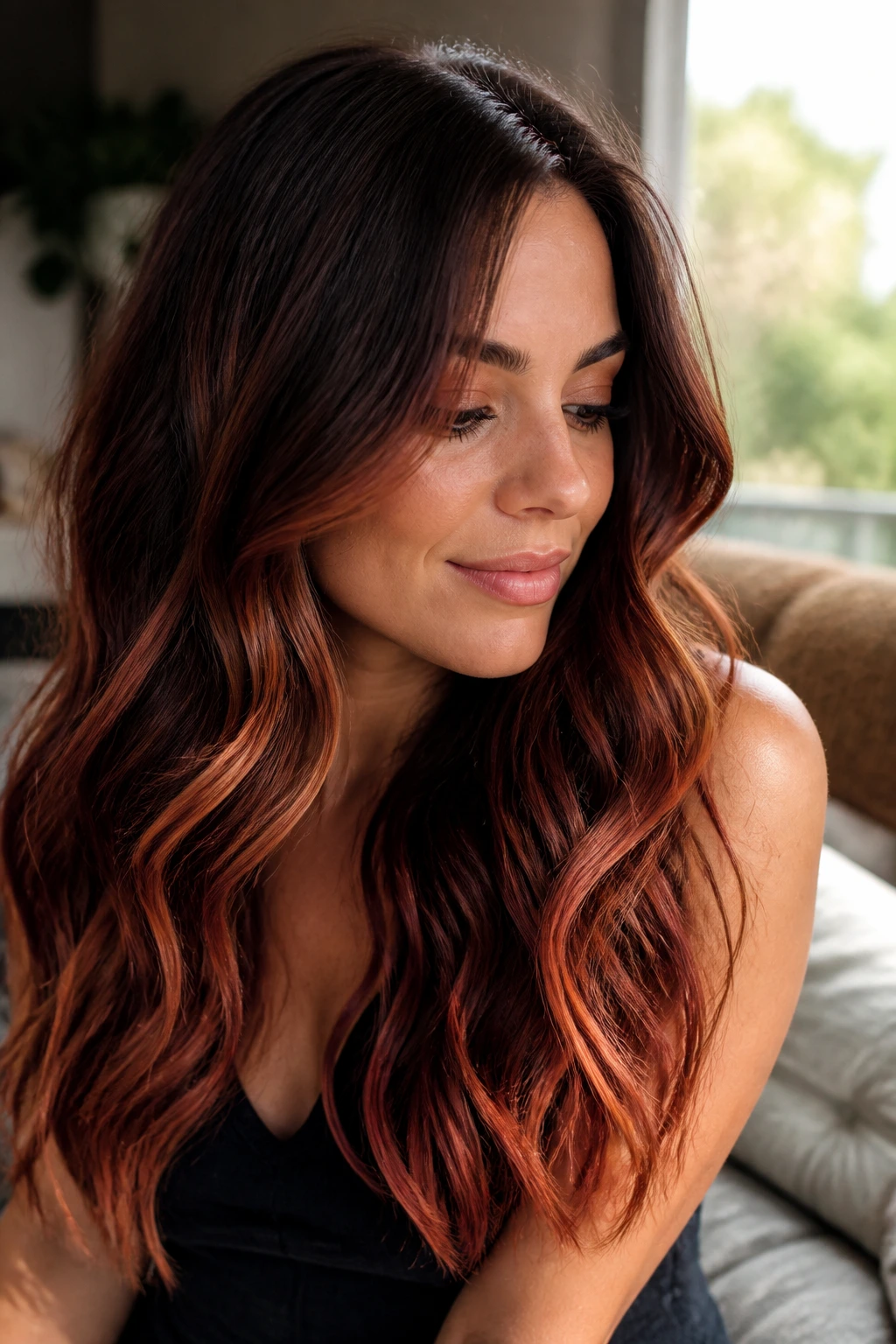
Flame-tipped balayage is the boldest look in the bunch. The color starts dark near the root, warms through the mids, and hits a brighter red-caramel note at the ends. Long waves make it work because the movement keeps the ends from looking like one hard colored block.
This is not the look for dry, broken ends. The tips need to be healthy enough to hold a bright tone, or the color will look fuzzy and tired fast. If your hair can handle it, though, the finish has real drama — especially when the waves are brushed out and a little messy instead of curled into perfect spirals.
19. Scarlet-Caramel Dip Ends
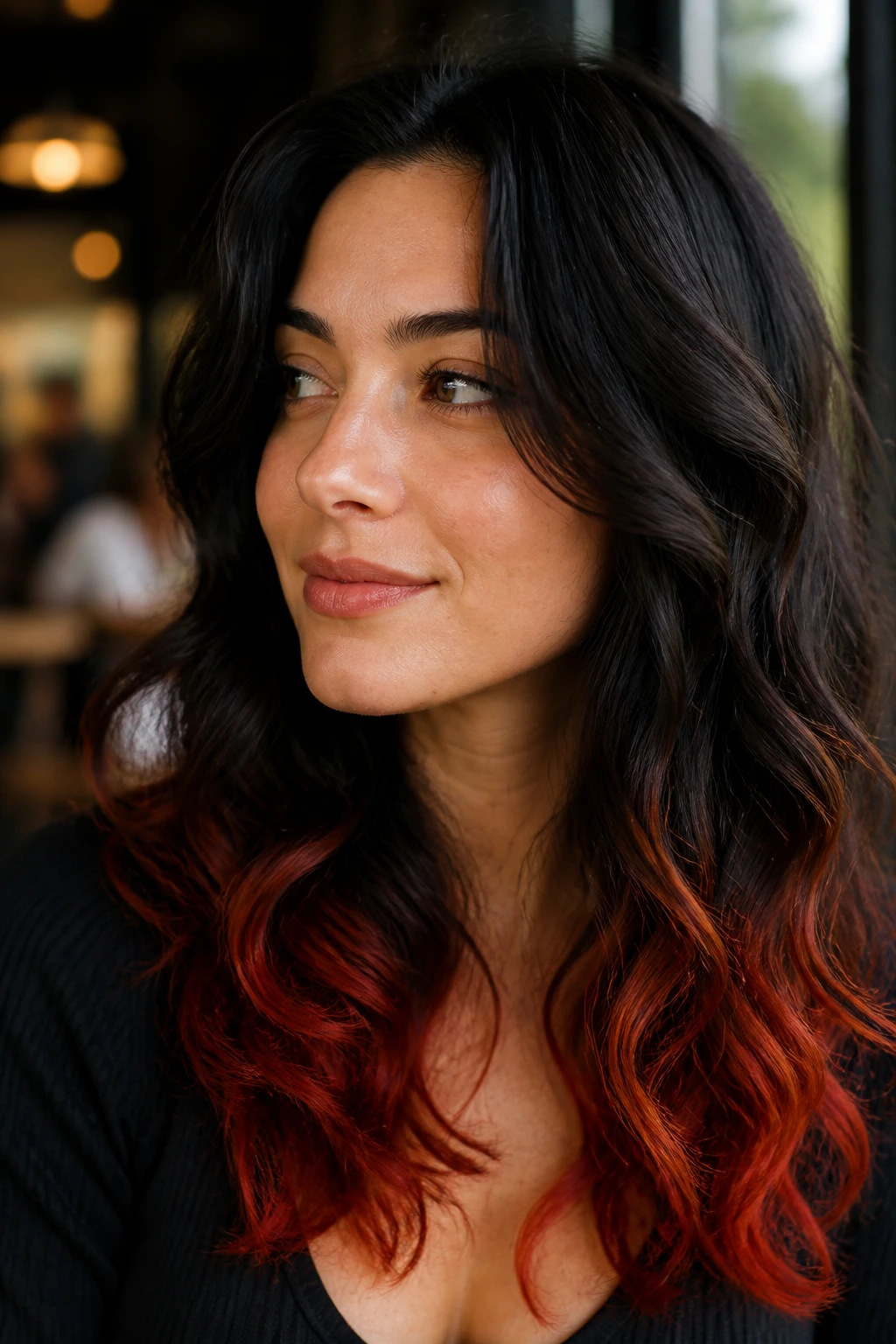
Dip ends are for people who want a dramatic finish without coloring the whole head. The lowest few inches turn scarlet-caramel, while the rest stays dark and muted. On dark waves, this creates a strong bottom edge that still feels movable because the waves keep the line from looking stiff.
The key is blend. If the transition is too abrupt, it looks like a color block. If it’s feathered through the final mid-lengths, the red reads like it belongs there. This style works especially well on thicker hair where the ends can carry more saturation without looking sparse.
20. Amber Root Melt on a Soft Black Bob
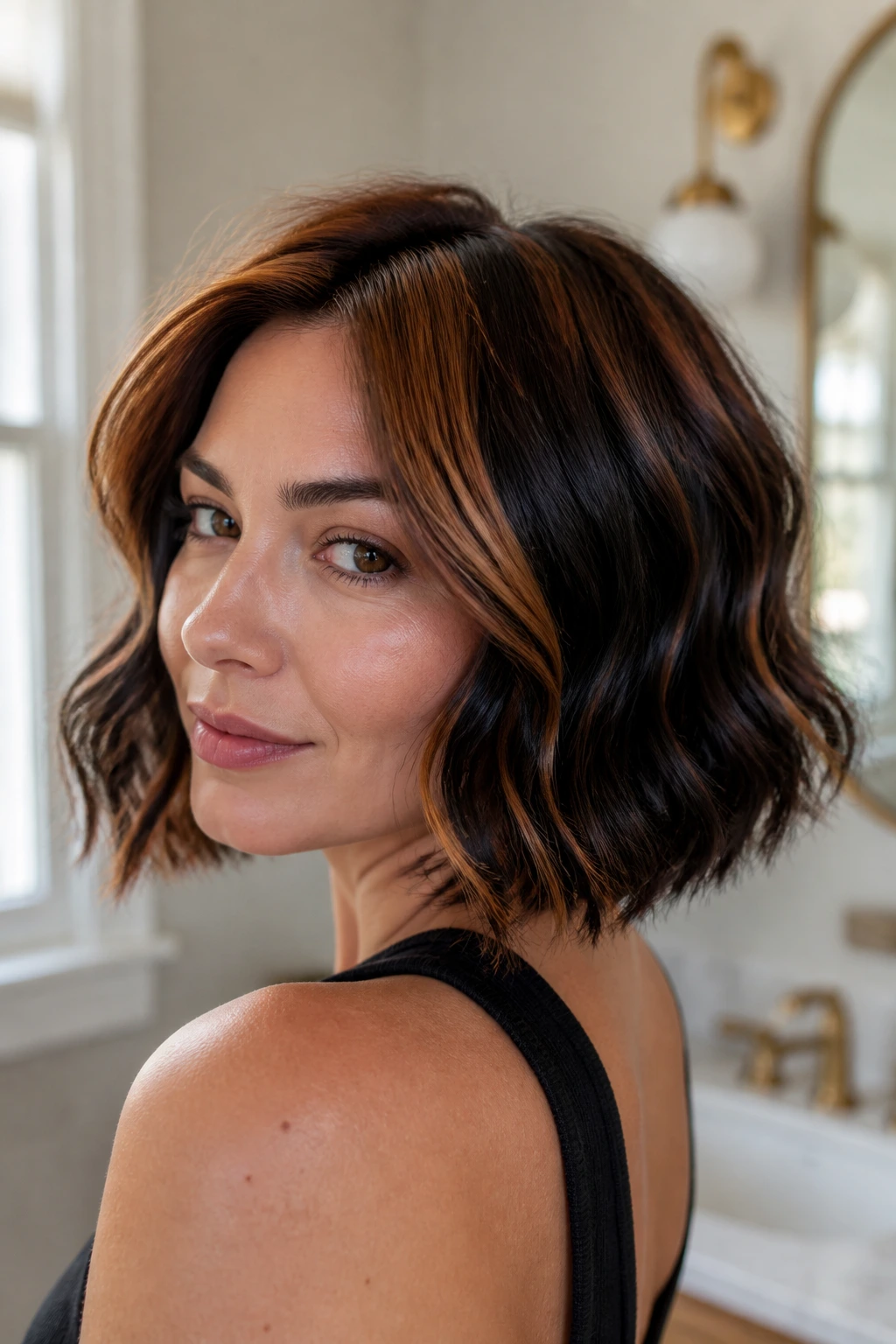
A soft black bob with an amber root melt looks sharp in the best way. The color starts deep at the base, then melts into amber around the upper mids and front pieces. On a shorter wave pattern, every inch matters, so the contrast has to be clean.
This one is especially good if you wear your bob with tucked ends or side-swept movement. It’s a neat, tailored look — not stiff, but controlled. Keep the amber tone more golden than orange if your base is close to black, because too much orange on a short cut can get loud fast.
21. Rosy Copper Curtain Bangs
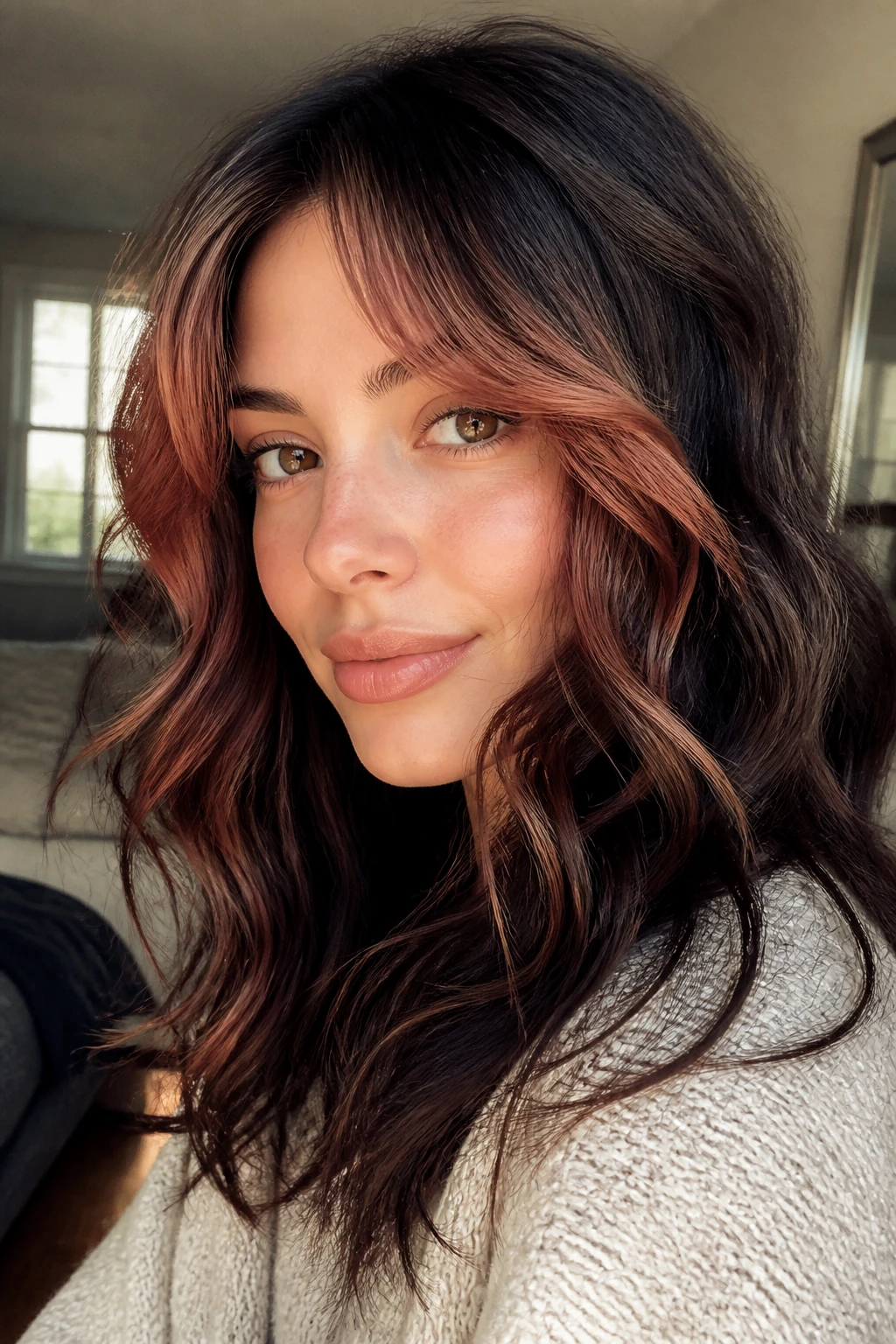
Curtain bangs are already good at framing a face, and a rosy copper tint makes them stand out without stealing the whole hairstyle. The color sits a little softer than standard copper, which helps when the rest of the hair stays dark. On wavy hair, the bangs get that bendy, piecey finish that makes the warm tone look deliberate.
If you often wear your hair in a half-up clip or a loose low bun, this is a smart choice. The bangs do the work even when the rest of the hair is tucked back. Keep the saturation softer near the root so the fringe grows out without a harsh little line across the forehead.
22. Burnished Terracotta Ribbons
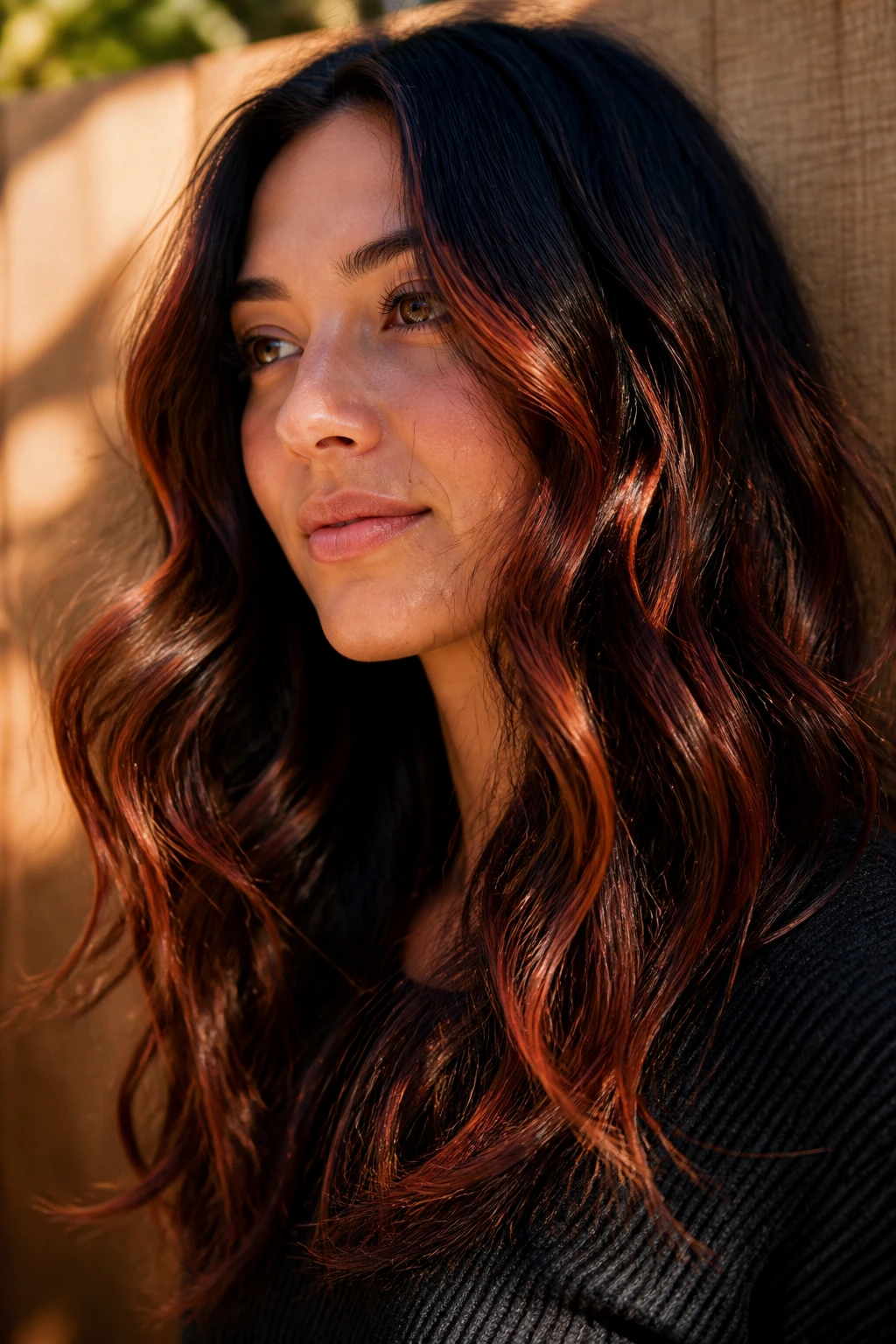
Burnished terracotta ribbons feel earthy and polished at the same time. The red is baked down a little, so it sits between copper and brick rather than leaning orange. On dark waves, that matters. The result is richer than a bright copper highlight and less severe than a bold red stripe.
Why it looks so good on wavy hair
The waves let the terracotta ribbons flash only where they need to. You get little hits of warmth at the top of each bend, then the deeper brown returns underneath. That creates movement without needing a dramatic cut.
If your skin tone likes earthy makeup shades — terracotta blush, bronze eyes, brown liner — this color family usually feels easy to wear.
23. Multitone Caramel Red Foilage
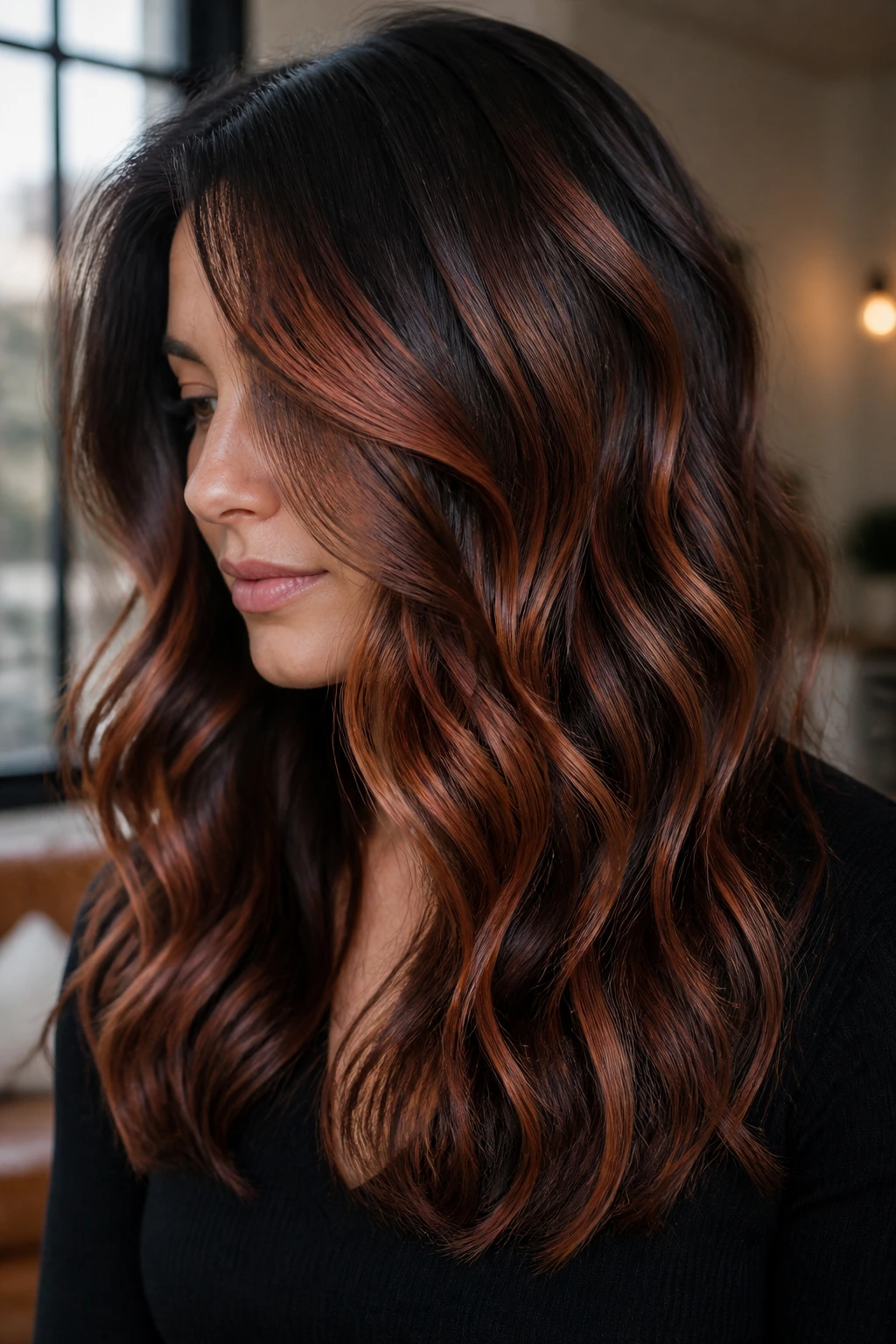
Multitone foilage is what you ask for when you want the most dimension possible without committing to a single red note. A good colorist will layer caramel, copper, auburn, and maybe a touch of mahogany so the hair shifts under different light. Wavy hair is the ideal canvas because each bend catches a different tone.
This is not the quickest salon service, and that’s fine. The payoff is in the movement. The hair doesn’t read as one red shade; it reads as a woven mix. If your dark base tends to look flat in indoor light, this is one of the better fixes because the contrast lives in several tones at once, not just one stripe.
24. Brick-Red Gloss Highlights
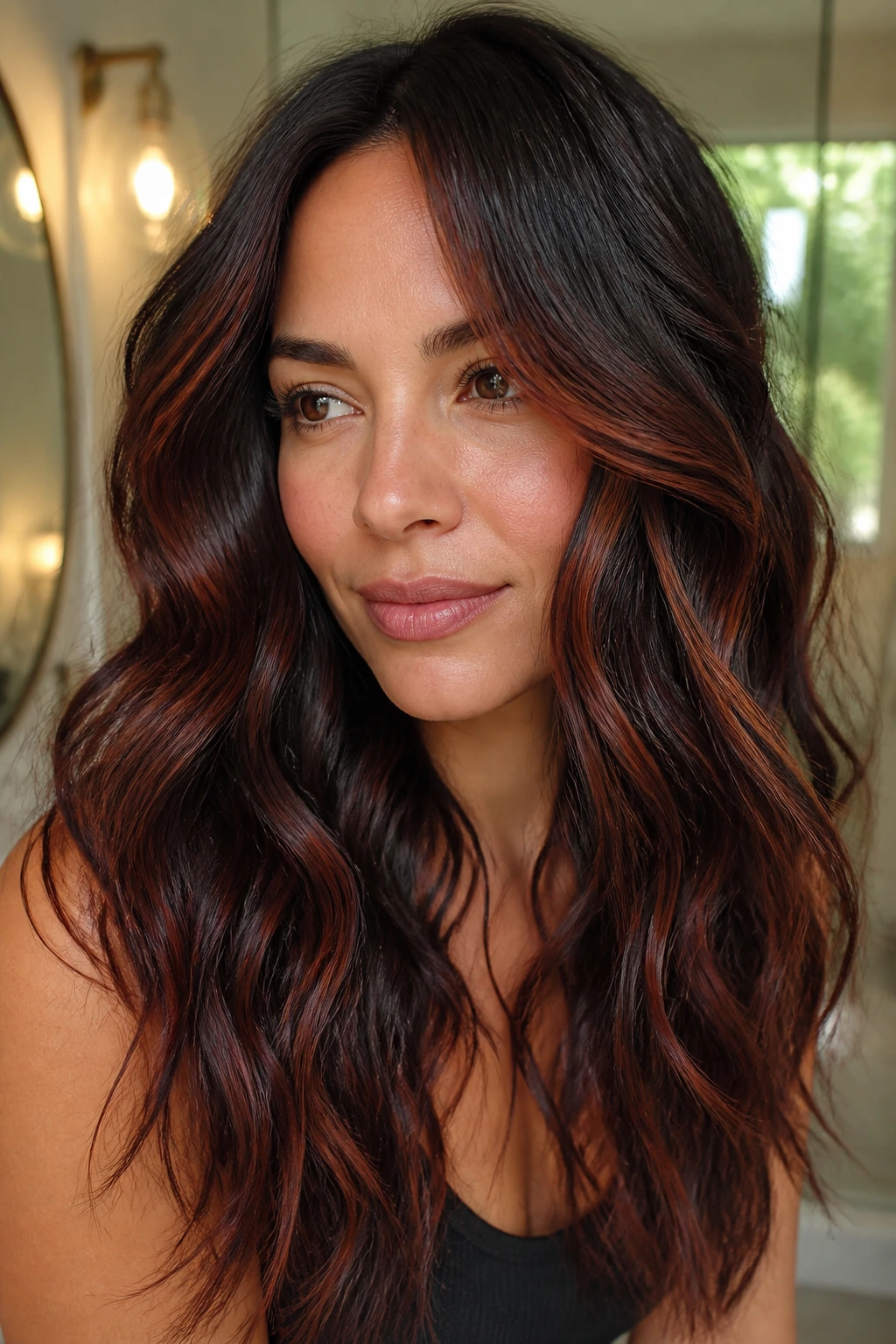
Brick-red gloss highlights are the understated red choice for people who want warmth without flash. The brick tone sits close to brunette, but the gloss makes it catch on the curves of the wave. Dark hair loves this because the red feels embedded in the strand rather than sitting on top of it.
This is a nice move if you already have lightened pieces and want to push them warmer without redoing the whole head. It also fades in a softer direction than a brighter copper. If you like dark lipstick, leather jackets, or deep neutral clothes, this shade has that same grounded feeling.
25. Cinnamon-to-Auburn Gradient Across Long Waves
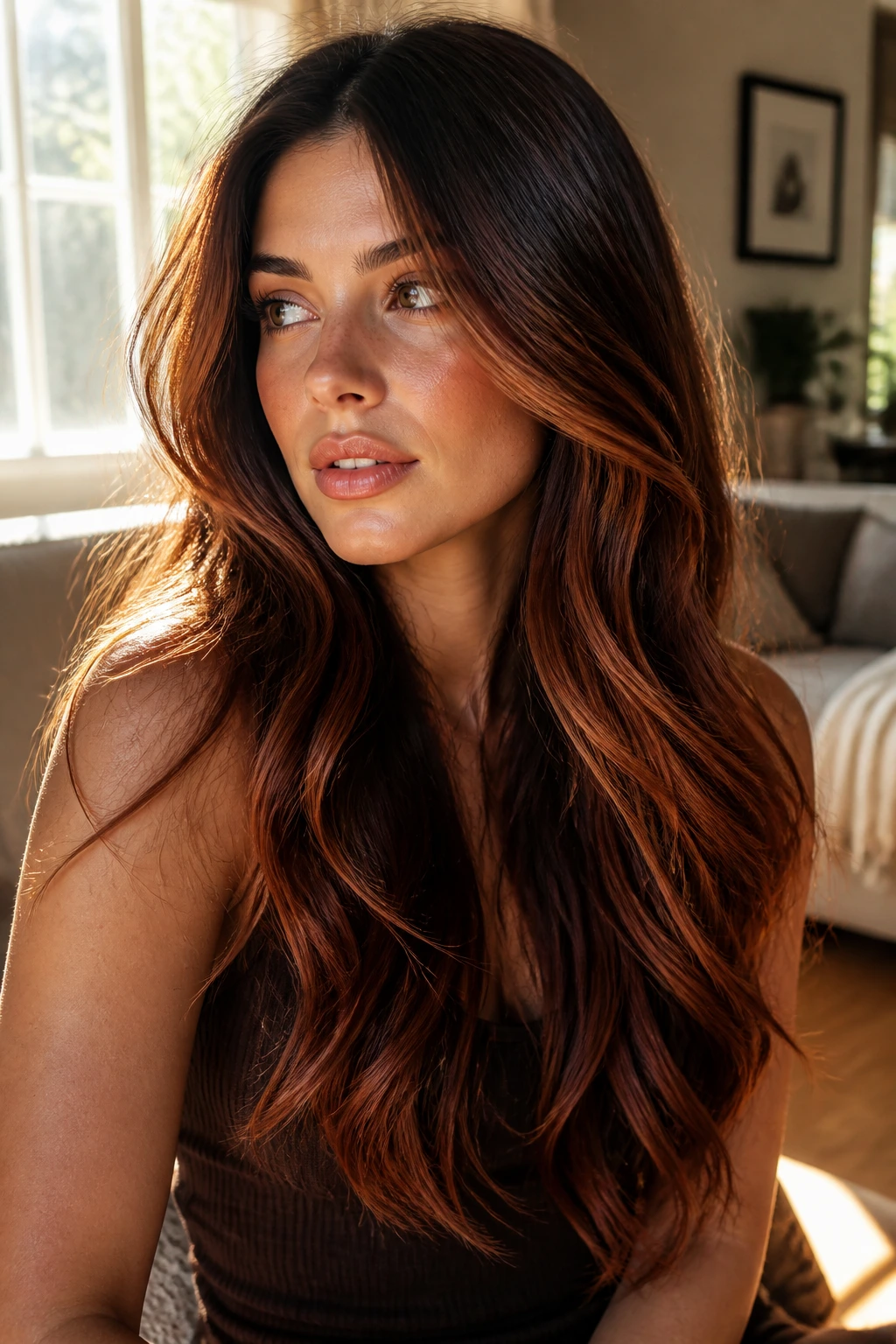
A cinnamon-to-auburn gradient is the most flexible version of the whole set. The front and upper mids carry the lighter cinnamon warmth, then the color deepens toward auburn through the lengths. On long waves, that shift feels fluid because the hair keeps changing shape as it moves.
This is the look I’d point to for someone who wants warmth but still wants the color to feel like part of the brunette family. It’s not flashy, and that’s the appeal. The gradient gives you red dimension when the hair opens up, then retreats back into brown when it falls still.
Why Balayage and Foil Placement Beat a Flat Red Block
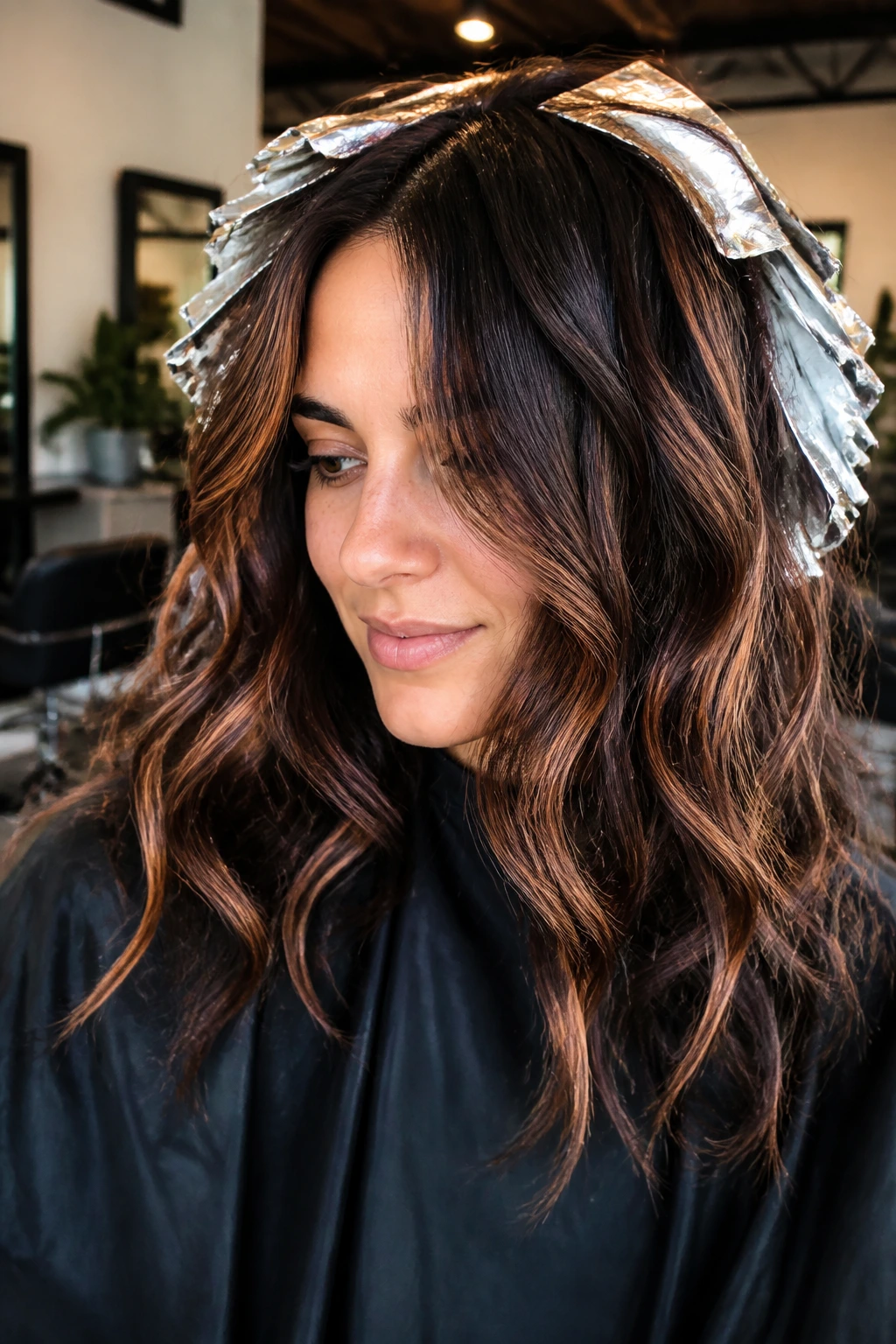
Caramel red looks better with movement built into the placement. That’s the simple truth. Dark wavy hair already has a lot going on in the shape itself, so a flat all-over red block can fight the texture instead of working with it. Balayage, foilayage, babylights, and sliced highlights let the color live in pieces, which is what makes the hair look expensive rather than painted.
The other reason placement matters so much is regrowth. Dark roots show quickly once warm tones start to soften, and a blunt line at the scalp can make even a beautiful color feel tired. Keeping the root deeper — or at least softer — buys you time. It also keeps the red from sitting too close to the face in a way that can look harsh on some undertones.
Porosity matters too. The lighter and warmer the ends get, the faster they grab red pigment. That is why a good colorist often leaves the ends a shade deeper than the mids on already lightened hair. If your ends are dry or porous, they can jump straight to a flat copper-orange. Nobody wants that.
Tools and Products That Keep Warm Highlights Looking Fresh
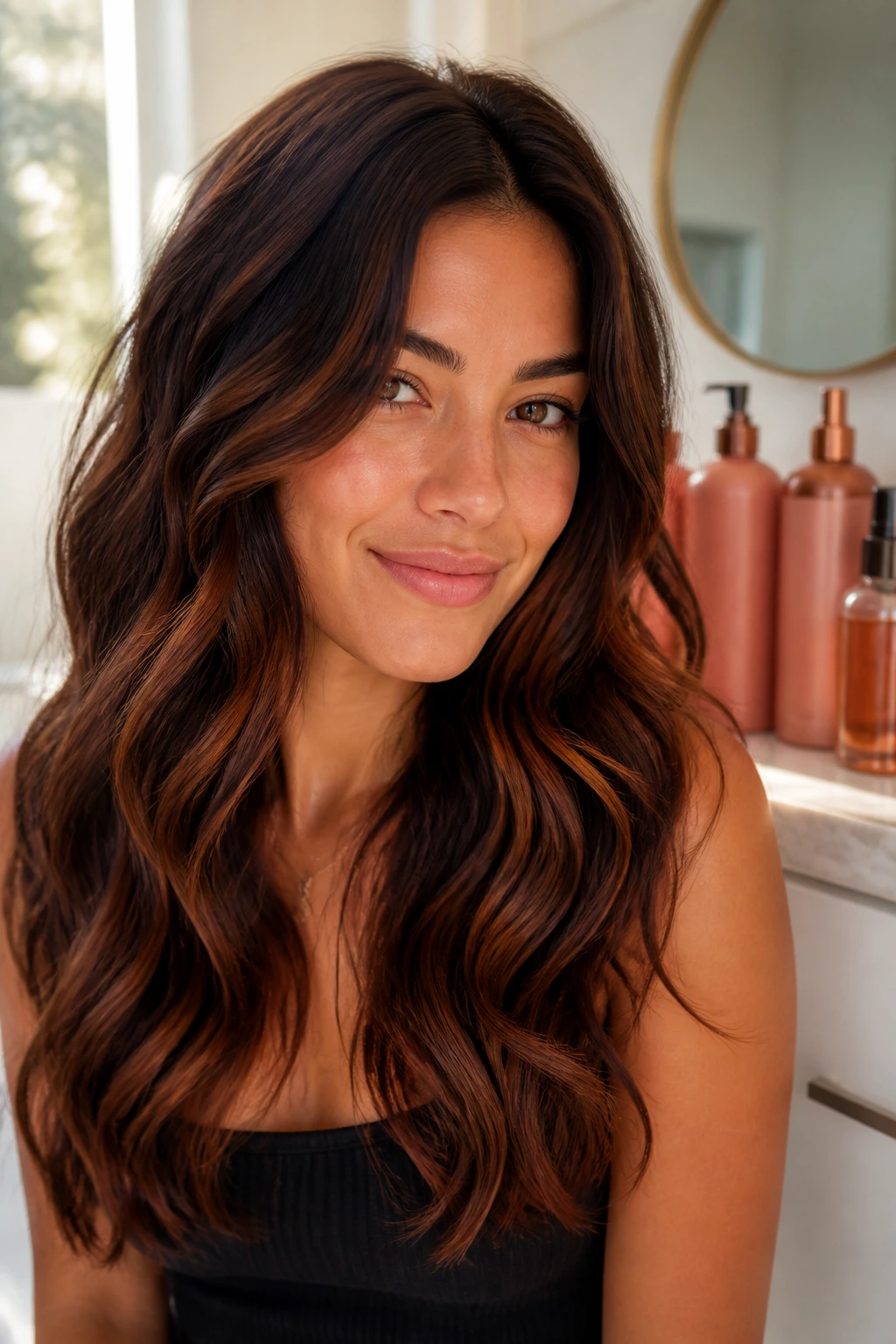
If you’re wearing caramel red highlights on dark wavy hair, the real kit is a mix of salon tools and a few home-care basics. A couple of them are non-negotiable. Others just make life easier.
-
Color-safe shampoo: A sulfate-free formula helps keep warm pigment from sliding out too fast in the shower.
-
Rich conditioner: Look for a smoothing conditioner that doesn’t leave the hair coated and greasy; wavy hair still needs movement.
-
Heat protectant spray: Warm tones fade faster when they’re cooked with a hot wand or flat iron.
-
Wide-tooth comb: This keeps waves from being dragged flat while the hair is wet.
-
Microfiber towel or soft T-shirt: Less friction means less frizz and less color loss around the ends.
-
1.25-inch curling wand: Great for loose, ribbon-like waves that actually show off the red pieces.
-
Salon gloss or at-home color mask: Optional, but useful if you want to refresh copper or auburn between appointments.
-
Sectioning clips: Not glamorous, but they make it easier to style or tone the front pieces without missing the back.
How to Wear the Color So the Red Actually Shows
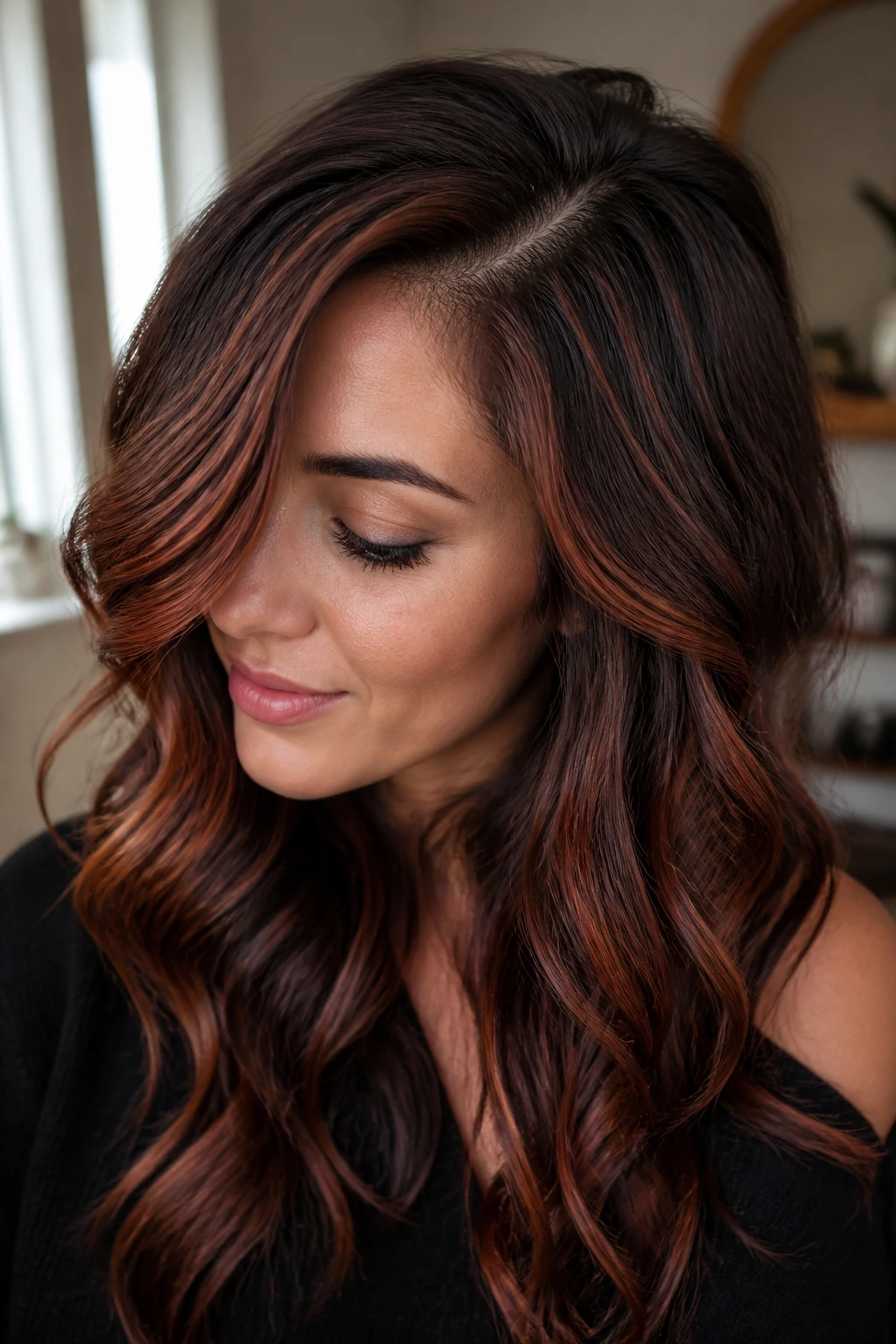
Parting: A middle part shows off symmetrical money pieces and balanced ribbons. A deep side part pushes the brightest copper or cinnamon pieces to one side and makes the color feel more dramatic.
Styling: Loose S-waves, a soft curling wand set around 300–325°F, or brushed-out curls are the best way to show the shifts in tone. Tight curls can hide the red in the texture, which is fine if you want a softer result, but not ideal if you want the highlights to read clearly.
Clothing: Cream, black, olive, rust, denim, and chocolate brown all flatter warm red tones. Stark icy pastels can make the color look hotter than it is, while earthy neutrals usually let the caramel read richer.
Makeup: Terracotta blush, brown liner, and a warm nude or brick lip keep the face in the same color family. If you wear a cool pink lip against copper hair, the hair can feel disconnected. Not always. Just often enough to notice.
Extra Ways to Push the Warmth or Dial It Down
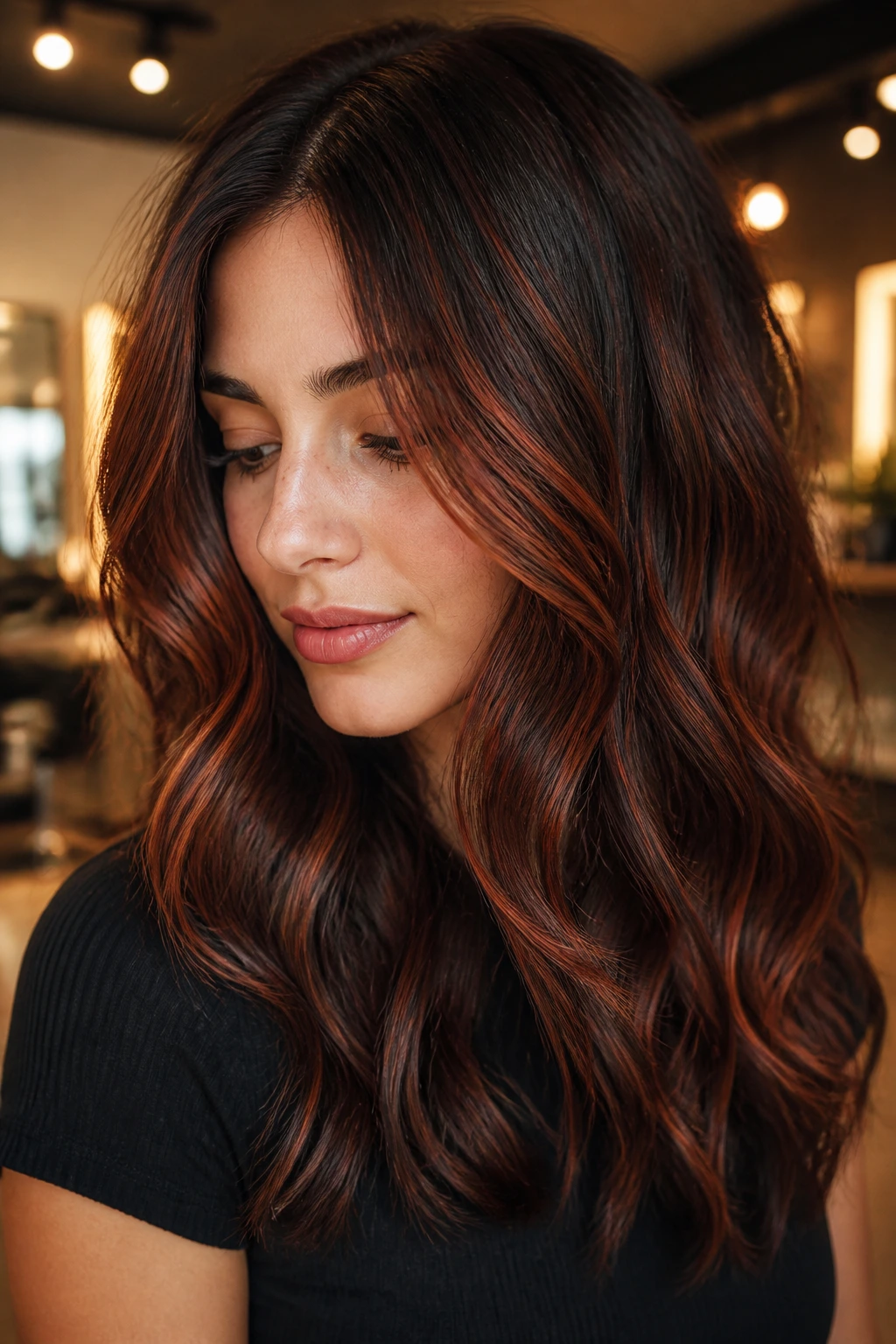
Gloss Boost: If the color feels dull after a few washes, ask for a clear copper or cinnamon gloss instead of a full recolor. That refreshes the shine and deepens the tone without redoing the lightening work.
Softening Move: If the red looks too orange, ask the colorist to push more auburn, chestnut, or mahogany into the formula. That pulls the shade back toward brunette and keeps the warmth from going neon.
Customization: Fine hair usually looks best with thinner ribbons and smaller money pieces. Thick hair can carry wider panels, heavier foilage, or bolder lowlights without losing dimension.
Make-It-Yours: If you want lower contrast, stay in the cinnamon, maple, and auburn end of the palette. If you want a stronger hit of color, put the brighter copper or cherry pieces around the face and leave the lower layers deeper.
Finishing Touch: A drop of lightweight serum on the mids and ends helps the red catch the light. Use too much and the wave goes limp. Use the right amount and the whole thing looks more alive.
Common Mistakes That Make Caramel Red Look Brassy or Flat
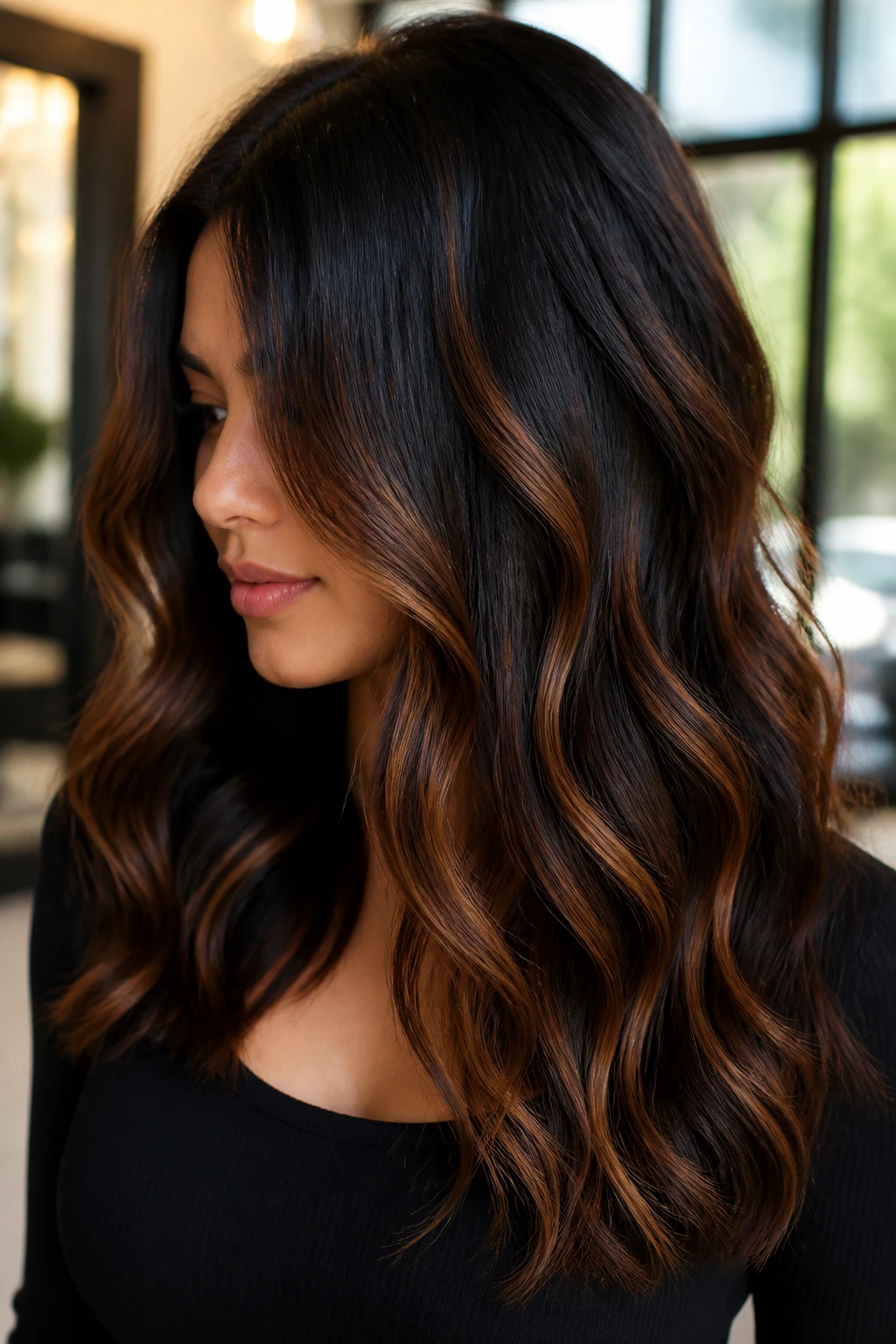
The first mistake is lifting too much hair too high on a dark base. When bright pieces start right at the root in thick sections, the color can look stripey instead of blended. Keep the lightest pieces away from the scalp unless you specifically want a high-contrast front frame.
The second mistake is using one tone everywhere. A single flat copper shade on dark wavy hair can look heavy, especially when the texture is loose and the layers are soft. A mix of cinnamon, auburn, and caramel gives the hair more movement.
The third one is skipping glosses and then wondering why the red faded into dust. Warm tones need maintenance. They do not need full-on re-dyeing every time, but they do need refreshing before the color gets too dry or too dull.
- Overusing purple shampoo: It can mute caramel and copper tones, leaving them muddy instead of bright.
- Ignoring porosity: Porous ends grab red faster and darker; a colorist should account for that when placing the warmest pieces.
- Styling with too much heat: A hot wand set near the max will chew through red pigment faster than you expect.
Color Directions to Try if You Want More or Less Drama
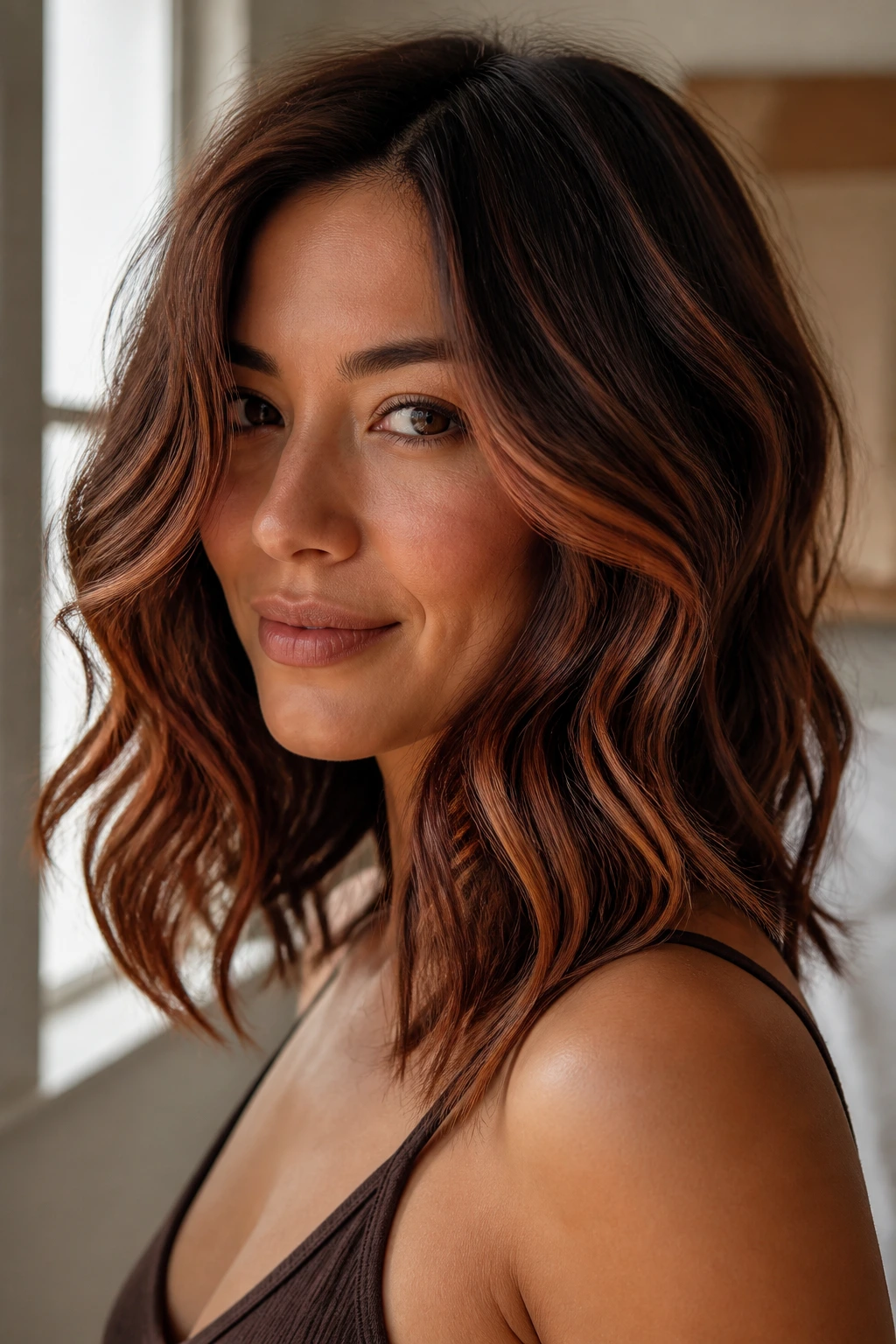
Cinnamon Latte Blend: This is the softest option. It keeps the red in the cinnamon-caramel family and works well if you want warmth that still reads brunette from a few feet away.
Cherry Velvet: A deeper, wine-leaning version for people who like moodier color. It looks especially good on thick waves because the folds keep it from feeling flat.
Terracotta Rebel: Brighter and earthier at the same time. This version leans more red-orange, so it suits someone who wants the hair to look warm even in low light.
Smoked Copper Veil: A more subtle, translucent approach. The copper is thin and airy, which is useful if your hair is fine or if you want the color to grow out quietly.
Maple-Auburn Melt: This one works for longer hair and heavier layering. The maple warmth at the top blends into a richer auburn below, which keeps the waves from looking chopped into separate sections.
Care, Refreshes, and Long-Term Maintenance
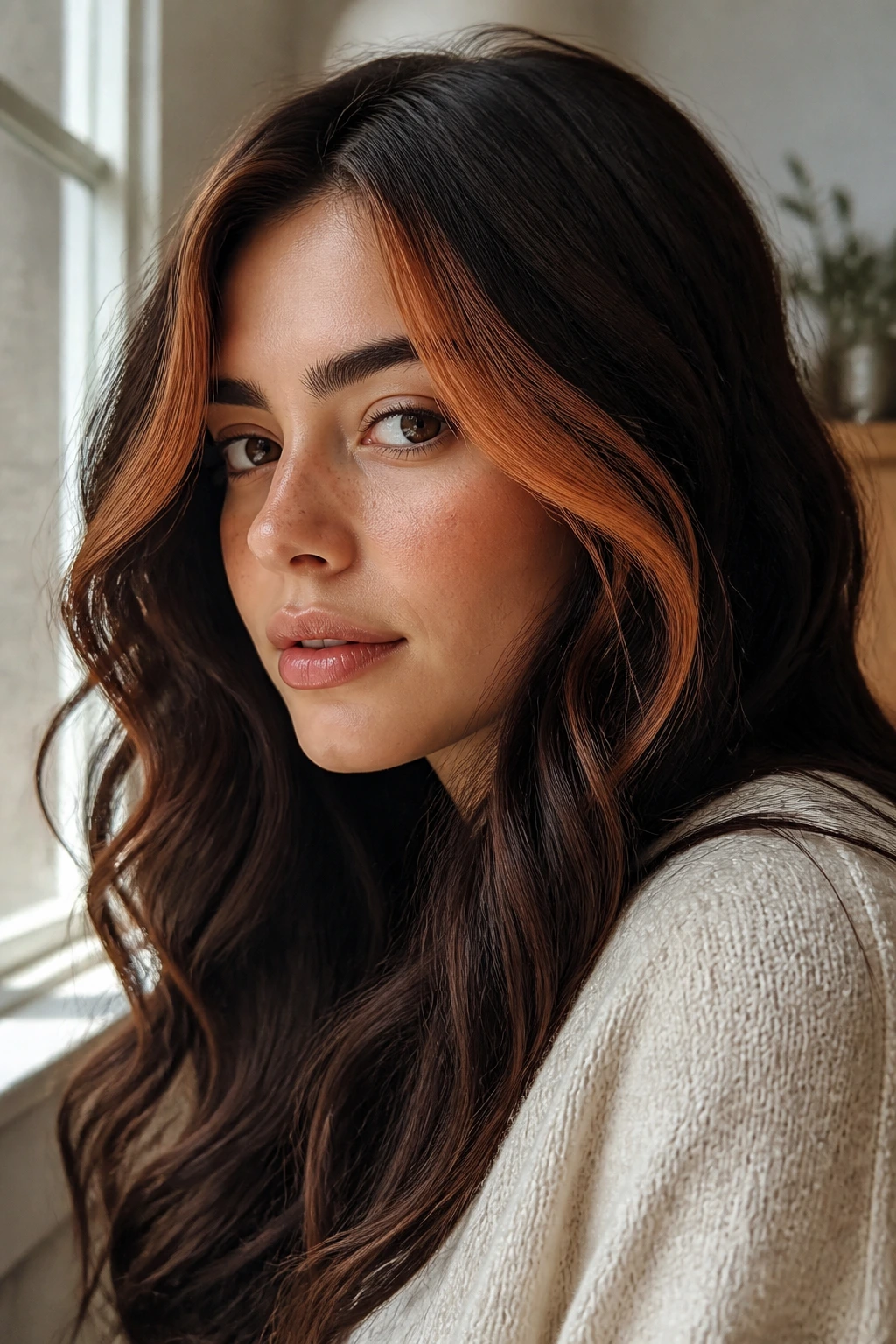
Warm highlights fade faster than ash or beige ones. That is just the nature of red pigment. To keep caramel red highlights looking alive on dark wavy hair, space out shampooing to two or three times a week if your scalp allows it, and use cool or lukewarm water instead of hot water. Hot showers are great for people who don’t care about color longevity. If you care, they’re a headache.
A salon gloss every 4 to 6 weeks usually keeps the warmth from slipping into flat brown. If your hair is porous or very lightened, you may need a refresh a little sooner. For at-home upkeep, a color-depositing conditioner in copper, auburn, or warm brown can keep the tone from looking tired between appointments.
Heat styling needs a little discipline. Stay around 300–325°F for wavy styling tools if your hair is color-treated, and always use heat protectant. If you swim, rinse the hair right after and condition it well; chlorine and salt both rough up the cuticle, which makes warm tones fade in a hurry.
Frequently Asked Questions
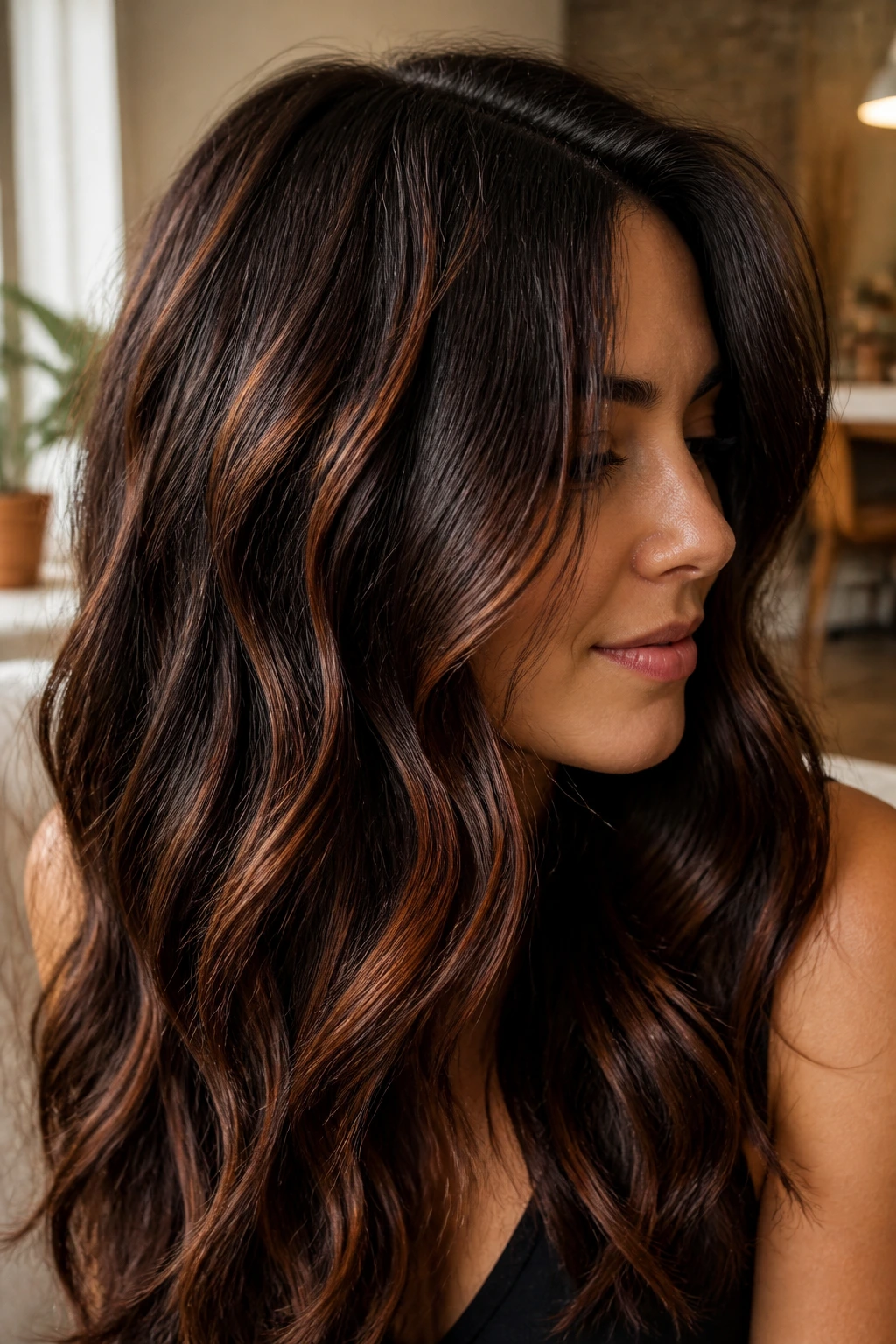
Will caramel red highlights work on very dark brown or black hair?
Yes, but the pieces usually need pre-lightening if you want the color to show instead of disappearing into the base. On very dark hair, the safest result is often a red-brown or auburn-caramel tone rather than a bright copper.
Do I need bleach for this look?
Not always, but deeper bases usually need some lift for the red to read clearly. If your goal is a subtle warm sheen, a gloss or demi-permanent color may be enough. If you want visible ribbons, your colorist will probably need to lighten selected strands first.
Are these highlights good for thick wavy hair?
Very. Thick waves can carry wider ribbons, foilage, or lowlights without looking sparse, and the texture helps hide grow-out. The only catch is that heavy saturation near the ends can feel bulky, so placement matters.
How often do I need to refresh the color?
A gloss or toner every 4 to 6 weeks is common if you want the warm tones to stay rich. If you wash less often and avoid hot tools, you might stretch that a little longer. If you wash daily, it will fade faster.
What if the highlights turn too orange?
That usually means the lift was a touch too warm or the red tone was too bright for the base. The fix is usually a deeper auburn, mahogany, or chestnut gloss rather than more copper on top of it.
Can I keep my natural roots and still wear this color?
Absolutely. In fact, leaving the roots dark is one of the best ways to make caramel red feel modern and easier to maintain. A soft shadow root keeps the contrast intentional.
Is this a good choice for hair that’s already damaged?
Only if you keep the lightening mild and the highlight placement conservative. Porous ends can grab too much red, and damaged hair tends to fade unevenly. A strand test and a cautious formula matter more than they do with healthier hair.
What styling makes the red show best?
Loose waves do. A brushed-out curl, a deep side part, or a half-up style can reveal the warm ribbons without making the hair look overworked. Flat ironing tends to hide the dimension unless the highlights are placed very boldly.
The Shade That Keeps Moving
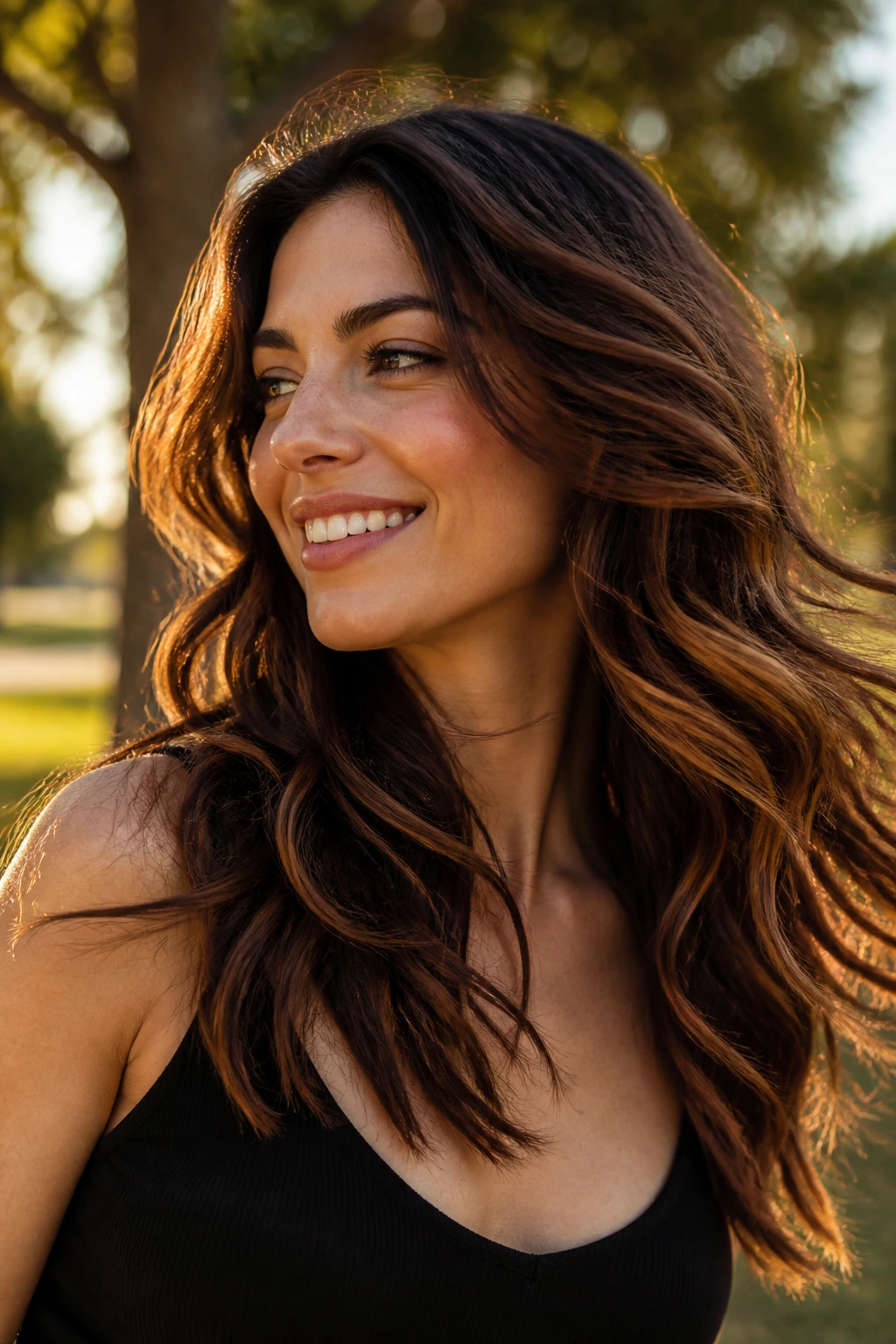
Caramel red highlights on dark wavy hair work because they play with motion instead of fighting it. The color catches on bends, disappears into shadow, then flashes back when the hair shifts. That’s the whole appeal. It looks alive.
The best version for you depends on how much you want people to notice first: the face frame, the ends, the hidden panels, or the whole woven mix. Pick the one that matches your hair’s density and your patience for upkeep, and the rest falls into place faster than people expect.