



Light brown highlights for tan skin with side-swept bangs have a nice little trick built into them: they can wake up the face without pushing the hair into loud, obvious blonde territory. When the brown lands in that beige-caramel zone — warmer than ash, softer than gold, never orange — it works with tan skin instead of competing with it. And the side-swept bang does the rest, sliding brightness across the forehead and cheekbone line in a way that feels easy rather than forced.
That diagonal fringe matters more than people think. A blunt bang cuts a hard line; a side-swept one bends the eye and gives the highlights somewhere to travel. On tan skin, that movement can make the color look richer, especially when the front pieces are a touch brighter than the mids and ends. The result is less “striped hair,” more “sunlit hair with shape.”
The part that gets missed most often is undertone. Tan skin isn’t one shade, and light brown isn’t one shade either. Beige brown, caramel brown, mushroom brown, toffee brown, honey brown — they all land differently once they sit next to warm or olive tan skin, and the tiniest shift can be the difference between flattering and flat. That is exactly why the good versions of this look deserve a closer, more specific look.
Why This Collection Feels So Easy to Wear on Tan Skin
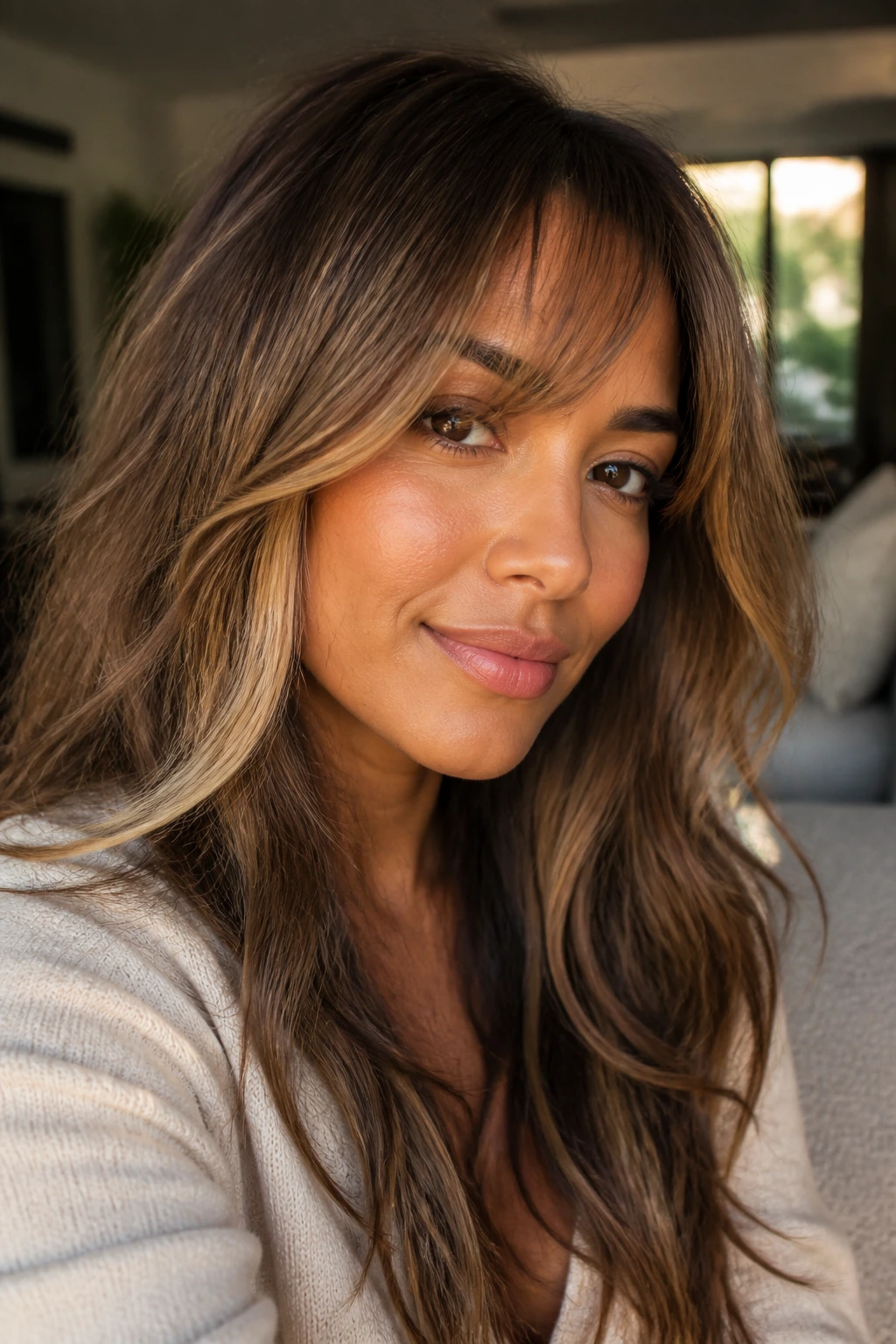
- Face-framing brightness: The lightest pieces sit near the cheekbones and eyes, which keeps the hair from looking heavy around the face.
- Undertone-friendly range: Light brown gives you room to go warmer, cooler, or more neutral without drifting into brassy blonde or muddy brunette.
- Soft grow-out: A root shadow or balayage placement softens the line as the color grows, so the look stays tidy longer.
- Bang movement: Side-swept bangs catch the brightest strands and make the whole style look more dimensional when you tuck, flip, or blow-dry them over.
- Low-contrast option: You get visible change without the shock of high-contrast blonde streaks, which is often the sweet spot for tan skin.
- Works with texture: Straight hair shows off the ribbons; waves and curls break them up and make the color look even more blended.
1. Champagne Beige Face-Frame Highlights
Champagne beige is the move when you want brightness that feels polished, not frosty. The light brown sits close to a level 7 beige with just enough warmth to avoid looking chalky against tan skin, and the side-swept bangs turn that front brightness into a soft arc instead of a hard strip.
Why It Works
The front panels do most of the heavy lifting here. Ask for the brightest pieces to start near the temples and stop around the cheekbone, with the bang itself carrying a few finer ribbons so the sweep looks intentional. That placement keeps the eye near the face and makes tan skin look sunlit rather than flat.
I like this look on medium to long hair, especially if the ends already have a little bend. A flat iron curl at the last two inches or a loose blowout makes the beige tones show up much better than poker-straight hair.
Quick note: if your base is deep brown, don’t ask for icy beige in one visit. You’ll get a cleaner result if the colorist lifts to a warm beige-brown first, then glazes it softer.
2. Caramel Ribbon Balayage
Caramel ribbons are the friendly version of highlights. They’re broader than babylights, softer than chunky streaks, and they sit in that light brown lane that makes tan skin look warmer without tipping into copper.
This one works because the ribbons are painted through the mid-lengths first, then a few face-framing pieces are pulled higher so the side-swept bangs can borrow some of that brightness. The sweep across the forehead creates motion, and motion is what keeps caramel from reading heavy.
If you wear your hair in waves, this is especially good. The bends separate the ribbons just enough to show the different tones. On straight hair, ask for slightly narrower ribbons around the face so the color doesn’t look too blocky.
Best feature: the grow-out is forgiving. A balayage ribbon stays soft as it moves down, which means you can push the next appointment a little longer without the whole style falling apart.
3. Mushroom Brown Melt
Mushroom brown has a cooler, smoke-kissed edge that looks especially good on tan skin with olive undertones. It’s not gray, and it’s not dark enough to disappear. It sits in that neutral lane that gives dimension without shouting for attention.
The subtle part is the point.
The highlights here should be narrow and diffused, not bright blocks. Ask for a soft melt from a deeper brunette base into a muted light brown through the upper layers, then let the side-swept bangs carry just a whisper of the lighter tone at the edges. That little bit of brightness keeps the face from looking shadowed.
I reach for this look when someone wants a cooler result but doesn’t want their hair to look flat. Mushroom brown can go dull if the gloss is too ashy, so a neutral-beige toner is usually safer than a blue-heavy formula.
How to wear it: a tucked-behind-one-ear style shows off the sweep nicely. The contrast between the bang, cheekbone, and muted ribbons is cleaner than it looks in photos.
4. Honey Money Piece
A honey money piece is the quickest way to get obvious brightness without turning the whole head lighter. The front stripes sit just a shade or two above the base, so on tan skin they read golden-brown rather than blonde.
This style loves side-swept bangs because the bang itself becomes part of the reveal. When the fringe arcs across the forehead, the lighter front section appears in little flashes instead of one big stripe, which keeps the look softer and more expensive-looking.
I’d ask for a thicker face frame if your hair is medium to thick and a narrower one if your hair is fine. Fine hair can lose the effect fast if the pieces are too wide. Thick hair can handle more lightness near the front without looking busy.
One useful trick: style the bang with a round brush away from the face, then sweep it back across the brow before it cools. That little bend makes the money piece look like it belongs there.
5. Almond Contour Waves
Almond brown is one of my favorites for tan skin because it lands in a clean, neutral-warm zone. It has the softness of beige with the depth of a richer brunette, which gives side-swept bangs something to sit against.
The contour effect comes from placing the light brown pieces exactly where the eye wants to travel: temple, cheekbone, and the upper curve of the bang. That is where the light hits first, so the color does some of the face-shaping for you. Not magic. Just placement.
If your hair has loose waves, this shade looks especially good because the light catches on the bends instead of in one flat panel. Straight hair works too, but I’d keep the highlights slightly more feathered so they don’t look like painted stripes.
Best for: someone who wants a brown that still looks like brown. Not blonde-adjacent. Not too warm. Just clean, dimensional, and easy to live with.
6. Toffee Swirl Layers
Toffee brown has more warmth than almond, and that warmth is useful on tan skin when you want the hair to feel cozy instead of smoky. The swirl effect comes from weaving the highlights through layered cuts so the color moves in bands rather than one flat block.
Why It Feels Different
Side-swept bangs make a huge difference here. Because the fringe travels diagonally, the toffee tone can echo that line and make the entire cut look more fluid. If the bang is too thick, though, the look gets heavy fast, so keep the fringe feathered and a little airy at the ends.
This is one of those shades that looks better with a bit of styling. A soft bend from a curling iron or a blowout with a medium round brush keeps the toffee tones from flattening out. The highlights show best when the layers separate just a little.
If you like warm jewelry tones, warm makeup, and golden skin, this one usually feels easy. If you run very olive or prefer cooler clothing tones, ask for a beige-toffee mix instead of full-on gold.
7. Beige Babylights with Feathered Fringe
Babylights are the quietest kind of highlight, and that’s exactly why they work. Fine strands of light brown, threaded close together, create a shimmer effect that tan skin can wear without looking overdone.
The feathered fringe is the part that makes this style feel current and not fussy. A side-swept bang with soft ends blends into the babylights so the front never looks like two separate ideas fighting each other. It’s one of the best choices for fine hair because the color adds visual density without needing chunky pieces.
What Makes It Look Expensive
Not all brightness needs to be bold. On tan skin, a narrow beige-brown babylight can look cleaner than a wide caramel ribbon, especially if your goal is movement rather than contrast. Keep the root soft, leave a thin shadow at the scalp, and let the lighter pieces stay whisper-thin around the face.
This one also grows out well. Babylights blur fast, which is either a blessing or a curse depending on how much maintenance you want. I count it as a blessing.
8. Bronze-Laced Lob
A lob gives light brown highlights a clean stage. With tan skin, bronze-laced pieces can pick up the warmth already in the complexion and make the whole cut look more finished, especially when the side-swept bangs skim one brow and stop just above the cheek.
The trick here is not to overpack the front. You want a few brighter strokes near the part, then softer bronze threads through the rest of the lob so the sweep of the bang feels connected to the mid-lengths. Too much light near the front and the lob starts to look striped. Too little and the bang disappears into the rest of the hair.
This is a strong choice for straight or slightly wavy hair because the line of the bob shows off the contrast in the color. If you curl it, keep the waves loose and brushed out; tight curls can make the highlight placement harder to read.
Tip I’d keep: ask for the lightest bronze pieces to stop just under the bang line. That gives the face a lift without making the fringe look cut off.
9. Cocoa-and-Beige Sweep
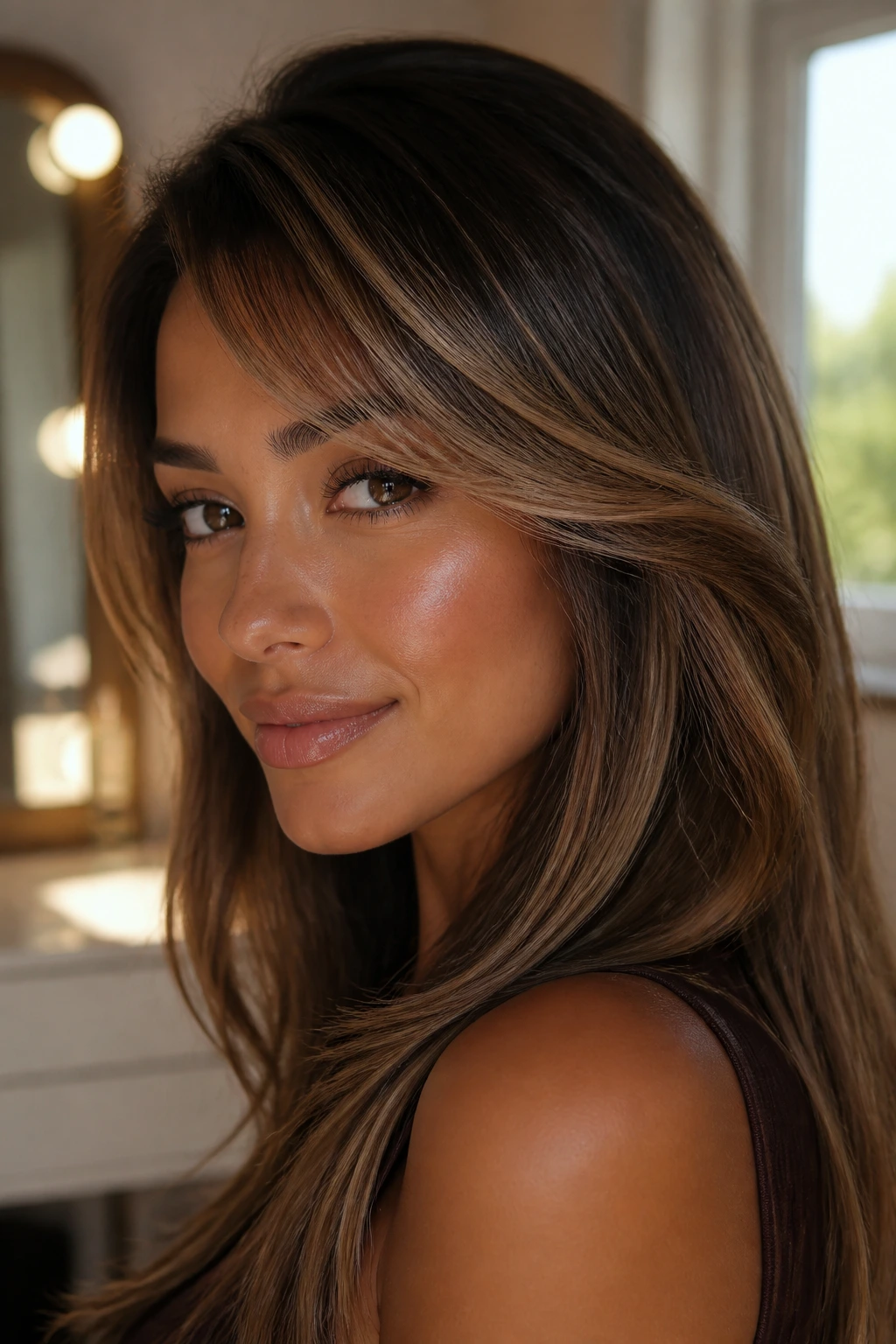
Why does this combination work so well? Because cocoa depth keeps the tan skin grounded, while beige highlights keep the hair from getting too dark around the face. The side-swept bangs sit right between those two tones and help the color shift feel deliberate.
This is a cleaner look than a full caramel melt. The beige pieces should be fine and directional, not broad, and they work best when they trace the bang, the temple, and the upper cheek area. You end up with a soft diagonal highlight path instead of a random scatter.
How to use it
Wear this with a side part that follows the direction of the bangs. If the part fights the fringe, the color loses its shape. A lightweight smoothing cream before blow-drying helps the bangs stay curved, not stringy, and the beige pieces show up better when the hair has a little shine.
I’d choose this for medium-density hair that needs movement but not a huge color change. It’s one of the more wearable options on the list.
10. Maple Glaze Highlights
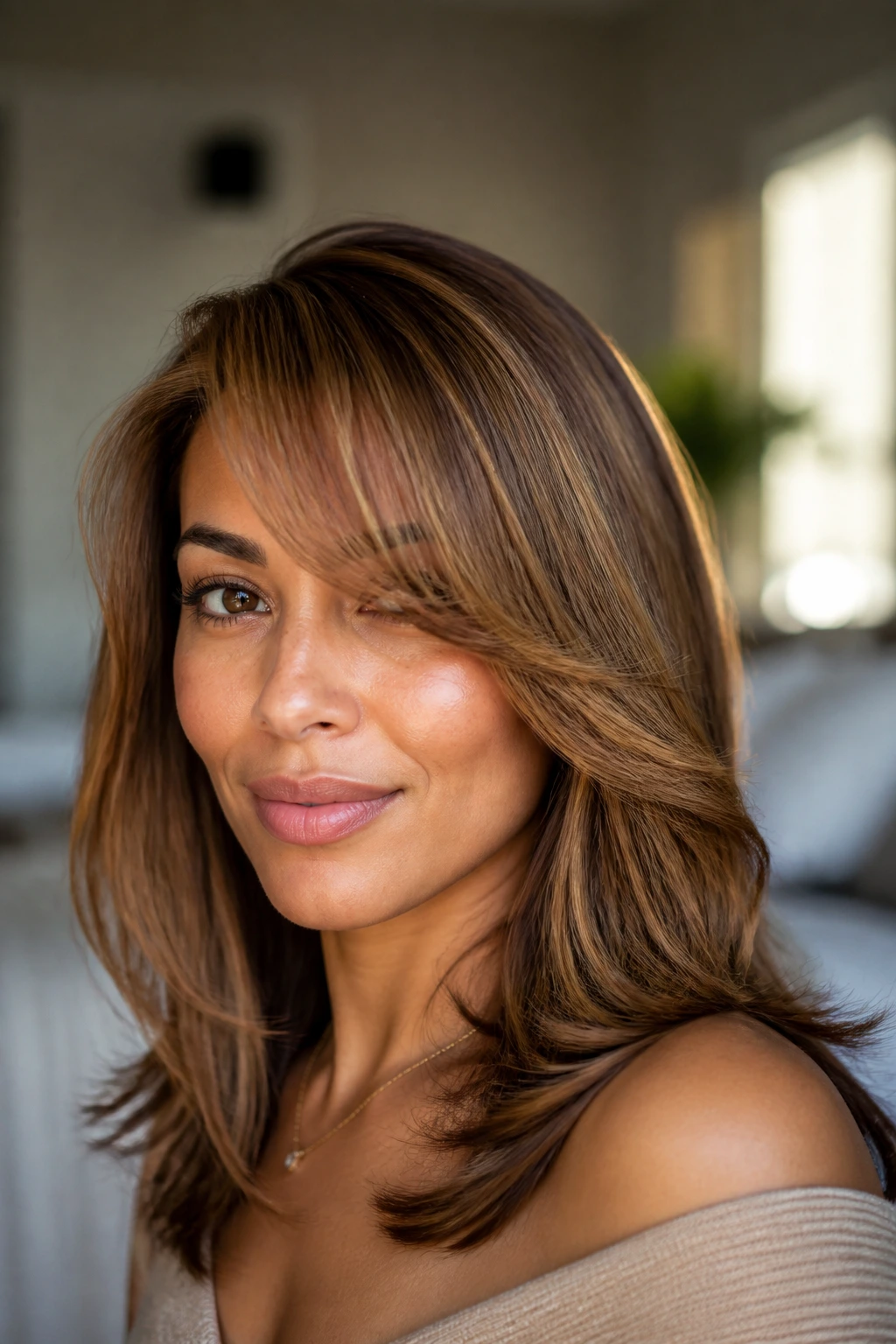
Maple glaze is warmer than beige and softer than copper, which is why it sits so nicely on tan skin. The color has a syrupy brown-gold feel, but it should still read as light brown, not blonde.
The glaze effect comes from keeping the highlights glossy and blended. Ask for soft surface painting around the top layers so the side-swept bangs can catch the light when they move. That little flash across the forehead is what makes the color look lively.
This look is at its best on shoulder-length hair that gets brushed forward and tucked back through the day. The bangs soften the front, and the maple tones warm up the complexion in a way that feels almost effortless — though really, it is the placement doing the work.
Best pairing: a soft blowout with bent ends. A flat, straight finish makes maple look too uniform. A bend gives it life.
11. Soft Walnut Veil
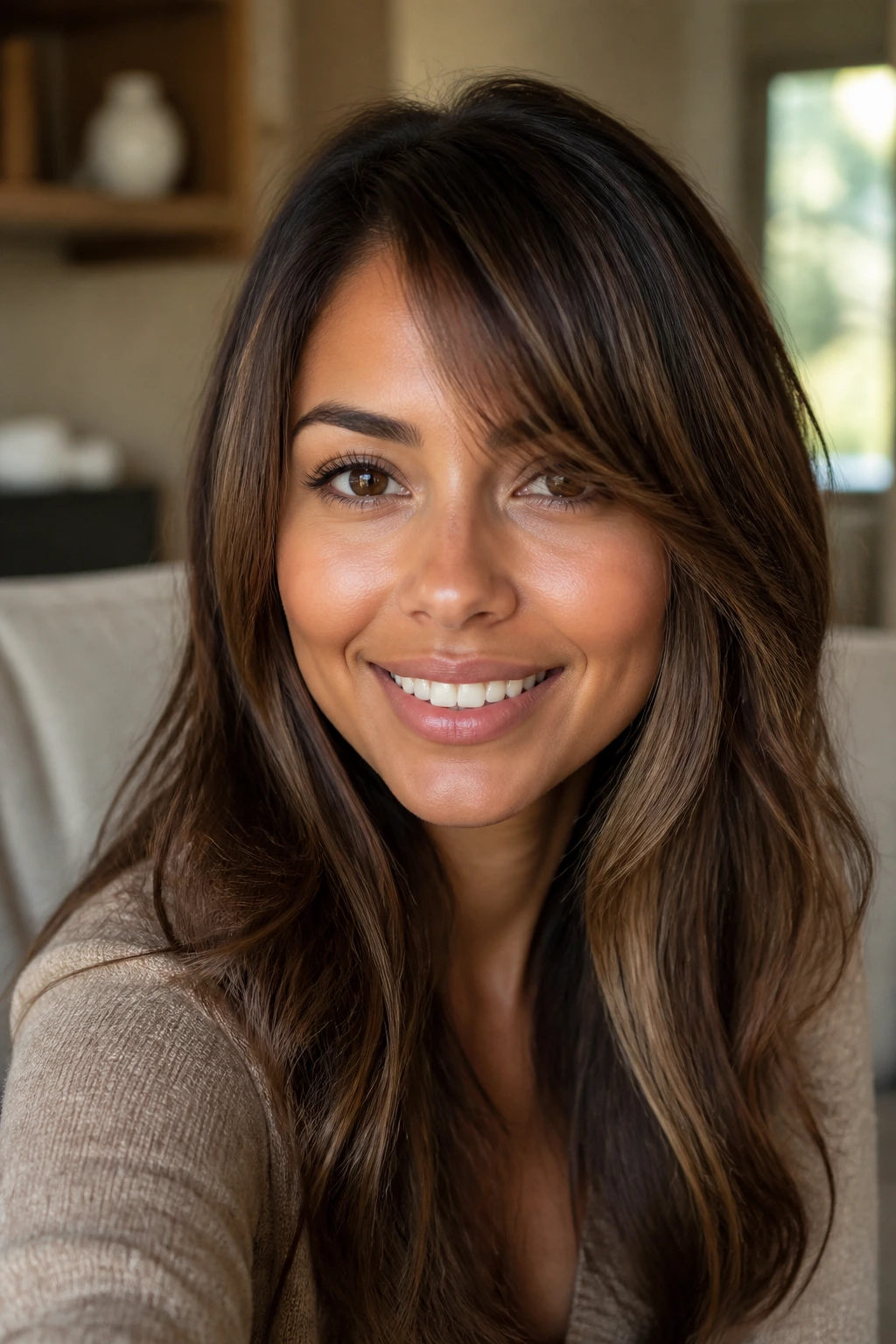
Walnut brown has more depth than caramel, and the veil version keeps the highlights diffused instead of obvious. That makes it especially good if your tan skin leans neutral and you want the color to feel blended rather than bright.
The side-swept bangs here should be soft at the ends, almost brush-stroked rather than cut into a hard line. A veil of light brown near the face is enough. The rest can stay calm and dimensional, which gives the whole style a quieter, more grown-in look.
I like this on straight hair because the smooth surface makes the color shift more visible. On waves, the veil can disappear a little unless the highlights are placed a touch higher around the part.
Short version: this is the look for someone who hates obvious highlight lines but still wants the face to look awake. It’s low-drama in the best way.
12. Sunlit Chestnut Slices
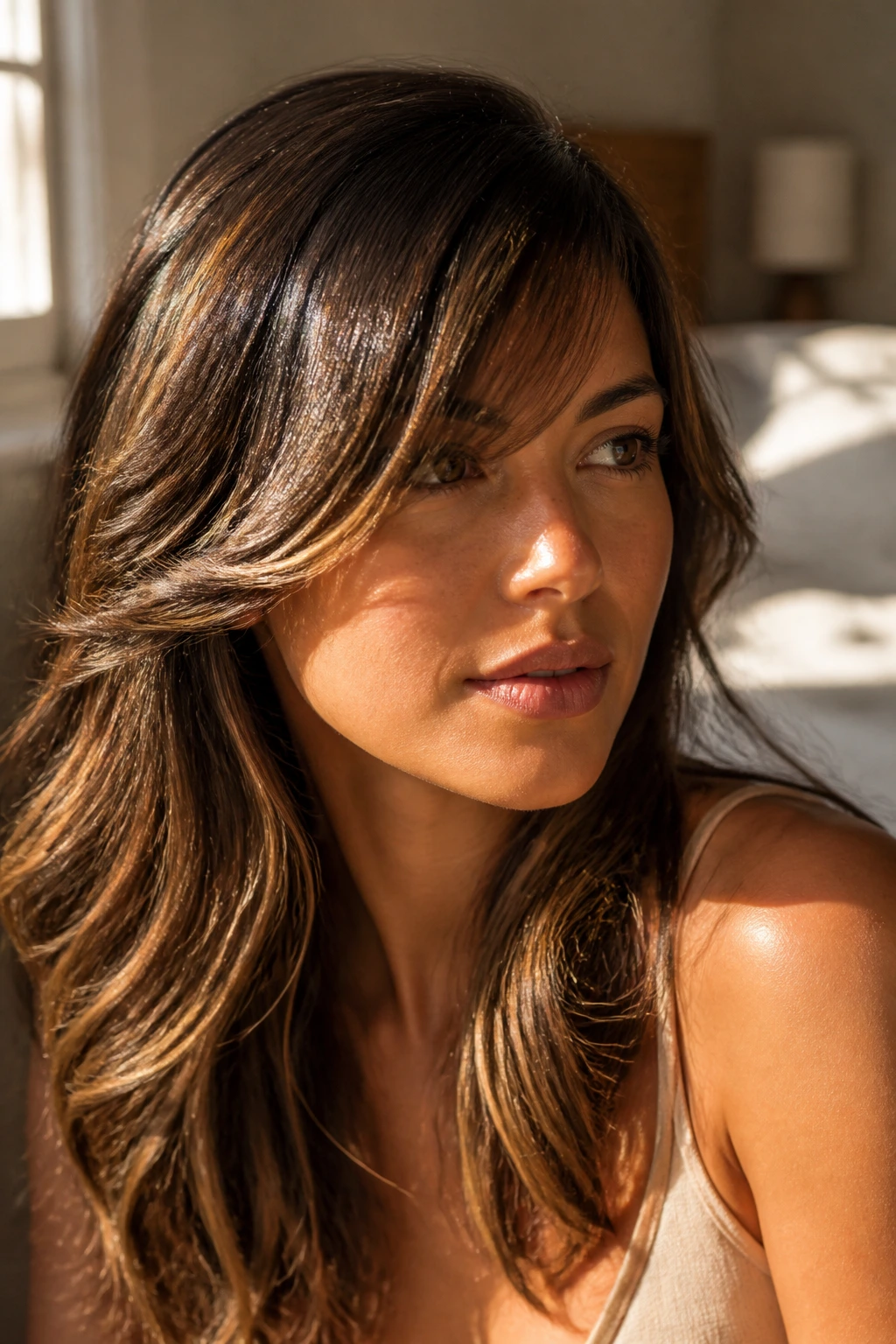
Chestnut slices are broader than babylights and thinner than ribbon highlights. They give tan skin a warm, earthy brightness that feels grounded, not flashy, and the side-swept bangs help the slices connect to the rest of the hair.
This style uses strategically placed slices rather than all-over lightening. Ask for a few brighter pieces near the part line and around the front, then keep the rest of the slices spread through the upper mids. That placement keeps the hair from getting puffy-looking at the crown, which can happen when too many light pieces sit too close together.
What makes it different
It is not a “go lighter everywhere” look. It’s more selective. That selectiveness is why it flatters tan skin so well; the brown stays rich, the bright spots stay controlled, and the bang gives you a moving frame instead of a block of color.
If you wear a lot of natural textures, this one can look especially good because the slices break up as the hair moves.
13. Smoky Beige Balayage
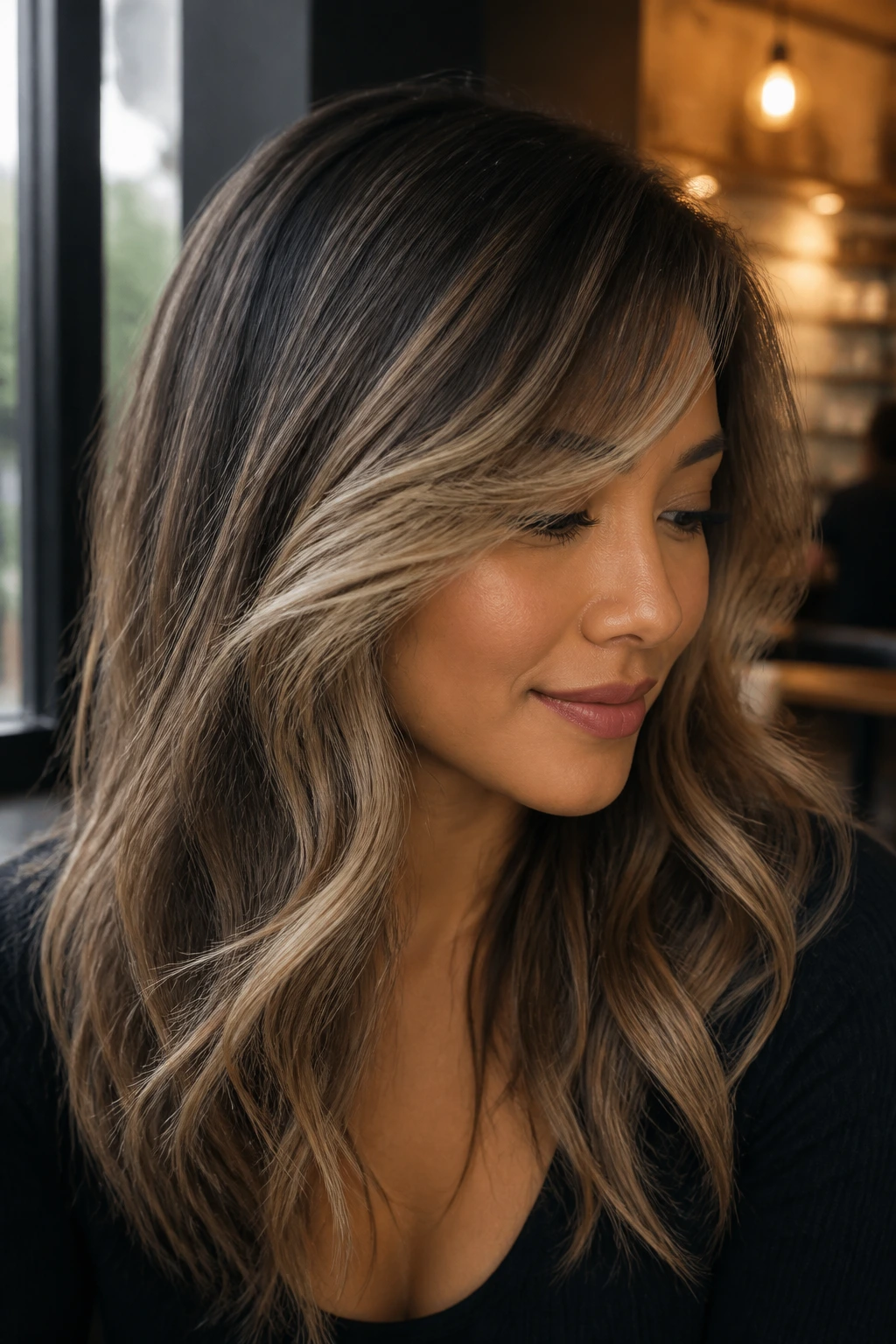
Smoky beige is for tan skin that looks better with a little coolness in the hair. It keeps the light brown on the ash-beige side, which can stop the face from looking overly warm or ruddy.
The balayage should be soft and feathered, especially around the side-swept bangs. I’d avoid thick stripes here. Thin, smoky pieces around the part and temples are enough to make the diagonal bang feel like part of the color story.
A blunt blowout can make smoky beige look flatter than it should. Give it a loose bend or a brushed wave, and the cooler tone starts to show its depth. If the ends get too pale, the whole thing can drift toward ash-blonde, which is not the point.
Good on: olive tan skin, muted makeup, and hair that already holds a smooth finish. If your skin loves gold jewelry, go a touch warmer.
14. Cinnamon Latte Waves
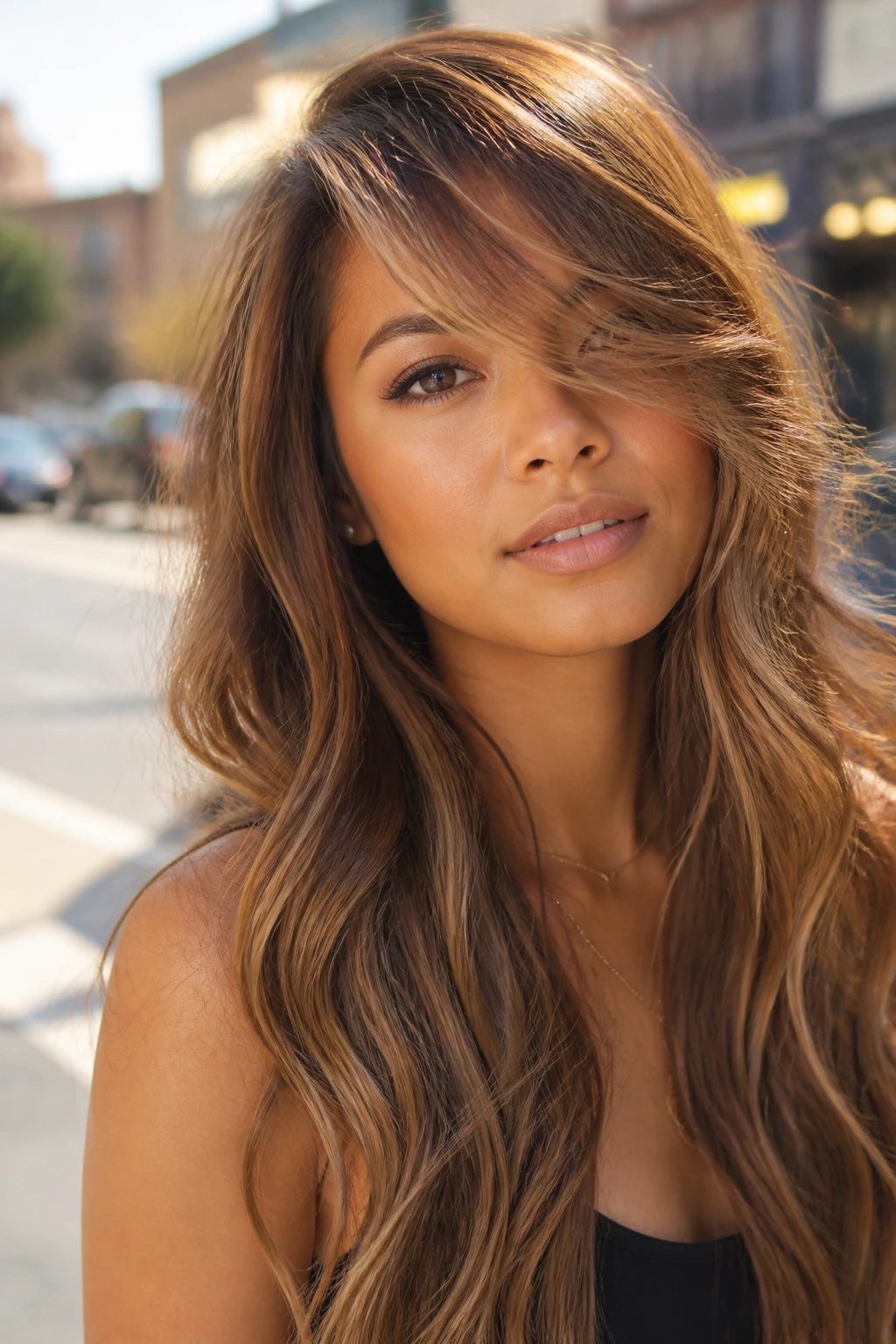
Cinnamon latte is warmer, richer, and a little spicier than the cooler browns above. On tan skin, that warmth can be gorgeous if it stays in the light brown range and doesn’t veer into orange.
The side-swept bangs should be long enough to brush the outer corner of one eye. That length gives the waves and the fringe enough overlap, so the highlights look woven through the front rather than stuck on top. A few finer pieces around the bang line keep the color from feeling heavy.
This is a look that loves movement. Loose waves, a soft bend, even air-dried texture all help. Straight hair can work, but you may want a bit more layering so the cinnamon pieces don’t just sit there in one flat sheet.
My preference: keep the root neutral and let the warmth live from the mid-lengths down. That makes the hair look sun-warmed instead of brass-heavy.
15. Honey Bronde Sweep
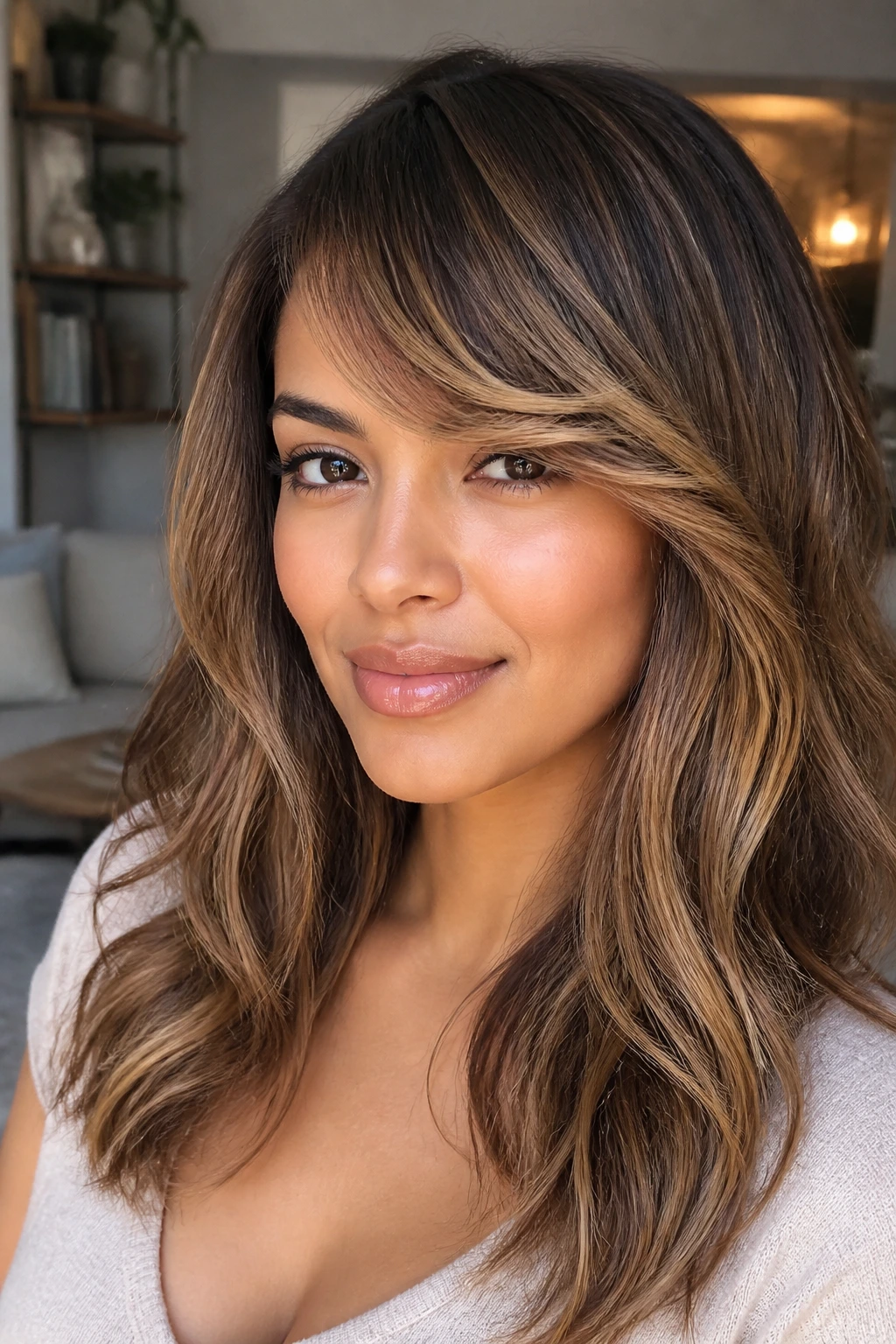
Bronde is useful because it sits in the middle, and that middle is where a lot of tan skin looks best. Honey bronde gives you enough brightness to notice, but the brown still does most of the work.
The sweep should be directional. Ask the colorist to place the brightest strands along the arc of the side-swept bangs, then ease the density down toward the mids. If the pieces are too evenly scattered, the look loses its shape. The whole point is a soft line that bends with the fringe.
Best fit
This one suits people who like easy styling. It doesn’t demand a perfect blowout. A quick rough-dry, a round-brush pass at the bangs, and a few bends through the lengths are enough to make it read well.
Bronde can go too blonde if you push the lift too far, so keep the highlight level conservative. Honey-brown, not beach-blonde. That’s the line.
16. Toasted Hazelnut Pieces
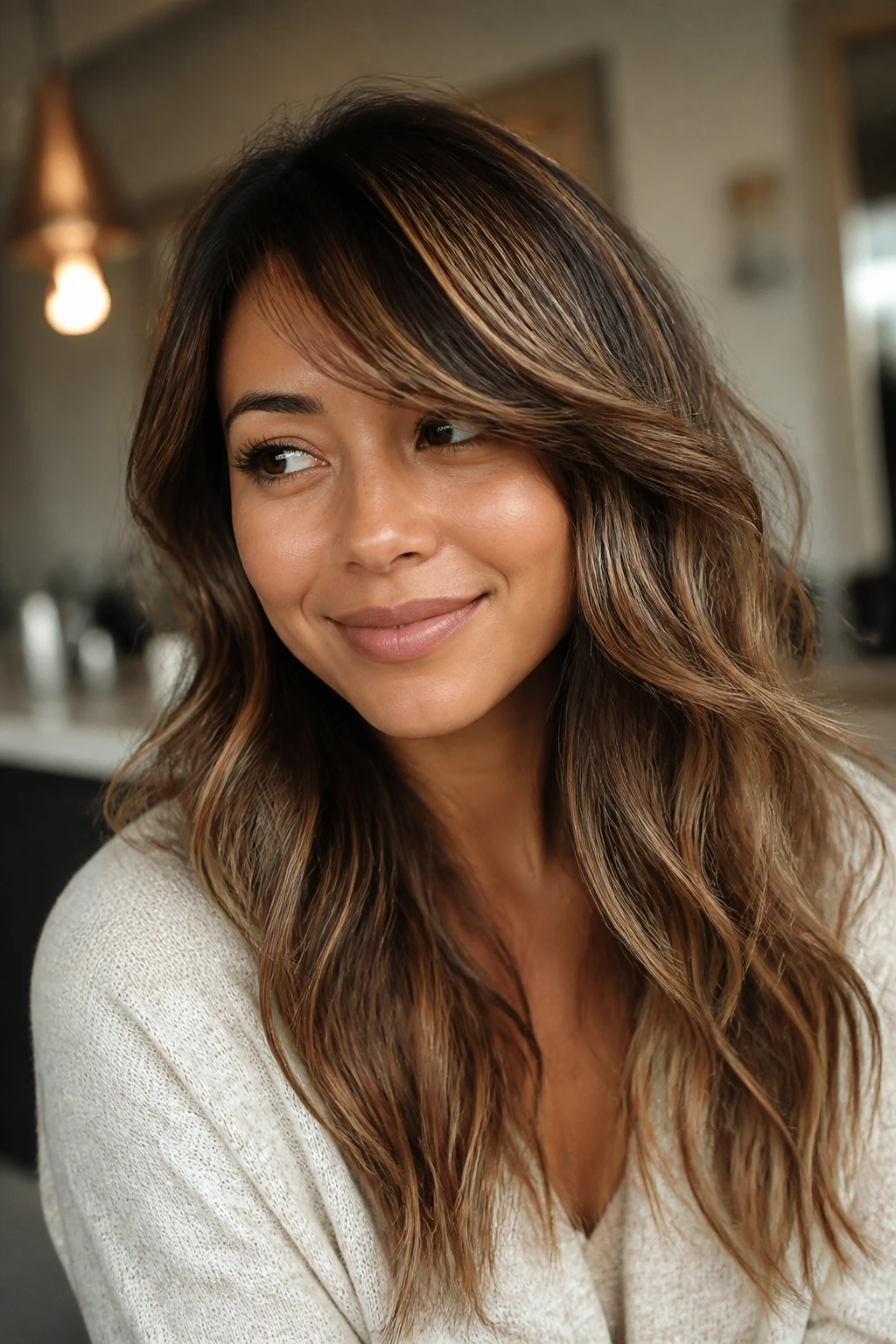
Toasted hazelnut has a deeper brown base than some of the other looks here, which makes the light brown highlights pop in a measured way. On tan skin, that gives you contrast without harshness.
I like this when the bangs are side-swept but a little piecey. Instead of one full curtain of fringe, you get separation through the bang, and each section catches the hazelnut tone a little differently. The color reads as movement rather than one solid block.
If your hair is thick, this can be one of the best options on the list. Thick hair needs tonal contrast to show dimension, and hazelnut does that without looking dry or over-lightened. On finer hair, keep the pieces narrower so the ends don’t start to fray visually.
A light glaze every few weeks keeps the hazelnut from going flat. That’s not optional if your hair tends to lose shine fast.
17. Sandy Brown Shadow Roots
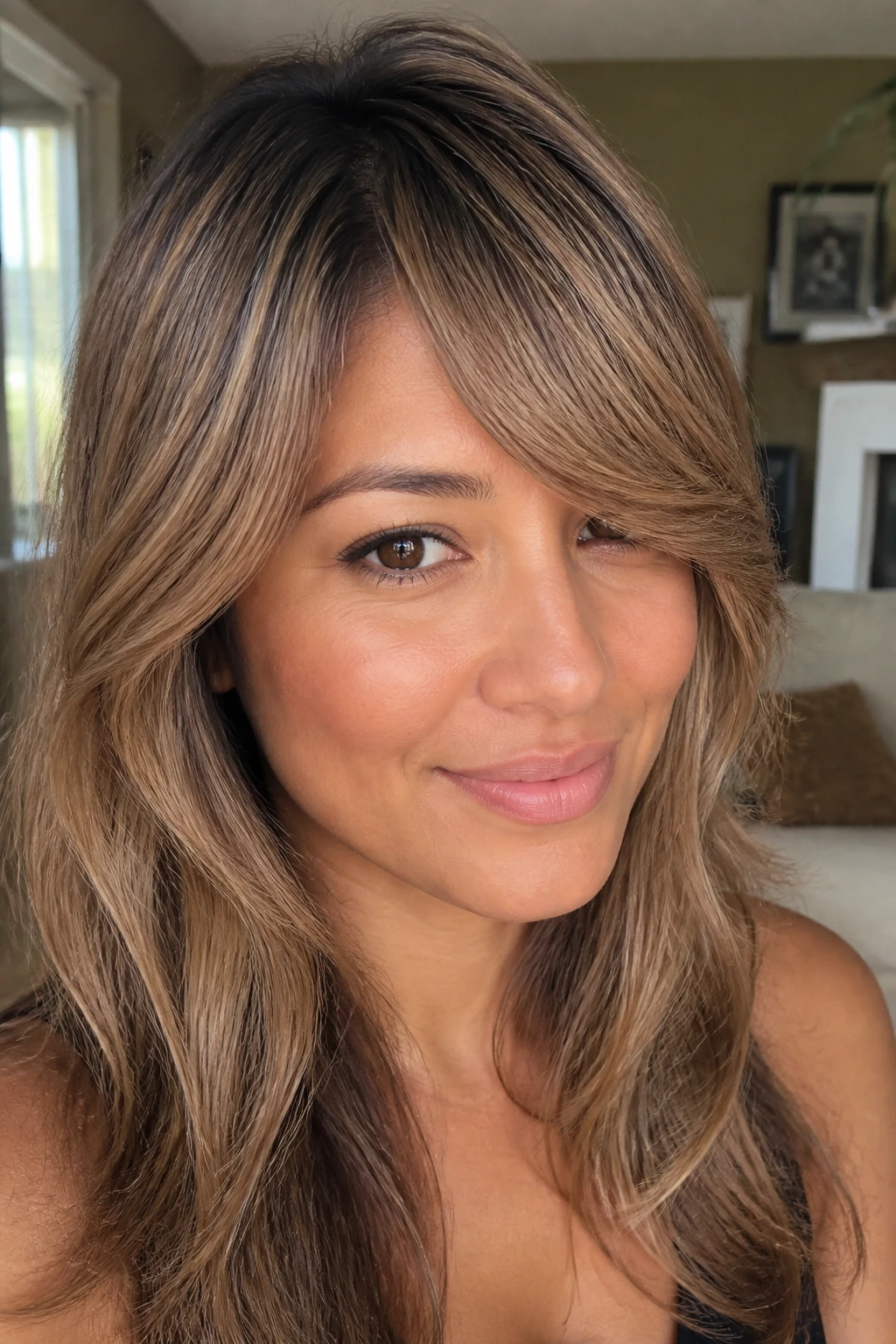
Shadow roots are practical, and practical is not a bad word. A sandy brown highlight with a slightly deeper root line keeps tan skin looking fresh while giving the color room to grow out without a harsh stripe.
The side-swept bangs help hide the root shift in the best way. When the fringe falls across the forehead, the eye sees the movement first and the regrowth second. That buys you time between appointments, which matters if you do not want a hard maintenance schedule.
What to ask for
Keep the highlight in the light brown-to-sandy-brown zone, and ask for the root to stay one to two shades deeper. The ends can be a touch lighter, but not so light that the contrast gets crunchy. If the line is too strong, the look starts wearing you instead of the other way around.
This is one of the smartest choices for busy people. Not because it is boring. Because it is forgiving.
18. Butterscotch Face Frame
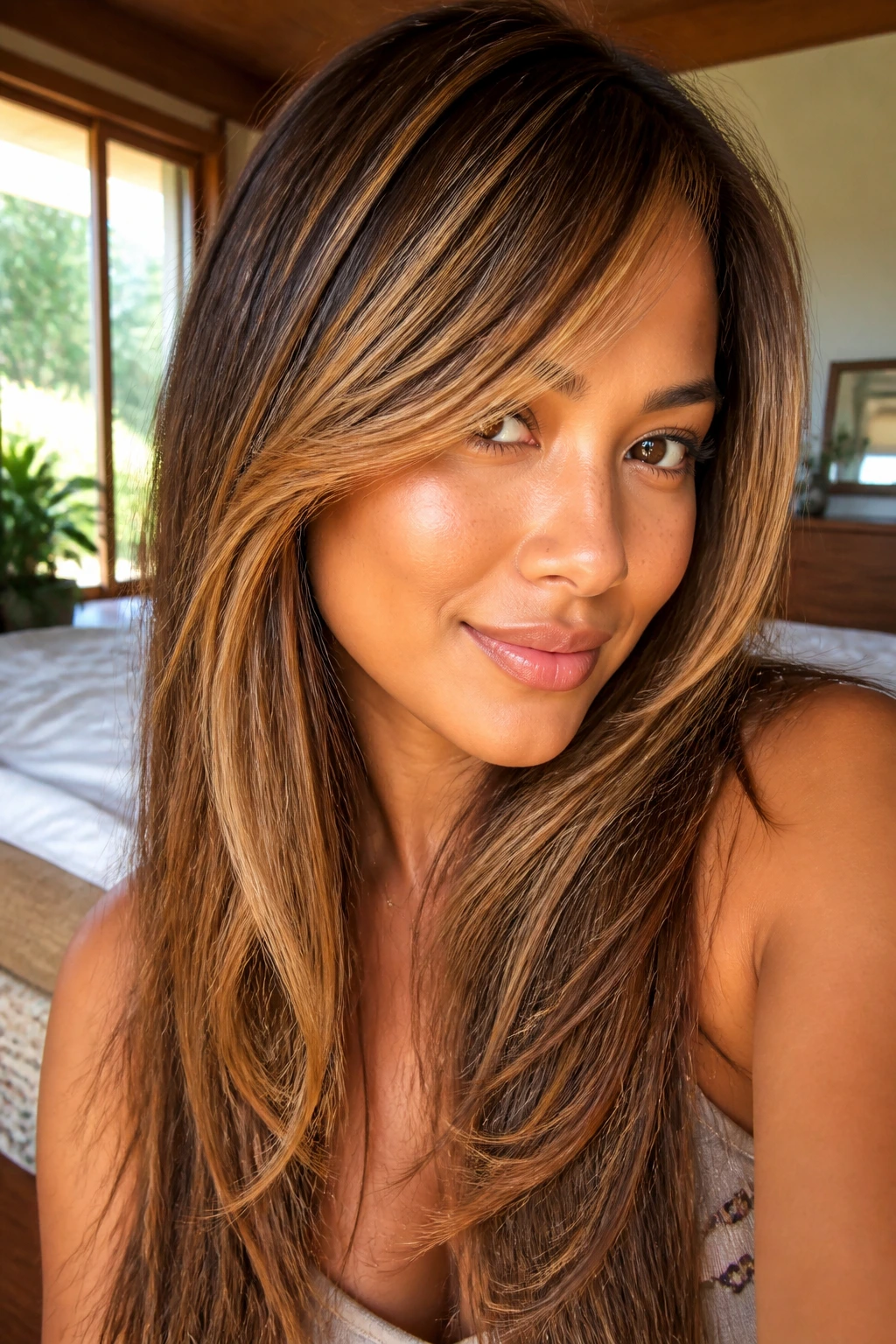
Butterscotch is warmer and brighter than honey, and around tan skin it can look sunny in a good way if you keep it close to light brown rather than pushing it pale. The face frame is the star here, especially with a side-swept bang that moves the light right across the forehead.
The pieces should be bold enough to notice but soft enough to blend. That balance matters. If the frame is too sharp, it looks salon-bright in a dated way. If it is too soft, the butterscotch loses the punch that makes it special.
I like this on longer layers because the highlight can drop through the length and still feel connected to the fringe. On shorter cuts, keep the frame closer to the cheekbone and the bang a little longer so the color has somewhere to travel.
Tiny detail that helps: ask for a glossy finish. Butterscotch looks better when it shines.
19. Rose Beige Blend
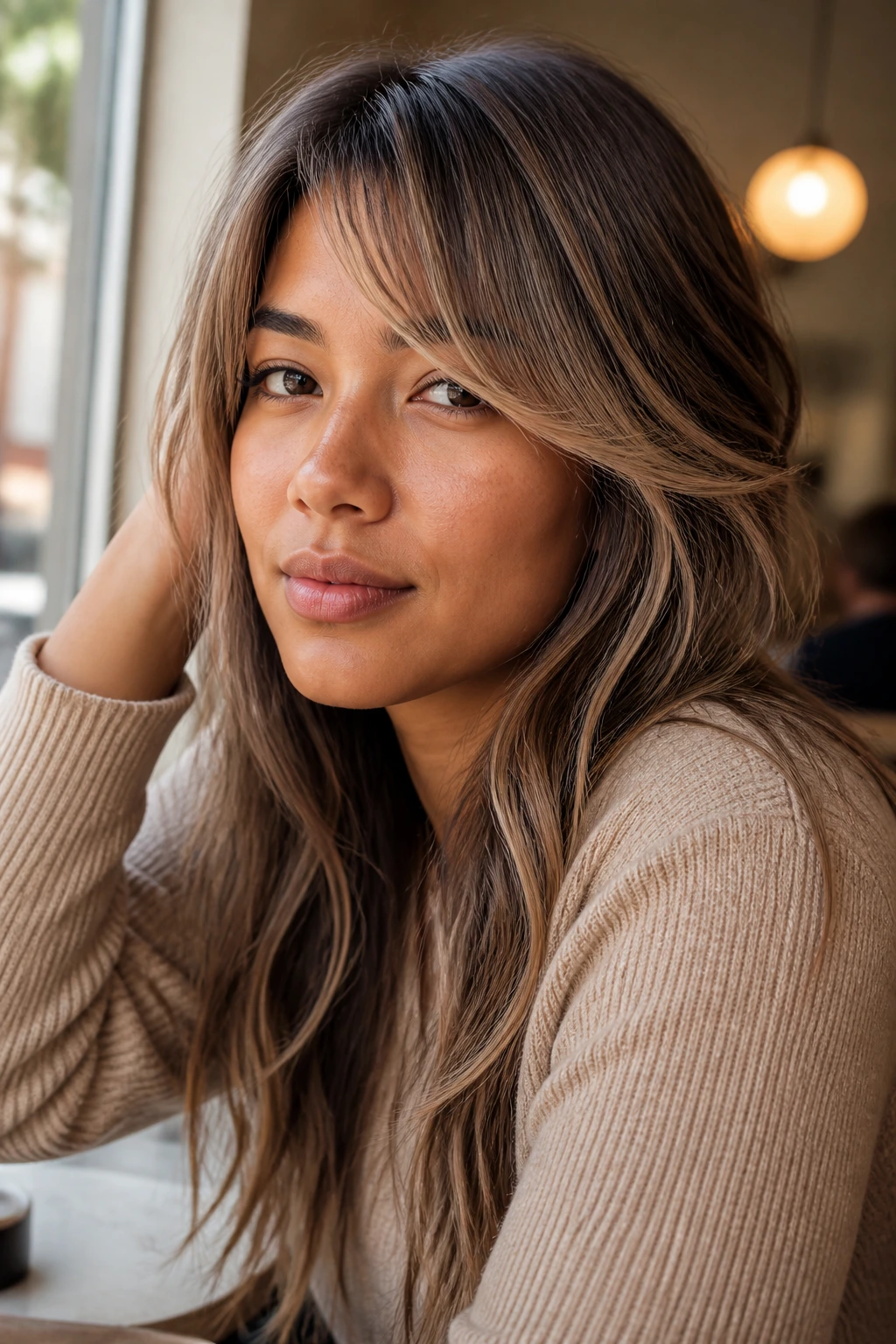
Rose beige gives light brown highlights a faint blush cast, which sounds risky until you see it against tan skin. Done lightly, it can make the complexion look warmer and a little more alive without turning the hair pink.
The side-swept bangs should be soft and airy here. Heavy bangs can swallow the tone. A few rose-beige threads near the bang line and temples are enough to give the whole style a lifted feel.
Why it stands out
It is not loud. That is the appeal. The color is a whisper of warmth that changes depending on the light, which keeps it interesting in a very low-key way. If you like beige makeup, gold jewelry, and cream sweaters, this shade tends to fit right in.
If your skin runs olive, be careful with too much pink in the glaze. Keep the rose note muted and closer to beige than peach.
20. Espresso-to-Mocha Ribbons
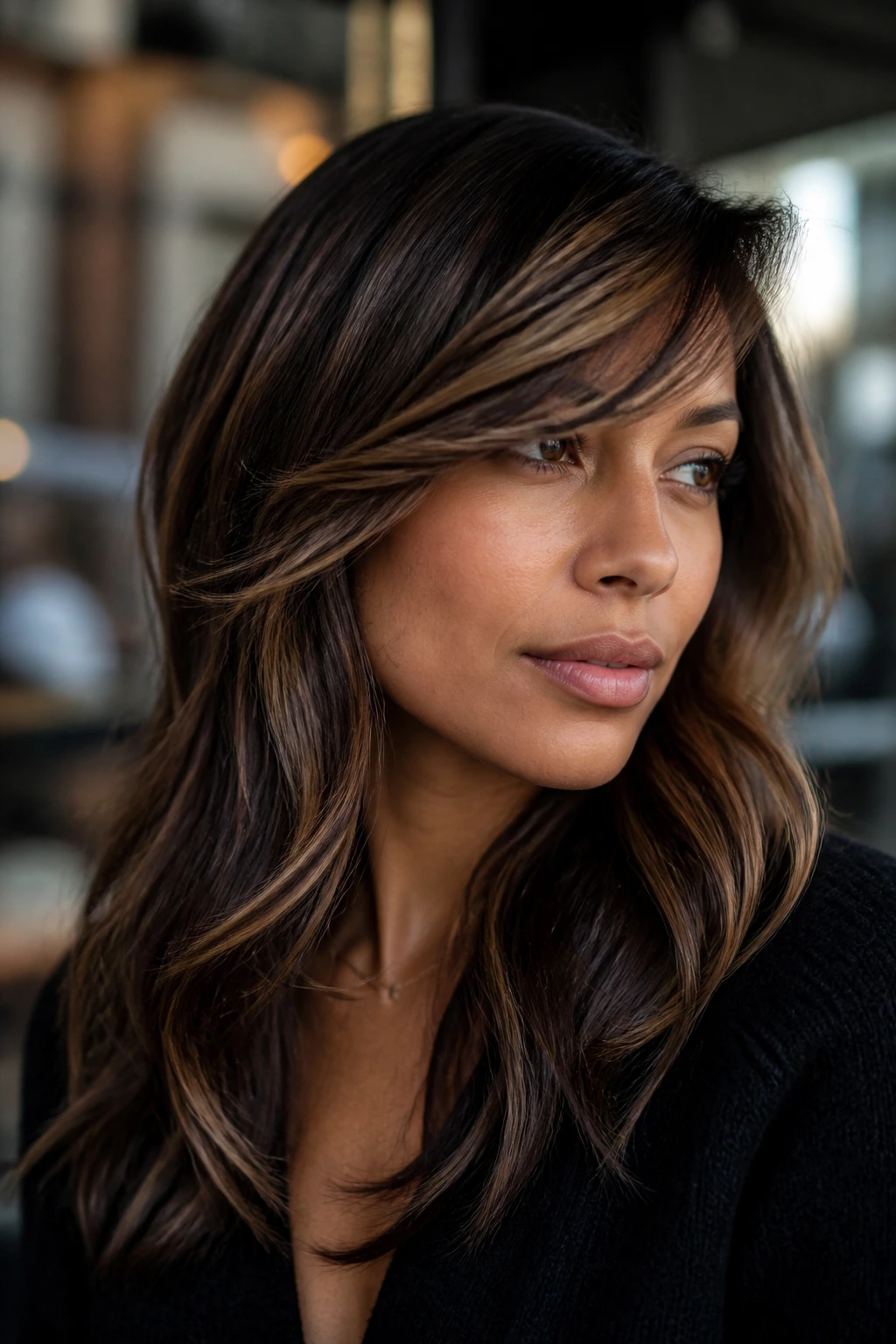
This is the contrast look for people who want the brown to stay brown. The espresso base gives the hair depth, and the mocha ribbons add just enough lift to show movement through the side-swept bangs and top layers.
The ribbons should be painted in a way that follows the cut. If the bangs sweep left, the brightest ribbons should guide the eye in that same direction. That line matters more than the exact shade. Good placement can make a medium-light brown look expensive, while bad placement can make it look random.
A few waves help, but the color also works on smoother finishes because the contrast is stronger. If you wear your hair straight a lot, ask for slightly softer blending at the edges so the mocha doesn’t look striped.
Best for: anyone who likes depth at the root but still wants the face to open up. It is a good balance. Not boring. Not fussy.
21. Golden Mocha Contour
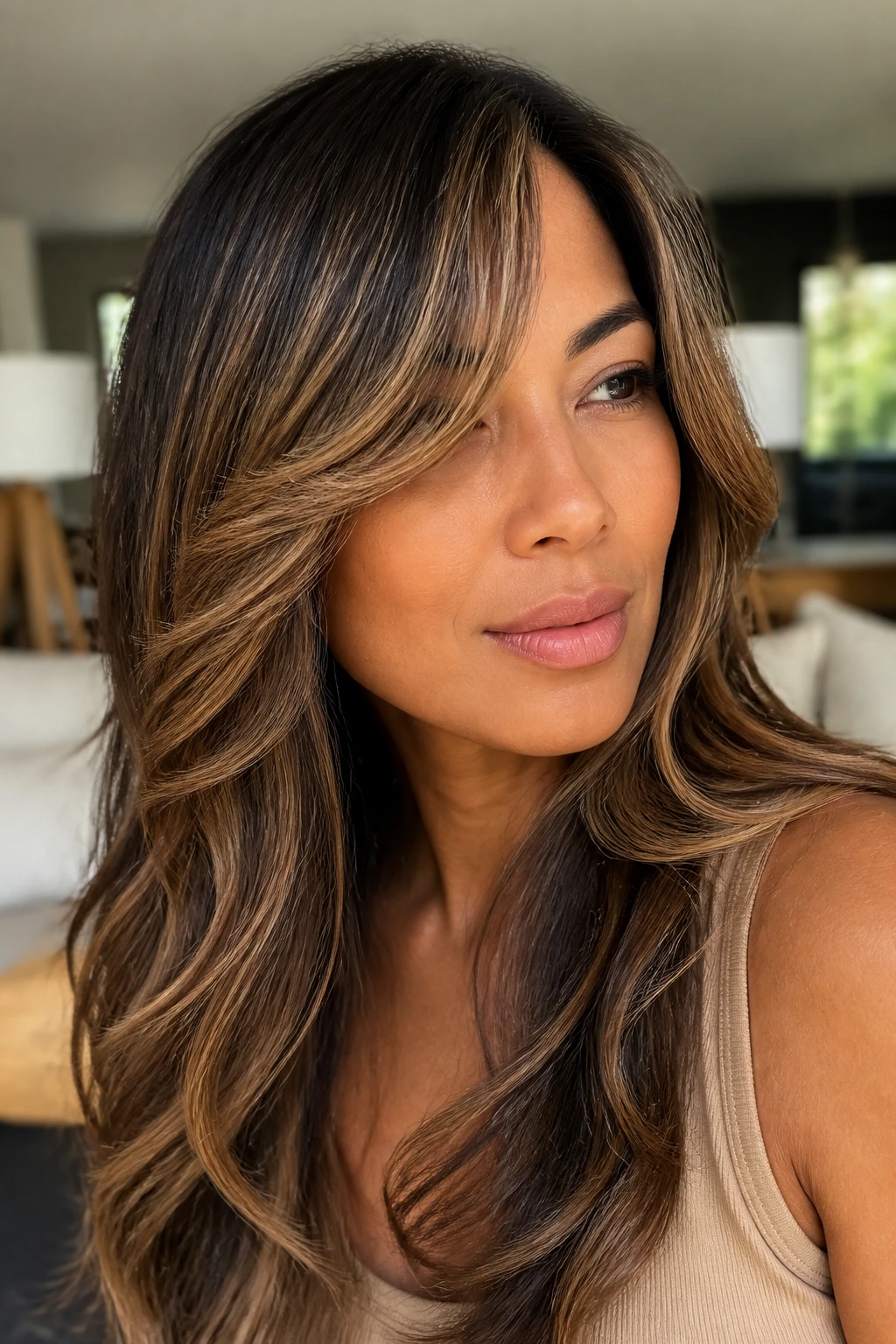
Golden mocha is warmer than the espresso look above, but the contour placement keeps it from drifting into all-over warmth. On tan skin, the golden notes can give the cheeks and eyes a healthy lift, especially when the side-swept bangs curve into the face.
This look works because the brightest strands are not everywhere. They sit where contour would sit in makeup — temple, cheekbone, outer fringe. That echo between cut and color makes the style feel put together without looking stiff.
If your hair is medium length or longer, ask for the light brown pieces to stay concentrated at the front and upper crown. Spreading them too far back can dilute the effect. I’d also keep the ends a touch deeper so the color doesn’t look washed out.
This one loves a rounded blowout. The curve of the brush and the sweep of the bang should feel like they belong to the same sentence.
22. Ashy Taupe Brown Lightening
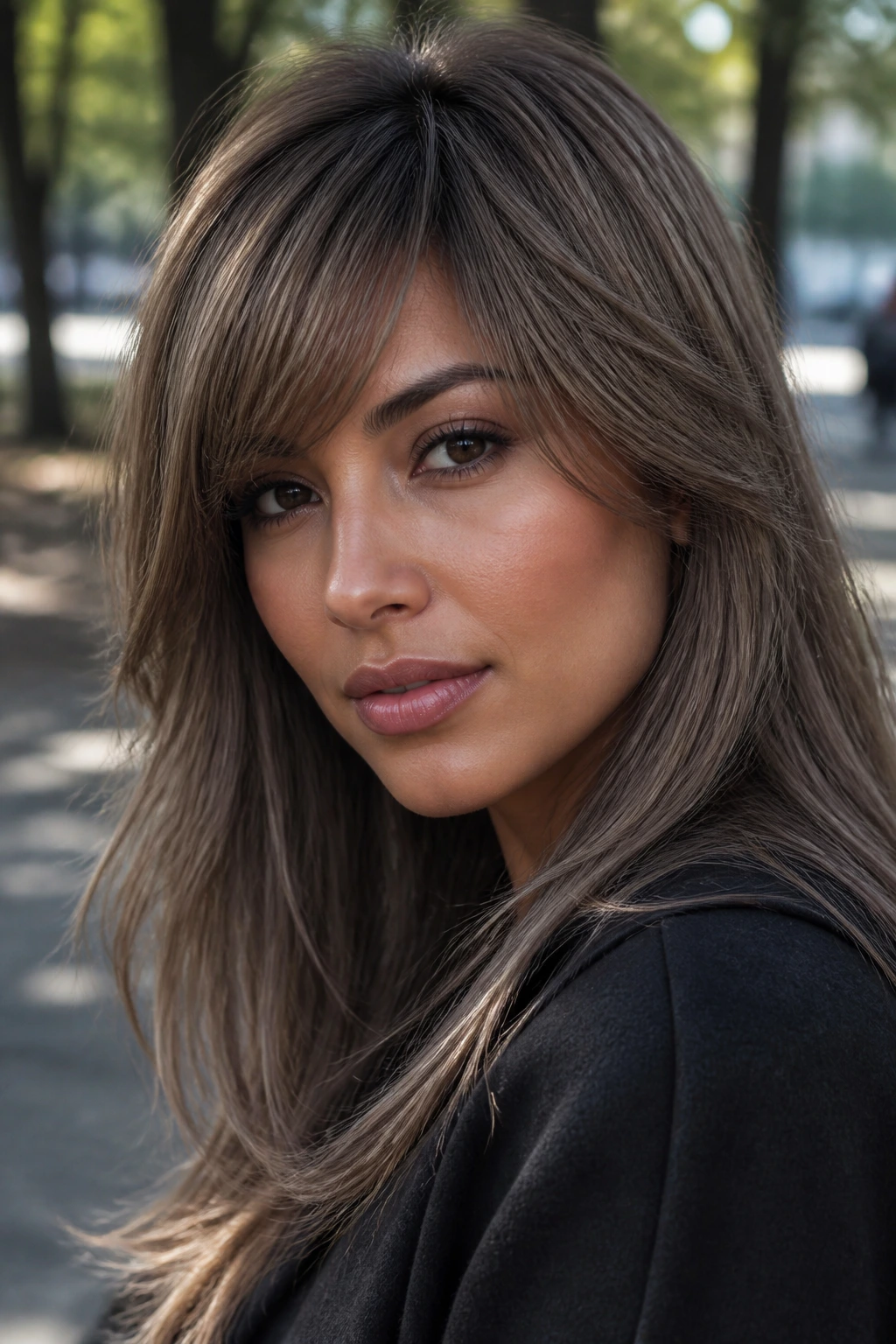
Ashy taupe brown is the cooler cousin in the family. It can look striking on tan skin, but only if the base has enough depth and the highlights stay soft enough to avoid a dusty finish.
The side-swept bangs help a lot here because they stop the cool tone from looking severe. A diagonal fringe breaks up the ash and gives it movement. Without that bend, taupe can flatten out quickly.
How to keep it from going dull
Ask for a neutral or beige toner rather than a heavy ash toner if your hair already pulls muted. That keeps the shade from getting muddy. If your hair tends to go orange after lightening, taupe can be a smart corrective direction, but the finish still needs shine.
This is a strong pick for olive tan skin and for anyone who likes minimal makeup. It has an understated edge that reads cool without going silver.
23. Warm Almond Glow
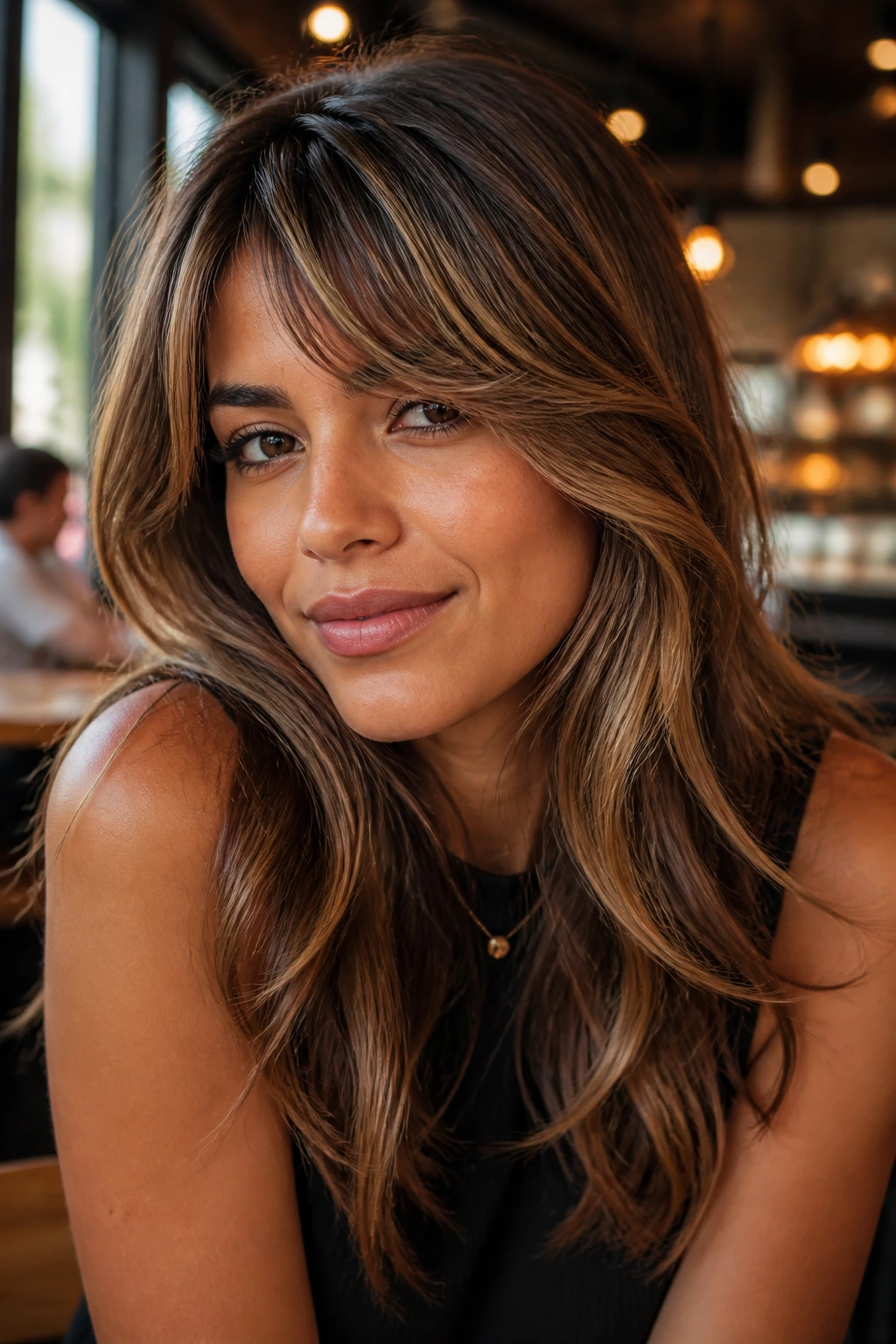
Warm almond is one of the easiest shades to wear because it sits close to natural brunette tones while still lifting the complexion. On tan skin, it looks soft and believable, which is not a bad thing when the haircut already has side-swept movement.
The glow comes from subtle placement. A few light brown strands near the bangs, a few through the top layers, and a little more brightness around the face are enough. You do not need a lot of lift to make this work. In fact, too much will wreck the softness that makes it good.
I like this best on shoulder-length cuts with layers that move. The side sweep has room to fall, and the almond tone catches the light without announcing itself too hard.
If you want a low-fuss brown: this is the one I’d point to first. It’s calm, flattering, and easier to maintain than most brighter options.
24. Caramelized Layers for Curly Hair
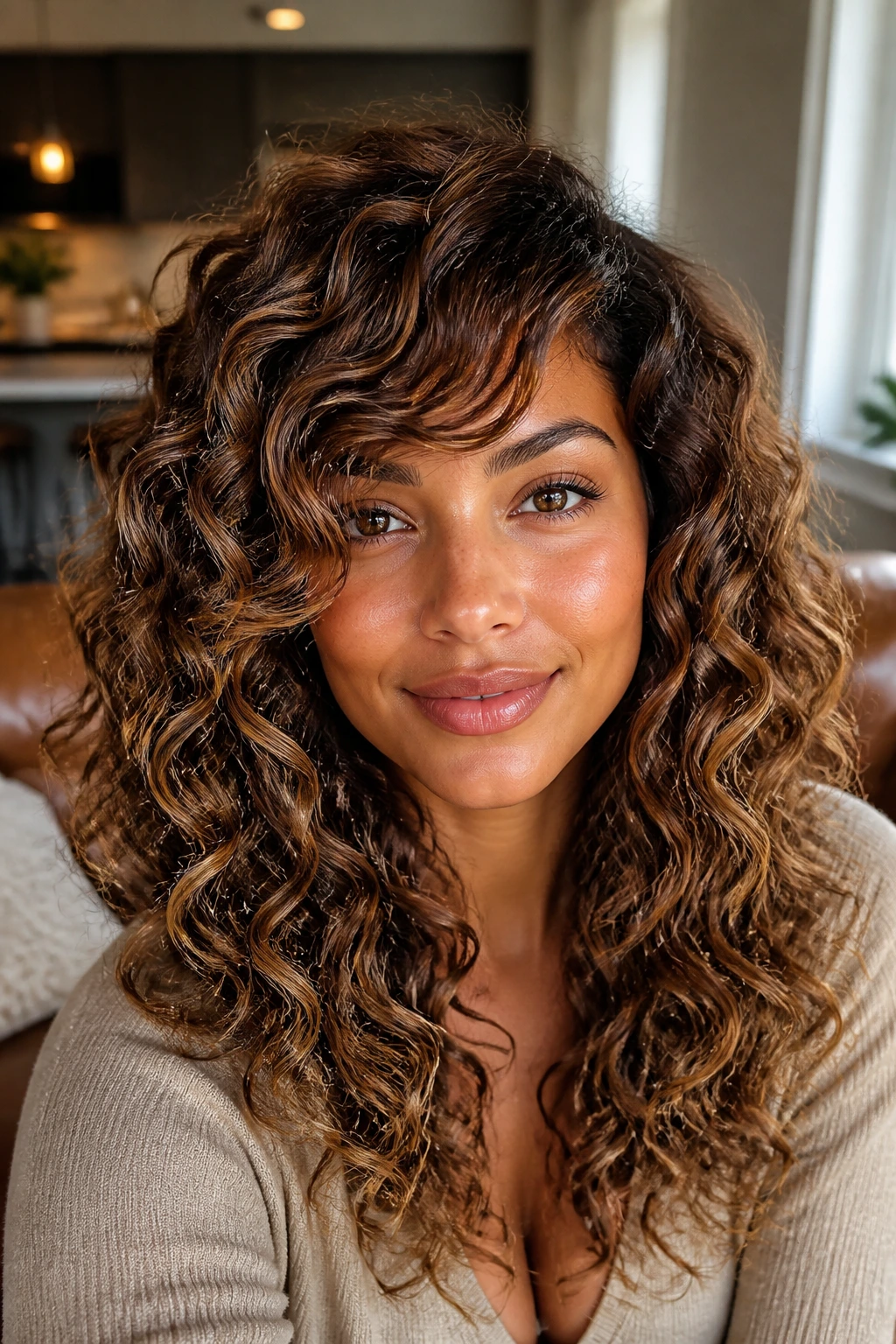
Curly hair changes the whole game. The highlights break up inside the curl pattern, so a light brown that looks subtle on straight hair can look much brighter once it expands and bends. Caramelized layers make that texture work for you instead of against you.
The side-swept bang on curls should be longer than you think. It needs room to shrink, and it needs enough weight to keep its sweep visible after the hair dries. That extra length lets the caramel pieces sit on the outer curve of the curl rather than disappearing into the coil.
A detail people miss
Curly highlights need space between them. If the pieces are packed too tightly, the curls blur into one bright blob. Keep the lighter sections around the face and upper crown, then let the rest of the caramel live in selective layers. That keeps the shape clean.
This look is gorgeous with a diffuser and a little leave-in cream. Heavy product will dull the caramel. Too little product and the bang frizzes into nothing. Middle ground wins.
25. Soft Bronde Shag
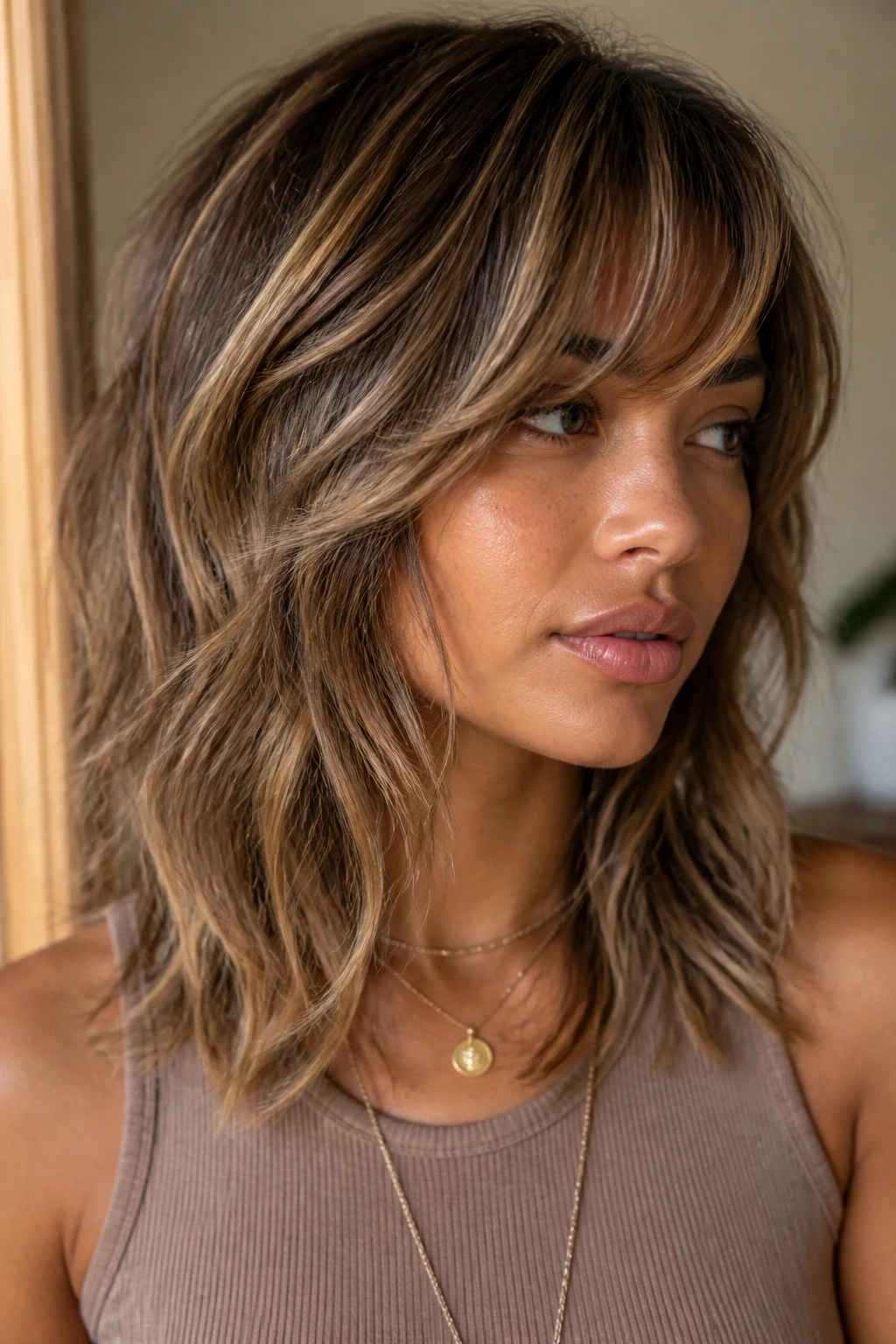
A shag cut gives light brown highlights a lot to do. The layers create movement on their own, and the side-swept bangs lean into that movement instead of fighting it. Soft bronde is the right tone when you want the cut to feel airy but still grounded by brown.
This one works because bronde sits between brunette and blonde without tipping fully into either. On tan skin, that middle ground keeps the face from looking washed out. The lighter strands should be uneven on purpose — a little brighter near the fringe, softer through the ends, and scattered enough to make the shag feel lived-in.
If the layers are too neat, the shag loses its edge. If the highlights are too heavy, the cut starts looking puffy. So keep the light brown placement broken up and the bangs a little loose.
My honest take: this is one of the most fun versions in the whole list. It has shape, movement, and just enough color change to make the haircut matter.
Why Light Brown Highlights and Side-Swept Bangs Flatter Tan Skin
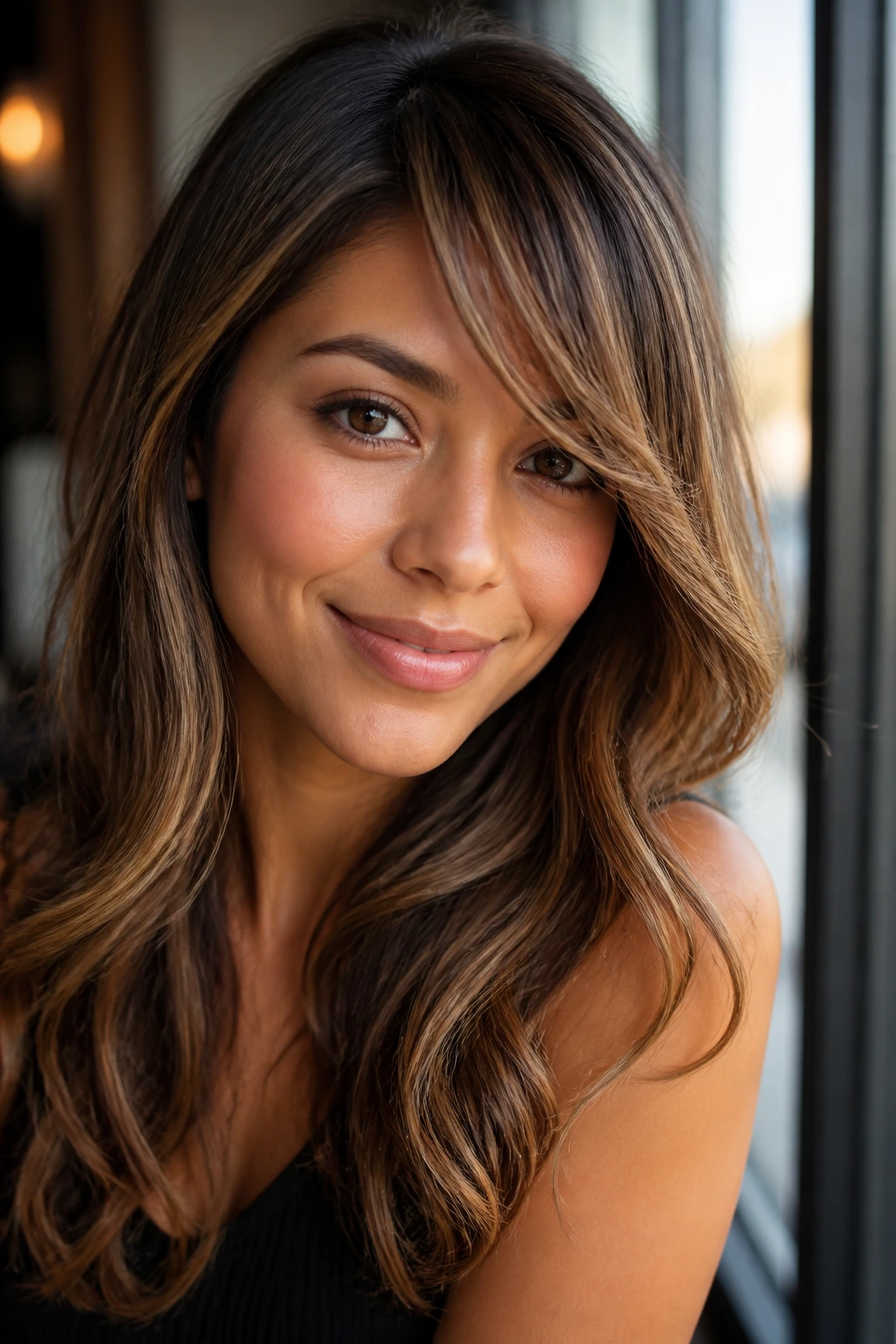
Tan skin usually carries more warmth than people give it credit for, even when the undertone leans neutral or olive. Light brown highlights work because they echo that warmth without collapsing into the same exact shade as the skin. The hair gets dimension. The face gets lift. Nothing gets washed out.
Side-swept bangs matter because they create a diagonal line instead of a hard horizontal one. That diagonal is softer on the eyes and gives the highlight placement a place to land. A bright front piece paired with a swept fringe can do more for the face than a full head of lighter color, especially if you wear your hair back sometimes and want the front to do the talking.
There’s also a practical angle here. Tan skin can handle a range of browns, but the wrong tone will show it fast. Too orange, and the color can look brassy. Too gray, and the face can lose warmth. The sweet spot is usually somewhere around beige, caramel, mocha, almond, or mushroom — with the exact choice depending on whether your tan leans golden, olive, or neutral. That small distinction is the whole game.
What to Bring to the Salon Chair
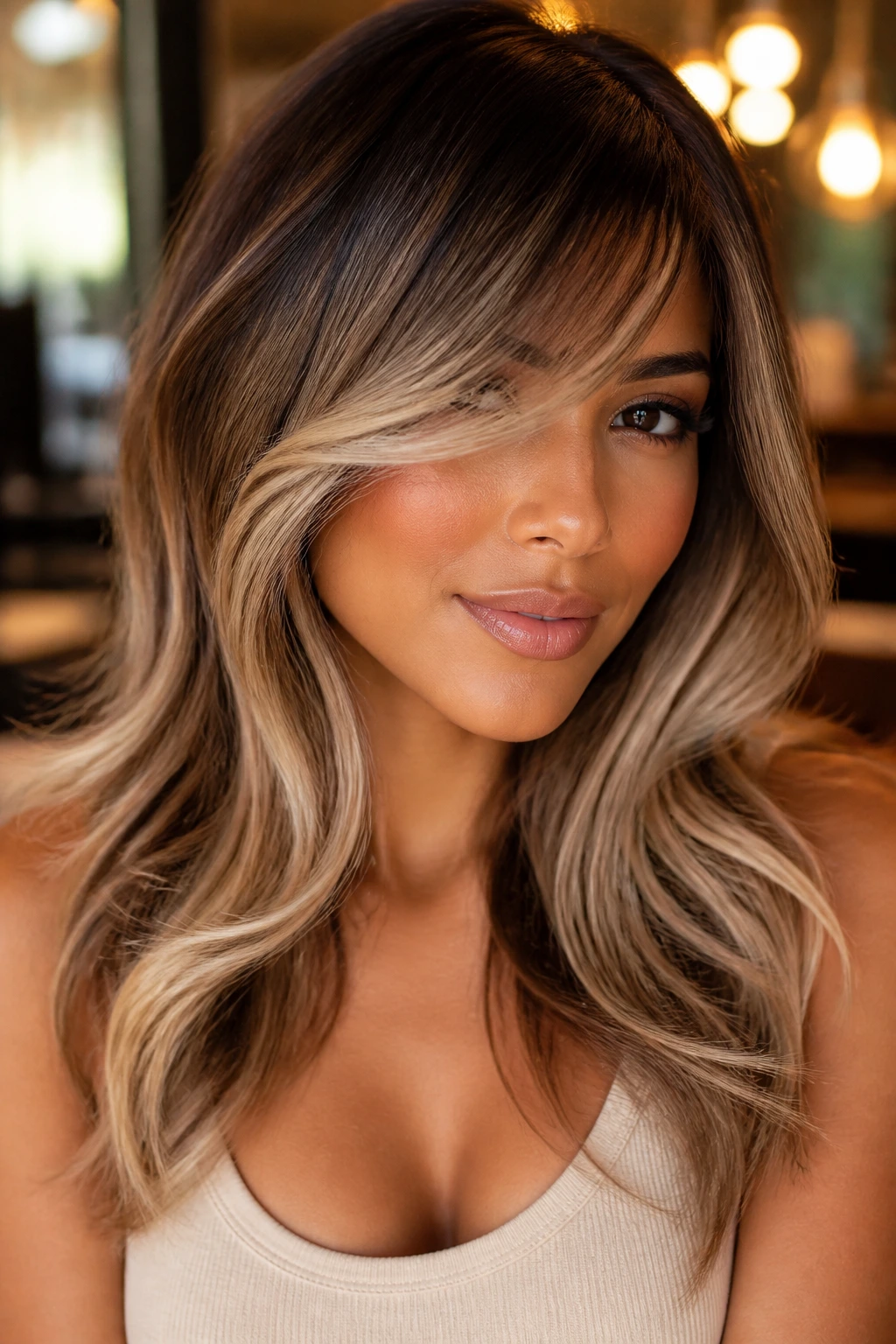
- Two or three inspiration photos: Bring photos with similar skin tone, hair texture, and haircut, not just pretty pictures from far away.
- A note on your base color: Tell the colorist whether your hair is virgin brown, previously lightened, or covered with box dye. That changes the plan fast.
- A clear tone preference: Say whether you want warm caramel, beige-brown, or cooler mushroom tones so the gloss does not drift in the wrong direction.
- Your styling habit: If you air-dry, say so. If you blow-dry bangs every morning, say that too. Placement should match how you actually wear the hair.
- A realistic maintenance budget: This matters more than people admit. A full foil job and a soft balayage do not age the same.
- Any chemical history: Henna, metallic dyes, keratin smoothing, or recent bleach work can alter lift and tone. A colorist needs that information up front.
- A clean daylight selfie: Hair color reads differently in salon lighting. A simple phone photo outside can save you from a bad tone choice.
Choosing the Right Brown for Tan Skin
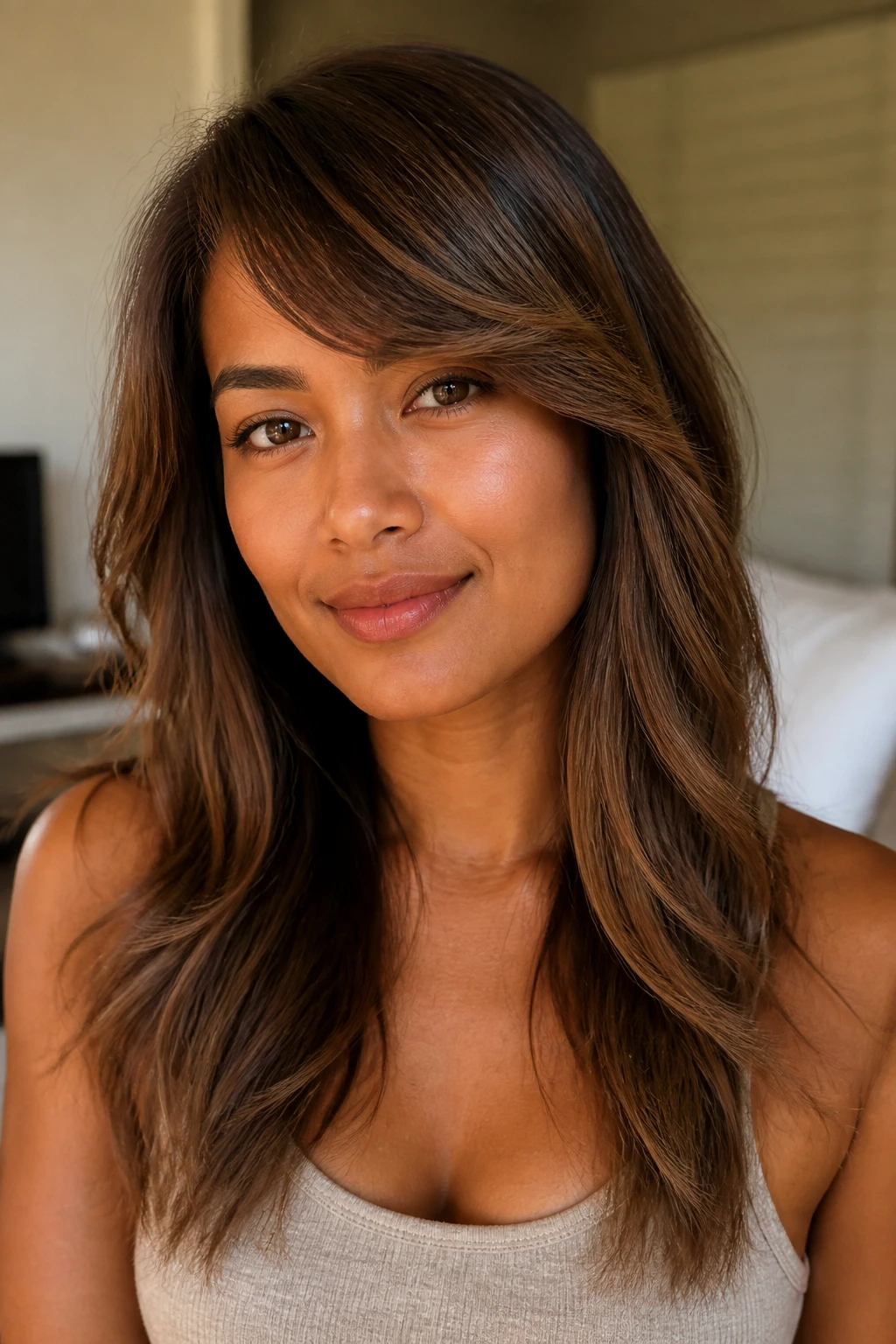
Golden tan skin usually likes caramel, honey brown, toffee, and warm almond. Those shades echo the skin’s warmth and keep the face from looking tired. If your jewelry looks better in gold than silver, this is probably your lane.
Olive tan skin often does better with beige-brown, mushroom brown, taupe brown, and soft mocha. The muted base keeps the green-gold cast in the skin from getting too orange next to the hair. Too much gold can turn sticky fast.
Neutral tan skin can wear almost any of them, which is both lucky and annoying. Beige, walnut, bronde, and light mocha tend to be the safest starting point because they give shape without fighting the skin. If you like a little warmth, add it near the face, not through the whole head.
If your base is very dark, ask your colorist to talk honestly about lift. You may not get a pale beige in one appointment, and that’s fine. A richer light brown that looks expensive is better than a lightened shade that snaps into brass two weeks later.
How to Style Side-Swept Bangs So the Highlights Read Clearly
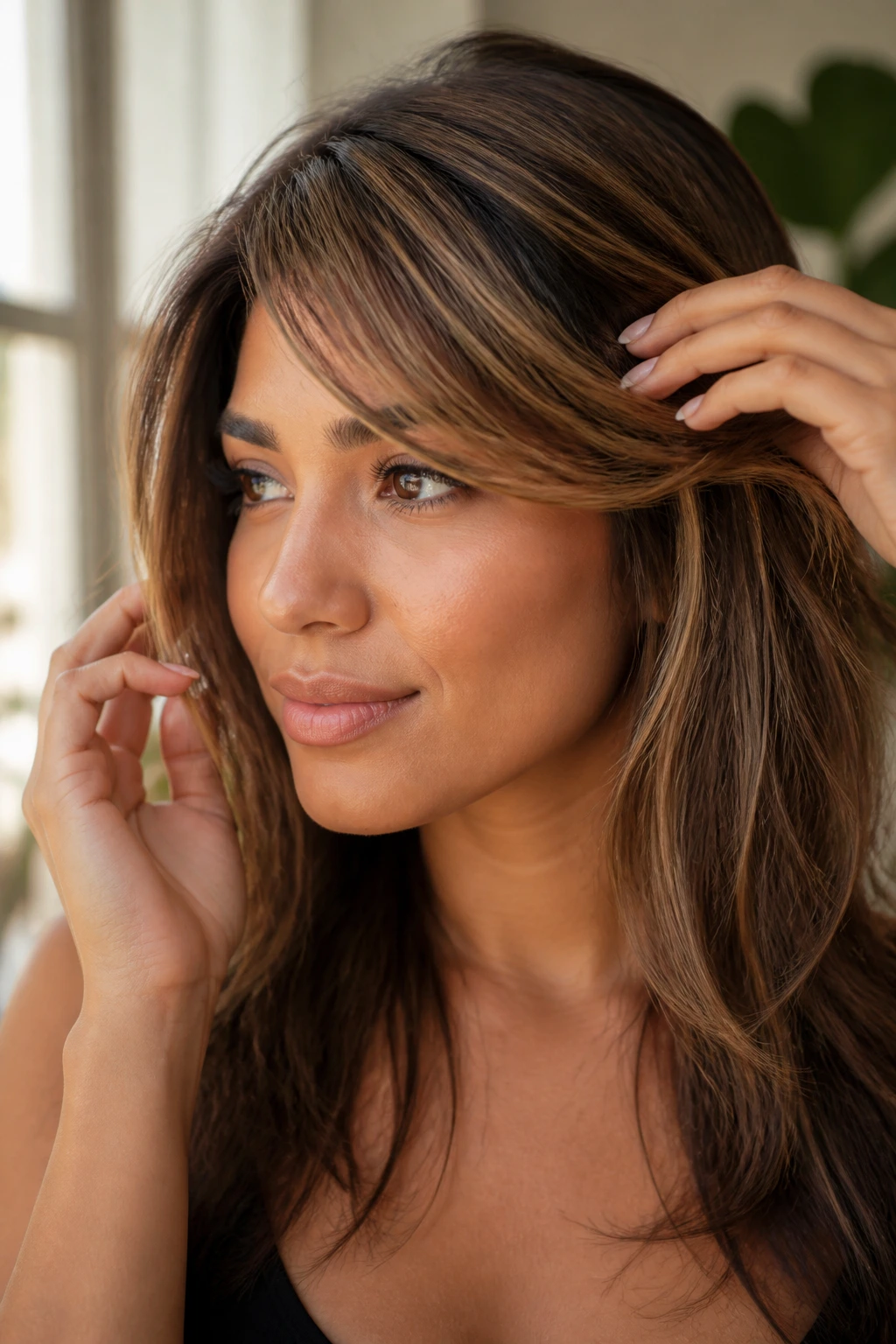
Side-swept bangs need direction. If you let them dry straight down, the highlight placement gets buried and the color loses half its effect. I’d rough-dry the roots first, then use a round brush to push the fringe away from the face and back across the brow in one clean motion.
A medium or small round brush usually works better than a giant one. You want bend, not a curl. Once the bang cools, mist a little flexible hairspray on the underside and touch the ends with a drop of serum if they’re fuzzy. That gives the highlighted strands a little separation without making them crunchy.
If you part your hair on the same side every day, keep doing that. Fighting the natural part usually makes the bang split in odd places, and that is the fastest way to hide the highlight. A clean side part, a soft bend, and one tucked-behind-the-ear side can make a simple brown look deliberate.
Practical Tips for Better Blend and Better Grow-Out
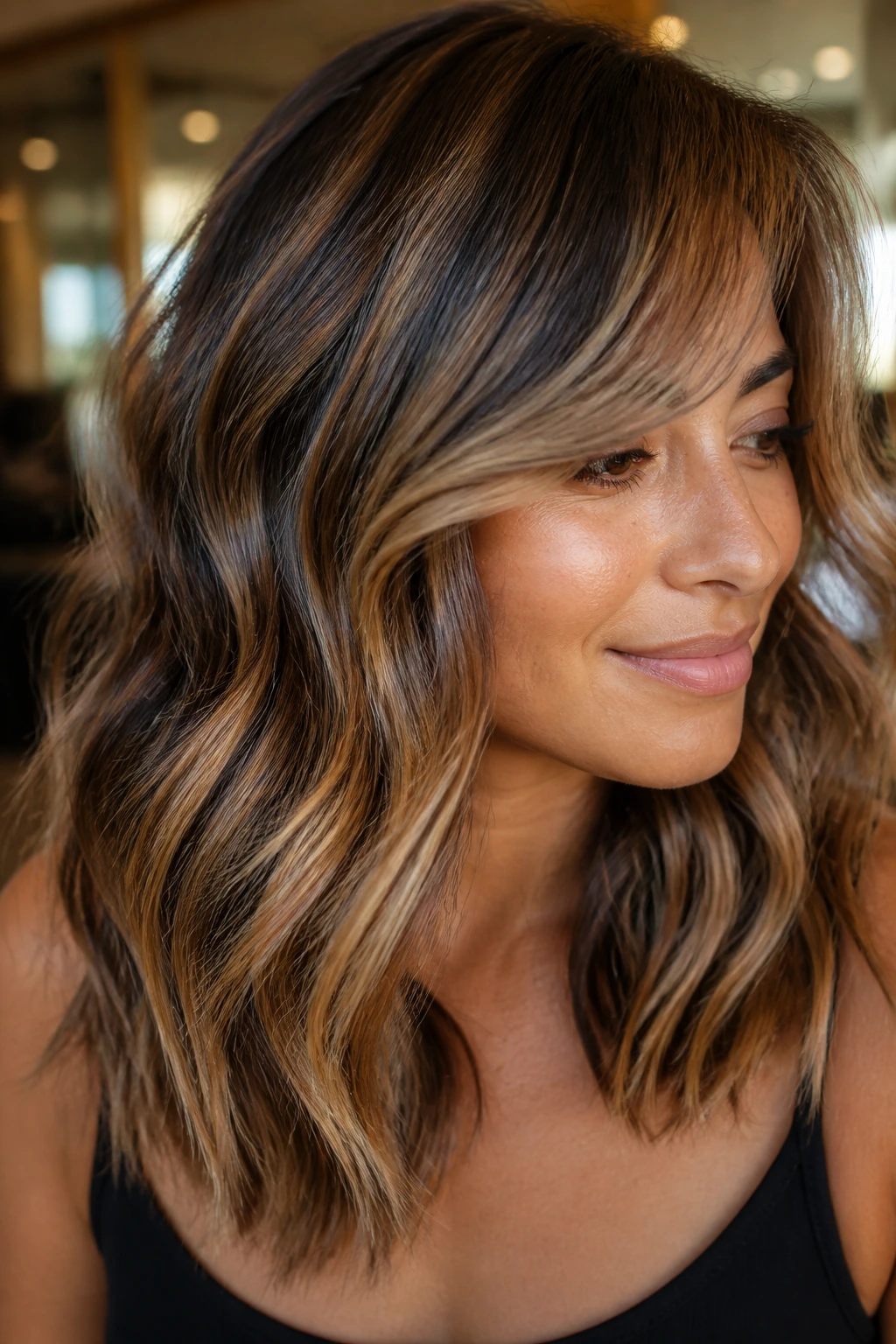
Placement: Keep the brightest light brown pieces around the face and upper crown. That is where tan skin gets the most lift, and it saves you from over-lightening the ends for no reason.
Tone: If your skin leans warm, ask for beige-caramel rather than yellow gold. If it leans olive, ask for neutral-beige or mushroom brown. The tone should support your complexion, not mirror it exactly.
Bangs: Cut and style the side-swept fringe after the color is in place. A bang that is too short before coloring can end up sitting above the highlight, which throws off the whole balance.
Heat: Use a heat protectant every time you blow-dry the bangs or shape the front pieces. Those are the sections people style the most, so they fade and dry out faster.
Budget-saver: If you like the color but not the upkeep, ask for a soft gloss between full highlight sessions. A gloss refresh often does more for shine than another round of lightening.
Extra Ways to Personalize the Look
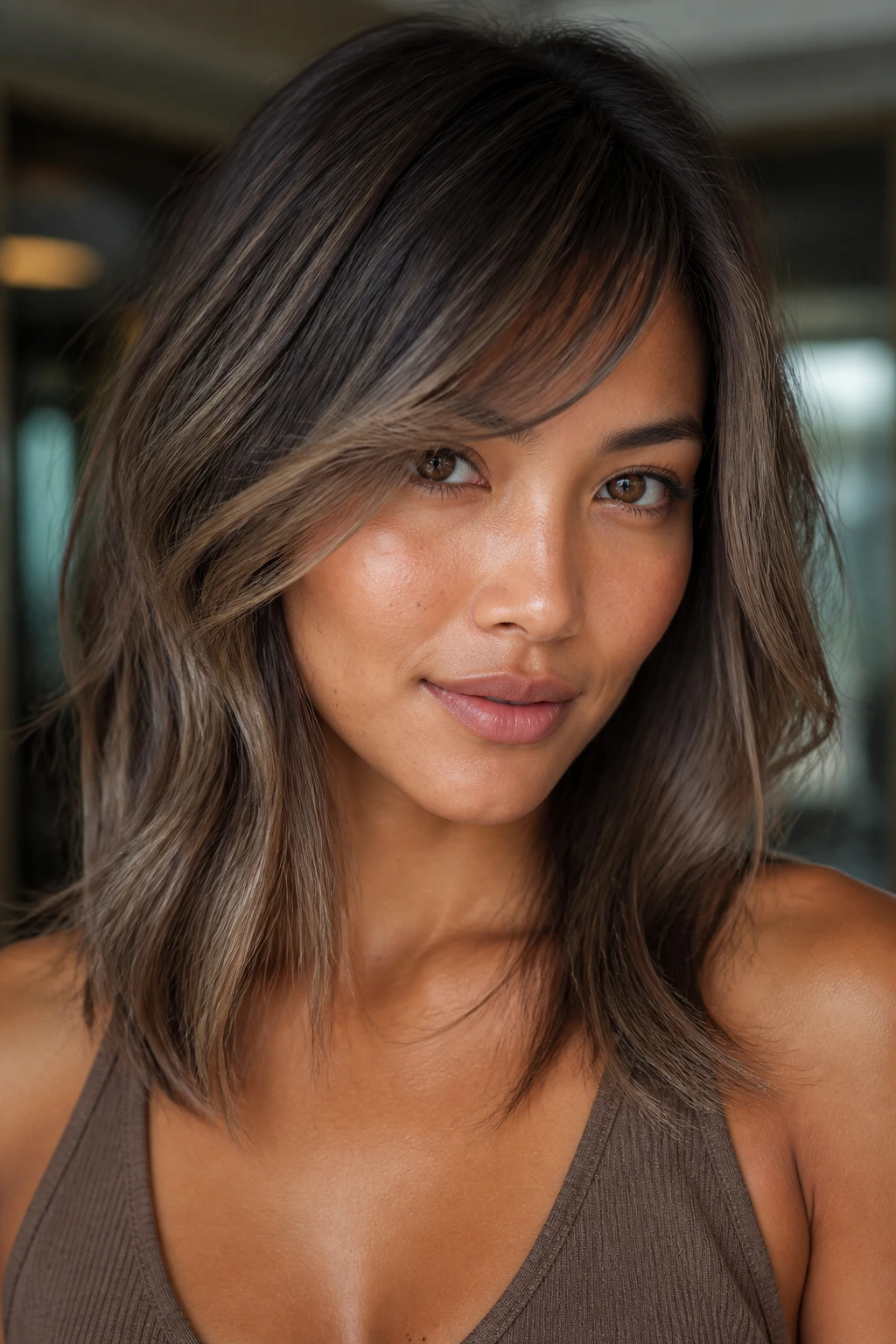
Finish: A clear or beige gloss can make light brown highlights look richer without changing the placement. It is the easiest way to keep the tone from getting dusty.
Customization: Add a few extra bright pieces at the temples if your face is long or narrow. Keep them softer if your face is round and you want the sweep to feel gentler.
Texture match: For straight hair, use narrower ribbons so the color does not look blocky. For waves and curls, use slightly wider pieces because the texture will break them up anyway.
Accessories: Gold hoops, tortoise clips, and warm-toned barrettes can echo the brown tones nicely. A matte black clip can work too, but warm metals tend to make the highlights feel more intentional.
Make-it-yours: If you like bolder contrast, keep the base richer and the front pieces brighter. If you want something quieter, blur the contrast with a root shadow and a softer bang sweep.
Common Mistakes That Flatten the Color
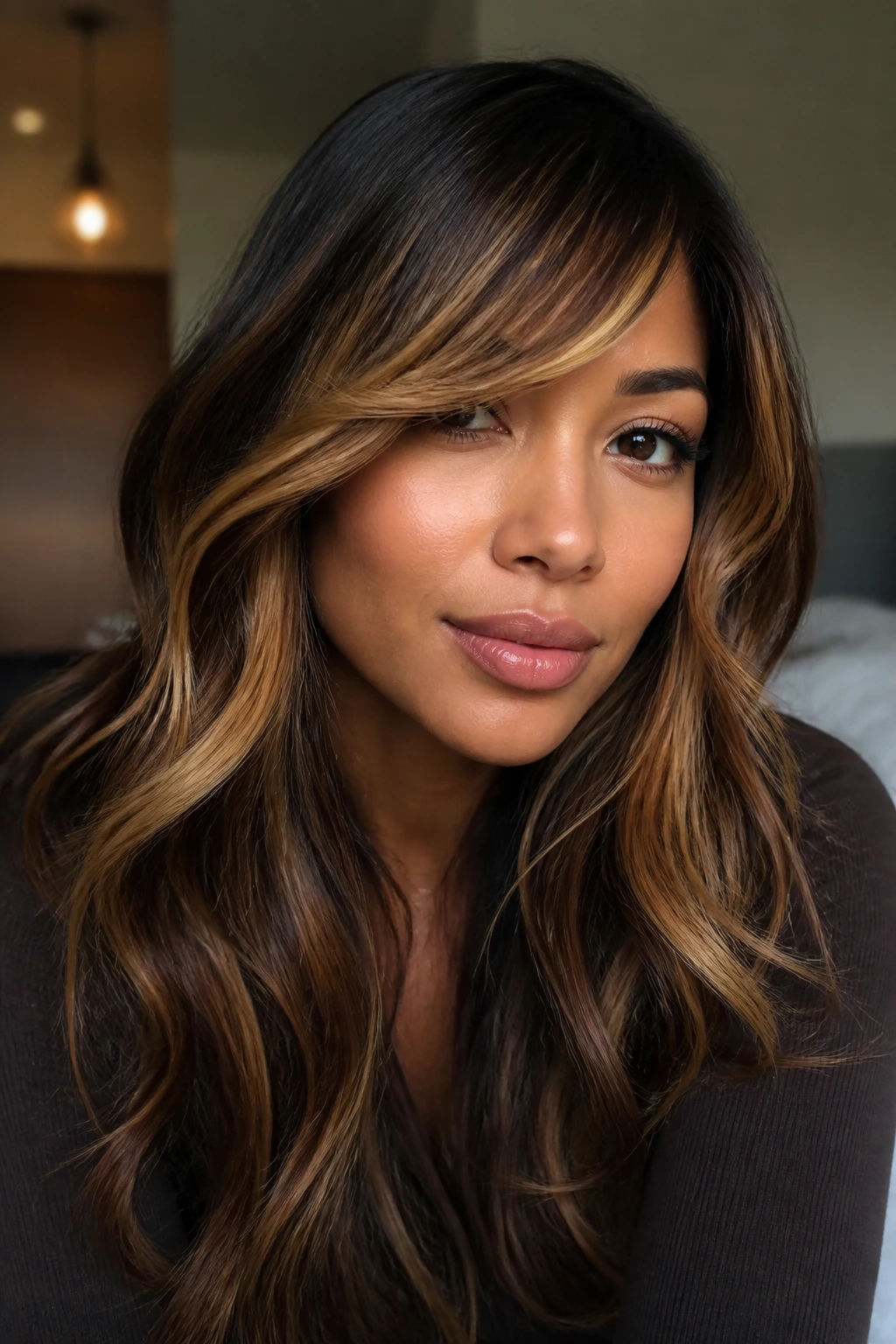
The first mistake is chasing blonde too hard. Tan skin does not need the hair pushed all the way to pale beige to look bright, and forcing that lift can leave the color orange at the mid-lengths. A clean light brown usually looks better than a shaky fake blonde.
The second mistake is picking the wrong undertone. Too much gold on olive tan skin can look brassy. Too much ash on golden tan skin can look drained. The fix is simple, but people skip it: match the shade to the skin, not to the mood board.
The third mistake is hiding all the lightness underneath the hair. If the front pieces around the bangs stay dark, the style loses its face-framing job. Keep the lightest strands where the eye lands first.
The fourth mistake is forgetting the bangs. Side-swept bangs grow fast and they collect oil fast. If they get heavy or split, the whole color story looks less sharp. A trim every 3 to 5 weeks keeps the line clean.
The fifth mistake is overusing purple shampoo on warm brown shades. It can mute caramel and honey tones into something flat and dusty. If your highlights are warm, use a color-safe shampoo most washes and save toning shampoo for occasional correction.
Variations and Adaptations to Try
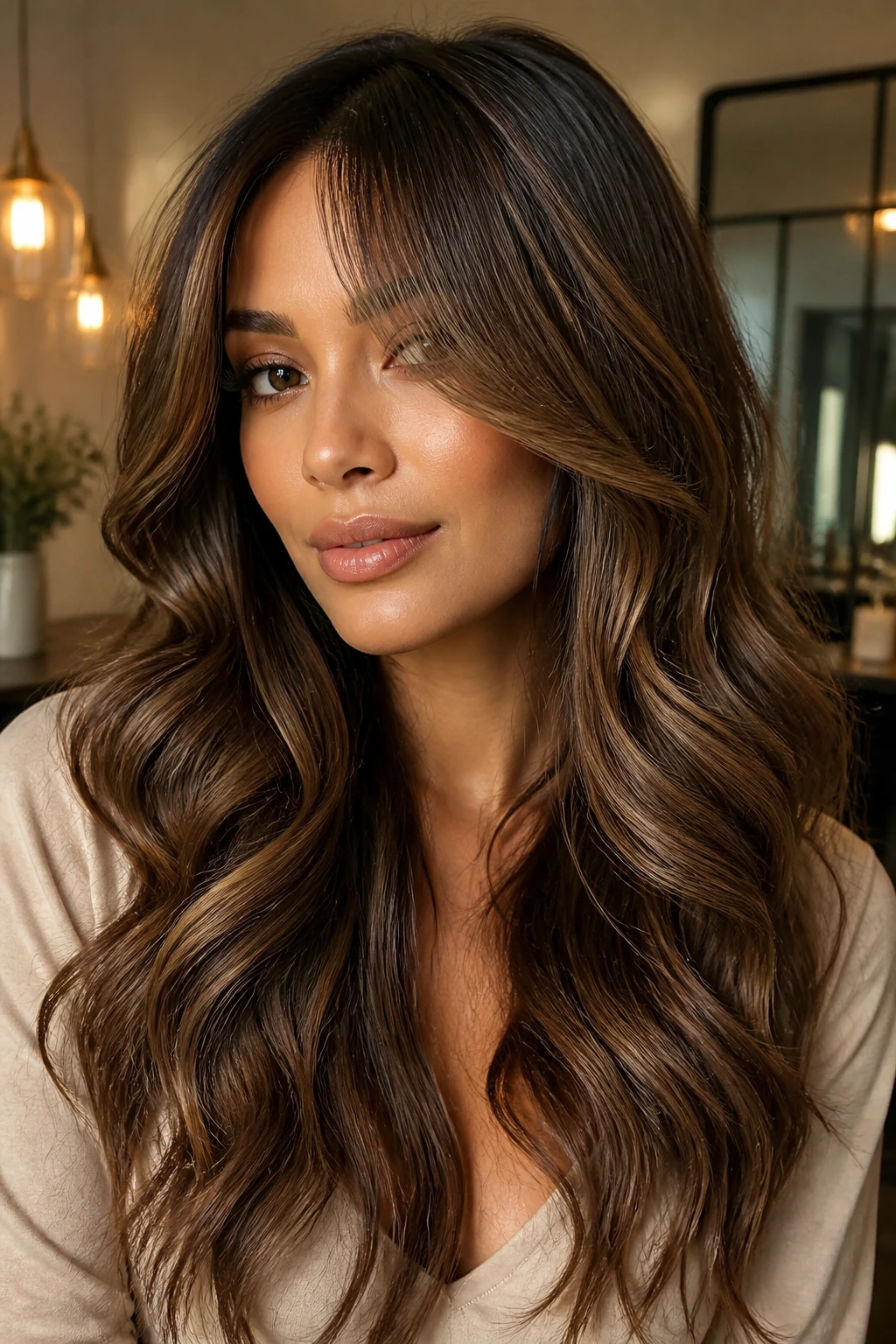
Soft Beige Starter Blend: Best for first-timers or anyone nervous about commitment. Keep the highlights fine, beige-brown, and concentrated around the face so the grow-out stays soft.
Mushroom Cool-Down: Best for olive tan skin or anyone who hates gold tones. Ask for a smoky beige-brown gloss and keep the front pieces narrow so the color stays clean.
Honeyed Bright Frame: Best when you want the bangs to do the talking. Brighten the money piece and let the rest of the hair stay a little deeper for contrast.
Curly Halo Ribbons: Best for waves and curls that need space. Place the light brown pieces on the outer curve of the curl pattern and keep the side-swept bang longer so it shrinks into shape.
Low-Maintenance Shadow Melt: Best for busy schedules. Keep the roots deeper, blend the highlights through the mids, and let the sweep of the bangs carry the brightness forward.
Keeping the Tone Fresh Between Appointments
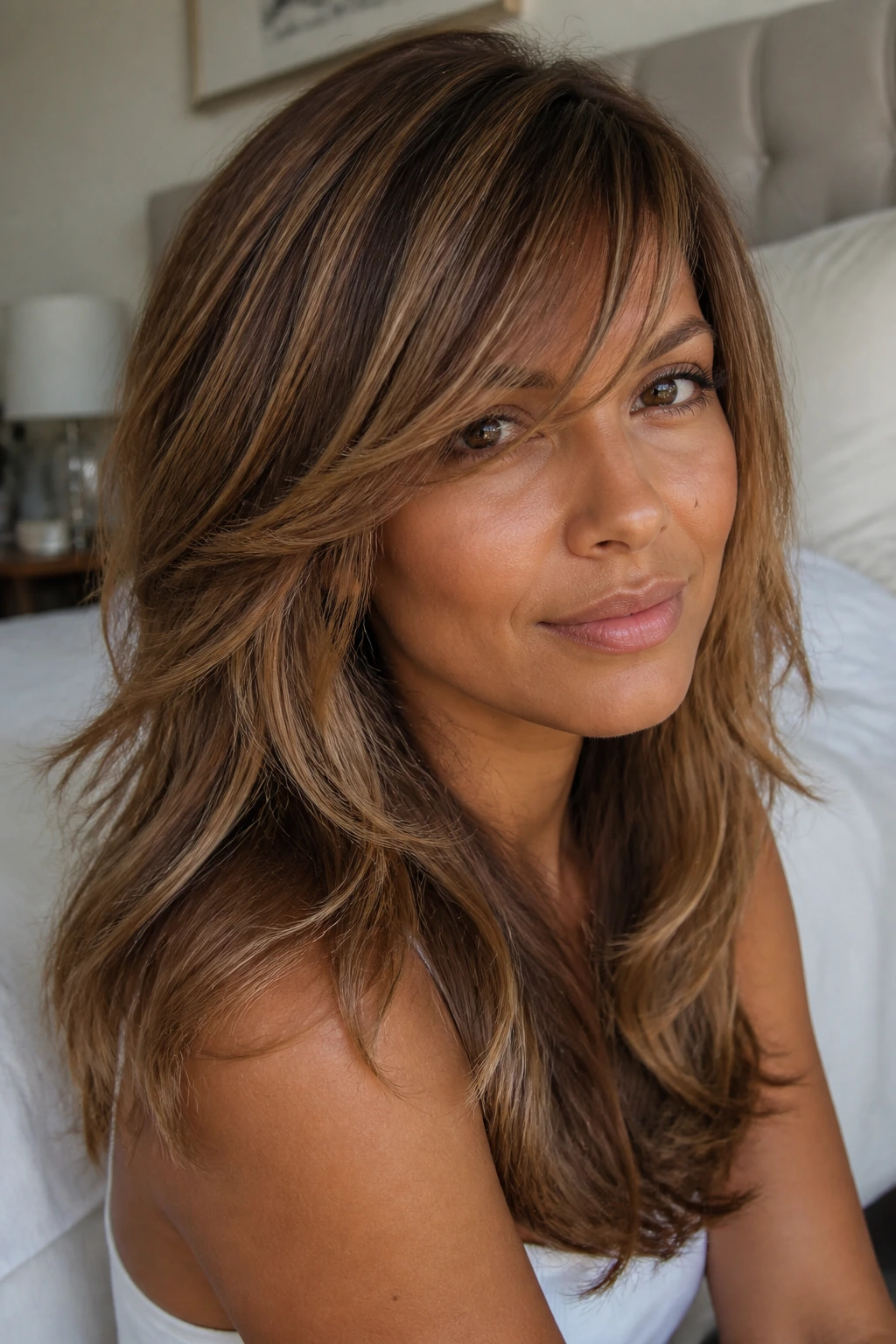
A good light brown highlight job usually looks its best for the first few weeks, then starts to soften in a way that can still be pretty if you care for it right. A gloss every 6 to 8 weeks keeps the tone from going flat, and a root touch-up every 8 to 12 weeks is plenty for most balayage-style placements.
Wash the hair with a color-safe shampoo two or three times a week if you can. Daily washing strips the gloss faster, especially around the front where the side-swept bangs get touched a lot. A weekly mask helps more than people expect, because lightened brown hair can dry out before it looks dry.
If your shade leans warm, use a toning shampoo only when the brass starts to show, not on every wash. Once every 1 to 2 weeks is usually enough. Too much toning can make beige and caramel look dingy.
Bangs need their own little maintenance routine. Dry shampoo at the roots can buy you a day, but a quick wash or rinse on the fringe keeps it from clumping. If the bangs sit oily, the highlight placement loses its shape even when the color is fine.
Frequently Asked Questions
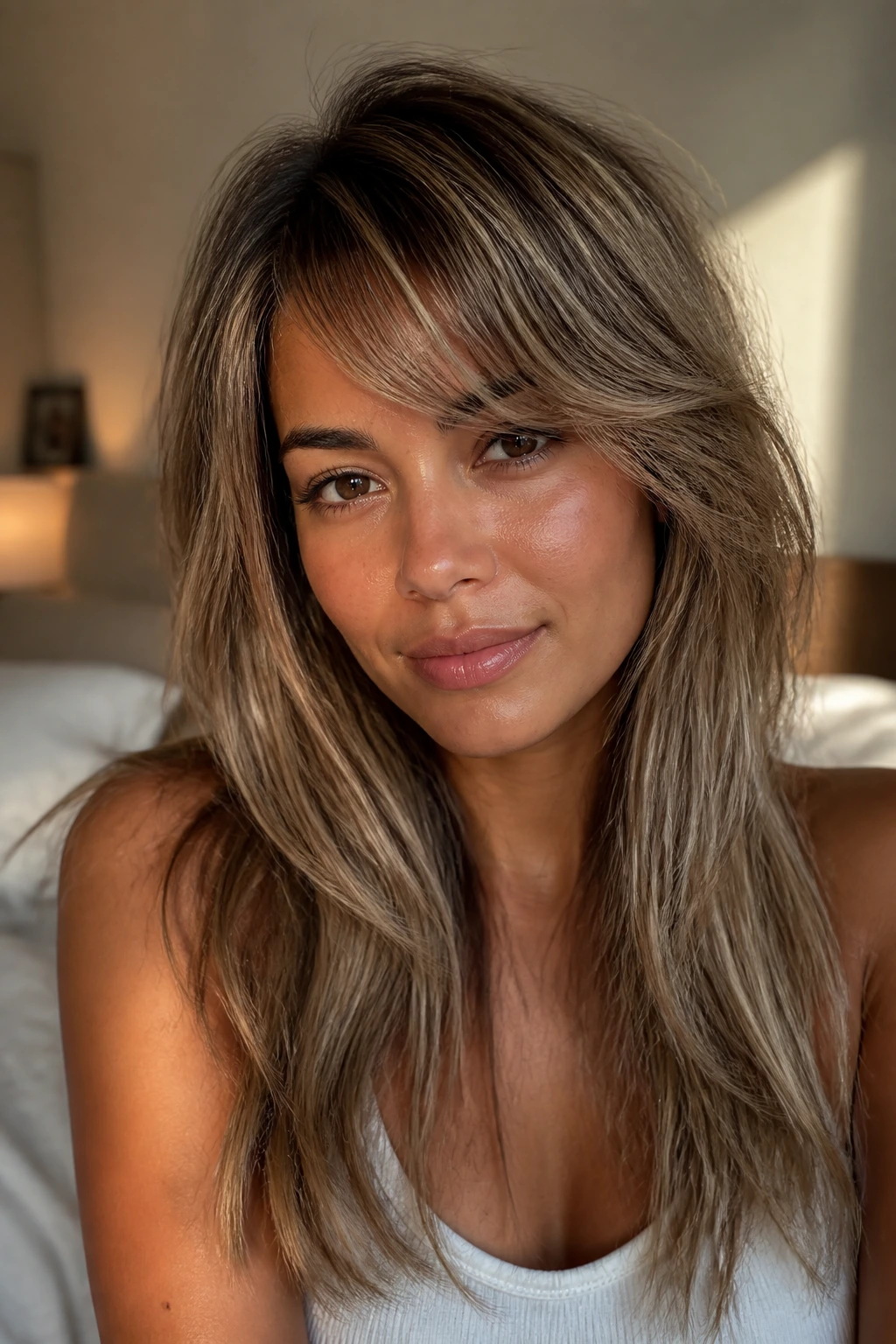
What light brown shade flatters tan skin most?
Beige-brown and caramel-brown are the safest places to start because they sit between warmth and softness. If your tan leans olive, mushroom brown often looks cleaner than gold.
Do side-swept bangs work with curly hair?
Yes, but the bang usually needs to be cut longer than you’d expect so it can shrink and still sweep. Curly hair also benefits from slightly wider highlight ribbons, because the texture breaks them up naturally.
Can I get this look without bleaching my hair a lot?
If your hair is already medium brown, often yes. A subtle lift and a gloss can create light brown highlights without a full blonde process, though very dark hair will need more than one session for a lighter result.
How often should I touch up the color?
Most balayage looks can go 8 to 12 weeks before a real refresh, while a full foil job may need attention sooner. Bang trims usually need to happen every 3 to 5 weeks because the shape changes fast.
Will light brown highlights make tan skin look washed out?
Only if the tone is too pale or too ashy for your undertone. The fix is to keep enough warmth or neutrality in the brown and place the brightest pieces near the face, not all over.
What if the highlights turn orange?
That usually means the lift was a little too warm or the toner faded. A salon gloss can pull it back into beige or mocha territory, and at home you should avoid overusing clarifying shampoo.
Is balayage or foils better for this look?
Balayage gives a softer grow-out and a more blended finish, which many people prefer on tan skin. Foils give a stronger, brighter result near the front, so they’re useful if you want more obvious contrast.
How do I keep the side-swept bangs from splitting?
Blow-dry them immediately after washing, direct them across the forehead with a round brush, and let them cool in place. If they dry in the wrong direction, the part will split and the highlight line will look messy.
A Softer Kind of Brightness
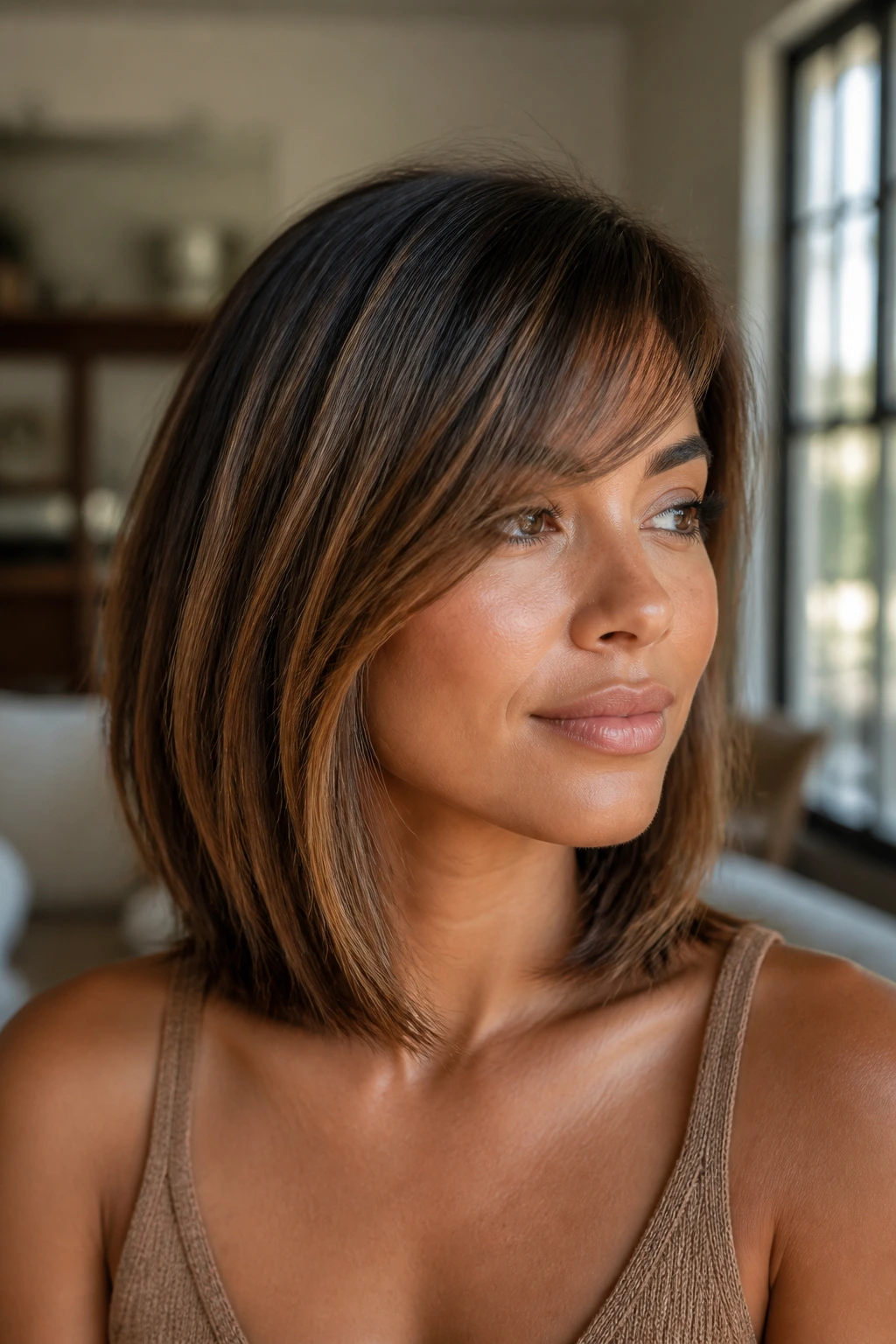
The nicest thing about light brown highlights on tan skin is that they do not have to announce themselves to work. A good beige ribbon, a caramel frame, or a smoky mocha sweep can change the whole face without dragging the hair into obvious blonde territory. That restraint is part of the appeal.
Side-swept bangs seal the deal. They give the color a path, and once that path is clean, the rest is mostly tone and placement. Pick the brown that fits your undertone, keep the front pieces shaped, and the look starts doing its job the moment you move your head.
If you take one thing from all this, let it be this: the best version of this style is the one that looks like it grew there. Not loud. Not flat. Just a very good brown, in the right place, on the right face.