



Brown fall highlights for warm skin tones work best when the brown leans toasted, not dusty. A ribbon of chestnut or caramel around the face can wake up peach, gold, and olive undertones in a way a flat brunette never quite manages. The difference is small in the mixing bowl and obvious in the mirror.
The biggest mistake I see is asking for “brown highlights” and ending up with something that looks beige, gray, or muddy under daylight. Warm skin does not need a cool filter. It needs reflection—honey, maple, toffee, copper, chestnut, sometimes a little mahogany—and the right placement so the light lands where the face actually needs it.
That’s why the best brown highlight ideas are not all soft and subtle. Some are barely-there babylights. Some are louder, with a face frame that practically does the talking for you. The right one depends on your base color, how much maintenance you can tolerate, and whether you want the color to whisper from across the room or only show up when you turn your head.
Why These Browns Feel So Good on Warm Skin
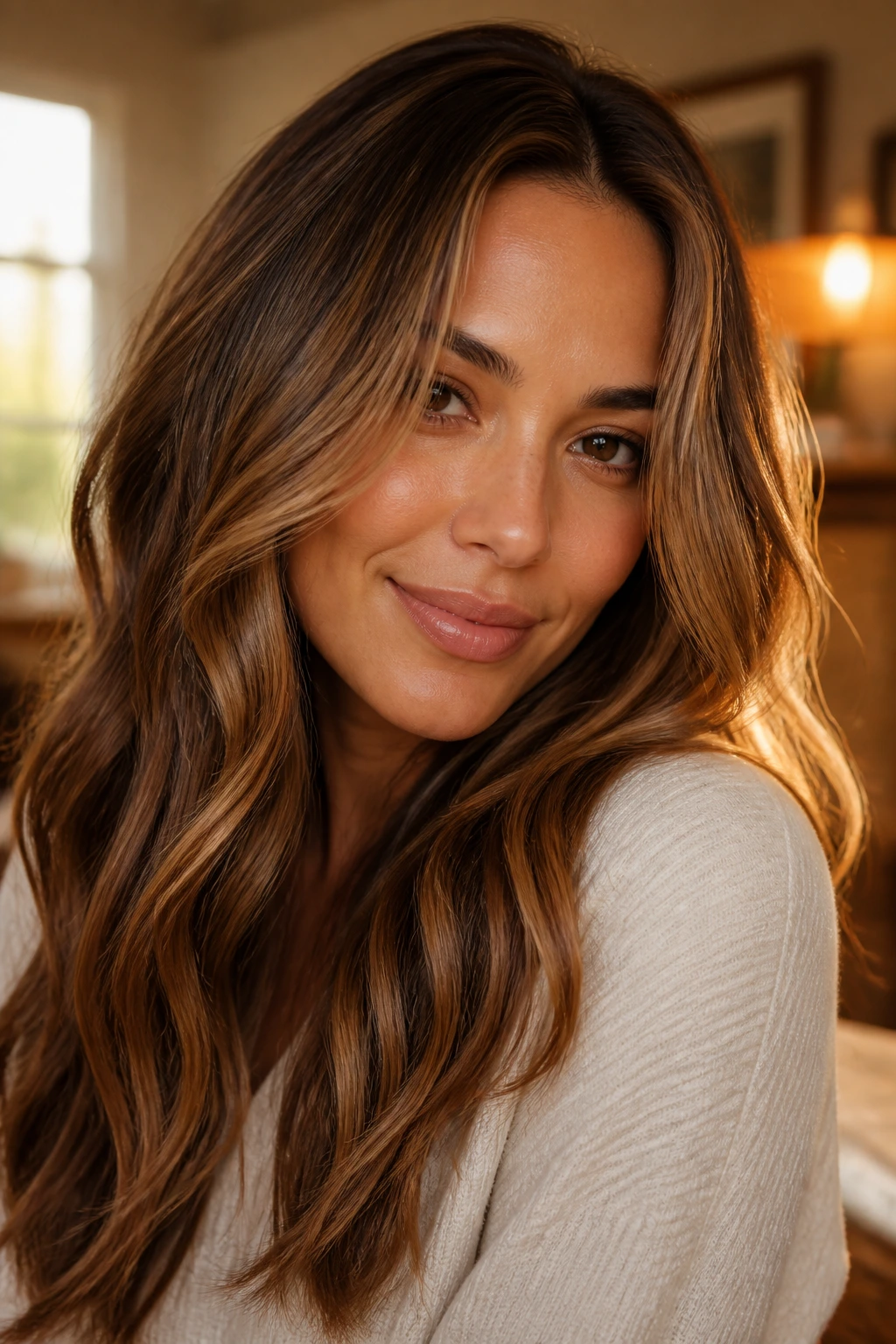
-
Gold undertones do the heavy lifting: Caramel, honey, chestnut, and copper-based browns echo the warmth already in the skin, so the color looks blended instead of pasted on.
-
Brown can still brighten: Lifting a brunette two or three levels around the face is enough to make cheekbones look sharper and eyes look clearer, without crossing into full blonde territory.
-
Grow-out is friendlier: Balayage, babylights, root melts, and face frames leave softer lines as the hair grows, which matters if you don’t want a hard stripe after six weeks.
-
The placement changes everything: The same shade can look delicate in thin surface pieces or bold in a chunky money piece, and that is the fun part.
-
Warm browns hold up in real life: Under office lighting, in sunlight, and even when hair is tied back, these tones still show texture instead of flattening into one block of brown.
1. Cinnamon Chestnut Ribbon Balayage
Cinnamon chestnut is the shade I reach for when someone wants warmth but refuses to look orange. The base stays a deep chestnut brown, and the ribbons float up through the midlengths in a cinnamon tone that reads like spice, not copper penny. On warm skin, that little red-brown turn keeps the face from looking washed out.
Why It Works
A ribbon balayage gives you movement without obvious stripes. Ask for the light pieces to sit mostly from cheekbone level down, with just a few fine bits around the front so the color shows when your hair moves. This works especially well on shoulder-length cuts and long layers, where the ribbons can bend and separate instead of sitting in one curtain.
What to Ask For
- A level 4 or 5 chestnut base
- Ribbons lifted to about level 6 or 7
- A cinnamon-toned gloss, not a beige toner
- Soft painting through the midlengths and ends
Loose waves make this one sing. Straight hair still works, but the ribbons show best when there’s a bend in the hair, even a gentle one.
2. Toffee Brunette with Soft Face Framing
Want brightness without a loud money piece? This is the quieter sibling. The base stays brunette, and the front sections get painted in toffee—golden, warm, and just light enough to catch the eye when you tuck hair behind your ear. It looks especially good on warm skin because the color sits close to caramel, not butter blonde.
You can wear this with a center part or a soft side part, and that matters. The face frame should start around the cheekbone or just below the temple, not all the way at the root, unless you want a stronger contrast. I like this shade on people who wear their hair up half the time, because even a low ponytail leaves a little glow around the face.
3. Honey Money Piece on Dark Mocha
This is the bold one. A honey money piece gives dark mocha hair a quick jolt of brightness right where the eye lands first, and on warm skin that bright tone feels fresh instead of harsh. The key is keeping the honey warm enough—golden, not yellow.
Best for
- People who want a visible change without coloring the whole head
- Dark brown or mocha bases
- Round or oval faces that benefit from more light near the front
A money piece does not need to be thick to work. Two painted sections on either side of the part can change the whole mood of a haircut. If you wear glasses, this one is especially good, because the light pieces sit right where the frames end and the face begins.
4. Maple Brown Melt with Lived-In Roots
Maple brown is one of those shades that sounds soft and looks expensive when it’s done right. The root stays close to your natural brown, then the color melts into a warmer maple midlength and a slightly lighter maple-caramel finish at the ends. There’s no hard line. No staircase effect.
Why this grows out cleanly
A melt works because the transition is gradual over several inches. That means you can go longer between appointments without the color reading as neglected. Warm skin likes this kind of shift because the eye sees one long ribbon of brown warmth instead of disconnected sections.
If your hair is medium to thick, this shade has room to breathe. On fine hair, ask for lighter surface pieces only, because too much lift can make the ends look skinny. A gloss every six to eight weeks keeps the maple tone from turning dull.
5. Hazelnut Babylights on Rich Brunette
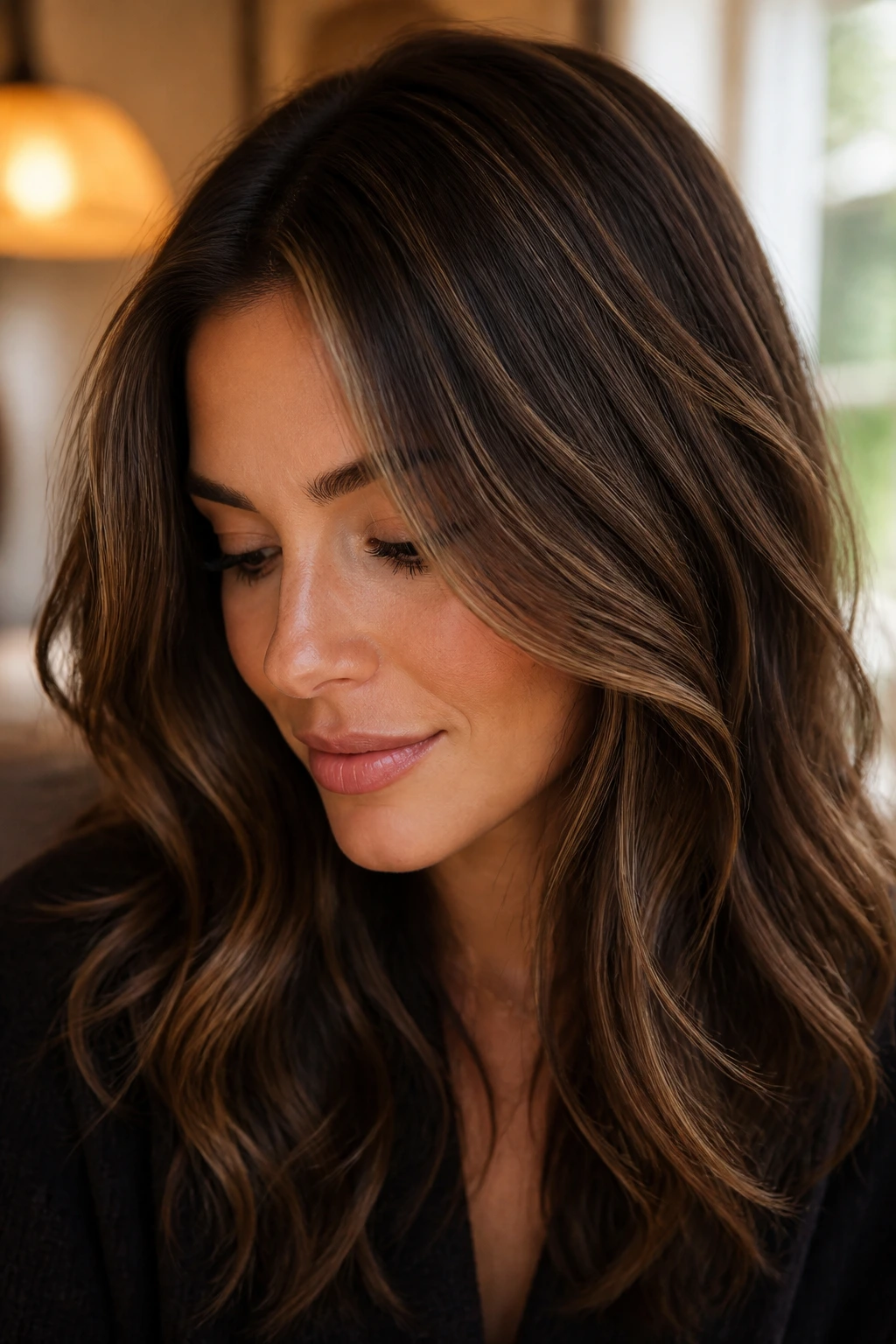
Babylights are for people who want that “my hair is just naturally dimensional” effect. The pieces are tiny, almost threadlike, and hazelnut is the right tone when you want softness instead of contrast. Think warm nut shell, not ash brown, not blonde.
How to wear it well
- Best on fine to medium hair
- Excellent with straight styles and sleek blowouts
- Keeps the surface from looking flat in low light
Because the pieces are so thin, hazelnut babylights are one of the easiest ways to build shimmer without shouting. They also work beautifully on shorter cuts, where chunky highlights can feel too busy. If your hair tends to lie close to the head, this shade creates movement that you see most clearly when the light hits from above.
6. Cocoa Base with Caramel Ends
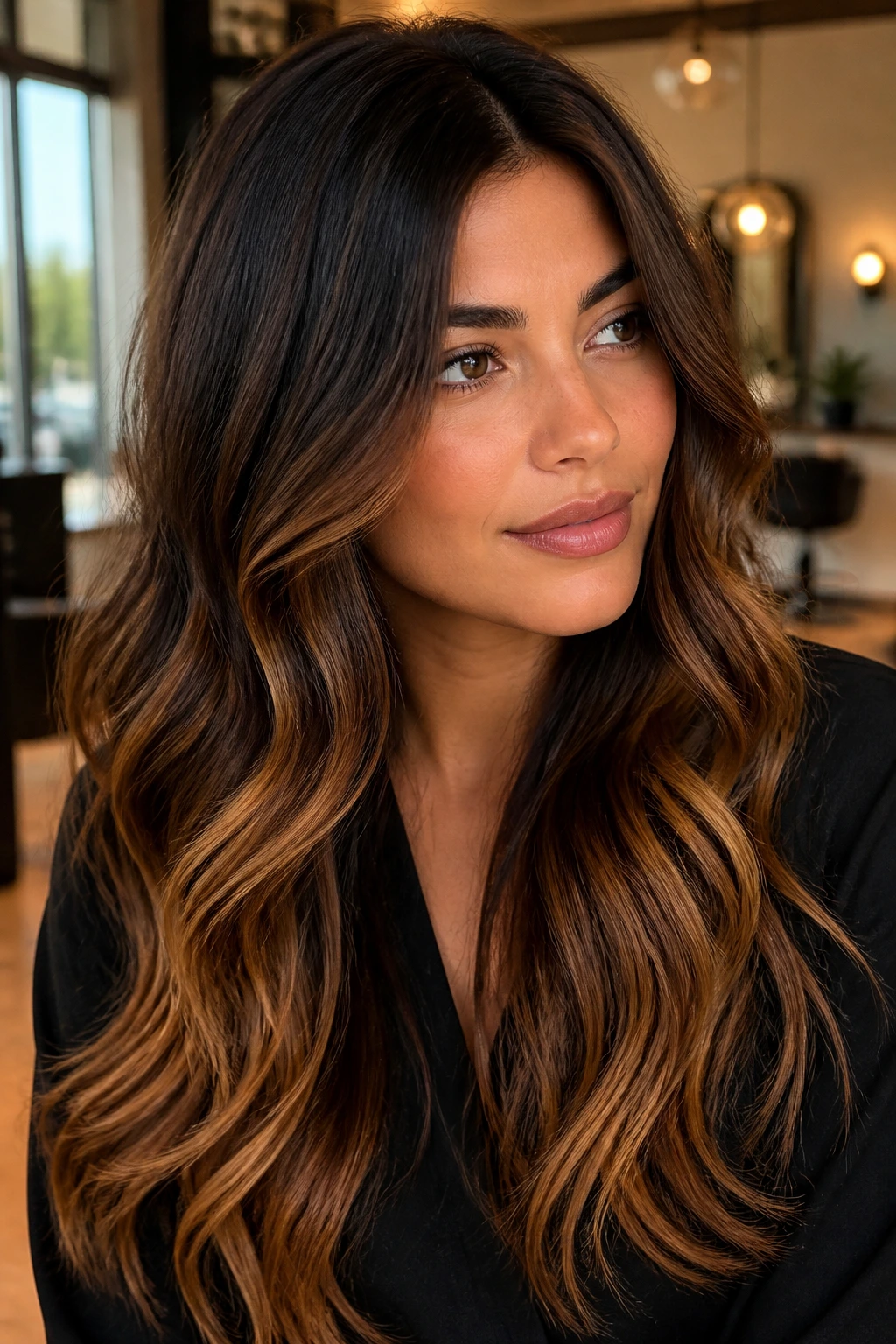
This is the “dark at the top, delicious at the bottom” look, and yes, it earns the drama. A cocoa base keeps the root and upper lengths grounded while caramel collects on the lower half and ends. On long hair, it reads rich and glossy. On curls, it looks even better because the lighter ends flick in and out of the shape.
The trick is restraint. If you push the caramel too high, the whole thing stops feeling intentional and starts feeling overprocessed. Keep the lift concentrated on the bottom third, then soften the transition with a low-gloss toner so the ends look buttery, not striped.
7. Copper-Kissed Chestnut Layers
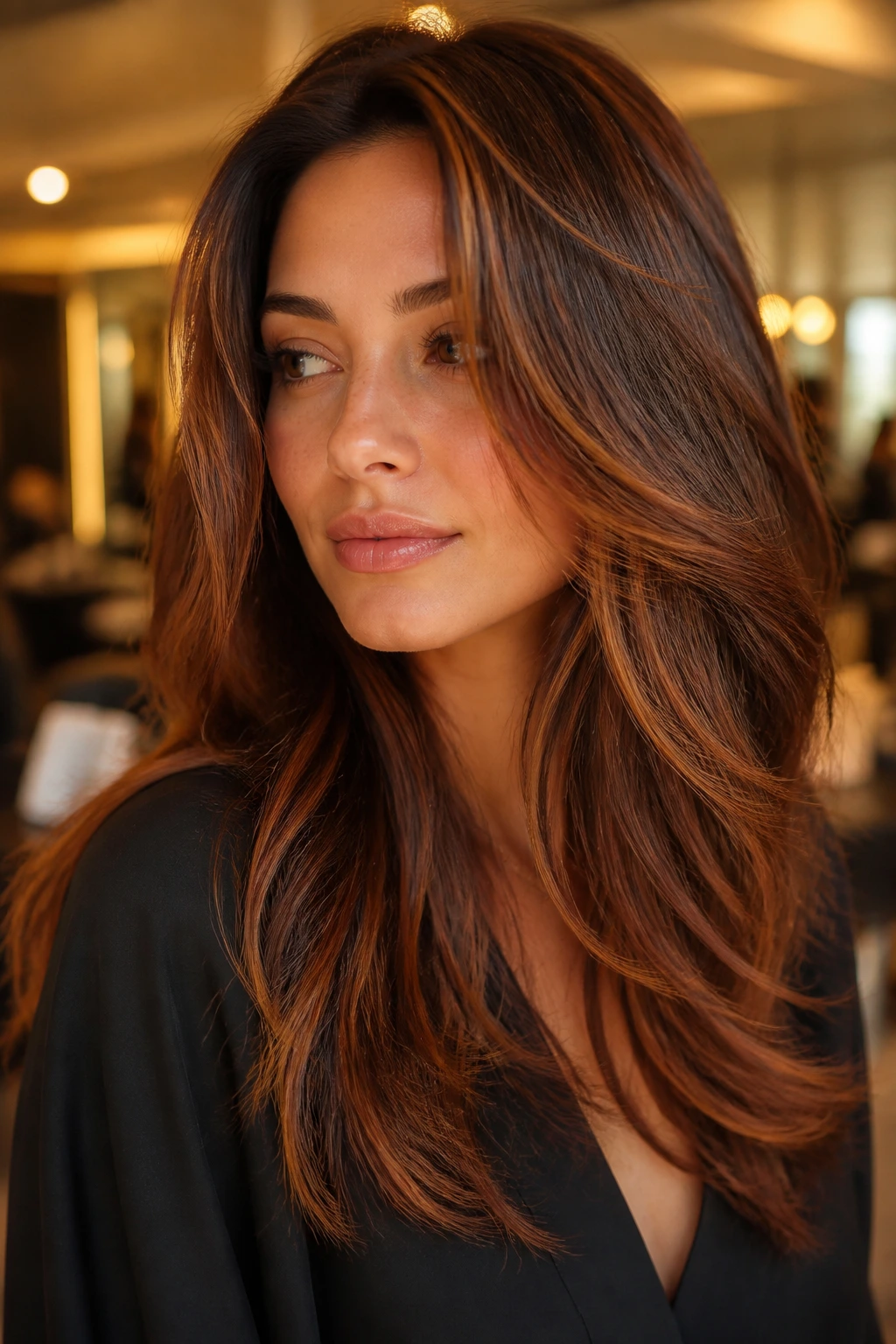
Copper-kissed chestnut is for people who like warmth but don’t want their hair to look red from across the street. The chestnut base keeps it grounded, while a clear copper glaze adds that little firelight effect on the surface. On warm skin, the color feels alive. On curly or wavy hair, it really moves.
What makes it different
A little copper goes a long way. If the highlight pieces are too bright, you lose the chestnut depth that makes the color wearable every day. Ask for the copper mostly through the outer layers and around the face so the color appears when the hair shifts, not all at once.
This is one of my favorites for layered cuts because every flip of the hair shows a different amount of warmth. It also fades in a flattering way, which is more than you can say for some brighter reds.
8. Latte Brunette Contour Highlights
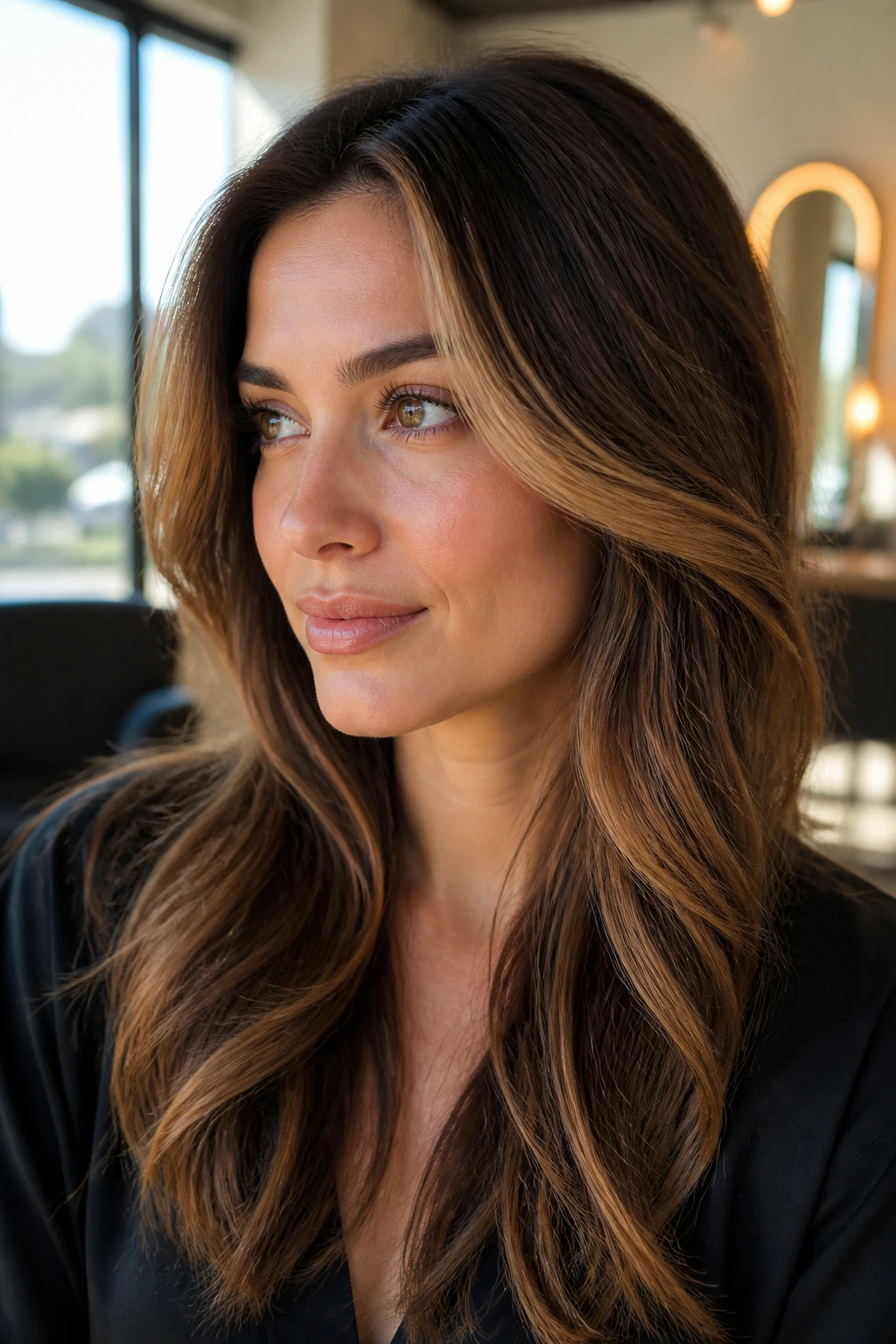
If money pieces feel too strong, contour highlights are the safer move. Latte brunette contouring places lighter pieces around the temples, cheek line, and a touch through the top layer, so the face gets a soft frame instead of a single bright stripe. The tone should stay beige-gold, almost coffee-with-milk warm.
It’s a nice choice for round and square faces because the light pieces pull the eye upward and downward at the same time. That sounds technical, but the effect is simple: the face looks a little longer, the hair looks softer, and the whole cut reads more shaped.
9. Toasted Almond Balayage
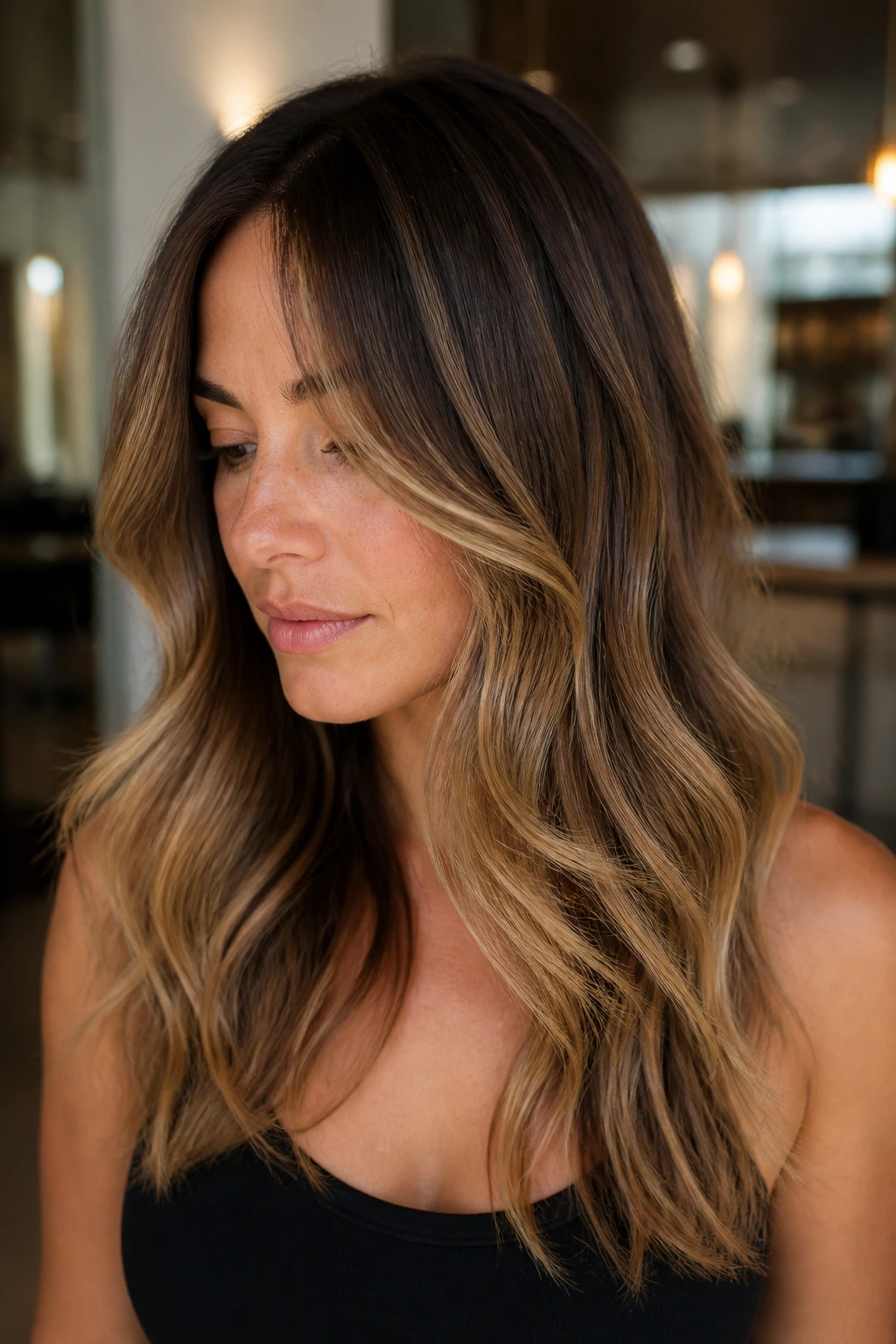
Toasted almond has that soft, nutty warmth that flatters warm skin without sliding into orange. It lives somewhere between caramel and light brown, which is exactly why it works. The tone feels airy on medium brown hair and can make fine hair look fuller because the highlights are scattered, not chunky.
Ask for surface painting first, then a few deeper painted pieces underneath so the color doesn’t disappear when the hair is worn behind the shoulders. Toasted almond is especially nice on layered blowouts, where the lighter ends peek through the darker top layer. It’s subtle. Not boring.
10. Mahogany Brown with Cinnamon Glaze
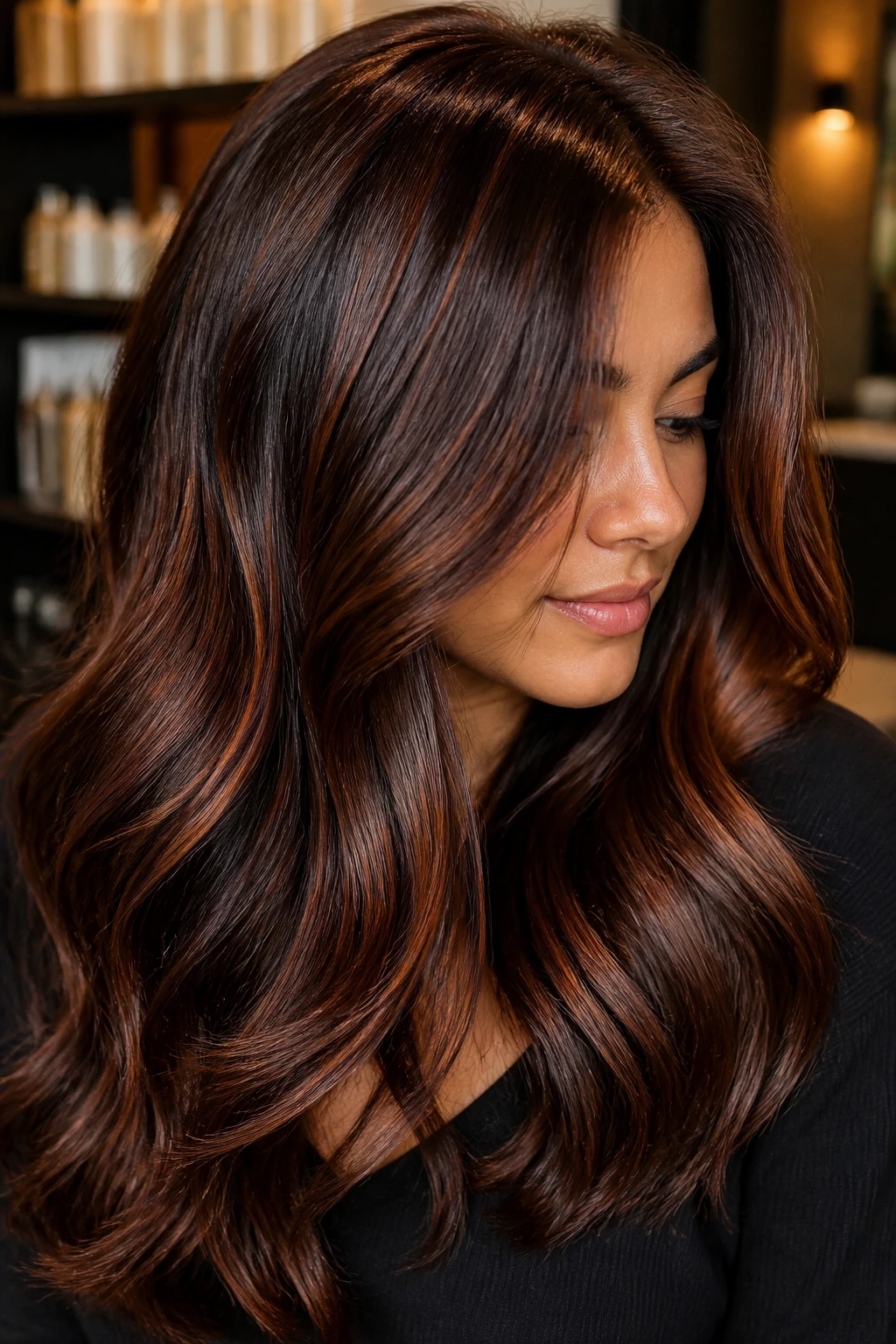
Mahogany brown gives you depth first and warmth second, which is a nice switch if you’re tired of lighter highlights. The red-brown note stays inside the brown family, so it flatters warm skin without turning the head into a red block. A cinnamon glaze over mahogany adds shine and keeps the shade from looking heavy.
This is a strong pick for thick hair. Dense hair can hold deep color better, and the light-catching glaze prevents it from looking flat. If your hair is naturally coarse, mahogany can actually make it look smoother because the reflective brown-red tone catches the surface of the strands.
11. Butterscotch Ribbons on Espresso Hair
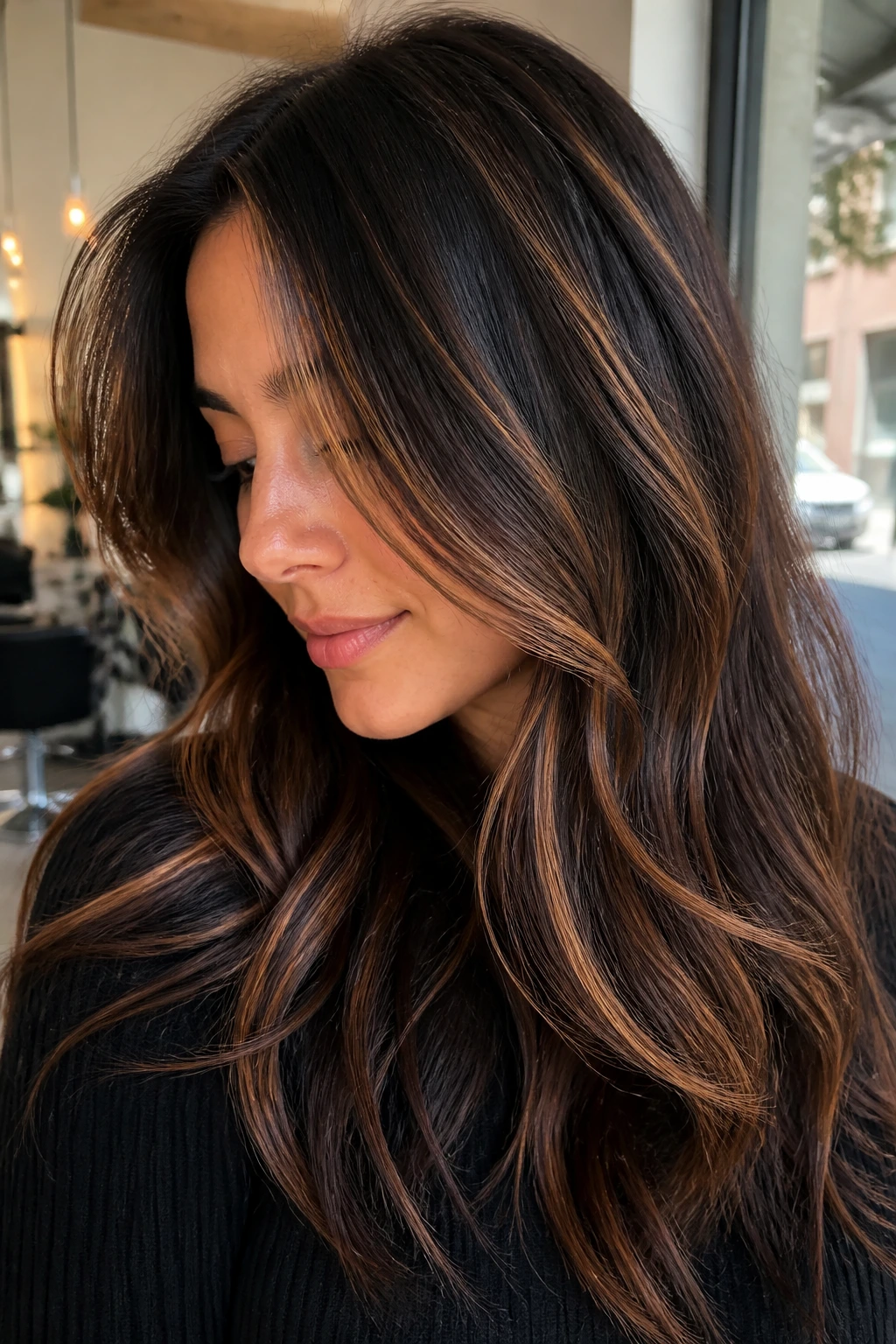
Butterscotch on espresso is high contrast, but the warmth keeps it from looking harsh. The base stays deep and dark; the ribbons move through the top layer and front sections in a golden-caramel tone that shows up the second you turn your head. It’s a good one if you want people to notice the hair, not guess what toner you used.
What to watch for
- Keep the ribbons thin to medium, not chunky
- Place most of them on the top layer and face frame
- Ask for a warm gloss so the butterscotch doesn’t go pale
This look wears best on long layers and blunt ends alike, but it really comes alive when styled with loose bends. A center part makes the contrast more graphic; a side part softens it. Either way, the goal is visible warmth, not candy-corn brightness.
12. Bronde Melt with Gold Undertones
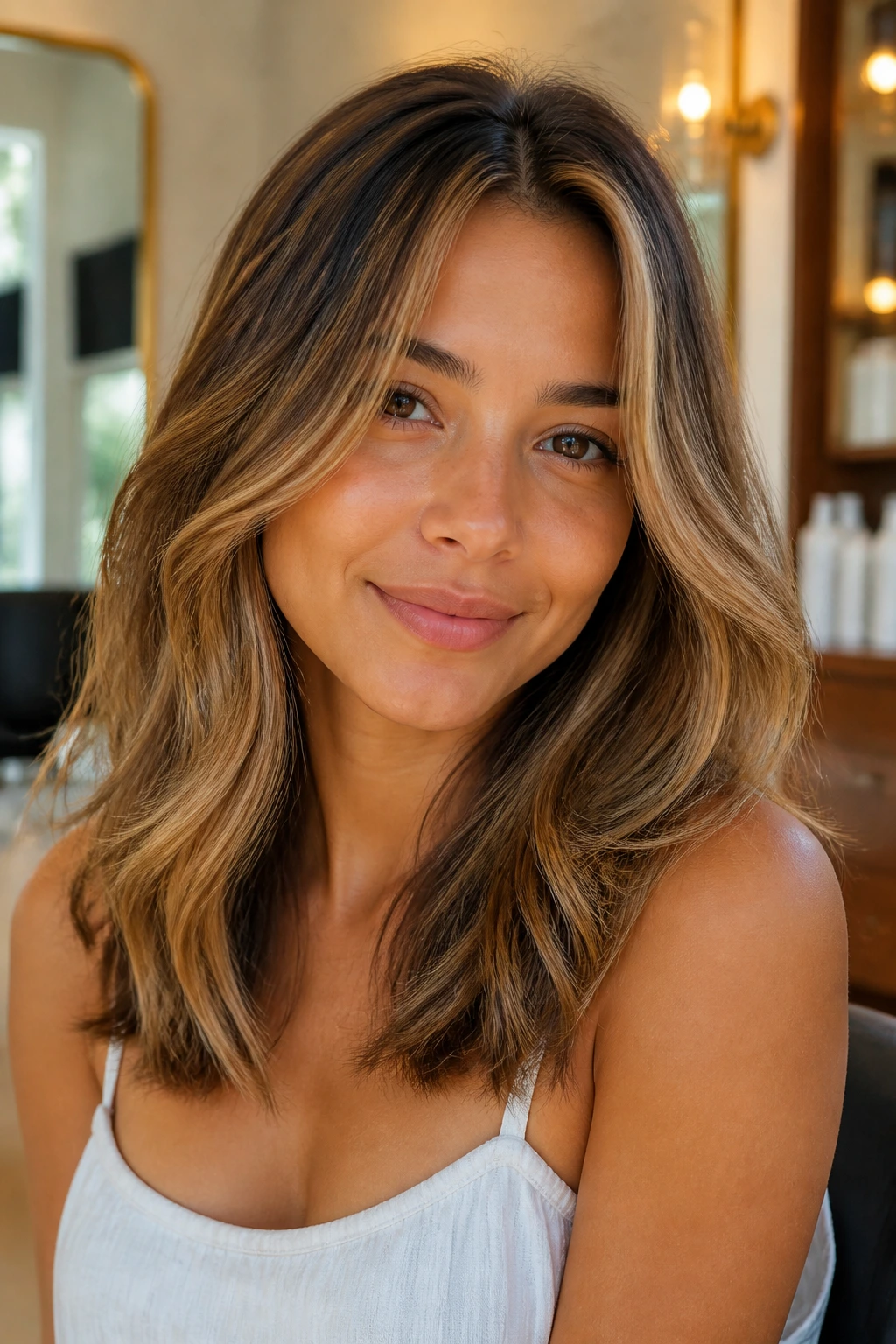
Bronde can go wrong fast. Too cool, and it looks dusty. Too light, and it stops being brunette altogether. The version I like for warm skin stays rooted in brown and shifts into gold-toned midlengths and ends, so the whole color feels sunlit rather than bleached.
This is the right move if you want brightness without giving up depth. It works well on medium brown bases and looks especially nice on layered hair, where the lighter pieces separate enough to show the blend. If you wear your hair curly, keep the lift gentle. Too much lift on curls can make the pattern look frizzy instead of dimensional.
13. Auburn Brown Lowlights and Highlights
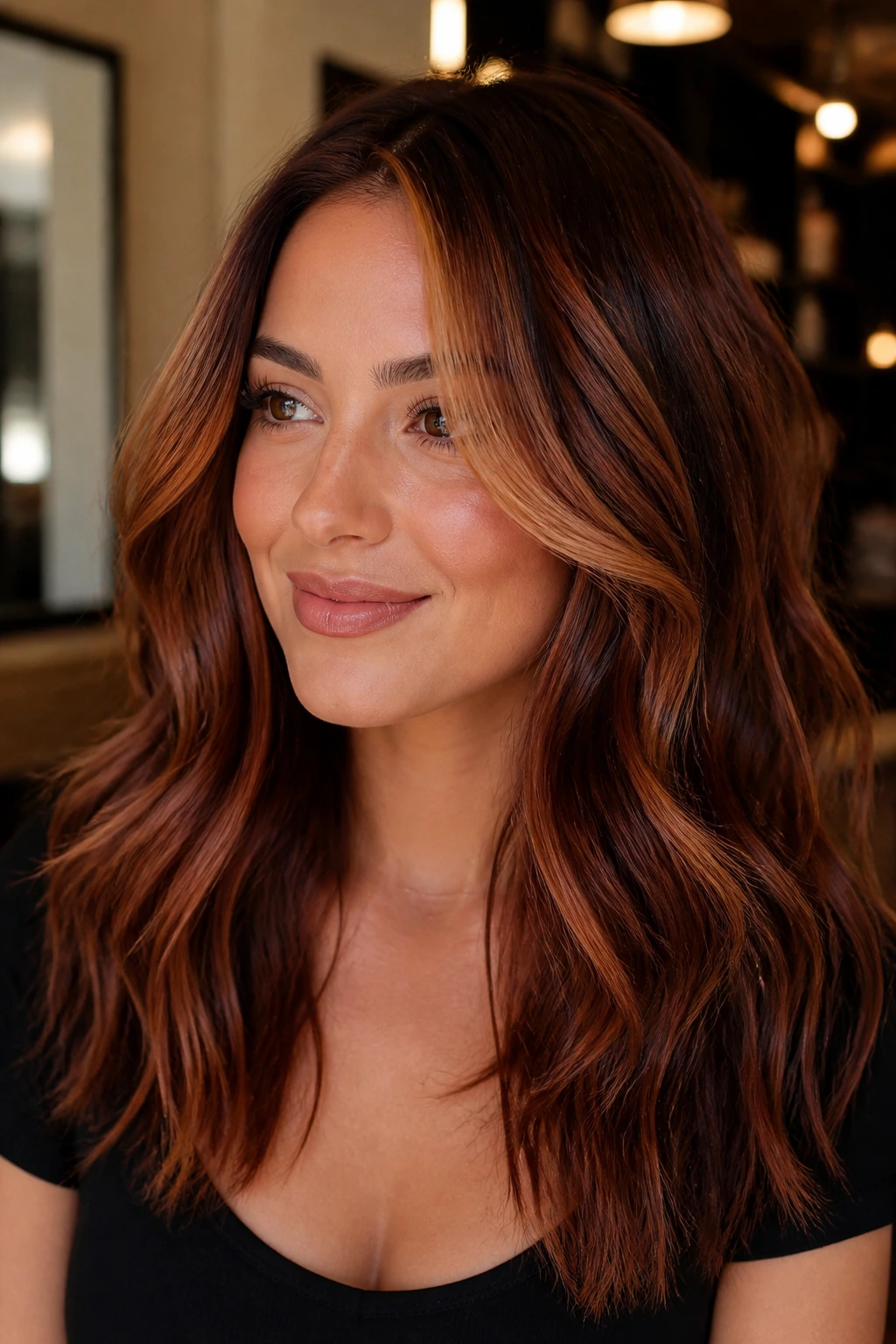
Auburn lowlights are underrated. Everyone talks about highlights, but a little darker auburn woven back into the hair can make the lighter pieces look richer and more expensive. On warm skin, this mix creates a glow that sits between chestnut and redwood, which is a lovely place to be.
Why the mix matters
Without lowlights, warm highlights can skate too far into one-dimensional caramel. The deeper auburn pieces give the eye a place to rest. That matters on medium-density hair, where too much light can make the hair look thinner than it is.
If your hair tends to fade fast, auburn is a useful color family because it keeps some warmth even after a few washes. It will need glossing, though. Auburn is beautiful, but it does not like being ignored.
14. Biscotti Brown with Soft Dimension
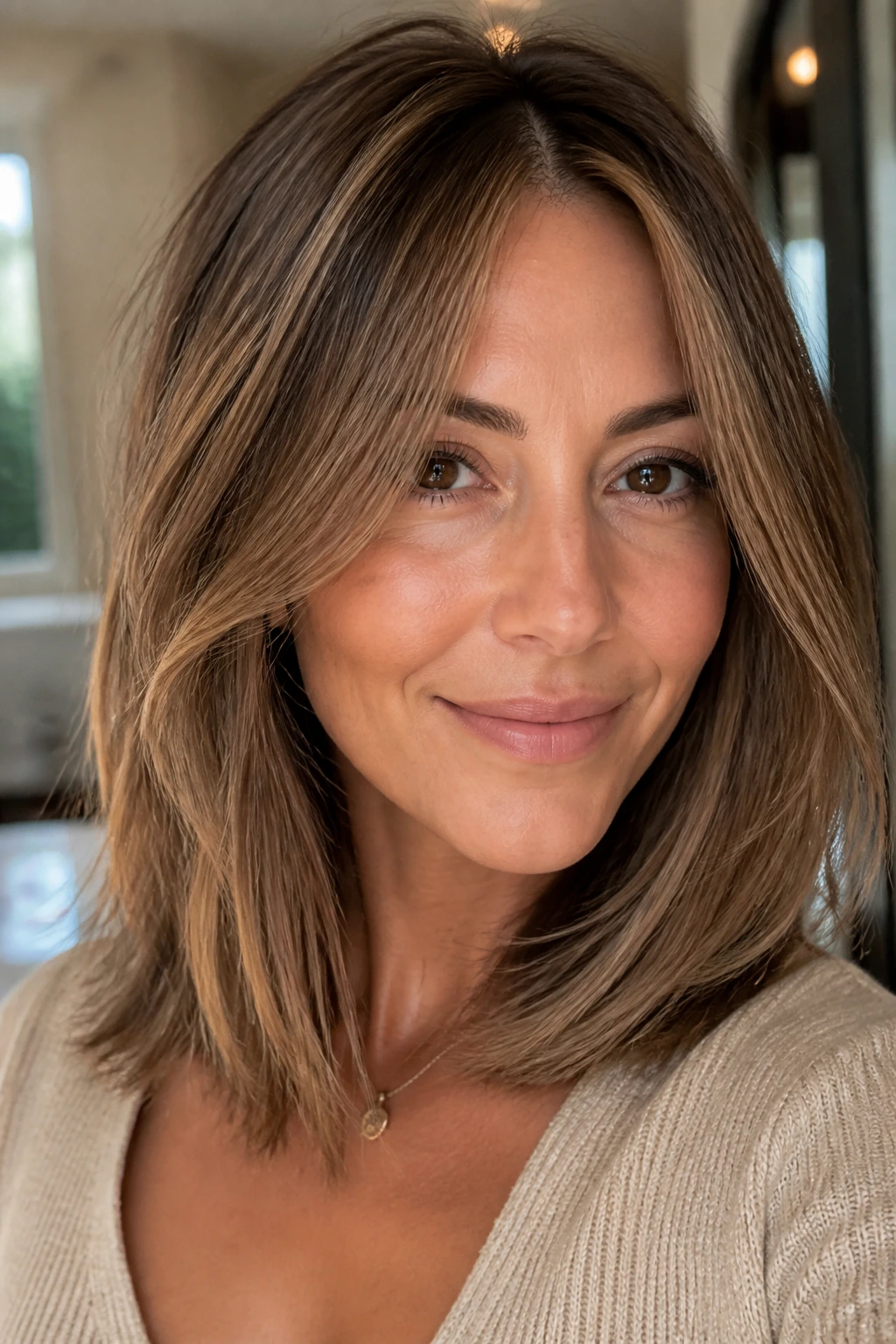
Biscotti brown sits on the creamy side of brunette, but it stays warm enough for golden or peach skin. The dimension here is soft—little variations of beige-brown and light caramel rather than obvious highlights. It’s the sort of color people notice only after they’ve looked at it for a minute.
That makes it ideal for straight blowouts, polished lobs, and anyone who hates stripy hair. The cut needs a little movement for the shade to show, so a blunt one-length cut can look better with a light bend at the ends. If your hair is fine, this is a smart choice because the color won’t overpower the strand.
15. Amber Brown Peekaboo Pieces
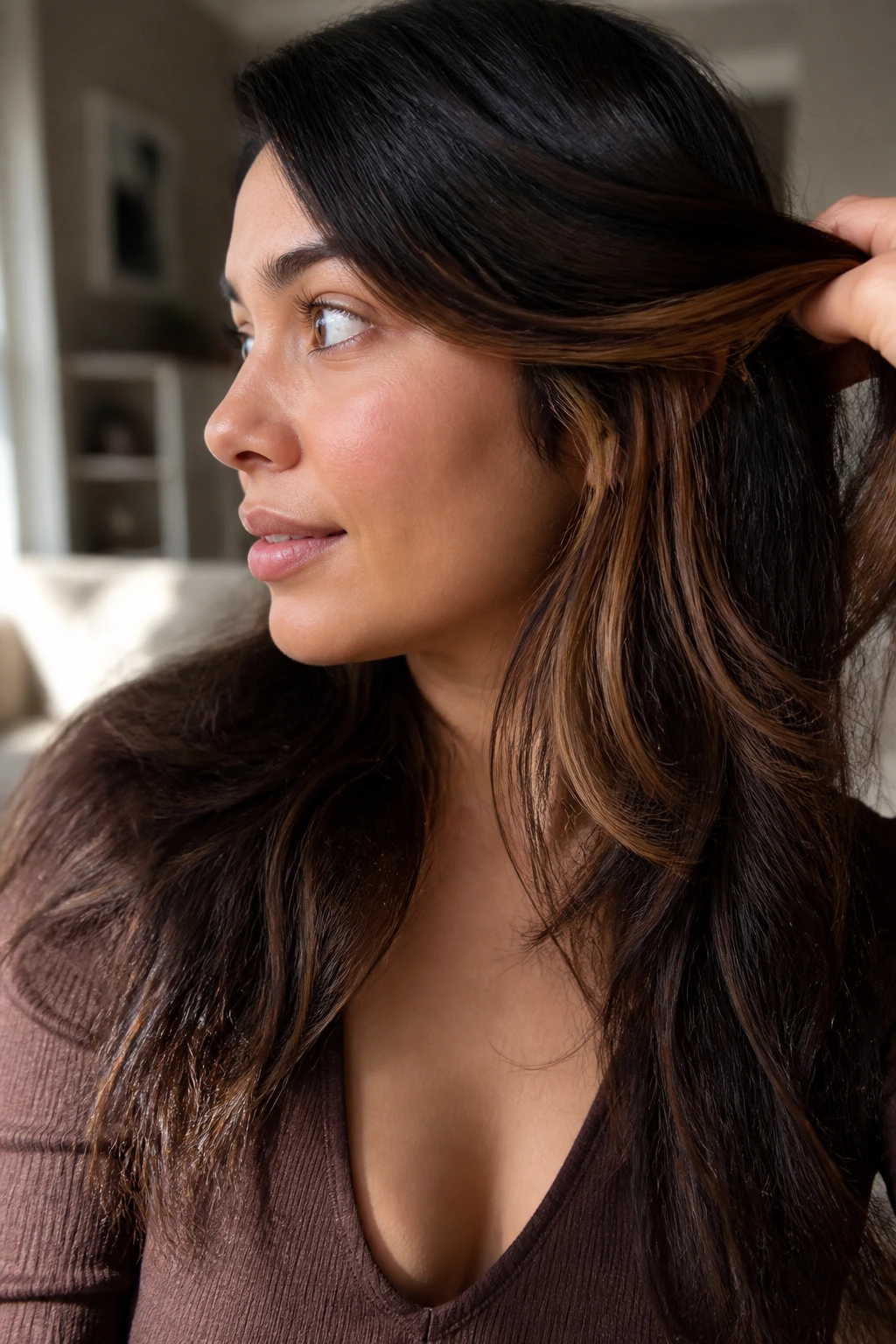
Peekaboo color is for the person who likes a small surprise. Amber brown pieces live underneath the top layer or just inside the perimeter, so they show when the hair moves, lifts, or gets tucked behind the ear. On warm skin, amber reads golden and lively without making the whole head look bright.
It’s a low-risk way to play with brown fall highlights. The hidden placement makes grow-out less stressful, and you can keep the top layer mostly natural if your workplace prefers a quiet look. If you wear braids or half-up styles, the color suddenly becomes much more visible. That little shift is the point.
16. Sienna Brunette with Warm Contour
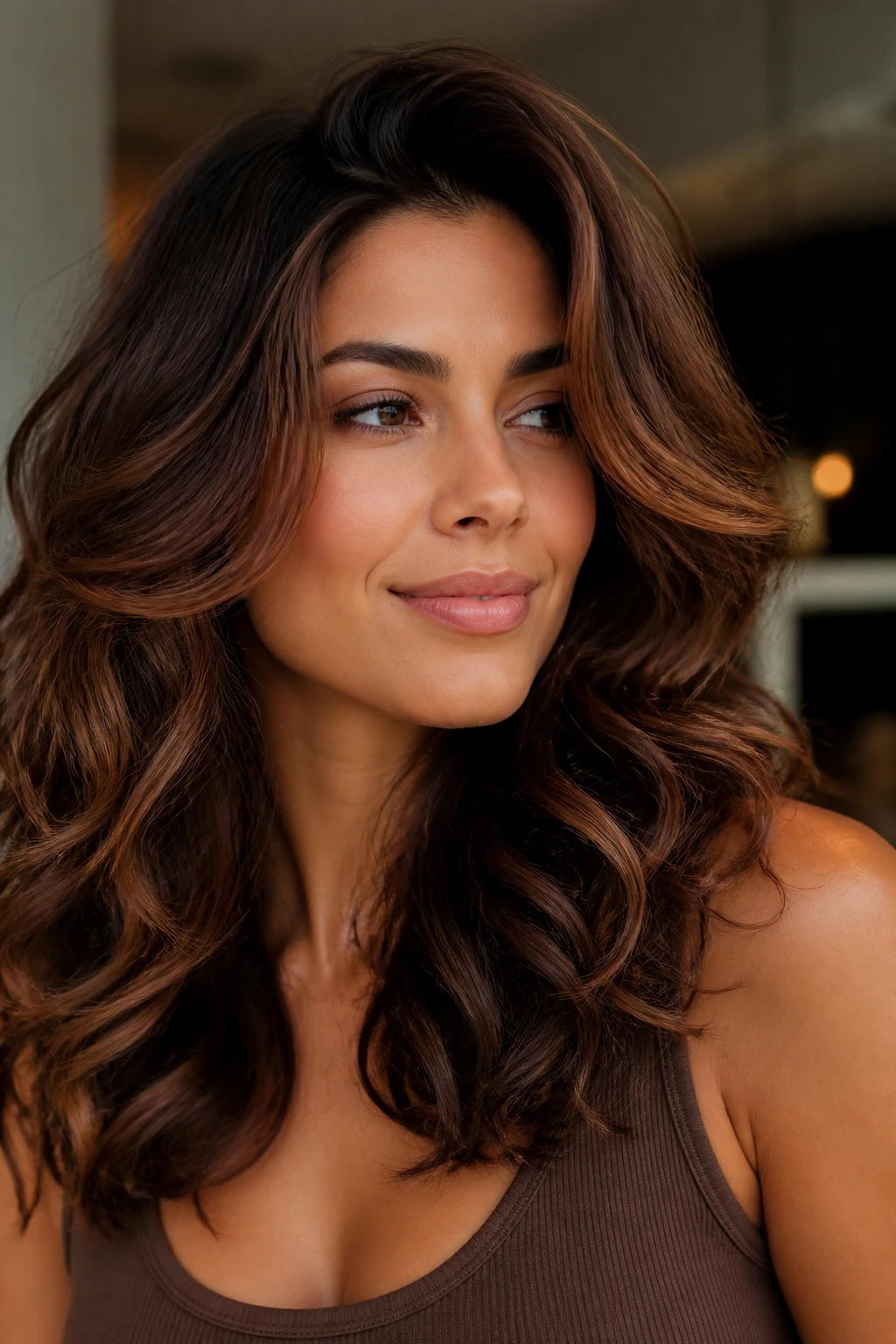
Sienna is a beautiful bridge between brown and soft red, and it suits warm skin in a way cool burgundy rarely does. The trick is not to spread it everywhere. Keep the sienna near the face, around the crown, and through the most visible layers so it acts like a contour instead of a full repaint.
This shade works especially well on layered cuts and curls because the bends in the hair catch the red-brown notes. It also looks good in dim light, which sounds small until you notice how many colors fall apart the second the sun goes down. Sienna keeps its shape.
17. Burnt Sugar Balayage
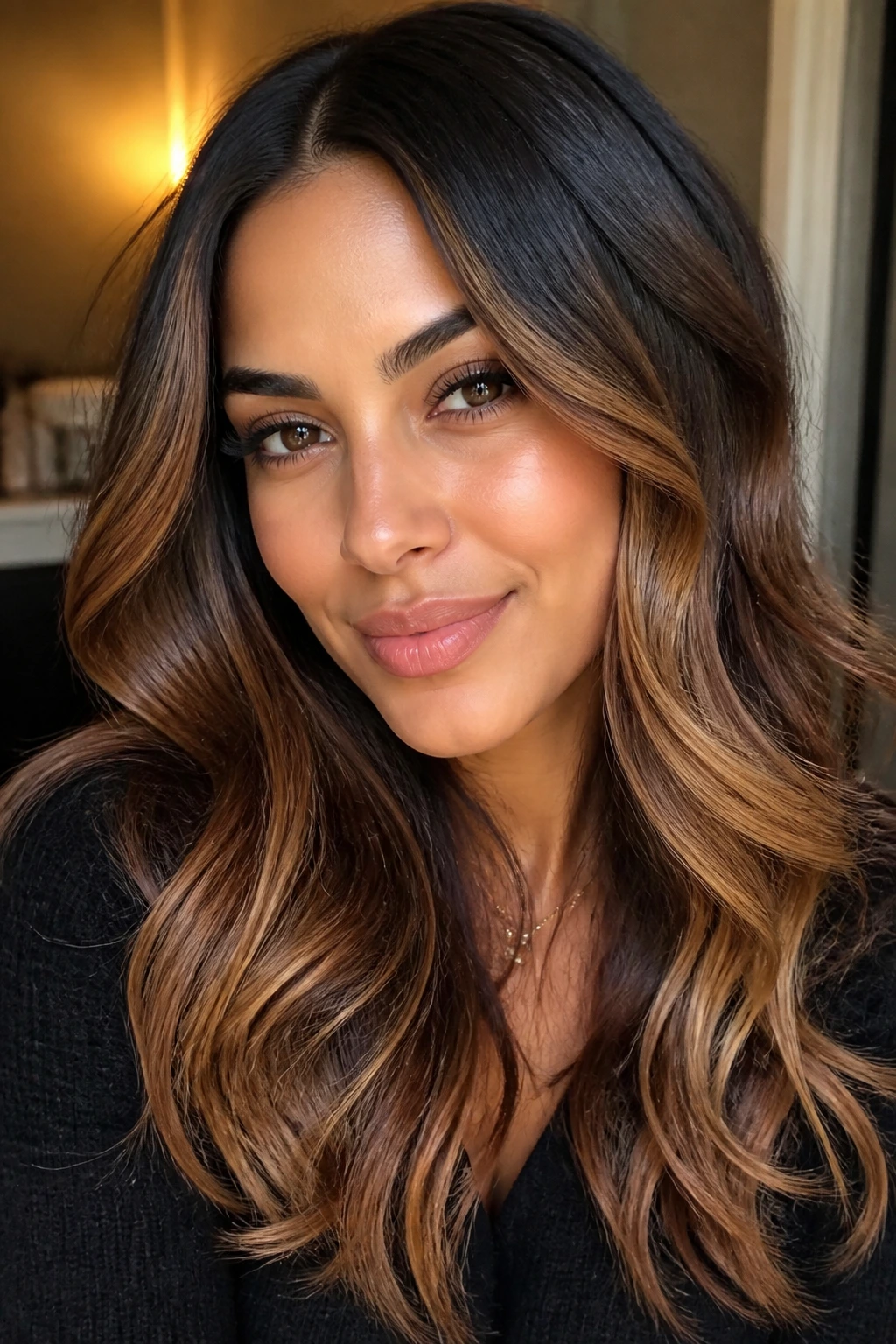
Burnt sugar sounds dramatic, but the effect is more glossy than loud. Think dark brown roots, caramel-painted midlengths, and ends that look like they’ve been kissed by heat, not bleached into submission. On warm skin, the color feels almost edible. The shine is part of the appeal.
This is a good option for coarse or thick hair because the lower contrast keeps the shape from getting busy. It also works on long layers where you want depth near the scalp and warmth near the ends. If you like curling your hair, even loosely, the caramel pieces will catch the curve and make the color look more expensive than it is.
18. Coffee Bean Brown with Copper Threads
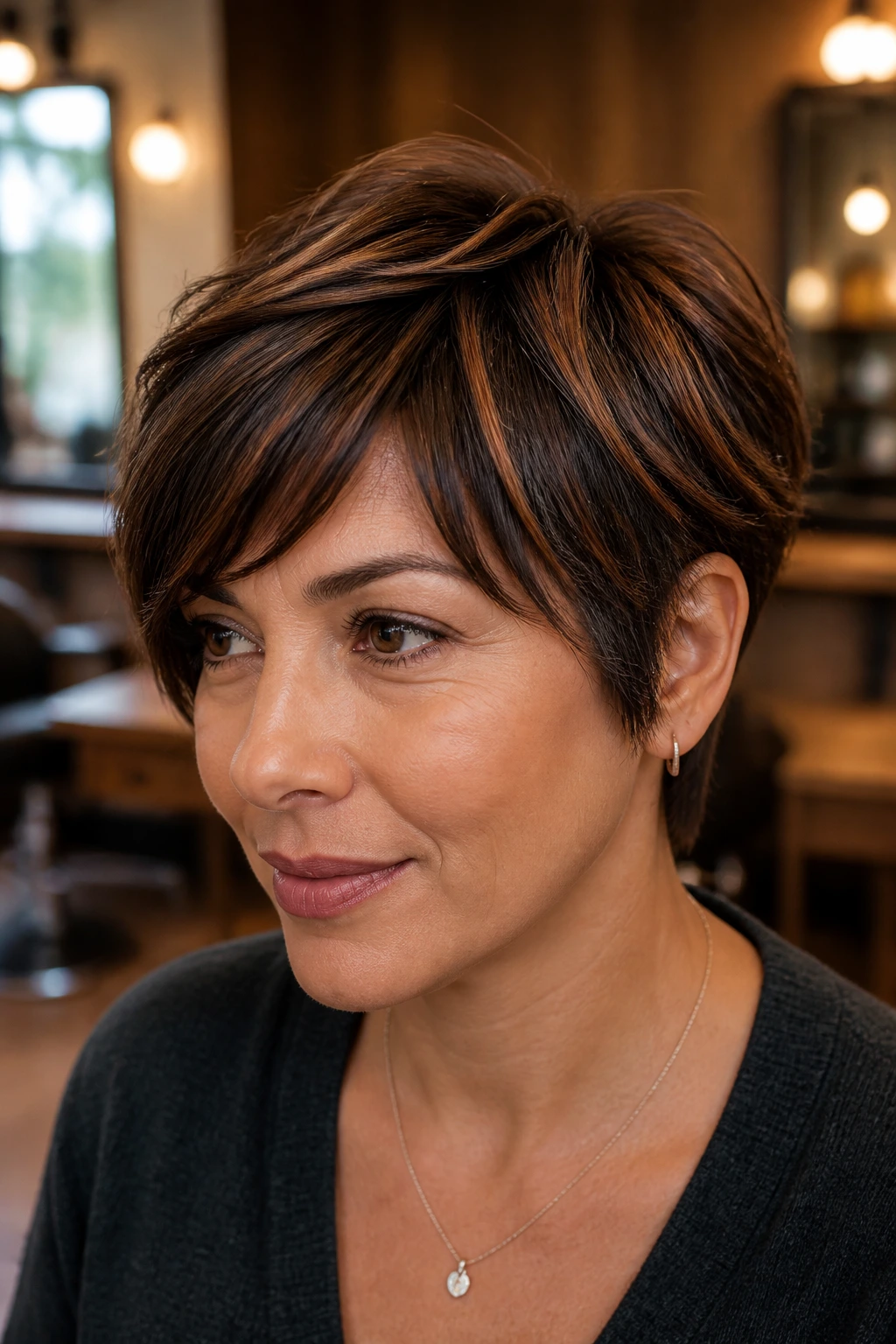
Coffee bean brown is the dark, grounded base, and the copper threads are the little sparks running through it. The threads should be thin enough that they look like light moving across the hair, not broad strips of red. That’s what makes the style feel modern.
Best use cases
- Short bobs with texture
- Pixies with longer top layers
- Dark brunette hair that needs movement without heavy lightening
This one is sharp in the best way. It gives a haircut some attitude, especially if the cut is blunt or slightly shattered at the ends. Copper threads fade faster than brown, so a warm gloss is worth the money if you want the color to stay lively instead of turning rusted.
19. Tawny Brown Face Frame
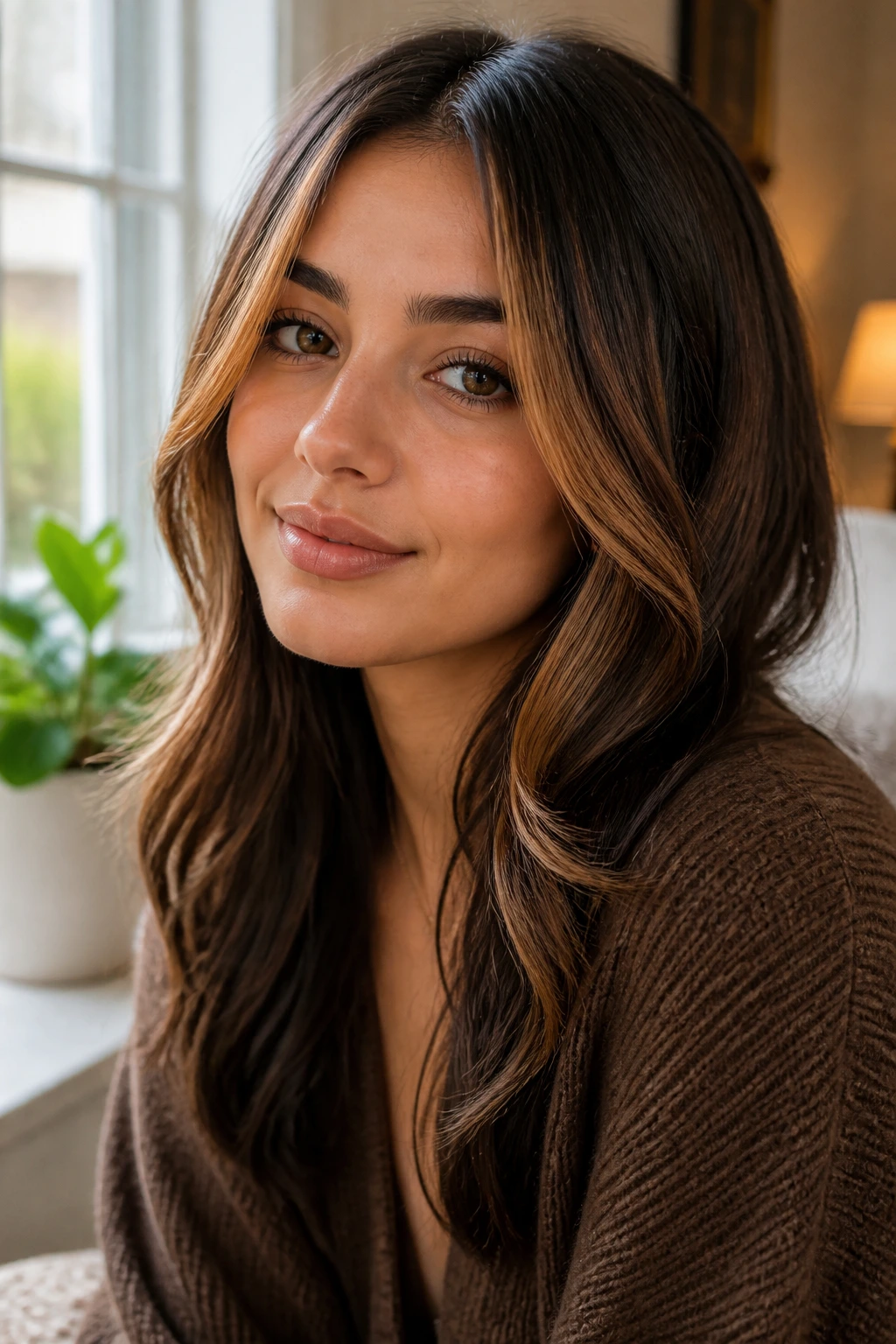
Tawny brown sits in that sweet spot between beige and gold, which is why it flatters warm skin so easily. The face frame should be soft and feathered, not thick. Two or three pieces on each side are enough if the color is in the right tone.
This is a lovely choice if you wear curtain bangs or tuck your hair behind your ears a lot. The tawny pieces show without demanding a major color change. I also like it for anyone who wears glasses, because the lighter frame around the face softens the contrast between frames, skin, and hair.
20. Chestnut Veil Highlights
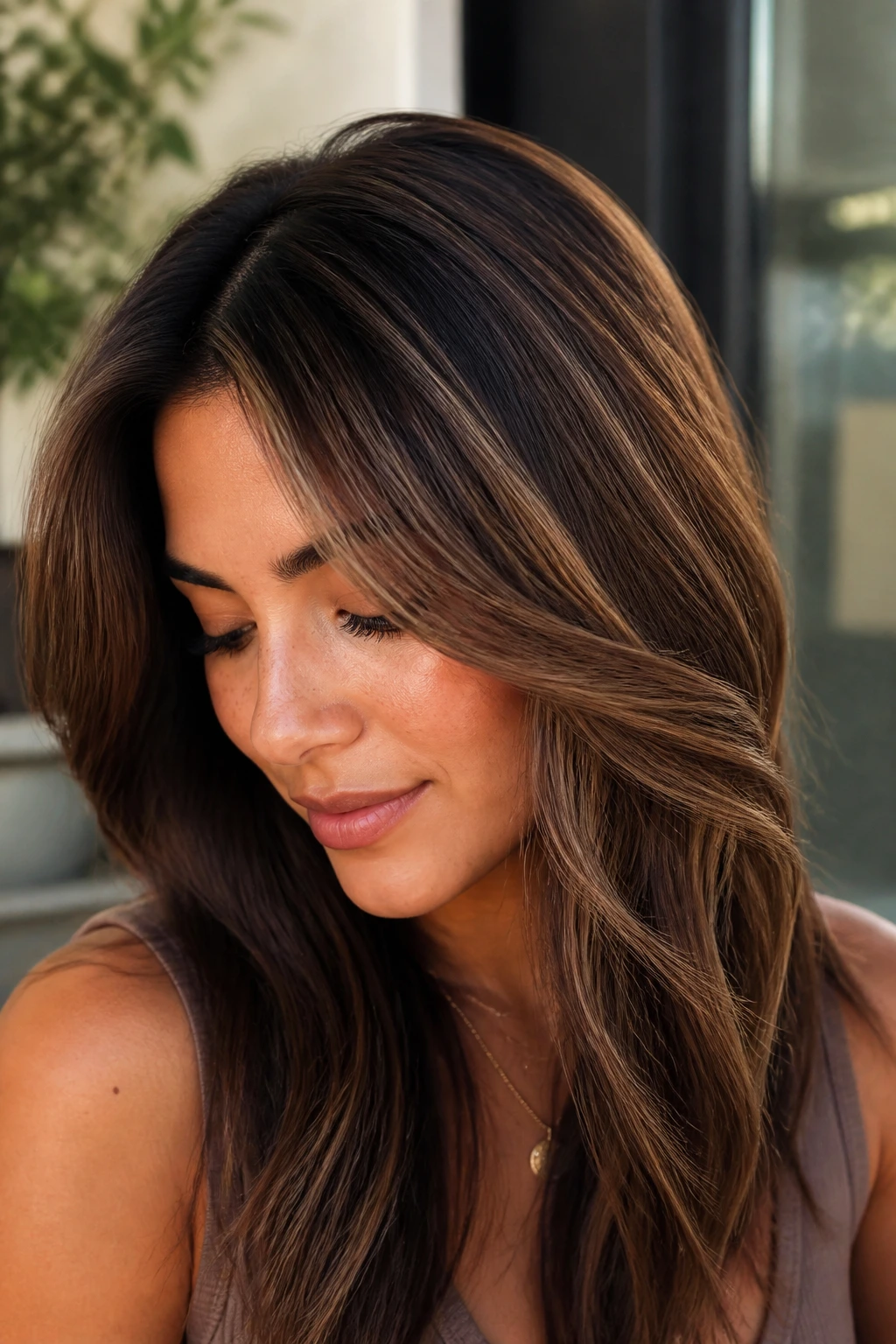
Veil highlights are for people who want movement more than contrast. The color sits on the surface layer of the hair, so it reads like a softer chestnut reflection instead of obvious streaks. On warm skin, that means the face gets a gentle glow and the hair still looks like hair, not a project.
When this works best
Chestnut veil highlights are ideal on darker bases and in places where the sun hits first—top layers, crown, and a few face-framing pieces. Because the difference is subtle, the shine matters. A gloss or light glaze keeps the effect from looking dusty, and a clean blowout makes the color easier to see.
21. Caramel Drip Ends
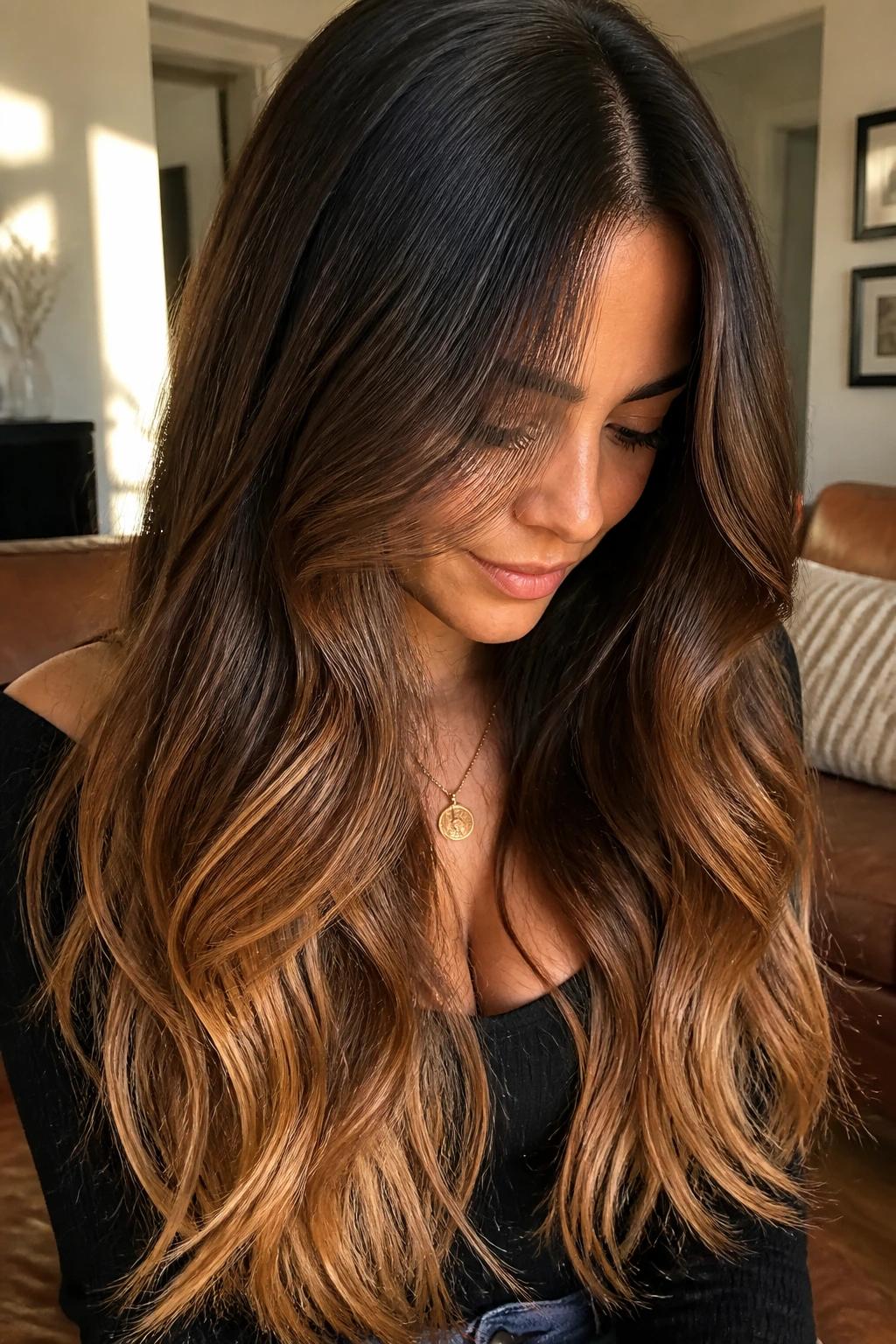
Caramel drip ends put the brightness where the eye lands most naturally on long hair: the bottom half. The root stays brunette, the mids stay grounded, and the ends open up into soft caramel. If the hair has movement, the lighter ends almost look poured through the cut.
This style is good for long layers and curls, but it asks for decent hair health. If your ends are dry or frayed, lighten only after a trim, not before. Otherwise the caramel can make the damage more obvious. On healthy hair, though, it’s a lovely way to add warmth without lifting the whole head.
22. Gingerbread Brunette Glow
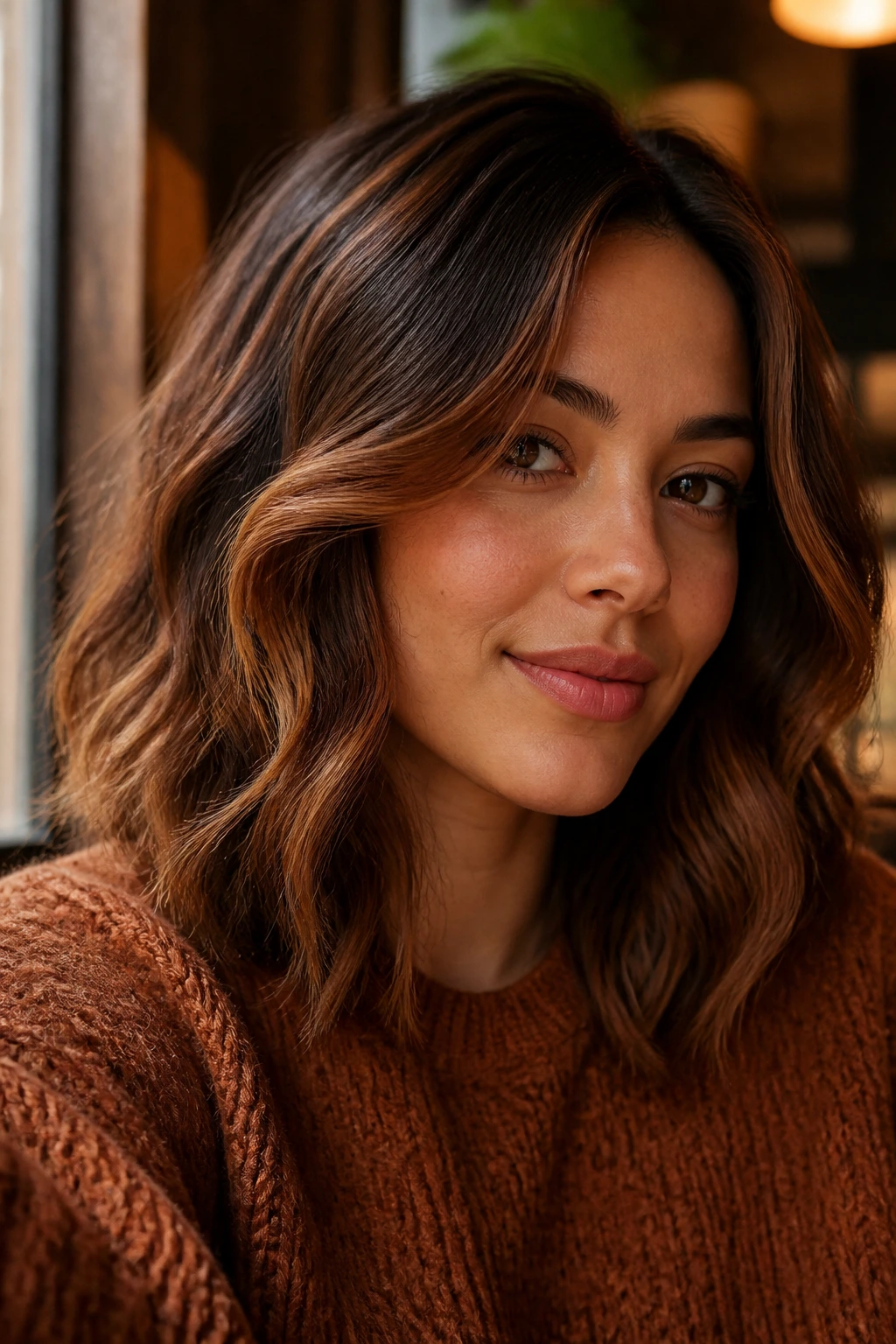
Gingerbread brunette is warmer than chestnut and less red than auburn, which makes it easy to wear. The shade borrows from spice, honey, and toasted brown sugar all at once. It’s a nice fit for warm skin because it adds glow without turning the hair into a red statement.
I like this one on textured lobs, soft waves, and curly hair that needs a little more definition. The warm brown-red threads separate the curl pattern in a way that makes the shape look clearer. If your natural color is flat under indoor light, gingerbread gives it some life without asking for a dramatic lift.
23. Bronze Mocha Money Pieces
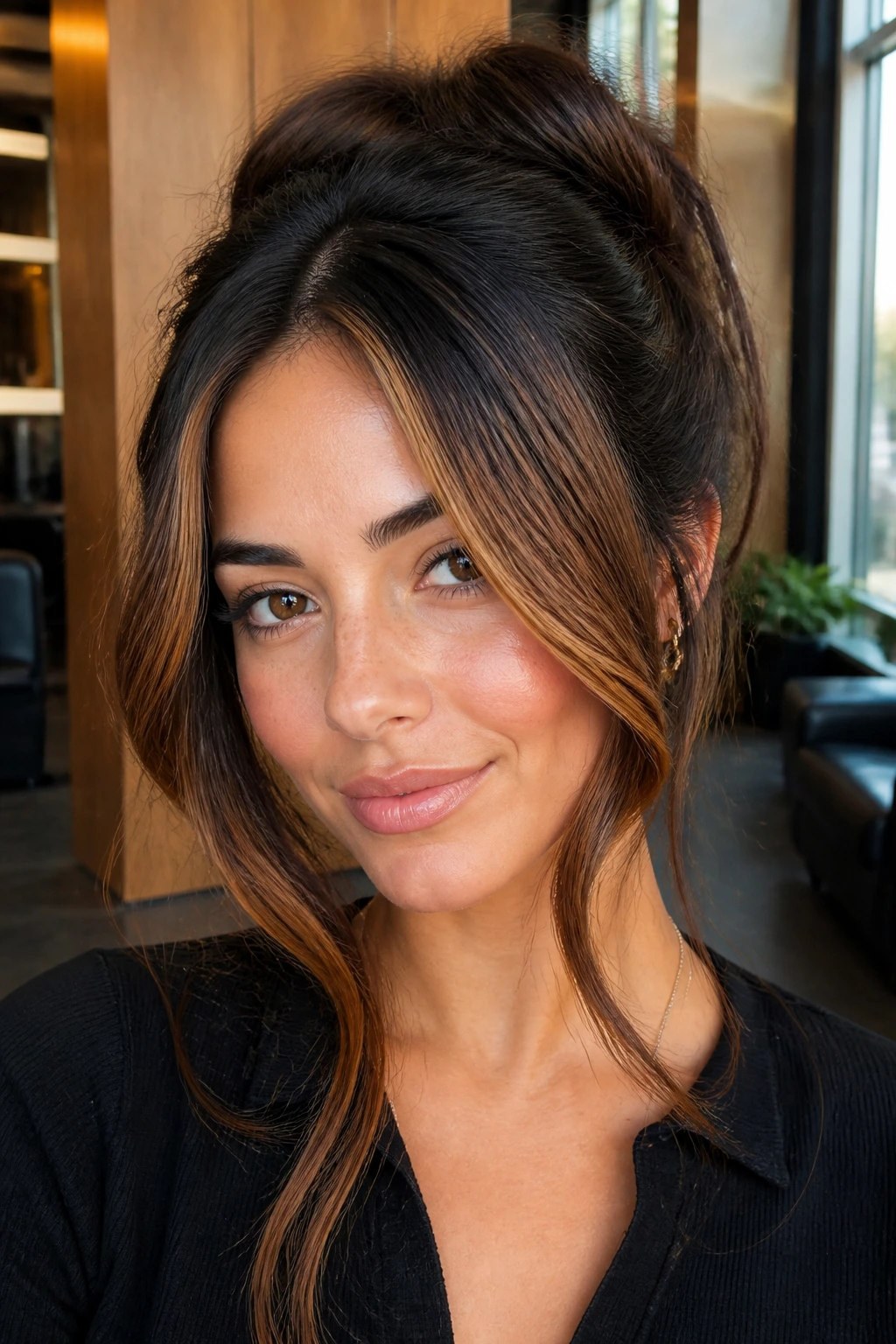
Bronze mocha is the sophisticated cousin of the honey money piece. The bronze keeps it earthy, the mocha keeps it brunette, and the front sections do the brightening work. On warm skin, bronze usually reads richer than blonde because it still has depth under the shine.
The best part
A bronze mocha money piece looks especially good with updos and half-up styles. Even if the rest of the hair is pulled back, the lighter front pieces stay visible and frame the face. That makes the maintenance feel worth it.
If you want contrast but hate stripy hair, keep the bronze sections a little softer at the root and brighter only through the midlengths and ends. That gives you lift where you need it and avoids the harsh “helmet” effect.
24. Maple Syrup Gloss Lights
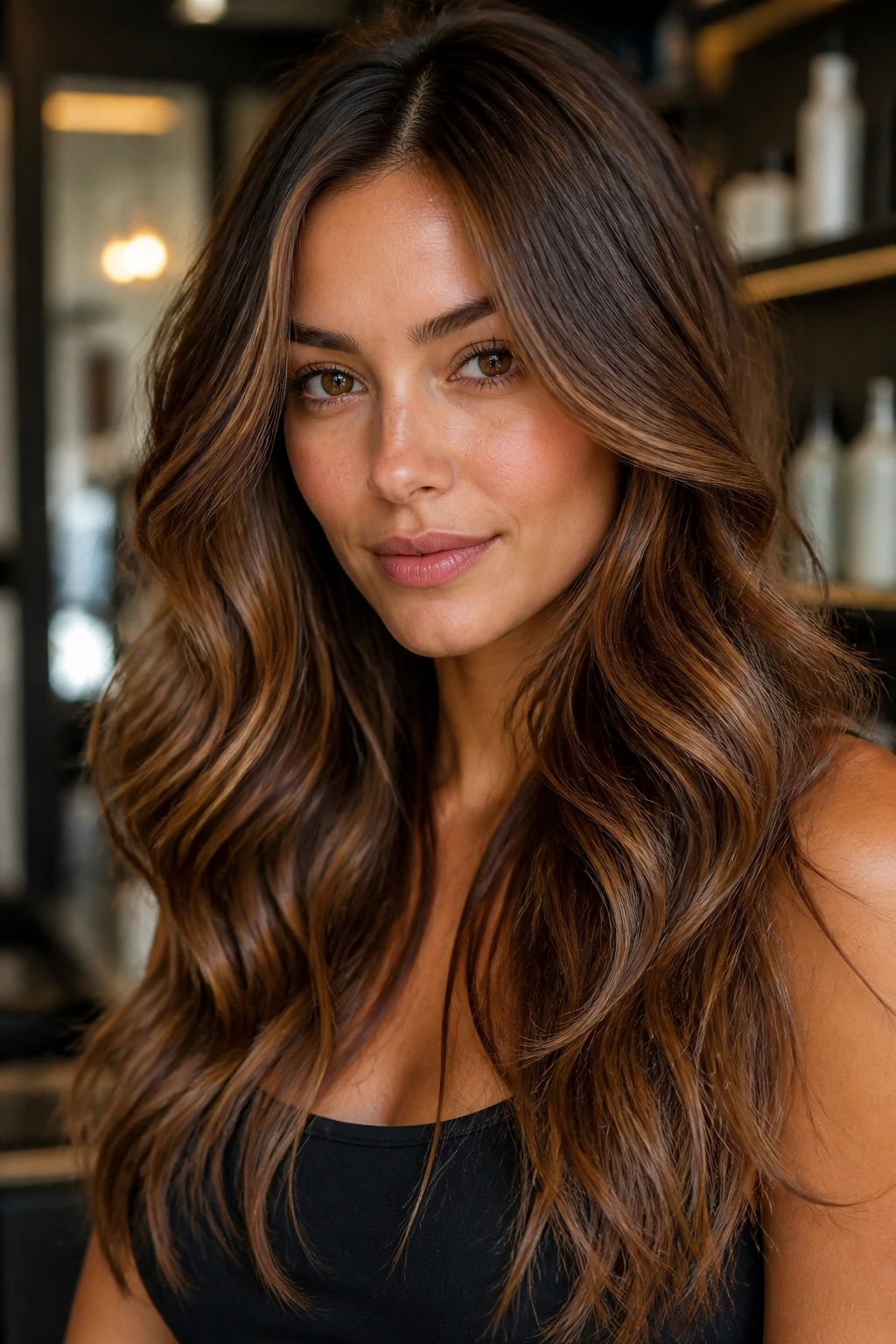
Some people want highlights. Some people want shine. Maple syrup gloss lights live right in the middle. Instead of heavy bleach work, the color leans on a warm demi-permanent gloss to shift brunette hair toward maple and keep the surface reflective. The result is soft, glossy, and warm without looking overly processed.
This is a smart option if your hair already has some lightness or if you only want a gentle seasonal change. It also works well on hair that doesn’t love strong lightening. The shine can do a lot of the visual work here, which is good news if you’d rather keep the overall shape dark and rich.
25. Toasted Pecan Brown Dimension
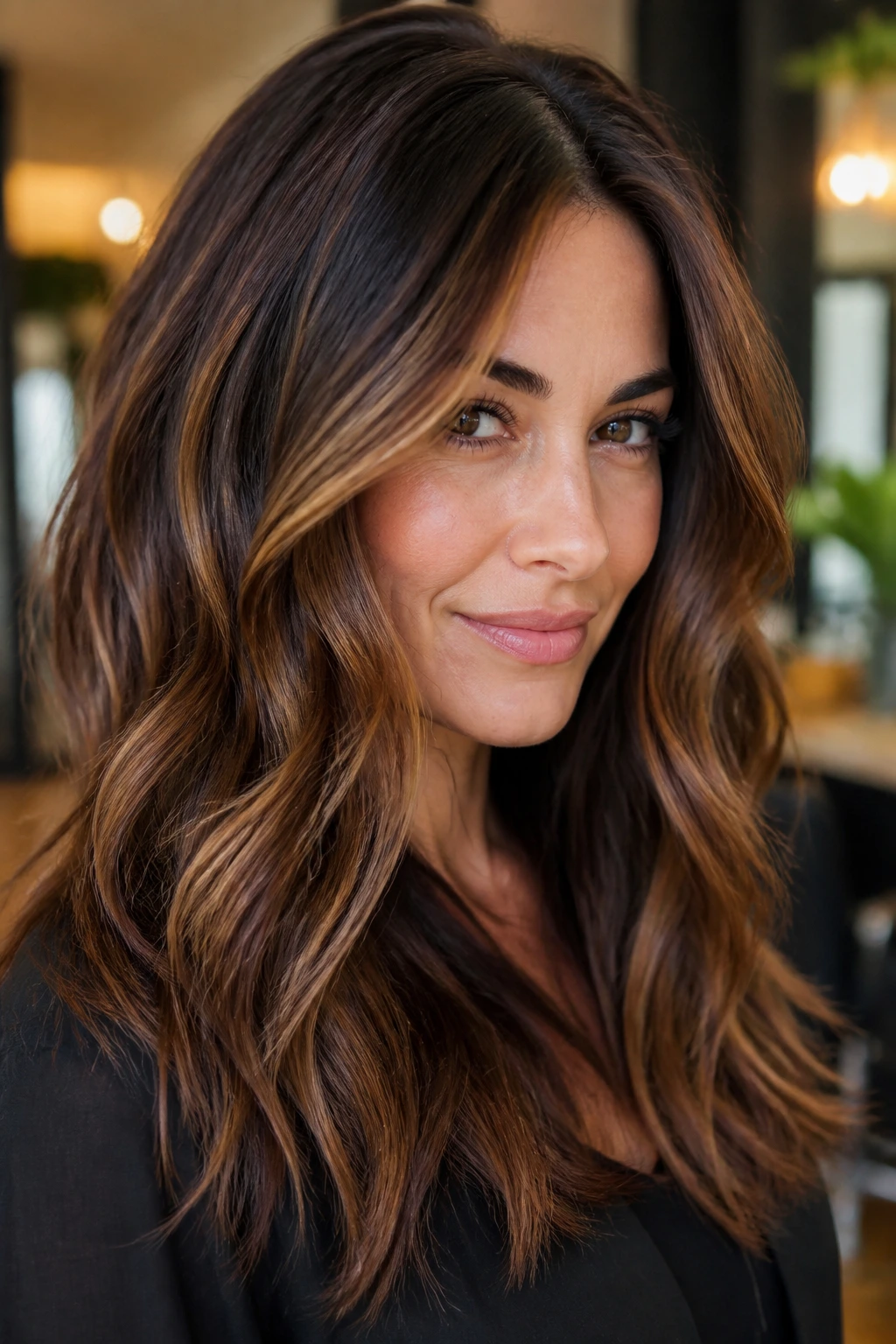
Toasted pecan is the kind of brunette that looks planned from every angle. The base stays deep and coffee-toned, then pecan, caramel, and chestnut pieces are woven through in different widths so the color doesn’t collapse into one note. It’s the richest finish in the group, and I mean that literally.
How to ask for it
- Keep the base around level 4 or 5
- Mix one mid-tone highlight and one slightly lighter ribbon
- Add a warm gloss to unify the pieces
This look is excellent if you want your hair to read expensive in daylight, indoors, and under flash. It’s not fussy, but it does need a careful hand. Too many shades and you get clutter. Three well-chosen browns, placed with restraint, give you depth that lasts.
Why Warm Browns Read Richer on Warm Undertones
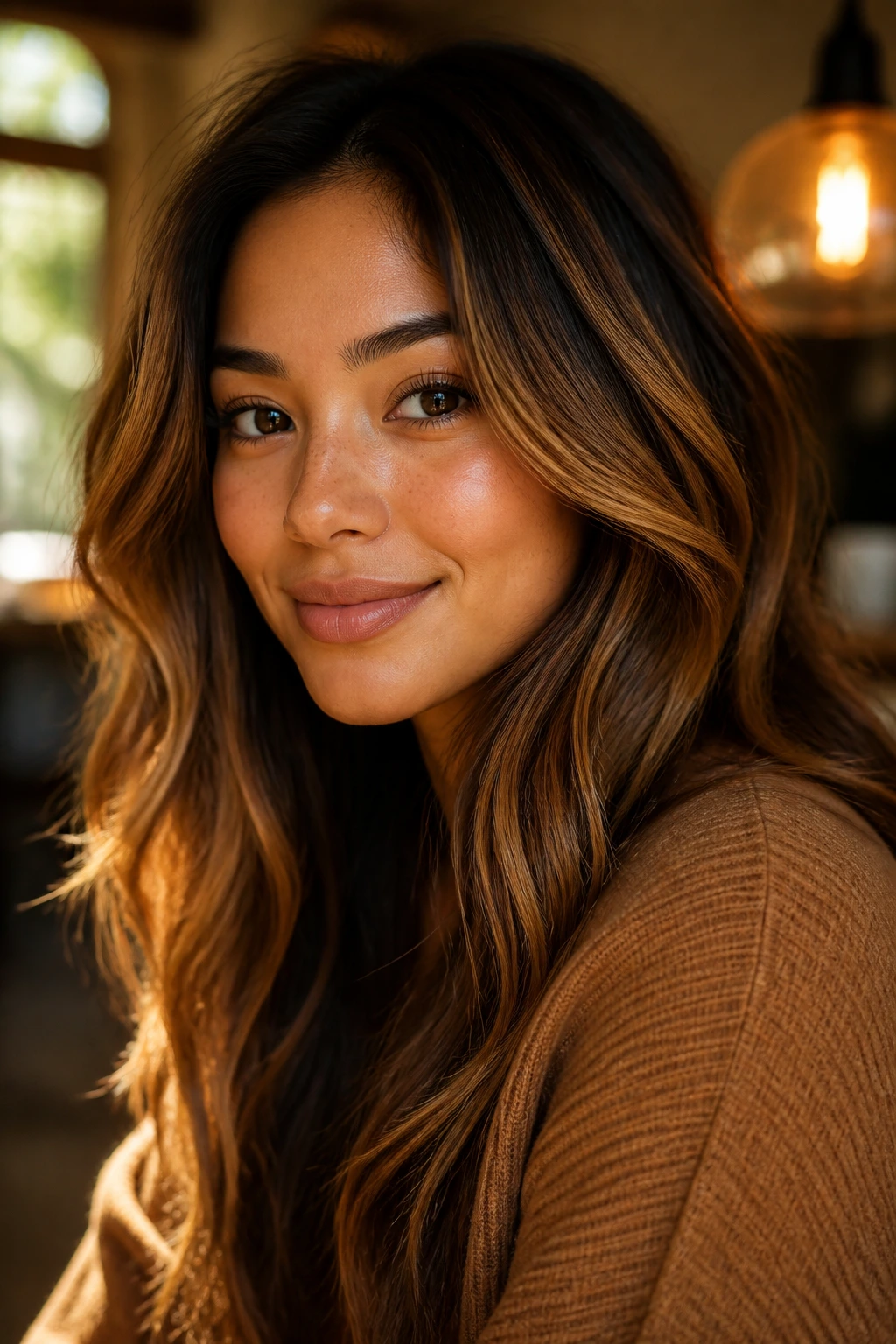
Warm skin tends to carry more gold, peach, olive, or amber in the surface tone, even when the complexion is deep or pale. Browns that echo that warmth—caramel, chestnut, toffee, maple, bronze—don’t fight the skin. They sit beside it and make both look more alive.
That’s why the wrong brown can be so disappointing. A cool ash-brown highlight might look polished in a salon mirror, then go flat the minute you step outside. Warm undertones want reflected warmth near the face. They do not need neon brightness, but they do need tone.
The real sweet spot is contrast with kindness. A brown highlight that is one to three levels lighter than your base can open the face without erasing your natural depth. Go lighter if you want a statement. Stay closer if you want something that just makes the cut look fuller and shinier.
How to Choose the Right Brown in the Salon Chair
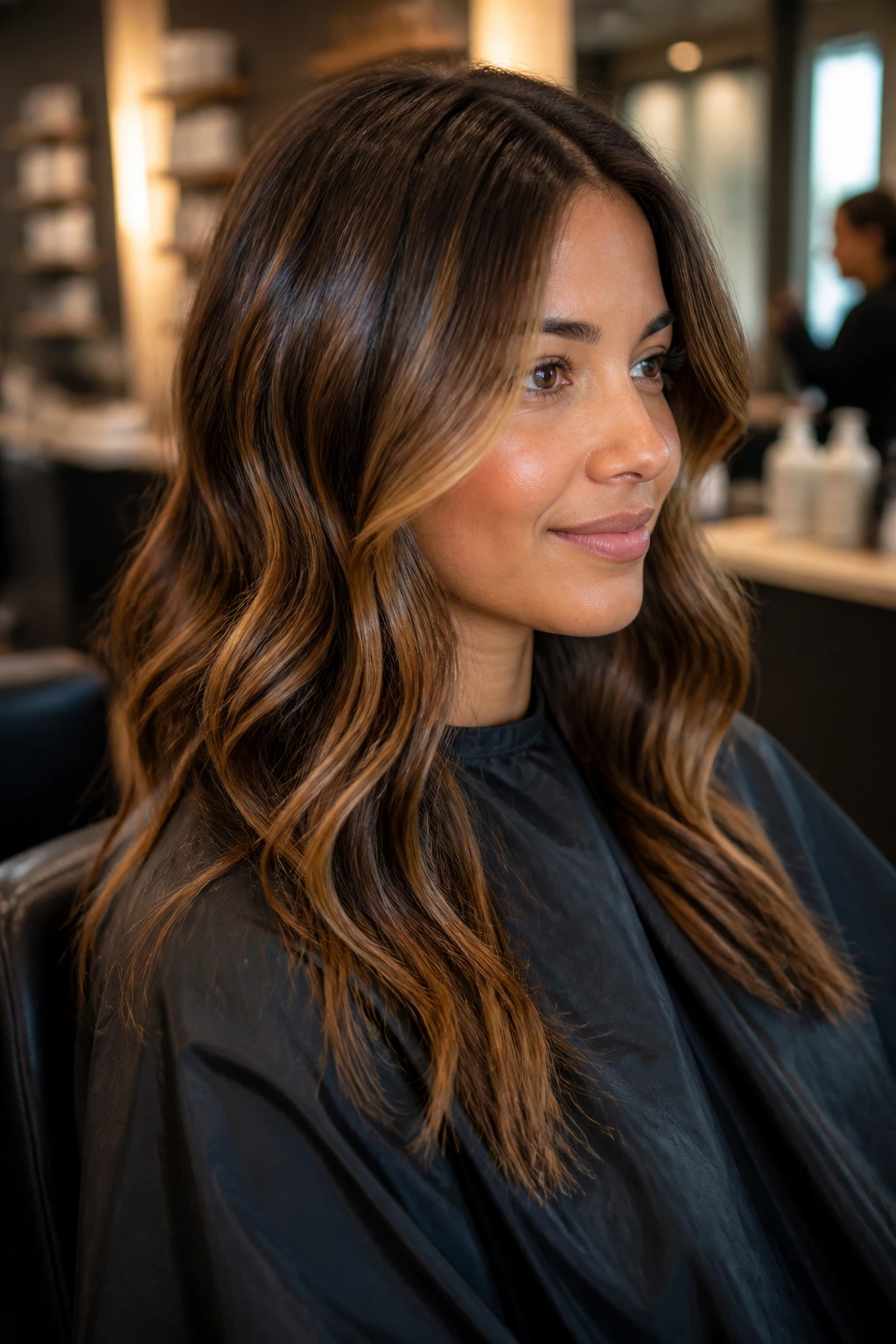
Bring pictures, yes. But bring the right kind. Photos taken in bright window light tell the truth about warmth better than filtered mood boards, which can turn a caramel brunette into something that barely exists in real life. I also like to ask for examples on different skin tones, because the same shade can read golden on one person and flat on another.
Ask your colorist to talk in levels, not vague words like “lighter” or “warmer.” A good starting point for subtle dimension is usually two shades lighter than your natural base. A bigger change can go three or four levels up, but once you pass that line, brown highlights start flirting with blonde territory, and the maintenance jumps with them.
The placement matters just as much as the color family. Face-framing pieces show most. Babylights disappear into softness. Balayage gives you a more lived-in line. Root melts and glosses soften the edges. If you know you’ll hate obvious grow-out, say that out loud. It changes the whole formula.
Tools and Products Your Colorist Will Reach For
-
Tail comb: Helps separate fine sections cleanly, especially for babylights and face frames.
-
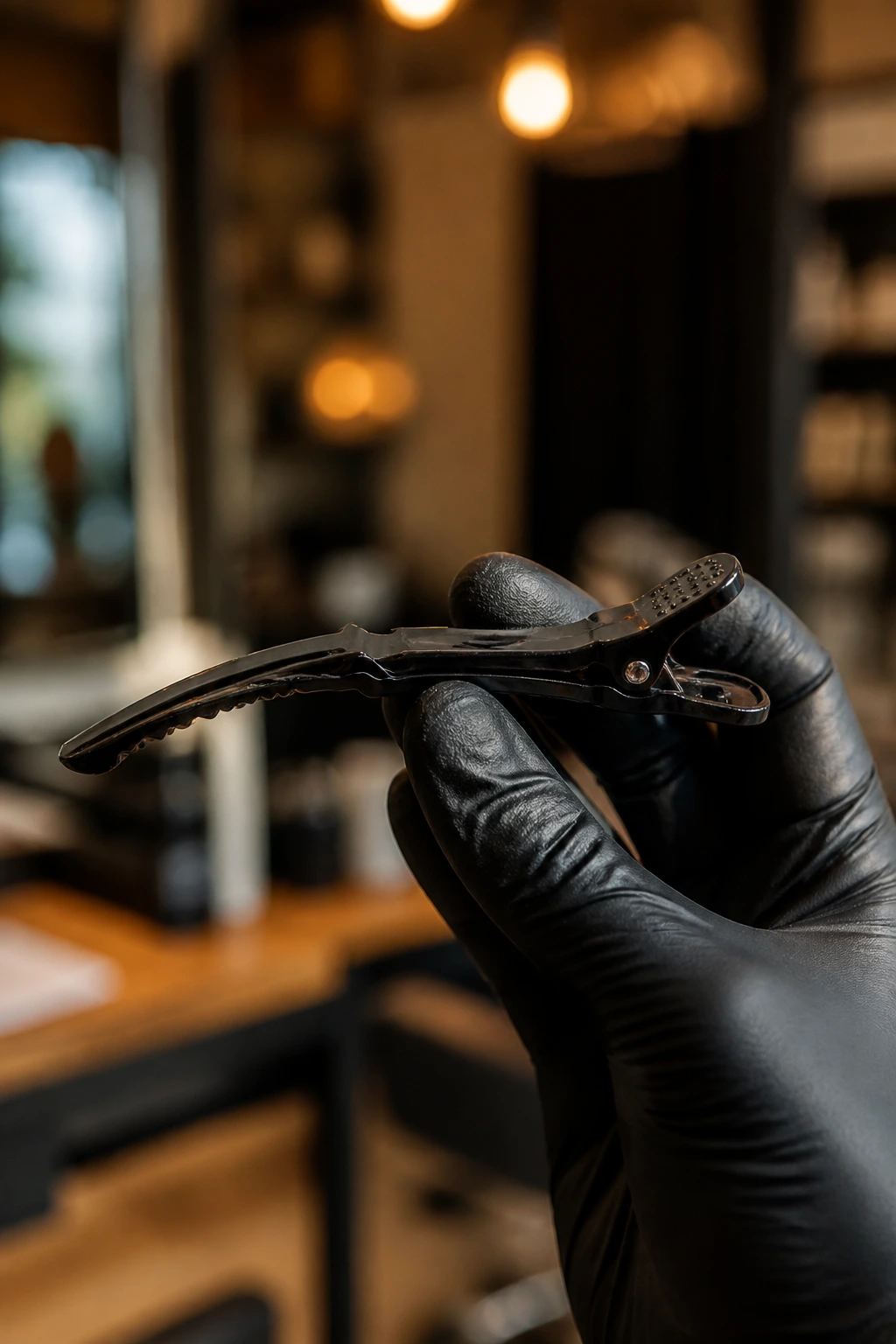
Sectioning clips: Keep the top layer out of the way so the colorist can place highlights with control.
-
Foils: Useful for stronger lift and tighter placement; they trap heat and brighten selected strands more aggressively.
-
Balayage board or paddle: Gives hand-painted pieces a smoother surface and softer blend through the midlengths.
-
Tint bowl and brush: Needed for glosses, toners, and quick zone applications around the face.
-
Color-safe shampoo: Helps preserve brown tones without stripping the warm reflect out of the hair.
-
Deep-conditioning mask: Useful on lightened ends; one weekly treatment can keep the finish from looking rough.
-
Heat protectant spray: Non-negotiable if you use hot tools, because warm browns look better when the cuticle stays smooth.
-
Blue shampoo, used lightly: Helpful only if the brown starts drifting orange; too much can make the color look murky.
How to Wear Brown Highlights So the Warmth Shows
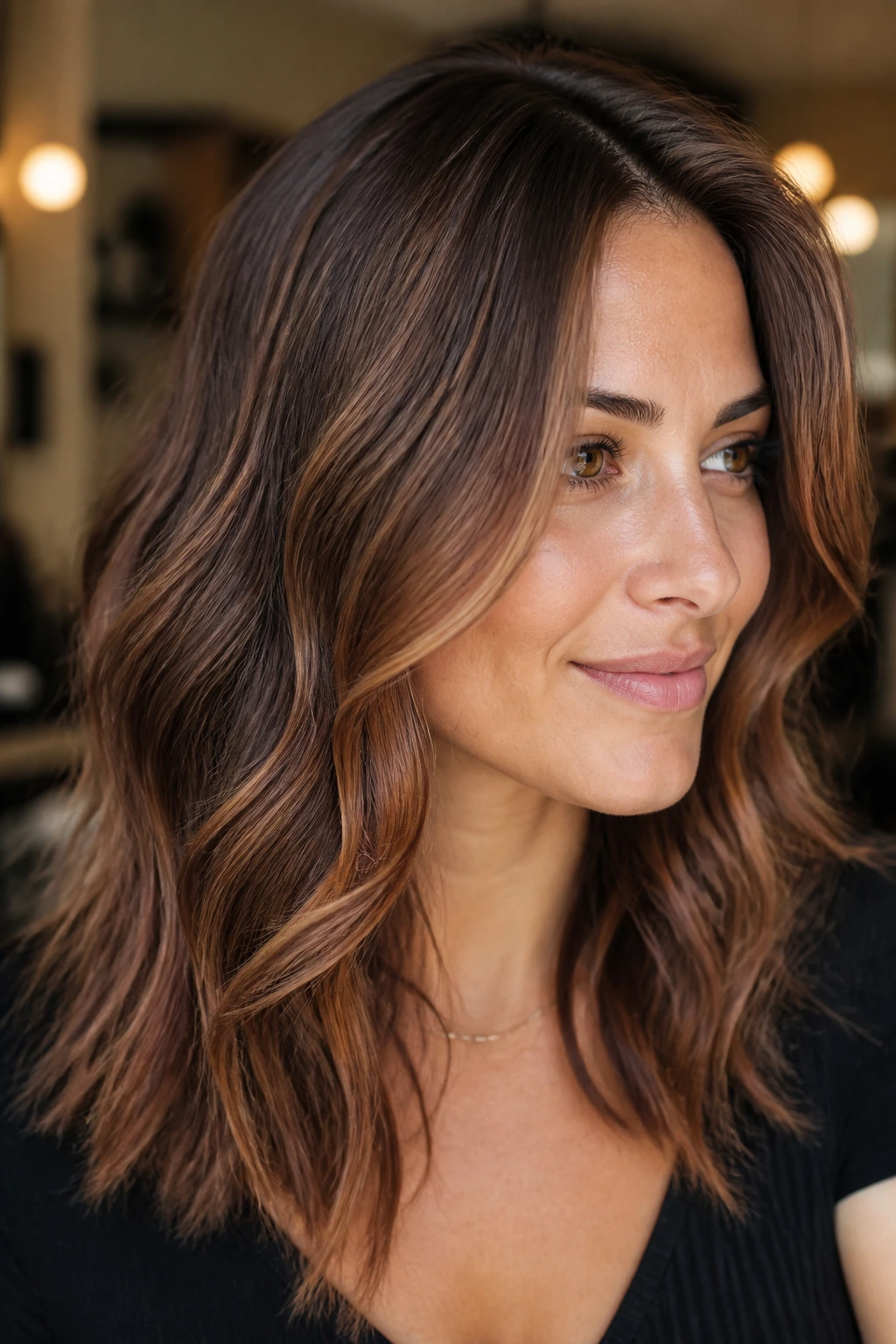
Straight and glossy: A smooth blowout shows off the ribboning best when the hair is parted slightly off-center and the ends are bent under just a touch. One pass with a flat iron is enough. Two passes is how brown hair starts losing shine.
Loose waves: A 1.25-inch curling iron or wand usually gives the cleanest result for shoulder-length to long hair. Alternate the direction of the curls, then break them up with fingers instead of a brush. That keeps the caramel and chestnut pieces separate.
Natural texture: If your hair is curly or coily, don’t drown the color in heavy cream. Use enough leave-in to control frizz, then diffuse on low heat or air-dry with the color placed mainly on the outer curve of the curls. Warm highlights look richer when the curl pattern stays visible.
Updos and clips: This is where money pieces, contoured front sections, and peekaboo panels earn their keep. A claw clip, low bun, or half-up twist reveals the lighter pieces without needing a full styling session.
Extra Ways to Make the Color Look Richer
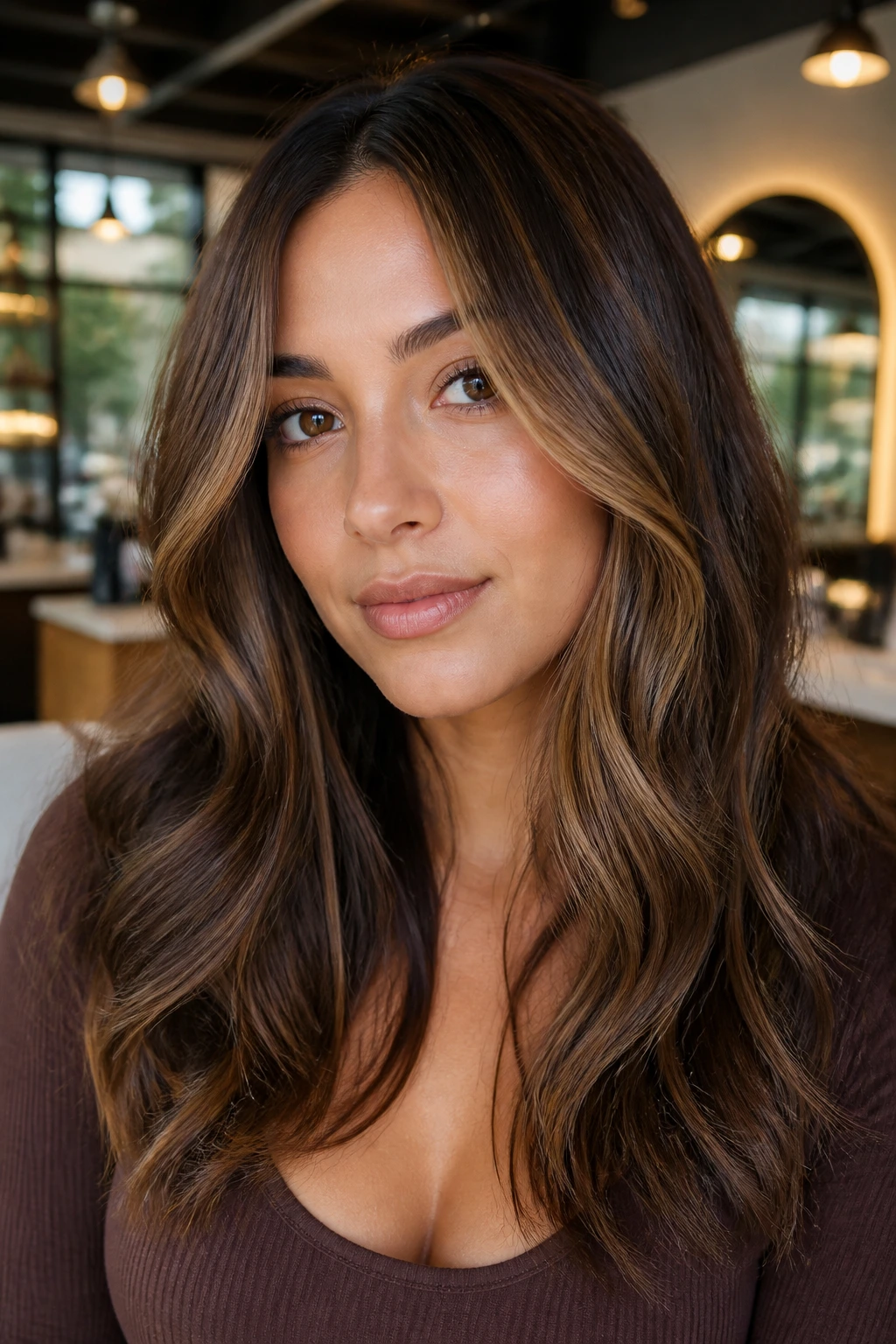
Gloss first, not last: A caramel, maple, or honey gloss every six to eight weeks keeps the brown from fading into flatness. If the hair feels porous, a gloss can do more for the finish than another round of lightening.
Cut for movement: Long layers, curtain bangs, and a soft face frame help brown highlights separate and show off the tonal changes. A blunt cut can still work, but it usually needs a little more styling to reveal dimension.
Parting changes the whole look: A center part gives you symmetry and makes face-framing pieces more obvious. A soft side part pushes the lighter pieces into one side of the face and can make the color feel richer.
Make-it-yours: Fine hair tends to look better with babylights or veil highlights. Thick hair can handle wider ribbons and deeper contrast. Curly hair usually looks best when the lighter pieces are painted where the curls bend outward, not shoved into the inner coil.
Common Mistakes That Make Brown Highlights Look Flat
The first problem is going too ash. Ash brown can be pretty on the right undertone, but on warm skin it often reads tired or dusty. The fix is easy: ask for gold, caramel, chestnut, or copper-brown reflect instead of smoky beige.
Another mistake is over-lightening. Brown highlights do not need to become blonde to matter. If the contrast is too high, the hair can stop looking rich and start looking broken up. Keeping most pieces two to three levels lighter than the base usually gives enough lift without losing the brunette identity.
Skipping the gloss is a sneaky one. Freshly lightened brown hair can look fine for a week, then flatten out fast if the toner washes away. A demi gloss or clear shine service brings back the reflective surface and keeps warm tones from looking dull.
People also pack all the lightness into the ends and leave the top too dark. That can make the hair look bottom-heavy. A few face-framing pieces and some surface highlights through the crown balance the shape.
Finally, too much purple shampoo can push warm brown highlights into an odd, murky place. Use blue shampoo only when the hair starts pulling orange, and keep the rest of the routine moisturizing and color-safe.
Variations and Adaptations to Try
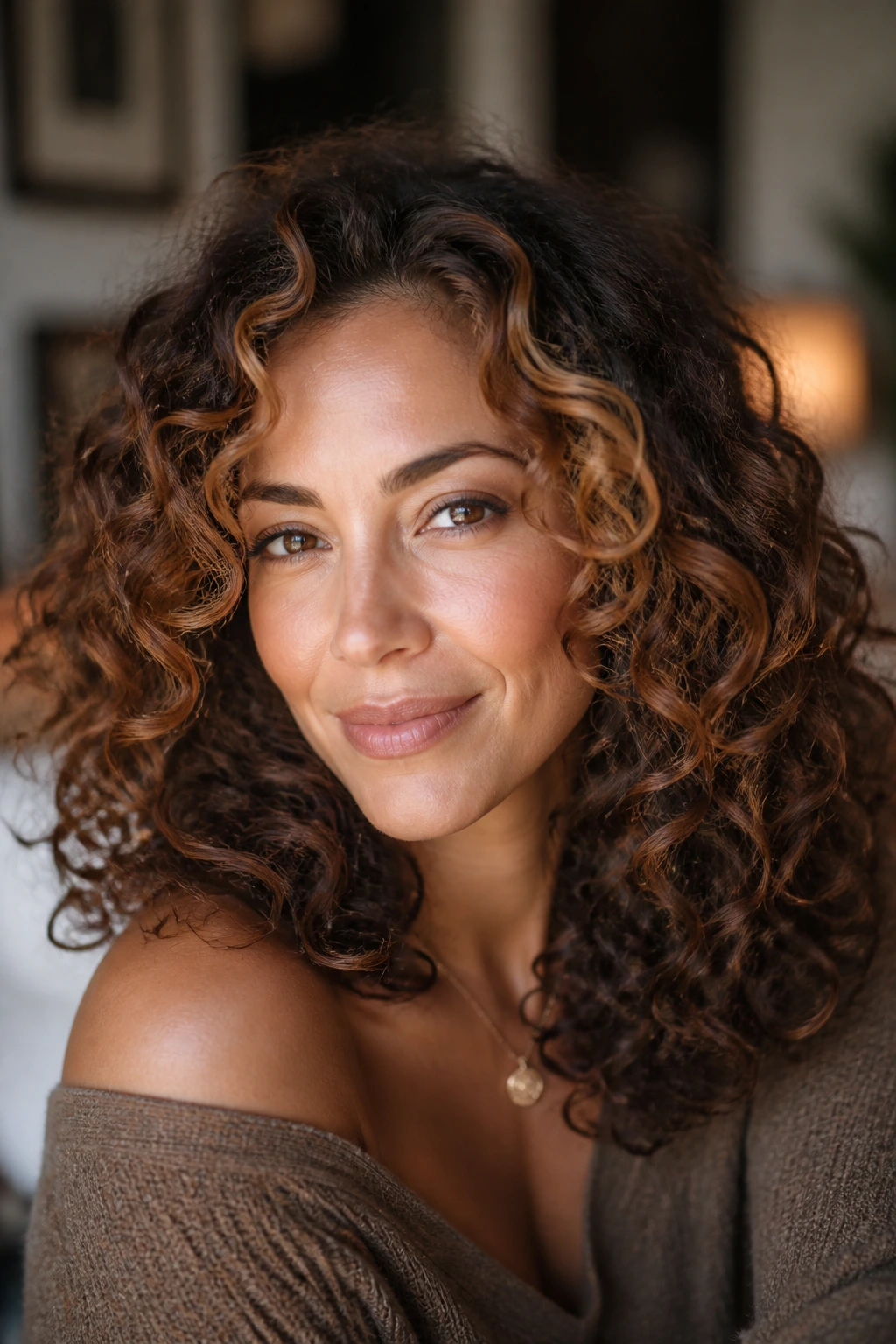
Curly Cinnamon Halo: Keep the highlights on the outer curve of the curls and around the face so the color shows when the curl springs open. This is a softer version of the cinnamon chestnut look and needs less exact placement than straight hair.
Short Bob Bronze Sweep: Use wider bronze and caramel strokes through a bob or lob, with more contrast near the ends than the roots. Short hair needs bolder placement because the cut itself limits how much movement you can show.
Gray-Blend Chestnut: Add warm chestnut lowlights and a few caramel ribbons to soften early grays without making the hair look dyed in one solid block. It’s a nice route for people who want warmth and coverage without full opacity.
Low-Commitment Peekaboo Brown: Hide amber, tawny, or copper-brown pieces under the top layer so they only show in braids, clips, or wind. Great if you work in a conservative setting but still want some personality.
Brighter Bronzed Brunette: Push the front pieces and crown slightly lighter, then keep the back closer to mocha or chestnut. This gives you more visible brightness while preserving depth at the nape.
Keeping the Color Fresh Between Appointments
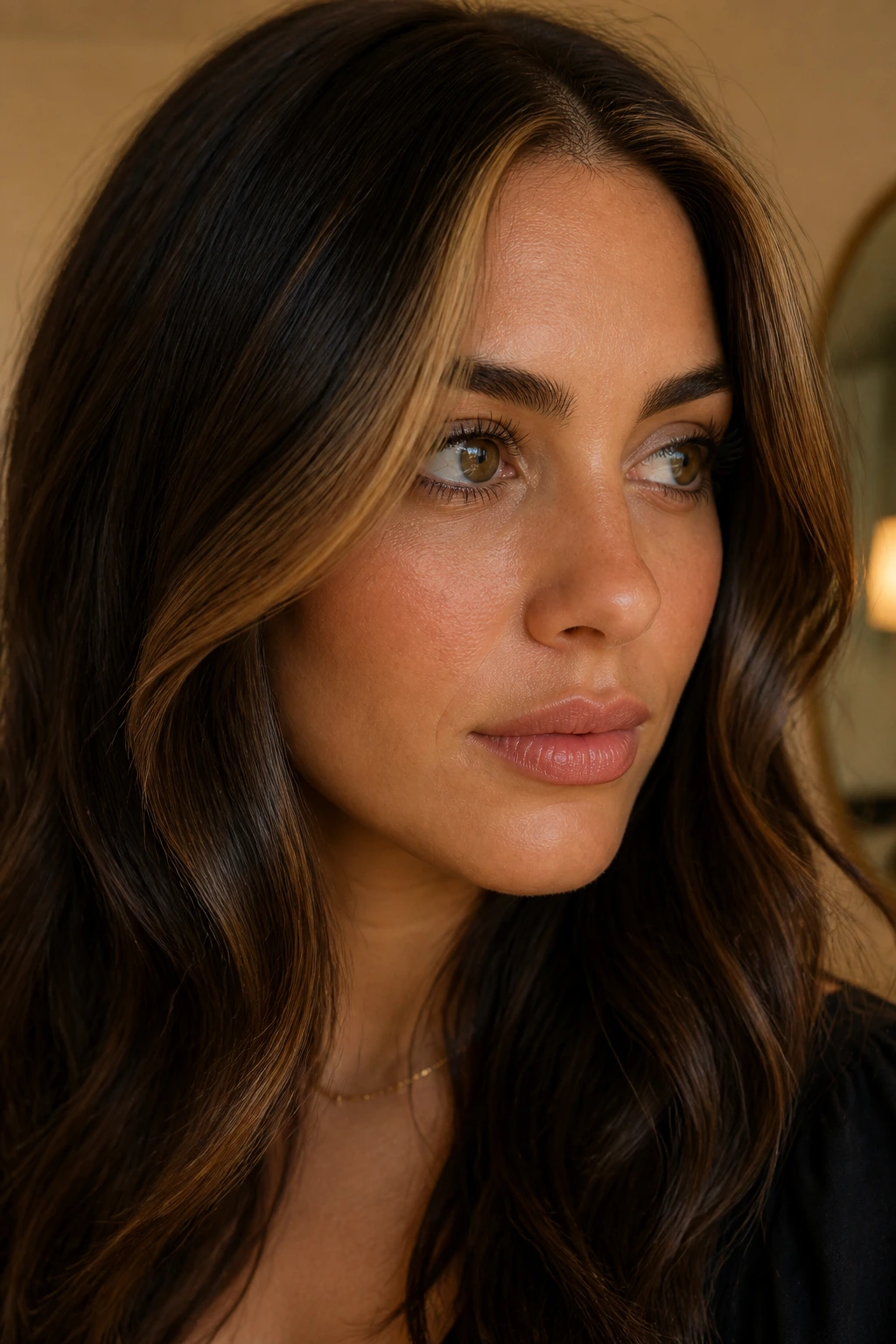
Brown highlights are kinder than blonde, but they still need a routine. Wash two or three times a week if you can. Every wash strips a little tone, and warm browns lose their shine fast if they’re over-cleansed. A sulfate-free shampoo helps, but the bigger win is simply washing less often and using lukewarm water instead of hot.
Deep-condition once a week, especially if any of the hair was lightened. The ends are usually the first place to go rough, and rough ends make warm highlights look dull. If the hair feels stringy or dry after washing, a light leave-in on the mids and ends does more than a heavy oil ever will.
Plan for a gloss or toner refresh every six to eight weeks if you want the warmth to stay clean. Some people can stretch longer, especially with balayage or root melts, but once the brown starts turning brassy or flat, the color stops doing its job.
Heat styling deserves its own warning. Use protectant every time the tool is hot enough to smooth the cuticle, which means basically every time you’re blow-drying, curling, or flat-ironing. If your ends are already lightened, keep the iron under 350°F / 175°C and use fewer passes. Two clean passes beat five panicked ones.
Sun and pool water both matter. If you spend much time outside, a UV spray is worth it. Chlorine can tug warm tones in strange directions, so rinsing hair before swimming and washing it after keeps the color from picking up that harsh, dry feel. A trim every eight to twelve weeks also helps, because healthy ends make the highlights look intentional instead of frayed.
Questions People Ask Before They Book
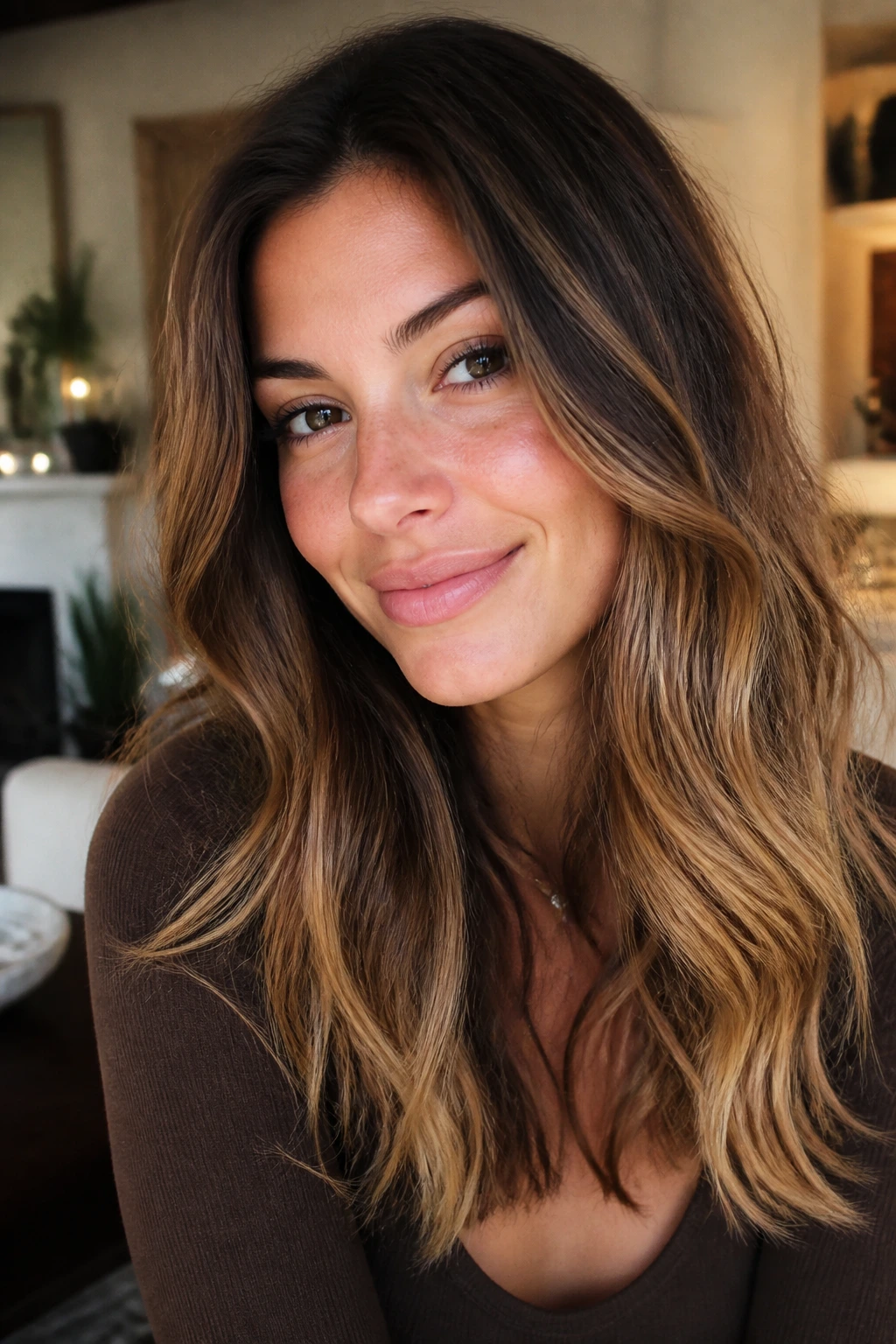
What brown highlight shade looks best on warm skin tones?
The safest starting point is caramel, honey, chestnut, toffee, or gold-brown. If your skin has a lot of depth, bronze and mahogany can also work well because they keep the warmth but add more richness.
Can warm skin tones wear ash brown highlights?
Yes, but they need care. Ash can look flat or muddy on warm skin if it’s too light or too cool, so it usually works better as a deeper lowlight than as the main highlight tone.
How much lighter should brown highlights be?
For subtle dimension, two shades lighter than your natural base is usually enough. If you want a more obvious change, three or four levels lighter can work, but that pushes you toward a brighter, higher-maintenance result.
Are brown highlights lower maintenance than blonde?
Usually, yes. Brown highlights grow out more softly and don’t demand the same level of lifting. That said, warm brown tones still fade, so glossing and moisture care matter more than people think.
Will these shades work on curly hair?
Absolutely. Curly hair often looks even better with warm brown highlights because the shape shows off the painted pieces. The trick is to place the lighter strands where the curls open outward, not buried deep inside the coil.
How do I stop warm brown highlights from turning orange?
Use a blue shampoo sparingly if orange brass shows up, but don’t overcorrect with it. A good gloss and less heat styling usually keep the tone cleaner than trying to fight it with strong shampoo every wash.
What if I want the color to be subtle at work but visible on weekends?
Ask for babylights, veil highlights, or peekaboo pieces. Those techniques hide movement in the hair until it’s styled, tucked, or caught in stronger light.
Do I need foils, balayage, or both?
Foils give tighter lift and more contrast; balayage gives softer, painted dimension. A lot of the best brown highlight looks use both: foils for the front pieces, balayage through the mids and ends.
Rich Brown, Soft Glow
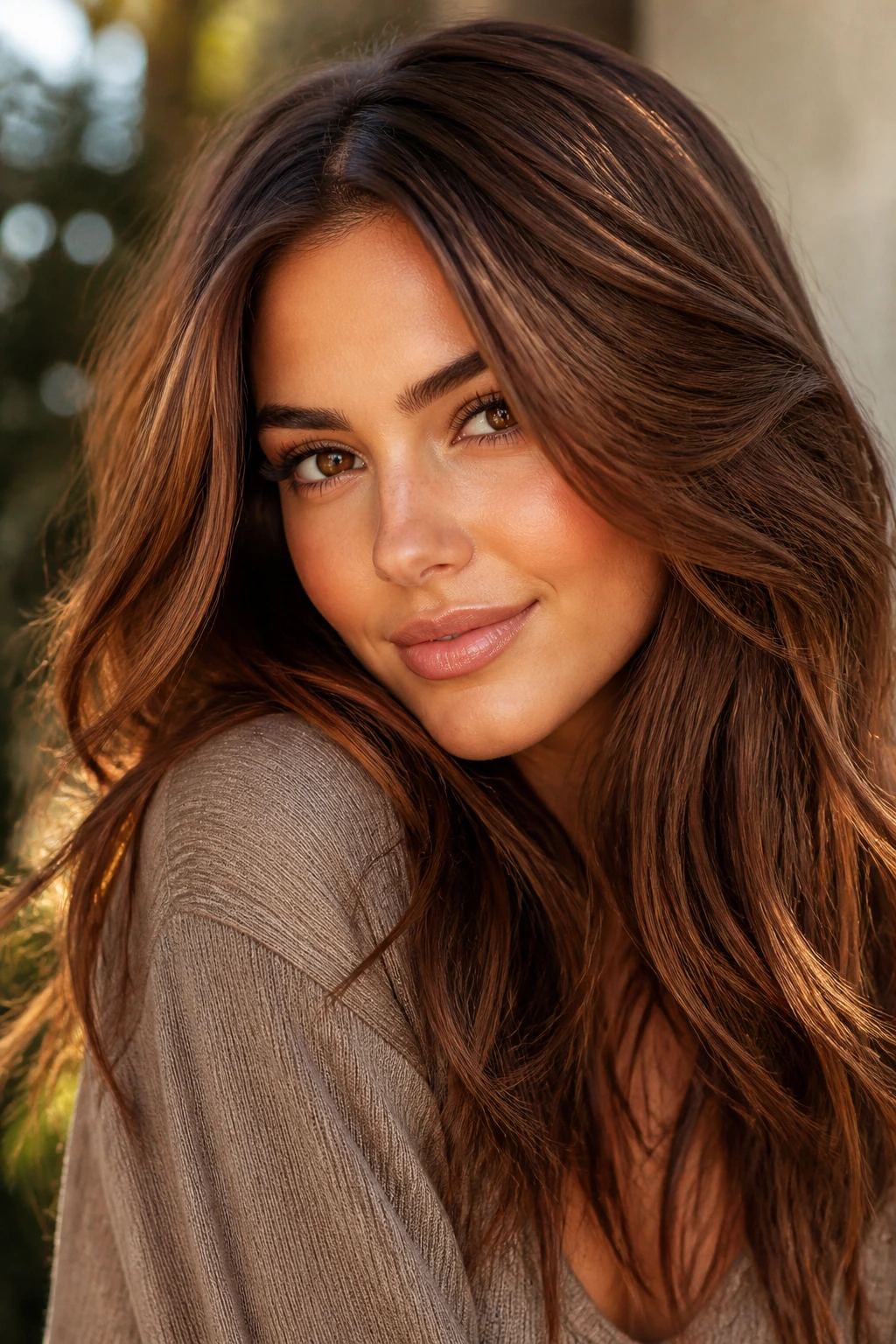
The nicest thing about warm brown highlights is that they don’t have to shout to matter. A chestnut ribbon, a caramel face frame, or a gold-toned gloss can change the whole feel of a haircut without dragging it into blonde territory. That’s the sweet spot for warm skin: color that looks like it belongs there.
Pick the version that matches your maintenance tolerance, not just the photo you saved. Soft babylights, a deeper melt, or a bolder money piece can all look right if the brown stays warm and the placement suits the cut. Bring daylight photos, ask about glossing, and let the colorist talk in levels. The hair will thank you for the clarity.