



Auburn color highlights for pale skin with curly hair work best when they behave like ribbons, not a paint job. Curls bend the light at every turn, so the wrong red can shout orange, while the right one makes the whole head look warmer, richer, and a little more alive. That’s the sweet spot: enough copper and brown to wake up fair skin, enough softness to keep the curls from looking striped.
What changes the result most isn’t the shade name on the salon chart. It’s the balance. Pale skin tends to show warmth fast, which means a copper highlight can look flattering one day and a little too carrot the next if it’s pushed too bright. Curly hair changes the math again, because the same foils read differently on the outside curve of a curl than they do tucked into the inside bend. That’s why auburn on curls rarely works as a flat all-over idea. It works as placement.
My own bias is simple: I prefer auburn that leans brown first and red second. Pure orange has its place, sure, but on pale skin it can go loud in a hurry. A chestnut-copper ribbon, a cinnamon balayage, or a mahogany lowlight usually gives you more room to move, especially if your curls are dense, springy, or a little porous from previous color. The good versions of this look feel dimensional before they feel bright.
Why These Auburn Ideas Earn Their Keep
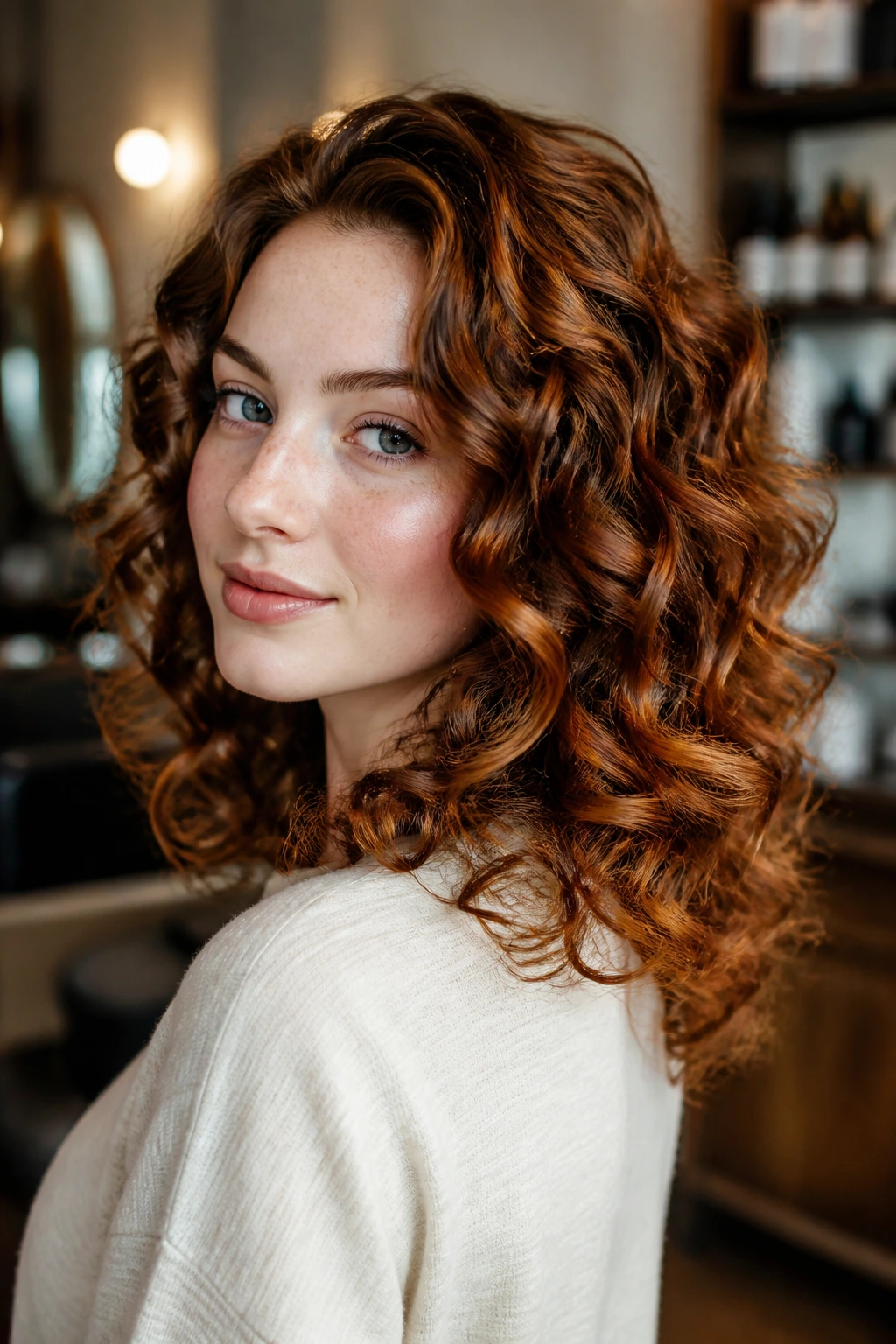
- Pale skin needs controlled warmth: Auburn can bring life to fair skin without making the face look flushed, but only if the red sits inside a brown or copper-brown base.
- Curly texture does half the work: Each bend catches color differently, so fine ribbons and painted panels look fuller and more expensive than one solid block of red-brown.
- Placement matters more than intensity: A face frame, a halo, or hidden lowlights can change the whole read of the color without pushing the curls into stripe territory.
- You can tune the warmth to your undertone: Peach and golden undertones usually like copper, ginger, and apricot; pinker undertones often need mahogany, smoky auburn, or bronze to stay balanced.
- These looks protect curl shape better: The better auburn options avoid over-lightening the ends and keep the highlight pattern loose enough that the curl pattern still looks springy.
- Maintenance can stay sane: Many of these ideas grow out softly, which matters when red tones fade faster than brown ones and curly hair shows regrowth differently from straight hair.
How Auburn Reads on Pale Skin and Curly Hair
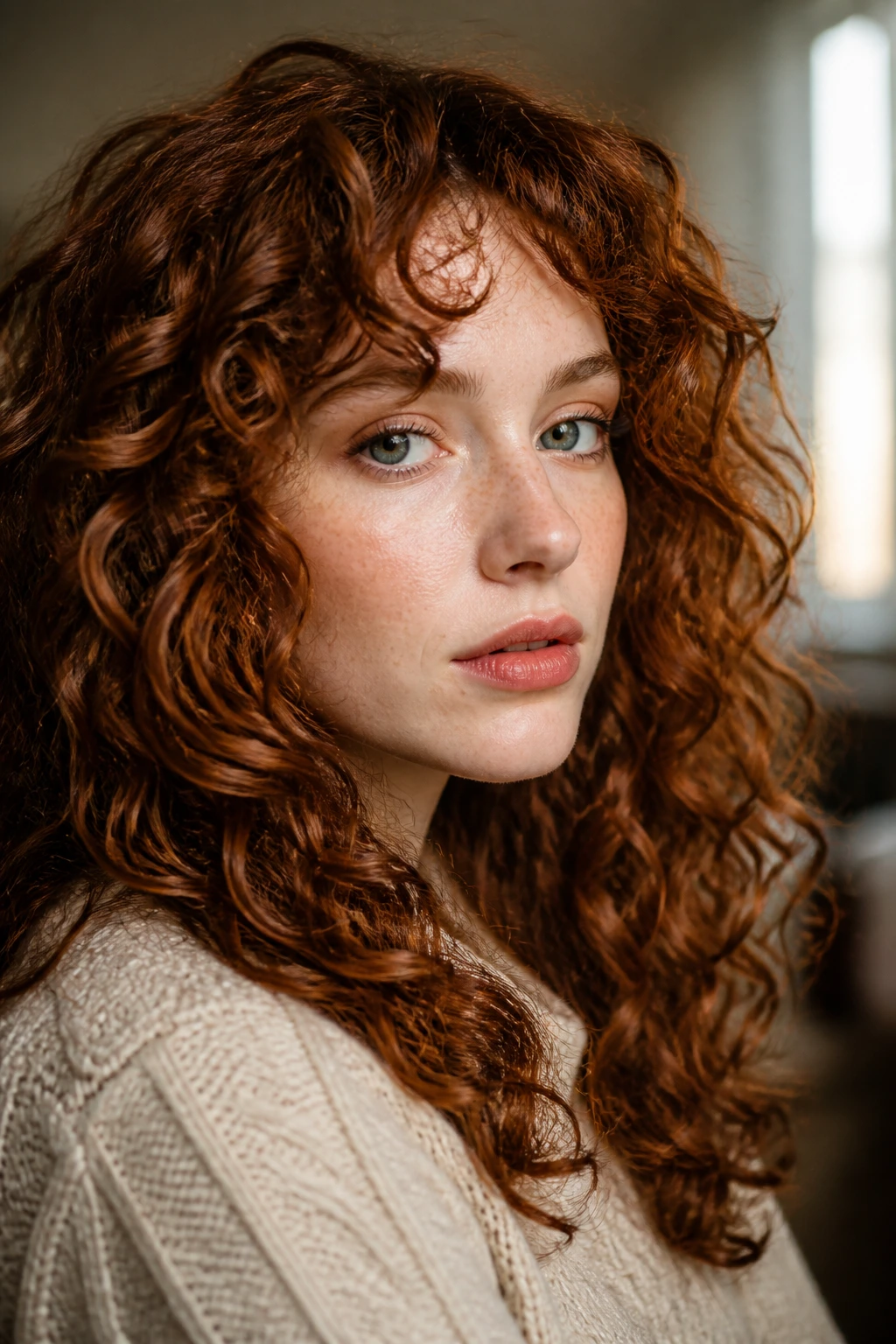
Auburn is not one shade. It lives in the messy middle between red, copper, brown, rust, and sometimes a touch of gold. On pale skin, that middle ground matters. If the red climbs too high and the brown drops away, the color can look harsh against the face. If the brown takes over, the hair can go flat and lose the point of the whole exercise.
Curly hair changes the sightline again. Straight hair gives you long, clean ribbons of color. Curly hair breaks that ribbon into dozens of tiny flash points. That’s why the same level 7 copper can read bright on a defined ringlet and much softer on a looser wave. The curl itself becomes part of the tone.
Warm, Cool, and Neutral Pale Skin
If your skin leans peach, ivory, or lightly golden, copper-forward auburn tends to glow without much effort. Cinnamon, ginger, and apricot tones sit nicely there because they echo warmth instead of fighting it.
If your skin is very fair and pink, I usually prefer auburns with a brown, mahogany, or smoky edge. That small shift stops the color from making the cheeks look redder than they are. Neutral pale skin has the easiest time of all. It can wear almost anything in the auburn family, which is mildly annoying for everyone else and extremely useful if you’re trying to be adventurous.
Why Curl Pattern Changes the Finish
A tight curl shows less surface area, so too-thick highlights can look blocky. A looser curl shows more movement, so the same thickness can look graceful and sun-soft. Porous curls pull pigment fast, which means the front pieces may go brighter than the back if a colorist doesn’t control saturation carefully.
That’s why the best auburn work on curls is usually painted in clumps, not in random slashes. You want the color to sit where the curl wants to move. If the highlight placement fights the curl, the whole thing starts looking fussy.
1. Soft Copper Ribbons at the Cheekbone
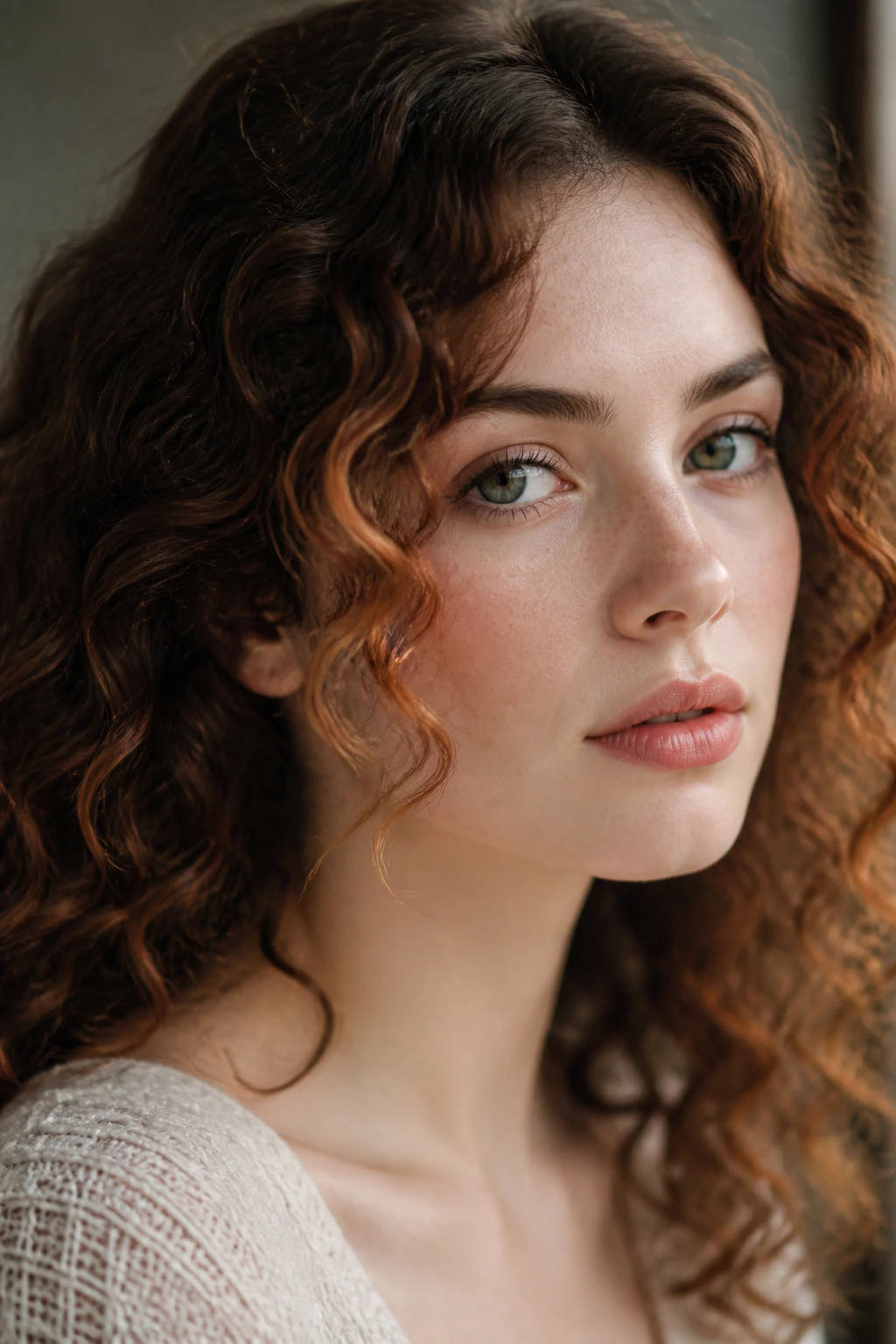
Soft copper ribbons are the quiet answer for someone who wants auburn without the drama of a full copper head. The pieces sit around the cheekbone and jawline, where pale skin usually needs the most life, and the rest of the curl stays a shade deeper. On a bouncy curl pattern, those ribbons flash in and out as the hair moves. That’s the point.
Why It Flatters Fair Skin
Copper at the cheekbone brings warmth close to the face, but it doesn’t need to cover the whole head to work. I like this on pale skin with neutral or slightly golden undertones because the color reads like reflected light rather than makeup. Ask for thin foils or a light hand with balayage, ideally around level 7 copper, not bright pumpkin.
A good colorist will keep the ribbons soft enough that they don’t compete with the curls’ shape. When the pieces are narrow, the finish looks airy instead of stripy. That matters on curly hair more than people think.
Best for: medium-density curls, shoulder-length layers, and anyone who wants the change to feel deliberate, not loud.
Watch for: if your skin is very pink, ask the stylist to add more brown into the formula so the copper doesn’t pull too orange.
2. Cinnamon Balayage Through the Mid-Lengths
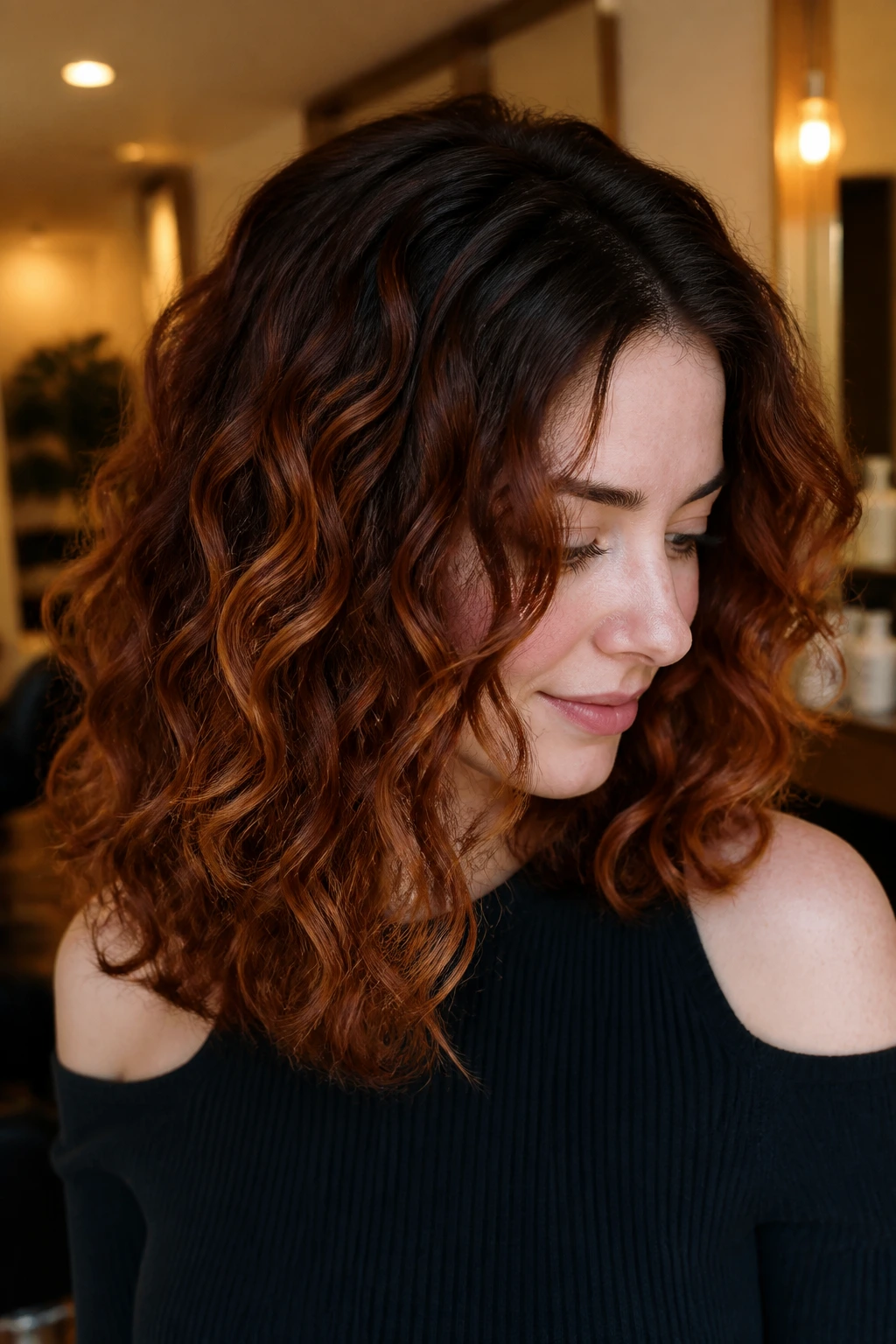
Cinnamon balayage is the one I reach for when someone wants auburn but doesn’t want to look like they tried to become a redhead overnight. It starts deeper at the root, then drifts through the mid-lengths with a warm brown-red tone that feels grounded. On curly hair, that mid-length emphasis is smart. The bends of the curl do the brightening for you.
The shade suits pale skin because cinnamon lives farther from neon than straight copper does. It softens the face instead of bouncing heat back at it. If your undertone is cool, this is one of the safer auburn choices because the brown base keeps the finish from turning candy red.
What Makes It Different
This is less about visible foil lines and more about a sweeping change in tone. The colorist paints the lighter pieces where the curls naturally separate, usually around the outer layers and lower thirds of the hair. The ends stay warm, but not too light, which helps the grow-out stay civilized.
If you part your curls on the same side every day, cinnamon balayage looks especially good because the lighter side opens up around the face while the darker side keeps the shape from feeling thin.
3. Strawberry Auburn Money Piece
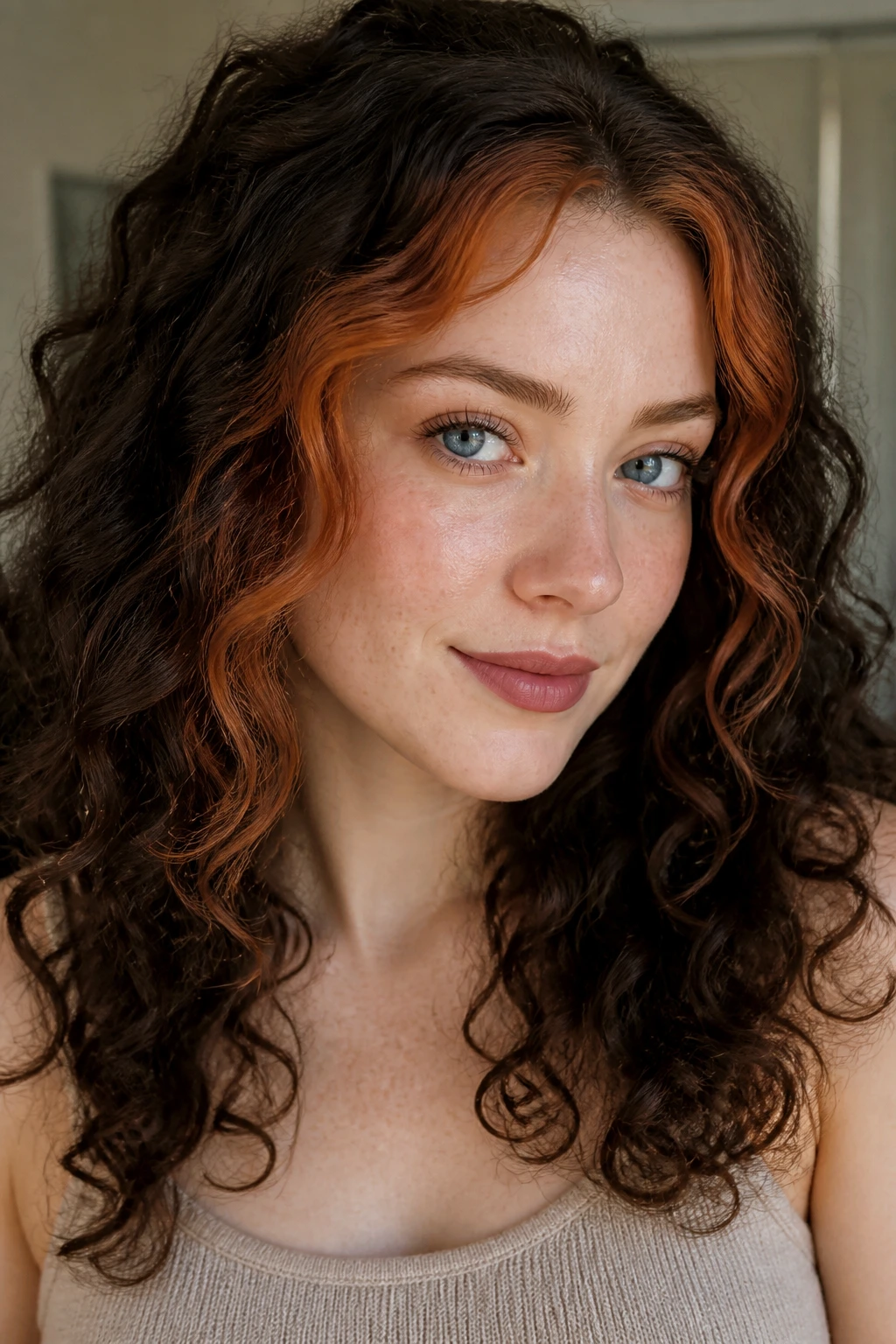
A strawberry auburn money piece is for the person who wants the face to light up the second the curls move. It’s brighter than cinnamon and softer than true copper, which makes it easier to wear on pale skin than many salon reds. The color sits in the front, usually one or two curl sections on either side of the part, and the rest of the head stays calmer.
This works because curly hair already creates texture. You do not need a huge amount of brightness to get attention. Two well-placed pieces near the eyes can do more than a full head of foils ever could.
How to Ask for It
Tell your colorist you want a strawberry auburn money piece that stays a shade warmer than your base, not lighter by a mile. On curly hair, those front sections shrink when dry, so the foils or paint placement should be a touch wider than they would be on straight hair. That prevents the pieces from disappearing into the curl pattern.
If your skin leans pink, keep the strawberry note muted. If it leans peach or ivory, you can go a little brighter. Either way, the money piece should frame, not fight.
4. Mahogany Peekaboo Panels
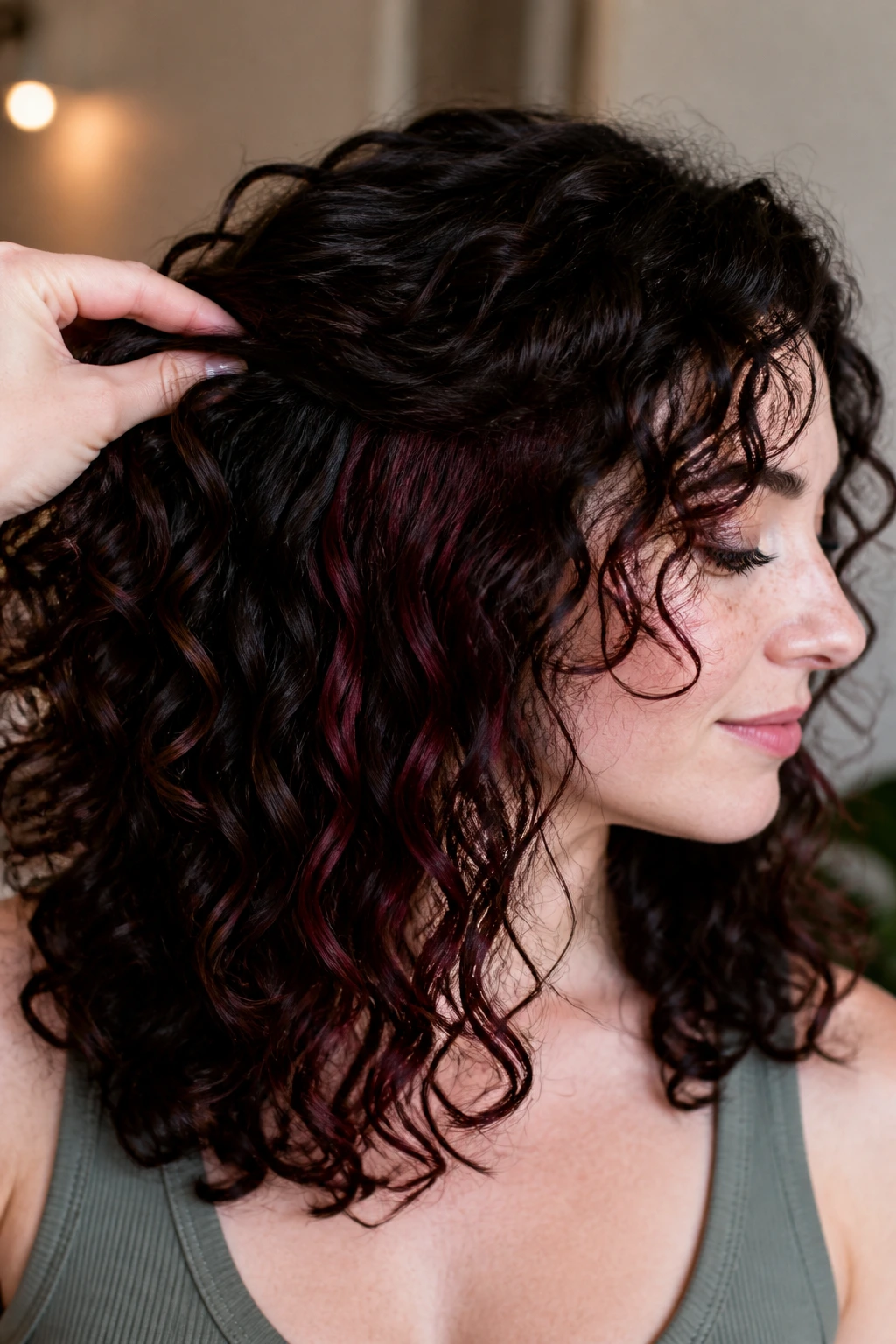
Mahogany peekaboo panels are for people who like surprise. The red-brown lives under the top layer or deeper inside the curls, where it only shows when the hair shifts, lifts, or gets tucked behind the ear. It’s subtle in the best way. From the front, the color can look almost like a soft brunette. Then a turn of the head reveals that dark wine-red glint.
On pale skin, mahogany is one of the better auburn relatives if you tend to blush easily. It adds depth without flooding the face with warmth. Curly hair makes the trick even better because the panels peek through at different spots across the day, depending on how the curls fall.
Good fit for: dense curls, medium-to-long lengths, and anyone who needs color that can hide under a work dress code but still feel interesting.
Ask for: deep panels with a brown-red gloss, not a cherry red streak. The goal is shadow and richness, not a bright stripe hiding under the top layer.
5. Burnt Sienna Ends on Loose Curls
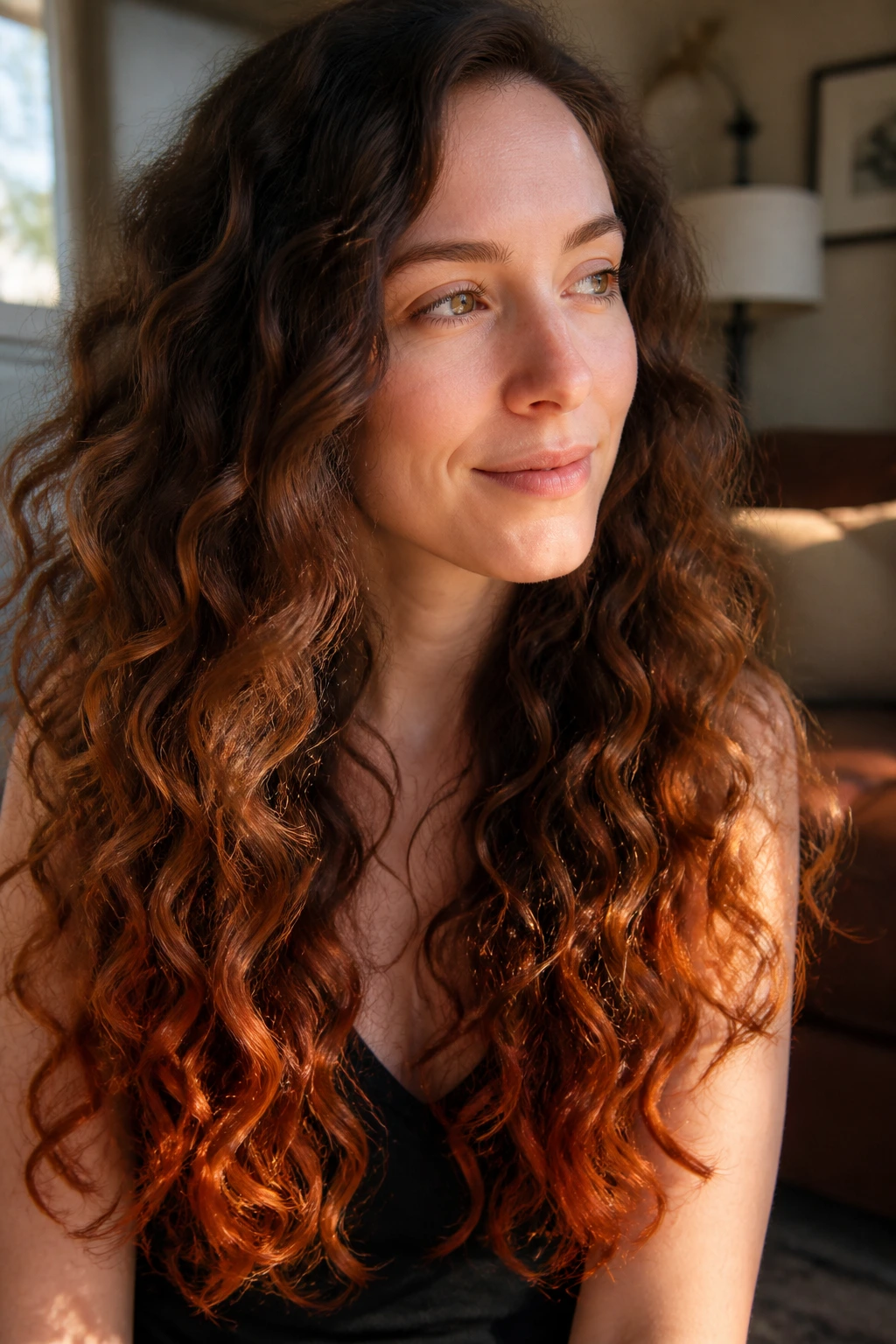
Burnt sienna ends have a particular charm on longer curls. The top stays deeper and quieter, then the ends pick up a warm, clay-red finish that feels sun-touched without looking bleached out. It’s not a tiny change, either. On long curls, the eye reads the color shift from a distance because the ends swing and catch the light.
Pale skin usually handles this well if the base is kept brown enough. The red lives at the bottom, away from the face, which reduces the chance of looking overly flushed. Loose curls make this look especially nice because the color gradients stretch and blur instead of stopping in harsh lines.
The Catch
Burnt sienna works best on ends that are already healthy. If the bottom half of your hair is dry, overprocessed, or frayed, that extra pigment can make the ends feel rougher and look thinner. A demi-permanent formula is usually kinder than a strong lightening job.
I like this when someone wants a visible change but not a root maintenance routine. The grow-out is forgiving, and the color looks good even when the curls are a little messy.
6. Golden Auburn Microlights
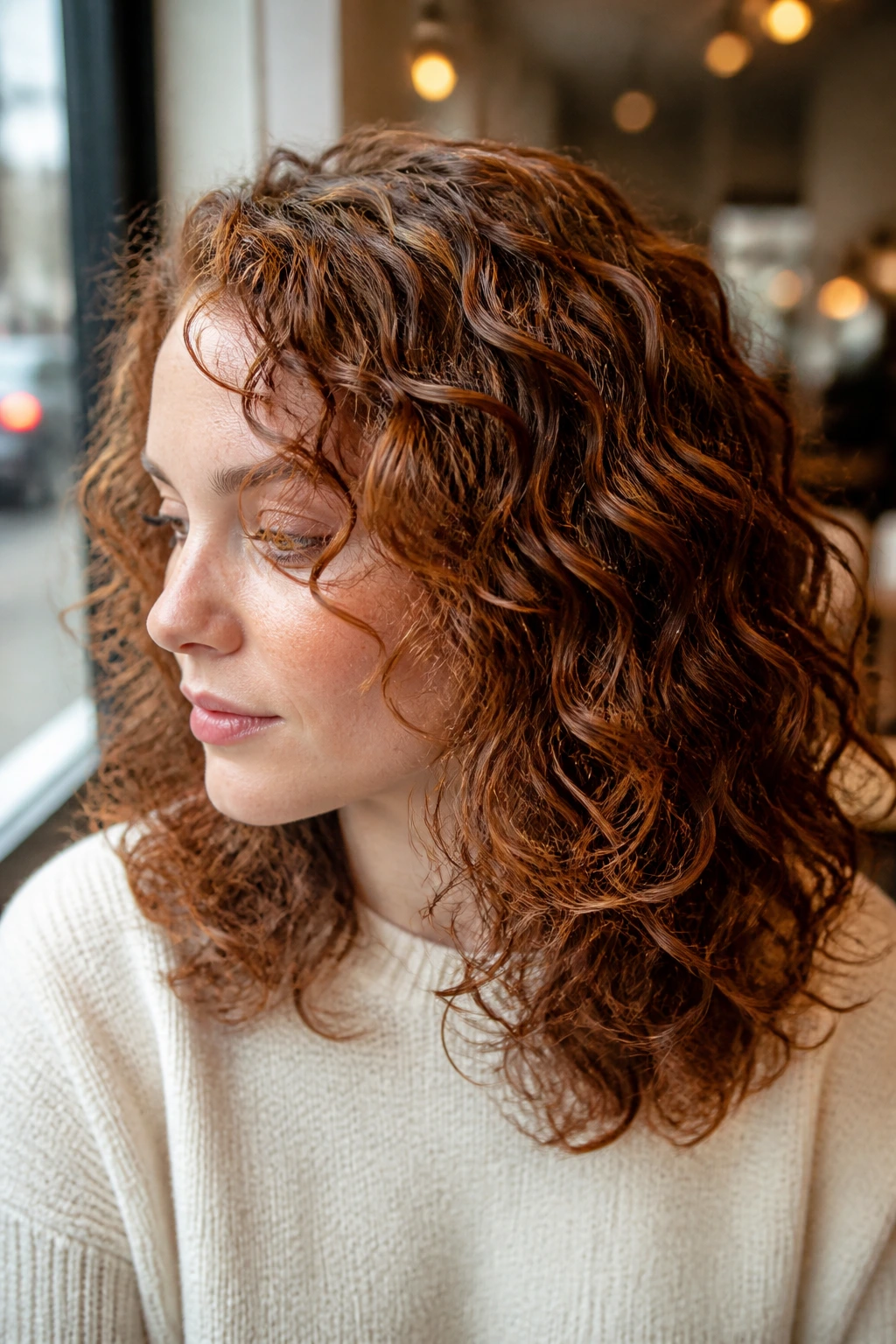
Golden auburn microlights are tiny, scattered highlights that mimic the way sunlight threads through curls on a bright window day. They’re not chunky. They’re not loud. They’re the color equivalent of adding half a dozen tiny flashes of warmth and then stepping back.
This is one of the smartest choices for fine curls or wave-heavy hair because big panels can overwhelm the texture. Microlights build dimension without stealing the curl pattern’s shape. On pale skin, the golden edge keeps the auburn from looking too heavy or muddy.
What It Feels Like in the Hair
The color doesn’t announce itself all at once. It appears when the curl opens. That makes the whole head feel fuller, especially around the crown and top layers, where flatness is most noticeable.
If you want a salon phrase, ask for fine auburn babylights in a copper-gold family, with enough brown to stay soft. The key is restraint. Too much brightness and you lose the point. Too little and the highlights disappear once the hair dries.
7. Chestnut Auburn Spiral Highlights
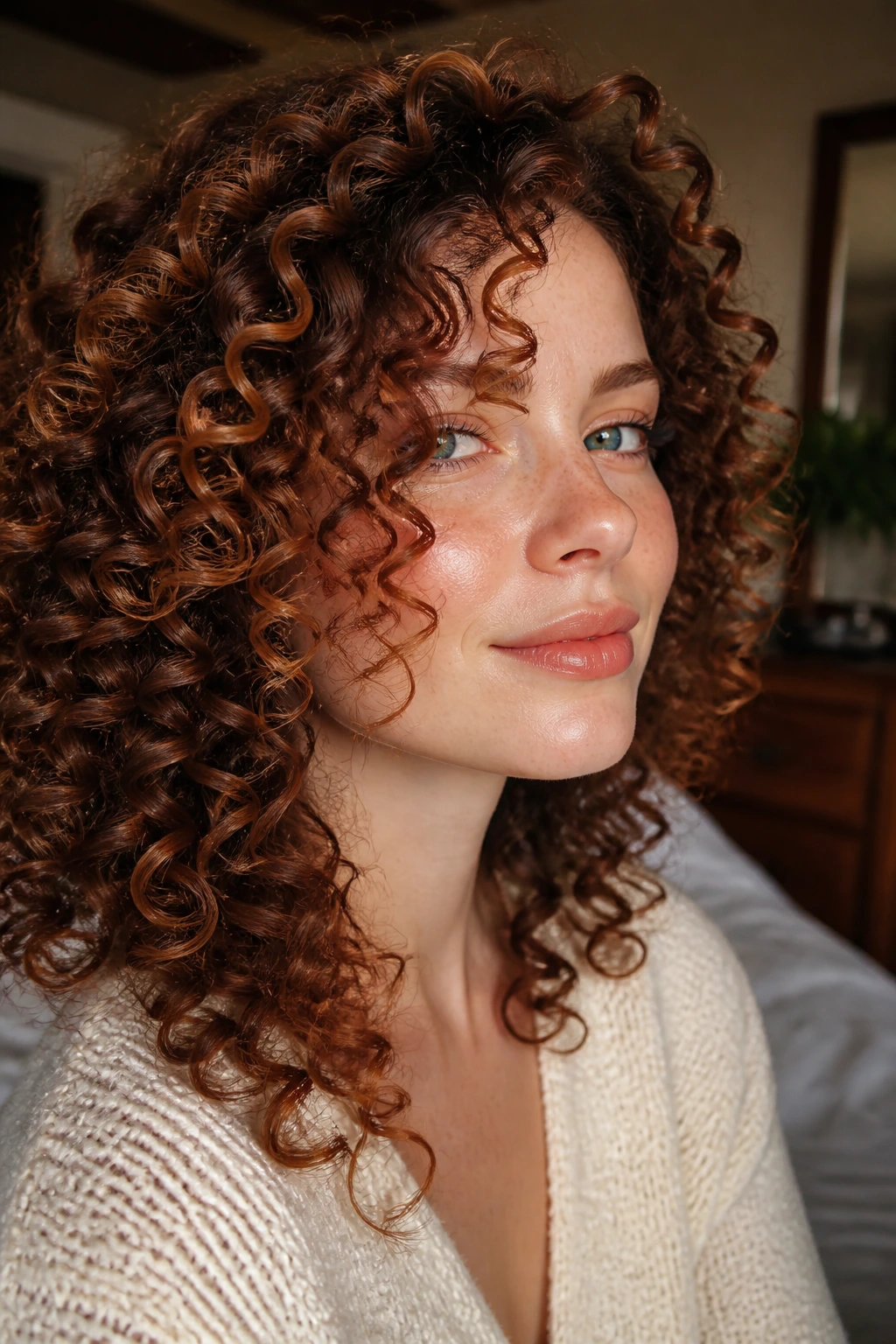
This is the one I’d point to if you have springy ringlets and want the color to follow the curl instead of slicing across it. Chestnut auburn spiral highlights are painted or foiled around the curl clump so the outer curve gets a little more light and the inner curve stays deeper. The result feels built into the texture, not pasted on top of it.
Pale skin likes chestnut auburn because the brown keeps the red from flying off into tomato territory. The shade reads mature, soft, and dimensional. It’s also one of the easiest ways to make ringlets look more defined, because the contrast lands where the curl already turns.
How to Get the Most From It
Bring photos of curls, not just colors. The placement is the whole show here. If your stylist knows exactly where your curl pattern opens and closes, they can place the brighter pieces on the outer arcs and use deeper chestnut on the underside for depth.
This is a very good choice when you want your curls to look thick even on day three.
8. Rust Melt from Root to Ends
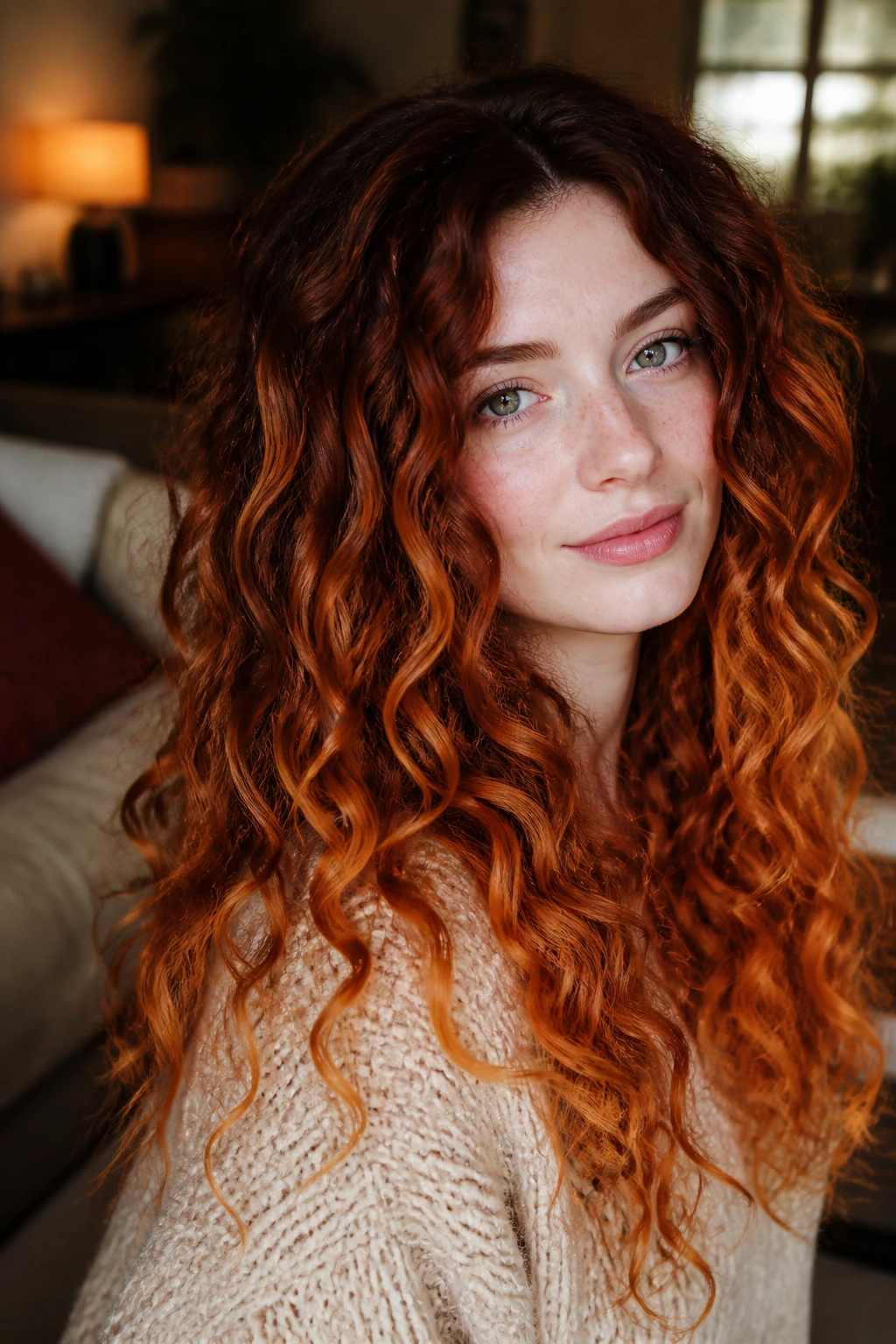
Rust melt is the bold bridge between brown and red, and it’s a good fit when you want the hair to feel warmer from top to bottom without sharp lines. The root area usually stays chestnut or soft brown, then the mid-lengths shift into rust, and the ends land in a gentle apricot-red. Done well, it looks like the color grew there on purpose.
On pale skin, the dark root gives the face a frame, while the warmer ends do the flattering work. Curly hair likes a melt because the curl itself blurs the transition. You don’t need a perfect straight-line fade. In fact, that would look odd.
Best for: medium-to-long curls, especially if you like wearing your hair down and moving around a lot.
One warning: if your ends are already very light, the rust can go too bright unless the stylist adds enough brown toner. I prefer this technique when the base is a little deeper, because it keeps the final look from feeling synthetic.
9. Apricot Auburn Face-Framing Pieces
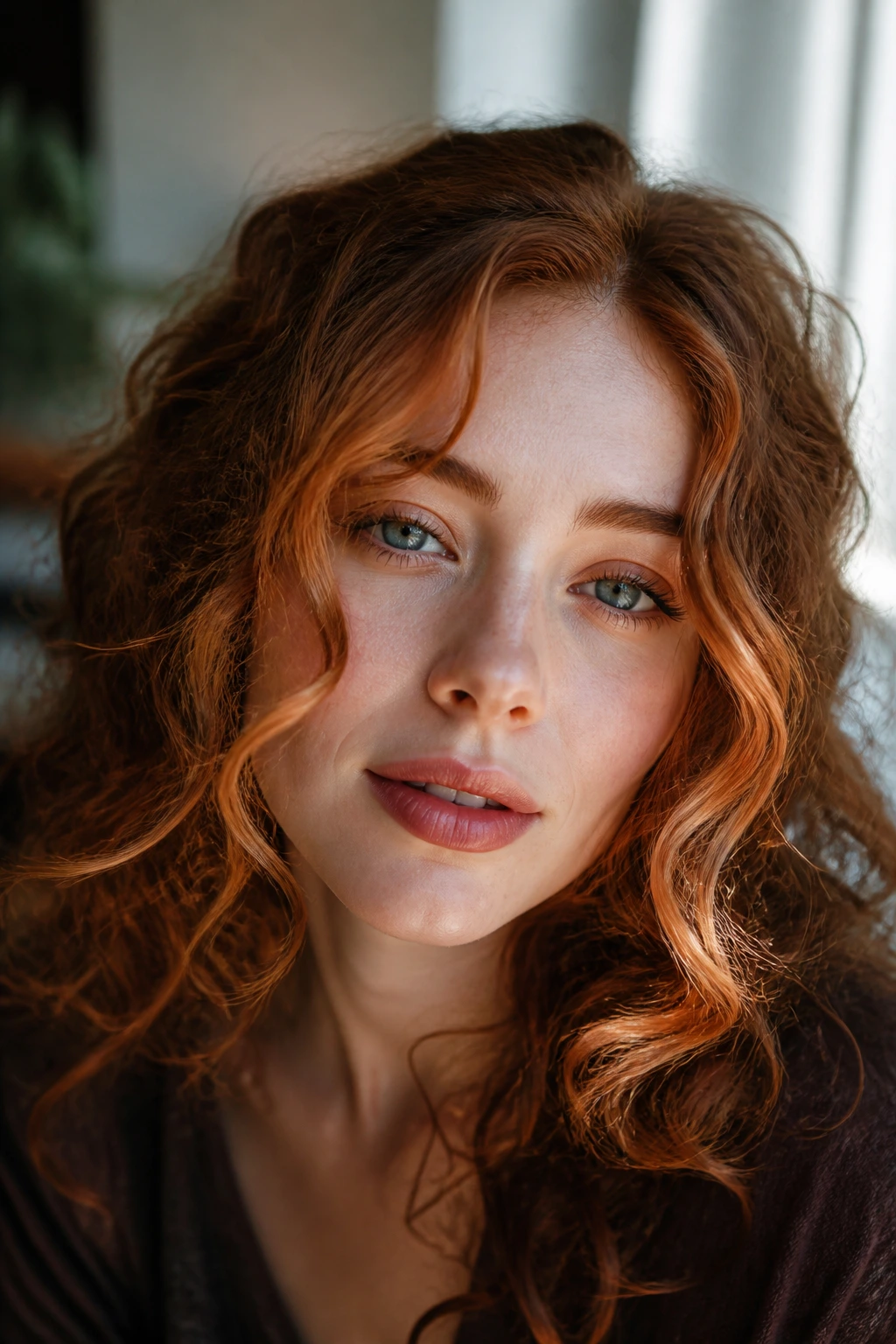
Apricot auburn is softer and more playful than copper, with a peachy-red note that can make pale skin look fresher if the undertone is warm or neutral. Around the face, it works almost like a wash of warm light. On curls, the pieces don’t need to be many. They just need to land in the right place.
I like apricot pieces best on layered cuts, where the front curls bend away from the face instead of hanging in one heavy curtain. That movement lets the color breathe. If the pieces are too thick, apricot can read orange in a hurry. Thin, airy placement is better.
Best When
- You want visible color without committing to a full head of auburn.
- Your skin has peach or ivory undertones.
- Your curls are loose enough to show the gradient.
If you’re very pink in the cheeks, keep the apricot muted with a little brown gloss. That small adjustment matters more than people expect.
10. Mulled Wine Auburn Lowlights
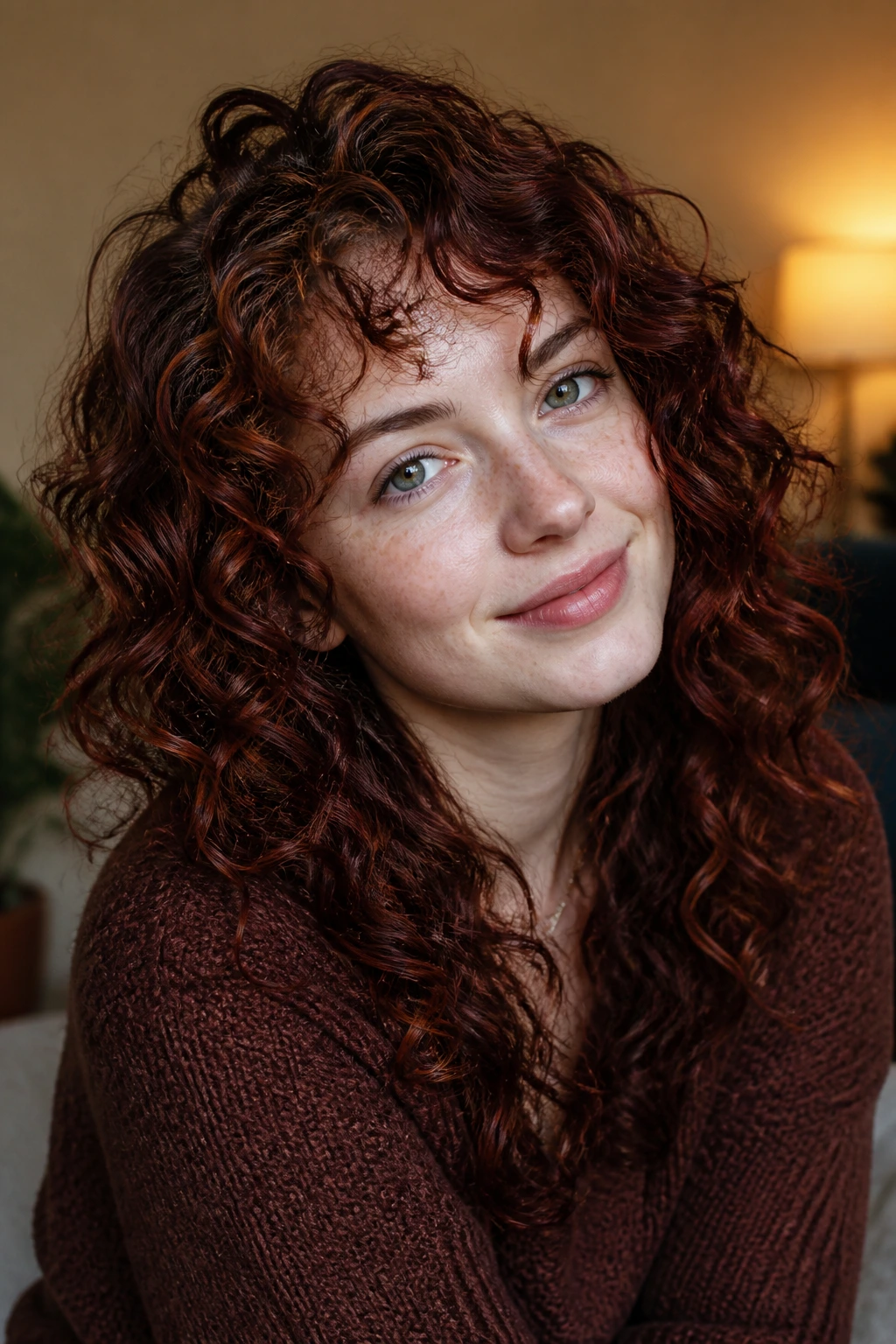
Mulled wine lowlights do the opposite job from the brighter options. They add depth. On very fair skin, that deeper red-brown can make the lighter pieces around it look richer, not duller. Think of it as a shadow that gives the other tones somewhere to land.
Curly hair often needs this more than straight hair does, especially if the pattern is loose and the individual curls separate a lot. Without lowlights, the whole head can look a touch washed out after the lightening. With them, the curls start to read in layers again.
Why I Like It
The shade keeps the palette in the auburn family without chasing copper brightness. That makes it easier to live with if you don’t want your hair to turn into the loudest thing in the room. It also helps when your eyebrows or lashes are dark and you need the hair to feel a little more anchored.
If your skin leans cool, this is one of the safest red-adjacent choices. Brown-red with a wine edge tends to flatter pale complexions that burn before they tan.
11. Ginger Halo Around the Hairline
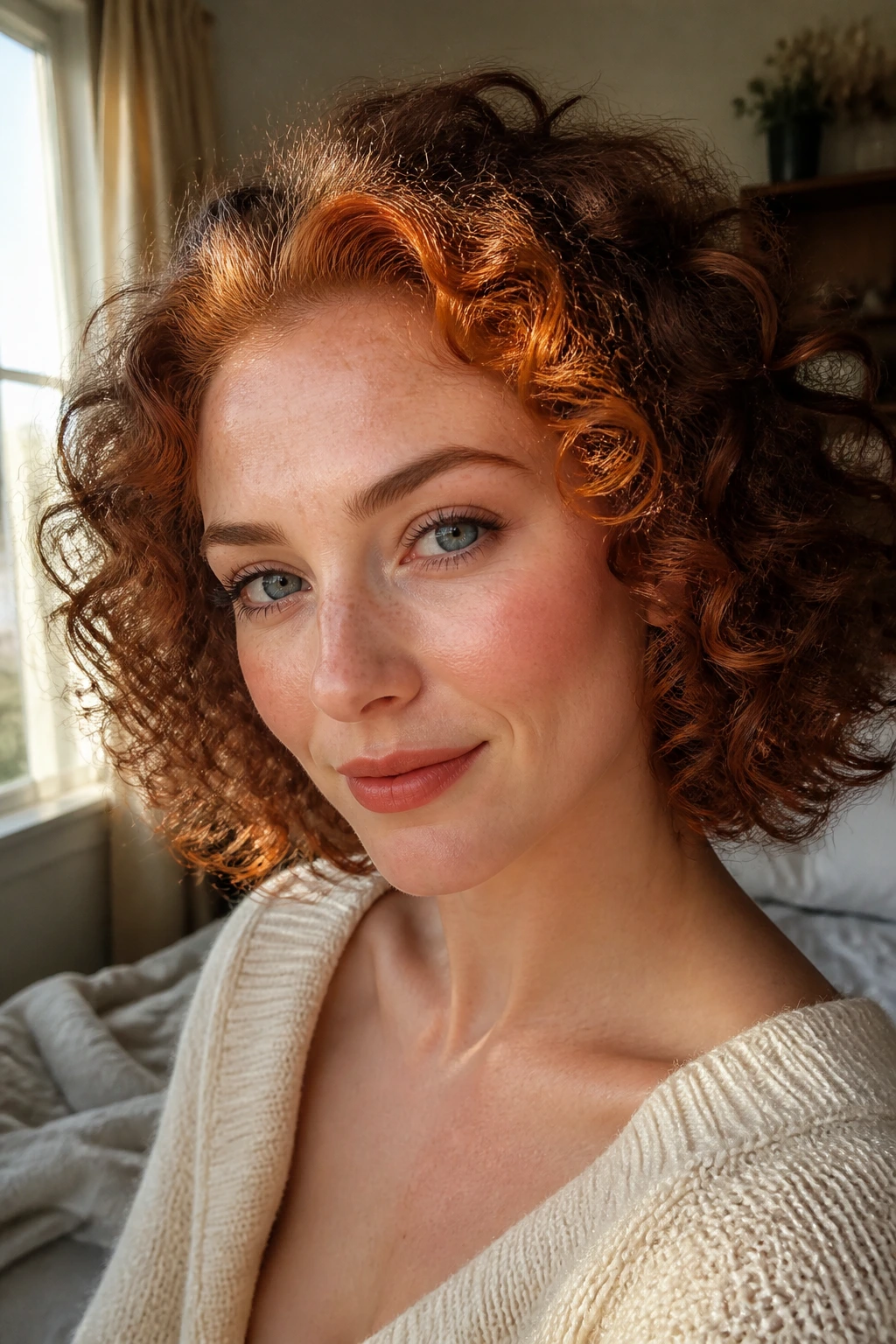
A ginger halo is what happens when you put the brightness only where the eye naturally lands first: the hairline, temples, and the soft parting around the face. It’s a very practical version of auburn highlights for pale skin with curly hair because it gives you payoff without making the whole head high-maintenance.
The look is especially nice on shorter curls, bobs, and shoulder-length cuts. The halo makes the cut feel intentional and clean, which matters a lot when curls can otherwise blur into a soft cloud. Ginger has enough orange-gold warmth to wake up fair skin, but the halo placement keeps it from taking over.
The Small Detail That Helps
Ask the stylist to leave the halo slightly wider at the temples and softer near the crown. That way the brightness frames the face but doesn’t create a hard line where the curls part. It’s a tiny placement tweak, but it makes the whole thing look better in motion.
This is also a smart choice if you wear your hair half-up a lot. The color shows up the second the top section is pulled back.
12. Bronze Auburn Ribboning
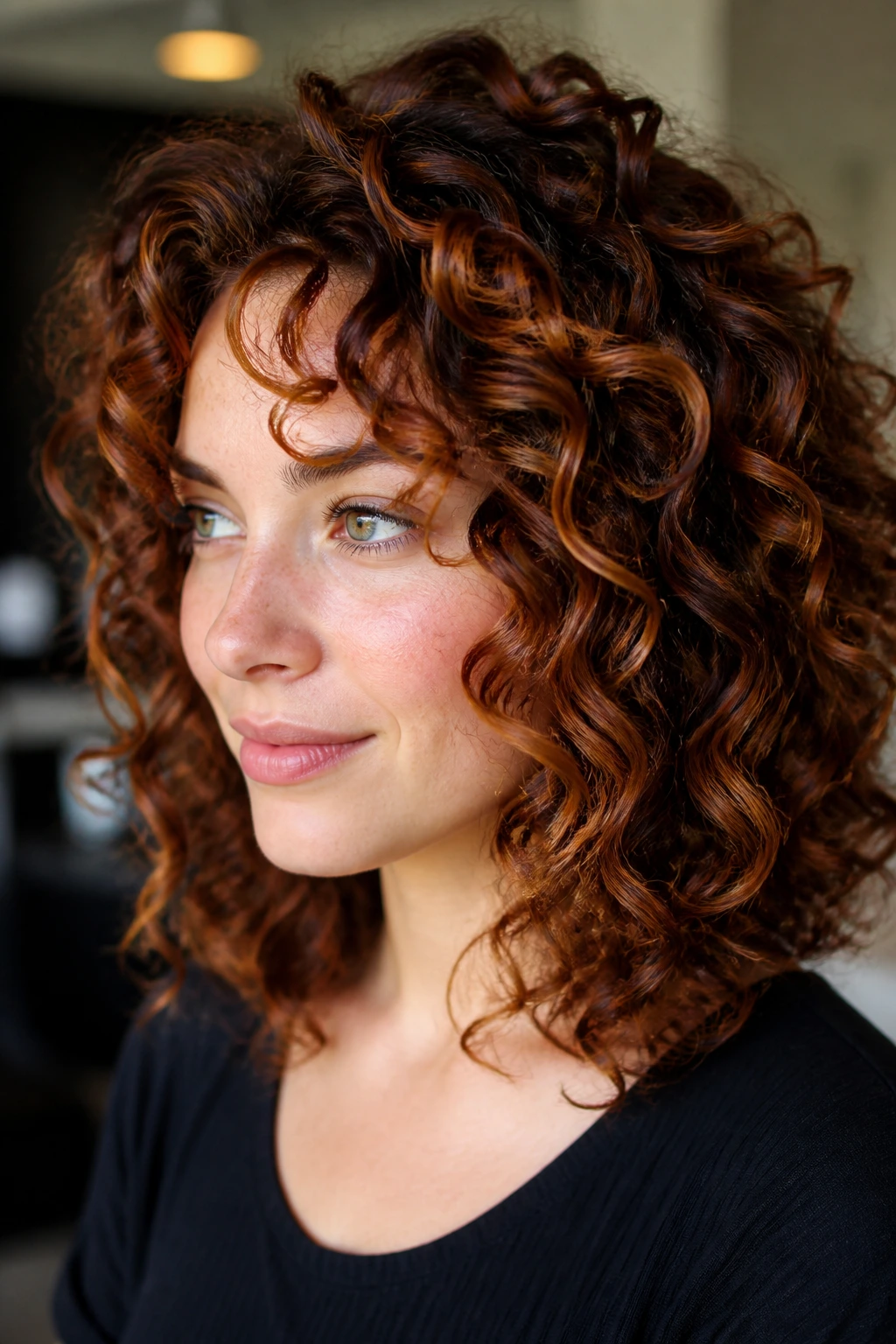
Bronze auburn ribboning is for people who want warmth but are suspicious of anything that might read orange under indoor light. Bronze keeps the auburn in a brown-red zone, which looks expensive on pale skin and especially good on curly hair. The ribboning is a little broader than microlights but softer than chunky highlights.
I like this on neutral or cool pale skin because the bronze gives enough warmth to keep the complexion alive without pushing redness into the cheeks. The curl pattern helps blur the edges, so the ribbons move instead of sitting there like stripes.
Where It Wins
This is one of the better choices for someone who works in places with mixed lighting. Bronze holds its shape under fluorescent lights and still looks rich in daylight. A lot of brighter coppers fall apart in those conditions. Bronze doesn’t.
If your hair is medium brown or dark blond, this can be one of the easiest auburn-family shifts to maintain because the brown base carries the color between salon visits.
13. Maple Auburn Tip Paint
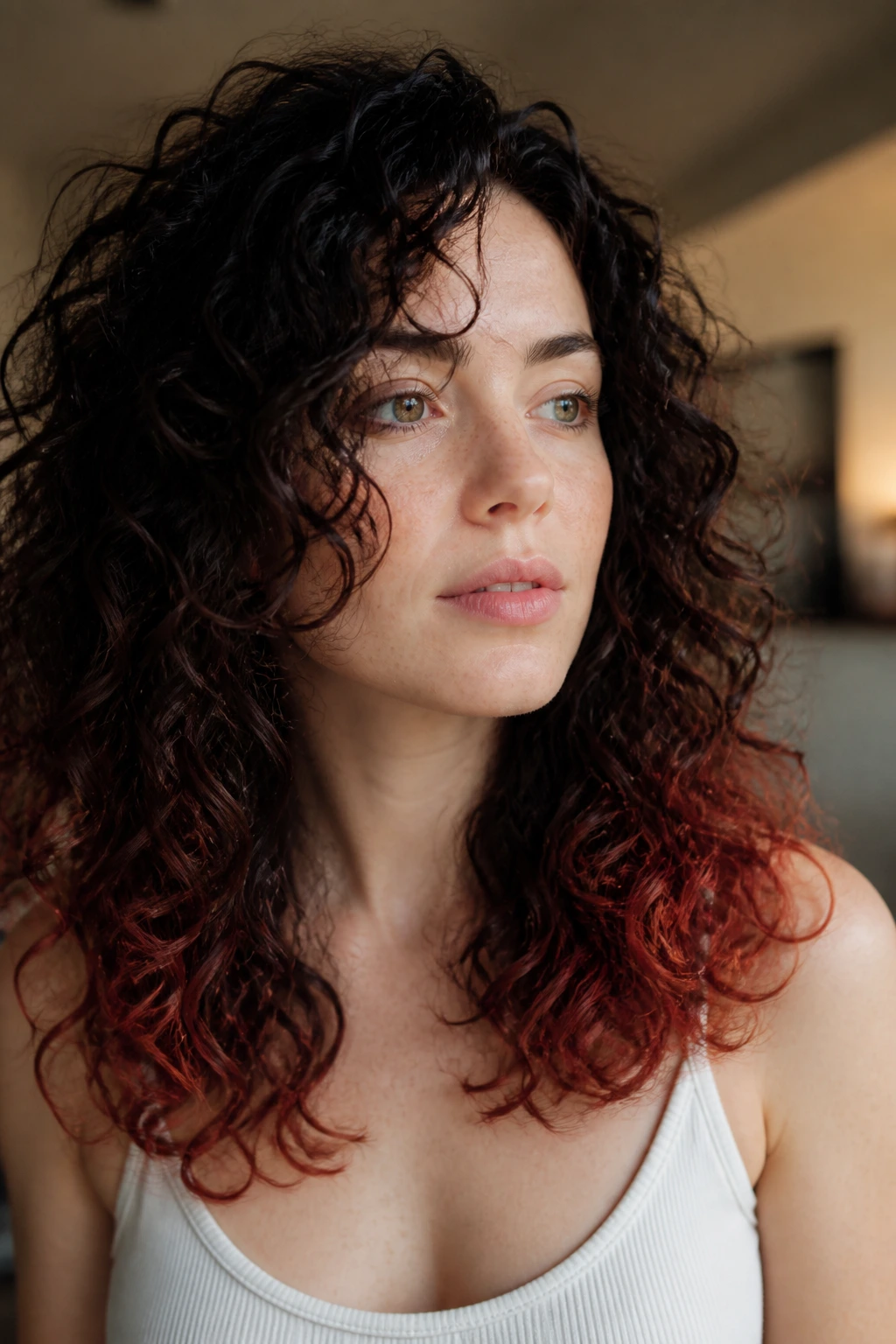
Maple auburn on the tips gives you warmth right where curls usually need a little help: the last inch or two. That’s the part that gets frayed, dry, and visually flat first, so a touch of warm red-brown can make the ends look intentional instead of tired. On pale skin, the color stays soft because it isn’t sitting in the most visible face-framing zone.
The finish works best on layered cuts where the tips can separate and swing. If the hair is all one length, the effect can look heavy. On layered curls, though, it gives that soft dipped look without needing a full ombre.
What to Know
Maple is a little sweeter and more golden than sienna. It’s a good choice if you want auburn that doesn’t feel too dark or too red. It also tends to grow out in a forgiving way, which is useful if you hate frequent salon appointments.
Do keep an eye on damaged ends. If the hair is already porous, the tips may grab pigment more strongly than you want. A conditioning gloss afterward helps pull the finish back into line.
14. Terracotta Chunk Highlights
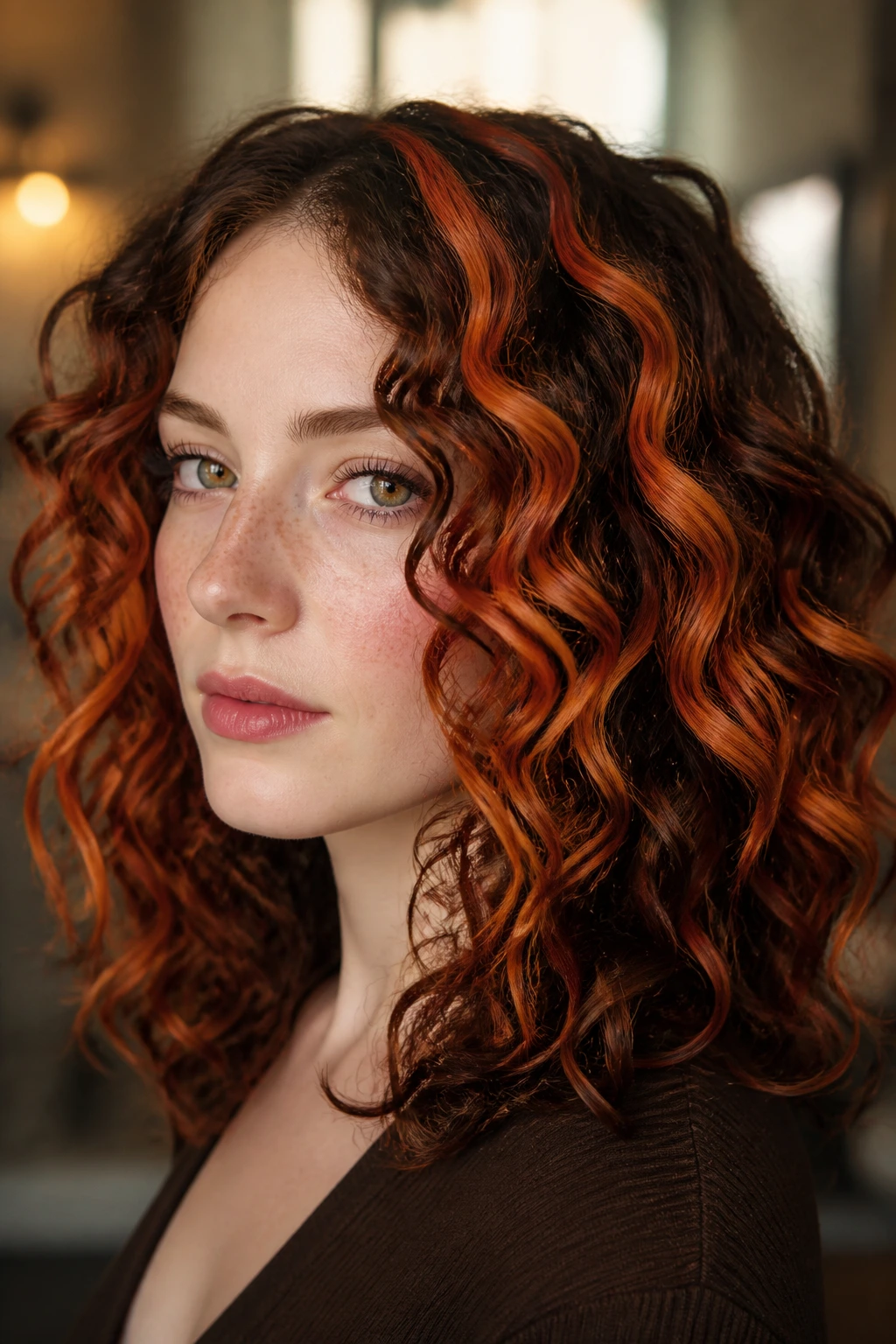
Terracotta chunks are the bolder, more graphic version of auburn highlights. Think thicker painted panels with a clay-red note that shows up clearly through dense curls. This is not subtle, and that’s exactly why it can work so well on certain pale faces. The curls soften the edges, so the boldness doesn’t look as harsh as it would on straight hair.
This style suits thick hair best. If the curls are dense and the pattern is strong, chunkier highlights can help the shape read from across the room instead of disappearing into texture. Pale skin benefits when the terracotta is softened with a brown base or a root shadow. Otherwise, the red can look a bit too hot.
Good to know: terracotta chunking usually looks best when the stylist leaves some darker panels between the brighter ones. If every curl is lightened evenly, you lose the contrast that makes the whole thing work.
15. Toffee Auburn Ombre
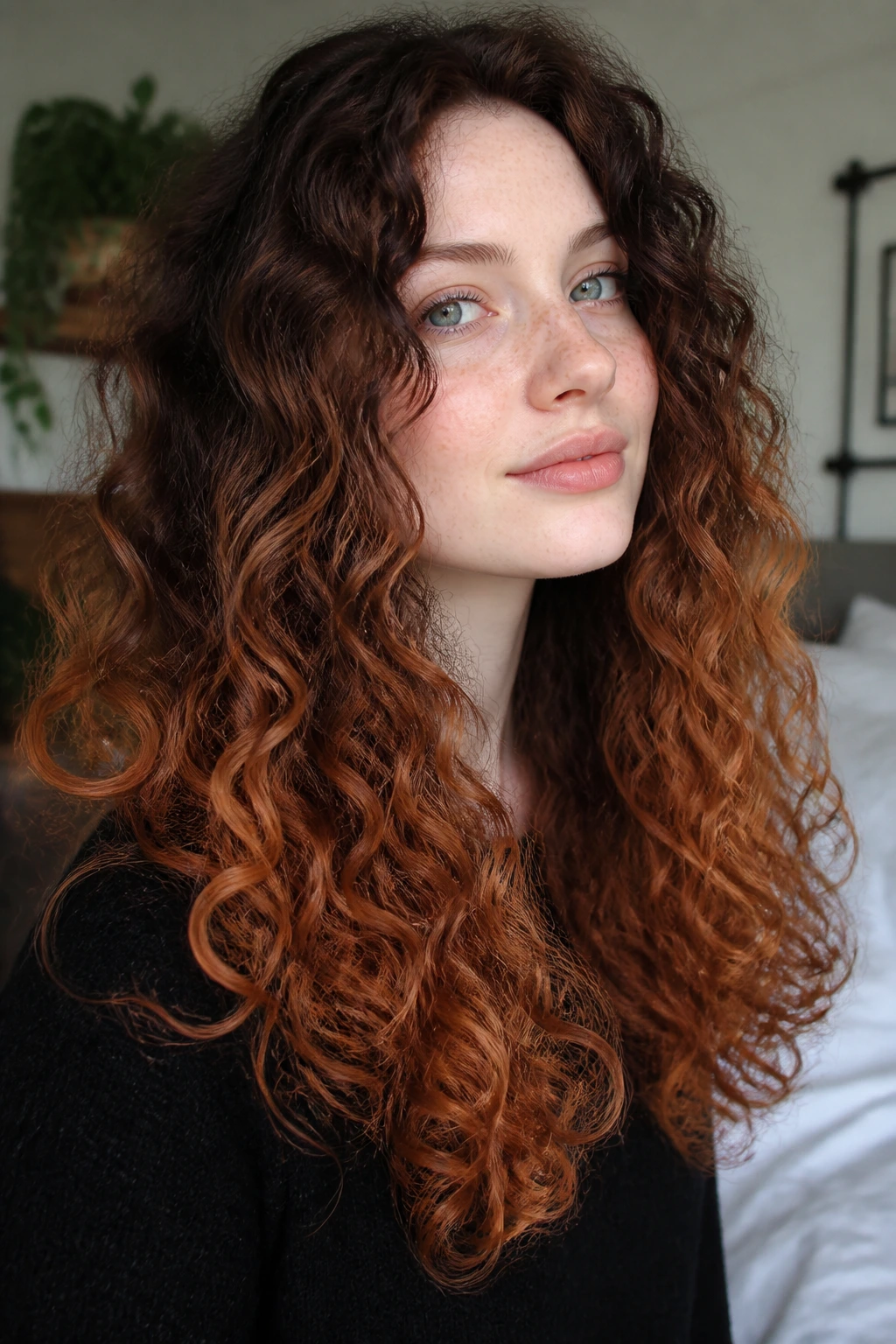
Toffee auburn ombre is a slow fade from a brown root into warm toffee-red ends. It’s one of the most forgiving auburn color choices for curly hair because it lets the roots stay quiet while the ends carry the interest. On pale skin, the brown root keeps the face from being surrounded by too much red, which is a relief if you’re even slightly worried about overdoing it.
The ombre works especially well on long curls. There’s enough length for the gradient to show, and the curl movement keeps the line soft. If the hair is short, the fade can look abrupt. On long hair, it looks rich and layered.
A Practical Note
Ask the colorist not to push the ends too light. Toffee should stay in the brown-red family, not drift into bright copper unless that’s your actual goal. The most flattering version is the one where the ends glow, not glare.
This is also a solid choice if you like wearing your hair half-up, because the brighter ends still show even when the crown is pulled back.
16. Amber Strokes on Short Curls
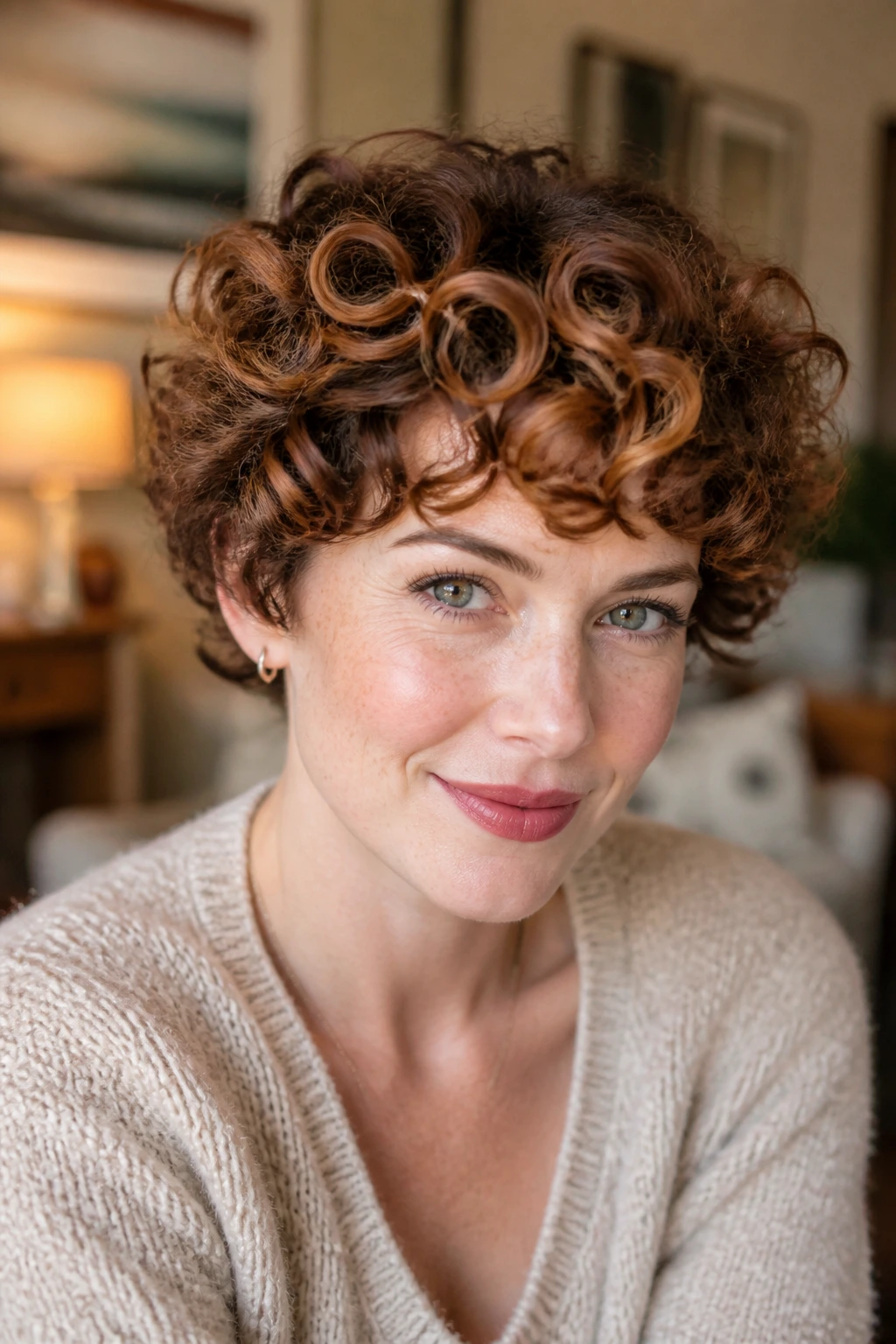
Short curls need precision. There’s less length to hide behind, so every highlight has to earn its place. Amber strokes are ideal here because they add warmth without making the cut look busy. A few well-placed strands around the crown, temple, and top layers can make a pixie, cropped bob, or curly shag look much more defined.
Amber sits between gold and red, which helps pale skin look fresh. It can go garish if it’s too bright, though, so I prefer a softer amber with brown in the mix. On short curls, that restraint keeps the style from reading costume-y.
Why This Works on Short Cuts
Short curly cuts thrive on contrast. A little amber on the top layer can show off the texture and make the shape feel intentional from every angle. You don’t need much. In fact, too much lightening would erase the neat, piecey effect that makes short curls interesting in the first place.
If your curls are very tight, keep the strokes small and close to the surface. Bigger pieces can disappear into the coil and make the cut look uneven.
17. Smoky Auburn Balayage
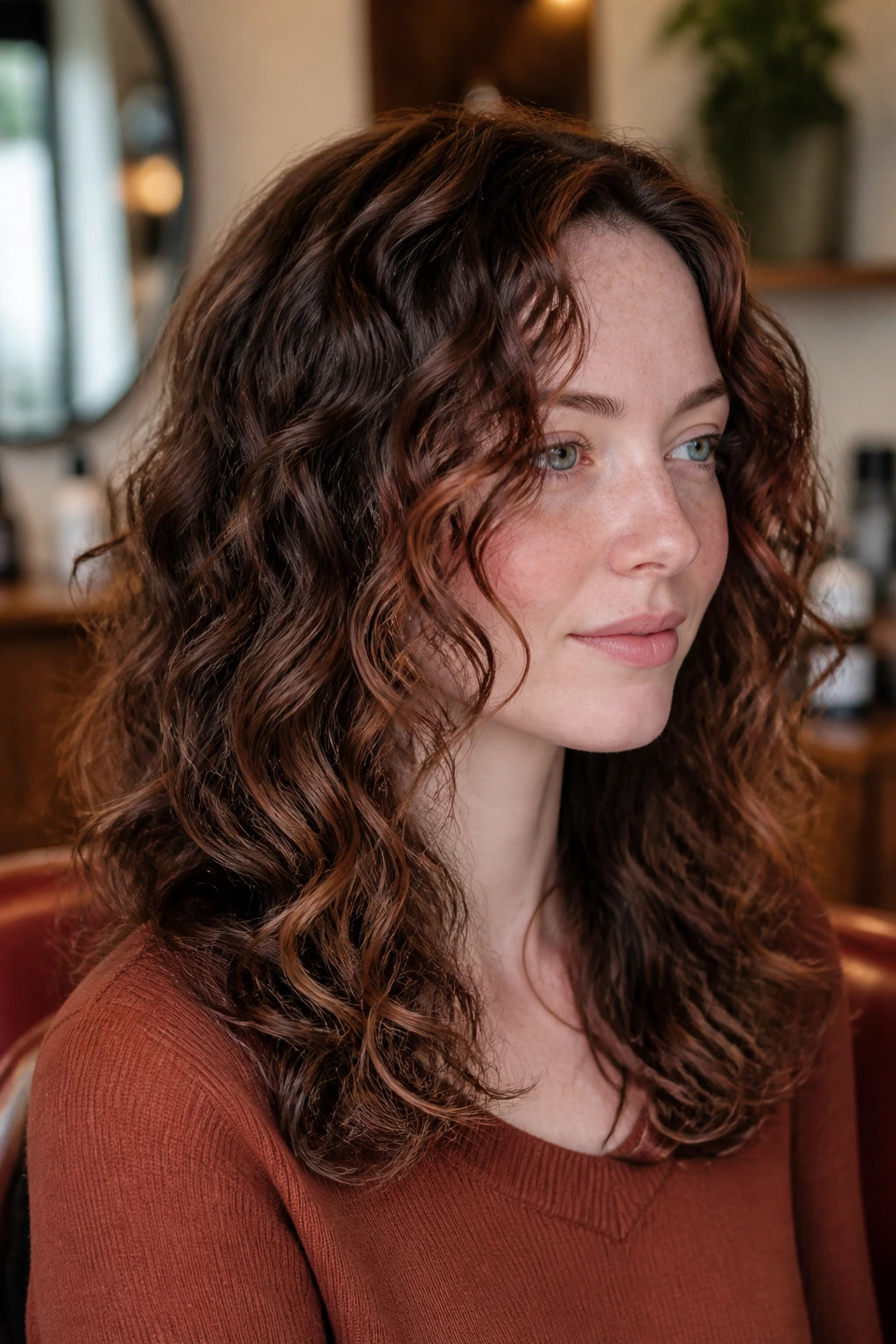
Smoky auburn balayage is the cooler, moodier relative of the brighter copper looks. It leans brown-red with a soft ash edge that keeps the warmth under control. On very fair skin, that cooler balance can be a lifesaver if bright copper makes you look flushed or if your natural coloring skews rosy.
Curly hair benefits from the smoky approach because the texture already adds life. You don’t need to chase brightness to get dimension. A smoky auburn sweep through the outer layers gives the hair movement while letting the root area stay dark enough to ground the whole look.
Best For
- Pale skin with pink or blue undertones.
- People who want auburn without obvious orange.
- Curls that are thick enough to hold a soft color gradient.
Be careful not to ask for too much ash. Too much of it and the auburn can turn muddy, especially in low light. The color should still feel warm when the hair moves.
18. Velvet Auburn Dimension
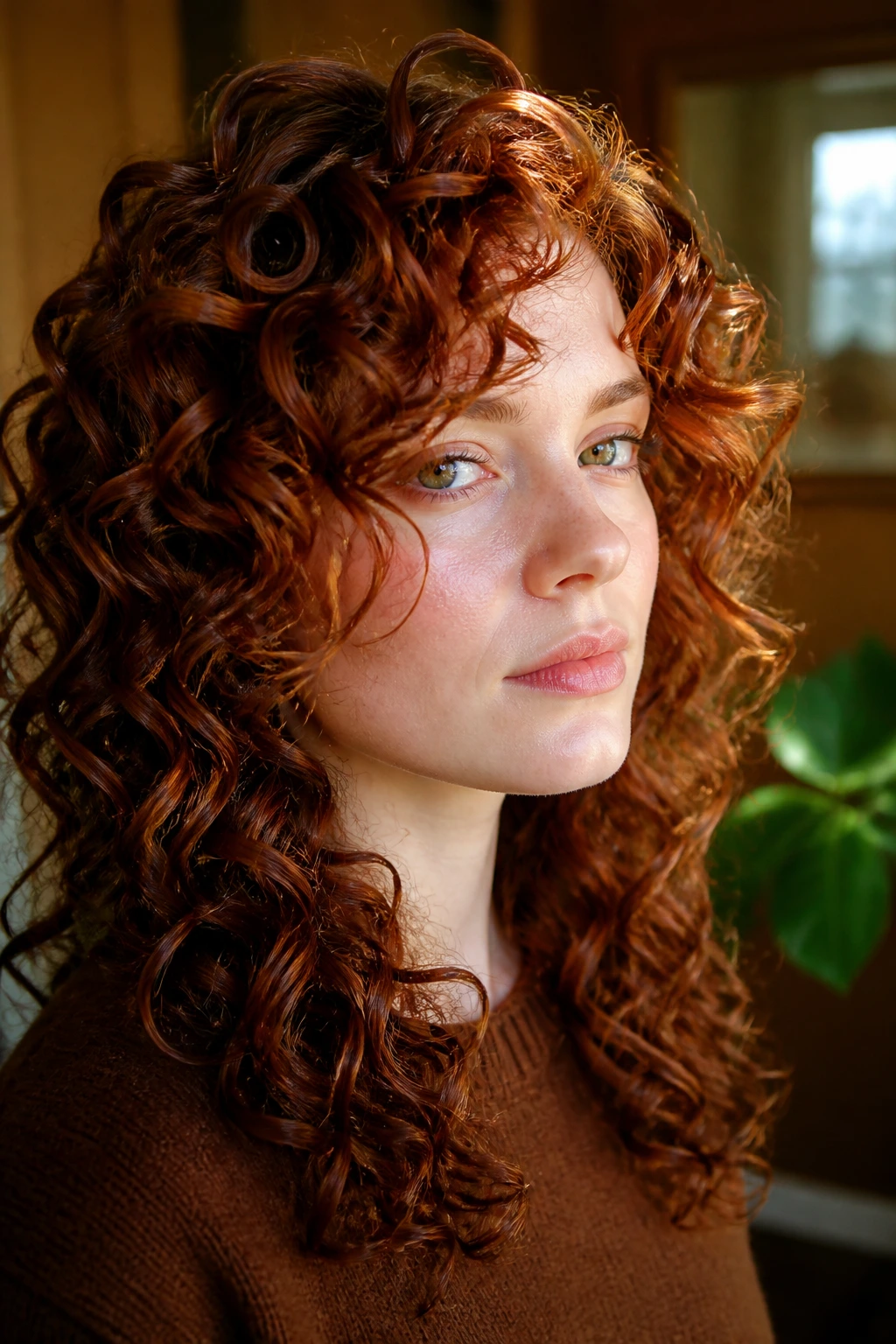
Velvet auburn dimension is the rich, layered finish that makes curly hair look almost plush. It mixes deeper lowlights underneath with warmer auburn ribbons on the surface, then finishes with a gloss so the whole thing reflects light in a smooth way. On pale skin, this one works because the warmth is cushioned by depth. Nothing screams.
I tend to think of this as the most polished auburn family look. The curls look thicker. The shape looks cleaner. The color has enough variation that it doesn’t flatten out after a few washes. If you want something that sits between brunette and redhead without settling too far into either camp, this is the move.
Why It Stays Interesting
Curly hair can lose definition when all the pieces are lifted to the same brightness. Velvet dimension avoids that by keeping some panels dark and some warm. The contrast is what makes the curls pop.
It’s the shade I’d pick for someone who wants auburn that still feels grown-up after six weeks, not just on day one.
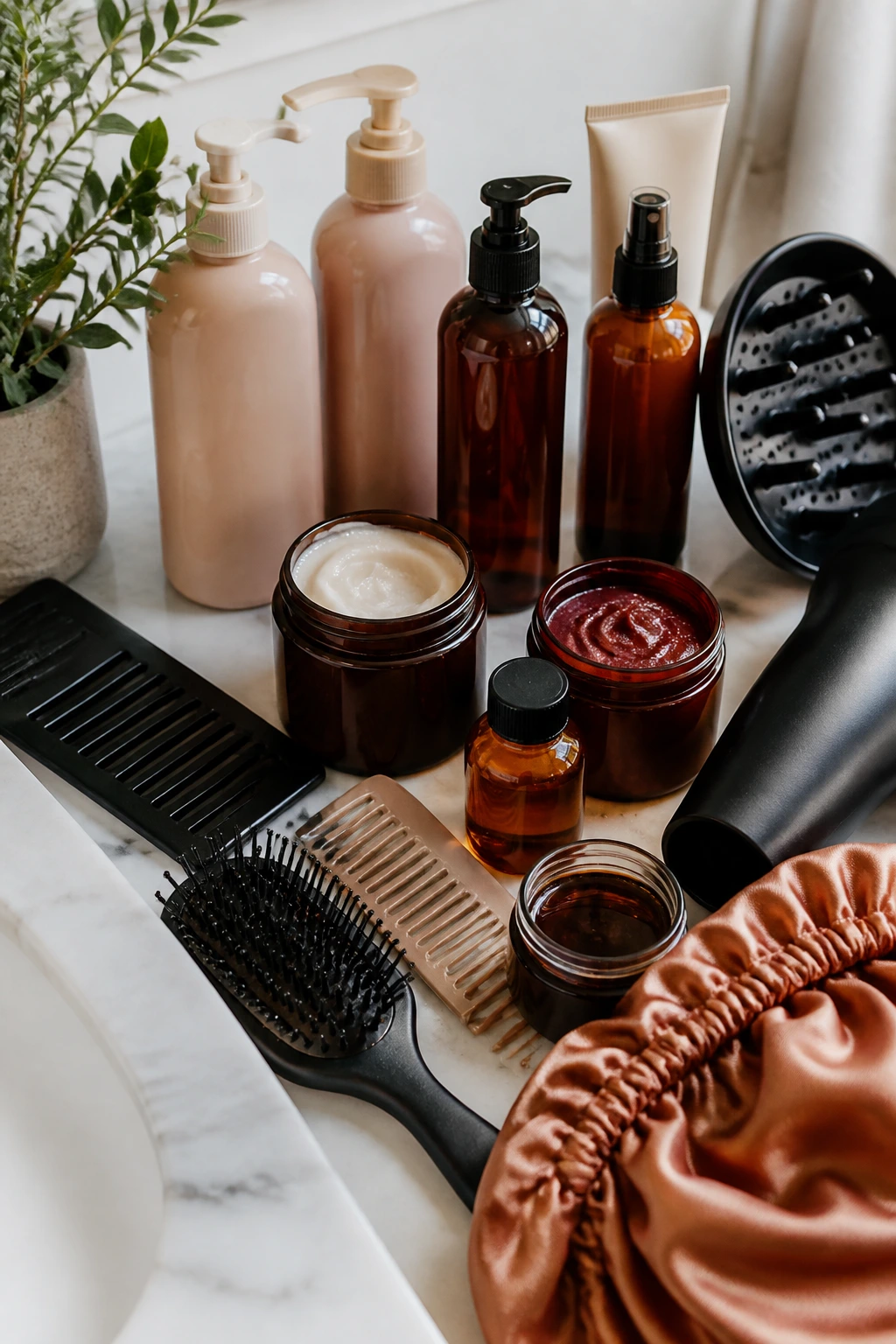
Essential Tools and Products for the Look
You do not need a drawer full of magic bottles. You do need a few things that keep auburn from fading into a sad peach-brown blur.
- Color-safe sulfate-free shampoo: Sulfates strip red pigment fast, and auburn is already more fragile than brunette.
- Rich conditioner with slip: Curly hair needs detangling help, especially after any lightening.
- Microfiber towel or cotton T-shirt: Rough terry cloth pulls on curls and makes the highlights look frizzy at the edges.
- Wide-tooth comb: Best for moving conditioner through curls without breaking up the pattern too much.
- Diffuser attachment: Helps keep the curl shape intact while the color air-dries with less frizz.
- Heat protectant spray: If you diffuse often or use a hot tool, this matters more than fancy styling creams.
- Color-depositing mask in copper or auburn: Useful when the red starts to fade and you want to keep the warmth without another salon visit.
- Demi-permanent gloss or salon glaze: A gloss refreshes tone without opening the hair as much as permanent color.
- Satin bonnet or pillowcase: Less friction overnight means less frizz and less color-looking-dull-from-the-outside effect.
- UV and heat protection spray: Sun and heat both drain red pigment faster than most people expect.
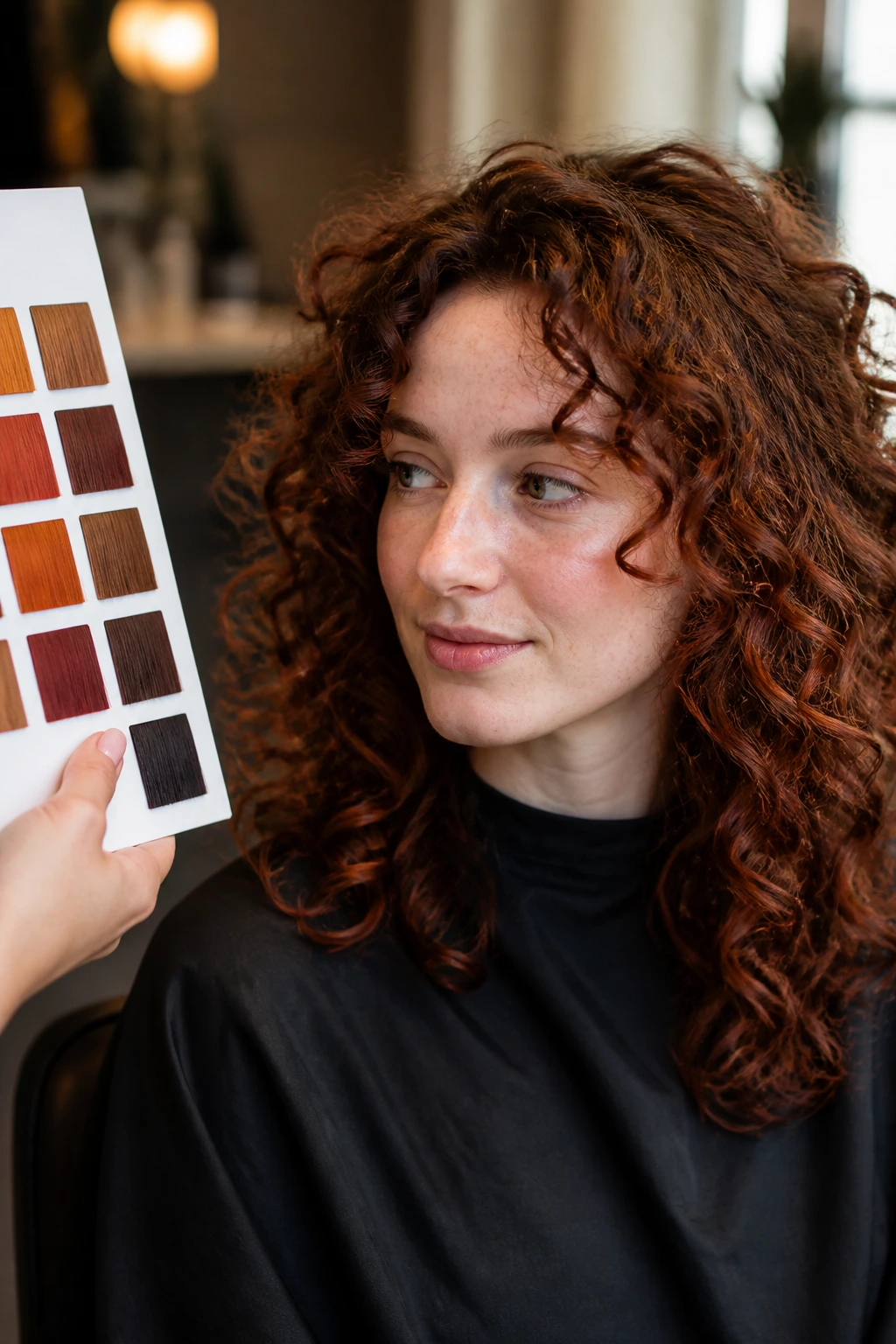
How to Choose the Right Auburn Formula Before You Book
A good consultation saves money. A sloppy one wastes it. The colorist can only work with the information you give them, and auburn is the kind of shade that changes meaning fast if you’re vague.
Ask in These Terms
Base level: Tell them whether your hair is naturally dark blond, light brown, medium brown, or already lightened. The starting point changes how bright the auburn can be without damage.
Undertone: Say whether your skin leans pink, peach, golden, or neutral. That one detail helps the stylist decide whether to push copper, bronze, cinnamon, or mahogany.
Maintenance appetite: If you don’t want to see the salon every six weeks, ask for a root shadow, soft balayage, or lowlight-heavy approach. If you’re fine with more upkeep, brighter face-framing pieces and higher contrast can work.
Porosity: If your hair has been colored before or feels thirsty after washing, say so. Porous curls grab red fast and can look too intense if the formula is not adjusted.
Bring photos, but bring more than one. One that shows the color. One that shows the placement. One that shows the kind of curl pattern you want the result to sit on. That last one matters more than most people think.
How to Wear Auburn Highlights So the Color Shows Up
The right finish can make the color look twice as good. The wrong one can hide the whole thing under frizz.
Curl shape: Define the curls enough that the ribbons separate, but do not crush them with heavy products. A light cream plus a gel cast usually shows the color better than a thick butter.
Parting: A center part shows a money piece and a halo. A side part softens everything and can be kinder if your skin gets red easily or your roots are a touch brighter than the rest.
Wardrobe colors: Cream, taupe, olive, navy, charcoal, and warm beige tend to flatter auburn against fair skin. Blazing red near the face can compete with the hair, which is not always the look you want.
Makeup: Peach blush, soft brown liner, and a berry or muted rose lip usually play nicely with auburn. If the hair is copper-heavy, I’d stay away from blush that already leans orange.
One more thing. Dry curls make even great color look tired. If the ends are thirsty, the red can go flat instead of glowing. A leave-in with a little slip and a diffuser on low heat makes a bigger difference than people want to admit.
Small Tweaks That Make Auburn Look More Intentional
Auburn gets much better when you stop thinking only about the highlight itself and start thinking about the finish around it.
Tone control: If the color reads too bright after the first wash, ask for a brown-red gloss, not a stronger bleach session. A gloss fixes the tone. More lightening can make the problem louder.
Placement control: Keep the brightest pieces around the front and outer crown, then let the nape stay deeper. That creates depth without making the whole head shout at once.
Curl care: Use protein only when the curls are stretchy or limp. Too much protein on already dry, lightened curls can make the hair feel brittle and the auburn look dull.
Finish polish: A few drops of lightweight oil on the ends help the red catch light, but only a few. Too much product turns auburn muddy fast, especially on porous curls.
If you like changing your hair often, choose a softer auburn formula first. It gives you room to deepen or brighten later. Jumping straight to the loudest copper in the book leaves fewer options.
Common Color Mistakes That Flatten the Curl Pattern
The biggest auburn mistakes on pale skin are almost always about tone and placement, not the color family itself.
Going too orange: If the shade leans pumpkin, it can pull too much attention to redness in the skin. Fix it by asking for more brown, bronze, or mahogany in the next gloss or formula.
Using chunky highlights everywhere: Thick stripes look harsh on curls because the texture already creates movement. The fix is finer foils, painted ribbons, or a curl-clump placement plan.
Over-lightening porous ends: Damaged ends grab pigment fast and then feel rough. The symptom is hair that looks brighter but frizzier. The fix is a gentler lift, bond care, and a gloss instead of a hard lighten.
Skipping lowlights: Without some deeper pieces, auburn can look thin or too uniform. Adding lowlights keeps the color from floating on top of the hair like a sticker.
Over-toning with ash: Too much ash makes auburn go dull and can make pale skin look washed out. Keep some warmth in the formula or the hair loses the thing that makes auburn appealing in the first place.
Ignoring shrinkage: Curly hair dries shorter and tighter, so face-framing pieces need to be placed a little wider and a touch lower than on straight hair. If they are not, the color disappears into the curl.
How to Keep Auburn Fresh Between Salon Visits
Red pigments fade faster than brown ones. That’s just the deal. Curly hair can hide some of the fade because the movement stays pretty, but the tone still needs help if you want the auburn to keep its shape.
Wash with lukewarm water, not hot. Hot water opens the cuticle too much and drains red tone fast. Two to three washes a week is kinder than daily washing, especially if the color is fresh. On non-wash days, a light mist of water and leave-in can wake the curls back up without stripping pigment.
Use a color-safe shampoo and a rich conditioner. Once a week, swap in a color-depositing mask that matches the auburn family you chose. Copper, cinnamon, mahogany, or bronze masks are worth it if the color starts looking too brown or too pale. If the hair is extra porous, use the mask less often and watch the tone closely. Too much pigment on porous curls can make the ends look muddy.
Heat matters too. If you diffuse, keep the setting low or medium and use a protectant every time. If you flat-iron, stay under 350°F / 175°C unless a stylist has told you the hair can handle more. Sun exposure and hard water can also drain auburn faster than most people expect, so a UV spray or a shower filter can pay for itself in fewer dull weeks.
A salon gloss every 4 to 8 weeks is the sweet spot for most auburn shades on curls, depending on porosity and how bright you went. If the color was kept soft and brown-leaning, you can usually stretch longer. If you chose a copper-heavy look, expect to refresh it more often.
Variations and Adaptations to Try
Soft Starter Auburn: Ask for a partial placement around the front and top layers only. This is the low-commitment version, and it lets you see how auburn behaves against your skin before you go deeper into the color family.
Copper-Forward Glow: Push the formula brighter and keep the ribbons thin. This suits pale skin with peach or neutral undertones, especially if you wear warm makeup and don’t mind a more visible red tone.
Mahogany Veil: Keep the base deeper and add mahogany lowlights through the underneath layers. This is the cleanest option for pink undertones or anyone who wants auburn without much visible orange.
Grey-Blending Auburn: Mix fine auburn highlights with lowlights near the part and hairline so silver strands blend instead of standing alone. It looks especially natural on curly hair, where the texture already softens the line between shades.
Low-Maintenance Melt: Go for a root shadow, a mid-length auburn sweep, and softer ends. The grow-out is kinder, and the color still reads warm even when you’ve gone too long between appointments.
High-Contrast Editorial Auburn: Use thicker terracotta or rust panels against a deeper brown base. This is the bold version, best for thick curls and people who want the color to be part of the style, not just a detail.
Frequently Asked Questions
Does auburn work on very pale skin?
Yes, but the balance matters. The best versions lean brown, bronze, or mahogany enough to keep the face from looking flushed, while still giving you that warm red-brown glow.
Will auburn highlights make curly hair frizzier?
Lightening can make curls a little drier, which can show up as frizz if you skip moisture and heat protection. The color itself isn’t the problem; the aftercare is. Use a rich conditioner, avoid rough towel drying, and keep the bleach work gentle.
Do I need bleach to get auburn highlights?
Not always. On lighter hair, a demi-permanent color or gloss can add auburn tone without major lightening. Darker hair usually needs some lift if you want the auburn to show clearly, especially in curls.
How often should auburn be refreshed?
Most auburn shades need a gloss or tone refresh every 4 to 8 weeks. Brighter copper fades faster, while brown-red and mahogany versions can stretch longer if you wash gently.
What if the auburn turns too orange?
Ask for a brown-red or mahogany gloss to cool it down a bit. Do not rush into more lightening unless the hair truly needs it; too much lift usually makes the orange louder.
Are lowlights better than highlights for curly hair?
Sometimes, yes. If the curls are already very light or very porous, lowlights can restore depth and keep the hair from looking too airy or washed out. A mix of both is often the most flattering answer.
Can I get this look on dark brown curls?
Absolutely, but the auburn may show more as a warm glow than a bright red unless the hair is lifted first. That can still be beautiful, and honestly, it’s often easier to wear on pale skin than a high-copper result.
What’s the safest way to test the color before going all in?
A face-framing placement or a few hidden peekaboo panels are the easiest test run. They show you how the shade sits next to your skin and how the curls hold the tone without committing the whole head.
The Shade Worth Repeating
Auburn can be loud, soft, muddy, rich, bright, or almost brown. That’s why it’s useful. On pale skin with curly hair, the right version feels less like a color choice and more like a correction to the way the whole face reads in light.
The best results usually come from restraint: the right undertone, the right placement, and enough dimension to let the curls do some of the work. If you keep those three things in mind, auburn stops being tricky and starts being one of the easiest warm shades to wear.
The next time you sit down in the chair, bring a few clear references and a little honesty about maintenance. That alone will narrow the field fast, and the curls will tell the rest of the story.