



Fine hair can look sleek in a mirror and flat by lunch. That’s the annoying little truth behind so many haircut disasters: the strands are delicate, but the cut has to do real work. Shag haircuts for women with fine hair solve that problem better than almost any other shape I know, because they build movement into the haircut itself instead of asking your styling products to fake everything.
But there’s a catch. Too many short layers, especially around the crown, can leave the ends looking see-through and apologetic. A good shag keeps some weight where it matters, then breaks the shape up with face-framing pieces, feathered ends, and a little unevenness that makes the whole cut feel alive. You want lift, not wisps. Shape, not fuzz.
That balance is what makes this style family so interesting. Some versions look soft and airy, some lean a little rock-and-roll, and some are almost sneakily polished — the kind of cut that looks fuller because the perimeter is smart, not because the stylist hacked away half your density. The right one depends on where your hair collapses, how much texture it holds, and how much styling you’re willing to do on a Tuesday morning.
Why These 22 Shag Variations Earn Their Keep
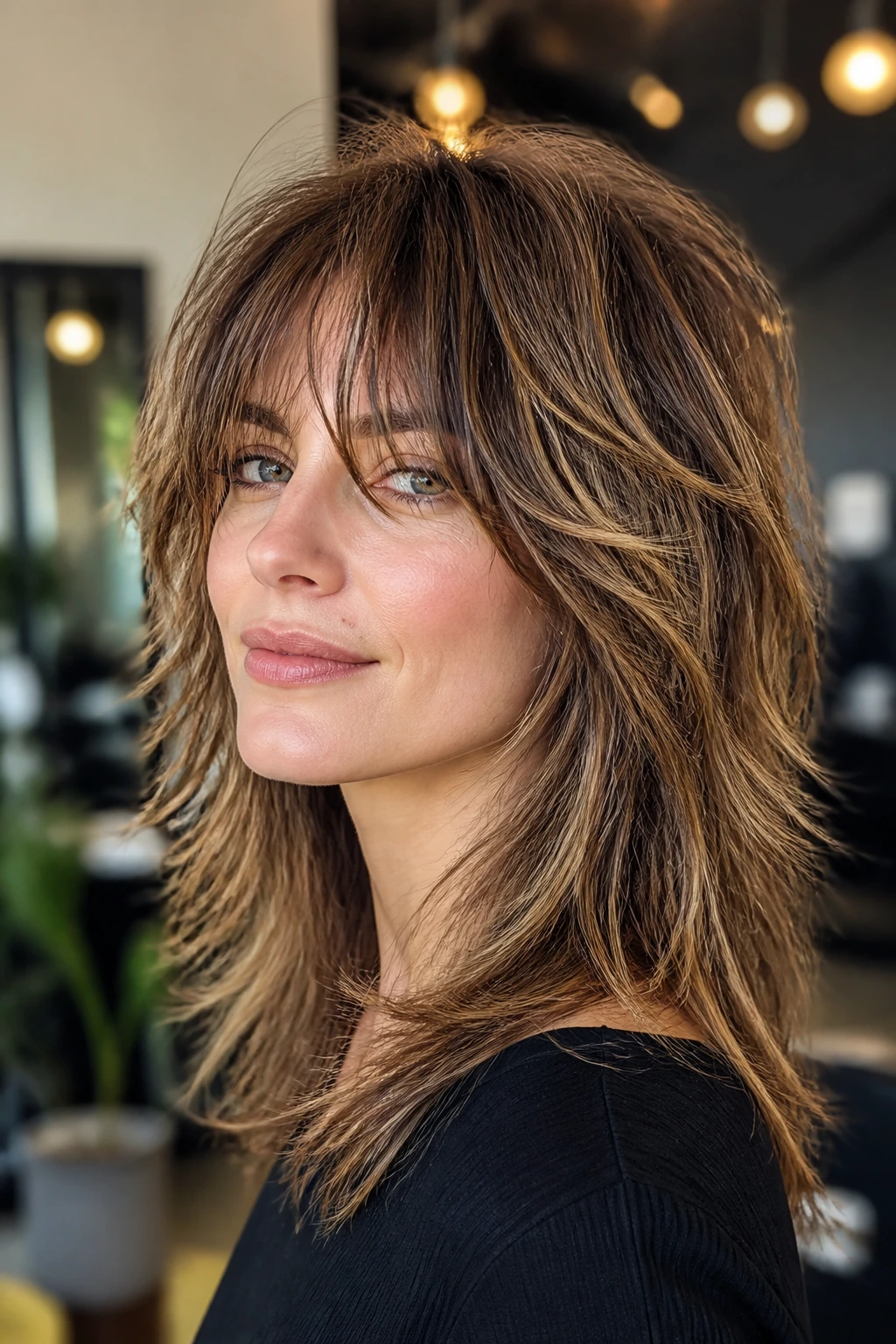
Built-in movement: The right shag creates motion through the mids and ends, so fine hair doesn’t sit in one heavy curtain.
Flexible length: You can stay at the jaw, the collarbone, or a soft lob length, which matters when your strands need a little weight left in the outline.
Face-framing power: Curtain bangs, bottleneck bangs, and cheekbone pieces widen the front of the haircut without making the whole head look thinner.
Easy grow-out: Softer shags blur as they grow, so you’re not trapped with a harsh line every time you miss a trim.
Style-light options: A lot of these cuts need only a round brush, a little mousse, and a texture spray mist — no marathon blowout required.
1. Soft Curtain Shag
This is the version I’d hand to anyone who says, “I want volume, but I don’t want to look like I’m trying too hard.” The curtain fringe splits gently through the center, the layers start around the cheekbones, and the bottom edge keeps enough weight that fine hair still looks like it belongs on your head. The silhouette is easy, not fussy.
What makes it work is the balance. The top has movement, but the perimeter stays calm enough to anchor the cut. On fine hair, that matters more than people think. If the shortest layers begin too high, the whole thing can start to look airy in the wrong way.
A center part makes this one feel soft and open, while a slight off-center part gives it a little more lift at the roots. I like it best on shoulder-grazing hair because the curtain pieces can swing without dragging the ends flat.
2. Chin-Length Micro Shag
Chin length is brave territory for fine hair, and this cut handles it with smart restraint. The shape sits close to the jaw, which keeps the outline compact, while the internal layers add just enough separation to stop it from turning into a helmet. It’s cropped, but not stiff.
Why It Works
The shorter length gives fine strands a chance to look thicker because the hair isn’t fighting gravity for as long. That’s the whole trick. When the ends hit around the chin, the eye reads a denser shape, especially if the layers are feathered rather than sliced blunt.
Ask for soft texturizing around the face, not aggressive thinning at the ends. Those two things are not the same. One makes the cut airy; the other can leave the perimeter looking shaky and weak.
This cut loves a quick round-brush bend through the front and a mist of dry texture spray at the mids. Skip heavy cream stylers. They’ll drag the shape down by noon.
3. Collarbone Shag with Bottleneck Bangs
If curtain bangs feel too open and full bangs feel too heavy, bottleneck bangs are the sweet spot. They’re narrower at the center, then widen slightly as they taper into the cheekbones. On a collarbone shag, that shape gives fine hair a face frame without eating too much density.
The collarbone length helps here because it gives the haircut something to hang on to. Fine hair often looks better when it can brush the shoulders instead of floating above them. The bangs provide the interest up front, while the long layers keep the rest of the cut from collapsing into a flat sheet.
This is one of the most salon-friendly looks on the list. It tells the stylist where the balance should live: fullness around the face, softness through the ends, and no overworked crown.
4. Long Razor Shag
Long shags can fail on fine hair when the layers are too timid. This one works because the razor cut breaks the ends up just enough to create motion, but the overall length stays long enough to hold shape. The result is looser and a little cooler, without sliding into stringy territory.
The key is to keep the longest pieces below the shoulders and let the face frame do the visual work. If your hair is straight and fine, this cut can look especially good when the layers are very slightly uneven — not choppy, just loose enough that the eye sees movement.
A good long razor shag should still feel full in a ponytail. If the length disappears the minute you tie it back, the stylist probably took too much from the bottom.
5. Feathered Shoulder Shag
This is the version that gives the strongest “I brushed my hair and it behaved” energy. The layers are feathered out from the sides, the ends flick away from the neck, and the shoulders become part of the shape. It’s polished, but not stiff.
Fine hair likes this cut because the shoulder length adds some heft while the feathering keeps the style from hanging like one flat sheet. The movement comes from the blow-dry, not from a ton of chopped-up layers. That’s a quieter, smarter way to build body.
A medium round brush and a side-to-side blow-dry at the roots make this shape pop. The front pieces should sweep away from the face with just enough bend to catch the eye.
6. French-Inspired Crop Shag
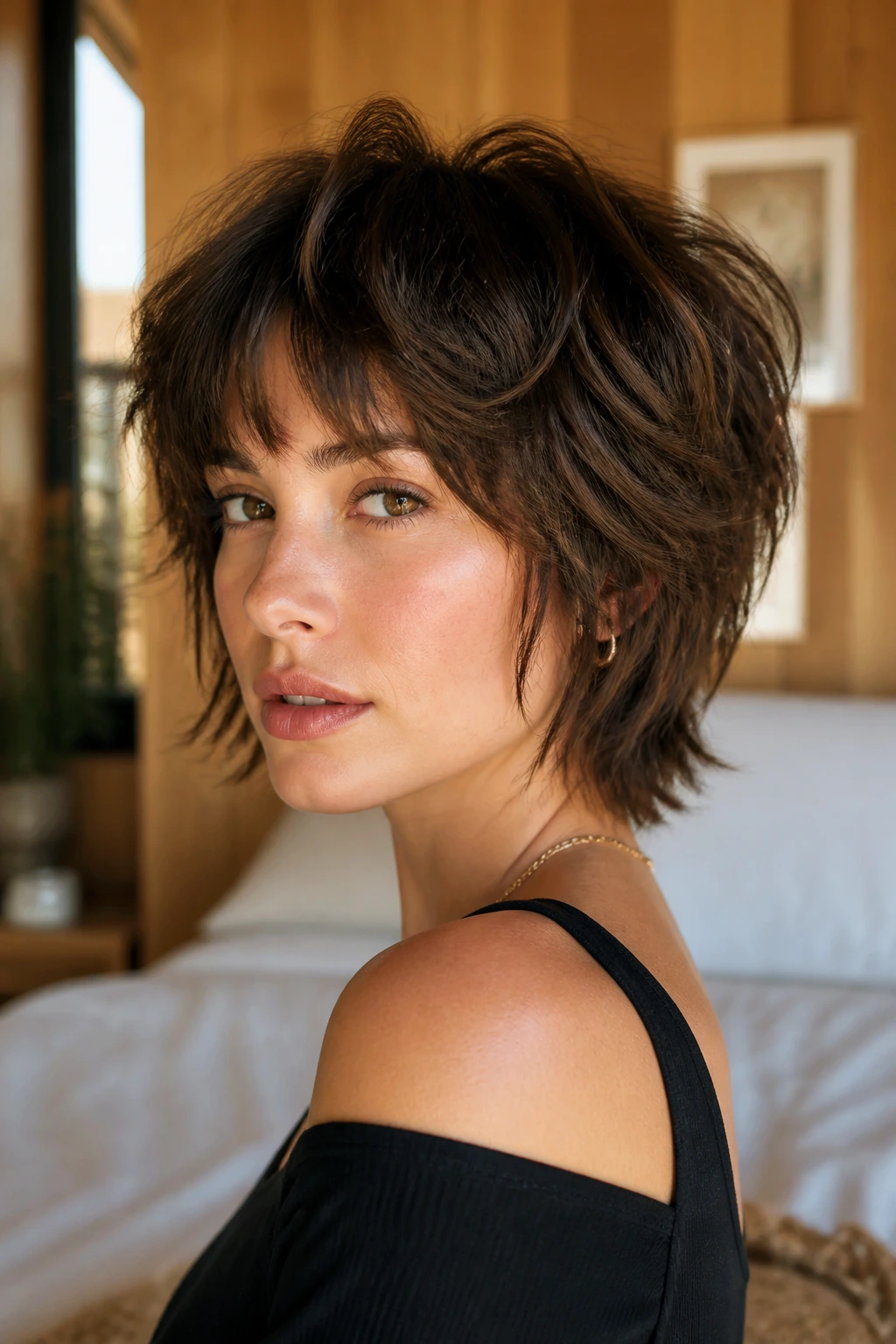
A French-inspired shag is less about drama and more about texture that looks lived-in from day one. The layers stay soft, the fringe is usually a little wispy, and the silhouette tends to hover somewhere between a crop and a bob. On fine hair, that softness matters.
The reason I like it is simple: it doesn’t ask the hair to fake thickness. Instead, it uses short, airy pieces around the face and crown to create a casual outline. If your hair is fine but not fragile, this can feel charming and easy without looking overprocessed.
It’s especially good if you wear natural bends or air-dry most days. A dab of volumizing mousse at the roots and a rough dry with your fingers is often enough. No need to bully it into submission.
7. Wolf-Lite Shag

A full wolf cut can overwhelm fine hair. Too much length disconnection, and the ends start to look sparse. A wolf-lite shag softens the edges of that idea, keeping the shaggy attitude while dialing back the extreme contrast between crown and perimeter.
The top still gets lift. The difference is that the layers are blended more carefully through the sides and back, so the cut doesn’t feel like a costume. That makes it friendlier for finer strands and for anyone who wants a little edge without the maintenance headache.
This works best when the stylist keeps the back slightly longer than the crown and doesn’t carve the interior too aggressively. You want a hint of mullet energy, not a full split personality.
8. Side-Parted Layered Shag
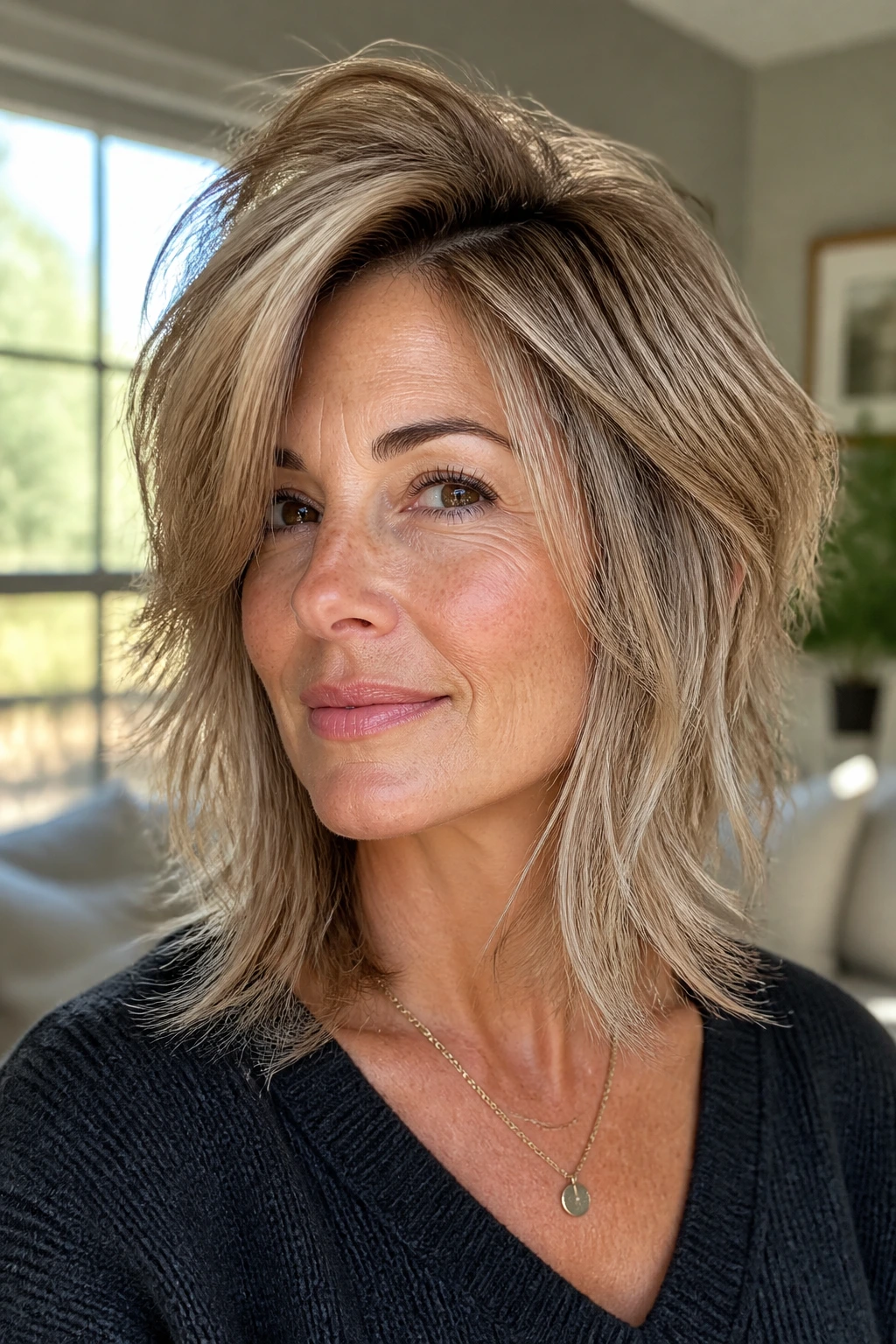
Side parts do useful work on fine hair. They shift volume away from the center line, which is often the flattest spot on the head, and they let the shorter side layers lift where the root naturally wants to rise. This shag makes that asymmetry part of the design.
The haircut usually has soft face-framing layers that begin around the cheekbones on the heavier side and feather out toward the jaw on the lighter side. It sounds subtle, and it is — but subtle works when the goal is density. A deep side part can give you instant lift without asking the cut to be wild.
If your crown collapses on one side, this shape is a small miracle. It doesn’t fight your head shape. It uses it.
9. Piecey Lob Shag
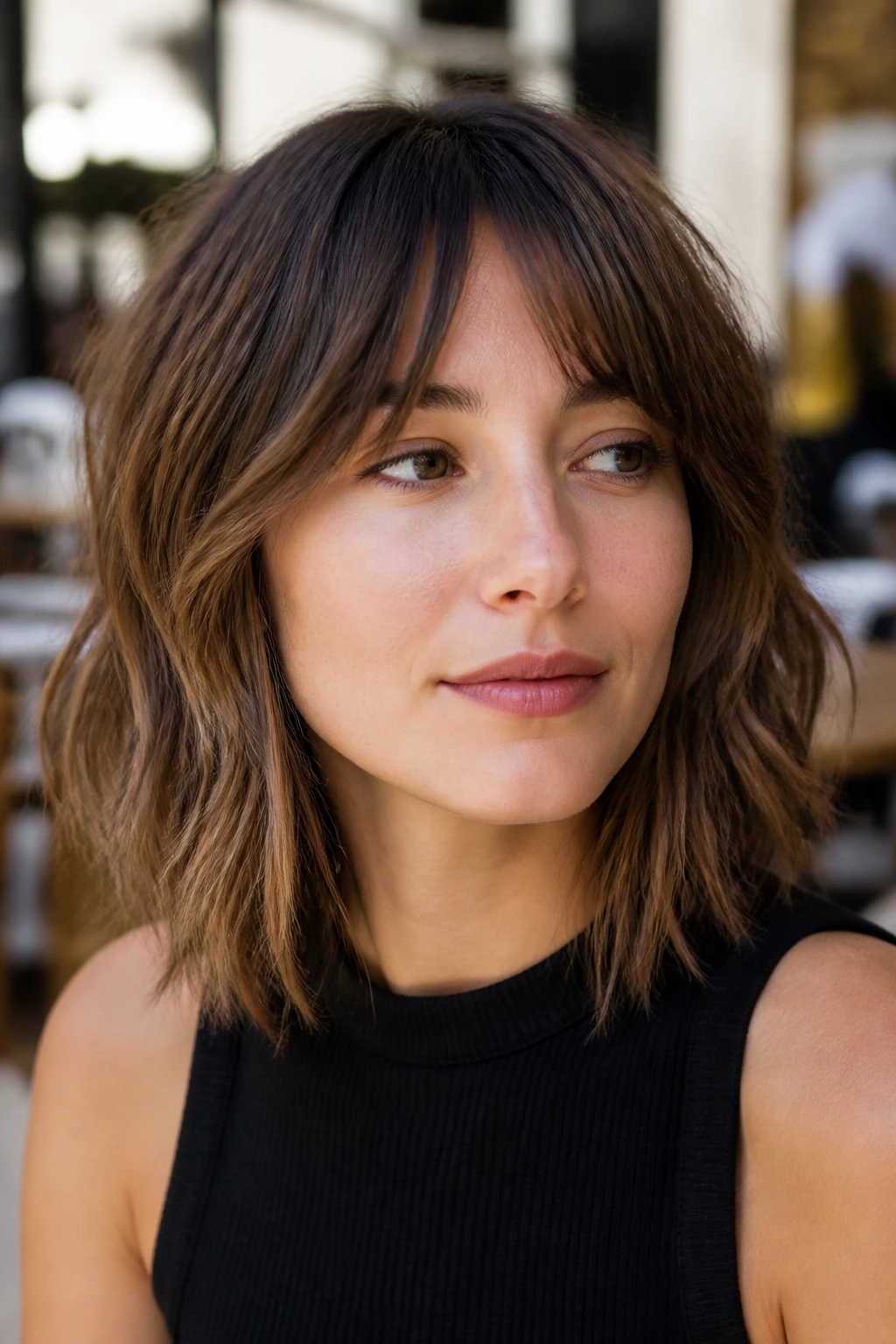
A lob can get boring fast on fine hair unless the ends are broken up with intent. This version keeps the length around the collarbone, then adds piecey layers that make the cut feel separated and a little gritty in the best way. It’s less “blowout model,” more “hair that knows what it’s doing.”
The pieceiness comes from point-cut ends and a light texturizing pass through the mids. Not the roots. Leave the root zone mostly intact so you don’t lose the lift. When the ends are a touch irregular, the eye reads more movement, which reads as fullness.
I’d pick this one for someone who wears straight hair most days and wants the cut itself to carry the shape. It’s clean, but not flat. There’s a difference.
10. Wispy Bang Shag
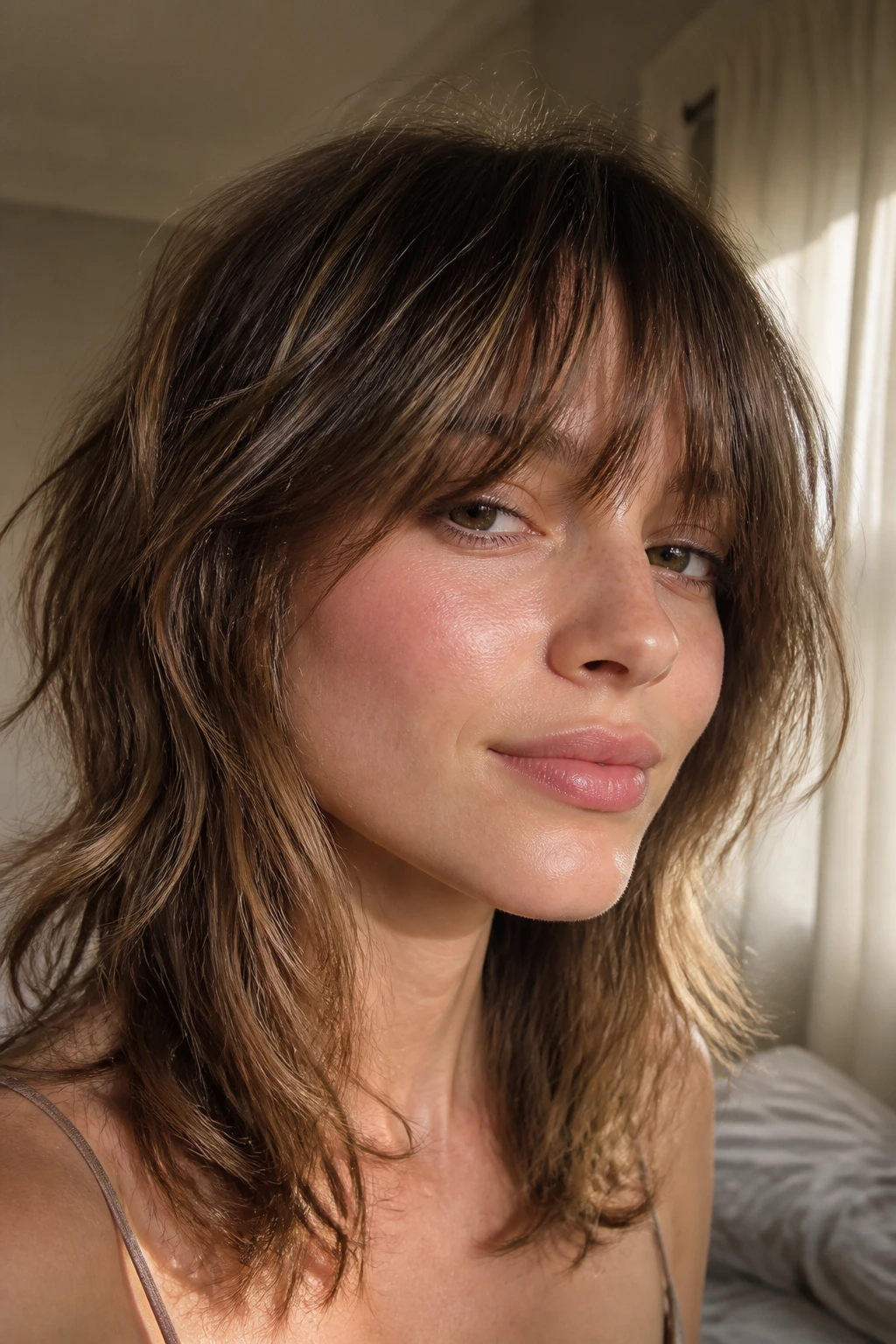
Wispy bangs are not the same thing as thin bangs, and that distinction matters on fine hair. Wispy means deliberately light and textured, with enough separation that the fringe doesn’t eat the front of the haircut. Thin, badly cut bangs just look like a mistake waiting for a clip to rescue them.
This shag keeps the fringe soft and the rest of the layers gently scattered around the face. That lets the forehead area feel lighter while the ends stay fairly full. If your hairline is delicate or your front section is sparse, this approach is kinder than a heavy fringe.
The styling trick is a quick round-brush sweep, then a fingertip pinch with a dry paste or texture mist. Don’t overcomb it. The little gaps are the point.
11. Wavy Curl Shag

If your fine hair bends naturally, this one deserves a serious look. A shag on wavy or loose-curly fine hair can build body almost by accident, because the texture creates lift that straight hair has to fake with product. The haircut’s job is to shape the bend, not flatten it.
Layers should follow the curl pattern, not chop through it randomly. If the cut ignores where the wave falls, the hair can puff in odd places and go flat in others. A stylist who understands dry cutting or curl-specific shaping usually does better here than someone cutting everything wet and guessing.
This version looks best with lightweight cream, a small amount of mousse, and hands-off drying. Scrunch, don’t scrub. The texture does the rest.
12. Tousled Pixie Shag
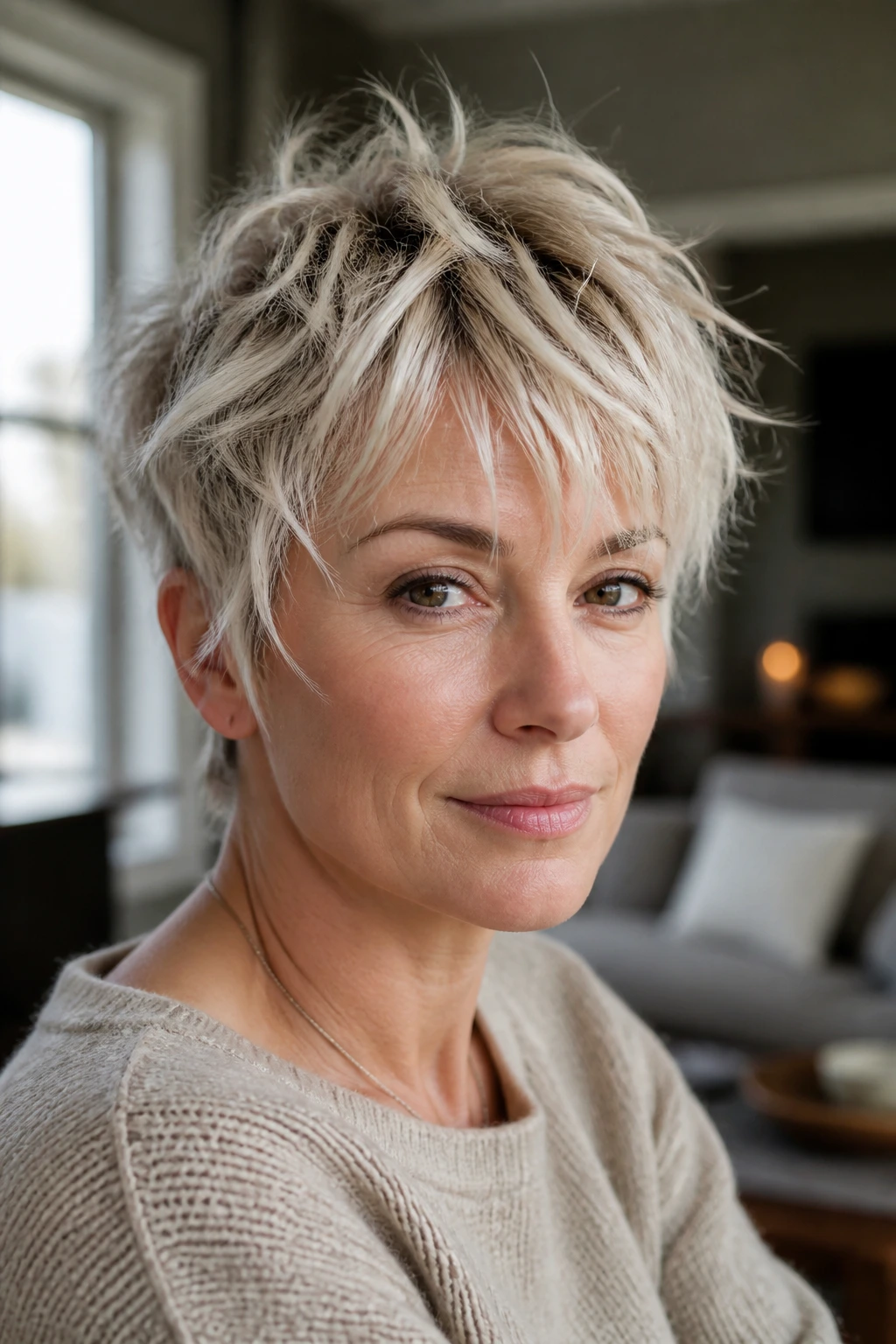
A pixie shag is short enough to feel fresh, but still soft enough for fine hair to keep some movement. The crown is slightly longer, the nape stays neat, and the sides are broken up with little wisps instead of hard edges. It’s not severe. That’s the whole point.
Fine hair can look surprisingly full in this shape because the shorter length reduces drag. There’s less chance of the hair slumping under its own weight. The trick is to avoid over-thinning the top, which can make the scalp show more than you want.
A little root spray and a quick finger-dry are usually enough. If you like a more polished finish, use a tiny round brush to bend the front pieces away from the face. Tiny brush. Tiny sections. Tiny bit of patience.
13. Disconnected Bob Shag
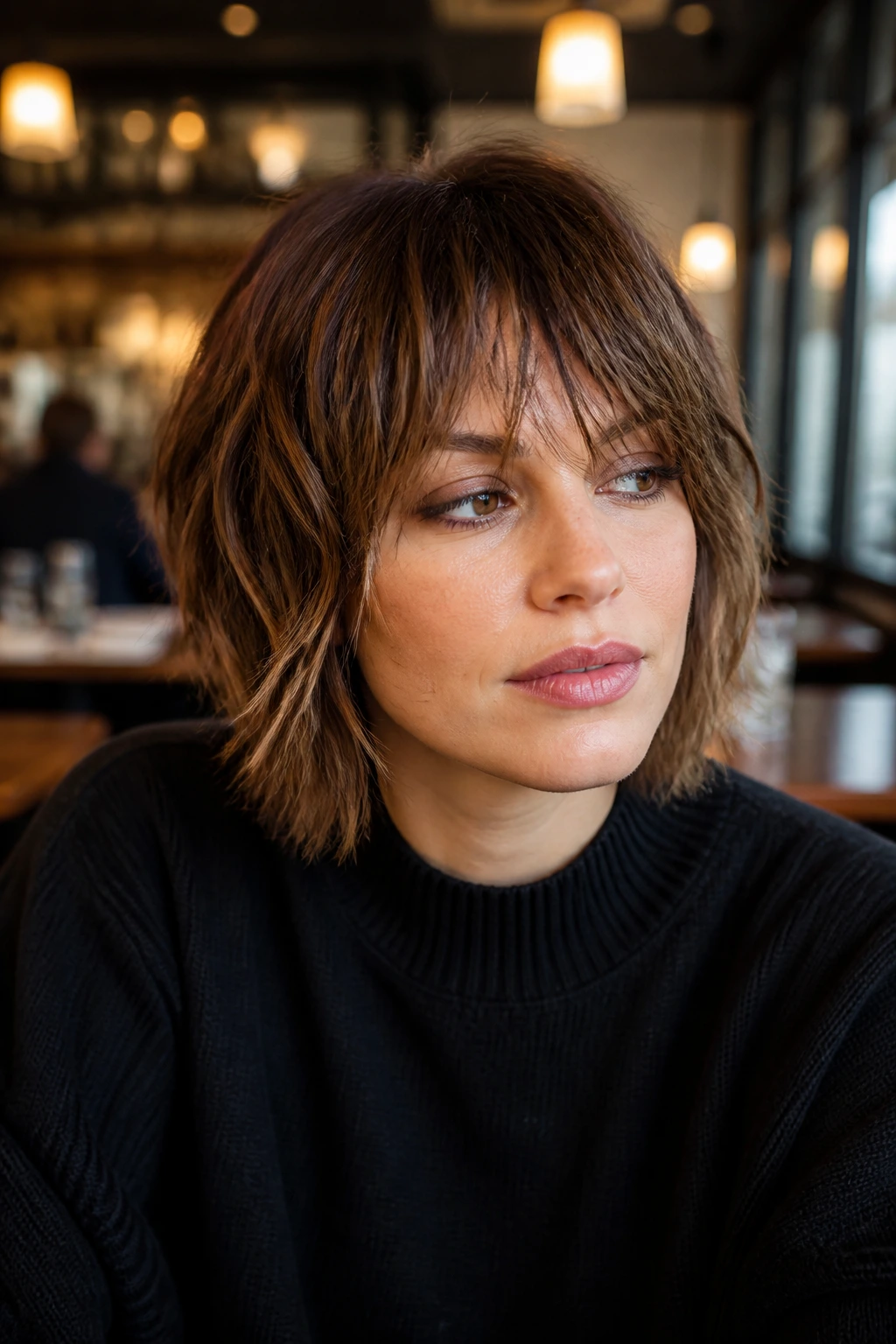
This cut sounds sharper than it looks. The bob stays recognizable, but the interior layers are disconnected just enough to create separation and lift. On fine hair, that little bit of breakage in the shape can make the whole thing seem denser, because the ends aren’t all lying in one flat line.
The bob length keeps a decent amount of weight at the perimeter, which is useful if your hair tends to go wispy at the bottom. The shag element comes through in the movement, especially around the cheekbones and temple area. It’s a smart middle ground.
Ask for controlled disconnection, not a choppy mess. There’s a thin line between intentional and accidental. The good version looks airy; the bad version looks unfinished.
14. Mushroom Shag

A mushroom shag is for women who like a rounded silhouette and don’t mind a little personality. The top sits softly over the head, the sides curve inward, and the ends are feathered enough to keep the shape from getting rigid. On fine hair, the roundness can read as density.
This cut works because it plays against the usual advice. People assume fine hair needs endless vertical layers. Sometimes it does better with a rounded outline and light texture underneath, which gives the illusion of fullness around the head rather than just at the crown.
It’s a bolder look than the curtain shag, but not a loud one. If you want something that feels a little art-school and still wearable, this is a good lane.
15. Bixie Shag
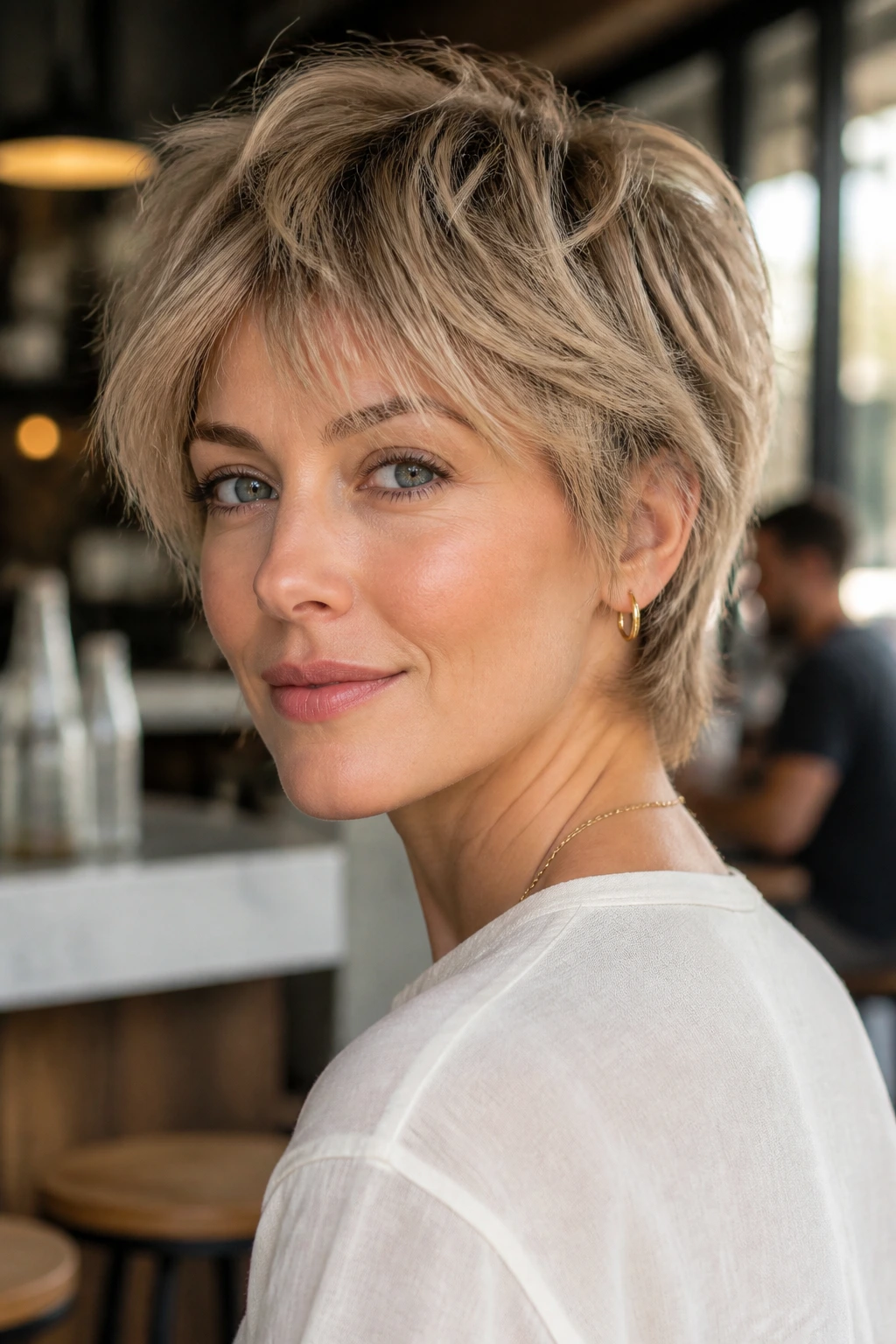
The bixie lives between a bob and a pixie, which is useful territory for fine hair that wants shape without a lot of bulk. The shag version keeps the top longer and the perimeter soft, so it never turns boxy. It feels energetic, not severe.
What makes this one work is the balance between texture and structure. The neckline stays tidy, the crown has a little lift, and the face frame does the softening. It’s one of those cuts that looks more expensive when the layers are precise.
This is a good pick if your hair won’t hold long lengths well and you’re tired of pretending it does. It frees you from the middle ground.
16. 70s Volume Shag
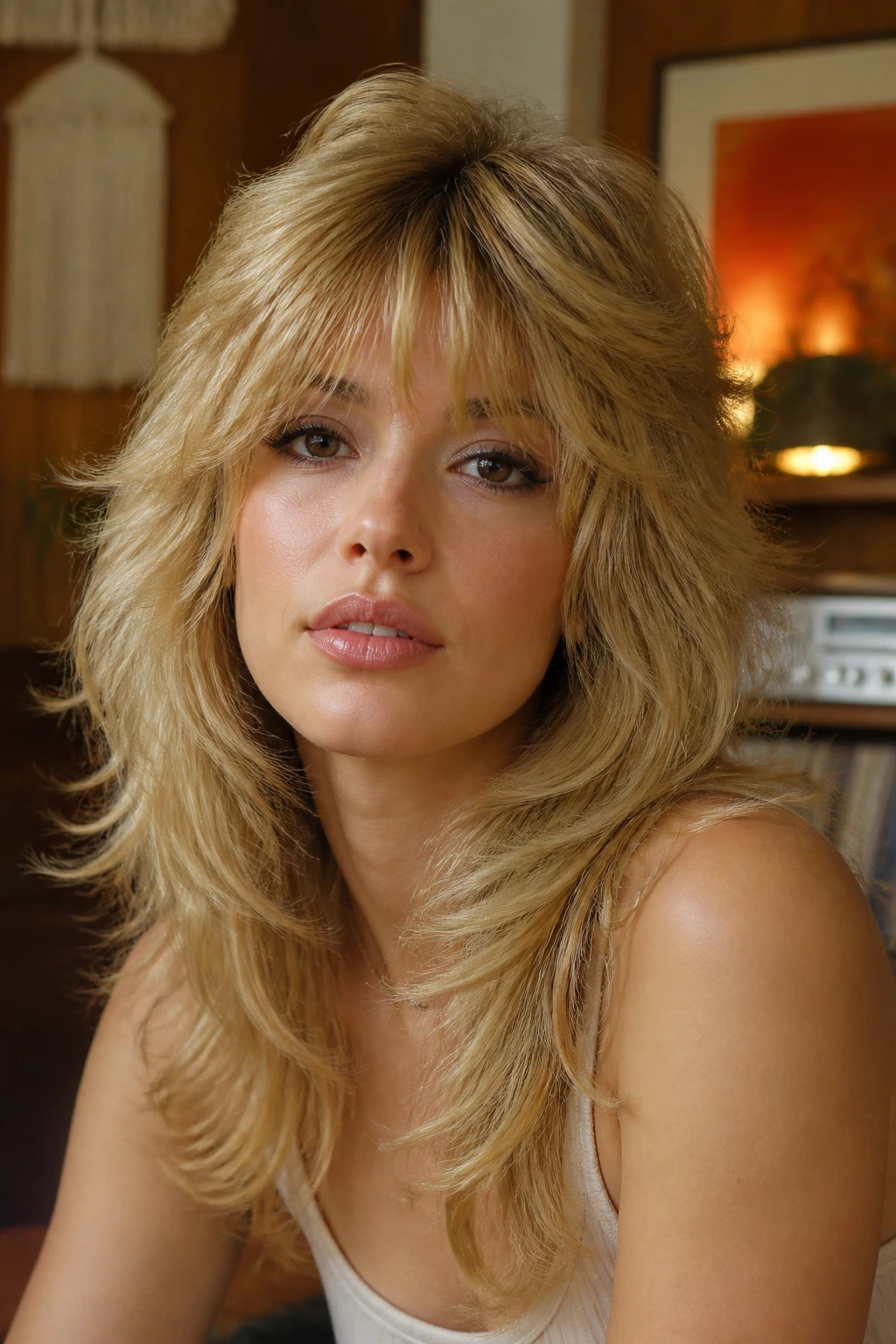
If you like a little swing in the front and a little fullness at the crown, this is the nostalgic one. The layers are built to kick out from the face, the bangs are soft, and the overall silhouette has that slightly blown-out, airy shape that fine hair often lacks on its own.
The danger here is over-layering. A real 70s-inspired shag should still have a perimeter with enough weight to support the lift. If the ends are stripped too hard, the style can turn limp under the volume.
Blow-drying with a medium round brush gives this cut its best shape. Flip the ends away from the face, then cool the crown before you touch it. That little cooling pause helps the volume stay put longer.
17. Razor-Cut Modern Shag
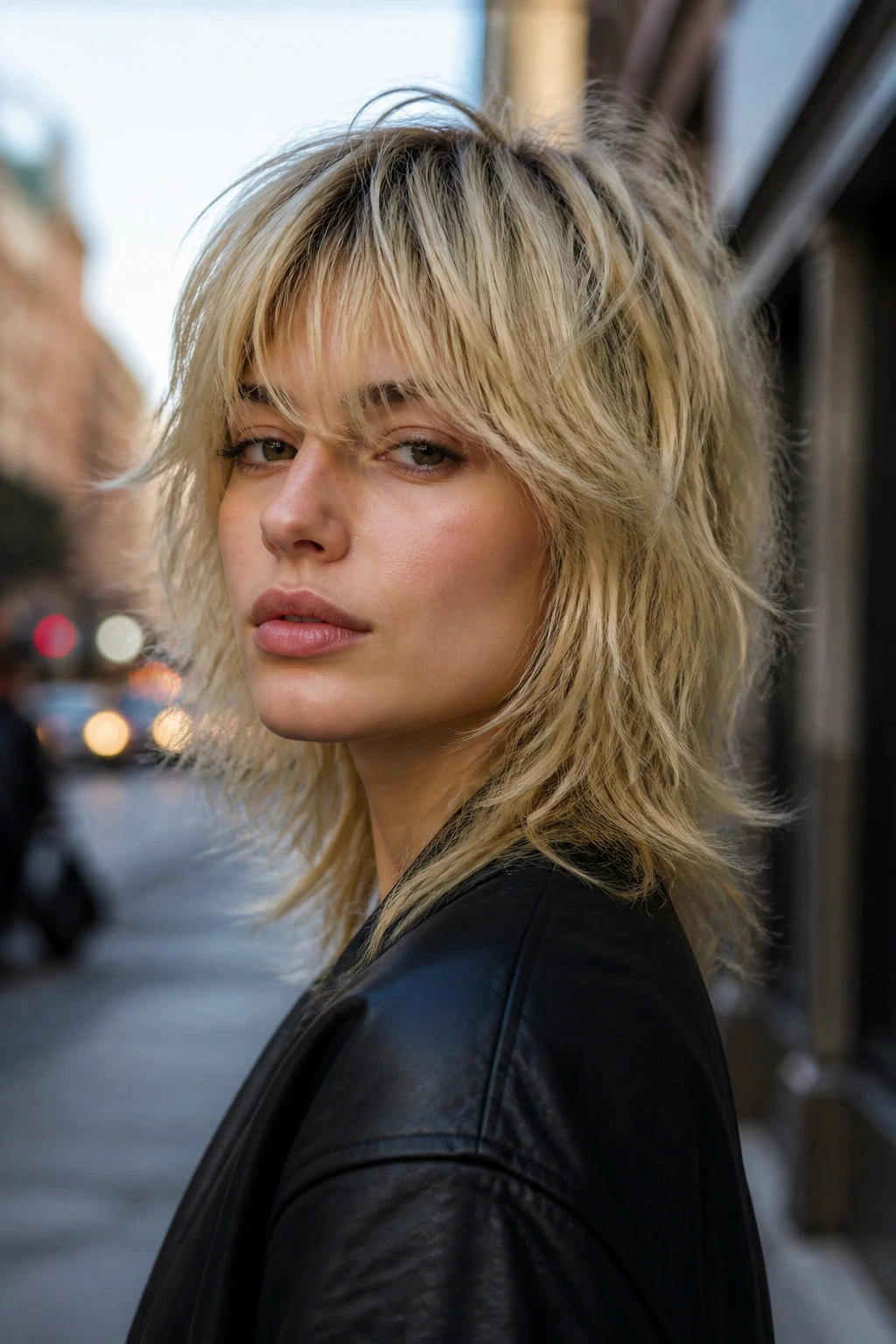
Razor cuts can make fine hair look feather-light, and that’s either a blessing or a disaster depending on the hand doing the cutting. In the right shape, a razor-cut shag has soft edges, airy movement, and a lived-in finish that never looks heavy.
The modern part is restraint. The layers aren’t aggressive, the face frame is clean, and the texture is placed where the eye will see it — around the front, through the mids, and slightly at the ends. Not everywhere. Everywhere is how you end up thin.
I like this one for straight fine hair that needs motion but not volume theater. It reads cool and effortless without trying to look destroyed.
18. Face-Framing Cascade Shag
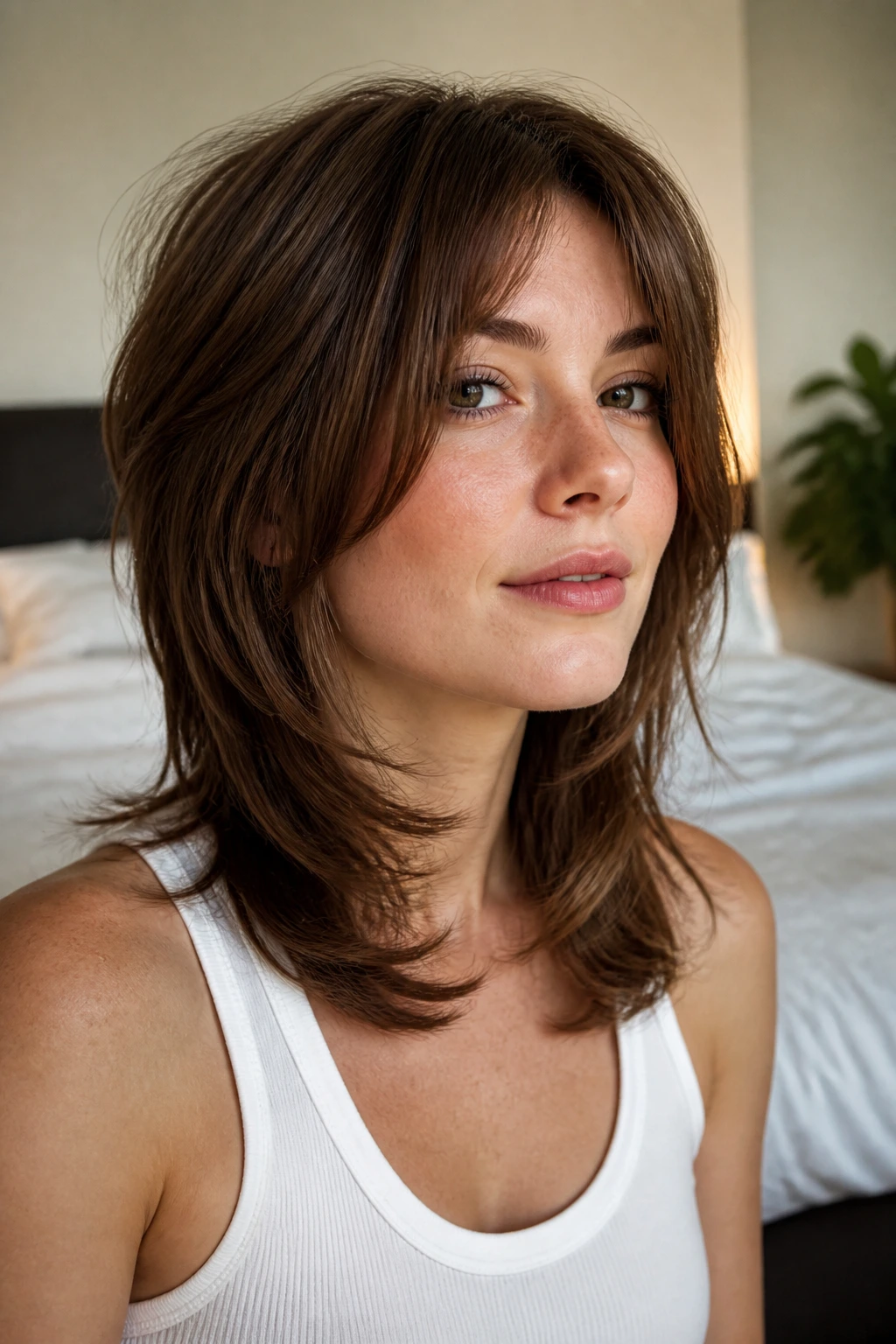
Sometimes the smartest move is to let the front pieces do most of the talking. This shag keeps the back and sides softer, then builds a cascade around the face that slides from cheekbone to collarbone. That creates the sense of fullness where people notice it first.
It’s especially good if your jawline is strong or your forehead is longer. The cascading pieces soften the geometry without hiding the face. Fine hair gets the benefit of motion without needing a huge amount of layering everywhere else.
This one is easy to personalize. You can wear the front pieces center-parted, tucked behind one ear, or swept into a loose bend with a flat iron. The haircut holds all three options without getting fussy.
19. Nape-Grazing Shag
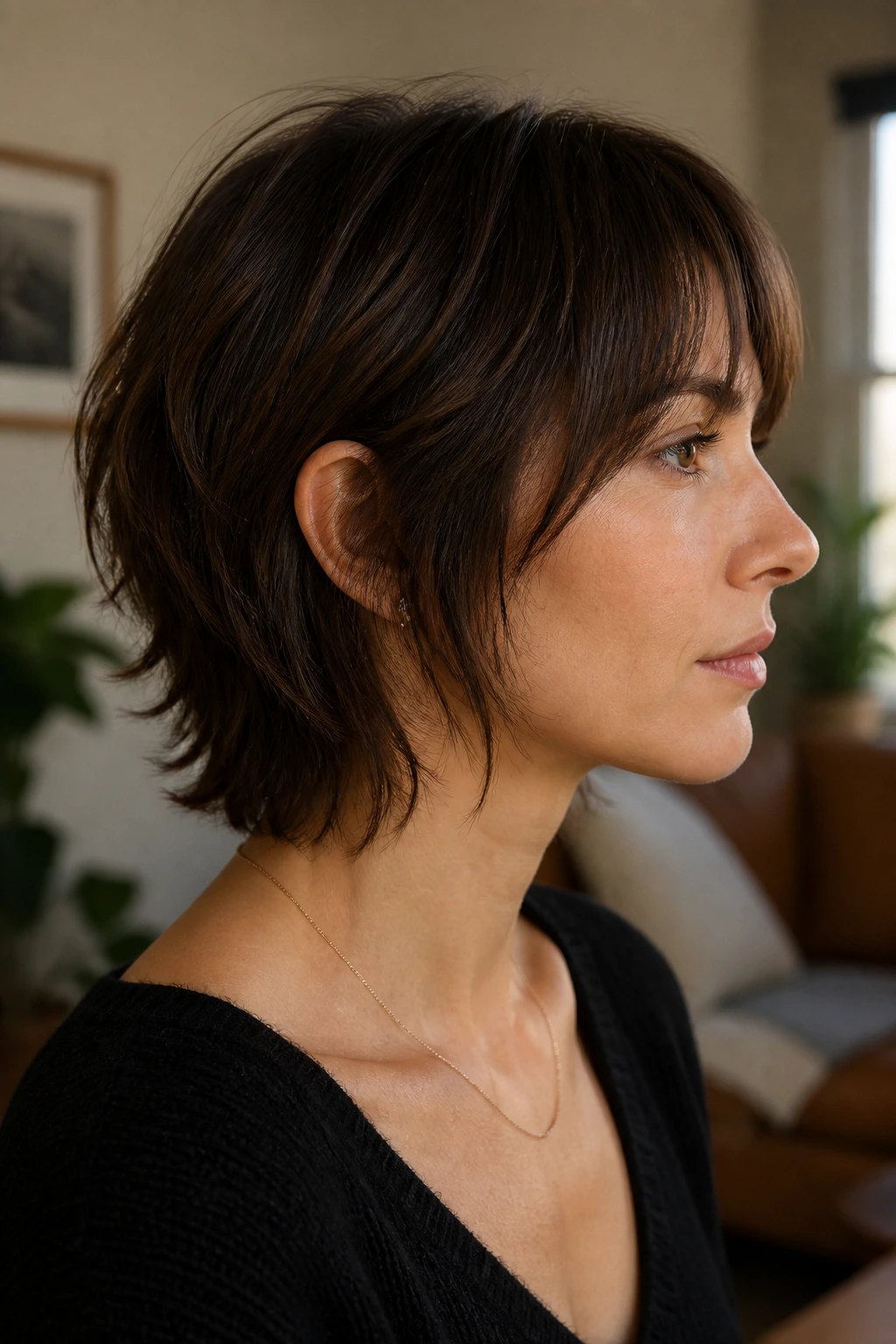
A nape-grazing shag keeps the back short enough to feel breezy but not so short that it loses shape. The side layers are slightly longer, which gives the haircut a tapered outline and helps the crown feel a little fuller.
This cut is useful if the back of your hair goes limp faster than the front. That happens a lot with fine hair. By keeping the nape light, the silhouette doesn’t collapse against the neck, and the front pieces can frame the face without competing with a heavy back section.
It’s a neat choice for people who wear collars, jackets, or sweaters a lot. Less hair trapped at the neck. More visible movement where it counts.
20. Asymmetrical Shag
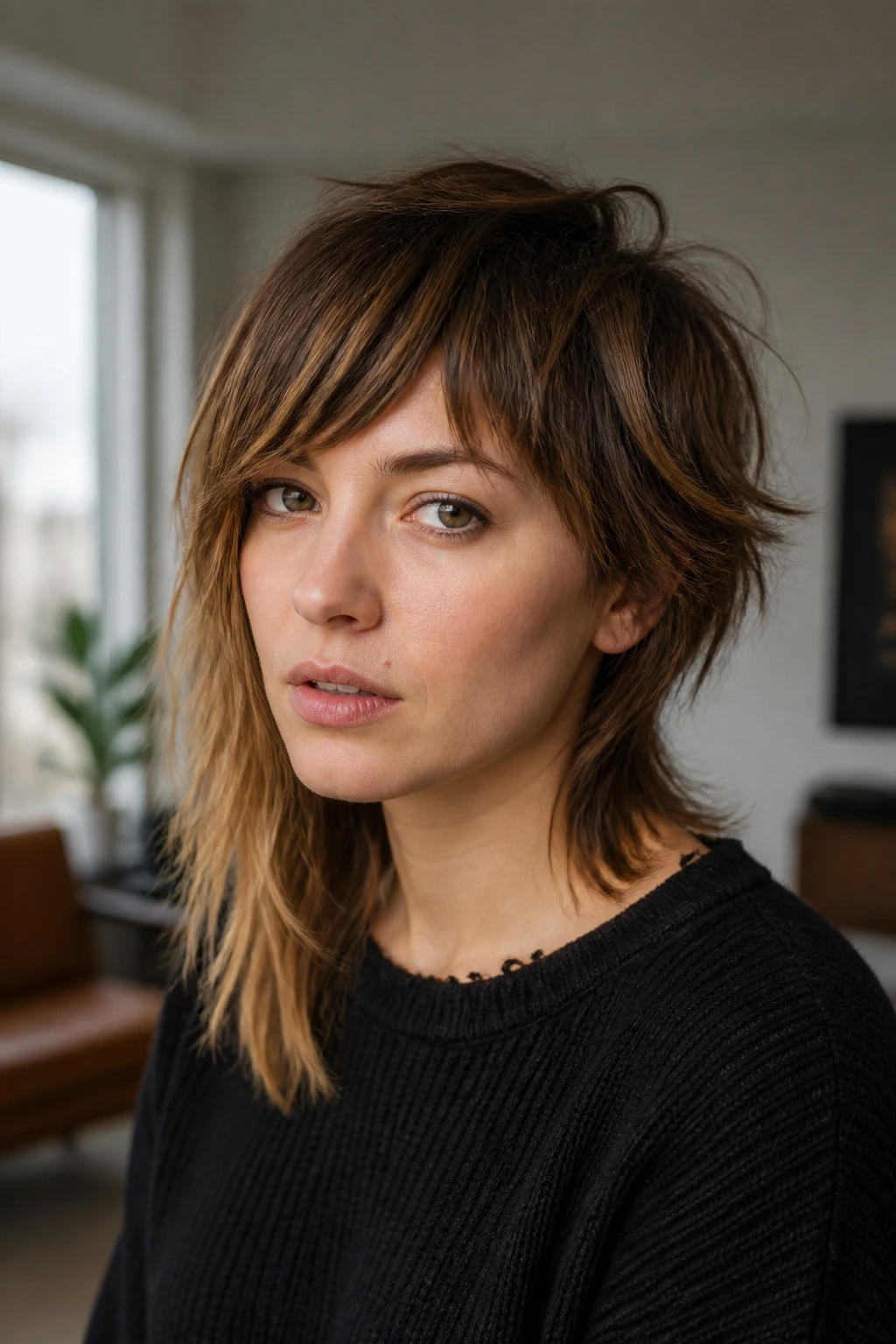
Asymmetry can save fine hair from looking too predictable. When one side sits a touch longer or fuller than the other, the eye stops reading a flat, even curtain and starts noticing the shape. That slight imbalance is enough.
This version works best when the difference is subtle. You don’t want a dramatic side-and-side mismatch unless you’re after a bold look. A small shift in length or density is more wearable and usually kinder to fragile ends.
It’s a smart option if your face has one side that naturally flatters a part line better than the other. Instead of fighting it, the cut uses it. That’s how a haircut starts looking tailored.
21. Soft Mullet Shag

The words “soft mullet” scare people for no reason. Done right, this cut is just a shag with a little extra length and attitude at the back, plus softer layers through the crown and sides. On fine hair, the softness keeps it from looking spiky or overdone.
The magic is in restraint. The front still frames the face, the back has a little swing, and the transition between the two isn’t abrupt. If the stylist over-disconnects it, the ends can look sparse. If they keep it blended, it looks playful and easy.
This is the one for anyone who wants shape and personality without committing to a sharp fashion cut. It has edge, but it still behaves.
22. Invisible Layer Shag
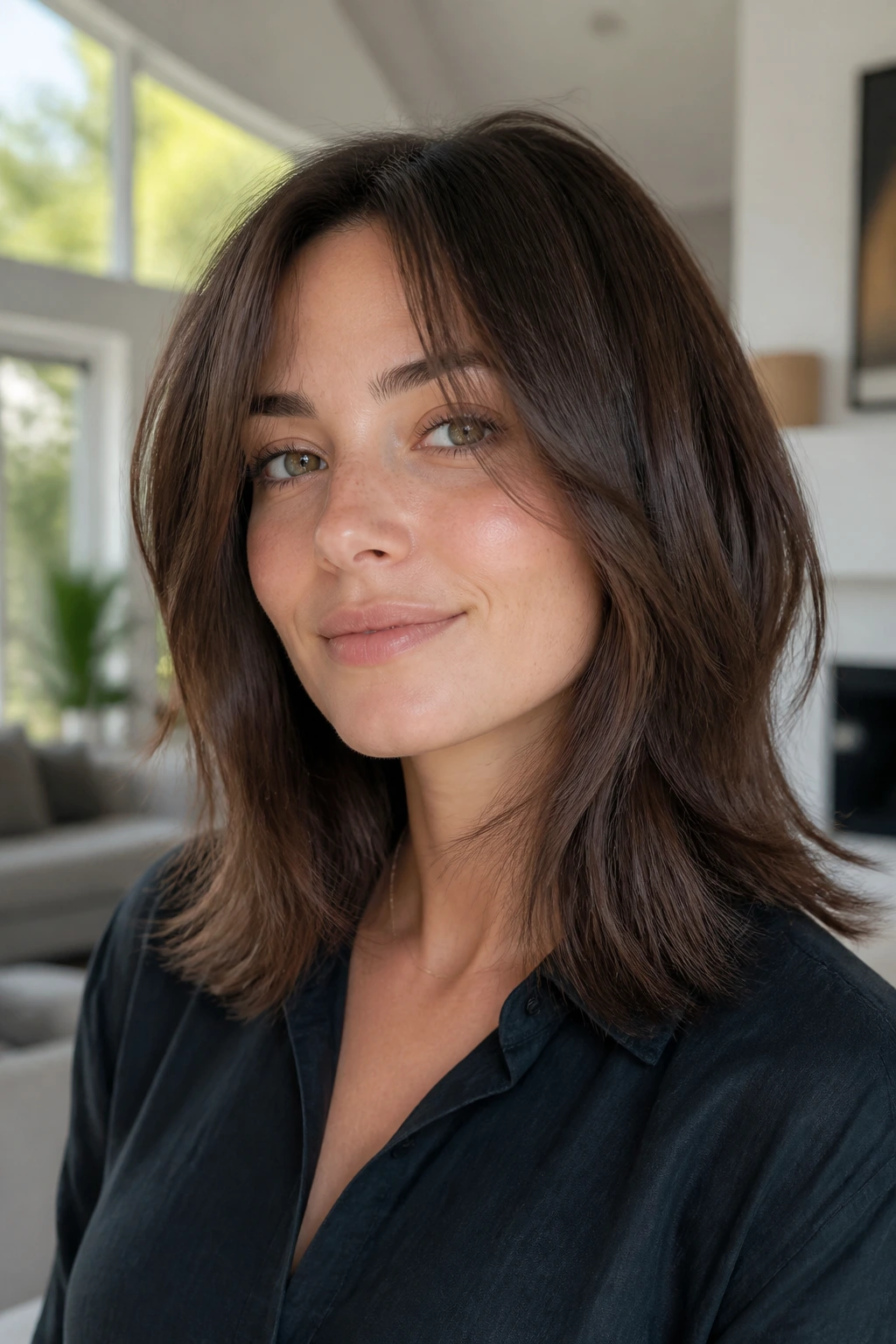
Invisible layers are the sneaky move in fine-hair cutting. The length still looks fairly even, but the interior is cut so the hair falls with motion instead of in one block. The layers do their job without announcing themselves.
That makes this shag ideal for women who hate obvious chopping. You get lift, bend, and movement, but the perimeter still feels solid. It’s one of the best choices if your hair is very fine and you’re nervous about losing too much bulk.
Ask for soft internal layering with a clean outer line. That keeps the haircut full at the ends and flexible in the middle. Quiet haircut, useful result.
Why a Shag Gives Fine Hair More Lift

A shag works on fine hair because it changes where the weight sits. Instead of letting every strand hang from one blunt edge, the haircut breaks the mass into layers that move against one another. That little bit of separation creates the look of fullness, especially near the crown and around the face.
The mistake people make is assuming more layers always means more volume. Not true. Fine hair has less strand diameter, so it can lose density fast if the shortest layers are cut too high or too aggressively thinned. The best shag still leaves a perimeter line that can support the interior movement.
I also think shags look better on fine hair when the ends are cut with some softness instead of being razored to dust. A little bluntness at the bottom helps the style read as hair, not mist. That’s the part a lot of salon pictures hide.
Tools and Products That Earn Space on the Shelf
- A 1 to 1.5-inch round brush: Small enough to lift the roots and bend the front pieces without creating huge, heavy curls.
- A blow dryer with a concentrator nozzle: The nozzle matters because it directs air at the root, where fine hair needs the most help.
- Lightweight volumizing mousse: Put it on damp roots and mids; skip the heavy creams that flatten the cut by lunchtime.
- Dry texture spray: Best on the mids and ends, not the scalp, where too much product can make fine hair look dusty.
- Dry shampoo: Useful on day 2 or 3 for oil control and a little root grit.
- Sectioning clips: They make the crown easier to dry properly, which is where a shag either wins or falls flat.
- A small flat iron or mini styler: Handy for a quick bend in the face frame, especially on straight hair.
- Satin pillowcase: Not glamorous, but it keeps the ends from looking smashed when you wake up.
What to Ask Your Stylist Before the First Snip
Bring pictures, but bring a sentence too. That sentence should explain where your hair goes limp, where it gets puffy, and how much time you’ll actually spend styling it. A shag on dense fine hair can tolerate more layering than a shag on sparse fine hair, and your stylist needs to know which one you have.
Ask where the shortest layers will start. That question matters more than people realize. If the answer sounds like “around the crown and high temples” and your hair is already delicate, push back. For many fine heads of hair, keeping the shortest pieces closer to the cheekbone or jaw gives a better result.
Also ask whether the cut will be done with shears, razor, or a mix. Razor work can create beautiful softness, but on fragile ends it can also shred the perimeter if the hair is dry or overworked. A good stylist will tell you when they’re preserving weight and when they’re removing it.
How to Style and Wear a Shag Without Crushing the Crown
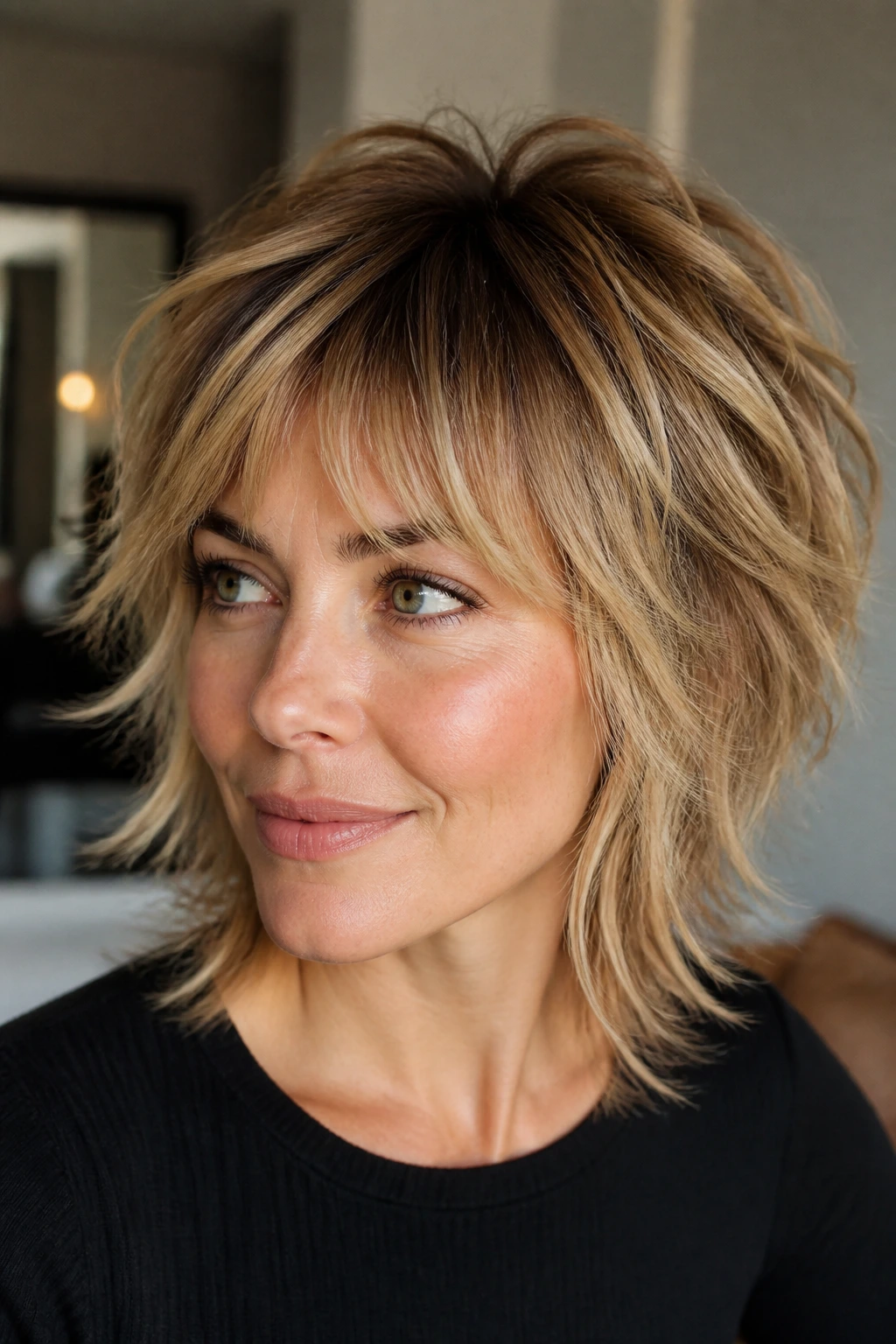
Shape: Start by drying the roots in the opposite direction of your part for the first few minutes. That tiny trick gives the top a little memory before you settle the hair back where you want it.
Texture: Use mousse or root spray on damp hair, then add texture spray only after the hair is dry. If you put too much texturizer near the scalp too early, the lift disappears and the strands feel sticky.
Accessories: Clips, skinny headbands, and soft barrettes work best with shag layers because they don’t fight the face frame. Heavy padded bands tend to flatten the top and hide the cut.
Wear With: A shag usually looks best when the neckline and earrings stay simple. Big collars can swallow a soft shag, while a clean tee, a crew neck, or a small V-neck lets the layers show. It’s a small thing, but it changes the whole read of the haircut.
Extra Tips and Texture Boosters

Root Lift: Mist a volumizing spray at the roots, then blow-dry with your head tipped forward for 30 to 45 seconds before reshaping the part. That’s enough to wake up a flat crown without making the style frizzy.
Product Order: Mousse first on damp hair, heat protectant where you’ll use hot tools, texture spray last. If you reverse that order, the cut can feel coated instead of airy.
Finger Styling: Fine hair often looks better when you finish with your hands instead of a brush. A brush can smooth away the separation that makes a shag look full.
Make It Yours: If you hate bangs, keep the face frame long and split it at the cheekbones. If you love bangs, keep them light and movable. Heavy fringe can eat too much density on the front panel.
Small Fix, Big Payoff: A quick bend with a flat iron at the ends — just one turn of the wrist — can make straight fine hair look twice as intentional. Half a second too long and it turns too polished. Stop early.
Common Mistakes That Make Fine Hair Look Thinner
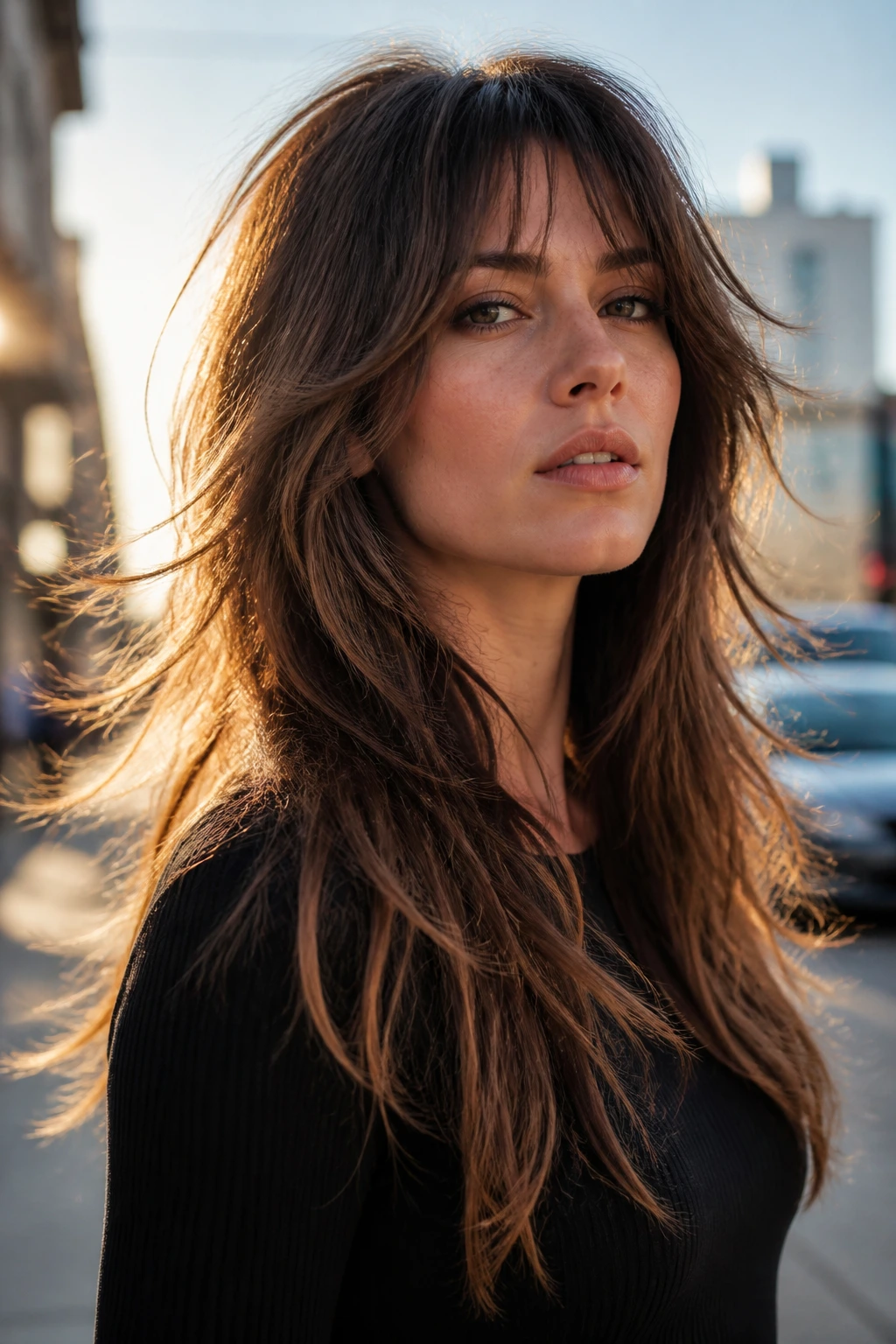
Over-layering the crown: This is the classic error. The top looks fluffy for two days, then the ends seem stringy because there isn’t enough weight left to support the shape. Fix it by asking for layers that start lower, usually around the cheekbone or jaw.
Using heavy creams everywhere: Fine hair drinks in weight fast. If your styling cream is rich enough to tame thick curls, it’s probably too much for this haircut. Use it only on the driest ends, and keep it to a pea-sized amount.
Ignoring your part line: A center part can be elegant, but if it exposes a flat crown, a slight offset part may do more for the haircut than another styling product ever will. Don’t be stubborn about it.
Thinning the perimeter too much: The ends need some density so the shag reads as full. If the bottom is shredded, the cut loses its backbone. A clean, softly textured edge usually works better than deep thinning shears.
Skipping trims too long: Shags grow out nicely, but fine hair can start to look wispy once the layers stretch past their intended balance. Let the shape get fuzzy, not hollow.
Variations and Adaptations to Try
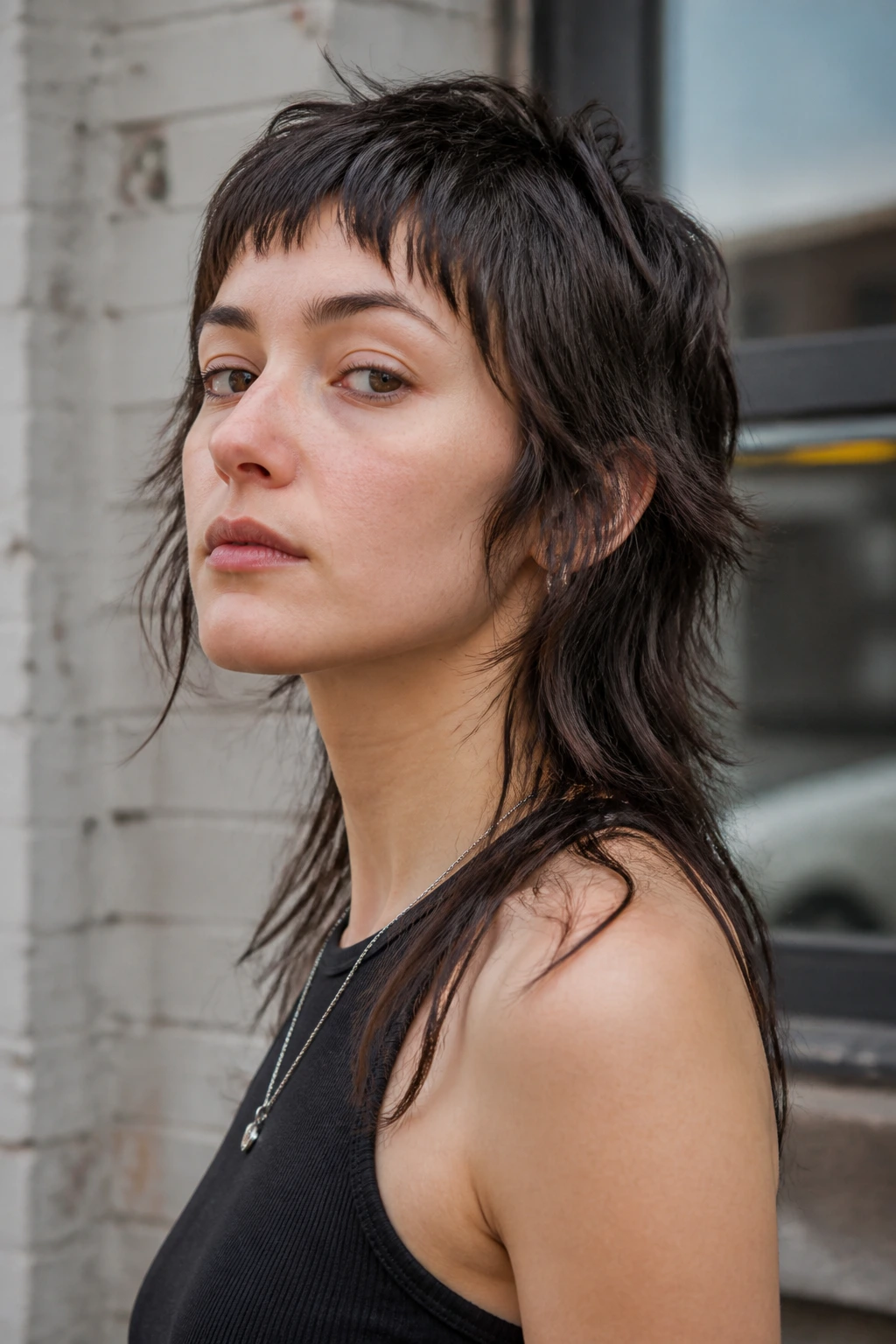
The Air-Dry Version: Keep the layers softer, use a light mousse, and let natural bend do the rest. This works best when your hair already has some wave and you want less heat styling.
The Dense-Fine Version: If your hair is fine but plentiful, you can handle more internal layering and a little more movement through the back. The shape can be fuller without looking sparse.
The Sparse-Fine Version: Keep the ends cleaner and the shortest layers lower. This version relies on the outline of the haircut more than on heavy texture.
The Office-Friendly Version: Choose longer curtain pieces, collarbone length, and minimal disconnection. You still get movement, but the cut reads polished rather than shaggy in the extreme sense.
The Edgier Version: Add a micro fringe, a stronger side part, or a soft mullet back. Keep the ends light but not wispy, so the shape still has enough body to hold its own.
How to Keep the Shape Between Washes
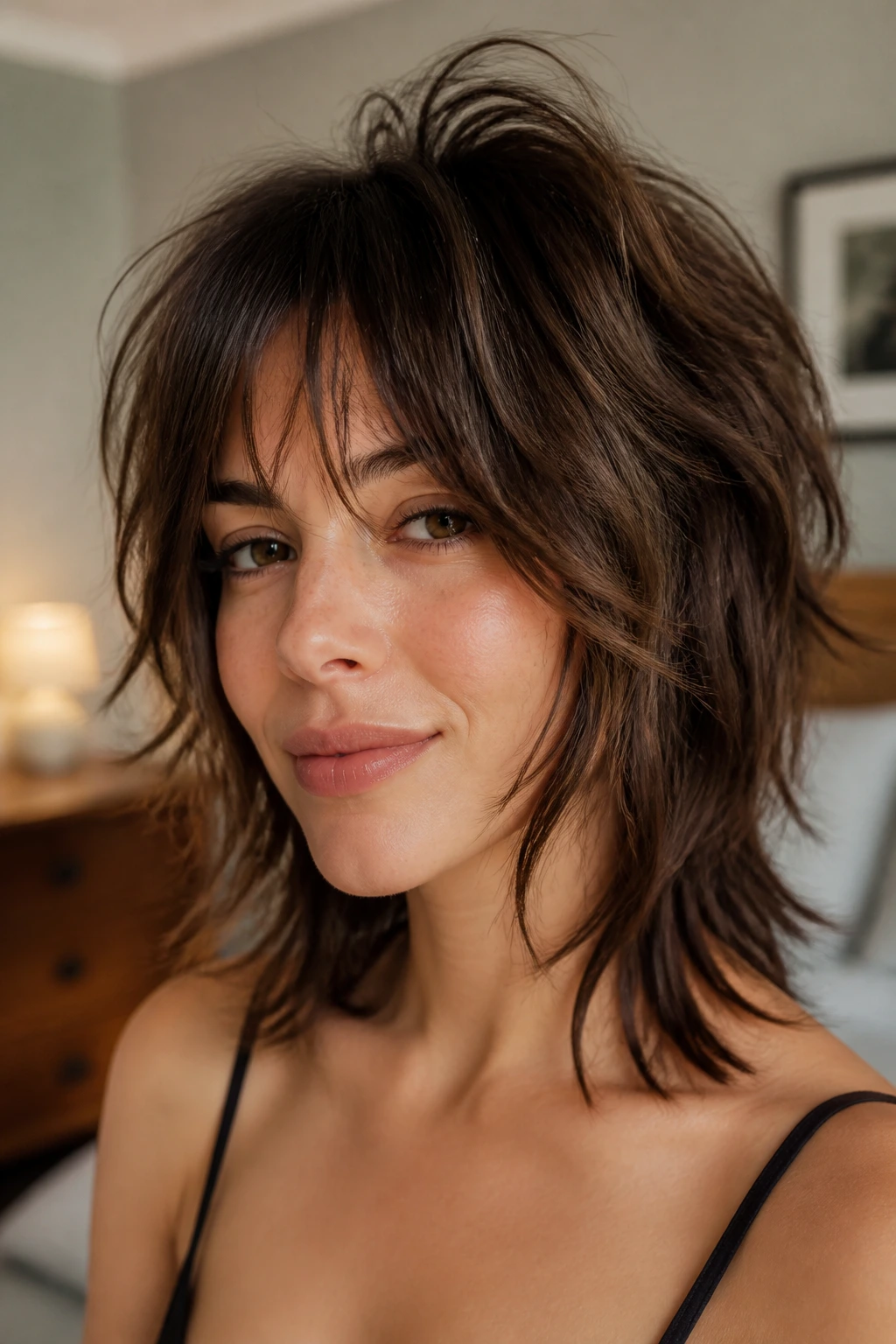
Fine hair shags usually look best on day one, still good on day two, and slightly more interesting on day three if you refresh them right. That rhythm changes if your scalp gets oily fast, but the pattern is useful. The lift around the crown tends to fade first, while the front pieces usually keep their bend longer.
A satin pillowcase helps more than people expect. So does clipping the front pieces away from the face before bed if you want to preserve that little curve around the cheekbones. In the morning, hit the roots with a small blast of cool air or a quick dry shampoo mist, then reshape the front with your fingers.
Trims matter, too. For a crisp shag, aim for every 6 to 8 weeks. If you like a softer grow-out, you can stretch that to 8 to 10 weeks, but past that the layers start to lose their architecture. The haircut doesn’t fail. It just gets sleepy.
Frequently Asked Questions

Do shag haircuts make fine hair look thinner?
They can, if the stylist removes too much weight from the ends or layers the crown too high. A good shag does the opposite: it keeps enough density at the perimeter while adding movement through the mids and front.
What’s the best shag length for fine hair?
Collarbone length and chin length are often the safest bets because they keep enough weight to avoid see-through ends. Very long shags can work too, but they usually need a careful hand and less internal thinning.
Can I get a shag if my hair is very straight?
Yes, but the styling matters more. Straight fine hair needs root lift, a bit of bend at the ends, and a texture spray used lightly through the mids. Otherwise the layers can disappear into the straightness.
Should I get bangs with a shag?
Not automatically. Curtain bangs and bottleneck bangs help a lot because they build shape around the face without taking too much density. If your front section is sparse, a long face frame may be a better choice.
How often should I trim a fine-hair shag?
Every 6 to 8 weeks keeps the shape sharp. If you like a softer version that grows out gradually, stretch the trims to about 10 weeks and ask for blended layers from the start.
What if my crown is flat and my hair falls limp on one side?
Ask for a slight side part and shorter face-framing layers on the heavier side. A small shift in balance can fix a stubborn flat spot faster than adding more product.
Can I air-dry a shag and still get body?
You can, especially if your hair has any wave at all. Use mousse on damp roots, scrunch the mids, and clip the crown up for the first 10 to 15 minutes so it doesn’t dry stuck to the scalp.
Which shag is easiest to grow out?
The soft curtain shag, the collarbone shag, and the invisible layer shag all grow out with less drama. They keep their shape even after the layers soften, which is useful if you don’t want a strict maintenance schedule.
Is a razor cut safe for fine hair?
It can be, if the stylist uses it lightly and respects the density of your ends. A heavy razor pass on already fragile hair can leave the perimeter looking frayed, so this is one place where technique matters a lot.
Soft Layers, Bigger Lift
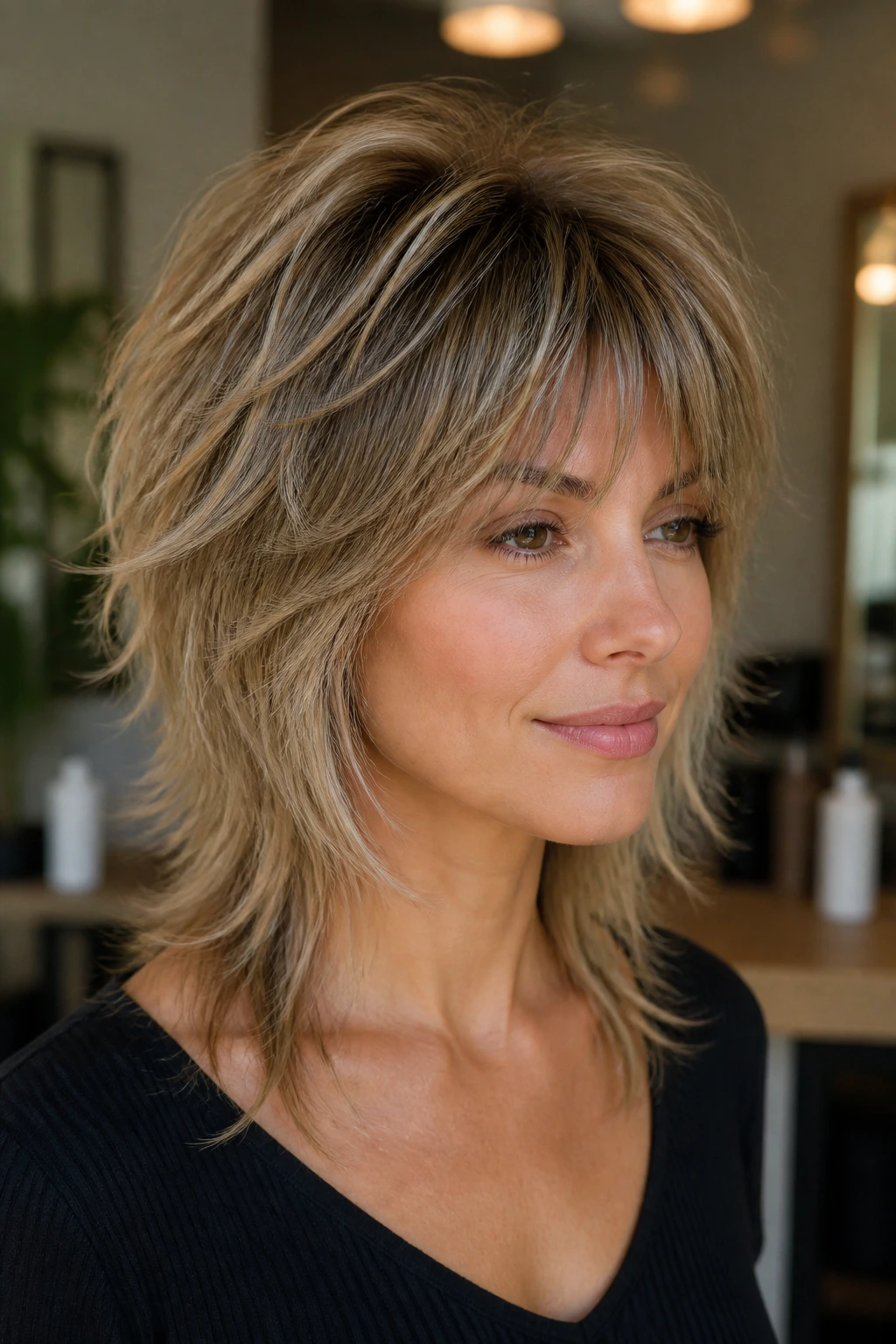
The best shag haircut on fine hair doesn’t scream for attention. It just does the quiet, useful thing: it gives the crown a little air, keeps the ends from collapsing, and makes the face frame do some of the visual work. That’s why these cuts stay interesting. They solve a practical problem and still have personality.
If you’re heading to the salon, bring one picture of the shape and one sentence about your hair’s weak spots — the flat side, the limp crown, the sparse ends at the back. That tiny bit of direction helps more than a folder full of pretty photos. A shag can be soft, cool, grown-up, messy, or sharp. On fine hair, the good ones are the cuts that know when to hold back.