



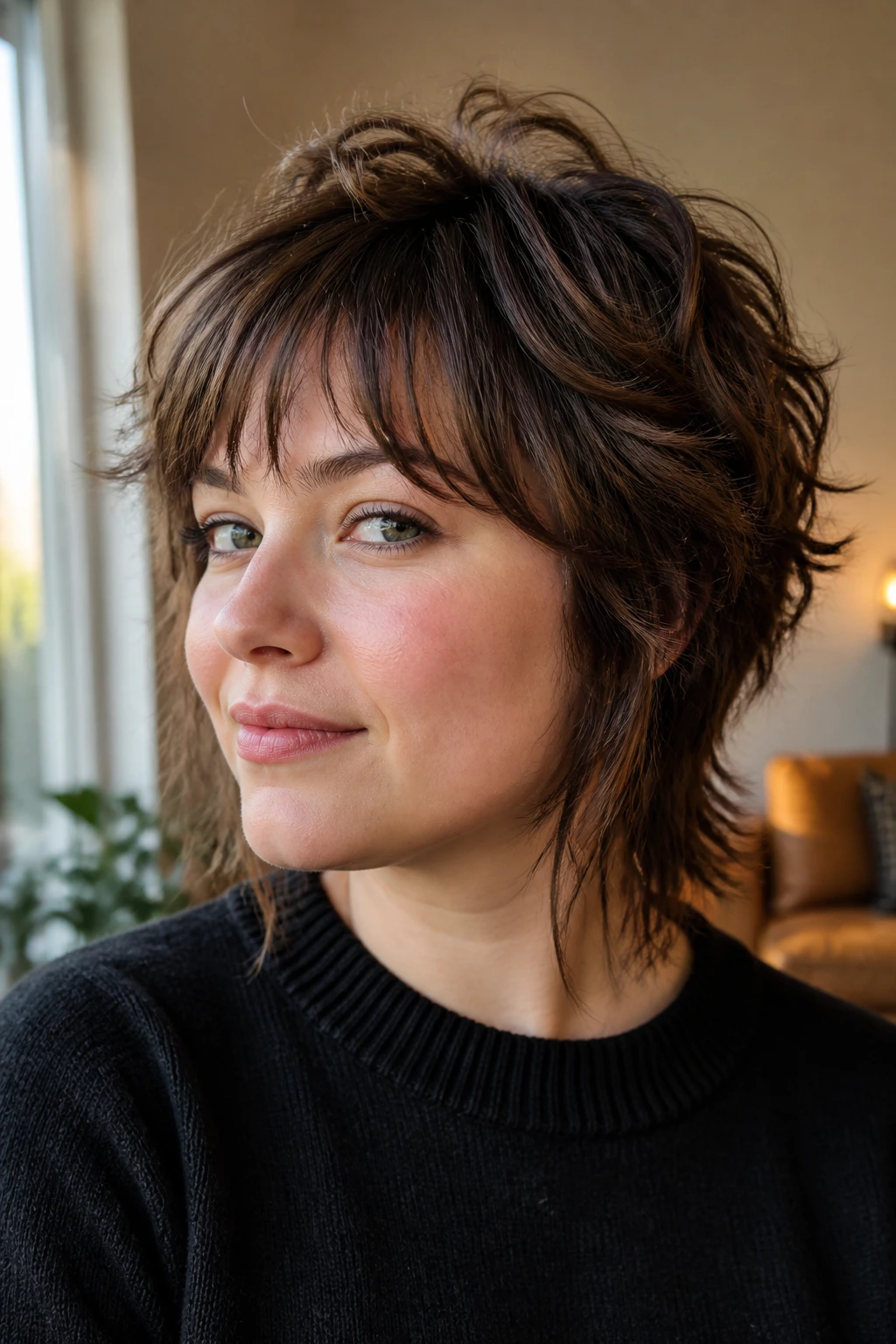
A messy short shag can do something a blunt bob rarely manages on a round face: it breaks the circle without looking stiff about it. The shorter layers kick up at the crown, the ends go a little piecey, and the whole cut pulls the eye up and down instead of letting it park on the cheeks. That shape matters. A lot.
The best messy short shag haircuts for round faces don’t rely on drama at the jaw. They use air, movement, and a little asymmetry. A fringe that opens in the middle, a crown that sits higher than the temples, or a nape that hugs the neck can change the whole read of the face, even before you touch styling products.
And the word messy is doing real work here. Not sloppy. Not overdue for a trim. I mean hair that looks broken in, lightly separated, and lived-in enough that you can scrunch it with your hands and walk out the door. The trick is getting the mess to land in the right places. The cuts below do exactly that, and the good ones know when to stop.
Why This Collection Feels Different on a Round Face
-
Crown lift: These cuts put height where a round face needs it most, right through the top and upper back of the head.
-
Cheek control: The strongest versions keep the widest layers away from the fullest part of the cheeks, so the face doesn’t look boxed in.
-
Texture without bulk: You get separation and movement, not a fluffy halo that adds width in all the wrong spots.
-
Low-fuss styling: Most of these shapes look better with a quick rough-dry, a bit of paste, and your fingers than they do with a polished blowout.
-
Grow-out grace: A good short shag can go a few weeks past a trim and still look intentional, which is rare and useful.
Why Messy Short Shag Haircuts for Round Faces Work
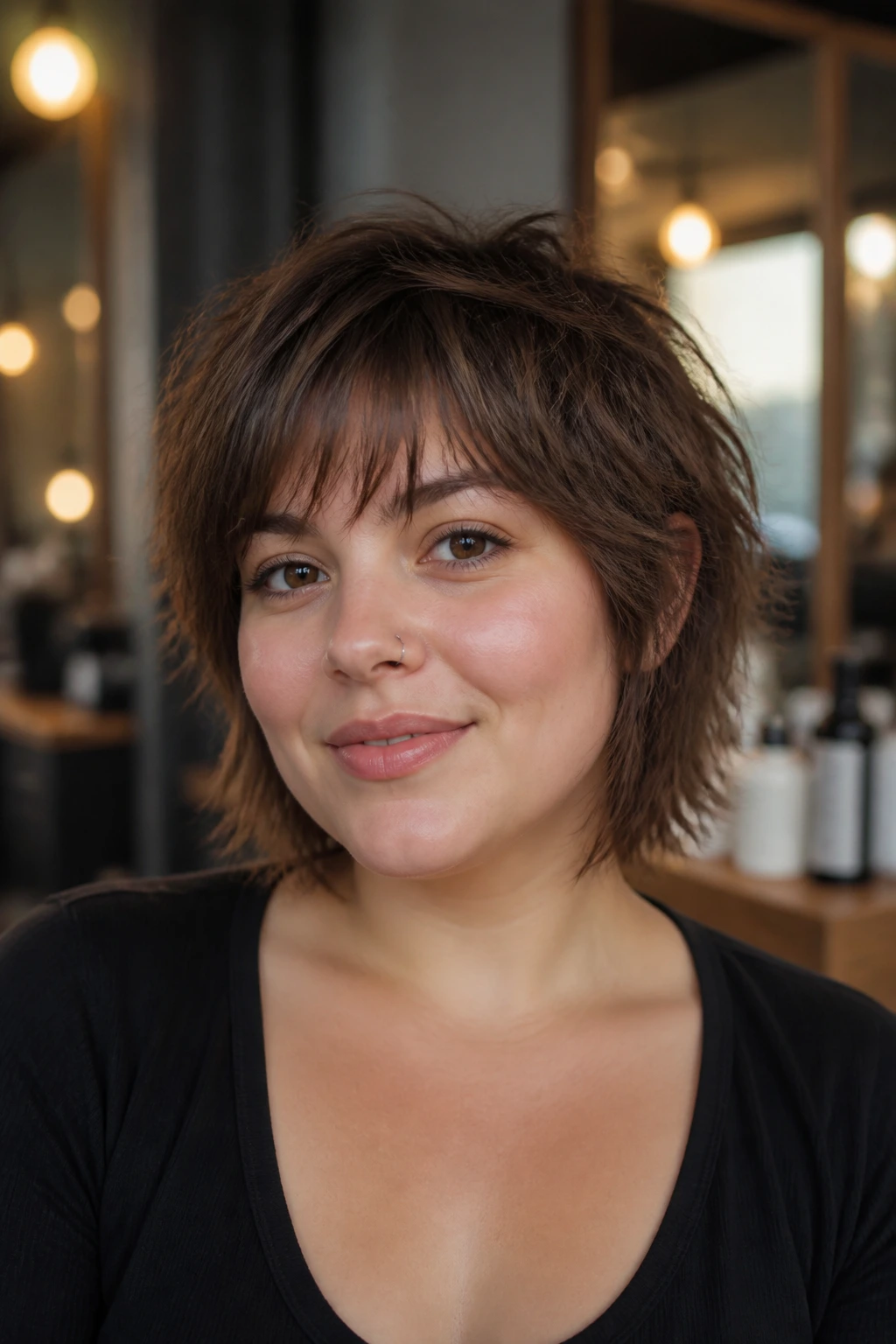
A round face usually reads widest at the cheeks, with softer angles through the jaw and forehead. That does not mean you need to hide it. It means the cut should keep the eye moving. Vertical lift, diagonal lines, and broken-up ends do more for the shape than a perfectly even outline ever will.
The shag works because it refuses to make one flat ring around the face. Short layers at the crown create lift. Longer face-framing pieces pull the eye downward. A little asymmetry keeps the silhouette from feeling too centered, which matters more than people think. If both sides hit the cheeks at the same point, the face can look wider. If one side opens earlier, or if the fringe splits off center, the whole cut feels longer.
Texture helps too, but not in a cartoonish way. You want enough roughness that the hair separates into little pieces. You do not want the kind of volume that balloons sideways after a humid commute. That’s why the best short shags for round faces are usually cut with point-cutting, razor work, or soft slide-cut layers rather than heavy blunt lines.
The shape trick that keeps paying off
The smartest placement is usually height at the crown, softness at the cheekbone, and taper at the nape. That trio gives you lift without puff. It also gives you a cut that still looks good when you skip a wash day, which is half the appeal of a shag anyway.
What to avoid near the widest point
If the shortest layers end right on the cheek, the face can look more circular. Same problem with a dense fringe that sits straight across the brow and a perimeter that flares outward. The fix is usually simple: move the shortest pieces a little higher, keep the sides broken, and let the fringe live a bit longer or more open.
1. Crown-Lift Crop Shag
This is the short shag I reach for when someone wants edge without losing all softness. The sides stay close, the crown gets the movement, and the ends are chipped just enough to keep the cut from turning into a neat little cap. On a round face, that extra lift on top does a lot of the work.
Why it flatters a round face
The whole point is to make the head read taller. The layers are concentrated above the temples, so the widest part of the face doesn’t get extra hair sitting on it. If you like short hair but hate anything that puffs at the cheeks, this is one of the safest bets.
- Keep the top layers about 1 to 2 inches longer than the side layers.
- Ask for point-cut ends, not blunt snips.
- Dry it by lifting the roots with your fingers, then tuck the sides back a little.
Best move: work a pea-sized dab of matte paste through the crown only. That keeps the texture separated without making the ends greasy.
2. Bottleneck Bang Shag
A bottleneck fringe is a clever little thing. It starts narrow between the brows, then opens out toward the temples, which means it frames the face without laying a hard horizontal line across it. On a short shag, that fringe takes some of the attention off the cheeks and gives the cut a softer, more expensive-looking shape.
The rest of the haircut should stay choppy and loose. If the fringe is soft but the body of the cut is too tidy, the whole thing feels mismatched. I like this shape best when the layers around the cheekbone are light and the ends at the nape are a little uneven. It keeps the face open.
For styling, blow-dry the fringe forward first, then split it with your fingers before it sets fully. That tiny pause matters. If you brush bottleneck bangs too much, they flatten into a curtain and lose the narrow opening that makes them useful on a round face.
3. Choppy Pixie Shag
Think pixie, but with more bite and less polish. The top is short enough to feel cropped, while the layers around the crown and ears break up the outline so it doesn’t read as one smooth shape. It’s a good option if you like short hair that looks deliberately imperfect.
Why it works so well
A round face needs angles somewhere. This cut gives you them through the top and the sides. The choppy length at the crown pulls the eye upward, and the shorter perimeter keeps the cut from widening at the jaw.
This one is especially good for fine to medium hair that tends to collapse under longer layers. Too much length can make fine hair lie flat against the face. A choppy pixie shag keeps the movement up top, where it actually helps.
How to style it: mist with a light texturizing spray, rough-dry with your fingers, then pinch a few pieces at the front so they separate instead of blending together. That tiny bit of separation is what keeps the cut from looking like a plain pixie.
4. Razored Chin-Length Shag

Here’s a cut that understands the jawline matters. The length stops around the chin, but the razor texture keeps the perimeter soft instead of blunt. That’s the key. A blunt chin-length line on a round face can feel boxy fast. A razored version bends and moves instead of sitting there like a shelf.
The best version has short internal layers that kick up through the top and slightly longer pieces that skim the jaw rather than land squarely on it. If your face is round and your hair is medium to thick, this shape can be a sweet spot. You get enough length to tuck behind the ear, but the airy layers stop the style from feeling heavy.
I also like this one for anyone who wears glasses. The jaw-length movement keeps the frames from competing with a thick fringe, and the face-framing pieces can curve around the lenses without crowding them.
5. Curly Halo Shag
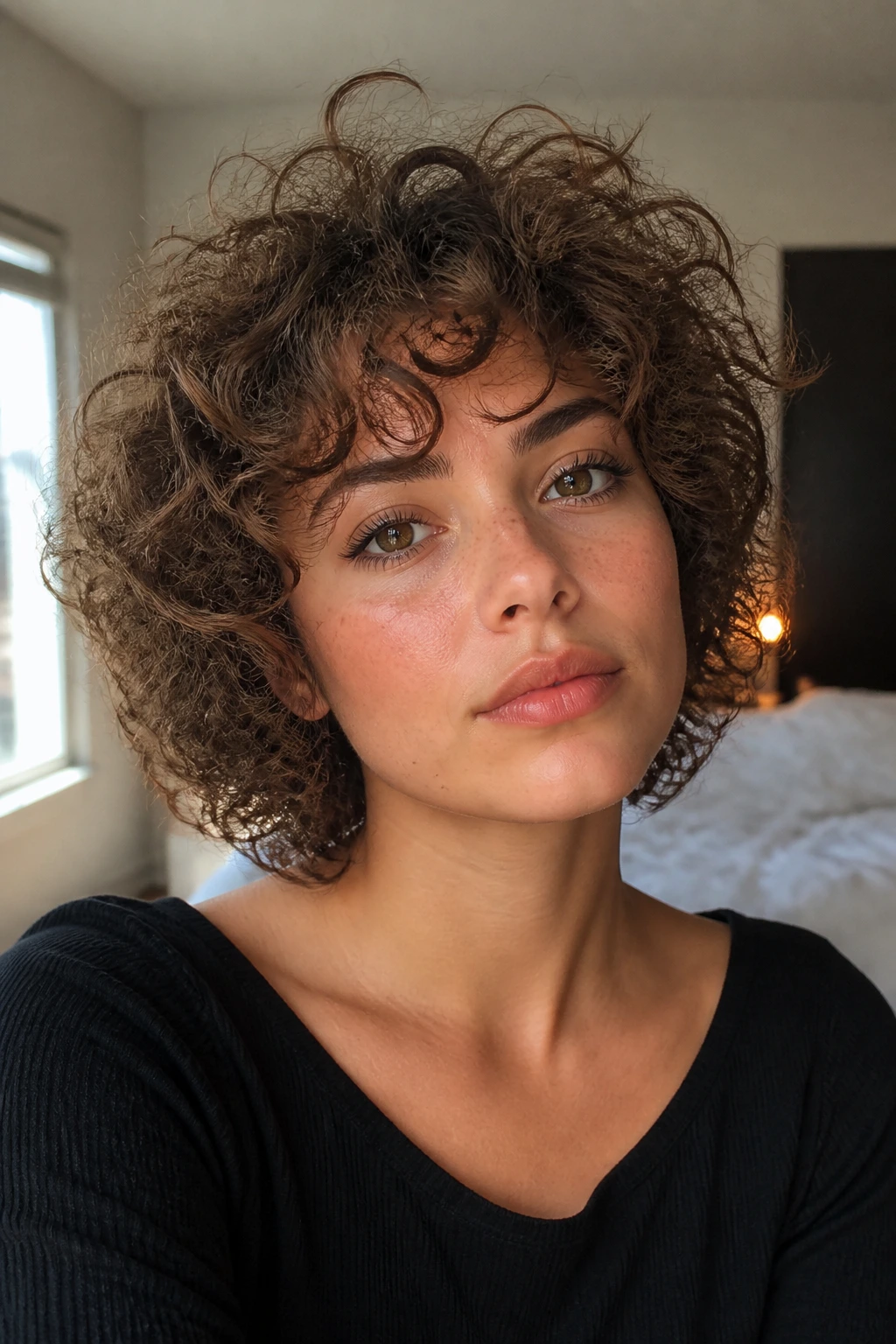
Curly hair changes the whole conversation. A short shag on curls should not fight the curl pattern; it should give it a shape to live in. This version keeps the top airy, the sides controlled, and the curls free to spring in a halo rather than widen at the cheeks.
Why it flatters round faces
Curls add width on their own. The haircut has to manage that without flattening the pattern. Shorter crown layers create height, while longer side pieces keep the profile from puffing straight out at the cheeks. Done right, it looks soft, not triangular.
How to wear it
- Diffuse on low heat until the roots are about 80 percent dry.
- Keep a curl cream on the ends only, not through the roots.
- Scrunch out the cast after it dries so the top stays airy.
If your curls are loose, a little shaping at the front can frame the face without stealing volume from the crown. If they’re tighter, leave the top layers long enough that the shrinkage doesn’t pull the cut too high.
6. Curtain-Bang Crop

Curtain bangs are a gift when they’re cut short enough to matter and long enough to split cleanly. On a short shag, they open the forehead, create a diagonal line across the cheeks, and keep the front of the haircut from feeling blunt. The effect is less “I have bangs” and more “the whole cut moves with me.”
This one is best when the side lengths brush the upper cheekbone rather than the middle of the cheek. Too short and the bangs become the whole story. Too long and the shape loses its lift. The sweet spot is that slightly undone gap in the middle, with the fringe bending outward around the eyes.
If your hair is straight, use a small round brush for the bangs only and leave the rest rough. If it’s wavy, finger-dry the fringe and let the bend happen on its own. Both versions work, but brushing the whole head into submission defeats the point.
7. Jawline Wolf Shag

This is the one for people who like a little attitude in the haircut. A wolf shag sits somewhere between a shag and a softer mullet, with more energy through the back and more movement around the crown. On a round face, the trick is keeping the front slightly longer so the jawline gets its own line.
The back should not flare out like a triangle. That’s the mistake. Instead, the nape should taper in, while the top layers stay feathery and broken. That gives you the wolf-cut edge without adding extra width where you don’t need it.
I’d call this a strong choice for dense hair. The shape takes some weight off the bottom, which helps the cut stop feeling like a helmet by day three. Ask for soft razoring through the lower crown, not aggressive thinning through the ends. There’s a difference, and it matters.
8. Tapered Nape Shag
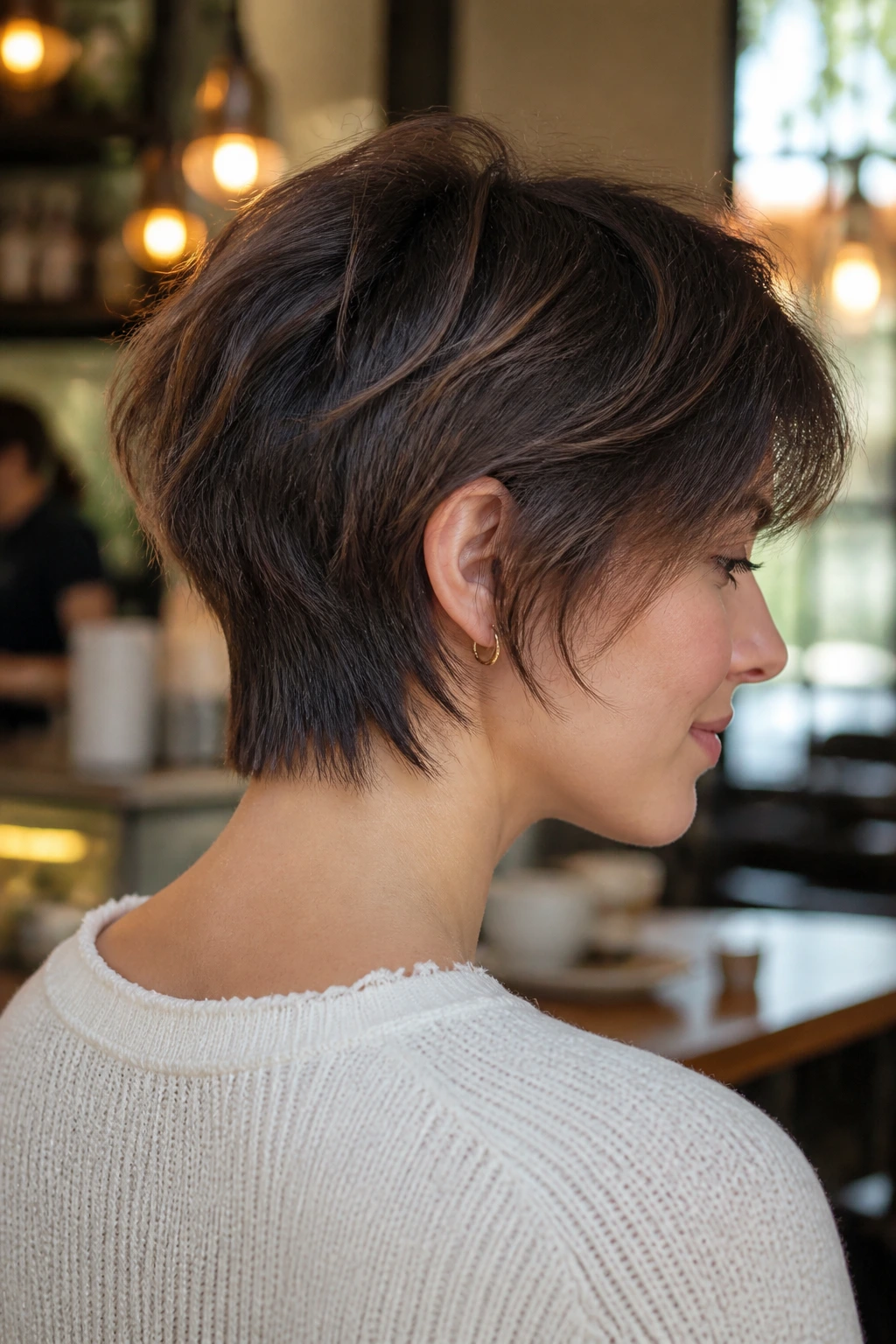
A tapered nape can change a short shag more than most people expect. It makes the back hug the neck while the top stays lively, so the haircut feels shaped instead of just layered. On a round face, that taper helps keep the eye moving vertically.
This is one of my favorites for anyone who wants the mess without the mullet. The neckline stays clean, but the upper layers are still rough enough to give you texture. It’s a smart compromise if you like short hair that can still tuck under a coat collar without exploding outward.
Best for
- Straight hair that puffs at the ends
- Fine hair that needs structure without bulk
- Anyone who wants a short shag that looks tidy from behind
The best styling move is a quick blow-dry at the nape with a flat brush, then scrunching the top once everything is nearly dry. Clean underneath, broken up on top. That contrast is what makes the shape work.
9. Piecey Micro-Mullet Shag

A micro-mullet sounds dramatic, but the good ones are subtle. The top is short and textured, the sides are broken up, and the back is just long enough to hint at a mullet without turning into one. On a round face, the longer back can stretch the silhouette in a way that feels modern, not theatrical.
The face-framing pieces should still be the focus. If the back gets too long and the front stays too full, the cut loses balance fast. You want a little rock-and-roll, not a helmet with a tail. That’s the line.
This cut loves dry texture spray. Use it at the roots and through the ends, then pinch the pieces apart while the spray is still a little tacky. It helps the haircut show its shape instead of blending into one soft mass.
10. Flipped-Layer Bob Shag

This one sits at the edge of bob territory but refuses to behave like a classic bob. The ends flip out, the top layers are chopped in, and the perimeter stays loose enough to avoid that perfect round bubble shape nobody needs on a round face.
The flip matters because it breaks the outline. Instead of the hair hugging the cheeks in one clean arc, the ends kick away from the face. That little motion changes the silhouette more than you’d think. It also gives the haircut a bit of swing, which keeps it from feeling too serious.
If your hair is naturally straight, a flat iron can create the bend at the very ends in seconds. If it’s wavy, you may only need a rough dry and a bit of cream. Either way, keep the flip subtle. This is not a pageant curl.
11. Side-Swept Fringe Shag
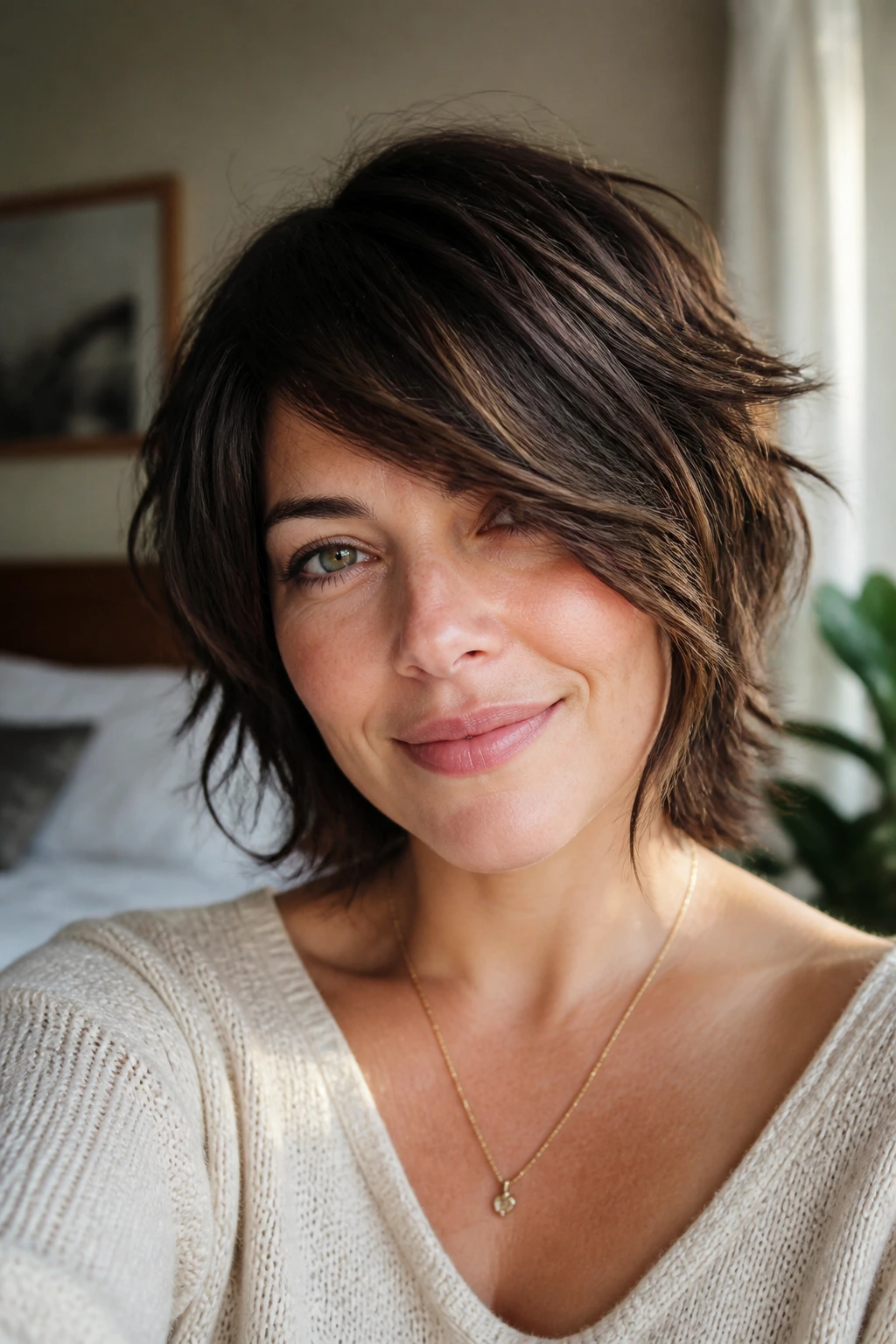
A side-swept fringe is one of the oldest tricks in the book for a reason. It cuts diagonally across the face, which takes the eye off the width of the cheeks and makes the whole cut feel longer. On a short shag, the effect is even better because the textured layers keep the fringe from looking too polished.
The best side-swept version has enough weight to stay in place, but not so much that it falls into one heavy slab. You want it soft and moveable. The rest of the haircut can be jagged and short around the ears, with a little more length in the front to keep the line open.
This is a useful choice if you part your hair on one side anyway. Don’t fight that habit. Work with it and let the fringe fall where it wants, then trim the front so it opens around the cheekbone instead of sitting right on it.
12. Airy Coily Shag
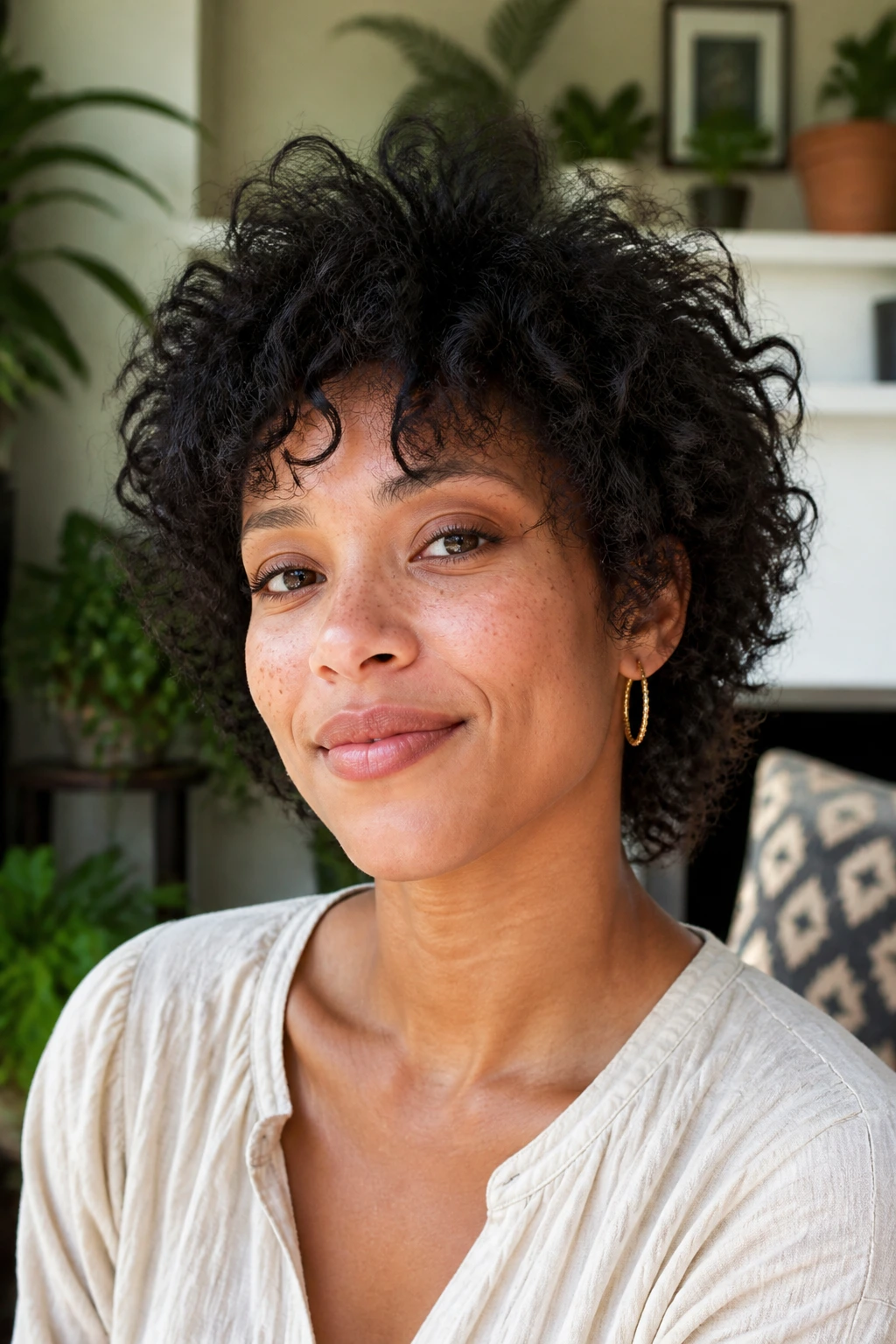
Coily hair needs shape, not restraint. A short shag on coils should build height through the top, preserve the spring of the curl, and keep the sides from widening too much at cheek level. When that balance is right, the haircut looks alive.
The shape matters more than the length
A lot of short cuts on coily hair fail because they carve the head into a triangle. This one avoids that by removing weight in the right places and leaving enough length at the crown for bounce. The round face benefits because the eye sees lift first, then texture.
- Ask for curl-by-curl shaping or dry shaping if the stylist works that way.
- Keep the shortest pieces above the cheekbone.
- Avoid over-thinning the ends; coils need body.
A good coil shag can be fluffed with a pick at the roots and left alone everywhere else. That’s usually enough. Too much separating turns the shape fuzzy in a bad way.
13. Thick-Hair Razor Shag

Thick hair can make a short shag look gorgeous or look like a mushroom. There is not much middle ground. The difference is usually in the interior weight removal. A razor shag takes some of that bulk out while keeping the ends soft and piecey, which is exactly what a round face needs.
The trick is not to chase layers everywhere. Heavy layering at the wrong point can create a shelf at the cheeks. Instead, the stylist should remove weight underneath the top layer, then keep the outer shape slightly longer and broken. That gives you movement without a triangle.
If your hair is thick and a little coarse, this is one of the best choices on the list. It can hold the shape without collapsing, and the texture reads well after a rough blow-dry. A little serum on the ends keeps the razor work from feeling dry or frayed.
14. Fine-Hair Feathered Shag

Fine hair needs a light hand. Too many layers, and it disappears. Too few, and it lies flat like paper. A feathered short shag finds the middle. The layers are soft and airy, the fringe is light, and the ends are just broken enough to keep the cut from looking see-through.
This style works on round faces because it adds texture without adding width. The crown gets a little lift, the sides stay close, and the shape stays open around the cheeks. If the hair is very fine, the best version is often shorter than people expect. Length can drag it down.
How to keep it from collapsing
Use mousse at the roots before blow-drying. Not a cream. Cream is usually too heavy here. Finish with a mist of dry texture spray, then lift the front with your fingers so it doesn’t lay flat against the forehead. That small lift makes the whole haircut look more intentional.
15. Undercut Messy Shag
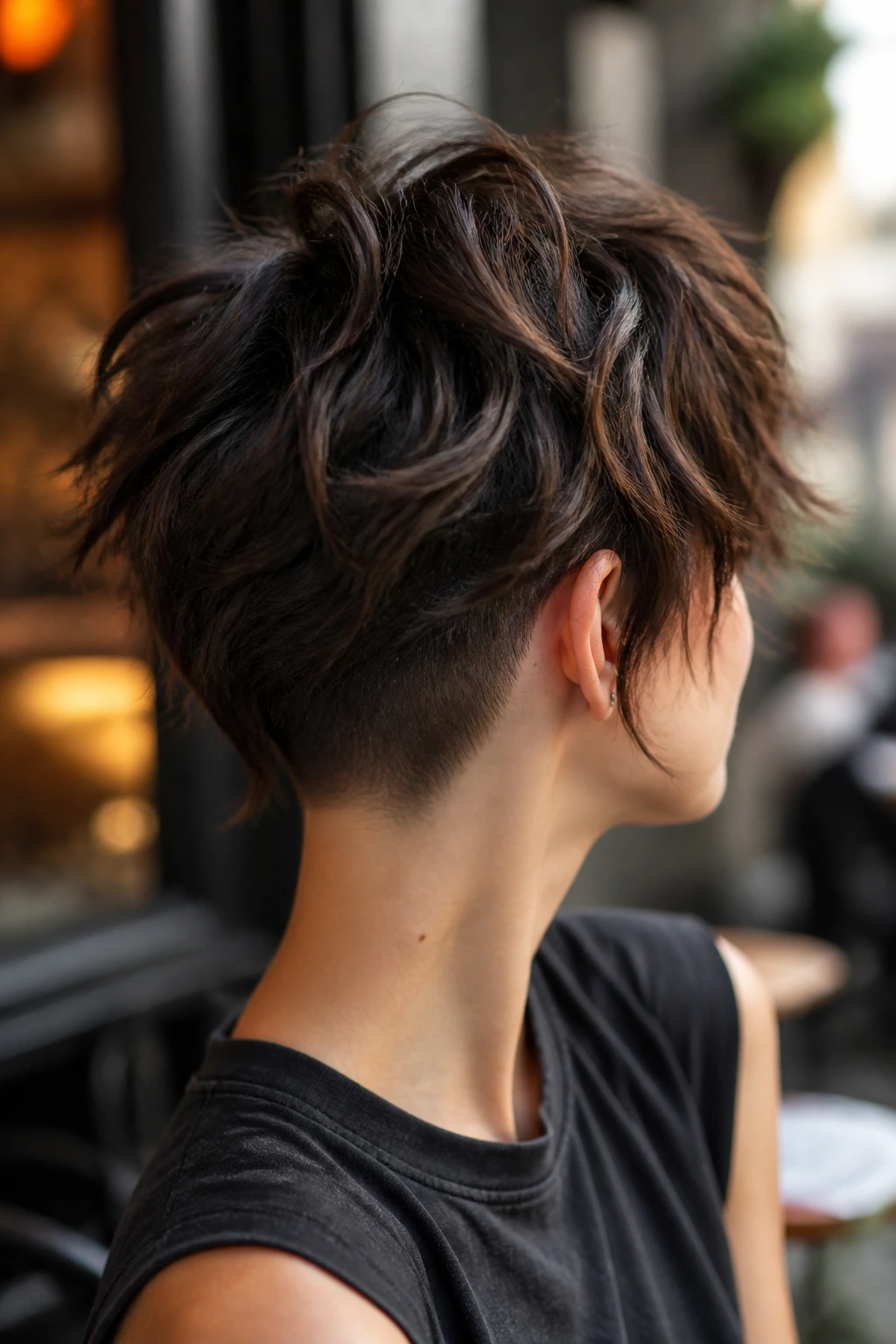
An undercut makes sense when the hair underneath is the part that keeps ballooning. For round faces, it can be a smart way to remove bulk without sacrificing the rough shaggy texture on top. The top layers stay shaggy and visible, while the lower section keeps the silhouette tight.
This cut has more edge than the others, and I’d be honest about that. If you like a softer look, this is not it. If you want the sides and nape to sit close while the top keeps all the movement, the undercut solves a real problem. It also grows out cleaner than a lot of people expect, as long as the top is layered properly.
A stylist can hide the undercut enough that it shows only when the hair lifts. That means you get the benefit without looking shaved everywhere. Good trade. Especially on thick or wavy hair.
16. Asymmetrical Shag

A little asymmetry goes a long way on a round face. One side sitting slightly longer, or the fringe falling a touch more heavily to one side, interrupts the circle and keeps the haircut from feeling centered in a way that adds width. It’s subtle, but it works.
The best asymmetrical shags don’t look like accidents. They look chosen. The difference between sides is small enough that only the outline changes, not the whole vibe. That might mean one temple sits a half-inch lower, or the front pieces sweep across the face at a different angle.
This is a good cut if you get bored fast. There’s enough movement to keep it interesting, and it photographs differently from each side. That matters more than people admit.
17. Soft Wedge Shag
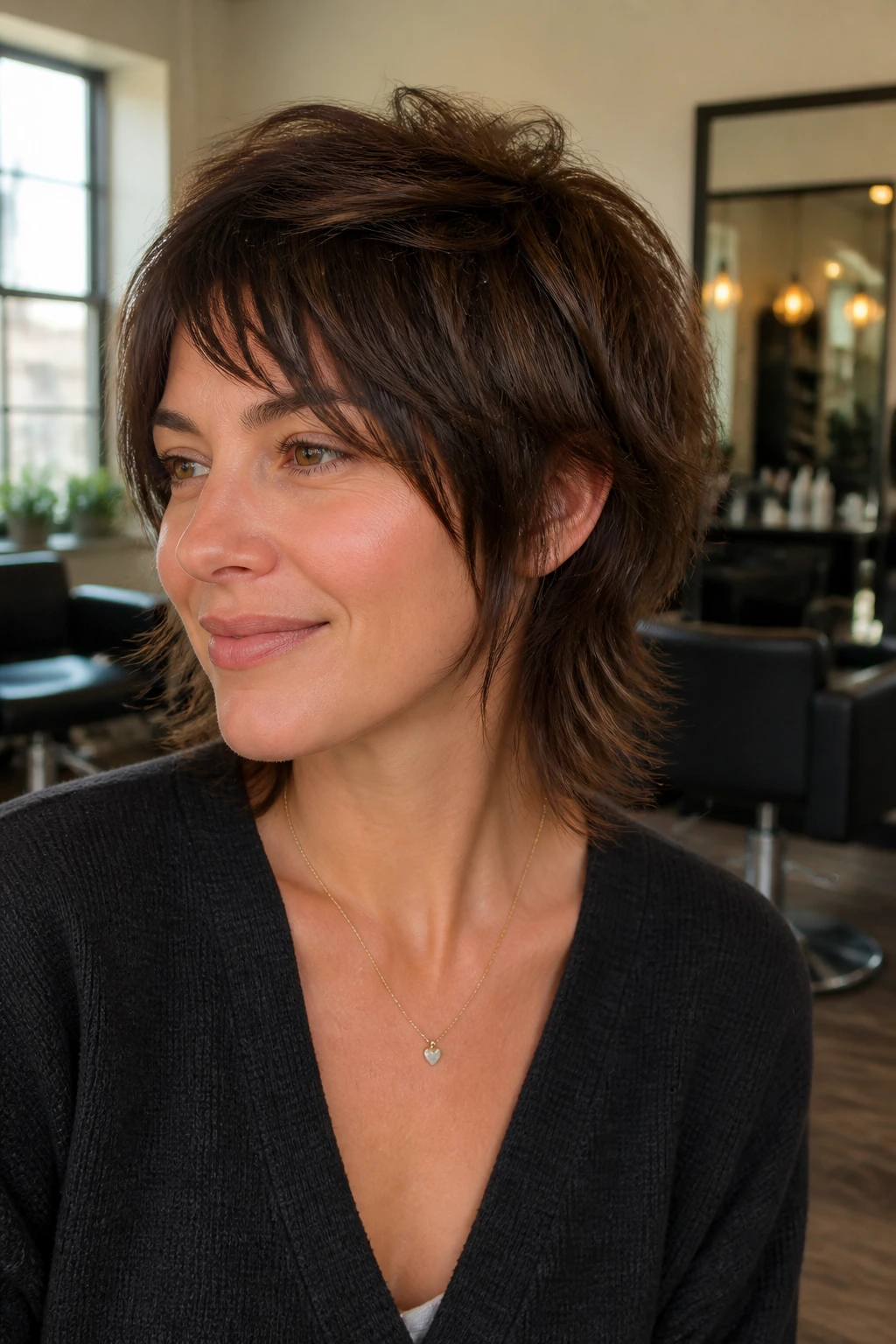
A wedge shape can be too severe if it’s cut clean and tight. Add shag texture, though, and it turns softer. The back lifts a bit, the nape tapers in, and the front pieces stay broken around the cheekbones. On a round face, that rear structure can create a longer overall shape.
The style works best when the crown has some height and the perimeter doesn’t puff outward. That means the stylist should keep the upper layers light and the bottom edge a little jagged. If the wedge is too uniform, the head starts looking rounded again. Funny how fast that happens.
This is one of the more polished-looking messy cuts on the list, which makes it a nice option for people who want the shag shape without looking too wild. It still needs texture, though. A soft wedge without texture just becomes a helmet with opinions.
18. Bedhead Bob Shag

This is the bob for people who hate a perfect bob. The length stays around the jaw or just below it, but the ends are rough, the crown has lift, and the layers are broken enough to feel casual. On a round face, that messiness keeps the bob from hugging the cheeks in one uninterrupted circle.
The best version has a slight bend in the front pieces and a looser back. Not fluffy. Looser. There’s a difference. You want the outline to feel relaxed, like the haircut has already been lived in a little.
If your hair has a natural wave, this is one of the easiest cuts on the list. Air-dry it halfway, scrunch in a little mousse, then let the rest dry on its own. The movement will usually fall into place without much trouble.
19. Long-Top Short-Sides Shag
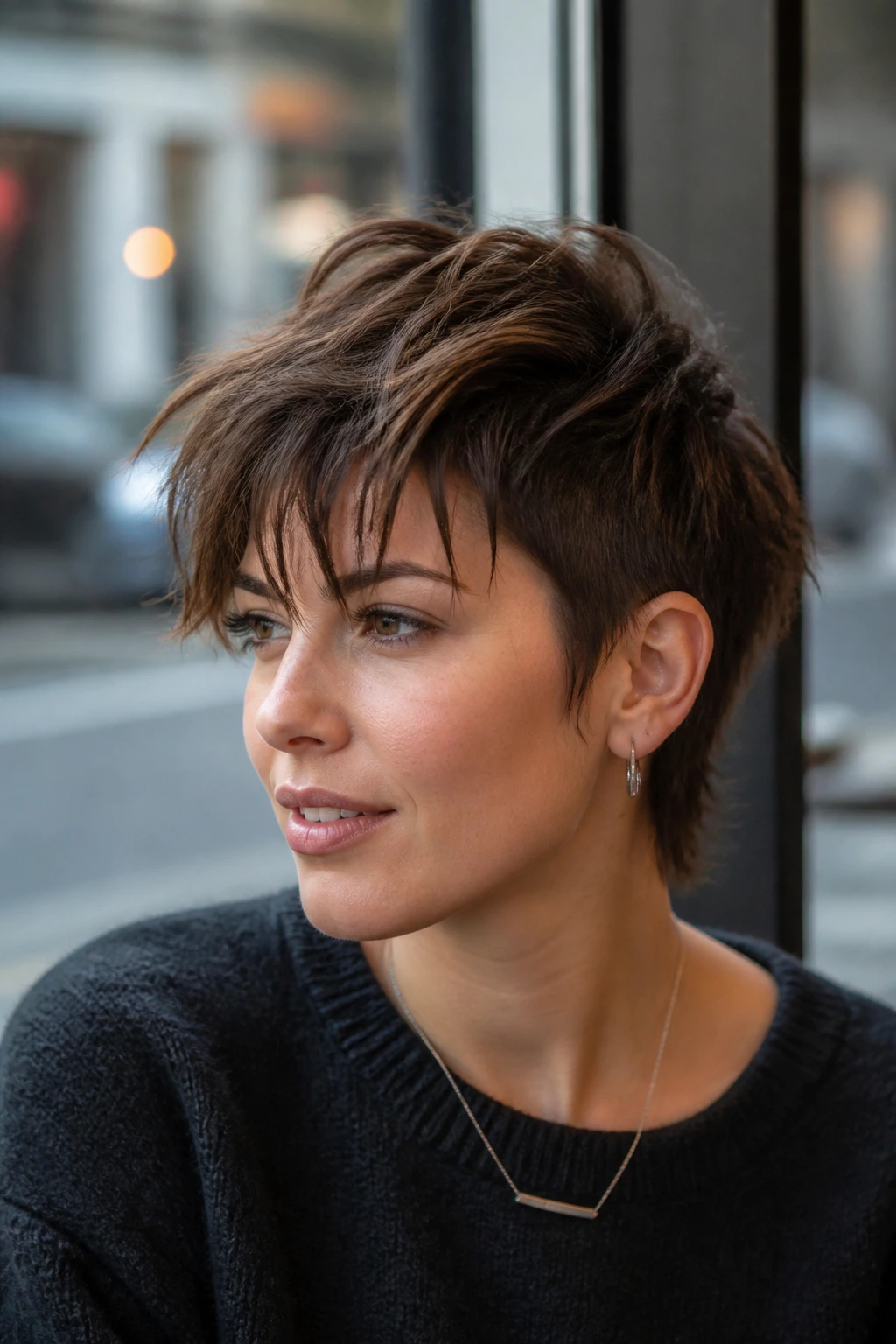
This one borrows a little from barbering and a little from the wolf cut family. The top stays noticeably longer, the sides are kept shorter and tidier, and the whole effect is about contrast. On a round face, that contrast can be very useful because it builds height without adding width.
The haircut is especially strong when the top can fall forward in broken pieces. That keeps the face open while the sides stay close. If you wear glasses or have a strong jaw you want to show off, the shape can frame those features neatly.
I like this option for people who want something modern but not precious. It’s a little sharper than a soft shag. It also grows out in a way that still looks intentional for a while, which is useful if you don’t love constant salon visits.
20. Birkin-Bang Shag

A Birkin-inspired fringe brings a little old-school softness to a short shag. The bangs sit fuller than curtain bangs but should still be textured enough to move, not sit like a solid wall. On a round face, the right version adds a gentle frame across the eyes while the rest of the haircut stays lifted and broken.
The key is not making the fringe too dense. Heavy bangs can flatten the face and make the cheeks feel wider. A lighter, slightly uneven fringe keeps the shape open. Pair that with airy layers through the crown and you get a cut that feels romantic rather than heavy.
This one works best when the bangs skim the lashes or sit just above them, depending on your tolerance for upkeep. If you’re not willing to trim fringe often, keep it a little longer and more split.
21. Wavy Jaw-Brush Shag

A jaw-brush shag lands right where it sounds like it does: around the jaw, with enough wave and texture that the ends don’t sit in one hard line. On a round face, that brush of length can lengthen the lower half without making the haircut look long or heavy.
It’s a smart cut for natural wavy hair because the wave helps soften the edge. Straight hair can wear it too, but it needs a little styling at the ends so the shape doesn’t collapse into a blunt bob. I usually prefer this version with a side part or a slightly off-center part. It keeps the top from feeling too symmetrical.
This is one of those cuts that can look relaxed in a T-shirt and still hold up when you want the hair to look more polished. The shape does a lot of the work.
22. Tousled Face-Framing Shag

This is the broadest, most forgiving shape in the group. The top layers are short enough to create lift, while the face-framing pieces are soft and broken enough to skim the cheeks instead of sitting on them. It’s a good place to land if you want the shag look without committing to an extreme fringe or a sharp mullet edge.
The beauty of this cut is the balance. It gives round faces room. The cheeks aren’t boxed in, the crown has enough movement to stretch the silhouette, and the ends stay irregular so the cut never looks too neat. That’s the sweet spot.
If you’re unsure where to begin, start here. It’s the easiest short shag to adjust later. A stylist can take a little more off the perimeter or keep more length in the front, depending on how much drama you want.
What Makes the Shape Work Without Looking Puffy
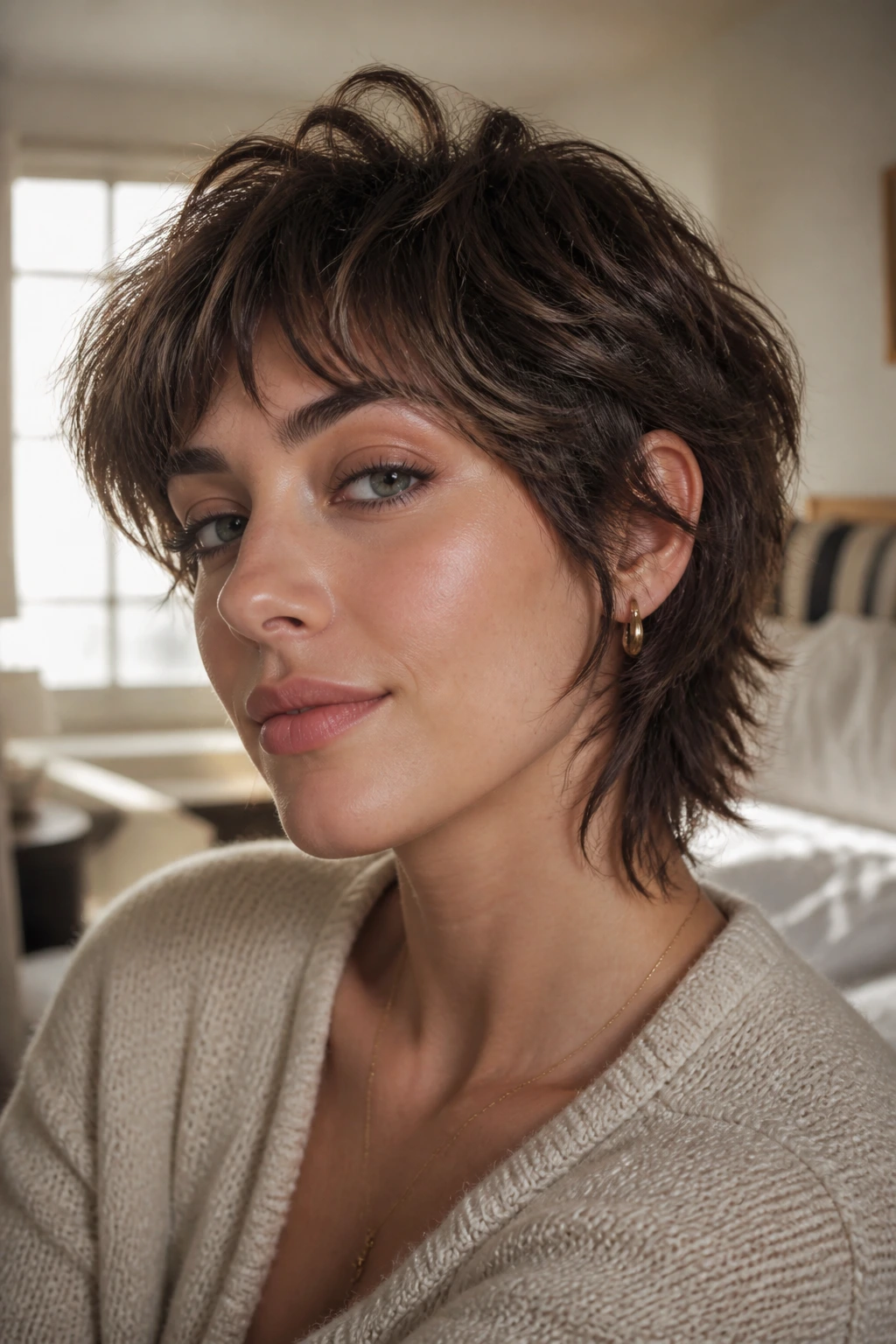
The best short shag on a round face is not the one with the most layers. It’s the one with the right layers in the right place. Too much width at the sides and the face looks fuller. Too much bluntness and the cut loses the whole point of being a shag.
Where the volume should sit
Keep the lift at the crown and upper back, not out at the cheekbones. That one detail changes the silhouette fast. If the shape rises up top and stays a little tighter through the sides, the face reads longer and leaner without any harsh contouring tricks.
Why texture matters more than length
A short shag can be chin-length, ear-length, or somewhere in between. The exact inch count matters less than the way the hair breaks apart. Piecey ends, soft internal layers, and a fringe that doesn’t sit like a curtain all help the cut breathe. That breathing room is what keeps the roundness from dominating.
How to Ask for Messy Short Shag Haircuts for Round Faces at the Salon
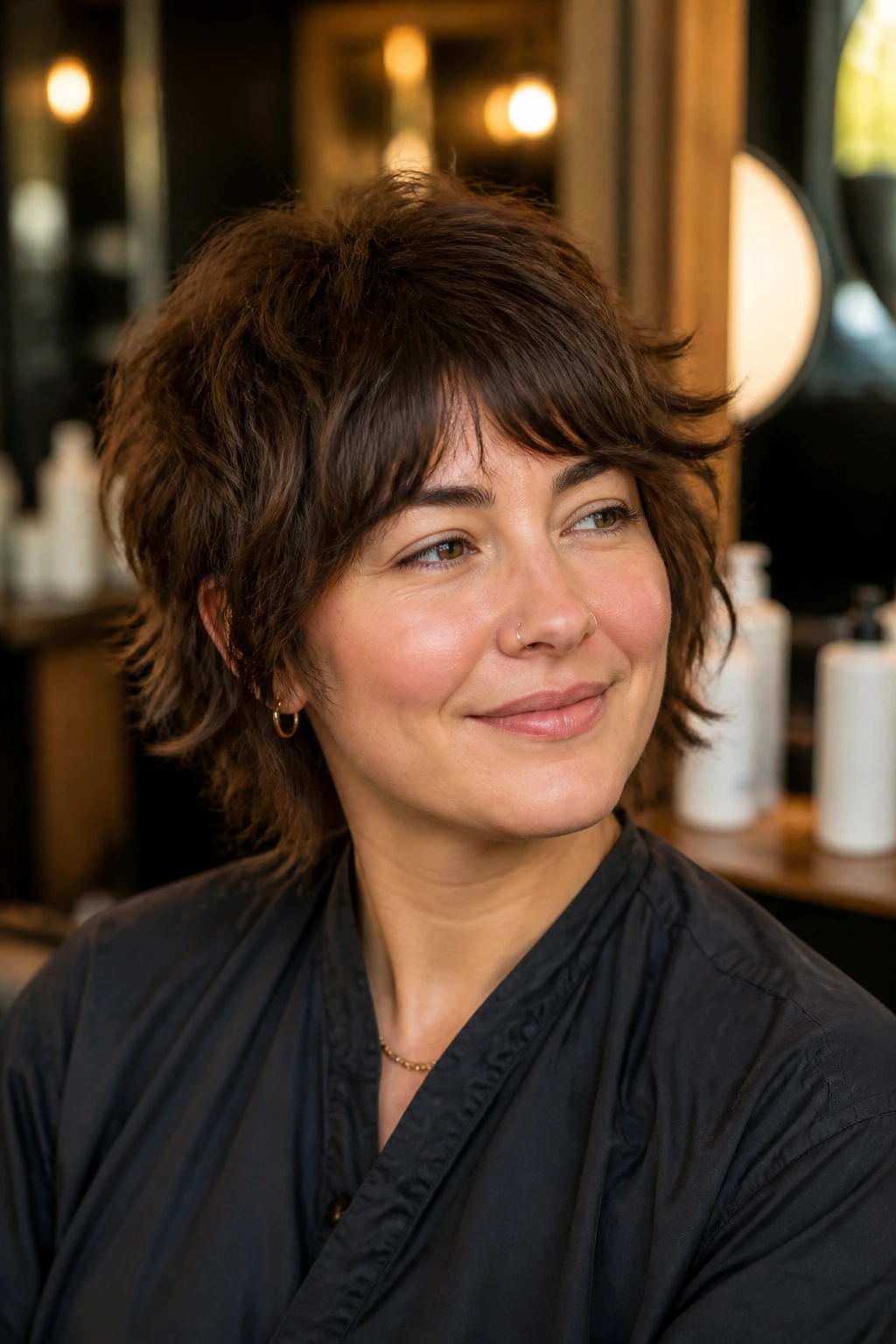
Bring pictures, yes, but don’t stop there. A photo shows a vibe. It does not tell the stylist where your hair breaks, how thick it is, or how much time you’ll spend with a blow-dryer. Say the useful stuff out loud.
Tell your stylist these three things
- Where your face is widest: Point to the cheek area if that’s the spot you want opened up, so the shortest layers don’t land there by mistake.
- How much styling you’ll do: If you air-dry, say that. If you’ll use a round brush every morning, say that too.
- What you want at the crown and nape: Ask for more lift up top and a tapered back if you want the cut to look shorter without spreading out.
The line that helps most
Try this: “Keep the widest layers above or below my cheekbones, not right at them.” That single sentence saves a lot of bad shags. If you want bangs, say whether you want them split, side-swept, or soft enough to tuck away on a lazy day.
The Brushes, Creams, and Sprays That Keep the Texture Piecey
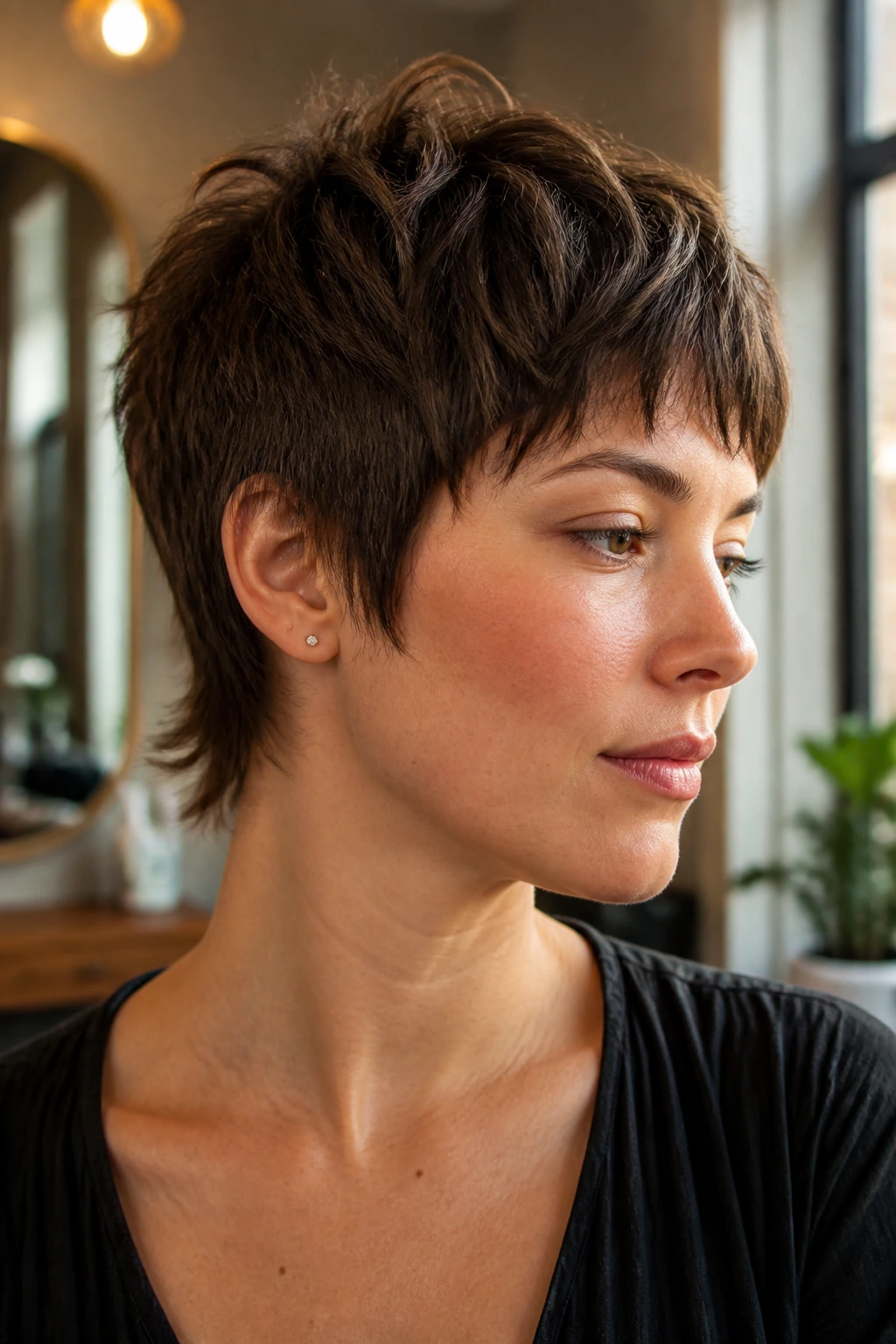
A short shag needs the right support, or it turns fuzzy. You do not need a drawer full of products. You need a few smart ones and a light hand.
- 1-inch round brush: Best for lifting the crown and bending the fringe without making the whole cut too polished.
- Vent brush or fingers: Good for rough-drying when you want separation and speed.
- Light mousse: Use at the roots on fine or medium hair to keep the top from falling flat.
- Texture spray: Gives that broken-up, piecey finish through the mid-lengths and ends.
- Matte paste or pomade: A tiny bit on the fingertips helps define the choppy ends.
- Diffuser: Worth it if your hair is wavy or curly and you want shape without frizz.
- Heat protectant: Non-negotiable if you touch the fringe or top layers with a blow-dryer or flat iron.
How to Style It on Straight, Wavy, Curly, and Coily Hair
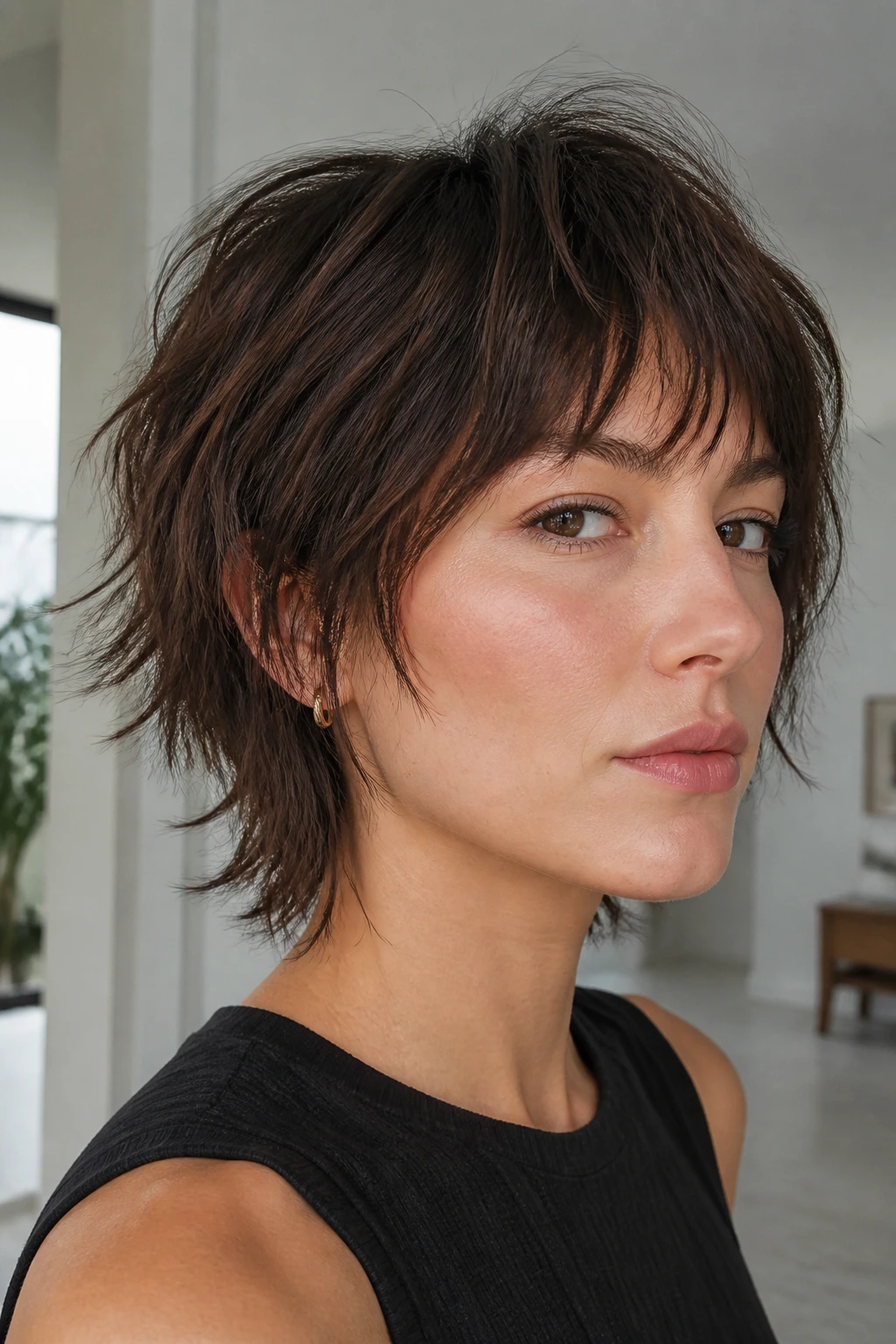
Straight hair:
Start with mousse at the roots, rough-dry until the hair is about 80 percent dry, then use a round brush only where you need lift. Straight hair can go flat fast, so the crown needs the most help. Finish with texture spray and pinch the ends apart with dry fingers.
Wavy hair:
Don’t overwork it. A little leave-in, a little diffuser, and a little scrunching usually beats a full blowout. If the wave is uneven, twist the front pieces while they’re damp so they land in a softer bend around the face.
Curly hair:
Keep definition at the top and weight off the sides. Use a curl cream or gel that doesn’t go greasy, then diffuse on low heat. The goal is spring, not expansion. If the cut puffs near the cheeks, check whether the sides are too short or whether too much product is sitting there.
Coily hair:
Shape first, product second. A short shag for coils should be cut with the curl pattern in mind, then styled with moisture at the ends and lift at the roots. Pick the roots gently after drying if you need more height. Skip heavy creams that make the shape droop.
Common Mistakes That Make a Short Shag Look Wider

Cutting the shortest layer at cheek level:
That’s the big one. It lands the volume exactly where a round face already has it. Ask to shift those shortest pieces a little higher or longer so the face stays open.
Leaving the fringe too dense:
A solid fringe can chop the face in half and make it look shorter. If you want bangs, keep them textured, split, or side-swept so they don’t read like a wall.
Thinning fine hair too much:
Fine hair does not need aggressive razoring everywhere. If you remove too much, the ends go wispy and the crown collapses. The fix is softer layering and less product, not more cutting.
Using rich cream all over the cut:
That kind of product can turn a piecey shag into a shiny, flat shape that sits against the cheeks. Keep heavier creams on the ends only, and use mousse or spray near the roots instead.
Blowing it dry straight down:
Hair wants to obey gravity. If you dry it flat, it will stay flat. Lift the roots while drying, even for 20 seconds at a time, and the shape holds better all day.
Variations and Adaptations to Try

The Softer Office Shag
Ask for the same short shape, but keep the perimeter a touch cleaner and the fringe less jagged. It works well if you want texture that still reads neat under a blazer or with polished makeup.
The Wolf-Cut Lite
Keep a little more length in the back and more separation in the crown. It has the attitude of a wolf cut without pushing too far into mullet territory. Good for hair that needs shape but not a dramatic chop.
The Glasses-Friendly Fringe
Choose a fringe that splits naturally and stays a little lighter around the eyes. That keeps frames from feeling crowded and prevents the bangs from rubbing constantly against the lenses.
The Thick-Hair Weightless Shag
This version uses internal weight removal and a soft nape taper to keep thick hair from ballooning. It’s the one to ask for if your hair grows out into a triangle every three weeks.
The Curly Cloud Crop
A shorter crown, softer sides, and rounded curl shaping make this feel airy instead of wide. It’s a strong choice when you want the face open but still want the curls to look full.
The Grow-Out Rebel
If you hate frequent trims, keep the front longer and the layers slightly blended. It may not have the sharpest outline on day one, but it stays better at week six than a more extreme cut.
Grow-Out, Trims, and Morning Refreshes
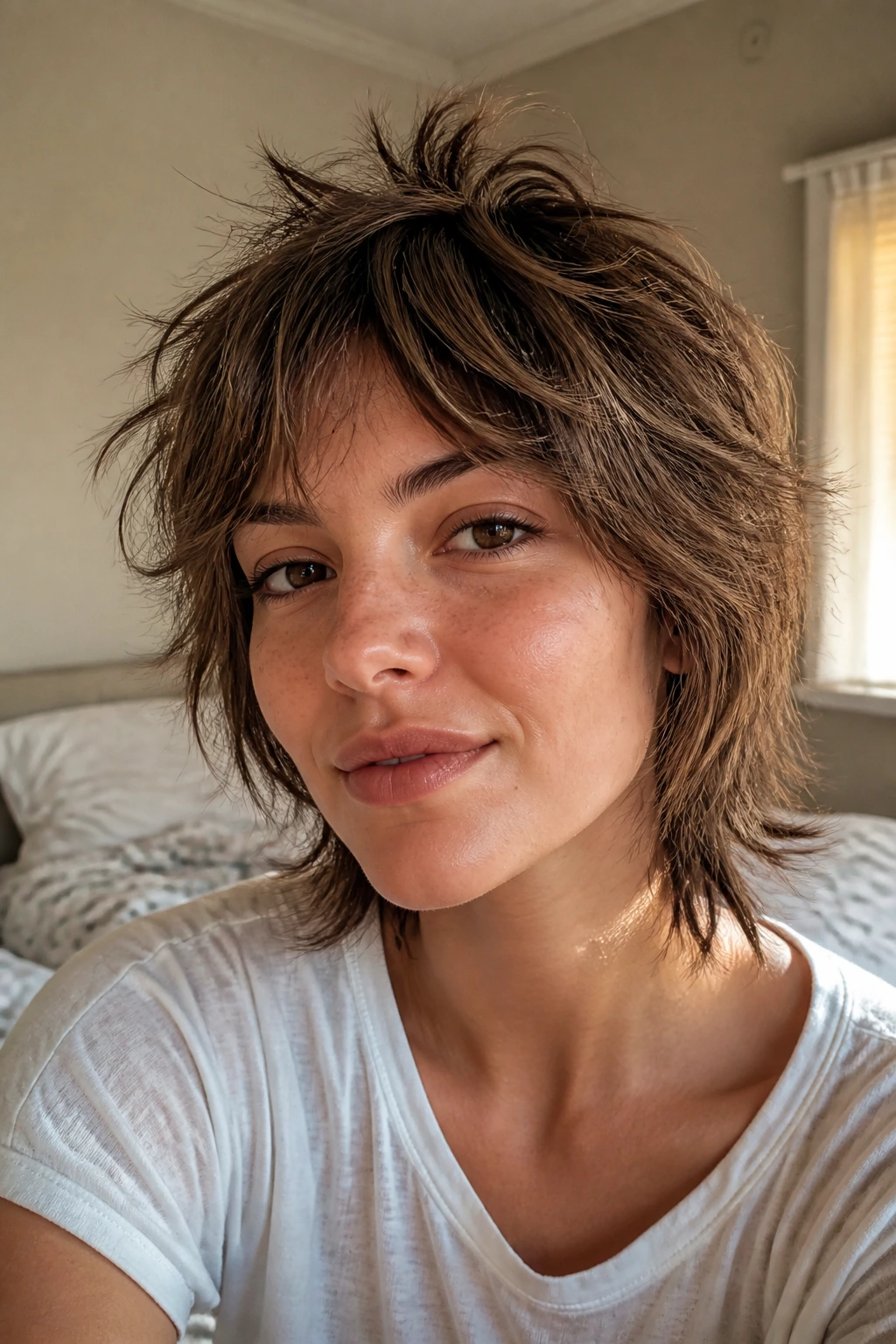
A short shag can look great a little overdue, but there is a line. Once the crown stops lifting and the sides start drifting into one heavy shape, the cut loses its edge. Most versions need a trim every 6 to 8 weeks to keep the silhouette honest. Bangs usually need a touch-up sooner, around 3 to 4 weeks, if they sit across the eyes.
Sleeping on it can flatten the whole thing. A silk pillowcase helps, and so does clipping the fringe away from the face if it’s still damp at night. In the morning, a little water mist at the roots can bring the top layers back to life. Do not soak the whole head unless you want to start over.
Dry shampoo is useful, but only at the roots and only in a small amount. Too much turns a shag chalky and dull. A one-inch section near the crown is usually enough. Then use your fingers, not a brush, to break the texture back apart.
Questions People Ask Before Cutting a Short Shag
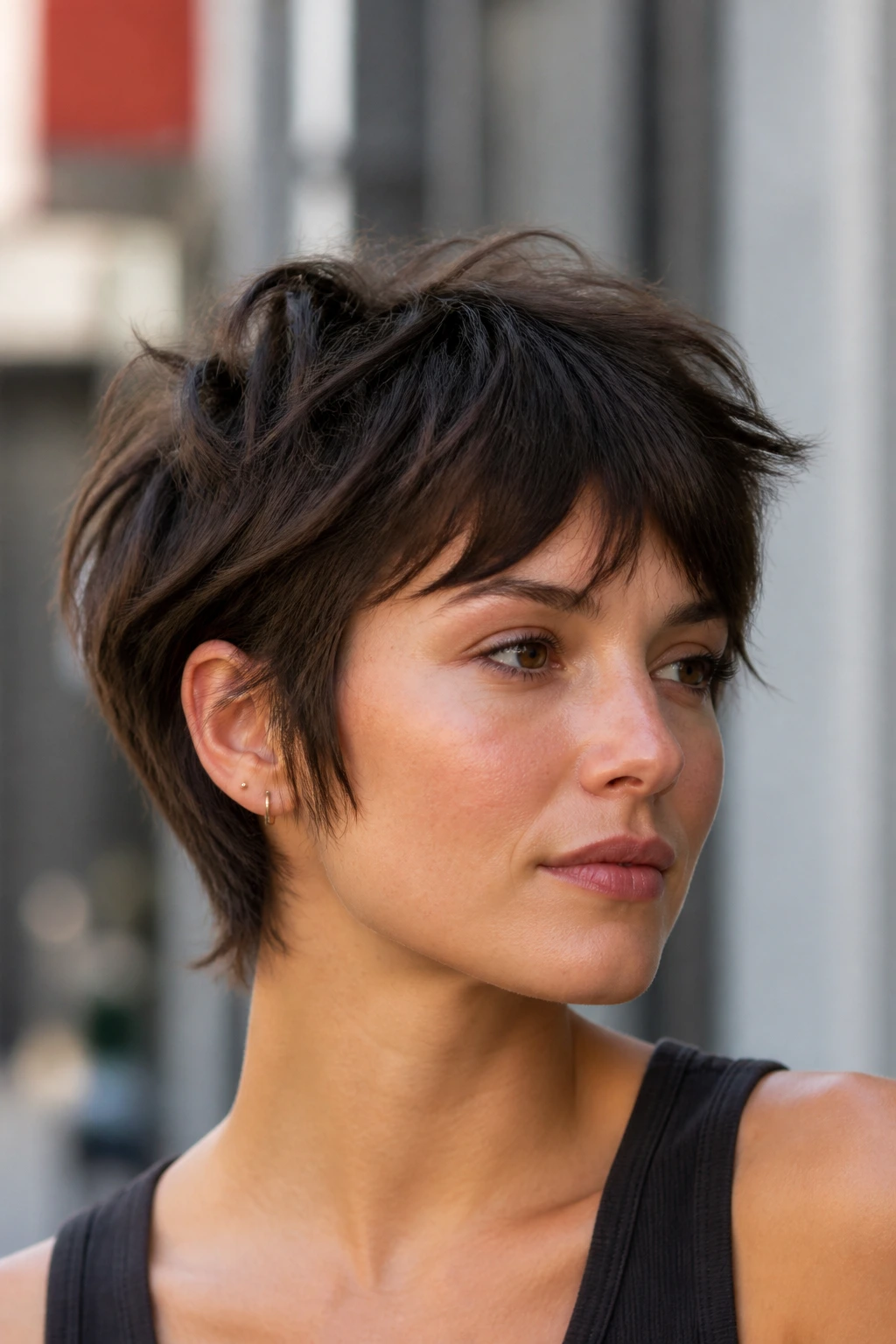
Will a short shag make a round face look wider?
Not if the layers are placed well. The cut should build height at the crown and keep the widest pieces away from the middle of the cheeks. When the shape opens vertically, it usually does the opposite of widening.
Do I need bangs for this haircut to work?
No. Bangs help some faces, but they are not required. A side part or longer face-framing pieces can do the same job if you want less maintenance.
Can fine hair pull off a messy short shag?
Yes, but the layers need to stay light. Fine hair does better with lift and texture than with heavy razoring everywhere. Mousse at the roots matters more than a pile of creams.
What if my hair is thick and puffy?
Then the internal weight removal matters even more. Ask for the bulk to come out underneath, not just at the ends. That keeps the cut from swelling outward at the cheeks.
How do I keep it from looking like a mullet?
Keep the back tapered and the front pieces soft enough to frame the face. If the rear length gets too long and the front gets too short, the balance shifts fast. A good stylist will watch that line.
Can I wear this with glasses?
Absolutely. Just avoid a fringe that lands directly on the frames unless you want to trim it often. Side-swept or bottleneck bangs are usually easier.
Is this cut hard to style every day?
Not usually. Most versions look best with a rough dry, a little spray, and a quick lift at the crown. If your routine has room for more polish, great. If not, this cut doesn’t punish you for being practical.
What happens if the cut grows out too fast?
It usually loses its shape around the cheeks first. That’s why a quick trim cycle helps. If you let it go longer, keep the fringe and crown refreshed so the haircut still reads as shaggy instead of merely long.
A Shape That Keeps Its Edge

The nice thing about messy short shag haircuts for round faces is that they do not ask the face to disappear. They ask the hair to work a little smarter. A bit of crown height, a bit of diagonal movement, and a little restraint around the cheeks can change the whole balance without turning the cut severe.
That’s the sweet spot. Not perfect. Not precious. Just enough shape to make the mess look chosen, which is the whole point.
Bring a photo, talk about where your face feels widest, and be specific about the crown and the fringe. That is usually where the good shag begins.