



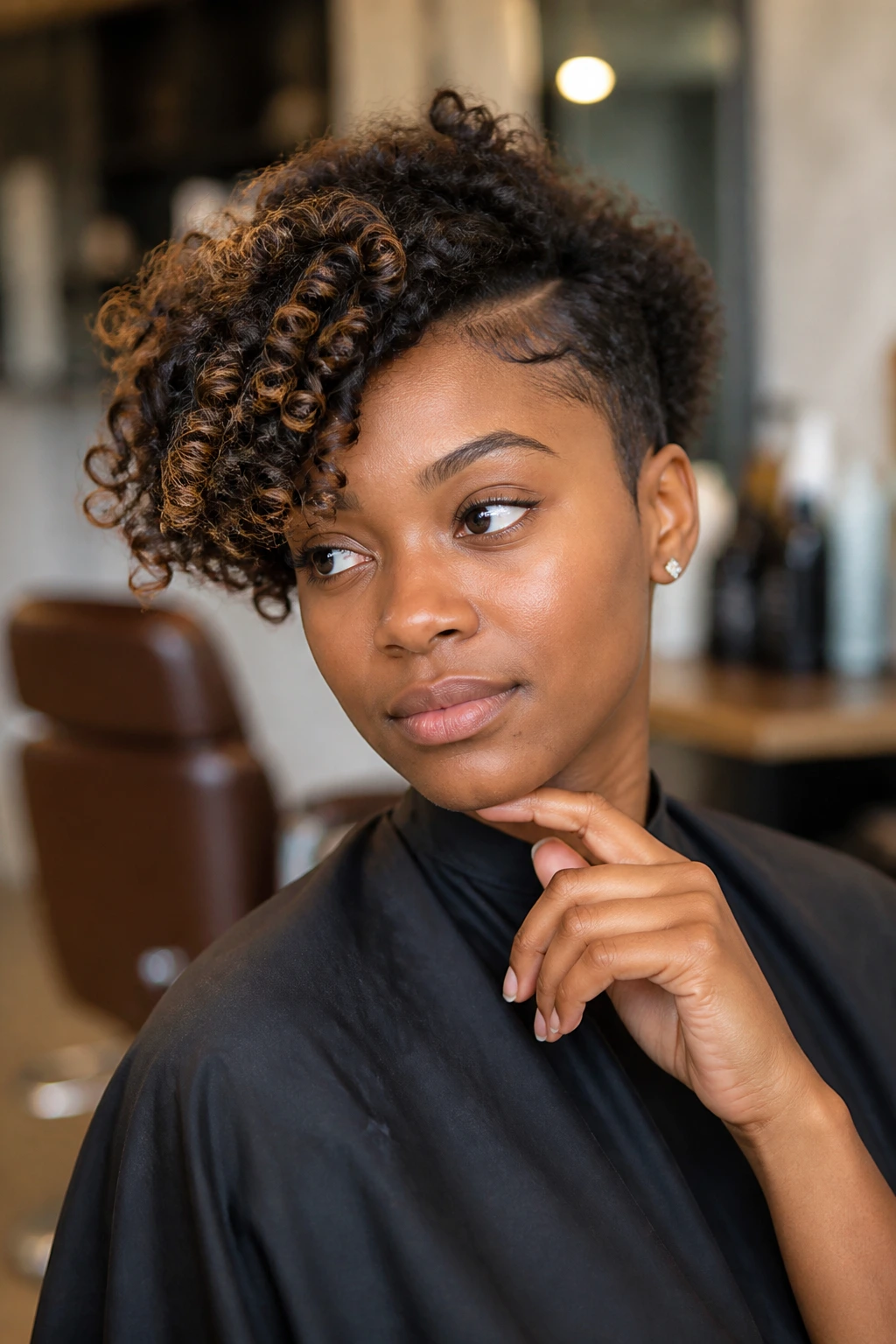
An asymmetrical short curly haircut on Black hair works because it stops pretending both sides have to behave the same. One side can skim the cheekbone while the other sits closer to the ear, and the whole head suddenly has direction.
That matters more than it sounds like it should. Coils, curls, and mixed textures do not lie flat for long, and a cut that looks balanced when wet can swing into a different shape once it dries. If you’ve ever watched a curl spring up an inch or two after the salon cape comes off, you already know why the math on this kind of haircut is different.
The strongest versions use that bounce on purpose. A clean taper at the nape, a side panel left longer, a diagonal fringe, a shaved temple, a stacked back — small moves, big shift. That’s the fun of short asymmetrical cuts on Black hair: they can be soft, sharp, neat, playful, or a little stubborn, and they still feel wearable.
Why These Cuts Hit So Well on Black Curls
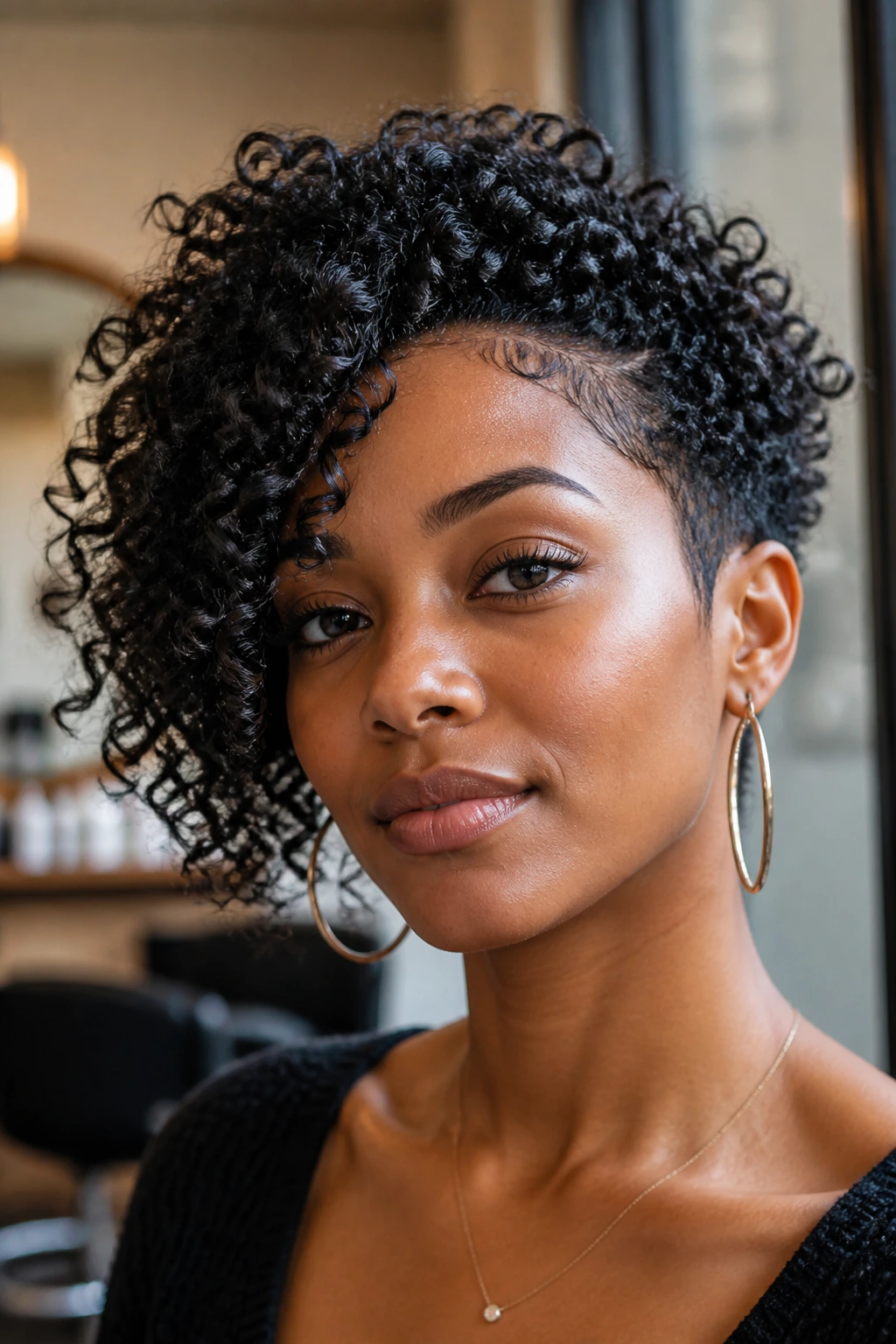
- Shrinkage becomes part of the design: A side that measures chin-length when wet may sit at the cheekbone after drying, which gives the cut movement instead of making it look “off.”
- The angle does the styling for you: Once the line is built into the cut, you do not have to force every curl into the same place each morning.
- You can go subtle or loud: The asymmetry can live in the fringe, the crown, the nape, or one shaved side, so there’s room for low-key shape and full drama.
- They work with fades and tapers: A crisp neckline or temple fade keeps the edges tidy while the curls stay soft on top.
- They grow out in interesting ways: Good asymmetry still looks intentional four, six, even eight weeks later, instead of collapsing into a random puff.
There’s a reason stylists keep coming back to diagonal lines on curly textures. The eye loves a path. Give it one, and the whole haircut starts to feel deliberate.
1. Side-Swept Tapered Pixie
A side-swept tapered pixie is the short haircut I’d hand to someone who wants shape without much daily wrestling. The longer side falls forward from the temple, the top keeps enough length for curl pattern to show, and the nape gets tapered tight so the back stays clean. On Black hair, that contrast is the whole point.
What to ask for
- Longer side: Leave 3 to 4 inches at the temple so the sweep actually reads after shrinkage.
- Top: Keep 2.5 to 3.5 inches on top, with light layering rather than a blunt top line.
- Nape and sides: Taper the neckline with a #2 or #3 guard, or scissors if you want softness.
- Front shape: Let the front graze one eyebrow or cheekbone instead of sitting flat across the forehead.
A little mousse on damp hair goes a long way here. Finger-coil the front pieces if your curls scatter, then let the rest air-dry or diffuse for 5 to 7 minutes on low heat. The shape should look airy, not helmet-stiff.
2. Curly Bixie With a Longer Fringe
A bixie is what happens when a bob and a pixie stop arguing and meet in the middle. The cut stays short enough to feel easy, but the longer fringe gives it softness, which is exactly what a lot of curly Black hair needs when you want movement without losing structure.
This version works especially well if you hate the look of a cut that’s too neat. Keep the fringe brushing one eyebrow, leave the sides around ear length, and let the back sit a little shorter so the silhouette tilts forward. The angle should show up when you turn your head, not only in a mirror.
A bixie lives or dies on layer balance. If the top is too heavy, the fringe falls into your eyes and the whole thing feels boxy. If the layers are too choppy, the front pieces separate into little frizz wings. The sweet spot is a soft, piecey finish with a touch of cream and a small amount of gel at the ends.
3. Angled Chin-Length Bob
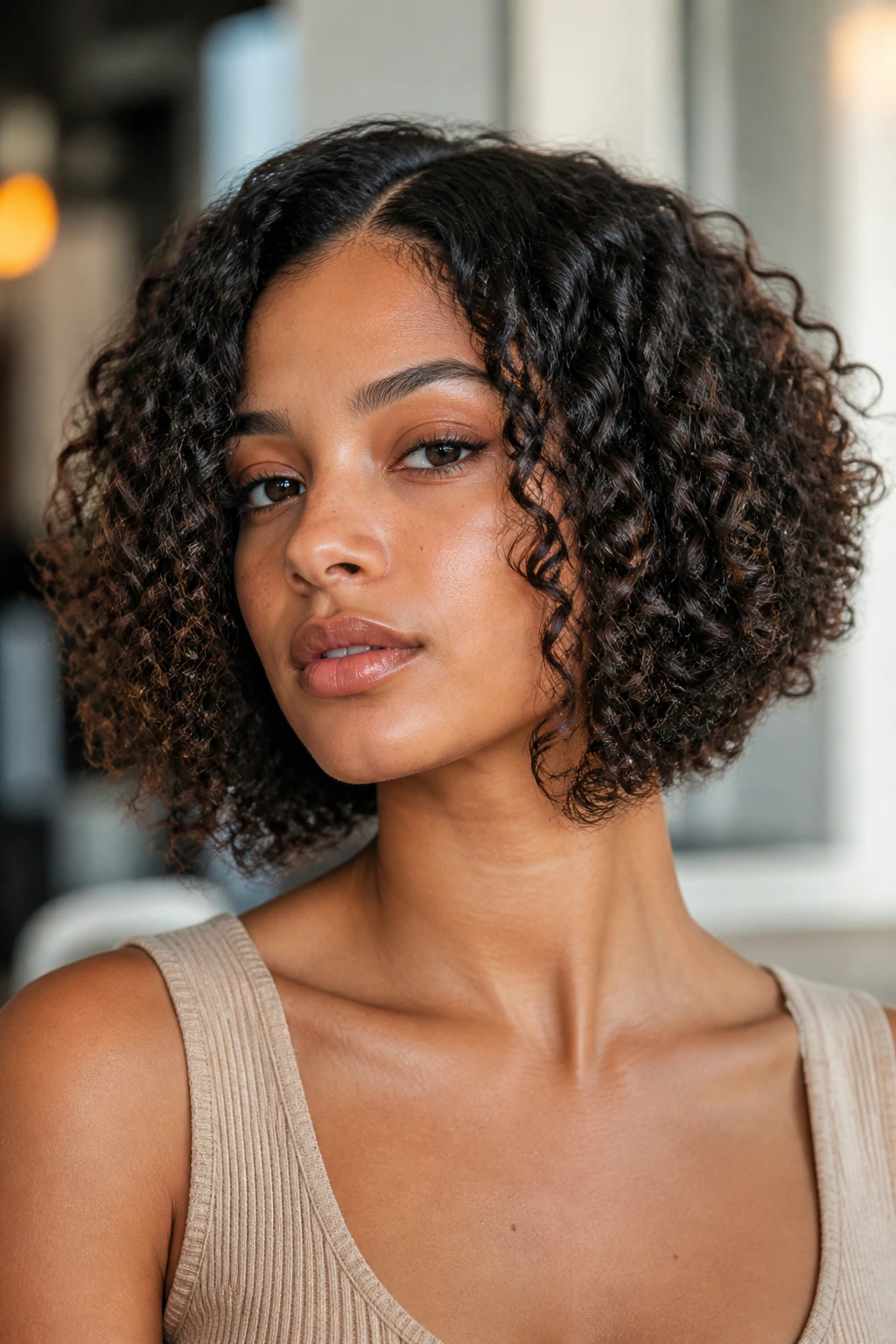
Why does a chin-length bob keep showing up on curly heads? Because it gives the curl room to bounce without swallowing the jawline. The back can sit an inch or two shorter, the front can brush the chin, and the diagonal line still reads clearly once the hair dries.
This is a strong choice if your curls are dense and you want a little polish without going fully short-pixie. A middle part makes the angle feel modern; a deep side part softens it and makes the front pieces feel longer. Either way, the cut should look balanced when the curls stack, not when they’re stretched flat.
How to wear it
A diffuser helps the front pieces settle in the right direction, but don’t over-dry the ends. Leave the perimeter a little springy. That’s where the shape shows up.
4. Sculpted Side-Part Crop
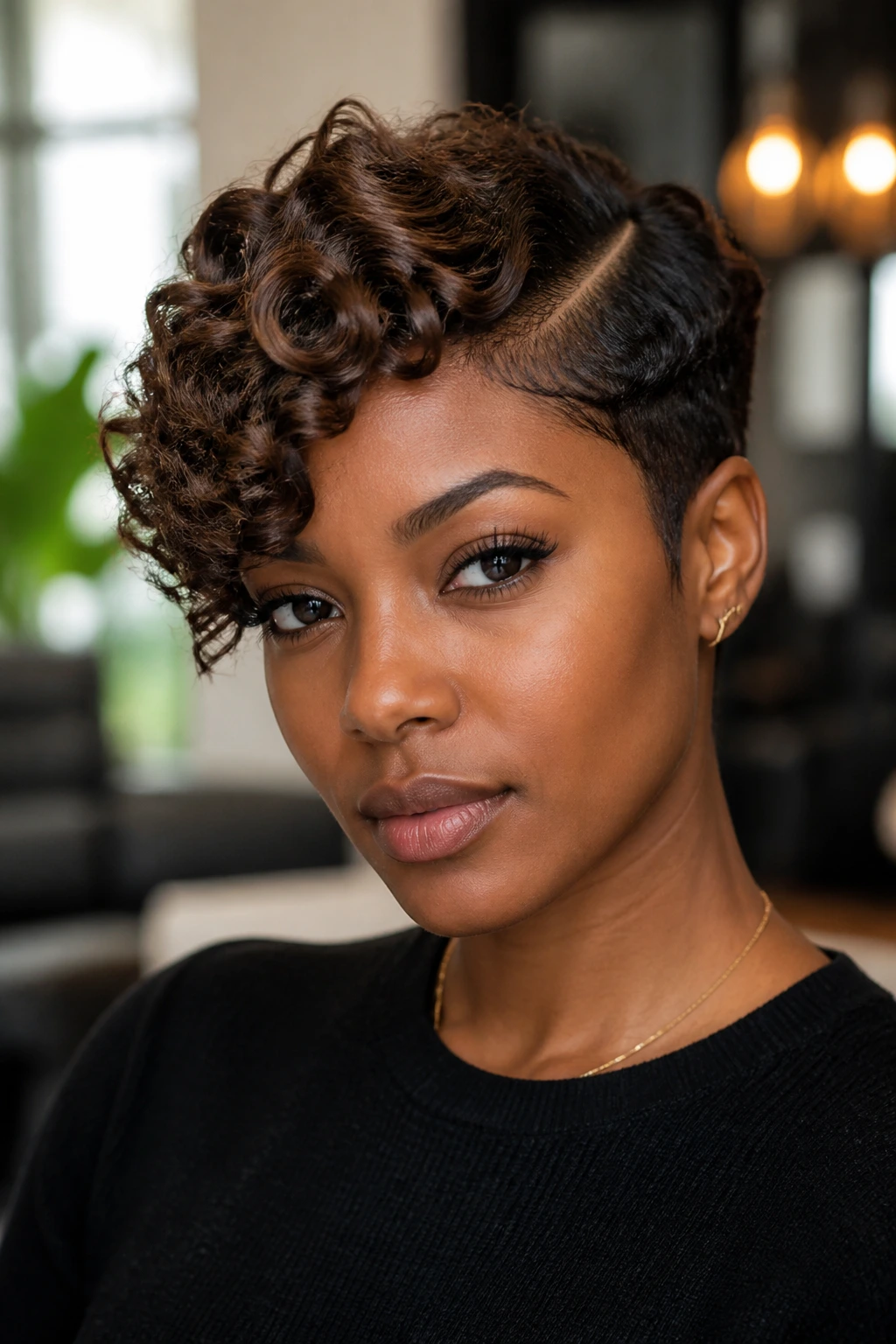
If you want a cut that looks intentional before you even touch it, a sculpted side-part crop is the one to look at. The part sits off-center, often near the arch of the brow, and the longer top section sweeps across the forehead while the opposite side stays close to the head. It’s neat without being fussy.
The key is weight placement. Too much bulk at the crown and the whole cut puffs upward in a way that hides the side part. Too little, and the asymmetry disappears. Ask for a cropped outline with a little lift at the front, then let the stylist soften the edges around the ear and temple.
This shape likes a little shine cream and a brush or fingers to guide the part. It also plays well with glasses, because the lines around the temples stay clean instead of crowding the frames.
5. Jaw-Grazing Stacked Bob
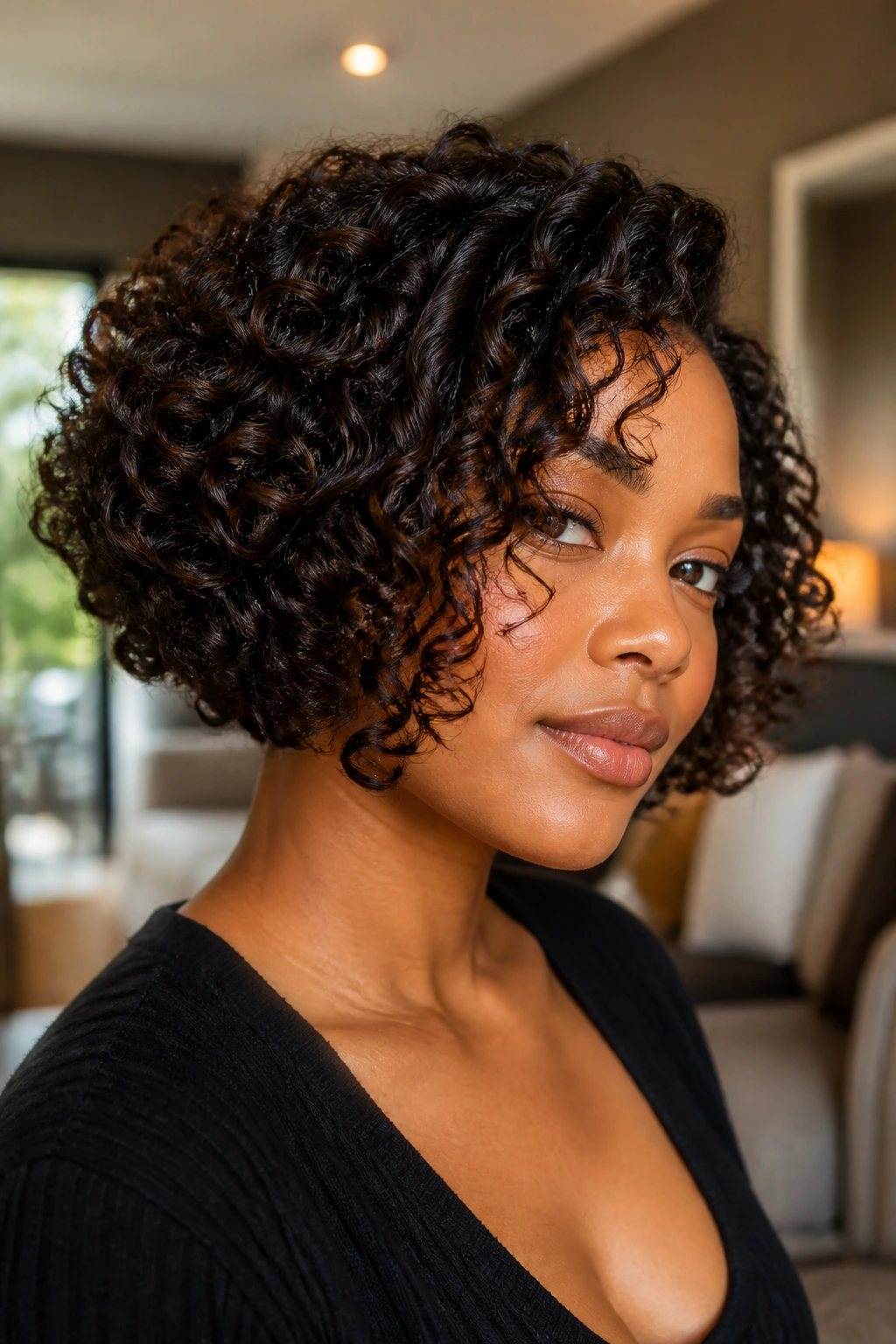
A stacked bob is one of those haircuts that quietly does a lot of work. The back is built a bit shorter and fuller, the front hangs longer toward the jaw, and the whole shape feels lifted instead of heavy. On curly Black hair, the stack keeps the back from ballooning out in the wrong place.
This version is for someone who wants bob energy but not a flat, one-length sheet of curls. Ask for the back to be stacked in small layers, not chopped into sharp steps, and let the front pieces lengthen toward the chin. If the curls are tight, the stylist may need to leave the front longer than you think.
The payoff is a shape that looks clean from the side and lively from the front. It’s one of the best short options if your hair tends to sit wide at the crown.
6. Nape-Tapered Side-Sweep Cut
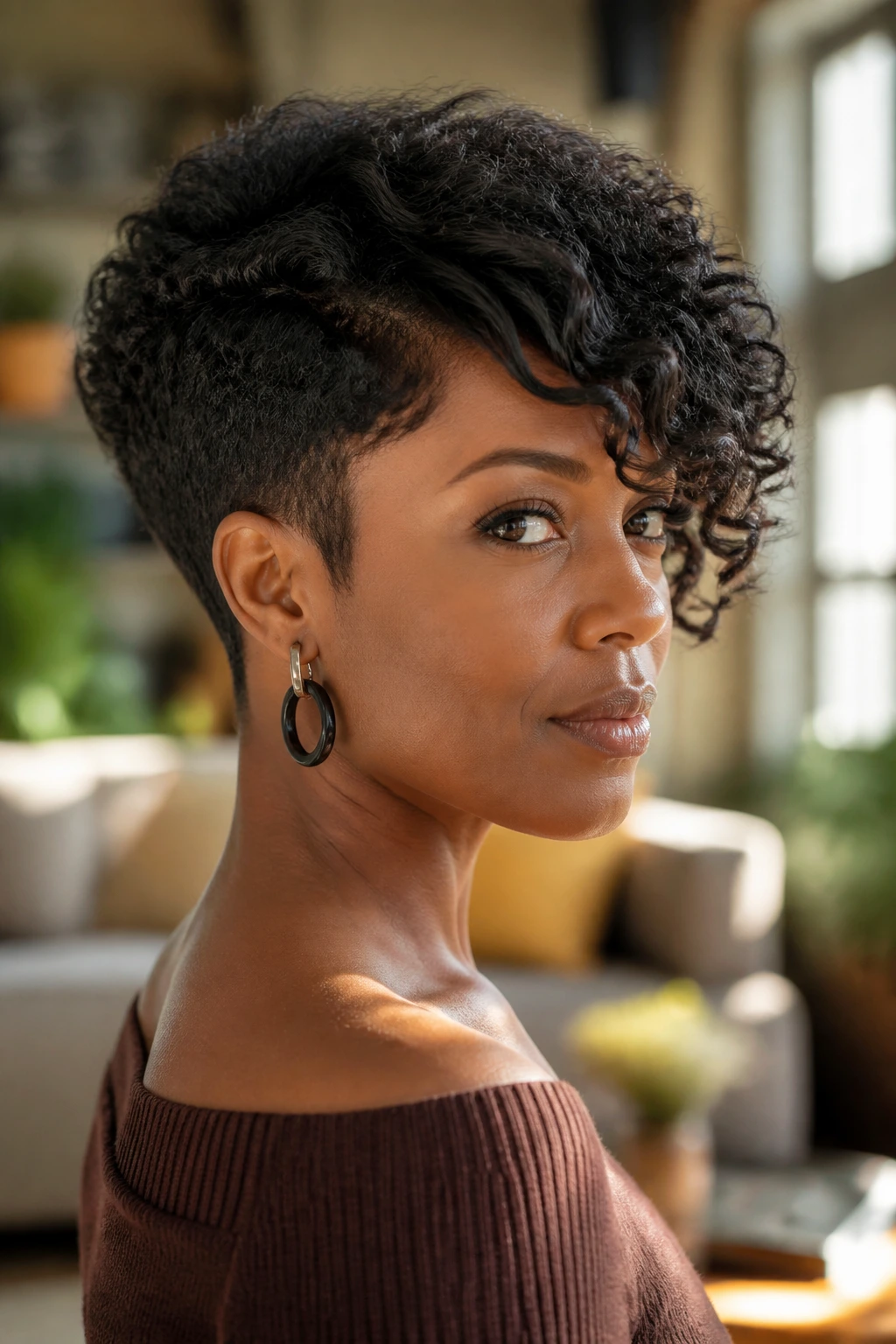
Need a cut that keeps the neck cool and still gives you something to look at from the front? This is it. The nape is tapered close, the top stays longer, and the front sweeps across the face in a soft diagonal that reads especially well on coily textures.
Unlike a blunt crop, this one gives you space to play with volume. The longer side can be brushed forward for a softer look or pushed back and pinned for a cleaner profile. That makes it a good option if you wear earrings often, because the neckline stays open and the face line stays visible.
It also grows out with a little grace. The taper can blur over time without ruining the shape, which is useful if you do not want to run back to the salon the second the edges start softening.
7. Asymmetrical Curly Shag
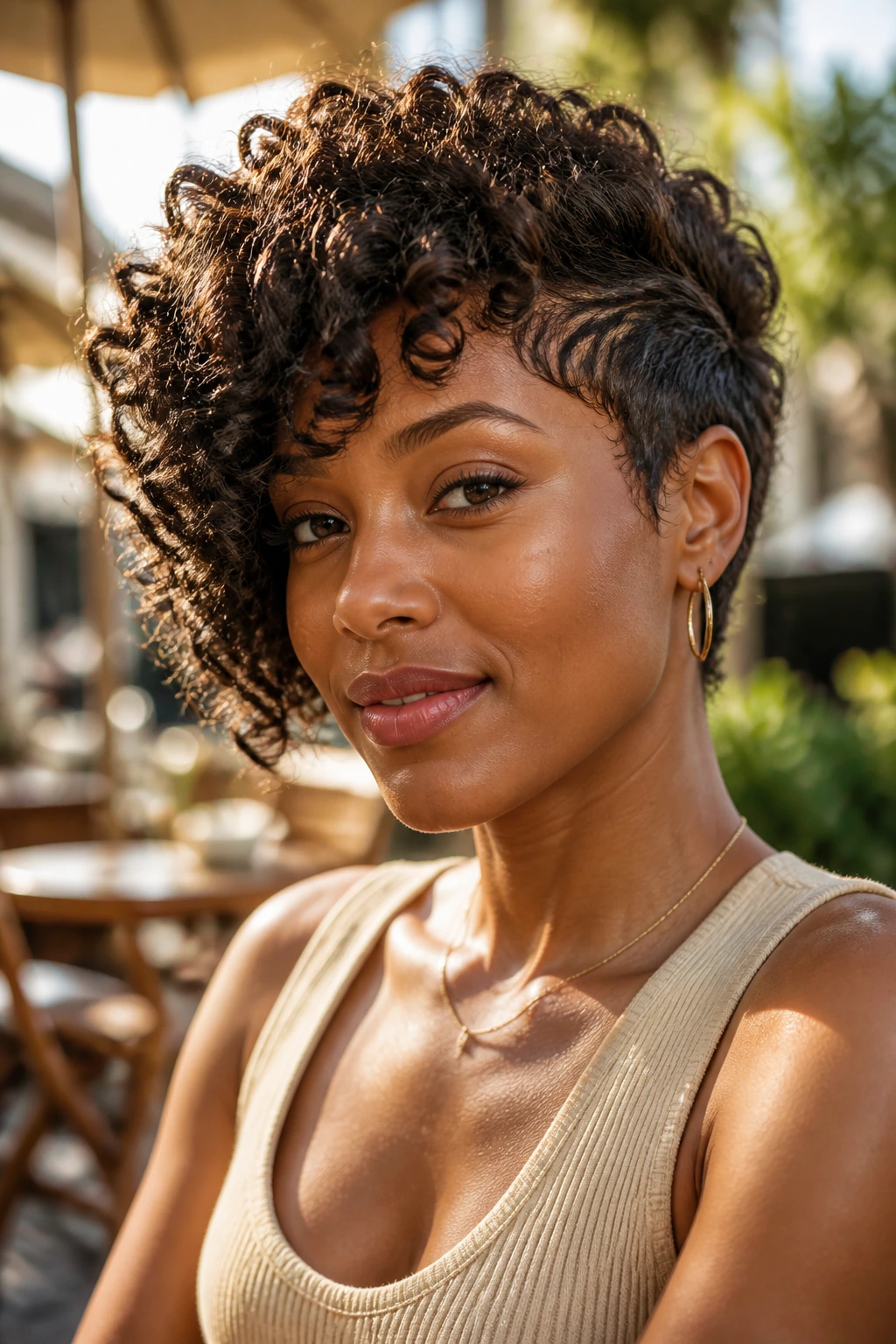
A curly shag on Black hair should never look like you forgot to finish your hair. It should look like the curls chose their own place and the cut knew how to keep up. The asymmetry comes from the layered perimeter, where one side drops a little lower and the crown stays slightly shorter.
This is one of the best cuts for people who want movement more than polish. Dense curls love the extra internal layering, and looser coils can use the shag to avoid that triangle shape that happens when the bottom gets too full. Ask for layers that start higher at the crown and a side that lands a little longer near the cheek.
Air-drying works beautifully here, but “air-drying” does not mean doing nothing. Scrunch in a light foam or gel, shake the roots with your fingertips, and leave the curls alone once they begin to set.
8. Diagonal Fringe TWA
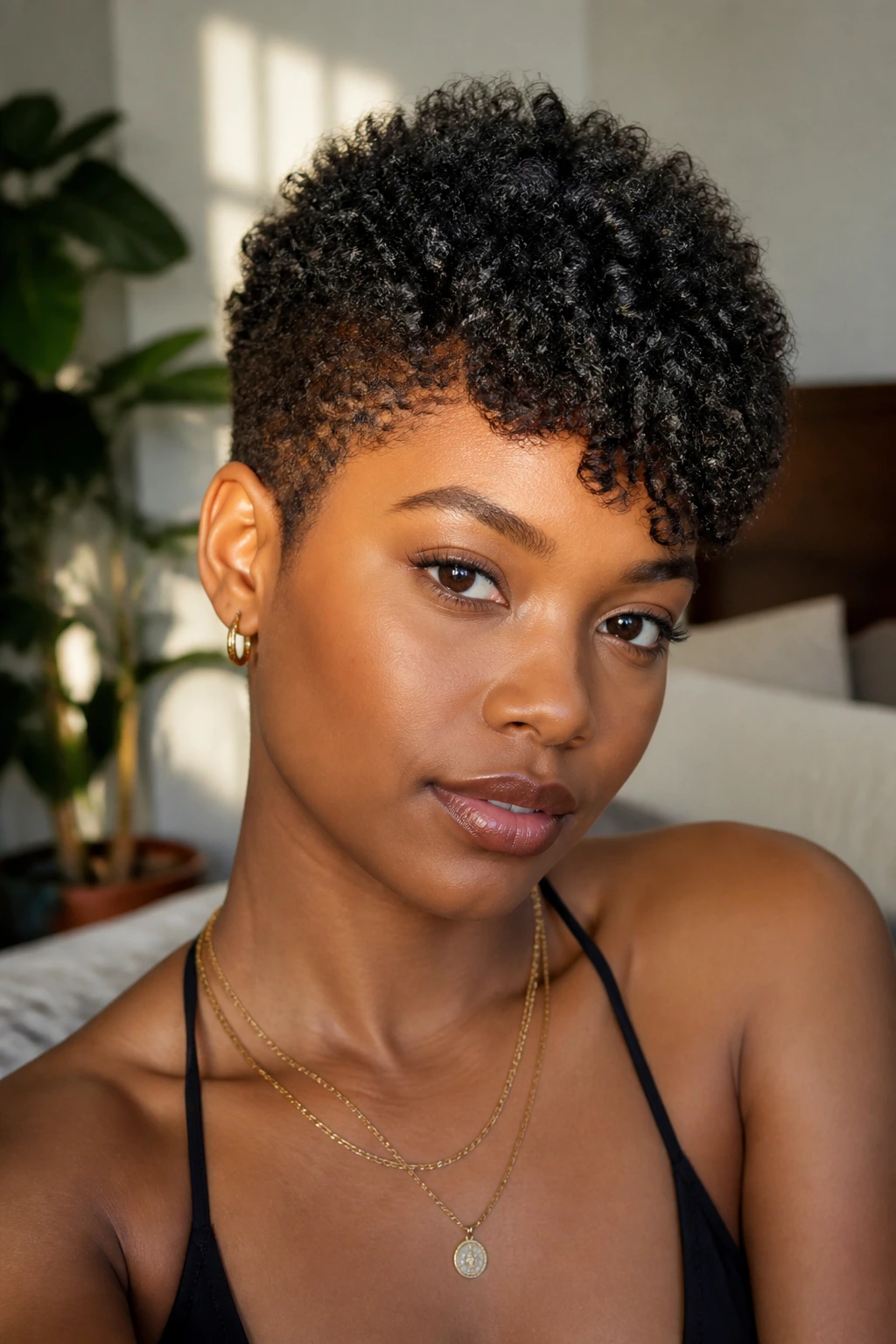
A teeny weeny afro does not have to be even to be elegant. A diagonal fringe TWA uses a short, rounded shape with one front panel cut a touch longer so it falls across the forehead at an angle. The result is subtle asymmetry, not a shout.
This cut is a smart choice if you like low length but still want the face framed. Keep the sides close, let the front slope from one temple toward the brow, and leave enough room at the crown so the curl pattern can show instead of being flattened into a dome. It works especially well when the edges are tidy but not overlined.
What makes it work
- The fringe creates a clear line across the face.
- The sides stay tight, so the angle doesn’t get lost.
- The shape looks clean even when the curl pattern loosens over the week.
A little edge control at the temples is enough. Don’t drown it in product. Short hair shows overload faster than long hair does.
9. Finger-Coil Asymmetric Bob
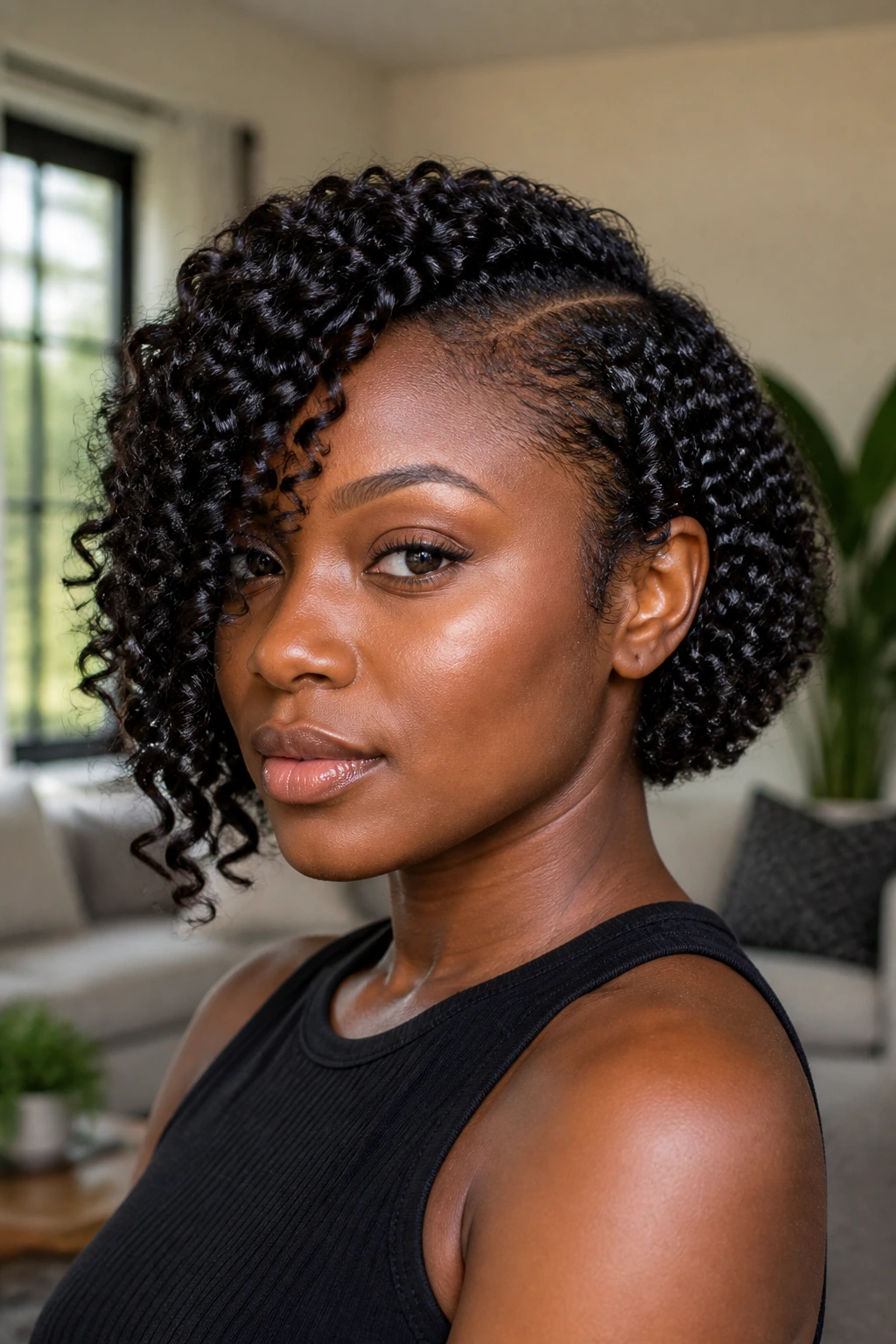
What changes when you build the haircut around finger coils? The answer is that the line becomes sharper without becoming stiff. A finger-coil asymmetric bob gives each curl a defined endpoint, so the longer side stays readable and the shorter side doesn’t disappear into fluff.
This cut works especially well if your curl pattern holds definition for several days. Ask for the front panel to stay slightly longer than the back, then set the longer side with smaller coils so the angle feels intentional. If the bob hits the chin on one side and sits a little higher on the other, the difference shows up beautifully when the hair moves.
It does take more time to set than a loose wash-and-go. Worth it, though. The shape stays crisp in a way that feels almost tailored.
10. Off-Center Rounded Afro
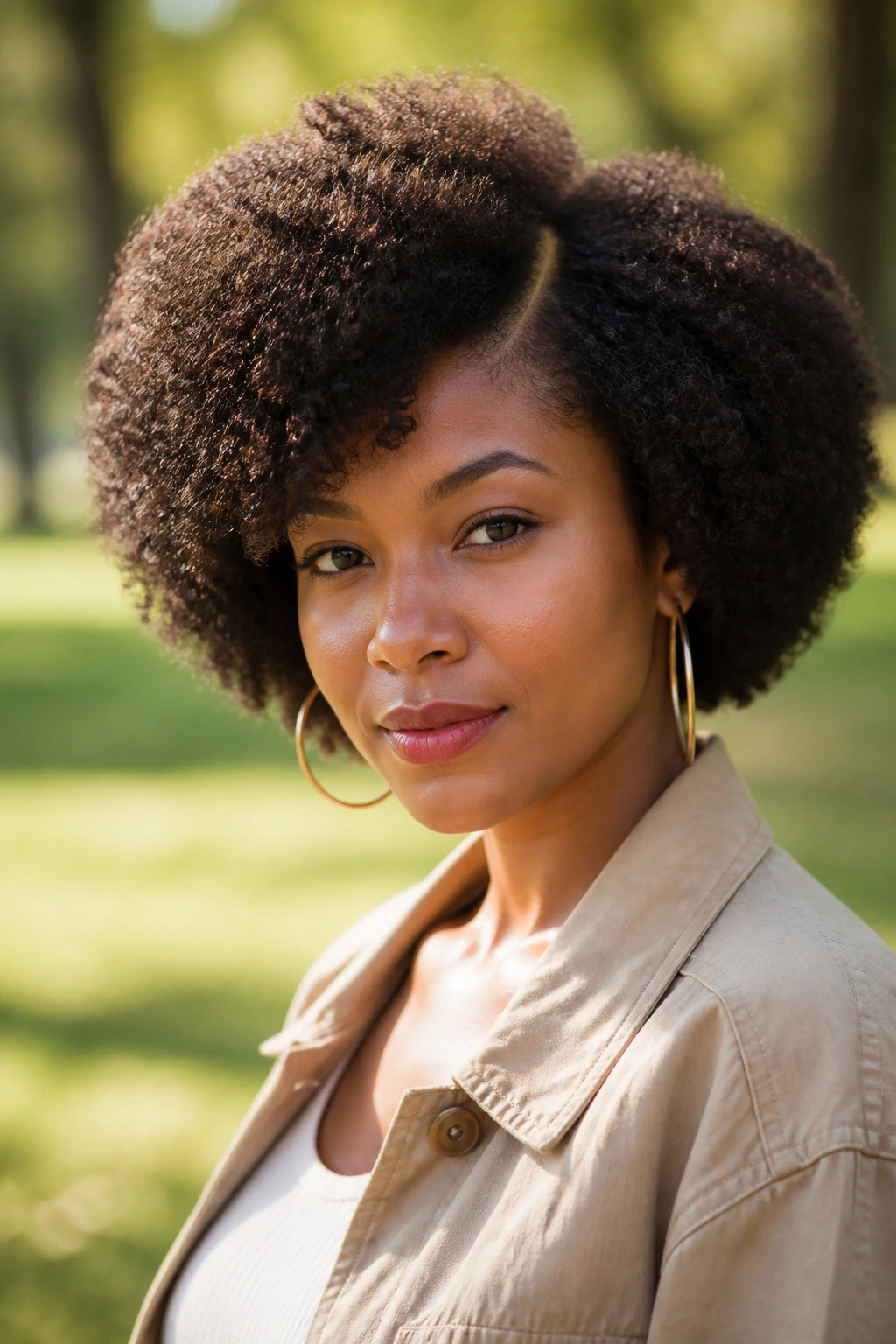
Not every asymmetrical cut needs a shave or a hard line. A rounded afro with an off-center part can create the same feeling of imbalance in a much softer way. One side sits a little fuller, the other side breaks forward a touch more, and the result is gentle, not graphic.
This is the cut for someone who likes volume but wants it controlled. The perimeter stays rounded, which keeps the afro from widening too much at the cheeks. The asymmetry comes from the crown placement and the side line, not from a dramatic length difference.
If your hair is dense, ask for a light internal shape-up so the center doesn’t puff into a helmet. And skip heavy butters right at the roots. They flatten the silhouette faster than people expect.
11. Uneven Twist-Out Crop
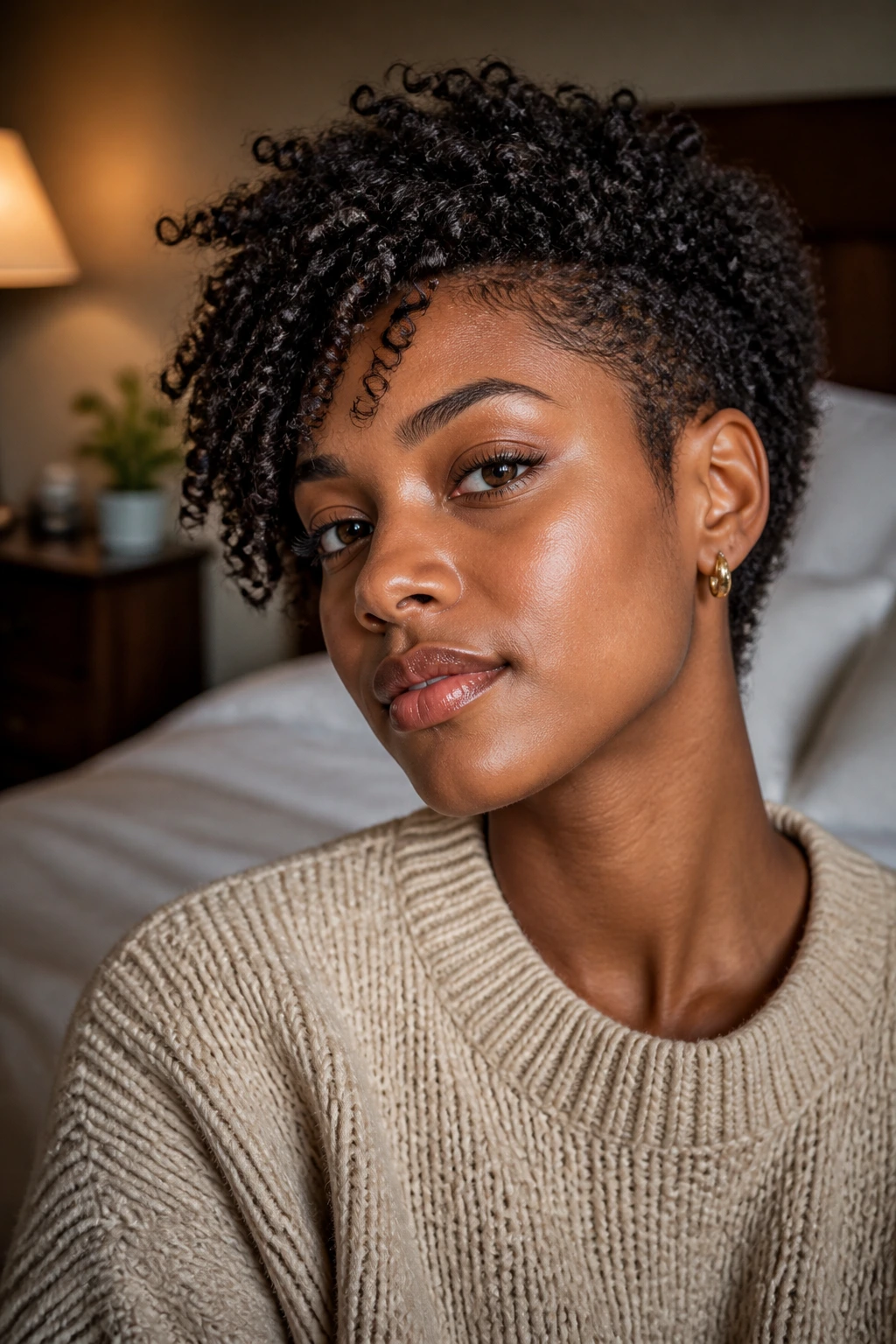
This is the cut for people who twist their hair at night and want the shape to look good even before the twist-out is fully separated. The perimeter is cut with a slight lean, one side left a little longer so the finished style feels directional instead of round and same-same.
A good uneven twist-out crop gives you flexibility. Wear it defined for clean lines. Break it apart more when you want softness. The haircut should support both moods. That means leaving enough length on the longer side for the twists to stretch without shrinking into the same height as the short side.
It also means being honest about your routine. If you only want to twist once and forget about it, keep the asymmetry mild. If you don’t mind reworking the front with your fingers, you can push the angle much harder.
12. Short Curly Cut With Curtain Bangs
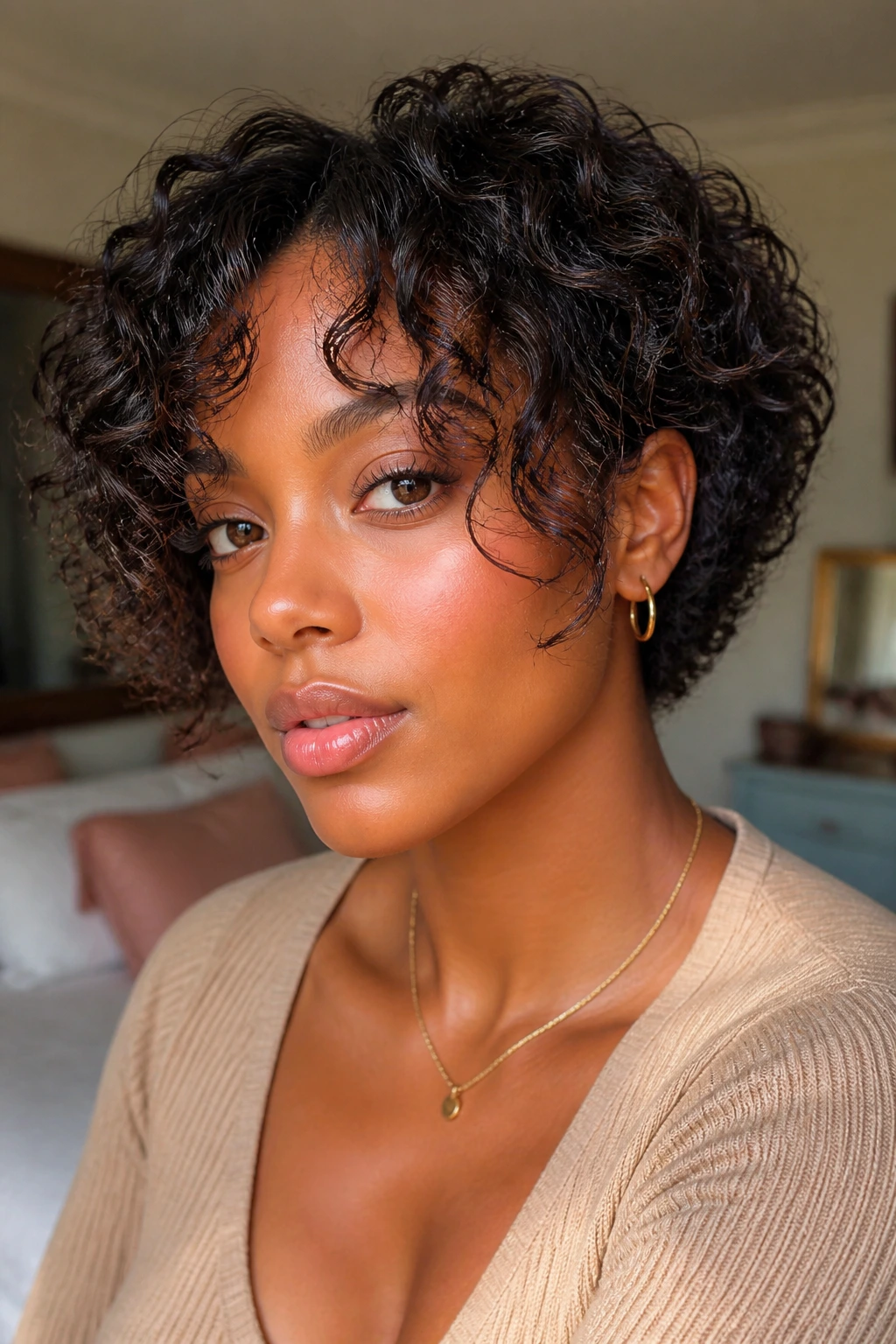
Need framing without a blunt fringe? Curtain bangs do that job better than almost anything else. On short curly hair, they split softly off-center and fall away from the face, which keeps the front light while still giving you that asymmetrical pull.
The trick is length. If the bangs are too short, they bounce straight up and lose the curtain effect. Leave enough for the front pieces to brush the cheekbones when dry, then keep the sides a touch shorter so the shape opens out toward the temples.
This cut loves a round brush blow-dry at the roots or a quick diffuse-and-pull method if you want the bangs to settle with a little direction. It’s a good choice for anyone who likes face-framing but hates hard lines across the forehead.
13. Curly Bowl-Cut Revival
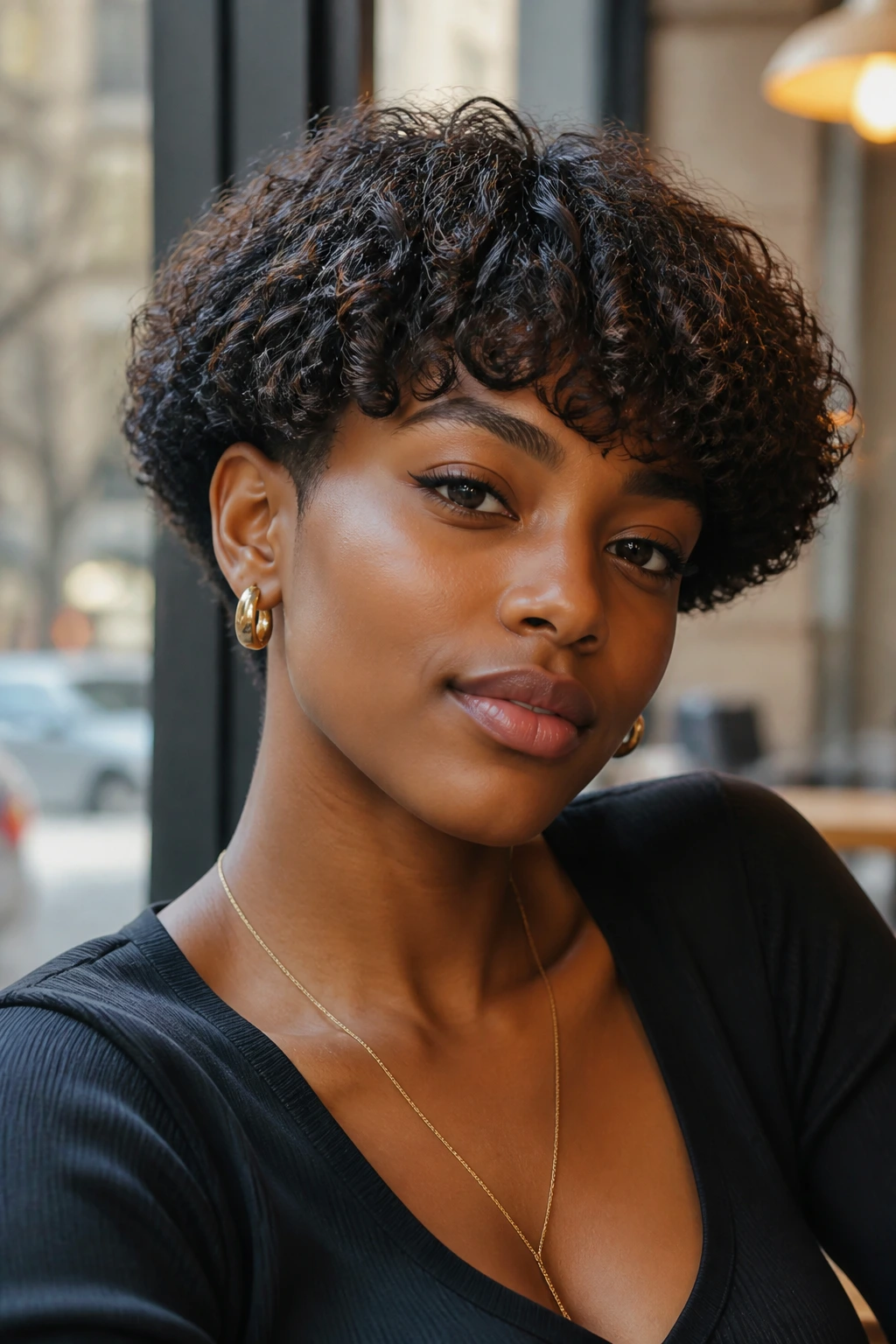
A modern bowl cut on Black hair is not the mushroom cap people remember from old school photos. It’s rounded, controlled, and a little cheeky. The asymmetry comes from one side dropping lower, or from the fringe being slightly longer on one temple than the other.
This style looks strongest when the perimeter is cut dry or stretched, because the curl pattern matters more than the wet outline. The crown should stay full enough to keep the bowl shape readable, but the edges need to soften as they move around the face. If the line is too sharp, the whole thing turns severe. If it’s too loose, you lose the point.
I like this cut when the wearer wants something architectural. It has a little attitude. No need to apologize for it.
14. Temple-Fade Coil Crop
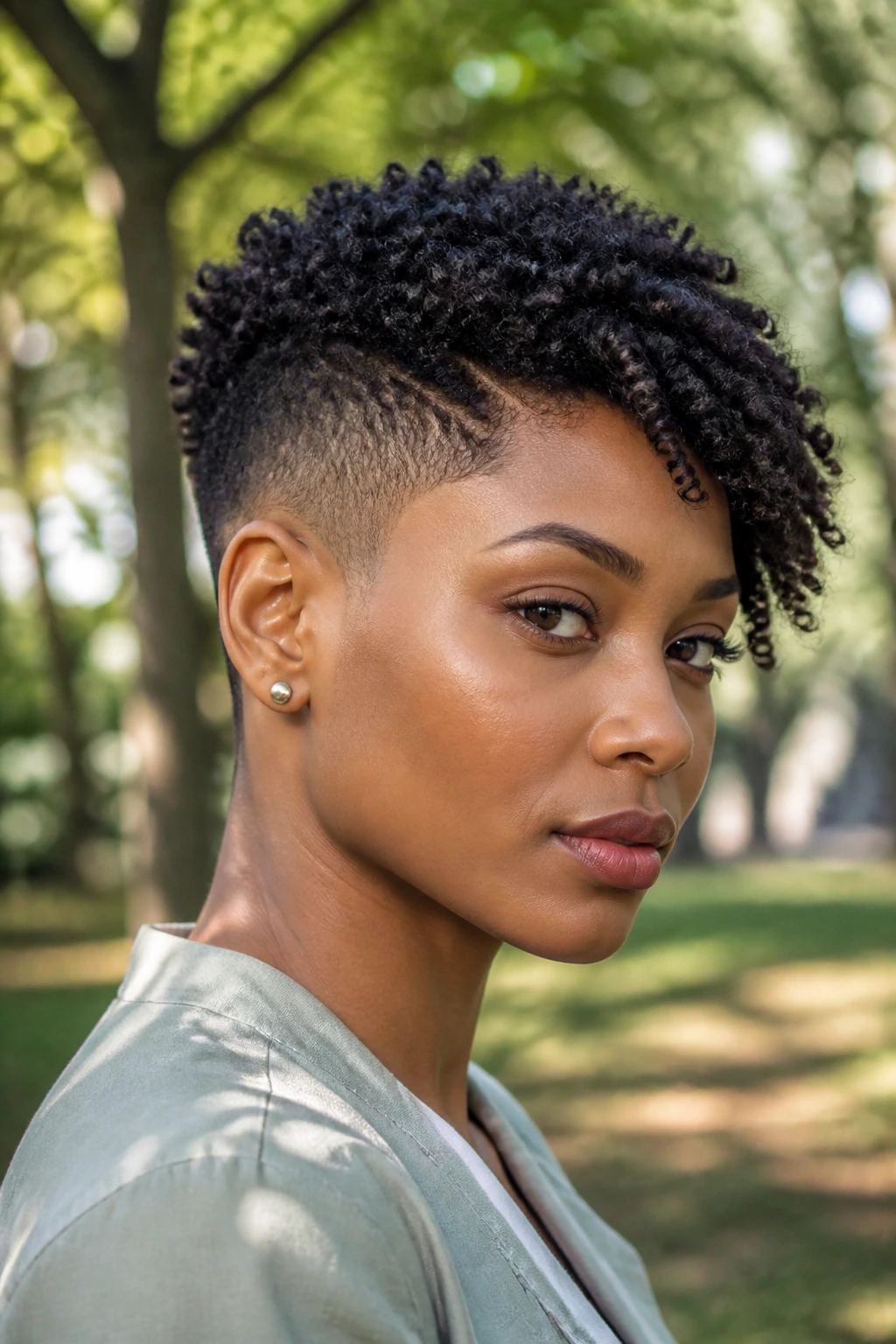
If you want clean edges and a lot of top texture, a temple-fade coil crop gives you both. The fade starts near the temple and ear, while the top stays longer so coils can stack upward. That contrast makes the asymmetry feel crisp even if the hair itself is soft.
Ask for this at the chair
- A fade that starts low or mid at the temple, depending on how dramatic you want it.
- Top length around 2.5 to 4 inches so coils can spring.
- A little extra length on one side of the front for a diagonal line.
- A clean outline at the nape, but not a shaved strip that feels disconnected.
This cut is easy to refresh with a little water and curl cream. It does, however, need clipper cleanup more often than a softer bob. If you like neat sides and curly height, that trade-off is worth it.
15. Clipped Sides With a Longer Crown
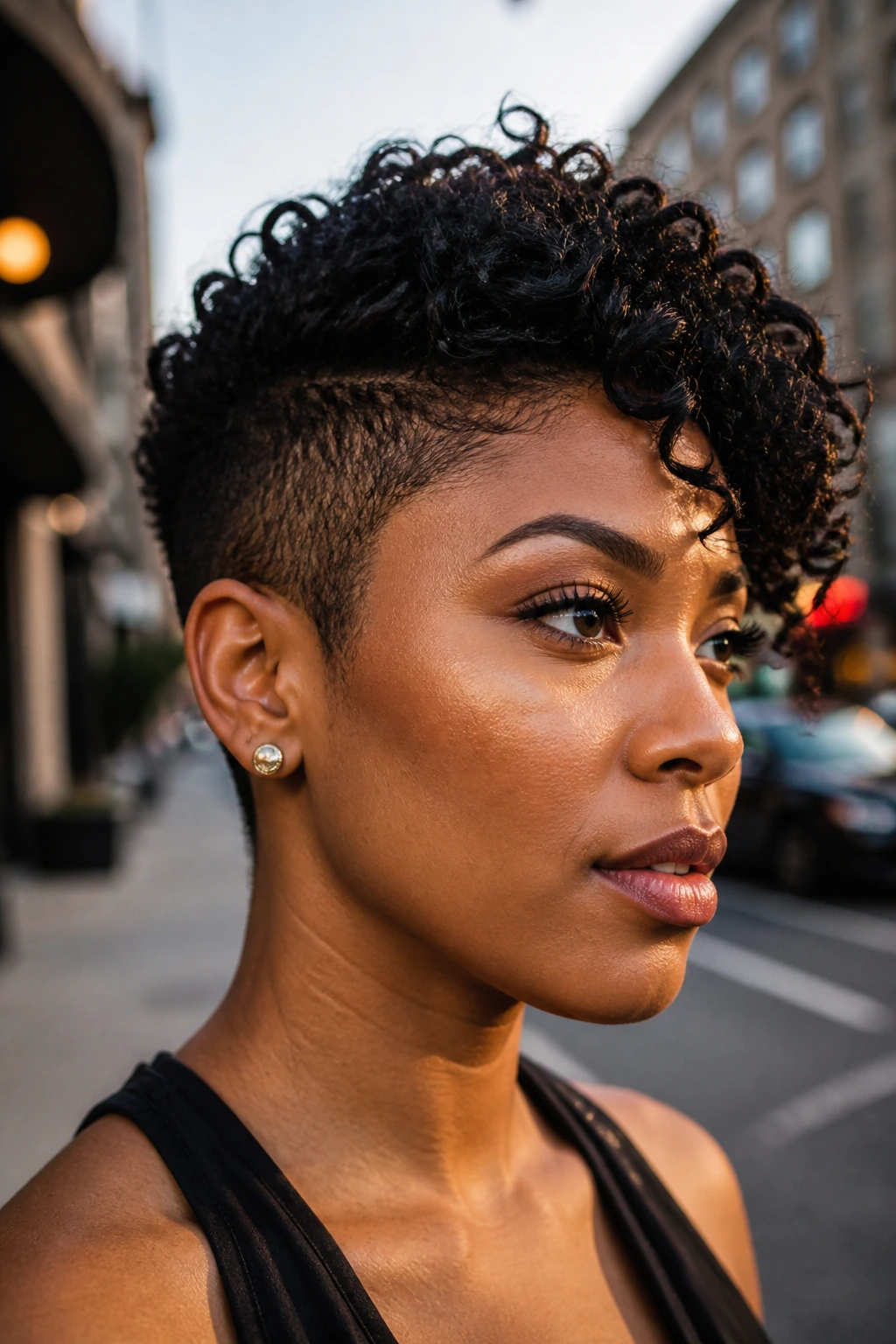
The crown is the whole point here. Keep the sides clipped down — not bare, just short — and leave the crown fuller so it can build height and lean a little to one side. The effect is strong without needing a lot of length.
This is a good pick if your hair naturally lifts at the roots. Short coils love a little vertical space, and this shape uses that instead of trying to force them flat. A medium-hold mousse or foam helps the crown stay separated, while the clipped sides keep the overall silhouette clean.
It’s also one of the better cuts if you like a sporty look that still feels feminine or fashion-forward. The crown carries the personality. The sides just keep the outline tight.
16. Ear-Grazing Curly Pixie
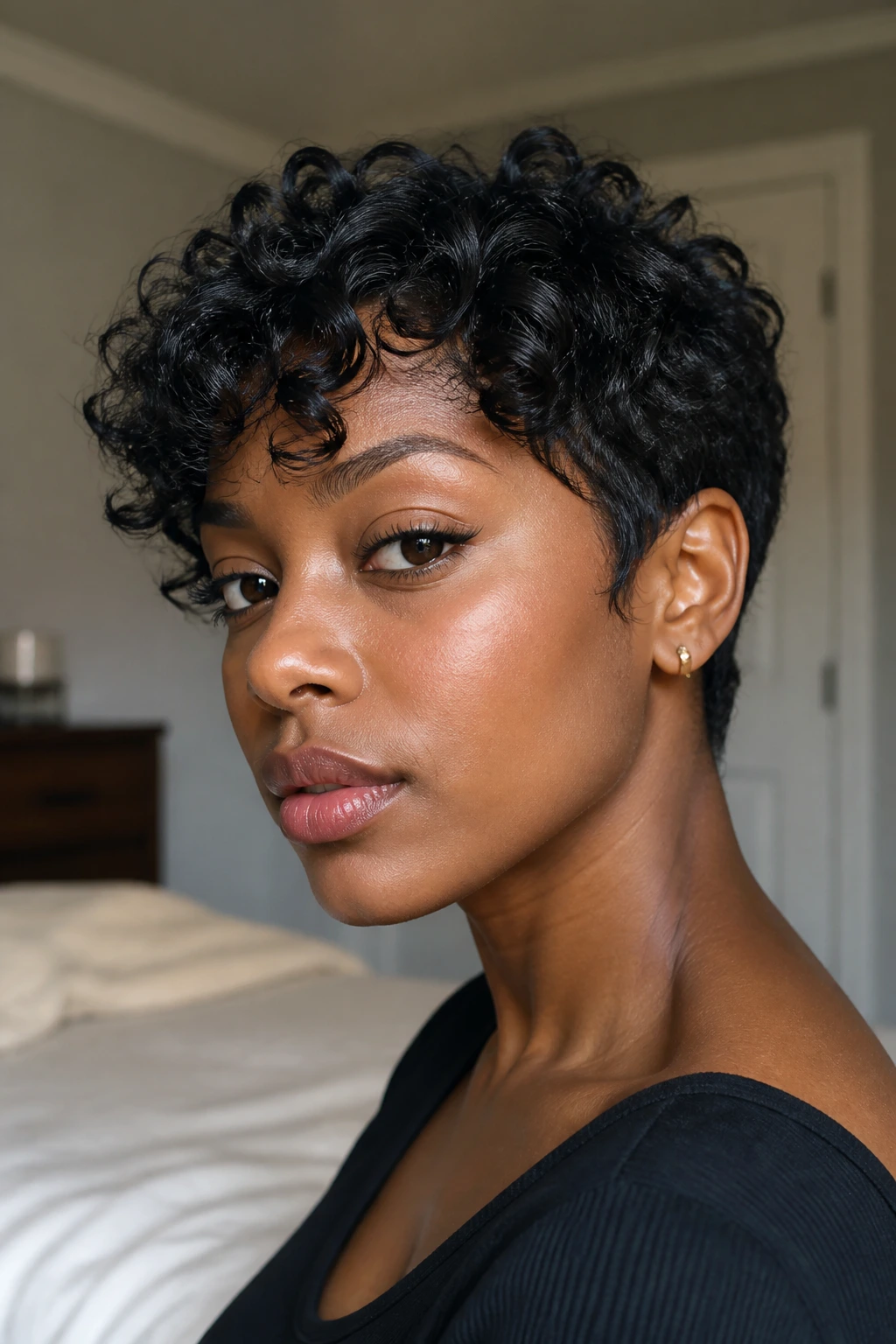
How short is too short when you still want curls to show? Ear-grazing short is usually the sweet spot. This pixie keeps the sides around the ears, leaves a little more length over one temple, and lets the curls gather where they can still be seen.
The downside is obvious. Short hair like this can go flat fast if you use too much product, and it can get fuzzy if you skip moisture. The fix is simple: a light leave-in, a small amount of gel or cream, and a satin bonnet at night. That’s enough.
If you want a cut you can shape with your fingers in under five minutes, this is a strong one. It’s especially good for people who like their ears and neck visible, because the whole face opens up.
17. One-Side Undercut Crop
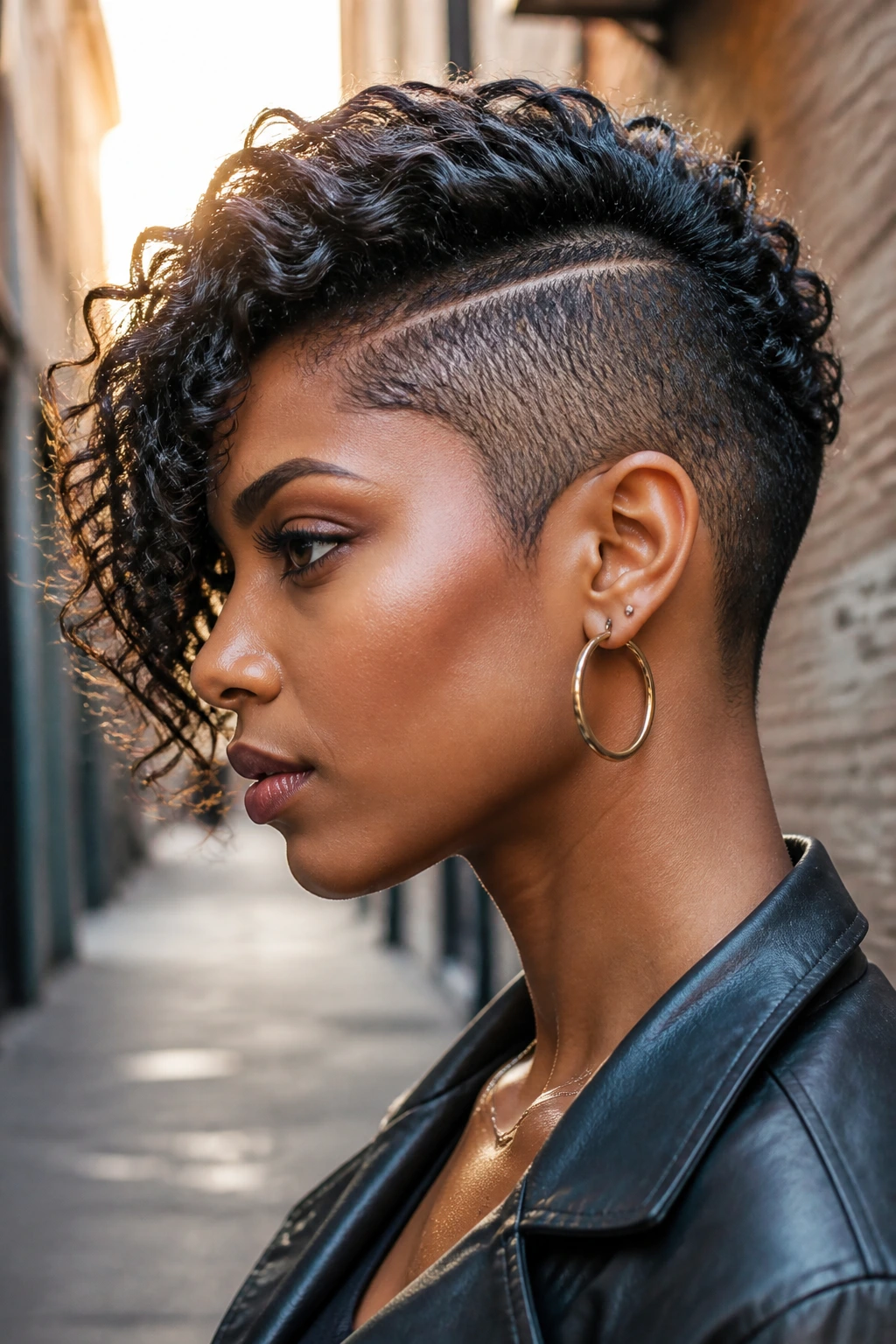
An undercut is the loudest version of this whole category. One side is shaved short — often with a #1, #2, or #3 guard — while the other side stays long enough to sweep over the cheek or brush the jaw. The contrast is immediate. No guessing.
This cut works best when the longer side is dense enough to hold shape on its own. If the curls are fine, you may need a little more length than you think. If they’re tight and springy, the longer side can sit shorter and still look dramatic.
Keep an eye on maintenance
- Clean up the shaved side every 2 to 3 weeks.
- Keep the longer side moisturized, not greasy.
- Ask for a soft blend at the transition if you don’t want a hard line.
- Use a hand mirror to check the undercut from the back. It grows out faster than people expect.
18. Curly Frohawk With Tapered Sides
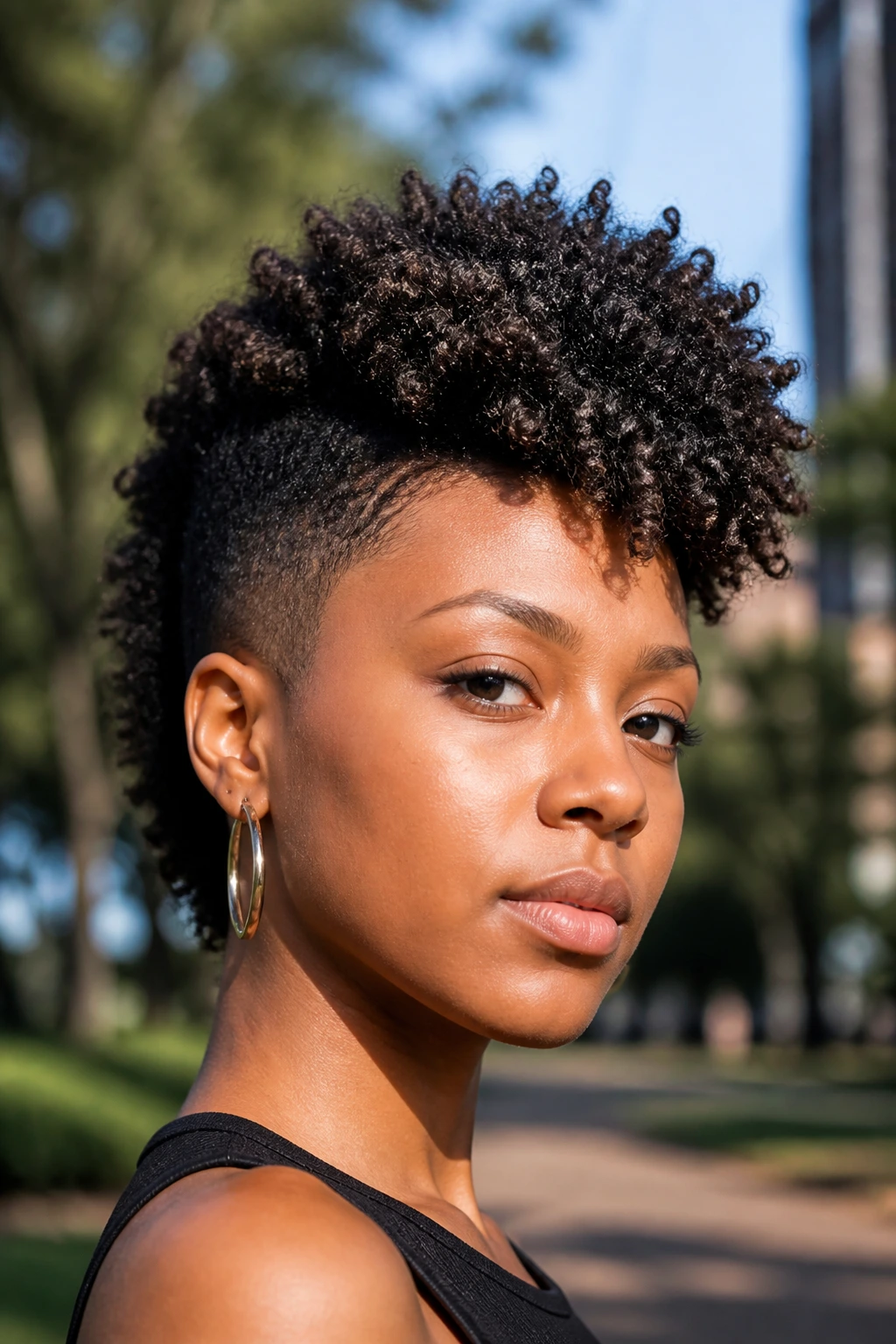
A frohawk is what happens when you keep the top full and tell the sides to behave. The center ridge carries the curl, the sides taper down toward the ear, and the whole shape reads bold without needing a full shave. On Black hair, it can be one of the most flattering ways to use height.
The asymmetry can live in the ridge itself. Let one side of the crown dip lower, or let the front edge sweep more strongly to one side. That keeps the cut from feeling stiff or costume-like. It should feel like a shape with motion.
If you like a clean neckline and a little bit of edge, this is a good middle ground. It has presence. It also photographs from the side in a way that flatter cuts rarely do.
19. Soft Curly Mullet
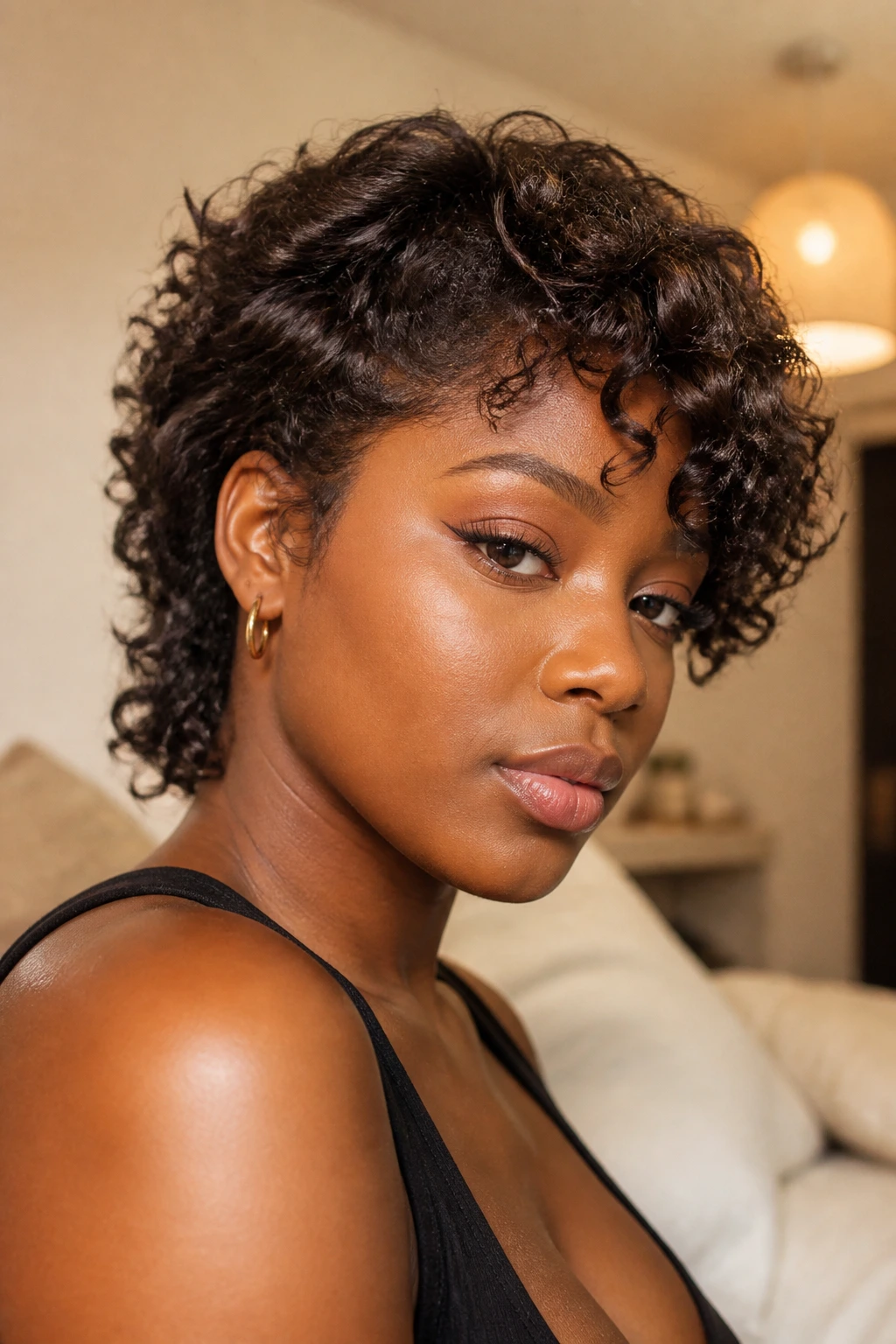
Can a mullet look gentle on curls? Yes, if the back is only a little longer and the front is shaped with care. This is not the cartoon version. It’s a short, soft cut with a bit more length in the back and a front that leans to one side.
The curly texture helps here because it blurs the transition. The back can graze the nape while the crown stays rounded and the sides stay shorter. If the front is too blunt, the whole thing gets heavy. If the layers are too short, you lose the line that makes the mullet interesting in the first place.
I like this on dense curls and twist-outs. It has movement, and it grows out in a way that still looks deliberate for a while.
20. Side-Shaved Coil Top
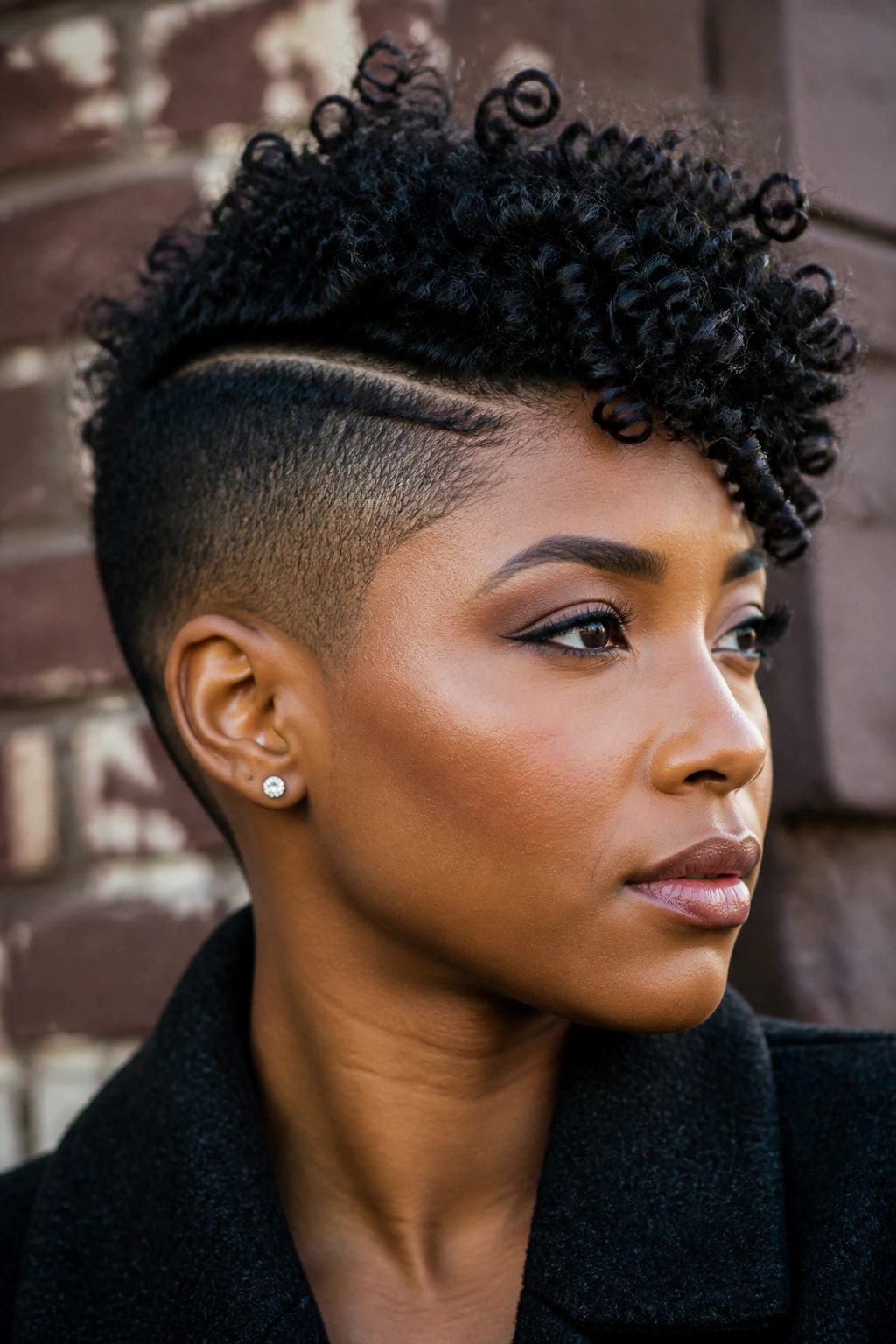
One shaved side changes everything. Keep one panel close to the head and let the top grow full and rounded, and the haircut suddenly feels sharper from every angle. This version is especially good for coils that like to stack upward, because the top has room to sit high.
The line between shaved side and top should be clean. If the transition is sloppy, the haircut loses its edge. Ask for the shaved side to be crisp around the temple and ear, and leave the top long enough to define the part or sweep. A little shine on the top, a clean line on the side. That’s the whole game.
It’s not the quietest haircut in the room. Fine. Not every cut needs to whisper.
21. Jaw-Length Curly Lob With a Slanted Front
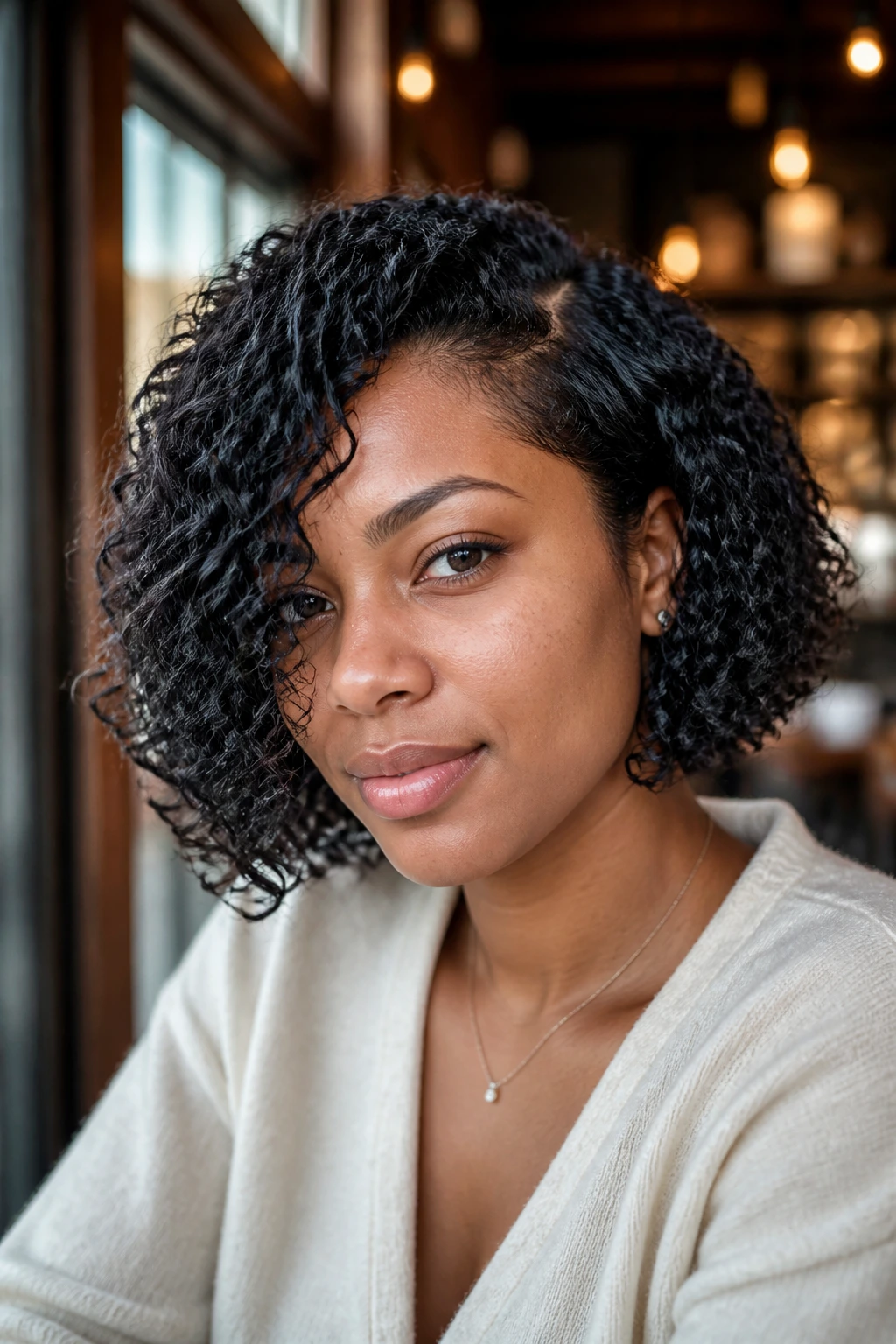
A slanted lob is the long version of asymmetry, which means it gives you more swing and a softer grow-out. One side can sit at the jaw while the other skims closer to the neck or collarbone, and the front panel helps the eye read the diagonal immediately.
This is a smart pick if you want to stay in short-hair territory without going all the way up to a pixie. It also works well if you’re growing out a bob and want the in-between stage to look intentional instead of awkward. Keep the layers light, especially around the face, so the longer side doesn’t collapse into a triangle.
If you wear it with a side part, the angle becomes more obvious. With a center part, the cut feels a little softer. Both are useful.
22. Sculpted Crescent Crop
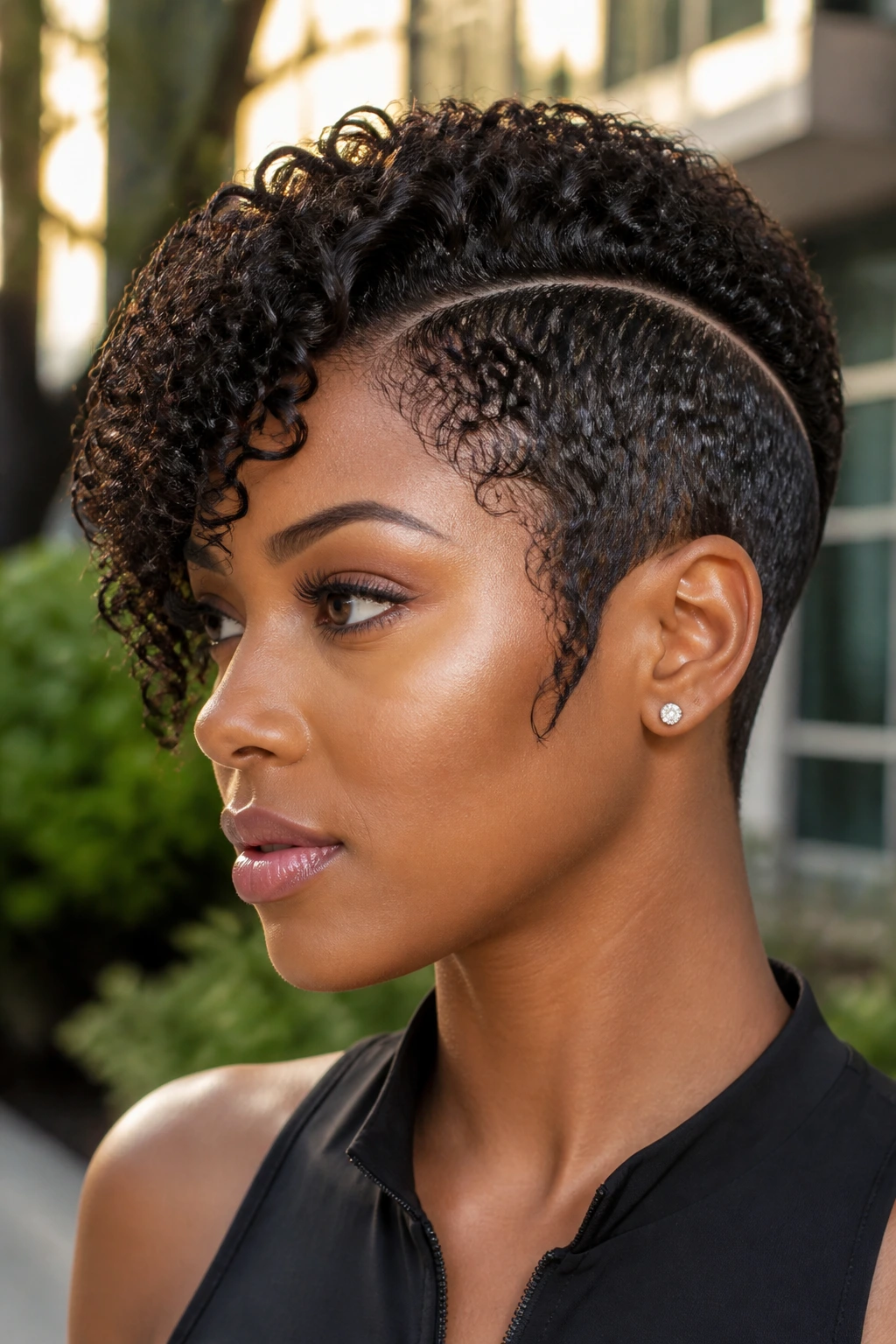
The crescent crop is for people who like architecture in their hair. The line curves from temple to temple, with one side dipping lower and the other side staying tighter, so the whole cut reads like a controlled arc instead of a blunt block.
What gives it its shape
- A tighter nape that keeps the back from widening.
- A longer panel on one side that lands near the cheekbone.
- Light internal layers so the top can rise without puffing outward.
- A soft perimeter around the face so the curve looks deliberate, not sliced.
This cut does best with a stylist who understands curls and is willing to cut in small adjustments. The result is polished in a way that still lets the texture stay visible. It’s a strong final note for the list because it proves asymmetry doesn’t have to be edgy to be interesting. It can be clean. It can even be graceful.
Why the Angle Works Better Than You’d Think
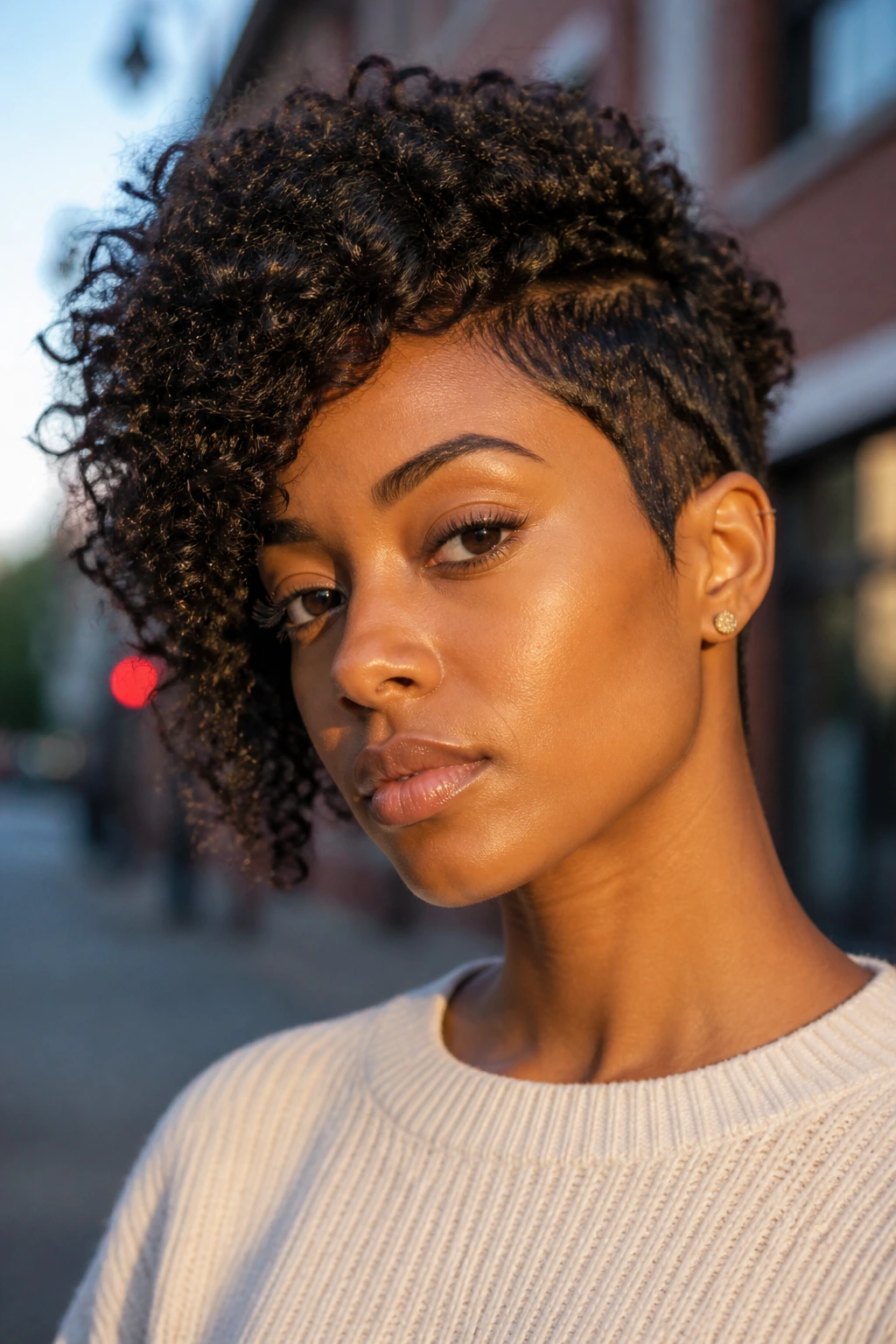
Asymmetry is not random on curly hair. It gives the eye a place to land, which matters more when the texture has volume and movement built in. A straight, even perimeter can look fine on coils, but it can also feel heavy fast, especially when the sides puff out at the same rate.
A diagonal line solves that. The shorter side gives lift, the longer side gives direction, and the crown has room to breathe. If the cut is done dry or with the curl pattern stretched enough to show the real fall, the shape holds up far better than a wet-only trim. Wet hair lies. Dry curls tell the truth.
Density changes the recipe. Thick, high-density hair can carry stronger contrast, like a shaved side or a steep side sweep. Finer curls usually do better with softer asymmetry — a longer fringe, a gentle off-center part, or a slight difference at the nape. The goal is balance, not sameness.
The Tools That Keep the Shape Crisp
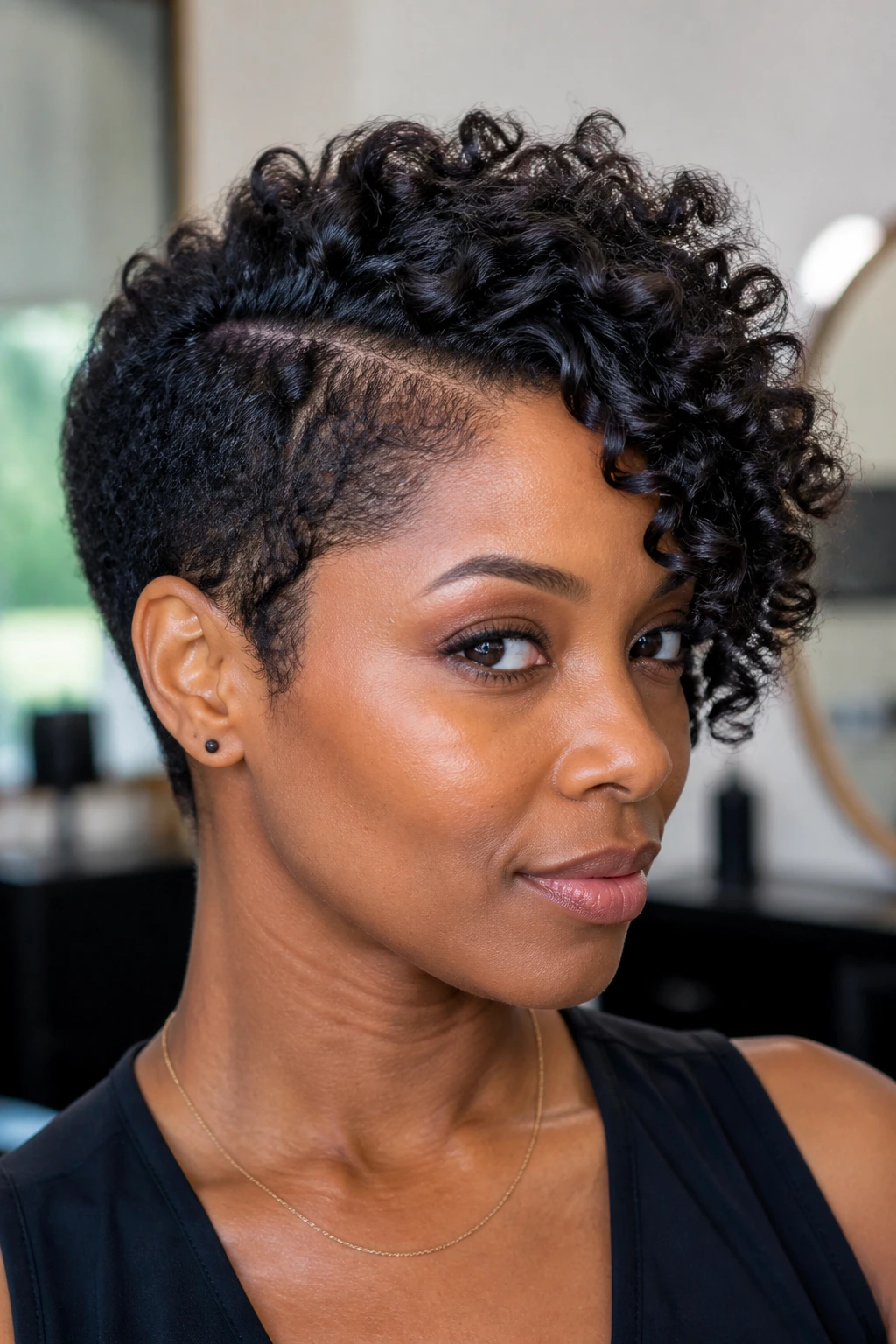
- Wide-tooth comb: Detangles without ripping through the curl pattern, especially on fresh wash days.
- Rat-tail comb: Useful for clean parts and small directional changes at the temple.
- Leave-in conditioner: Keeps short curls soft enough to move without turning frizzy.
- Curl cream or foam: Adds definition to the longer side without weighing down the whole cut.
- Medium-hold gel: Helps the fringe or side sweep keep its direction for a few days.
- Diffuser attachment: Speeds drying while keeping the shape intact, especially around the crown.
- Satin bonnet or scarf: Keeps the asymmetry from flattening overnight.
- Hand mirror: Worth having if you maintain a fade, undercut, or shaved side at home.
You do not need a drawer full of products. You need the right three or four, used lightly.
What to Ask for Before the Cape Comes Off
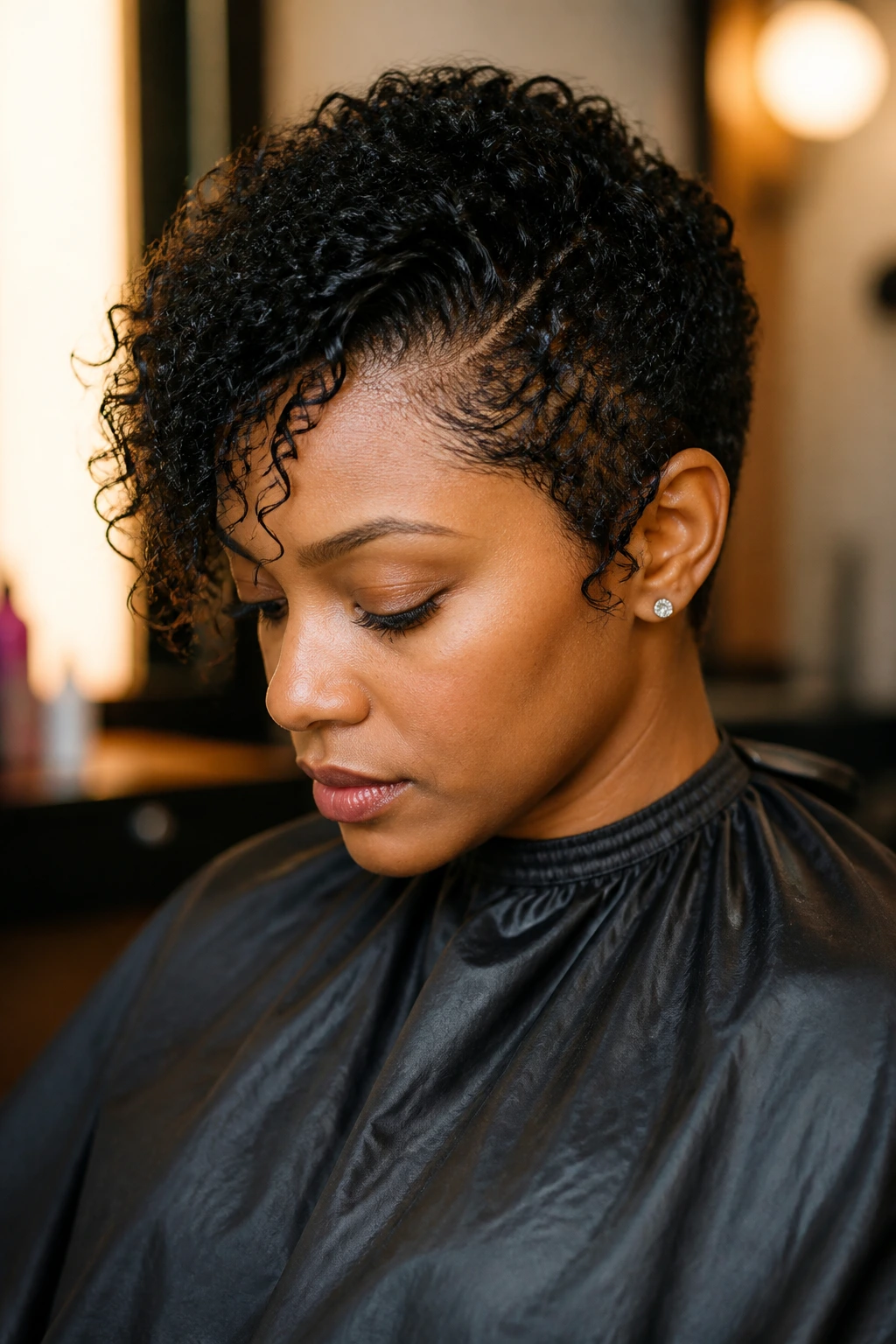
The best asymmetrical cuts start with plain language. Bring photos, sure, but also give measurements. Say where you want the longer side to land: cheekbone, jaw, or just below the ear. Tell the stylist whether you want the shorter side clipped, tapered, or only softened with scissors.
Be honest about shrinkage too. If your curls rise a full inch or more when dry, say that out loud. It changes where the line should sit. A stylist who works with curls will usually want to cut in stages — first the shape, then the fine-tuning once the texture dries or stretches.
Product shopping matters too. For these cuts, I usually prefer a light leave-in plus a medium-hold styler over a heavy butter-and-oil stack. Heavy products can collapse the longer side and make the shorter side puff in a weird way. If your hair is fine, foam may beat cream. If it’s dense, cream plus gel often works better.
Bring three photos if you can. Front, side, back. Not one polished studio shot where you can’t see the neckline.
How to Wear These Cuts Without Fighting Them
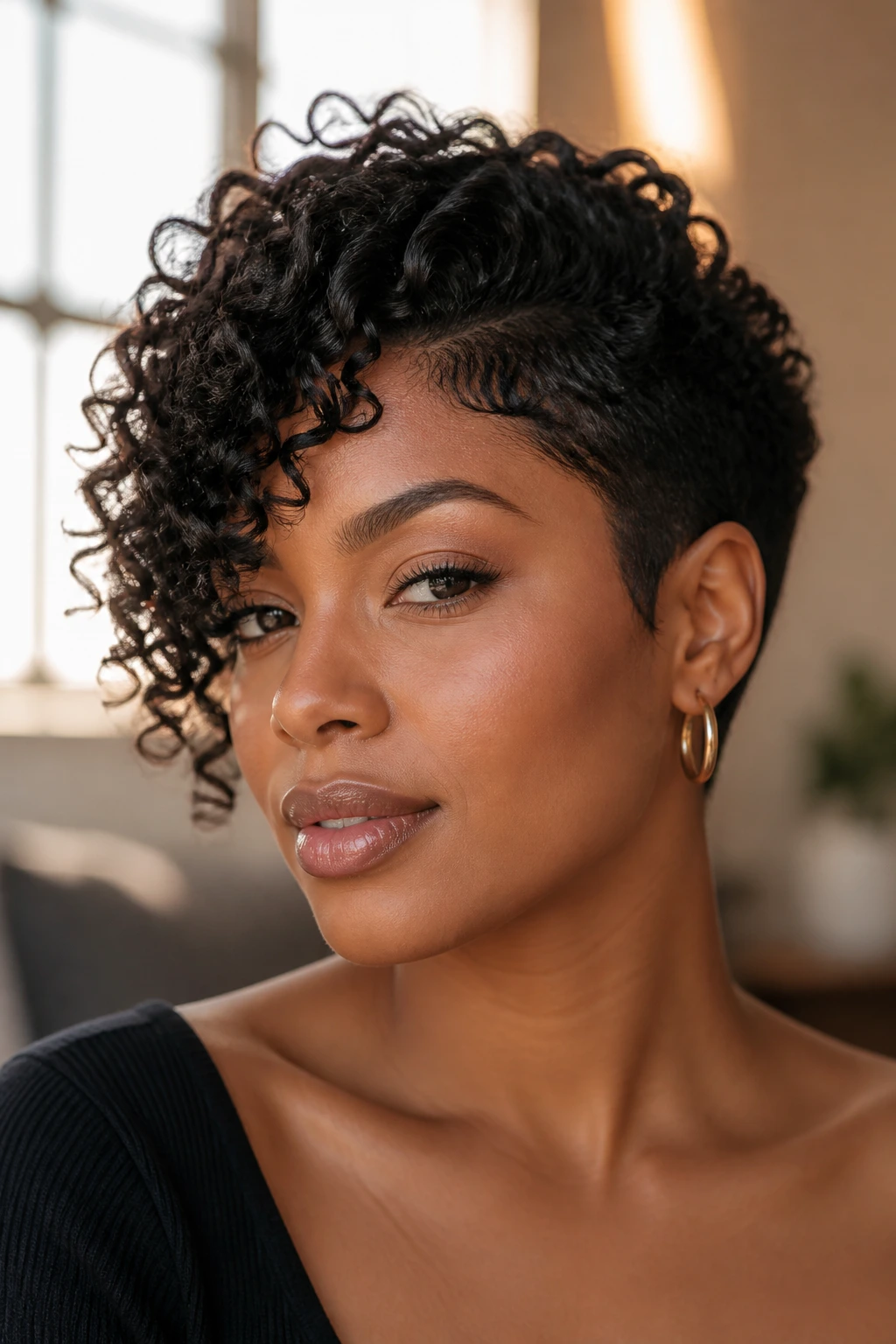
Shape: Put the longer side where you want the eye to go. If you want your cheekbones emphasized, let the sweep hit there. If you want the jawline visible, keep the front a little shorter and cleaner.
Accessories: Earrings matter here. A big hoop or drop earring on the longer side can either echo the cut or overwhelm it, so test the balance in a mirror. Glasses do the same thing; a sharp frame can make a soft crop feel more intentional.
Outfits: High necklines pair well with undercuts and temple fades because they leave the hairline open. Square necks and open collars work better with soft bobs and side-swept shapes because they keep the eye moving downward.
Mood: Air-dried curls read casual and loose. A diffused set reads sharper. Same haircut, different attitude.
Small Styling Moves That Change the Whole Silhouette
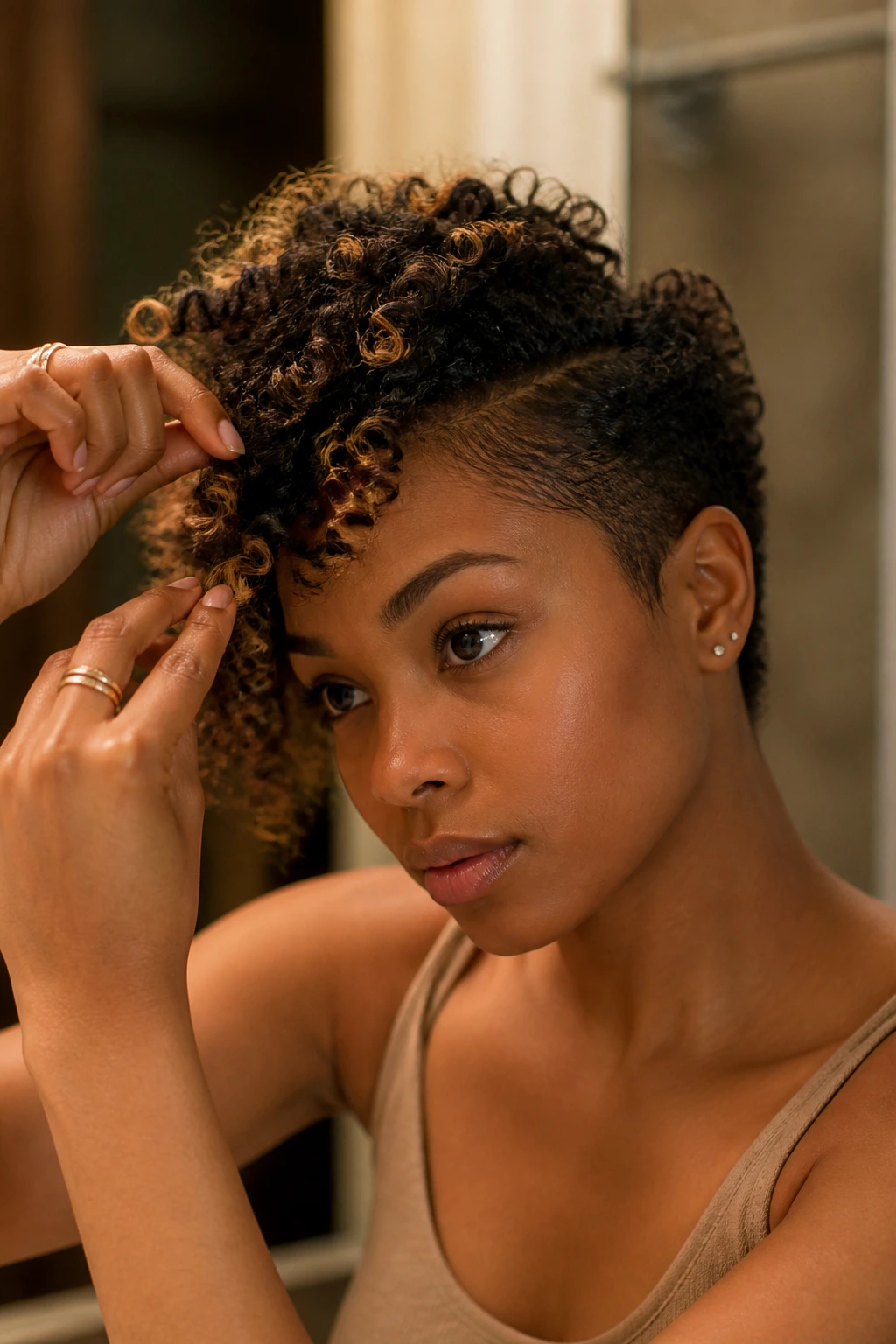
Definition Boost: Set only the longer side with finger coils or a small brush if you want the asymmetry to read more clearly. Leave the rest a little looser so the shape doesn’t turn stiff.
Lift at the Root: Flip the head forward and diffuse at low heat for 5 to 7 minutes, then stop before the curls are fully dry. That one move keeps the crown from sitting flat against the scalp.
Edge Detail: Clean temple and nape lines every 2 to 3 weeks if your cut includes a fade or clipper work. A small touch-up keeps the angle readable.
Color Accent: A few warm highlights on the longer side can make the diagonal line pop. Copper, honey, or deep auburn work well on Black hair because they show the curl ridges instead of hiding them.
Night Care, Refresh Days, and Grow-Out

Short asymmetrical cuts are easier to live with when you stop treating them like they can survive on vibes alone. Sleep on a satin pillowcase or wrap the hair in a satin bonnet so the longer side doesn’t get smashed flat against the head. If one side is shaved or tapered, the friction shows up there first.
A morning refresh is usually simple. Mist with water, add a pea-sized amount of leave-in to the longer side, then scrunch or finger-shape the front back into place. If you use gel, keep a little on the fingertips and smooth only the outer layer. Too much product at the roots is what turns a crisp cut into a sticky, separated mess.
Trim schedules depend on the shape. Fades and undercuts usually need cleanup every 2 to 4 weeks. Soft bobs, shags, and frohawks can stretch longer — often 6 to 8 weeks — before the line starts to blur. If you’re growing the cut out, ask for dusting rather than a full reshaping so the asymmetry fades without collapsing.
Variations and Adaptations to Try
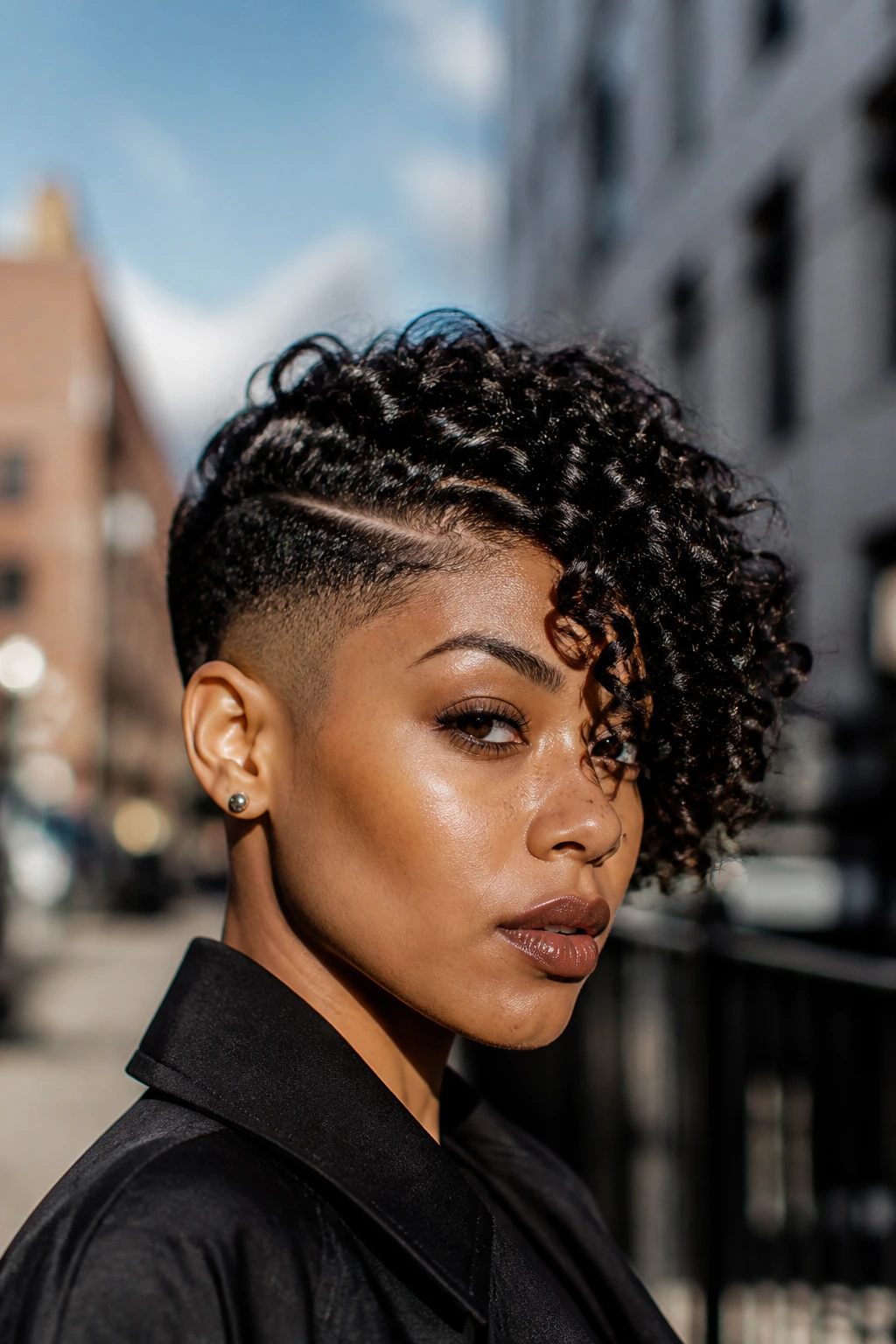
Soft Office Version: Keep the difference between sides to about 1 inch and skip the shave. The shape still feels intentional, but it won’t shout when you walk into a room. This is the version I’d suggest if you want the haircut to read polished first and edgy second.
High-Contrast Fade Version: Push one side into a temple fade or full undercut and leave the opposite side 3 to 5 inches longer. That gives you strong profile lines and a cleaner neckline. It’s the boldest route in the list.
Twist-Out Friendly Version: Leave a little extra length on the top and fringe so set styles can stretch without losing the angle. This works well if you rotate between wash-and-go and twist-outs. The cut stays flexible instead of locking you into one look.
Color-Pop Version: Add color only where the longer side falls. A copper panel, honey gloss, or deep burgundy near the fringe makes the asymmetry easier to read. Keep the roots darker if you want the shape to stay the star.
Grow-Out Friendly Version: Build the asymmetry into the front and crown, not the shaved side. That way the cut still looks deliberate when it passes the four-week mark. It’s the choice for people who hate constant cleanup.
Protective-Set Version: Shape the cut around two-strand twists, flat twists, or flexi-rod sets. The asymmetry shows up in the set pattern, and the hair gets a little more break from daily manipulation. Useful if you want texture plus lower tension.
Mistakes That Flatten the Shape
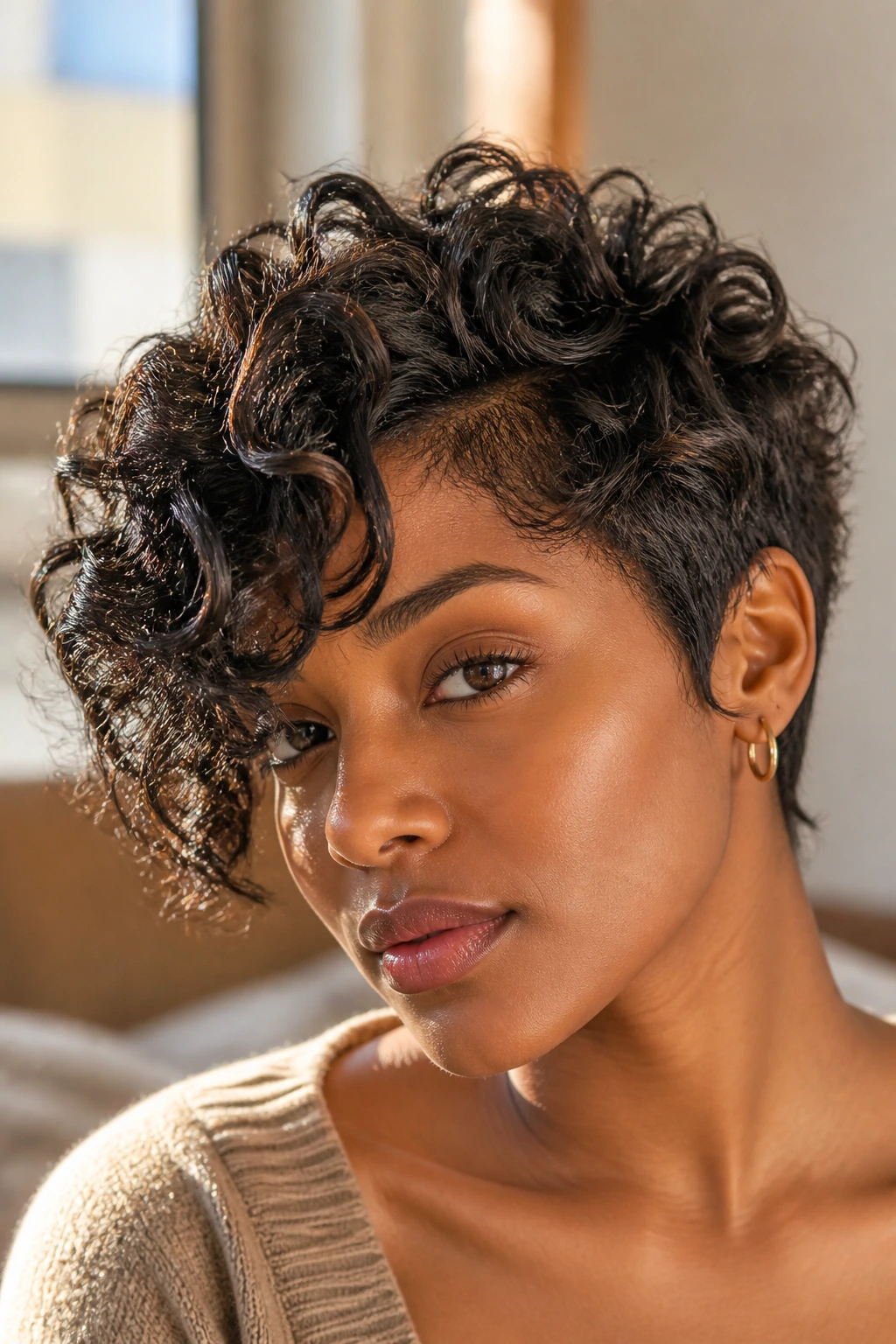
Measuring only wet length: Wet curls lie about where the cut will land. If the stylist cuts the longer side too short while the hair is wet, shrinkage can erase the angle. Ask for a dry check or a stretched check before the final snip.
Using heavy product at the root: Thick creams and oils can collapse the side sweep or crown lift in a day. The result is a flat top and a puffier bottom. Keep the root light and put heavier product only on the ends if you need it.
Going too short on the shaved side: A dramatic undercut looks great until it starts growing out in a fuzzy halo. If you want contrast, leave enough length for the transition to stay clean between appointments.
Ignoring the back: A lot of people stare at the front and forget the neckline. Then the back grows into a blunt shelf that fights the asymmetry. Ask for the nape to be tapered or stacked on purpose.
Skipping maintenance too long: These cuts lose their line faster than symmetrical shapes do. If the silhouette matters to you, book the cleanup before the shape has already drifted.
Questions People Actually Ask Before Cutting It Short
Can asymmetrical short curly haircuts work on tighter coils?
Yes, and they often look fantastic on tighter coils because the curl pattern creates built-in volume. The trick is leaving enough length on the longer side so shrinkage does not erase the angle. A dry or stretched cut usually helps.
Should the haircut be cut wet or dry?
Dry or stretched cutting gives the clearest read on shape for curly Black hair. Wet cutting can work for cleanup, but it is risky if the stylist isn’t checking the dry fall as they go. For strong asymmetry, the dry outline matters more.
How much difference between sides is too much?
That depends on how bold you want the cut to look. A 1-inch difference gives a soft tilt; 3 to 4 inches creates a sharper diagonal. If you want drama without losing wearability, stay somewhere in the middle.
What if one side curls up more than the other?
That happens all the time. Use a little more water and product on the side that shrinks less, and keep the part and crown balanced so the eye reads the shape instead of the mismatch.
Do I need a fade for asymmetry to work?
No. A fade is only one route. You can build asymmetry with a side part, a longer fringe, a stacked back, or a longer front panel and still get a strong result.
How often should I trim it?
Fades and undercuts usually need cleanup every 2 to 4 weeks. Softer bobs, crops, and shags can go 6 to 8 weeks if you do not mind a little grow-out softness.
Can I wear these cuts with twist-outs or braid-outs?
Absolutely. In fact, a lot of them look better with a set pattern because the curls settle into the diagonal line more clearly. Just make sure the cut has enough room for the style to stretch.
What if I hate it after the first wash day?
Try styling the longer side in smaller sections or pinning it back temporarily before you call the whole haircut a loss. Sometimes the cut needs one or two refreshes before the curl pattern settles into its new shape. If the angle still feels wrong, ask the stylist to soften the perimeter rather than reshaping everything.
A Shape That Knows Where to Go
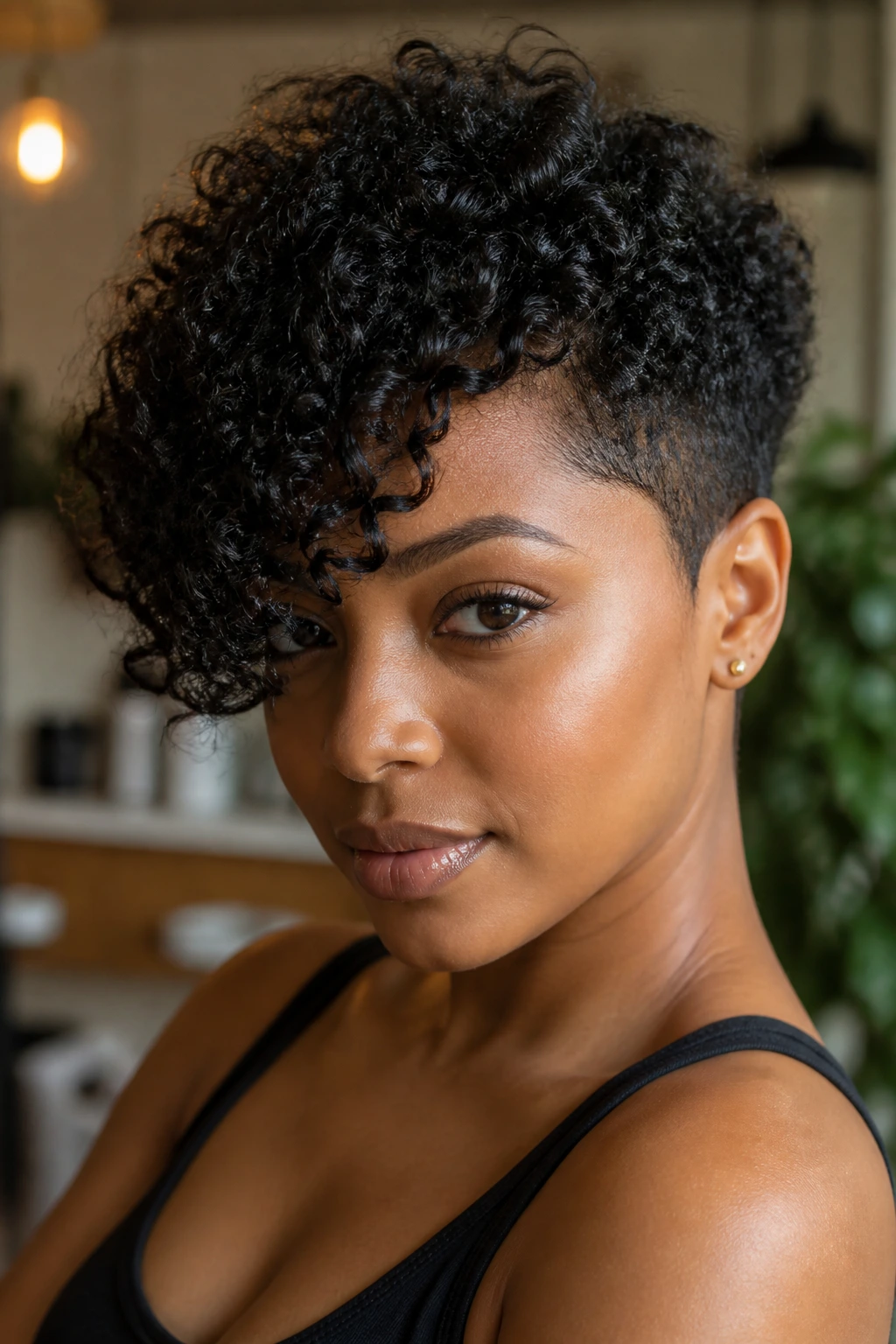
The best asymmetrical short curly haircuts for Black hair do one thing well: they give the curls a direction without squeezing the life out of them. That’s the part people miss when they chase a dramatic photo. The cut has to live after the salon chair, after the first wash, after the bonnet, after the morning rush.
And when it works, it really works. The longer side falls where you want attention, the shorter side keeps the outline clean, and the texture does the rest. Bring a couple of reference photos, speak in inches and landmarks, and let your stylist build the line around your actual curl pattern instead of a wet guess. The shape will thank you for it.