



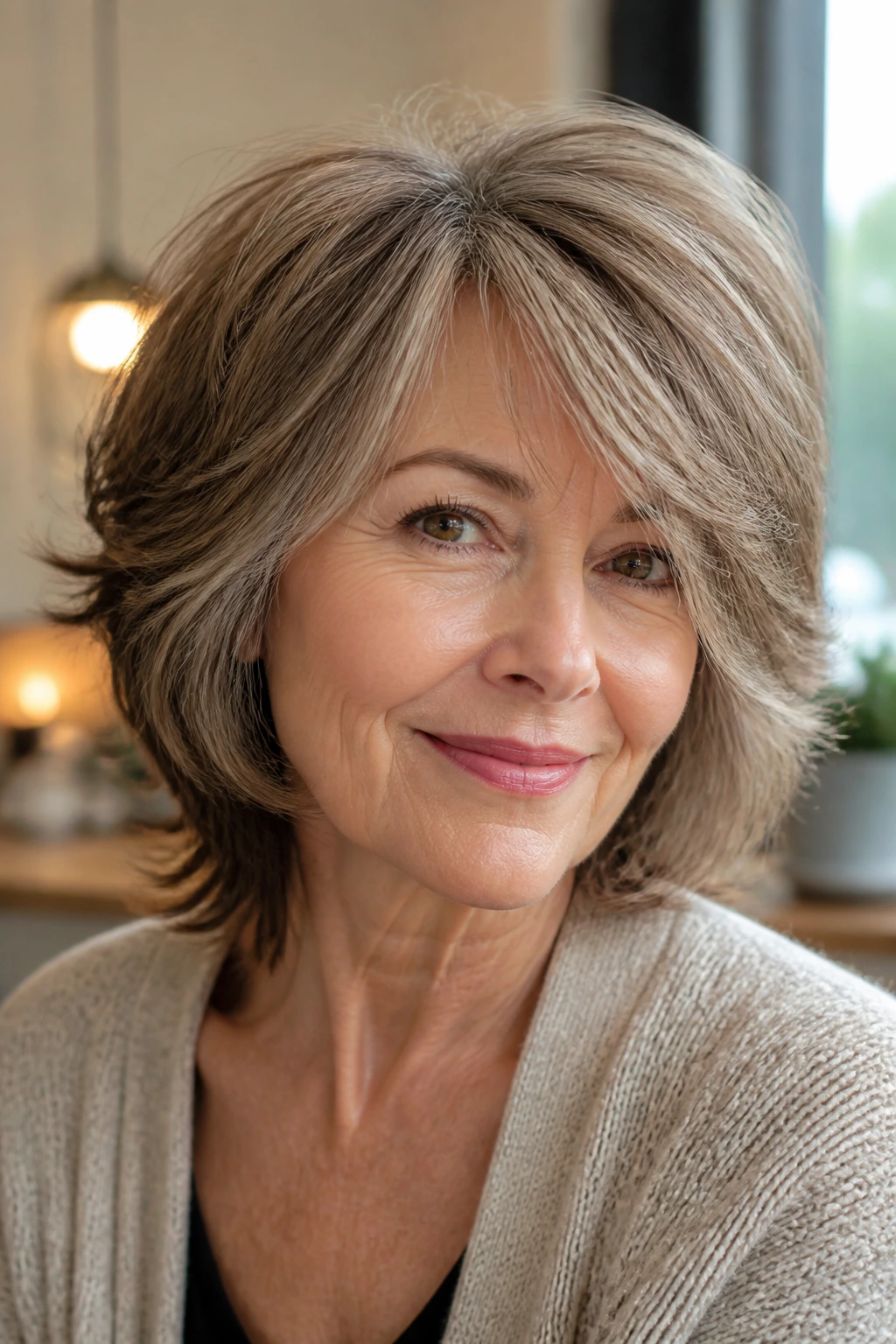
A side-swept part can do something a blunt center part rarely does: it gives the hair a little lift right where aging hair likes to lie flat, and it sends a soft diagonal line across the face instead of a hard wall. That’s why side-swept part shag haircuts for older women have such staying power. They aren’t trying to look youthful in a loud, obvious way. They just make the hair look more alive.
And that matters, because mature hair changes. It gets finer for some women, drier for others, and often a bit more stubborn around the crown, temples, or nape. The old advice to “keep it simple” usually translates into hair that sits there and behaves itself. Fine. But a shag is better when you want movement, edge, and a cut that still looks good after a windy walk, a long lunch, or a half-hearted blow-dry.
I like this family of cuts because it can be tailored in so many directions. A shag can be feathered and airy, piecey and modern, softly razored, curly, cropped, shoulder-skimming, or long enough to tuck behind one ear. The side-swept part changes the whole mood. It turns the cut from symmetrical and severe into something looser, kinder, and a little more interesting.
Why These Shags Work So Well on Mature Hair
-
The side part gives instant lift: A deep or soft side part breaks up flat roots and makes the crown look less pinned to the scalp, which is useful when hair has lost some density.
-
Layers remove the heavy ends: A shag takes weight out of the bottom third of the haircut, so thick hair doesn’t balloon outward and fine hair doesn’t get dragged down.
-
Diagonal fringe softens the face: Side-swept pieces skim the cheekbone and temple, which is one of the easiest ways to soften lines without hiding the face.
-
Gray and silver hair look sharper in layers: Piecey layers catch light differently, so white or silver strands show movement instead of looking like one solid sheet.
-
The grow-out is forgiving: Shags don’t fall apart as fast as a blunt bob. When the cut grows, the layers still look intentional for several weeks.
-
They work with texture instead of against it: Wavy, curly, or slightly coarse hair often looks better in a shag because the cut gives the bend somewhere to go.
How to Ask for the Right Version at the Salon
The word shag means different things to different stylists, and that’s where people get burned. One person hears shag and thinks soft layers. Another hears it and reaches for the razor like they’re auditioning for a rock band revival. Say what you want in plain language.
Bring photos that match your texture, not just your fantasy. If your hair is fine and straight, a thick curly shag on someone with a ton of density will mislead the whole conversation. If your hair is gray and frizz-prone, show a cut that lives in that world. The stylist should be looking at your hairline, crown, density, and growth pattern before they lift the scissors.
Use specifics. Ask for face-framing layers that start around the cheekbone, a side-swept fringe that can be tucked back, and weight removed through the mid-lengths without leaving the ends stringy. If you wear glasses, mention the frame width. If your part always flips, mention the cowlick. If your hair gets poofy in humidity, say that out loud and let the cut solve part of the problem.
And one more thing: if you want softness, ask for movement, not heavy razoring. Those are not the same.
1. Feathered Crown Shag
This version is all about lift where older hair tends to collapse first: the crown. The layers stay soft through the sides, then feather upward so the top doesn’t look helmet-stiff. With a side-swept part, the front falls diagonally across the forehead and cheek, which makes the whole cut feel lighter than it is.
Why it flatters
The crown gets height without teasing, and that matters. You can blow-dry the roots with a medium round brush and get a little bend that lasts through the day.
Ask for short internal layers near the top, but keep the perimeter touching the neck or shoulders so the shape doesn’t puff out. This is a good pick if your hair flattens on top but still has enough body through the rest of the head to hold a shape.
2. Collarbone Shag with a Long Side Bang
A collarbone-length shag with a long side bang is the haircut I’d hand to anyone who wants movement without sacrificing the ability to pull hair back. It grazes the collarbone, which is long enough to feel soft and short enough to avoid the drag that can make older hair look thin at the ends.
What makes it different
The long side bang is the trick. It can sweep across the forehead, tuck behind the ear, or blend into the front layers when you want a cleaner look.
A little mousse at the roots and a quick twist with a 1.25-inch round brush is enough to set the bend. If your face is longer, keep the bang a touch fuller. If your face is round, ask for the front to angle down a bit more sharply so it creates a longer line.
3. Short Pixie Shag with a Sweeping Fringe
Short shags get a bad reputation when they’re cut too aggressively, but this one stays soft. The sides are close enough to feel neat, while the top has enough length to sweep over the forehead and give the whole cut some motion. It’s especially good when hair is fine and you want the illusion of density without a lot of styling time.
How it wears
You can finger-style it with a pea-sized amount of paste or a light cream. That’s it. No need to build a whole blowout around it.
Ask for the fringe to be left long enough to cross the brow at an angle, not chopped straight across. The nape can be tapered gently so the back sits clean against the neck instead of flaring out. This cut has bite, but it still feels feminine.
4. Silver Layered Shag
Silver hair and a layered shag are a very good match. The strands already reflect light; layers make that shimmer move. A side-swept part keeps the silver from looking severe, which can happen when gray hair is cut into a blunt shape and parted dead center.
Why it works
The diagonal front softens the upper face, and the layers stop the mids from turning into a single sheet. If your silver hair is wiry, ask for soft slicing rather than heavy razor work. Too much razor can make the ends fray.
A touch of purple shampoo every so often helps if the silver pulls yellow, but the cut itself does a lot of the work. This one looks especially good with simple earrings and a clean neckline.
5. Curly Halo Shag
Curly hair doesn’t need to be tamed; it needs to be placed. The halo shag lets the curls live around the head in a rounded shape, while the side-swept part gives the front a little line and direction. That keeps the style from reading too puffy at the cheeks.
How to wear it
Diffusing on low heat works better than blasting the curls dry. A curl cream or light gel keeps the shape from expanding into fuzz.
Ask your stylist to cut the layers dry if they know how to work with curls that way. Wet curls lie. Dry curls tell the truth. If the front pieces sit too high, the cut can drift into triangle territory fast, so the top has to be balanced against the sides.
6. Thick-Hair Shag with Internal Layers
Thick hair can look expensive in a shag when the weight is removed from the inside instead of hacked off the bottom. That’s the point of internal layers: they let the cut collapse a little closer to the head, which keeps the shape from becoming bulky at the chin or shoulders.
What to ask for
Say you want movement without a shelf at the bottom. That phrase usually gets the right reaction from a good stylist.
The side-swept part helps break up the mass up top, so the hair doesn’t all fall forward at once. This style likes a round brush at the ends and a little smoothing cream on the mids. Skip heavy oils near the roots. They flatten the whole thing in a hurry.
7. Fine-Hair Lift Shag

Fine hair needs structure, but not too much of it. If you over-layer it, the ends can go wispy in a sad, see-through way. This version keeps the perimeter blunt enough to look full while adding soft, short layers only where they create lift.
A side-swept part is the best friend here. It gives the root a place to stand up a little before the hair falls across the forehead. Blow-dry with a root-lifting spray and a vent brush, then stop before you overwork it. Fine hair gets limp when it’s touched too much.
This is the cut that makes dry shampoo earn its keep.
8. Razored Bob-Shag
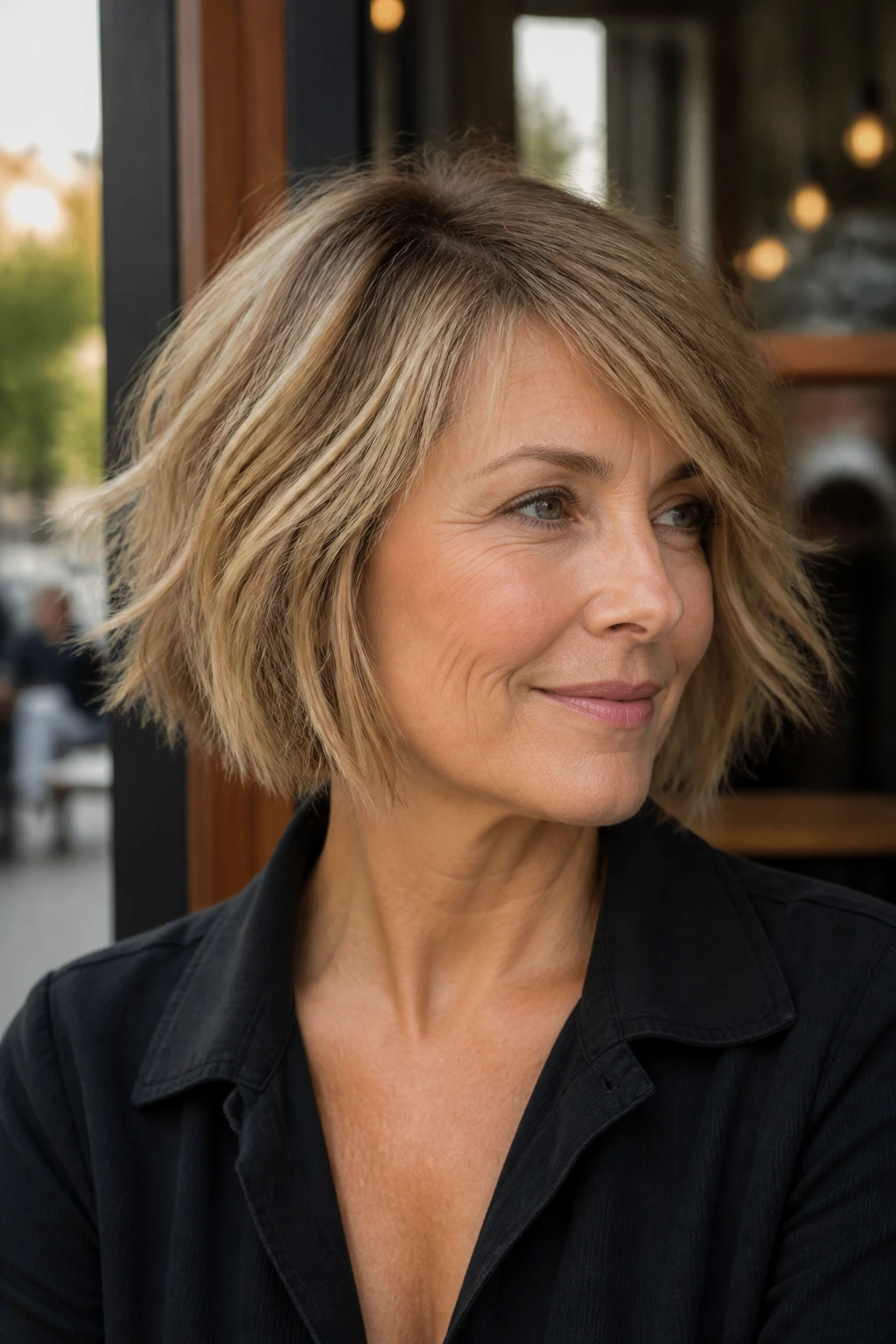
If you like a bob but want it less tidy, this is the sweet spot. The base stays bob-like, usually around jaw or chin length, but the ends are razored or point-cut so they flip and separate instead of sitting in a hard line. The side part keeps the front from feeling too blunt around the face.
Good for
Women whose hair has enough density to hold shape but not so much that it needs a full shag.
It looks sharp with a little texture spray and a quick bend from a flat iron at the ends. Not beachy. Not polished to death. Just enough separation to keep it from reading like a school principal’s cut from another decade.
9. Neck-Grazing Soft Shag

A neck-grazing shag is one of those cuts that looks easy because it’s been built carefully. The layers start low, so the overall shape stays close to the head. That matters if you dislike wide silhouettes or want something that won’t fight your coat collar in colder months.
The side-swept part creates the softness up front, while the nape remains neat. This cut suits women who want a little swing without a lot of volume around the sides. Ask for the layers to be blended, not stacked. Stacking can make the back kick out in a way that feels older than the cut itself.
10. Mid-Length Air-Dry Shag

This is the lazy-girl cut that still looks like you meant it. The length usually lands somewhere between chin and shoulders, and the side-swept part keeps the top from puffing up when the hair dries on its own. It works beautifully with a bit of wave, especially if your hair has a natural bend that shows up after washing.
How to style it
A leave-in conditioner and a mousse at the roots are enough for many heads of hair. Twist the front section away from the face and let it dry that way once in a while.
That tiny habit makes the part fall in a softer line. If you air-dry without shaping the front, the cut can go a little random. Not terrible. Just less intentional.
11. Softened Wolf Shag
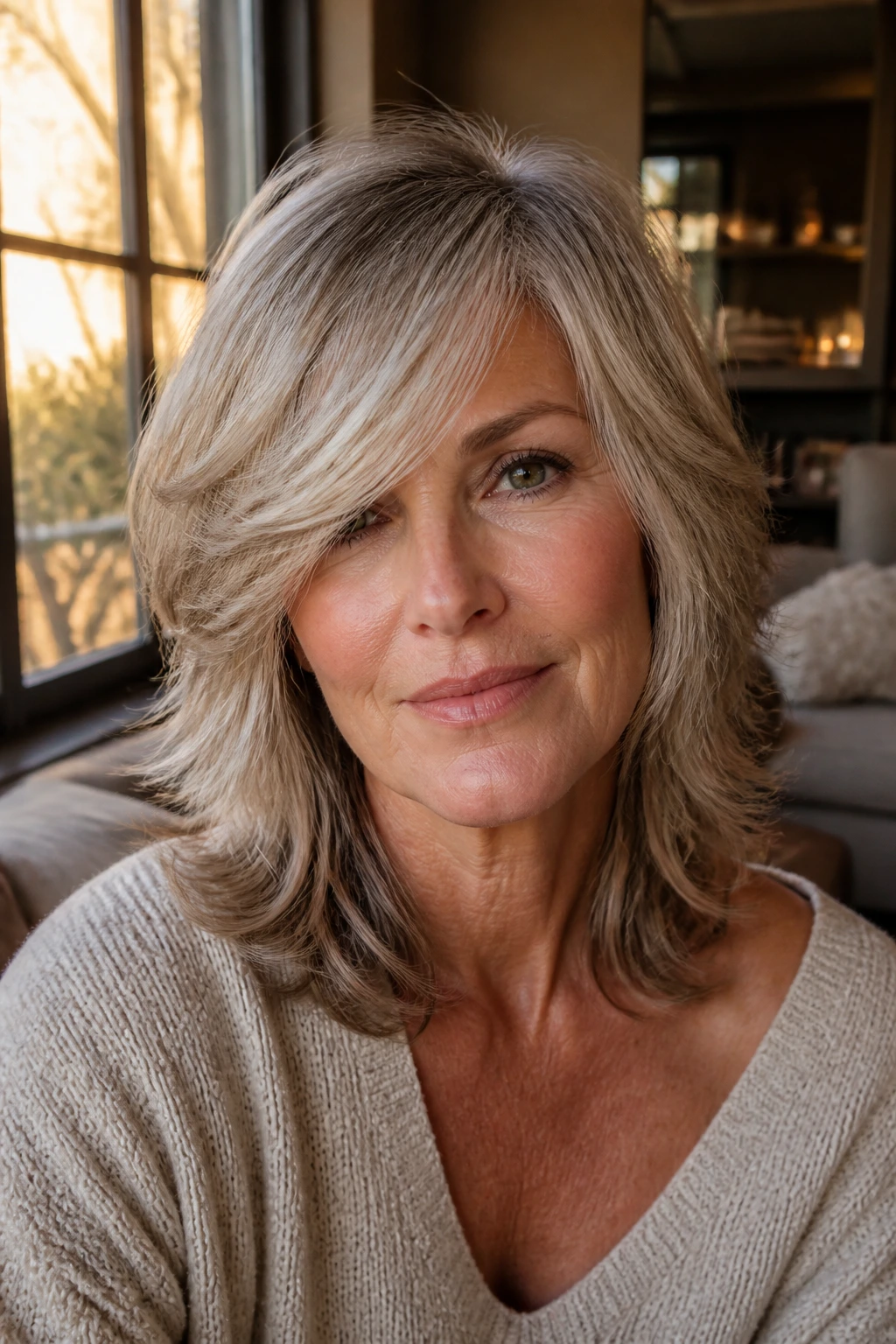
The wolf cut and the shag live close to each other, but this version is gentler. The top still has a bit of lift, the layers still break up the length, and the side-swept part keeps the face from getting swallowed by texture. The difference is that the ends are left softer, so it doesn’t scream edgy from across the room.
That matters if you like the energy of a wolf cut but don’t want the full mullet effect. This one reads modern without becoming costume-y. Best on hair that has some bend already, though a light wave spray can fake it.
12. Deep-Side-Part Glam Shag
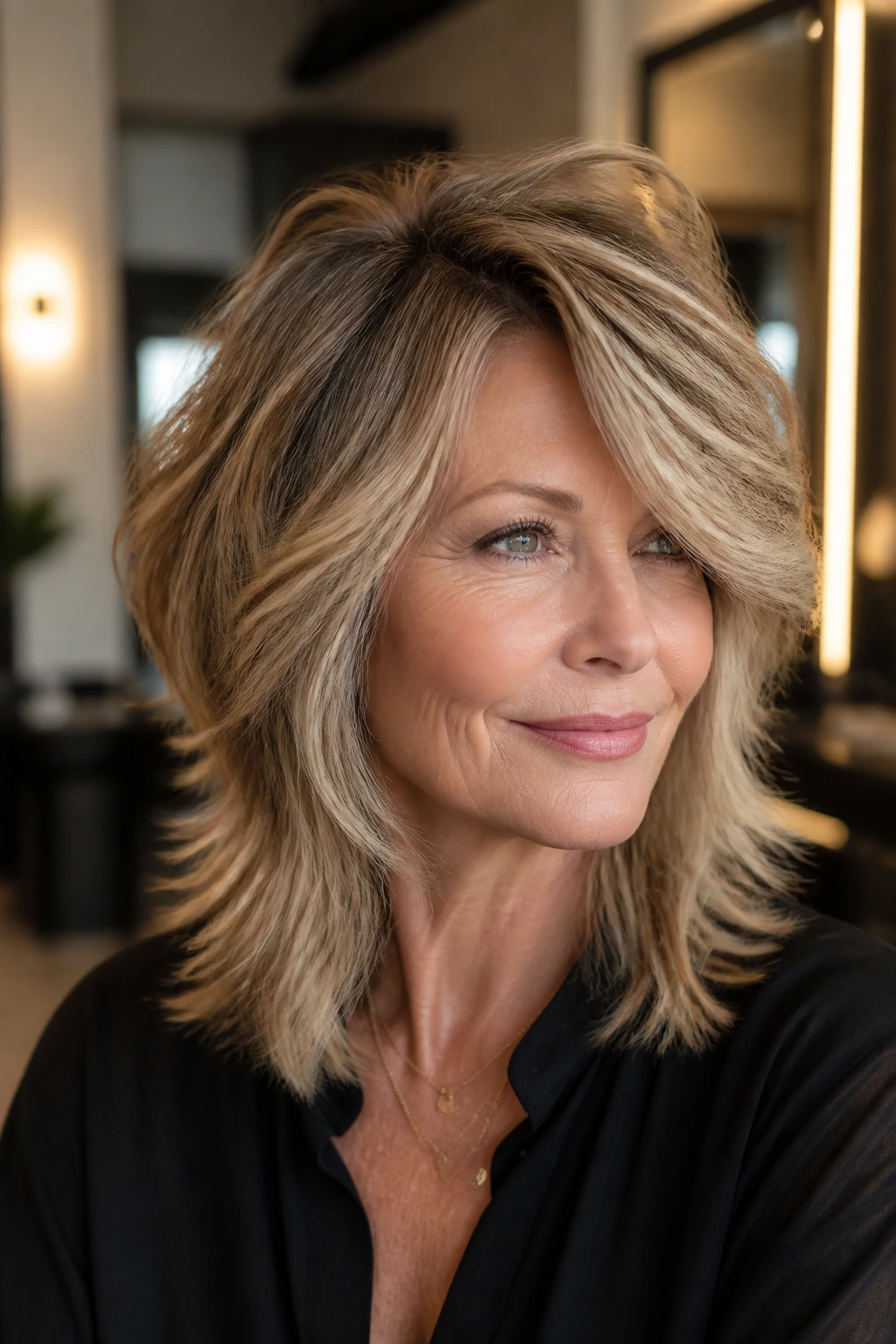
A deep side part changes the mood fast. Same shag, different attitude. The front section gets more dramatic sweep, which creates lift at the crown and brings attention to the eyes and cheekbones. It’s the kind of cut that can look polished with a blowout and slightly undone with a scrunch.
This is a good choice if you like a bit of glamour but don’t want a stiff haircut. Ask for a longer front fringe and keep the side layers soft so the part doesn’t split the whole shape in two. A root clip during drying can help hold that lift. Small detail. Big payoff.
13. Glasses-Friendly Shag

Glasses change everything, and too many haircuts pretend they don’t exist. A glasses-friendly shag keeps the side pieces light enough not to jam against the frames. The side-swept part opens the face, which matters when the temples already have a lot going on thanks to the arms of the glasses.
What works
Longer face-framing layers that stop just below the frame line tend to look cleaner than short layers that land right on top of the glasses.
Ask for the fringe to be separated rather than dense. You want movement, not a curtain. This cut is especially good with round or cat-eye frames because the diagonal hairline plays nicely with the frame shape.
14. Face-Framing Shag for Round Faces
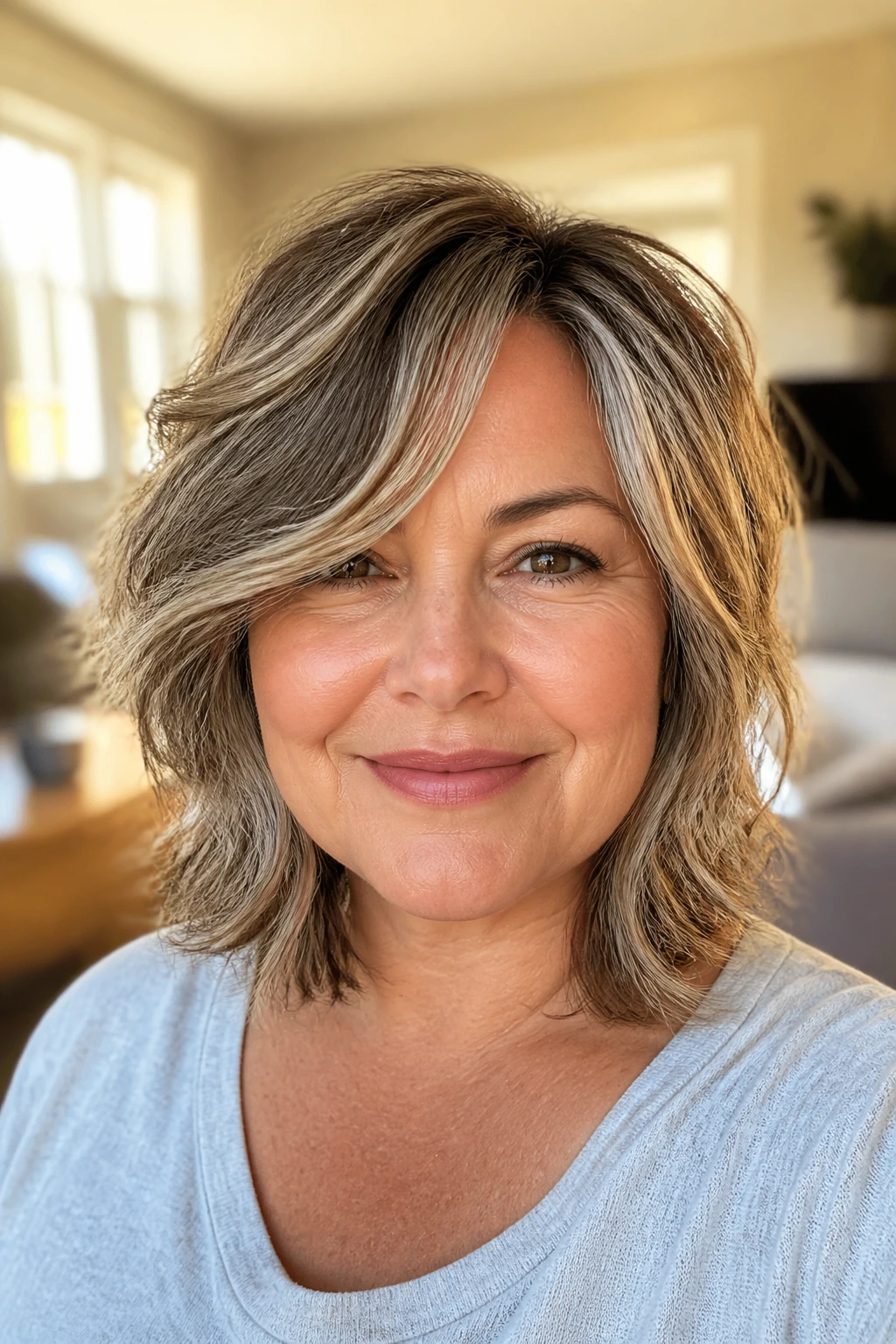
Round faces usually benefit from vertical movement and side angles. That’s what this cut gives you. The layers drop from the cheekbone down toward the jaw, while the side-swept part creates a diagonal line that slims the widest part of the face without making it look drawn on.
A little length below the chin helps here. You do not want the whole silhouette ending right at the jaw unless you like extra width there. If your hair is wavy, even better. Let the bend sit in the front pieces and keep the back softly layered so the cut doesn’t balloon.
15. Jaw-Softening Shag
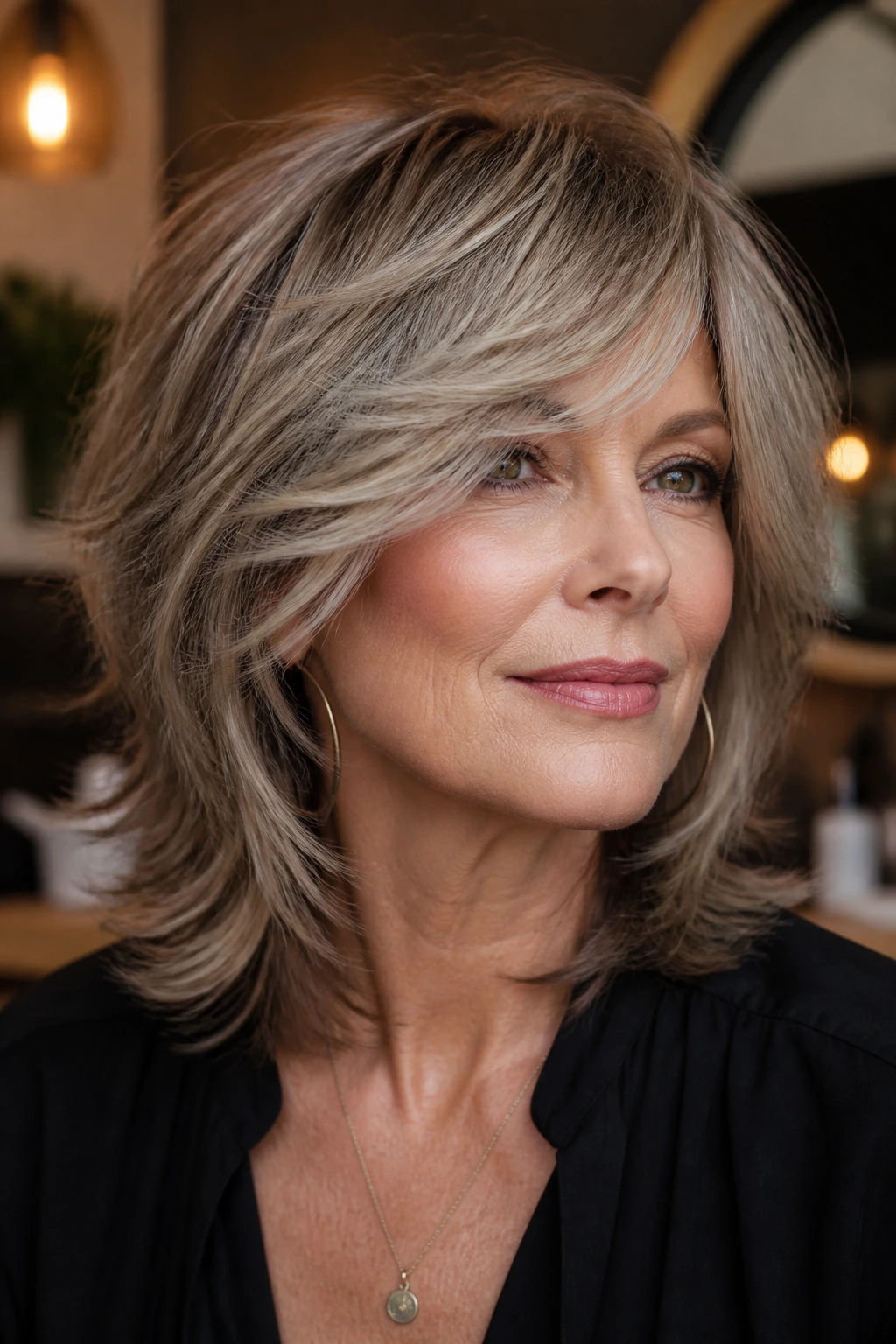
This one is for anyone who feels her jawline has gotten a little sharper over time. That can happen with age, and a haircut with a blunt line can make it feel more pronounced. A jaw-softening shag uses curved layers around the mouth and chin, then keeps the side sweep loose enough to break up the edge.
It’s a nice choice if you wear lipstick or statement earrings, because the hair frames them without stealing the show. Ask for the front to begin around the mouth or cheekbone, depending on your face shape. The line should skim, not sit rigidly against the jaw.
16. Long Shag with Swingy Ends
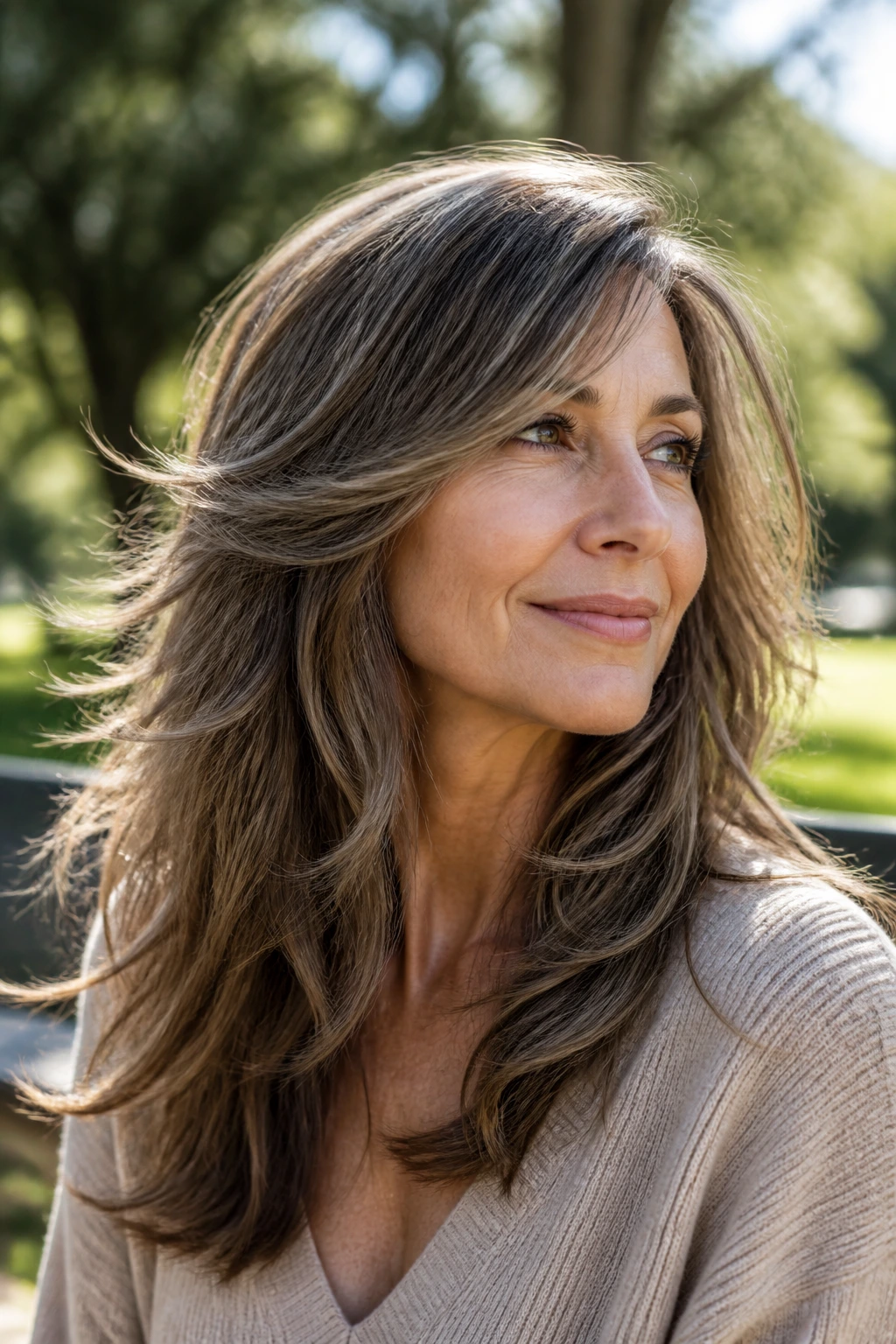
Long shags work when the ends are alive. If they’re dead straight and heavy, the cut turns into a compromise. If they move, it looks intentional. The side-swept part prevents the top from feeling flat, and the layers through the mid-lengths keep the ends from dragging.
This version is especially nice on women who don’t want to cut much length but still want the hair to look updated. Use a large round brush or a 1.5-inch curling iron on the ends only. Don’t overcurl the whole head. A little swing is the point, not barrel curls from a formal updo.
17. Choppy Lob Shag
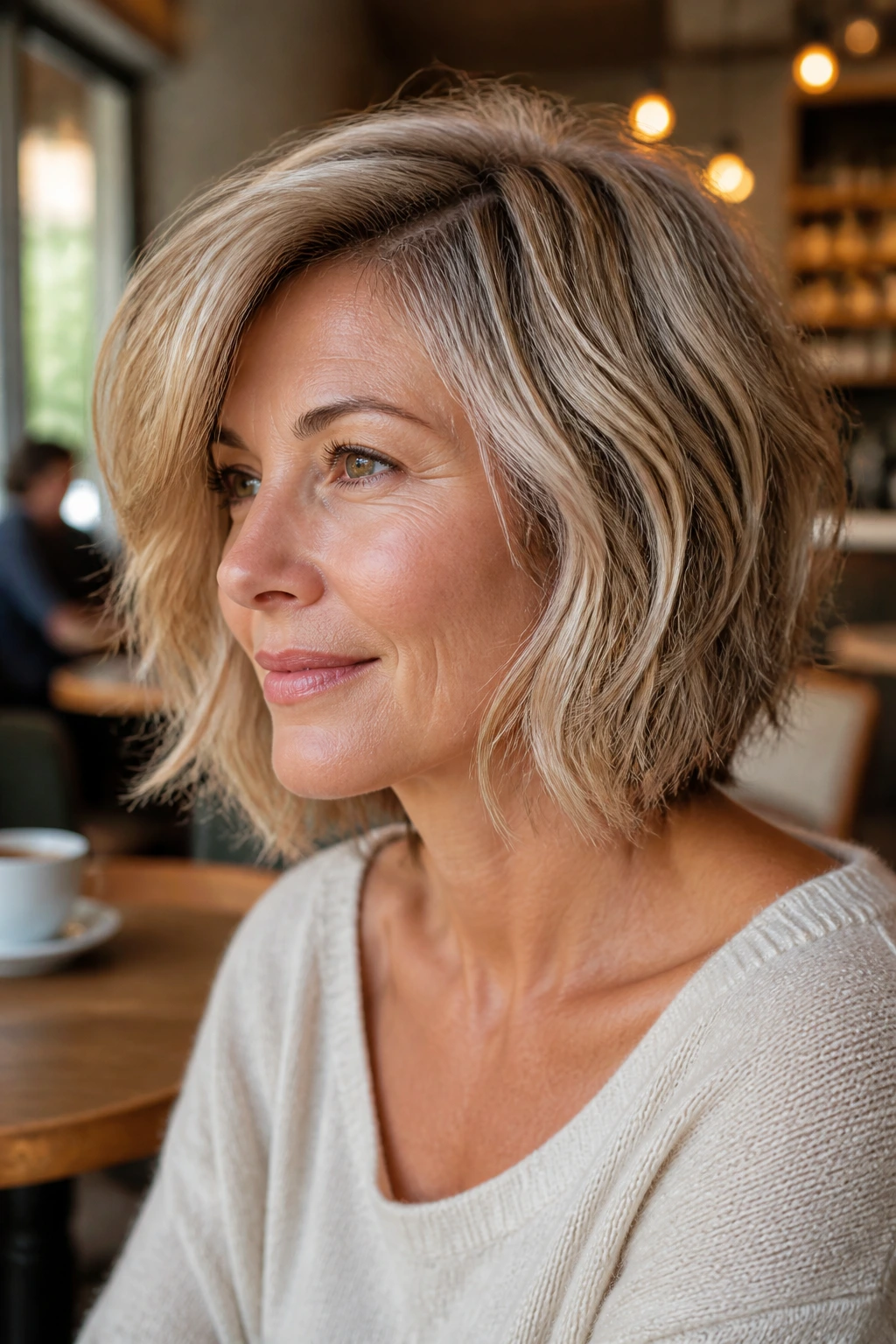
A lob gives structure. A shag gives motion. Put them together and you get a haircut that’s easy to wear but never boring. The choppiness keeps the length from feeling heavy, and the side part gives enough asymmetry to keep the style from becoming too square.
It works well on straight or slightly wavy hair that needs help finding shape. Ask for the layers to be subtle through the back and more noticeable around the front. That keeps the line clean from behind while giving the face the soft piecey look most people want from a shag.
18. White-Hair Feathered Shag

White hair can look startlingly chic in a feathered shag, but only if the cut doesn’t overwhelm it. The strands can be fine or wiry, and the texture often changes from one section of the head to another. A side-swept part helps organize that mix into something graceful instead of scattered.
A lightweight cream is usually enough. Too much product makes white hair look dingy and flat. If the hair is very silky, a small amount of texturizing spray at the mids will keep the layers visible. This cut has a clean, airy look that works especially well with soft makeup and open necklines.
19. Tapered Nape Shag
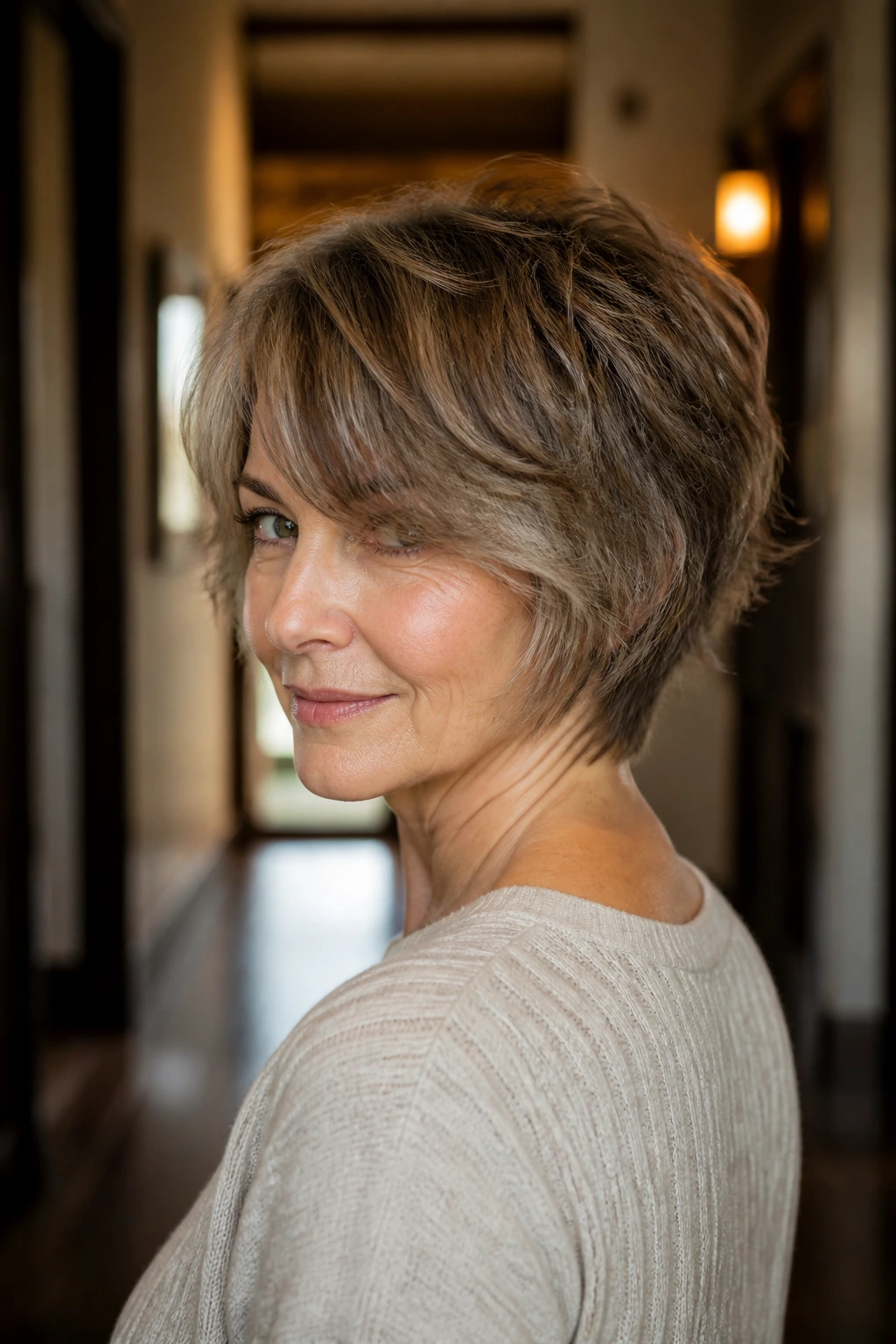
A tapered nape changes the back of the cut in a way many people notice only after they’ve had one. The neckline looks neater, the bulk disappears, and the whole haircut sits closer to the head. That’s useful if your hair tends to kick out at the collar or puff beneath scarves and jackets.
The front stays shaggy enough to keep the style from feeling too tidy. That contrast is what makes it interesting. Ask for the back to be cut in a gentle taper, not a hard undercut. You want softness at the neck, not a sharp disconnection.
20. Smooth Blowout Shag

Some shags are rough-dried and piecey. This one likes a polished blowout. The side part gives the front some swing, while the layers are designed to show movement when brushed smooth rather than scrunched. It’s a nice pick if you prefer a cleaner finish but still want the looseness of a shag.
Styling note
Use a round brush and dry the roots first. That gives you the lift that keeps the cut from going limp near the scalp.
A touch of shine serum on the mids and ends can make the layers look expensive rather than dry. Do not pile serum on top. One or two drops is enough, especially on fine hair.
21. Soft Fringe Shag
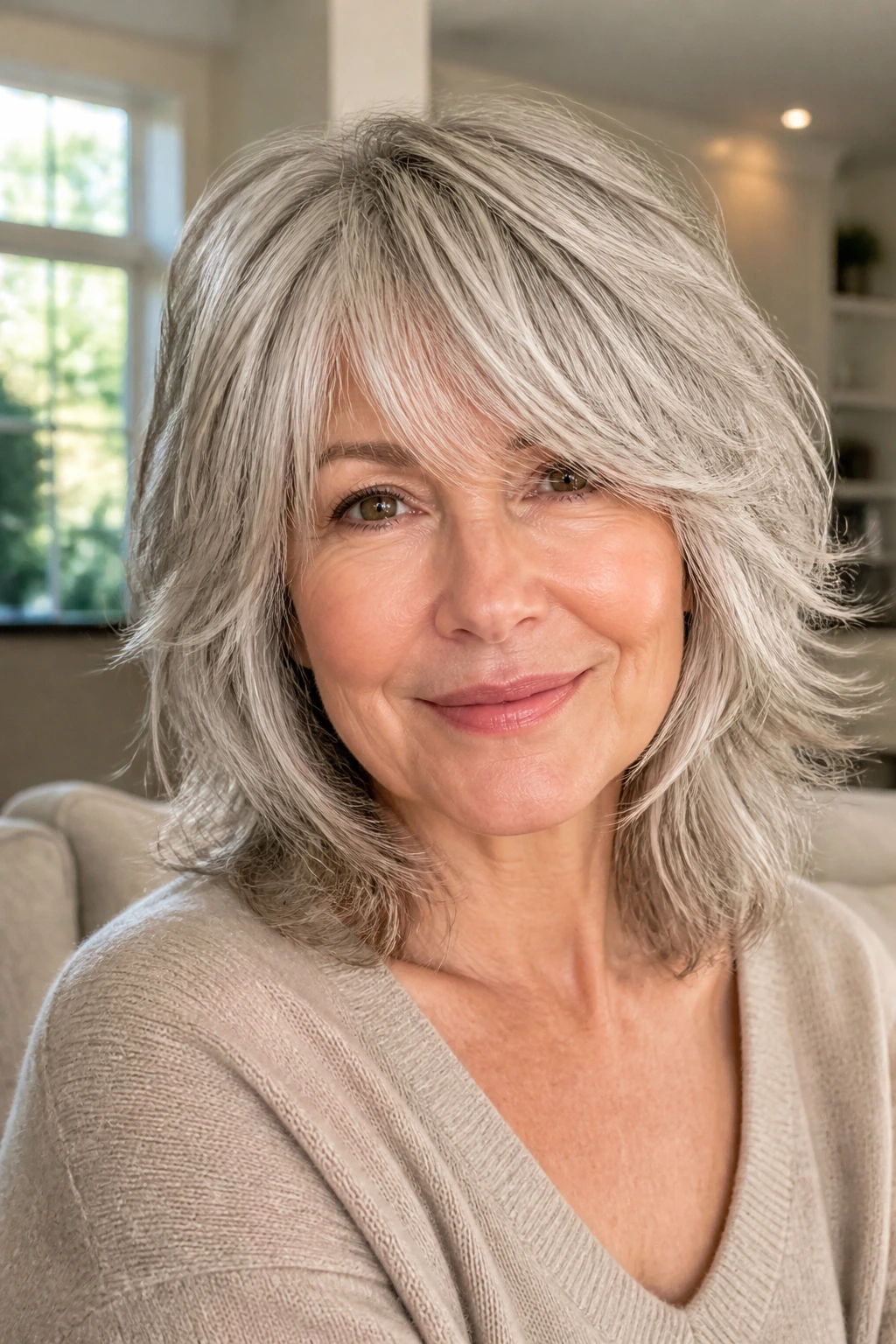
A soft fringe can be a better choice than a full bang if you want forehead coverage without the upkeep. With a side-swept part, the fringe drifts across the face instead of sitting straight on it, so it looks lighter and easier to grow out. That makes the cut forgiving for women who don’t want to see a stylist every few weeks.
This version suits higher foreheads, soft features, and anyone who likes a little movement near the eyes. Ask for the fringe to be wispy at the ends, not blunt. A blunt line can go very heavy very fast on mature hair.
22. Coarse-Hair Shag

Coarse hair has its own rules. It can hold shape, resist collapse, and sometimes feel like it has a mind of its own. A shag can work with that energy if the layers are placed carefully and the part is offset to break up the density at the top.
The key is not over-thinning. Coarse hair often gets frizzy when too much weight is taken out in the wrong places. Ask for soft movement around the face and controlled volume through the body of the hair. A smoothing cream on damp hair and a wide brush during drying can keep the cut from expanding into a triangle.
23. Wavy Shag with Piecey Ends

This one lives in that sweet spot between relaxed and styled. The waves create natural motion, and the side-swept part gives the front some direction so the haircut doesn’t feel like it wandered out of the shower and stayed there. Piecey ends are the trick. They keep the shape fresh.
A salt spray can help, but use it lightly. Too much makes mature hair feel sticky and dry, which is the wrong kind of texture. If your waves are loose, scrunch them while damp and let them settle. If they’re stronger, bend the front away from the face with a brush and stop there.
24. Root-Lift Shag
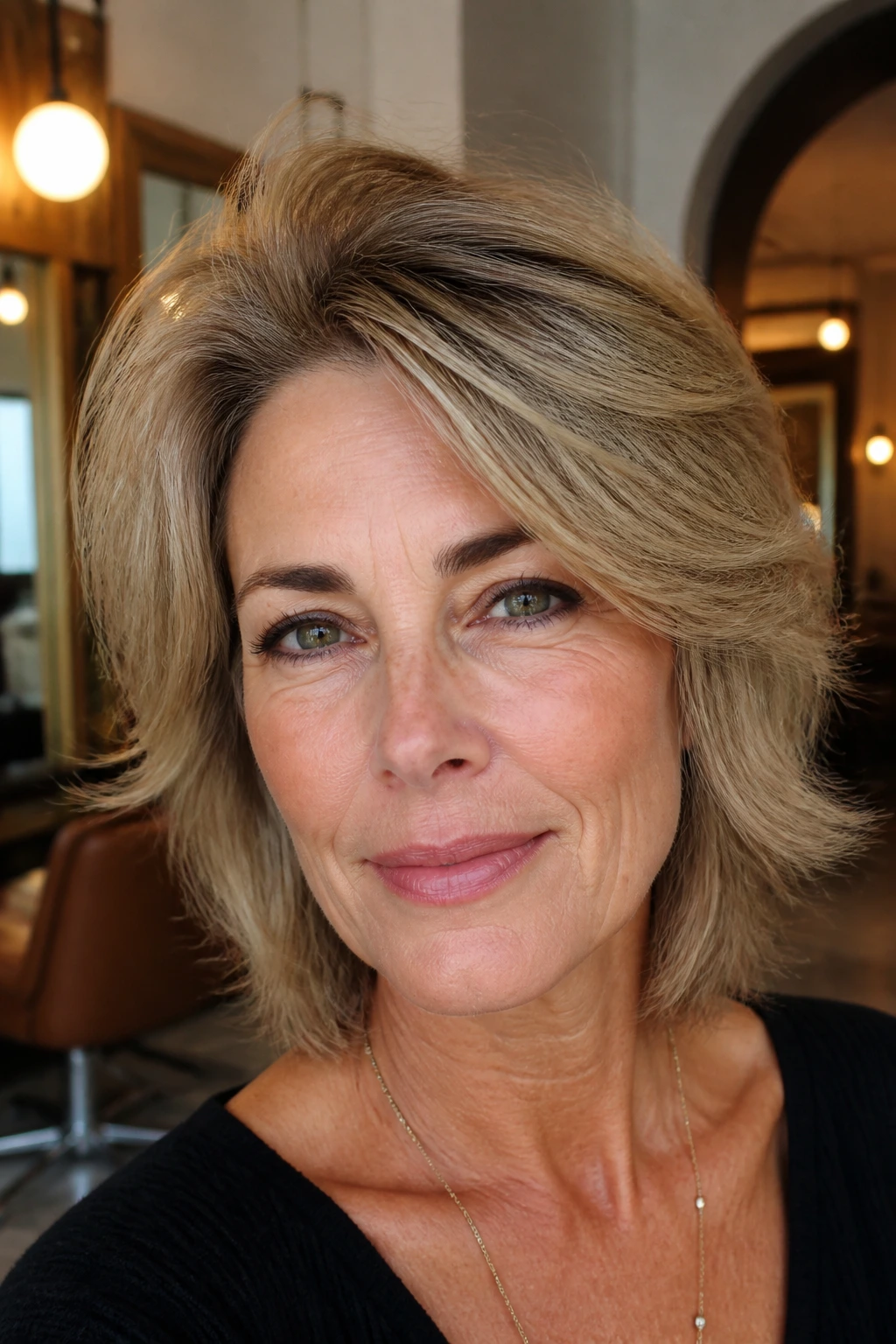
When the roots go flat first, the whole face can look tired even when the hair is freshly washed. This cut builds lift into the top layers and keeps the side-swept part from lying directly on the scalp. The result is height without obvious teasing.
It’s especially useful for women whose hair has thinned a bit at the part. Ask for shorter layers at the crown and a long sweep in front so the lift appears soft, not spiky. A root-lift spray or mousse at the base is worth the time here. Skip heavy conditioner near the scalp. That’s what steals the lift.
25. Easy Grow-Out Shag

This is the haircut for women who want to live their lives between salon appointments without feeling punished for it. The layers are blended enough to grow out smoothly, and the side-swept part keeps the front from separating into obvious chunks. It looks good on day one and still looks decent six weeks later.
The shape should be soft around the cheeks and shoulders, with no abrupt shelf at the bottom. Ask for longer face-framing pieces and internal movement rather than a lot of disconnected layers. It’s not the most dramatic shag on the list. That’s the point. It behaves.
How to Make the Cut Look Intentional, Not Overworked
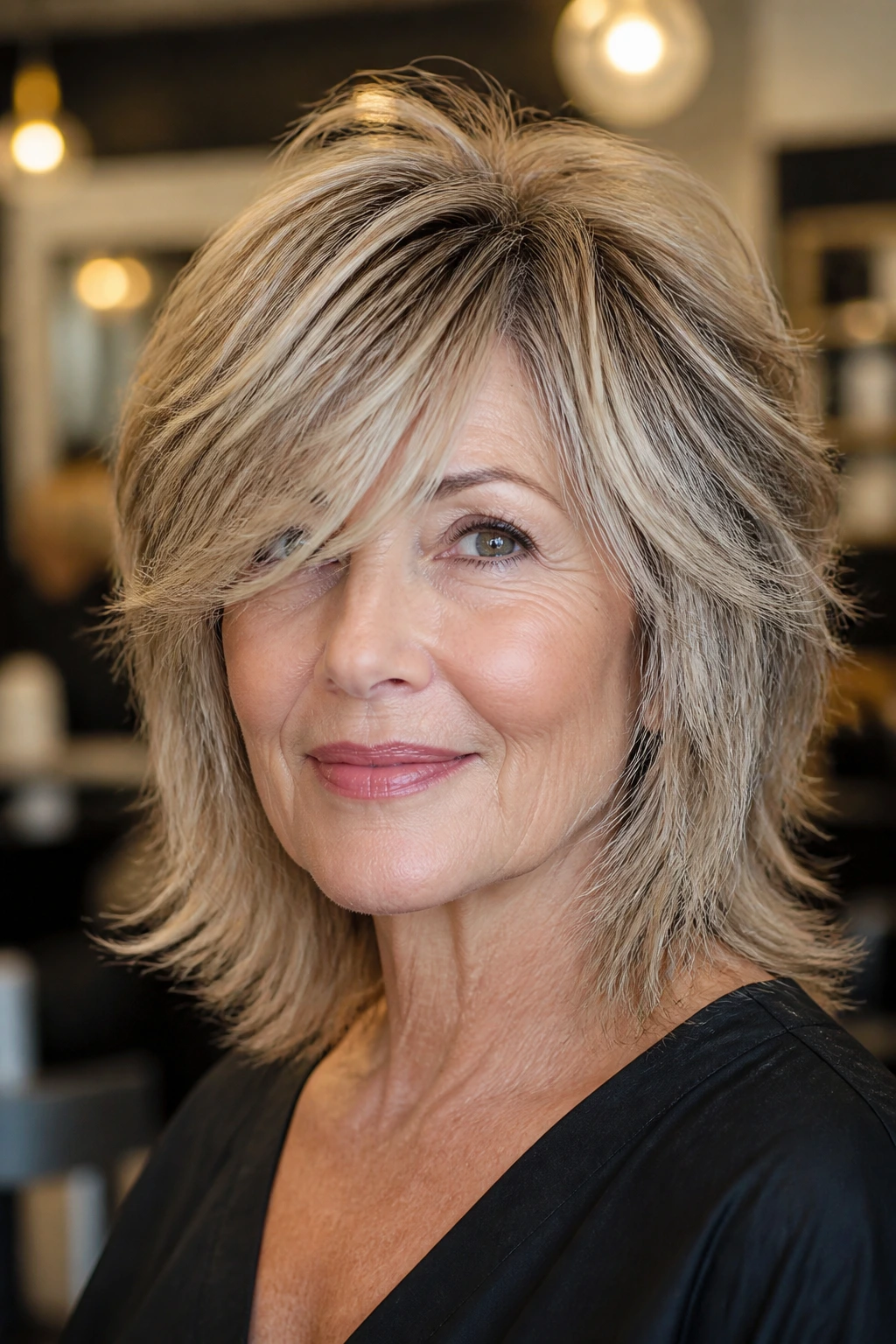
Root lift first, everything else second. If the roots are flat, the whole shag reads heavy, no matter how good the layers are. A little mousse at the roots or a few clips while the hair cools can do more than another pass with a flat iron.
Keep the ends soft. A shag lives or dies by its ends. If they’re chipped, fuzzy, or split, the whole haircut looks tired. A micro-trim or a dusting every 6 to 8 weeks keeps the movement crisp.
Use texture where the haircut already wants it. Don’t fight the natural bend in your hair. Put product only where the hair needs support. The front may need a little more styling than the back, and that’s normal.
Gray hair likes gentle handling. The American Academy of Dermatology has long advised lighter heat, less rough towel-drying, and careful brushing for fragile hair. That advice matters here because shag layers show damage fast. A rough blow-dry will show up in the mirror by lunchtime.
Do not drown it in cream. Mature hair often needs moisture, but too much smoothing product kills the movement you paid for.
Common Mistakes That Flatten the Whole Look
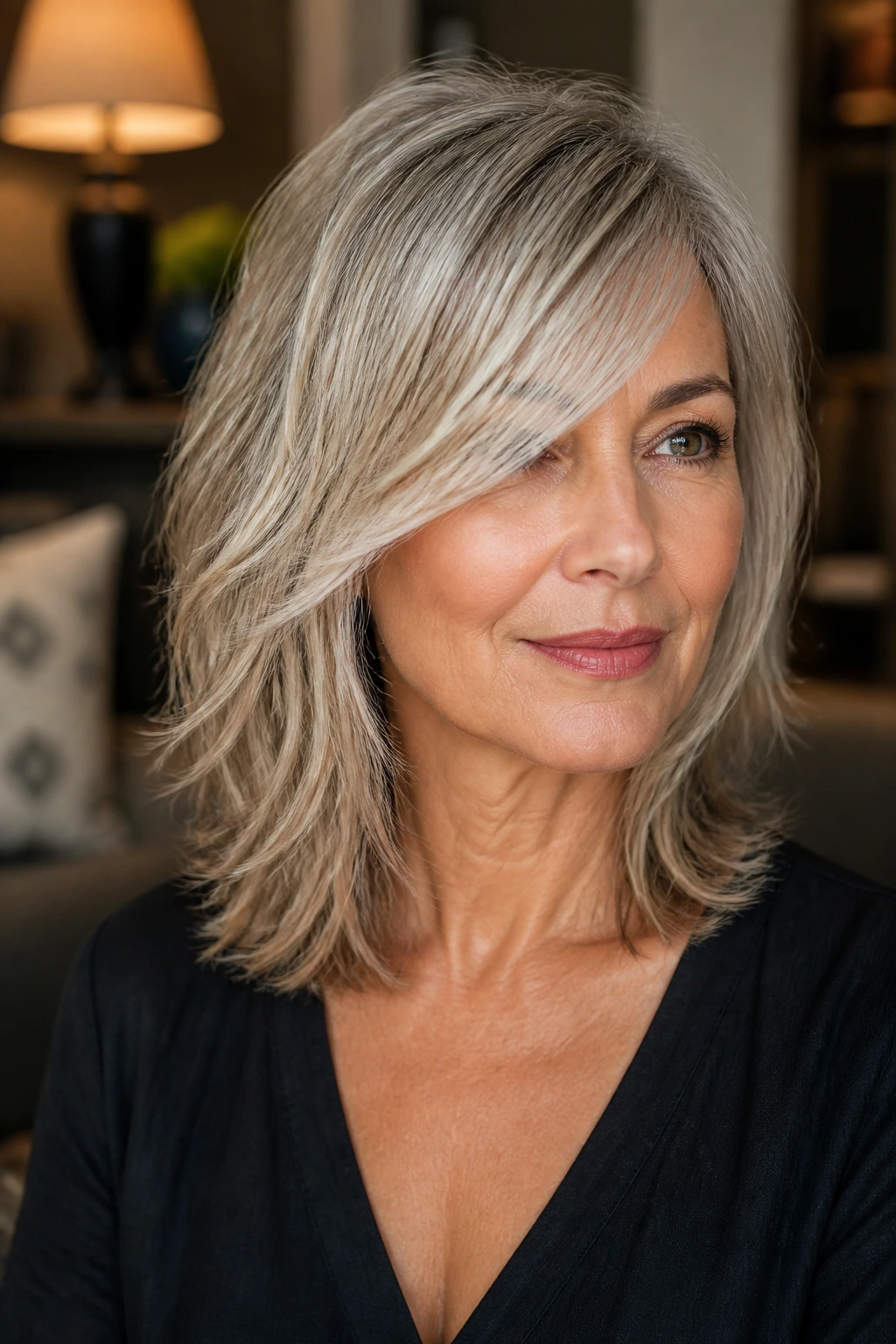
The biggest mistake is asking for a shag but leaving out the parting plan. A center part and a shag can work, sure, but the side-swept version is the one that gives older hair real lift. If the part is placed too far over, though, the front can collapse across the face. The sweet spot is usually just off-center, not a dramatic sweep all the way to the temple.
Another common error is letting the stylist take too much weight from the bottom. When that happens, the ends go wispy and the haircut starts looking old before it’s grown out. You want movement, not see-through edges. If your hair is fine, keep the perimeter fuller.
Then there’s the “too edgy” problem. A shag can slide into mullet territory fast if the crown is short and the back is left long with no blend. If you want softness, say so. If you don’t want the back to kick out, say that too. Stylist mind-reading is overrated.
Heavy products cause trouble as well. Thick oils and rich creams can turn a layered cut into a greasy helmet by noon. Use them sparingly, and keep them away from the roots unless your hair is truly dry.
Small Changes That Make a Big Difference
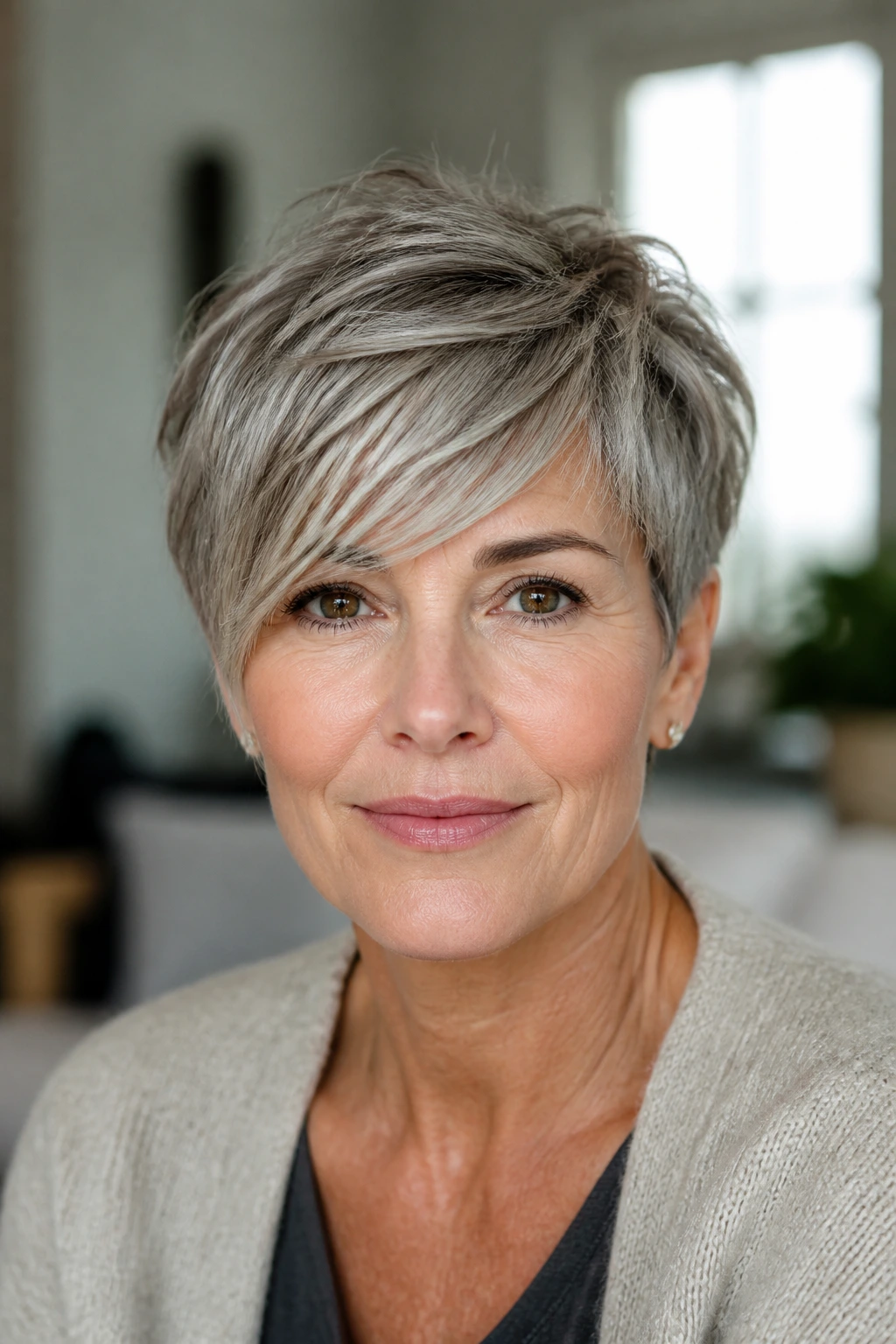
For more polish: Add a soft bend with a round brush or a large-barrel iron only on the front pieces. That gives the side sweep some direction without making the whole head look curled.
For more edge: Ask for the ends to be point-cut rather than blunt-cut. The haircut will separate more easily and read a little cooler.
For less maintenance: Keep the layers long and the bangs soft. That gives you the shag movement without the constant need to reshape it in the mirror.
For richer texture on gray hair: A light gloss or toning shampoo can keep silver and white tones bright, while the layers do the rest of the visual work.
For soft volume on fine hair: A root spray plus a cool shot from the blow-dryer makes a bigger difference than piling on product. Every time.
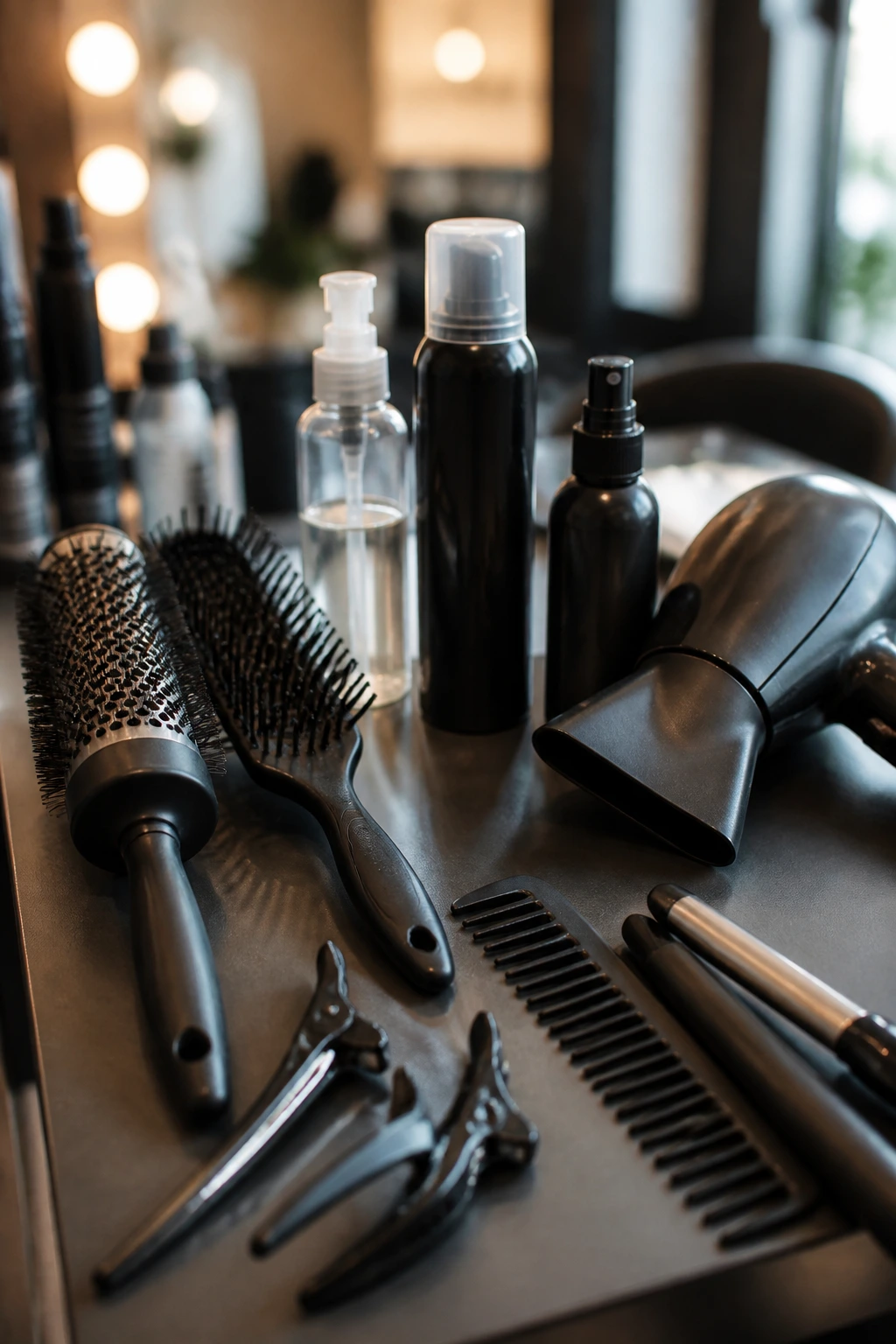
Essential Tools for These Cuts
-
A medium round brush — Useful for lifting the roots and bending the side fringe without making it too curled.
-
A vent brush — Good for quick blow-drying when you want shape fast and don’t want to fight the hair too much.
-
A blow-dryer with a nozzle — The nozzle matters; it directs air at the roots and keeps frizz down.
-
Lightweight mousse or root-lifting spray — Adds structure without the sticky feel that can flatten mature hair.
-
Texture spray or light finishing spray — Helps piece out the layers, especially on straighter hair.
-
A wide-tooth comb — Easier on fragile, dry, or curly hair than a brush.
-
Duckbill clips or root clips — Handy for setting lift at the crown while the hair cools.
-
A 1- to 1.5-inch curling iron or flat iron — Optional, but useful for adding bend to the front pieces and ends.
How to Keep the Shape Between Salon Visits

A good shag should grow out with some grace, but it still needs attention. Shorter versions usually want a trim every 5 to 7 weeks. Longer shags can often go 7 to 10 weeks if the layers stay blended and the ends don’t fray. Once you start seeing the crown drop flat or the nape lose its shape, the cut is telling you it’s time.
Wash frequency matters more than people think. Fine hair often looks best when washed every 1 to 2 days with a light shampoo, because scalp oil kills lift quickly. Coarser or curlier hair may do better with less frequent washing and more leave-in moisture. Use your hair’s behavior as the guide, not somebody else’s routine.
For styling, dry the roots first. That’s where the shape lives. If you let the roots dry flat and then try to rescue them later, the cut will already be half defeated. When the hair is damp, lift the front and crown with clips, or blast those sections upward with the dryer for 20 to 30 seconds at a time.
Gray and silver hair may need a purple shampoo every week or two if yellowing shows up. Keep it on only as long as the bottle says. Too much can leave a violet cast. And if your hair is fragile, skip daily heat. A shag looks better a little undone than brittle.
Questions Women Usually Ask Before Getting One
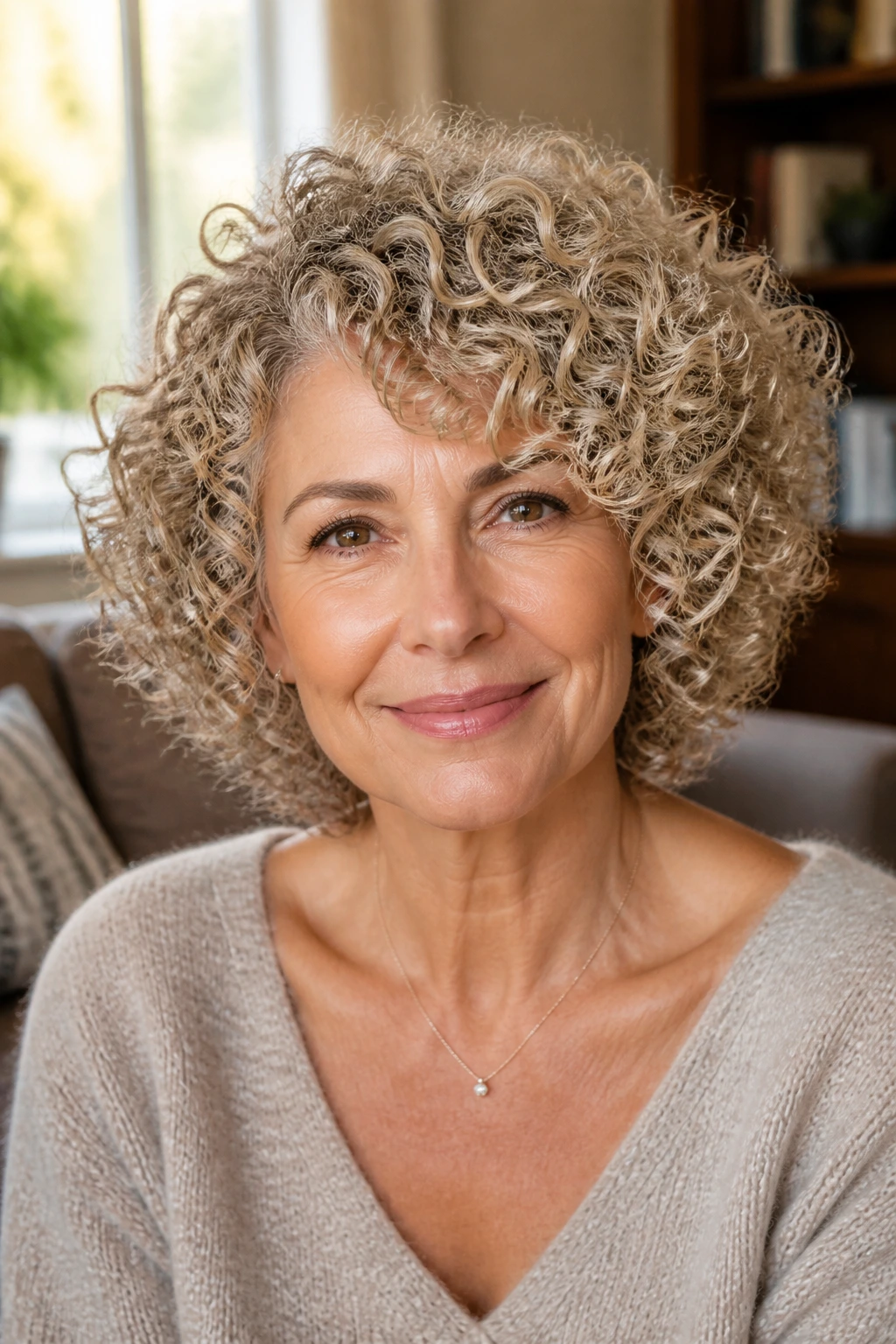
Will a side-swept shag make thin hair look thinner?
Not if the layers are placed well. A shag can actually make fine hair look fuller by shifting weight upward and leaving enough perimeter to keep the ends from going see-through. The problem is over-layering, not the shag itself.
Does this cut work on straight hair that doesn’t hold wave?
Yes, but the styling changes. Straight hair often needs a little root lift, a bend in the front pieces, and maybe a texture spray to keep the layers from sitting flat. Without that, the cut can look more severe than soft.
What if I wear glasses every day?
Tell your stylist before the first snip. The front pieces should land above, below, or just at the frame line depending on the style, but they should not jam into the temples. Glasses and bangs can get awkward fast if nobody plans around them.
How do I keep the cut from turning into a mullet?
Keep the blend soft at the back and the layers connected through the sides. A mullet has a sharp disconnect; a shag has movement that shifts from crown to ends. That distinction matters more than the name.
Can I air-dry this haircut?
Absolutely, especially if your hair has natural wave or curl. A little mousse, a side part, and a touch of shaping at the front are usually enough. Straight hair may need a quick root lift or it can fall too flat.
Is this a good cut for gray hair that feels coarse?
Yes, if the layers are controlled. Coarse gray hair can look fantastic in a shag because the texture helps the style hold. The trick is to avoid over-thinning the ends, which makes them frizzier.
How do I know if the fringe is too short?
If it sits above the brow and you’re spending every morning pushing it around, it’s too short for a low-maintenance life. A side-swept fringe should skim, not fight.
What if my cowlick keeps splitting the part?
Work with the cowlick, not against it. Ask the stylist to place the part where the hair wants to fall, then shape the front around that line. Fighting a strong cowlick is a waste of time and a bad mood waiting to happen.
A Cut That Keeps Its Shape Without Looking Fussy
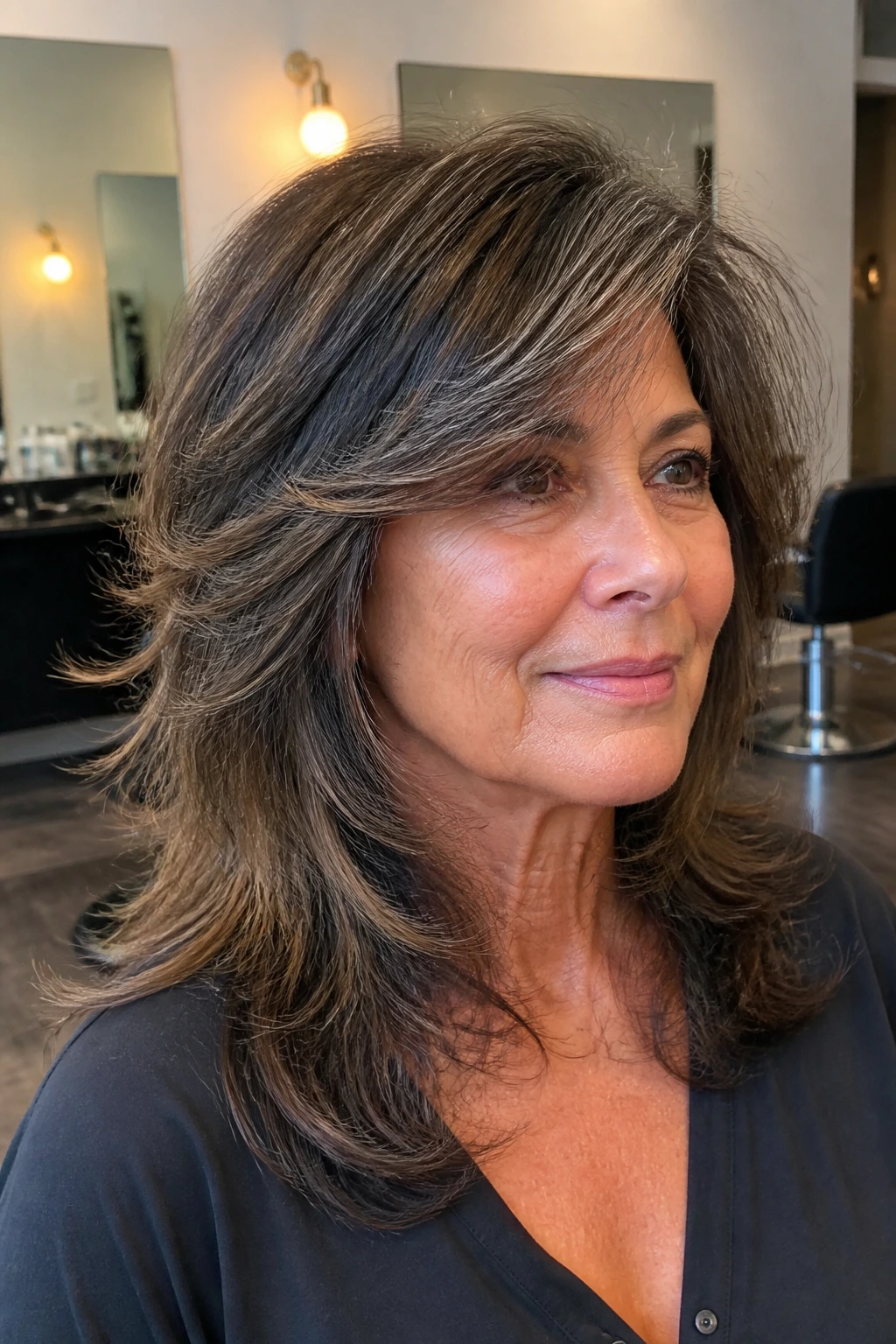
The best side-swept shag doesn’t try to erase age. It just gives hair more movement, more lift, and a better line around the face. That’s a useful trade. The cut feels relaxed, but it still has structure, which is why it can look neat after a blow-dry and slightly cool when it air-dries a little imperfectly.
If you choose the version that fits your texture, density, and styling patience, the haircut does a lot of the work for you. That’s the part people miss. A good shag is not about chasing a younger face. It’s about giving the hair a shape that still has energy when the mirror is being honest.