



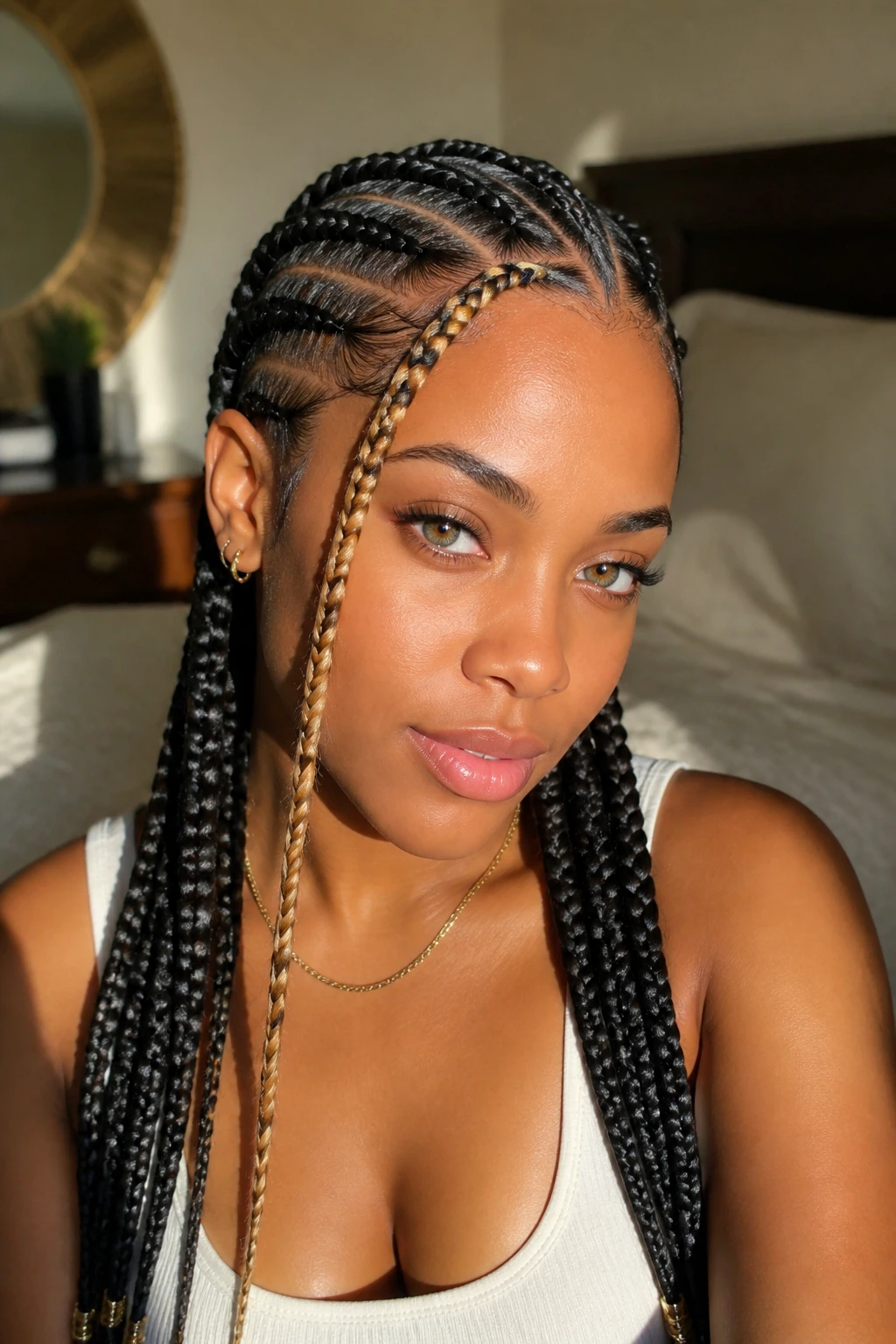
Cornrows and heat are old enemies. The first time the air turns sticky, loose hair starts clinging to your neck, makeup meets sweat, and the style that looked polished at 9 a.m. can feel tired by lunch. Sleek cornrows for summer with money piece highlights solve that problem with almost smug efficiency: the braids stay close to the scalp, the parting keeps everything neat, and the lighter face-framing pieces throw just enough brightness around the face to keep the look from going flat.
That contrast is the whole point. A row of tight, glossy braids can read severe if the color is all one dark block from hairline to nape. Add a money piece — two lighter front sections, or a front braid in honey, caramel, copper, platinum, ash blonde, or beige — and the style changes shape fast. The face gets a little lift. The braid pattern looks sharper. And you get that sunlit effect without bleaching your own hair if you do it with colored braiding hair instead of dye.
The trick, as always, is in the details. Parting matters. Tension matters even more. So does the shade you choose at the front; too pale and the contrast screams, too close to your base tone and the money piece disappears. The best versions look intentional from three feet away and still hold up when you lean into the season’s practical realities: sweat, humidity, sunscreen at the hairline, and a schedule that does not care about your edges.
Why These Braids Earn Their Keep
-
Face-Brightening Contrast: A lighter front braid or two pulls attention toward the eyes and cheekbones, which keeps a protective style from looking heavy around the forehead.
-
Heat-Friendly Shape: Cornrows sit close to the scalp, so the style stays off the neck and behaves better when the temperature climbs and the humidity starts testing everything.
-
Color Without Bleach: You can build the money piece with pre-colored braiding hair, which gives you the look without lightening your natural hair at all.
-
Low-Fuss Styling: Once the parting is clean and the braids are sealed well, the style can move from daytime errands to a dinner plan with almost no extra work.
-
Works on Different Lengths: Short natural hair, shoulder-length hair, or added lengths all work here; the braid pattern does the heavy lifting, not your starting length.
-
Better Than One-Note Black Braids: I like dark braids, but a little brightness at the front keeps the whole look from going flat under strong light.
1. Straight-Back Cornrows with Honey-Blonde Face Frames
These are the braids people picture first, and for good reason. Straight-back cornrows are clean, symmetrical, and easy to read from across the room, which makes them one of the sharpest options when you want the money piece highlights to do their job without fighting the braid pattern. The honey-blonde front pieces warm up the face in a way that feels softer than platinum and less orange than copper.
Why the contrast works
The straight-back layout gives you a strong center line, so the lighter front braids have something to frame. If your base color is deep brown or black, the honey shade creates a quiet glow near the temples instead of a harsh stripe. That matters. A money piece should brighten, not shout.
Ask for the front braids to be a touch thicker than the rows behind them. That keeps the lighter color from disappearing into the pattern and gives the style a more deliberate finish. It also helps when you wear the braids in a low ponytail, because the lighter pieces stay visible instead of hiding behind the rest of the hair.
Best for
- Oval and heart-shaped faces
- Anyone who likes a classic parting pattern
- People who want a style that works with hoops, gloss, and a bare face
A slicked-down crown and honey front pieces do a lot with very little. That’s the charm here.
2. Center-Part Stitch Cornrows with Caramel Panels
This version feels a little sharper, a little more tailored. Stitch braids use visible, segmented parting that gives the scalp pattern more texture, and the center part keeps the whole look balanced. Caramel money piece panels on either side soften the middle line and make the style less severe than a fully dark braid set.
Stitching is not subtle. The parting shows. The pattern shows. That is why the money pieces matter so much here; they break up all that geometry and keep the front from looking like a ruler was involved.
If you like clean lines, this is the one. Just keep the caramel a shade or two lighter than the rest of the braids, not five shades brighter. The difference between polished and costume-y is usually about that much.
3. Side-Swept Cornrows with One Platinum Front Piece
Side-swept cornrows bring a little asymmetry, and I mean that in the good way. The part angles across the scalp, the braids follow the line, and the whole style feels a touch less formal than straight-back rows. Add one platinum front piece on the heavier side of the part, and the shape suddenly has a focal point.
This works especially well if you wear a side part in clothes and makeup too. A sharply lined brow, one statement earring, or a glossy lip all feel at home with this braid set. The platinum piece is the loudest thing here, so let it be the loudest thing. Don’t crowd it with too many accessories at the hairline.
One piece. Not three. That’s the move. A single bright braid near the face can look deliberate and chic; too many pale strands and the style starts drifting into cosplay territory.
4. High Bun Cornrows with Bright Blonde Face Framing
A high bun is one of the smartest ways to wear cornrows when the heat is relentless. The nape stays bare, sweat has less chance to collect under the length, and the bun gives the style some height without adding bulk. Bright blonde face-framing pieces keep the updo from feeling too severe, especially if the rest of the braids are dark and glossy.
The trick is to keep the bun tight but not helmet-tight. Pulling the crown too hard will flatten the whole look and put pressure where you do not want it. If the braids feed into a wrapped bun, leave the front pieces slightly looser so they can curve around the temples instead of sticking straight out.
This is the style I’d pick for a long day outside, a workout, or a wedding guest look that needs to hold up after the ceremony ends.
5. Cornrow Ponytail with Caramel Tendrils
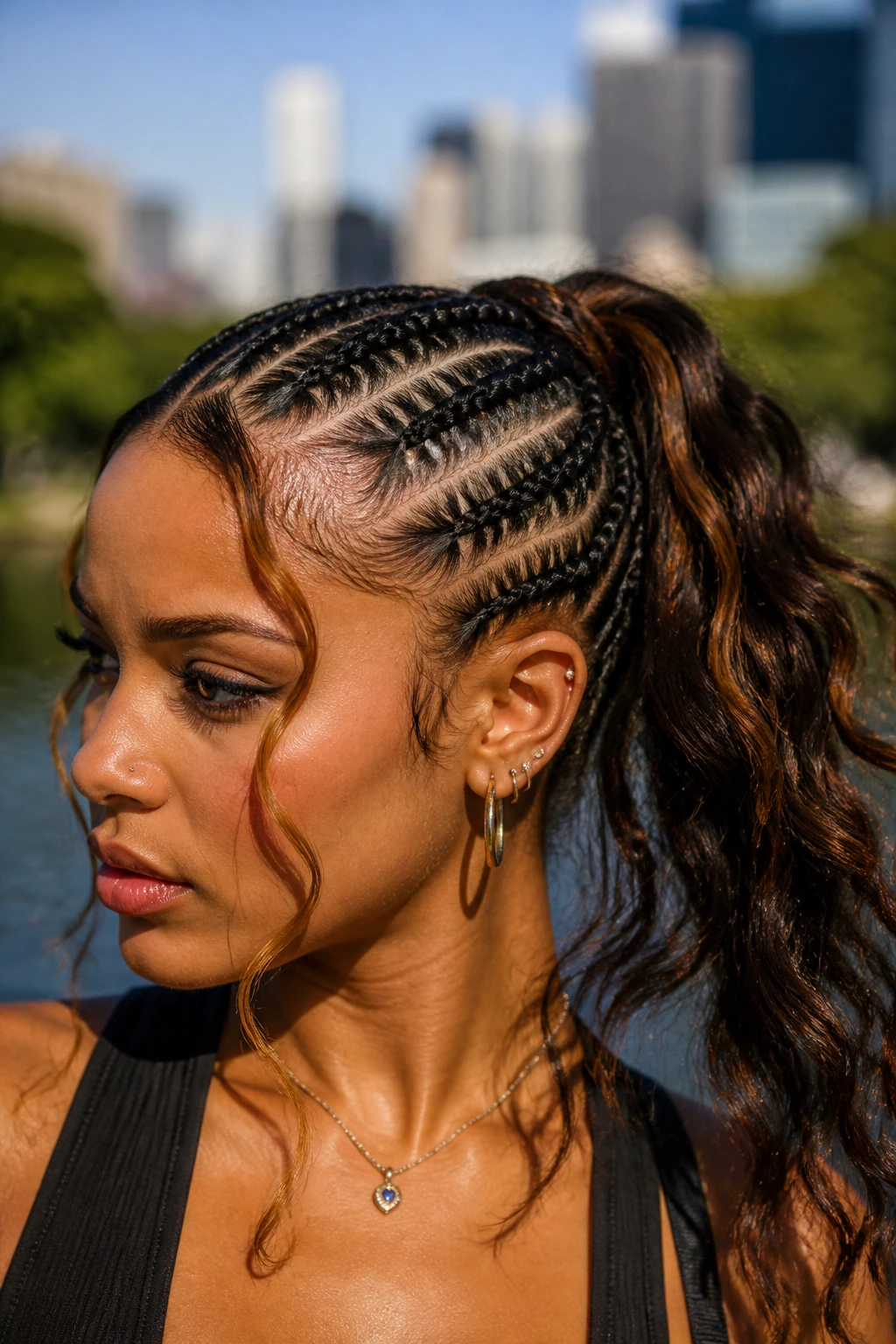
A braided ponytail has a different energy from a bun. It moves. It swings. It makes the whole style feel less fixed in place, which is useful if you don’t want your summer hair to feel rigid every single day. Caramel tendrils at the front keep the ponytail from looking like a single dark rope pulled back from the head.
A sleek ponytail base with cornrows feeding into it also gives you a nice balance between polished and casual. The front pieces can be left slightly narrower than the back rows so they curve at the cheekbones rather than sitting as flat strips. That small change matters more than people think.
Wear it when you want the face open but not bare. That’s the whole appeal.
6. Zig-Zag Part Cornrows with Copper Money Pieces
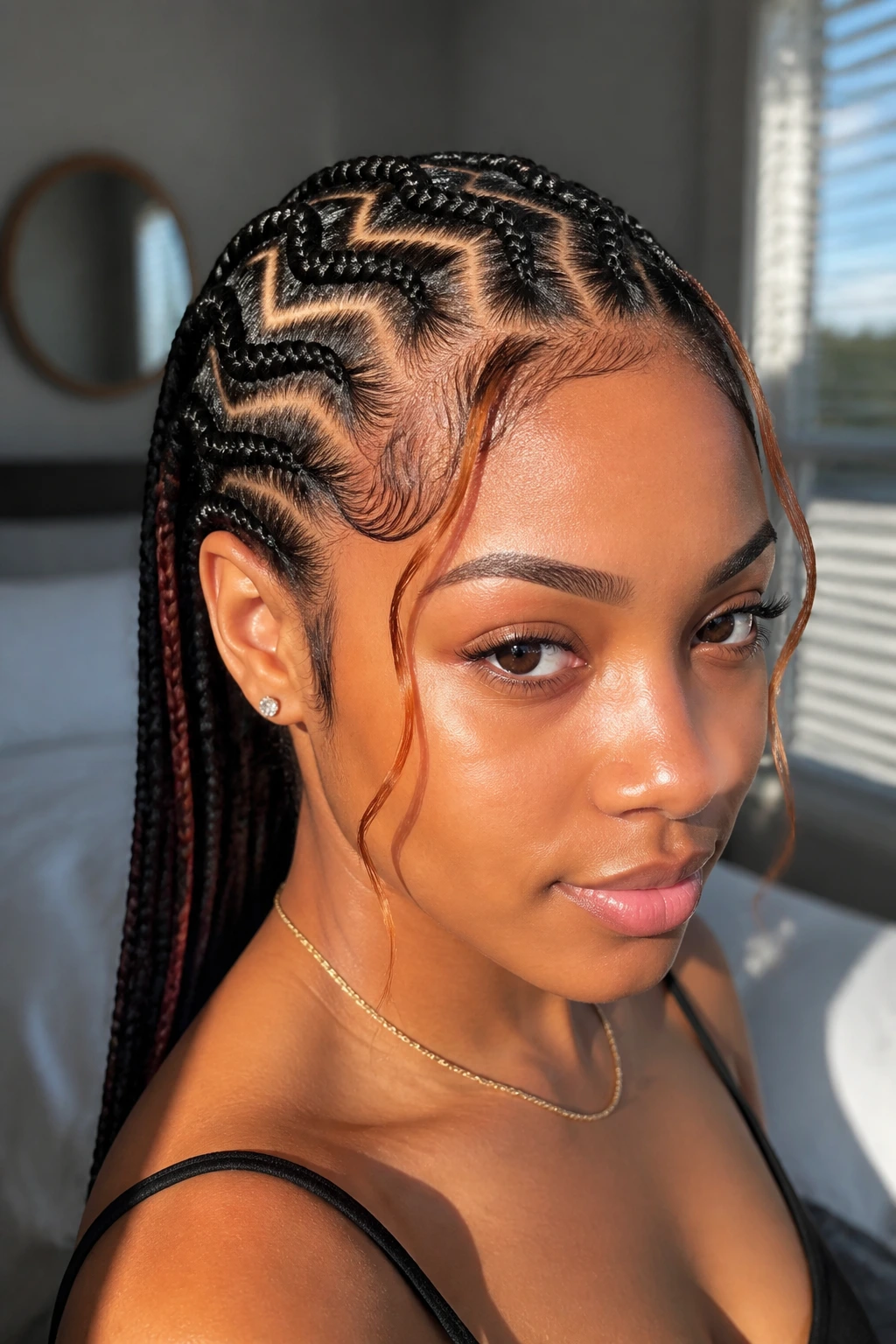
Zig-zag parts are for people who get bored fast. The pattern is playful, yes, but it still reads clean if the sections are neat and the braids are evenly spaced. Copper money pieces at the front give the style a warmer, sun-baked feel that looks especially good against deep brown or black roots.
Copper is a good choice when you want color that looks rich instead of icy. It catches light in a softer way than blonde, and it usually feels less stark on medium-to-deep skin tones. The zig-zag parting gives that copper a little more edge, which keeps the style from leaning too sweet.
If your braider is good with parting, ask for the zig-zag to stay visible for at least the first few inches. That’s where the style makes its point.
7. Curved Feed-In Cornrows with Auburn Frames
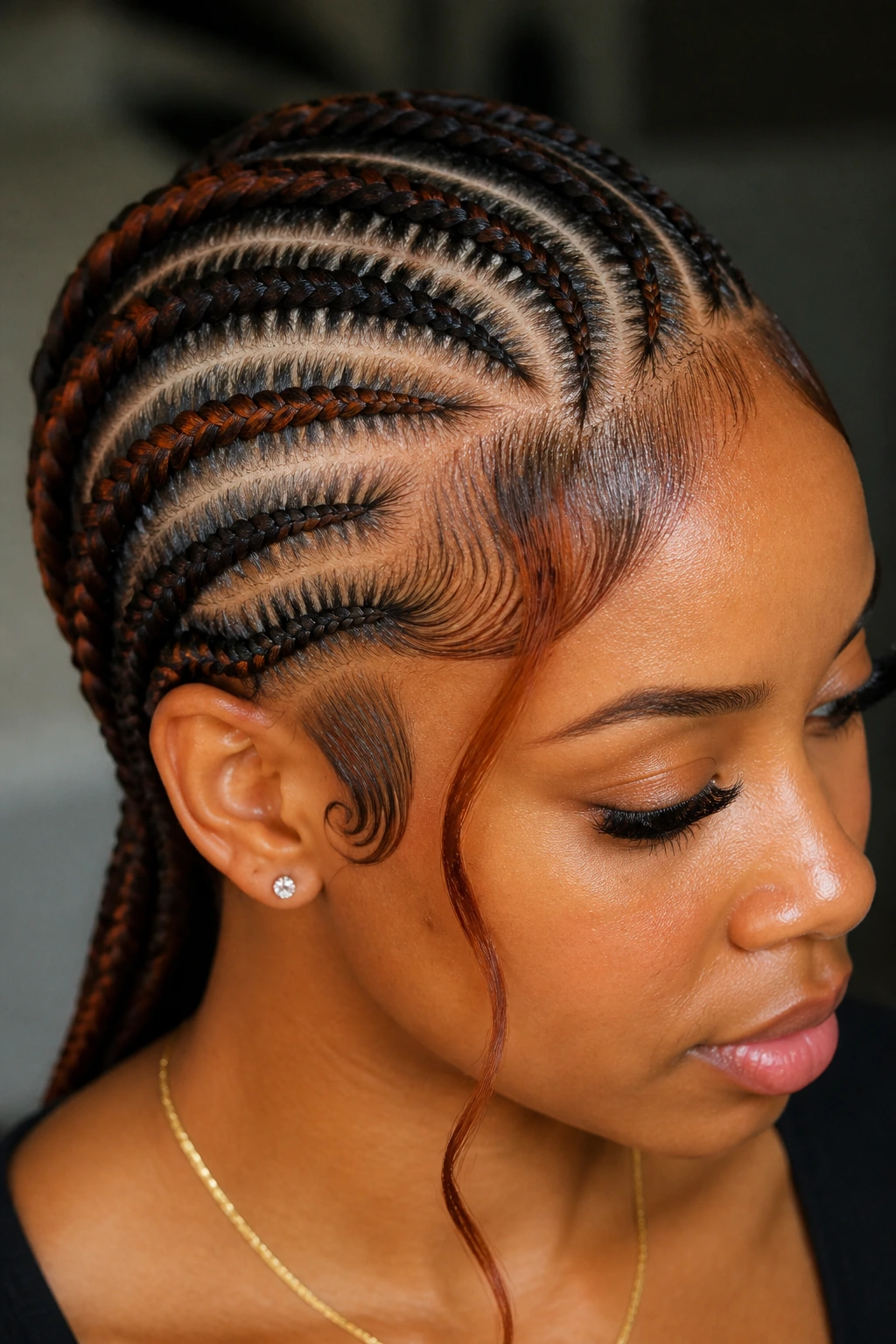
Curved feed-in braids have movement built into the pattern. Instead of going straight back and stopping, they arc around the head, which makes the style look more sculpted. Auburn money piece highlights fit this shape better than a very pale blonde because the warmth follows the curve rather than interrupting it.
Feed-in braids also let the front remain soft without losing the slick finish. The lighter pieces can sit right along the arc of the curve, which pulls attention to the hairline and temple area in a very controlled way. If you like a look that feels finished from every angle, this is one to keep near the top of the list.
This one also grows out a little gracefully. Not perfectly. But better than a style that depends on a dead-straight part.
8. Micro Cornrows with Soft Blonde Front Strips
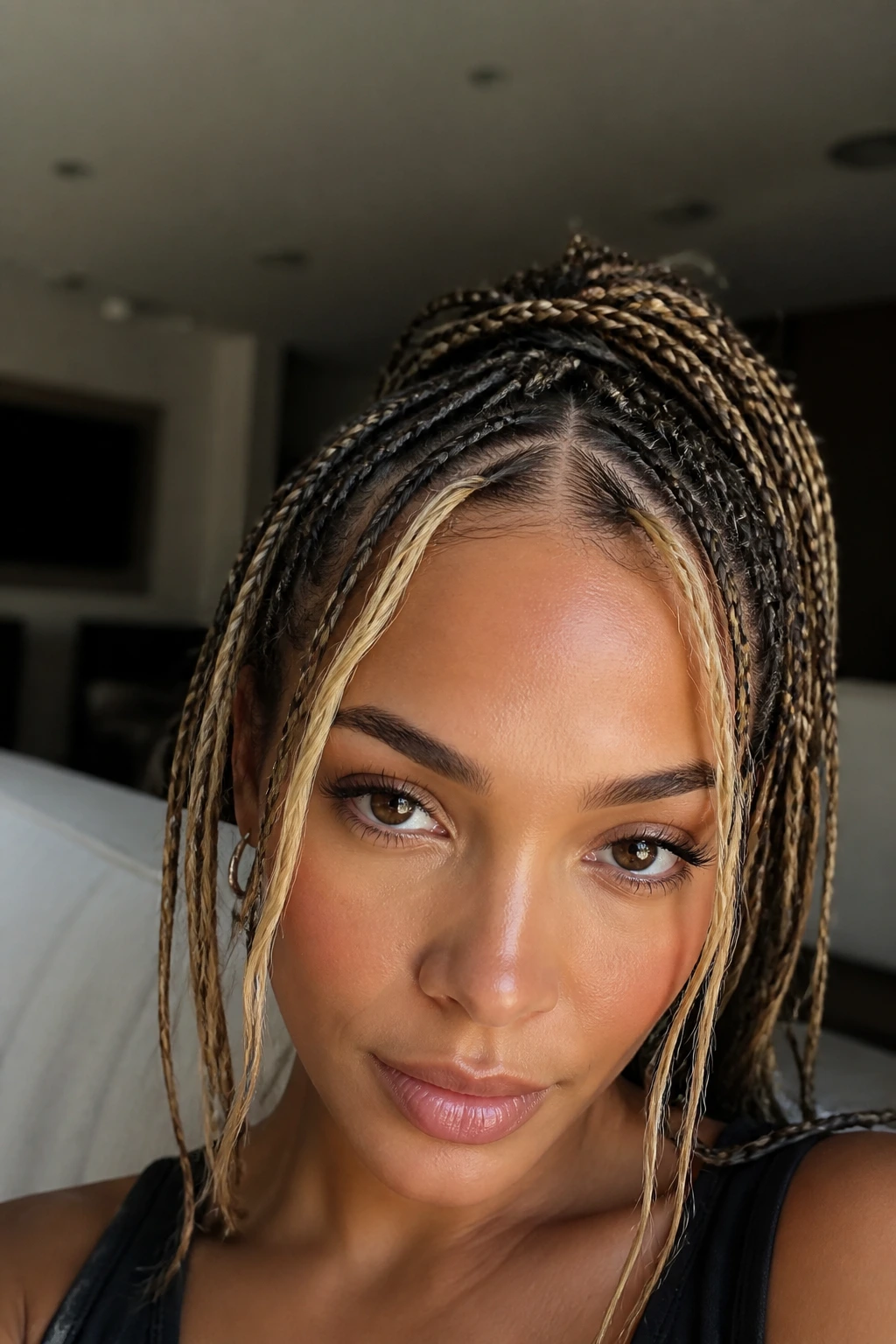
Micro cornrows are a commitment, and I’m saying that plainly because they take time and patience. The payoff is worth it if you want a lot of texture, a very detailed scalp pattern, and a style that looks almost woven from a distance. Soft blonde front strips keep all that detail from getting visually busy at the front.
The narrower the braids, the lighter the contrast should usually be. Tiny braids with super-bright money pieces can look busy in a way that steals the clean line you wanted in the first place. A soft blonde, closer to beige or pale honey, gives the face light without slicing the head into too many pieces.
This style shines when you want fullness and precision at the same time. It is not the quickest install, but it rewards anyone who likes intricate work.
9. Jumbo Cornrows with Chunky Champagne Money Pieces
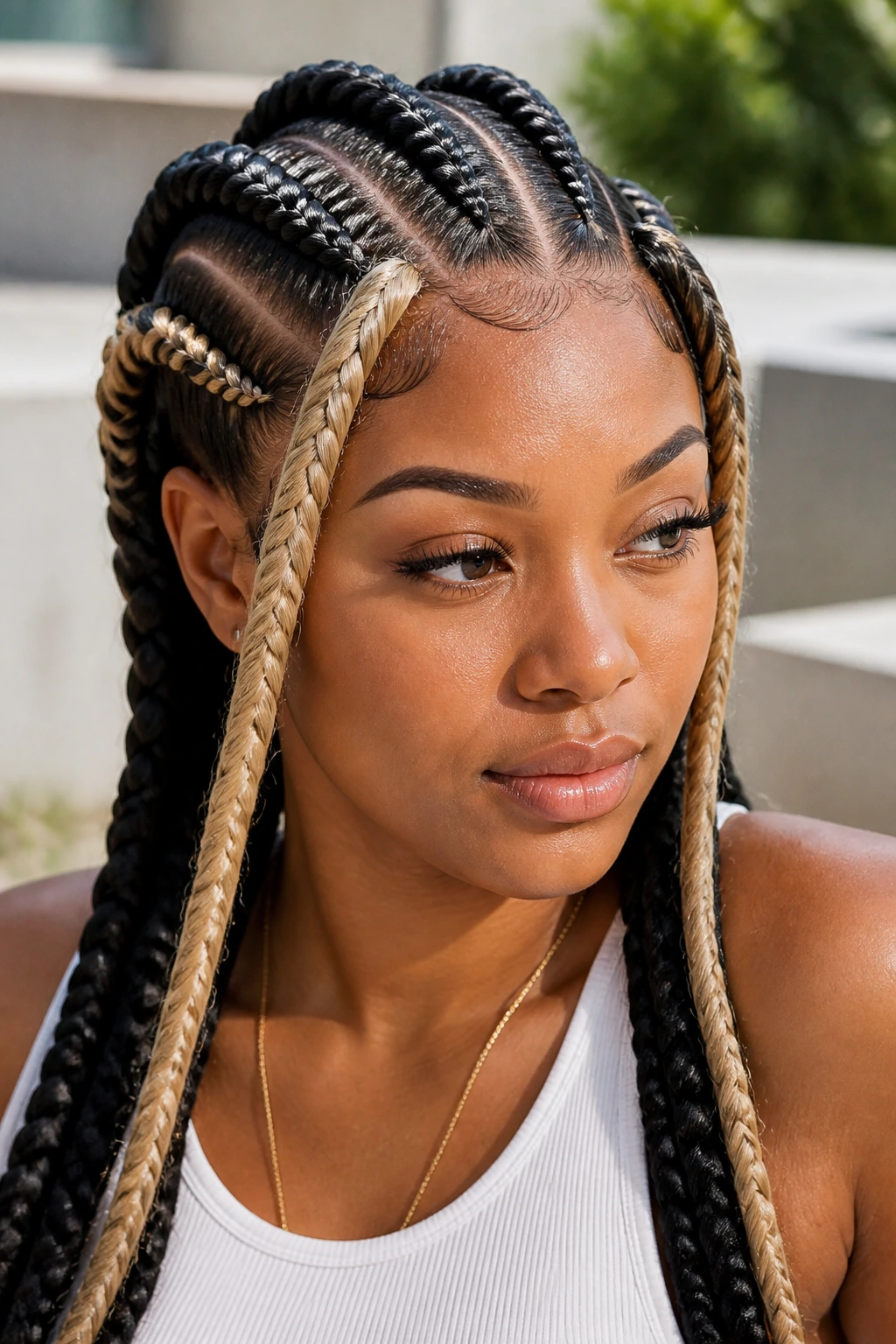
Jumbo cornrows are blunt in the best way. Fewer rows, bigger braids, stronger silhouette. They are quicker to install than micro braids, easier to style into ponytails and buns, and they hold a lot of visual weight on their own. Chunky champagne money pieces match that scale.
Small face-framing highlights would get lost here. Chunky braids need chunky contrast. The champagne color should sit wide enough at the front that you can see it from the front and a little from the side, especially if the rest of the braids are a deep neutral brown.
This is a good pick when you want a style that feels bold without adding complicated parting. Keep the braid count moderate, let the color carry the front, and stop trying to over-detail it. Jumbo braids are at their best when they look confident.
10. Low Braided Bun with Sliced Highlights
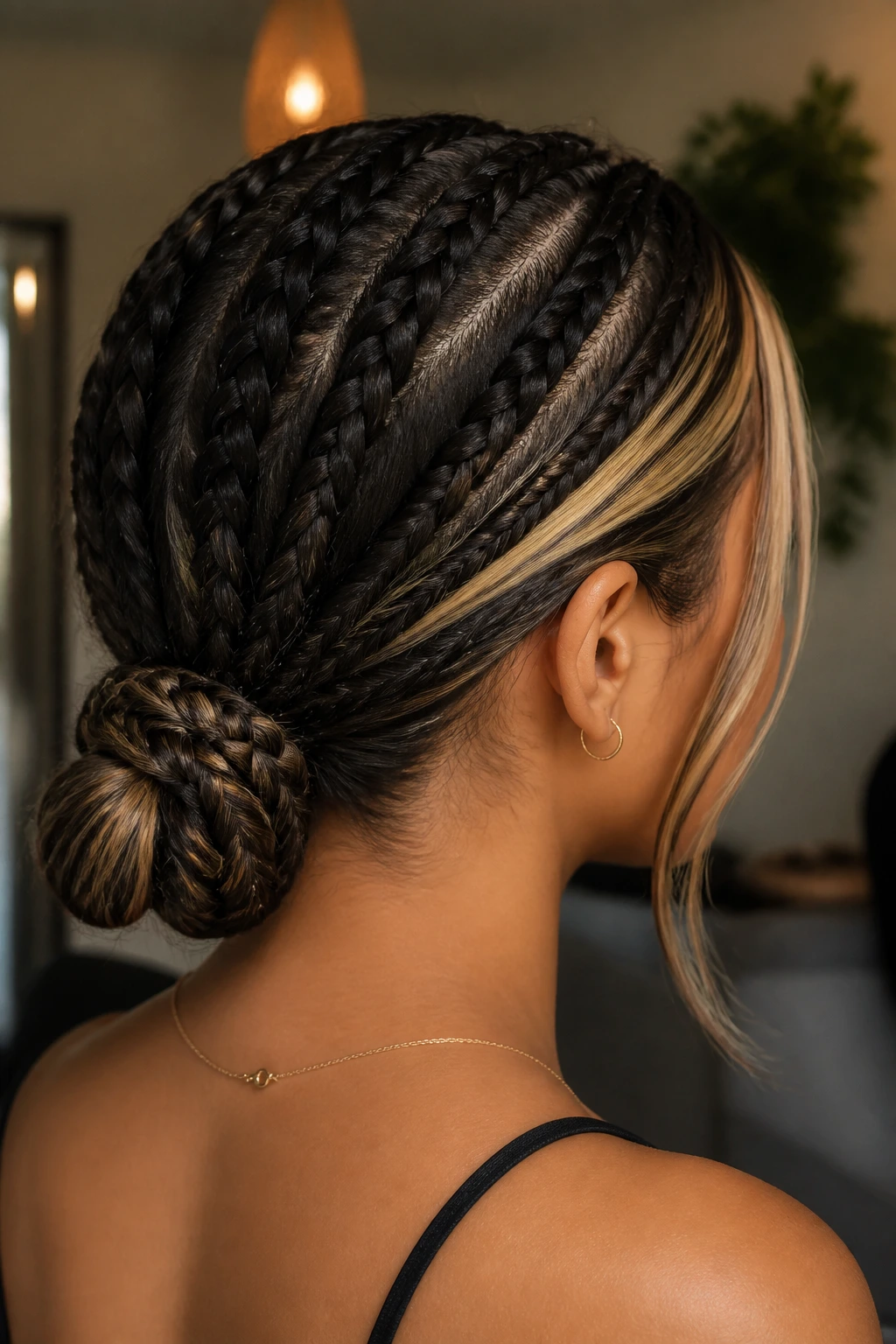
A low braided bun has old-school polish in it. The bun sits at the nape, the braids are smooth at the crown, and the whole shape gives off a composed, almost tailored look. Sliced highlights — thin, lighter front pieces placed cleanly at the temples — keep it from feeling too formal.
What I like here is the tension between tidy and soft. The bun says structure. The face-framing pieces say movement. Together they keep the style from looking stiff, which can happen fast with low buns if the hairline is all dark and severe.
If you’re wearing this with earrings, pick something that moves a little. Small hoops, a slim drop, even a plain metal cuff. The hairstyle can handle it.
11. Goddess Cornrows with Curled Ends and Light Front Pieces
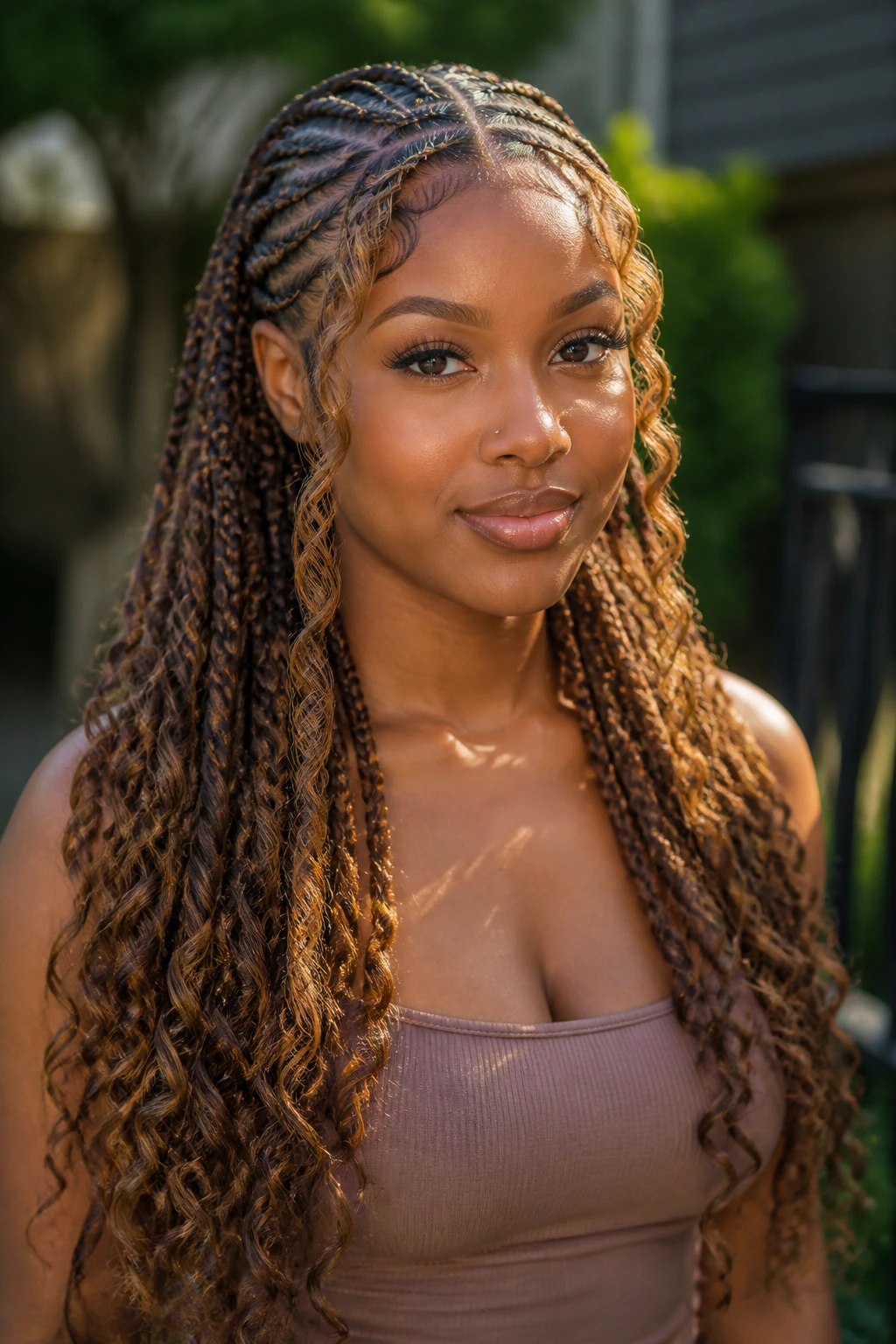
Goddess cornrows work because they blend two textures: sleek rows near the scalp and loose curled ends that bring in a softer finish. The curly ends keep the style from looking too tight or too severe, and the light front pieces help echo that softness near the hairline.
This is one of the few braid styles where a little messiness is welcome. Not sloppy. Just not hyper-rigid. The curls at the ends move with you, which makes the whole look feel more alive than a plain braided tail.
If you want the money piece to feel integrated, match its tone to the curled ends rather than the roots. That small color echo makes the front and the tail read as one idea.
12. Half-Up, Half-Down Cornrows with a Bright Face Frame
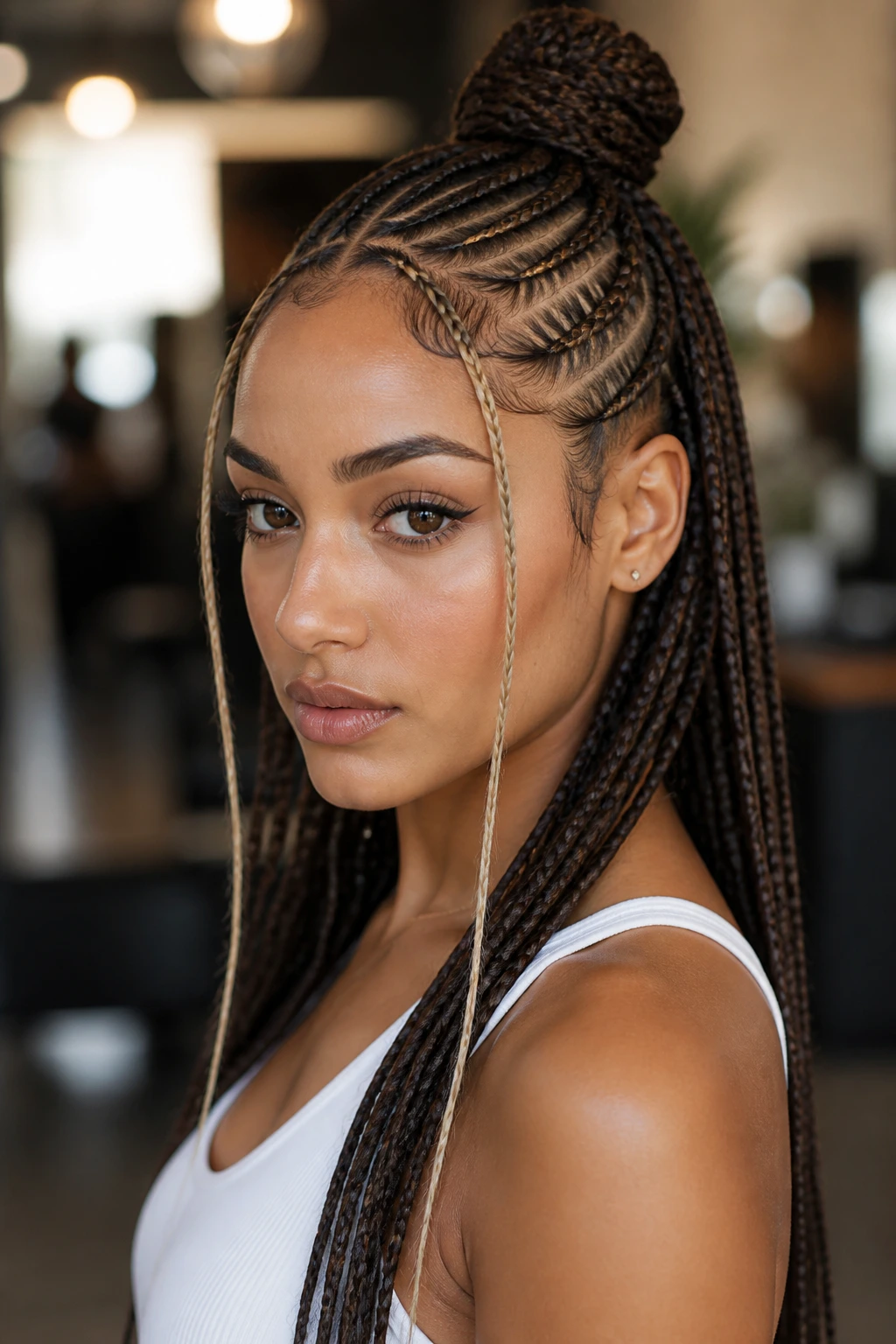
The half-up, half-down version is a reliable crowd without being boring, and I mean that in a good way. The upper rows can be gathered into a top knot, mini ponytail, or clipped puff, while the rest of the braids hang loose. A bright face frame at the front keeps the top from looking heavy.
This style earns its keep on days when you want your hair out of the way but do not want a full updo. It also gives you more ways to wear earrings, sunglasses, and necklaces because the lower half moves with your clothes instead of fighting them.
The front pieces should be smooth and narrow enough to sit close to the face. If they’re too wide, the style starts feeling bulky right where you want it to look clean.
13. Braided Crown with Bold Money Pieces
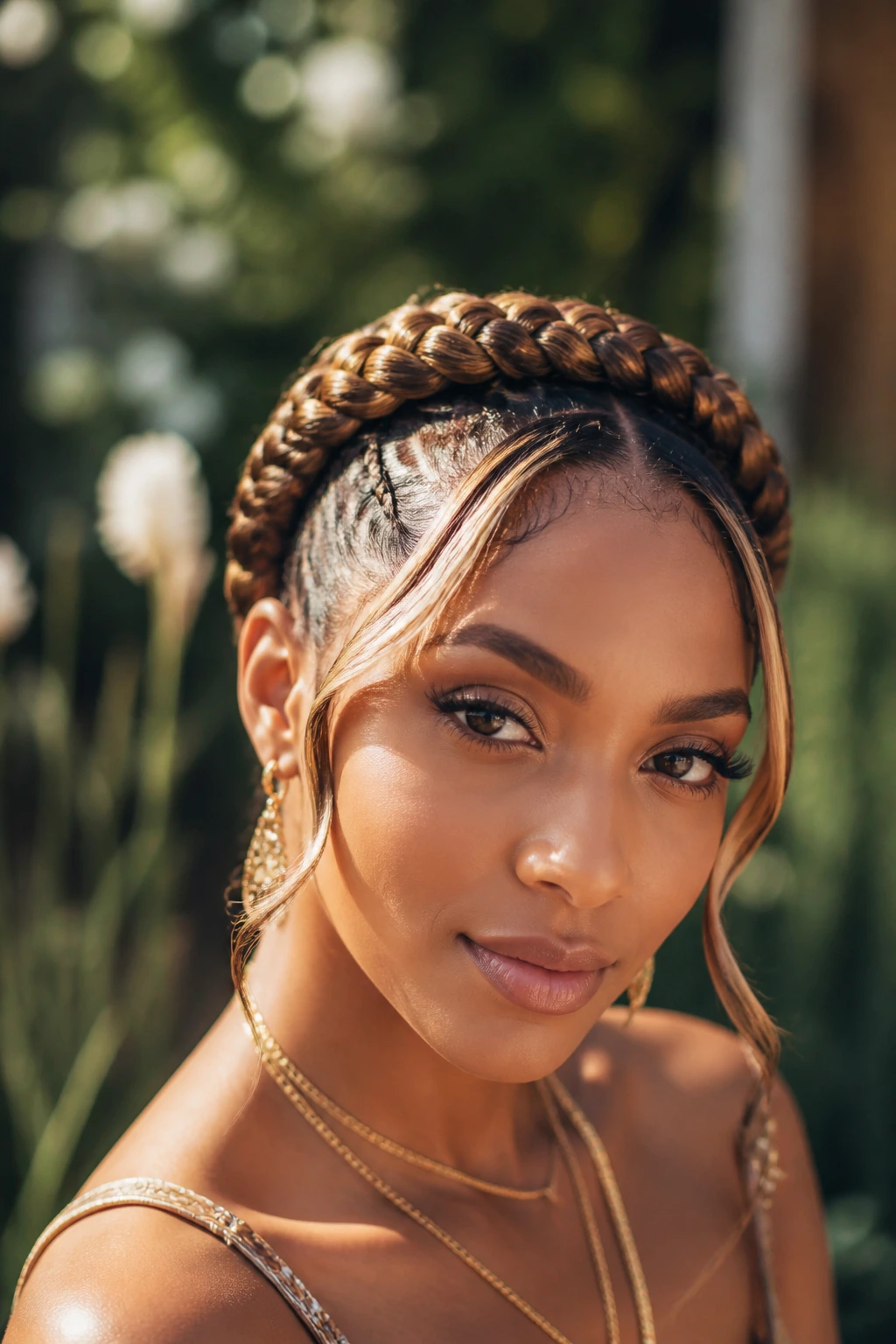
A braided crown wraps the rows around the head instead of straight back, which creates a halo-like shape that looks especially good when the front is emphasized with bold money pieces. This is the style I’d pick if I wanted something that feels a little ceremonial without becoming fussy.
The crown shape naturally draws the eye upward and around, so the lighter front pieces should be a touch brighter than they would be in a straight-back layout. Otherwise, the braid pattern eats the contrast and the whole thing just looks brown in a circle. That’s the blunt version. It’s true.
If you like a neat hairline and don’t mind a style that feels composed from every angle, this one delivers.
14. Triangle-Part Cornrows with Bronze Streaks
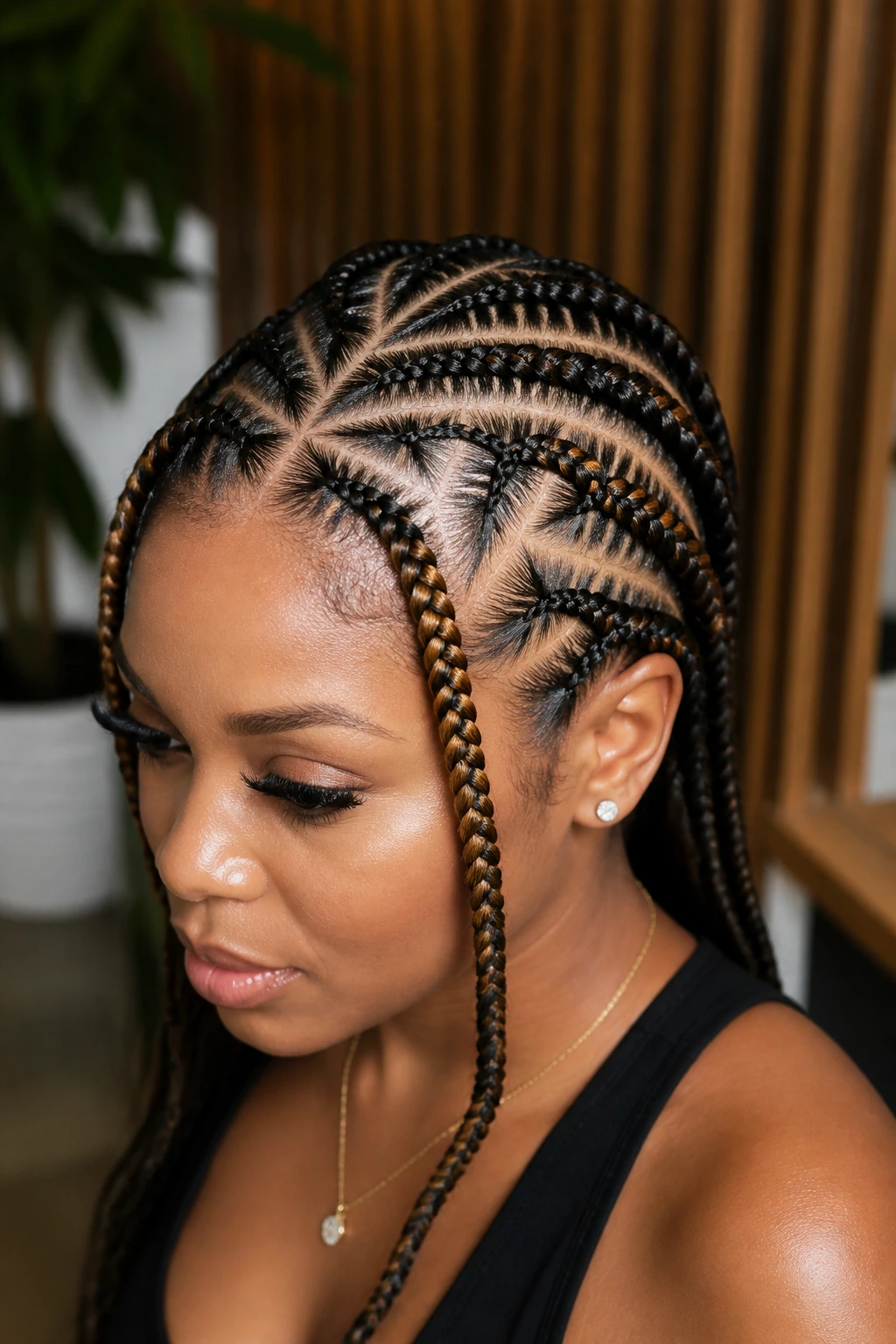
Triangle parts give you visual texture before the braiding even starts. The sectioning is geometric and clean, which means the actual braid color can stay warm and rich without looking flat. Bronze money piece streaks are a nice choice here because they echo the triangular parting without making the front too loud.
This is a good option if you like styles that look intricate but not busy. Triangle parts do a lot of the work, so the braids themselves can stay medium-sized and the color can stay within a narrow family of warm brown and bronze tones.
It’s a style that rewards neat parting. If the triangles are uneven, the whole thing will show it. If they’re crisp, the front looks intentional fast.
15. Straight-Back Cornrows into a Bubble Ponytail with Highlighted Front Pieces
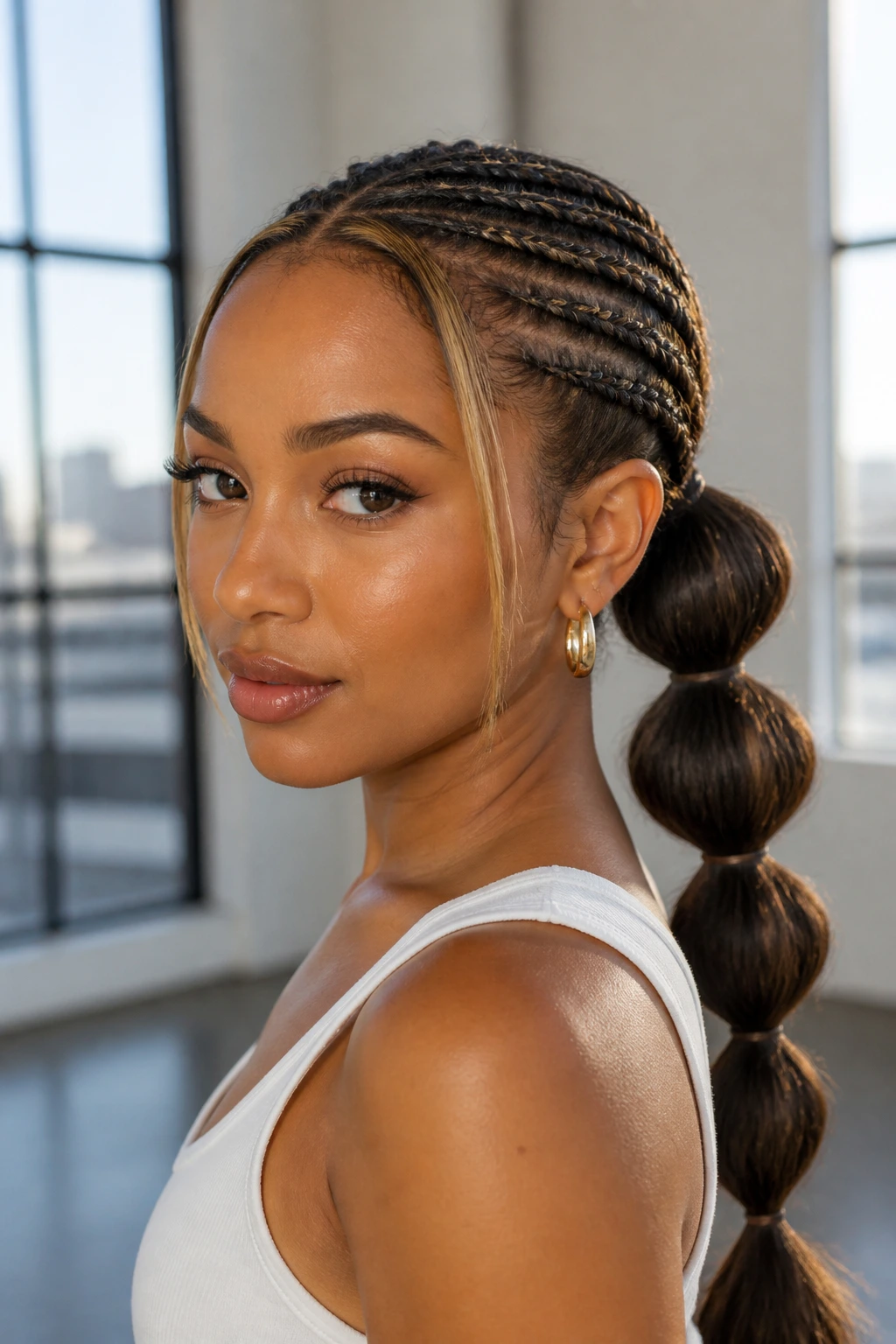
Bubble ponytails have a playful edge, and pairing them with straight-back cornrows keeps the look from tipping into costume. The ponytail sections puff slightly between elastics, which gives a little volume without letting the style get loose. Highlighted front pieces keep the hairline from reading too bare.
This one is a solid choice if you want a style that can go from athletic to polished with a quick outfit change. The bubbles add structure to the tail, so the front should stay neat and controlled. If the money pieces are lighter than the rest, keep the tail sleek and dark enough that the contrast stays at the face instead of getting lost behind you.
A satin wrap at night matters here. The bubbles can fray at the elastic points if you’re rough with them.
16. Feed-In Cornrows with Beaded Ends and Gold Front Strands
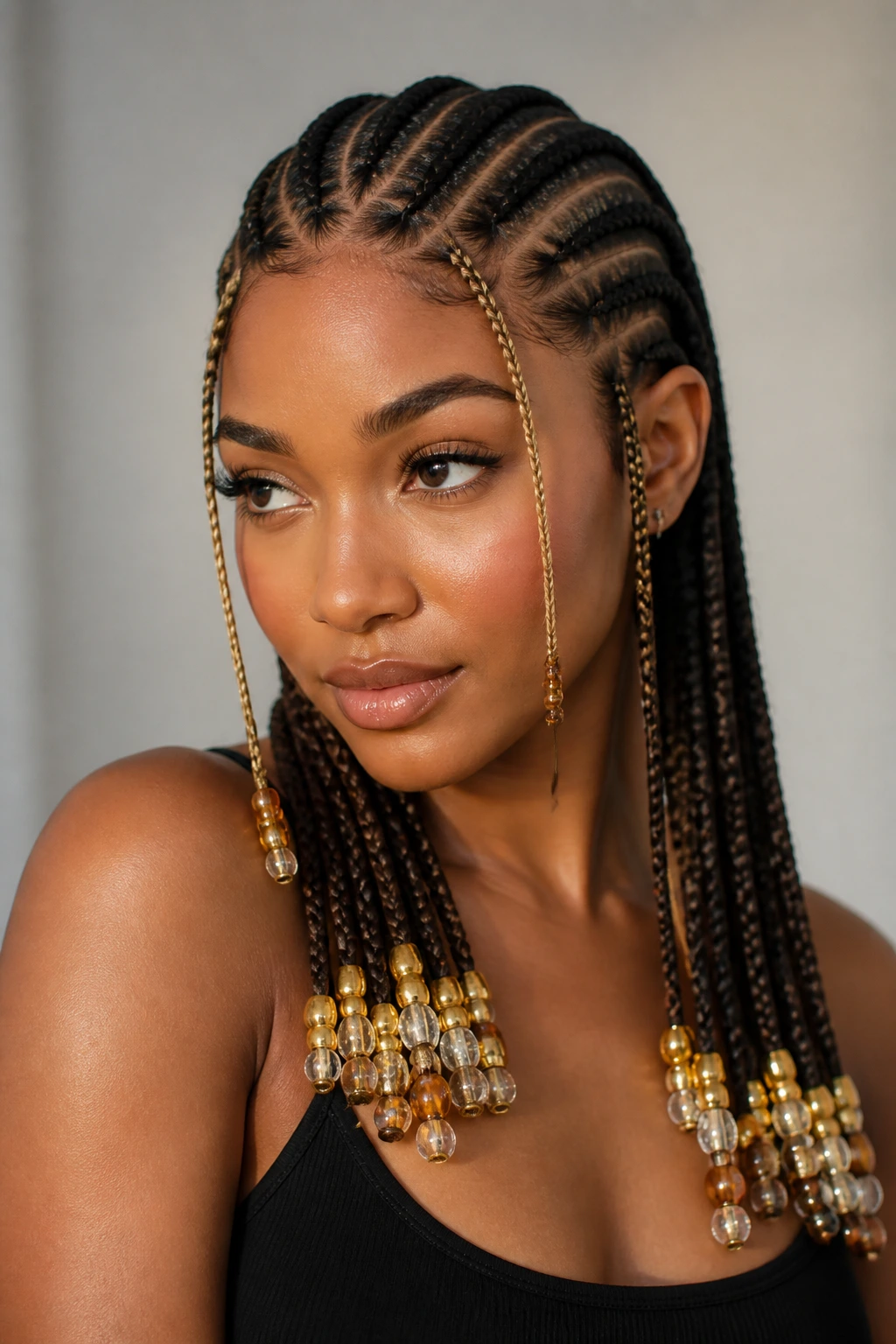
Feed-in cornrows already look clean because the hair is added gradually at the root, which makes the braids taper nicely. Add beaded ends and the style gets more personality without needing to change the whole pattern. Gold front strands make the face-framing pieces pop against both the beads and the braids.
This is one of the more expressive looks in the group. It feels lived-in, not overdesigned. The beads bring sound and movement, the gold front pieces keep the face bright, and the feed-in technique preserves that sleek scalp line people want when the weather gets heavy.
If you go with beads, keep them light enough that the front doesn’t pull. Too much weight at the ends is annoying after an hour, and nobody needs a headache from accessory math.
17. Diagonal Cornrows with Ash-Blonde Side Pieces
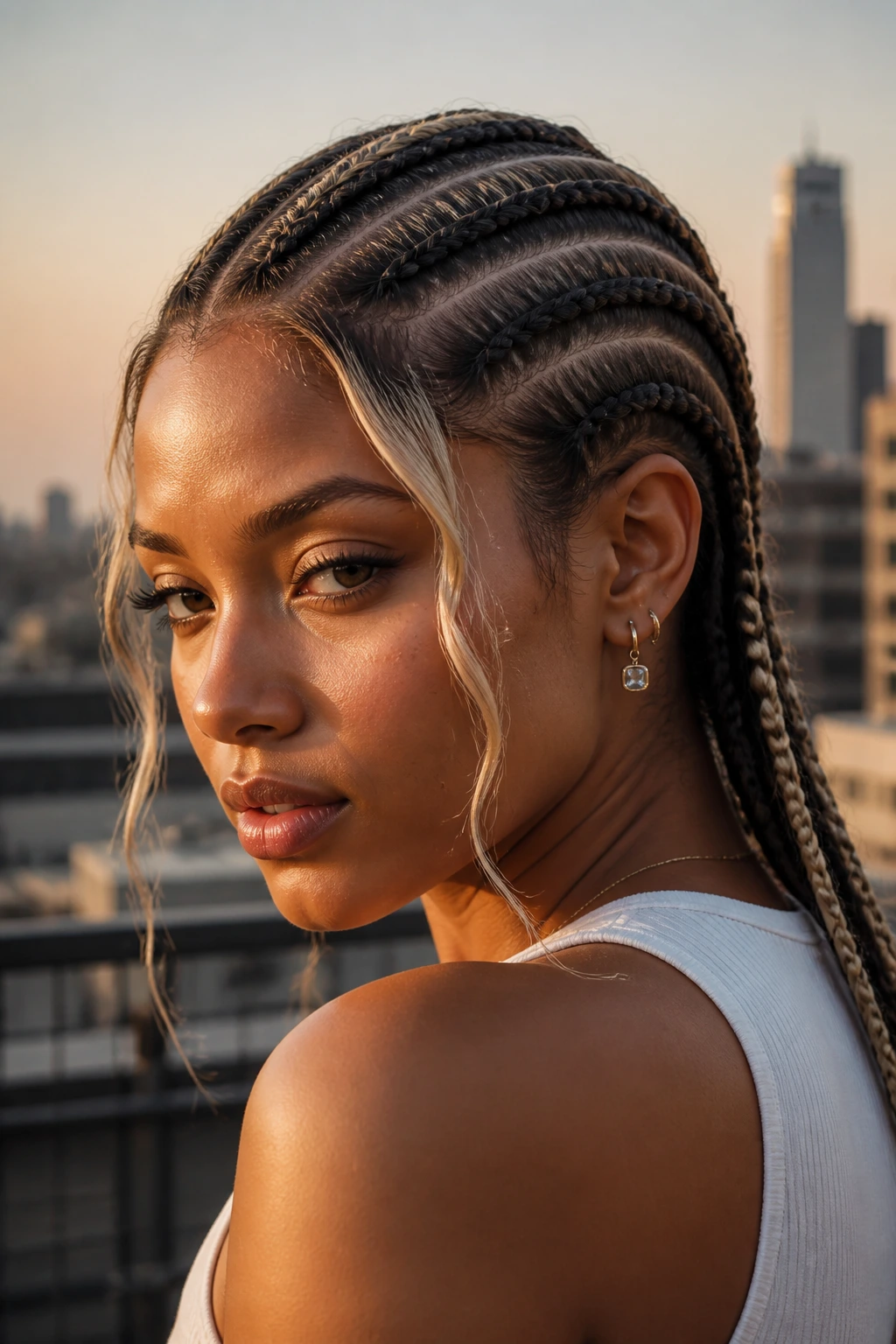
Diagonal cornrows can change the whole shape of the head. Instead of creating a strong central axis, the braids cut across the scalp and direct the eye sideways. Ash-blonde side money pieces work because they keep the style cool-toned and modern, which suits the diagonal pattern better than a warm blonde would.
This is a nice choice if your face shape benefits from soft lateral movement. The diagonal line widens the look a little and keeps the front from feeling boxed in. Ash blonde is the smarter pick if your base color leans cool or if you don’t want the front to glow warm against your skin.
Not every money piece has to be golden. Sometimes the better move is to cool the whole thing down.
18. Cornrows into a Low Knot with Piecey Face Highlights
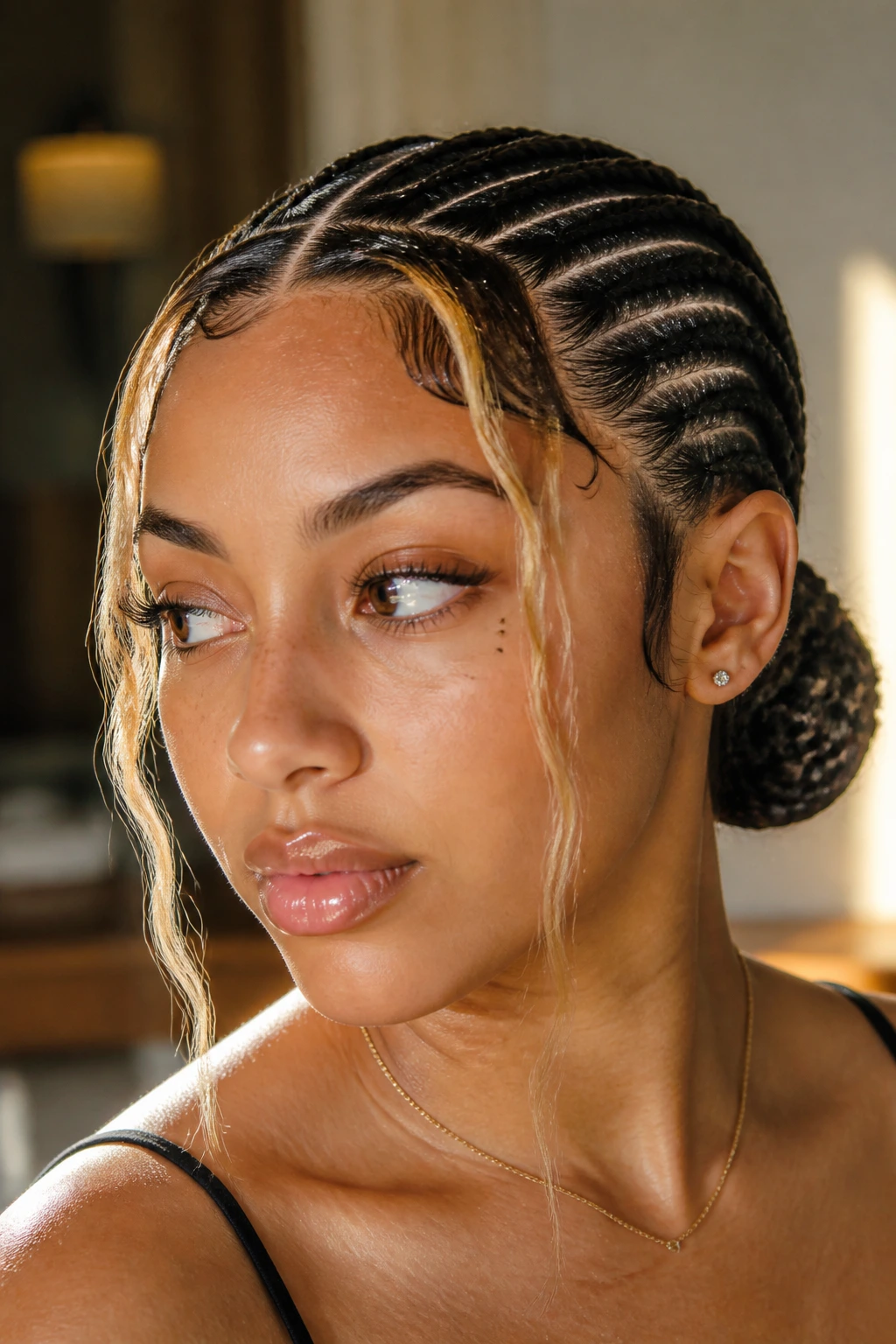
A low knot sits close to the neck and feels a bit more serious than a ponytail. It keeps the silhouette compact, which is useful when you want your face and neckline to stay open. Piecey highlights at the front interrupt the smoothness just enough to stop the style from turning too strict.
This is the kind of style that benefits from a precise center part and clean edges. The knot can be small or fuller, but the money piece should remain the visible part. If the front is too dark and flat, the whole look leans plain. If the front is bright and piecey, the knot feels styled instead of merely tied.
I’d choose this for a long day when I need my hair to behave and still want it to look deliberate.
19. Waist-Length Tail Cornrows with a Middle Part and Bronze Frame
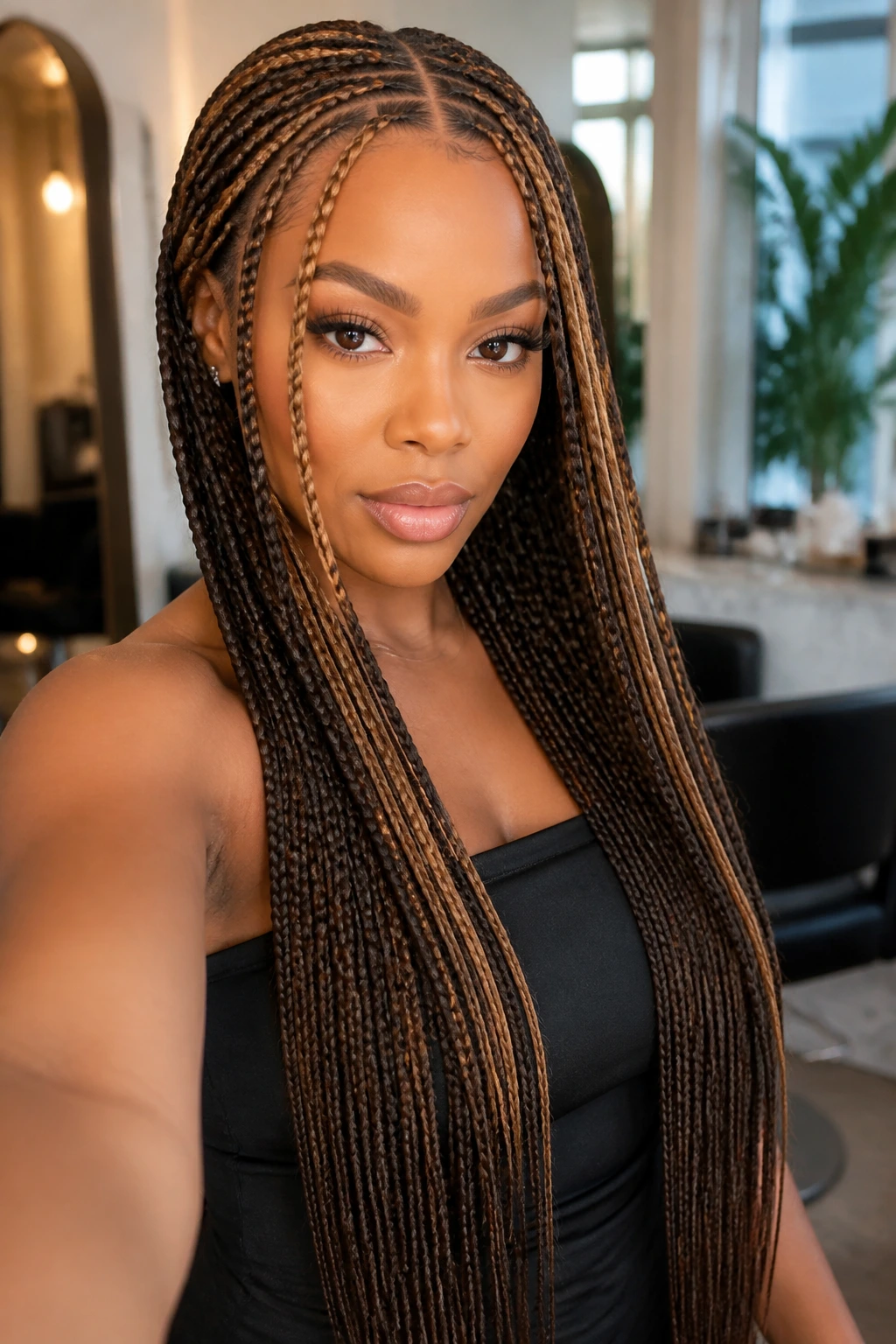
Waist-length cornrows are a statement by sheer length, no extra tricks needed. The middle part keeps the look symmetrical, and the bronze money piece frame warms the face without taking away from the long tail. This is one of those styles that gets better the more movement it has in the braids themselves.
A long tail can feel heavy if the front is too flat. Bronze pieces near the temples and along the front rows create a little lift and stop the style from hanging like a single dark curtain. That lift is useful. It keeps the eye where you want it instead of dropping straight down to the length.
If you wear this style, keep the braids neat at the nape. Long styles expose weak parting fast.
20. Swirl Pattern Cornrows with Buttery Blonde Money Pieces
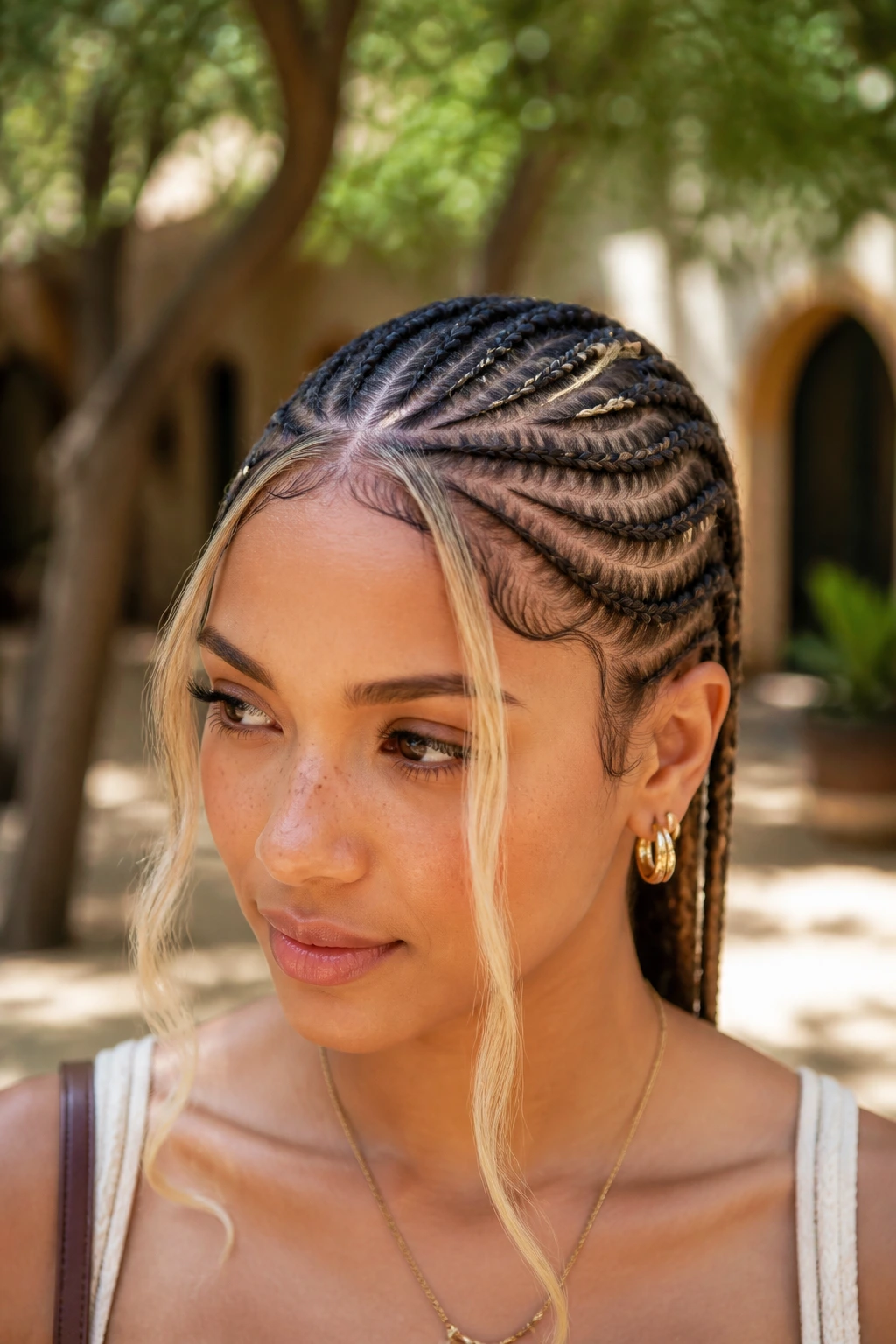
Swirl patterns look more artistic than straight rows, and they need a color choice that supports the curve. Buttery blonde money pieces do that job well because the warmth feels soft against the movement in the braid layout. Hard, icy blonde can look too harsh against swirling lines; buttery blonde flows better.
The swirl is the event here. The highlight is the accent. Keep that balance straight and the style will hold up. If the braids are medium-sized and the lines are clean, the front can stay slightly bolder because the rest of the head already has motion.
This one is a favorite if you like a style that looks like someone actually planned it, not just sectioned the hair into rows and called it done.
21. Two-Layer Cornrows with Hidden Underbraids
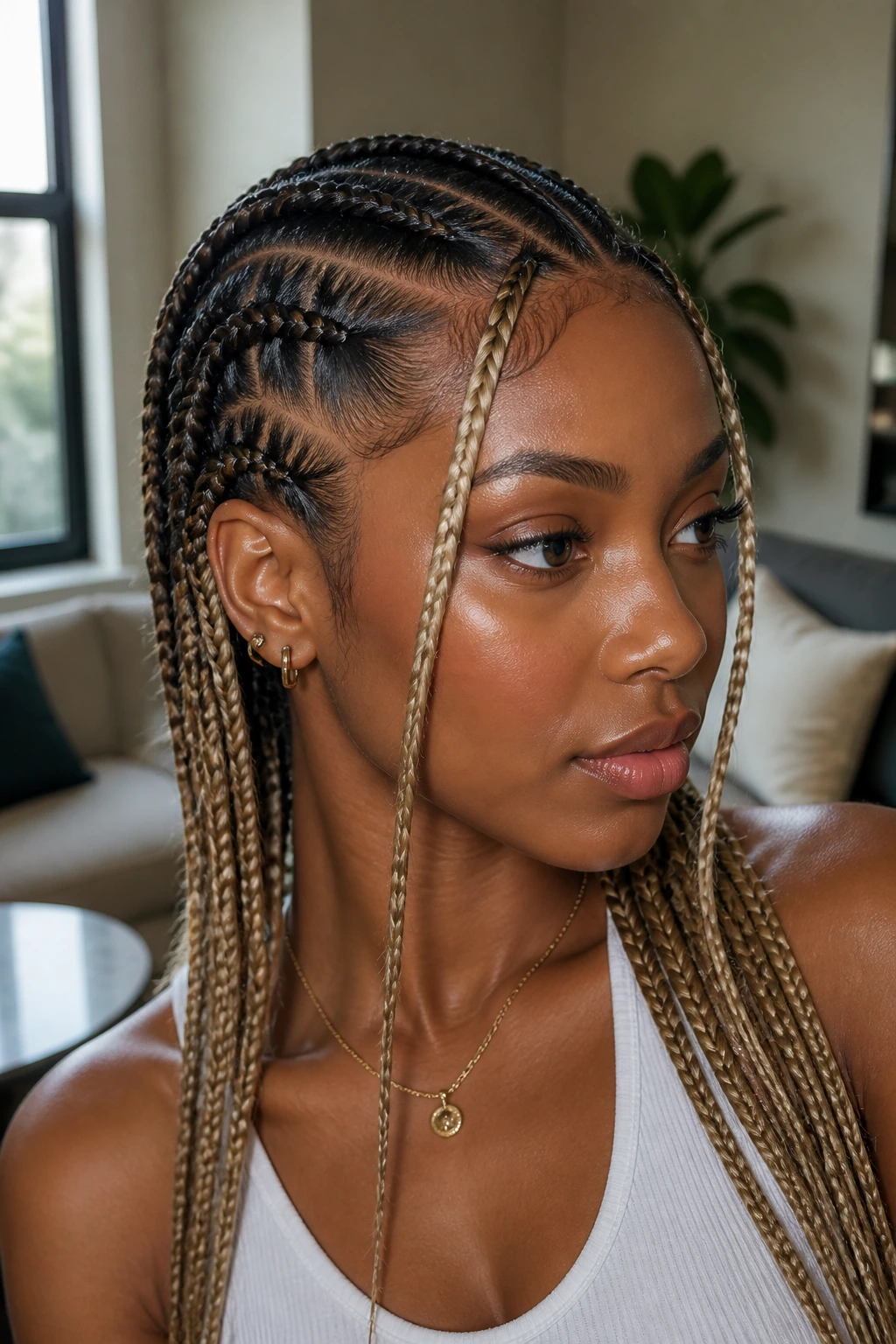
Two-layer cornrows give you depth without needing more color. The top layer sits over a hidden set of underbraids, which means the style has dimension even before the money pieces show up. The lighter front braids then sit on top like a frame, not a distraction.
I like this option for thicker hair because it helps distribute bulk. The underlayer keeps the shape tidy, while the upper rows can stay smooth and visible. That structure gives the money piece room to breathe. It doesn’t get swallowed by the braid mass.
This is one of the better choices if you want the style to last, since the layers can hide a little grow-out more gracefully than a flat, single-layer pattern.
22. Cornrows into a Claw-Clip Pile-Up with Face-Framing Braids
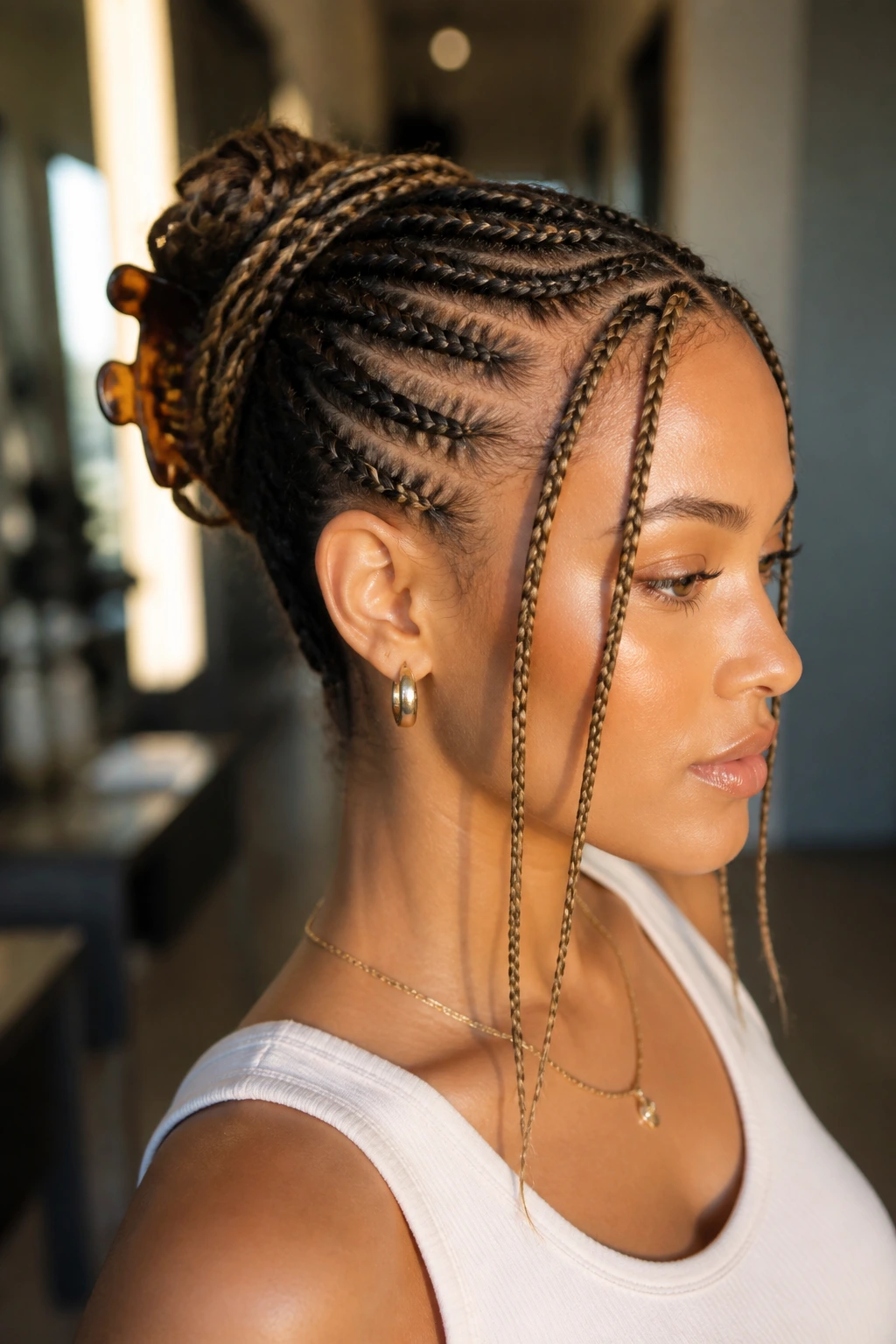
A claw-clip pile-up is casual in the best possible way. The cornrows stay sleek, the length gets gathered up and clipped instead of fully pinned, and the face-framing braids remain visible at the front. That gives you a fast styling option on days when you don’t want to redo the whole head.
The money piece matters more here than people think. Because the clip lifts the bulk off the neck, the front becomes the visual anchor. Bright face-framing braids keep the style from turning into “hair up and out of the way” energy. It reads as styled, not accidental.
Use a strong clip with teeth that can handle braid weight. Cheap clips slip. They always do.
23. Tapered Cornrows with Red-Caramel Money Pieces
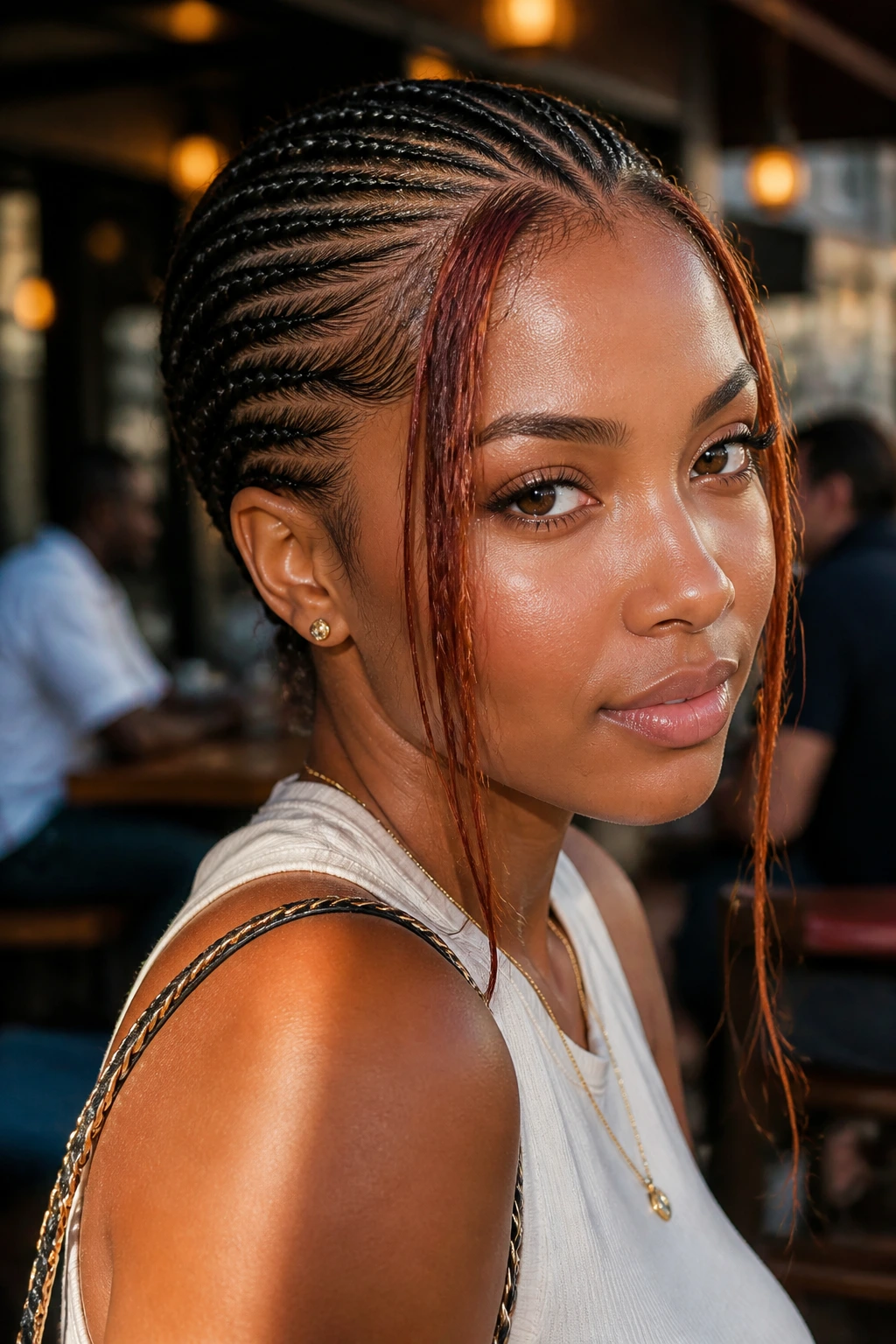
Tapered cornrows narrow slightly as they move back, which keeps the overall silhouette sleek and clean. Red-caramel money pieces bring warmth and a little attitude to the front without crossing into neon territory. That color family is good if you want the style to feel richer than blonde but louder than brown.
Tapering helps when you want the braid set to sit close to the head without a lot of extra width at the ends. The lighter front pieces counter the narrowing by keeping the front lively. It’s a nice bit of balance.
If your skin tone leans warm, this shade family usually looks easy and expensive. That’s the blunt version, and it saves a lot of guesswork.
24. S-Curve Cornrows with Soft Beige Face Strands
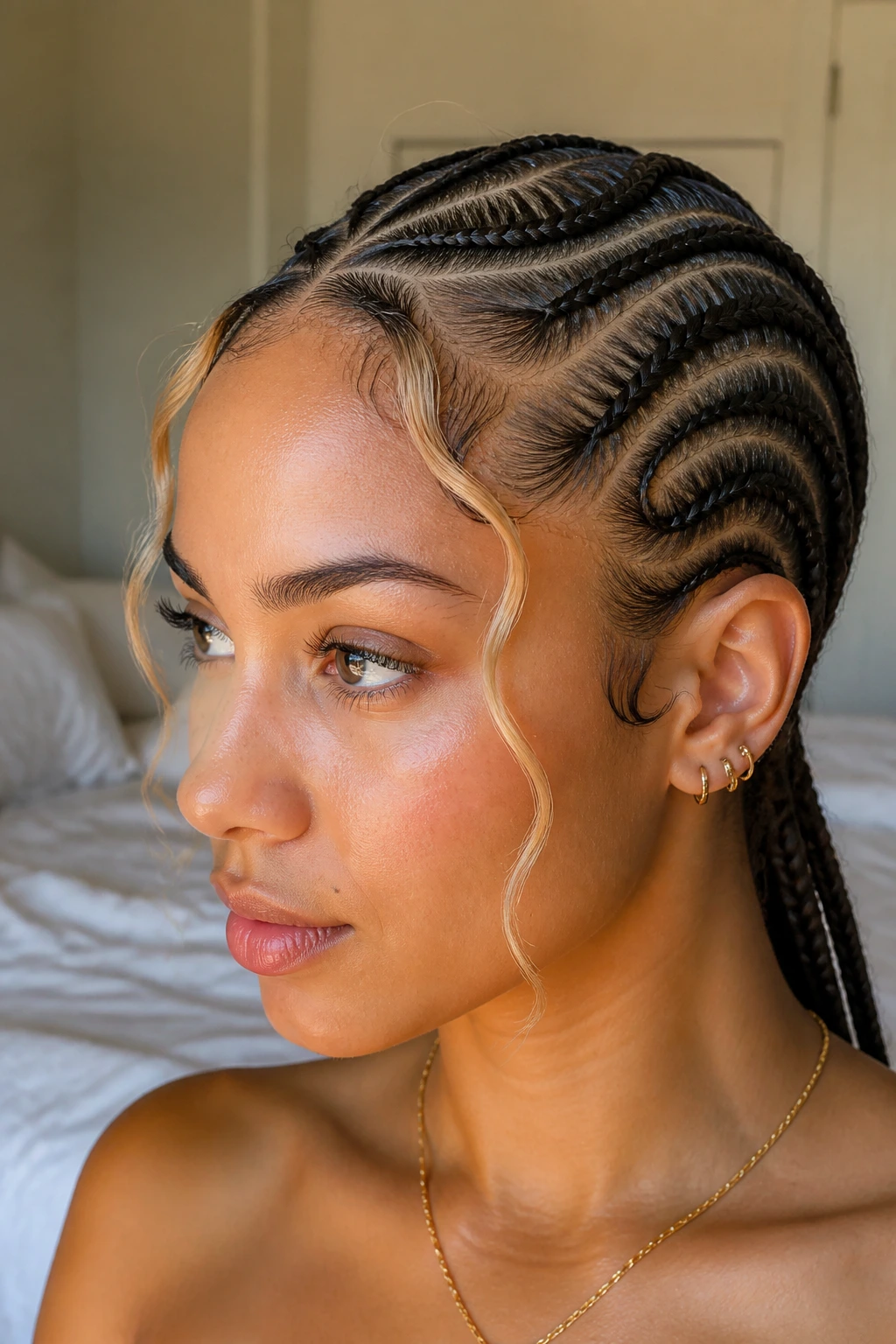
S-curve cornrows have a softer line than zig-zags or straight-back rows. The pattern bends gently, which gives the style movement before the braiding even starts. Soft beige face strands support that softness and stop the front from feeling too contrast-heavy.
This is one of the quieter styles in the lineup, but I mean quiet in a good way. Not plain. Just controlled. If you want the braid pattern to be the main event and the color to be the accent, beige is a smart pick because it brightens without stealing the whole scene.
This works especially well with clean skin, dewy makeup, and simple jewelry. The style doesn’t need much else.
25. Center-Part Waist-Length Cornrows with Chunky Money Pieces
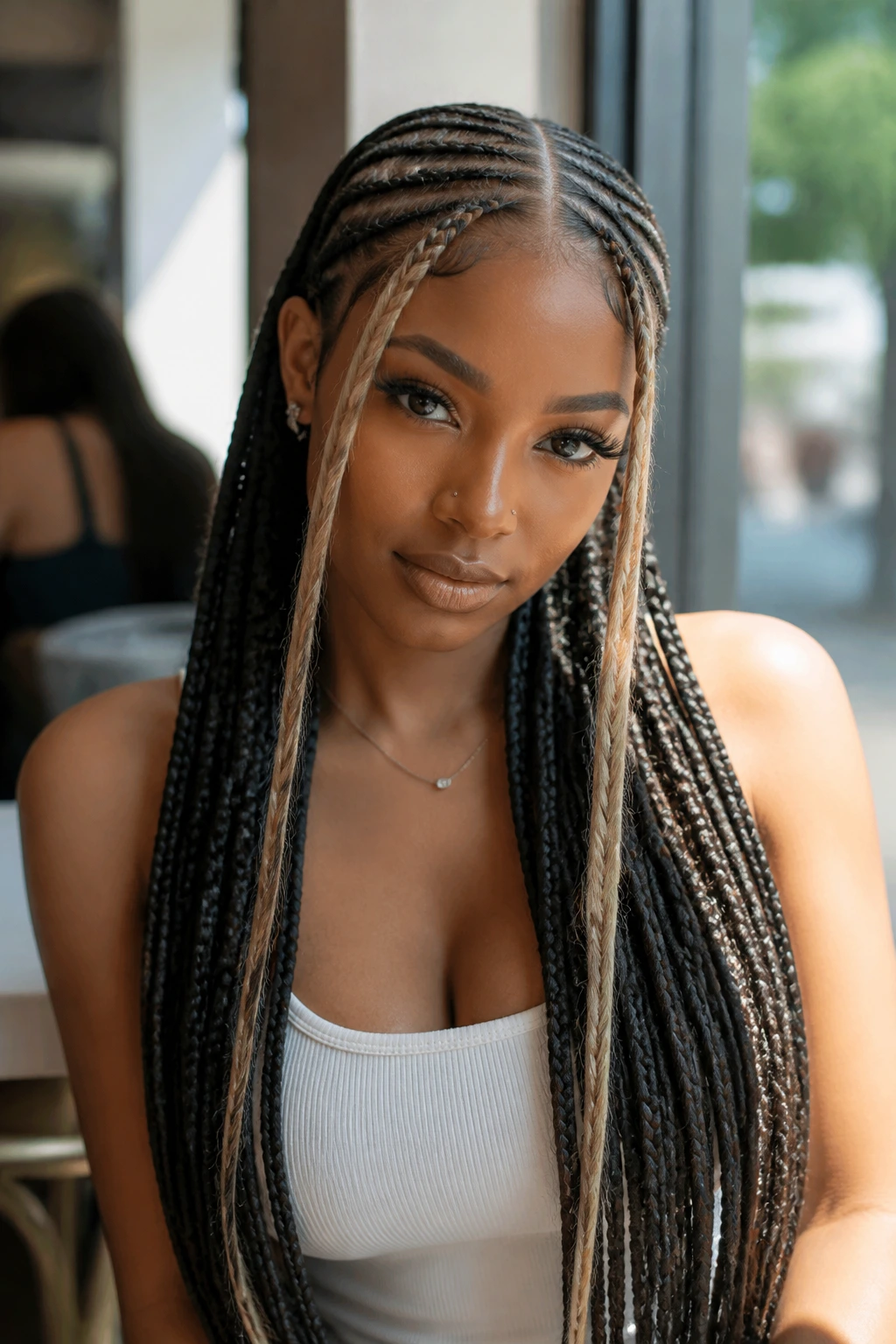
If you want the strongest version of this whole idea, this is it. A center part brings symmetry, waist-length braids bring drama, and chunky money pieces at the front make sure the face gets the brightness it deserves. It is a direct look. No hedging.
The trick is restraint in the rest of the head. If the front is chunky and bright, the rows behind it should stay sleek and evenly sized. That keeps the style from tipping into clutter. The contrast needs room to work.
I’d save this one for when you want the braids to do the talking before you say a word. It’s bold, but not messy. That distinction matters.
Why Cornrows and Money Pieces Work So Well in Warm Weather
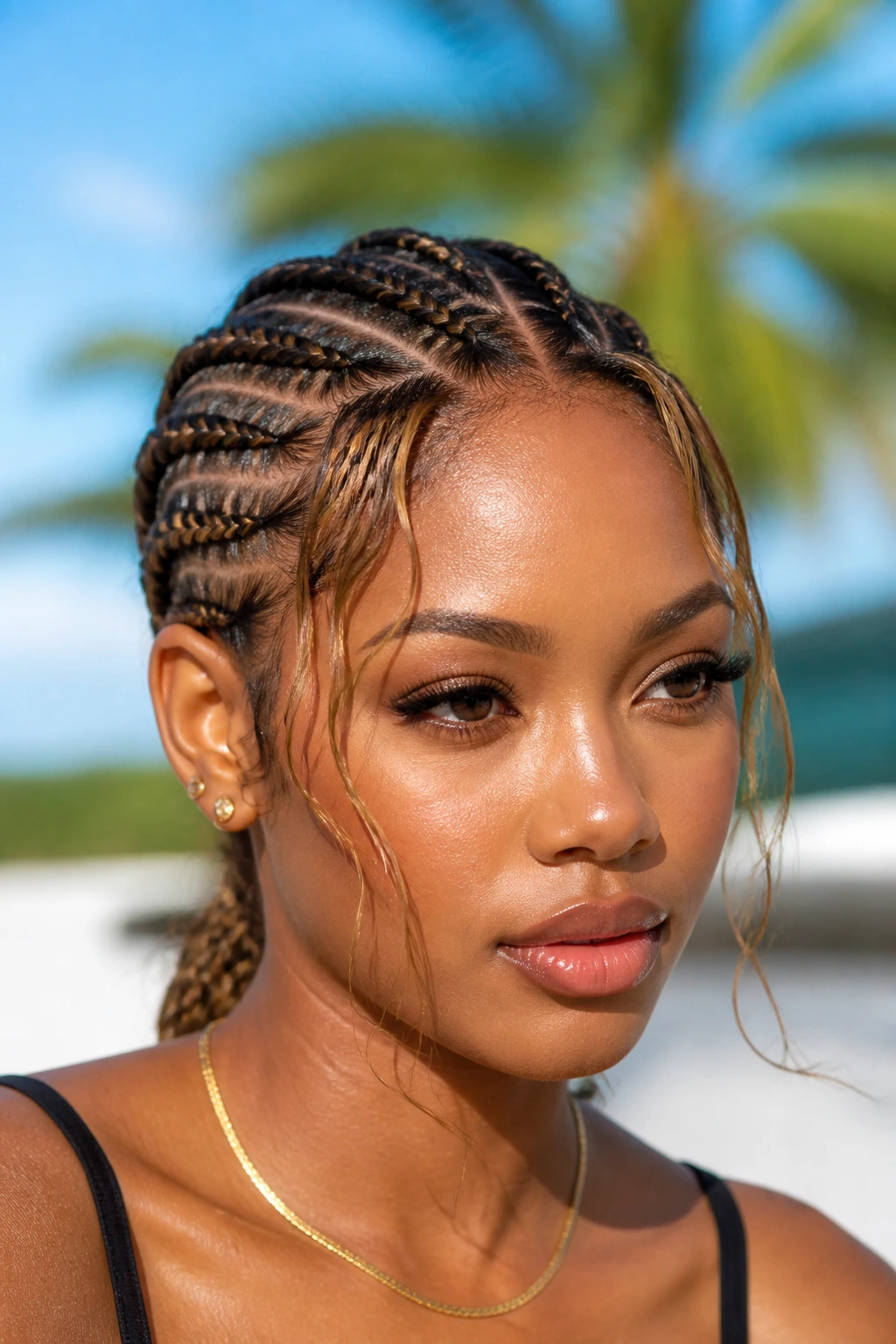
The appeal here is practical first and cosmetic second, which is why the combination keeps showing up. Cornrows pull the hair tight to the head, so the neck stays clear and the scalp is less likely to feel like it’s holding a wool hat made of humidity. The money piece highlights add enough brightness at the front to keep that practical shape from reading flat or severe.
There’s also a little sleight of hand at work. A braid set with one lighter front section makes the whole head look fresher, even if the rest of the style is a simple back row or a low bun. That face-framing brightness is doing a lot of heavy lifting. It catches the eye before the length does, which is why the style can feel styled even on low-effort days.
Another reason I like this pairing: the color can be built with braiding hair instead of bleach. That matters if you want the look without committing your own hair to lightening. You can choose honey, caramel, auburn, ash blonde, or copper depending on your skin tone and wardrobe, then keep the natural hair tucked safely into the braid.
The best versions are not the loudest ones. They’re the ones that hold shape, stay neat around the temple area, and keep the front bright enough that your face doesn’t disappear behind the braid pattern.
Essential Tools for These Styles
-
Rat-tail comb: The thin point is what gives you clean parts, and clean parts are half the battle.
-
Sectioning clips: Keep the unused hair out of the way while you braid; a style this neat falls apart fast if sections mix.
-
Braiding hair in your chosen shade: Pre-stretched synthetic hair is the easiest place to start, and it saves time at the ends.
-
Edge control or a light styling gel: Use a thin layer at the hairline, not a scoop; too much makes white flakes and sticky buildup.
-
Mousse or foam wrap lotion: Great for smoothing flyaways and helping the finished braids sit flat.
-
Spray bottle with water or leave-in mix: Useful for parting and for keeping natural hair easy to manage during install.
-
Fine-tooth brush: Helps lay edges if you want a crisp front, though I’d keep it light.
-
Satin scarf or bonnet: Night protection is not optional if you want the money pieces to stay neat.
-
Small rubber bands, if needed: Good for ponytails, bubbles, or securing the ends of certain styles; avoid over-tightening.
-
Hair oil or scalp tonic: Choose a light formula that does not soak the roots or make the parts greasy.
Smart Shopping for Hair, Color, and Scalp Prep
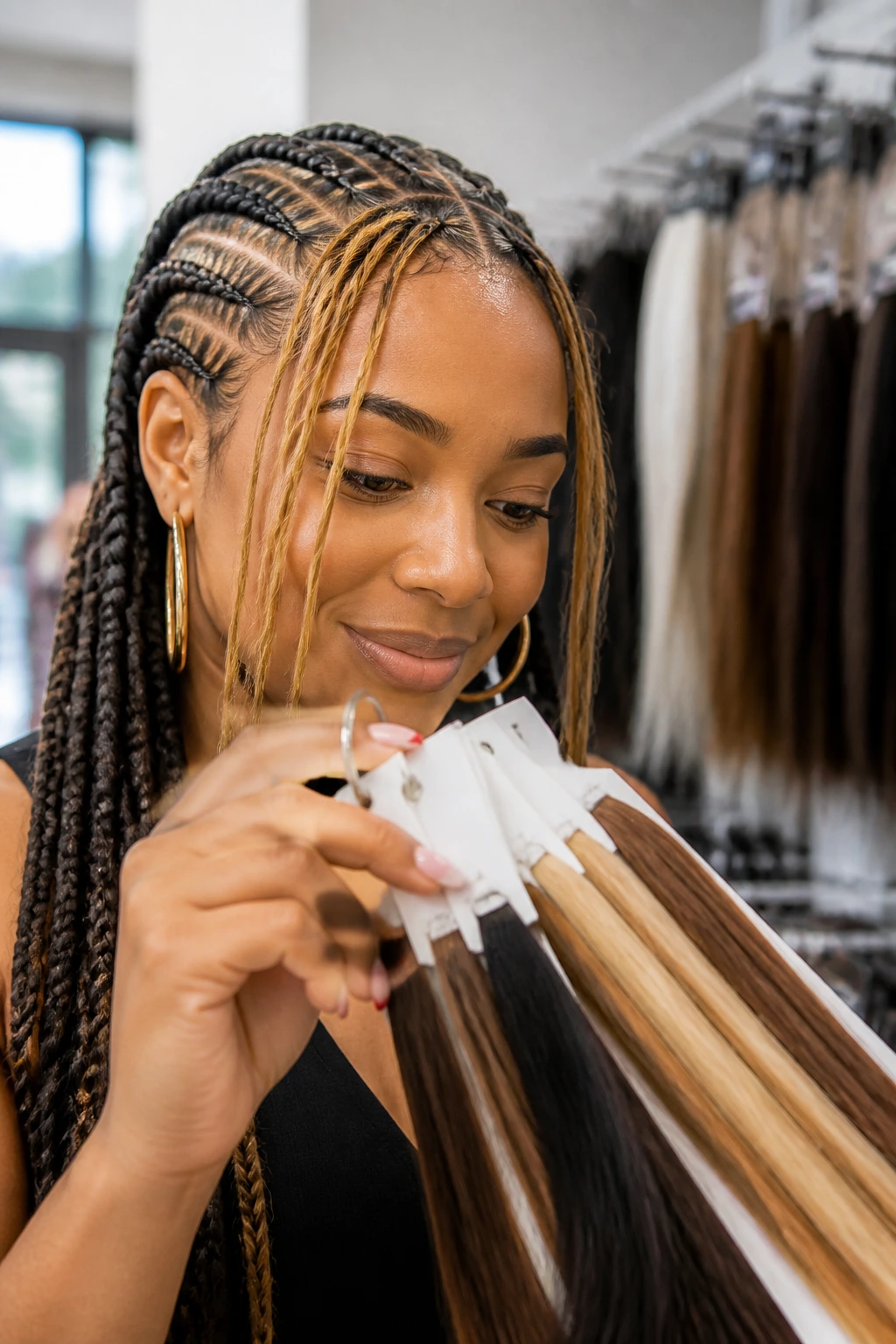
Pre-stretched braiding hair is worth the money. I’ll say that plainly. It saves time, the ends behave better, and the texture usually blends more naturally into sleek cornrows than stiff, unprepared hair does. If your own hair is coarser, look for a yaki texture or something with a little grip so the braid doesn’t slide while you’re working.
For the money piece shade, think in one- or two-shade jumps rather than giant leaps. Honey, caramel, bronze, and warm beige tend to look easy against dark roots. Platinum and ash blonde can look sharp, but they ask for cleaner parting and a little more confidence. Copper works best when you want warmth rather than glare.
Scalp prep matters more than people admit. A clean scalp helps the parts stay neat, and a light leave-in on your natural hair makes the install less scratchy. If your scalp is sensitive, skip heavy oils the day of braiding. They can make the hair slippery and the braids wonky.
One more thing: if you want the money piece effect without dye, buy the lighter braiding hair first and hold it up against your skin in daylight. Indoors lies. Daylight tells the truth quickly.
How to Wear These Braids in Real Life
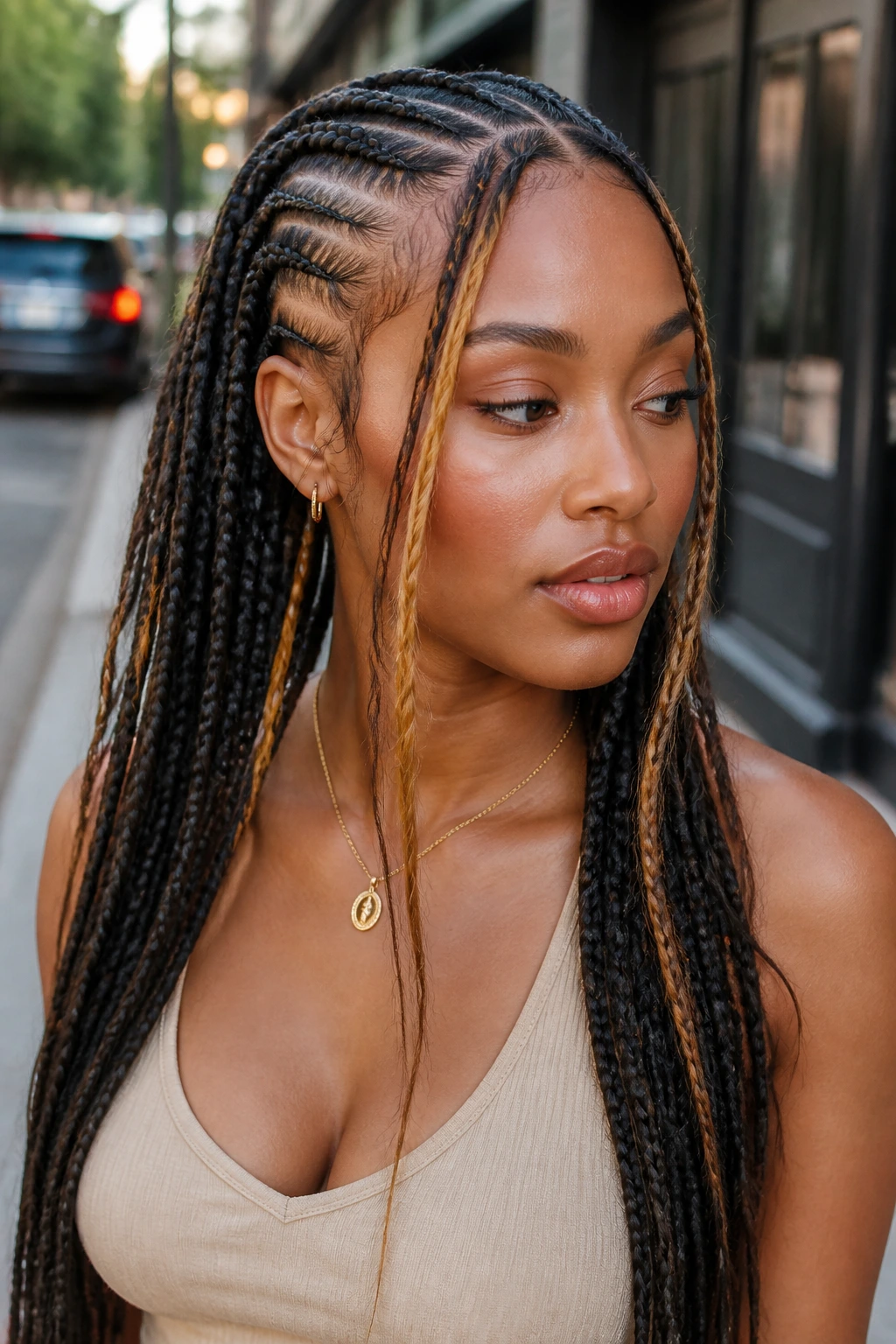
Presentation: Keep the front smooth, then decide whether you want the rest of the style to sit down, up, or clipped back. A sharp braid pattern looks better when the rest of the look is simple: clean brows, glossy lips, small hoops, maybe one necklace.
Accompaniments: These styles work with sleeveless tops, linen shirts, oversized tees, slip dresses, and anything with an open neckline. The braids already frame the face; don’t bury them under a high collar unless you want to hide the whole point.
Portions: If your hair density is fine, medium cornrows usually feel easier to manage and less bulky around the temples. Thicker hair can handle more rows, and longer lengths can carry bigger front pieces without losing balance. The trick is matching braid size to the size of your head and the shape of your jaw, not chasing a number.
Beverage Pairing: A cold drink while you get dressed never hurts. I’d reach for iced coffee, lemon water, or hibiscus tea if I were sitting through an install, and the same drinks fit the easy, sunlit mood once the style is done.
Small Tweaks That Change the Whole Look
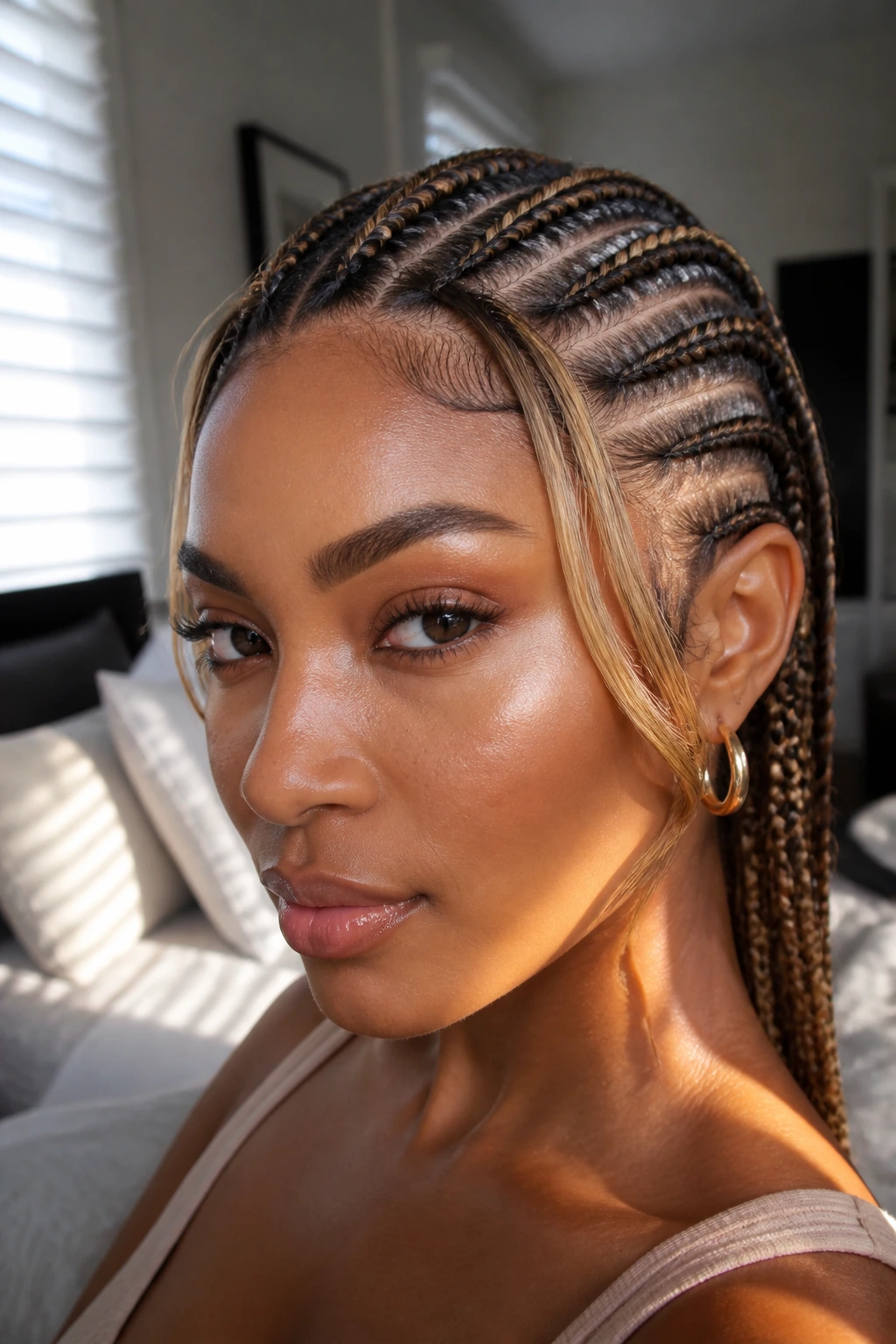
Color Placement: Move the money piece one braid wider if you want more brightness around the cheekbones, or narrower if you want the look to stay understated. Placement changes the mood more than shade alone.
Texture Choice: Use a smoother synthetic hair for a glossy finish, or choose yaki hair if you want the braids to blend more naturally with textured roots. The wrong texture makes even good parting look off.
Finishing Touch: A light mousse over the finished braids helps tame little flyaways near the front and gives the whole set a softer surface. Don’t drown the braids. A little goes farther than people expect.
Make-It-Yours: Add cuffs, beads, or a single ribbon only if the braid pattern can carry them. Slim, clean styles usually need one accent, not three. For a quieter version, keep the braids plain and let the highlight shade do the talking.
Keeping Braids Fresh Day After Day
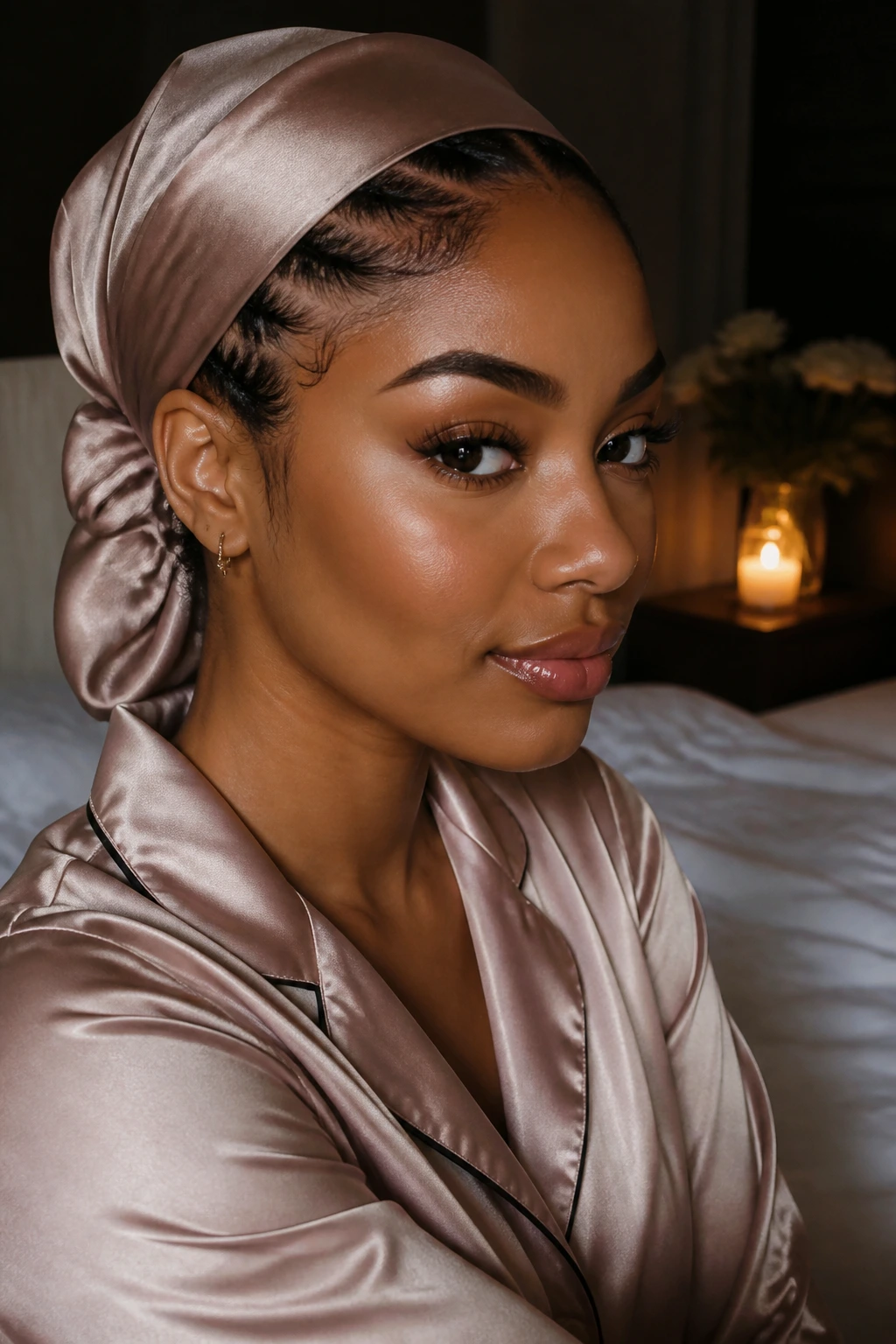
Night care decides whether sleek cornrows stay sleek or drift into fuzzy territory. Wrap the hair with a satin scarf or sleep in a bonnet every night, and make sure the front hairline is covered all the way to the edges. If the scarf slips off by morning, the front will tell on you.
Every 2 to 3 days, use a light scalp oil or tonic sparingly along the parts. A drop here, a drop there. Too much product builds up fast and makes the scalp feel greasy before the style is halfway through its life. If your scalp gets itchy, try a diluted scalp spray or a gentle cleanse at the part line rather than adding more oil.
For frizz around the temples, a little foam plus a scarf for 15 to 20 minutes usually smooths things down. If the front pieces start puffing up, resist the urge to soak them in gel. That’s how white residue starts. And once it starts, it seems to multiply overnight.
Most people can keep a neat install looking good for 1 to 3 weeks with the right maintenance, sometimes a bit longer if the tension was light and the scalp stays calm. If you feel pain, see bumps, or notice the front pulling back, take the style down sooner. Tight braids are not worth the headache, and they never make the finish look better anyway.
Common Mistakes to Avoid
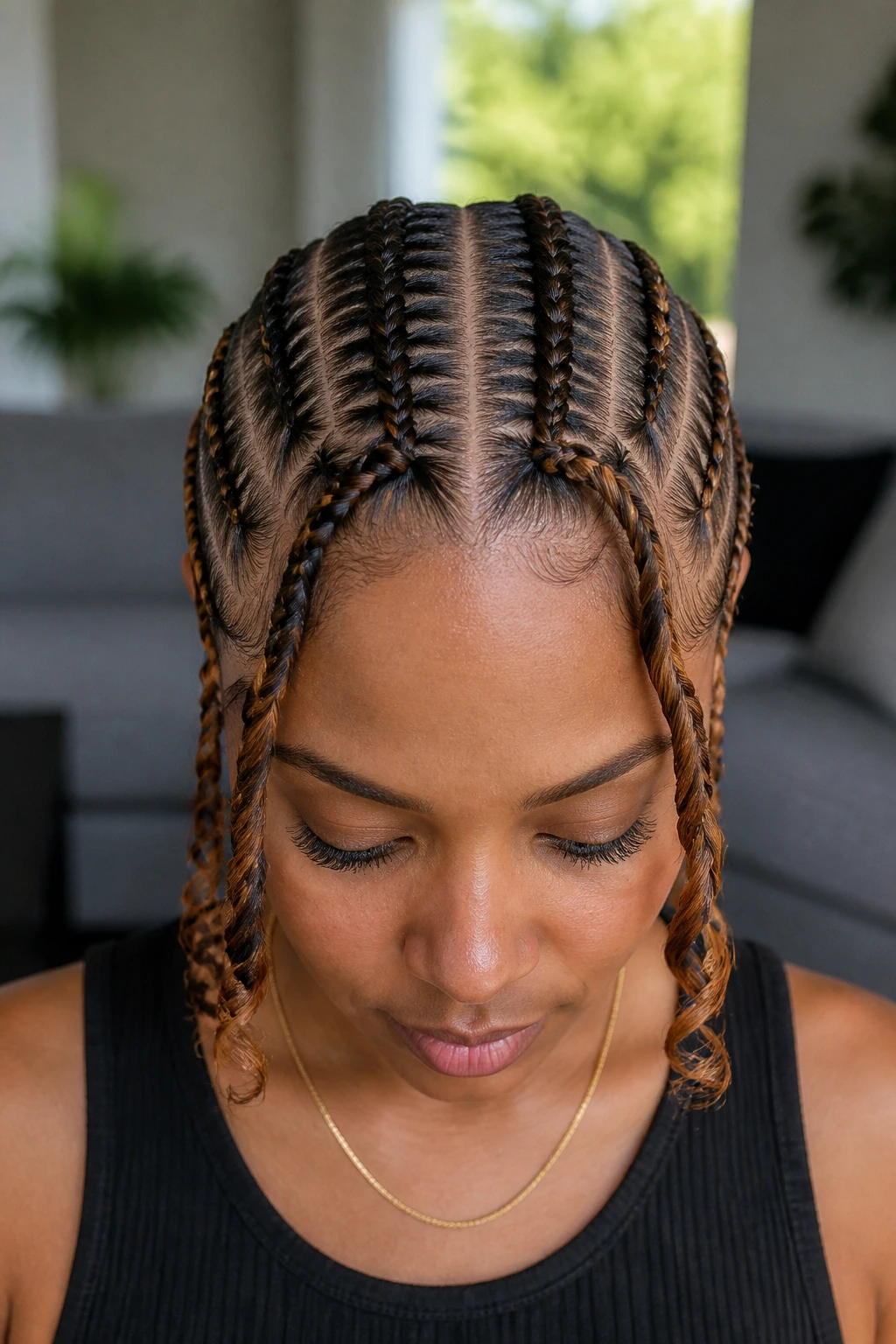
Tightening the front too much: If the hairline feels sore right after install, that’s not “snatched.” That’s too tight. The fix is a gentler grip at the temple and a wider front section so the braid doesn’t yank on fragile hair.
Choosing a money piece that clashes with your undertone: An icy blonde frame on warm skin can look disconnected, while a copper frame on cool skin can look brash. Hold the color near your face in daylight before you commit.
Loading up the parts with gel: Thick gel leaves residue, especially when sweat and product mix at the scalp. Use a thin layer and let it dry fully before wrapping the hair down.
Ignoring hair texture match: Braiding hair that’s too silky can slip; hair that’s too coarse can look bulky. Match the finish to your natural hair so the style blends at the root and the ends don’t stick out like they belong to another head.
Sleeping without protection: One rough pillowcase can undo an hour of careful parting. Satin, every night. No debate.
Variations and Adaptations to Try
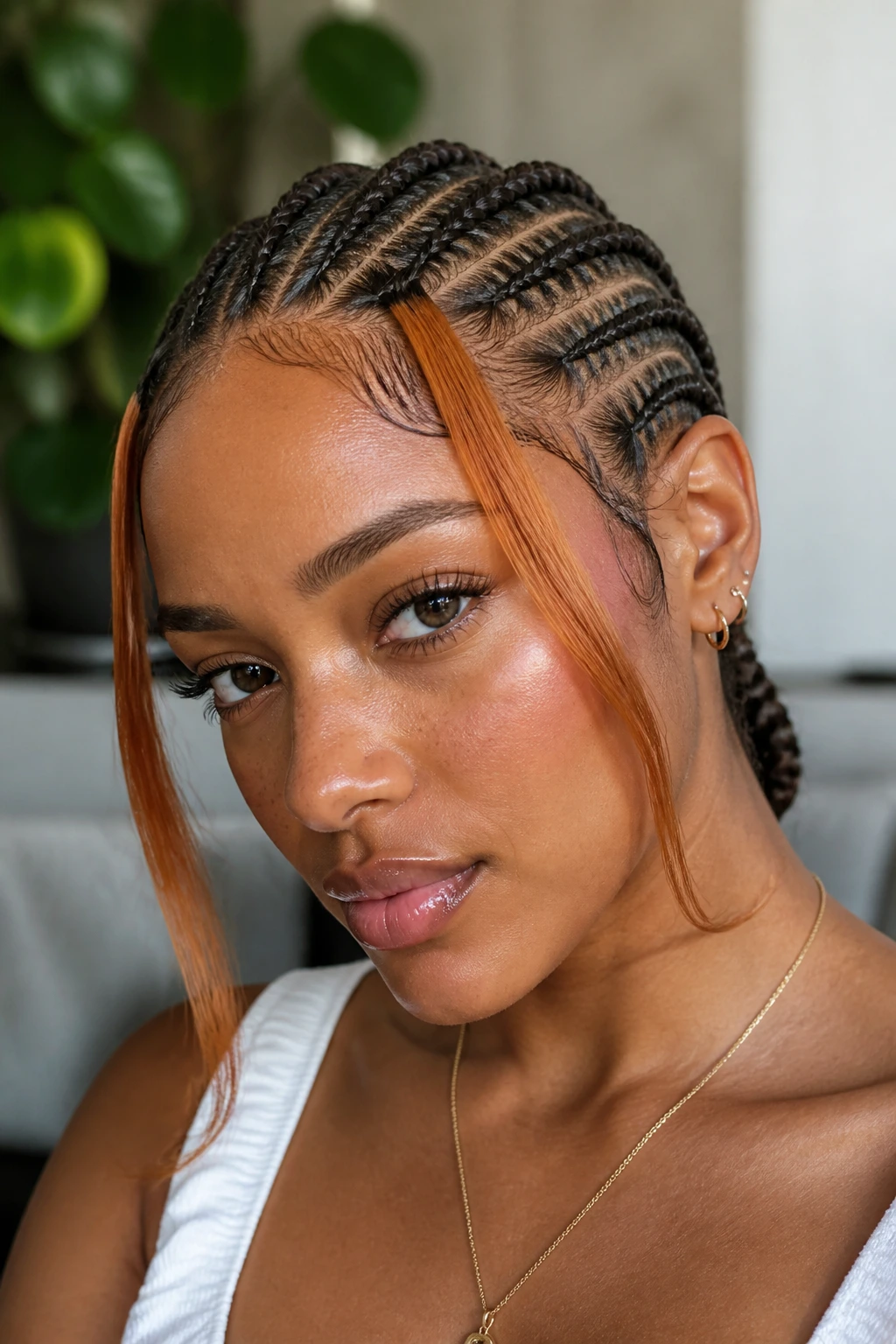
No-Bleach Blonde Frame: Use honey or beige braiding hair at the front instead of dyeing your own hair. It keeps the look bright while protecting the natural strands.
Soft Office Version: Keep the braids medium-sized, use a muted caramel money piece, and skip beads or loud cuffs. This one reads clean and polished under more formal clothes.
Pool-Day Slick Back: Pull the braids into a low ponytail or bun, then smooth the front with a light mousse before heading out. The money piece stays visible, and the style holds up better against moisture.
Color Pop Frame: Try copper, auburn, or red-brown at the front if blonde feels too expected. Warm red tones look rich against dark roots and pair nicely with gold jewelry.
Short-Hair Friendly Install: Keep the braid count lower and the money piece limited to the front two rows. That gives shorter natural hair a lighter load and keeps the look neat rather than overcrowded.
Frequently Asked Questions
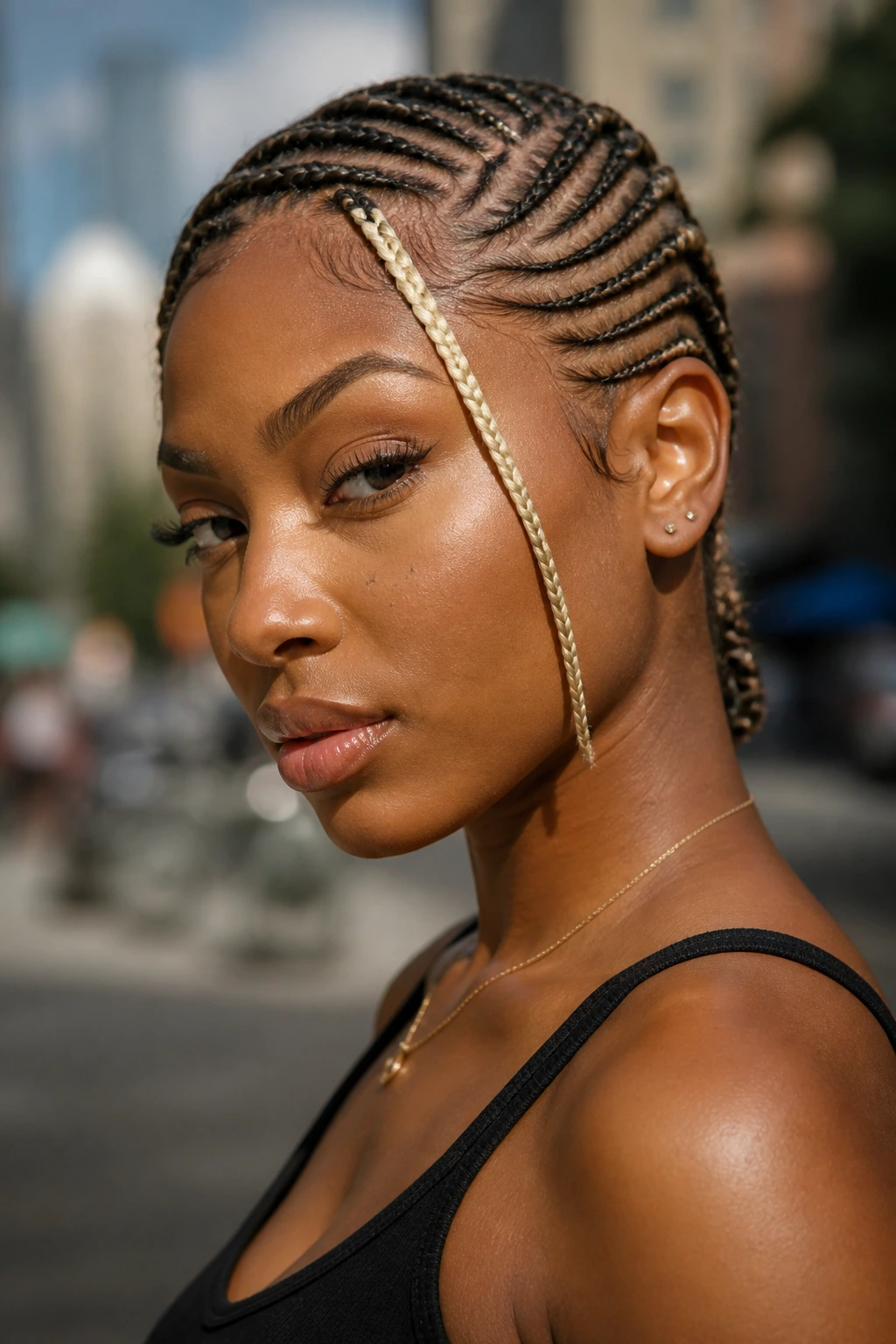
Can I get the money piece look without coloring my natural hair?
Yes. That’s one of the best things about this style. Use lighter braiding hair in the front sections, and the bright frame appears without bleach touching your own hair.
How long do sleek cornrows usually last?
Most people can keep them looking clean for 1 to 3 weeks with good nighttime care and light scalp maintenance. If your hair grows fast, or if the front is tight and starts puffing, plan to refresh sooner.
Do cornrows with highlights work on short natural hair?
They do, as long as the braider can grip the hair safely and the style isn’t overpacked with heavy extensions. Shorter hair often looks best with medium-sized rows and a lighter front frame rather than very large braids.
What color should the money piece be if my base hair is black?
Honey blonde, caramel, bronze, and copper are the safest starting points. Very pale blonde can work, but it needs a crisp install and usually looks strongest when the rest of the braid set is simple.
Will the style hurt my edges?
It shouldn’t if the front is braided with controlled tension and the hairline is not pulled tight. Pain, bumps, and a stretched feeling at the temples are warning signs. If you feel that, loosen the style or take it out.
Can I wash my scalp with cornrows in?
Yes, but be gentle. Use a diluted shampoo or a scalp cleanser along the parts, rinse carefully, and dry the roots fully with a cool or low setting so moisture does not linger under the braids.
What if my money piece keeps frizzing faster than the rest?
That usually means the front pieces are getting more friction from your scarf, sunglasses, or hands. Wrap them more carefully at night and use mousse instead of heavy gel during touch-ups.
Which braid size looks best with a strong money piece?
Medium and jumbo braids usually give the highlight room to show. Tiny braids can hide the color unless the contrast is very deliberate, and then the front starts to look busy.
Keeping the Shape Sharp
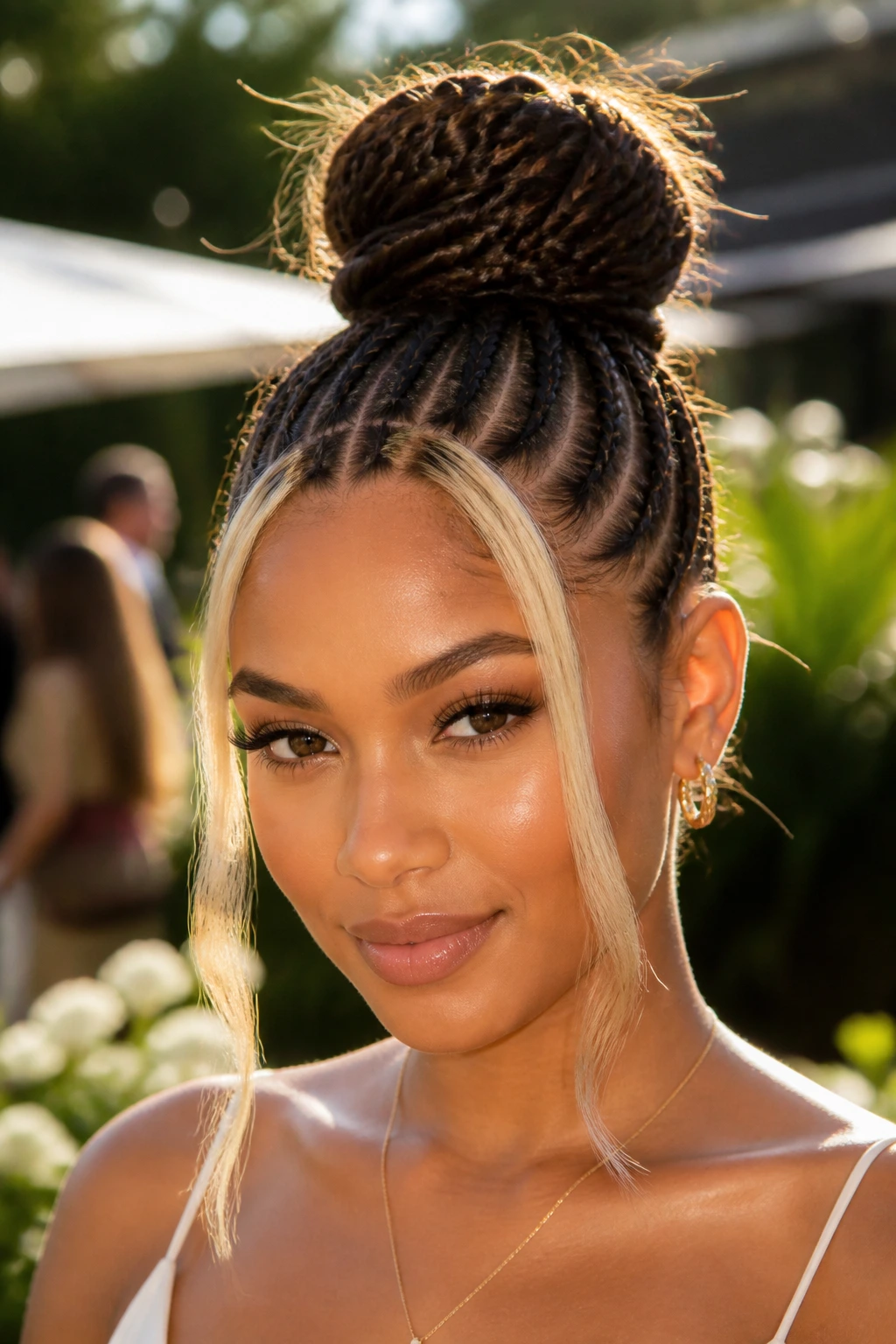
The nicest thing about sleek cornrows with money piece highlights is how quickly they solve a style problem. Heat hits. Hair stays off the neck. The front still looks bright. That mix is why the look keeps earning its place in warm-weather rotation, and why the color choice matters almost as much as the braid pattern itself.
Pick the shade with care, keep the tension respectful, and protect the front at night. Those three things do more for the finished look than any amount of extra product ever will. Once the parts are clean and the money piece sits where it should, the style carries itself with very little help.
And that’s the part worth keeping in mind: the best braid set is not the one that tries hardest. It’s the one that holds its shape, flatters the face, and still looks put together after a long day outside.