



Wavy hair gets stubborn in a very specific way. Leave it one length and it can hang like a curtain; add too many short pieces and it can puff out into a halo before lunch. Long layered hairstyles for wavy hair with babylights sit right in the middle of that problem and solve more than they get credit for. The layers keep the bend and movement alive, while the babylights break up the color so the hair reads as textured, not heavy.
That balance is the whole trick. Babylights are tiny, fine highlight weaves, not chunky streaks, so they don’t fight the wave pattern the way broader color panels sometimes do. On a long wavy base, that softness matters. The light pieces can follow the bend of the hair, the darker pieces can sit underneath and give depth, and the haircut itself can do the work of keeping things from collapsing into one flat sheet.
If you’ve ever had long hair that looked gorgeous from the front and a little shapeless from the side, this is the lane. The best versions aren’t dramatic for drama’s sake. They’re engineered, in a very human way, to make the hair fall better, move better, and grow out without screaming for a salon chair every few weeks. Some of these looks lean polished, some lean beachy, and a few carry a little edge. All of them depend on the same idea: shape first, brightness second, and both handled with a light hand.
Why These 25 Looks Keep Wavy Hair Interesting
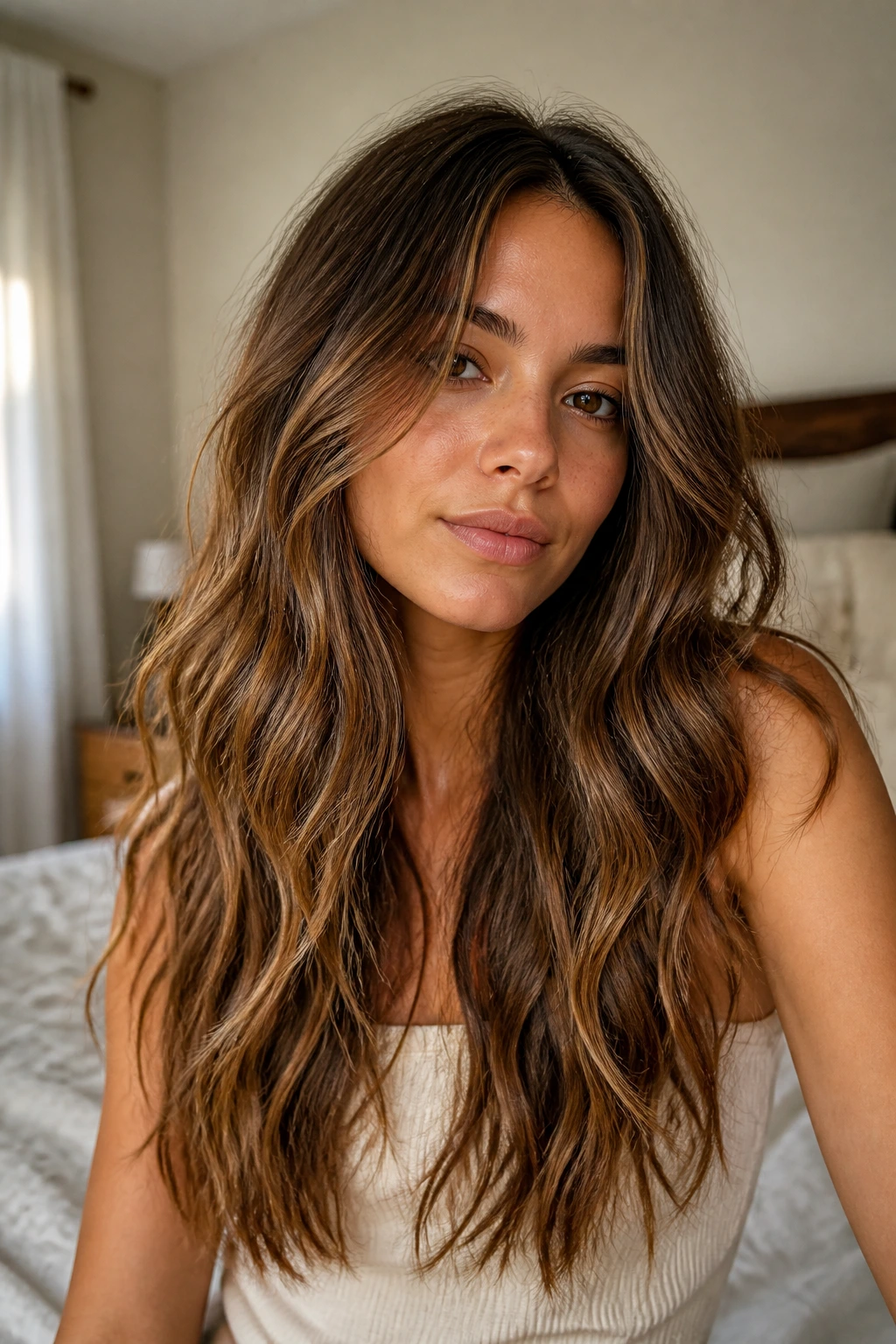
-
The layers stop the triangle effect. Long waves can widen at the bottom if the ends are too blunt, and a few well-placed layers keep the shape from turning boxy.
-
Babylights make texture easier to see. Tiny ribbons of color create depth between the bends, so the wave pattern shows up even when the hair is air-dried.
-
Grow-out stays softer. Fine highlights fade into the base more gently than wide foils, which means fewer harsh lines around the part.
-
You can go lighter without going loud. Babylights lift the tone in small pieces, so brunette, dark blonde, and caramel bases all keep their depth.
-
These cuts work with real life. A good long layered shape still behaves when you throw it up, bend it with a diffuser, or let it dry with a little salt spray and a prayer.
Why Long Layers and Babylights Work So Well Together
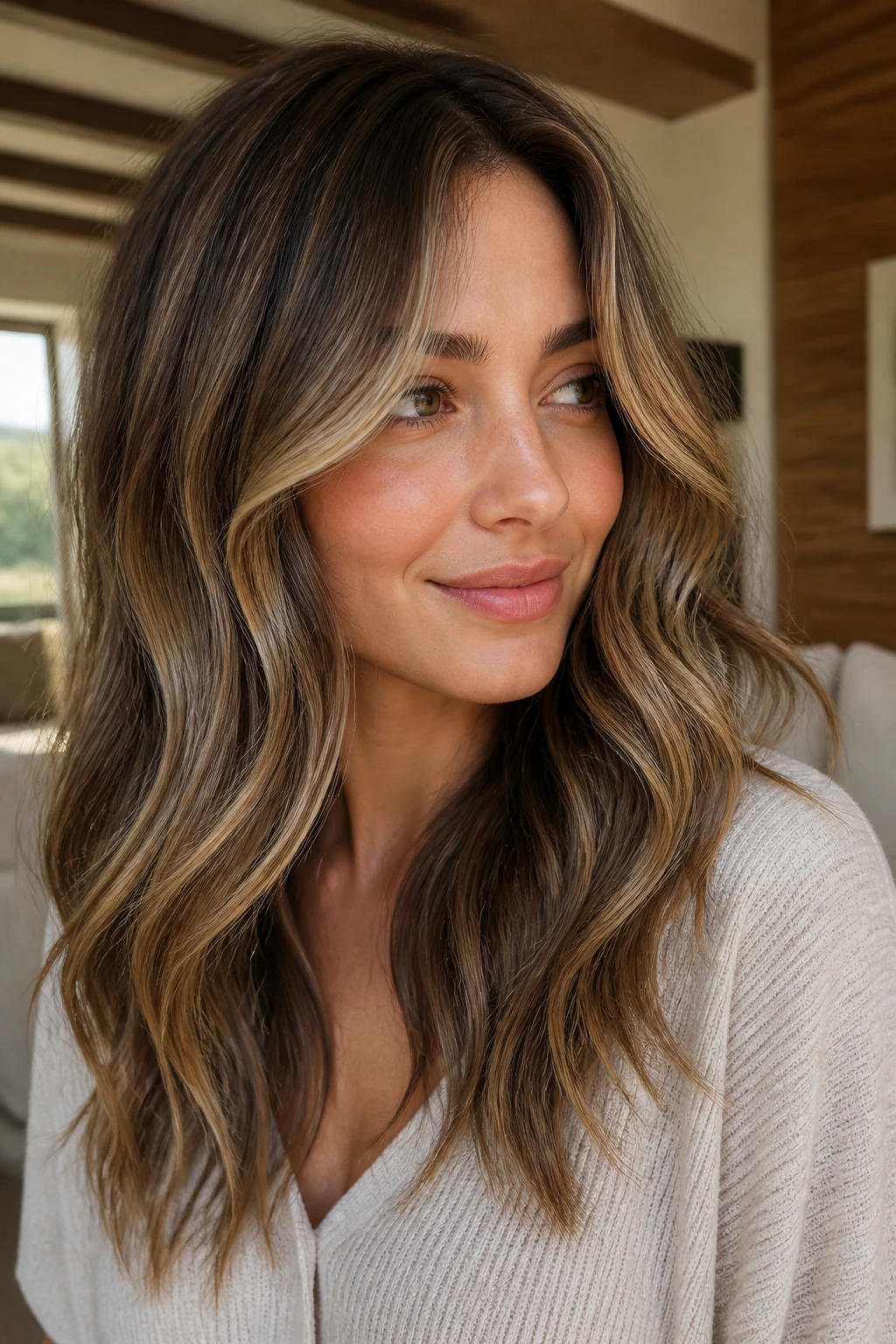
Long waves already have movement built in, but that movement can disappear fast when the haircut is too heavy. Layers give the wave room to separate. The top sections stop sitting on top of the lower sections like wet towels, and the bottom edge keeps enough length to avoid that over-layered, floaty look that can happen on fine hair.
Babylights do something different. Because the sections are so small, the color doesn’t read as stripes. It reads as shimmer, or depth, or the slight change in tone you get when hair has been in and out of sunlight for months. On wavy hair, that tiny color shift matters more than it does on straight hair. Every bend becomes a place for light to land and shadow to sit.
I’m a lot more interested in babylights on long waves than in broad, chunky highlights for this texture. Chunky color can be fun on straight hair. On wavy hair, it can go streaky fast. Fine highlights follow the movement instead of bulldozing it, and that’s what keeps the style looking soft even when the waves are a little messy.
The other piece is lowlights. Not every look needs them, but they’re the easiest way to make babylights look expensive rather than washed out. A few deeper pieces under the surface keep the whole head from going too bright at the crown, which is where long wavy hair can start to look flat and overprocessed if the colorist gets enthusiastic.
1. Soft Invisible Layers with Champagne Babylights
These are the quiet ones, and I mean that as a compliment. The shortest layers sit low enough that the perimeter still feels full, but the interior gets just enough movement to keep the ends from hanging like one solid block. Champagne babylights around the part and front curve add brightness without making the color feel frosted or sharp.
This works especially well if your waves loosen as the day goes on. The cut keeps shape even when the curl pattern softens, which is the real test for long hair. A light mousse at the roots and a loose bend with a 1-inch iron are enough; you do not need to overstyle it into obedience.
Best for: medium-density hair that needs polish, not drama.
Watch for: layers that start too high. Once the shortest pieces land above the cheekbones, the style can get puffy instead of airy.
2. Butterfly Layers with Honey Babylights
Butterfly layers give you that lifted crown-and-long-ends contrast people keep trying to fake with styling tools. The shorter face-framing pieces create movement around the cheekbones, while the long back length keeps the overall feel feminine and soft rather than choppy. Honey babylights warm the whole thing up and stop the shape from looking too carved.
What I like here is the swing. When you turn your head, the shorter layers move first and the longer lengths follow a beat later. That tiny delay gives the cut a lot of life. If your hair is medium to thick and your waves hold a bend well, this is one of the easiest ways to get volume at the top without sacrificing the length you’ve been growing for months.
A round brush or a quick blast with a diffuser both work. The cut does most of the talking.
3. U-Shaped Long Layers with Beige Blonde Ribbons
A U-shape is what I recommend when somebody loves length but doesn’t want the ends to look like a blunt shelf. The curve at the back keeps the perimeter full, while the long layers soften the line so the hair falls with a little more curve through the center. Beige blonde babylights keep the color calm and expensive-looking rather than icy.
Why the U-shape behaves so well
The shape is subtle, which is why it ages well. It doesn’t scream “I got layers,” but you can see the difference when the hair swings. Waves cling to the curve instead of spreading out like a fan, and that matters if your hair is dense or a little coarse.
I’d choose this for someone who likes a center part, wears their hair down often, and wants enough movement to keep the style from feeling heavy at the collarbone. A gloss every few weeks helps keep the beige tone clean; if it gets too warm, the whole look starts leaning yellow.
4. V-Cut Waves with Caramel Babylights
A V-cut gives the back a sharper point, which sounds dramatic until you see it on wavy hair. The point sits low and the sides taper gradually, so the effect is more “swishy” than severe. Caramel babylights layered through the mid-lengths give the shape warmth and stop the back from looking like one dark curtain.
This is one of the best options for thick hair that feels too broad when it’s worn long. The V shape removes visual weight from the ends without chopping off the length, and the color placement keeps the silhouette from feeling flat. If you like a half-up style, this cut also gives you a nicer shape when the top section is pulled back.
A curling wand through the lower half is enough on rough days. If you want to keep it low-effort, bend only the top two layers and let the rest do its own thing.
5. Curtain Bang Layers with Dimensional Brunette Lights
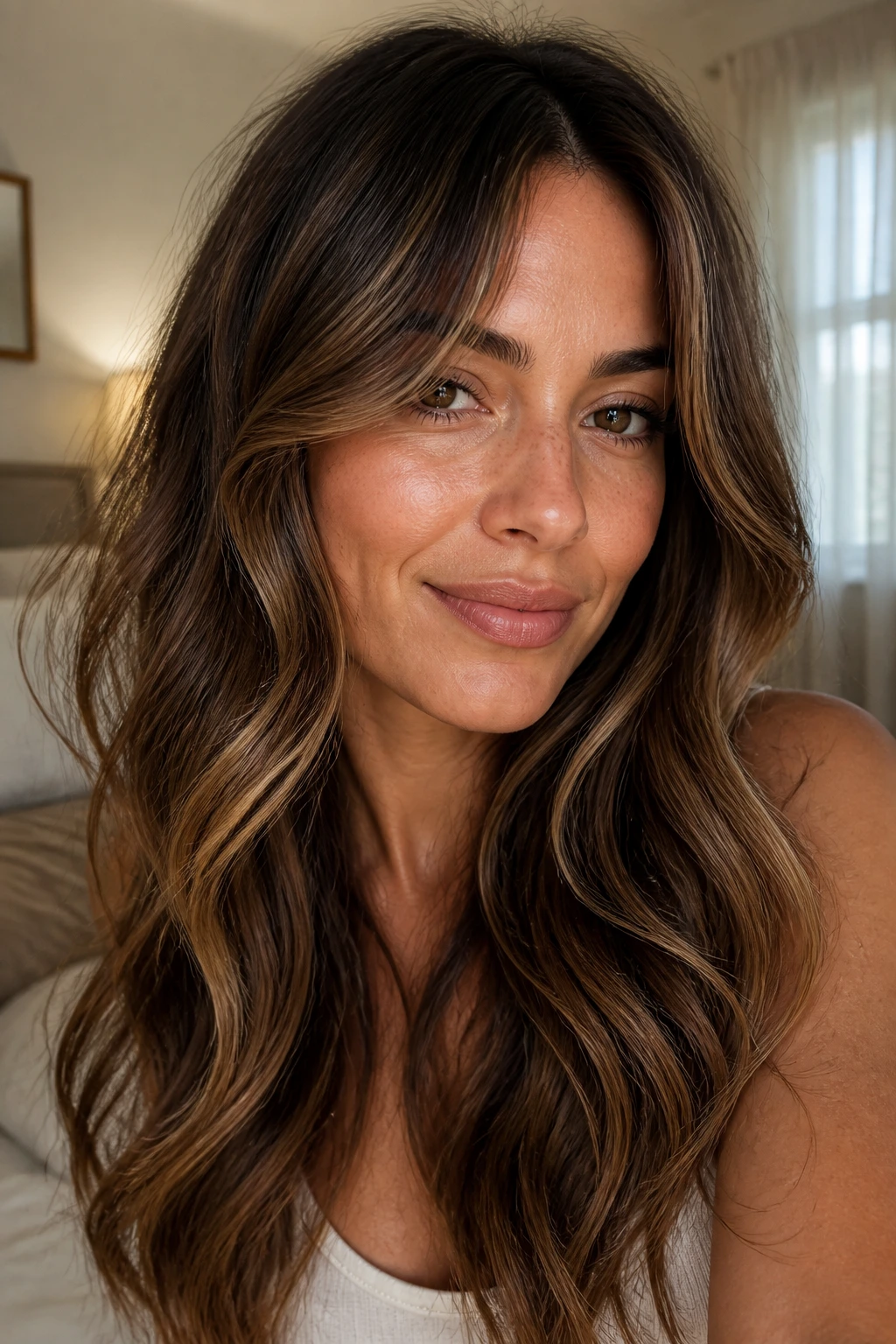
Curtain bangs can make long wavy hair feel intentional in about five seconds. The center opens softly, the sides sweep into the face, and the longer layers behind them keep the whole cut from turning top-heavy. Dimensional brunette babylights — think soft mocha, chestnut, and a hint of cocoa — add movement without pushing the look into blonde territory.
This is the style I reach for when someone wants change but doesn’t want to lose length. The bangs give the illusion of a new haircut, but the rest of the length stays familiar. They also work well with waves because the bend in the hair helps the bang pieces curve naturally, which means less daily wrestling with a round brush.
If your forehead area tends to sit flat, ask for slightly shorter center pieces. They’ll open up faster and keep the bangs from disappearing into the rest of the hair.
6. Long Shag with Ash Brown Babylights
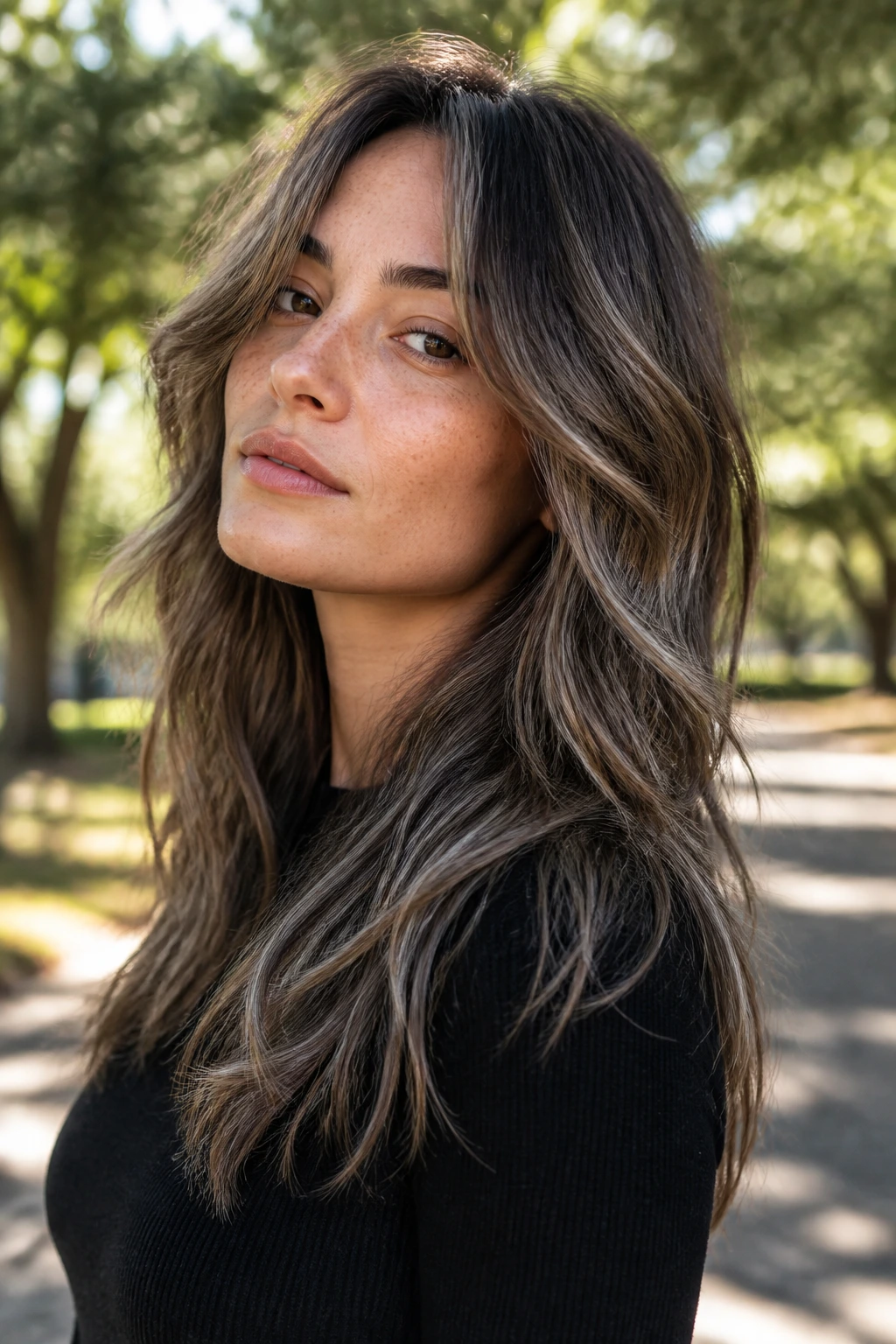
A long shag on wavy hair is a little rebellious in the best way. The layers are more obvious, the ends are more piecey, and the whole shape has that lived-in motion that doesn’t look overworked. Ash brown babylights cool the tone down and keep the texture from becoming too warm or brassy.
The beauty of this cut is that it doesn’t care much whether you air-dry or diffuse. It wants separation. A little sea-salt spray at the mids, a touch of cream at the ends, and you’re done. If your hair is naturally wavy but gets fuzzy at the ends, this cut can help because the internal removal of bulk lets the wave pattern sit on itself instead of exploding outward.
What makes it different
A classic shag can get too short in the front. The long version keeps the drama in the layers but leaves enough length to pull it into a knot or clip it back without looking ragged.
7. Face-Framing Layers with Soft Lightened Temples
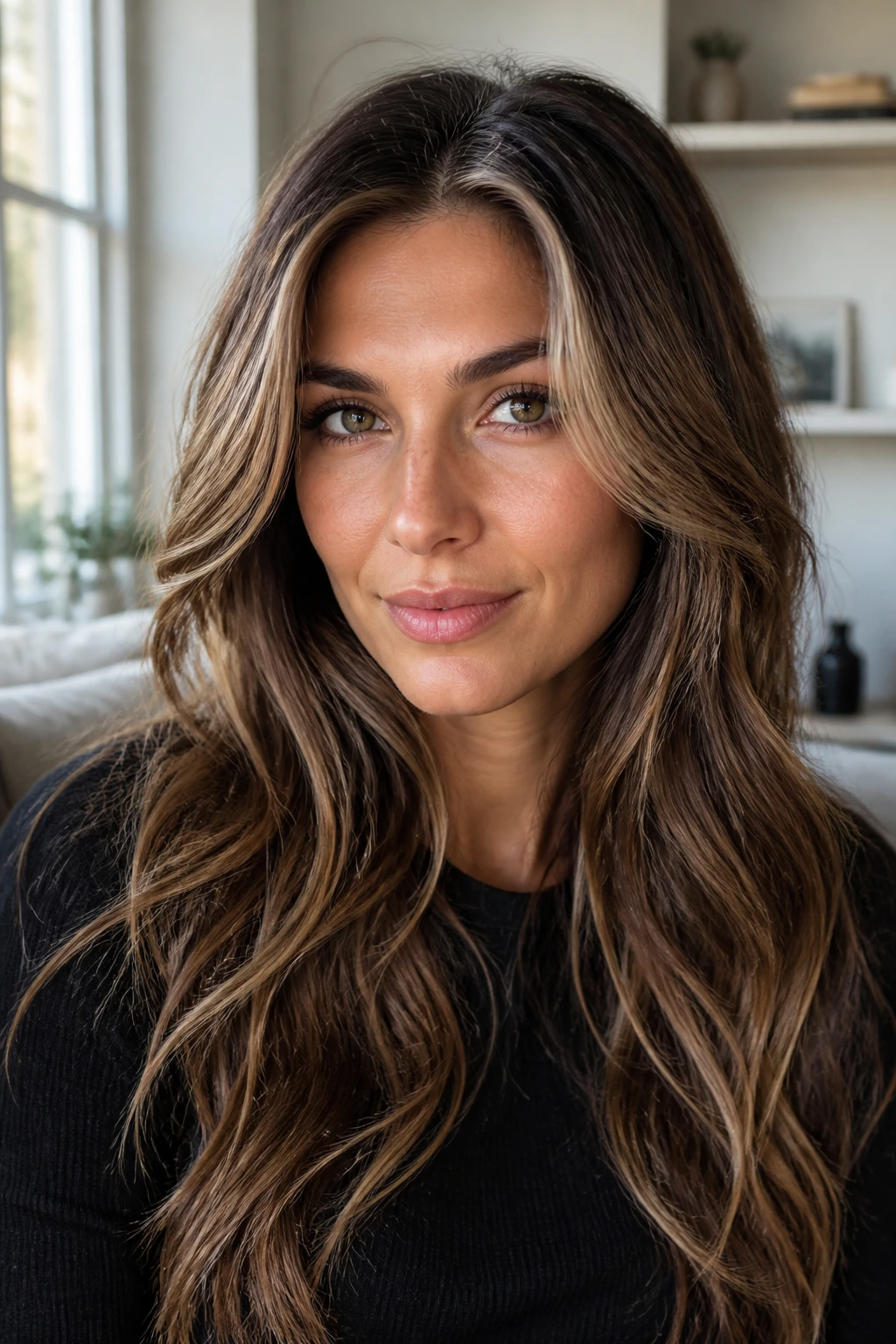
This one is for people who want the smallest possible haircut change with the biggest visual payoff. The length stays long. The layers live around the face and slide into the rest of the hair instead of announcing themselves from across the room. Babylights at the temples and around the part brighten the face without turning the whole head light.
It’s a good style if you wear glasses, part your hair slightly off-center, or like to tuck one side behind your ear. Those little moves show off the lighter pieces and make the layers feel deliberate. The rest of the hair can stay softer and darker, which gives you contrast without the maintenance headache of a full blonde transformation.
A flatiron bend at the front pieces can help if your waves are strong. Keep it loose. You want a curve, not a curl.
8. Waterfall Layers with Cinnamon Lowlights
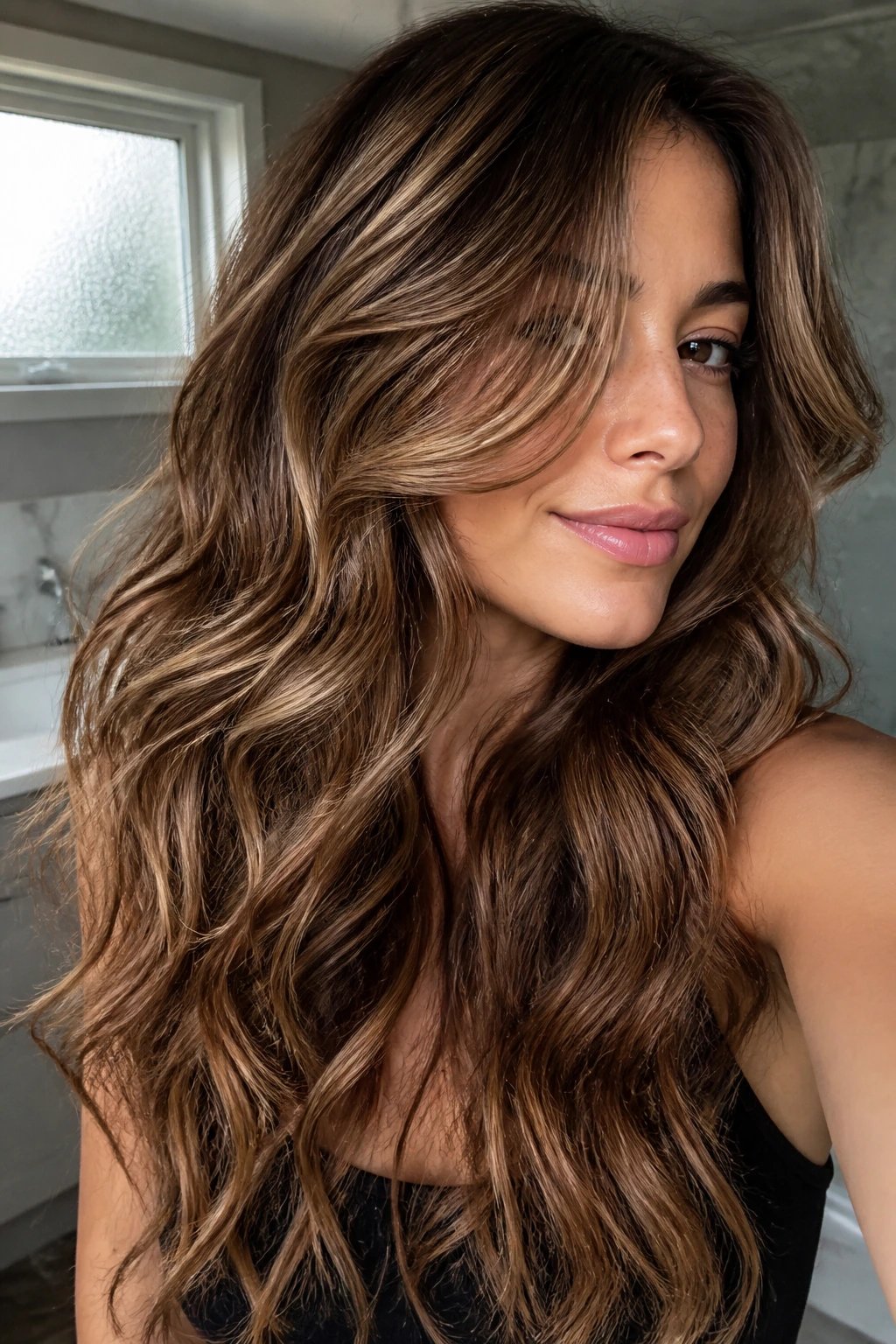
Waterfall layers are all about flow. The shorter pieces drop into the longer pieces in a way that looks cascading rather than chopped, which makes them ideal for wavy hair that already has some movement built in. Cinnamon lowlights tucked through the underside add warmth and depth, especially on brunette bases that can go one-note when they’re left untouched.
This shape is useful if you have medium to thick hair and want the ends to feel lighter without losing the sense of fullness. The layers create staggered movement, so the hair looks like it’s moving even when you’re standing still. That’s not a small thing. Hair that falls this way tends to hold up better in humidity because it isn’t trying to keep one rigid outline.
Keep the styling product light at the roots. If the crown gets too slick, the whole waterfall effect loses its lift.
9. Rounded Layers with Pearl Blonde Babylights
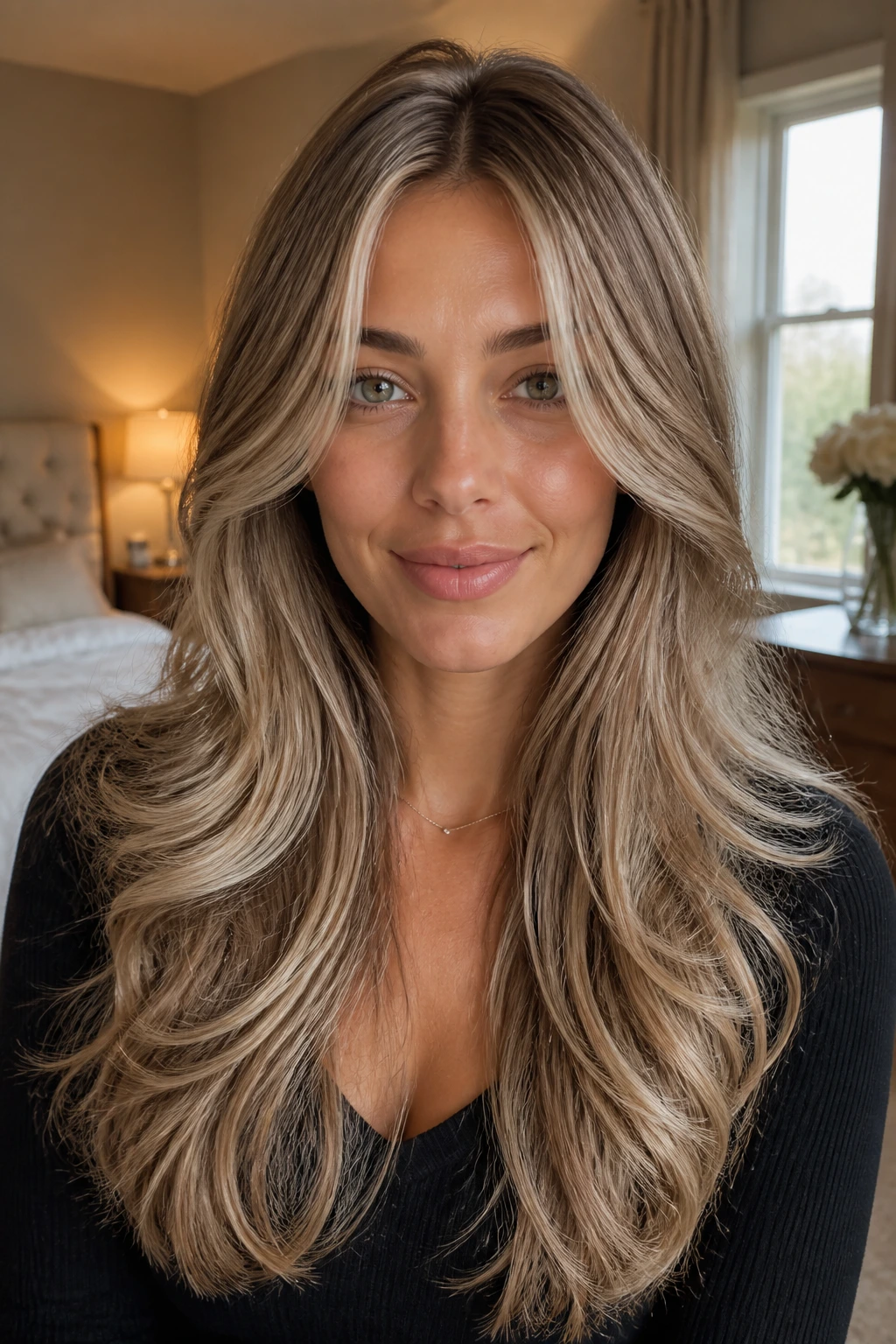
Rounded layers are softer than a V-cut and more polished than a shag. The curve is built through the sides, so the silhouette looks full but not bulky. Pearl blonde babylights cool the brightness down and give the waves a clean, luminous look without harsh contrast.
This shape flatters finer wavy hair because it makes the hair look denser through the sides. That matters. Too many fine-haired cuts over-focus on removing bulk, and the result is ends that look wispy when they really need a little visual weight. Rounded layers keep the perimeter lush while still giving the wave room to move.
If you like a blowout finish, this is one of the friendlier cuts. A large round brush and a loose bend at the mids are enough to show the shape.
10. Micro-Layered Length with Barely-There Babylights
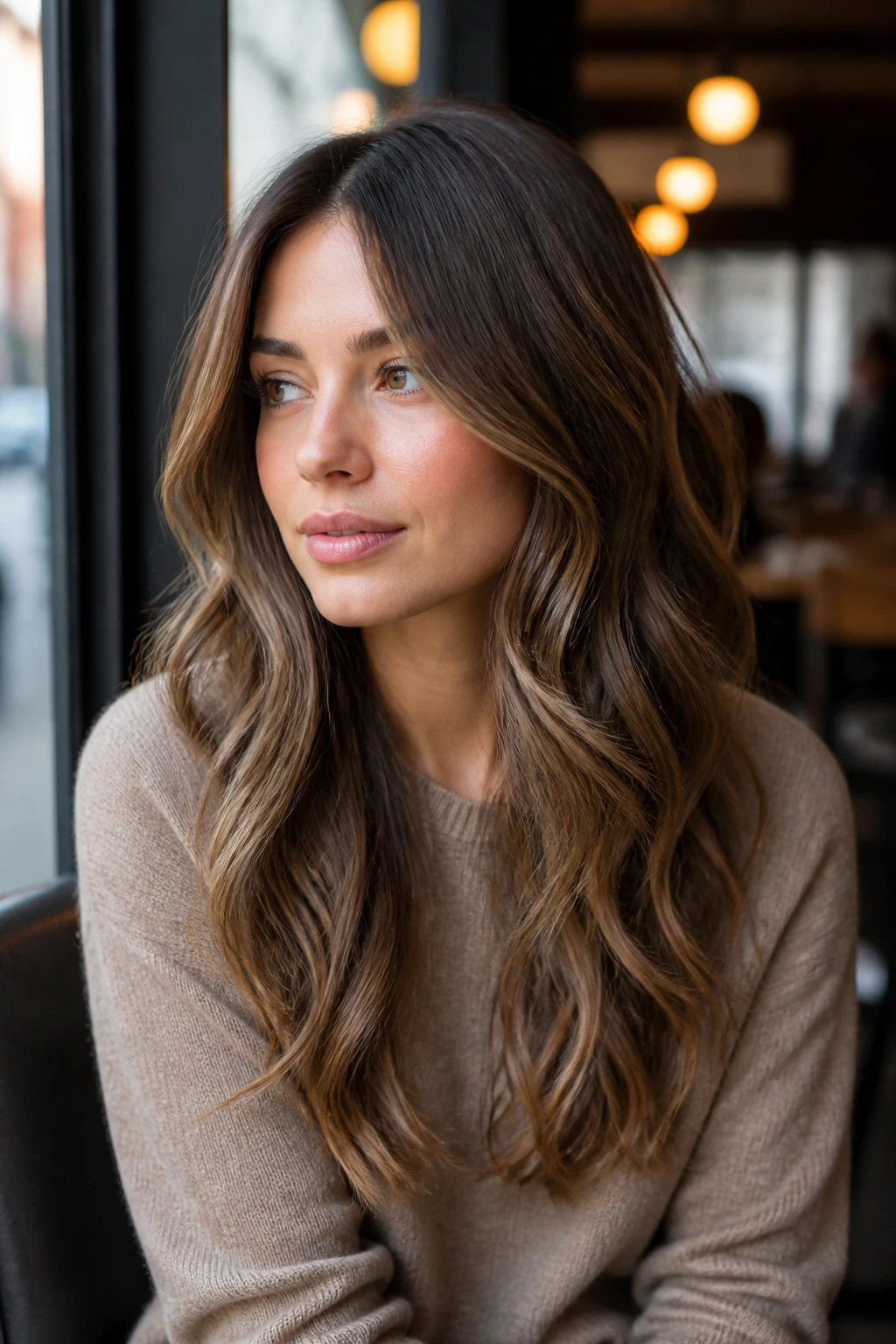
Micro-layers are for the person who wants movement without obvious steps. The interior gets small, almost hidden layers that take pressure off the shape, while the outside still reads as long and continuous. Barely-there babylights do the same thing on the color side: they brighten the surface just enough that the hair doesn’t look flat, but they never shout.
Why this cut works on fine waves
Fine wavy hair can look sparse if the layers are too aggressive. Micro-layers solve that by keeping the change subtle. The wave pattern gets more freedom, but the ends still feel substantial.
I like this when the goal is softness, not volume. It air-dries well, it behaves in a ponytail, and it doesn’t punish you on days when you skip styling entirely. If you want a little more shape, a 1.25-inch iron through only the front pieces is enough.
11. Boho Layers with Golden Ribbon Lights
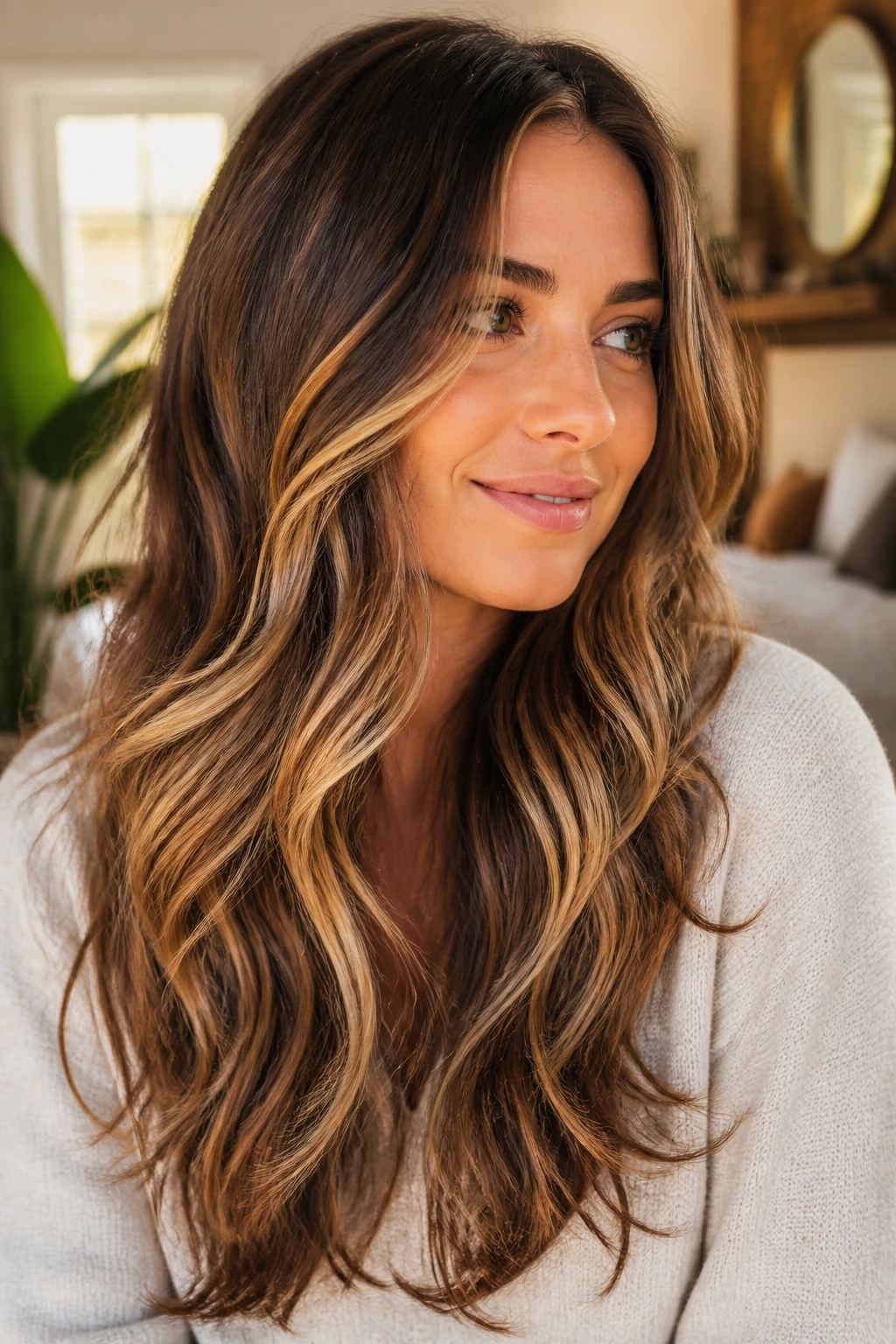
Boho layers lean loose and romantic, but they still need structure under the softness. The layers are often longer and more blended, which keeps the hair from looking overcut. Golden babylights and a few brighter ribbons around the front bring warmth and keep the waves from disappearing in darker bases.
This style looks best when the hair has some natural bend. Think loose S-waves, not tight ringlets. A braid-out overnight, a diffuser, or even a quick wrap around a curling wand works. The point is not precision. It’s movement with a little glow at the surface.
Tiny styling note: keep heavier cream away from the top inch near the scalp. Boho hair loses its charm fast when the roots get weighed down.
12. Thick-Hair Debulking Layers with Mocha Lowlights
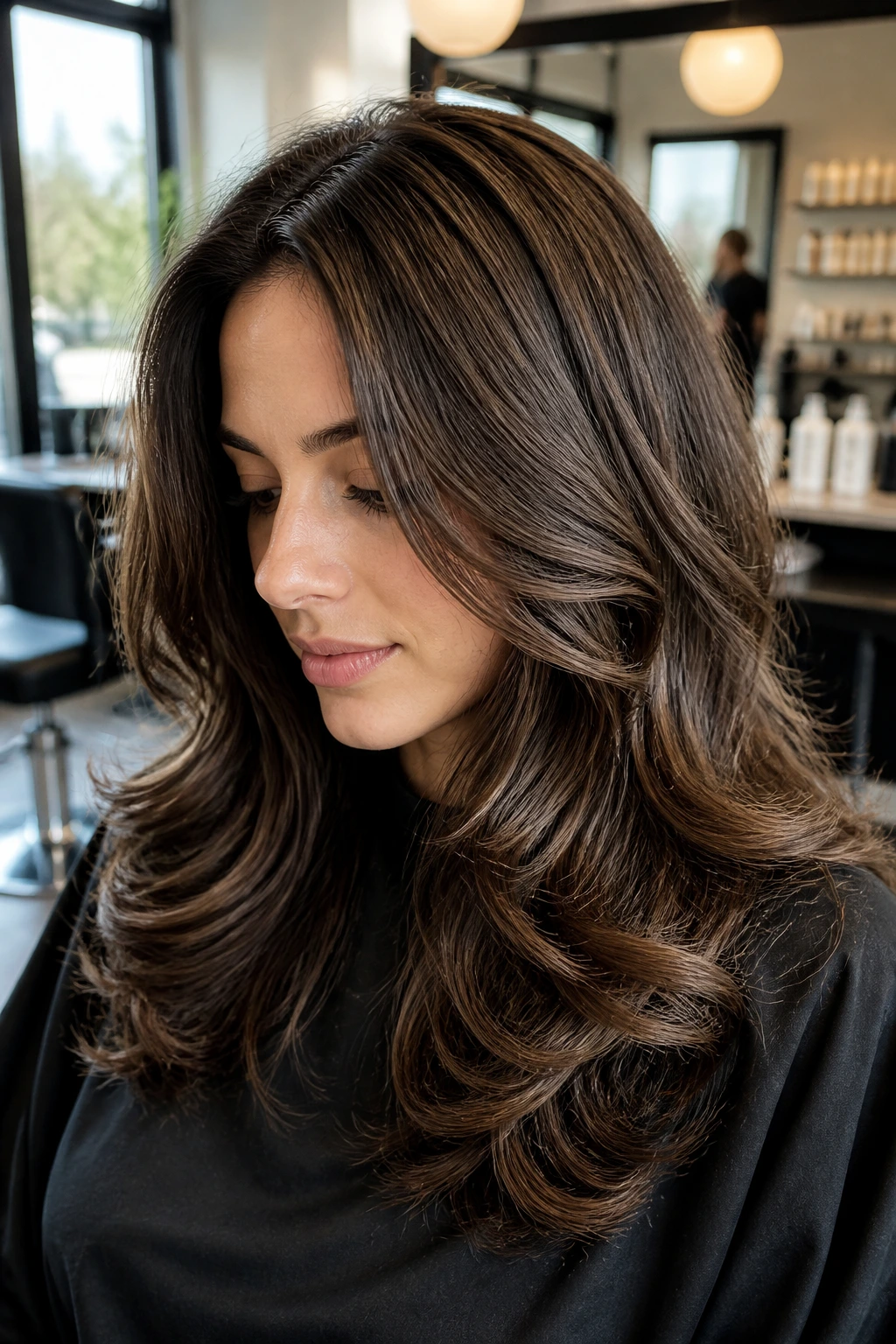
Thick wavy hair can be beautiful and exhausting. It holds shape, sure, but it can also balloon out at the sides if the inside is too dense. Debulking layers remove hidden weight so the exterior falls closer to the head, and mocha lowlights underneath keep the hair looking rich instead of hollow where the layers open up.
This is one of the most practical looks in the whole collection. It solves an actual problem. If your hair feels hot around the neck, takes forever to dry, or refuses to sit without massive product, this kind of cut can change the experience of wearing it. The wave pattern looks cleaner because the hair isn’t fighting itself.
I’d avoid over-razoring the ends here. Thick wavy hair can frizz if the cut is too aggressive. A clean point-cut finish usually behaves better.
13. Soft Wolf Cut with Peekaboo Babylights
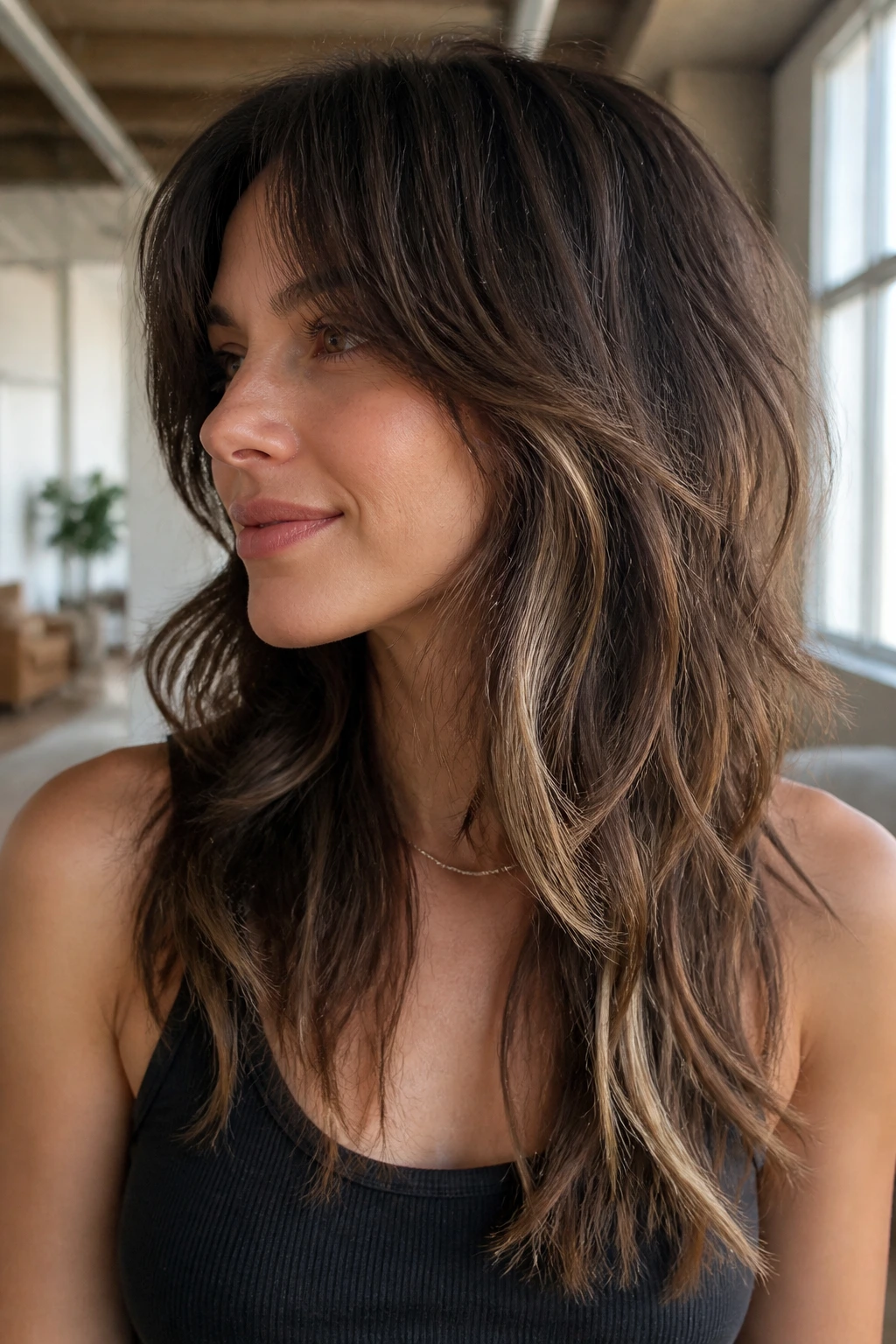
The wolf cut gets a softer, more wearable shape when the length stays long and the texture is handled gently. You still get that slightly wild crown and the airier face frame, but the bottom has enough length to keep the look grounded. Peekaboo babylights hidden under the top layers make the color flicker when the hair moves.
This is a good one if you like a little edge but don’t want your hair to look obviously styled. The cut looks best when it’s a bit messy, which is convenient for anyone who doesn’t want to spend 30 minutes with a brush. Scrunch in a light cream, twist a few front pieces while damp, and let the rest do its own thing.
It can look too shaggy if the shortest layers are cut too high, so ask for softness rather than a hard disconnection.
14. Rooted Glam Waves with Shadow Root and Vanilla Pieces
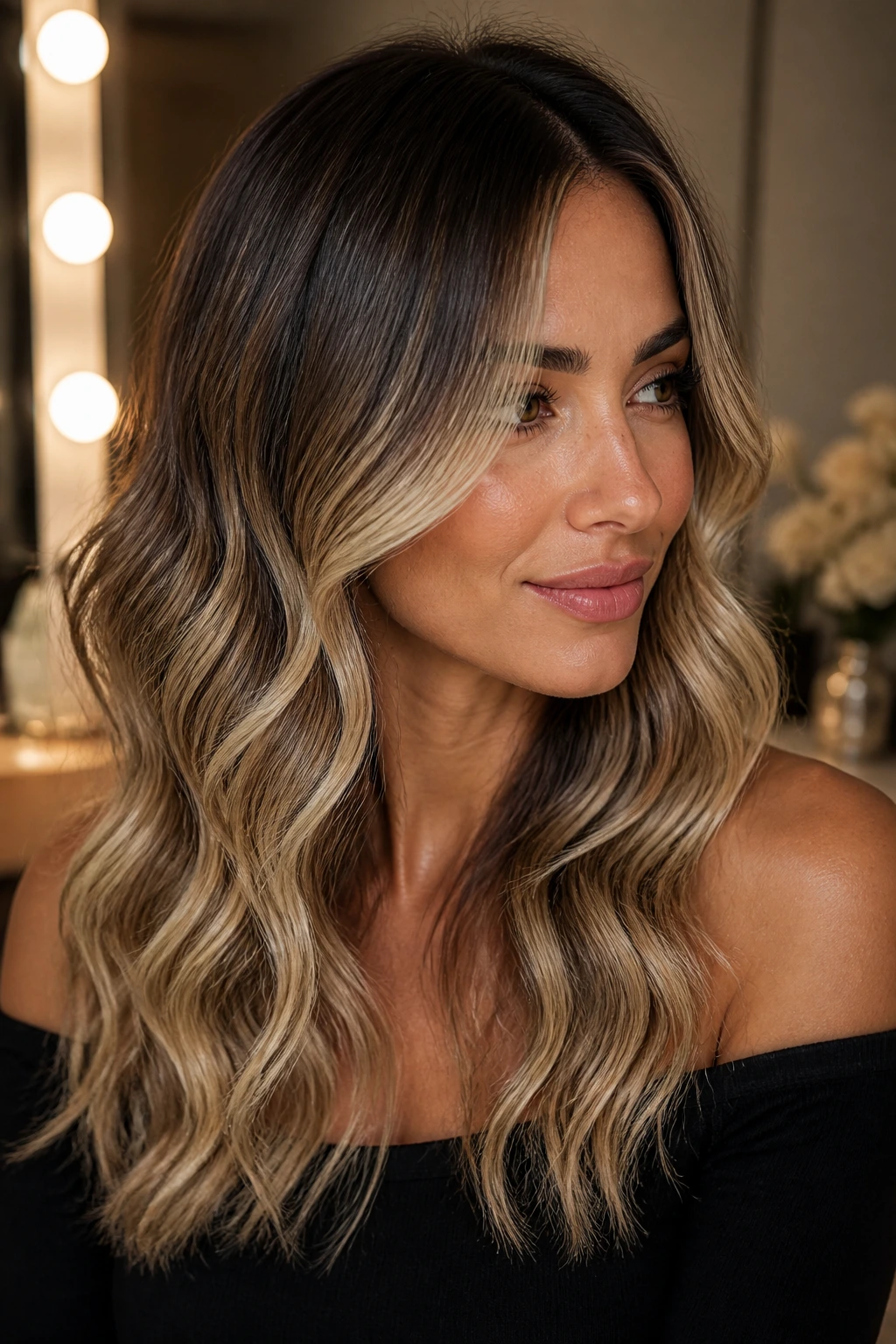
This is the polished one. A shadow root keeps the base a touch deeper, which makes the babylights and lighter pieces pop without creating a harsh regrowth line. Vanilla pieces through the mids and ends bring brightness, while the waves stay glossy and controlled rather than beachy and undone.
How the color does the heavy lifting
The shadow root is doing a lot of work here. It softens grow-out, lowers maintenance, and gives the lighter pieces something to sit against. On long wavy hair, that contrast makes the movement easier to read.
I like this look when the hair is medium to long and the person wants a cleaner finish for dressier days. It’s one of those styles that can sit in a claw clip all afternoon and still look intentional when you let it down. Use a soft brush-out after curling to keep the wave broad and smooth.
15. Long Layers with a Side Part and Champagne Veil
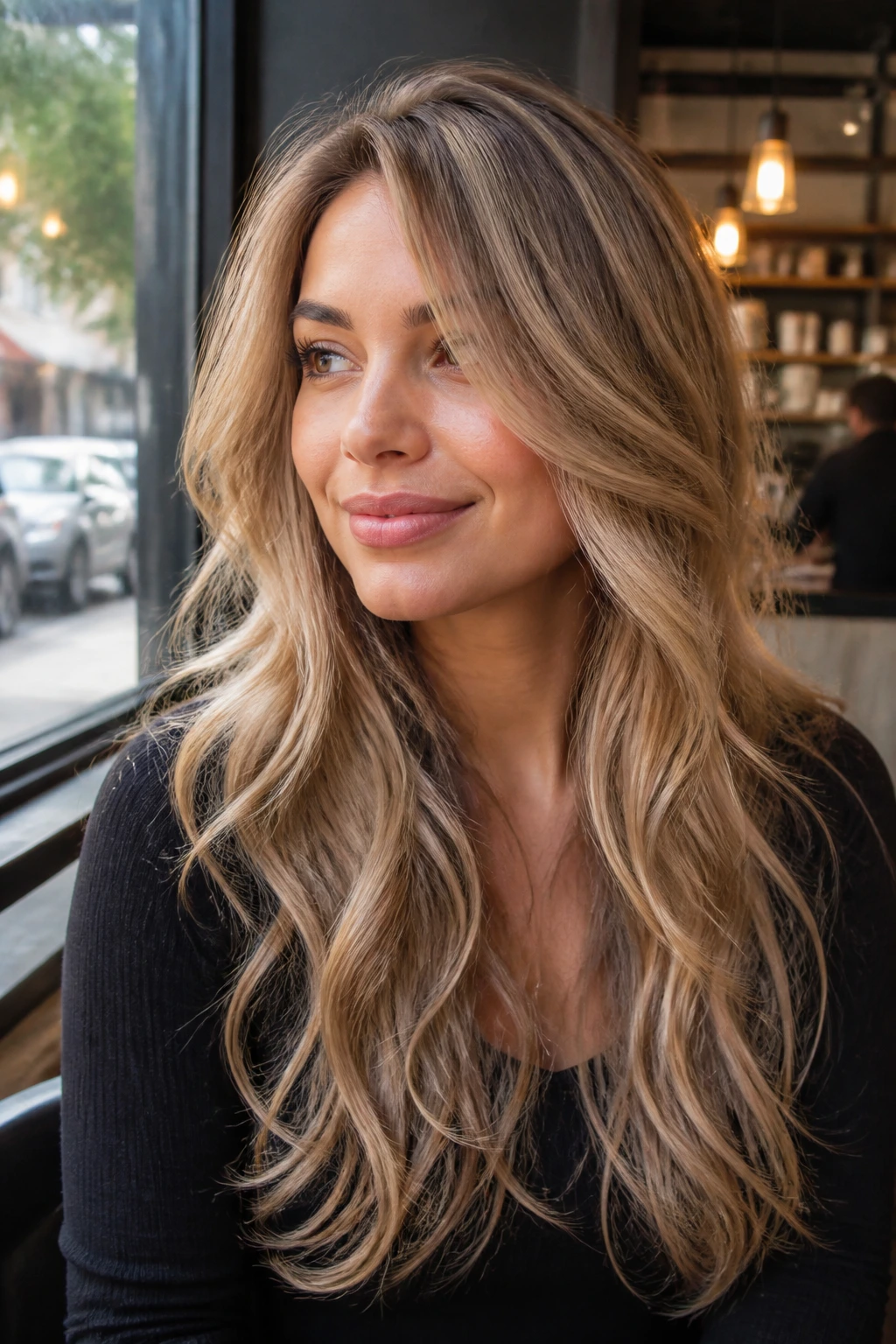
A side part can change the whole mood of long wavy hair. It lifts the crown, narrows one side, and creates a little instant drama without touching the length at all. Champagne babylights spread across the top layers give the lifted side more brightness, so the volume doesn’t just feel structural — it shows.
This is a smart move if your hair goes flat at the crown or if your center part makes your face feel longer than you like. The side part shifts the weight and gives the waves a new fall pattern. It’s a small change with a disproportionate payoff, which is my favorite kind.
If you want the part to stay put, set it while the hair is still warm from the dryer. Hair remembers better that way.
16. Airy Mermaid Waves with Toasted Almond Lights
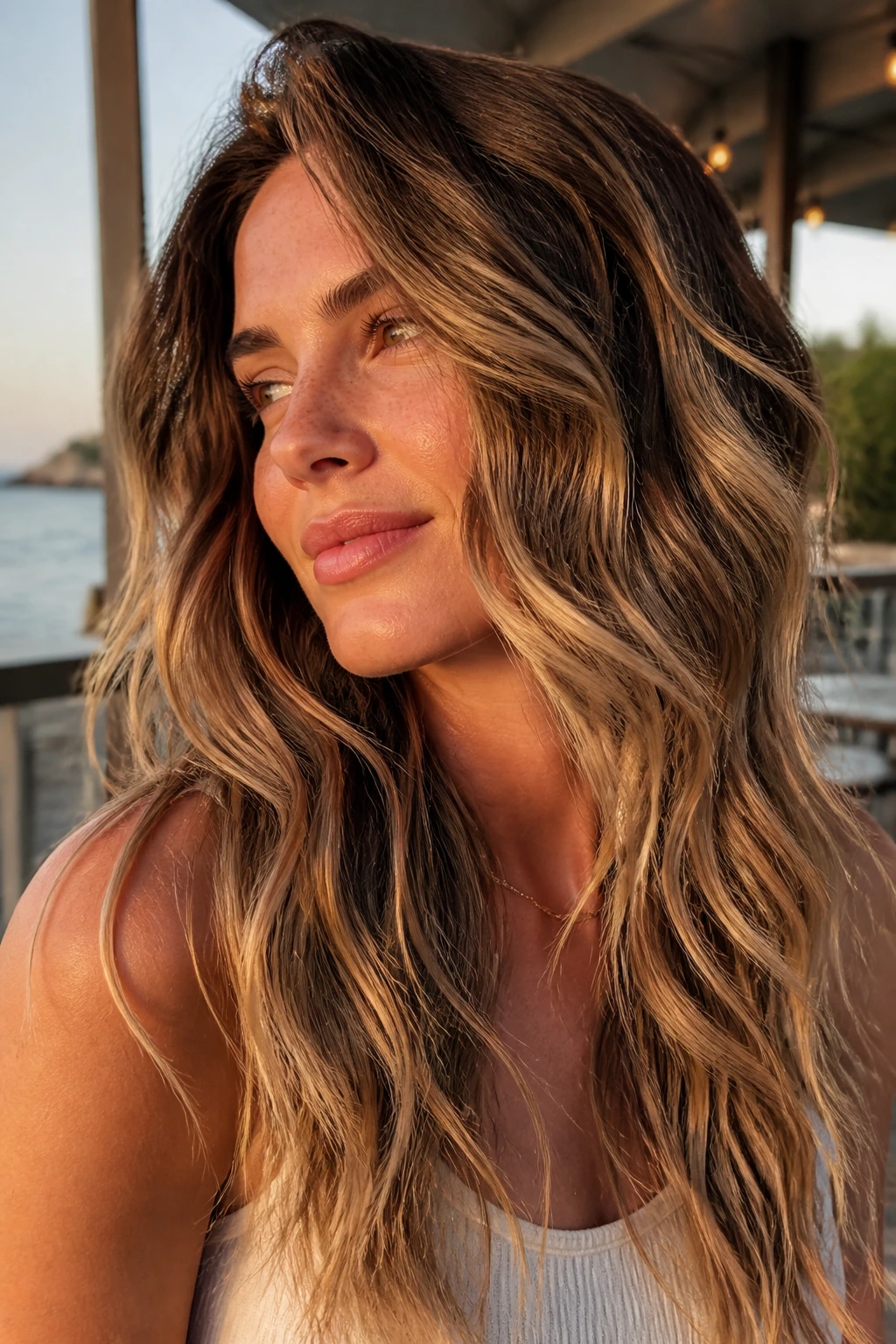
Mermaid waves can look theatrical if the layers are too obvious or the curl pattern is too perfect. The better version is airy and long, with length that still feels believable. Toasted almond babylights and a few deeper lowlights keep the dimension soft across the mid-lengths and ends.
This style suits denser hair that needs a little romance. The waves should fall like bends, not spirals, and the color should feel woven through the surface rather than painted on top. A large-barrel iron or a robe-belt wave set can help if your natural texture is too loose.
I’d avoid loading the ends with product here. Let the color and shape carry the softness.
17. C-Shape Layers with Curved Face Framing
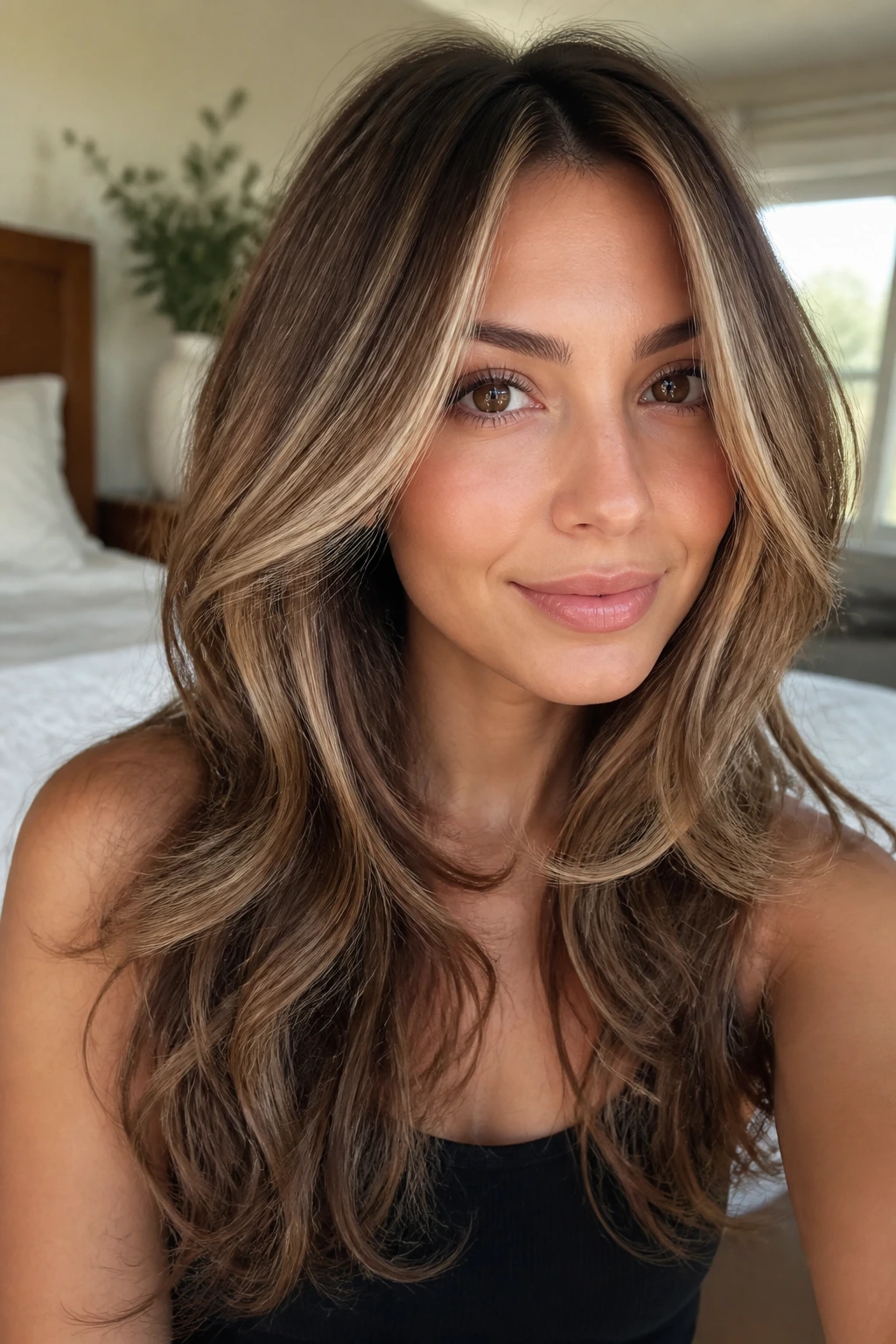
C-shape layers curve inward around the jaw and collarbone, which makes the whole haircut feel deliberate without being stiff. It’s one of the prettiest shapes for long wavy hair because the curve mirrors the way waves want to fall anyway. Soft babylights in the front and crown keep the face bright and the shape visible.
Who this flatters: square faces, broad cheeks, and anyone who wants the hair to frame rather than widen the face.
The curve matters more than people think. It keeps the ends from flaring out in a straight line, and it makes the hair look like it was cut to move. If your waves are loose and you tend to wear your hair down more than up, this is a very safe bet.
18. Polished Brunette Waves with Beige Babylights
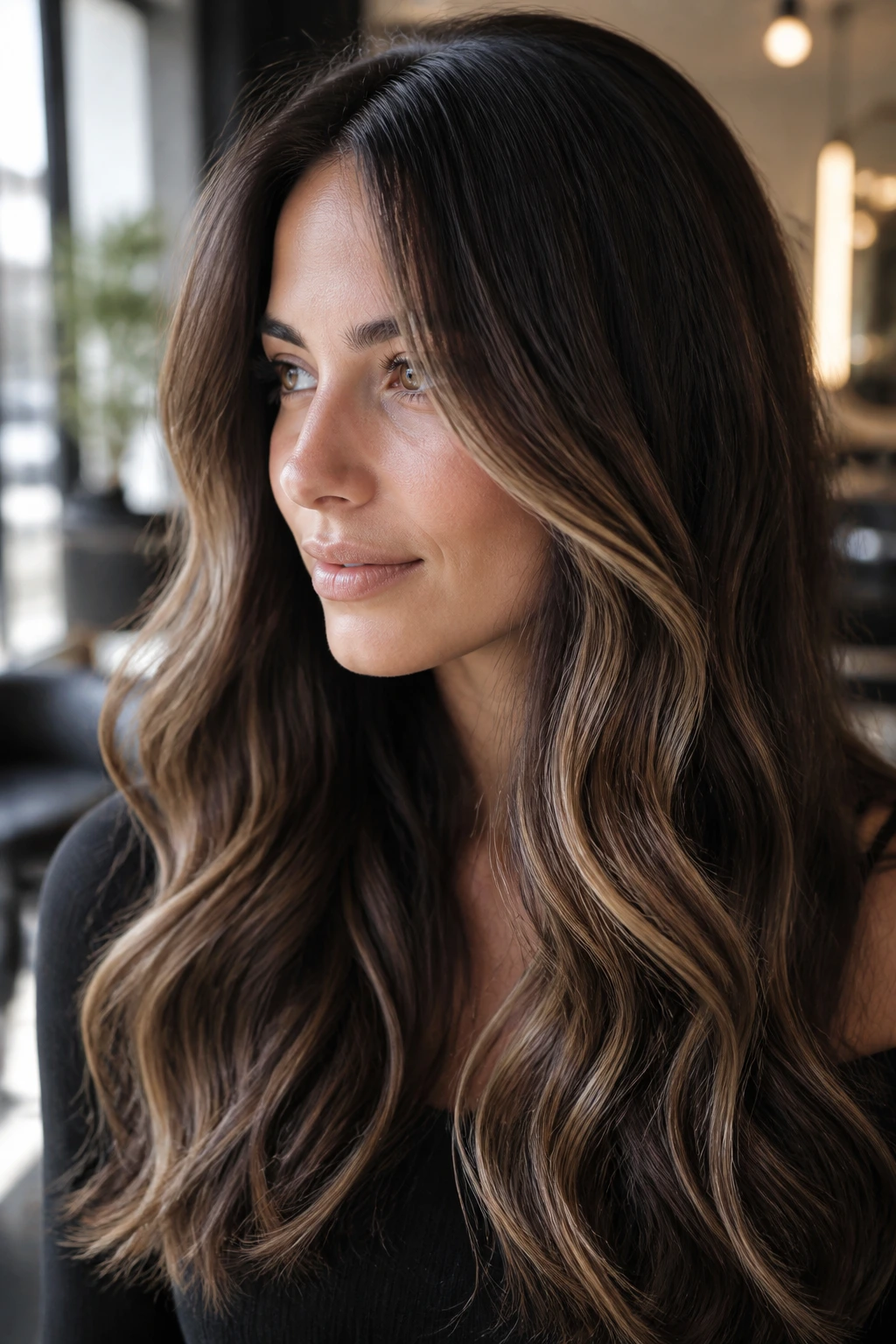
This one is for people who want shine over drama. Beige babylights are softer than blonde, cooler than caramel, and easier to keep looking expensive on brunette bases. The layers are long and gentle, so the finish reads sleek even when the waves have a little bend.
A lot of brunettes accidentally go too warm or too stripy when they ask for brightness. Beige babylights avoid that problem. They lighten the look without draining the depth out of the hair, and the long layers let the brightness travel through the mid-lengths instead of concentrating at the top.
Best styling move
Brush the waves out lightly once they’re set. Not aggressively. Just enough to turn them into broad bends instead of obvious curls. That finish suits the color better.
19. Rose-Gold Babylights on Soft Layered Ends
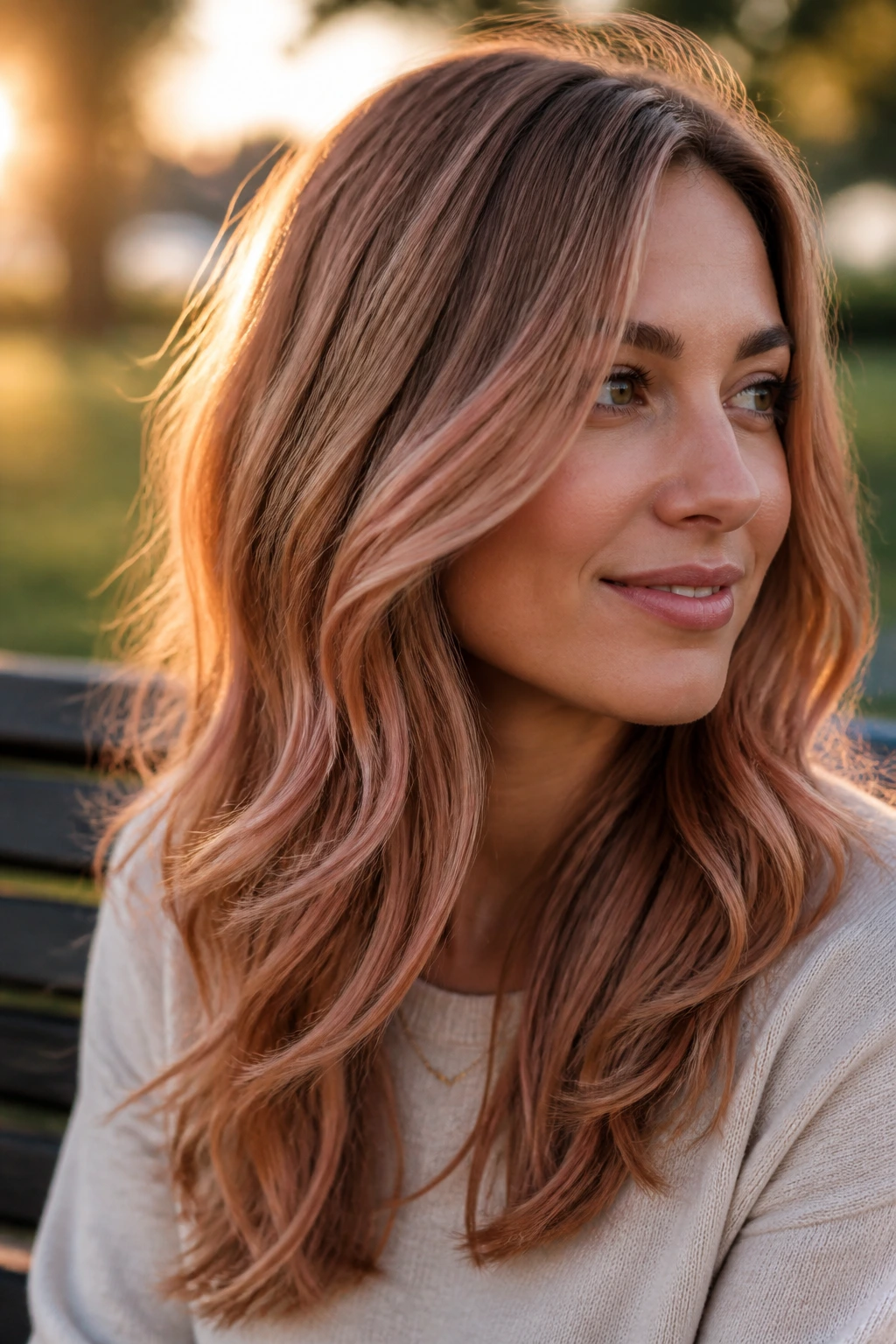
Rose-gold babylights give long wavy hair a softer fashion color without forcing the whole head into something loud. The trick is keeping the layers gentle and the ends feathered enough that the warm pink-gold tones sit in the hair instead of sitting on top of it. On a light brown or dark blonde base, this can look surprisingly wearable.
This style is happiest when the tone is diffused, not shiny and metallic. Ask for muted rose-gold, not neon. The result should look like a warm blush in the hair, not a costume color. It’s a nice choice if you want the haircut and color to feel playful for a while but still easy to grow out.
A clear gloss every few weeks helps the tone stay soft. Once the pink fades too far, the whole thing can turn brassy in an odd way.
20. Feathered Layers with Espresso Lowlights
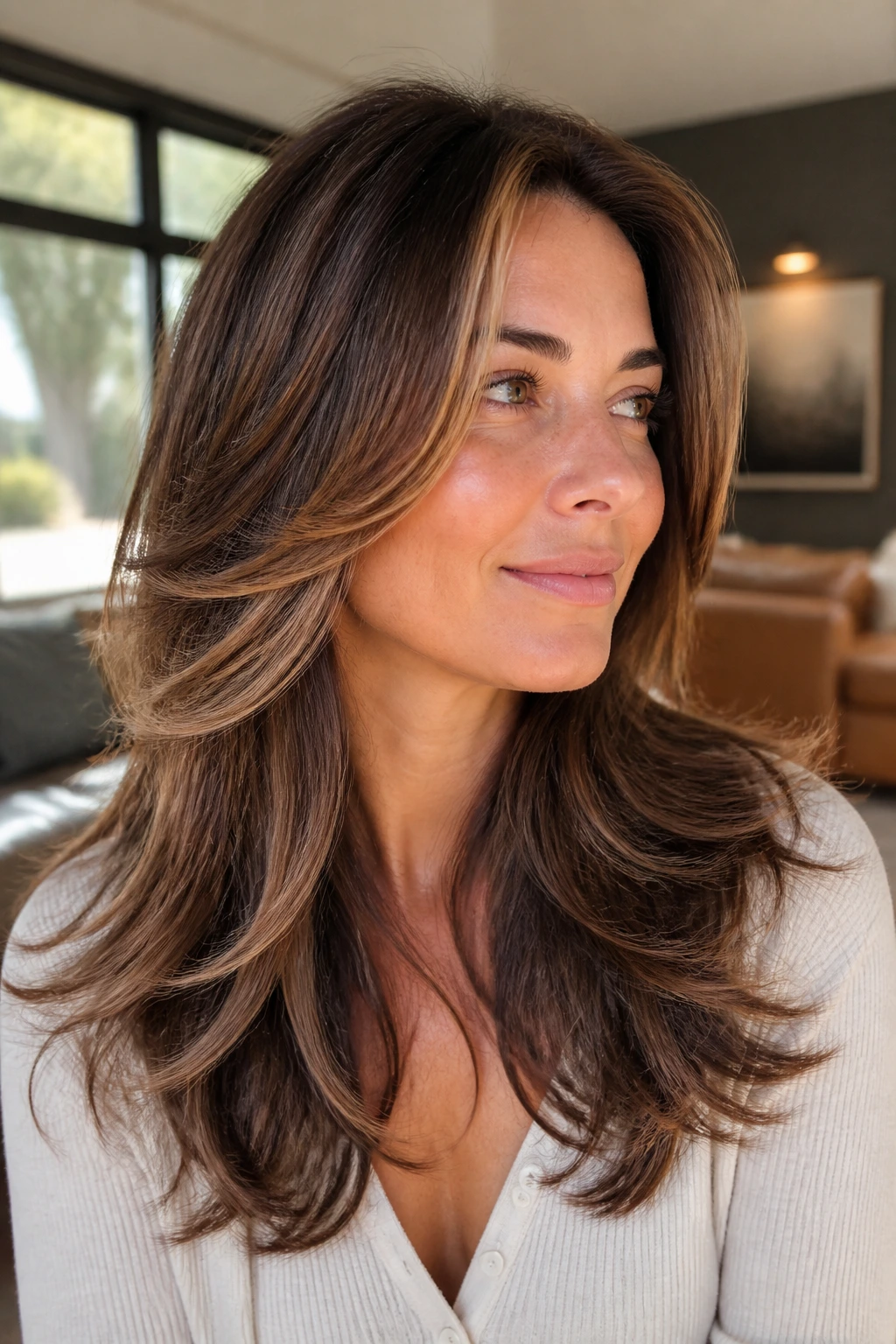
Feathering gives the long layers a lighter edge, which is useful when the hair feels dense but you don’t want a shaggy finish. Espresso lowlights deepen the underside and the inner panels, so the lighter top pieces have something to rest against. That contrast makes the wave pattern look fuller.
This is a solid choice if your hair has been over-lightened or if the color feels washed out. Lowlights can save a lot of dimension without starting over. They’re especially useful near the nape and behind the ears, where long hair can look thin or see-through if everything is lifted evenly.
One caution: don’t place the dark pieces too high. Keep them tucked underneath, or the style can start to look muddy instead of dimensional.
21. Brightening Layers for Fine Wavy Hair
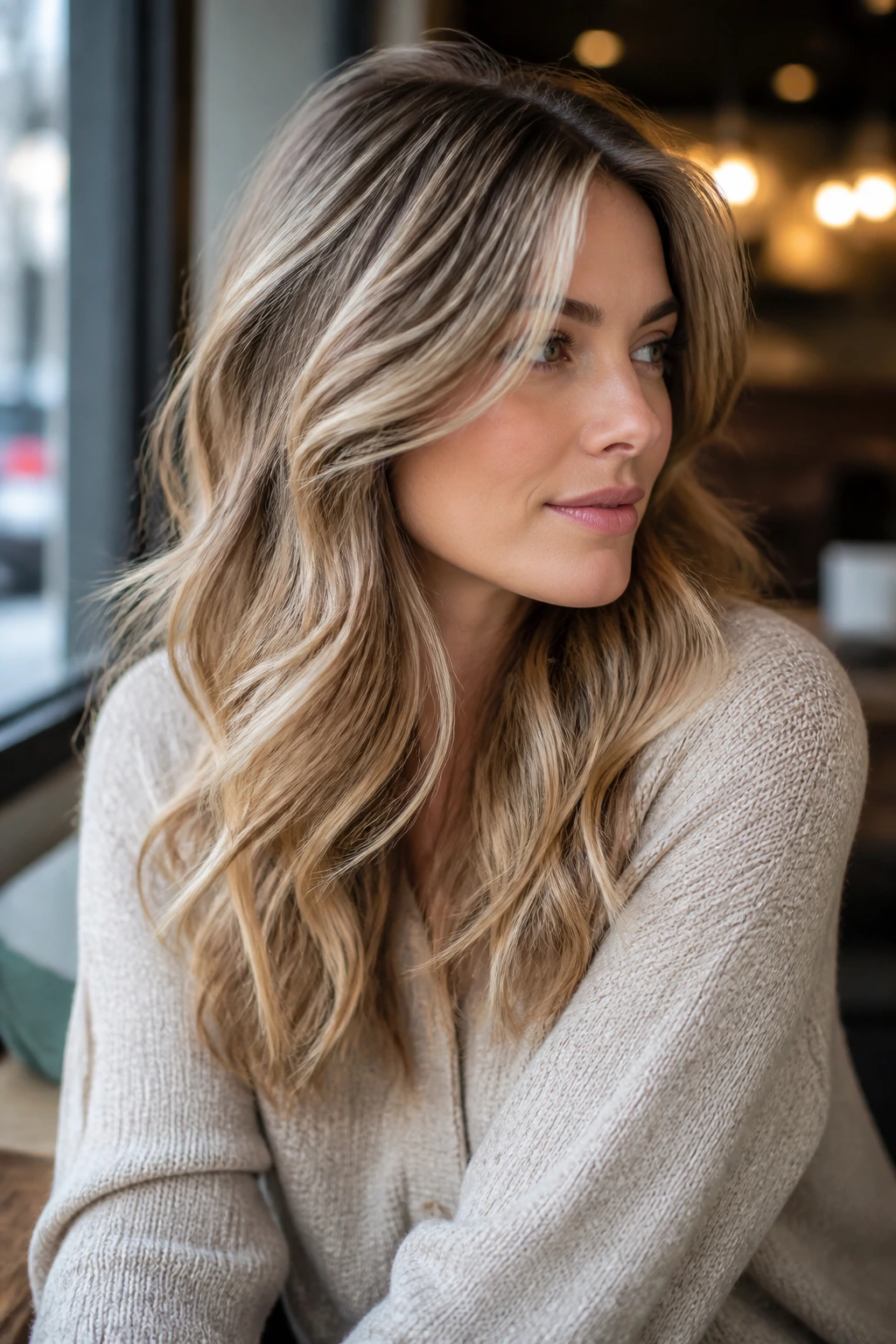
Fine wavy hair needs a lighter touch than most people give it. The layers should create movement, not strip away density. Brightening babylights near the crown and around the face make the hair look fuller, while the rest of the length stays soft enough to keep the perimeter from collapsing.
This is where tiny foils matter. Fine hair shows every line, and small babylights blend better than broad panels. If the haircut is also kept a little longer through the sides, the style gains lift without exposing the scalp or making the ends look wispy.
Use a root-lift spray and a diffuser on low heat. Heavy oils are the enemy here. They flatten the root and turn a delicate shape into a limp one by noon.
22. Disconnected Layers with Caramel Veils
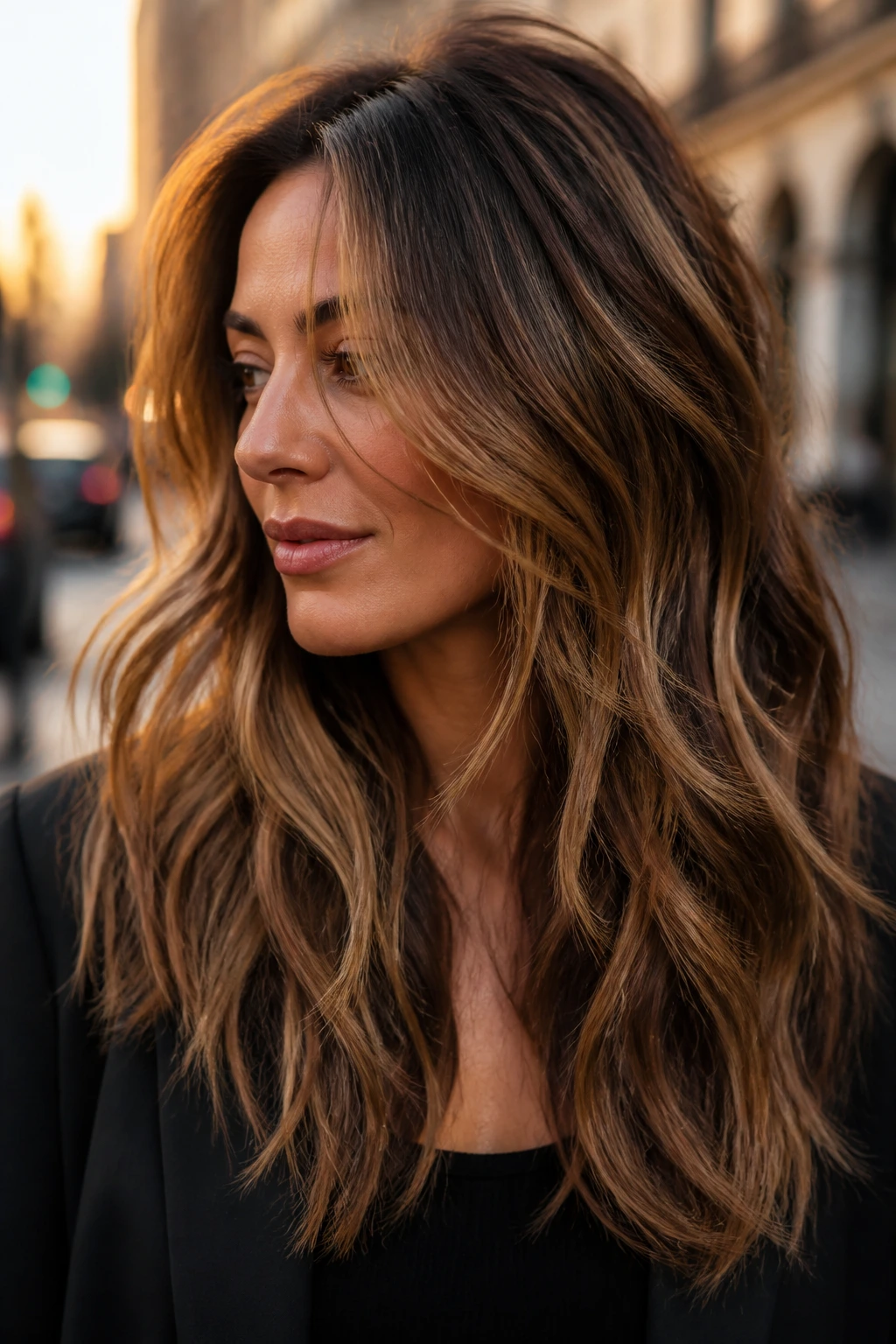
Disconnected layers are a little more modern and a little more obvious. The difference in length is noticeable, but the transition is soft enough that the hair still moves together. Caramel veils over a deeper base add warmth and make the disconnect feel intentional rather than choppy.
This style looks best on thicker waves or hair that naturally holds shape with little help. The separation in the cut creates texture even before you add product, and the color placement makes the layers easy to read. If you want a style that feels a touch more editorial without becoming hard to wear, this is a strong pick.
A quick bend through the front sections is usually enough. The rest can stay loose and imperfect.
23. Long Layers with Bottleneck Bangs and Soft Highlights
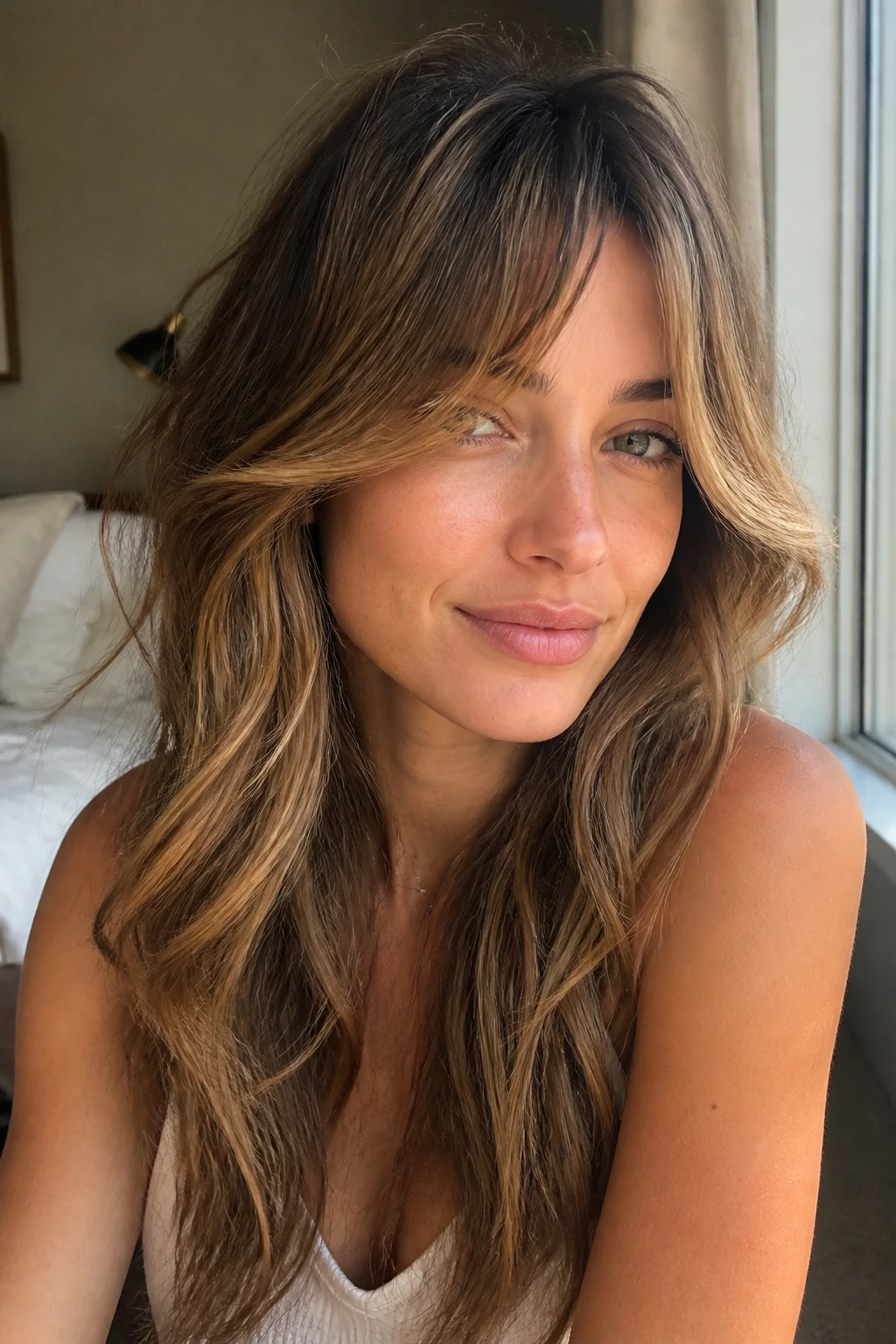
Bottleneck bangs start shorter in the center and drift longer toward the sides, which makes them less fussy than straight fringe and easier to blend into long layers. On wavy hair, that shape softens the face and gives the haircut a little structure around the eyes. Soft highlights around the bangs keep the front from getting heavy.
The charm here is movement at the top. Long wavy hair sometimes needs help up front, especially if the rest of the length is gorgeous but flat near the crown. Bottleneck bangs fix that without requiring a dramatic chop. They also grow out in a friendlier way than blunt bangs, which matters if you don’t want to babysit them every three weeks.
A quick round-brush bend or a Velcro roller while the bangs cool can keep them from splitting apart.
24. Glossy Brunette Waves with Copper Babylights
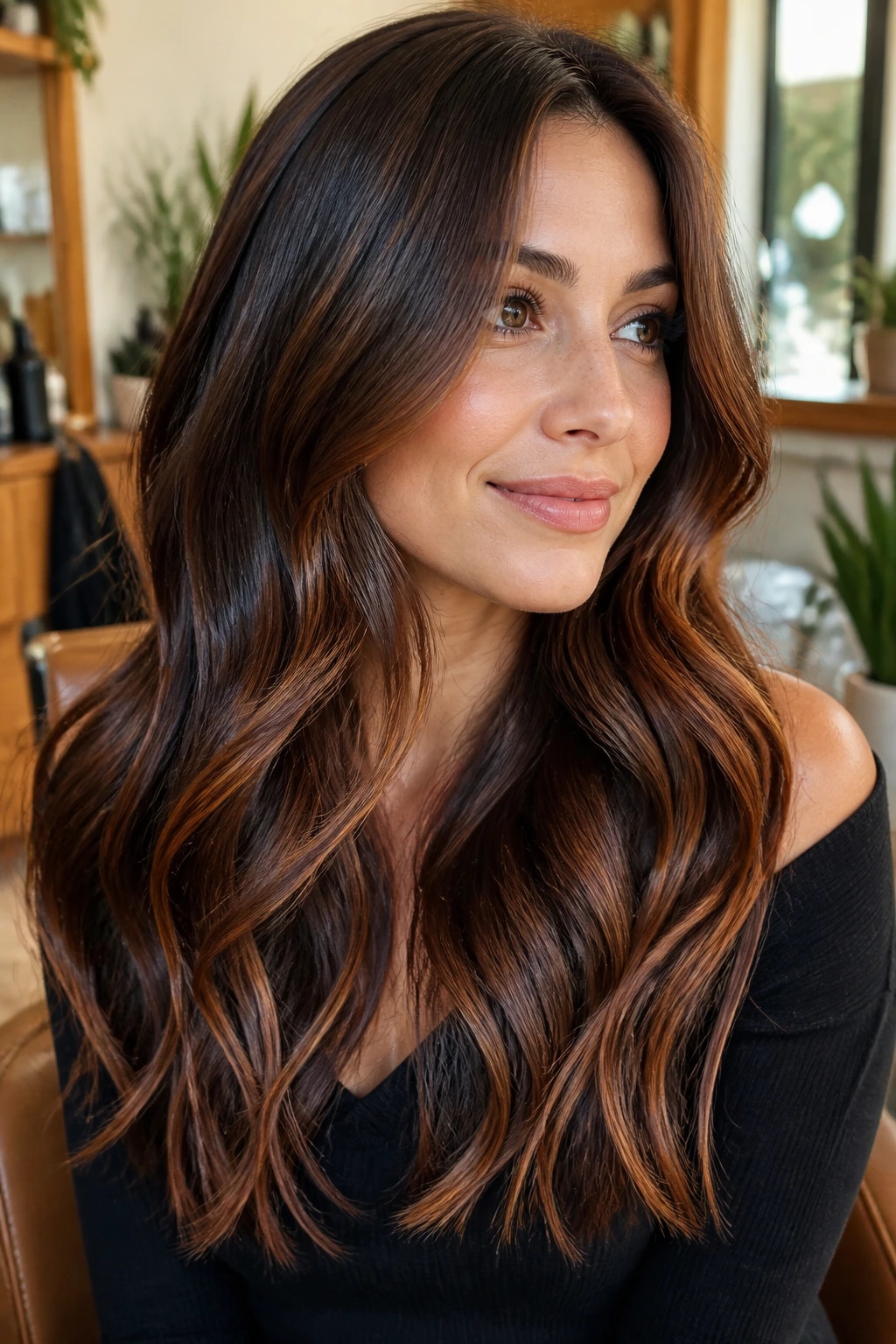
Copper babylights bring warmth into brunette hair in a way that feels rich, not flat. They catch more light than neutral brown pieces and make wavy hair look fuller through the mids and ends. The layers stay long and soft, so the color has room to move instead of getting trapped in a choppy outline.
This is one of my favorite options if the base color is dark and you want something visible without leaving brunette territory. Copper can turn loud if it’s overdone, so keep it fine and woven through the hair, not painted in thick bands. A warm gloss helps the tone stay deep rather than orange.
It’s especially nice on hair that loses dimension indoors. Copper wakes it up.
25. Air-Dry Layers with Sun-Kissed Honey Ribbons
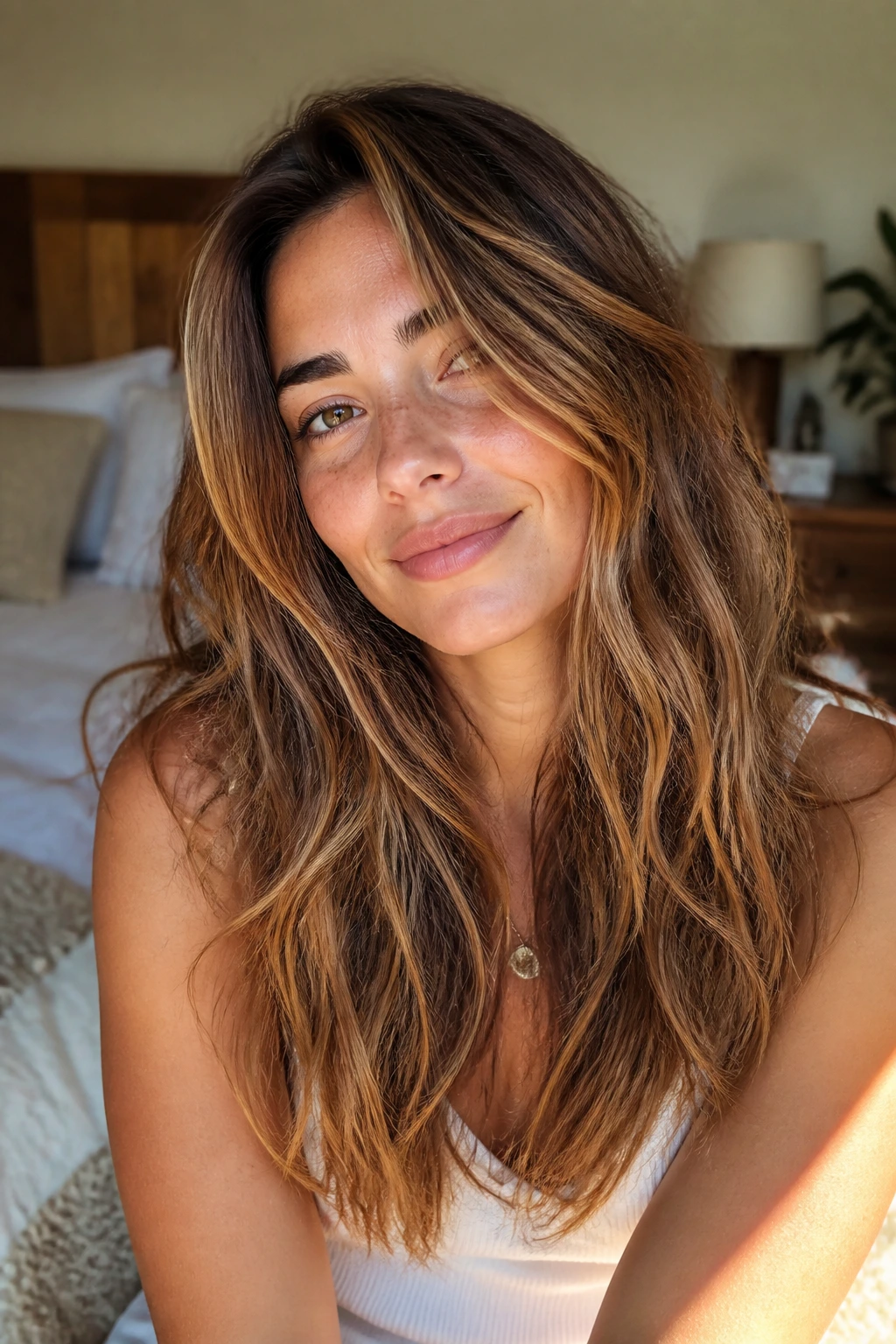
This is the low-maintenance finish I keep coming back to. The layers are placed where the hair naturally bends as it dries, so the wave pattern doesn’t need much coaxing. Sun-kissed honey ribbons sit around the face and top layers and give the hair a warm, lived-in look that doesn’t ask for perfection.
If you don’t heat-style every day, this one makes sense. Scrunch in a light cream, use a microfiber towel or cotton T-shirt, and leave the hair alone for a while. Air-dried layers can look a little odd while they’re half dry, so resist the urge to keep fiddling. Once they settle, the shape is easy and the babylights do the rest.
What to Tell Your Stylist Before the First Snip
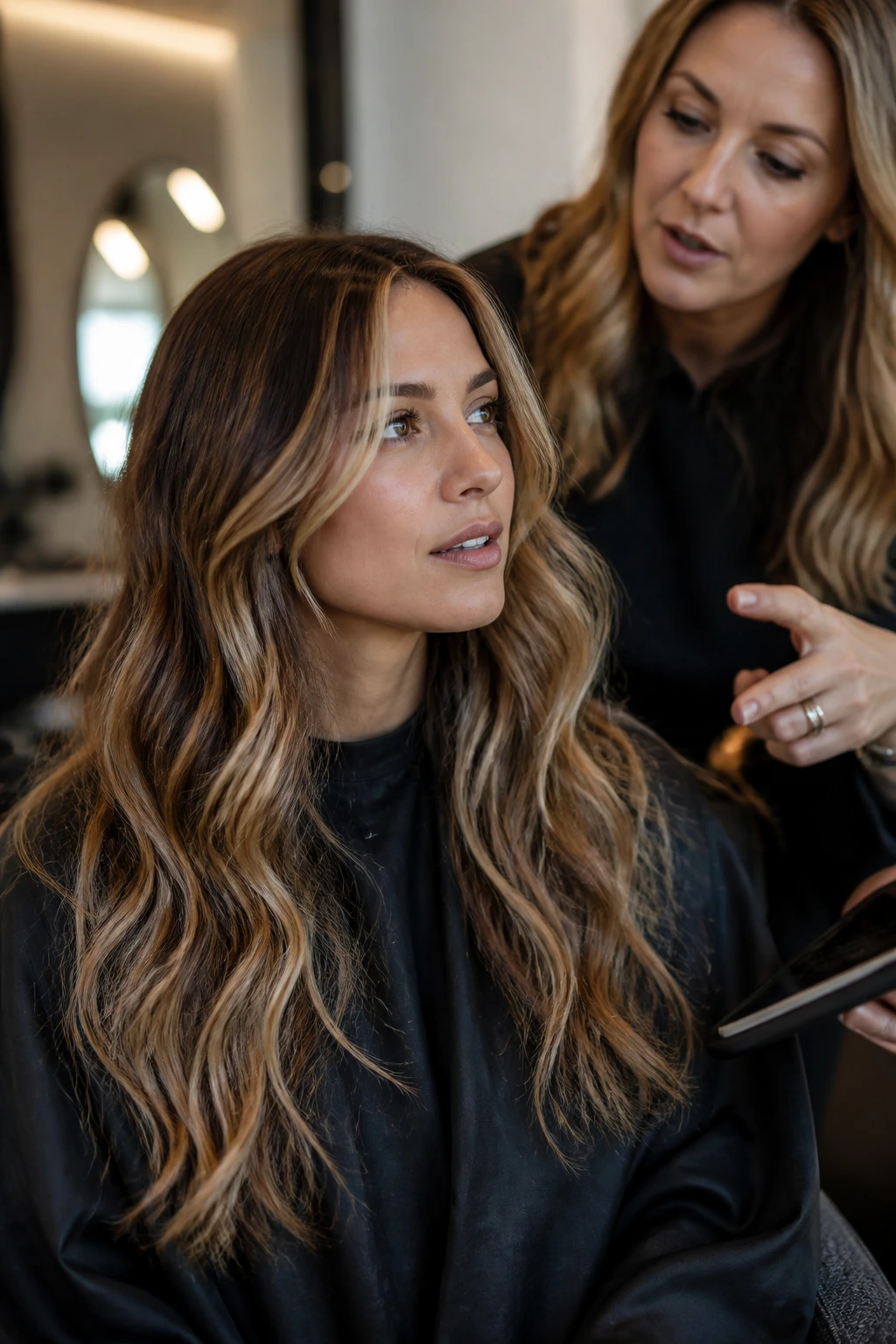
Bring more than one photo. Better yet, bring photos that show the haircut from the front, side, and back, because long layers change shape depending on where the shortest pieces land. A picture of soft waves on thick hair is not the same thing as a picture of fine hair with the same color, and your stylist needs to see the difference in density, not just the mood of the style.
Say how you actually wear your hair. If you air-dry most days, say that. If you blow it out once a week and live in a claw clip the rest of the time, say that too. The cut should work with your routine, not with the fantasy version of your routine. That detail changes where the layers start, how much weight gets removed, and whether the babylights should concentrate around the part, the face, or the mids.
I’d also be specific about grow-out. If you want low maintenance, ask for babylights that stay fine at the root and a slightly deeper shadow near the base. If you like more brightness, ask for a heavier face-frame and a few lighter pieces through the top crown. Those are not small choices. They change how the color behaves every time you move your head.
Styling Tools That Earn Their Drawer Space
-
Diffuser attachment: Keeps wavy hair from frizzing when you dry it on low heat, especially around layered ends.
-
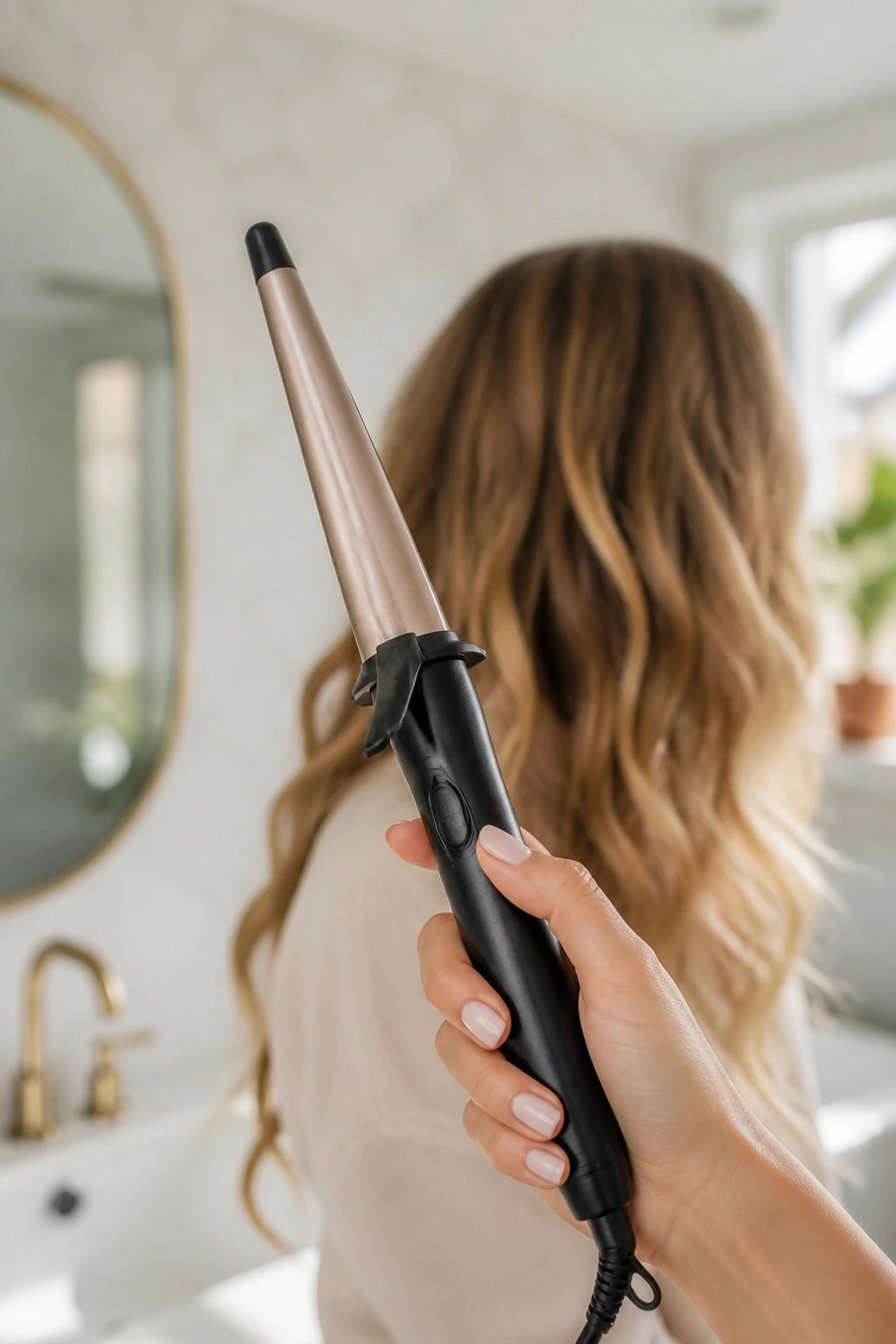
1-inch curling iron or wand: Best for bending the front pieces and refreshing the wave pattern without making the whole head curly.
-
1.25-inch curling iron: Useful if your waves are loose and you want broader bends rather than tighter pieces.
-
Wide-tooth comb: Safer than a brush on damp wavy hair; it keeps clumps intact instead of stretching them out.
-
Microfiber towel or cotton T-shirt: Cuts down on rough drying and helps babylights and layers settle with less frizz.
-
Heat protectant spray: Non-negotiable if you touch the hair with hot tools. Colored ends get dry faster than roots.
-
Light mousse or root lift spray: Gives the crown some memory so long layers don’t collapse.
-
Color-safe shampoo and conditioner: Helps babylights keep their tone and slows down that dull, chalky fade.
-
Light hair oil or serum: Use on mids and ends only. A pea-sized amount is usually enough.
Small Tweaks That Change the Finish
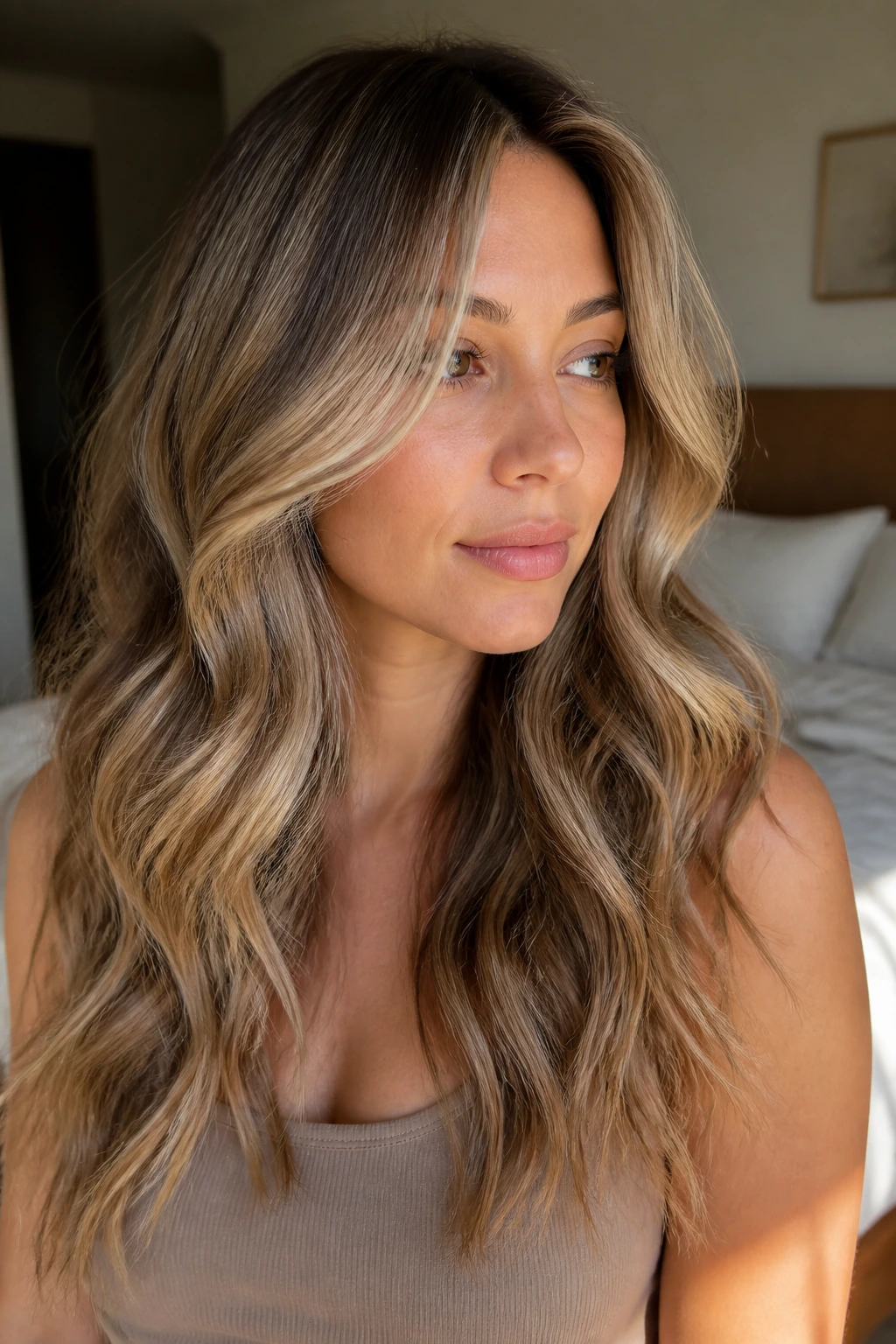
Root Lift: A little mousse at the roots before diffusing can make long layers look three times better. If the crown is flat, the haircut loses its shape. Tiny amount. Don’t overdo it.
Wave Memory: If you want the waves to hold longer, bend the front sections around a curling iron in alternating directions and let them cool in your hand before brushing them out. That gives the layer pattern a cleaner fall.
Color Polish: A clear gloss, beige toner, or warm glaze can make babylights look soft instead of dry. That matters a lot on long hair, where the ends are the first thing to go dull.
Low-Effort Finish: Twist damp hair into four loose sections and let it dry that way if you don’t want to use heat. It won’t give you salon curls, but it does preserve wave shape better than rough towel drying.
Make-It-Yours: If you prefer a cleaner look, ask for fewer face-framing pieces and more internal layering. If you like movement and softness, shift the brightness toward the front and crown, then leave the ends a shade deeper.
How to Keep the Cut and Color Looking Fresh
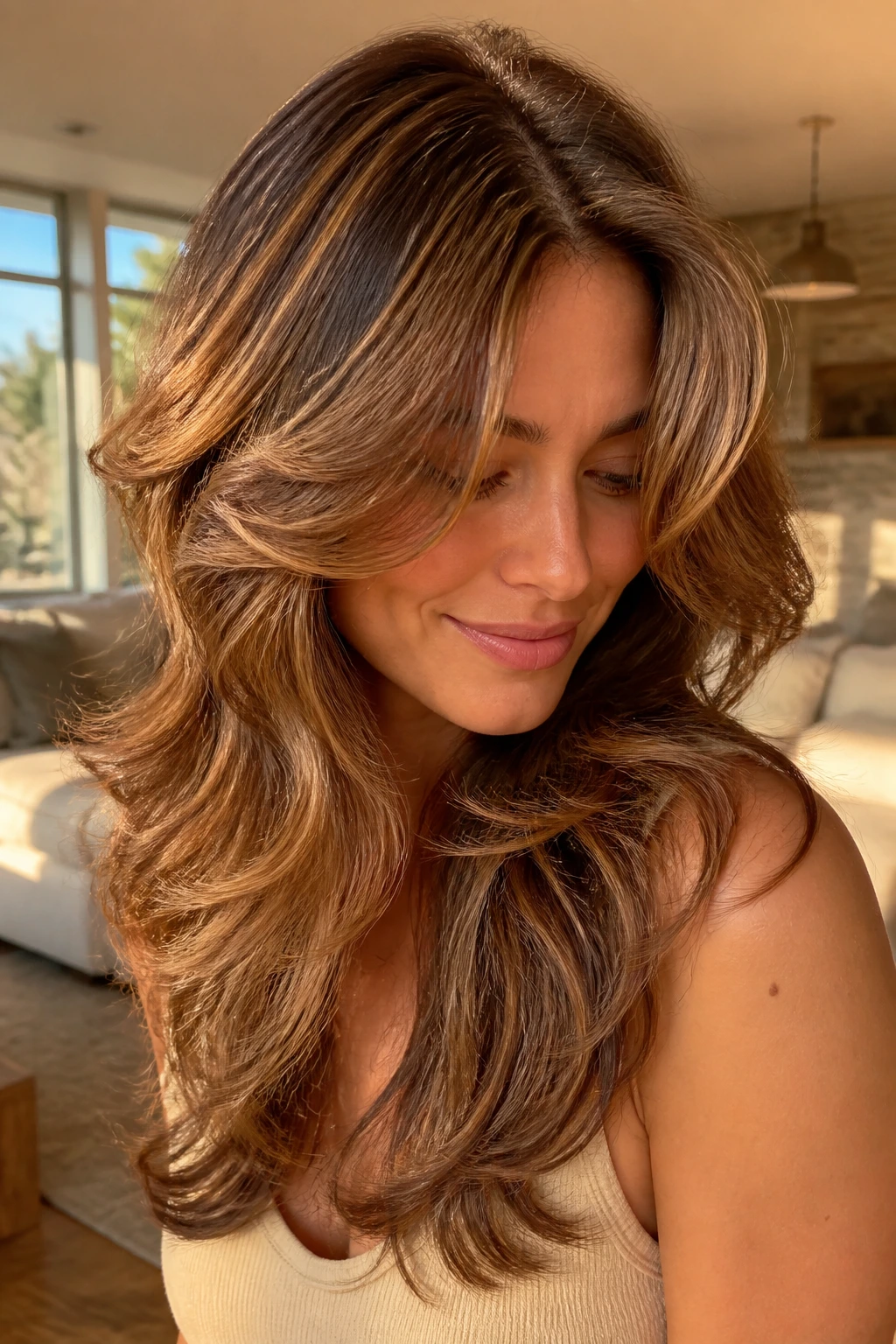
Long layers need trims more often than people expect, not because the hair is short — because the shape gets blunt at the ends faster than the rest of the head grows out. Most wavy cuts like a trim every 8 to 12 weeks. If the layers start flipping in odd directions or the perimeter loses its curve, that’s your cue.
Babylights usually stay soft for a while, especially if they’re fine around the root, but toner does not last forever. A gloss or toner refresh every 6 to 8 weeks keeps beige, champagne, honey, and caramel tones from going brassy or muddy. If your color is very light, use a purple shampoo sparingly, maybe once every 1 to 2 weeks. Too much and the hair starts looking flat and chalky.
Wavy hair also needs the right wash rhythm. Two or three washes a week is plenty for many heads of long waves, and if the ends are dry, concentrate conditioner from the ears down. A weekly mask helps the babylights stay glossy, because lightened hair tends to drink moisture faster than the rest. If your roots get greasy, use a clarifying shampoo every couple of weeks instead of piling on dry shampoo forever.
Common Mistakes That Flatten Wavy Layers
-
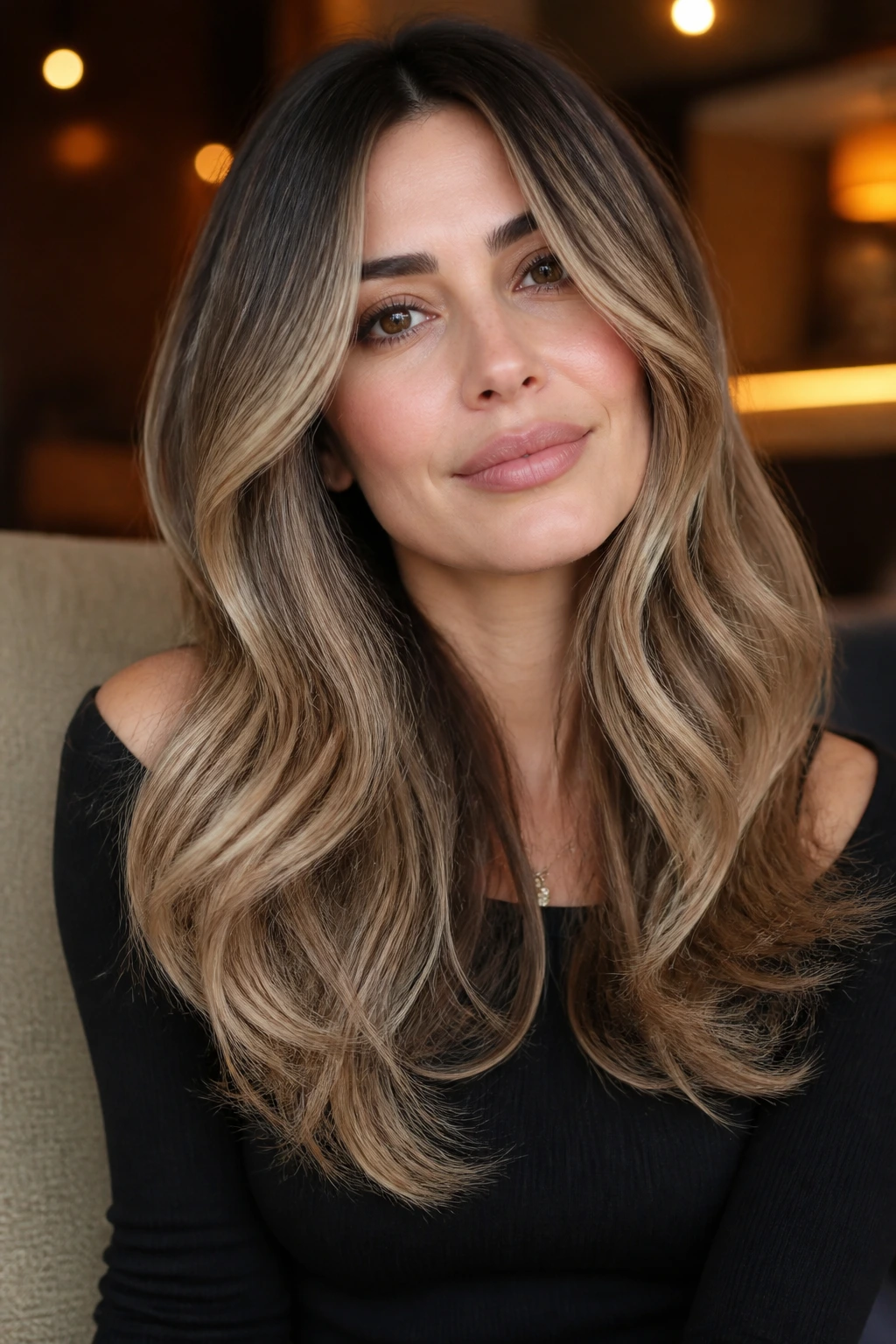
Starting the shortest layer too high. The symptom is puffy sides and a triangle shape. The fix is simple: keep the shortest face-framing pieces lower if your hair is thick or frizzes easily.
-
Letting babylights get chunky. Big streaks can look striped on waves, especially once the hair moves. Ask for finer sections around the part, temples, and crown so the color blends into the bend.
-
Removing too much weight from the ends. The hair looks wispy, dry, or see-through at the bottom. If the wave pattern is loose, ask for internal shaping rather than aggressive thinning.
-
Using heavy cream near the scalp. The crown goes flat and the layers lose lift. Keep rich products on the mids and ends only.
-
Skipping toner and then blaming the cut. Warm babylights can turn orange or yellow if the tone drifts. If the color suddenly looks tired, it probably needs a glaze, not a new haircut.
-
Ignoring how waves shrink. Wavy hair often sits shorter once dry, so a layer that looks safe when wet can rise higher than expected. A good stylist will cut with shrinkage in mind; if yours doesn’t mention it, ask.
Variations and Adaptations to Try
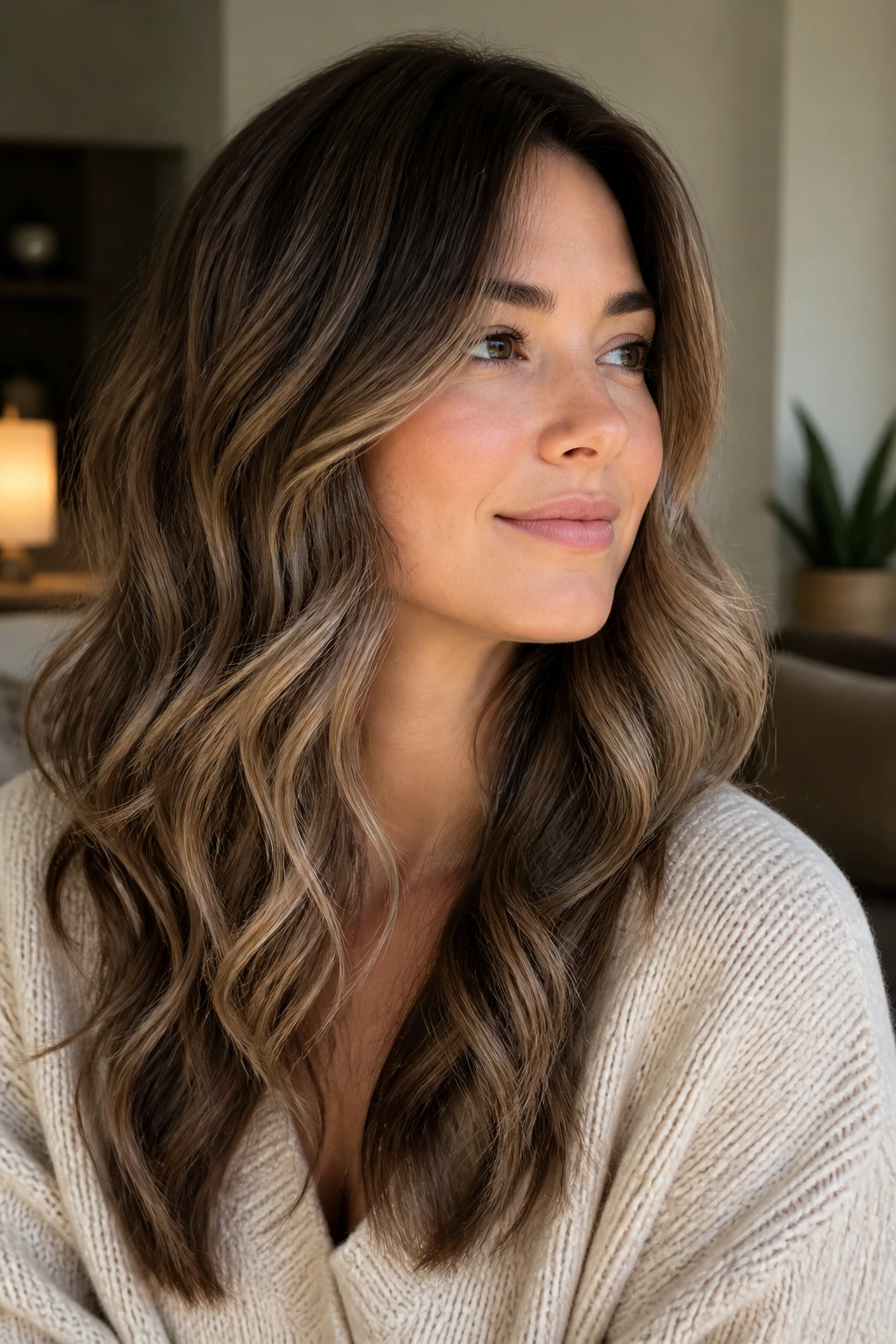
Brunette and Soft Beige: Keep the base deep and thread in beige babylights instead of blonde. This is the most forgiving option if you want dimension without obvious contrast, and it grows out cleanly.
Warm Caramel Glow: Shift the highlights warmer and add a few cinnamon lowlights underneath. This version suits medium and dark brown hair that tends to look flat in indoor light.
Cool Champagne Blend: If your skin tone and base hair run cooler, ask for champagne or pearl babylights with a beige gloss. The effect is softer than ash blonde and easier to wear than a stark platinum look.
Air-Dry Friendly Shape: Ask for longer internal layers, a gentle face frame, and fewer short pieces around the crown. This version works when you want the hair to fall nicely without a blowout.
More Drama at the Front: Concentrate babylights around the money pieces and temples, then keep the back more dimensional and darker. It gives you brightness where people notice first, while the length stays rich.
Thicker-Hair Control: Add deeper lowlights under the surface and keep the layers rounded or U-shaped. That keeps the ends from looking thin while still cutting the bulk that makes long wavy hair feel heavy.
Frequently Asked Questions
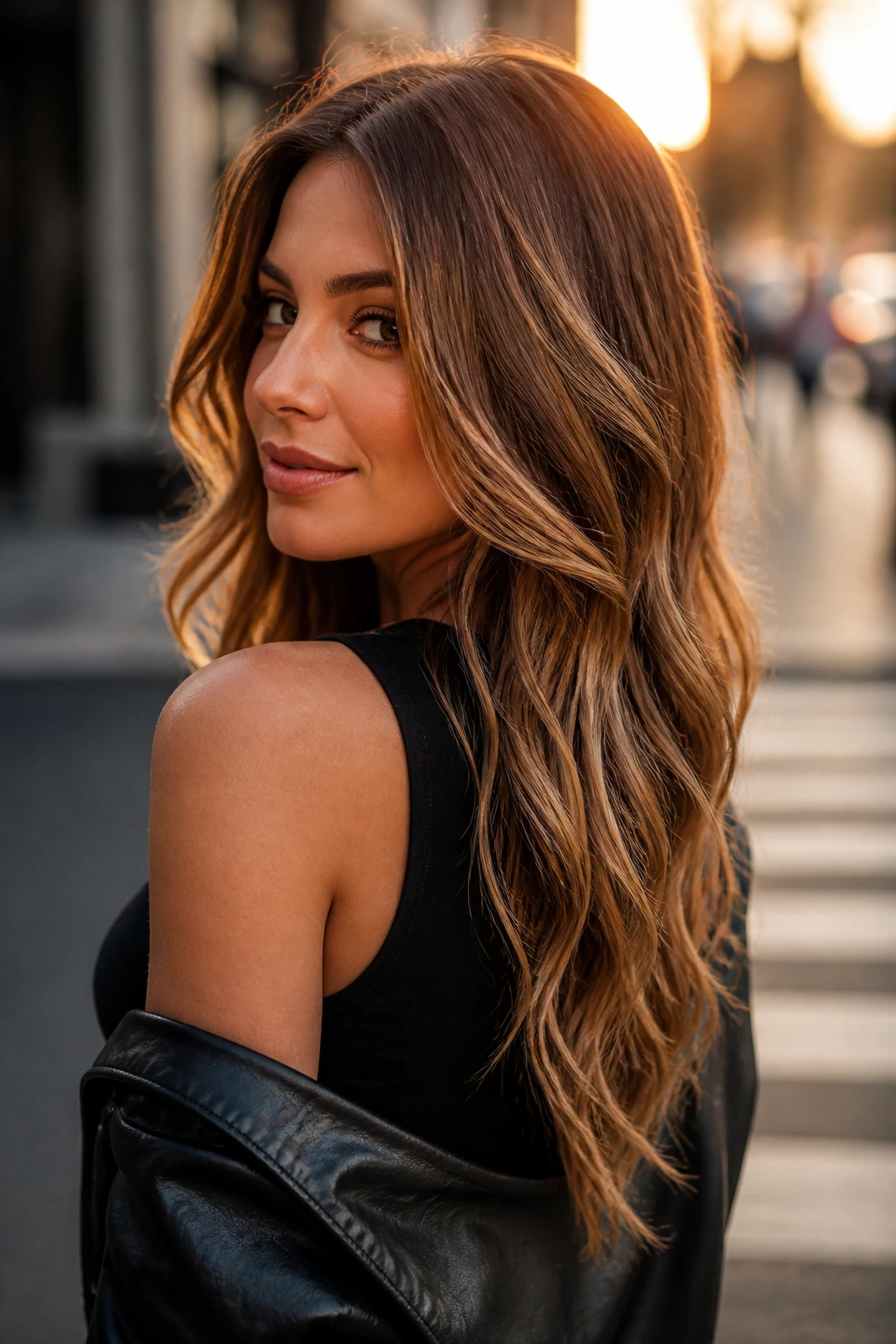
Can babylights work if my waves are loose and barely there?
Yes, and they often work better than chunky highlights on loose waves because the color follows the bend instead of fighting it. The trick is keeping the sections very fine and placing them where the hair moves — around the part, face frame, and upper mids.
Are long layers bad for thick wavy hair?
Not if they’re cut with weight in mind. Thick wavy hair usually needs long internal layers or a rounded shape so it doesn’t sit wide at the sides. The problem is not layers themselves; it’s layers that are too short or too aggressive.
How often do babylights need to be touched up?
For soft grow-out, many people can go 8 to 14 weeks between appointments, depending on how light the pieces are and how much contrast there is at the root. A gloss can be helpful in between if the tone starts to warm up.
What if my hair goes frizzy after layering?
That usually means the layers were too short for your texture, or the ends were thinned too much. A smoothing cream on damp hair and a gentler trim can help, but if the cut shape is too aggressive, you may need a cleaner grow-out and a softer reset next time.
Should I choose highlights or lowlights with babylights?
If your hair already feels light and airy, babylights alone may be enough. If the color looks flat, add lowlights under the surface to give the bright pieces something to sit against. On long wavy hair, that contrast usually makes the style look fuller.
Do I need heat styling for these cuts to look good?
No. Many of these styles are designed to work with air-drying, a diffuser, or a quick bend at the front pieces. Heat just refines the finish. The haircut itself should do the heavy lifting.
Will babylights damage my hair more than regular highlights?
They can be gentler on the eye, but chemically they’re still lightening services. Because the sections are smaller, the result often looks softer and less obvious as it grows out, which is why many people find them easier to live with.
What should I ask for if my crown is flat?
Ask for long layers that preserve weight through the ends, plus babylights concentrated around the crown and part. A little root lift at styling time helps too, but the cut needs enough internal structure to keep the top from lying down all day.
The Shape That Sticks With You
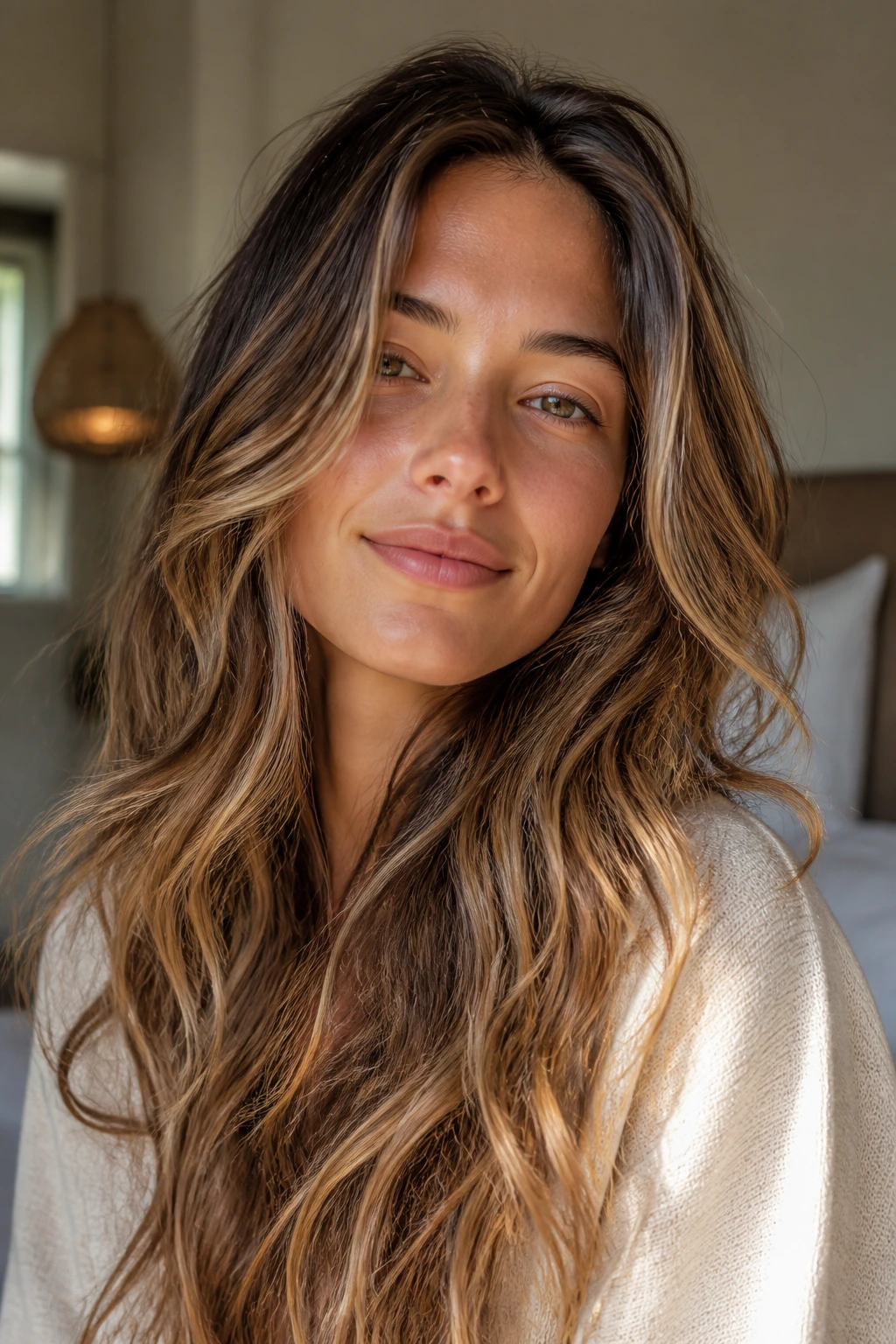
The nicest thing about long layered hairstyles for wavy hair with babylights is that they don’t try to overpower the hair you already have. They edit it. They give the wave somewhere to go, let the color move in tiny pieces instead of big stripes, and keep the whole look from tipping into either heavy or fussy.
That’s why these cuts last. Not because they’re loud, but because they make sense when the hair is worn in real life — day two, day four, up in a clip, brushed out, half-dry, slightly frizzy, still good. Pick the version that matches your density and your routine, and the shape will do a lot of work for you for a long time.