



Brown face-framing highlights for pale skin work best when the shade sits close enough to the base that the front pieces look like light, not stripes. That one decision changes everything. A level 6 mushroom brown on fair skin feels soft and deliberate; a level 4 espresso band can look heavy fast unless the blend is feathered and broken up with a gloss.
The good versions do something subtle but real. They pull the eye toward the cheekbones, soften a strong hairline, and give pale skin a little structure without turning the whole head blonde. And because brown fades more slowly than lighter blonde pieces, the front stays readable for weeks instead of washing out after a few shampoos.
What separates a flattering brown money piece from a dull one is usually placement, not drama. Keep the brightest strands close to the eyes, let the color melt a little farther back, and choose a brown that echoes your undertone instead of fighting it. The shades below range from cool mushroom and smoky taupe to caramel, chestnut, and roasted mocha, so there’s room to match the look to the skin, the cut, and the amount of upkeep you can live with.
Why This Collection Feels Different
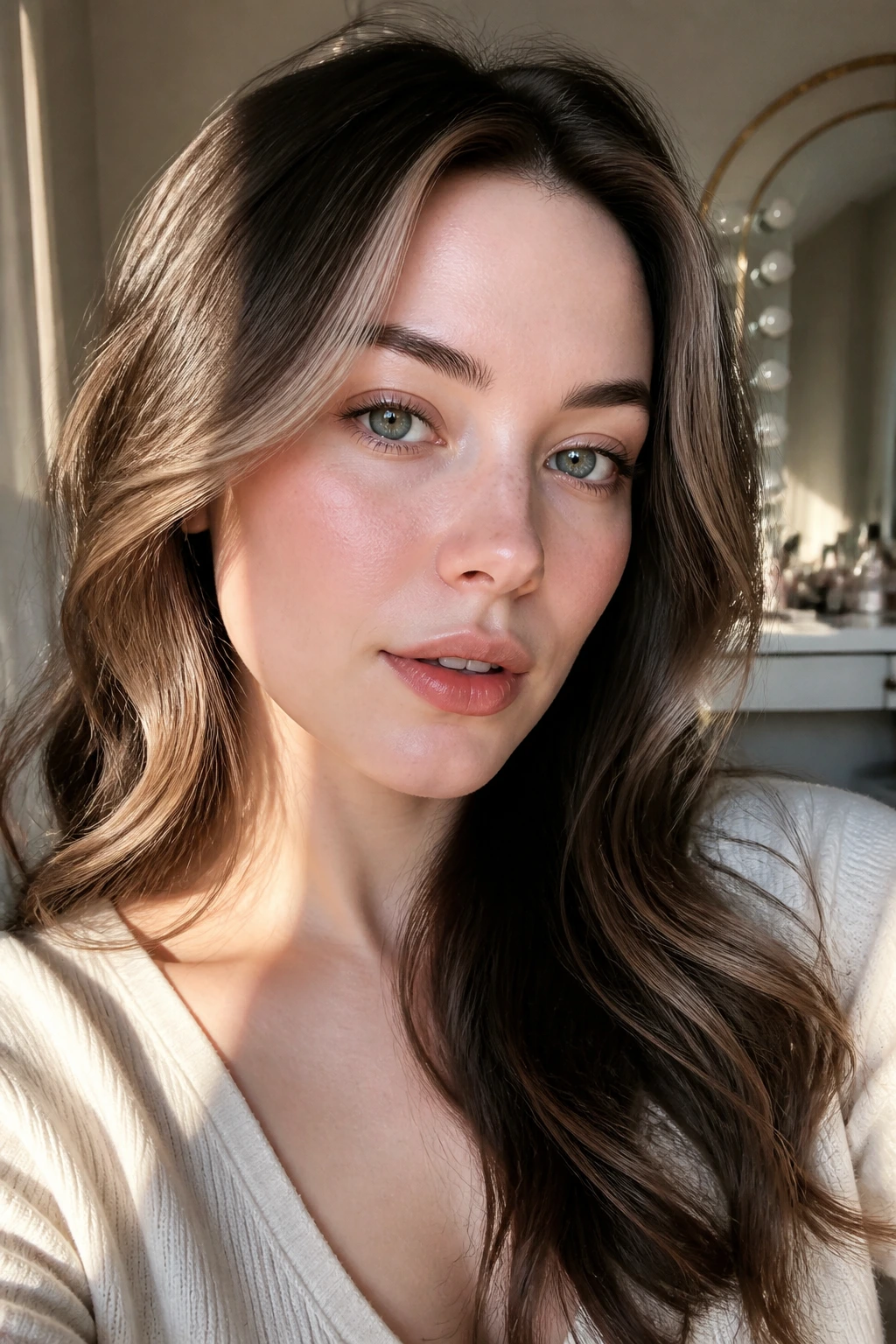
-
Soft contrast: Brown front pieces create shape around fair skin without the harsh jump you get from very light blonde money pieces.
-
Undertone control: Cool, neutral, and warm browns each change how pink, peach, or ivory skin reads next to the hairline.
-
Low-drama grow-out: The darker base keeps regrowth from looking abrupt, especially when the face frame starts a little farther back.
-
Real face shaping: Pieces placed at the temples, cheekbones, and jawline can sharpen or soften the face without changing the entire cut.
-
Salon-friendly or DIY-friendly: Some looks need foil work and toner; others are just a gloss plus a few painted pieces around the front.
1. Soft Mushroom Brown Money Piece
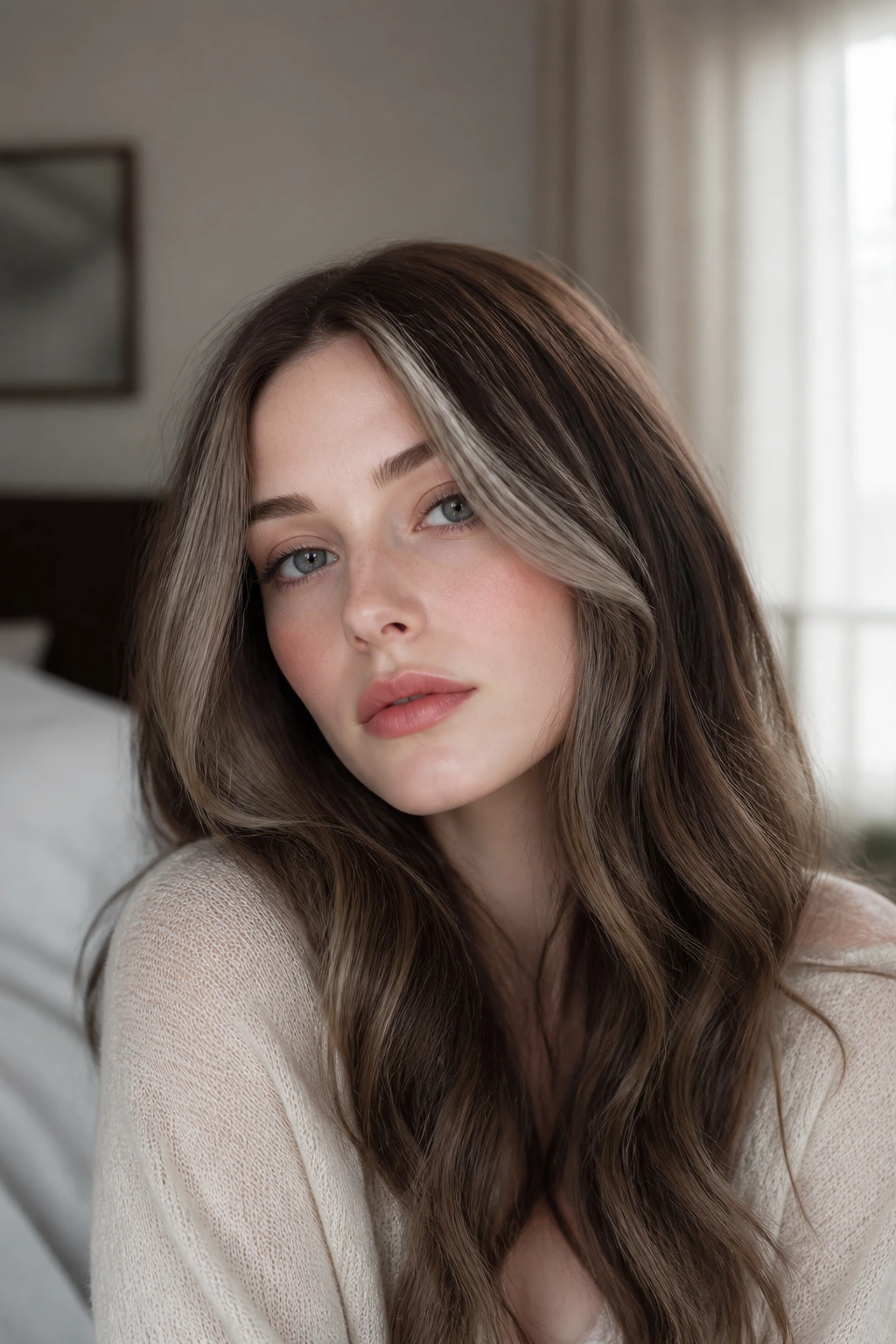
A soft mushroom brown money piece is the safest place to start if you want brown face-framing highlights for pale skin without crossing into brass or orange. The shade sits in that cool, taupe-brown lane that looks quiet in the bowl and expensive once it dries. It doesn’t shout.
What I like about it is the way it softens a fair face instead of outlining it. Ask for the brightest strands right beside the eyes and a slightly deeper veil as the color moves toward the temples. On very light skin, that cooler brown keeps the contrast crisp without turning muddy.
If your natural base is dark blonde, this can be done with a few foils and a beige-brown gloss. On light brunette hair, it works as a contour rather than a big color change.
2. Mocha Curtain Pieces
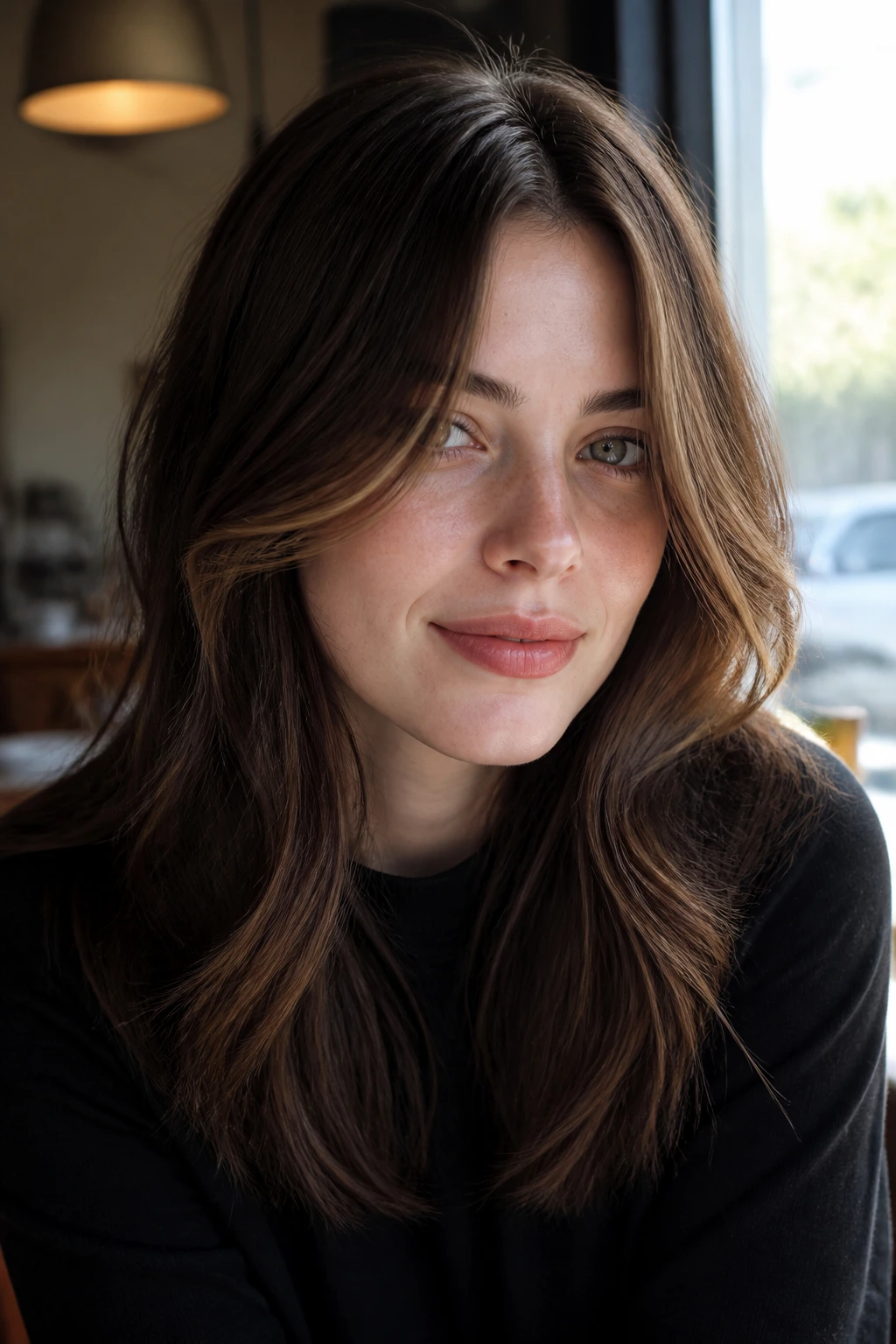
Mocha curtain pieces are a little warmer than mushroom, which matters if pale skin tends to look flat under ash tones. The front sections arc away from the center part, brush the cheekbones, and blend into the rest of the hair like a soft frame around the face.
Best for pale skin that needs warmth
- Ask for: level 6 to 7 mocha with a soft root shadow.
- Best placement: starting just below the brow and widening around the cheekbone.
- Skip if: you want a barely-there effect; mocha has more presence than taupe.
The warmth here should feel like roasted cocoa, not copper. On fair skin with pink or neutral undertones, that little bit of brown heat keeps the hair from disappearing next to the face.
3. Beige Brown Face-Frame
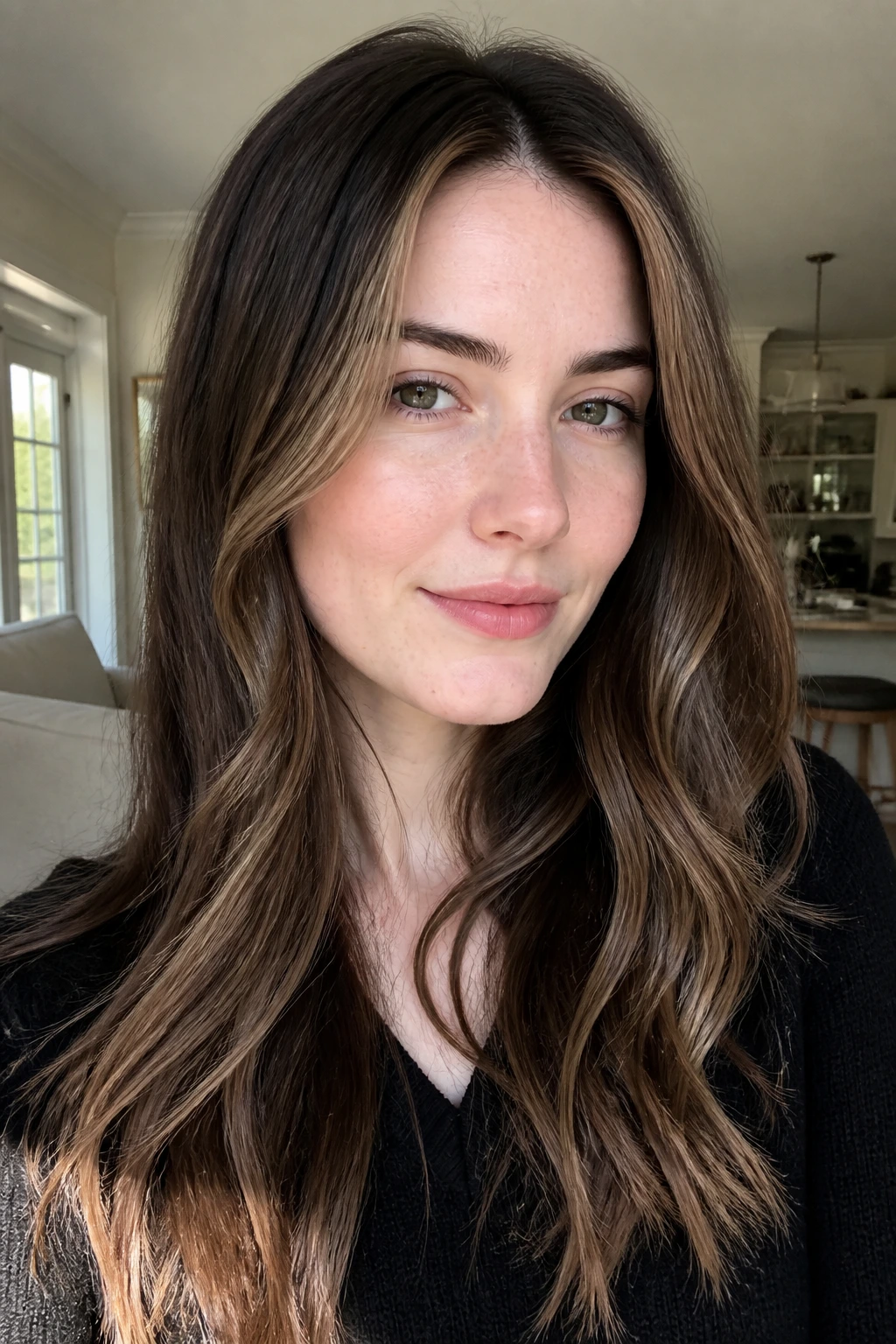
Beige brown is one of those shades people overlook because it doesn’t have much drama in the swatch, and that is exactly why it works. The tone is neutral enough to sit next to pale skin without hard edges, and the face-framing strips stay soft even when you wear your hair straight.
This look is especially good if you wear a center part and want the front pieces to blend instead of stripe. Keep the highlight narrow at the root and slightly wider through the mid-lengths. That gives the color a gentle airbrush effect, which looks better than a blunt band on fine hair.
I like this one for first-timers. It’s calm, wearable, and hard to mess up if the placement is clean.
4. Chestnut Cheekbone Ribbons
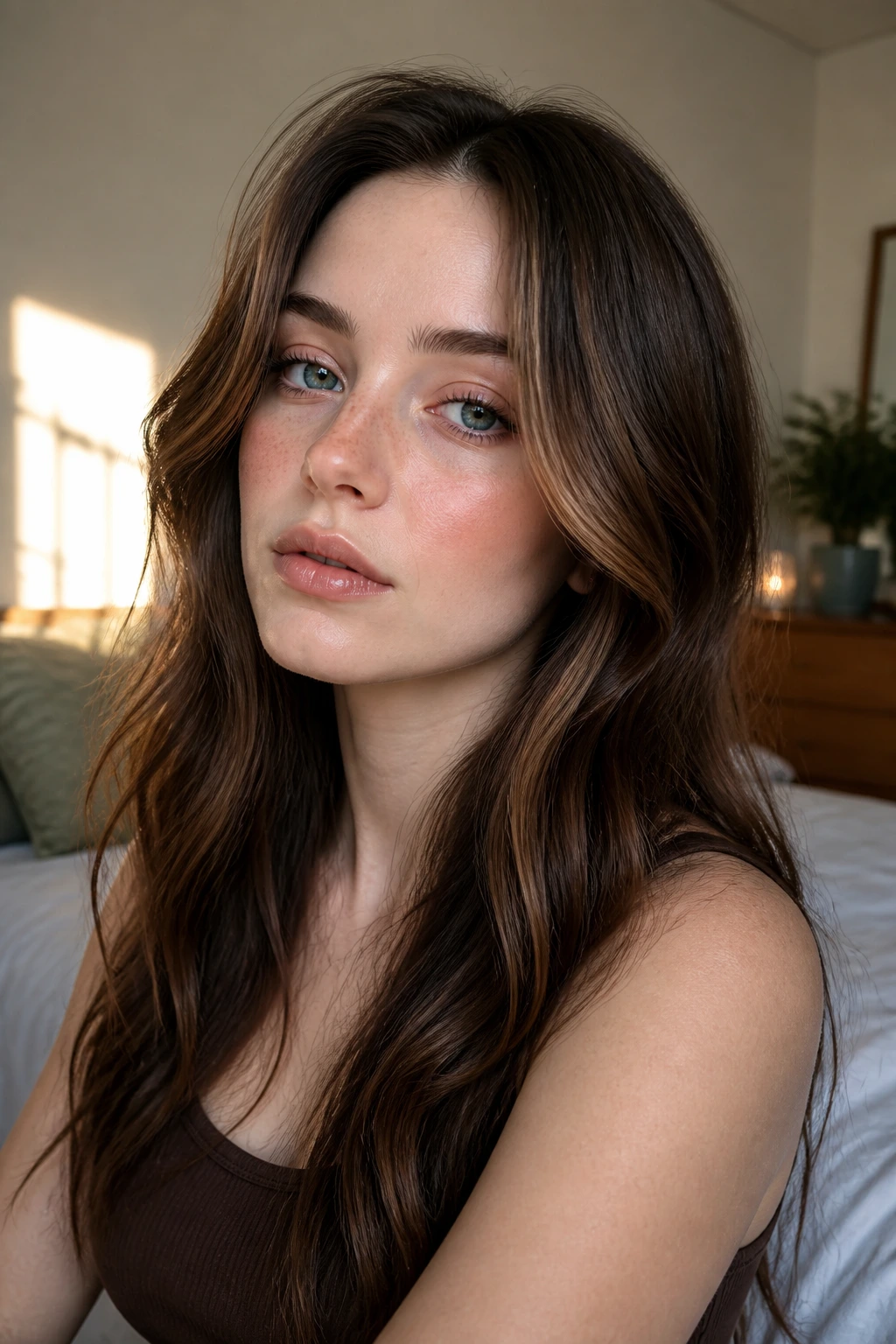
Want warmth that still feels brown? Chestnut is the sweet spot. It has a faint red-brown richness that catches pale skin without going full auburn, and when the ribbons sit at the cheekbone, the face gets shape without a loud color block.
The trick is keeping the ribbons thin near the root and a little softer by the jaw. That keeps the brown from looking painted on. Chestnut especially flatters fair skin with freckles, rosy cheeks, or a neutral complexion that can handle a touch of heat.
A gloss with a warm chestnut tone can do a lot here. If the front pieces are too orange, the whole look loses that smooth, old-money brunette feel.
5. Caramel Front Tips
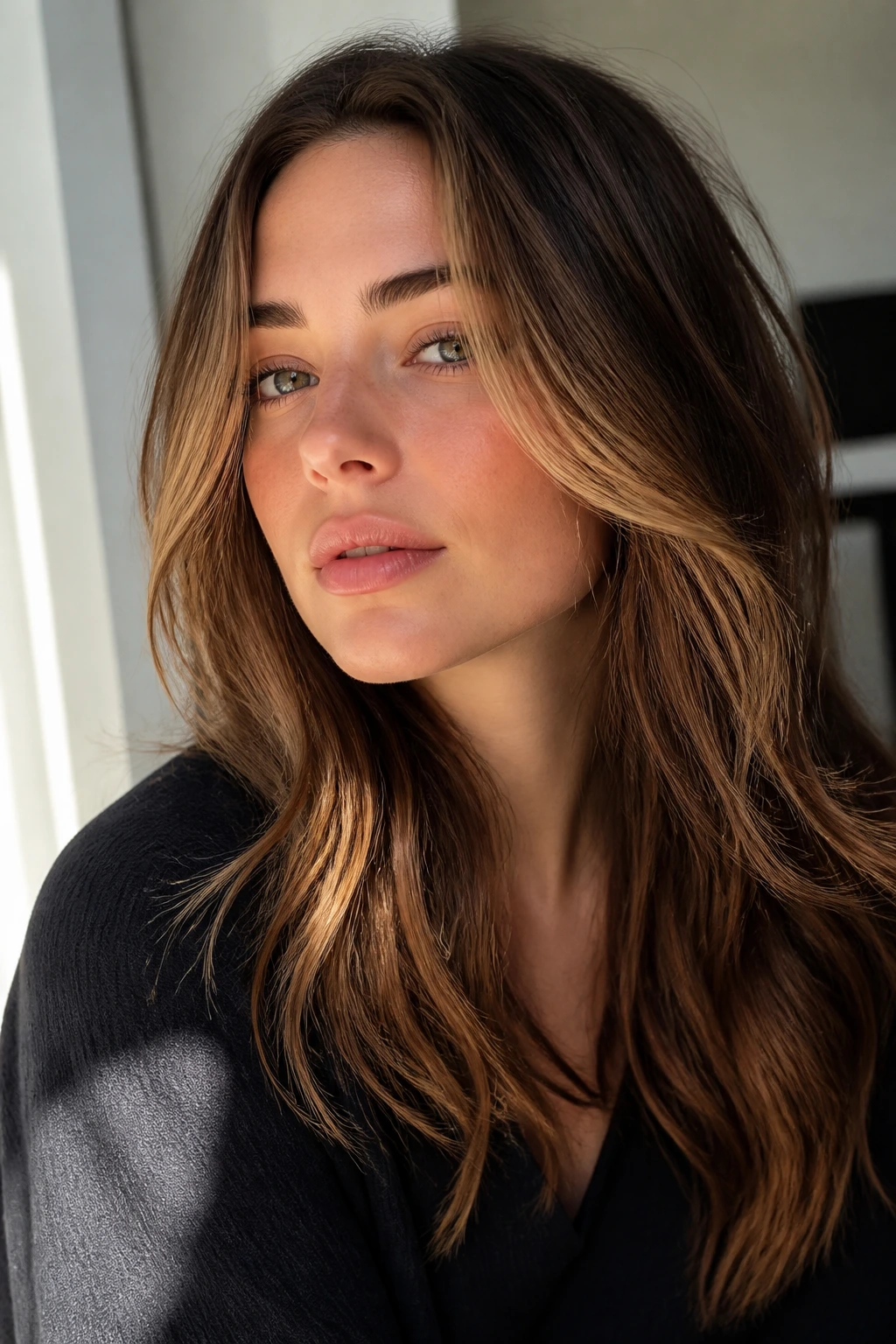
Caramel front tips are for people who want lightness around the face but do not want to commit to blonde. The color stays brown at the root and gets warmer toward the ends, so the face frame reads sunlit rather than striped.
This one suits pale skin better when the caramel is narrow and the rest of the hair keeps some depth. If you go too wide with the warm pieces, the face can look disconnected from the cut. Keep the brightest section where the hair falls beside the eyes and cheekbones, then let it melt into a deeper brunette base.
It’s a good choice for wavy hair. Movement makes the tips flicker in and out, which gives the color more life.
6. Ash Brown Tucked-Behind-Ear Lights
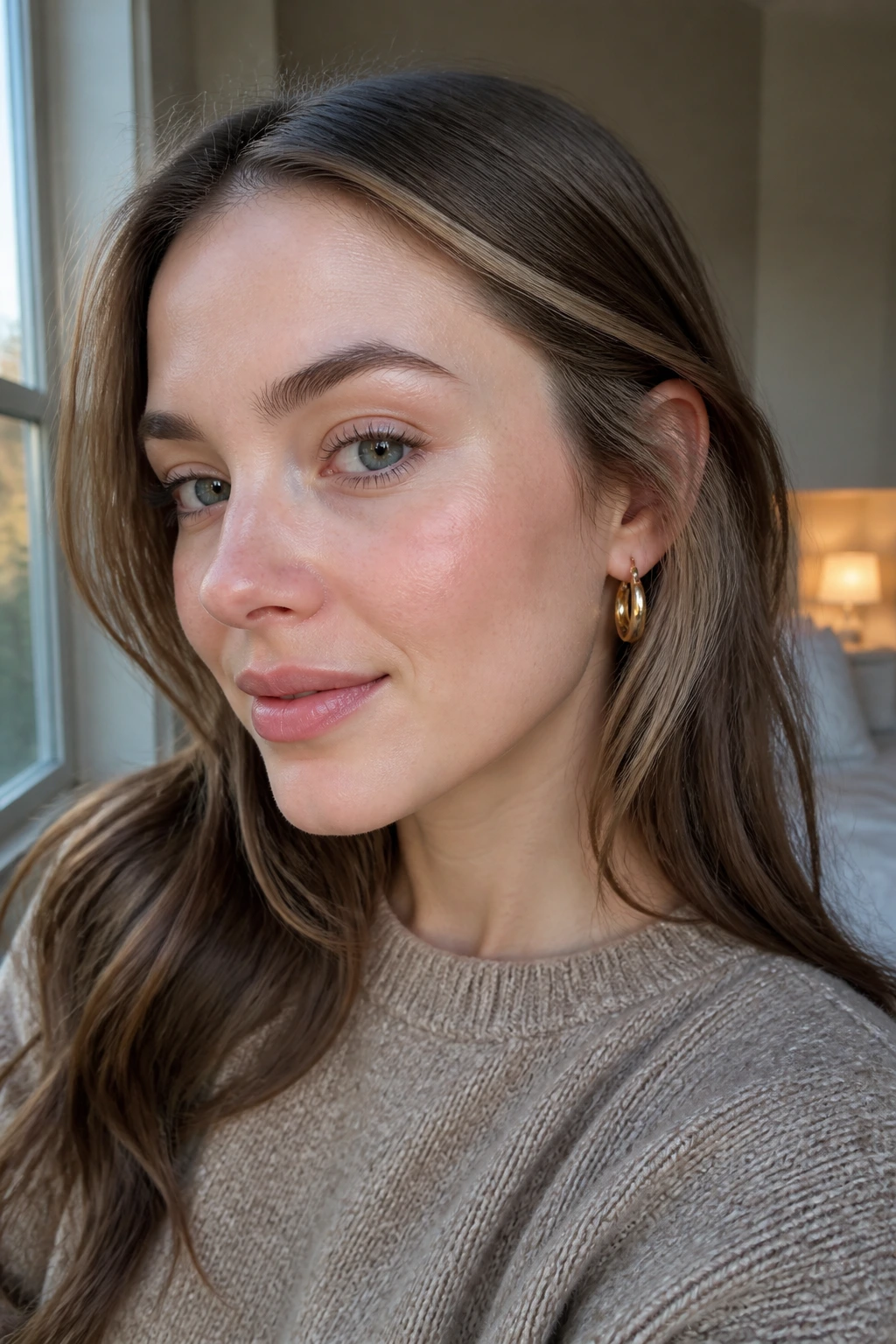
Ash brown tucked-behind-ear lights are for the person who wants the face to look slimmer and cooler, not brighter. Unlike blonde pieces, these strands almost disappear into the hair until the head turns and the light hits them. That makes them useful on pale skin that gets overwhelmed by too much warmth.
The placement matters more than the saturation. Keep the lightest ash pieces around the temple and just above the ear, then soften the front hairline with a deeper brown glaze. The result looks clean, modern, and a little understated in the best way.
Why this version works
- Cool tone: Good for pink or porcelain skin.
- Low contrast: Keeps the frame soft, not chunky.
- Best with: straight hair, bob cuts, or hair that gets tucked back often.
7. Hazelnut Halo Highlights
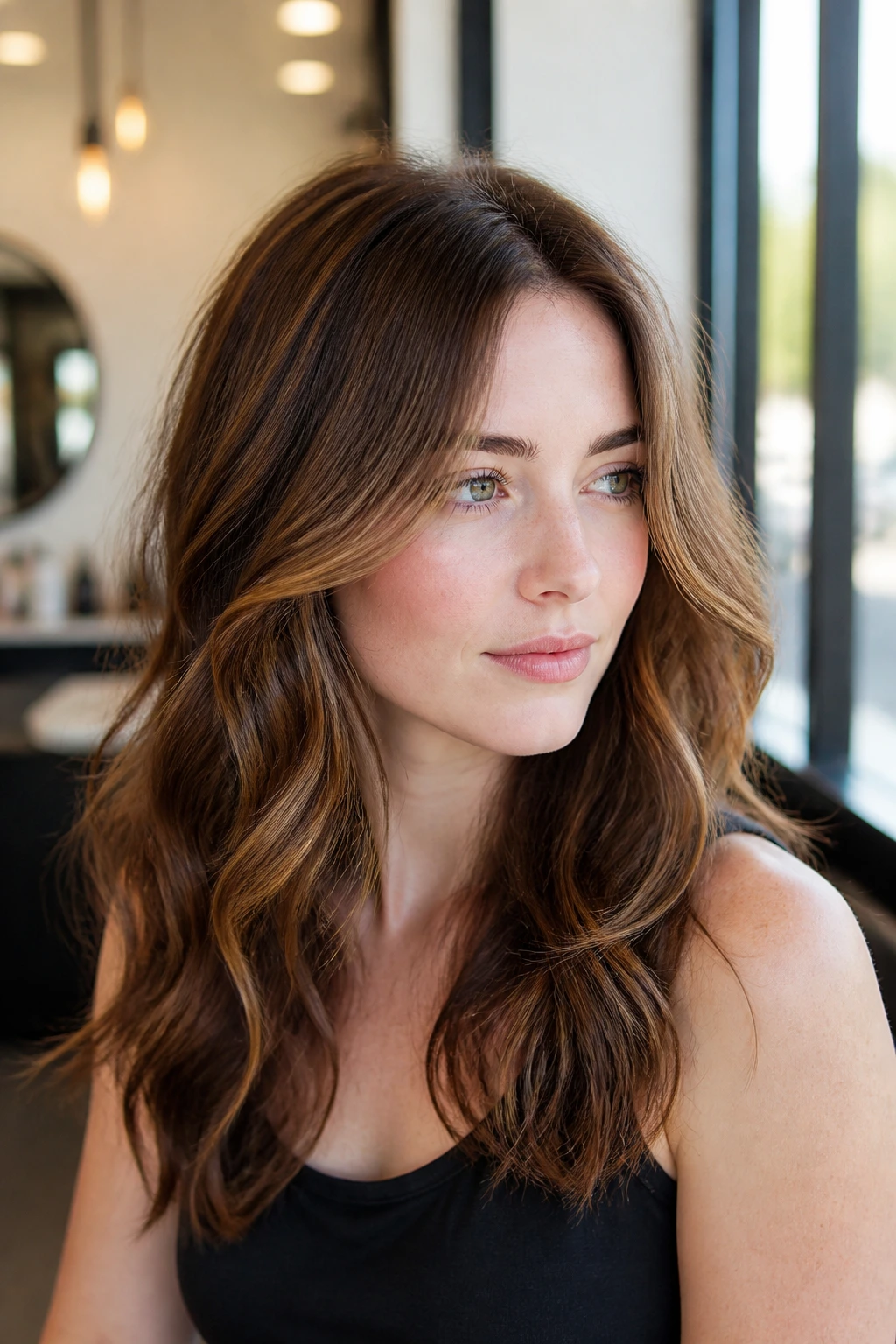
Hazelnut halo highlights are the kind of thing that makes thick hair look lighter without losing its shape. Instead of concentrating all the brightness at the very front, the hazelnut tone wraps around the top perimeter and lands softly at the face. It gives the whole head a lifted edge.
On pale skin, hazelnut is friendly because it has enough warmth to keep the complexion from looking icy, but it’s not so golden that it turns loud. This is one of the better options if you wear curls or a loose blowout, since the halo shows up as the hair moves.
Ask your colorist for a halo that stays soft at the crown. If the top gets too bright, the face frame starts competing with the cut.
8. Toffee Fringe Lift
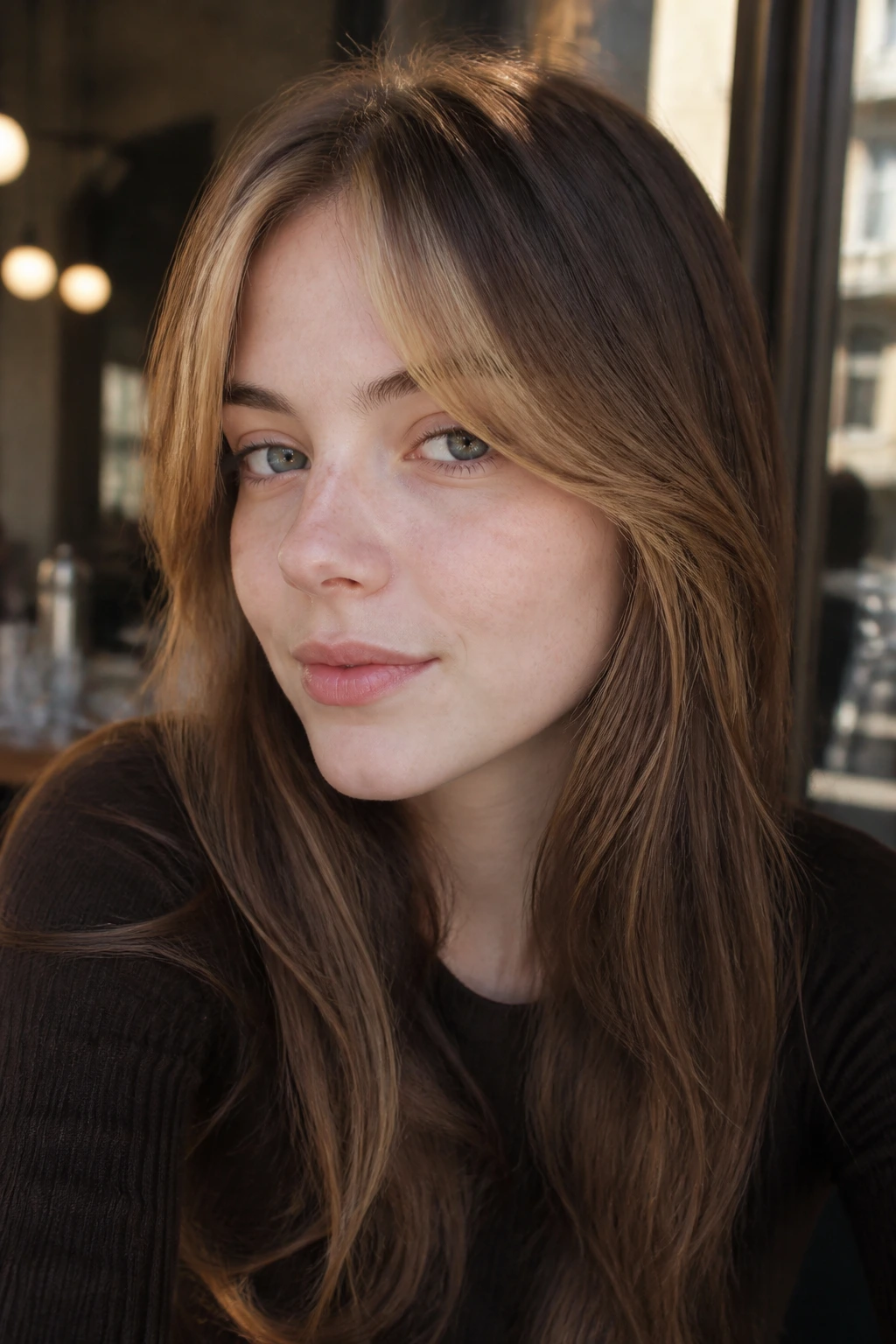
Toffee fringe lift is built for bangs, wispy fringe, and those front pieces that sit right above the eyes. The toffee shade gives the fringe a lighter edge while the rest of the brown stays grounded, which keeps pale skin from looking washed out.
Best for pale skin that wants a little warmth near the eyes.
- Ask for: toffee brown painted lightly through the fringe and front corners.
- Works well on: curtain bangs, bottleneck bangs, and longer layers.
- Avoid if: your hair is very fine and fragile; repeated lightening at the fringe can feel dry fast.
I like this look because it changes the whole face with a tiny amount of color. That’s hard to beat.
9. Cocoa Contour Lights
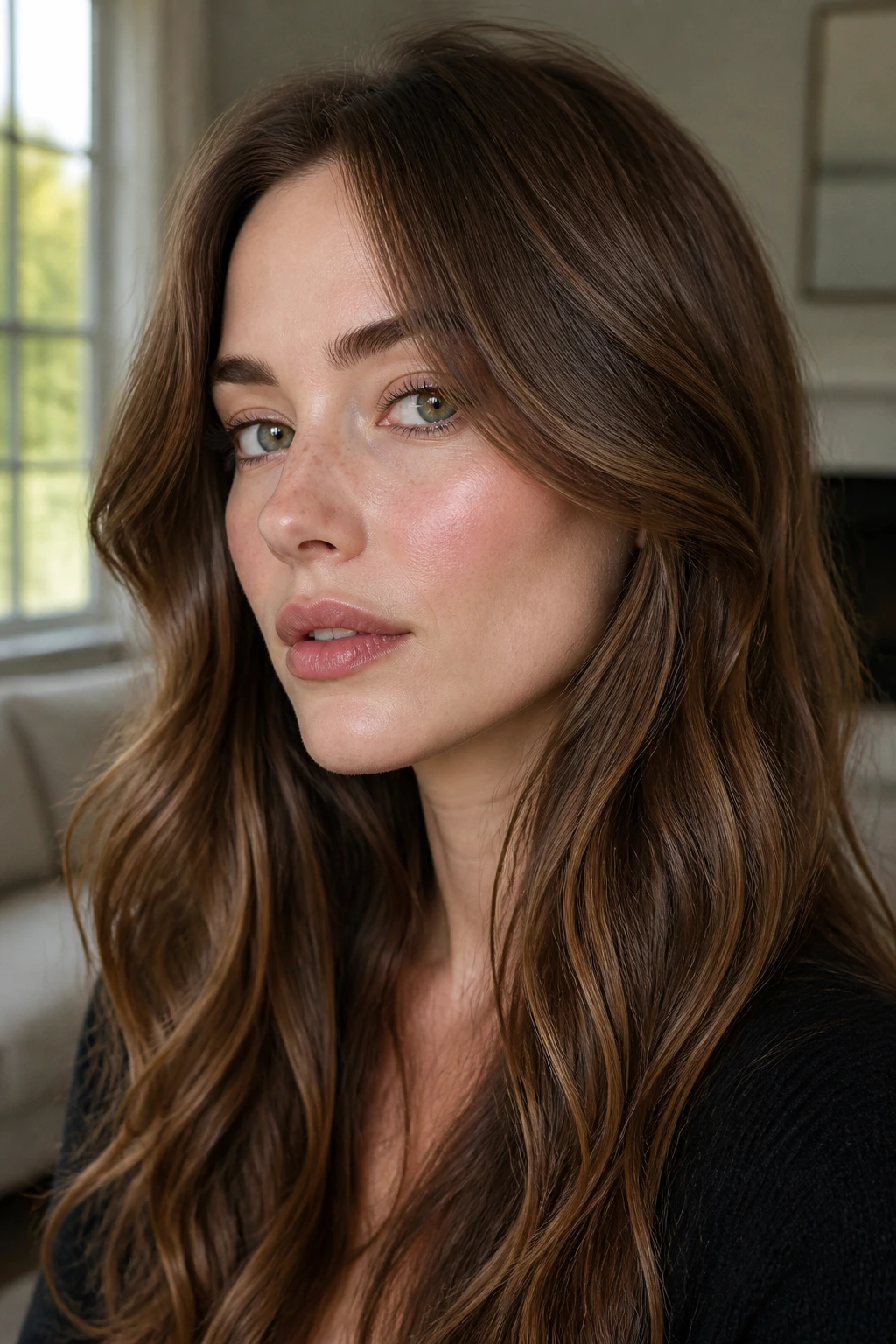
Cocoa contour lights are the brunette version of face-framing makeup. The pieces are deeper than caramel, cooler than chestnut, and placed where the eye naturally goes first: temples, cheekbones, and the soft bend around the jaw.
On fair skin, that darker cocoa edge can be excellent if your features already have a lot of contrast. Blue eyes, dark brows, a strong liner wing—those details all pop next to cocoa. The hair does not need to be bright to make an impact.
If the base is dark blonde, ask for a smooth melt so the front doesn’t read like a hard stripe. The best cocoa contour looks like the color was always there.
10. Espresso Edge Frame
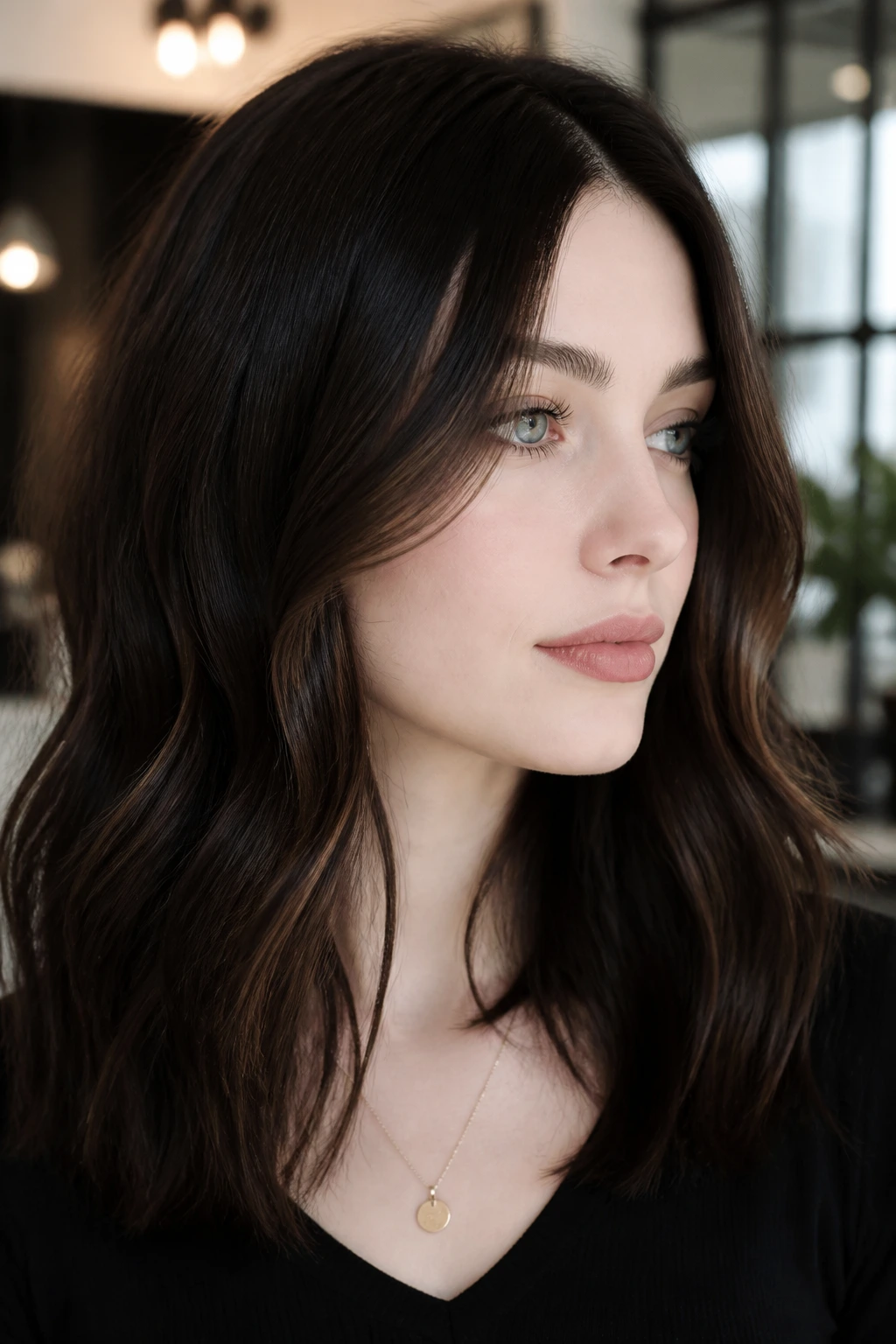
Can pale skin wear espresso near the face? Absolutely, but the placement has to be careful. The trick is to use espresso as an edge, not a slab. Think narrow panels at the front, broken up with softer brown through the mid-lengths so the contrast looks intentional rather than harsh.
This one is strongest on people with naturally dark brows or a sharper haircut. An espresso edge frame can make a blunt bob look sharper and a long cut feel more defined. On very fair skin, the darkness can look chic if it’s feathered, but a solid block of espresso will swallow the face.
If you want drama without going blonde, this is one of the bolder brown face-framing highlights for pale skin.
11. Walnut Sweep Highlights
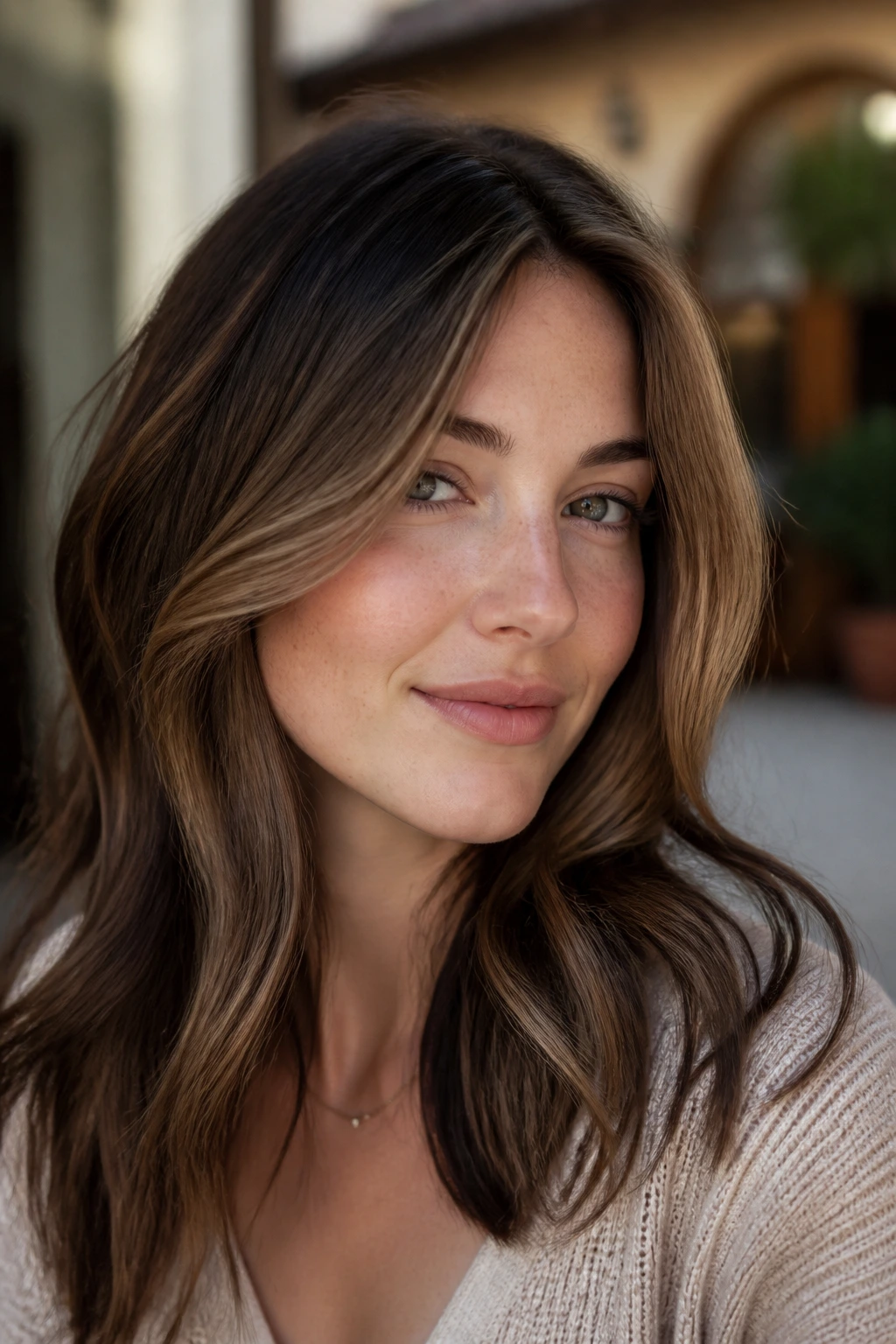
Walnut sweep highlights sit in that medium-brown middle zone that colorists use when they want the hair to look dimensional but not obviously highlighted. The face-framing pieces sweep forward from the part and then soften as they move toward the shoulders.
It’s a smart choice for pale skin with neutral undertones because walnut carries a hint of warmth without turning amber. The front pieces brighten the face, but the tone stays rooted in brown, which keeps the whole look believable.
This one also behaves well on shoulder-length layers. The ends take the color differently from the roots, and that mismatch gives the hair movement without a lot of maintenance.
12. Cinnamon Brown Glow
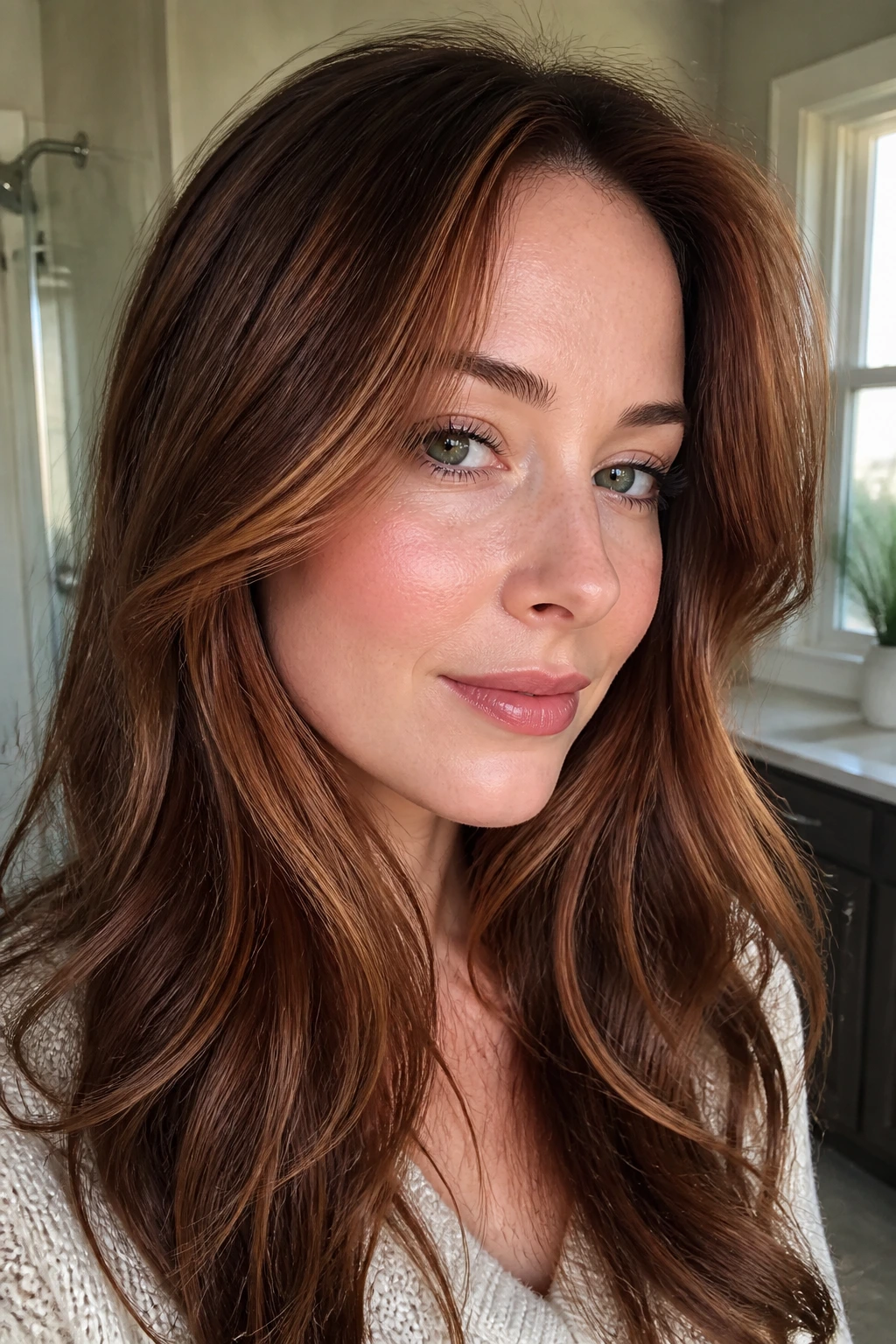
Cinnamon brown has a warm, spiced edge that looks better on fair skin than many people expect. The brown itself is still grounded, but there’s a red-brown flicker in it that gives the face a little warmth when the hair falls around the cheeks.
Unlike chestnut, cinnamon reads slightly brighter and livelier. It’s the shade I’d reach for if the skin is pale but not icy and the goal is to keep the face from looking too cool next to the hair.
A glossy finish matters here. Cinnamon can lose its depth if it dries too matte, and then it starts looking flat instead of rich.
13. Truffle Root Melt with Bright Front
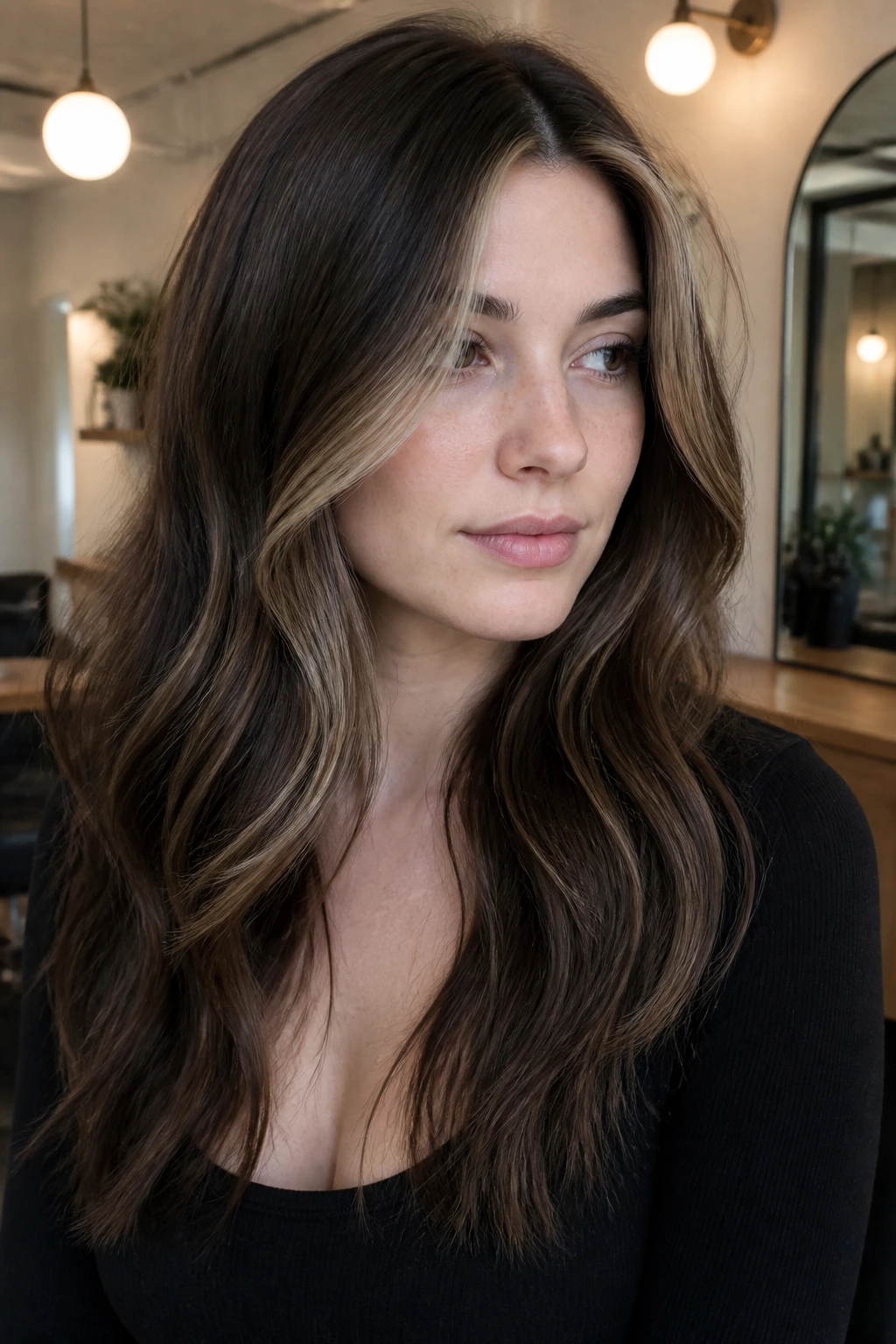
A truffle root melt with a bright front is one of the easiest ways to wear brown face-framing highlights for pale skin without needing constant touch-ups. The root stays deeper and cooler, then the front pieces lighten just enough to pull the eye forward. That contrast gives shape without making the grow-out line obvious.
This is a good option if you hate sitting in a chair every six weeks. The melt hides the line where the color changes, and the bright front keeps the face lively. On very fair skin, ask the colorist to keep the front piece a touch lighter than the rest of the head, but not so light that it turns blonde.
Best for
- Busy schedules: The root fade stays soft.
- Layered cuts: The melt shows movement.
- Low-maintenance brunettes: The front still looks fresh even as it grows.
14. Sanded Chestnut Balayage
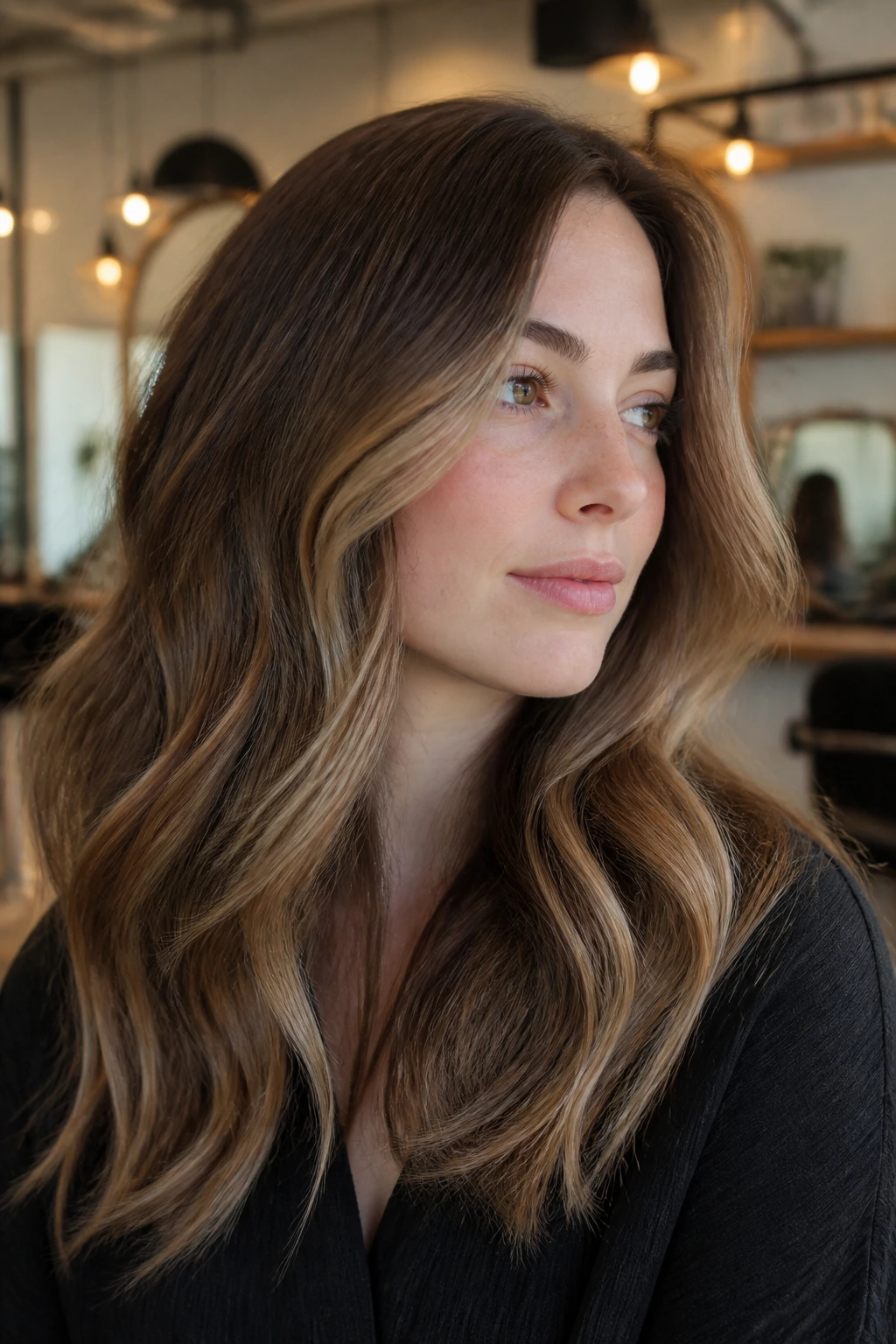
Sanded chestnut is chestnut with the sharpness taken out of it. The brown still has warmth, but the beige sanding keeps it from looking coppery. That makes it one of the easier warm options for pale skin because the color sits in a controlled zone.
Ask for this if you want softness
- Tone: chestnut softened with beige gloss.
- Placement: face-framing ribbons that start around the nose and widen toward the collarbone.
- Best on: wavy or curled hair that shows a gentle blend.
It’s a nice middle ground for someone who wants more warmth than ash brown but less brightness than caramel. The result feels gentle, not sugary.
15. Milk-Chocolate Soft Edge
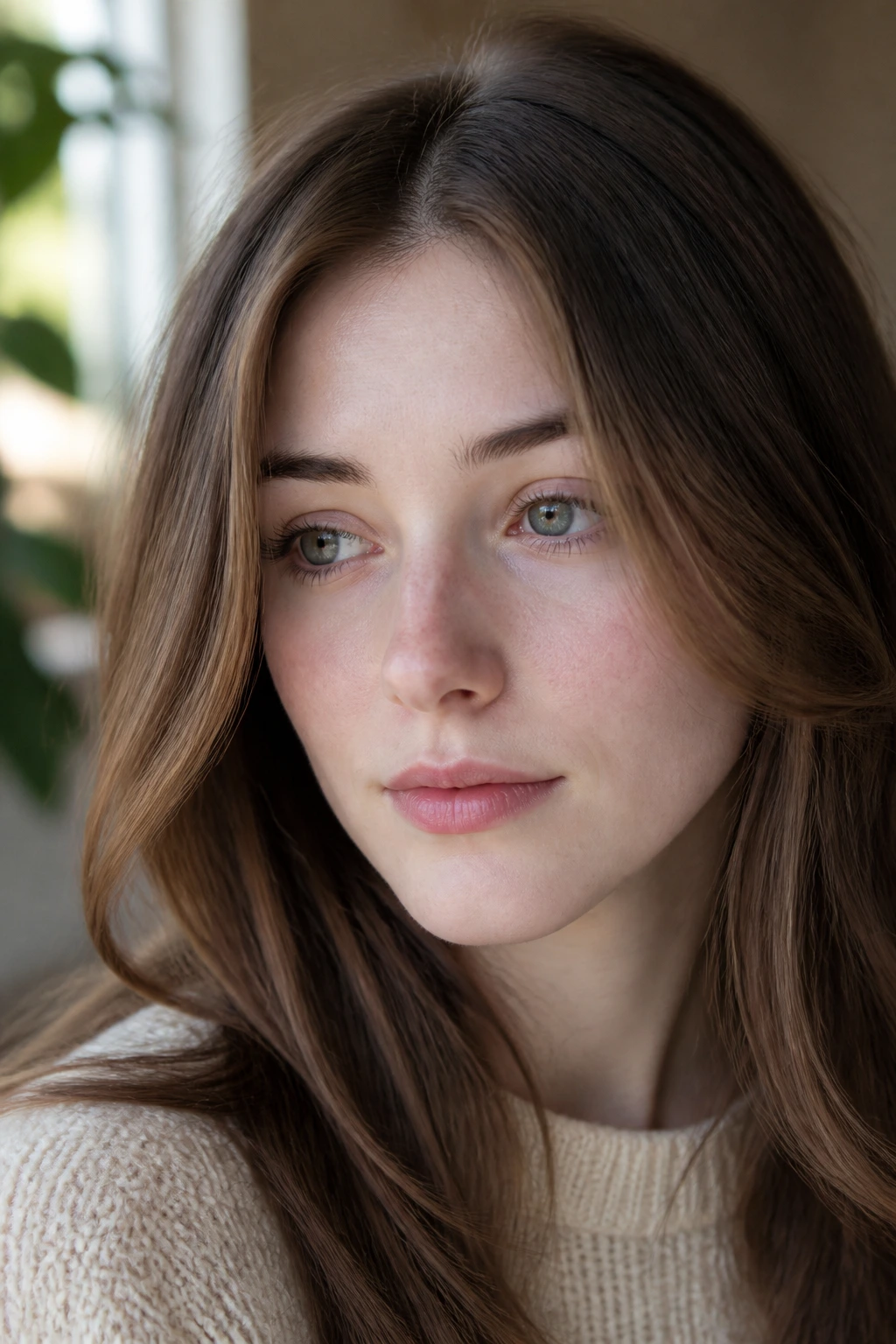
Milk-chocolate highlights are the quiet cousin of the louder front-piece looks. They stay close to the base, so the face frame never jumps out at you. Instead, the color adds a soft edge around the hairline that helps pale skin look less stark next to the hair.
This is a good fit for fine hair because the pieces are soft enough to keep the ends from looking chopped up. It also works on straight hair, where every color line is easy to see. Milk-chocolate keeps the finish smooth.
If your skin has a cool undertone, ask the colorist to keep the chocolate neutral rather than warm. That small tweak keeps the hair from turning reddish under indoor light.
16. Smoky Brown Face-Framing Balayage
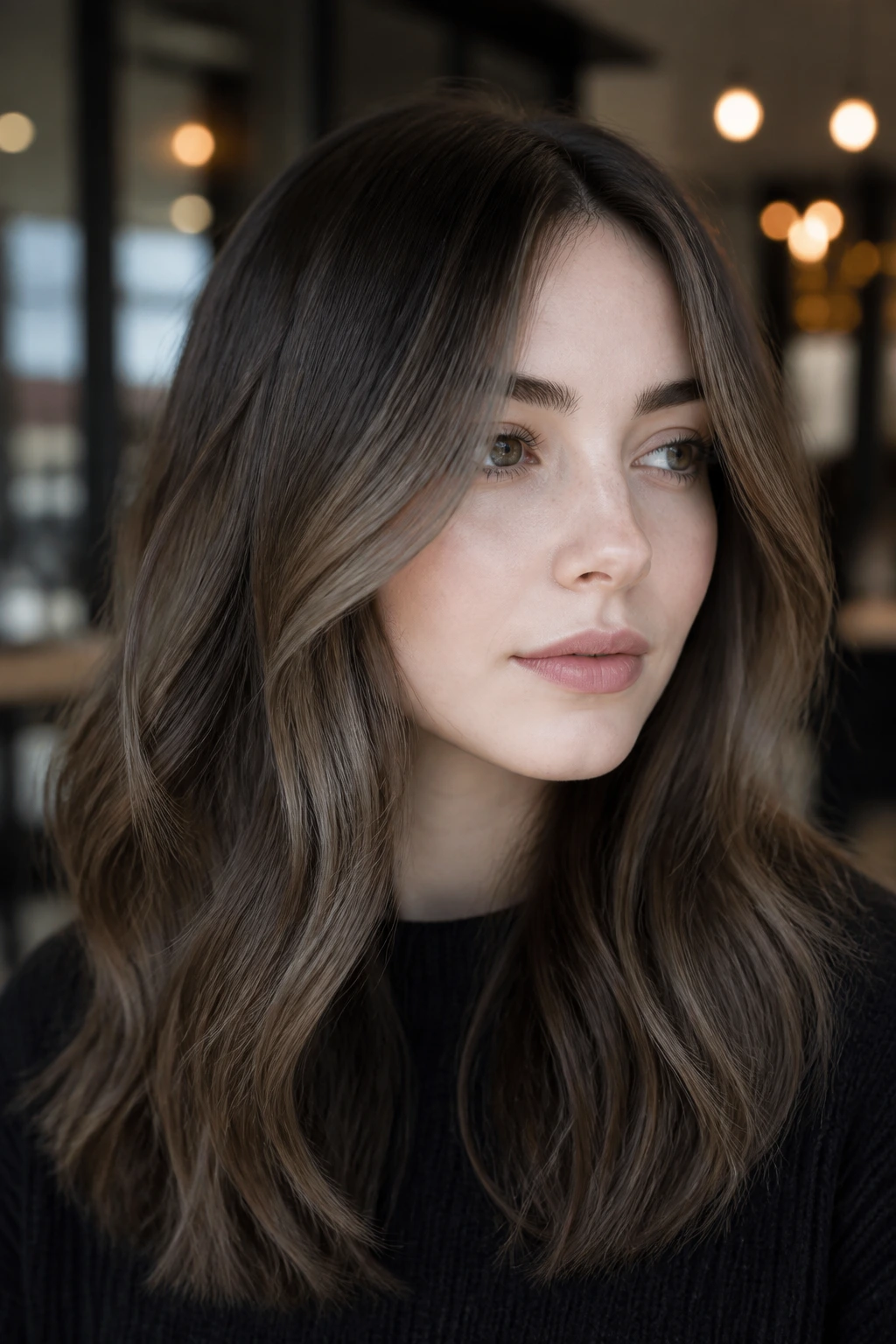
Does smoky brown sound too dark for fair skin? Not if the placement is right. Smoky browns are cool, muted, and a little moody, which makes them a sharp choice for pale skin that gets overwhelmed by golden tones.
The best version starts with a shadowy base near the roots and drifts into slightly lighter smoky pieces at the face. That keeps the line soft while still showing contrast around the eyes. If the hair is naturally dark blonde or light brunette, this can look especially good in a center part with loose bends.
I’d pick this for someone who likes a cooler palette and does not want a warm, caramel feel anywhere near the hairline.
17. Bronde and Brown Front Blur
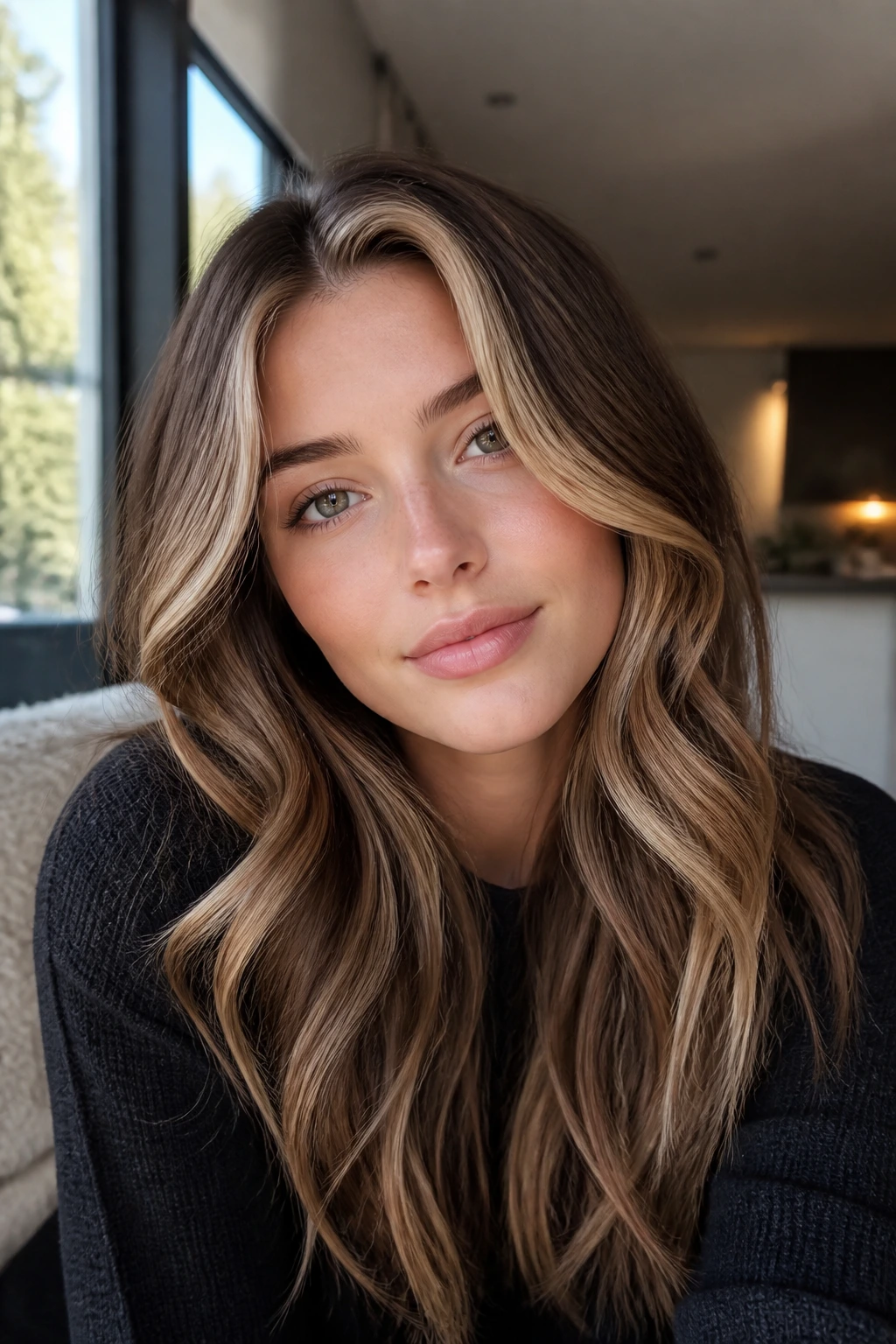
Bronde and brown front blur is for the person who can’t decide between brunette depth and blonde softness. The front pieces sit in that in-between zone where brown meets beige blonde, and the blur keeps the transition from feeling obvious.
On pale skin, that soft blend can be a relief. It brightens the face without the stark contrast of platinum, and the mix of tones gives the hair a bit of movement even when it’s worn flat. The blur matters here—if the front line is too crisp, the whole effect loses its ease.
This is one of the best picks for blondes going darker or brunettes wanting a lighter frame without full commitment.
18. Maple Curtain Sweep
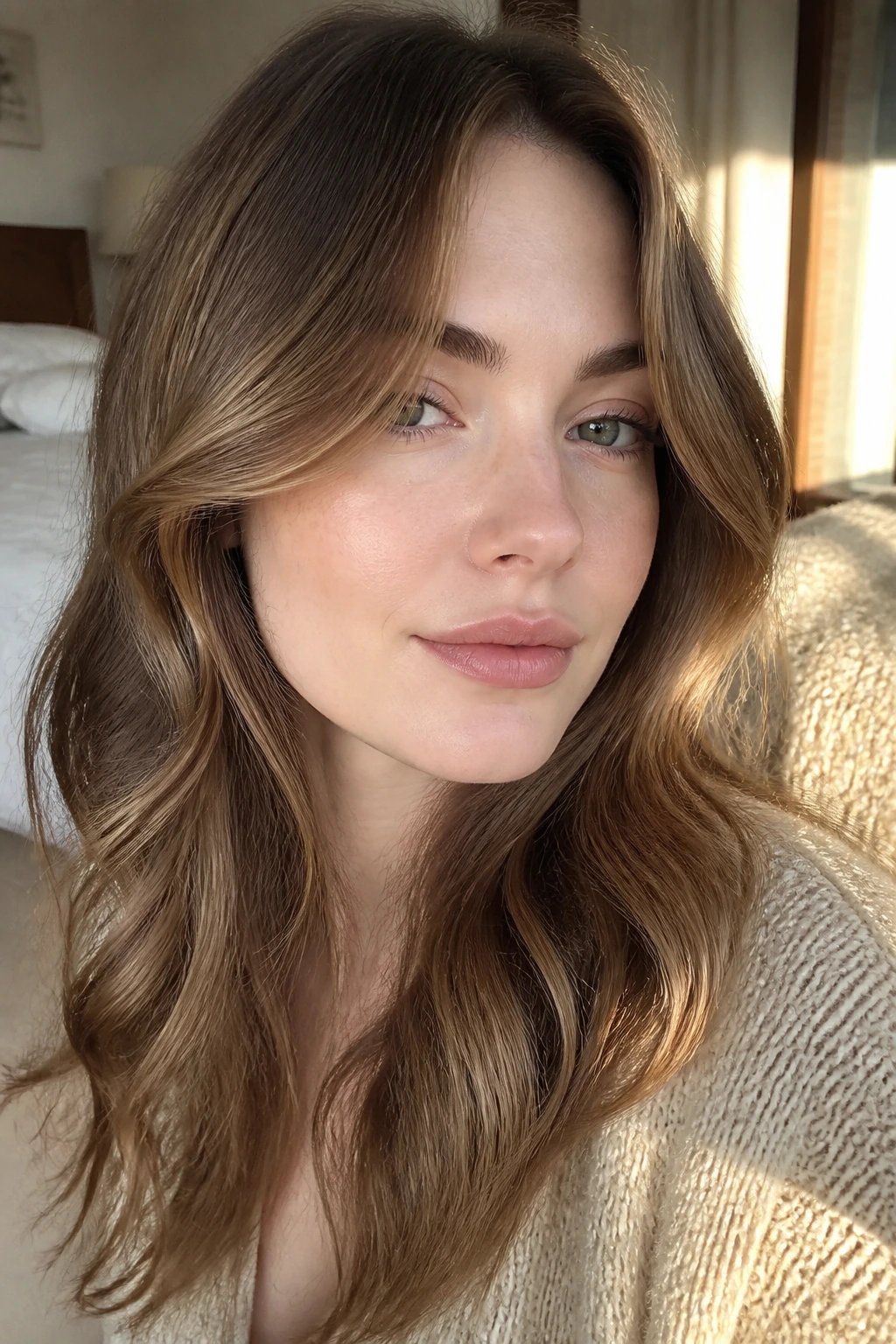
Maple brown has a warm, syrupy feel, but it stays inside brunette territory if the glaze is handled well. The curtain sweep lets that warmth fall from the center part outward, which is flattering on pale skin with peach or golden undertones.
What to ask your colorist for
- A soft maple tone: not orange, not copper.
- Curtain placement: pieces that open near the brows and close by the shoulders.
- A gloss finish: so the brown stays reflective instead of flat.
This look reads especially well when the hair has a bit of wave. The curved front pieces make the tone seem softer than it would in a straight, rigid line.
19. Bitter Chocolate Side Panel
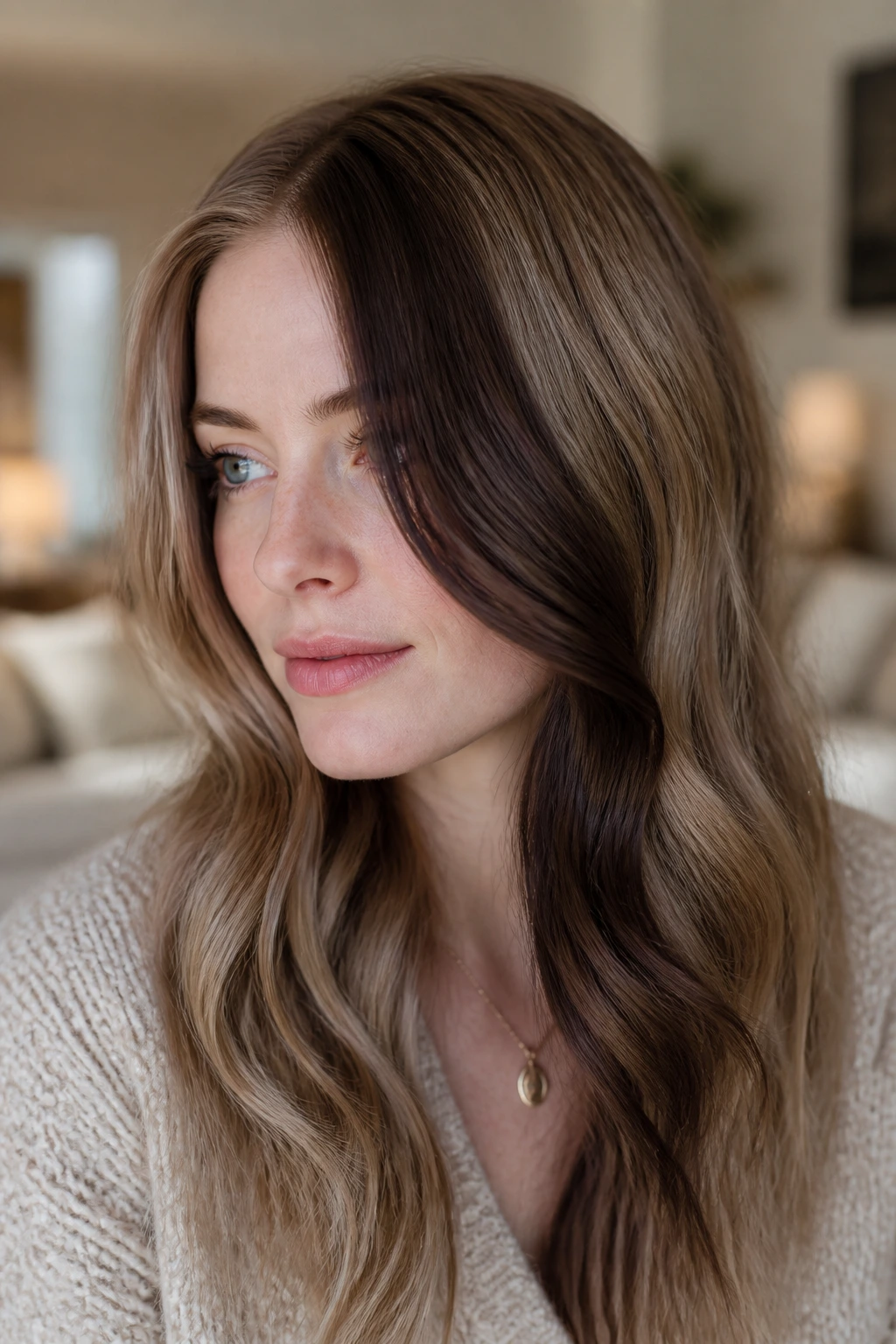
A bitter chocolate side panel is a more dramatic brown face-framing highlight, but the drama comes from shape, not from brightness. One side of the face gets a deep chocolate ribbon that slices through the front layers and gives the haircut a little edge.
For pale skin, this works best when the rest of the hair has some softness around it. Think airy layers, a side part, or loose waves. The darker side panel can sharpen the profile and make features like eyes and brows stand out.
It is not the shy option. If you like clean contrast and a little attitude, this is the one that earns its place.
20. Soft Taupe Feathering
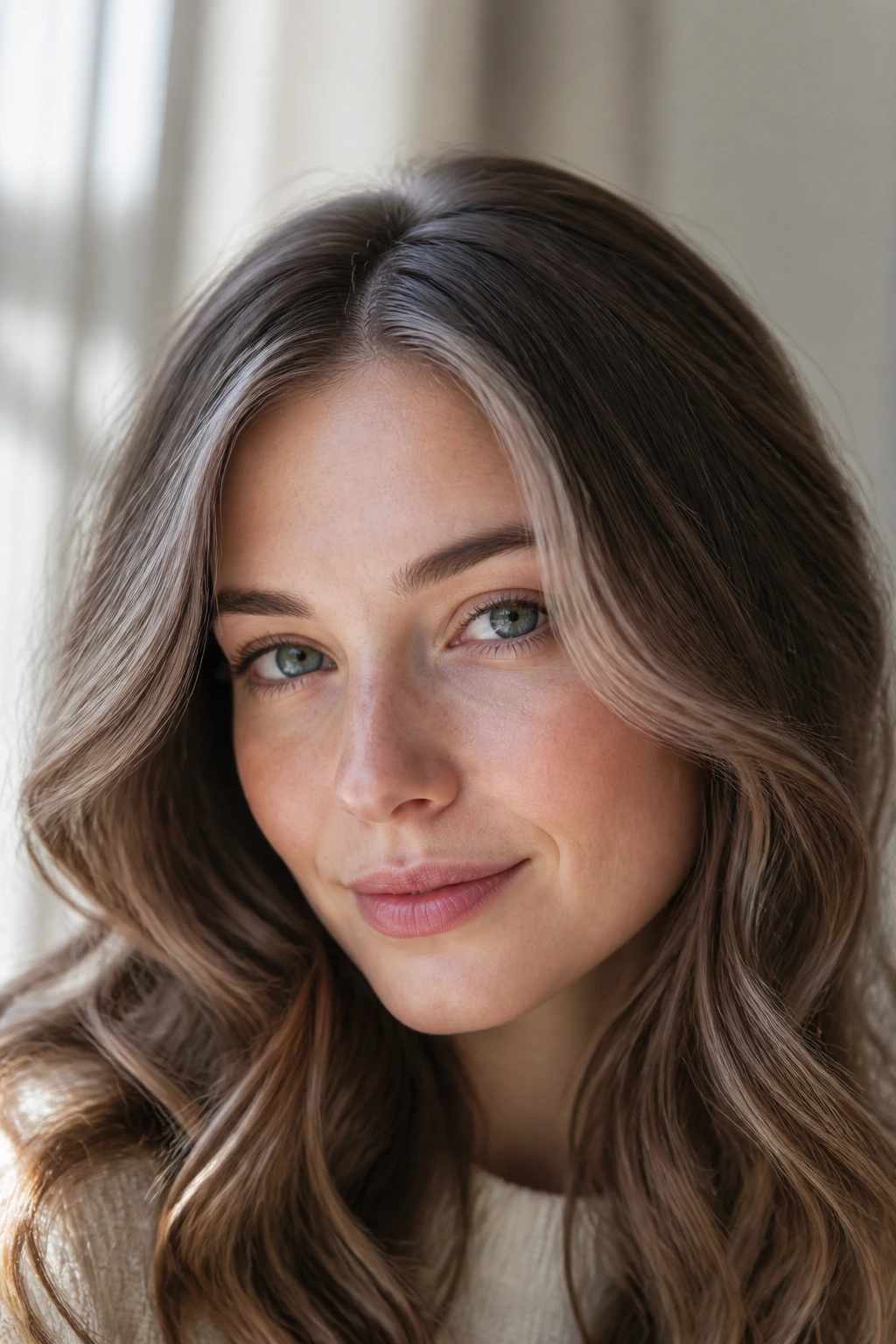
Soft taupe feathering is almost whisper-light. The brown leans gray-beige, which is exactly why it flatters pale skin so well. There’s contrast, but it never feels heavy.
Compared with walnut or chestnut, taupe is quieter. The feathered placement lets the front pieces fall into the hairline rather than sit on top of it, and that keeps the look airy. It’s a smart choice for fine hair or for anyone who wants something subtle enough to wear with minimal styling.
If your skin tends to pink up easily, taupe can be kinder than warmer browns because it doesn’t throw extra warmth back at the face.
21. Brown Velvet Layer Lights
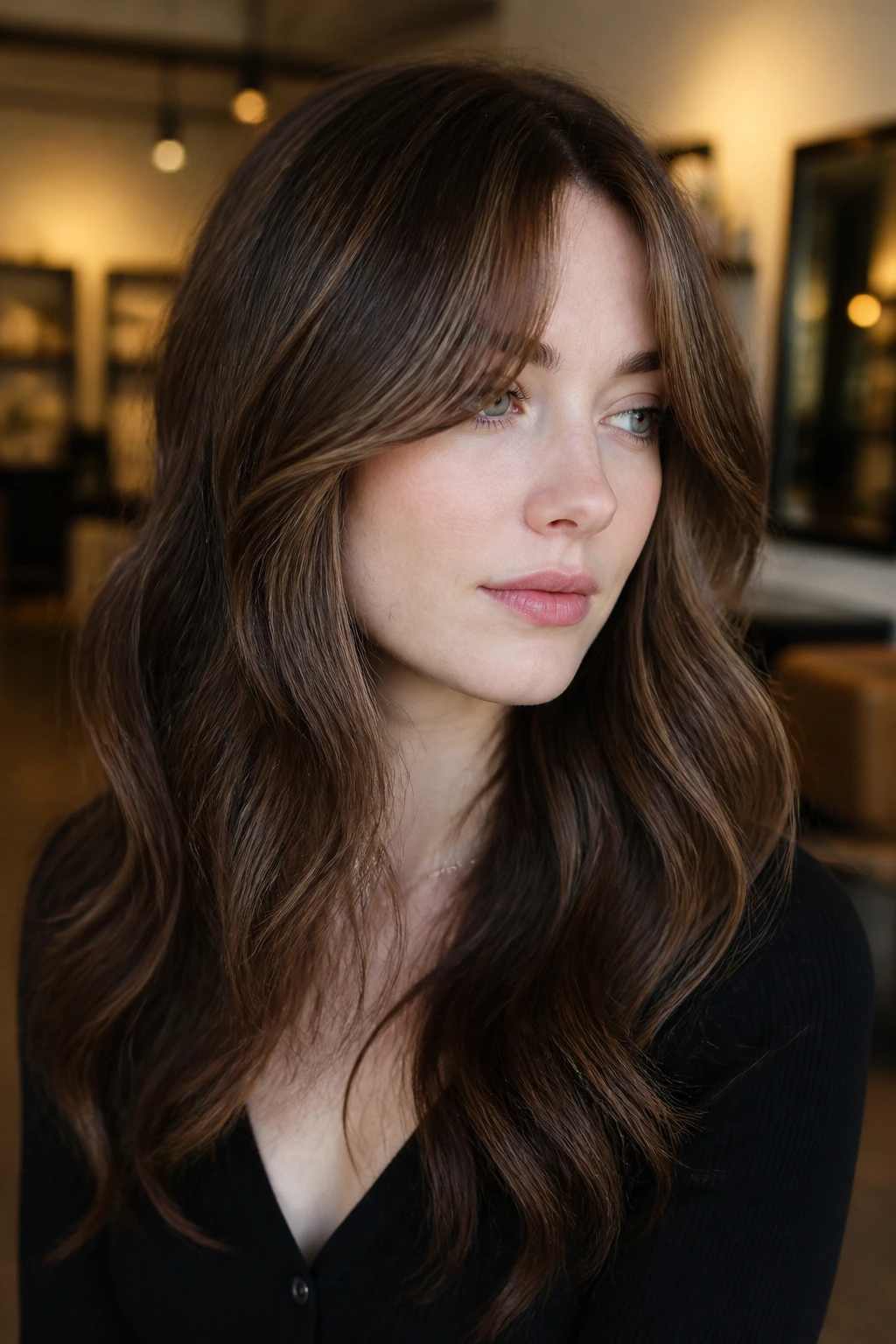
Brown velvet layer lights are richer than taupe and softer than espresso. They’re built through the front layers, not just the hairline, so the color reads as part of the cut instead of a separate stripe.
This is the look I’d point to if you have thicker hair and want the front pieces to feel polished. The velvet finish gives depth, and because the color is layered, the front doesn’t look one-note when it moves. On pale skin, that depth helps stop the face from looking too washed out against a dark brunette base.
It’s not a flashy technique. It’s a good one. There’s a difference.
22. Golden Brown Glow Strip
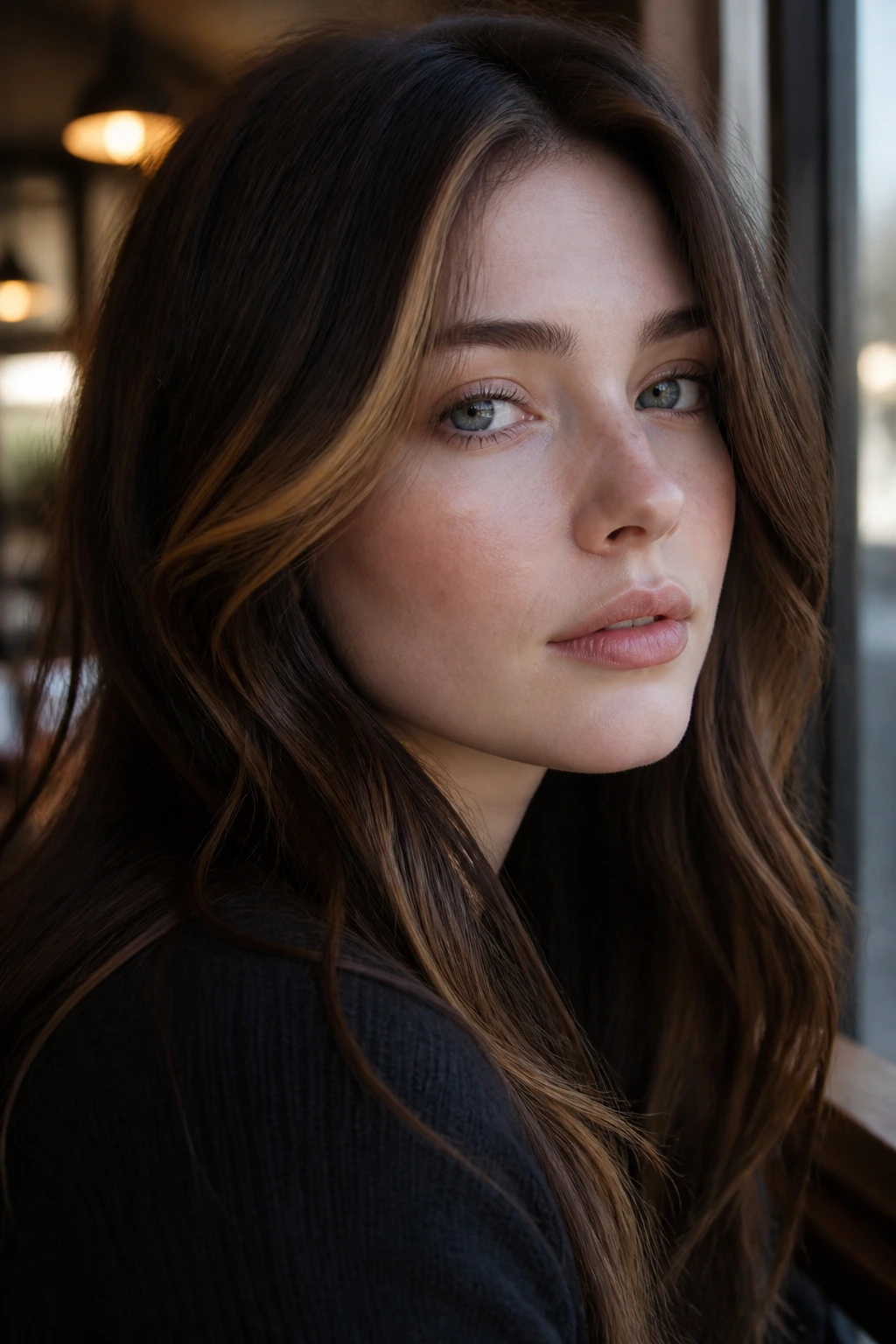
Can a golden brown strip work on pale skin? Yes, if the strip is narrow and the rest of the hair stays grounded. The warmth lifts peachy or neutral complexions and gives the face a little glow, especially around the eyes.
The mistake people make here is going too wide. Golden brown should behave like a ribbon, not a block. Keep it concentrated where the hair falls beside the cheekbone, then let it soften toward the ends. That keeps the warmth flattering rather than loud.
This look is especially good if your hair naturally holds warmth and you do not want to fight it with ash toner every month.
23. Roast Coffee Front Lift
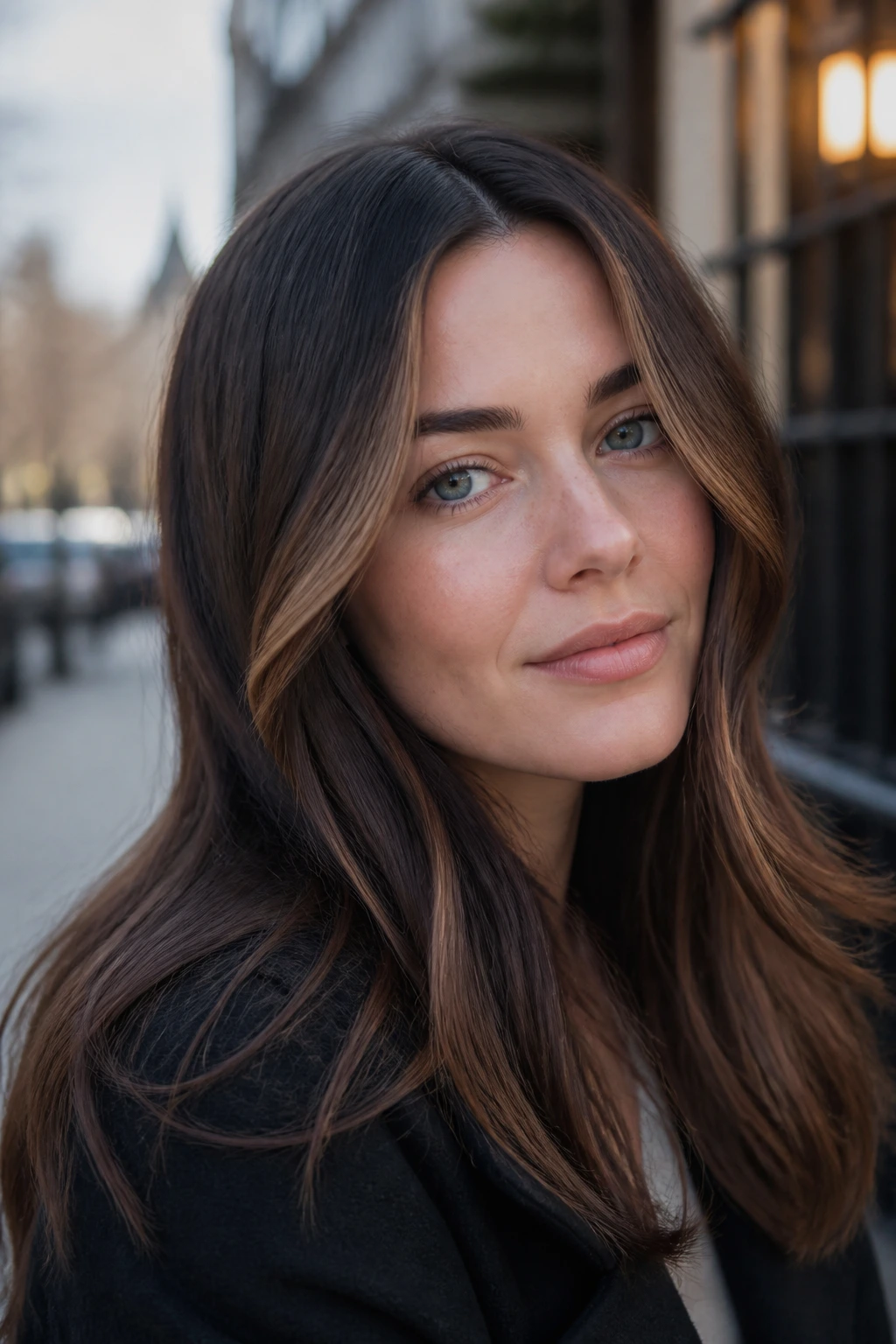
Roast coffee front lift is for brunette lovers who want contrast but refuse to drift into blonde territory. The coffee tone stays dark and rich, while the lift at the face gives enough brightness to pull attention toward the eyes.
On very fair skin, the front lift needs to be strategic. Too much darkness near the roots can look blunt, so the lift should start a bit lower and blend into the face frame with a soft edge. The payoff is a very clean brunette look that still keeps the complexion from disappearing into the hair.
This is a strong option for darker eyebrows or deeper natural bases.
24. Mocha-Beige Dimension Mix
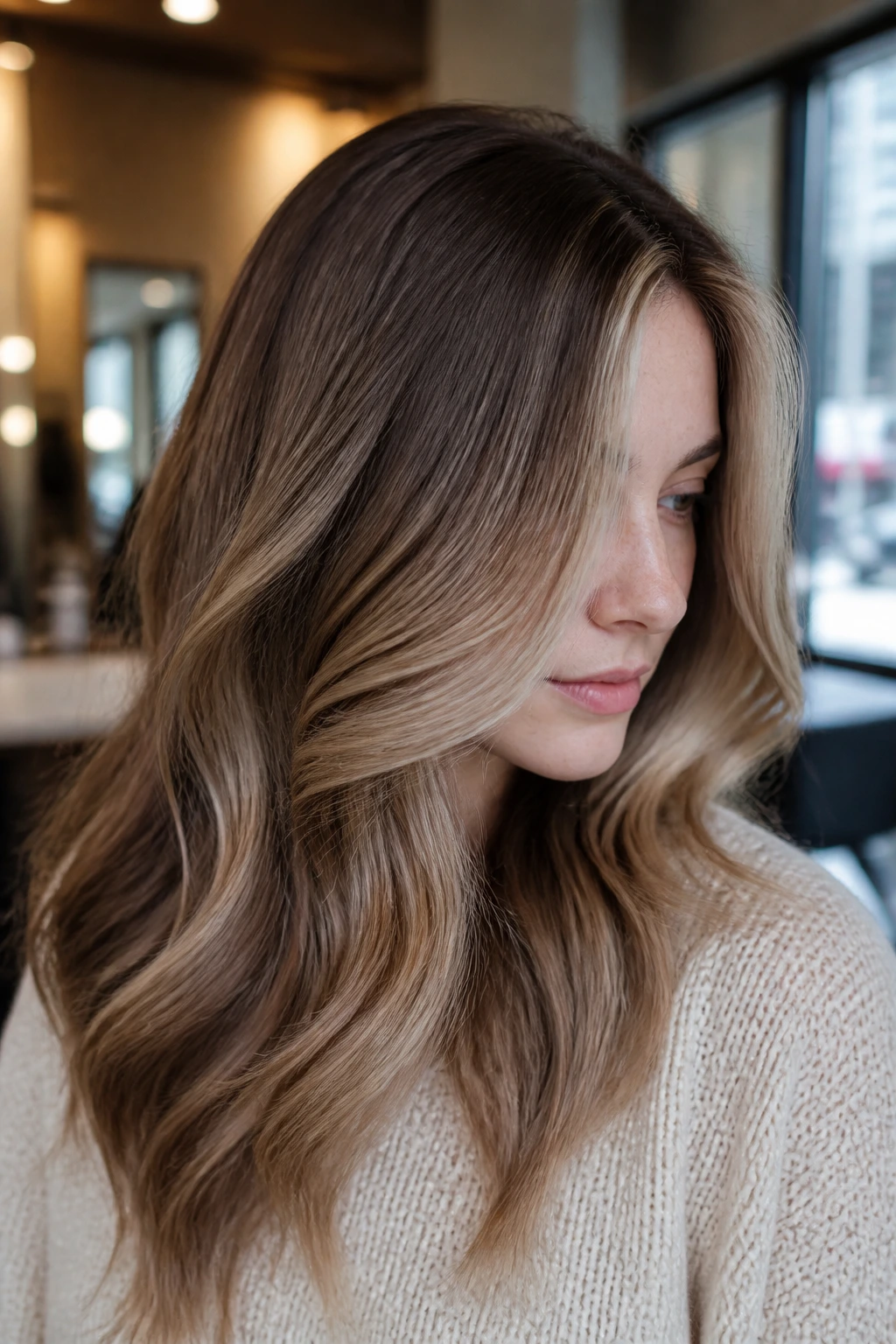
Mocha-beige mixes are exactly what they sound like: one tone gives you depth, the other gives you softness. Together they stop the front pieces from reading flat. That matters on pale skin because a single brown shade can sometimes look too solid against a lighter complexion.
Best when you want movement, not drama
- Mocha: keeps the frame grounded.
- Beige: softens the transition around the face.
- Placement: alternating ribbons, not stacked stripes.
This version behaves well on layered cuts, especially if the hair has some bend. The tones blend and separate as the hair moves, which keeps the color from looking painted on.
25. Smoky Walnut Fringe Lights
Smoky walnut fringe lights bring a softer version of the dark-brown frame to bangs and face-hugging fringe. The walnut keeps the look grounded; the smoky finish stops it from turning warm or brassy against pale skin.
This is a nice choice if you wear curtain bangs, bottleneck bangs, or a soft fringe that needs a little definition. The color helps the fringe show up against light skin, but it doesn’t make the bangs the loudest thing in the room. That balance is hard to get, and this shade does it well.
If the fringe is thin, keep the lightest pieces just at the outer edge so the center doesn’t look stringy.
26. Chestnut and Espresso Contrast
Chestnut and espresso contrast is the bolder, more layered version of the brunette frame. The chestnut gives the front some warmth; the espresso keeps the base deep enough that the face frame pops. On pale skin, that mix can look striking without needing blonde at all.
A good fit if your hair is already dark
- Base: espresso or deep brunette.
- Front ribbons: chestnut or warm walnut.
- Result: contrast at the face, depth everywhere else.
I like this most on medium to thick hair, where the color has enough body to show the different tones. It can look too busy on very fine hair if the ribbons are too wide.
27. Cocoa Contour
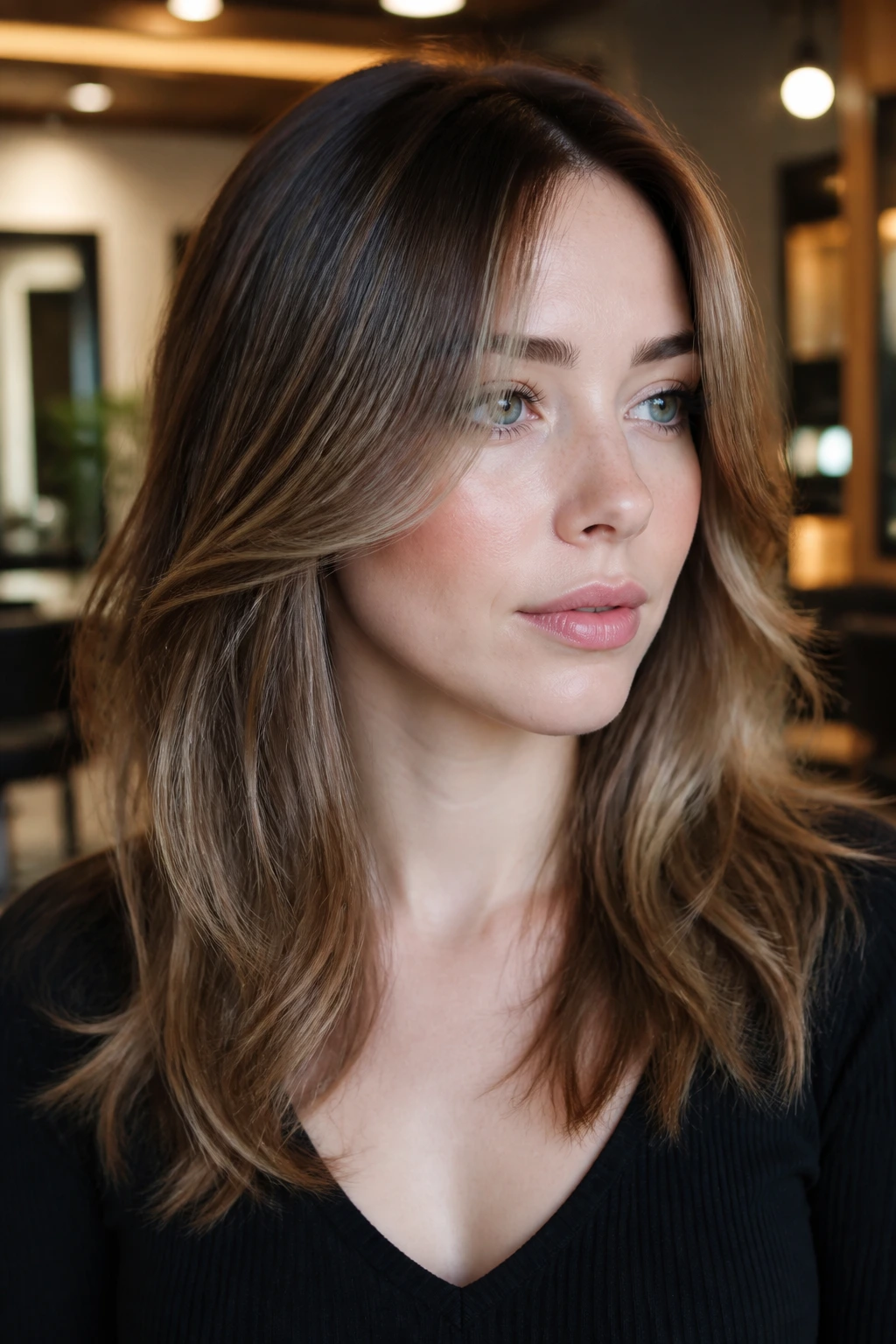
Cocoa contour is the soft-focus version of face-framing highlights. Instead of bright front streaks, the color contours around the face the way makeup would: a little lighter at the temples, a little deeper under the outer layers, and blended enough to avoid a hard border.
That makes it a smart option for pale skin that wants shape more than brightness. The cocoa tone adds enough definition to matter, but the overall effect stays calm. If you prefer your hair to look polished rather than highlighted, this one lands in the right place.
It also works well on long layers, where contouring can stretch and move with the cut.
28. Truffle Ribbon Glow
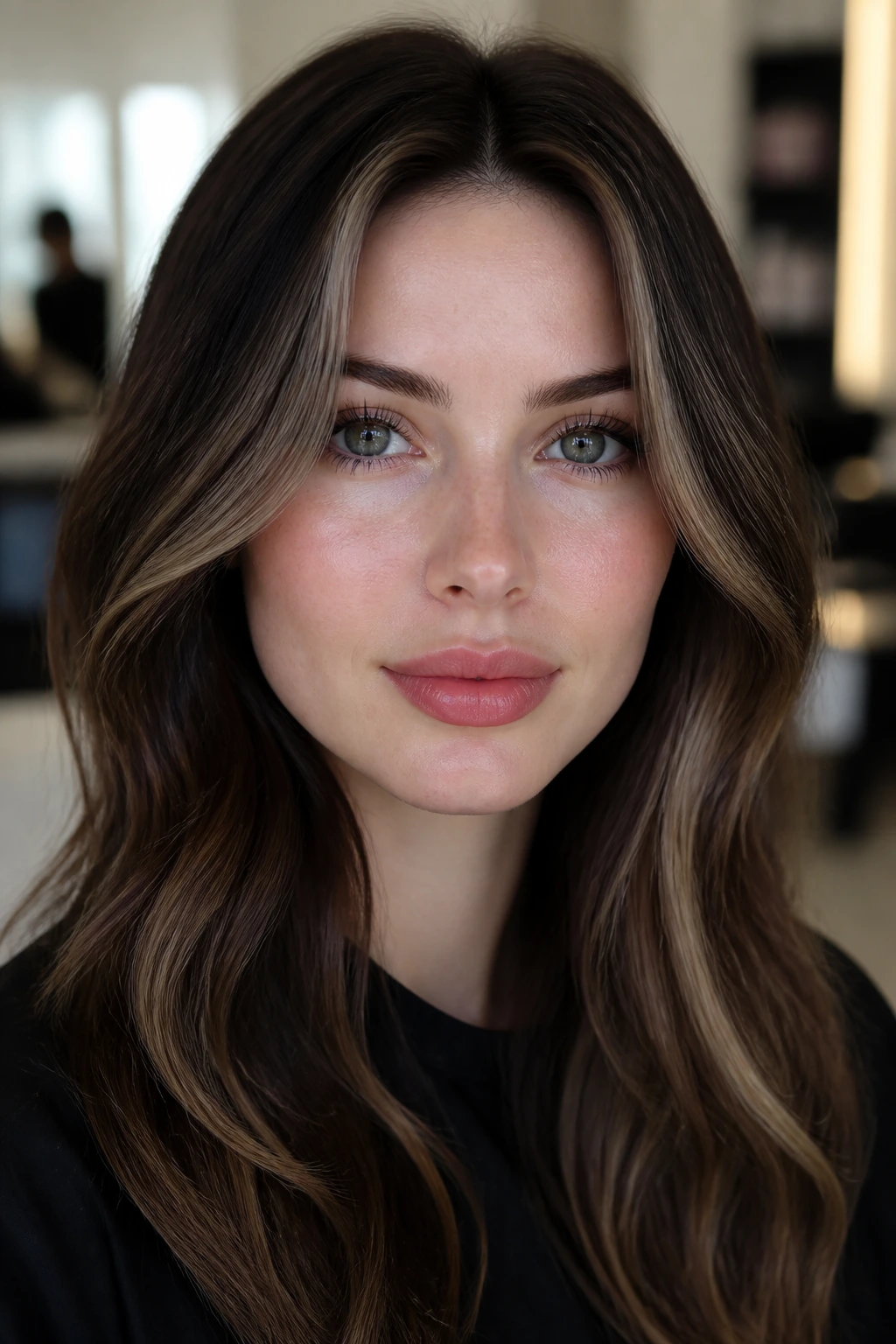
Is there a more wearable brown frame than truffle ribbon glow? Maybe, but not by much. Truffle sits in that deep, cool-brown range that flatters pale skin when the ribbons are kept soft and thin around the face. The color has presence without the harshness of black.
This is the look I’d choose for someone who wants a brunette result that still leaves the complexion visible. The ribbons should start near the front hairline, skim the temples, and soften as they move down. If the finish is glossy, the truffle reads rich; if it’s matte, it can go flat fast.
It’s a quiet finish. That’s the point.
How Brown Face-Framing Highlights Work on Pale Skin
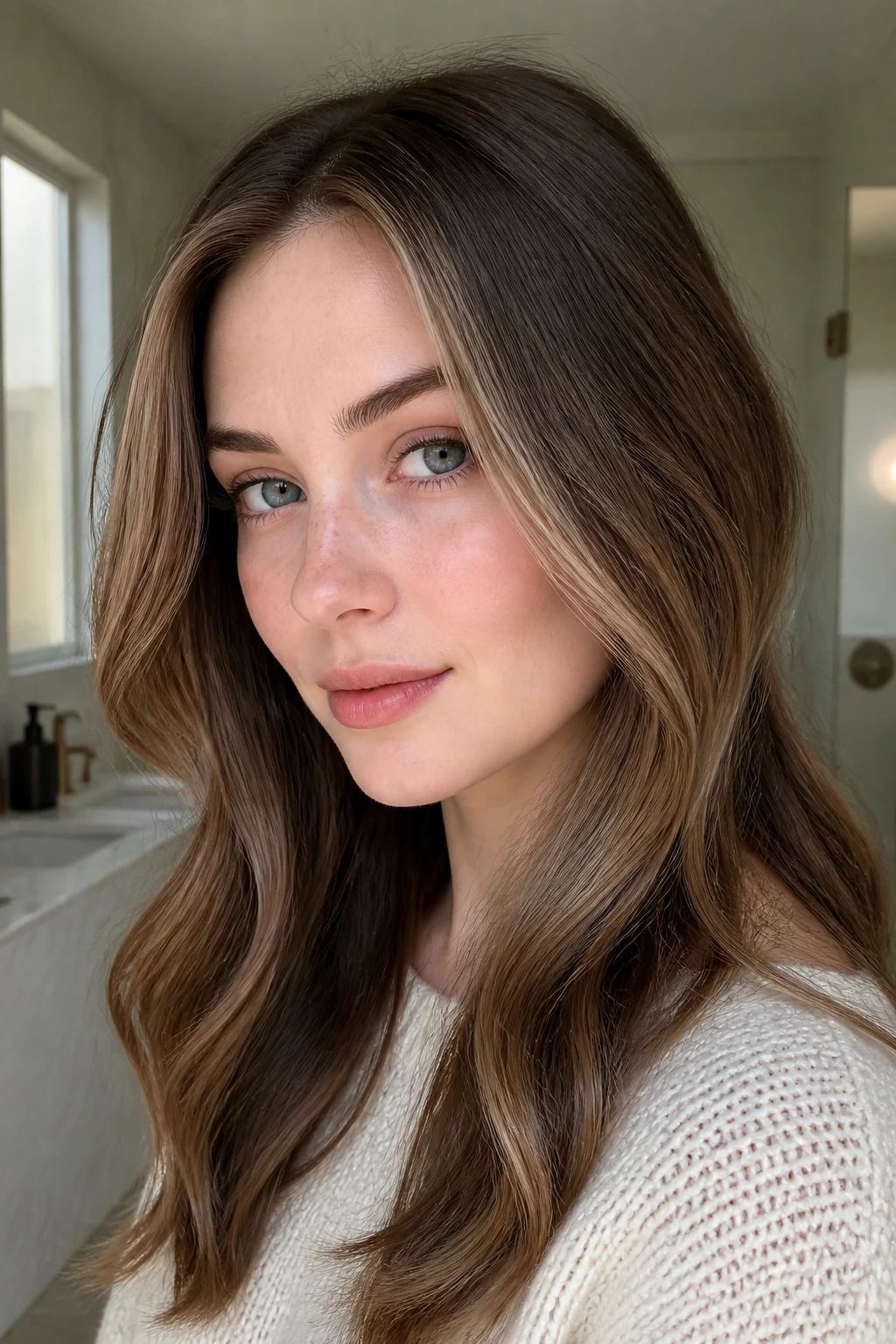
The reason brown face-framing highlights work so well on pale skin is that they change contrast where people actually look first. The eye lands on the hairline, the brows, the cheeks, and the part line before it notices the ends of the hair. A few well-placed brown pieces can do more for the face than a full head of lighter color.
The shade matters, but placement often matters more. Cool browns like mushroom, taupe, and smoky walnut keep very fair skin from looking pink or washed out. Warmer browns like chestnut, caramel, and maple can bring life to peachier or neutral complexions, especially if the front pieces are narrow and glossy instead of broad and flat.
What I’m not fond of is blunt contrast right at the hairline. It can look stylized on a model and heavy on a real person standing under bathroom lighting. A better approach is a front piece that begins with a soft root shadow, brightens near the eyes, and melts into the rest of the hair by the cheekbones.
The result is shape. Not stripes.
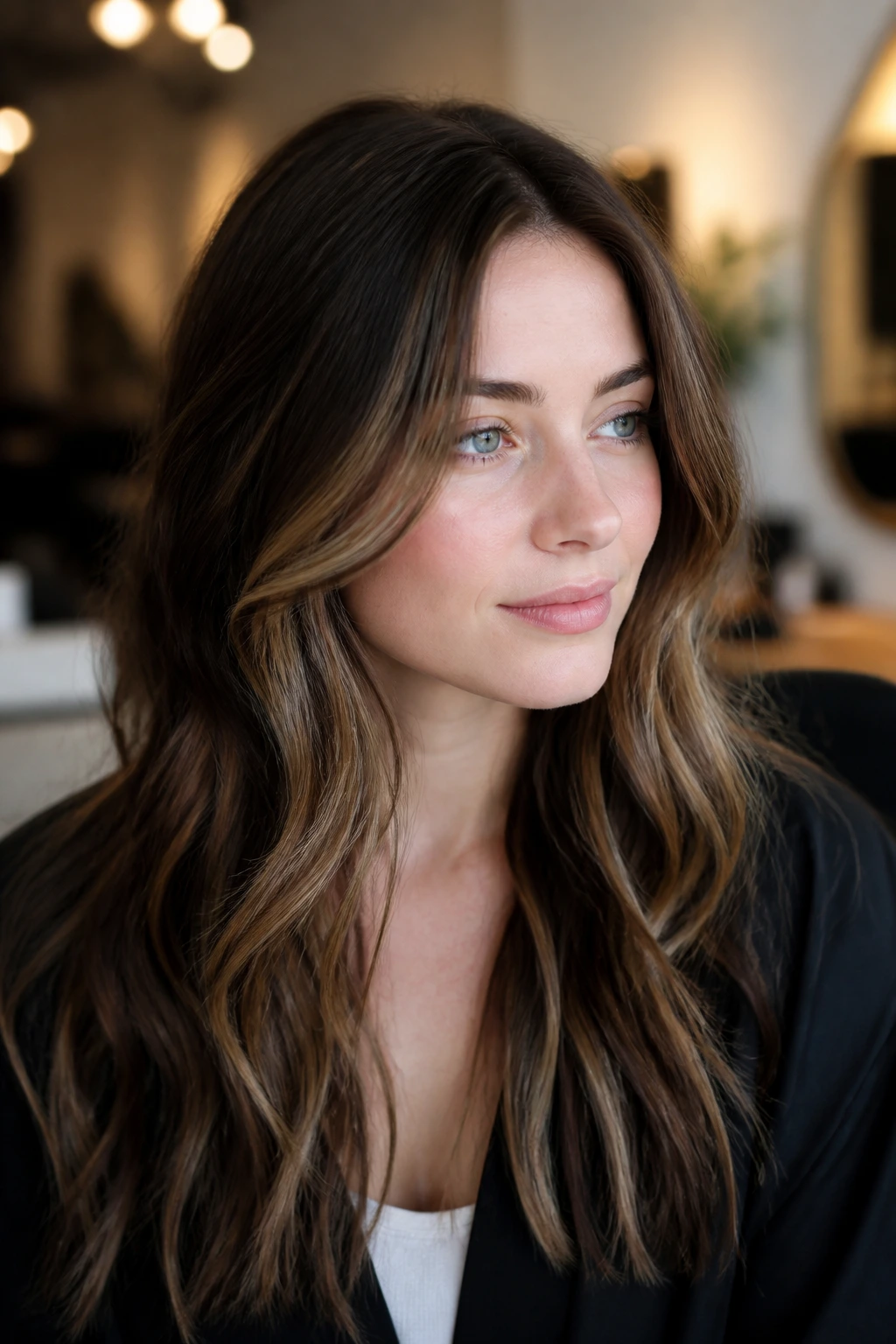
How to Choose the Right Brown Depth for Fair Skin
-
Go one level deeper than blonde, not five: A level 6 or 7 brown often gives pale skin shape without looking severe. Deeper than that can work, but only if the blend is soft and the front pieces are narrow.
-
Match the undertone, not the mood board: Pink or rosy skin usually likes mushroom, taupe, or smoky mocha. Peachy or golden skin usually handles chestnut, caramel, and maple better. Neutral skin can wear both, which is unfair but useful.
-
Keep the brightest bits near the eyes: The front piece should do the work. If the lightest brown ends up buried under layers, you lose the face-framing effect and just get darker hair with extra maintenance.
-
Ask for a gloss if the tone looks harsh in the bowl: A beige or neutral gloss can calm a brown that seems too red or too dark after processing. That one step often saves the whole look.
-
Be honest about upkeep: If you can only handle salon visits every eight to twelve weeks, ask for a softer blend and a deeper root. If you love frequent refreshes, you can push the brightness a little more.
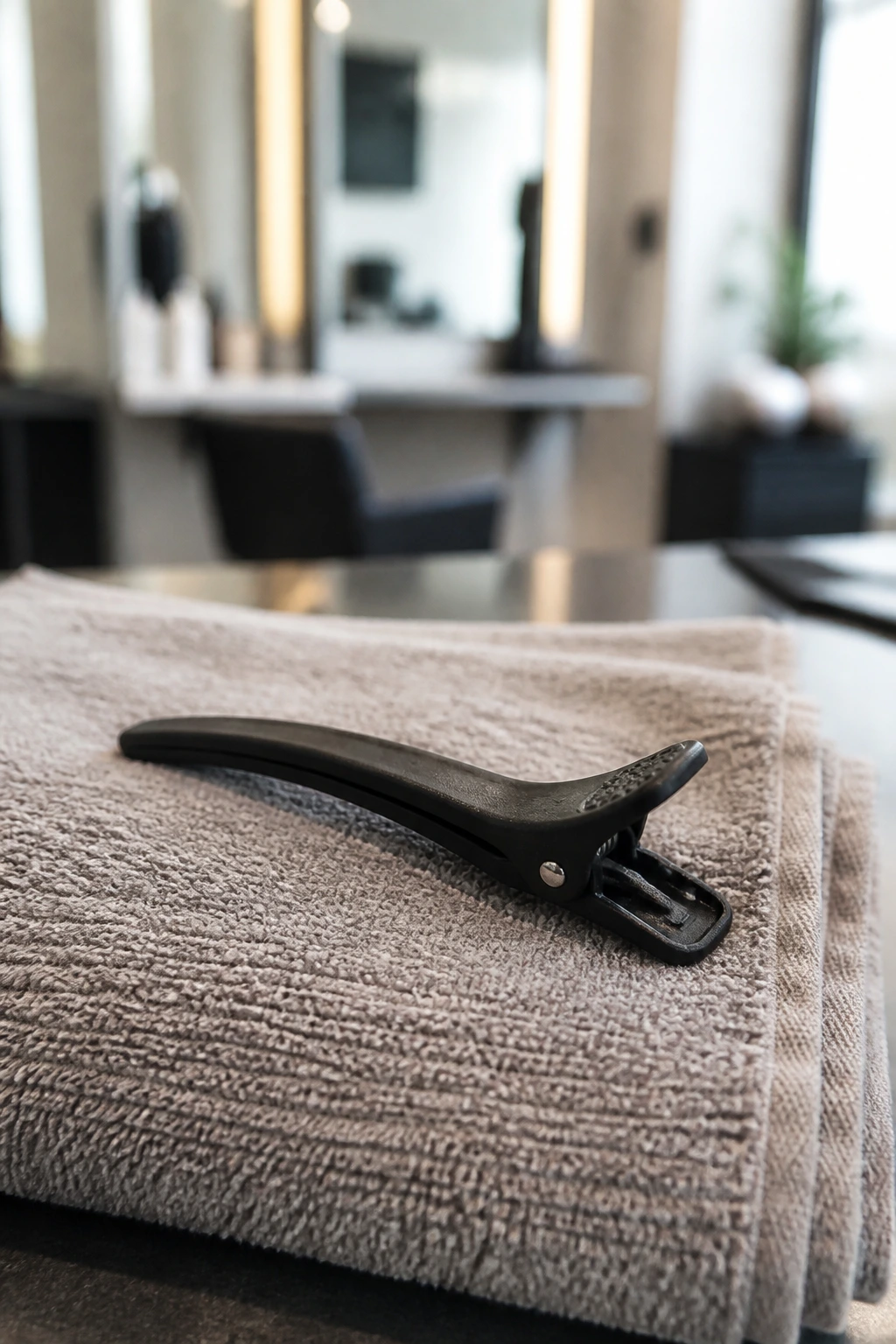
Essential Tools for Salon Visits and At-Home Refreshes
-
Sectioning clips: Clean sections make a cleaner face frame. Cheap clips are fine if they hold hair flat.
-
Tail comb: Useful for mapping the money piece and keeping the front sections even on both sides.
-
Color bowl and tint brush: Needed for gloss or root-shadow work if you’re refreshing pieces at home.
-
Balayage board or foil sheets: A board gives a softer paint-on finish; foils lift more cleanly when you need brightness.
-
Gloves and an old towel: Brown gloss stains faster than people expect, and the towel will prove it.
-
Wide-tooth comb: Helps distribute toner or conditioner through the front pieces without yanking them.
-
Color-safe shampoo and conditioner: Non-negotiable if you want the brown to stay clean instead of dull and faded.
How to Keep the Front Pieces Fresh Between Salon Visits
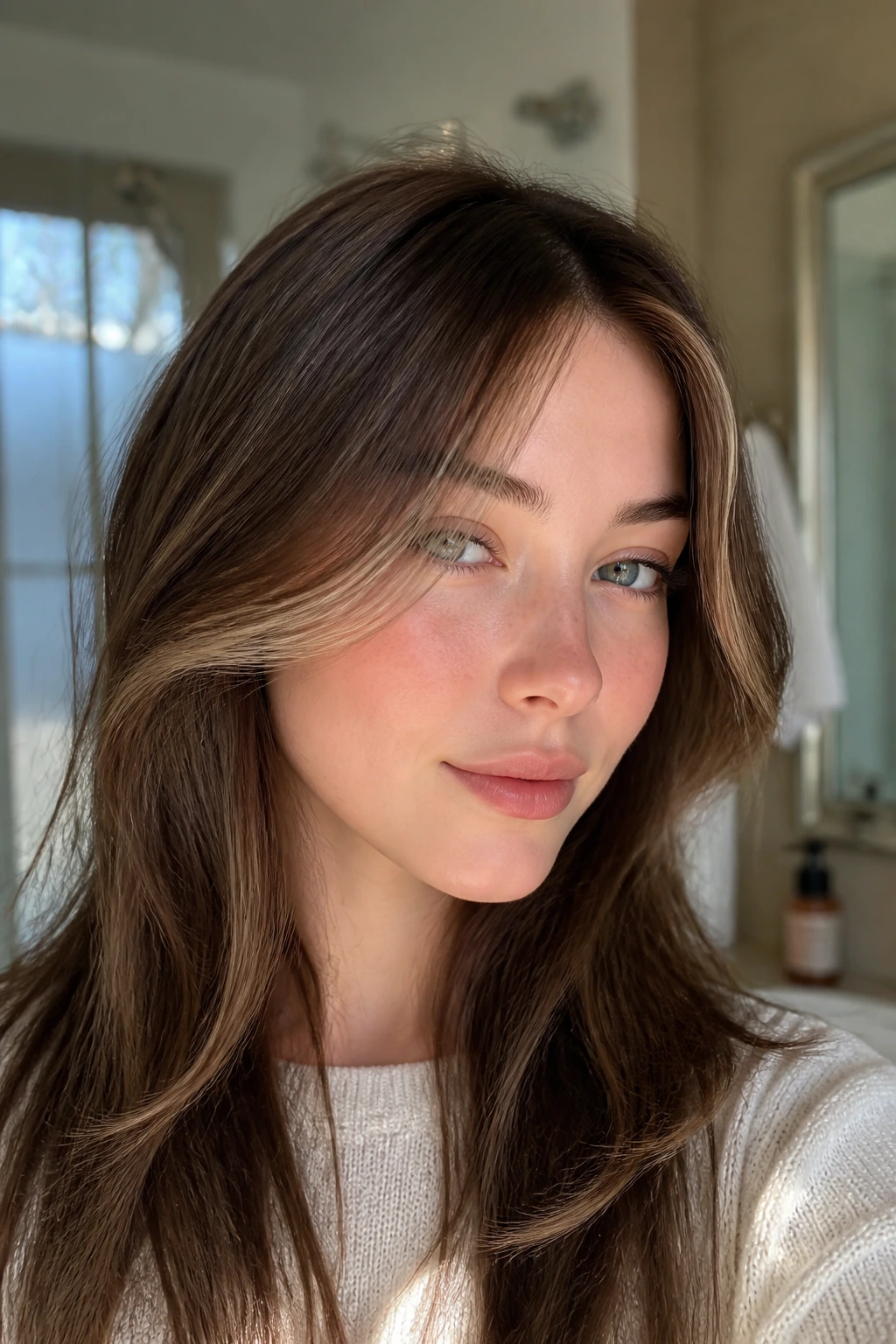
Brown face-framing highlights usually hold better than blonde, but the front pieces still need some care or they go flat. A color-safe shampoo two or three times a week is enough for most people; washing every day tends to strip the gloss faster than the hair can hold onto it. If your front pieces run warm, a blue shampoo once every week or two can keep brass down. If they run cool, skip the pigment-heavy products unless you actually see warmth creeping in.
Heat changes everything. Flat irons and curling wands push brown highlights toward dryness, and dryness makes the color look dusty. A light heat protectant before styling helps more than people think, especially around the hairline where the lightest pieces live. I’d also keep the front sections out of the hottest part of a blow-dryer blast when possible.
Salon glosses matter here. Many brown highlights look best with a toner or glaze every four to six weeks, especially if the front starts drifting orange or red. The deeper root can often wait eight to twelve weeks, but the face frame is the part that shows wear first.
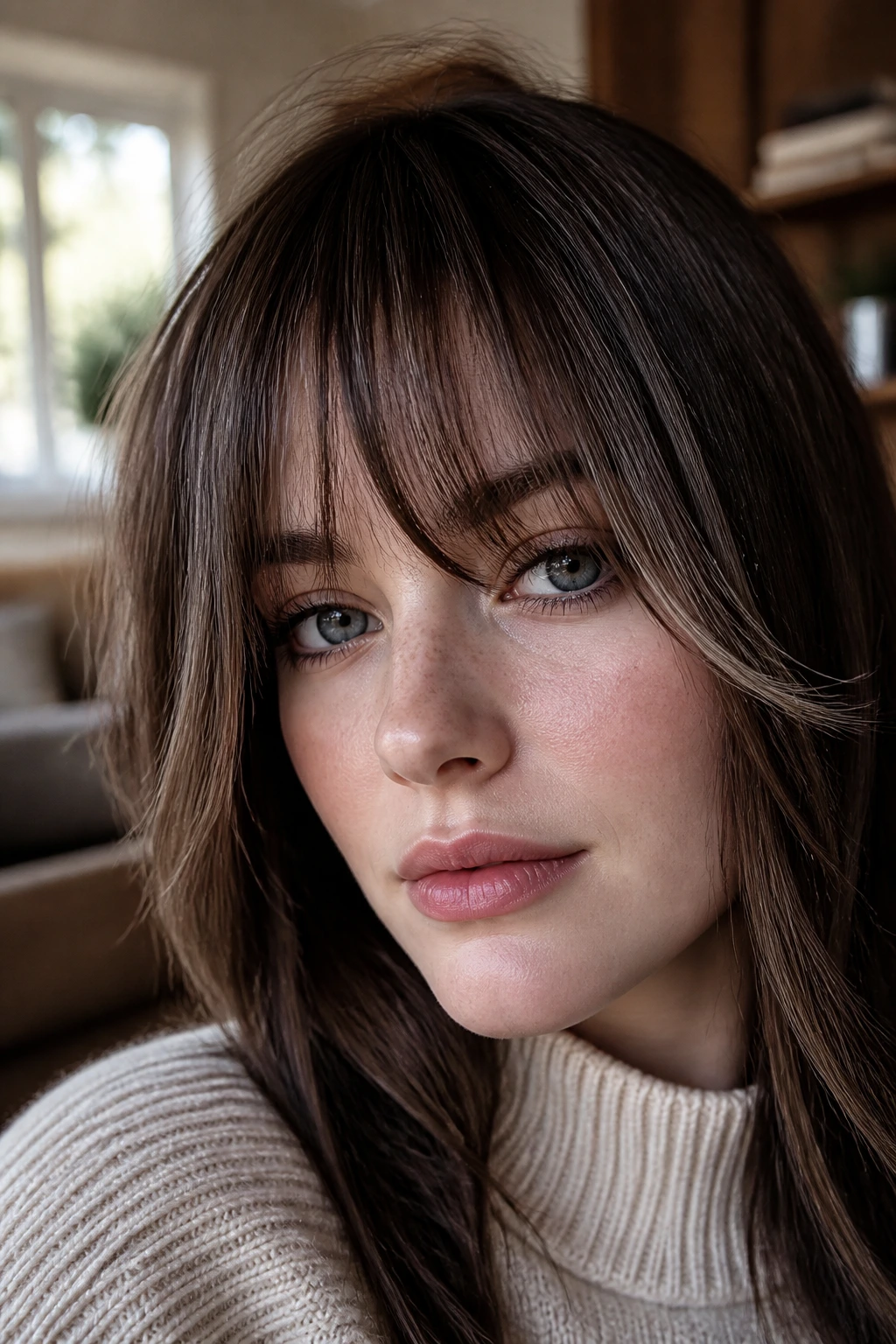
Common Mistakes That Make Brown Highlights Look Flat
-
Going too dark at the hairline: If the front pieces are nearly black against pale skin, the face can look harder than you wanted. Fix it with a softer brown and a slightly brighter ribbon around the eyes.
-
Making the highlight too wide: A thick stripe can look dated fast. A narrower panel with soft edges gives the same brightness without the blocky effect.
-
Ignoring undertone: Warm caramel on pink skin can turn loud. Cool ash on golden skin can look dry. Match the tone to the complexion before you worry about trend words.
-
Skipping the gloss: Brown hair loses its shine fast if the cuticle is rough. A neutral or beige gloss keeps the front pieces from looking dusty.
-
Leaving the back too flat: If all the action sits at the front and the rest of the hair is one flat brown, the look can feel unfinished. A little dimension through the top or mid-lengths solves that.
Easy Variations on the Brown Face-Frame Theme
-
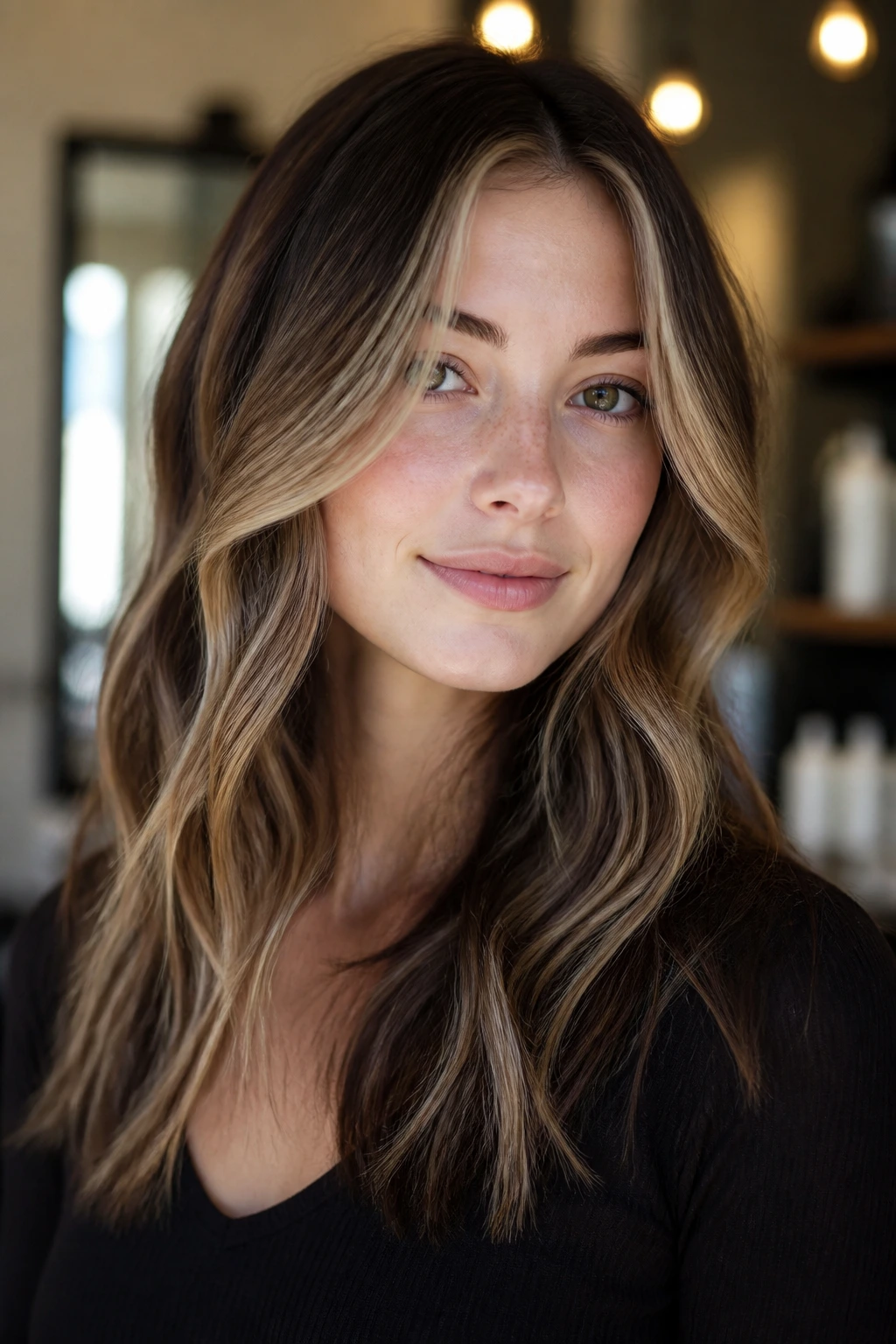
The Soft Bronde Shift: Add a few beige-brown ribbons to the front and keep the rest of the hair dark blonde or light brunette. This is good when you want brightness without a dramatic color change.
-
The Cool Smoke Edit: Lean into mushroom, taupe, and smoky walnut if your skin is very fair or pink-toned. The whole effect stays calm and modern.
-
The Warm Toast Version: Use chestnut, caramel, or maple if your skin carries peach or gold. The warmth can look especially good in waves.
-
The Dark Brunette Frame: Keep the base espresso or roast coffee and brighten only the face-framing slices. This is for people who want high contrast without blonde.
-
The Bang-Friendly Version: Add toffee or smoky walnut just to the fringe and front corners. It’s a small change, but it changes the way the eyes read against the hair.
Frequently Asked Questions
Will brown face-framing highlights look too harsh on pale skin?
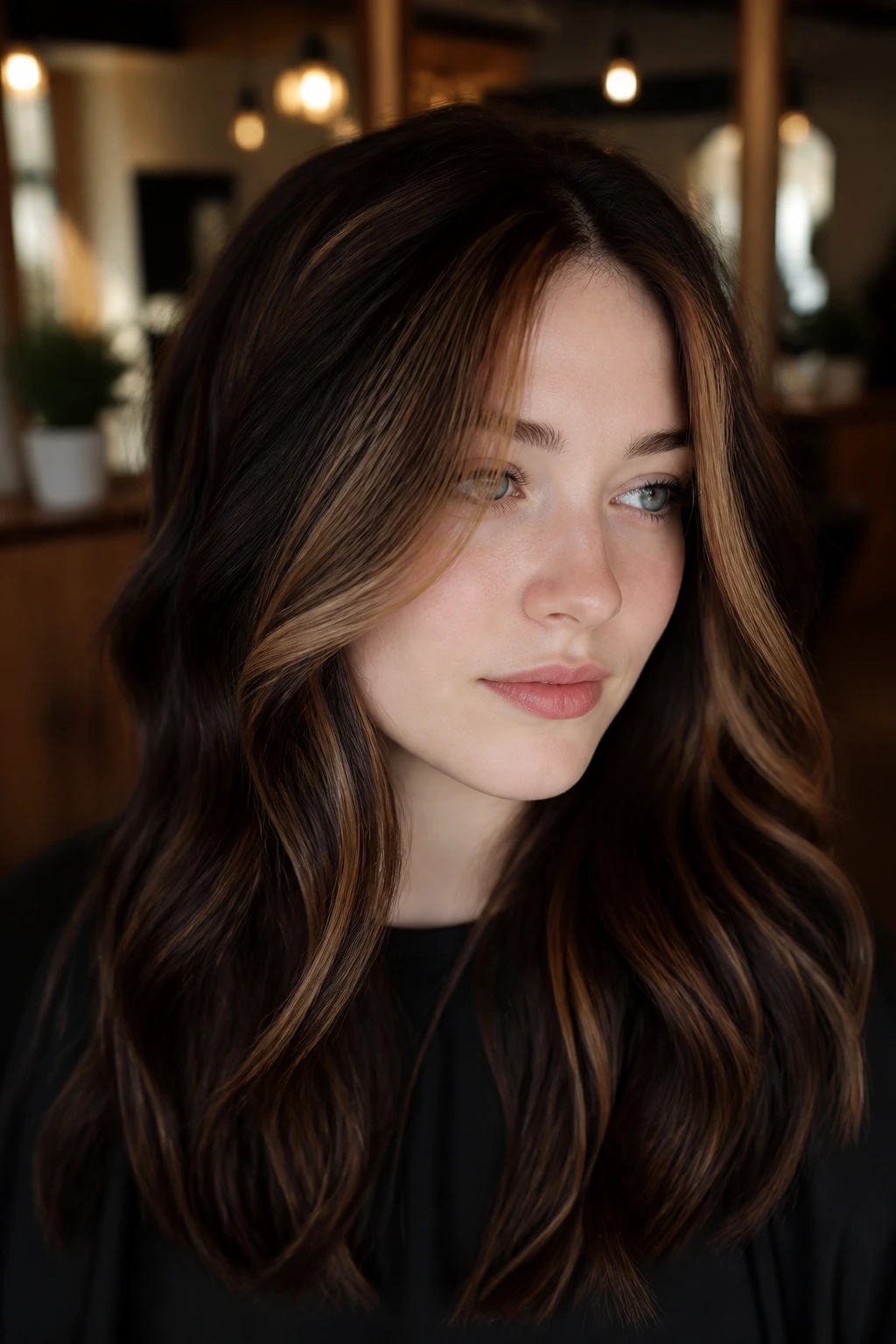
Not if the shade is chosen well and the placement is soft. Mushroom, taupe, mocha, and beige-brown usually stay gentle; espresso and deep chocolate need more blending so they do not look like a hard stripe.
What brown shade is best for fair skin with pink undertones?
Cooler browns usually work best: mushroom, ash brown, smoky walnut, and taupe. Those tones calm redness instead of throwing more warmth next to it.
Can I do this look without bleaching my hair a lot?
Sometimes, yes. If your base is dark blonde or light brunette, a gloss or a gentle lift may be enough for softer looks like mocha, chestnut, or beige brown. Darker fronts or stronger contrast usually need more lightening.
Do face-framing highlights work on short hair?
Absolutely. A bob, lob, or pixie-length grow-out can wear a narrow money piece or a side panel very well. On shorter cuts, placement matters more than color volume because the hair has less length to blend.
How often do brown highlights need toning?
Many front pieces need a gloss every four to six weeks if you want the shade to stay clean. If the color is deeper and cooler, you may get a little more time before brass shows up.
What if the highlights turn orange?
That usually means the tone was too warm or the hair lifted unevenly. A blue-toned gloss or a cooler beige glaze can calm the orange, but if the base lifted too far, the cleanest fix is a color correction appointment.
Can I ask for this if I already have blonde highlights?
Yes, and that’s one of the easiest ways to shift into a softer brunette look. The colorist can deepen the front with a brown gloss, add a root melt, and leave a few lighter threads for dimension.
Will this look flat on very fine hair?
It can, if the pieces are too wide or the whole front is painted the same level. Fine hair usually looks better with a narrow money piece, a soft root shadow, and a few lighter ribbons through the front layers instead of one solid block.
The Softest Kind of Contrast
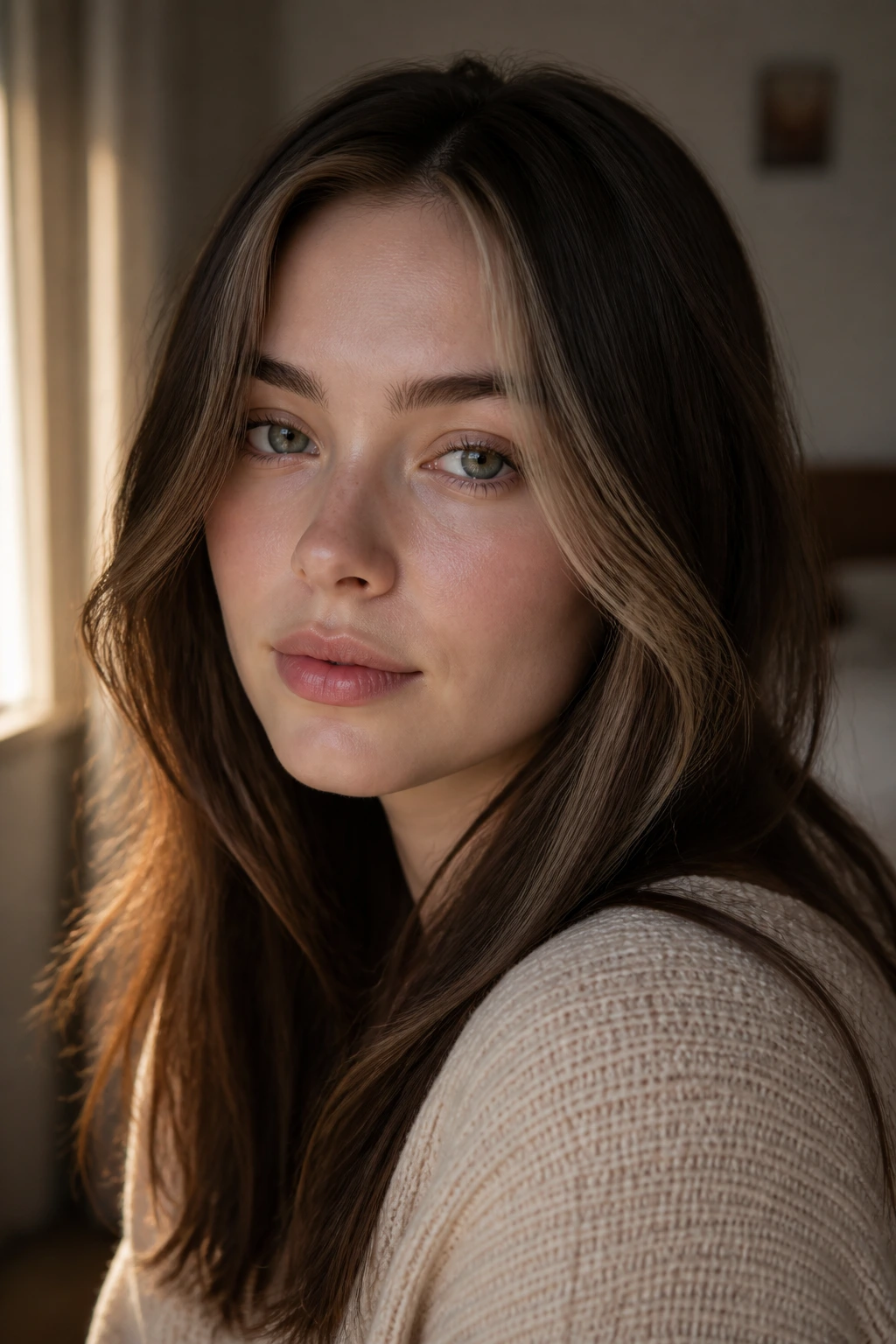
Brown face-framing highlights on pale skin work because they give the face structure without stealing the show. That’s the trick. The right brown does not shout over your complexion; it sits beside it, adds shape, and keeps the whole cut looking intentional even when the rest of the hair is left fairly natural.
The best version for you will come down to undertone, haircut, and how much maintenance you can live with. Mushroom and taupe stay cool and subtle. Chestnut, caramel, and maple bring warmth. Espresso and cocoa bring edge. Pick the one that matches the way you already dress, wear makeup, and style your hair, and the result stops looking like a trend and starts looking like your hair.