



Thick hair does not behave like polite hair on a wedding morning. It has weight, memory, and enough natural body to turn a simple knot into something with presence — which is exactly why the best hairstyles for weddings with thick hair feel sculpted rather than forced.
The trick is not shrinking the hair into submission. It’s choosing shapes that let the density work for you: a low chignon that doesn’t collapse, a braid that looks intentional instead of bulky, waves that stay full without turning frizzy at the ends. A style that looks tidy on fine hair can look flimsy on thick hair; the same style, built the right way, suddenly has structure. That’s the game here.
And weddings are unforgiving in a very specific way. You need a style that looks good in the mirror, from the side, from behind, under flash, in heat, after hugging six people, and again three hours later when somebody decides the dance floor is an idea worth pursuing. Thick hair can absolutely hold up through all of that. It just needs the right architecture.
Why These Styles Earn Their Keep
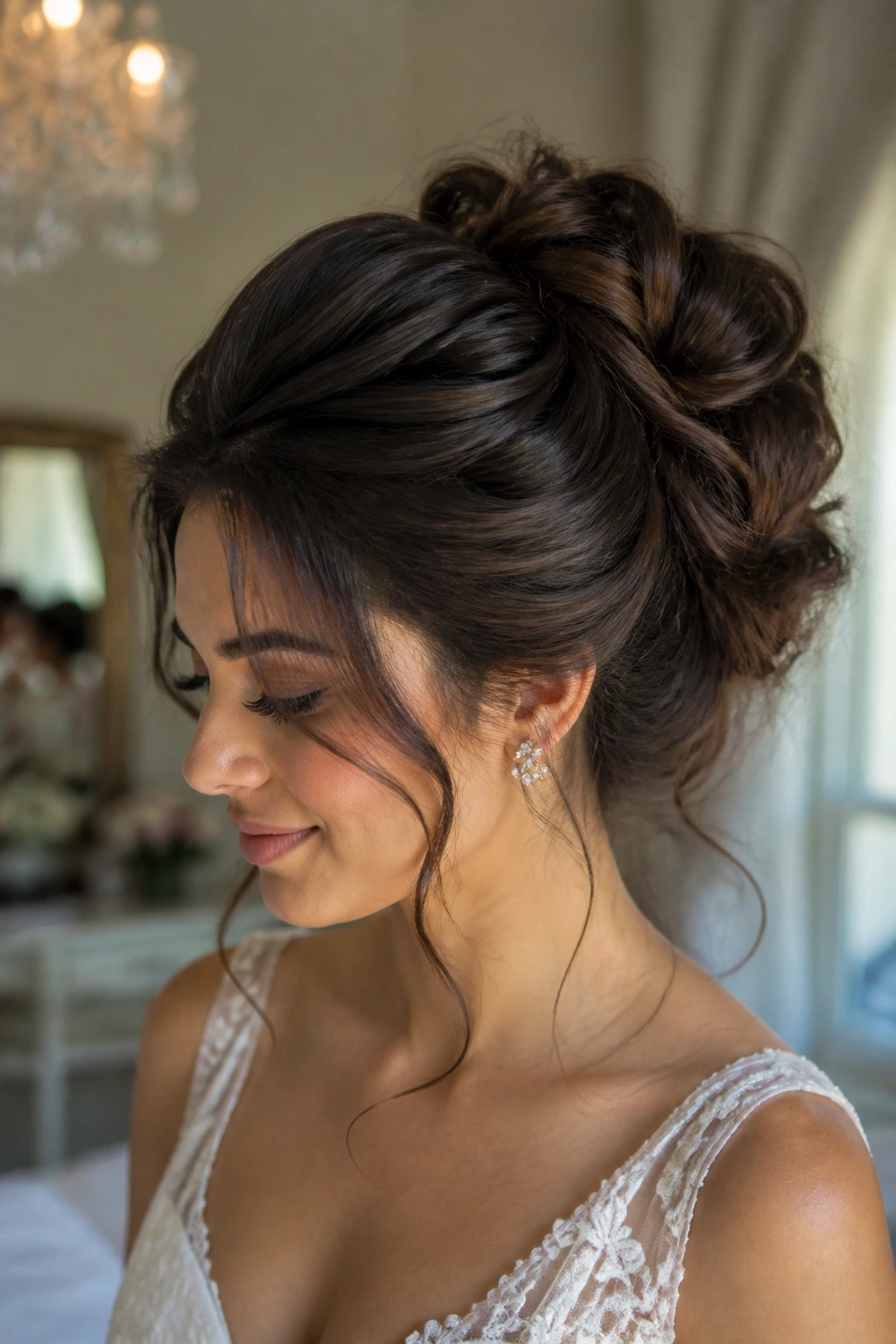
-
Built for density: Each look below uses thick hair as shape, not as a problem to hide, so the style keeps its body instead of going limp by cocktail hour.
-
Photo-friendly from every angle: These styles hold the nape, crown, and side profile in a way that still looks tidy when someone is photographing you from slightly below.
-
Veil and accessory ready: Several of the styles leave clean anchor points for combs, pins, clips, and veils, which saves a lot of awkward last-minute rearranging.
-
Comfort matters here: Thick hair can get heavy fast, so these looks spread the weight more evenly instead of loading up one spot on your scalp.
-
Works across textures: Straight, wavy, curly, and coily hair can all live in these shapes; the difference is in the prep, not the idea.
-
Not all-or-nothing: If you want softness, you’ll find it. If you want polished and formal, that’s here too. Thick hair has room to move both ways.
What Thick Hair Changes About Wedding Styling
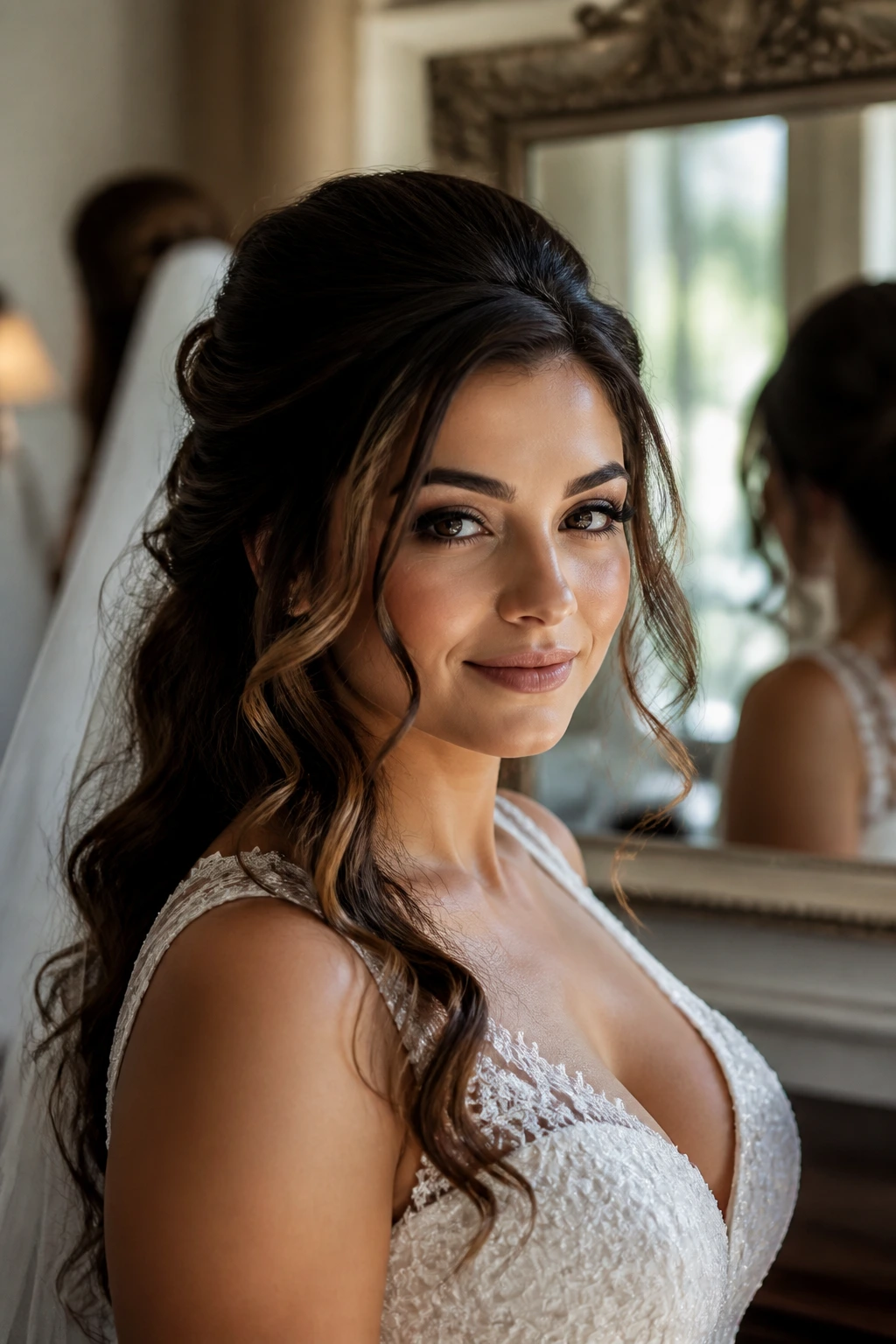
Thick hair changes the basic math. A style that sits prettily for an hour on fine hair can start sliding, puffing, or loosening on dense hair because there’s simply more weight pulling at every pin and elastic. That’s not a flaw. It’s physics.
The good news is that thick hair gives you more to work with. You can build real volume at the crown, create a braid that actually looks full, and shape a bun that reads as elegant instead of tiny. The catch is that the prep needs to be smarter. Smaller sections. Better anchors. Fewer shortcuts.
I also think thick hair benefits from restraint in the wrong places. People love piling product into it because they expect it to “tame” everything. Too much smoothing cream at the roots can make the whole style slip. Too much hairspray too early can leave the outside stiff while the inside stays too soft. The better approach is controlled prep: grip at the base, softness where the eye lands, and a final hold spray only after the shape is set.
One more thing. Thick hair often looks best when it’s not overworked. If the style has clean lines, a little movement, and a clear place for the eye to rest, the whole look feels expensive in the best sense of the word — not flashy, just finished.
Tools and Products Worth Having on the Counter
-
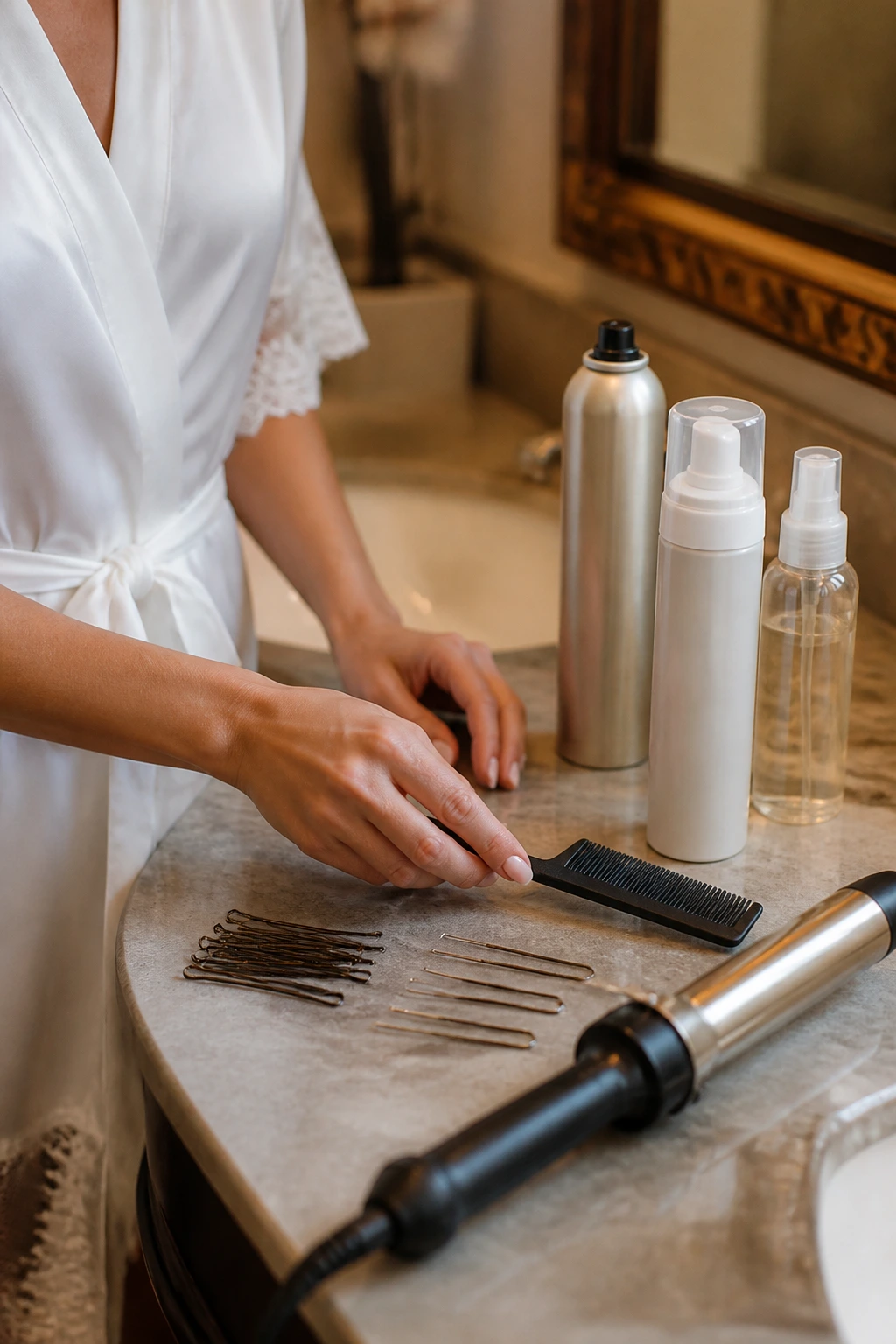
Tail comb: The pointed end makes clean parts and precise sectioning easier, which matters more with dense hair than people think.
-
Strong bobby pins in hair-match shades: Cheap pins that bend on the first try are a waste of time; sturdy ones hold the weight of thick sections much better.
-
U-pins: These are excellent for buns and twists because they disappear into the hair and anchor bulky sections without a visible pin line.
-
1-inch curling iron or wand: This size gives controlled curls that can be brushed into waves or left more defined, depending on the final shape.
-
Large-barrel curling iron: Better for soft Hollywood waves, a polished blowout finish, or those big bends that read formal instead of beachy.
-
Blow dryer with concentrator nozzle: Thick hair needs airflow directed where you want it, not a blast that scatters it everywhere.
-
Heat protectant: Non-negotiable if you’re using hot tools. Thick hair can take a lot, but the cuticle still needs protection.
-
Lightweight mousse or root-lift spray: A little grip at the roots helps the style hold without making the surface crunchy.
-
Flexible-hold hairspray: I like this better than the shellac look. You want movement and hold, not a helmet.
-
Texturizing spray: Useful for braids, twists, and updos because it gives the pins something to grab.
-
Smoothing cream or anti-frizz serum: Use it sparingly on the mid-lengths and ends when the look calls for shine and polish.
-
Hair elastics that won’t snag: Small, strong elastics are better than decorative ones for the hidden structure under a braid or ponytail.
-
Decorative pins, combs, or a veil comb: Buy these after the shape is chosen, not before. A pretty comb that won’t sit flat is just a headache in a nicer package.
1. Low Wrapped Chignon with Soft Crown Lift
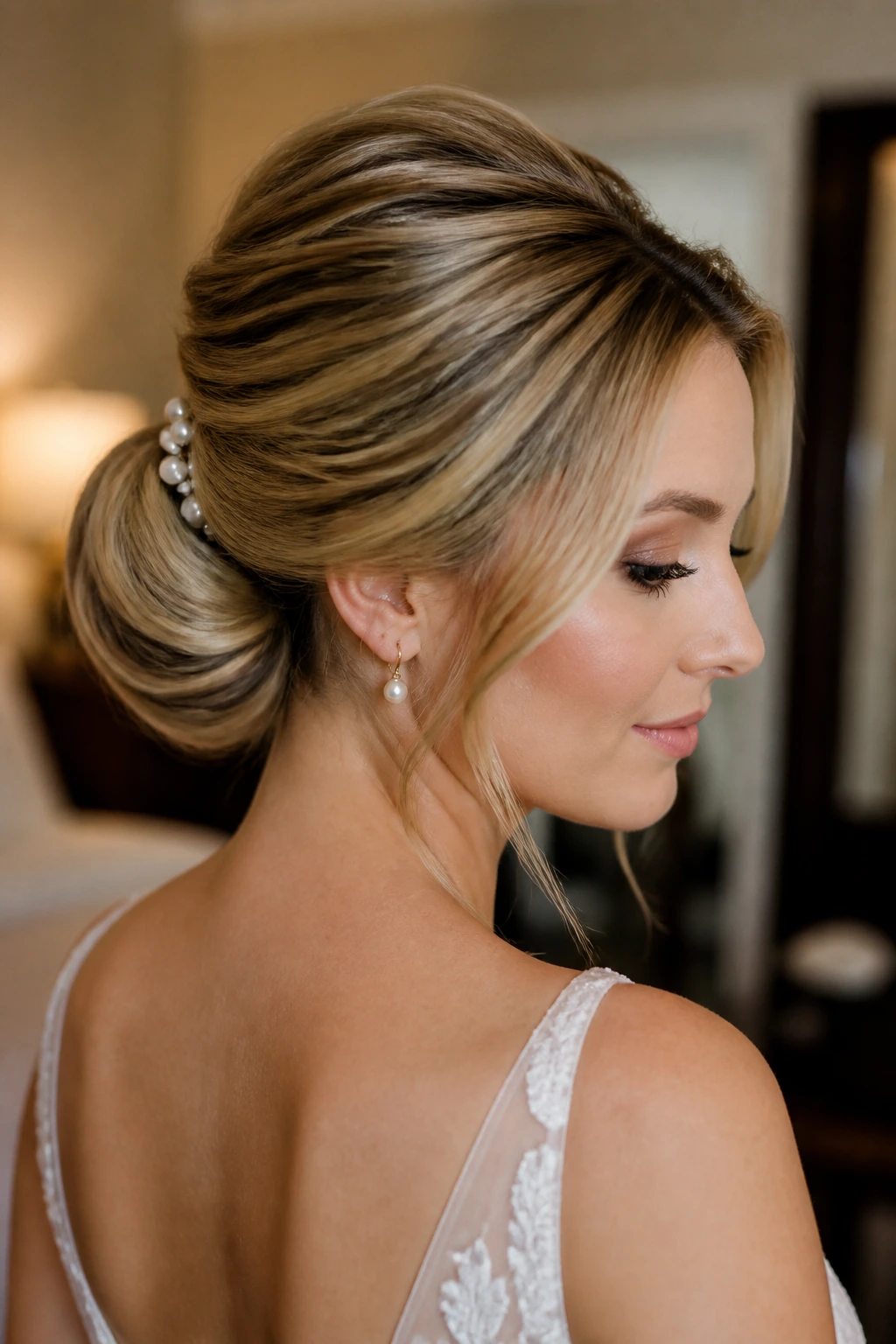
A low wrapped chignon is one of those styles that never tries too hard and still looks expensive. On thick hair, it has real body at the nape, so the bun doesn’t shrink into a sad little knot by the time the vows are over. The crown lift keeps it from looking severe. That lift matters.
Why It Works on Thick Hair
Thick hair gives this style a built-in cushion, which means you don’t need tons of padding or filler. The fullness you already have becomes the shape. If your hair is long enough to gather cleanly at the nape, this style will feel steady, secure, and surprisingly comfortable.
I like it for dresses with open backs and neat necklines. The bun sits low enough to show the dress without fighting it. Add a pearl pin or two, and it turns formal fast.
Best use: classic ceremony, church wedding, black-tie reception.
Watch for: over-tightening the crown. You want lift, not a pulled-back forehead.
2. Old-Hollywood Side Waves
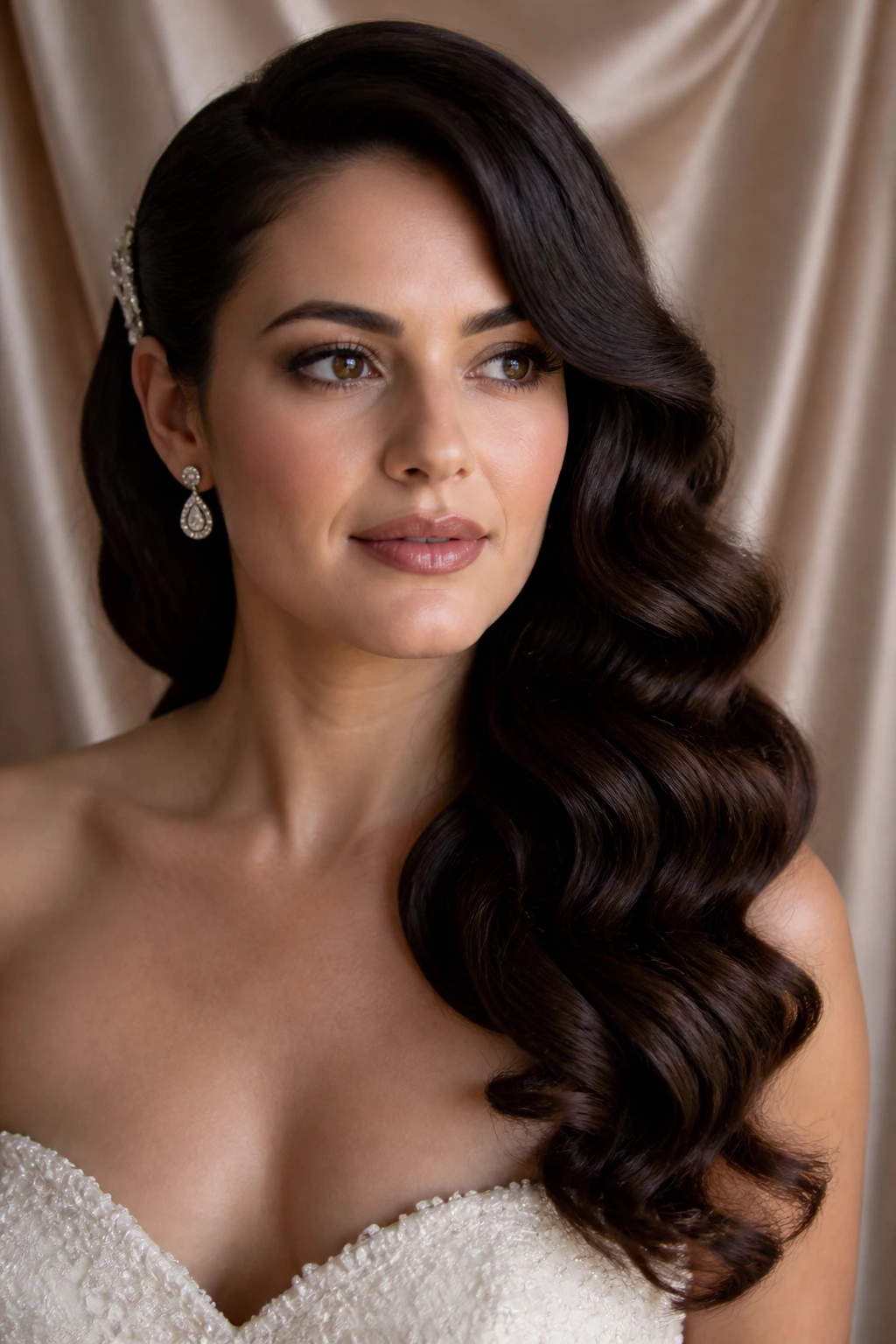
Side-parted waves have a real old-film glamour to them, and thick hair is one of the few hair types that can carry the drama without going flat halfway through the reception. The brush-out has to be deliberate. Big curls set first, then softened into a wave pattern that falls in one clean direction.
The reason this style works is simple: thick hair holds shape better once the bend is set. You get that wide, glossy curve through the ends, and the result doesn’t look wispy or underfed. It’s especially good if you want your hair down but still formal enough for satin, velvet, or beaded fabric.
Best way to wear it
Keep one side tucked behind the ear with a jeweled clip or a small comb. That opens the face and keeps the waves from swallowing your earrings. If your hair is very heavy, ask for a hidden pin under the tucked side so the whole shape doesn’t drift by the time you’re sitting for dinner.
3. Braided Crown into a Low Bun
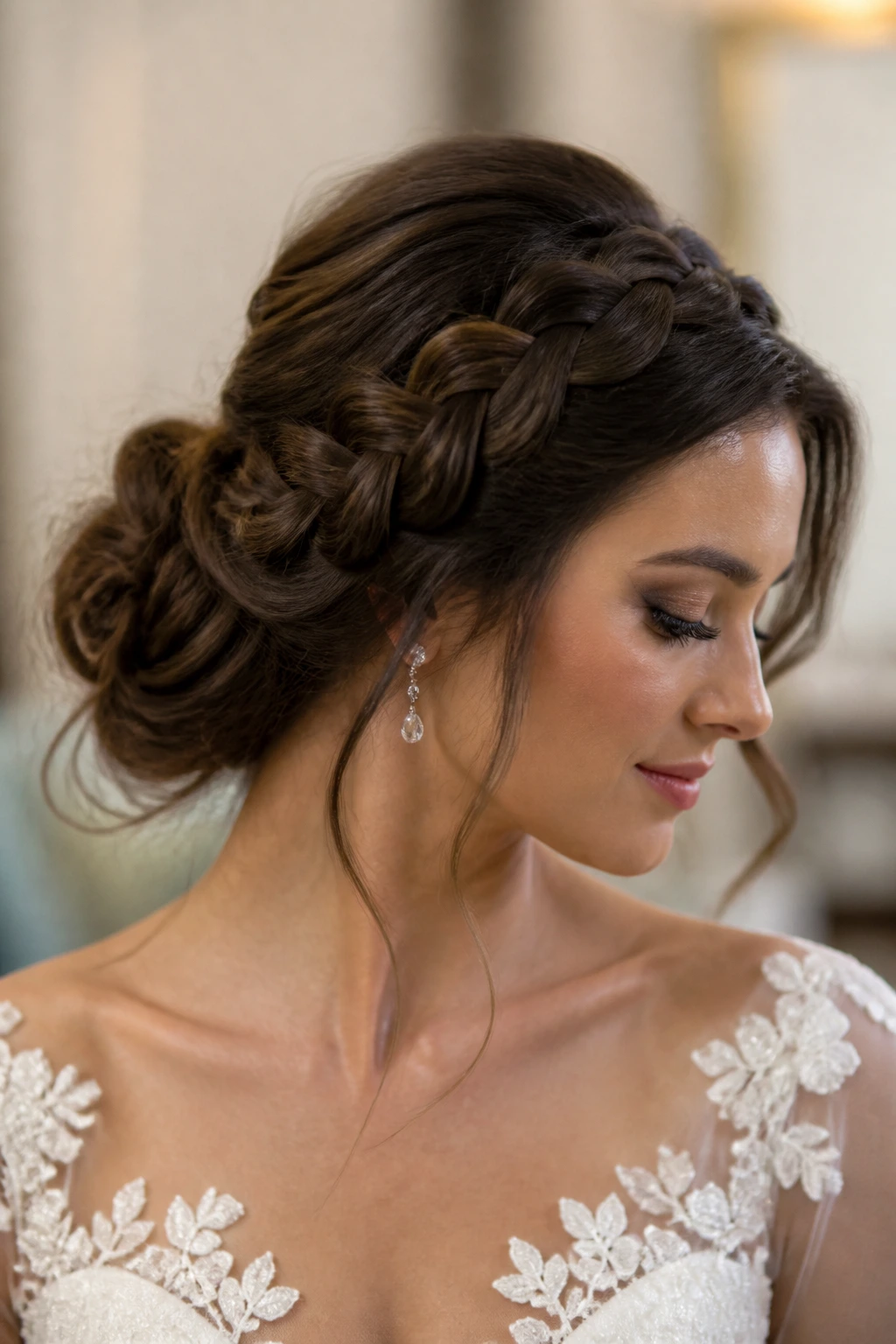
This is the style I trust when a bride wants romance but also wants her hair to stay put. The braid at the crown handles the bulk near the hairline, and the low bun at the base gives the look a clean finish. Thick hair makes the braid feel substantial instead of skinny, which is half the battle.
The real value here is structure. A crown braid controls the top half of the head, where thick hair loves to puff up. The bun anchors the rest. Together, they make a style that feels composed from front to back.
A small note: keep the braid a touch looser than you think. If you pull it too tight, thick hair can bulge around the edges and the whole thing starts to look harder than it needs to. Softening the braid with your fingers before pinning helps a lot.
4. Twisted Half-Up with Cascading Curls
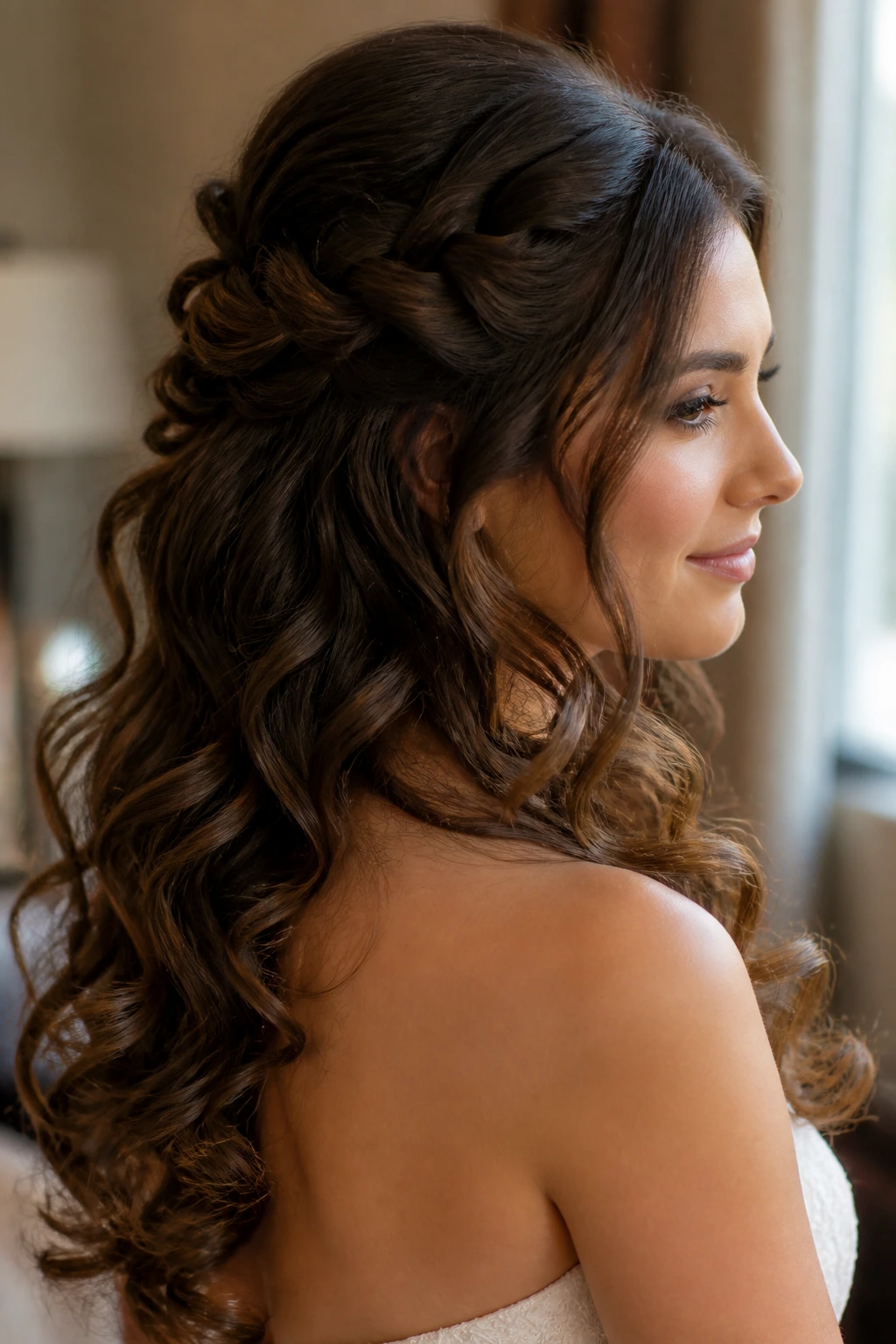
If you want to show off length, this is one of the best choices. Thick hair has a richness that can get lost when everything is pinned up, and a twisted half-up style lets the hair stay open while still controlling the top section. The twists keep the crown neat. The curls carry the softness.
How to keep it from falling flat
Curl the lower half in medium sections — not tiny ones. Thick hair needs enough heat and enough shape for the curls to read in photos. Once the curls cool, brush them just a little with your fingers, not a paddle brush. The goal is a wave with body, not a blown-out cloud.
This one suits dresses that have detail at the waist or bodice because the hair doesn’t compete with the neckline. It also works if you want the back of the dress to show. The style feels feminine without turning precious.
5. Sleek Center-Part Low Knot
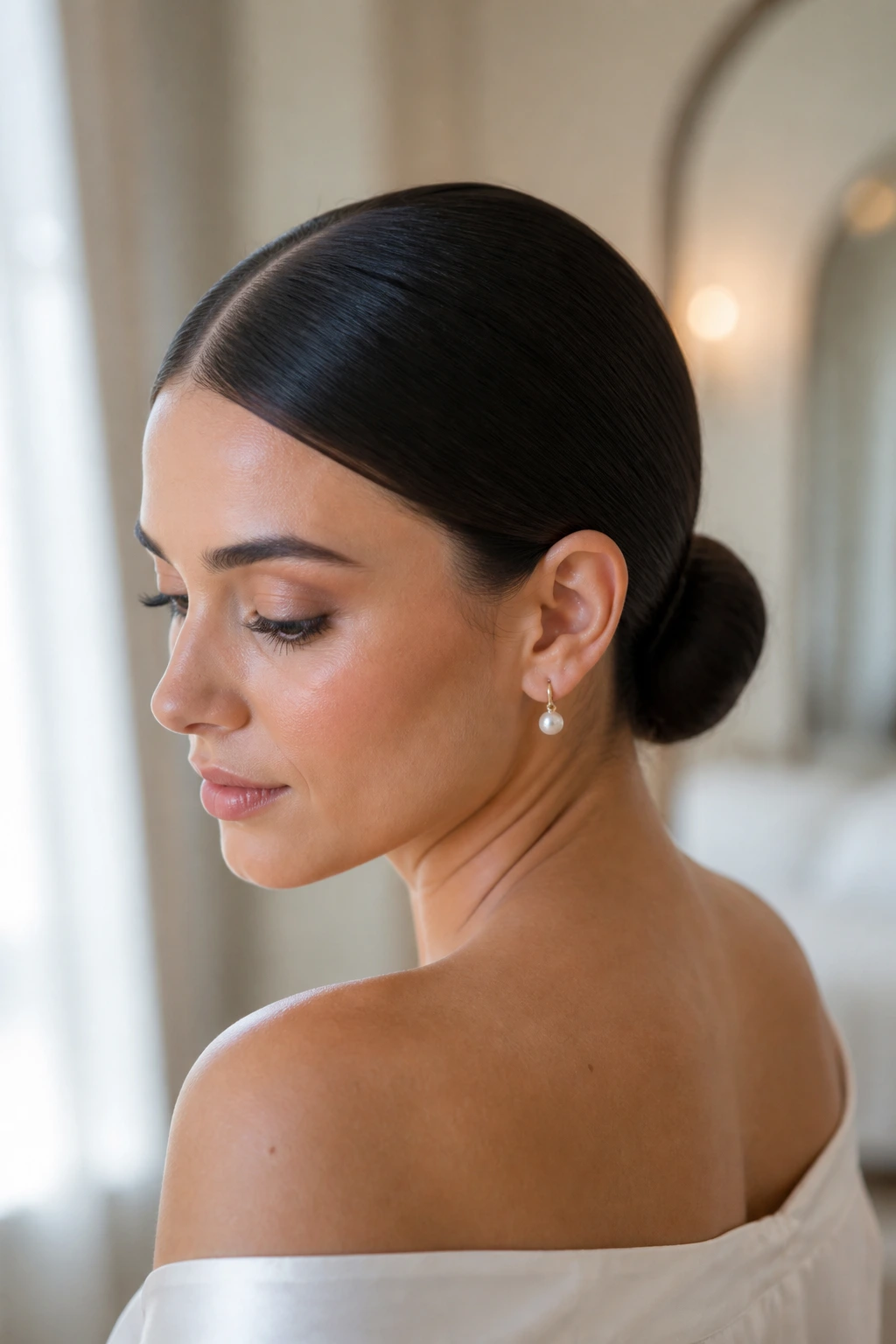
A sleek center part sounds simple, but on thick hair it’s more about control than simplicity. The part has to be straight, the surface has to be smooth, and the knot at the nape needs enough internal support to keep from sinking under its own weight. Done well, it looks sharp. Really sharp.
This is the style for brides who like clean lines and don’t want movement fighting the dress. Thick hair actually helps here because the knot has enough volume to look intentional. You’re not trying to manufacture fullness. It’s already there.
I’d pair this with minimal jewelry and a dress that has strong shape — square neck, bateau neckline, something tailored. Too many extras can clutter the look. Let the hair be the quiet line that holds everything together.
6. Voluminous French Twist
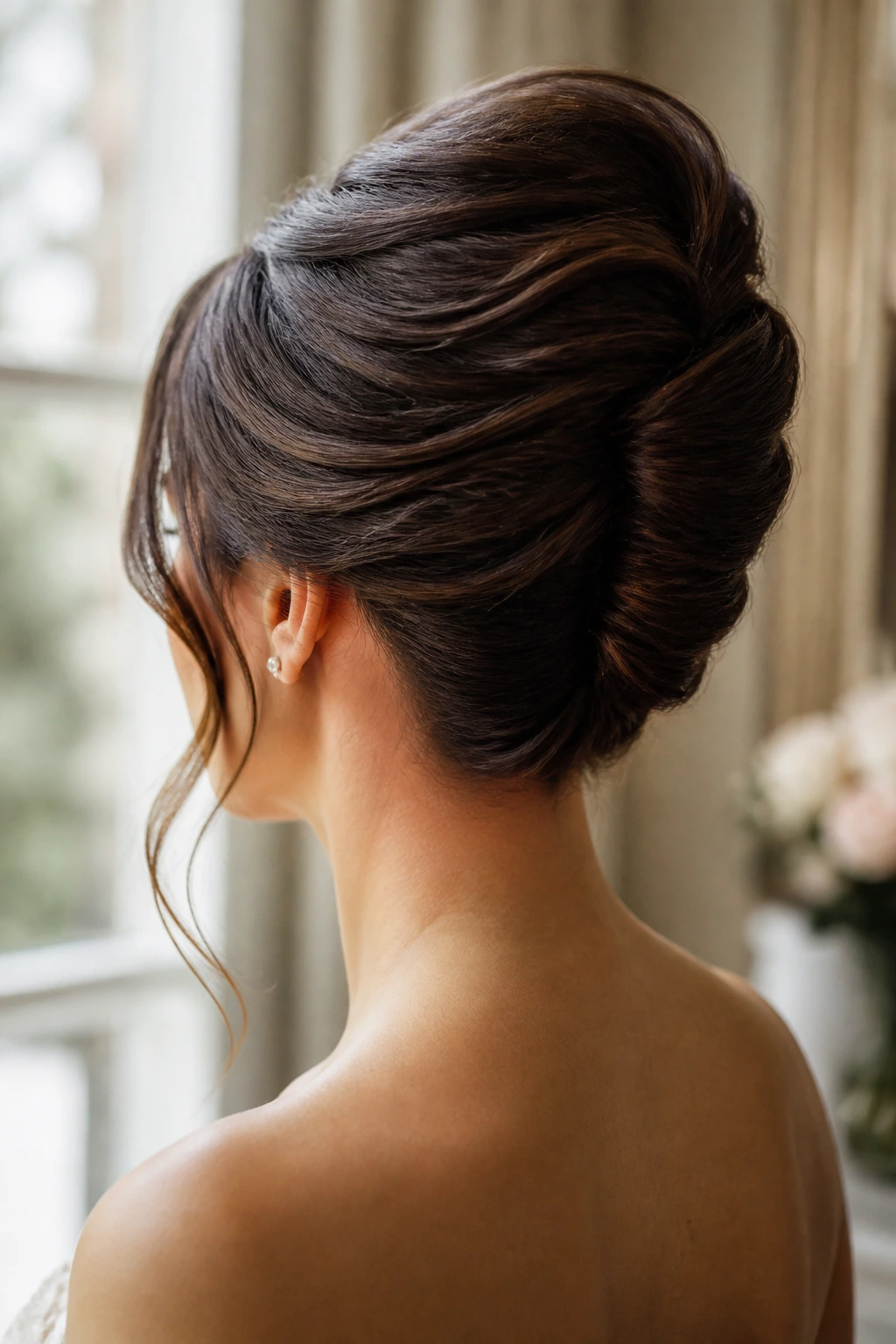
A French twist and thick hair have a long, happy history together. The style needs enough material to create that vertical sweep at the back, and dense hair gives it exactly that. It also helps the twist look architectural rather than thin. Fine hair can struggle here. Thick hair doesn’t.
The trick is to build the base first and smooth the outer layer only at the end. If the hair is too slippery, the twist won’t stay. A little texture spray at the mid-lengths gives the pins something to grip. From there, the shape should rise cleanly up the back of the head, with the ends tucked and hidden.
This is one of the more formal choices on the list. It looks excellent with a high neckline or a gown that already has a strong silhouette. There’s no need to over-accessorize. The twist itself is the statement.
7. Bubble Ponytail with Wrapped Sections
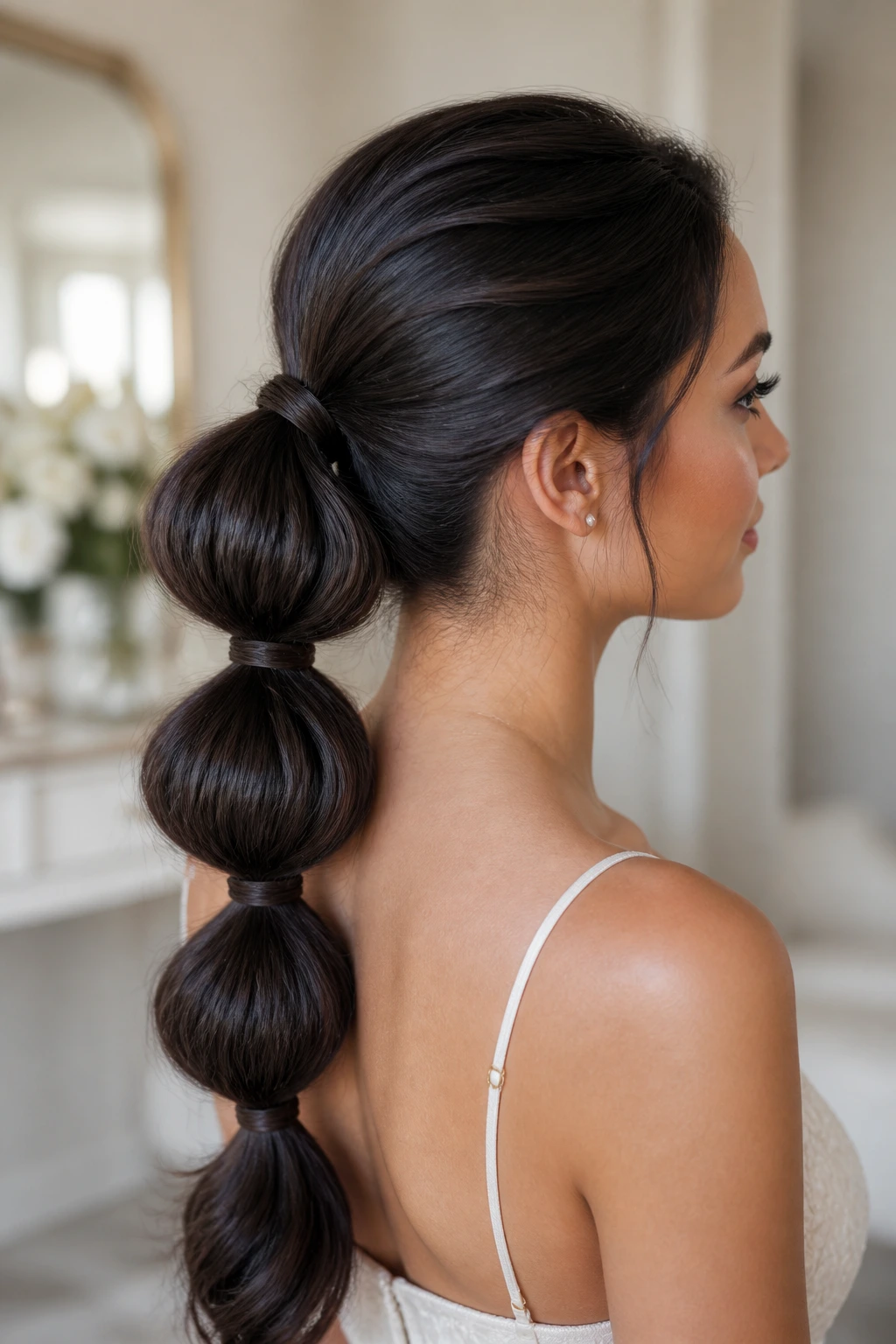
A bubble ponytail can look playful if it’s done loosely and sits too high, but a low, polished version is another story. With thick hair, each section has enough substance to make the “bubbles” read cleanly instead of collapsing into soft lumps. Wrapped sections between each elastic make it feel more formal right away.
Why it doesn’t feel casual
The key is tension. Not pain-level tight, just controlled. Smooth the hair at the crown, secure the base low at the back of the head, and then space the elastics evenly so every bubble has the same width. Thick hair gives the shape a nice roundness that thinner hair has to fake.
I like this one for modern dresses, clean necklines, and brides who want something a little different without wandering into trendy-for-trendy’s-sake territory. A slim ribbon or a pearl-wrapped elastic can quiet the look down and make it feel wedding-ready fast.
8. Side-Swept Braid into a Low Bun
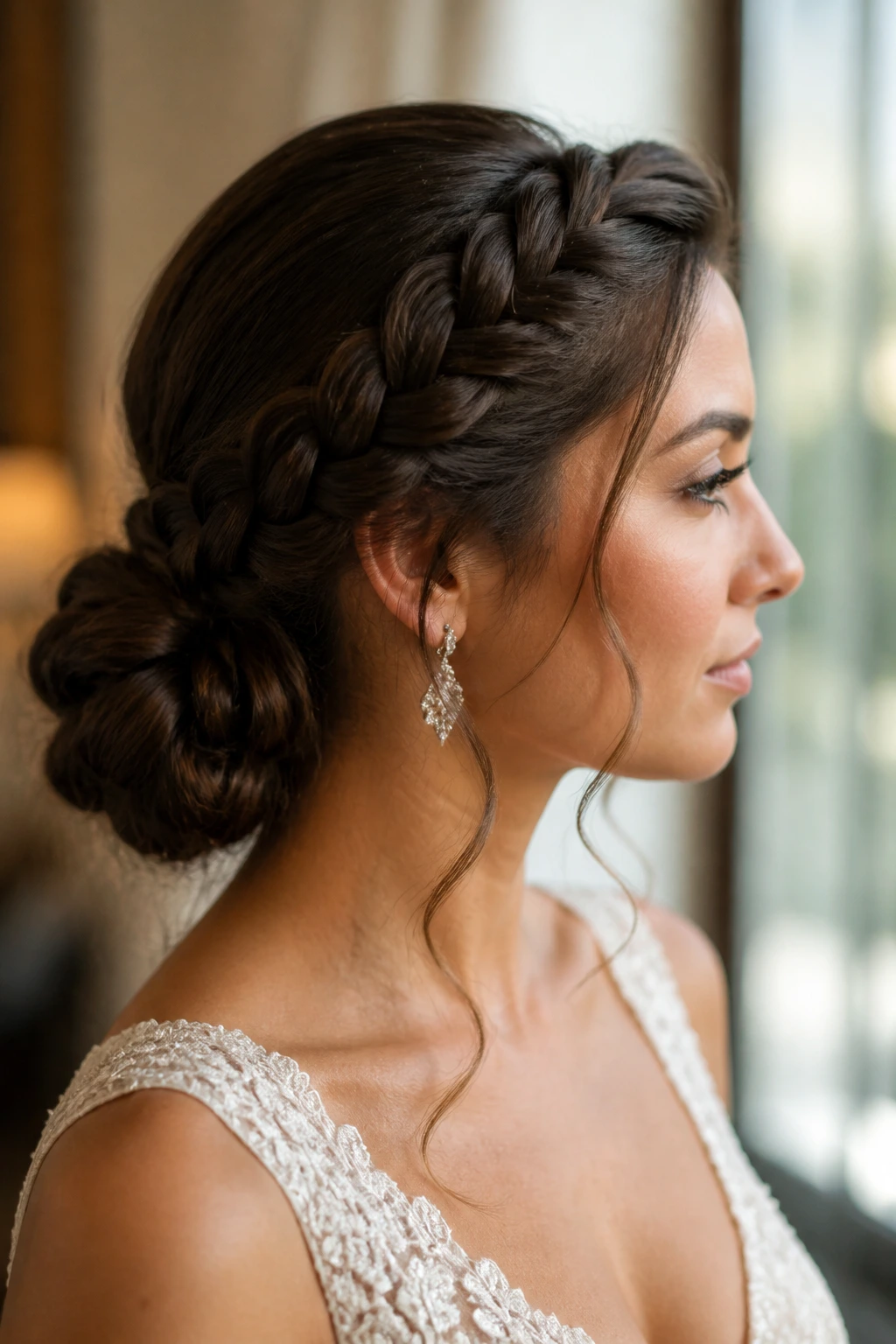
This style has a nice visual arc. The braid sweeps across the head, pulls the eye toward the side, and then disappears into a low bun. Thick hair makes the braid look full and dimensional, which keeps the style from feeling flat in profile. It also balances a face well, especially if the gown has one exposed shoulder or a strong asymmetric detail.
The bun at the bottom is useful because it contains the length without making the braid do every bit of the work. That matters on dense hair. The braid handles the visual interest. The bun handles the weight.
A touch of texture spray before braiding helps the sections stay defined. After the braid is pinned, gently widen the plaits with your fingers. Not too much. You want soft thickness, not frizz.
9. Smooth Blowout with Tucked Ends
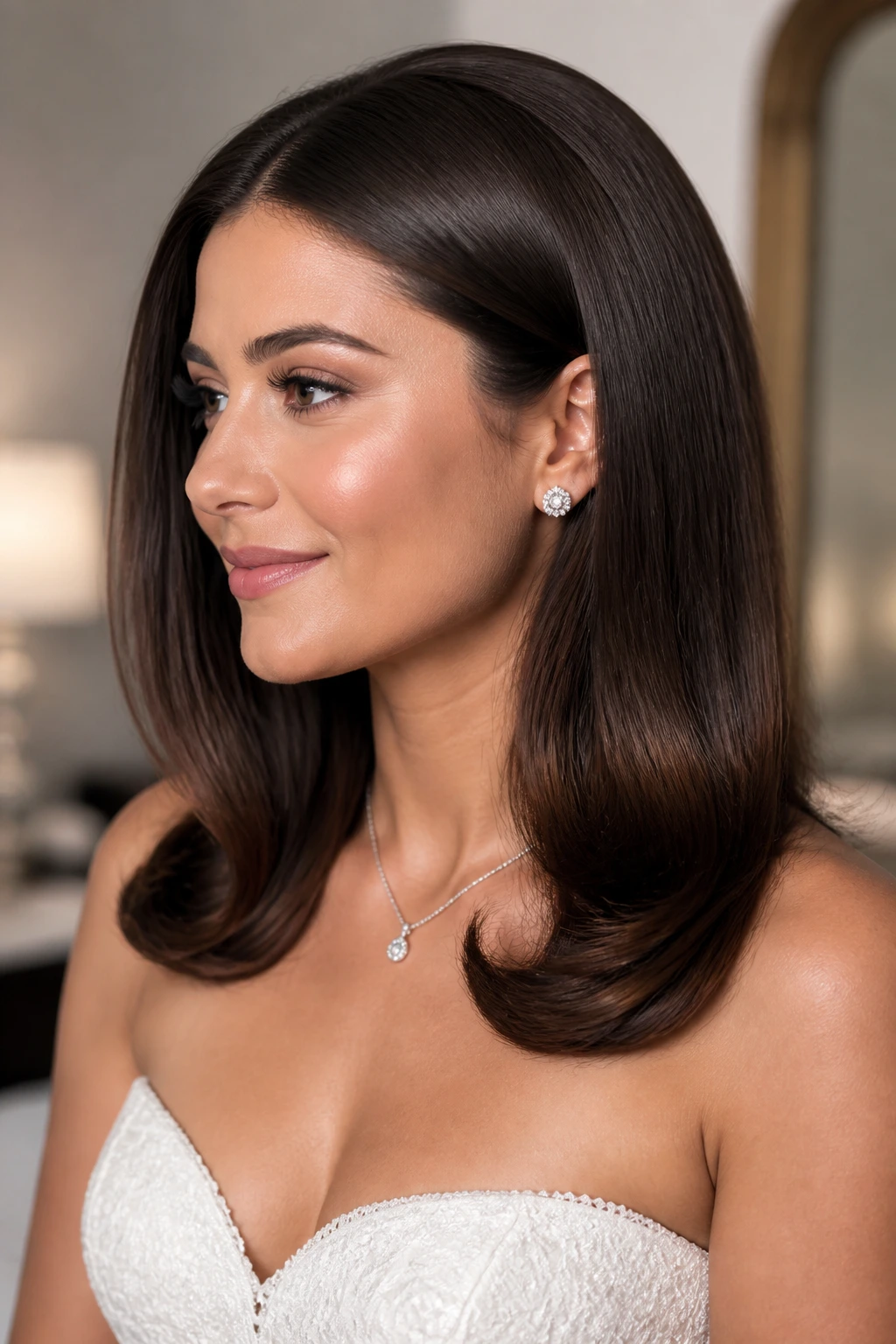
Not every wedding style has to be pinned up to the ears. A polished blowout can look formal on thick hair if the ends are shaped cleanly and tucked under just enough to keep the line neat. The shine matters here. So does the bounce.
Thick hair is good at holding a blowout shape, especially if it’s dried in sections with a round brush. The style works because the body is distributed from root to end instead of all sitting in one knot. It’s elegant, but it still moves when you walk.
I’d call this a strong choice for brides who want their hair down and their neckline open. Tuck one side behind the ear, then pin a small section back if you need to show earrings or keep the face open. It looks relaxed, but not loose.
10. Waterfall Braid over Loose Lengths
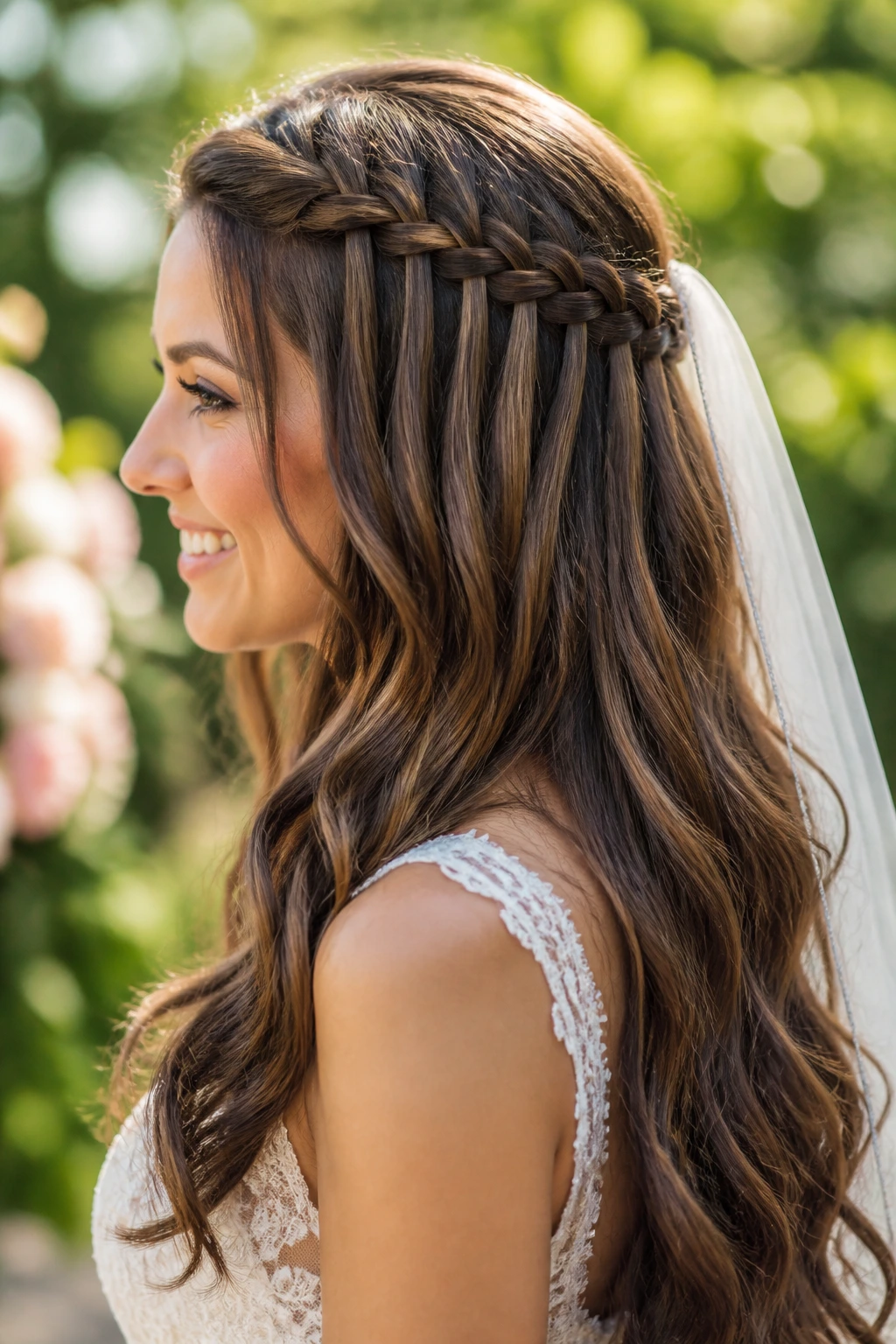
A waterfall braid gives thick hair a kind of woven softness that looks beautiful with long lengths underneath. The braid sits like a frame across the head, and the falling strands create that soft, romantic edge people like for outdoor or garden ceremonies. Thick hair helps because the braid has enough mass to stay visible without becoming chunky.
The part most tutorials skip
The braid needs to be slightly loose from the start. If you pull every section tight, thick hair fights back and the edges stick out. A relaxed braid also lets the loose lengths move naturally instead of feeling locked down. That movement matters when the rest of the hair is down.
This is a lovely choice if you want to keep some texture around the face but still have a bit of structure. Pair it with a half-veil or a small comb placed just behind the braid. It feels thoughtful, not busy.
11. Sculpted Ballerina Bun
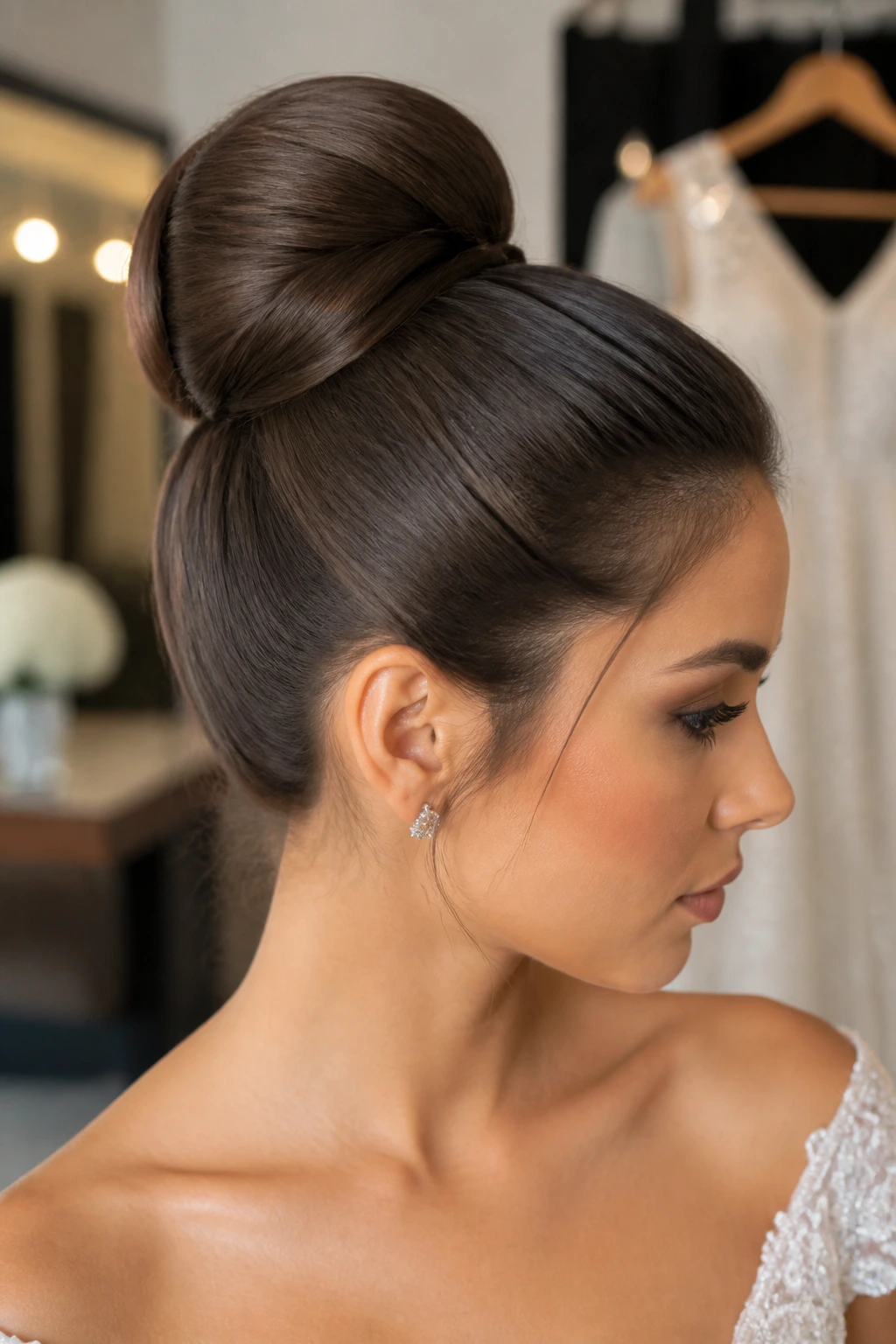
A sculpted ballerina bun has a different energy than a soft chignon. It sits centered, clean, and deliberate, which makes it a strong match for formal gowns and thick hair that can handle a bit of discipline. There’s a reason dancers rely on this shape. It stays put.
The bun benefits from dense hair because it has enough material to look full without stuffing or padding. If your hair is long enough, a twisted base helps keep the circle neat and centered. Then you tuck and pin until the outline is smooth. I’d use U-pins here more than standard bobby pins. They spread the hold better.
This one asks for confidence. No flyaway chaos, no half-measures. But if you want a formal, polished silhouette that won’t fight a dramatic dress, it’s one of the strongest options in the whole set.
12. Half-Up Rosette Twist
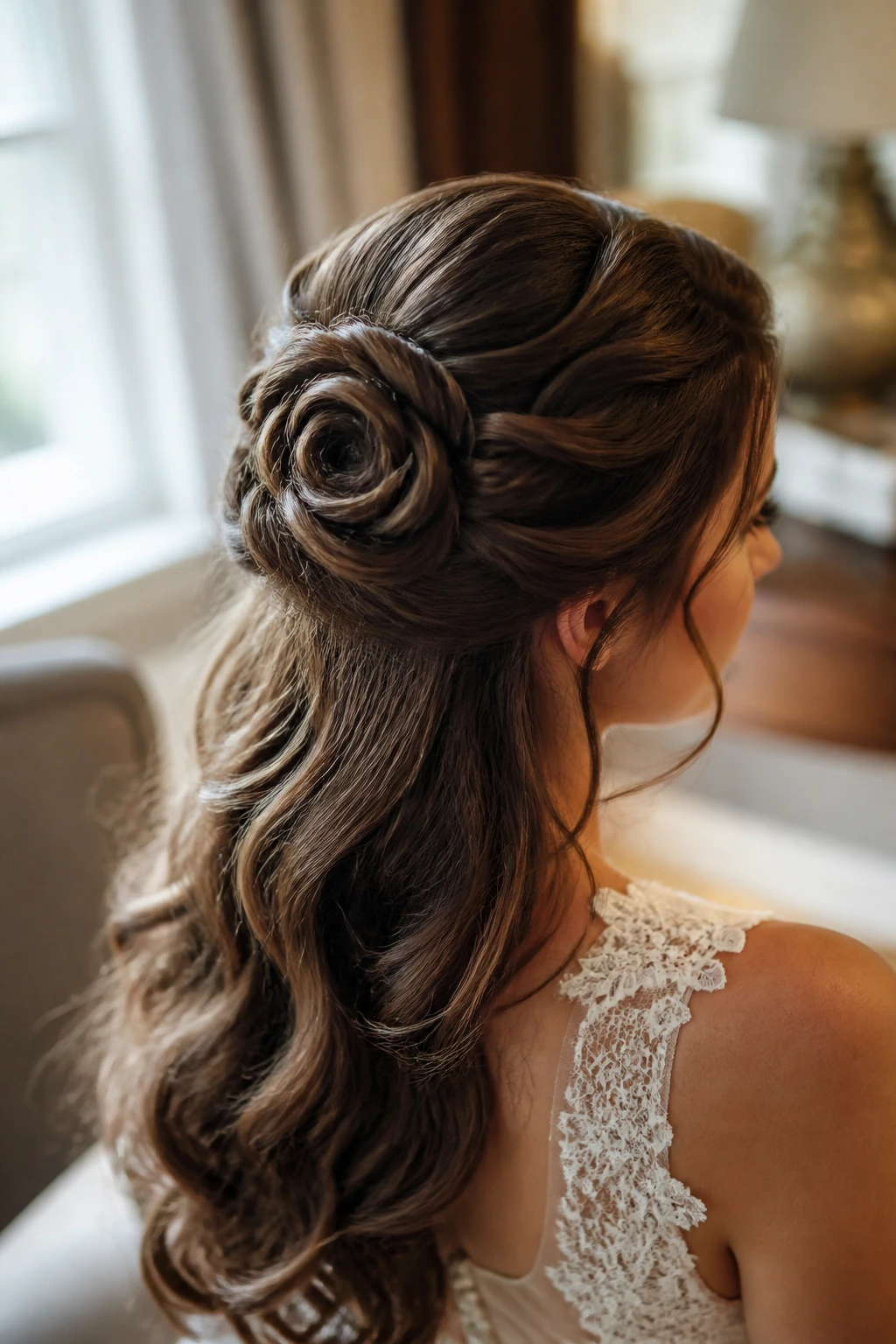
A half-up rosette twist turns sections of hair into soft rolled loops at the back of the crown, almost like tiny flowers built from the hair itself. Thick hair is useful here because every twist has enough body to look distinct, not squashed. The effect is romantic in a way that still feels controlled.
I like this style because it gives you detail near the top of the head without losing all your length. That balance matters on dense hair. If you pin everything up, some brides feel stripped of the volume they love. If you leave everything down, the hair can overwhelm the dress. This sits in the middle.
Keep the lower length in loose curls or a brushed wave. The contrast between the sculpted top and the soft bottom is what makes the style interesting. If you’re using a veil, place the comb below the rosettes so the top detail stays visible.
13. Soft Halo Bun
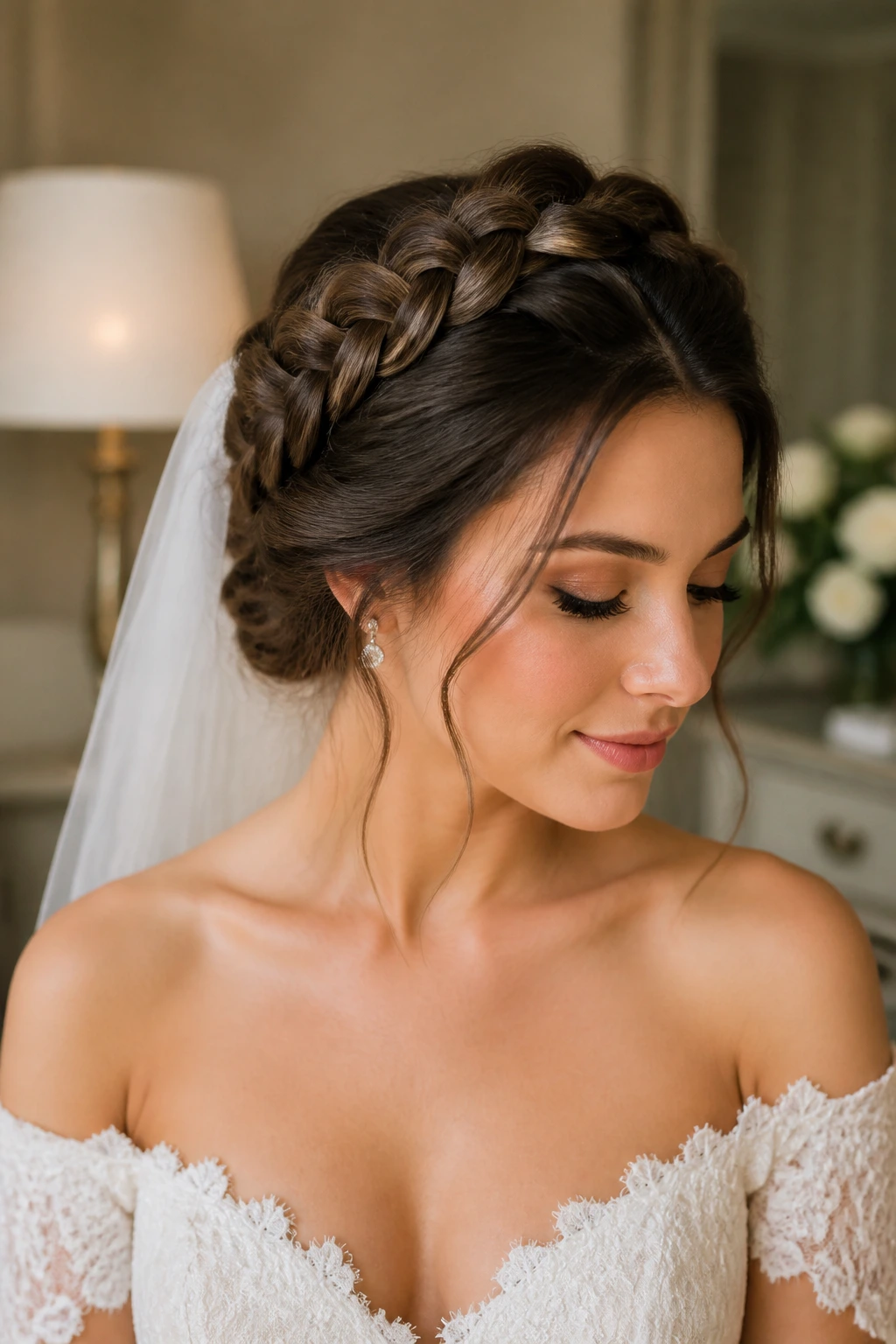
A halo bun has a slightly ethereal feel, but it needs real structure to stay pretty rather than fuzzy. Thick hair helps because the braid or twist around the crown has enough body to create a visible frame. The bun itself sits low and soft, which keeps the look from becoming too rigid.
Where it shines
This is one of the best options if you want a style that supports a veil. The crown framing gives the veil a natural place to sit, and the low bun doesn’t compete with the comb. It’s also very good for dresses with lace backs or detailed shoulders because the hair stays out of the way while still looking finished.
If your hair is especially dense, don’t skip sectioning. Build the crown shape in smaller segments, pin as you go, then loosen the outer edges a little with your fingers. The final shape should feel like a circle, not a helmet.
14. Romantic Low Ponytail with Veil Anchor
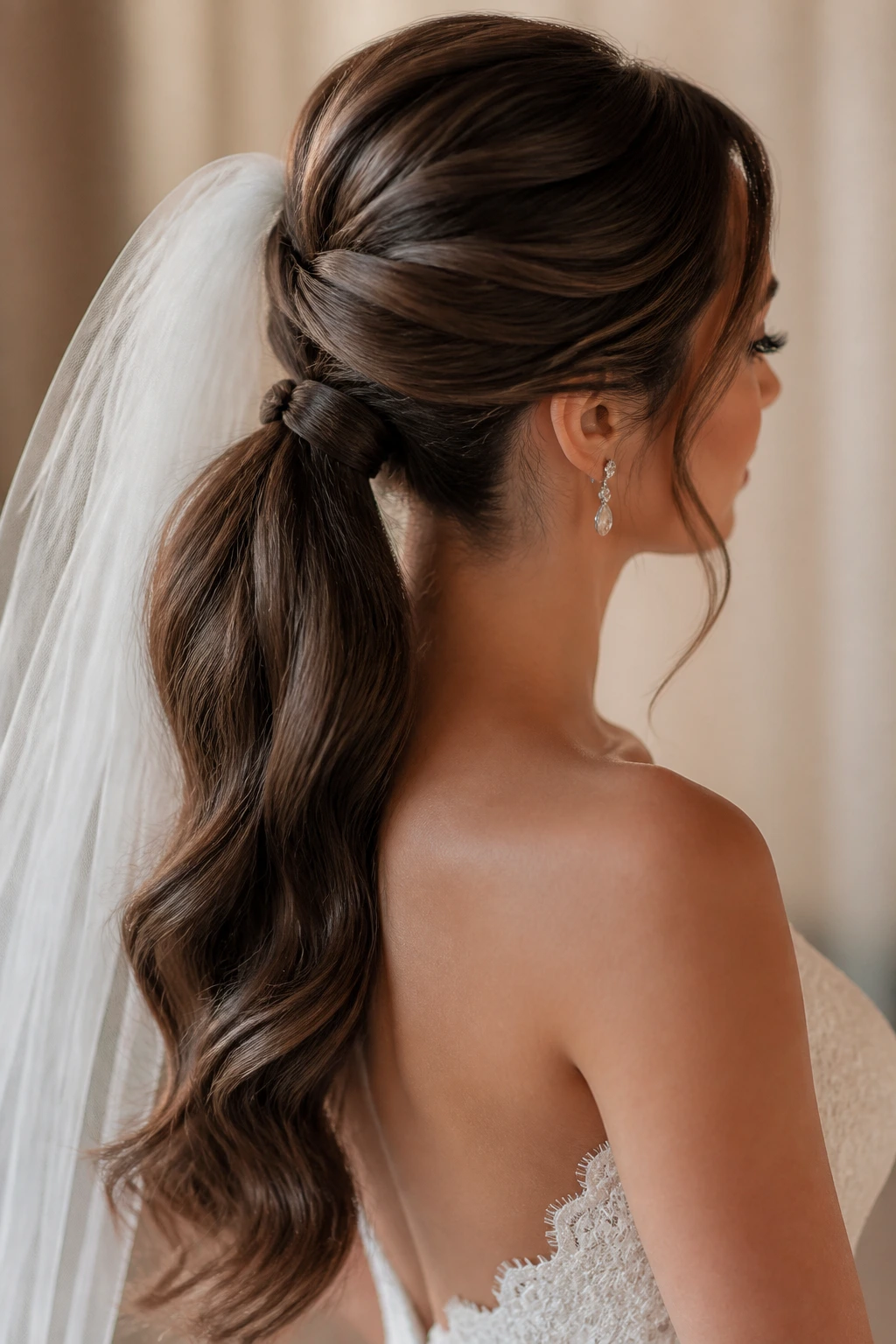
A low ponytail sounds plain until you give it some structure. On thick hair, the ponytail has enough fullness to look deliberate, especially when the top is smoothed and the ends are curled or waved. A wrapped base hides the elastic and makes the whole thing read more formal.
The reason this works for weddings is the balance between ease and polish. You get a clean face line, a neckline that stays visible, and enough length to keep the hair from feeling over-managed. Add a veil comb above the ponytail or just at the base of the crown, and the style becomes ceremony-ready fast.
I’d use this for gowns with clean lines or a deep back. It doesn’t steal attention from the dress. It supports the dress. That’s a nice distinction.
15. Gibson Tuck with Face-Framing Pieces
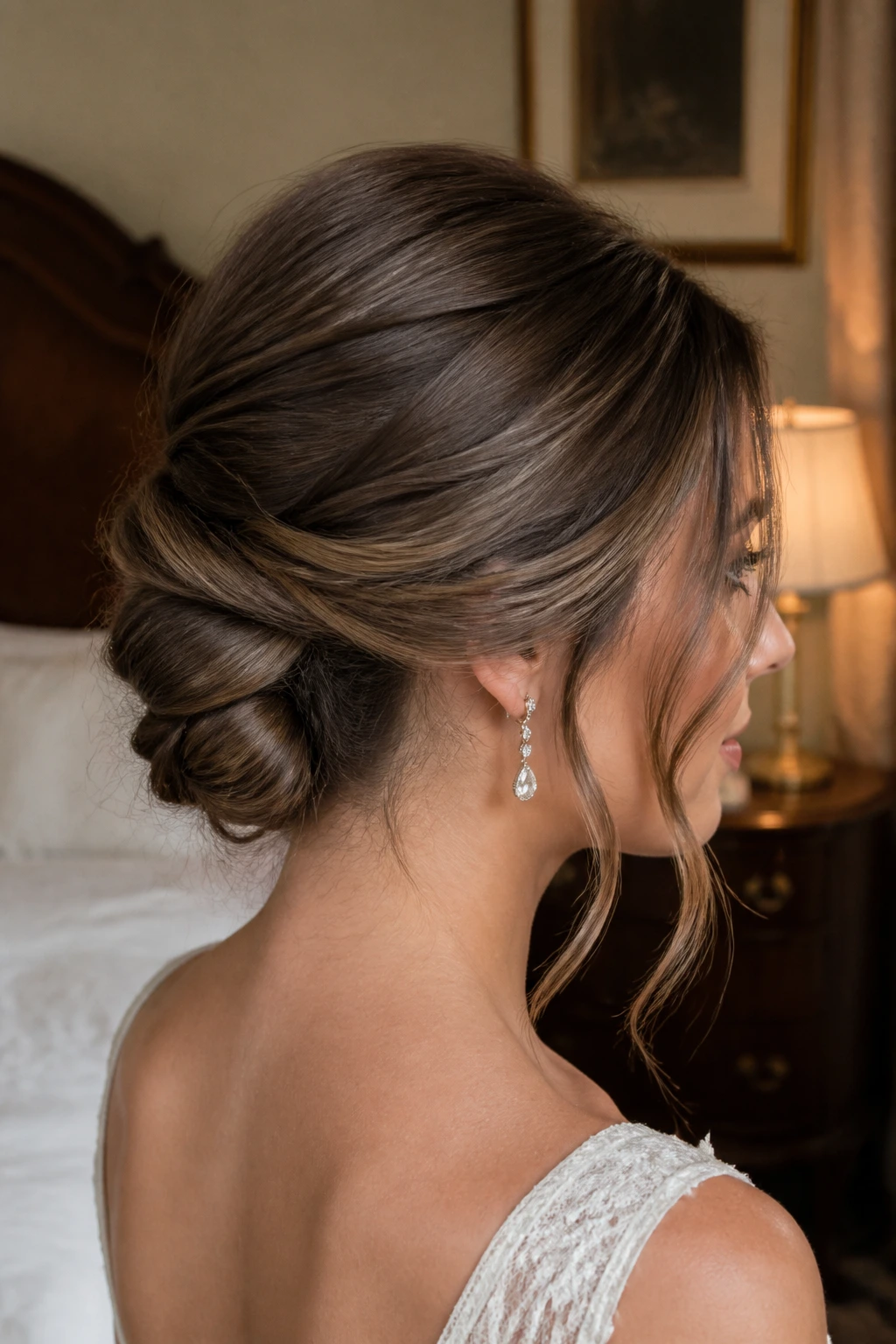
The Gibson tuck is one of those vintage styles that deserves more airtime. Thick hair makes it easier because there’s enough material to roll and tuck without the shape looking thin or cramped. Leave a few face-framing pieces out, and the whole thing softens immediately.
It’s a good choice if you want elegance without the stiffness of a fully slicked-updo. The tucked roll at the back keeps the length controlled, while the loose pieces keep the front from feeling severe. I especially like it with lace, satin, or a dress that has a little old-world flavor.
A light mist of texturizing spray before rolling helps the tuck hold. Don’t make the front pieces too curled. A soft bend is enough. Too much curl and the style can start to look dated in a hurry.
16. Textured Topknot with a Braid Base
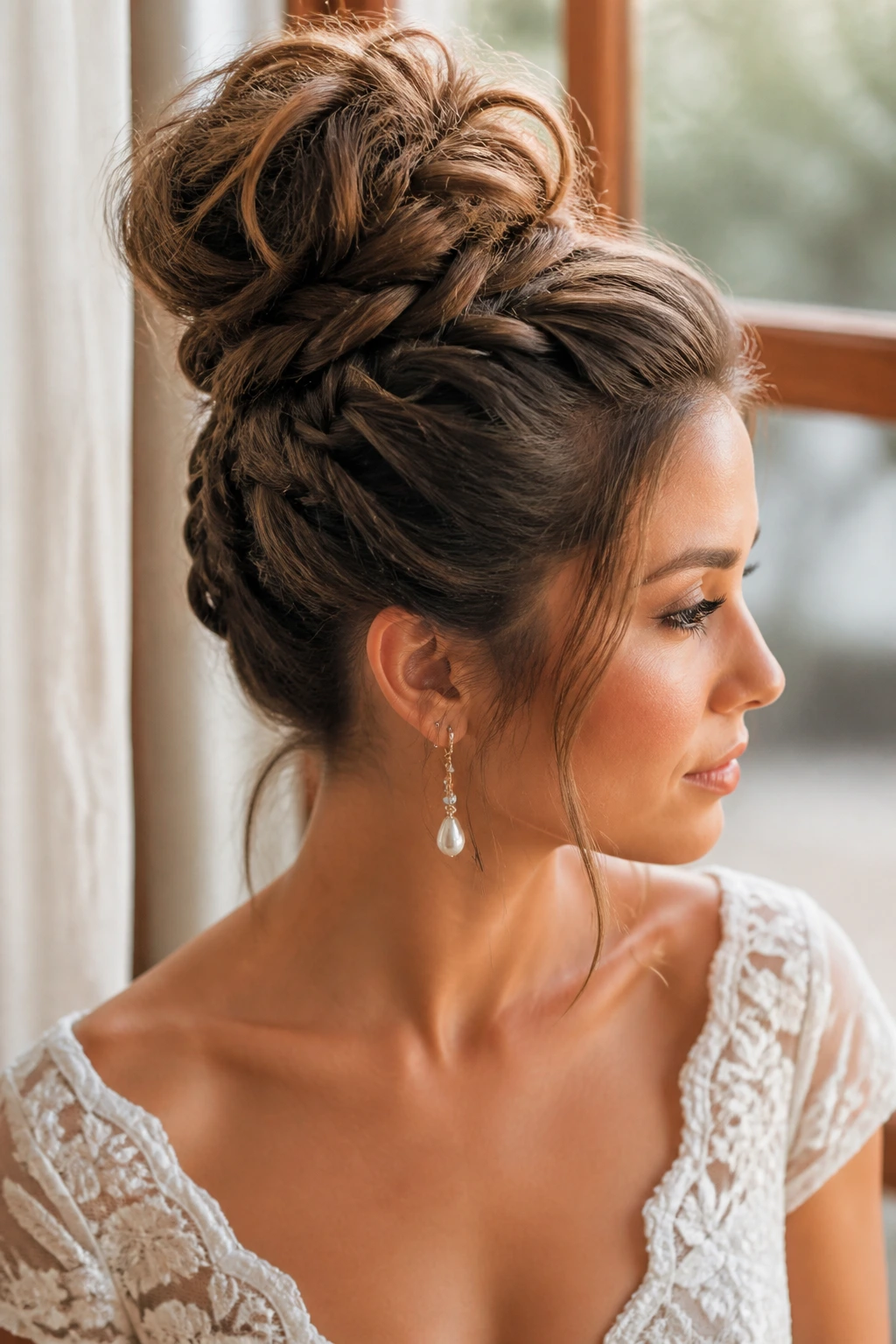
A topknot can go wrong on a wedding day if it looks like you threw your hair up before running errands. A textured, carefully built version is a different animal. Thick hair gives it the bulk it needs to look deliberate, and a braid at the base adds a little hidden structure where the bun meets the head.
Why this is more formal than it sounds
The height lifts the face and clears the neck, which is useful with high collars or dresses that have embellished backs. The braid base keeps the knot from looking like a plain twist of hair. Use a few pins crossed through the braid before wrapping the bun, and the shape holds better than people expect.
This is one of the best options if you know you’ll be moving around a lot. It keeps the hair off the neck, and thick hair often feels lighter when it’s gathered high rather than left to drag over the shoulders. That part matters more than most brides admit.
17. Side Chignon with Deep Wave
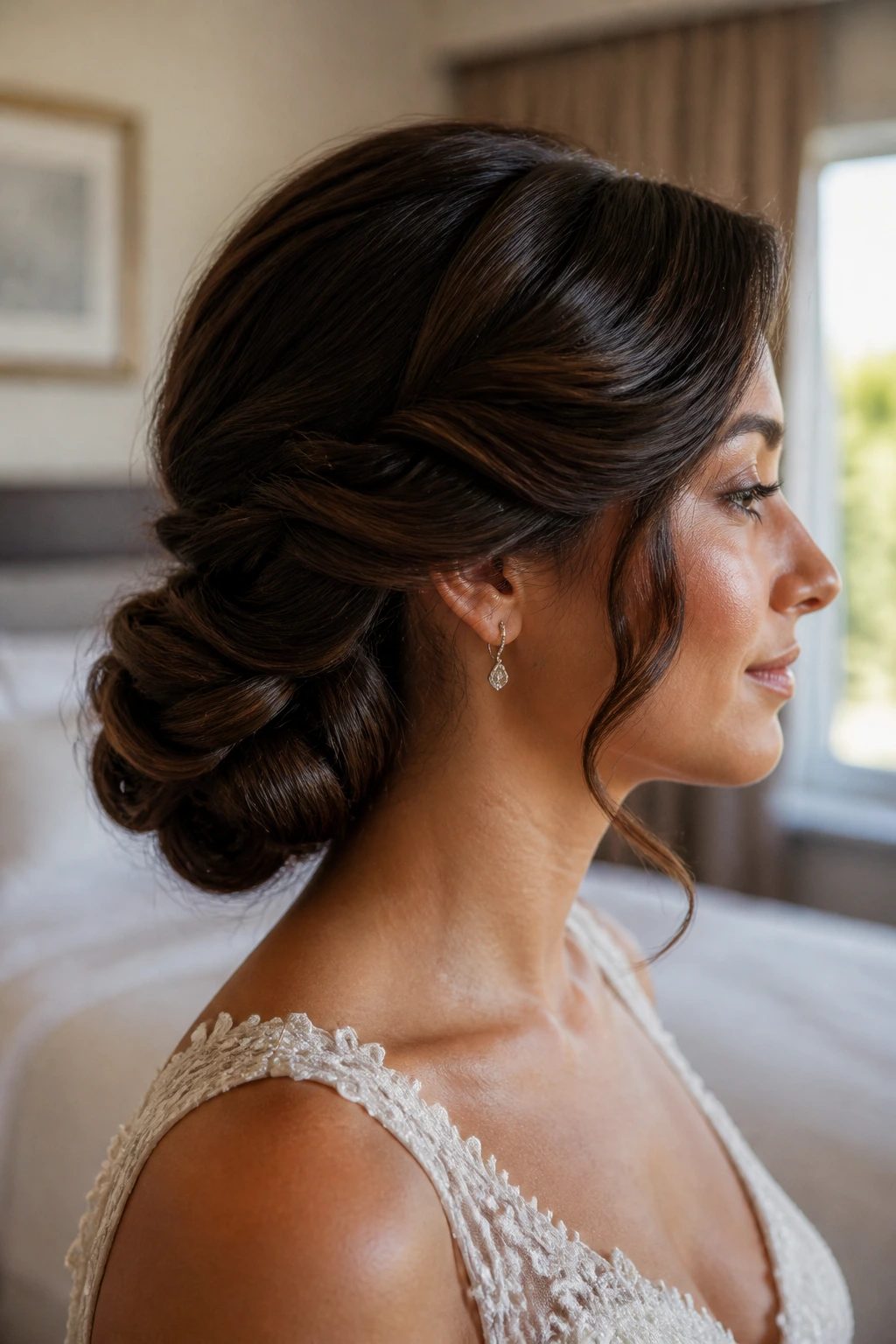
A side chignon gives you asymmetry, which is useful if the dress already has a strong shape. Thick hair lets the chignon sit full and rounded at one side, while a deep wave across the top and front keeps the style soft instead of severe. The result feels polished with a little personality.
I like this for off-shoulder gowns, one-shoulder designs, or any dress where you want the hair to frame one side of the face more than the other. The wave should be smooth enough to read from a distance. Not too tight. Not too airy. A clean sweep.
The side placement also helps balance very thick hair, especially if the length is long enough to feel heavy when gathered straight back. That slight offset changes the whole silhouette.
18. Loose Fishtail Braid Over One Shoulder
A fishtail braid can look delicate, but on thick hair it gets a richer, more visible texture. When you drape it over one shoulder, it becomes a real focal point. This isn’t a hairdo that disappears in photographs. The weave has enough depth to show up clearly.
What makes it wedding-ready
The braid has to be loosened carefully after it’s secured, not fluffed into a halo. Thick hair already gives you body, so you don’t need to exaggerate it. A soft face-framing tendril or two keeps the braid from feeling too strict. If the dress has a lace neckline or a detailed bodice, the braid can sit quietly and let that detail show.
I’d call this a smart choice for brides who want a braid but do not want anything that feels rustic or casual. The trick is in the finish. A braid can be elegant if it’s neat at the roots and soft through the length.
19. Twisted Low Bun with Pearl Pins
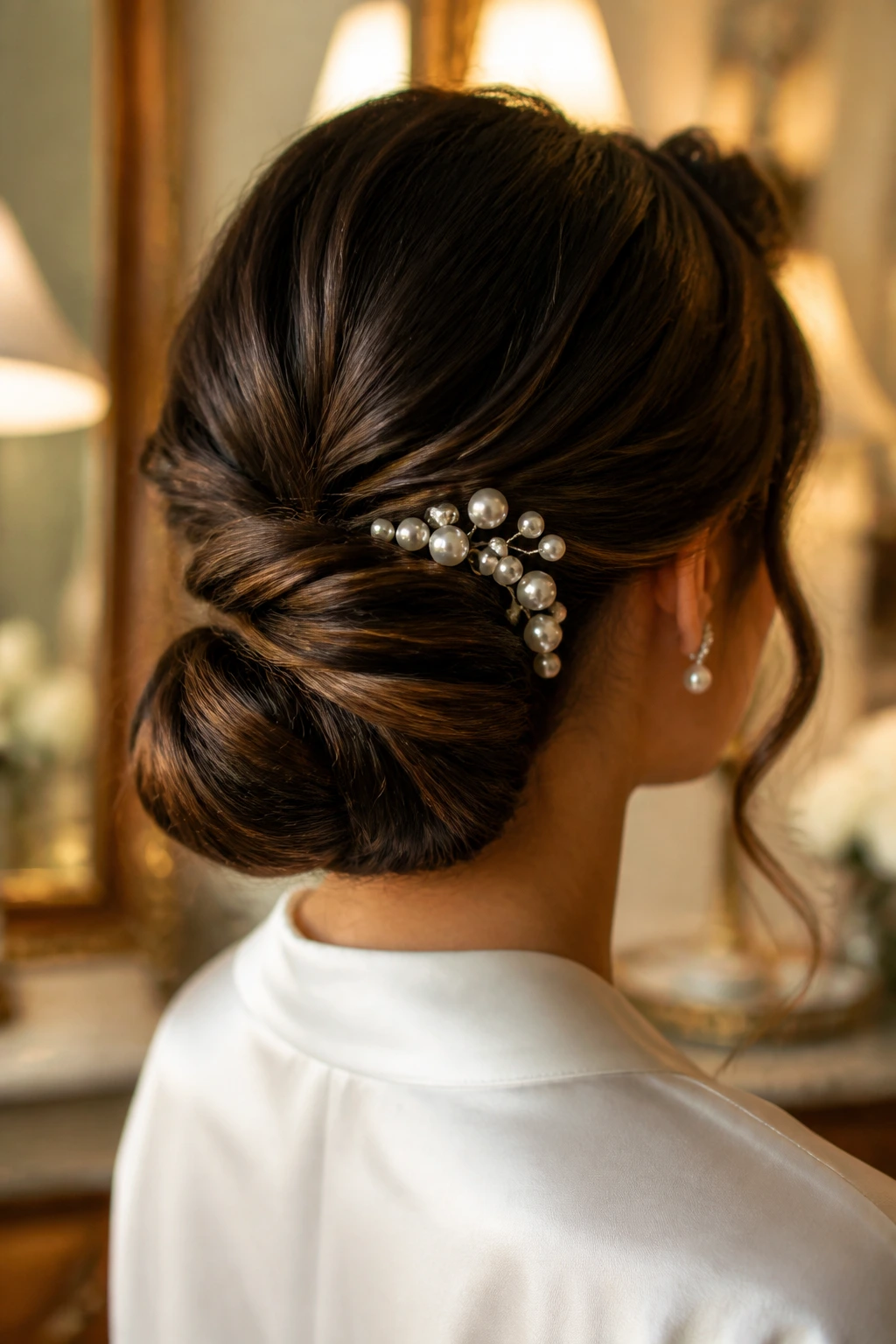
If I had to pick one style that looks graceful in nearly any formal setting, I’d put a twisted low bun near the top of the list. Thick hair makes the twist substantial, which means the bun reads as full and deliberate instead of tiny and overworked. Pearl pins are the right kind of finishing touch here because they echo the softness of the twist.
Why the pearls matter
Pearls sit best when the hairstyle is already calm. They don’t need to shout. A low bun with a smooth surface gives them a place to shine, especially if you place them in a small arc along one side of the twist. That tiny detail turns the style from plain to finished.
This is also one of the easiest styles to keep tidy through the day. The bun sits low, the weight is centered, and the pins can be hidden deep inside the twist. If you want a look that stays refined from vows to the last slice of cake, this one earns its keep.
20. Cascading Waves with Clipped-Back Sides
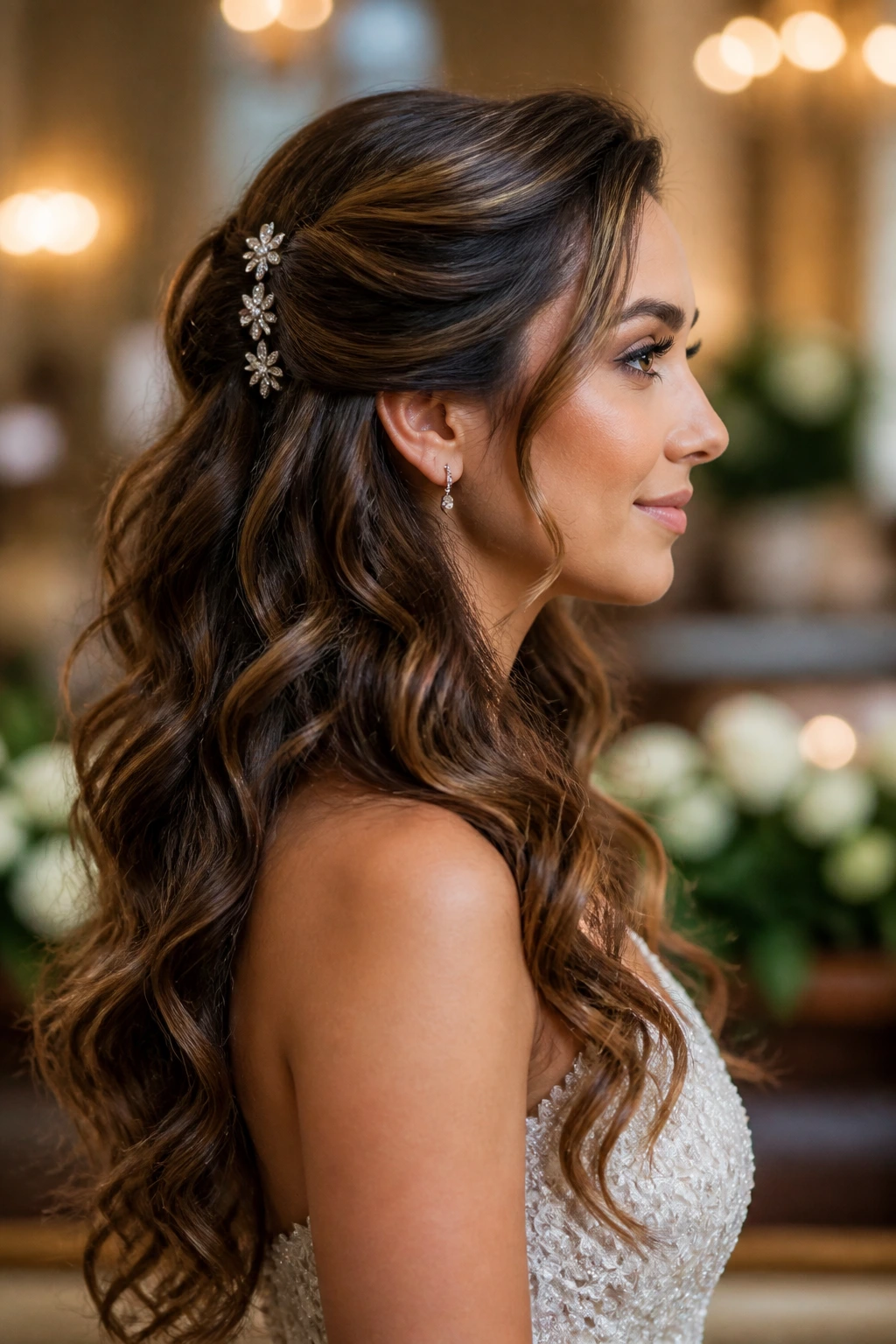
This is for the bride who wants hair down, full, and soft, but still wants the face to look open. Thick hair gives the waves a richer outline, and clipped-back sides stop the front from swallowing everything. That small bit of control changes the whole mood.
The side clips can be simple, but they should be deliberate. A pair of crystal combs, a narrow barrette, or even plain gold pins can do the job if they sit flat. The waves themselves should start about mid-length for most of the hair’s body. If the waves start too high, thick hair can turn poofy at the top.
It’s a strong choice for long ceremonies or receptions where you want movement. Every time you turn your head, the waves shift. That motion looks expensive in photos.
21. Crown Braid into Tucked Bun
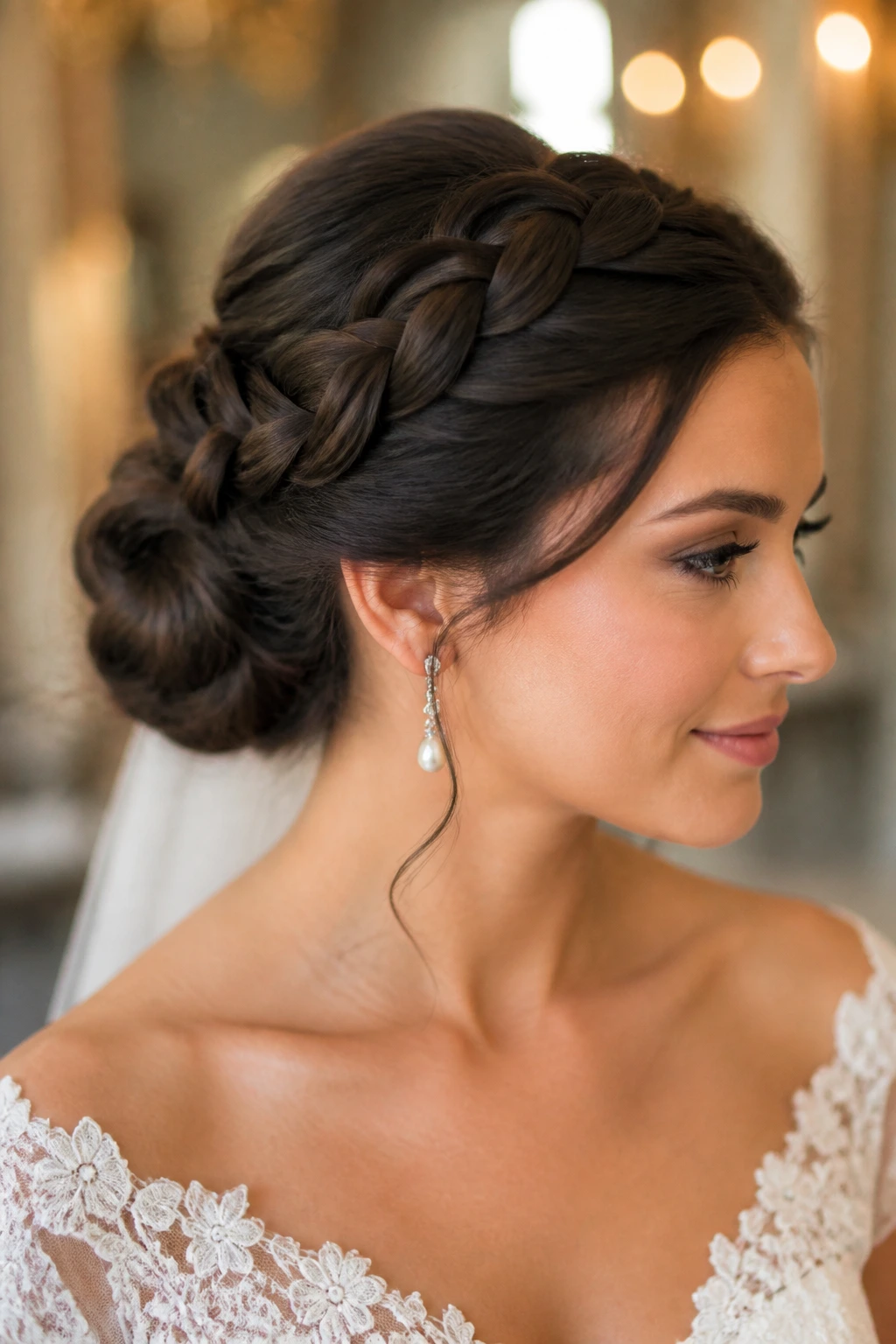
A crown braid that circles into a tucked bun feels regal without becoming fussy. Thick hair is useful here because the braid has enough material to look like a true crown, not a thin band pretending to be one. The tucked bun at the end keeps the style clean at the nape.
This is one of the more secure options for long days. The braid handles the front and sides, which is where thick hair likes to slip forward. The bun anchors the rest. If the wedding includes a long church service, outdoor photos, and a reception that goes late, this style is built for the job.
I’d pair it with a veil that sits lower or a tiara-style accent that follows the crown line. Too much decoration near the braid can crowd it. Let the braid be the shape.
22. Glam Blowout with Ribboned Half-Up Accent
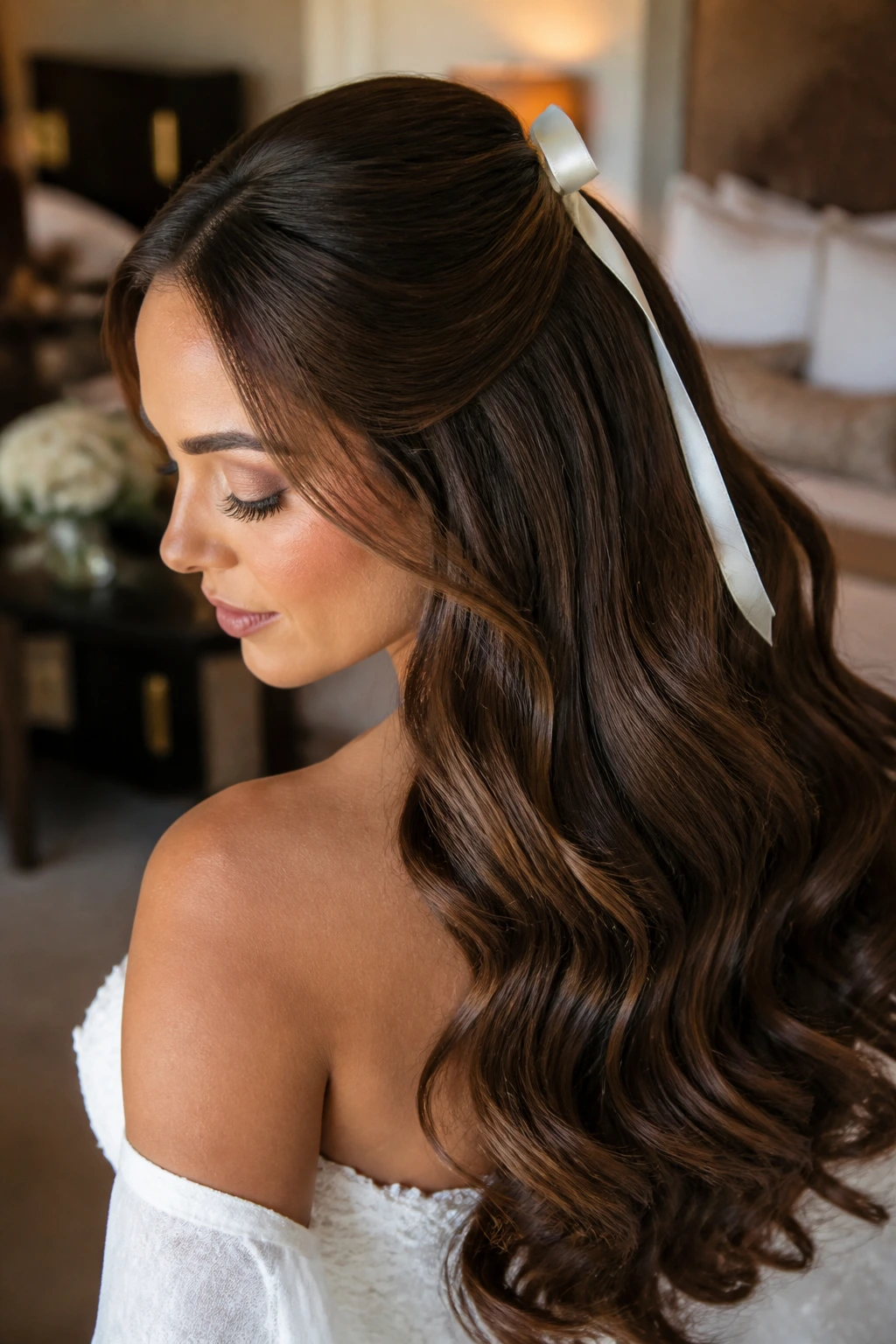
A glossy blowout with a small half-up ribbon detail gives thick hair a polished, romantic finish without asking it to sit still all night. The fullness of the blowout is the point. Thick hair can hold that volume better than most hair types, which means the style keeps its shape through heat and movement.
The ribbon or half-up twist adds just enough ceremony to keep the blowout from reading like a regular night-out style. Keep the top smooth, let the lengths curve, and choose a ribbon that matches the dress or bouquet instead of fighting them. Satin works. Velvet works if the dress has some weight. A stiff craft ribbon does not.
If you want the hair down but don’t want it loose in every photo, this is a very nice middle ground. It feels modern, but not trendy in a way that dates fast.
What Thick Hair Needs Before It Cooperates
A good wedding style starts the day before, sometimes two days before, if the hair holds oil slowly. Thick hair usually behaves better when it’s not freshly washed and slippery. A little natural grip helps pins stay put and helps curls hold shape. That said, dirty hair is not the goal. You want clean, airy, and slightly grippy.
If the hair is very dense, section it before you even think about heat styling. Top, sides, nape, and a few smaller quadrants inside those zones. The smaller the section, the more control you get over the final shape. That matters for smooth updos and polished waves alike.
I also like a light mousse at the roots when the style needs lift, and a flexible spray only after the shape is built. Put product where it does a job. Not everywhere. Thick hair does not need to be drenched to hold.
The Products and Accessories That Actually Help
The shopping part gets easier when you stop buying pretty things that slide. A wedding style on thick hair is a structure problem first, a beauty problem second. Buy for grip, then buy for decoration.
-
Pins that match your hair color: They disappear better and make the style look cleaner in photos.
-
One reliable set of U-pins: Great for low buns, chignons, and French twists because they anchor from inside the twist, not just across the surface.
-
A fine-tooth comb and a tail comb: One smooths, one parts. Both matter.
-
Flexible-hold hairspray: Strong enough to lock the shape, soft enough that the hair still moves when you turn your head.
-
Texturizing spray: Use this on braided sections and any style that needs the pins to grab something with a little tooth.
-
A smoothing cream or anti-frizz serum: One pea-sized amount can calm the surface without flattening the style.
-
Decorative combs or pins with a flat base: Thick hair can push a weak accessory out of position if the backing is flimsy.
-
Optional clip-in pieces or padding: Useful if you want a bigger bun, fuller braid, or extra length for waves. Human-hair clip-ins are easier to blend than shiny synthetic ones.
The accessory itself should fit the style, not rescue it. If you need three different decorative pieces to make the hairstyle feel finished, the hairstyle probably needed a different shape.
The Week-Before Prep That Saves the Wedding Morning
Trial runs are worth the time. Not because every bride needs a perfectly rehearsed clone of the final look, but because thick hair reveals problems fast. A bun that feels fine for twenty minutes can start tugging after an hour. A braid that looks neat in the mirror can swell at the sides once the weather changes. A trial shows you where the weak spot lives.
Wash schedule matters too. Most thick hair holds a style better on hair that was washed the day before or two days before, depending on oiliness and texture. If your roots get greasy quickly, the day before is enough. If your hair is dry or coarse, the extra day can actually help the style grip better. Add heat protectant, dry thoroughly, and don’t leave even a damp patch under a twist. That hidden moisture is a nuisance.
Plan the accessory placement before the wedding day. Where the veil comb sits, where the earrings land, where the bun starts — all of it should be clear in advance. The back of the head is not a place to improvise.
Where the Hair Meets the Dress
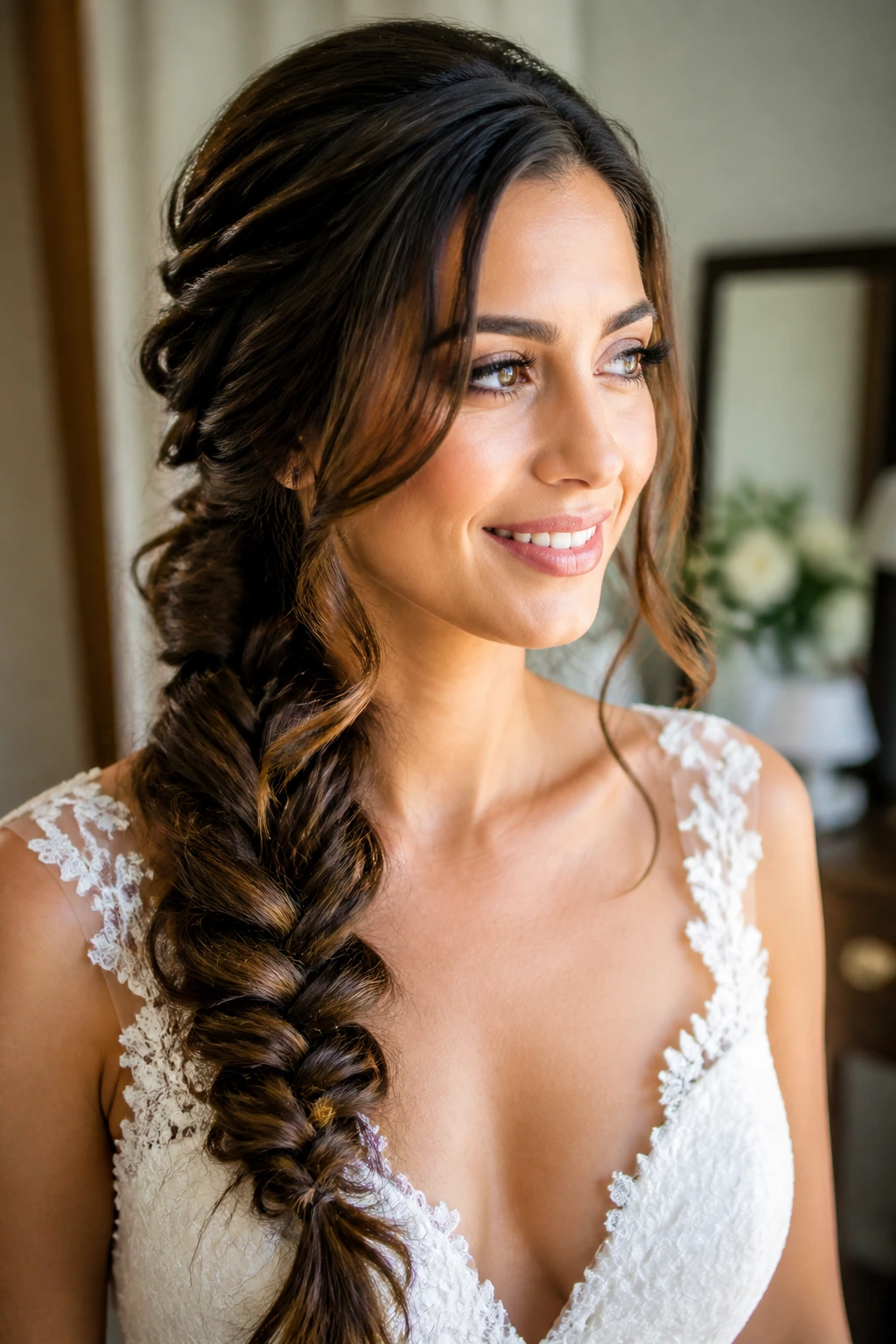
Presentation: The cleanest wedding hairstyles for thick hair usually leave a clear line around the neckline, the collar, or the shoulder. A low chignon shows off a back opening. A side wave softens a one-shoulder dress. A braid over one shoulder pairs well with lace or textured fabric because the hair and dress don’t fight each other.
Accompaniments: Veils, pearl pins, narrow combs, crystal clips, and simple earrings usually work best when the hair already has a lot of body. Heavy earrings can compete with big curls, so if the hair is high-volume, I like earrings that stay narrow or linear. A dress with a lot of beadwork may want a quieter hairstyle. A plain dress can handle more movement and shine in the hair.
Scale: Thick hair gives you the option to go bigger, but the dress should set the limit. A structured gown can hold a sculpted bun or twist. A softer dress often looks better with loose waves or a relaxed braid. If the fabric has a lot going on, keep the hair cleaner. If the dress is minimal, let the hair do more of the visual work.
Accessory Pairing: Pearl pins suit classic looks. Slim metal clips fit modern lines. Hair vines and combs are strongest when placed into an updo or a half-up style where they can sit flat and stay visible.
Common Mistakes That Make Thick Hair Misbehave
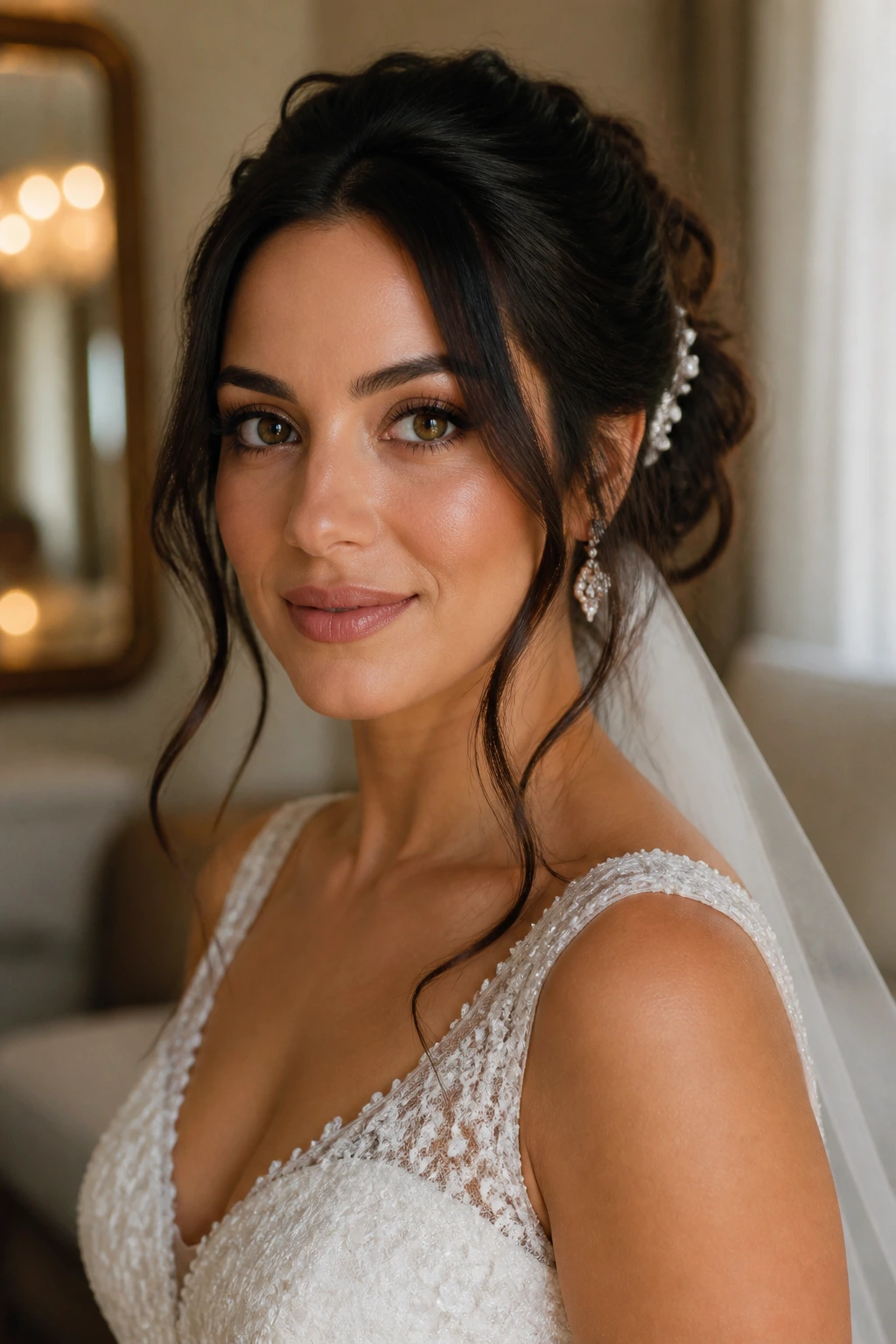
The first mistake is overloading the roots with product. Thick hair already has enough mass. If you coat the top heavily with serum or cream, the style can slide before the ceremony even starts. Use product in small amounts and keep it mostly through the mid-lengths.
Another one: building too much volume too high. A huge crown can look glamorous in a trial and then feel awkward in real life because it shifts your balance and fights the veil or dress. Lift is good. A tower is not.
People also underestimate pin count. Thick hair usually needs more pins than a stylist’s quick demo suggests. If a bun feels loose after the first few minutes, it needs more internal anchoring, not more hairspray on the outside. Pins should be crossed or hidden inside the twist, not sprinkled on top like decoration.
Heavy accessories are a trap too. A dense comb can drag a soft style out of place, especially on fine-to-medium roots under thick lengths. The fix is simple: place the accessory where the hair is most compact, not where it looks prettiest in the box.
And one more thing: not testing veil placement. If the veil fights the bun or braid, the style can shift every time someone brushes past you. Put the comb where the hairstyle already has a firm base. That small decision saves a lot of fiddling.
Ways to Change the Look Without Starting Over
Soft-Motion Finish: Keep the shape of the style, but loosen the front pieces and edges a little. This works when you want the hair to feel romantic instead of strict. It’s especially useful on chignons, French twists, and halo buns.
High-Gloss Finish: Swap matte texture for a smooth blowout or slicker surface with a touch of shine serum. Good for modern gowns, satin fabric, and jewelry that already has a lot of sparkle.
Veil-First Version: Shift the bun, knot, or braid lower and keep the crown cleaner so the veil sits flat. This is the safest move if the veil is heavy or has a comb that needs a sturdy anchor.
Curly-Texture Translation: Keep natural curls or waves in the shape instead of ironing them out completely. A twist, low bun, or half-up style can look richer when the texture is preserved. The key is definition, not straightening.
Short-Notice Rescue: If the hair is longer or thicker than expected, use a hidden braid base or a couple of discreet clip-ins to control the bulk. Don’t build a style that depends on hope. Build one with enough structure to survive the morning.
Keeping the Style Fresh From First Look to Last Dance
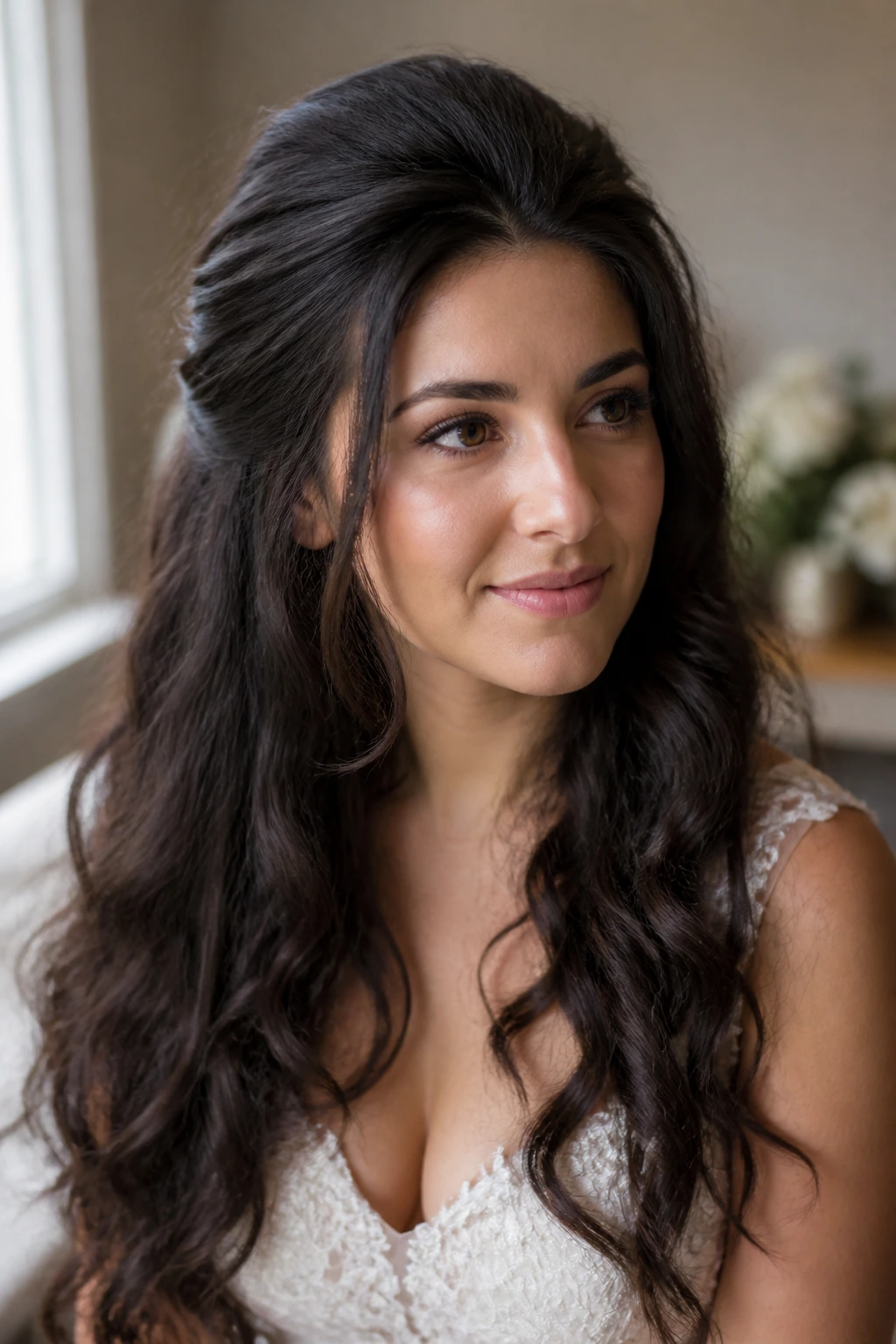
A wedding hairstyle on thick hair should be able to survive touch-ups, not require a whole reinvention. Pack a tiny emergency kit: a few matching bobby pins, a travel hairspray, a small comb, and one extra accessory in case something breaks. Keep it with someone who can actually reach you. Not in the car. Not at the hotel desk. On a person.
If the style starts to loosen near the nape, that’s usually the first place to check. Thick hair pulls there first because of the weight. A pin crossed under the surface can tighten things without making the style look busy. If the front starts to puff, smooth it with dry hands or a touch of serum on the fingertips — not a heavy re-spray that flattens the whole head.
Dancing changes everything. A style that feels perfect at 4 p.m. can shift after two hours of movement, heat, and hugs. That’s normal. The best looks here don’t stay identical all night. They stay recognizable. That’s the real test.
Questions Brides Ask About Thick Hair
Which wedding hairstyle holds best on thick hair?
Low chignons, French twists, and crown-braid styles usually hold best because they distribute weight close to the head. Thick hair tends to stay put better when the anchor sits low and the surface is smoothed only where needed.
Should thick hair be worn up or down for a wedding?
Either works, but the dress should decide. If the neckline is ornate or high, an updo usually gives the outfit more breathing room. If the dress is clean and minimal, waves or a blowout can keep the look soft and balanced.
Do I need to wash thick hair the morning of the wedding?
Usually no. Hair that’s washed the day before often has better grip and less slip, which helps pins and curls hold. If your scalp gets oily fast, the morning of can work, but go light on conditioner near the roots.
How do I keep thick hair from puffing at the crown?
Use smaller sections, smooth the crown in layers, and avoid over-brushing after the style is set. A little root-lift is fine; too much teasing or too much product can create the puff you’re trying to avoid.
Can I use clip-in pieces if my hair is already thick?
Yes, but only if they help the shape. Use them to add length for waves or extra fullness for a braid, not to create weight you don’t need. Human-hair clip-ins blend better and take heat styling more naturally.
What veil works best with thick hair?
A veil with a sturdy comb or a lighter gathered base usually works best. The comb should sit into a solid part of the style — the bun, twist, or braid — so it doesn’t slide or tilt.
How many bobby pins do I actually need?
More than you think. Thick hair often needs a dozen or more for a full updo, especially if the style has twists or volume at the crown. The goal is hidden support, not visible hardware.
What if my curls fall by the reception?
That usually means the curls were set too large, brushed too early, or skipped enough cooling time. Smaller sections, full cool-down time, and a flexible-hold spray after shaping usually help the curl last longer without looking stiff.
A Style That Stays Put
Thick hair gives you something a lot of wedding styles secretly want: substance. The styles above work because they respect that substance instead of trying to shave it off into something smaller. A polished bun can look richer. A braid can look fuller. Even loose waves get a kind of presence that fine hair has to fake.
The smartest move is choosing a shape that fits the dress, the veil, and the amount of movement you want during the day. If the hair feels like part of the outfit instead of a separate project, you’re in the right place.
Book the trial, wear the style long enough to see where it loosens, and pay attention to the spots that shift first. That’s usually the answer hiding in plain sight.