



Pale skin can make brown caramel highlights look softly expensive—or blunt and stripey—in about two seconds flat. The difference usually comes down to tone. A caramel that leans too orange can shout against fair skin, while a beige, honey, or toffee version settles in and makes the face look clearer, warmer, and less washed out.
Curtain bangs change the math even more. They sit right where people look first: temple, cheekbone, jaw, and the bit of forehead the bang opens up. Put the color in the wrong place and the fringe starts wearing the hair instead of the other way around. Put it in the right place and the whole cut gets that loose, face-slimming movement that makes a simple blowout look considered.
The best brown caramel highlights with curtain bangs do not rely on one giant money piece and a prayer. They use a mix of root shadow, ribboned mids, lighter front panels, and soft ends so the hair moves in layers. That keeps pale skin bright without turning the front of the head into a block of blonde.
That balance is the whole point here. And once you start looking at the shades side by side, the differences get a lot more useful than the usual “brunette with caramel” label.
Why This Collection Feels Different
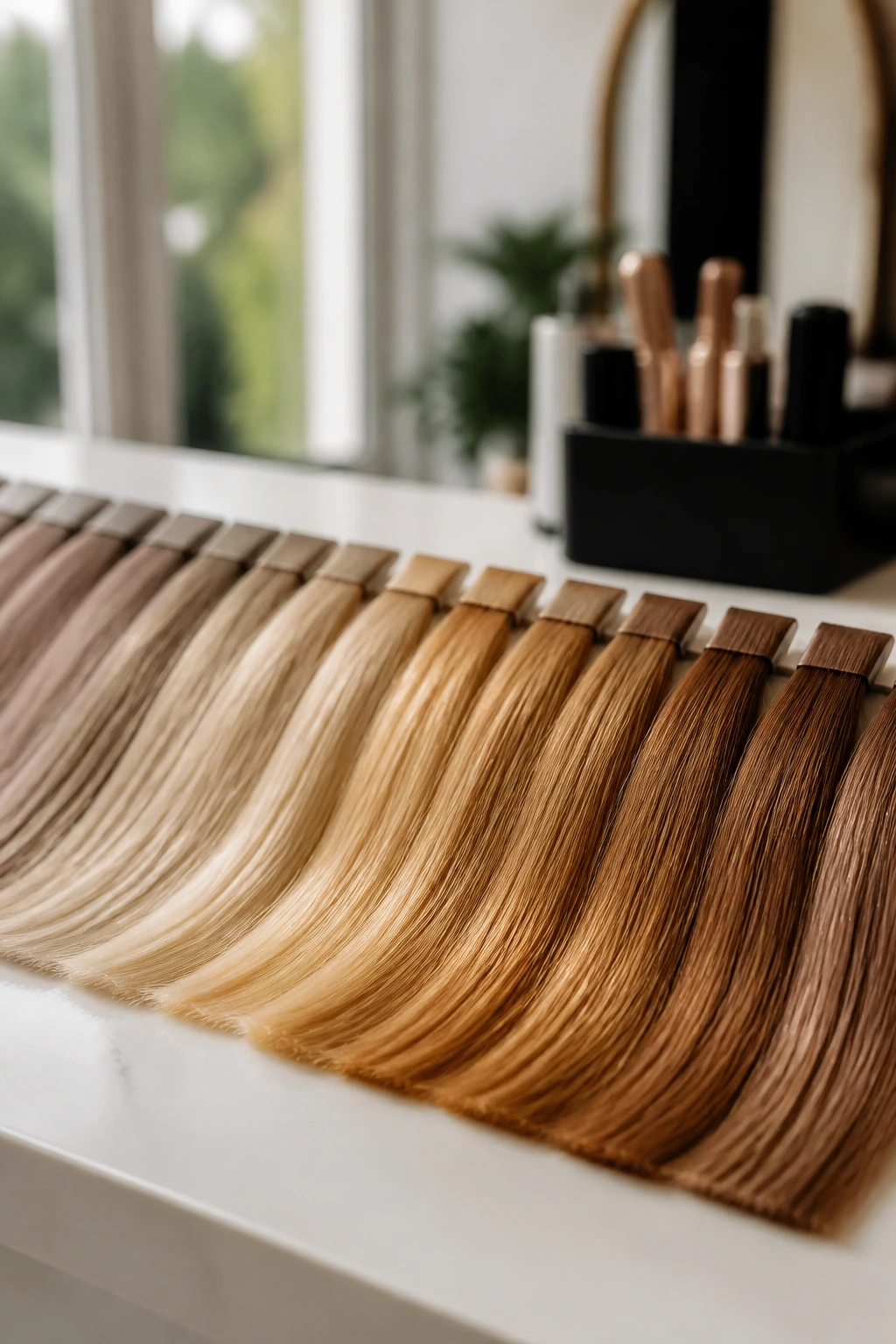
- Tone Range: Some of these looks sit in beige and mushroom territory, while others lean honey or toffee, so you can match pale skin without drifting into brass or flat brown.
- Bang-Friendly Placement: The lighter pieces live where curtain bangs split and curve, which keeps the fringe visible even when the rest of the hair is tucked behind the ears.
- Grow-Out Grace: Root smudges and balayage ribbons soften the line of regrowth, which matters when you do not want a hard stripe showing through the part.
- Soft Contrast: The color stories here keep enough depth at the roots for dimension, but stop short of that harsh dark-to-blonde jump that can make fair skin look pinched.
- Easy to Tailor: A colorist can lift the face frame a half-step brighter, cool it down, or warm it up without changing the whole head.
1. Soft Mushroom Brown with Honey Caramel
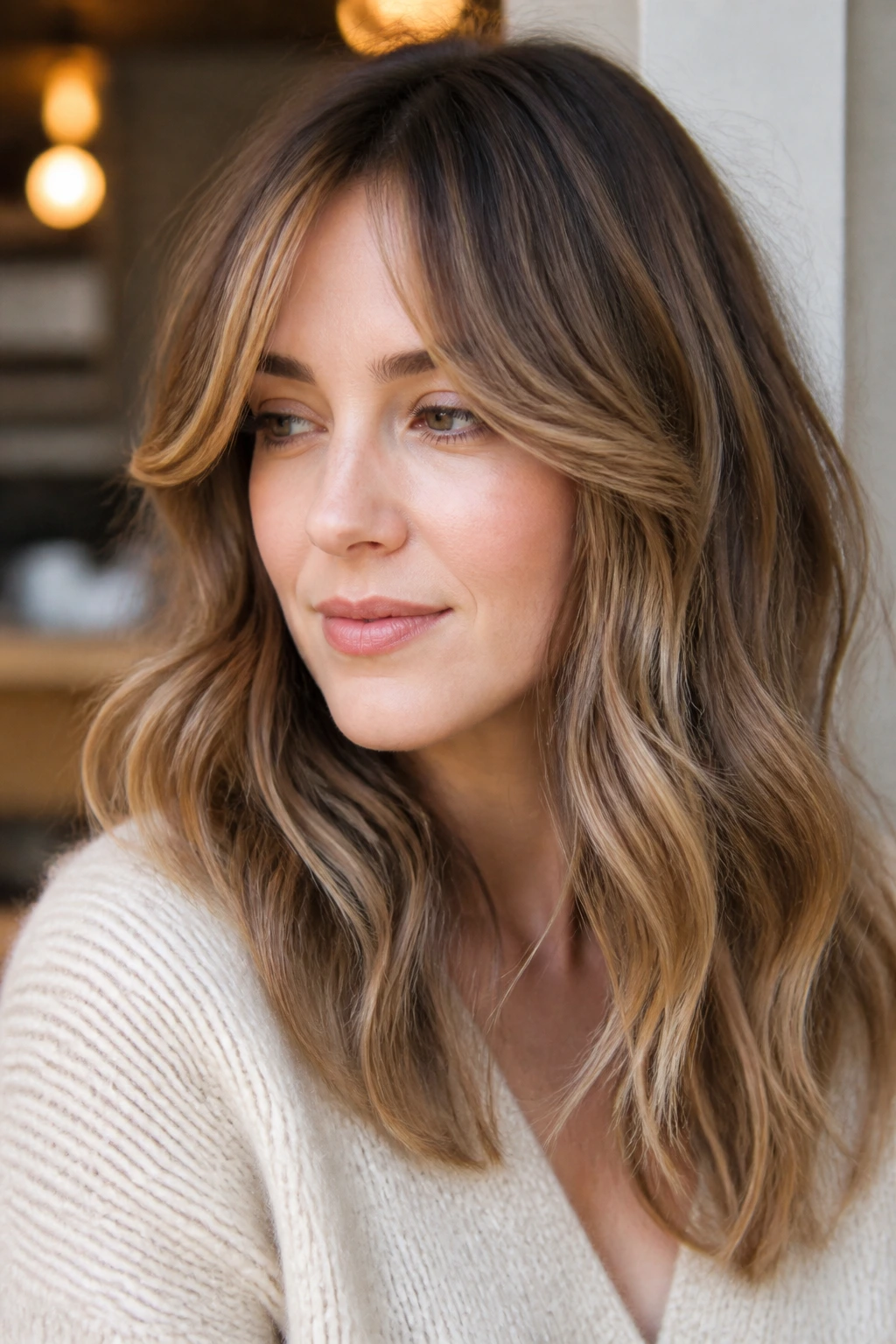
This one is for pale skin that needs warmth without a gold rush. The base sits in a muted mushroom brown, then the honey caramel is feathered through the front half so it lands like light, not stripes. On curtain bangs, that combination keeps the fringe airy and a little expensive-looking, which is a nicer result than obvious contrast.
Why It Works
Mushroom brown has enough coolness to keep redness and pink undertones from flaring up, but it is not so ash-heavy that the face looks chalky. The honey pieces brighten the split of the bangs and the outer cheekbone area, which matters more than people think. If the lightest bits sit only on the ends, the bangs can disappear. If they sit too high, the whole thing turns loud.
What to Ask For
- A level 5 or 6 mushroom-brown base with a soft demi-permanent finish
- Fine honey-caramel ribbons starting about 1½ to 2 inches back from the hairline
- A slightly lighter money piece that stops before the eyebrows
- A gloss that stays in the beige range, not gold
Pro tip: keep the front pieces a touch cooler than the ends. That tiny shift helps pale skin look brighter instead of sunburned.
2. Beige Brown Balayage with Feathered Curtain Bangs
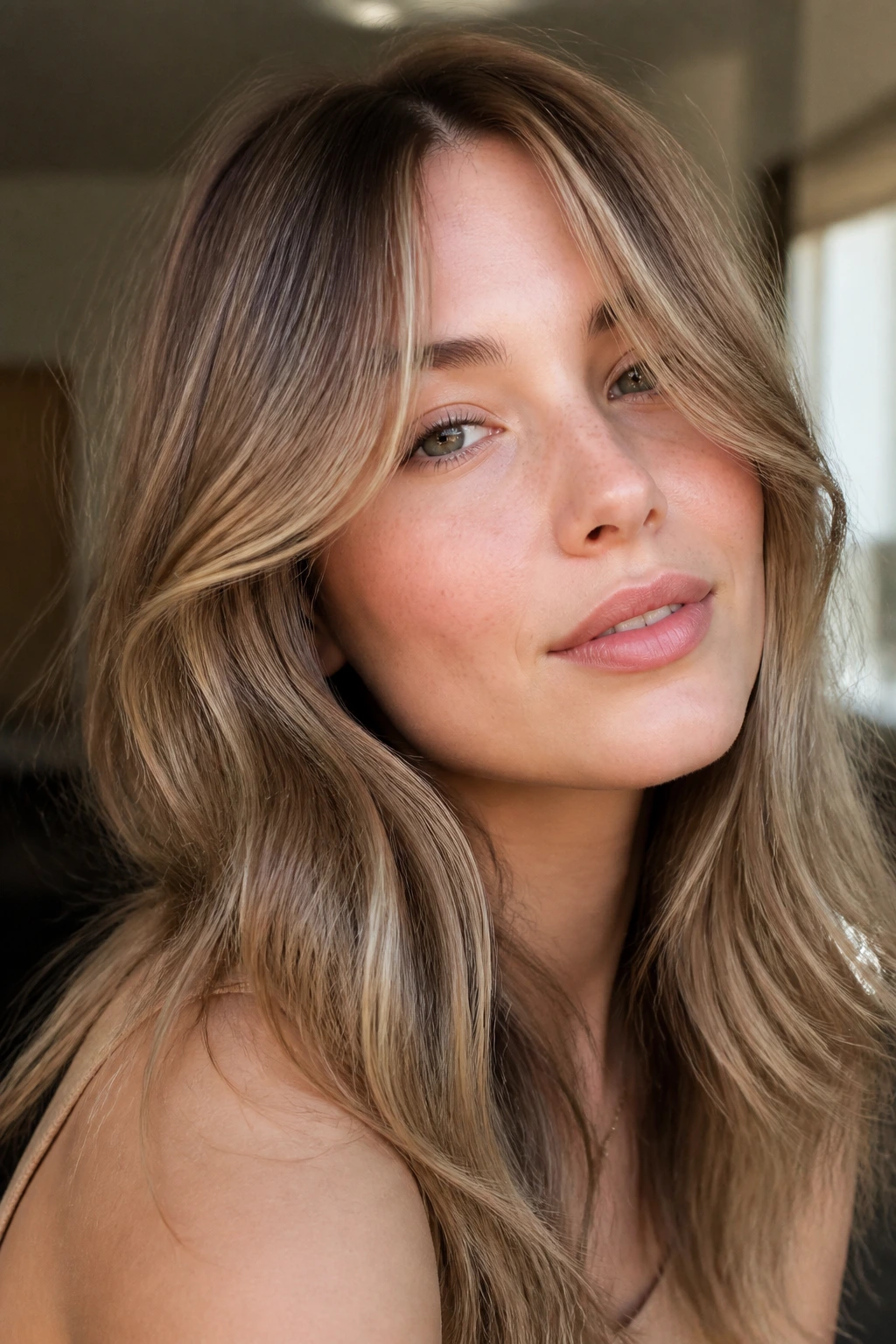
Beige brown is the quiet achiever here. It does not flash, and that is the point. On pale skin, especially skin that runs neutral or pink, a beige balayage keeps the overall look soft while the curtain bangs catch enough light to separate from the cheeks and jawline.
What makes this version worth saving is the low contrast. The roots stay a shade or two deeper, the mids melt into a sandy beige, and the bangs get the lightest veil near the split. The result reads polished from across a room and even better up close, where you can see the hand-painted ribbons instead of a blunt foil pattern.
The feathered bang shape helps, too. A blunt bang with this color would feel heavy. A curtain fringe lets the lighter pieces bend with the blowout and gives the hair that airy movement that fair skin loves. If your hair is fine, this is one of the safest ways to get dimension without making the ends look thin.
3. Mocha Melt with a Bright Money Piece
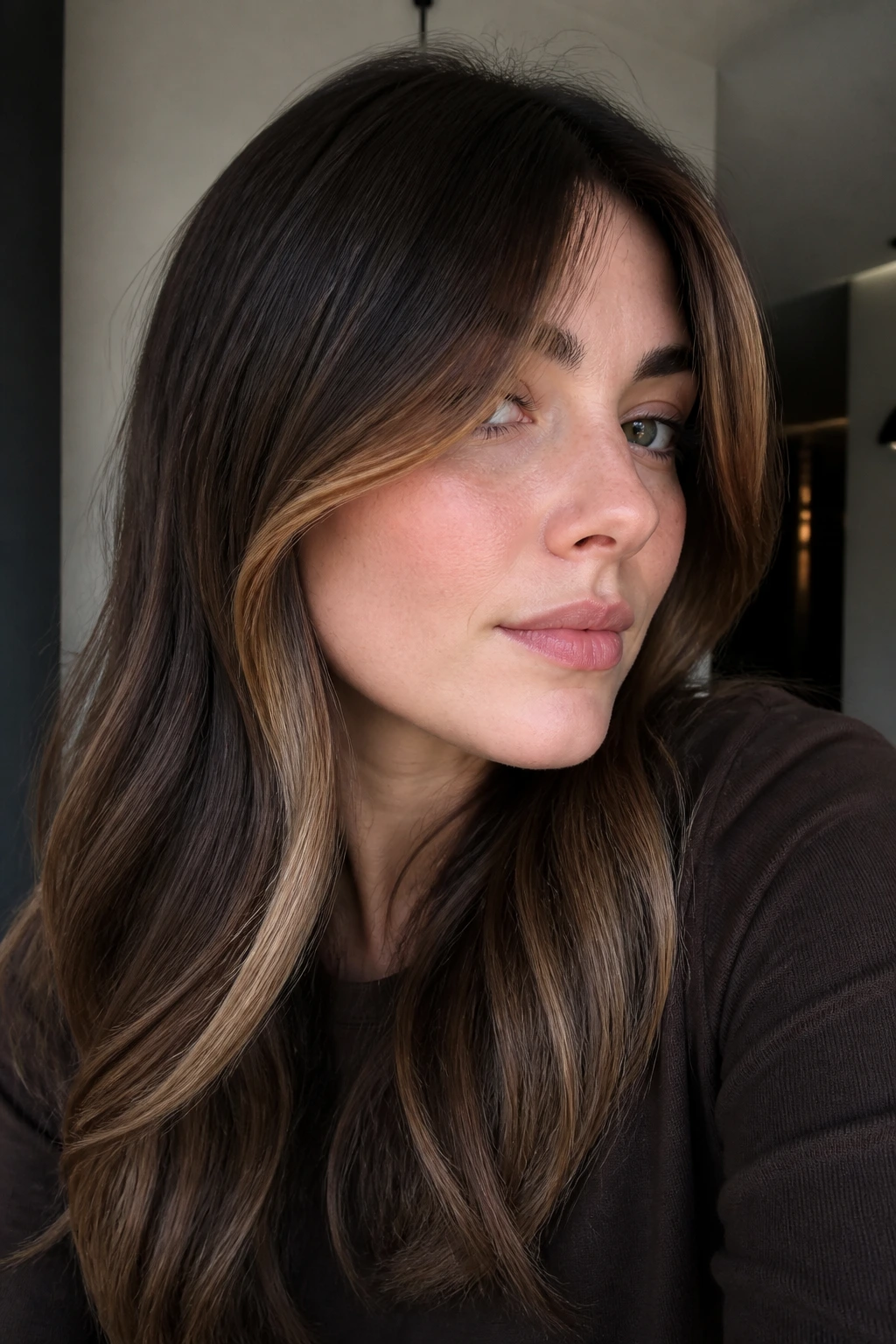
Want the bangs to do the talking? This is the version that speaks up. A deep mocha root melt gives the hair a plush, velvety base, while a brighter caramel money piece frames the curtain bangs and lands right beside the cheekbones. It has more contrast than the softer looks, but the effect stays clean if the bright pieces are kept narrow.
How to Keep It From Looking Chunky
The money piece should not be a thick panel. Think narrow, bent around the curve of the face, then softened with a gloss so it never looks pasted on. On pale skin, that bright frame gives structure, almost like a soft contour, and the curtain bangs keep it from looking too severe.
Best Use Case
- Medium to thick hair that can hold contrast
- Pale skin with neutral or cool undertones
- Bangs that already have a little bend or can be blow-dried with a round brush
One thing people get wrong: they make the front too wide. Wider is not better. The prettiest version is controlled and a little airy.
4. Chestnut-Toffee Contour for Porcelain Skin
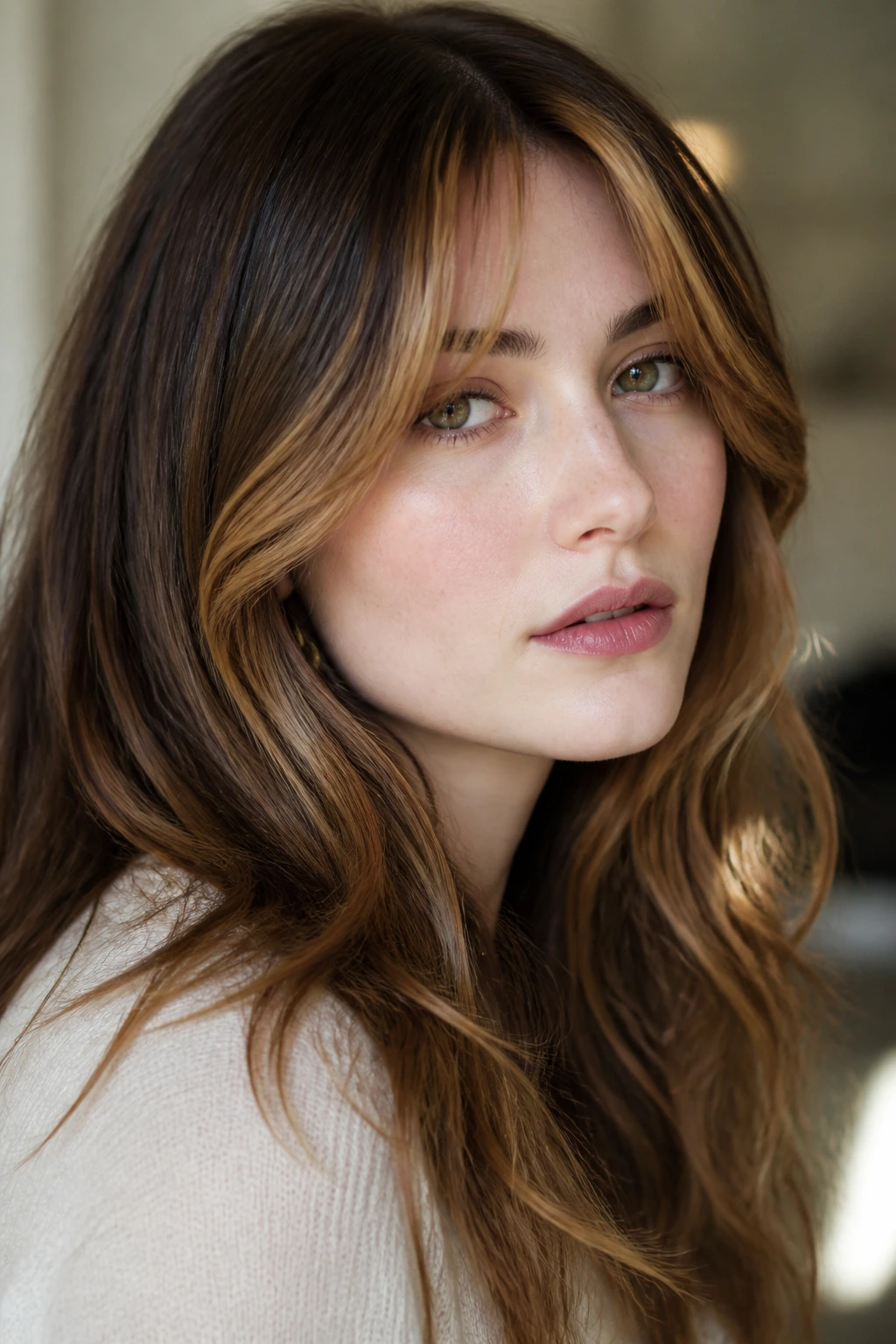
Picture this: the curtain bangs open, the first sweep of color lands just outside the eye, and the rest melts into a chestnut base that never looks flat. That is the chestnut-toffee contour look. It is one of the better choices for porcelain skin because the warmth stays contained in a halo instead of flooding the whole head.
The toffee pieces should sit around the cheekbone and jaw, not right on top of the part. That placement lifts the face without stealing all the attention from the cut. On a shoulder-length style, the color moves when you tuck one side behind the ear, which is half the fun.
- Chestnut base at the roots for depth
- Toffee ribbons around the face for brightness
- Curtain bangs kept a little lighter than the crown
- Ends softened with a beige gloss so the contrast never hardens
If you like soft makeup—rose blush, brow gel, a nude lip—this shade range feels especially easy to wear.
5. Ash Brown with Beige Ribbons
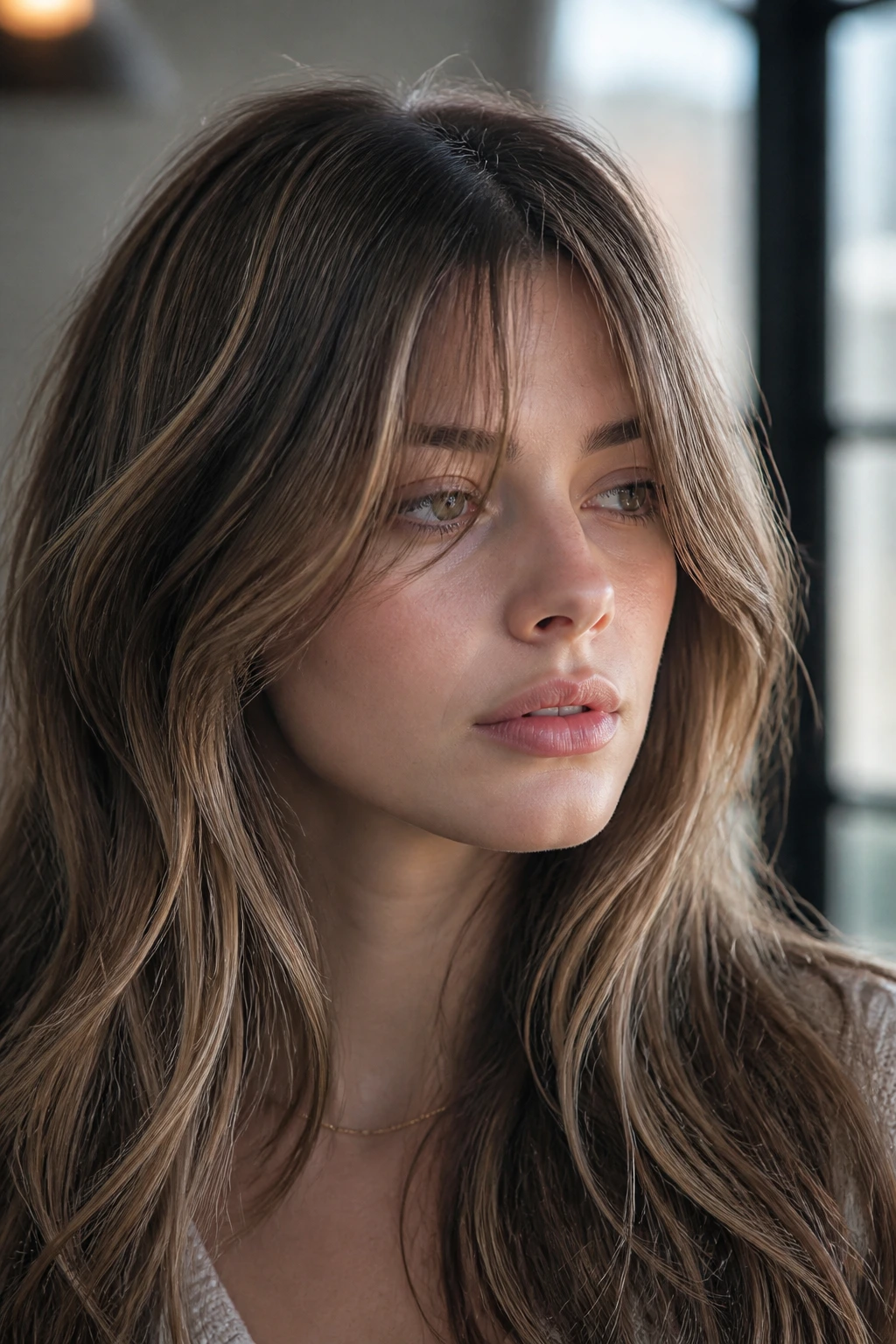
Ash brown sounds cool for the sake of being cool, but here it has a job. It quiets any brassiness and gives pale skin room to breathe. The beige ribbons are what keep it from reading muddy, which is the trap with too much ash and not enough light.
The trick is keeping the highlight placement delicate. You want fine ribbons woven through the upper mids and just a few brighter threads through the bangs, not a full stripe down the front. When the curtain bangs fall across the forehead, the color looks soft and layered instead of blocky.
This version suits fair skin that runs pink or rosy. It also behaves well on finer hair because the lighter threads create movement without requiring a dramatic lift. Pair it with a cool beige gloss every few weeks, and the whole look stays crisp instead of drifting yellow.
No drama. That’s the beauty of it.
6. Cinnamon Brown with Sunlit Ends
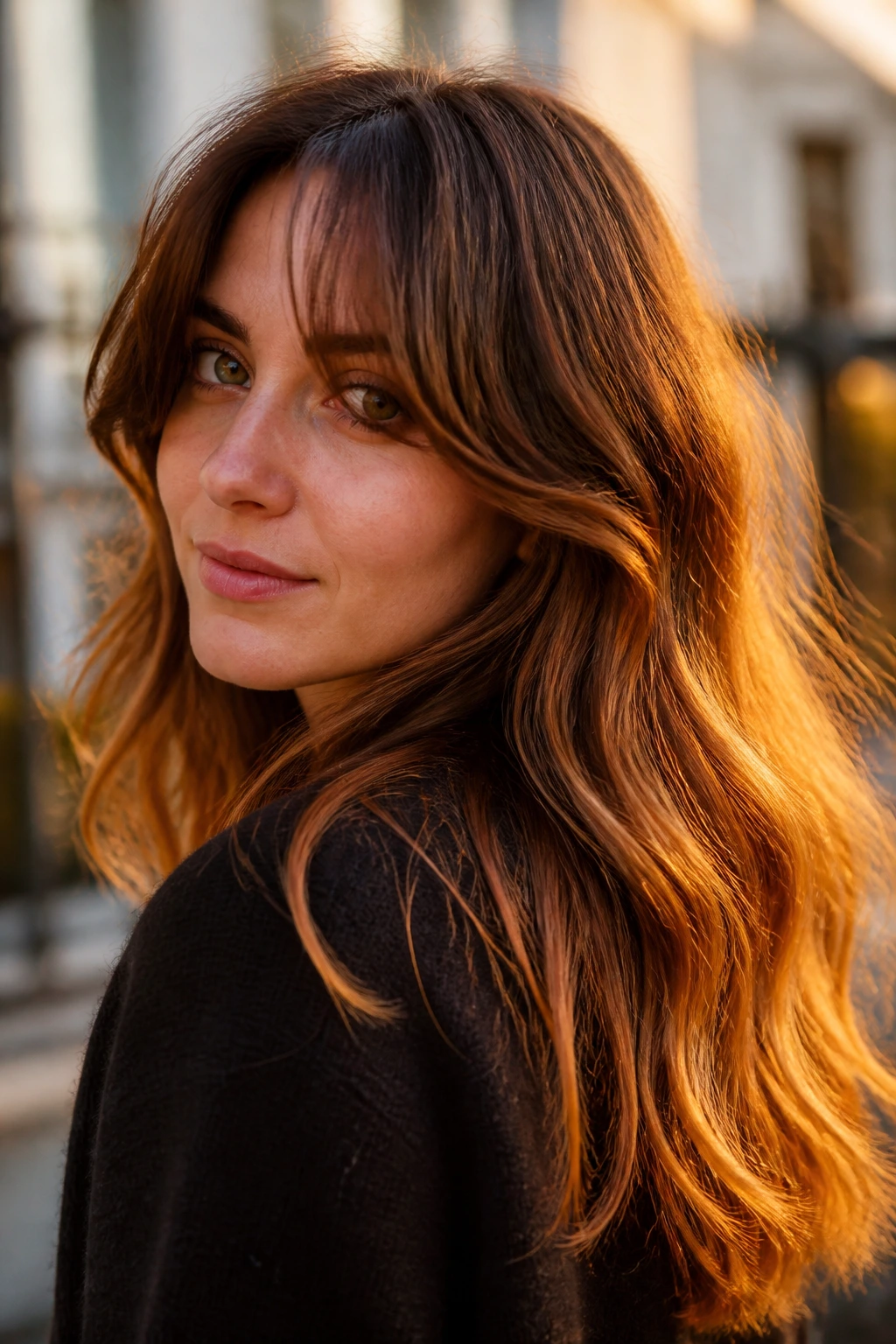
Cinnamon brown brings a little heat, but not the loud kind. It sits between chestnut and copper, and on pale skin with warm or peachy undertones it gives the face a gentle glow. The sunlit ends keep the color from feeling dense, especially when curtain bangs are feathered forward and the lengths fall back.
Why It Feels Softer Than Copper
Copper can take over. Cinnamon, when done right, has more brown in it, so it still reads brunette first. The caramel in this version should be warm but translucent—think toasted sugar, not orange marker. If your eyes are hazel or light brown, the effect can be especially nice because the color repeats those golden flecks without matching them exactly.
The end result looks better with a loose wave than with poker-straight hair. The bend makes the caramel flicker instead of sit still.
7. Dark Chocolate with a Caramel Veil
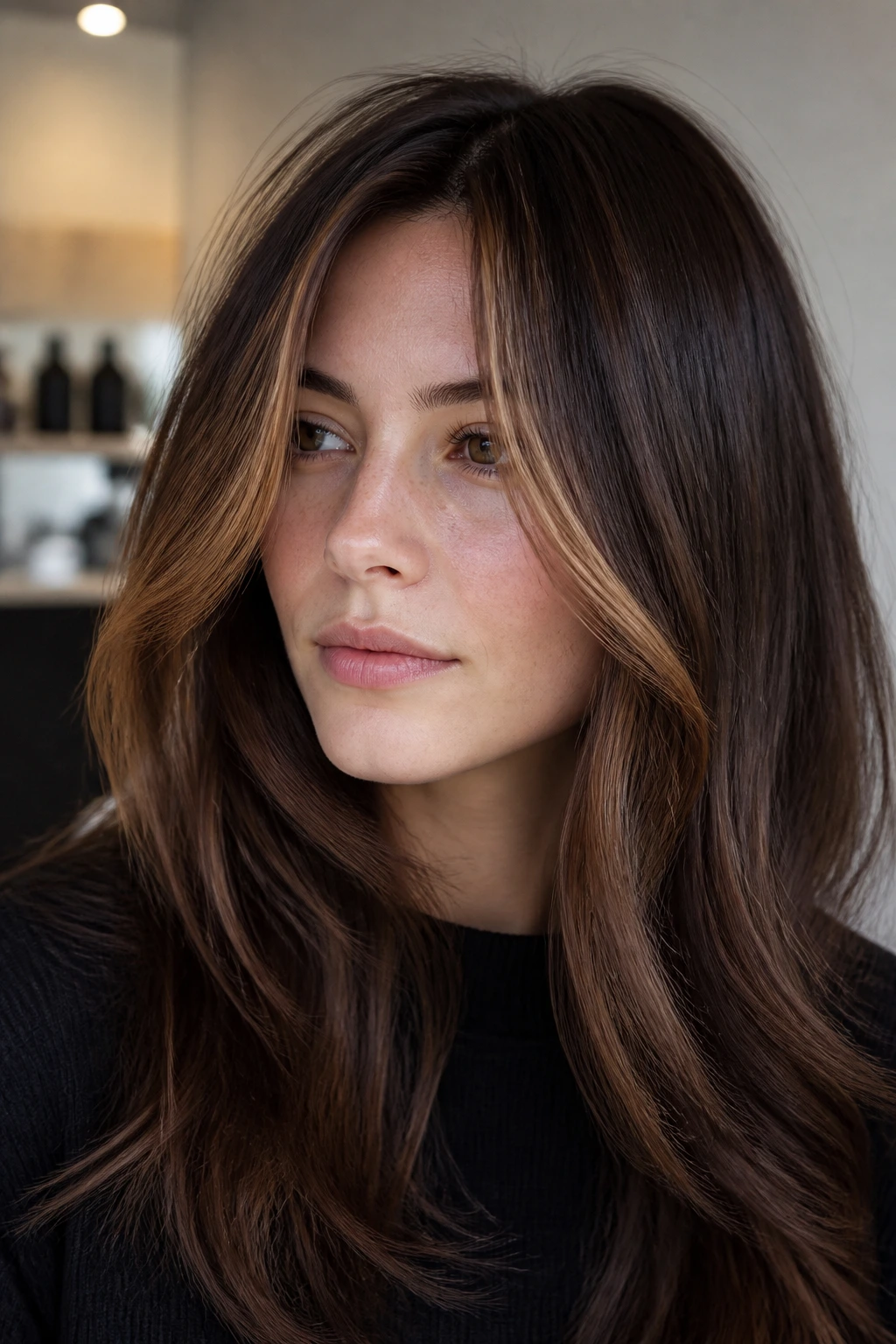
Dark chocolate and pale skin can be gorgeous together when the caramel stays soft and thin. Too much contrast and the hair starts wearing the face down. Keep it veiled and the cut gets richer, heavier in the best way, with just enough light around the front to keep the bangs from swallowing the forehead.
This is one of the stronger choices for thick hair. A dense curtain fringe needs depth behind it or it looks like it floats away from the head. The darker base anchors everything, while the caramel veil breaks the surface in a few narrow ribbons. The overall effect is glossy and a little sultry, but still wearable in plain daylight.
Ask for the light pieces to stay under the crown and around the face, not all through the back. That restraint is what keeps the color grown-up rather than busy.
8. Hazelnut Bronde with a Soft Bang Sweep
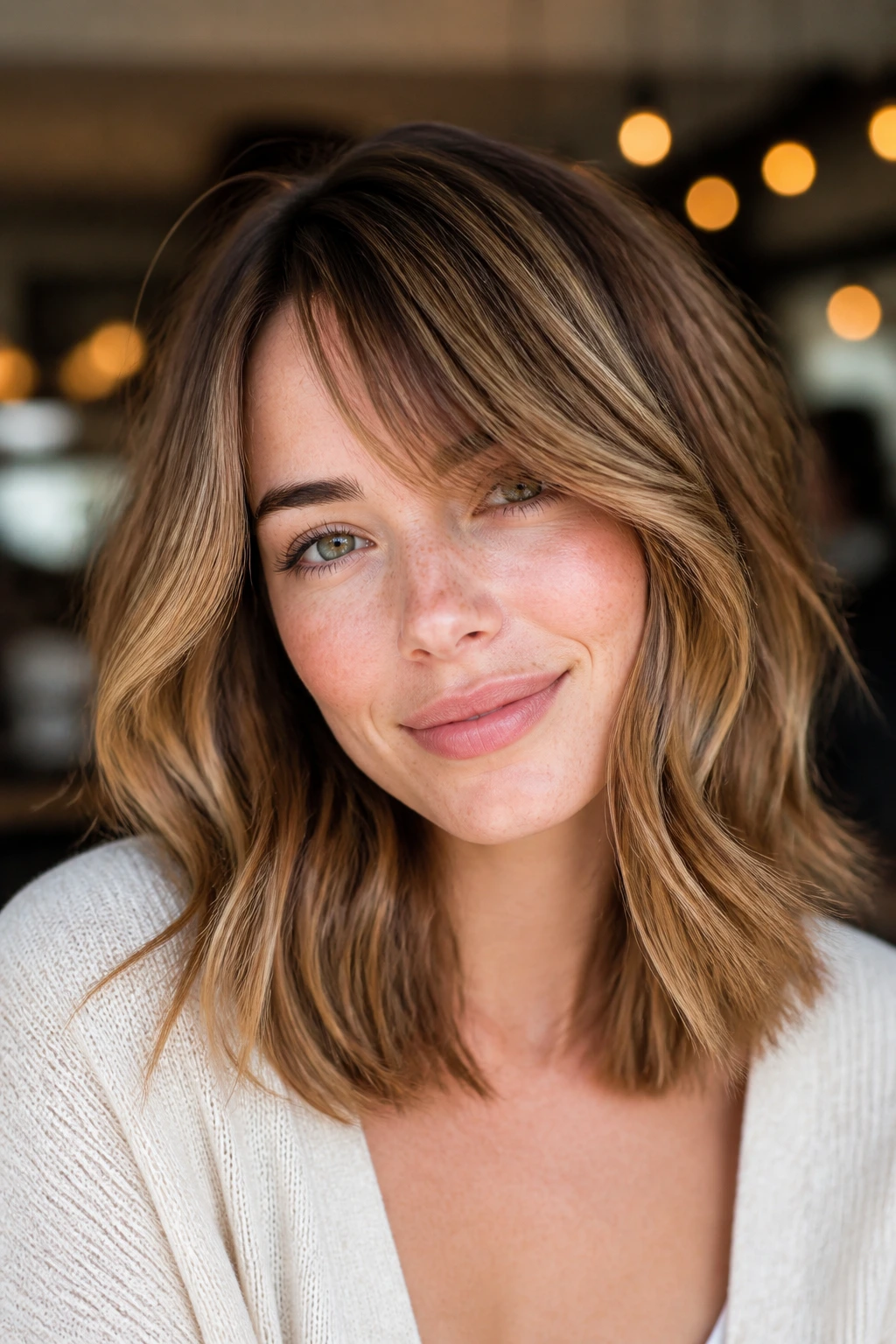
Hazelnut bronde sits in the middle lane, and that is exactly why it works. It is lighter than standard brunette, darker than a full caramel blonde, and very good at making pale skin look alive without a harsh jump in tone. The curtain bangs should be swept slightly off-center so the front brightness feels broken up, not symmetrical and stiff.
What Makes It Stand Out
The base color carries a little warmth, but not enough to fight cool or pink skin. Then the bronde ribbons appear in the mid-lengths and frame the face in a way that looks sun-kissed rather than bleached. If your hair has natural body, this shade range shows it off. If it is straight, the color gives you the illusion of movement anyway.
A quick styling note: a medium barrel wave, not a tight curl, keeps the color looking believable.
9. Root-Smudged Espresso with Mid-Length Caramel
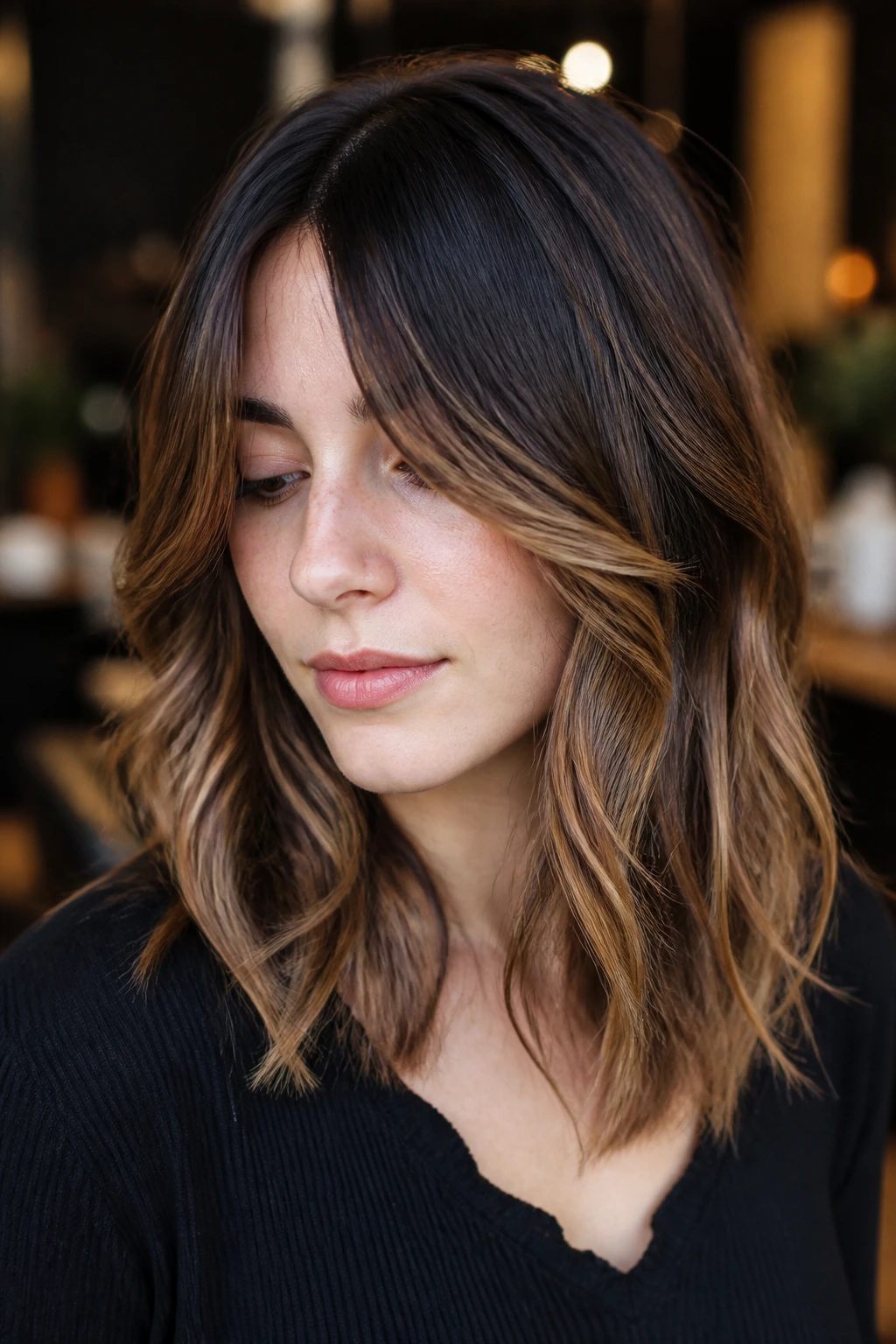
This is the low-maintenance option that still looks intentional. Espresso at the roots creates depth, then the caramel lives mostly through the mid-lengths and around the curtain bangs, where it can catch light without demanding weekly touch-ups. The smudged root keeps the grow-out soft, which matters if you hate obvious lines.
What I like here is the middle-ground contrast. It is darker than a classic bronde, lighter than a pure brunette, and less fussy than a full money piece. Pale skin gets a nice frame from the brighter front, but the deeper root keeps the hair from looking washed out.
If you wear your bangs open a lot, ask for the brightest pieces to start just below the bend of the fringe. That makes the split look plush instead of streaky.
10. Walnut Brown with Sliced Lights
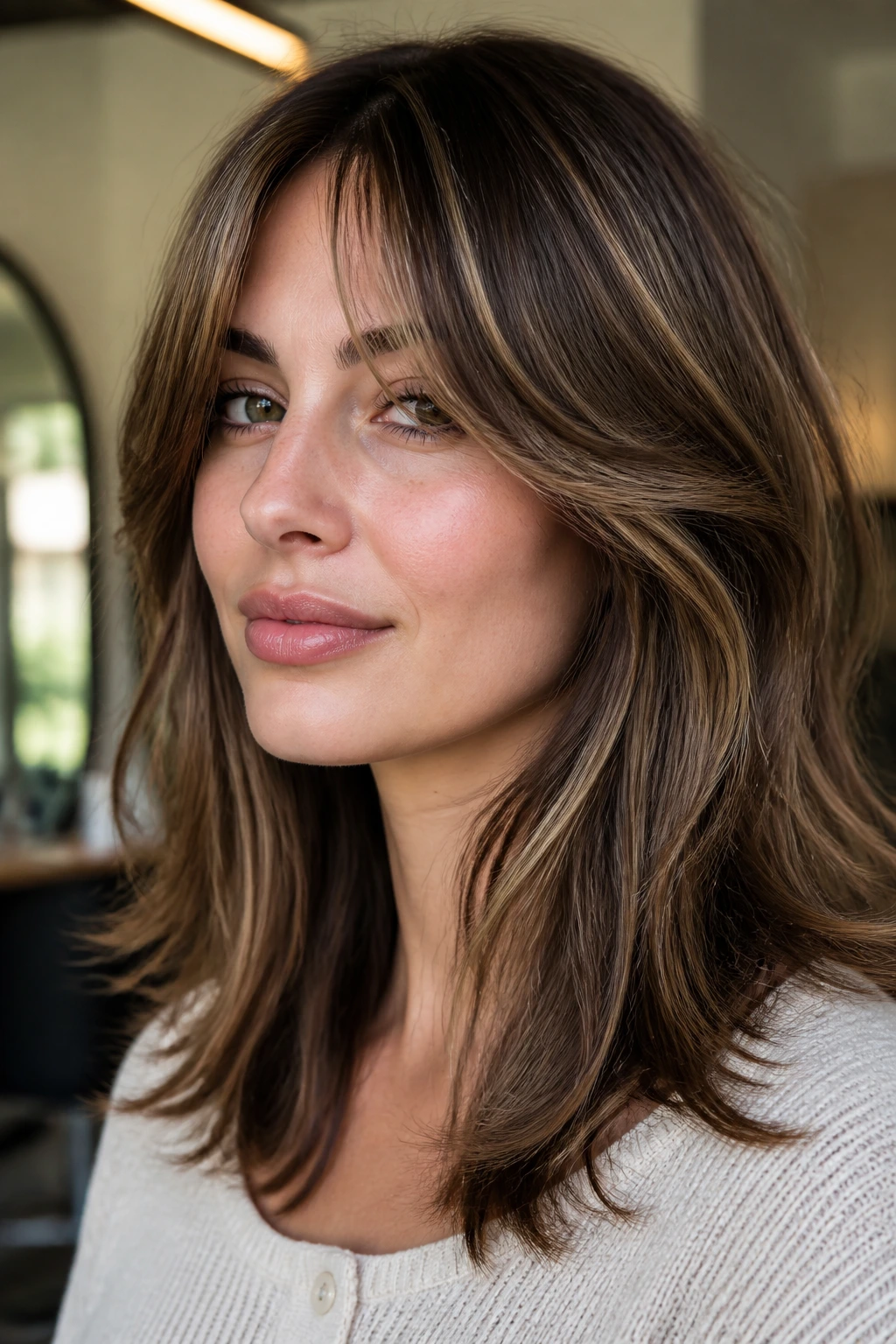
Walnut brown has a little richness to it that reads especially well on a lob or collarbone-length cut. The sliced lights are the part that keeps it from going heavy. They run in thin, clean sections through the top layer and around the curtain bangs, so the hair still moves like hair—not like a painted panel.
The shape matters here. On a shoulder-skimming cut, the lighter pieces land right where the hair swings toward the face. That means the highlights show when you turn your head, which is far more flattering than leaving them hidden under the top layer.
This shade suits pale skin that can take a little warmth but not much gold. Keep the lights in walnut, beige, or soft caramel territory, and the whole look stays grounded.
11. Cool Cocoa with Champagne Caramel
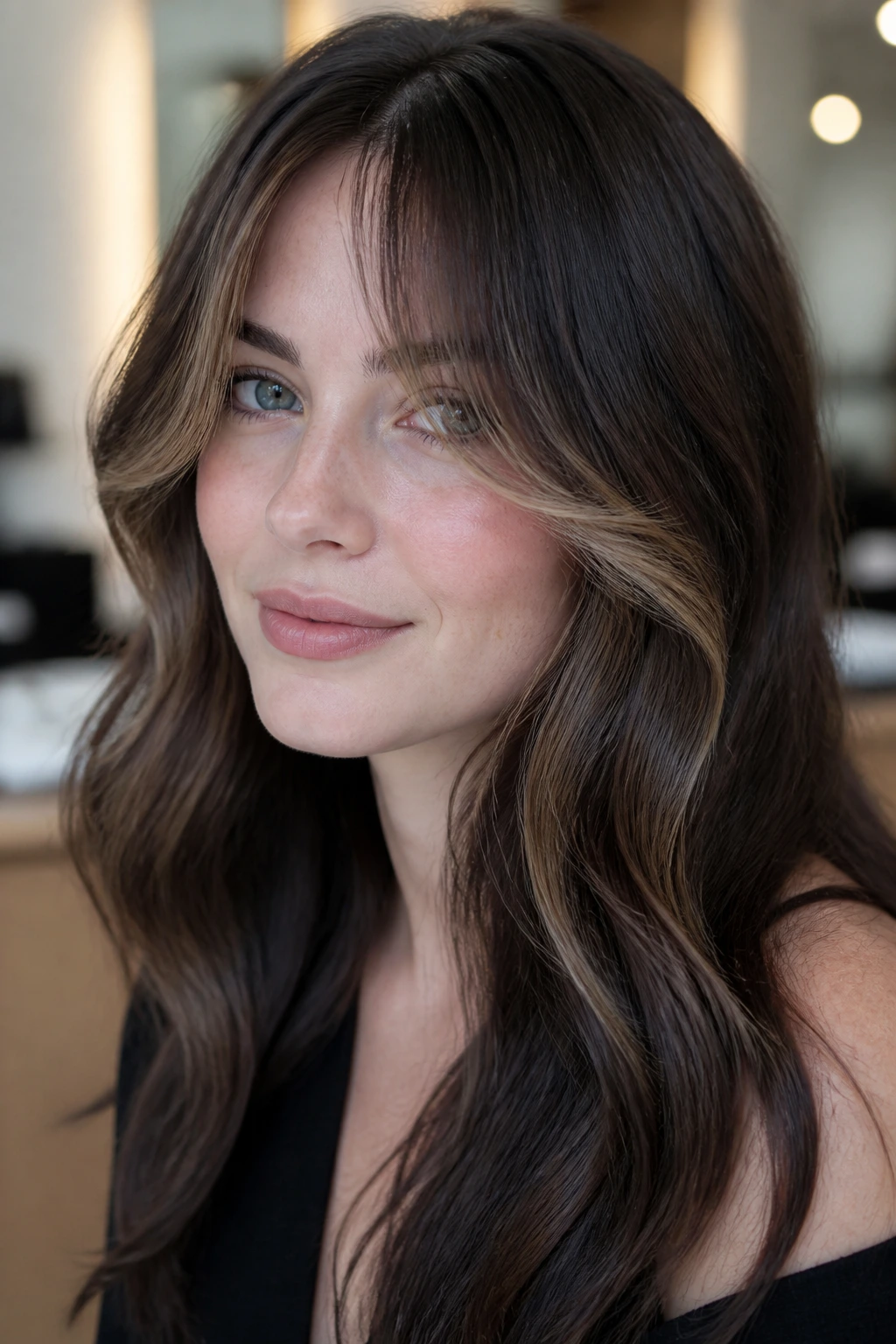
Cool cocoa is for the person who likes brunette depth but does not want the color to turn flat in daylight. The champagne caramel adds just enough lift around the curtain bangs and face frame to keep pale skin from looking drained. It is a cleaner, cooler take than honey caramel, and that distinction matters.
Why It Feels Polished
The cocoa base has a soft gray-brown cast, which plays well with skin that is pink, porcelain, or neutral. Champagne caramel is lighter and less orange than regular caramel, so it sits on top of the brunette in a way that feels crisp rather than warm-heavy. The front pieces should be thin and a little bendy, not broad.
Best Styling Match
- A smooth blowout with a rounded bang
- Straight hair tucked behind one ear
- Loose bend at the ends if you want more movement
This one looks especially good when the shine is high. A gloss finish matters more here than in warmer shades.
12. Latte Brown with Micro-Lights Around the Face
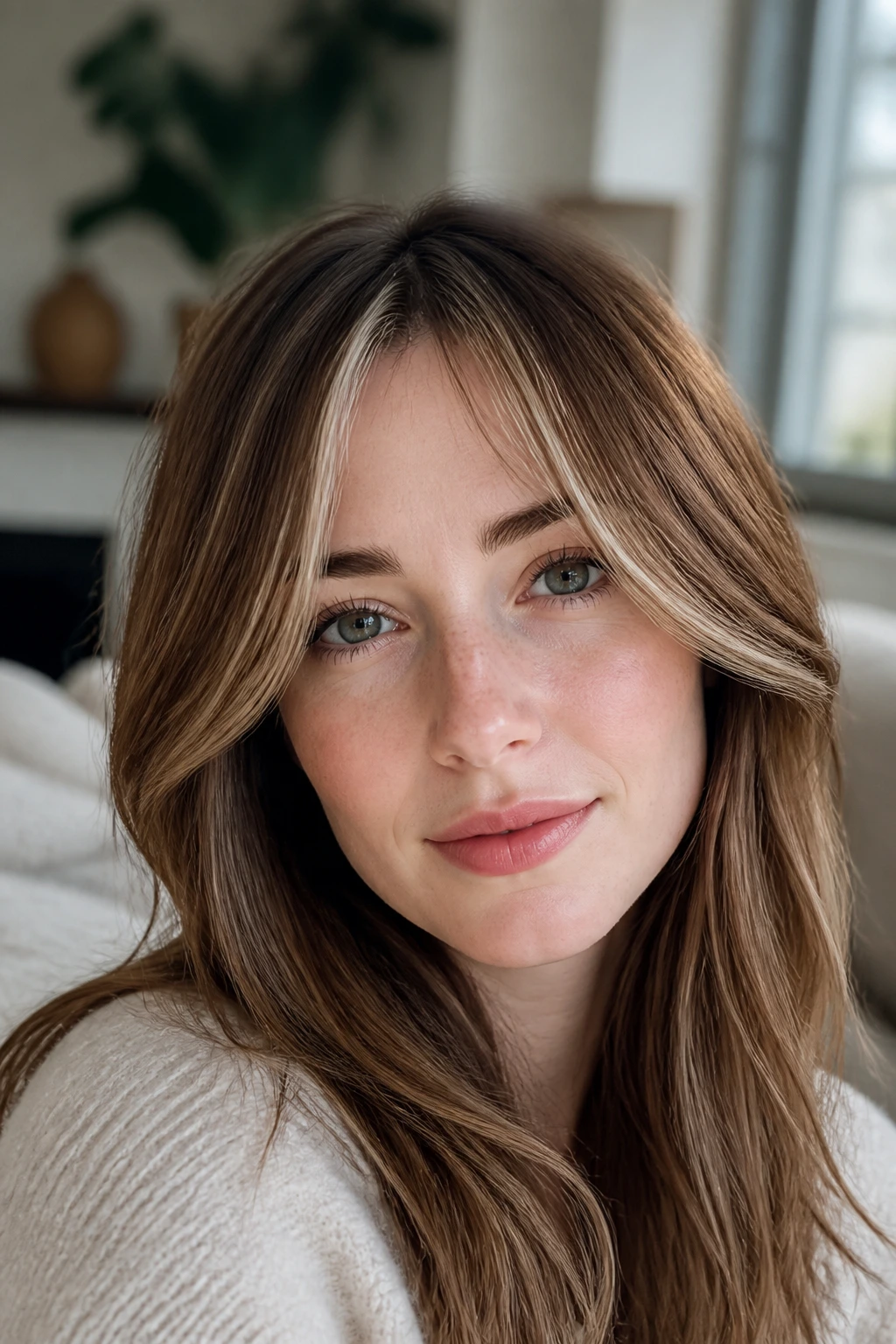
Latte brown is what happens when you want dimension without obvious streaks. The micro-lights are tiny. Really tiny. They lace the face frame, the bang split, and the top layer so the hair looks soft up close and even softer from a few feet away.
The reason this works on pale skin is simple: the contrast is modest. Instead of a hard brunette-to-caramel jump, you get a milky brown base with little flickers of warmth around the eyes and cheekbones. Curtain bangs make that brightness easier to read because they break up the forehead and let the lighter pieces peek through as the hair moves.
If your hair is fine, this is one of the smartest routes. Big highlights can make fine hair look patchy. Micro-lights give the illusion of density.
13. Smoky Brunette with Root Shadow and Glassy Ends
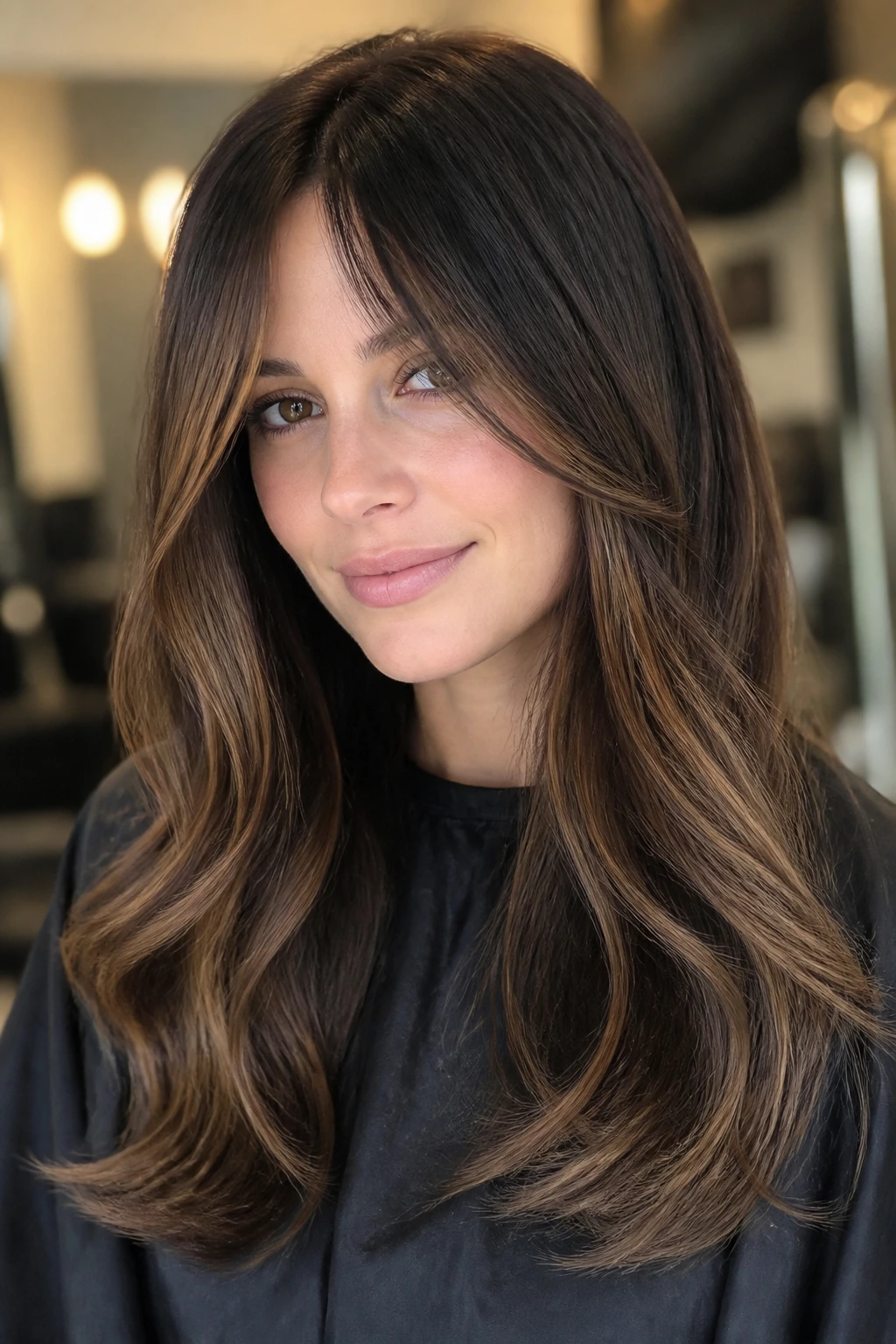
Smoky brunette is a strong choice when you want brown caramel highlights to feel more refined than sunny. The root shadow deepens the top, the caramel stays muted, and the ends get a glossy finish that keeps the whole thing from sinking into one flat brown sheet.
Curtain bangs make the difference here. A smoky tone without a face frame can feel severe. Add the lighter front pieces and the cut opens up. The bangs still look soft, but the smoke underneath gives them edge, which is a nice balance if you wear more structured clothes or sharper makeup.
One caution: smoky tones can muddy if the ends are too porous. A clear or beige gloss helps keep the finish glassy instead of dry.
14. Milk Chocolate with Honey Contour
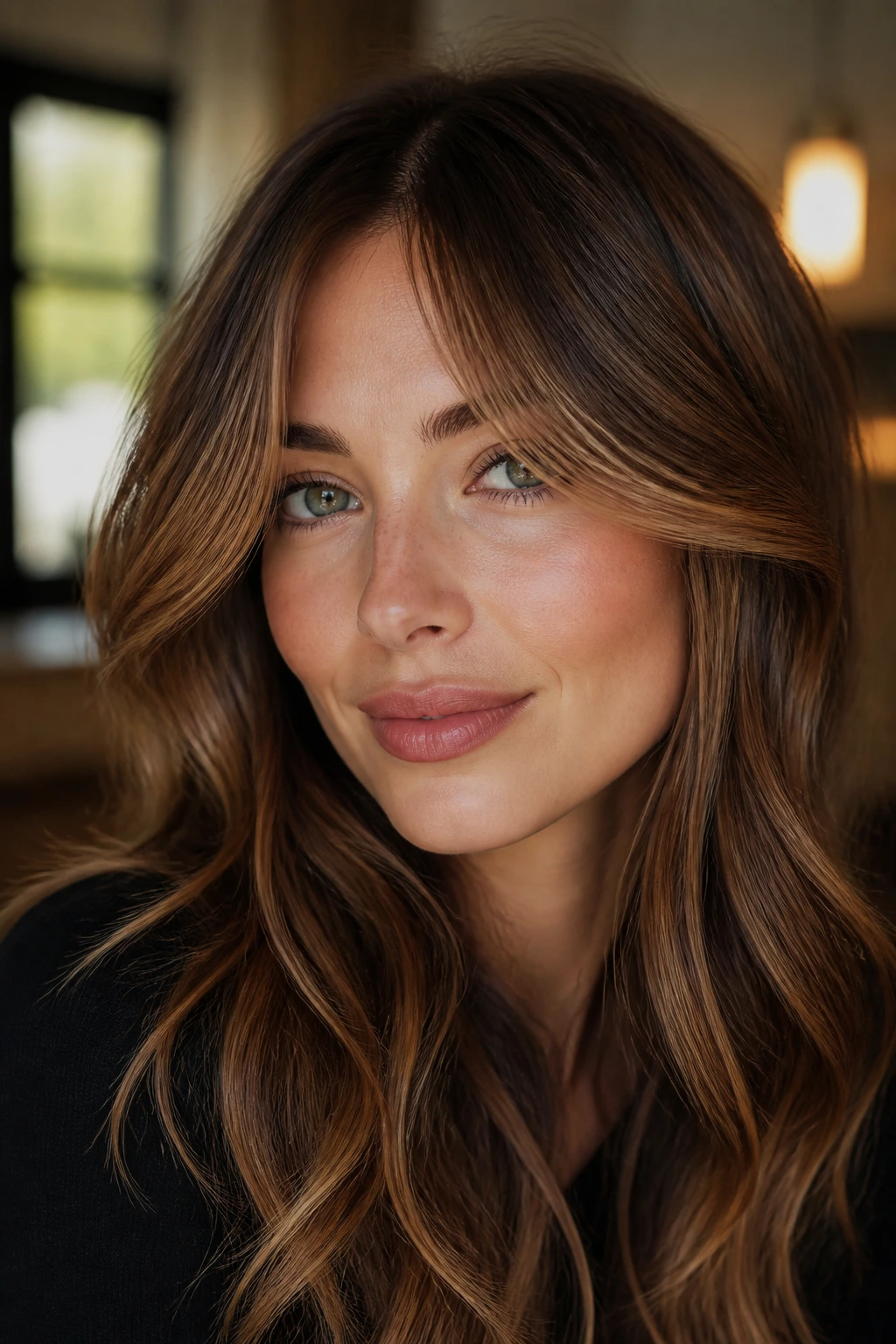
Milk chocolate is plush and friendly. The honey contour keeps it from going dull on pale skin, and the curtain bangs help the color frame the face instead of sitting quietly in the back. This is a good choice when you want the brunette to stay dominant and the highlights to feel like an accent rather than the headline.
The contour pieces should begin at the temple and sweep around the cheekbone, then soften as they move toward the jaw. That shape mimics the face in a flattering way, especially if the curtain bangs are slightly longer and split lower on the nose bridge. It makes the haircut look deliberate, not accidental.
If you like warmer lipstick and cream blush, this shade family fits the whole picture without trying too hard.
15. Tawny Brown with Copper-Caramel Flickers
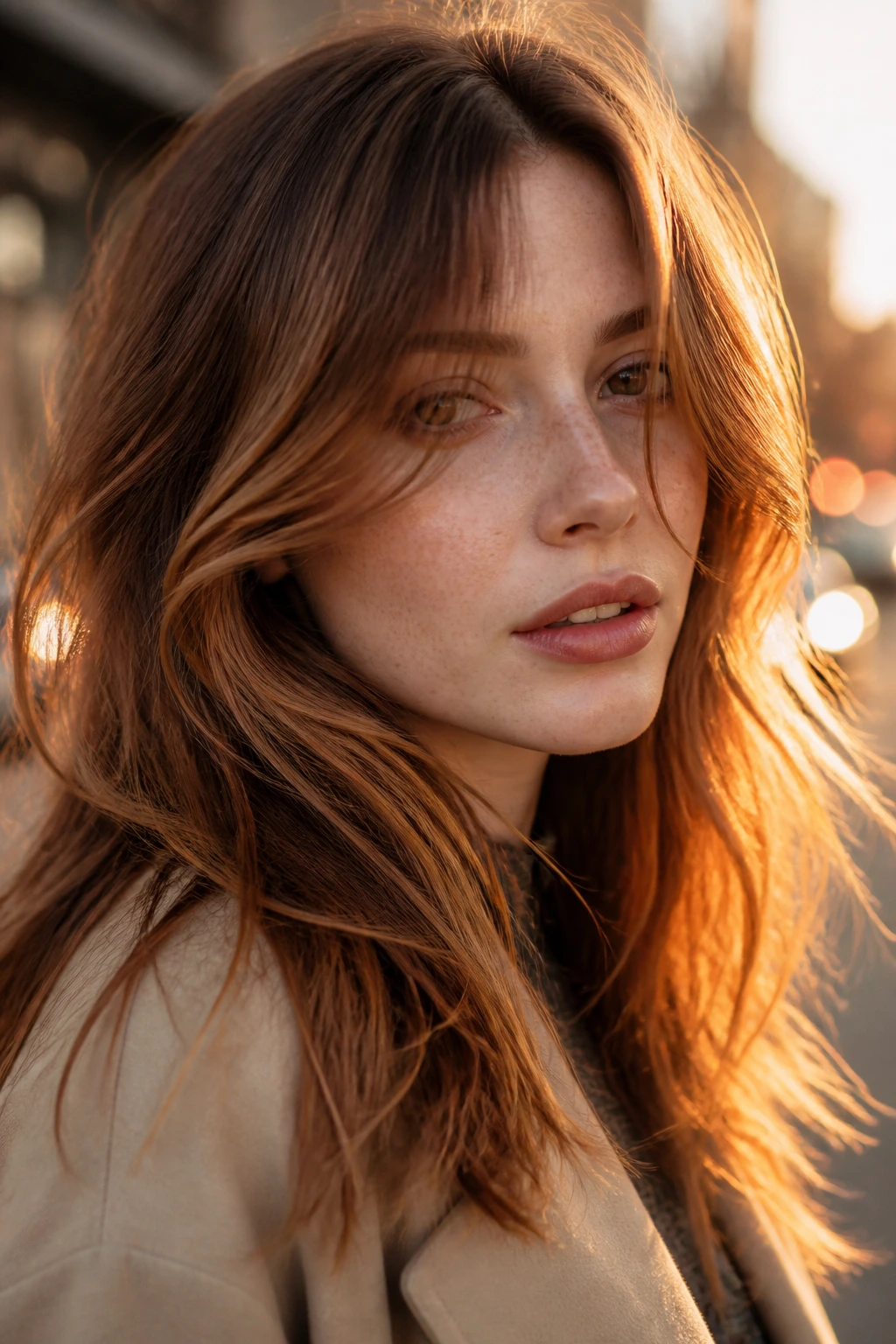
Tawny brown sits closer to the warm side, but the copper-caramel flickers keep it lively rather than orange. On pale skin with freckles, peach undertones, or a little natural warmth in the cheeks, it can look almost lit from inside. The flickers should be fine and irregular, not placed in equal stripes.
The best thing about this version is motion. When the curtain bangs part and the front pieces swing back, the copper hits the light in a small flash and then disappears again. That little movement keeps the color from feeling static. If your hair is layered, even better—the uneven ends help the flickers look natural.
This is not the right shade if your skin pulls very cool. On warm fair skin, though, it can look sharp in the nicest way.
16. Velvet Brown with a Long Bang Blend
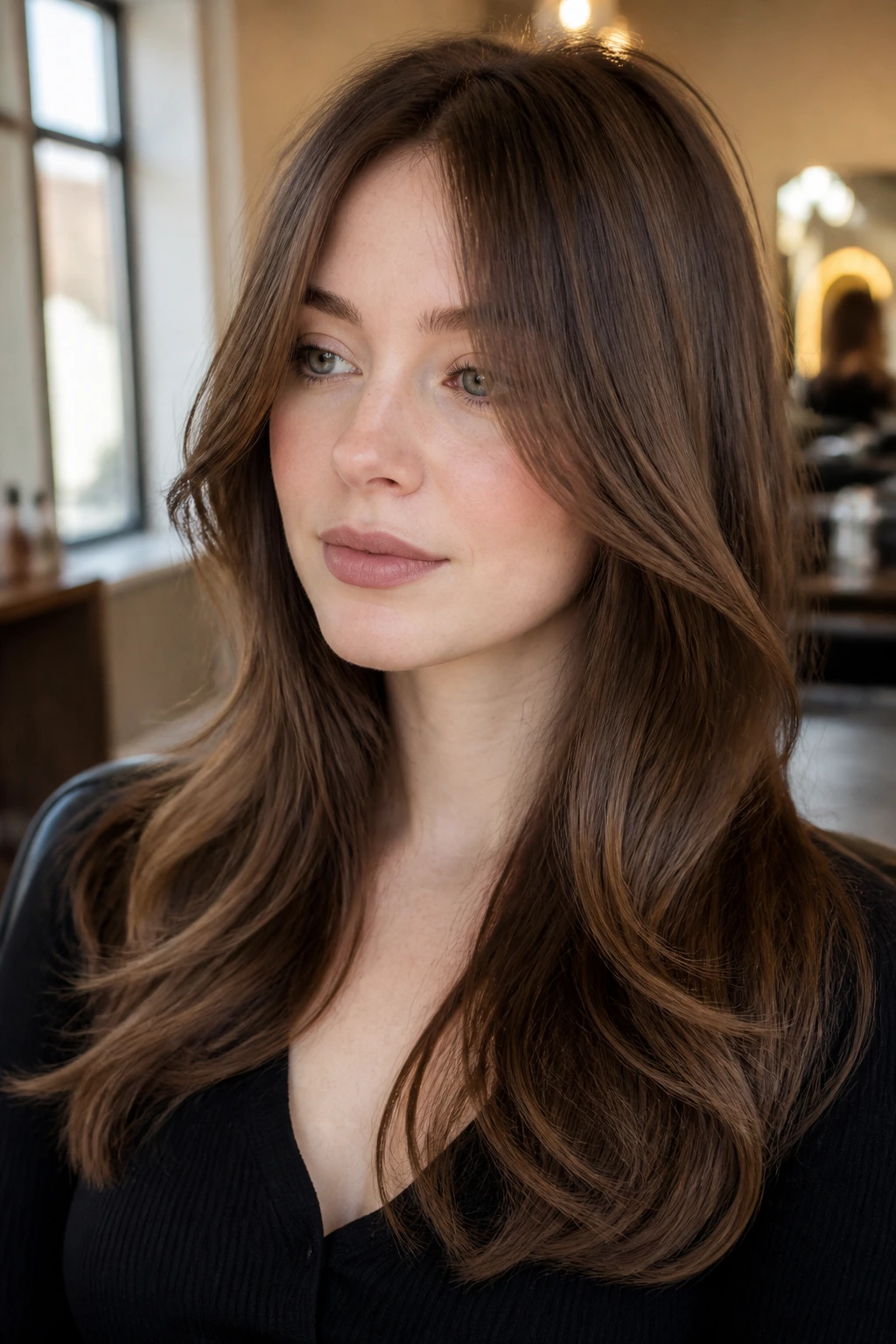
Velvet brown is deep, soft, and a little moody, which gives curtain bangs a nice backdrop. The long bang blend keeps the front from feeling chopped off; instead, the bangs dissolve into the lengths with a gradual shift from dark brown to caramelized mid-tones.
That gradual change is what makes the look feel expensive in real life, not just on a screen. The light pieces are not screaming for attention. They are hiding in the movement, especially when the hair brushes the collarbone or the fringe opens and closes with each step. Pale skin gets enough contrast to stay awake, but not so much that the face starts competing with the color.
It works especially well if you wear your hair parted down the center most days and want the bangs to frame, not cover.
17. Almond Brown with Whisper-Soft Babylights
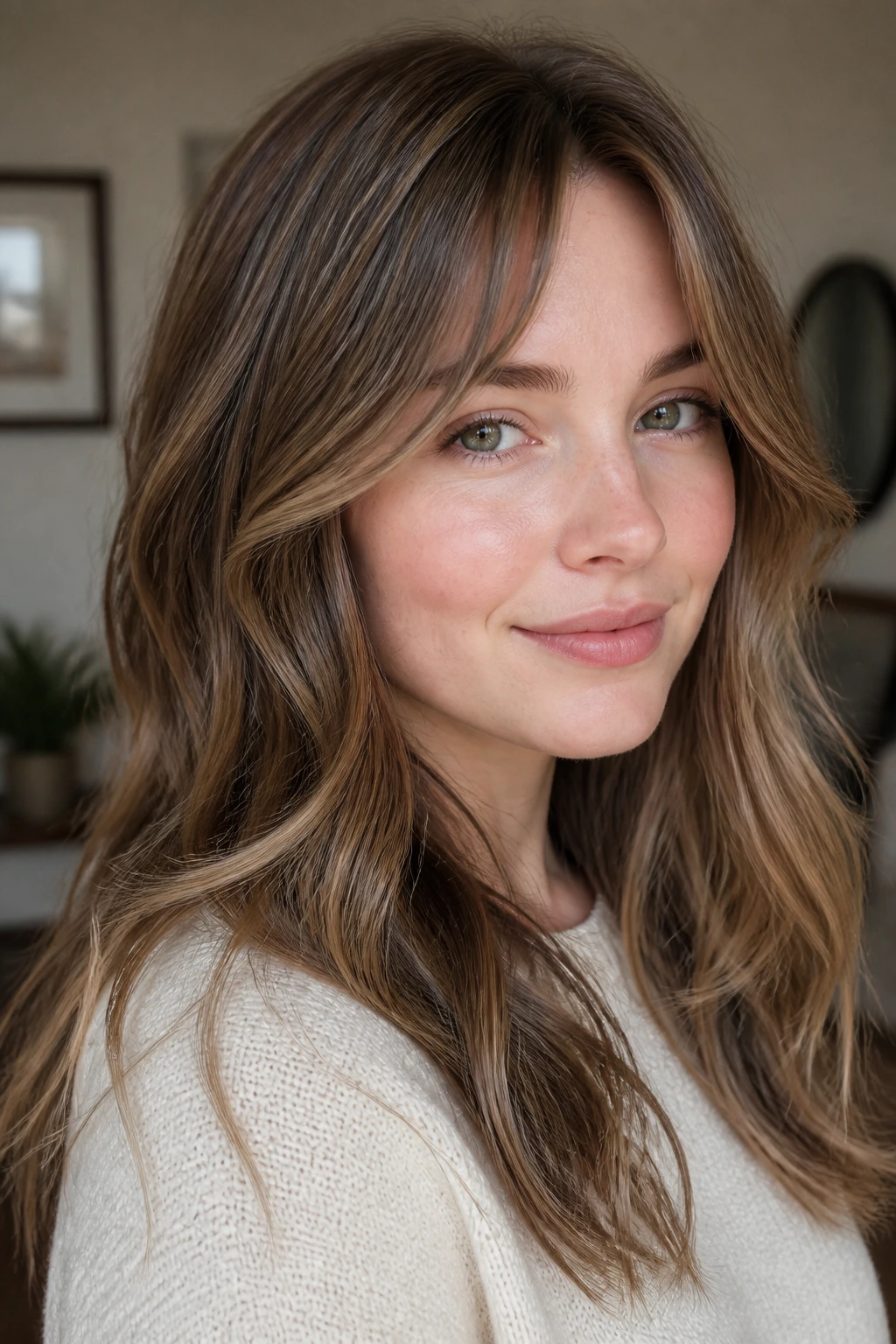
Almond brown gives you just enough warmth to avoid the washed-out problem that can happen with very cool brunette shades. The whisper-soft babylights are the quiet detail here. They are ultra-fine, placed mostly around the hairline, crown, and the first bend of the curtain bangs, so the brightness only shows when the hair moves.
This is one of the best options for someone who wants dimension but hates obvious highlights. On pale skin, it reads gentle and polished. The reason it works is that the highlights never fight the base; they sit inside it like light through fabric.
If you wear your hair in low buns, half-up styles, or clipped-back curtain bangs, the little light threads make those simple styles look finished.
18. Maple Brown with a Glossed Curtain Finish
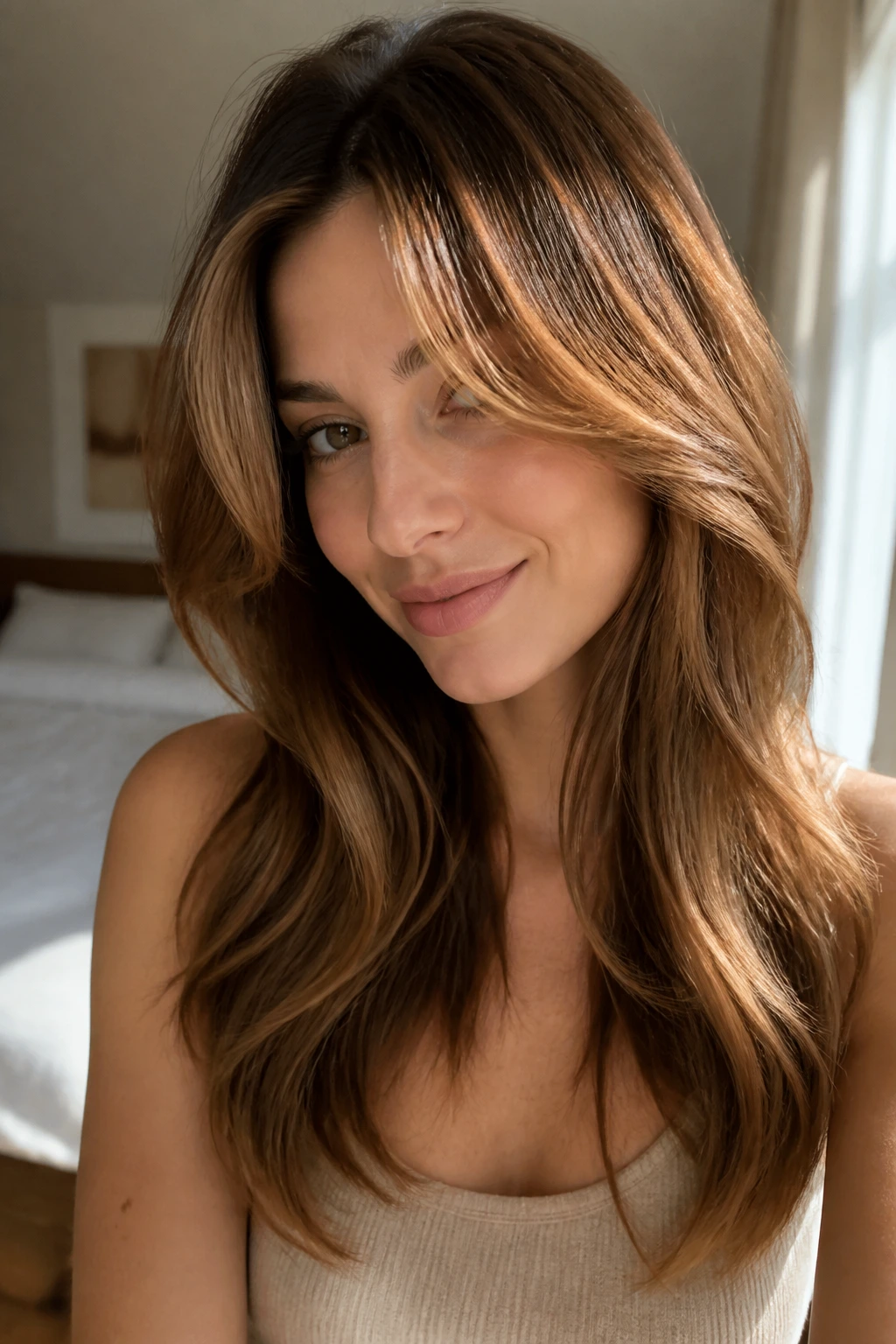
Maple brown closes the list on a warmer, shinier note. It is richer than honey, softer than copper, and a good match for pale skin that needs a little glow without too much gold. The glossed finish matters just as much as the shade. Without it, maple can get dull fast. With it, the highlights look almost liquid.
The curtain bangs should be left slightly lighter than the crown and bent away from the face, so the front opens cleanly. That keeps the color from sitting on top of the cut. If you are growing out old blonde pieces, this is a smart reset because the maple tone can blend past warmth into a more natural brunette shape.
It is not the quietest option here. It is, however, one of the easiest to wear if you like warmth and shine.
Why Brown-Caramel Highlights and Curtain Bangs Work So Well Together
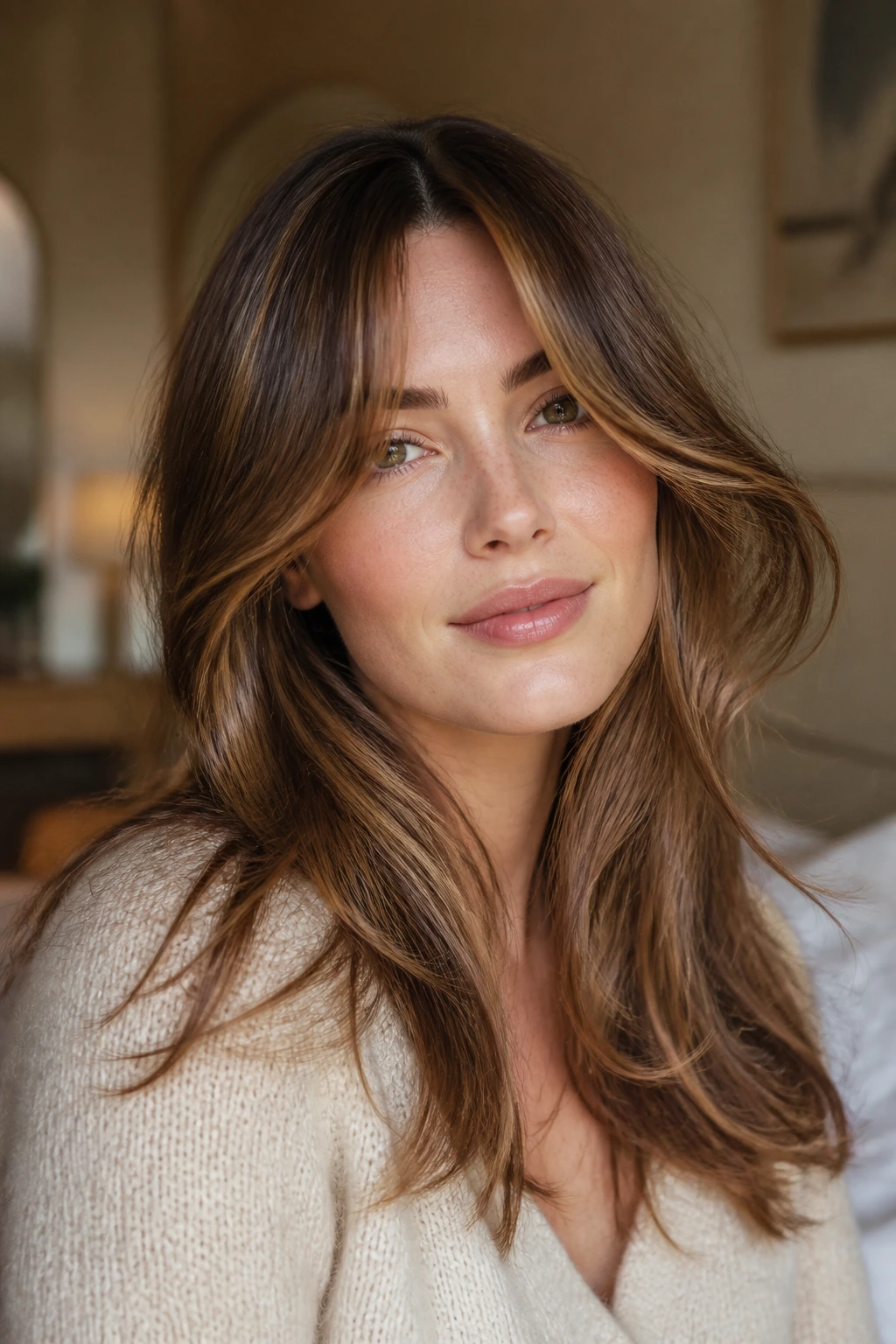
The cut and the color are doing each other a favor. Curtain bangs create a frame with movement, and brown caramel highlights put soft light right inside that frame. When those bright pieces sit at the temple, cheekbone, and upper jawline, pale skin stops looking like a blank backdrop and starts looking more dimensional.
The other reason this pairing works is grow-out. Curtain bangs need regular shaping, but the color does not have to look freshly done every two weeks to stay pretty. A soft root shadow, some beige or honey ribbons, and a gloss through the ends let the style age in a civilized way. That matters if you do not want to live in a constant toner cycle.
Placement Does the Heavy Lifting
The most flattering brightness usually lives a little behind the hairline, not right on it. That keeps the face frame soft and avoids the “streak pasted to forehead” problem that can happen with chunkier highlight work.
Tone Makes or Breaks the Look
- Cooler beige and mushroom caramel flatter pink or porcelain skin.
- Honey, toffee, and maple caramel suit skin that has peach, golden, or freckled warmth.
- Muted chocolate bases keep the lighter pieces from floating too high on the face.
A good colorist will talk about level, tone, and placement in the same sentence. If only one of those gets discussed, ask for the rest.
Tools a Colorist Uses to Build Soft Dimension
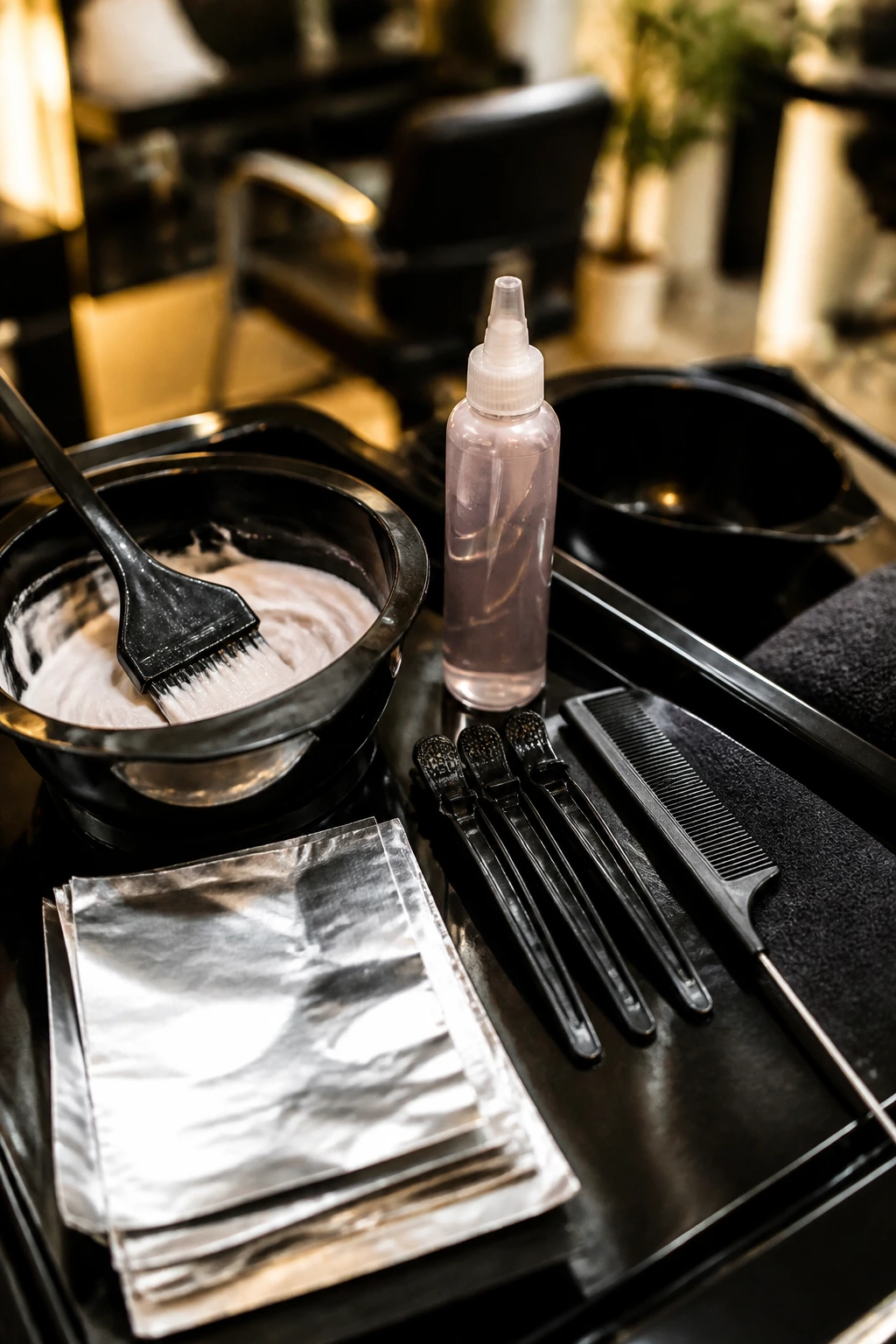
Some of these looks can be maintained at home, but the actual color work usually starts in a salon chair. The tools matter because soft highlights depend on control, not just bleach and hope.
- Tint bowl and brush: Needed for precise balayage painting and gloss application; a small brush gives cleaner face-framing sections.
- Foils or meche sheets: Useful when the front pieces need a brighter lift than the rest of the head.
- Tail comb: Helps section curtain bangs cleanly so the brightest strands land where the fringe splits.
- Sectioning clips: Keep the crown, sides, and bang area separated while the color processes.
- Balayage board: Optional, but it keeps hand-painted pieces smooth and evenly saturated.
- Toner or gloss applicator bottle: Good for mid-lengths and ends when you want beige or caramel to stay polished.
- Round brush: A medium-size one gives curtain bangs their bend without an over-curled finish.
- Blow dryer with nozzle: The nozzle matters. It directs the airflow so the bang shape stays smooth instead of frizzy.
- Heat protectant: Non-negotiable for anyone styling these shades with a blowout or iron.
- Color-safe shampoo and conditioner: Helps keep the caramel from fading into brassy brown.
- Purple or blue toning shampoo: Optional, and only useful when warmth starts pushing too yellow or orange.
- Silk pillowcase: Not glamorous, but it keeps the bangs from roughing up overnight.
What to Ask for at the Salon
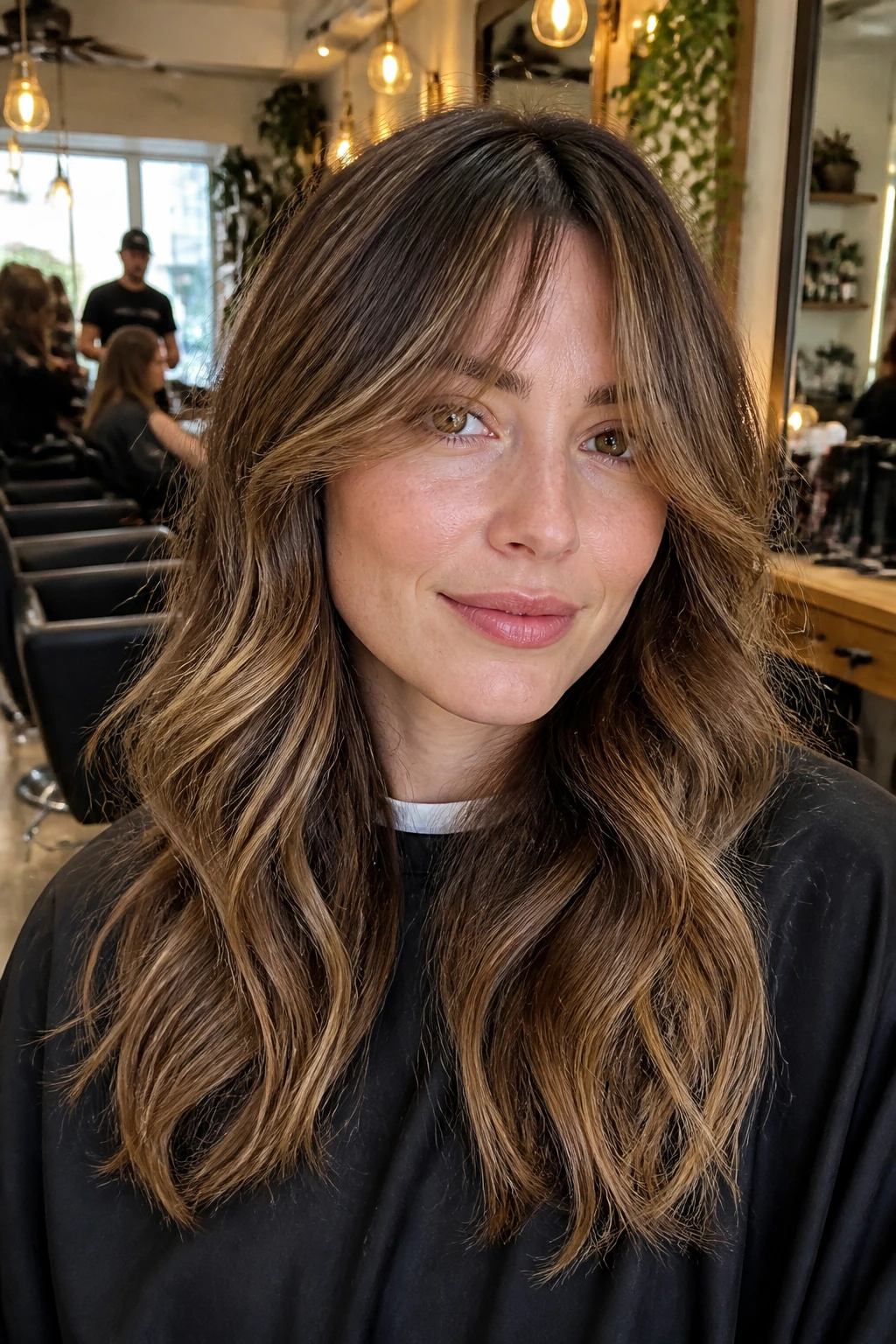
Bring photos, yes, but bring the right photos. One photo should show the color tone you like. Another should show the bang shape. Those are not always the same image, and trying to force one picture to do both usually causes confusion at the chair.
Ask your colorist about your base level first. On pale skin, a brunette base around level 5 or 6 with caramel ribbons lifted to level 7 or 8 is often enough to create softness and contrast without going stripey. If the hair is already light, the caramel may only need a gloss rather than a full lift.
A Few Useful Phrases
- “I want the brightest pieces around the curtain-bang split.”
- “Keep the caramel in the beige to honey lane, not orange.”
- “I want soft grow-out, so no hard line at the root.”
- “Make the front a touch brighter than the back.”
If your hair is porous, mention that too. Porous ends grab tone fast and can go muddy if the formula is too heavy.
How to Wear These Shades Day to Day
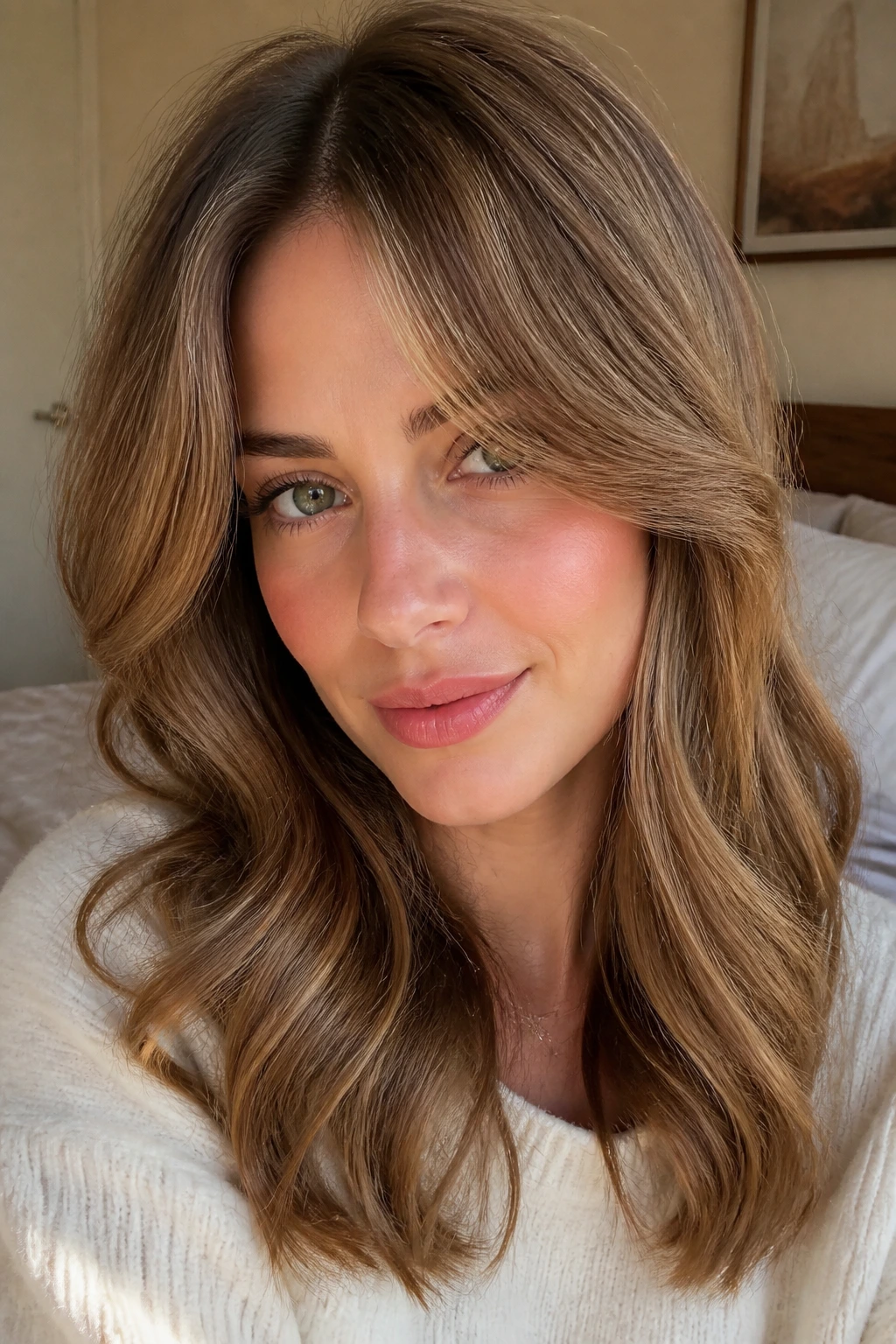
Styling: A center part with a loose bend through the ends is the fastest way to show off brown caramel highlights with curtain bangs. Use a round brush at the bang area, then switch to a 1-inch iron or large curling wand for the mids and ends. Keep the bend away from the face, not toward it, or the bangs can collapse into the cheek.
Makeup: Pale skin usually likes a little structure when the hair gets richer. Rosy blush, taupe shadow, and a nude-pink lip keep the face from going flat. If the caramel leans warm, a peach blush looks great; if the shade is cooler, use a soft rose or mauve.
Clothing Colors: Cream, cocoa, charcoal, dusty rose, olive, and soft navy all sit nicely near these shades. Very bright white can look harsh next to some of the warmer versions, while tan-on-tan outfits can flatten the contrast.
Parting and Texture: Straight hair shows the highlight placement clearly, which is useful if you want the contour to read. Wavy hair gives the caramel more movement. Curly hair needs the brightest pieces placed a bit lower and wider so the bangs do not get lost in the curl pattern.
Additional Tips and Color Boosters
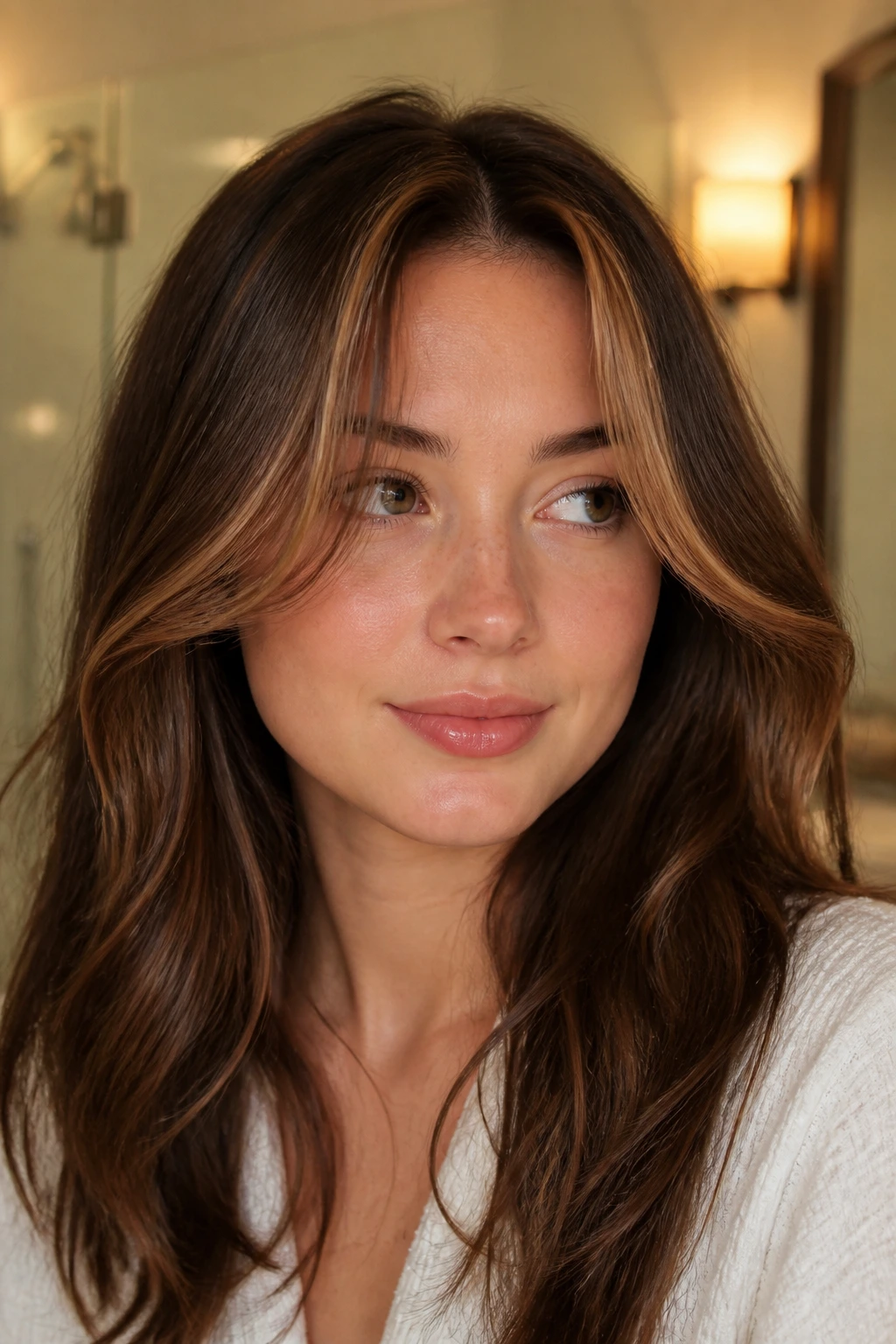
Dimension Boost: Ask for a few micro-babylights around the hairline and the top of the curtain bangs. That tiny detail keeps the face frame alive when the hair is tied back.
Tone Control: If the caramel starts to go too gold, switch to a beige gloss instead of piling on more lightener. Tone is often the fix, not more lift.
Styling Trick: A pea-size drop of lightweight cream on damp bangs keeps them separated and soft. Too much oil makes them stringy fast.
Make-It-Yours: If your skin is very cool, tilt the caramel toward beige and mushroom. If you run warm or freckled, ask for honey, toffee, or maple notes. If your hair is curly, place the brightest strands one bend back from the hairline so they do not disappear in the curl.
Maintenance, Refresh, and Between-Appointment Care
Brown caramel highlights stay prettier when the care is calm and regular. Wash too often and the toner drains out. Leave it alone too long and the front pieces can start looking dry or brassy. The middle ground is usually best.
Most highlighted brunettes do well with 2 to 3 washes a week. Use a color-safe shampoo, then a conditioner that gives slip without coating the hair too heavily. Once a week, add a mask to the mids and ends, but skip the roots unless your scalp runs dry. Curtain bangs tend to get oily first, so a dry shampoo at the roots can buy you an extra day without washing the whole head.
If the caramel starts drifting warm, use a blue or purple shampoo every other week, not daily. Daily toning is how pretty brown turns dull. A gloss refresh every 6 to 8 weeks keeps the finish beige and soft. Root shadow can usually go 6 to 10 weeks before it starts to look obvious, depending on how fast your hair grows and how much contrast you chose at the start.
Curtain bangs usually need a trim every 4 to 6 weeks. Longer than that and they stop framing the face and start hanging in the eyes. Sleep on a silk pillowcase if you can. It keeps the fringe from getting mashed into weird bends that are annoying to fix in the morning.
Variations and Adaptations to Try
Cool-Porcelain Beige: Pull the caramel back toward ash and beige, then keep the roots slightly smoky. This version flatters very fair skin that burns easily and can look pink after washing.
Soft Autumn Toffee: Push the highlights warmer with toffee and light honey. It suits pale skin with freckles, peach tones, or green-hazel eyes that need a little warmth around them.
Low-Contrast Brunette: Keep the root and highlight difference small. This is the best route if you want dimension that is visible only when the light hits or when the hair swings.
High-Drama Money Piece: Brighten the front panels more than the rest of the head and keep the back deeper. The curtain bangs need to be styled cleanly for this one, or the contrast can feel busy.
Curly Curtain Bang Blend: Place lighter strands one layer back from the face so the curl pattern does not swallow them. The result is softer and far easier to maintain on textured hair.
Grow-Out Rescue: If old blonde has gone patchy, melt it into maple, walnut, or mocha tones instead of chasing a perfect blonde. This gives you a brunette base that still has life around the face.
Common Mistakes to Avoid
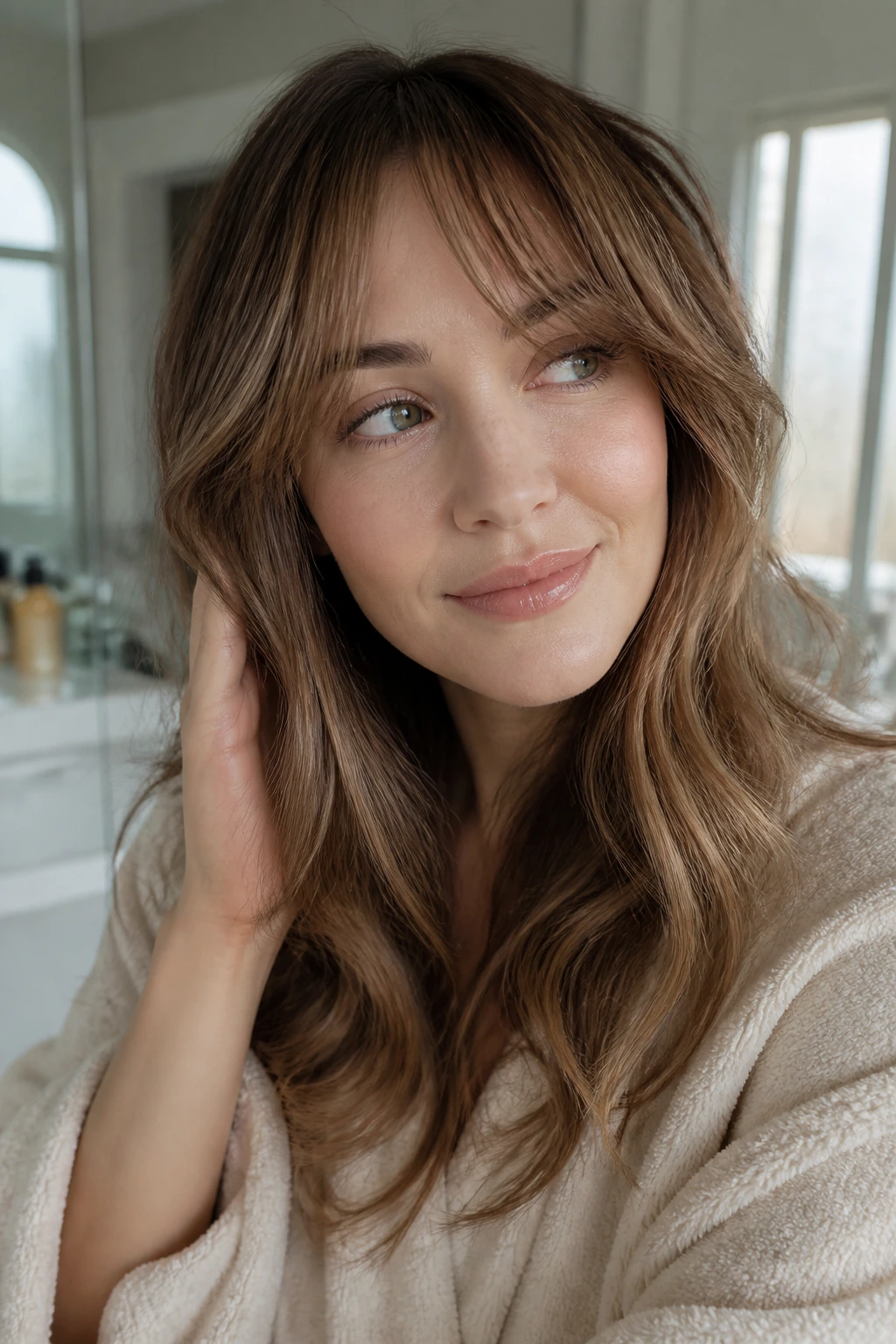
The most common mistake is choosing caramel that is too orange. On pale skin, orange-heavy highlights can make the complexion look red and tired instead of warm. Ask for beige, honey, toffee, or maple descriptions, and do not be shy about saying you want to avoid brass.
Another trap is putting the lightest pieces too high into the curtain bangs. When that happens, the front looks striped and the fringe stops blending into the haircut. Keep the bright sections just behind the hairline and around the split, then let them soften as they move back.
Over-lightening porous ends causes a dry, see-through finish. The symptom is easy to spot: the ends look pale, fuzzy, and a little hollow. The fix is to leave the ends deeper and use gloss, not more bleach.
Skipping a root shadow can make the whole style read loud in a bad way. The highlights have nowhere to land, so the color starts shouting from the part outward. A soft root melt keeps the front pieces grounded.
One more: curtain bangs that are cut too short fight every color choice here. Short fringe turns the face frame choppy and takes away the sweep that makes these shades flattering. If you want the color to feel elegant, let the bang land around the cheekbone or upper lip, not way above the brows.
Frequently Asked Questions
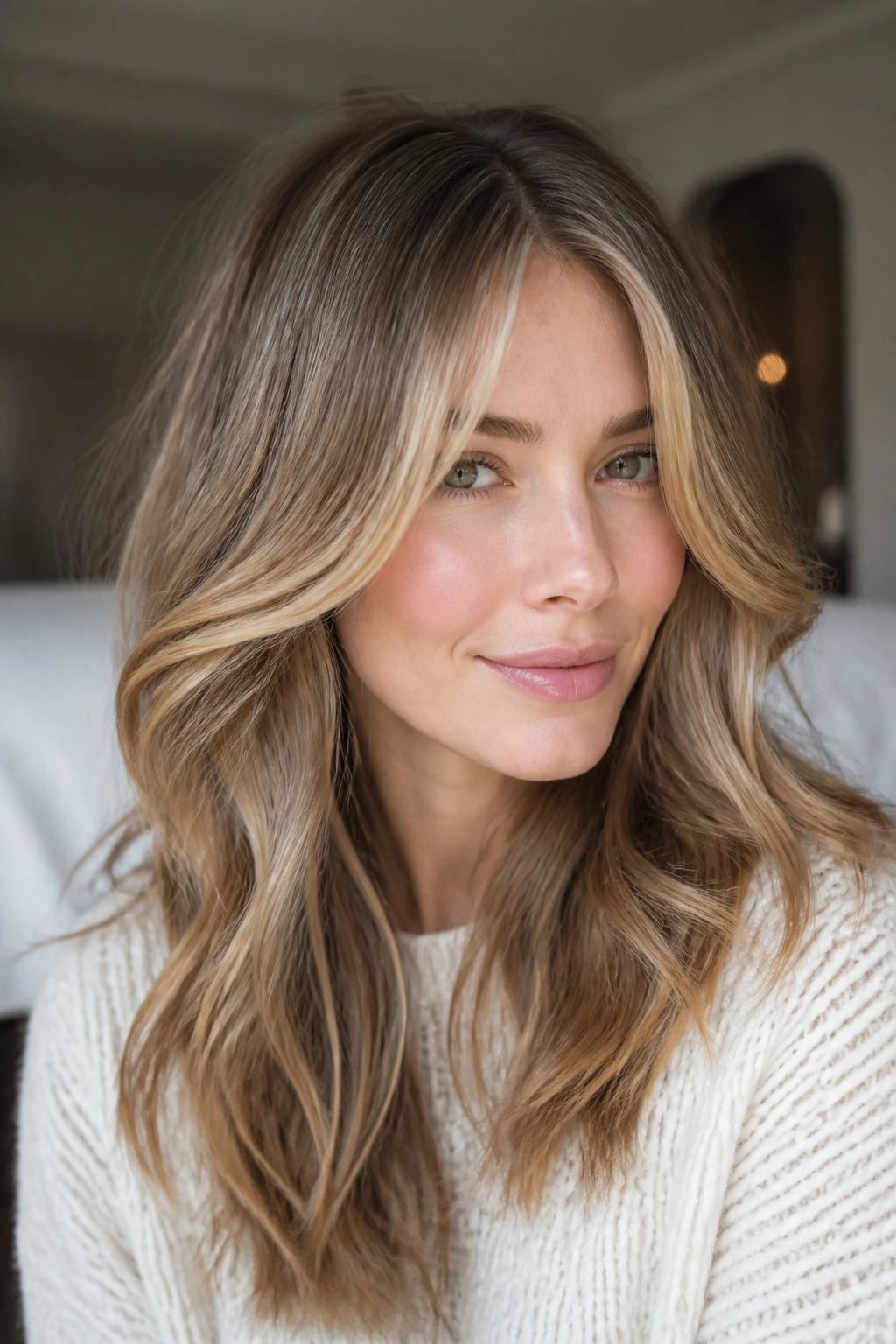
Will brown caramel highlights work on very pale skin with pink undertones?
Yes, but the tone matters. Stick with beige, mushroom, cool caramel, or soft mocha and keep the brightest pieces away from the exact center part so the skin stays clear instead of flushed.
Do curtain bangs need highlights to look good?
No, but they usually look more alive when the front pieces get some brightness. Even a few micro-lights or a soft money piece can stop the bangs from feeling heavy, especially on straight hair.
Can I get this look on dark brown hair without bleaching everything?
Usually, yes. A colorist can lift only the face frame and a few ribbons through the top layers, then use root shadow and gloss to keep the rest of the hair rich. That is one reason this style is so popular in salons.
How often do brown caramel highlights need toner?
Every 6 to 8 weeks is a good rhythm for most people, though porous hair may need it sooner. If the caramel starts leaning orange or yellow, that is usually a sign to refresh the tone rather than pull more color through the lengths.
What if my curtain bangs separate in a weird way after styling?
That usually means the root area got too much product or was blown dry with the nozzle pointed the wrong way. Use less cream, dry the bangs forward first, then split them and bend each side away from the face with a round brush.
Do these highlights make fine hair look thinner?
They can if the pieces are too chunky or too far apart. Fine hair usually looks better with micro-lights, ribboned placement, and a slightly deeper root so the overall shape keeps some density.
Is a money piece necessary for this color family?
No. In some of the softer versions, the money piece would actually be too much. If you want subtlety, ask for a veil of brightness around the face instead of a distinct front panel.
Can curls handle this color, or do the highlights disappear?
Curls handle it well, but the placement has to be wider and a little lower. If the light pieces sit too close to the scalp, the curl pattern hides them. Put the brightest strands where the curl opens around the cheek and jaw.
The Shade That Moves With You
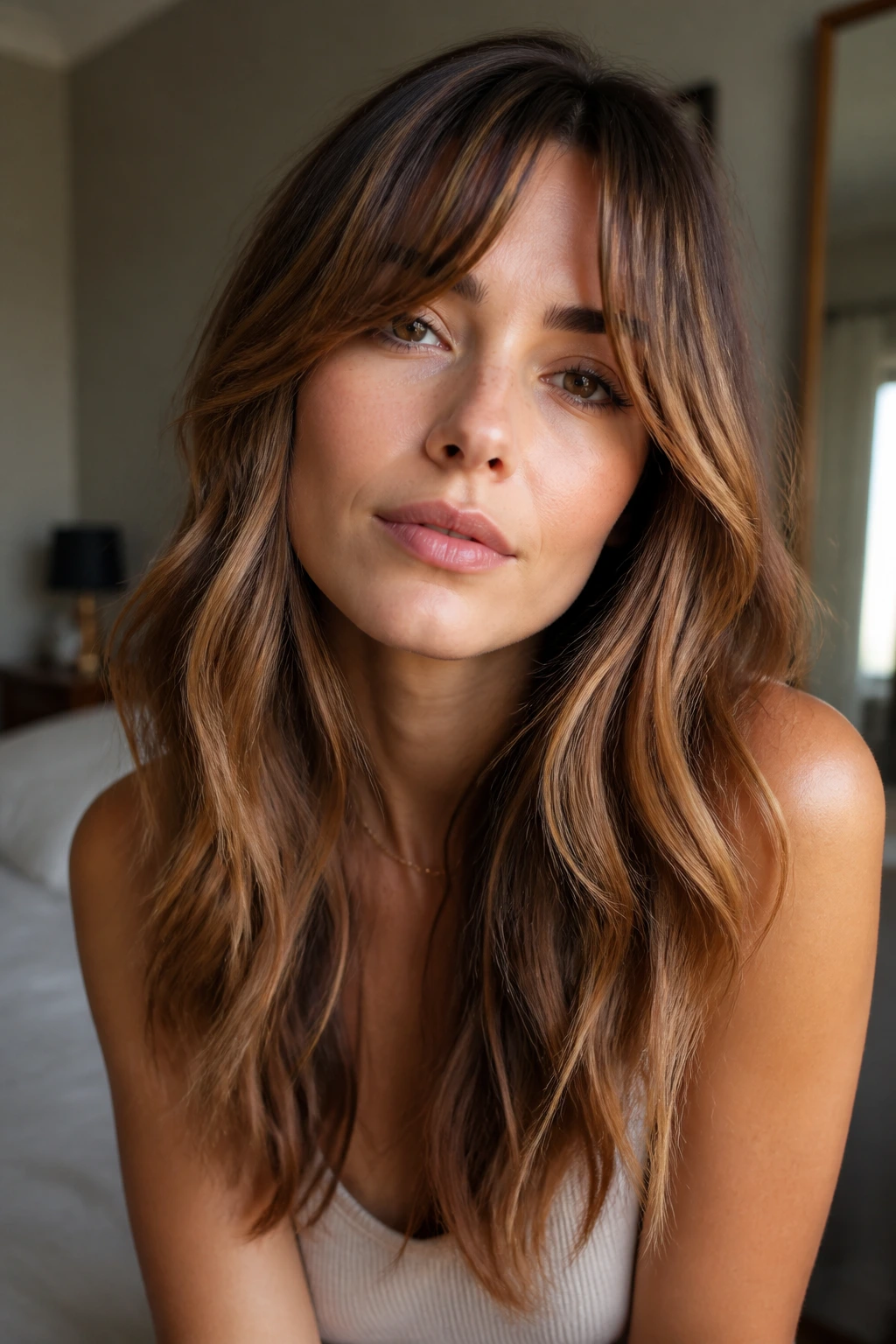
The nicest thing about these shades is that none of them asks the same thing from every face. Some lean cool and clean, some warm and soft, some louder through the front, some nearly whisper-level. What they share is that useful mix of depth and light that keeps pale skin from going flat and keeps curtain bangs from looking like a separate haircut glued on top.
Pick the version that matches your undertone, your maintenance habits, and how much contrast you actually want to see in the mirror at 8 a.m. The best brown caramel highlights are the ones that still make sense when the blowout has loosened a little and the bangs have settled into their real shape. Save the shade that feels closest to your face, then ask for the placement that lets the fringe do its job.