



Long layered haircuts for thick hair with lowlights solve two complaints at once: the bulk that balloons out at the shoulders, and the color that goes flat after a few weeks. Thick hair can be gorgeous and exhausting in the same breath. One blunt line and it starts to feel like a wool blanket. A few well-placed layers and some deeper ribbons of color, though, and the whole head suddenly has shape, shadow, and a little breathing room.
The trick is restraint. The best lowlights on dense hair usually sit one or two shades deeper than the base, tucked into the mid-lengths, underside, and face-framing pieces where movement matters most. If the color gets too dark, the result turns stripey. If the layers get too short, the shape can puff up fast. When both parts are done with a light hand, the haircut looks cleaner, richer, and easier to live with.
Some of the looks below are soft and rounded, some lean shaggy, and a few are built for a big blowout or a fast air-dry. They all do the same useful job: keep the length, lower the bulk, and let the color work like shadow instead of decoration.
Why These Cuts Earn Their Spot
- Bulk control: Long layers take weight out of the middle and lower sections of thick hair, which keeps the ends from turning into a shelf.
- Dimensional color: Lowlights break up a single brown block and make the layers easier to see when the hair swings.
- Better grow-out: Darker ribbons fade less harshly than bright highlights, so the hair still looks intentional between appointments.
- More styling range: Most of these cuts can be air-dried, blown out, or curled with a 1.25-inch iron without fighting the shape.
- Face balance: The right front layers can soften a strong jaw, open up a wide forehead, or keep curls from crowding the cheeks.
1. Waterfall Layers with Mocha Lowlights
Waterfall layers are a good answer when thick hair needs motion more than drama. The shortest pieces skim the collarbone, then the lengths fall in soft steps so the perimeter still feels full. Mocha lowlights tucked through the mid-lengths keep the eye moving downward instead of reading the hair as one solid brown sheet.
I like this shape on thick hair that puffs at the sides but still has a decent bit of swing. Ask for point-cut ends rather than a blunt chop, because that keeps the finish soft. A loose bend from a 1.25-inch iron shows the layers better than a pin-straight pass ever will.
2. U-Shaped Layers with Chestnut Lowlights
A U-shape is the polite cousin of a blunt line. The center back stays a little longer, the sides taper gently, and thick hair keeps enough weight to look glossy instead of frayed. Chestnut lowlights through the lower third soften that curve and stop the ends from looking like one dark curtain.
Ask for: the longest point at the center of the back, with layers starting below the collarbone.
Color note: chestnut works when you want depth without a muddy finish.
Best for: ponytails, half-ups, and hair that looks too wide at the hemline.
That rounded base also behaves nicely on day three, which is when a lot of cuts start getting bossy.
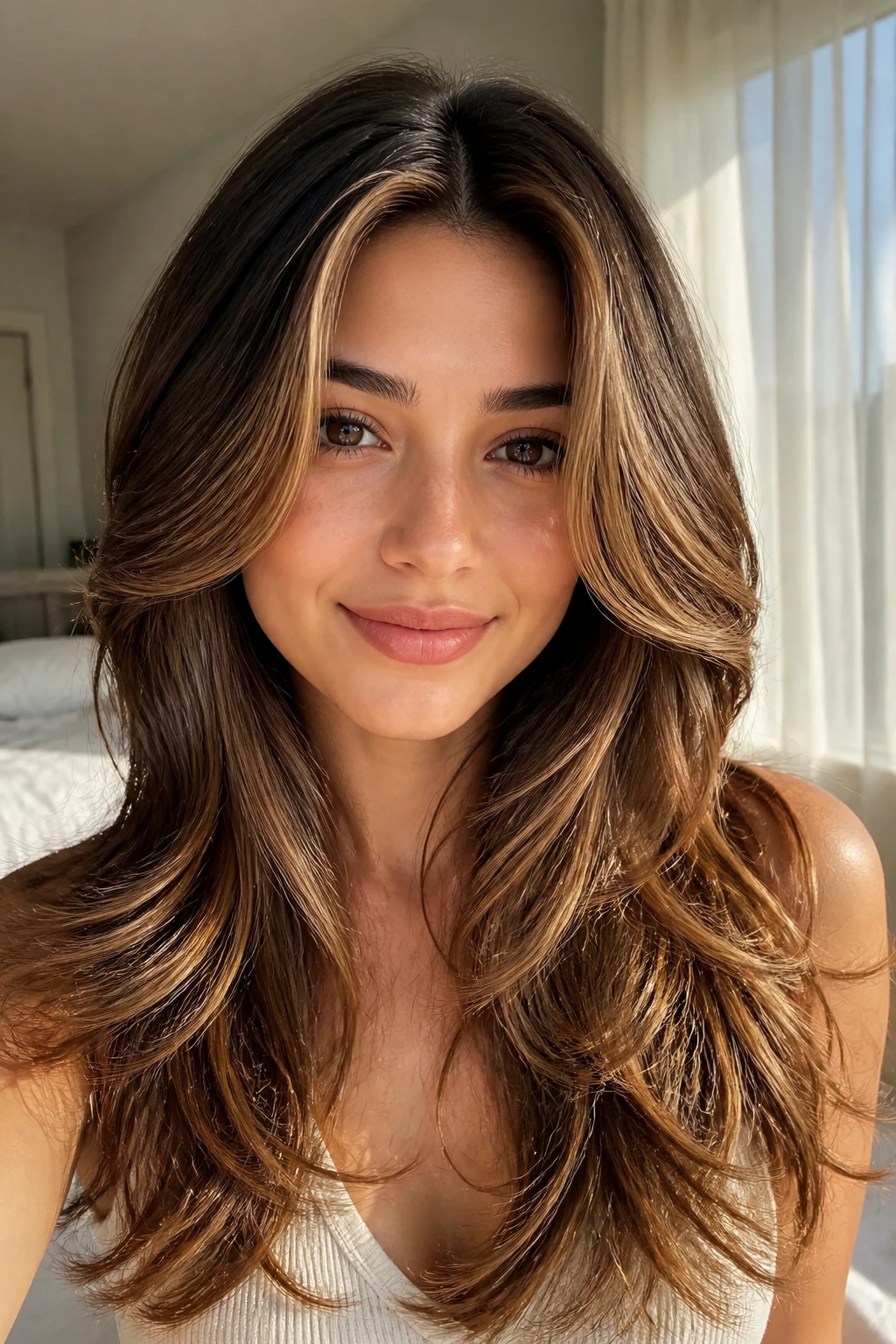
3. Butterfly Layers with Caramel Ribbons
Butterfly layers do one thing very well: they make thick hair feel lighter around the face without sacrificing the long length. The short front “wings” hit around the cheekbones, while the longer back layers keep the weight and movement in the rest of the hair. Caramel ribbons woven through those top sections stop the front from looking flat.
This cut is built for people who like volume at the crown but don’t want the ends to explode outward. If your hair is dense but not coarse, the shape can feel almost airy after a good blow-dry. It also grows out cleanly because the front pieces blend into the longer lengths instead of sitting like a hard line.
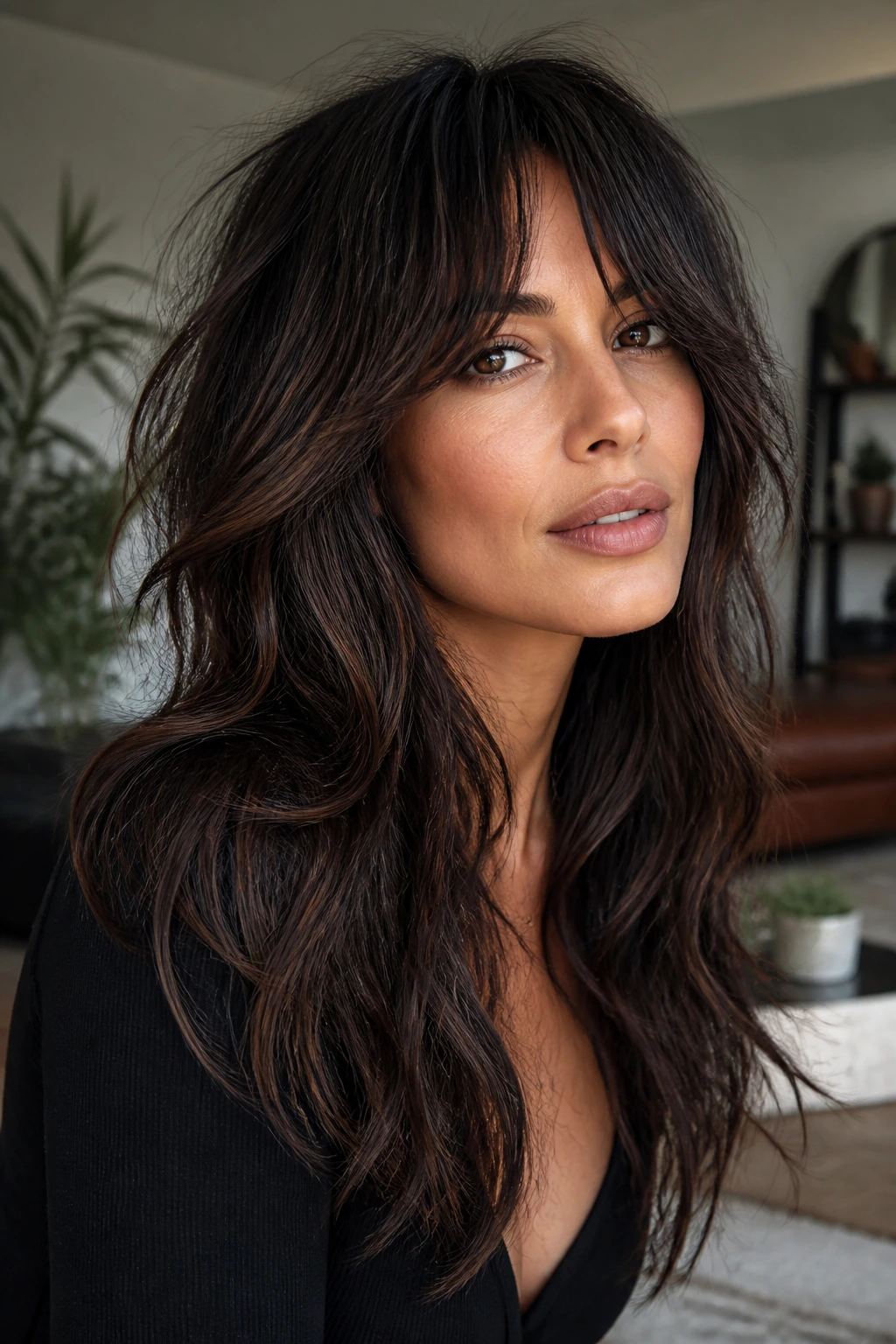
4. Long Shag Layers with Espresso Lowlights
The long shag is for thick hair that refuses to sit still, and honestly, that can be a good thing. The layers are more piecey, the ends feel lightly broken up, and the shape keeps a little edge without tipping into mullet territory. Espresso lowlights give the texture somewhere to land, so the shag reads as deliberate rather than fuzzy.
This one likes a bit of grit. A light mousse at the roots and a diffuser or rough blow-dry will bring out the movement fast. If your hair gets bulky at the crown, ask for the shortest layers to stay above the cheekbone but below the temples — short enough to move, long enough to avoid puff.
5. Face-Framing Layers with Honey Brown Lowlights
If you want to keep most of the length, this is the quietest option in the bunch. Face-framing layers remove bulk where thick hair crowds the cheeks, and the rest of the hair stays long and full. Honey brown lowlights around the temples and front pieces create a soft contour that’s easy to wear.
It’s a smart pick for people who don’t want a lot of obvious layering in the back. The haircut feels subtle from behind and more open around the face. I’d choose it for straight or softly wavy hair that tends to hide shape unless you add some contrast.
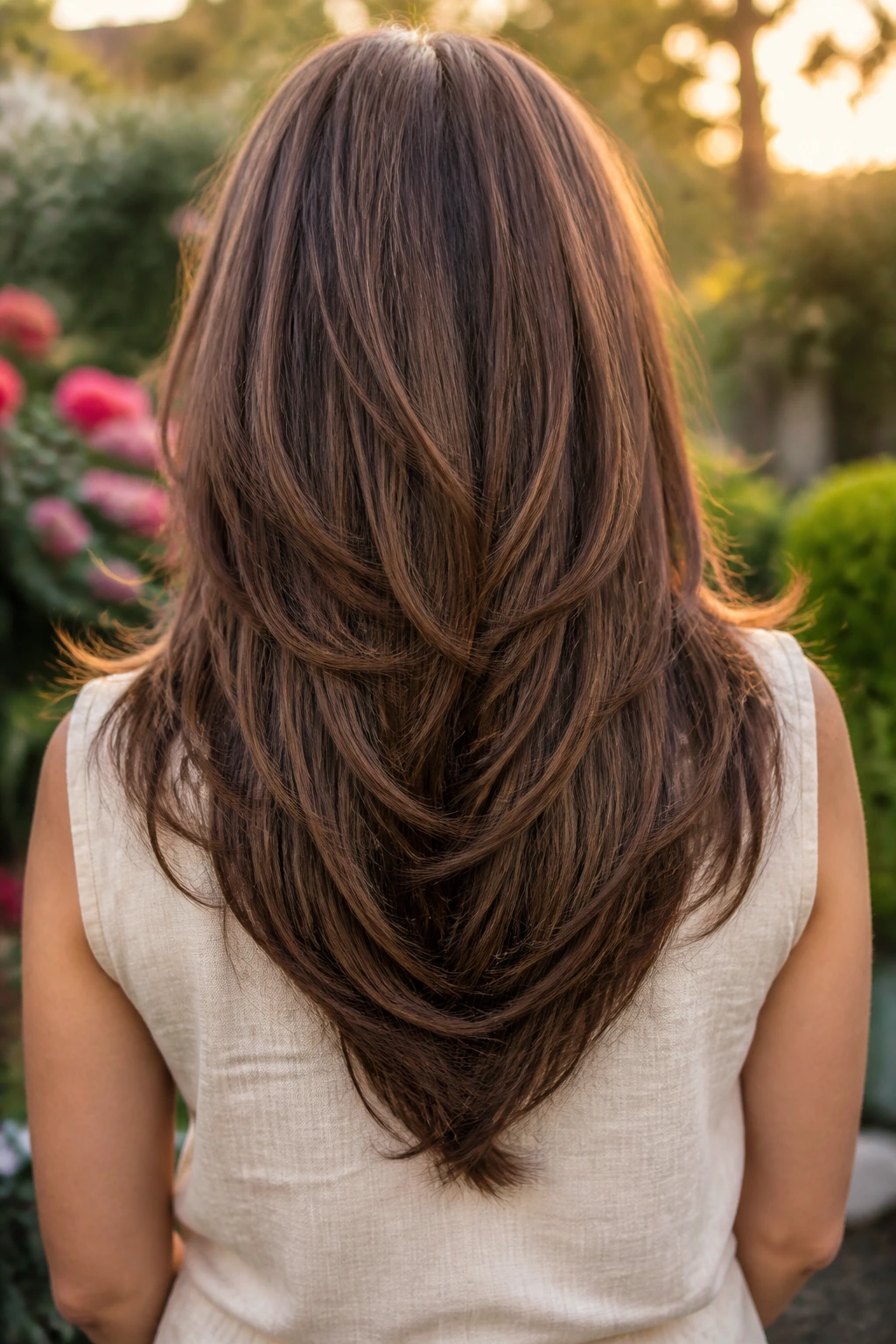
6. V-Cut Layers with Walnut Lowlights
A V-cut gives thick hair a pointed shape at the back, which sounds dramatic but usually just means the hair narrows gradually instead of hanging in one wide line. Walnut lowlights deepen the lower half and make that taper read more clearly. On extra-long hair, that little bit of structure keeps the whole thing from looking like a sheet.
The cut works best when the front isn’t taken too short. Let the longest side layers stay generous, then keep the point in the back clean and centered. If you wear your hair half-up a lot, a V-shape still looks intentional tied back, which a blunt line does not always manage.
7. Invisible Internal Layers with Mushroom Brown Lowlights
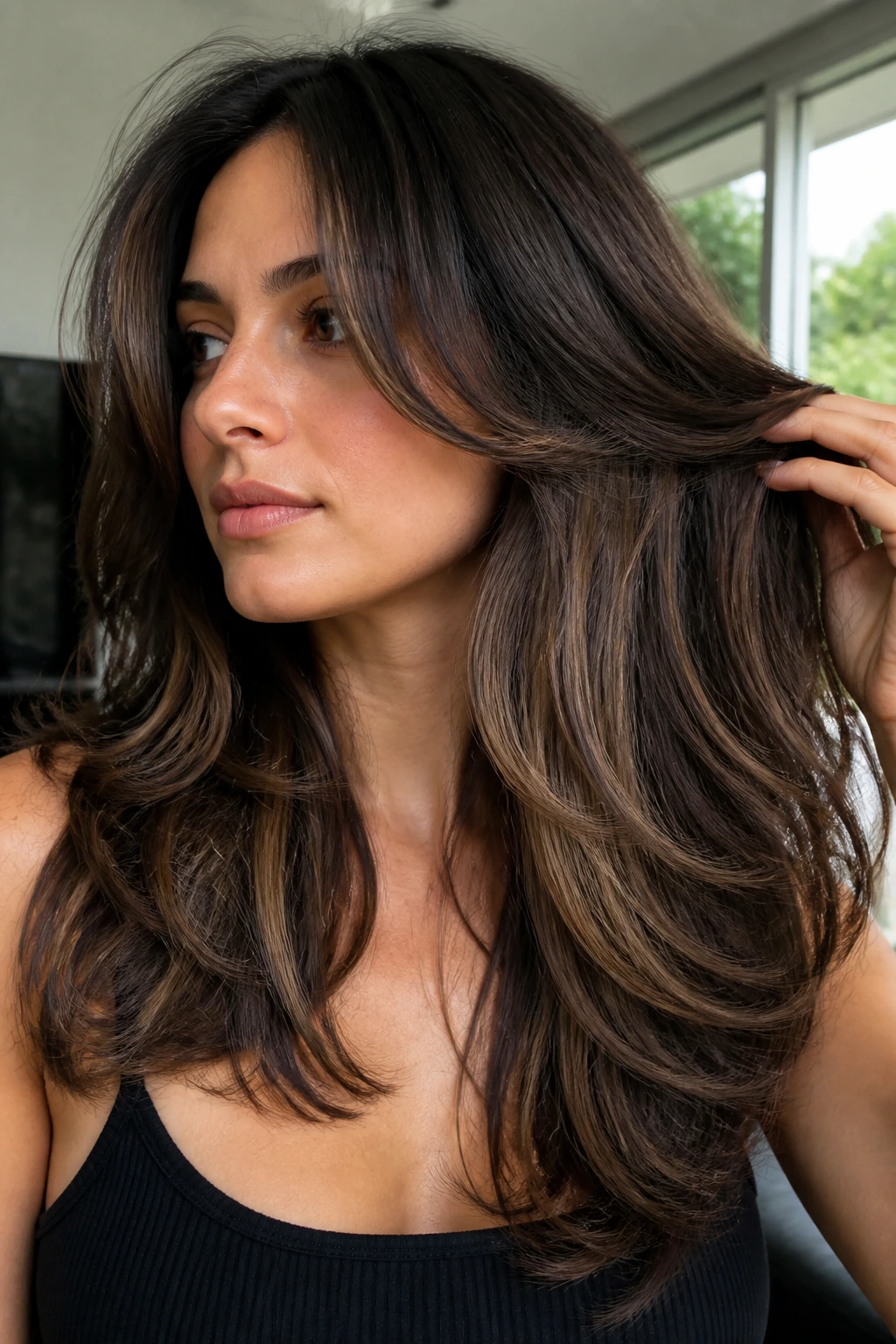
A good invisible layer cut is the one people notice only after the hair moves. The outer line stays long and smooth, while the weight is carved out inside the head. That makes it a smart choice for thick hair that feels bulky but still needs a clean finish. Mushroom brown lowlights keep the color muted and dimensional instead of streaky.
What Makes It Invisible
The layers sit beneath the top sheet, so the haircut keeps its length and polish even when you wear it straight. I like this on hair that frizzes if it gets over-thinned, because the interior weight stays enough to support the ends.
The color should live inside the folds of the cut, not just on the surface. That’s what gives you depth when the hair swings.
8. Curtain Bang Layers with Cinnamon Lowlights
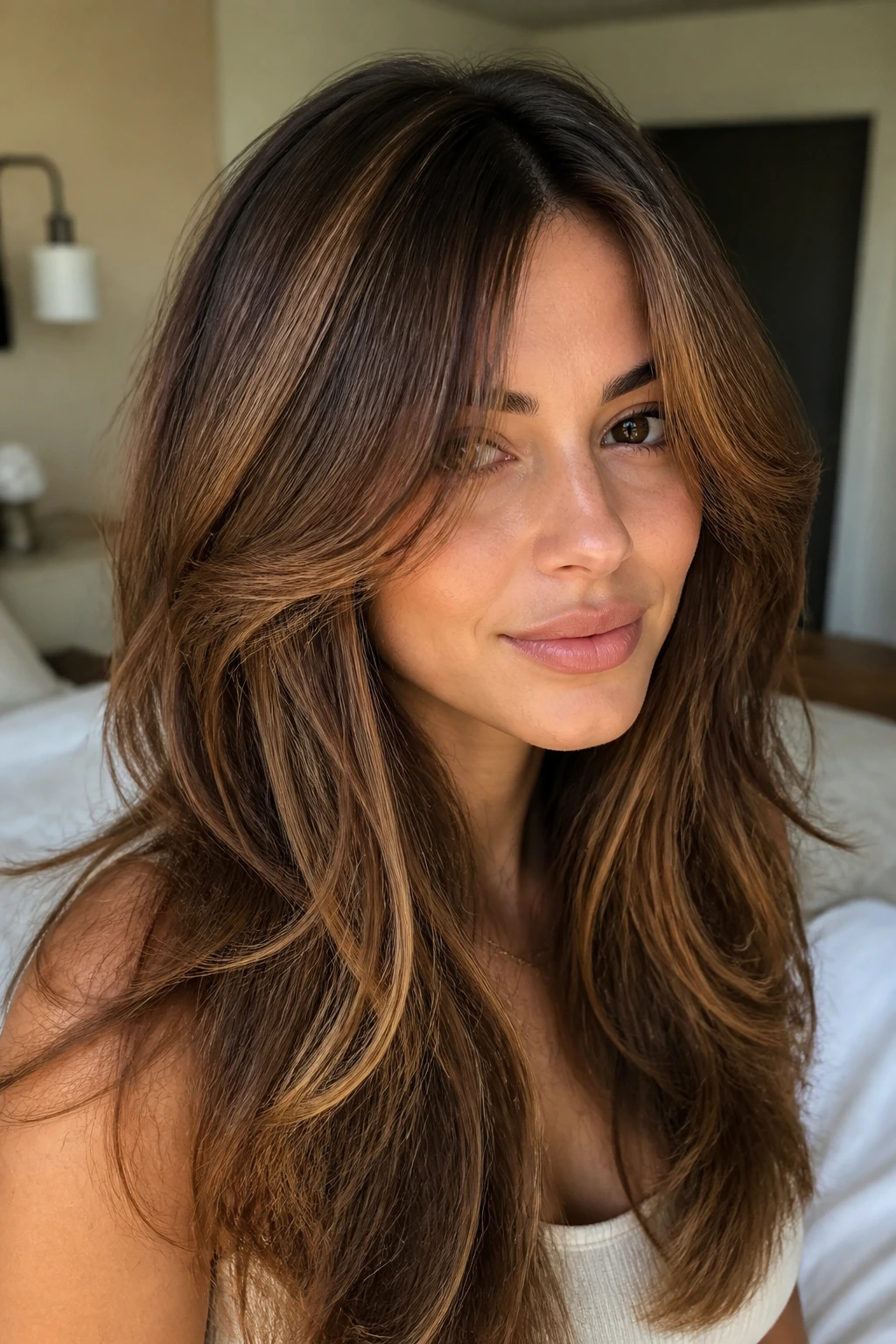
Curtain bangs can work on thick hair, but they need space and a little patience. The front pieces split softly in the center, then melt into long layers that keep the sides from feeling heavy. Cinnamon lowlights around the fringe and face frame help the bangs blend instead of shouting for attention.
Here’s the catch: thick bangs shrink when they dry. Ask for them longer than you think you need, especially if your hair dries with a bend. A round brush and a quick blow-dry forward, then away from the face, keeps the curtain shape open rather than boxy.
9. Rounded Long Layers with Mahogany Lowlights
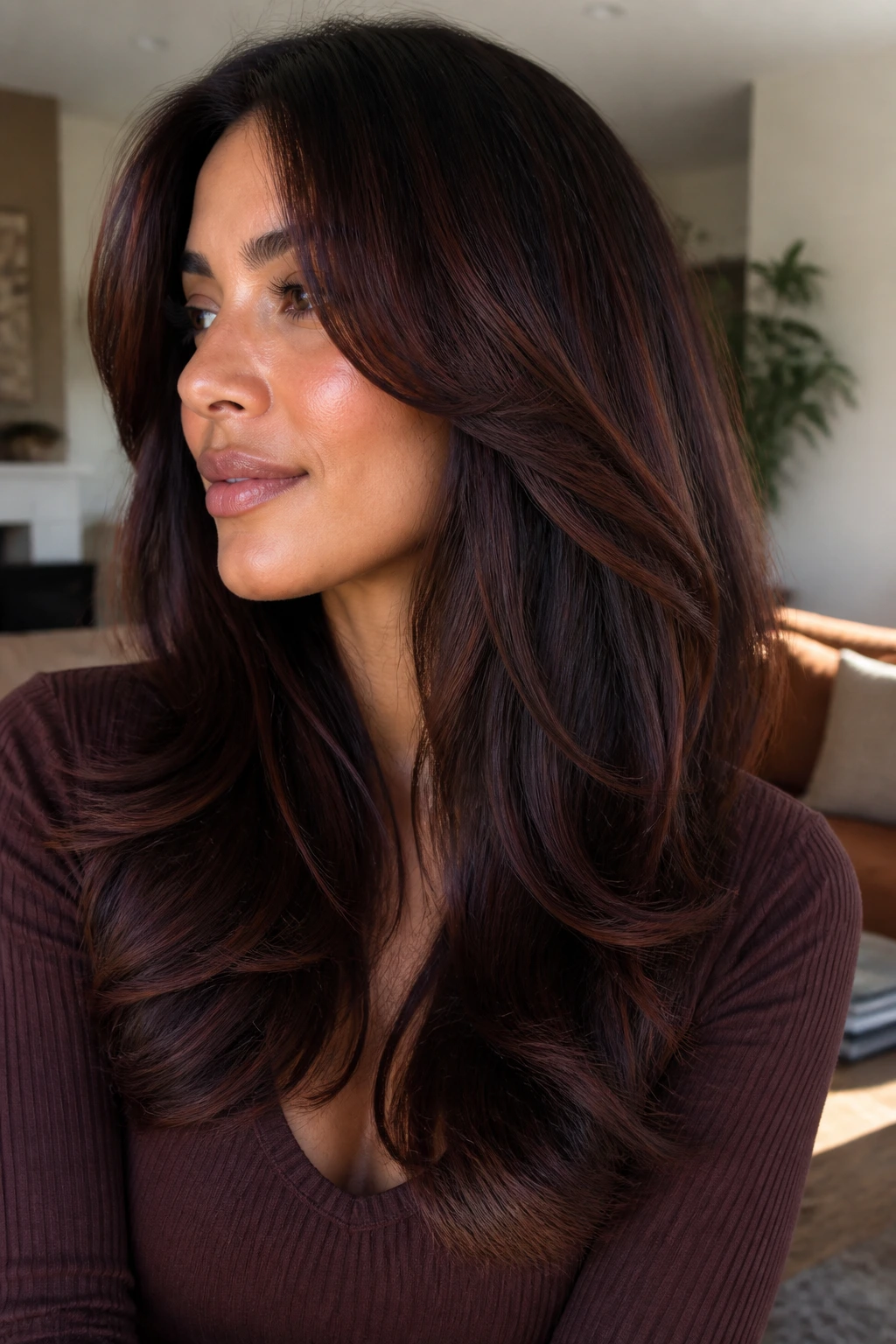
Rounded layers follow the natural curve of the head, which is often kinder to thick hair than a sharp edge. The hemline is softly bevelled, the layers fall with a little bend, and the whole cut sits closer to the body instead of flaring outward. Mahogany lowlights add depth without making the surface look flat.
This is one of my favorite shapes for wavy hair that wants to behave but not look stiff. It’s also useful if your ends tend to kick out at the shoulders. A large round brush or even a blow-dry brush can coax the bottom inward, which keeps the silhouette calm.
10. Feathered Blowout Layers with Toffee Lowlights
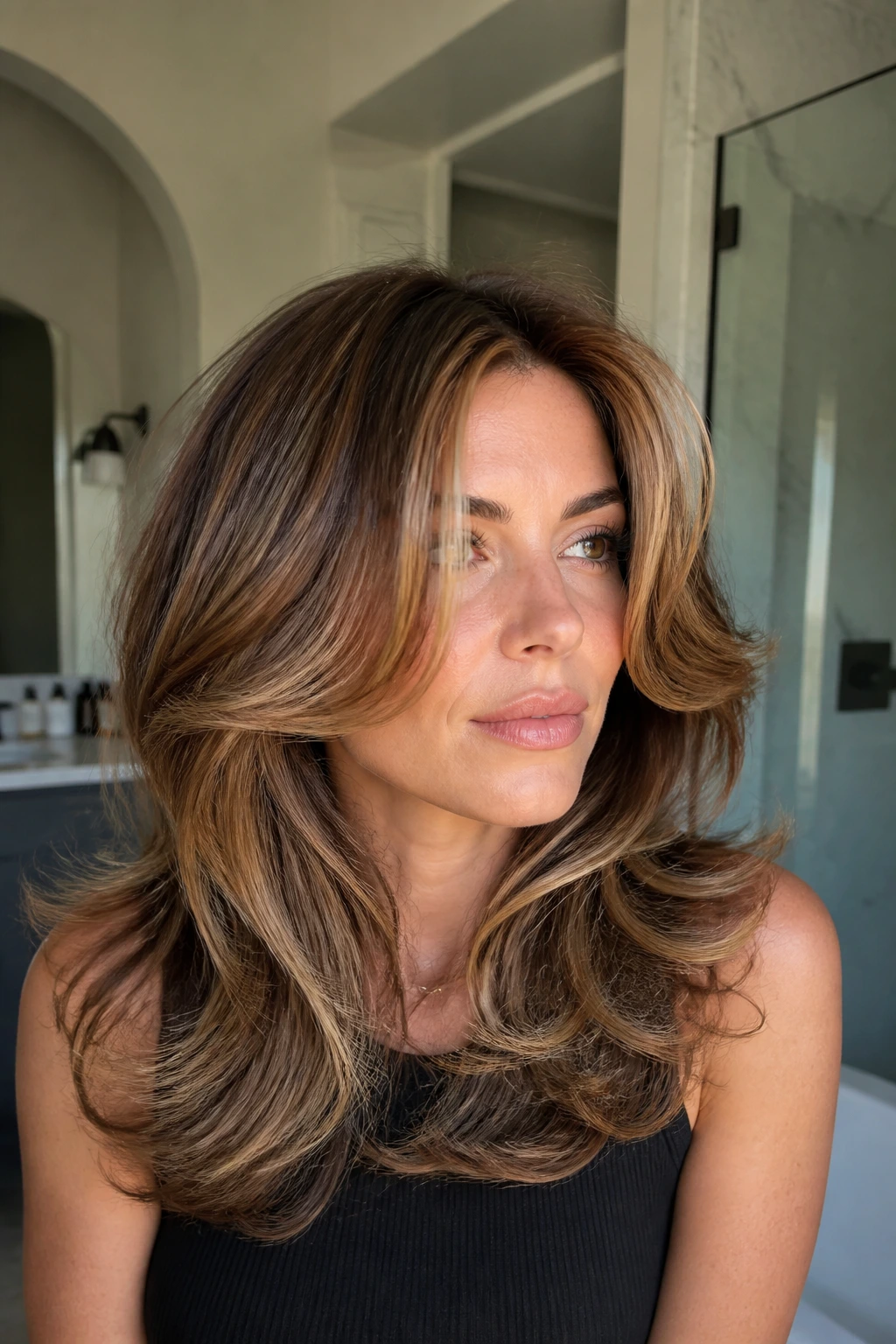
This is the 90s blowout, but cleaned up for thick hair. Feathered layers are cut to lift away from the face and soften the outline, not to thin the ends into nothing. Toffee lowlights give that brushed-out shape some contrast, so every sweep of hair shows its own line.
The style likes volume at the roots and movement through the mid-lengths. A medium round brush and a nozzle on the dryer make a bigger difference than people expect. If the layers are done well, the hair will flip and bend without looking overworked. That’s the sweet spot.
11. Mermaid-Length Waves with Sable Lowlights
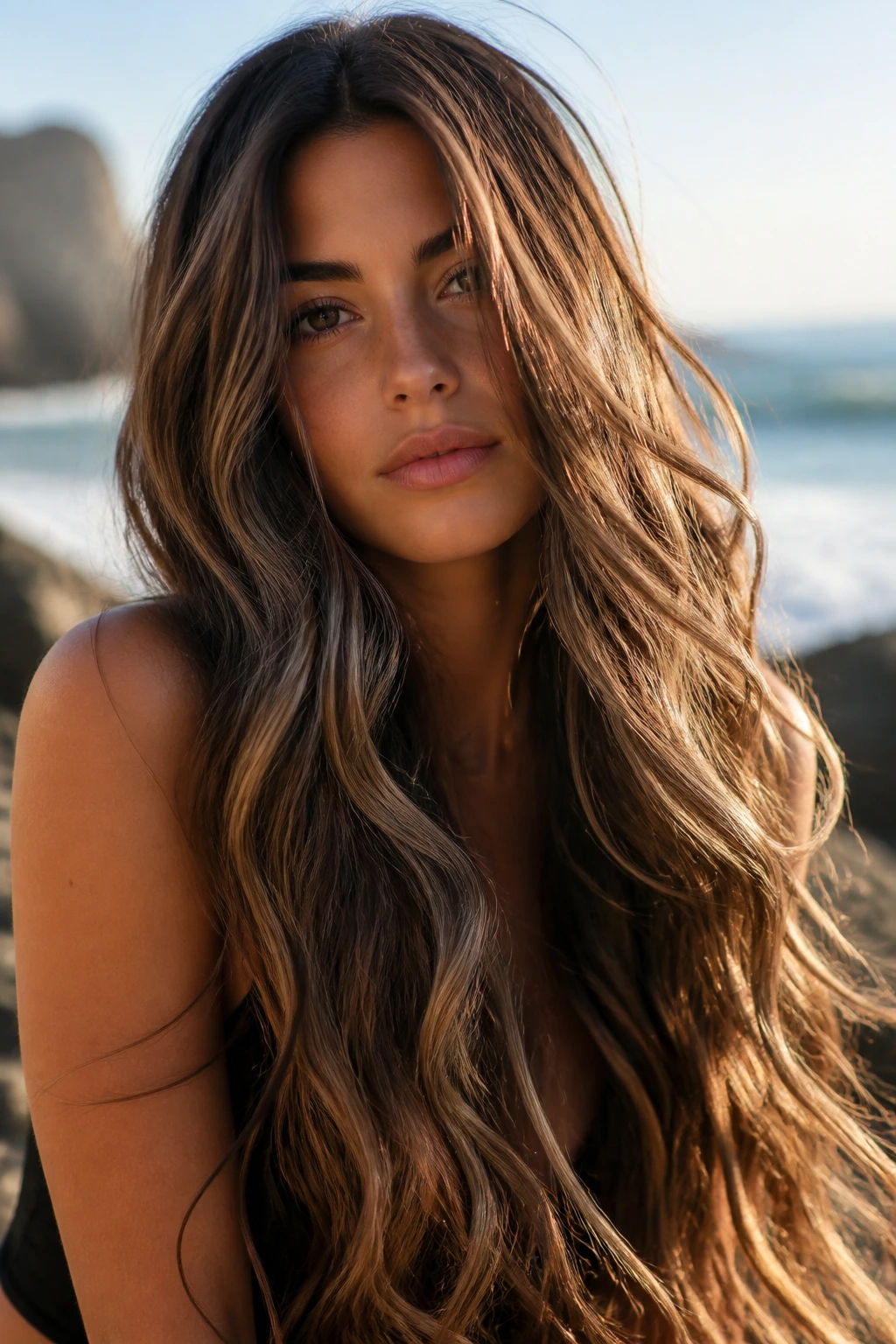
Mermaid-length waves are for people who want the drama of very long hair but hate when it looks heavy. The layers are long, loose, and mostly there to keep the wave pattern from stacking on itself. Sable lowlights on the underside and through the mid-lengths stop the color from collapsing into a single tone.
This cut shines on hair that already has some natural bend. It does not need a lot of product. A light cream on damp lengths, then a loose braid or diffuser, is often enough. The lowlights show up best when the waves separate, so the color and cut end up doing the same job.
12. Razored Layers with Ash Brown Dimension
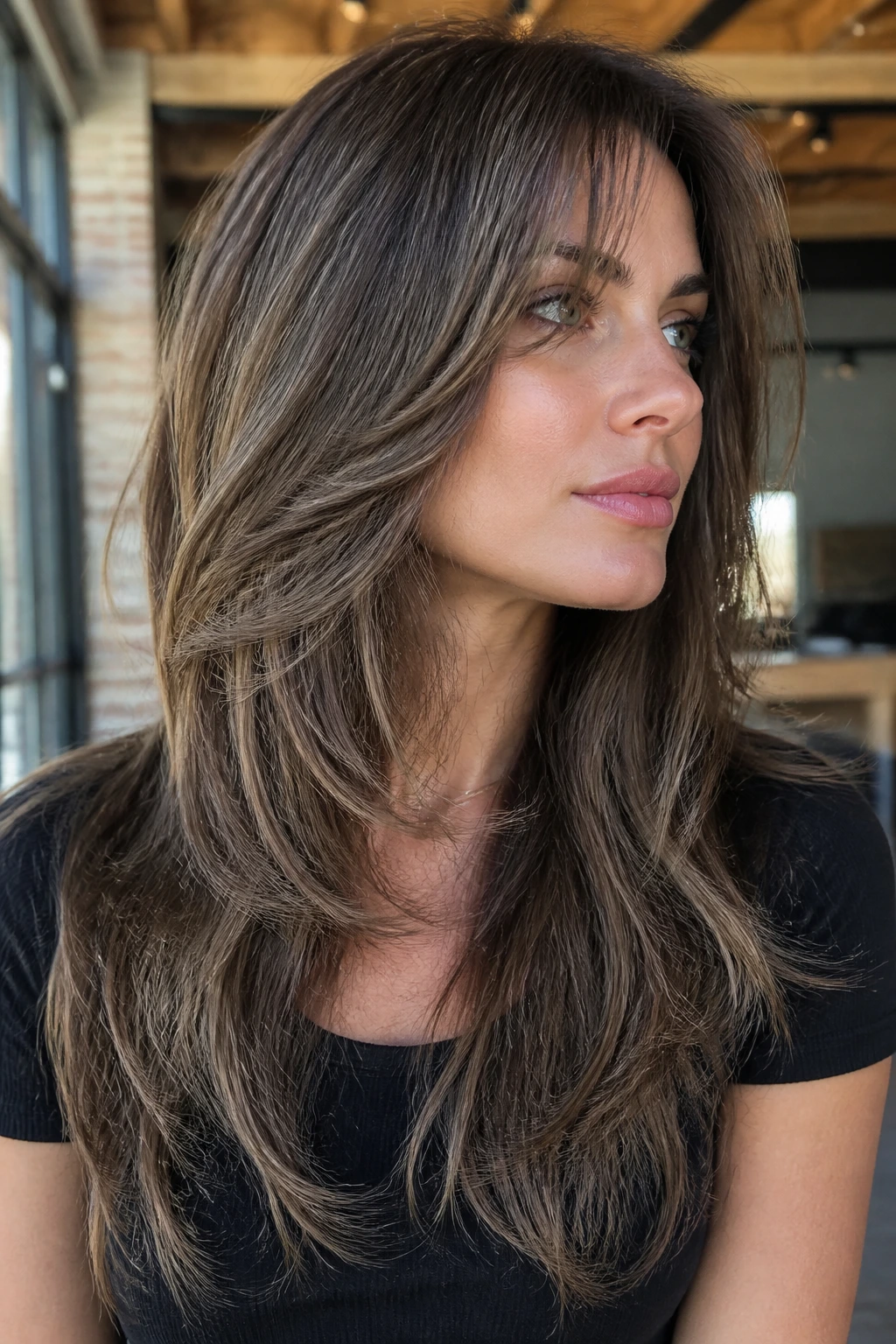
Razored layers can be brilliant on coarse thick hair, and a mistake on fragile ends. When the hair is sturdy, the razor softens the edges and takes out that heavy, blunt feel that can make dense hair look like a block. Ash brown lowlights add a cool contrast that keeps the texture looking crisp.
Best on Hair That Feels Heavy, Not Limp
If your hair is both thick and coarse, this cut can remove some of the visual bulk without making the ends stiff. If your hair is thick but fine-stranded, I’d be more cautious. A heavy hand with the razor can make the perimeter look frayed.
The color matters here too. Cool lowlights help the cut look controlled, not warm and fuzzy.
13. Deep Side-Part Layers with Cappuccino Lowlights
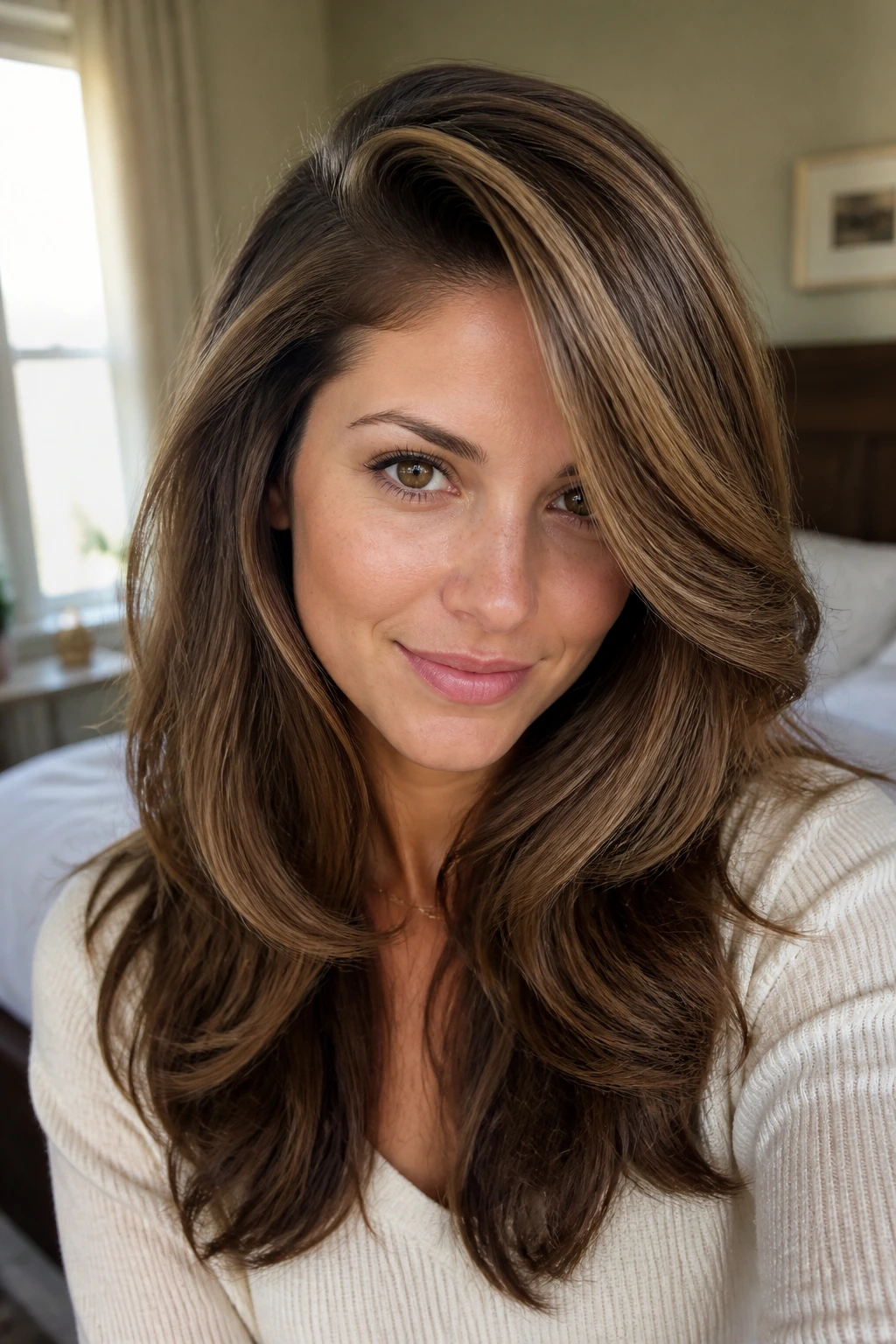
A deep side part changes the entire mood of thick hair. One side gets a little lift, the other side falls in a longer sweep, and the layers suddenly have more shape around the face. Cappuccino lowlights through the crown and side sections keep that contour from feeling too bright or flat.
This is a useful cut if your hair tends to sit the same way every day. The part shift alone creates lift. Add a blow-dry with the hair moving away from the natural part, and the front pieces will fall with more curve. It’s a small change that does a lot.
14. Long Layers with Blunt Ends and Cocoa Lowlights
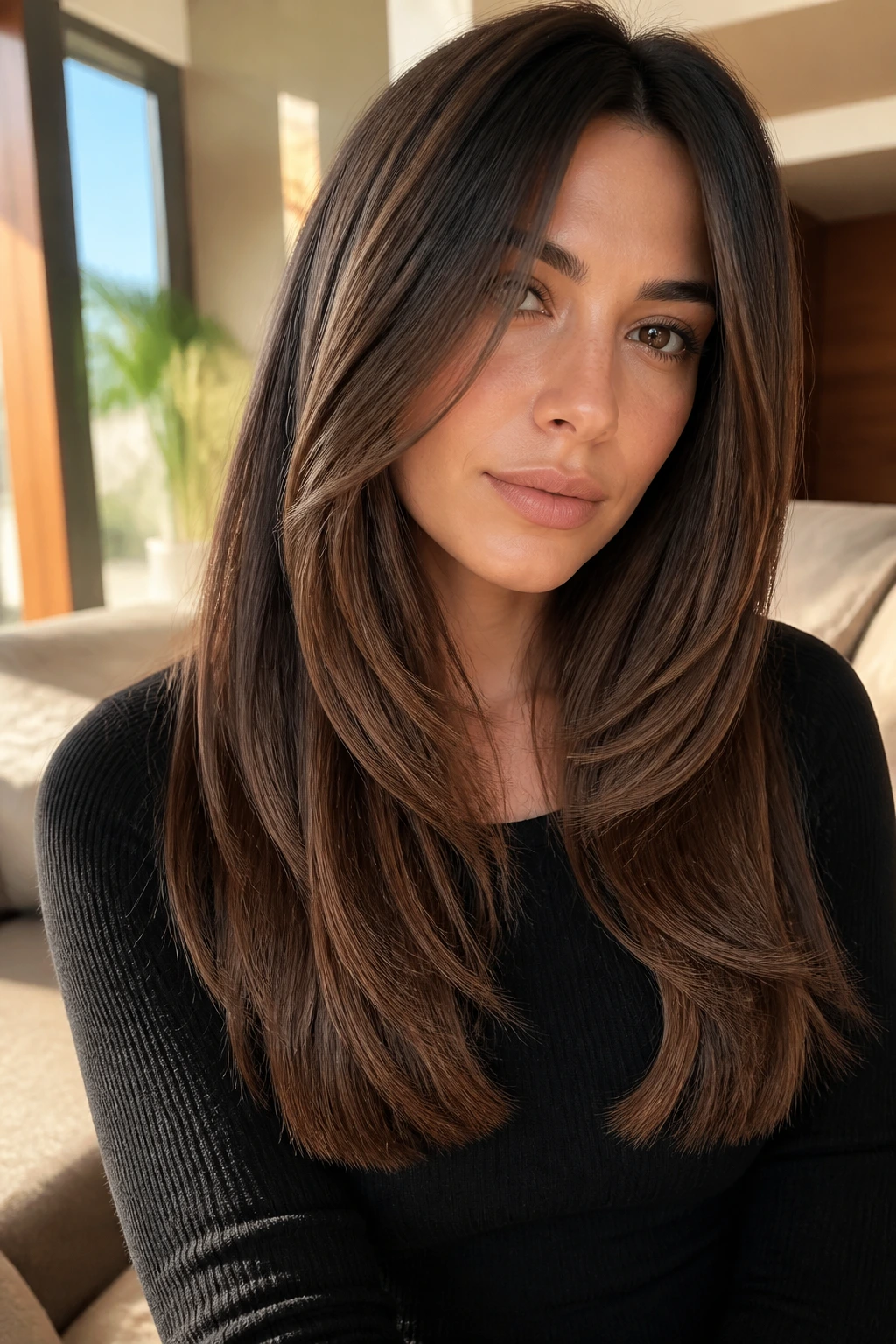
This is for the person who likes the idea of layers but does not want the ends to look wispy. The perimeter stays blunt, which keeps the length strong and full, while the inner layers remove just enough bulk to keep the shape from puffing out. Cocoa lowlights make the blunt edge feel richer and less one-note.
I love this on thick hair that’s still long enough to show off weight. It’s also a good compromise if you’re nervous about losing density. You get movement inside the cut, but the outline still looks polished and substantial.
15. Airy Long Layers with Auburn Lowlights
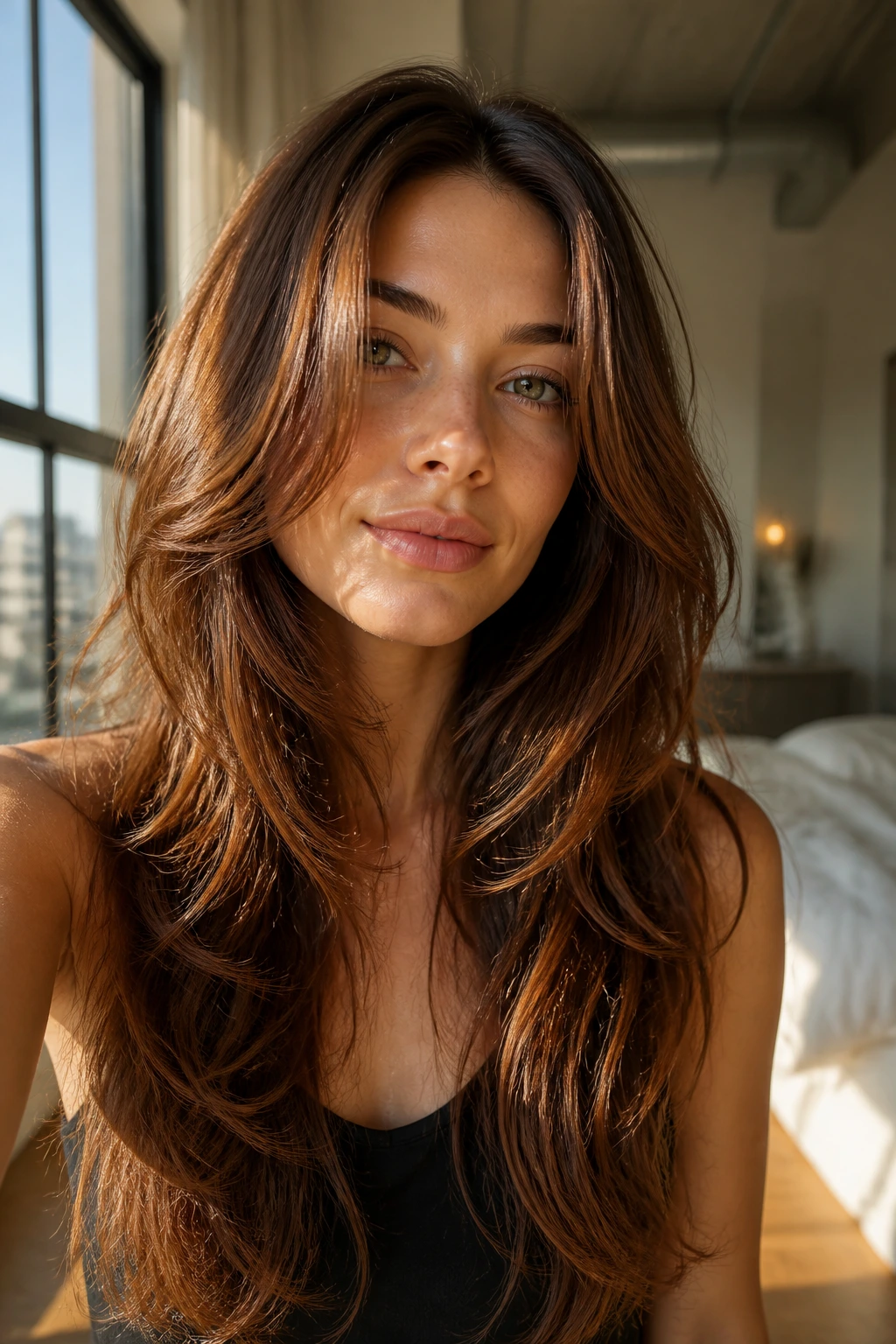
Airy long layers are softer than a shag, lighter than a blunt cut, and easier to wear than they sound. The layers are spaced out so the hair moves, but the length stays dominant. Auburn lowlights bring warmth to the mid-lengths and stop thick hair from looking matte.
This look likes hair that already has a little wave or a smooth blow-dry. The biggest mistake is chopping the layers too high and making the crown sit flat while the ends puff. Keep the shortest pieces lower, and the cut stays lifted without losing its long shape.
16. Internal Debulked Layers with Dark Chocolate Lowlights
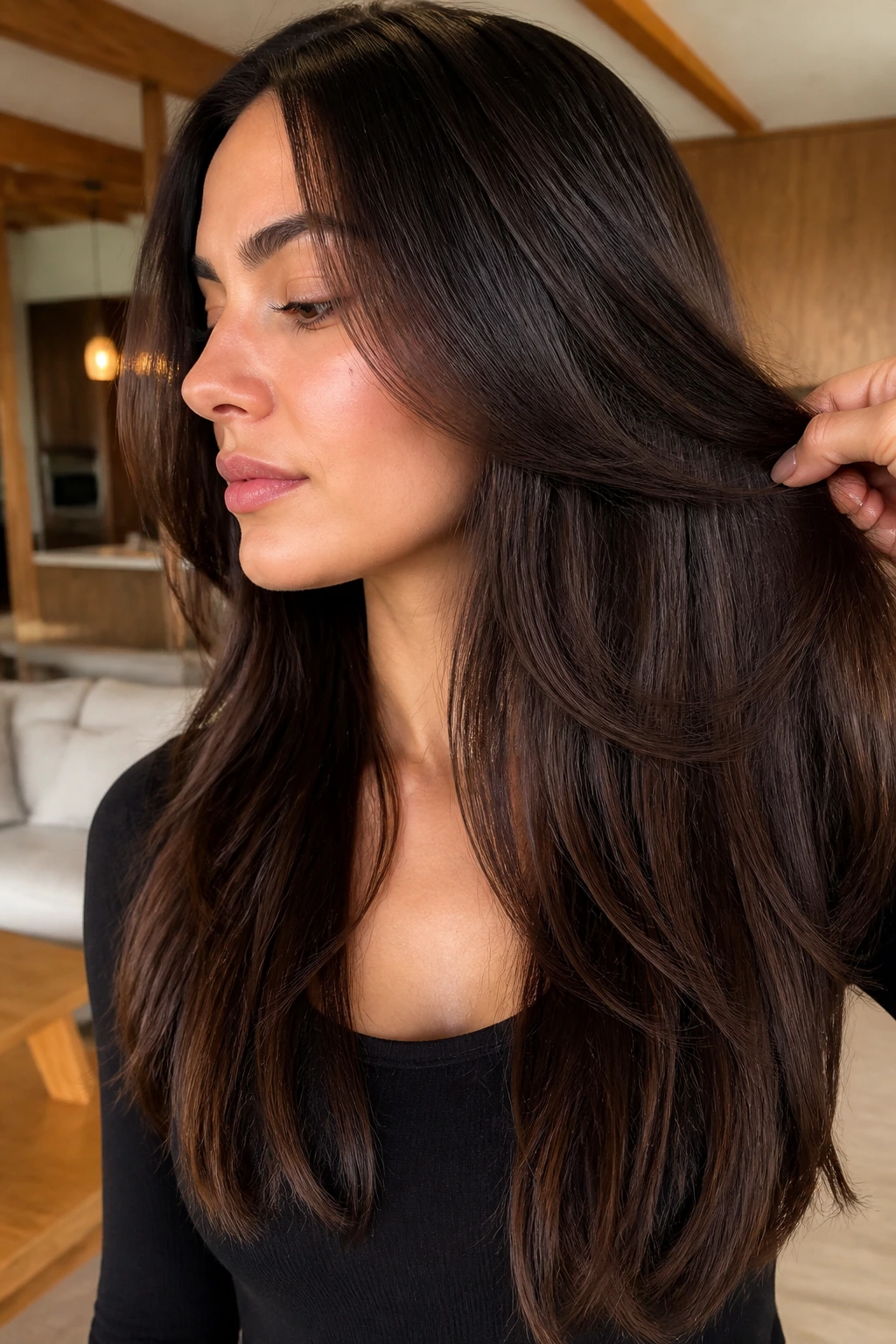
This is the haircut for thick hair that feels too heavy when it’s down but still needs to look sleek. The outer shell stays long, while the stylist removes weight from the inside with careful sectioning. Dark chocolate lowlights hide that structure in the best way, because the color deepens the underneath instead of showing every line.
It’s a quiet, expensive-looking option for people who don’t want obvious layering. The hair still feels full in a ponytail, which matters more than people admit. If you wear straight styles often, this is one of the easiest shapes to keep neat.
17. Boho Layers with Bronze Lowlights
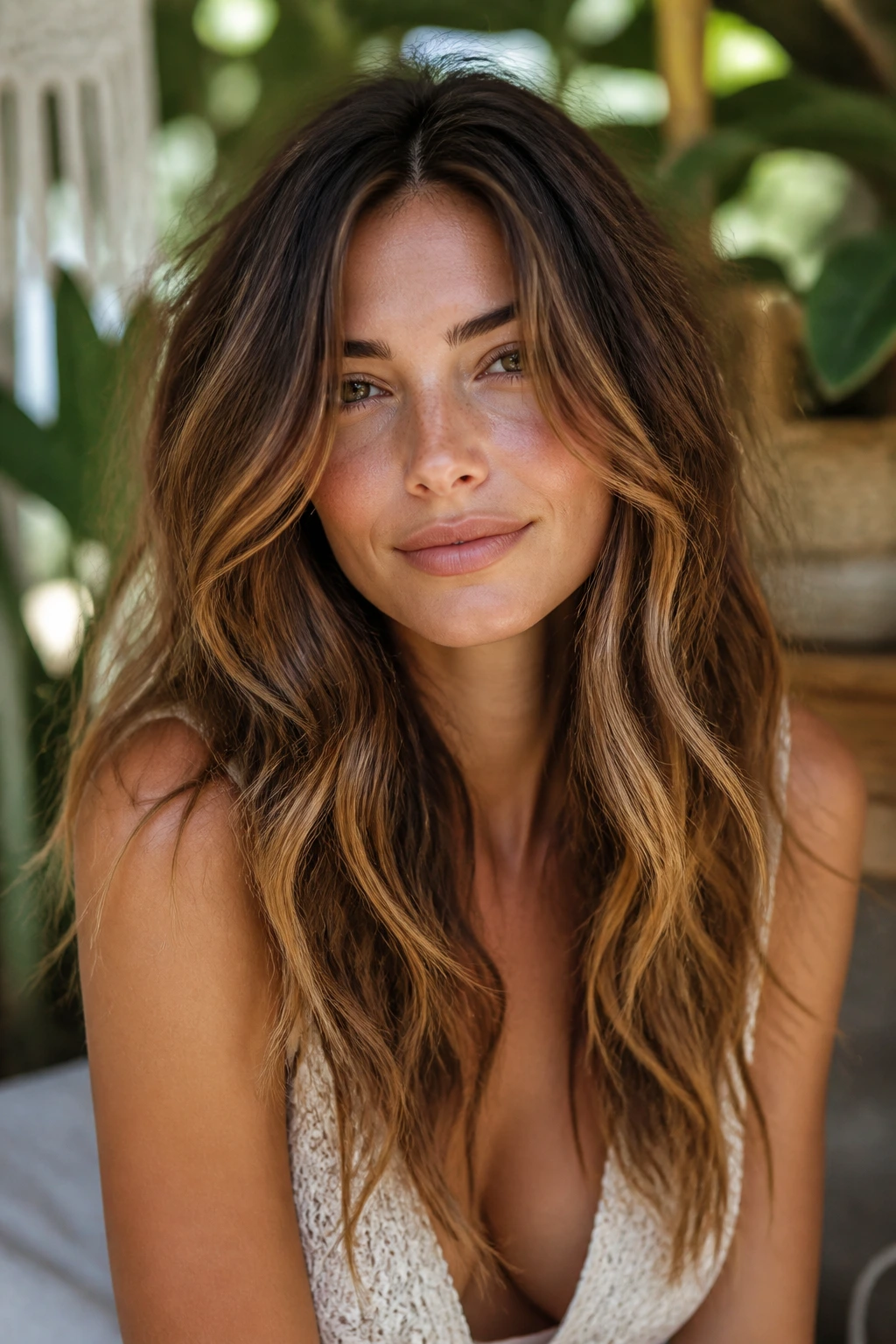
Boho layers are a little looser and less engineered than the rounded or blunt shapes above. The layers fall in soft waves, the face frame is relaxed, and the overall effect is textured without looking chopped. Bronze lowlights add a warm, lived-in look that plays well with air-dried bends.
Best When You Don’t Want to Overstyle
This cut is forgiving on days when you don’t feel like brushing your hair into submission. A touch of leave-in cream and a few twisted sections while it dries can be enough. The lowlights keep the waves from blending into one color, which is half the battle on thick, medium-brown hair.
18. S-Curve Layers with Maple Lowlights
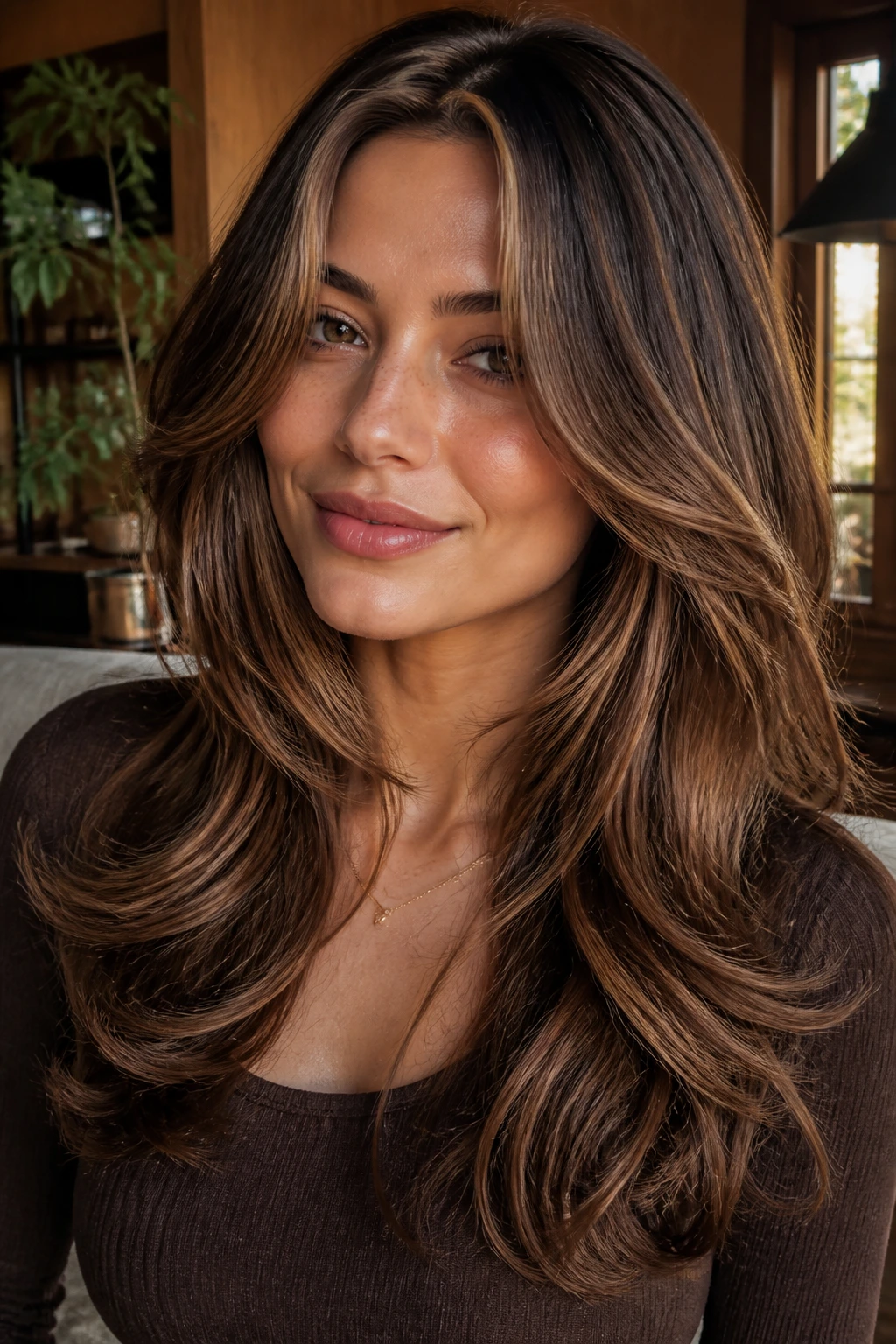
An S-curve layer pattern follows the natural bend of the hair instead of fighting it. The shortest layers aren’t chopped bluntly; they’re shaped so the hair bends in a soft S from root to end. Maple lowlights reinforce that flow, especially when the hair catches light in sections.
This works well if your thick hair has a bit of wave but not enough to count as fully curly. The shape looks polished without becoming rigid. It’s also a smart choice if your ends tend to kick out in odd directions, because the cut encourages a smoother fall.
19. Cascading Layers with Hazel Lowlights
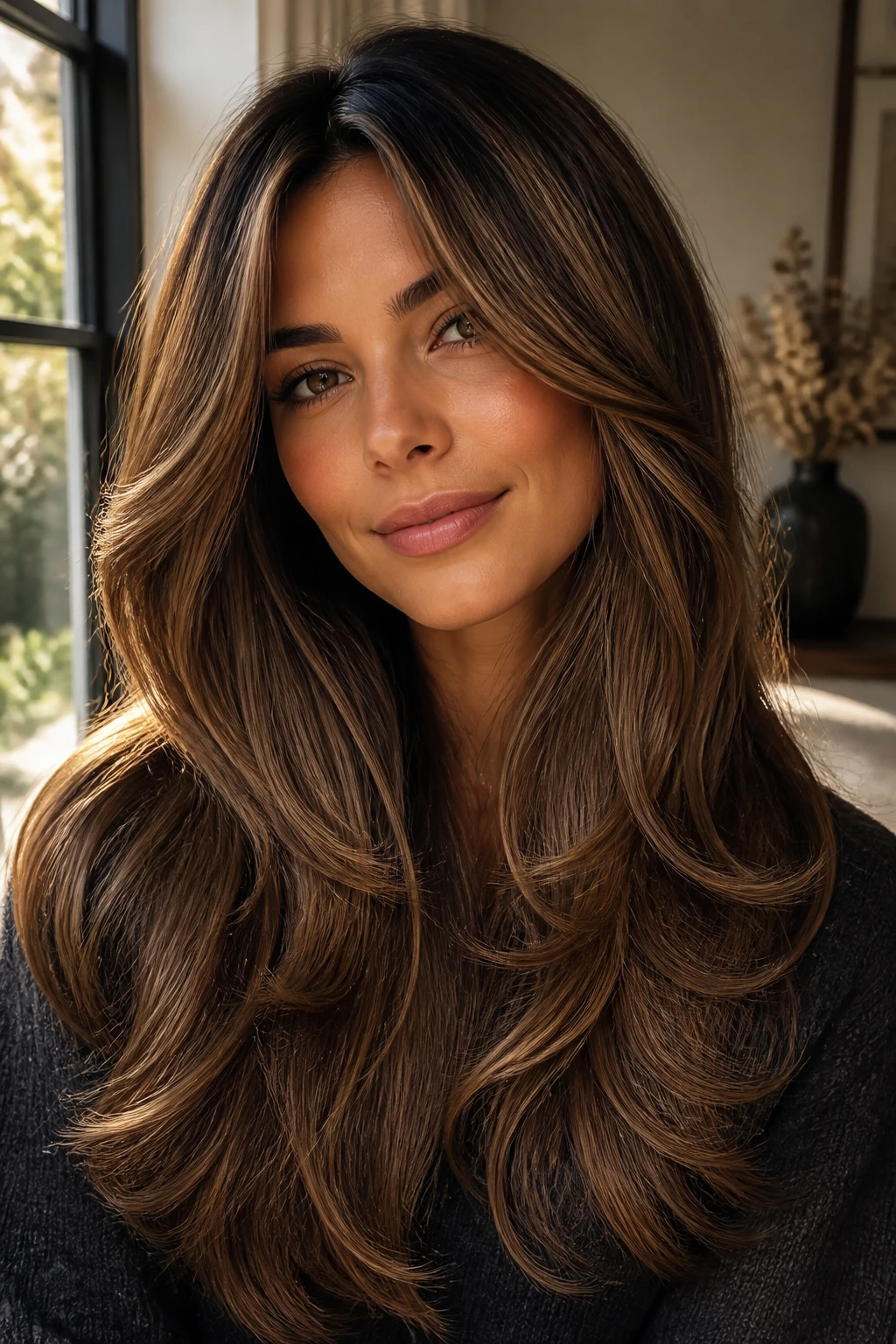
Cascading layers are all about gradual movement. Nothing is abrupt. The pieces fall into one another so the haircut feels long and fluid rather than chopped into separate steps. Hazel lowlights tucked through the mid-lengths help those transitions read cleanly, especially on brown hair that leans flat in photos.
The shape works best when the stylist keeps the top layers long enough to blend. Too much removal at the crown and the whole thing loses its weight. Done right, the hair drapes instead of flaring, and that matters on dense textures that already carry a lot of volume.
20. Soft Wolf Cut with Deep Brunette Lowlights
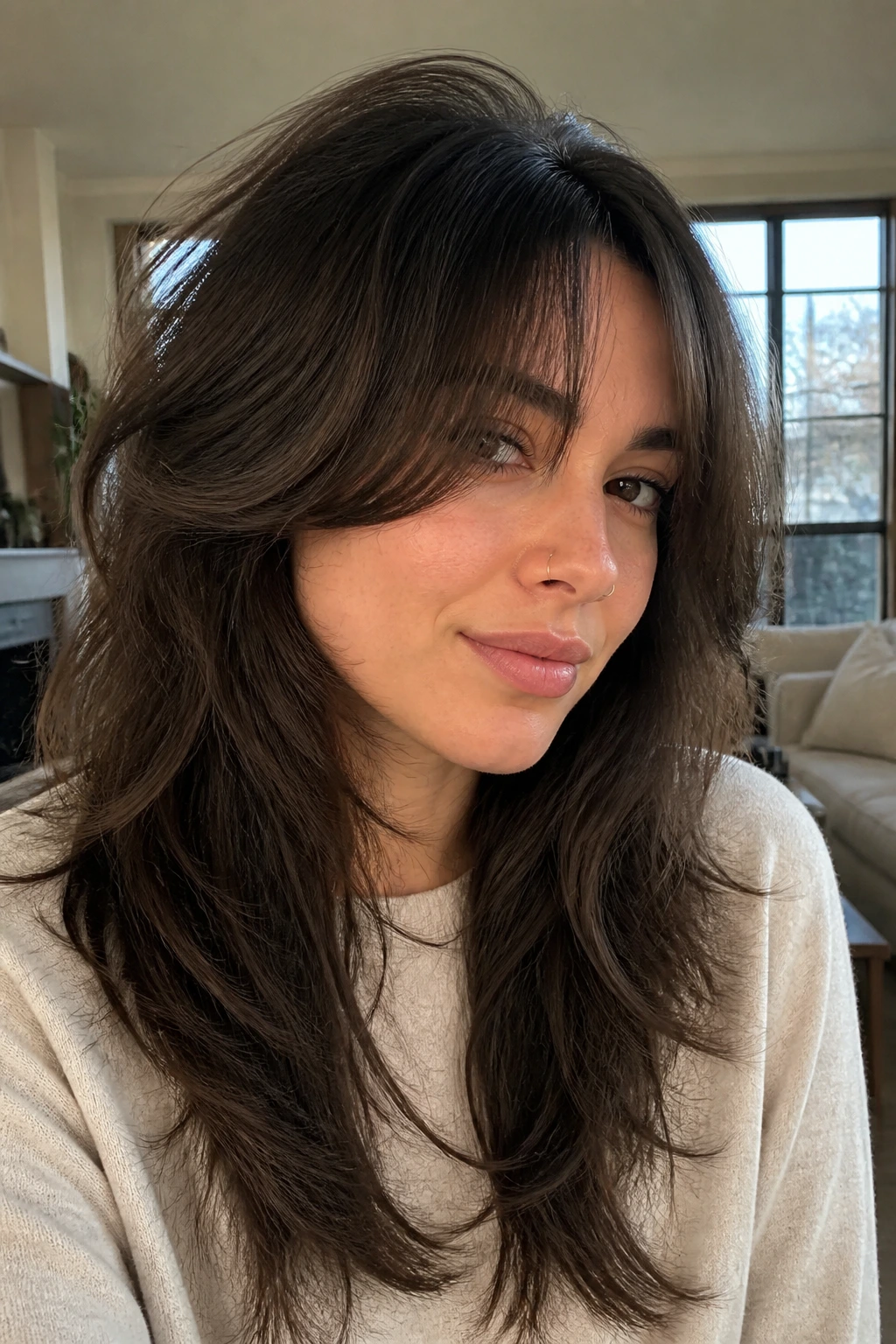
A soft wolf cut keeps the edge of the trend but tones down the extremes. The top has a little more lift, the lower layers stay long, and the whole cut feels lived-in rather than theatrical. Deep brunette lowlights ground the shape and keep it from looking frayed.
I’d pick this for someone who wants texture without a fussy blow-dry. The haircut likes a bit of mess. If you scrunch in a light cream and rough-dry the roots, the layers separate in a way that feels deliberate. It’s not the cut for someone who wants perfect symmetry, and that’s exactly the point.
21. Ribboned Chocolate Lowlights Through Long Center-Part Layers
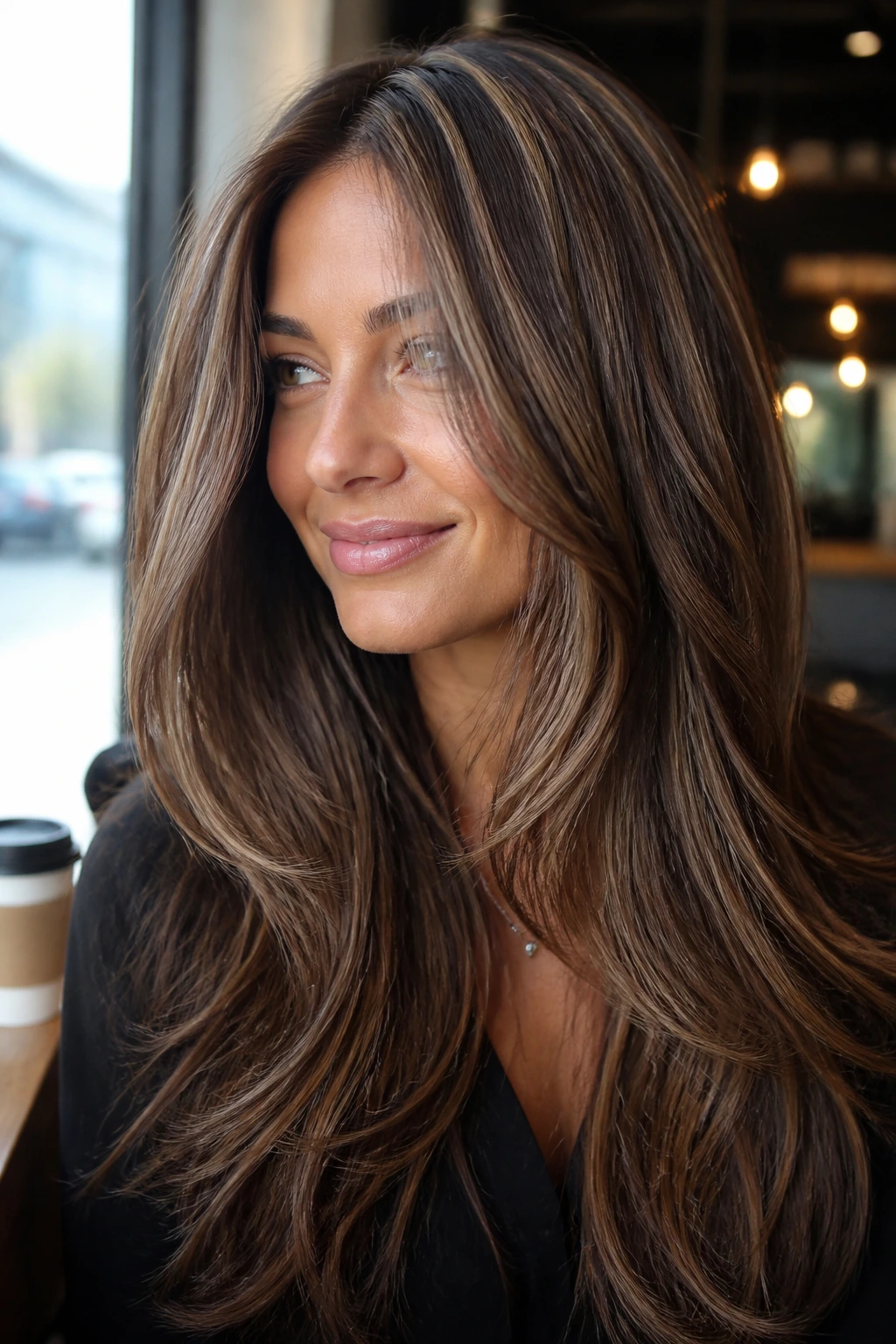
This look is all about narrow ribbons of darker color running through long center-part layers. The hair stays long, the face frame stays clean, and the chocolate lowlights make the movement show up instead of disappearing into the base color. It’s softer than a full contrast look, but it still has enough shadow to matter.
What to Ask for
Ask for fine sections placed under the top layer and around the lower mids, not wide stripes across the surface. That placement matters on thick hair because it stops the color from looking painted on. A center part helps the ribbons fall evenly on both sides, which keeps the cut calm and balanced.
22. Deep U-Shape with Smoky Brunette Lowlights
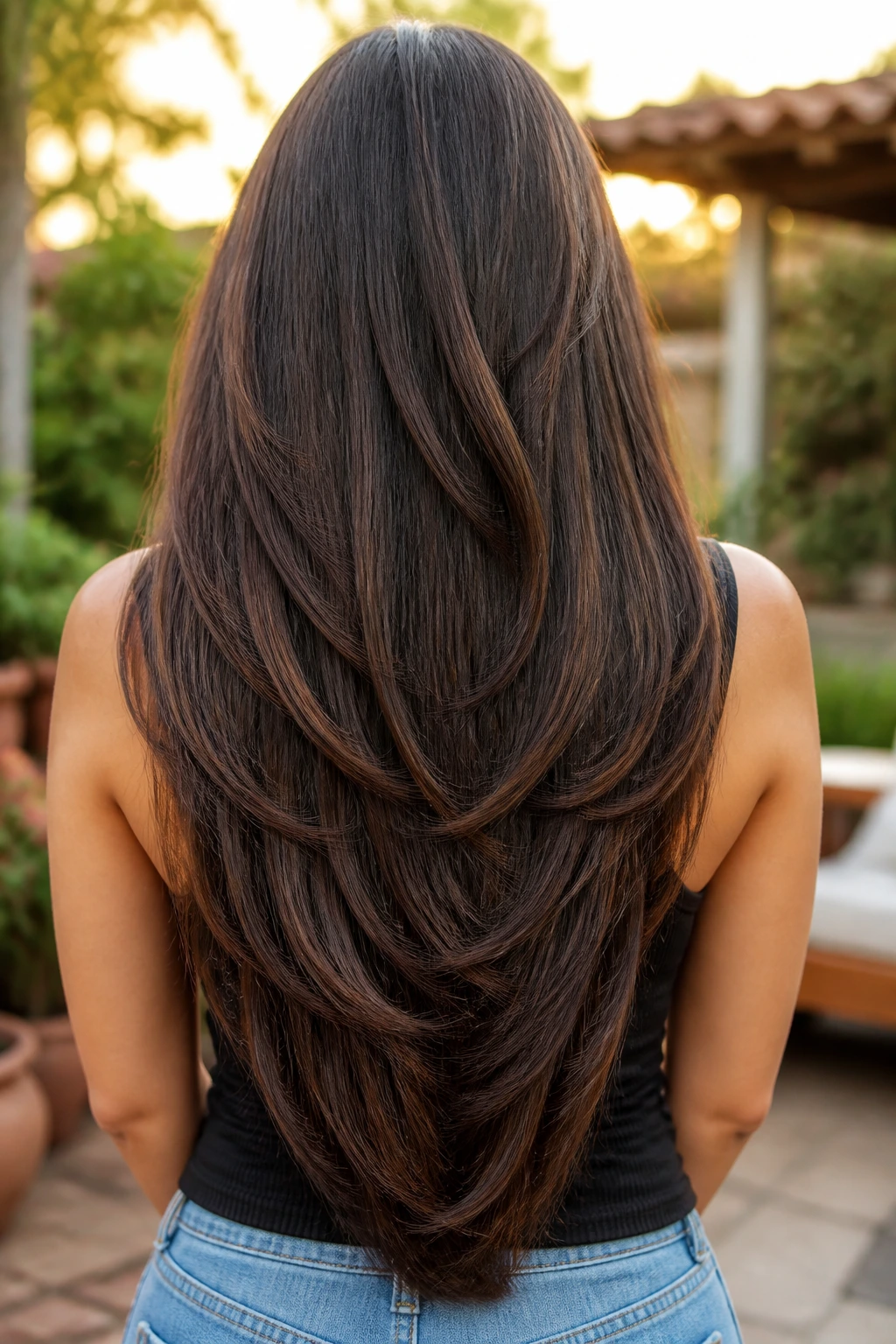
A deep U-shape is similar to the earlier rounded versions, but the curve is more pronounced and the layers are longer. Thick hair gets to keep its weight while the perimeter softens enough to avoid that heavy straight line across the back. Smoky brunette lowlights cool the whole look down and give it a more muted finish.
This is a nice choice if your natural color reads warm or brassy in bright light. The deeper lowlights create shadow without going black. On very long hair, the U-shape keeps the back from feeling bottom-heavy, which is a real problem on denser textures.
23. Curly Long Layers with Espresso Lowlights
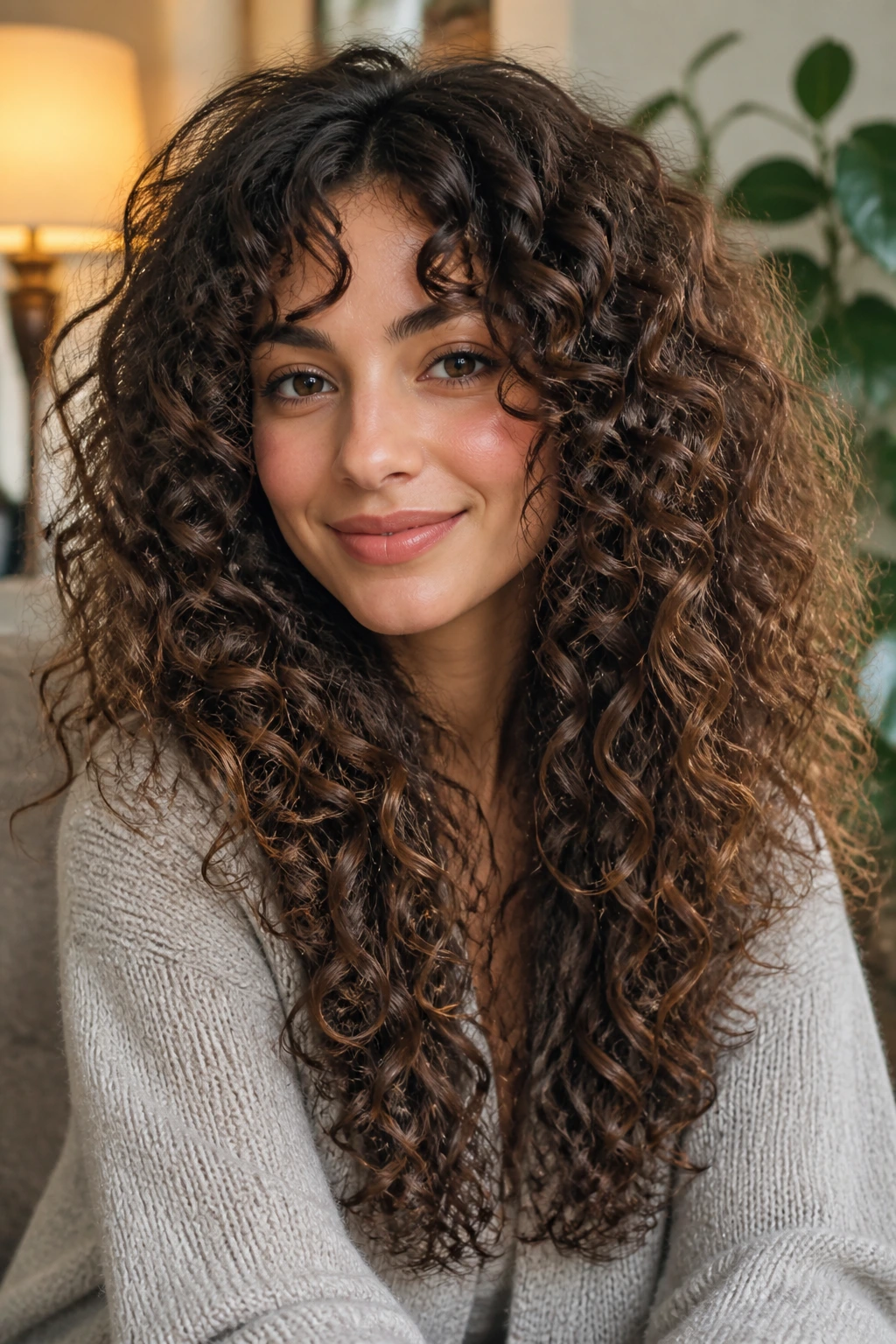
Curly thick hair needs a different kind of layering. The cut should be shaped around the curl pattern, ideally dry or nearly dry, so the layers land where the curls actually live. Espresso lowlights painted into the spiral pattern make each ringlet stand out without turning the whole head into a solid dark mass.
The Curly Rule
Do not cut curly thick hair as if it were straight. The shrinkage changes everything. If the shortest layers land too high, the crown can spring up and the lower lengths can disappear. Keep the layers long, let the curls stack naturally, and the shape will stay round instead of triangle-shaped.
24. Sleek Blowout Layers with Cinnamon-Brown Lowlights
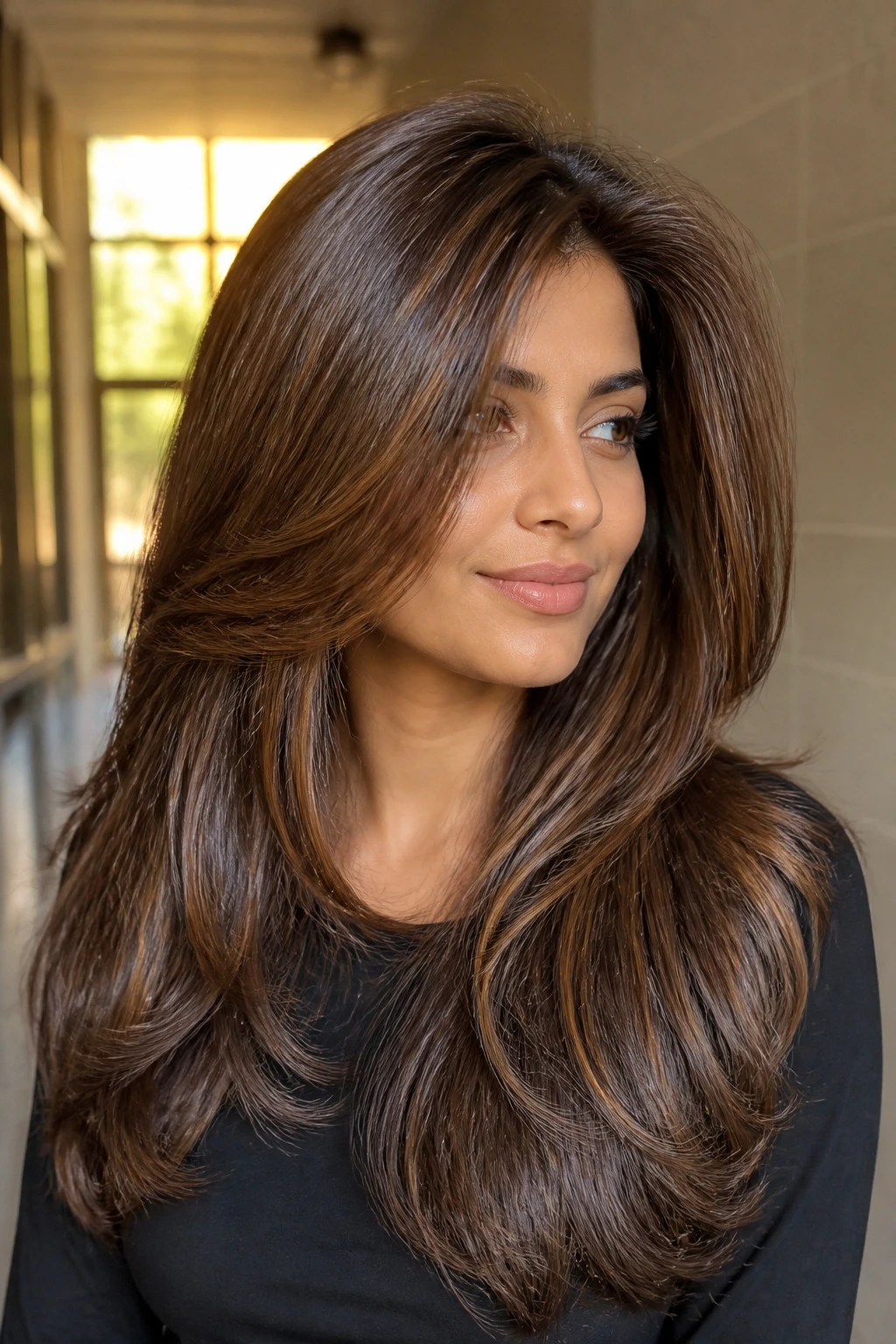
This is the cut for someone who likes a smooth finish and wants the hair to move when it swings, not only when it curls. The layers are long and blended, the surface stays sleek, and the ends bend softly under a round brush. Cinnamon-brown lowlights make the blowout look deeper and less shiny in one flat tone.
It works especially well on thick hair that holds a blow-dry for two or three days. Rough-dry first, then round-brush the last section at the crown and along the front. That extra time at the top keeps the roots lifted without turning the sides into a helmet.
25. Soft V-Cut with Cocoa and Mahogany Lowlights
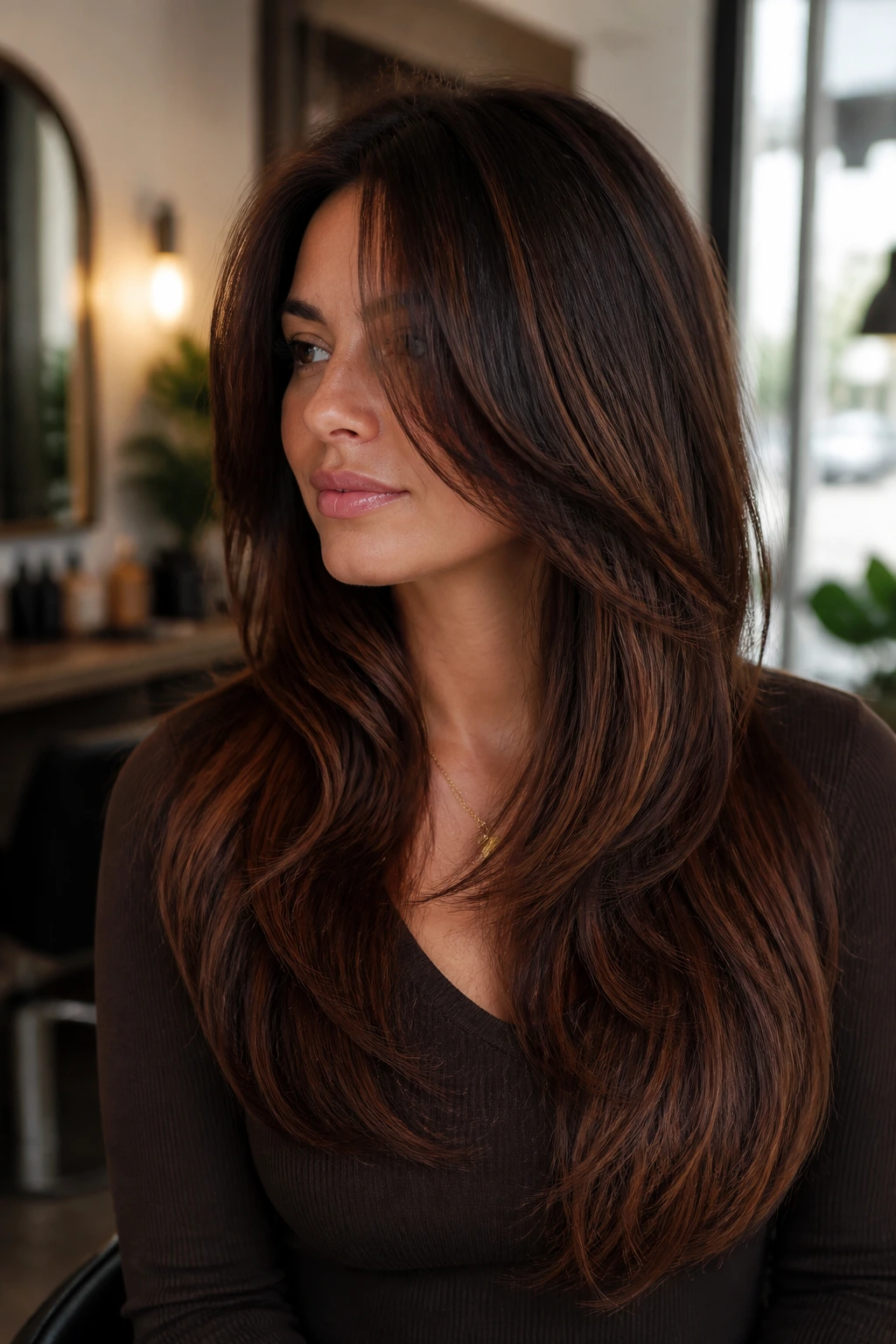
A soft V-cut gives thick hair direction without making it severe. The point in the back is gentle, the side layers stay long, and the hemline narrows just enough to create movement. Using both cocoa and mahogany lowlights adds depth on depth — one cooler, one warmer — so the cut reads rich instead of flat.
This is one of the most useful options if you wear your hair very long. The point keeps the back from looking wide, and the dual-tone lowlights make the layers visible in more than one kind of light. It’s the kind of cut that still looks like hair, not a shape imposed on hair. There’s a difference.
Why Long Layers and Lowlights Work So Well on Thick Hair
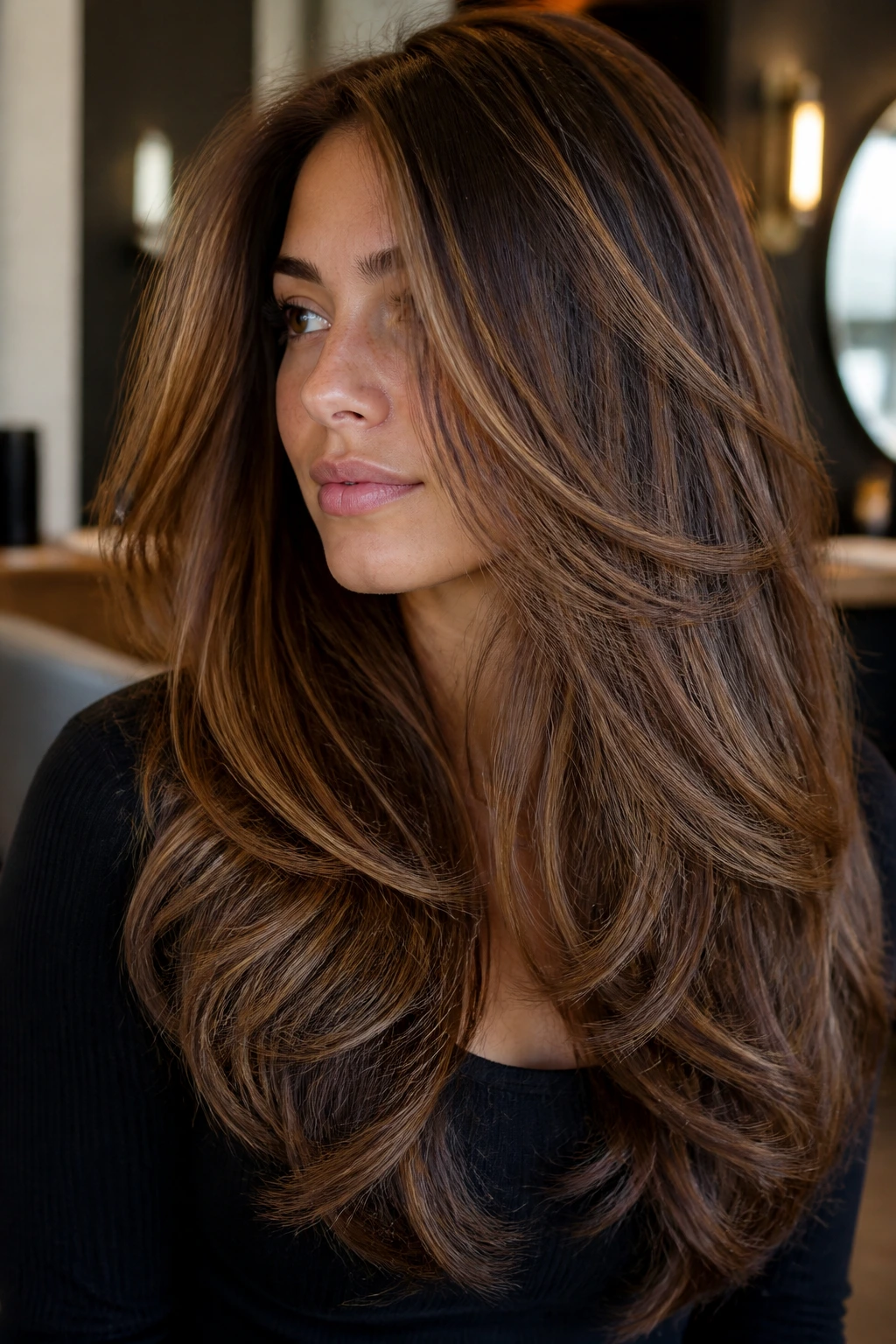
Thick hair has a problem that fine hair never quite understands. It doesn’t always need more volume. Often it needs less visual weight in the wrong places. Long layers solve that by removing bulk where the hair piles up, especially around the shoulders, the lower mid-lengths, and the crown.
Lowlights do a different kind of work. They add shadow, which separates the layers and makes the hair look more dimensional without turning it into a striped situation. A one-tone brunette can read like a wall when it’s dense. A few darker ribbons placed under the surface break that wall apart and let the haircut breathe.
That’s why the best combinations here are not random. The cut and the color are talking to each other. U-shapes, V-shapes, butterfly layers, and long shags all create movement; mocha, chestnut, walnut, and smoky brunette tones make that movement visible. If one half is too loud, the whole thing feels off.
I also prefer lowlights over bright contrast on thick hair when the goal is calmness. Highlights open the hair up. Lowlights pull it inward and make the shape look more controlled. Not every head wants brightness. Some heads want depth.
Tools That Make Thick Hair Easier to Cut, Dry, and Style
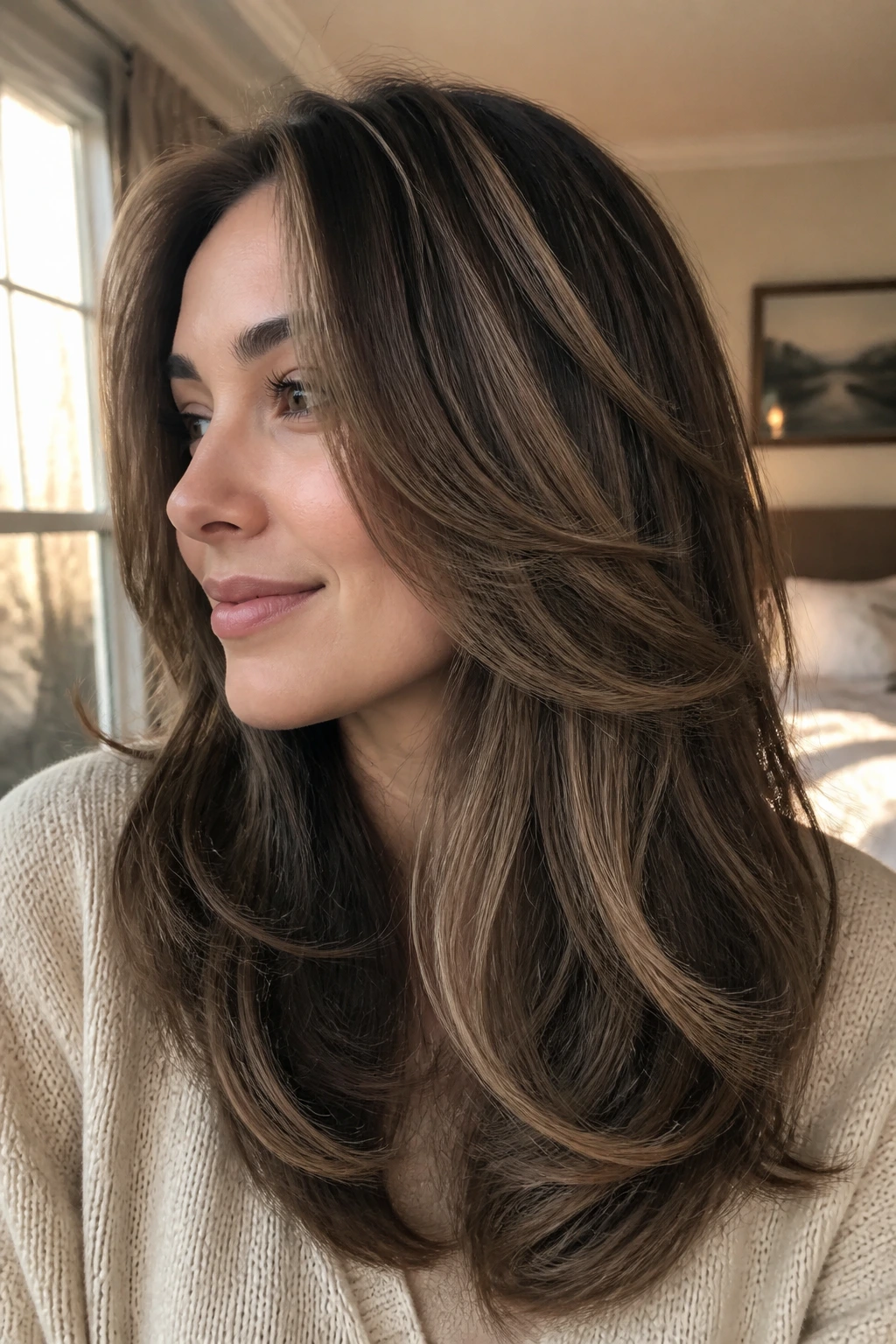
- Sectioning clips: Thick hair needs to be divided into clean quadrants, or the top layer swallows everything else.
- Tail comb: Helpful for parting, clipping, and showing your stylist where the bulk sits.
- Round brush, 2-inch or 2.5-inch: Best for smoothing long layers without making them too round at the ends.
- 1.25-inch curling iron or wand: Gives a loose bend that shows off layers without adding too much curl.
- Blow dryer with a nozzle attachment: Directs the air so thick hair dries smoother and faster.
- Wide-tooth comb: Gentle enough for wet detangling, especially if your hair is textured or prone to frizz.
- Heat protectant spray or cream: Use before any hot tool, every time; dense hair still burns.
- Color-safe shampoo and conditioner: Helps lowlights stay rich instead of turning dull and washed out.
- Leave-in detangler: Makes the mid-lengths easier to brush through after washing, which matters on heavy hair.
How to Ask for Long Layered Haircuts with Lowlights at the Salon
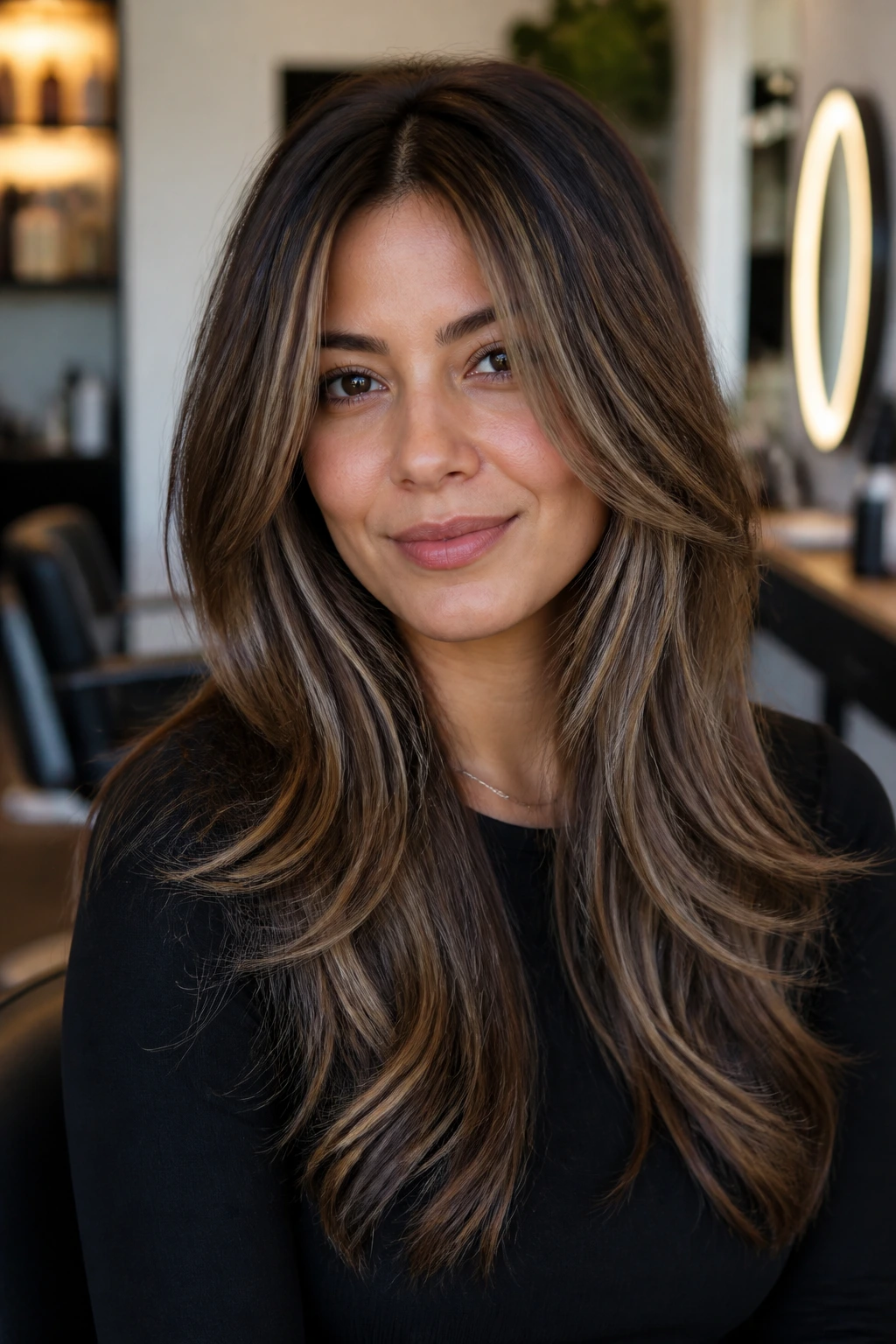
Bring two photos if you can. One should show the cut shape, the other should show the color tone you want. A single screenshot usually hides the part that matters most: where the lowlights are placed and how heavy the layers really are.
Describe Where Your Hair Gets Heavy
Say where the bulk lives. At the sides? At the nape? In the crown? Thick hair is not one thing, and stylists work better when they know whether they’re removing weight from the top, the ends, or the lower thirds. If you say, “My hair puffs at the shoulder line,” that’s more useful than “I want it lighter.”
Ask for Placement, Not Just Color
Lowlights can be foiled, painted, or tucked underneath in very fine sections. On thick hair, I usually want them woven through the underside and the mid-panels so the dark pieces show when the hair moves. If every darker strand sits on top, the result can look blocky.
Name the Finish You Actually Wear
If you flat-iron your hair most days, say so. If you air-dry, say that too. A cut that looks perfect when blown smooth can behave badly when it dries naturally, and the opposite is true as well. Thick hair needs the shape to match the routine, not the other way around.
How to Wear These Looks Without Fighting Your Hair Texture
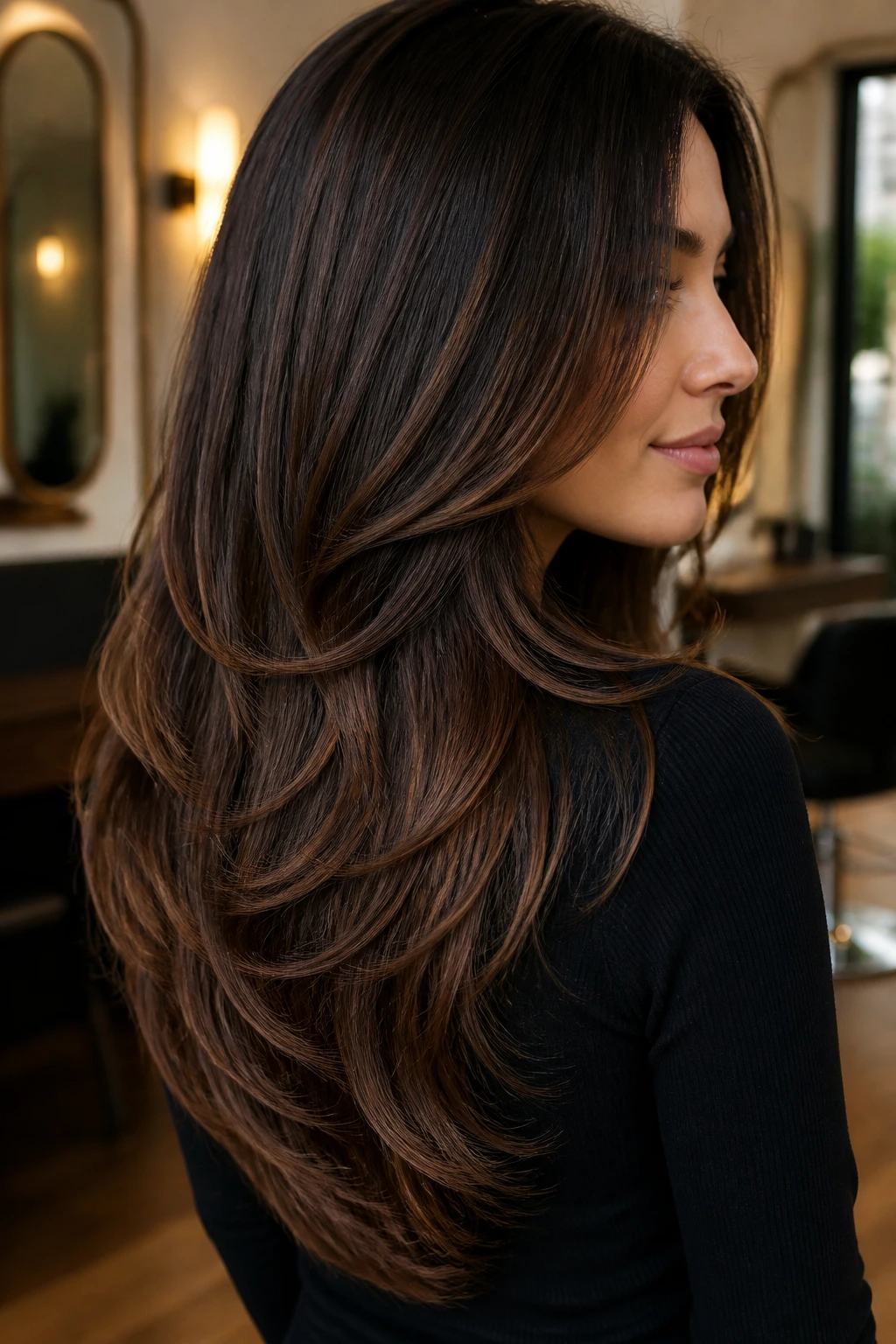
Air-Dried: Use a light leave-in cream on damp mid-lengths, then scrunch or twist sections before letting them dry. This keeps the layers from drying into one heavy curtain.
Blowout: Rough-dry the hair until it’s about 80 percent dry, then use a round brush or blow-dry brush to lift the roots and smooth the ends. Thick hair usually looks better with lift at the crown and control through the sides.
Curled: Wrap sections away from the face with a 1.25-inch iron, leave the last inch out if you want a softer edge, then brush through once when the hair cools. That keeps the layers visible instead of turning them into tight ringlets.
Half-Up or Ponytail: Leave the shortest face-framing pieces out so the haircut still reads as layered. On thick hair, a slicked-back full pony can hide all the work. A few loose front pieces fix that fast.
Polished Finish: A small drop of shine serum through the mid-lengths and ends gives lowlights more depth, especially on dark brown bases. Use less than you think. Heavy serum can flatten the whole thing.
Additional Tips for More Shine, Depth, and Movement
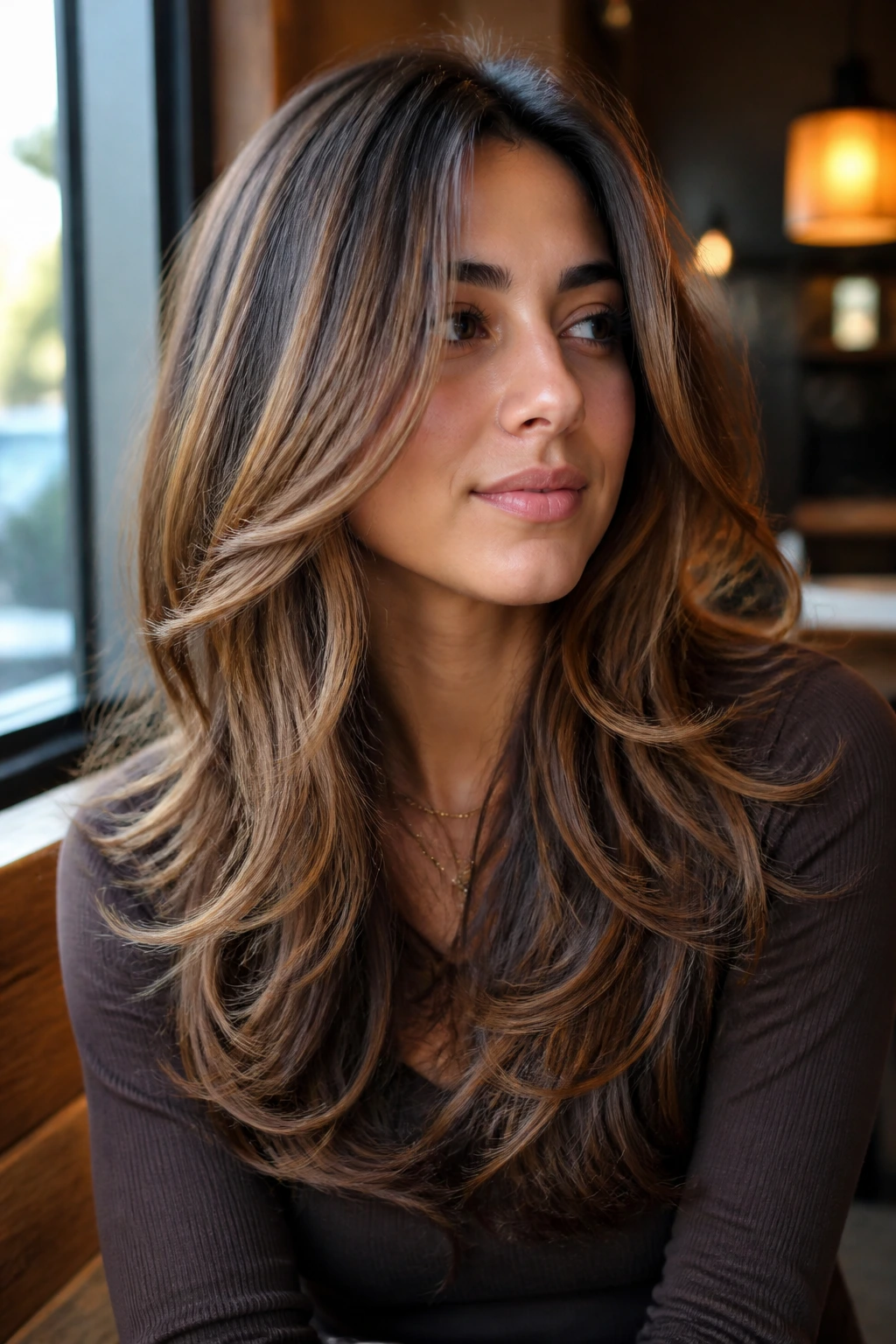
Color Enhancement: Ask for lowlights that sit one shade deeper than your base if you want soft dimension, or two shades deeper if your hair is dense and the color disappears fast. Very dark lowlights can look hard against thick brown hair, so keep the contrast believable.
Texture Boost: If the hair feels bulky at the crown, ask for hidden internal layers instead of shaving the perimeter. That keeps the bottom line strong while taking weight out of the middle where thick hair likes to sit like a helmet.
Face-Framing: Start the shortest front pieces around the cheekbone if you want lift, or closer to the jaw if you want a softer contour. Thick hair can swallow face-framing layers if they’re cut too short, so let them stay long enough to move.
Make-It-Yours: On straight hair, point-cut ends keep the shape from looking blunt. On wavy hair, rounded layers often behave better than sharp angles. On curly hair, dry cutting is usually the safer bet because the curl pattern changes everything once it dries.
Common Mistakes That Make Thick Hair Look Heavy
- Starting the shortest layers too high: The hair can puff at the crown and widen around the cheeks. The fix is simple: keep the shortest layers a bit lower, especially if your hair already has volume on top.
- Making the lowlights too dark or too wide: Thick hair can handle depth, but not if the color turns into chunky stripes. Use finer sections and softer tones so the dimension looks woven in, not painted on.
- Over-thinning with razors or shears: The ends can start to look wispy and dry instead of soft. If your hair is coarse, ask for point cutting or light internal removal instead of aggressive thinning.
- Ignoring the way you actually wear the hair: A cut built for a curling iron will not behave the same when air-dried. The shape needs to match your routine, or the layers will seem to fight you by day two.
- Skipping maintenance on curtain bangs or face frame pieces: Those front sections grow fast and can twist the whole shape if left alone too long. A small trim keeps them from falling into your eyes or flipping outward.
- Choosing lowlight tones that clash with your undertone: Warm brunettes can look muddy with the wrong ash shade, and cool brunettes can go orange if the formula is too golden. Ask for a tone that fits your base, not just a color you liked on someone else.
Variations and Adaptations to Try
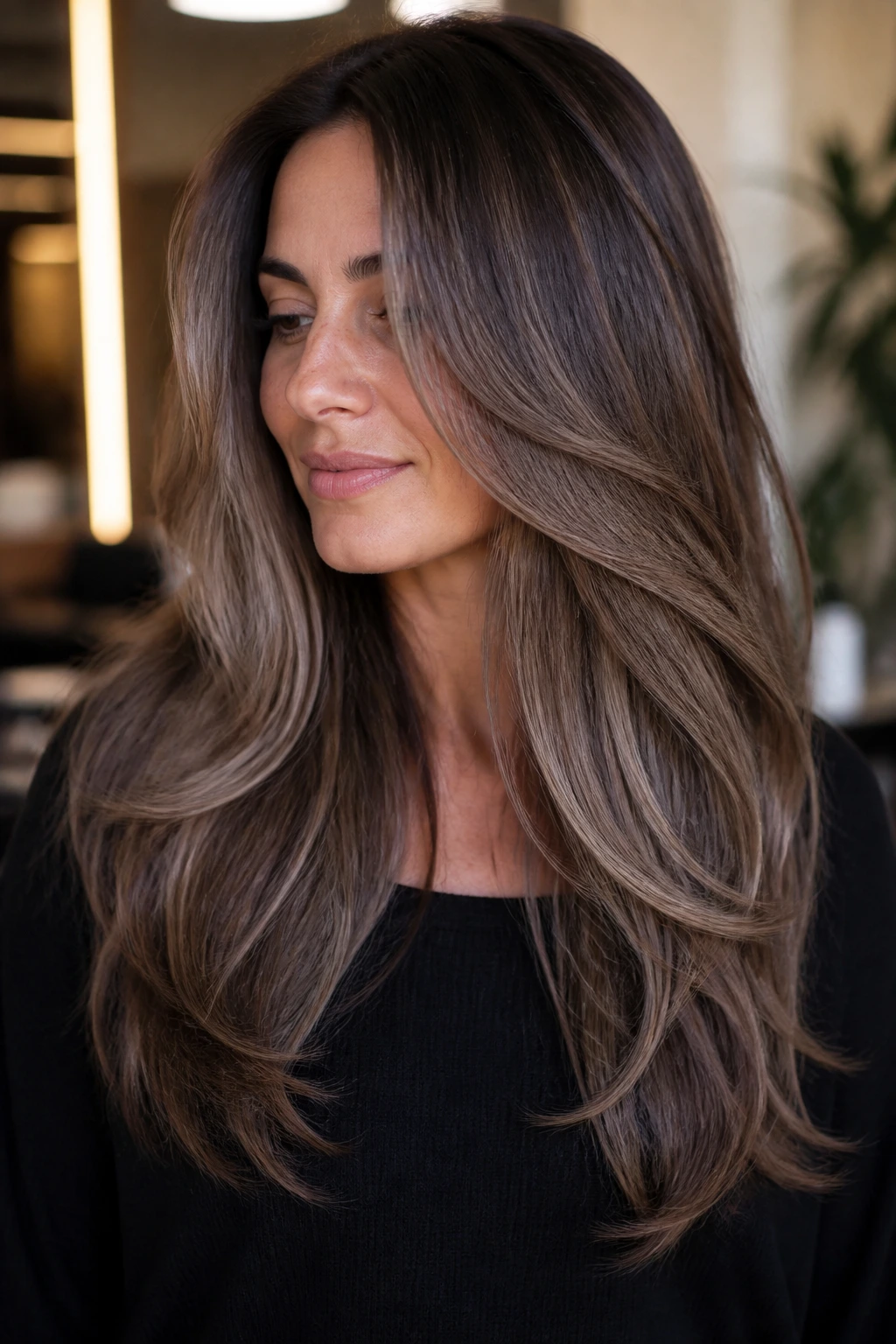
Cool Brunette Blend: Use ash and mushroom brown lowlights if your hair pulls warm fast or turns brassy in bright light. This version feels muted and clean, which works well on sleek blowouts and straight textures.
Warm Caramel Swirl: If you like richness, ask for caramel and mocha lowlights together. The mix gives depth without making the hair look flat, and it’s especially good on wavy thick hair that catches light in sections.
Gray-Softening Blend: Place darker ribbons around the temples, crown, and part line to blur silver without trying to erase it. This is a smart option if you want the grow-out to be soft instead of obvious.
Curly Dry-Cut Version: Keep the layers long, cut the curls in their natural shape, and paint lowlights in the curl family so each coil has its own shadow. This version needs less thinning and more respect for shrinkage.
Extra-Long Luxe Version: For waist-length hair, keep the shape in a soft V or deep U and use lowlights mostly through the lower half. That keeps the length dramatic while preventing the ends from looking like one giant curtain.
Keeping Long Layered Haircuts with Lowlights Fresh Between Appointments
A good trim schedule matters more than people want to admit. Thick hair can hide split ends for a while, but once the shape starts to puff at the bottom or the layers stop moving, the whole cut feels tired. Most long layered styles do well with a dusting or shape refresh every 8 to 12 weeks. If your ends are fragile or you wear a very polished blowout, lean closer to 8.
Lowlights usually hold longer than highlights, but they still dull down if you wash too often with hot water or use harsh shampoo. Color-safe shampoo and conditioner buy you time. A gloss or demi-permanent refresh every 8 to 12 weeks keeps the depth from going flat, especially if your natural base has warm undertones that like to peek through.
At home, handle the hair like it has work to do. A weekly mask helps thick lengths stay smooth. Use heat protectant every time you bring in a dryer, iron, or hot brush. And if you sleep on cotton and wake up with a rough cuticle, a satin pillowcase or loose braid can save the ends from extra friction. Small things. Big difference.
Frequently Asked Questions
Will lowlights make thick hair look thinner?
They can make it look less bulky, which is not the same thing. The darker strands create shadow between the layers, so the hair reads as shaped instead of dense and flat. If the color is too dark or the sections are too wide, though, the result can look heavy rather than dimensional.
Which layer length works best for very thick hair?
Collarbone to chest level is a safe place to start for a lot of people. If the shortest layers sit too high, the crown can puff and the sides can widen. Keeping the shortest pieces a little lower preserves movement without turning the cut into a halo.
Can curly thick hair wear these styles?
Yes, but the cut should respect the curl pattern. Dry cutting or cutting on nearly dry curls usually gives a better shape, because wet curls shrink and can throw off the layers. For curls, long internal layers and painted lowlights often work better than sharp, choppy steps.
Should I choose warm or cool lowlights?
Pick the tone that matches your natural undertone and the finish you wear most often. Warm brunettes usually like chestnut, caramel, or mocha; cooler brunettes often do better with mushroom, ash, or smoky brown. If you’re unsure, ask for a glossed result instead of a harsh permanent contrast.
How often should I trim thick layered hair?
Every 8 to 12 weeks is a realistic range. If you blow-dry your hair smooth or wear curtain bangs, shorter intervals help the shape stay clean. If the ends start flipping out or the layers stop blending, that’s your clue.
What if my layers keep flipping outward at the shoulders?
That usually means the shortest layers land right on a shoulder point. Ask for those pieces to be either a bit longer or slightly shorter so they miss the exact spot where the hair kicks out. A soft bevel at the ends can help too.
Can lowlights cover gray?
They can soften the look of gray, especially around the temples and crown, but they do not fully cover it the way a permanent base color can. For blending, lowlights are useful because they blur the contrast and make regrowth less obvious. For full coverage, you need a fuller color plan.
What should I bring to the salon besides photos?
Bring a sense of your actual routine. If you air-dry four days a week, say so. If you live in a round brush and never touch a diffuser, say that too. The cut should work with your life, not the version of your hair that appears for one perfect hour after a salon blowout.
The Cut That Keeps Its Swing
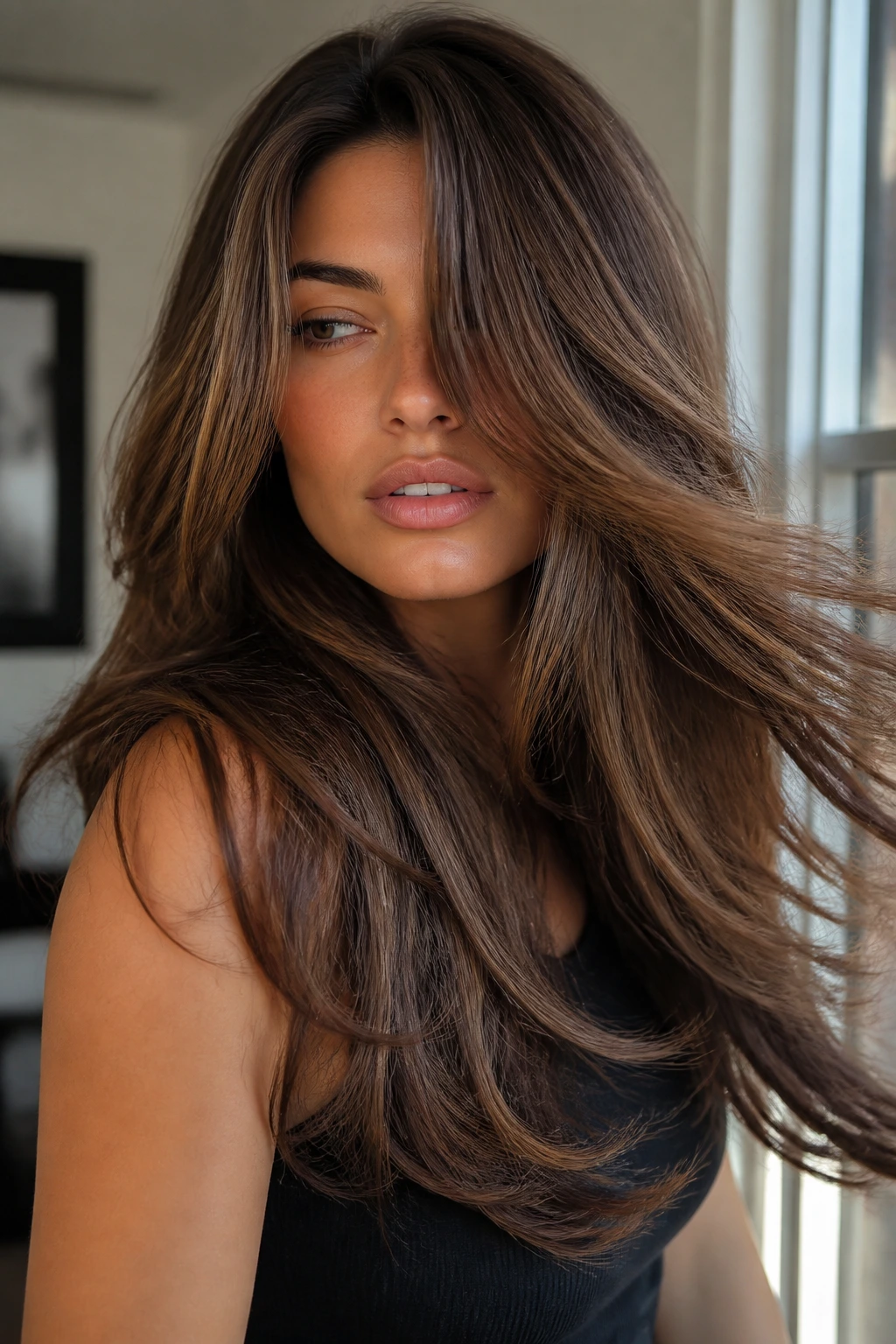
Thick hair behaves best when it has a reason to fall. The right layers give it direction. The right lowlights give it depth. Put those together and the hair stops feeling like one heavy mass and starts moving in sections, which is where the good stuff happens.
The best version for you is the one that matches your routine. If you wear it straight, lean toward blunt ends, rounded layers, or invisible internal shaping. If you live in waves or curls, choose a softer shag, butterfly shape, or a long U-cut with lowlights tucked underneath. Bring photos in daylight. Point to where the bulk sits. Ask for depth that fades softly instead of shouting from across the room.
That conversation does more for a good haircut than a hundred trend names ever will.