



A round face and long hair can be a gorgeous pairing, but highlights change the whole conversation. Put the brightness in the wrong spot and the face reads wider than it is. Put it in the right place and the eye glides downward, which is exactly what you want from highlights for long hair and round faces: length, movement, and a little shape-shifting magic around the cheeks.
The trick is not “more blonde.” It’s where the light starts, how hard the contrast hits, and whether the ends carry the story instead of the sides of the face. Long hair gives you room to do that properly. You can fade, ribbon, smudge, melt, and layer the color instead of dropping one blunt stripe across the widest part of the cheeks.
I’m especially fond of looks that keep the front pieces soft while letting the brightest pieces live lower, around the jaw, collarbone, and ends. That’s where the hair can move, swing, and catch light without making the face feel boxed in. The best versions do not scream for attention. They quietly fix the proportions.
Why These Highlight Ideas Keep Long Hair and Round Faces in Balance
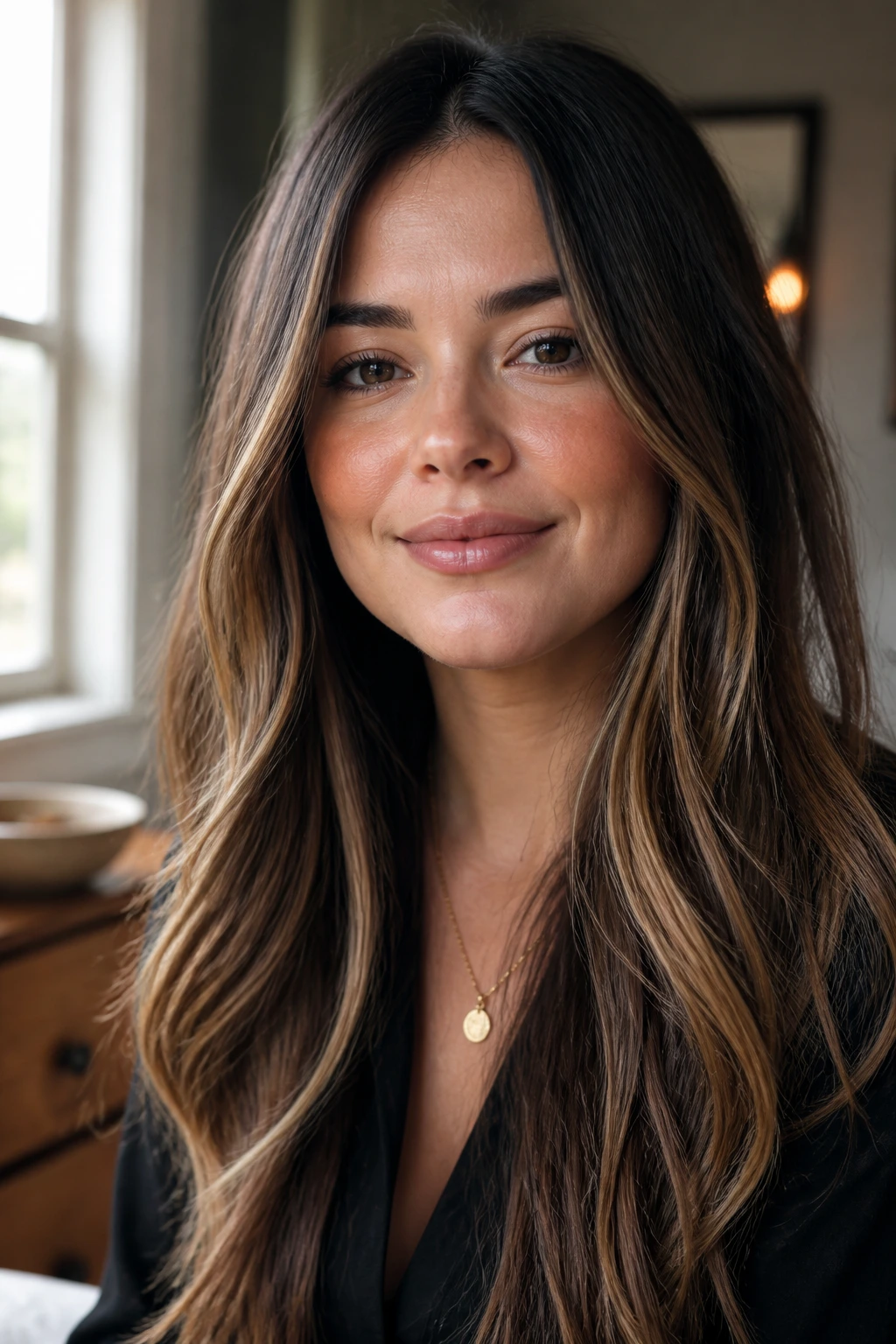
Face length beats face width here: The right highlight placement pulls the eye vertically, which keeps the roundness of the face from taking over the whole look.
Long hair gives you room to fade: On shorter cuts, highlights can feel abrupt. On long lengths, you can soften the transition, stretch the light, and let the color travel.
The cheeks need restraint: Bright pieces sitting right at cheek level can make a round face look wider. A better plan is to start the light below that point or keep the strongest pieces narrow.
Depth matters as much as brightness: Leaving some darker ribbons in the crown, underlayers, or root area makes the lighter sections look cleaner and more intentional.
Maintenance stays saner with the right technique: Balayage, shadow roots, teasylights, and babylights often grow out in a softer way than a row of chunky foils.
Warm, cool, and beige all work: The shape of the placement matters more than the shade family. Caramel, ash, bronzed, and champagne all can flatter if the bright spots sit in the right place.
1. Caramel Ribbons That Start Below the Cheekbone
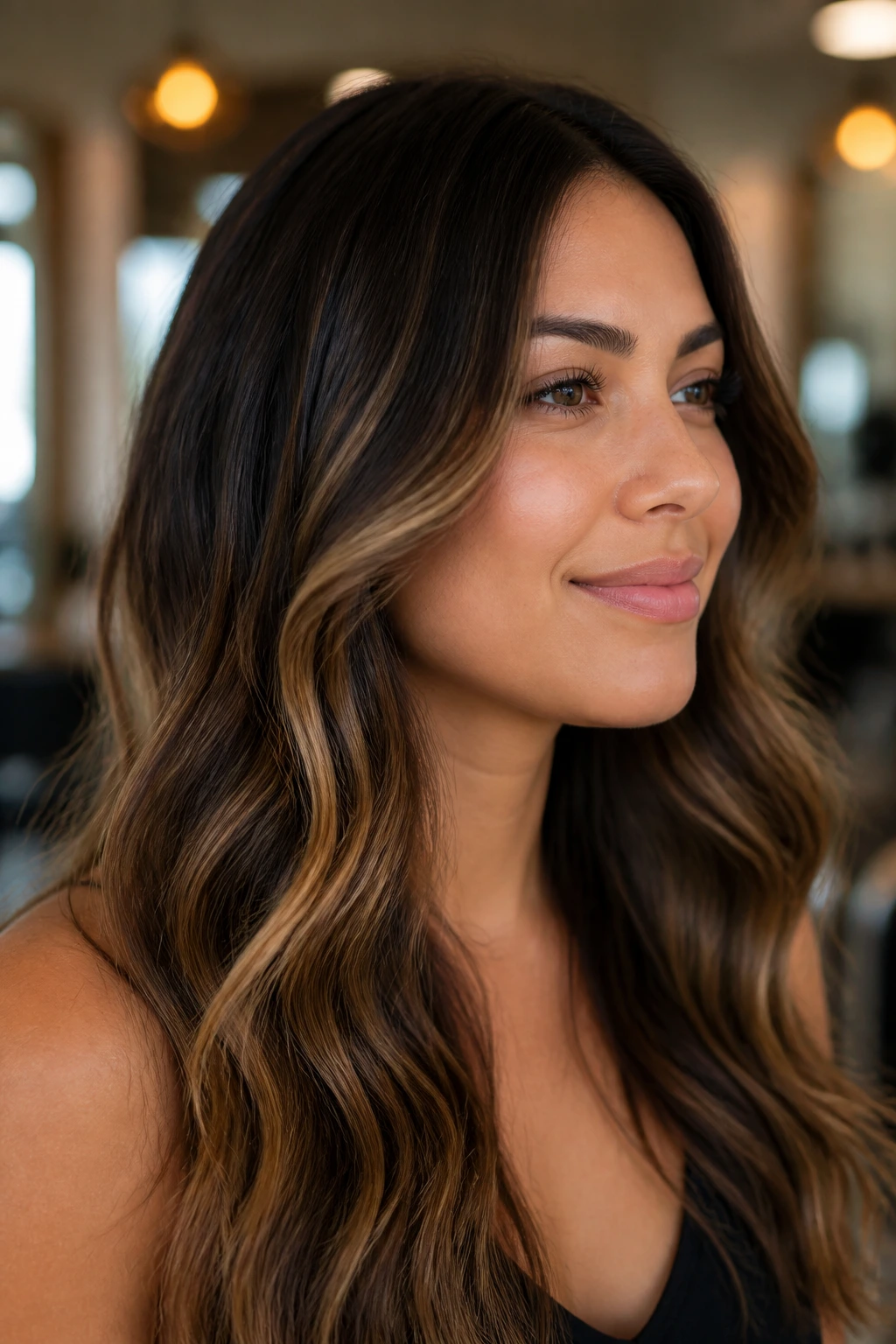
Caramel ribbons are the safest place to begin if you want softness without losing dimension. The color should wake up around the cheekbone’s lower edge and keep going toward the collarbone, so the brightest part lives below the widest part of the face. On long hair, that downward trail is the whole point.
I like this look on brown and dark blonde bases because caramel gives warmth without turning syrupy. Ask for a few face-framing pieces that start 1 to 2 inches under the cheekbone, then blend the rest through the mid-lengths. Too high, and the whole thing widens the face. Too chunky, and it starts to look like stripes. The sweet spot is a soft ribbon that opens up near the jaw.
2. Soft Balayage That Fades from the Jaw Down
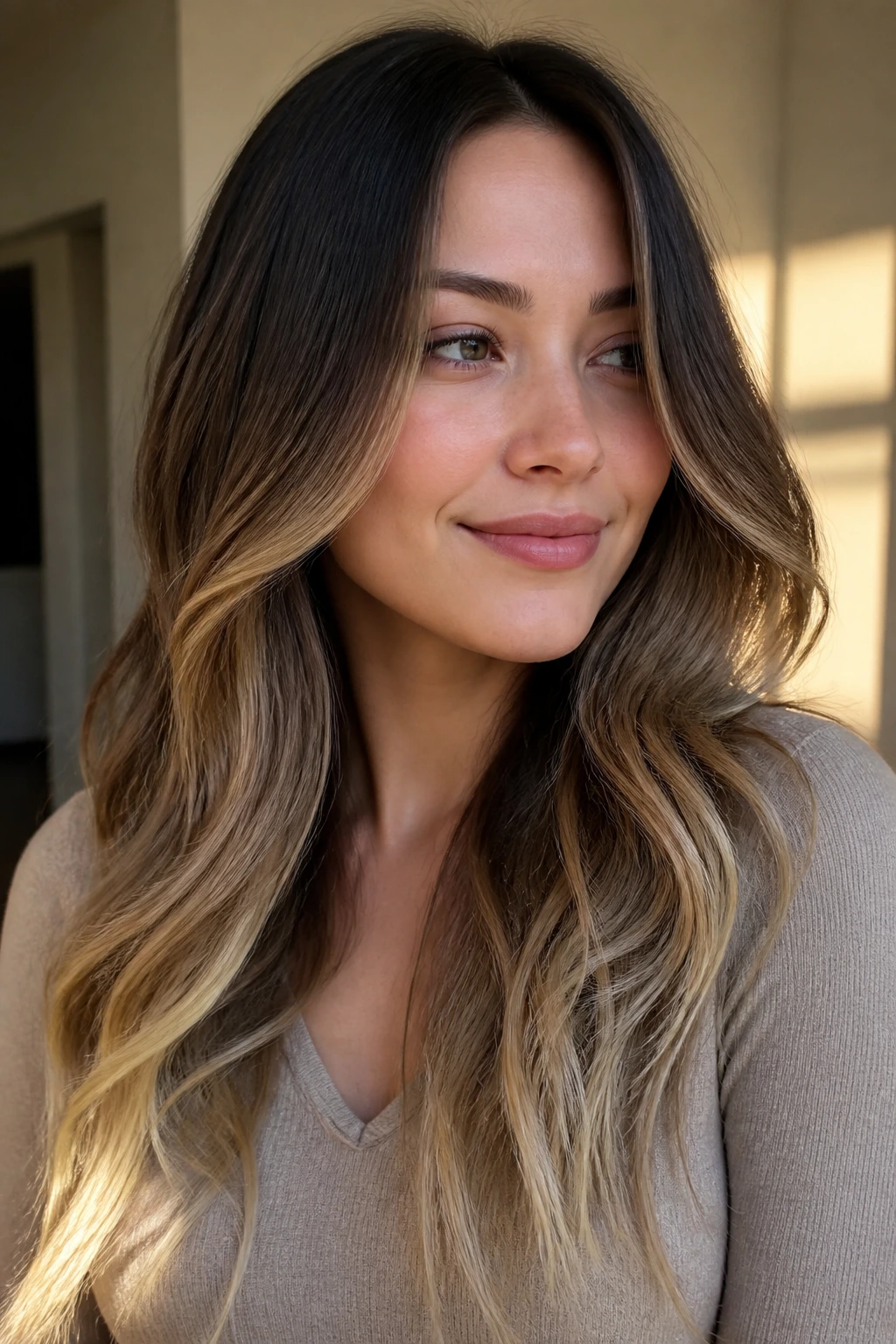
Balayage is the move when you want the light to feel brushed on rather than plotted out. For a round face, the best balayage begins near the jawline or even a touch lower, then melts toward the ends. That way the upper sides of the face stay a little deeper, which helps the face read longer.
This is one of my favorite choices for long, wavy hair because the bends in the hair carry the color better than a straight, blunt fall. The result looks less like a stripe and more like sun hit the hair in motion. Ask for a gradual lift through the lower half of the length, with the brightest pieces tucked into the ends and outer layers. It’s a quieter look, but it does real shape work.
3. Baby Lights Woven Along the Part Line
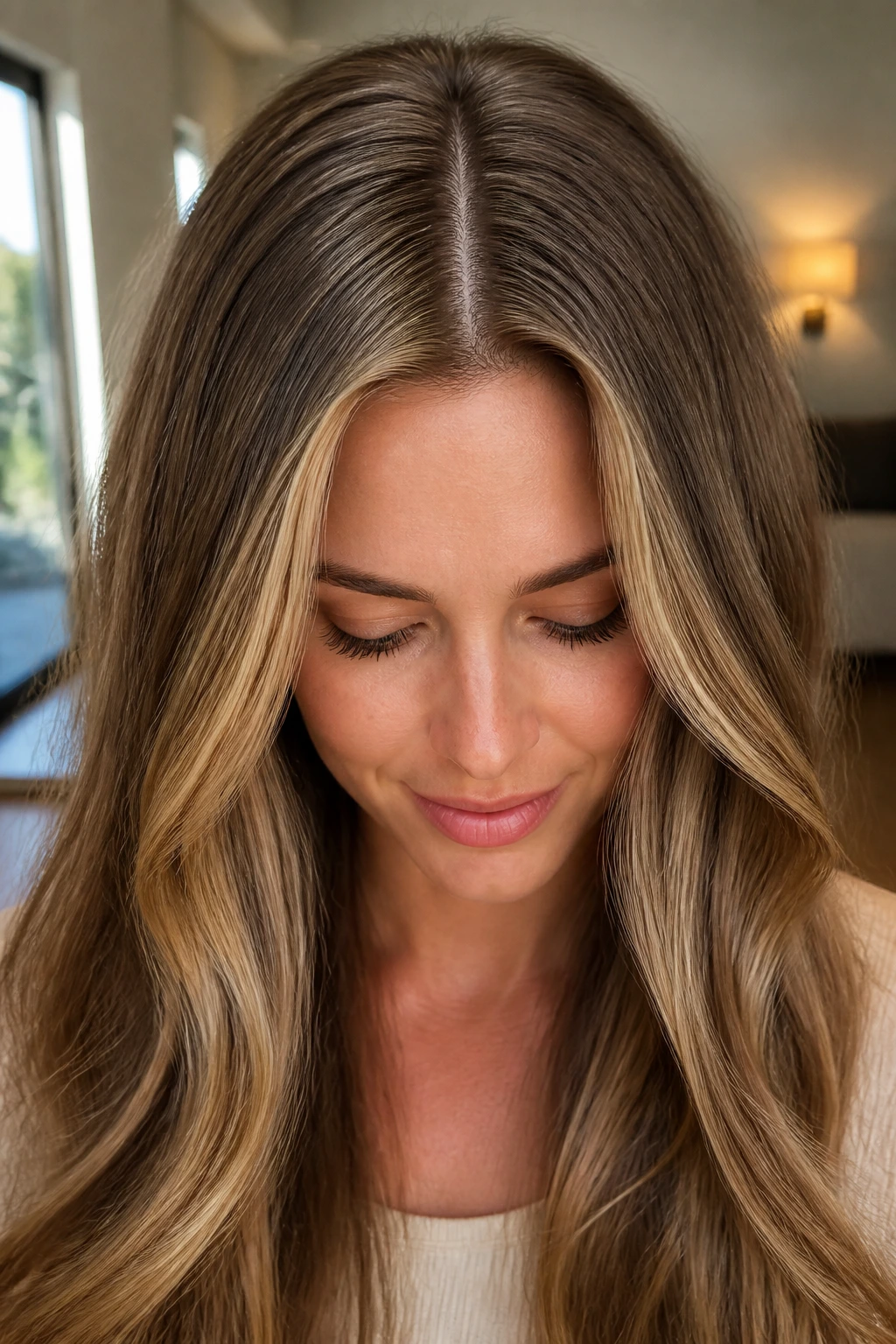
Babylights are tiny. That’s the whole appeal. When they’re placed along the part line and kept very fine, they brighten the top without creating a hard, wide band across the face. On long hair and round faces, that means lift at the crown and softness at the sides.
This is the look I reach for when someone says they want “something subtle, but not flat.” The strands are so thin they almost read as shimmer instead of stripes. A center part can look especially good here because the light traces a clean vertical line down the head. If your hair is fine, babylights are even better, because they add dimension without making the sections feel chunky or heavy.
4. A Money Piece with a Shadow Root
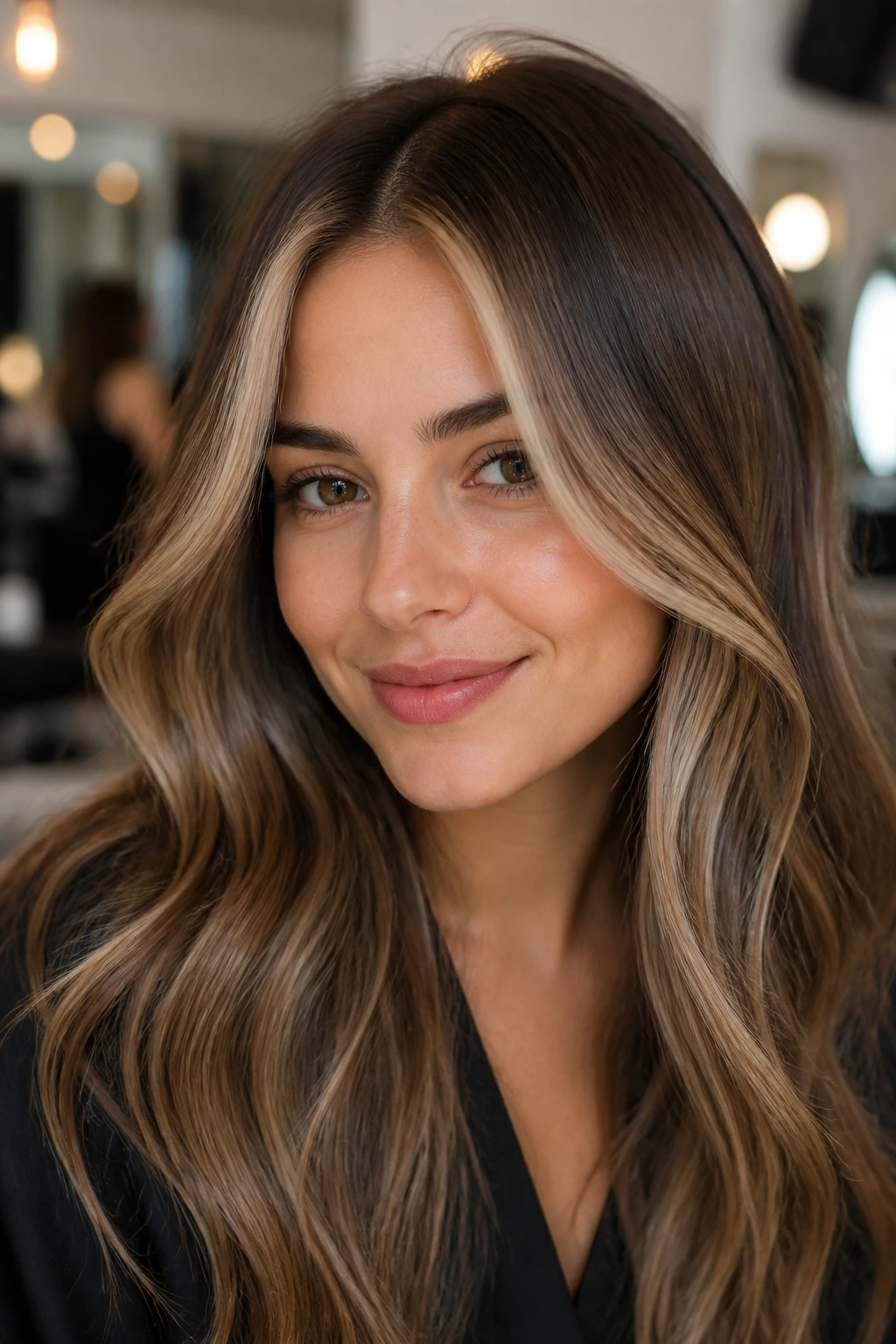
A money piece can flatter a round face, but only when it’s not too wide and not too bright at the root. The shadow root is what keeps it from turning into a hard block at the hairline. The front pieces should start soft at the root, get brighter around the temple, and keep their light going below the chin.
That long drop matters. It draws the eye down instead of sideways. I’d choose this for someone who likes a clear frame around the face but does not want the “helmet of blonde” effect that can happen when the bright panel is too thick. Beige blonde, soft caramel, or creamy honey all work here. Skip the thick front slice unless you want a bolder, more editorial look.
5. Mushroom Brown Dimension on Long Layers
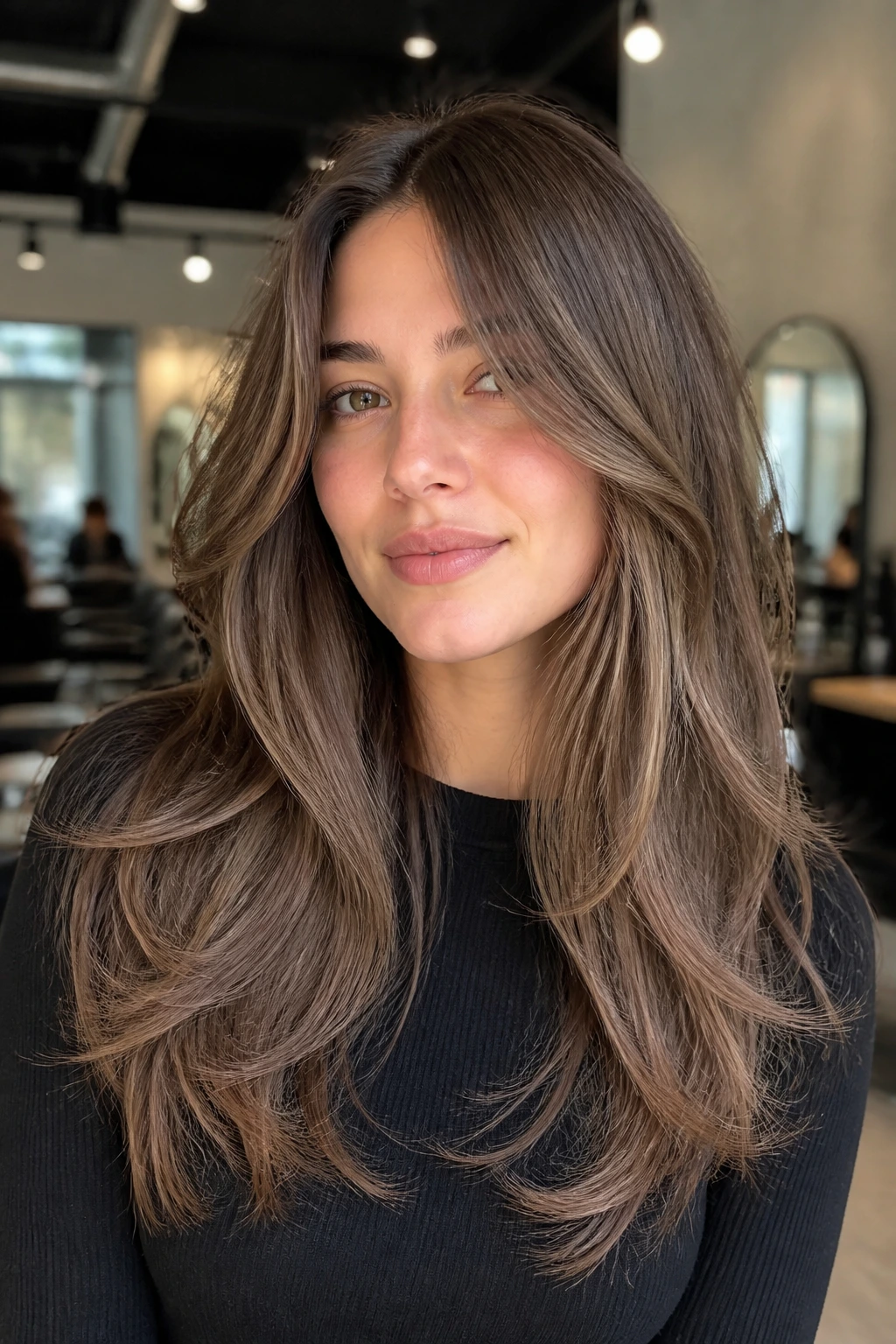
Mushroom brown sits in that cool taupe-cocoa zone that makes dark hair look expensive without shouting. On a round face, cooler tones help because they don’t puff out visually the way warmer, brighter gold can when it sits too high. The long layers make the color move, which is where this look earns its keep.
This one is especially good if your natural brunette base already has some ash in it. Ask for muted beige-brown and taupe ribbons, not chunky contrast. The goal is a soft veil of light through the mids and ends, with the root staying deep enough to shape the face. It’s restrained, yes. But restrained can be the smartest move in the chair.
6. Beige Bronde Bands Through the Mid-Lengths
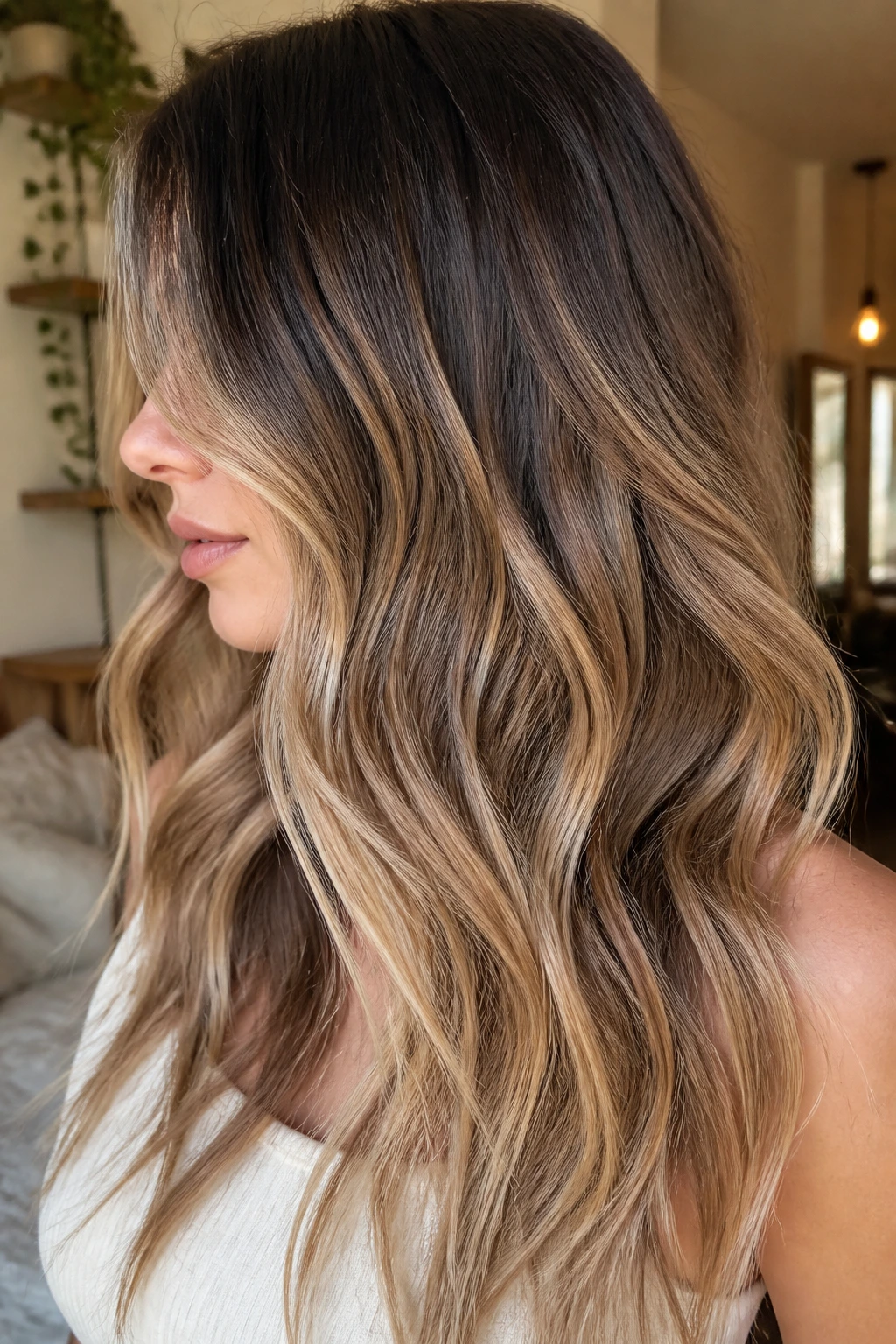
Bronde—half brown, half blonde—has a way of making long hair look fuller without making the face look wider. The trick is to keep the lighter bands moving through the mid-lengths and lower half, not right across the cheek area. Beige tones help because they reflect light without leaning brassy or flat.
I like this on hair that already has some natural wave. A bend in the mid-lengths catches the lighter pieces and shows the blend better than poker-straight hair ever will. Ask your colorist to keep the root a shade or two deeper than the brightest blonde, then stretch the beige through the rest. The effect should feel soft, not striped. If it looks striped, there’s too much contrast in the wrong place.
7. Copper-Kissed Ends on Brunette Hair
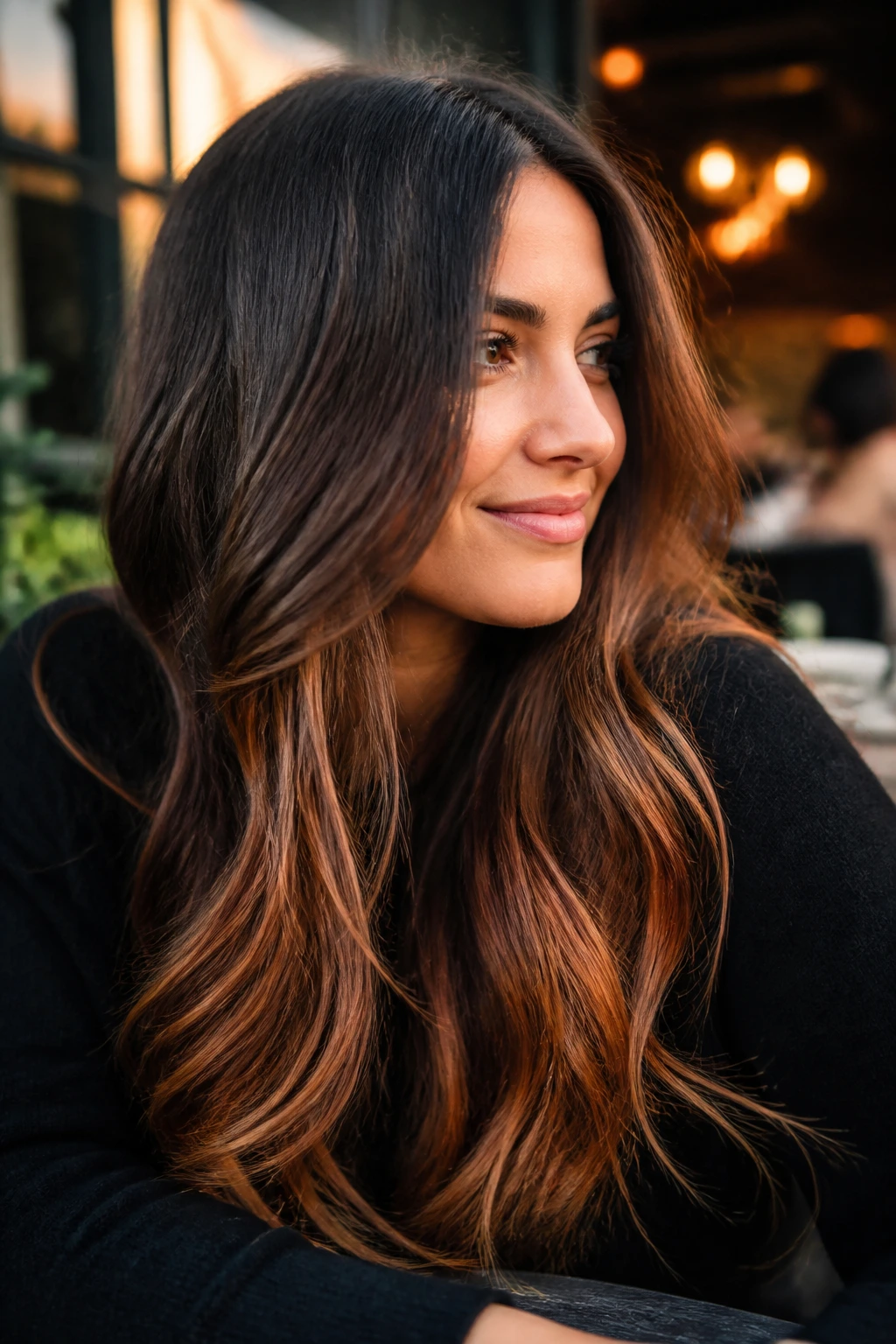
Copper on long brunette hair can be gorgeous, but I’d keep it low and focused. Let the warmth gather around the ends and lower layers, where the face is already narrowing visually. If the copper starts too high, it can flare out the cheeks. If it lives lower, it gives the hair real movement.
This is one of those colors that looks best when the hair moves. Braids, waves, and half-up styles show off the contrast in a way that straight hair doesn’t always. Ask for copper that reads as a refined burnished tone, not orange. That one distinction matters. Orange sits loudly on top of the face. Copper can slip down the length and glow.
8. Ash Beige Micro-Highlights for a Cooler Frame
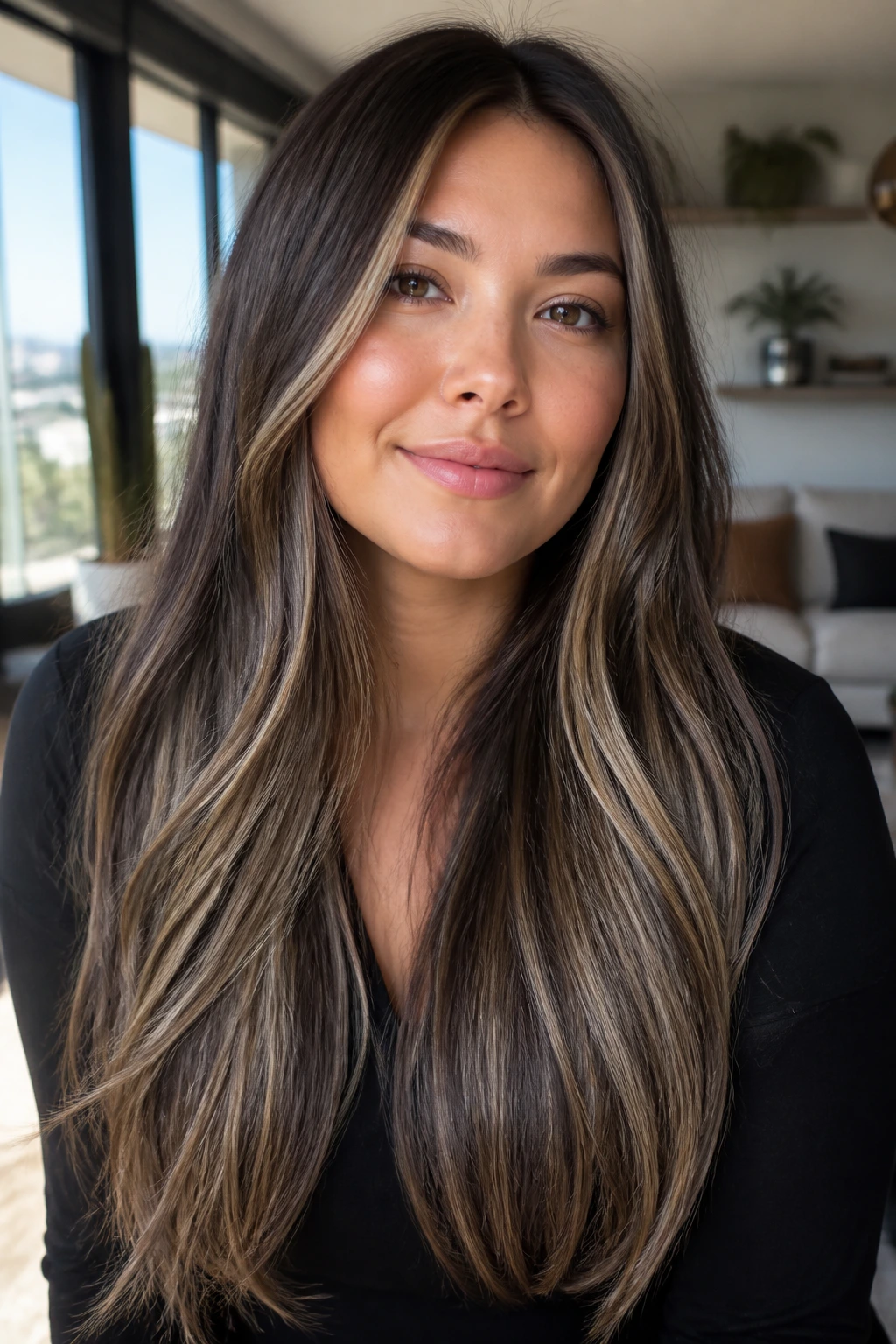
Micro-highlights are small enough to disappear into the hair until the light hits them. That’s useful on a round face because you get brightness without a strong horizontal line at the cheeks. Ash beige is a good middle ground: cool enough to recede a little, beige enough to keep the hair from looking smoky or dull.
On very long hair, micro-highlights can build a soft, expensive-looking sheen through the lower half of the style. They’re especially nice if your hair is naturally straight or only slightly wavy, since the tiny pieces create movement without a harsh pattern. If your hair tends to pull warm, a cooler toner will keep the result clean. Otherwise, the ash can drift muddy.
9. Hidden Peekaboo Highlights Beneath the Top Layer
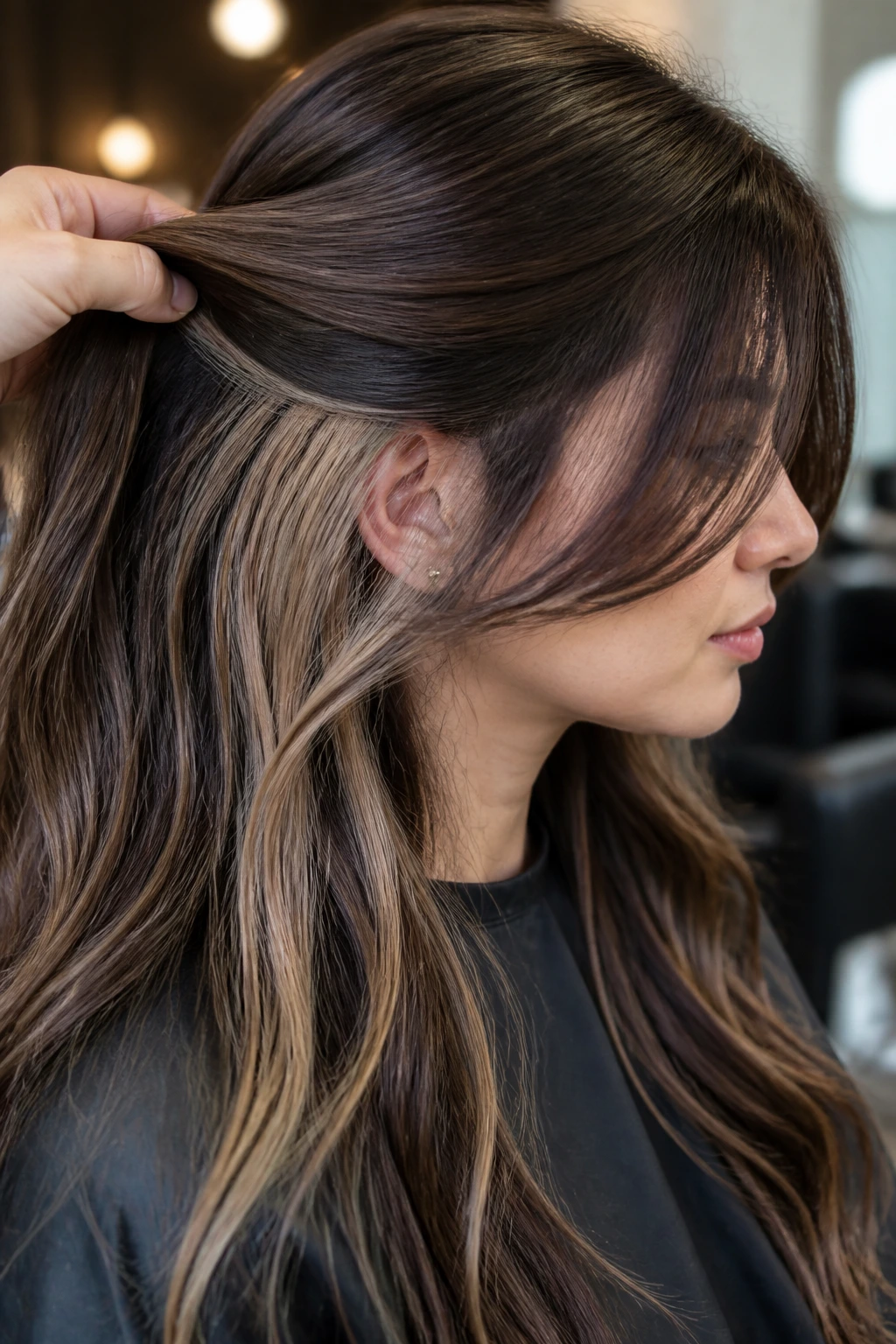
Peekaboo highlights are for the person who wants dimension without seeing it from every angle. Brightness lives under the top layer and flashes through when the hair swings, tucks behind the ear, or gets pulled into a half-up style. On a round face, that hidden placement keeps the visible frame soft and narrow.
I love this on thick long hair because the top layer can stay rich and deep while the underside does something more playful. It’s also a good way to test lighter color without committing the entire head to it. Ask for the peekaboo pieces to sit mostly below the ear and through the lower sections of the back. If the light starts too high, it loses the point.
10. Teasylights That Lift the Crown Without Chunkiness
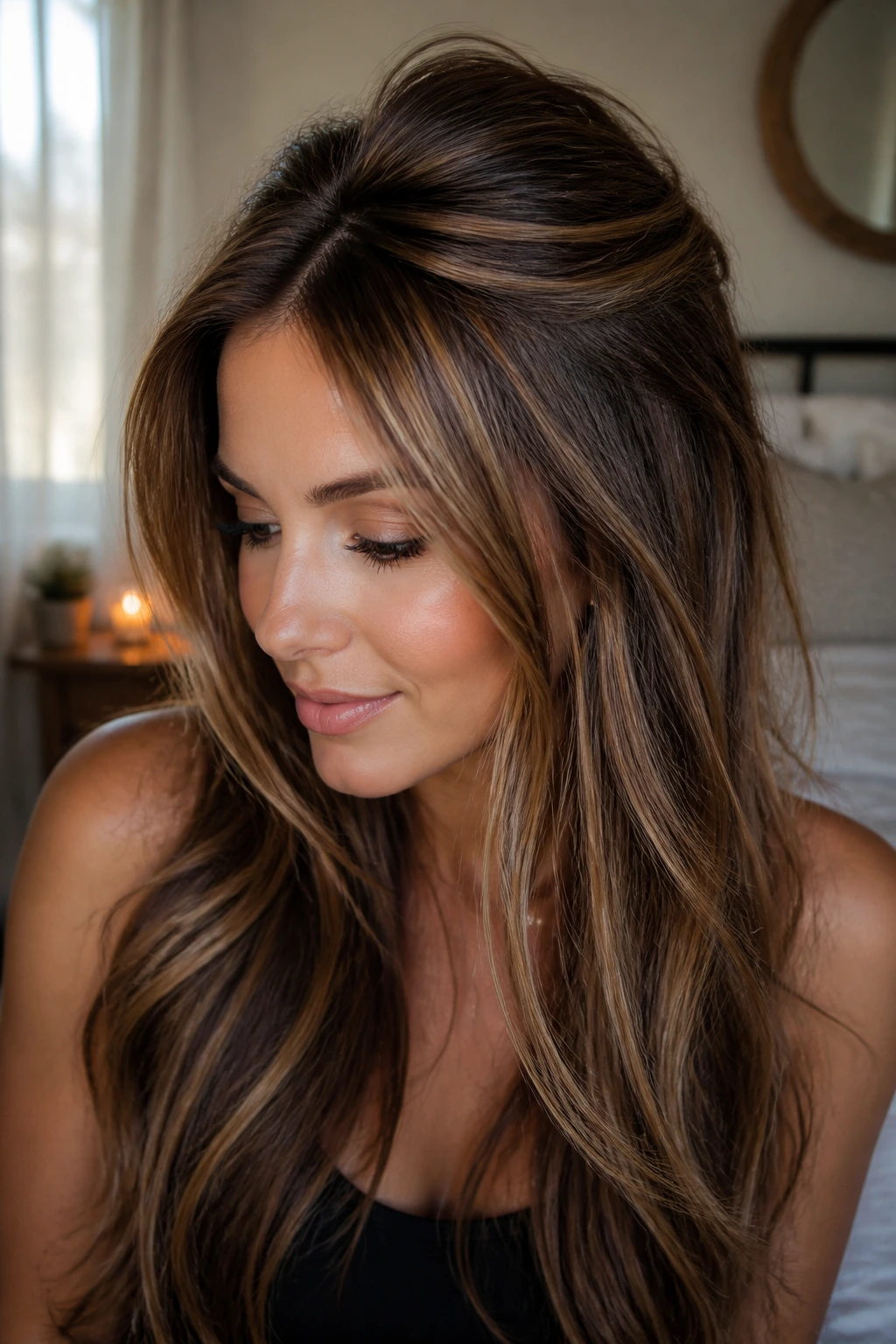
Teasylights are one of those techniques that sound technical and end up looking effortless. The stylist backcombs the section before lightening, which blurs the line where the highlight begins. That matters on a round face because the top of the head gets lift while the sides stay soft.
This is especially useful if your hair feels heavy at the crown or if long lengths pull the whole shape downward. Teasylights give the illusion of height without obvious streaks. Ask for brightness that starts softly higher up and becomes more obvious through the lower half of the hair. The result is more vertical, less wide. And that vertical read is doing a lot of work.
11. Temple Highlights That Trace the Face
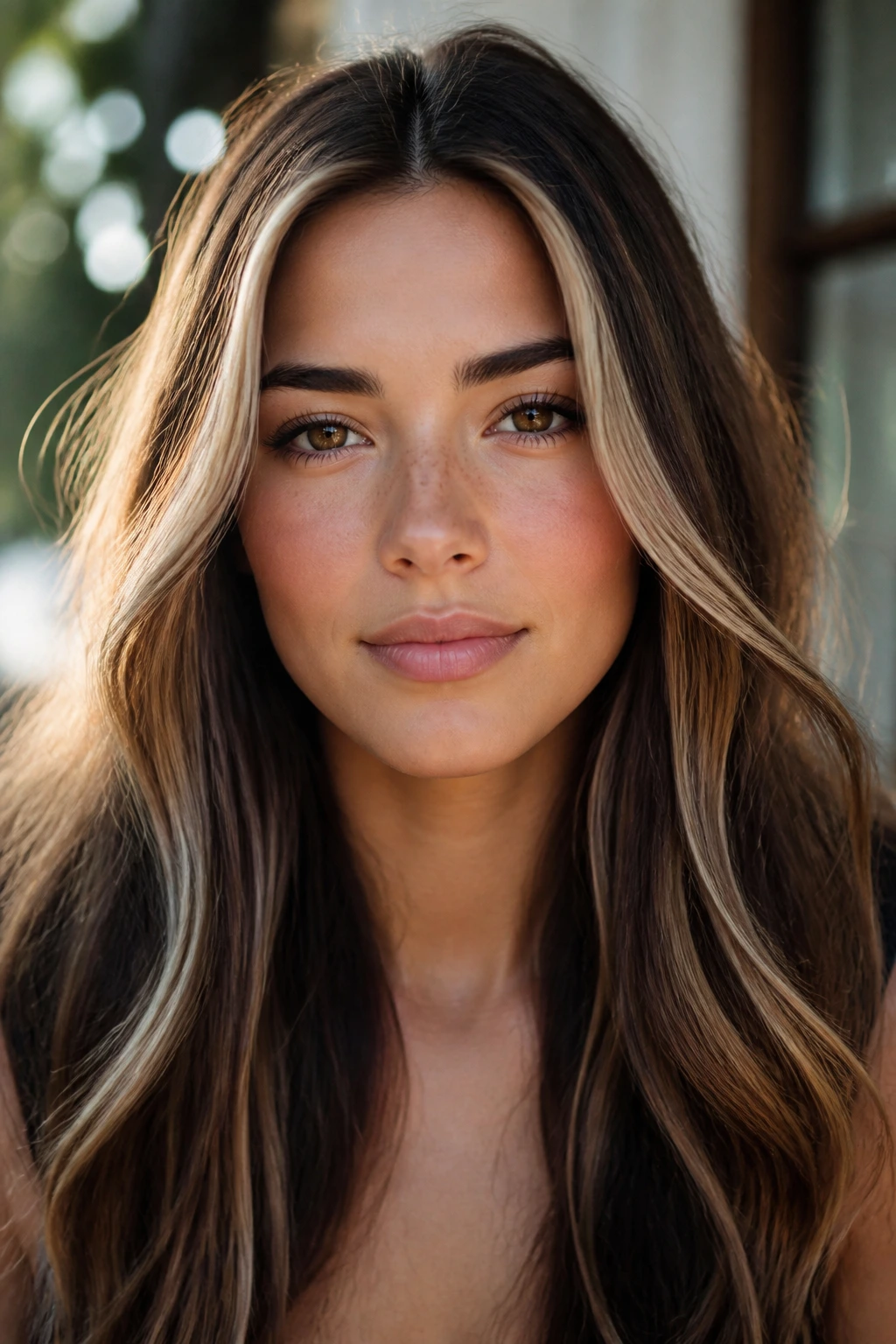
Temple highlights can either sharpen the face or soften it. The difference is in width and placement. A narrow ribbon at the temples that slides down toward the jaw and collarbone creates a frame, not a box. On round faces, that narrower frame is the safer bet.
This look is good when you wear your hair tucked back often or favor a center part. The eye catches the brightness near the temples, then follows it downward. That small downward slide changes everything. I’d keep the pieces fine, with the brightest spot landing below the cheekbone rather than right on it. It’s a subtle trick, but it works every time I see it done well.
12. Champagne Blonde on a Dark Blonde Base
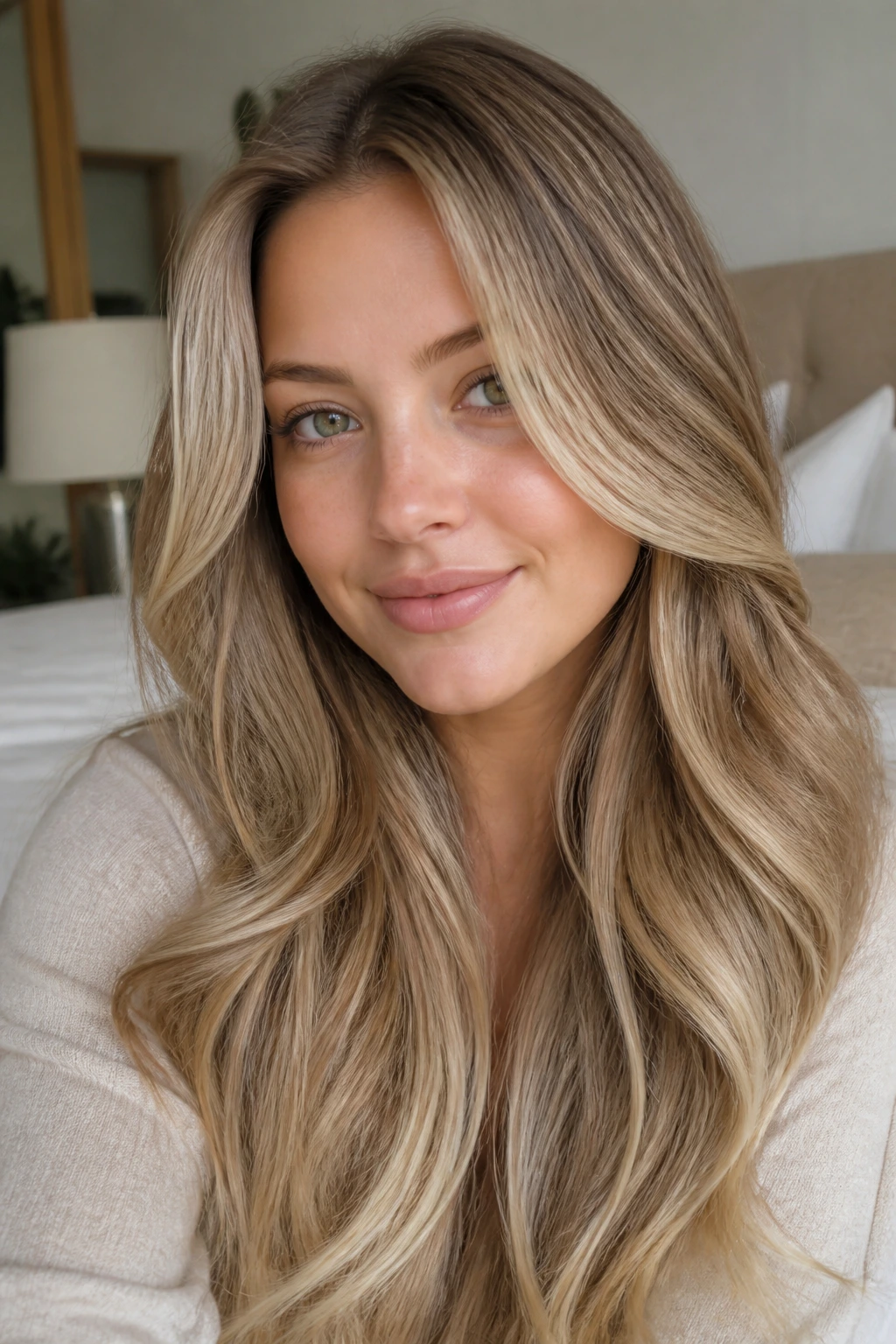
Champagne blonde sits in that elegant zone between beige and pearl. It’s lighter than honey, softer than icy platinum, and far easier to live with on long hair. On a round face, the neutrality helps because it reflects light without creating a big, flat bright block at the sides.
This works especially well if your base is already dark blonde or light brown. The color can lift the mids and ends, while the root stays gently deeper. That little shadow makes the face look longer and gives the highlight something to disappear into. If you want blonde but fear the face-widening effect of pale stripes, champagne is a safer, cleaner choice.
13. Toffee Highlights on Espresso Hair
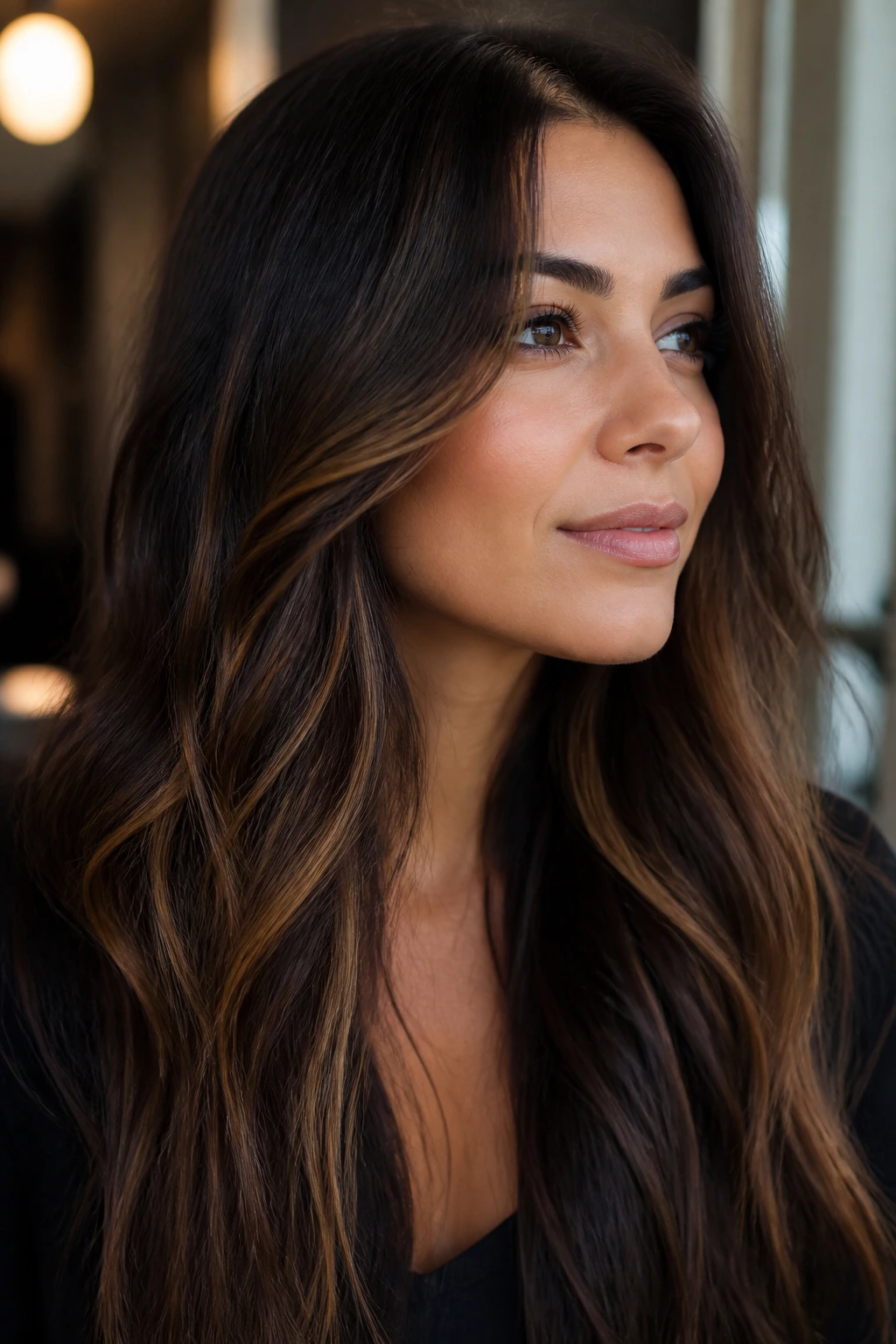
Toffee on espresso hair is one of the richest combinations in the whole pile. The contrast stays deep and dimensional, which means the color doesn’t sit like a bright sheet around the cheeks. Instead, the lighter pieces flicker through the lengths and make the hair move.
This is a good option if you love brunette depth and only want a touch of lift. Ask for toffee ribbons that start below the temples and get denser toward the lower half of the hair. On long hair, the effect can be luxurious without looking loud. A little warmth goes a long way here. Too much, and it starts to look coppery. Too little, and you lose the toffee effect entirely.
14. Sunlit Ombré with Creamy Ends
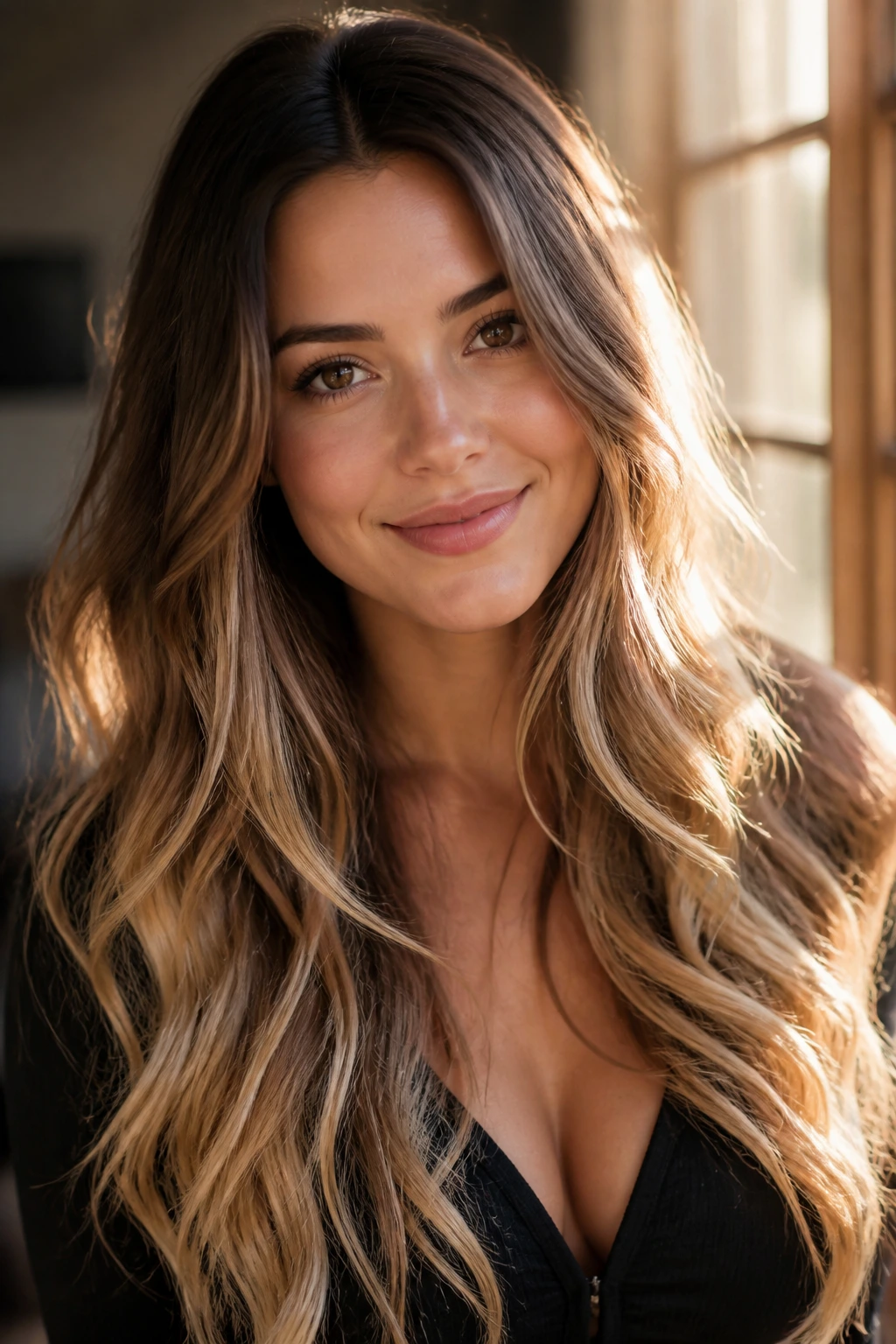
Ombré still works because it respects the face. The top stays darker, the lower half gets brighter, and the eye sees length. For round faces, that dark-to-light transition should begin below the jaw or at least around it, not right at cheek height.
I like creamy ends better than harsh blonde tips because the softer finish feels more natural through long hair. The fade should be gradual enough that you can’t point to one harsh line and say, “there it is.” If you can point to it, it’s too abrupt. Ask for the lightest ends to show up mostly in the outer layers and lower length, where they stretch the silhouette instead of widening it.
15. Bronze Balayage for Deep Brunettes
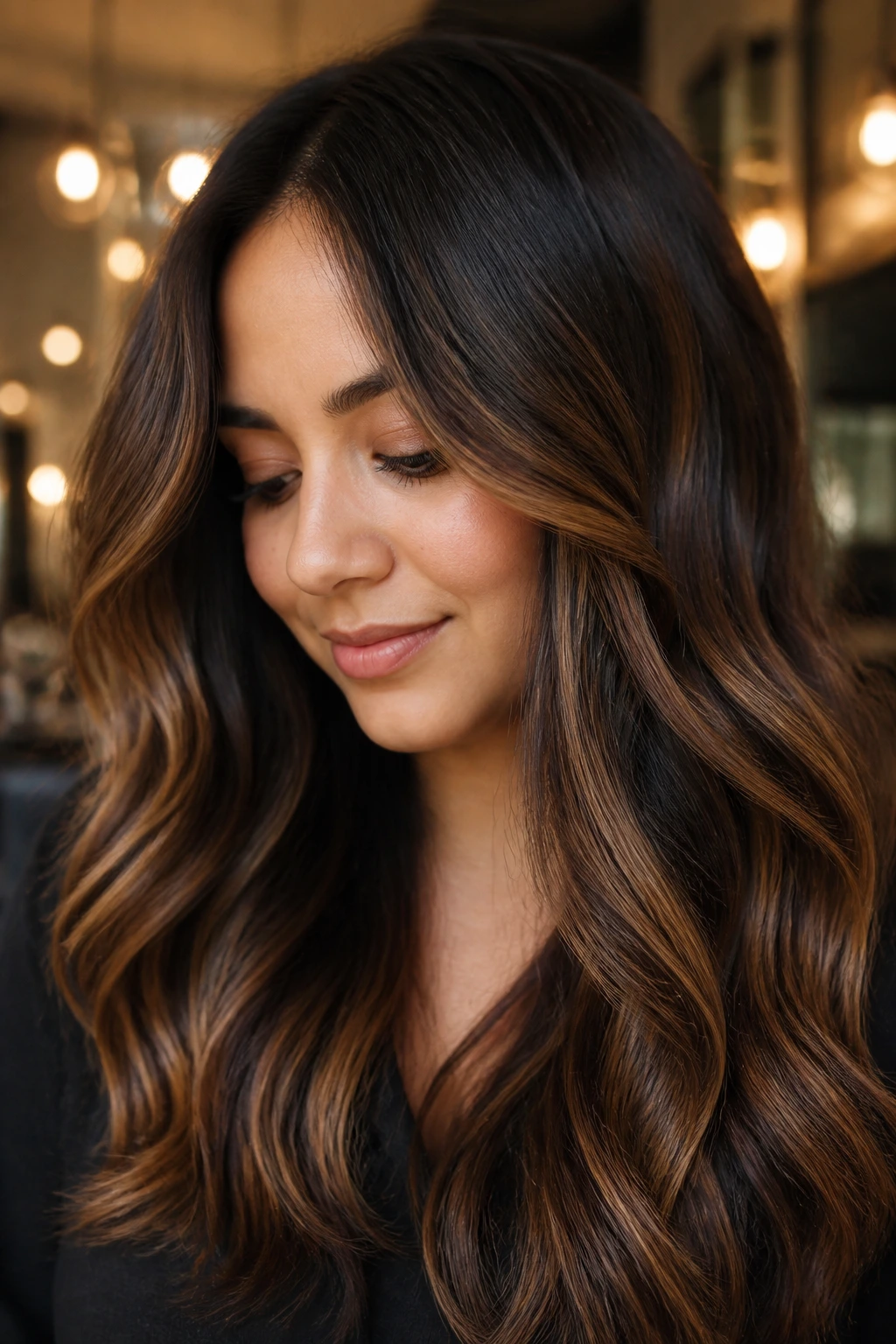
Bronze is one of the smartest tones for deep brunettes because it reads reflective rather than yellow. On long hair, that reflection has room to spread out, so the color looks dimensional instead of muddy. On a round face, the placement is what keeps it flattering: lower mids, ends, and a few whisper-thin face-framing pieces.
This is a favorite of mine for hair that tends to go flat in photographs or under indoor light. Bronze picks up warmth without pushing the cheeks forward. If your natural hair is nearly black, ask for bronze that stays deep and burnished, not light brown. That richer version usually looks better and grows out with less drama.
16. Strawberry Bronze Lights for Warm Skin
Strawberry bronze is soft, warm, and a little unexpected. It sits somewhere between copper, rose gold, and warm brown, which gives long hair a glow that feels richer than standard blonde. On a round face, the key is to keep the brightest pieces lower and narrower so the warmth doesn’t collect across the cheeks.
This shade works best when the skin has some gold, peach, or olive in it. The hair picks up that warmth and turns it into a gentle sheen. If you wear waves or loose curls, the color really comes alive because the lighter pieces appear and disappear as the hair bends. Ask for a glaze or gloss in the same family to keep the strawberry note from fading into brass.
17. Mocha Lowlights with Bright Ribbons
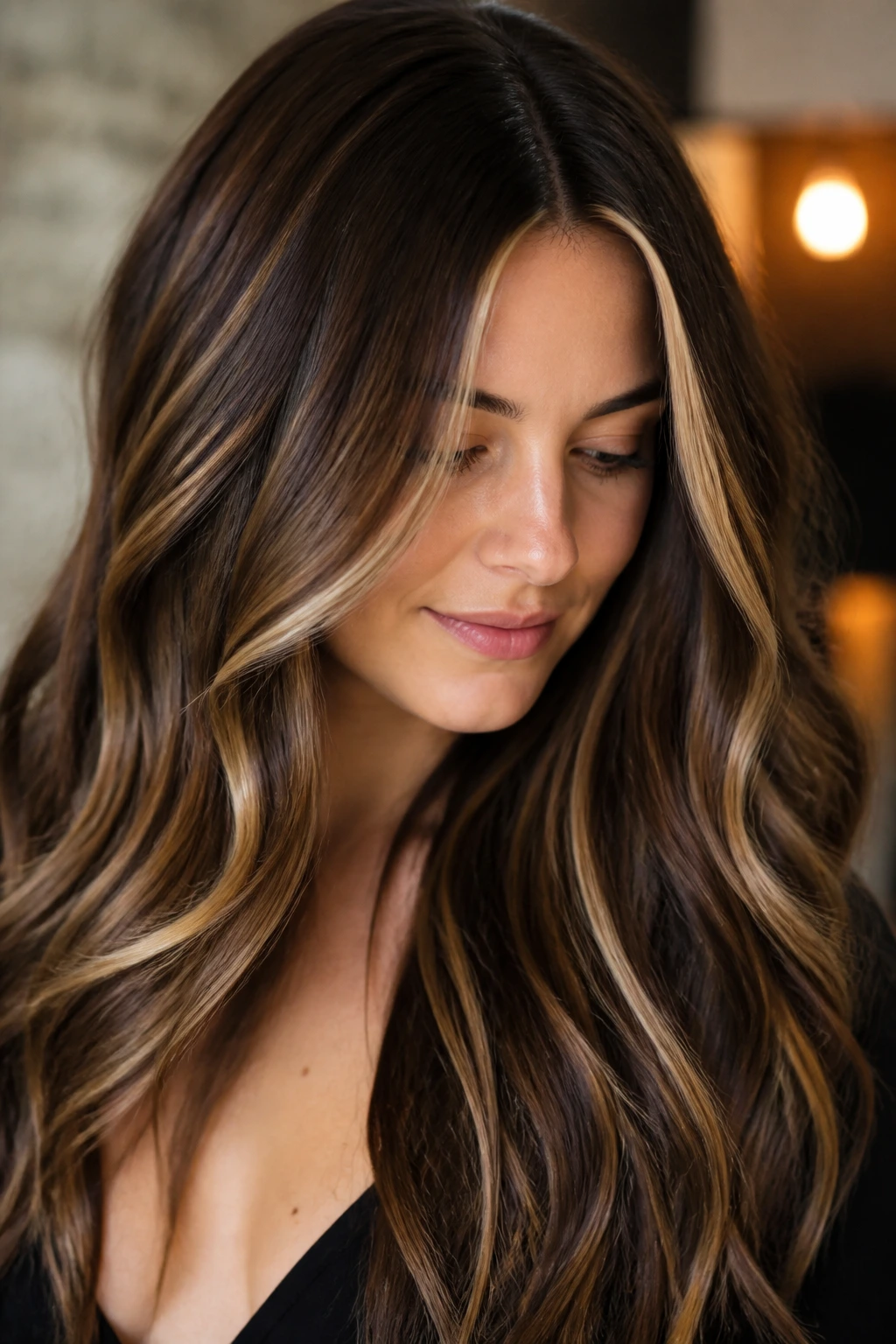
People tend to focus on highlights and forget the power of lowlights. On a round face, lowlights are often the thing that saves the shape. Mocha pieces tucked through long hair create depth, and that depth stops the lighter strands from forming one wide, bright band.
This is a smart fix if your hair is already quite blonde or has grown too light on the surface. The darker mocha ribbons push some of the brightness back and give the hair a more vertical rhythm. Long hair can handle that contrast beautifully. In fact, it usually needs it. Without the darker pieces, the whole head can start to read a little too broad around the cheeks.
18. V-Cut Highlight Mapping for Long Lengths
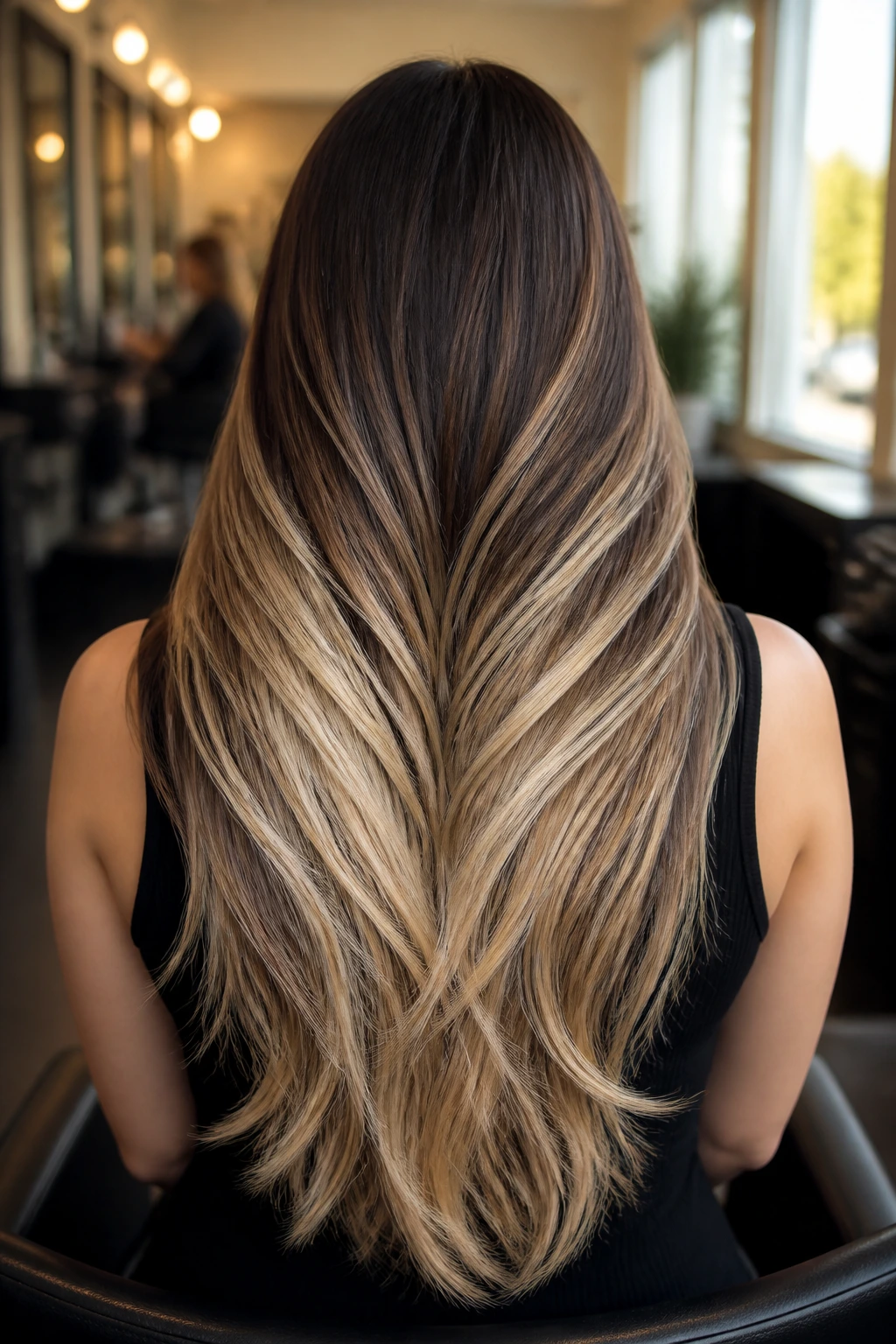
A V-shaped cut and V-shaped highlight mapping make a lot of sense together. The color follows the taper of the haircut, so the brightest sections travel toward the center and bottom point instead of sitting evenly across the sides. That naturally stretches the look.
I like this when the hair is very long and heavy, because the V shape helps break up the curtain effect. The color should be denser through the center back and gradually softer toward the sides. That way the eye sees a long line, not a wide block. If you already wear long layers, this placement can make the cut look cleaner and the face look longer with almost no extra effort.
19. High-Contrast Front Panels for a Bold Frame
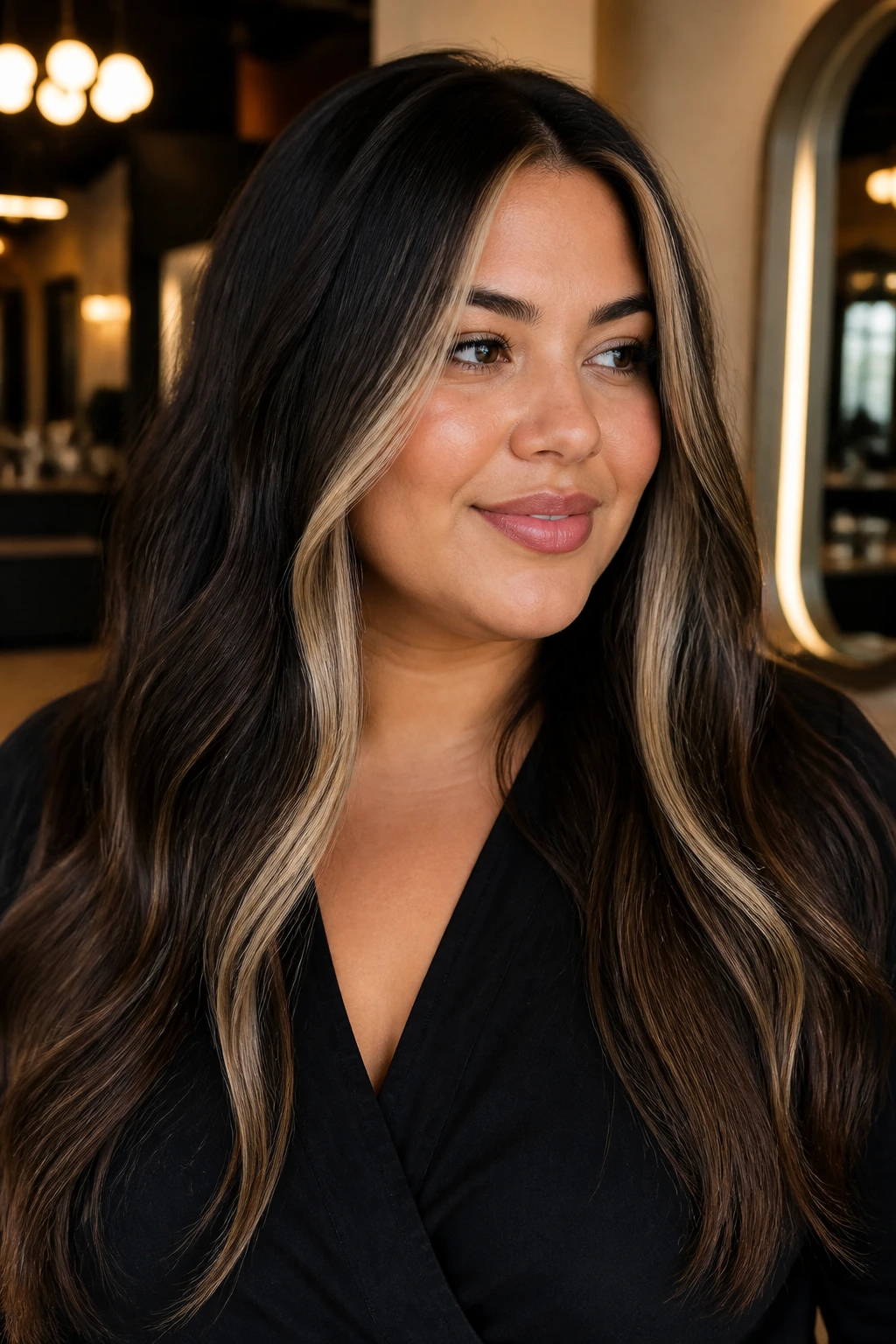
This is the bold one. Two narrow front panels, brighter from root to below the collarbone, can look sharp and deliberate on a round face—as long as they stay narrow and the rest of the hair keeps some depth. If the panels are too thick, they widen the face fast. If they’re controlled, they carve out the features.
I would choose this for someone who likes strong contrast and doesn’t mind a little drama around the face. Long hair gives the panels room to descend, which is what makes them feel elegant instead of clunky. Ask your colorist to keep the panel width tight at the temples and let the brightness taper into the lower lengths. It’s a sharper look. Not subtle. But when it’s done well, it has real shape.
20. Curly-Ribbon Highlights That Follow the Curl Pattern
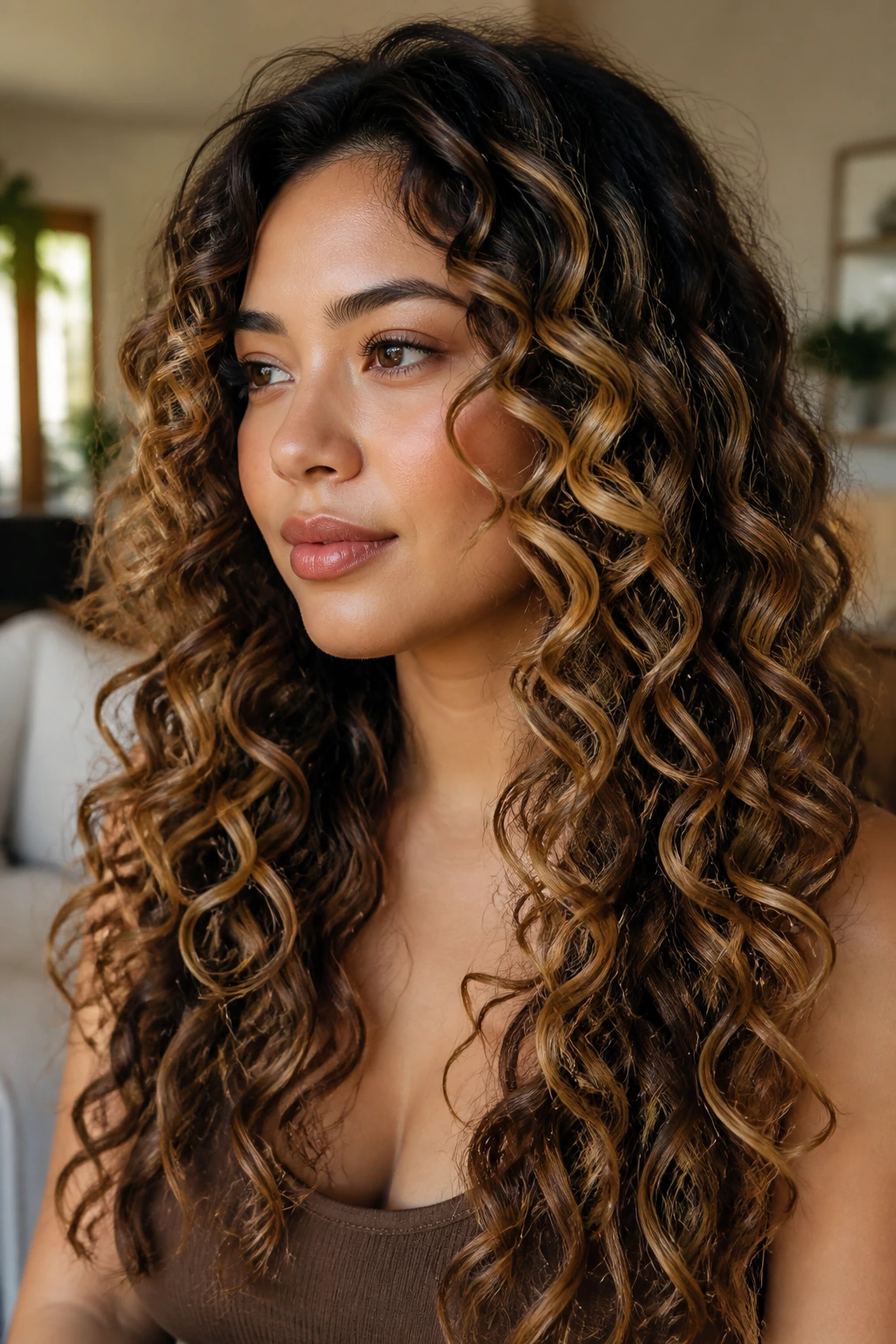
Curly and wavy long hair need a different map entirely. Straight foils painted in straight lines can look boxy once the hair dries and springs up. Ribbon highlights that follow the curl pattern give movement without creating a horizontal band around the face.
On a round face, that matters a lot. The highlight should travel with the curl, not cut across it. That keeps the shape airy and vertical. I’d avoid putting the brightest curls right at the cheek line. Let them live lower in the spiral, around the shoulders and ends. The color looks softer, and the whole head keeps its natural bounce.
21. Beige Blonde with a Root Melt
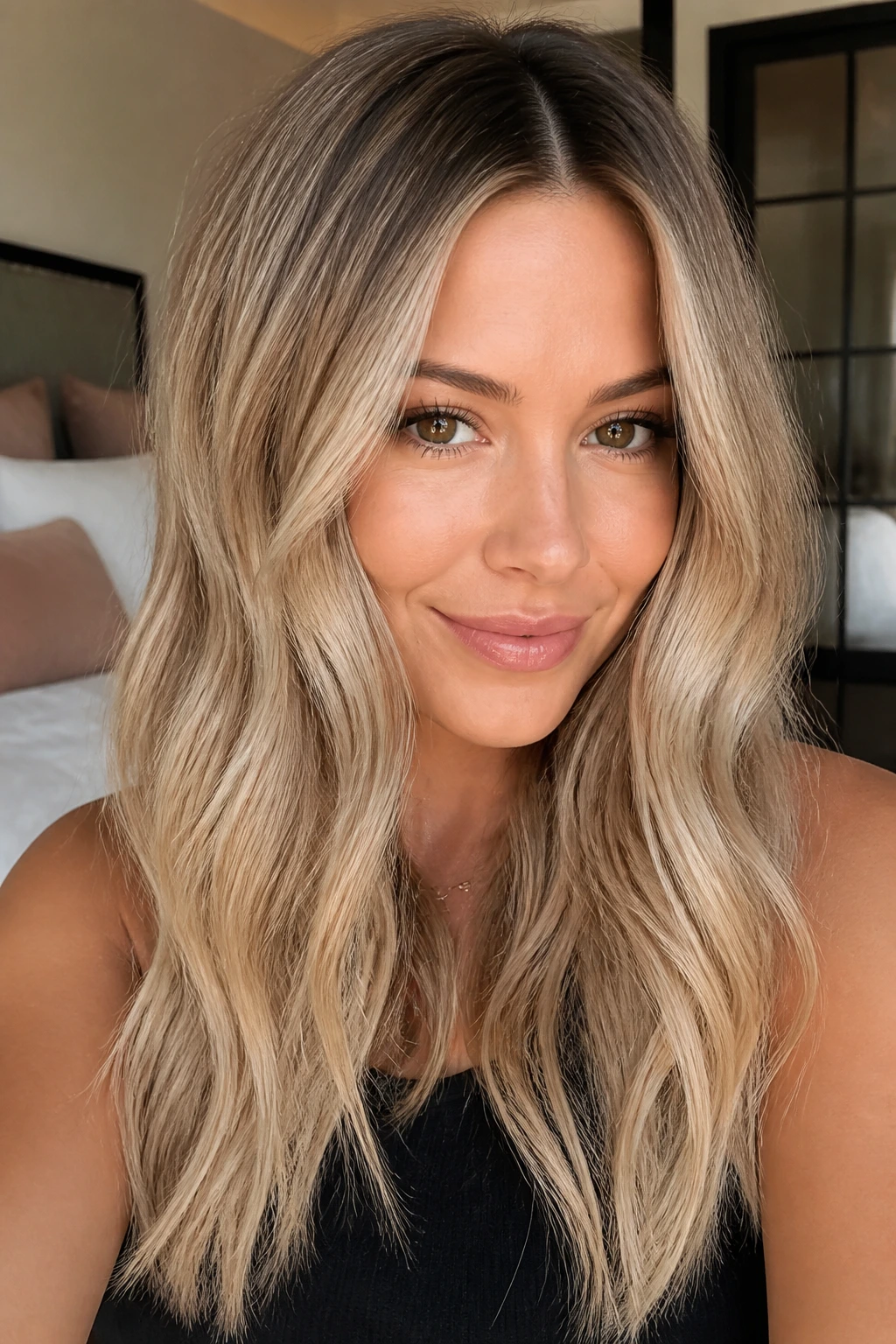
A root melt is one of the best tricks for long hair because it makes the color grow out in a softer way. The root stays deeper, then the blonde melts into beige mids and brighter ends. On a round face, that deeper root adds length at the top and keeps the sides from looking too light too soon.
Beige blonde is especially useful if you want a polished blonde that doesn’t scream for attention. It’s lighter than bronde, but not so pale that it flattens the face shape. The melt should be seamless enough that you can’t point to a line where the root ends and the blonde begins. If there’s a visible break, the whole thing gets harsher than it needs to be.
22. Auburn and Cinnamon Ribbons Through the Lengths
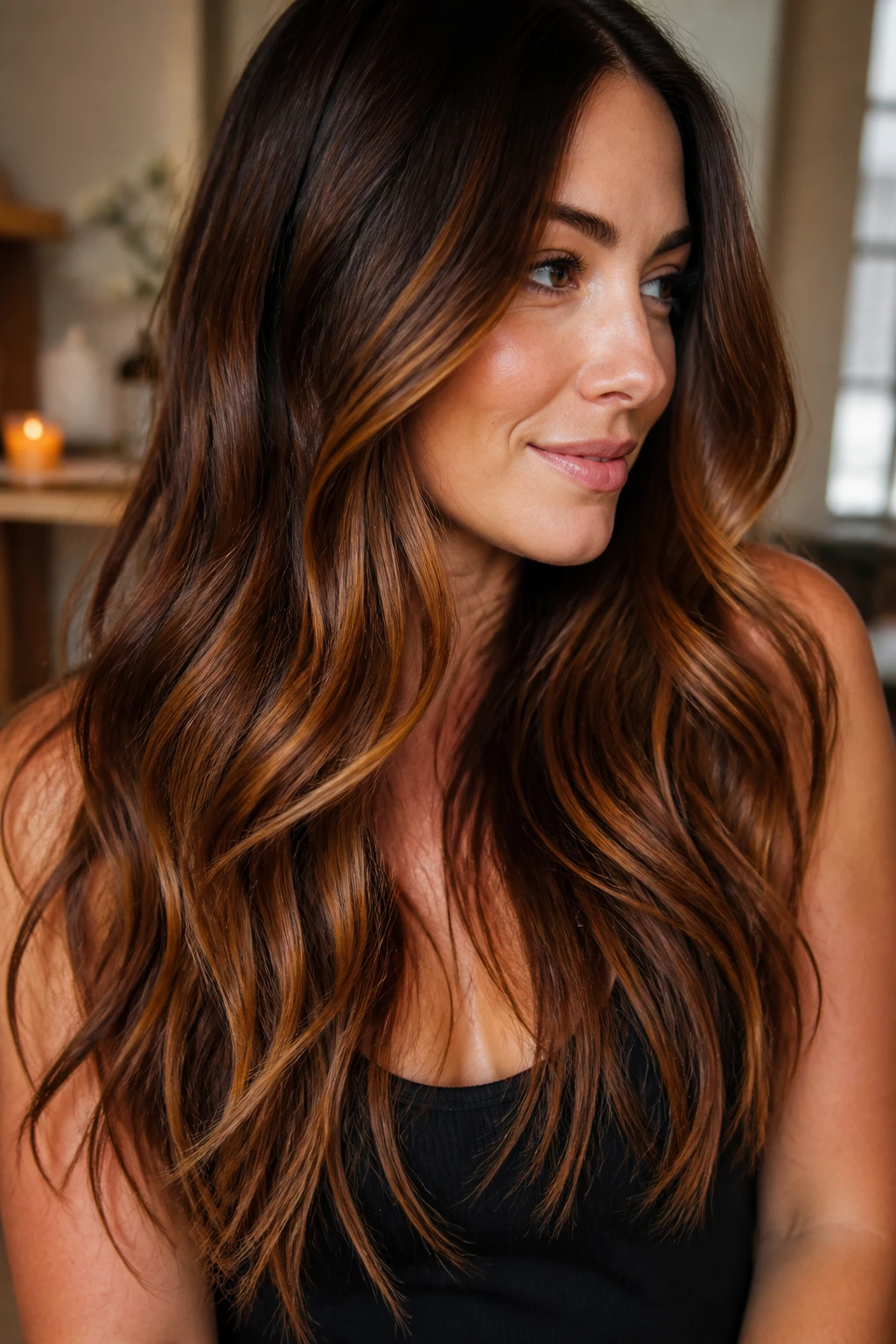
Auburn and cinnamon are made for long hair because the color has space to travel. The ribbons should run through the lengths and ends, not collect only at the cheek line. That keeps the warmth flattering instead of widening the face. Round faces do well when the color seems to flow downward.
This is a beautiful option for brunettes who want warmth without going copper-heavy. Cinnamon has that dry spice note; auburn adds a little depth and red. Together, they can make braids, waves, and soft ponytails look fuller and richer. Ask for the warm tones to stay woven through the lower half of the hair, with only a few fine pieces closer to the face.
23. Hidden Nape Lights for Braids and Ponytails
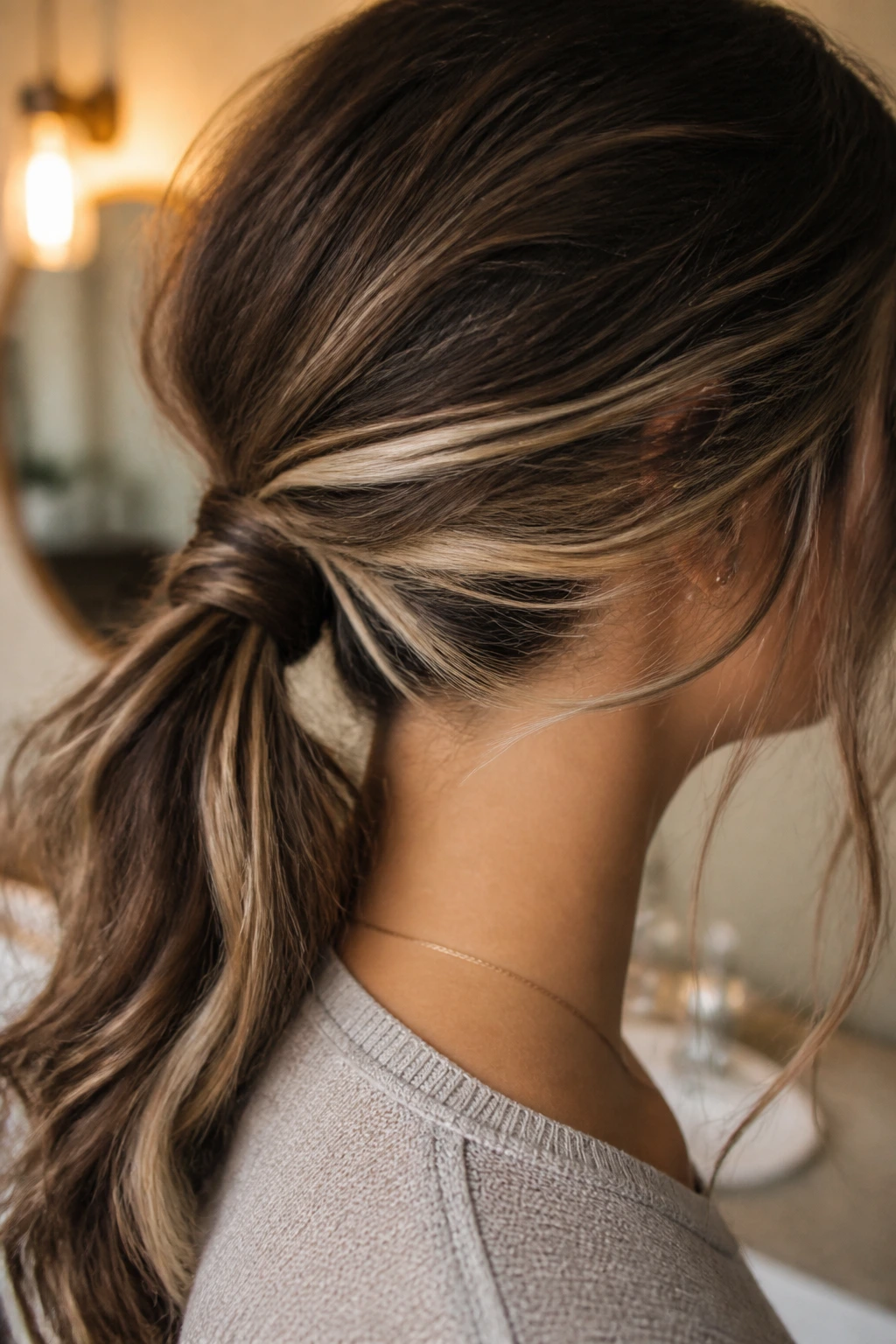
Hidden nape lights are one of the most underrated choices in this whole list. The brightness sits underneath the top layers at the nape and lower back section, so the hair looks rich when worn down but flashes something extra when it’s lifted. For a round face, that keeps the visible frame clean and narrow.
This is a strong pick for anyone who wears long hair up often. A braid reveals the color. A low ponytail reveals it. Even a half-up knot gives you a glimpse. The front stays soft, which matters. There’s no reason to put the brightest pieces near the cheeks if you can hide the fun in the underside where it won’t mess with the shape.
24. Three-Shade Blonde for Extra Depth
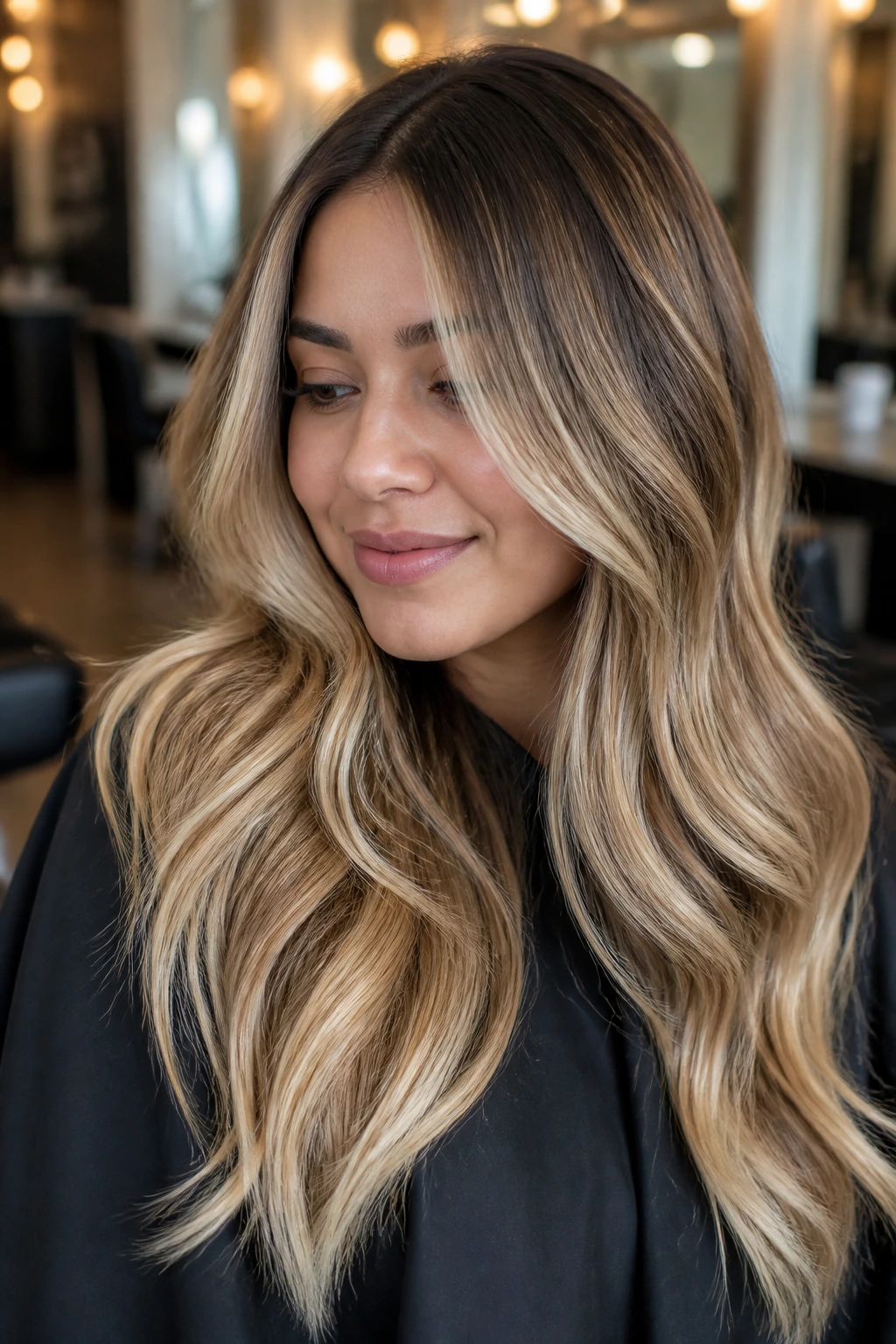
Three shades sound fussy until you see them in motion. A deeper root, a mid blonde, and a brighter end shade keep the hair from turning into one flat sheet. On long hair, that layered effect matters because the light can travel through the length instead of sitting on top of it.
Round faces benefit because the variation creates a longer visual line. The eye moves from root to mid-length to end instead of stopping at the cheek area. This is one of the best ways to keep blonde looking expensive rather than patchy. Ask for soft blending between the three tones, not hard bands. If the difference between shades is too sharp, the face loses the lengthening effect.
25. Soft Veil Highlights with Curtain-Style Face Framing
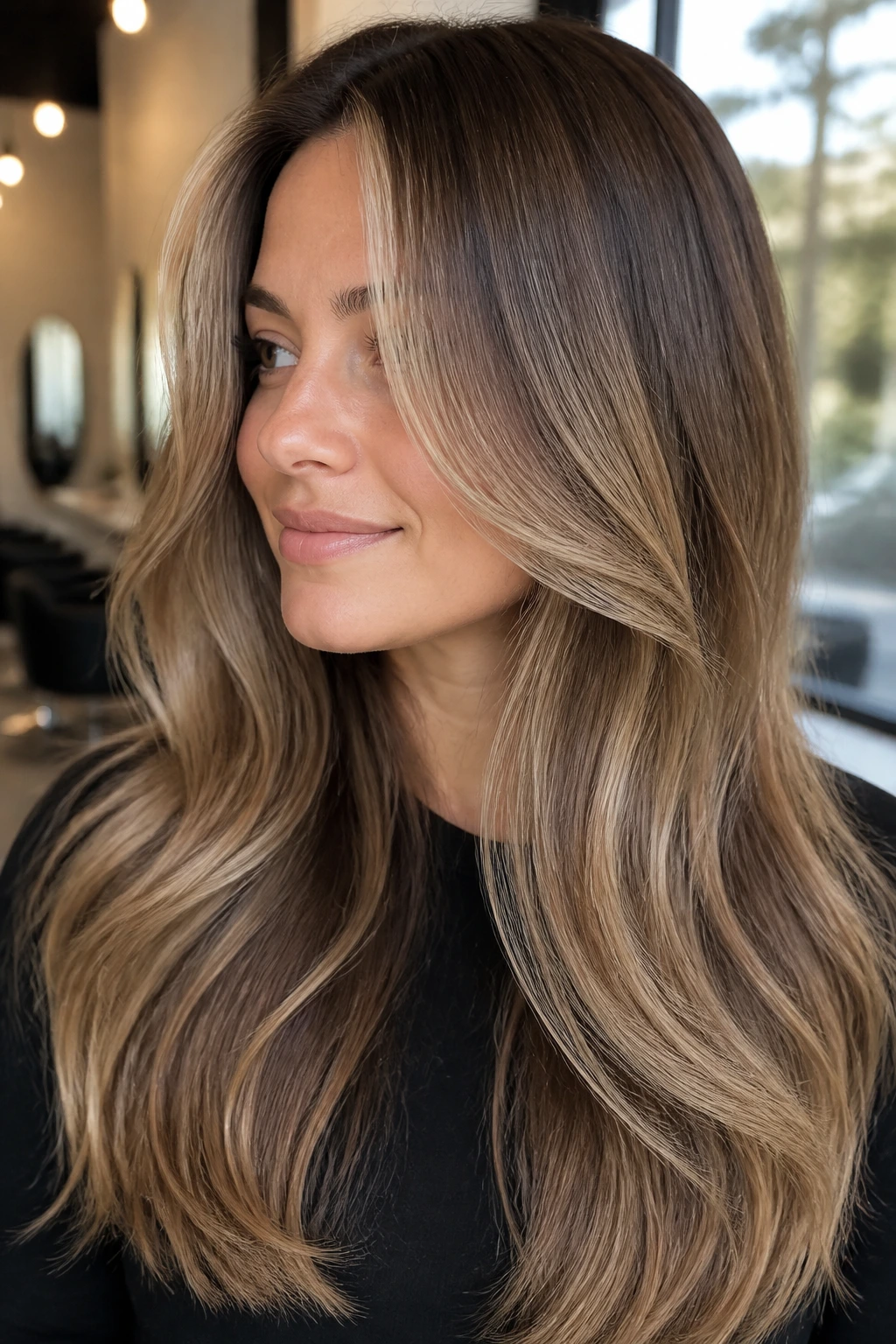
Soft veil highlights are exactly what they sound like: a sheer layer of brightness around the outer hairline that doesn’t shout. The front pieces should behave like curtain drapes—lighter at the edge, softer near the root, and blended down through the lengths. On a round face, that shape helps frame the features without boxing them in.
This is the look I’d pick for someone who wants the face-framing effect of a money piece but hates anything chunky. It’s gentler. The veil catches light when the hair moves, and the curtain-style front pieces help the length do the flattering work. Ask your colorist to keep the pieces narrow at the temple and let them disperse before they hit the jaw. That keeps the face open, not wide.
How to Talk to Your Stylist About Placement
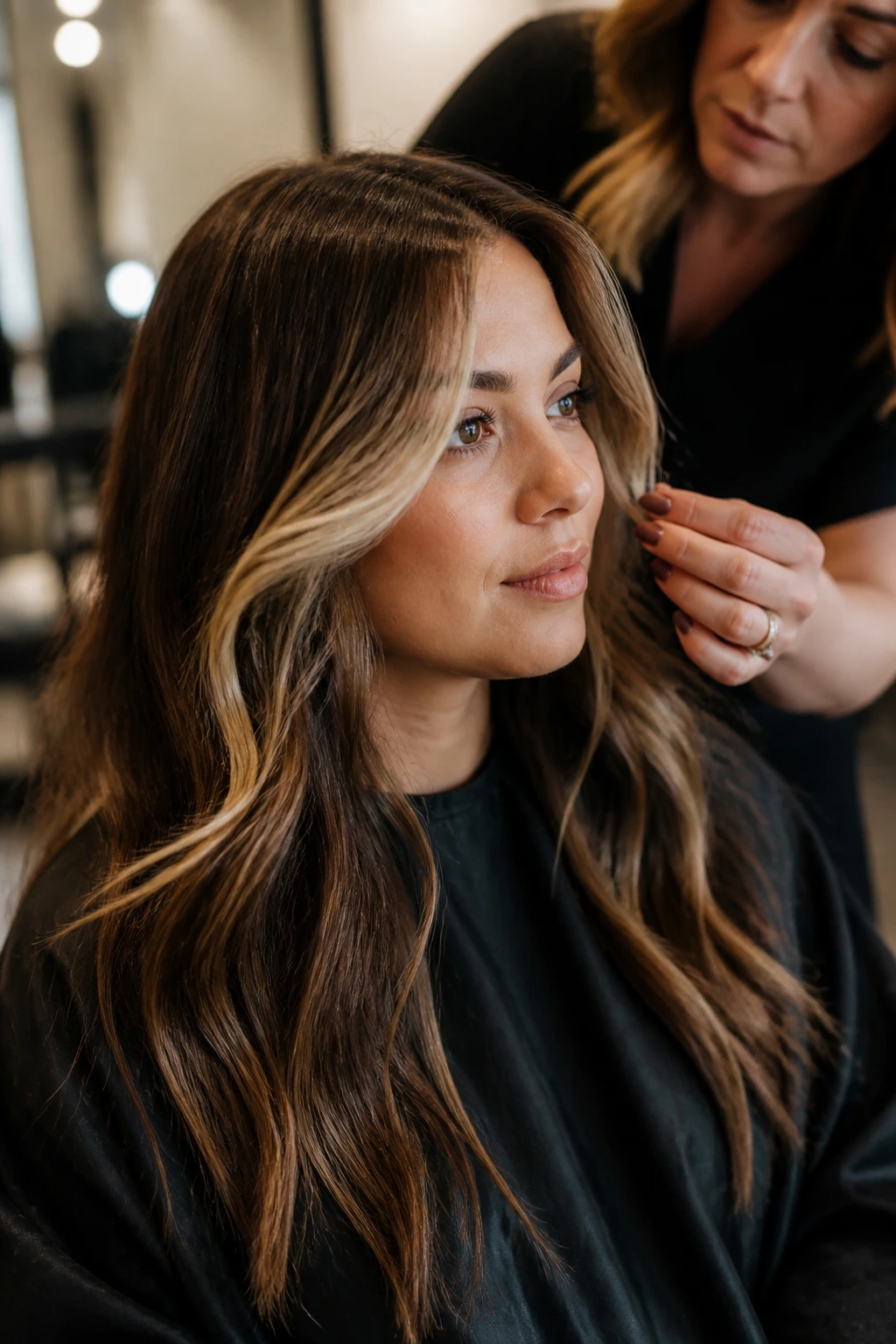
A good haircut photo is nice. A good placement photo is better. If you want highlights that flatter a round face, show your stylist examples where you like the brightness sitting on the head, not just the color itself. A lot of clients bring blonde screenshots and forget that the same shade can look very different depending on whether it starts at the cheekbone or below the jaw.
Say the words that matter: below the cheekbone, deeper at the root, lighter at the ends, and soft around the temples. Those are useful directions. “I want it to slim my face a little” is honest, but it’s vague. “I want the brightest pieces to fall lower, around the collarbone, with a softer front frame” gives your colorist something they can actually build.
Bring up your styling habits too. If you wear your hair straight every day, the placement needs more precision because the lines show clearly. If you live in waves, braids, or a messy bun, you can get away with more scattered dimension. The honest part is this: your routine changes the way the highlights read more than most people expect.
The Salon Tools and Home Basics That Keep the Color Clean
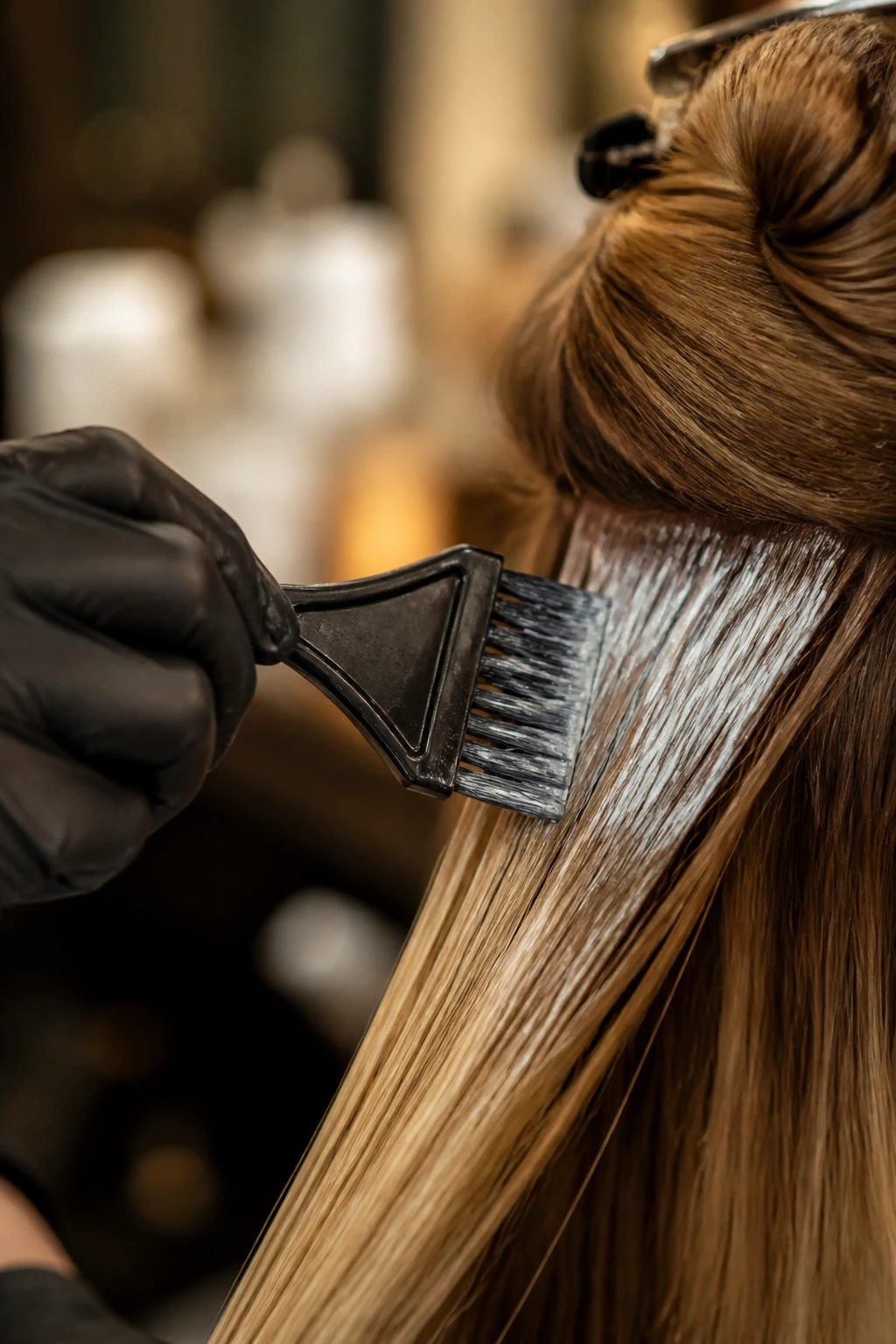
A lot of these looks depend on small tools, not dramatic ones. The right sectioning and placement matter more than the size of the highlight itself.
- Tail comb: Lets the stylist carve out clean, narrow sections, especially for money pieces, babylights, and temple framing.
- Sectioning clips: Keep long hair separated so the lightener doesn’t bleed into the wrong strand.
- Foils or balayage board: Foils give a cleaner lift; balayage boards help paint softer, lower-contrast pieces.
- Tint brush: Useful for feathering lightener or gloss through the mids and ends without leaving harsh lines.
- Gloves and mixing bowl: Basic, but they matter if any blending or toning is happening on the fly.
- Bond-building treatment: Helps protect long ends that have already seen plenty of styling and color.
- Color-safe shampoo and conditioner: Keeps the tone from slipping away after a few washes.
- Heat protectant: Non-negotiable if you blow-dry or use a curling iron. Lightened hair fries faster than virgin hair.
- Purple or blue shampoo: Purple helps blonde stay clean; blue helps brunettes fight brass.
- Wide-tooth comb or detangling brush: Saves fragile highlighted ends when the hair is wet and most vulnerable.
If you are making choices with a stylist, you do not need to buy half a salon. Still, knowing the names helps you ask for the right thing without waving your hands around and hoping for the best.
Small Tweaks That Make the Placement Work Harder
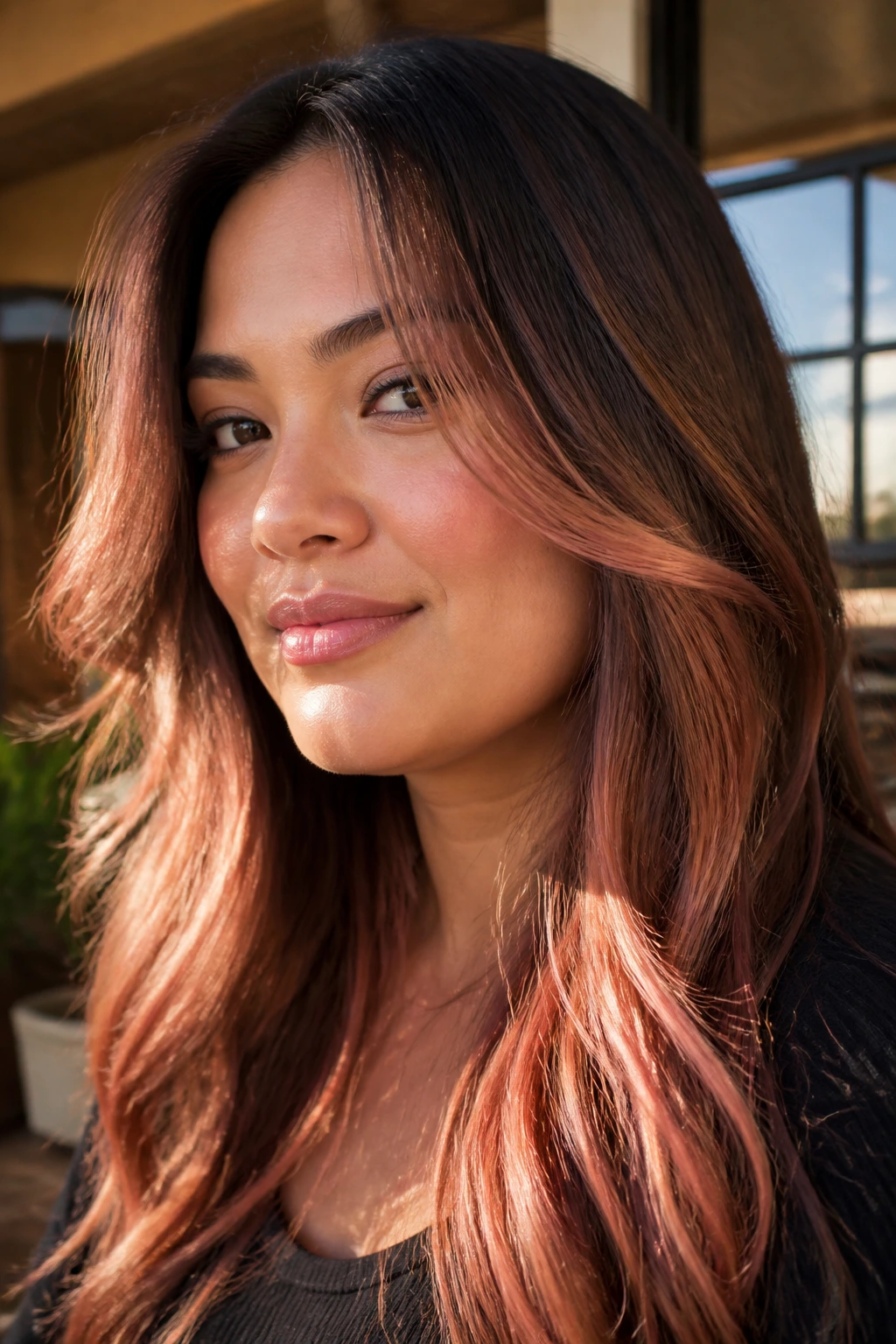
Placement: Keep the brightest pieces below the cheekbone whenever you can. That one move does more for a round face than chasing another shade lighter.
Tone: Caramel, beige, bronze, and mushroom brown each send a different signal. Warm tones soften; cool tones recede; beige sits in the middle and behaves well if you want less drama.
Density: Thin, scattered pieces tend to flatter long hair more than thick stripes. The hair has length, so you do not need width to make the color visible.
Finish: Loose waves, a V-cut, or soft face-framing layers help the highlights fall in a vertical line. Straight hair can work too, but the line has to be cleaner.
Bring Photos, Not Vibes: Show your stylist two or three images with the same placement idea. If one photo has the tone and another has the cut, say which part you’re borrowing from each. That saves a lot of back-and-forth.
Common Mistakes That Make a Round Face Look Wider
The easiest mistake is putting the brightest pieces right at cheek level and calling it face-framing. That’s not framing. That’s a spotlight on the widest part of the face. If you want the face to look longer, move the bright zone lower and keep it narrower near the temples.
Another classic problem is going too chunky in the front. Thick blonde panels can look fun in theory and blunt in real life, especially on long hair that falls flat around the sides. The fix is simple: soften the width, add some depth at the root, and let the light travel downward instead of outward.
Overprocessing the ends is another one. Long hair usually needs the ends to stay a little stronger in color and condition, because they’re the oldest, driest part of the head. If the ends go too pale, they can fray and puff. A toned, slightly deeper end often looks richer and helps the face shape more than ultra-light tips.
Skipping depth is a quiet mistake, but a big one. If everything is light, the hair can turn into one pale curtain. A few mocha, brunette, or root-shadow pieces give the highlights something to lean against. Without that contrast, the face loses definition.
And then there’s undertone. Warm hair that needs a beige or cool toner can turn orange fast if nobody checks the base. Brass near the cheeks is never flattering if the rest of the goal is elongation. Tone carefully. That part matters more than people like to admit.
Variations and Adaptations to Try
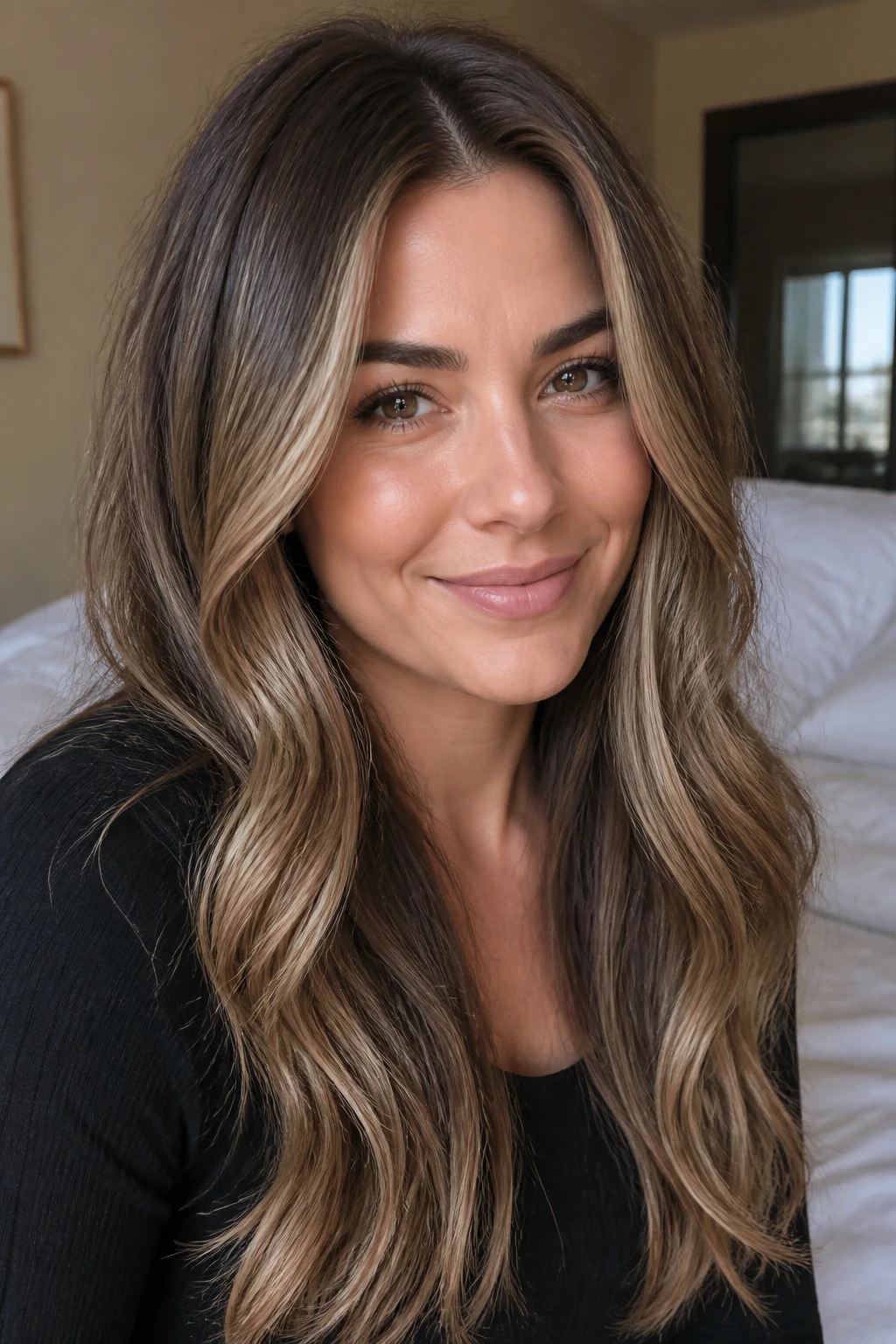
Low-Maintenance Lived-In Blend: Ask for balayage, a soft root shadow, and brightness that starts below the cheekbone. This version grows out gently and does not need constant salon touch-ups. It’s the one I’d choose if you want long hair that still looks polished on week eight.
High-Contrast Editorial Frame: Choose narrow but brighter front panels with deeper color left in the crown and underlayers. The contrast is sharper, but the face stays slimmer because the bright pieces are controlled rather than broad. Best for people who want a bolder look and are willing to maintain the tone more often.
Warm Honey Lift: Use caramel, honey, bronze, and a few toffee strands through the mids and ends. This adds softness and glow, especially on brown or dark blonde bases. It works best when the brightest pieces sit lower and the face frame stays narrow.
Cool Beige Correction: If your hair pulls orange or red, lean into mushroom brown, ash beige, and cool blonde ribbons. The color looks cleaner and a little more understated. Great for round faces because the cooler tones recede instead of pushing forward.
Curly-Friendly Ribboning: Have the placement follow your curl pattern instead of a straight foil map. The highlights wrap with the curls, which keeps the shape airy and avoids a wide halo around the cheeks. This version matters a lot if your hair has strong wave or spring.
Keeping Long Hair Highlights Fresh on Long Hair
Long highlighted hair is happiest when the wash routine stays calm. Use a color-safe shampoo two or three times a week, not every day, and keep the water lukewarm instead of hot. Hot water opens the cuticle fast, and lightened hair does not need that kind of rough treatment.
If the highlights lean blonde, a purple shampoo once every one to two weeks helps cut yellow warmth. If the base is brunette and the lighter strands keep turning orange, blue shampoo does the better job. Don’t leave those toning shampoos on for ages. A few minutes is usually enough; otherwise the hair can turn dull or smoky.
Deep conditioning matters more on long hair because the ends have been through more heat, brushing, and friction. A bonding mask or rich conditioner once a week keeps the lighter pieces from feeling straw-like. Put the product from mid-lengths to ends first. The root rarely needs the same treatment.
Heat styling is where a lot of the damage creeps in. Use a heat protectant every time, even if the hair only gets a quick blow-dry. If you like loose waves, keep the iron around 300°F to 350°F rather than cranking it to the ceiling. Lower heat with a few extra seconds usually looks better than singed ends.
For salon upkeep, glosses every 6 to 8 weeks keep the tone fresh, and trims every 8 to 12 weeks prevent the ends from turning wispy or see-through. If you swim often, wet the hair with clean water first, add a little leave-in conditioner, and braid or bun it before it hits the pool. Chlorine and highlights do not play nicely together. At all.
Frequently Asked Questions
Which highlight placement flatters a round face the most?
The safest rule is to keep the brightest pieces below the cheekbone and through the lower lengths. That makes the face read longer and keeps the eye moving down the hair instead of across the cheeks.
Are balayage or foils better for long hair?
Balayage usually gives a softer grow-out and a more vertical feel, which is useful on round faces. Foils can still work beautifully if you want more lift or a cleaner blonde, but the placement has to stay narrow near the cheeks.
Can highlights make fine long hair look thicker?
Yes, if the pieces are fine and layered through the mids and ends. A mix of babylights, lowlights, and a soft root shadow often creates more depth than one flat light color ever could.
How light should I go if my face is round?
Lighter is not automatically better. A shade or two lighter than your base can be enough if the placement is smart, and a beige or caramel tone often flatters more than an icy blonde stripe at the sides of the face.
What if my hair is very dark?
Deep brunettes usually look best with bronze, toffee, caramel, or muted auburn instead of a jump straight to pale blonde. The contrast stays rich, and the grow-out feels less harsh on long lengths.
Should I ask for a money piece?
You can, but keep it narrow and ask that it continue below the chin. A wide or overly bright money piece can widen a round face fast. A slim one with depth behind it gives the frame without the bulk.
Can curly hair handle these highlight ideas?
Absolutely, but the placement should follow the curl pattern. Straight-line foils can look too blocky once the curl shrinks, so curl-by-curl ribboning usually gives a better shape.
What do I do if my highlights look brassy?
First, check whether the tone is too warm for your base; brass often needs a toner, not another round of lightening. Use the right toning shampoo sparingly, keep heat lower, and ask for a gloss if the color has gone flat and orange.
The Rule That Keeps the Whole Look Balanced
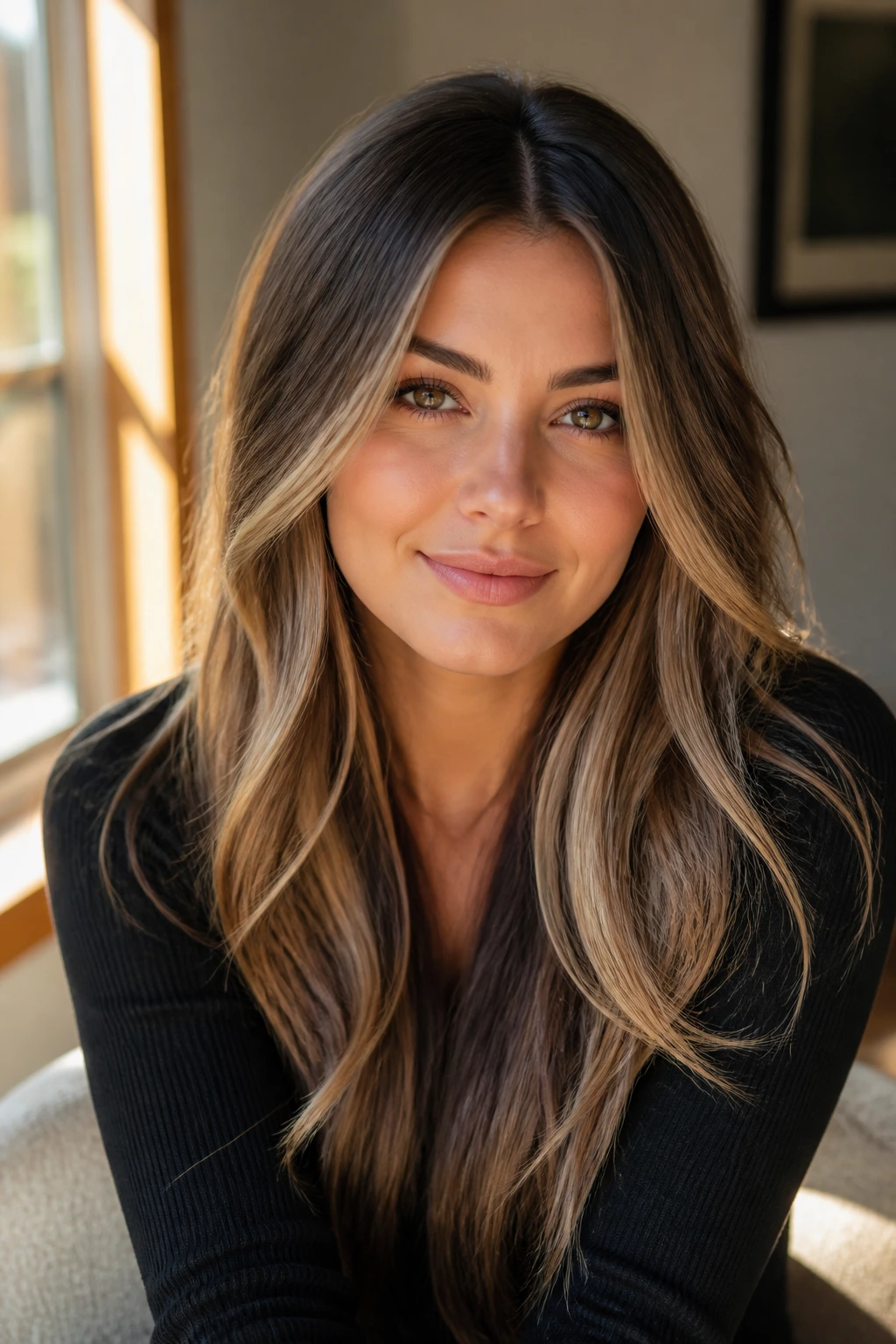
If you remember one thing, make it this: the brightest pieces should travel downward, not outward. That single idea keeps highlights for long hair and round faces from fighting the shape of the face. It also gives your colorist a clean target, which matters more than handing them a vague blonde inspiration photo and hoping for the best.
Long hair is a gift here. It gives you space to fade, smudge, ribbon, and soften so the color works with your face instead of against it. Bring that rule to the chair, and the rest gets much easier to judge.