



The wrong blonde on olive skin can look dusty fast. Too pale and the face loses warmth; too ash and the skin can start looking a little green-gray around the mouth, the jaw, even the sides of the nose. Caramel blonde brown highlights avoid that trap when they’re placed with a steady hand and toned with a bit of restraint.
What makes these shades so useful is the way they keep depth in the hair while still lifting the face. Caramel, toffee, honey, chestnut, bronze — those tones sit in that sweet spot where olive skin reads clearer and more alive, not washed out. A good colorist knows this instinctively. The better ones also know that olive skin is not one thing. Some olive undertones lean golden, some lean cool, and some sit dead center, which means the shade choice matters just as much as the placement.
That’s why 25 looks is not too many. It’s the right number. You need room for soft balayage, face-framing pieces, rooted melts, richer lowlights, and the kind of brown-blonde mix that still looks like hair when it grows out instead of a warning label. Some of these styles are quiet. Some are louder. All of them are built to flatter olive skin without making the color do all the work.
Why This Collection Feels Right on Olive Skin
-
Warmth without brass: Caramel and toffee sit warm enough to wake up olive skin, but they stop short of the yellow-orange tone that can go loud in bad lighting.
-
Depth that still moves: Brown bases keep the color grounded, so the highlights don’t float on top like stripes; they melt into the hair and look more expensive for it.
-
Grow-out that doesn’t punish you: Rooted balayage, veil highlights, and lowlights mean the line of demarcation stays soft, which matters when your natural brown is part of the look.
-
Works with makeup and no makeup: These shades make olive skin look fresher with bare skin, but they also sit well with bronzer, berry blush, and a brown lip.
-
Flexible across cuts: Long waves, collarbone lobs, curly shags, blunt bobs — the same caramel-brown family behaves differently on each one, which is why the collection has range.
-
Easy to shift brighter or deeper: You can nudge these looks toward honey, bronze, mocha, or chestnut without losing the core effect, which is a big reason they age well.
1. Cinnamon-Caramel Ribbon Balayage
A cinnamon-caramel ribbon balayage has that soft, swirled look that shows up best when the hair moves. On olive skin, the warmth sits in the right register — rich, not fiery — and the ribbons catch light without turning the whole head into a block of blonde. I like this on medium brown hair most, where the contrast stays readable but not sharp.
Why It Works
The painted ribbons sit a shade or two lighter than the base, usually around level 8 caramel over a level 6 or 7 brown. That little gap keeps the color dimensional. If the strands are fine, thin ribbons avoid that stripey salon-wig look that ruins a good balayage in a hurry.
Best Details to Ask For
- Soft hand-painted pieces from cheekbone level down
- A warm caramel glaze, not a yellow toner
- Slightly thicker ribbons around the face
- Ends kept lighter than the crown
Small opinion: This is one of the safest “first color” choices for olive skin because it brightens without demanding a full commitment to blonde.
2. Face-Framing Toffee Money Pieces
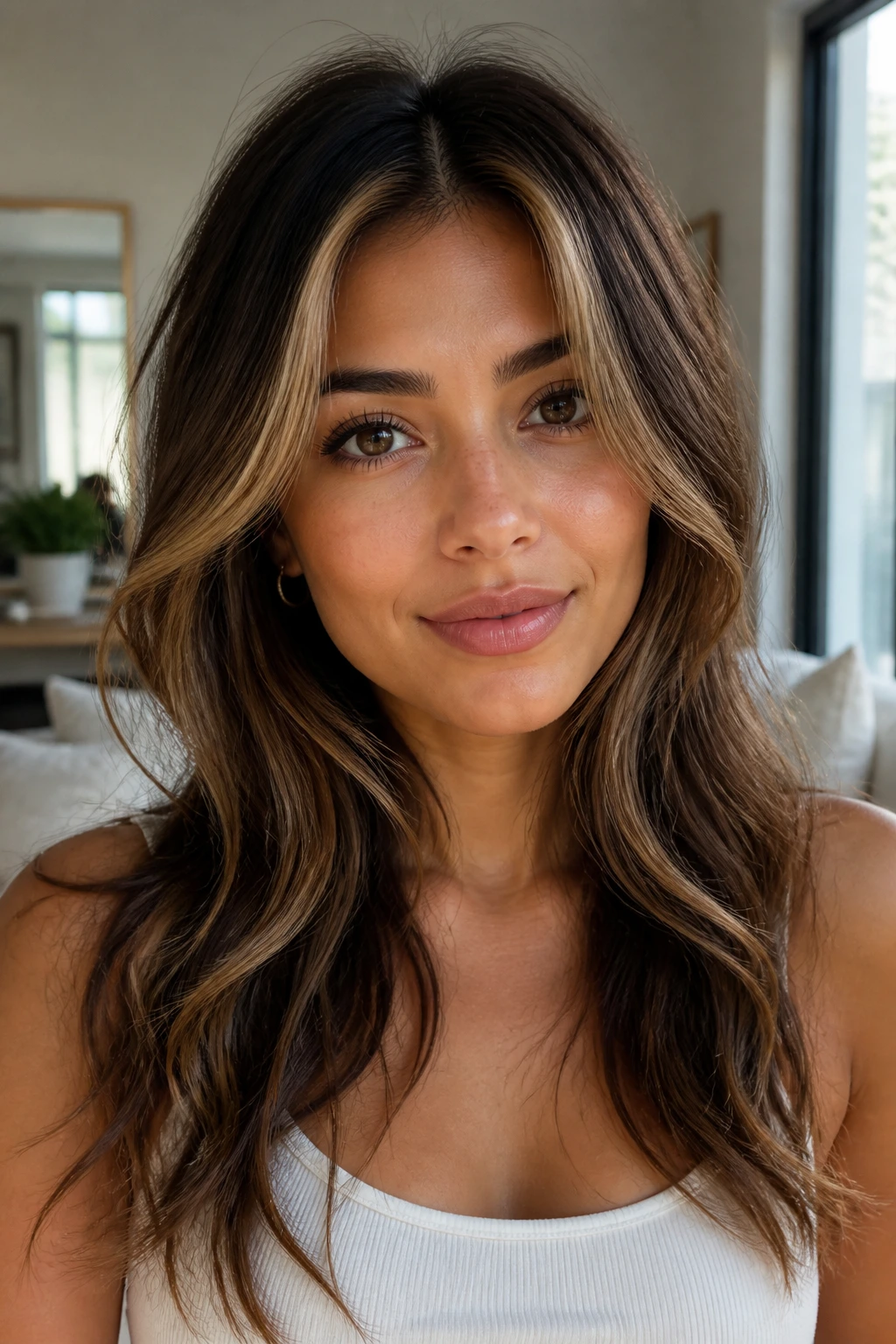
If you want the fastest visible change, start at the front. Toffee money pieces are the quickest way to wake up olive skin without touching every section of hair. They brighten the eye area, pull attention upward, and make a simple ponytail look finished instead of accidental.
The trick is keeping the pieces soft. Around an olive face, harsh platinum can feel disconnected, but toffee lives in that warmer middle zone. Ask for pieces that start just below the root, not right at the scalp, unless you want a high-contrast strip. A good colorist will feather the blend where the pieces meet the brown base so they don’t scream “highlight” from across the room.
This works especially well if you wear your hair in buns, half-ups, or a loose blowout with a center part. The front pieces do the talking.
3. Mushroom Brown with Caramel Veil
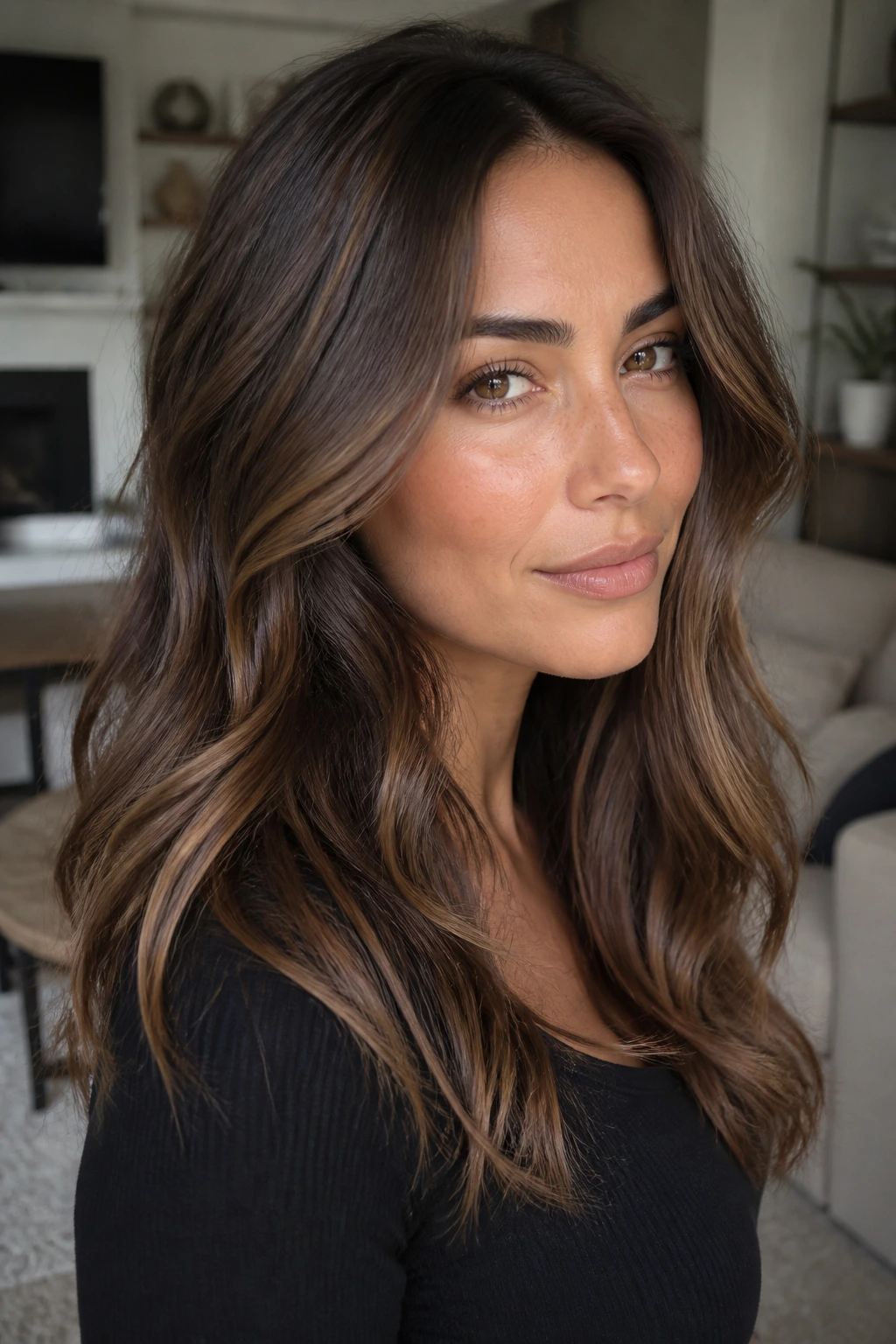
Why does mushroom brown work on some olive skin tones and fall flat on others? Because the base has to stay neutral, not icy. When the brown is soft and smoky, a caramel veil can give it life without tipping the whole head into orange.
This is one of the more understated options in the group. The highlights are finer, scattered through mid-lengths and ends, and toned down so they read like a haze rather than visible streaks. On cooler olive skin, that keeps the complexion from looking muddy. On warmer olive skin, the caramel adds enough glow to keep the face from looking dull under indoor light.
Use It If You Want
- A low-contrast, polished brown
- Less obvious grow-out
- Something that looks good straight or wavy
- A salon result that does not need heavy maintenance
4. Chestnut Brunette with Toffee Ends
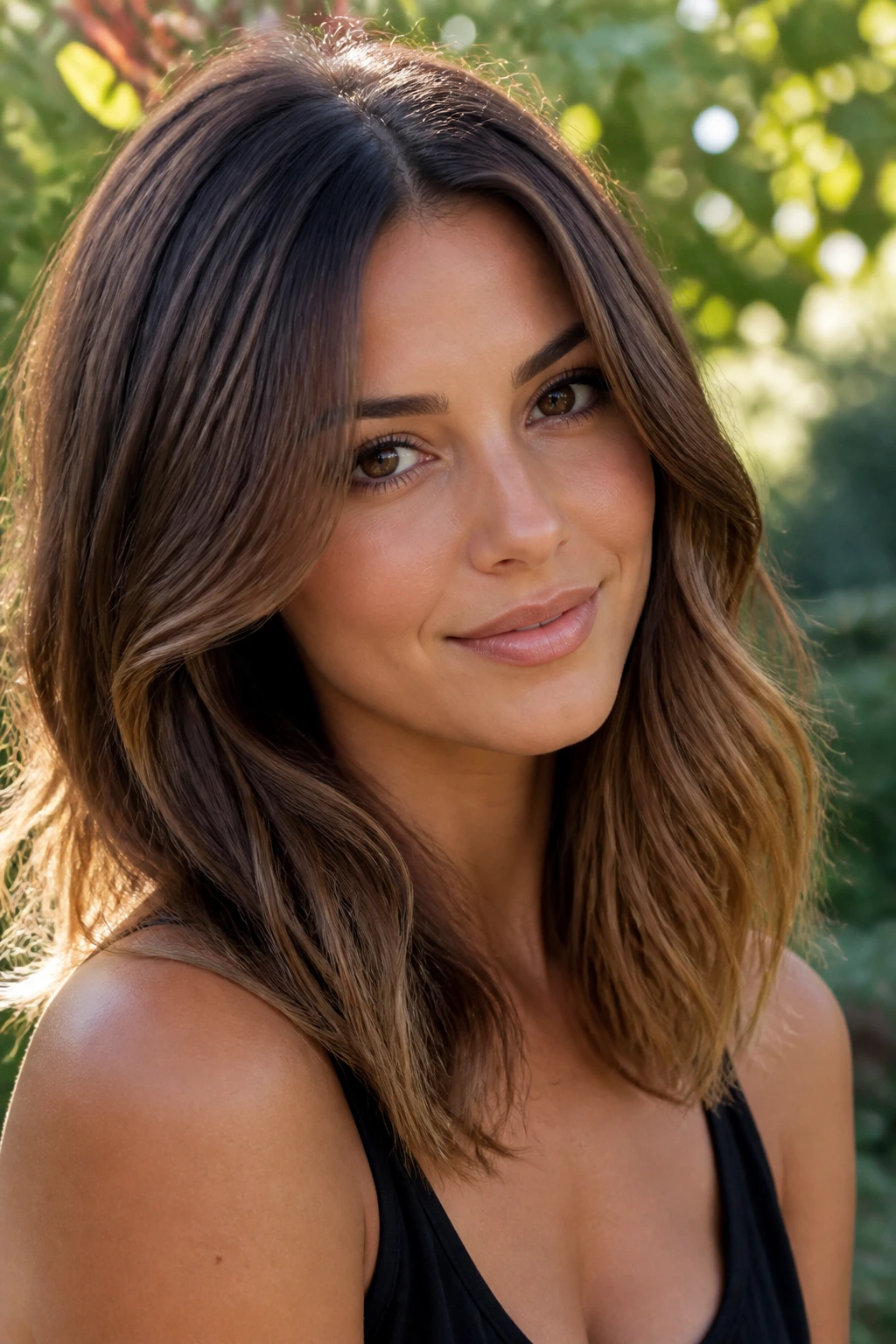
Chestnut brunette already has built-in warmth, which is half the battle. Add toffee ends and the whole style gets a soft lift through the bottom half, almost like the color has been brushed by sun through the ends only. It’s subtle, but olive skin usually likes subtle more than people expect.
This works best on shoulder-length or longer hair, where the ends have enough room to show the shift. I’d avoid pushing the lightness too high on the head, because chestnut looks best when the root stays rich. The contrast is what keeps the face from going flat. If the ends feel too light, ask for a glaze that nudges them beige instead of gold.
The result is easy to wear, easy to grow out, and not fussy.
5. Honey Caramel Contour Highlights
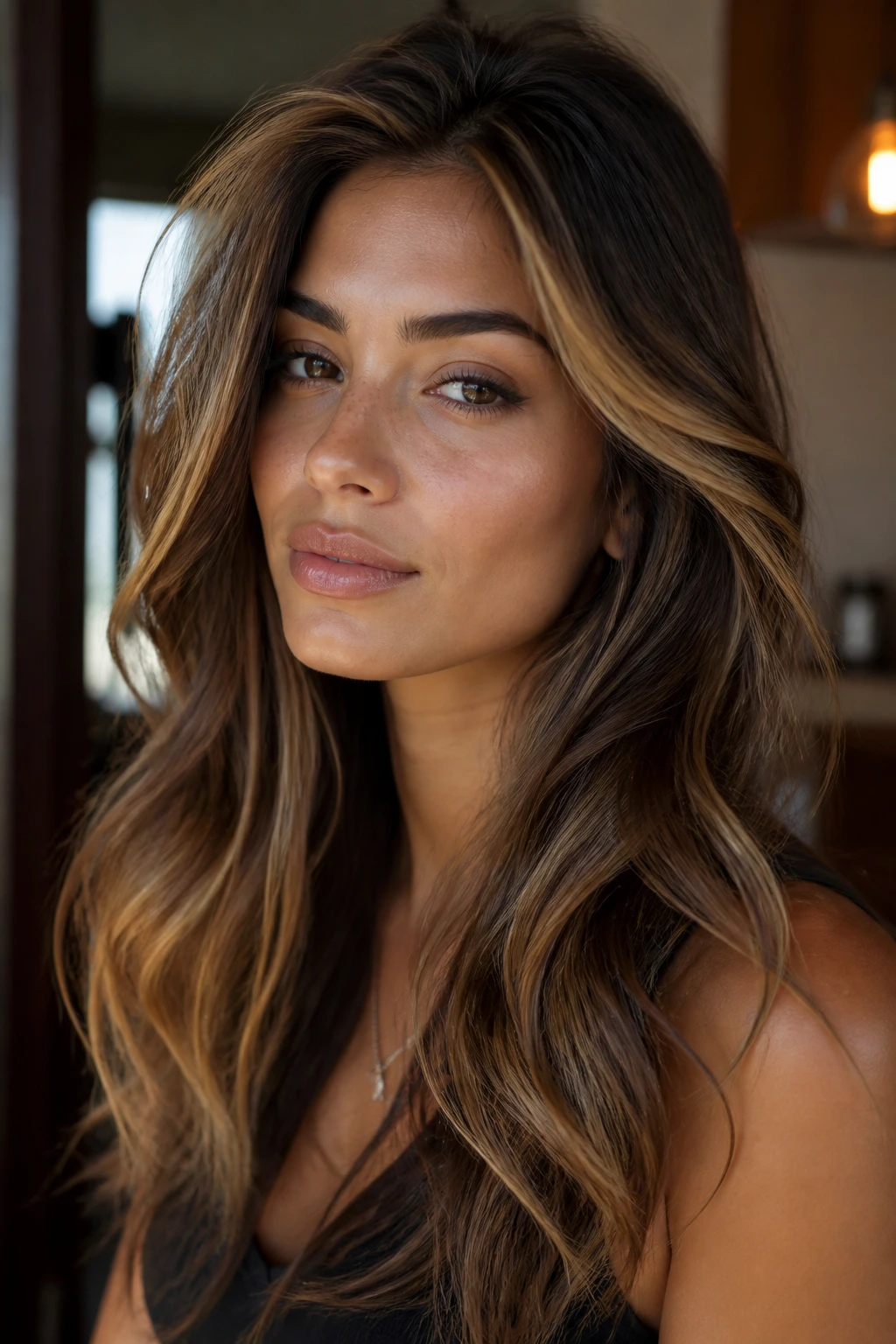
Contour highlights are not about brightness everywhere. They’re about placement. A few honey-caramel pieces around the hairline, crown, and upper cheekbone area can change how olive skin reads instantly, because the eye sees light where the face needs it most.
This style can be very soft or a little bolder, depending on how wide the front sections are. On a layered cut, the highlight pattern should follow the shape of the haircut, not fight it. That means lighter pieces near the face and a gentler spread through the rest of the head. I prefer this when the skin leans neutral-olive; it keeps the warmth controlled instead of sugary.
Best part? You can keep the base darker and still look brighter. That’s the whole point.
6. Espresso Root Melt with Caramel Lengths
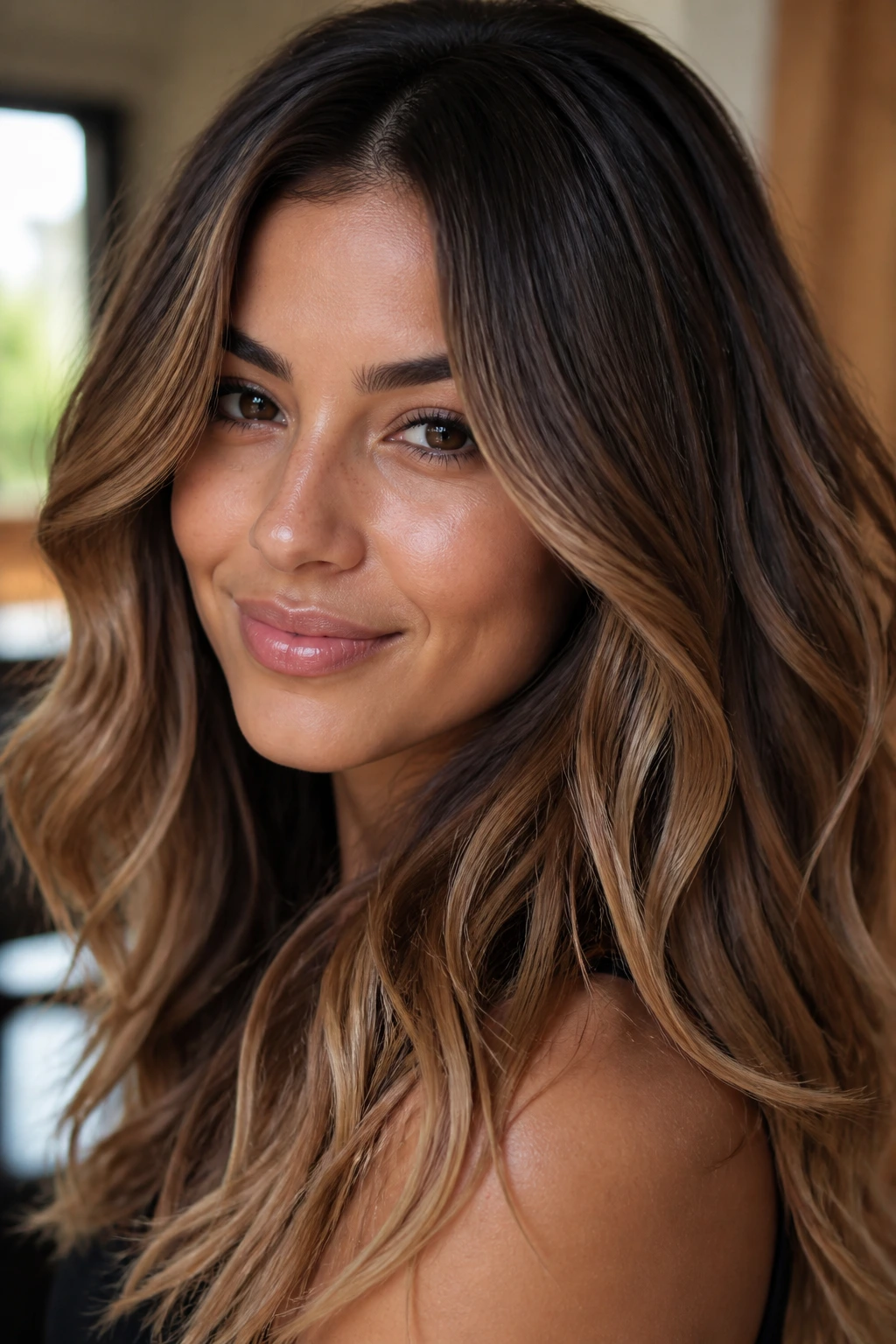
An espresso root melt into caramel lengths has that expensive, lived-in feel without looking like you spent your whole weekend in a chair. The root stays deep and rich, then the caramel starts low and moves down through the mids and ends. Olive skin tends to handle that darkness beautifully because it gives the complexion something solid to sit against.
This is the look I’d point to if you want dimension and low maintenance in the same sentence. The root melt softens grow-out, and the caramel lengths keep the color from feeling heavy. It also holds up well on thick hair, which can sometimes swallow softer highlights.
If your hair is prone to brass, ask for a beige-caramel finish instead of gold. That one word matters.
7. Beige Bronde Balayage
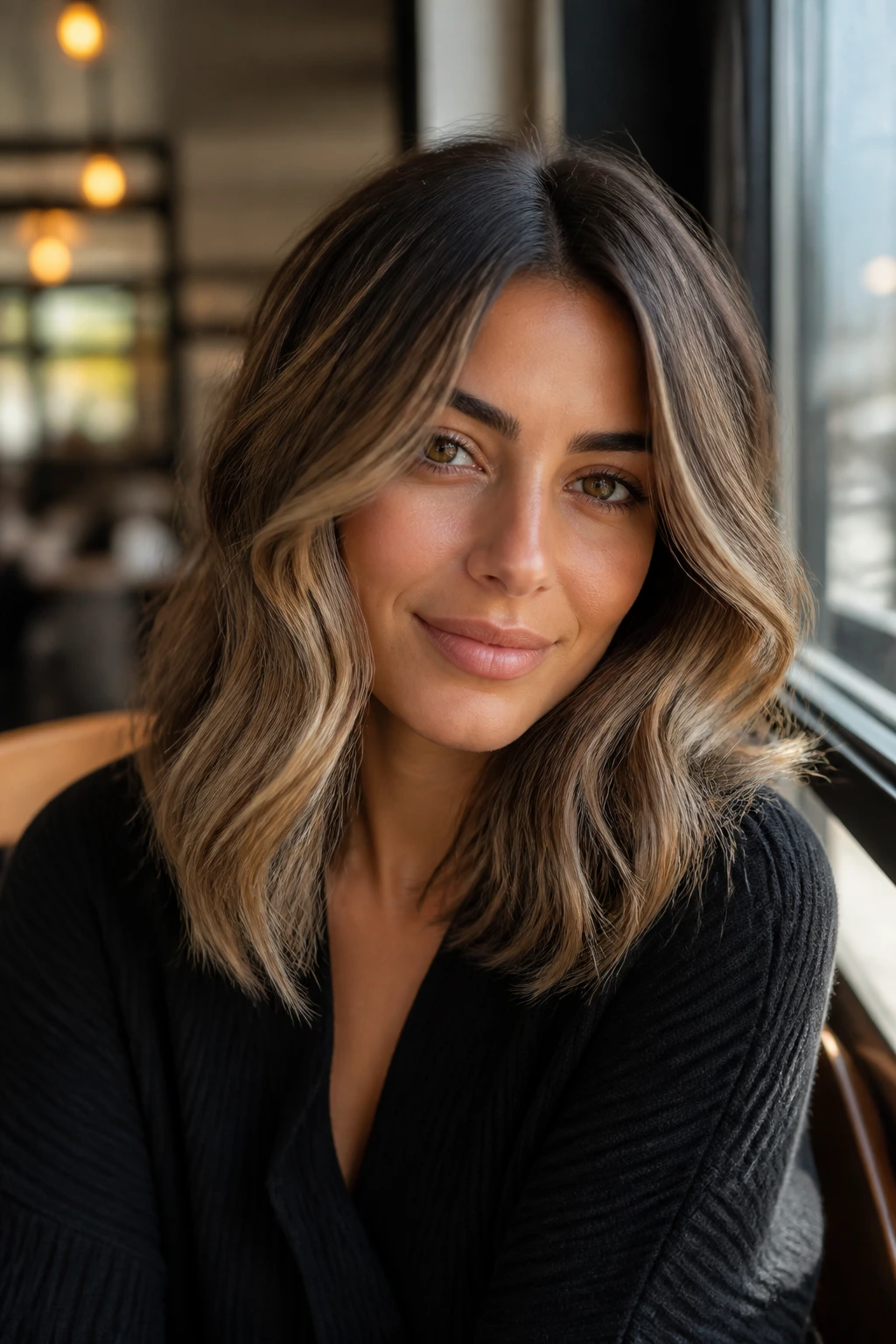
Bronde can go wrong when the blonde side gets too pale or the brown side disappears. Beige bronde avoids that by staying balanced, with just enough warmth to flatter olive skin and just enough brown to keep the color believable. It’s a good match for neutral olive undertones that don’t want too much orange or too much ash.
I like this on shoulder-length cuts and loose waves because the beige pieces blur into the brown base instead of sitting on top of it. The effect is soft and airy, but not washed out. If you have darker brows, this style can look especially natural because the hair never outruns the face.
Ask for: a soft root shadow, beige toner, and scattered ribbons rather than one heavy highlight layer.
8. Walnut Brown with Honey Streaks
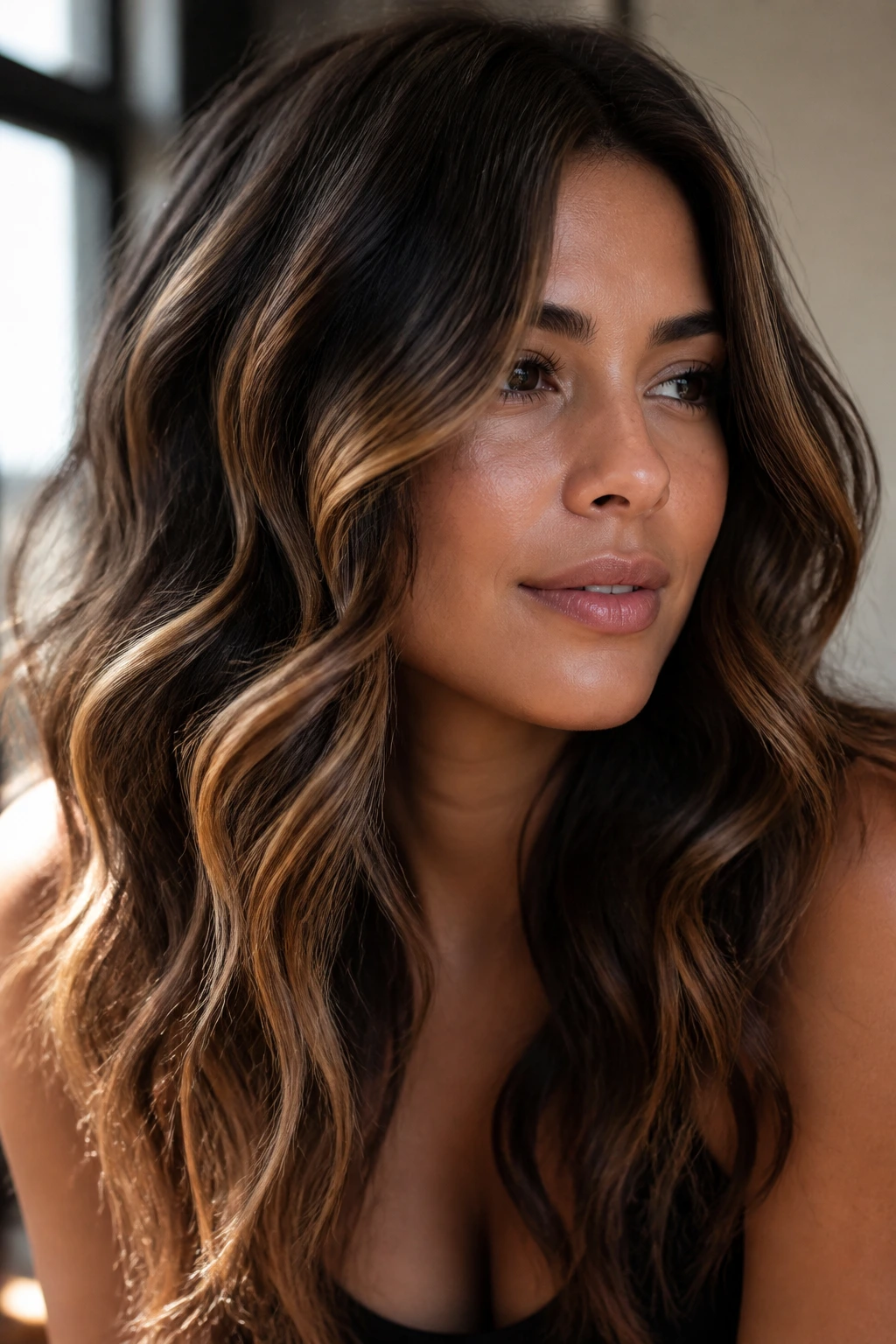
Walnut brown is deep, rich, and a little glossy even before the highlights go in. Add honey streaks and the whole style wakes up, especially on olive skin with a golden lean. The honey should stay narrow and controlled; too many streaks and the look gets busy.
This one does well on curls and thicker textures because the highlight pattern shows up better when the hair moves. On straight hair, you want the streaks placed a little more strategically around the face and through the top layer. Otherwise they can disappear into the brown base.
The color feels polished without being stiff. That balance matters more than people think.
9. Caramel Lob with Soft Lowlights
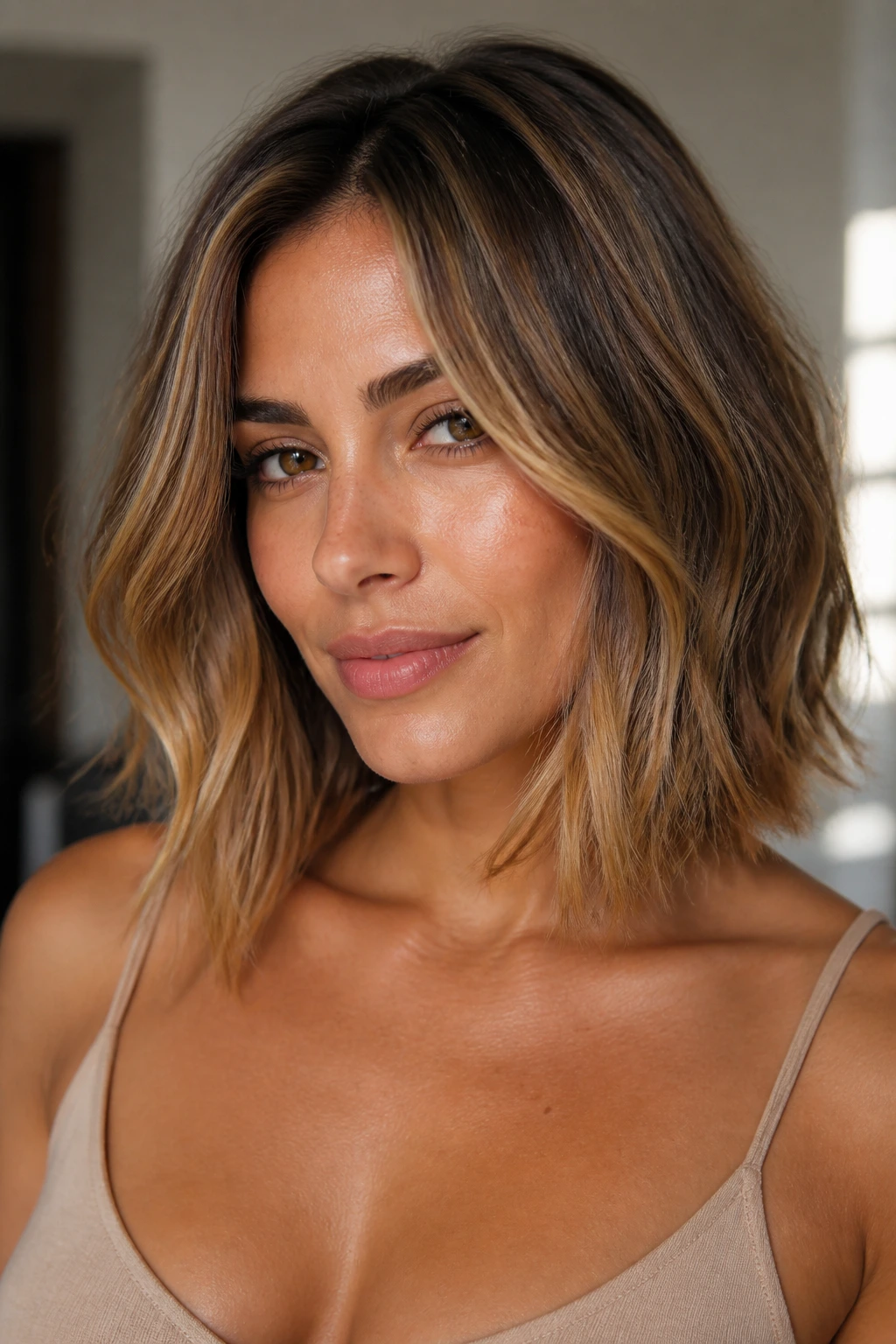
A lob with caramel highlights and soft lowlights is where the category starts to make a lot more sense. The bob shape gives you a clean frame, and the lowlights keep the caramel from flattening the cut into one flat blondish sheet. Olive skin usually looks sharper with this mix because the brown depth stays present.
This is a smart choice if your hair is fine and you’re nervous about over-lightening. Lowlights give the illusion of thicker strands and more texture, especially near the crown. I’d ask for the caramel to sit around the mid-lengths and ends, with a few lighter face pieces and deeper strands underneath.
One sentence version: it makes a bob look fuller.
10. Almond Milk Brunette
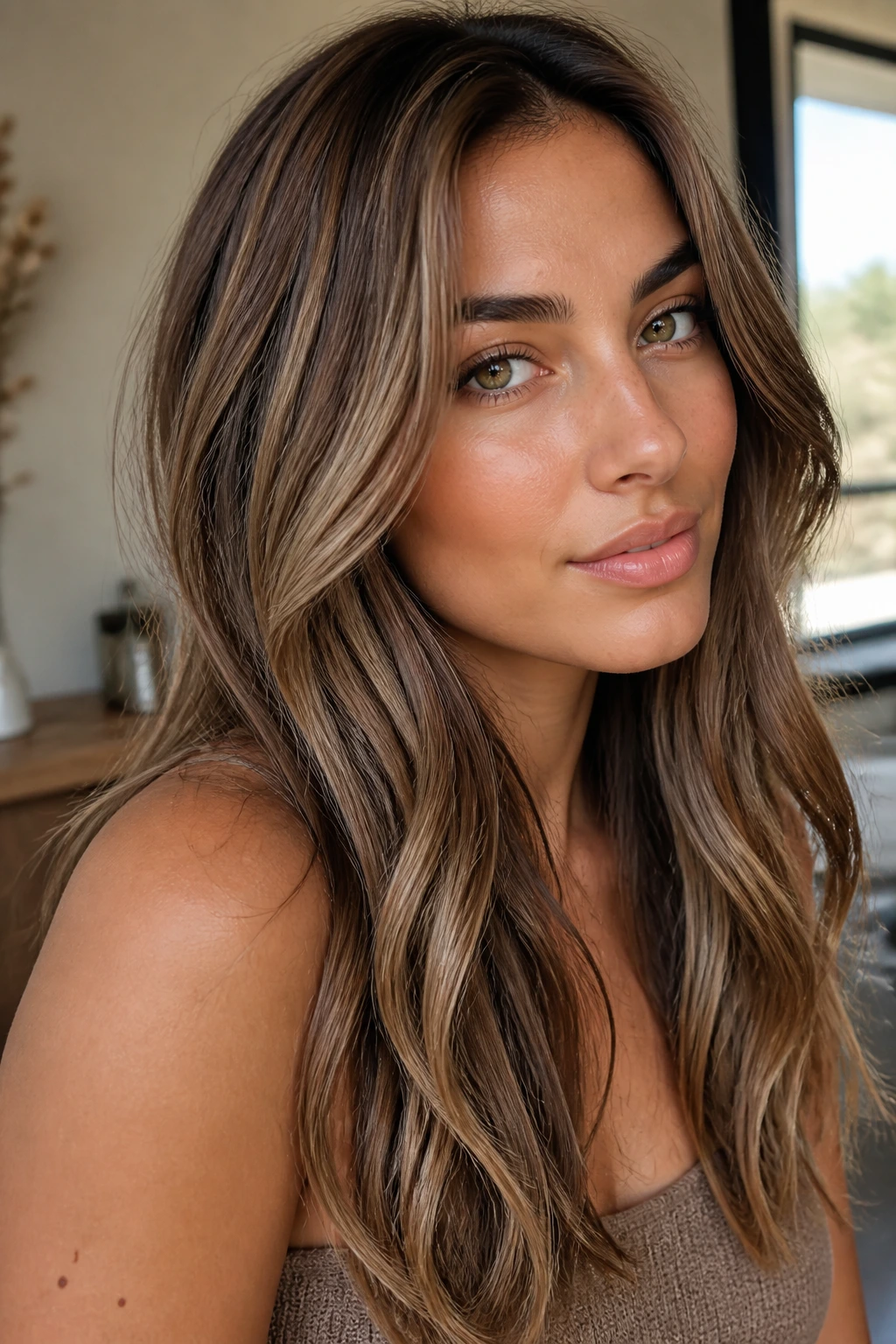
Almond milk brunette is the softer cousin of beige bronde. The caramel-blonde note comes in as a creamy, pale-brown lift rather than a clear blonde stripe, which is why it flatters olive skin that gets overwhelmed by bright highlights. It’s a calm color. Not boring. Just calm.
The finish looks especially good when the hair is smooth and glossy, because the creamy tone catches light in a gentle way. If your skin leans cool-olive, this can be the safe middle ground between ash and gold. If your skin leans warm, it keeps enough warmth to avoid looking chalky.
I’d choose this for medium-density hair that needs shine more than drama.
11. Bronze Ribbon Highlights
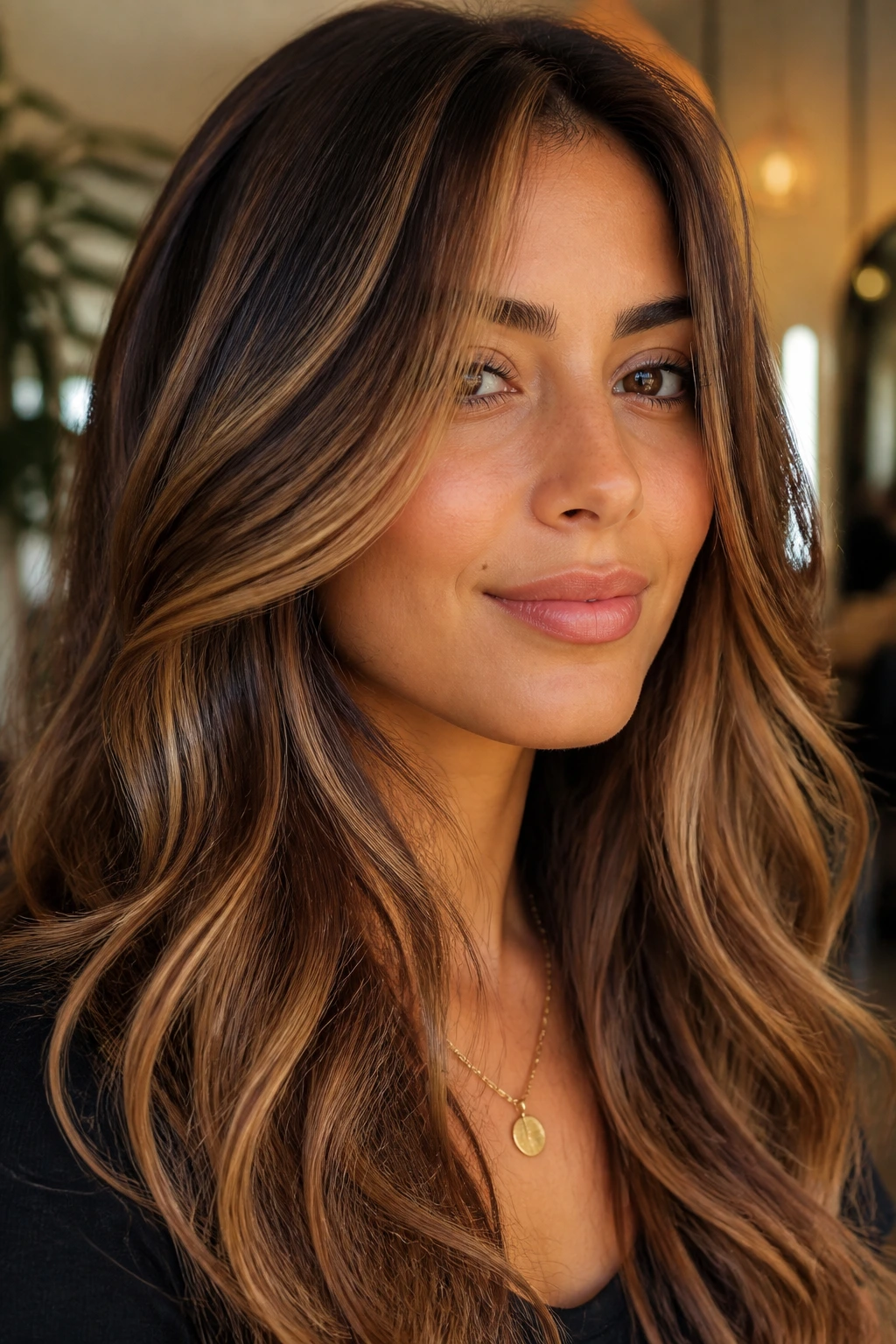
Bronze ribbon highlights bring in a deeper metallic warmth that sits beautifully on warm olive skin and deeper complexions. The color reads richer than honey and less golden than blonde, which is a useful lane if you want something noticeable but not bright-bright.
This works best when the ribbons are placed through the top layers and around the sides of the face. Bronze needs movement to show itself. On curls, it can look almost molten in the light. On straight hair, it needs a clean blowout or loose bend to keep the dimension visible.
The best bronze is not copper. That’s the part people get wrong. It should feel warm and brown first, then luminous.
12. Mocha Melt with Face-Framing Glow
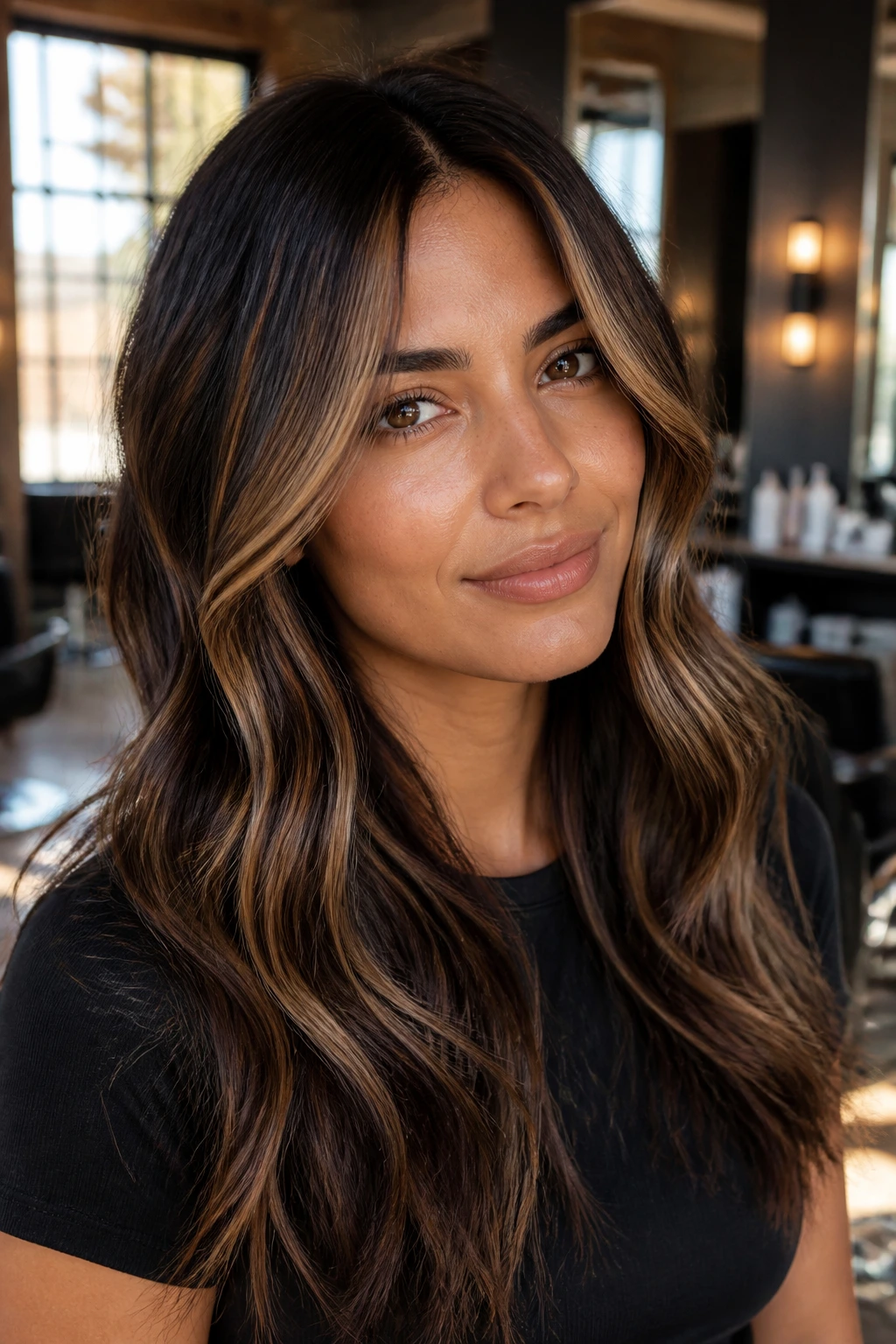
A mocha melt is the quiet achiever in the lineup. The base stays deep mocha, then the front pieces pick up a soft caramel glow that lifts the face without changing the whole mood of the hair. Olive skin likes this because the depth around the roots keeps the face from floating.
It’s especially good for long layers. The darker root and mids give the hair weight, while the lighter face-framing strands pull attention toward the eyes and cheekbones. Ask for the glow to be diffused, not blocky. A hard front panel can look dated fast.
The whole thing feels expensive in the most useful way: not loud, not fussy, not hard to keep up.
13. Toasted Coconut Balayage
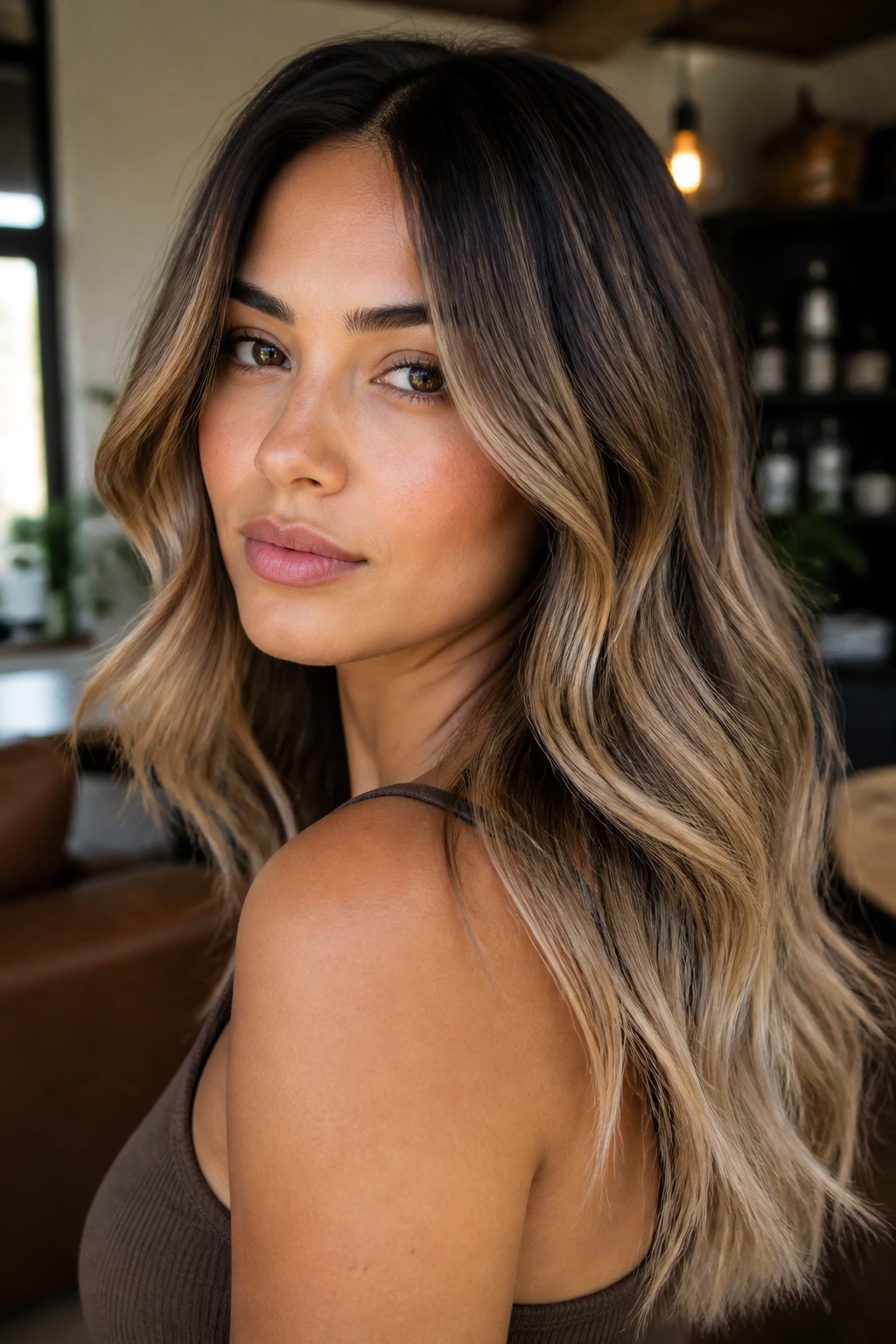
Toasted coconut sounds playful, but the color is more controlled than the name suggests. Think dark brown roots, warm beige ends, and caramel woven through the middle so nothing looks pasted on. On olive skin, that toasted note prevents the light bits from turning icy.
This style shines on longer hair because the gradient has room to breathe. A rooted balayage keeps the top rich and lets the ends carry the lighter tone. If your natural hair is already brown, this is a smart way to get brightness without asking for full blonding.
I’d avoid pushing the ends too pale. The whole appeal here is softness with contrast, not beach-blonde.
14. Caramel Curtain Highlights
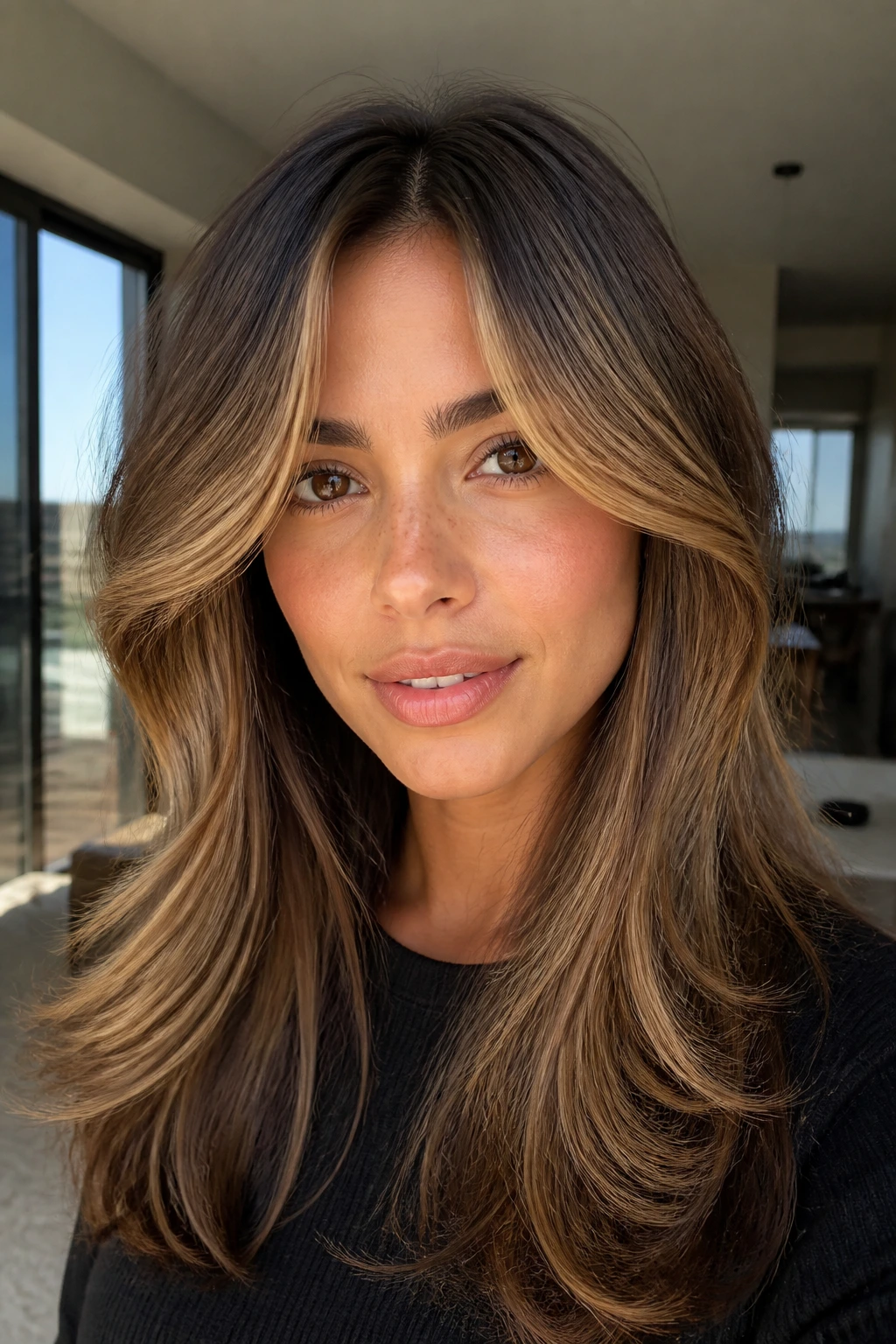
Curtain bangs or curtain layers change the whole conversation. Add caramel highlights that sweep away from the center part, and the face suddenly looks more open, almost like the hair has been lifted off the skin. On olive skin, that side-swept light can make the complexion look smoother and more awake.
The front sections should be the brightest, with softer pieces trailing into the lengths. That way the shape of the cut and the color work together. If the bangs are dense, you may need more lightness close to the part so the color doesn’t vanish under the hair mass.
This is one of the easiest ways to make a brown base feel styled even on a plain day.
15. Hazelnut Money Pieces
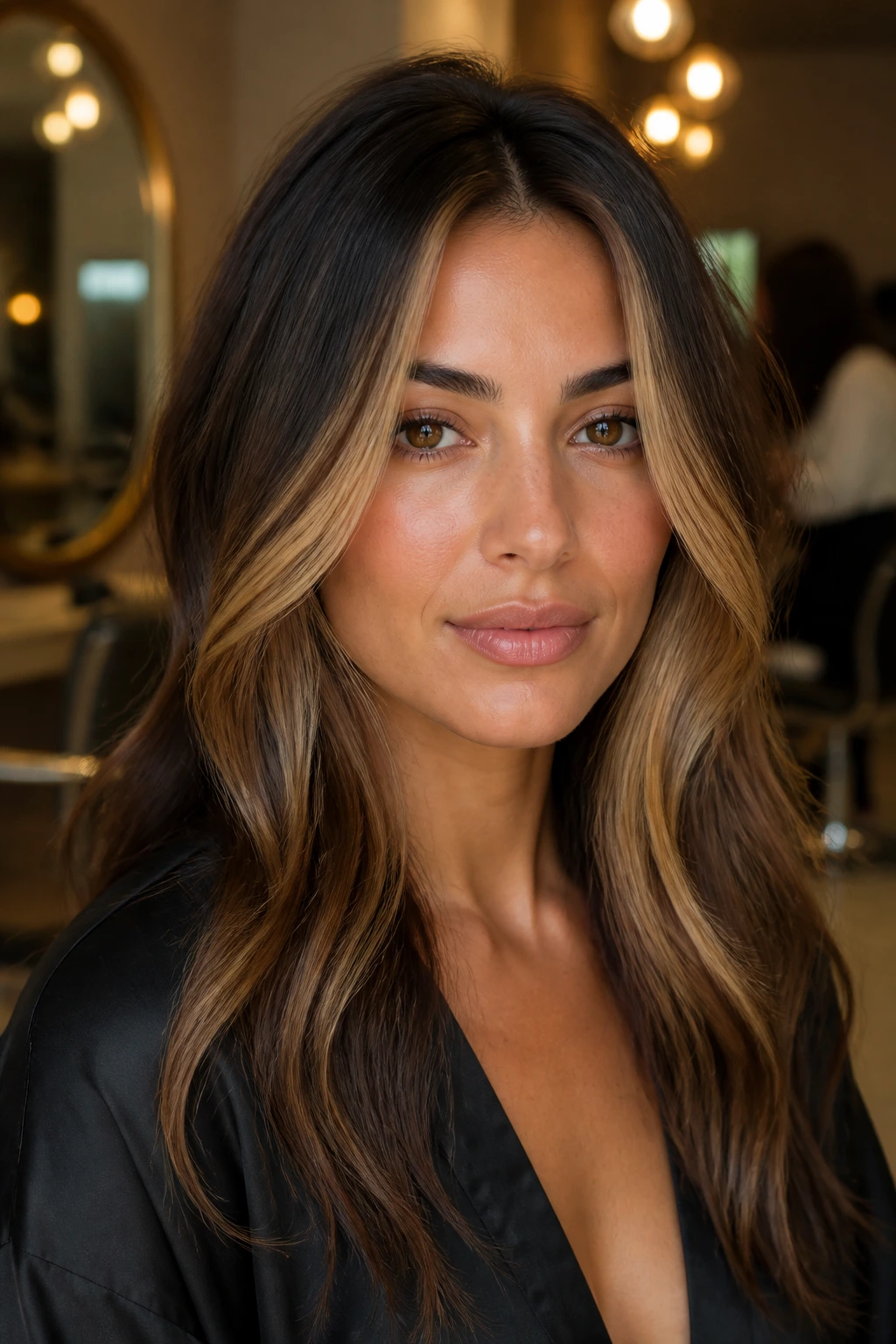
Hazelnut money pieces are richer and a little deeper than toffee pieces, which is why they suit olive skin so well. They brighten the front without going sugary. The result feels polished, almost tailored, especially if the rest of the hair stays in the brunette family.
This is a good entry point if you want visible color but don’t want the upkeep of a full balayage. The front pieces can be as narrow as you want, though I prefer a medium width so the contrast reads from a few feet away. If your brows are dark, hazelnut helps keep the look anchored.
A lot of people reach for blonde first. Hazelnut is usually the smarter move.
16. Golden Brown Swirl
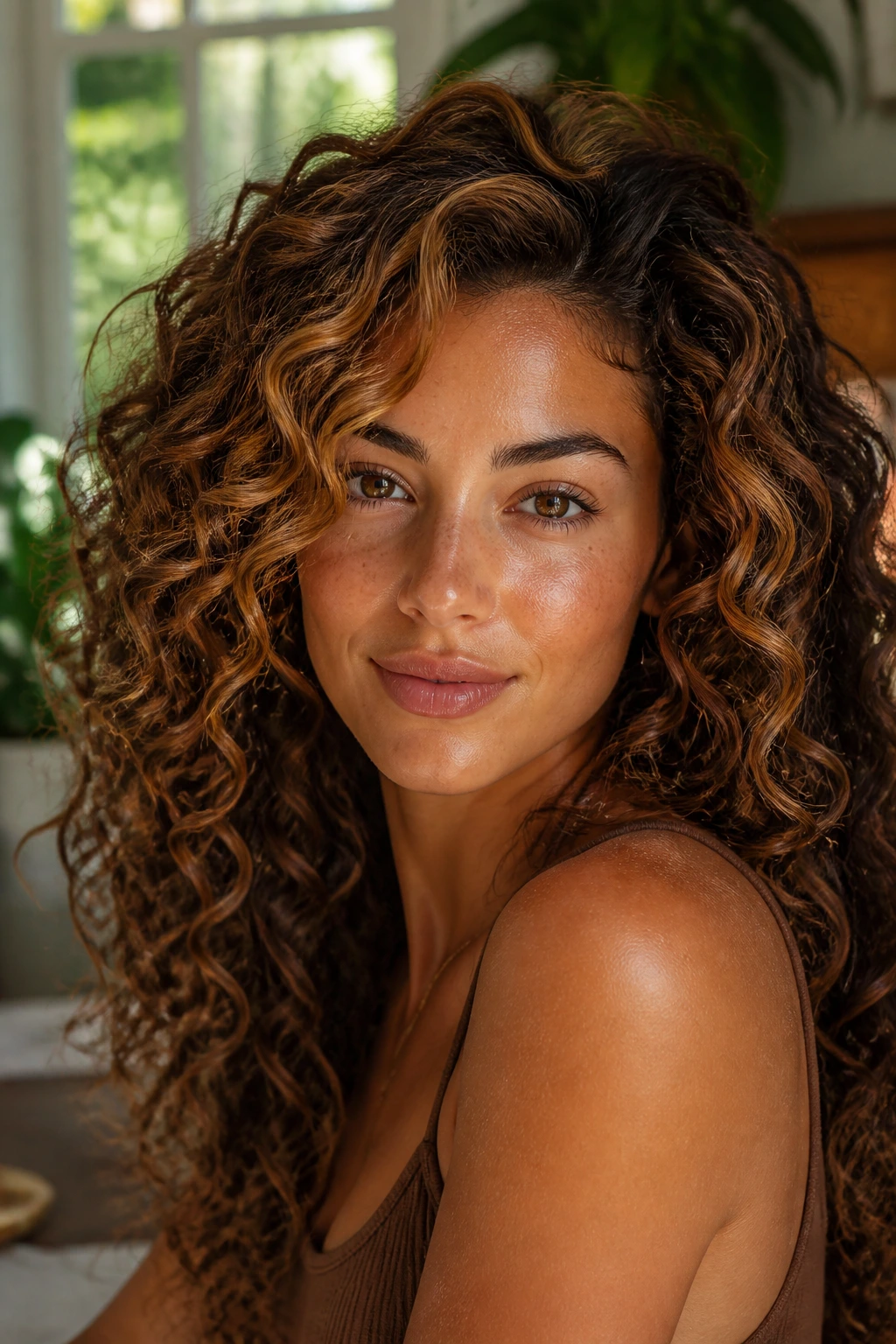
Curly hair takes highlight placement differently, and a golden brown swirl is one of the better ways to show off the pattern. The lighter pieces should follow the curl path, not slice across it. When that happens, olive skin gets a warm frame and the hair keeps its shape.
The golden brown tone should stay controlled. Think warm brown with light in it, not a full gold rush. Thicker highlight sections work better on curls because ultra-fine highlights can disappear once the curl shrinks up. If the texture is tight, the colorist should paint for movement, not straight-line symmetry.
This is the kind of look that looks better when the curls are defined instead of brushed out.
17. Sand Bronde Shag
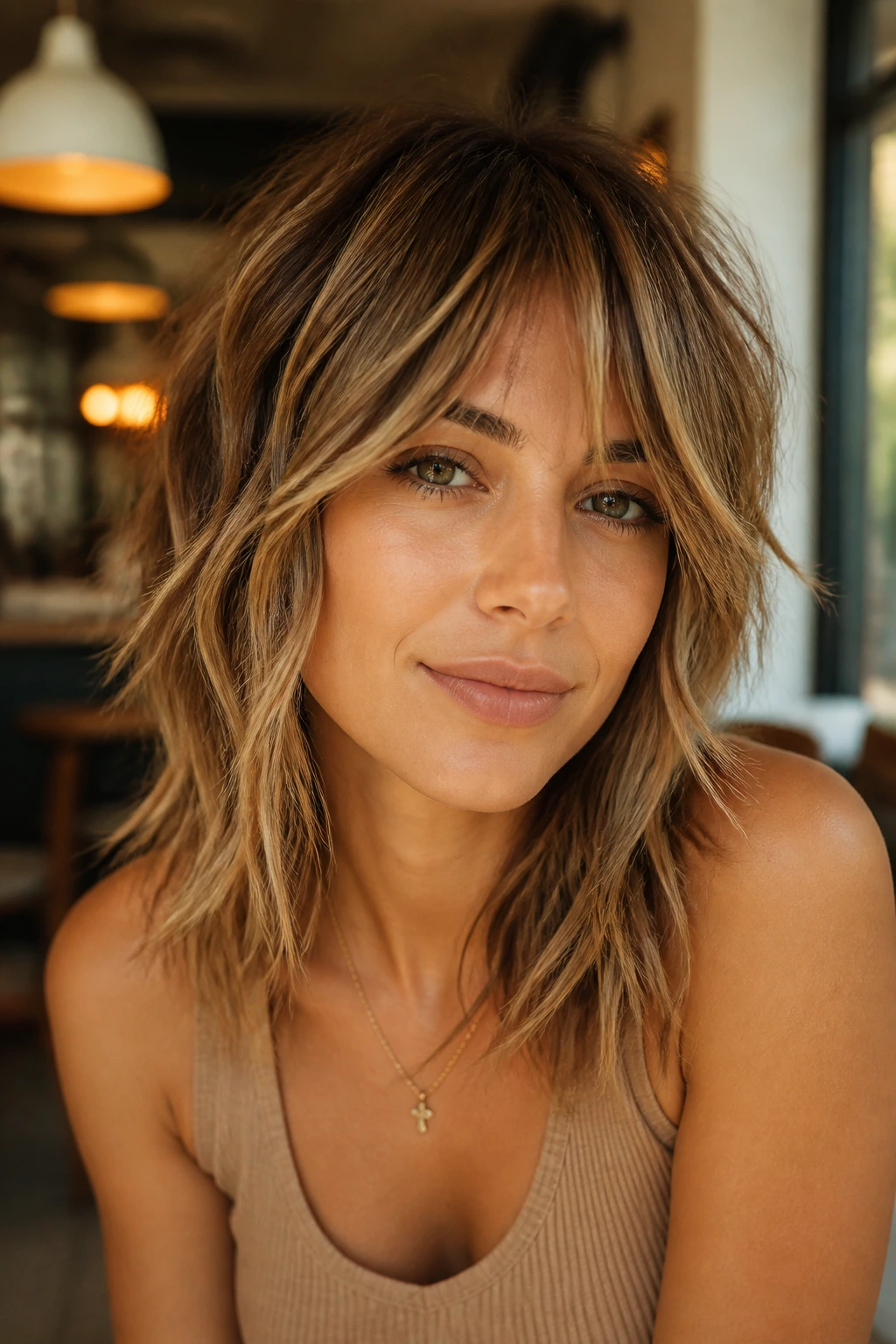
A shag cut already gives you movement, so the color should support that choppy texture instead of fighting it. Sand bronde does that nicely. It keeps the overall look warm and airy, which suits olive skin that leans neutral or golden.
The highlights should be piecey and slightly irregular. Uniform placement makes a shag lose its edge. I like a few brighter strands near the fringe and then softer sand tones through the top layers and ends. On olive skin, that little hit of brightness around the face can make the haircut read more deliberate.
This style is for someone who wants texture first, color second, and a little attitude mixed in.
18. Maple Brown Shine
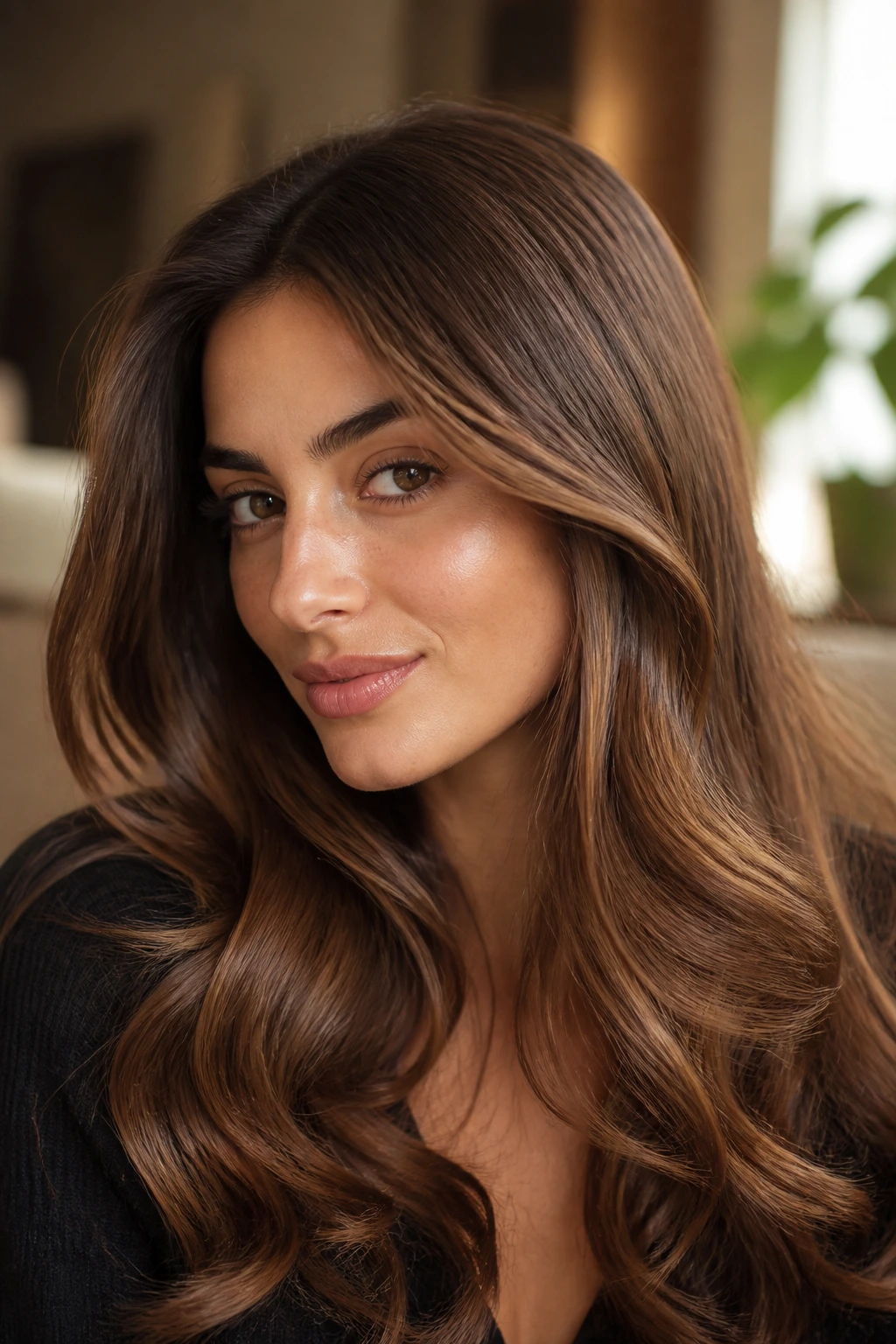
Maple brown is underrated. It’s warmer than mocha, darker than caramel, and shinier than a lot of brown-blonde mixes because it relies on gloss more than bleach. On olive skin, that warmth can look rich without tipping into orange.
This is a good choice if your hair is coarse, dull, or a bit resistant to lightening. A demi-permanent glaze can add warmth and reflection without making the strands porous and thirsty. The effect is smoother, and the color tends to fade more gracefully than a heavy highlight job.
I like this one when the goal is “healthy-looking hair” rather than “everyone notices the color first.”
19. Amber Underlights
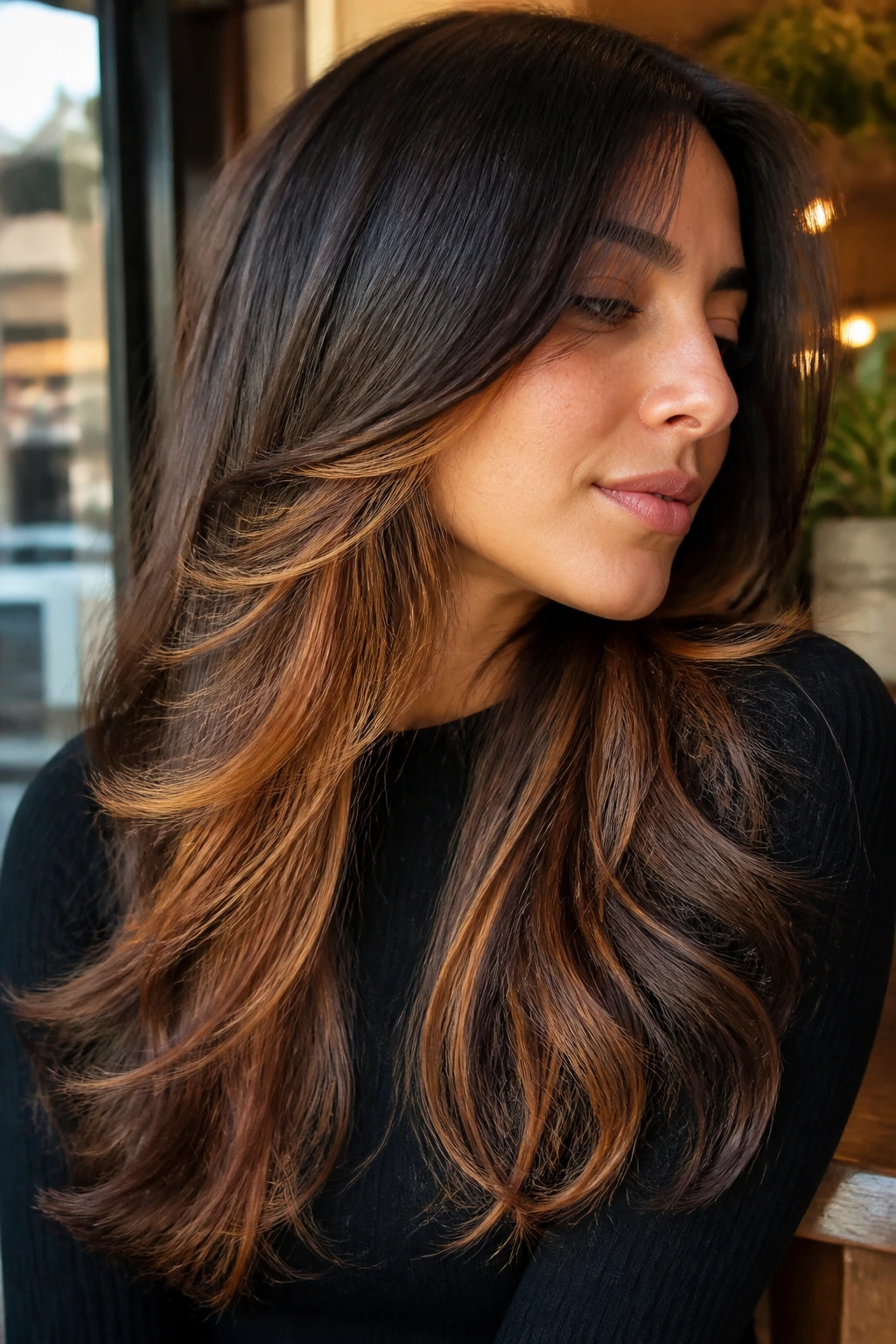
Amber underlights are for the person who likes a little surprise. The top layer stays darker and more familiar, while the underneath sections carry amber-caramel light that shows up when the hair moves or gets tucked back. Olive skin often likes this because the brighter tone doesn’t sit directly against the face unless you want it to.
This is a smart move if you wear ponytails, clips, or half-up styles a lot. The color peeks through and gives depth without making the whole head look high-maintenance. Ask for the amber to stay rich, not orange. That difference is the whole game.
A hidden color can still make a strong impression. Just not in a shouty way.
20. Spiced Caramel Bob
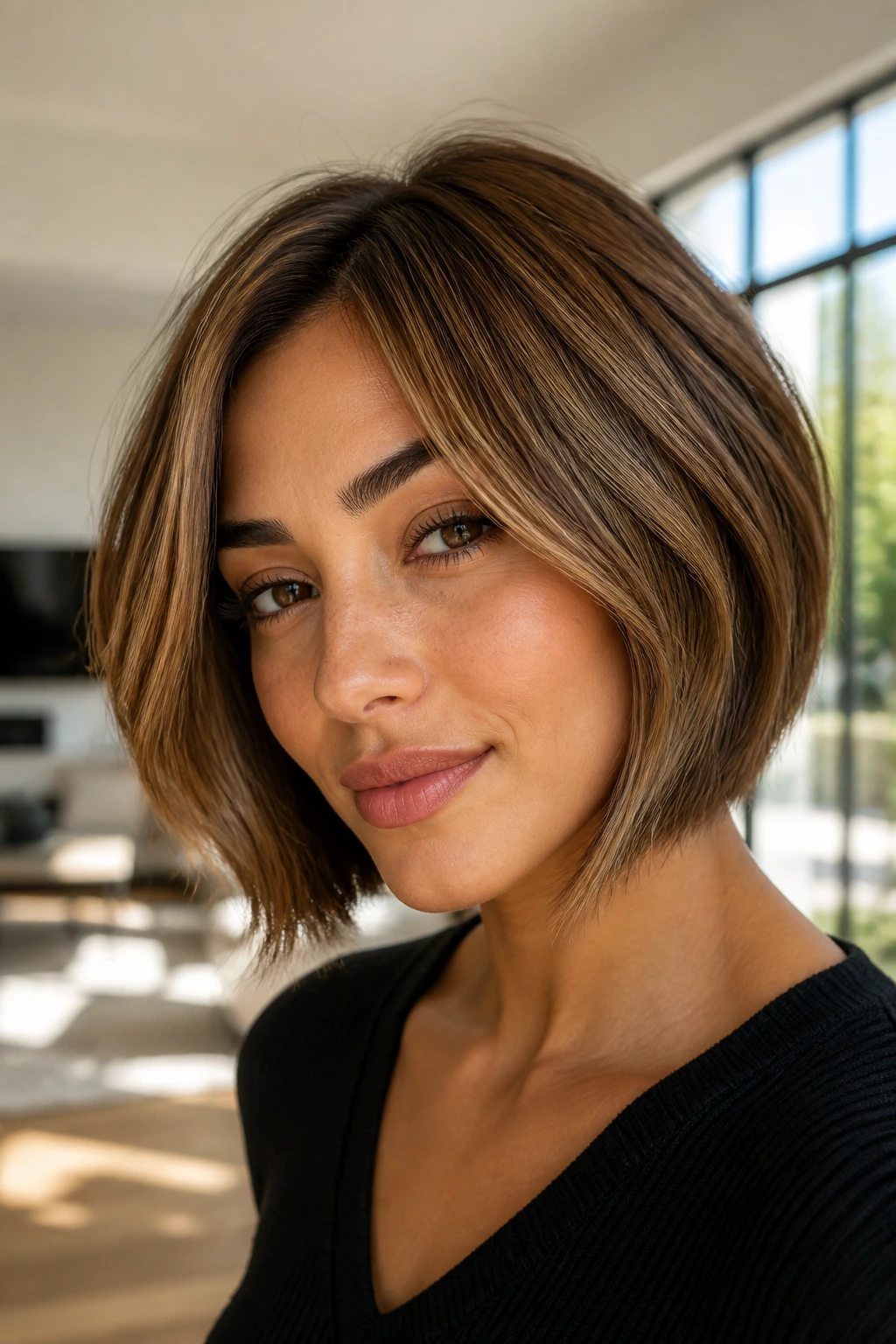
A bob with spiced caramel highlights has enough edge to look modern, but the warmth keeps it wearable on olive skin. The cut does a lot of the work here. The color just has to show off the shape. Small amounts of lighter color around the face and ends go a long way.
I’d keep the base dark and the caramel a touch deeper than you might on a long wavey style. Short hair exposes everything, including any harsh line where the highlight starts. A softer blend through the top layer and around the nape usually looks better than bright slices everywhere.
This is the kind of bob that looks neat when straight and slightly cooler when tucked behind the ears.
21. Cocoa and Cream Balayage
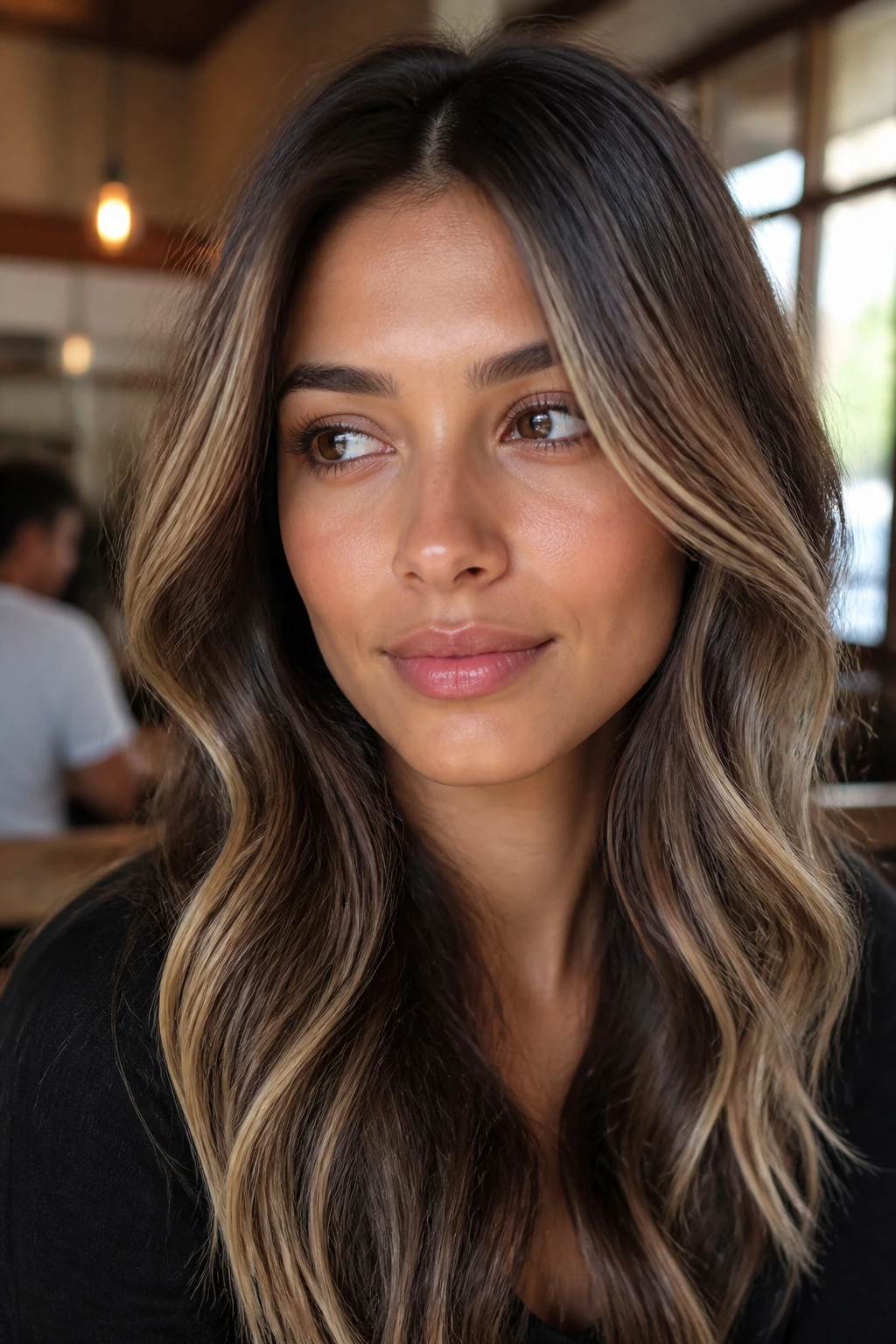
Cocoa and cream sounds high-contrast, and it can be, but it doesn’t have to feel loud. The cocoa base grounds the color, while the creamier highlight pieces lighten the face and ends. On medium olive skin, that contrast can look clean and deliberate instead of jarring.
The important part is tone. Cream should mean soft beige-cream, not pale yellow. If the hair has a naturally warm base, the cream pieces can sit more comfortably. If the skin leans cool-olive, a beige gloss keeps the balance in check.
This style gives you visible brightness without abandoning brunette completely.
22. Chestnut Halo Lights
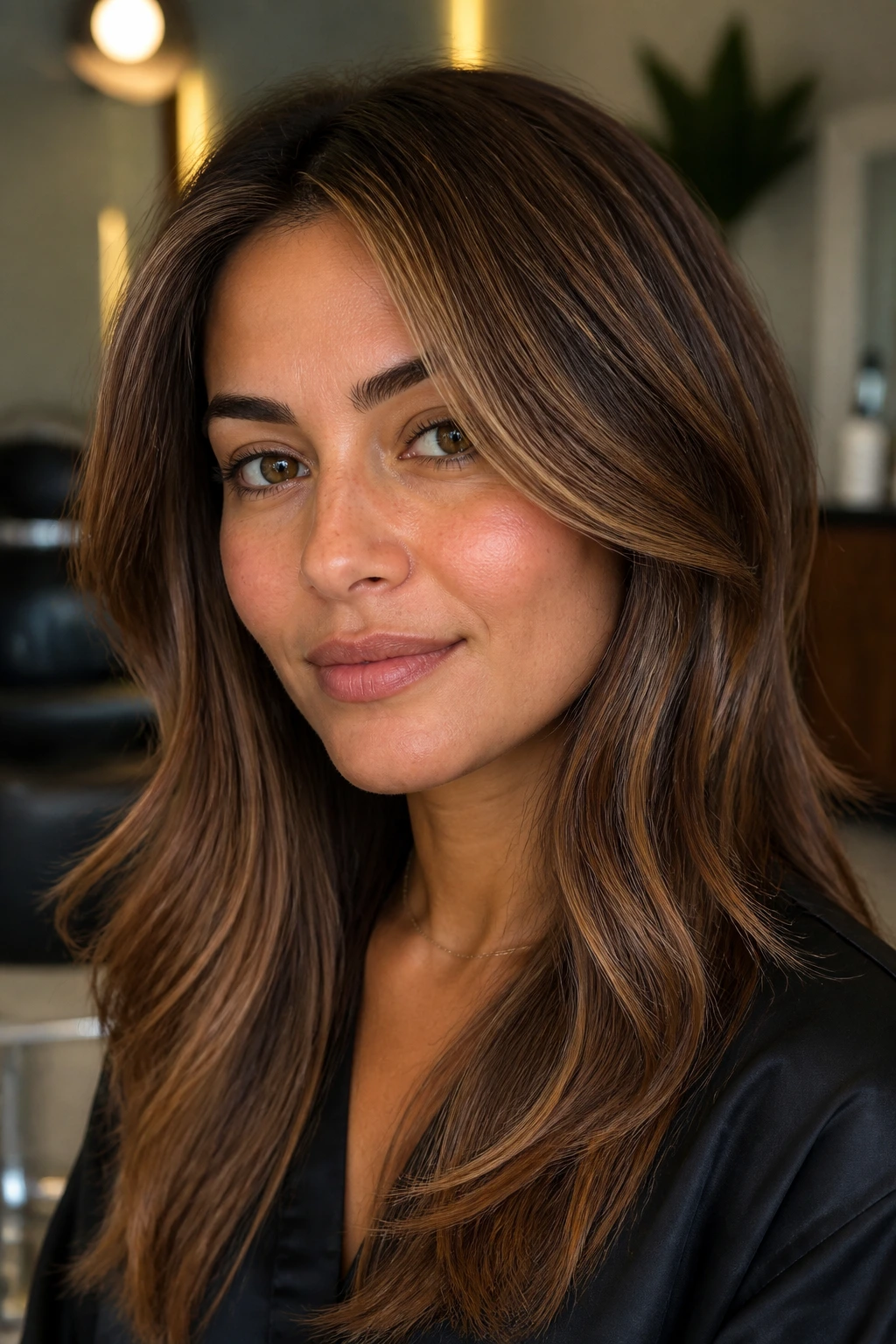
Halo lights concentrate brightness around the outer layer and crown, which can make a chestnut base look fuller and more dimensional. On olive skin, that halo effect frames the face without flooding the whole head with light.
This is especially good for updos, clips, and top knots because the brighter layer shows even when the hair is pinned back. Ask for a soft halo rather than a hard ring. You want the light to wrap, not outline. A few lowlights underneath help preserve the chestnut depth so the top doesn’t go flat.
It’s a polished look that still feels touchable. That matters.
23. Sable Brunette with Caramel Ribbons
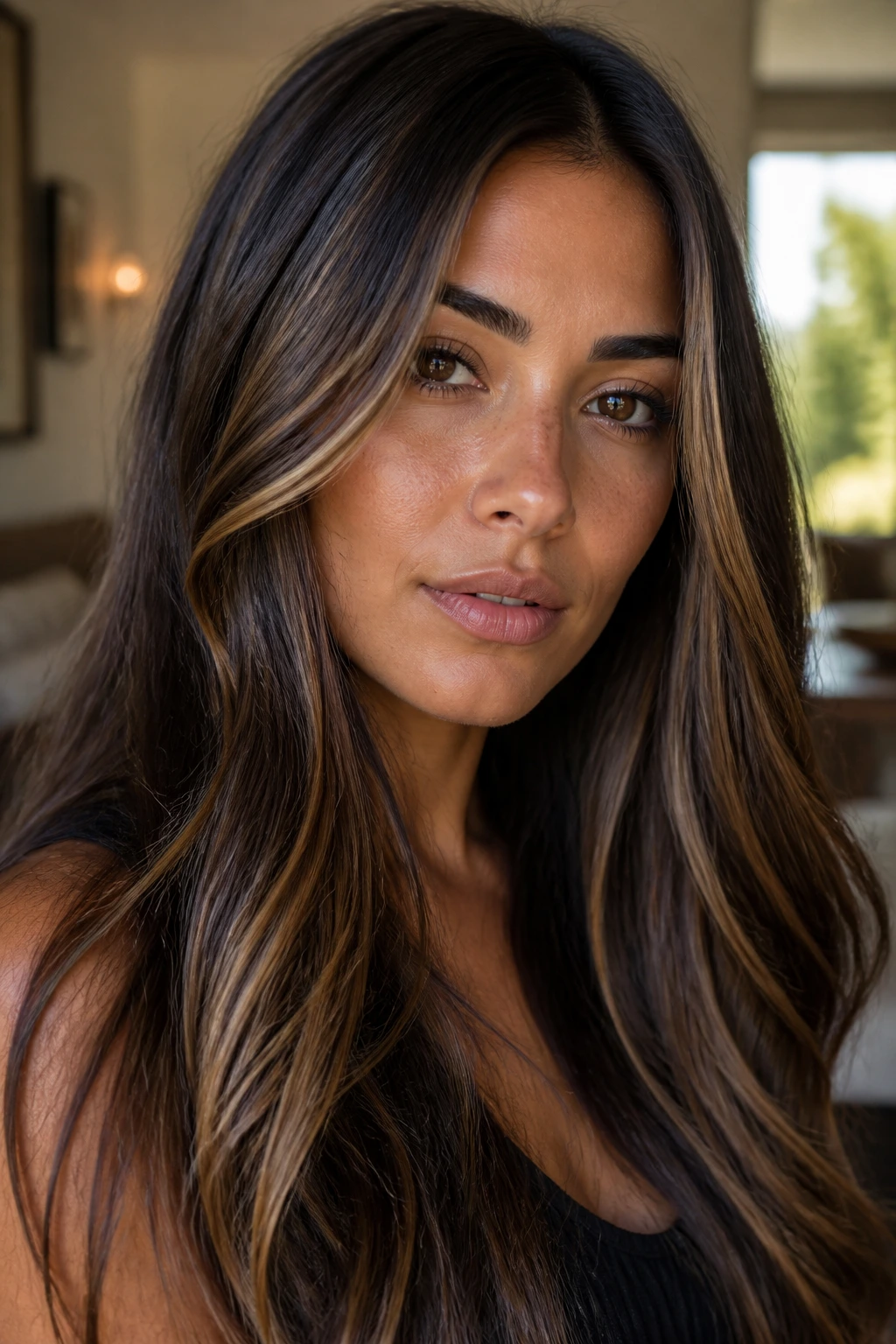
Sable brunette is deep, sleek, and a little mysterious. Add narrow caramel ribbons and the style gains movement without losing that dark richness. Olive skin with deeper undertones tends to look especially good in this range because the hair stays close to the natural depth of the brow and lashes.
The ribbons should be thin enough to catch light but not break the base apart. If they’re too chunky, the look can lose its elegance. This is one of the better choices if you want dimension that shows up mainly in motion, not a color that advertises itself the second you walk into a room.
It’s understated, but not shy.
24. Buttery Beige Ends
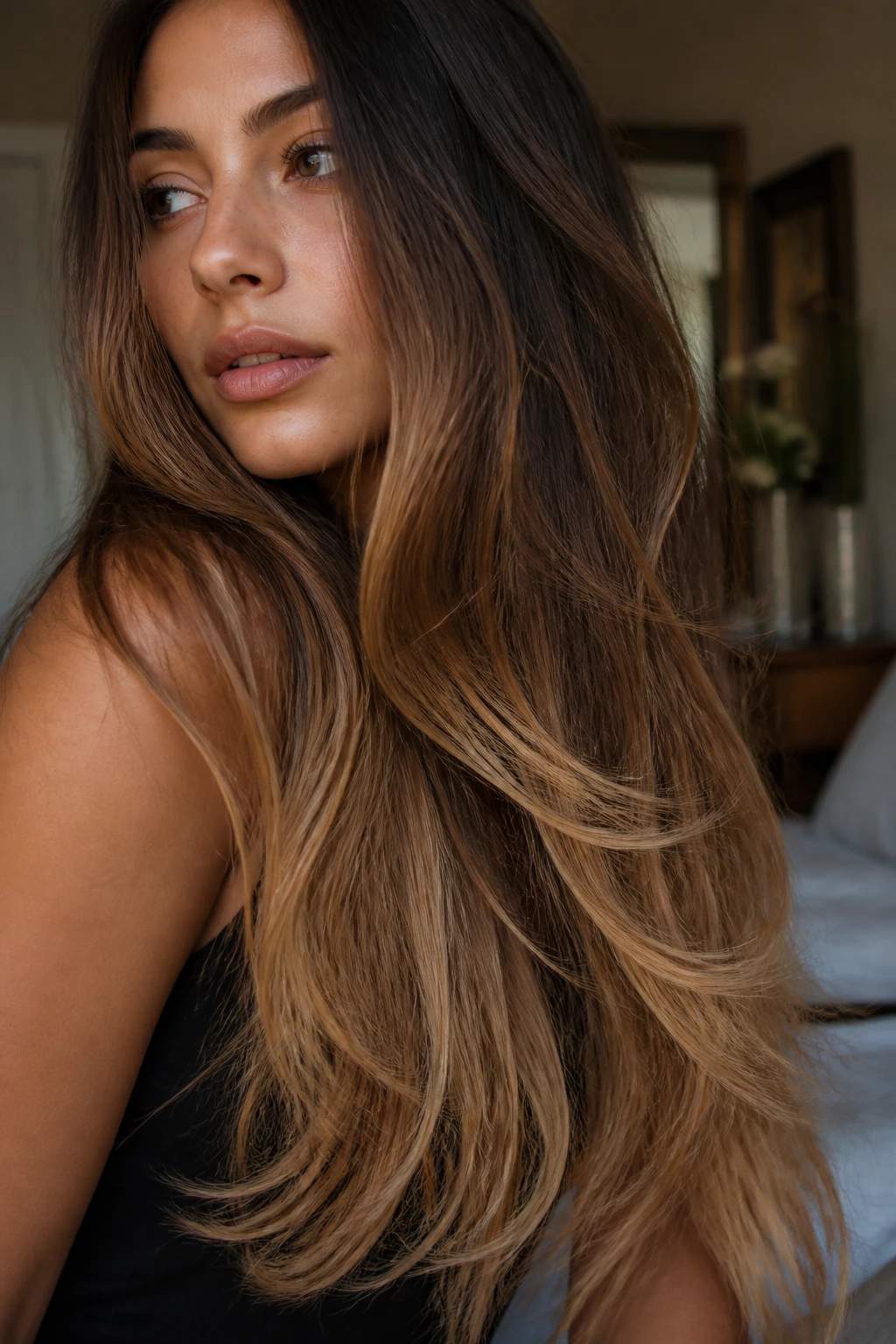
Buttery beige ends can look gorgeous on long layered hair when the tone is kept soft and smooth. The lighter ends give the cut a floating finish, while the brown mids hold the whole style together. Olive skin likes this best when the beige stays creamy rather than pale and chalky.
A root shadow helps. So does a soft gloss every so often. Without that, the ends can get too light and start fighting the skin instead of flattering it. If you wear loose waves, this style is especially good because the bends keep the beige from reading flat.
The whole look feels airy without being empty. That’s rarer than it sounds.
25. Smoked Caramel with Brown Lowlights
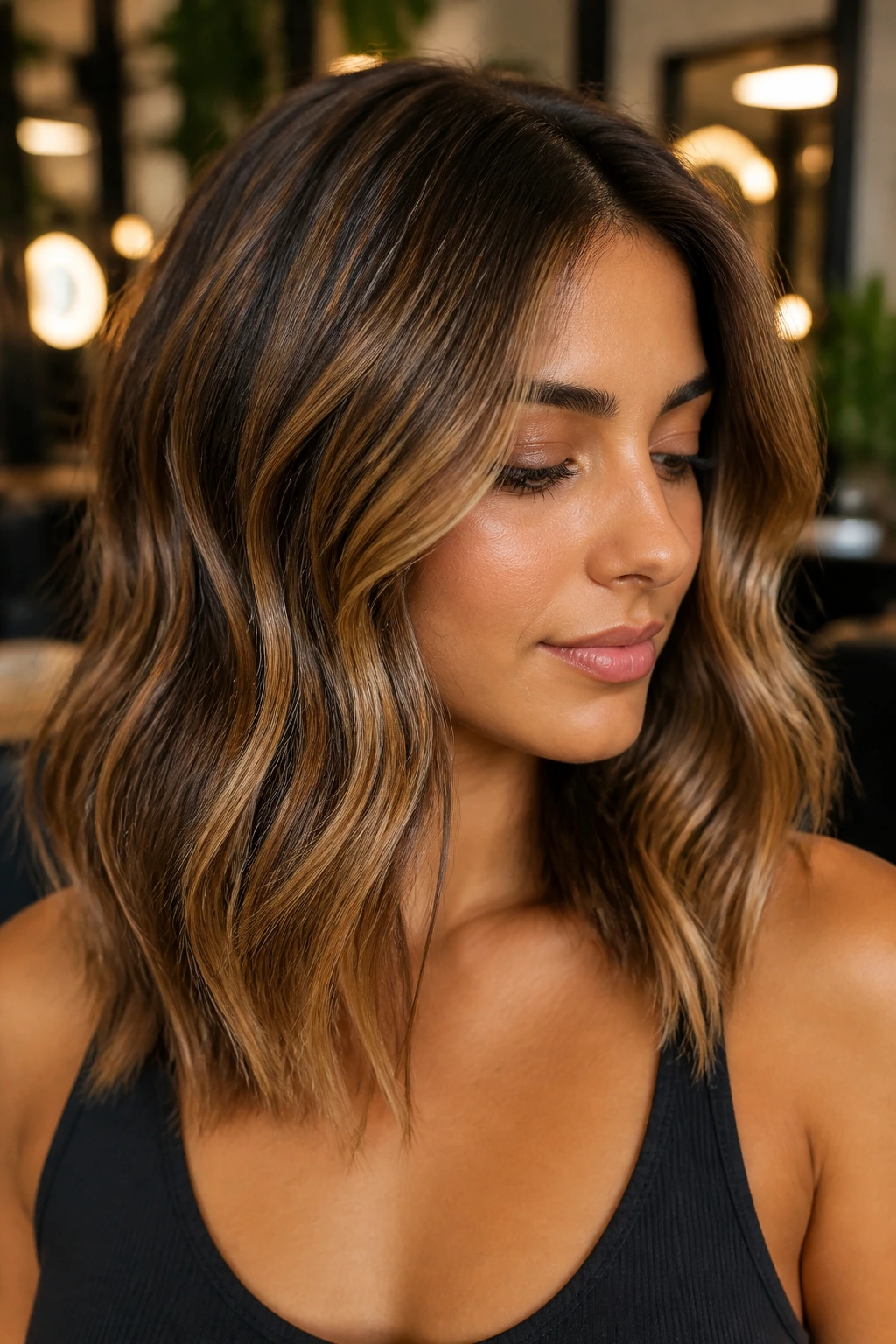
Smoked caramel with brown lowlights is the richest, deepest option in the set. The caramel brings the lift, but the lowlights keep the color from going too bright or too flat. On olive skin, that mix creates a strong frame around the face and gives the hair a sense of thickness.
This is one of my favorite directions if you already have a brown base and want more dimension rather than more lightness. The lowlights can go under the top layer, near the crown, and through sections that need shadow. The caramel can sit on the surface where the light will catch it. That contrast is what makes the color look expensive instead of noisy.
It’s the final stop for anyone who wants warmth, depth, and a little bit of edge.
Why Caramel and Brown Make Olive Skin Look Clearer
Olive skin has a funny habit of punishing the wrong blonde. A shade that looks creamy on one person can go flat or yellow on someone with olive undertones, especially if the base is too light and too even. Caramel and brown solve that because they respect the natural depth in the face. They don’t erase it.
That depth matters. The eye needs contrast to read the skin as fresh, and a brunette base with caramel or brown-blonde highlights gives it exactly that. The face still has shape. The brows still make sense. The color around the face feels intentional rather than pasted on.
Where Lowlights Save the Day
Lowlights are the part a lot of people skip, then wonder why their highlights look thin or stripey. A few deeper strands underneath a caramel balayage make the lighter pieces look brighter by comparison. They also stop the hair from turning into one flat warm sheet, which can happen fast on olive skin when the whole head is lifted the same amount.
If the hair is fine, lowlights add the illusion of bulk. If the hair is thick, they break up heaviness. Either way, they earn their place.
How to Read Your Olive Undertone Before You Book
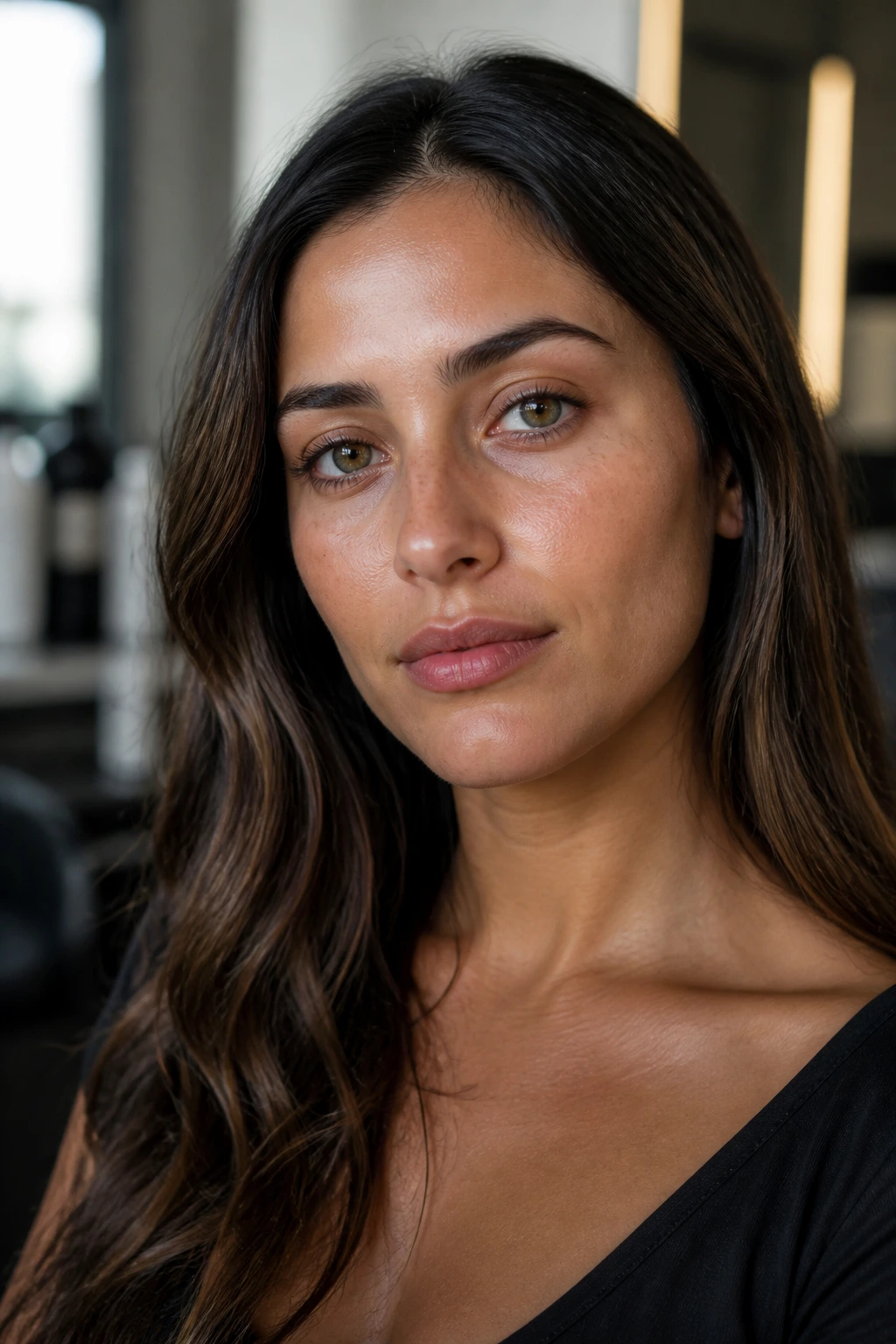
Not all olive skin wants the same caramel. Some olive undertones lean golden, some lean cool, and a lot of people sit somewhere between the two. The shade you choose should follow that, not fight it.
Cool-Leaning Olive
Cool-leaning olive usually likes beige caramel, mushroom brown, smoked toffee, and neutral bronde. These tones keep the skin from looking too green or sallow. If gold jewelry is nice but silver looks sharper, you may fall here.
Golden Olive
Golden olive can take bronze, honey, cinnamon, amber, and richer caramel with less risk of looking brassy. The warmth in the skin can handle more warmth in the hair, which gives you more freedom. These shades look especially good with sunlit waves.
Neutral Olive
Neutral olive is the easiest to overthink and the hardest to ruin if you stay balanced. Beige-caramel, chestnut, walnut, and mocha blends usually work because they don’t pull too far in either direction. If both gold and silver jewelry look fine, neutral tones are worth testing first.
What to Bring to the Salon: Photos, Notes, and a Good Sense of Contrast
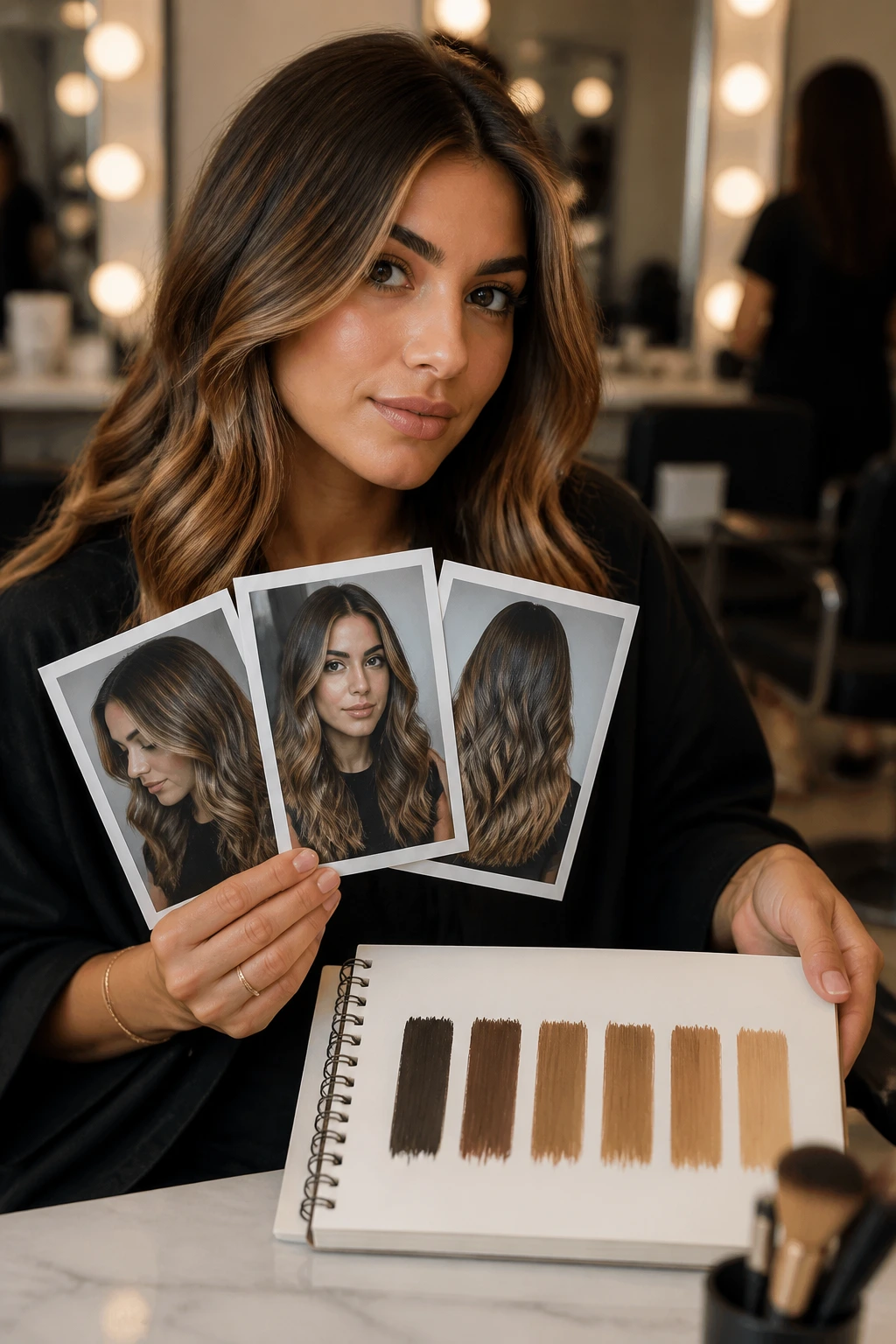
A good color appointment starts before the foil comes out. Bring three photos, not one. One should show the placement you like, one should show the tone, and one should show the level of brightness you want. That saves everyone from guessing whether you wanted a full transformation or a soft lift at the front.
Write down your natural base level if you know it, whether your hair has old box dye, and how often you plan to come back for maintenance. Those details matter more than the Instagram photo. A caramel balayage on virgin brown hair behaves differently from one built over faded red dye. Different history, different result.
My favorite note to bring: “Keep the roots soft, the front lighter, and the ends warm, not gold.” That one sentence tells a colorist a lot.
How to Keep Caramel Highlights Glossy Instead of Brassy
Warm highlights can turn cranky if you wash them too hard or blast them with heat without protection. The color itself is only half the equation. The other half is how you treat it after the appointment.
Wash rhythm: Try to keep shampoo to two or three times a week if your scalp allows it. That slows fading and keeps the caramel from turning dull. Use lukewarm water, not hot water, because hot water opens the cuticle and drags color out faster than people expect.
Toning: Purple shampoo is useful, but not every wash and not on every caramel tone. If your highlights lean yellow, use it sparingly. If they lean orange or too warm, blue shampoo can help more. Leave either one on for only a few minutes or you’ll strip the shine and end up with a flat cast.
Heat protection: Put heat protectant on before every blow-dry, flat iron, or curling pass. High heat is one of the fastest ways to cook caramel into brass. Keep hot tools under 400°F unless your hair is unusually coarse and you know it can take more.
A gloss every 6 to 8 weeks keeps the whole thing lively.
Styling Moves That Show Off Dimension
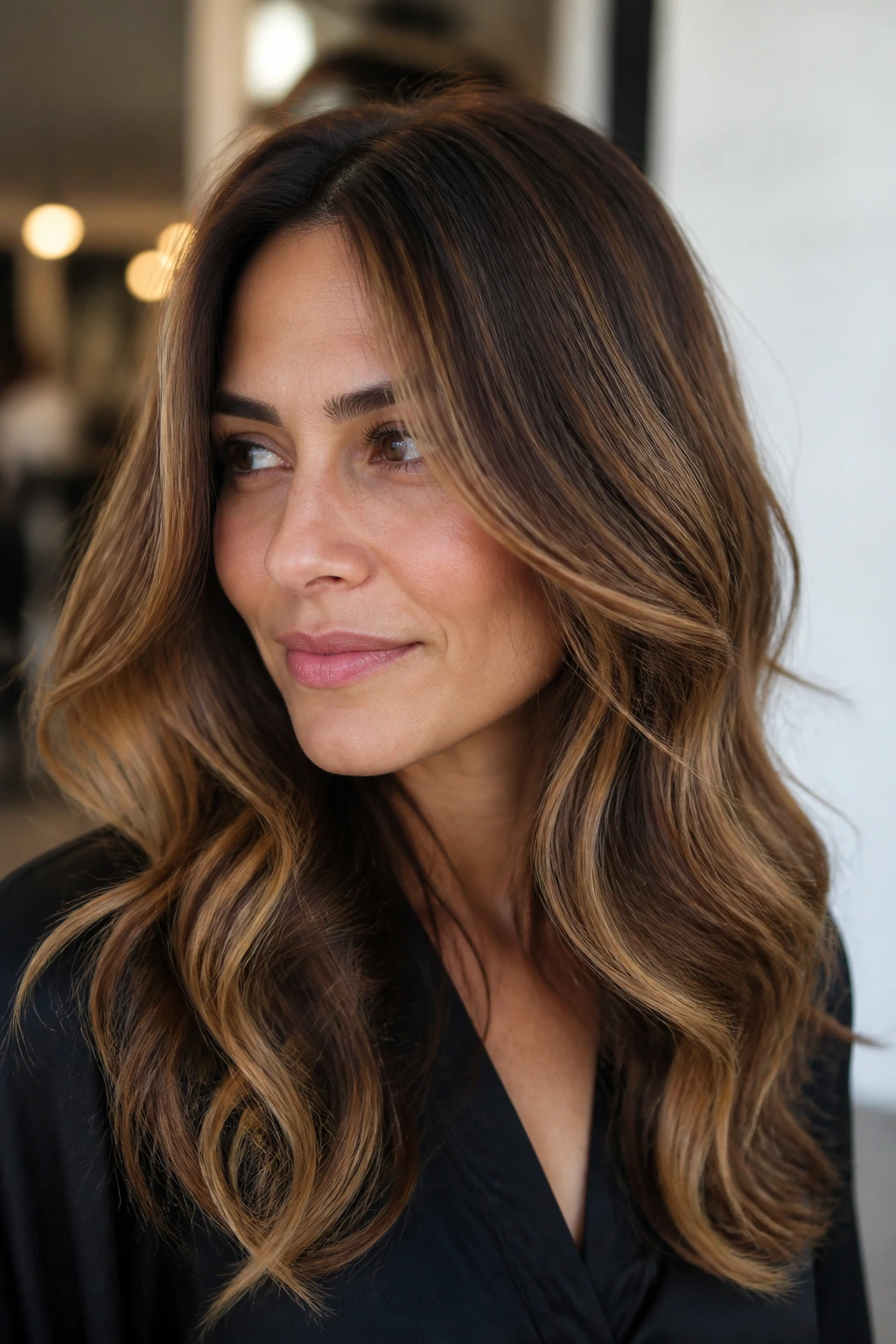
Hair color can look expensive or ordinary depending on how you wear it. Same shade. Different finish. Huge difference.
Loose Waves
Loose waves are the easiest way to show caramel ribbons, especially on balayage and bronde. Use a 1-inch curling iron or wand, leave the last inch out, and brush the curls apart once they cool. That gives the highlights room to catch light in different spots.
Sleek and Straight
Straight styles show placement more than texture. If the colorist painted the front pieces well, a smooth blowout will make that obvious. A middle part gives curtain highlights a cleaner frame, while a side part makes money pieces pop harder.
Curly and Coily Texture
On textured hair, the color should be painted with the curl pattern in mind. That means wider panels on tighter curls and smaller, broken pieces where the hair shrinks less. The goal is depth and movement, not even stripes from root to tip.
Updos and Clips
A claw clip or soft bun can reveal lowlights and hidden underlayers that never show when the hair hangs down. This is where halo lights, underlights, and rooted balayage earn their keep. They look intentional even when the style is thrown up in 30 seconds.
Common Mistakes That Flatten Olive Skin
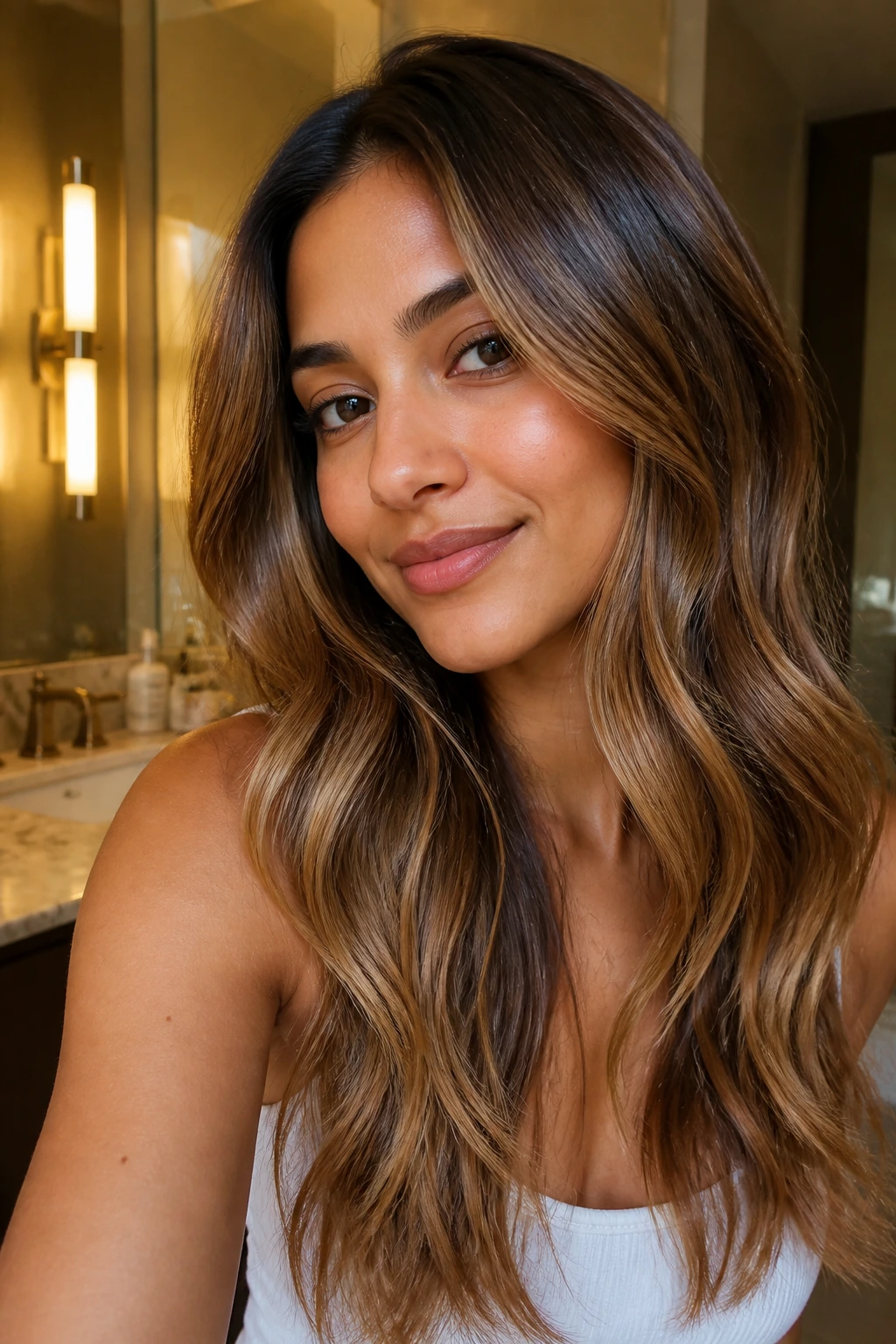
The biggest mistake is going too light, too fast. Olive skin can handle blonde, but it usually looks better when the blonde stays caramelized and the brunette base stays present. If the hair is lifted too pale, the face can lose the warmth and contrast that made the color flattering in the first place.
Another mistake is choosing a highlight that is too yellow. Yellow-blonde and olive undertones can clash in a way that makes the skin look tired rather than bright. Beige, honey, bronze, and toffee usually sit in a better lane.
A third problem is stripe placement. Big, even, face-wide sections can make the color look dated and harsh. Soften the blend. Break up the pattern. Let some depth stay underneath.
And one more: skipping the lowlights. Without them, even good caramel can flatten out after a few washes.
Variations and Shade Changes Worth Asking For
Cool Beige Caramel
Ask for a beige-caramel glaze if your olive skin leans cool or neutral. It keeps the warmth gentle and prevents the highlights from going too gold. This is a smart adjustment for anyone who loves softness more than contrast.
Golden Honey Melt
This version leans warmer, with honey and soft gold built into the melt. It suits golden olive skin and looks especially good on wavy hair. The roots stay brown, but the mids and ends catch more light.
Smoked Mocha Dimension
If you want low-maintenance depth, keep the base mocha and tuck in narrow caramel pieces instead of broad highlights. The smoked finish helps the grow-out stay clean and gives the hair a richer overall tone.
Bronze-Heavy Brunette
Bronze adds shine and a subtle metallic cast that reads beautiful on deeper olive skin. It works well when the hair needs warmth but not full blonde lift. The tone should stay brown first, bronze second.
Rooted Ribbon Balayage
This one keeps the root darker and the ribbons painted in a soft, spaced pattern through the lengths. It’s the easiest style to live with if you don’t want a sharp grow-out line or frequent touch-ups.
Essential Tools and Products for These Looks
- Salon inspiration photos: Bring three to the appointment so the colorist can separate tone from placement.
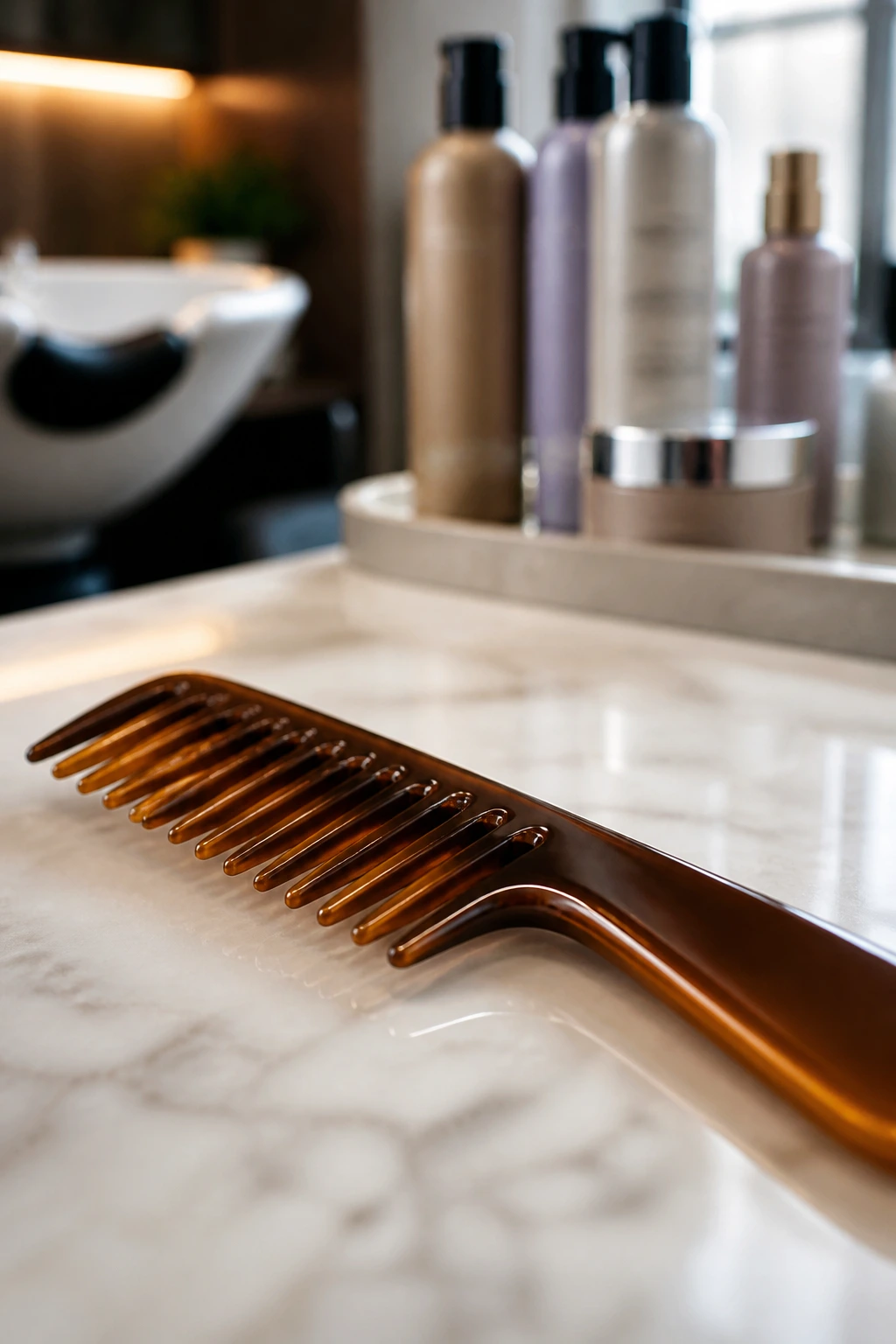
- Wide-tooth comb: Helps detangle color-treated hair without ripping up the ends.
- Color-safe shampoo and conditioner: Keeps caramel from fading and brown from looking dull.
- Purple or blue shampoo: Use sparingly if brass starts creeping in.
- Heat protectant spray or cream: Non-negotiable if you blow-dry or curl the hair.
- Gloss or glaze: Useful for keeping beige and caramel tones shiny between salon visits.
- Clips and a tail comb: Handy if you’re parting hair for styling or checking where the front pieces fall.
- Satin pillowcase or bonnet: Reduces friction, which helps the color look smoother longer.
- Salon cape or towel at home: If you do touch-up masks or toning treatments yourself, it saves your clothes.
How to Keep the Color Fresh Without Overdoing It
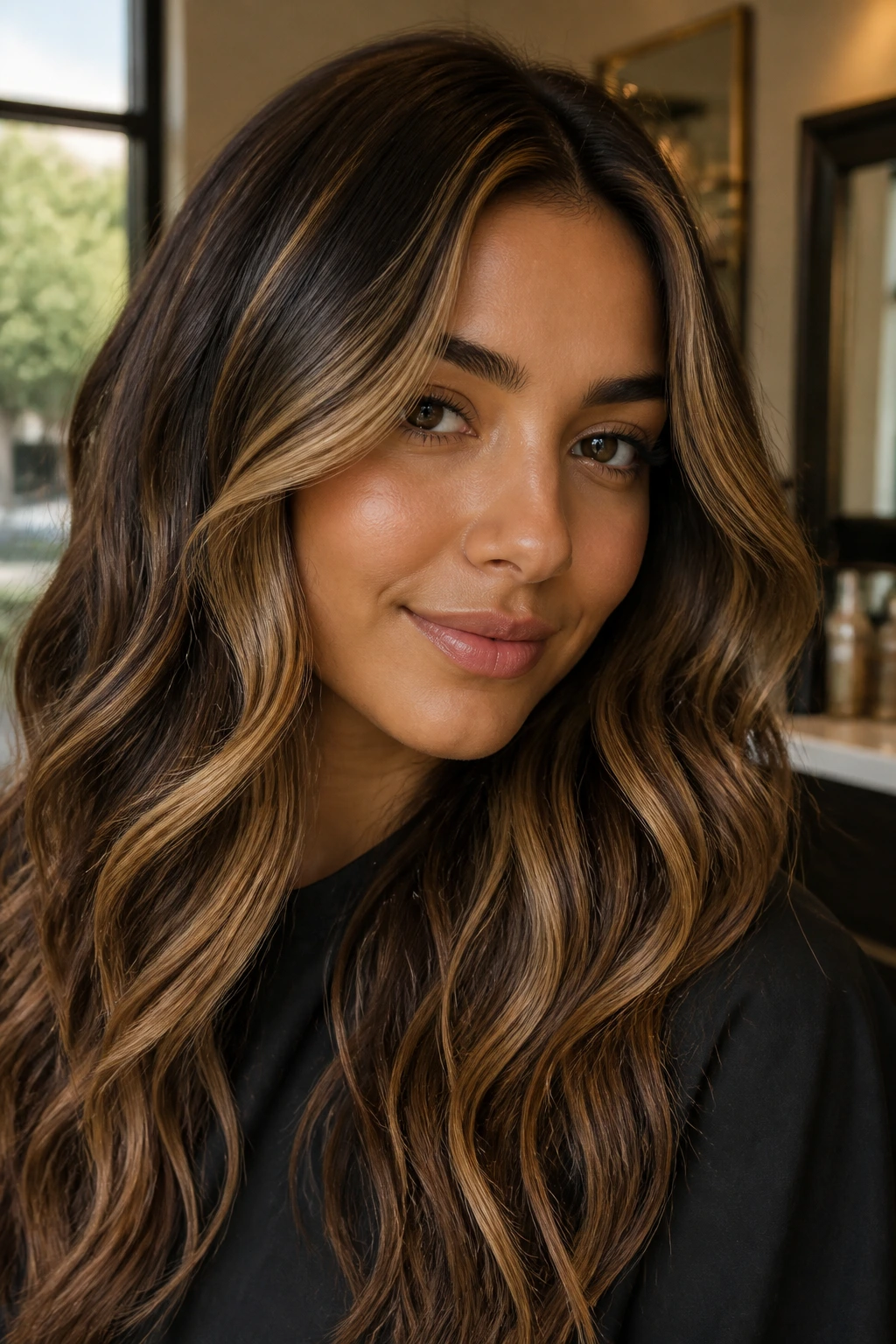
A caramel brunette style usually looks its best in the first few weeks after toning, when the shine is clean and the contrast is still crisp. After that, the goal is not to chase brightness. It’s to keep the color rich. That means fewer harsh clarifying washes, fewer scorching hot tools, and more light glosses than heavy corrective products.
If the ends start looking dry, use a mask once a week, but keep it off the roots unless your scalp is dry too. Too much heavy conditioner on the roots can flatten volume and make the highlights disappear. A little root lift powder or mousse can help if the top starts to collapse.
Most people do well with a salon refresh every 6 to 10 weeks for gloss and every 10 to 14 weeks for stronger highlight maintenance, depending on how dramatic the contrast is.
Frequently Asked Questions
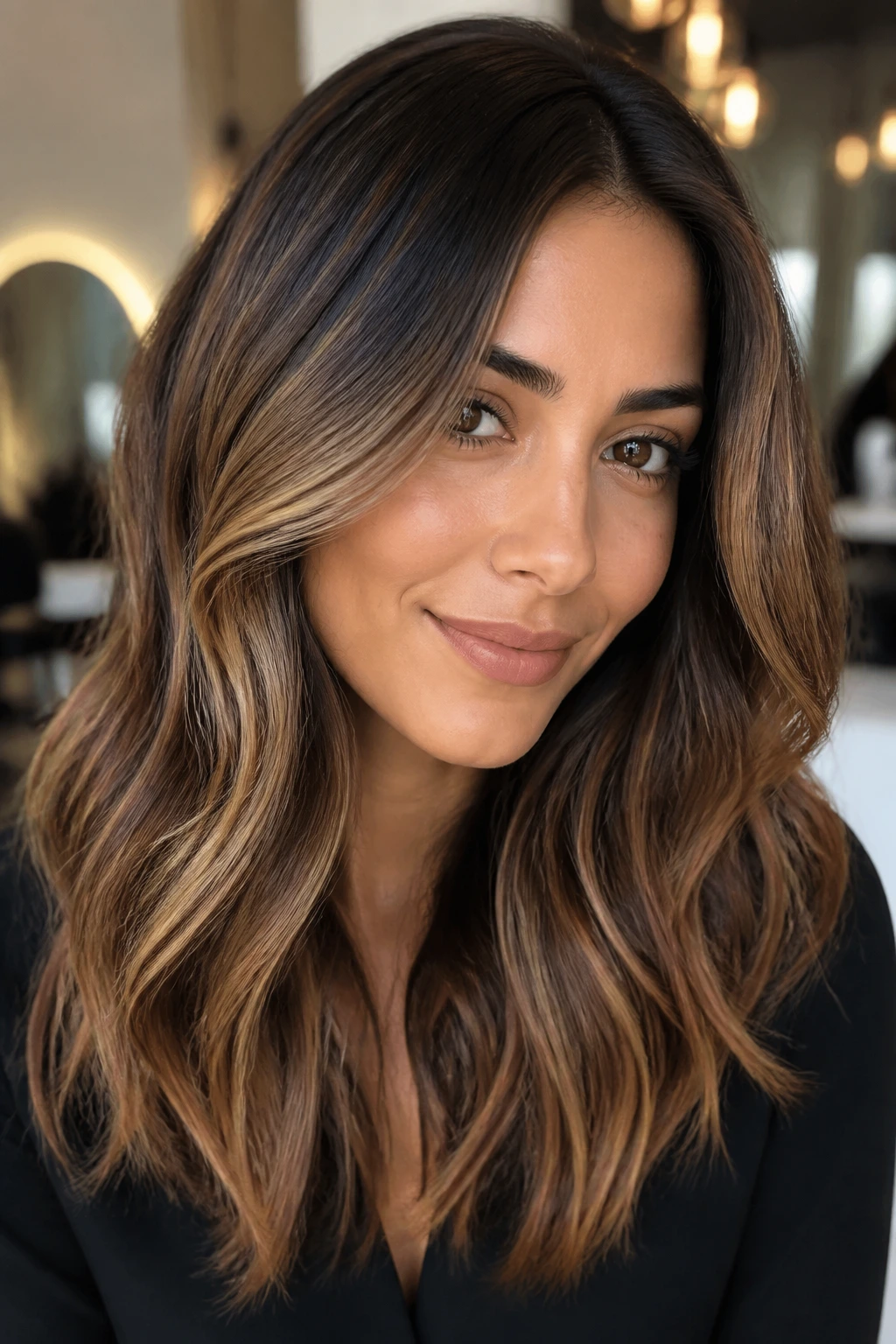
What caramel shade works best on olive skin?
Beige-caramel, toffee, chestnut caramel, and soft bronze usually flatter olive skin because they keep warmth without going yellow. If your undertone leans cool, stay closer to beige and mushroom-brown territory. If it leans golden, honey and bronze are easier to wear.
Can olive skin wear blonde highlights?
Yes, but the blonde usually looks better when it’s softened with brown depth and a warm toner. Very pale ash blonde can make olive skin look flat or a little green-gray. Caramel blonde is usually the safer lane.
Should I choose highlights or lowlights if my hair is fine?
Both, honestly. Fine hair often looks better when it has a mix of lighter pieces and a few deeper strands underneath, because that creates the illusion of body. Pure highlights can look stringy if there’s no shadow left in the hair.
How often do caramel highlights need toner?
Many caramel looks need a gloss or toner every 6 to 8 weeks, depending on how often you wash and heat-style. If the color starts turning too yellow or flat, don’t wait too long; a glaze can bring the warmth back without another full lightening session.
Will these shades work on curly hair?
Absolutely, and curly hair often shows off these colors better than straight hair because the twists catch light at different angles. The placement has to follow the curl pattern, though. Thick, clear sections usually read better than tiny fine lines that disappear once the hair shrinks.
What if my hair is very dark brown?
Start with a rooted balayage or a few face-framing pieces instead of trying to jump all the way to blonde. Dark brown hair can hold a beautiful caramel tone, but it usually looks better with some depth left at the root and the mids. The darker base is part of the appeal.
How do I stop caramel highlights from looking orange?
Ask for a beige, honey-beige, or bronze finish instead of a copper finish. Orange usually shows up when the lightening is too warm or the toner is too golden. A gloss can steer the color back into a softer lane without flattening it.
Is this a low-maintenance color choice?
It can be, if the highlights are rooted and the contrast is soft. Balayage, money pieces, and lowlights grow out better than all-over lightening. A hard blonde makeover is the one that starts asking for more appointments, more toning, and more money.
The Right Kind of Warmth
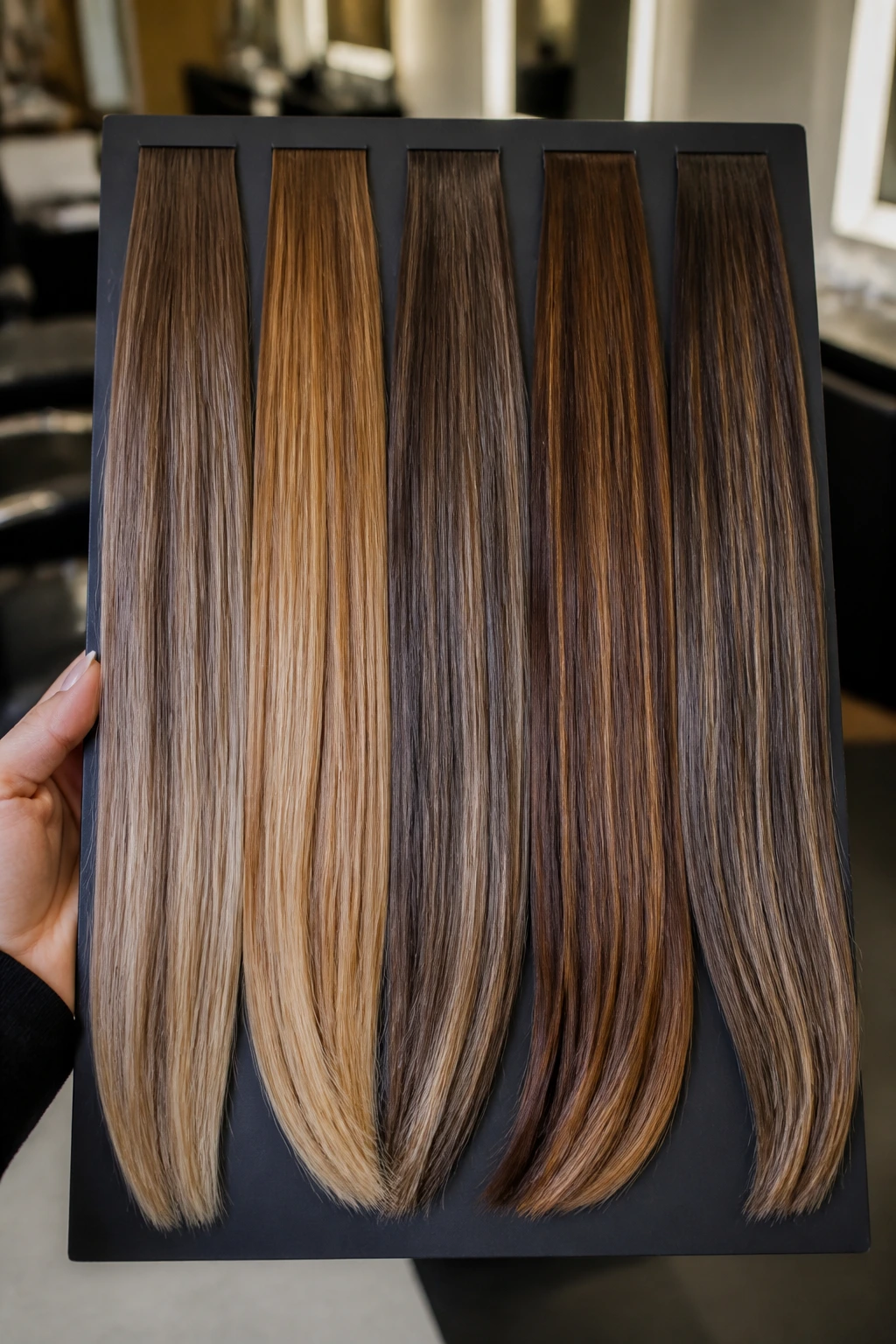
Caramel blonde brown highlights work on olive skin because they do something more useful than simply “brighten.” They keep the face warm, the hair dimensional, and the whole look believable as it grows out. That’s the part I like most. Not the shine alone. The balance.
A good caramel-brown mix should make your skin look steadier, not louder; your hair should still look like hair, not a batch of separate stripes. If you keep the base rich, the warmth soft, and the placement thoughtful, the color does the flattering work for you. Quietly. Which is usually the best kind.