



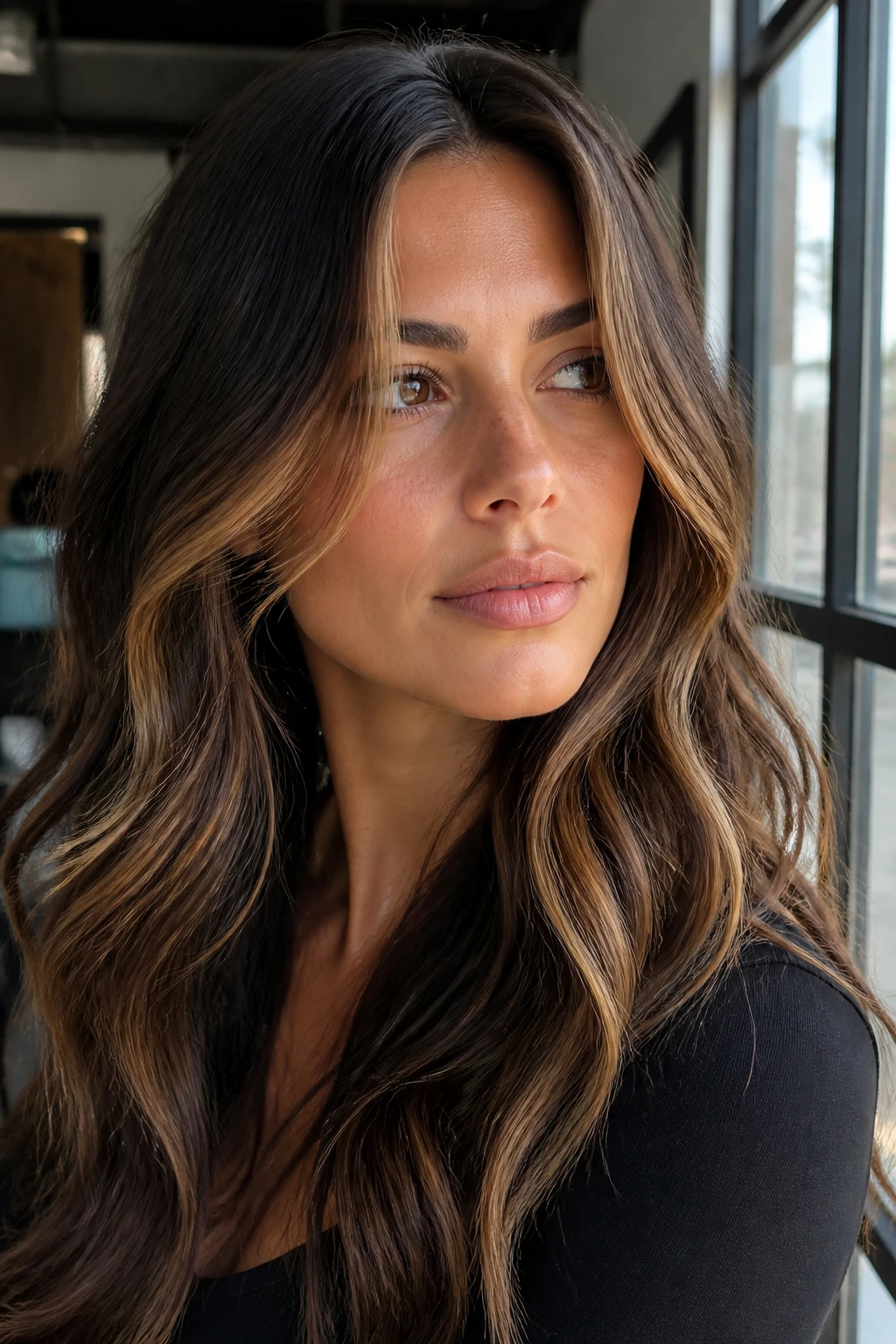
A dark brunette base can look flat in one mirror and rich in another, and the difference usually comes down to the front pieces. Brown face frame highlights for dark hair are the fastest way to wake up a haircut without turning it into a full blond project. The best versions sit just a notch or two lighter than the base, so you get a soft hit of brightness near the cheekbones, temples, and part line instead of a blunt stripe that shouts for attention.
That placement matters more than people think. A highlight that starts too high can look skunky as it grows; one that sits too low disappears every time you pull your hair behind your ears. The sweet spot is usually around the arch of the brow, the top of the cheekbone, and the first few inches of the front layers, where the light catches as you move.
And no, brown does not mean boring here. Mocha, chestnut, caramel, mushroom, walnut, bronze, beige, ash, toffee — those shades behave very differently on dark hair, especially when the undertone of the color line fights or flatters your skin tone. The really good versions look like they belong to the haircut, not like they were dropped on top of it at the last minute.
Why This Collection Feels So Wearable
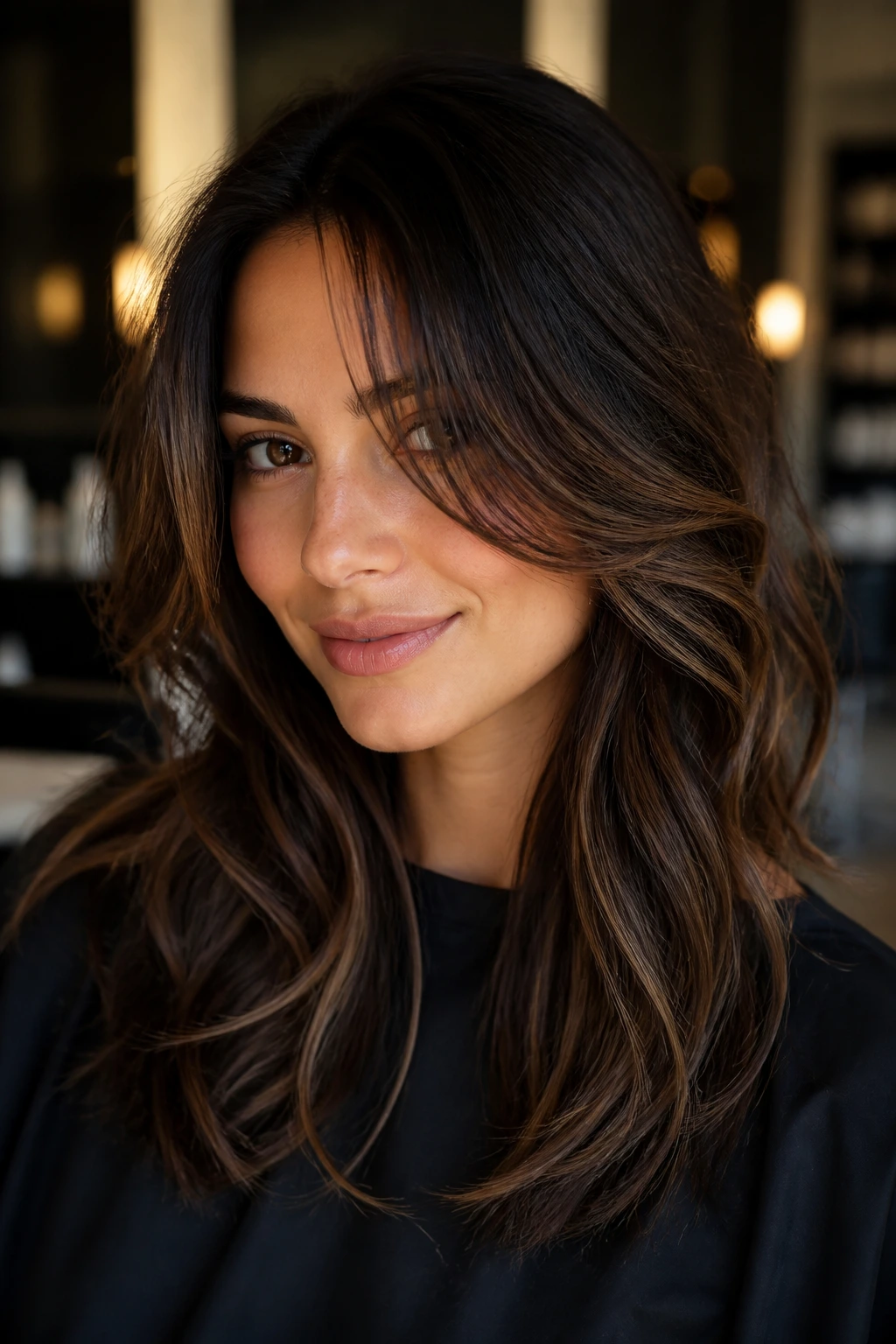
Face-framing placement does the heavy lifting: Brightness near the front wakes up the face faster than a full-head highlight, which is why a narrow money piece can look more noticeable than six foils hidden underneath.
The shades are easier to live with: Brown tones stay closer to the base, so grow-out tends to blur instead of draw a hard line across the hair.
You can go warm or cool without losing depth: Caramel, chestnut, and bronze lean warm; mushroom, ash, and beige-brown lean cooler, and both paths can work on dark hair if the undertone is chosen well.
The look plays nicely with movement: Waves, bends, curtain bangs, and layered cuts show off the lighter front panels much better than a pin-straight sheet of hair.
It suits small changes, not big commitments: If you want a change you can see in daylight but still tuck into a ponytail, this category is built for that middle ground.
It grows out in a softer way than chunky streaks: When the brightest part stays close to the part and hairline, the regrowth can look intentional for longer, especially if the roots are kept slightly deeper.
1. Soft Caramel Money Piece
A soft caramel money piece is the friendly version of face-framing brightness on dark hair. It does not try to steal the whole show. Instead, it sits one to two levels lighter than a chocolate or espresso base, usually around the front hairline and first layer, where it adds a warm glint that looks expensive in daylight and even better when the hair moves.
Why It Works
Caramel is one of those shades that tends to look alive on dark brunettes without leaning orange, provided the color is kept soft and glossy. On layered cuts, it can trace the cheekbone and jawline in a way that flatters the face without needing a sharp, high-contrast streak.
I like this option best on hair that gets curled or bent at the ends. Straight, glassy hair can make the front piece look a touch more obvious; a loose wave breaks it up just enough. Ask for the lightest saturation right at the front, then a feathered melt as the color moves back.
Best For
- Deep brunettes who want visible brightness without a blonde result
- Warm or neutral skin tones that handle gold and beige undertones well
- Long layers, curtain bangs, and shoulder-length cuts
What to Ask For
- A caramel-brown face frame that stays close to the natural base
- A soft root shadow so the grow-out does not read as a stripe
- A glossy finish instead of a matte, sandy lift
My favorite part: the front pieces still look brown in shade, but they wake up as soon as the light hits them. That little shift is the whole point.
2. Cinnamon Ribbon Frame
Cinnamon ribbons are warmer and a little spicier than caramel. They sit in that chestnut-meets-copper-brown lane that gives dark hair a little heat around the face without drifting into bright red territory. On wavy hair, they read like narrow ribbons instead of streaks, which is exactly why they look so good when the hair is pushed behind one ear.
Why It Works
The shade has enough warmth to show up on very dark bases, especially black-brown hair, but it still feels like brown hair with dimension rather than a dramatic color change. The front placement matters here: a few pieces at the temple, a few near the part, and a few dragged through the face-framing layers can keep the whole effect soft.
I’d choose cinnamon when the haircut has motion. It gives a bit of fire to shaggy layers, long bobs, and air-dried waves that need a little life near the front. Too many foils, though, and the look can tip from ribboned to stripey. Keep the sections thin.
3. Mocha Face-Framing Balayage
Mocha is the shade I reach for when someone wants dimension without obvious warmth. It lands in a neutral brown zone that can look smoky, creamy, or slightly cool depending on the base hair color and the gloss that finishes it. On dark hair, mocha face-framing balayage brings a softer contour effect than a bright money piece.
Why It Works
Because mocha sits close to espresso and cocoa, the contrast stays controlled. That makes it a smart pick for dark brunettes who hate the idea of light front chunks but still want the face to look brighter in photos, on video calls, or just in a bathroom mirror under bad bulbs.
The balayage part matters too. Instead of one hard strip, the lightening can be hand-painted through the front layers, then blended back toward the crown. The result looks less like a highlight appointment and more like the haircut naturally picked up light. It’s subtle, but not invisible. That’s the sweet spot.
What Makes It Different
- Cooler than caramel
- Softer than blonde money pieces
- Better for people who want a muted finish
4. Chestnut Veil Highlights
Chestnut veil highlights are what I call the “blink and you’ll miss it, then suddenly you won’t” version of face framing. The color sits in a deep reddish-brown lane, but the strands stay sheer and layered so the movement matters more than the contrast. They work especially well when the front of the hair is tucked into waves or soft bends.
Why It Works
Chestnut has enough red-brown warmth to look rich against a dark base, but not so much that it starts reading copper. The veil approach keeps the lift airy. Instead of thick slices, you get narrower pieces that sit through the front layers and along the part, where they can catch light without making the front of the head look painted.
This is one of the best choices for brunettes who want dimension but are nervous about obvious color lines. The grow-out is forgiving, too, because the chestnut tone blends back into the base rather than screaming for a toner every two weeks. If your hair is layered and naturally wavy, this gets even better.
5. Honey-Brown Contour Strips
Honey-brown contour strips bring more brightness than mocha or chestnut, but they still stay in brunette territory. They are the kind of front pieces that can change the whole mood of a cut in one appointment. Put them around the face on dark hair, and suddenly the cheekbones look sharper, the eyes pop more, and the whole haircut feels lighter.
Why It Works
Honey-brown is warmer and clearer than most neutral brunettes, so it gives a little glow where the light naturally falls. It works best when the pieces are placed with intent: not one giant stripe, but a few controlled slices that frame the face and maybe a touch through the ends of the front layers.
This is a good move if you style your hair with volume. A round-brush blowout, loose curls, or brushed-out waves help the strips sit in the haircut instead of standing alone. On very straight hair, the color can look sharper than you planned. Soft bend at the ends solves that fast.
6. Mushroom Brown Money Piece
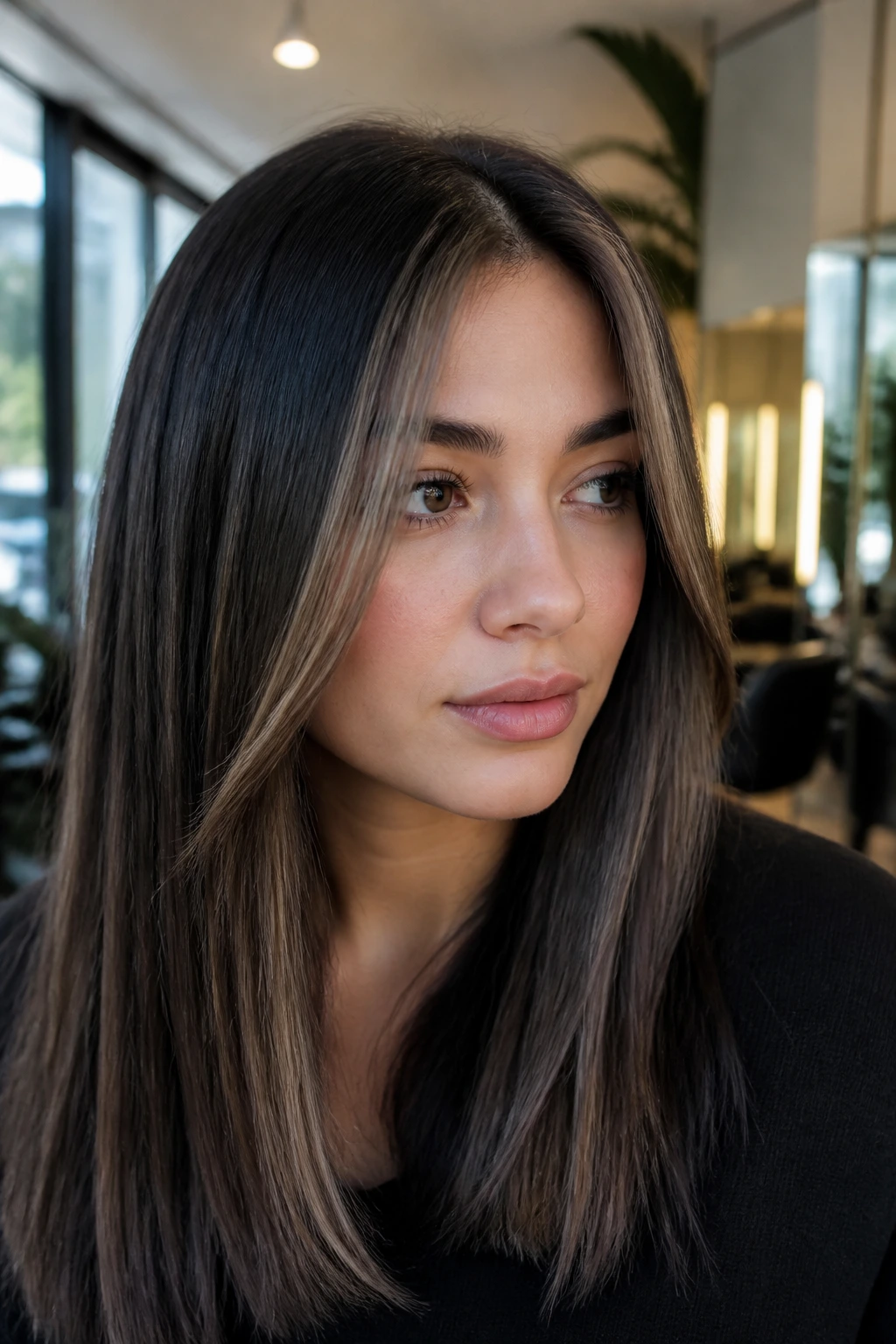
Mushroom brown is the cooler, earthier cousin in this whole lineup. It has that smoky taupe-brown look that avoids gold and avoids red, which makes it a strong choice if warm highlights tend to fight your undertone. On dark hair, a mushroom brown money piece can look chic in a restrained way that still gives the front of the haircut some shape.
Why It Works
The cool undertone is the trick. It keeps the front pieces from turning brassy after a few washes, especially if your hair naturally pulls orange when lightened. Because the shade is muted, it often looks best when the contrast is small and the placement is precise: thin front panels, soft blending at the roots, and a little extra brightness right around the part.
This look favors straighter hair and sleek styling. The smooth finish lets the muted brown show off instead of disappearing into texture. If you want high contrast, this is not the pick. If you want a modern brunette with a quiet edge, it’s hard to beat.
7. Toasted Almond Ribbons
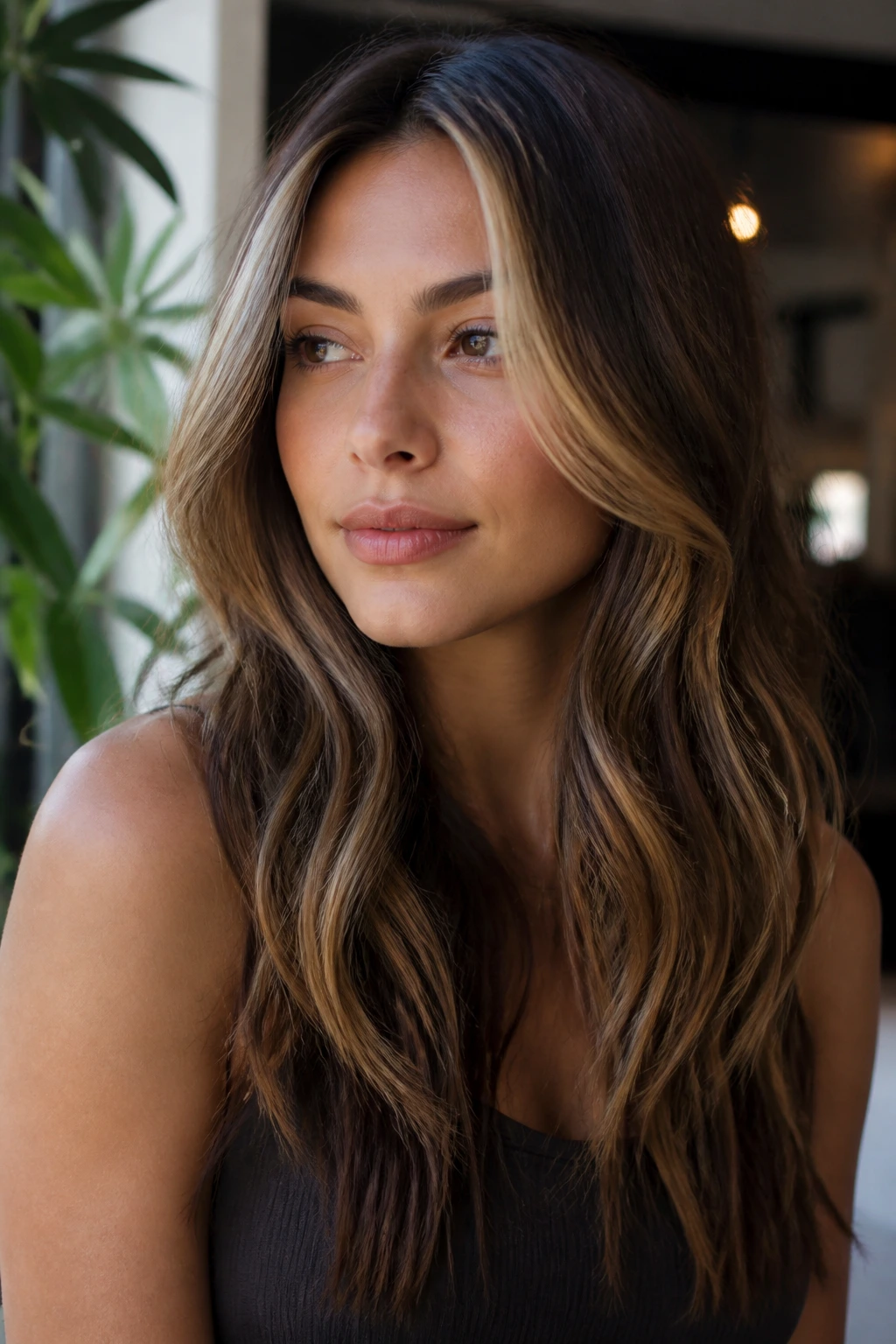
Toasted almond sits in that beige-brown zone that makes dark hair feel lighter without going gold. It has a creamy softness that can look polished on layered lobs, collarbone cuts, and longer hair that needs face-framing movement. I like this shade when someone wants the front to brighten but does not want a warm, coppery cast.
Why It Works
The almond tone is especially good when the highlight pieces are woven through the front rather than placed in one solid streak. That gives the hair dimension from the hairline down through the front section, so the color looks more natural as it shifts with movement.
It’s also one of the easier brunettes to style because the shade reads clearly on both straight and waved hair. If you wear a side part, the brighter side will pick up a touch more light, which is useful if you want the face to look opened up. If your ends are dry, a little gloss or serum keeps the beige tone from looking dusty.
8. Espresso-to-Cocoa Gradient
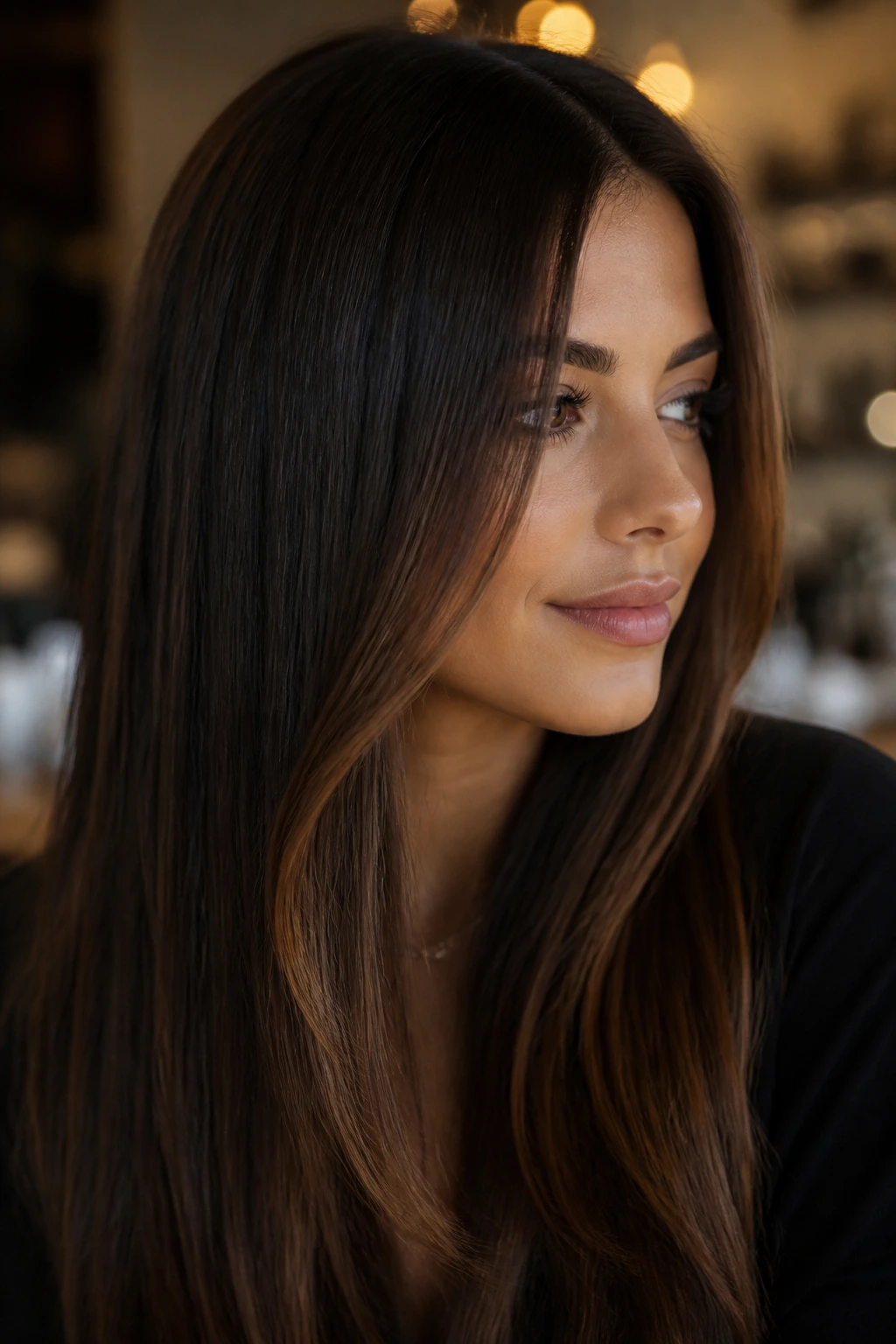
An espresso-to-cocoa gradient is for anyone who wants depth first and brightness second. The front stays dark at the roots, then shifts into cocoa through the mid-lengths and face-framing sections. The effect is polished, shadowy, and a little richer than a classic money piece.
Why It Works
The gradient makes the eye travel. Instead of a light stripe sitting on top of dark hair, you get a gradual shift that softens the face and makes the cut look more expensive. It also helps if your natural brunette is very deep, because the transition keeps the lighter color from looking pasted on.
This style is one of the smartest choices for people who wear their hair down most of the time. It gives dimension in motion and does not demand daily styling to make sense. The downside? If you want obvious brightness from across the room, this will feel too subtle. But if you want the front to look intentionally shaded, it hits the mark.
What to Watch For
- Ask for the cocoa tone to stay close to the base, not orange
- Keep the root area soft to avoid a line at the part
- Finish with a gloss if the hair tends to look matte
9. Bronze Face Frame Glow
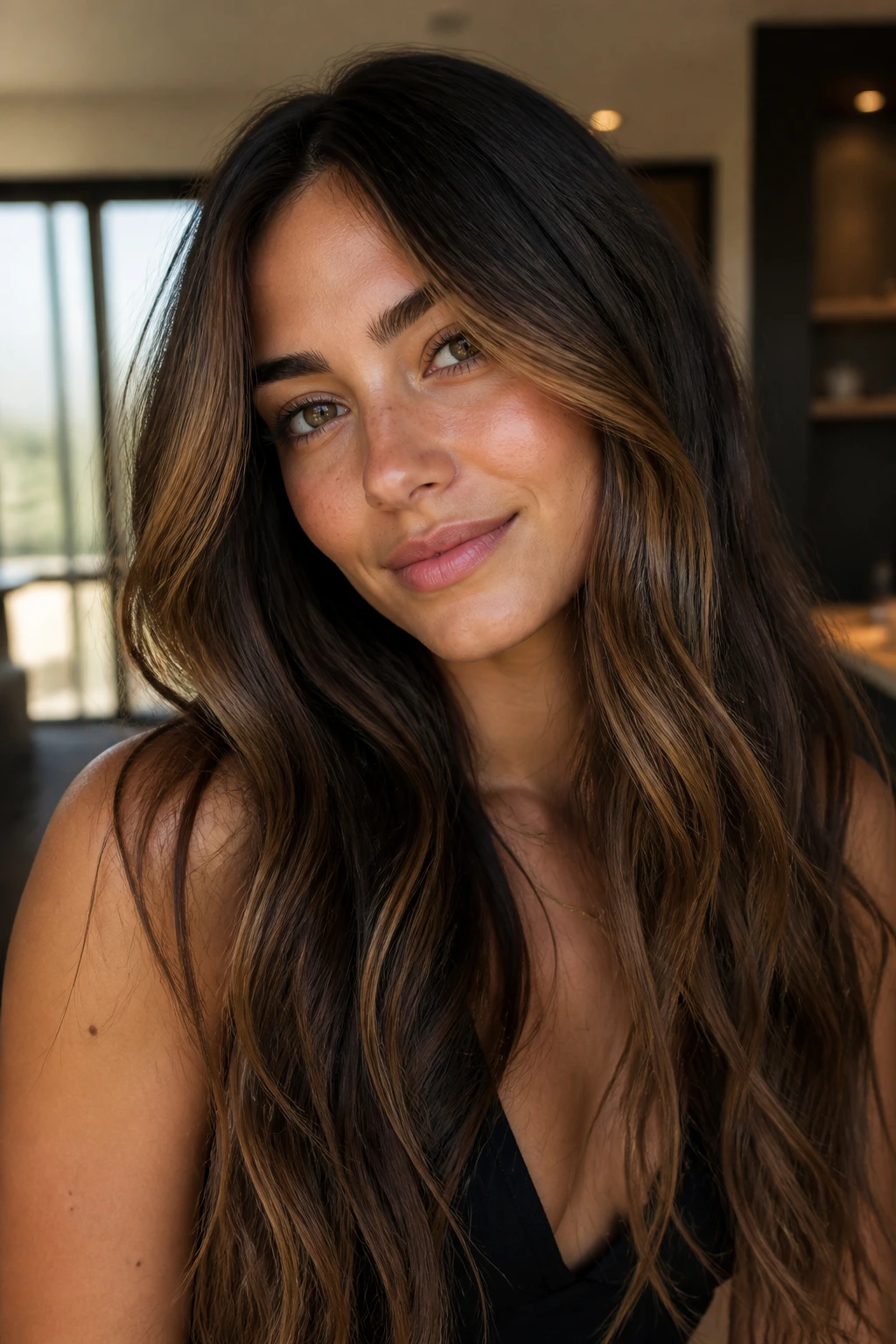
Bronze is the shade that makes dark hair look touched by warm light. It has more shine than straight brown and more depth than caramel, which gives the front pieces a reflective quality that can be very flattering around the cheeks and temples. If your skin likes gold jewelry, bronze highlights usually make sense.
Why It Works
Bronze works because it picks up both warm and neutral undertones in the hair. On a dark base, it can look like a burnished edge rather than a color shift, especially when it’s placed in narrow bands through the front layers. The look is richer if you keep the rest of the hair dimensional with a few deeper lowlights.
I especially like bronze on longer layered hair. When the pieces fall over the shoulders, the shimmer shows up in a softer way than it does on a blunt cut. It is not a loud look. It’s more like the hair has been polished with warm light.
10. Ash Brown Peekaboo Frame
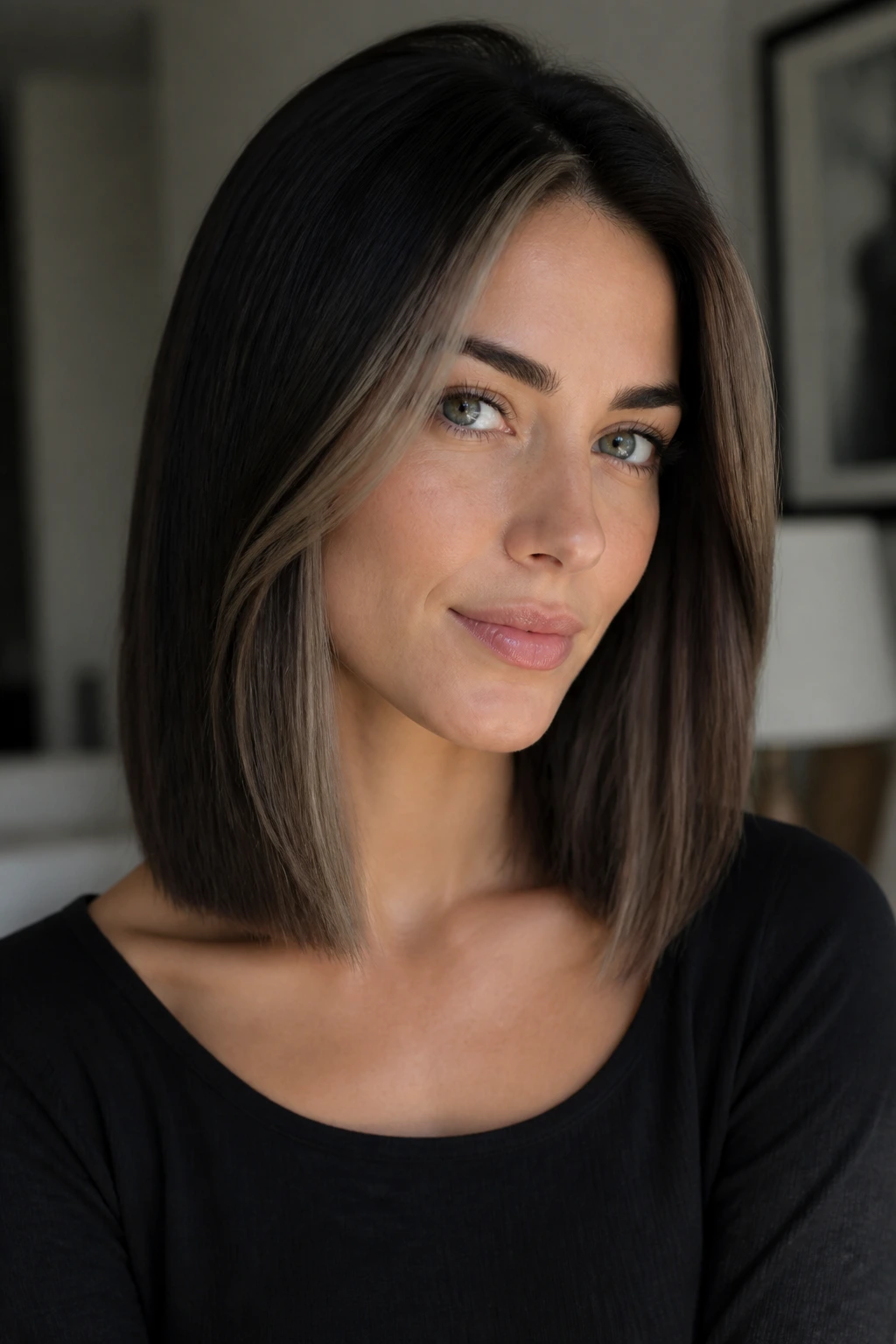
Ash brown front pieces are for brunettes who do not want warmth barging in at the hairline. The color sits cooler, sometimes almost smoky, and that gives the face frame a more modern edge. Because the brightness is kept narrow and tucked near the front, the look can stay understated until the hair moves.
Why It Works
Ash brown is useful when your natural hair pulls orange the second it is lightened. Instead of fighting that warmth with more warmth, you lean into a cool brown gloss that keeps the result soft. The peekaboo approach means the light pieces are not stacked everywhere; they peek out through motion, which keeps the look from feeling harsh.
This is one of my favorite choices for straight, blunt cuts and sharp parts. The contrast between the cut and the smoky front pieces can be striking in a good way. If your skin tone skews cool or neutral, this style often sits better than honey, bronze, or caramel.
11. Sable and Sand Face Frame
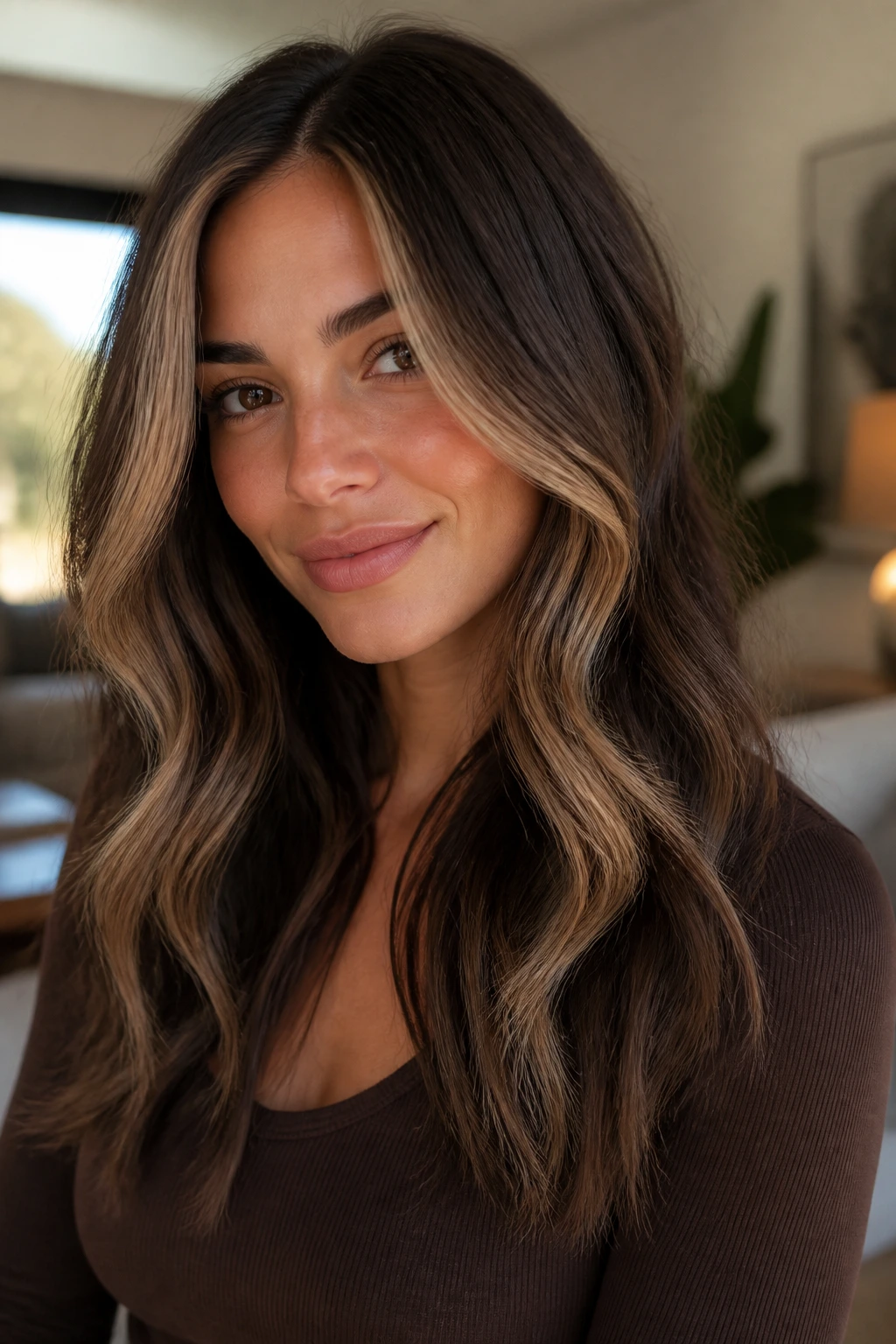
Sable and sand is a two-tone brunette setup that feels balanced and grown-up. Sable gives you the deeper base, while the sandier front pieces brighten the face without turning the whole hairline blonde. It’s the kind of color story that looks deliberate because the contrast is controlled.
Why It Works
The darker sable shade keeps the overall depth intact, so the lighter front pieces do not take over. That matters on dark hair. When the base stays rich, the face frame can be lighter and still feel grounded. This is a strong option if you like your brunette to look full, glossy, and thick.
It also works well on thick hair that can swallow color. A brighter front piece can get lost in dense strands unless the base is deep enough to support it. Sable and sand solves that by keeping the structure visible. I’d choose this if you want dimension that looks tailored rather than breezy.
12. Maple Syrup Halo
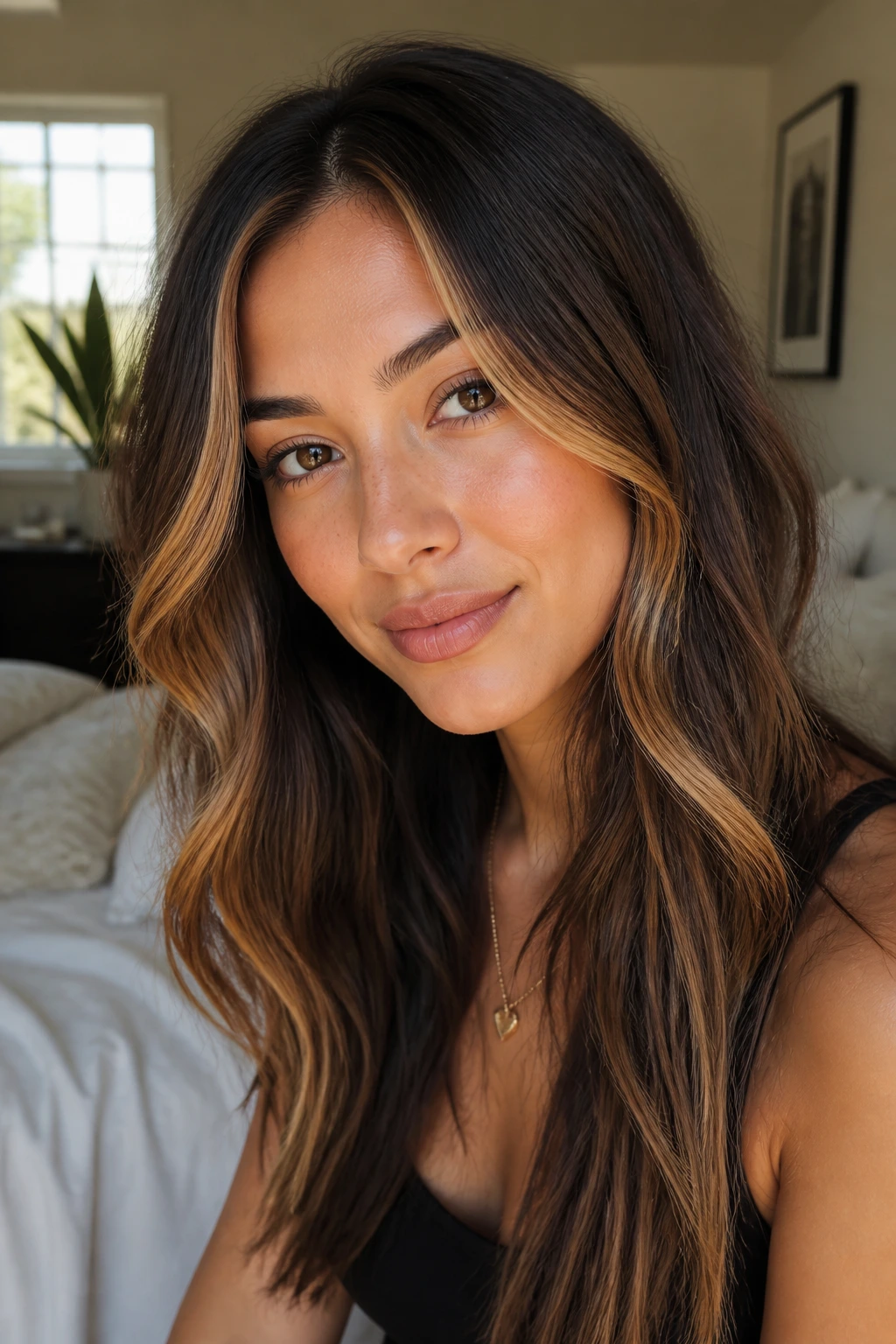
Maple syrup highlights wrap warmth around the face in a soft halo instead of a hard stripe. The tone leans golden-brown with a sticky, glossy richness that reads beautifully on dark hair when the placement follows the curve of the head. It’s one of the easiest ways to make a brunette look sunnier without losing depth.
Why It Works
The halo shape matters because it distributes brightness around the temples, part line, and front layers instead of concentrating everything in one money piece. That gives a gentler effect, especially on curly and coily textures where a single stripe can look too rigid.
I’d pick maple syrup if you like warm makeup, golden jewelry, or a strong blowout. The color echoes that same warmth and makes the whole look feel connected. If you run cooler in your skin tone, keep the pieces softer and ask for a beige-gold finish rather than anything amber-heavy.
13. Smoky Brunette Curtain Pieces
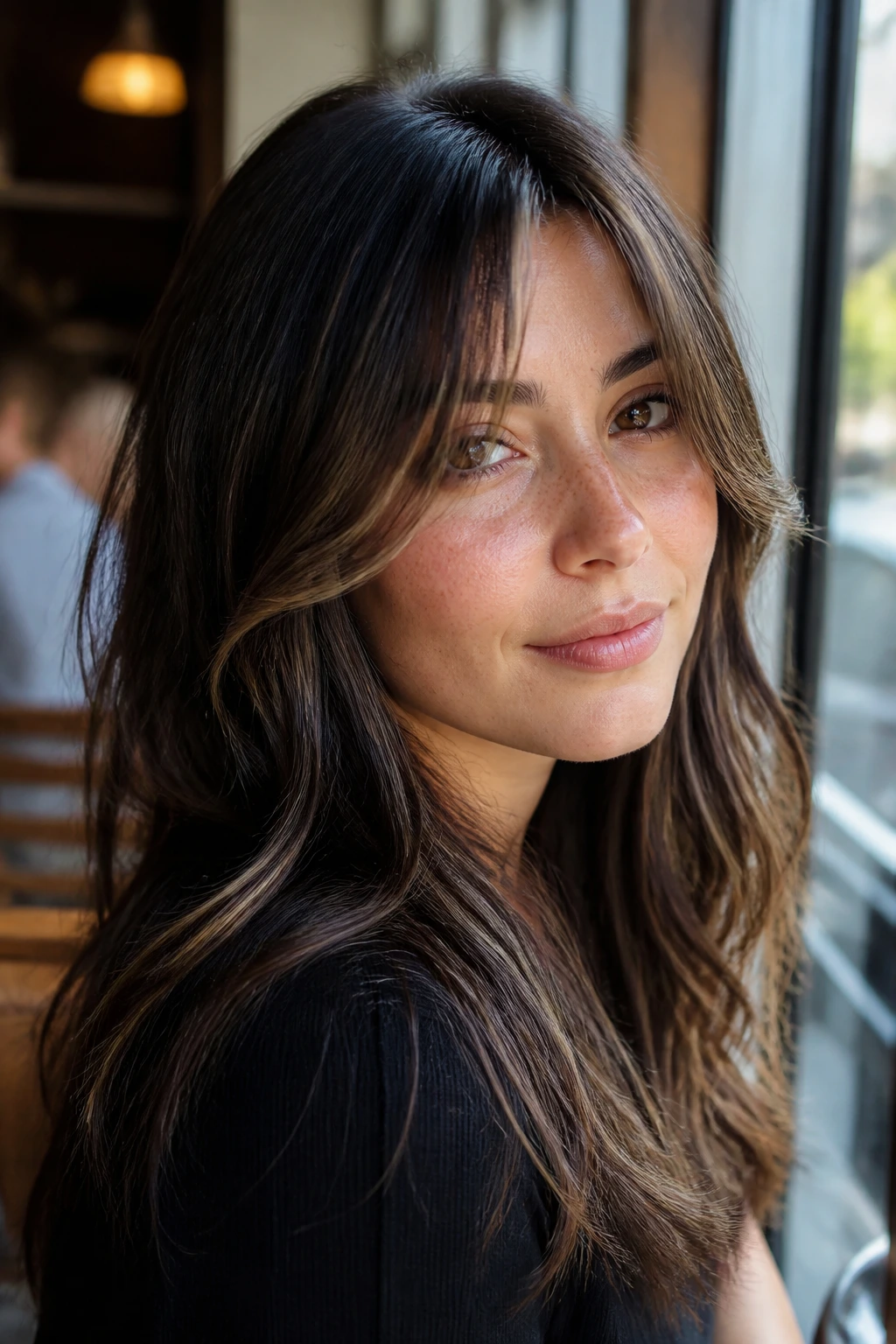
Smoky brunette curtain pieces are made for curtain bangs and face-framing layers that need a little definition. The color is soft, muted, and slightly cool, which stops the front sections from looking heavy around the eyes. On dark hair, it gives shape more than brightness, and that can be a very good thing.
Why It Works
Curtain bangs need color that follows the movement of the haircut. Too much lightness can make them look disconnected from the rest of the hair. Smoky brunette keeps the front soft while still lifting the area that frames the eyes and cheekbones.
I like this look on longer shags and layered cuts where the bangs and front lengths blend together. The color should be fine and airy, not chunky. If you want the pieces to show more, style the bangs with a round brush or a quick bend at the ends. Air-dried bangs can swallow the detail.
14. Toffee Edge Lights
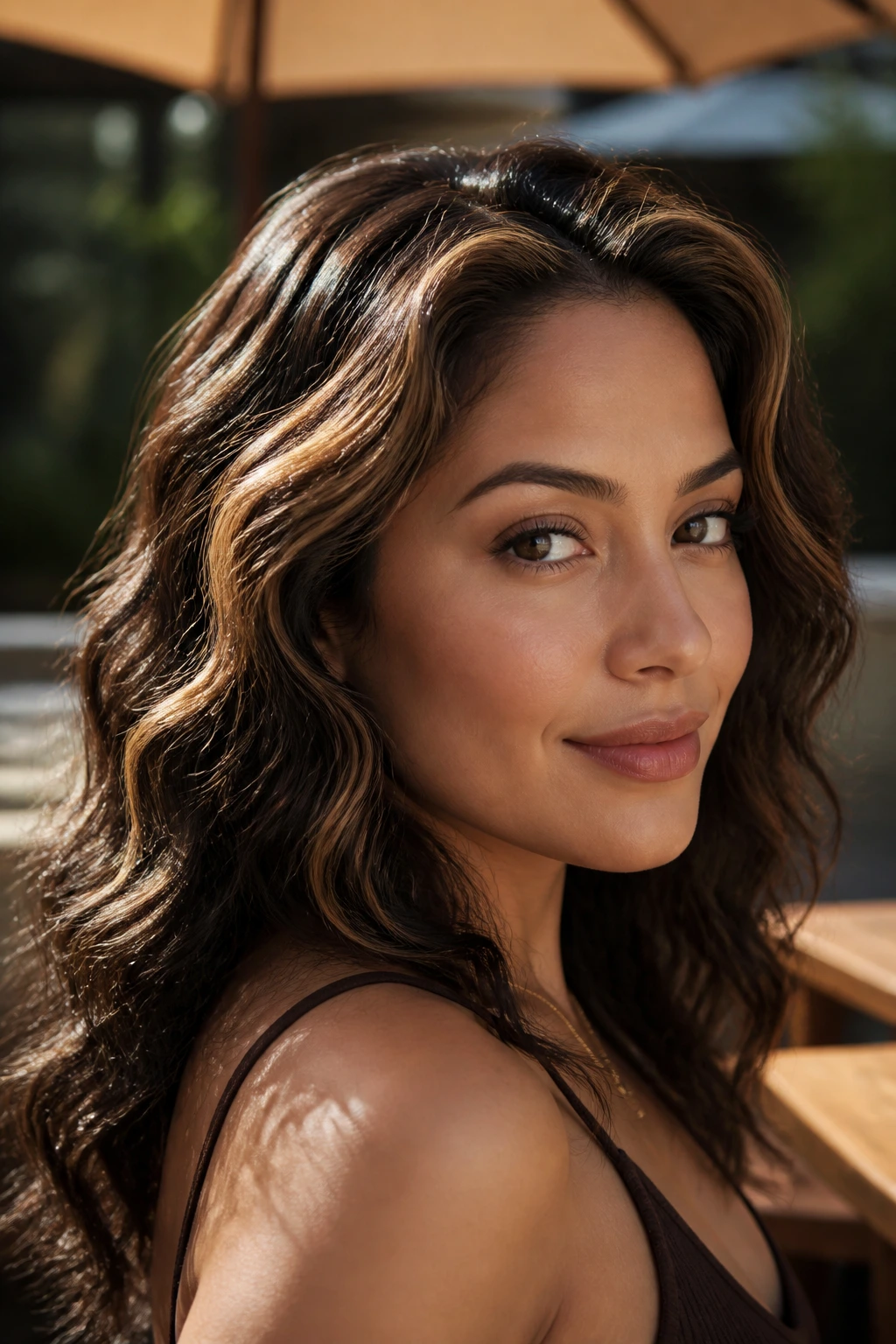
Toffee edge lights add a sweeter, slightly brighter brown around the perimeter of the hairline. They are a bit bolder than chestnut and a bit softer than caramel. On dark hair, they can make curls, coils, and blowouts look fuller because the lighter pieces trace the outside shape of the haircut.
Why It Works
Edge lights are useful when the front of the hair is dense or when the haircut has lots of movement around the face. The toffee tone gives you visible contrast, but because it sits near the edges instead of in one thick panel, it feels more blended.
This is one of the best options for curly hair, where face-framing pieces can get lost unless they are placed with intent. The toffee shade catches on the twists and bends of curls, making the shape read clearly. If the hair is fine, keep the pieces narrow. If the hair is thick, the color can handle a little more width.
15. Cool Beige Brunette Frame
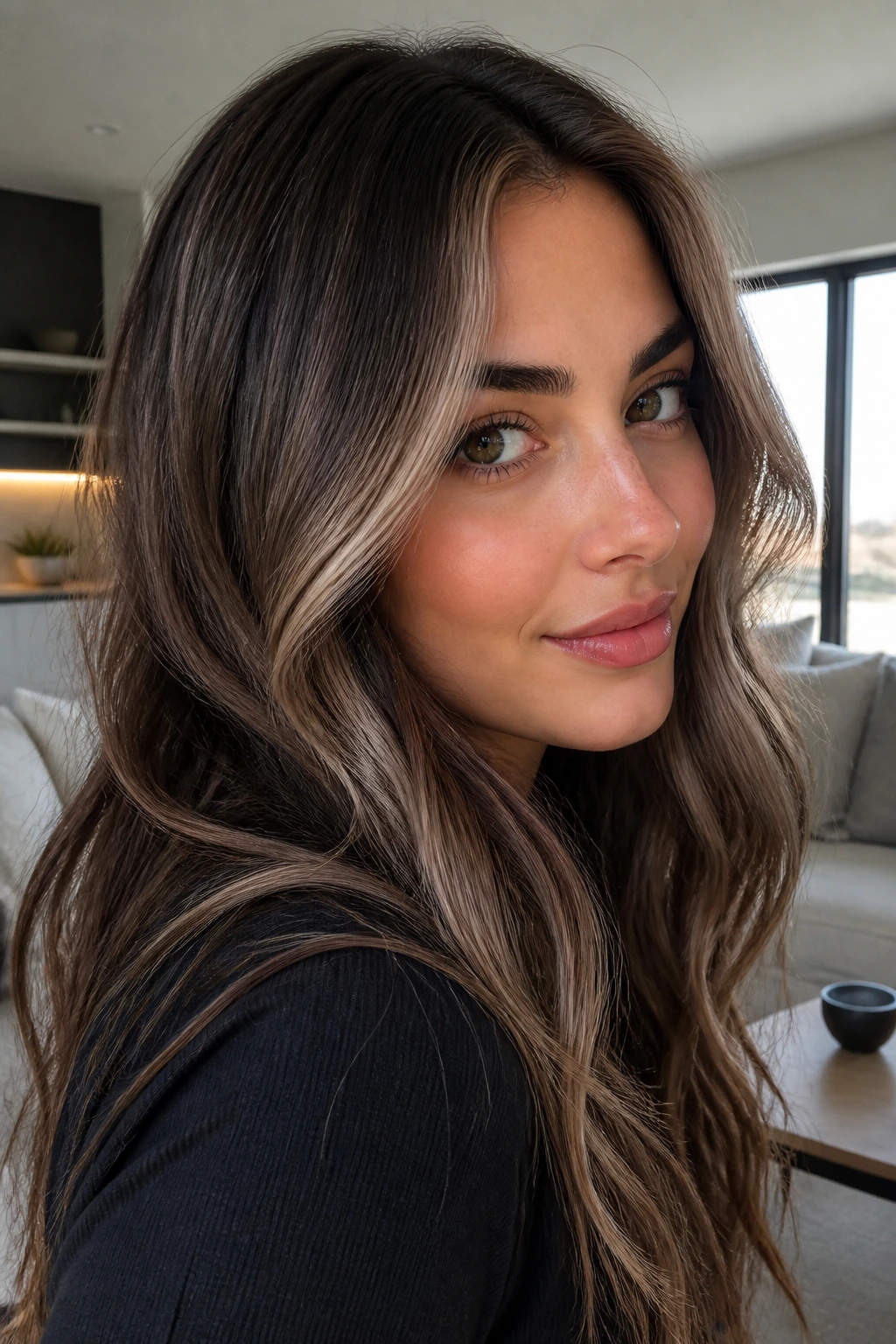
Cool beige brunette is the neat, polished cousin of warmer highlight shades. It does not scream for attention. It sits in a muted brown-beige lane that looks crisp on dark hair and can make the face appear brighter without introducing gold or copper.
Why It Works
Beige brunette works because it softens contrast without flattening it. The color is light enough to change the front of the haircut, but cool enough to avoid the orange shift that dark hair often throws after lightening. It is a useful choice when you want the front to look refined rather than sun-kissed.
This shade is especially nice on straight or softly waved hair where the tone can stay clean. A gloss between appointments helps keep the beige from turning dull. And if your hair has previously been colored warm, ask for a cooler finish than you think you need. Warm undertones creep back faster than most people expect.
16. Hazelnut Melt Around the Face
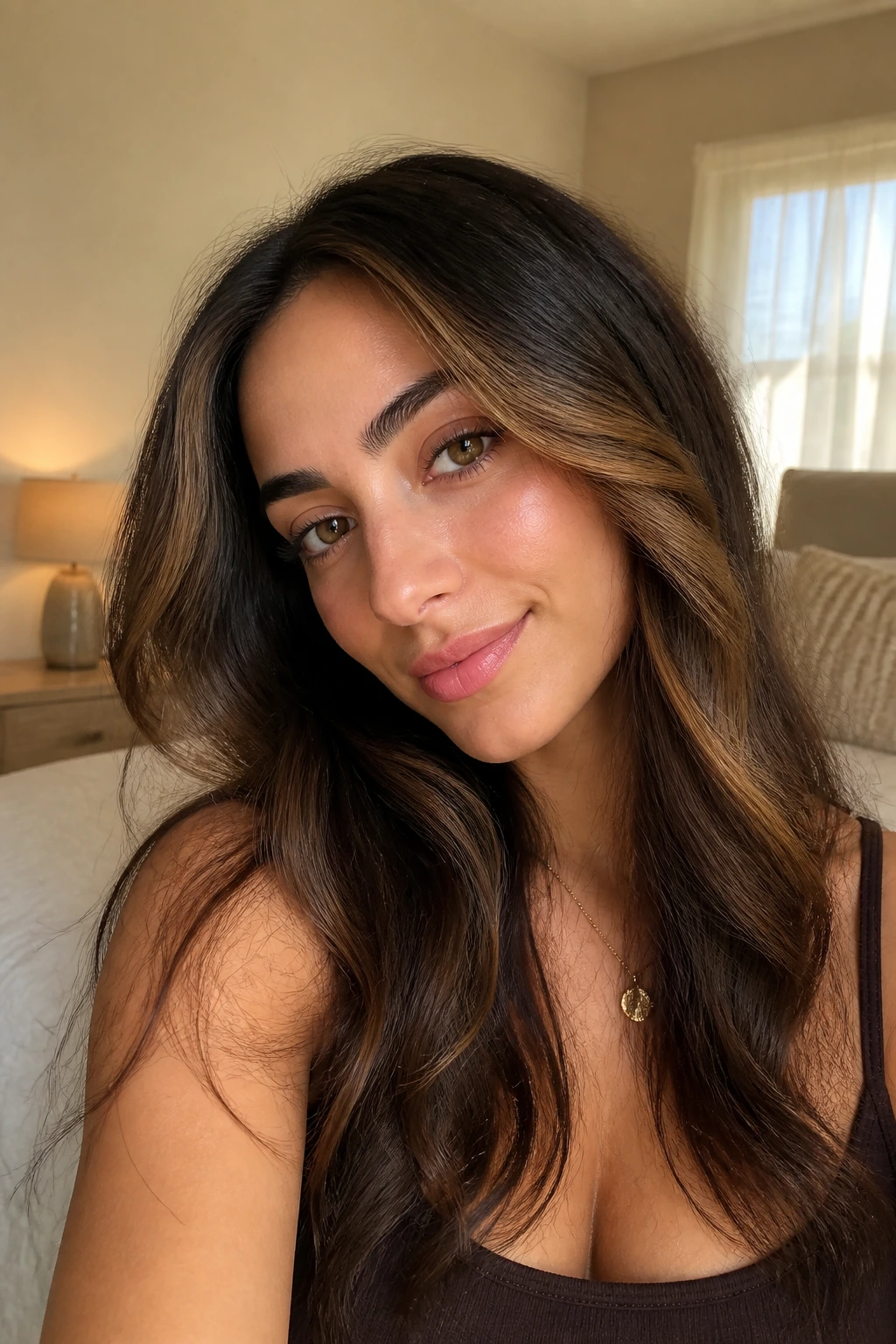
Hazelnut highlights are warmer than beige and softer than full caramel. They melt around the face rather than sitting in one defined ribbon, which gives the hair a smooth, blended finish. On dark brunettes, the color creates a subtle halo that feels easy and flattering.
Why It Works
The melt is the whole point. Instead of sharp saturation, the front pieces shift gently from the base into hazelnut and back again. That makes the style easier to wear if you do not want obvious striping or frequent toner visits.
It also works nicely with layers that start below the cheekbone. The front pieces can drape across the face without looking separate from the rest of the hair. I’d choose hazelnut when the goal is a softer, less edited brunette. It’s not dramatic. It just makes the hair look more alive.
17. Walnut Foilayage Frame
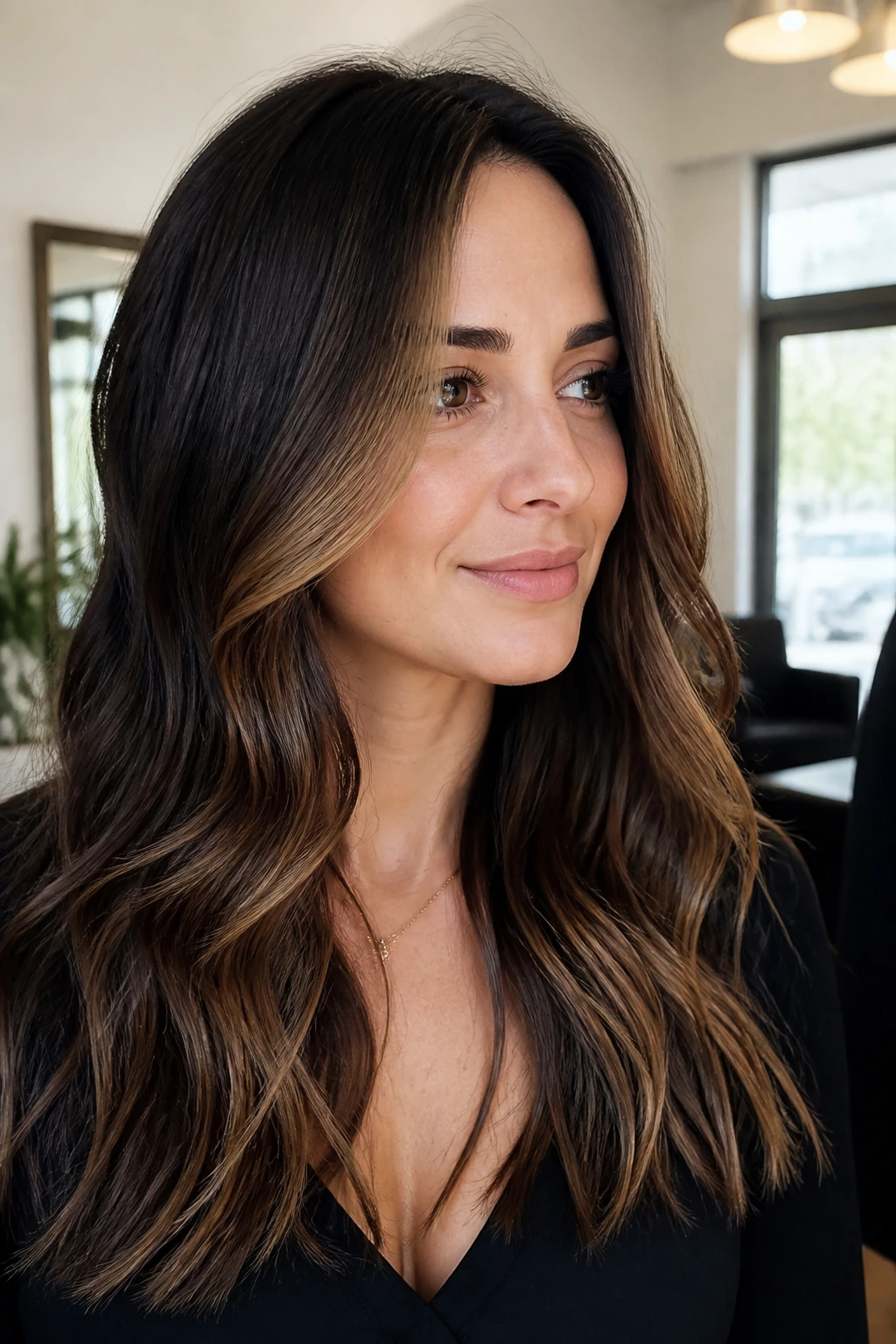
Walnut foilayage has a more precise, salon-made feel than some of the softer looks in this list. The shade stays in the deep brown family, but the foilayage placement lets the light pieces sit exactly where the face needs lift. On dark hair, that can give a very clean contour.
Why It Works
Foilayage gives you both lift and softness. The foil helps the front pieces get bright enough to show, while the balayage-style painting keeps the edges from looking too hard. Walnut as a tone keeps the whole thing grounded, so it reads as dimensional brunette instead of highlighted brown hair trying to become blonde.
This is a strong option if you wear a side part or change your part often. The brighter pieces can be placed to follow your usual direction, and that makes the hair feel custom. If your hair is dark and resistant, walnut foilayage usually gets more visible contrast than open-air painting alone.
18. Velvety Cappuccino Highlights
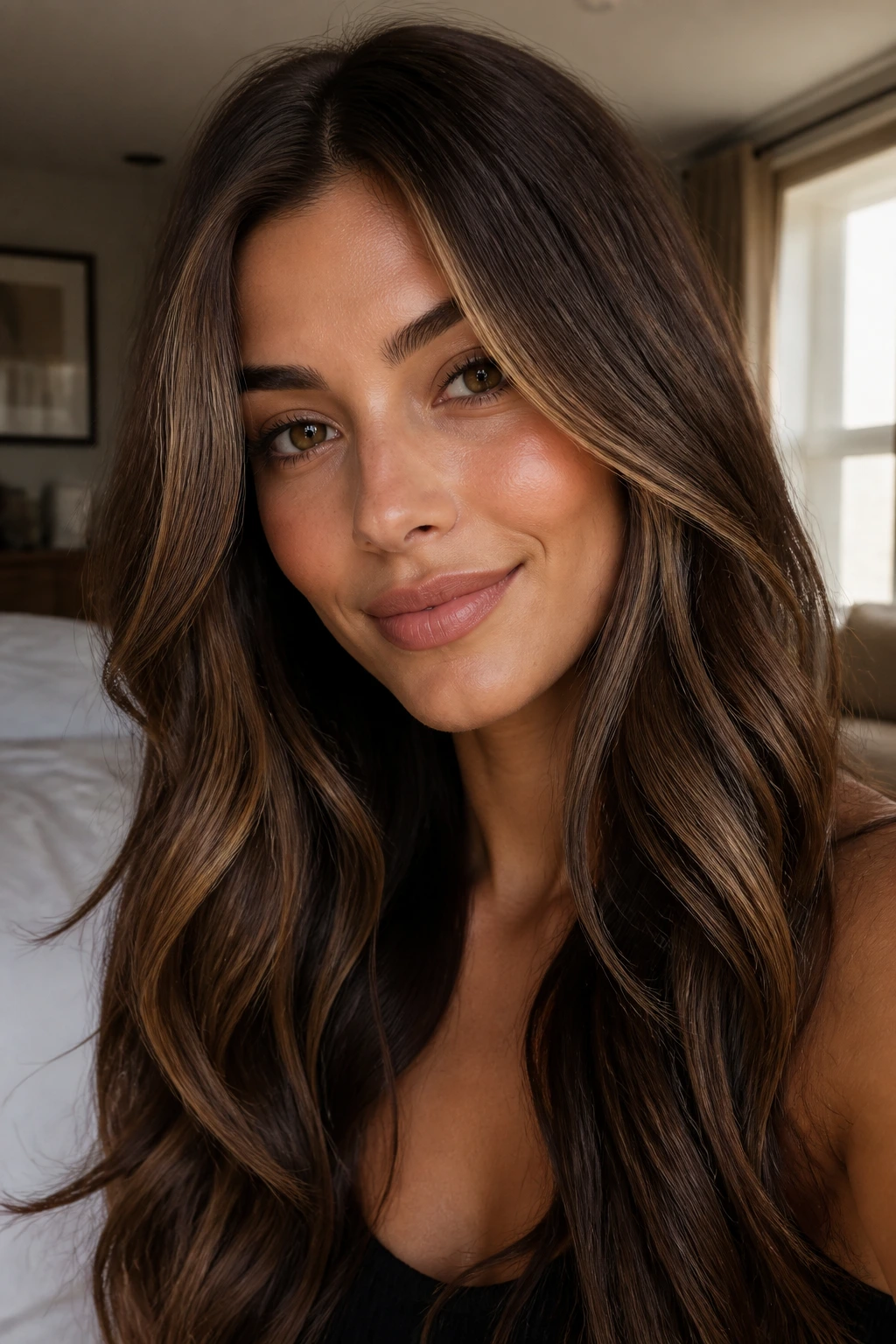
Velvety cappuccino is one of the prettiest brown face-framing looks for people who want softness over flash. The color has a creamy coffee tone that sits somewhere between beige, brown, and muted tan, and the result can look very smooth on dark hair. It is a favorite of mine for sleek blowouts.
Why It Works
Cappuccino tones help the front pieces reflect light instead of just lifting in level. That matters a lot on brunettes, where a flat highlight can look dusty if the tone is off. The velvety finish keeps the color plush rather than chalky.
This look is especially good for medium-length hair with movement through the ends. The highlight pieces can curve around the face and then fade into the lengths without a hard break. If you like polished hair that still feels soft, this is one of the easiest shades to wear.
19. Mulled Spice Front Pieces
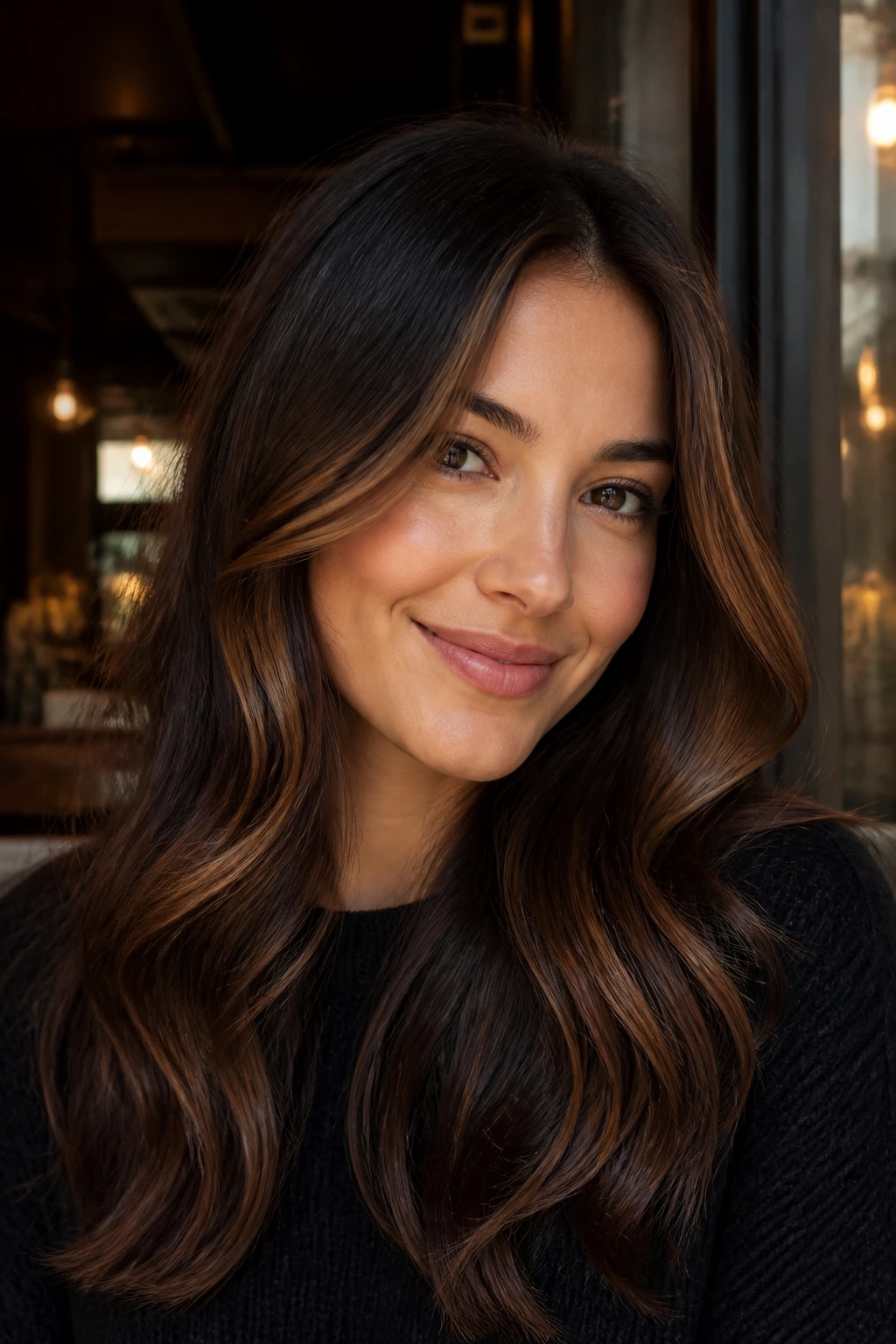
Mulled spice is warm, layered, and a little more dimensional than straight caramel. Think cinnamon, clove, nutmeg, and cocoa mixed into one brunette palette. The front pieces end up looking rich rather than bright, which is a good thing when you want warmth but not a heavy gold effect.
Why It Works
The shade is built for depth. Instead of one flat color, the front has enough tonal variation to keep dark hair from looking one-note. That helps especially if your natural brunette already carries some warmth and you want to enhance it rather than fight it.
I like this one on wavy hair and layered cuts because the tones show up in different places as the hair moves. The color can look deeper in shadow and warmer in daylight, which gives it a lived-in quality. It is a little more nuanced than a basic caramel front piece, and that’s exactly why it works.
20. Bark Brown Contour Lines
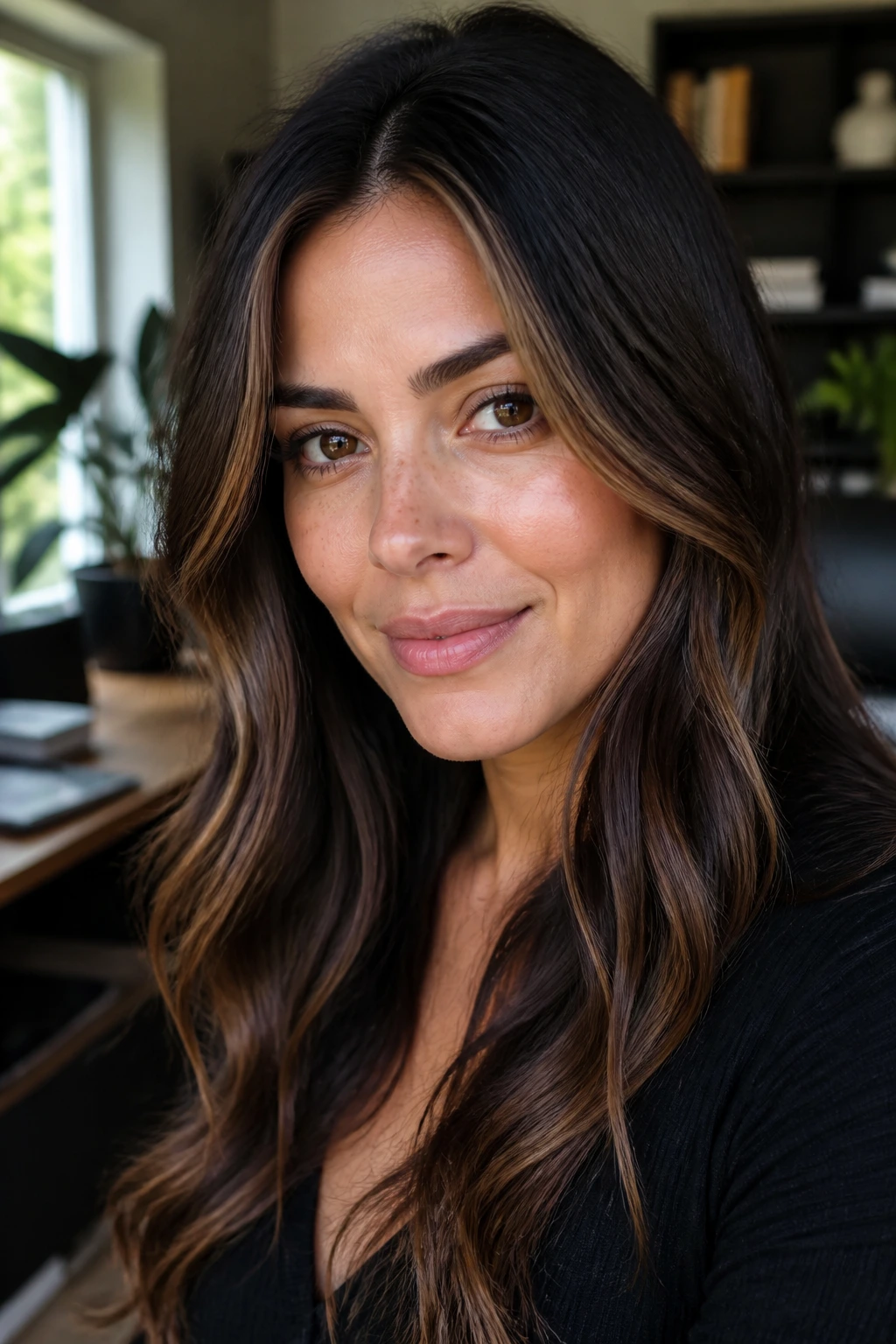
Bark brown contour lines are subtle to the point of being almost stealthy, but they do a lot of work. The lighter pieces are narrow, close to the face, and kept within the same brown family so the result feels sculpted rather than obvious. If you want dimension without announcing it, this is a smart direction.
Why It Works
Because the lift stays close to the base, bark brown can make hair look thicker rather than lighter. That’s useful on fine hair, where a heavy highlight can expose too much scalp or thin out the visual weight at the hairline. The contour line approach gives just enough change to frame the features.
This is also a good match for office-friendly color rules or a wardrobe that leans neutral and structured. The hair reads polished, not flashy. And if you style with a deep side part, the front contour can shift the whole face shape in a very small but noticeable way.
21. Deep Cocoa Slice Highlights
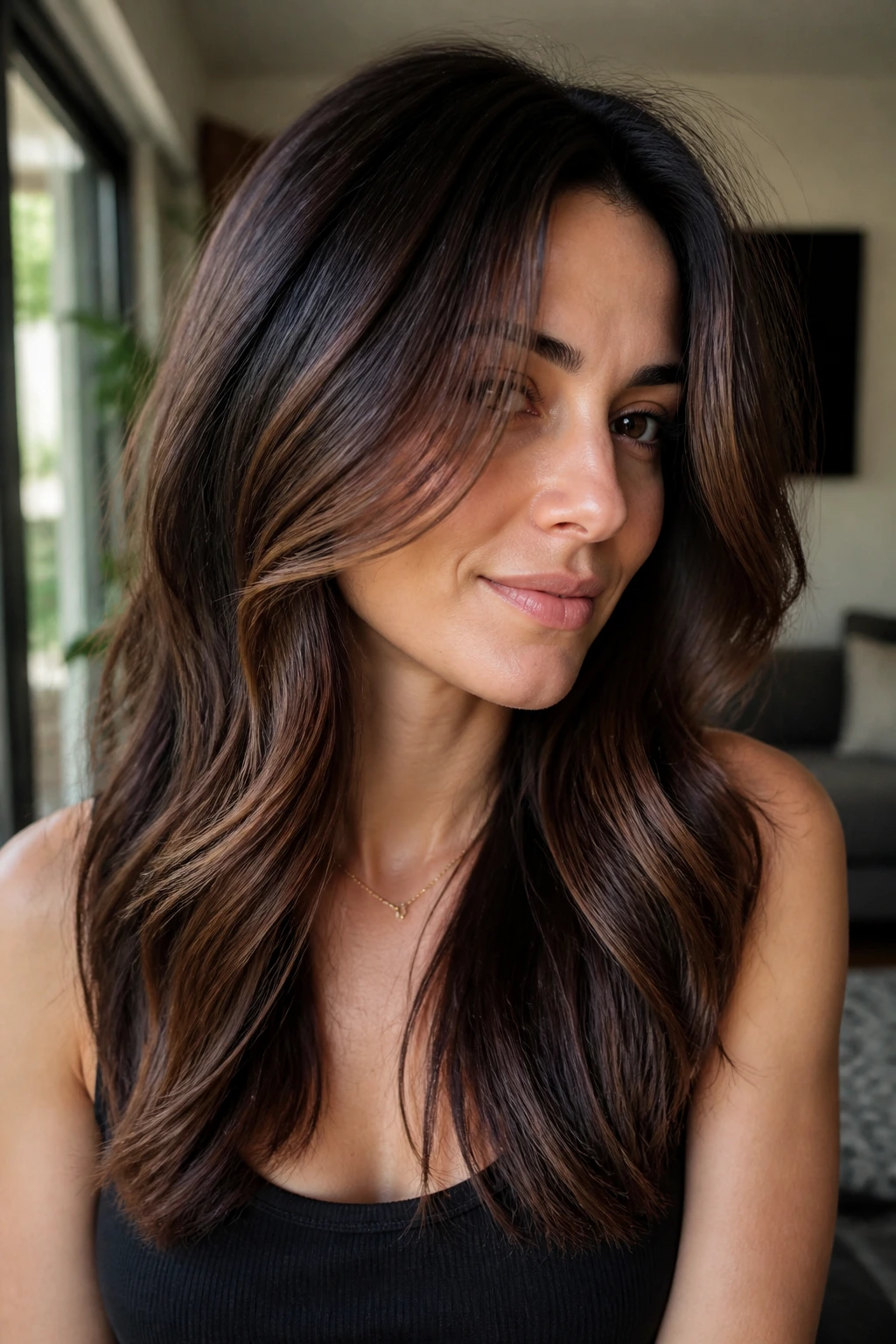
Deep cocoa slice highlights are the darker end of the brown highlight spectrum. They are narrow enough to frame the face, but deep enough to stay grounded against very dark hair. The result is more about movement and separation than brightness.
Why It Works
A deep cocoa slice can break up a heavy brunette base without changing the overall mood of the hair. That’s useful if your hair already has a lot of richness and you just need shape around the face. The slices add enough variation to keep the front from looking like one solid block.
This look is especially good on dense, thick hair that needs visual separation. A few cocoa-toned slices can keep the front from swallowing your features, especially when the hair is worn down and full. It’s understated, but not weak. There’s a difference.
22. Latte Swirl Face Frame
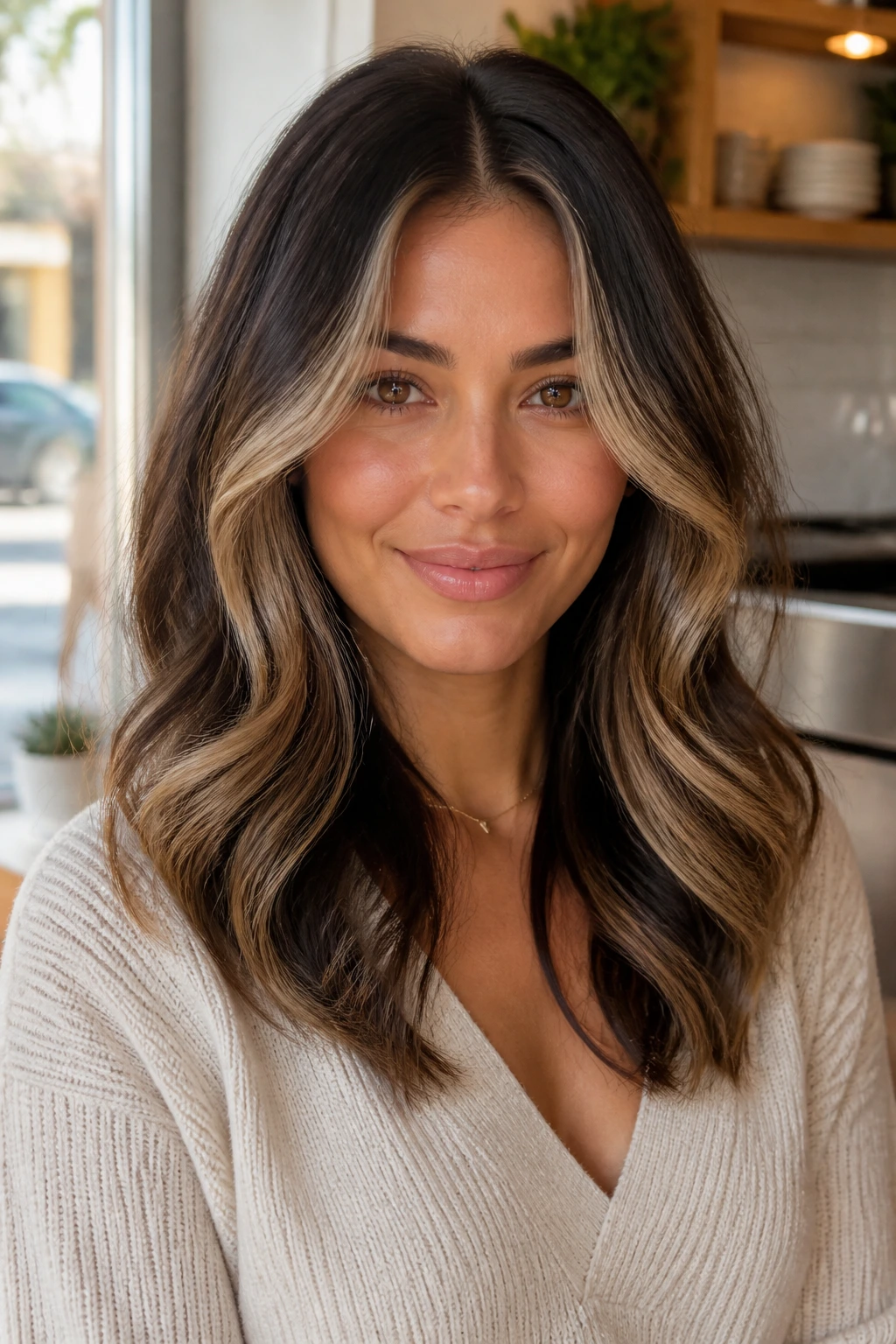
Latte swirl highlights are softer and creamier than strong caramel pieces. They spiral through the front sections in a way that makes the hair look mixed rather than streaked. On dark hair, they can brighten the face without breaking the brunette mood.
Why It Works
The swirl effect works because the pieces are placed with some variation in width and direction. That gives the hair a more natural rhythm, especially on layered cuts or soft waves. If all the front pieces are the same size, the look can turn stripey fast. Latte swirl keeps it airy.
I’d choose this if your hair tends to fall forward around the face and you want the color to move with it. It looks especially nice when the ends are lightly bent under or away from the face. The tonal shift is gentle, but the overall effect is clean.
23. Smoky Caramel Lowlights with Light Front Pieces
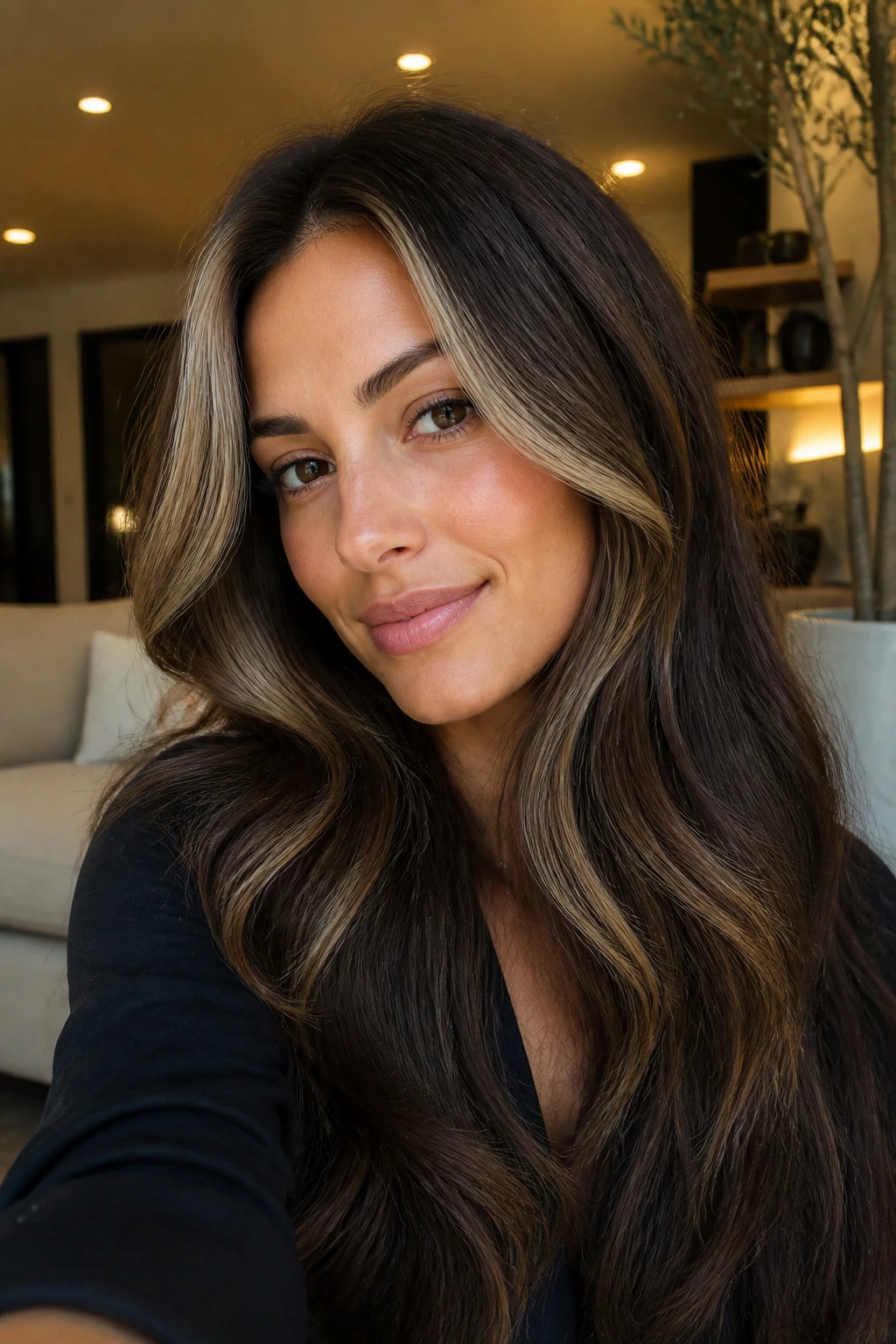
This one mixes depth and brightness instead of chasing brightness alone. Smoky caramel lowlights deepen some of the front and side sections, while lighter face-framing pieces sit on top to keep the face bright. On dark hair, that combo gives a more expensive finish than highlights alone.
Why It Works
Adding lowlights near the front can stop a highlight from looking too thin or too bright against dark roots. The smoky caramel keeps the contrast layered, which makes the hair look fuller. It also helps if your base has already been lightened and you want the front to regain some depth.
This is a strong choice for layered brunettes who want the haircut to hold its shape. The darker ribbons support the lighter ones. Without them, the front can look flat once the toner fades. With them, the color holds together longer between appointments.
24. Dark Chocolate and Sand Money Piece
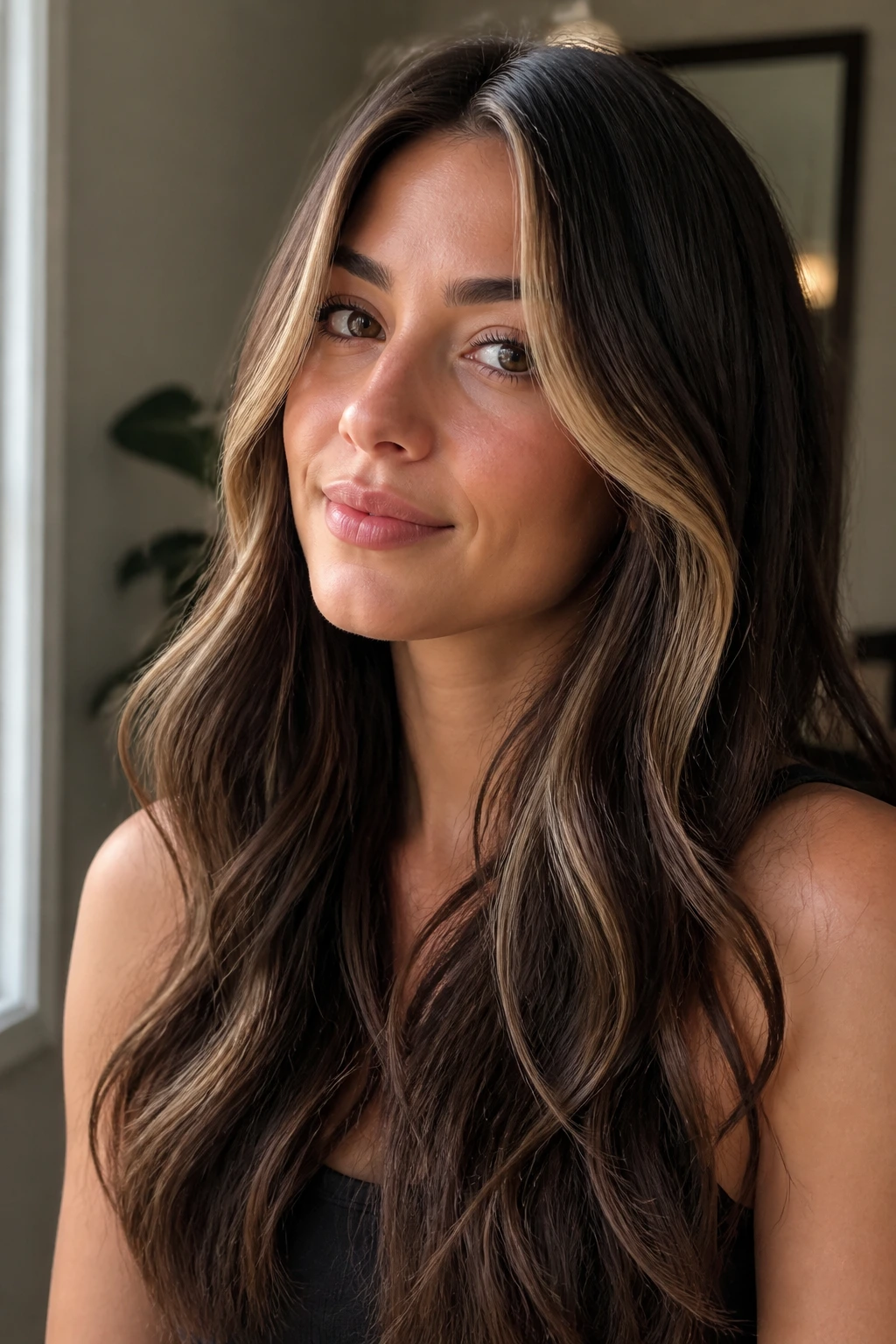
Dark chocolate and sand is the high-contrast version of a brunette money piece, but it still stays in the brown family. The dark chocolate base keeps everything anchored, while the sandier front panel brings in enough light to define the face. It has more punch than mocha and more clarity than hazelnut.
Why It Works
The contrast is controlled by placement. If the sand piece is kept narrow and the surrounding chocolate stays rich, the front of the hair looks lifted without losing depth. This is especially useful on very dark brown hair where subtle highlights can vanish.
I like this style on long hair with curtain bangs or face layers because the contrast follows the shape of the cut. It can also soften a strong jawline or balance a heavier forehead area, since the lighter color naturally draws the eye upward. The effect is straightforward, but not boring.
25. Golden Brown Whisper Highlights
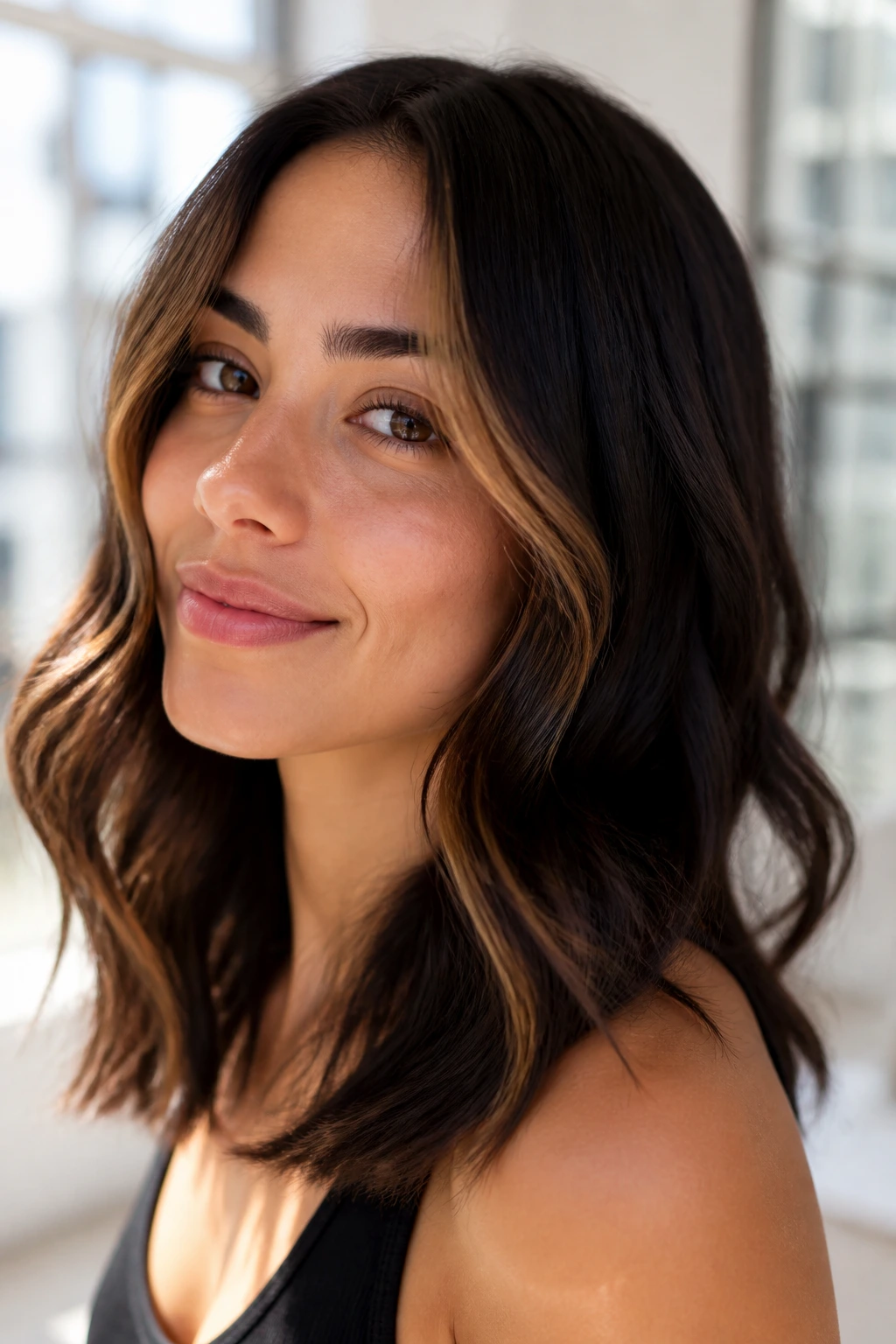
Golden brown whisper highlights are tiny, soft pieces that give dark hair a warm shimmer rather than a full color shift. The tone leans golden, but the placement keeps it whisper-thin, so the look stays refined. It is one of the easiest ways to brighten the face without losing the brunette base.
Why It Works
Fine hair often needs this kind of lightness because thick blocks of color can overwhelm the texture. Whisper highlights move in the opposite direction: narrow, airy, and strategically placed. They make the hair look like it has little flashes of light built into it.
This is a good match for air-dried hair or soft bend styling, where the pieces can break up naturally. If the hair is very dark, the gold may show most in sun or strong indoor light, which is exactly what some people want. If you prefer a stronger effect, ask for a slightly wider ribbon at the front only.
26. Rooted Chestnut Contour
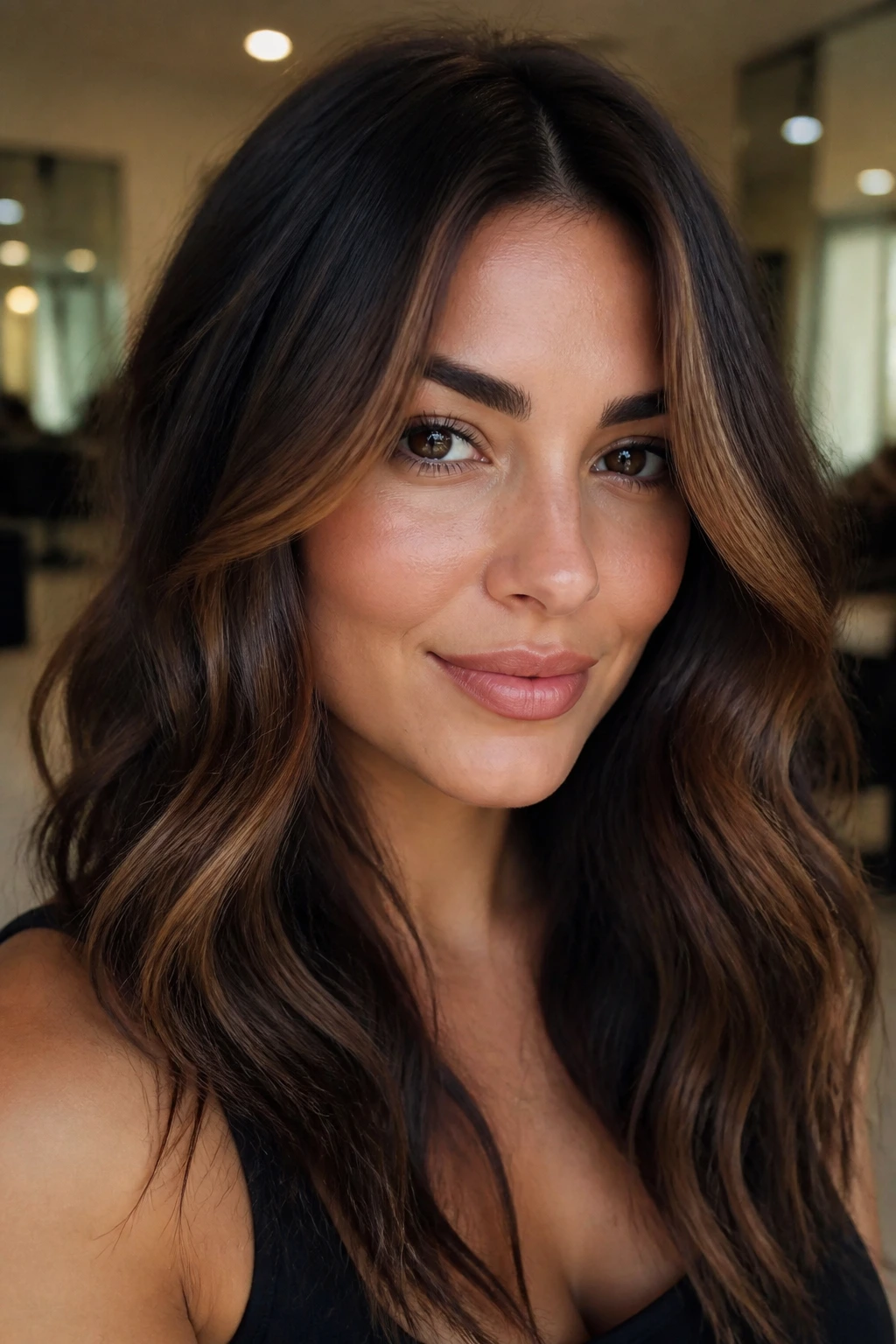
Rooted chestnut contour highlights keep a deep root and a richer chestnut front, which makes the grow-out easy to live with. The root melt prevents the front from looking like a hard streak, and the chestnut tone gives enough warmth to soften the face. It’s a practical version of face-framing color, and I mean that as a compliment.
Why It Works
A rooted finish is especially useful on dark hair that grows fast or tends to show regrowth sharply. The darker root keeps the color from popping off the scalp line, and the chestnut length gives movement through the front layers. You get brightness where you want it, but the maintenance stays sane.
This is one of the better choices if you do not love constant salon visits. It grows back with grace, especially if the root shadow is kept soft and the ends are toned to a natural chestnut brown. The front still looks intentional two or three months later, which is more than you can say for a lot of trendy color jobs.
27. Faded Amber-Brown Frame
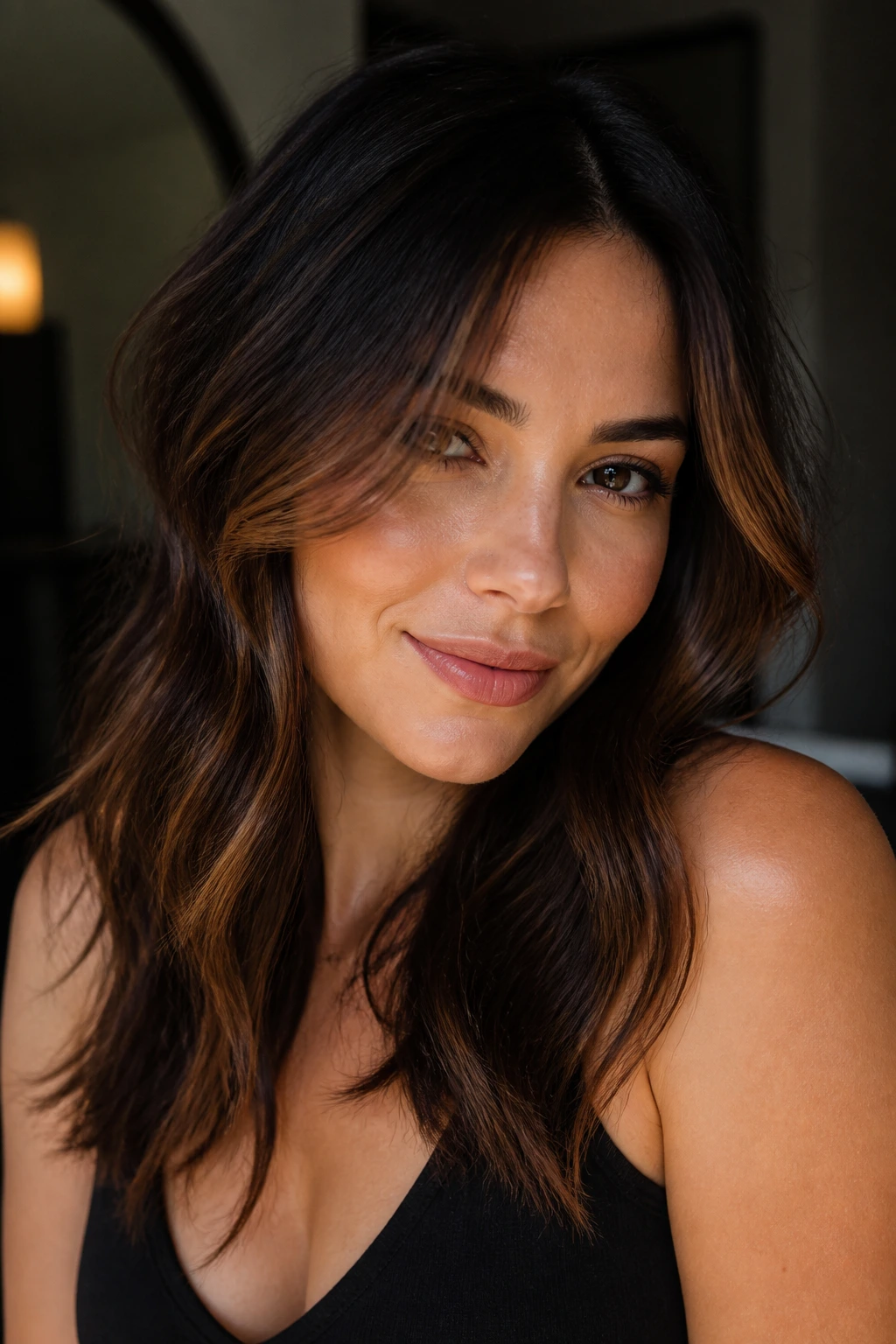
Faded amber-brown is warm, but it keeps the warmth soft enough to feel worn-in instead of loud. The face-framing pieces have a slight amber glow that can make dark hair look sunnier without turning orange. When the tone fades a little, it usually just gets softer, not worse.
Why It Works
That gentle fade is the appeal. Amber tones can drift, but when the base is dark and the pieces are placed carefully, the color tends to settle into a soft brown-warm glow rather than a brassy mess. A good gloss helps, though. I would not skip it.
This is a nice option if your wardrobe has lots of cream, tan, rust, or olive tones. The hair color picks up those shades in a flattering way. It can also be a smart pick if your skin looks better with warmth than ash, but you still want the front to stay brown first and golden second.
28. Satin Brunette Halo
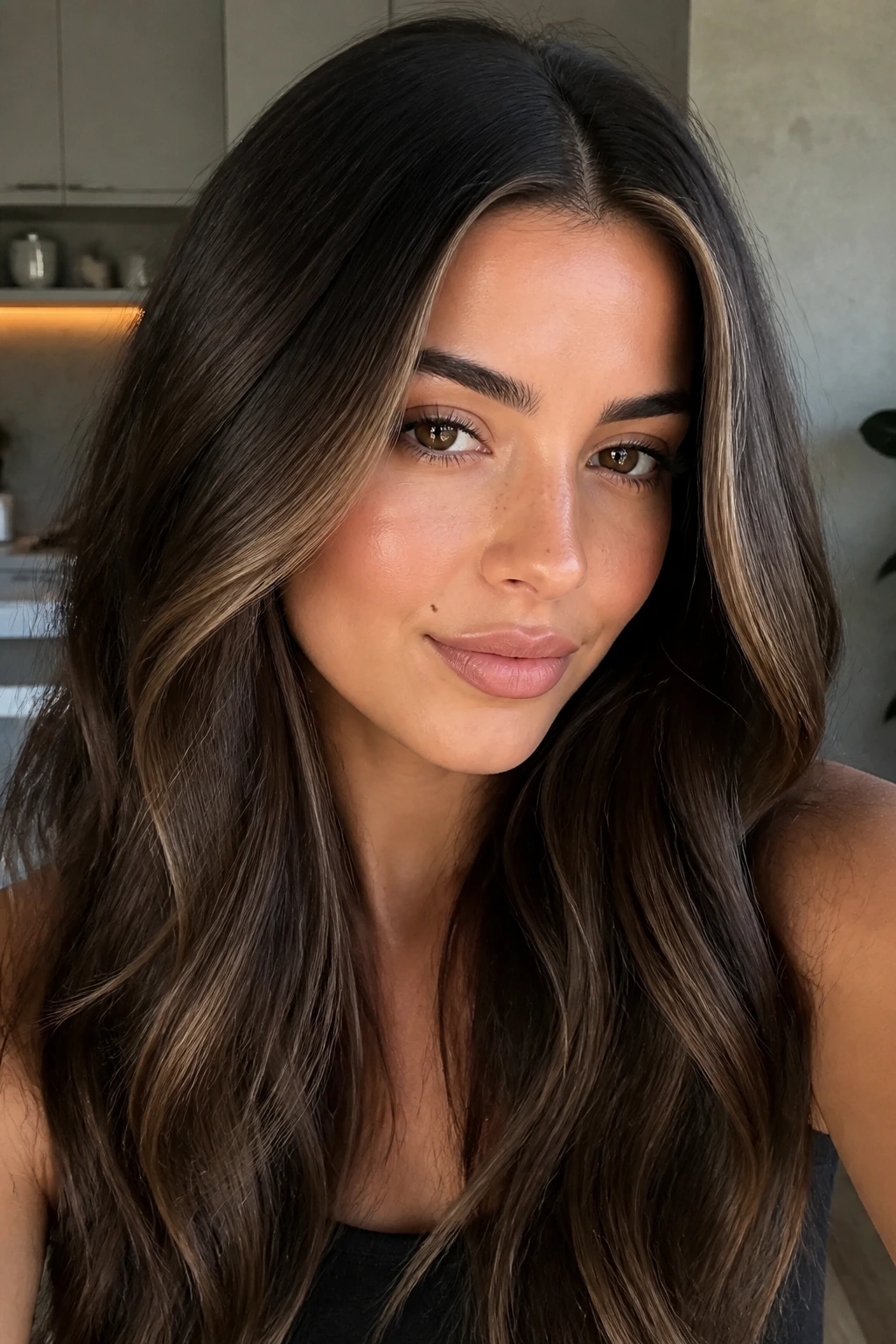
Satin brunette halo is the most polished, glossy finish in the bunch. The color stays within the brunette family, but the face-framing pieces are placed and toned to look smooth, reflective, and soft around the hairline. It has the quiet shine of a good blowout.
Why It Works
The halo shape spreads brightness around the head instead of concentrating it in one stripe. That makes the front look balanced, especially on medium to long hair with layers that wrap around the face. The satin finish also helps the color look expensive in low light, where flat highlights can disappear.
This is the style I’d choose if I wanted brunette hair to look refined without obvious contrast. It works on straight, wavy, and softly curled hair, and it plays especially well with a center part. The look is not about drama. It’s about sheen, shape, and just enough light where the eye wants it.
Why Brown Face-Framing Highlights Work So Well on Dark Hair
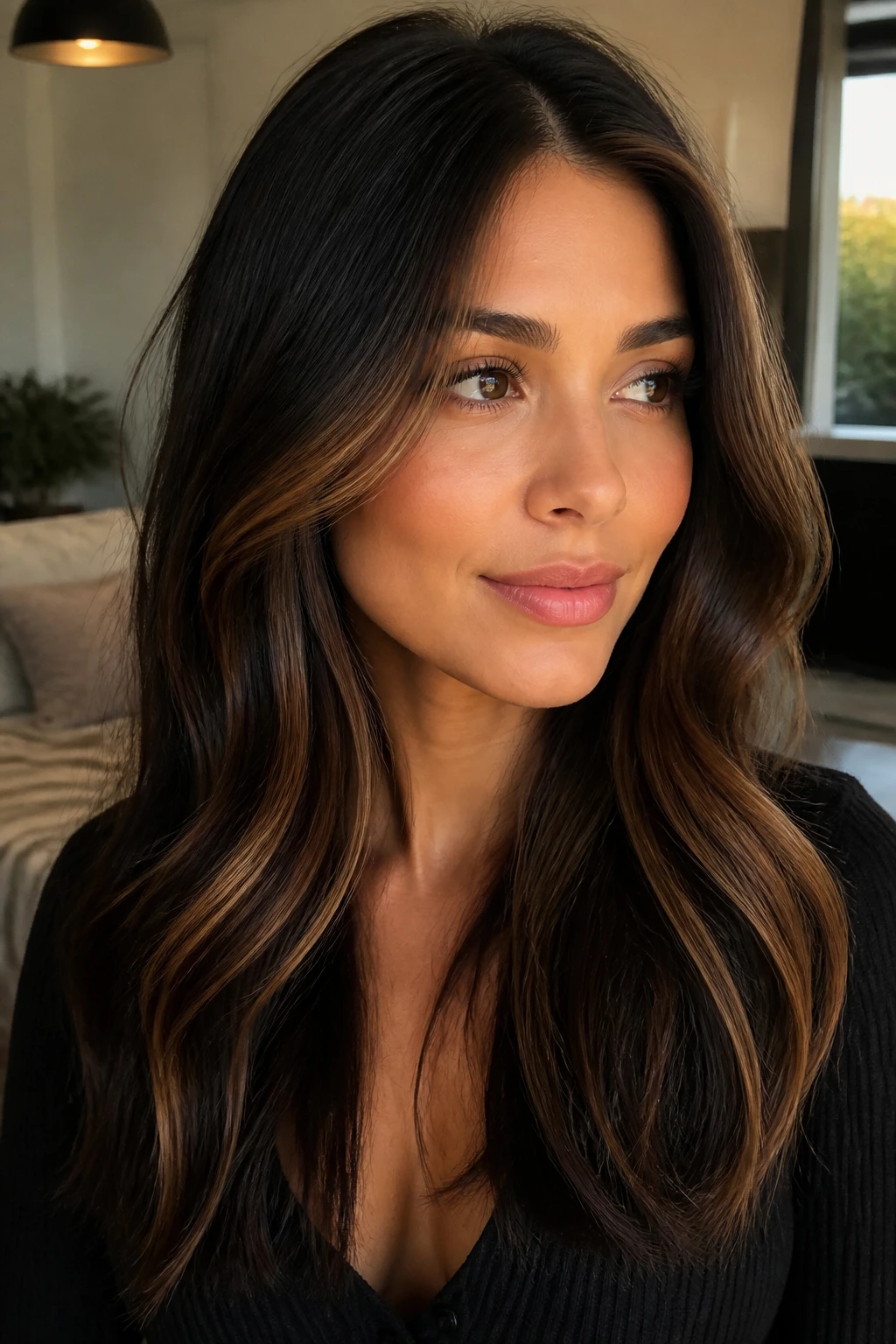
The front of the hair is where people notice movement first. A few lighter strands near the temples, cheekbones, and part line can change the whole read of a dark base because those pieces sit closest to the skin and catch light from every angle. That’s why brown face frame highlights for dark hair often feel more noticeable than a scattering of lighter strands hidden underneath.
The other thing that makes this category work is restraint. Full-head brightness can flatten a brunette if the contrast is too wide or the tone leans wrong. A face frame keeps the depth where you want it and places the light where it matters. You get shape. You get dimension. You do not lose the richness that makes dark hair look expensive in the first place.
It also gives you room to choose your mood. Warm brunettes can lean caramel, bronze, or chestnut. Cooler brunettes can go mushroom, ash, beige, or smoky mocha. And if you’re sitting there wondering whether your base is too dark for this kind of thing, the answer is usually no — the trick is choosing the right level and the right gloss, not trying to force blonde where brown would look better.
Tools and Products That Make the Color Sit Right
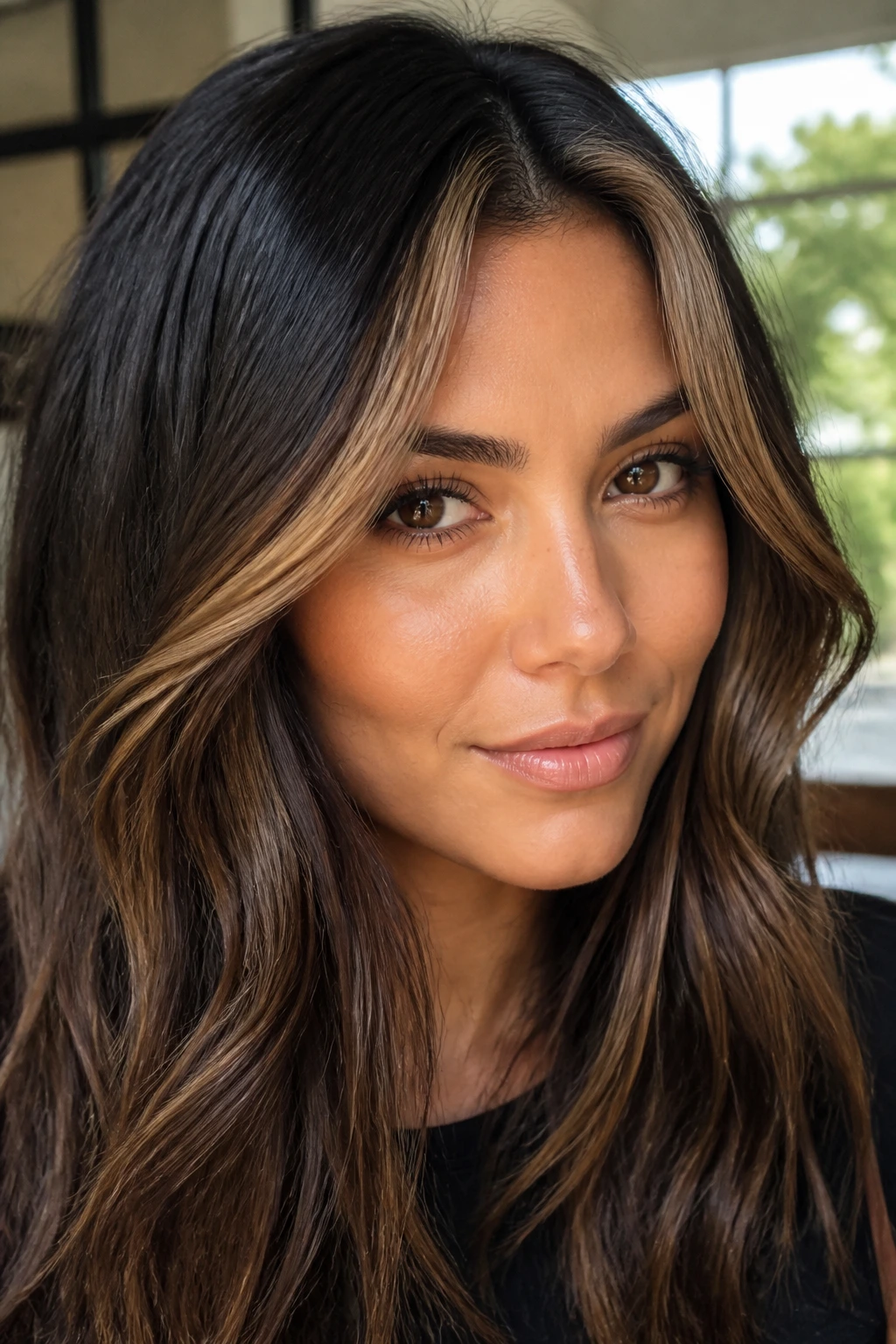
You do not need a closet full of products to wear this look well, but a few things make a real difference. The front pieces tend to show dryness and brass faster than the rest of the hair, which is annoying and, honestly, a little unfair. So the styling and care tools matter.
- Color-safe shampoo: Choose a sulfate-free formula if your highlights are toned brown and you want the color to stay richer between washes.
- Moisture conditioner: The front strands are the first to feel dry, so a creamy conditioner helps the lighter pieces stay smooth.
- Heat protectant spray: Use it before blow-drying or curling; lighter front hair tends to frizz faster and can look dull if it gets scorched.
- Round brush: Handy for lifting the face frame at the roots so the highlights actually show.
- Blow dryer with a nozzle: A directed airflow gives the front pieces more shine and keeps them from puffing out.
- Wide-tooth comb: Better than a fine brush on wet, freshly toned hair.
- A lightweight gloss serum or shine mist: Use one drop too much and the front gets greasy, so start small.
- Purple or blue shampoo, used sparingly: Blue is often the better pick for orange-brown brass on dark hair, but it should be used only when the color starts looking warm in the wrong way.
If you style your hair with a hot tool, a medium-hold cream or mousse can help the face frame keep shape. Flat, limp front pieces hide the color. A little lift at the roots changes everything.
How to Choose the Right Brown Tone for Your Base
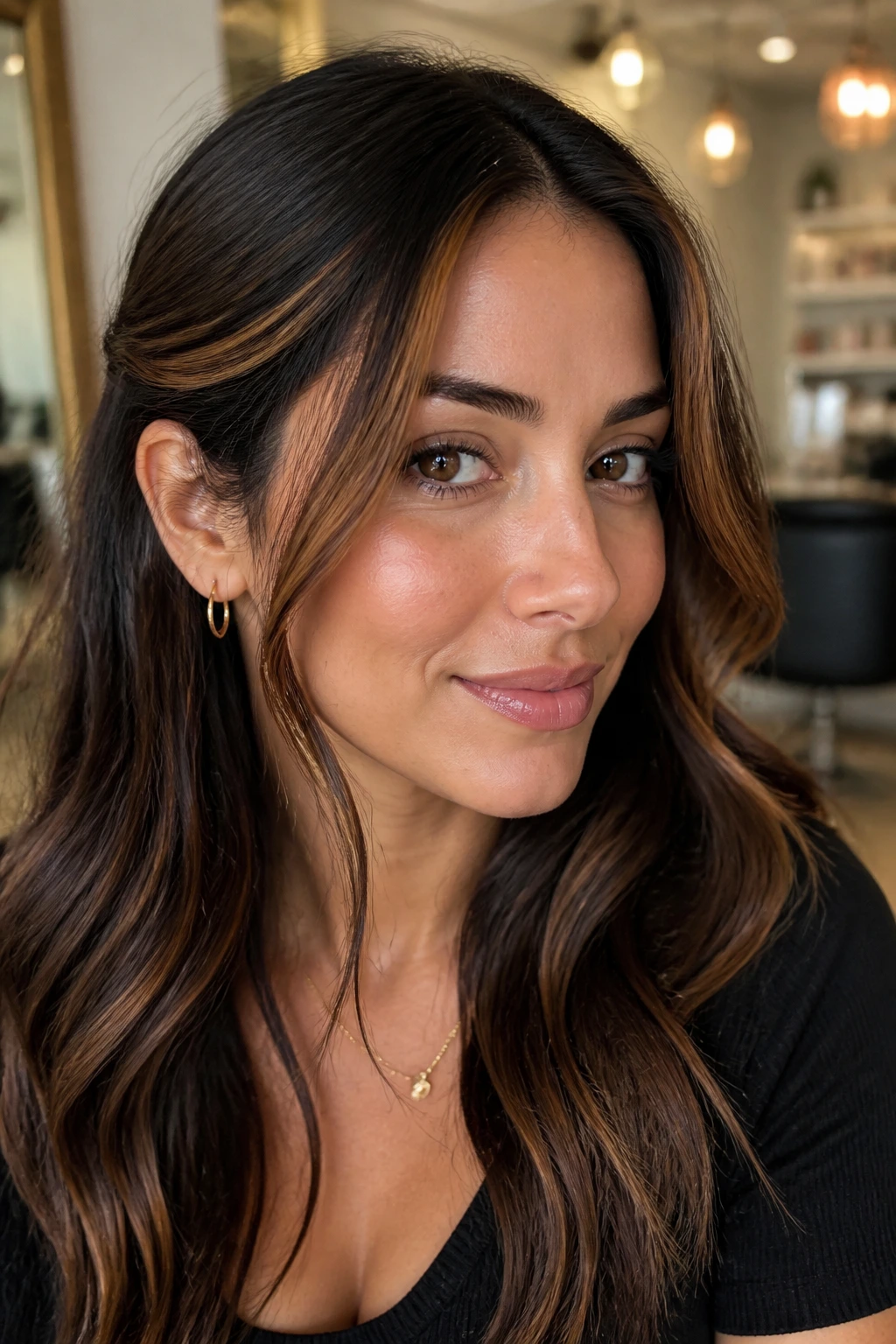
The first question is not, “Which shade is prettiest?” It’s, “What does your base already do when light hits it?” Dark hair often carries hidden warmth or hidden ash, and that changes how the front pieces read once they’re lightened. If your hair pulls red or orange easily, warm caramel might need a cooler gloss on top. If your hair already looks smoky, beige or mushroom brown can keep it from going muddy.
Skin tone matters, too, but not in the simplistic way people sometimes talk about it. Warm skin does not automatically need warm hair, and cool skin does not always need ash. What matters more is balance. Bronze, honey, and maple tones tend to flatter gold jewelry and warm makeup. Mocha, ash, mushroom, and cool beige often sit better when your features already have a lot of redness or when you prefer silver-toned accessories.
The haircut matters just as much as the undertone. A blunt bob can handle a more defined face frame because the cut itself is graphic. Long layers can take a softer melt or halo because the movement is already there. Curly hair often wants a slightly wider highlight placement so the color does not disappear into the coil. Straight hair usually benefits from narrower, more controlled pieces.
Styling Moves That Show Off the Front Pieces
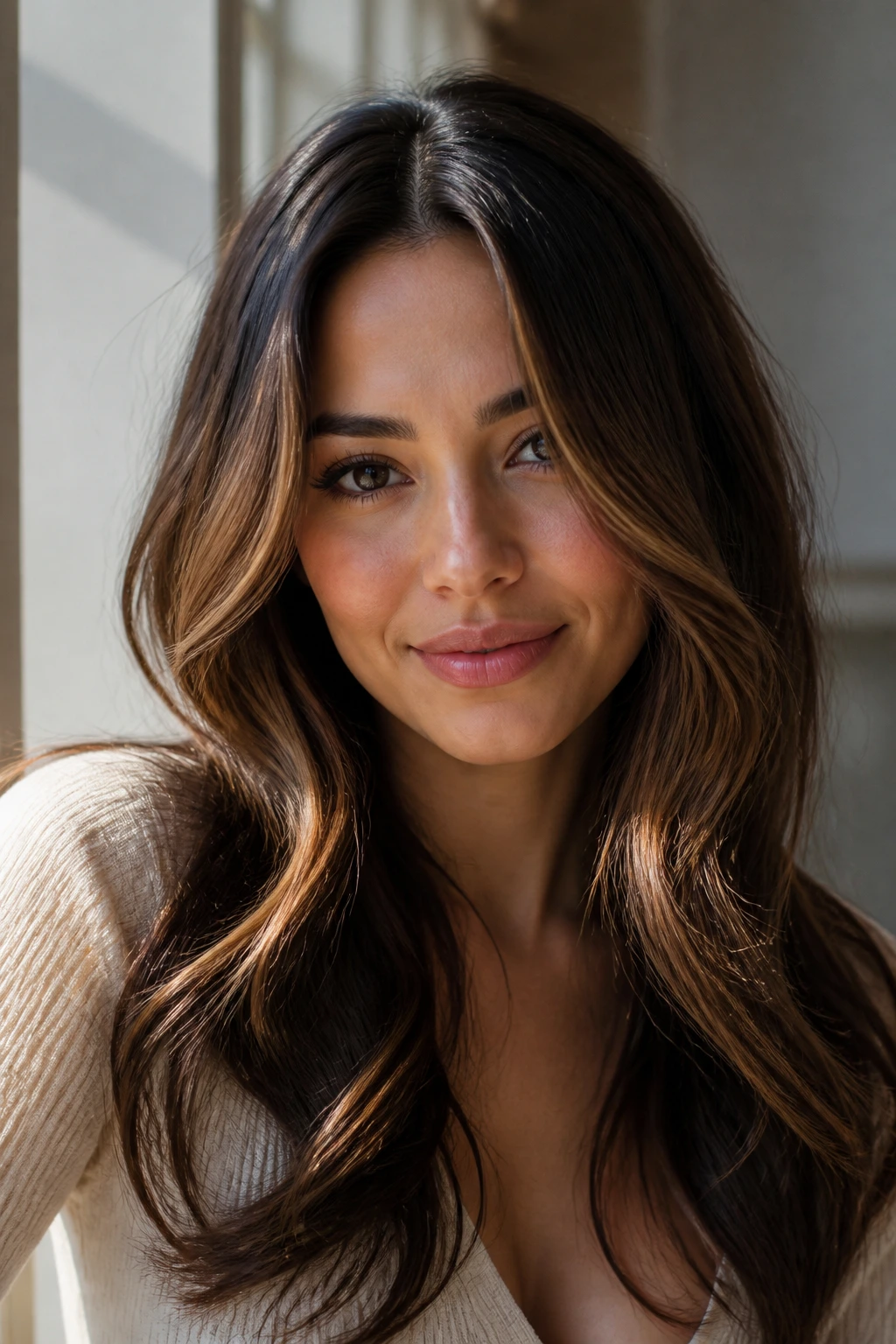
Parting changes everything. A center part makes a symmetrical frame, which is great for curtain bangs and halo-style color. A side part pushes more light to one side and can make a softer or more dramatic contour, depending on where the front pieces sit.
A little bend beats pin-straight hair. Even a 1-inch curling iron or a flat iron twist on the front section can help the lighter strands separate from the base. The color reads best when the pieces curve around the face instead of lying in one flat sheet.
Don’t drown the front in heavy serum. One drop rubbed between the palms and pressed through the ends is enough. Too much product makes the lighter pieces look greasy and kills the reflection you’re trying to keep.
If your haircut has curtain bangs, blow them forward, then sweep them back with the brush at the last second. That movement exposes the highlight exactly where it counts. If your hair is curly, scrunch the front pieces with a tiny bit of cream and let them air-dry; trying to over-control them usually makes the color less visible.
Extra Tips for Making the Color Look Rich, Not Flat
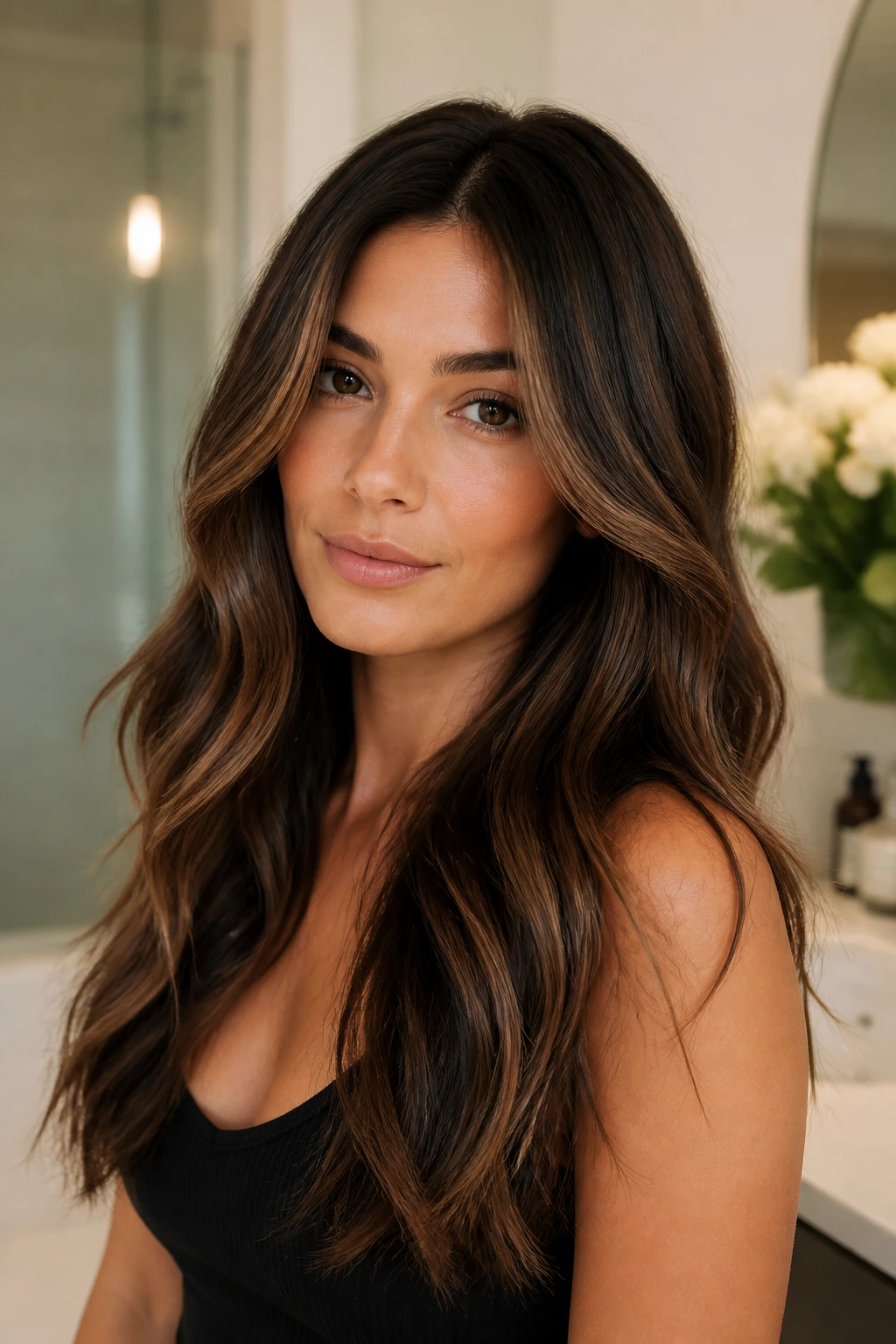
Glossing is your friend: A clear or shade-matched gloss every 6 to 8 weeks can keep brown front pieces looking plush instead of dusty.
Keep one tone in reserve: If you go warm on the face frame, have the colorist keep the rest of the brunette a little deeper so the front pieces do not float away from the base.
Ask for softness at the root: A hard start line near the part is what makes many face frames look stripy. A gentle melt solves that.
Use styling to your advantage: A bend near the cheekbone makes the highlight look intentional. Straight, limp hair can hide good color.
If you like a bit more contrast, ask for the front pieces to stop right before the ends instead of running all the way through. That keeps the brightness concentrated where the eye lands first. If you want a softer finish, keep the lighter color in the first two inches of the face frame and let the rest of the front remain closer to the base. Small changes. Big difference.
Keeping Brown Face Frame Highlights Fresh
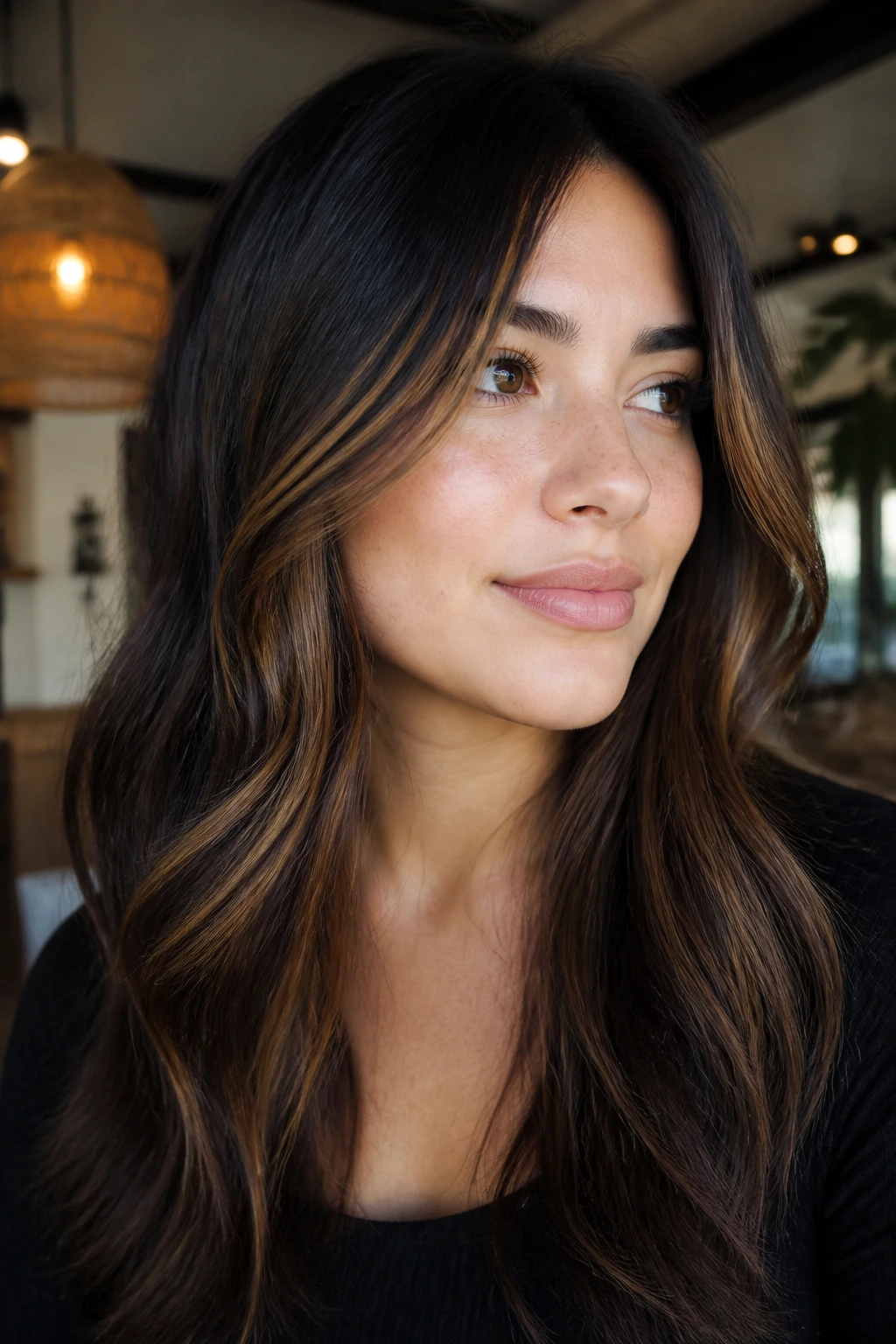
Brown highlights on dark hair usually hold up better than pale blond pieces, but they still need some care. The first 48 hours after coloring matter, because that is when the cuticle settles and the toner locks in. If you can, wait before washing. After that, wash with lukewarm water, not hot water that strips the tone down too fast.
For upkeep, a gloss or toner refresh every 6 to 10 weeks keeps the front from turning brassy or dull. That interval can stretch if the shade is very close to the natural base and the hair is not washed often. If the front pieces start looking too warm before the rest of the hair, a blue-tinted shampoo once every one or two weeks can help. Do not use it like a daily shampoo. That usually makes the hair look flat.
Dry shampoo helps the look, too, because oily roots can make the lighter pieces stick to the scalp and disappear. And if you heat-style often, apply protectant every time. The face frame is the part of the head most likely to show wear first, simply because it gets the most light, heat, and hands running through it.
Ways to Adapt the Look Without Changing Your Base
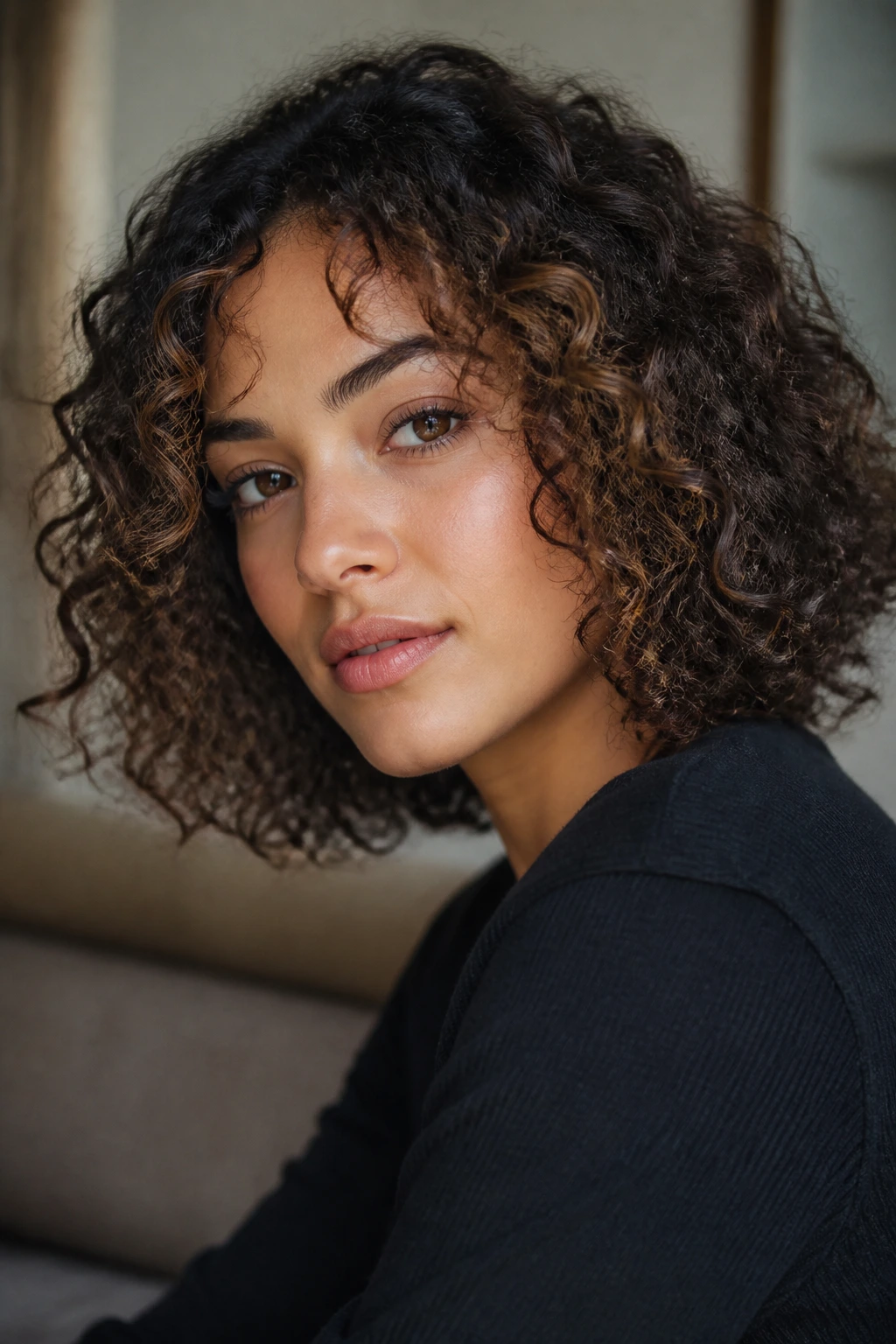
Curly Halo Frame: On curls and coils, a halo placement around the hairline shows up better than a single money piece. The pieces can be a touch wider so the color doesn’t vanish in shrinkage, and a curl cream with slip will help the light catch on the pattern.
Blunt Bob Contour: On a bob or lob, keep the front pieces precise and narrow. The cut already gives shape, so the color should sharpen the line, not clutter it.
Soft Grow-Out Version: Ask for a rooted chestnut, mocha, or hazelnut finish if you want the color to fade gracefully. This is the route for people who hate frequent touch-ups.
High-Contrast Weekend Frame: Go a shade brighter in the very front and keep the rest of the hair deeper. It makes the face frame pop in a braid, half-up style, or loose wave.
Cool Smoke Brunette: If warmth makes your hair turn orange too quickly, lean into ash, mushroom, or beige-brown tones. They keep the front clean and smoky instead of golden.
Warm Glow Brunette: If your skin likes warmth, caramel, honey-brown, and maple tones give the front a little sunlit lift. They work best when the gloss stays rich, not copper-heavy.
Common Mistakes to Avoid
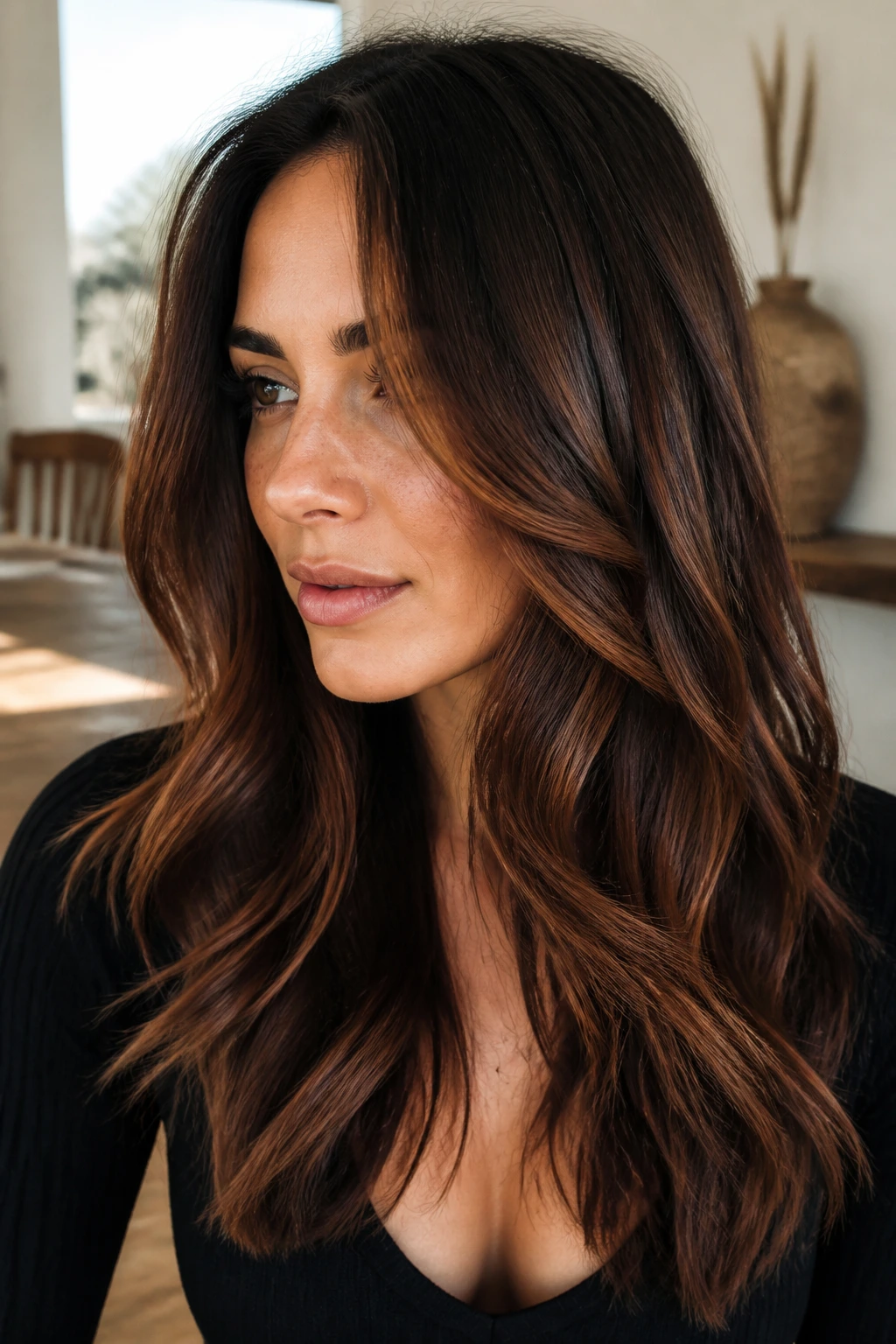
The biggest mistake is going too light too fast. On dark hair, a pale front piece can look disconnected from the base unless the haircut and undertone are built for it. The fix is simple: stay closer to brown than blond and let placement do the work.
Another common problem is overly thick sections near the face. Thick pieces can look like bars, especially on straight hair or in harsh indoor light. Thin, feathered placement gives a much cleaner frame and grows out better.
Brass is a sneaky one. Dark hair often lifts warm, and if the toner is too weak or the shampoo too harsh, the front pieces can swing orange or copper faster than expected. A gloss schedule and the right shampoo keep that in check.
One more: ignoring the haircut. Face-framing color needs the cut to support it. If the front layers are too blunt or too short for the color placement, the pieces can look random. Bring the highlight lower on the cheek if the layers start lower. Keep it closer to the part if you wear bangs. Match the color to the shape.
And please, do not style the front flat and expect the color to carry itself. Even good face-frame highlights need a little lift, bend, or separation to show properly.
Frequently Asked Questions
Will brown face frame highlights work on black hair?
Yes, but the contrast needs to be handled carefully. On black hair, deep mocha, cocoa, walnut, or chestnut front pieces usually look cleaner than very light caramel, unless you want a strong, obvious contrast. The darker the base, the more placement and gloss matter.
How light should the front pieces be compared with my base?
A good starting point is usually one to three levels lighter than your natural or colored brunette. That gives visible brightness without making the front look like a separate color block. If your hair is very deep, a slightly stronger lift may be needed, but keep the tone rich.
Do I need bleach for brown face frame highlights?
Not always, but many dark bases need some lightening to show the highlight. If your hair is already medium brown or previously lightened, a color-depositing gloss or gentle balayage may be enough. A colorist can tell you how far your base can move without losing too much condition.
What’s the difference between a money piece and face-framing highlights?
A money piece is usually the brightest, most obvious part at the front. Face-framing highlights can be softer, thinner, and spread through the front layers instead of living as one bold stripe. The money piece is the louder cousin.
Can I wear this look if my hair is curly?
Absolutely, and curly hair often makes the color look richer because the pieces move with the shape of the curl. The main adjustment is placement: the lightening often needs to be a little wider so shrinkage doesn’t hide it. A curl-defining cream helps the shape show.
How do I stop the front pieces from turning orange?
Ask for the right tone at the salon, then protect it with lukewarm water, color-safe shampoo, and the occasional blue shampoo if warmth creeps in. If the hair lifts very warm during coloring, a cool beige or ash gloss can keep the result calmer.
How often will I need a gloss or toner?
Many brunettes benefit from a refresh every 6 to 10 weeks, depending on wash frequency and how close the highlight is to the base. If the front pieces are only a shade or two lighter, they may hold longer. If they’re more lifted, they will usually need attention sooner.
Can I ask for this without changing the rest of my hair?
Yes, and that’s one of the best parts of this category. You can keep the back and underlayers dark while focusing brightness on the front. It gives you a visible change without committing to a full color overhaul.
The Face Frame That Still Feels Like Brunette
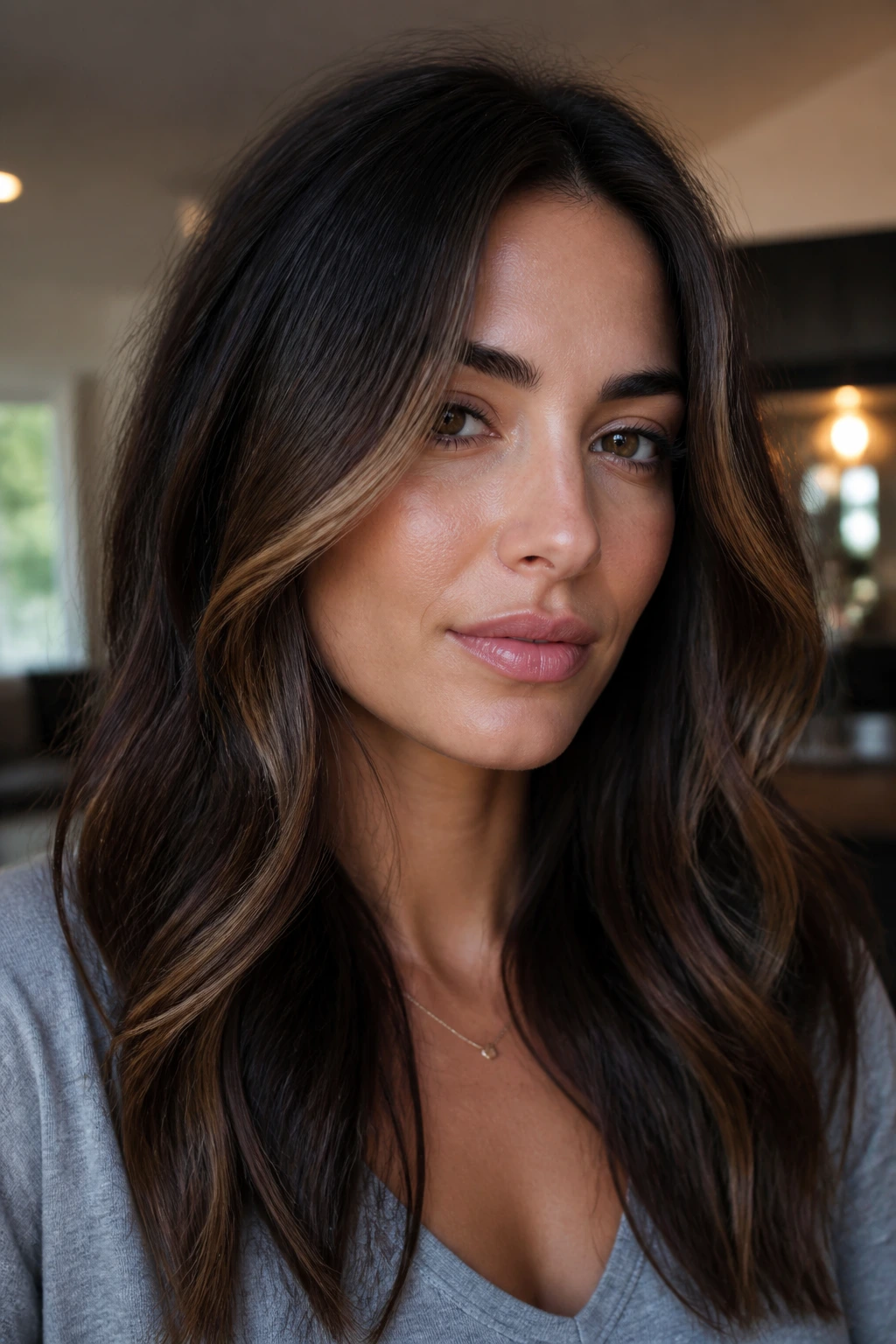
The nicest thing about brown face frame highlights on dark hair is how they change the mood without changing the identity of the hair. You still have brunette depth, shine, and weight. You just get a brighter edge where the face needs it most.
The best version is the one that feels attached to your cut, your undertone, and the way you actually wear your hair. A caramel money piece, a smoky mocha contour, a chestnut veil — they all solve a slightly different problem. Pick the one that suits your base, not the one that shouts the loudest in a salon photo.