



Olive skin is picky in the best possible way. Put the wrong blonde next to it—too yellow, too pale, too stripey—and the face can look flat in a hurry. Brown blonde blended highlights for olive skin work when the lighter pieces feel woven through the brown, not pasted on top of it like a paper strip.
That’s the sweet spot: enough lift to catch the light, enough depth to keep the skin from going gray, sallow, or oddly washed out. The nicest versions usually borrow from mushroom, beige, honey, caramel, wheat, and champagne rather than hard lemony blonde. They also tend to keep the root a shade or two deeper than the mids, which gives the whole head a softer, more expensive-looking finish.
I’m a fan of that middle ground because it behaves well in real life. It grows out cleaner. It looks deliberate when hair is wavy, straight, or brushed into a quick bun. And when the colorist gets the placement right, the skin does something useful: it looks clearer around the cheekbones and brighter around the eyes without needing a heavy, obvious blonde job.
Why These Blends Work on Olive Skin
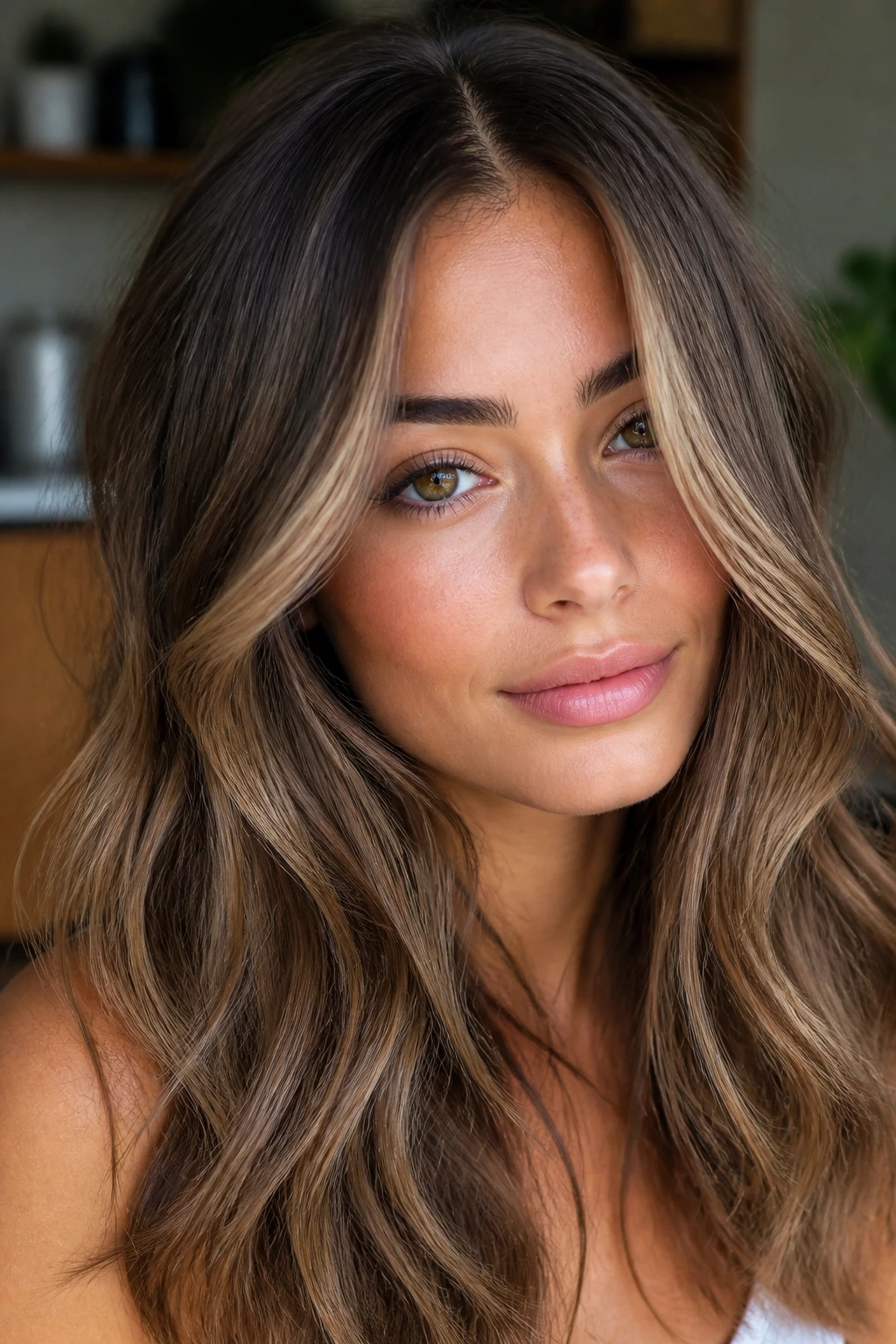
- The brown base keeps the color believable: Olive skin usually looks best when the blonde sits inside a darker frame, because the contrast stays soft instead of loud.
- Beige and mushroom tones calm green undertones: If your skin leans green-gold or green-gray, these shades keep the face from picking up a muddy cast.
- Honey and caramel warm up dull winterized color: A few warmer ribbons near the face can bring back life without turning the whole head orange.
- Root shadow buys you time: A darker root hides grow-out and stops the highlights from looking like they were sprayed on with a stencil.
- The blend changes with movement: These shades look different in a braid, a wave, or a blunt blowout, which is part of the appeal.
- Lowlights matter as much as blonde: A few deeper pieces keep the color from drifting too pale, especially around olive skin that already carries a muted undertone.
1. Mushroom Brown With Beige Ribbons
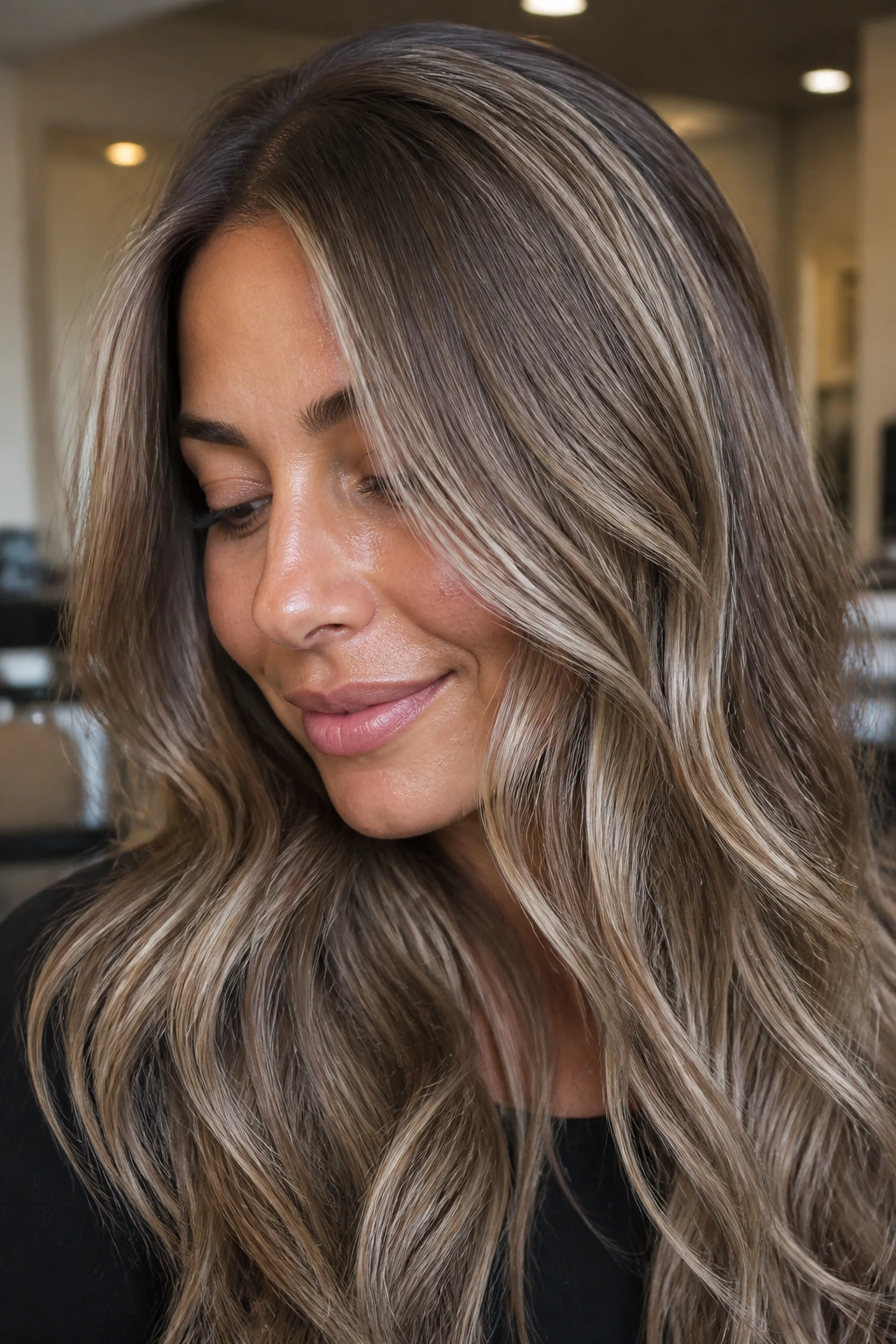
Mushroom brown is the shade I reach for when olive skin leans green-gray and needs a cooler landing pad. Beige ribbons skim through the mid-lengths so the hair gets brightness without turning yellow or brassy at the first sign of heat styling.
Why It Flatters Olive Skin
The trick here is restraint. You’re not chasing blonde, you’re chasing dimension.
Ask for fine ribbons one to two levels lighter than the base, then keep them concentrated around the top layer and the face. That keeps the movement visible and leaves the ends soft instead of over-lightened. The overall effect reads smoky, polished, and calm. Not flat. Not icy. Just controlled.
Best for: medium to deep olive skin with cool or neutral undertones
Best placement: crown, front panels, and the outer veil of the hair
Best finish: a loose wave or brushed-out bend
2. Espresso Base With Caramel Face Frame
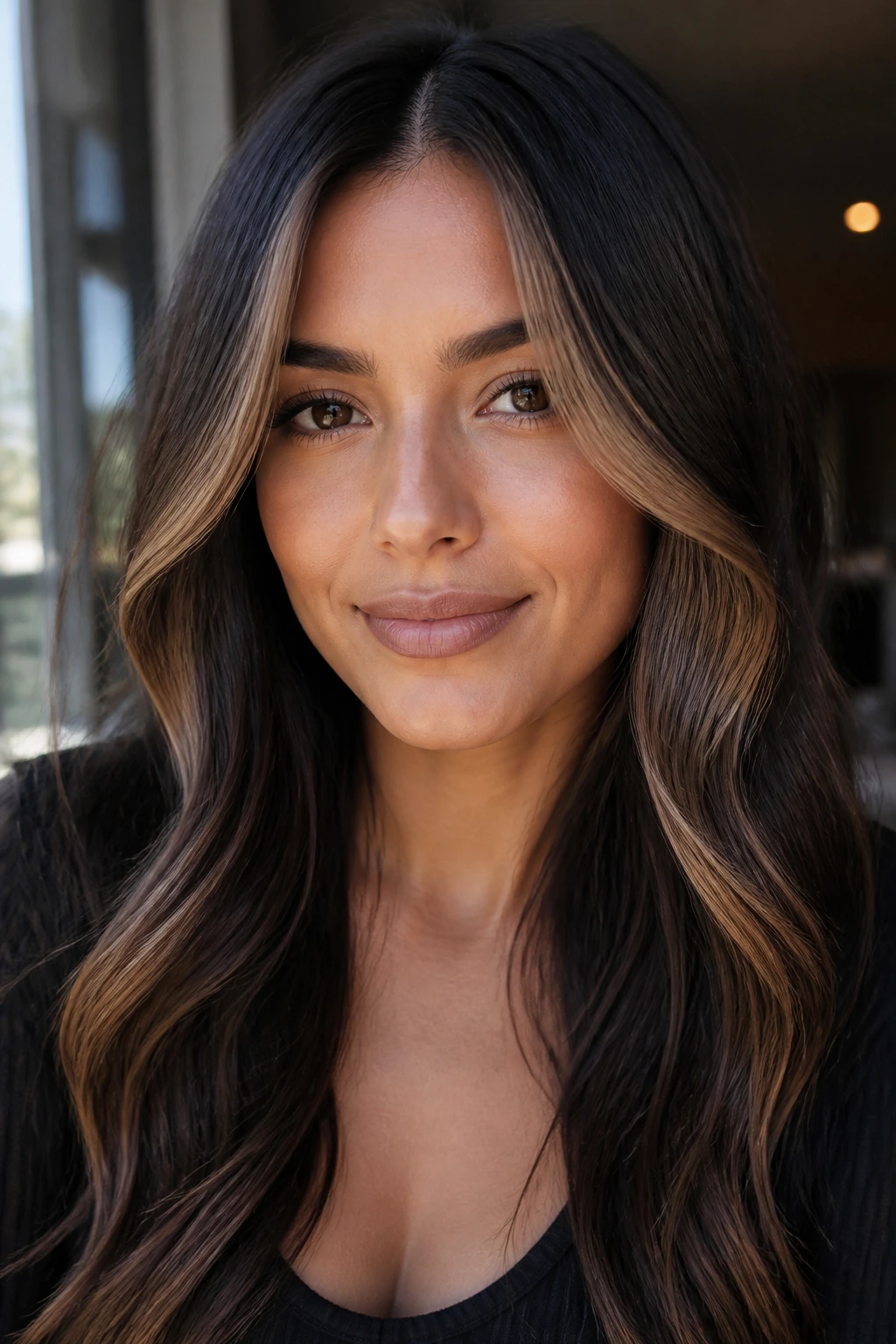
A single caramel frame can change the entire face. That’s the whole reason this look stays popular: the base remains deep espresso, while the brightest pieces sit right where the hair opens around the cheeks and jaw.
You get contrast without the commitment of full-head lightening. On olive skin, that matters. Caramel warms the complexion without pushing it into orange territory, and the darker base keeps the face from losing structure. This is one of those styles that looks especially good when the hair is tucked behind one ear.
Ask your colorist for: two thicker face-frame pieces plus a few softer ribbons through the first two inches behind them.
Skip the urge to go lighter everywhere. The face frame does the heavy lifting.
3. Smoky Bronde Lob
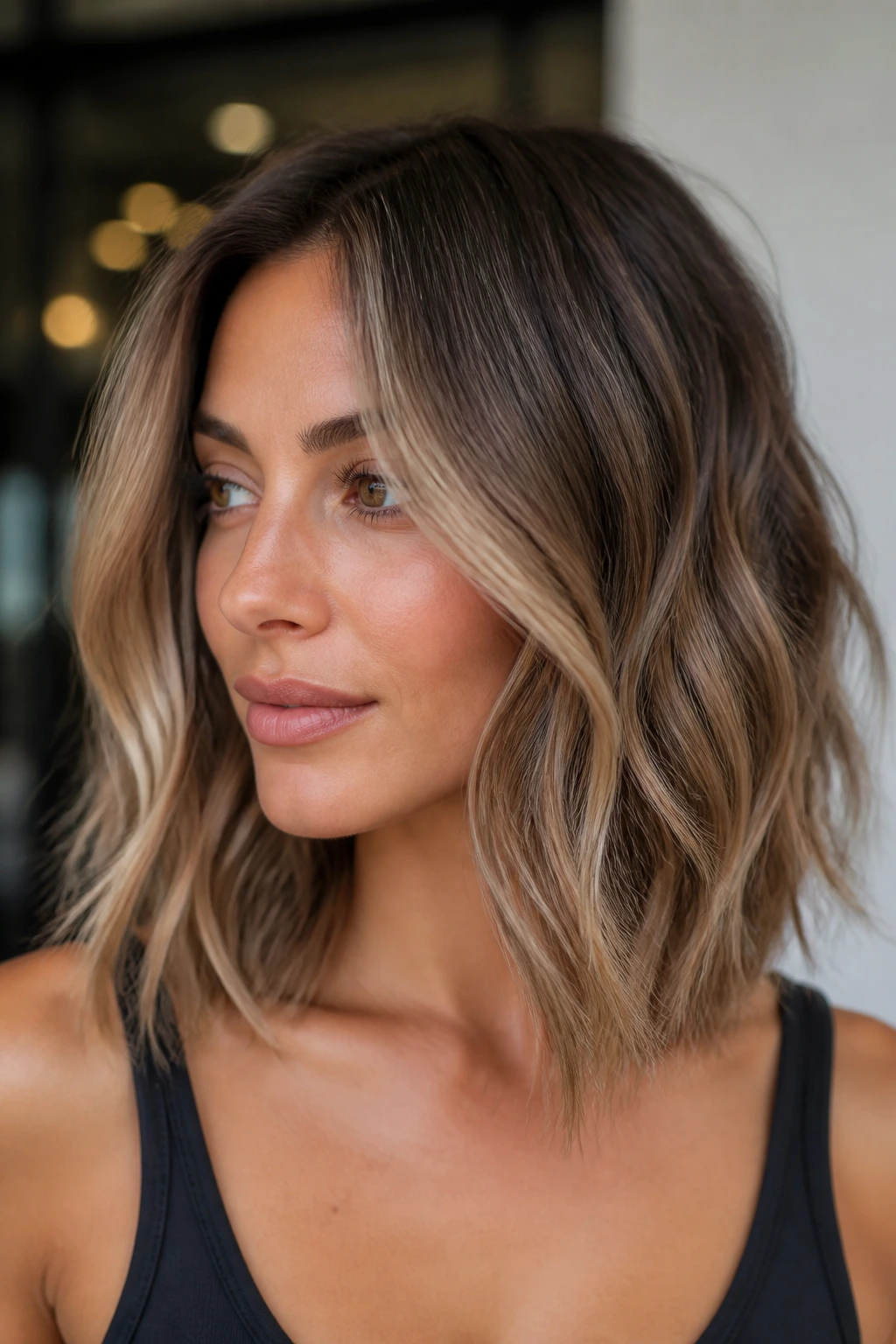
Why does a smoky bronde lob work so well? Because the cut and the color are doing the same job. Both keep the eye moving.
What Makes It Different
A lob gives the blended highlights somewhere to sit. The bronde mix—brown at the root, blonde in the mids, and a soft smoky glaze over the top—keeps olive skin from looking overexposed. If the blonde is too clean, the skin can look a touch tired. Smoky bronde avoids that by keeping the tone muted and layered.
If your hair has a little natural wave, even better. The bend in the lob shows off the color shifts in a way that straight hair sometimes hides.
One-line tip: ask for a beige gloss, not a high-lift blonde toner, if you want the color to stay soft after a few washes.
4. Chestnut Waves With Champagne Veil
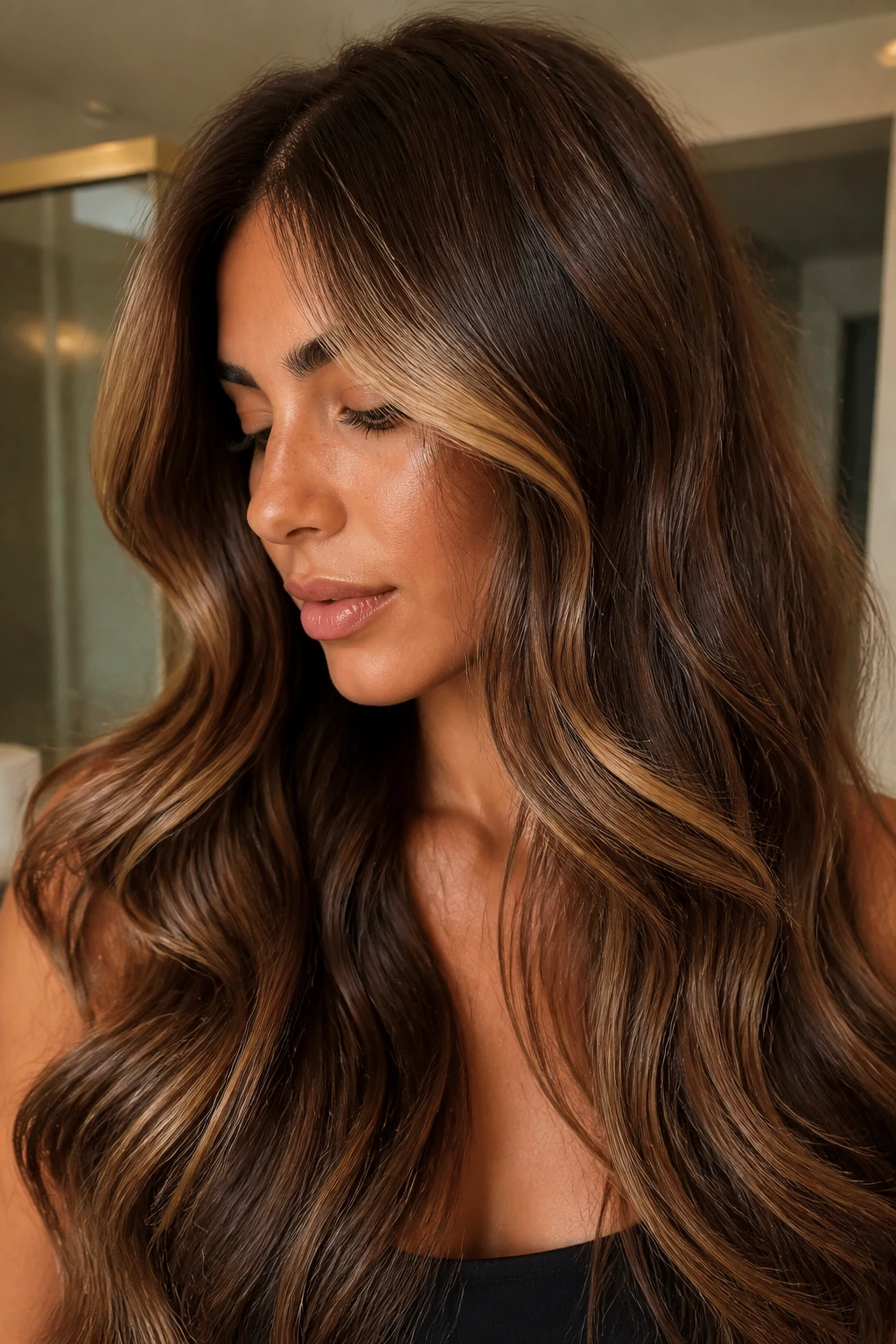
This one has a dressier feel. Chestnut gives you warmth and depth, then the champagne veil rides over the top like a thin layer of light. It’s subtle until the sun or a bright bathroom mirror hits it, and then the whole thing wakes up.
I like this for olive skin that already has a little golden color in the cheeks. Champagne is less yellow than honey and less smoky than mushroom, so it lands in a useful middle lane. The color feels polished on long waves, especially if the highlights are broken up instead of painted in wide panels.
A good version of this look should never read “streaky.” If it does, the veil is too thick.
5. Cinnamon Toffee Waves
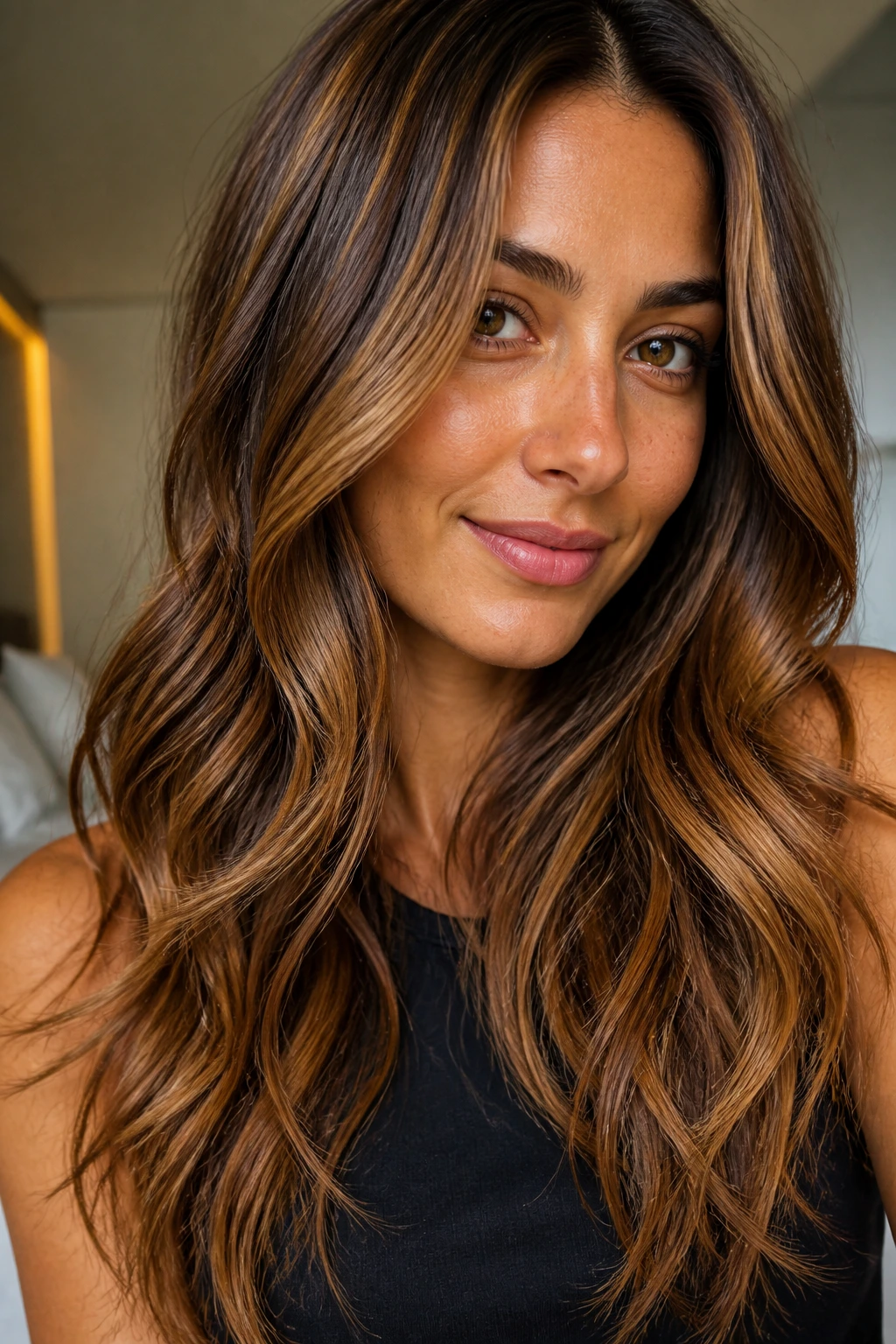
Cinnamon toffee is for people who want warmth but do not want their hair to look coppery from across the room. The brown stays rich; the blonde pieces lean to a soft toffee shade that adds shine around the mid-lengths.
It’s a strong choice for olive skin with golden undertones because it connects to the warmth already in the complexion. The face doesn’t fight the color. It settles into it.
This is one of the easier styles to wear with everyday makeup too. A terracotta blush, a warm brown liner, and a little cream highlighter on the cheekbones are enough. No contortion required.
6. Cool Mocha With Almond Ends
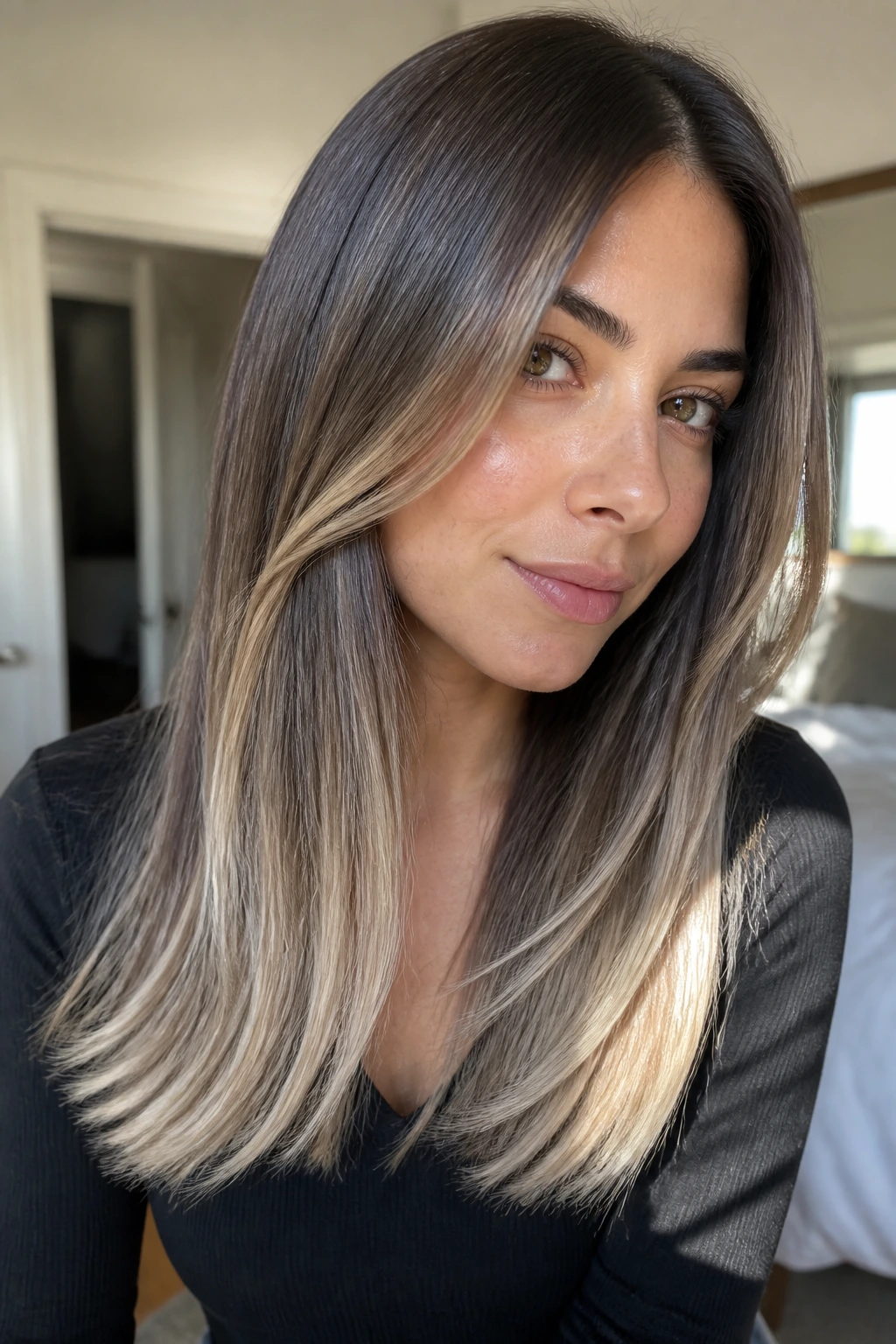
Cool mocha with almond ends is the answer when you like the idea of blonde but hate anything yellow. The base is a deep mocha brown, then the ends soften into an almond-beige finish that keeps the look modern and tidy.
Unlike warmer caramel styles, this one works best when the skin has neutral olive undertones or a slightly gray-green cast. The cooler blonde stops the complexion from turning ruddy. It also looks cleaner on straight or lightly textured hair because the ends show the color change in a crisp way.
If you’ve ever been told your hair “pulls orange,” this is the lane to stay in. Just don’t push the almond too pale.
7. Sand Bronde With Soft Lowlights
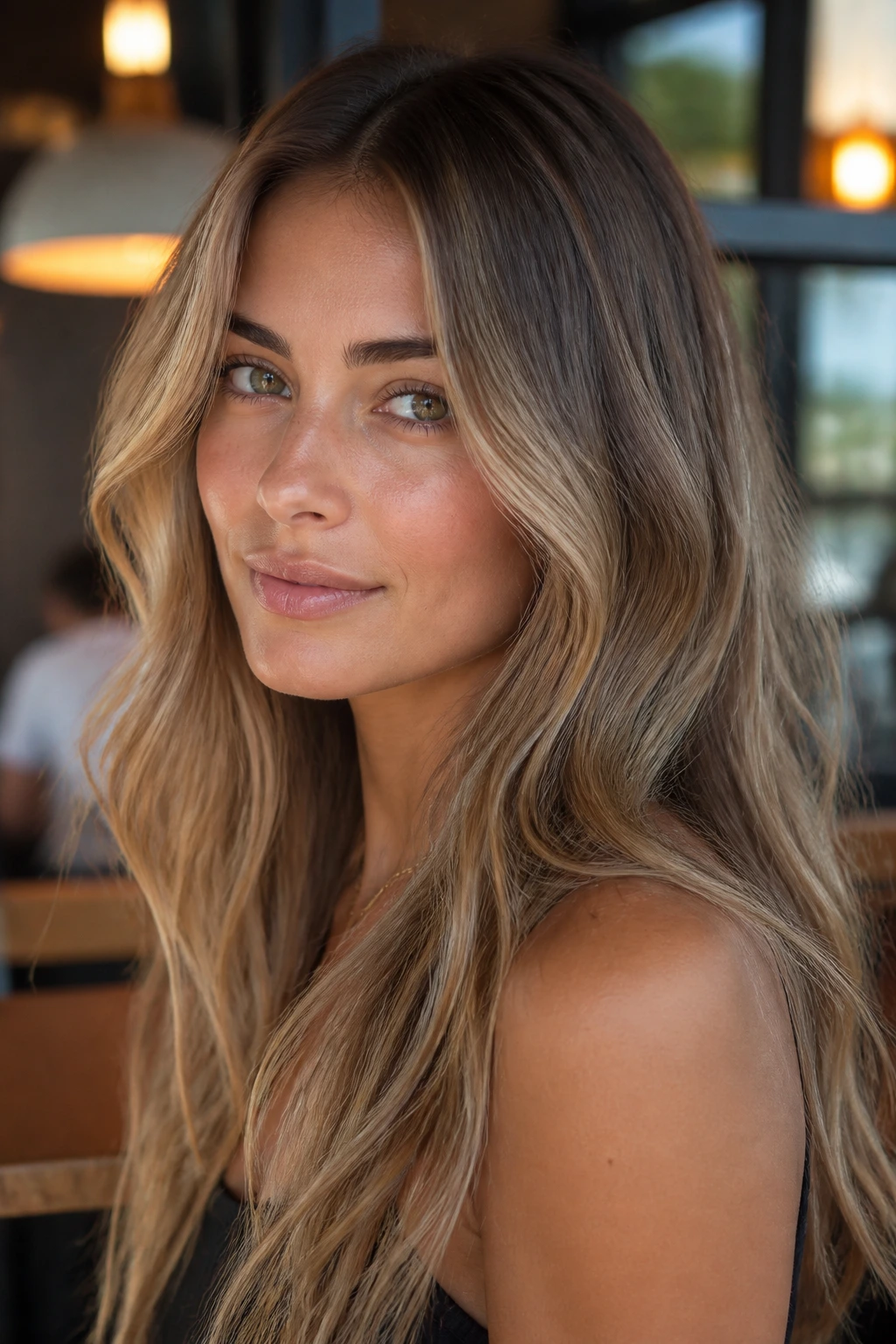
A sandy bronde job needs lowlights to make sense. Without them, the blonde can take over and leave olive skin looking chalky instead of sun-touched.
What to Ask For
- Keep the root around level 5 or 6.
- Add a few deeper ribbons under the top layer.
- Let the blonde stay soft beige, not bright gold.
- Break up the front hairline with micro pieces, not one big block.
That mix gives the head a little shadow and a little shine, which is the whole point. The face doesn’t need a hard frame. It needs a gentle one.
8. Cocoa Root Melt With Vanilla Tips
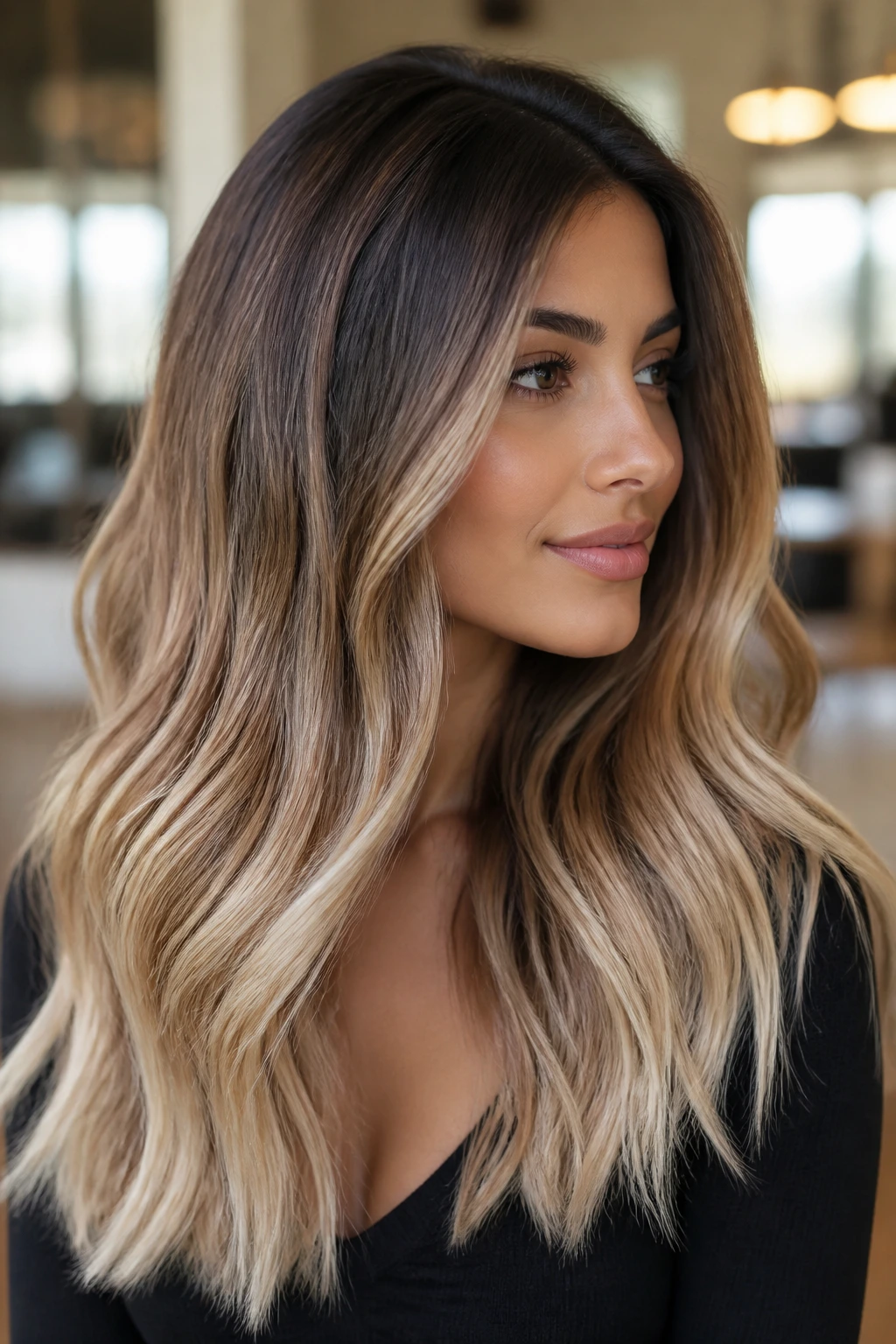
This is one of the most forgiving looks on the list. Cocoa at the root gives you depth and a clean grow-out line, while the vanilla tips create brightness where the eye naturally lands.
The transition matters more than the endpoint. If the melt is smooth, olive skin looks clearer and more awake. If the transition is abrupt, the whole thing starts to feel disconnected. Vanilla tips should be creamy, not white, and they need a little beige in them so they don’t shout.
I like this on longer hair because the gradient has room to breathe. On a bob, it can look blunt fast unless the ends are softly textured.
9. Wheat Blonde Veil Over Espresso Brown
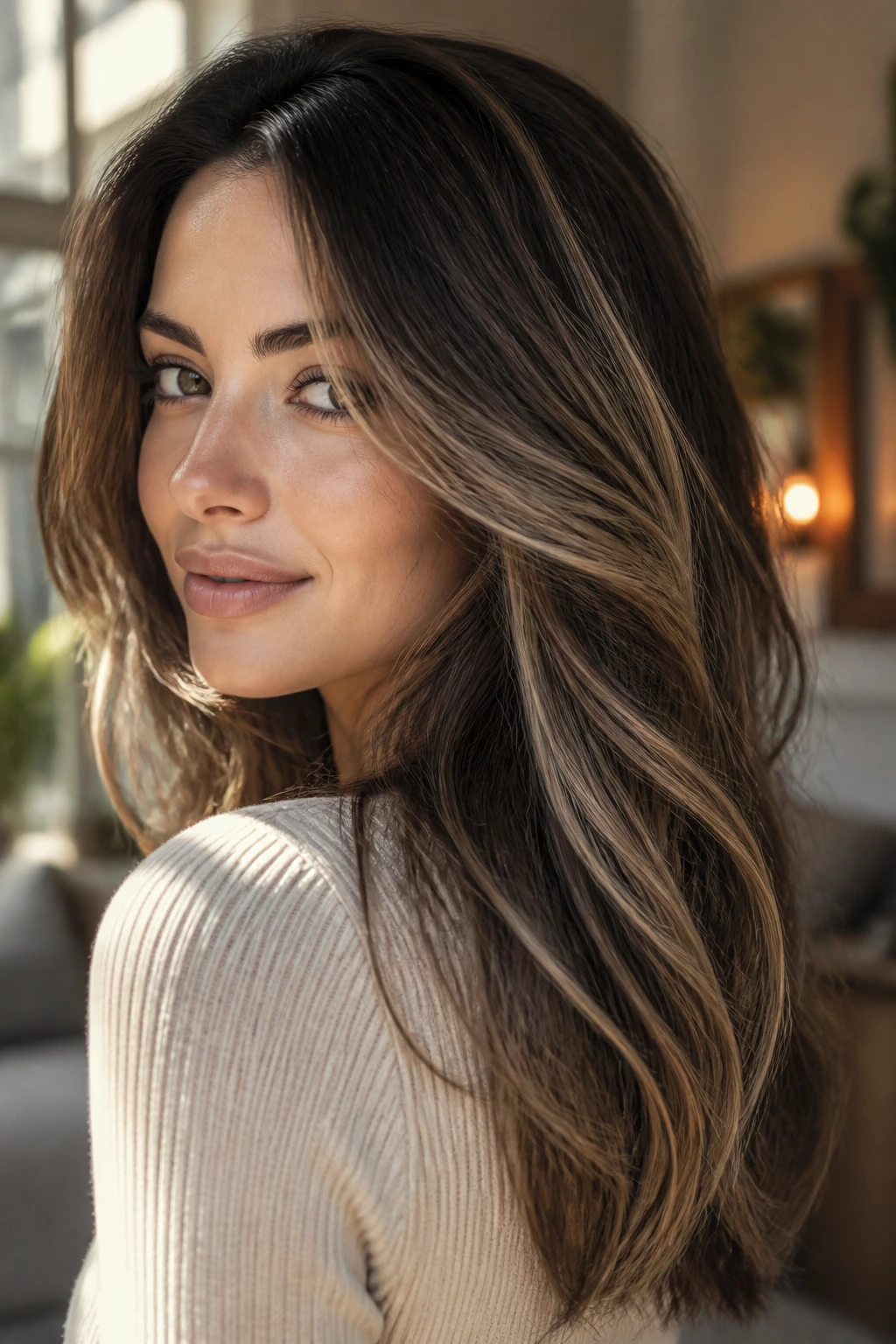
What happens when you want blonde but refuse to lose the richness of dark brown? You ask for a wheat veil, not a full lift.
How to Wear It
A wheat veil is made of ultra-fine highlights that sit over espresso like soft sunlight through thin curtains. On olive skin, that kind of scattering is kinder than big stripes because the brightness is spread out. The result is more shimmer than statement.
Best Placement Notes
- Keep the veil concentrated on the top layer.
- Leave the underlayer darker for contrast.
- Brighten the face-framing pieces by half a step more than the rest.
- Finish with a gloss that leans beige, not pearl.
This is a smart look if you wear your hair down most days and want the color to read softly from a distance.
10. Walnut Brown With Golden Lattice
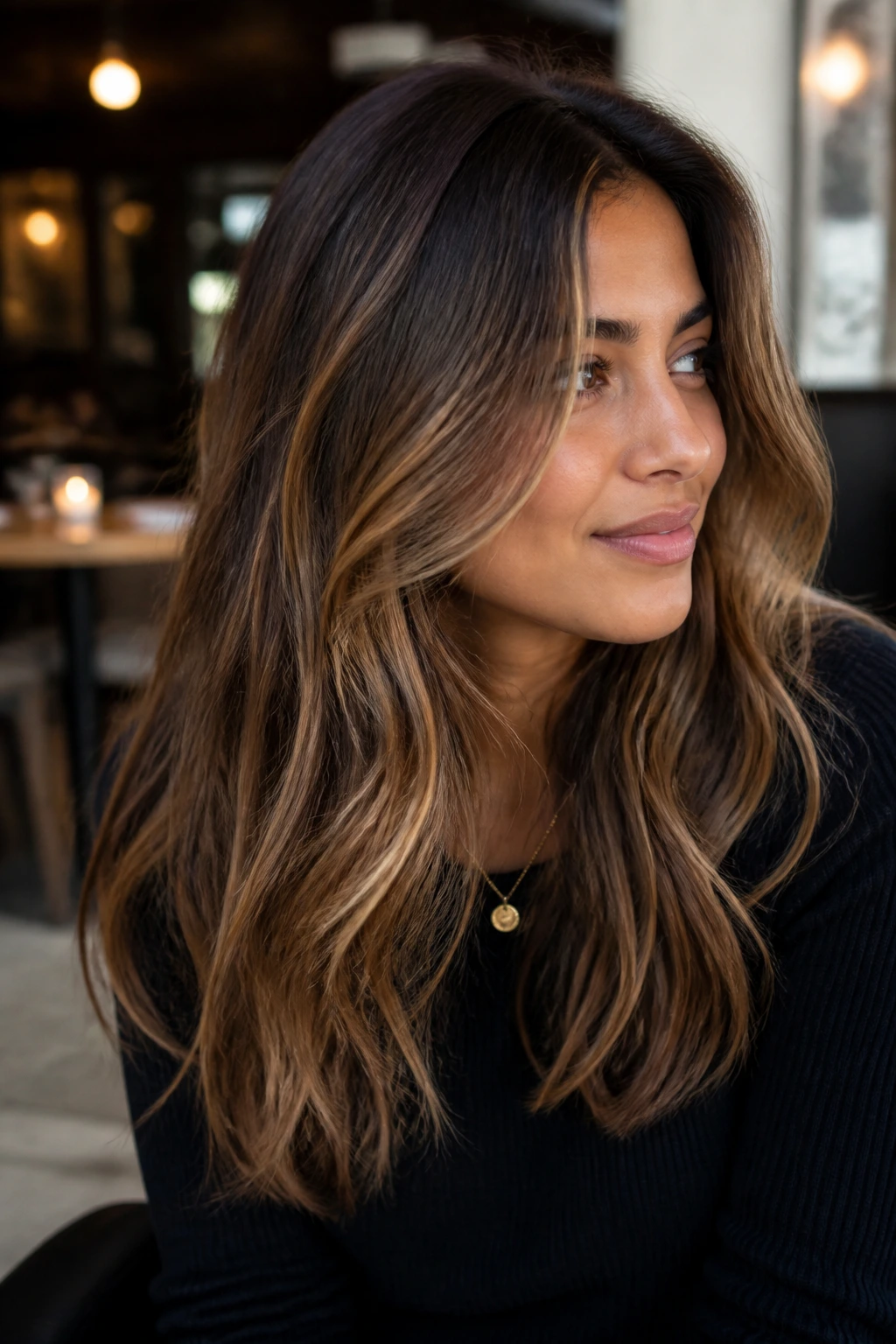
Walnut brown is one of those shades that gives olive skin a little warmth without forcing the issue. Add a golden lattice—thin, intersecting highlights rather than broad bands—and the result feels textured instead of processed.
The lattice pattern is the interesting part. It allows light to land in different places, which keeps the hair from looking like one single tone under indoor lights. On olive skin, that gives the face a useful glow. Not sugary. Not brassy. Just alive.
This style especially likes layered cuts. The movement helps the lattice show up, and the deeper walnut pieces keep the gold from taking over.
11. Beige Brunette With Ribbon Lights
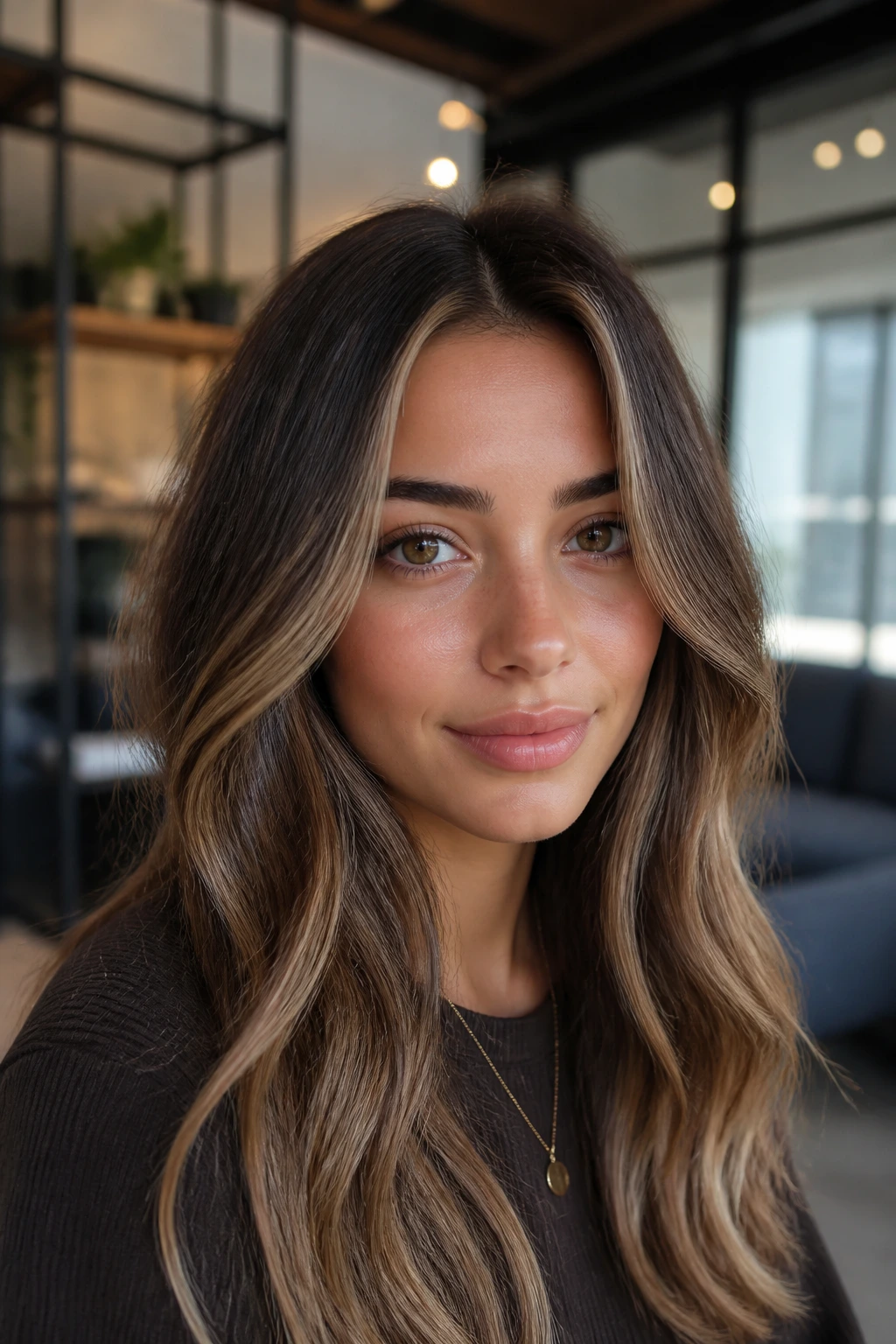
Beige brunette is the quietest member of the family, and I mean that as a compliment. The blonde is there, but it behaves like a whisper instead of a headline.
That makes it excellent for olive skin that has strong undertones and doesn’t need much color correction. The beige ribbons stay near the mids and upper ends, where they can soften the face without changing the whole mood of the hair. If you want something you can wear to work, to dinner, or to the gym without it looking overdone, this is a solid place to land.
A center part makes the ribbons read cleanly. Side parts make them feel a little more casual.
12. Soft Auburn Brown With Honey Blonde Kiss
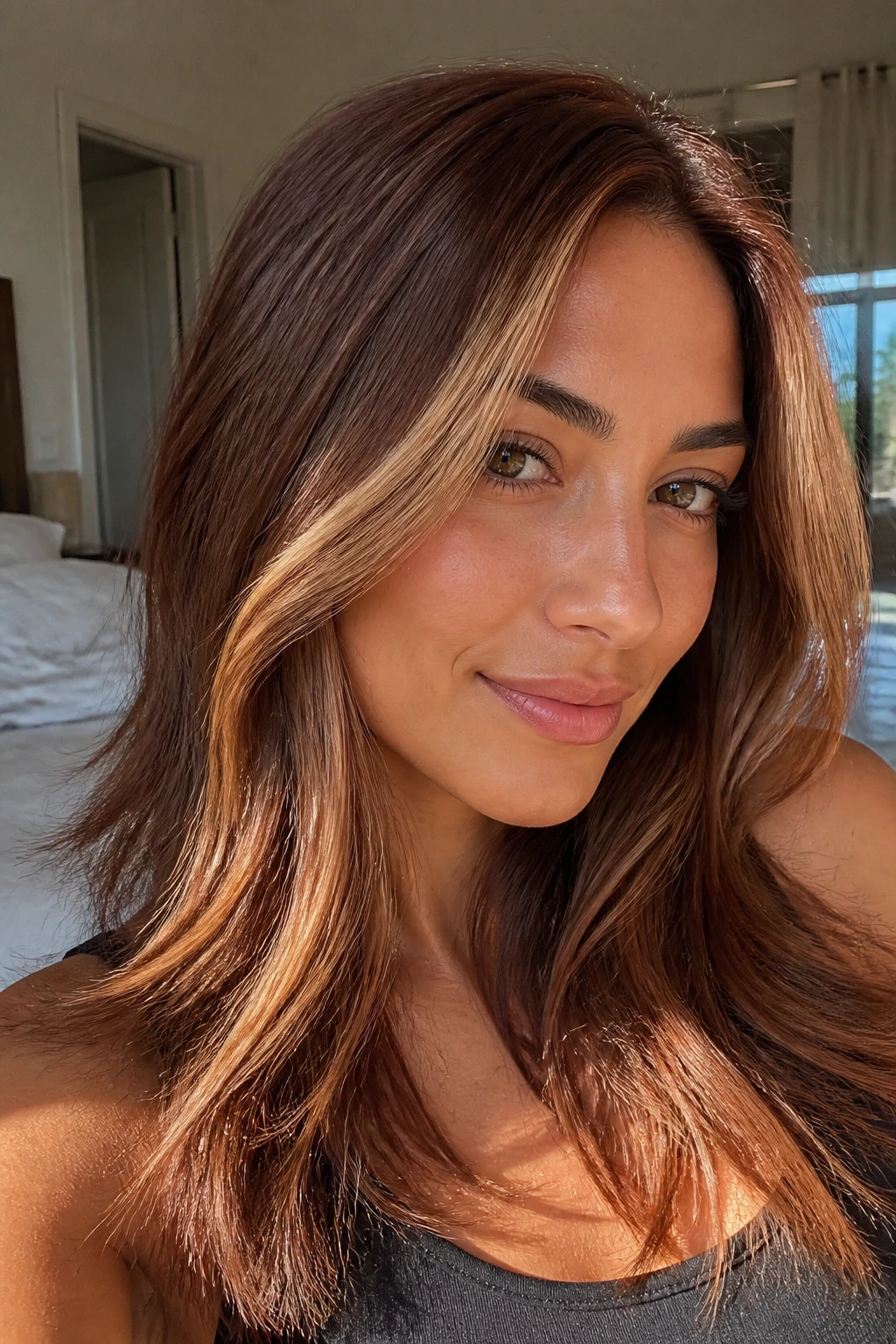
This one is for people who like a little heat in the mix. Auburn brown gives the base a red-brown depth, and the honey blonde kiss keeps it from sinking into monotone.
On olive skin, a small amount of warmth can be magic. Too much, and you get orange. Too little, and the face can look dull. Honey stays in the safe middle, especially when it appears in thin pieces around the face and through the ends.
If your eyebrows are darker and your complexion has golden flecks, this combo can look especially natural. It’s one of the few warmer highlights that doesn’t need much defending.
13. Ash Brown With Cream Highlights
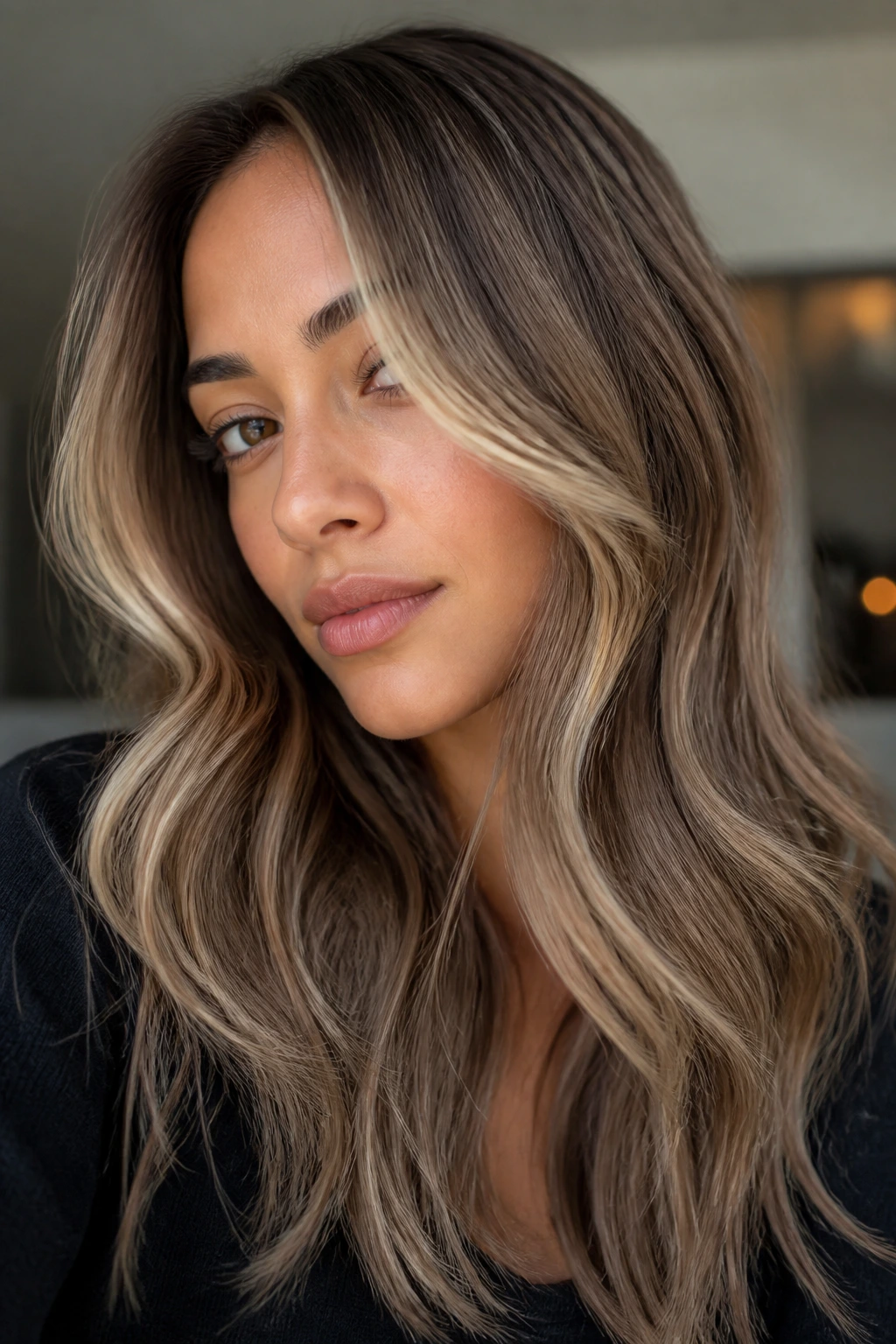
Ash brown can be tricky on olive skin, but when it’s handled carefully, it looks crisp instead of flat. The key is using cream highlights rather than icy silver pieces.
Why This Works
Cream has enough softness to keep the face from going gray, while the ash base tones down any unwanted red in the hair. This is a useful option if your olive skin leans neutral or slightly cool. It also pairs well with cooler makeup shades like dusty rose, taupe, and mauve-brown.
What to Avoid
- Don’t let the blonde pieces go white.
- Don’t stack too many ash tones next to one another.
- Don’t skip a gloss after lightening if the hair is porous.
This style is neat, controlled, and a little more refined than the warmer looks.
14. Toasted Hazelnut Balayage
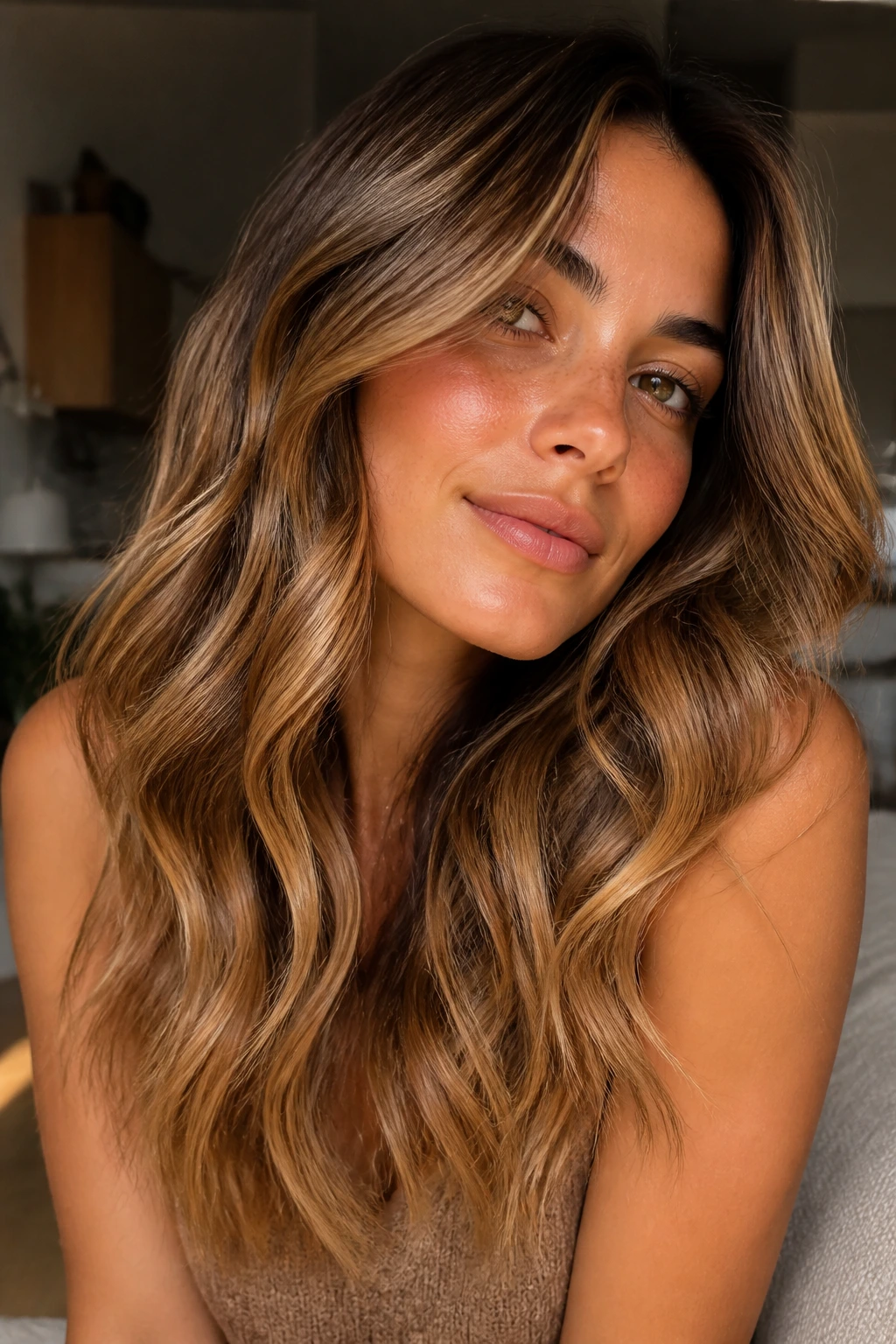
Toasted hazelnut balayage has a soft, toasted edge that suits olive skin without making the color feel heavy. The highlights are painted in open, sweeping sections, which keeps the blend loose around the face and more concentrated through the lower lengths.
It looks especially good when the hair has a little bend. The hazelnut tone catches movement, and the brown underneath keeps the whole thing grounded. If you wear a lot of camel, cream, olive green, or black, this is an easy shade to live with because it sits well beside neutral clothes.
I’d avoid making the blonde too golden here. Hazelnut should stay nutty, not buttery.
15. Dark Chocolate With Buttery Beige Ends
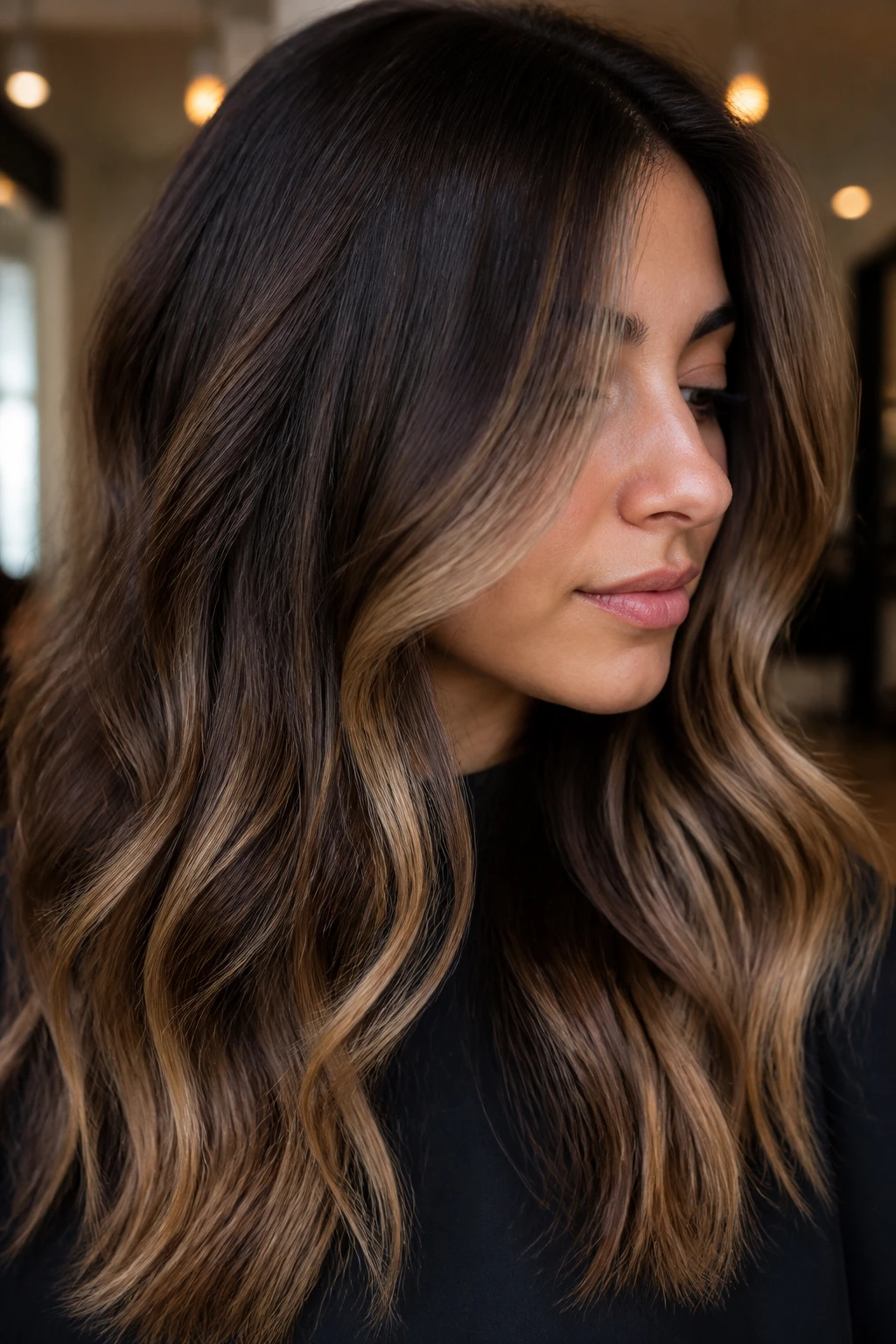
Dark chocolate with buttery beige ends feels rich first and blonde second. That order matters. Olive skin usually handles this kind of color best when the deeper shade stays dominant.
The buttery beige ends act like a soft finish line. They brighten long hair, especially when it’s curled from the mid-shaft down, but they do not take the whole style into blonde territory. That restraint keeps the skin from looking washed out.
This is one of my favorite options for anyone nervous about lightening. It gives a visible change without the maintenance headache of all-over blonde.
16. Coffee Bean Hair With Honey Underpainting
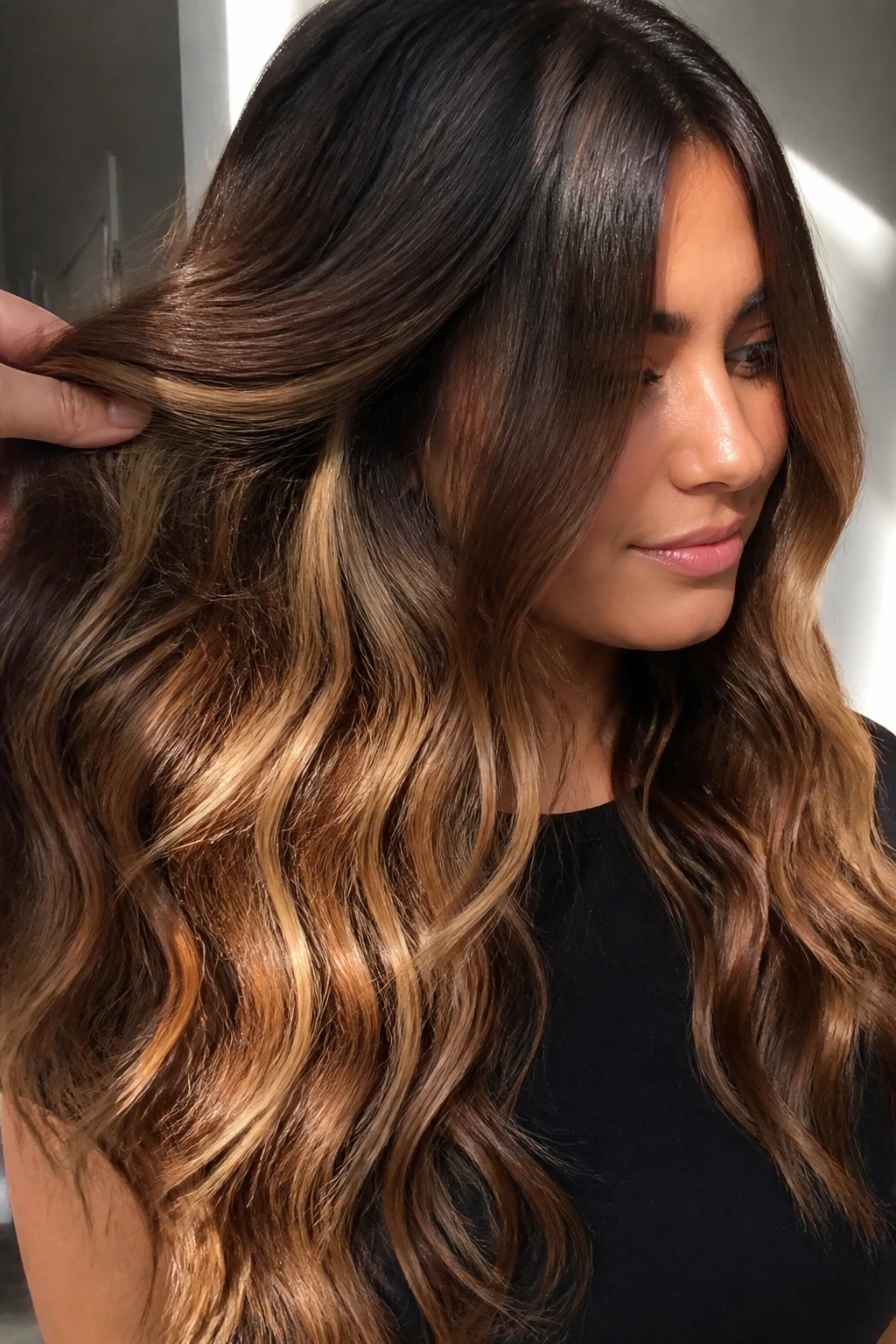
Honey underpainting is sneaky in the best way. You only really see it when the hair moves, or when a hand lifts the top layer and exposes the lighter pieces underneath.
That makes it a strong fit for olive skin because the brightness doesn’t sit flat on the surface. It flashes, then disappears, then flashes again. The effect is softer than full balayage and easier to grow out, too. Coffee bean at the top keeps the hair looking thick and polished, while the honey underneath stops it from going too dark.
If your hair is fine, this can make it look fuller without piling lightness on every strand.
17. Bronde Pixie With Micro-Babylights
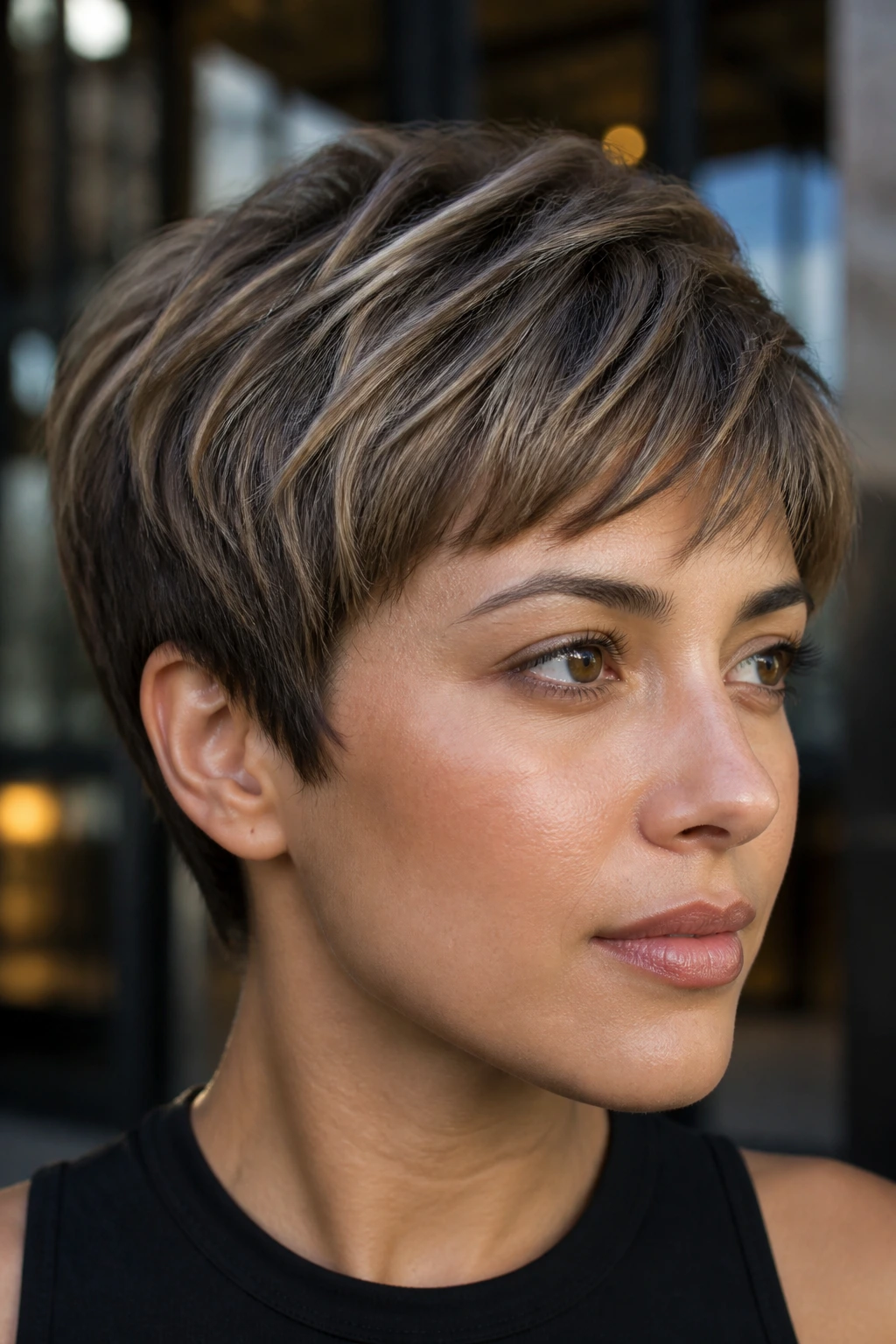
Short hair needs a different plan. Big highlights can look chunky on a pixie, while micro-babylights keep the color tight and expensive-looking.
Why It Beats Chunky Light Pieces
On a pixie, the eye sees everything fast. Tiny lights let the shape of the cut do the talking. For olive skin, that matters because the color should support the haircut, not fight it. A bronde mix keeps the base brown enough to frame the face, while the micro-babylights catch on the fringe and crown.
Best for
- Pixies with a longer top
- Cropped shags
- Short bobs with texture
- Anyone who wants lightness without a lot of maintenance
A glossy finish helps here. Short hair can show dryness fast.
18. Brushed Copper Brown With Honey Veil
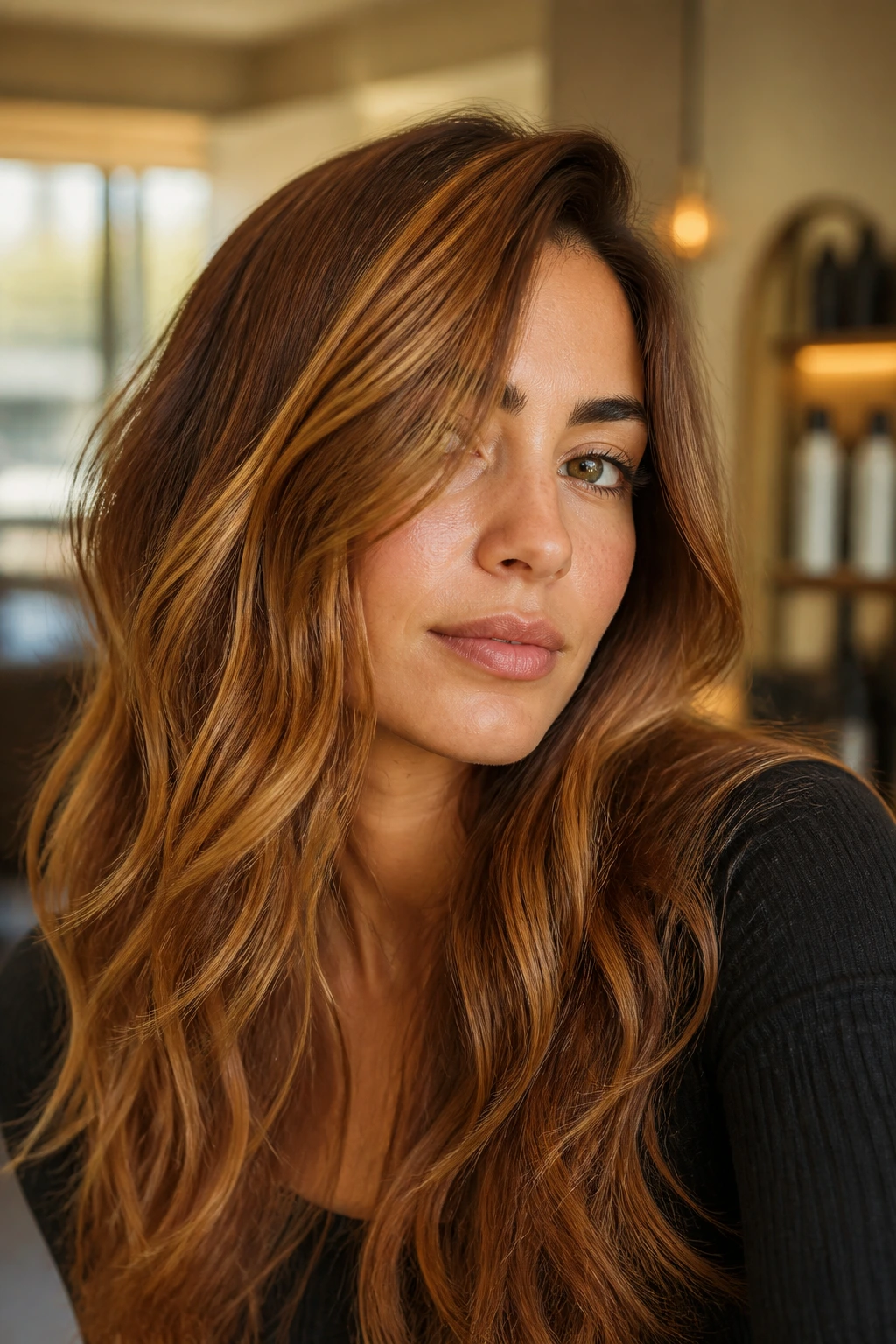
Copper and olive skin can be a tricky pair, but brushed copper brown keeps the red in check. The honey veil softens the copper so it reads warm, not loud.
What I like most here is the edge. The color has energy. It doesn’t sit politely. But because the honey is layered over a brown base, it stays wearable. If your eyes are hazel or warm brown, this can pull the whole face forward in a really useful way.
The veil should be thin. If the copper takes over, the skin can look blotchy. A good colorist will know the difference.
19. Smoky Latte Lob
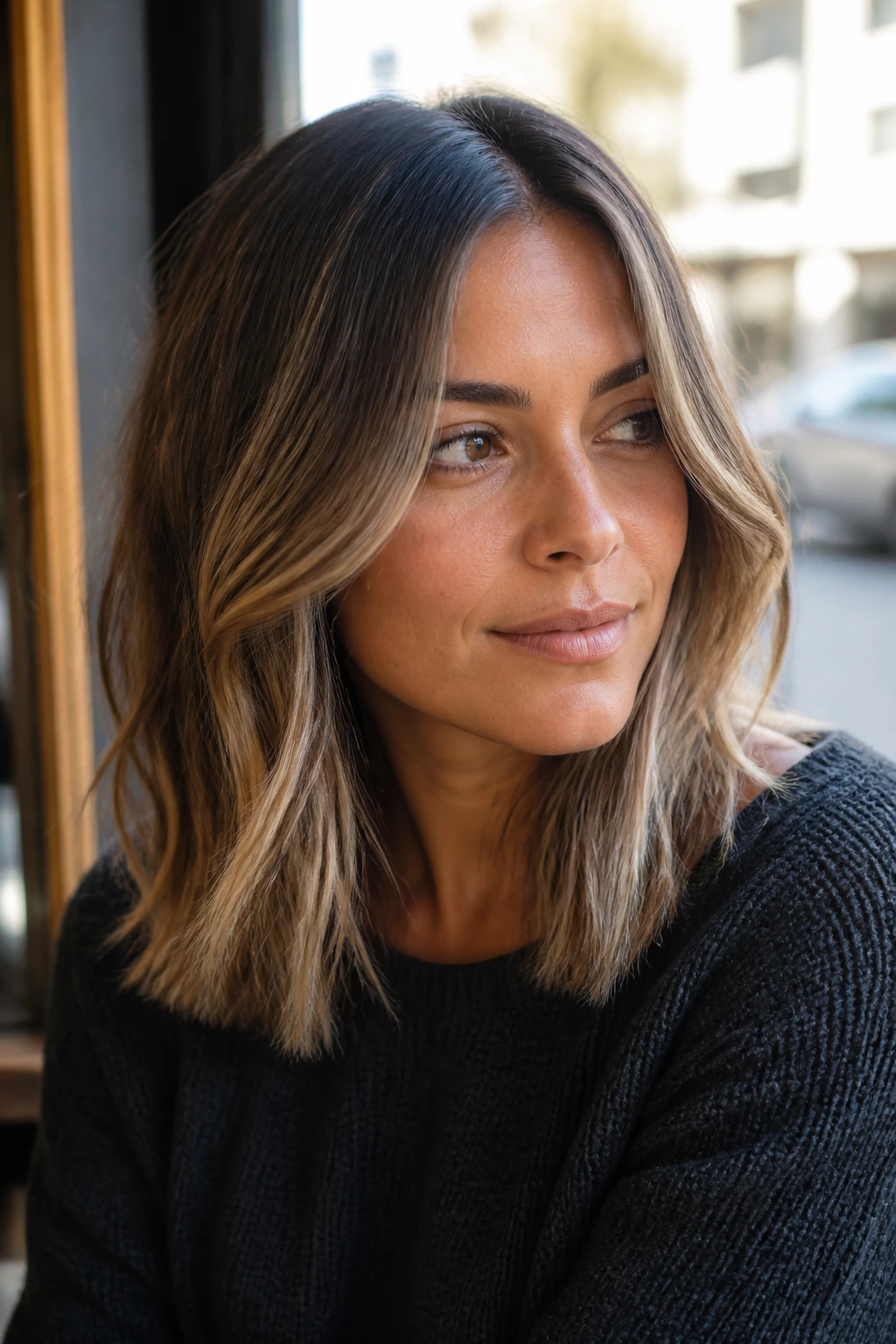
Smoky latte is what happens when beige, brown, and a touch of ash all share the same cup. On a lob, that mix keeps olive skin from looking too yellow or too flat.
The cut helps the color read as one smooth idea. Collarbone length gives the lighter pieces enough room to move, and the smoky finish stops the blonde from getting loud near the ends. I like this style when someone wants softness without obvious warmth.
It also ages well. The grow-out line stays blurry, and that makes the whole thing easier to live with than high-contrast blonde.
20. Maple Brown With Champagne Threads
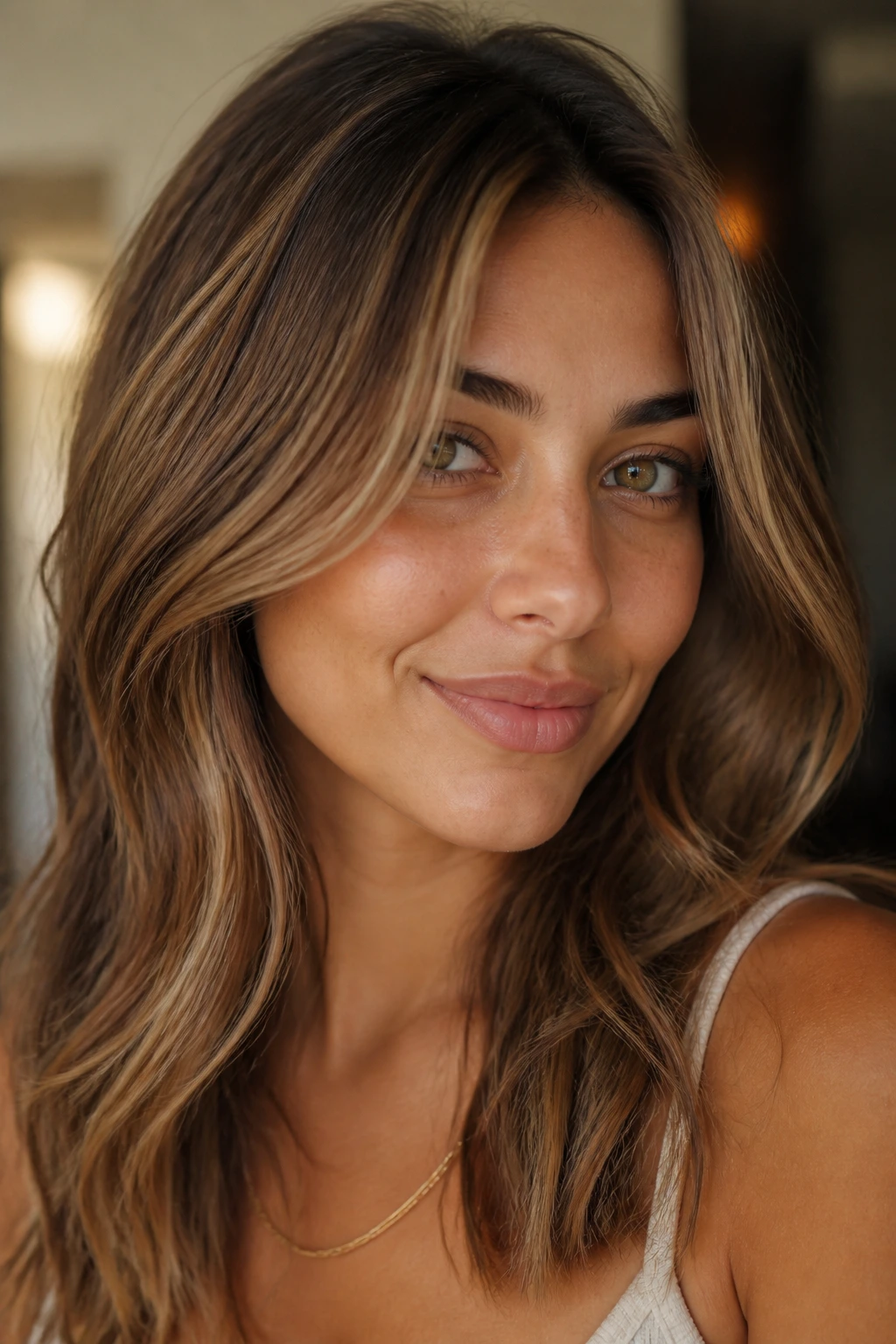
Maple brown has a little sweetness to it, but the champagne threads keep it from turning sticky. The result is a rich brunette with narrow blonde lines that flash through the top and sides.
This is a smart move for olive skin that needs a touch of brightness but still wants depth around the jaw and temples. Champagne is a useful tone because it sits between gold and beige. It feels lifted, not harsh.
If you wear your hair in a ponytail a lot, these threads show up nicely around the nape and sides. That’s where the look quietly earns its keep.
21. Walnut Shadow Roots With Luminous Ends
Shadow roots are not an accident. They’re doing real work here. A walnut root gives the color a strong base, while the luminous ends supply the lift that keeps olive skin from looking heavy.
The Balance to Aim For
You want the root deep enough to anchor the face, but not so dark that it swallows the lighter pieces. The ends should be bright, yes, but not dry-looking or chalky. Ask for a soft transition through the mids so the two zones blur together instead of meeting at a hard line.
This is one of the better options if you like wearing curls or loose waves. The shadow root makes the shape look thicker, and the luminous ends add movement.
22. Cool Taupe Brunette With Pearl Blonde
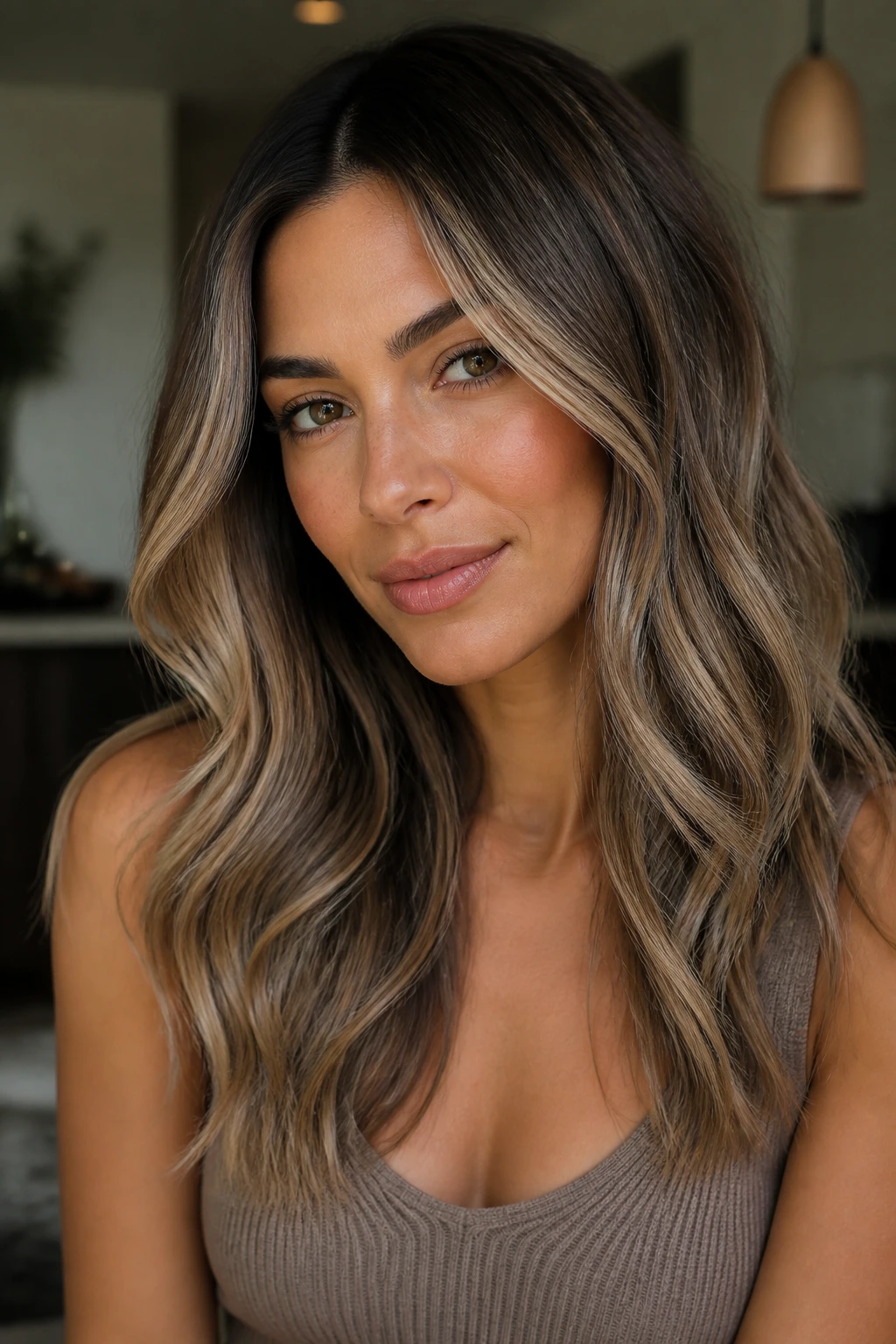
Cool taupe brunettes can look slick and modern when the pearl blonde is used with discipline. On olive skin, the coolness works best if there is still some brown warmth left under the surface.
Pearl blonde is not the same as silver. It should feel creamy, not metallic. That detail matters because olive skin can go dull fast if the blonde is too icy. This version is best for someone who wants a clean, soft finish rather than sunlit warmth.
If your wardrobe leans black, charcoal, ivory, and deep navy, this shade family slides right in.
23. Cocoa Swirl With Face-Framing Buttercream
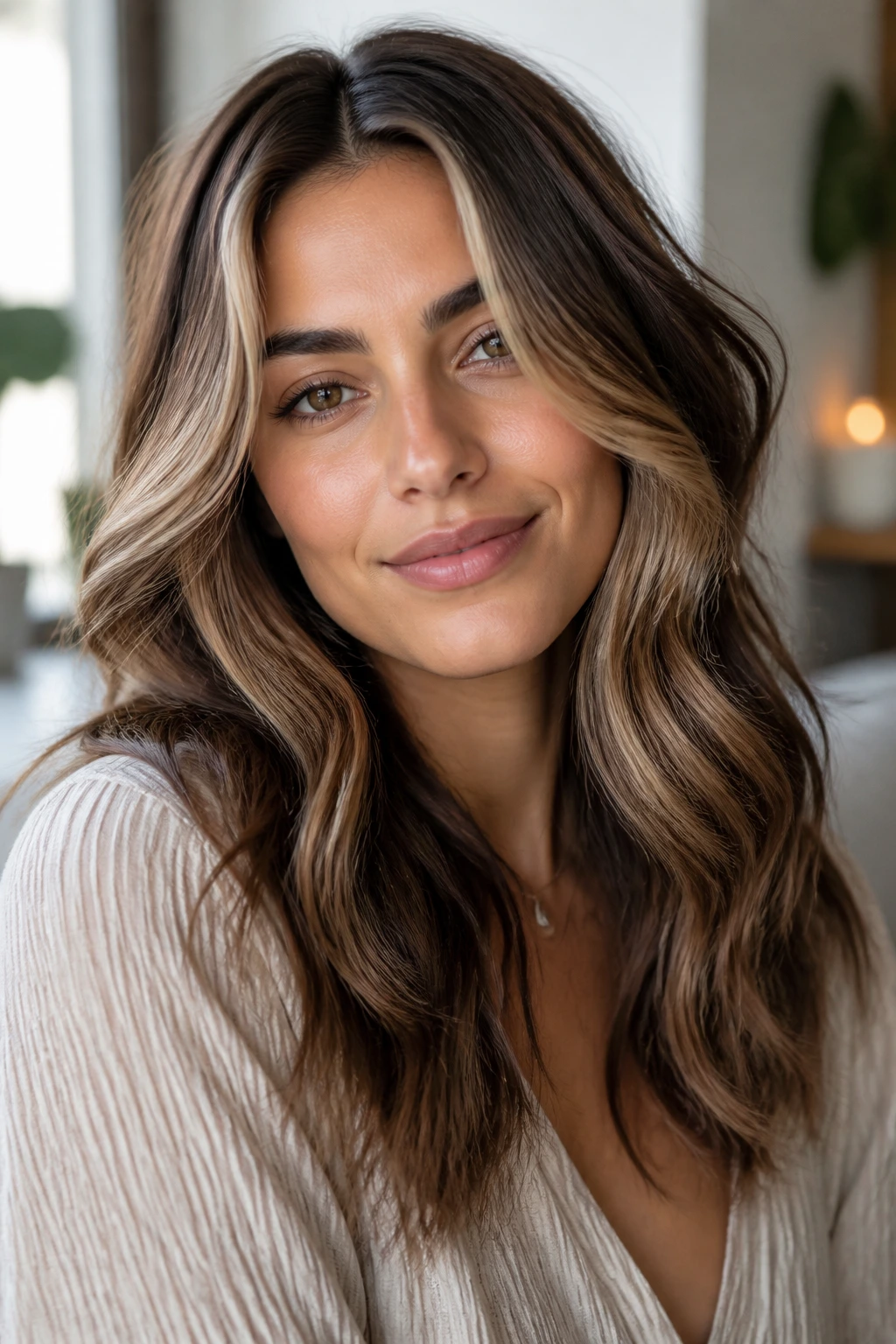
This is the kind of look that changes the mood of the face in one move. Buttercream pieces around the front open the features, while the cocoa swirl through the rest of the hair keeps the root zone grounded.
I like it because it doesn’t ask the whole head to do the same thing. The front gets the attention; the back stays rich. Olive skin usually appreciates that split. You keep the depth where it matters and the light where the eye wants it most.
If the face-framing pieces are too wide, though, the look starts to feel dated. Thin and soft wins here.
24. Olive-Skin Bronde With Soft Root Melt
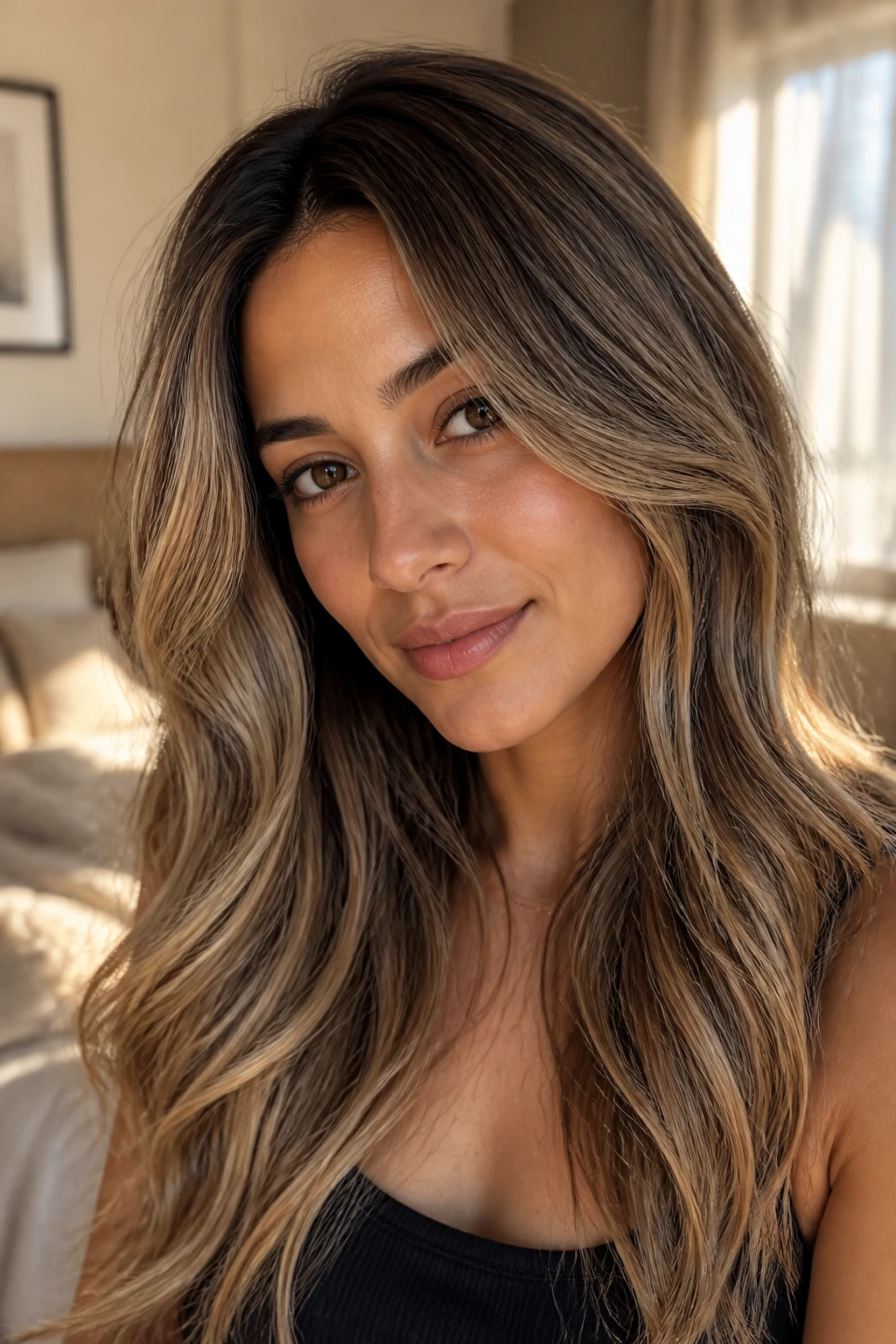
This is the most direct version of the whole idea, and it earns that place. The root melt should stay soft enough that the line between brown and blonde never looks drawn in marker.
Why It’s a Sweet Spot
Olive skin often looks best when the blonde doesn’t start too high and the root remains a shade or two deeper than the mids. That keeps the face from looking stripped. A root melt also gives you more control over warmth, because the gloss can sit on top of the lightness instead of fighting against it.
If you want a low-drama change with real payoff, this is the one I’d put near the top of the list.
25. Neutral Mocha With Sunlit Lowlights
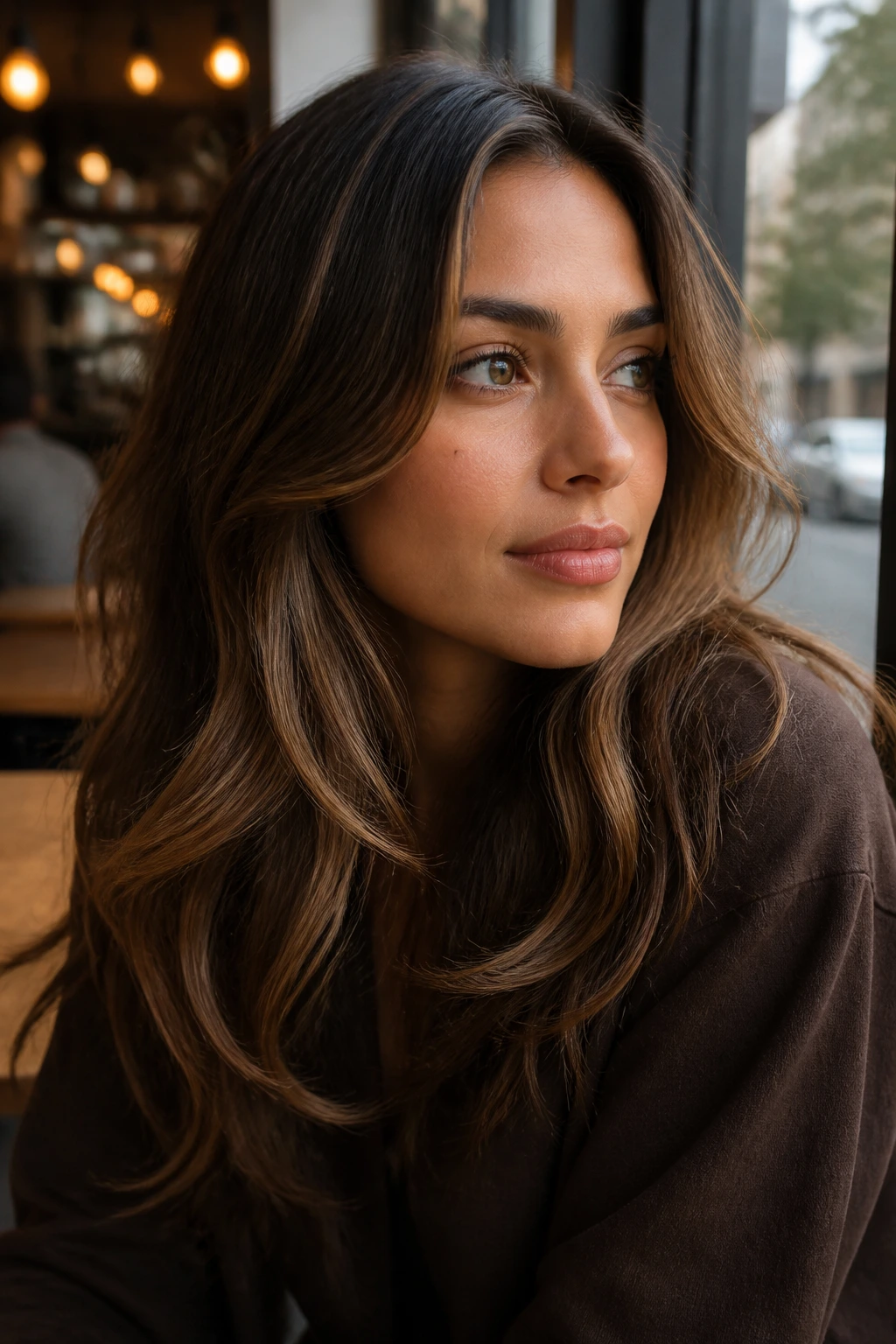
Neutral mocha with sunlit lowlights is a good closing note because it shows both sides of the balance. The mocha keeps the base strong, and the lowlights stop the lighter pieces from drifting into one flat tone.
This is especially nice on olive skin that falls somewhere between warm and cool. Nothing screams for attention. The color just works with the complexion instead of arguing with it. That makes it a smart final option if you want brown blonde blended highlights that feel lived-in, not newly minted.
It’s the shade family I’d recommend to anyone who wants movement, depth, and a grow-out that doesn’t need constant apologizing.
Why Soft Dimension Beats Stripey Blonde on Olive Skin
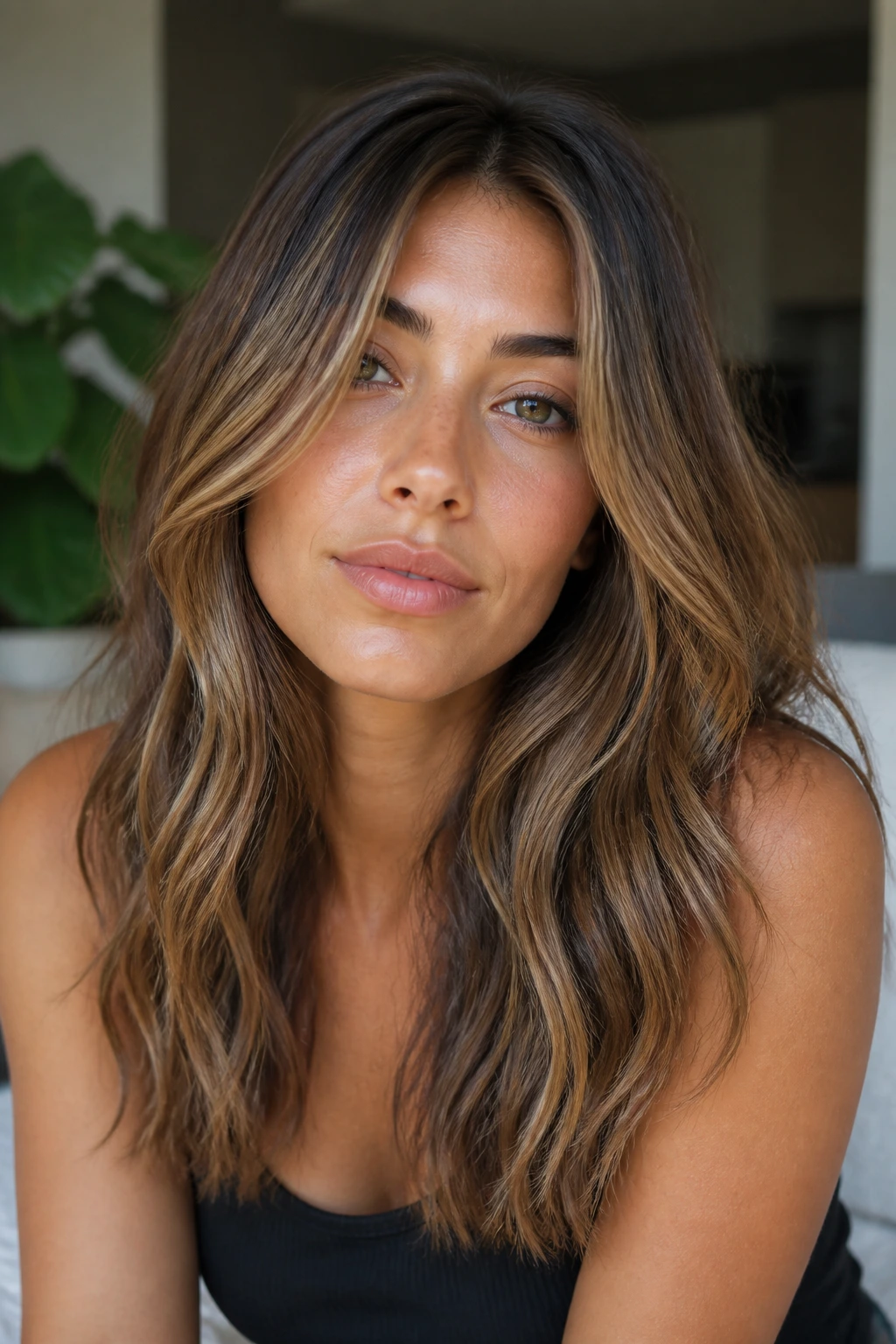
Olive skin tends to reward hair color that moves in layers. When the blonde arrives in ribbons, veils, melts, or babylights, the face still keeps its structure. The brow line stays defined. The cheekbones don’t disappear. The whole head reads as one picture, not a stack of disconnected pieces.
That’s why the old-school streaky foil look can be such a trap here. If the blonde starts too high, goes too pale, or sits in thick bands, the skin can look oddly muted next to it. Soft dimension solves that by keeping some darker brown around the face and threading lighter pieces through the mids and ends where they catch motion instead of glare.
There’s also a practical side. A well-blended brown and blonde mix gives you a better grow-out line, which matters if you do not want to race back to the salon every few weeks. The deeper pieces act like camouflage. The lighter pieces still do the visual work. And because olive skin can change character under different lighting, layered color usually holds up better in real life than a single flat tone ever does.
How to Read Tone Labels and Book the Right Salon Version
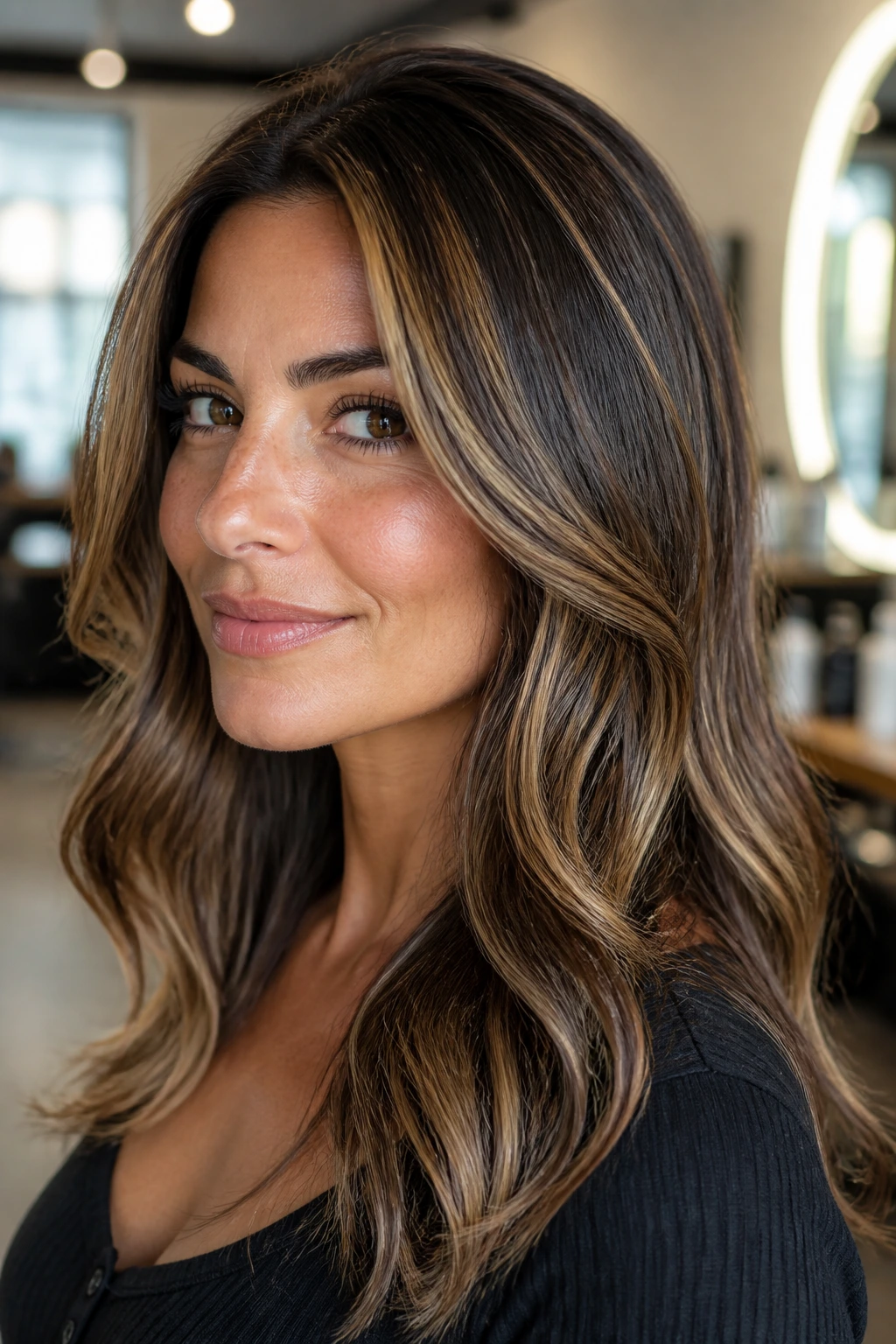
Color names can be slippery. One stylist’s “beige” is another stylist’s “warm neutral,” and one brand’s “mushroom” can lean greener than you expect. That’s why it helps to think in level and tone, not just in words.
Warm, Neutral, and Cool Olive Undertones
If your olive skin has a golden cast, honey, caramel, wheat, and soft champagne usually behave well. They warm the face without making it look orange. If your skin is more neutral or gray-green, mushroom, taupe, beige, and almond often sit better because they keep the complexion from looking ruddy.
If you’re not sure which camp you’re in, look at the jawline in natural light. Golden olive skin usually carries a little warmth in the chest and cheeks. Cooler olive skin can look olive-gray next to bright white fabric and may handle ashier tones better.
The Words That Matter at the Appointment
Tell the colorist you want low-contrast dimension, soft root shadow, and blonde that looks woven in, not striped on. Those phrases do more work than saying you want “brown and blonde.” Bring one photo of a warmer version and one of a cooler version if you’re unsure. That gives the stylist a range, which is much more useful than a vague Pinterest mashup.
Shade Names Worth Paying Attention To
Beige, mushroom, taupe, honey, champagne, wheat, almond, and pearl each send a different signal. Beige and mushroom are calmer. Honey and caramel feel warmer. Pearl and taupe sit cooler and can go a little icy if they’re pushed too far. If your hair is already porous, ask for a glossed finish rather than a heavy tonal shift—porous ends grab pigment fast and can turn muddy.
Essential Tools for Keeping the Blend Clean and Glossy
- Color-safe shampoo: Look for a sulfate-free formula that cleans without stripping the toner out of the lighter pieces.
- Moisturizing conditioner: Blonde ribbons show dryness first, so a conditioner with slip matters more than a fancy label.
- Purple shampoo: Use it sparingly, usually every third or fourth wash, if the blonde starts drifting brassy.
- Heat protectant spray: Flat irons and curling wands can burn the softness out of beige and honey tones fast.
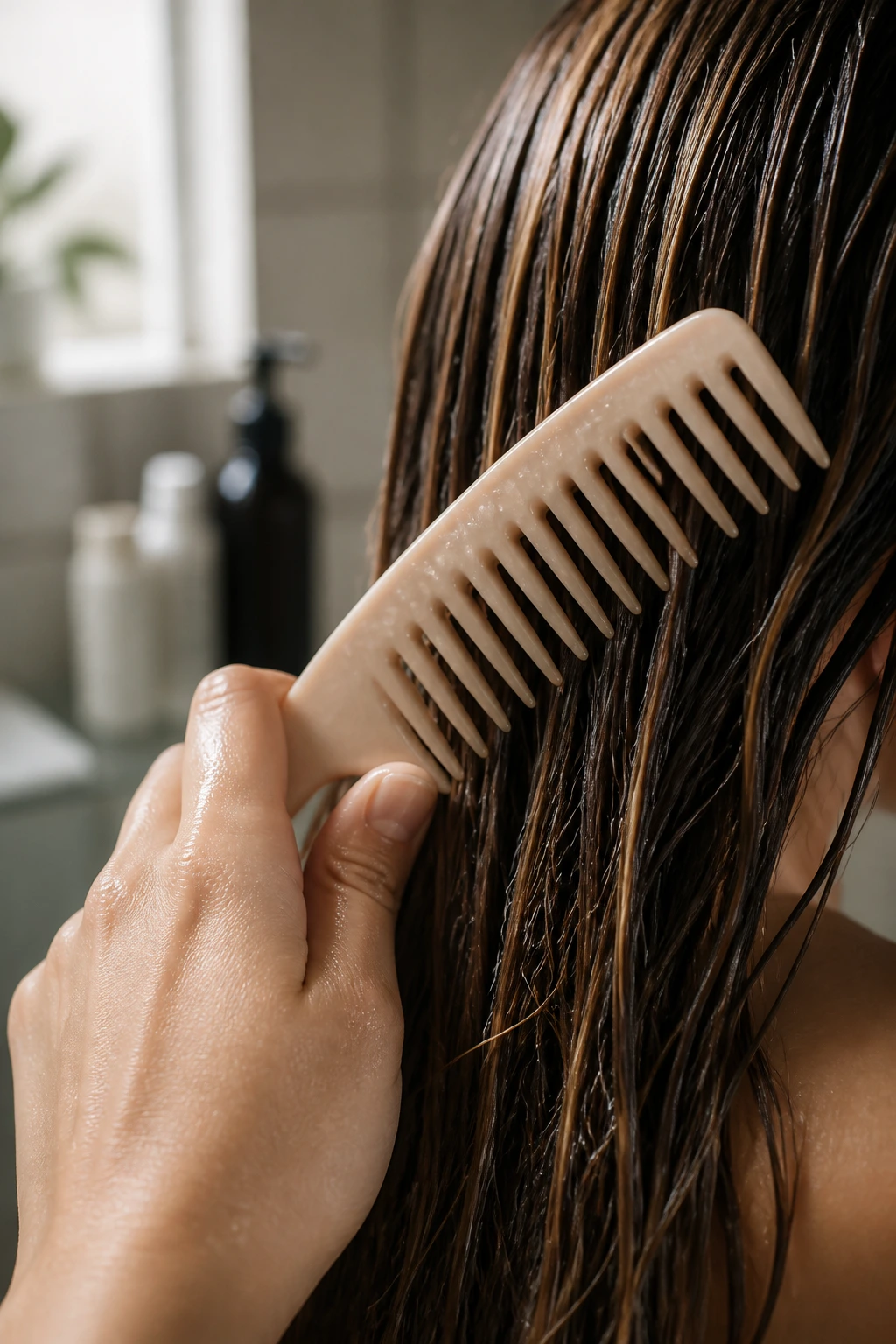
- Wide-tooth comb: Best for detangling damp hair without dragging through the highlighted sections.
- Microfiber towel or cotton T-shirt: Helps keep the cuticle calmer than rough terry cloth.
- Glossing mask or salon glaze: Useful for refreshing shine between salon visits.
- Sectioning clips: Helpful if you’re applying a mask, detangling carefully, or doing a root touch-up consultation at home.
- Satin pillowcase: Small thing, real payoff. It cuts down on friction around the face-framing pieces.
- Clarifying shampoo: Keep one around for hard water, styling buildup, or the dulling film that makes color look tired.
How to Wear the Color So It Feels Intentional
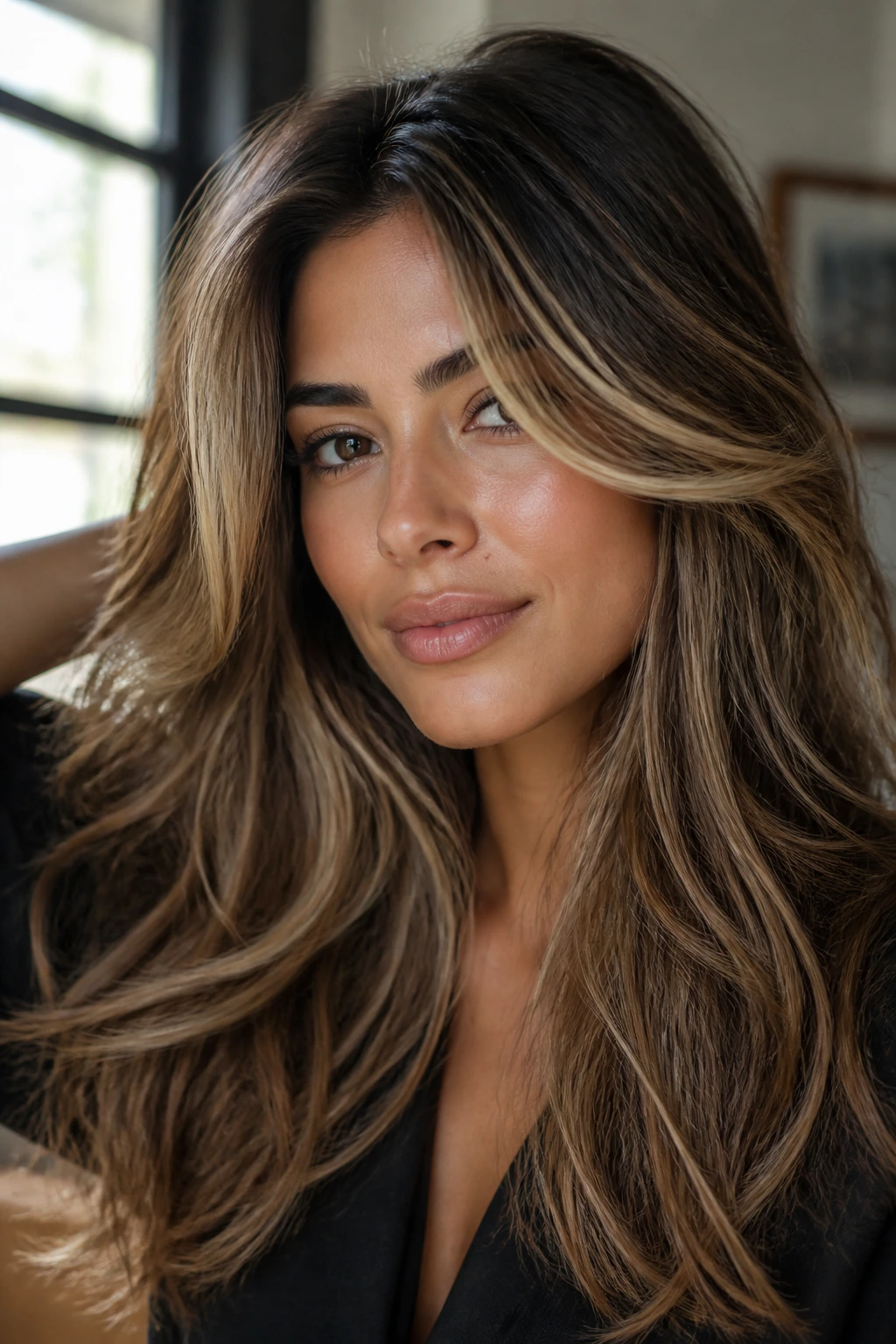
Presentation: Put the brightest ribbons where the hair moves first—around the face, the crown, and the outer layer. If the hair is curled, the bend should reveal the light in flashes rather than all at once.
Accompaniments: Long layers, a blunt lob, curtain bangs, and soft shags each change how the blend reads. A heavy one-length cut can make the color look thicker and darker; layers let the blonde breathe.
Portions: If you want something subtle, ask for a few face-frame pieces and light scattering through the mids. If you want more change, increase the blonde through the lower half of the hair, but keep the root shaded so the look still belongs to olive skin.
Makeup Pairing: Terracotta, peach, bronze, muted rose, and soft brown liner usually sit well beside these shades. If your blonde leans cooler, taupe-shadowed eyes and mauve lips keep the whole look from drifting too warm. Clean brows matter too. Dark brows with a pale blonde can feel disconnected unless the face-frame pieces are placed with care.
Practical Tips for Better Placement and Longer Wear
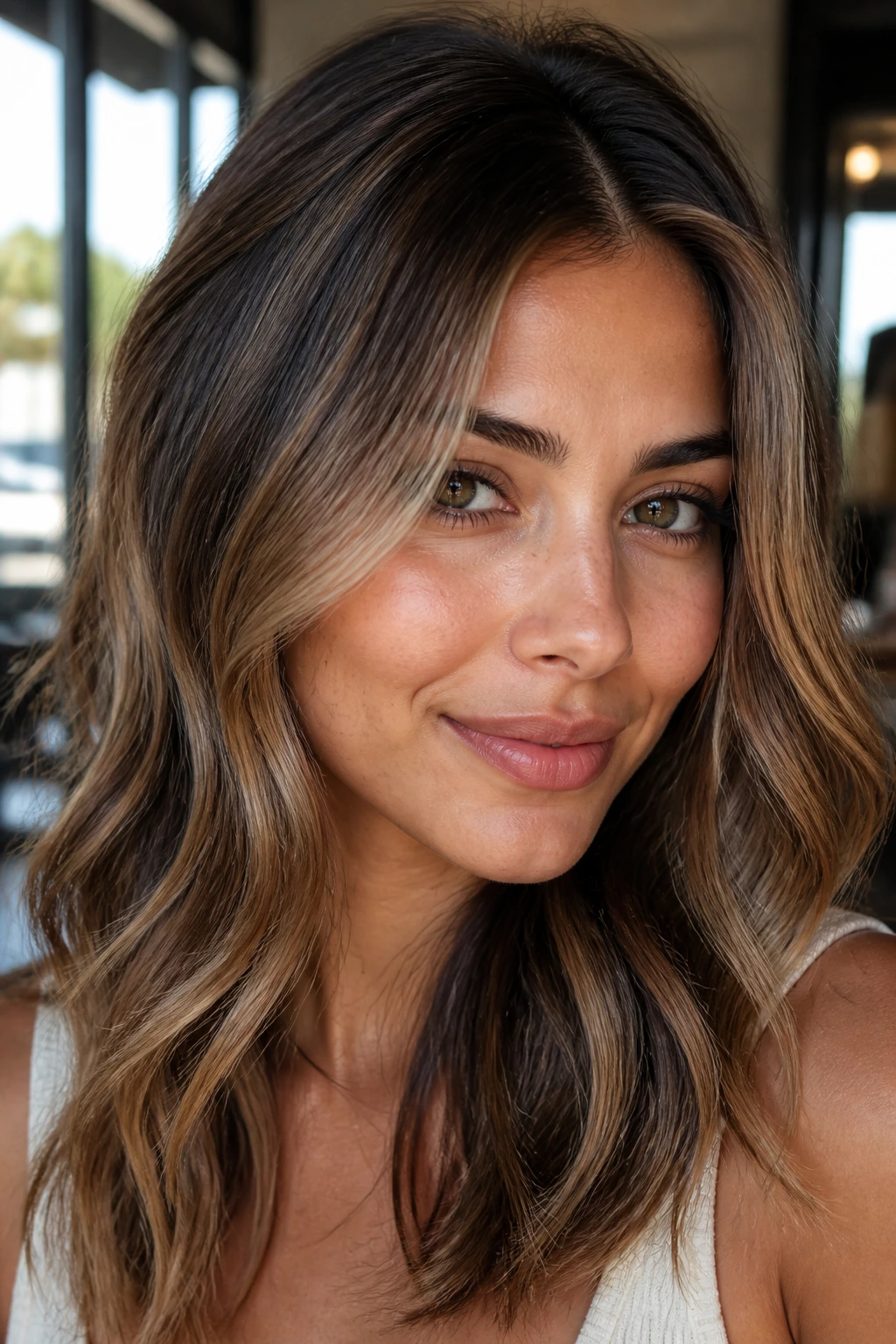
Placement Trick: Ask for the brightest pieces to start a little below the part line, not right at the scalp. That tiny gap stops the highlight from looking like a helmet stripe and gives you a softer grow-out.
Gloss Habit: A beige or honey gloss every 6 to 8 weeks keeps the blonde from turning flat. The goal is shine and tone control, not constant full recoloring.
Texture Trick: If you wear your hair wavy, let the stylist see it in its natural shape. Ribbon placement is different on straight hair than on hair that bends, and the wrong placement can hide the lighter pieces completely.
Photo Filter Warning: Screens lie. Save photos that show the hair in daylight and indoor light, not just in golden-hour glow. That’s where you’ll spot whether the blonde is actually beige, mushroom, or way too yellow.
Make-It-Yours: For deeper olive skin, a slightly warmer beige often feels richer. For olive skin that leans gray or cool, keep the blonde more taupe, almond, or pearl so the face doesn’t lose warmth.
Common Mistakes That Make Olive Skin Look Flat
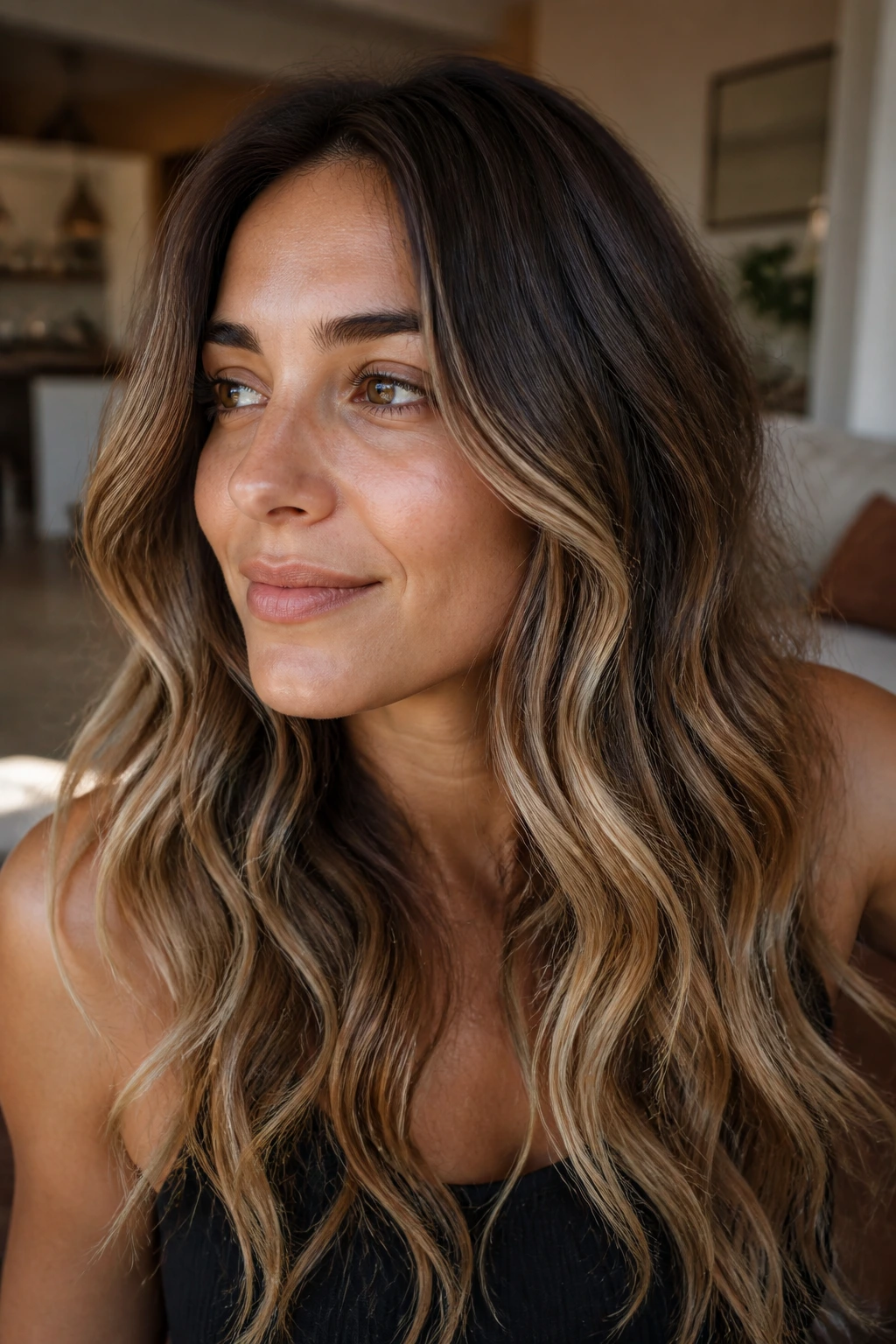
The first mistake is going too pale too fast. A near-white blonde can look sharp in a salon mirror and harsh everywhere else, especially next to olive skin. The fix is simple: stay two or three levels lighter than the base at first, then brighten later if the hair and skin actually want it.
Another one is using only one tone of blonde. Flat color has no depth, and olive skin tends to show that lack of contrast fast. The answer is to layer at least two tones—maybe honey and beige, or mushroom and almond—so the hair shifts as it moves.
Over-toning is a sneaky problem. Hair that has been pushed too ash or too pearl can start to look dusty. If that happens, a softer gloss is usually better than another round of aggressive toner.
A fourth trap is ignoring the root. When the root is too light, the whole style can lose its frame. Keep some depth there, even if the blonde is brighter through the mids and ends.
Variations and Adaptations to Try
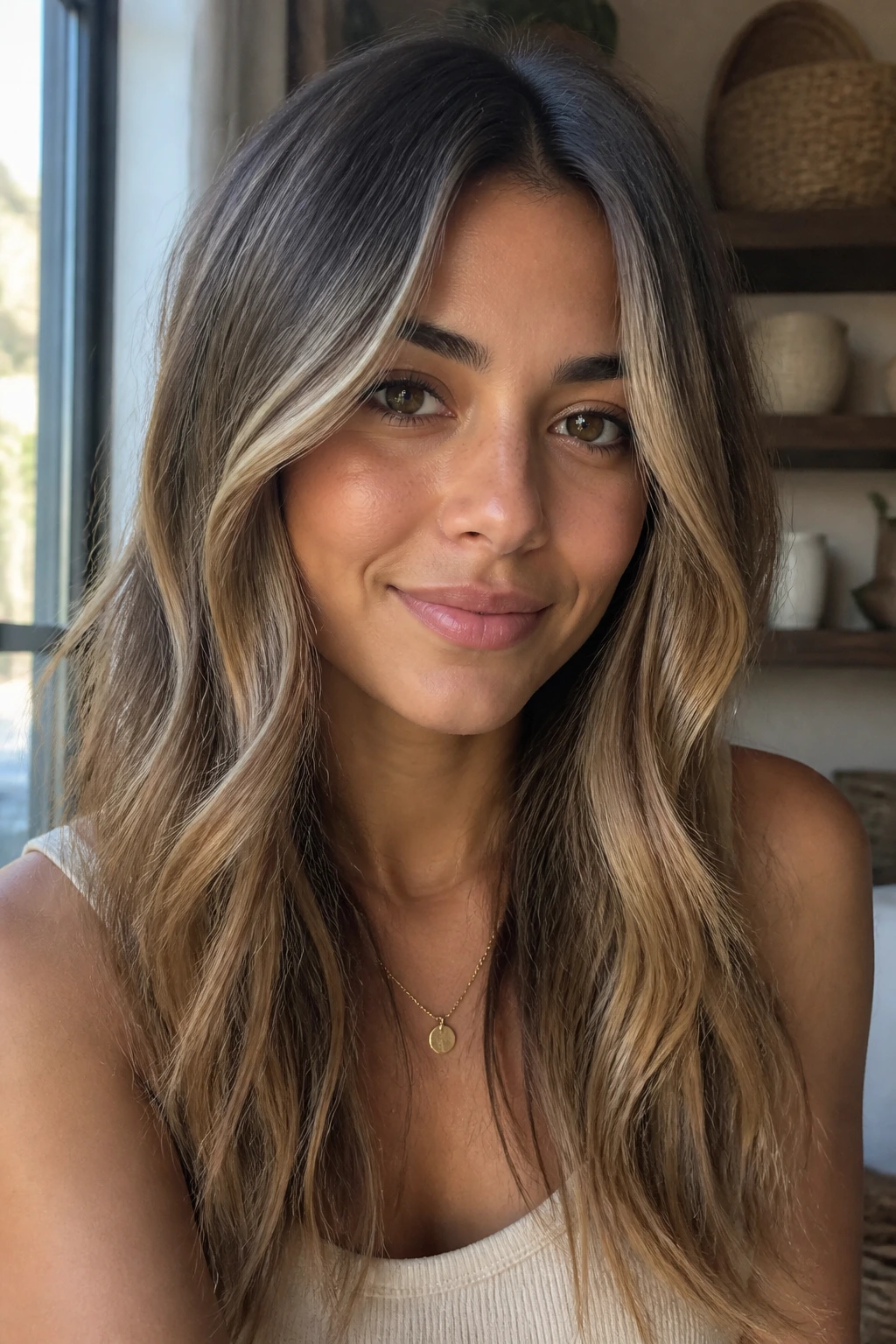
Soft Babylight Veil: Use ultra-fine highlights all over for the lightest possible change. This suits olive skin that only needs shimmer, not a big color shift.
Rooted Melt With Honey Ends: Keep the top deep and let the blonde gather toward the ends. It’s a strong choice if you want easy grow-out and a warmer finish.
Curly Ribbon Balayage: On curls, paint the highlights on the outside of each curl family so the light appears in spirals instead of flat bands. This keeps the pattern visible when the hair dries.
Short-Cut Micro Highlight Crop: For pixies and short bobs, tiny highlights around the crown and fringe do more work than large blonde panels. The cut stays crisp, and the color reads intentional.
Gray-Blending Mocha Mix: If you’re dealing with first grays, ask for mocha depth with soft beige or champagne ribbons around the front. The mix helps the grays disappear into the pattern instead of sitting on top of it.
How to Keep the Blend Fresh Between Appointments
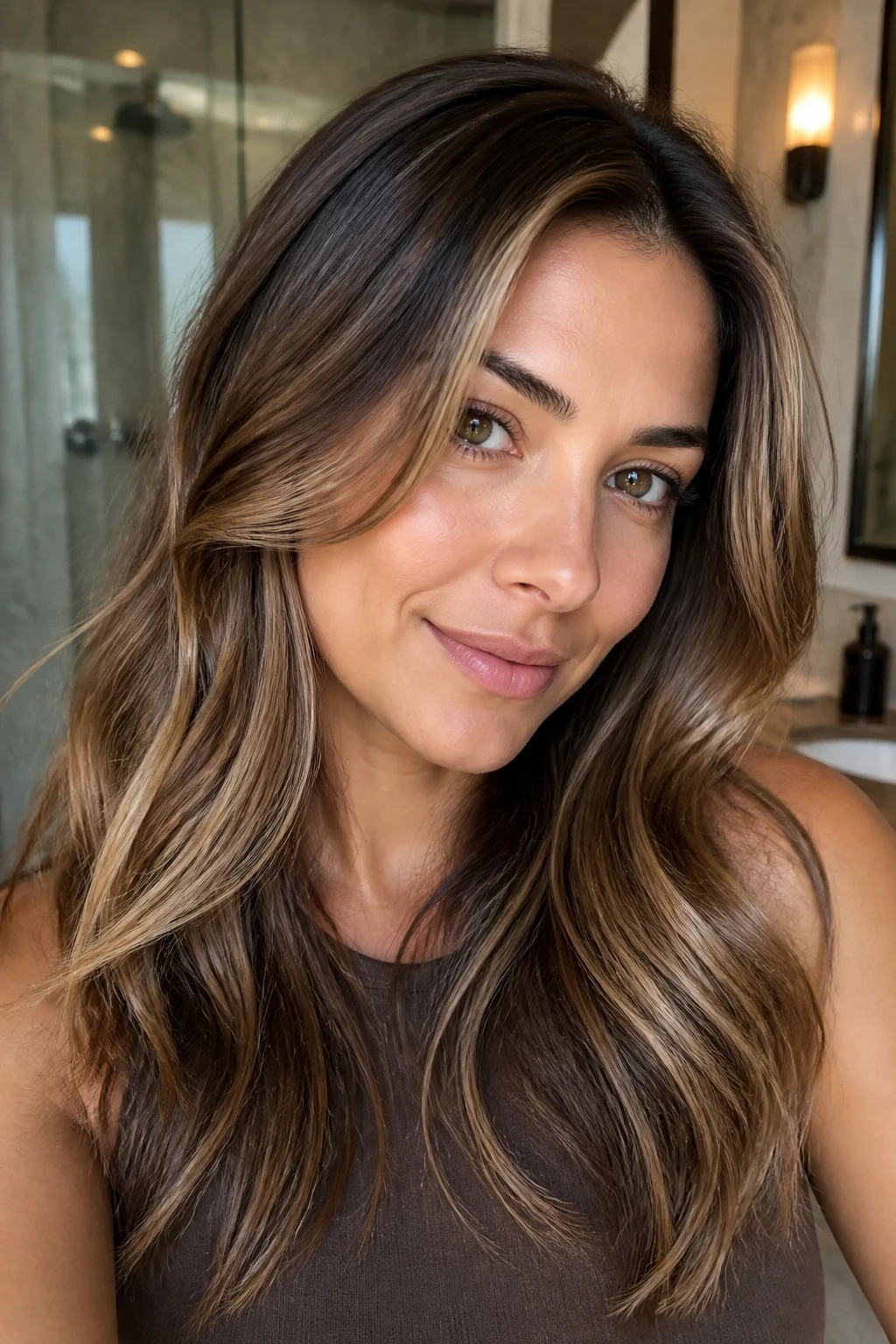
Brown-blonde blends age better than many brighter colors, but they still need a little care. Wash too often and the beige or honey can fade. Skip care altogether and the blonde starts looking dry, which is never flattering against olive skin.
Aim for two to three washes a week if your scalp allows it, and keep the water lukewarm rather than hot. Hot water opens the cuticle fast and can pull tone from the lightest pieces. Use purple shampoo only when the blonde starts to drift yellow or the warm tones overtake the neutral ones—usually every third or fourth wash, not every single time. Too much purple can make the color look bruised or dull.
A salon gloss every 6 to 8 weeks helps keep the blonde soft and the brown shiny. Partial highlight refreshes often land around 8 to 12 weeks, while a fuller color update can stretch farther if the grow-out is blended well. If you swim, wet the hair with clean water first and add conditioner before the pool; chlorine and hard water can grab onto porous blonde ends and turn them rough fast. A clarifying shampoo once a month helps if you live with hard water or use a lot of styling products.
Questions People Ask Before Booking This Look
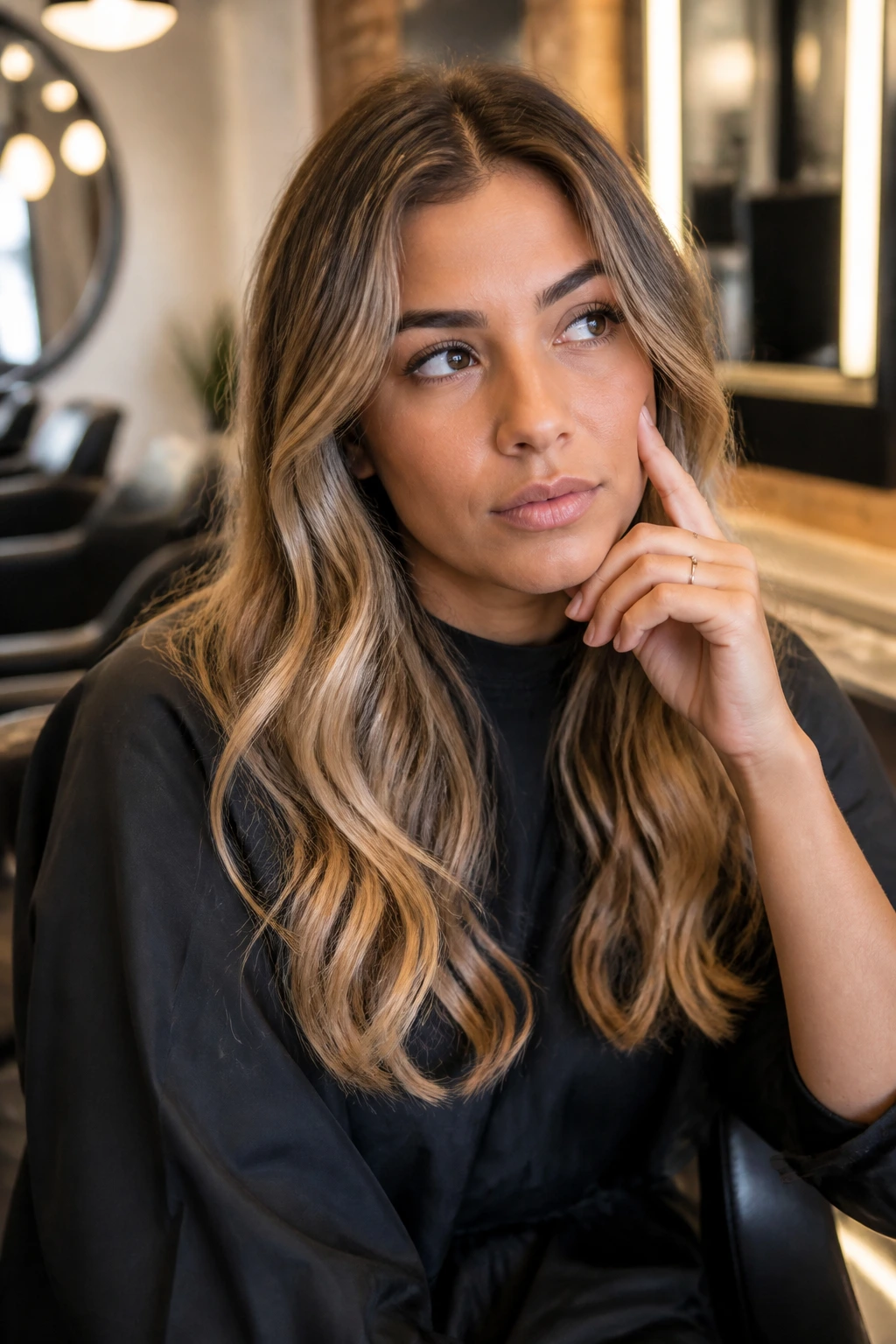
Which blonde tones flatter olive skin best?
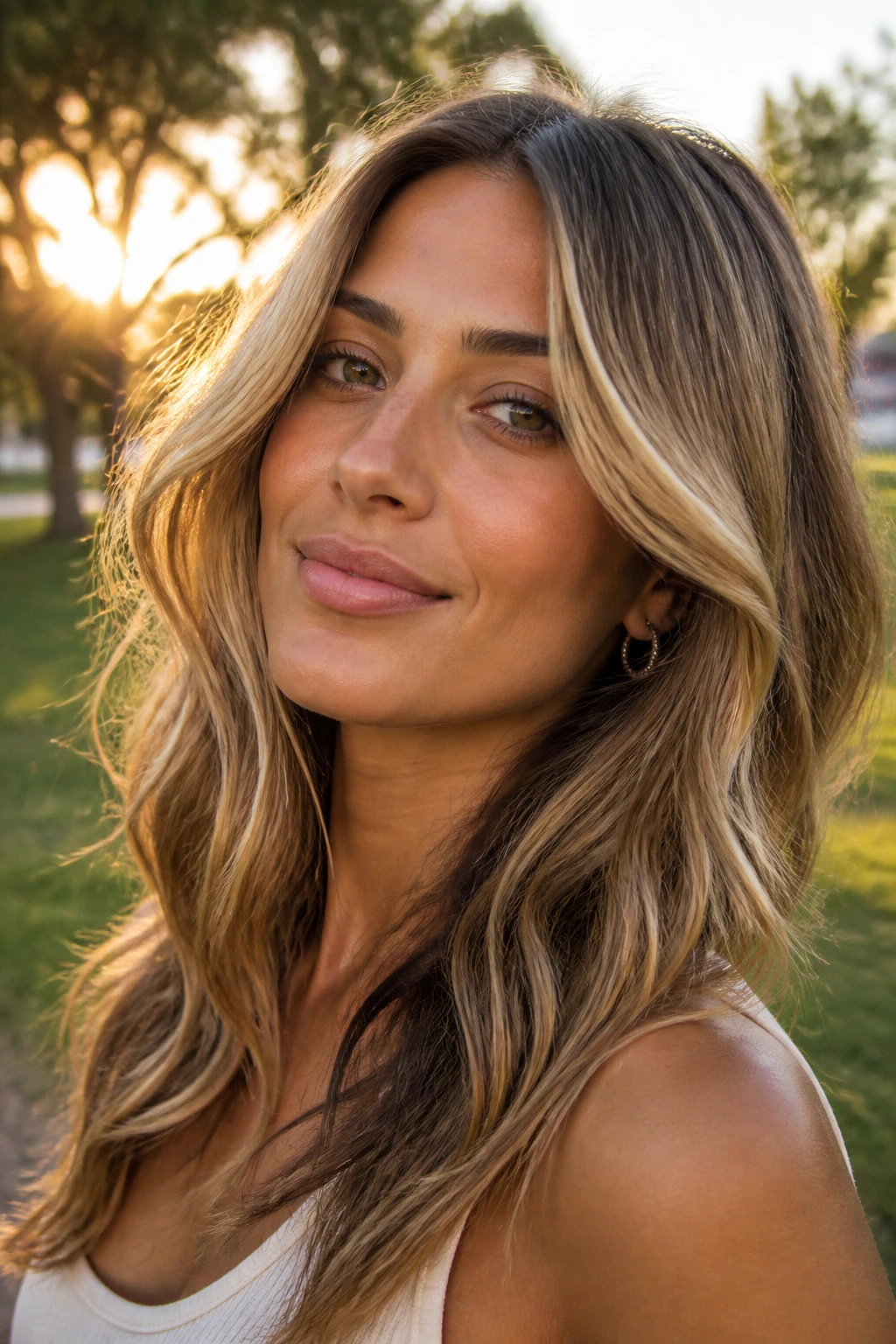
Beige, honey, mushroom, champagne, almond, and soft pearl usually give olive skin the easiest ride. They let the complexion keep its natural depth while still adding light around the face and ends. If the skin leans very green or gray, cooler beige and mushroom often behave better than bright gold.
Are ash-blonde highlights a good idea for olive skin?
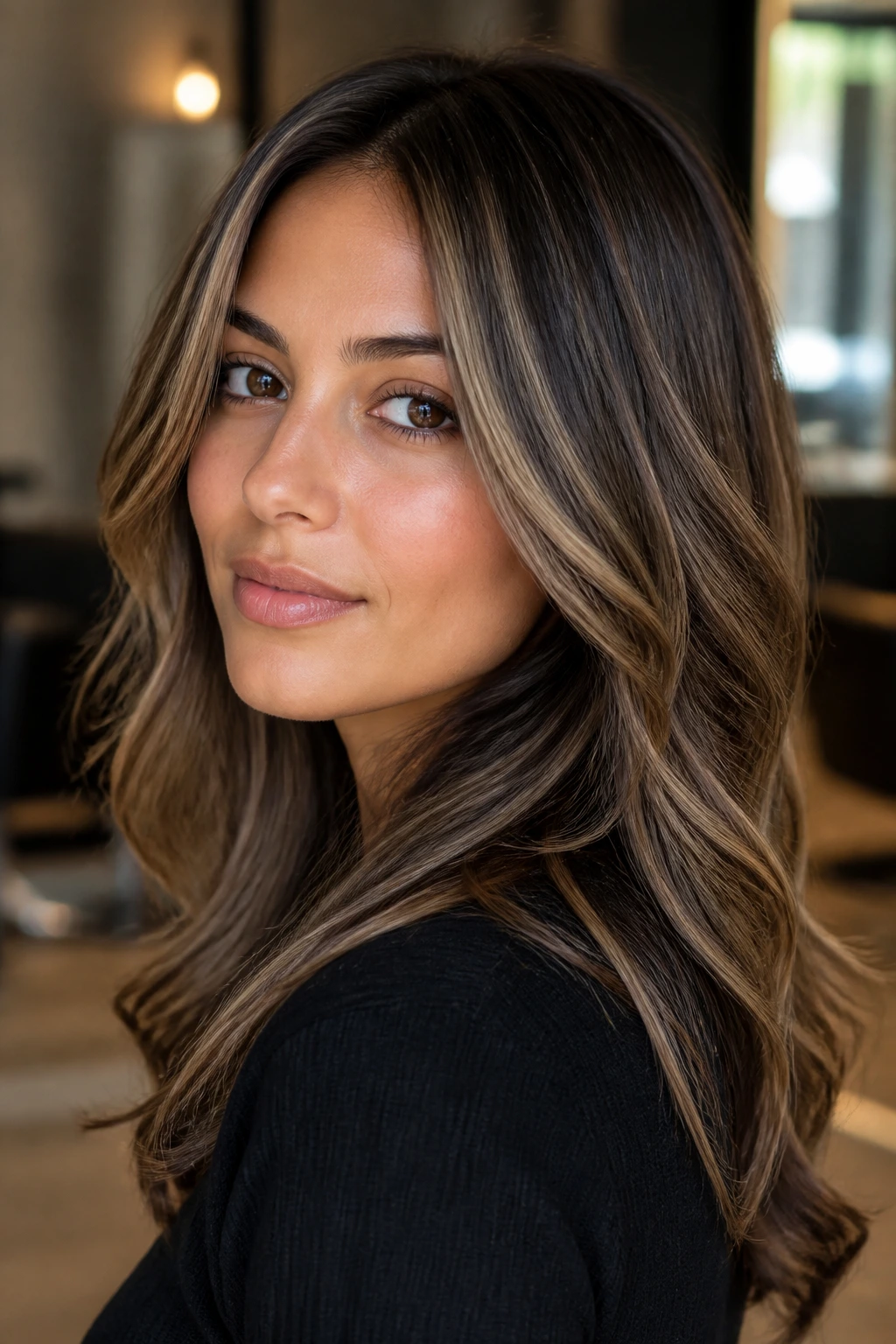
Sometimes, yes, but only if they’re softened with brown depth and not pushed into flat silver territory. Ash can cancel redness and make the hair look clean, but too much of it can make olive skin look tired. I’d keep ash as part of a blend, not the whole story.
How often do blended highlights need touch-ups?
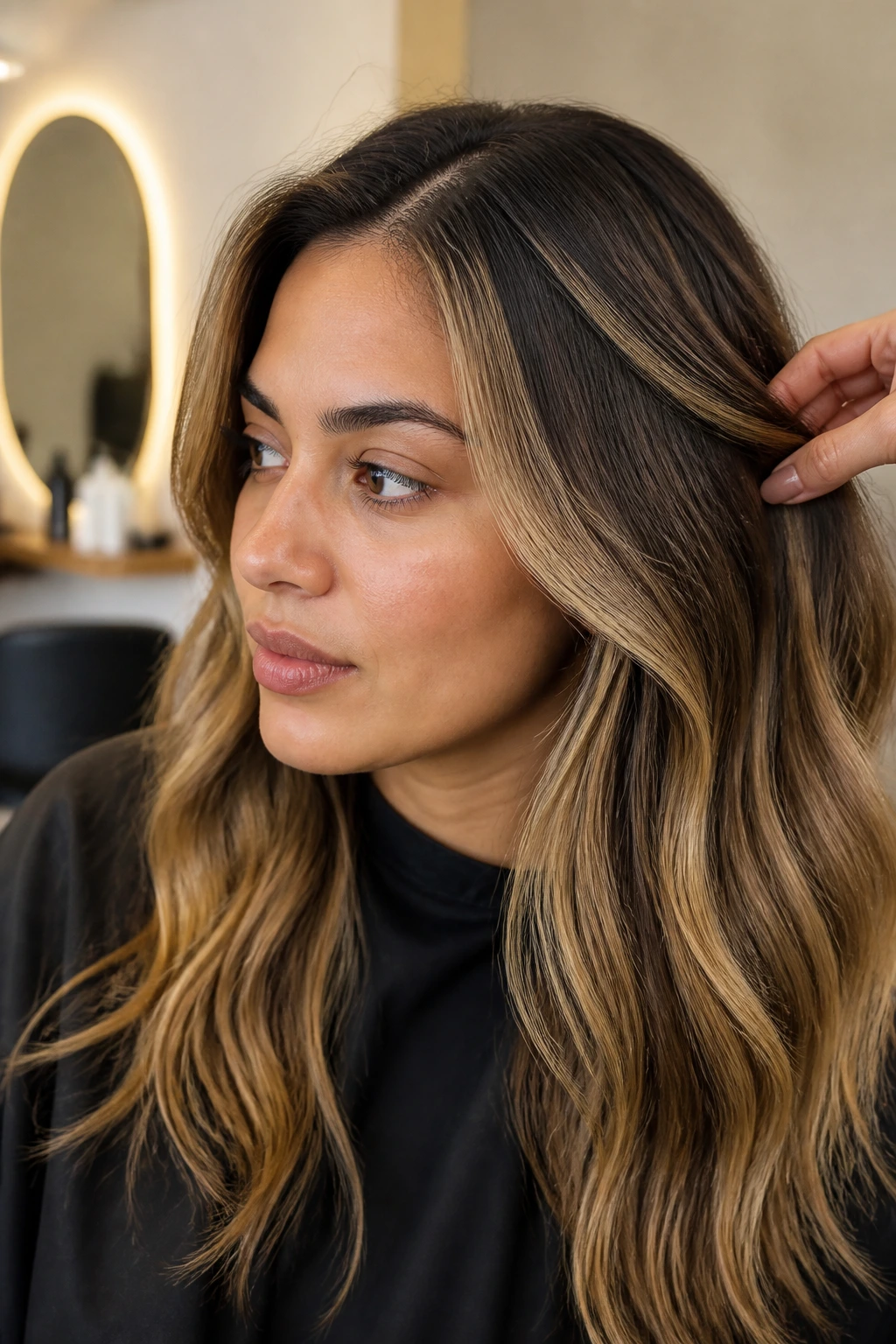
A good blend usually holds for 8 to 12 weeks before it starts asking for attention. Rooted looks can go longer than high-contrast blonde, especially if the stylist has shaded the root and broken up the lighter pieces. The toner may need refresh sooner than the highlights themselves.
Can I go lighter without getting brass?
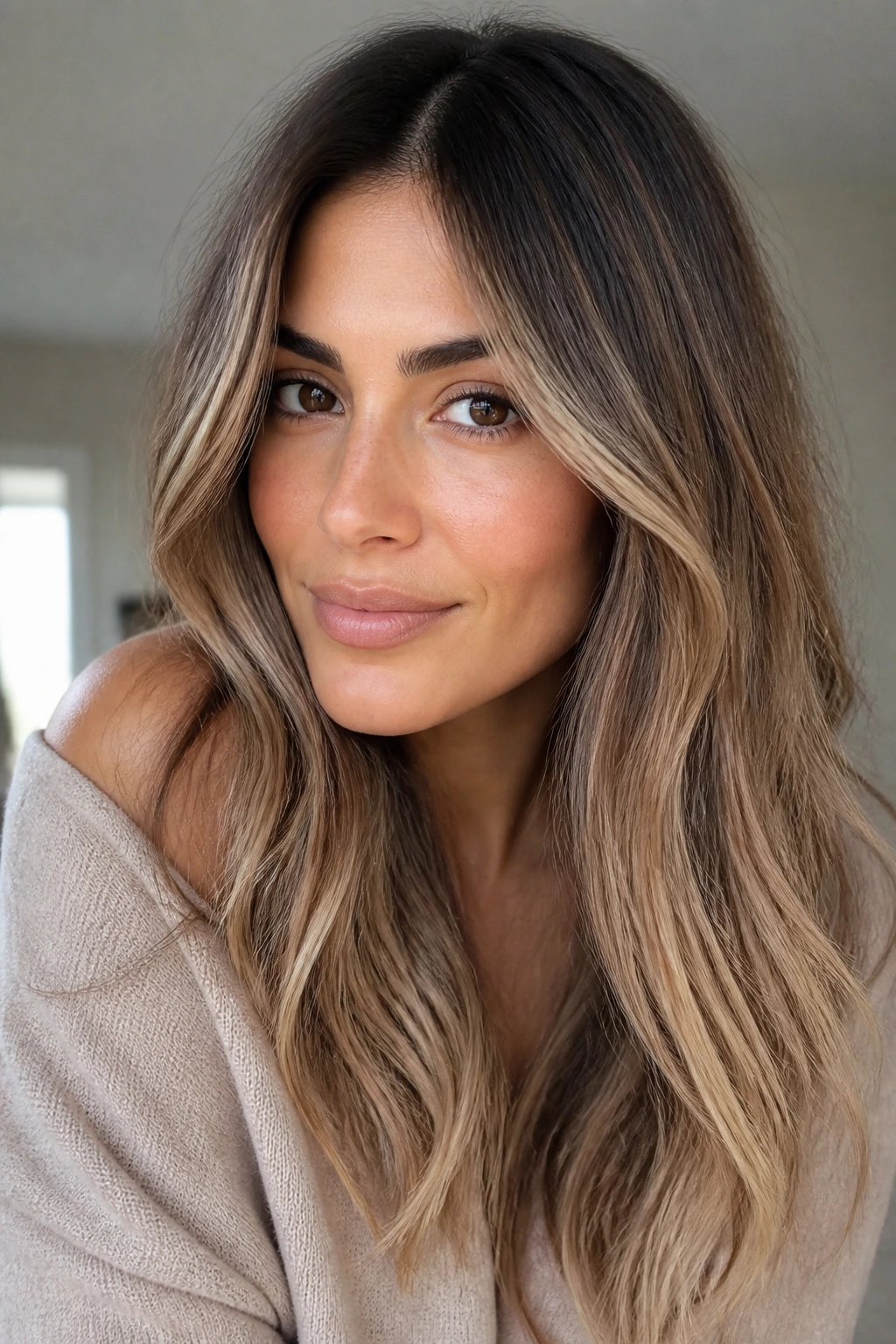
Yes, but the tone has to be chosen with care. Beige, mushroom, and soft champagne are better than very yellow gold if you want the blonde to stay refined. A good toner and the right shampoo schedule matter just as much as the lightening itself.
Do these highlights work on curly or coily hair?
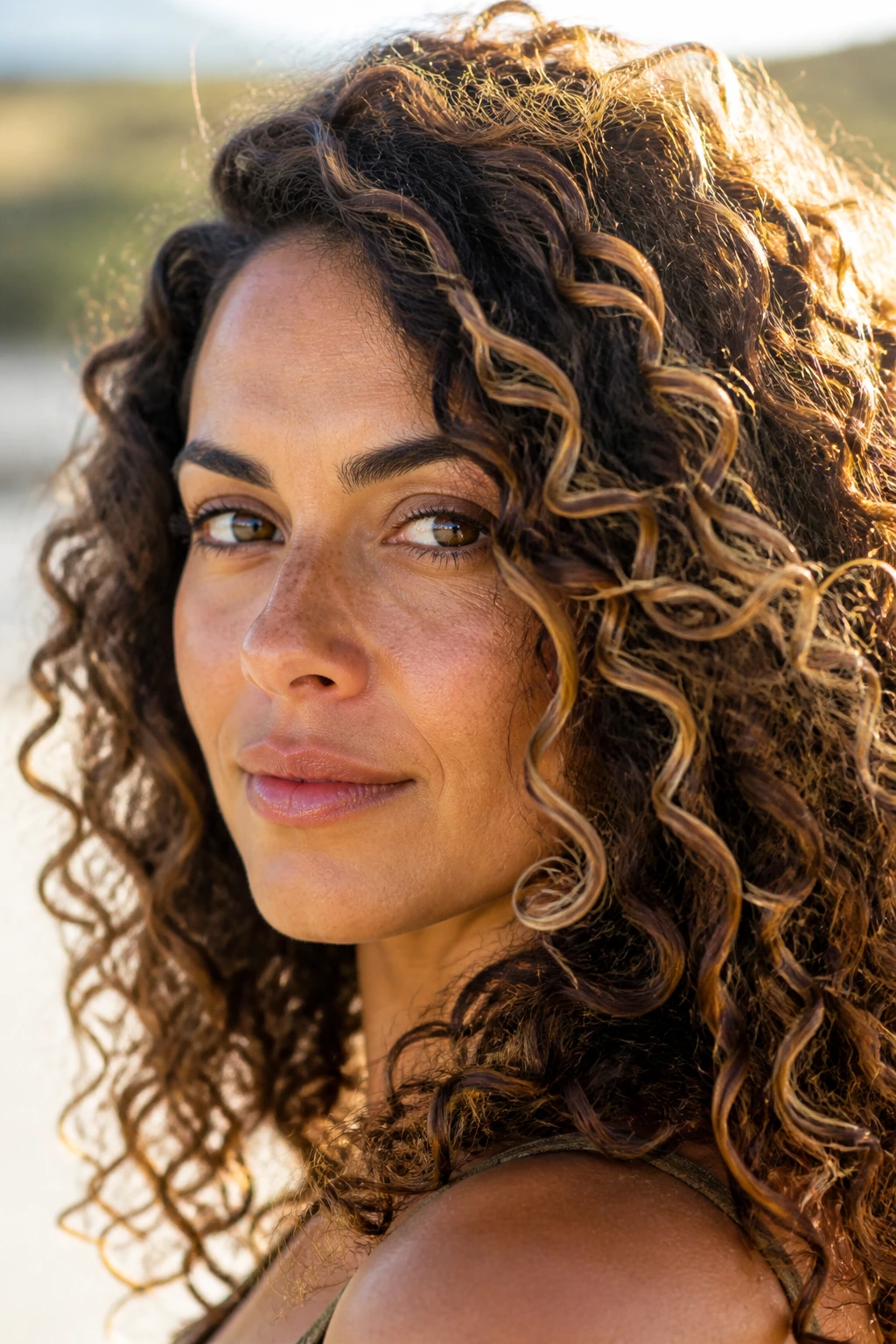
They can, and the results are usually better when the highlights are painted to match the curl pattern. Curls need depth inside the shape and brightness around the outer curve, or the color disappears when the hair shrinks. Ask for ribbon placement instead of uniform stripes.
Should the root stay dark?
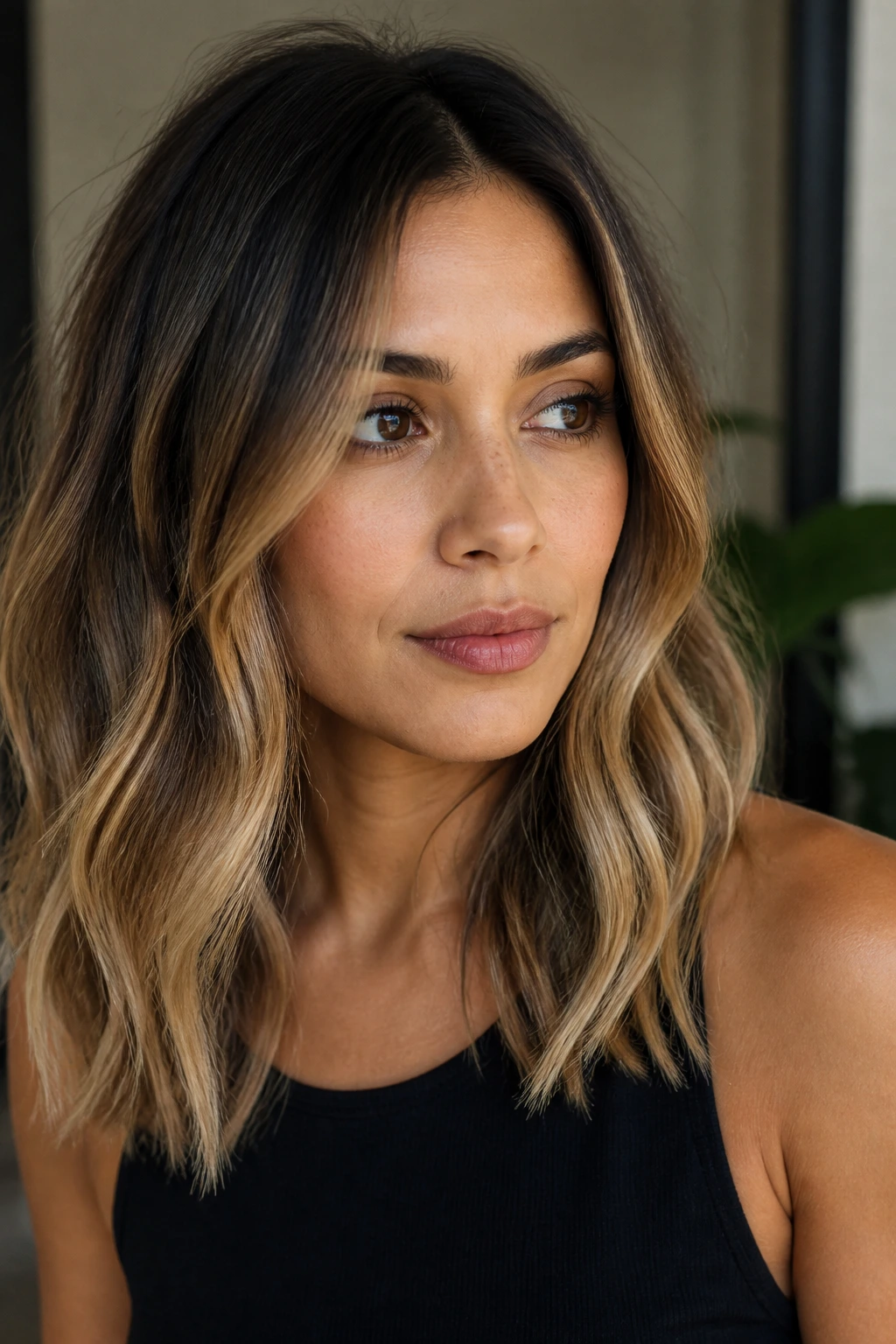
Usually, yes. A darker root frames olive skin and keeps the blonde from looking pasted on. It also gives the color that soft grow-out people tend to like after the first week of excitement has passed.
What if the toner makes the hair look too gray?
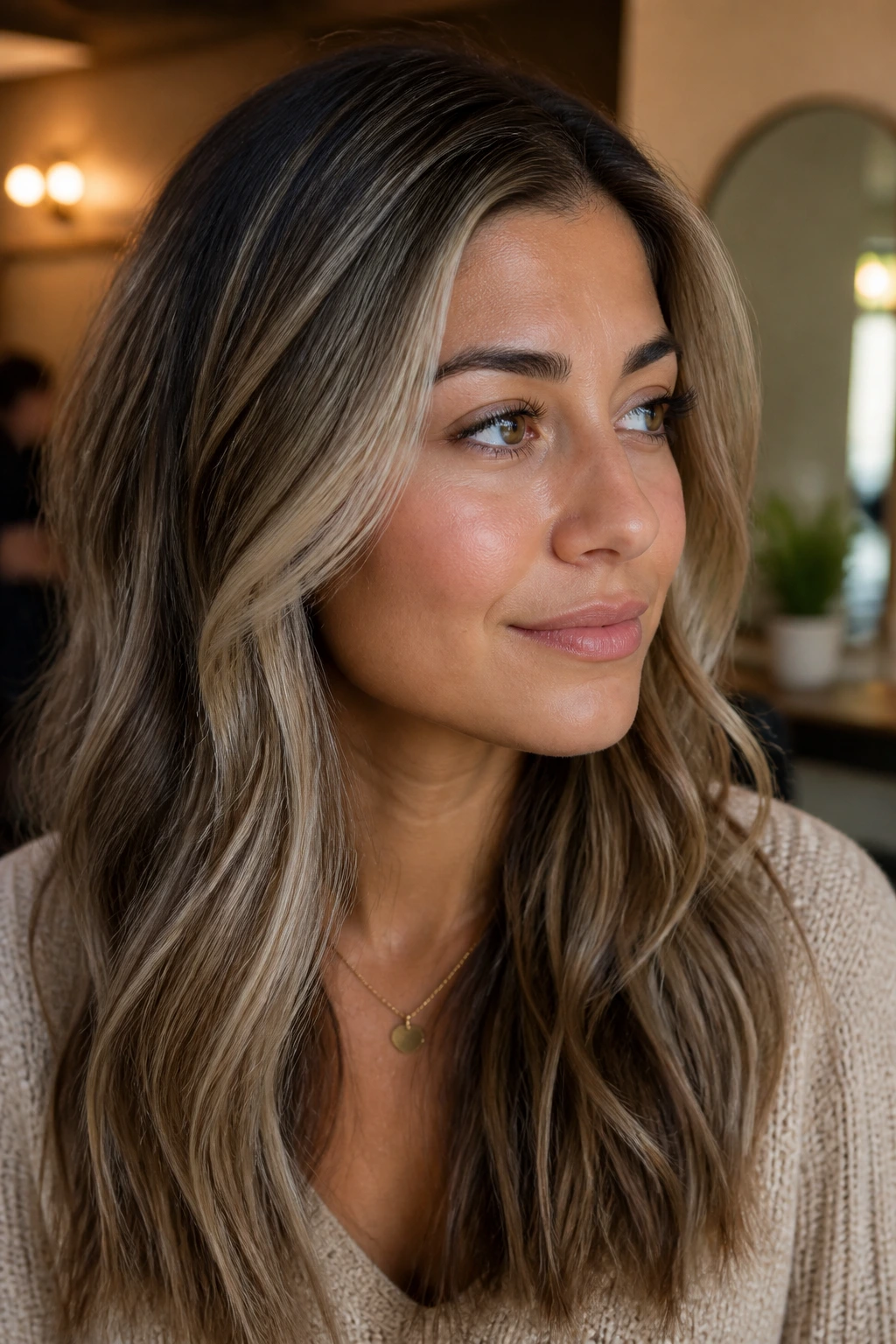
That happens when the tone is too cool or the hair is porous enough to grab pigment fast. A warmer gloss, or even just a few washes with a gentle clarifying shampoo before re-toning, can bring the softness back. The fix is usually subtle, not dramatic.
Can I show my colorist just one photo?
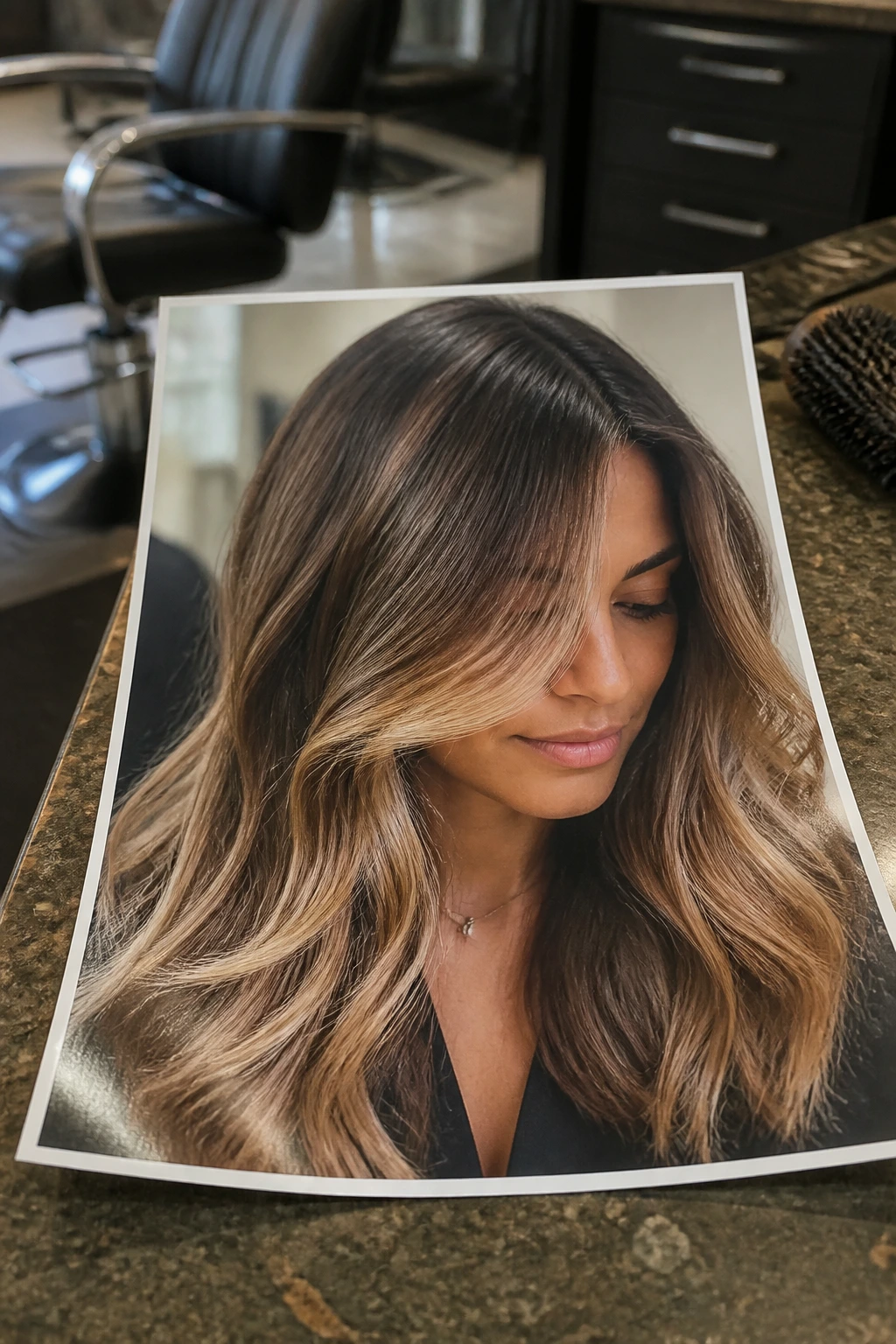
You can, but two is better—one warmer and one cooler. That gives the stylist a read on whether you want honey, beige, mushroom, or something in between. One photo on a filtered screen can be misleading in a way that wastes everyone’s time.
The Softest Way to Go Lighter
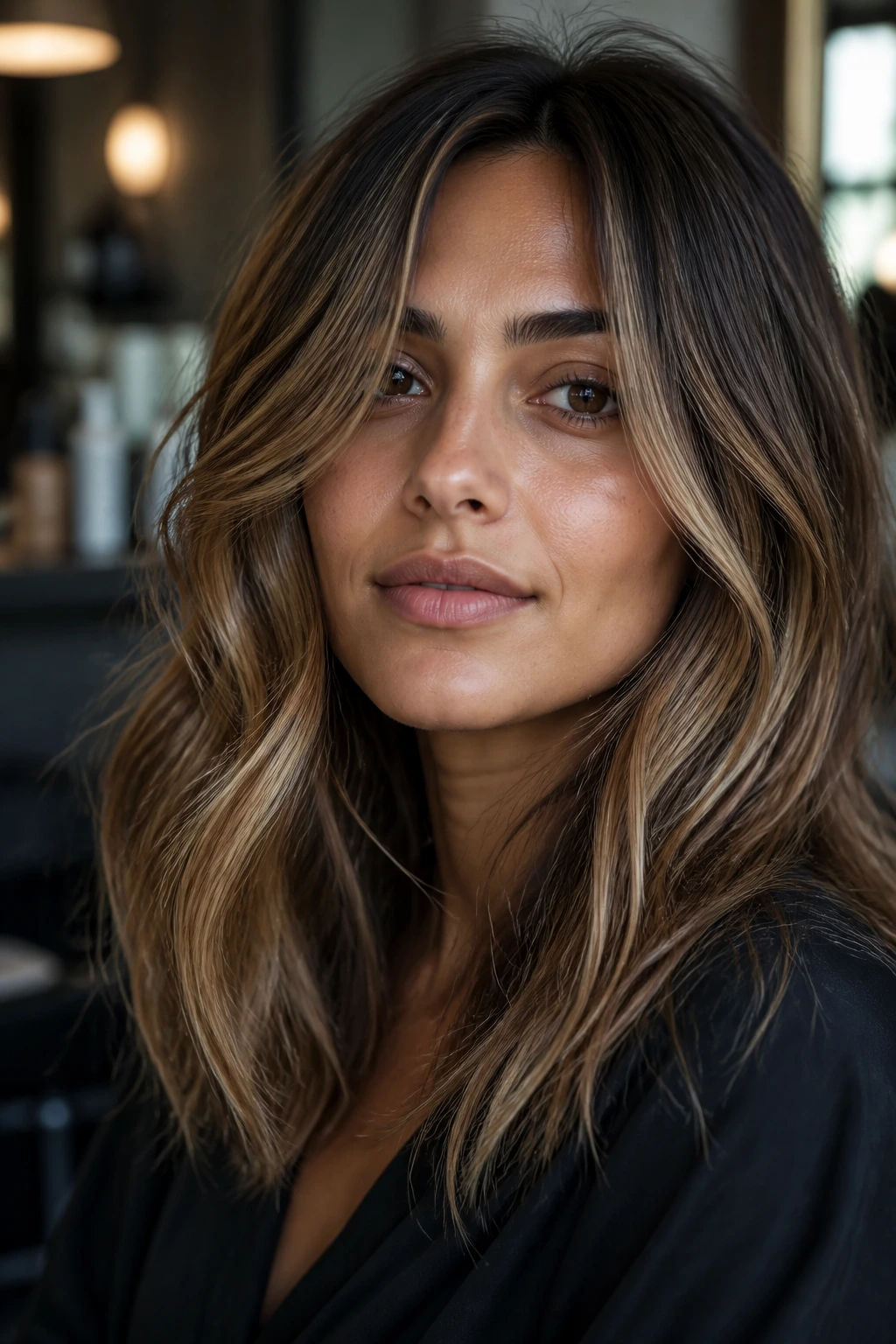
Brown and blonde do not need to fight for attention. When they’re blended with olive skin in mind, the result looks calmer, richer, and far easier to wear than a harsh set of stripes ever will. The best versions keep a real brunette base, place the blonde where movement can show it, and choose tone families that sit with the skin instead of overpowering it.
That’s why I keep coming back to these shades. They don’t depend on one perfect angle or one perfect light source. They work when you’re at the salon, at your kitchen table, or halfway through a windy day with your hair shoved behind one ear.
Pick the tone family that matches your undertone, keep the root soft, and leave enough brown in the mix to do its job. That’s the formula that keeps brown blonde blended highlights on olive skin looking lived-in rather than overworked, and it’s a formula worth bringing to the chair the next time you want a change.