



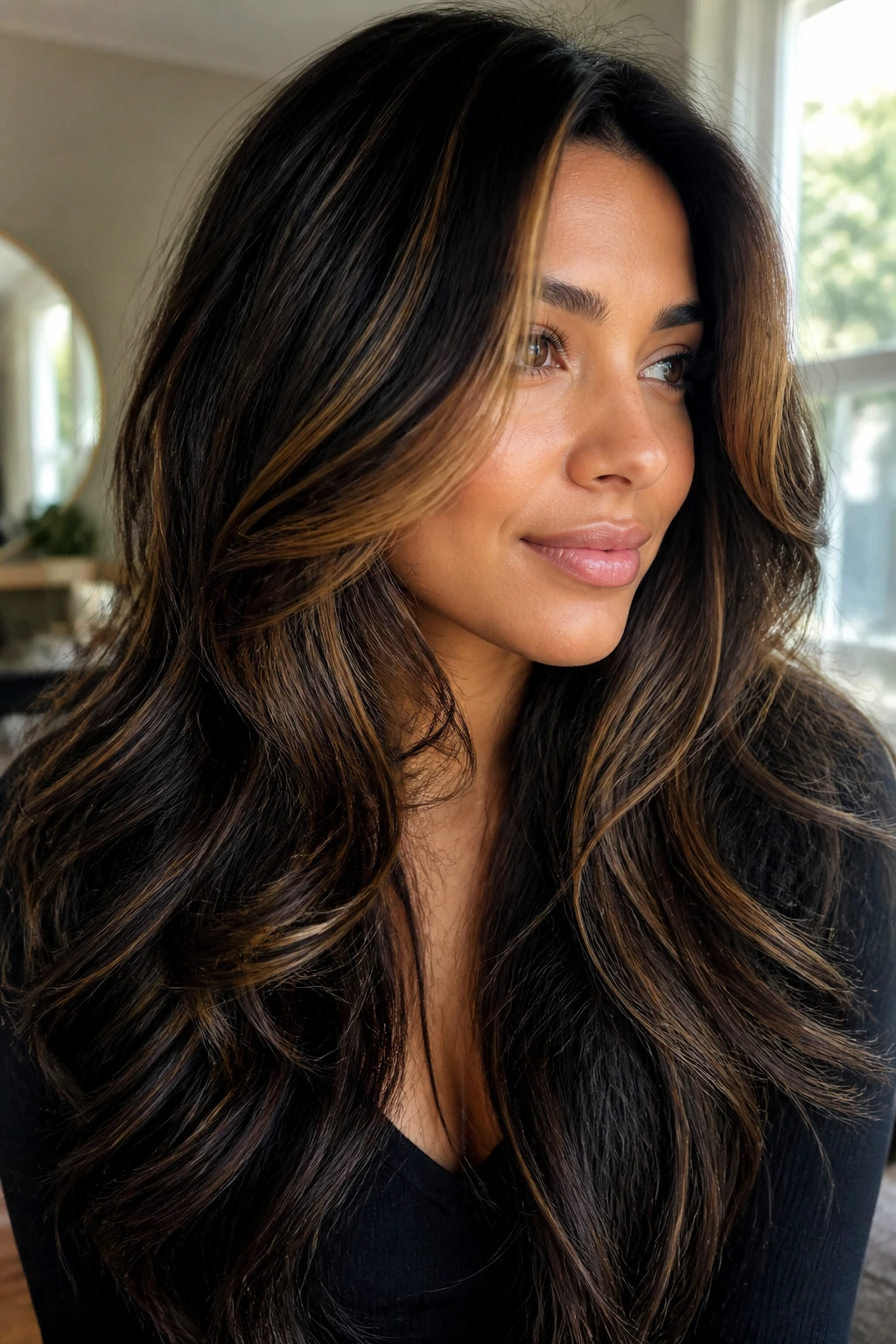
Caramel black highlights for dark hair with thick hair work best when the color is wide enough to survive all that density. Tiny, whisper-thin strands can vanish the moment the hair falls over itself. A wider ribbon, a smart face frame, or a hidden panel under the top layer has a much better chance of showing up when the hair moves.
Thick dark hair has a built-in advantage. It holds depth, so you can play with caramel, toffee, honey, and espresso lowlights without the whole head turning flat or streaky. But it also has one annoying habit: if the placement is too delicate, the color gets swallowed. My bias is toward stronger sections, softer roots, and enough contrast to read from a few feet away.
And yes, the shade matters. A caramel that leans too orange can look brassy against black hair, while a beige-gold or toasted toffee tone usually sits better and grows out with less drama. The best versions don’t fight the density; they use it. Thick hair can carry more color than people think. It just needs room to breathe.
Why This Collection Looks Better on Thick Dark Hair
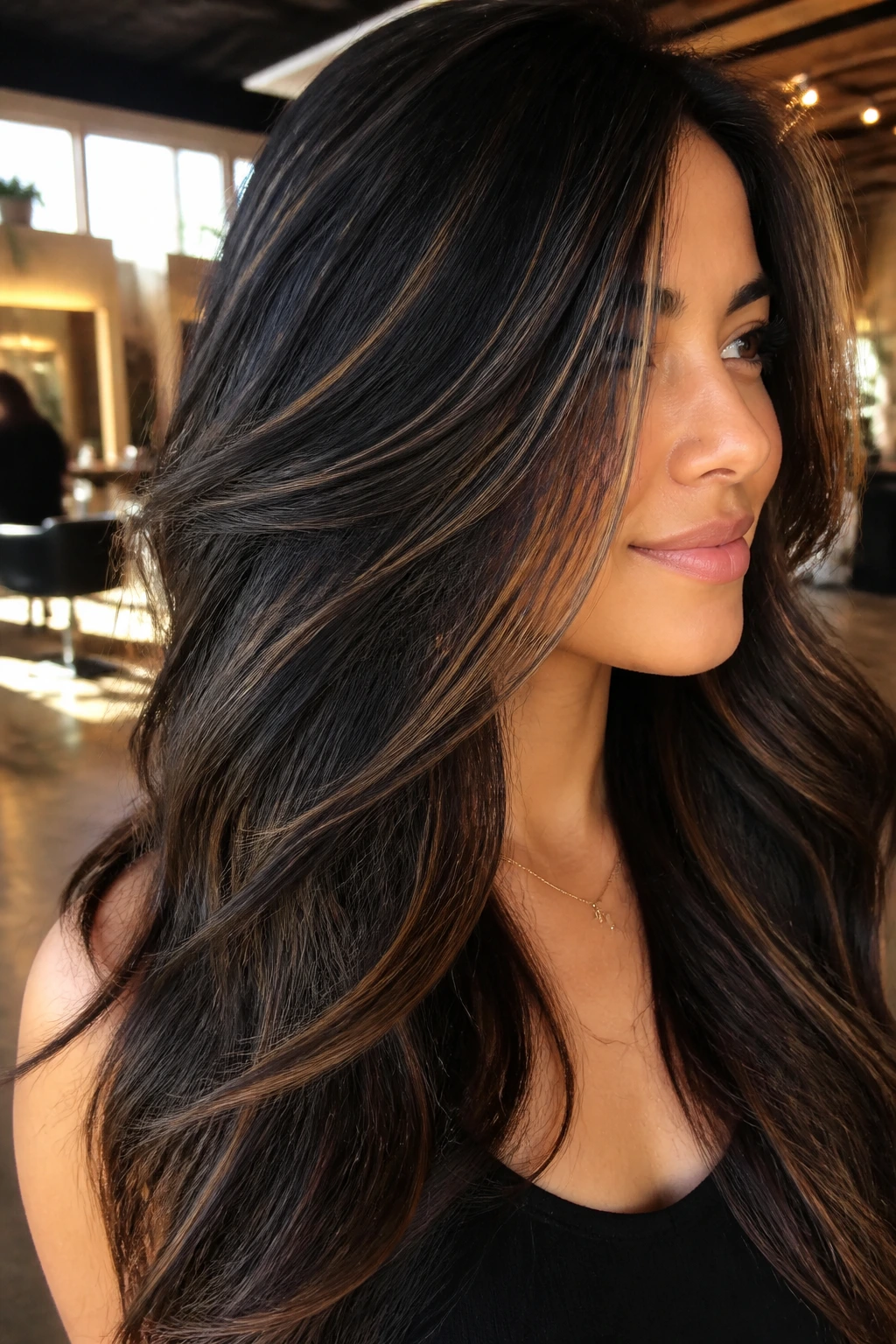
- Wider pieces show up better: Thick hair hides tiny highlights fast, so these looks lean on ribbons, panels, and contour pieces that stay visible after the hair settles.
- Caramel needs depth behind it: A black or espresso base makes the warm tones look richer, not washed out. Without that dark anchor, caramel can slide toward orange.
- Grow-out is easier to live with: Root shadow, balayage, and peekaboo placement keep the line soft, which matters when you do not want a harsh stripe every six weeks.
- Movement changes the whole look: Dense hair reveals color when it bends, twists, or gets clipped up. These styles are built for motion, not just a flat mirror view.
- You can go subtle or bold: A face frame gives you a small hit of brightness. Full ribbons through the mid-lengths turn the whole haircut into something with visible depth.
- The cut matters as much as the color: Layers, lobs, butterfly cuts, and curly shapes all help the caramel pieces separate instead of disappearing into one heavy curtain.
1. Ribbon Balayage Through the Mid-Lengths
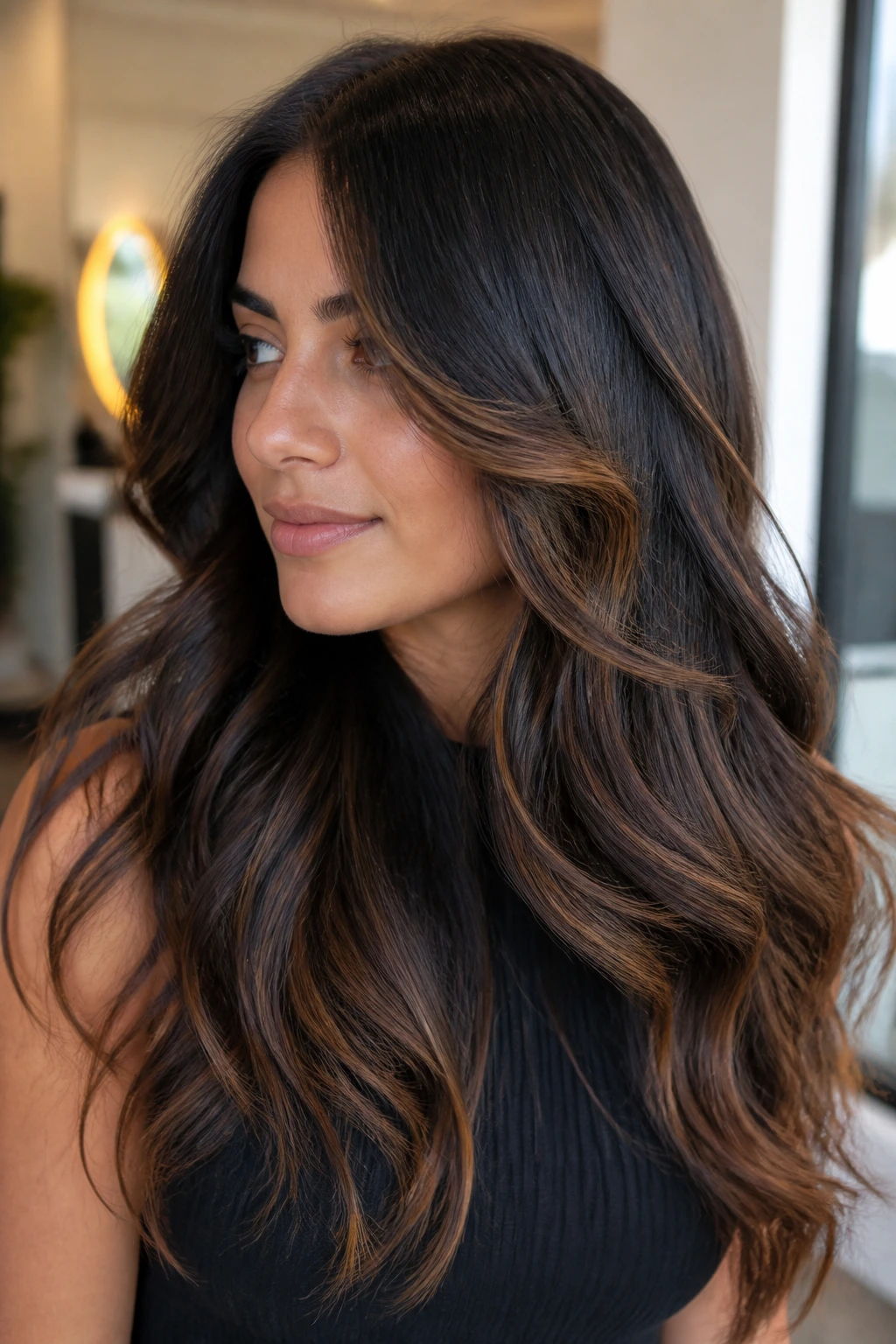
Ribbon balayage is the safest place to start if you want caramel highlights on dark hair without losing the richness of the base. The color sits in broad, painted pieces through the mid-lengths, so thick hair actually has something to show. Thin babylights can feel polite here. Ribbons have a little more attitude.
Why It Works on Dense Hair
Thick hair needs contrast in larger sections because the layers overlap. If you paint narrow slices, the darker strands above them hide the color the second you turn your head. Wider ribbons keep the caramel visible through the body of the hair, especially once it’s waved or brushed out.
Ask for pieces that start around the cheekbone and fade toward the ends. That keeps the top area deeper and gives the length more movement. A beige-caramel or toasted-honey tone works best if your base is very dark.
2. Face-Framing Money Piece in Warm Caramel
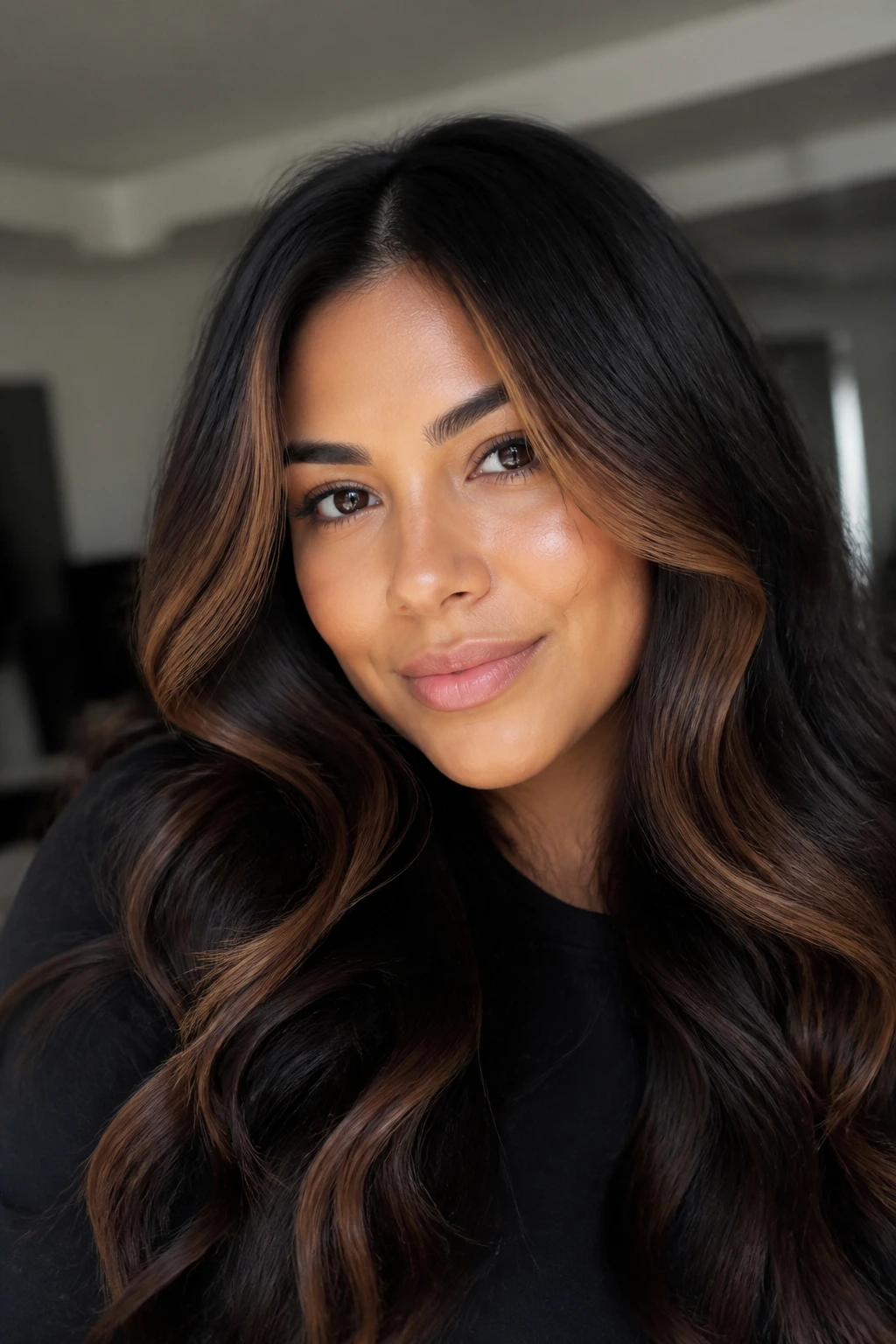
Need a fast way to brighten dark hair without changing the whole head? A warm caramel money piece does the job with almost rude efficiency. Two brighter front sections can change the whole read of the haircut, especially when thick hair tends to sit heavy around the face.
A good money piece should start near the temple and feather into the cheekbone, not stop in a blunt stripe at the forehead. On thick hair, I like it slightly wider than most people expect — about 1 to 1.5 inches per side — because narrow pieces disappear once the hair is styled.
This look is strongest on middle parts and loose waves, but it also wakes up a ponytail. If you live in claw clips, this is the one that keeps paying off.
3. Chunky 90s Panels for Big Volume
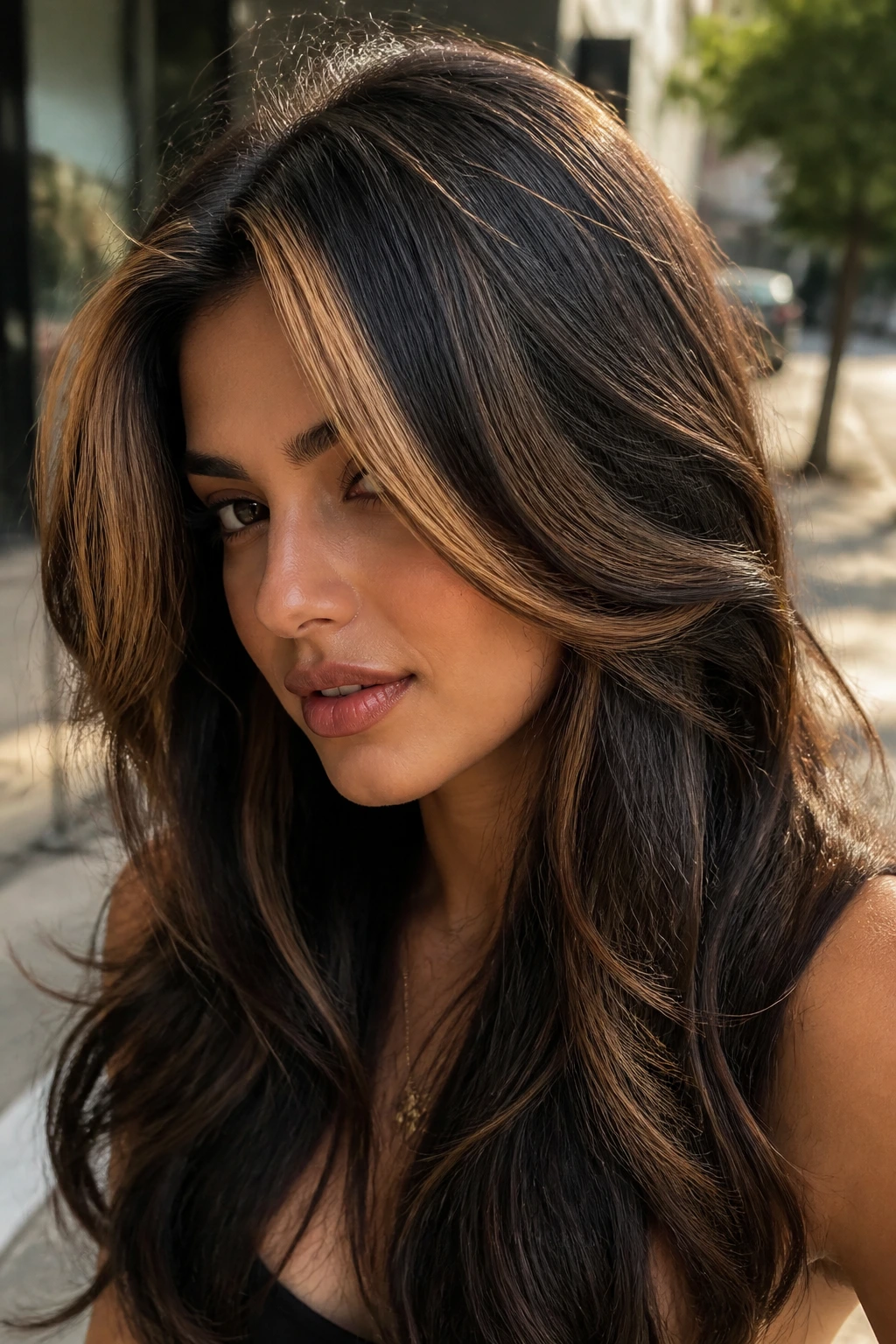
Tiny highlights are not the answer to every problem. On thick dark hair, chunky caramel panels can look sharper, cleaner, and a lot more deliberate. The trick is placement. You want enough spacing between the panels so the black or espresso base still reads as part of the design.
A few wider slices through the outer layers, plus one or two near the front, give that full-bodied 90s blowout feel without tipping into zebra territory. It works especially well if your hair already has a lot of density and you wear it with a round-brush finish.
What to Ask For
- Panels about 1/4 to 1/2 inch wide in the front and crown
- A warm caramel or soft toffee tone, not a coppery orange
- Enough dark space between panels to keep the base visible
- A smooth gloss at the end so the color reads shiny instead of dry
4. Hidden Peekaboo Highlights Under the Top Layer
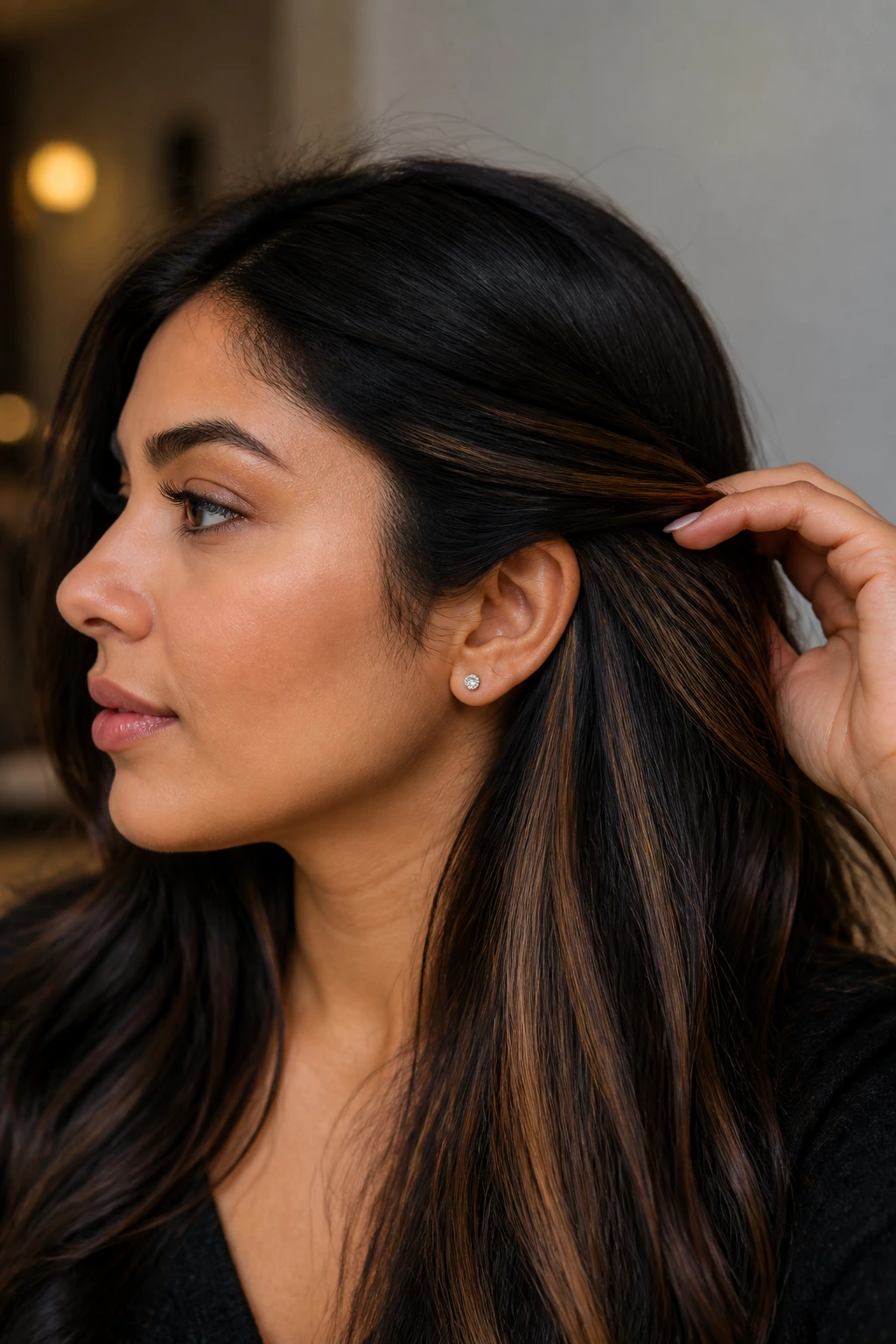
This is the move for people who want color with a little secret to it. The caramel lives underneath the top layer, so it shows when you tuck your hair behind one ear, twist it into a clip, or let the wind catch the ends. Thick hair is perfect for this because the interior layers can hold a lot of color without making the surface look busy.
It’s a good option if your work or dress code likes things quiet, but you still want personality when your hair moves. The black top layer keeps the look grounded. The caramel underneath gives you that little flash of warmth that makes dark hair feel less static.
I like this one on long hair and shoulder-length cuts alike. It’s low drama on day one, then better once the hair starts moving around a bit.
5. Curl-First Caramel Placement
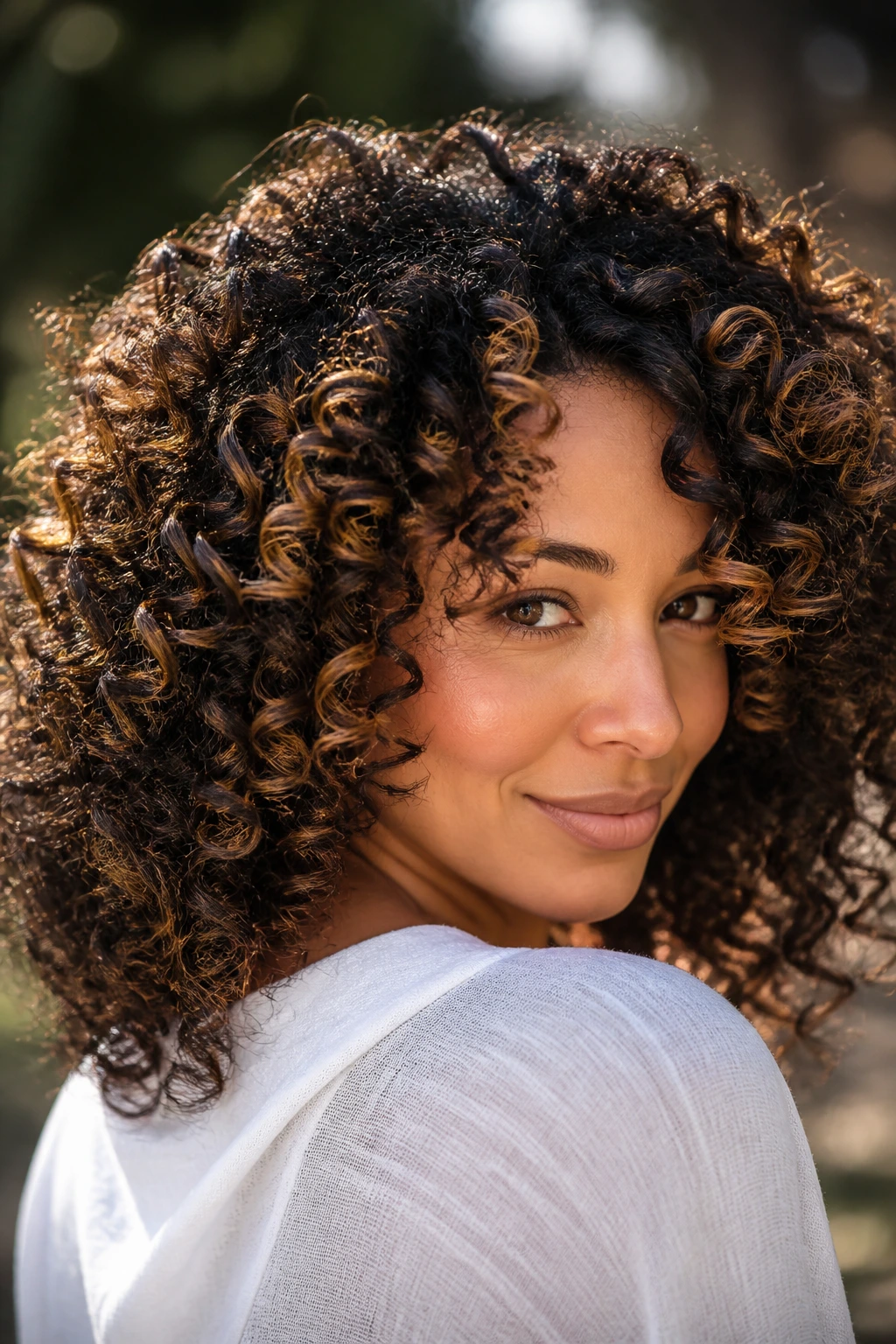
Curly and coily thick hair needs a different map. Straight-line highlights can look chopped up once the hair shrinks and springs back, so the color has to follow the curl pattern instead of fighting it. That means painting on the top of the curl clump, not just slicing across a section and hoping for the best.
The payoff is huge. Caramel highlights catch the ridge of each curl and turn the whole shape into something more defined. A little espresso lowlight between the brighter pieces keeps the texture from turning into one flat, pale mass.
Best When You Wear It Natural
- Use a medium caramel, not a pale blonde
- Keep the brightest pieces on the outer ring of curls
- Ask for glossing after lifting so the tone stays soft
- Add a leave-in cream after every wash so the color sits on healthy curls, not frizzy ends
6. Melted Mocha-to-Caramel Ombre
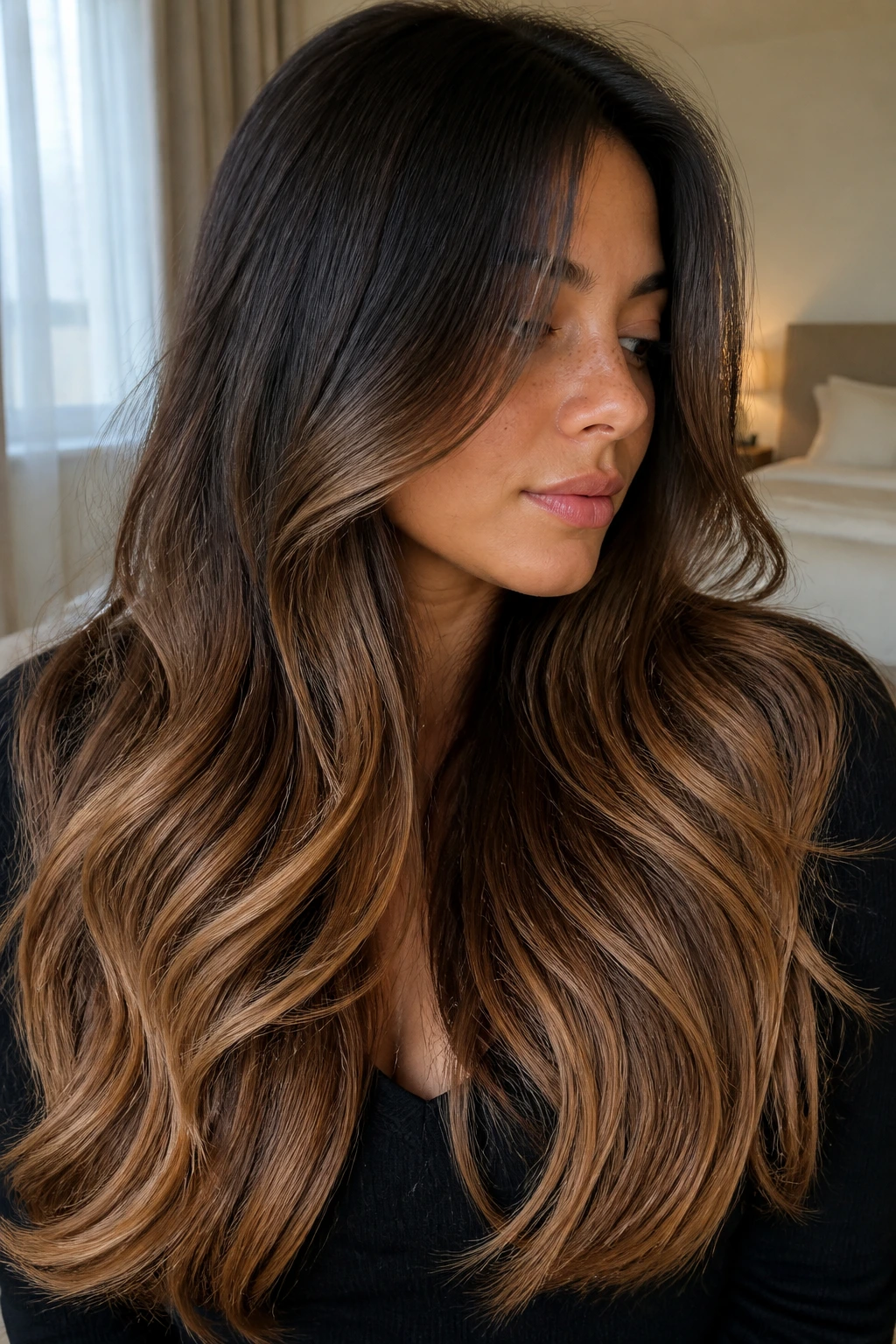
A good ombre on thick dark hair should feel like a slow exhale, not a hard line. The root stays mocha or espresso, then the tone melts into caramel through the mid-lengths and ends. On dense hair, this can be a smart way to lighten the look without painting every inch of it.
The best version starts lower than people think. If the shift begins too high, the effect turns stripy. Let the darker base do its job near the scalp, then bring the warmth in lower so the length does the visual work.
This style likes long layers. It also likes a diffuser or soft bend with a large iron, because the color needs movement to read as a gradient.
7. Toffee Ends on Long Layers
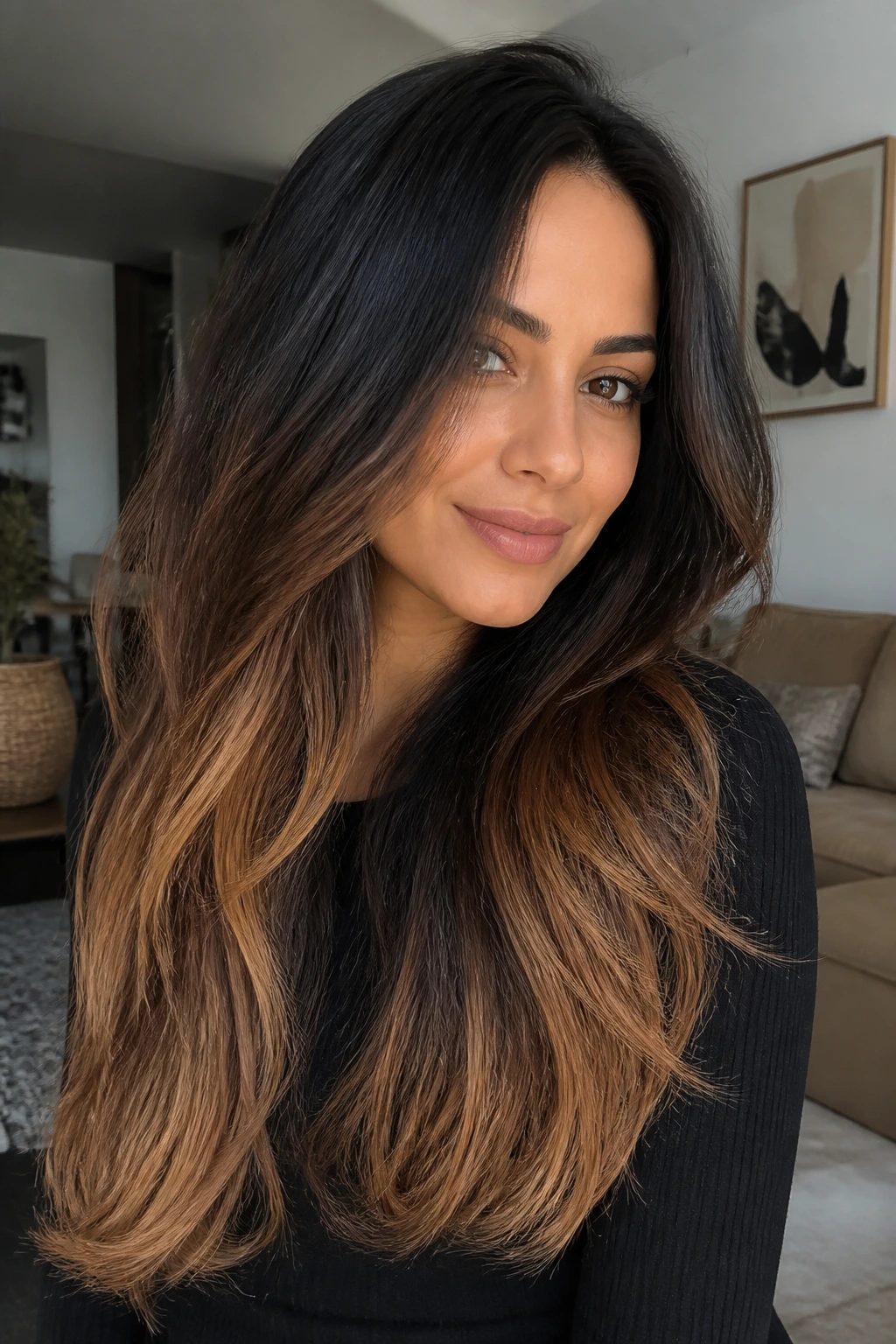
Sometimes the cleanest answer is to keep the roots dark and let the ends carry the warmth. Toffee ends work especially well on long, thick hair because the length gives the color a place to stretch out. The result is lighter at the bottom, but still anchored by a deep base.
This is a smart pick if you do not want to babysit your roots. The grow-out stays quiet, and the haircut can keep its weight near the scalp while the bottom feels more open. A few soft layers are enough. You do not need a dramatic cut for this to work.
The one thing I would not skip is regular trimming. Thick hair with lightened ends can look fuzzy fast if the tips fray.
8. Caramel Contour Around the Cheekbones
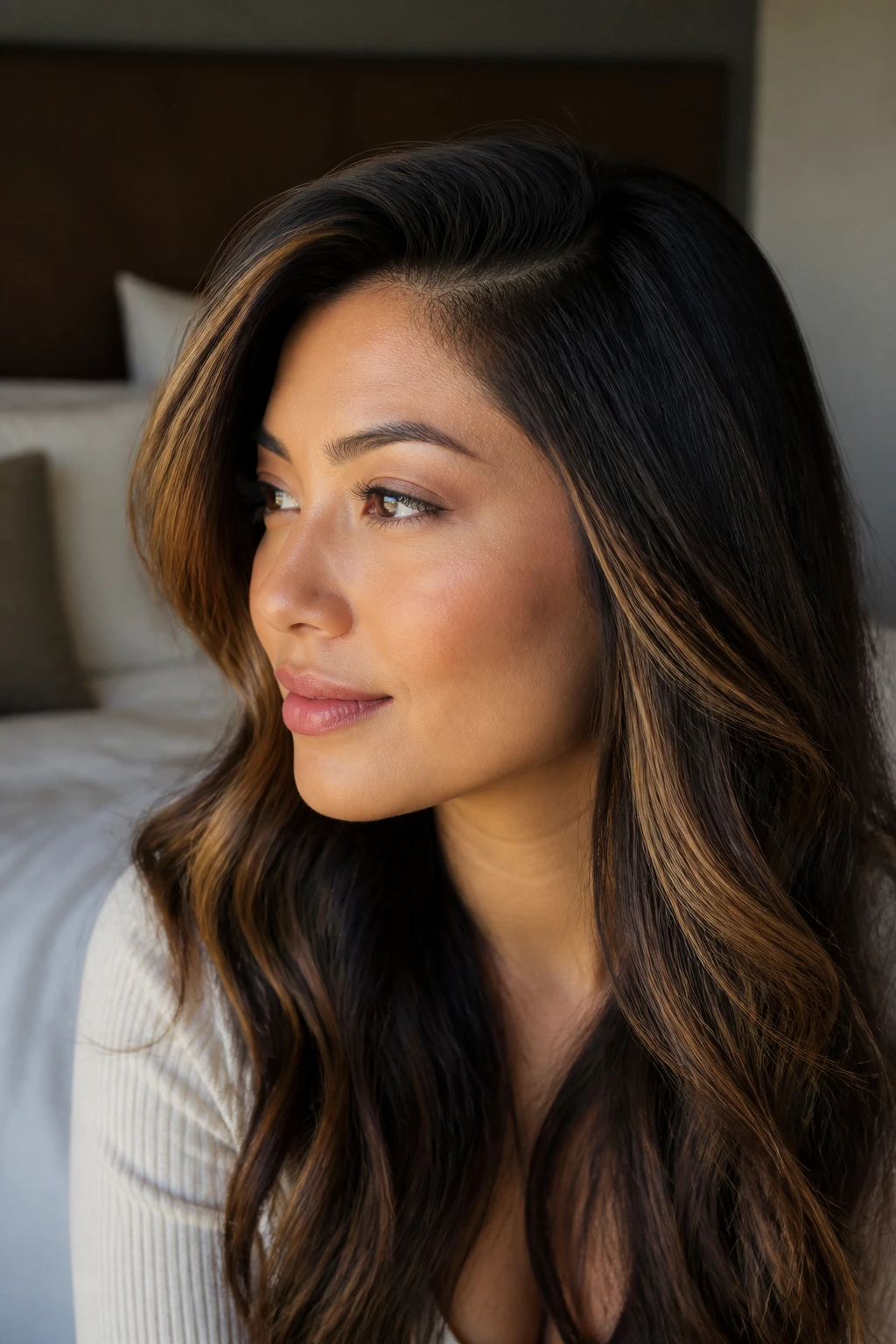
Hair contouring is basically face framing with a smarter map. Instead of dropping bright pieces anywhere near the front, you place the caramel where it can sharpen or soften the face shape — near the cheekbones, temples, jaw, or the first layer that falls around the face.
On thick hair, this keeps the front from looking bulky. The darker interior maintains depth, while the brighter contour pieces guide the eye upward or inward, depending on where they sit. It’s subtle, but not invisible. That’s the sweet spot.
If you wear a side part, contour pieces on the heavier side can make the haircut feel lighter. If you wear a center part, keep the pieces balanced and a touch wider.
9. Foilayage for a Brighter, Cleaner Lift
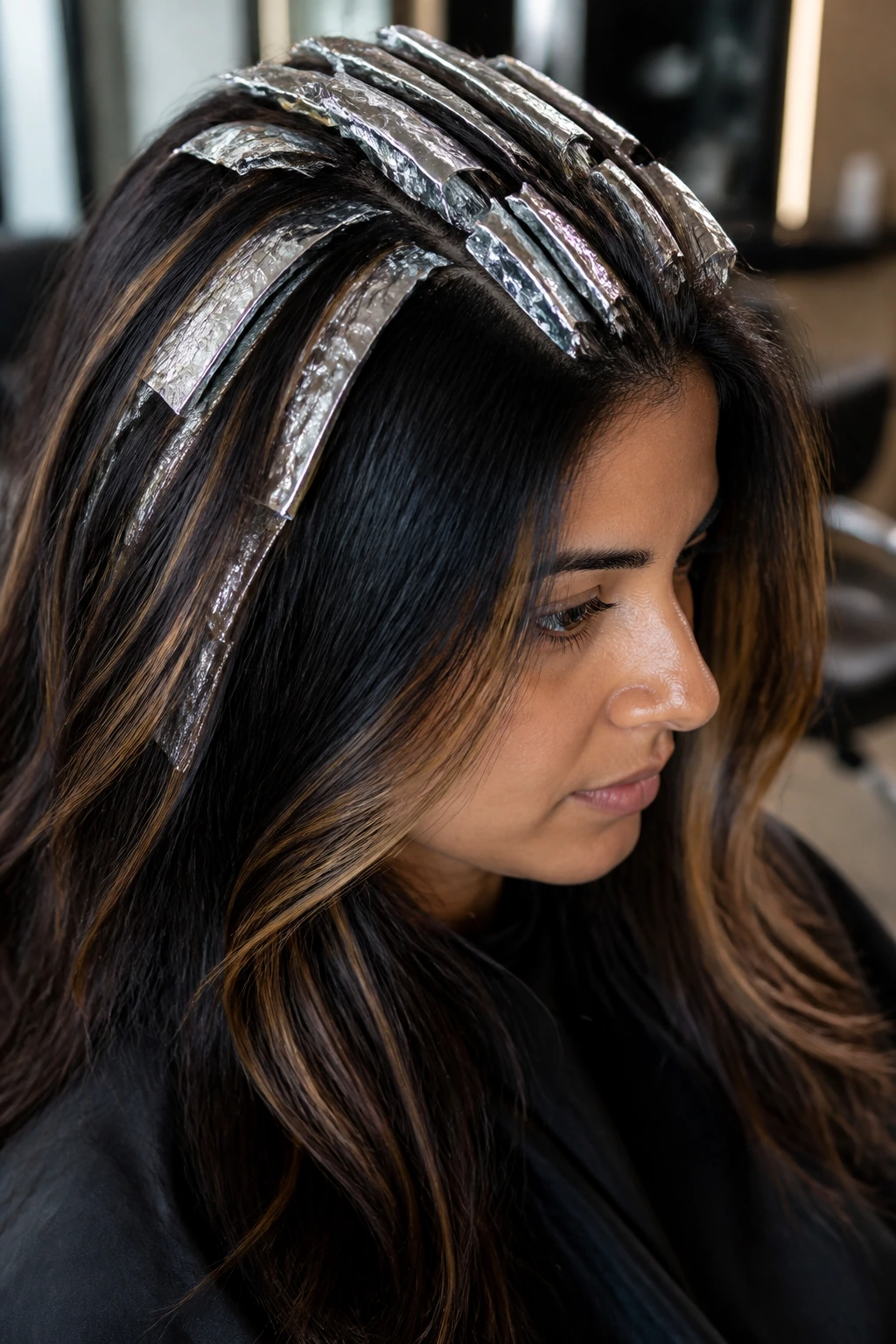
Foilayage is the one I’d reach for when thick dark hair refuses to lighten evenly. The foil traps heat, so the hair lifts a little cleaner than it would in open air. That matters if your hair is coarse, resistant, or very dark and you want caramel pieces that don’t look muddy.
It also gives the colorist more control. You can keep some sections softer while pushing others brighter, which is useful on dense hair where every layer behaves differently. The finish usually looks more defined than classic balayage, but less hard than old-school foil streaks.
Best Use Case
- Resistant dark hair that lifts slowly
- Thick hair with multiple layers
- Clients who want visible caramel, not a whisper of warmth
- Styles that need brightness near the face and through the crown
10. Honey Streaks on a Sleek Blowout
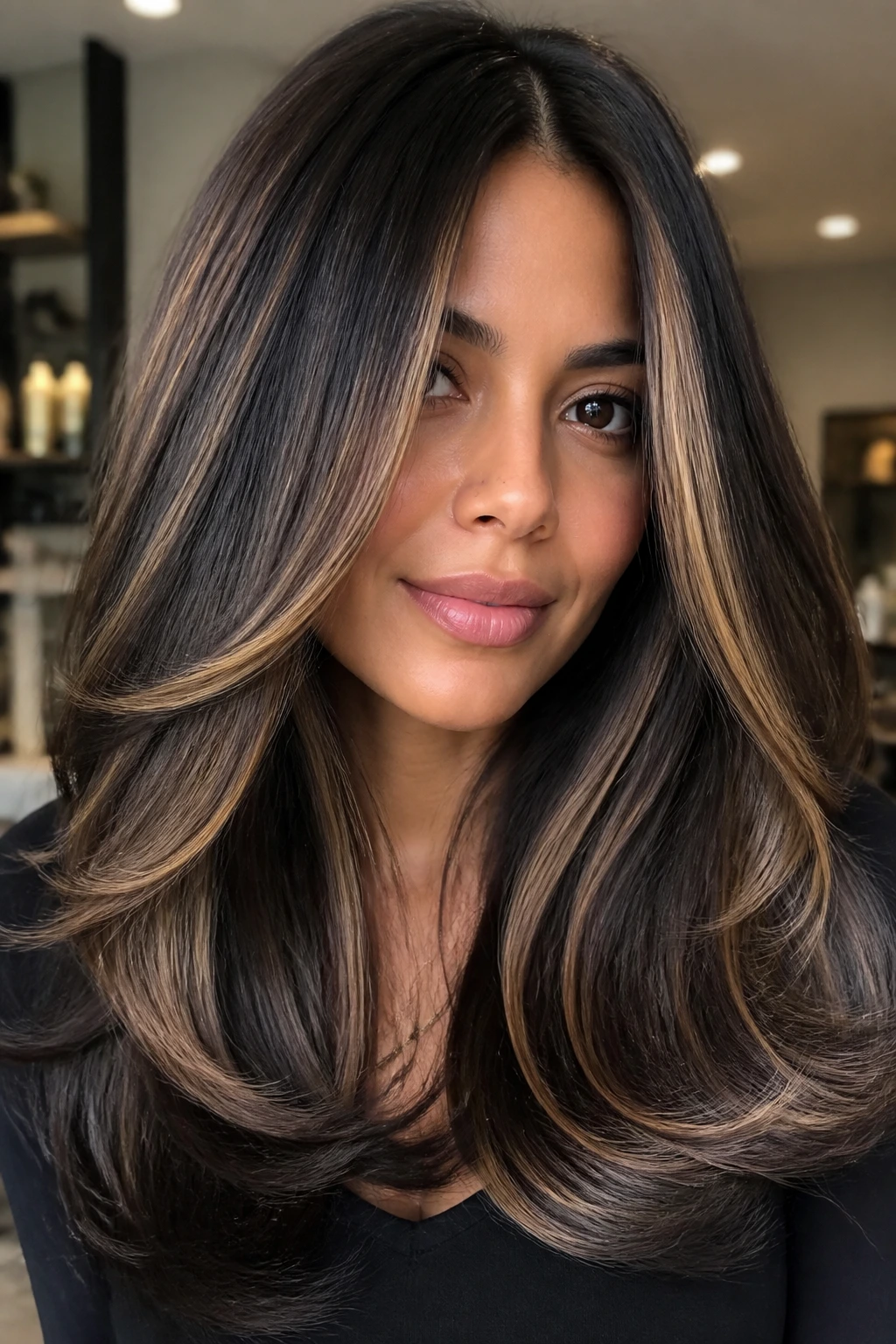
A sleek blowout changes how caramel reads. On thick hair, the surface smooths out and the streaks line up, so honey-colored pieces suddenly look cleaner and more deliberate. If your hair usually lives in loose bends, this version gives the color a sharper edge.
The key is tone. Honey should stay golden, not orange. Once it starts drifting copper, it can fight the darkness of the base. A neutral gloss after the lightening step helps keep the shine high and the warmth under control.
This is one of those styles that looks even better on day two, when the blowout has settled and the pieces sit with a little more softness.
11. Espresso Lowlights with Caramel Threads
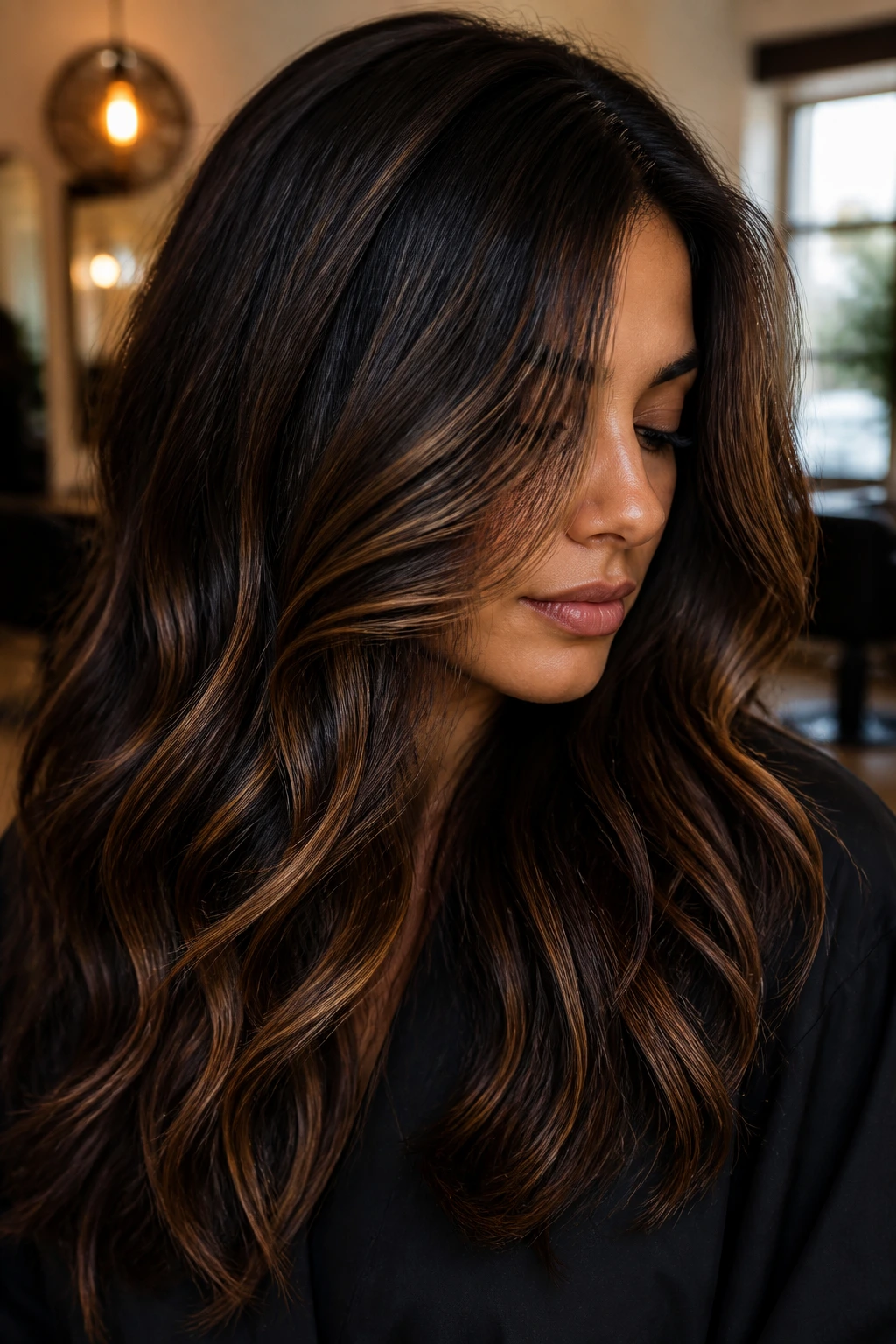
Not every thick dark-haired client needs more brightness. Sometimes the smartest move is to add espresso lowlights back into the hair and thread a few caramel pieces through them. That keeps the color from floating on the surface like frosting.
This works because thick hair can get busy fast. Too much lightness, and the whole head starts to look puffy or dry. The darker ribbons create shadows between the caramel, which makes the dimension read richer and a little more expensive-looking.
It’s a good option if your base is already warm and you want more depth than glow. Think of it as building a darker frame around the lighter strands.
12. Butterfly Cut Highlights That Move With the Layers
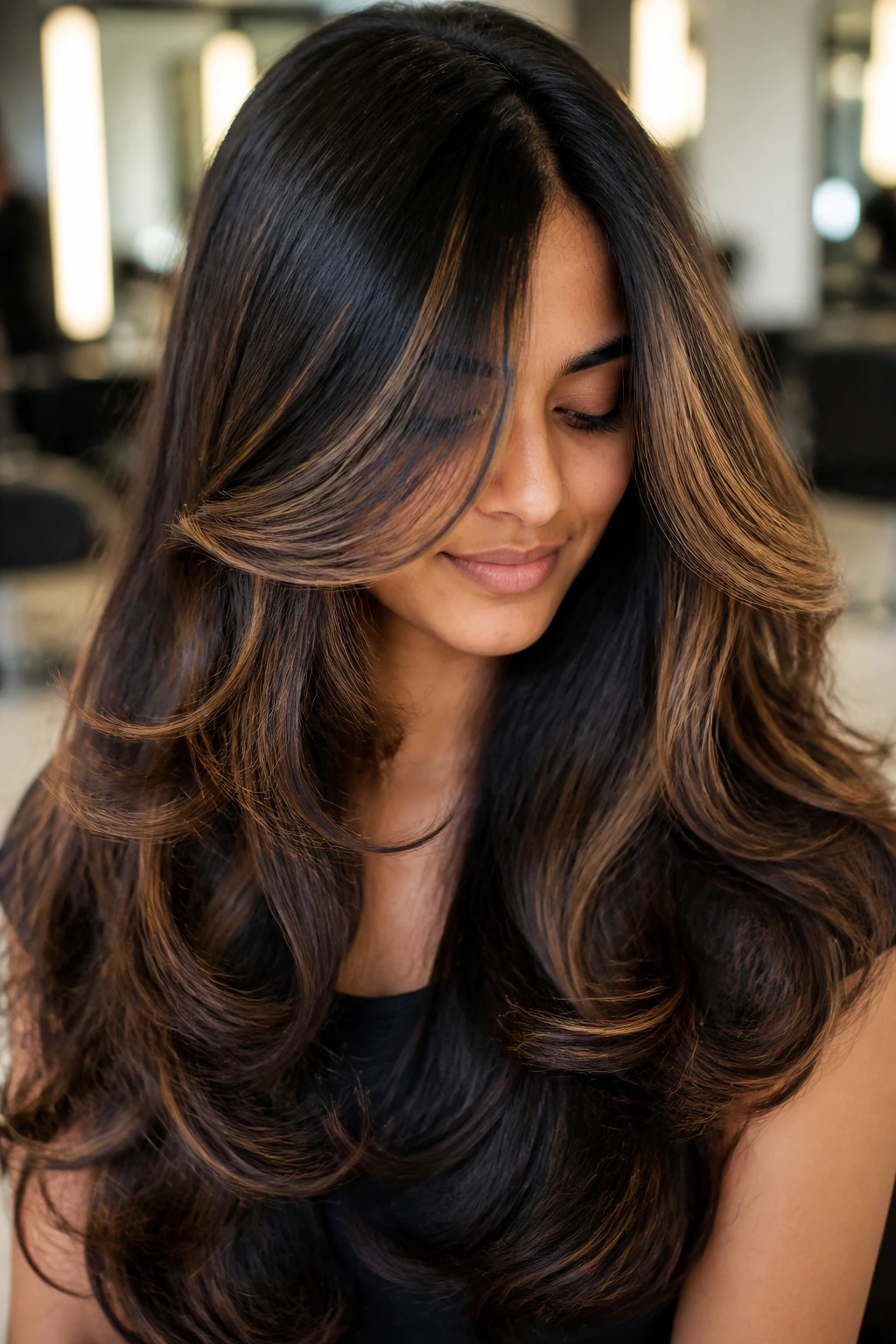
Butterfly cuts and caramel highlights make a very good pair. The short face layers catch light near the front, while the longer interior layers keep the rest of the hair deep and glossy. Thick hair loves this cut because it removes bulk without making the length feel thin.
The highlight placement should follow the layers. Brightness around the top wings, softer ribboning through the mid-lengths, and darker depth underneath keeps the whole thing balanced. When you blow it out, the lighter pieces lift and separate. When you wear it wavy, the dimension gets softer and more lived-in.
This one looks best when the haircut is maintained. If the layers grow too long, the shape loses the lift that makes the color make sense.
13. Caramel Slices on Straight, Dense Hair
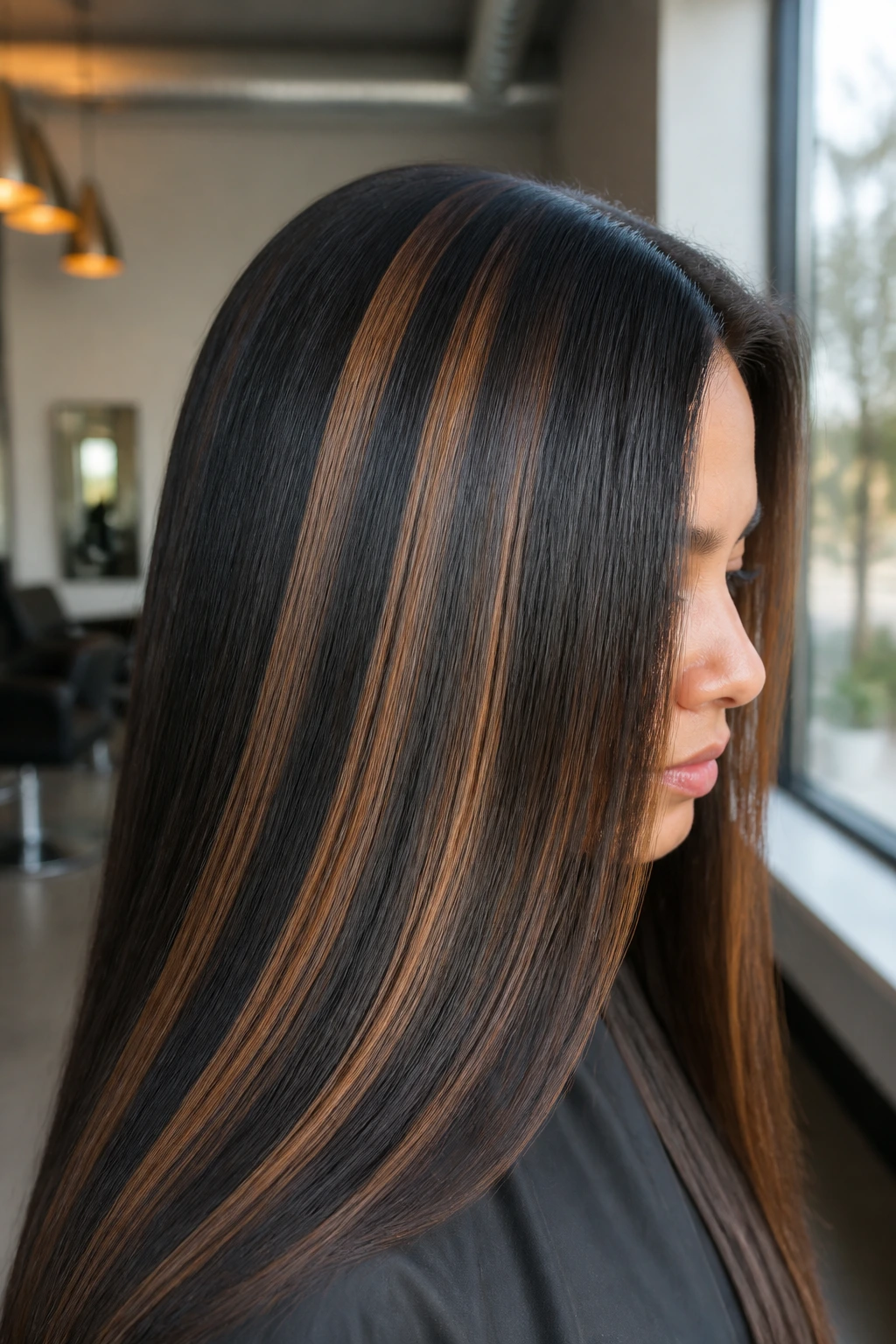
Straight hair tells the truth. It shows every placement decision, every missed section, every line that should have been softened. That’s why caramel slices can look so good on straight, thick dark hair when they’re done cleanly.
A slice is wider than a soft ribbon, and that width matters here. It lets the caramel show even when the hair hangs flat. Keep the pieces spaced out enough that the base still looks like the base, not a patchwork quilt.
Ask For
- Slices through the crown and outer sides
- A mix of 1/2-inch and 3/4-inch sections
- A warm caramel gloss after lifting
- A soft root so the grow-out doesn’t turn stripey
14. Teasylight Depth for a Softer Grow-Out
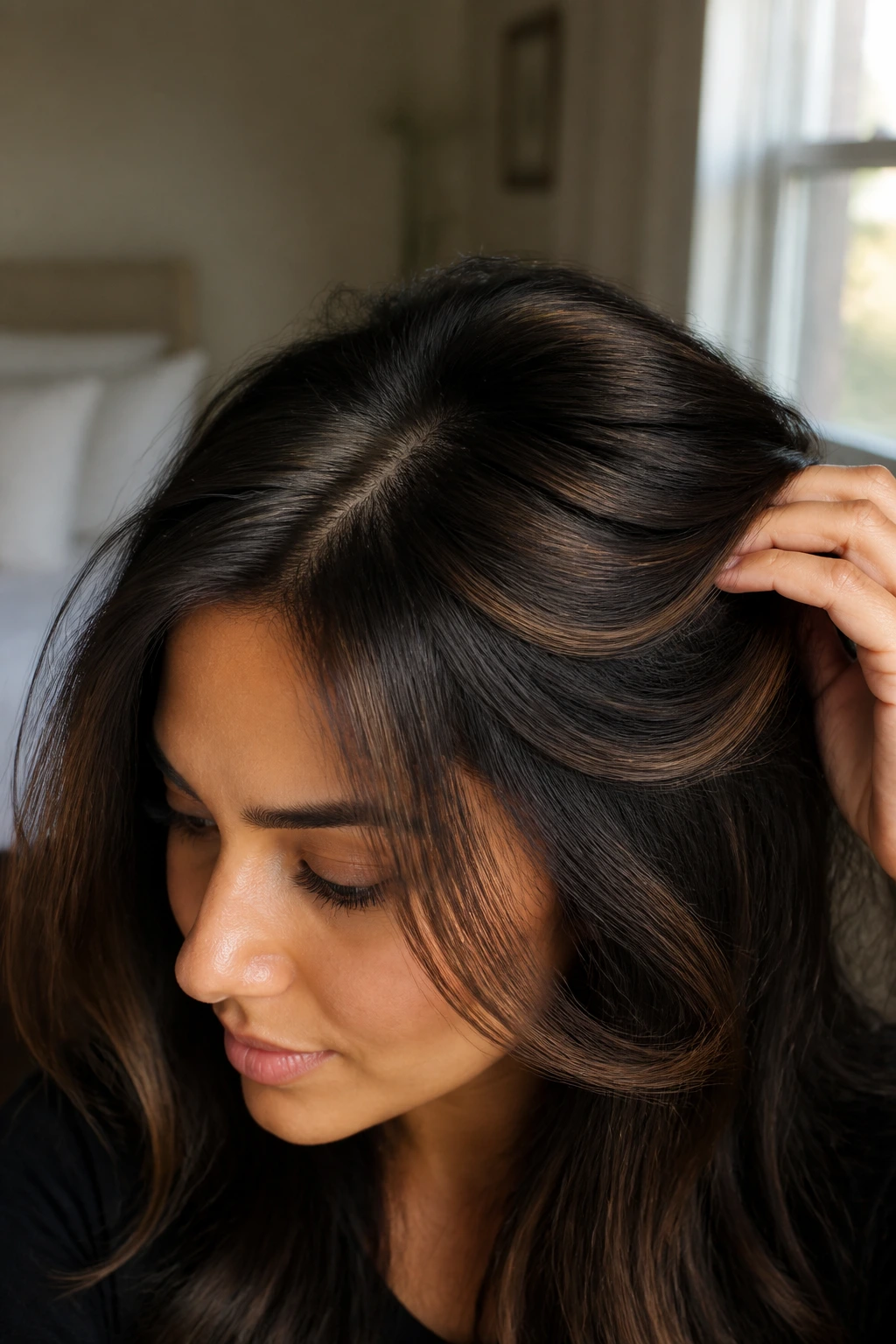
Teasylights are for people who want the color to soften at the root rather than shout from it. The sections get teased before lightening, which leaves a blurred edge and a gentler line as the hair grows. On thick hair, that blur matters more than people think.
Dense hair can make a root line look sharp fast. Teasing breaks that line and gives the caramel a more diffused entry point. The result feels softer and a little more expensive than hard highlights, especially if the hair is blown out with a round brush.
Why It Stays Lived-In
- The root blur hides grow-out for longer
- The color reads less stripey on heavy hair
- It works well if you don’t style every day
- It gives thick hair motion without a harsh contrast line
15. Bronzed Ombré on Heavy Ends
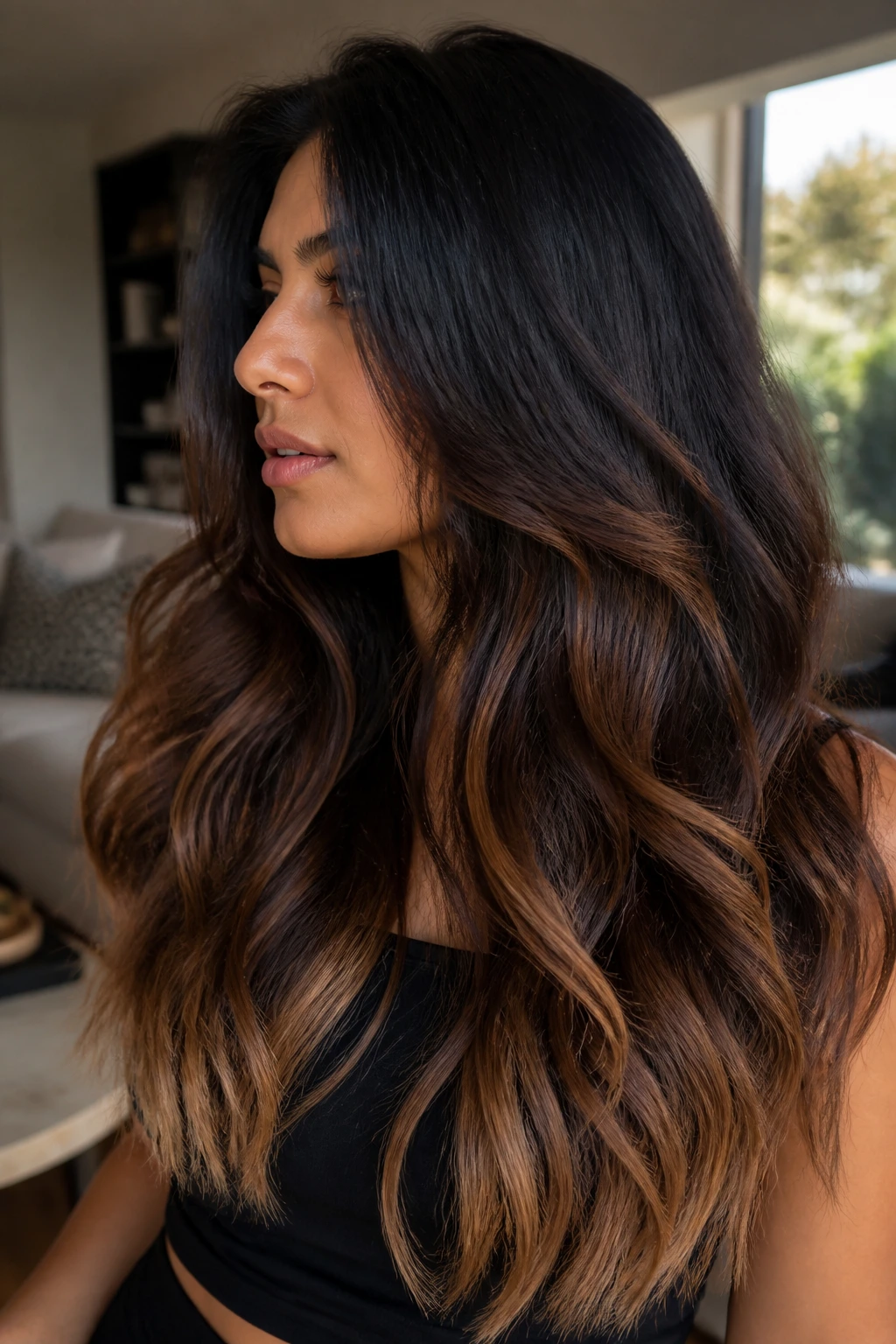
Bronze is the cousin of caramel that gets overlooked too often. On very thick dark hair, a bronzed ombré can look richer than a pale golden one because the warmth sits closer to the base. That keeps the ends from feeling dry or over-lightened.
This works especially well if your ends are heavy and you want the bottom to feel less blunt. The bronzed fade lightens the visual weight while keeping a bit of richness in the tone. It’s a good compromise for anyone who wants warmth without going bright.
If your hair tends to go frizzy at the ends, bronze is kinder than a pale blonde. It also grows out better when the length gets trimmed every couple of months.
16. Braided Dimension With Golden Threads
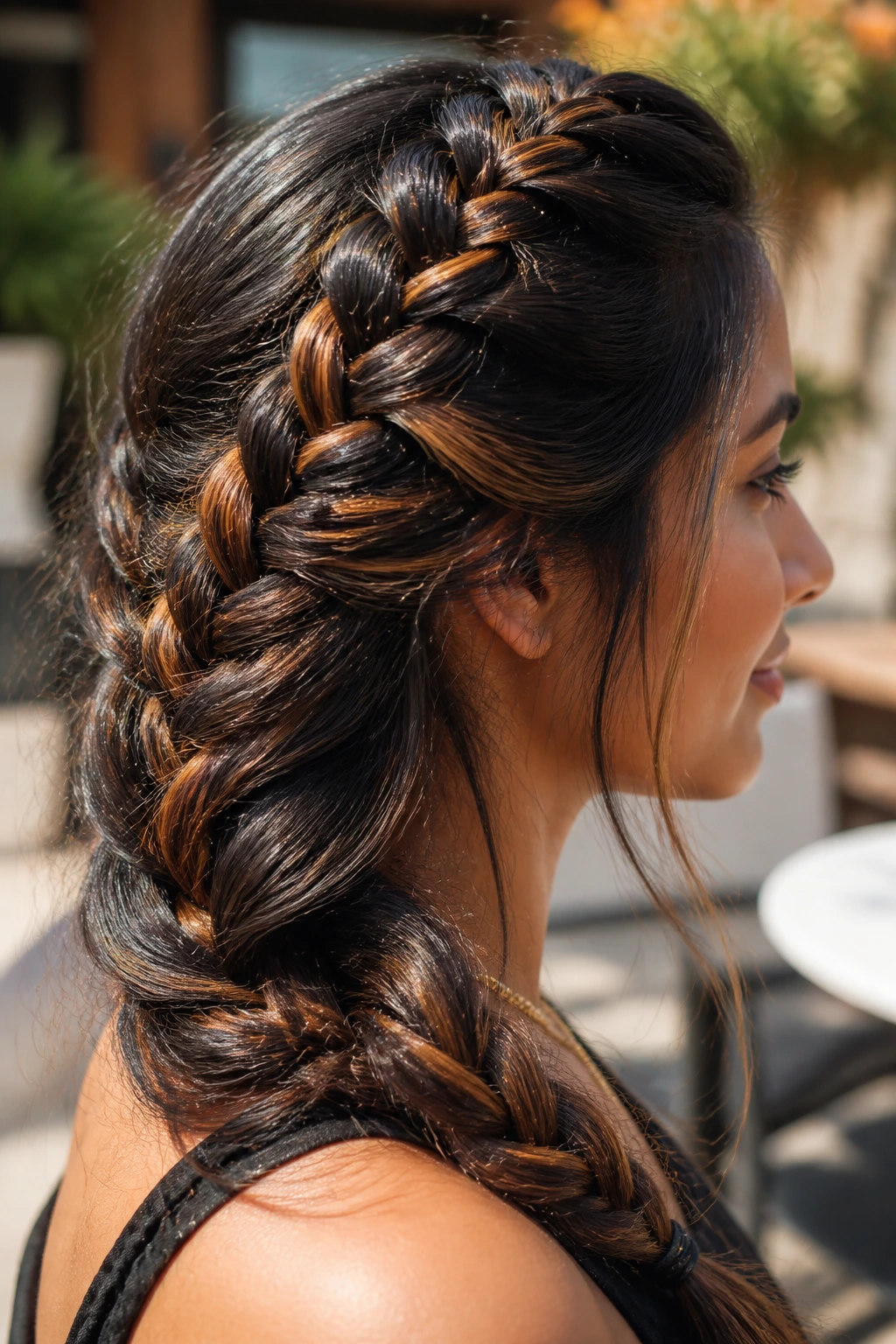
Braids are the secret test of whether your highlights actually work. Thick hair holds a braid shape well, and caramel pieces woven through dark strands give the plait a striped, rope-like depth that loose hair doesn’t always show.
A Dutch braid shows the contrast more sharply. A fishtail spreads it out into tiny flashes. Even a simple three-strand braid starts to look more complex once the caramel threads run through it. If you wear your hair up a lot, this is one of the most practical choices on the list.
It also makes your color feel active, not static. That matters. Some highlights only look good in one lighting angle. Braids force the shade to prove itself.
17. Lob-Length Chestnut and Caramel Contrast
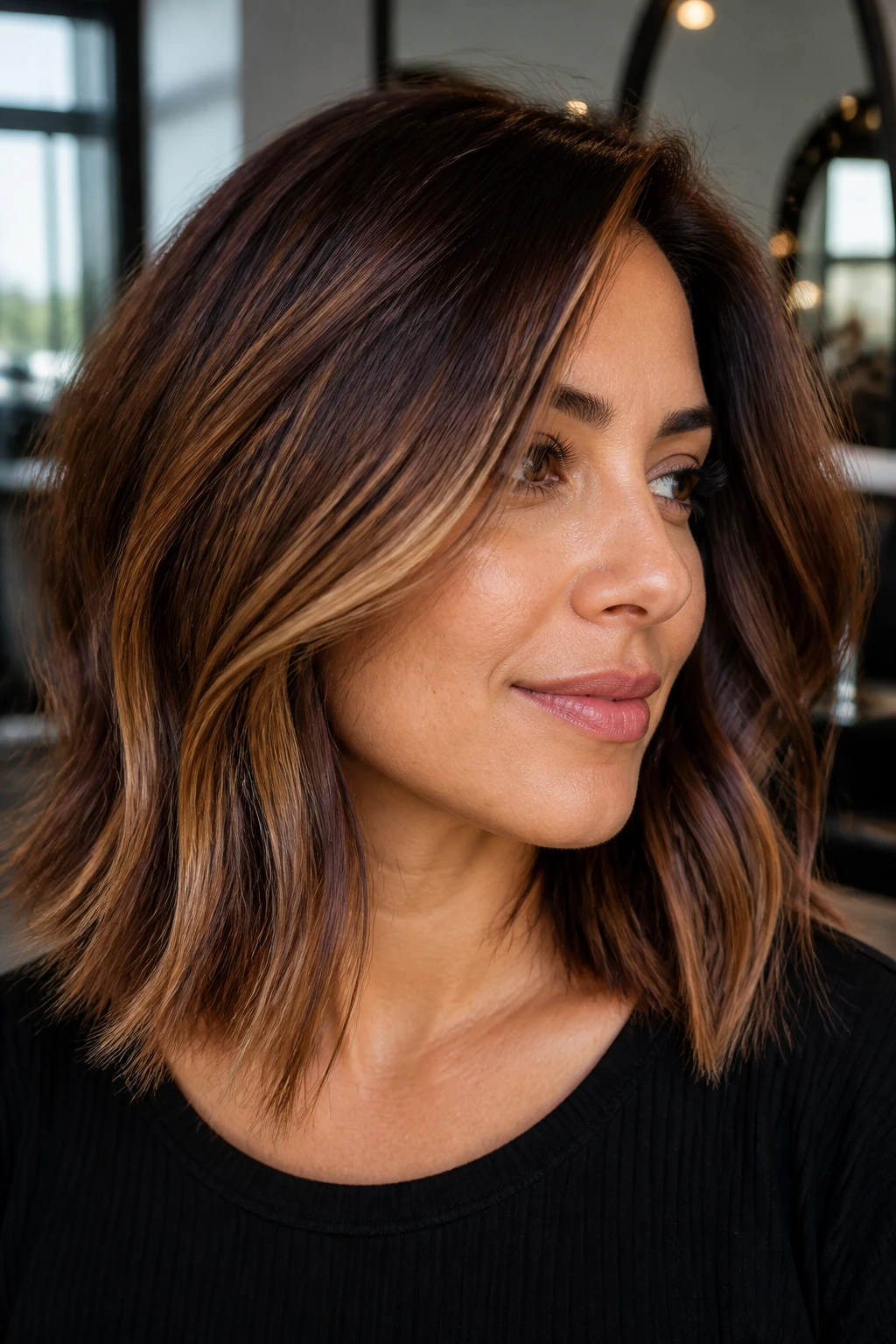
A thick lob can feel heavy fast if the color sits in one flat block. Chestnut lowlights with caramel pieces break that block up without making the cut look thin. You get depth near the root, warmth through the body, and enough brightness at the ends to keep the shape from sinking.
This is a clean option if your hair is too dense for a blunt, one-color bob but too short for big ombré movement. The cut has to do some of the work, so keep the ends tidy and the shape slightly textured.
I like this look with a side part or a soft bend. It keeps the dimension from collapsing into a helmet effect.
18. Sunlit Ends for Extra-Long Lengths
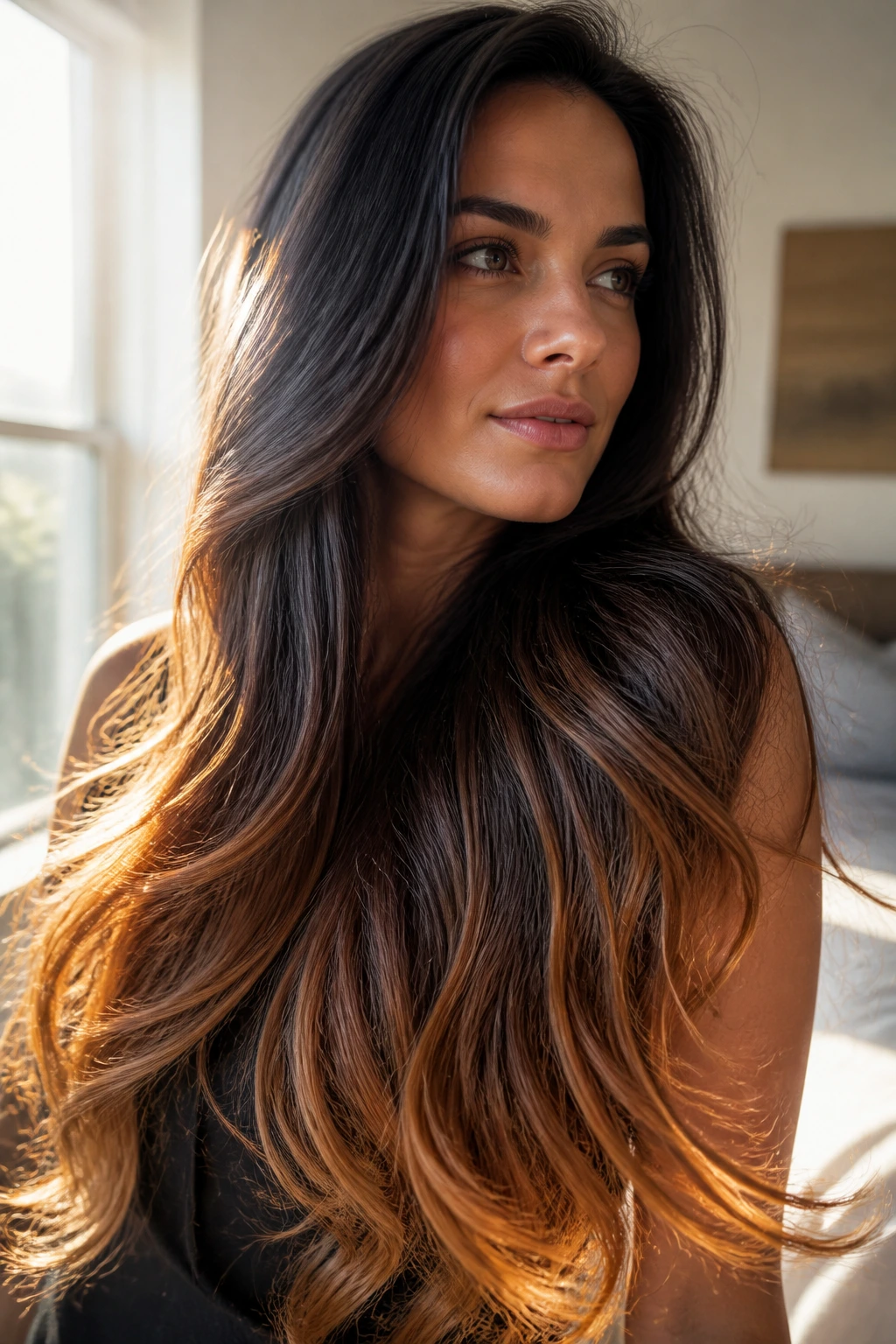
Very long thick hair can carry lighter ends better than shorter cuts can. There’s simply more hair there, more weight, more space for the color to live. That makes sunlit ends a strong choice when you want caramel to show up without taking brightness all the way to the top.
The ends should look kissed by light, not bleached within an inch of their life. Keep the transition soft and ask for a tone that stays in the warm beige family. If the ends go too pale, the contrast to the dark base gets hard instead of rich.
This version is at its best when the hair moves. A loose wave or even a soft twist in the ends keeps the color from sitting there like a block.
19. Thick-Panel Highlights for a Retro Blowout
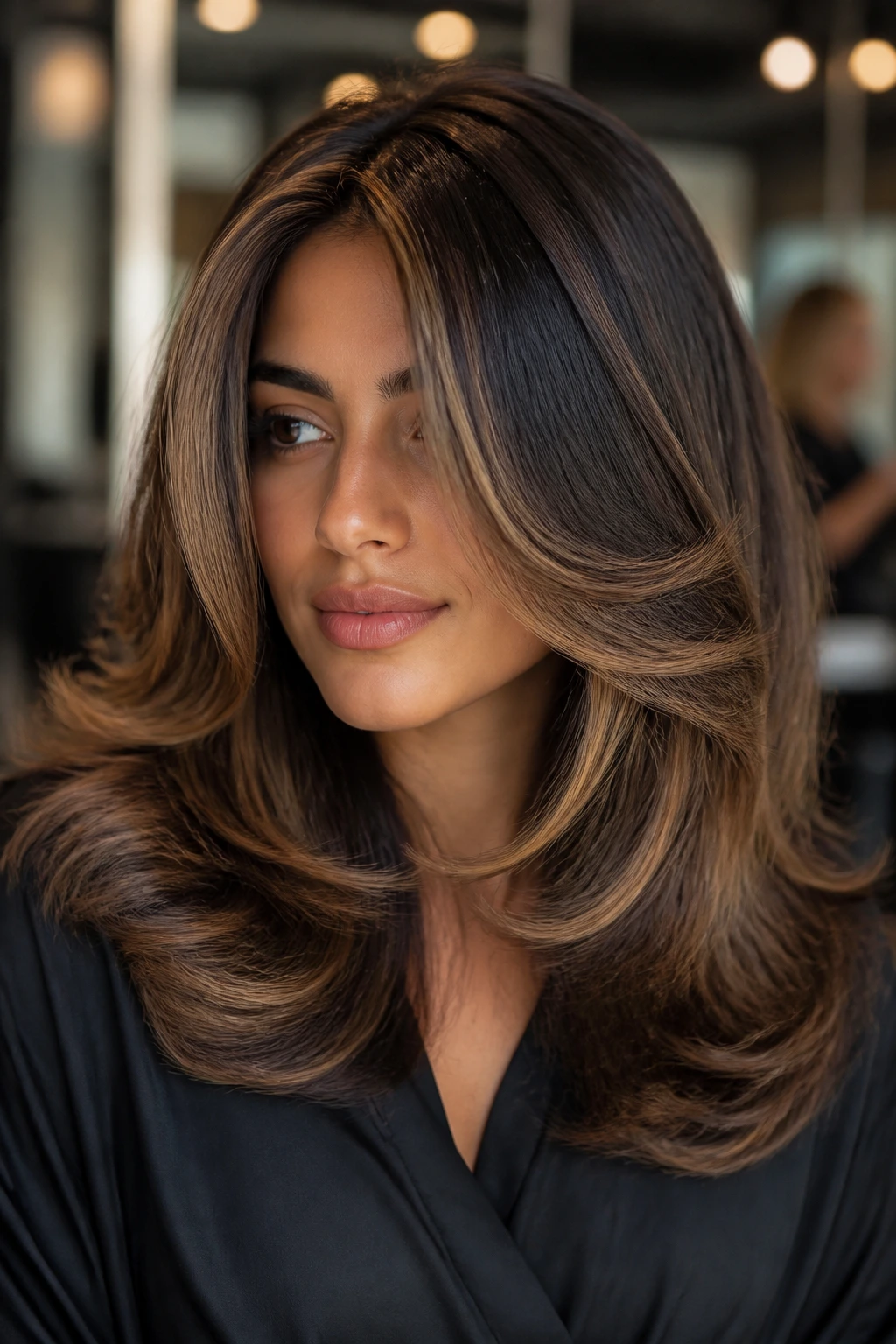
If you like a big salon blowout, this is the look that belongs on the mood board. Thick-panel highlights give the hair that polished, dimensional sweep that shows up when the brush lifts the roots and curves the ends under. On dense hair, the panels have enough width to survive the styling.
The panels should sit mostly on the outer layers and around the front where the blowout frames the face. Keep the base dark enough that the panels look intentional, not accidental. Beige caramel or toasted honey reads cleaner than a loud gold here.
Pro move
Ask for a root shadow that’s only one step lighter than the base. It keeps the grow-out soft and makes the panels look expensive, not stripy.
20. Root-Shadow Caramel That Lasts Longer
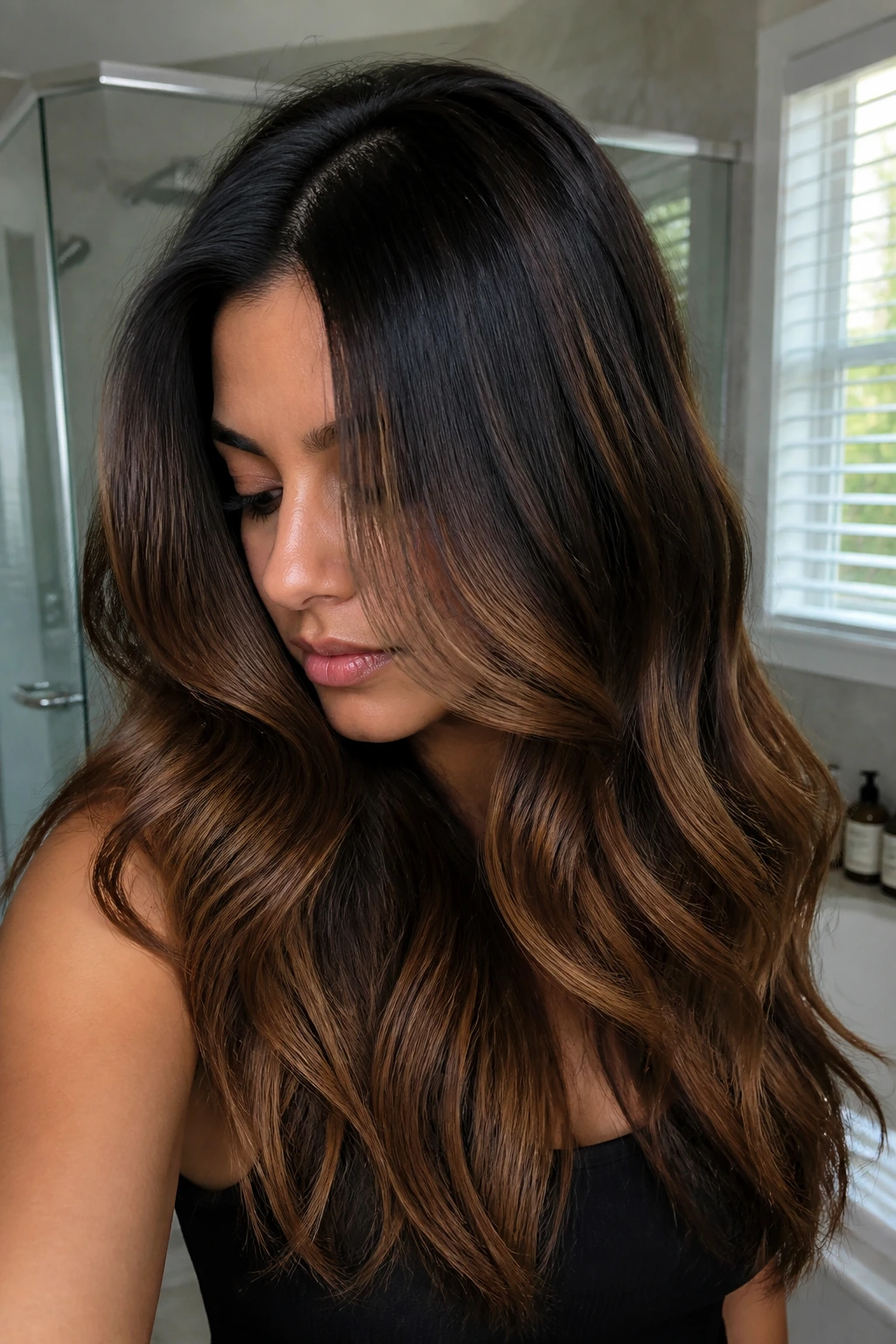
Root shadow is a quiet trick with a big payoff. The colorist softens the root with a shade close to your natural base, then layers caramel through the mid-lengths and ends. On thick dark hair, that shadow keeps the top from looking too busy and gives the lighter pieces a better frame.
It also stretches the time between appointments. The grow-out looks deliberate because there is no harsh line staring back at you in the mirror. If you like your highlights to age gracefully, this is the one.
The best version keeps the shadow neutral or smoky, not jet black. Too much darkness at the root can make the caramel underneath feel disconnected. You want a blend, not a hard stop.
21. Glossed Caramel Over a Black Base
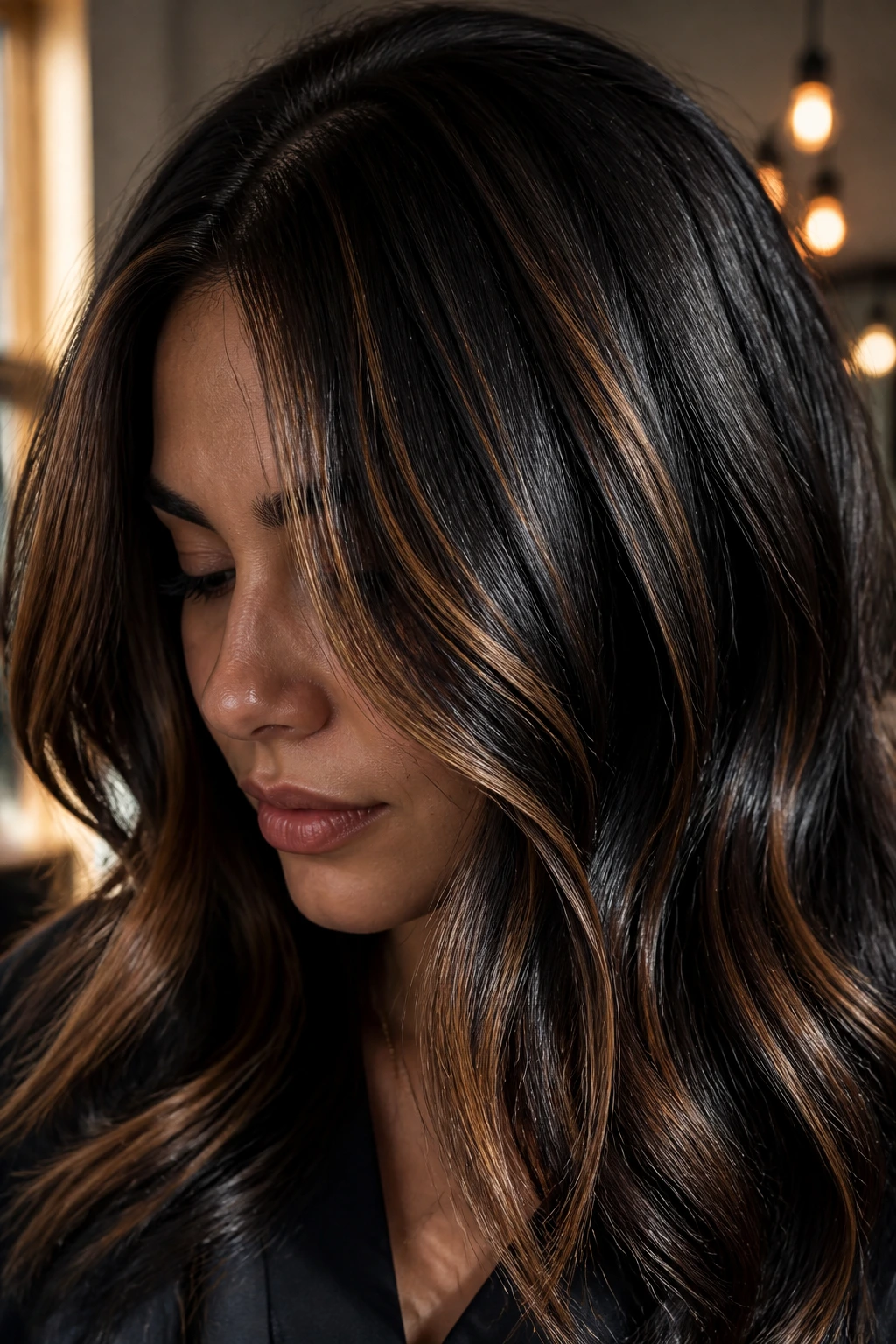
A gloss can rescue a color that has gone flat. On black or very dark hair with caramel highlights, a clear or warm beige gloss adds that reflective finish that makes the lighter pieces read richer. It also helps the base look smoother and less matte.
This is not the same thing as changing the color all over again. It’s a refresh. Good when the caramel has faded a little, or when the shine disappeared after too many hot tools and not enough conditioner. Coarse thick hair often needs this more than fine hair does.
If the caramel starts to look dry, dull, or a touch brassy, a gloss brings the tone back into line without wiping out the warmth.
22. Cinnamon Curls With Dimensional Shine
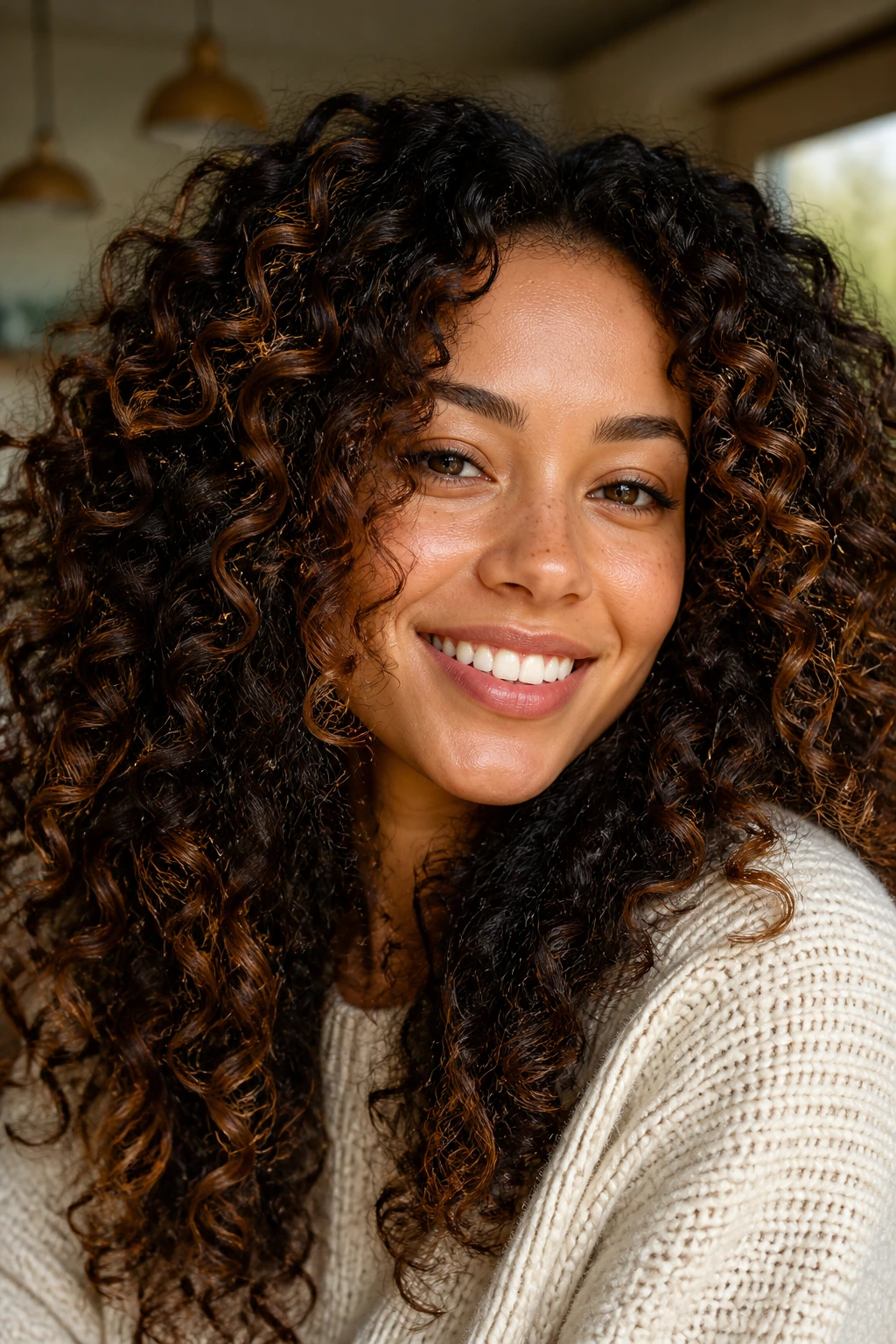
Cinnamon is a little warmer and a little spicier than classic caramel, and on thick curls it can look rich instead of red. The curl pattern scatters the light, which keeps the warmer tone from turning too loud. That makes it a smart choice if your dark hair has some natural warmth in it already.
The placement should live on the outer curl ring and around the face. Interior lowlights keep the shape from blowing out into one bright cloud. A curl cream and a diffuser are your friends here. So is a trim. Curls with lightened ends need clean edges to look good.
This version leans romantic without getting sugary. That’s the right lane for cinnamon.
23. Side-Part Sweep Highlights for Instant Lift
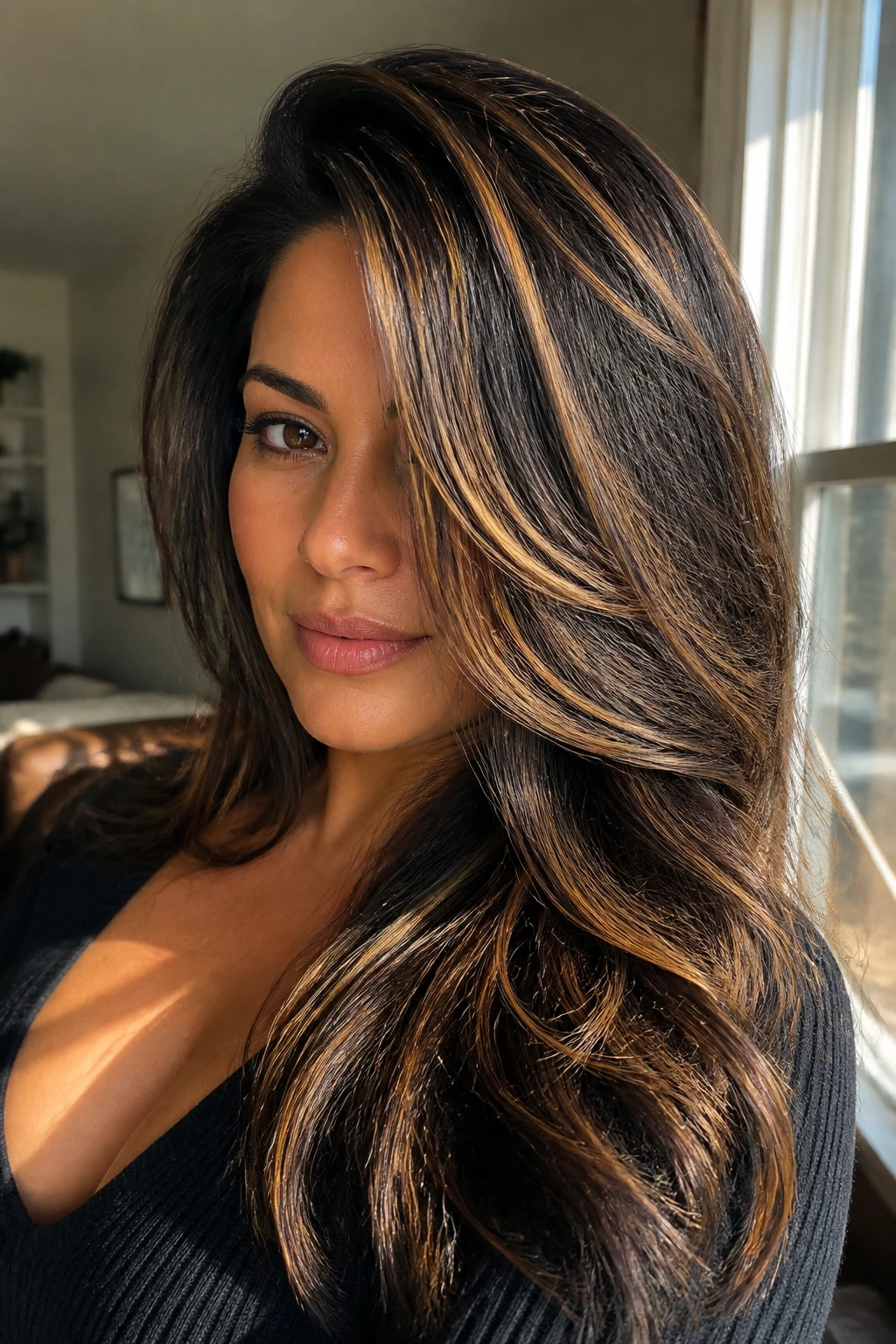
A deep side part can change where the eye lands, and that matters more than people admit. If your hair is thick and dark, moving the part can let the caramel sweep across the face instead of getting buried under the top layer. The result feels lifted without needing more brightness everywhere.
I like this look when one side of the haircut naturally carries more weight. Put the brightest ribbons on that heavier side, then keep the opposite side a little deeper. The contrast gives the hair shape. It also stops the whole style from feeling too symmetrical and stiff.
This one is good if you want the color to do some face-lifting work without committing to a full money piece.
24. Underlayer Pop for Buns and Updos
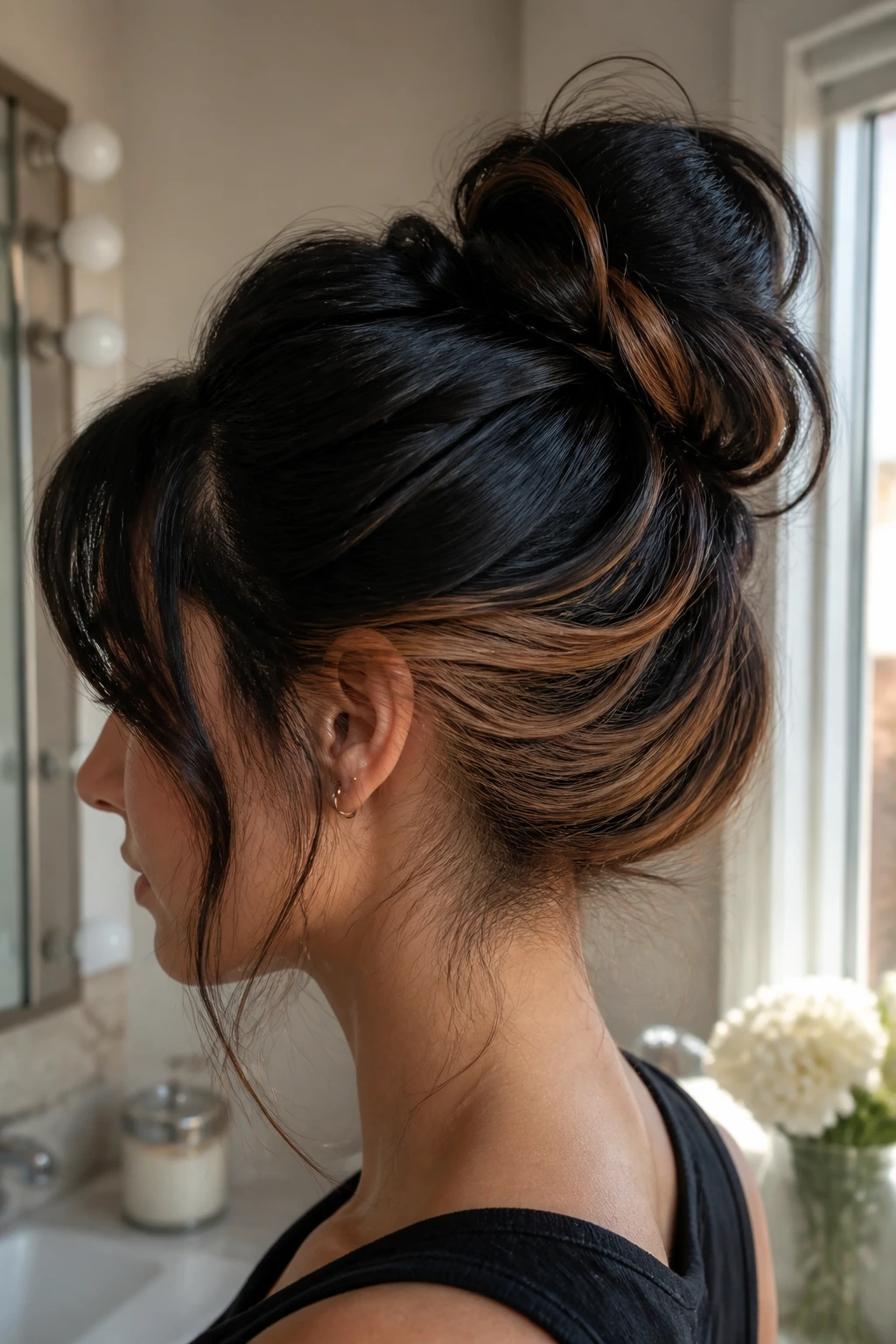
This is the color for people who wear their hair pinned up half the week. The caramel sits under the top layer, so it flashes out when you twist the hair into a bun, tuck it into a claw clip, or pull it through a low ponytail. Thick hair is ideal because there’s enough hair on top to hide the color when you want it hidden.
The underlayer pop can be soft or loud. A few hidden ribbons keep it subtle. Bigger panels create a stronger reveal once the hair moves. Either way, the style gives you two looks in one head of hair, and that’s a nice trick when the top layer needs to stay professional.
It’s also forgiving. Even if the outer hair gets a little dry, the color still feels intentional.
25. Multi-Tonal Caramel Mix With Black Depth
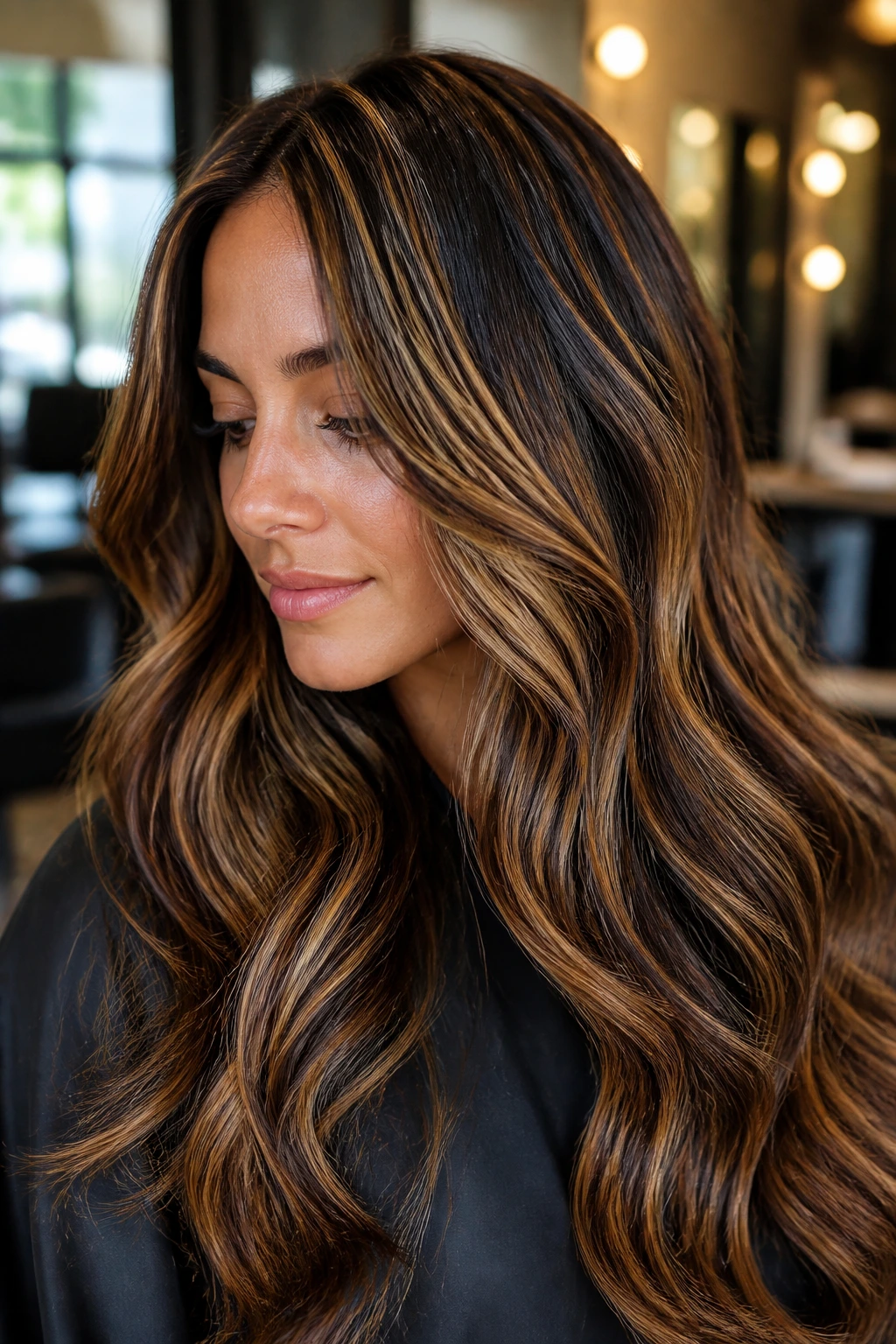
One shade of caramel can be nice. Three shades is better on thick dark hair. Honey, toffee, and a deeper maple tone layered against espresso lowlights create movement that doesn’t rely on a single stripe or one bright face frame. The whole point is depth.
This is the richest version of the look because it avoids sameness. Thick hair can handle the variety. In fact, it usually needs it. If every piece is the same warmth, the color can read flat once the hair settles. A multi-tonal mix keeps the eye moving and lets the haircut look fuller without feeling bulky.
If you want the most dimensional caramel-black blend on dense hair, this is the one I’d put last on the list and then circle back to first when it’s time to book.
Why Thick Dark Hair Handles Caramel Contrast So Well
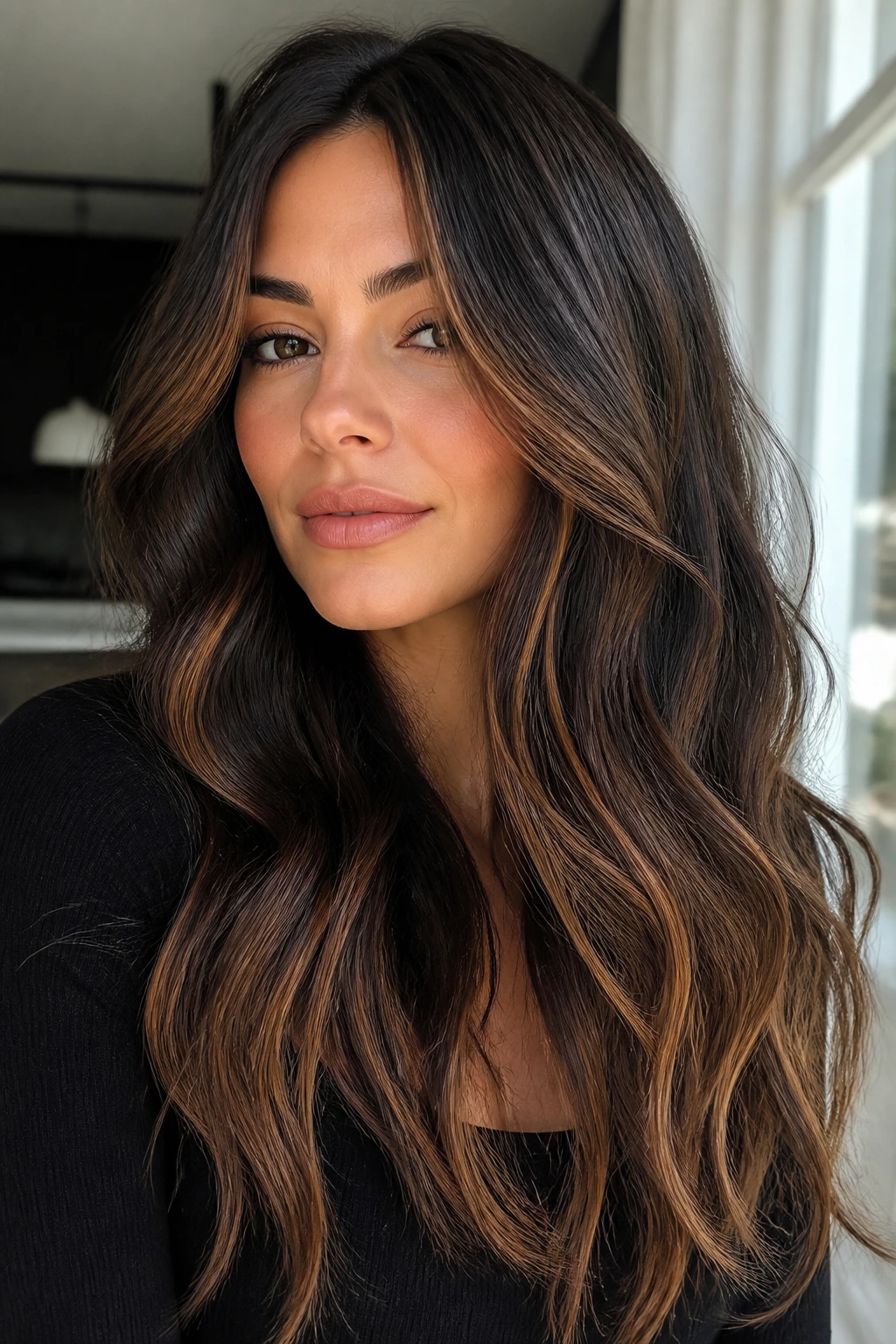
Thick dark hair gives you a lot to work with, and that’s the whole advantage. The density creates natural shadow, which makes caramel pieces look deeper and more expensive than they often do on fine hair. You can place color in the mid-lengths, around the face, or under the top layer and still have enough base left to keep the look grounded.
There’s also a practical reason the contrast reads better. Thick hair has more surface area, so a single narrow highlight can disappear under the weight of the surrounding strands. Wider pieces, root shadow, and layered placement keep the color visible after the hair settles, which is when most people actually see it. Not in the salon chair. On the street. In daylight. In a mirror ten minutes after styling.
Another thing people miss: thick hair can look blocky if it’s all one tone. Caramel breaks that block up. Espresso lowlights push the shape back. And a gloss keeps the whole thing from looking chalky or overprocessed. Simple. Effective.
How to Pick the Right Caramel Tone for a Dark Base
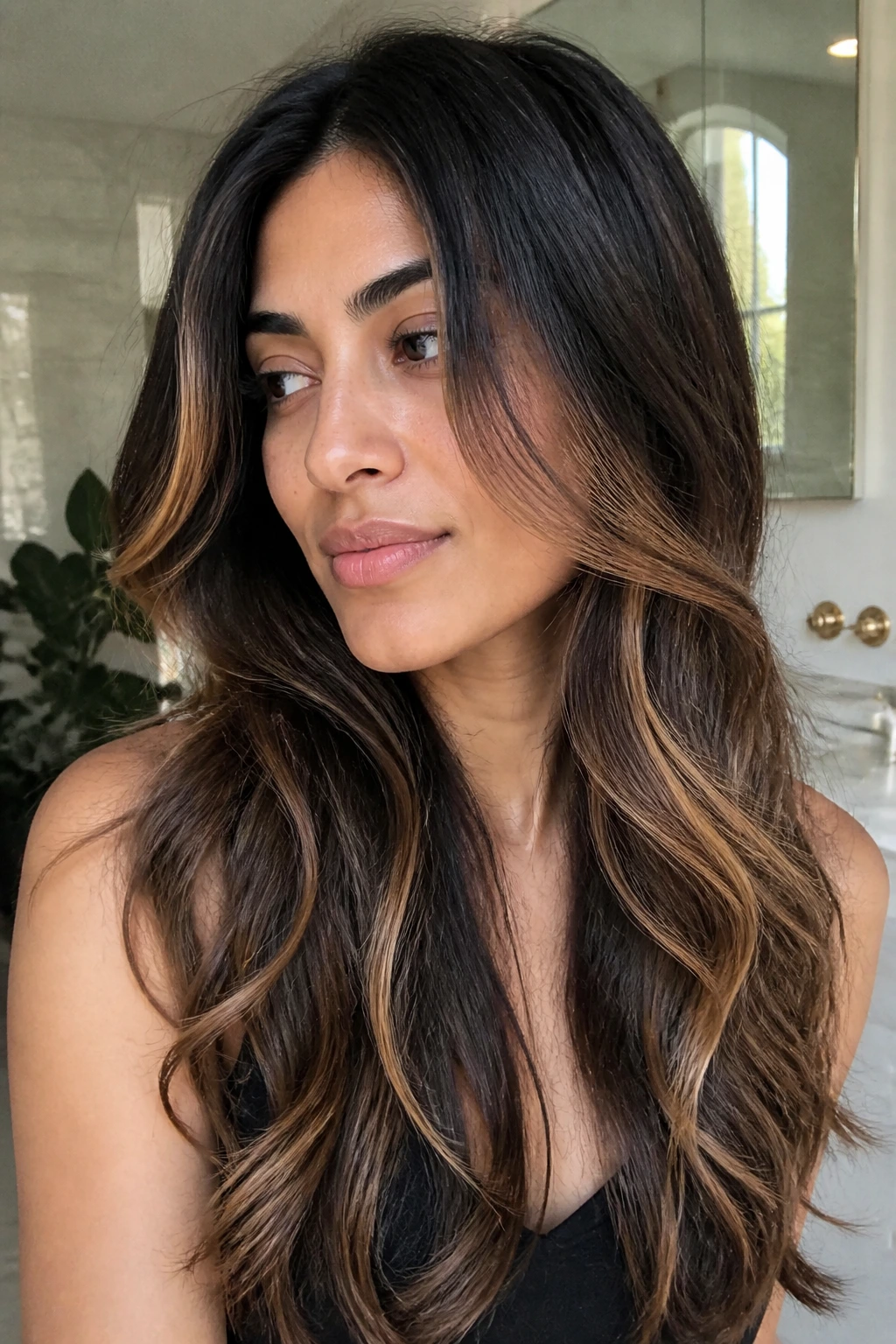
The shade family matters more than the label on the bowl. Honey caramel leans brighter and warmer, so it works when you want glow near the face or a softer, sunlit finish. Toffee sits deeper and feels more grounded. Beige caramel is the one I reach for when I want warmth without too much gold.
If your base is nearly black, start with a tone that’s one or two steps lighter than you think you need. Very pale caramel can turn harsh fast against dark hair, and too much yellow can look flat after a few washes. If your natural undertone runs cool, a smoky caramel or warm beige usually sits better than copper.
The mistake I see most often is chasing brightness without checking the base. Thick dark hair can absolutely carry lightness, but it needs a tone that still respects the depth underneath it.
Tools, Brushes, and Color Products That Matter
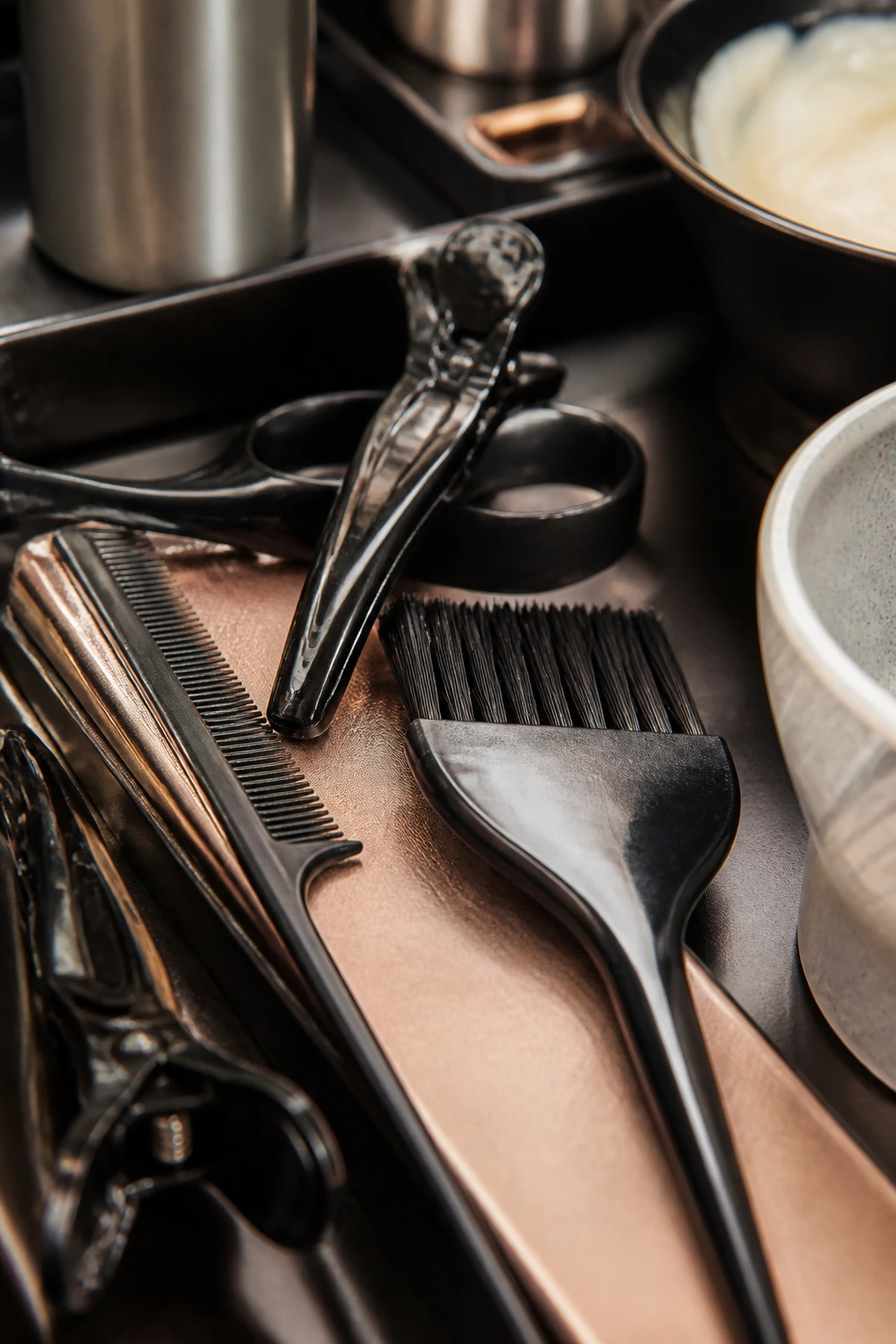
- Sectioning clips: Thick hair tangles itself into a mess if you skip clips; clean sections keep the color placement even.
- Tail comb: Useful for carving out face-framing pieces, panels, and parting lines that need to stay neat.
- Color brush and bowl: Better control than trying to paint dense hair with fingers or a sloppy applicator bottle.
- Sulfate-free shampoo: Helps keep caramel from fading too fast and keeps the hair from feeling stripped.
- Color-safe conditioner or mask: Thick hair usually needs more slip, especially after lightening.
- Heat protectant: Non-negotiable if you blow-dry or curl often; caramel fades fast when hot tools are used raw.
- Wide-tooth comb: Better than a fine comb for detangling without dragging fragile lightened pieces.
- Microfiber towel: Cuts down on frizz and keeps the cuticle from roughing up after washing.
- Blue or purple toning product: Use sparingly if brass starts to show; too much can dull warm caramel into a flat beige.
- Silk or satin pillowcase: Less friction at night means fewer snapped ends and less frizz around the highlight pieces.
How to Wear the Color So It Actually Shows Up
Finish: A loose wave, brushed-out curl, or round-brush blowout shows caramel best on thick hair. Straight styles can work too, but the pieces need to be wide enough to survive the flat surface.
Best Cuts: Long layers, butterfly cuts, lobs, and curled-out ends help the color separate. A blunt one-length cut can swallow softer highlights unless the panels are bold.
Placement: Put brightness where hair naturally moves — around the face, through the mid-lengths, and near the outer layers. Hidden color under the top layer is smart if you wear buns or clips often.
Parting: A deep side part creates lift. A center part shows balance. Both work; they just tell the color to behave differently.
And one small opinion: thick hair usually looks better with one confident styling choice than with four half-choices. Pick smooth waves, a blunt blowout, or a defined curl pattern. Let the color do its job.
Extra Shine and Dimension Boosters
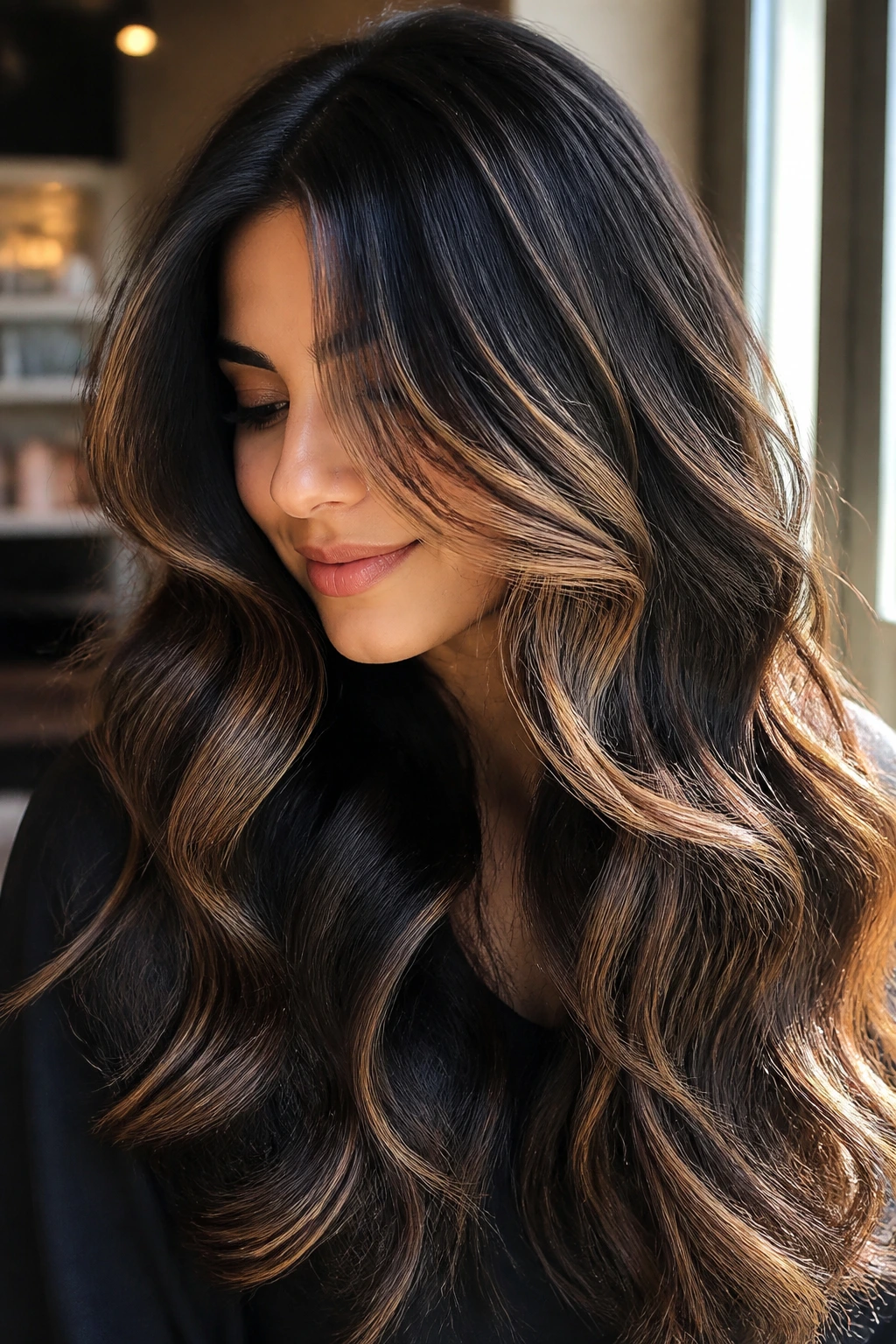
Shine Boost: A clear gloss or beige glaze every few weeks keeps the caramel from looking dusty. Thick hair drinks up shine, so don’t be shy about it.
Tone Tweaks: If the highlight starts leaning orange, use a blue-based cleanser once in a while. If it gets too golden and dull, a soft warm gloss brings the life back without making it brassy.
Placement Trick: Ask for the brightest pieces where the haircut breaks open — around layers, bends, and face-framing sections. Color that sits in a dead zone is wasted color.
Make-It-Yours: Want less upkeep? Keep the brightness lower and use root shadow. Want more drama? Push the front pieces brighter and keep the underlayers darker for contrast.
A tiny extra step can change the whole read of the hair. Sometimes it’s a gloss. Sometimes it’s the way the front layers are cut. Sometimes it’s just a better part.
Common Mistakes That Make the Color Fall Flat
The biggest mistake is going too fine on very dense hair. Skinny highlights often disappear under all that mass, which leaves you paying for color you barely see. The fix is simple: ask for wider ribbons, stronger contour pieces, or a mix of both.
Another miss is choosing a caramel tone that’s too orange. On a dark base, coppery warmth can veer into brass fast, especially after a few washes. Beige caramel, toffee, and honey usually wear better. If the tone goes hot anyway, a gloss or toner can pull it back.
Skipping lowlights is another one. If everything is light, thick hair loses its depth and starts to feel fluffy in a bad way. A few darker panels keep the dimension sharp.
Last one: treating the ends like they can take anything. They can’t. Lightened thick hair still needs trims, masks, and heat protection or the caramel pieces start looking dry at the tips.
Variations and Adaptations to Try
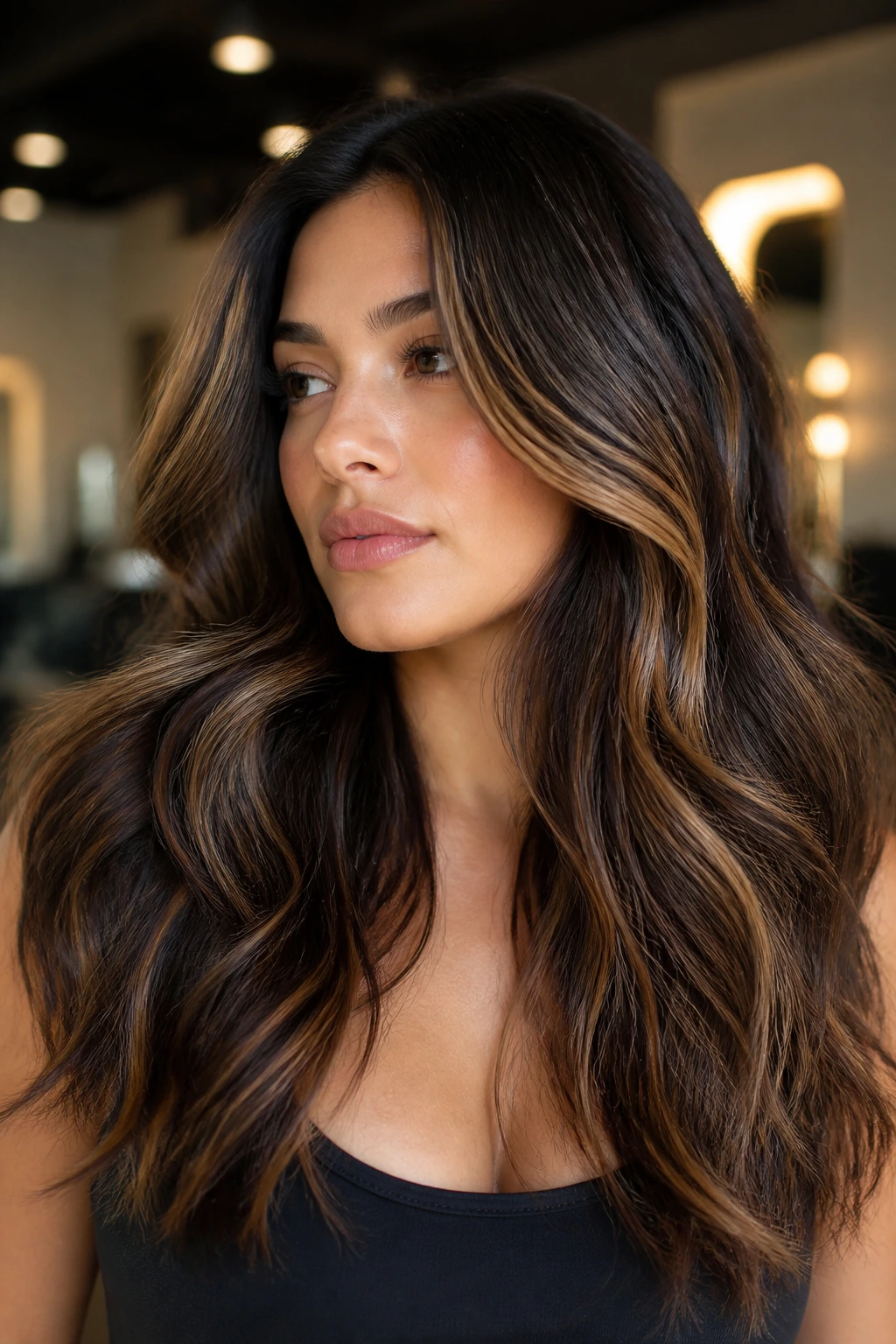
Soft Latte Version: Keep the caramel close to beige and let the root shadow stay deep. This works if you want dimension that reads polished, not flashy.
High-Drama Ribbon Version: Use wider, brighter pieces through the outer layers and around the face. Best for people who wear waves or a full blowout and want the color to show from across the room.
Curly Halo Version: Brighten the outer ring of curls and keep the interior darker. The shape stays full, but the movement gets clearer.
Bronze-Black Version: Lean warmer and richer with bronze, chestnut, and espresso. It’s a strong choice if your skin tone likes warmth and you want the color to feel deep, not blonde.
Low-Maintenance Rooted Version: Ask for a root smudge and keep the caramel mid-length to ends. The grow-out stays softer, which helps if you hate frequent salon visits.
Money-Piece First Version: Start with just the front pieces. If you like the effect, add more through the mid-lengths later. No need to go all in on the first appointment.
Maintenance, Refreshing, and Grow-Out Timing
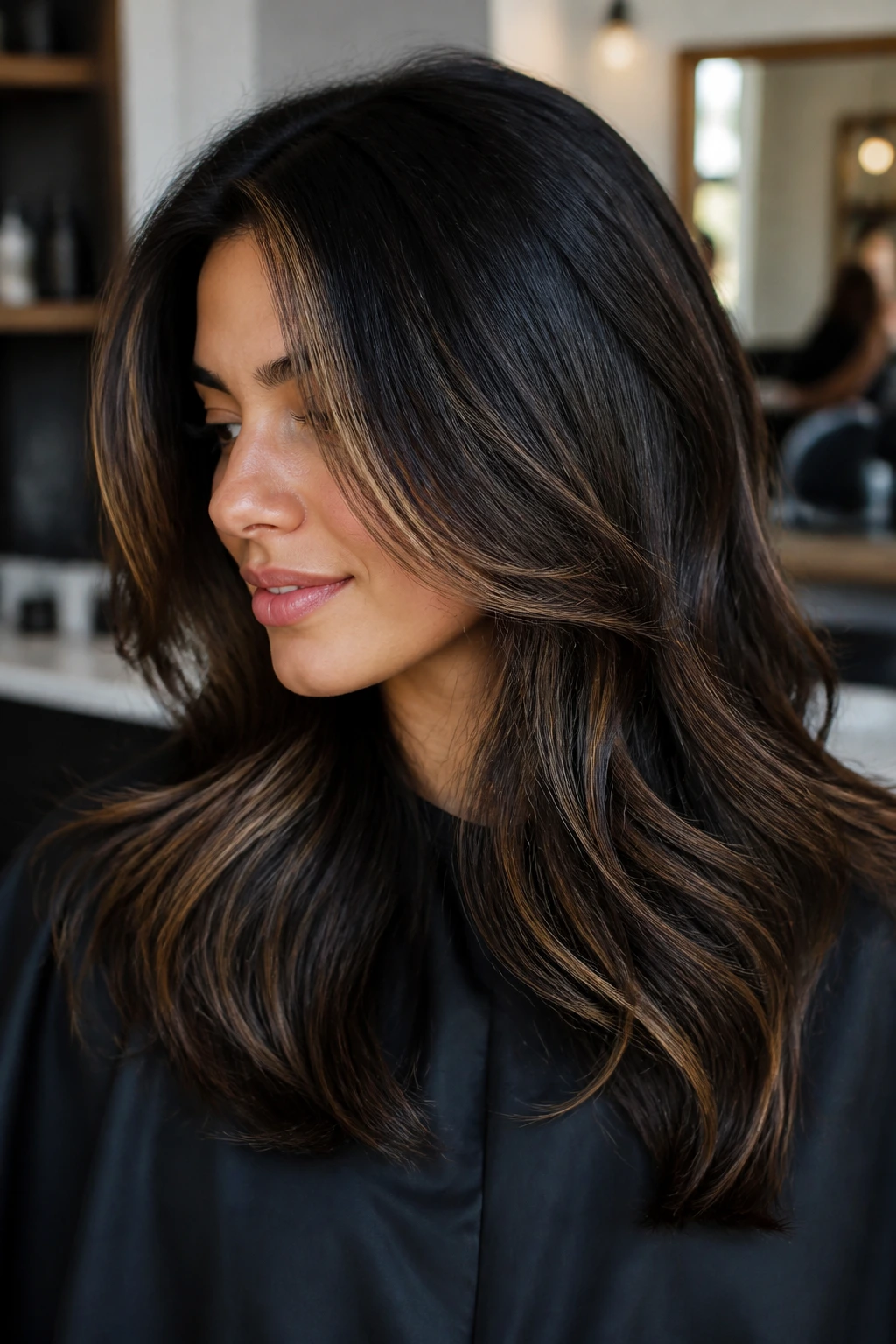
Caramel on dark hair does not need constant babying, but it does need a rhythm. Most thick-haired clients do well with a color-safe wash routine and a gloss refresh every 4 to 6 weeks if the warmth starts to fade. If the hair is more resistant or the highlights were lifted hard, that gloss may be the thing that keeps the whole look from going dull.
For washing, 2 to 3 times a week is usually enough unless your scalp runs oily. Use lukewarm water, not hot. Hot water roughs up the cuticle and strips tone faster than people expect. If brass starts to creep in, reach for a blue shampoo once every 1 to 2 weeks, then stop. Overusing it can make warm caramel look muddy.
Deep condition weekly, especially on the lightened ends. Thick hair often feels strong, so people forget it can still be dry. That’s when the frizz sneaks in. And if you heat-style often, use a protectant every single time. No excuses there. The ends are where the color lives, and the ends are where the damage shows first.
Frequently Asked Questions About Caramel Highlights on Thick Hair
Will caramel highlights work on very dark brown or black hair?
Yes, but the lift has to be handled carefully. Very dark hair usually needs stronger lightening than medium brown hair, and the caramel should land in a warm beige-to-toffee range so it doesn’t turn orange against the base.
Are balayage or foils better for thick hair?
Both can work, but foils often give more lift on resistant, coarse, or very dark hair. Balayage is softer and better for a lived-in look. A lot of stylists use a mix of both because thick hair can handle that kind of layered placement.
How often do caramel highlights need touch-ups?
Rooted or balayage styles can go 8 to 12 weeks or longer between major appointments, while brighter face frames may need a gloss sooner. The color usually needs a tone refresh before it needs a full re-lightening.
Can thick curly hair wear caramel highlights without looking frizzy?
Yes, if the highlights are placed with the curl pattern and the hair stays hydrated. Curly hair needs more conditioning after lightening, and the brightest pieces should sit where the curls naturally separate.
What if the caramel turns too brassy?
Use a blue shampoo or a salon gloss to cool the orange tone back down. If the brass is strong, a toner from a colorist is safer than piling on purple shampoo and hoping for the best.
Do I need lowlights too, or can I keep it all caramel?
On thick dark hair, lowlights usually help. They keep the color from looking flat or overly light, and they make the caramel pieces pop in a cleaner way.
Can this work on a bob or lob?
Absolutely. A lob often shows the contrast very well because the color sits closer to the face and the ends have less weight. Just keep the pieces wide enough to be seen through the density.
What should I ask my stylist for if I want a low-maintenance version?
Ask for a rooted balayage with caramel ribbons, a soft root shadow, and face-framing pieces that are brighter than the rest. That combination grows out more quietly than an all-over highlight job.
Why do highlights disappear in my thick hair when I blow-dry it smooth?
Usually the pieces are too fine or too close together. On dense hair, wider placement and slightly bolder contrast keep the color visible even when the cuticle lies flat after a blowout.
The Color That Holds Its Shape
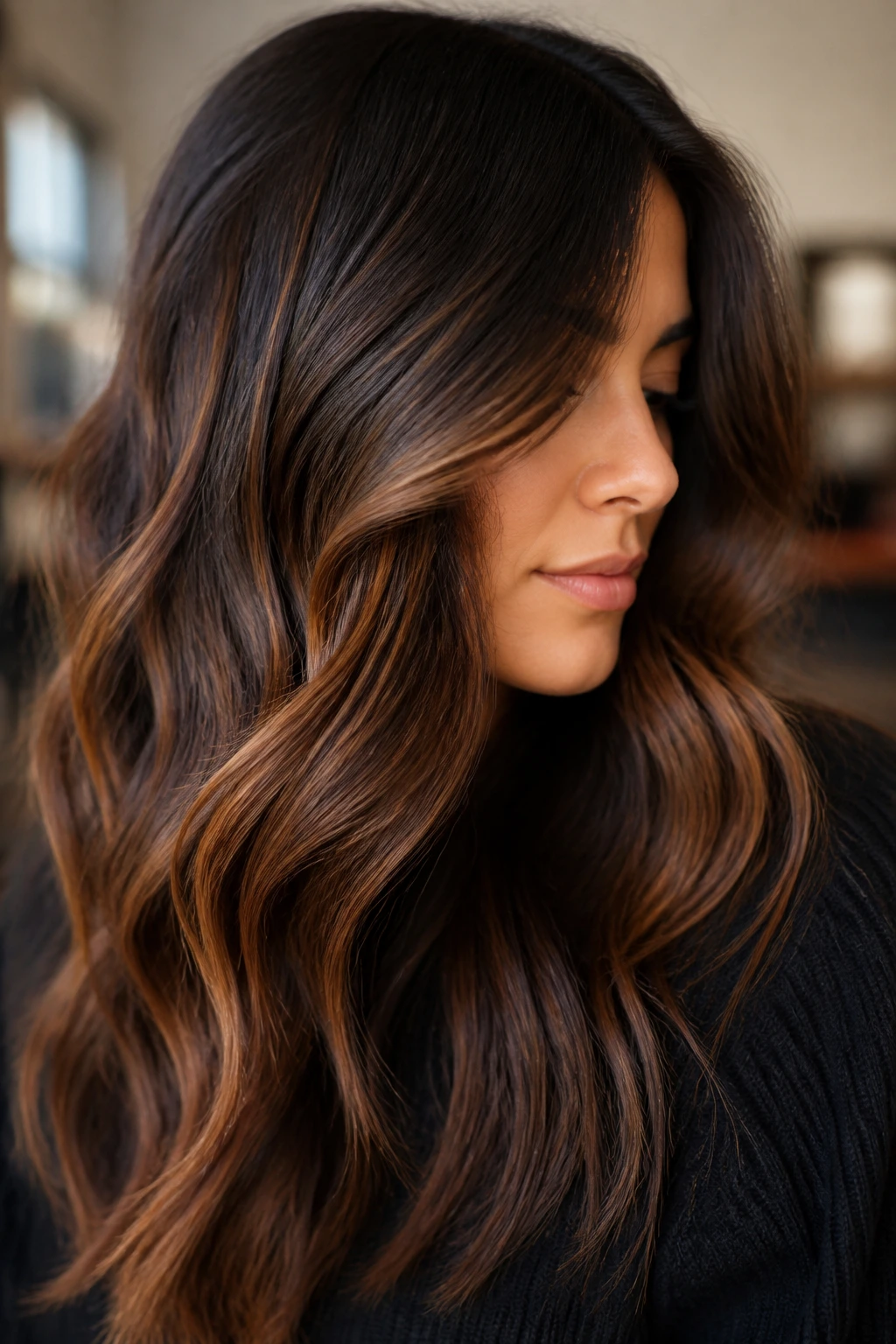
Thick dark hair does not need timid color. It needs placement that survives movement, shine that survives washing, and caramel tones that stay warm without going orange. Once those three things line up, the hair starts doing the heavy lifting for you.
The looks in this collection work because they respect the density instead of trying to fight it. Some use ribbons. Some use contour. Some hide in the underlayer until the hair moves. That’s the fun part. The color can be quiet in one moment and loud in the next.
If you’re heading to the salon, bring one or two of these ideas and talk through the placement, not just the shade. That’s where the good versions live.