



Dark color can be the smartest move for fine hair, especially when the base is medium and the goal is shape instead of drama. The right espresso ribbon or cocoa lowlight makes the hair read denser at the roots, steadier at the part, and a little more finished from every angle.
Medium skin tones are a sweet spot for brunette depth. Chocolate, mocha, mushroom, walnut, chestnut — these shades have enough body to flatter golden, olive, and neutral undertones without washing the face out or turning the hair into one flat block.
The catch is placement. Chunky streaks can make thin hair look see-through. Soft panels, micro-babylights, shadow roots, and well-aimed face-framing pieces do the opposite: they create the illusion that the hair has more strands than it actually does. That’s the version worth stealing.
Why Dark Ribbons and Soft Lowlights Suit Medium Skin and Fine Strands
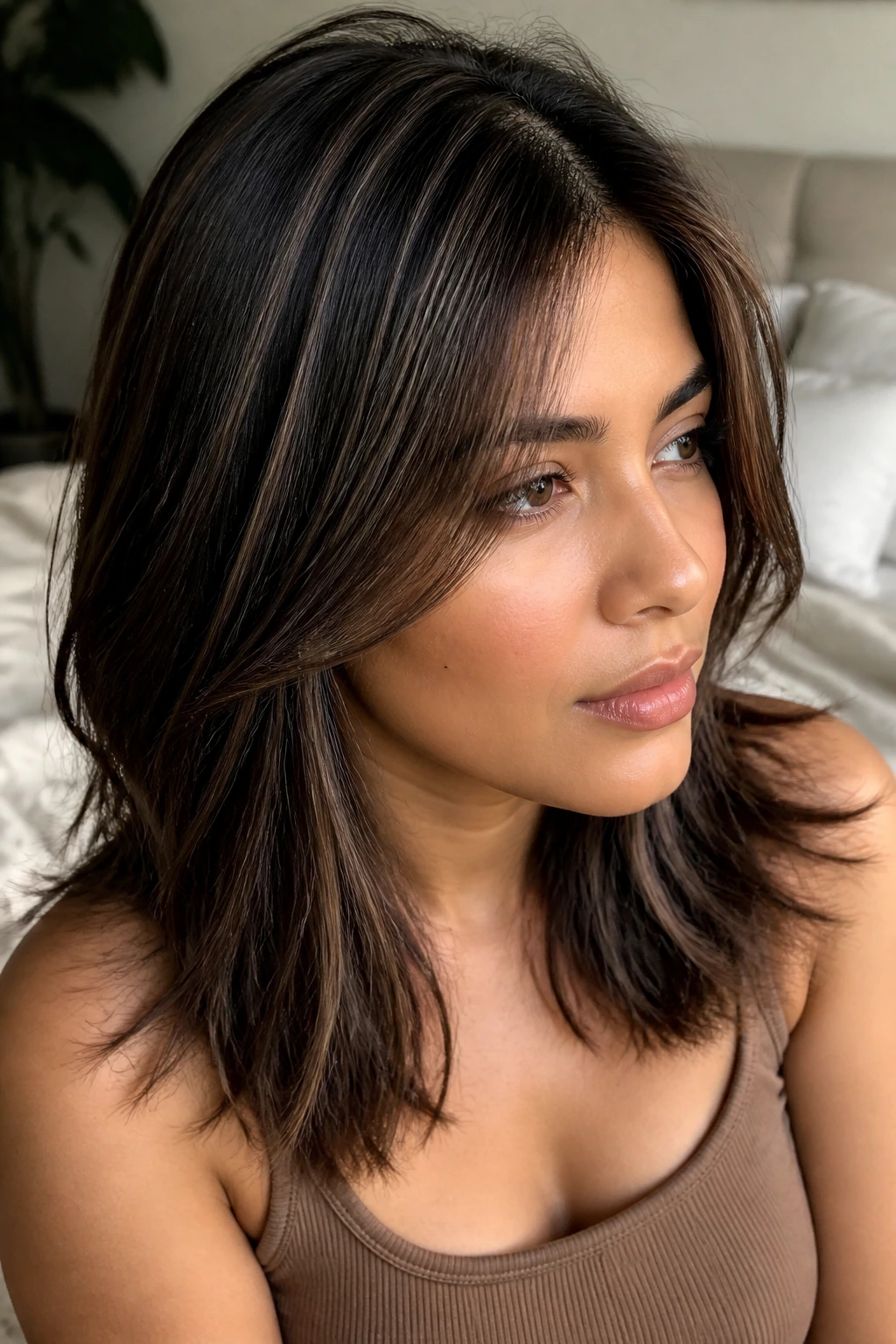
- They reduce scalp contrast: On thin hair, the part line can look wide fast; deeper brunette pieces narrow that visual gap and make the top look fuller.
- They flatter medium undertones: Chestnut, cocoa, mushroom, and mocha sit close to the golden-to-neutral range that medium skin often carries, so the color feels native to the face.
- They need less aggressive lightening: Darker dimension usually means less bleach, which is a mercy if your ends already feel wispy or fragile.
- They grow out cleaner: A soft root fade or lowlight placement hides the awkward line that can show up after six to eight weeks.
- They move better in curls and waves: Dark ribbons show up most clearly when the hair bends, which is why a loose bend around the face does more for thin hair than a stiff, pin-straight finish.
1. Mushroom Brown Babylights
Mushroom brown is the shade people underestimate until they see it on medium skin with a little olive or beige in the undertone. It sits in that cool-neutral lane that stops thin hair from looking brassy, and the babylight placement keeps the whole effect whisper-soft instead of stripey.
Ask for very fine foils around the part, temple, and top crown, with a color that lands one to two levels deeper than your base. On fine hair, that tiny difference is enough. You get dimension without turning the head into a checkerboard.
2. Espresso Lowlights on a Collarbone Lob
This one is for anyone who wants the hair to look denser without leaning warm. Espresso lowlights disappear into the base just enough to make the lighter strands around them stand up visually, which is exactly what a collarbone lob needs when the ends have started to feel a little featherlight.
I like this best when the deepest pieces sit underneath the top layer and at the back of the head, not right across the whole surface. The top still reflects light, but the hidden depth gives the haircut weight. A blunt edge plus espresso underneath? That’s a good combo.
3. Chocolate Balayage with a Feathered Root
Chocolate balayage works because it softens the whole head without making the color look painted on. On medium skin, a true chocolate brown has enough richness to look intentional, and on thin hair the feathered root keeps the top from collapsing into a solid dark cap.
The trick is to keep the painted pieces narrow near the face and a touch wider through the mid-lengths. That gives movement where the eye lands first. If your hair is straight and fine, ask for a few warmer chocolate ribbons toward the ends so the cut doesn’t disappear into shadow.
4. Mocha Money Piece
A mocha money piece is one of the easiest ways to brighten medium skin while still keeping the overall look dark. The front pieces sit close enough to the face to show off cheekbones and eyes, but because the shade stays in the mocha range, it doesn’t hit with the harsh contrast that can make thin hair look patchy.
Keep the money piece narrow. Seriously. About 1/2 inch to 3/4 inch on each side is plenty for fine hair. Anything wider starts to look like a block, and blocks are the enemy here.
5. Smoky Ash-Brown Contour
Smoky ash-brown is the shade I reach for when medium skin has a cooler or more neutral cast and the hair needs more shape than shine. It reads clean, almost powdery, and it makes a thin bob or long layers feel more deliberate.
Think of this one as contouring for the hairline. Place the darker ash-brown pieces at the temples, just behind the ears, and through the upper lengths near the face. The goal is not contrast for contrast’s sake. It’s to give the haircut shadow where the eye expects depth.
6. Chestnut Peekaboo Panels
Peekaboo panels are the quiet achiever in the whole bunch. They sit under the surface layer, so the color shows when the hair swings, gets tucked behind the ear, or bends in a wave. On medium skin, chestnut has enough warmth to keep the face from going gray, and the hidden placement keeps thin hair from feeling overworked.
This is a good pick if you wear your hair up a lot. A low ponytail or messy twist will still reveal the darker panels, which means the color keeps doing its job even when you’re not styling it down.
7. Walnut Ribbon Highlights
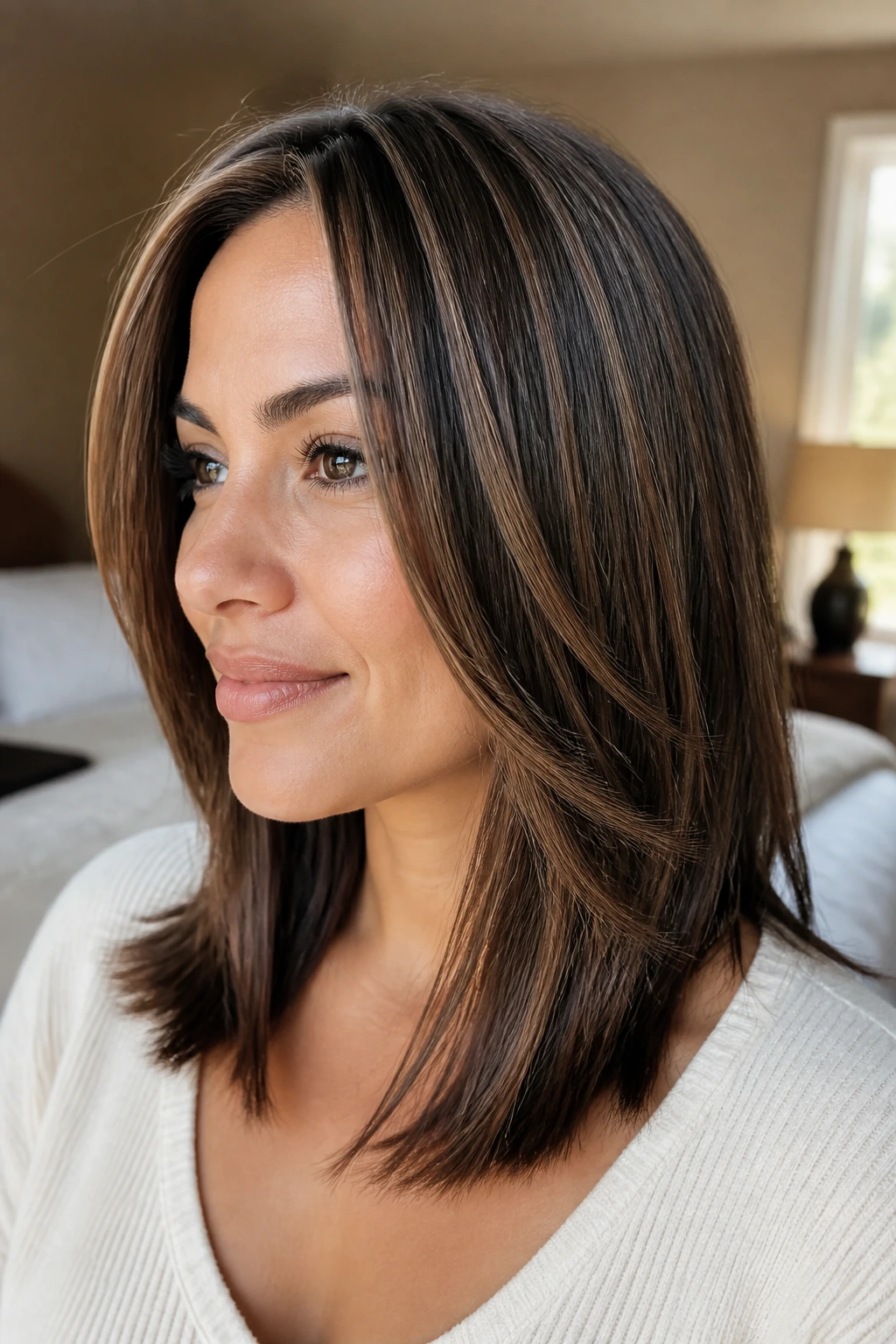
Walnut ribbons are what you ask for when you want movement without loud contrast. They run vertically through the hair, which matters on thin strands because vertical color lines make the hair look longer and a little fuller, especially around the shoulders.
The shade itself sits between warm brown and neutral brown, so medium skin can take it easily. I like walnut more than red-brown on people who hate warmth near the face. It stays grounded. It does not drift copper, and that restraint is part of the appeal.
8. Coffee Bean Face Frame
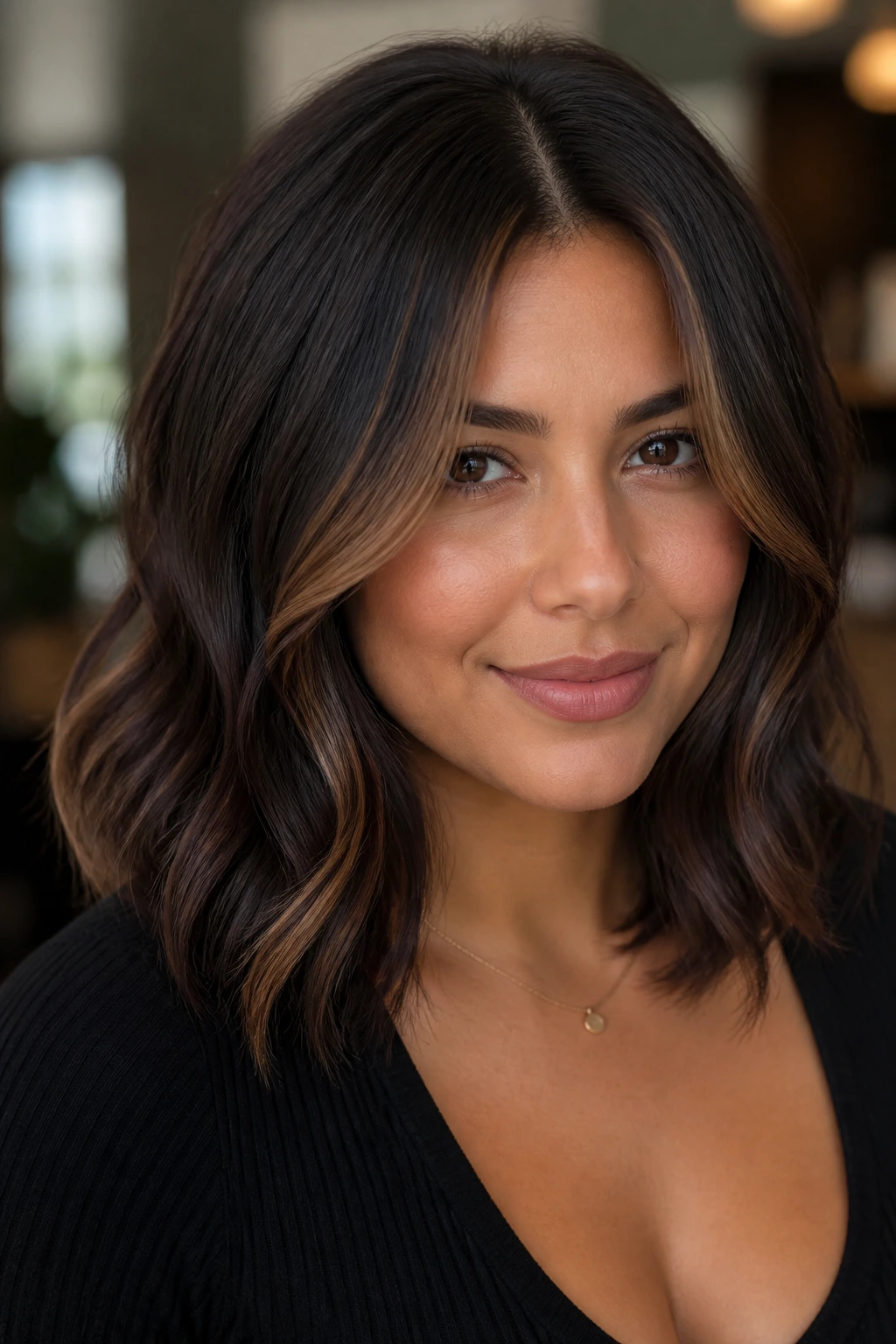
Coffee bean pieces near the front add instant depth to medium skin without forcing the rest of the hair to go much darker. The color reads rich and slightly cool, which is handy if your complexion has golden warmth but you do not want the hair to pull orange.
Ask for the face frame to start a little lower than the root if your hair is thin. That gives you softness at the part and keeps the front from looking like a solid line. A 1-inch bend with a curling iron makes these pieces show up fast.
9. Toffee Underlights
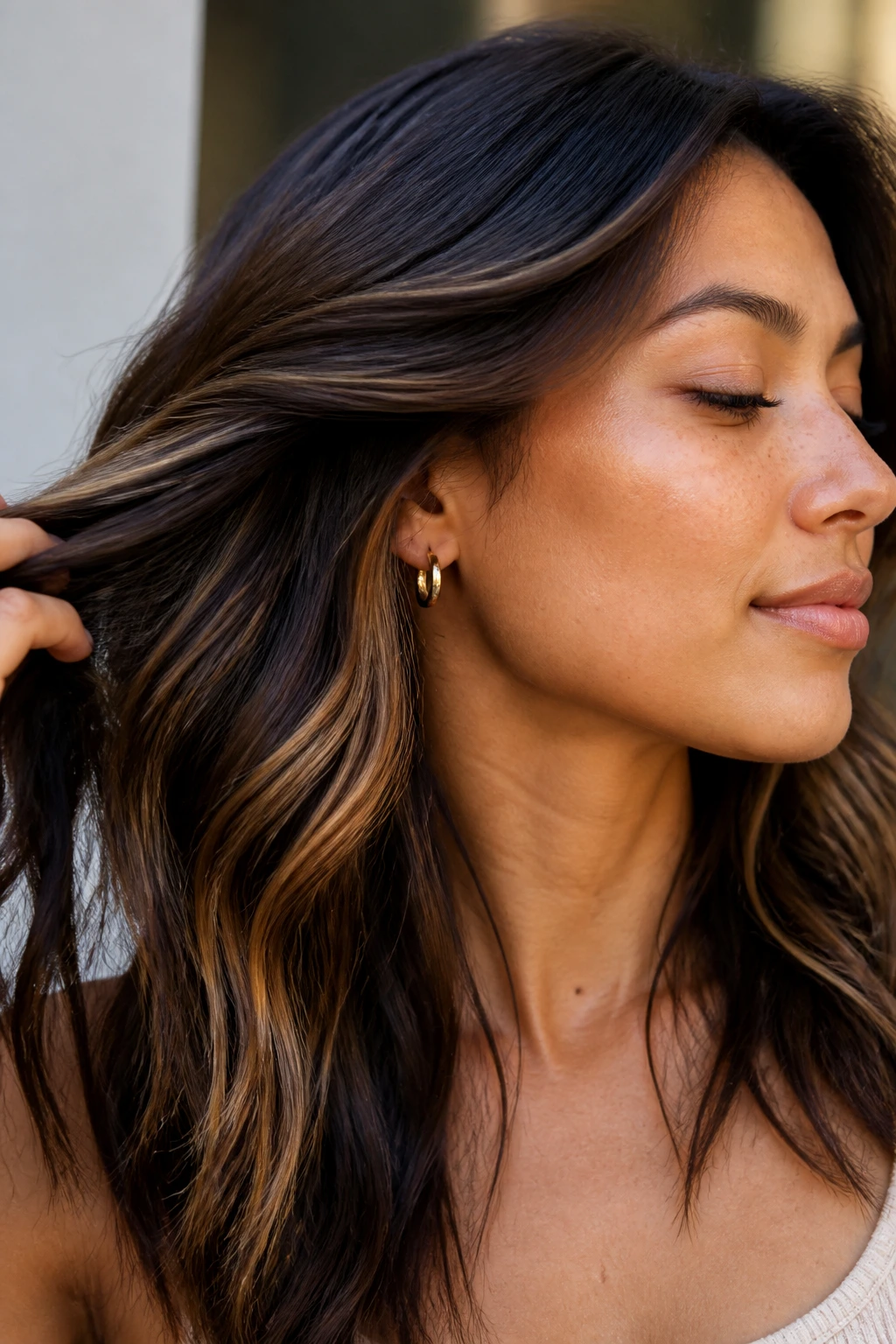
Toffee underlights are the move when the top layer of your hair is already fine and you do not want the entire head darkened. The darker pieces sit beneath the top veil, so the hair gets a richer underside that peeks through in motion.
This looks especially good on medium skin with warm undertones because the toffee keeps a little light in the formula. The result is not coppery. More like warm brown with a touch of amber. On layered cuts, this can make the ends feel thicker than they really are.
10. Sable Micro-Foils
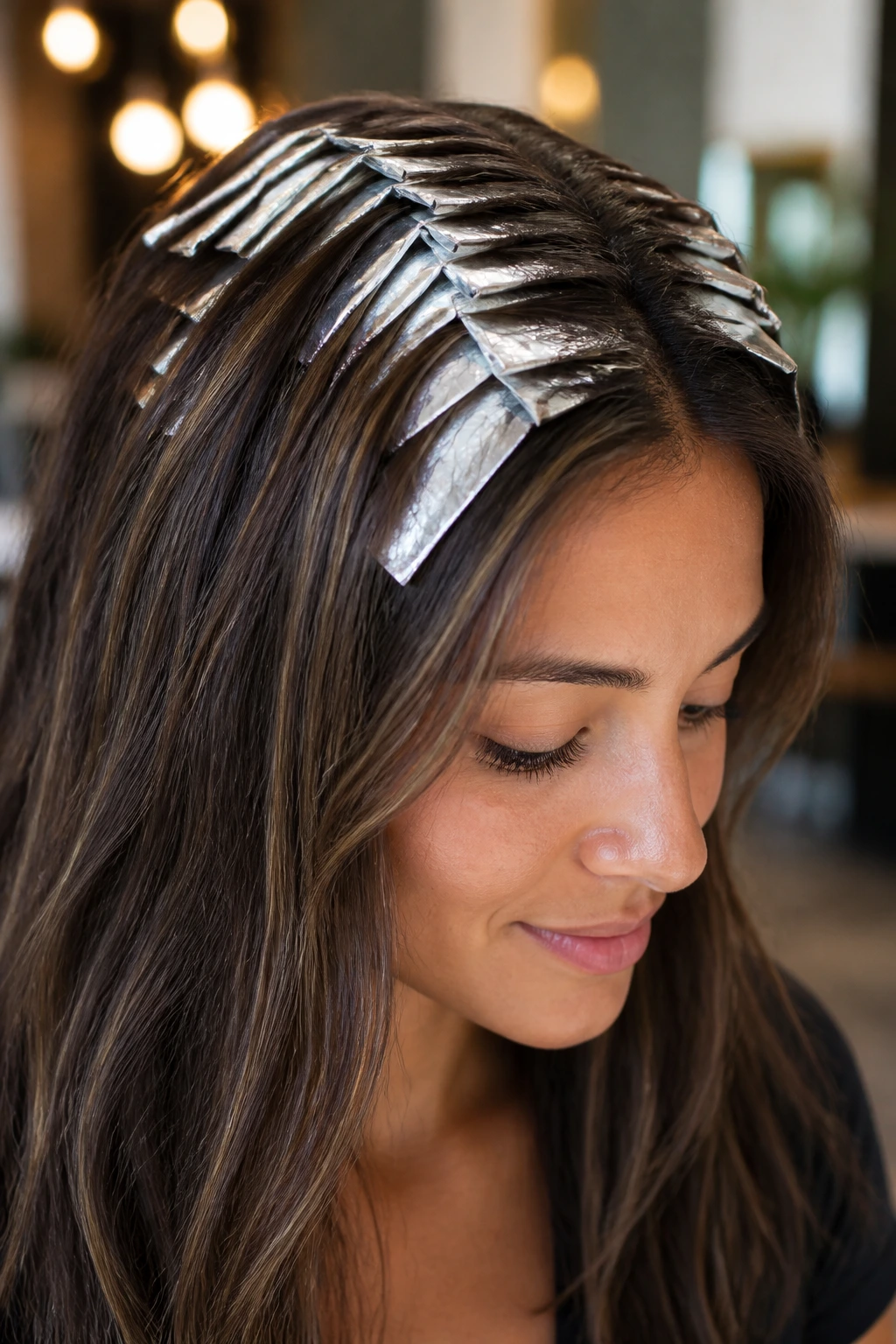
Micro-foils are one of the best salon tricks for thin hair because they avoid the obvious stripe effect. Sable gives you a very deep brown — not black, not flat black-brown — so the dimension feels dense without turning severe on medium skin.
The sections should be tiny. I mean tiny-tiny: narrow enough that a lifted piece still blends with the hair beside it. That’s what makes the color look expensive in the right way, because you never quite catch where one panel ends and the next begins.
11. Cocoa Melt with a Soft Root
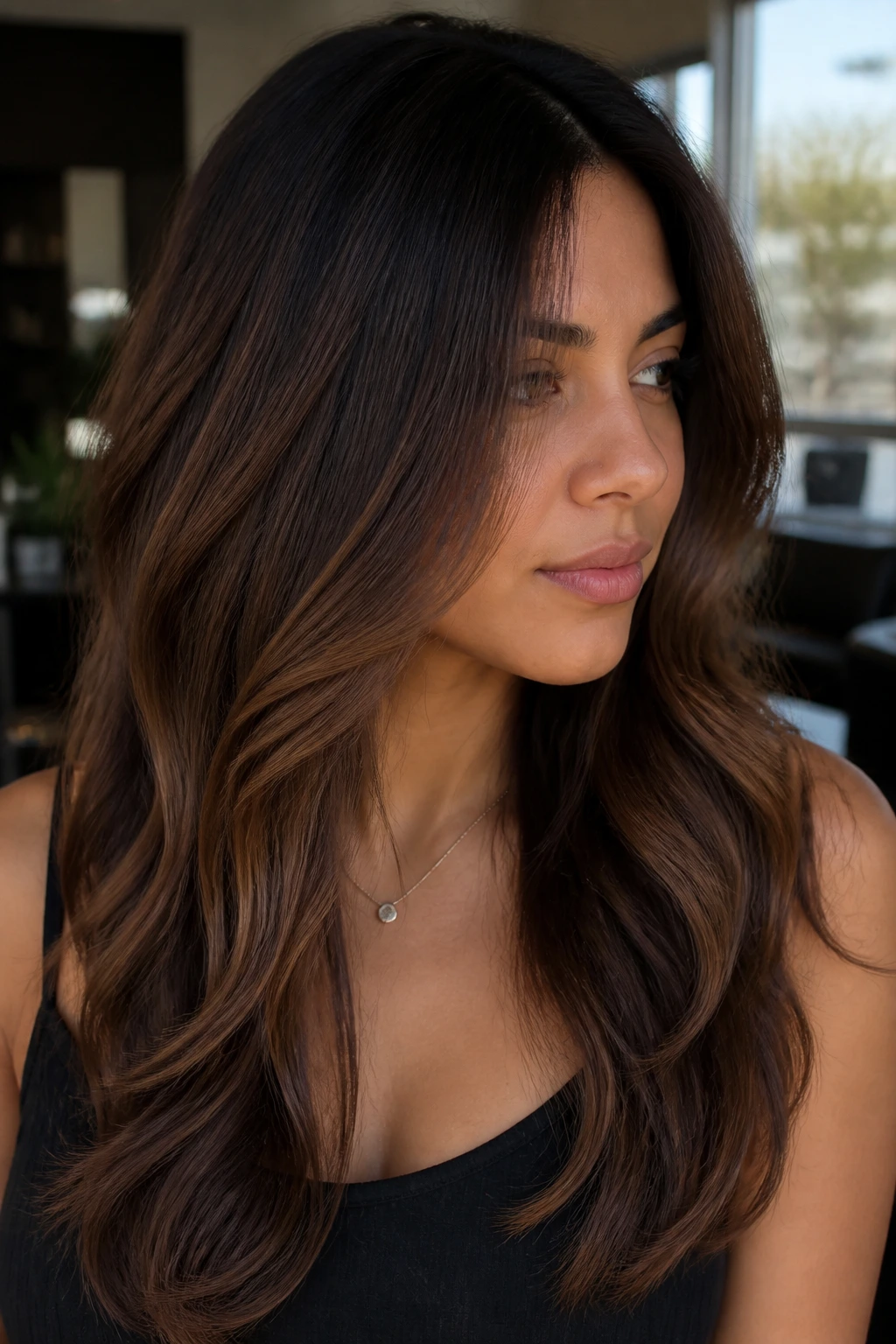
A cocoa melt is all about staying in one color family and letting the shade drift from darker at the root to softer through the ends. Thin hair benefits because the transition doesn’t look chopped up, and medium skin gets the kind of brown that feels plush rather than heavy.
If your hair is naturally a level 5 or 6 brunette, this is one of the easiest ways to deepen it without losing dimension. The root shadow should not be a hard line. It should blur. That blur is the whole point.
12. Mahogany Lowlights
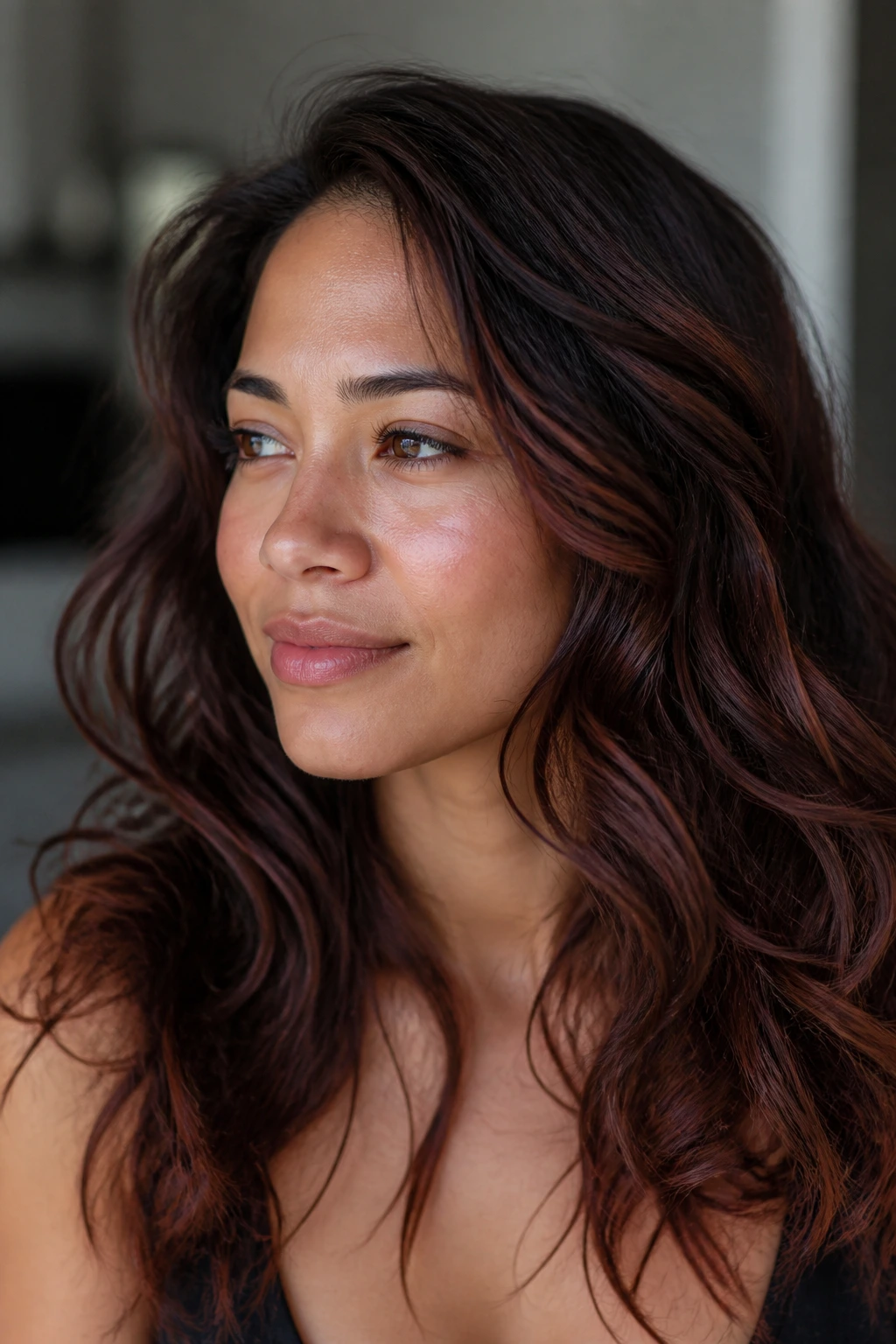
Mahogany lowlights bring a little red-brown richness, which can be gorgeous on medium skin with golden warmth. The shade has more warmth than ash or mushroom, but it still reads dark enough to make thin hair feel fuller around the crown and underlayers.
This one shines on waves and curls. Straight hair will show the color, but movement makes the red-brown undertone wake up. If your skin leans olive and goes sallow with too much red, skip this and stay closer to cocoa or walnut.
13. Truffle Brown Ribbons
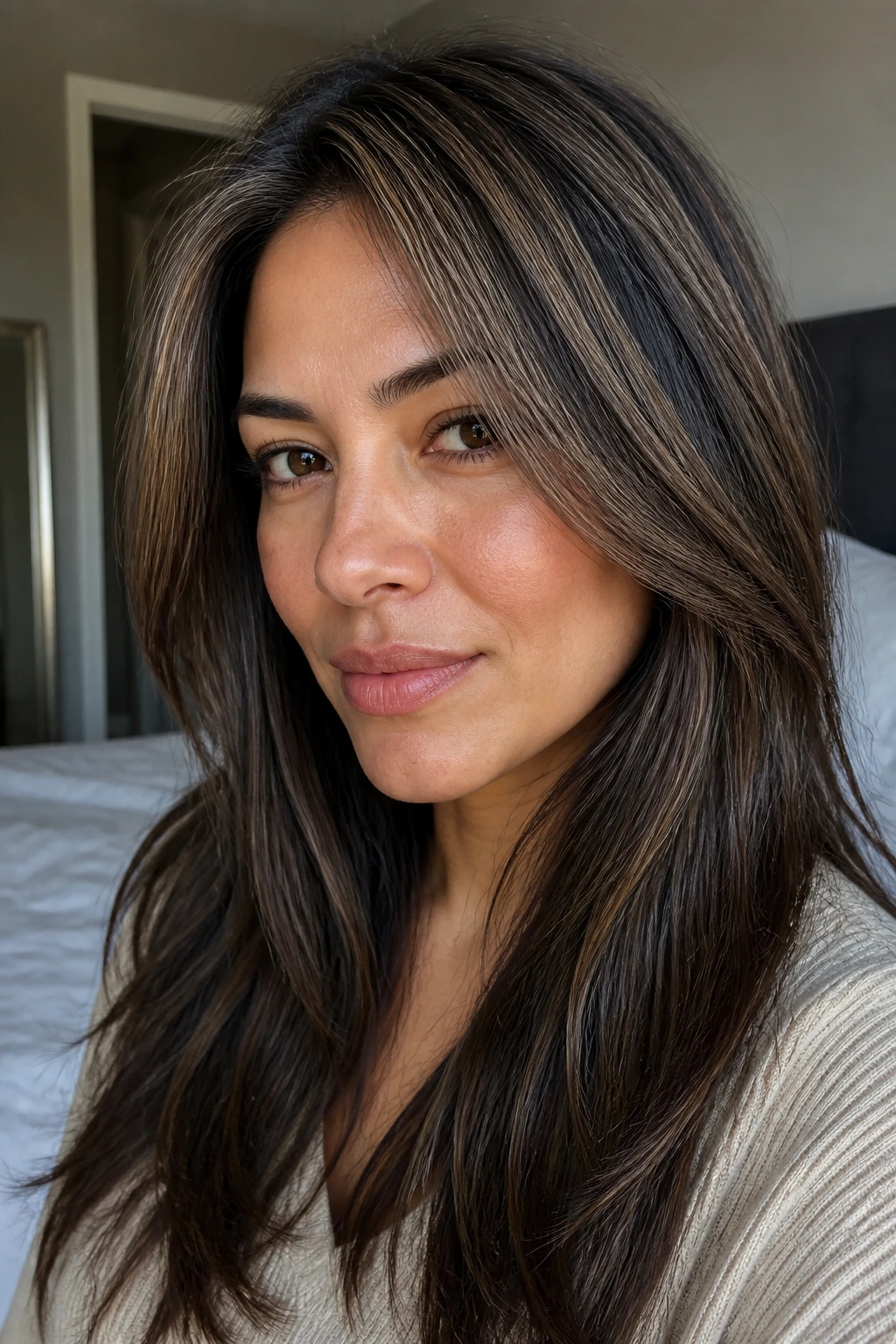
Truffle brown is a cool, soft brown that keeps the look grounded. It’s one of those shades that doesn’t shout, but it changes the way the haircut sits. On fine hair, truffle ribbons create shadow between the strands, which is exactly what creates the illusion of density.
I like truffle when someone wants brunette dimension that reads polished, not warm. It’s especially flattering if your medium skin has neutral or rosy undertones and you wear more cool-toned makeup. The hair and face stop fighting each other.
14. Brunette Contour Layers
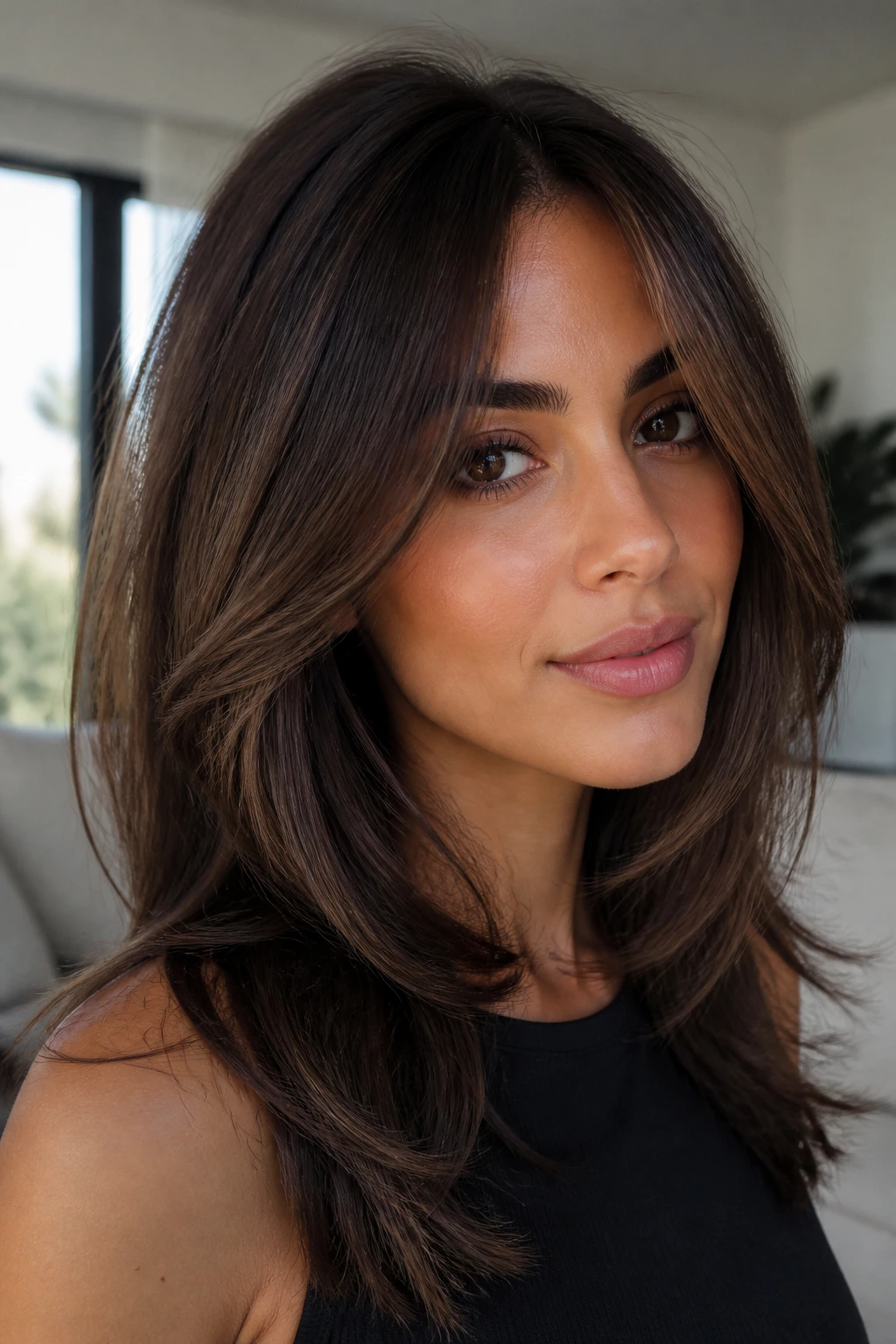
This is less about one shade and more about where the color sits in a layered cut. Brunette contouring uses darker pieces around the cheekbones, jawline, and lower crown so the cut looks sculpted instead of washed out. Thin hair needs that structure.
A layered cut can go airy fast if the color is too light everywhere. Dark contour layers bring the shape back. You can still keep the ends soft, but the hair holds a stronger outline when you turn your head.
15. Smoky Beige Balayage
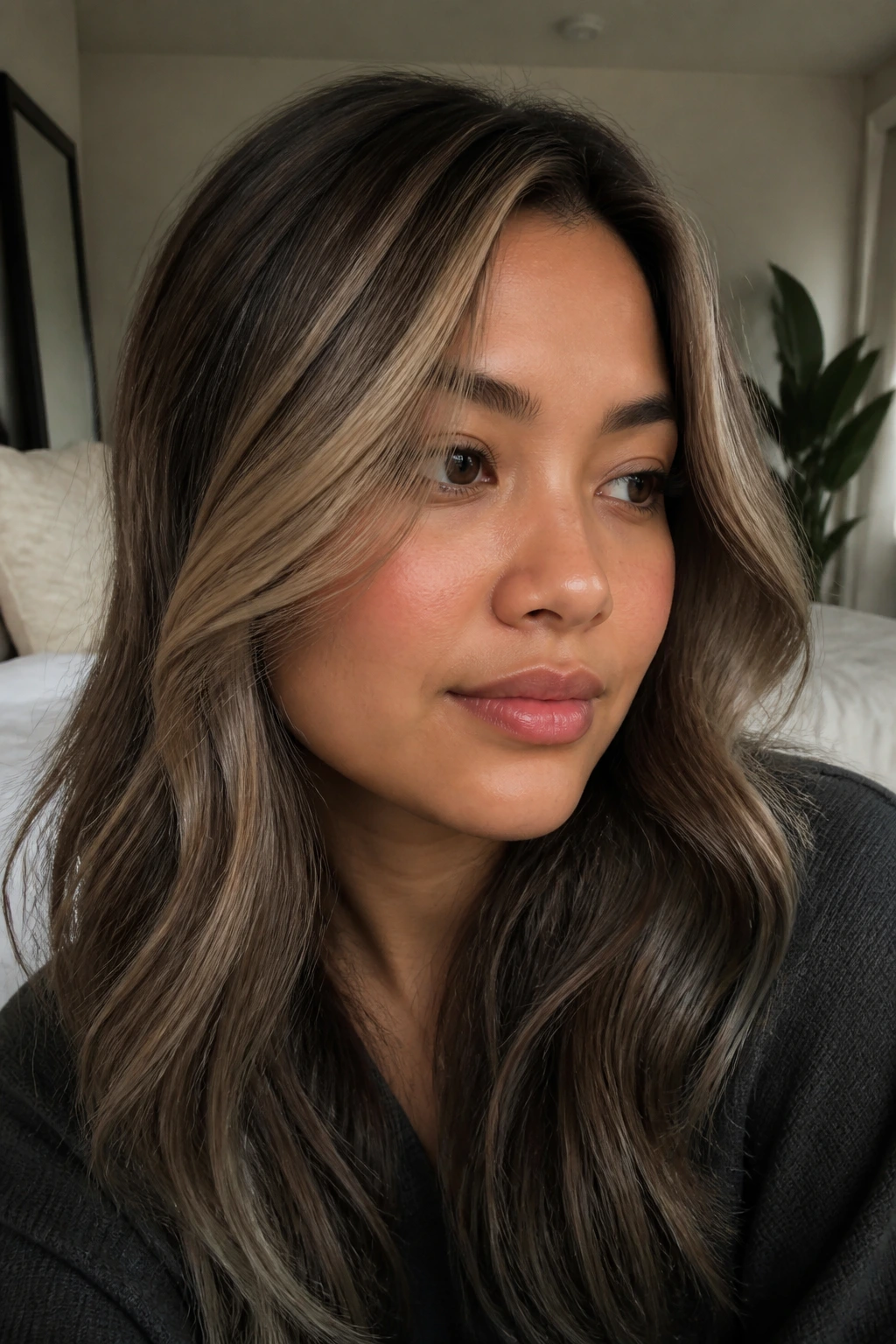
Smoky beige is the bridge between warm and cool, which makes it a safe bet for medium skin that shifts undertones depending on the light. The darker beige-brown pieces keep the hair from going flat, while the balayage hand-painting keeps the finish soft.
This is a good match if you wear loose waves and hate obvious roots. The grow-out stays gentle, and thin hair gets enough shadow to feel thicker without losing that airy movement around the face. It’s one of the least fussy options on the list.
16. Dark Chocolate Slice Lights
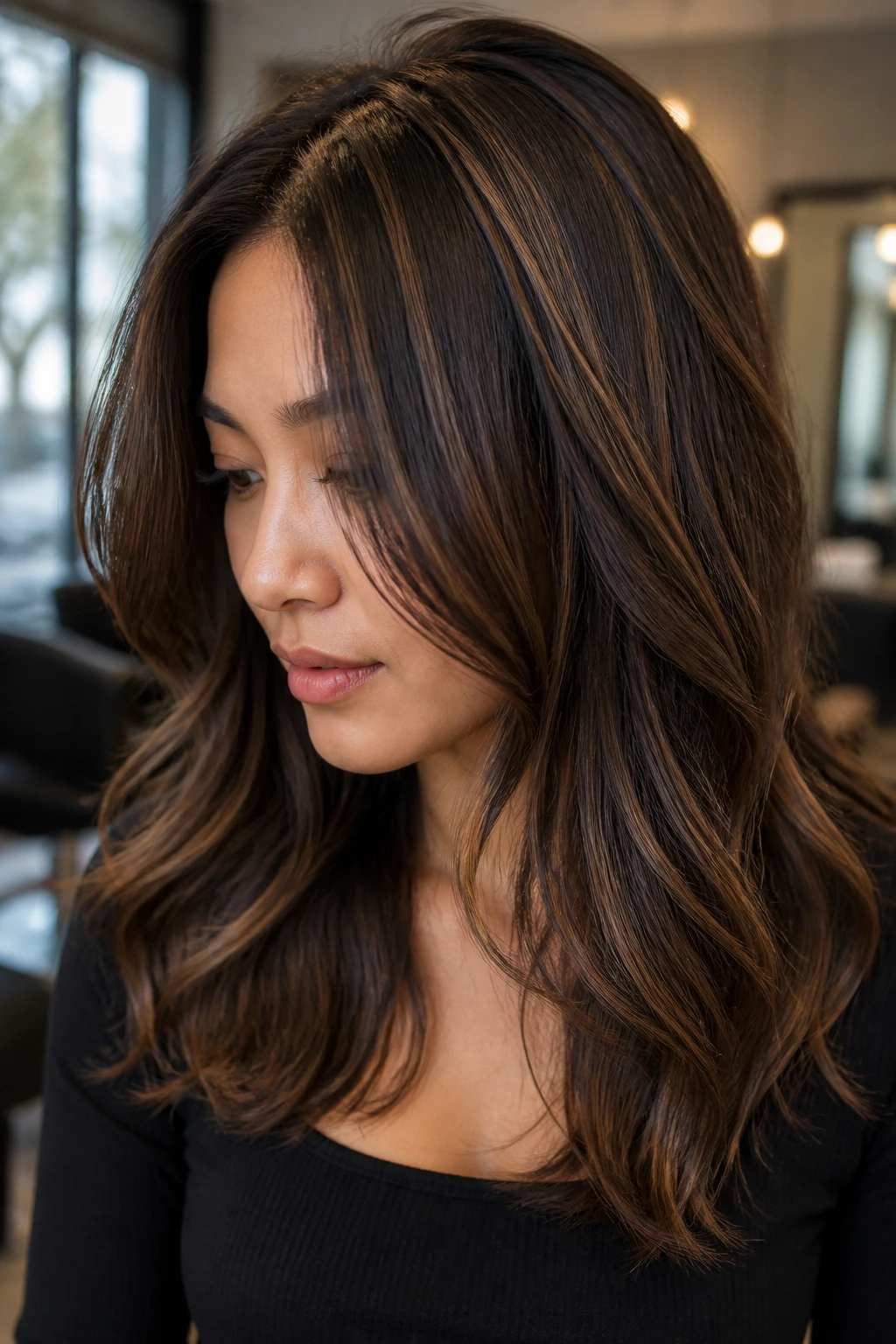
Slice lights are a bolder choice, and thin hair can handle them if the sections stay narrow and the colorist uses them sparingly. Dark chocolate slices create visible panels, which can be a smart move if your hair has enough density to support a bit more contrast.
The key is restraint. A few slices near the crown and through the mid-lengths can give a bob or long lob a sharp, tailored shape. Too many, and the hair starts to look sketched instead of full. Keep the slice pattern irregular. That’s what keeps it from going stiff.
17. Hazelnut Veil
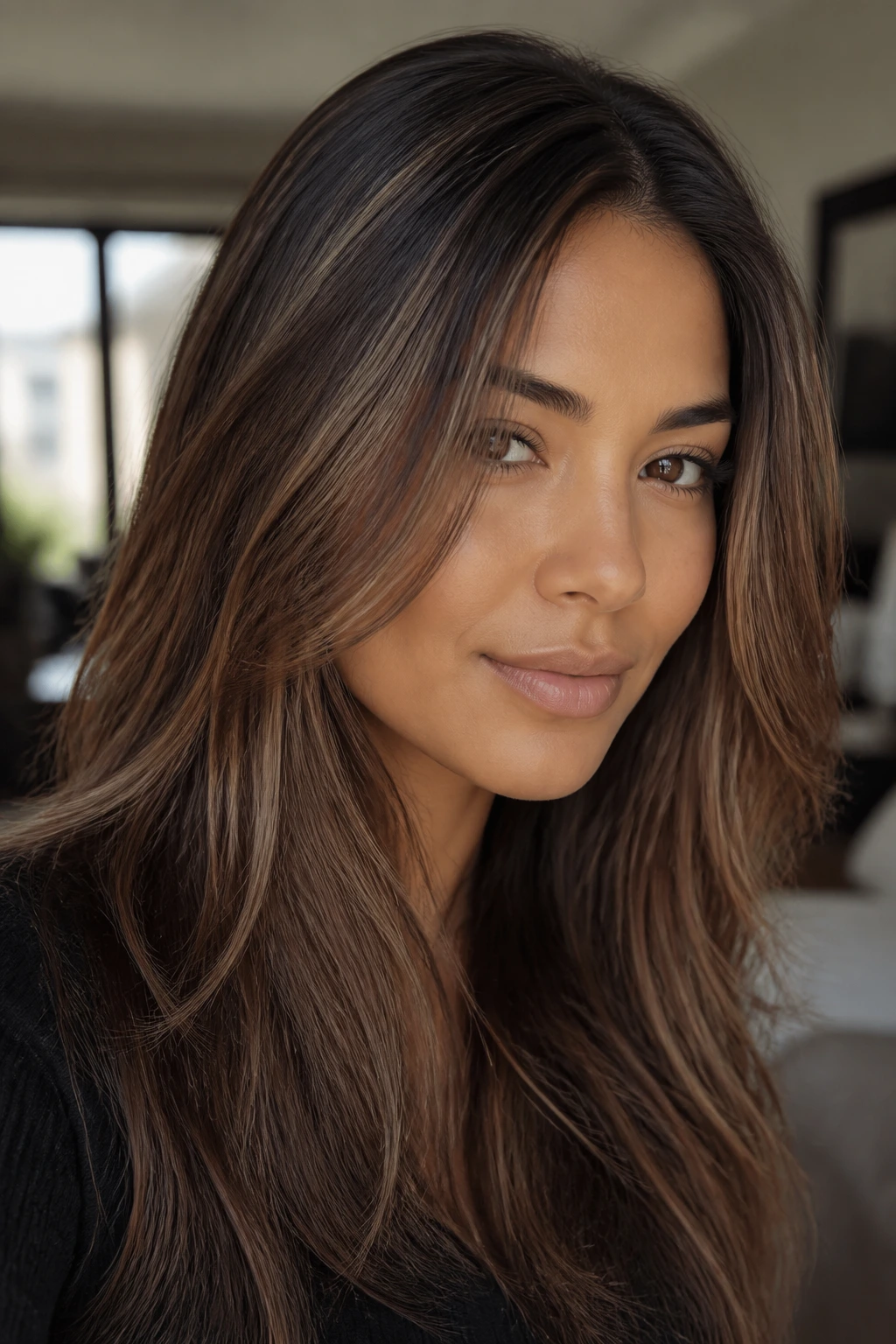
Hazelnut veil is the softest kind of darkening. It sits over the hair like a translucent brown filter, adding depth without turning the whole head noticeably darker. On medium skin, hazelnut can warm the complexion in a subtle, face-friendly way.
This works well if your hair is already fine and you’re nervous about visible contrast. You still get texture at the part and through the ends, but the color never feels loud. It’s the sort of brunette change that only becomes obvious when you compare photos side by side.
18. Black Tea Gloss Lights
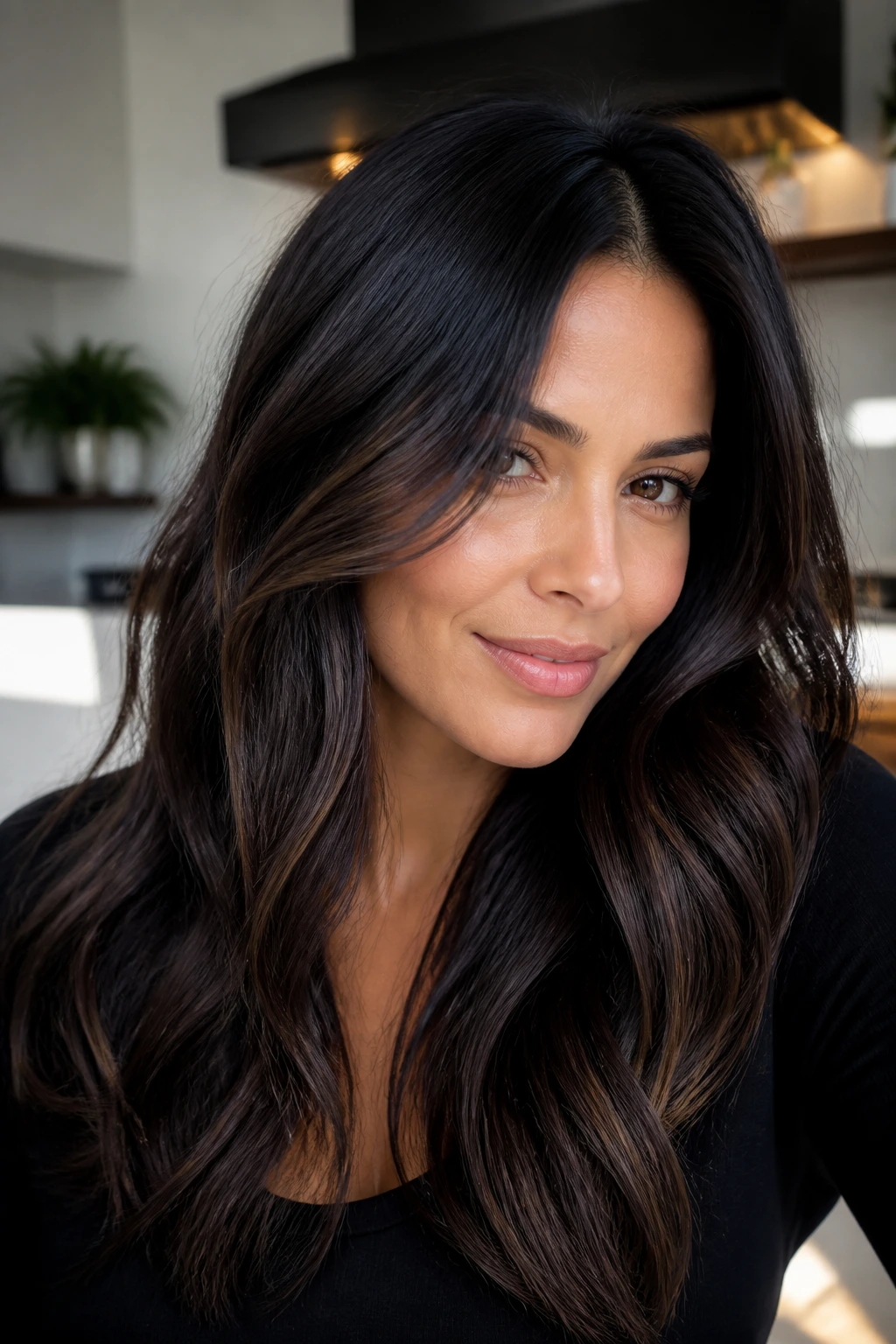
Black tea gloss is for the person who wants sheen and depth more than obvious streaks. The shade reads almost-black brown, not harsh black, and a gloss treatment can make medium skin glow a little warmer by contrast.
This is a smart option for porous or pre-lightened hair that has gone too hollow-looking. A demi-permanent gloss smooths the cuticle and lays the darker tone over the top. It’s not about covering everything. It’s about giving the hair a darker surface so the strands look less sparse.
19. Chestnut-Cocoa Blend
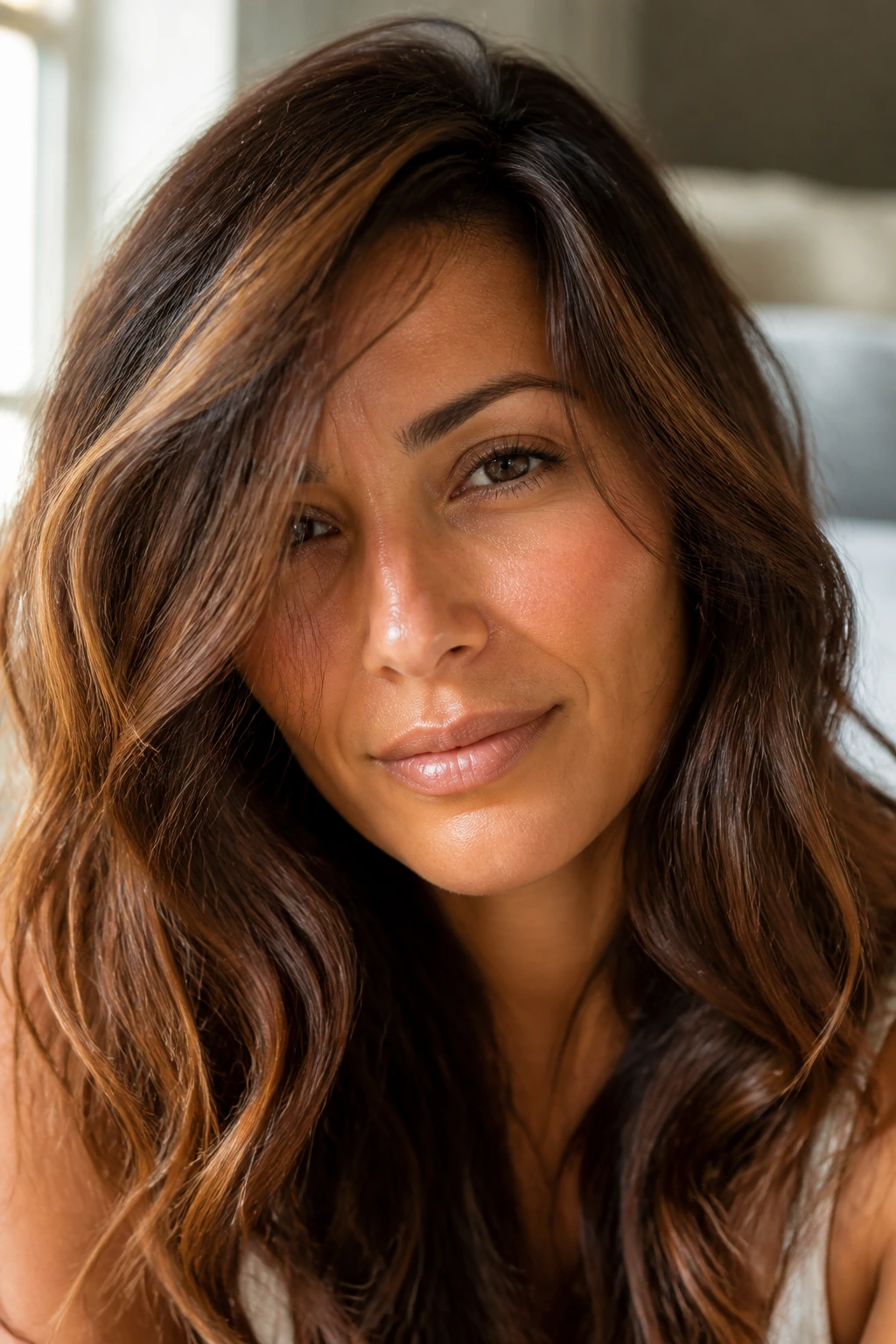
Chestnut-cocoa is the classic middle path. Chestnut gives warmth, cocoa gives depth, and together they keep medium skin from looking dull. On thin hair, the blend creates more visual texture than a single flat brunette shade ever could.
I’d choose this if you want dark highlights that still feel friendly in daylight. It’s rich, but not severe. If you wear soft curls or blowouts with volume at the crown, this color family shows off every bend without looking staged.
20. Plum-Brown Veil
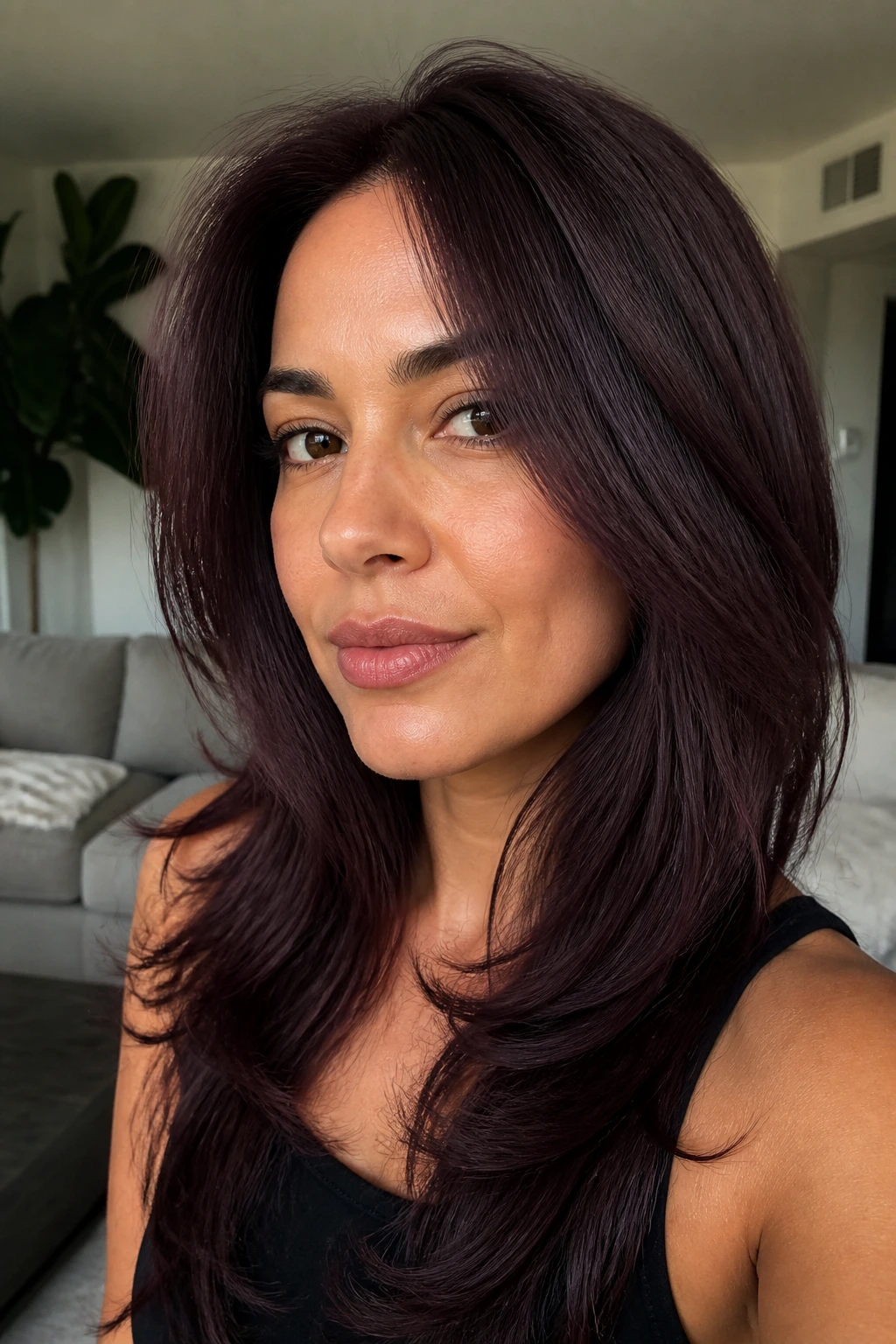
Plum-brown is not for everyone, and that’s part of why I like it. The tiny wine note gives dark brunette dimension a cooler edge, which can be stunning on medium skin with neutral undertones and a little natural redness in the cheeks.
Keep the plum muted. This is not purple hair. It’s a brown that feels deeper when the light hits it. On fine hair, the subtle wine cast can make the surface look more reflective, especially if you style with a clean center part and a smooth blowout.
21. Iced Mocha Balayage
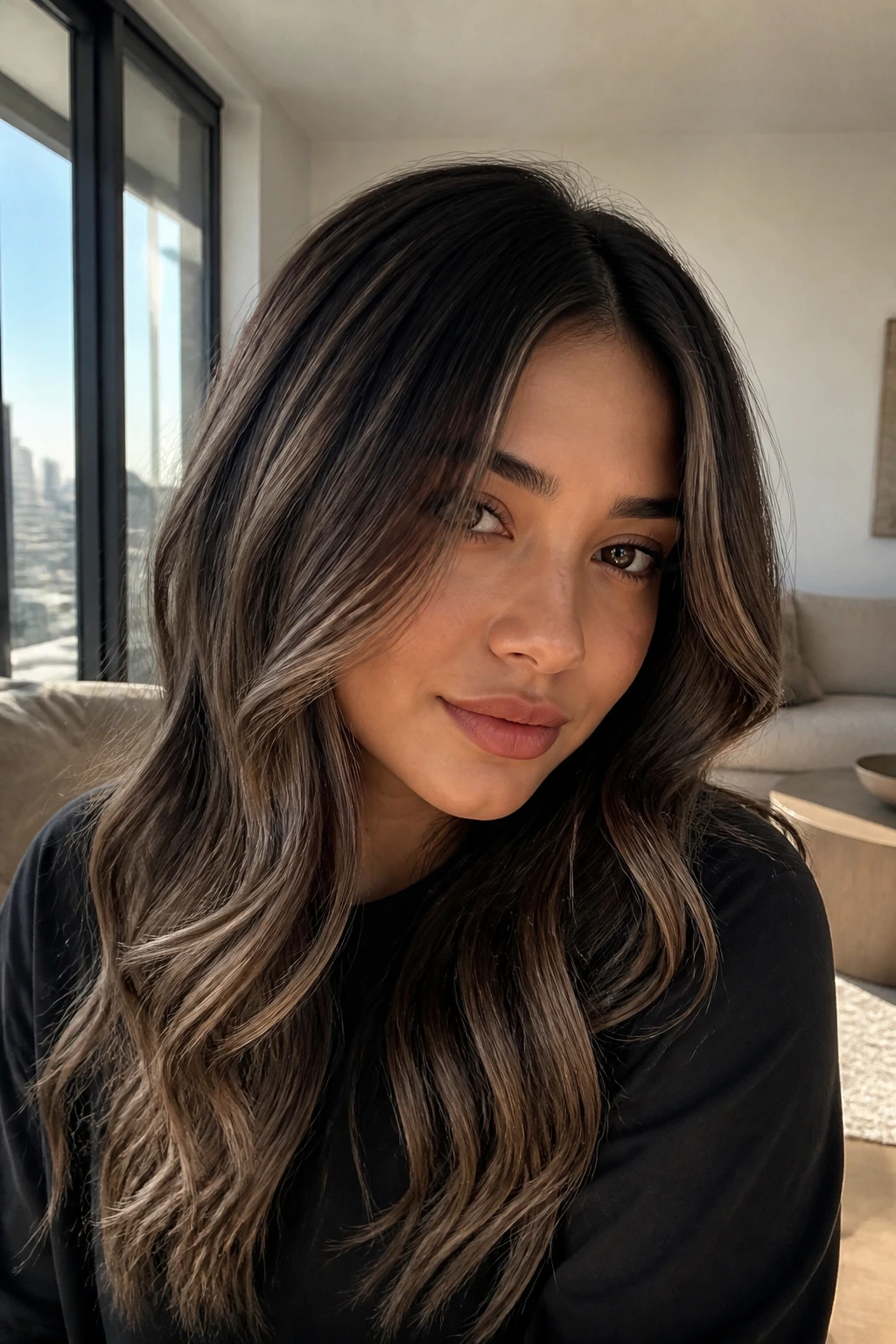
Iced mocha stays on the cool side of brunette, which is ideal when medium skin has olive undertones and lighter browns keep turning orange. The balayage placement keeps it soft, and the cooler tone makes the strands look more separated in a good way.
This one is especially nice if you like a lived-in look but hate obvious grow-out lines. Because the mocha sits close to the base, it doesn’t scream for touchups. Thin hair gets the shadow it needs, and the finish still feels light around the edges.
22. Toasted Walnut Frame
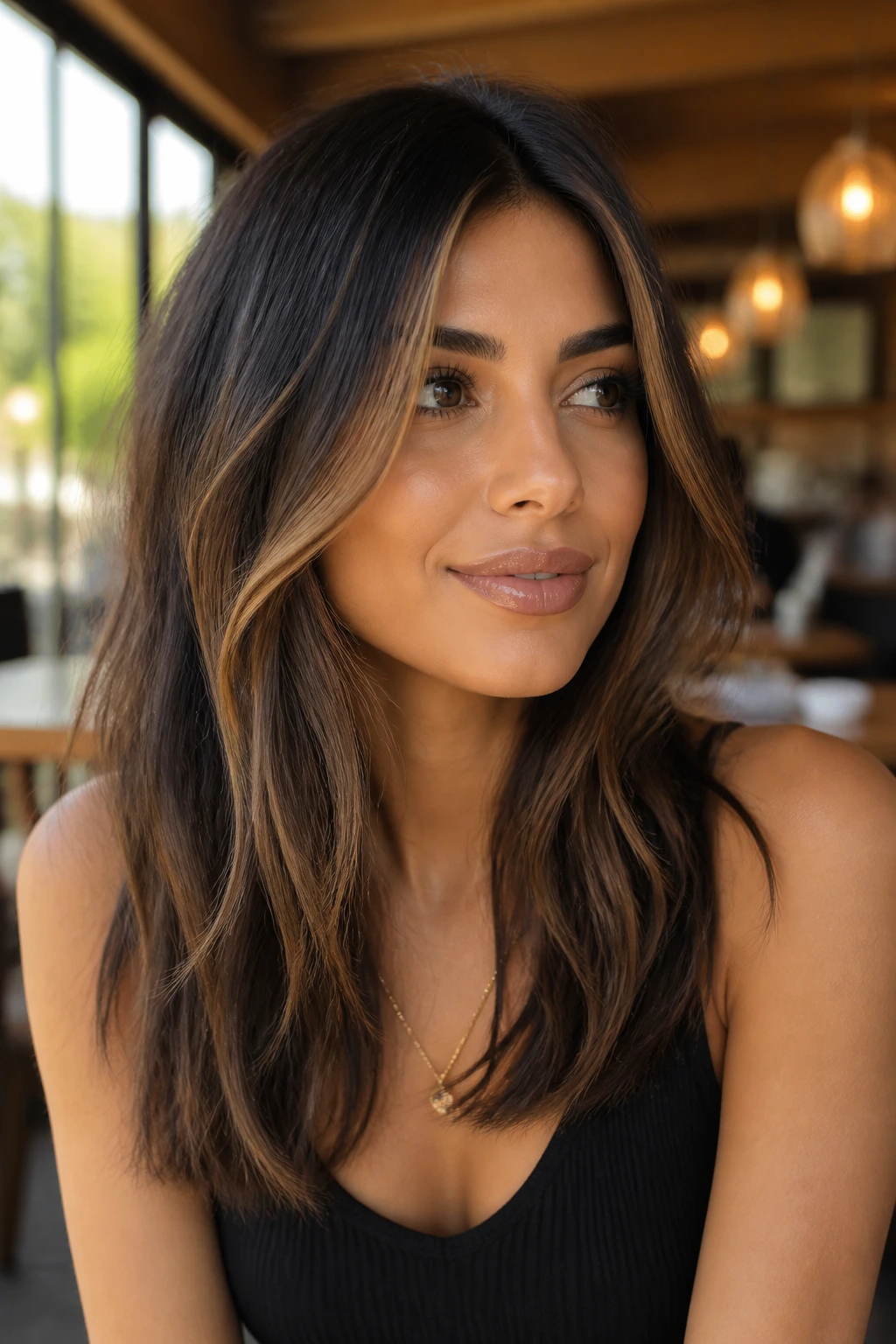
Toasted walnut is warmer than truffle and a touch richer than plain brown. Around the face, it can bring life back into medium skin that needs a little gold without tipping into copper. The frame should stay narrow and broken up, not a solid front band.
I’d pair this with curtain bangs or longer face layers. Those pieces catch the color best and keep the front from looking boxy. On thin hair, a soft bend through the bang area keeps the whole shape from falling flat by noon.
23. Maple-Cocoa Dimension
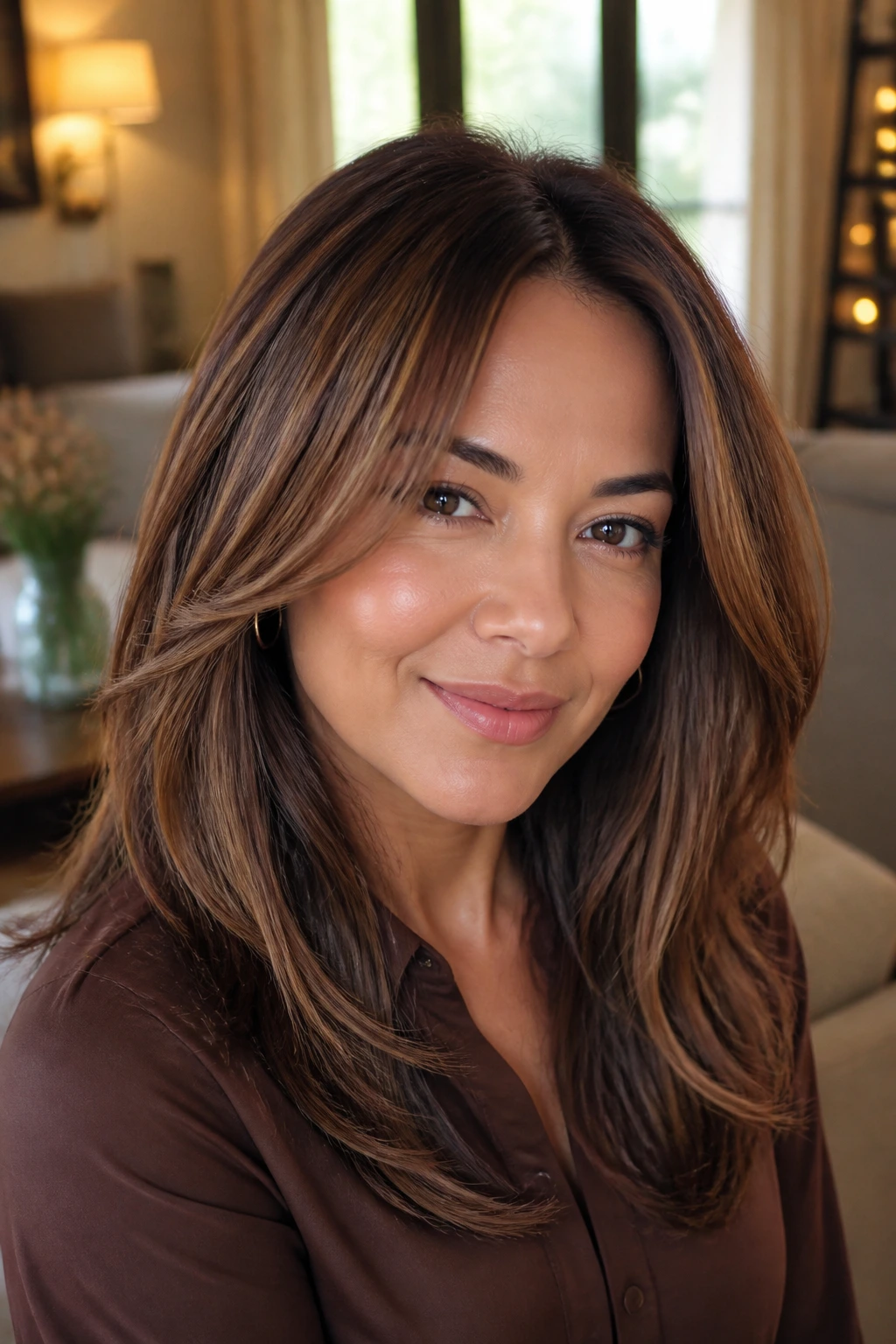
Maple-cocoa is what you ask for when you want warmth but not orange. The maple note brings a soft amber glow, while the cocoa keeps everything rooted in brunette territory. On medium skin, that balance can be better than either tone alone.
This works well on hair that’s a little dry at the ends because the shade family feels plush. It also looks good on layered cuts with some movement. If the hair is very fine, keep the brightest warmth away from the very ends so they don’t look wispy.
24. Deep Brunette Underlights
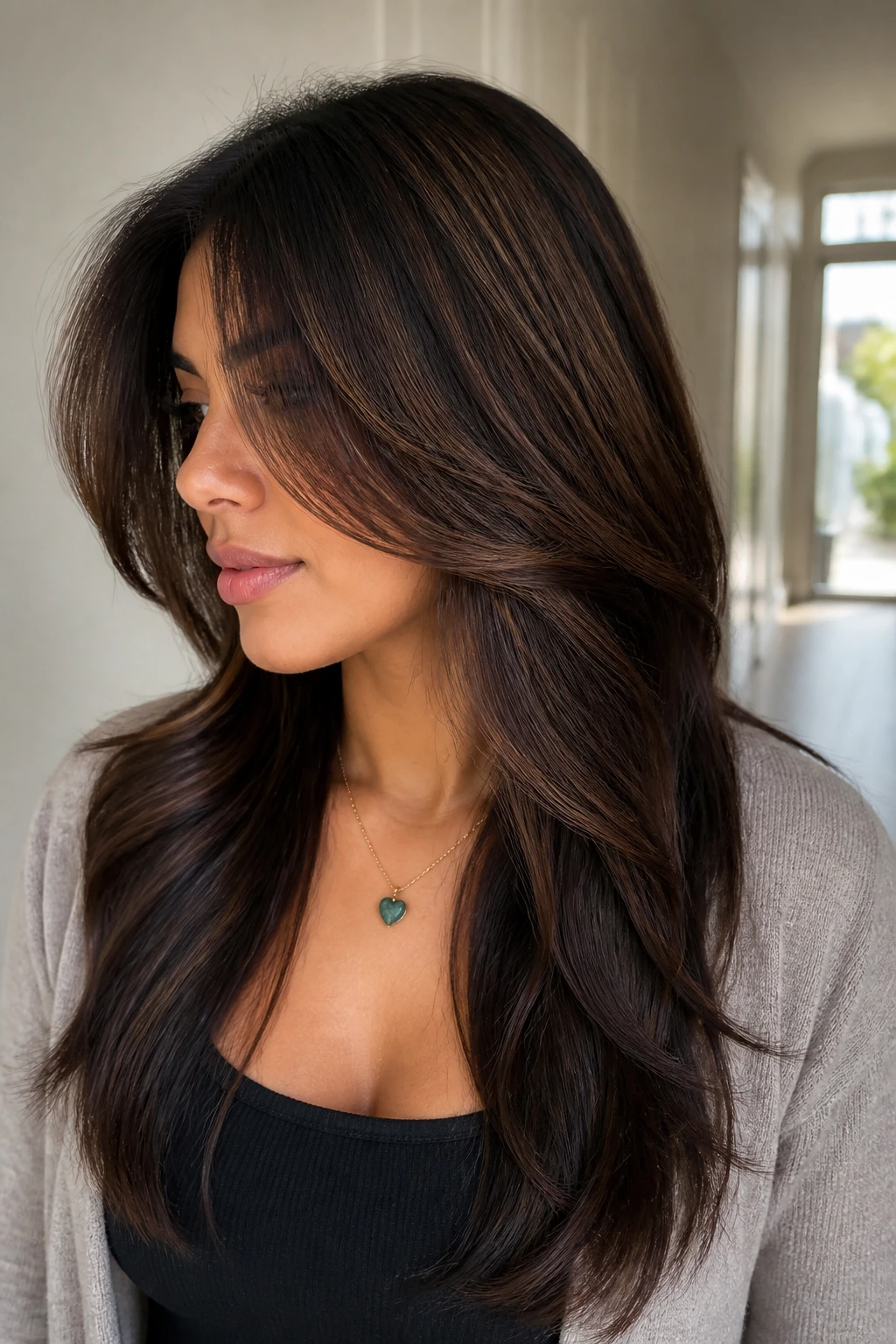
Underlights are sneaky, and I mean that in the best possible way. The darkest pieces sit beneath the top layer, so the color shows when you move, tuck, or curl the hair. Thin hair often benefits from that hidden depth because the top stays airy while the underneath does the heavy lifting.
Medium skin can carry this look easily if the brown is one to two levels deeper than the base. It’s a low-commitment way to go darker, and it grows out without much drama. If you wear your hair in low buns or half-up styles, the dimension still shows up.
25. Soft Espresso Framing
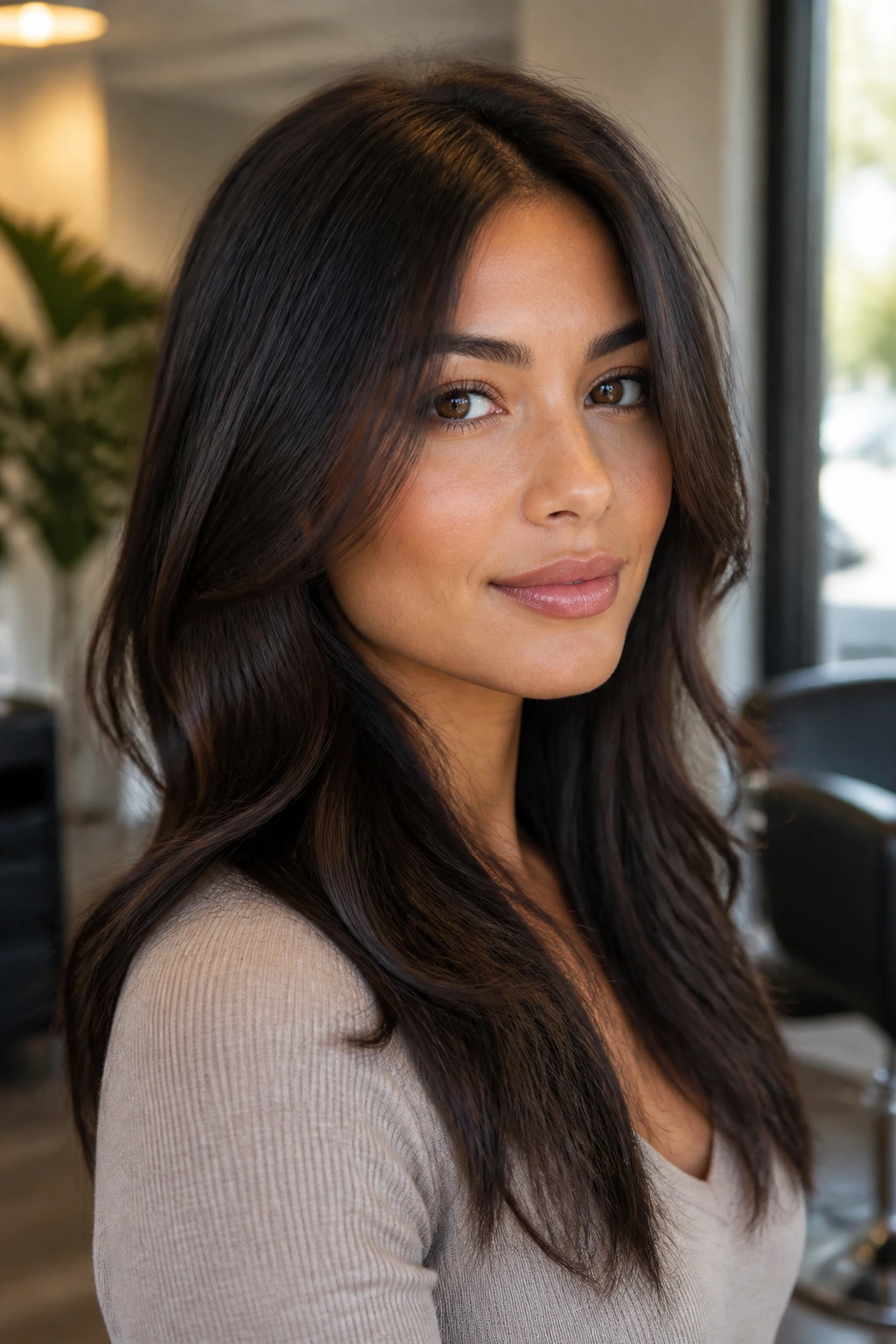
Soft espresso framing is the polished end of the spectrum. The front stays deep and rich, the rest of the hair can stay lighter or softer, and the whole cut gains shape without looking overcolored. That balance matters on thin hair, because too much dark around the face can feel heavy fast.
Keep the espresso close to the roots and cheekbone line, then fade it gently into the lengths. The result is clean. Medium skin gets definition, the hair gets depth, and the style still looks like hair, not a dye job.
Why Darker Dimension Makes Fine Hair Look Denser
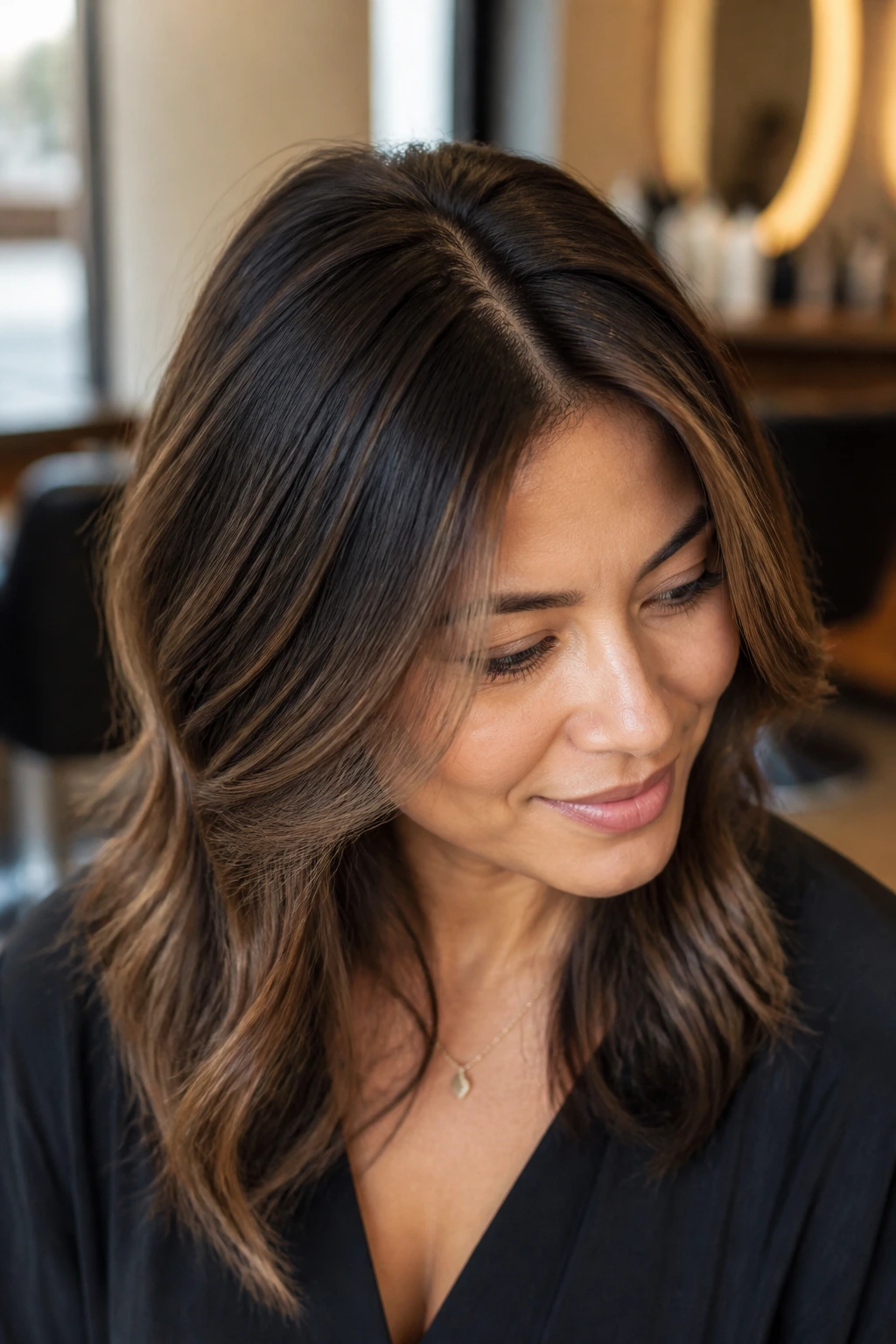
Thin hair tends to show every gap. That’s not a flaw in the hair; it’s just physics. Light bounces through the spaces between finer strands, so the scalp and part line can stand out even when the hair is healthy.
Dark highlights — or, more accurately, darker lowlights and shadow pieces — change that sightline. They reduce the amount of light slipping through the hair, which makes the surface appear fuller. A few well-placed brown ribbons around the crown do more than a whole head of chunky foils ever will.
Medium skin tones give you a wider runway here. The face can carry depth, so you’re not forced into super-light pieces just to keep the complexion from looking washed out. That means the colorist can stay in the brunette family and focus on shape: crown, temples, cheekbones, underlayers. Those are the places that matter.
The best part is how the color behaves in motion. A blunt cut with a soft espresso root and walnut ribbons through the ends looks thicker when you turn your head than it does sitting still. That’s the trick. You are not painting every strand. You are building an optical pattern that says “more hair” without making the style loud.
Choosing the Right Brown at the Salon
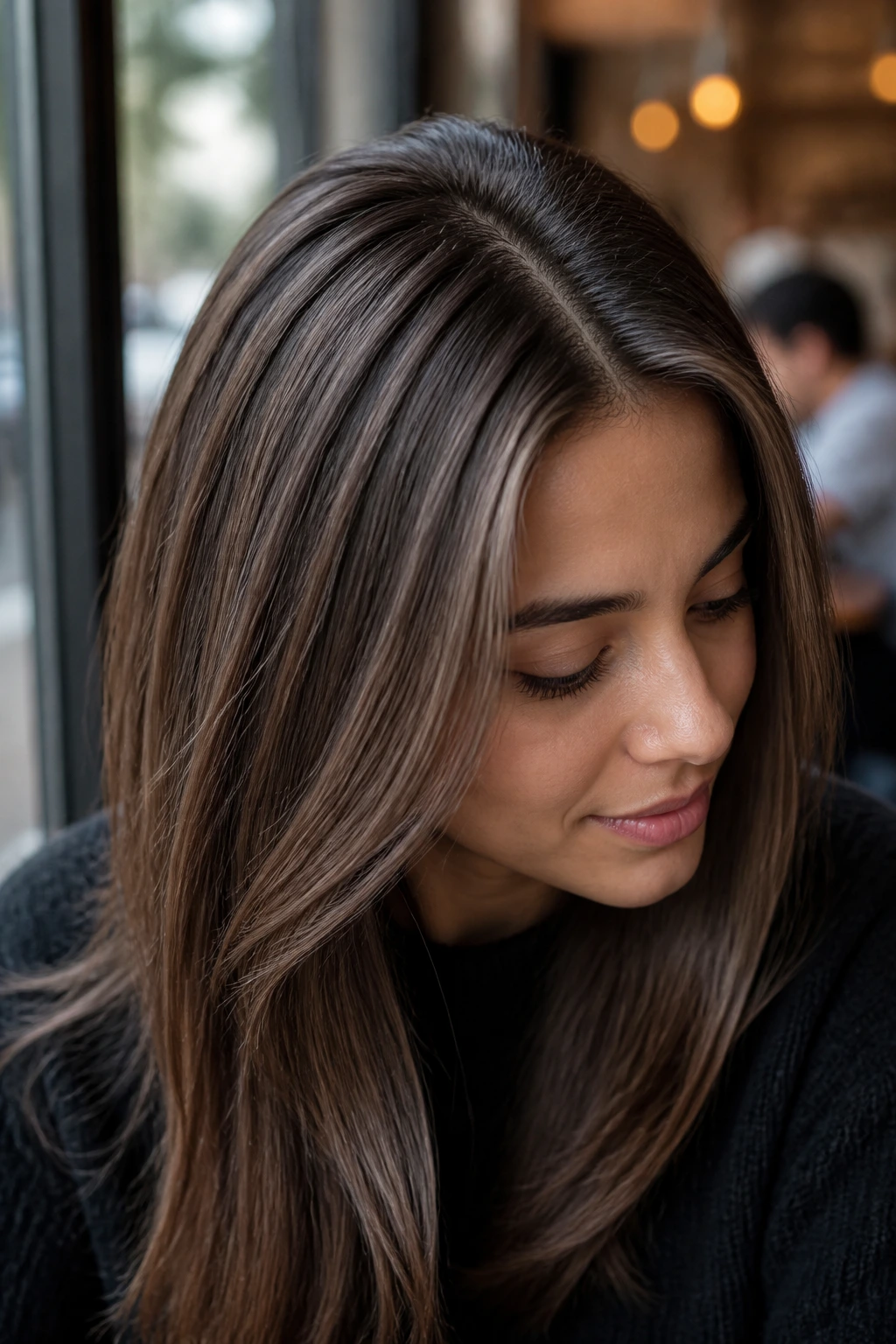
Shade choice matters more than most people think. On medium skin, the fastest way to miss the mark is to choose a brown that fights the undertone instead of echoing it. Warm medium skin usually likes chestnut, mocha, cocoa, toasted walnut, and maple-brown. Neutral or olive medium skin tends to take better to mushroom, truffle, ash-brown, and iced mocha.
Ask the colorist where your base sits on the level chart before they mix anything. A level 4 to 6 brunette is usually the sweet spot for these looks. Go one or two levels deeper for lowlights if you want thickness; go much darker and the hair can start to look like a solid cap, especially if your strands are fine.
Placement matters just as much as shade. Fine hair does better with micro-sections, babylights, or soft hand-painted ribbons than with broad foils. If you can see the line from six feet away, it’s probably too strong. I’d keep the widest pieces near the face and the smallest ones through the crown, where thinness tends to show first.
If you have a very light base, you may need a gloss or demi-permanent color between appointments to keep the brunette pieces from fading muddy. That’s not a problem. It’s just part of the game with lighter hair and softer dimension. The color should look blended, not painted on with a marker.
How to Style the Color So the Dimension Shows
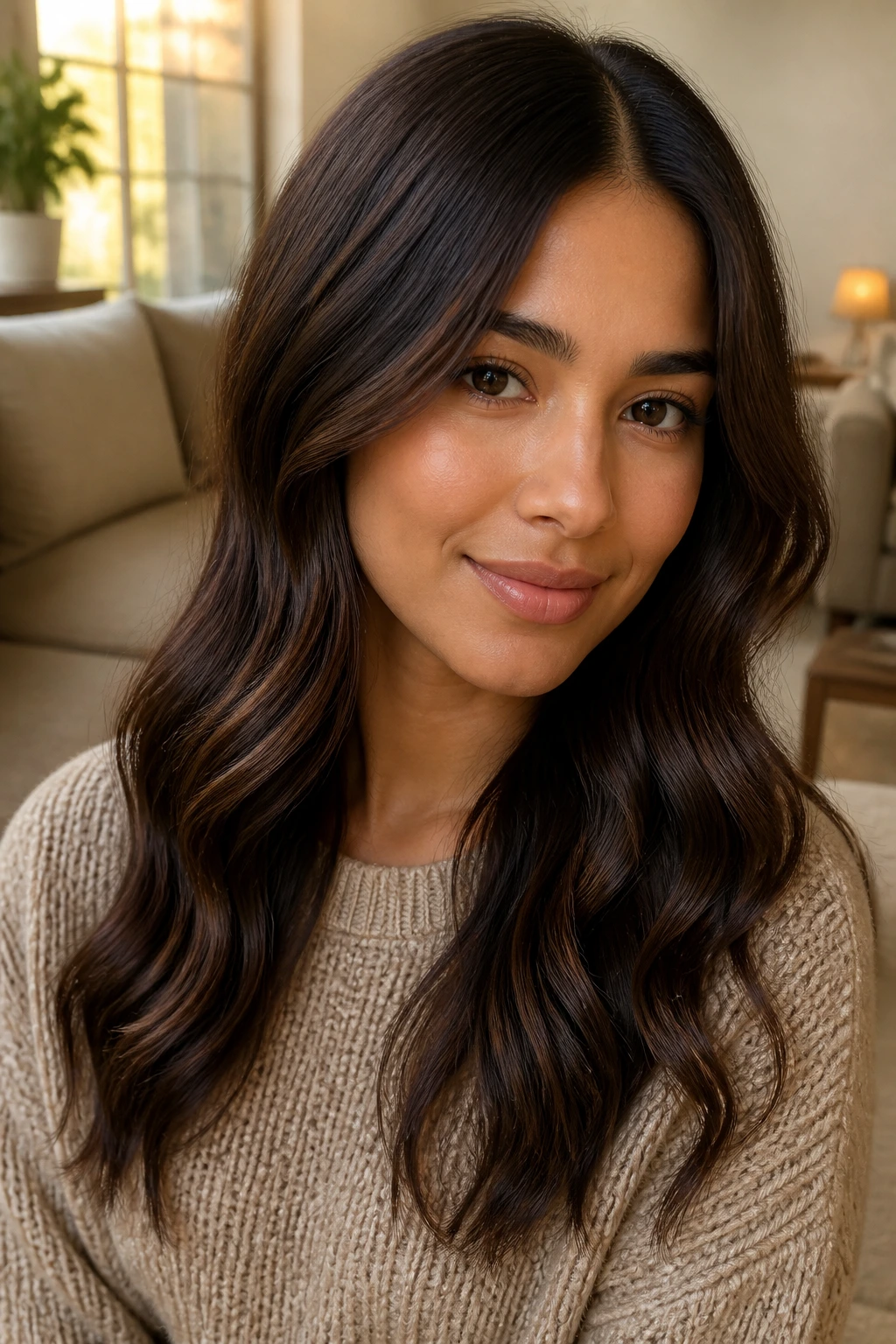
Straight hair can wear this look, but a little bend helps. A 1-inch curling iron or a wide flat iron wave creates enough curve for the darker ribbons to show up without turning the style into a full curl set. Leave the ends out for a softer finish. Hard curl ends make thin hair look shorter and skimpier.
A center part gives you symmetry, which is nice if the color is balanced on both sides. A deep side part gives you lift, which is helpful if the crown is sparse and you want the color to disguise it. I’d switch the part now and then, because dark pieces reveal different things depending on where the hair falls.
The cut matters, too. A blunt lob, long layers, and curtain bangs are all strong partners for brunette dimension on fine hair. Heavy, choppy layers can look airy in the wrong way. Soft bevels at the ends are better. They hold the shape while the color does its work.
Product choice should stay light. Root-lift spray, volumizing mousse, and a heat protectant are enough for most of these looks. Skip the heavy oils near the scalp. They collapse the body and make the dark pieces look shinier than the rest of the hair in a way that reads greasy, not glossy.
How to Keep the Color Rich Between Appointments
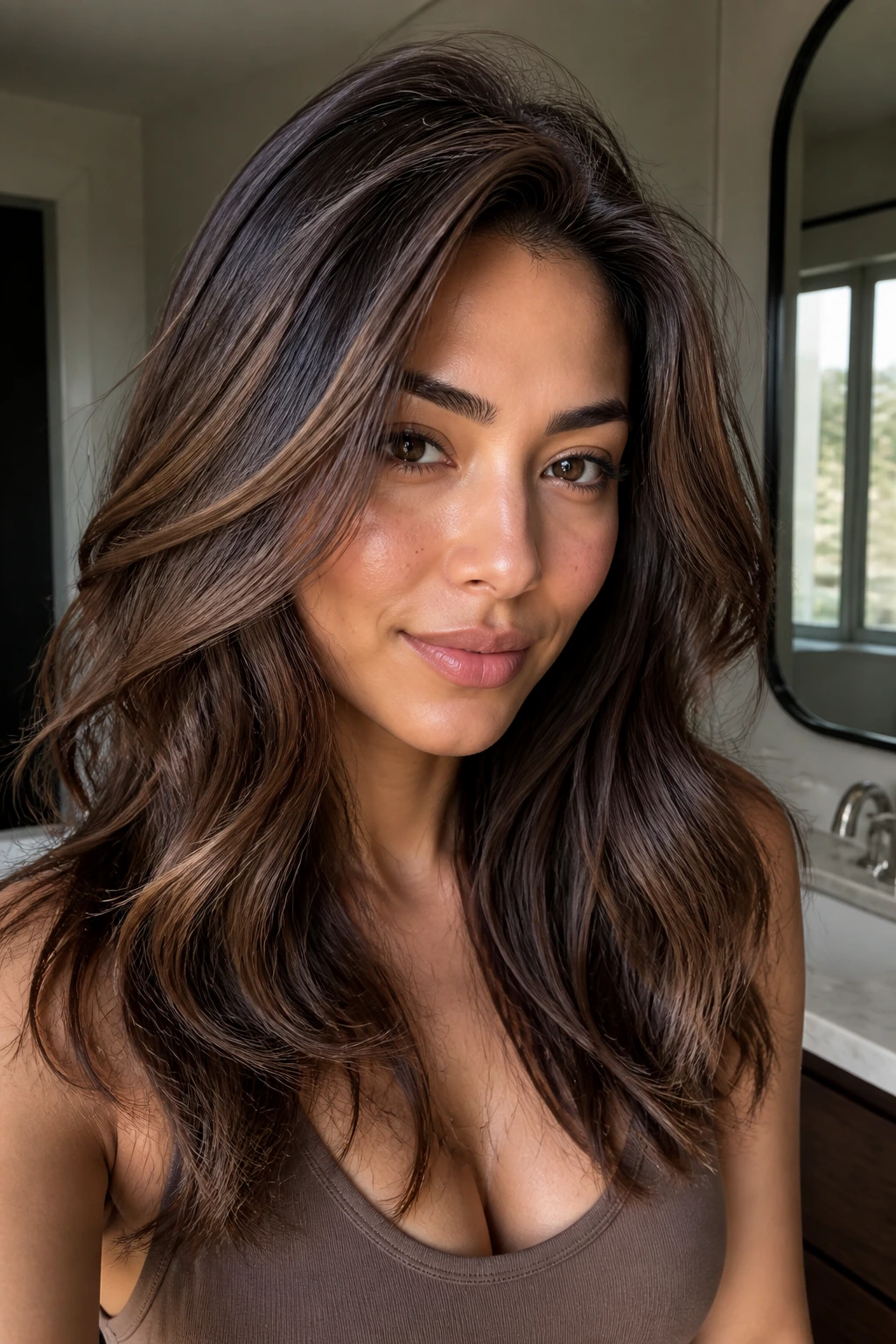
Dark brunette dimension fades differently than bright blonde highlights. The lighter pieces around the face can lose their edge first, while the deeper lowlights stay in place longer. That means the look can drift flat if you wash too often or use a harsh shampoo.
Try to wash fine hair two to three times a week, not daily, unless your scalp is very oily. A sulfate-free shampoo helps the brunette tones stay steadier, and cool or lukewarm water keeps the cuticle from opening too much. Finish with a light conditioner from mid-length to ends. Not at the root. Never at the root unless you enjoy limp hair by lunchtime.
A gloss every four to six weeks keeps the brown from going dull. If the shade is warm and picks up orange, use a blue-toned shampoo once every one to two weeks. If it’s cooler and starts to look muddy, stop using the toning shampoo and switch back to a hydrating formula. People over-tone brunette hair all the time and then wonder why it looks dusty.
Heat styling needs a little restraint. Fine hair usually behaves better below 350°F, even if the tool can go higher. Use a heat protectant every time, and trim the ends every eight to twelve weeks so the dark ribbons don’t sit on brittle, see-through tips. The color can stay gorgeous, but if the ends are frayed, the whole illusion breaks.
Different Takes on the Same Brunette Idea
-
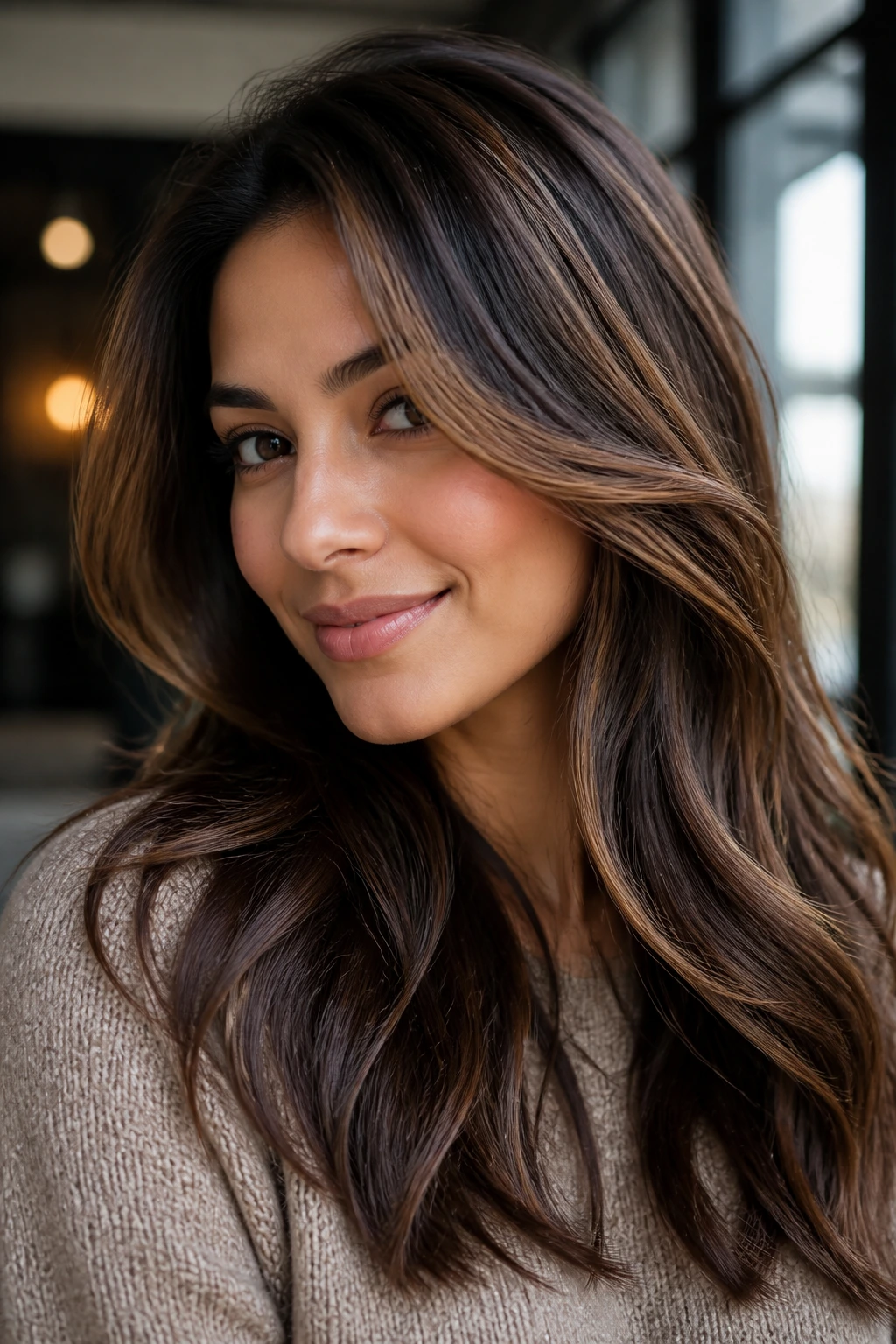
Warm Chestnut Edit: If your medium skin has gold or peach in it, chestnut with a hint of caramel-brown around the front keeps the face lively without tipping into copper. This is the easiest version to wear with soft waves and a round-brush blowout.
-
Cool Mushroom Edit: For olive or neutral skin, swap chestnut warmth for mushroom and truffle. The finish feels quieter, and that quietness can be a relief if your hair already pulls red under sunlight.
-
Ultra-Soft Office Version: Keep the contrast low and the placement hidden under the top layer. You get depth at the part and around the nape, but nothing that looks high-maintenance when the hair is pinned back.
-
Curly-Hair Ribbon Placement: Curly fine hair needs the darkest pieces where the curl bends, not in straight stripes. That means painting around the ringlets, not across them, so the color shows when the curl expands.
-
High-Contrast Editorial Version: If your hair has enough density to carry it, a few deeper espresso slices near the face can look sharp and modern. Keep the rest soft, or the whole thing turns heavy fast.
-
Gray-Blending Brunette: A soft walnut or cocoa lowlight can blur early gray without making the hair opaque. It’s a useful option if you want coverage around the temples but do not want a solid dye job.
Tools a Colorist Uses to Keep the Placement Soft
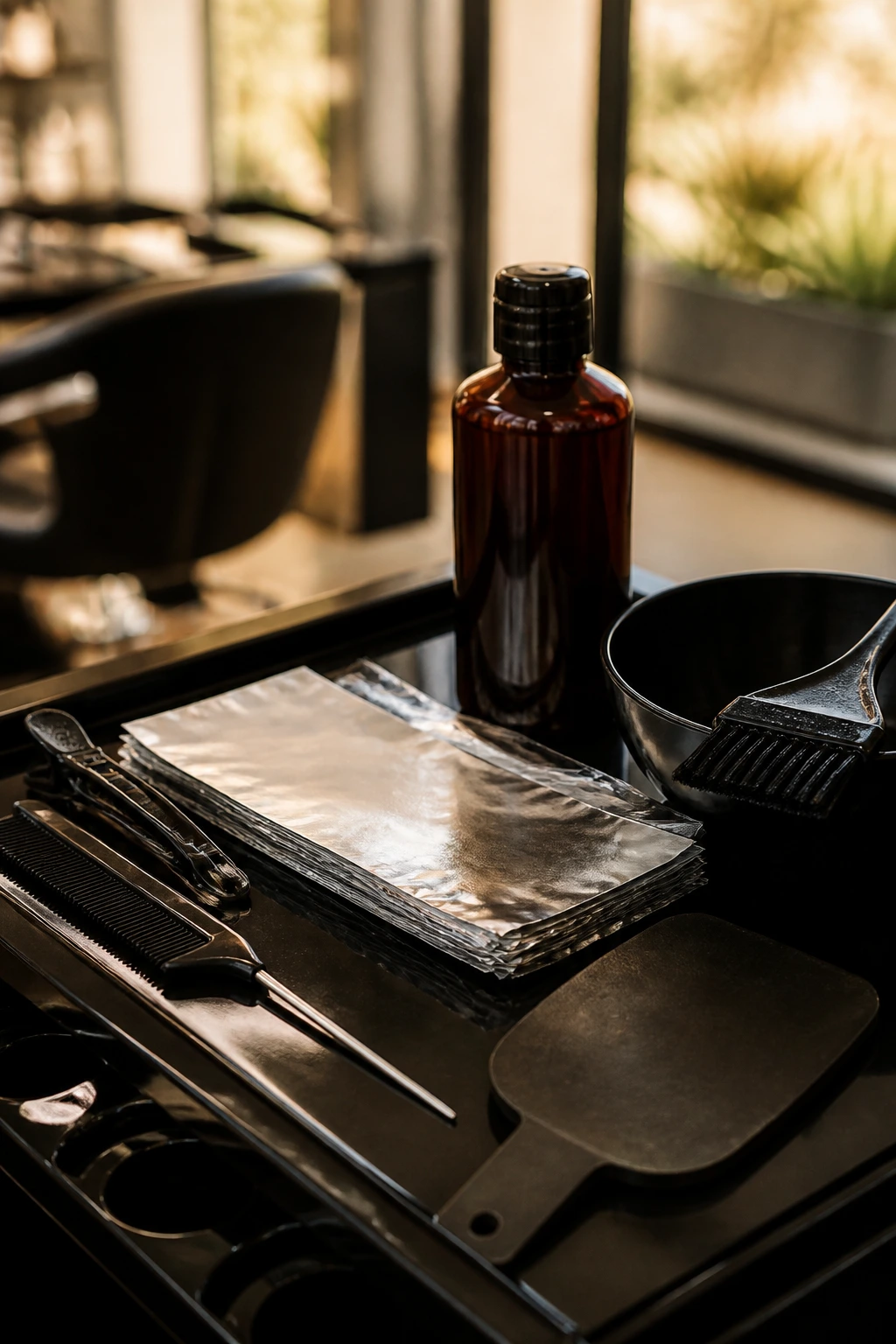
- Tail comb: Good for tiny sectioning around the part and hairline, where thin hair needs the most careful placement.
- Clips with a firm grip: They keep fine sections from slipping while the color processes.
- Fine foils or balayage board: Helpful for micro-lights and ribbon placement; broad foils tend to make thin hair look chunkier than it is.
- Color brush and bowl: Needed for controlled lowlight application, especially when the formula has to stay on the surface rather than saturate every strand.
- Demi-permanent brunette color: Useful when you want depth without permanent commitment or heavy damage.
- Sulfate-free shampoo: Keeps brunette tone from fading too fast.
- Lightweight volumizing mousse: Gives the cut some lift so the dark pieces don’t flatten the silhouette.
- Heat protectant spray: Keeps fine ends from looking fried after blow-drying or waving.
- Wide-tooth comb: Better than a brush when hair is damp and fragile.
What Usually Goes Wrong With Dark Dimension on Fine Hair
-
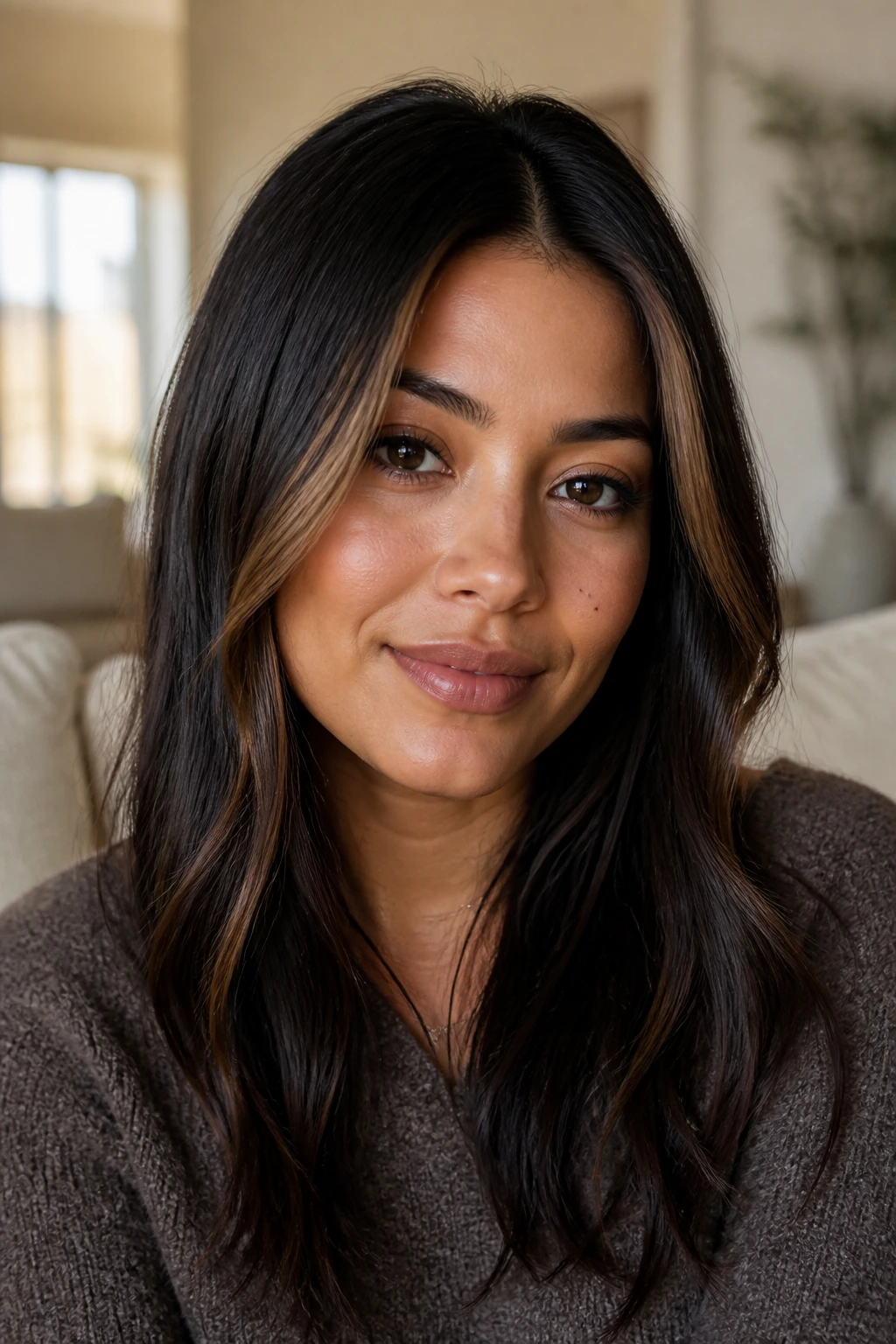
Going too dark, too fast: The hair can look like one flat sheet, especially under indoor light. Keep the deepest pieces within one to two levels of the base unless the haircut is dense enough to support more contrast.
-
Using chunky sections: Wide stripes make thin hair look thinner, not fuller. Ask for micro-foils, babylights, or painted ribbons so the color breaks up naturally.
-
Ignoring undertone: Ashy brown on warm medium skin can look gray-green. Warm chestnut on olive skin can turn orange. Match the brown to the face, not to the photo you saved.
-
Placing all the depth on the bottom: Hidden underlights are useful, but if the crown stays too light, the scalp can look wider than it is. Put some depth around the part and temples.
-
Weighting the hair down with product: Heavy serums and oils make the strands cling together, which kills the illusion of fullness. Use a pea-sized amount on the ends only, then stop.
-
Skipping maintenance because the color is “dark enough”: Even brunette dimension needs toning and glossing. If the brown fades dull, the whole style starts looking dusty instead of rich.
Dark Brunette Variations Worth Trying
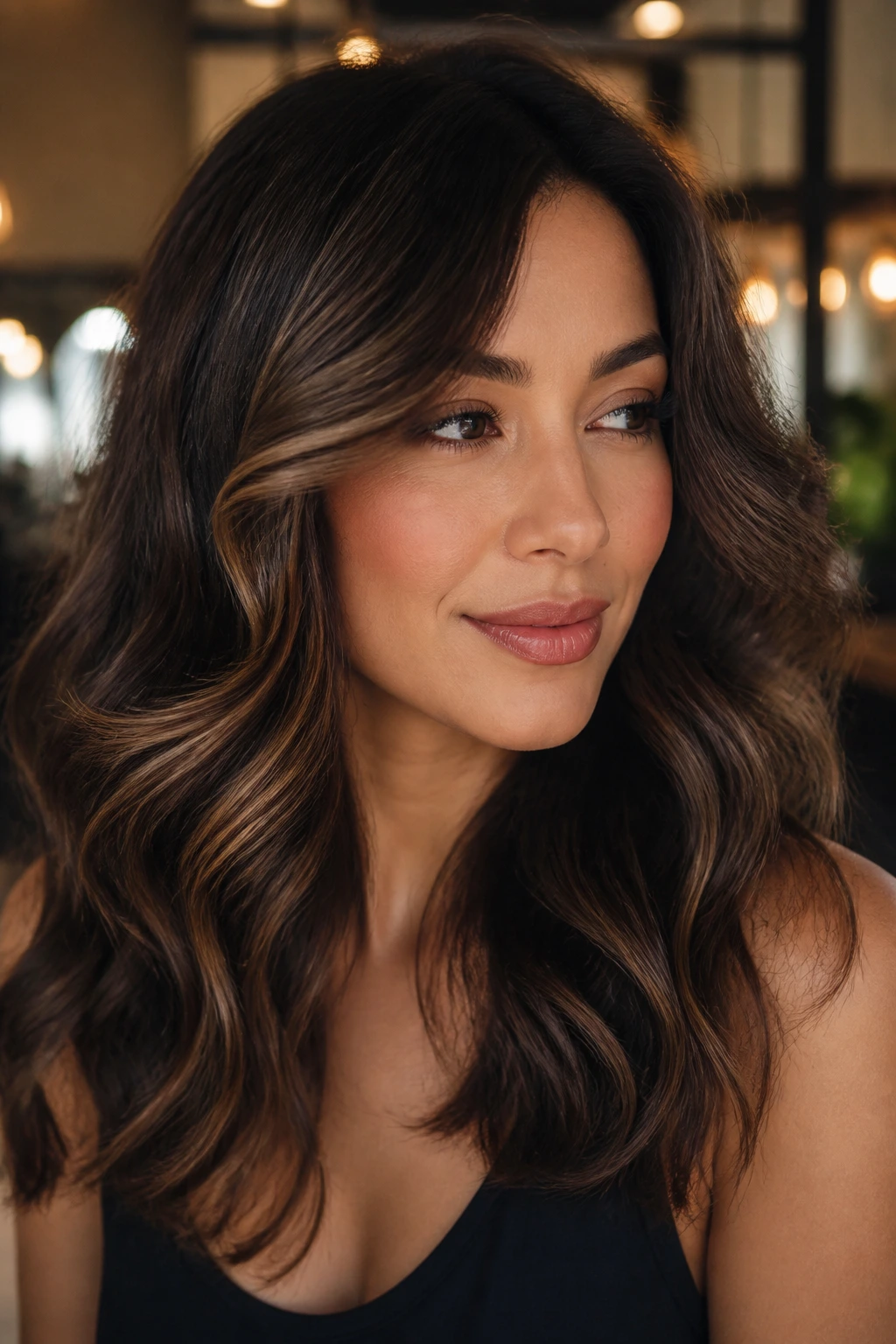
Warm Cocoa Swirl: This version leans chestnut and cocoa, with just enough warmth to make golden medium skin look alive. It’s a good pick if your makeup wardrobe already lives in bronze and terracotta.
Cool Ash Frame: Swap the warmth for mushroom and truffle, then keep the face frame narrow. The result is cleaner and a little sharper, which suits medium skin with olive undertones.
Low-Light Lob: If your hair is cut just above the shoulders, concentrate espresso and walnut pieces underneath and at the back. The top stays light enough to move, while the hidden depth makes the bob look thicker.
Curly Brunette Veil: For curls, keep the darker pieces soft and broken up around the bends. One heavy stripe can swallow the curl pattern; several fine ribbons will show more texture.
Soft Root Melt: Let the root stay one shade deeper and fade into chocolate mids. This is the easiest option to live with if you hate obvious touchups and wear your hair down most days.
How to Ask for the Look Without Getting a Harsh Result
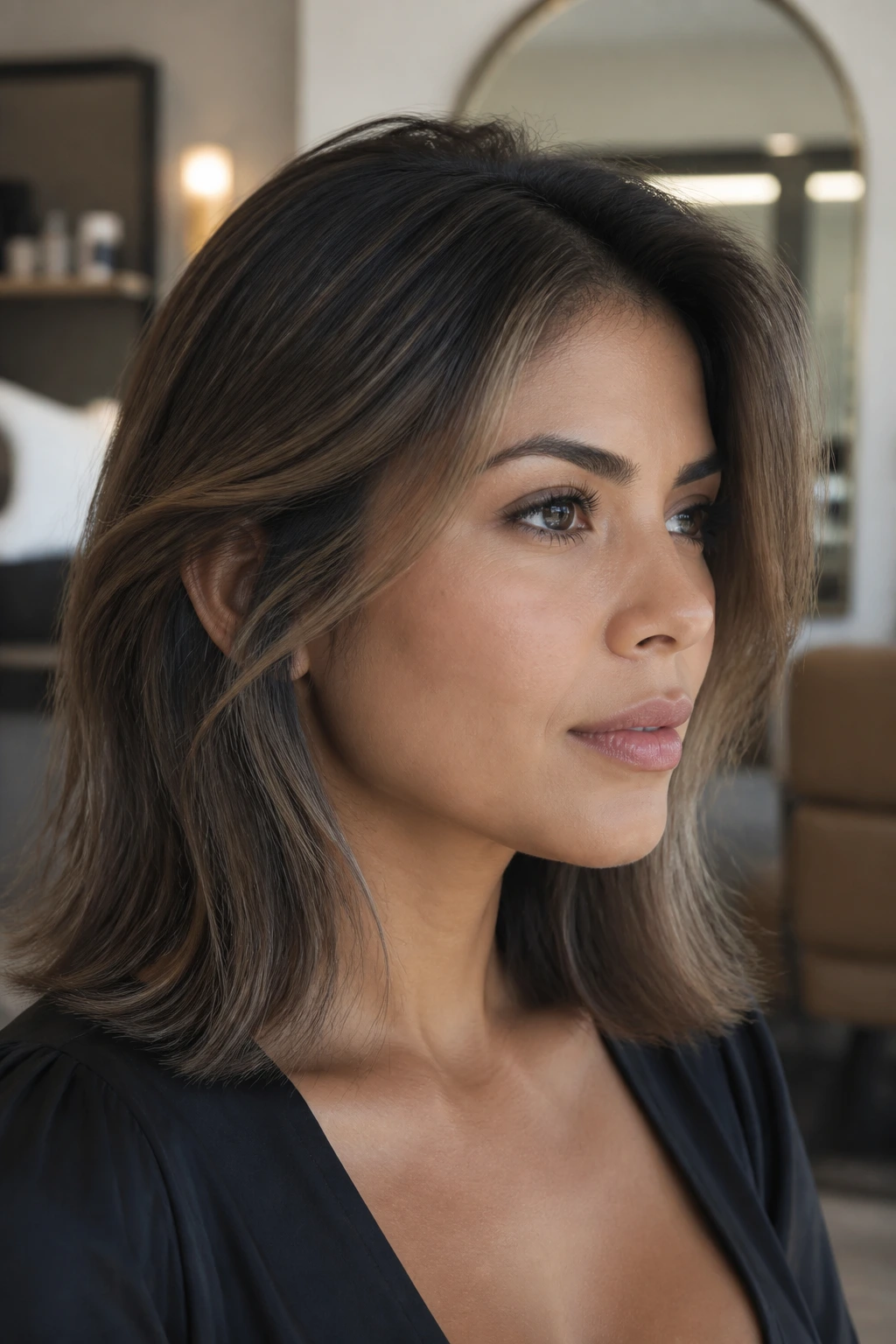
Bring one photo that shows placement and one that shows shade. People usually bring only one, and then wonder why the color lands wrong. You need both pieces of the puzzle: where the darker tones sit and how warm or cool they look.
Say you want “fine, soft brunette dimension for thin hair, not chunky streaks.” That line helps more than asking for dark highlights by itself, because a colorist will know you care about density and blend, not just darkness. If you want to be extra specific, say “micro-foils around the part and temples, with deeper pieces underneath.”
If you have medium skin with olive undertones, ask the colorist to keep red out of the formula unless you want warmth on purpose. If your skin is golden, ask them to soften ash tones so the hair does not go muddy. Small words matter here.
And if your hair is already fragile from lightening, tell them that before they touch the bowl. They can switch to a demi-permanent glaze or a gentler placement plan. That one sentence can save you weeks of regret.
Frequently Asked Questions
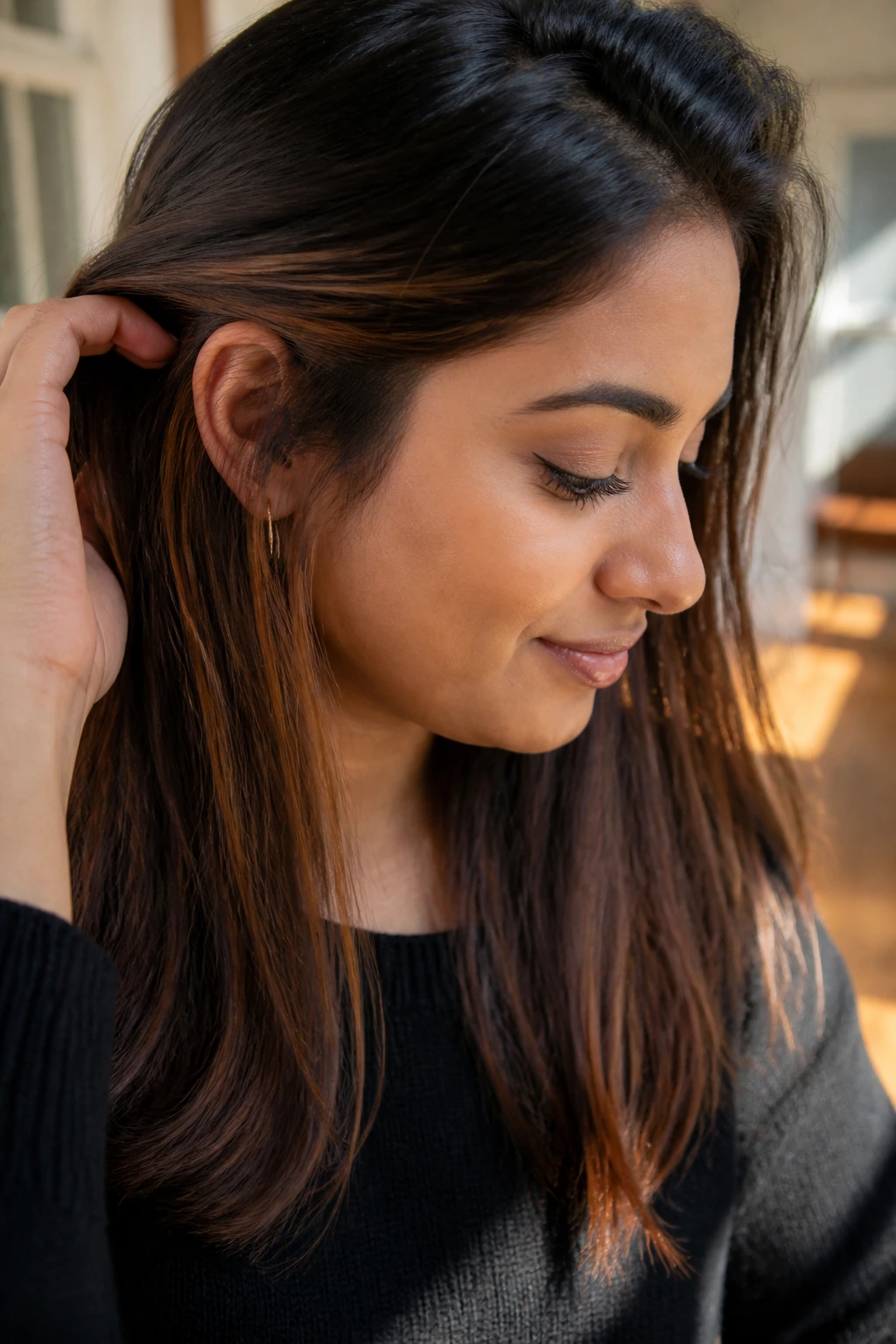
Will dark highlights make thin hair look flatter?
They can if the sections are too wide or the shade is too close to black. Done in micro-ribbons or lowlights, dark brunette pieces usually do the opposite and make the hair read fuller by reducing scalp contrast.
Are dark highlights actually highlights, or are they lowlights?
Salon language gets messy here. Most of these looks are technically lowlights or shadow pieces, but people still call them dark highlights because the overall effect is dimensional color, not one flat base.
Which dark shades flatter medium skin with olive undertones?
Mushroom brown, truffle, iced mocha, and smoky ash-brown are strong bets. They stay neutral enough to avoid the orange zone and keep the face from looking too red or too yellow.
What if my hair is already lightened and feels fragile?
Choose demi-permanent lowlights or a gloss instead of permanent color. You’ll get depth without piling more stress onto already delicate ends, and the hair usually feels better afterward, not worse.
How often will I need touchups?
Glosses usually need refreshing every four to six weeks, while lowlights and root shadows can often stretch to eight to twelve weeks. If the color starts looking dull before that, a toning service is smarter than adding more dark dye.
Can I do this on curly hair?
Yes, but the placement has to follow the curl pattern. Dark ribbons should sit where the curl bends and expands, not in straight bands that fight the shape.
What if my hair turns too warm or brassy?
A blue-toned shampoo once a week can help if the brown shifts orange. If the tone has gone muddy instead, stop toning and book a gloss in the right brown family rather than trying to fix it with more purple shampoo.
Do dark highlights work on a blunt cut?
They do, and sometimes better than on layers. A blunt bob or lob gives the darker pieces a clean edge, which can make thin hair look more solid at the ends.
The Softest Way to Go Dark
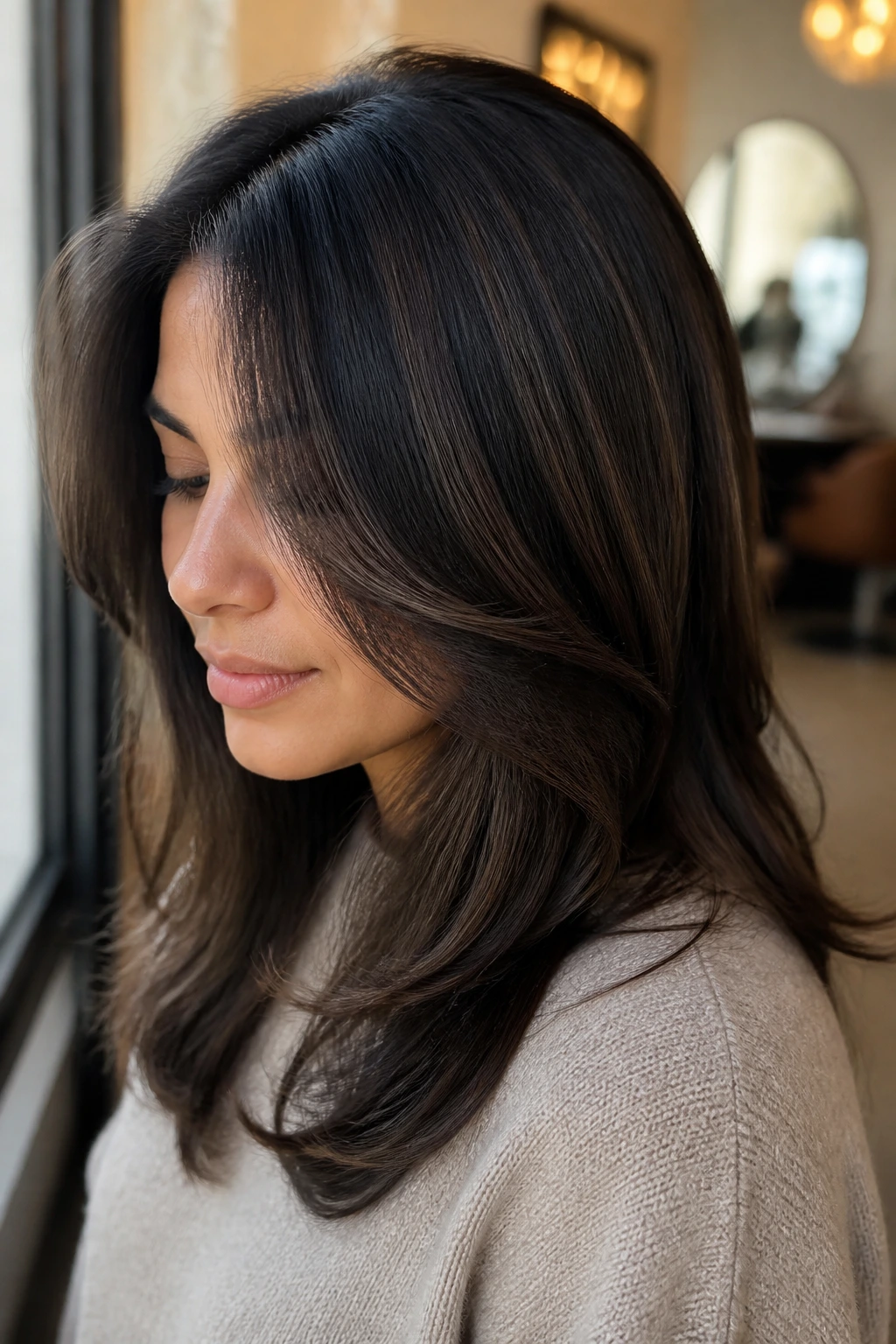
The nicest brunette dimension on medium skin doesn’t announce itself from across the room. It sits in the hair like a shadow that knows where to stand. That’s why these looks work so well on thin hair: they build body without piling on bulk, and they give the face shape without stealing the light from it.
If your hair has been looking a little too see-through at the part or a little too pale against your skin, a soft espresso, cocoa, walnut, or mushroom placement can change the whole read of the cut. Not louder. Just better placed.
Pick the shade family that matches your undertone, keep the sections fine, and leave some breathing room around the scalp. That combination holds up far longer than a heavy block of color, and it tends to look more expensive as it grows out.