



The best braiding techniques hairstyles for natural hair do three jobs at once: they tuck the ends away, calm the morning routine, and give the scalp a break from daily combing. The catch is tension. A braid can look sharp on day one and still be a bad install if your hairline aches by bedtime.
Natural hair is not one texture, one density, or one length. Tight curls, coily strands, stretched lengths, and tender edges all behave differently under the same braid pattern. Tiny parting lines show more on dense hair, chunky extensions can drag on finer edges, and a style that feels light in the chair can start pulling once your head has been up for a few hours.
That is why the range matters here. Some of these looks are sleek and close to the scalp. Some are big, soft, and easy to wear with a scarf and hoop earrings. A few are salon work only if you want them done cleanly. Others are exactly the kind of thing you can do at a kitchen table with a rattail comb, a spray bottle, and more patience than you thought you had.
Why This Collection Covers More Ground Than a Usual Braid List
-
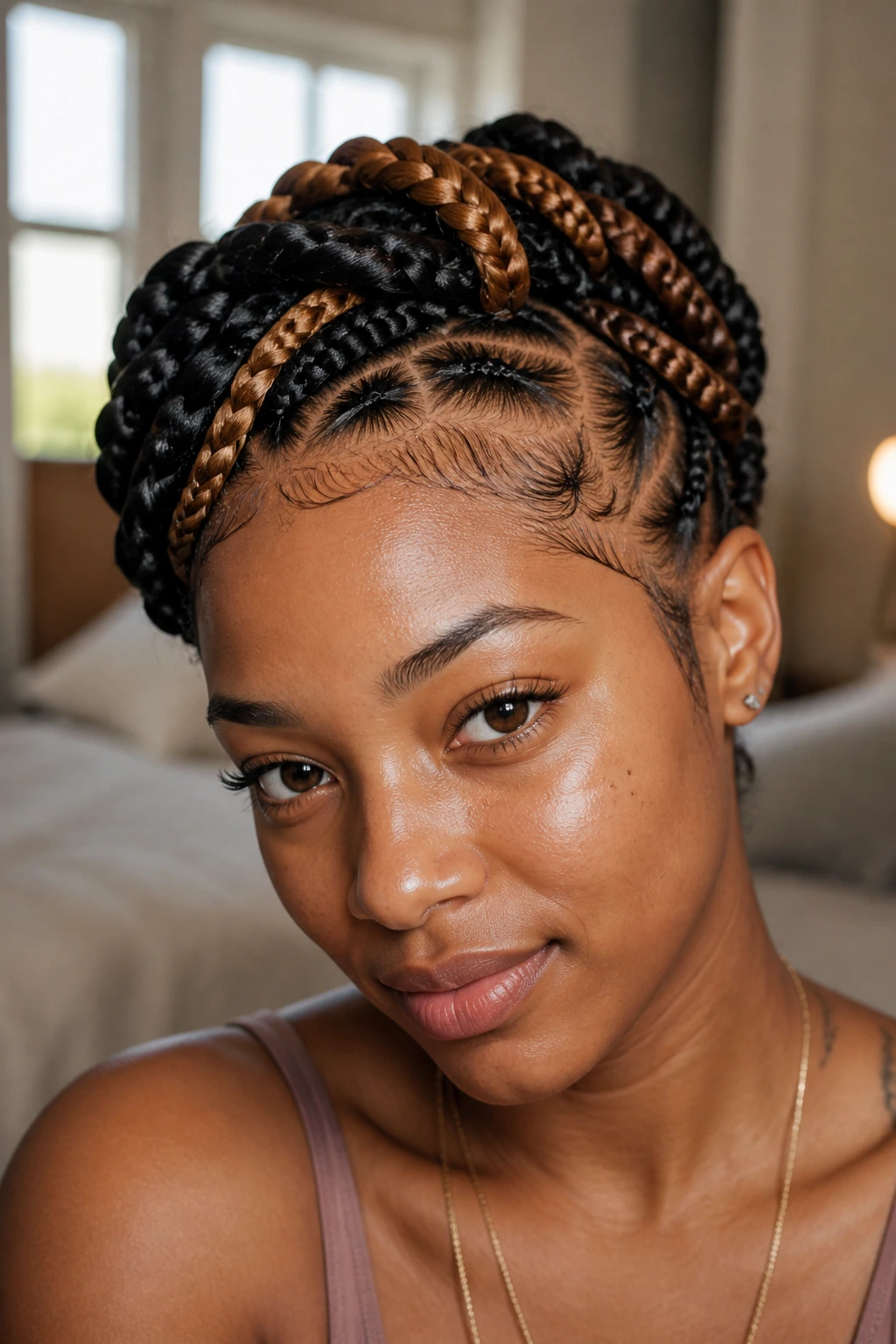
Protective styling without a single look: Some options keep the ends fully tucked, while others leave a little movement near the face so the style does not feel stiff or boxed in.
-
Different tension levels for different scalps: Knotless braids, feed-ins, and oversized plaits spread weight more gently than tiny, heavy installs, which matters if your edges are thin or your scalp gets sore fast.
-
Short, medium, and long-hair options: A few styles work with just a few inches of natural hair; others shine when your coils are stretched and ready to grip.
-
DIY and salon-friendly choices: Straight-back cornrows, flat parts, and simple crowns are manageable at home, while stitch rows, Fulani patterns, and waist-length braids are easier when someone can stand behind you and keep the sections clean.
-
Styles that age well: Some looks frizz in a charming way, some stay crisp for weeks, and some are meant to loosen a little. Knowing which is which saves you from disappointment on day five.
-
Room for personality: Beads, cuffs, curved parts, color accents, and curly ends change the whole mood without changing the whole method.
1. Classic Box Braids
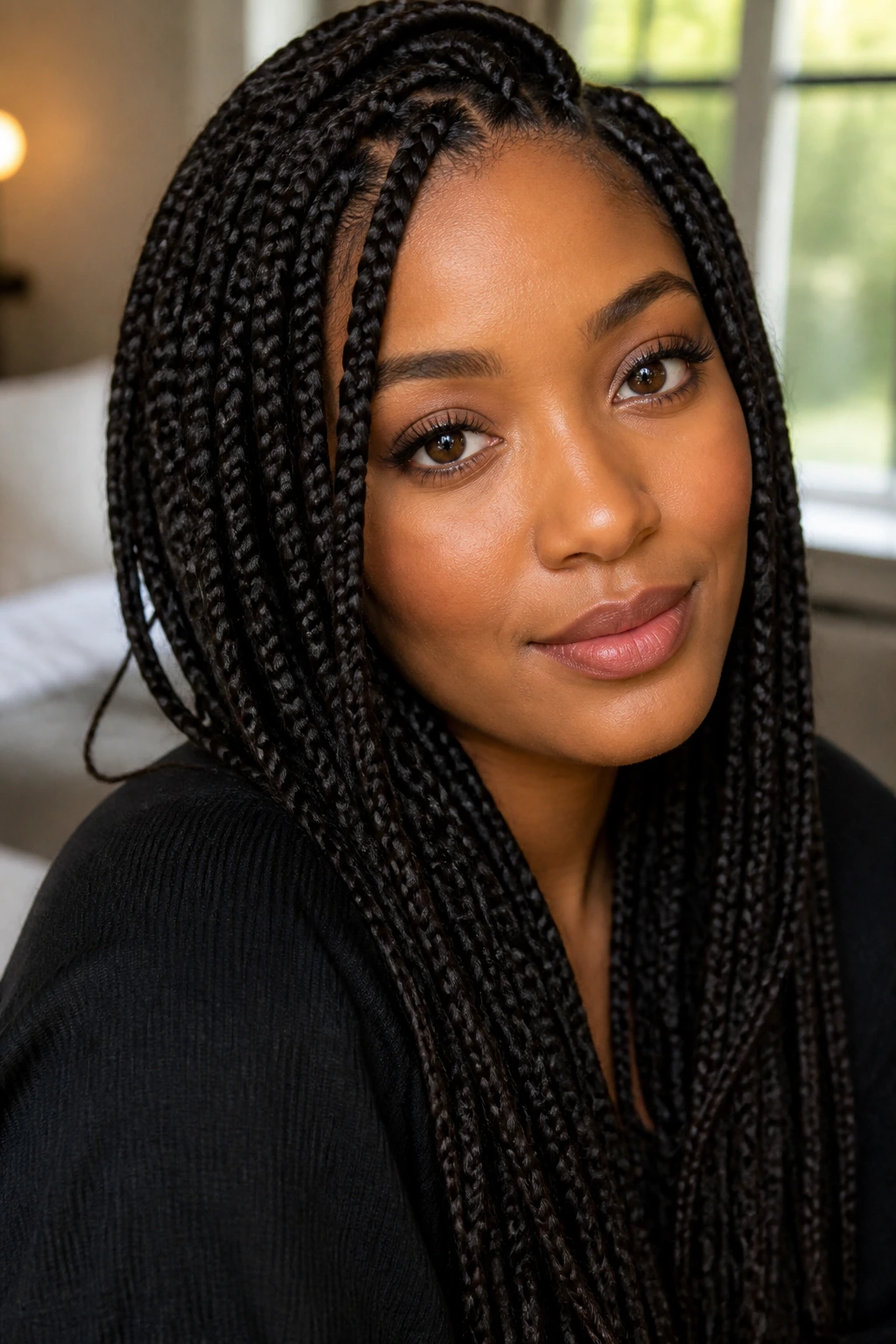
Classic box braids are the style people picture first for a reason: clean squares, even sections, and three-strand plaits that fall with a nice swing. They can look neat and practical or long and dramatic, depending on size and length, but the parting is what makes them feel finished. If the boxes are uneven, you see it immediately.
Best for: medium to long natural hair that can be stretched before braiding, plus anyone who wants a style that can sit up in a bun, hang loose, or tuck into a scarf without much fuss. The base should feel snug, not pinched.
Watch for: too much hair added at the root. That is the mistake that turns a classic style into a headache. A braid should feel anchored, not welded to your scalp.
The style wears well because the sections are predictable. That sounds boring, but boring is often what you want from a protective style. There is room for side parts, middle parts, beads, and curled ends, yet the core look never gets messy if the sections are tidy.
2. Knotless Box Braids
Knotless braids start lighter at the root and build in hair gradually, which is why they feel easier on the hairline than old-school box braids. The base lies flatter against the scalp, and the first few inches do not have that obvious knot sitting there like a tiny anchor.
Why the knotless base matters
That lighter start is not just a comfort issue. It changes the way the braid moves. Knotless braids swing more naturally, and the parting can look a little cleaner because the eye is not stopped by a bulky knot at the root.
They are a smart pick if your edges are tender, if you wear braids often, or if you hate the stiff first day that some heavier installs have. They take longer to install, though. There is more hand work in the beginning, and that shows up in the chair time.
Ask for a base that feels secure but not tight. If your stylist has to keep pulling your head back to “get it neat,” that’s a warning sign, not a compliment.
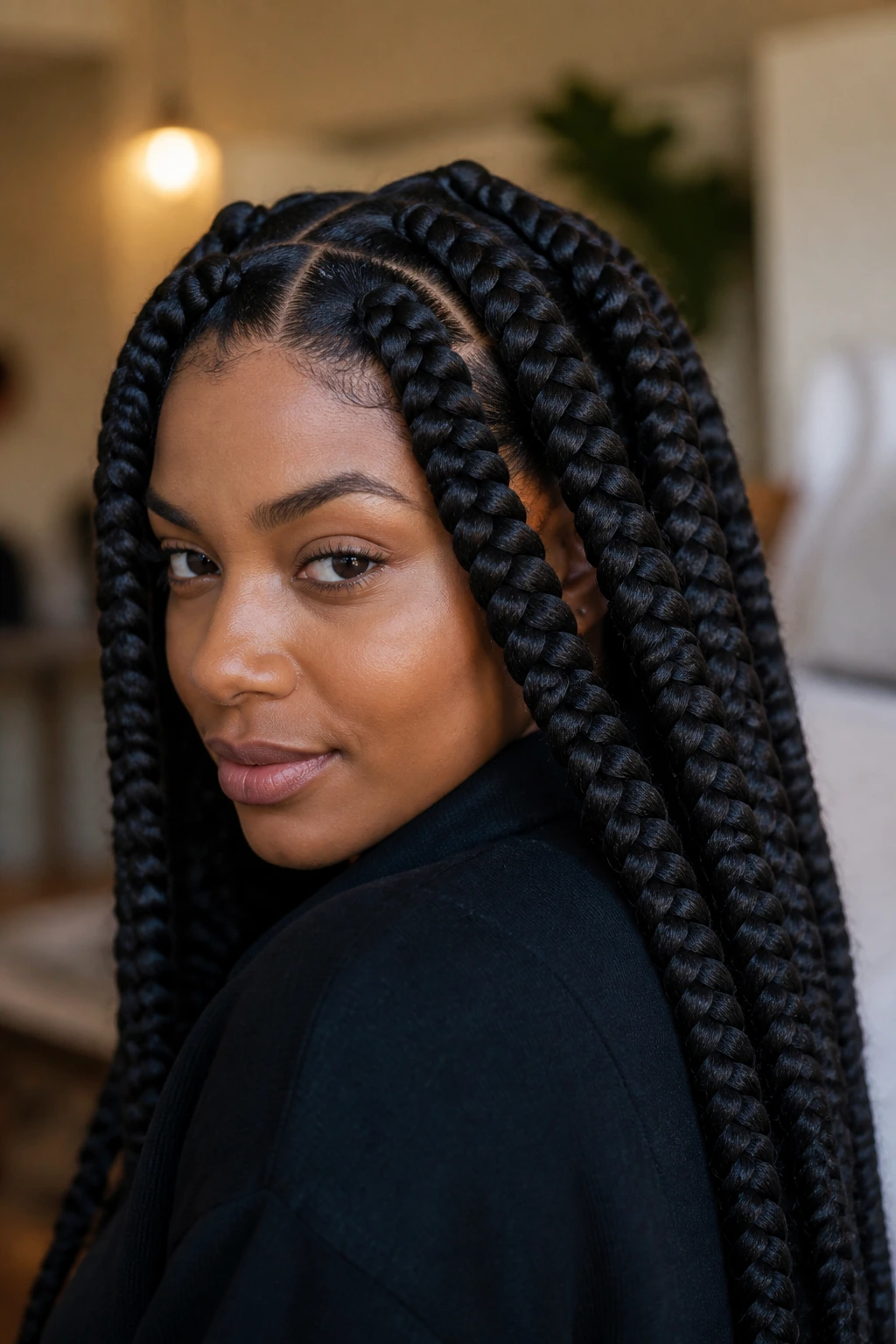
3. Jumbo Box Braids
Jumbo box braids are all about scale. Fewer sections, fatter plaits, faster installation. They make a strong shape right away, and on natural hair they can look especially good when the parts are crisp and the braid size is consistent from front to back.
The appeal is practical. Fewer braids mean less installation time and less weight overall, provided the sections are not overloaded with added hair. That last part matters. A jumbo braid can be light or it can become a rope tied to your scalp. One of those is wearable. The other is not.
Use this style when you want: a bold look that can still be pulled into a low bun, ponytail, or half-up style without hours of styling. It also works well if you like the look of braids but do not want a full head of tiny rows staring back at you in the mirror.
4. Micro Braids
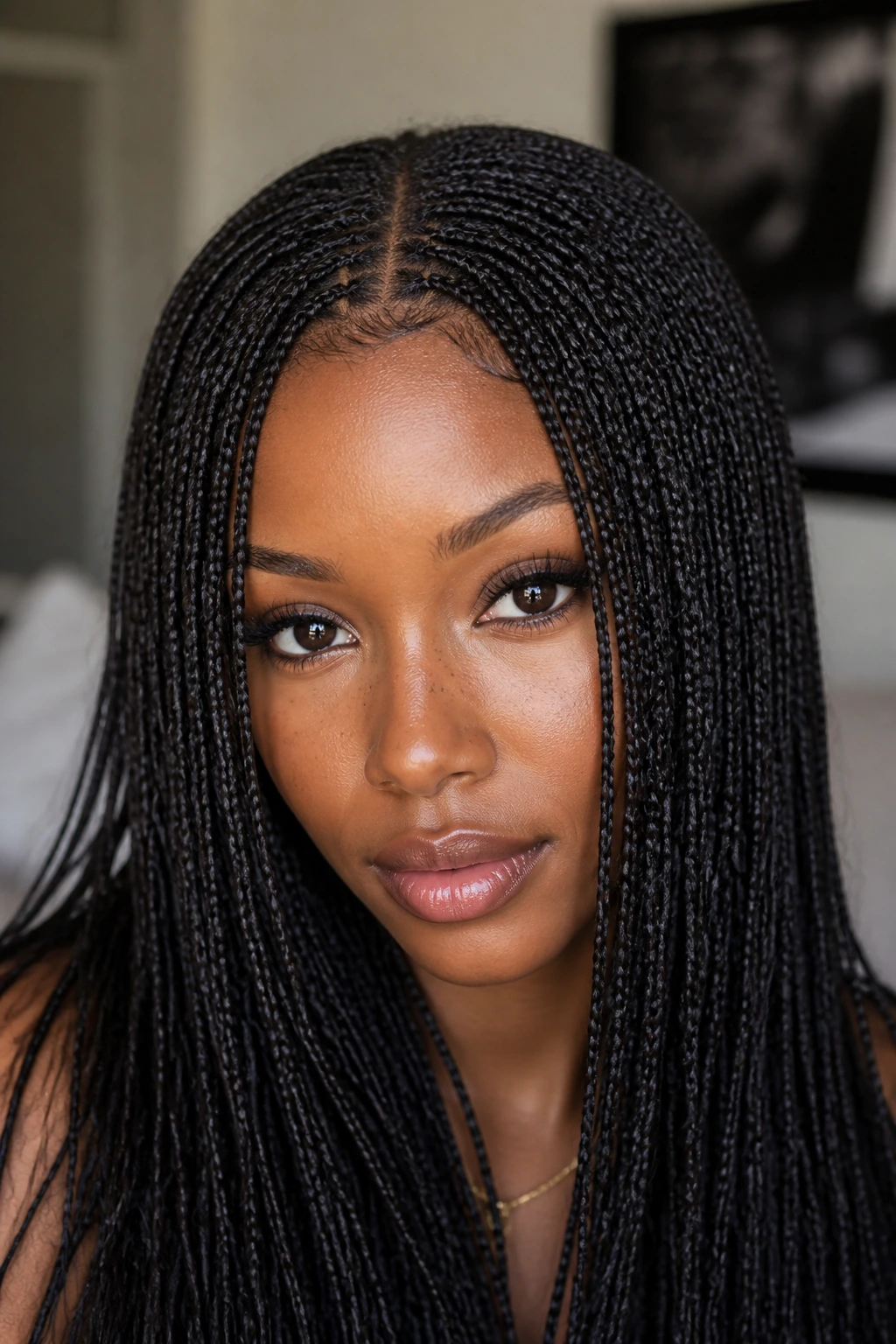
Micro braids are tiny, patient work. They are the braid style people choose when they want movement, flexibility, and that fine, curtain-like fall that sways when you turn your head. The tradeoff is weight and time. Done well, they look delicate. Done badly, they can drag on the scalp fast.
You need a calm hand and enough sectioning patience to keep the rows even. Tiny braids do not hide sloppy parting. They expose it. They also make every bit of buildup more visible, so scalp care has to be cleaner than you think.
The style is worth it if you like to wear braids down most of the time and you do not mind a longer install. It is less forgiving if your hairline is fragile, so this is not the place for aggressive tension or heavy extension hair.
5. Triangle-Part Box Braids
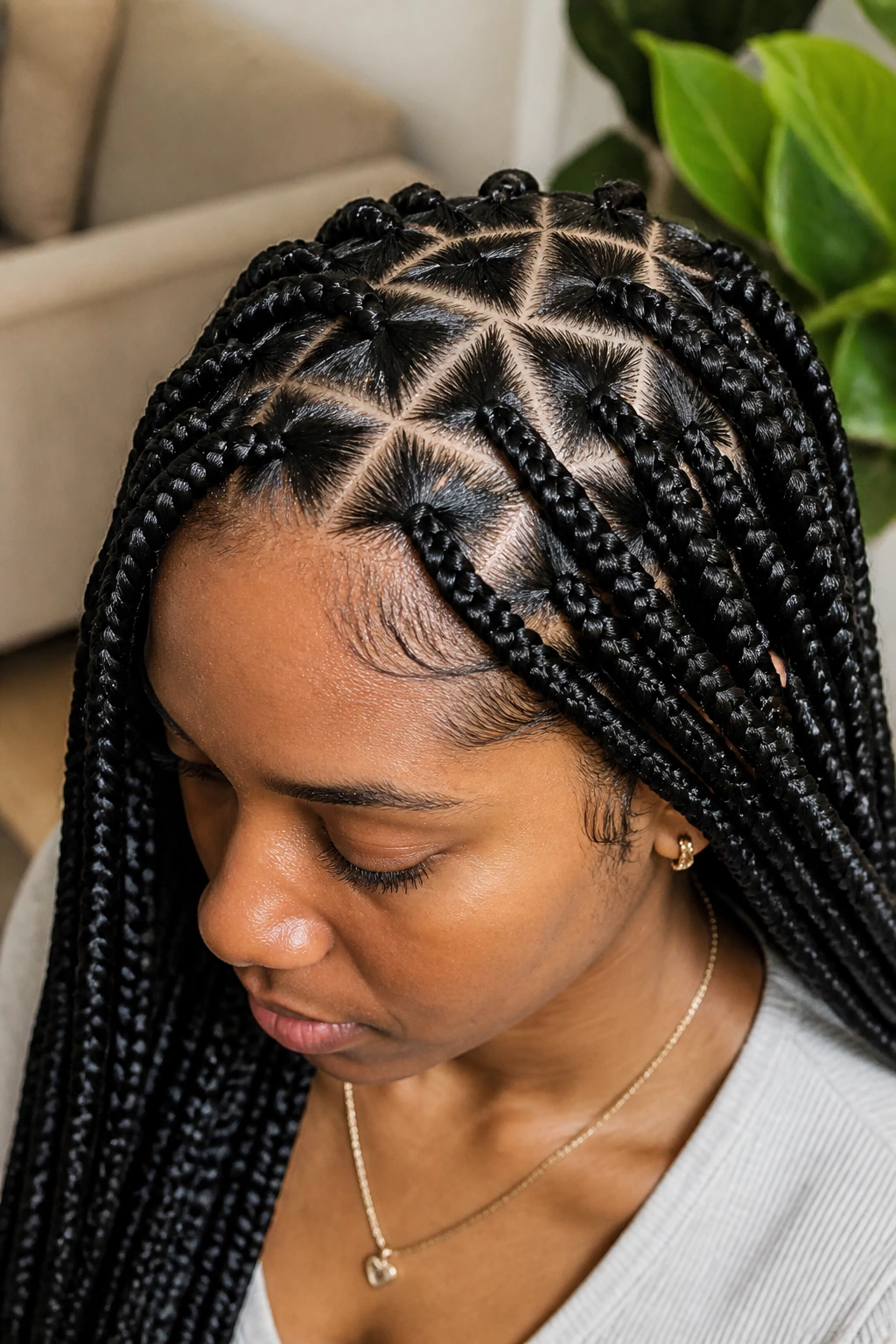
Triangle parts change the whole feel of box braids without changing the actual plaiting technique. Instead of square sections, each part is cut into a triangle, which makes the base look sharper and more graphic. It sounds like a tiny detail. It isn’t.
Triangle parts break up the grid effect that standard box braids can get after a while. On natural hair, they also give you a little more visual movement at the scalp, especially if the braids are medium-sized and the parting is clean enough to show the shape.
This style works nicely when you want regular box braids but do not want them to look like everyone else’s. That said, the triangle has to be consistent. A half-hearted triangle looks accidental, not stylish.
6. Feed-In Cornrows
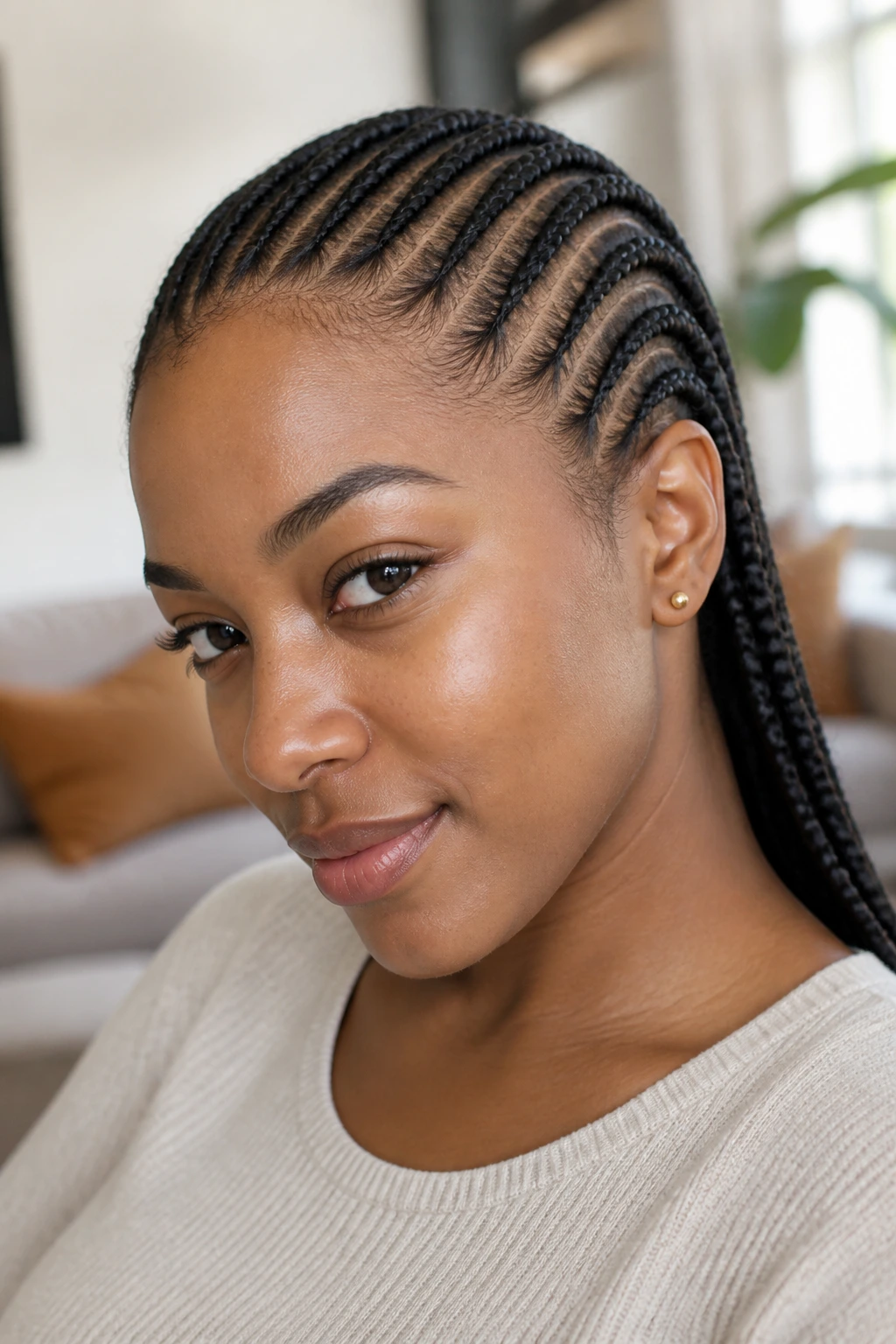
Feed-in cornrows are built by adding braiding hair gradually as the row moves back, which keeps the base flatter and less bulky than a hard-start braid. That gradual build makes a big difference on natural hair, especially if your scalp likes lower tension.
What feed-in really changes
The technique gives you a smoother start and a cleaner flow along the scalp. Instead of one thick lump at the front, the braid grows into itself. That makes feed-ins especially useful for ponytails, side-swept rows, and more elaborate patterns where the front of the style is on display.
They also let a stylist control shape more precisely. Want a clean line that curves into a bun? Feed-ins do that well. Want a set of rows that sit flat under a wig or bonnet? Same deal.
The front few inches should never feel like they are gripping your skin. If they do, the style will fight you every time you wash your face.
7. Straight-Back Cornrows
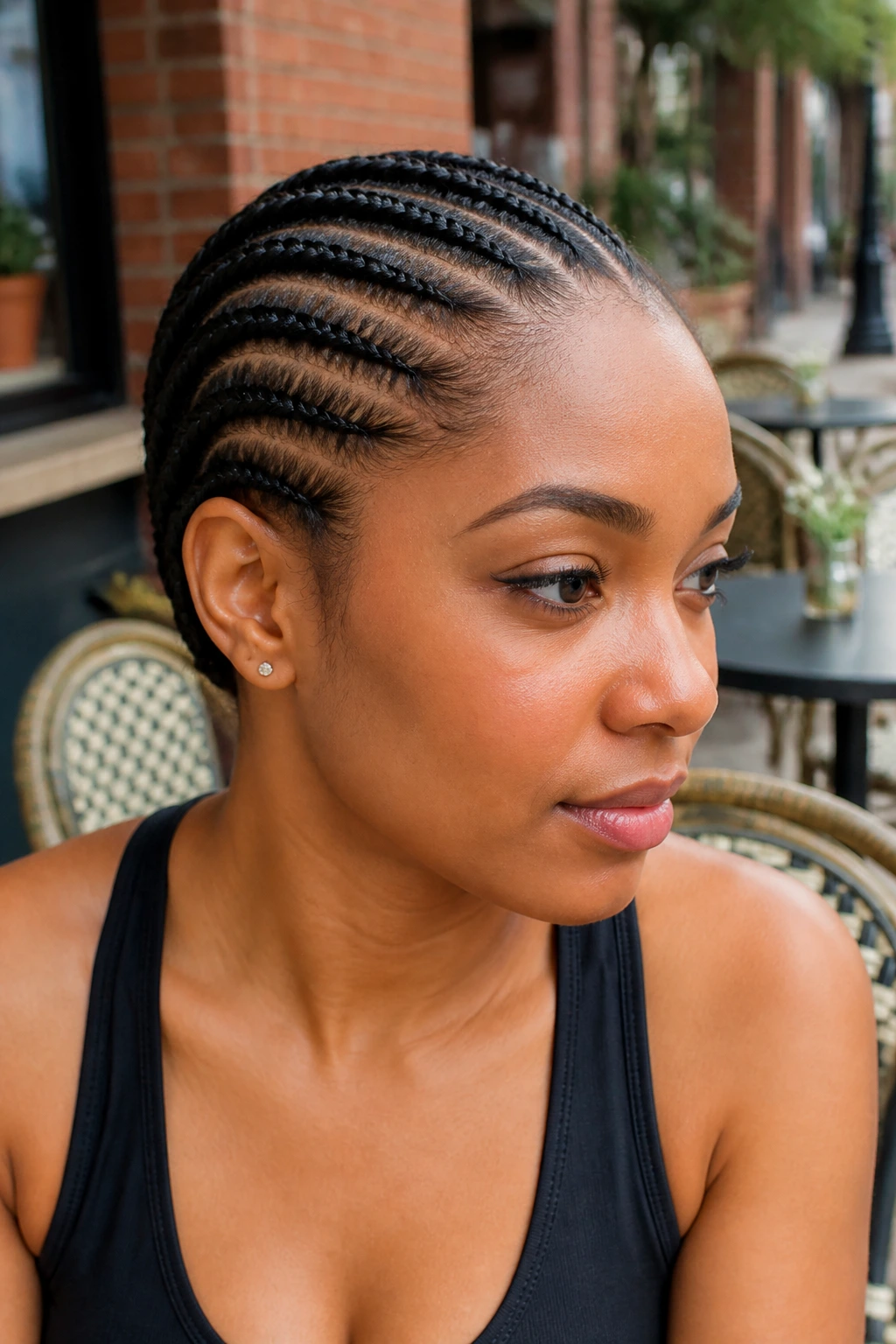
Straight-back cornrows are the plainspoken workhorse of braid styles. They are rows, usually even and parallel, running from the front hairline straight toward the nape. No drama. No extra curves. Just clean lines and a tight, low-profile finish.
They are one of the easier styles to keep neat because the shape is simple. That simplicity also makes them useful for workouts, under wigs, and any week when you need your hair to stay put instead of getting in your face. Natural hair grips this style beautifully when it is properly detangled and stretched first.
If you want something that looks orderly after sleeping on it twice, this is it. The style does not need much fuss, but it does demand precise parting. Skewed lines show immediately.
8. Side-Swept Cornrows
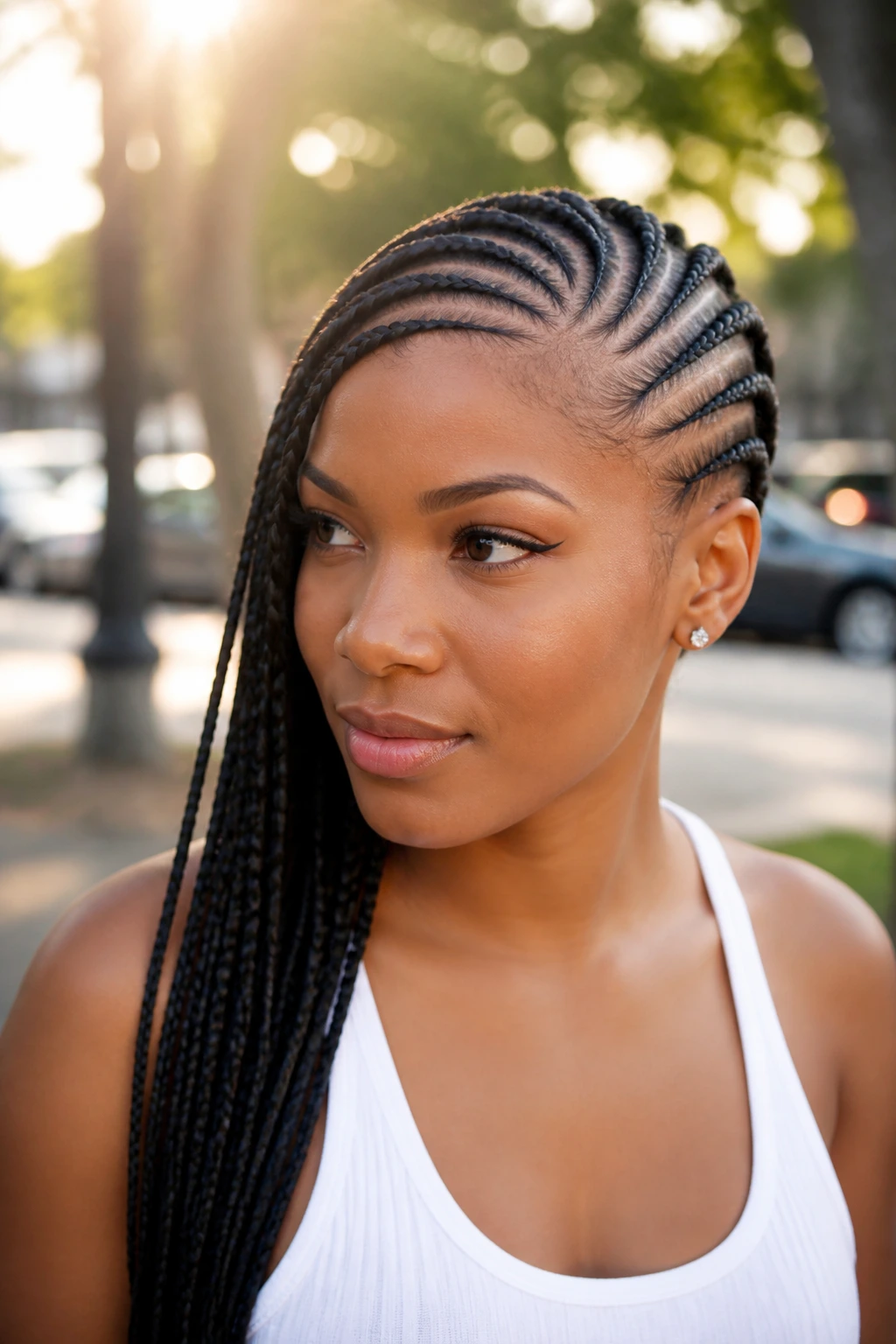
Side-swept cornrows have a little more attitude than straight rows. The braids angle toward one side of the head, which softens the overall shape and gives the style some movement before the hair even leaves the scalp. On natural hair, that angle can make the face look longer and the whole style feel less severe.
I like this style when a client or friend wants cornrows but does not want to feel like they borrowed a football helmet. The side direction changes everything. It creates a line of motion, and that small shift makes the install feel intentional instead of default.
This is also a good style when you want to tuck one side behind the ear or wear statement earrings. The braid direction does half the styling for you.
9. Stitch Braids
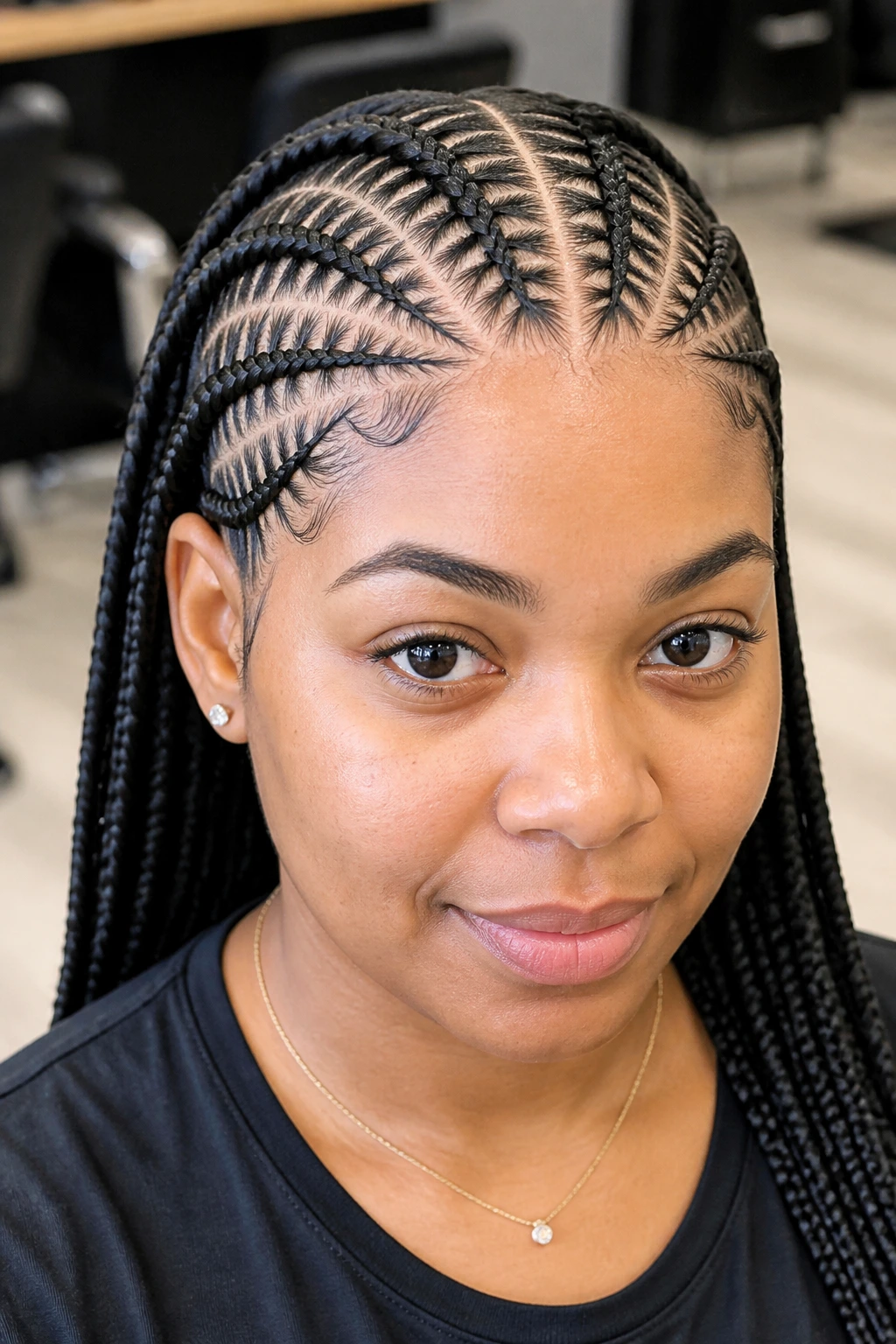
Stitch braids are the crisp, segmented rows that look almost drawn on. The parting creates visible “stitch” lines, usually built with a fine-tooth comb and a careful hand so each row reads clean and geometric. They can be simple or elaborate, but they always depend on precision.
Why they stand out
The pattern is the whole point. Stitch braids show off parting skill in a way plain cornrows do not. If the sections are even, the style looks sharp from across the room. If the sections drift, the whole thing looks off.
They are a good choice when you like strong structure and do not mind a style that announces itself. These are not shy braids. They can be worn straight back, curved, or mixed with feed-in details and ponytails, but the stitch line is what holds your eye.
This style is best done on hair that has been stretched and smoothed first. Trying to stitch braid fresh shrinkage is a good way to fight the comb all afternoon.
10. Lemonade Braids
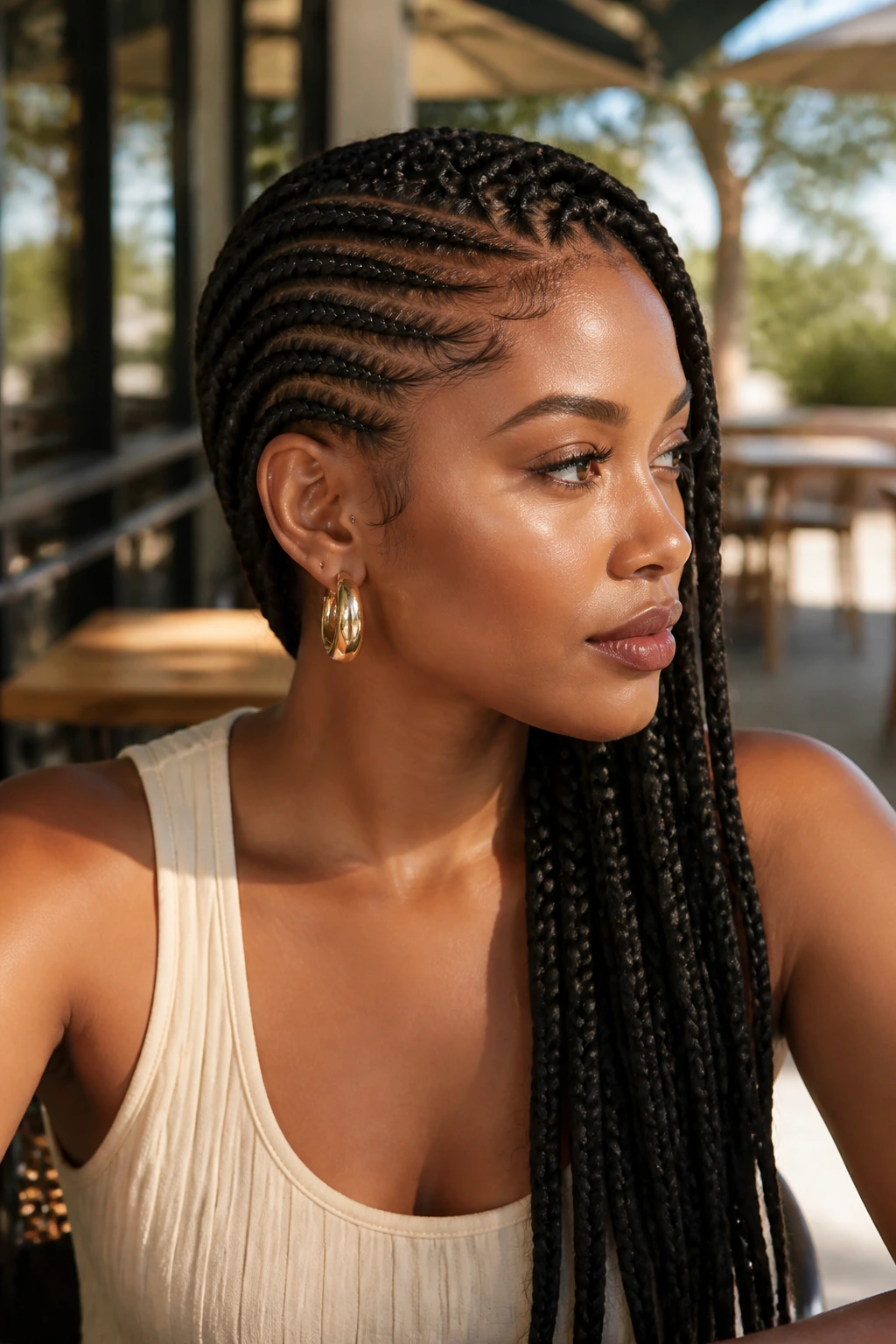
Lemonade braids sweep to one side in long, flowing rows, and the side part gives them that easy motion people always notice first. They are often thinner than classic cornrows and usually need a neat edge line to look finished, not rushed.
The style works because the direction is flattering on a lot of face shapes. It leaves one side open, which makes room for earrings, clean makeup, or a low-key neckline. On natural hair, the front and side parts have to be tidy or the asymmetry turns messy fast.
This is one of those styles that looks simple until you do it yourself. Then you realize the curve, angle, and spacing have to line up all the way down the scalp. When they do, the result is sleek and controlled.
11. Fulani Braids
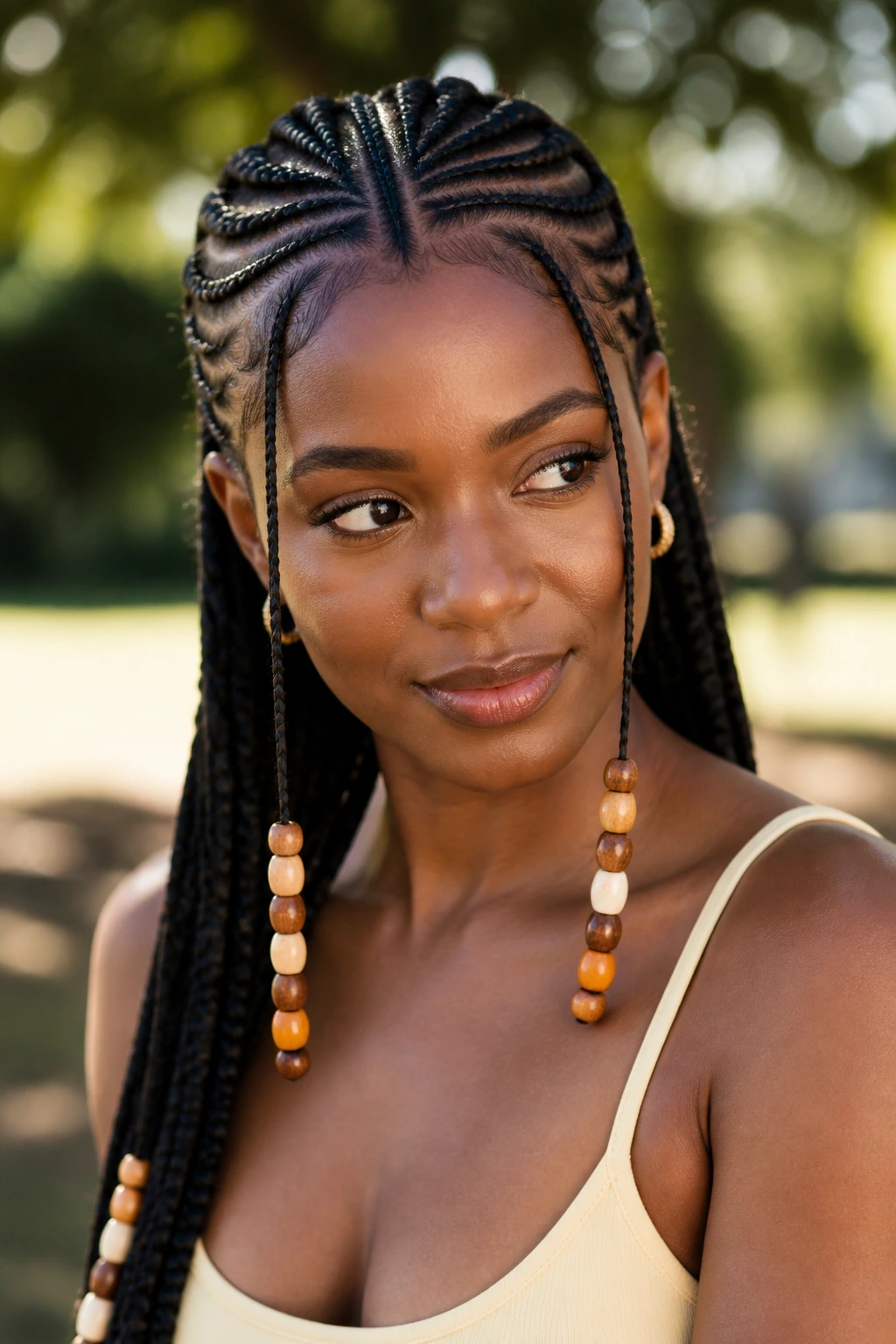
Fulani-style braids usually combine central braids with side braids, face-framing pieces, and decoration like beads or cuffs. The look has a strong visual rhythm: one line down the middle, smaller rows near the hairline, and a little movement around the face.
The best versions respect balance. Too many accessories and the style feels overloaded. Too few and it loses the character that makes it distinct. On natural hair, the braid base should stay smooth so the detailing has room to show.
This style is often chosen for its pattern as much as for its wearability. It gives you structure, ornament, and a lot of room to personalize the finish without changing the basic braid map.
12. Ghana Braids
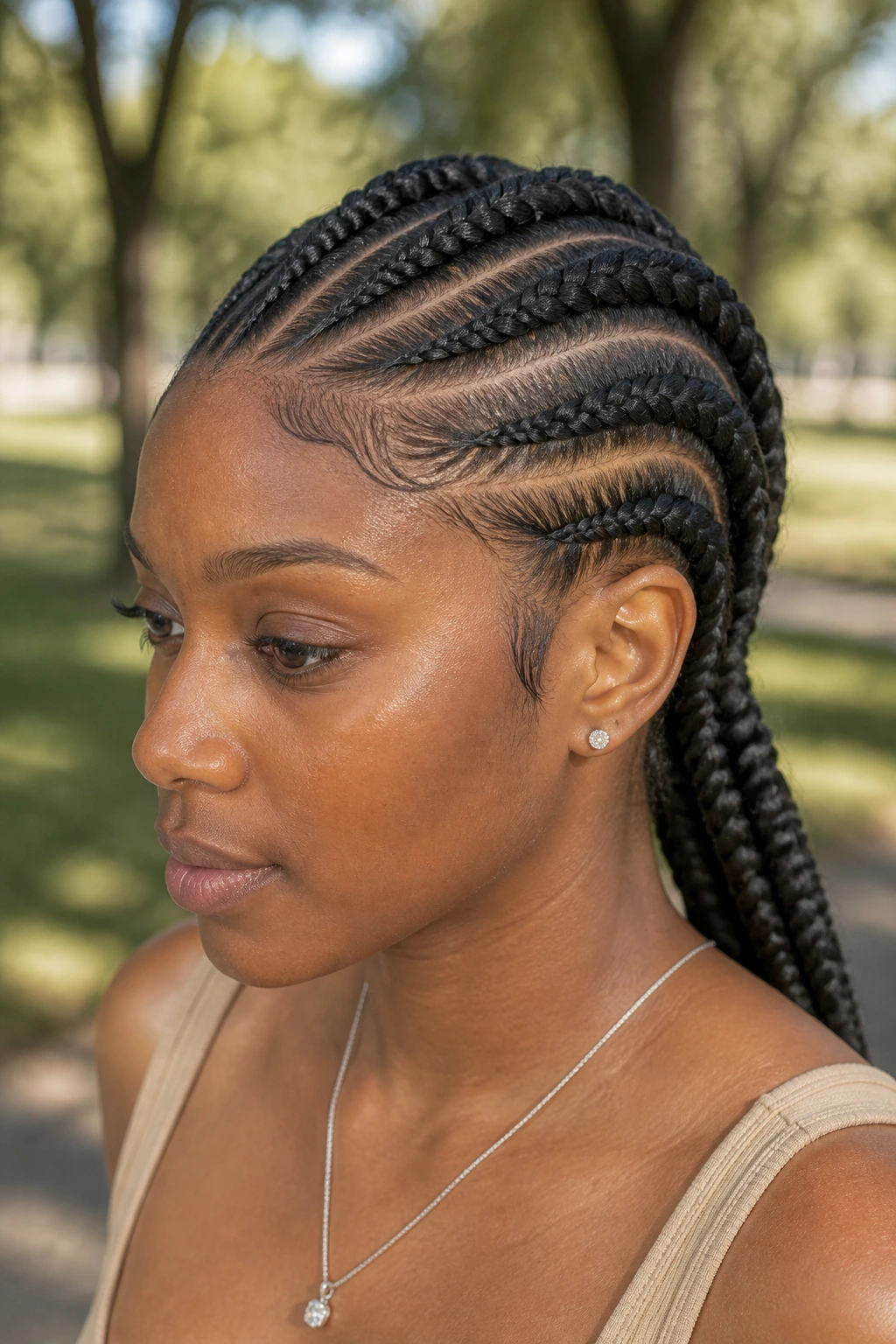
Ghana braids, sometimes called invisible braids in some settings, are thicker cornrow-style braids that start smaller at the front and grow fuller as they move back. The result is a raised, rope-like pattern that sits close to the scalp but still looks substantial.
What makes them different from standard cornrows is the build. They are fed in gradually, which gives them depth and a smooth finish. On natural hair, they are a solid option when you want something sculptural without a lot of loose length.
They look especially good when the rows are even and the braid size stays consistent. If one section swells too fast while the others stay thin, the whole head looks lopsided. That is the part people miss when they copy the style from a photo and skip the sectioning.
13. Goddess Braids
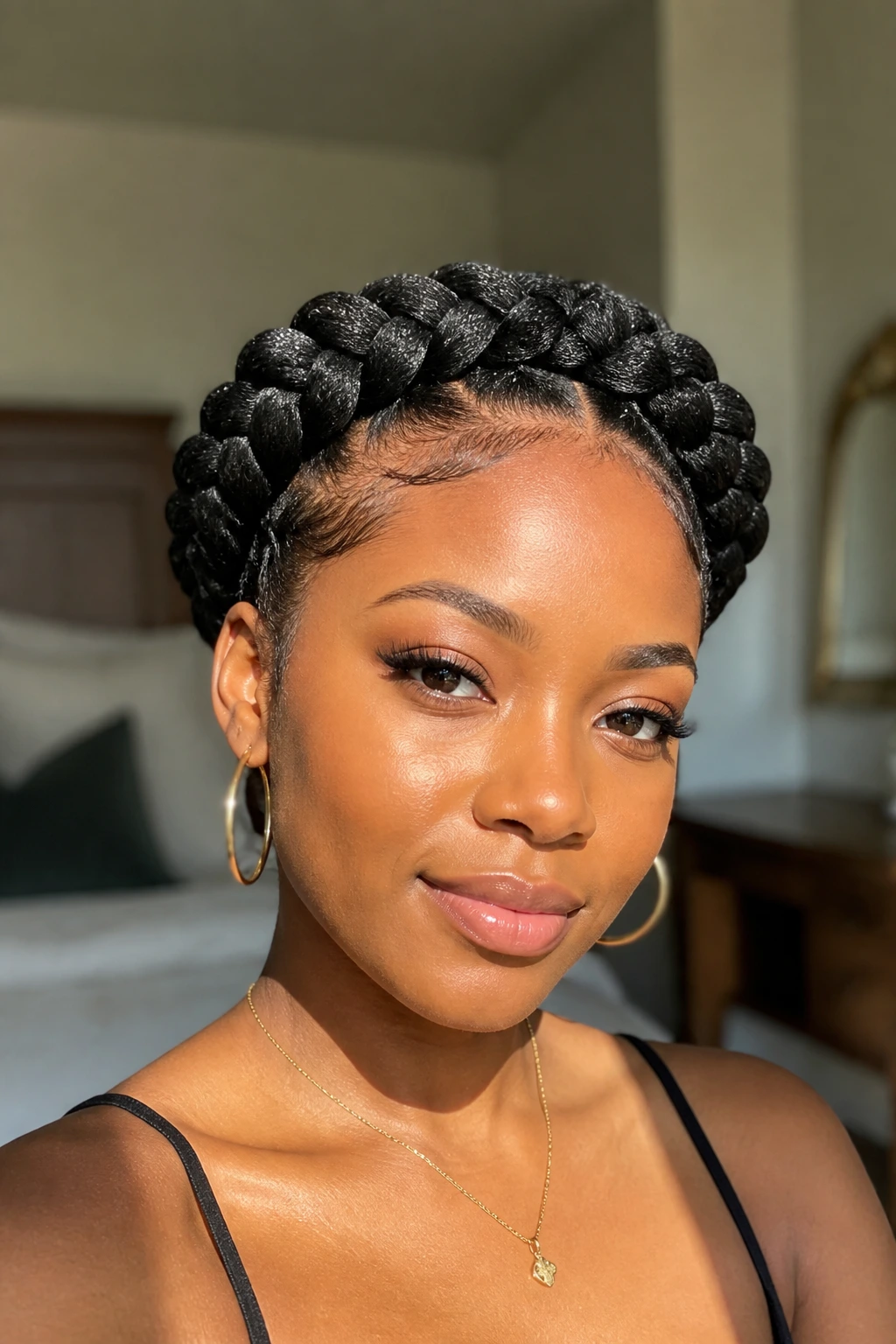
Goddess braids are larger, thicker braids that sit close to the scalp and often feel more decorative than plain cornrows. They can be used as the main style or as a base for updos and half-up looks, and they give natural hair a bold shape without needing dozens of tiny rows.
Why they feel different
The larger size means the braid pattern reads from farther away. You do not need intricate parting to make an impact; the thickness does the work. That also means the scalp can feel less crowded than it does with smaller rows, which some people prefer.
They are a strong option when you want a style that feels polished but not fussy. The lines are big enough to show, but not so tiny that every section needs to be microscopic.
A braided crown made from goddess braids has a different mood than a head full of small cornrows. It feels heavier in a visual sense, even when the actual weight is reasonable.
14. Boho Braids
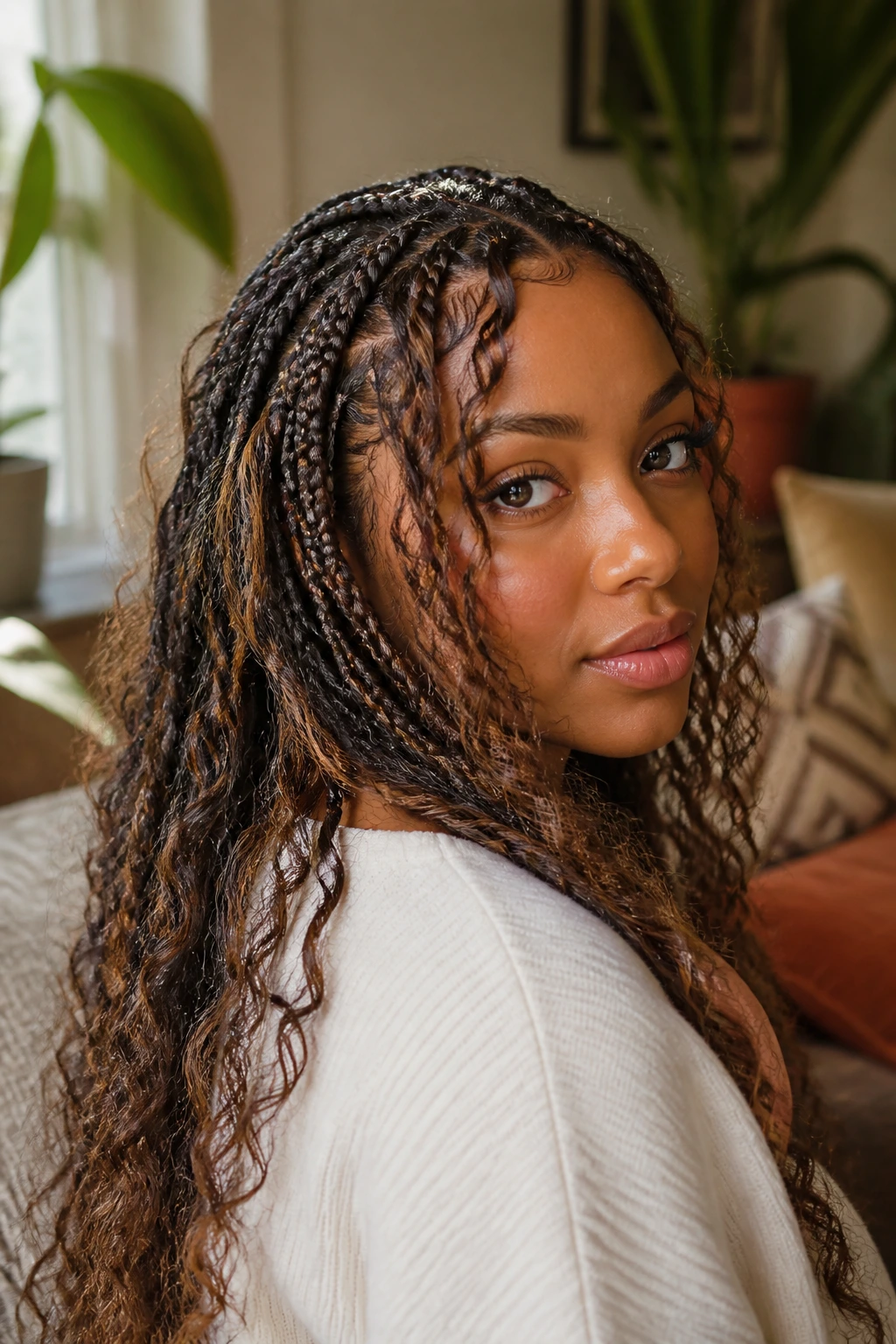
Boho braids mix traditional braiding with loose curly pieces left out along the lengths or ends, which softens the overall look. They give natural hair a freer, less rigid finish, and that movement is part of the charm. The style looks lived-in on purpose, not unfinished.
The balance matters. Too many loose pieces and the braid pattern gets lost. Too few and you miss the whole point. The curls should look placed, not accidentally escaped.
This is a good choice if you like braids but do not want everything tucked and strict. The style tends to frizz faster than a tight, smooth install, though. That is not a flaw so much as the cost of the texture you are buying into.
15. Butterfly Braids
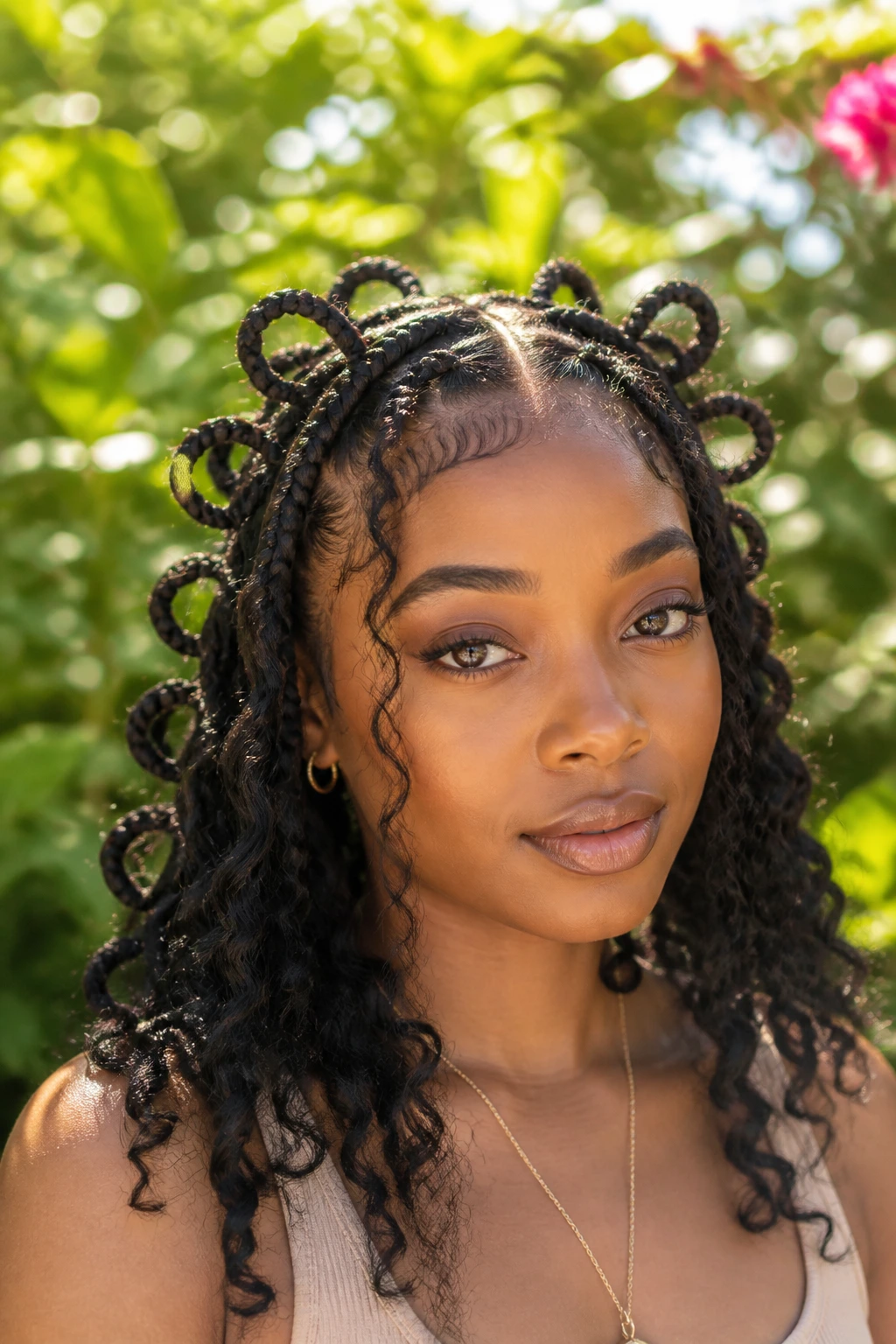
Butterfly braids are built to look soft, airy, and a little undone in the best sense. The loops and loose sections create a fuller, fluffier braid with texture all through the length. They often use added hair that is deliberately pulled apart for volume.
What people miss is that the “messy” look still has to be controlled. The braid needs structure at the root and enough definition in the sections so the loops don’t collapse into a tangled mass. Good butterfly braids look like they were shaped that way on purpose.
On natural hair, this style works well when you want braids that feel lighter in mood than a classic sleek install. They are not the most low-maintenance look, because the texture and looseness will frizz faster. That is part of the style’s personality.
16. Braided Bob
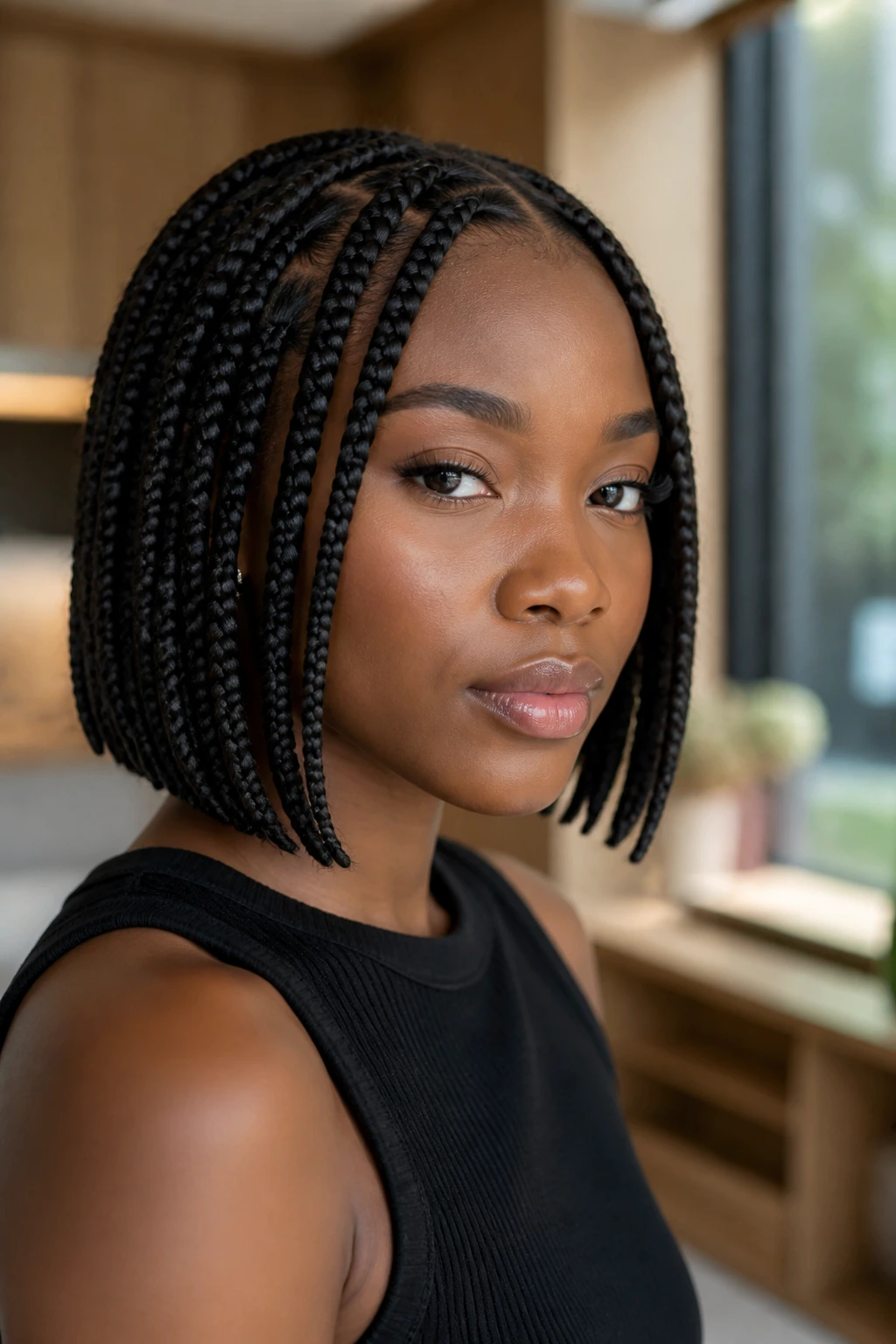
A braided bob keeps the length short enough to move easily around your shoulders and jawline. It is practical, clean, and less likely to swing into your face or catch on jackets the way waist-length braids can. Sometimes that alone is worth the whole decision.
The shape matters more here than on longer styles. A blunt bob reads crisp. A slightly angled bob feels softer. If the ends are uneven, you see it immediately because the eye has nowhere to go except the hemline.
This is a smart style if you want braids but do not want the weight of long extensions. It also gives your neckline more visibility, which is nice if you wear collars, scarves, or earrings and want the hair out of the way.
17. Braided Ponytail
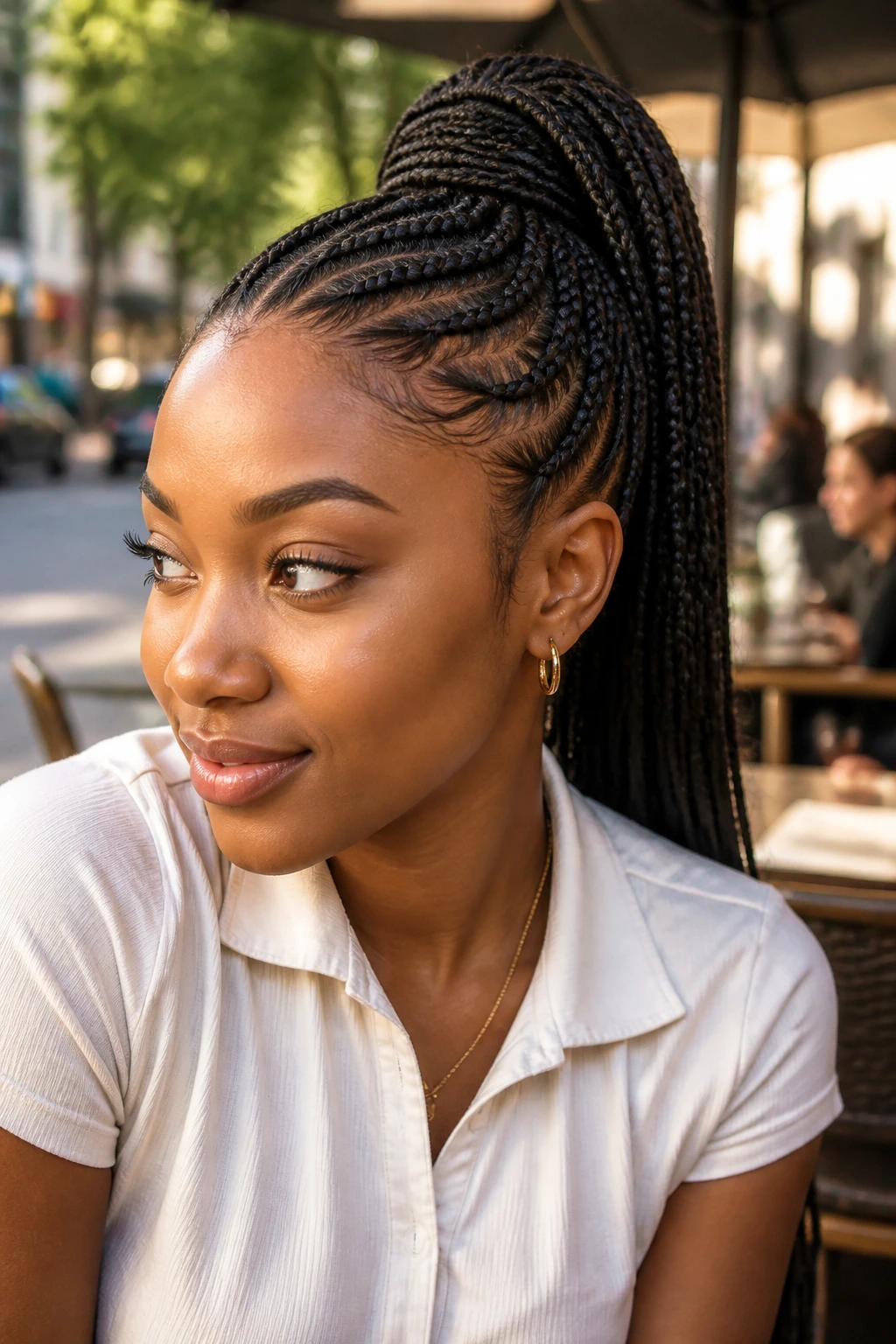
Braided ponytails pull the braids up and away from the neck, which changes both the feel and the look. Instead of braids hanging loose all day, they gather into a high or mid ponytail that keeps the profile neat and the face open.
The base usually needs to be secure, because the weight shifts when the hair is gathered. If the ponytail is too tight at the crown, you will know it by evening. A good version feels anchored but not yanked.
I like this style for people who want one braid install that can work for errands, the gym, or a dressed-up night out. The ponytail does the styling for you. You can leave the length straight, curl the ends, or wrap the base with a braid for a cleaner finish.
18. Braided Bun
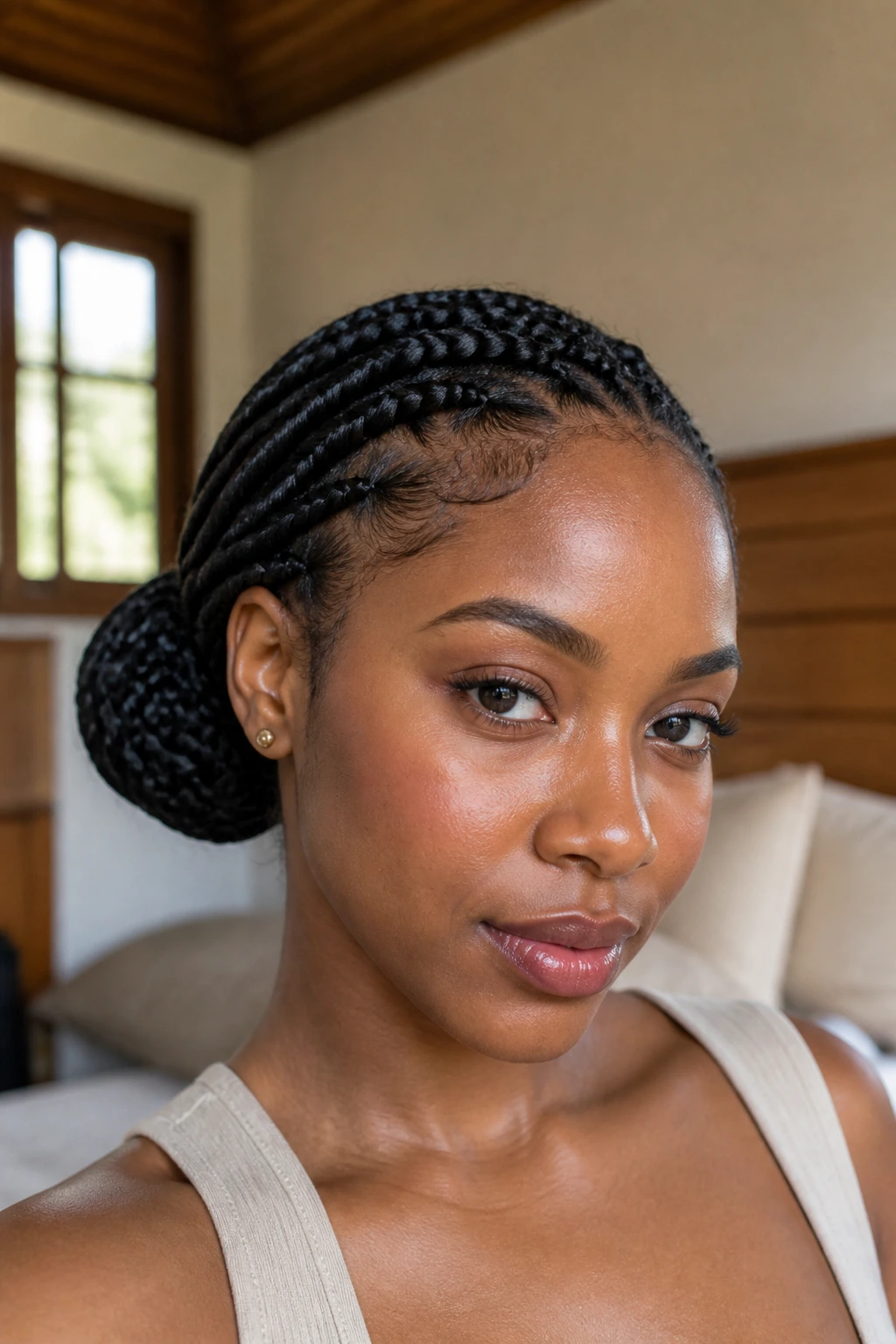
Braided buns are the low-friction answer to days when you want your hair fully controlled. The braids are gathered and wrapped into a bun, high or low, and the whole shape sits close to the head with very little bounce. That sounds severe, but it can look elegant in a calm, unfussy way.
A bun works best when the braids are not so heavy that the wrap sags. Medium-sized braids tend to sit most cleanly. Tiny braids can create a very compact bun, while jumbo braids may need more pins and a little more patience to keep the shape from drifting.
The style is useful because it keeps ends protected and out of the way. It also plays well with strong cheekbones, bold earrings, and structured collars. Some hair styles ask for attention. This one just sits there looking composed.
19. Braided Crown
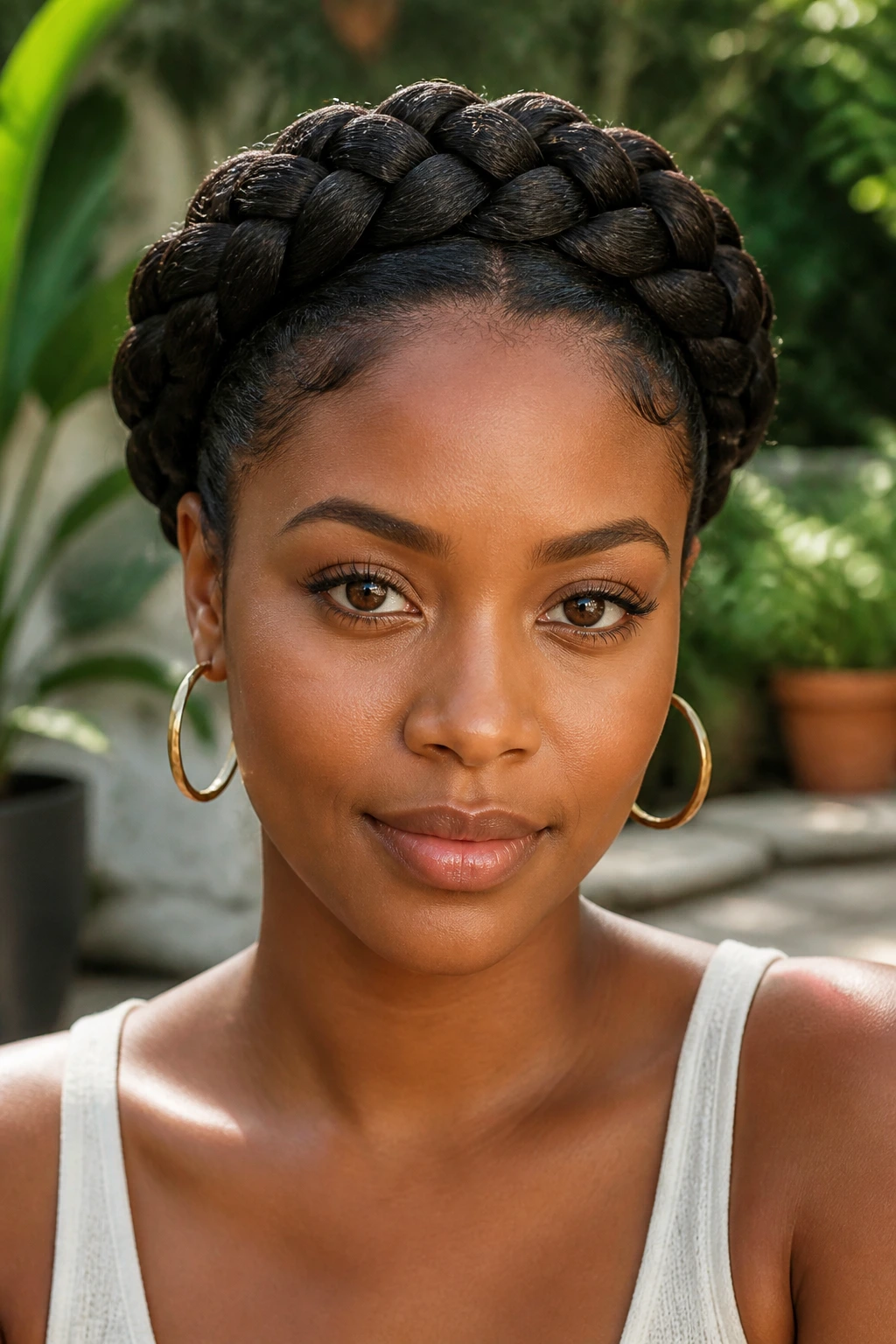
Braided crowns wrap the braid around the head like a band or halo, usually with the ends tucked or pinned out of sight. The style frames the face and keeps the hair off the shoulders, which makes it feel polished without needing a lot of extra styling.
It is one of the better options when you want natural hair to look deliberate in a clean, formal way. The braid needs to be snug enough to stay in place but not so tight that the hairline starts arguing with you. A crown that pulls on the temples is not wearable for long.
The charm of this style is the silhouette. It makes the head shape visible and gives the face a neat border. If you want a quiet braid style that still looks planned, this is a solid one.
20. Halo Braid
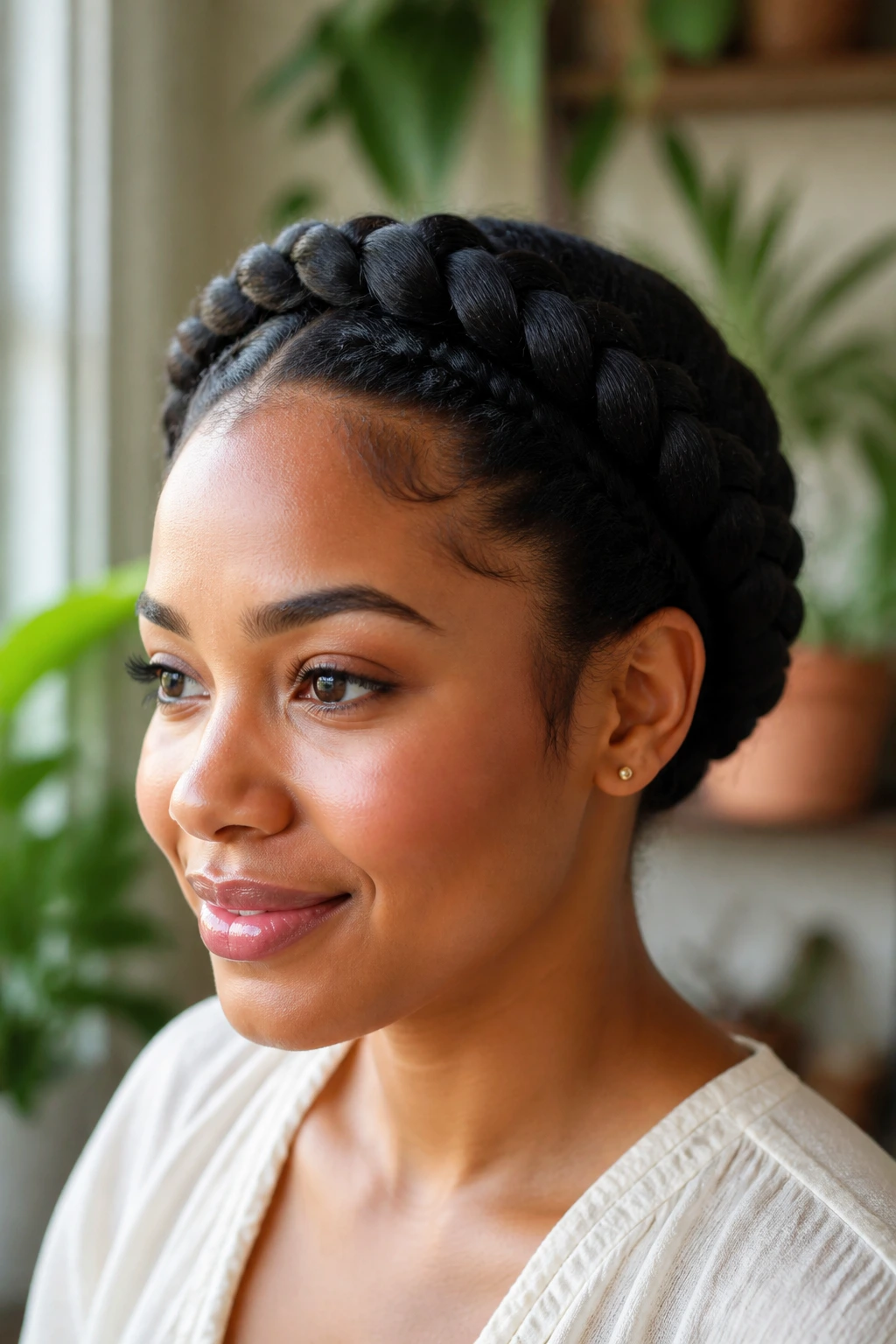
Halo braids and braided crowns overlap, but the halo version usually reads softer and more continuous, like a single braid orbiting the head. The effect is smooth and a little romantic, but the practical part is what makes it worth wearing: once it is pinned, it stays out of the way.
This style works especially well on stretched natural hair because the braid can tuck neatly around the perimeter. On very thick, freshly shrunken hair, the braid may feel bulky or resist the shape. Stretch first. That saves headaches later.
The halo braid is one of the few braid styles that can look formal without needing extras. If you do add anything, keep it light. A few pins, a bit of sheen spray, and you are done.
21. Freestyle Braids
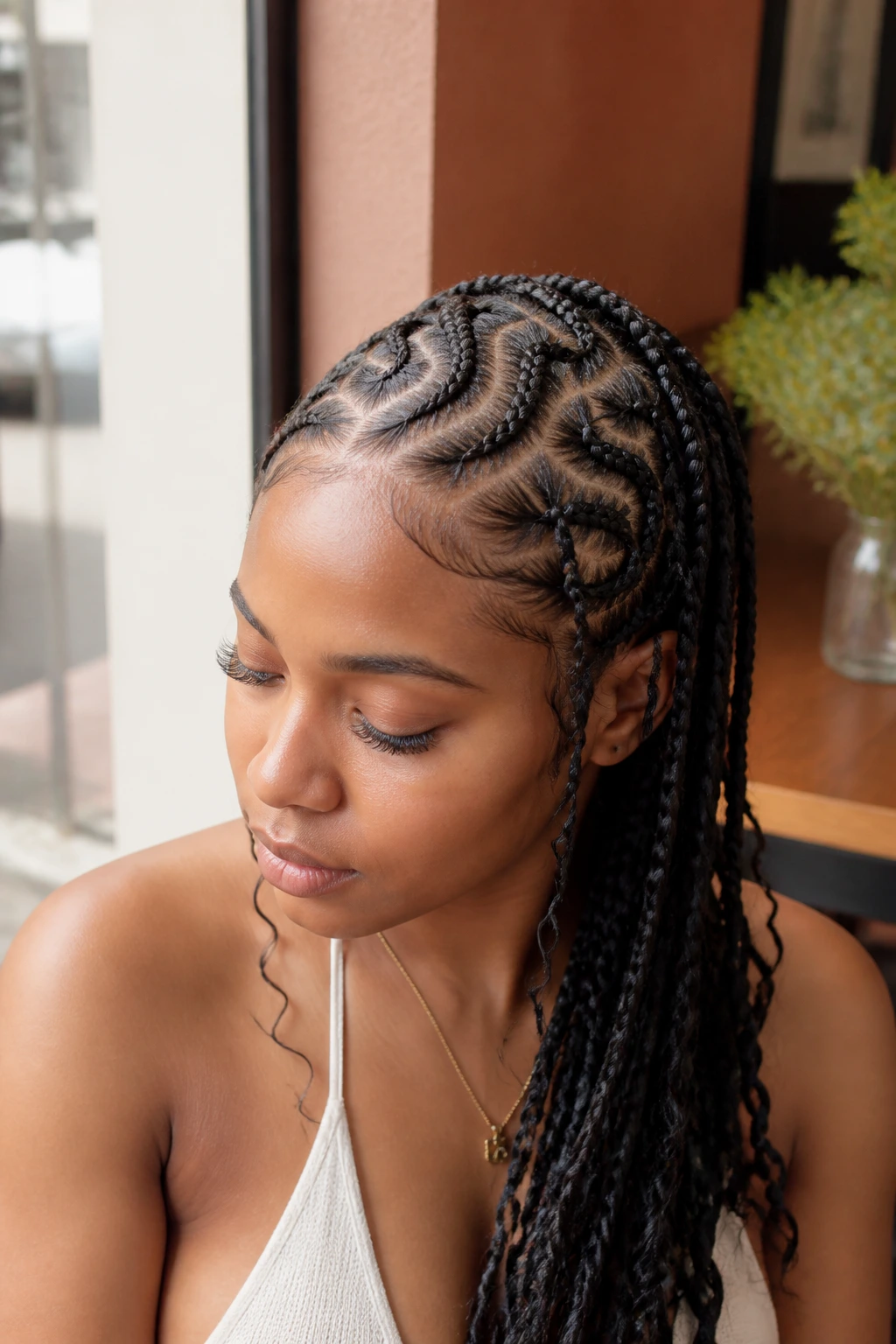
Freestyle braids are for the person who does not want a grid of identical parts. The sections can curve, intersect, or change size, and the final look feels more artistic than rigid. It is a useful escape hatch when you are bored with standard rows but still want a braided style that holds.
The trick is not randomness for its own sake. Freestyle still needs rhythm. The parts should repeat some visual logic, even if the shapes are irregular. A truly sloppy freestyle pattern just looks like a bad start to a braid set.
This is a strong choice if you like styles that seem custom rather than copied. It gives a stylist room to work with your head shape, hair density, and the way your hairline naturally grows.
22. Heart-Part Braids
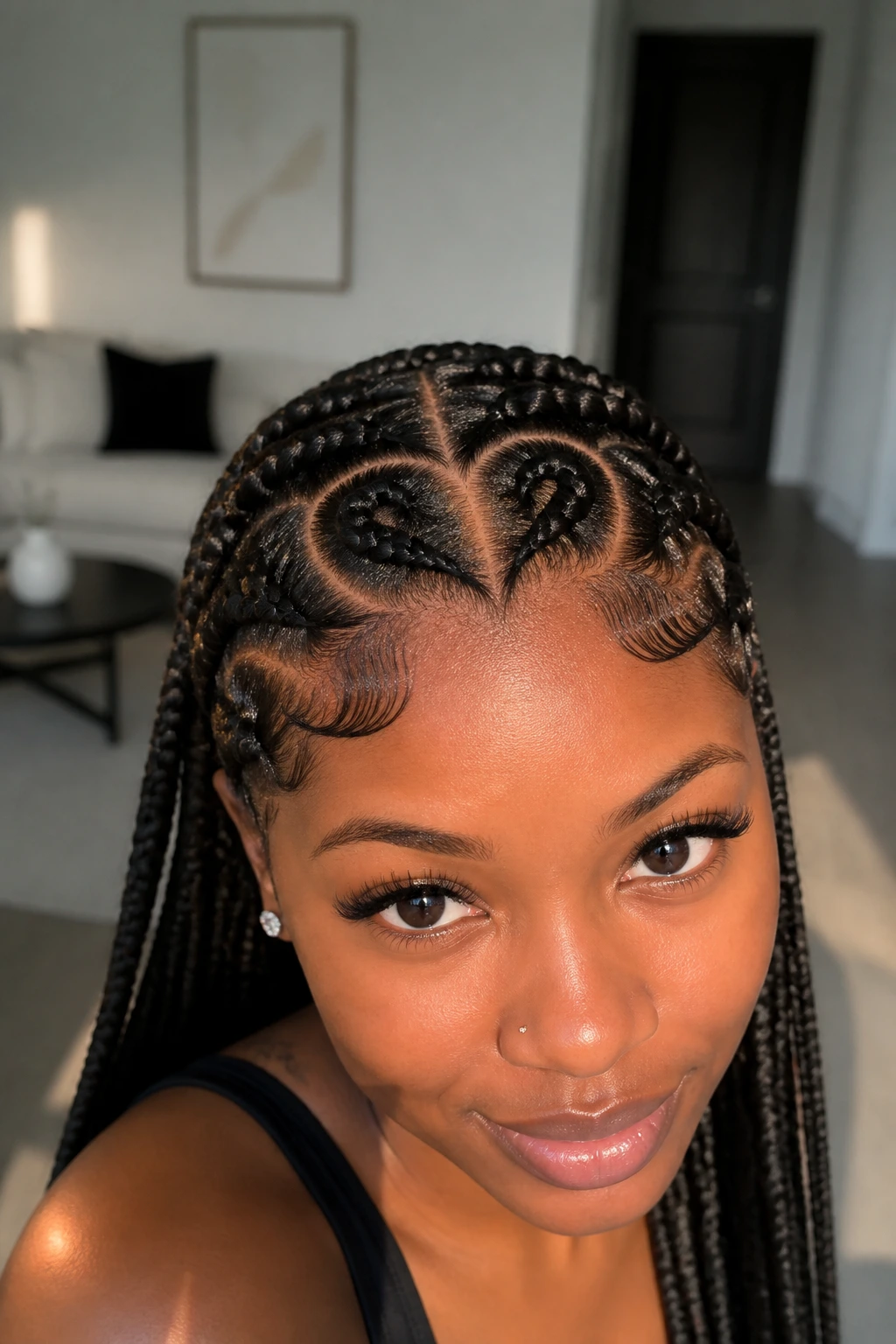
Heart parts are one of those little details that change the whole mood of a style. The parting at the scalp is shaped into a heart, usually near the front or side, and the rest of the braid pattern can stay simple. That single shape makes the style feel personal.
Where the detail matters
Heart parts look best when the lines are clean enough to read without being so deep that they expose too much scalp. The shape should feel intentional, not cartoonish. If the heart is tiny and crowded by surrounding parts, the effect gets lost.
This is a good style for someone who wants a braid set that feels playful but not childish. You can keep the rest of the head neat and let the parting do the talking. It also photographs well from above, which is why people who love scalp art keep coming back to it.
The downside is that the parting has to be precise. There is no hiding a lopsided heart.
23. Zig-Zag Braids
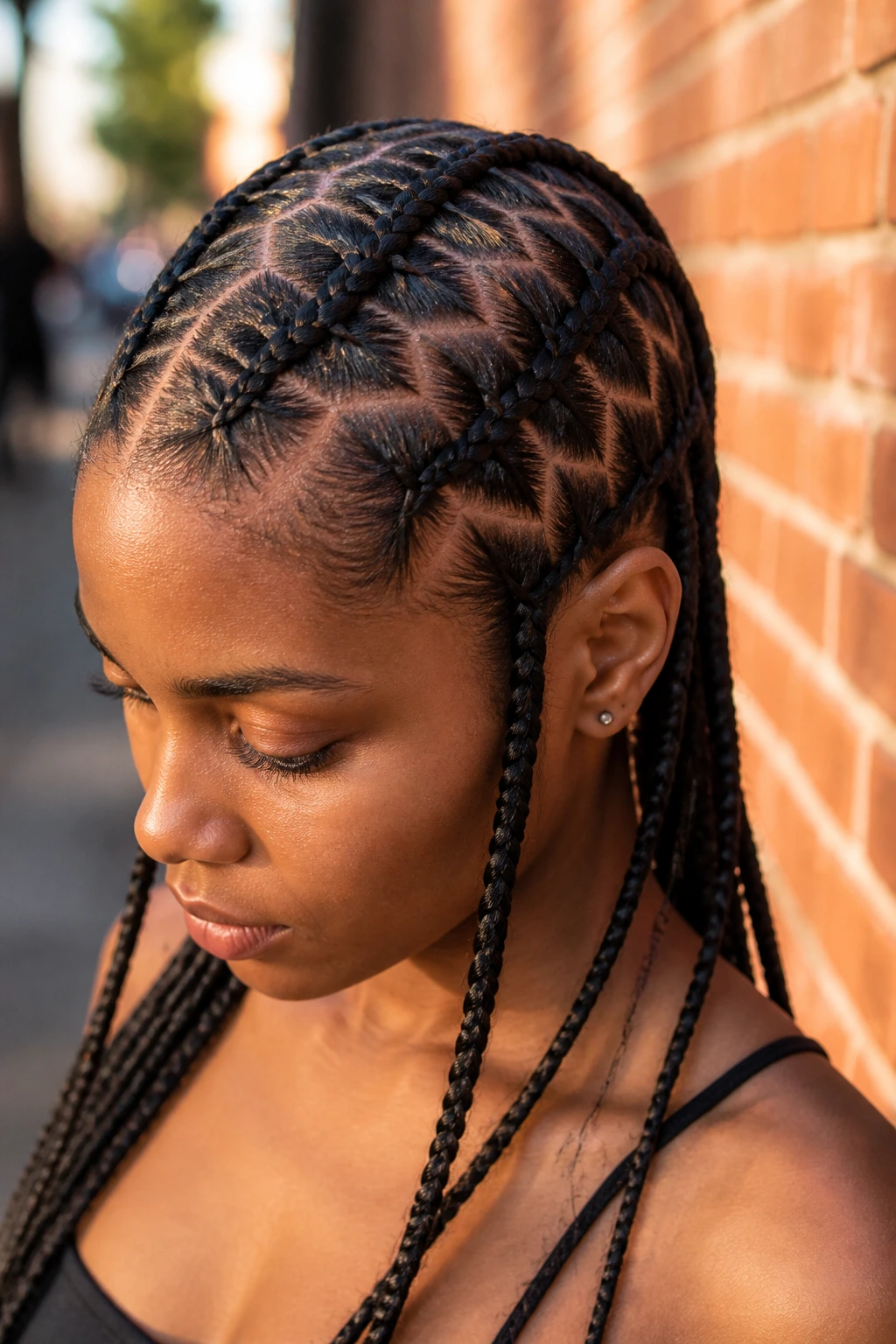
Zig-zag parts turn the scalp into part of the design. Instead of straight lines, the parts angle back and forth, which gives even a simple braid style a little edge. On natural hair, the contrast between the textured braid and the sharp part line is part of the appeal.
This style is best when the sections are tight enough to stay visible but not so tiny that the pattern becomes cluttered. If you crowd the zig-zags too close together, the scalp starts looking busy. A few clean directional changes usually read better than a dozen cramped ones.
It is a smart choice when you want something visual without adding length, color, or accessories. The parting is the ornament. Nothing extra needed.
24. Beaded Braids
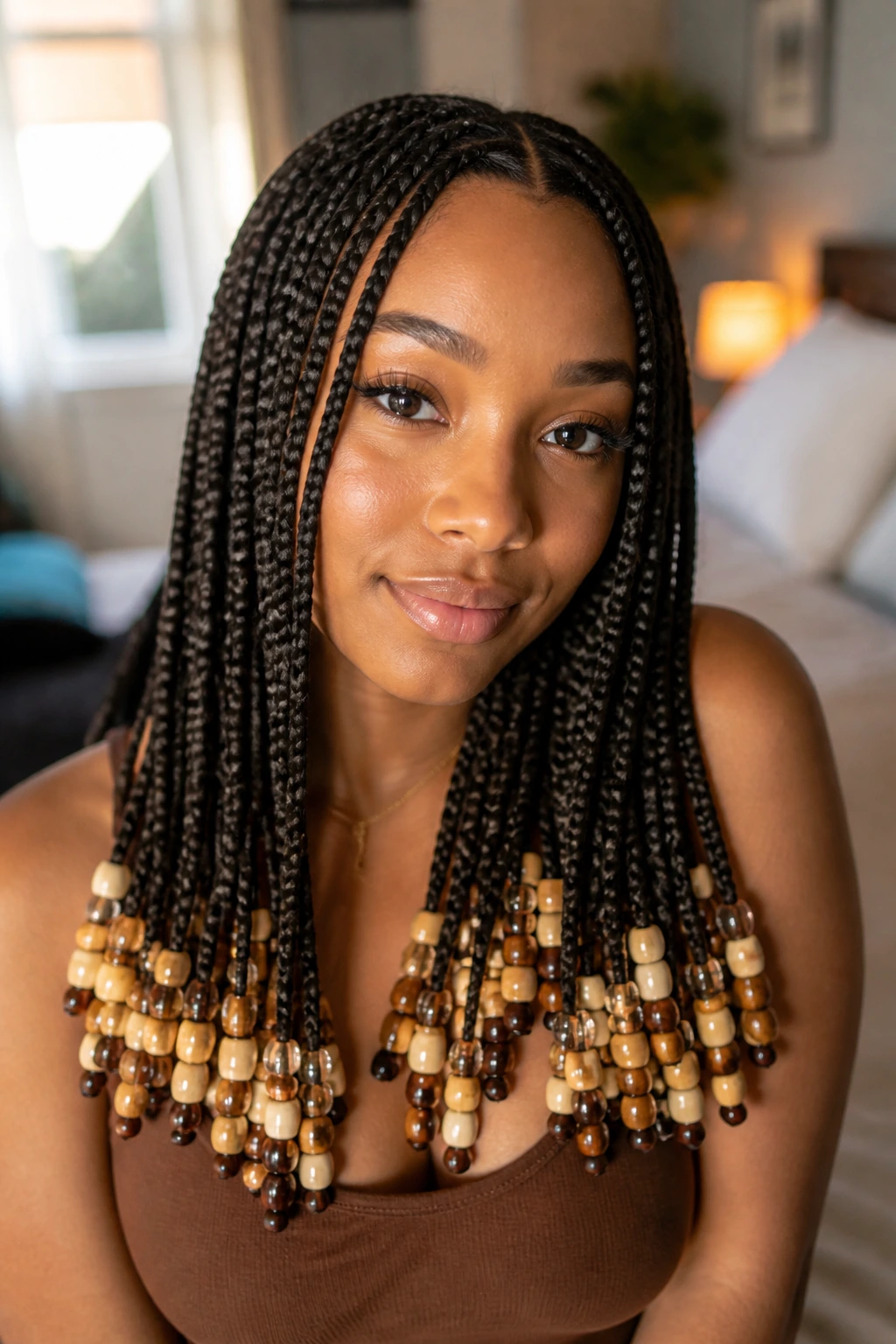
Beaded braids add sound, weight, and movement to the style. The beads click lightly when you walk, which is either charming or mildly annoying depending on your mood, but the look itself is hard to miss. They work especially well on box braids, cornrows with loose ends, and braid styles with face-framing pieces.
The number of beads matters. A few at the ends can look crisp. Too many and the braids start to droop. On natural hair, keep the balance in mind; heavy beads can tug, especially on fine sections or shorter braids.
This is one of the easiest ways to change a style without redoing the actual braid pattern. Wood beads feel different from plastic. Clear beads feel different from gold cuffs. The braid stays the same, but the mood changes fast.
25. Triangle Cornrows
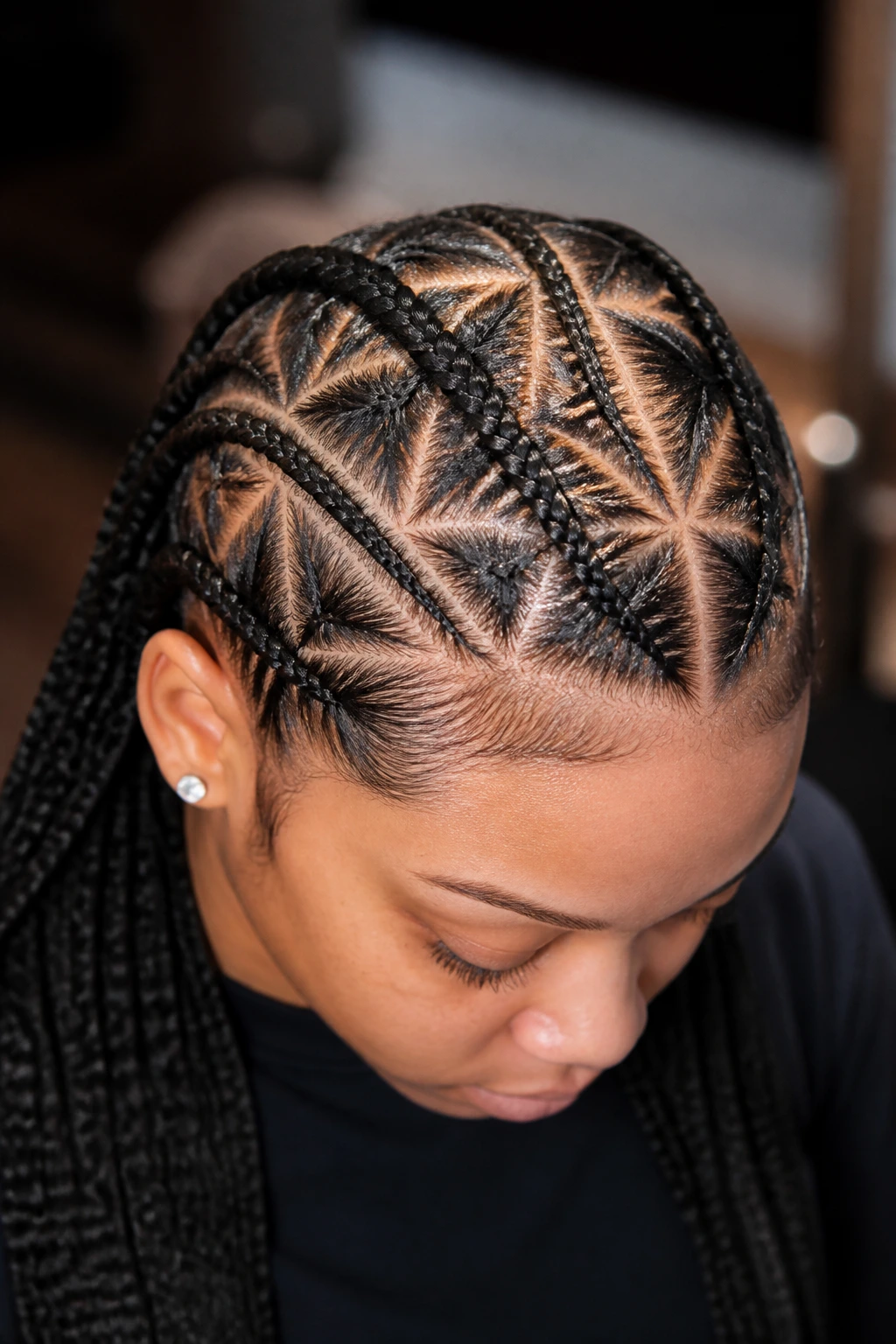
Triangle cornrows swap out the classic straight or curved parting for triangle-shaped sections, which makes the scalp pattern more geometric. The braids themselves can be simple rows, but the base parting gives the style a sharper visual edge.
That shape works well when you want neatness with a little personality. Triangles can be small and tight for a more detailed look, or larger and more obvious if you want the parts to read from a distance. Either way, consistency matters. Irregular triangles look accidental.
This is also a good choice when you want cornrows but do not want to fall back on the same straight-back pattern again. It feels modern without needing special hair or extra styling products.
26. Ladder Braids
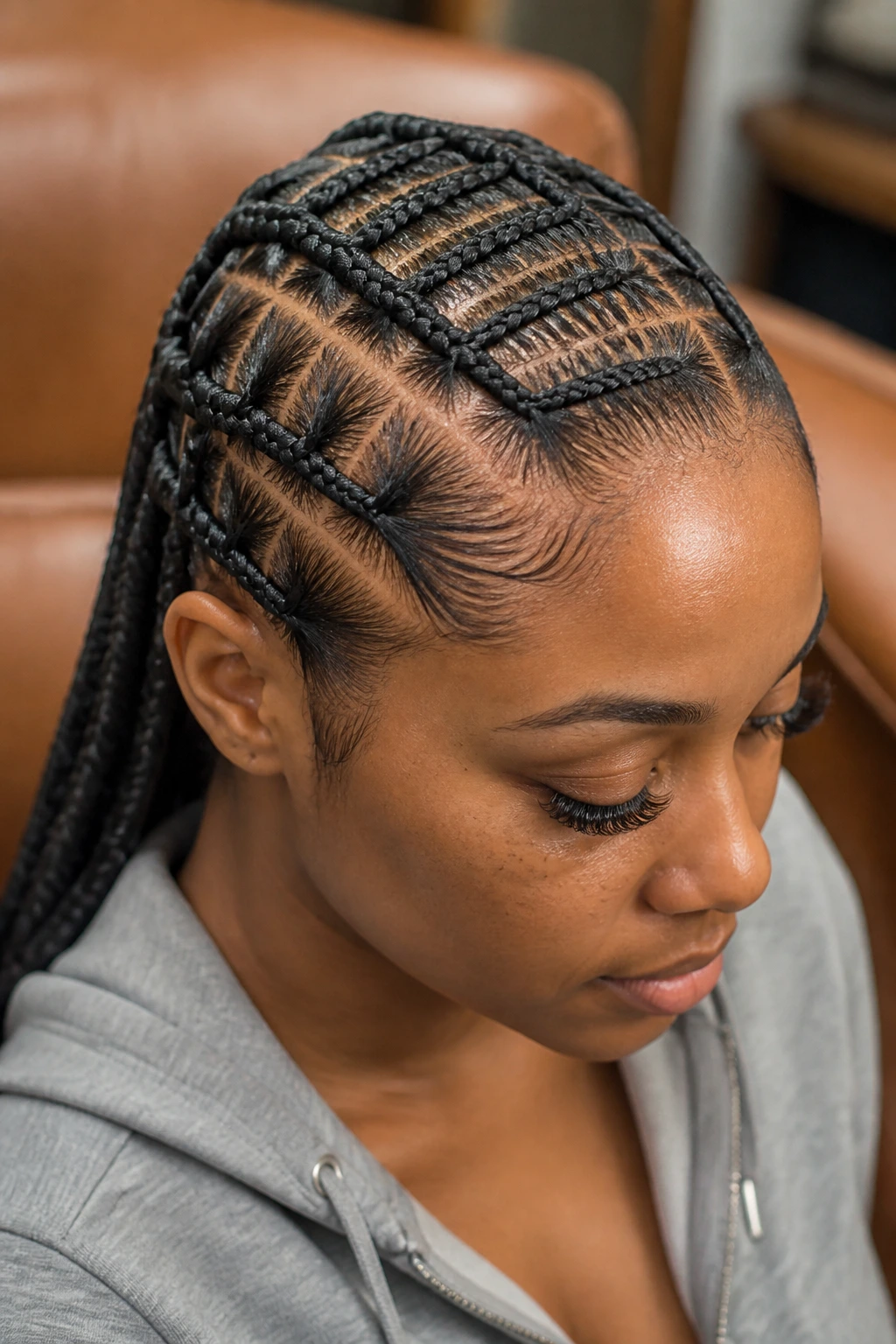
Ladder braids create a row-by-row effect that looks almost like a braided staircase running across the scalp. They are not the first style most people ask for, which is exactly why they stand out when done well. The visual interest comes from spacing and repetition.
The sections need to line up cleanly, because the “ladder” reads only if the rows are evenly placed. A crooked rung breaks the whole illusion. That makes this style more technical than it looks from a photo.
It is a good option if you like architectural braid patterns and want something different from the usual straight rows or curves. The style usually works best when the rest of the hair is kept simple so the shape has room to show.
27. Cornrow Mohawk
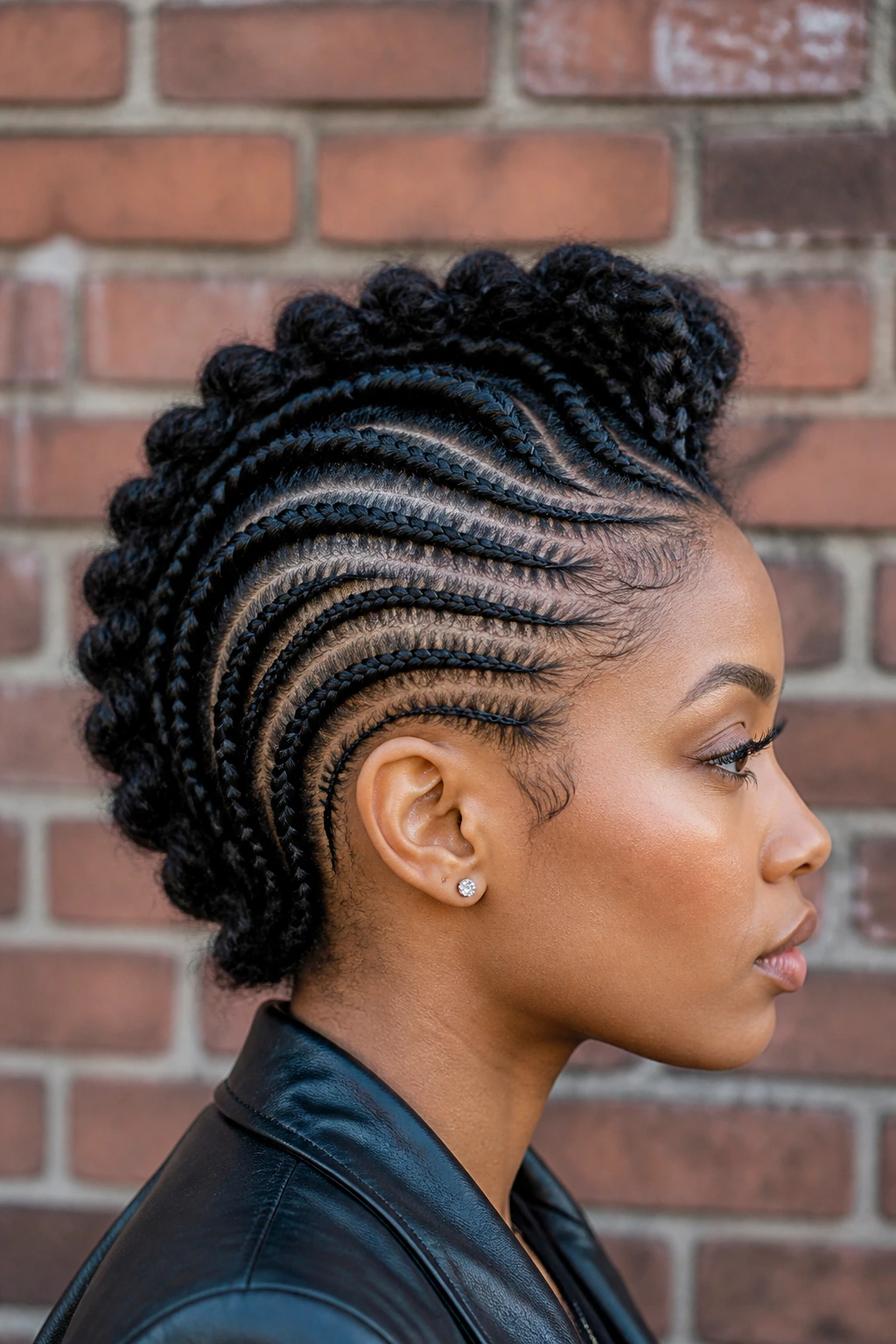
A cornrow mohawk leaves the center strip of hair more prominent while the sides are braided back or down, which creates a strong center line and a lot of height. It is a bold shape, and that’s the whole point. The style looks awake.
On natural hair, the mohawk shape can be built from feed-ins, straight rows, or curved side braids. What matters is the contrast: tight sides, fuller middle, clear silhouette. If the parts are too soft, the mohawk disappears.
This style works when you want a braid look with more edge than a standard set. It also keeps hair off the face and can be pulled into a puff-like finish at the top if the center section is left with enough length.
28. Braided Faux Hawk
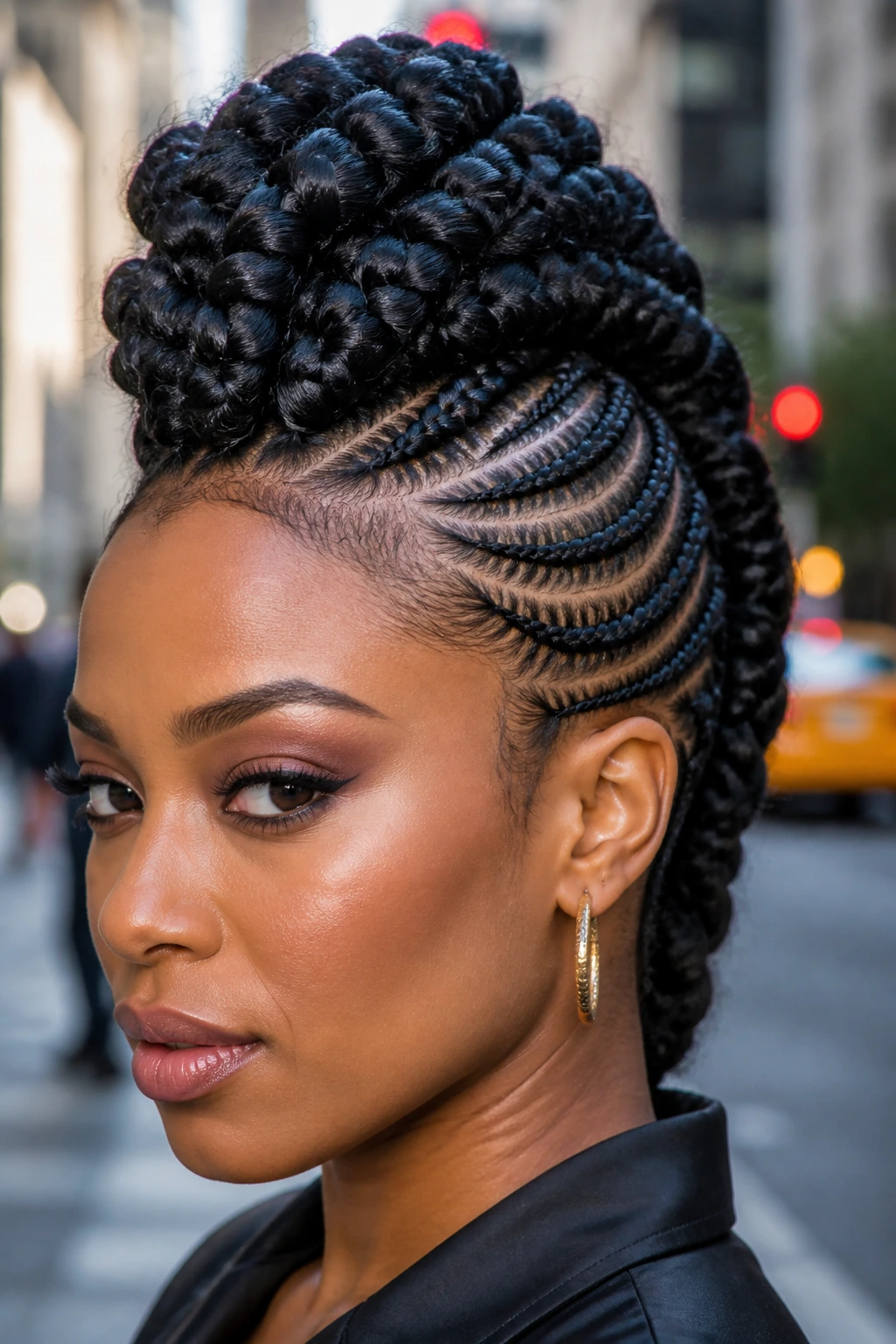
A braided faux hawk pushes the mohawk idea further by exaggerating the center section and making the sides feel almost sculpted away from it. It can be built with cornrows, twisted sections, or a mix of braid directions, and it always reads as deliberate.
The style is especially useful when you want something dramatic without cutting or actually shaving anything. That matters. It gives you the energy of a punked-up silhouette while keeping the hair protected and reversible.
This is not the style for a timid mood. It looks best when the center has height and the sides are flat enough to sharpen the contrast. If the braid pattern is too soft, the faux hawk loses its bite.
Why Braids Work So Well on Coily, Curly Hair
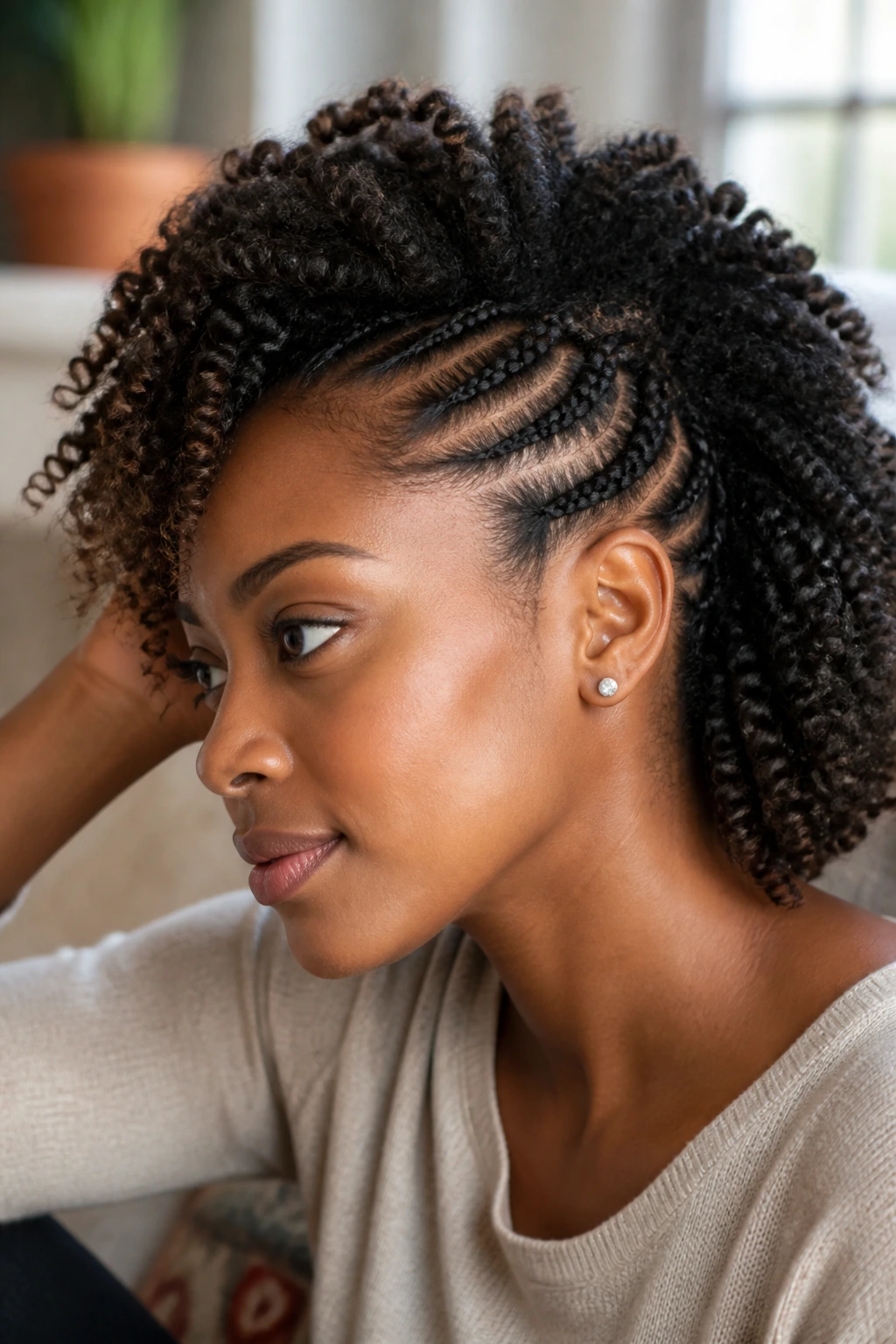
Braids hold up on natural hair because coily texture gives the braid something to grip. That grip is part of the magic. Once the strands are stretched, sectioned, and tucked, they stay put in a way loose straight hair often does not. The style is not fighting your texture; it is using it.
The other reason braids are so dependable is shape control. Natural hair shrinks, puffs, and bends in ways that can make wash-day styling feel like a full-time job. A braid pattern brings that volume into a lane. It does not erase texture. It organizes it.
That said, the style only works when the scalp is respected. Tight rows at the hairline, heavy extensions, and styles left in too long can turn a good braid set into a sore one. The sweet spot is a style that feels anchored on day one and still feels calm on day five.
Tools That Make Parting Cleaner and Styling Easier
-
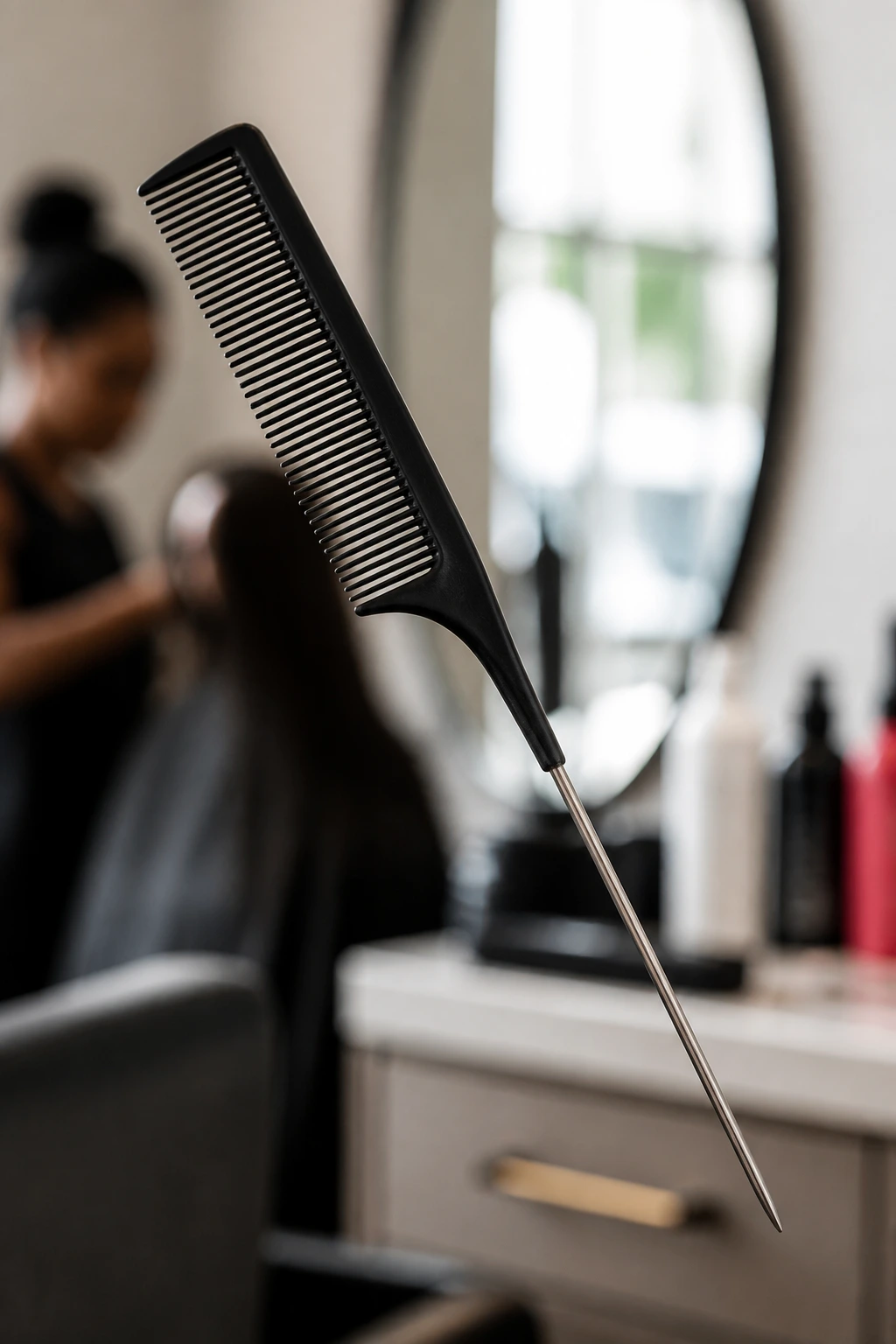
Rattail comb: The fine tail helps draw straight parts and clean curves, especially for box braids, stitch rows, and heart parts.
-
Wide-tooth comb: Good for detangling stretched natural hair before braiding; less snagging means less breakage.
-
Sectioning clips: These keep the loose hair out of the way while you work one row at a time.
-
Spray bottle with water and leave-in: A light mist softens the hair enough to braid without soaking it.
-
Braiding gel or braiding jam: Use it sparingly on the roots to smooth flyaways and keep parting neat; too much turns pasty.
-
Pre-stretched braiding hair: Saves time and gives a smoother, less blunt finish than hair straight from the pack.
-
Blow-dryer with comb attachment: Optional, but useful for stretching natural hair before a braid install so the parts sit flatter.
-
Satin scarf or bonnet: Nighttime protection matters more than most people think; cotton pillowcases rough up the edges fast.
-
Small scissors: Handy for trimming stray extension hairs, not for cutting near your roots mid-install.
-
Mousse or foam wrap: Helps lay down flyaways after installation and gives braided styles a cleaner finish.
How to Choose Braid Size, Length, and Added Hair
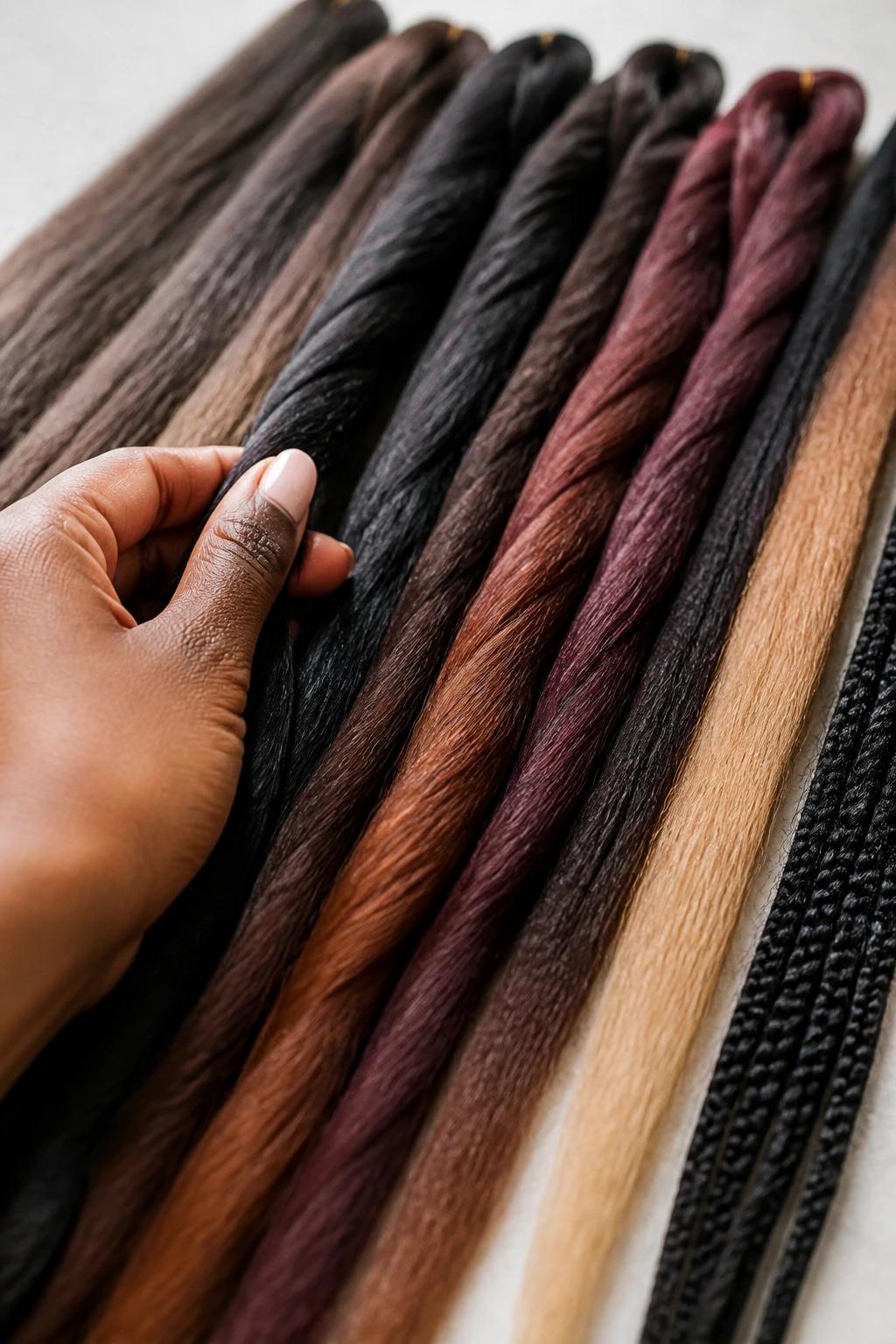
The first thing to decide is not the style name. It is the weight. A tiny braid set with waist-length extensions can be gorgeous, but if your scalp already hates tension, that choice is asking for trouble. Fine or fragile edges usually do better with fewer, larger sections and lighter added hair.
Length changes the mood fast. Shoulder-length braids are easier to sleep in and faster to refresh. Mid-back and waist-length sets give more styling room, but they catch more wind, take longer to dry after washing, and pull harder if you pack too much hair into each braid. Longer is not always better. Heavier is heavier.
Color matters too. A shade close to your natural root color gives the most seamless look. If you want copper, burgundy, or blonde tones, ask whether the hair has a matte finish or a shiny synthetic finish. That little detail can decide whether the style looks rich or plasticky.
For natural hair without extensions, think about shrinkage first. Stretched hair gives cleaner parts and keeps the base flatter. Freshly washed coils can be braided, sure, but they puff more at the root and make neat parting harder than it needs to be.
How to Wear These Styles So They Sit Right
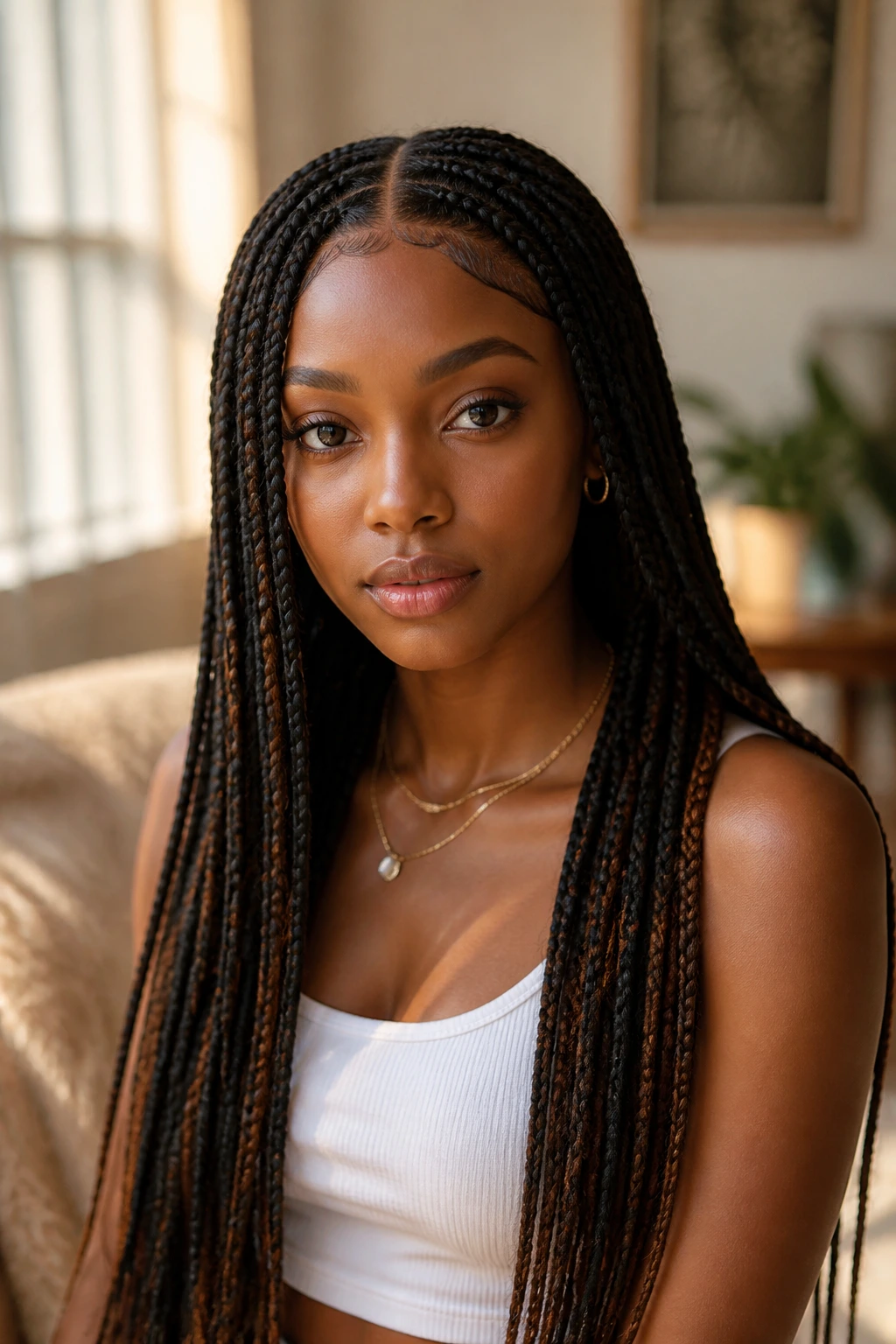
Shape: Long braids pull the eye downward, so pair them with a middle part, a side part, or a half-up shape if you want more lift around the face. Short braids and bob lengths sit closer to the jaw and can sharpen the outline of the face.
Accessories: Beads, cuffs, thread wraps, and scarves should support the braid pattern, not cover it. If the parting is the feature, keep the decorations modest. If the braids are plain, accessories can carry more of the look.
Length: A braided ponytail or bun is easier to wear when the braids are medium weight. Very long braids can feel like a workout after a few hours, especially if the install is heavy near the temples.
Occasion: Straight-back cornrows, goddess braids, and braided crowns read clean enough for work or formal events. Beaded Fulani styles, boho braids, and faux hawks lean more expressive. Neither is better. They just tell a different story.
Extra Polish and Personal Touches
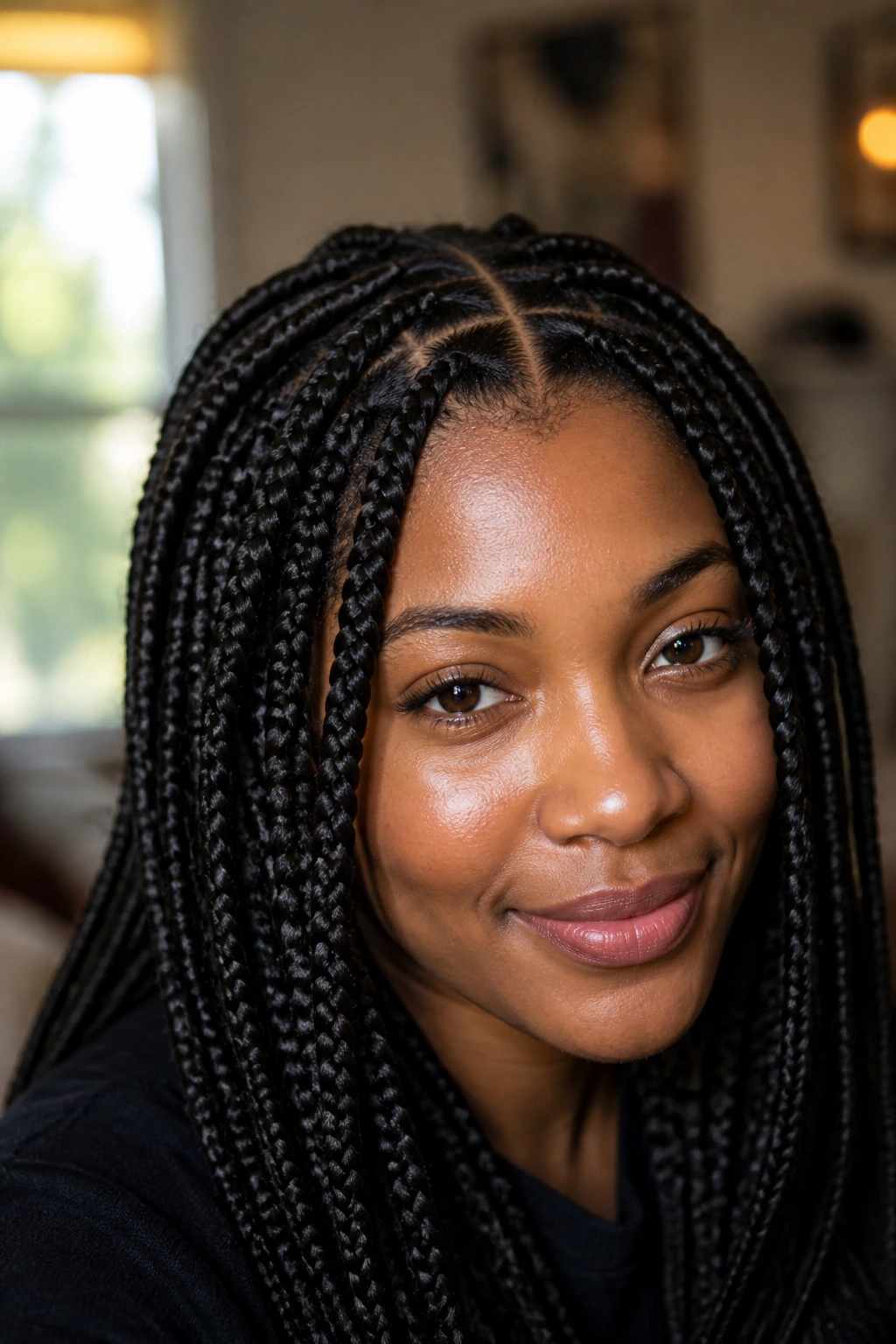
Finish: A light mousse pass after installation helps settle flyaways without making the hair crunchy. Follow it with a silk scarf for 15 to 20 minutes so the roots set flat.
Customization: Mix braid sizes in one style if you want movement without a full freestyle pattern. A few thicker rows near the crown and smaller ones near the hairline can soften the face shape fast.
Serving Suggestions: That sounds like food, but the hair equivalent is the final detail. Add cuffs only to the front rows, leave curly ends out on just two or three braids, or wrap one braid with thread to create a focal point without turning the whole head into a craft project.
Make-It-Yours: If your edges are sensitive, ask for larger sections at the temples, a looser first inch, and no extra weight stacked on the front line. If your hair is dense, you can support more structure without losing comfort.
Common Mistakes That Make Braids Miserable
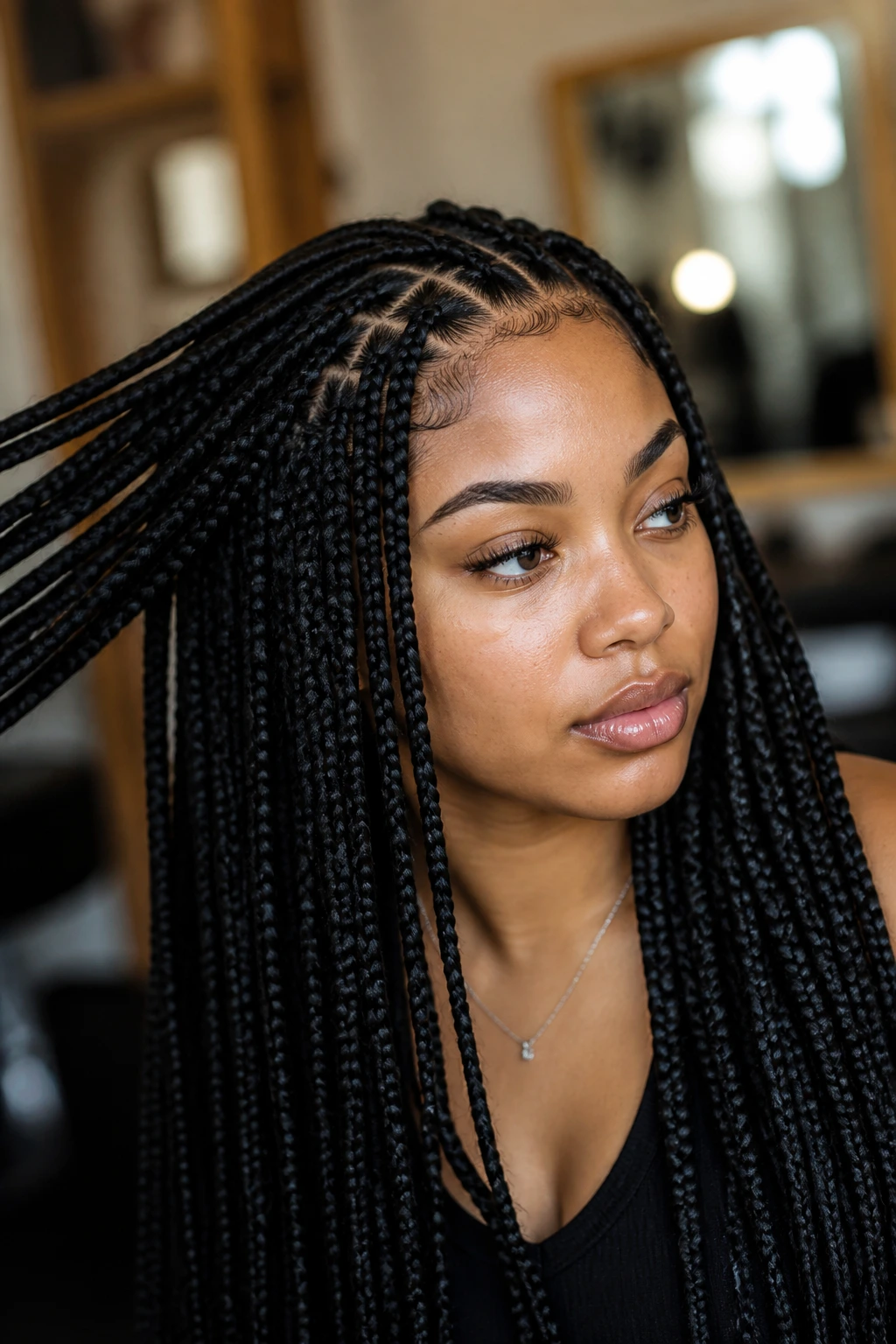
One of the quickest ways to ruin a braid style is too much tension at the root. You feel it immediately: pulling at the temples, tenderness when you put on sunglasses, or a sharp ache when you move your head. The fix is simple, though not always popular in the chair—ask for less pull and stop the install before the braid pattern becomes a scalp workout.
Another mistake is braiding on hair that has not been detangled or stretched enough. The parts swell, the braids puff, and the base gets messy fast. Use a blow-dryer on low heat with a comb attachment if your texture and routine allow it, or at least stretch the hair in sections before parting.
A third problem is overloading the style with added hair. Heavy extensions can make even a beautiful set uncomfortable by the second day. If the braid feels like it swings from the root instead of hanging from the section, there is too much weight.
The last one people ignore is keeping braids in too long. Once new growth starts crowding the root and the scalp gets itchy or flaky from buildup, the style is past its best window. Clean styles age. Neglected styles just fray.
How to Keep Braids Fresh Between Wash Day and Take-Down
Most braid styles on natural hair look and feel best for 2 to 8 weeks, depending on size, tension, and how much loose hair is involved. Straight-back cornrows and side-swept feed-ins often need a refresh sooner, around the 2- to 4-week mark. Larger box braids, knotless braids, and micro braids can last longer if the install was gentle and the scalp stays calm.
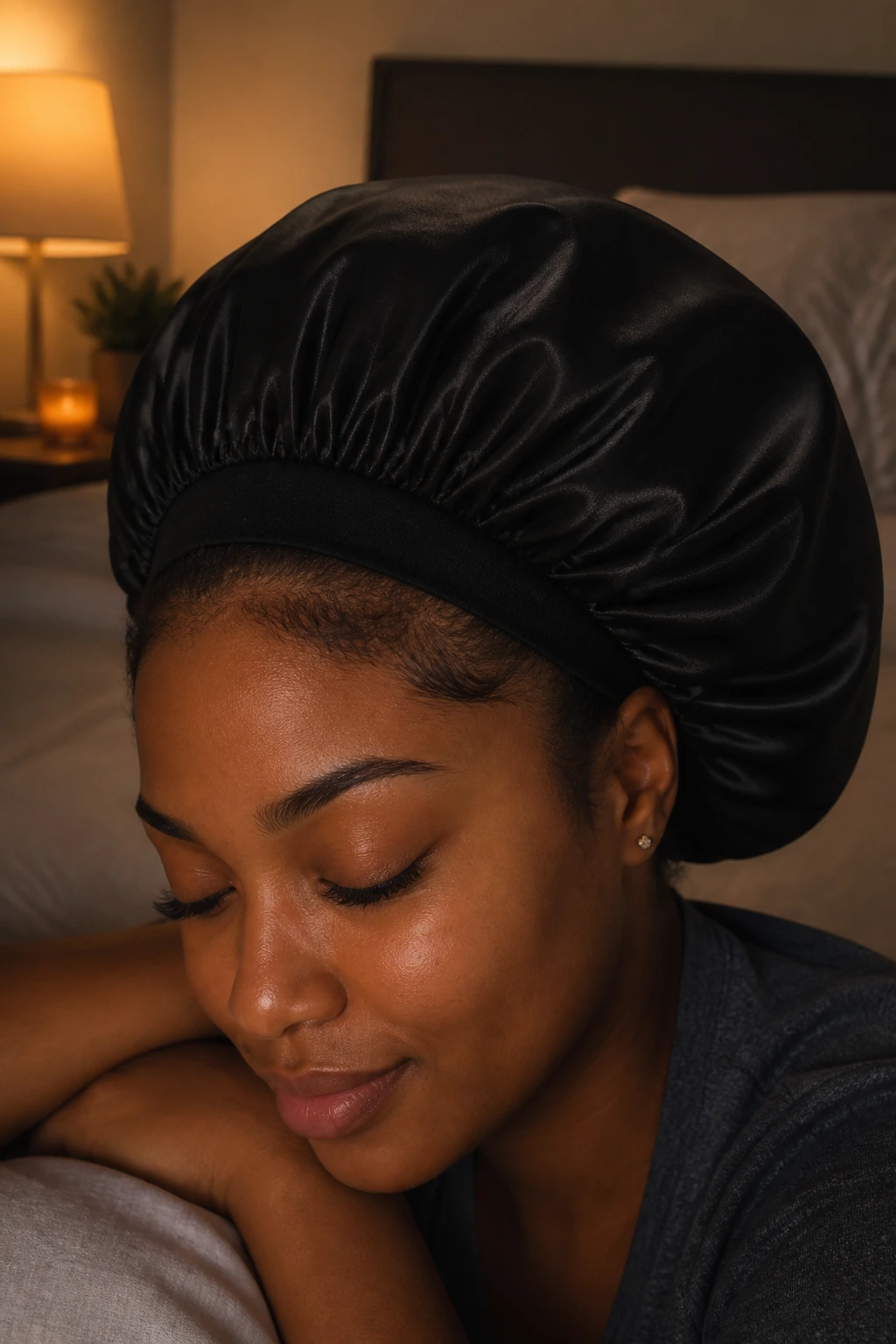
Night care does a lot of the work. A satin bonnet or scarf keeps the roots from fuzzing up on cotton pillowcases, and it helps the braid lengths stay smoother. If you sleep rough, tie the hair down in a low pineapple or wrap the braids flat so the crown does not get crushed.
Scalp care should be light. A small amount of spray or diluted leave-in on the roots every few days is usually enough. Heavy oil every night sounds luxurious and often ends in buildup. The scalp can look greasy long before it feels moisturized.
Washing braids is possible, but it takes a gentler hand than loose hair. Use diluted shampoo on the scalp, let the suds run down the lengths, and dry thoroughly. Damp braids tucked under a bonnet are a bad idea. They smell off fast.
Questions People Ask Before They Book Braids
Which braid style is easiest on natural hair edges?
Knotless braids, loose feed-ins, and larger goddess braids tend to be gentler when the install is done well. The real issue is tension, not the style name.
What braid style works best on short natural hair?
Straight-back cornrows, stitch braids, and feed-in rows can work on short hair if there is enough grip at the root. Micro braids and long box braids usually need more length or more careful prep.
How long should braids feel tight?
A braid set should feel secure on day one, not painful. If your scalp still hurts after a full day, the install is too tight.
Can I wash my scalp with braids in?
Yes, and sometimes you should. Use diluted shampoo, focus on the scalp, and let the water move through the lengths without rough scrubbing.
How much braiding hair do I need?
That depends on size and length. Jumbo braids may need only a few packs, while small knotless or micro styles can take many more. Ask your stylist to estimate based on the exact length you want, because guessing by eye is how people end up with not enough hair.
Do braids help natural hair grow?
They help with length retention by reducing daily manipulation and keeping ends tucked away. They do not make hair grow faster, though. Less breakage is the real win.
What if my braids start frizzing at the root?
That’s normal after a while. A little mousse and a scarf can smooth the look, but if the frizz is paired with buildup or scalp soreness, it may be time to take the style down.
Which styles are most comfortable for sleeping?
Braided bobs, knotless braids, and medium cornrow styles usually feel easier under a bonnet than very long, heavy sets. Anything that pulls at the neck is harder to sleep on.
Braids Worth Wearing More Than Once
The smartest braid styles are the ones that fit your real life, not a photo. Some need clean parting and a patient stylist. Some are quick and plain in the best way. Some are the sort of braids you wear because you want your scalp to rest, your ends tucked in, and your mornings a little quieter.
Natural hair does not need a single braid formula. It needs styles that respect tension, weight, and the shape of the hair underneath. Get those pieces right and the rest falls into place—parting, accessories, length, all of it.
The next time you sit down to choose a style, start with comfort and build outward from there. Your edges will thank you, and the braid will look better for longer.