



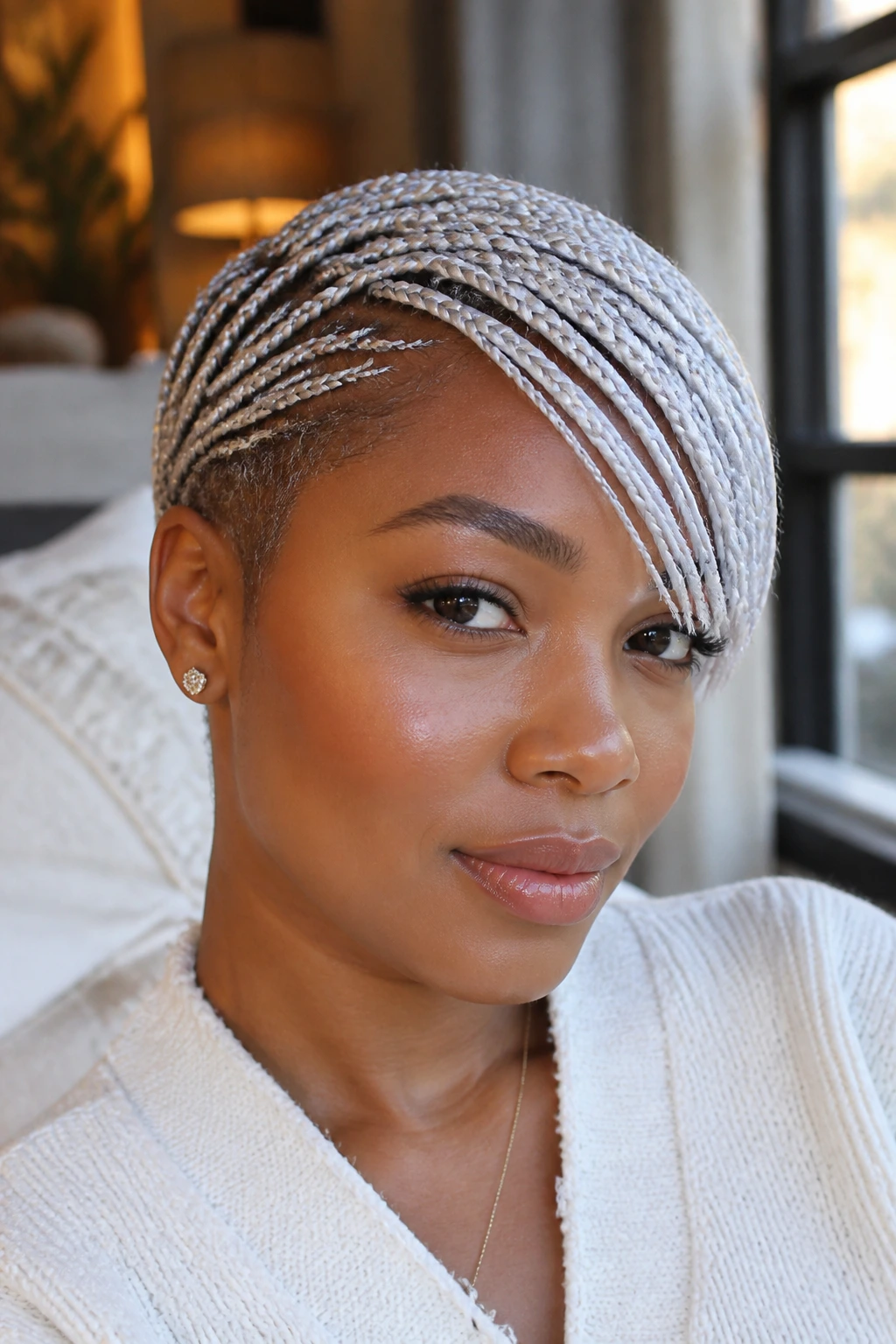
White braids on short natural hair are a style test. Every line shows. Every part shows. If the sectioning is crooked or the tension is sloppy, you can spot it from across the room; if it’s clean, the whole head looks crisp, sculpted, and a little bit fearless. A side-swept bang helps because it softens that hard brightness at the front and gives the style somewhere to move.
I’m talking about icy white, pearl-white, or silver-white braiding hair here — the kind of shade that looks chalky in daylight and almost metallic indoors. On short natural hair, that color does something interesting: it makes the braid pattern louder, which is exactly why the shape has to be deliberate. You do not get to hide behind length. That’s the fun part, and also the warning label.
What makes this pairing work is the balance. Short hair keeps the back neat and close to the scalp, while the side-swept bang gives you a diagonal line that breaks up the width of the head. Done right, the look reads polished, sharp, and a little dramatic without getting bulky or top-heavy. Done badly, it turns into a puffy helmet. So the details matter.
Why These Looks Stand Out on Short Natural Hair
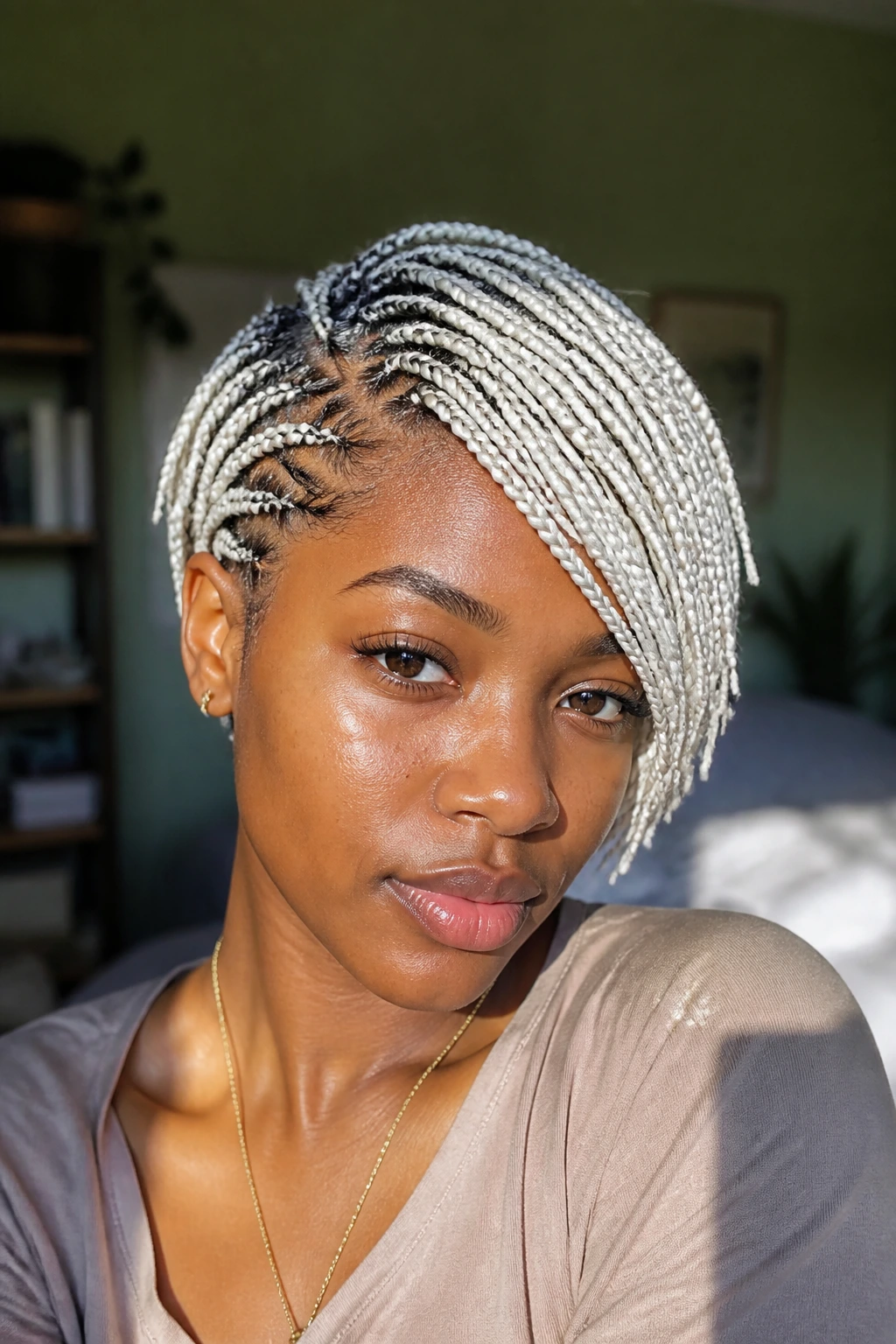
- Short hair keeps the base tidy: On a cropped or tapered cut, small braids sit flatter at the root, so the style doesn’t balloon at the crown.
- The side sweep does the heavy lifting: That diagonal front section changes the whole silhouette, especially when the braid color is bright white.
- White braid hair shows craft fast: Clean part lines, even grip, and smooth ends matter more here because pale hair exposes every wobble.
- You can scale the drama up or down: Tiny rows, chunky plaits, beads, cuffs, or a simple bob all work if the front sweep is planned.
- It protects without looking stiff: The right braid size and a soft bang keep the style from feeling like a block on your head.
1. Pearl-Straight Cornrows with a Side Sweep
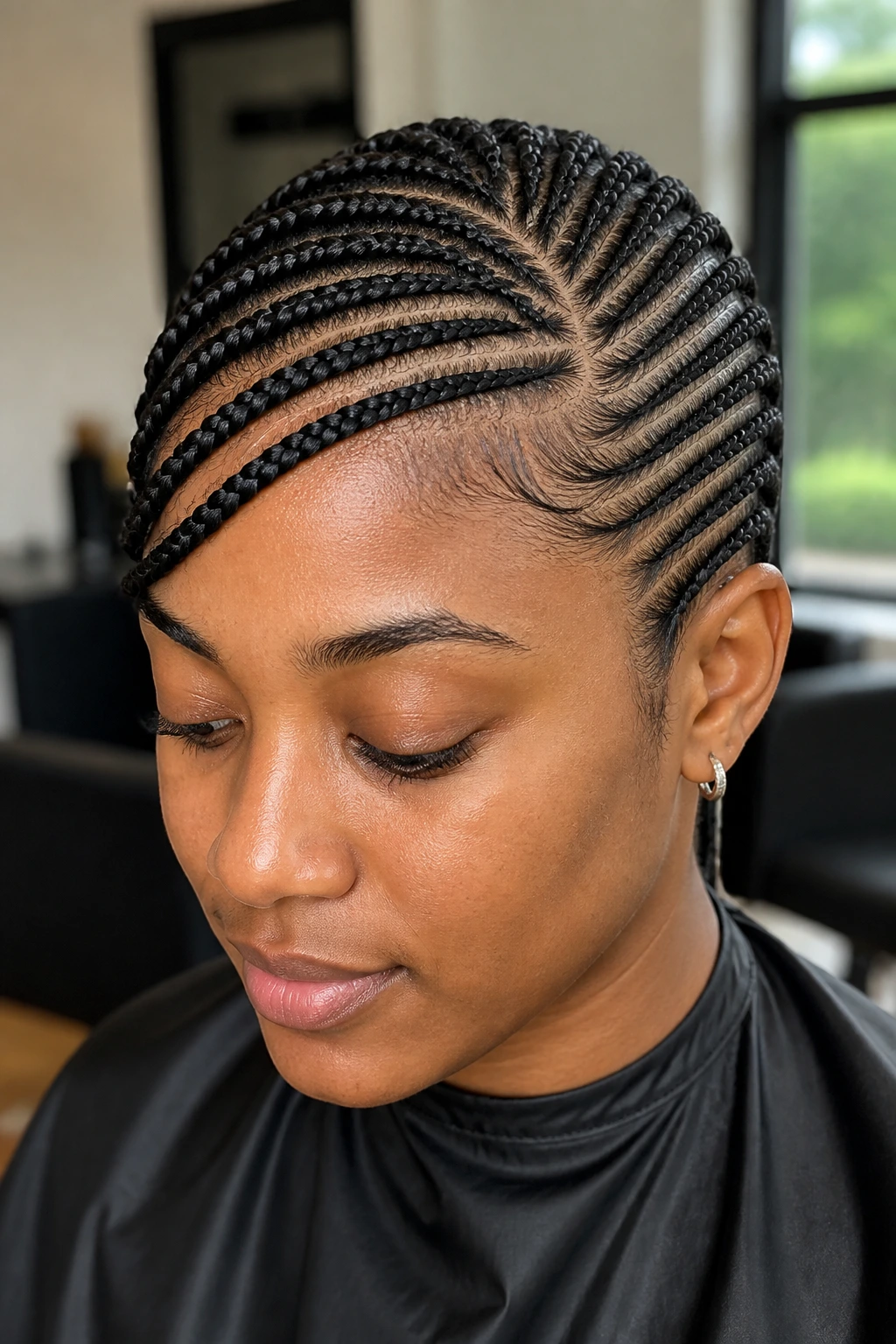
This is the cleanest version in the bunch. The braids sit close to the scalp, and the side-swept bang is made from two or three slimmer rows that bend across the forehead instead of cutting it in half. On short natural hair, that low profile is the whole point.
I like this look when the haircut already has a taper at the nape or sides. The white color sharpens the cornrow pattern, so a neat part line matters more than extra length ever would. Keep the front slightly looser than the back, or the bang will stick up instead of laying down.
2. White Knotless Braids with a Soft Bang
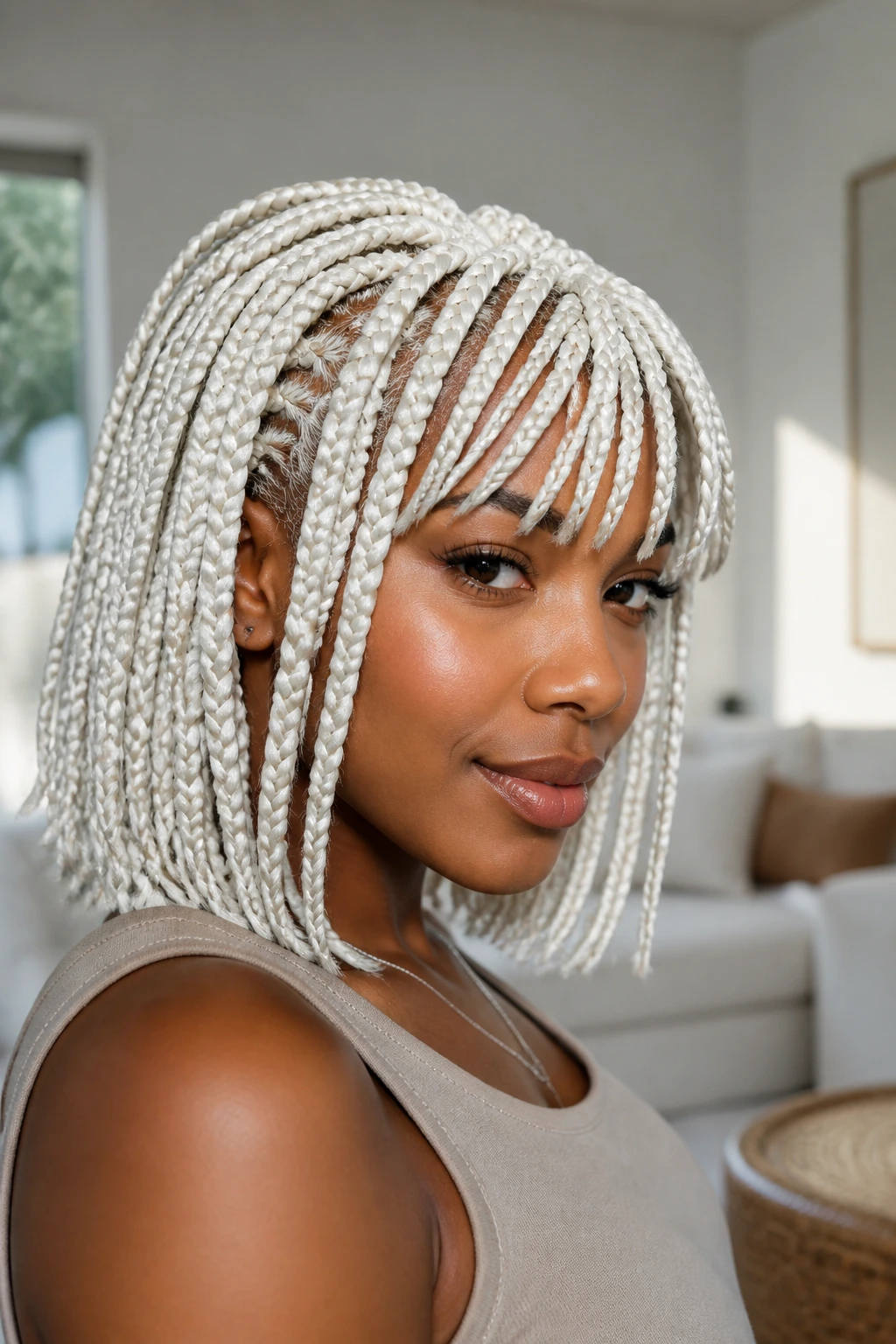
Knotless starts are worth it when your hairline feels tender or your hair is too short for a bulky root. The braid grows out smoother, and the side bang can fall with a little bend instead of a hard bend at the scalp. It looks softer than boxy starts, which helps when the braids are white and already visually strong.
This version is one of my favorites for short natural hair because it takes pressure off the first inch of the braid. Ask for smaller pieces at the front, then let the bang land around the eyebrow or cheekbone. If the front looks too thick, the whole style loses that airy finish.
3. Short Lemonade Braids with a Deep Part
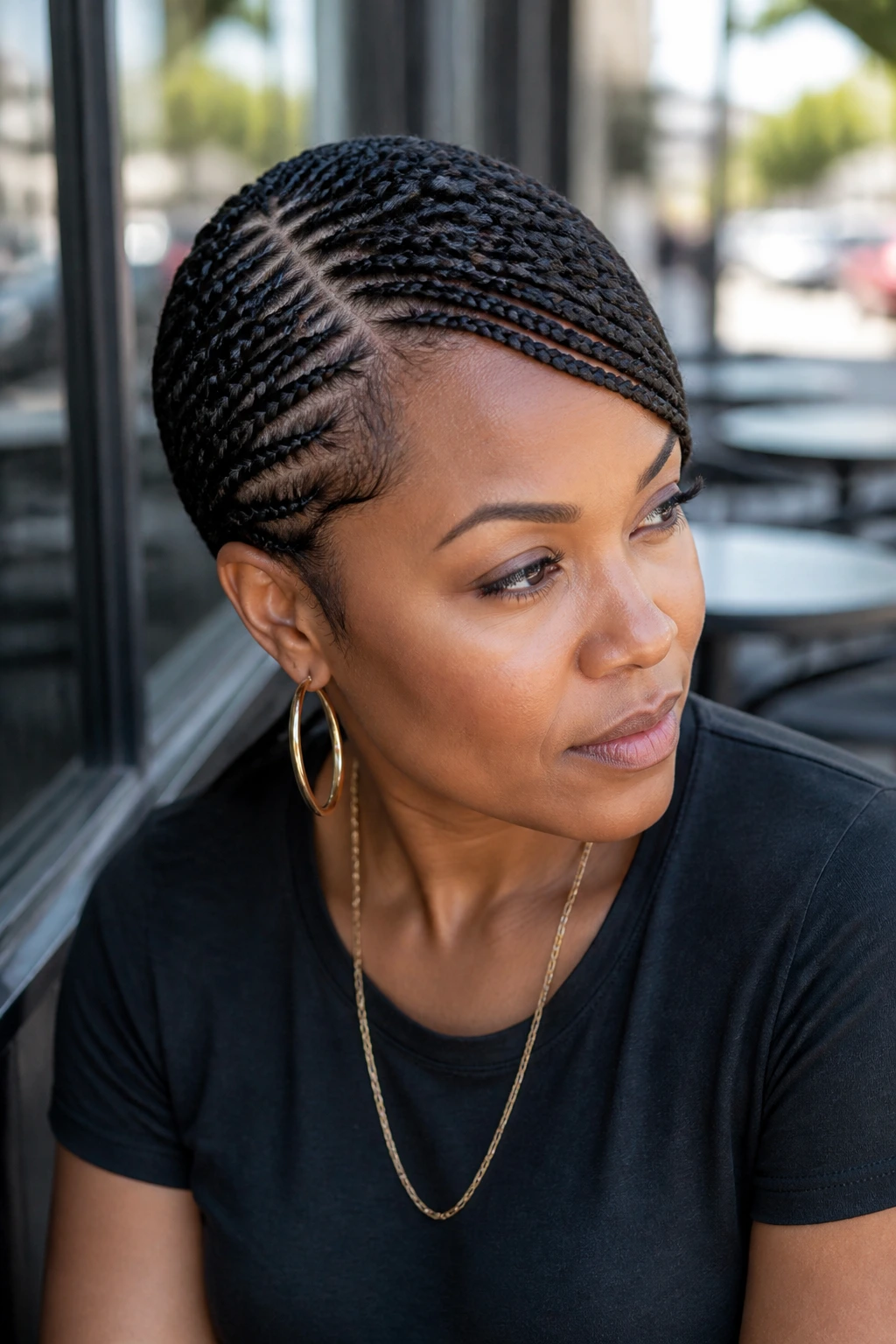
Lemonade braids bring a strong diagonal line, and that angle is exactly why they work here. On short hair, the rows should be narrow and close to the scalp so the side sweep looks intentional instead of wide and floppy. White braid hair makes the part pattern stand out like a sketch.
The trick is keeping the side with the bang slimmer than the longer side. If both sides are equally full, the face gets boxed in. I’d keep the front braid count low, then tuck the ends at the shoulder or stop them at bob length so the whole thing stays light.
4. Side-Part Fulani Braids with Beaded Tips
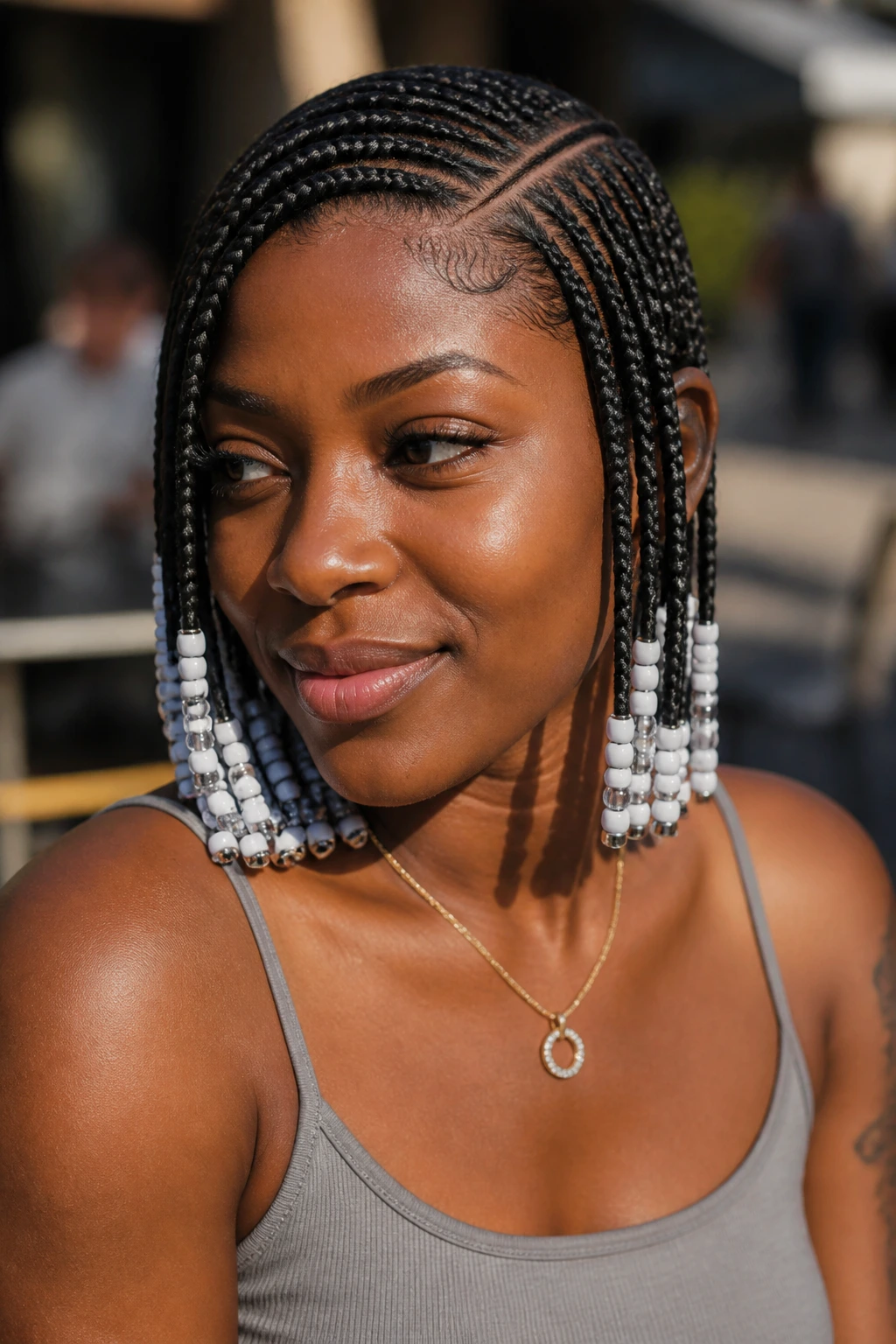
Fulani braids have a built-in frame, which is handy when your hair is short and the front shape needs help. A side part shifts the attention immediately, and the beadwork at the ends gives the white braids a little movement when you turn your head. It’s a prettier look than people expect from a protective style.
If you like a little detail without going overboard, this is the one. Keep the center and side rows slim, then let the side-swept bang fall from the temple toward the cheek. Clear beads or pale ivory beads look cleaner here than heavy black ones; they don’t fight the white hair.
5. Chin-Length Braided Bob with a Draped Front Piece
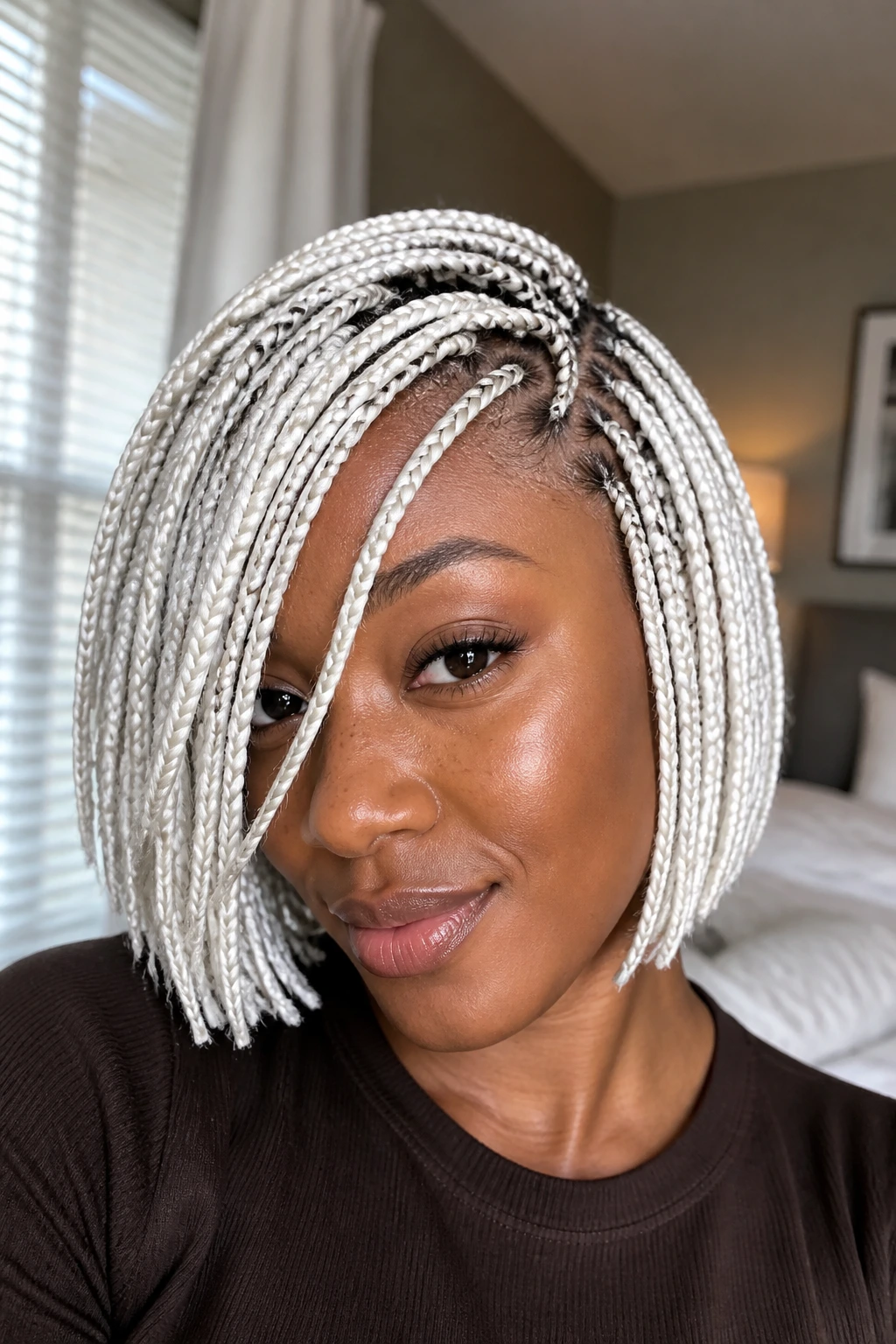
A short braided bob is practical, but it doesn’t have to read plain. The best versions sit right at the jawline or a touch below it, with the front piece draped to one side like a braid-made fringe. That little front sweep stops the bob from looking square.
I prefer this on short natural hair because the weight stays balanced. The braids don’t drag on the roots, and the white color pops against a clean neckline. If your stylist cuts the ends blunt, you’ll get a stronger shape; if they soften them with a slight curve, the whole bob feels easier.
6. Stitch Cornrows into a Low Side Pony
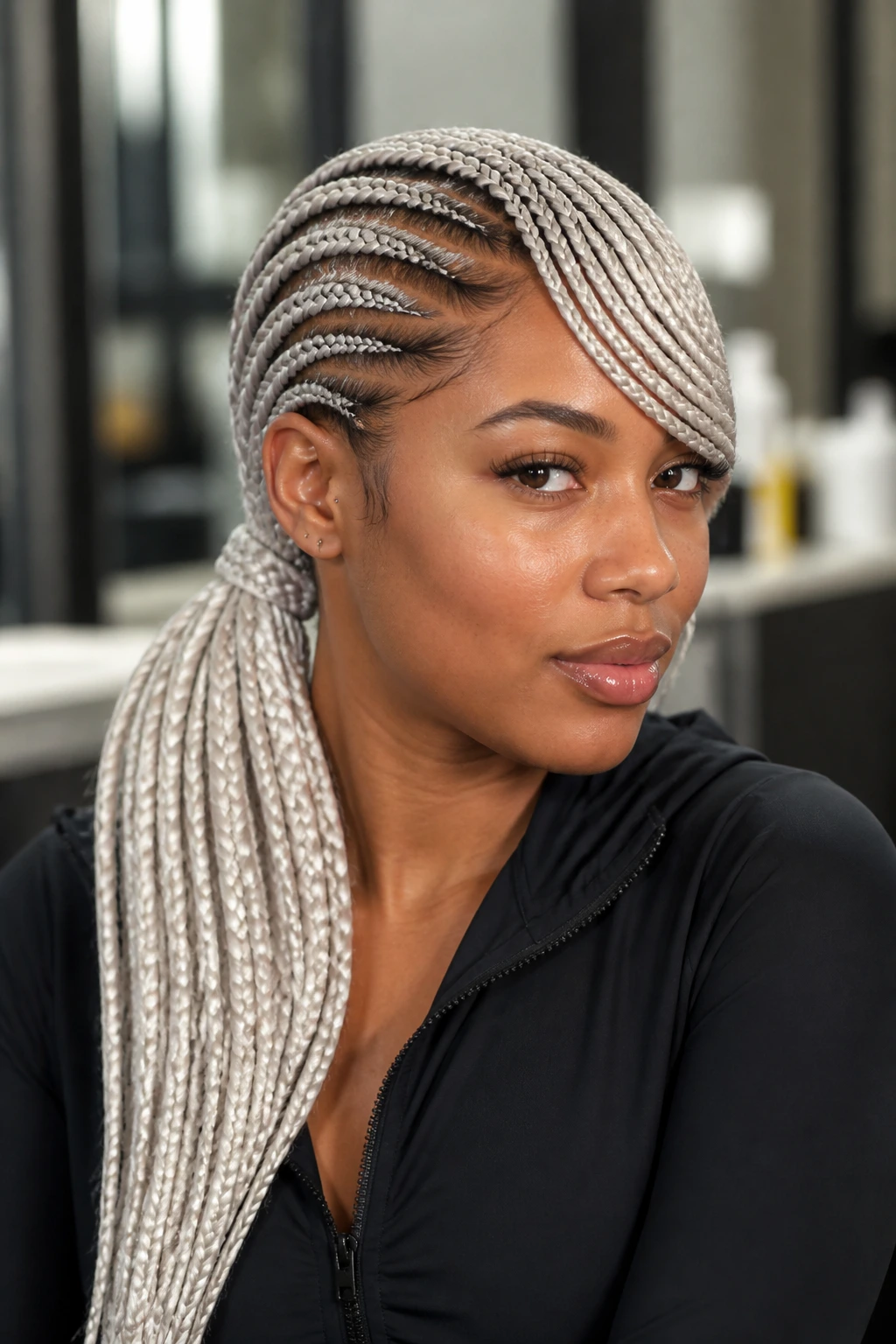
Stitch cornrows give you those sharp, segmented lines that look almost drawn on. Pulled into a low pony on one side, they let the side-swept bang fall across the forehead while the back stays controlled and neat. It’s a good choice when you want the front to lead and the rest to stay out of the way.
This style works best with short hair that still has enough length to lie flat at the scalp. The pony should sit low enough that it doesn’t pull the rows upward. I’d keep the bang narrow and smooth, then let the pony hang to the collarbone or just above it.
7. Halo Braids with a Feathered Fringe
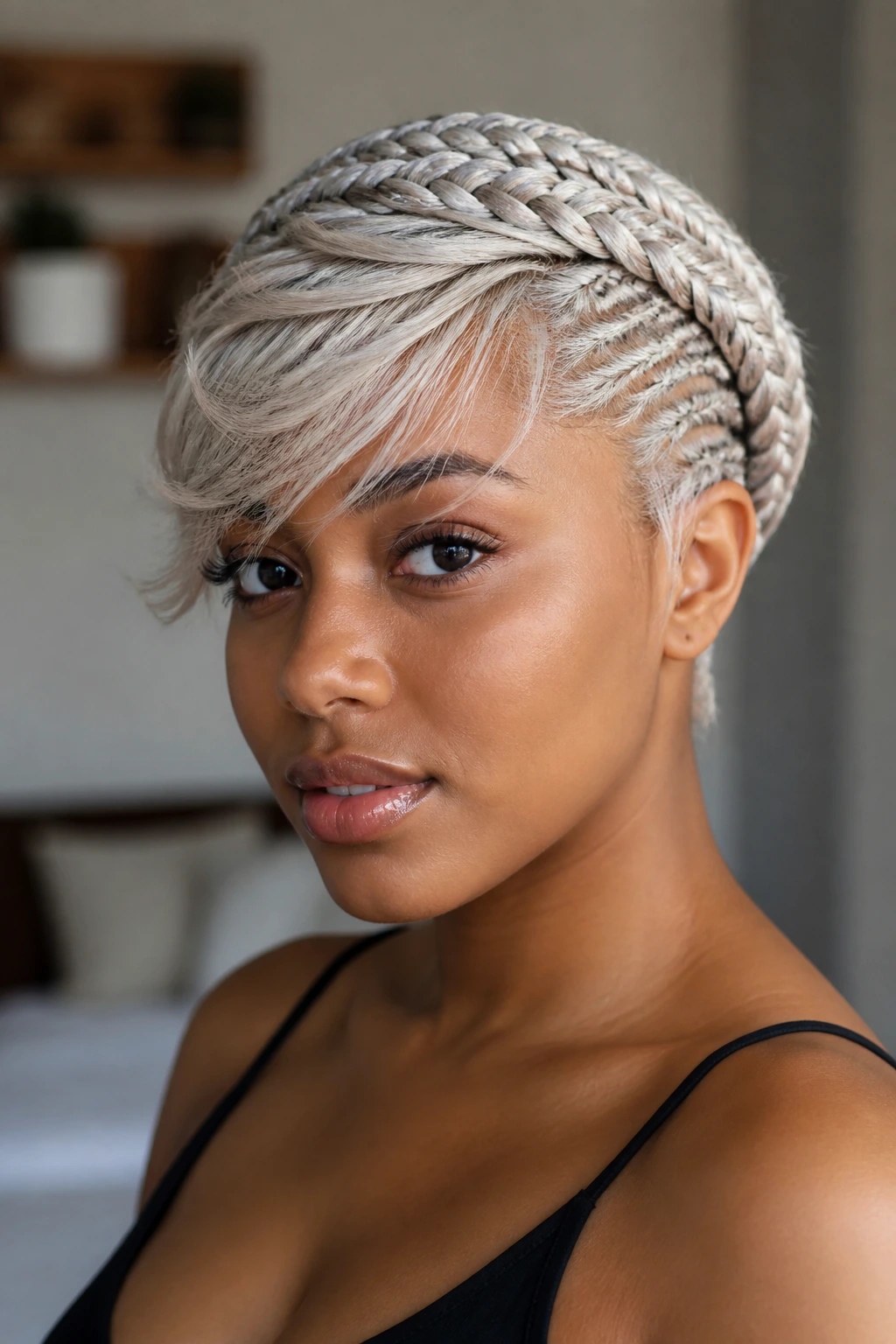
Halo braids can look heavy on short hair if the braid is too thick. Keep them slim, and they wrap the head with a clean line that leaves room for the side-swept fringe to soften the front. White hair gives the halo a kind of chalk-line clarity.
The fringe should not feel like a curtain. A few slimmer front braids, feathered toward one side, keep the style from swallowing the face. This is one of the gentler looks in the set, and it works especially well if you want white braids without the hard edge of a deep side part.
8. Triangle-Part Box Braids and a Long Swoop
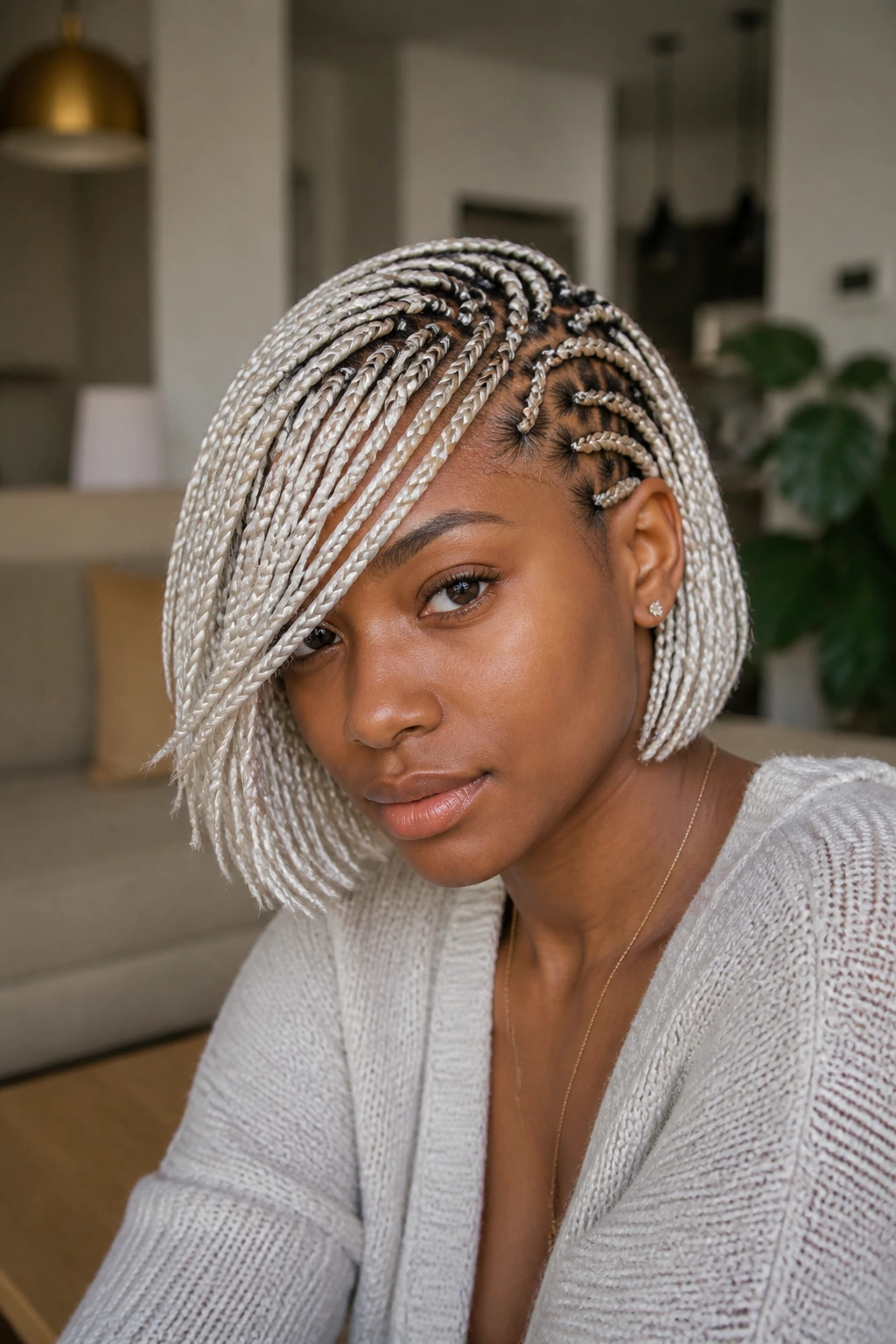
Triangle parts are a small detail that changes the whole mood. The geometric sectioning makes white braid hair look cleaner and more expensive without adding any extra bulk. On short natural hair, the side-swept bang can be built from a few tiny front braids that curve across the brow.
I like triangle parts when the rest of the style is simple. Let the parting be the statement. Keep the braids medium-thin so the head doesn’t widen, and make sure the bang lands off-center, not straight across, or the face will look boxed in.
9. Micro Braids with a Side-Tucked Bang
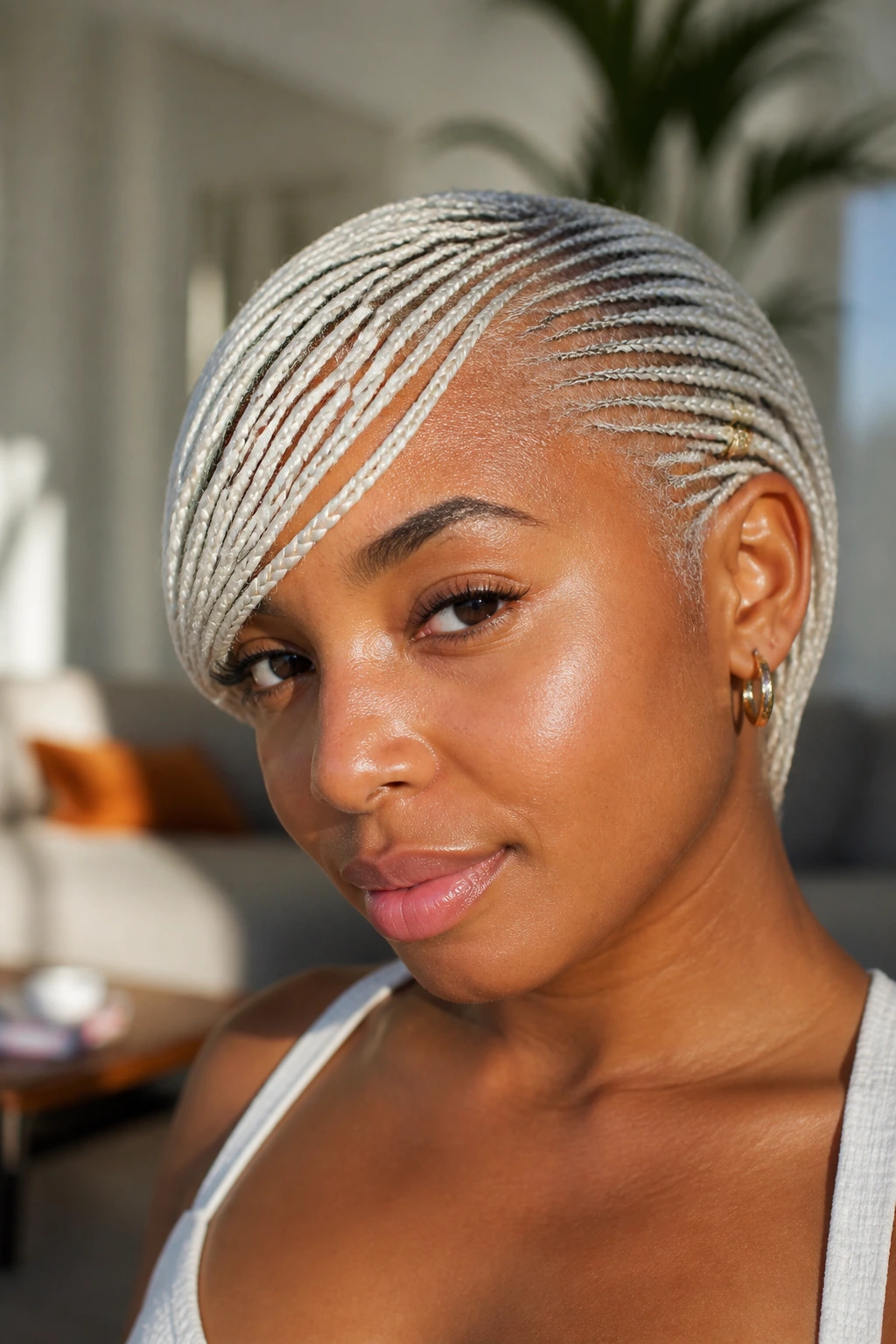
Micro braids are the long game. They take time, but they give short natural hair a smooth, close, very detailed finish that works beautifully in white because every tiny section becomes visible. The side-swept bang here can be tucked behind the ear or pinned with a tiny cuff so it doesn’t float away from the face.
If your hair is very short, this is one of the safest ways to get a refined look without forcing large braids onto a tiny base. The downside is maintenance: micros frizz sooner at the roots, especially in pale hair. Keep the front neat and don’t overload it with accessories.
10. Cornrow Pixie with Small White Plaits
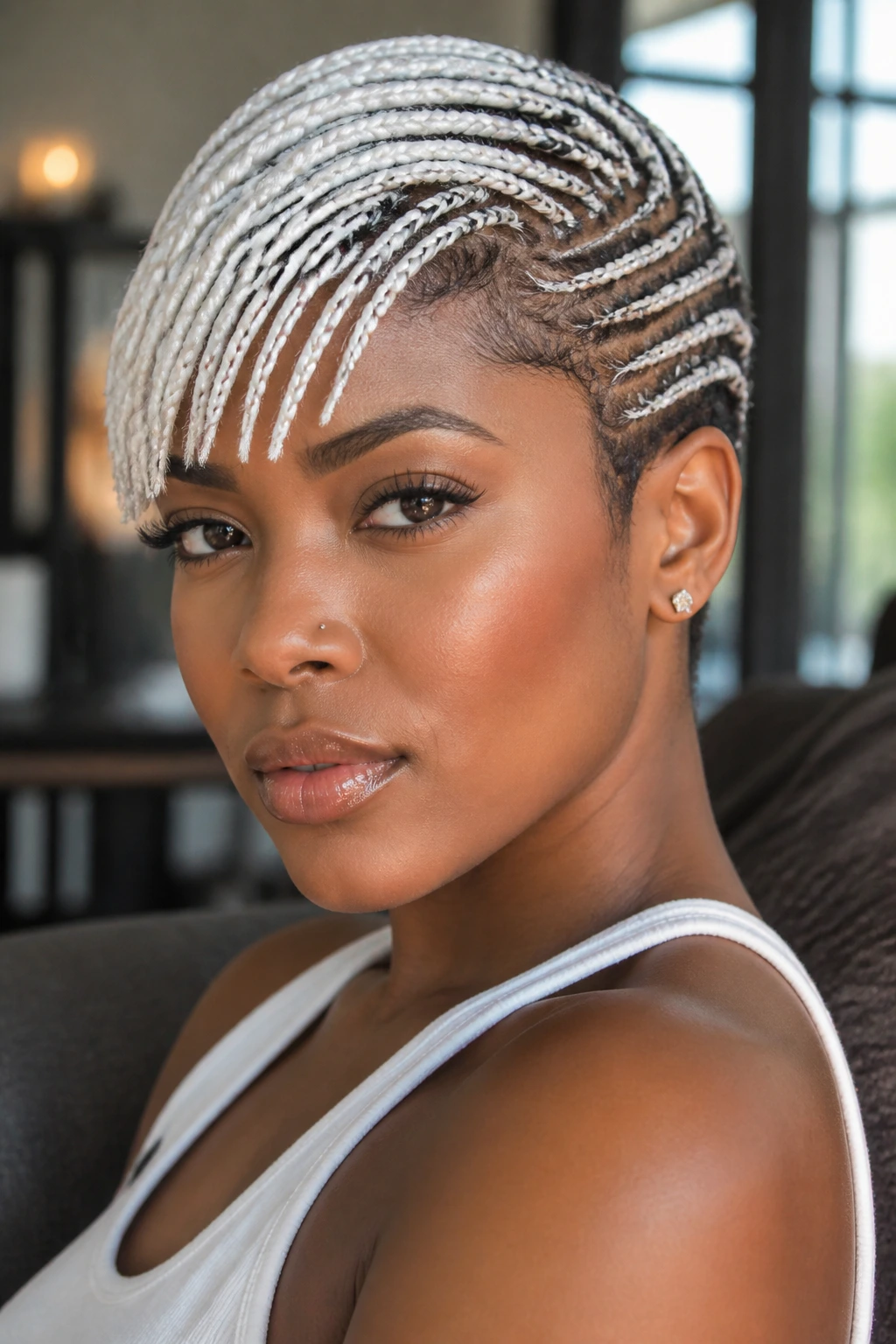
This one has attitude. The cornrows are short, tight, and close enough to the scalp that they almost read like braid lines in a pixie cut, while the side-swept bang sits just long enough to soften the forehead. On a tapered short cut, it looks deliberate in the best way.
The style is easy to ruin with too much volume. Keep the rows slim and the front sweep short. If the bang starts halfway back on the head, the pixie effect disappears and you’re left with a shape that’s trying too hard.
11. Crown Braids with Curled Side Pieces
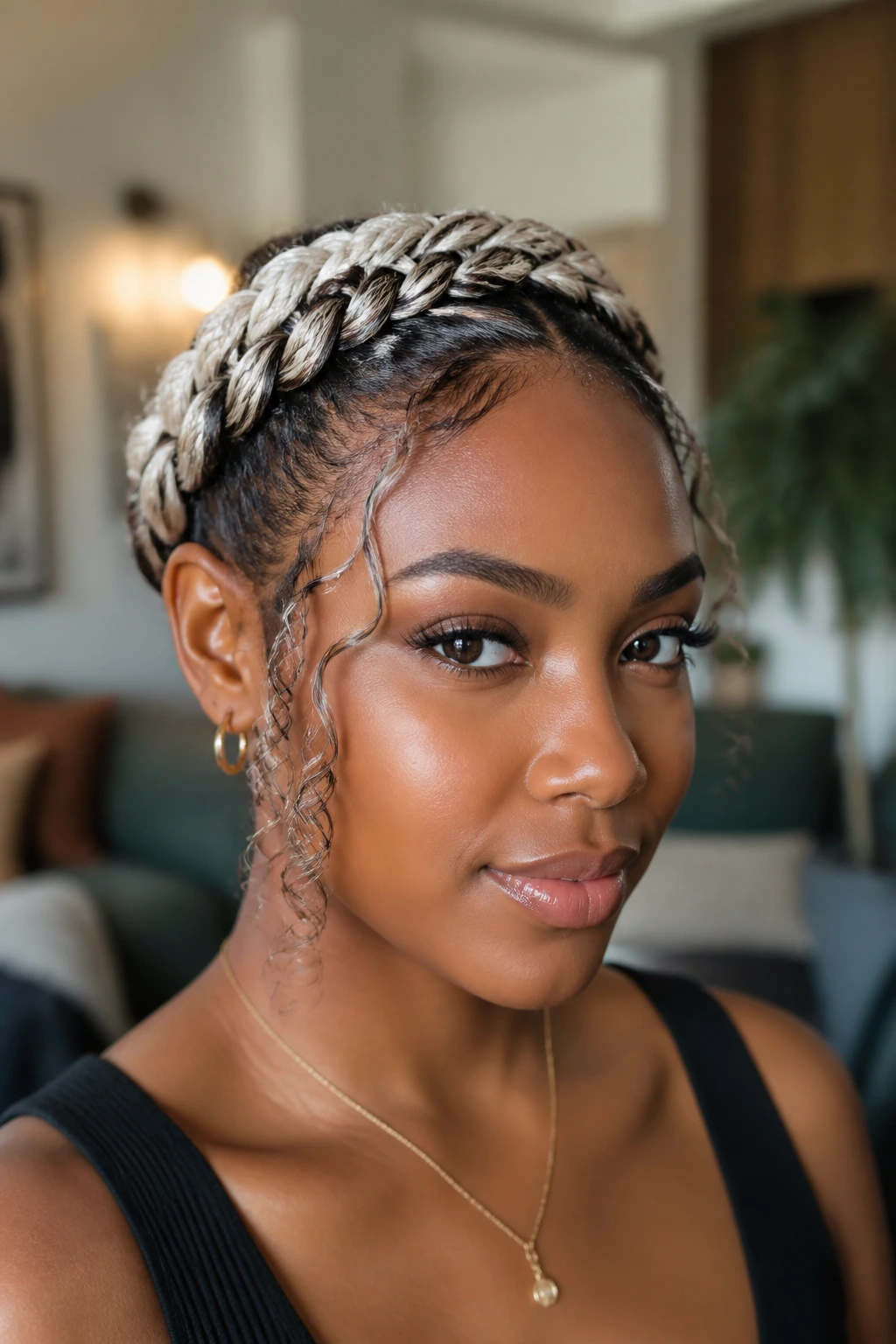
A crown braid gives the head a lifted frame, which is handy when you want to keep short hair off the face without going full updo. The side-swept piece at the front keeps it from looking too formal. On white braid hair, the crown reads almost luminous around the edges.
I like a little curl at the side pieces if the braid hair allows it. It breaks up the rigidity. Keep the crown narrow and smooth, though — too thick, and the head gets heavier than it needs to be. This one feels best with a soft outfit and clean earrings.
12. Asymmetrical Feed-In Braids with a Sculpted Bang
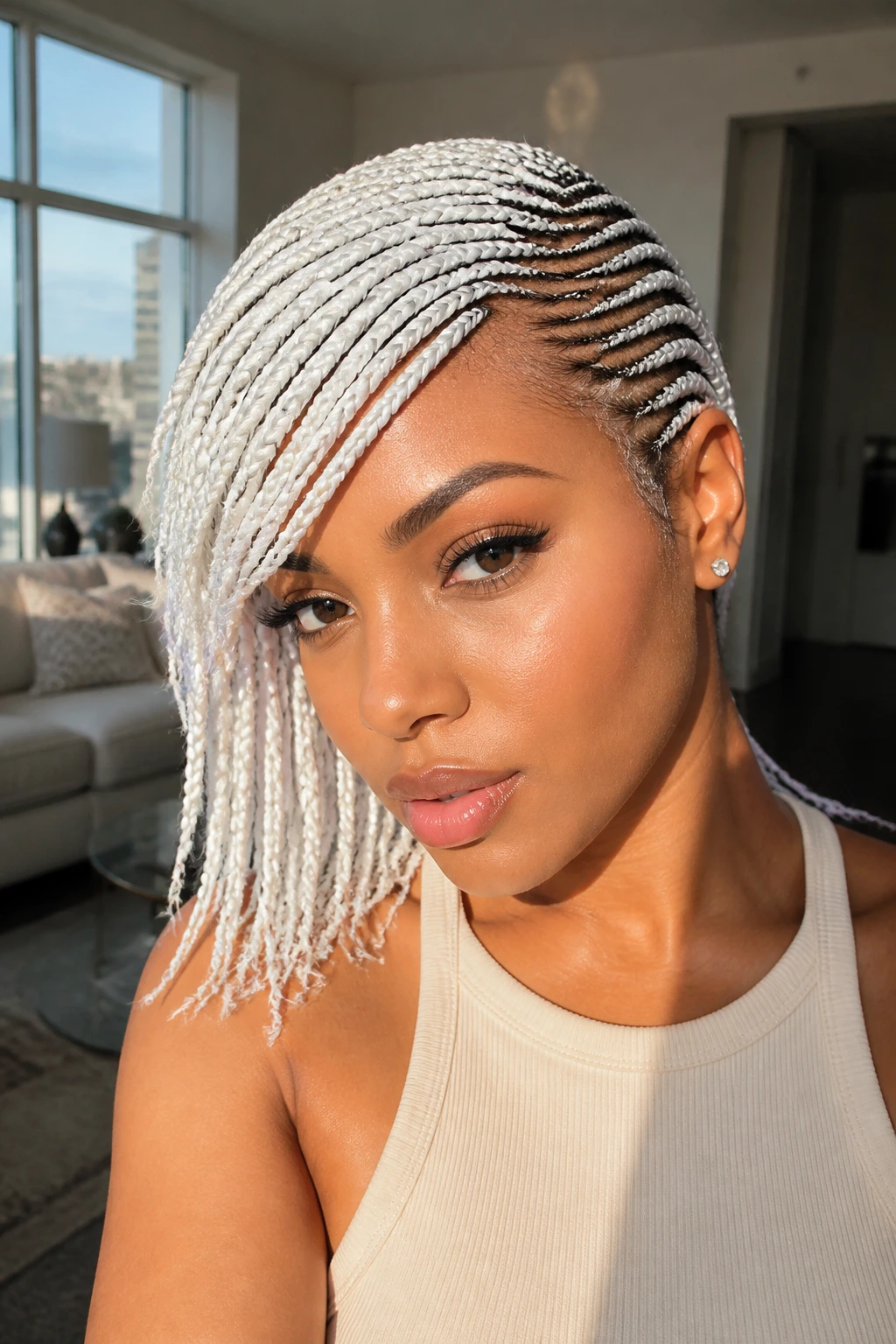
Asymmetry does a lot of work here. One side carries more braid weight, the other side stays sleeker, and the bang angles across the face like a brushstroke. White feed-ins make the shape stand out immediately, which is why the front section should be sculpted rather than accidental.
This style is sharp on short natural hair because it lets the haircut help. If one side is tapered or shorter, even better. Keep the front bang defined with gel or mousse, but don’t over-slick it; you still want the braid texture to show.
13. Braided Faux Hawk with a Side Sweep
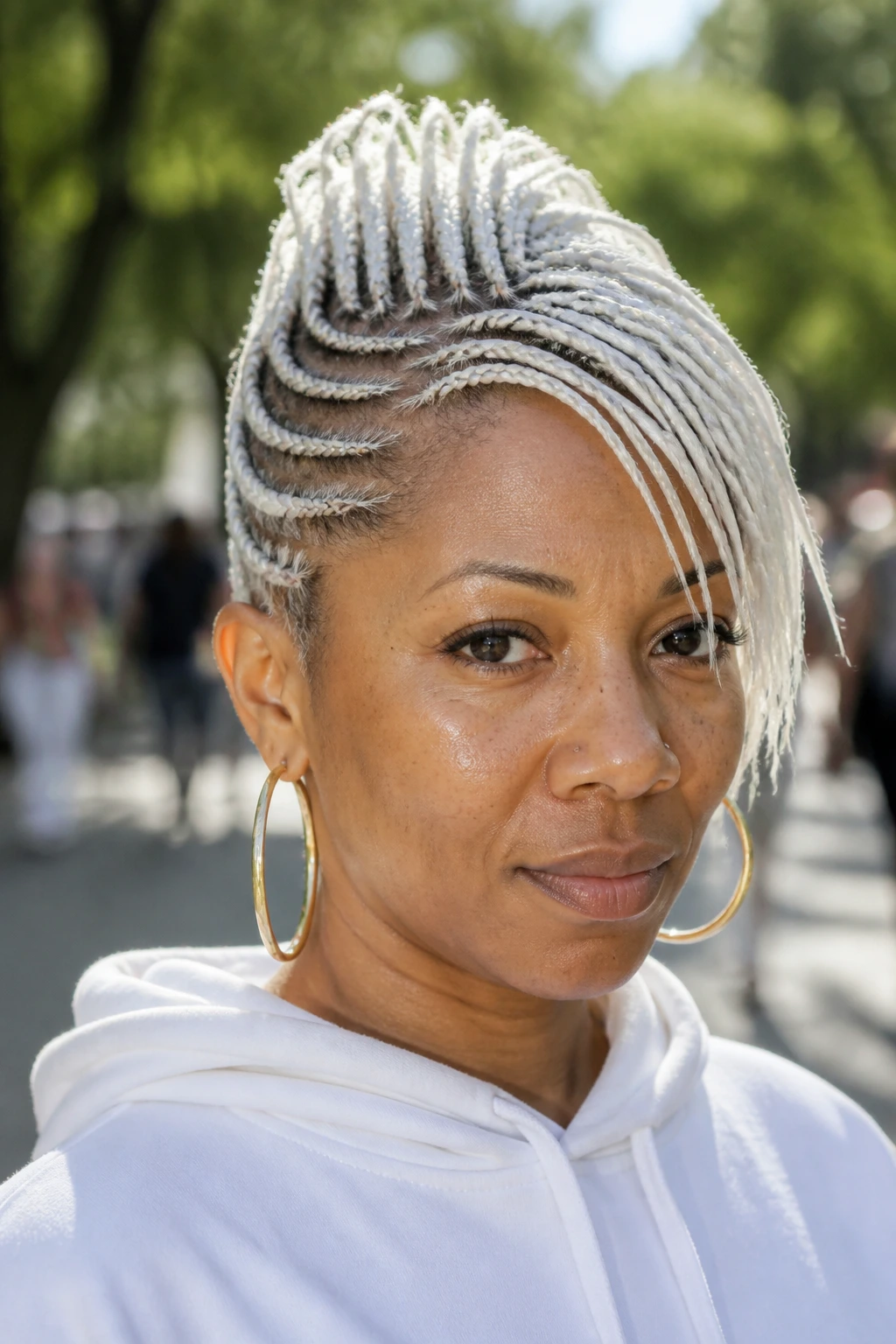
If you want drama, this is the loud one. The center rows rise into a faux-hawk shape while the sides stay lower, and the side-swept bang breaks the top line so the style doesn’t look too aggressive. White hair makes the ridge obvious in daylight.
It’s a strong choice for short natural hair because the sides can stay close and controlled. The key is balance: the faux hawk should lift, not puff. Keep the bang thin and angled so the face gets a little softness against the height.
14. White Box Braids on a Tapered Cut
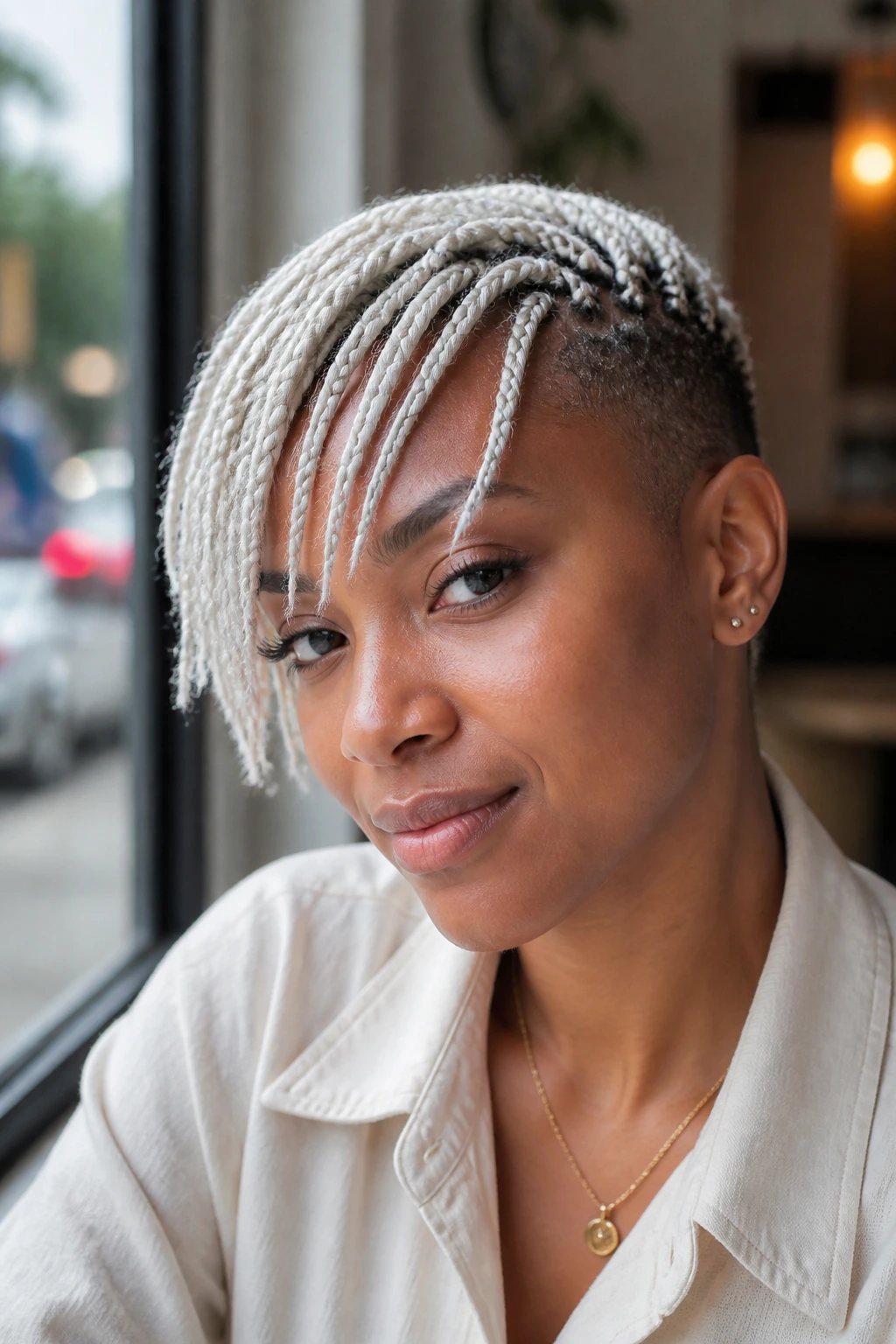
A tapered cut gives box braids a real frame. The short sides and back keep the shape neat, and the white braid color sits on top like a clear line drawing. With a side-swept bang, the look stays from feeling too square.
This one is all about proportion. Don’t use braid sizes that are too big for the cut; the taper will disappear. A medium-small braid size works better, and the bang should land just off the eyebrow so the front has movement without swallowing the face.
15. Curved Cornrows with a Soft Fringe
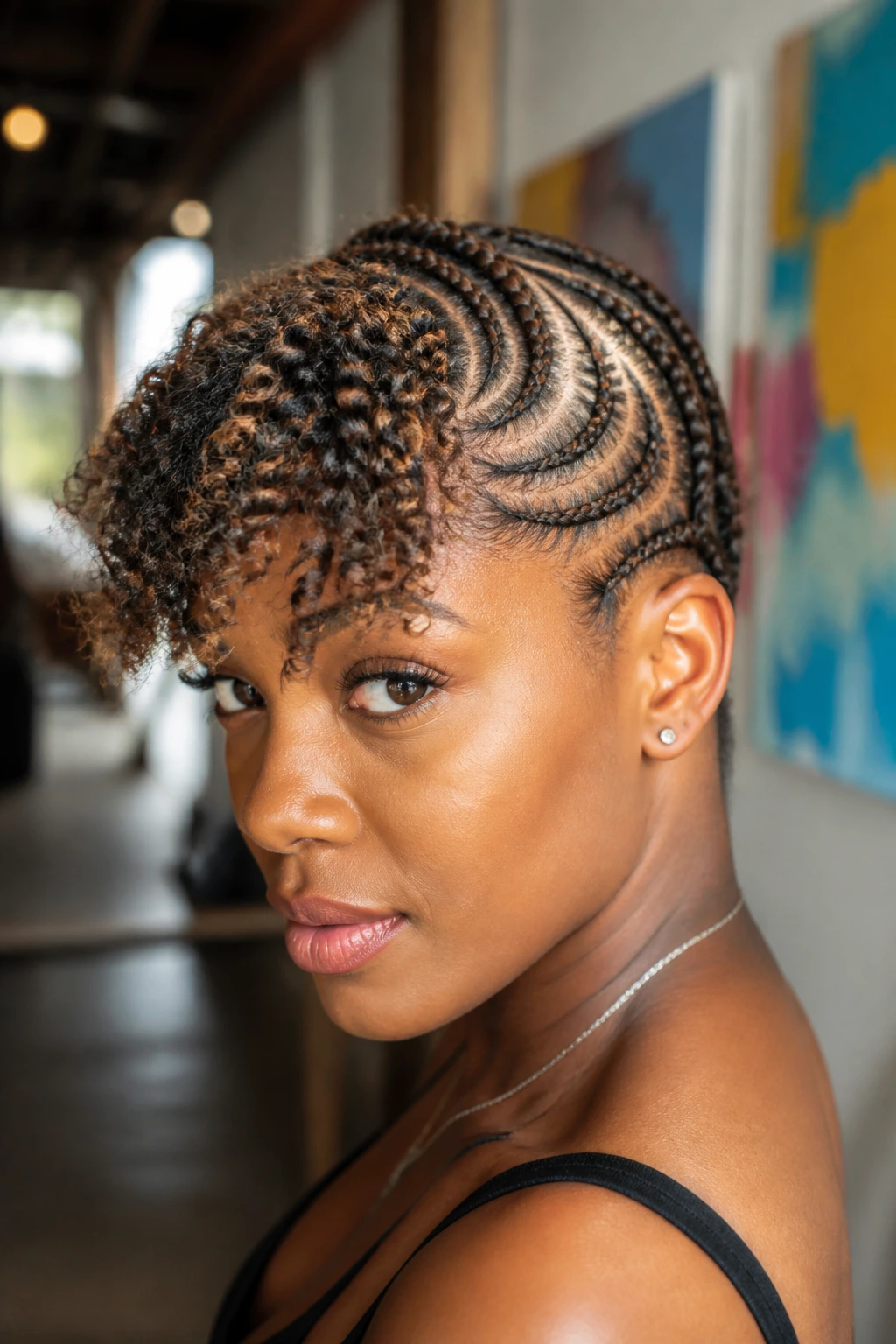
Curved cornrows are underrated. The braids arc around the head instead of running in straight lines, which gives short natural hair more shape without needing extra length. Add a soft side fringe at the front, and the whole style feels lighter.
White hair makes those curves easy to see, so clean parting matters. I’d keep the fringe loose enough to bend, not rigid enough to stand like a shelf. The style is especially nice if you want something neat that still looks a little artistic.
16. Braided Space Buns and a Draped Bang
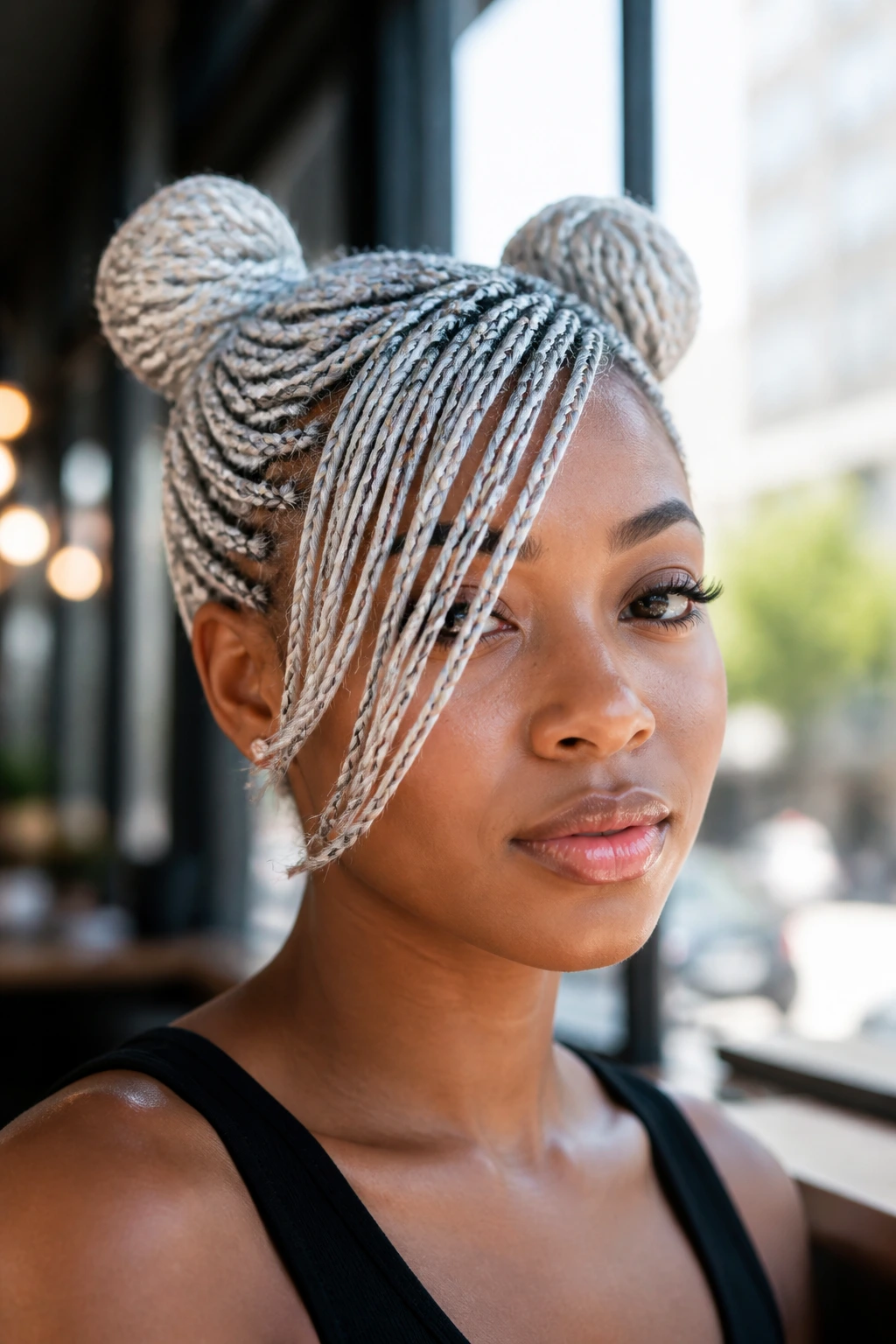
Space buns on short hair can go cute fast, which is fine if that’s the goal. The white braids keep them from looking childish, and the side-swept bang brings the whole thing back down to earth. The best version keeps the buns small and the bang long enough to skim the cheek.
This style is more practical than people think. It keeps the neck clear and works well when you want the front of the face framed but not buried. If your hair is very short, make the buns low and compact so they don’t feel like they’re balancing on top of the head.
17. Mini Box Braids with a Face-Frame Sweep
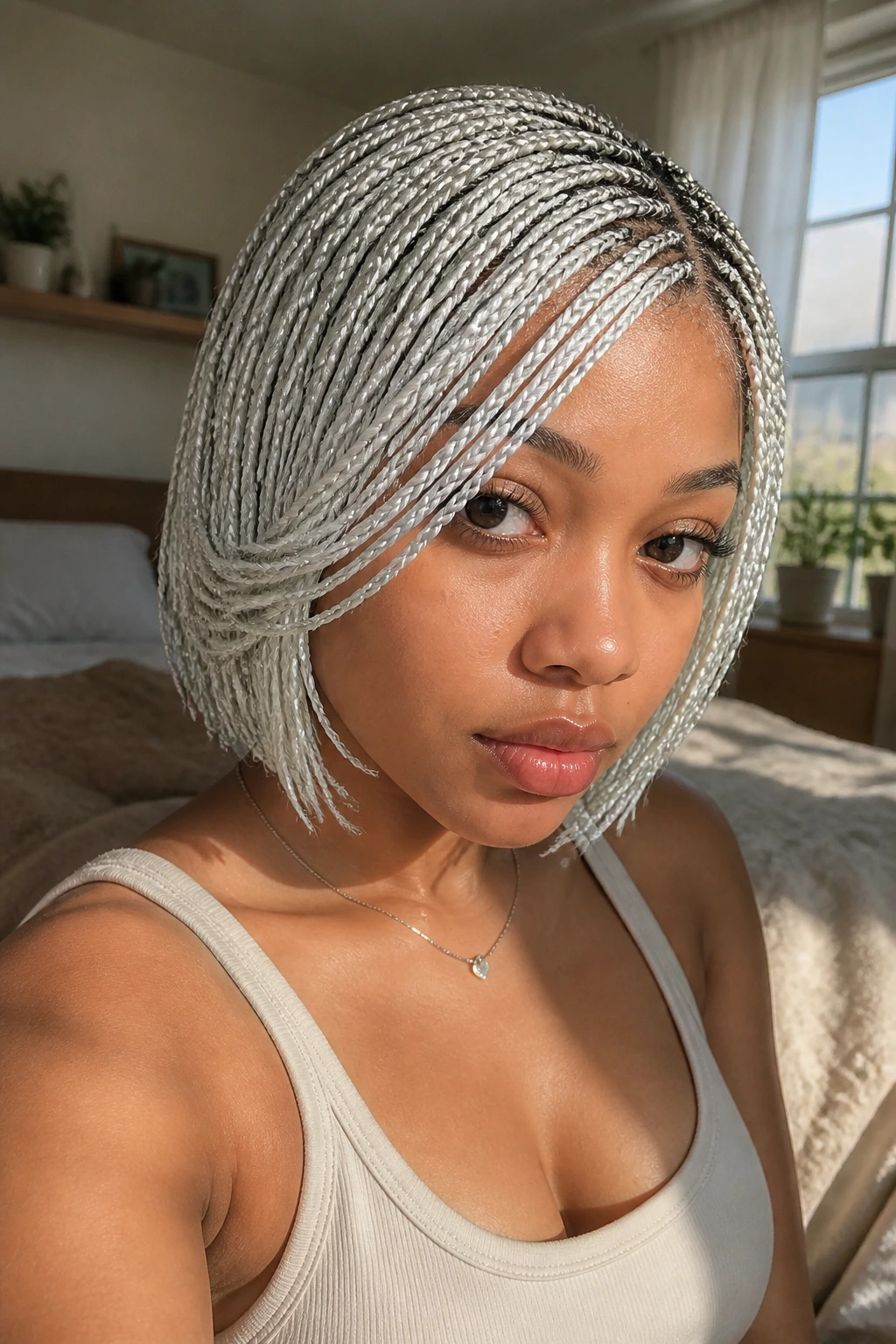
Mini box braids are one of the cleanest ways to get a lot of movement out of short hair. The tiny size lets the braids bend naturally around the head, and the side sweep can be built from a few front pieces that fall like a soft frame instead of a blunt bang. White color makes the braid density look rich.
I like this style when you want something low drama from the front and more detail when you move. It’s patient work, though. The smaller the braid, the more the parting matters, so use a rat-tail comb and don’t rush the front section.
18. Bob-Length Knotless Braids with Curled Ends
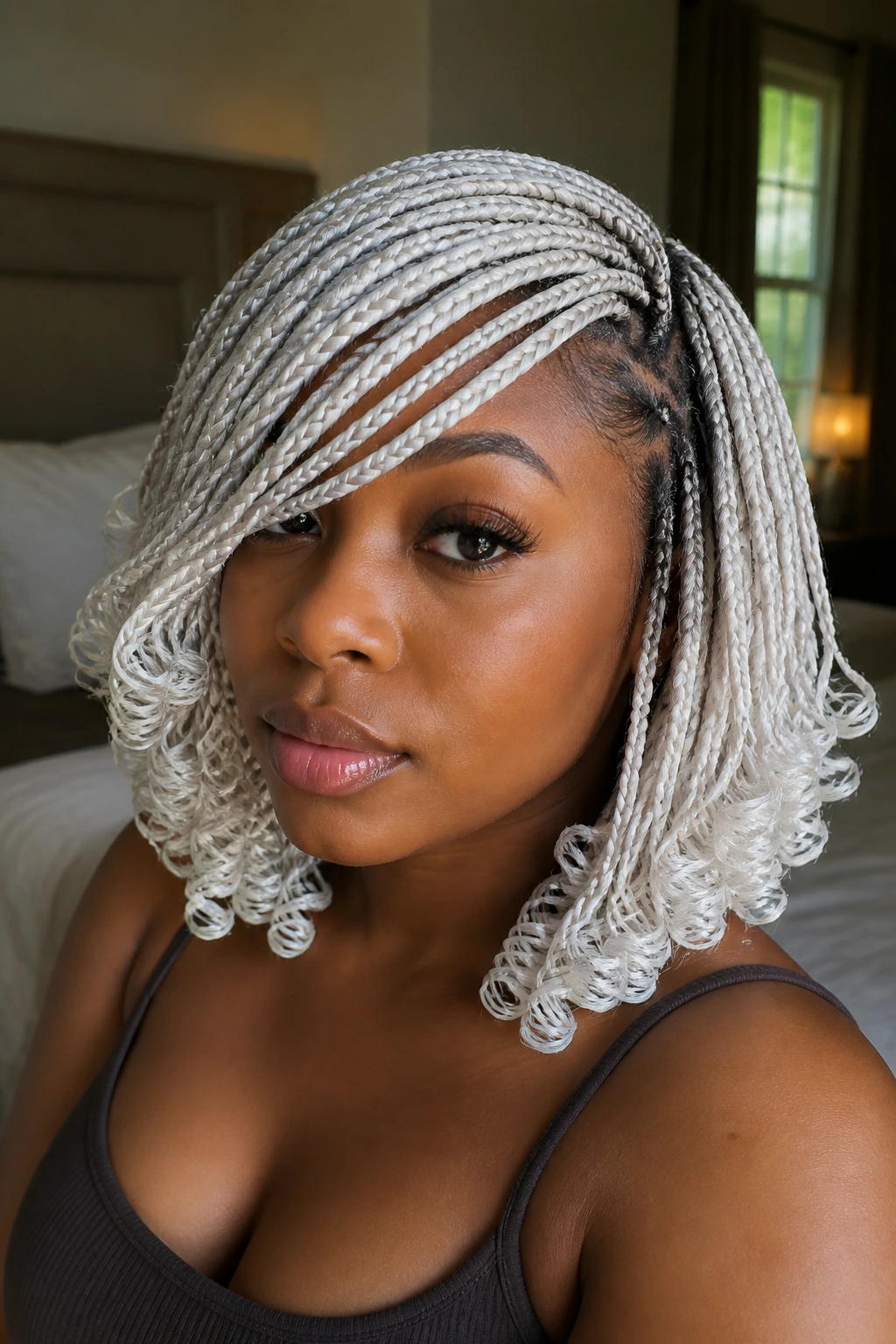
A bob-length finish keeps the style easy to wear. Knotless starts at the root, curled ends at the bottom, and a side-swept bang up front give the whole look a softer outline. White braid hair with curled tips reads a little more polished than straight-cut ends.
This is a strong choice if you want motion without long braids brushing your shoulders all day. The curls at the ends should be soft, not tight little ringlets. I’d keep the bang thin enough that it doesn’t compete with the bob silhouette.
19. Side-Swept Crown Braids with Loose Tendrils
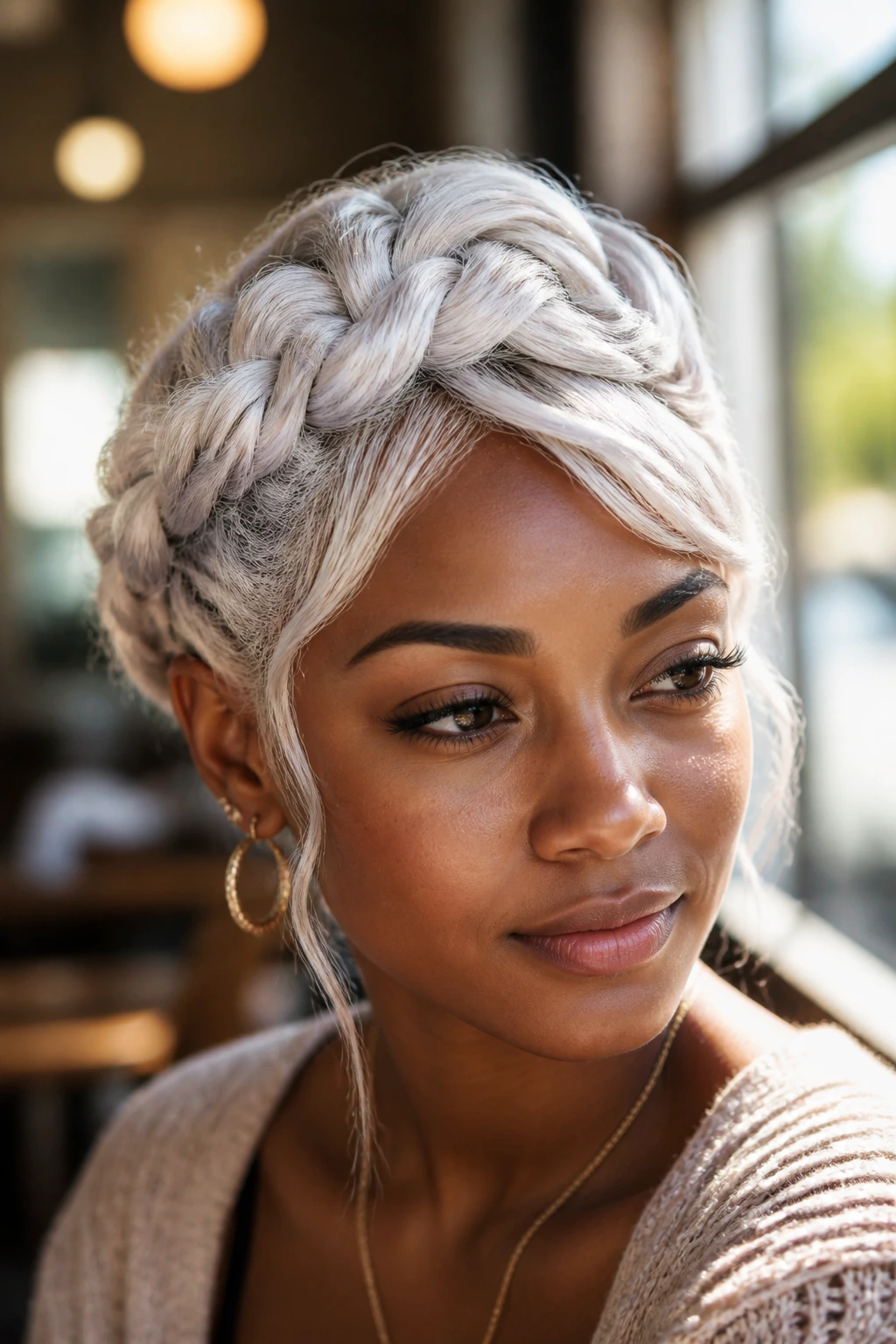
This one feels romantic without losing structure. Crown braids wrap the head, and a few loose tendrils at the side give the white hair a bit of air around the face. On short natural hair, that little looseness stops the crown from looking sealed shut.
The tendrils should be intentional, not accidental. Leave only a few pieces, and keep them smooth so they don’t frizz into fuzz by lunch. If you want the style to lean softer, this is one of the easiest ways to do it.
20. Zigzag Part Braids with a Sleek Bang
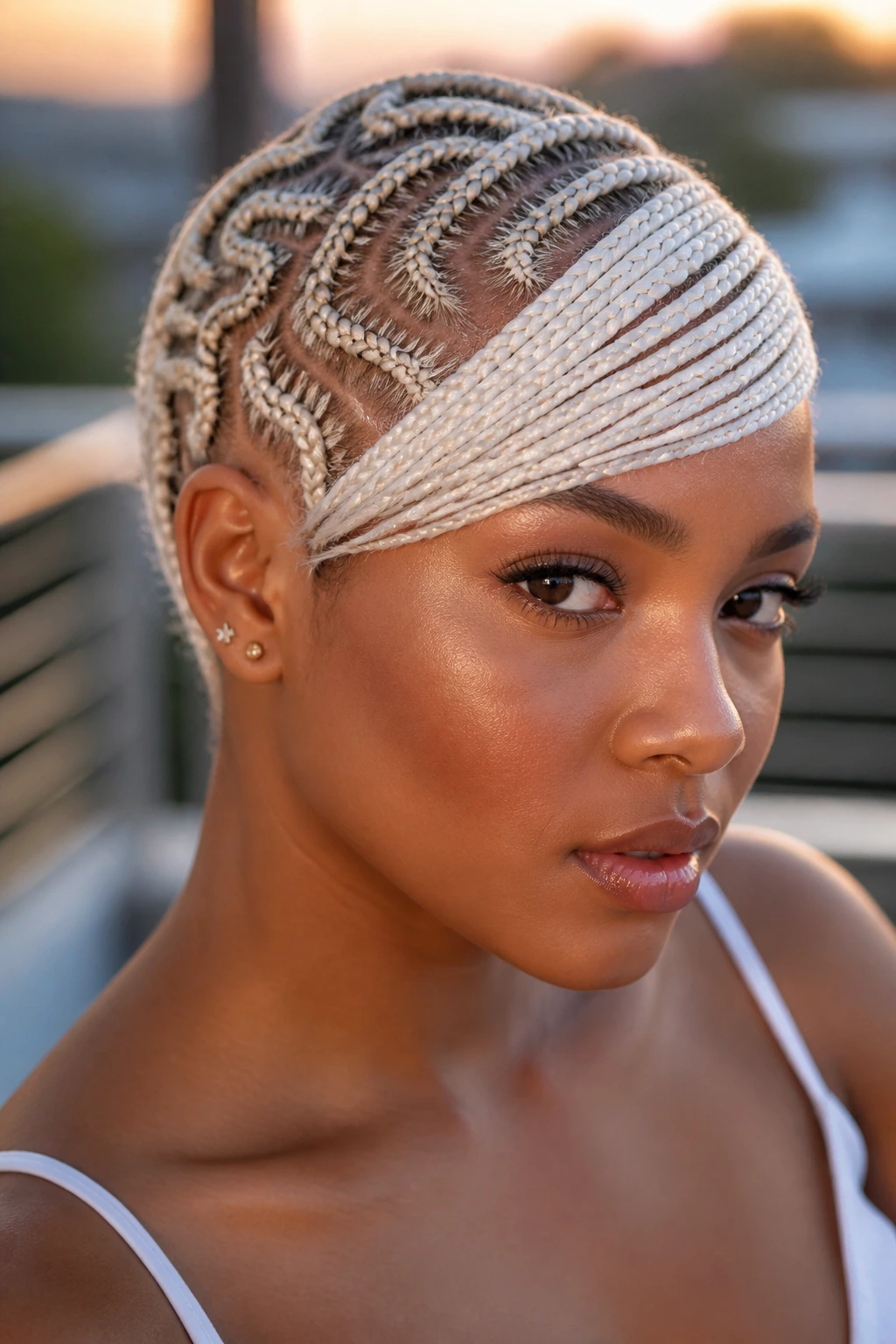
Zigzag parts are for people who like their styles to look like somebody thought about them. The pattern adds movement before the braids even start, and white hair makes the zigzag read sharply from a distance. The side-swept bang should stay smooth and low so the parting stays the star.
Short natural hair handles this shape well because the style stays close to the scalp. Don’t make the parts too wide or the zigzag loses its punch. A slick front helps, but keep the product light; too much gel can turn white braid hair dull.
21. Fulani-Inspired Braided Bob with Shells
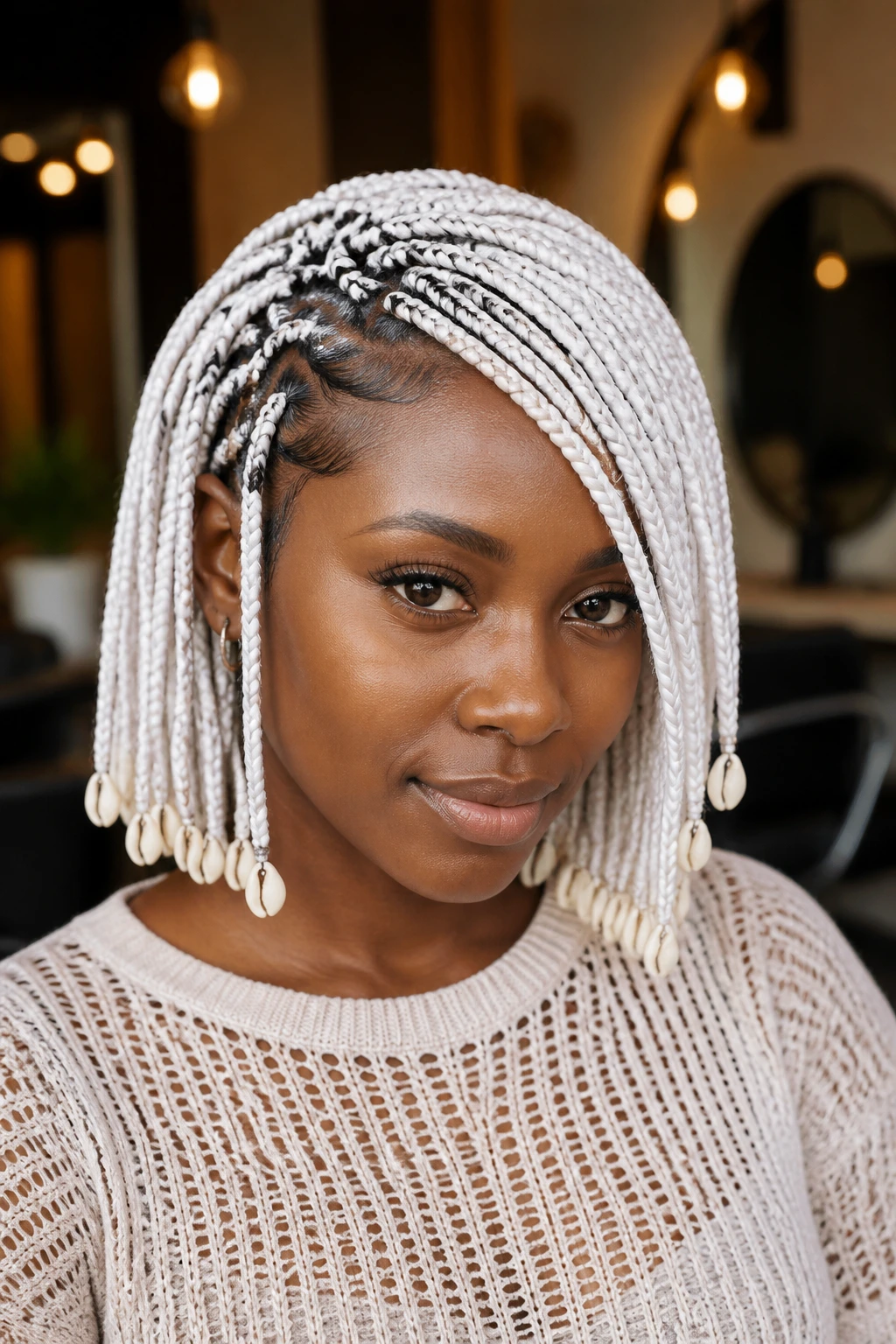
The bob keeps this one grounded, while the Fulani detail brings the personality. A few face-framing plaits, a centered or slightly off-center part, and shells or beads at the ends create a look that feels finished without being cluttered. The side-swept bang softens the front and keeps the bob from feeling too formal.
I’d choose this if you want the white braids to look a little more styled and a little less minimal. Shells can be loud, so use them sparingly. One or two accent rows are enough; if every braid gets hardware, the style starts to fight itself.
22. Half-Up White Braids with a Flipped Bang
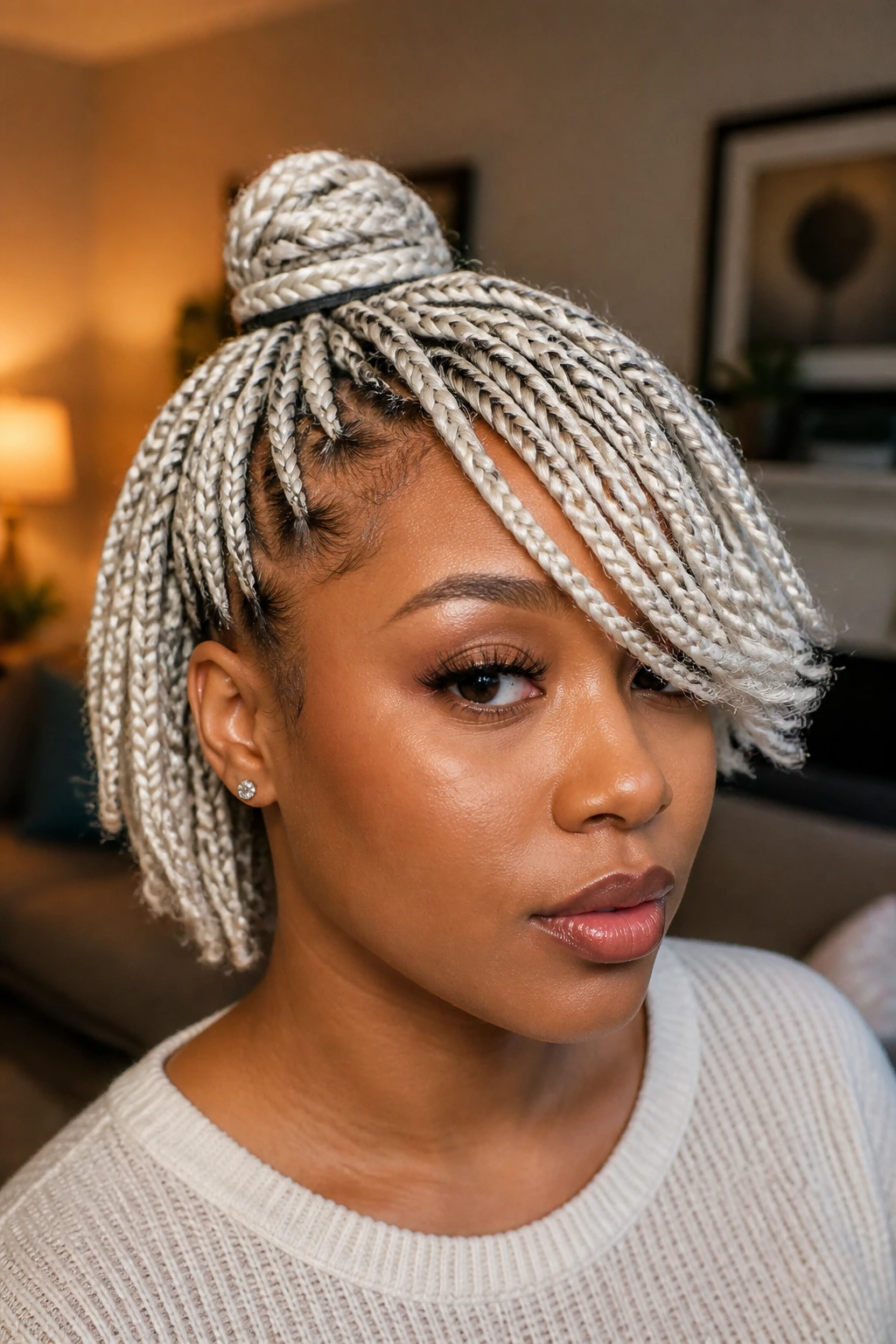
Half-up styles are useful on short hair because they give the front shape and lift without demanding a lot of length in the back. Pull the top half into a small knot, puff, or pony, then let the side-swept bang sit in front like a frame. White braid hair makes the top section stand out cleanly.
This version works when you want some face height and some movement. The bang can be a little longer here, since the rest of the style is pulled away. Keep the half-up section compact, though; a giant top knot on short hair looks off balance fast.
23. Low Side Bun with Braided Front Layers
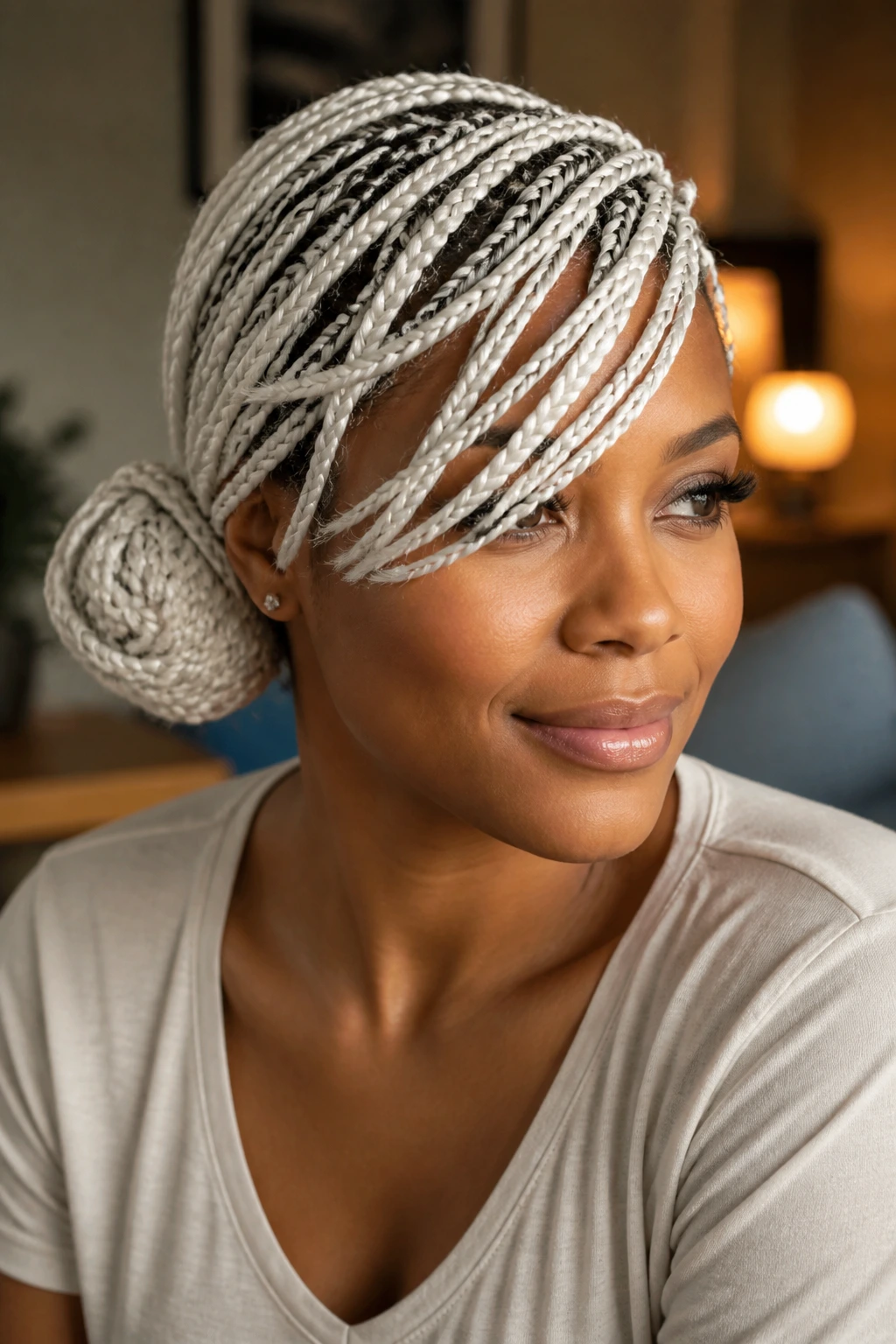
A low side bun is neat, practical, and a little more polished than people give it credit for. The braided front layers bring the softness, and the side-swept bang keeps the profile from going too severe. White braid hair makes the bun look almost carved.
This is a smart choice for events, long days, or anything where you want your braids out of the way. The bun should sit low enough to feel anchored. If the front layers are too thick, they’ll swallow your face; keep them slim and let the bun carry the weight.
24. White Braids with Gold Cuffs and a Long Sweep
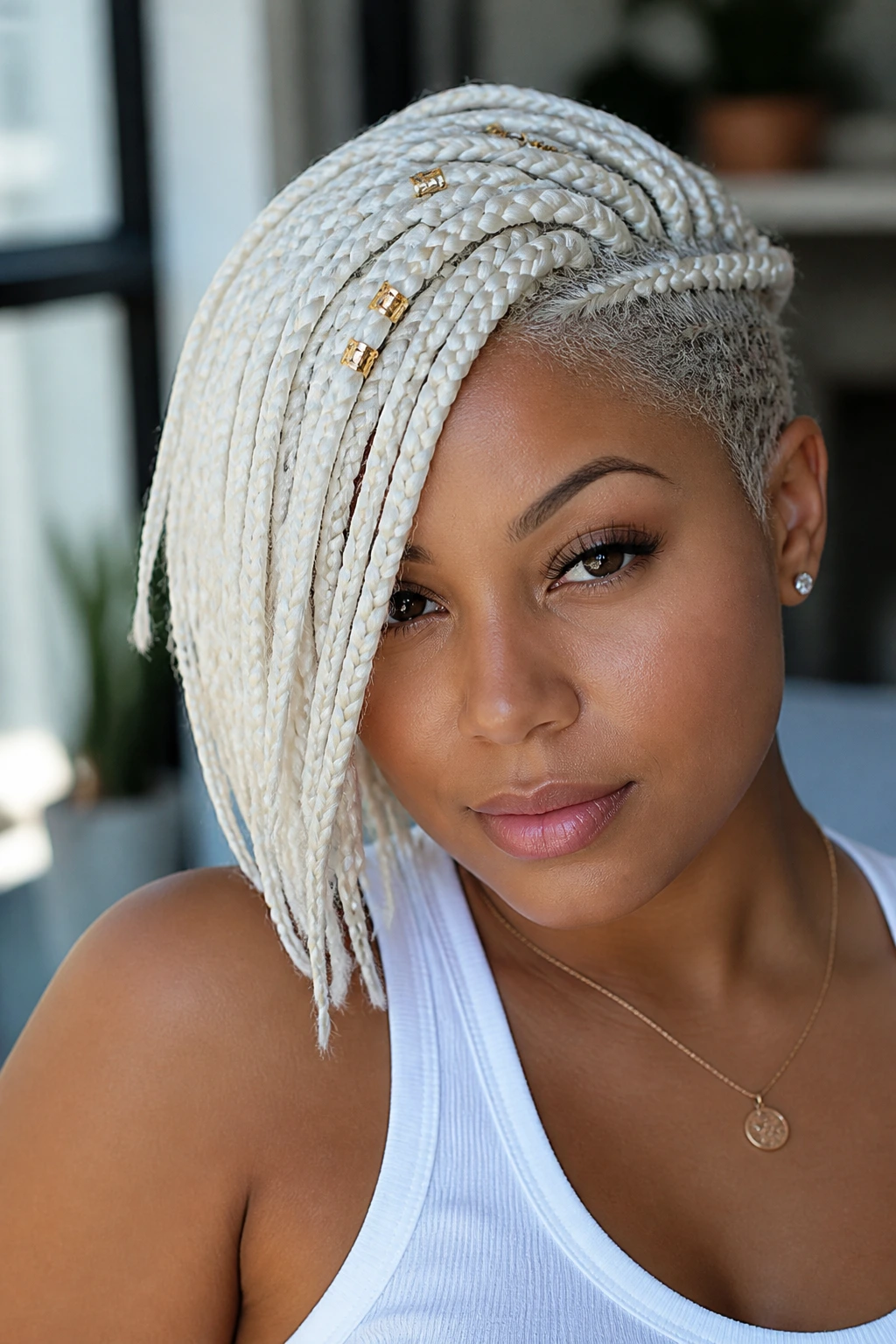
Gold cuffs against white braid hair are a strong contrast, and on short natural hair they read clean instead of busy if you use them sparingly. A long side sweep gives the style a line to follow, while the cuffs catch the eye as it moves down the braid. It’s one of the easiest ways to make white braids feel styled rather than plain.
The trick is restraint. Two or three cuffs near the front are enough. If you cover every row in metal, the pale hair loses its crispness and the look turns noisy.
25. Braided Mohawk with a Side-Swept Finish
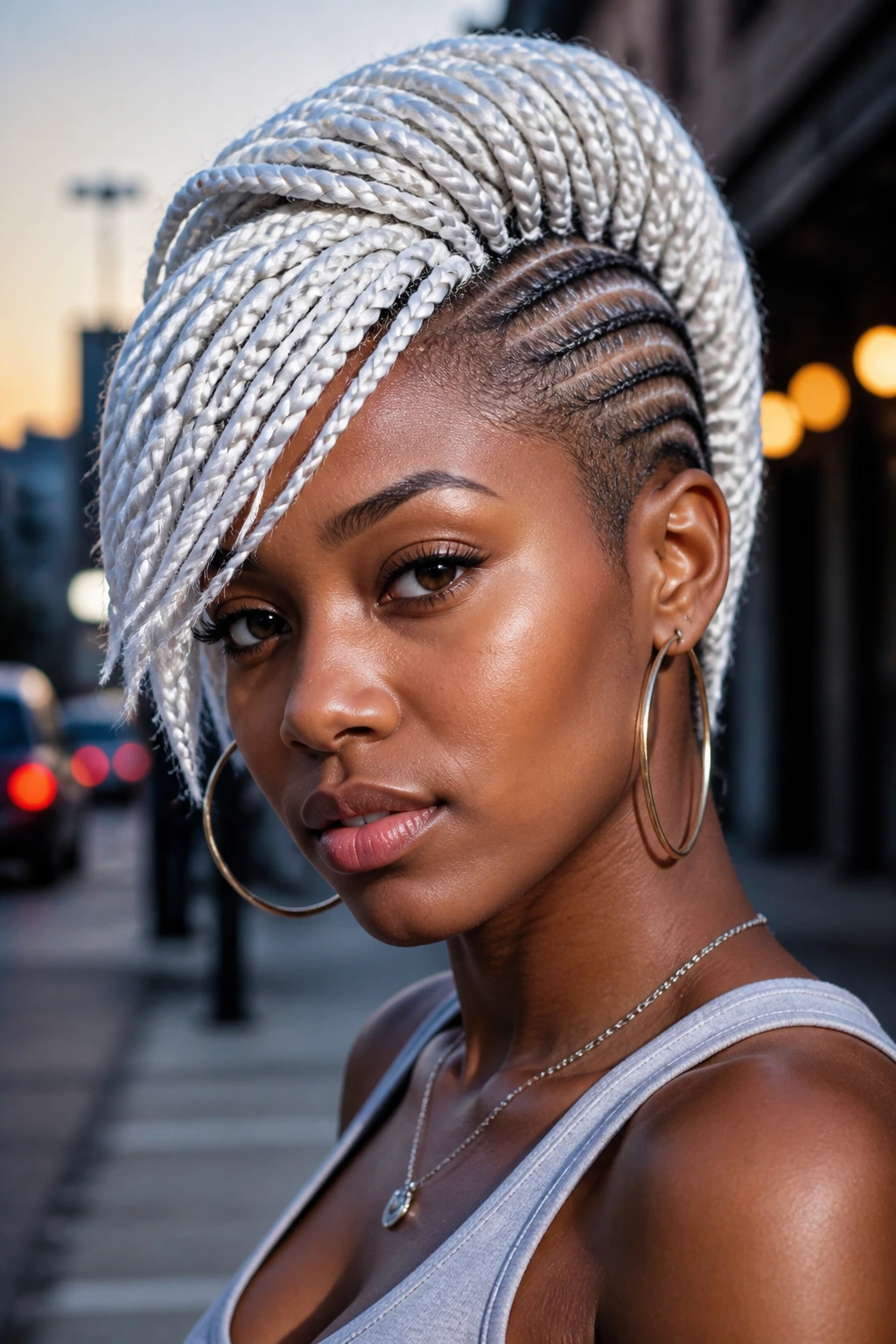
This is the most dramatic shape in the set. The center ridge rises, the sides stay tight, and the side-swept bang cuts across the front so the whole style has motion instead of just height. White braid hair makes the mohawk line impossible to miss.
I like this for short natural hair because it uses the cut itself, not length, to create shape. Keep the sides snug and the center controlled. If the ridge starts leaning or puffing, the style loses its edge fast. Clean lines are the whole point here.
Why White Braids Work on Short Natural Hair
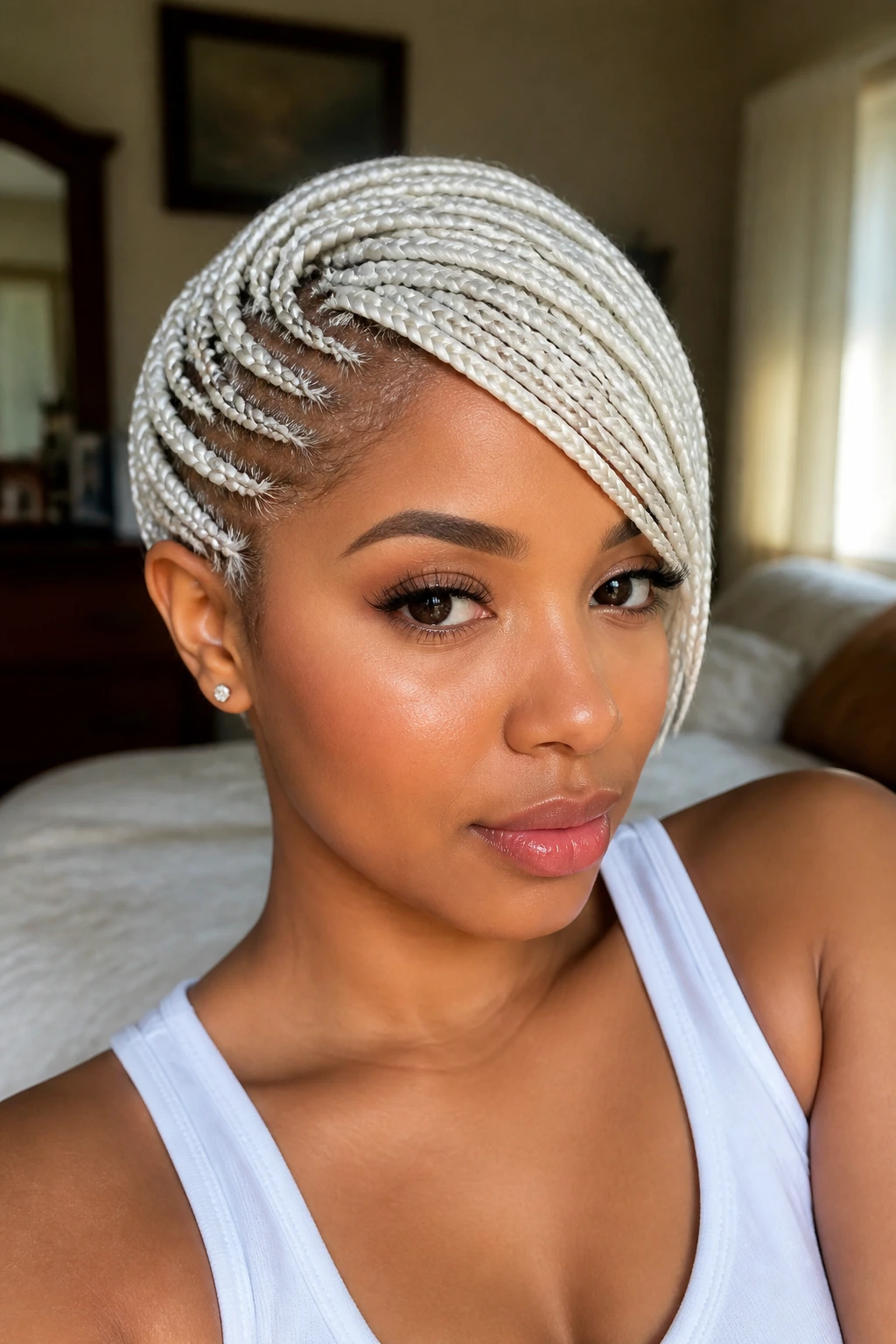
White braid hair can feel risky because the color is so unforgiving, but that’s also what makes it interesting. On short natural hair, the braid pattern sits close to the scalp, so you get structure first and length second. The result is cleaner than long braids that swing around and hide the parting.
The other advantage is proportion. Short hair keeps the style from becoming too heavy at the crown, which matters when the braid color is bright and the side-swept bang already pulls attention to the face. A smaller braid size usually looks better than a chunky one because it lets the head keep its natural shape.
There’s a practical upside, too. Shorter installs are easier to refresh at the roots, easier to wrap at night, and easier to remove before tangling gets rude. The braid has to earn its place, though. If the parts are sloppy or the bang sits too thick, white hair will expose it immediately.
The Prep That Keeps the Roots Flat and the Parts Clean
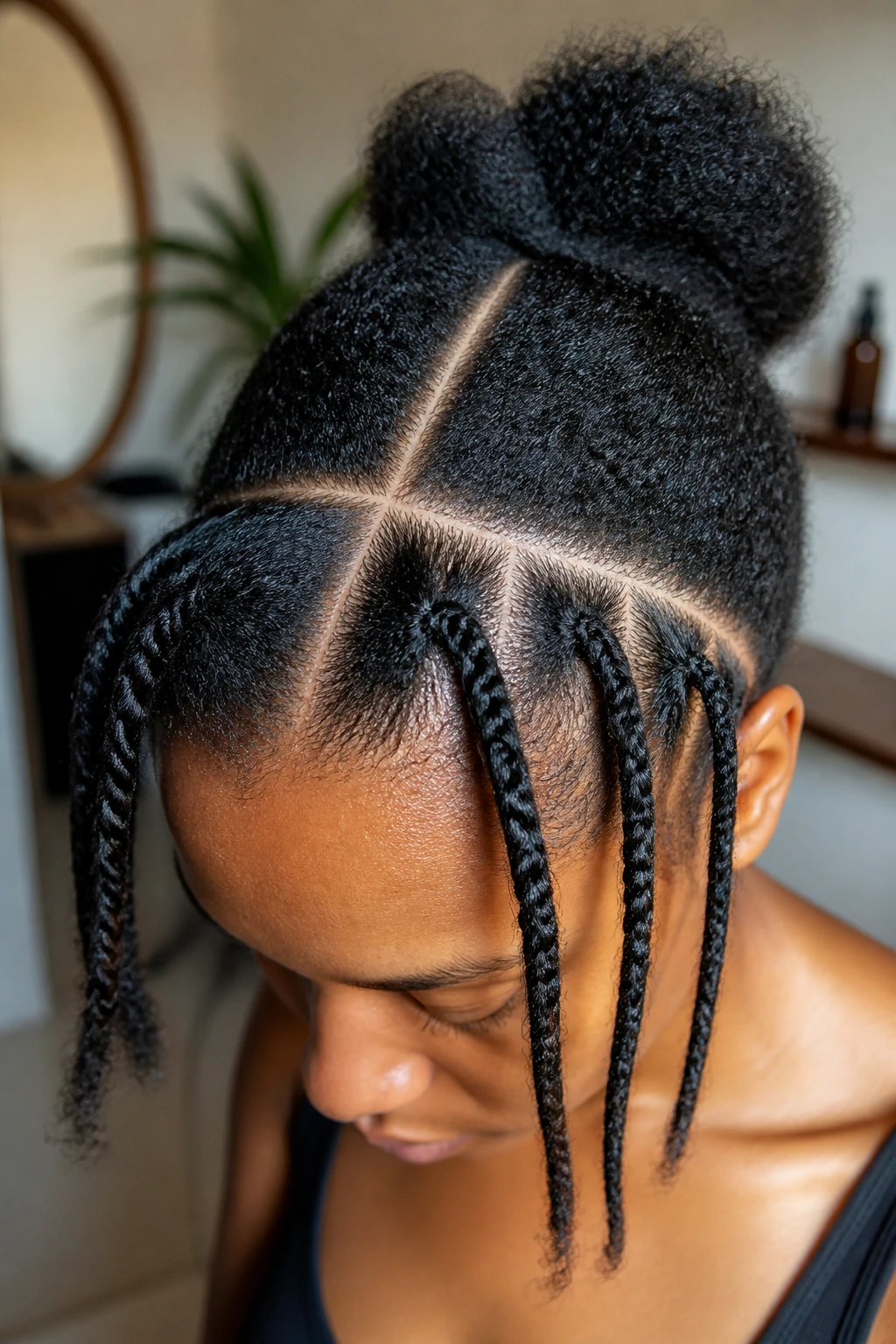
Start with hair that’s clean, fully dry, and lightly stretched. Wet or damp short natural hair is a bad base for white braids because it shrinks, swells, and makes the roots puff out faster than you want. A low-heat blow-dry, banding, or a careful twist-out stretch gives the parting a steadier surface to sit on.
Parting is the whole game here. A rat-tail comb and section clips make life easier, and I’d rather take an extra ten minutes lining up the front than spend two weeks staring at a crooked bang. On pale braid hair, crooked sections show fast. Really fast.
Keep the hair moisturized, but not greasy. A light leave-in and a few drops of oil on the scalp are enough; too much cream makes the braid base slippery and can shorten the life of the install. If your hairline is tender, work in smaller front sections and let the bang be thinner than your instinct says it should be.
Tools That Make the Install Easier
- Rat-tail comb: The skinny tail makes clean parts and sharp corners much easier on short hair.
- Sectioning clips: These keep the front, sides, and crown separated while you braid.
- Spray bottle with water and leave-in: Use a light mist, not a soak, so the hair stays workable without swelling.
- Braid gel or styling gel: A small amount helps the roots lay flat, especially around the bang area.
- Edge control: Optional, but handy for smoothing the hairline when the style is sleek.
- Braiding hair in white, ivory, or silver-white: Choose the shade that fits your skin tone and the look you want.
- Mousse: This helps the braid surface settle and reduces fuzz on the first few days.
- Satin scarf or bonnet: Non-negotiable if you want the white hair to stay clean and the roots to stay neat.
- Small scissors: Useful for trimming stray fibers after the install, but go slow.
- Hand mirror: Short hair looks different from the back than it does in the front, and you want to check the nape.
How to Wear the Look Without Letting It Take Over
Shape: Keep the side-swept front diagonal, not horizontal. A bang that lands around the eyebrow or cheekbone gives the braid pattern a softer edge.
Pairings: White braids carry a lot visually, so a clean neckline, simple hoops, or one bold lip usually works better than stacking every accessory you own.
Scale: Thick braids can be fine, but on very short natural hair the front sweep should usually stay slimmer than the back. That keeps the crown from looking overbuilt.
Finish: A light mousse on the exposed braids and a tiny bit of sheen spray make the color look cared for. Skip heavy creams on the braid length; they dull the white fast.
Extra Polish and Personal Touches
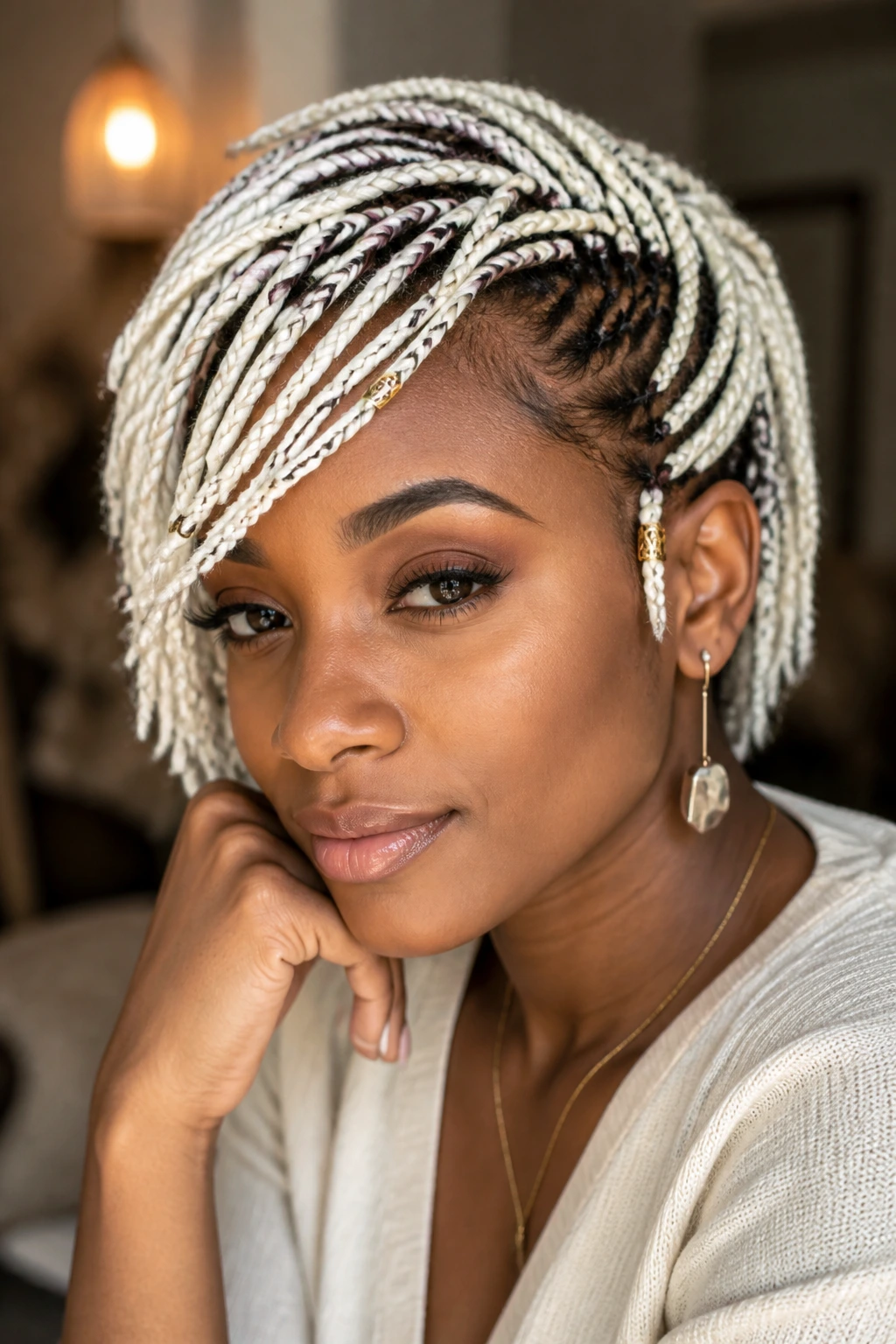
Color Shift: Pure white reads crisp, ivory feels softer, and silver-white adds a cool cast under indoor light. I’m partial to ivory on deeper skin tones when you want contrast without glare.
Accessories: Gold cuffs, tiny beads, and clear shells all sit well against white braid hair, but one accent zone is enough. Put the hardware near the face if you want the detail to show.
Texture Mix: A few curled ends or a lightly flipped bang keep the style from looking too rigid. Straight, blunt ends can be clean; soft ends feel easier.
Make-It-Yours: If your hairline is fine or sensitive, keep the front sweep loose and skip tight baby-hair sculpting. The style already has enough structure.
Common Mistakes That Show Fast on Short Hair
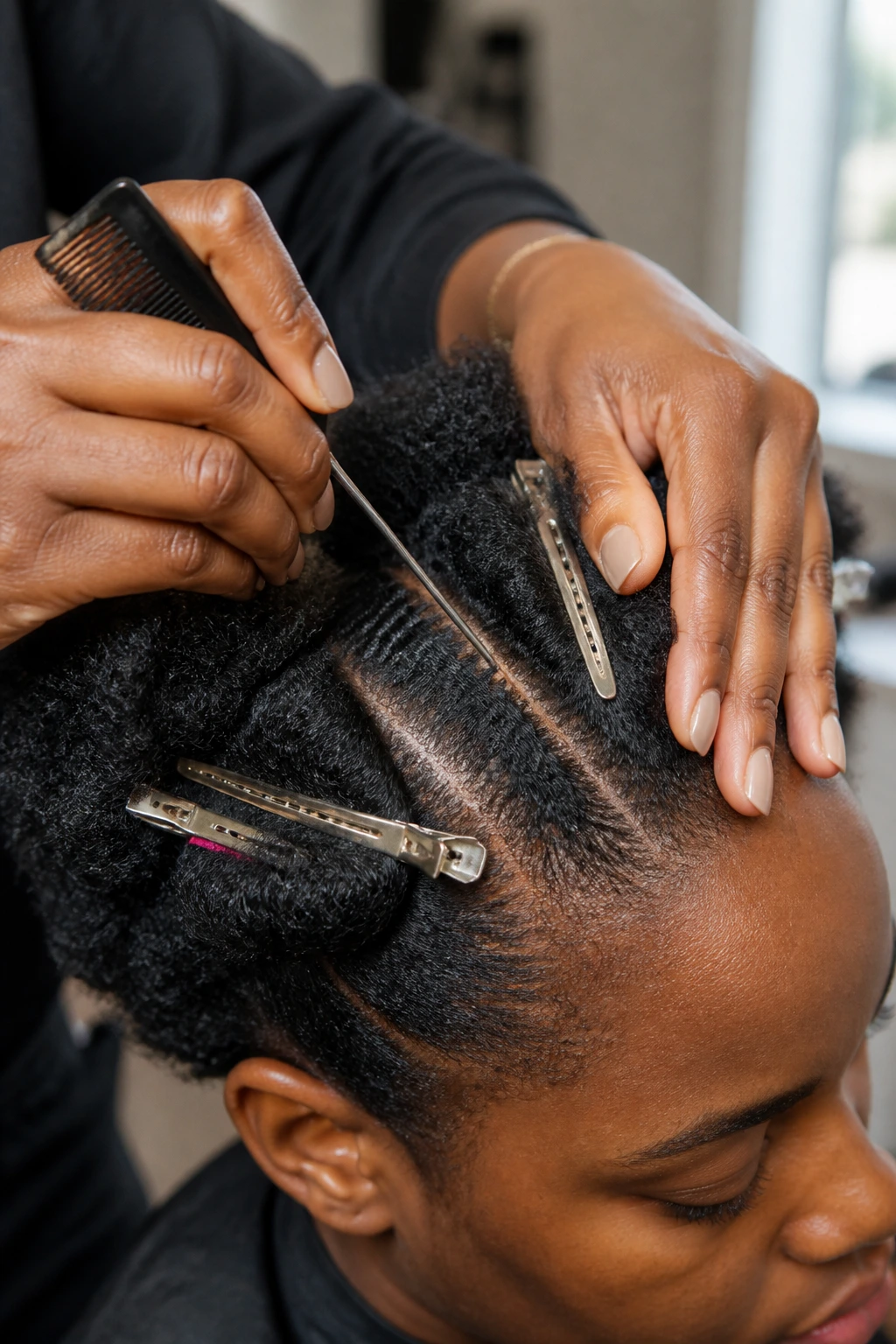
- Using sections that are too big: The braid base lifts, the head looks wider, and the white color makes the mistake obvious. Fix it by making the front and side pieces smaller than you think you need.
- Starting with hair that isn’t stretched: Short natural hair shrinks under tension, which makes the roots puff. Stretch first, even if it feels fussy.
- Pulling the bang too tight: That gives you headaches and makes the front line stand up. Keep tension even and stop trying to force the bang into place.
- Overloading the style with product: Too much gel or cream turns white braid hair dull and sticky. Use just enough to smooth the roots.
- Skipping the night wrap: White fibers catch lint and fuzz faster than darker braid hair. Satin every night. No shortcuts.
Variations and Alternatives to Try
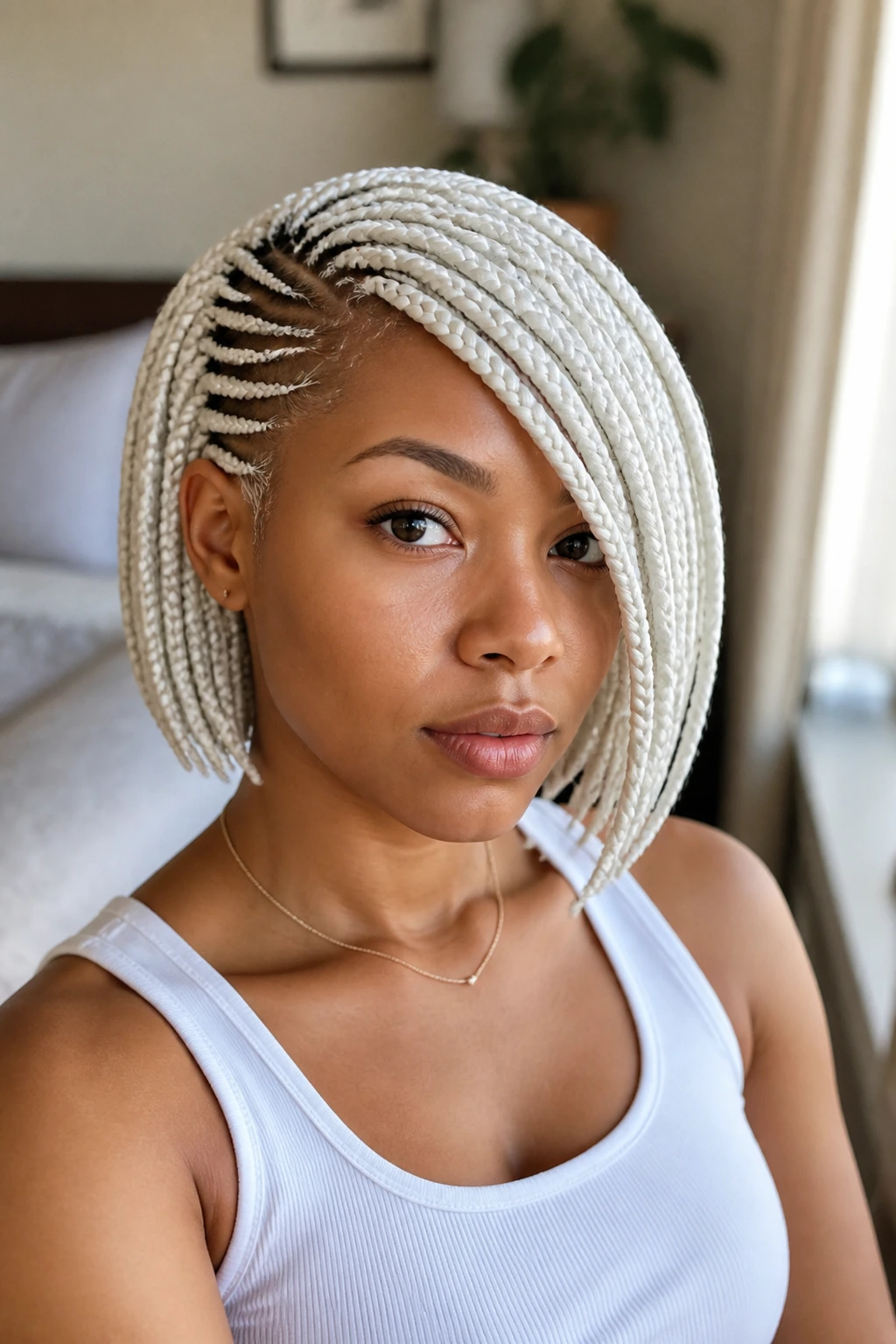
Pearl Minimalist: Keep the whole install in a single white shade with no beads, cuffs, or curled ends. The clean parts and side sweep do all the work, which is the nicest route if you like a sharp, quiet finish.
Ivory and Gold: Mix ivory braid hair with a few gold cuffs near the bang. The warmer tone takes the glare off pure white and gives the style a softer feel.
Short-Bob Drama: Cut the braids to jaw length and keep the side-swept front piece a little longer than the rest. The shape stays tidy, but the diagonal front adds movement.
Accessory Finish: Add shells, clear beads, or wrapped thread only to the front rows. That keeps the back simple and lets the face-framing braids carry the personality.
Night Care, Wash Days, and Removal Timing
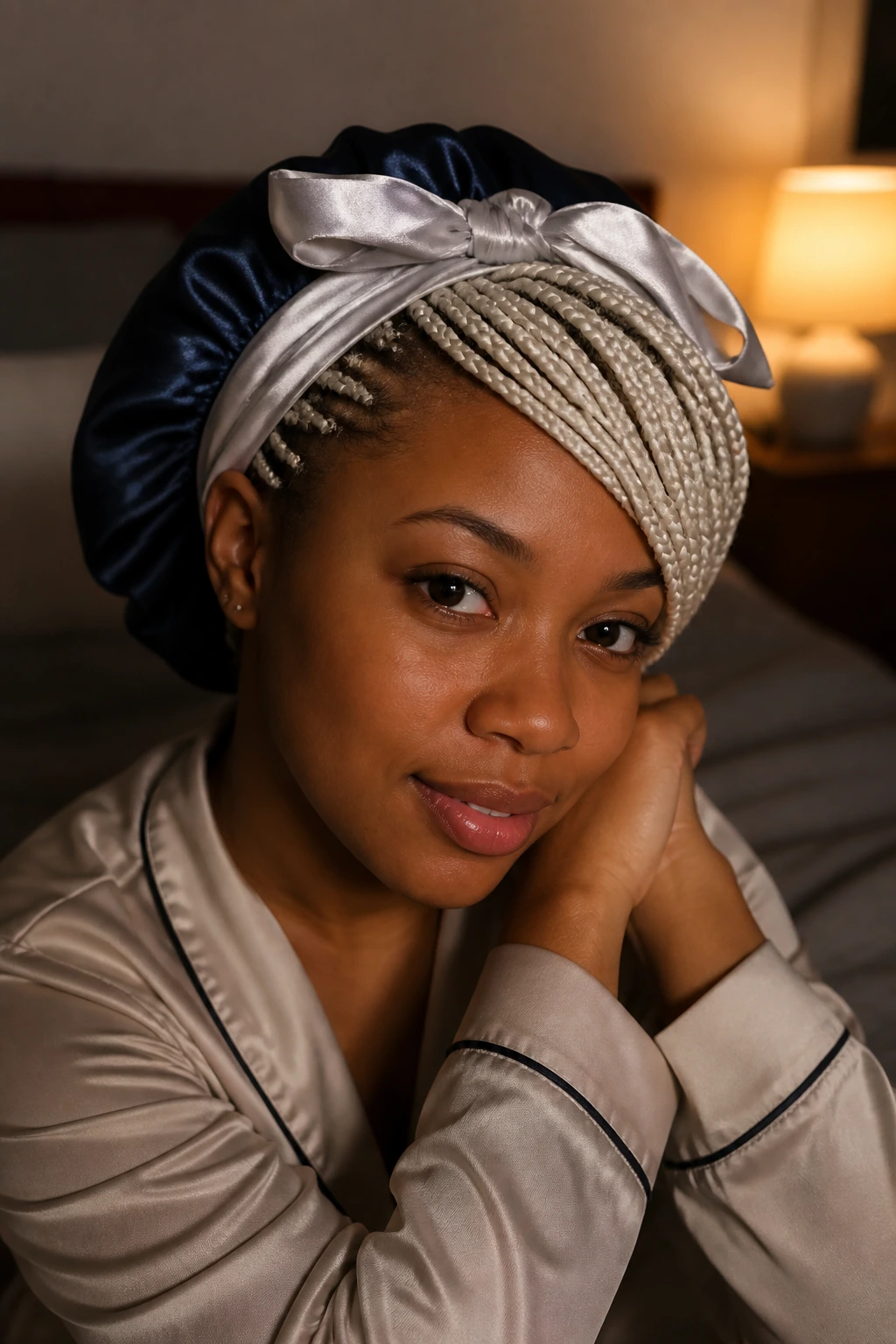
Wrap the hair every night. A satin scarf or bonnet keeps white braid hair from picking up lint, and it also helps the front sweep stay where you put it. If you sleep rough, use both a scarf and a bonnet. I mean it.
Clean the scalp every 7 to 10 days, depending on how much product you use and how hard you sweat. A diluted shampoo in a nozzle bottle works better than dumping water over the whole head, because you can target the roots without soaking the braid length. Follow with a light rinse and pat the scalp dry.
Refresh the style with mousse every 2 to 3 days if the front starts getting fuzzy. White braids show frizz early, so small touch-ups matter. As for wear time, shorter installs often stay neat for 3 to 4 weeks, while a cleaner, denser install can last closer to 5 or 6 if the tension is healthy and the roots aren’t bulking up.
Removal should be slow. Use oil or conditioner on the roots, unravel in good light, and stop if you feel resistance. Short natural hair tangles faster at the base, and rushing removal is a good way to create breakage you didn’t need.
Frequently Asked Questions
How short is too short for white braids with side-swept bangs?
If your hair is shorter than about 2 inches in most areas, individual braids can be hard to anchor neatly. Cornrows, feed-ins, or a close braided base usually work better, because they distribute tension instead of relying on tiny grip points.
Will white braids show dirt faster than darker braid hair?
Yes, and that’s part of the deal. Lint, dry shampoo residue, and product buildup sit on pale fibers more clearly, so night wrapping and light cleaning matter more here than they do with black or brown braid hair.
Are side-swept bangs better as braids or as loose hair?
On short natural hair, braided bangs tend to last longer and sit more predictably. Loose bangs can be pretty, but they often puff or shrink in a way that fights the rest of the install.
Can I do this look without extensions?
You can get a version of it with cornrows, sculpted parts, and a side-swept braided front, but the white color itself usually comes from added hair. If you want the look without full extension length, use the braiding hair only where the shape needs it.
What should I ask a stylist for if I want this style?
Ask for a short natural hair install with a side-swept front section, smaller parts at the hairline, and braid size matched to your density. If you want white-white rather than ivory, say that plainly; shade matters more here than people think.
How do I keep the bang from sticking straight out?
Keep the front pieces smaller, smooth them while they’re still warm from styling, and let them dry in the direction you want them to fall. A little mousse helps. Too much gel can make the front look stiff instead of swept.
What if my edges are thin or fragile?
Skip heavy tension at the temples and keep the first row looser. A knotless or feed-in base is easier on a delicate hairline than a tight, bulky start, and you’ll get a cleaner grow-out line too.
Can I wear white braids if my hair is tapered on the sides?
Yes, and honestly, a taper can make the style look better. It gives the braids a built-in frame, especially when the side-swept bang is placed to echo the shorter side of the cut.
The Shape That Sticks
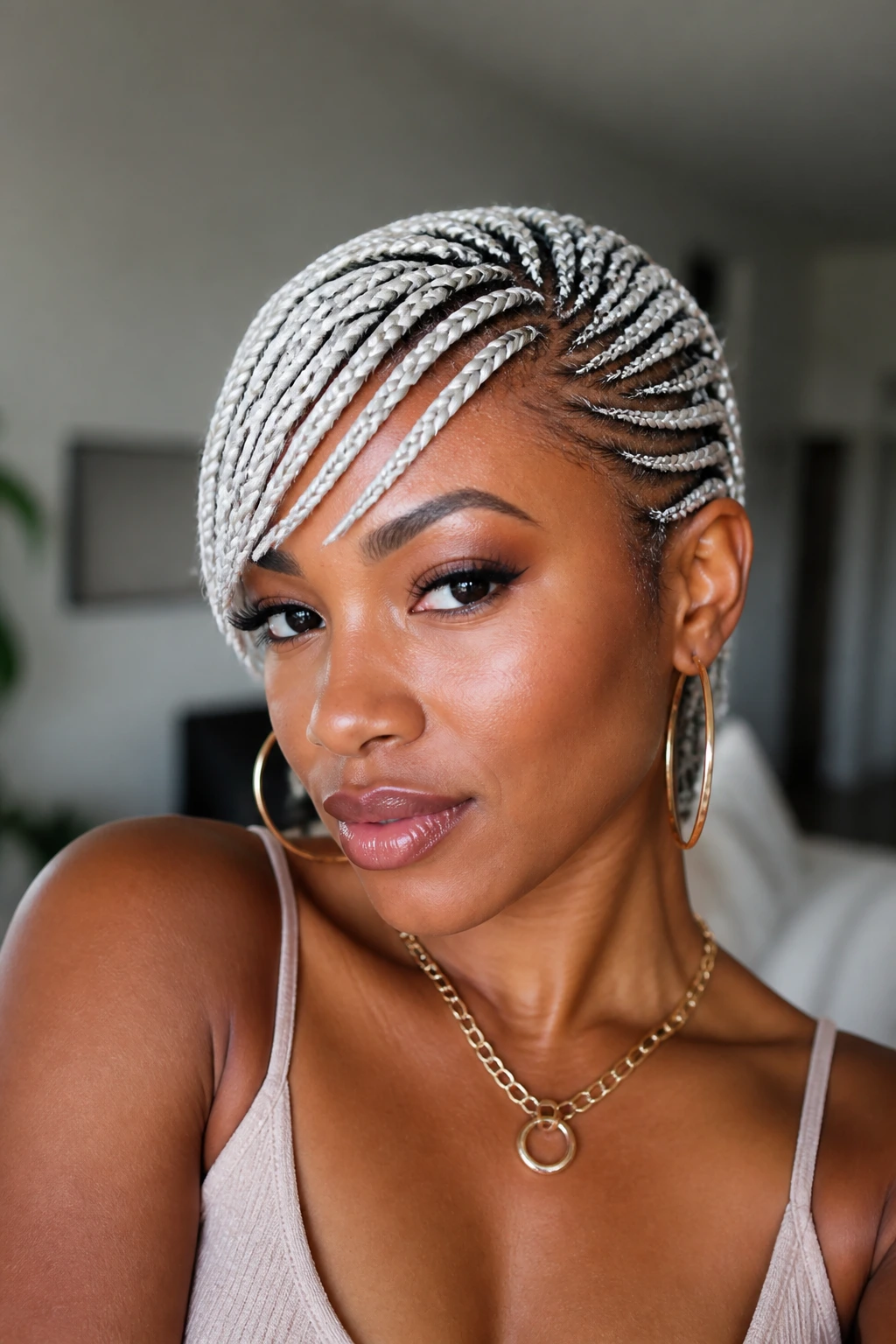
White braids on short natural hair work when the shape is doing the talking. The pale color makes the parting obvious, the short length keeps the style neat, and the side-swept bang stops the whole thing from turning boxy. That’s a good trade.
Pick the version that fits your haircut, not the one that looks biggest on a mood board. Short hair likes clean parts, smaller front sections, and a bang that bends on purpose. Give it that, and the style holds its own.