



Dark hair doesn’t need to stay flat when the air turns cooler. The best brown caramel red fall highlights for dark hair don’t scream from across a room; they move. They show up when you turn your head, when the light catches the ends of a wave, when a side part opens and a cinnamon ribbon slips into view. That’s the whole trick. Warmth, but not a blunt block of color.
A lot of people think of highlights as either blonde or not-blonde, and that misses the best part of brunette color work. Brown, caramel, auburn, chestnut, copper, mahogany — these shades live in the same warm family, but they don’t behave the same way on a deep base. Caramel throws a soft glow. Red-brown tones add depth. Copper reads brighter and needs more upkeep. Put them in the right places, and dark hair looks richer, not lighter for the sake of it.
That’s why these looks matter. They’re not about fighting your base color. They’re about using it. The dark root gives the warm pieces something to lean against, which is why a well-placed ribbon of cinnamon or a glazed chestnut veil can look more expensive than a full head of pale highlights ever could. Some of these ideas are subtle enough for everyday wear. Others lean loud in the best possible way. And the difference between them is all in the shade, the placement, and how much contrast you actually want.
Why These Shades Read So Well on Dark Hair
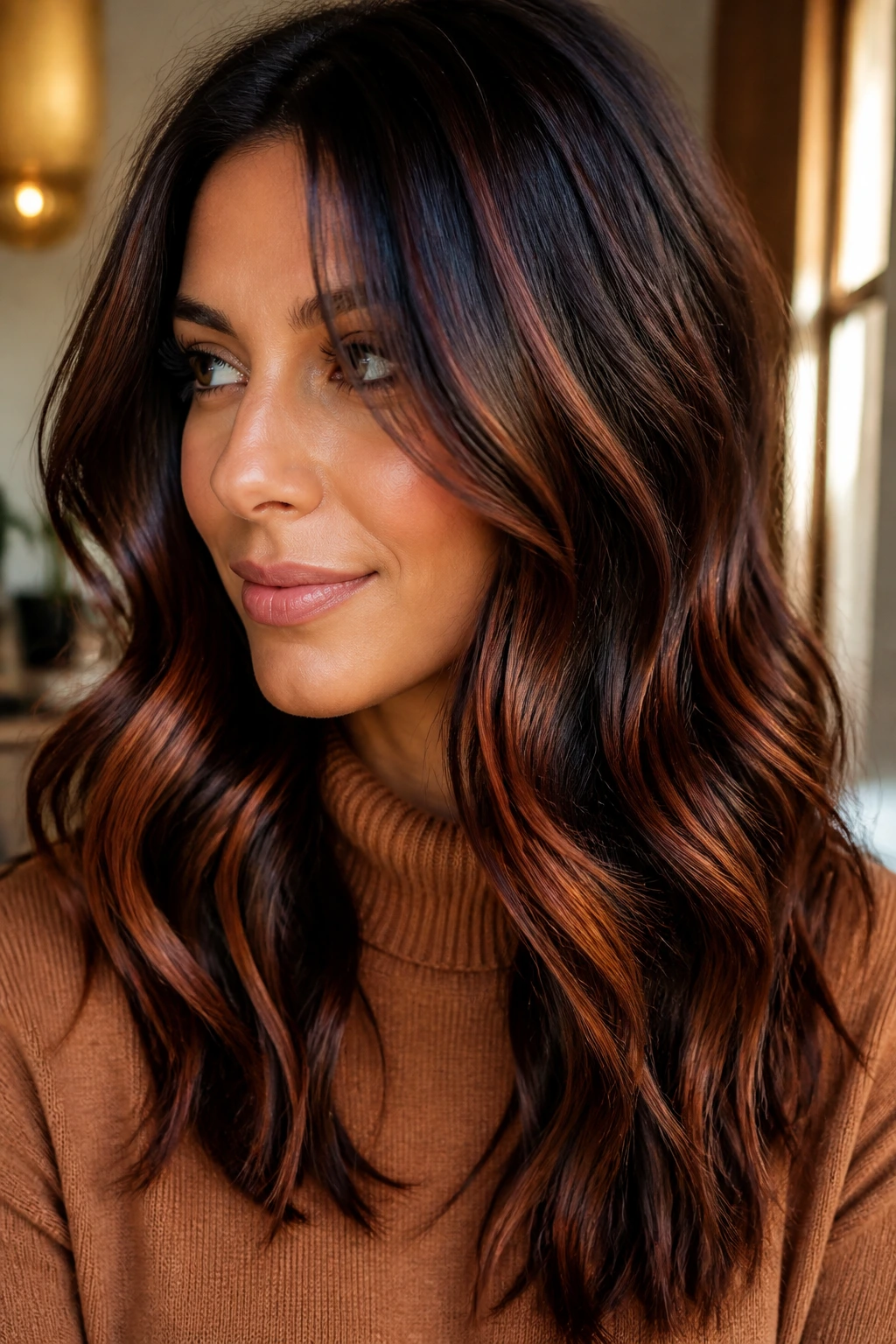
- Dark bases make warmth look deeper: A level 2 to 4 brunette base gives caramel, auburn, and mahogany a shadow behind them, so the color looks richer instead of washed out.
- Placement does half the work: Face-framing pieces, balayage ribbons, and peekaboo layers all change how light moves across the hair, which matters more than the name of the shade on the box.
- Red-brown tones fade with character: Auburn and cherry cola soften into chestnut and rosewood instead of looking muddy, which is one reason they age better than bright copper if you hate obvious regrowth.
- Low-commitment options are built in: Glosses, underlights, and root-melt finishes let you try warmth without turning the whole head into a maintenance project.
- Texture changes everything: Waves show ribbons, curls show halos, and straight hair shows slices. Same color family. Different story.
1. Chestnut Caramel Balayage with a Soft Root Melt
Chestnut caramel balayage is the kind of highlight set that looks like it grew there after a few weeks in the sun, except it’s warmer and more deliberate. On dark brown hair, the chestnut keeps the result grounded while the caramel brings in that mellow, toasted glow that reads especially well on loose bends and layered cuts.
Why It Feels Natural on a Dark Base
A soft root melt keeps the top half of the hair close to your natural shade, so the lighter ribbons don’t start at the scalp like stripes. That makes the grow-out easier to live with. Ask for pieces lifted to around a level 6 or 7, not pale blonde, unless you want a brighter finish.
- Best on: layered brunettes, long bobs, and hair that gets styled in soft waves.
- Ask for: hand-painted ribbons through the mid-lengths, then a shadowed root area for a smoother transition.
- Skip if: you want a sharp contrast or a very cool-toned result.
Tiny truth: chestnut is the safety net here. It keeps the caramel from going too sugary.
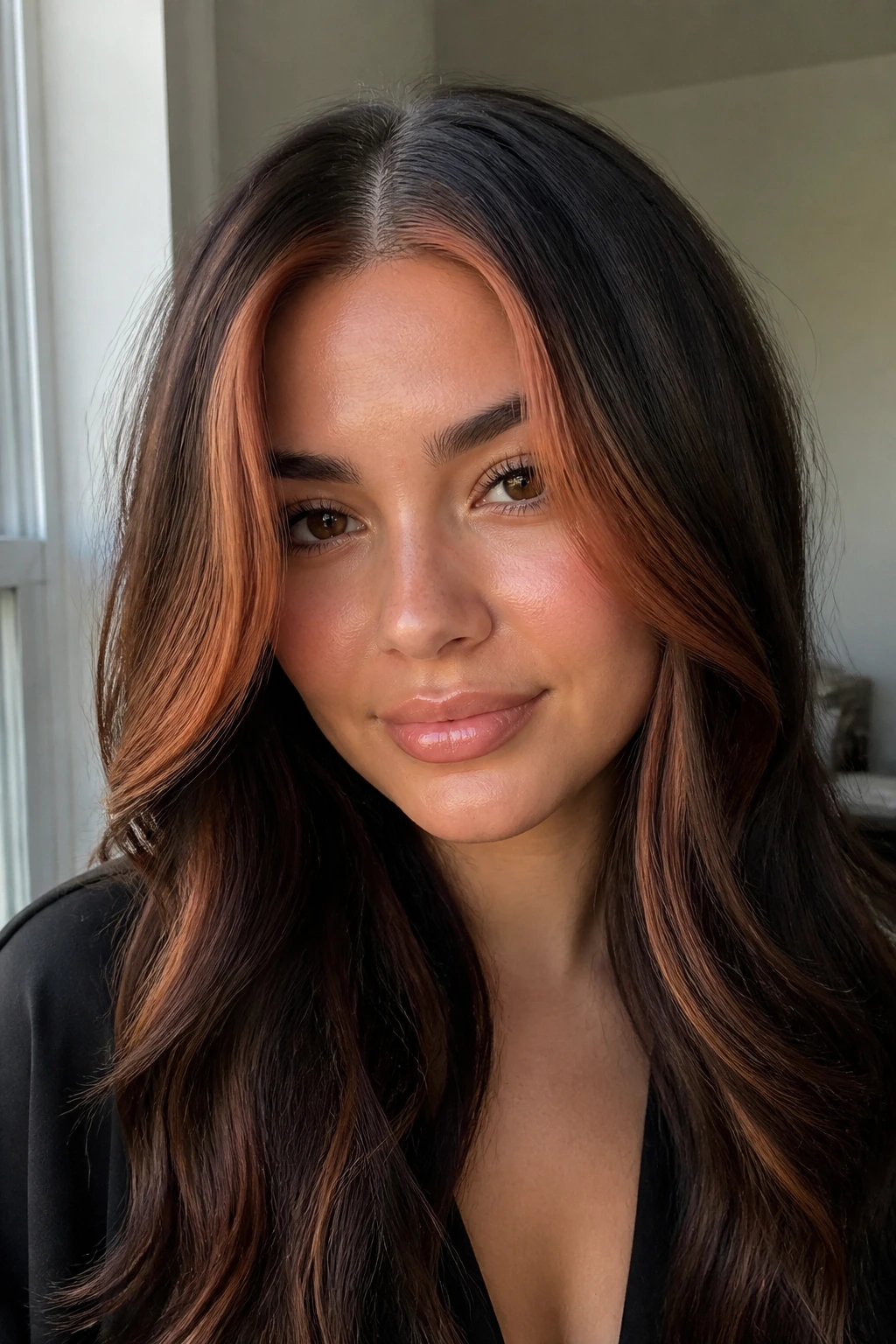
2. Cinnamon Money Piece Around the Face
A cinnamon money piece can change an entire dark haircut in ten minutes of movement. That bright frame around the face catches the first bit of light, which means even when the rest of the hair stays deep and brown, the front pieces still wake the cut up.
The trick is keeping the cinnamon in the brown-red lane instead of drifting into orange. If your hair is very dark, ask for a pre-lightened front section toned to a warm auburn or cinnamon glaze. Center parts make this look bolder. Side parts soften it.
A shoulder-length cut with curtain bangs makes this one shine, but it also works on long hair if you want your front pieces to do the talking and the rest of the head to stay quiet.
3. Auburn Ribbon Highlights on Espresso Hair
Why does auburn look so rich on espresso hair? Because the contrast is never harsh. The dark base holds the red-brown ribbons in place, and auburn gives you that dried-leaf warmth without shouting copper from across the room.
How to Wear It
Auburn ribbons should be woven through the outer layer, not packed too densely. That way, the color shows when you twist the hair, tuck it behind the ear, or pull it into a half-up style. On straight hair, ask for a little more spacing between ribbons so the color doesn’t look like a single block.
This is a smart choice if you like warmth but don’t want full-on blonde energy. Auburn on espresso hair reads polished, not fussy. It’s also one of the easier red-family shades to stretch between salon visits because the brown undertone still looks intentional when it softens.
4. Toffee Babylights for a Soft Overall Glow
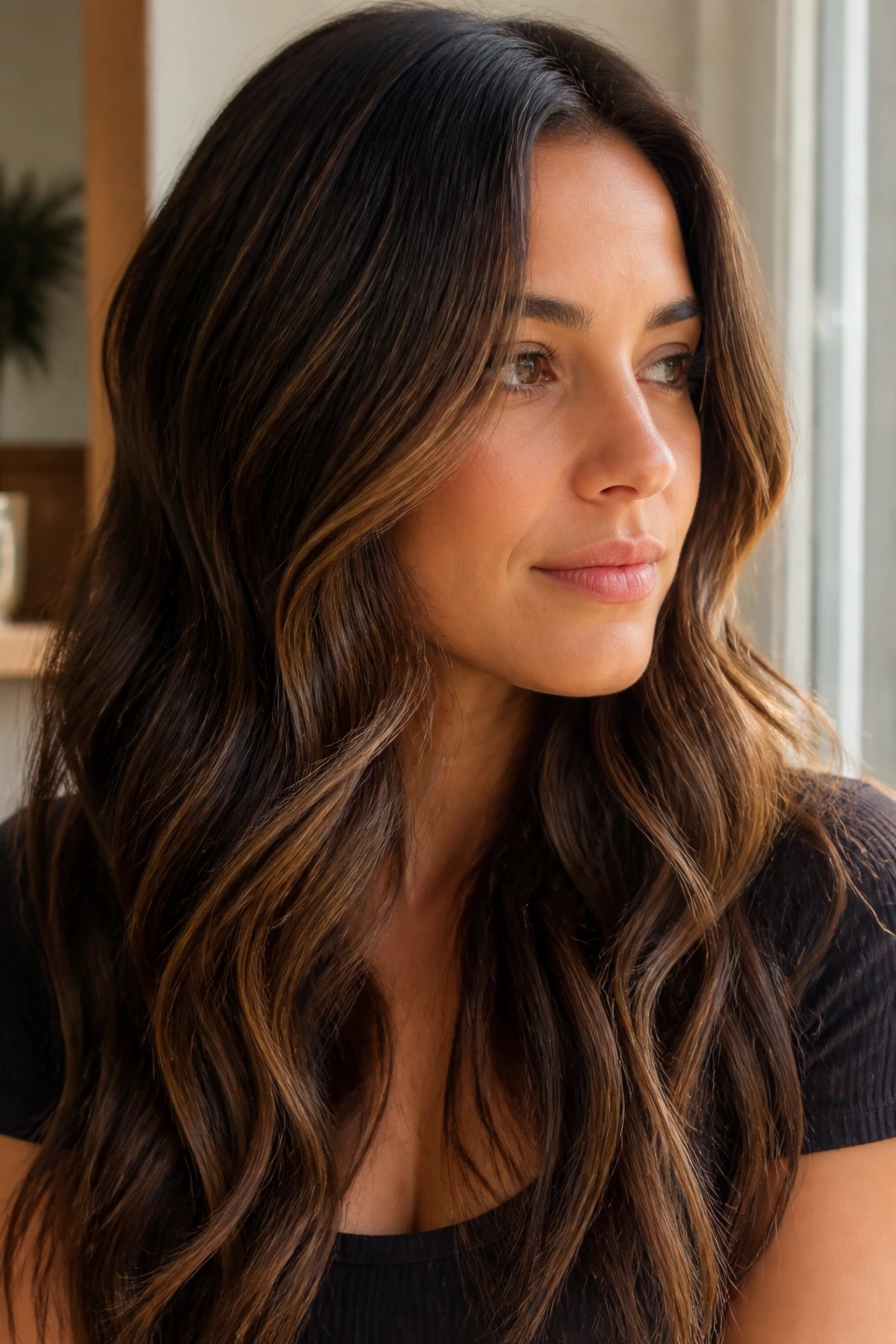
If you hate stripes, babylights are the fix. Toffee babylights on dark hair use very fine sections, so the finish looks like the whole head has picked up a warmer cast rather than a few obvious streaks.
You see the effect most clearly on swishy layers and hair that catches daylight near a window. Under indoor lighting, the pieces sit closer to a soft brown-gold shimmer. That’s the point. No drama. Just enough warmth to keep a dark base from reading one-note.
- Best on: fine hair, medium-density brunettes, and anyone who wants low-contrast color.
- Ask for: micro-weaves and thin foils through the top and sides.
- Maintenance note: babylights grow out quietly, which makes them useful if you can’t live at the salon every six weeks.
5. Mahogany Lowlights with Caramel Surface Pieces
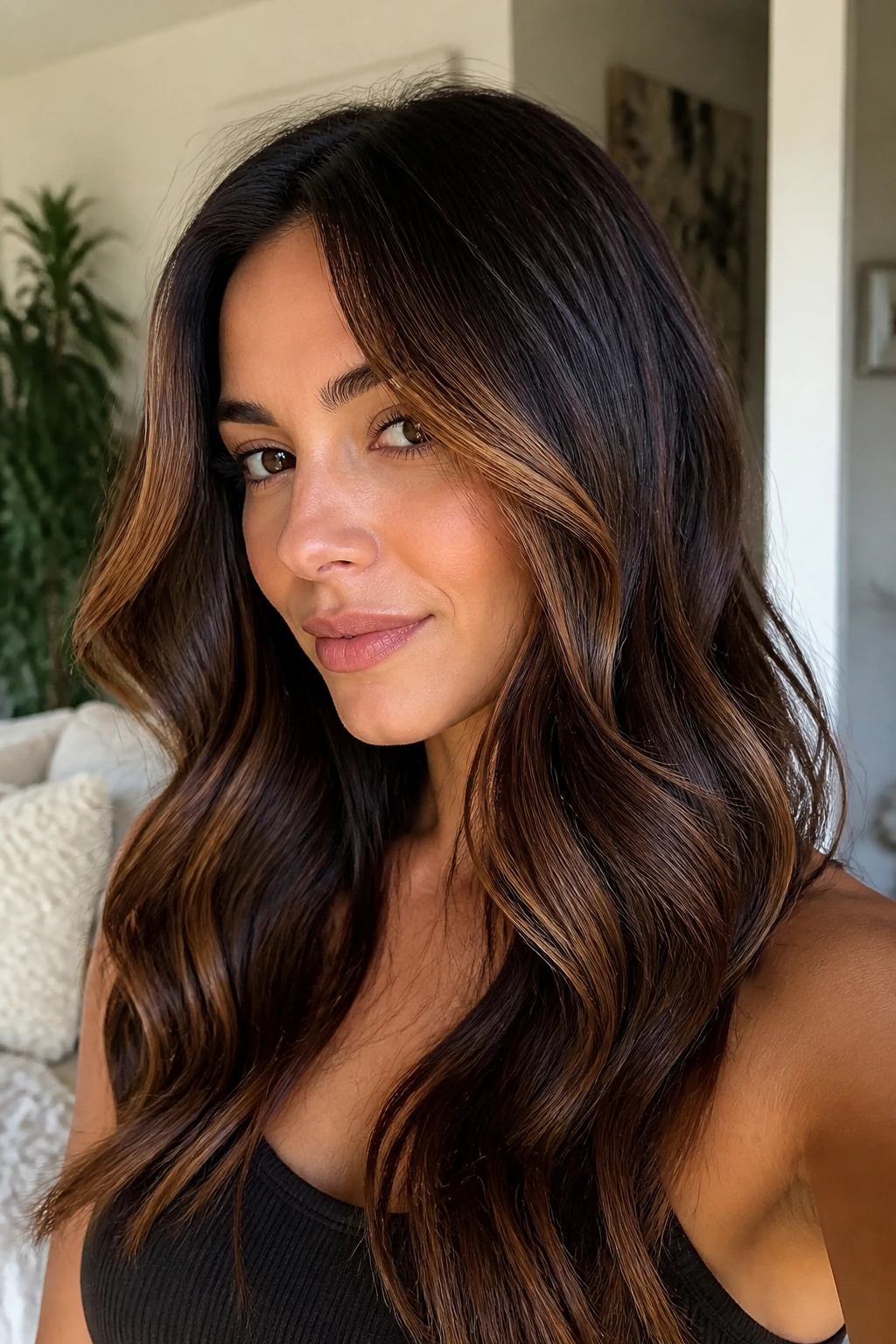
Mahogany lowlights are the underrated move here. They add depth back into dark hair before you even think about adding caramel on top. That matters if your brunette has gone flat or if your ends have been lightened too many times and need a little visual weight.
The contrast between the two tones is subtle but not dull. Mahogany sits below the surface with a wine-brown feel, while caramel stays closer to the top layer. You get movement without turning the head into a patchwork. It’s especially good for hair that’s been through one too many bleach rounds and needs a gentler path back to dimension.
This look suits thick hair well. The lowlights stop the color from floating away in a sea of brightness, and the caramel pieces keep the finish from getting too heavy.
6. Copper Peekaboo Panels Beneath Dark Layers
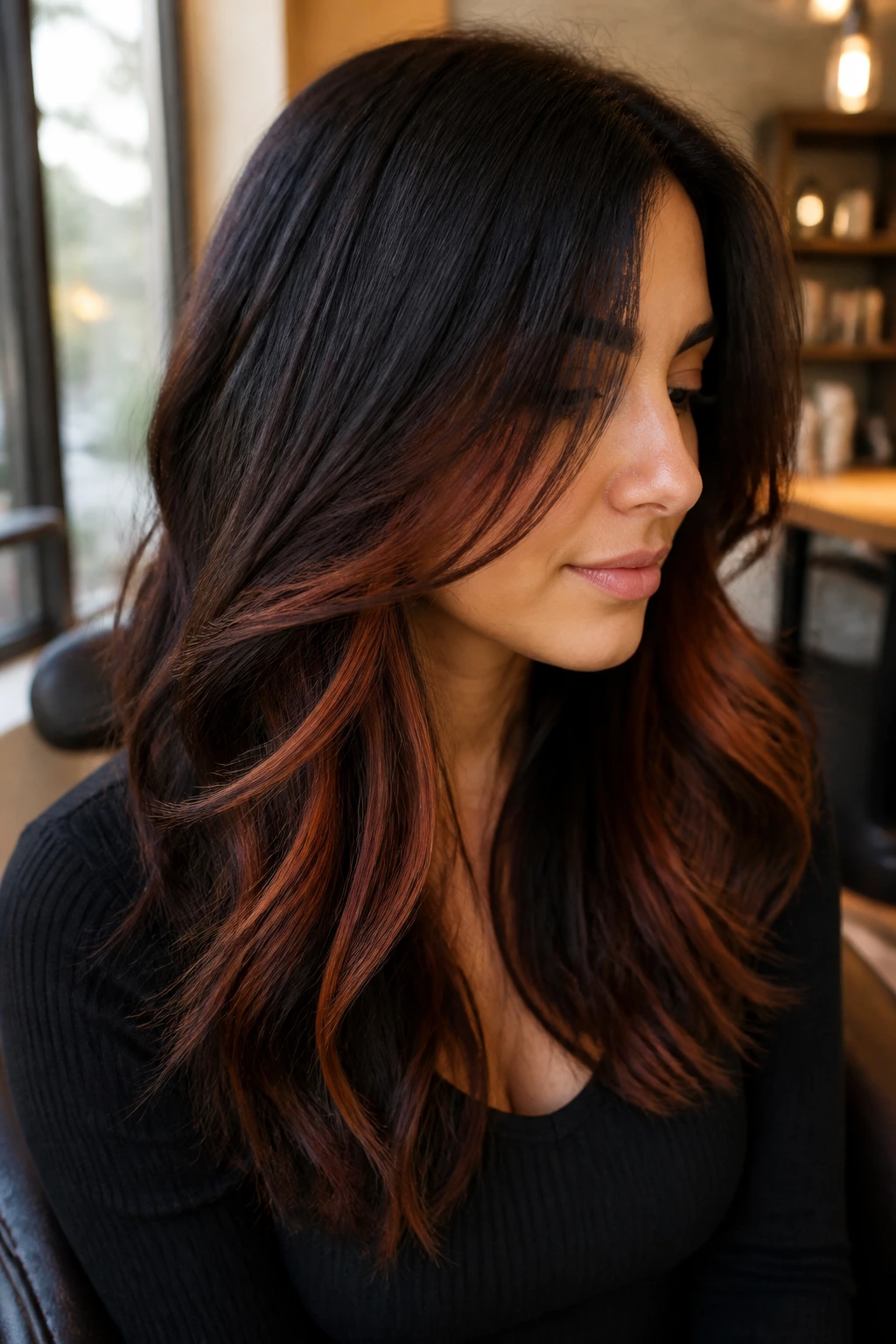
Copper peekaboo panels are for people who like a secret. On the surface, your hair still reads dark and brunette. Move it, part it differently, or tuck one side behind the ear, and the copper flashes out from underneath like a match struck in a dim room.
That hidden placement does two useful things. First, it protects the color from constant sun and heat, so the brightness lasts longer. Second, it gives you all the warmth without needing a full-head commitment. If your work setting leans conservative, this is the kind of color you can keep tucked away until you want it visible.
Long layers, shags, and blunt lobs all handle peekaboo color well. Straight styling shows the panels most clearly, but loose waves make the copper move in a way that feels even more alive.
7. Maple Syrup Face Framing on Long Waves
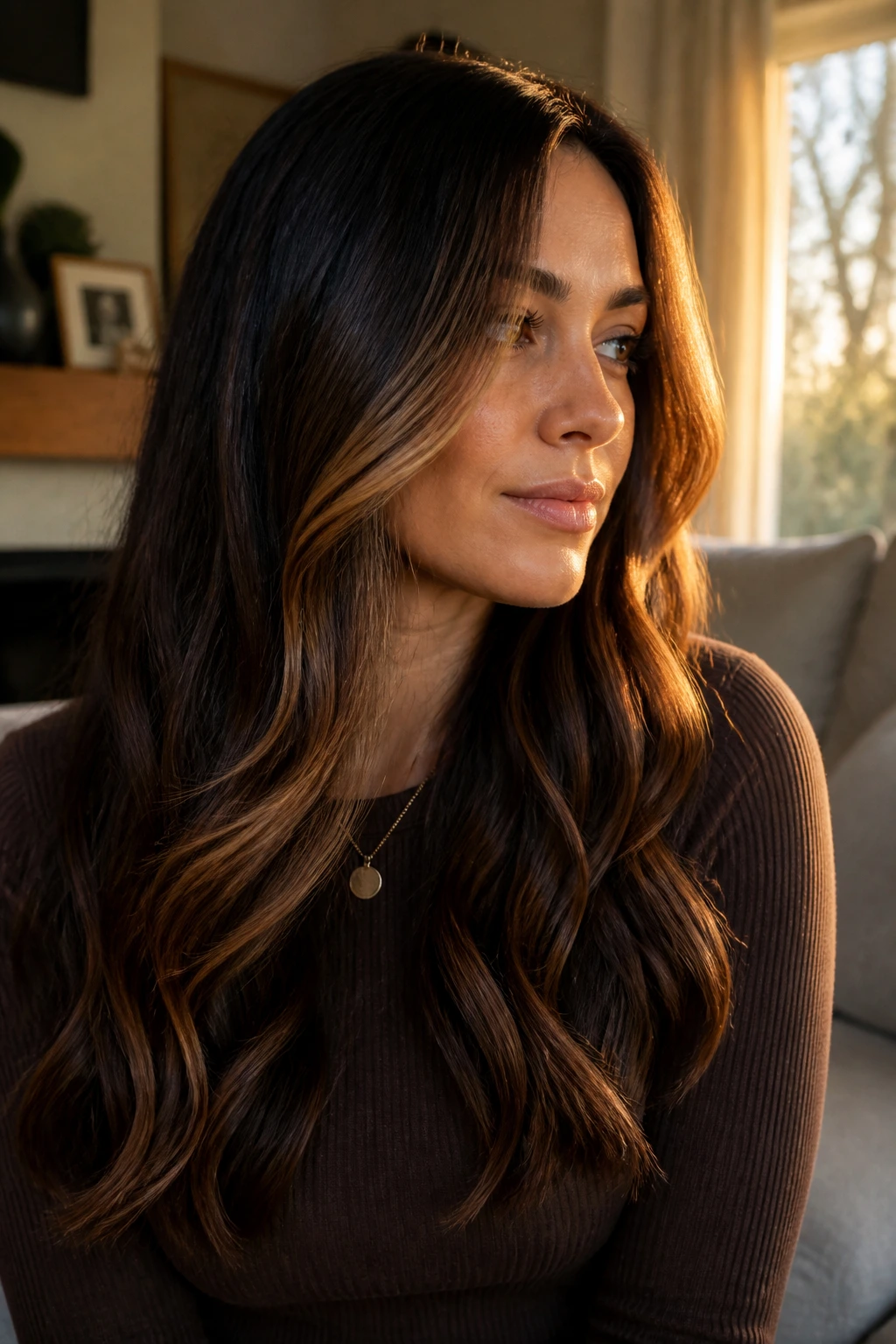
Maple syrup face framing is softer than a money piece and warmer than a plain brown highlight. It lives in that sweet spot between caramel and copper, which is part of why it works so well on long waves. The front pieces lighten the face without taking over the whole haircut.
What to Ask For
Request two to four face-framing sections lifted a touch brighter than the rest of the highlights, then glazed with a maple or warm amber toner. Keep the interior pieces a shade deeper. That contrast gives the front color a place to stand.
A long wave pattern makes this look especially good because the color bends and breaks as the hair moves. If you wear your hair pinned back a lot, this is a flattering way to keep the front visible without needing chunky color everywhere.
8. Smoky Brown Sugar Highlights for a Wavy Lob
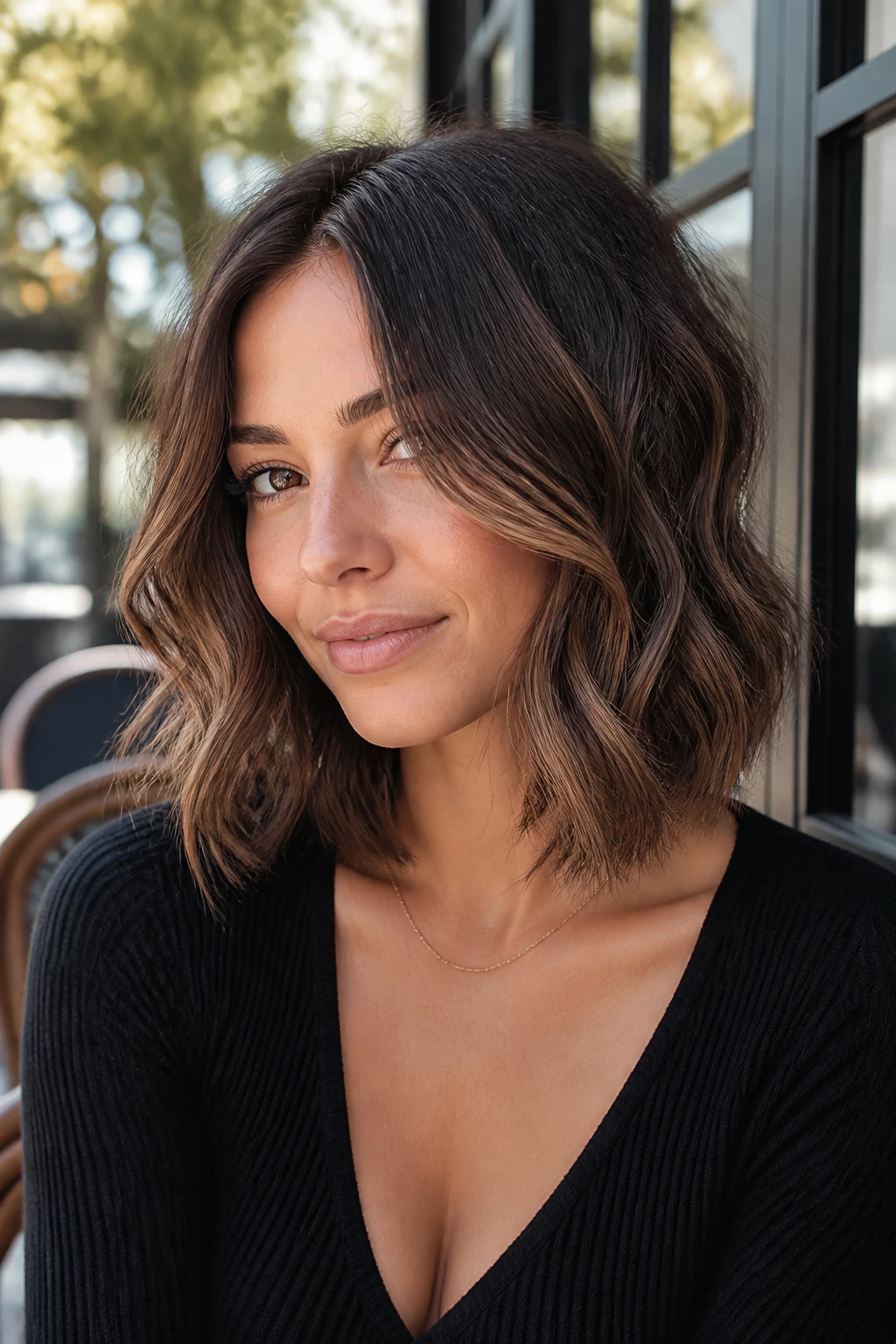
Smoky brown sugar highlights are what happens when you want warmth but not sweetness. The caramel stays muted, the red stays buried under brown, and the whole thing looks a little cooler and more lived-in than standard toffee streaks.
A wavy lob is the sweet spot for this look. The shorter length lets the pieces show without needing a lot of maintenance, and the wave pattern keeps the dimension from collapsing into one shade. I like this version for people who want fall color but still want the hair to feel wearable in a plain T-shirt and jeans kind of way.
If your base is very dark, ask for a slightly smoked tone at the glaze stage. That extra depth keeps the warm pieces from flashing too orange under bright indoor lights.
9. Rust and Rosewood Ribbons on Black Hair
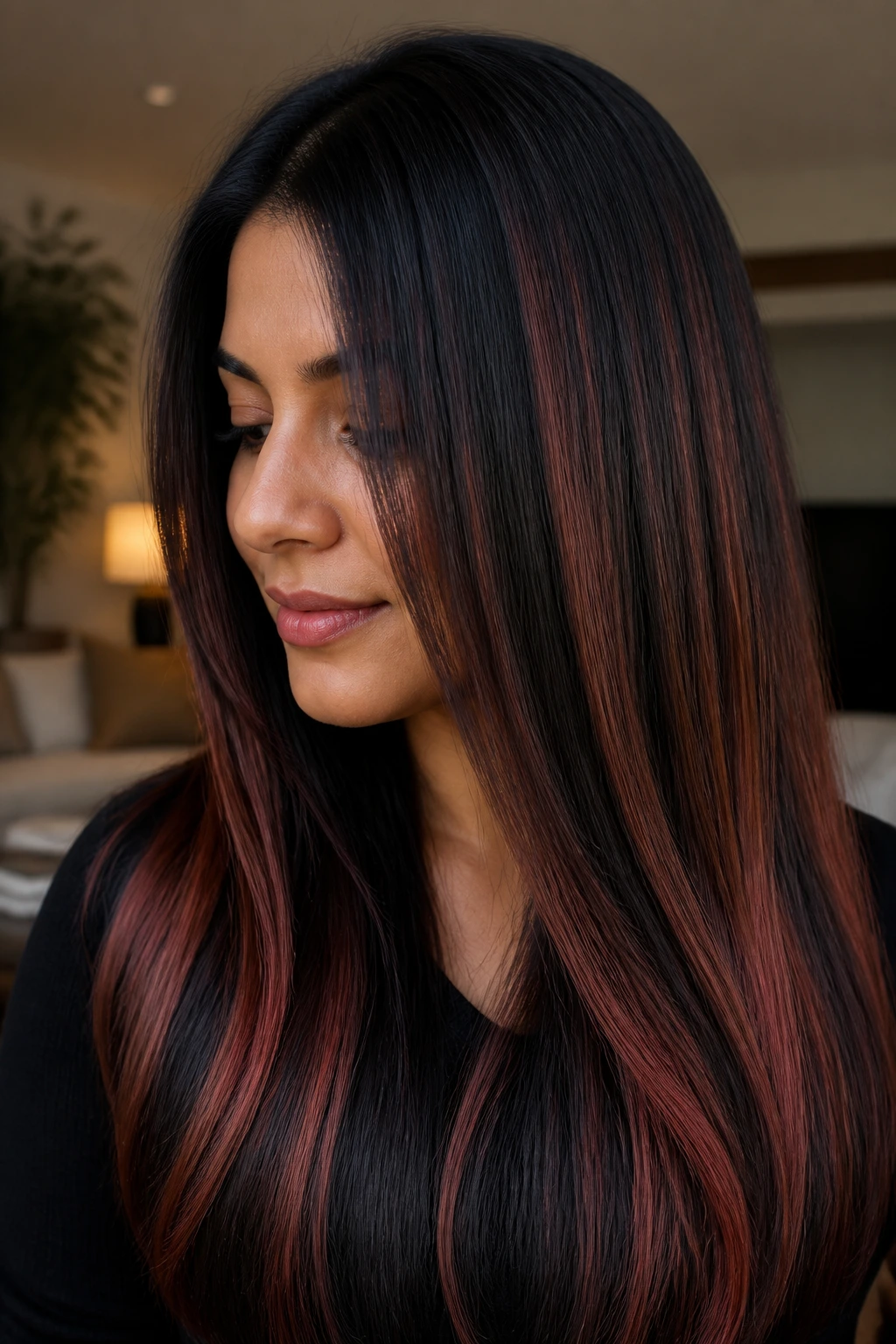
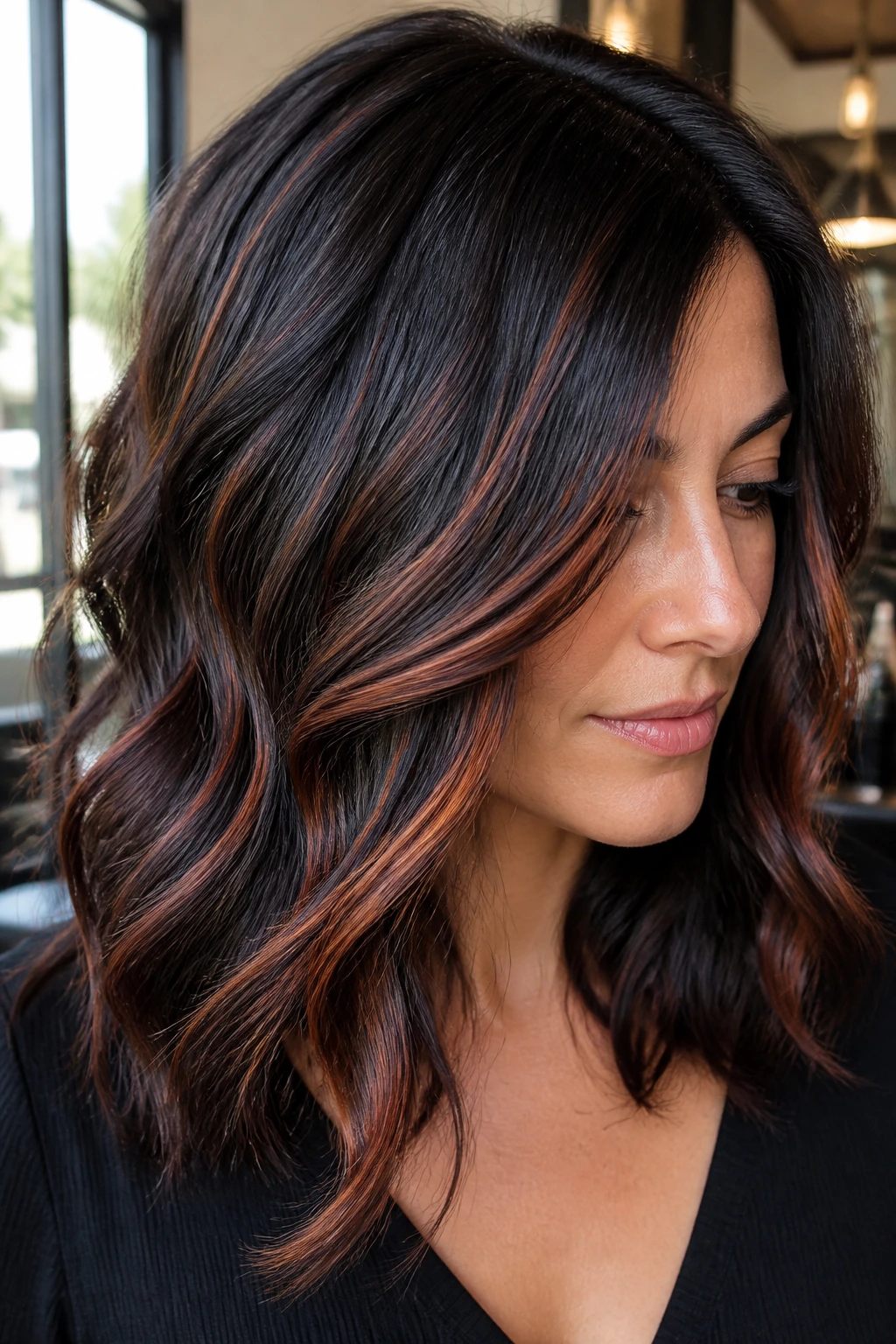
Rust and rosewood on black hair can look nearly invisible in a mirror and then suddenly dramatic in sunlight. That’s the beauty of using deep red-brown shades on a nearly black base: the color doesn’t have to be loud to matter.
Rust pushes the warmth forward. Rosewood pulls it back into a wine-brown line. Together they create a finish that looks expensive in motion, especially on silk presses, blunt cuts, or sleek ponytails where every ribbon has room to show.
This is not the choice if you want caramel brightness. It’s the choice if you want depth, reflection, and a red tone that feels more velvet than candy. Black hair handles that mood well, and honestly, the result can be better than lighter brown highlights because the contrast stays controlled.
10. Toasted Pecan Balayage with Blended Ends
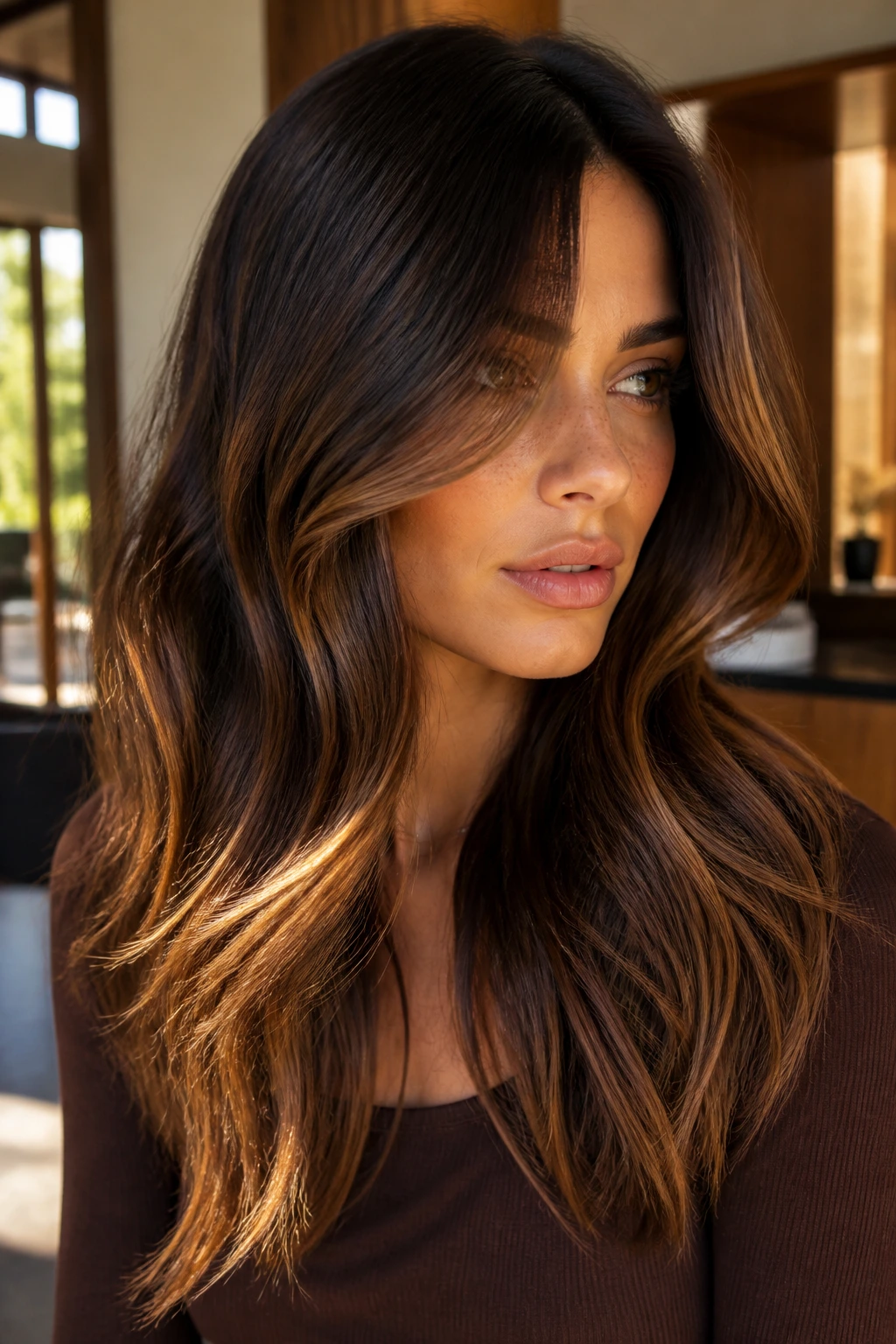
Toasted pecan balayage is one of those styles that saves you from the “highlight helmet” problem. The warmth sits mostly through the mid-lengths and ends, where the hair naturally lightens first anyway, and the blend keeps the line between dark and light from looking hard.
The pecan tone lands between caramel and light brown, so it’s useful if you want a softer finish than copper but more change than a chestnut glaze. On long hair, it creates a gentle fade that looks expensive without needing a dramatic lift.
Best on: grown-out color, layered cuts, and hair that already has some bend or texture.
Why it works: the ends carry the brightest piece of the story, which means the color feels built in rather than painted on top.
11. Mulled Wine Red Balayage on Dark Brunette Hair
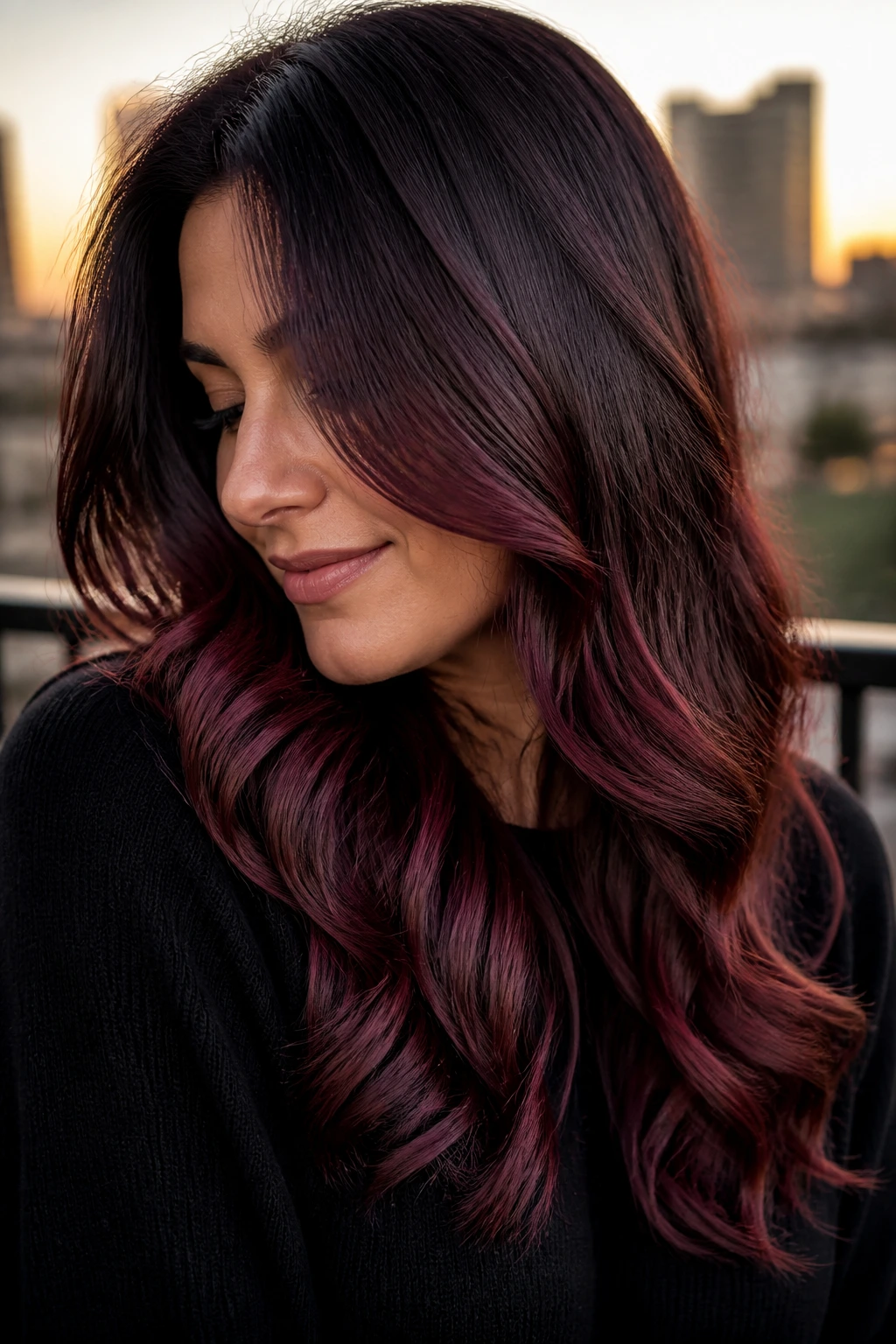
Mulled wine red is one of my favorites for dark brunette hair because it doesn’t try to act like blonde. It leans rich, moody, and just a little mysterious, which suits autumn color much better than bright cherry in a lot of cases.
The balayage placement keeps the red broken up, so you get flashes instead of a solid red sheet. That matters. Solid red on dark hair can flatten quickly. Scattered wine-toned ribbons move better and fade into a chestnut state that still looks intentional when the gloss wears down.
This style fits medium to long hair best, especially if you like wearing it loose. The movement helps the red catch the light instead of hiding under the darker base.
12. Caramel Contour Highlights Around the Hairline
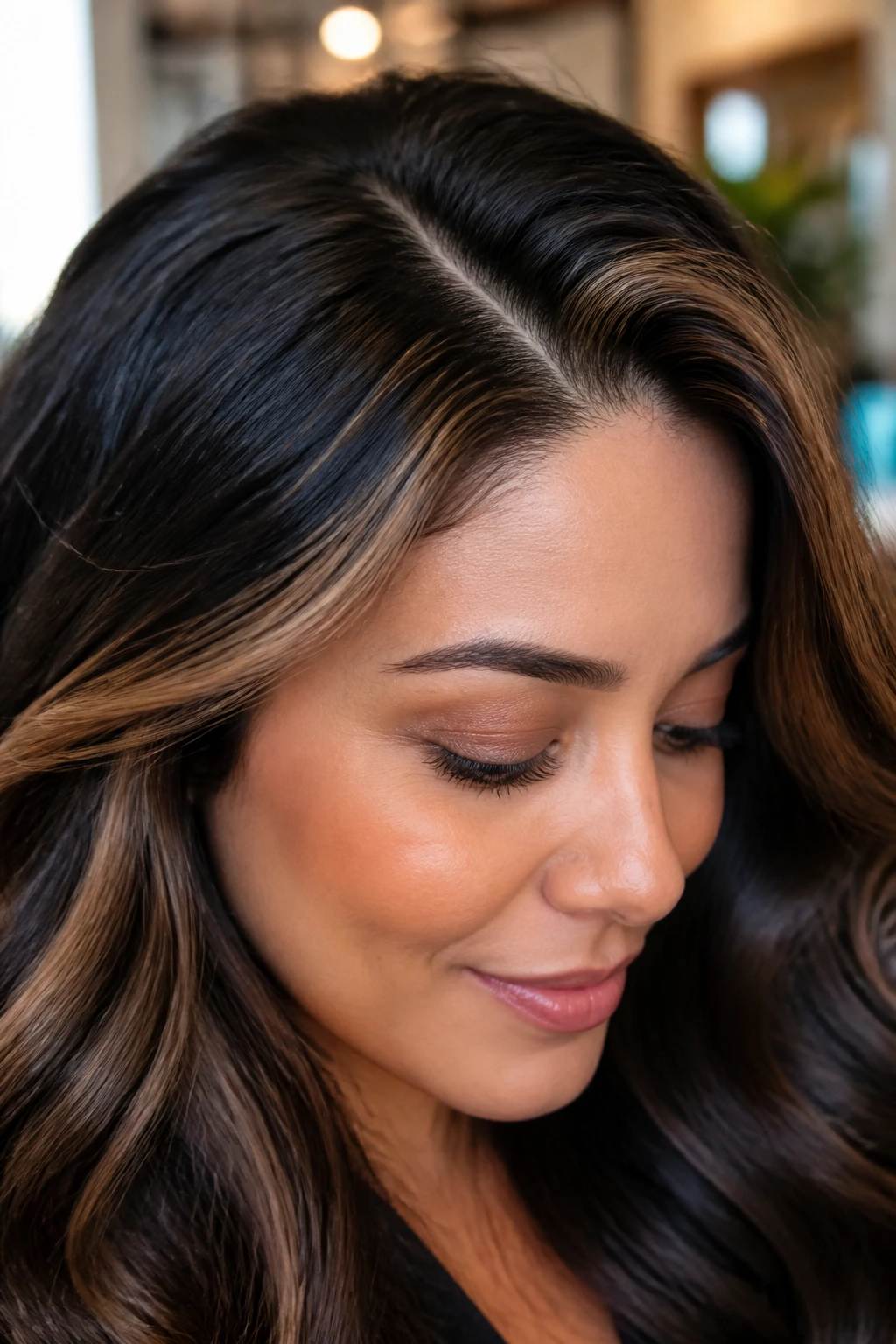
Caramel contouring is the kind of placement that makes a haircut look more expensive than it is. The highlights sit around the hairline, temples, and part line, which means the light lands right where your eye goes first.
If you’ve got dark hair and you don’t want a lot of maintenance, this is a smart place to start. You only lighten the sections that do the visual work. The rest stays deep and dark, which is easier to grow out and kinder to the overall condition of the hair.
Where It Helps Most
- Around curtain bangs
- Through the front corners of a bob
- At the part line for a side-swept style
The best contour pieces are not chunky. They’re thin enough to soften the face, but bright enough to separate the front layers from the darker body of the hair.
13. Bronze and Copper Slices for Thick Hair
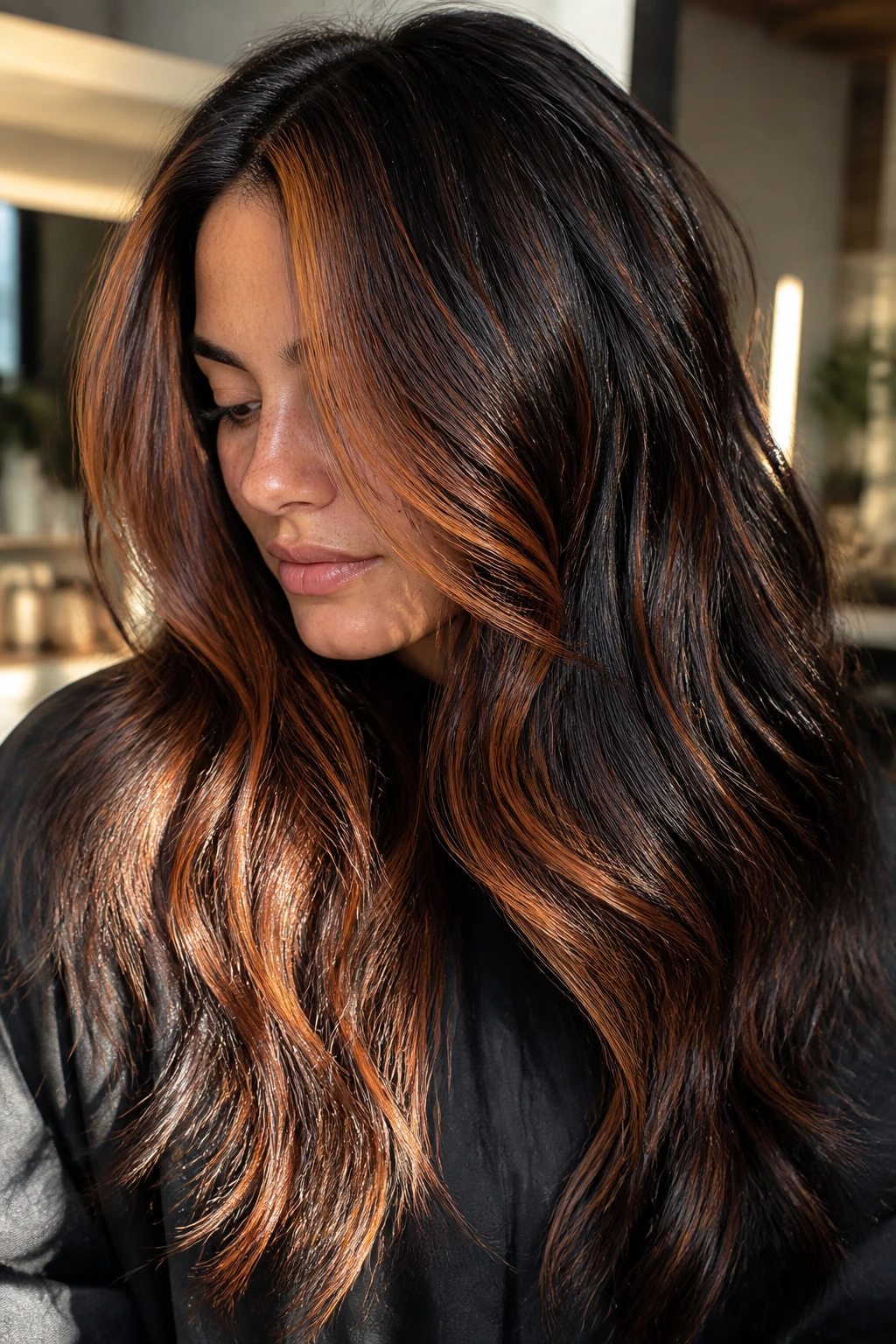
Thick hair can carry more color than fine hair, and bronze-copper slices prove it. You get stronger pieces, more visible panels, and a finish that doesn’t disappear the moment the hair dries. On dense dark hair, tiny highlights can get swallowed. Larger slices hold their own.
The bronze keeps the color from turning too orange, while copper gives you that unmistakable warm glow. This combo works best when the slices are placed a few inches apart, not packed together. Too many and the hair starts to look busy; too few and you lose the point.
A layered cut helps here because the color steps through the haircut as it moves. If your hair is thick and long, this is one of the few highlight styles that can look intentional even when it’s air-dried and a little unruly.
14. Cherry Cola Shadow Highlights on Dark Brown Base
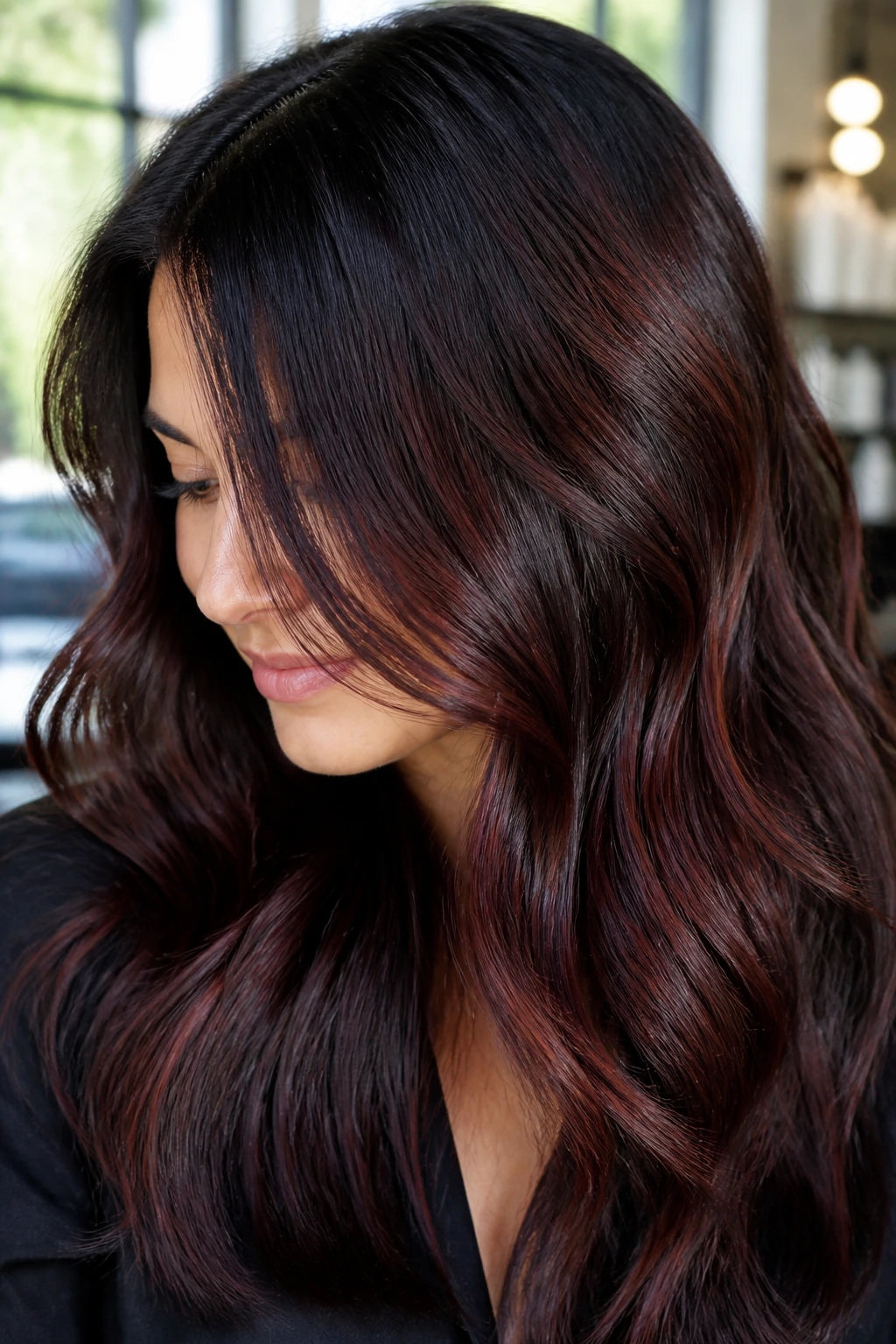
Cherry cola is a clever shade because it lives in the red-brown middle ground. It has enough red to feel seasonal, enough brown to stay wearable, and enough depth to keep dark brown hair from going flat.
The “shadow” part matters. Rather than lifting everything high, the color shifts just enough to show in motion and under bright light. That’s why this works so well for office-friendly color or for anyone who wants their hair to read darker from a distance and richer up close.
It pairs well with a gloss finish, not a matte one. Cherry cola needs shine. Without it, the color can look tired. With it, the hair picks up that polished, soda-bottle depth that makes the whole style feel deliberate.
15. Honeyed Auburn Ends on a Mid-Length Cut
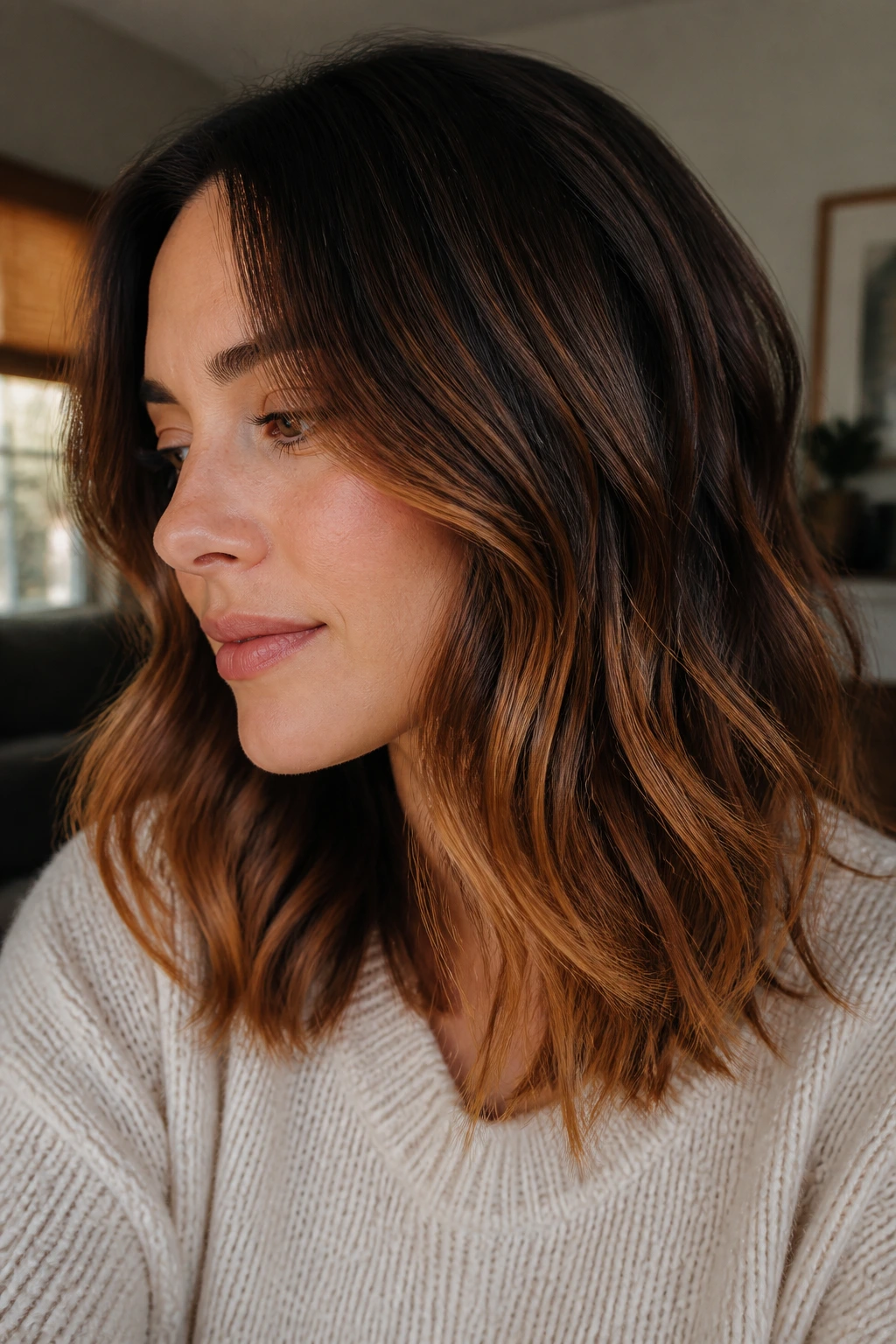
Honeyed auburn ends are a nice escape hatch if you want red tones but don’t want them near the scalp. Keeping the warmth at the ends makes the cut look lighter and more swingy, especially on shoulder-length hair with a blunt or slightly textured edge.
Why does this placement work? Because ends take light differently. They’re also where hair tends to look dull first, so auburn there gives the haircut a clean finish without requiring a full color change from root to tip.
A mid-length cut is good for this because the color has enough room to show, but not so much length that the ends disappear into the rest of the hair. If your goal is to look like you’ve had a fresh cut and a color refresh at the same time, this is a strong option.
16. Spiced Cocoa Balayage with Barely-There Lift
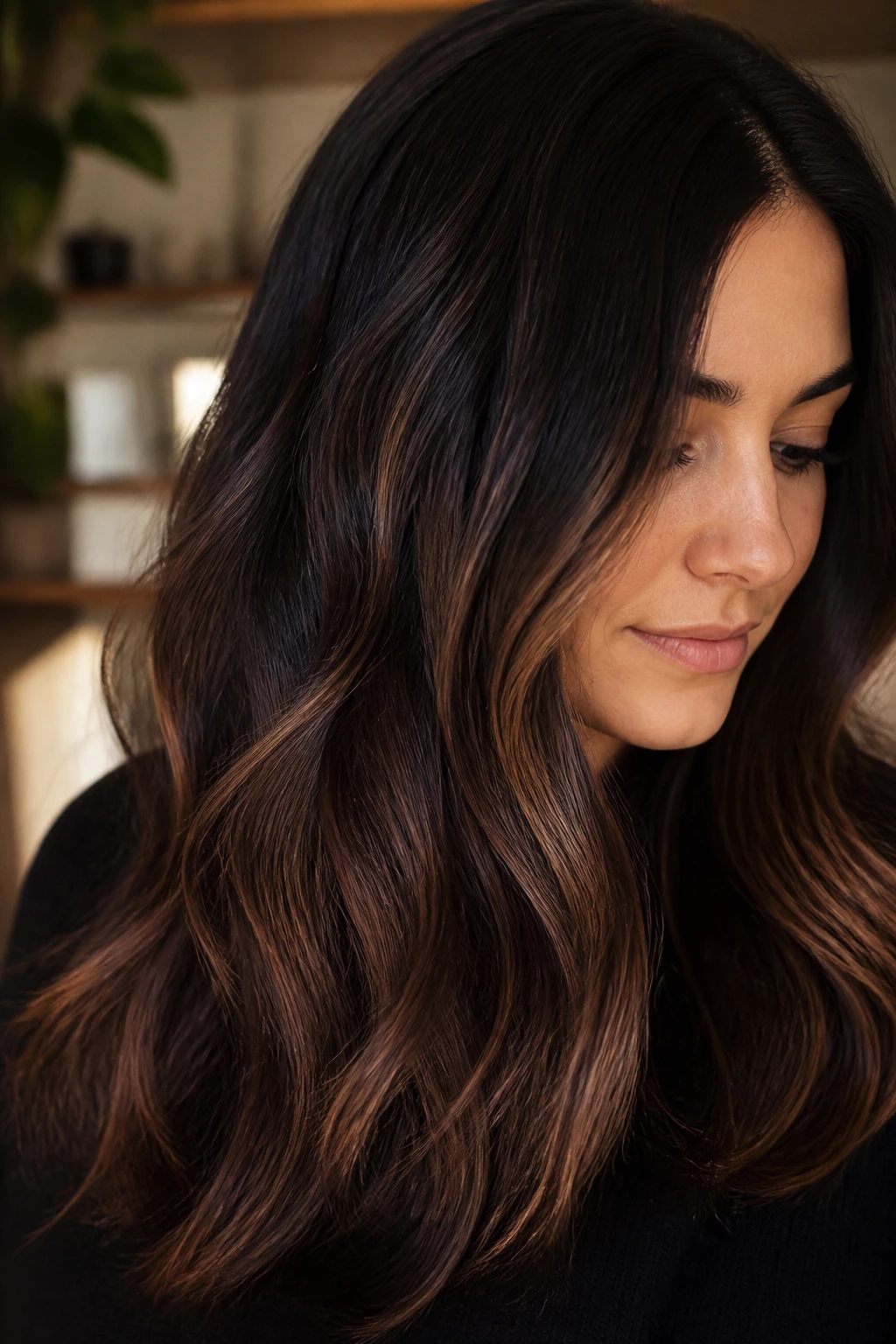
Spiced cocoa balayage is for the person who wants warmth so quiet you almost miss it until the sun hits. The lift is minimal, the color stays close to the base, and the result reads as dimension rather than transformation.
That makes it useful on virgin dark hair or on hair that’s already a little fragile. You don’t need to chase a big blonde lift to get movement. A half-level to one-level lift with a warm glaze can be enough. The hair stays healthier, and the grow-out is almost invisible.
This is the most forgiving of the bunch if you’re nervous. It doesn’t announce itself. It just keeps the hair from looking like one solid sheet of brown.
17. Burnt Caramel Money Pieces with Dark Root
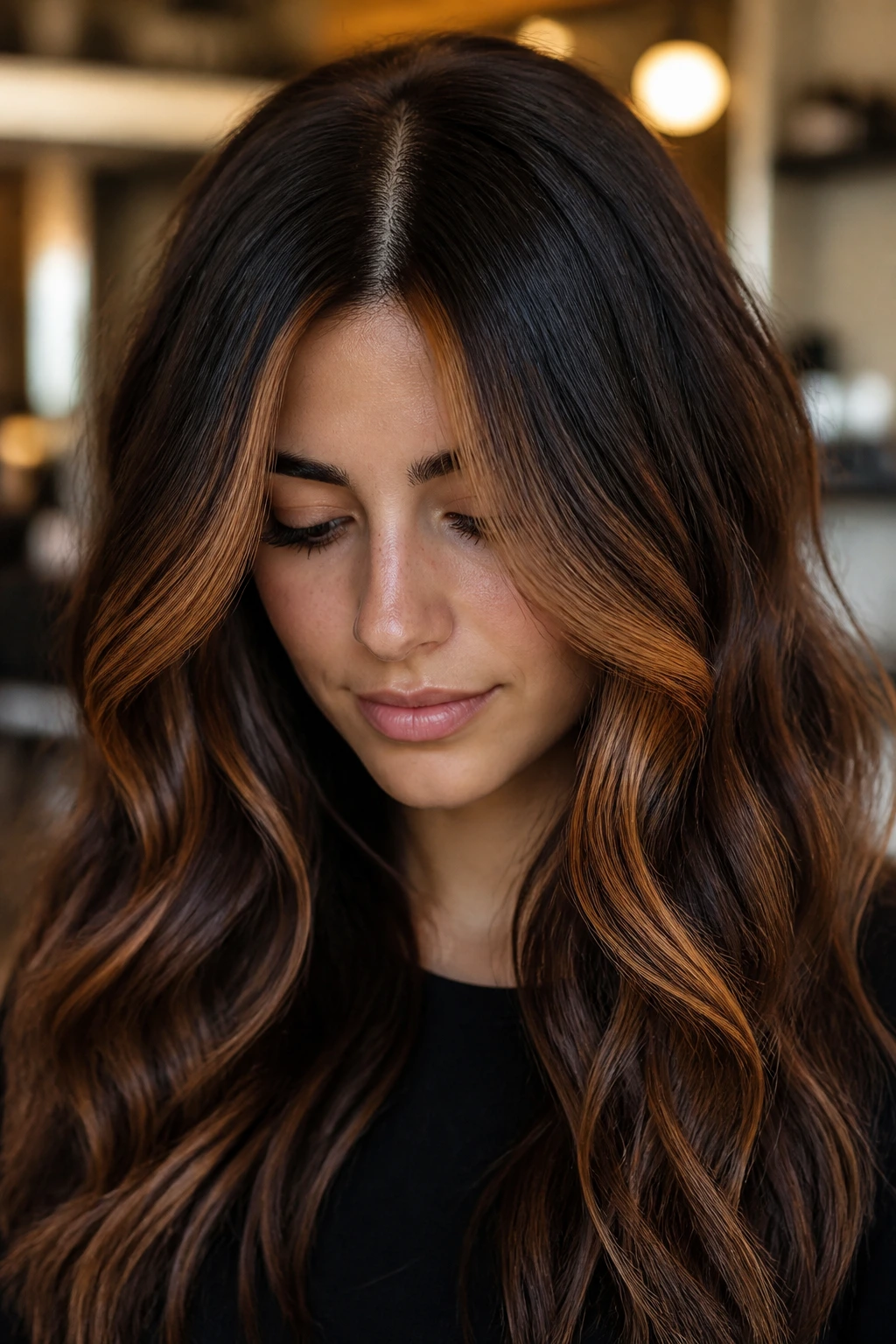
Burnt caramel is the louder cousin of the softer money piece looks. The root stays dark and grounded, then the front streaks brighten into a toasted caramel that has a little more edge than maple or toffee. It’s a useful move if you want the front to do real work.
The dark root is part of the appeal. It makes the lighter piece look cleaner and makes regrowth less obvious. If the face-framing sections are thick enough, they can pull a whole haircut forward even when the rest of the hair is left almost untouched.
This style suits layered hair and cuts with strong cheekbone framing. It’s not shy. It’s supposed to be seen.
18. Red Velvet Peekaboo Highlights for Straight Hair
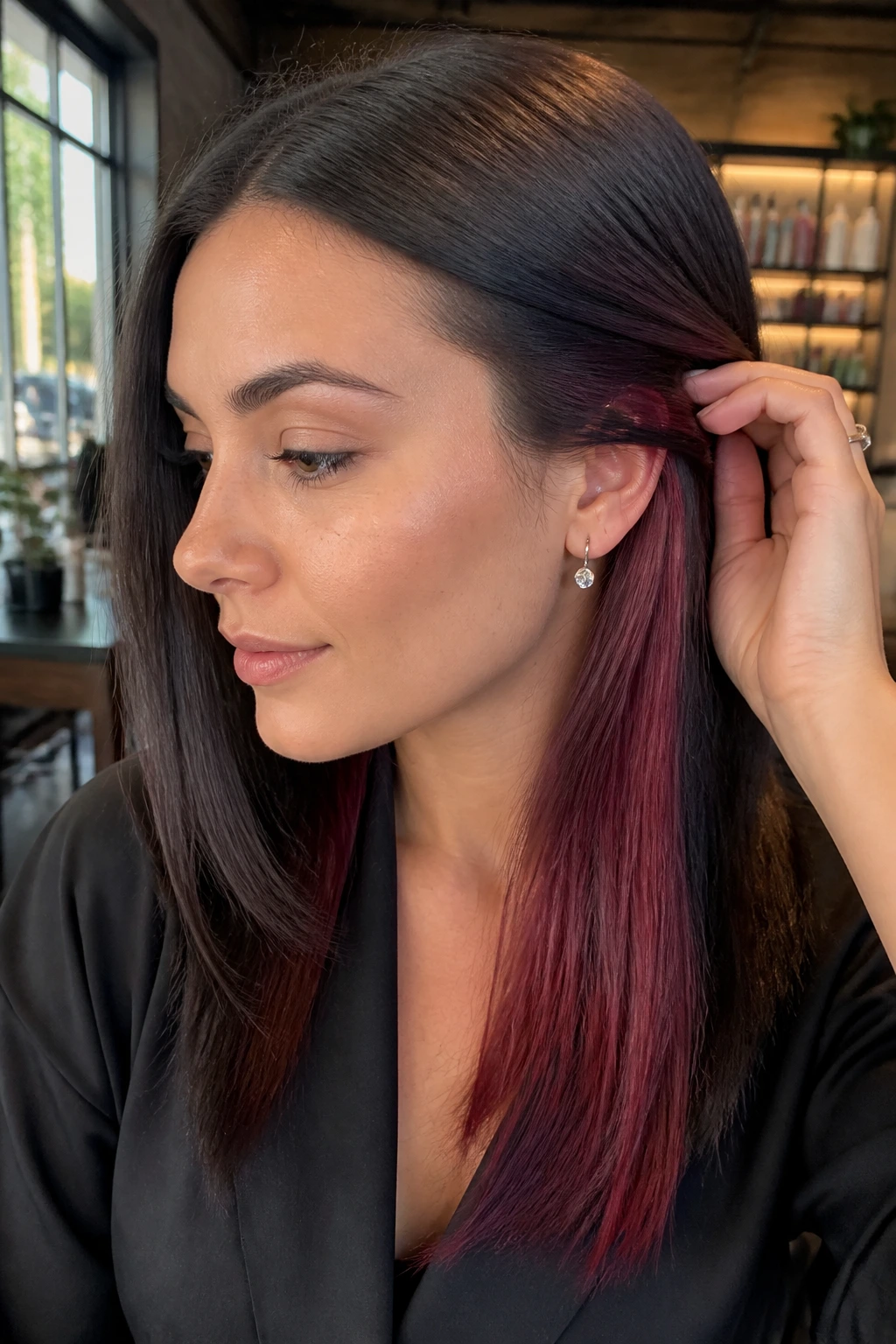
Straight hair is sneaky. It can hide color if the placement isn’t right, which is why peekaboo panels work so well here. Red velvet underneath gives you a hidden line of warmth that shows when the hair moves, flips, or gets tucked behind one ear.
The red velvet tone is darker than copper and softer than cherry. Think brown-red with depth. That’s what makes it wearable under a sleek surface. On pin-straight hair, the panels create a flash of color that feels controlled instead of messy.
If you love clean styling but want a hint of drama, this is a good middle road. The top stays elegant. The underside does the talking.
19. Autumn Leaf Face-Framing with Warm Gloss
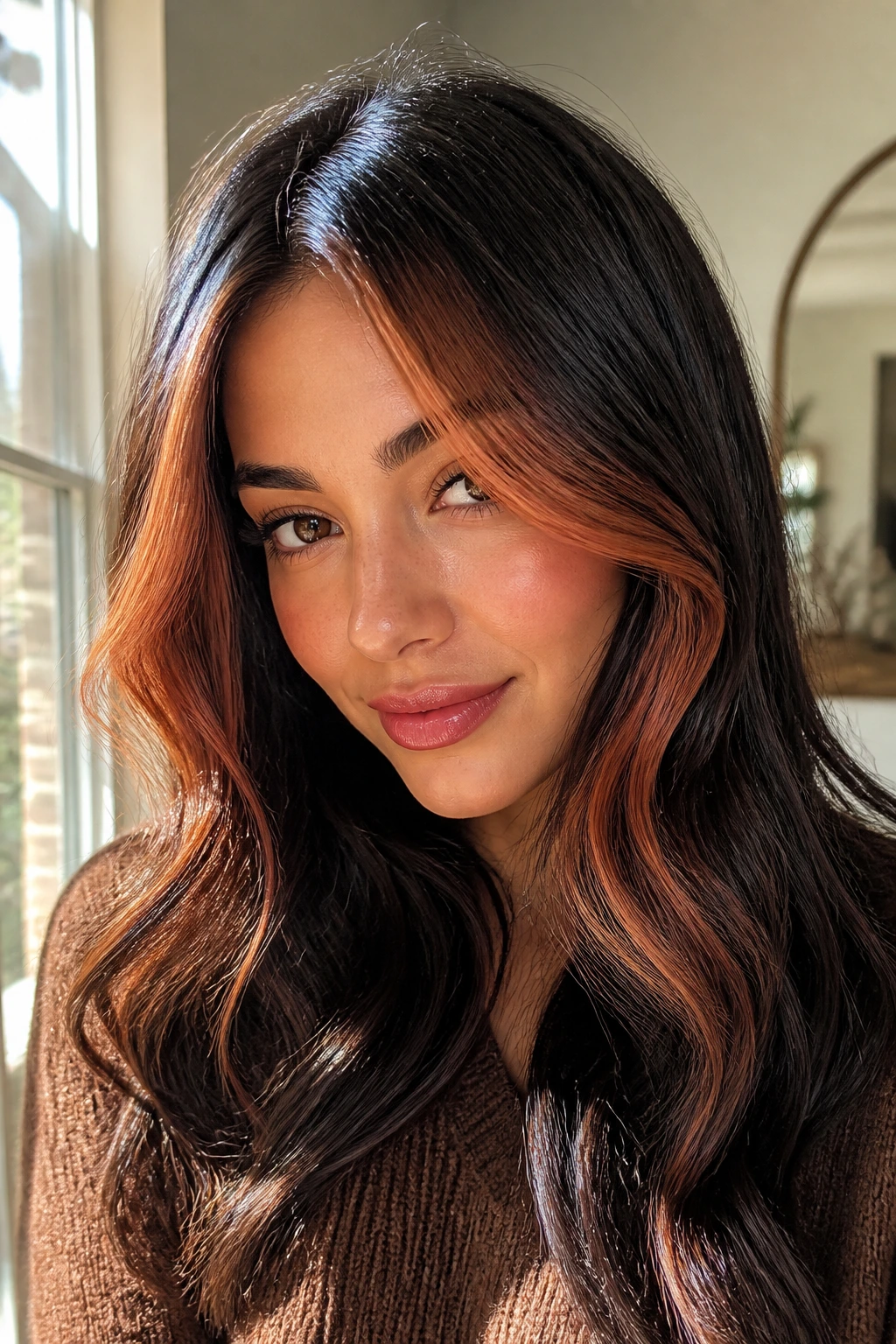
Autumn leaf face framing is less about contrast and more about glow. The pieces around the face are warmed with a gloss that leans copper, amber, or cinnamon, but the rest of the hair stays dark enough to hold the effect in place.
Best Use Case
This works especially well if you do not want full highlights. A warm gloss on the front sections gives the illusion of brightness without a long lightening session. It’s a nice choice for hair that already has dimension and just needs the front revived.
A warm gloss also helps the color look healthier than a hard-lifted highlight sometimes does. The finish is smooth, reflective, and a little bit soft-focus, which looks excellent when the hair is worn loose or half-pinned.
20. Gingered Brown Balayage for Curly Hair
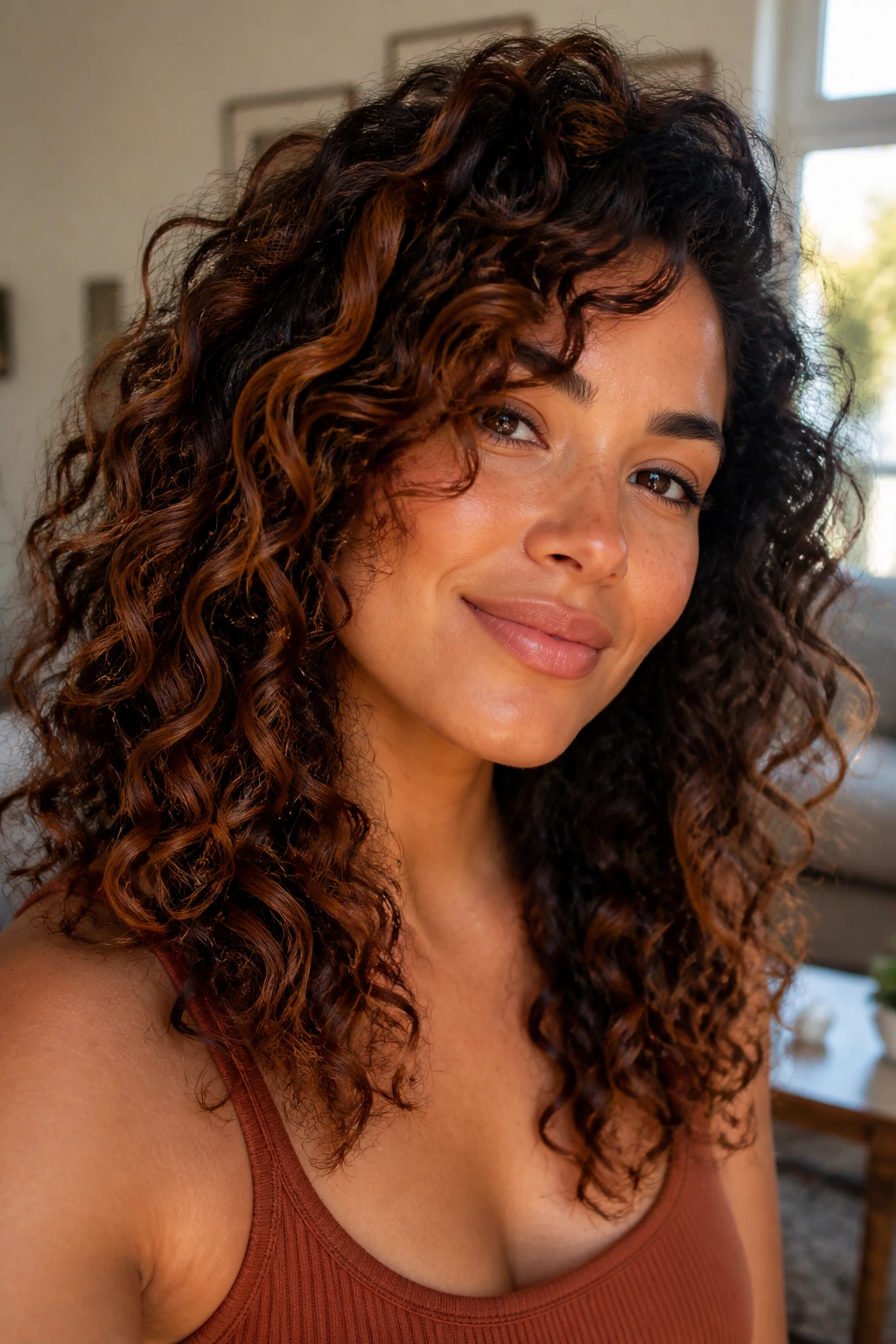
Curly hair can take brown-red highlights in a way straight hair can’t. The bends create built-in shadows, which means the color shows at different points through the curl pattern. Gingered brown balayage uses that shape instead of fighting it.
The highlight placement should follow the curl clumps, not ignore them. That keeps the warm pieces from getting lost in the coil. If a stylist paints curls while they’re stretched out, the color can land in the wrong place when the hair springs back. Ask for the curls to be styled in their natural formation during placement whenever possible.
Gingered brown is especially good if your base is dark but not black. The red warmth reads lively, not neon. And on curly hair, lively is usually enough.
21. Cinnamon Stick Highlights on Layered Curls
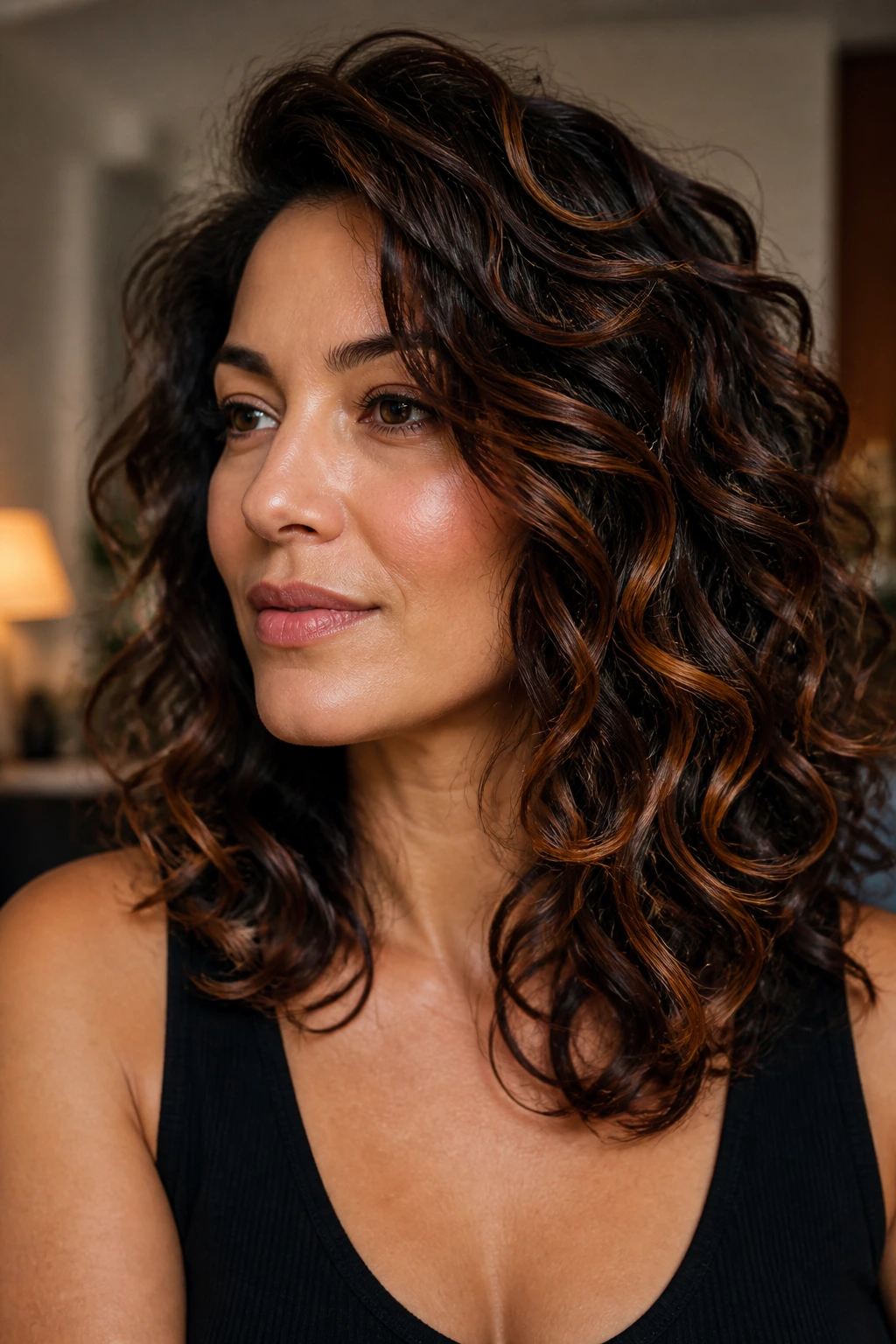
What makes cinnamon stick highlights different from standard auburn ribbons? The placement. Layered curls need highlights that follow the haircut’s shape, not a flat surface map. Cinnamon pieces through the outer ring and a few brighter ends give the curl pattern more lift.
A cut with layers lets the color appear in stacks, which keeps the shape from looking heavy. That matters on dense curls, where one flat shade can make the whole style sink. Cinnamon adds warmth without forcing brightness all over the head.
How to Use It
Wear the curls with a side part if you want the front pieces to feel more obvious. Use a diffuser on low heat to keep the curl pattern intact and let the highlight bands separate naturally. That small bit of effort pays off fast.
22. Pecan Praline Highlights with Chunky Dimension
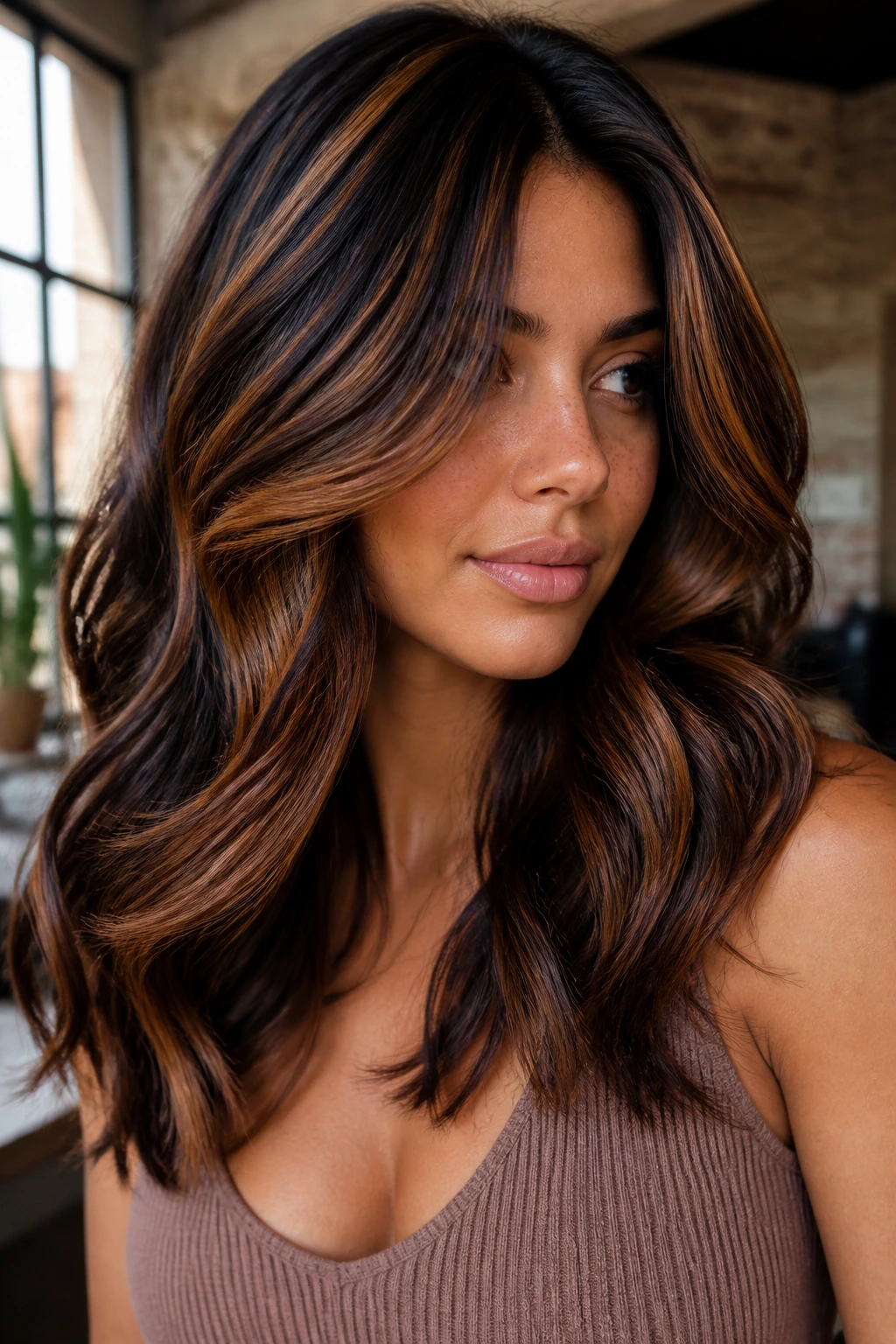
Pecan praline is the bolder, chunkier side of the brown-caramel-red family. Instead of micro-weaves and whisper-thin ribbons, you get wider sections that show clearly and give the hair more graphic contrast. It has a little of that ’90s energy, but softened by the warm brown-red palette.
This is a good fit for thick, layered, or medium-textured hair that can support larger color blocks without looking busy. The caramel pieces bring the brightness. The pecan and praline tones keep the result from turning brittle or pale.
If you like your highlights to be visible from across the room, this is your lane. If you want them hidden until you move, skip it.
23. Sable Hair with Red-Brown Underlights
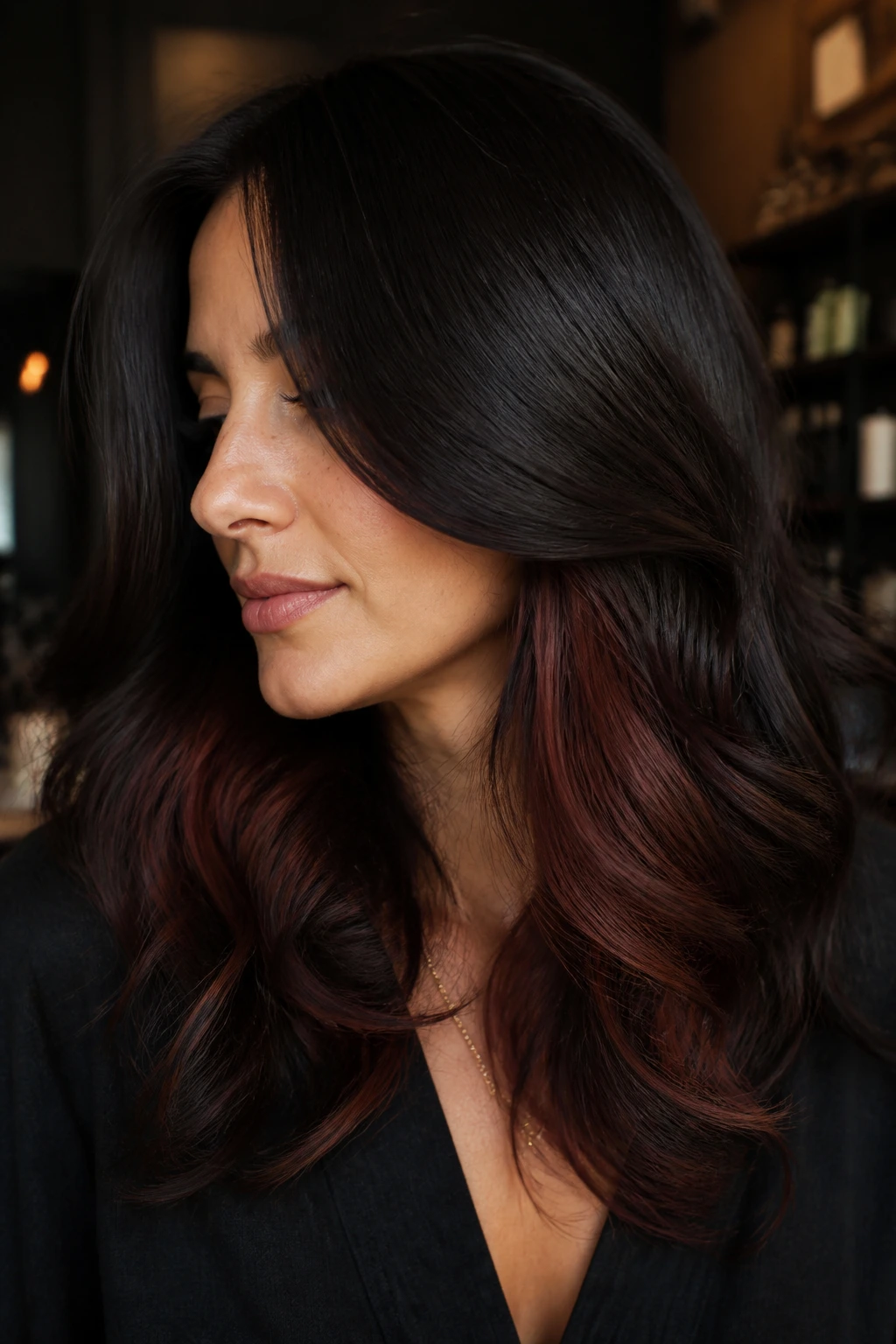
Sable hair with red-brown underlights is a darker, moodier option for people who don’t want the top layer touched much at all. The underlights sit beneath the surface, so the dark exterior stays mostly intact while the hidden red-brown pieces show through when the hair swings.
This style is good for layered cuts and for anyone who likes depth more than brightness. The underlights can be toned to mahogany, rosewood, or a muted auburn. The result looks even richer if the top layer is glossy and nearly untouched.
It’s also practical. Since the color sits below the surface, it tends to show less wear from sun and heat. That makes it one of the easier red-toned looks to maintain if you don’t want a lot of salon trips.
24. Copper Maple Ombre for Long Dark Hair
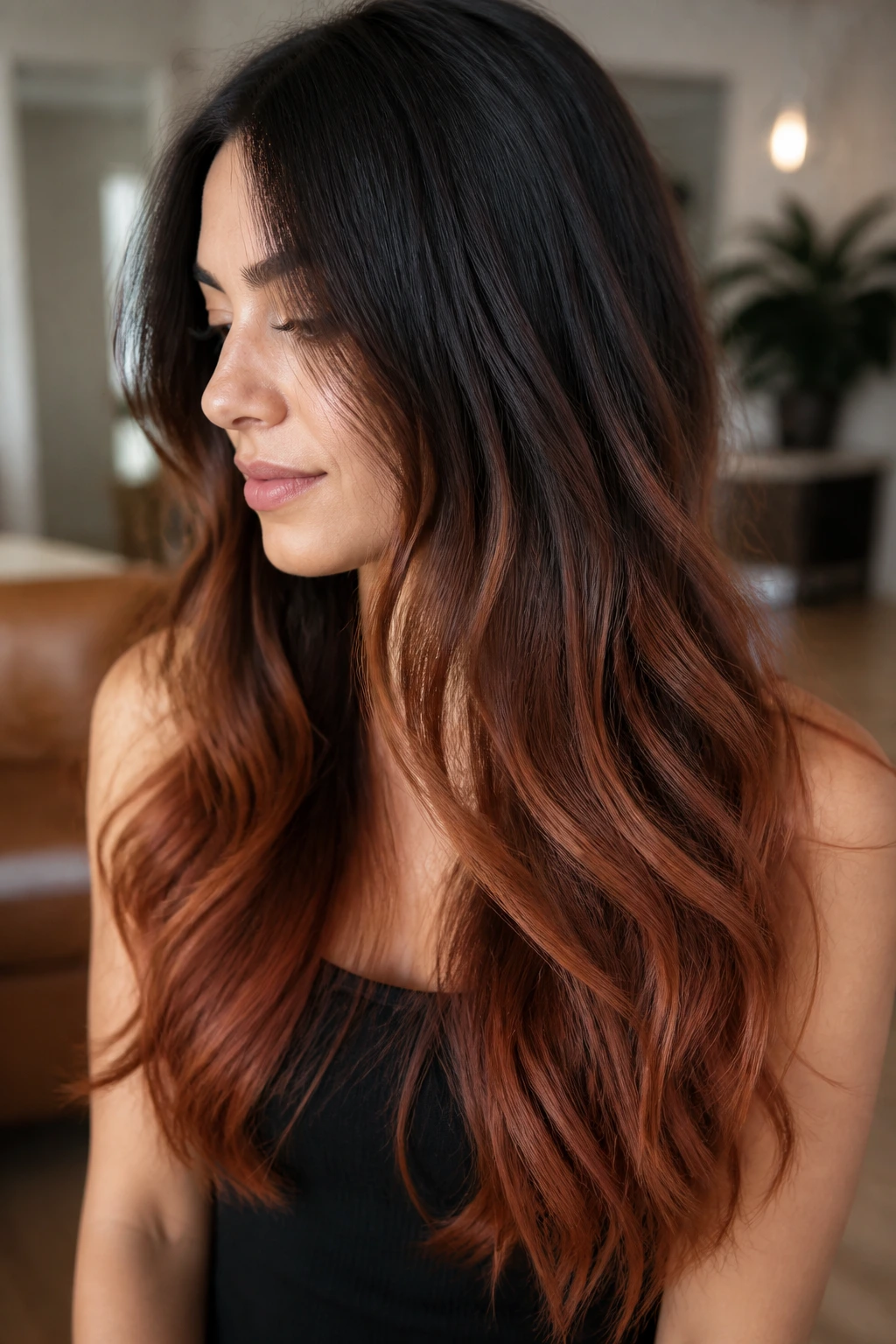
Long hair gives ombre room to breathe, which is exactly why copper maple works so well here. The color starts deep near the root, then drifts into warmer brown-red and finally into a copper-amber finish toward the ends.
The gradient matters more than the exact shade names. If the transition is too abrupt, ombre looks dated fast. If the shift is soft and the ends are toned carefully, the result feels expensive and very readable on long, dark hair.
This is one of the best styles for showing length. The darker top keeps the roots grounded, while the copper maple ends catch movement. Put it in a braid or a low wave and the dimension becomes even easier to see.
25. Chestnut-Red Gloss with Caramel Veils
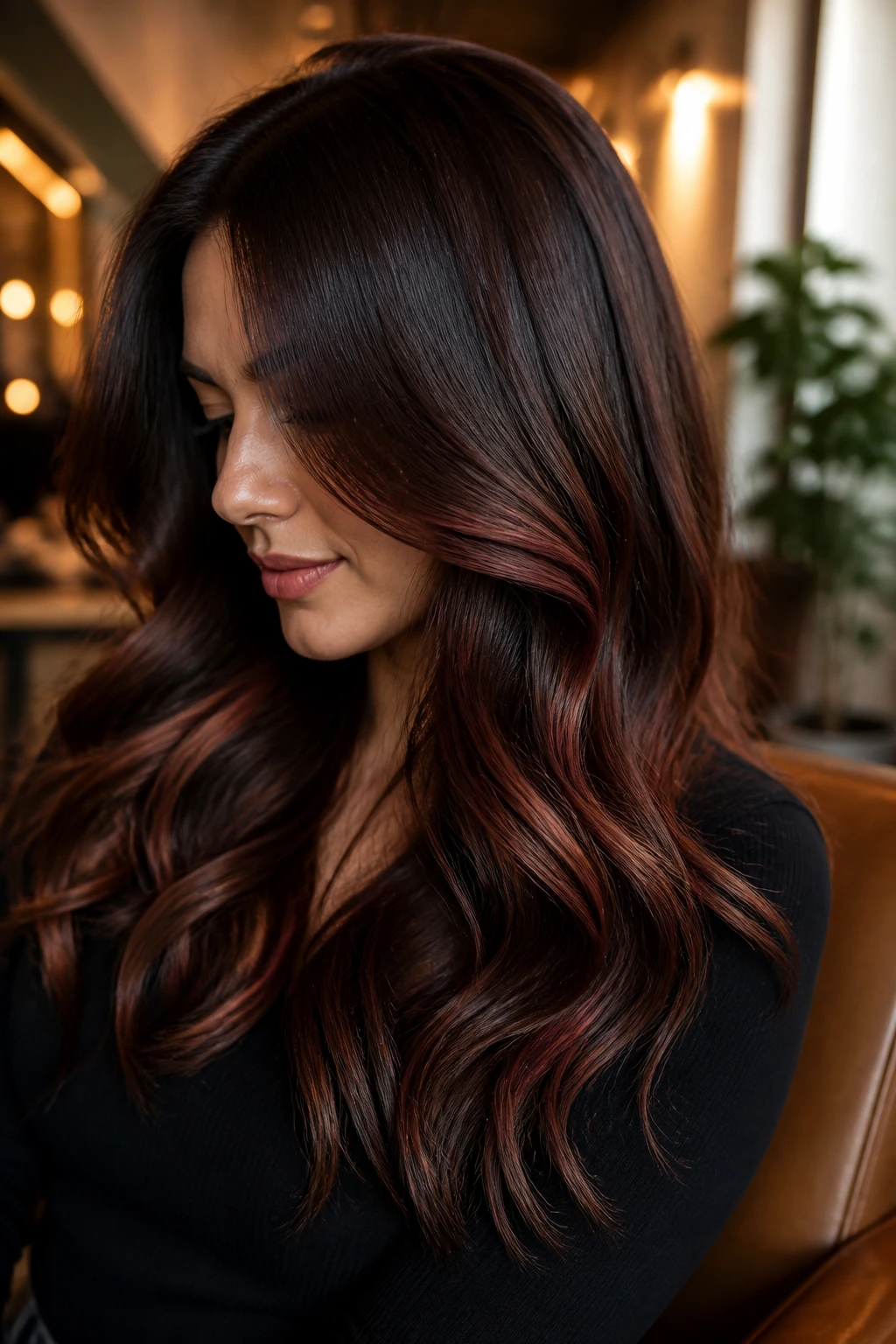
Chestnut-red gloss with caramel veils is the most lived-in version of the whole set. It’s not trying to be the brightest or the boldest. It’s trying to make dark hair look deeper, warmer, and a little more polished with the least amount of drama.
The gloss gives the base a red-brown sheen. The caramel veils sit on top like thin threads of light, especially around the mid-lengths and ends. Together they create a finish that changes depending on the angle, which is half the fun of warm brunette color anyway.
My favorite part: it looks good even when it’s starting to fade. The chestnut keeps the structure, and the caramel softens instead of turning chalky. That’s a useful combination if you want a color that ages with some grace.
Why Warm Browns and Reds Look So Good on Dark Hair
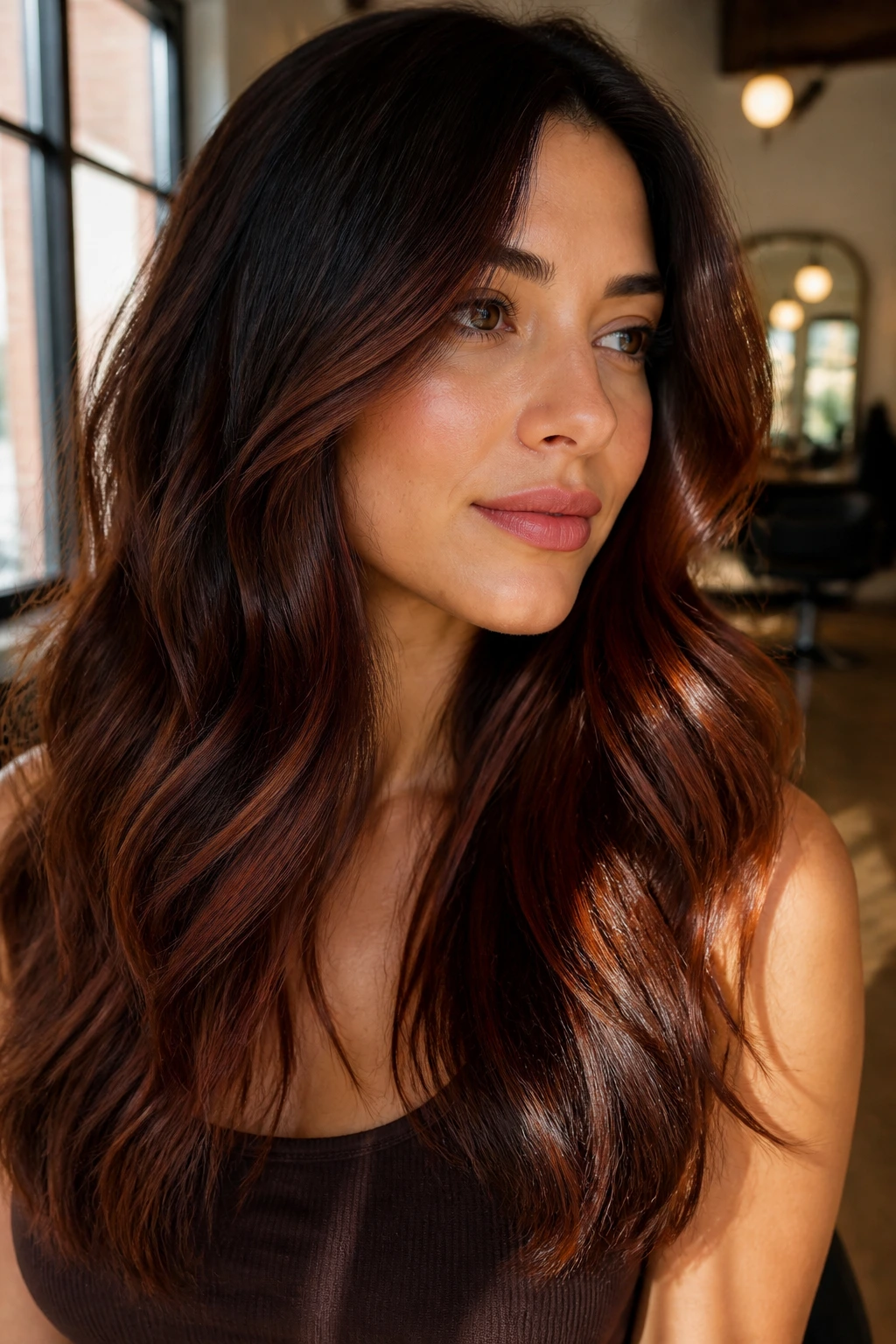
Dark hair has a built-in advantage here: depth. When you place brown, caramel, and red tones on top of a brunette base, the darker color acts like shadow under paint. That is why these shades feel richer than pale highlights often do. The eye reads contrast, but not the sharp kind. More like layered light.
There’s also a practical reason these colors work. Warm brunettes don’t all need the same lift. A caramel ribbon might need to be brought up a few levels to show against dark brown. A mahogany glaze may only need a gentler shift. Copper sits brighter and usually needs more maintenance. Chestnut and auburn land in the middle, which is why they’re the safest starting point if you want color that looks expensive without a lot of daily fuss.
The part people miss most is gloss. Warm colors look flat when the surface is dry or overly matte. Shine spray, a color glaze, or a smoothing finish changes everything. That glossy layer makes caramel look buttery, red tones look deeper, and brown highlights look like they belong to the haircut instead of sitting on top of it.
The Tools and Salon Notes That Make Consultation Day Easier
- Reference photos with side and back views: one front-facing photo is never enough; the back tells the stylist how much contrast you actually want.
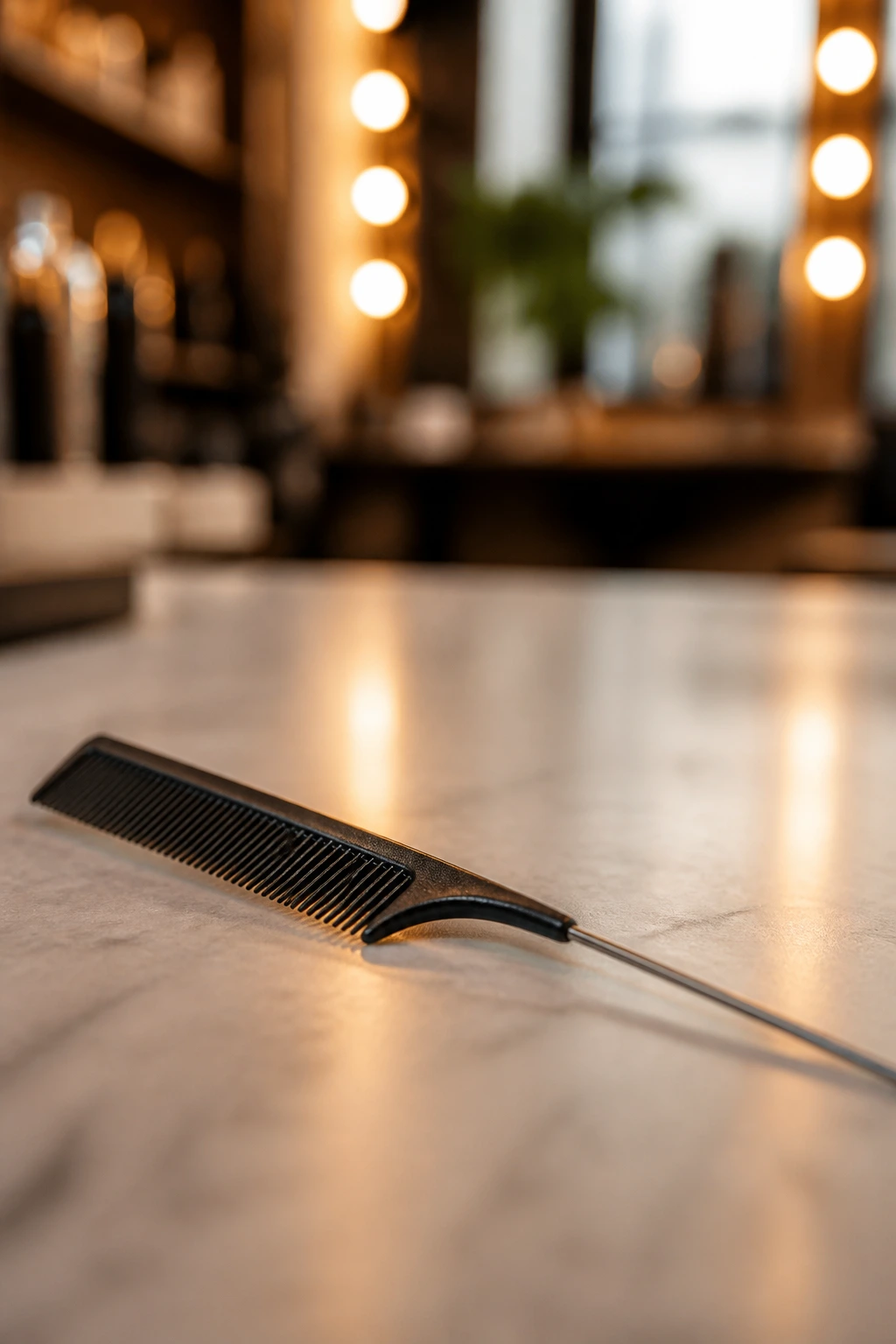
- A tail comb: clean sections matter if you’re asking for money pieces, contouring, or babylights.
- Sectioning clips: four to six clips keep thick hair organized while foils or paint are applied.
- Foils or balayage board: foils give a stronger lift; open-air painting gives a softer ribbon.
- Tint brush: useful for painting precise face-framing and peekaboo pieces.
- Color-safe shampoo and conditioner: you’ll want these before the first wash, not after the color starts slipping.
- Leave-in conditioner with heat protection: helps the warmer pieces stay smooth instead of puffing up.
- 1-inch curling iron or wand: the fastest way to show ribbon placement, especially on straight or layered hair.
- Shine spray or gloss mist: keeps caramel and auburn from looking dusty on the ends.
- Hand mirror and daylight: check the color near a window, because bathroom lighting lies.
Choosing the Right Brown, Caramel, and Red Against a Dark Base
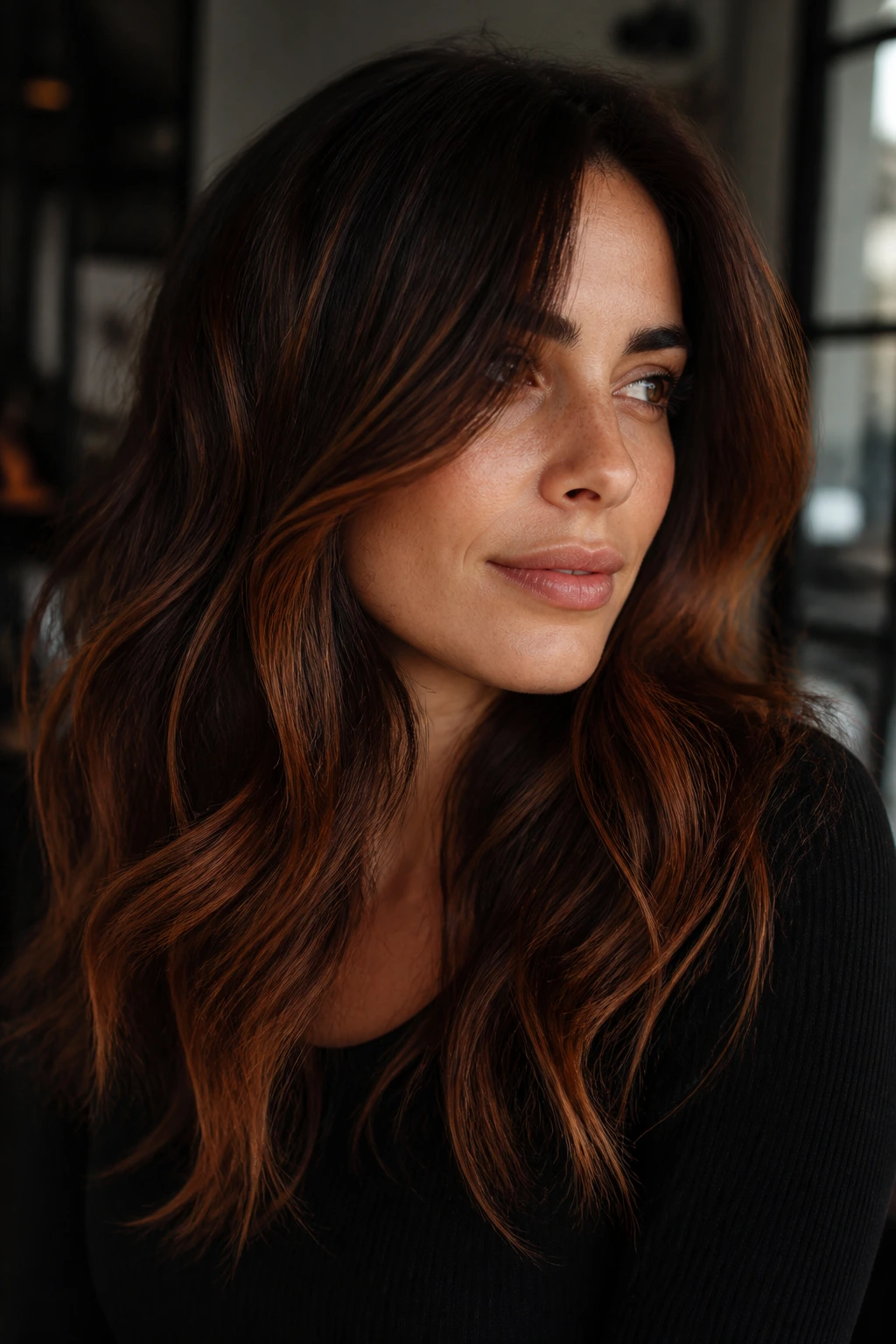
The names matter less than the level. That’s the first thing to get straight. “Caramel” can mean pale gold-brown in one salon and deep amber in another, and on dark hair that difference changes the whole result. If your base is black-brown, a true pale caramel may need more lift than you want. A toasted caramel or chestnut caramel is often the better call.
Undertone matters too. If your natural hair already leans warm, copper, cinnamon, and maple can blend in without fighting the base. If your hair reads cooler or ashier, rosewood, mahogany, and smoked brown-red tones usually sit more comfortably. They still bring warmth, but they don’t look like they’re sitting on a wrong-color fence.
Porosity is the hidden piece people forget. High-porosity ends grab red fast and let it go fast. That means the bottom half of the hair may look brighter at first and fade sooner than the top. A good color plan keeps that in mind and may leave the ends a shade deeper so the whole look ages together instead of breaking apart after three washes.
How to Style These Highlights So the Color Shows Up
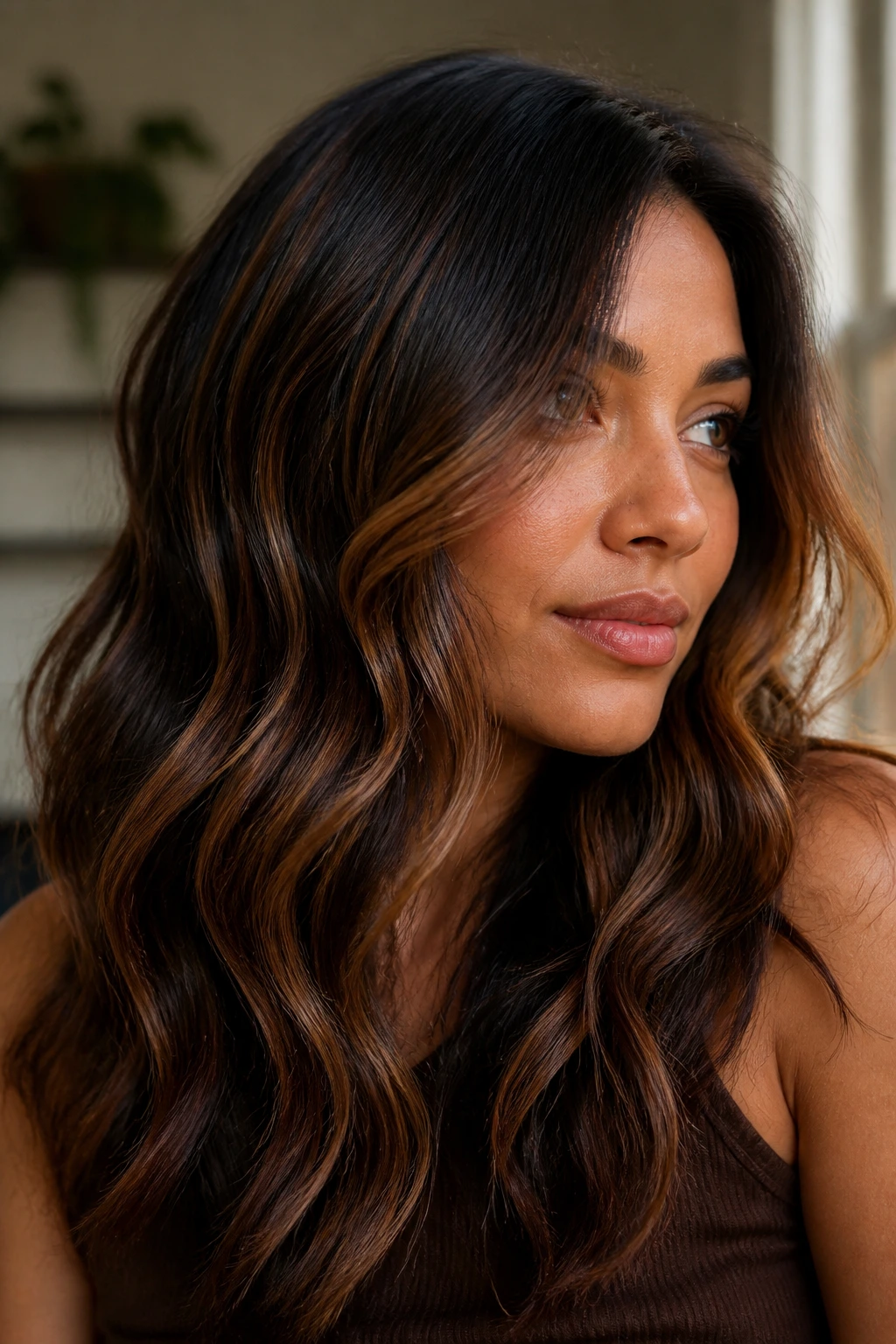
Loose Waves: This is the easiest way to show ribbons, money pieces, and balayage. A 1-inch iron or a bend with a flat iron creates enough curve for the warm pieces to peek through without turning the hair into pageant curls.
Straight and Sleek: Better for contour highlights, peekaboo panels, and chunky slices. Straight styling makes the line of the color sharper, which is useful if you want people to notice placement rather than texture.
Half-Up Styles: Good for face-framing pieces and top-layer babylights. Pulling the crown back lets the front color sit forward, and the lower half still shows the deeper brunette underneath.
Braids and Twists: These are sneaky-good for caramel and red veils because the color bands weave together. On long hair, one braid can show four different tones at once.
Deep Side Part: One small change, huge payoff. A side part pushes the highlights into a heavier visual stack on one side and can make subtle color look much more deliberate.
Additional Tips and Color Boosters
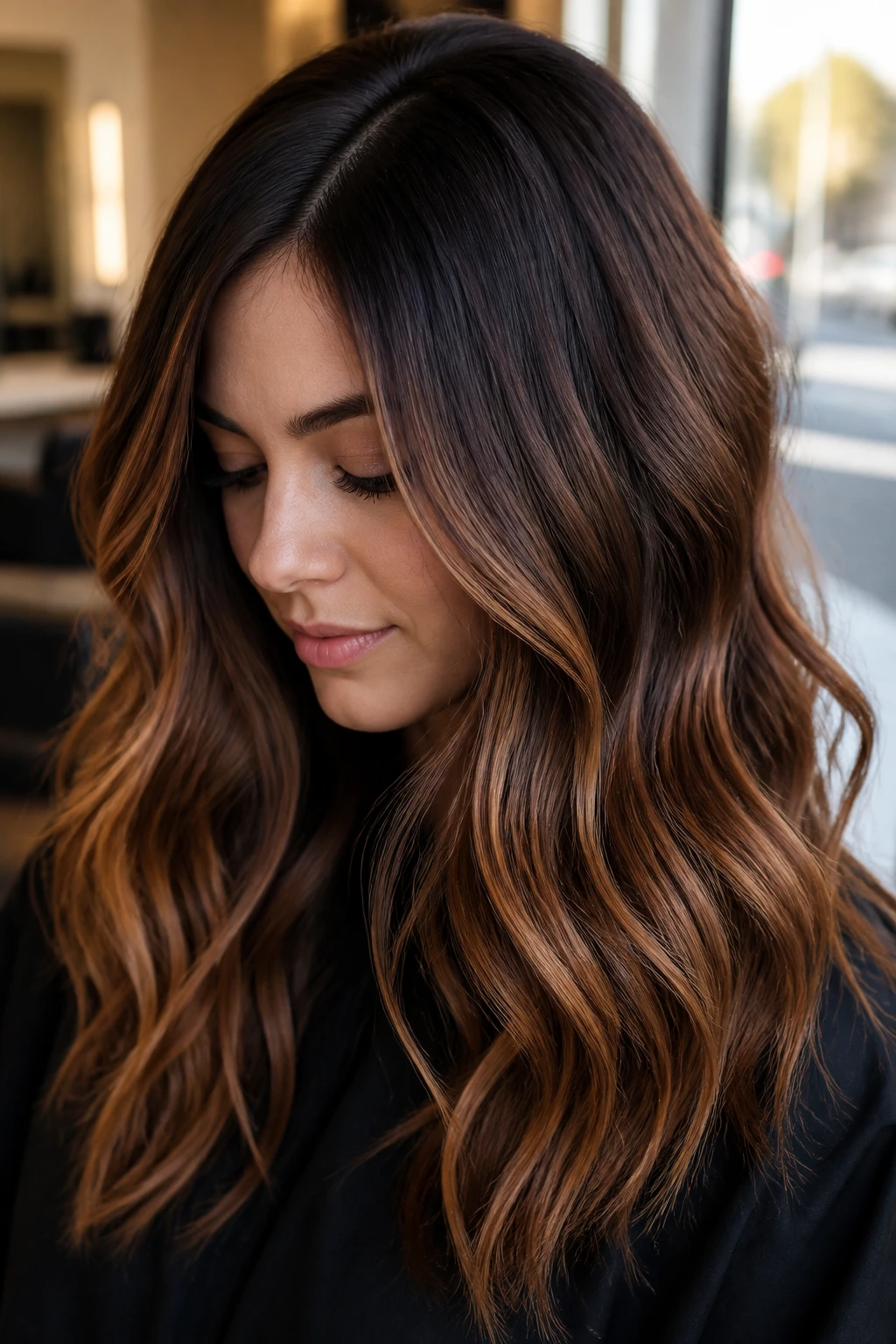
Glossing: A clear or tinted gloss every 4 to 6 weeks keeps caramel from going dull and stops red-brown from looking dusty. If the color is copper-forward, that gloss may be the difference between “fresh” and “washed out.”
Customization: If you want more edge, ask for one brighter ribbon near the face and keep the rest chestnut or mahogany. If you want softness, do the opposite and let the front pieces stay closer to your natural depth.
Serving Suggestions: Shine spray on the mid-lengths, a little oil only on the ends, and one bend near the face is often enough. Heavy product can flatten these colors and make all the warm tones disappear into one dark sheet.
Make-It-Yours: For curls, ask for placement that follows the curl clump. For straight hair, ask for wider slices or a stronger money piece. For coarse hair, a root shadow plus warm glaze keeps the finish from looking disconnected.
Maintenance, Washing, and Grow-Out
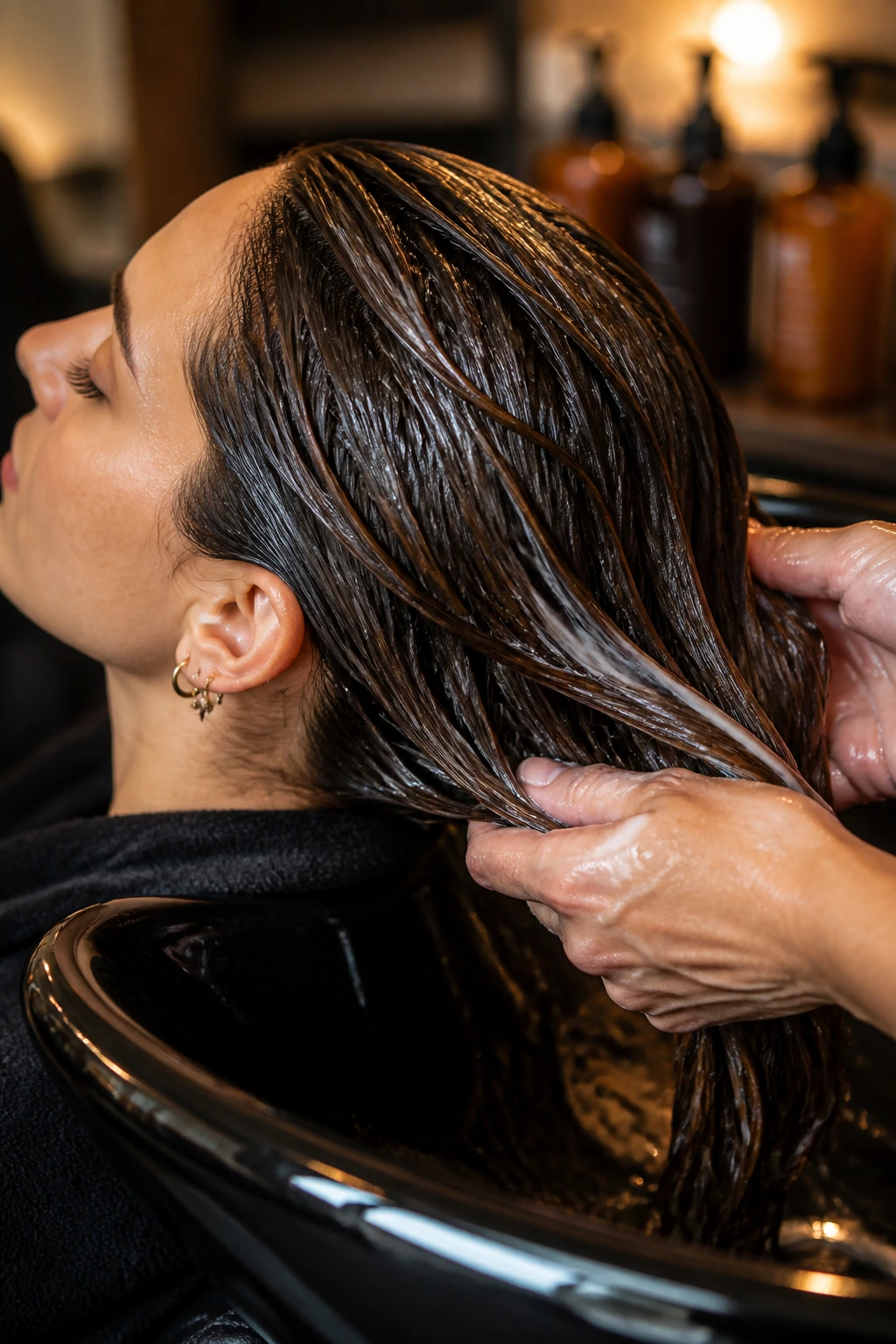
Warm brunette color needs a different kind of care than blonde. You’re not just preserving the shade; you’re preserving the shine. Start with a gentle first wash if possible, and then keep shampoo to two or three times a week unless your scalp demands more. Hot water is rough on red pigments. Lukewarm is the smarter move.
Red-brown tones usually hold their shape best when they’re refreshed on a schedule. A gloss every 4 to 6 weeks is useful if the look leans copper, auburn, or cherry cola. A toner or glaze around the 6 to 8 week mark can keep caramel from getting brassy. Partial highlights often need a refresh around 8 to 12 weeks, while a soft balayage or root-melt style can stretch longer if the grow-out is blurred on purpose.
Heat is another factor. Blow-dry with a protectant, and if you use a flat iron or wand more than once a week, don’t skip it. The red family fades faster when the cuticle is rough. A bond-building mask once a week or every other week helps the hair keep its smooth surface, which makes the color reflect better. And if your hair is peekaboo or underlight-based, you can usually go longer between touch-ups because the darkest top layer hides the grow-out edge.
Variations and Adaptations to Try
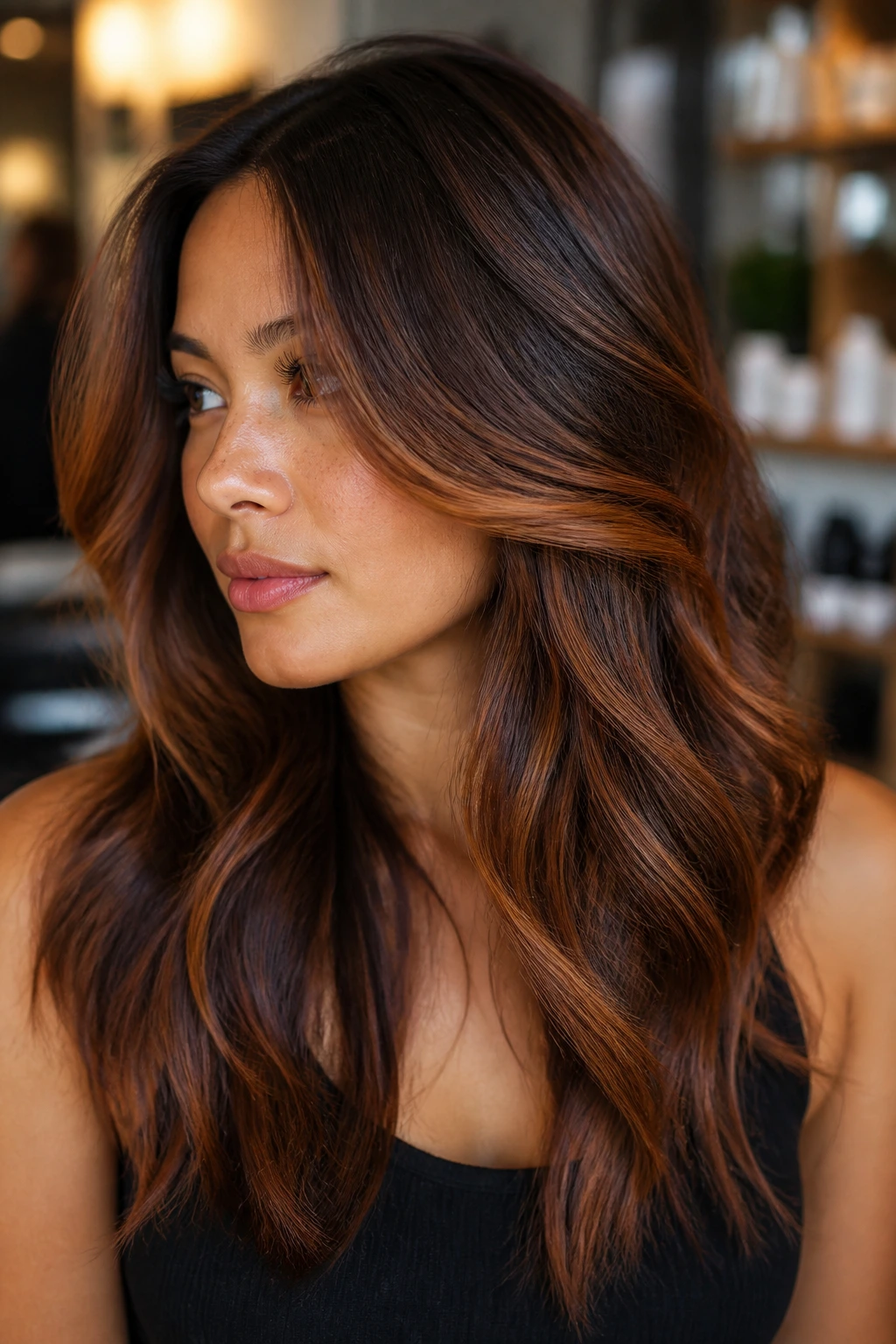
The Low-Commitment Gloss Route: Keep the base color intact and use a demi-permanent glaze in chestnut, cinnamon, or rosewood over a few face-framing pieces. It’s the easiest way to test warmth without fully lightening the hair.
The High-Contrast Ribbon Cut: Ask for a stronger lift in the front and through the outer layers, then keep the interior darker. This version reads bolder and shows up fast on waves or layered lobs.
The Curly Halo Edit: Place warm ribbons around the top and outer ring of the curls, not only underneath. That keeps the color visible when the curl pattern shrinks and bounces back.
The Cooler Rosewood Switch: If copper feels too orange for your taste, shift the palette toward mahogany, rosewood, and smoked auburn. The result is deeper, quieter, and easier to wear with cooler clothing tones.
The Grow-Out-Friendly Shadow Root: Leave the root area deeper and paint the warm pieces below it. This works especially well if you don’t want obvious regrowth lines and you like color that softens rather than disappears.
The Copper-Forward Statement Look: Brighten the front pieces and a few ends, then glaze the rest with brown-red depth. It’s the boldest option in the set, and it looks best when the cut has movement.
Common Mistakes to Avoid
The first mistake is asking for “caramel” and hoping the stylist fills in the blanks. Caramel can mean pale gold, toasted amber, or a deeper brown-beige depending on who’s holding the brush. Bring a photo and point to the exact pieces you want bright.
Another common problem is lifting dark hair too far too fast. On dark brown or black-brown bases, pushing all the way to pale blonde can create a brassy, tired-looking result if you actually wanted warmth. A better lift for most of these looks sits around level 5 to 7, with a glaze to finish.
People also over-tone warm colors into mush. A heavy ash toner can flatten auburn, mute copper, and turn chestnut lifeless. If the goal is brown caramel red fall highlights for dark hair, the warmth is the point. Don’t sand it down into something gray just because brass is scary.
Skipping the root shadow is another easy way to lose the look’s shape. Without that darker base, the highlights can start looking like bands instead of ribbons once they grow out. And if you wash the hair with hot water every day, even a good color job can fade faster than it should. Warmth loves gentle care.
Frequently Asked Questions
Can dark hair get brown caramel red highlights without bleach?
Sometimes, yes — but only if you’re asking for a gloss, a demi-permanent glaze, or a very subtle warm shift. If you want visible caramel or copper on a deep brunette base, some lightening is usually needed so the color can show instead of sitting flat.
Which shade looks best on very dark brown or black hair?
Mahogany, chestnut, rosewood, and cherry cola tend to sit better than very light caramel. They show up without forcing the hair too far from its natural depth, which keeps the result cleaner and easier to maintain.
How often will these highlights need touch-ups?
Subtle balayage or root-melt styles can go 8 to 12 weeks or longer between refreshes. Brighter copper, cinnamon, or red-heavy looks usually want a gloss every 4 to 6 weeks if you want the warmth to stay vivid.
Will red highlights turn orange as they fade?
They can, especially if the hair was lifted too warm in the first place or if you use hot water and harsh shampoo. A good glaze, cooler washing routine, and occasional color-depositing conditioner help keep the fade in the brown-red family instead of landing in pumpkin territory.
Are these looks better on curly or straight hair?
Neither is better. They behave differently. Curly hair shows movement and shadow through the curl pattern, while straight hair shows placement more clearly. The best choice depends on whether you want ribbons, slices, or hidden panels.
What should I bring to the salon for this color?
Bring 2 or 3 photos that show the front, side, and back, plus a note about how warm or subtle you want the finish. If you know you hate high maintenance, say that plainly; the placement and shade can be adjusted for it.
Can I keep the color looking warm without washing it out fast?
Yes. Use lukewarm water, a color-safe shampoo, and a gloss or color-depositing conditioner when the warmth starts to dull. That combination helps caramel and red tones stay reflective instead of dry-looking.
Do these highlights work if my hair is already colored dark?
They can, but previously colored hair behaves differently from virgin hair. If the base has old dye on it, a stylist may need to remove buildup or work more strategically with foils and glosses so the new warm pieces show evenly.
Warmth That Still Looks Like Hair
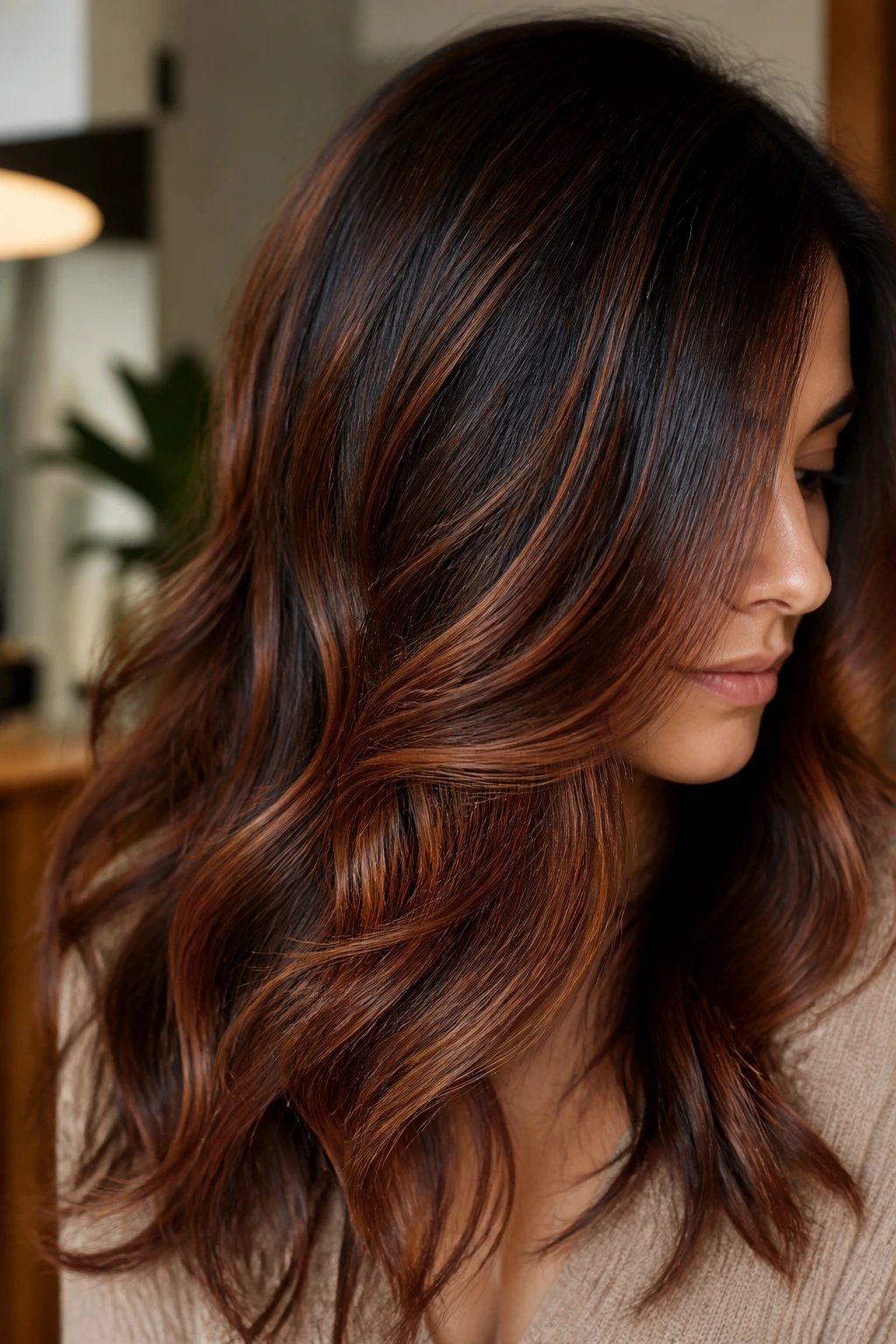
The best brown caramel red fall highlights for dark hair never feel pasted on. They feel woven in. That’s why the strongest looks in this set are the ones that respect the base instead of fighting it. A dark root, a warm ribbon, a little shine, and suddenly the whole haircut has a pulse.
If you’re choosing one starting point, I’d lean toward chestnut caramel balayage, auburn ribbons, or a soft cinnamon money piece. They give you room to move without boxing you into constant salon visits. And if you want more drama later, you can always build brighter. Warm brunettes tend to work that way — quietly first, then all at once when the light hits.