



Blonde dark balayage for brunettes with thick hair has a very specific kind of magic: it keeps the richness that makes brunette hair look expensive, then threads in enough blonde to keep all that density from reading as one heavy block. The wrong version goes stripey or orange. The right version looks like light found its way through the hair in ribbons, panels, and soft ends that move when you move.
Thick hair changes the game. Fine hair can get away with whisper-thin highlights because every strand shows. Dense hair needs more deliberate placement. If the light pieces are too narrow or too timid, they disappear the second you brush through them. If they’re too high and too uniform, the whole head starts to look puffy instead of dimensional. That middle ground is where the good work happens.
The looks below lean into that middle ground in different ways. Some stay smoky and cool. Some run warm and glossy. A few go bolder with money pieces or chunky ribbons, because thick hair can carry contrast in a way finer textures often can’t. That’s the part I like most: dense hair doesn’t need to be “fixed.” It needs color that understands its weight.
Why This Collection Works on Thick Brunette Hair
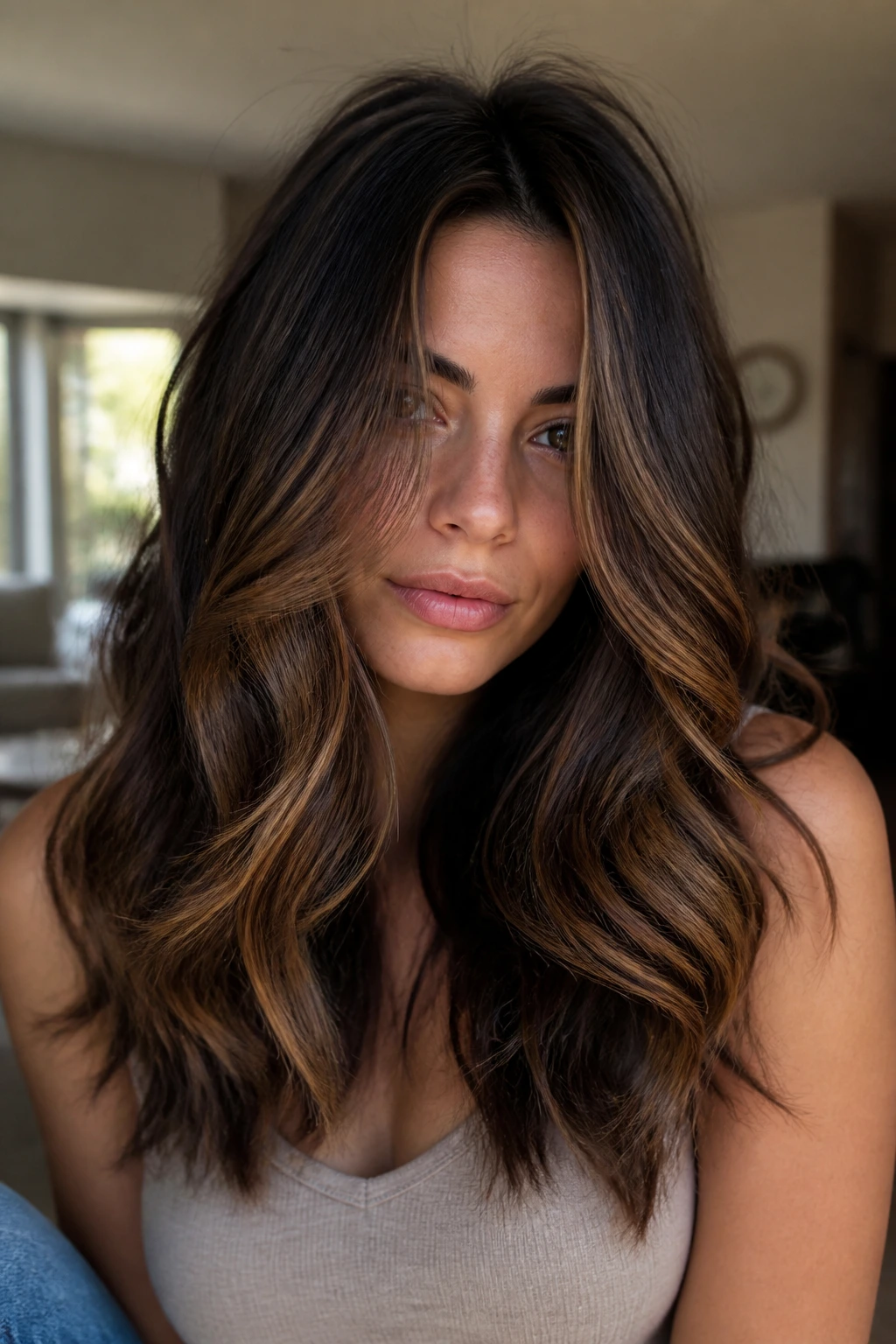
- The depth stays visible: Thick brunette hair can swallow light blonde if the base is too flat, so these looks keep darker roots and mid-depths in the mix.
- The blonde shows from every angle: Bigger sections, face-framing pieces, and interior ribbons make the color read from the front, the side, and even in a ponytail.
- Grow-out looks softer: A shadow root and blended balayage mean you’re not staring at a hard line two weeks after coloring.
- The cut gets more movement: Thick hair often needs visual breakup as much as physical layers, and the right color does both jobs.
- Warm or cool is your call: Beige, honey, ash, champagne, mushroom, and butter tones all work here when the placement respects the density.
- It flatters natural texture: Wavy, curly, blown-out, or straight, these placements keep thick hair from looking like one solid curtain.
What Thick Hair Changes About Blonde Dark Balayage
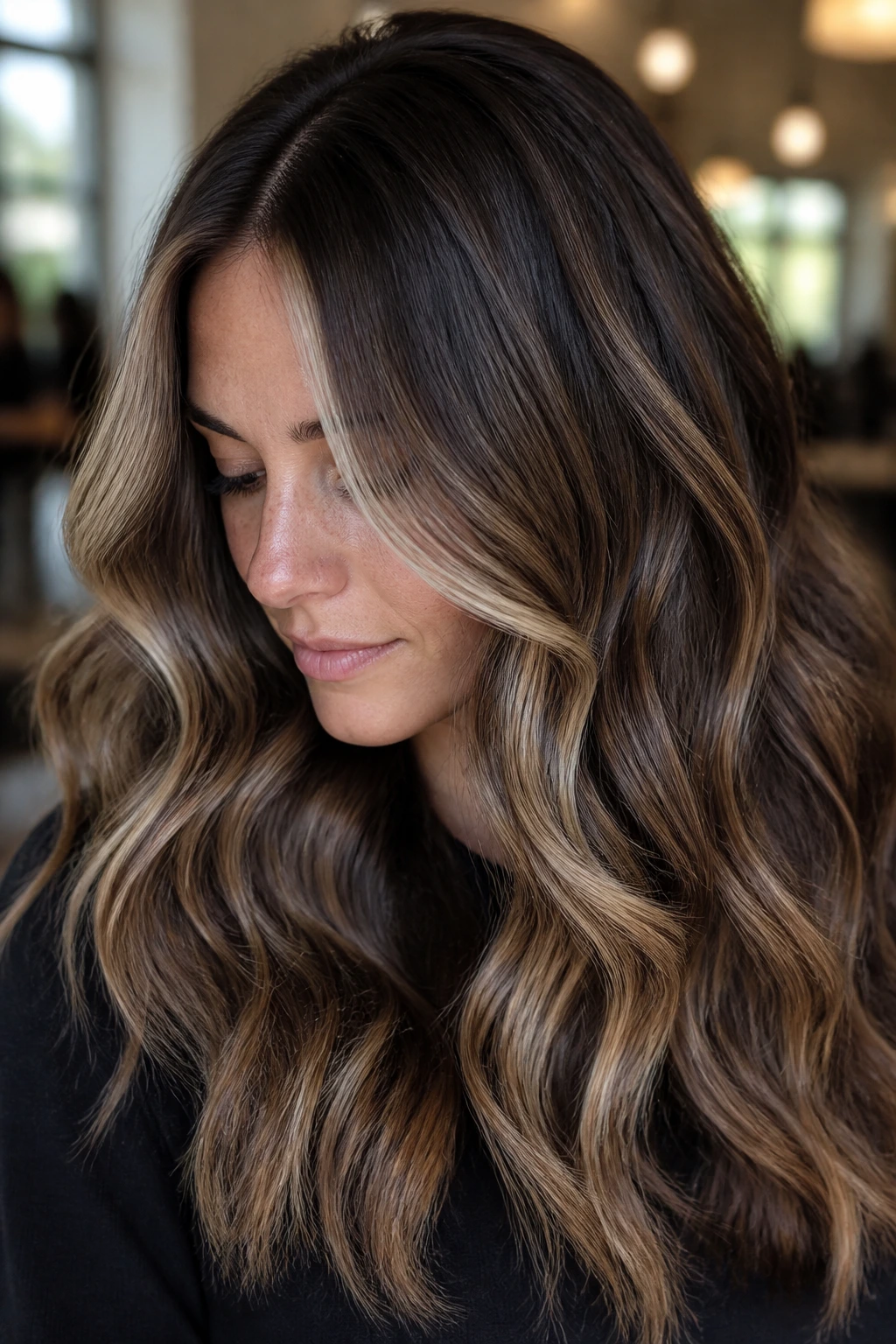
Thick hair doesn’t behave like a sheet of silk. It behaves more like fabric with body—one section lies over another, and the color underneath matters almost as much as the color on top. That’s why the best blonde dark balayage for brunettes with thick hair usually includes a darker root, some mid-length dimension, and at least a little brightness near the face.
Why the Root Matters So Much
A shadow root does more than hide grow-out. It keeps the crown from looking puffed up and pale, which can happen fast on dense brunette hair. The darker root also gives the blonde somewhere to “land,” so the lighter pieces don’t float awkwardly on top of the haircut.
Where the Blonde Needs to Sit
Thick hair usually needs blonde at the mid-lengths and lower layers, not only on the surface. Interior ribbons matter here. So do wider panels around the face, especially if the hair is long enough to take a wave or bend. If the blonde only lives on the top layer, you lose half the effect the minute the hair gets tucked behind an ear.
Why Placement Beats Volume
You do not need more blonde everywhere. You need the right blonde in the right places. That usually means brighter pieces near the eyes, softer warmth through the mids, and deeper lowlights under the surface so the whole look keeps its shape when the hair is loose, braided, or pinned back.
1. Smoky Beige Blonde Dark Balayage Ribbons
Smoky beige ribbons are the cleanest place to start if you want brightness without losing that brunette depth that makes thick hair look full. The color sits in the middle ground: not icy, not golden, not muddy. It’s the sort of beige that looks expensive in daylight and still behaves nicely under indoor light.
Why It Works on Thick Hair
Thick hair can eat delicate highlights alive, so wider beige ribbons are easier to read than tiny threads. The smoke in the tone keeps the blonde from turning brassy, and the darker root gives the whole thing structure. On long, layered brunette hair, the movement is better when the light pieces are visible in chunks rather than scattered like confetti.
- Ask for a level 5 or 6 brunette base with beige balayage through the mid-lengths and ends.
- Keep the brightest pieces around the cheekbones and front layers so the hair doesn’t feel heavy around the face.
- Use a soft shadow root if you want the grow-out to stay seamless for longer.
- Style it with loose 1.25-inch waves; the bend helps the ribbons separate.
Best tip: If your hair is very dense at the back, ask for a few interior ribbons there too. That’s the part most color jobs forget.
2. Honey Melt with Chestnut Roots
Honey melt on chestnut roots is the warm brunette look I reach for when thick hair feels a little too dark and flat. The chestnut base keeps the color grounded, while the honey pieces catch on the ends and around the face like glass in sunlight. It reads soft, but not shy.
This one works because warmth and thickness are good partners. Thick hair can handle gold better than finer hair because the warmth doesn’t vanish into the mass of the strands. The result feels glossy, especially if the hair is blown out smooth or set in big bends. It’s also forgiving if your natural brunette has a red or golden undertone. The honey just follows the hair’s own logic.
For the strongest result, ask for chestnut at the root, honey through the mid-lengths, and a slightly lighter finish at the ends. Keep the brightest bits near the front layers and lower face frame. That gives you lift without bleaching the top layer into dust.
If you like a softer daily finish, wear it with a center part and brushed-out waves. The color looks richer that way, and the chestnut root prevents the hair from looking over-lightened.
3. Ash-Butter Blonde Face Frame
Want brightness without bleaching the whole head? This is the answer. Ash-butter blonde around the face gives brunette hair a lifted edge, but the rest of the head stays deep enough to keep thick hair from looking puffy or overworked.
How to Wear It
The face frame should start where the hair naturally moves away from the cheekbone or chin, not inches above the part. That keeps the blonde from looking pasted on. Then let the interior stay darker, with soft ash-butter ribbons only where the hair bends or flips. The contrast is what makes this work.
A thick brunette mane can handle that contrast better than a fine one. The density gives the blonde something to sit against. If the rest of the hair is layered, even lightly, the brighter face pieces seem more intentional because they echo the shape of the cut.
I like this on long hair with curtain bangs or a grown-out fringe. It gives the front of the style a little tension and stops the whole look from reading too heavy. If your hair is naturally warm, keep the ash muted rather than gray. Too much cool tone can go dull fast.
4. Caramel-to-Vanilla Veil
Picture thick brunette hair that starts deep and glossy at the crown, then melts into caramel mids and vanilla ends that move like silk when the hair swings. That’s the whole point of this version. It’s softer than a dramatic ombre, but there’s enough contrast to stop the hair from looking like one color from root to tip.
- Best on: long layers, soft curls, and blowouts with a round brush.
- Tone shape: caramel through the middle, vanilla only on the lightest ends.
- Maintenance: gloss every 6 to 8 weeks if you want the vanilla to stay creamy.
- Strength: the depth at the top keeps thick hair from swelling outward.
The reason this reads well on dense hair is simple: the veil of lighter color sits where the hair naturally opens up. Ends that are lighter than the mids give the style some lift, and the caramel keeps the transition from feeling harsh. If you’ve ever seen balayage that looks gorgeous in a photo but disappears in real life, this is the fix.
One rule: keep the vanilla concentrated. If it runs too far up the shaft, the hair can start to look dry instead of dimensional.
5. Mocha Root Smudge with Champagne Ends
Mocha at the root, champagne at the ends. That’s the whole story, and it’s a good one. The mocha keeps thick brunette hair anchored; the champagne gives it that pale, reflective finish without forcing the whole head to go light.
This is a stronger contrast than beige or honey, and that’s why it works so well on dense hair. Thick hair can hold a visual edge. You don’t need to apologize for it. The root smudge softens the grow-out, but the ends still feel bright enough to change the shape of the haircut. On long hair, especially, the champagne tips catch on curls and bends in a way flat color never will.
I’d ask for the champagne to stay a touch warmer than platinum. Pure cool blonde can look a little severed against a mocha base if the hair is naturally rich or golden. A soft champagne tone bridges that gap and keeps the blonde from looking pasted on.
If you wear your hair straight a lot, this shade needs a good gloss. Otherwise the contrast can flatten out under overhead light. With a polish at the salon, though, it stays polished-looking for weeks.
6. Bronde with a Soft Money Piece
Bronde is the quiet one in the room. It isn’t trying to be blonde-blonde, and that’s the appeal. On thick brunette hair, bronde keeps enough brown in play that the color looks rich, while the money piece gives you that lift around the face that people notice first.
Why It’s Different from All-Over Blonde
All-over blonde on thick brunette hair can get bulky fast if the cut isn’t ultra-light. Bronde avoids that problem by breaking the head into zones. The hairline gets brightness. The mids get softer beige and light brown. The underside keeps depth. That structure matters.
Who It Flatters
This is one of the easiest choices if you wear thick hair in a ponytail, claw clip, or loose braid. The face frame still shows. So do the top pieces when you twist the hair up. It’s also smart for anyone who wants blonde without a big salon commitment every few weeks.
Ask for a money piece that starts low enough to blend into the cheek area, not a bright stripe that lives only at the part. Then let the rest of the color stay airy and brown-leaning. It’s a cleaner, more grown-up way to go lighter on dense hair.
7. Mushroom Blonde on Cocoa Base
Mushroom blonde can look muddy on the wrong head. On thick brunette hair, though, it often looks rich and expensive because the density stops the cool tone from reading flat. The cocoa base gives the hair enough darkness to support the taupe and beige tones through the ends.
This shade works best when the blonde is never the only thing you notice. There should be lowlights under the top layer, a soft root, and enough neutral brown in the mix to keep the tone grounded. If the hair is layered, the cooler pieces can peek through the movement without shouting.
What I like here is the restraint. You get lightness, but it’s not sugary. The finish feels modern in the plainest sense of the word: polished, controlled, and a little understated. Thick hair benefits from that because too much brightness can turn the shape bulky.
If your brunette base pulls red, mushroom blonde needs a neutral gloss to keep it from turning muddy-orange. The cooler pieces should feel dusty-beige, not gray. There’s a difference, and it matters.
8. Toffee Lowlights with Creamy Ends
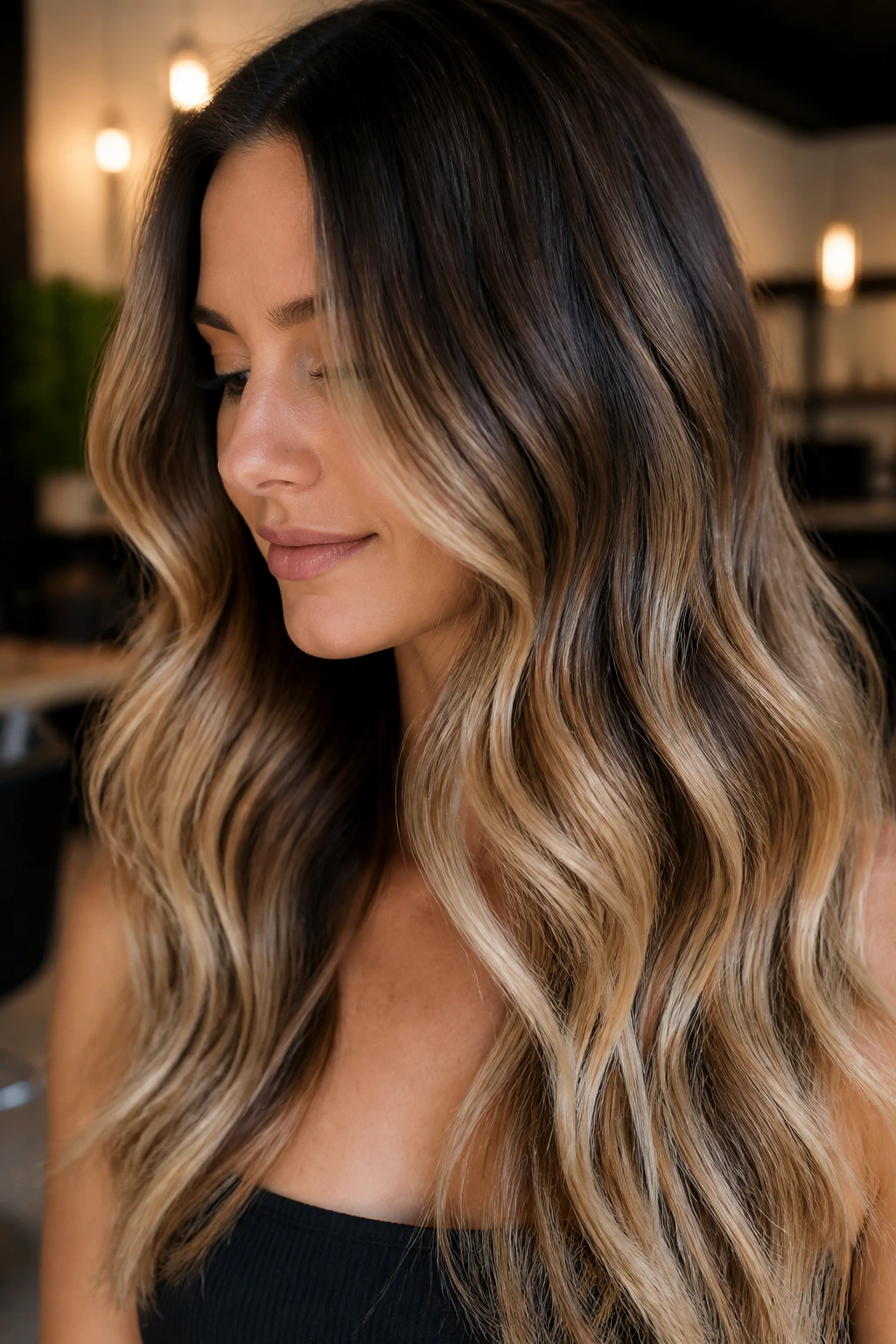
Here’s a look that relies on contrast in the opposite direction: the hair gets darker lowlights first, then creamy blonde ends finish the picture. Thick brunette hair often needs that darker interruption so the overall shape doesn’t blur into one big light mass.
The toffee pieces are the part many people skip, which is a mistake. Dense hair can hold both lighter and darker dimension at the same time. The lowlights sharpen the layers, especially if the cut has movement around the jaw or collarbone. Then the creamy ends keep the style from going heavy again.
Ask the colorist to place the toffee lowlights underneath the surface and through the interior, not all over the top. That way the color shows when the hair moves or gets tucked behind the shoulders. The creamy finish at the bottom should stay soft, not chalky.
This is one of my favorite options for brunettes who feel like their hair eats highlights. The lowlights give the eye something to track. The blonde gets room to shine because it isn’t fighting for attention with every strand in the head.
9. Golden Sable Balayage
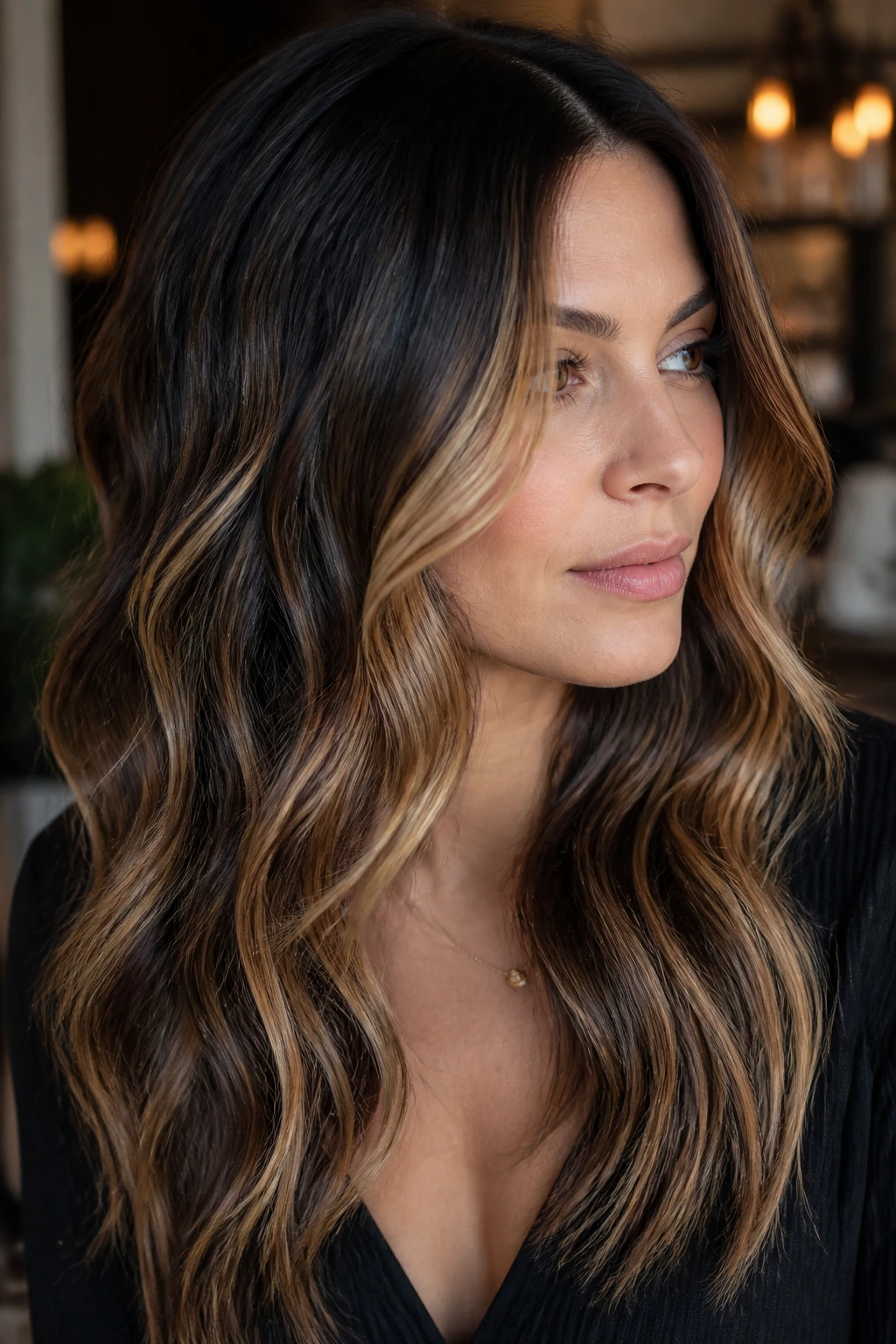
Golden sable sounds luxurious because it is. Dark sable brunette at the root, then strands of soft gold that sit just above the ends and around the face. On thick hair, the gold doesn’t disappear the way it often can on finer textures. It gets to stretch out.
What Makes It Stand Out
Golden tones bring warmth, and warmth gives heavy hair some lift. The color doesn’t need to be pale to be bright. That’s the point. A sable base also keeps the grow-out gentle, which matters when there’s a lot of hair to maintain and braid and blow-dry and live with.
How to Use It Well
Wear it with a soft side part if you want the golden pieces to frame one side of the face. Keep the front lighter than the back by a shade or two; that tiny shift matters more than people think. It gives the hair a kind of internal movement that straight-on color can’t match.
This is a good choice if your brunette base already has some warmth. If your hair is deep cool brown, the gold should stay restrained so it doesn’t go orange.
10. Sand Blonde Panels on Dark Chocolate
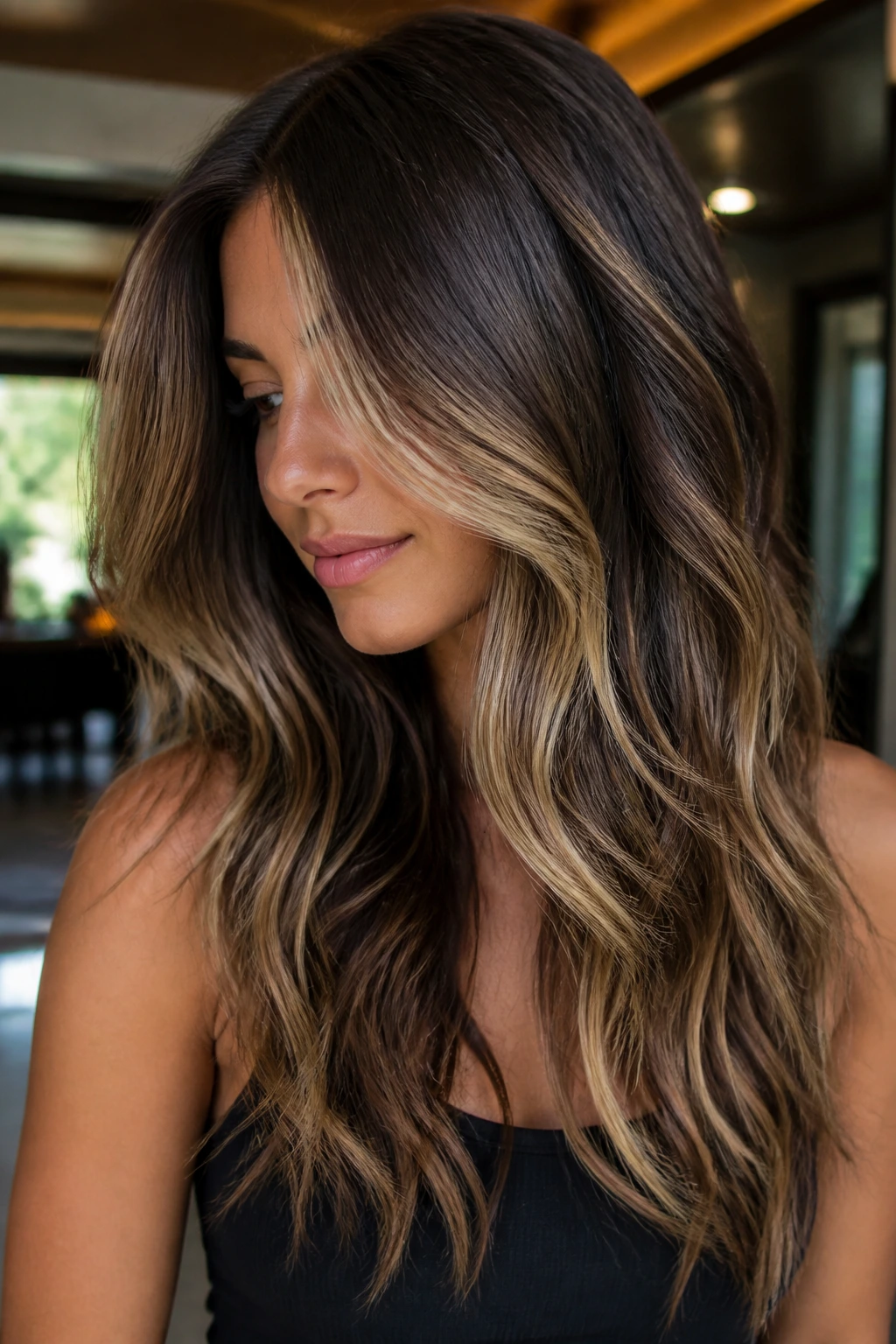
What if your thick hair needs more than whispers of blonde? Then go a little bolder with sand blonde panels set against dark chocolate roots. This is the shade family that lets thick hair look deliberate instead of accidentally heavy.
The panels should be painted wider than standard fine-hair balayage. Not chunky in a dated sense. Wider in a way that lets the blonde actually read through the density. On a long layered cut, those panels catch the curve of the wave and help the movement show up from across the room.
- Best cut match: long layers, blunt lob with movement, or a soft U-shape.
- Best styling: brushed-out curls or a smooth bend from a large iron.
- Best undertone: neutral or slightly warm skin tones.
- Best maintenance note: ask for a soft toner rather than a harsh ash glaze.
The chocolate base keeps the whole thing from looking overdone. That matters. A lot. Dark chocolate plus sand blonde gives you a shoreline effect without making the hair pale everywhere.
11. Vanilla Swirl Waves
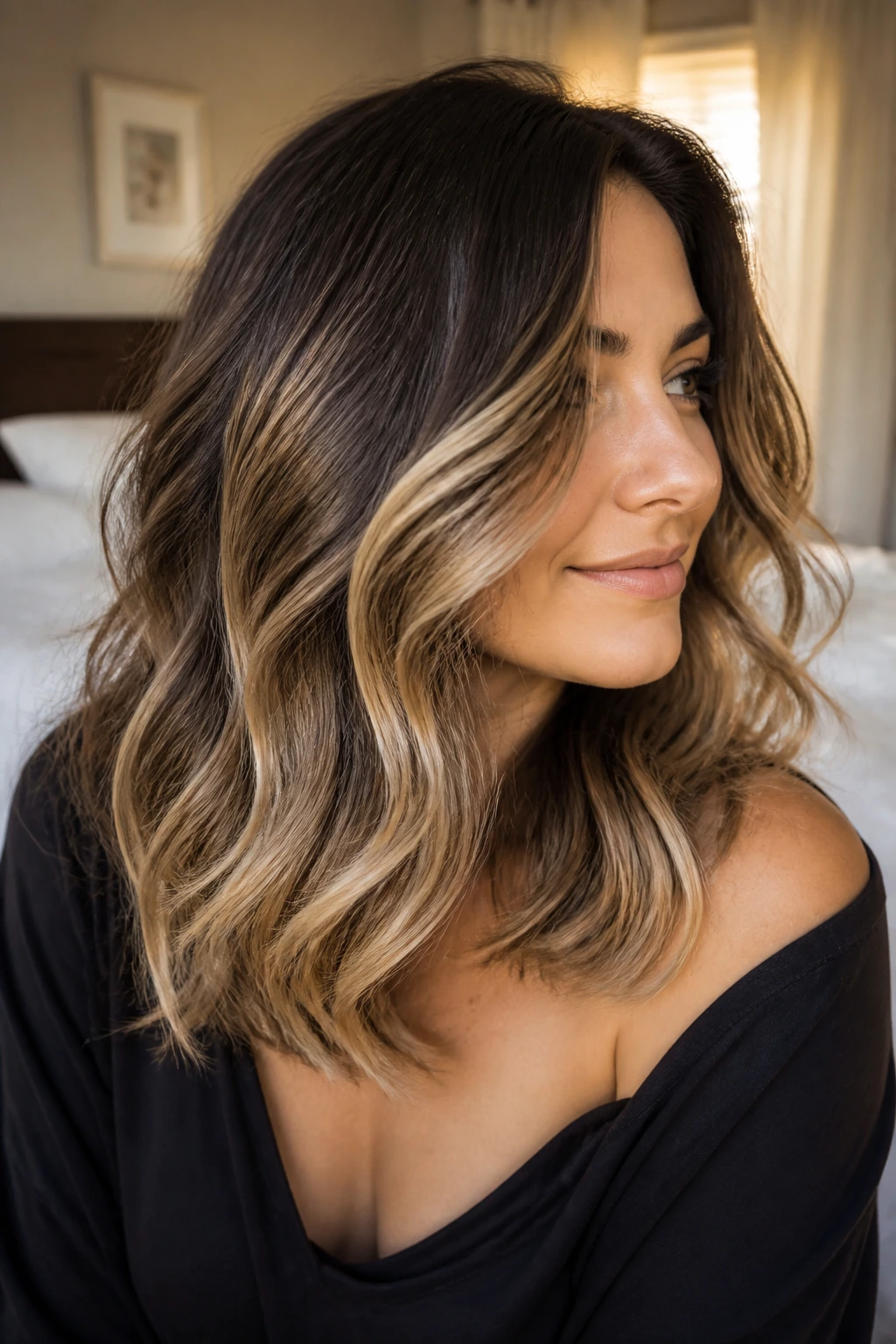
Vanilla swirl waves are for the brunette who wants the blonde to feel woven through the hair, not sitting on top of it. The swirl matters here. Thick hair holds curl and bend well, so the placement of the light pieces can follow the wave pattern instead of fighting it.
The blonde should land through the mid-lengths and toward the outer bends of the hair. That way, when the wave opens, the vanilla shows in ribbons rather than in one flat stripe. The brunette base stays visible underneath, which keeps the whole style grounded.
I like this look best on hair that is at least shoulder-length, because the color has room to travel. On shorter thick cuts, the swirl can get crowded. On longer hair, it looks like the blonde is moving through the hair instead of sitting on it.
A soft shine spray works well here. Not much. The goal is reflection, not grease. Vanilla needs light to do its job, and thick hair usually gives it plenty.
12. Beige Ombré with Shadow Root
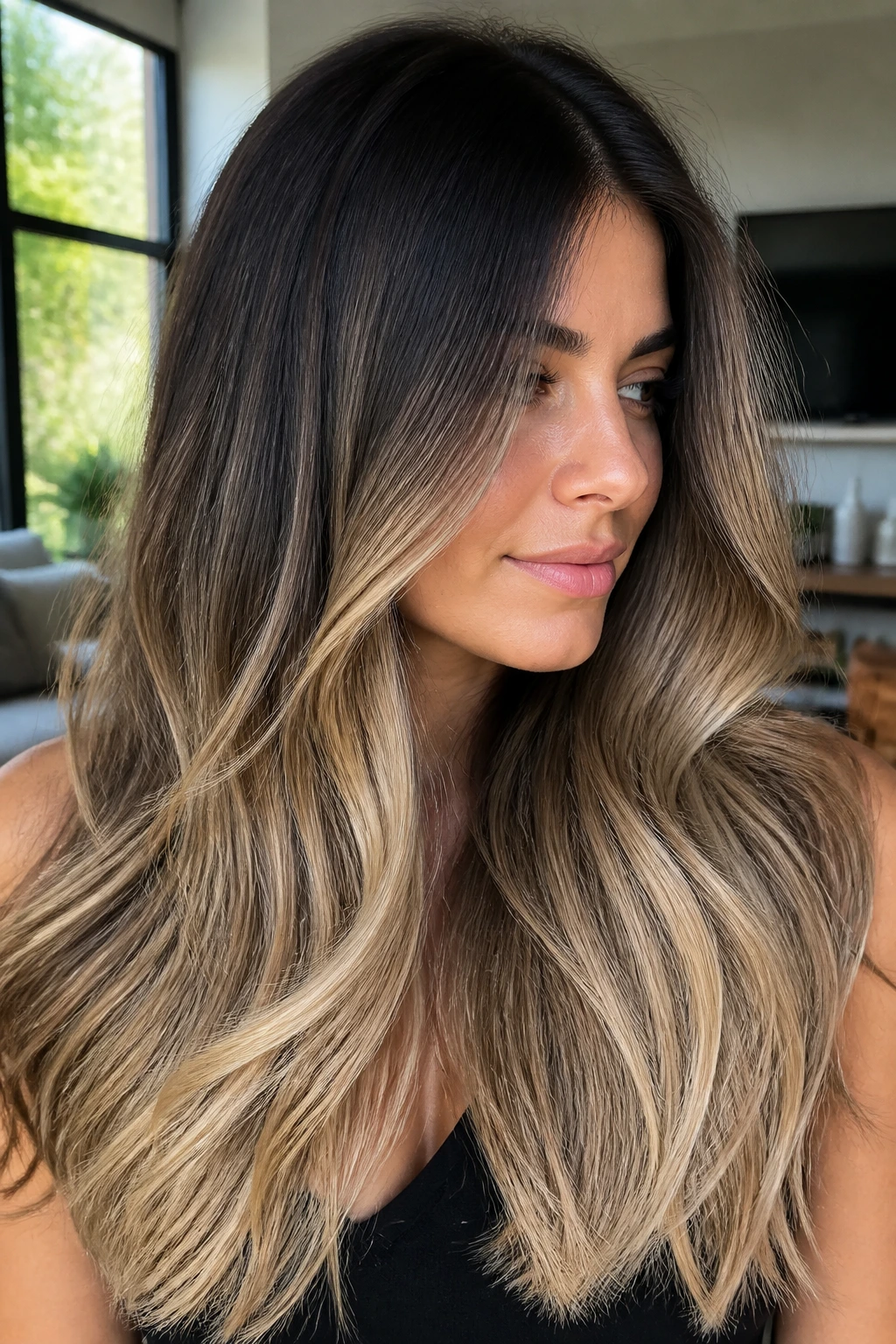
Beige ombré is the low-maintenance cousin in this group. The root stays dark, the mids soften, and the ends drift into beige blonde with a shadow root holding the whole thing together. Thick brunette hair loves this kind of gradient because it respects the body of the hair instead of trying to overpower it.
Why This Version Feels Easier
Ombre gives you a built-in grow-out story. There’s no hard line to chase every few weeks, and that matters when there’s a lot of hair to process and tone. The shadow root also means the top of the head stays full and deep, which keeps the style from looking too light too fast.
How to Wear It
This looks good with big waves, but it also works straight because the color shift is clear even without texture. Ask for the beige to be creamy rather than ash-heavy. Beige tends to play nicer with brunette bases, especially if the hair has any warmth in it.
If you want a softer result, keep the ends one to two levels lighter than the mids. If you want more drama, let the beige push closer to a pale sand tone. Thick hair can handle both.
13. Chunky 90s Blonde Ribbons
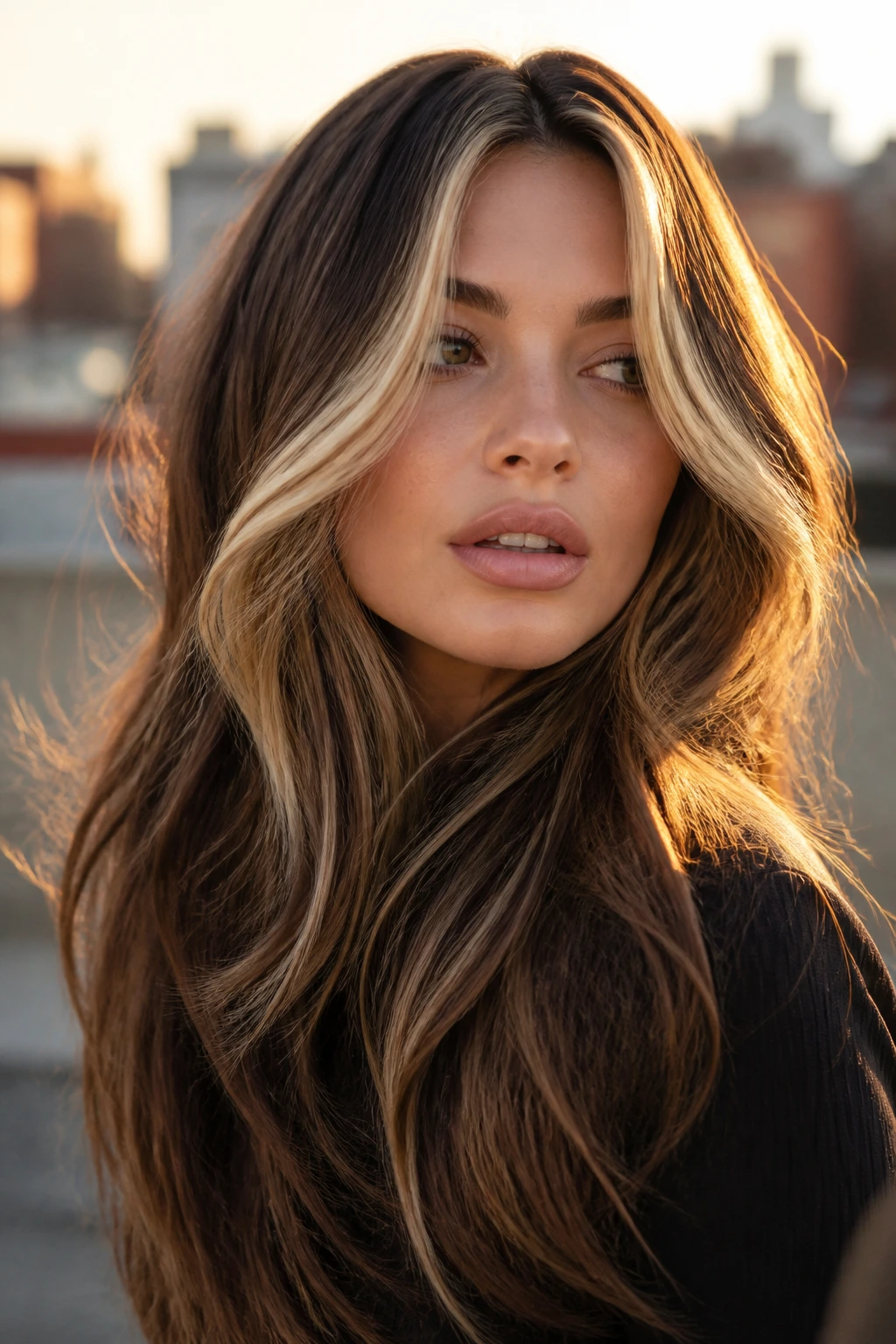
Chunky ribbons are having a moment for a reason: thick brunette hair can wear them without looking thin or stringy. The denser the hair, the better those bolder pieces sit. They give the cut a frame, especially if the hair is long and heavy around the shoulders.
Why It Flatters Thick Hair
Tiny highlights can vanish into thick hair. Chunky ribbons do the opposite. They make a statement the second the hair moves. And because the base stays dark, the contrast keeps the style from going flat or too sweet. It’s cleaner than it sounds.
- Ask for bold face-framing pieces and a few wider ribbons through the front thirds of the head.
- Keep the underlayer darker so the hair still has depth when tied back.
- Style with a smooth blowout or glossy bends; the straight lines and bends both suit the contrast.
- Use heat protectant every single time because the brighter pieces will show damage faster.
This is not the most subtle look on the list. That’s the point. If you like stronger contrast, thick hair gives it room to breathe.
14. Cool Pearl Slices
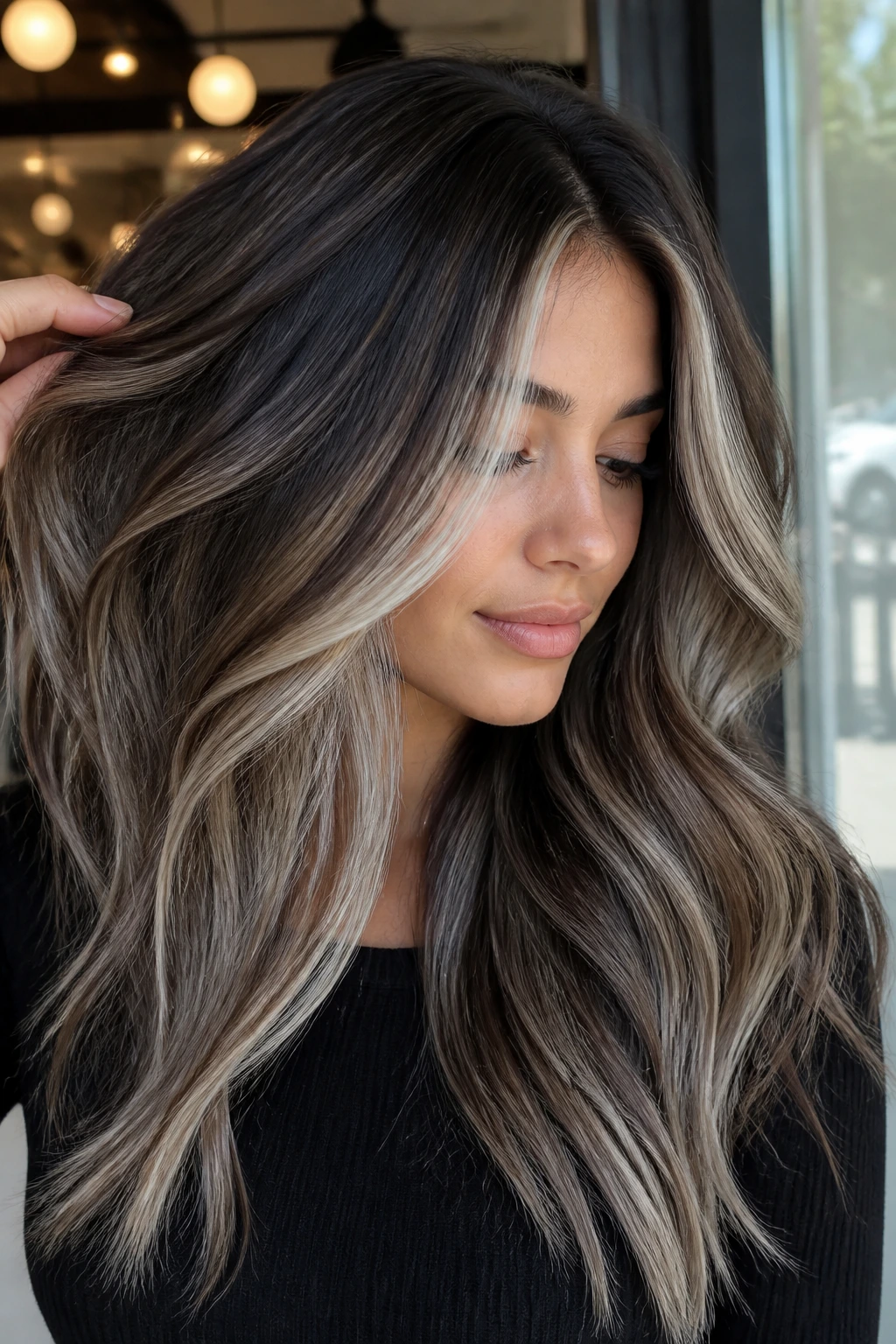
Pearl slices are cooler and more precise than the chunky ribbon look. The blonde should feel like a soft pearl tone, not silver and not beige. On thick brunette hair, that cooler brightness can look crisp, especially if the natural base is deep coffee or espresso.
The trick is to keep the slices strategic. Not everywhere. Through the front, around the crown where the part falls, and in a few interior sections where the hair bends naturally. Thick hair can hold those slices without them turning busy. Fine hair would need a gentler hand.
I’d pair this with long layers or a textured lob. That keeps the pearl pieces separated enough to show. If the hair is one blunt block with no movement, cool pearl can feel a bit severe. But with motion, it turns polished fast.
A violet shampoo can help here, but go easy. Over-toning pearl blonde is a fast way to drain the life out of it. A clean gloss usually does more good than a heavy purple routine.
15. Dimensional Cinnamon Balayage
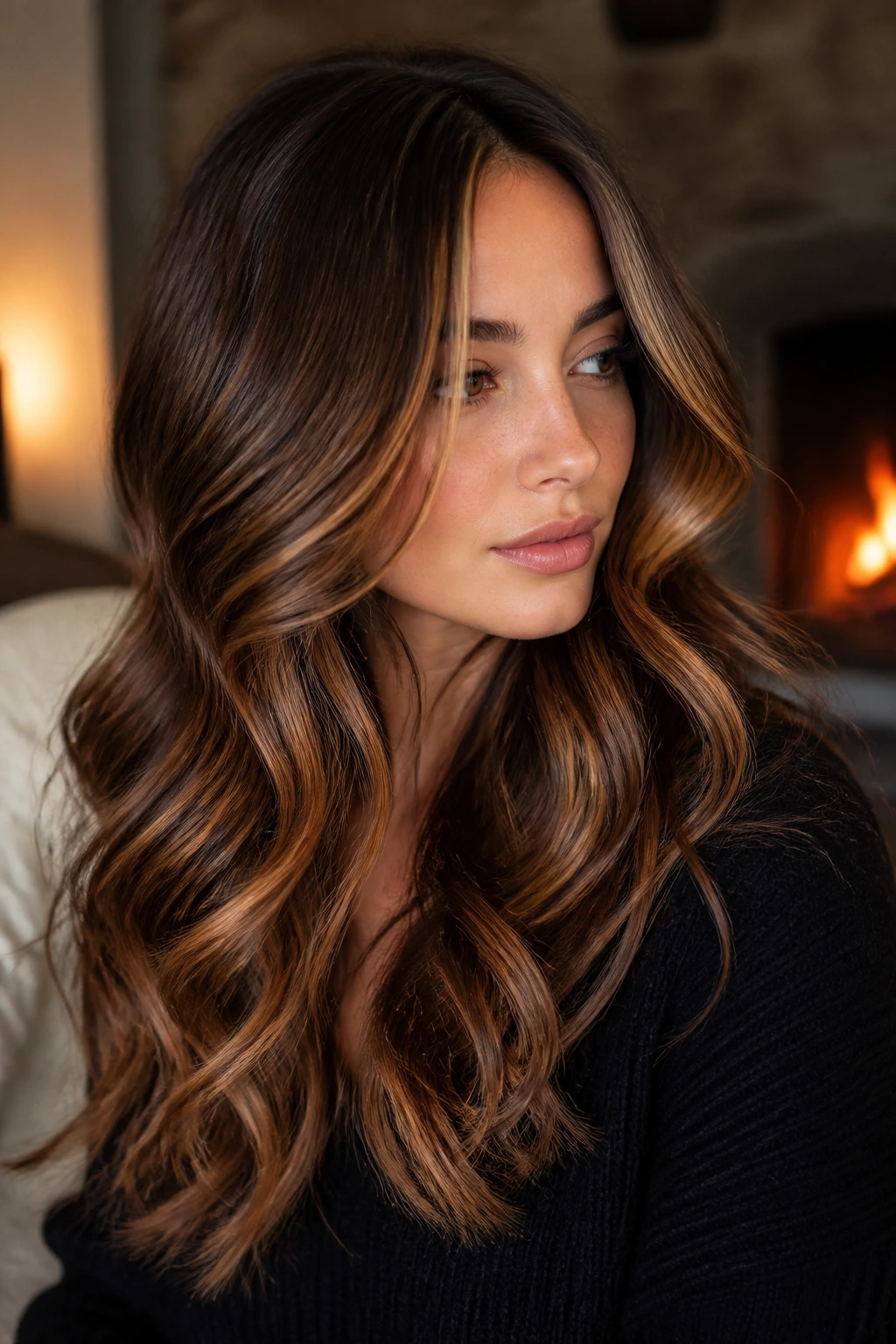
Is there a warmer version that still feels grown-up? Yes, and this is it. Cinnamon balayage brings a little spice to brunette hair without pushing all the way into copper. On thick hair, that warmth reads especially well because the depth of the hair keeps the red-gold tones from looking flat.
The best cinnamon balayage has three pieces working together: a brunette base, cinnamon through the mid-lengths, and a touch of blonde at the ends or around the face. The contrast is subtle, but it matters. Thick hair can carry that layered color better than finer hair because there’s more surface area for the tones to play across.
How to Wear It
Loose waves are the sweet spot. They separate the cinnamon pieces and keep the color from blending into a single reddish blur. If your skin runs warm or neutral, this shade tends to look soft and flattering. If you usually wear black clothes, the cinnamon also keeps the hair from vanishing against darker fabric.
Do not let the blonde go too pale here. The strength of this look is in the mid-tone richness.
16. Sunlit Cocoa Melt
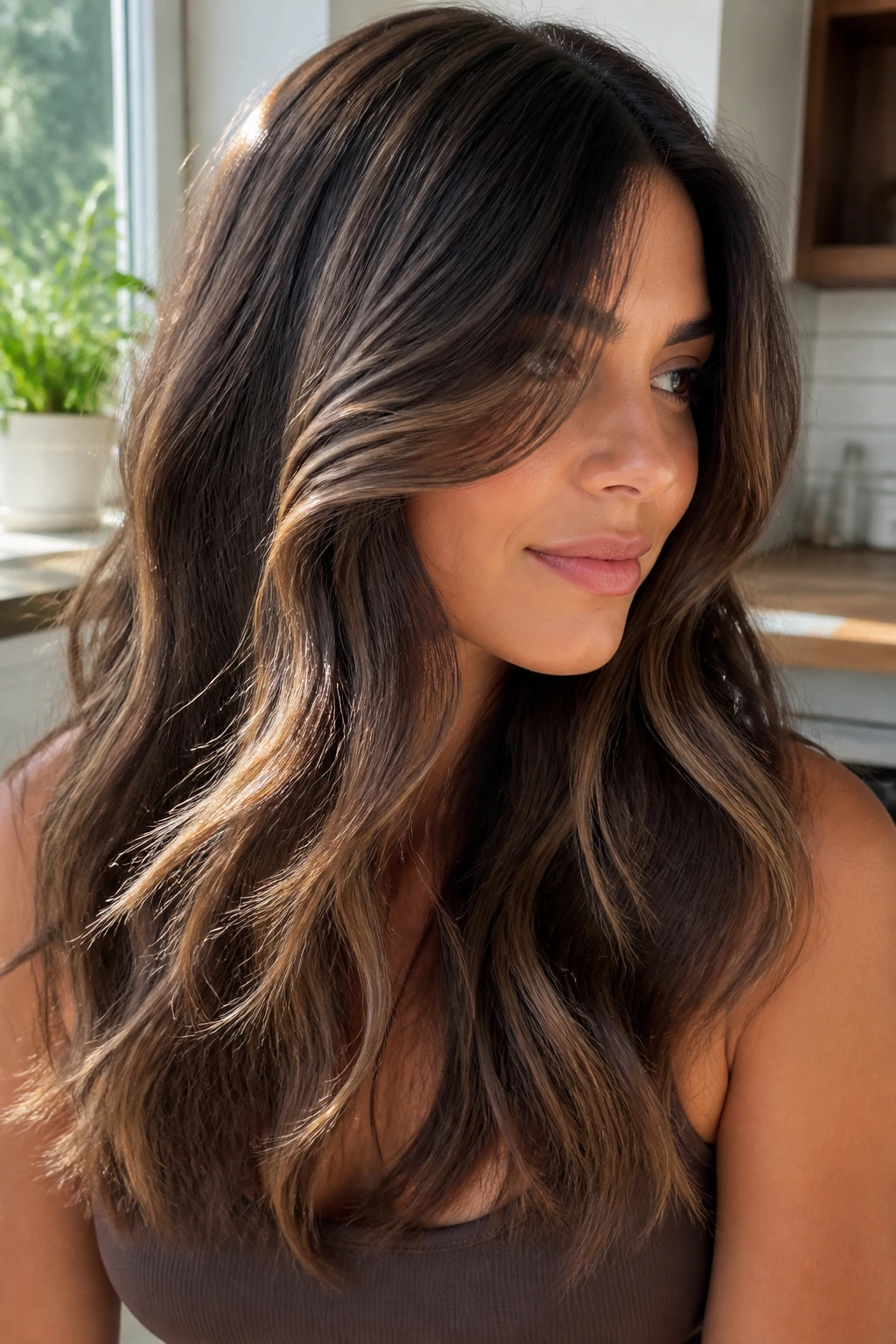
Sunlit cocoa melt is what happens when a brunette balayage decides to behave itself. The hair stays cocoa dark at the root and underneath, then gathers lighter pieces through the top and ends in a way that feels soft, not loud. Thick hair is ideal for it because the weight of the hair keeps the blend smooth.
This style works best when the light pieces are feathered through the top layer and then repeated lower down. That repetition is what keeps the color from disappearing. You want the eye to travel. If all the brightness sits only on the surface, thick hair eats the dimension as soon as you tuck it behind the shoulders.
The finish should look sunlit, not streaked. That means the blonde is warm-neutral, not icy. It also means the lowlights matter. They stop the lighter pieces from turning into a halo around the head and keep the whole look tied to the base.
I’d choose this if you want brunette-first color with enough blonde to make a blowout feel finished. It’s one of the most wearable ideas here.
17. Walnut Brunette with Icy Tips
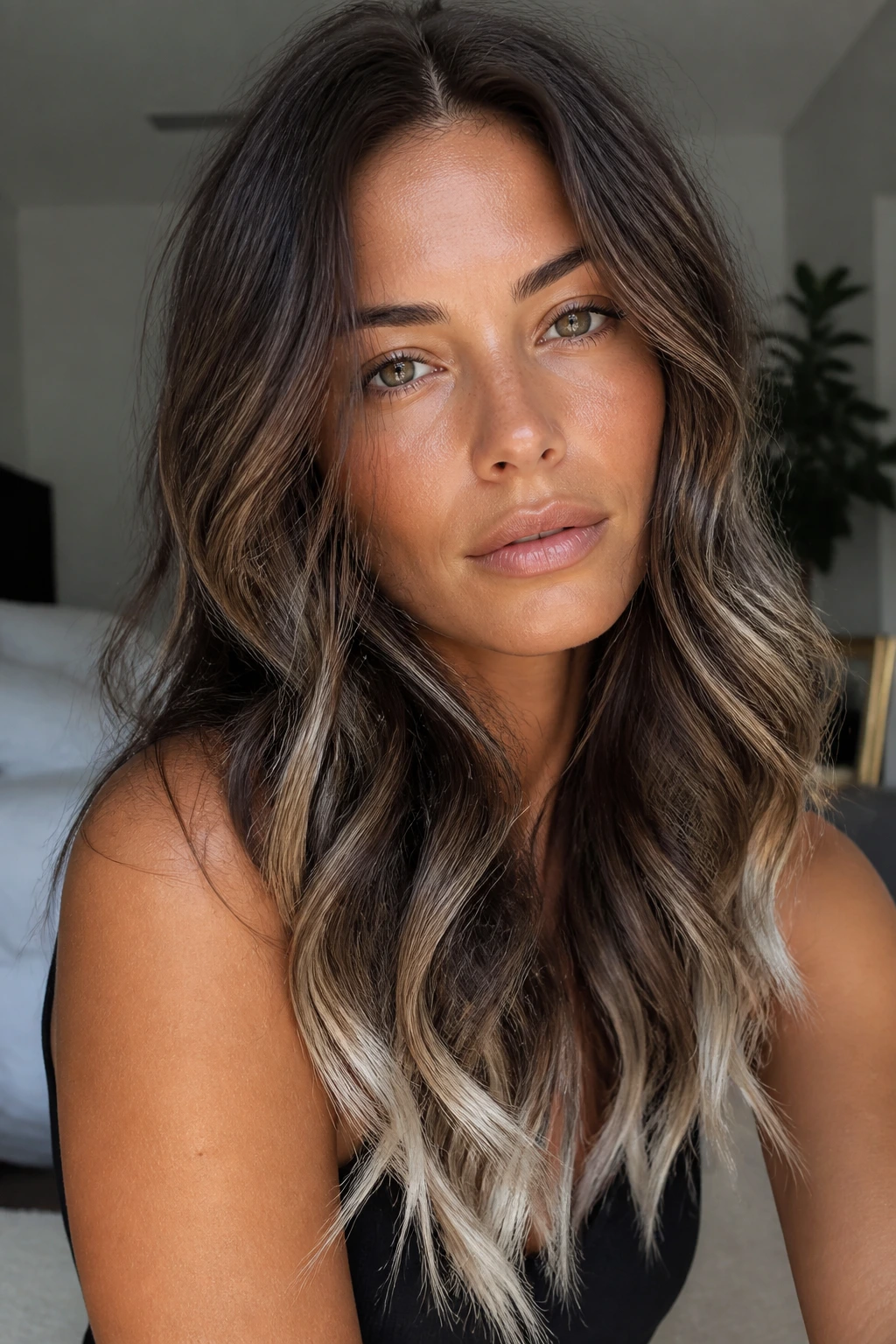
Walnut brunette with icy tips is a bolder cool-toned choice, and it works because thick hair has enough presence to hold the contrast. The walnut base should stay rich and deep, almost coffee-colored. Then the ends shift lighter and cooler, with a pale icy finish that feels sharp at the bottom.
The biggest mistake with this look is making the icy part too high. Keep it at the ends. Let the base and mid-lengths stay walnut so the hair still feels dense and expensive. That contrast is what gives the style its edge. If the light pieces creep too far up, the hair can start to look patchy.
This shade is strong with straight styling, but it looks even better in soft bends. The icy tips catch the twist of the wave and make the cut seem more structured. If your skin leans cool, this can be a knockout. If you run warm, keep the icy finish softened with a pearl or beige toner.
It’s a more fashion-forward look than honey or caramel. That’s fine. Thick hair can handle a little attitude.
18. Honey Drizzle on a Layered Lob
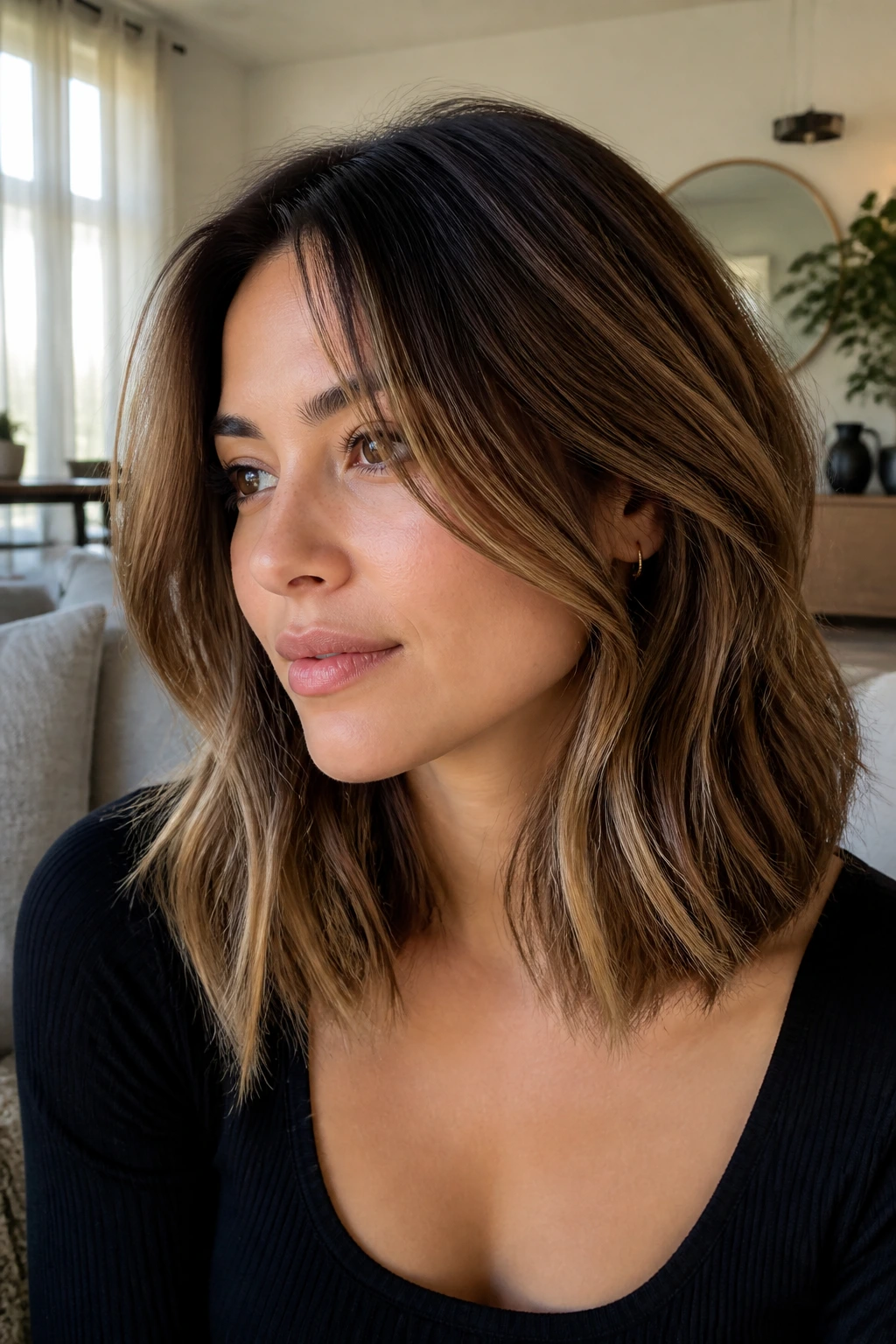
A layered lob changes everything. Thick hair at this length can either look sharp and full or end up bulky at the bottom, and a honey drizzle helps break that up. The lighter pieces should sit over the layers, not fight them. Then the whole cut looks lighter without losing its body.
Best for Medium-Length Brunettes
This version works especially well if your hair sits around the collarbone. That’s enough length for the honey to travel, but not so much that the cut drags. The layers create little ledges for the color, which helps the blonde show even when the hair is tucked behind the ears.
How to Style It
A round brush blowout gives the honey pieces a polished bend. If you prefer texture, a flat iron wave works too. The trick is not to overdo the ends. Keep them soft and feathered so the layered cut doesn’t turn choppy.
This is one of the easiest ways to make thick brunette hair look lighter without giving up that full, dense shape. The honey works with the cut instead of against it.
19. Smoked Almond Balayage
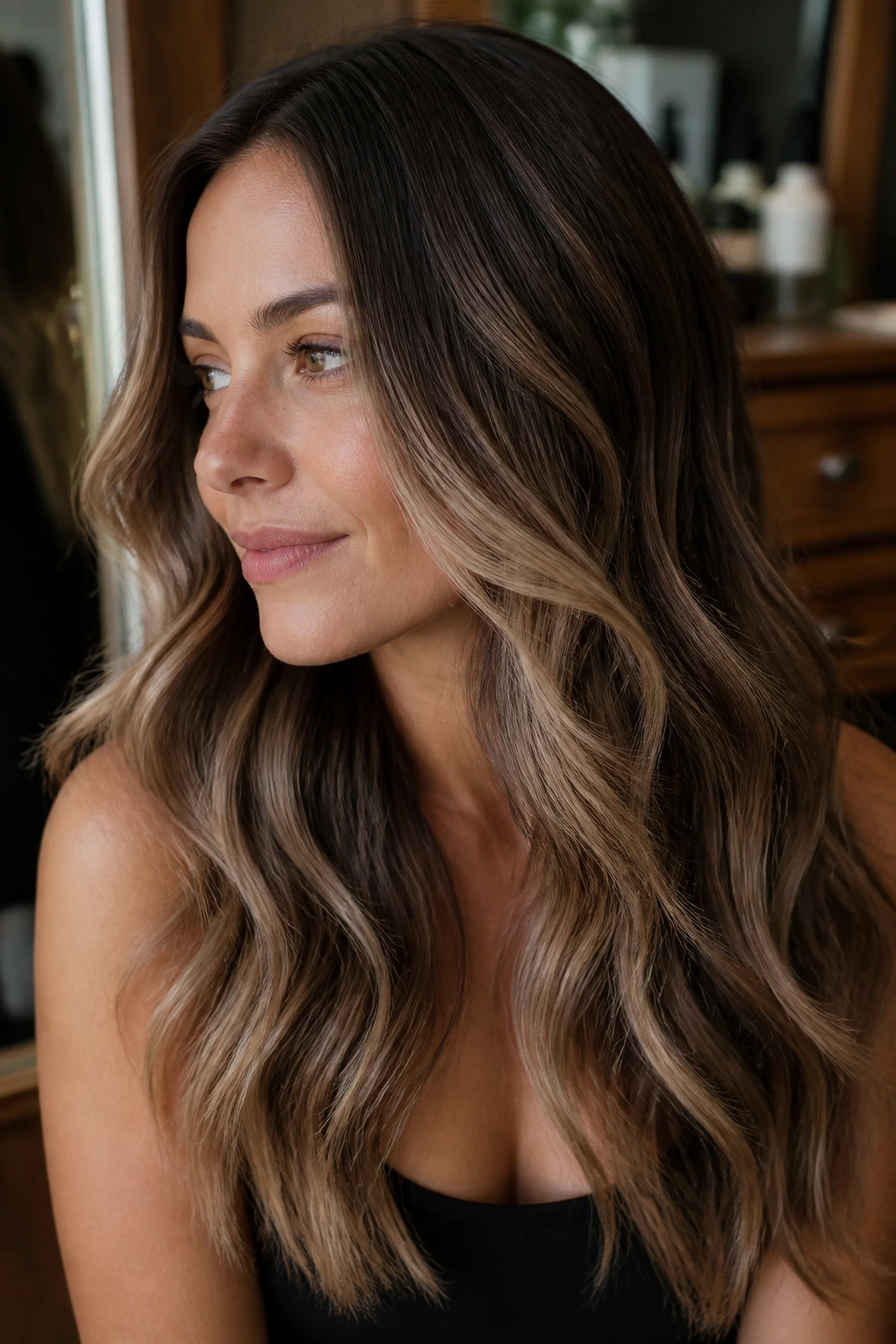
Smoked almond balayage is one of those shades that looks even better than it sounds. The brunette base stays nutty and deep, while the lighter pieces lean almond-beige with a little smoke around the edges. Thick hair makes this look feel plush rather than flat.
Why It Reads So Well on Dense Hair
Dense hair can make pale blonde look too harsh. Almond tones solve that by sitting in a softer zone. They still brighten the hair, but they don’t fight the base. That means the hair keeps its full look at the roots and around the crown, where thick hair can otherwise feel heavy.
You also get a nice effect when the hair is pulled up. A smoothed-back ponytail or claw clip lets the almond ribbons show through the surface. That’s one reason I like this shade for people who wear their hair up half the week and down the other half.
A soft wave helps, but it doesn’t need to be glamorous. The tone does enough work on its own. If your brunette base is cool, keep the almond restrained. If it’s warm, the smoked side of the shade keeps the color from getting too golden.
20. Beige Bronde with Curtain Bangs
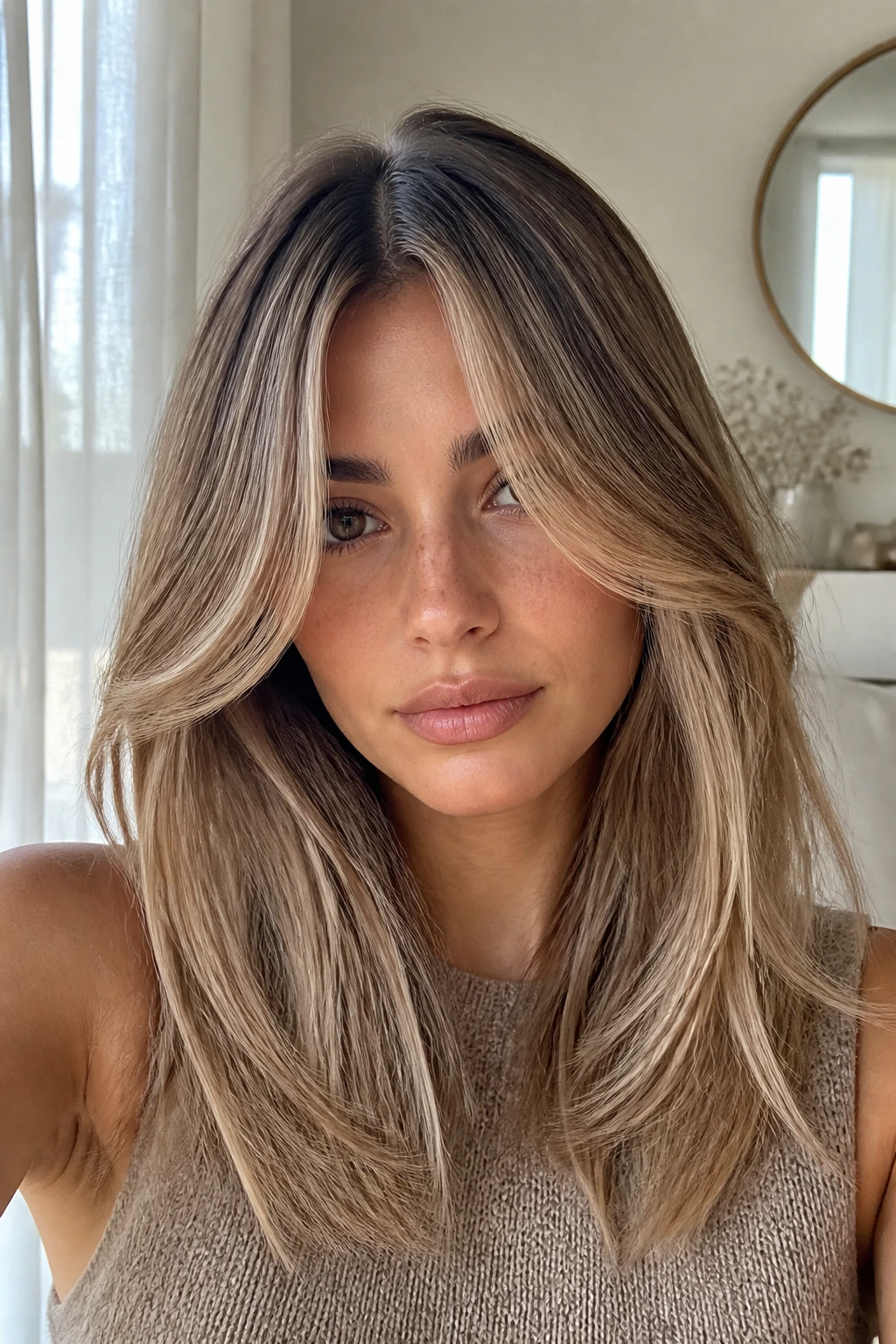
Bronde and curtain bangs are a strong pair. The bangs break up the front bulk that thick hair sometimes builds up around the face, and the beige bronde keeps the rest of the style soft enough to move. You get brightness without that harsh line that can happen when bangs and dense hair meet all at once.
Ask for the lightest pieces to live in the bang area, then soften them through the front layers and mids. That gives the haircut a shape that shows even when the hair is blown straight. Beige is the safest tone here because it sits between warm and cool and doesn’t argue with the rest of the brunette base.
I like this on shoulder-length and longer cuts, though it can work on a lob too. The bangs make the color feel more intentional, almost like the light has been placed where the eye naturally goes. Thick hair benefits from that kind of direction. It’s not about more color. It’s about control.
If you wear sunglasses a lot, this one is worth a look. The light pieces around the face still show under the frames, which sounds minor until you see it in a mirror.
21. Bronze-to-Champagne Dimension
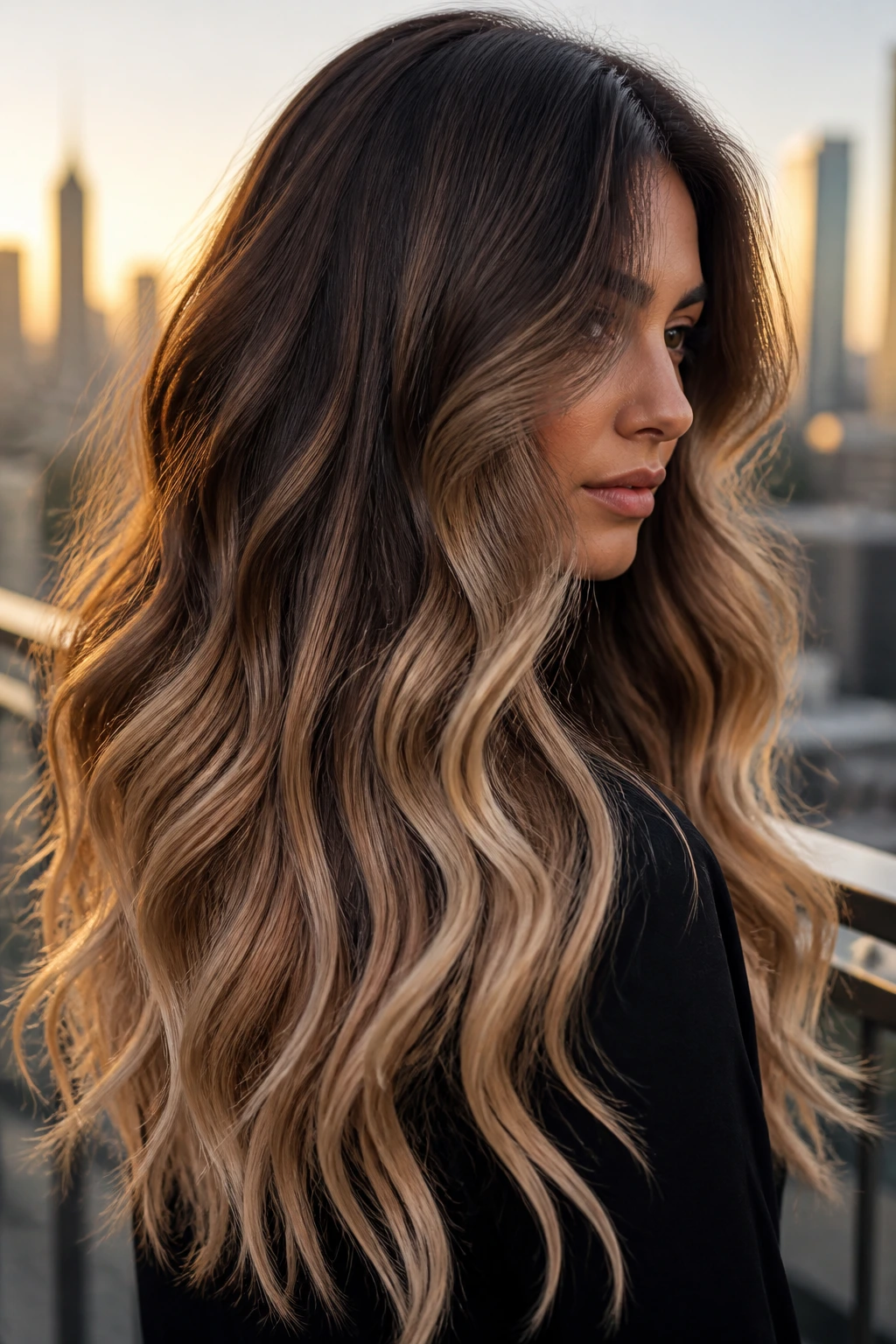
Bronze-to-champagne color is for someone who wants warmth first, brightness second. The bronze base feels rich on thick brunette hair, and the champagne ends give enough lift that the hair doesn’t read dark all the way through. It’s a softer route than platinum, and a smarter one for a lot of brunettes.
Why This Contrast Works
Bronze and champagne sit close enough that the blend feels natural, but far enough apart that the lighter ends still stand out. Thick hair can carry that kind of shift without the color looking spotty. The density keeps the gradient smooth.
How to Wear It Well
Big blowout waves make this shade look its best. The bronze root adds depth, while the champagne catches light on the bends. If your hair tends to expand in humidity, this is also a good choice because the darker base helps the style look controlled even when the weather is not.
Keep the bronze rich and the champagne creamy. If the champagne goes too cool, it can feel disconnected from the base.
22. Soft Maple Balayage
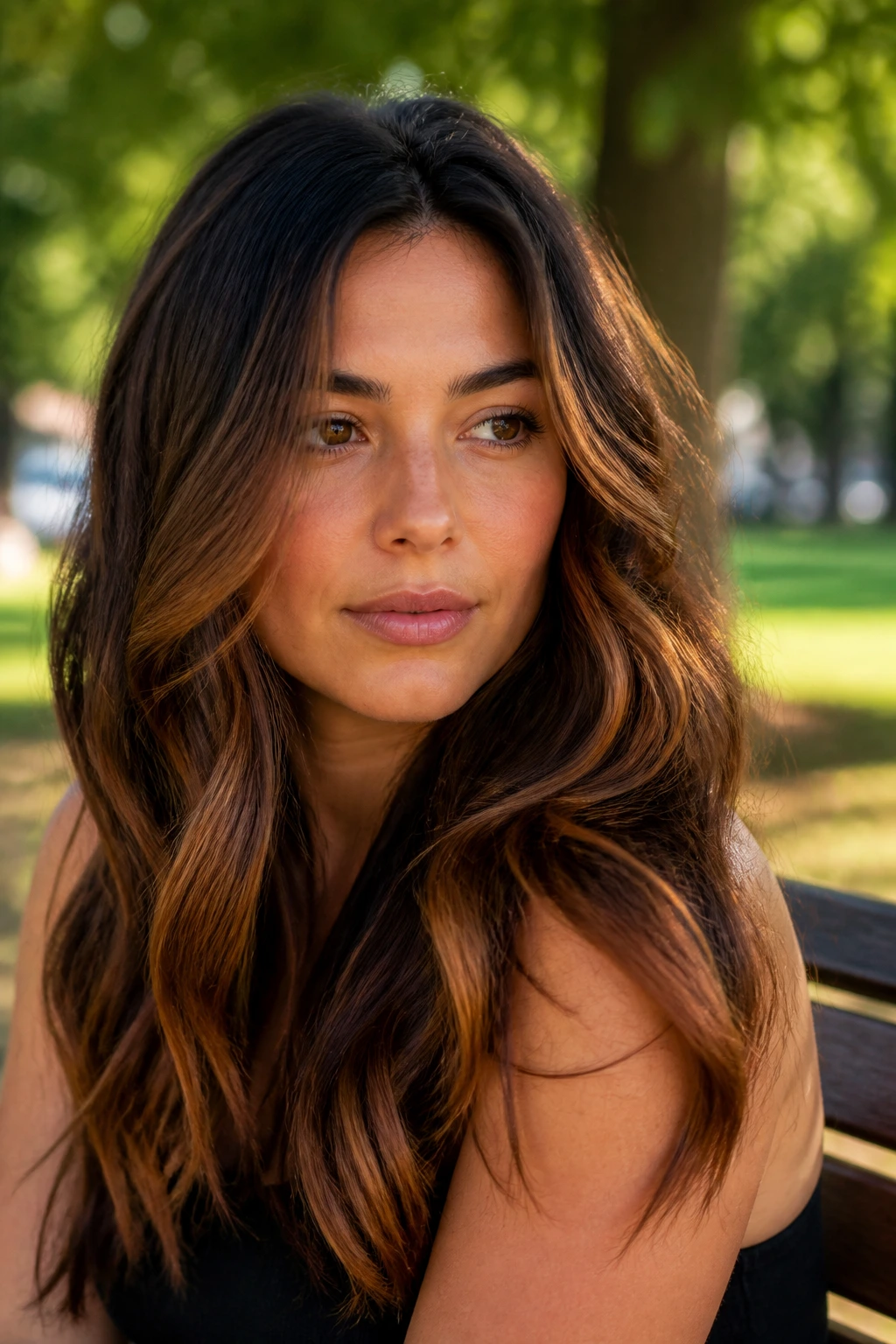
Soft maple brings a gentle red-gold warmth that sits somewhere between honey and cinnamon. On thick brunette hair, that little bit of maple color can make the whole head feel more alive without crossing into copper territory. It’s warm, but not loud.
The key is balance. Maple should live in the lighter sections while the brunette base keeps the cut grounded. Thick hair is ideal for that because the darker mass underneath stops the warmth from taking over. If you’ve got lots of layers, the maple pieces will catch each bend and make the movement more visible.
This looks especially good when you want a color that feels natural-ish rather than obviously highlighted. There’s enough contrast to matter, but it still looks like the hair could have grown that way with some sunlight and a little luck. That’s the sweet spot for a lot of people.
If your skin is golden, peachy, or neutral, maple can be kinder than a cooler blonde. It won’t wash the face out. It tends to add softness.
23. Espresso Roots with Wheat Blonde Ends
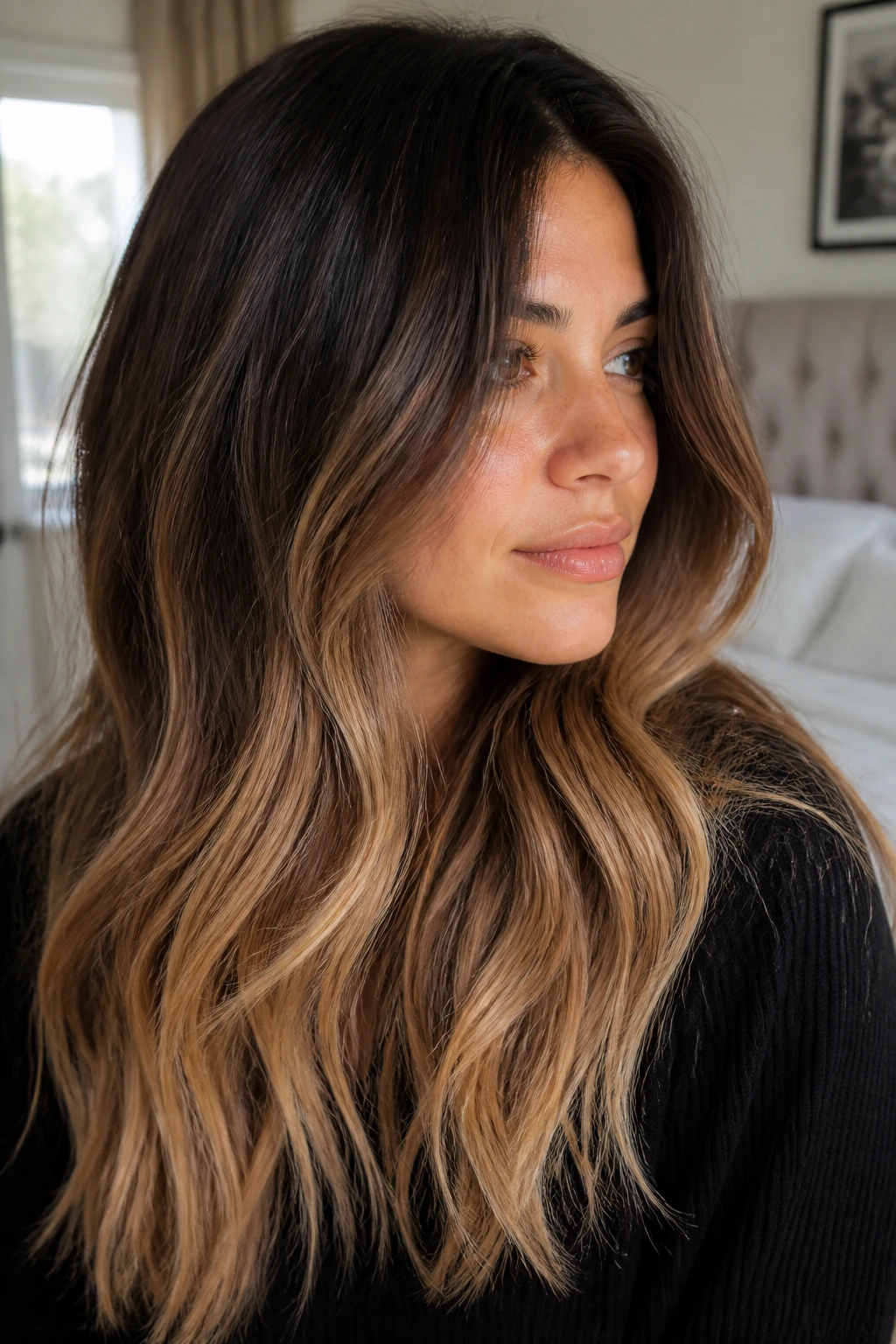
Espresso roots with wheat blonde ends is one of the more grounded blonde-dark balayage choices on this list. The roots stay deep and glossy, almost black-brown on some heads, while the ends turn a dry, warm wheat blonde that feels lighter without going pale. Thick hair makes the shift feel clean instead of abrupt.
What to Tell Your Colorist
Ask for the brightness to concentrate below the mid-lengths, with only a few lighter strokes around the face. That keeps the crown rich and stops the head from looking over-lightened. The wheat tone should stay creamy, not yellow. The difference matters more than people think.
- Best for: very dark brunettes who want visible blonde without a full transformation.
- Best cut: long layers or a softly textured cut that lets the ends fan out.
- Best finish: brushed-out curls or a smooth bend from the middle down.
- Best maintenance move: a gloss every 6 to 8 weeks keeps the wheat tone from turning dull.
It’s strong, but not shouty. That makes it an easy pick if you like contrast and still want the brunette to lead.
24. Golden Ash Money Piece
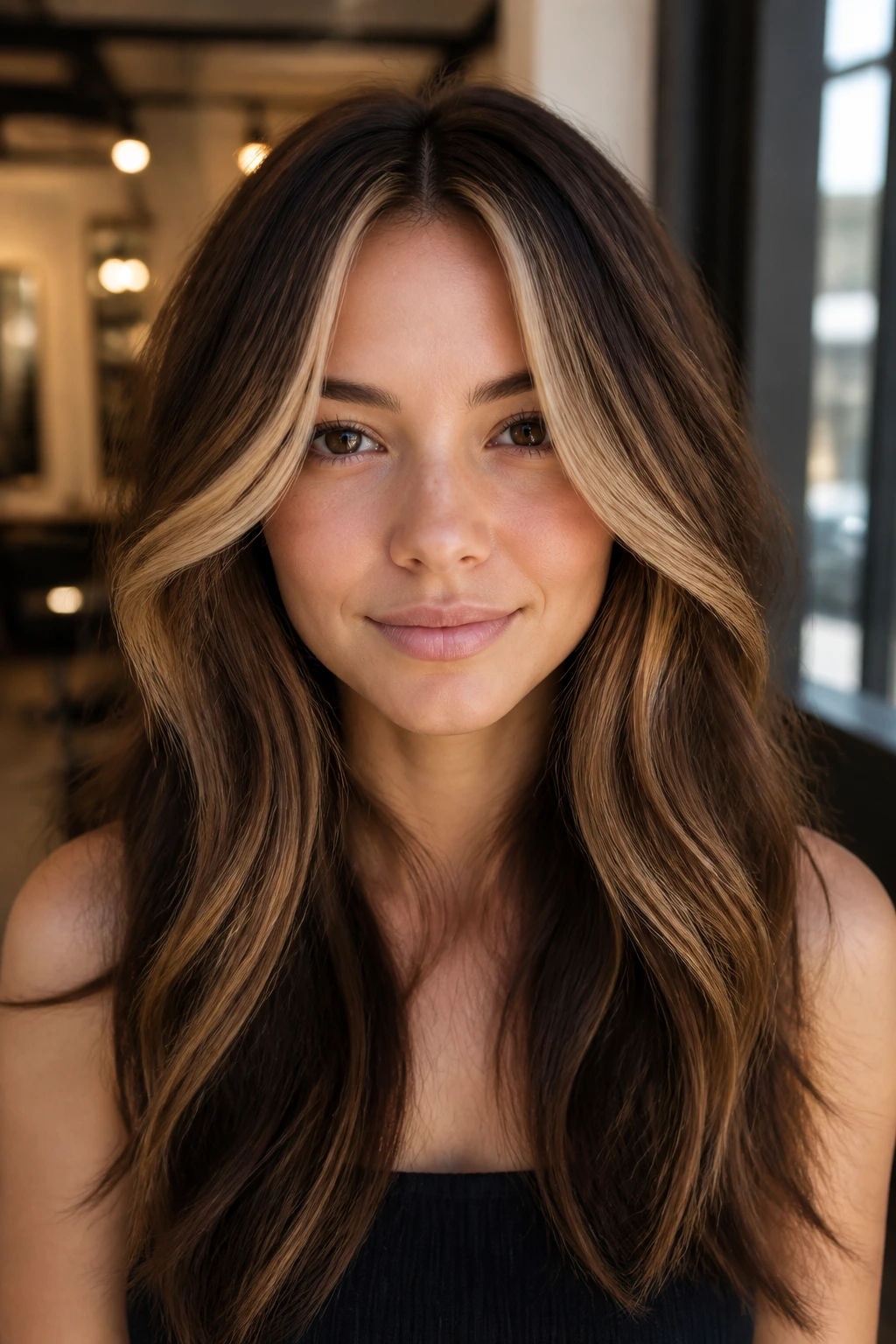
A money piece works on thick hair when it’s not treated like a neon strip. Golden ash is a better answer. The gold keeps it warm enough to connect with brunette hair, and the ash mutes the shine so the front doesn’t overpower the rest of the head.
What I like here is the way it changes the face without forcing the whole style to become light. The money piece should start low and blend back into the side layers. That keeps it from looking disconnected. Thick hair can hold that kind of front-loaded brightness beautifully because there’s enough weight behind it for the color to feel anchored.
This is a smart choice if you wear your hair half-up a lot. The front still does the work when the rest of the hair is pulled back. It’s also good for anyone who likes contrast at the hairline but doesn’t want heavy blonde everywhere else.
Don’t go too ash if your natural brunette base is warm. The gold needs to stay in the conversation.
25. Cocoa Mocha Swirl
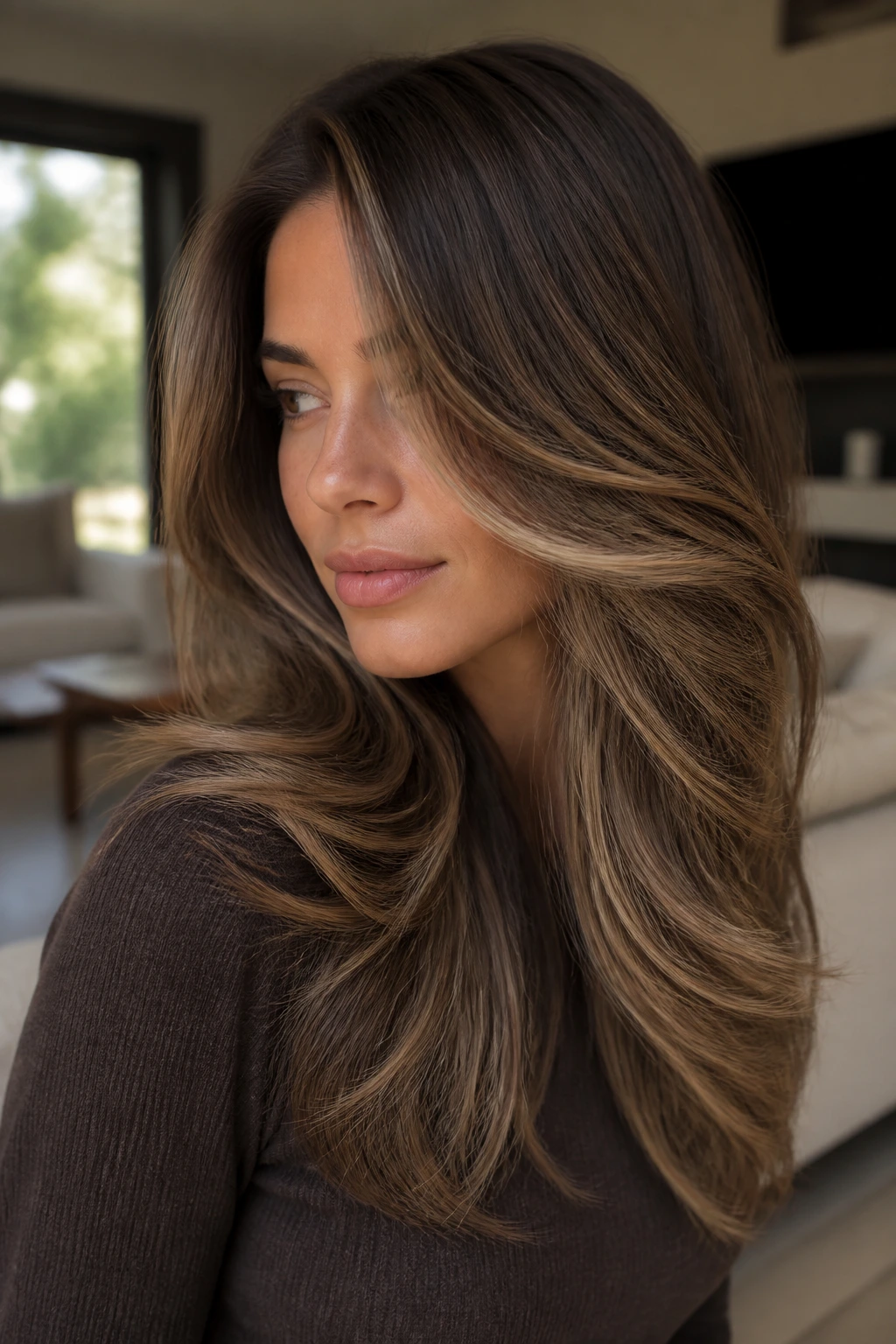
Cocoa mocha swirl is subtle, and that’s what makes it useful. Thick brunette hair often needs a little more movement than people think, but not always more lightness. This shade keeps the hair mostly brunette, then twists in mocha and soft blonde through the mids so the whole thing looks stirred rather than striped.
The swirl effect matters most on layered hair. The lighter bits should follow the bend of the cut, not sit on top of it like decoration. That makes the dimension feel built-in. On thick hair, a good swirl color can do as much for movement as a pair of shears.
I’d choose this if you want a quiet blonde that still shows when the hair is curled or blown out. It is one of the easier looks to live with because the contrast is gentle. But it never looks boring. There’s enough color contrast under the surface to keep the hair interesting from every angle.
A light satin finish on the mids and ends usually makes this one sing. Too much shine spray can flatten the swirl effect.
26. Cream Soda Balayage
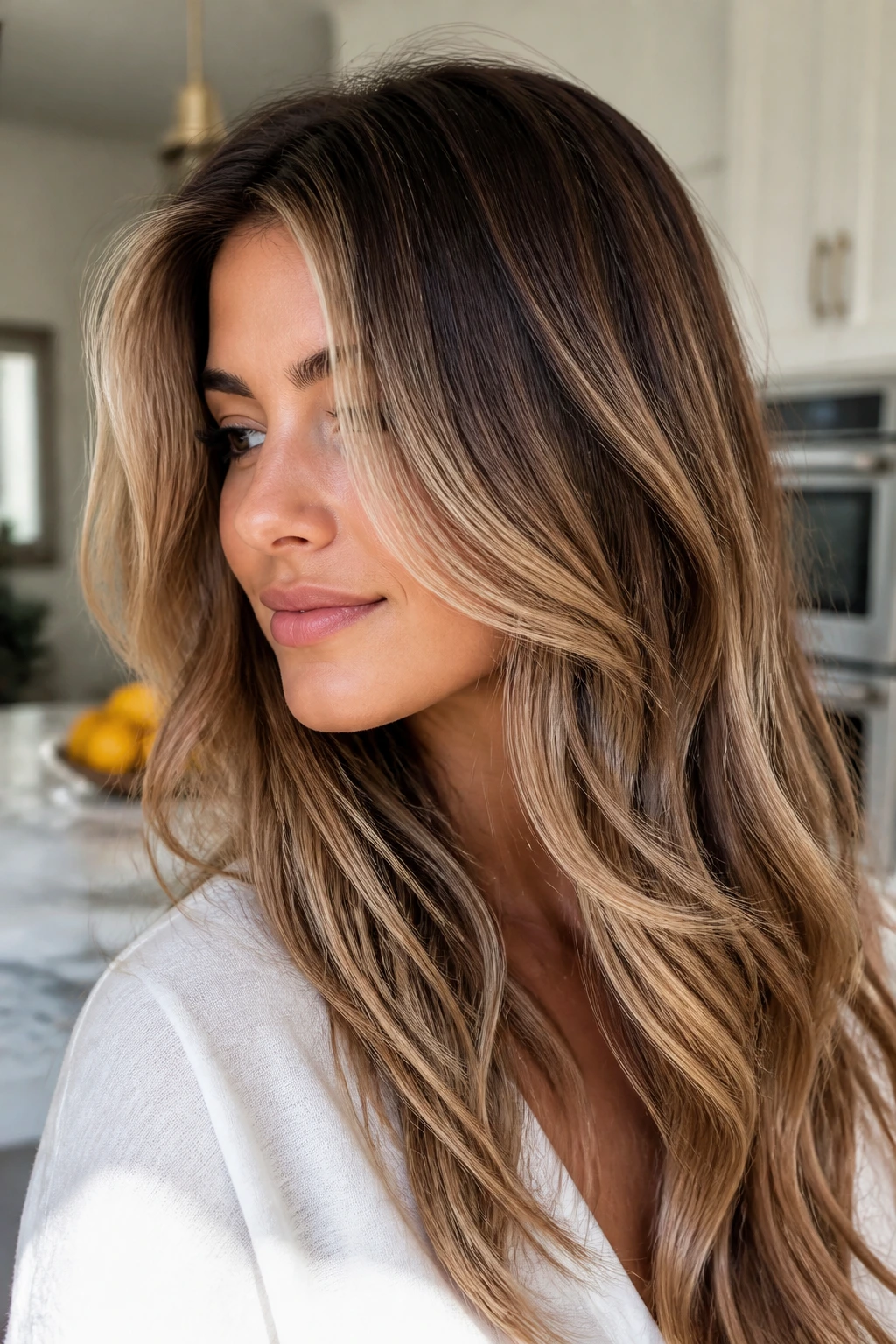
Cream soda is a warmer-beige blonde that sits between vanilla and honey, which makes it a friendly option for brunettes who want lightness without moving into icy territory. Thick hair holds the creamy tone well because there’s enough depth underneath to keep it from looking washed out.
The fun part is the way it softens around the face. The lighter pieces don’t have to be severe to matter. A few careful strokes around the front, then a softer finish through the ends, can change the whole silhouette of the hair. That’s especially useful if the haircut is long and heavy.
This shade pairs nicely with round brushing and big wave patterns. It also works on straight hair because the creamy tone has enough body to show even without texture. If your brunette base leans golden, cream soda can look seamless. If it leans cooler, ask for a neutralized gloss so the blonde doesn’t skew yellow.
It’s one of the easiest blonde-dark blends to wear day to day. Not flashy. Not flat. Right in the middle.
27. Cool Beige Mushroom Melt
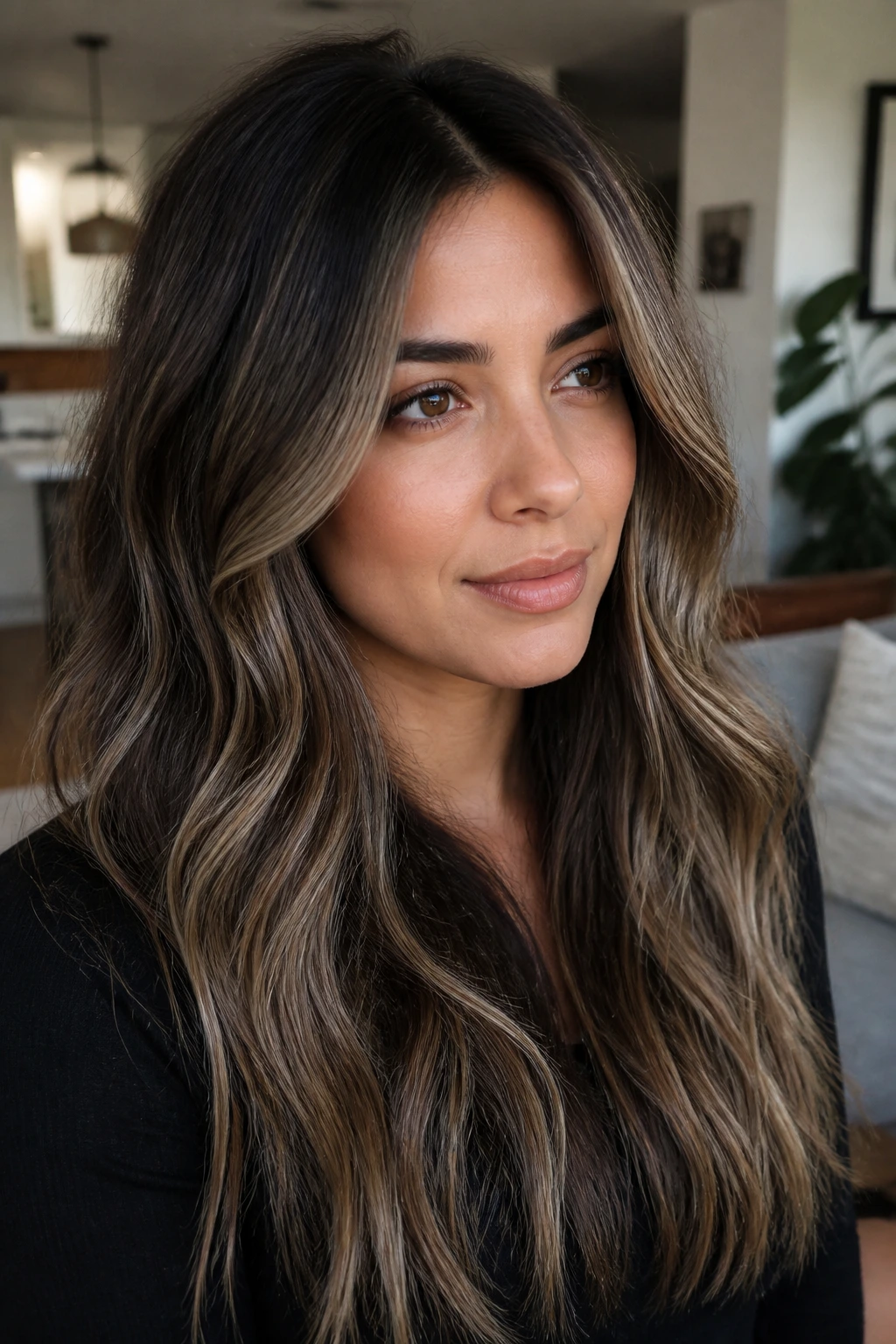
Cool beige mushroom melt is for the brunette who likes softness but not warmth. The base stays deep and earthy, while the lighter pieces move into a mushroom-beige finish that feels muted, modern, and a little restrained. Thick hair gives this color the depth it needs so it doesn’t collapse into one dull tone.
The mushroom note keeps the blonde from feeling overbright. That can be a gift on dense hair, especially if your natural shade is medium brown rather than espresso. You get dimension, but the color still looks believable. The melt is the key. There should be no hard line between the brunette and the lighter ends.
This looks especially good on hair with movement around the face. Curtain bangs, long layers, and textured ends all help the mushroom tone show. If you want more brightness, do it in the front pieces first, not all over the surface.
Cool beige can be tricky. Too much ash and the hair goes flat. Too much gold and you lose the mushroom effect. The middle is where it works.
28. Warm Butter Blonde Cascade
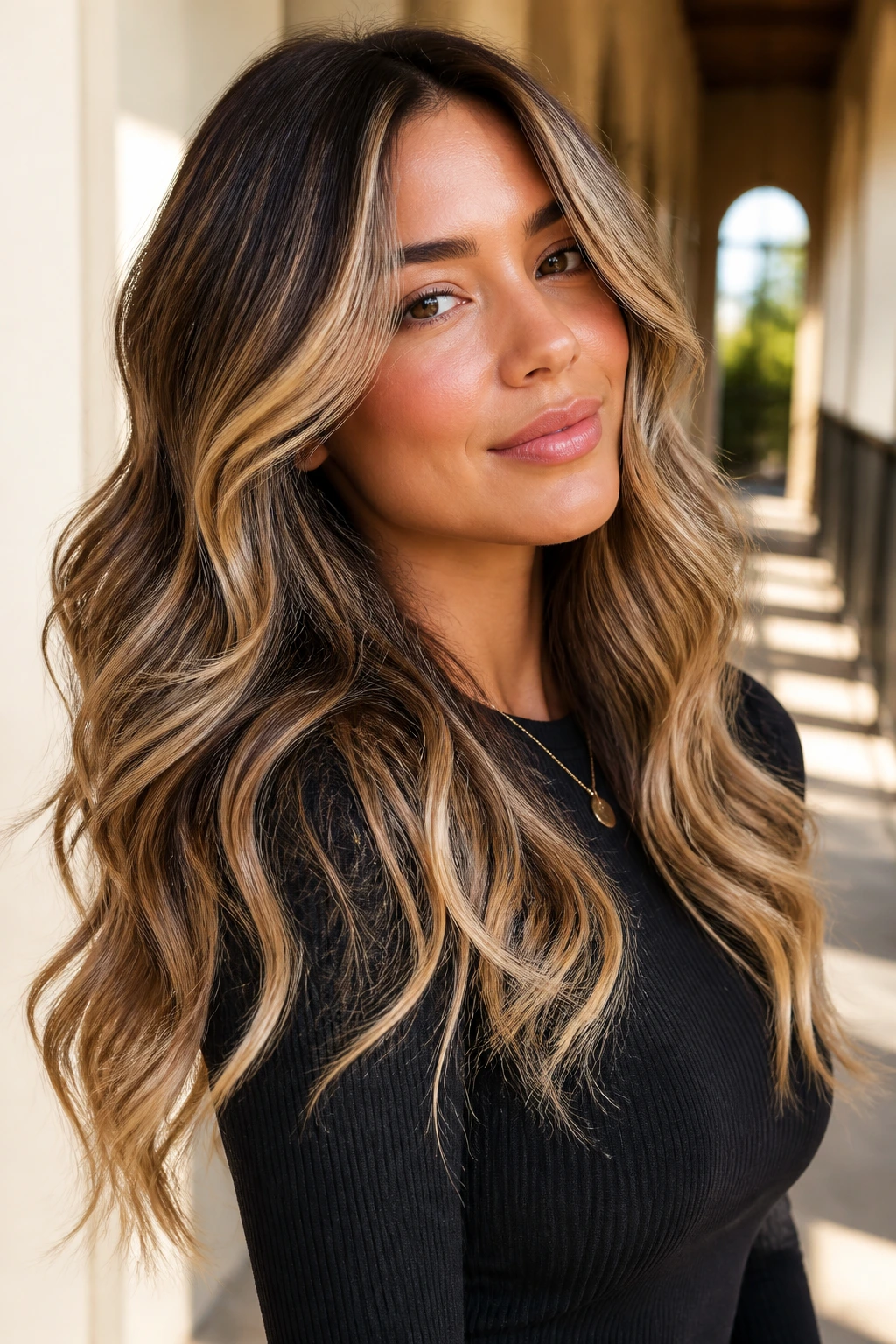
Warm butter blonde cascade is the brightest, softest way to end this list. The brunette base stays deep enough to hold the shape, but the blonde comes in a buttery sweep that runs through the lengths and spills into the ends. On thick hair, the result feels lush rather than thin.
Why It’s a Strong Finish for Thick Hair
Butter blonde needs body around it. Dense hair gives it that body. The color doesn’t look sparse or over-processed because there’s enough hair for the lightness to spread across. If the cut has layers, even better. The cascade will catch on every bend and make the hair seem lighter without losing its fullness.
The trick is to keep the root shadow soft and the ends creamy. Not white. Not lemon. Creamy. That’s what lets the blonde sit against brunette hair without making the grow-out harsh. I like this for people who want a noticeable blonde finish but still want the depth that makes thick brunette hair look glossy and full.
If you’re picking one dramatic version from the whole collection, this is the one that gives the most brightness without tipping into brittle-looking platinum.
What to Ask for When You Book Blonde Dark Balayage
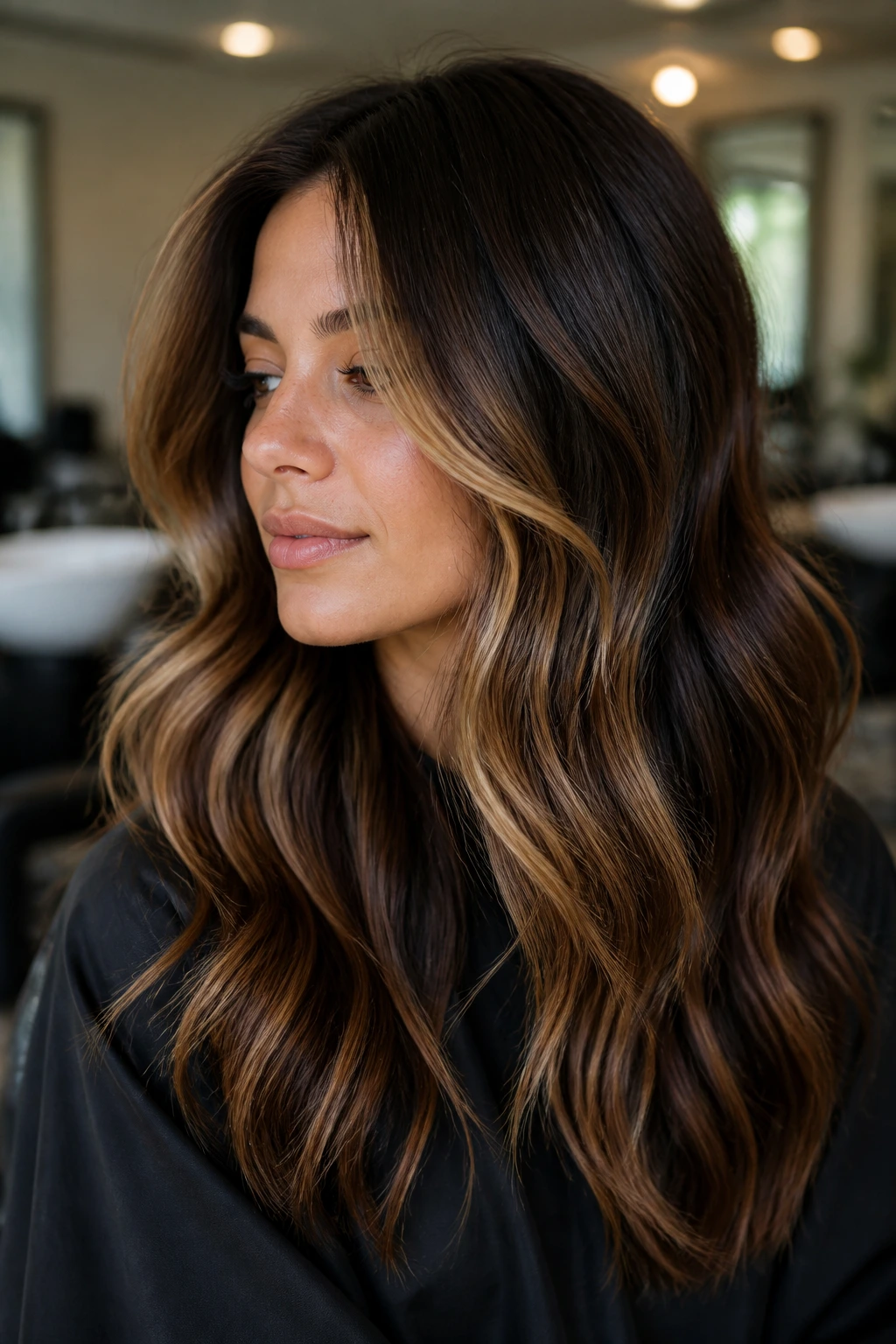
A good salon conversation matters more than people think. Thick brunette hair can take a lot of color, but it can also go flat fast if the placement is vague. Bring photos that show the shade in daylight, not only under salon lights. That one detail saves a lot of disappointment.
Ask your colorist to talk in zones: crown, face frame, mids, ends, and interior pieces. Thick hair usually needs more than surface lightening. If the hair is long or heavily layered, mention whether you wear it up often, because that changes where the blonde needs to live. A color that looks perfect down can vanish in a bun if the underside stays too dark.
Tell them how warm or cool you want the finish to feel. Beige, honey, ash, champagne, mushroom, and butter all behave differently on brunette bases. If you leave that part vague, you’re handing over the most important choice and hoping for luck. Better to say, “I want depth at the root, brightness around the face, and blonde that still looks soft when the hair is straight.” That sentence does a lot of work.
Tools and Products That Keep the Color Looking Intentional
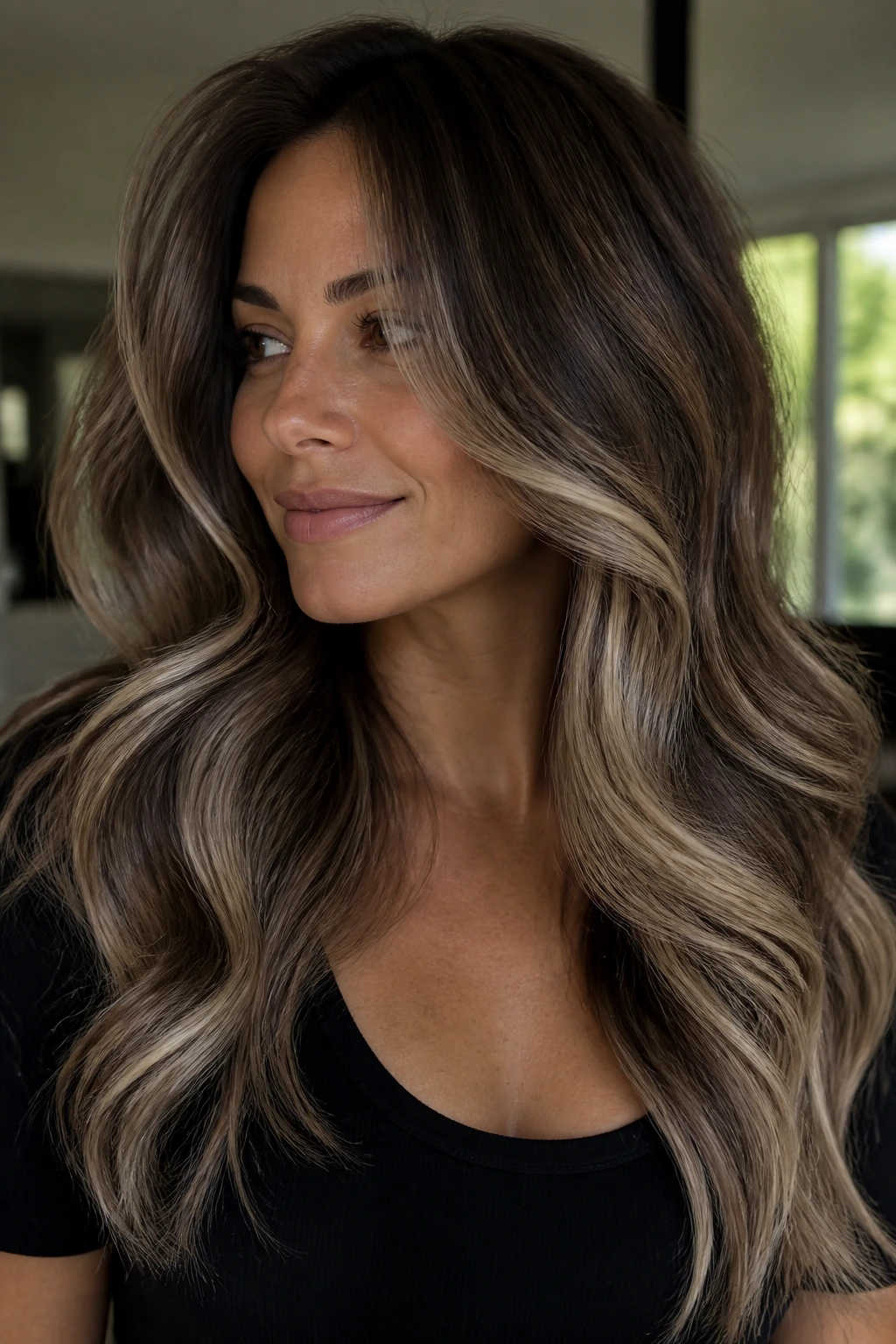
- 1.25-inch curling iron or wand: The size gives thick hair a wave that opens the blonde without making the ends look cramped.
- Wide-tooth comb: Better than a brush for detangling wet, highlighted hair; it cuts down on pulling.
- Heat protectant spray: Use it before every blow-dry, iron, or wand pass, especially on lighter ends.
- Color-safe shampoo and conditioner: Thick hair usually needs moisture, but the formula should still protect the toner and gloss.
- Purple or blue shampoo: Pick purple for yellow-gold brass, blue for orange-brown brass; use sparingly.
- Leave-in conditioner: Useful on mids and ends, where the blonde pieces dry out first.
- Tail comb and sectioning clips: Helpful if you style your hair at home and want the light pieces to show in the right spots.
- Shine serum or light oil: A tiny amount on the ends makes beige, caramel, and champagne tones look more finished.
- Blow-dryer with nozzle: Directs the hair and keeps thick sections smooth instead of puffed up.
How to Style These Balayage Looks So the Blonde Shows
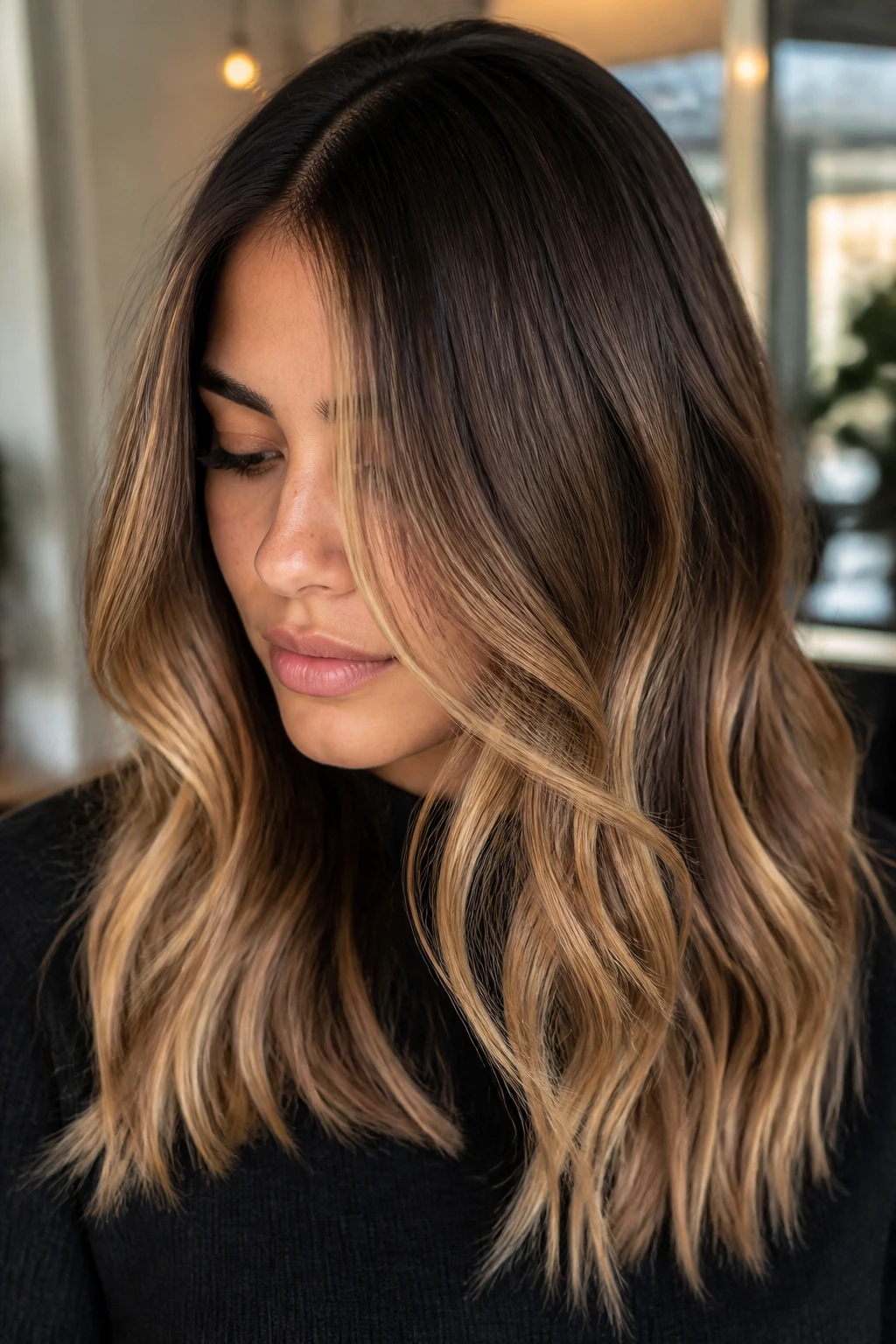
Soft Waves: This is the safest styling choice because waves break up thick hair and let the light and dark pieces separate. Keep the curl direction mixed, then brush it out once it cools so the balayage looks blended instead of ringleted.
Smooth Blowout: If your blonde pieces live mostly around the face or on the ends, a smooth blowout makes them visible without needing big curls. Use a round brush and lift at the crown so the hair doesn’t collapse on itself.
Defined Bends: A flat iron bend works well on lob lengths and layered hair. It shows off ribbon highlights and chunky pieces without adding too much volume.
Updos and Half-Up Styles: Thick hair often gets worn up, and that’s where interior highlights matter. If you choose a look from this list, check how it behaves in a clip or ponytail before you leave the salon.
Smart Shade Choices for Brunette Bases
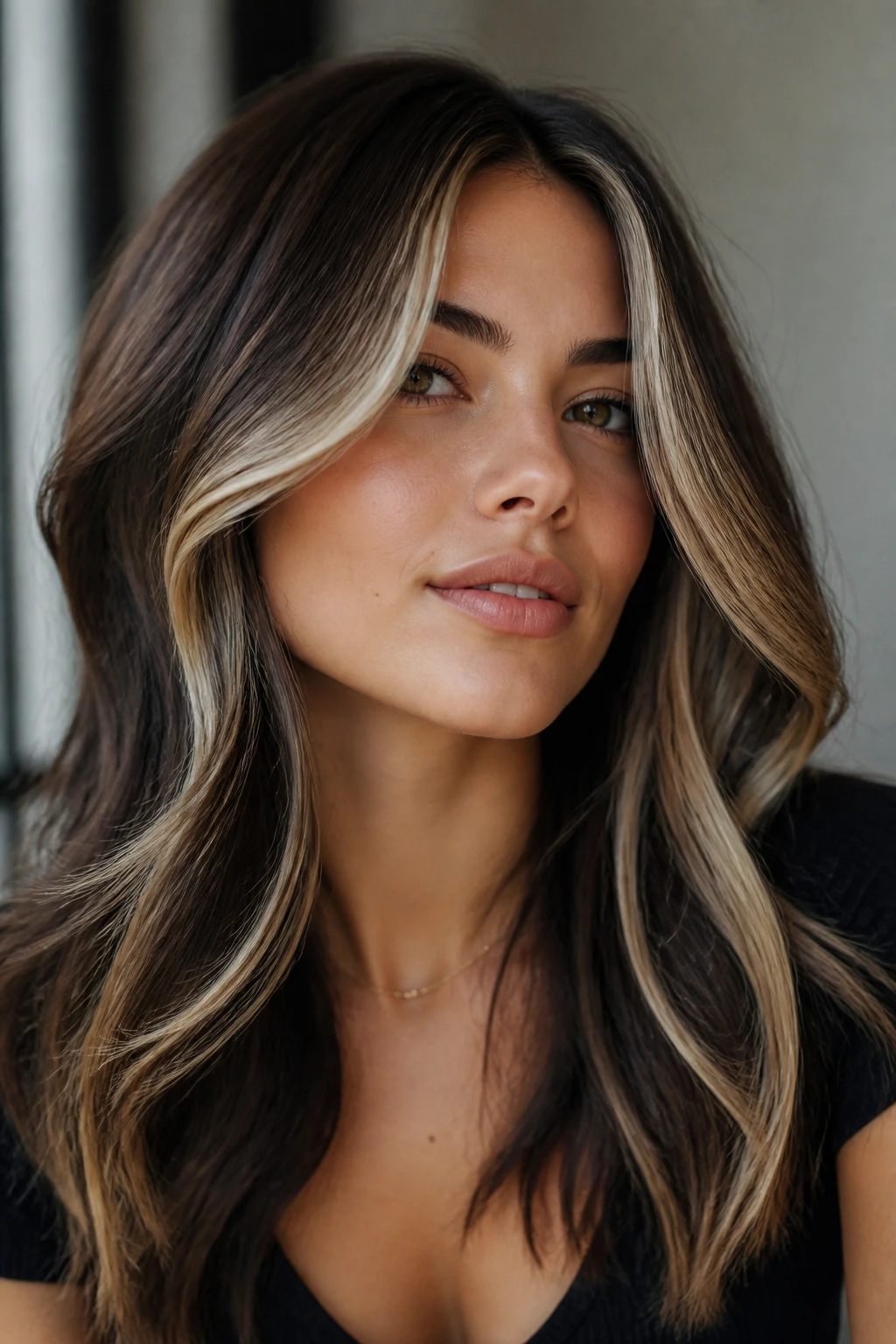
Not every brunette wants the same blonde. If your base is deep espresso, champagne, pearl, and icy tips will show more clearly. If your hair is chestnut or medium brown, honey, caramel, beige, and cream soda often blend better. That’s not a rule carved in stone. It’s a starting point.
The other thing that matters is your hair’s undertone. Warm brunettes usually tolerate golden, toffee, and maple shades with less fuss. Cooler brunettes tend to suit mushroom, smoky beige, pearl, and ash-butter tones. If your hair has been colored before, the old pigment matters too. Bleached hair, even if it’s grown out, can grab toner faster than virgin brunette.
Placement should follow the cut. Heavy layers want brighter pieces where the hair moves. Blunt cuts usually need wider ribbons or a softer ombré so the color doesn’t get trapped inside the line of the cut. If you’re unsure, ask for the lightest pieces around the front and lower mids first. That gives you the biggest payoff with the least risk.
Additional Tips and Tone Boosters
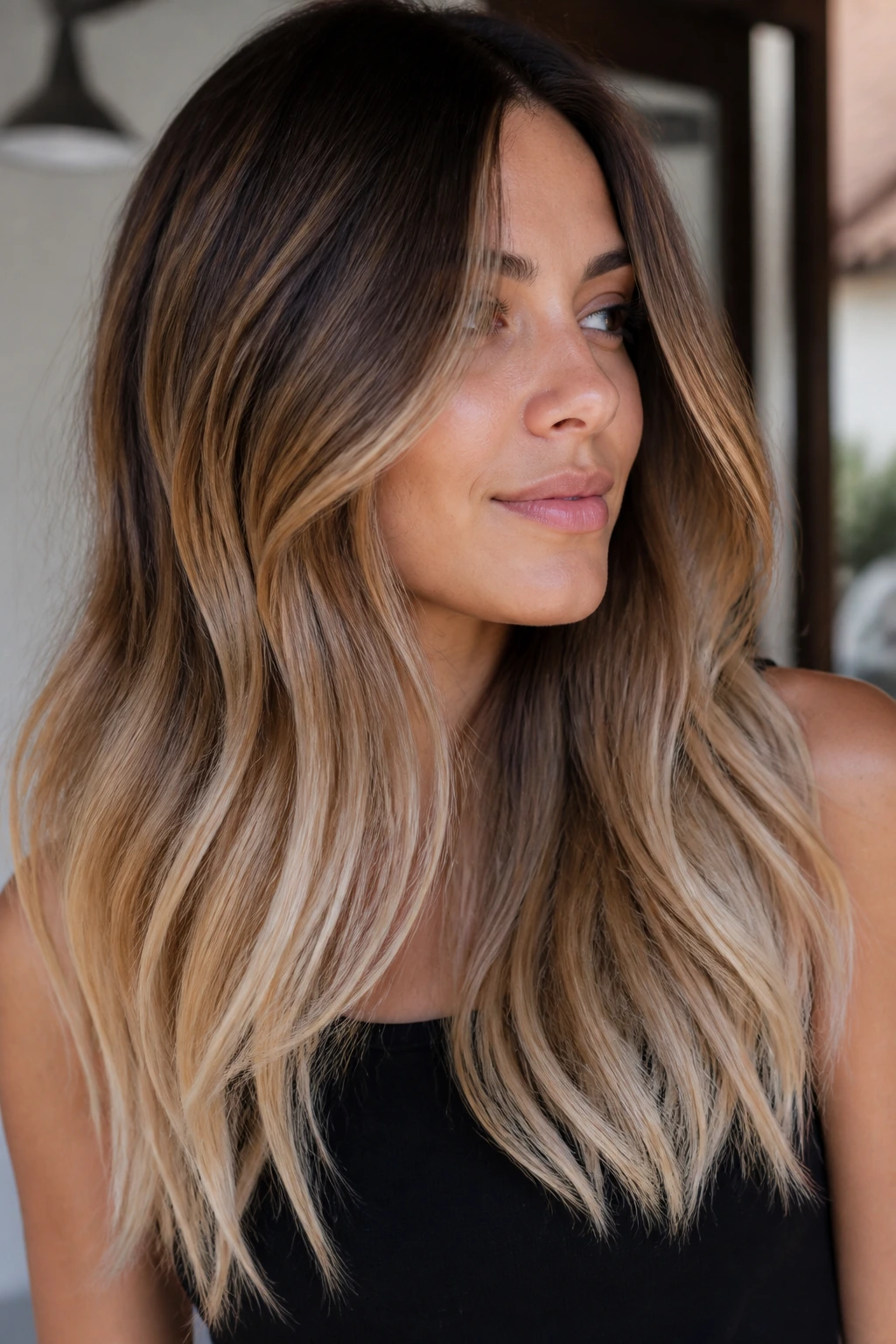
Tone Enhancement: A clear gloss or beige glaze every 6 to 8 weeks keeps blonde pieces creamy without making them dusty. If the shade starts to feel flat, a gloss usually fixes more than another round of lightening.
Customization: Want more drama? Ask for brighter money pieces and keep the underlayer darker. Want softer grow-out? Push the lightness lower and leave the crown deeper by a shade or two.
Styling Finish: Thick hair can handle a little more product than fine hair, but the blonde ends still need restraint. Use a pea-sized amount of oil on the last few inches and stop there. The mids should stay touchable, not slick.
Make-It-Yours: If you like warmth, lean into honey, caramel, and butter. If you prefer cooler hair color, ask for beige, mushroom, pearl, or smoky taupe. For curly hair, keep the painted sections wider so they show after shrinkage. For a straight blowout, ask for more visible panels near the face and part.
Common Mistakes That Flatten Thick Hair
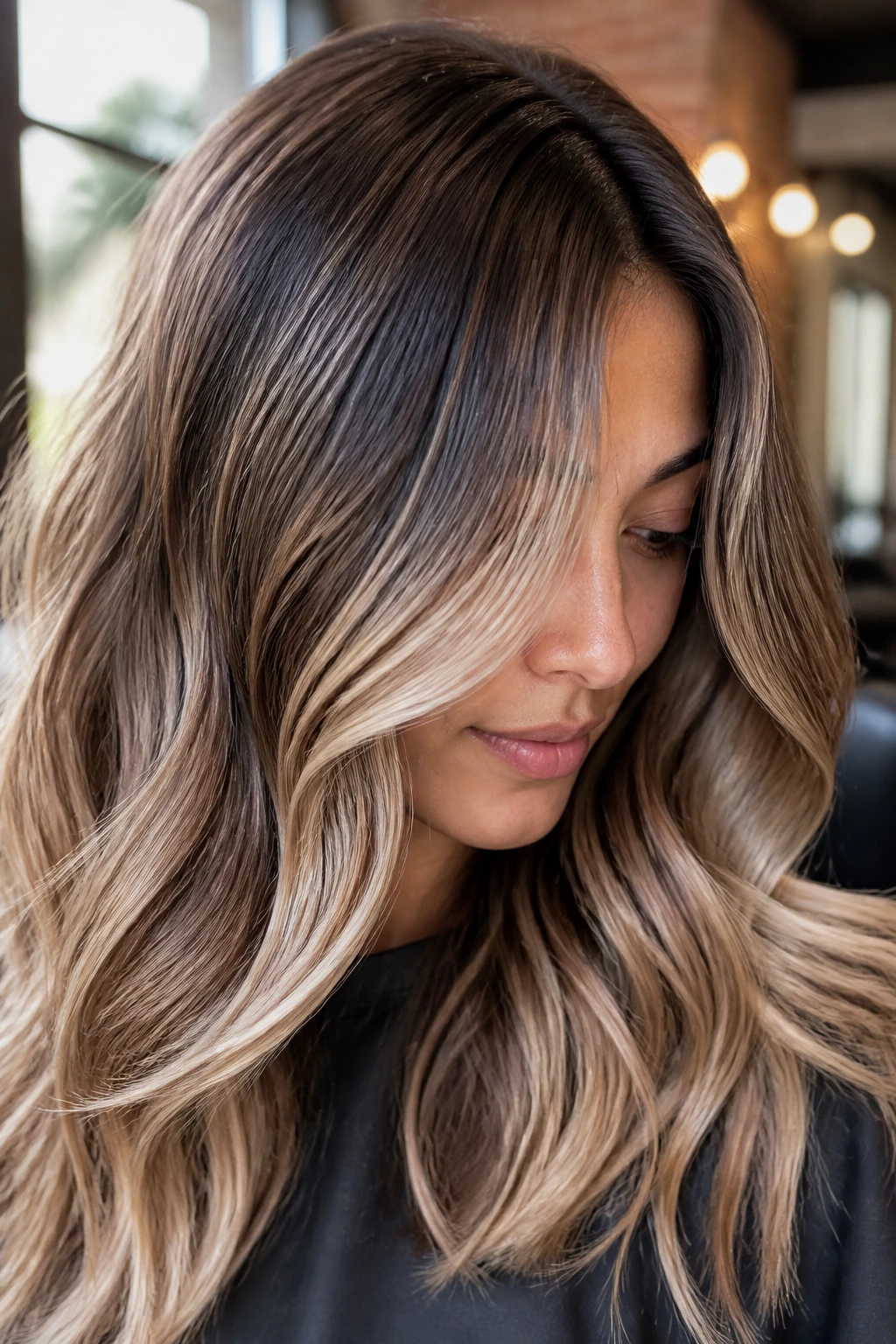
The biggest mistake is painting the blonde too thin. Tiny baby lights can look pretty on a swatch and disappear in dense brunette hair. The fix is wider ribbons, more deliberate placement, and a few brighter sections where the hair actually moves.
Another misstep: skipping lowlights. Thick hair can go fuzzy if every strand gets lighter at once. A few darker pieces underneath keep the style sharp and help the blonde stand out. Without them, the whole head can blur together.
Over-toning is another trap. Ash can be lovely, but too much of it makes beige and honey tones look drained. If the hair starts to feel khaki or chalky, you’ve gone too cool. A warmer or more neutral gloss usually pulls it back.
The last one is ignoring the haircut. Thick hair with blunt, heavy ends often needs shape before color can shine. If the cut is too bulky, even beautiful balayage can look buried. A few long layers or soft face framing can change that fast.
Maintenance, Glosses, and Grow-Out
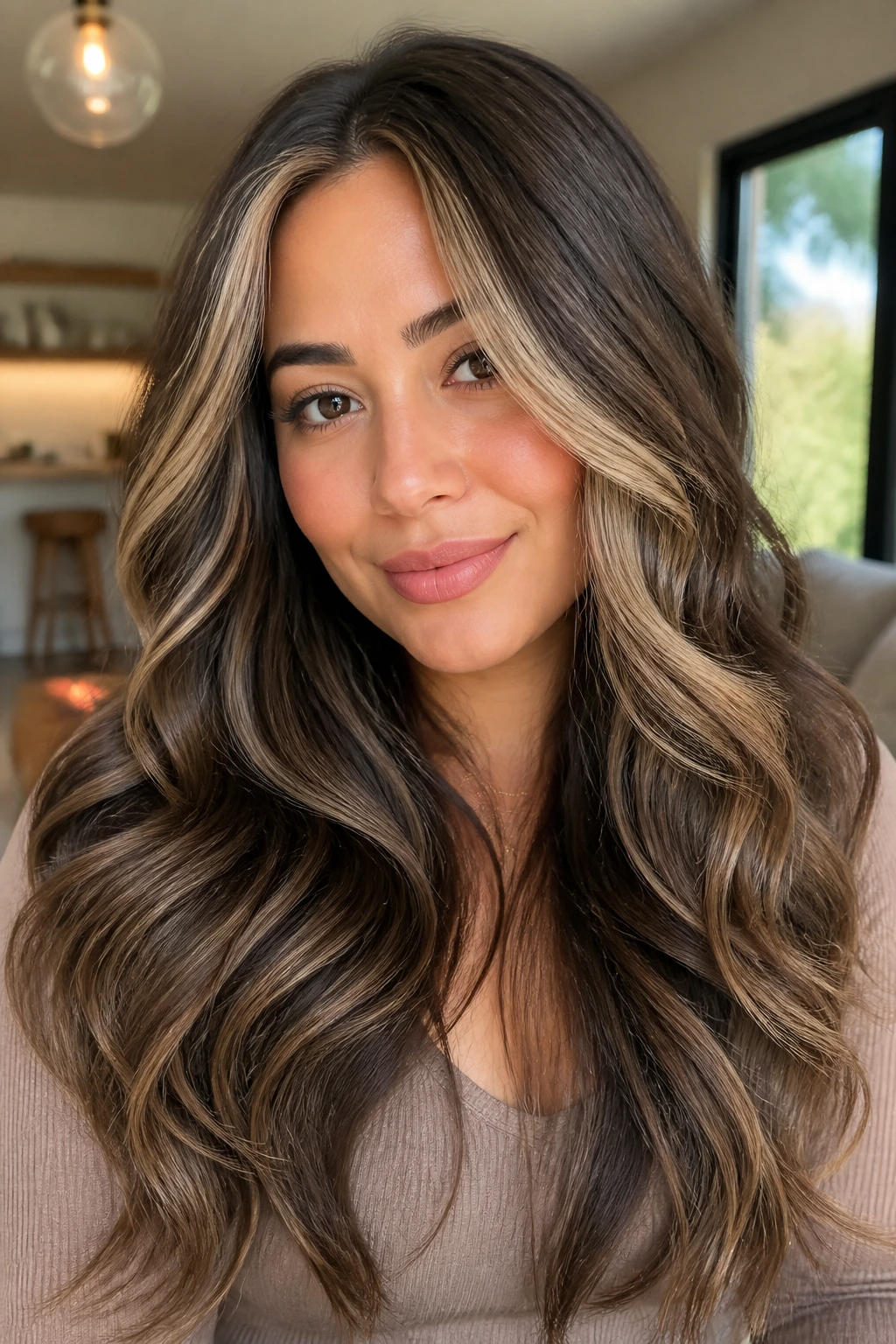
Thick hair can hide regrowth better than finer hair, which is nice, but the blonde pieces still need care. Plan on a gloss or toner refresh every 6 to 10 weeks if you want the color to stay clean. If you like a softer, lived-in look, you can stretch that a little longer, especially with a shadow root.
Wash days matter too. Two to three shampoos a week is enough for many people with thick hair, and using a color-safe formula keeps the blonde from turning dull between visits. If the shade is cool, use purple shampoo once every 1 to 2 weeks, not every wash. Too much can make the blonde look flat or violet-tinted.
Heat protection matters more than most people admit. The blonde pieces at the ends take the most damage, and thick hair tends to trap heat longer. Let the hair cool fully before brushing out waves. That keeps the finish smoother and helps the color look glossy instead of fried.
At night, a loose braid, silk scrunchie, or satin pillowcase helps preserve both the shape and the shine. Thick hair tangles less when it’s protected, and the blonde stays smoother longer.
Variations and Adaptations to Try
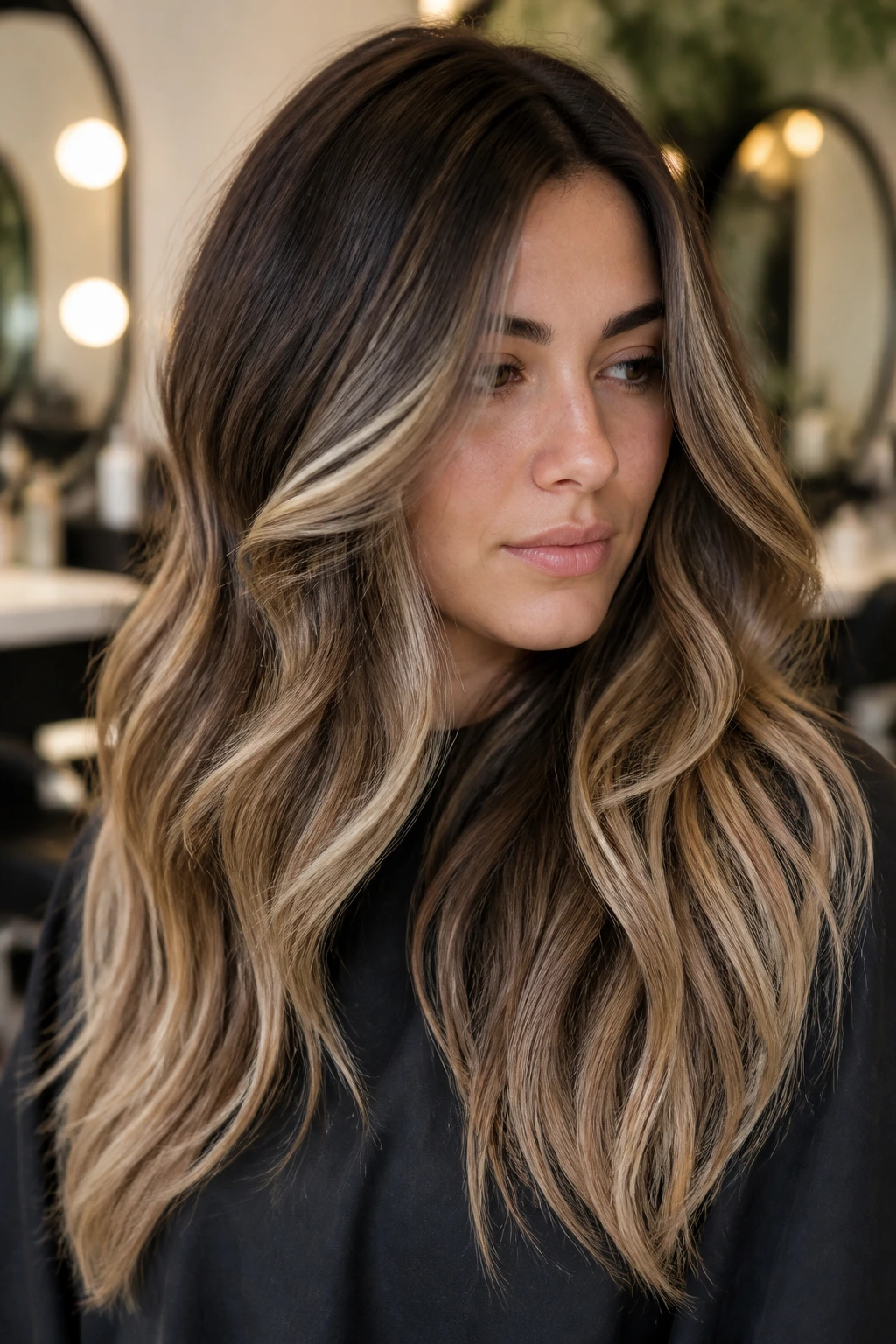
Cooler Ash Finish: Ask for beige and mushroom tones instead of gold or honey. This works best if your skin leans cool or neutral and you want the blonde to feel quiet rather than bright.
Warm Honey Lift: Add more gold to the mids and face frame, then keep the ends creamy. This suits brunettes with warm undertones or anyone who wants the hair to feel sunnier.
Low-Maintenance Shadow Root: Keep the crown darker and let the lightest pieces start lower. The grow-out stays soft, and the color needs fewer salon touch-ups.
Curly-Hair Placement: Paint wider ribbons and keep the brightest sections where the curls open. Thin slices can vanish when the hair shrinks, so bigger placements usually work better.
Long-Hair Cascade: If your hair goes past the shoulders, let the blonde travel lower into the ends. Thick long hair can carry more contrast without losing density.
Lob-Friendly Blend: For shorter thick hair, keep the blonde closer to the face and around the lower half of the cut. That stops the color from getting swallowed by the bulk at the bottom.
Questions People Ask Before Booking
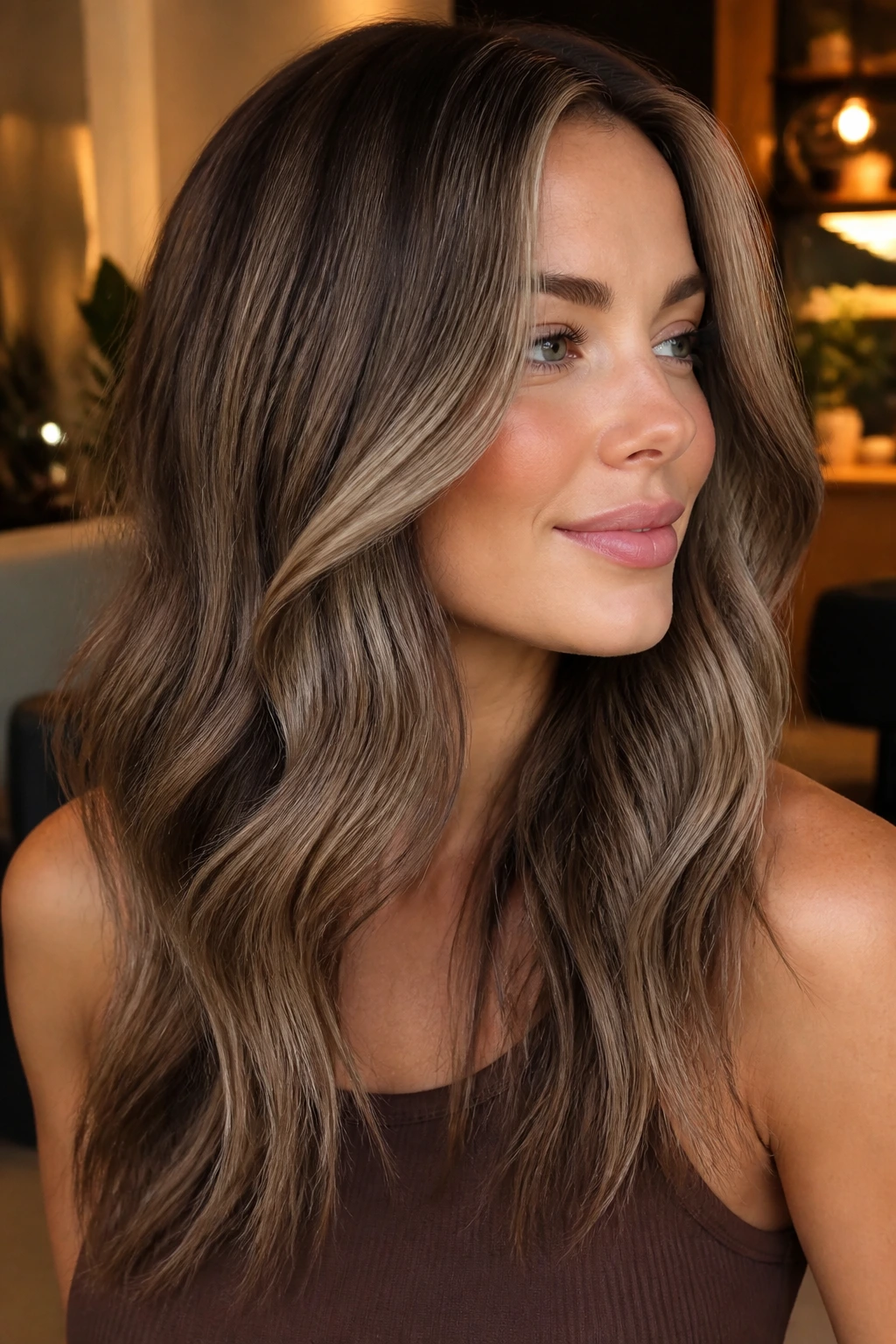
Will blonde dark balayage make thick brunette hair look thinner?
Not if it’s placed well. The right balance of shadow root, lowlights, and brighter ribbons adds movement without stripping away the fullness that thick hair already has.
What blonde shade works best on dark brown hair?
Beige, honey, caramel, champagne, and soft mushroom tones usually blend more easily than very icy blonde. If your base is very dark, a warmer or neutral tone often reads cleaner.
How do I keep my balayage from looking stripey?
Ask for wider painted pieces, some interior dimension, and a soft root melt. Stripey color usually happens when the highlights are too narrow or too evenly spaced.
Can thick curly hair wear these looks?
Yes, and often beautifully. Curly hair needs slightly broader placement so the blonde still shows once the curls shrink and coil back up.
How often should I tone the blonde?
Most thick brunette balayage looks stay nice with a gloss every 6 to 10 weeks, though cool shades may need a purple shampoo touch-up in between. If the blonde starts to look flat or yellow, it’s time.
Is balayage better than traditional highlights for thick hair?
Usually, yes, if you want a softer grow-out and more blended movement. Traditional highlights can still work, but balayage tends to give thick hair a less rigid look.
What if my brunette hair pulls orange?
Pick beige, mushroom, or ash-beige blonde rather than gold-heavy tones. If brass shows up fast, a blue or purple shampoo used sparingly can help keep the finish under control.
Can I ask for something low-maintenance and still see blonde?
Absolutely. A shadow root with brighter face framing and lighter ends gives you visible blonde without forcing a hard upkeep schedule. That’s often the smartest starting point.
A Shade That Holds Its Shape
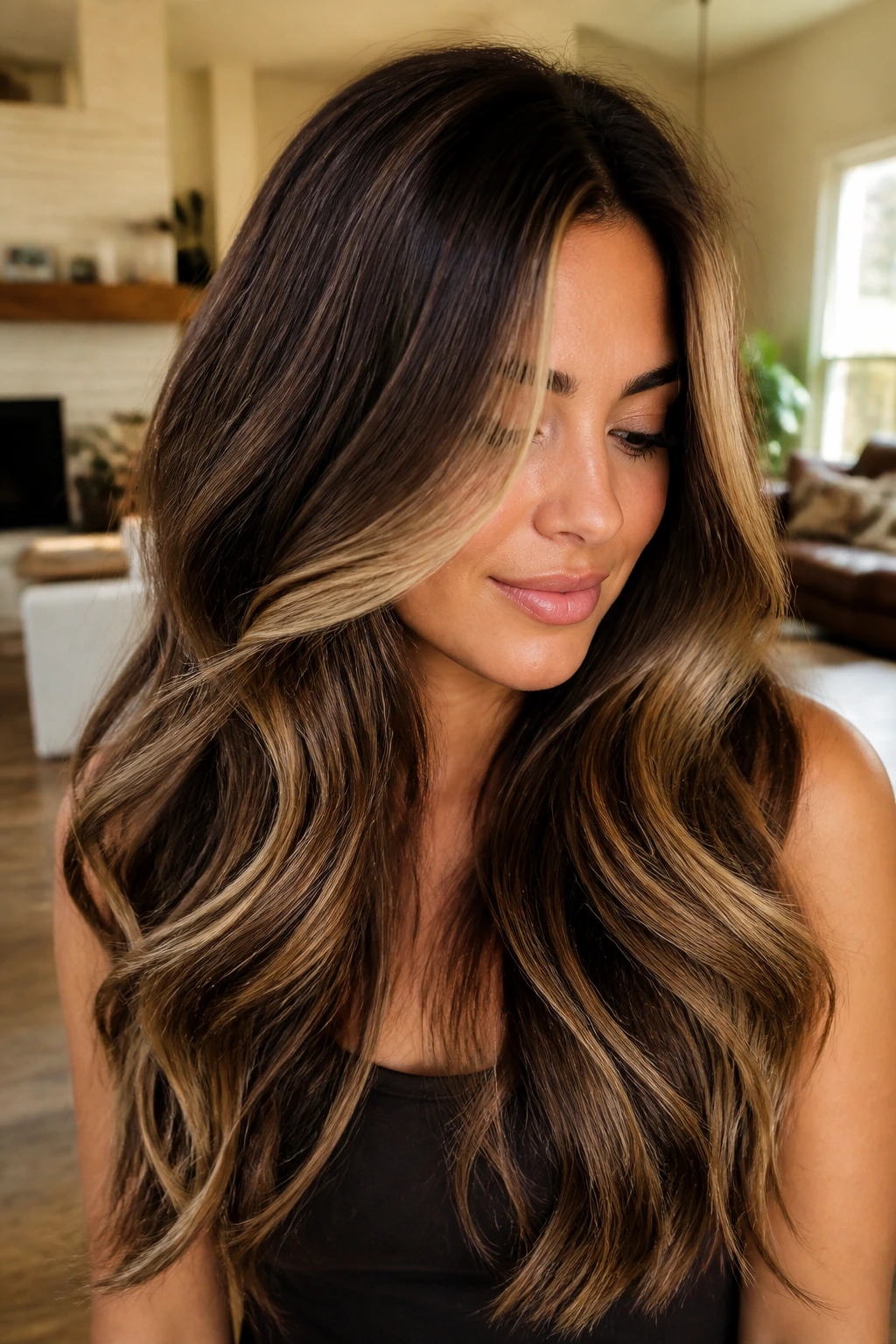
The best thing about blonde-dark balayage on thick brunette hair is that it respects the hair you already have. It doesn’t try to erase the brunette or flatten the density. It uses those things. The shadow root, the lowlights, the wider ribbons, the brighter face frame—those are all tools for making thick hair look considered instead of simply colored.
If you’re choosing one direction, start with the amount of blonde you can live with on a busy day, not the most dramatic photo in your saved folder. Thick hair rewards restraint more than people think. Give it depth, give it movement, and let the blonde show where the hair actually opens. That’s the version that keeps working long after the appointment chair is a memory.