



Thin hair and pale skin are brutally honest about hair color. Put the wrong shade on them and you get a flat, see-through finish at the crown, plus a tone that can drag the face a little gray or a little pink in the wrong places. A strawberry blonde ombre, handled with restraint, does the opposite. It adds warmth where the eye lands first, keeps the roots soft, and gives fine strands enough visual movement to look fuller than they really are.
The trick is not to chase red. It’s to live in that narrow, flattering band between copper, peach, beige blonde, and a hint of rose. When that blend is done well, the hair doesn’t scream for attention. It glows. And on pale skin, that glow matters because the color sits close enough to the complexion to feel harmonious, not pasted on.
I’ve always liked strawberry blonde on lighter skin because it can be tailored in so many directions. Peachier for freckled faces. Rosier for cool undertones. More beige and soft for anyone who wants the warmth without the orange. For thin hair, the placement matters even more than the color formula itself, and that’s where ombre and balayage earn their keep.
Why These Shades Earn Their Keep
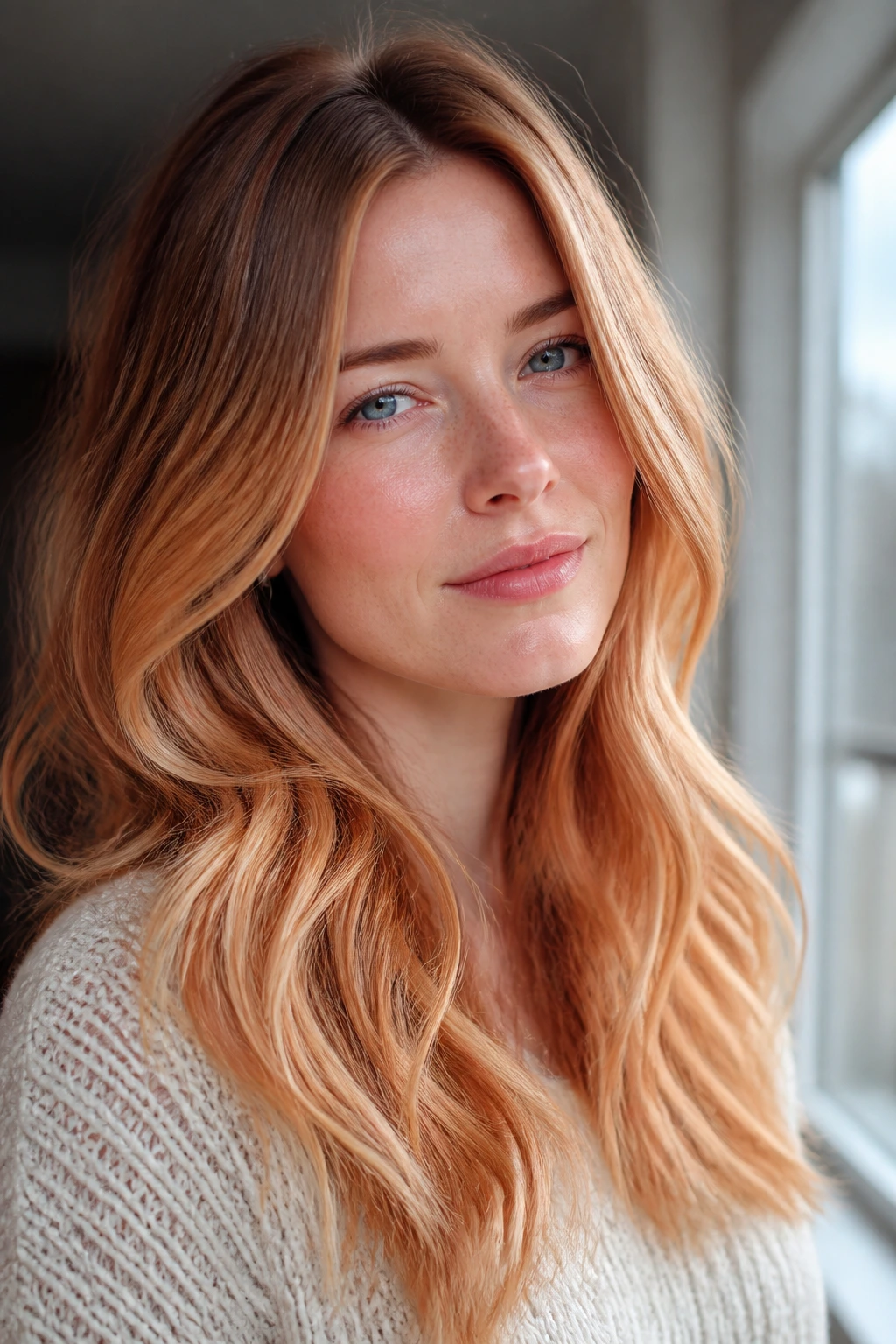
- The root stays believable: A soft shadow at the crown keeps fine hair from looking like a sheet of light color floating on the scalp.
- The ends carry the warmth: Strawberry tones at the mid-lengths and ends add body where thin hair needs it most, especially around the face and collarbone.
- The grow-out is kinder: Ombre softens the line between base and lightened hair, so you are not staring at a hard stripe six weeks later.
- The tone can be tuned: Peach, rose, apricot, and copper all sit under the strawberry umbrella, which makes this family of shades easy to adjust for cool, warm, or neutral pale skin.
- The dimension does the heavy lifting: Hand-painted balayage pieces make fine hair look more layered without forcing the whole head lighter.
- The style reads polished, not loud: A good strawberry blonde ombre looks soft in daylight and richer indoors, which is exactly why it works on complexions that can go washed out fast.
1. Soft Root Melt Strawberry Blonde
A soft root melt is the version I reach for first when someone wants strawberry blonde ombre but hates the idea of obvious regrowth. The roots stay a half-step deeper — think beige blonde with a copper whisper — and the color melts into a pale strawberry through the mids and ends. On thin hair, that little bit of depth at the crown matters. It keeps the head from looking too airy at the scalp.
What makes this shade so flattering on pale skin is the blur. There is no hard line to chop the face in half, and the warmth sits close to the skin instead of fighting it. Ask for hand-painted balayage on the surface layers and a gloss at the sink that leans peach-beige rather than fiery orange. That keeps the whole look soft.
Best for: fine hair with a narrow part, especially if your roots show fast.
Styling note: a loose bend with a 1-inch iron makes the melt visible; straight, pin-straight hair can hide the dimension.
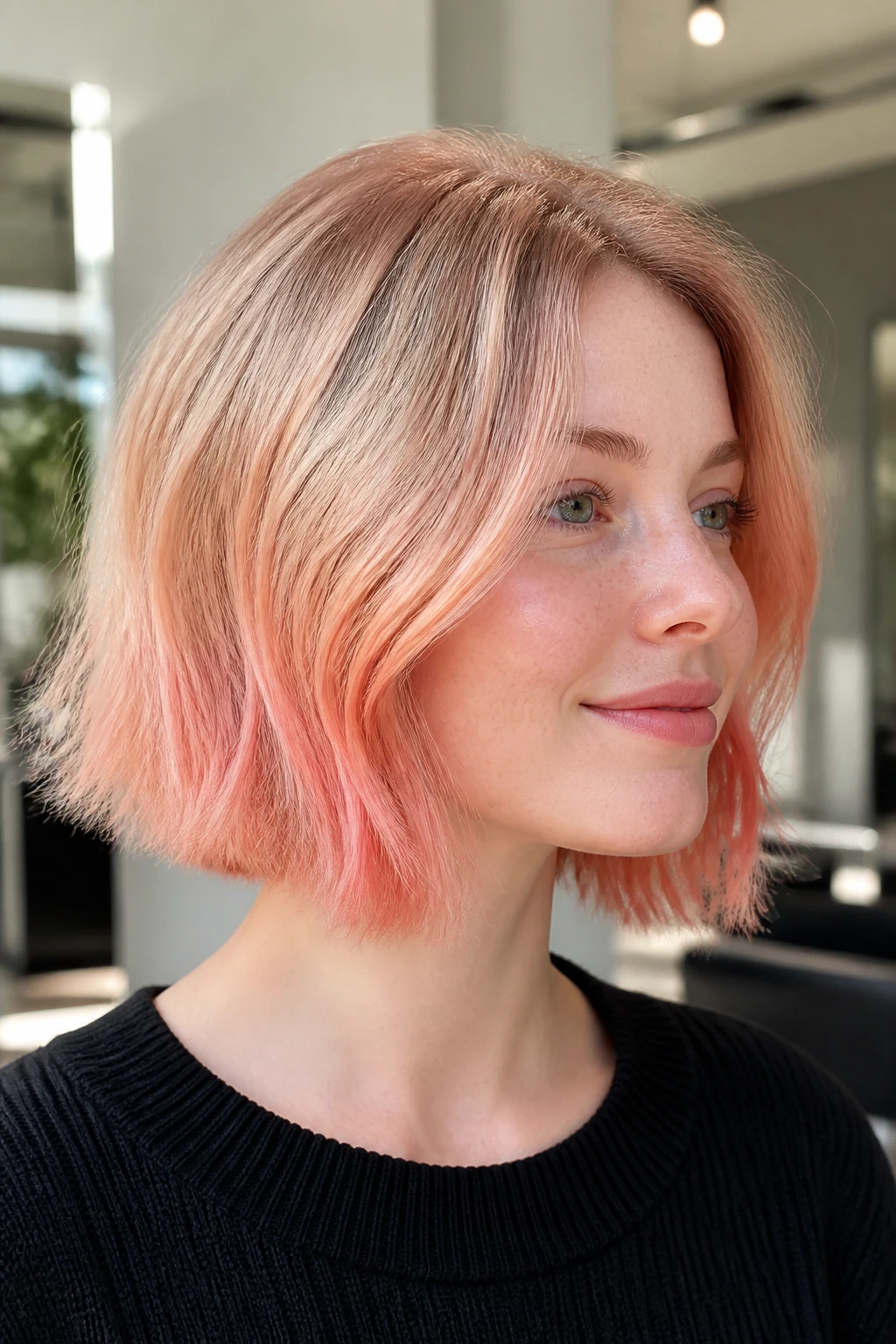
2. Peach-Glazed Strawberry Ombre Bob
A jaw-length bob and peach-toned strawberry ends are a very good match. The cut already gives the illusion of density, so the color can stay light and airy without making the ends look scraggly. The peach glaze warms pale skin in a gentle way, almost like the flush you get after being outside for ten minutes.
I like this version when the base is a soft blonde or light brown and the goal is movement, not drama. The ombre should start high enough to feel blended but low enough that the bob keeps its shape. Too much contrast on a short cut can look choppy. Here, the warmth should feel like it was brushed through the hair, not painted on in stripes.
What Makes It Work
- Keep the darkest point close to the root shadow, not through the whole bob.
- Use fine babylights around the part so the top doesn’t flatten.
- Finish with a peach-copper gloss every few weeks if the ends fade too fast.
A blunt bob with this color can look crisp and expensive in the good sense — clean lines, soft warmth, no fuss.
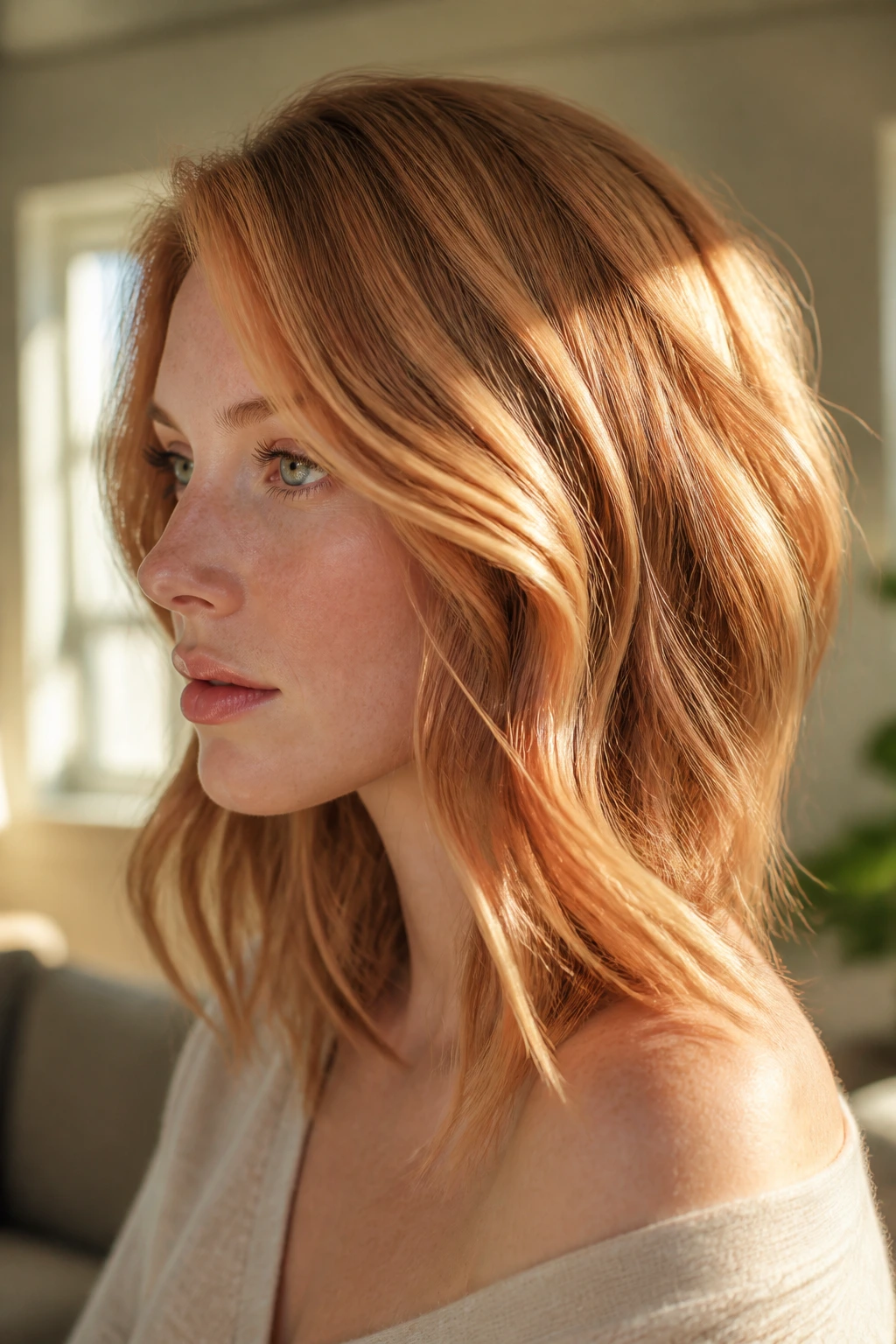
3. Copper-Kissed Strawberry Balayage
This one leans a little richer. Not red, not auburn. Just enough copper to wake up pale skin that needs warmth more than brightness. On thin hair, copper-kissed balayage works because the ribbons of color break up the surface and give the eye places to land. Hair that is one flat shade can read thinner than it is.
The key is placement. Ask for delicate ribbons around the face, at the top layer, and through the last few inches of the hair. That keeps the color from sitting in a blocky band. With pale skin, especially if there are freckles or pink undertones, copper should stay soft and glazed, not orange-heavy.
Styling move: a side part helps show the warm pieces without exposing too much scalp.
Who it flatters most: people who want their complexion to look less pale and more alive without going full red.
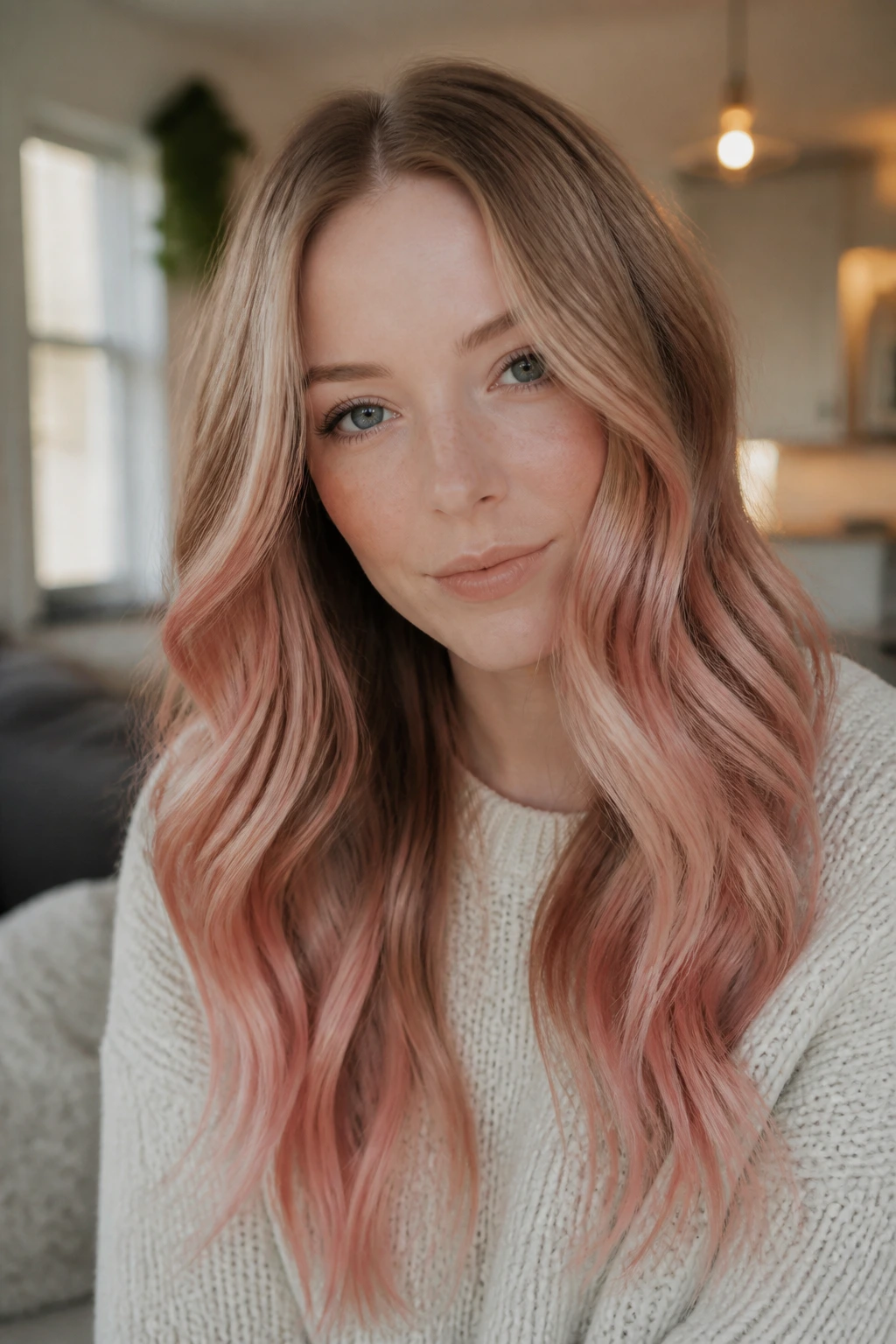
4. Rose Gold Strawberry Ends
Rose gold strawberry ends are for anyone who wants the strawberry family to feel a little more polished and a little less sunny. The pink tone softens the copper, which matters on very fair skin that can go red fast. Instead of looking bright and fiery, the hair reads blush-toned and smooth.
This version works especially well if your hair is fine and naturally light through the mids. The ends can be glazed with rose while the base stays beige blonde or soft brown. That contrast gives the hair shape without making it harsh. I’d avoid pushing the pink too saturated; too much of it starts to look costume-y, and thin hair does not need that kind of help.
Why It Flatters Pale Skin
The pink warmth mirrors the natural flush in pale cheeks, which makes the face look softer. It also avoids the yellow cast that some blondes pick up under indoor light.
A center part with long waves is probably the easiest way to wear it. The rose tones move nicely in bends, and bends are what make thin hair look a bit fuller than it feels in the mirror.
5. Champagne Strawberry Money Piece
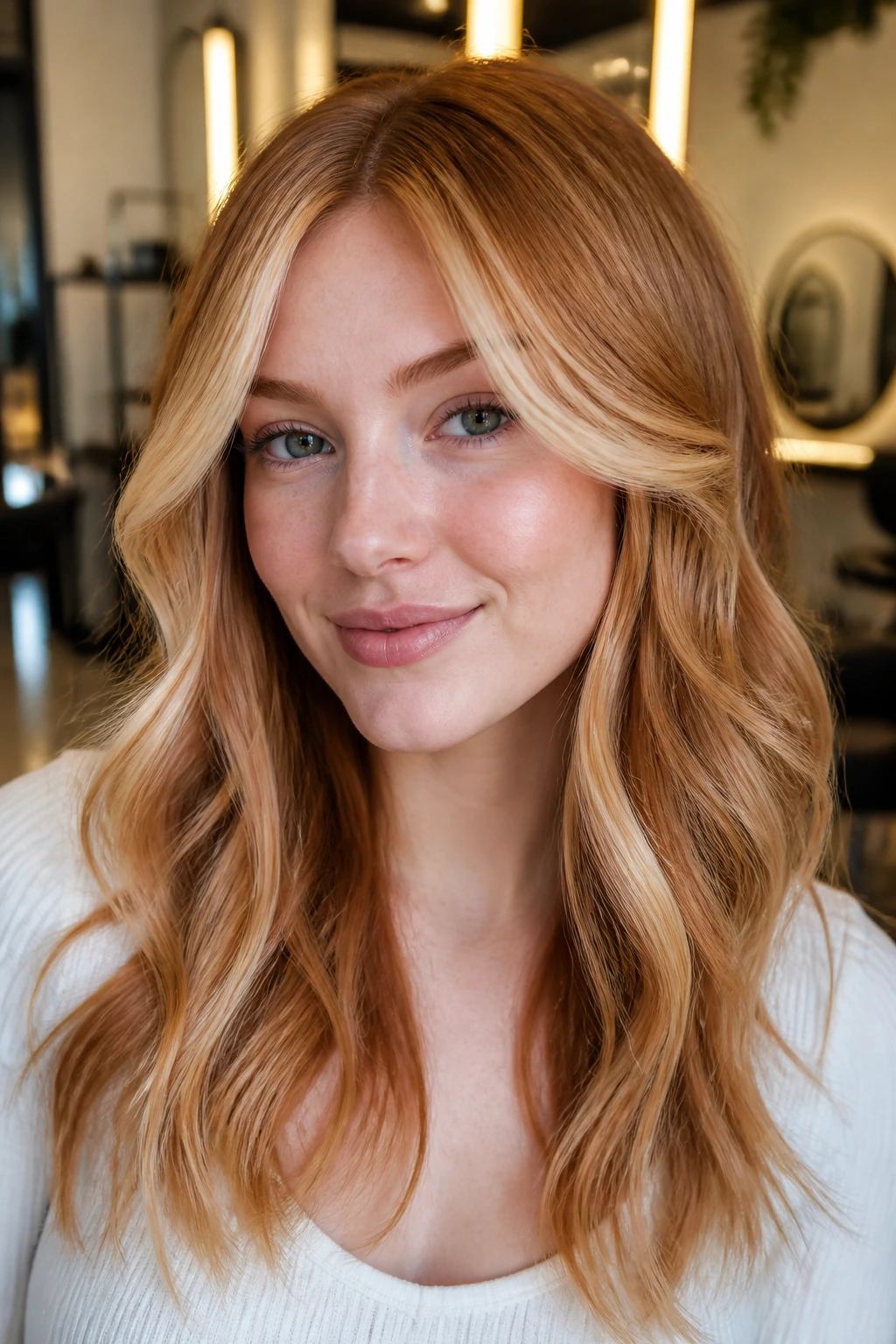
A money piece can change the whole feel of strawberry blonde ombre, especially on pale skin. The trick is to keep the brightest strands around the face in a champagne-strawberry mix rather than plain pale blonde. That way the face gets lift, but the hair doesn’t lose its warmth. The contrast is soft, not chalky.
For thin hair, this is one of my favorite moves because it puts the strongest color where the eye looks first and leaves the rest of the head quieter. You do not need a lot of lighter pieces. Two or four well-placed strands around the part and cheekbone can do more than a heavy head of highlights ever will.
Best with: curtain bangs, long layers, or a collarbone cut that lets the front pieces fall forward.
If you hate maintenance: keep the money piece a little deeper, so regrowth doesn’t shout.
6. Apricot Strawberry Ombre with Feathered Layers
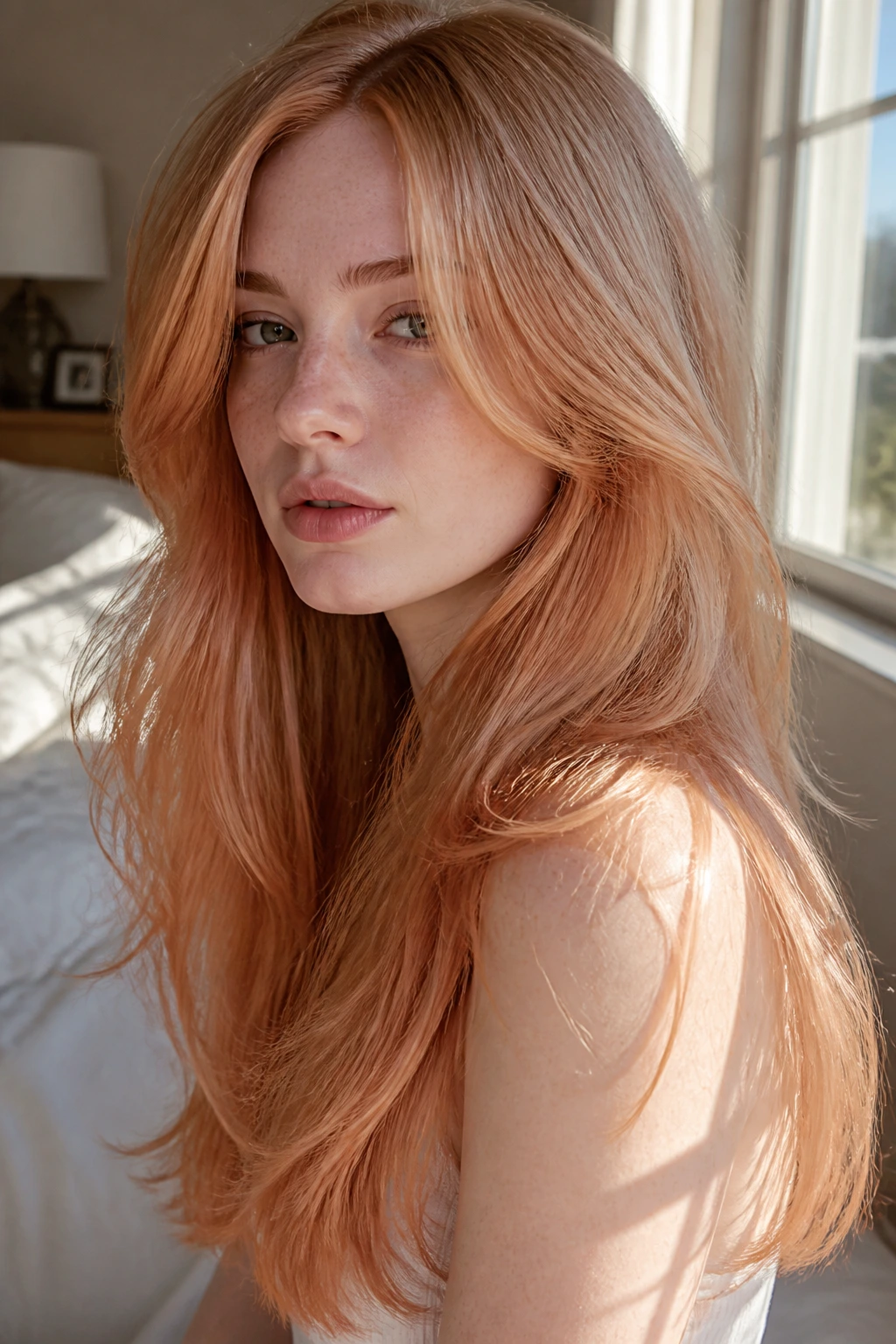
Apricot strawberry is warmer and sunnier than rose gold, but it still stays soft enough for pale skin when the formula is muted. Feathered layers help a lot here. Thin hair can look wispy when the color is too even, but soft layers create little pockets of shadow and light. The apricot tone then catches those layers instead of sitting flat on top.
I like this version on medium to long hair where the ends need some life. The ombre should start with a beige or pale copper root area and move into apricot strawberry through the bottom third. That gives the hair a sunny finish without making it look overprocessed. If your skin is very pink, keep the apricot subtle; too much orange can compete with the face instead of flattering it.
A round brush blowout makes this shade look especially airy. So do loose waves. Straight hair can still wear it, but movement is where this color earns its keep.
7. Creamy Strawberry Blonde Lob
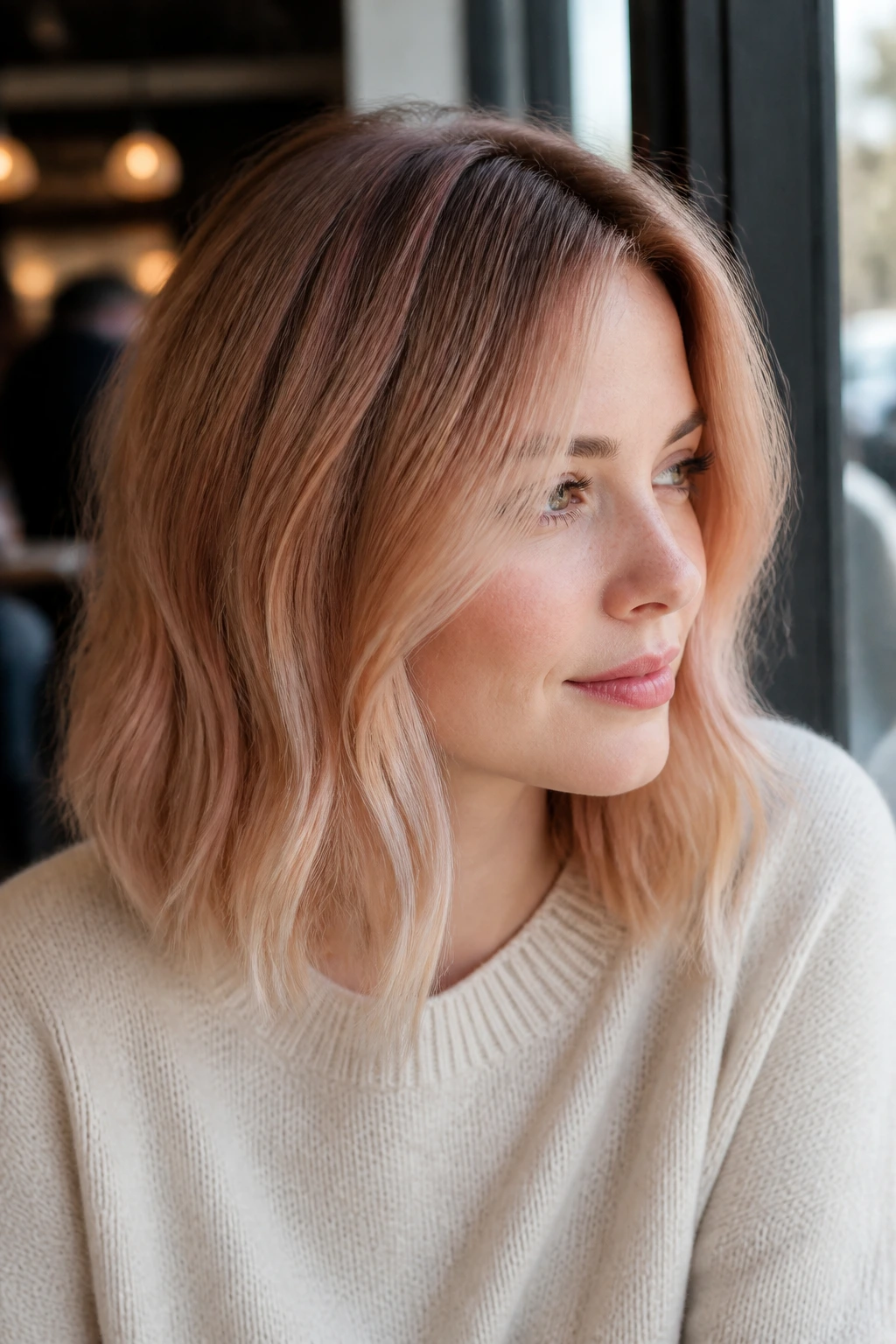
A creamy strawberry blonde lob is the version that feels easy to wear on an ordinary Tuesday. The blonde side of the formula stays soft and milky, while the strawberry warmth sits quietly in the mids and ends. That blend is useful on pale skin because it doesn’t go too yellow, and it doesn’t go too copper either. It sits right in the middle.
For thin hair, a lob gives you a little built-in volume, and the creamy tone helps the ends look fuller than a stark ombre would. Ask for a shadow root that is only one to two levels deeper than your base. Anything darker can feel heavy on a cut that depends on bounce. The best version has a brushed-out finish, almost like the color is floating rather than sitting in bands.
This is a good choice if you want strawberry blonde ombre without making the hair look obviously colored from across the room.
8. Cinnamon-to-Strawberry Shadow Root
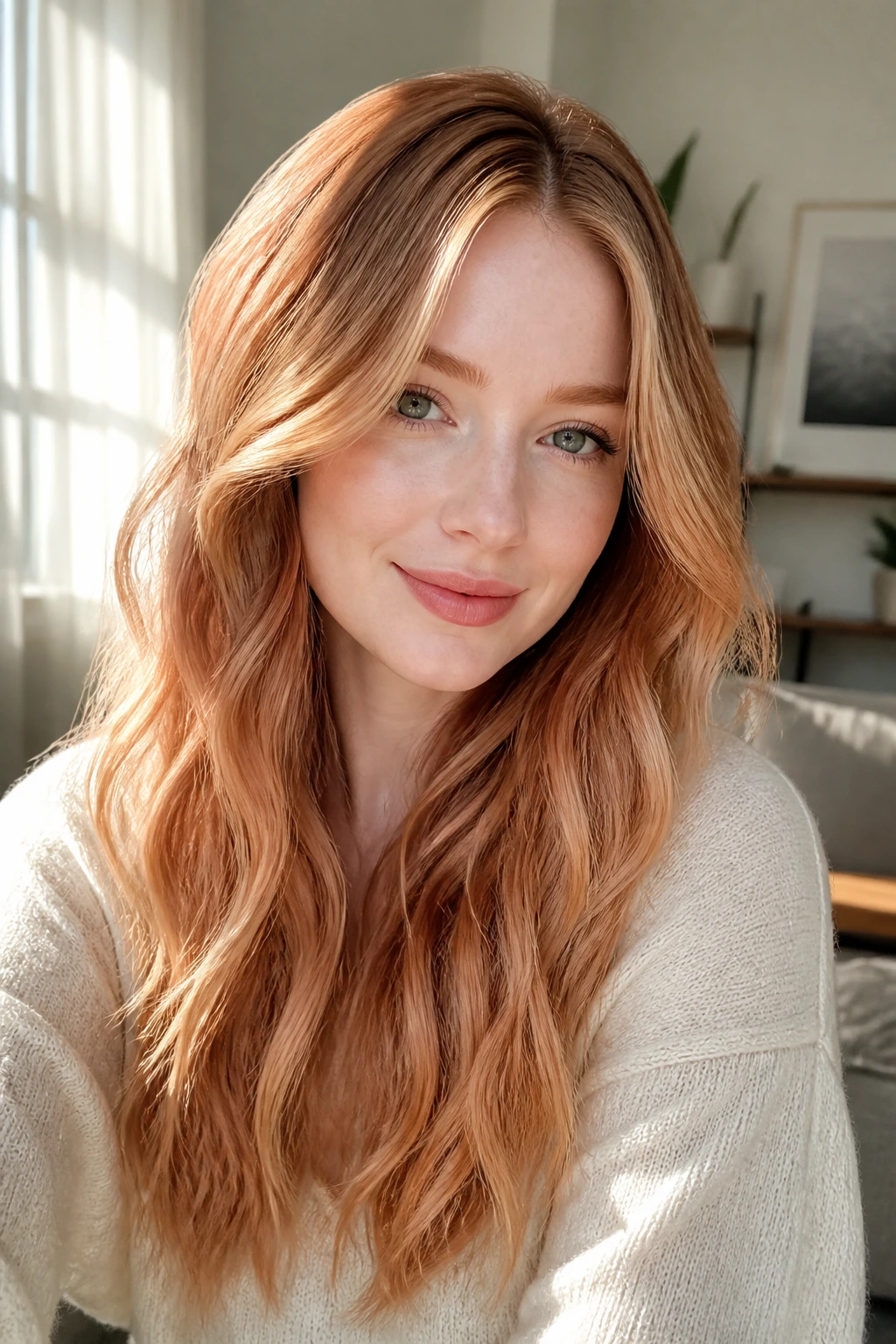
If your natural base is a deeper blonde or light brown, cinnamon-to-strawberry is the smartest route. The root shadow has a faint spice tone, and the melt into strawberry is gradual enough that the whole head keeps its depth. Thin hair often benefits from that extra darkness at the root; it creates the sense of density the eye expects.
This shade looks especially good on pale skin with neutral or cool undertones because the cinnamon adds warmth without getting loud. It also grows out in a softer way than a full blonde lift. That matters. Nobody wants to babysit every inch of regrowth. Keep the lightened pieces concentrated on the top layer and around the front so the ends stay bright while the scalp area stays believable.
What to Ask For
- A soft shadow root, not a hard root drag.
- Cinnamon-beige lowlights through the underside.
- Strawberry gloss on the ends only, if your hair lifts too warm.
That combination keeps the hair dimensional without tipping into orange.
9. Strawberry Cream Face-Framing Waves
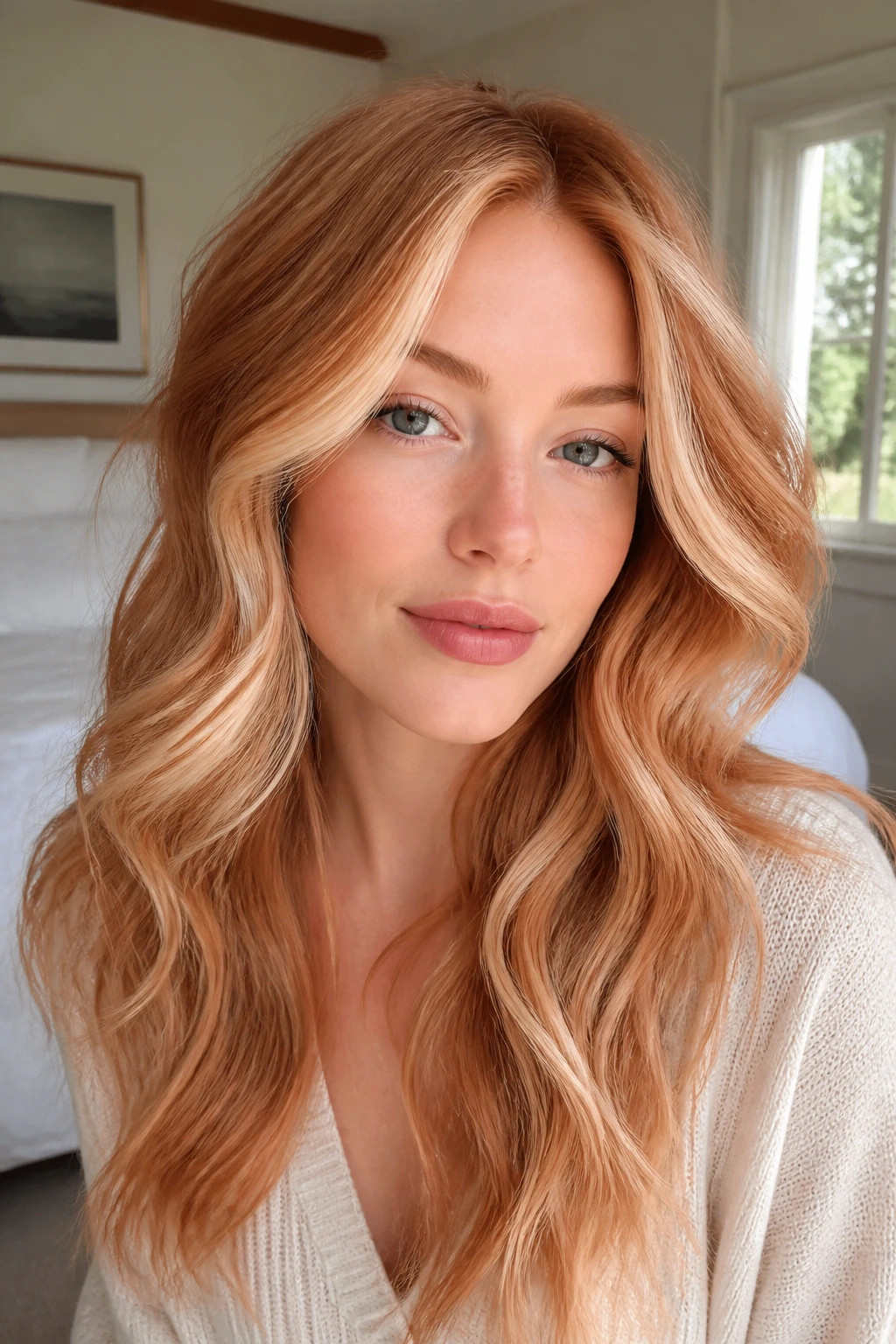
This is the shade that works when you want the face to look brighter without changing the whole head. Strawberry cream around the front sections and soft blonde through the rest of the hair makes pale skin look smoother and less stark. It’s a clean move. No drama needed.
Thin hair benefits from face-framing color because it gives the illusion of width at the cheeks and temples. The eye follows the lighter pieces, and suddenly the hair seems less narrow. The rest of the color can stay quiet, which is useful if your ends are fragile and don’t need a lot of lightener.
Styling trick: wrap only the front two pieces away from the face, then leave the rest loose. It shows off the color without overworking the hair.
If you prefer a more polished finish, smooth waves. If you want softer, air-dried texture, let the pieces fall a little messier. Both work. The color is doing the main job here.
10. Barely-There Strawberry Sombre
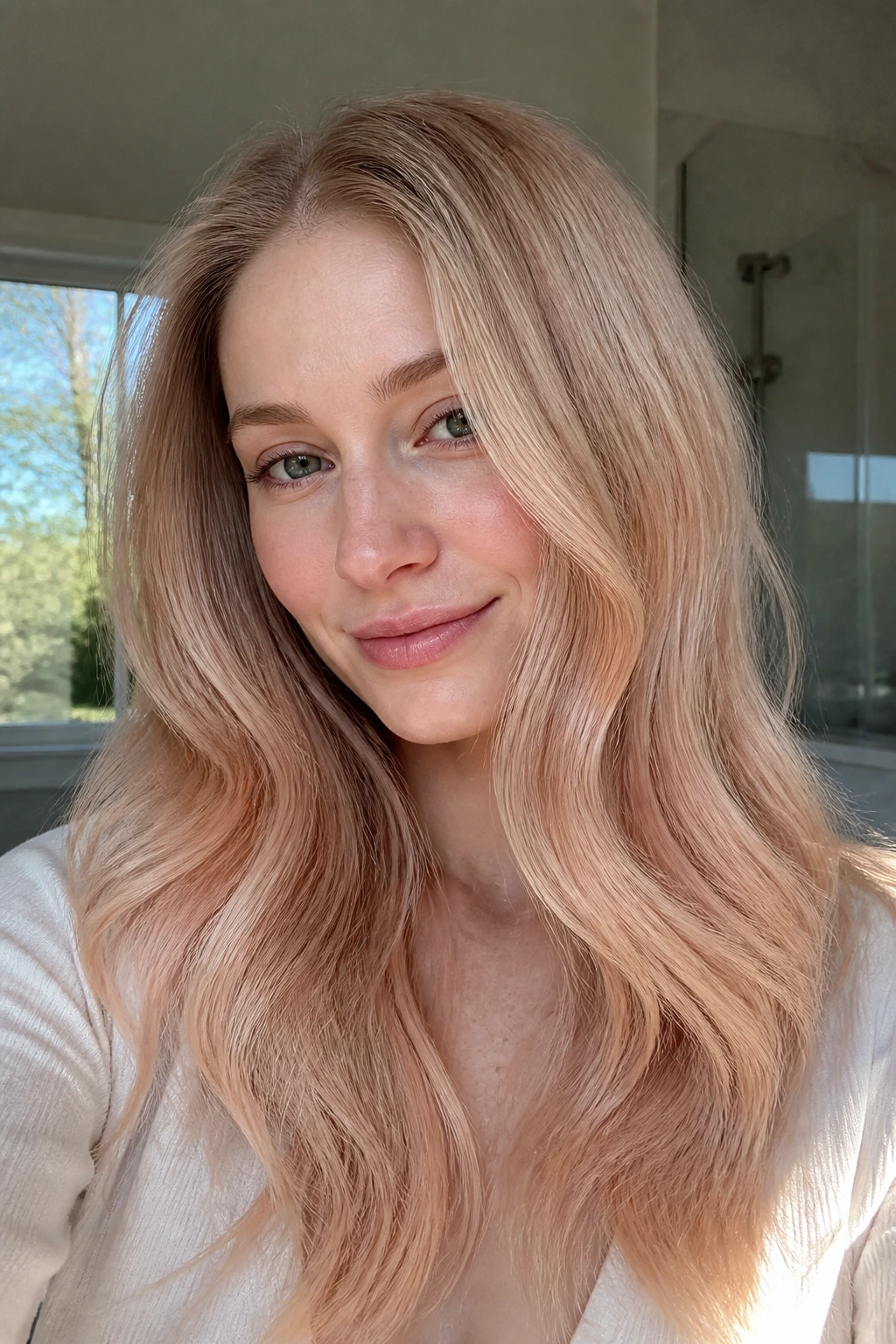
A sombre is just a softer ombre, and that softness is gold for pale skin and thin hair. The transition stays narrow, the contrast stays low, and the final color feels more like a tinted blonde than a dyed statement. That is exactly why it works. Fine hair can get swallowed by heavy contrast. This avoids that trap.
The color should read as beige blonde with a wash of strawberry, not as two separate shades. On a very light base, it may only need a gloss rather than a full lightening service. On a darker base, the strawberry can sit mainly through the bottom few inches. Either way, the look should feel whisper-soft.
Best Use Case
If you are nervous about warmth or have never worn copper before, start here. It gives you movement and glow without making the hair look overly styled.
This is also the version I’d trust for people who wear their hair mostly straight. The subtle gradation still shows, even when the texture is minimal.
11. Golden Strawberry Ribbon Highlights
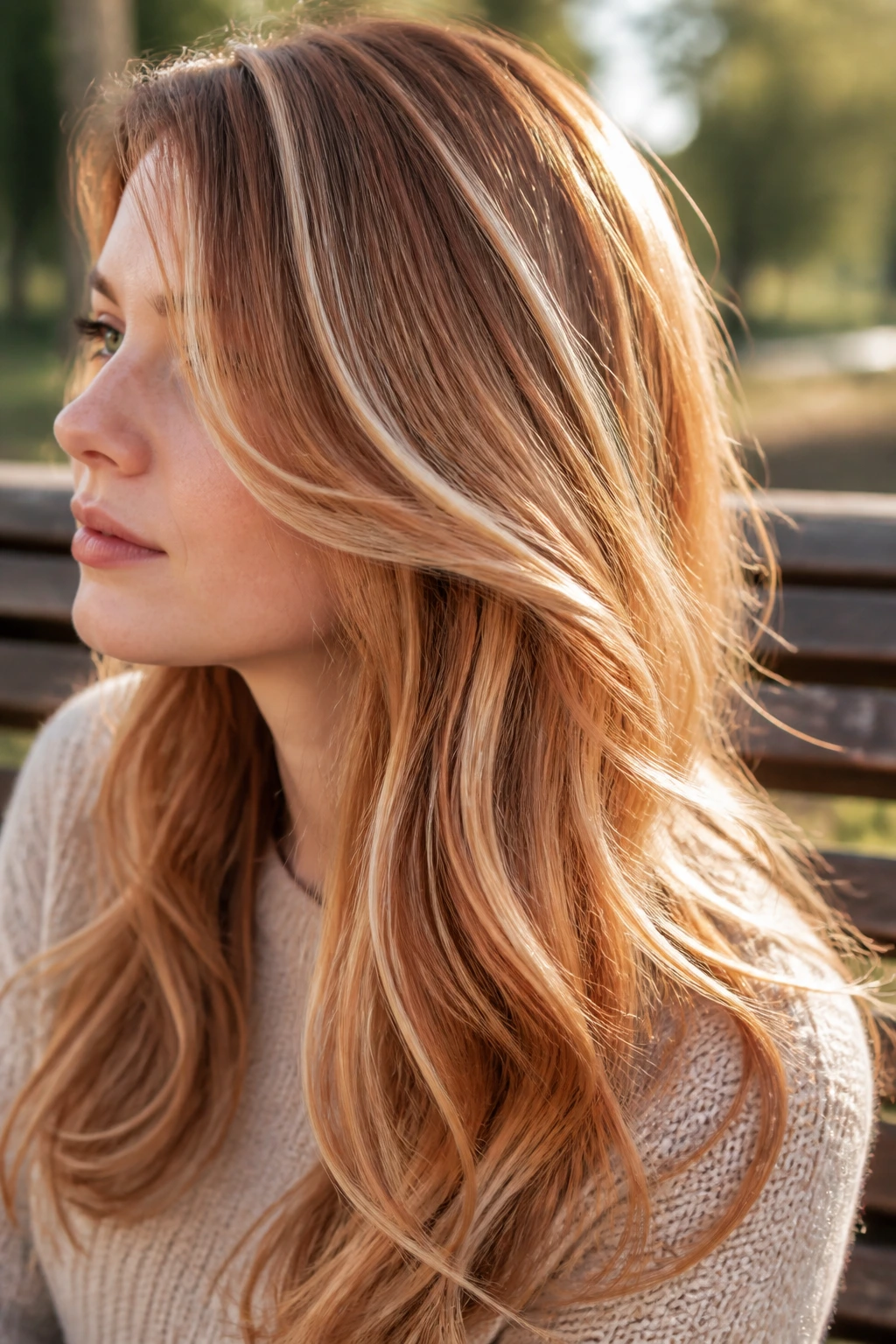
Ribbon highlights are thin, elongated pieces of light that snake through the hair instead of sitting in chunky bands. That matters a lot for thin hair. Chunky highlights can expose too much scalp and make the density problem worse. Ribbons do the opposite. They spread brightness in a way that feels woven into the hair.
A golden strawberry ribbon look is ideal for pale skin that can take warmth but doesn’t want red. The gold brings light; the strawberry keeps it from turning brassy. Ask for micro-sectioned balayage rather than thick slices. If the painter goes too broad, you lose the delicate threadlike effect that makes this shade look airy.
The style is at its best when the hair has movement. Wavy layers, a soft flip at the ends, or even a tucked-behind-the-ear moment all show the ribbons differently. That changing effect is the whole point.
12. Spiced Rose Strawberry with Curtain Bangs
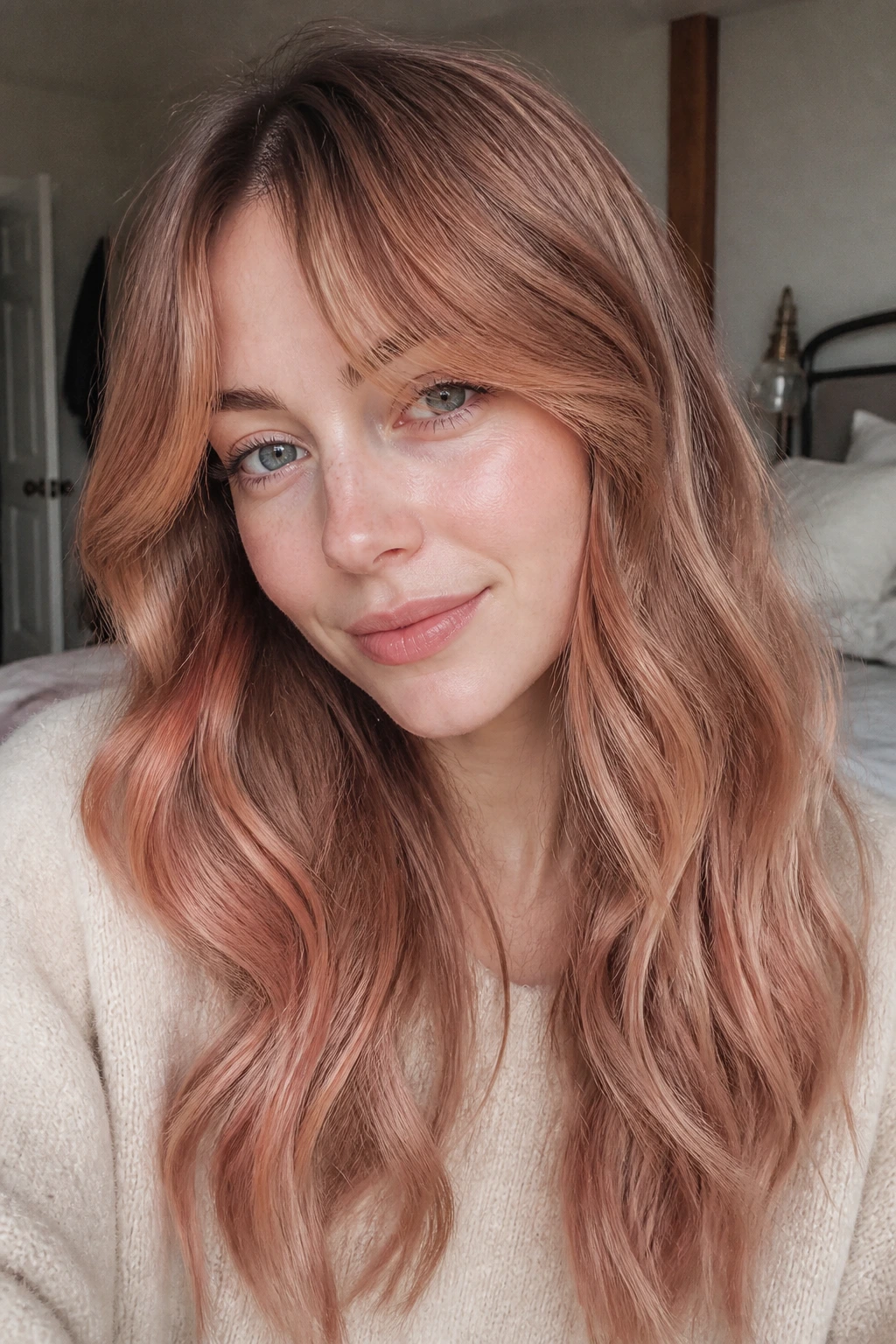
Curtain bangs and strawberry rose tones are a very flattering pairing. The bangs soften the forehead and let the color sit close to the eyes, while the rose-copper warmth keeps pale skin from looking drained. There is a slightly vintage feel here, but not in a costume way. More like a soft 70s glow with modern placement.
Thin hair usually benefits from curtain bangs because they create face-framing density without taking much length away from the rest of the cut. Keep the bang area a touch brighter than the base, and let the strawberry tone deepen toward the ends. That gives the style shape from top to bottom. If your hair is very fine, avoid over-thinning the bangs. A wispy fringe can disappear on camera and in real life.
This is one of the more expressive versions of strawberry blonde ombre, but it stays wearable because the rose keeps the warmth subdued.
13. Toffee Root to Strawberry Ends
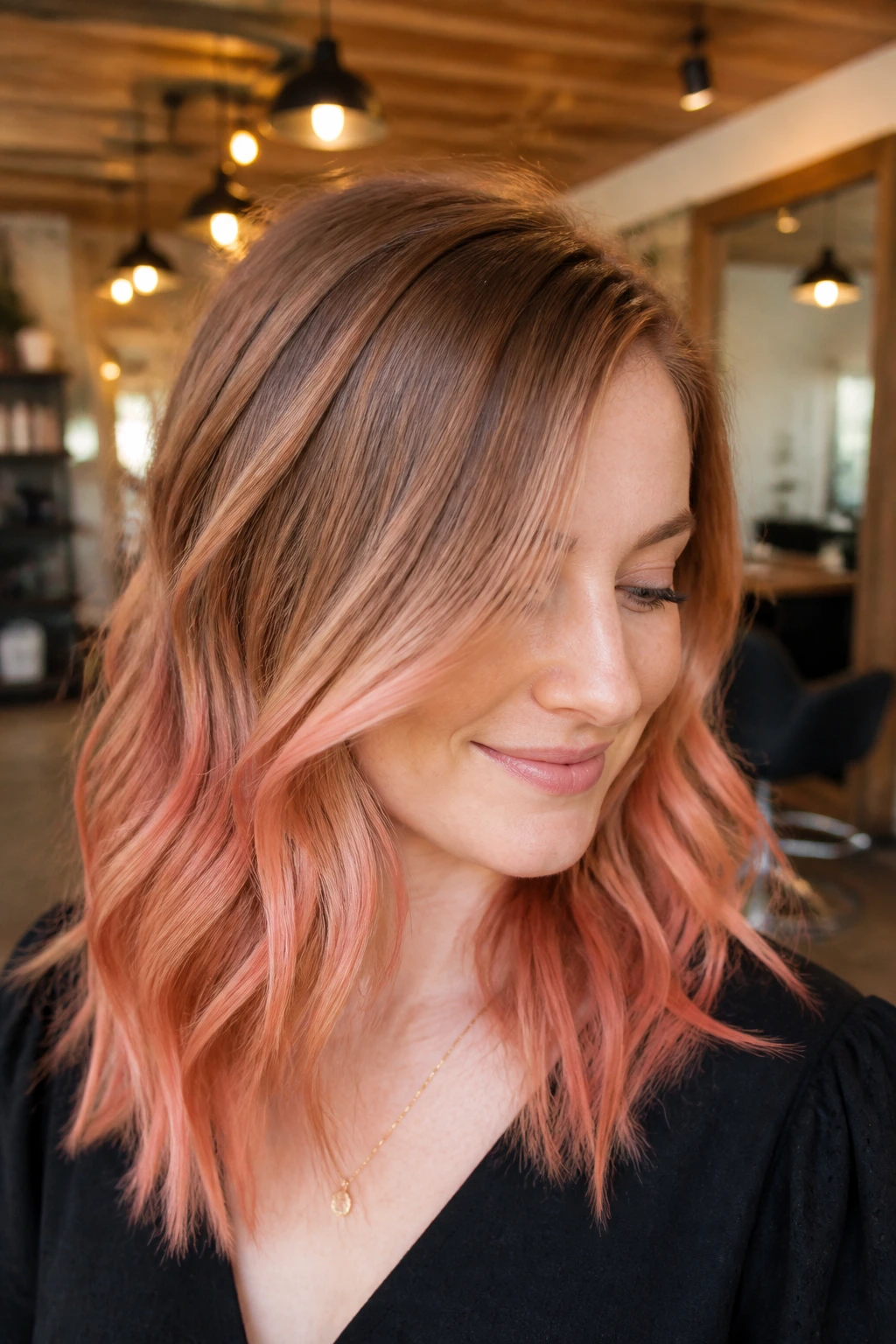
When the natural base is deeper, toffee root gives the ombre a useful anchor. The root area stays rich and warm, then the color slides into strawberry at the mids and ends. On thin hair, this is a smart move because a little depth near the scalp makes the whole head look fuller. It also gives the strawberry a place to land, so it doesn’t look floaty.
Pale skin can wear this shade well if the toffee isn’t too dark or muddy. You want a soft brown-beige root, not chestnut. Chestnut can overpower the face fast. Keep the ends brighter and a little peachier, and the whole thing reads balanced.
Best on: longer hair, grown-out bobs, or anyone trying to stretch salon visits without looking neglected.
A side part helps because it lets the deeper root create lift at the top. That small detail changes the silhouette more than people expect.
14. Sunset Strawberry Ombre on a Pixie Bob
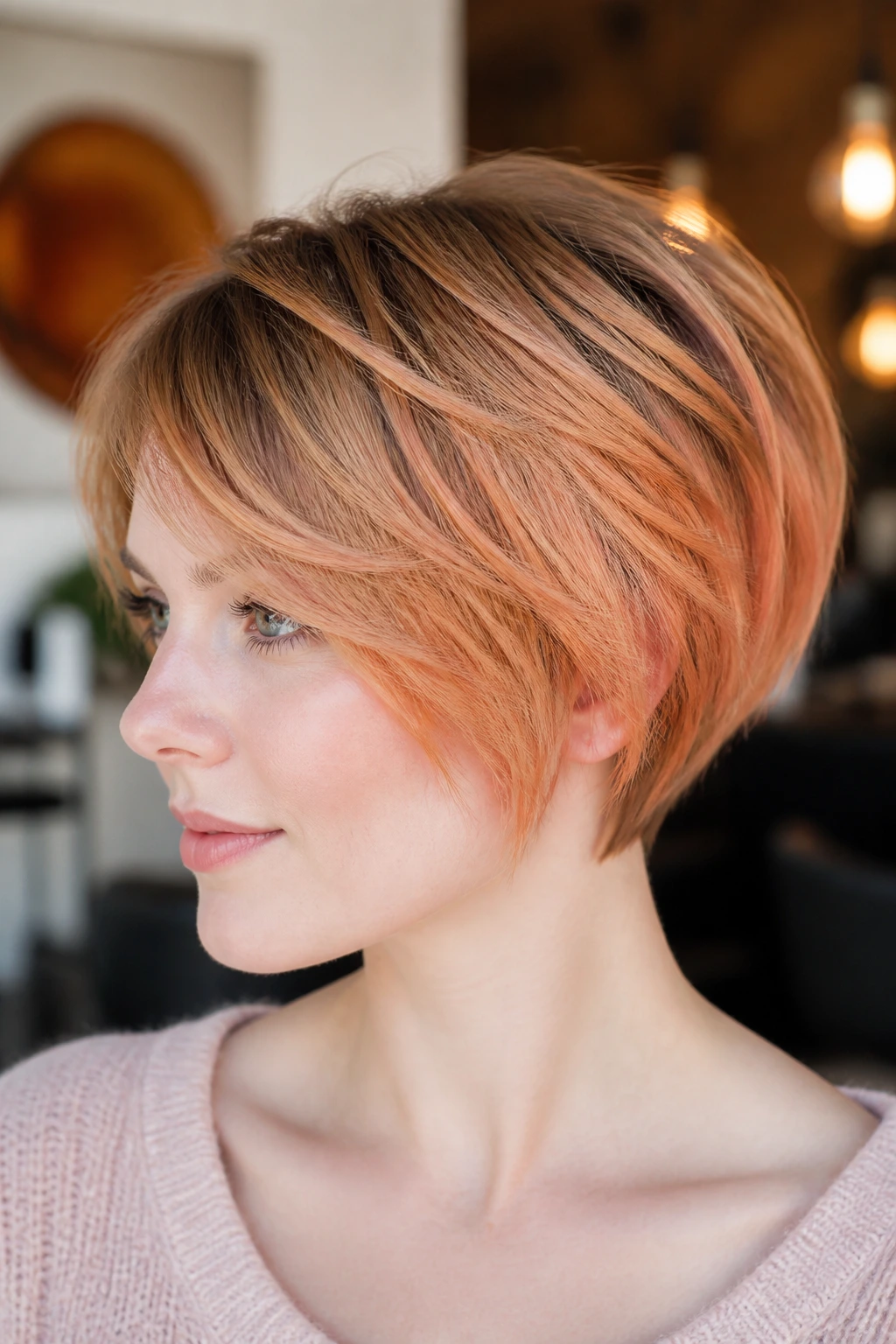
Short cuts need color that knows how to behave. A pixie bob with sunset strawberry ombre is a good example because the warmth is concentrated where it can actually be seen: the top layers, the sides around the cheekbones, and the slightly longer ends. If the color is too scattered on a short cut, the whole thing can turn busy.
Pale skin gets a nice lift from the warm sunset tones, especially when the root stays neutral and the ends lean peach-copper. Thin hair also benefits from the way a pixie bob naturally stacks at the back. The color adds depth to that shape instead of fighting it. Keep the lightest pieces on the top and front, then taper the strawberry toward the neckline. That creates movement when the head turns.
This is a sharper look than some of the softer options in the list. Still soft enough. Just more edited.
15. Mulled Cider Strawberry Balayage
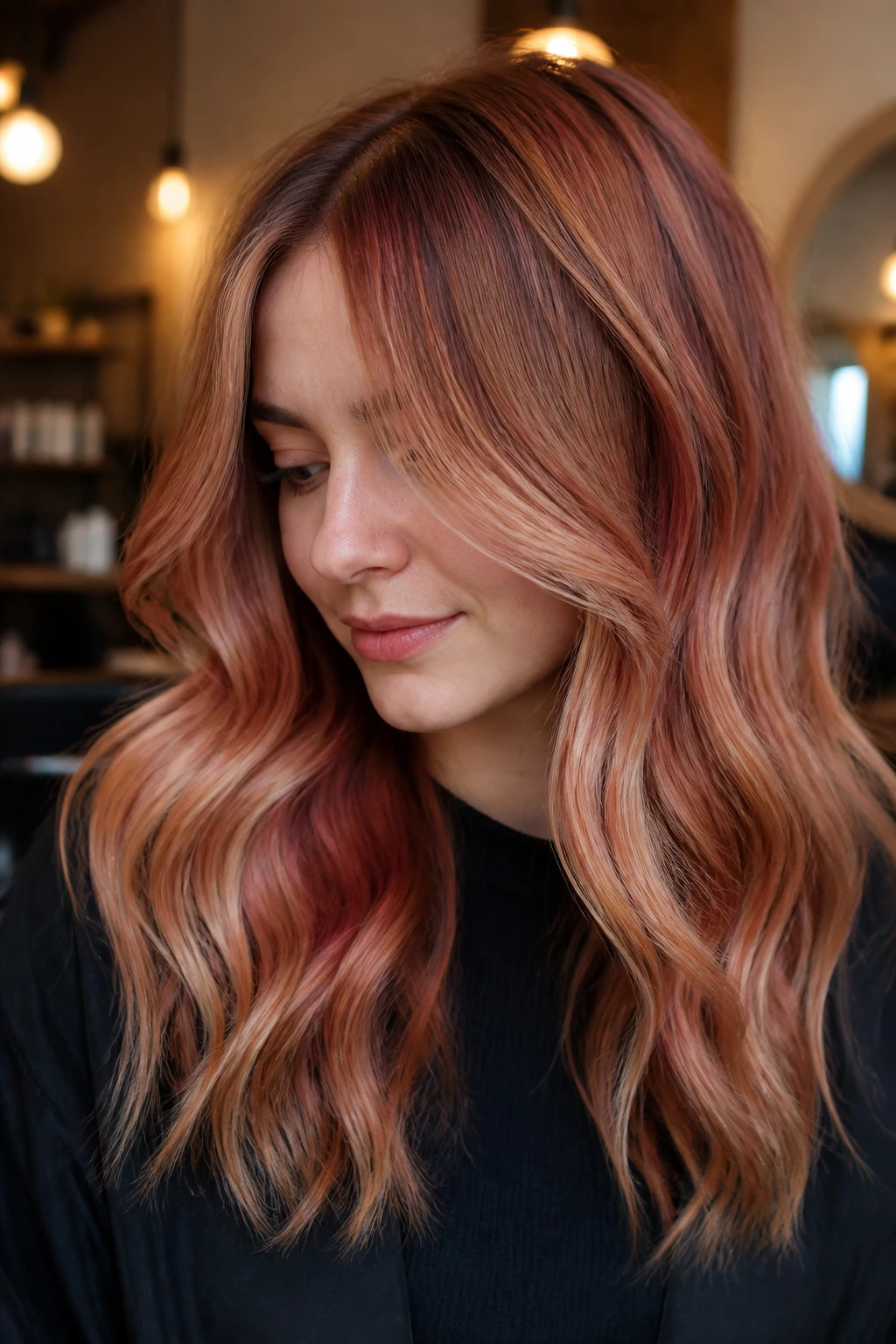
Mulled cider strawberry has a richer spice profile. Think warm apple peel, soft cinnamon, and a little copper in the glaze. It’s a shade that works when you want depth instead of brightness. On pale skin, that warmth can look especially good in colder light because it gives the face a bit of color without washing everything out.
For thin hair, a richer strawberry balayage is useful because it creates shadow between the lighter pieces. That shadow is part of the illusion. Hair looks fuller when the color has a few places to rest. Ask for balayage ribbons, not a solid tint, and keep the lightest pieces mostly around the front and ends. If the color is too uniform, the whole effect gets heavy.
This shade wears well with soft waves and a tucked-under blowout. Both styles give the warm ribbons room to move.
16. Soft Coral Strawberry Melt
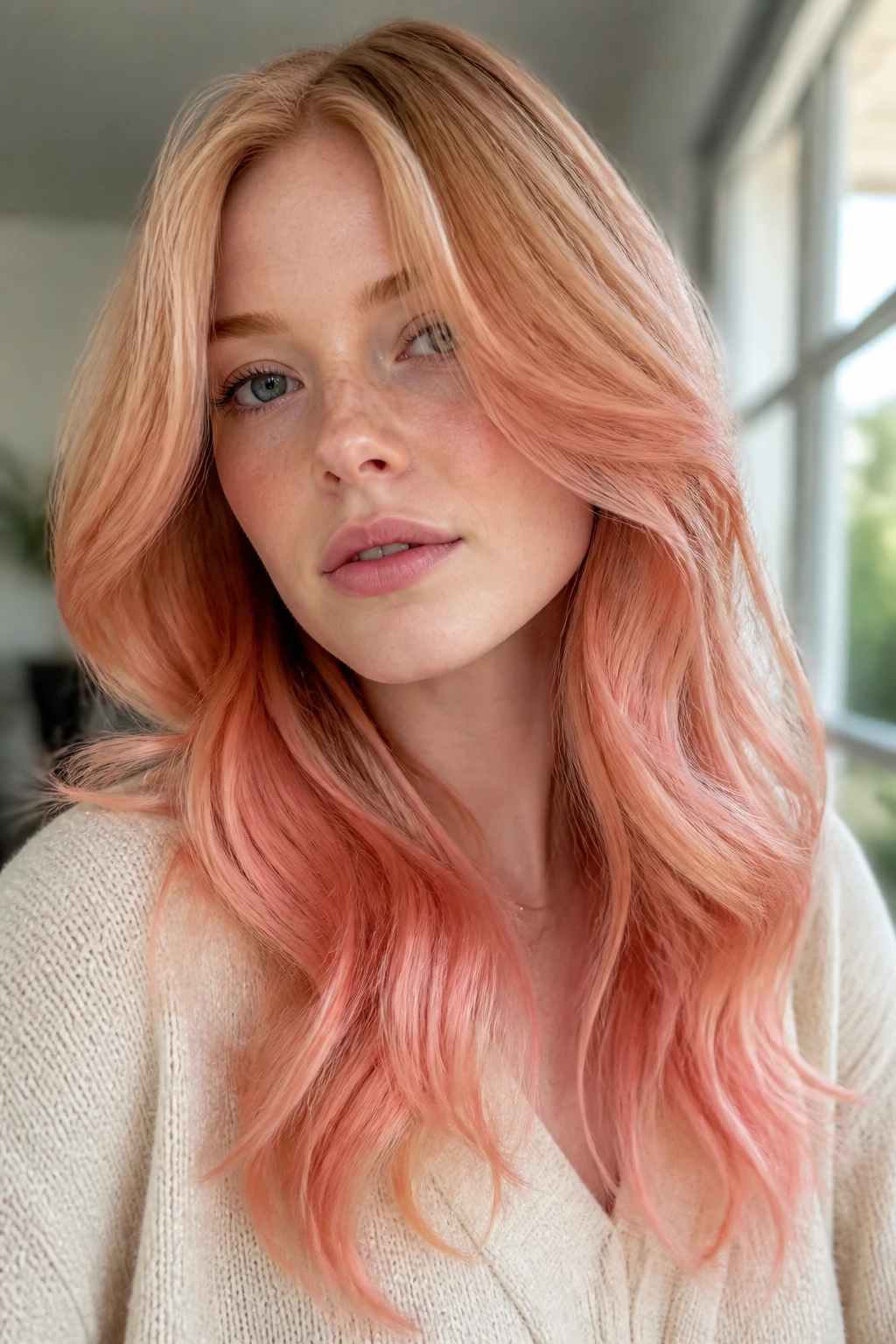
Coral strawberry is brighter than the rose and apricot versions, but it can still work beautifully on pale skin if the saturation stays soft. The coral note gives the hair a lively edge, almost like the color of a peach shell. On thin hair, a melt like this works best when the coral lives mostly through the lower half and the crown stays quiet.
I’d reserve this look for someone who wants a little personality in the color but still wants the hair to feel light. Coral can be a touch tricky because it can go too orange if it isn’t balanced with beige or rose. The best versions keep a creamy base and use coral as a glaze, not a hard pigment block. That makes the hair look fresher and less stripy.
If you wear simple makeup — cream blush, soft brow, a neutral lip — the coral tones really do the work on their own.
17. Dimensional Strawberry Blonde with Micro-Babylights
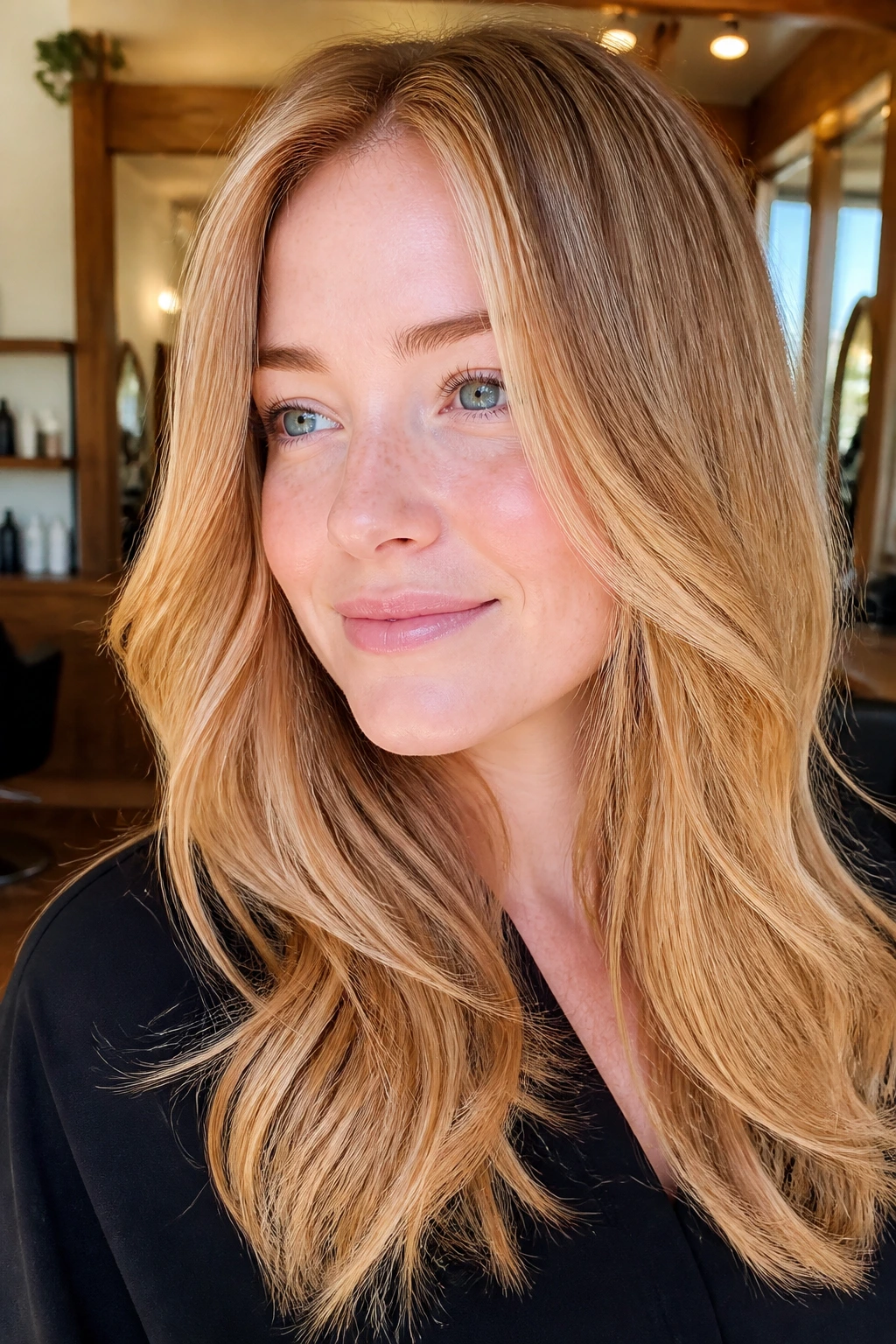
If thin hair is your biggest concern, micro-babylights may be the smartest move in the whole article. Tiny highlights create a woven look that makes hair seem denser from a few feet away. A strawberry blonde gloss over that kind of base turns the whole thing into a soft, dimensional veil instead of a flat color block.
Pale skin benefits from the subtlety here. The shade stays close to blonde, but the strawberry tone warms it enough to keep the face from looking washed out. This is not a loud ombre. It’s a fine, layered finish that behaves more like texture than color. Ask your colorist to keep the lightest pieces very fine around the part and hairline, then glaze the mids and ends with a peach-strawberry toner.
It’s one of the best options if you hate chunky contrast but still want people to notice that your hair has depth.
18. Frosted Strawberry Ombre for Ultra-Pale Skin
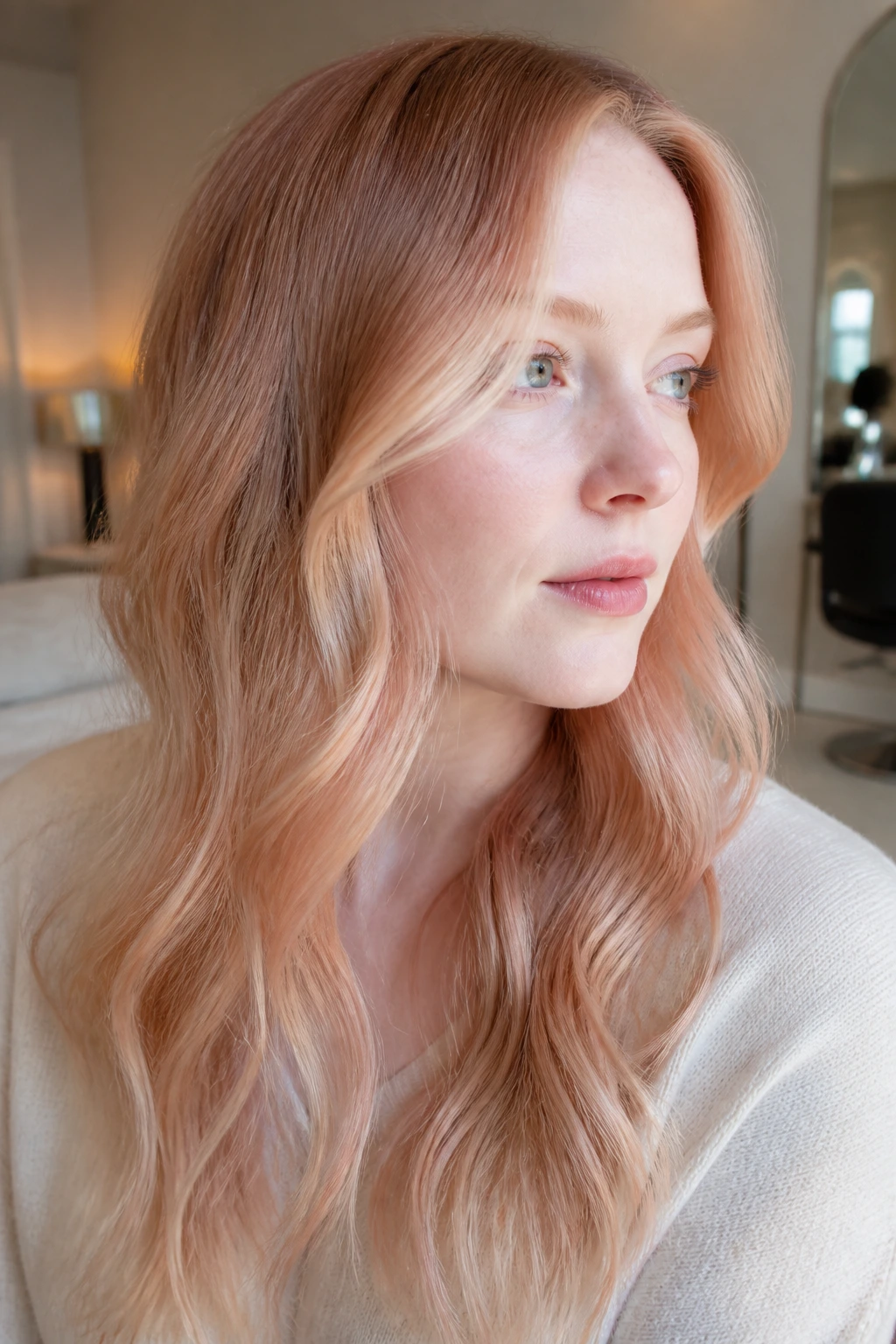
Ultra-pale skin can handle strawberry blonde, but the tone has to be controlled. Frosted strawberry keeps the warmth soft by cooling it down with beige and pearl notes. That matters if your complexion runs pink, porcelain, or almost translucent in certain light. Too much copper and the whole thing can turn loud. Too much gold and the hair can read yellow. Frosted strawberry sits between those extremes.
This version is especially kind to thin hair because the ombre should stay gentle and blended, with the root area a shade deeper and the ends softly lightened, not bleached to the edge of transparency. The result is airy but not brittle-looking. A soft wave pattern helps the frosted pieces catch light without showing off every uneven strand.
If I had to pick one version for someone who wants warmth but fears brass, this would be near the top.
Why Strawberry Blonde Ombre Flatters Pale Skin and Thin Hair
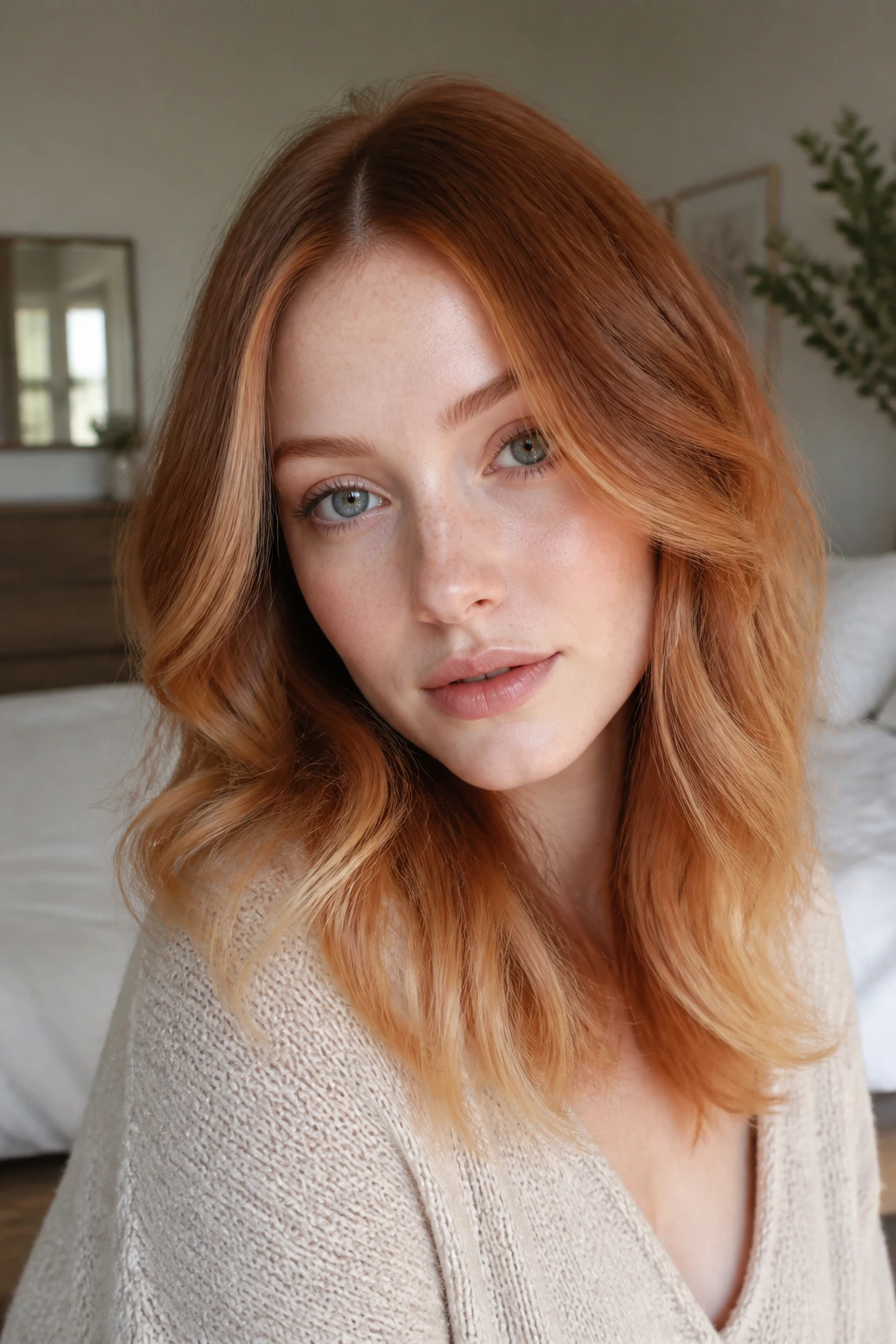
Warmth matters more than brightness when the skin is very fair. Pale skin can go flat under a cool ash blonde, especially if the hair is thin and there isn’t much surface dimension. Strawberry blonde solves that by adding a little copper and peach, which wakes up the face without making the whole head darker.
The placement is the other half of the story. Thin hair usually looks thicker when the crown keeps a touch of depth and the lighter pieces live through the mid-lengths and ends. A root shadow, a soft balayage sweep, and a blurred ombre line do more for density than chunky foils ever will. Chunky foils are loud. Fine hair rarely benefits from loud.
A good strawberry blonde ombre also grows out in a way that feels calmer. The transition does not need to be perfect every day. That is one reason it suits pale skin so well; the warmth can fade a little and still look intentional. When the color starts from a soft beige base and moves into peach, apricot, or rose, the hair keeps that lived-in softness that makes fine strands look less fragile.
Essential Tools for the Salon Chair and Your Bathroom Shelf
- Tint brush and mixing bowl: Handy for a gloss, toner, or root smudge at the salon or at home.
- Tail comb: Useful for clean sectioning, especially if your hair is fine and slips around easily.
- Duckbill clips: They keep thin sections separated without leaving a heavy crease.
- Color-safe, sulfate-free shampoo: This slows fade and keeps the strawberry tones from washing out too quickly.
- Lightweight conditioner: Fine hair gets weighed down fast, so use something that rinses clean.
- Heat protectant spray: A must if you blow-dry or use a curling iron to show off the color.
- 1-inch to 1.25-inch curling iron or wand: Soft bends reveal the balayage and ombre transition better than pin-straight hair.
- Bond-building mask: Especially useful if the hair was lifted before the strawberry tone went on.
- Microfiber towel: Less friction, less frizz, less breakage at the ends.
- Glossing spray or serum: Use a tiny amount on the lower half of the hair for shine; too much near the roots will flatten fine hair fast.
What to Ask for at the Chair, and What to Buy After
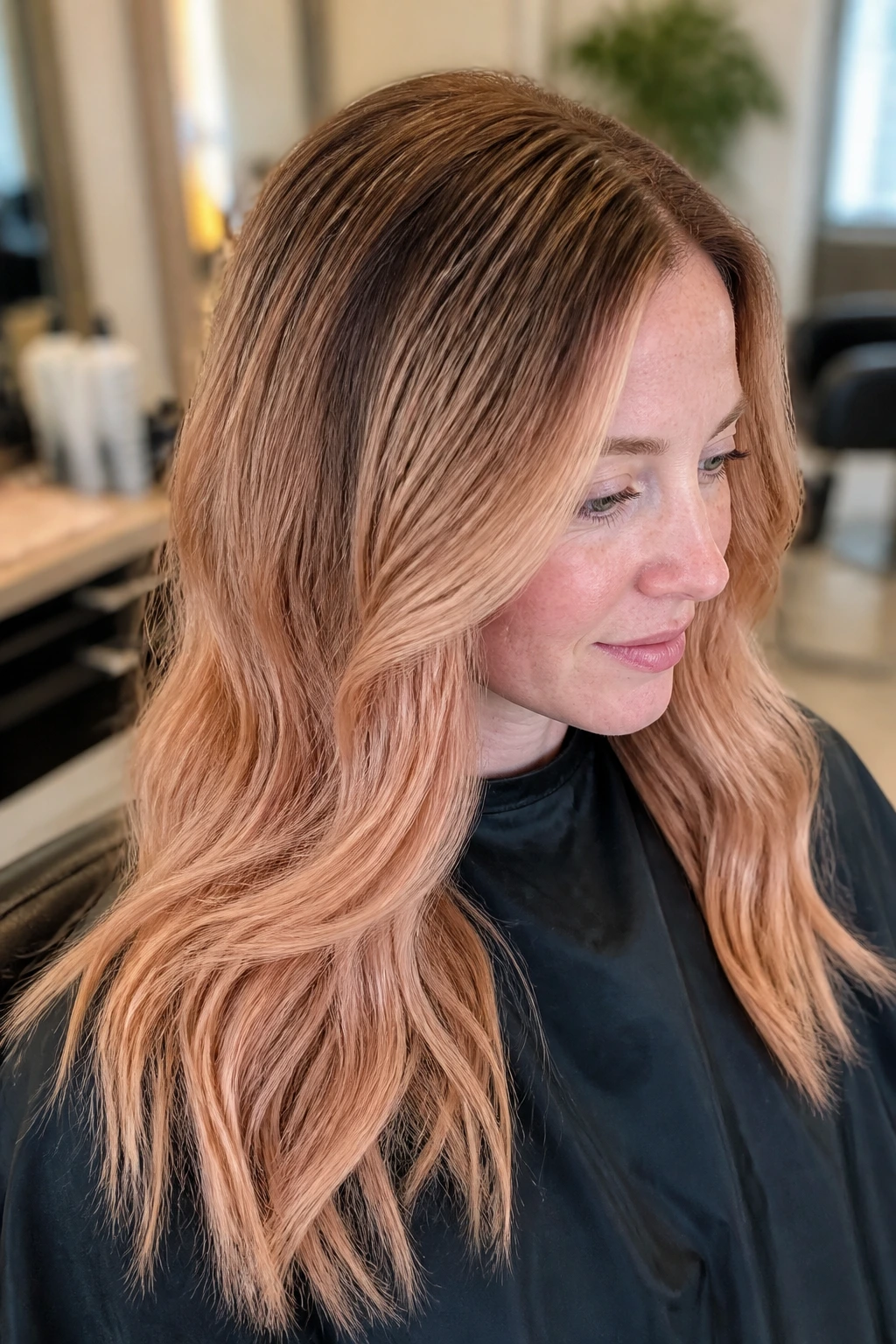
The easiest way to get strawberry blonde ombre right is to speak in placement and tone, not vague color names. Say whether you want the result peachier, rosier, apricot-warm, or beige-soft. Those words matter more than “light strawberry,” because one stylist’s strawberry can be another stylist’s copper.
Ask for a shadow root no more than one to two levels deeper than your natural base if your hair is fine. That small amount of depth gives the crown some structure. If your hair already lifts easily, a demi-permanent gloss may be enough at the ends, which is kinder than pushing lightener over and over again. For pale skin, a beige-copper or rose-beige toner usually reads softer than a straight orange-gold toner.
When you shop for aftercare, look for products that protect tone without coating the hair in waxy residue. A sulfate-free shampoo, a lightweight conditioner, and a bond-building treatment are the core trio. If your ends go too warm, a cool-toned shampoo can help, but use it lightly. Overdoing purple or blue cleanser can flatten the strawberry warmth that makes this color flattering in the first place.
Hard water can mess with light strawberry shades, too. If your shower leaves mineral spots on glass, a filter is worth considering. It sounds fussy. It isn’t. Porous lightened hair picks up minerals fast, and those minerals can make the color drift dull or muddy.
How to Wear Strawberry Blonde Ombre Without Letting It Wear You
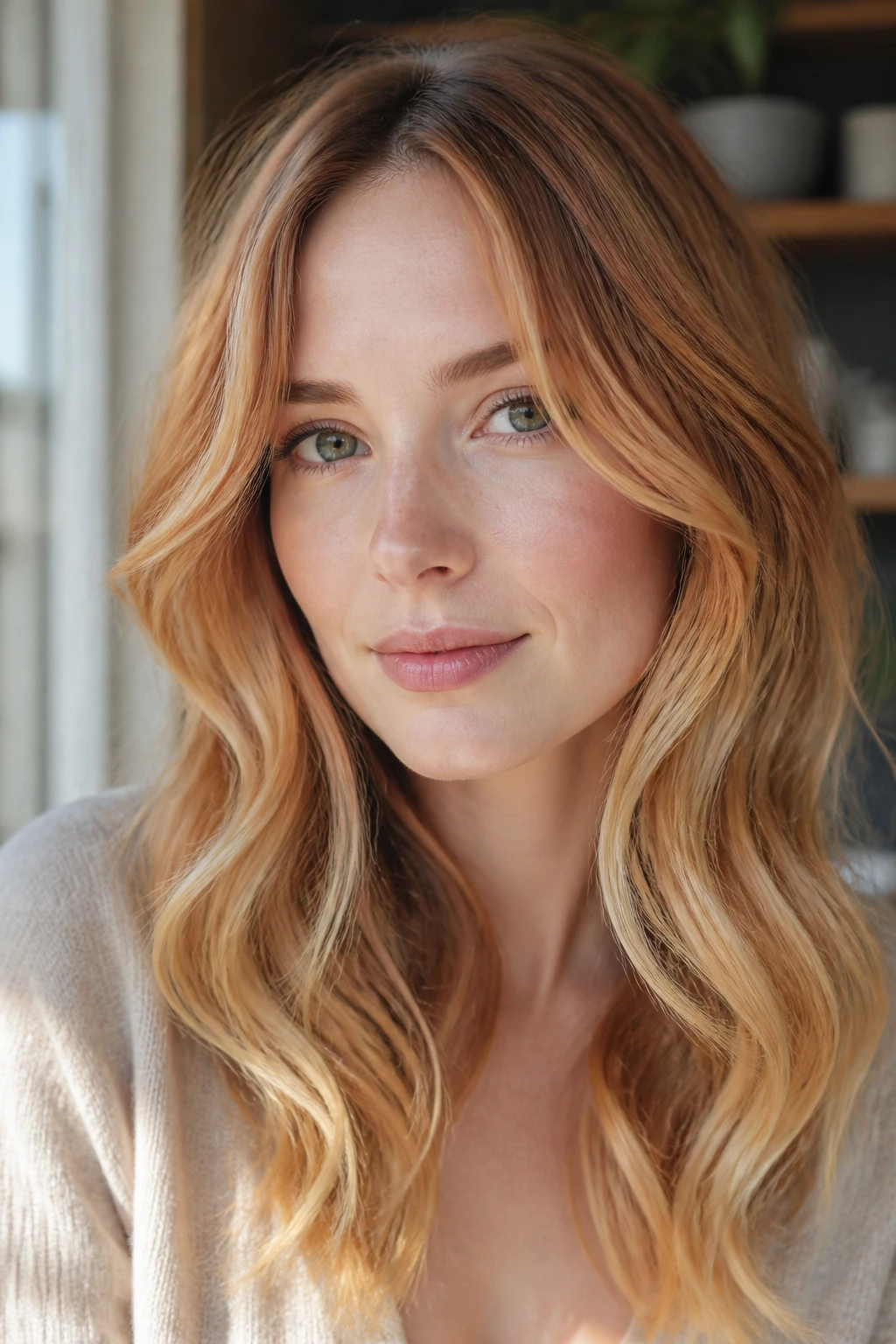
Presentation: Loose waves are the safest bet because they show the root melt, the mid-length warmth, and the lighter ends in one look. If you prefer straight hair, keep some bend at the ends so the ombre does not collapse into a single color block.
Accompaniments: Soft peach blush, a sheer berry lip, and brows that are one shade darker than the hair usually look cleaner than heavy contour. Clothing in ivory, soft sage, dusty blue, charcoal, and faded denim tends to sit well next to strawberry tones. Stark neon can fight it.
Portion: On thin hair, put the brightest strawberry pieces where they can do the most work — around the face, on the top layer, and through the last third of the length. Shorter cuts need less contrast. Longer cuts can handle more melt, but the crown still needs a little quiet space.
Lighting: Natural daylight shows the peach and rose notes best. Warm indoor light can deepen the copper. That is part of the charm, honestly. A good strawberry blonde should look alive in both settings, not identical.
Additional Tips and Color Boosters
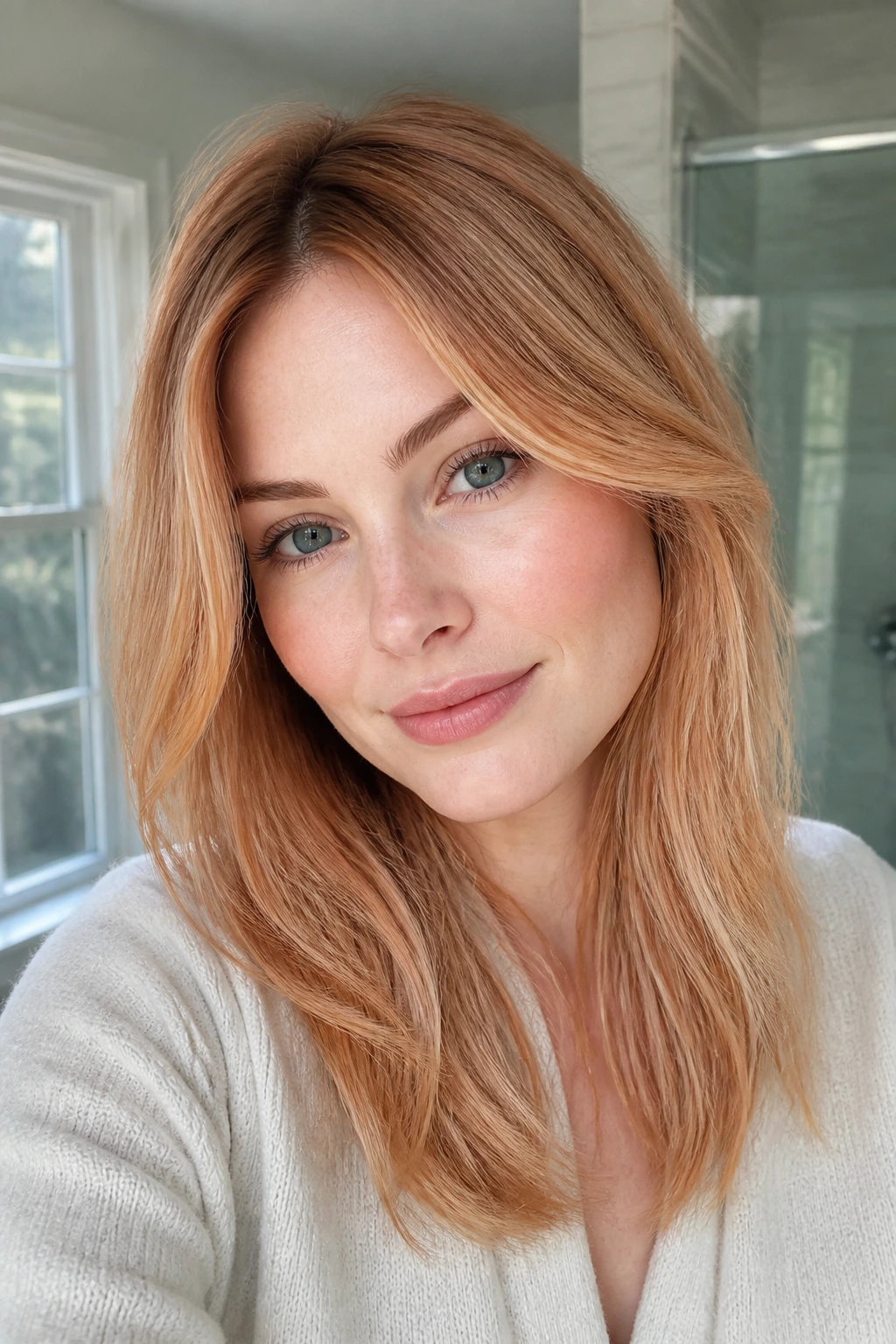
Tone Control: If your strawberry starts drifting too orange, ask for a beige or pearl gloss rather than trying to strip the warmth out completely. The goal is correction, not erasure.
Volume Trick: Flip the part from one side to the other after drying. Fine hair loses its root lift fast, and a simple part change can make the root shadow and balayage pieces look fuller.
Flavor Enhancement: In hair terms, the finishing move is shine. A drop of lightweight serum through the ends gives strawberry tones that smooth, satin finish that makes the color look richer.
Customization: Want it softer? Keep the ends apricot-beige. Want it brighter? Add a champagne money piece. Want less upkeep? Ask for a shade closer to your natural base and let the strawberry live mostly in the gloss.
Make-It-Yours: If your skin runs cool, lean rose. If it runs warm, lean peach. If you’re neutral, you can wear almost all of these — the trick is keeping the saturation controlled so the color doesn’t overpower your face.
How to Keep the Color Fresh Between Appointments
Strawberry blonde fades fastest where hair is porous, usually at the mid-lengths and ends. That is normal. The smart move is to protect the tone before it goes dull, not wait until it turns brassy. Wash two to three times a week if you can, and keep the water lukewarm. Hot water strips tone fast, and fine hair does not need the extra roughness.
A gloss or toner refresh every 4 to 6 weeks keeps peach and rose tones from getting muddy. If your color is more on the balayage side and less on the full-coverage side, you can often stretch that to 6 to 8 weeks. Root shadow touch-ups usually land somewhere around 8 to 12 weeks, depending on how fast your hair grows and how much contrast you started with.
Fine hair tends to get floppy when overloaded with product, so apply conditioner from mid-lengths down and keep the roots light. Once a week, use a bond-building or moisture mask, but rinse it thoroughly. If the ends feel too soft and gummy after lightening, alternate moisture masks with a protein treatment every other week instead of stacking both on the same day.
Heat styling is fine, but it needs protection. Spray before blow-drying or curling, then let the hair cool fully before brushing it out. That cooling period helps the bend hold, which means less repeated heat. Less heat. Better color. Less breakage. It all stacks up.
Common Mistakes That Flatten Thin Hair
- Making the root too dark: A deep root shadow can make fine hair look flatter and the pale skin look harsher. Keep the root soft and only a shade or two deeper than the natural base.
- Pushing the lightener too high and too wide: Heavy ombre placement can expose too much scalp on thin hair. Use finer sections and leave some depth near the crown.
- Going too orange at the end: Bright copper can look harsh on very fair skin if it isn’t balanced with beige or rose. Ask for a gloss that softens the warmth, not one that floods the hair with brass.
- Skipping aftercare: Lightened ends feel dry faster than the rest of the head. If you ignore conditioner, heat protection, and toning, the color turns rough-looking quickly.
- Using heavy oils near the roots: Fine hair looks greasy fast. Put shine products only from the cheekbone area down unless you enjoy the look of limp roots.
- Expecting the same tone from every lighting condition: Strawberry blonde changes with light. Good. That’s the point. What you want is a shade that still feels flattering in daylight, not a flat color that behaves the same everywhere.
Variations and Adaptations to Try
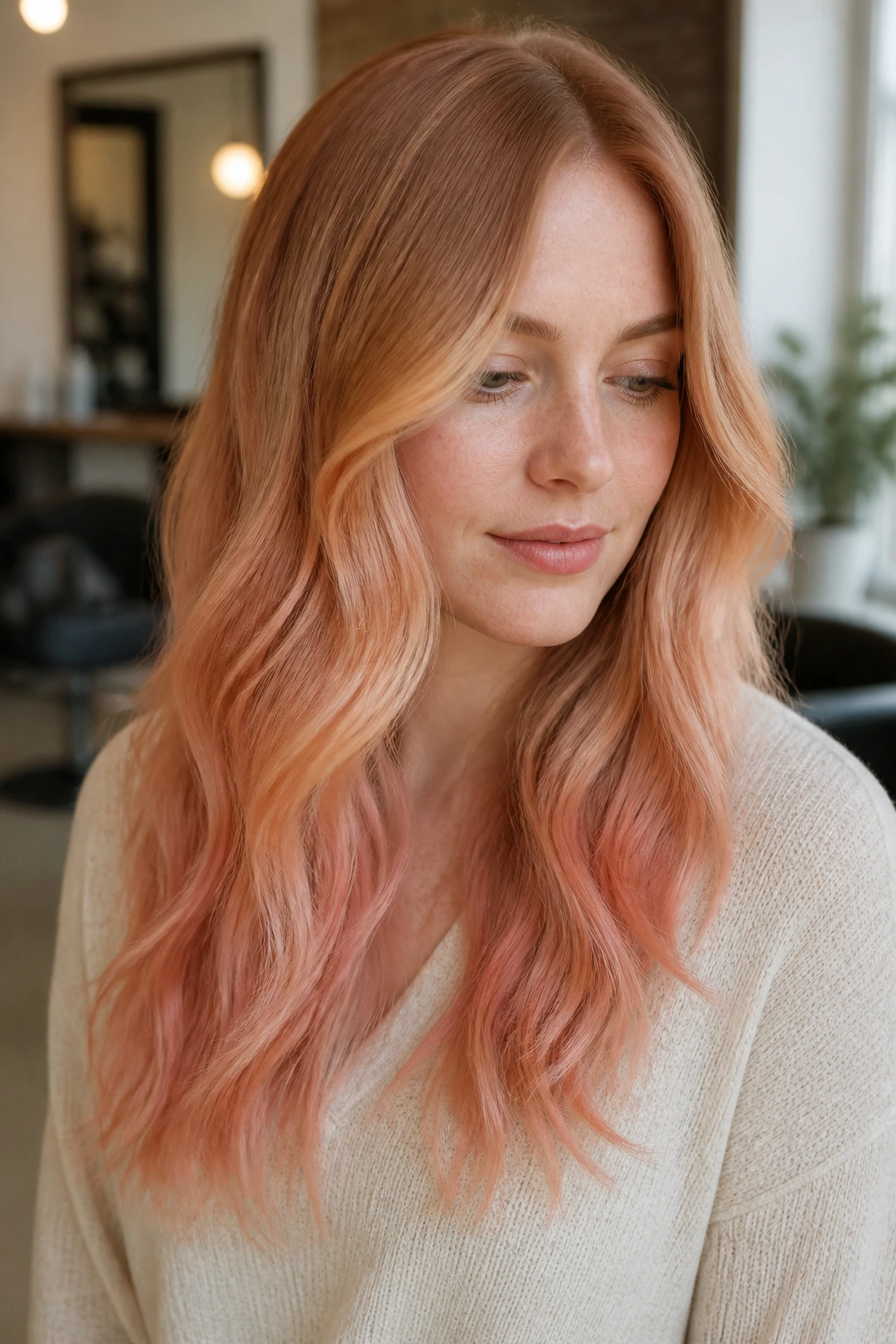
The Peach-Sherbet Refresh: If your skin is very fair and warm-toned, lean into peachier ends and keep the root area beige. This version looks lighter and sunnier without becoming yellow. It’s a smart swap when you want warmth but not copper.
The Rose-Copper Shift: For cool or pink undertones, shift the strawberry toward rose and mute the orange. The result is softer and less sun-baked. This one works especially well with a gloss rather than a heavy lift.
The Low-Maintenance Shadow Melt: If you hate salon upkeep, keep the base close to your natural color and let the strawberry live mostly through the mids and ends. The grow-out is calmer, and fine hair keeps its root density. This is the least fussy option in the bunch.
The Short-Cut Ribboning: On bobs, lobs, and pixie bobs, use thin ribbons instead of broad highlights. Short hair needs precision because every inch shows. The result is cleaner and more modern than a broad ombre band.
The Gloss-Only Glow-Up: If your hair is already light enough, skip lightening altogether and use a strawberry gloss over your current blonde. This is the gentlest version and the safest one for fragile ends. It won’t give you dramatic contrast, but it will give you warmth and shine.
Frequently Asked Questions
Will strawberry blonde ombre work on very pale skin with pink undertones?
Yes, but the tone should stay muted. A peach-beige or rose-beige strawberry usually flatters pink undertones better than bright copper, which can make the face look flushed.
Is thin hair better suited to balayage or ombre?
Balayage usually gives more control because the lighter pieces can be painted where they create the most depth. Ombre works too, but it should stay soft and blurred so the ends don’t look stringy.
Can I get this look without bleaching my hair?
If your hair is already light blonde, a gloss or demi-permanent color may be enough. Darker natural bases usually need some lightening if you want a visible strawberry effect.
How often should I refresh the tone?
Most strawberry blonde glosses need a refresh every 4 to 6 weeks. If the look is softer and more balayage-heavy, you can often go 6 to 8 weeks before toning again.
What if my hair turns too orange?
That usually means the warmth went too far or the toner was too copper-heavy. Ask for a beige or pearl gloss to soften it, and use a color-safe routine so the orange doesn’t keep deepening.
Will this color make thin hair look thicker?
Not by magic, no. But the right placement absolutely can make hair seem fuller because the root shadow, ribbons, and blended ends create the illusion of depth.
Does this shade work on short hair?
Yes, especially on a bob or pixie bob. The trick is to keep the lightest pieces concentrated around the face and top layers so the color reads clearly on a shorter shape.
Can I wear strawberry blonde ombre with curtain bangs?
You can, and it often looks sharp. Keep the bangs slightly softer and a touch deeper at the root so they don’t disappear against the forehead.
A Softer Kind of Bright
Strawberry blonde ombre has a very specific job when it meets pale skin and thin hair: warm the face, keep the root honest, and leave enough softness that the hair still looks like hair, not a color swatch. That balance is the whole game. Too much contrast flattens fine strands. Too much copper can take over the complexion. The good versions sit in the middle and make that middle look easy.
What I like most is how flexible the shade family is. You can push it peach, rose, apricot, beige, or cinnamon and still stay inside the same flattering lane. That gives you room to match your undertone instead of fighting it, which is a lot more useful than chasing a single “perfect” strawberry shade. If you’re heading to the chair, bring photos of the exact tone family you want, not just the name, and ask for softness at the root. The rest tends to fall into place from there.