



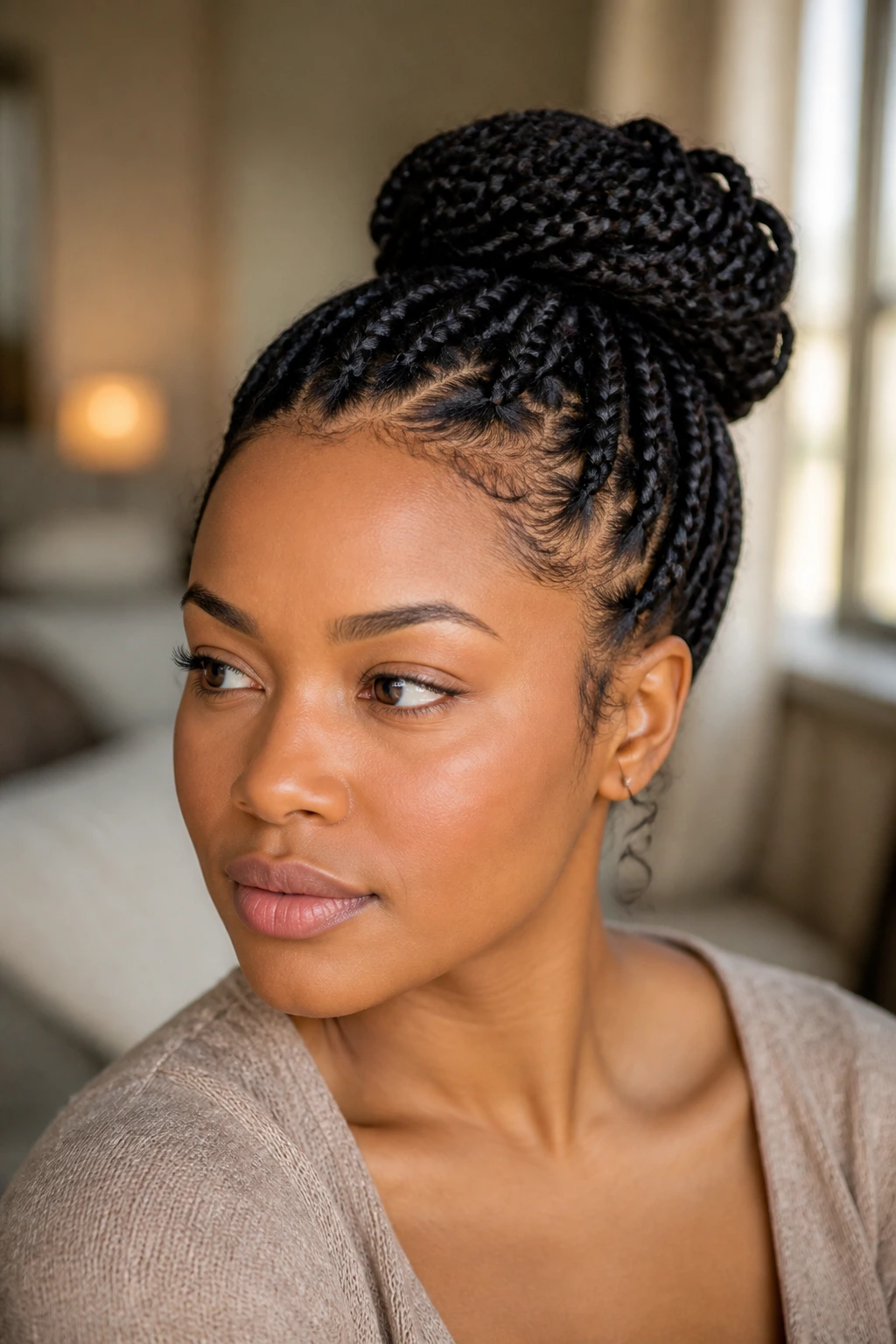
Square faces don’t need to be hidden; they need the right lines. A braided bun can either sharpen those angles or soften them, and the difference usually comes down to where the braid starts, where the bun sits, and how much width it carries at the sides. On natural hair, that choice matters even more because shrinkage, density, and texture can turn a neat style into a bulky one fast.
Braided buns on natural hair also ask for restraint. Pull too tight and the whole thing reads severe. Park the bun at the jawline and the face can look boxier than it really is. But bend the braid path a little, lift the crown, or let a few strands breathe around the temples, and the same hairstyle suddenly feels deliberate instead of rigid.
I keep coming back to braided buns because they do a lot of work without looking fussy. They protect the ends, they tame shrinkage, and they hold up through a long day better than loose styles that collapse the minute humidity shows up. The trick is knowing which shape flatters a square face instead of fighting it, and that starts with a few braided bun ideas that actually understand the geometry.
Why These Braided Bun Shapes Earn a Spot in the Rotation
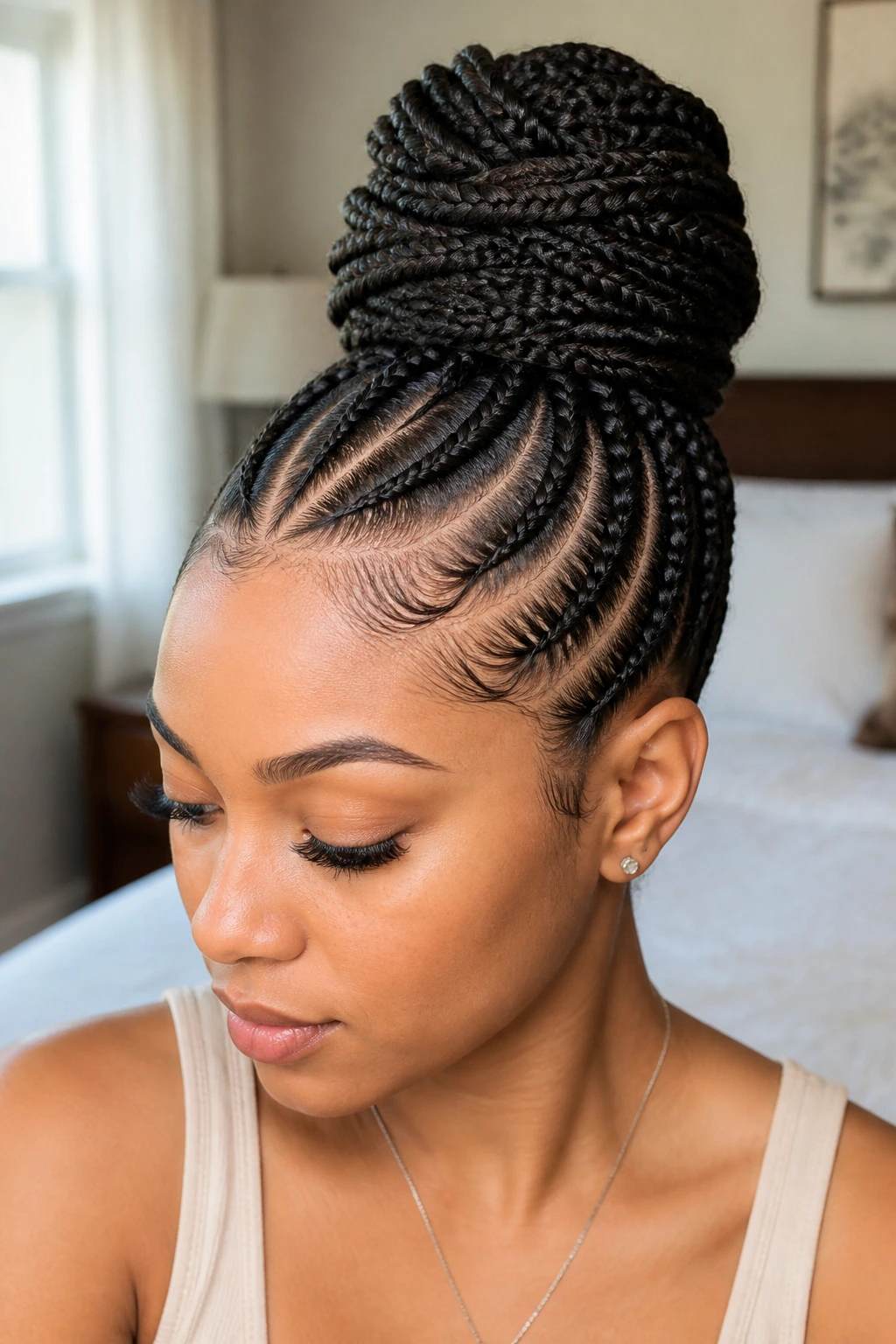
- Square-face balance: Curved parts, lifted crowns, and side-swept braid paths keep attention moving instead of stopping at the jaw.
- Natural-hair respect: These styles lean on stretched coils, braids, twists, and tucked ends, so they work with texture instead of flattening it.
- Protective-style logic: When the ends disappear into a bun and the base isn’t yanked tight, you get rest for the hairline without giving up shape.
- Range without fuss: Some of these buns read polished enough for a blazer and hoops; others keep a little texture and feel right with denim and gloss.
- Less width, more shape: The smartest versions keep volume either higher than the temples or lower at the nape, where square faces usually handle it better.
1. Halo Lift Braided Bun with Curved Side Parts
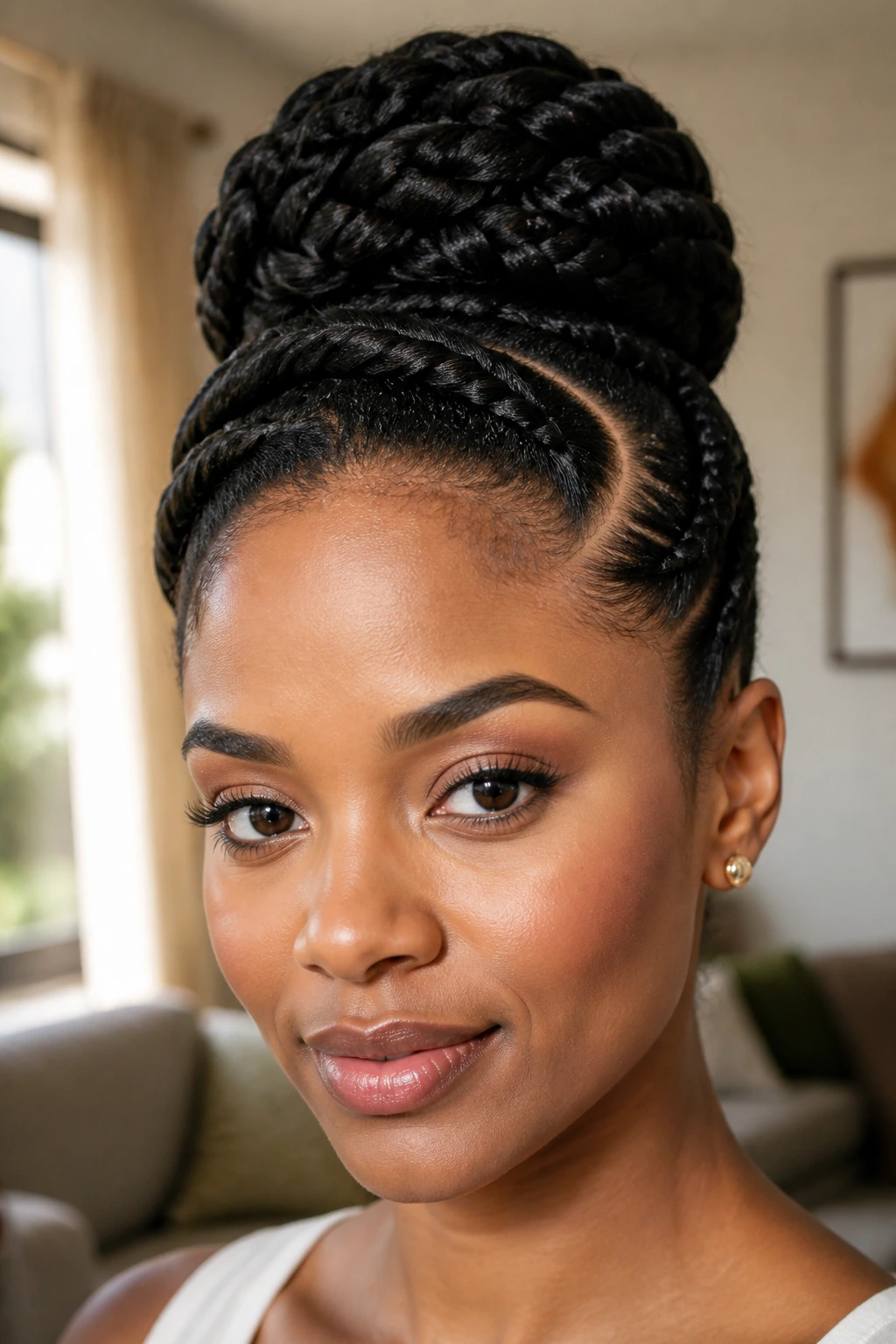
If your square face wants height without a hard edge, this is the first style I’d hand you. The curved side parts bend the eye upward, and the halo-like braid keeps the bun from sitting like a heavy knot at the jaw.
The shape matters more than people admit. Straight parts can make strong angles feel stronger; a gentle arc softens the frame before the bun even goes in. On stretched 4b or 4c hair, the braid line stays crisp without needing every strand to be bone-straight, which is a mercy on a busy morning.
What to tell the braider
- Keep the bun above the temple line, not midway down the head.
- Ask for a part that curves, not a dead-straight center split.
- Let the bun stay compact so the sides don’t balloon out.
A little edge control at the hairline helps, but don’t overdo it. The whole point is lift with softness, not a slick shell.
2. Low Nape Braided Bun with Soft Face-Framing Tendrils
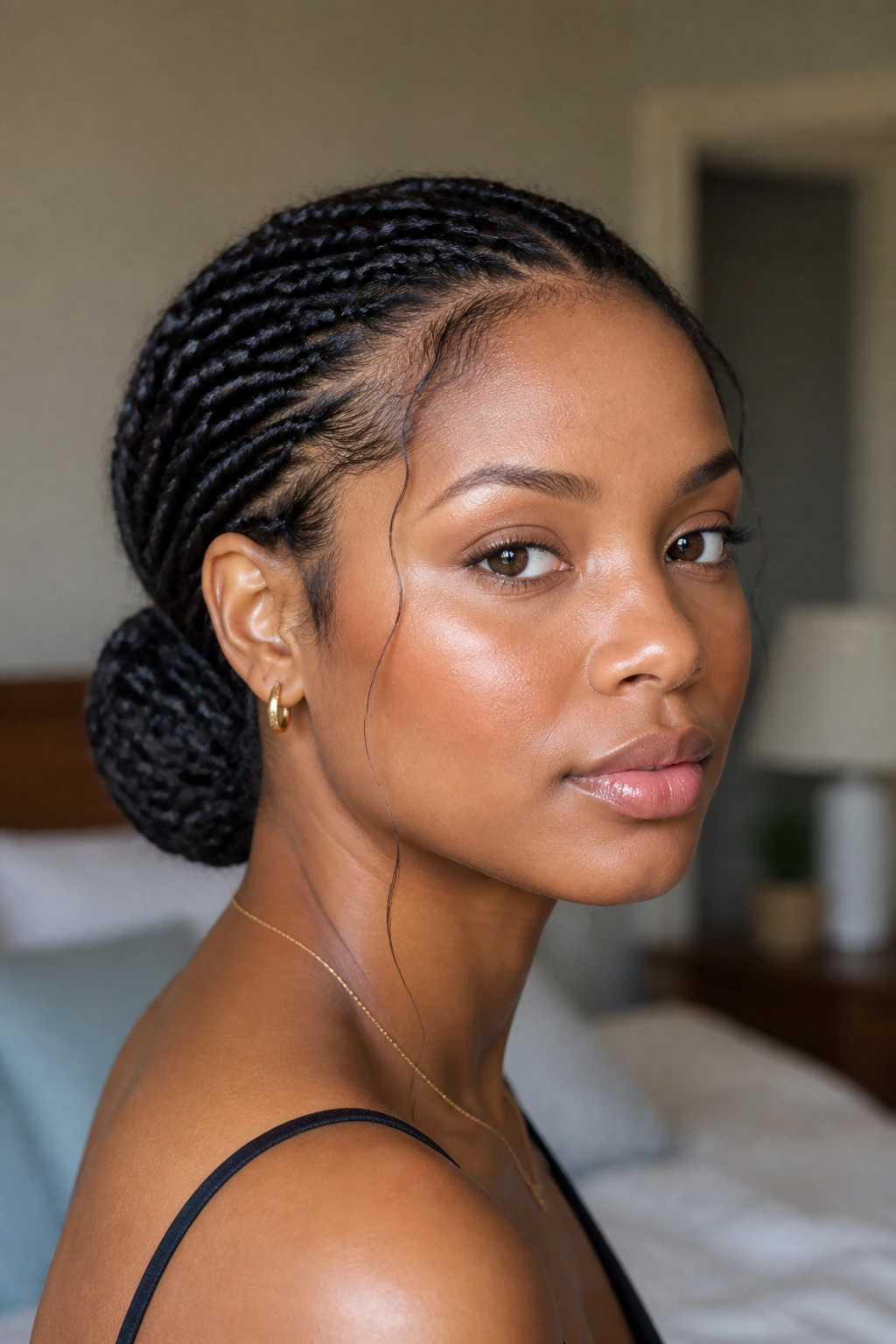
Want the face to look a touch longer without going full sleek ponytail? A low nape bun does that job quietly. It sits below the jaw, so it doesn’t compete with the widest part of a square face, and the soft pieces near the temples keep the outline from getting too strict.
This is one of those styles that looks calm even when the day isn’t. On natural hair, a low bun holds well because gravity works with you instead of against you. If you leave two thin tendrils out—nothing chunky, nothing curled like a pageant style—the face gets a little movement near the cheekbones, and that small detail changes the whole read.
A satin scarf at night keeps the tendrils from frizzing into a halo. If you want the bun to feel cleaner, tuck the ends flat and pin them under the knot instead of letting them fan out.
3. Side-Swept Crown Braid Bun
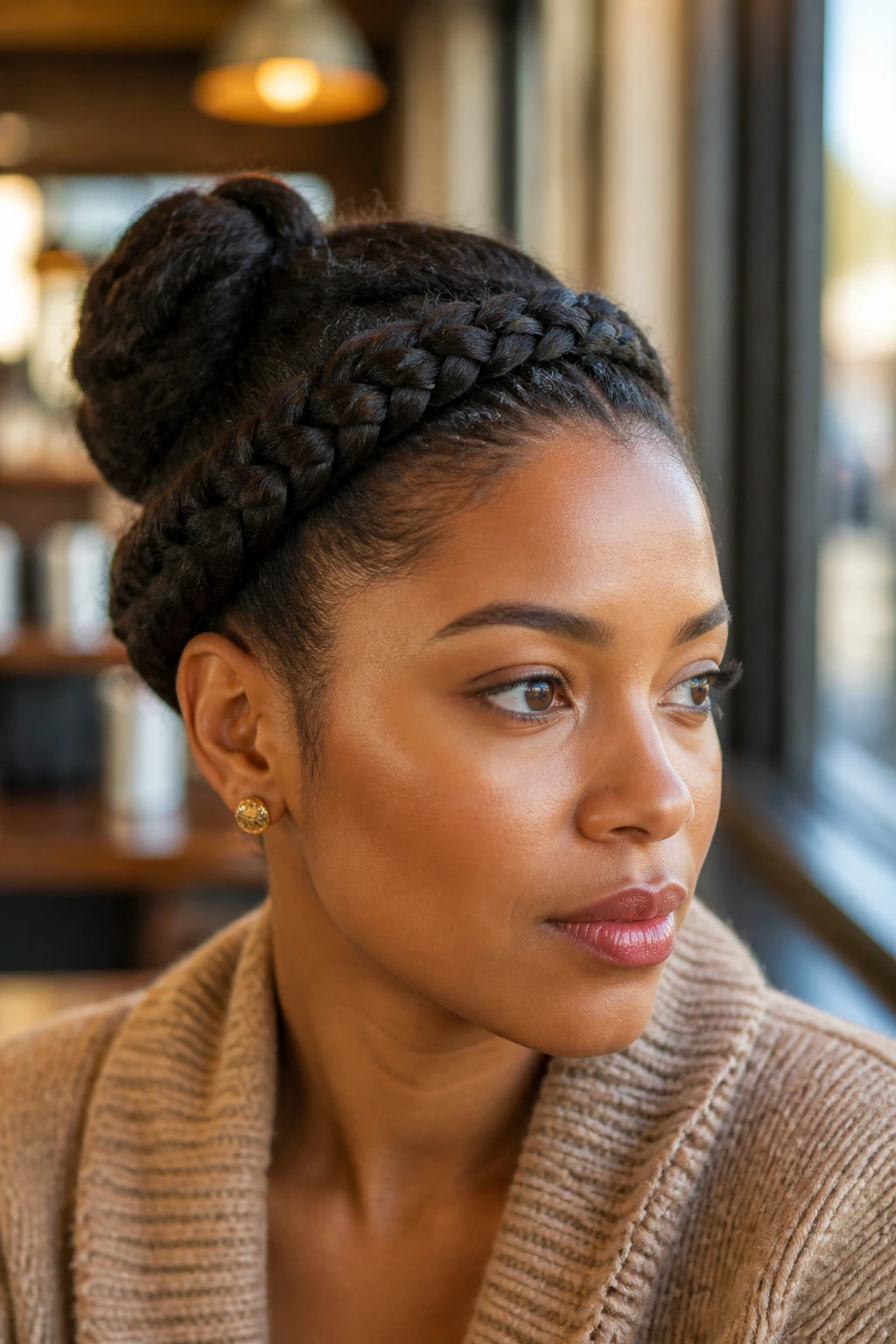
Picture a braid that starts near one temple, travels across the head like a ribbon, and lands in a bun that sits just off-center. That diagonal line does a lot for a square face because it breaks the straight-up-and-down geometry that can make the jaw look boxier than it is.
I like this shape for days when you want the hair to look styled, not stiff. The side sweep gives the face a softer edge, and the bun can stay medium-sized without widening the head. If your natural hair shrinks hard at the roots, stretch the first inch or two before braiding so the crown doesn’t puff up and steal the shape.
The prettiest version keeps the braid line visible. Don’t bury it under too much gel. Let the texture show a little.
4. Deep Side-Part Feed-In Braided Bun
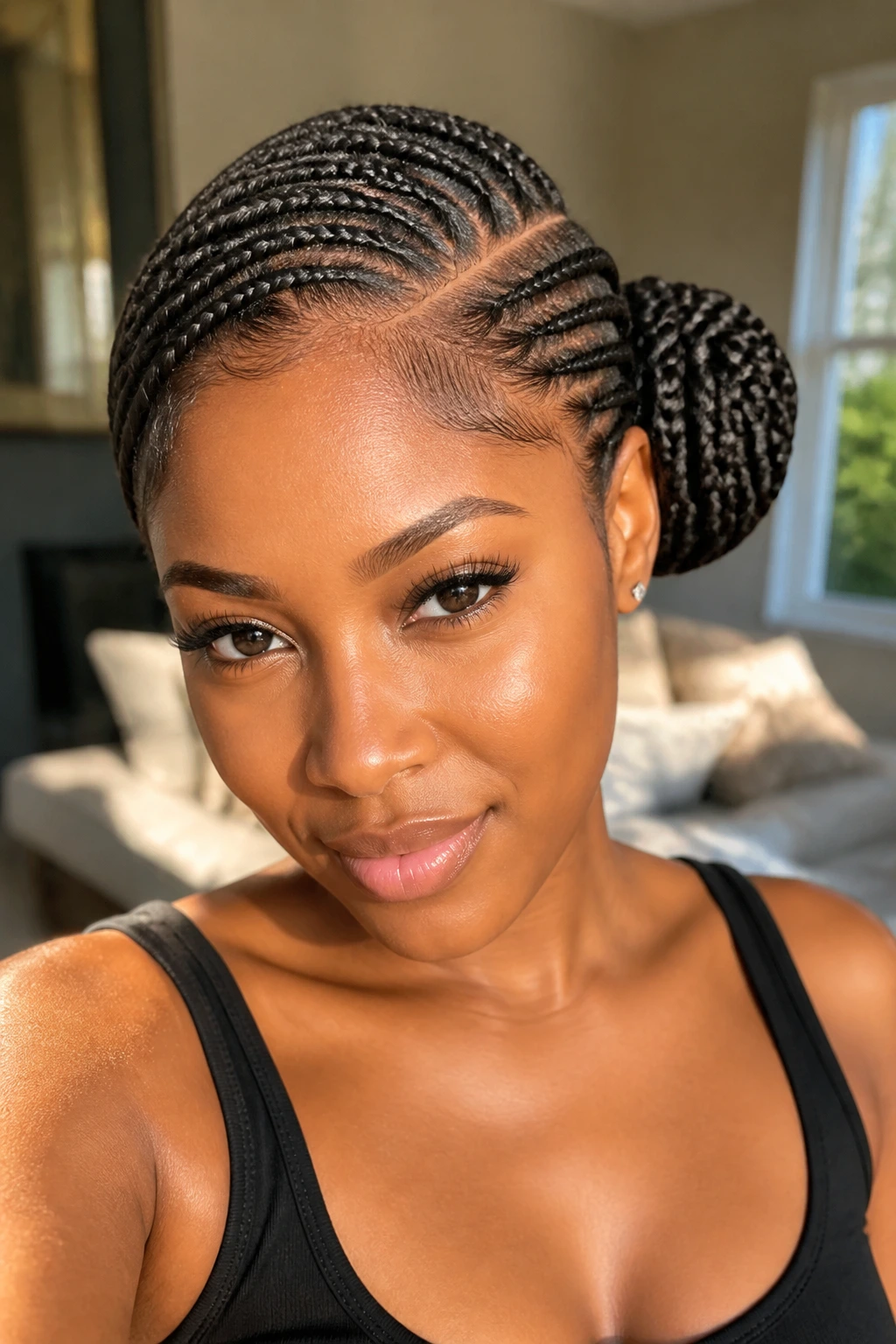
Compared with a centered bun, a deep side part changes the whole mood of the face. The part sends the eye sideways first, then back up into the bun, which is useful on square faces because the jawline already has enough attention on its own.
Feed-in braids are the cleanest way to do this if you want the base to look smooth. Start small at the hairline, build the braid gradually, and keep the temple area neat without pulling it painfully tight. A bun at the opposite side of the part can help the face feel less symmetrical, which is often the point here.
A small stylist note
A deep side part can look harsh if the bun is too wide.
Keep the knot tighter than you think. The width belongs in the braid path, not in the bun itself.
5. Twin Braids Folded into a Single Bun
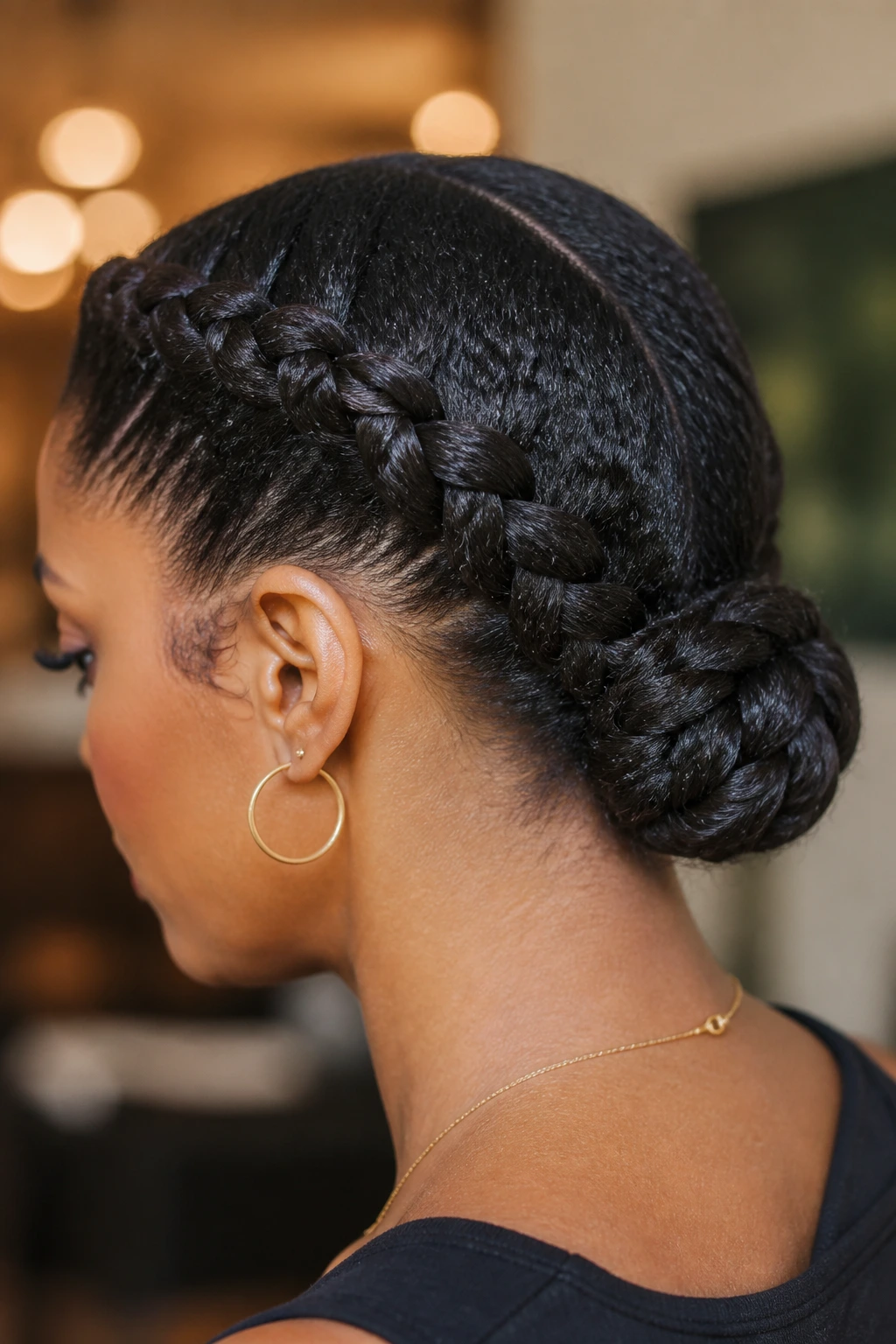
Two braids are not twice the work if the shape is right. This style starts with a clean center or slightly off-center part, then splits into two braids that meet at the back and fold into one bun. The result feels balanced without being flat, which square faces usually welcome.
What I like here is the way the braids act like rails. They keep the eye moving toward the center of the head, but the bun itself stays narrow enough that it doesn’t flare out at the cheeks. On dense natural hair, this also helps control bulk, because each side is managed separately before being tucked together.
Use this one when you want structure. A little sheen spray on the finished braids gives the style a neater read, but skip anything greasy near the roots or the part will go limp by the next morning.
6. Flat-Twist Chignon at the Nape
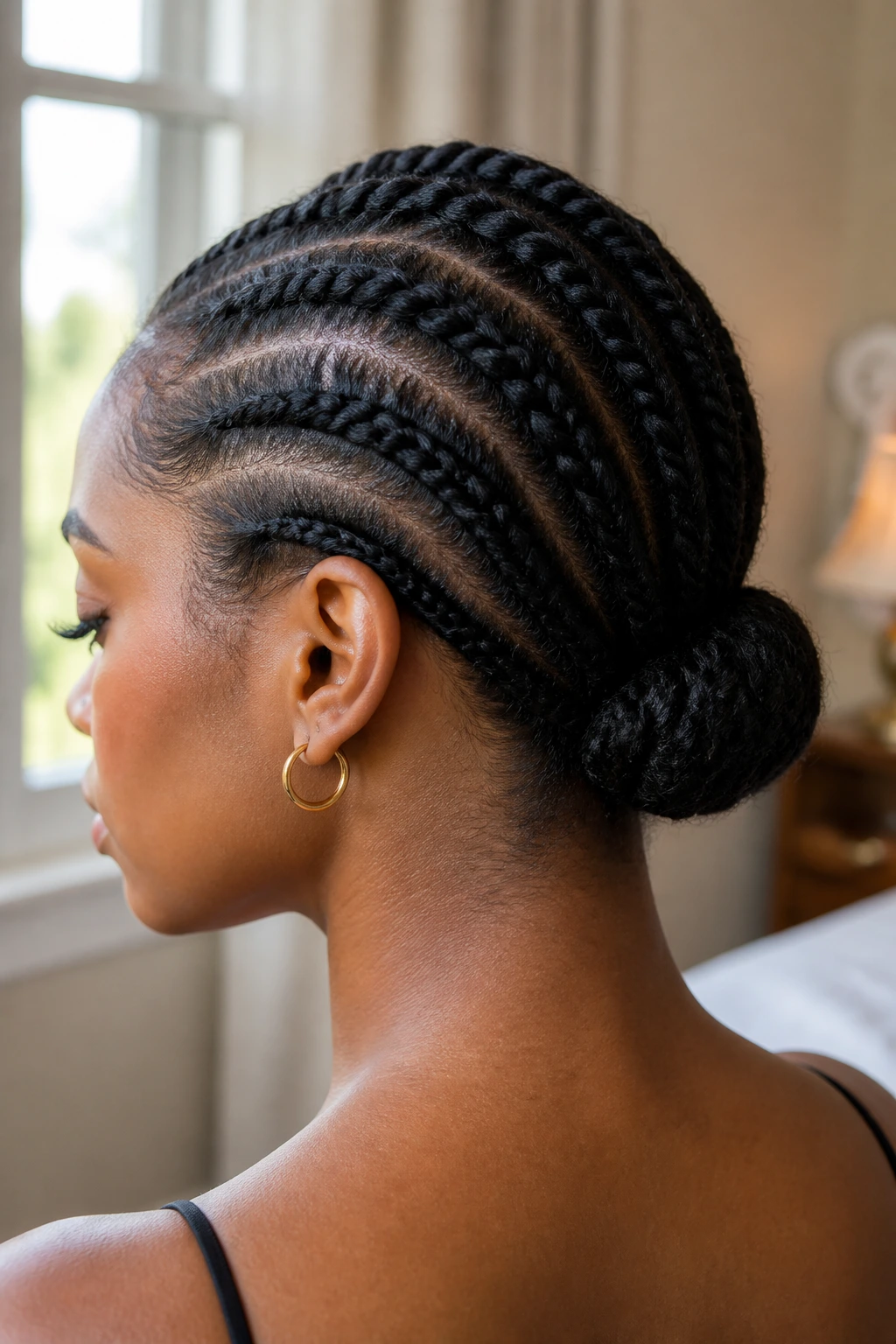
Flat twists are the quiet cousin of braids, and they’re useful when you want shape without a heavy rope texture. A flat-twist chignon at the nape sits low and smooth, which keeps the silhouette from getting wider through the middle of the face.
Why the line matters
Flat twists hug the scalp more closely than many braids. That closeness helps if your hair is thick and prone to puffing, because the style stays tidy instead of swelling out at the sides. On square faces, I like the softness of the twist texture paired with a low chignon; it gives polish without turning the profile boxy.
If you’re wearing this to work or an event, keep the twist size medium. Tiny twists can make the head look busy, while oversized twists can add bulk where you do not want it. A chignon that sits just below the nape keeps the style grounded.
7. Cornrow Mohawk Bun
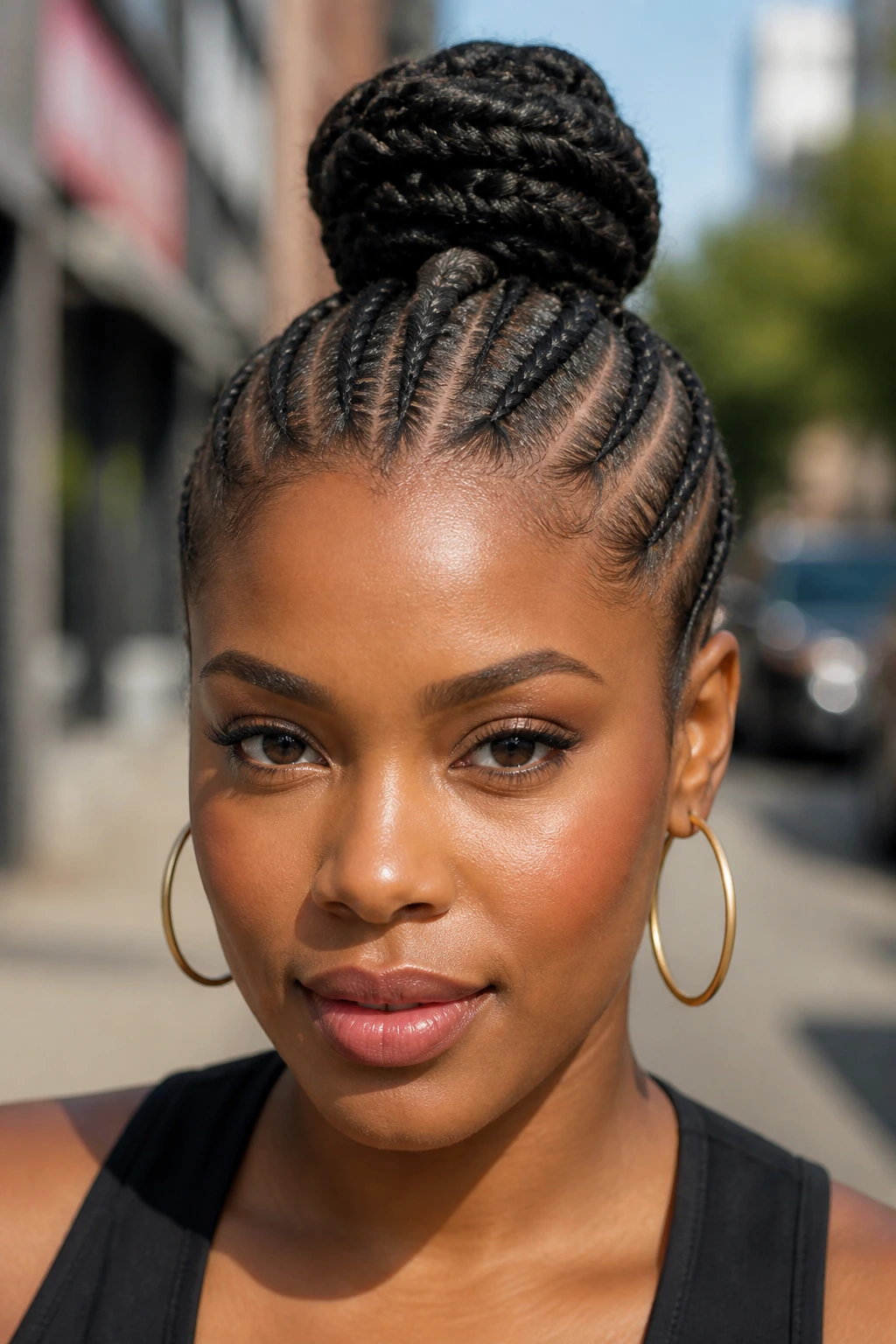
A center ridge of cornrows leading into a bun is one of the easiest ways to add vertical shape to a square face. The sides stay smooth, the eye travels up the middle, and the bun lands in the one place that helps the face feel longer rather than wider.
This style has range. Tight, narrow cornrows make it look sharp; slightly thicker rows make it feel softer and more casual. On natural hair, the mohawk shape also helps with density because the braid lanes organize the hair before it reaches the bun. That can save you from the puffy halo effect that happens when every strand fights for its own space.
If you wear earrings, this is a good style for them. The open sides give your jaw some room, and the vertical braid line pulls the whole look upward.
8. Wrapped High Top Knot Braided Bun
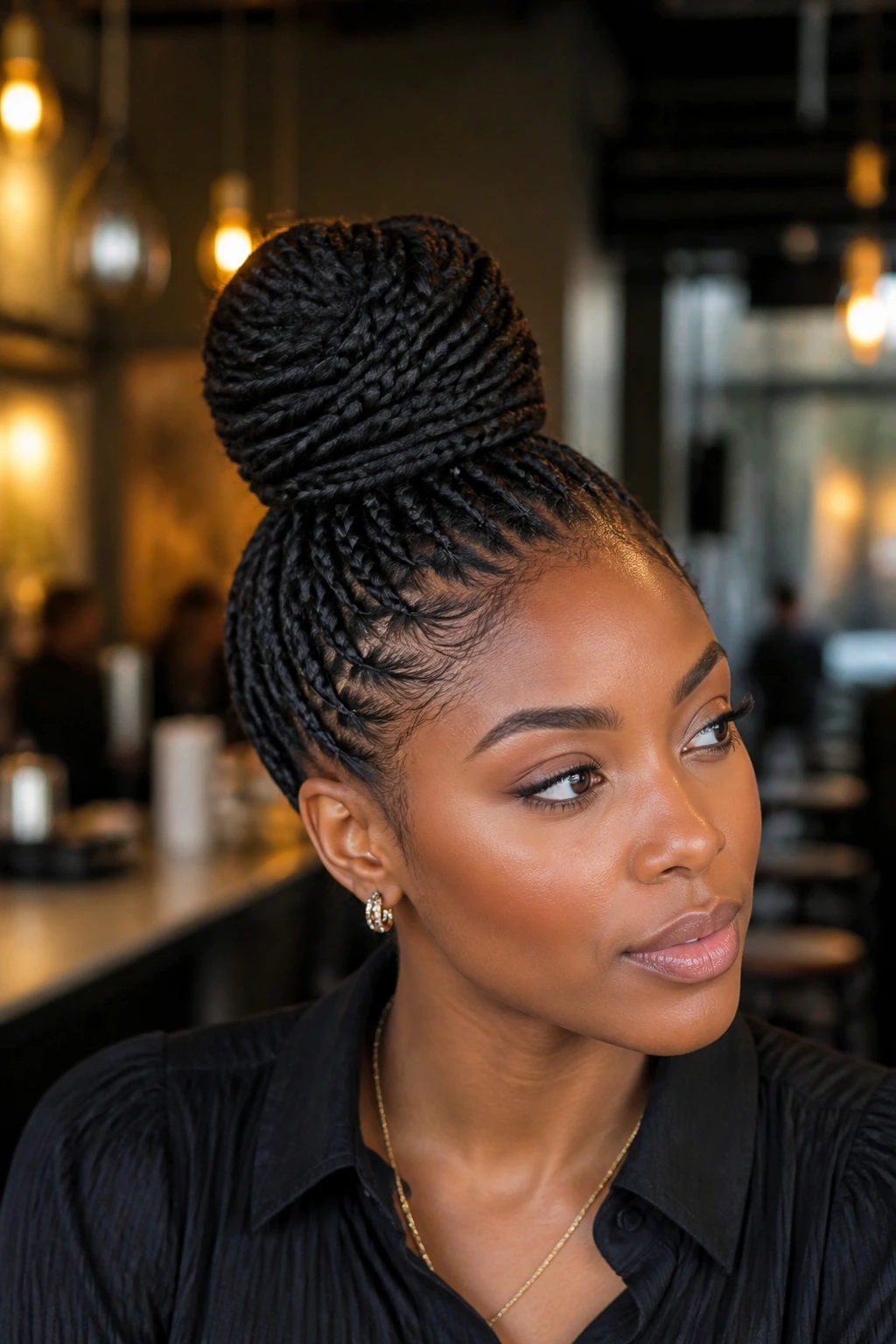
A top knot does not automatically make a square face harsher. The problem is usually width, not height. Keep the knot compact, wrap the braid base neatly, and the style can actually lengthen the face because the visual weight lands above the temples instead of beside them.
This version works well when you want clean lines and a little drama. The wrapped braid around the base keeps the top knot from looking like a loose puff, which matters on natural hair because volume can balloon fast once the day warms up. If your coils are dense, pin the bun close to the crown and keep the sides sleek with a small amount of gel, not a helmet’s worth.
A high knot like this also makes cheekbones stand out. That’s the part people notice first.
9. Fishtail Low Bun with Soft Texture
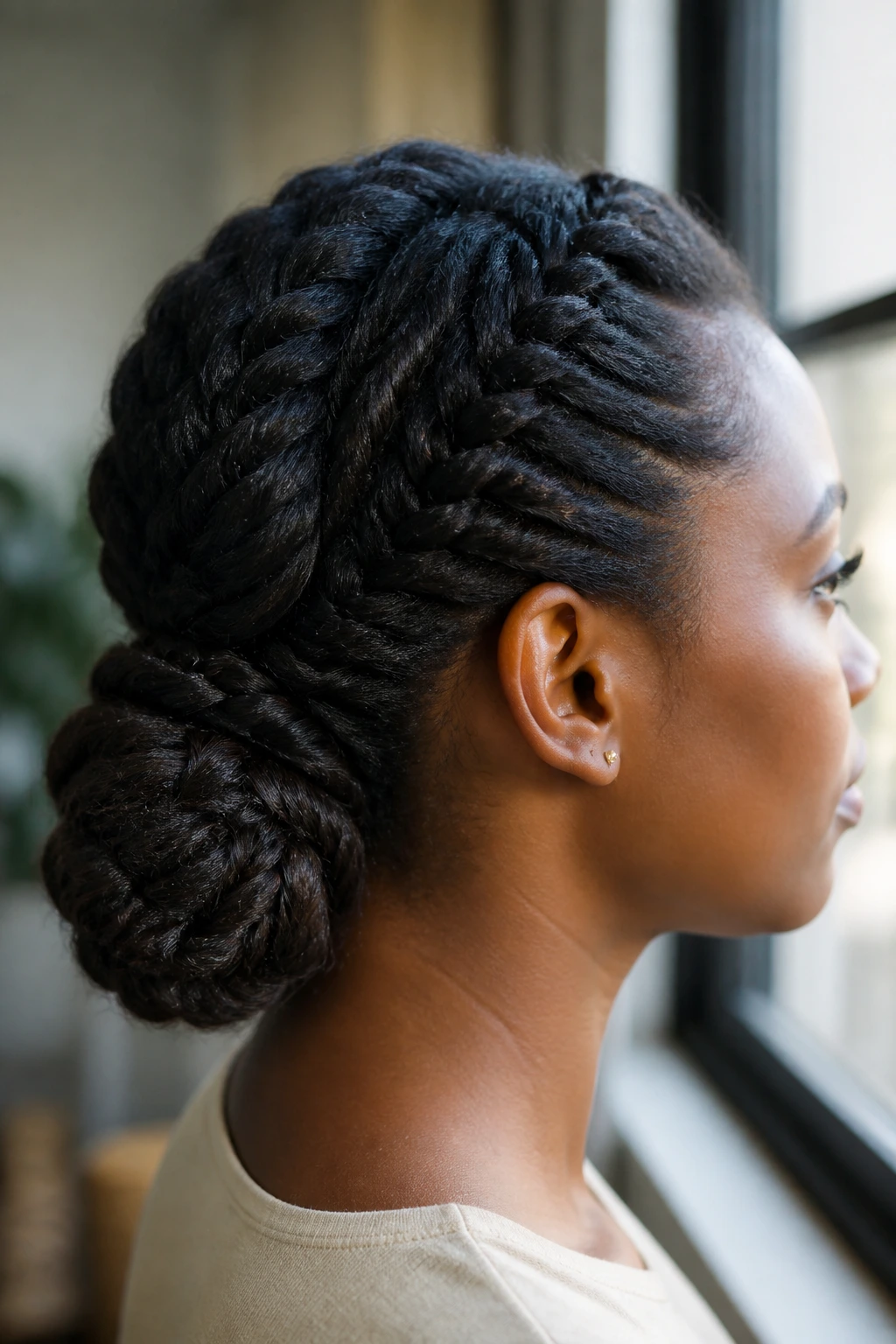
A fishtail braid has a finer, more woven look than a basic three-strand braid, and that texture is useful on a square face. It takes some of the bluntness out of a low bun. The shape still reads neat, but not severe.
This one feels nicest when the braid is slightly loosened after it’s finished. Not sloppy. Just a little expanded so the pattern shows. On stretched natural hair, a fishtail holds better and lays flatter at the nape, which keeps the bun from ballooning out. If you want the look to stay refined, pin the bun in a teardrop shape instead of letting it spread into a wide circle.
Wear this when you want something a little dressy without looking overdone. It’s the braid version of a crisp shirt with one button undone.
10. Triangle-Part Knotless Braided Bun
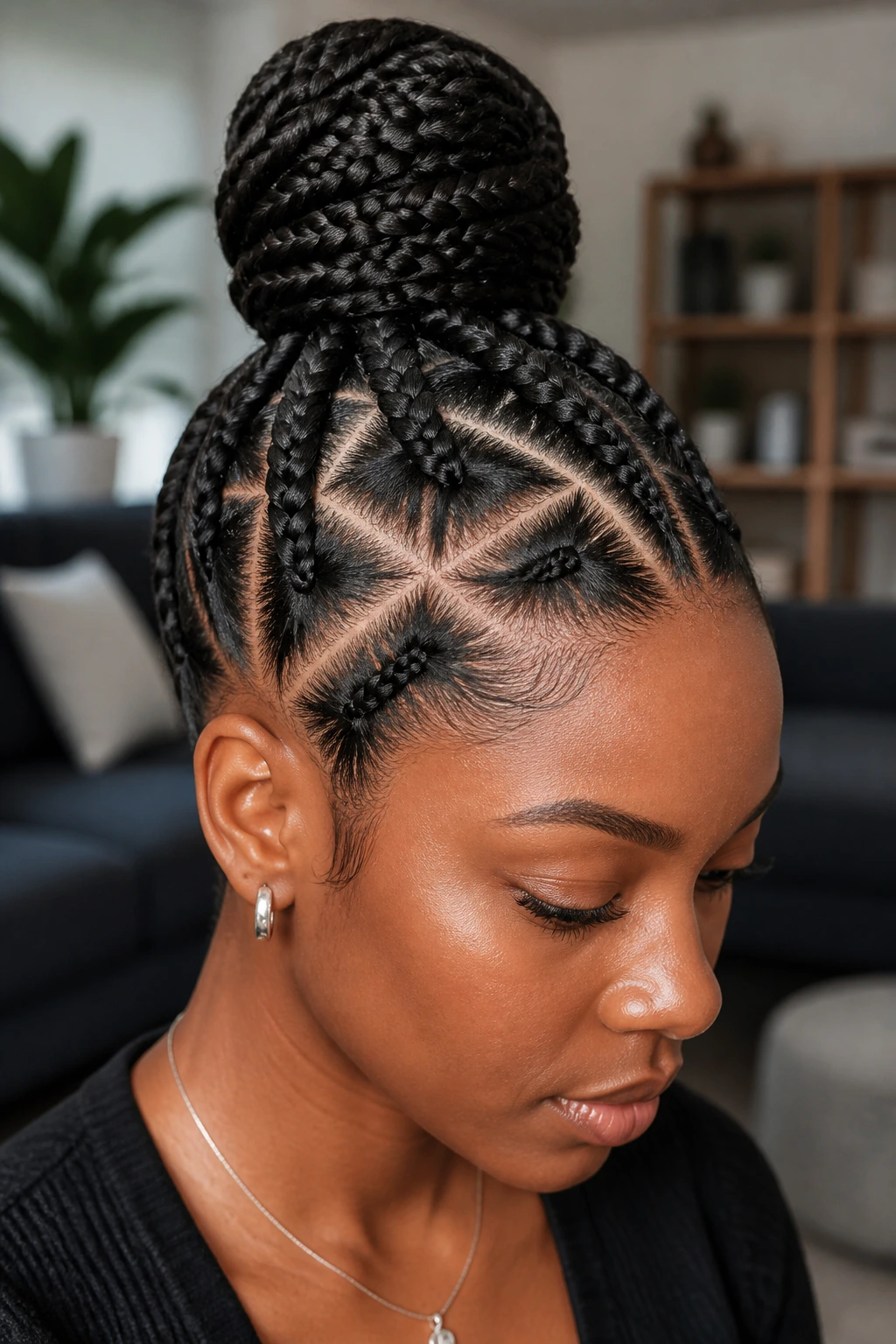
Triangle parts add visual interest at the scalp, and they’re clever on square faces because the pattern breaks up straight lines before the bun even starts. The knotless braids keep the base lighter, which matters if you plan to wear the style for several days.
What the triangle part does
It gives the eye small shapes to follow. That sounds minor, but on a face with strong geometry, those little angles stop the style from reading flat. The bun can stay simple and compact while the parting does the decorative work.
I’d keep the braids medium-thin here. Too thick and the part pattern disappears; too small and the style starts to look busy. Knotless braids also tend to sit more comfortably along the hairline, which is a real plus if your scalp complains when styles are too tight.
11. Beaded Braided Bun with Soft Ends
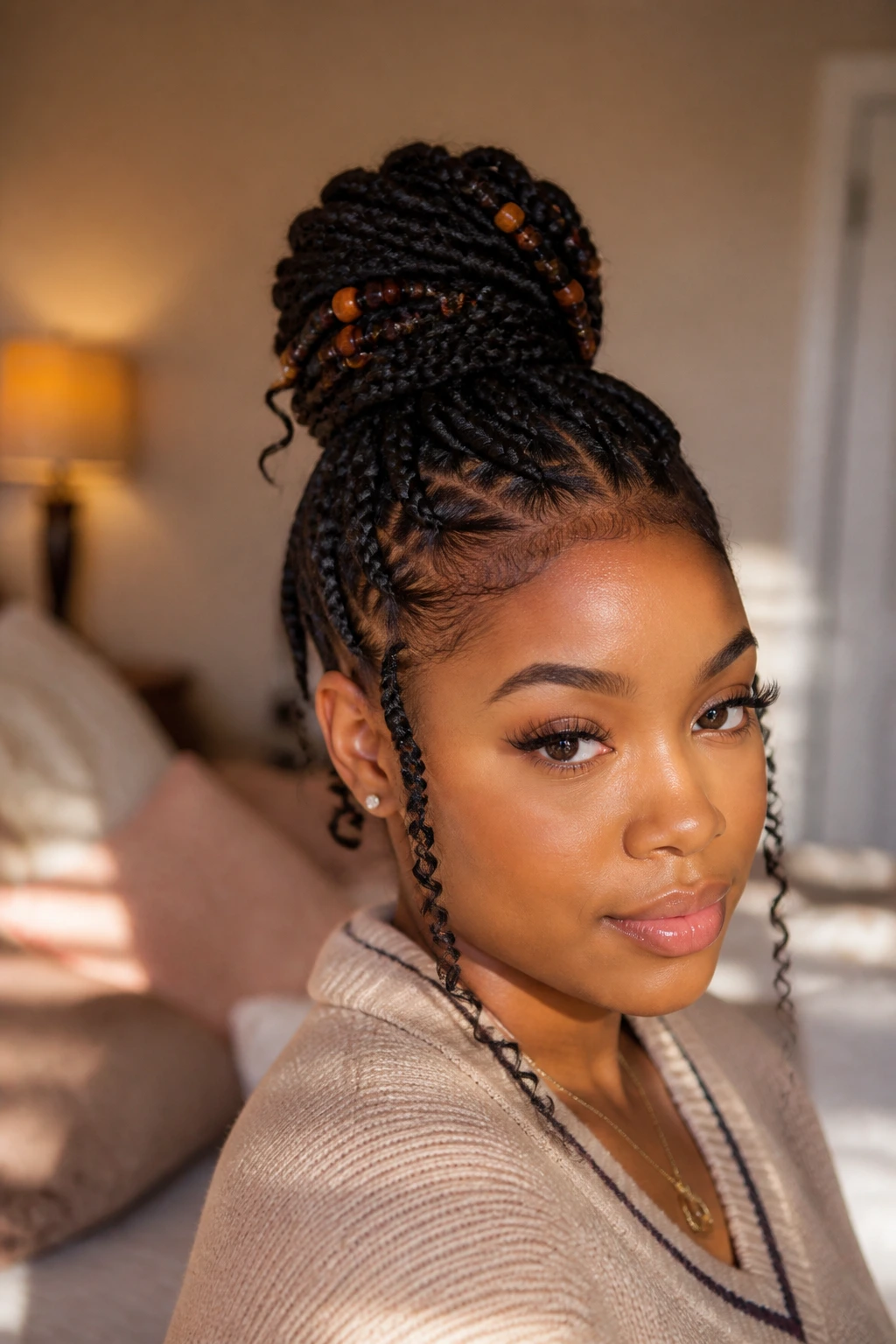
Beads can go wrong fast on a bun if you load them everywhere, so I like them as punctuation, not the whole sentence. A few beaded braids tucked into a braided bun bring movement near the nape or one side of the head, which helps a square face feel less boxed in.
This style works best when most of the bun stays compact and only a couple of loose braided ends carry the beads. That way the weight doesn’t drag the bun down or widen the shape. If your hair is fine at the temples, keep the beaded sections farther back so the face line stays soft.
One practical note: beads add sound and weight. Fine if that’s the mood. Not fine if you want a quiet, feather-light bun.
12. Ghana Braids into a Sculpted Bun
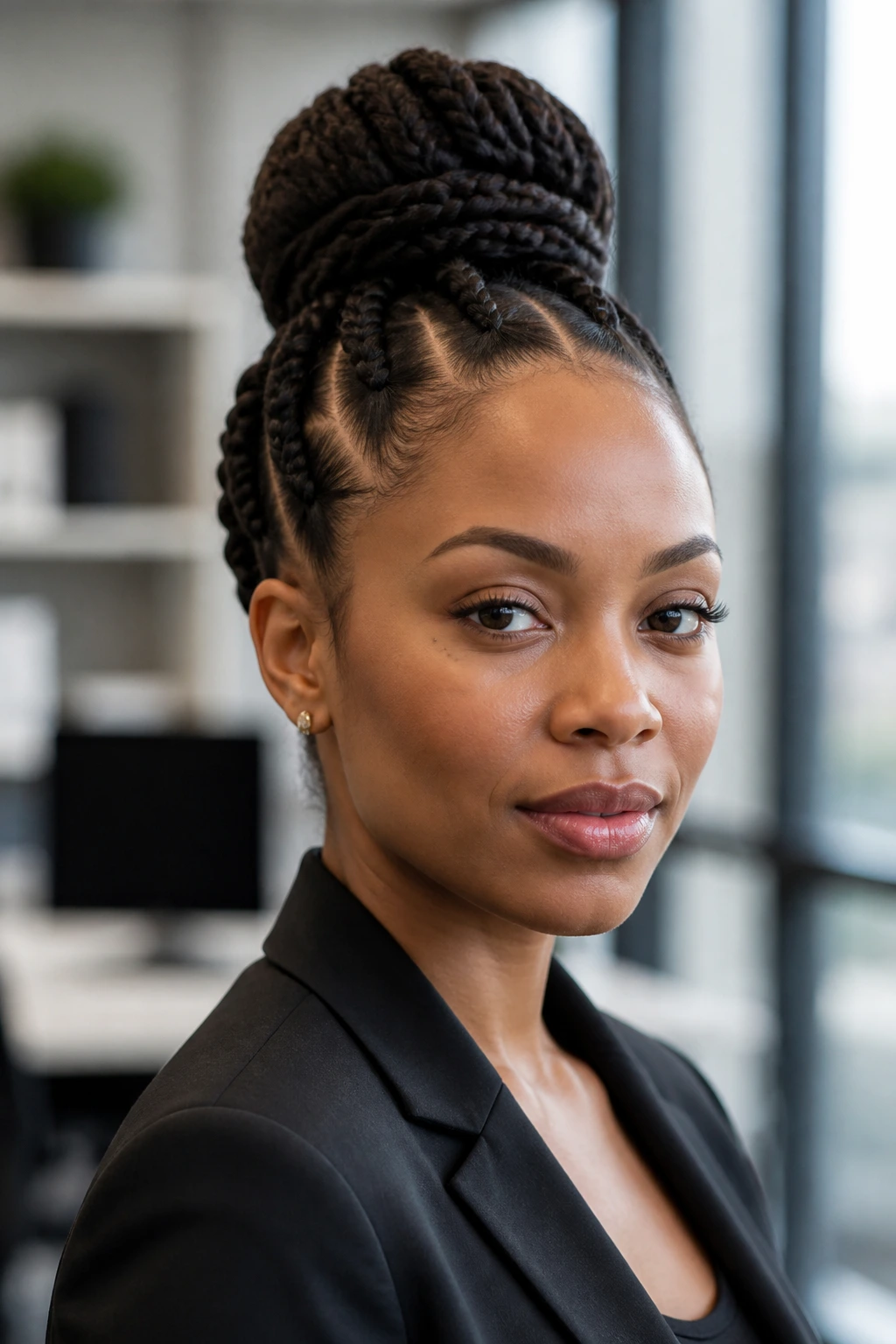
Ghana braids are thicker and more sculpted than standard cornrows, which makes them useful when you want the style to read bold but not bulky. The rows can curve gently into a bun that sits close to the crown or slightly behind it, and that placement suits square faces better than a wide knot at the sides.
The key is control. Ghana braids can swallow a face if they’re too wide, so keep the rows clean and the bun tight. On natural hair, the style holds shape beautifully when the hair is stretched first. If you leave the roots too fluffy, the neat sculpted line gets lost before lunch.
This one has a formal feel without being fussy. It’s the sort of braided bun that looks at home with a blazer, hoops, and a sharp lip color.
13. Curved Faux Hawk Braided Bun
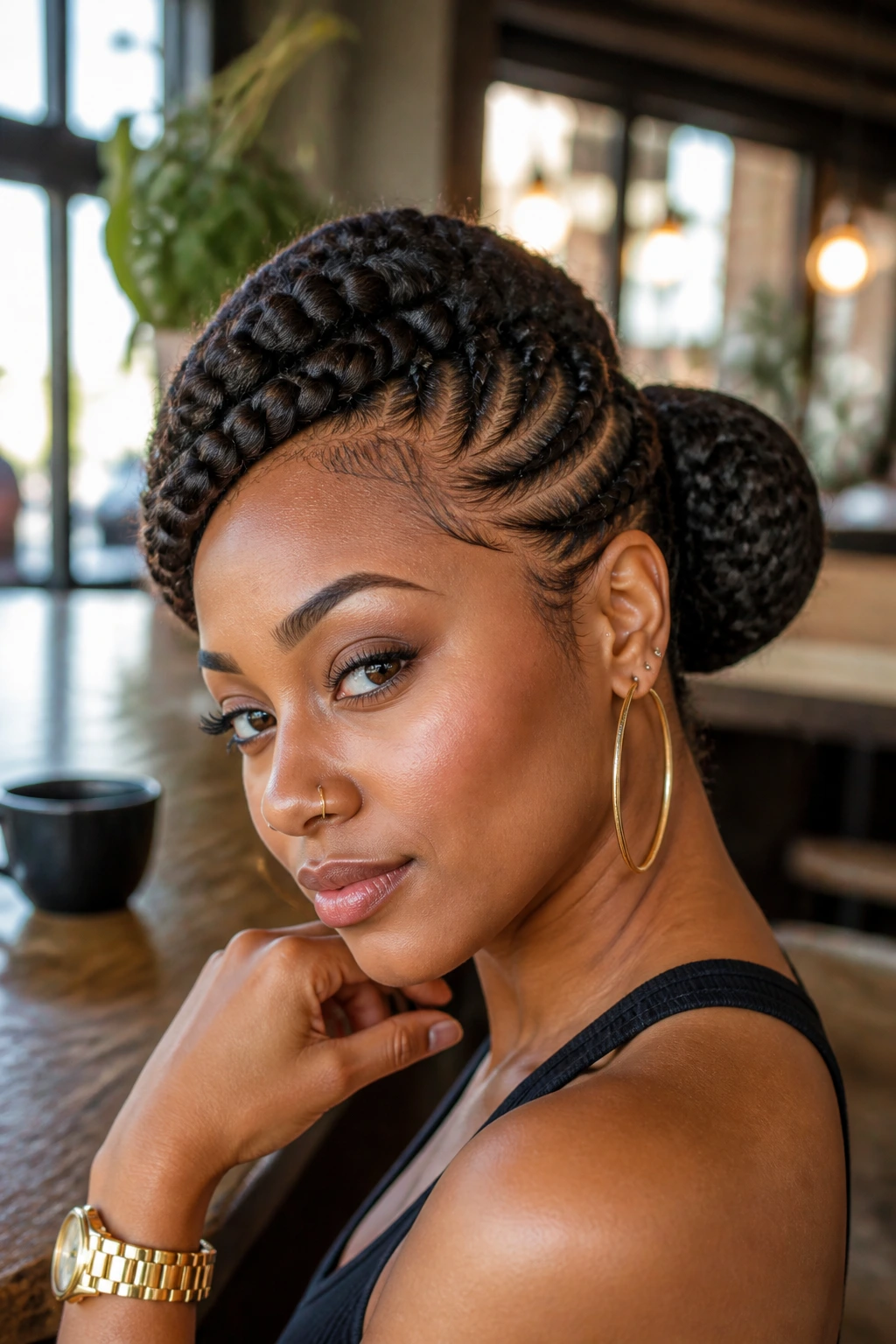
A faux hawk makes a square face look longer because the eye follows the center line from forehead to crown to bun. Add curved side braids instead of straight ones, and the style gets a little softer around the edges, which helps a lot if your jawline is already strong.
I like this version when the goal is attitude with control. The side braids keep the hair close to the head, the center section gets height, and the bun sits like the finish line. On natural hair, the style can hold for days if the sections are separated cleanly and the bun is pinned from underneath, not just laid on top.
If you want to make it less severe, leave one or two thin baby curls near the hairline. Tiny detail. Big difference.
14. Rope-Twist Braided Bun
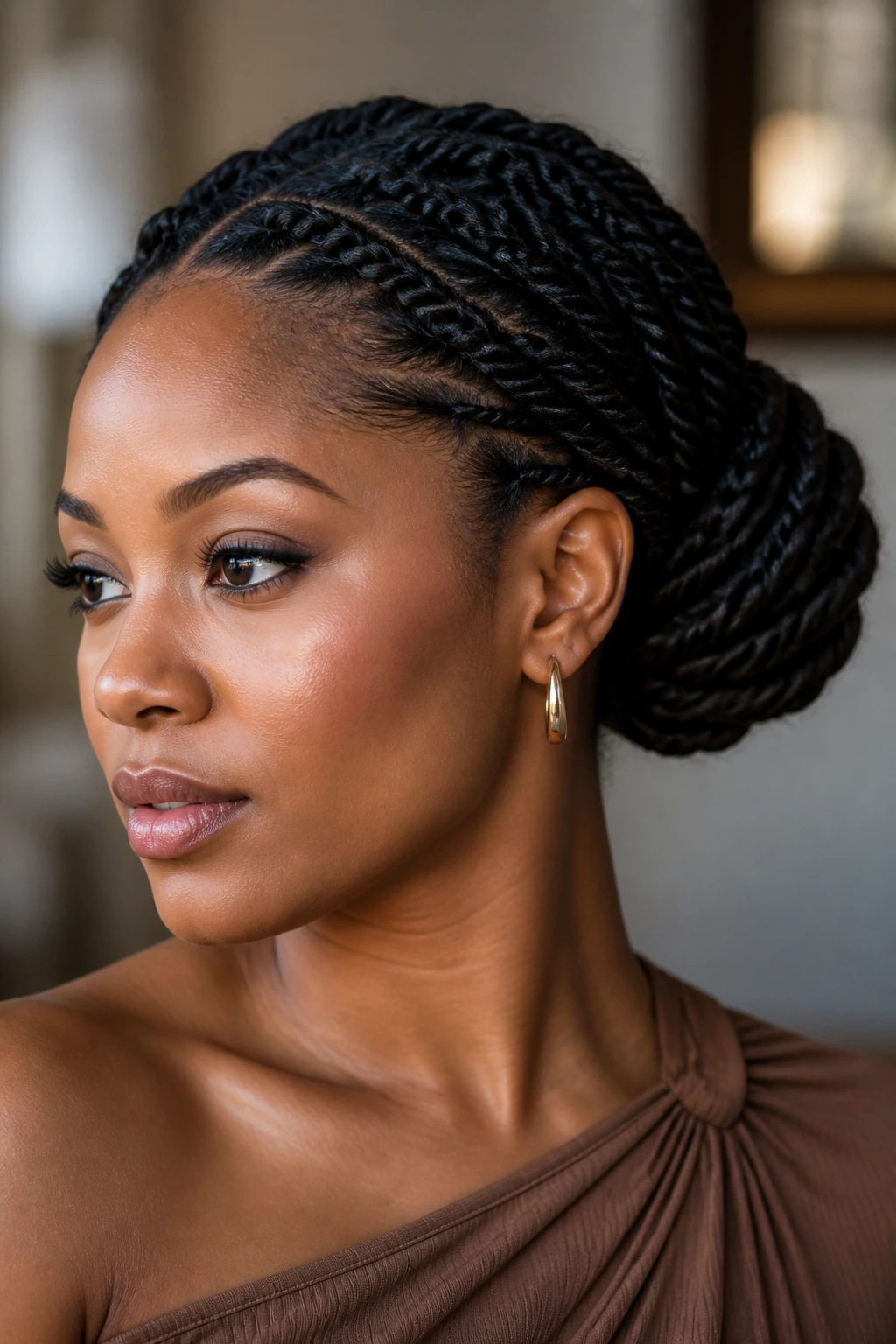
Rope twists soften the whole look because they round the braid line instead of laying down that firm three-strand texture. On square faces, that softness is welcome. The bun reads calm, the sides stay clean, and the twist pattern gives enough interest that you don’t need much else.
Why I reach for twists here
They’re easier to dress up or down. A rope-twist bun can sit low and neat for daytime, or be pinned higher with a clean side part for an evening look. The twist also tends to frizz in a gentler way than some braids, which means the style ages in a softer, less boxy direction.
Keep the twist size medium if your hair is very dense. Too chunky and the bun gets heavy at the back. Too small and the twist pattern disappears when you pin everything up.
15. Stacked Bun with Two Braids Wrapped Around
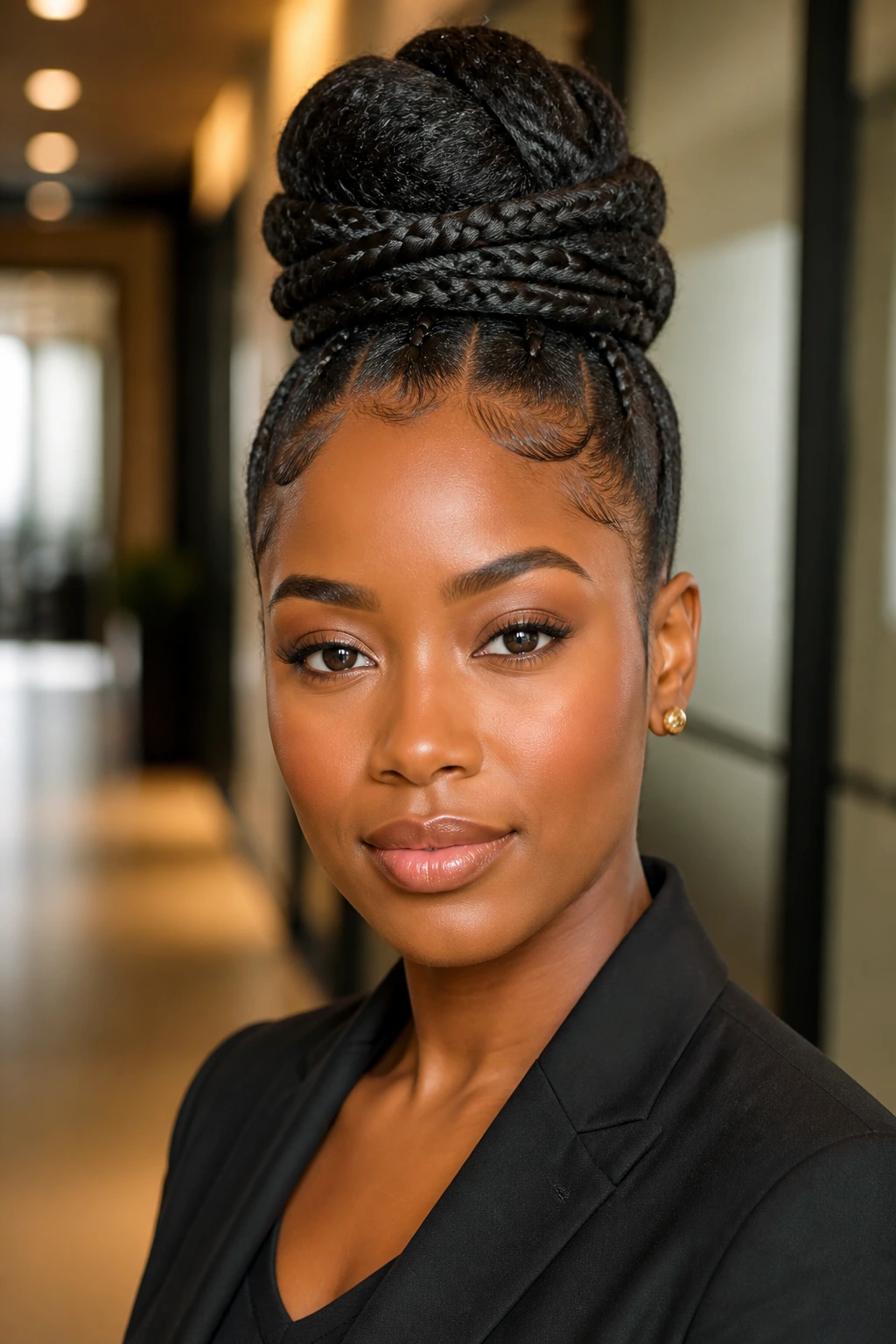
Stacked buns sound complicated, but the idea is simple: build one compact bun, then wrap two braids around it in separate loops so the shape looks layered instead of flat. That layered finish gives square faces some welcome vertical texture without adding width at the cheeks.
It’s especially good on thick natural hair because the braid wraps help control volume. If your bun tends to puff into a round dome, this structure reins it back in. The result feels polished and a little architectural, which is a nice change from the softer styles that rely on loose pieces.
A small pin hidden under each wrap keeps the bun from sliding. Don’t skip that part. A stacked bun that slips by evening loses the whole point.
16. Side Chignon with a Braid Sweep
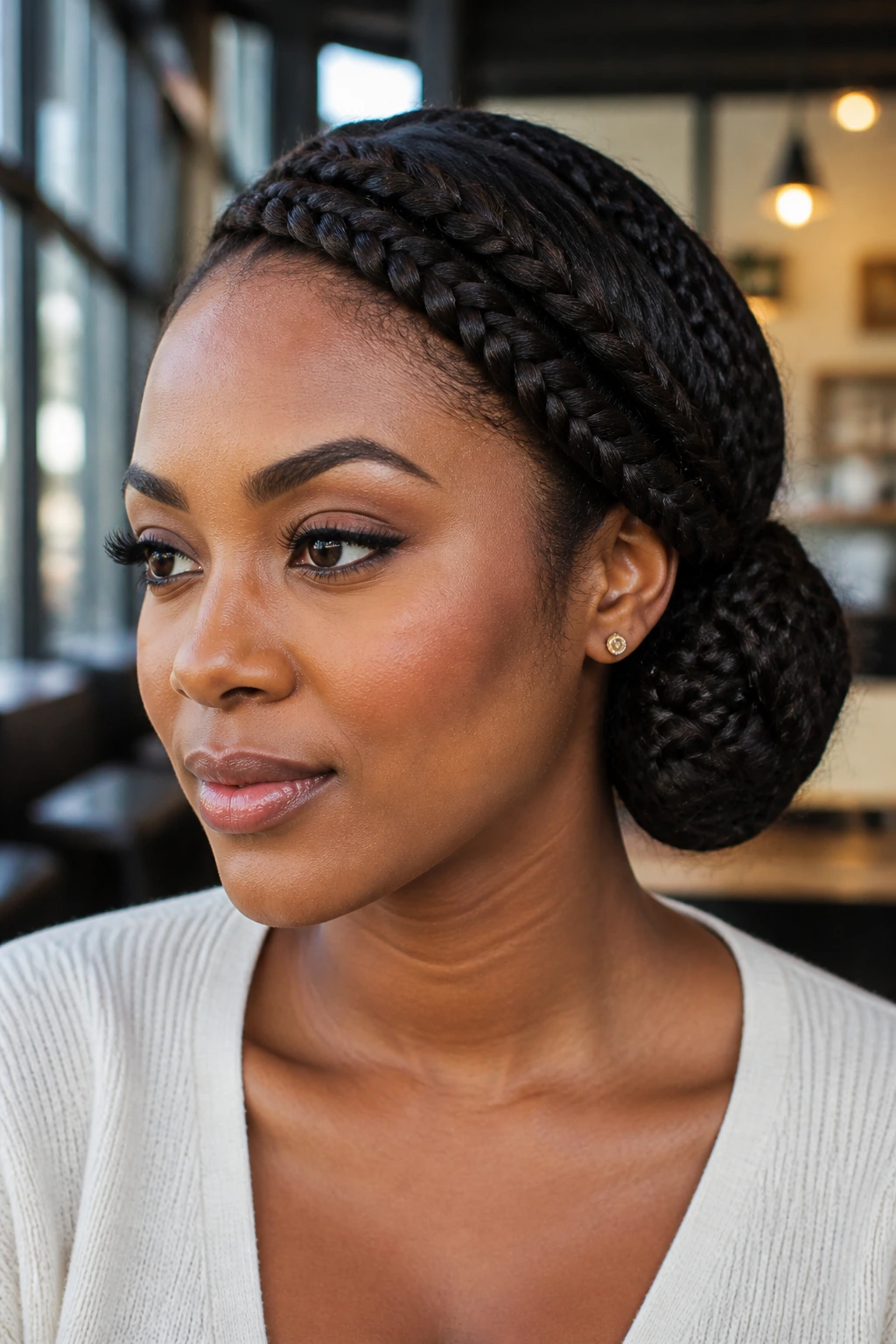
One-sided buns solve boxy outlines because they refuse symmetry. A side chignon with a braid sweep starts with a braid that arcs across the head, then gathers into a low knot just behind one ear or slightly off the nape. The face reads softer because the eye never lands on a blunt center point.
This shape feels best when the bun stays sleek and the sweep stays visible. If you tuck the braid too aggressively, you lose the diagonal line that makes the style work. On natural hair, use enough smoothing product to control flyaways, but not so much that the braid turns hard and shiny like plastic.
If your face already has strong corners, this one is a good choice. It breaks them up without asking for a dramatic haircut or a lot of length.
17. Bubble-Braided Bun Hybrid
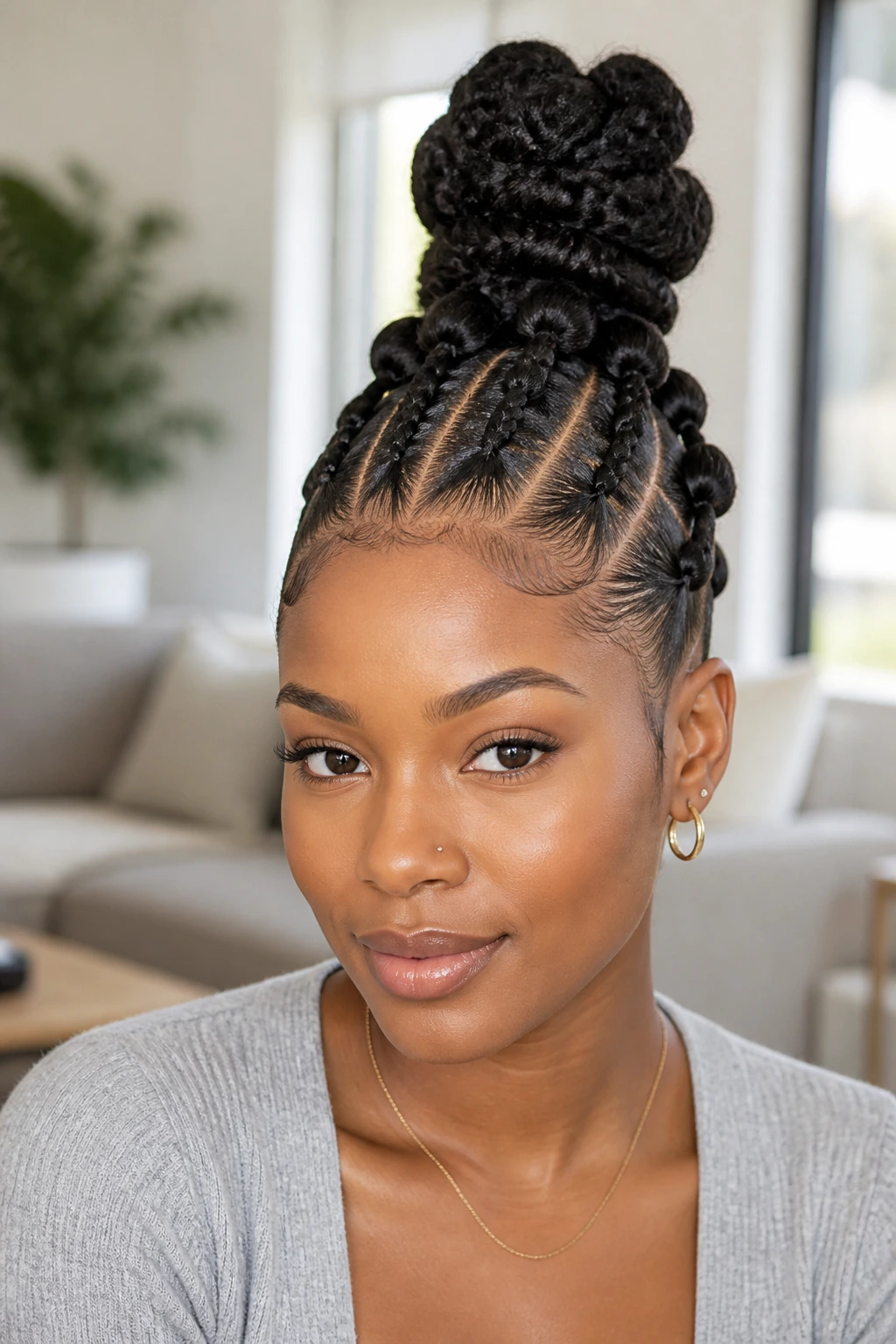
Bubble braid sections can look playful, but they’re also useful for face shape because each bubble creates rounded breaks along the length before the hair reaches the bun. That matters on square faces. Rounded breaks soften sharp lines.
This hybrid works best when the bubbles are spaced evenly and kept medium-sized. Tiny bubbles can make the style feel busy. Large ones can pull too much attention sideways. At the end, fold the braid into a tight bun so the width stays controlled and the top of the head does the visual work instead of the sides.
I’d wear this style when I want something a little less serious. It has enough structure for a polished outfit, but it doesn’t read stiff.
18. Crown-to-Nape Braided Bun
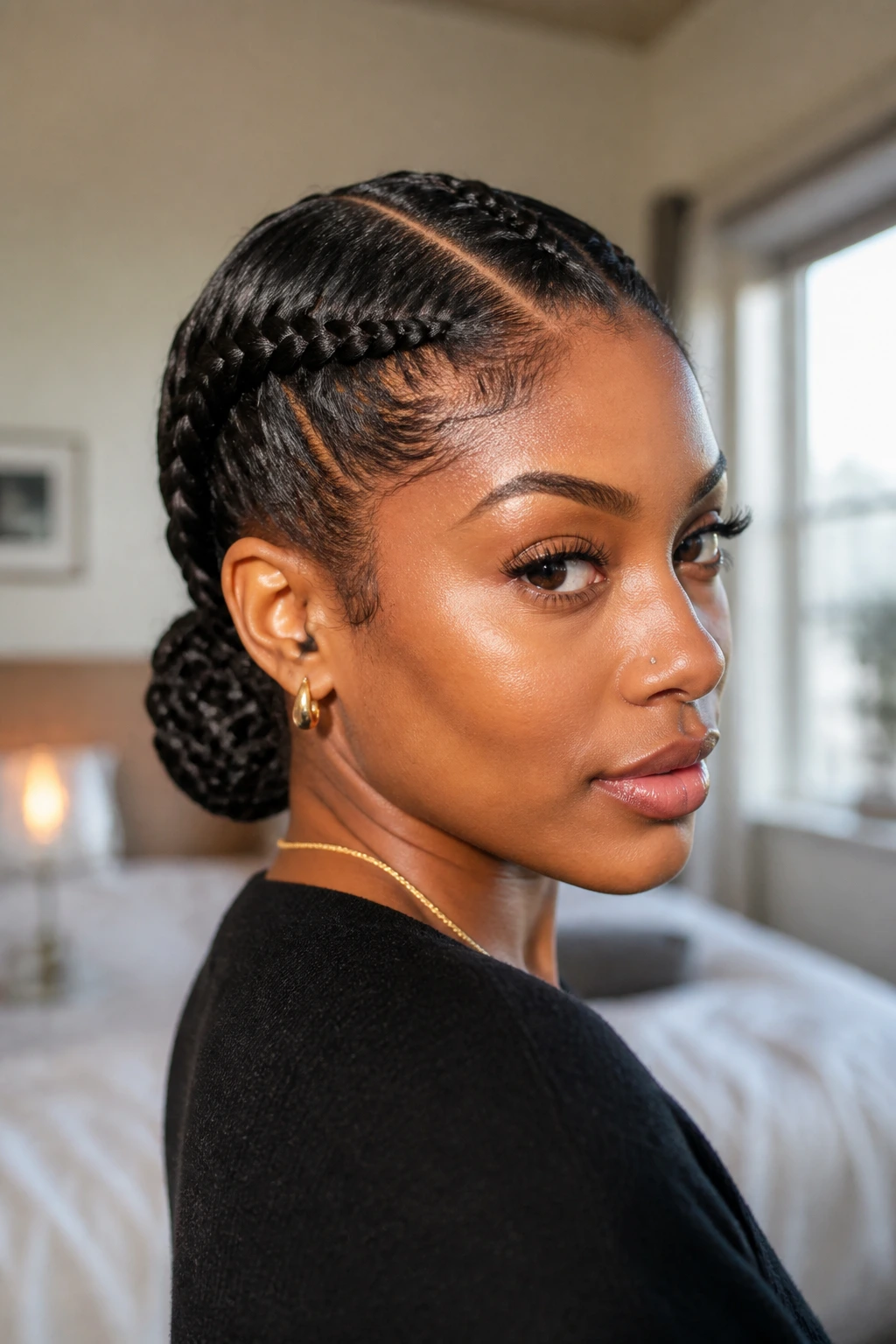
What if the braid starts high but finishes low? That’s the charm here. A crown-to-nape path gives you lift at the top of the head and a grounded bun at the back, which is a strong combination for square faces because it lengthens the outline without making the sides wide.
The braid can travel as one clean line or split into two smaller ones before converging at the nape. Either way, the movement is vertical first, horizontal second. That order matters. On natural hair, this style usually behaves best when the hair is stretched enough to keep the braid neat but still has enough texture to grip the pins.
A side part can make this even softer. If you want the face to read a little less symmetrical, shift the crown line just off center.
19. Chunky Box-Braid Bun
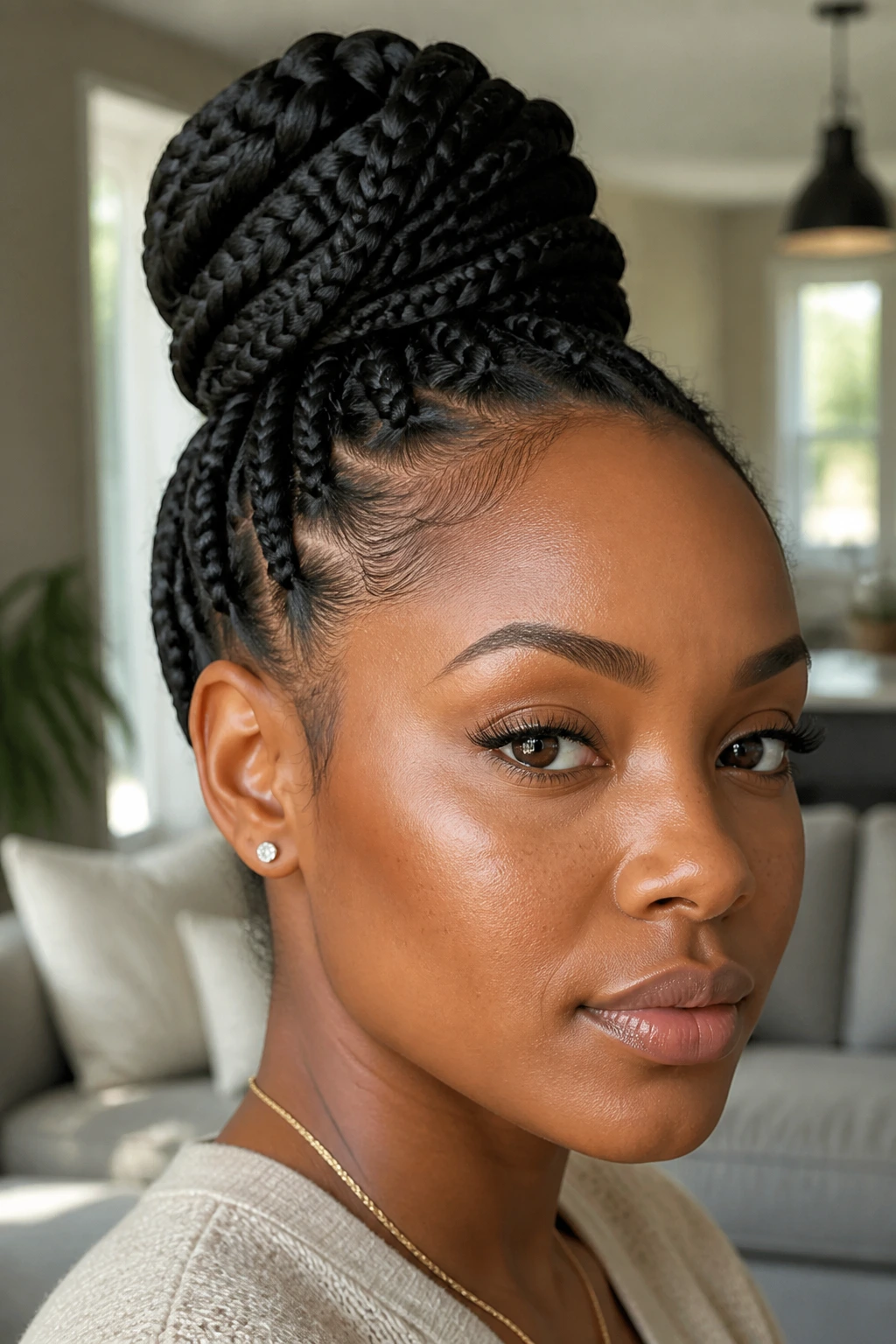
Chunky box braids can be heavy, so the trick is to keep the bun compact and close to the head. Square faces already carry enough width through the middle, and a huge bun on top of chunky braids can make the silhouette feel wider than it needs to be.
Used well, though, this style has presence. The braid size gives texture, the bun gives control, and the overall shape can look very clean if you tuck the outer braids inward rather than letting them fan out. I like this especially when the braids are a little long and the bun can be wrapped twice, because that keeps the profile neater.
If you wear this style, check the sides in profile, not just head-on. The side view tells the truth.
20. Tucked Bun with a Braided Headband
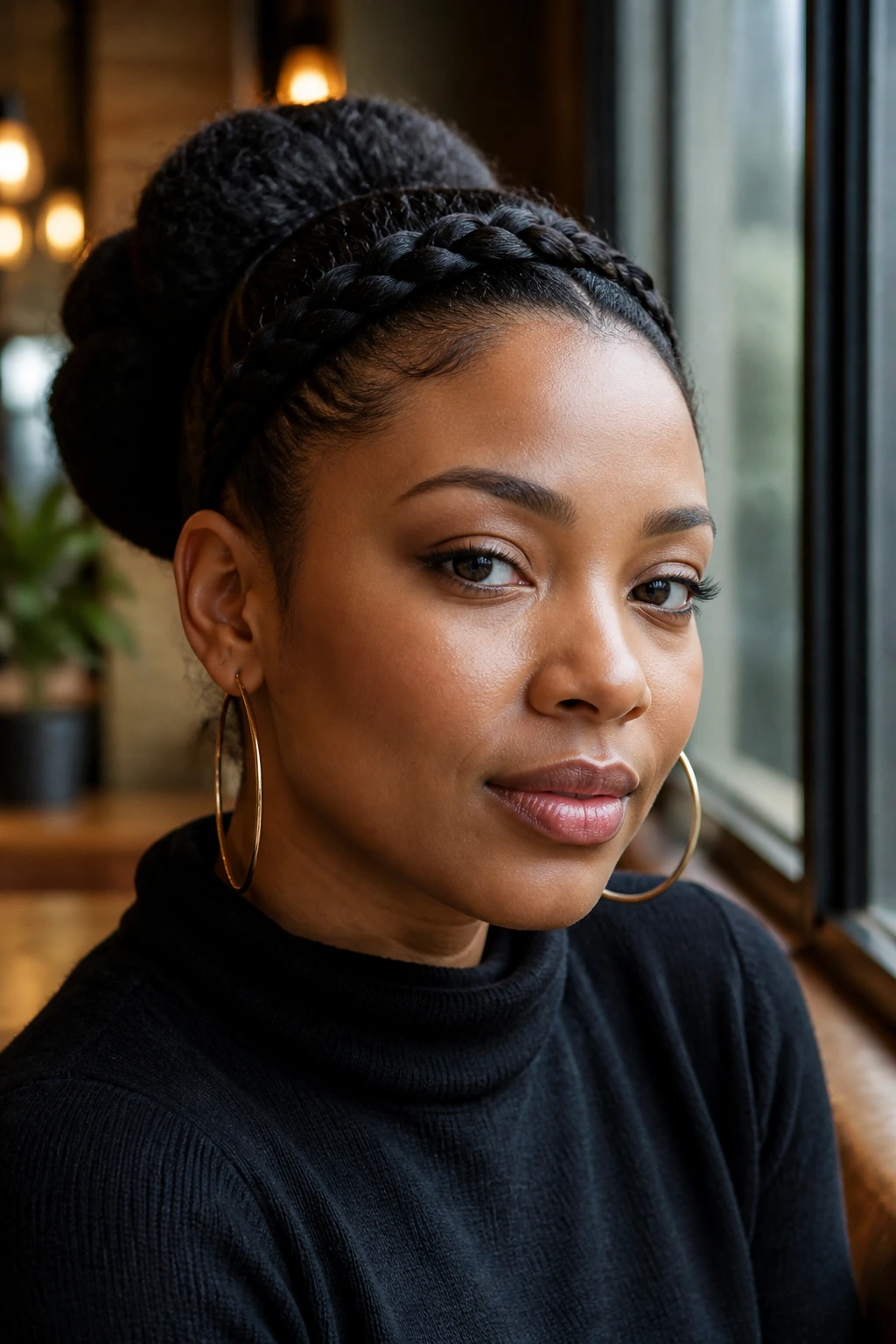
A braided headband is one of the easiest ways to frame a square face without adding extra width at the jaw. The band sits where the eye naturally starts reading the face, and the tucked bun below it keeps the lower half neat.
This style is useful on days when you want your hair off your neck but still want some shape near the front. The braided band can be a thin accent or a thicker statement, though I’d keep it moderate so it doesn’t overwhelm the forehead. On natural hair, this holds well if the base of the bun is pinned under the band rather than stacked on top of it.
The result feels tidy and a little romantic. Not fluffy. Not severe. Somewhere in the useful middle.
21. Asymmetrical Knot Bun
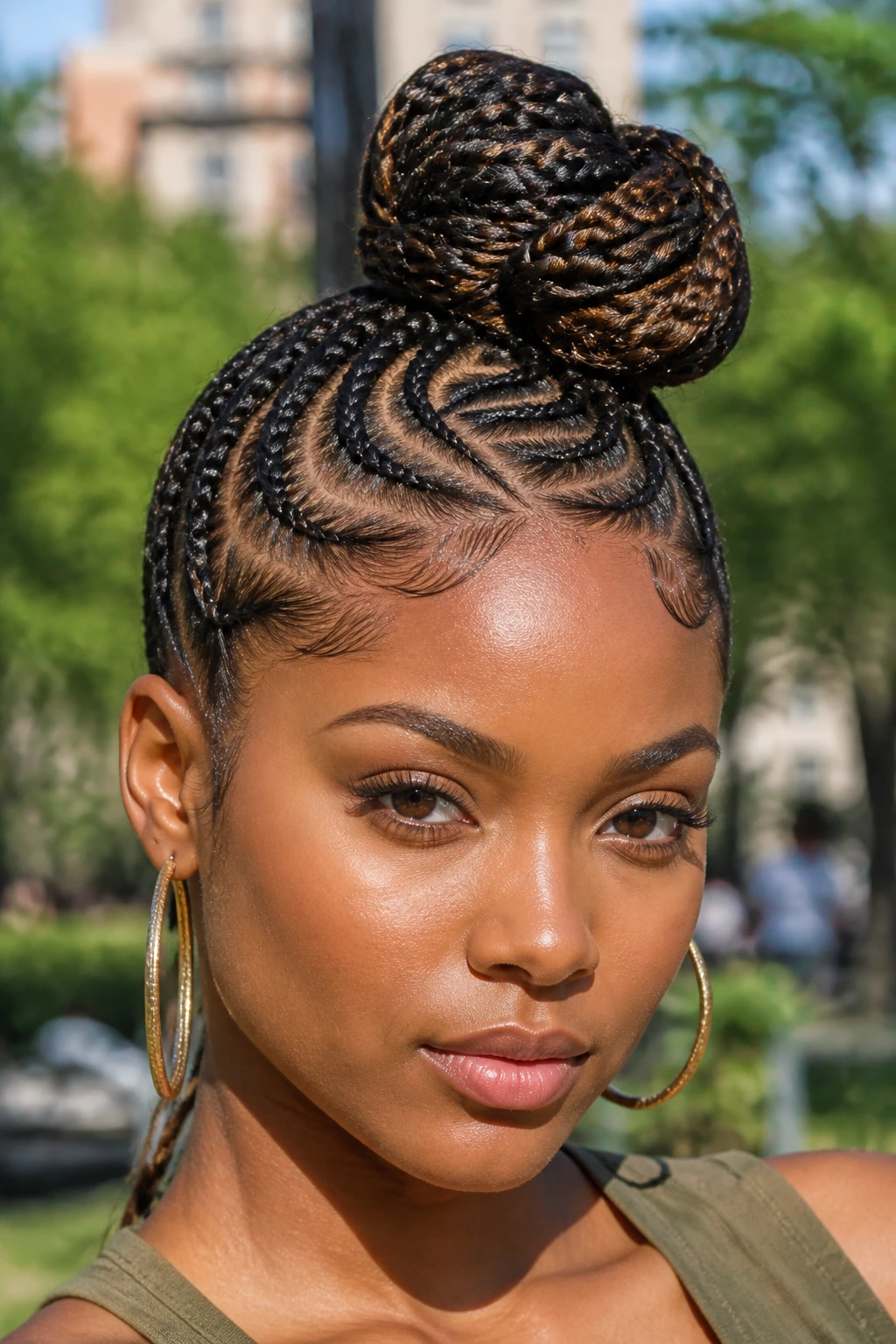
An asymmetrical knot bun is one of the smartest moves for a square face because it refuses to mirror the jaw. Put the knot slightly higher on one side, let the braid path drift off-center, and the whole outline feels less blocky.
I like this for hair that has enough density to hold a shape but not so much that it balloons outward. The asymmetry gives the style motion, and motion is what breaks up the hard edges. If you want it smoother, keep the front section polished and let the bun itself carry the irregularity. If you want it softer, leave one thin piece loose near the opposite temple.
There’s a little attitude in this one. Good attitude. The kind that doesn’t ask permission.
22. Zigzag-Part Sculpted Bun
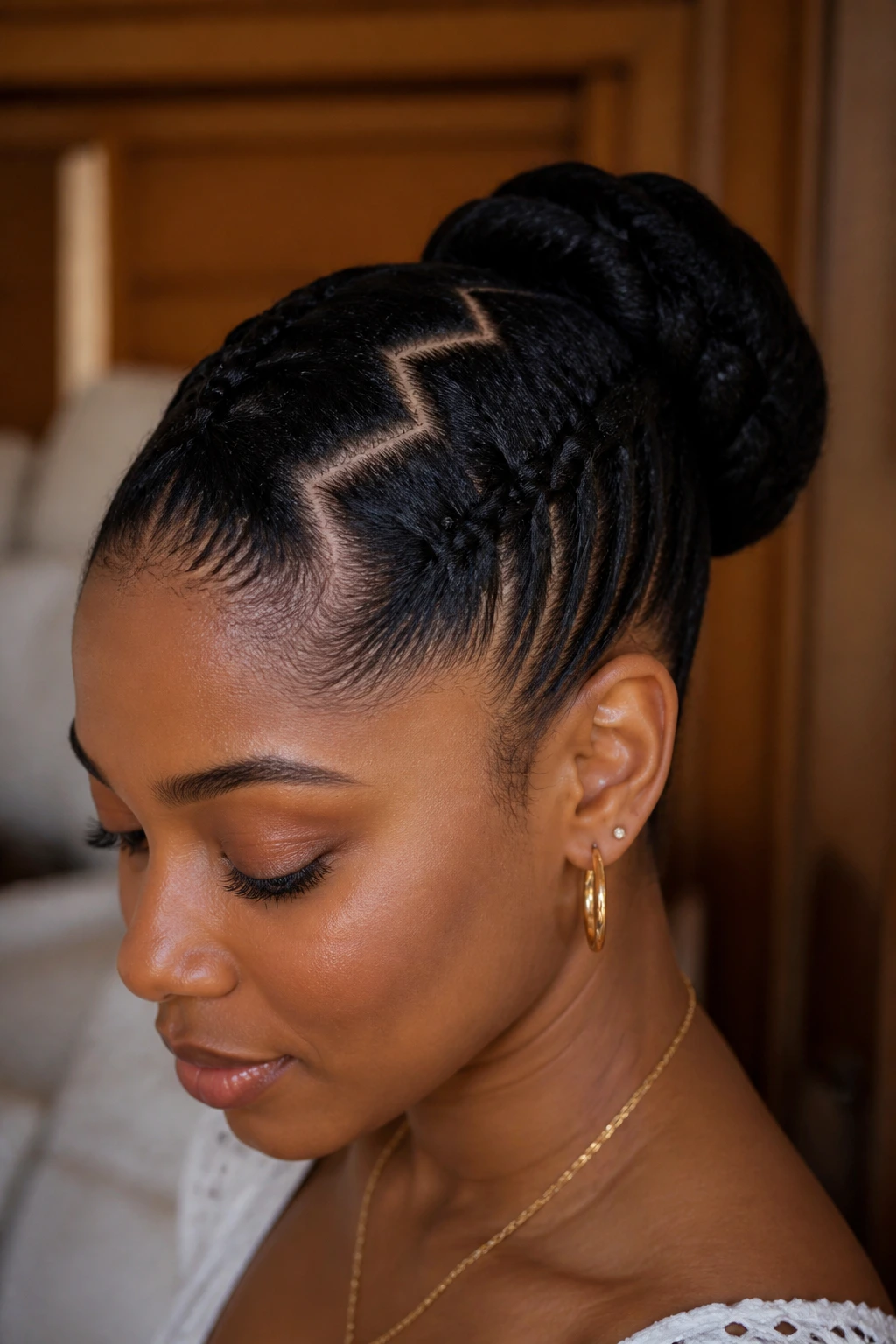
Zigzag parts are not just decoration. They disrupt straight lines at the scalp, which helps a square face feel a touch less rigid before the bun even begins. The bun itself should stay smooth and compact so the parting gets to be the star.
This style is strongest when the zigzags are clean and not too small. Too busy, and the head starts looking crowded. Too wide, and the pattern loses its snap. A sculpted bun at the back or crown keeps the overall silhouette under control while the parting does the visual lifting.
It’s a good final note for the list because it proves something simple: square faces don’t need one trick. They need the right line in the right place.
Why Braided Buns Suit Square Faces So Well
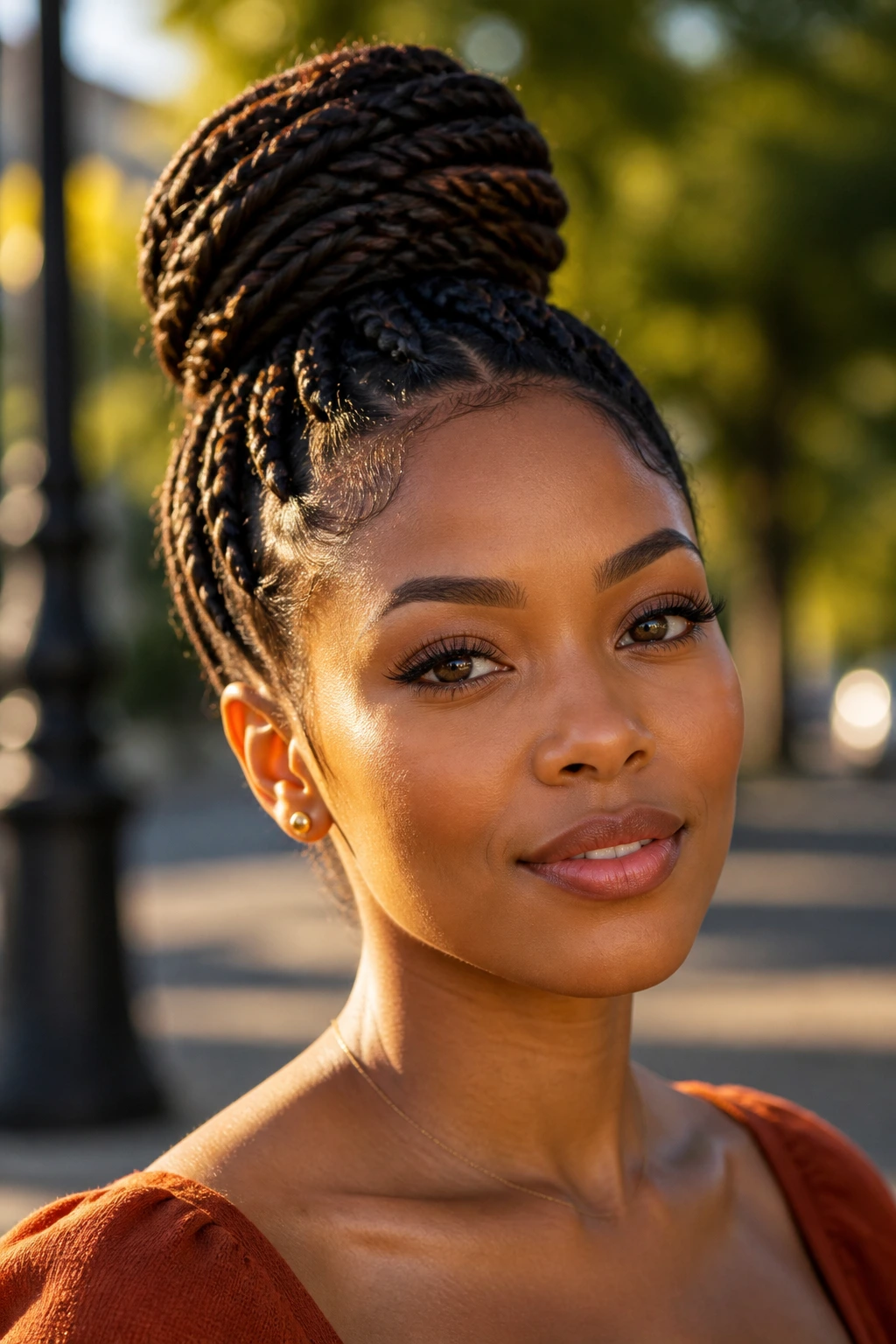
Square faces tend to have a strong jaw, a broad forehead, and cheekbones that don’t disappear into the background. That shape can look striking with the wrong hairstyle and elegant with the right one. Braided buns sit in the sweet spot because they can add height, create diagonals, and move the eye away from a straight horizontal line at the jaw.
The best braided bun patterns do not fight the face. They bend around it. A deep side part breaks symmetry. A crown braid adds lift. A low nape bun keeps the bottom half calm. Even one thin tendril can change the whole profile if the rest of the style is neat.
Natural hair gives you an advantage here, since texture helps braids hold and bun shapes stay put. The catch is bulk. If the style is too wide at the sides, or too tight at the hairline, the face can look harder and the scalp can feel angry by nightfall. That’s why the shape matters as much as the braid itself.
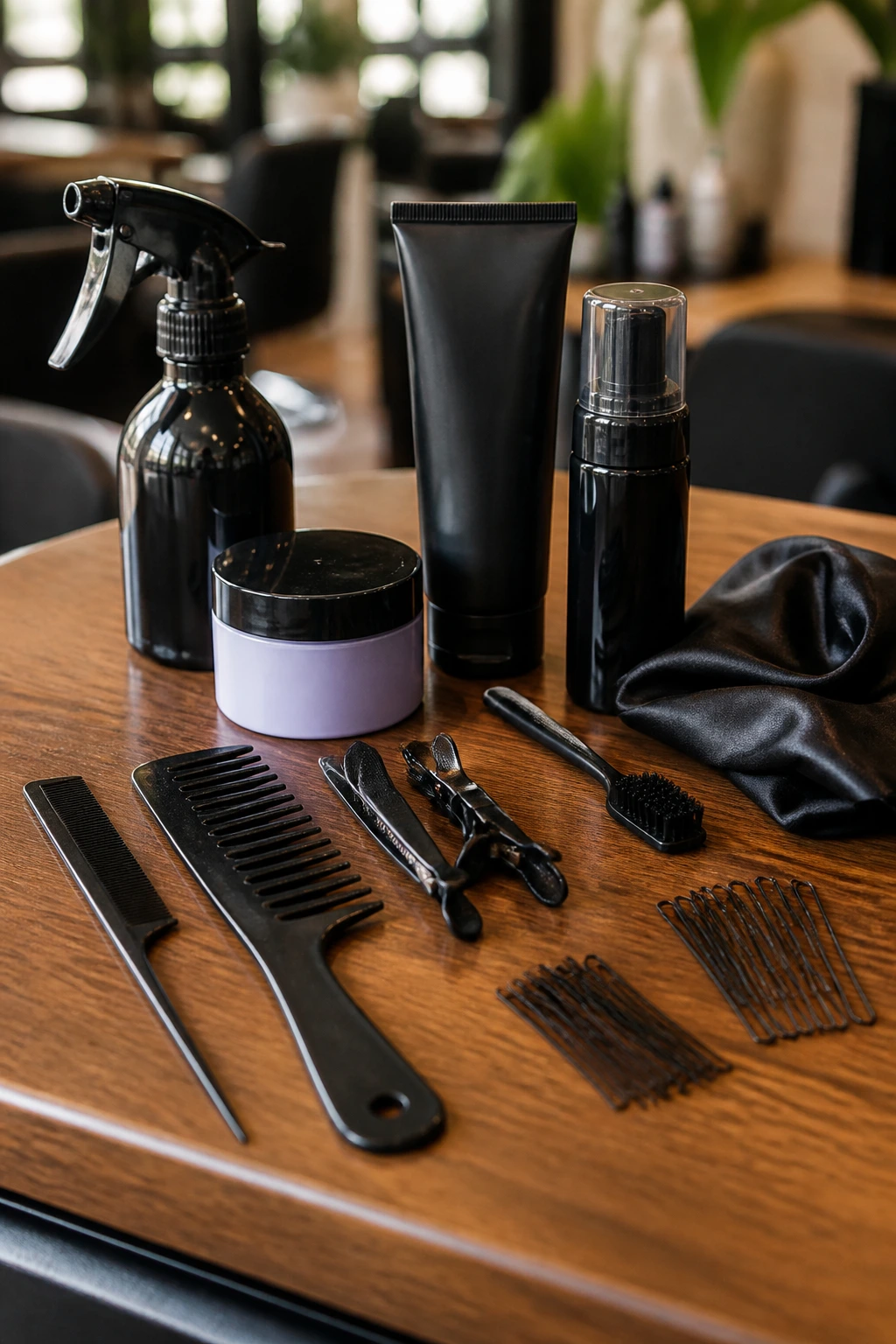
Essential Tools for Clean Braided Bun Styles
- Rat-tail comb: The pointed end gives you cleaner parts than a wide comb, especially on square faces where part placement matters.
- Wide-tooth comb: This is the one I’d use for detangling before styling so you don’t rip through coils.
- Sectioning clips: They keep unused hair out of the way while you braid, which is the difference between tidy parts and a messy crown.
- Spray bottle with water or leave-in mix: Lightly misting the hair makes sectioning easier; soaking it makes the style frizz faster.
- Edge brush: Useful if you want smooth hairlines without scraping product across the scalp.
- Mousse or foam wrap lotion: A small amount helps tame flyaways on finished braids without turning everything stiff.
- Strong but flexible gel: Pick one that does not flake. Square faces do not need shiny flakes sitting on the forehead.
- Bobby pins and U-pins: These matter more than people think; a braid-wrapped bun needs hidden support.
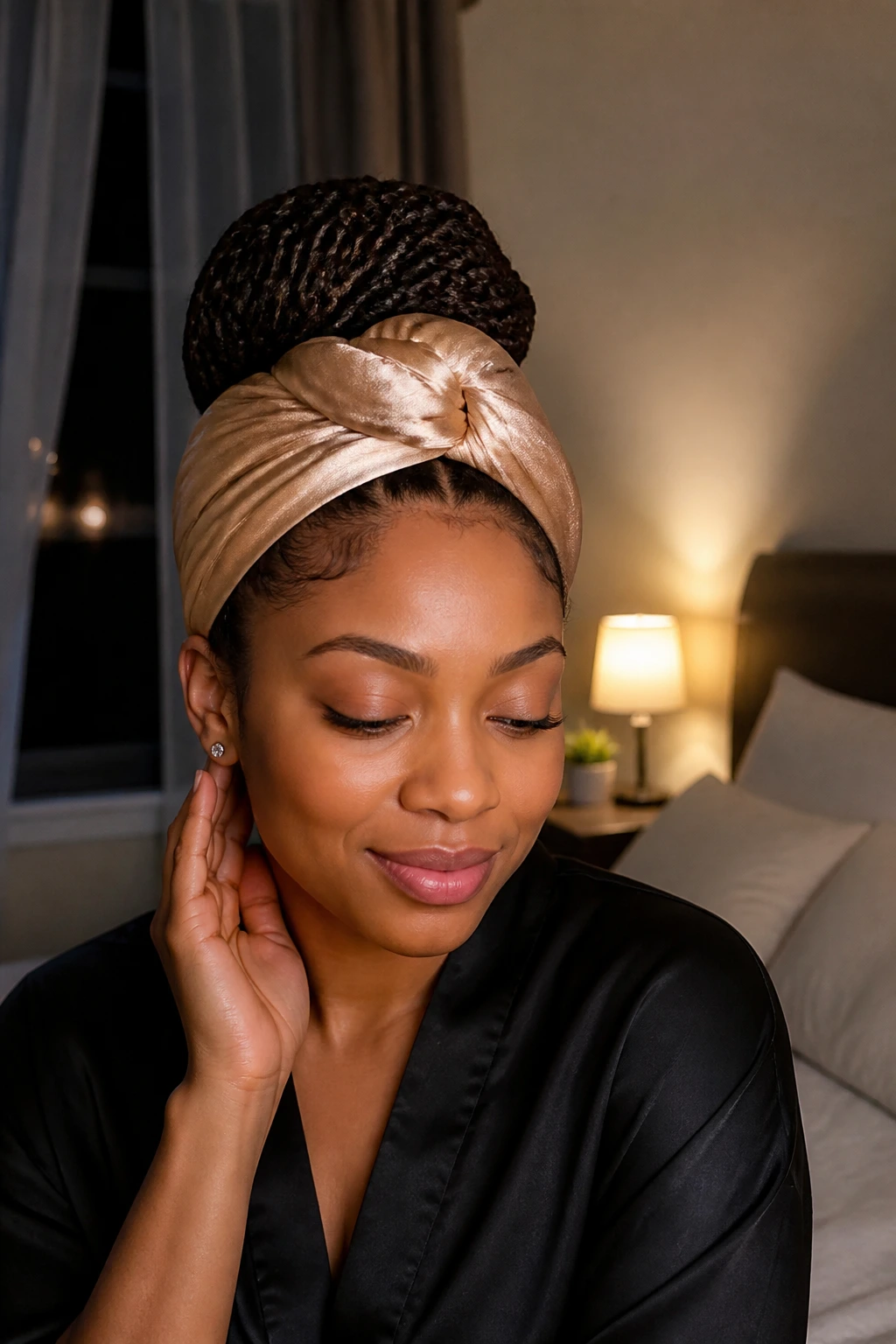
- Satin scarf or bonnet: Nighttime protection keeps the shape from frizzing out at the sides.
- Optional braiding hair: Helpful for added length or a fuller bun, but not required if your own hair already carries enough volume.
Smart Product and Prep Tips for Natural Hair
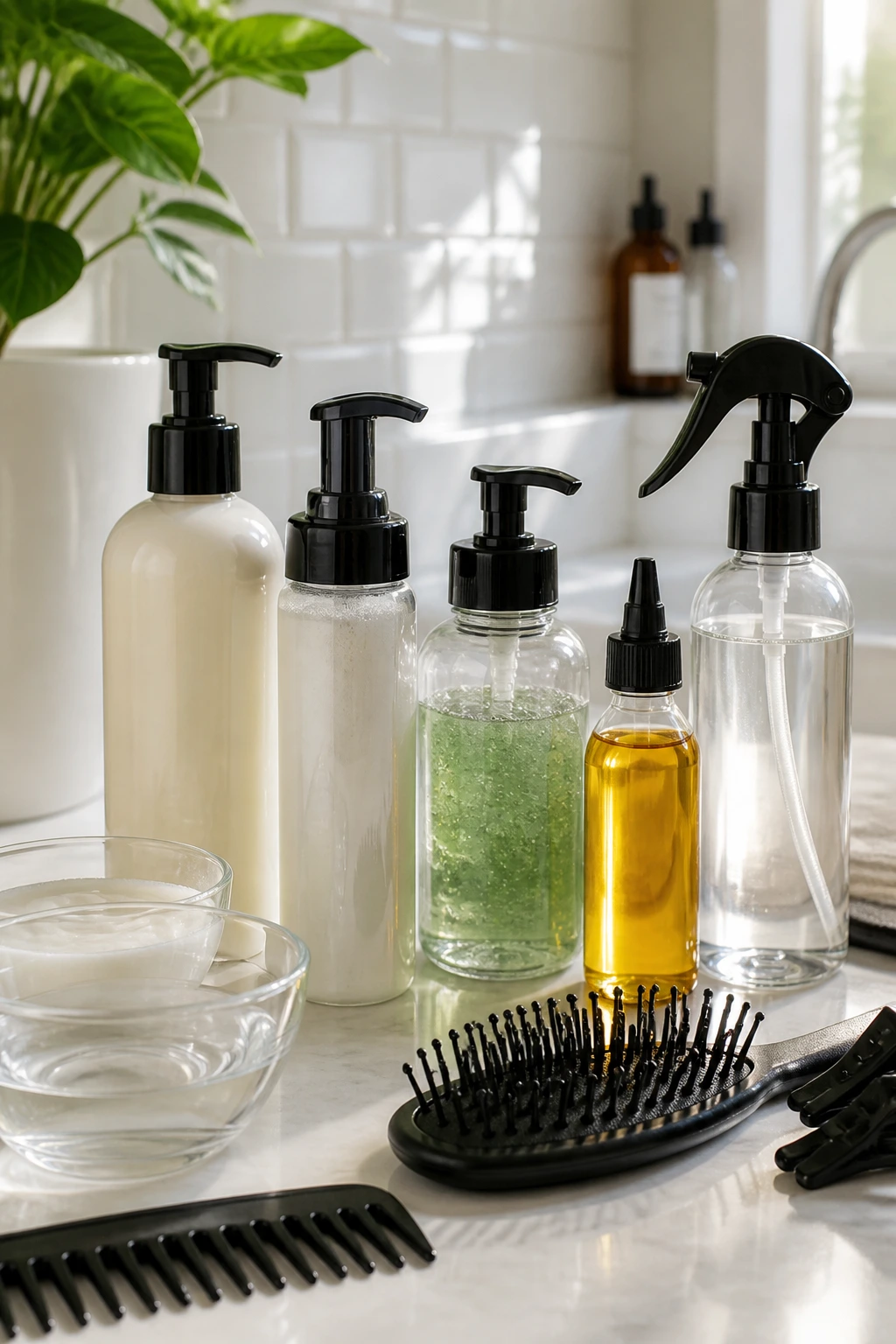
Clean prep makes a braided bun last longer and sit better. Start with a scalp that is actually clean, then add conditioner or leave-in only where your hair needs slip. If the roots are coated in too much product, the braids slide around and the bun loosens faster than you want.
Stretching helps a lot, especially if your curls shrink hard. Banding overnight, blow-drying on low heat, or doing a gentle twist-out the day before gives the braids a smoother base. You do not need bone-straight hair. You need hair that will lay in the direction you part it.
For product choice, think in layers: leave-in for softness, foam or mousse for surface control, gel for the hairline, and a tiny bit of oil only on the scalp if it feels dry. Too much oil near the parts can make the style swell and slip. Too much gel can create flakes that show up in the braid line and ruin the clean shape.
If you’re adding braiding hair, choose pre-stretched, lightweight hair so the bun doesn’t become a brick. Heavy extensions on a square face can widen the silhouette in a way that feels clumsy. Lighter hair keeps the top and sides neat.
How to Wear These Braided Buns Without Sharpening the Face
Silhouette: Park the bun either above the temples or below the nape. The widest part of a square face usually does not want a knot sitting directly beside it.
Accessories: Medium hoops, slim cuffs, and one scarf pin are enough. Big heavy pieces can pull the eye outward and make the face feel wider.
Texture: Leave a little softness near the temples if you want the look to feel less severe. Tiny wisps are enough. You do not need a full curtain of curls.
Outfit balance: High-neck tops make low buns look tidy and sharp. Scoop necks and open collars give high buns more room to breathe.
A braided bun also changes with the size of the braids. Chunky braids need a compact knot. Tiny braids can handle a slightly fuller bun. If both the braids and the bun are oversized, the style starts to spread sideways, and that’s the one shape square faces usually don’t need.
Additional Tips and Shape Tweaks
Shape Boost: Add a little height at the crown if the face feels especially square that day. Even half an inch changes the profile.
Tension Check: If the temples ache by the time you finish the style, it’s too tight. A style should feel secure, not like a warning.
Sleek vs. Soft: Use more mousse and less gel when you want movement. Use a touch more gel at the root when you want the bun to look crisp for several days.
Length Trick: If your own hair is short, add braiding hair only where the bun needs volume. Keep the added hair wrapped into the knot so it doesn’t flare out at the sides.
Part Placement: A center part is not banned. It just needs help from height or a narrow bun. A side part is easier, but not the only answer.
A small side note: sometimes the prettiest fix is the simplest one. Move the bun two inches higher. That alone can soften the whole face.
Common Mistakes That Make Braided Buns Fight the Face
The first mistake is parking the bun right at jaw level. That’s where square faces are already strong, so a wide knot there can make the lower half look heavier. Move it up or down, and the face reads cleaner.
The second is braiding too wide at the temples. Wide braids at the sides create extra horizontal volume, and that is usually the last thing a square face needs. Keep the sides sleek and let the interest happen through the parting or the braid direction.
The third is pulling the hairline too tight. Tight braids can look neat for a few hours, then turn into a headache and a red line at the edges. If the skin looks shiny and stretched before you even leave the mirror, back off.
The fourth is forgetting nighttime care. A braid bun can look pristine on day one and frizzy by day three if you sleep on a cotton pillowcase. Satin matters. So does a quick wrap.
The fifth is over-accessorizing. Beads, cuffs, clips, and wraps can crowd the shape if they’re all used at once. Pick one or two accents and let the bun stay the main event.
Variations and Adaptations to Try
Short Hair Tuck-In: If your natural hair is not long enough for a full bun, braid the sections smaller and pin the ends tightly underneath. The goal is a compact knot, not a giant puff.
Extension Length Boost: Add lightweight braiding hair when you need the bun to sit higher or hold a more sculpted shape. Keep the added length wrapped inward so it supports the silhouette instead of widening it.
No-Tension Comfort Version: Use slightly larger parts, looser cornrows, and a lower bun if your scalp is sensitive. This version lasts a little less long, but it saves your hairline.
Soft Romantic Version: Leave two thin strands near the cheeks and use a little foam to smooth the braid surface. That gives square faces a gentler line without turning the style messy.
Event-Ready Shine Version: Smooth the finished braids with a light foam and a pea-sized amount of shine serum on the lengths only. Skip the roots or the style can go limp before the night is over.
Night Care, Refreshing, and How Long These Styles Last
Most braided buns for natural hair hold about 5 to 10 days if they’re installed cleanly and wrapped at night. If you use extensions and the base stays comfortable, you can sometimes stretch past that, but the bun usually starts looking tired before the braid line does. Scalp comfort should decide the removal date more than pride does.
Sleep with a satin scarf, bonnet, or both if your bun likes to rub loose. If the bun is high, I’d wrap the base first, then cover the whole head so the top knot does not flatten into a square lump. If it’s a low bun, tuck the ends flat and keep the nape smooth.
Refreshing should be light. Mist your hands, not the whole head, then smooth the frizzed spots with a little mousse or leave-in. A drop or two of oil on the scalp parts can help dryness, but drenching the braids makes them swell. That swelling is what turns a clean style into a fuzzy one.
Watch the edges. If the hairline starts to feel sore, or the braid base slides after a few days, take the style down sooner rather than trying to rescue it with more pins. Braided buns are protective only when they stay comfortable.
Frequently Asked Questions About Braided Buns for Square Faces
Which bun height flatters a square face most?
Usually a high crown bun or a low nape bun. Both avoid parking extra width right beside the jaw, which is where square faces already carry the most visual weight.
Can I wear braided buns if my natural hair is short?
Yes. Use smaller braids, tighter pinning, or a little added braiding hair if you need length for the bun. The main trick is keeping the base compact so the style does not look puffy.
Do center parts work on square faces?
They can, but they need help from another shape cue. A high bun, a curved braid path, or a soft tendril near the temples keeps a center part from looking too straight.
Should I stretch my hair before braiding?
If your curls shrink hard, yes. Banding, twisting, or low-heat blow-drying makes parts cleaner and keeps the bun from expanding sideways after a day or two.
How tight should the braids be?
Tight enough to hold, loose enough that the hairline does not hurt. If your scalp feels hot or tender the same day, the style is too tight and needs to be adjusted next time.
Can I use braiding hair with these styles?
Absolutely. Lightweight, pre-stretched hair works well when you need extra length or a fuller bun, but keep the added width controlled so the sides do not overwhelm the face.
What if my braided bun looks too wide?
Pin the outer edges inward, reduce the amount of hair at the sides, and raise the bun slightly. Even a small shift upward can pull the look back into balance.
How long can I keep the style in?
A clean install usually lasts about a week, sometimes a bit longer if your scalp stays happy and the braids are not fraying. If the base gets sore or the edges start to lift, it’s time to take it down.
A Shape That Knows Where to Sit
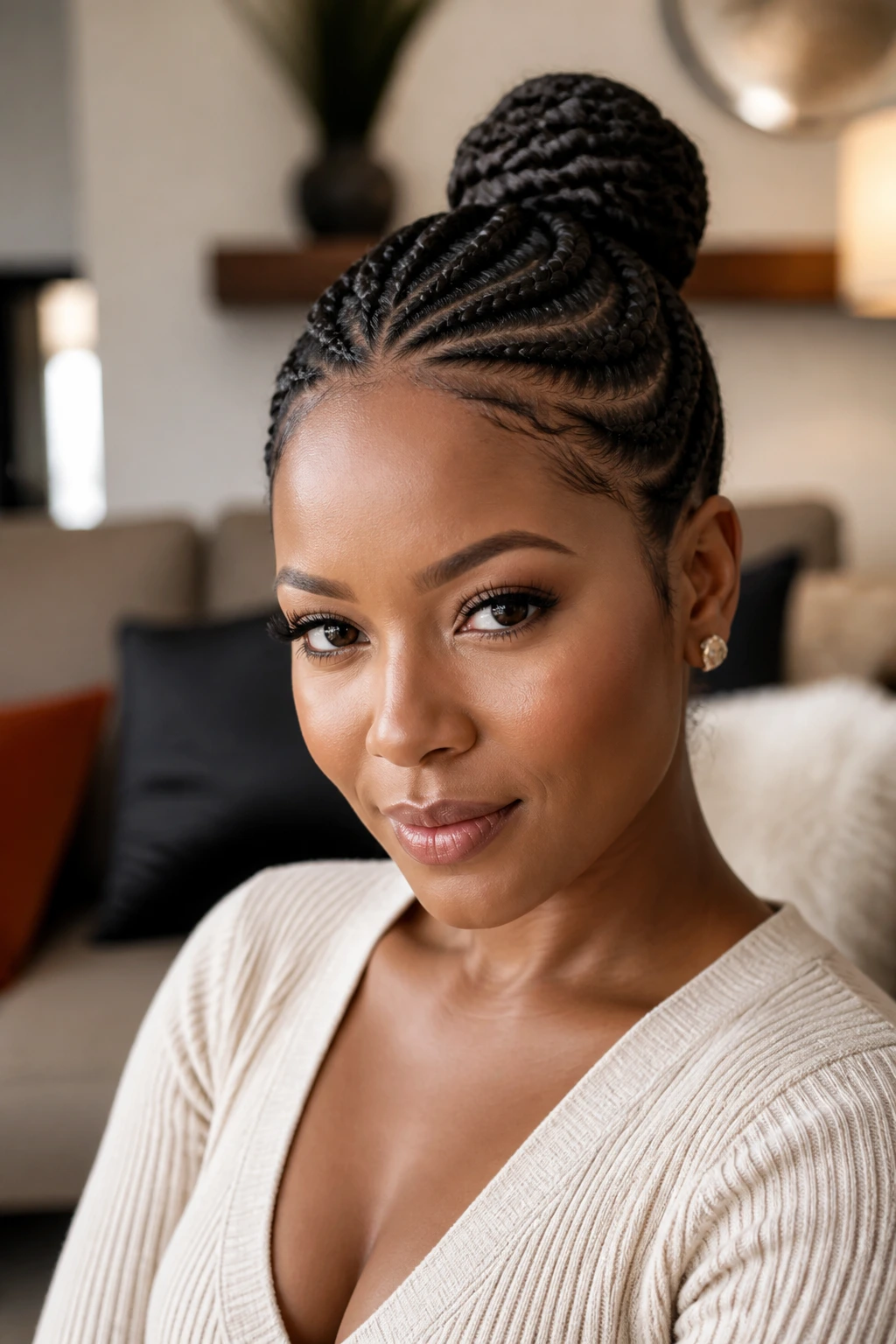
Braided buns work on square faces because they can bend the eye instead of confronting it. A curved part, a lifted crown, a low knot, or a narrow bun changes the face without asking the hair to do something unnatural. That’s the real appeal here.
Natural hair gives these styles a bit of memory and grit, which is part of why they hold up so well. Keep the lines clean, keep the tension reasonable, and keep the bun from spreading too wide. The style should look like it belongs on your head, not like it was argued into place.
The next time you reach for a braid comb, start with shape first. Decide where you want the eye to move — up, down, or sideways — and the bun falls into place after that.