



Brown eyes can take a lot of blonde, but they do not forgive sloppy blonde. On tan skin, the wrong tone can look yellow at the ends, gray at the root, or stripped-out around the face, and that’s why blonde balayage for brown eyes and tan skin lives or dies on placement and toner, not on how light you go.
The good versions have a very specific effect. They keep enough depth near the root to anchor the hair, then paint lighter ribbons where the light actually hits — around the cheekbones, through the mid-lengths, and at the ends where movement shows. That’s what makes brown eyes look deeper and more defined instead of disappearing into the hair.
I’m partial to shades that sit in the beige, honey, champagne, and soft caramel family here. Pure platinum can work, but only when it’s used with restraint and a clean gloss. Tan skin usually looks better when the blonde has some warmth or softness in it; otherwise the color starts fighting the skin instead of sitting next to it.
Why Blonde Balayage Flatters Brown Eyes and Tan Skin
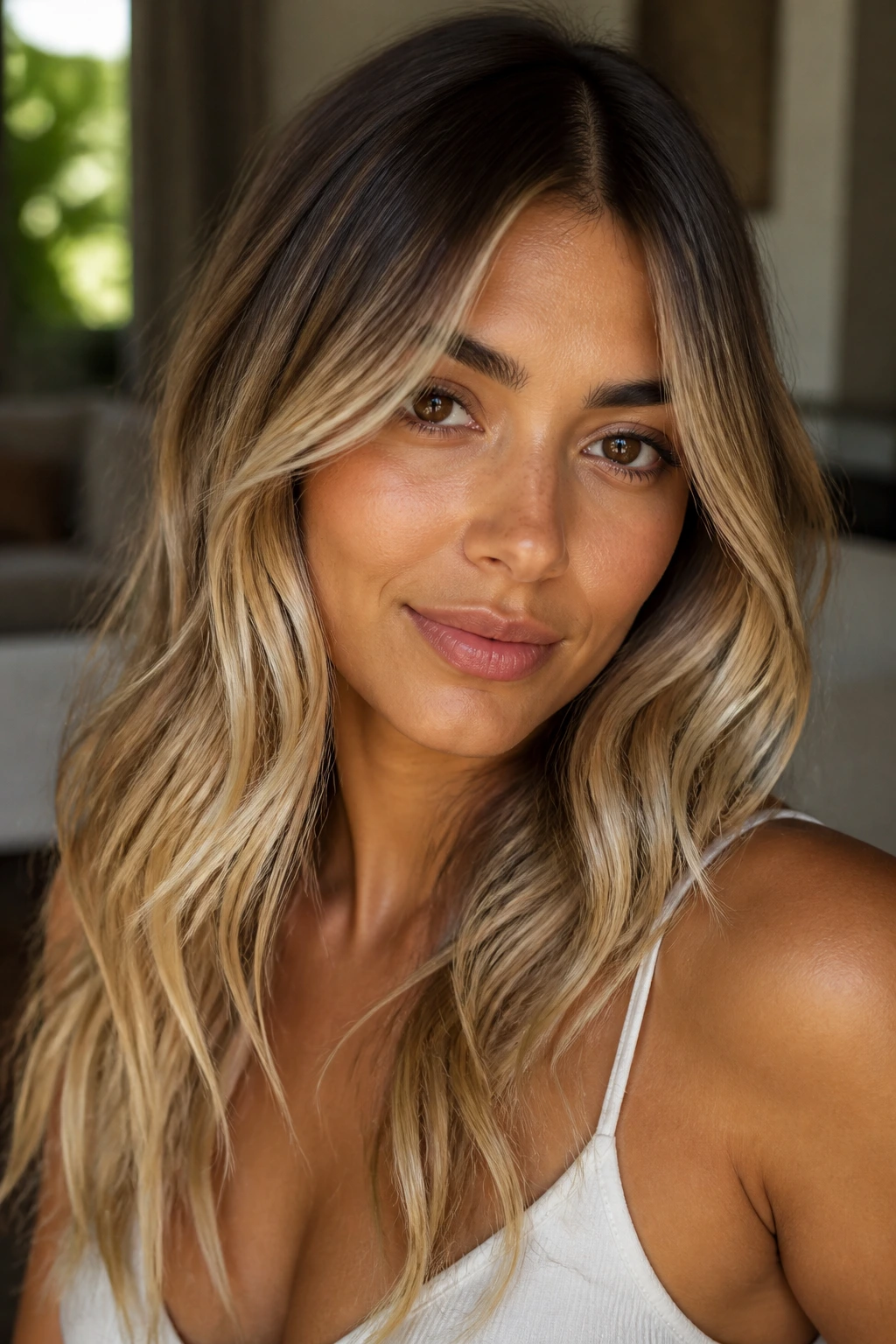
Brown eyes need contrast, not confusion. A good balayage gives the eye a lighter frame without bleaching away all the depth that makes brown irises look rich in the first place.
Tan skin usually likes dimension more than flat brightness. Hand-painted ribbons keep the color moving, so the hair doesn’t turn into one heavy block of blonde that can make warm skin look dull.
The right blonde tone changes the whole face. Honey, beige, and soft champagne lift the face upward; very ashy blonde can look chic, but it needs careful tuning so it doesn’t go chalky against golden or olive skin.
Root shadow is the quiet hero here. Leaving a deeper root means the grow-out stays soft, and it also keeps the blonde from looking stripey at the scalp line after a few washes.
Balayage gives you brightness where it matters most. Face-framing pieces around the cheekbone and jawline make brown eyes read larger and more awake, especially when the hair is worn in waves or a loose blowout.
It works across lengths and textures. Long layers show the ribboning best, but shorter lobs and curls can carry the same color story if the placement is customized to the cut.
1. Honey-Glazed Face Frame with Beige Ends
Honey at the front. Beige through the ends. That combo has a soft, expensive look without going too bright, and it’s one of the easiest ways to make brown eyes stand out on tan skin. The warmth near the face picks up the golden tone in the skin, while the beige keeps the ends from turning orange.
Why It Works
This one is built for people who want visible change without a harsh line. The lighter pieces live around the hairline, the temples, and the first few layers, so the eye lands there first. If your eyes are medium brown or have a little amber in them, the honey reflection can make them look deeper.
Ask for a level 7 to 8 brunette base with honey-beige balayage painted through the front and mids. Keep the brightest pieces no more than one to two levels lighter than the rest of the blonde so the face frame stays soft, not stripey.
A gloss in the beige-gold family makes a huge difference. Without it, honey blonde can pull yellow on tan skin after a few washes. With it, the color looks cushioned and calm.
Best for: warm or neutral tan skin, shoulder-length cuts, loose waves
Tone to ask for: honey beige, not bright gold
Avoid if: you want icy blonde or very high contrast
My take: this is the safest blonde for first-timers who still want people to notice the color
2. Caramel Ribbon Balayage on Espresso Brown
Caramel ribbons against espresso brown hair do something very useful: they keep the brunette base visible. That matters. Brown eyes usually look richer when the hair still has some darkness to anchor them, and tan skin tends to look cleaner when the blonde isn’t trying to take over the whole head.
This version is less about being blond and more about being dimensional. The painted pieces should be thin enough to catch light when you turn your head, but not so heavy that the hair starts reading streaky. Think moving ribbons, not zebra stripes.
What to Ask For
- Base: deep brown or espresso left mostly intact
- Lightened pieces: caramel and soft copper-beige through the mid-lengths
- Placement: concentrated around the face, crown, and outer curves of the waves
- Finish: a neutral-to-warm gloss so the caramel stays rich
This style looks especially good on layered cuts and thick hair. The extra movement lets the caramel show up in flashes, which is exactly what keeps it from looking flat. If your hair is very straight, add a bend with a 1-inch iron; the ribboning shows better when the pieces are curved around each other.
3. Beige Bronde Melt with a Soft Root Shadow
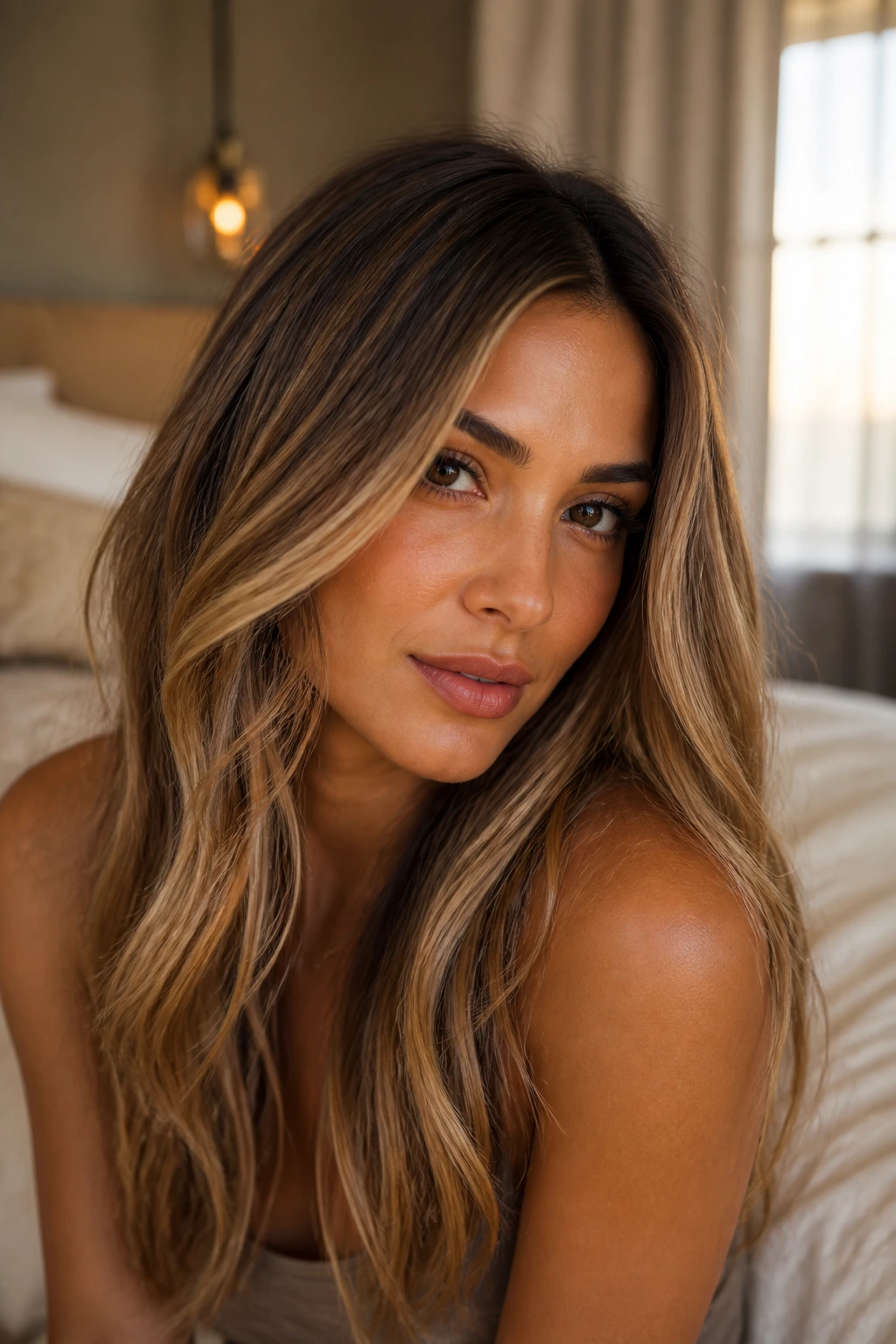
Why does beige bronde work so well on tan skin? Because it sits in the middle and refuses to pick a fight. The brunette base is still there, the blonde is still obvious, and the overall effect feels smoother than a high-contrast highlight job.
This is the shade for someone who wants to look lighter without looking processed. The root shadow softens the regrowth, and the beige tone keeps the blonde from turning too gold or too ashy. Brown eyes benefit from that calm middle ground; they stay the focus while the hair brightens the frame around them.
H3: The Shade Formula That Keeps It Easy to Wear
A beige bronde melt usually works best when the lightest pieces only reach the mid- to outer lengths. If the blonde starts too high, the grow-out gets louder. If it stays lower, the color reads soft and blended even after six or eight weeks.
- Ask for: hand-painted balayage with a root shadow one shade deeper than your natural base
- Best tone: beige blonde with a neutral gloss
- Best hair length: lob to long layers
- Best effect: soft brightness without obvious maintenance lines
This is the one I’d hand to anyone who says they want blonde but hates obvious roots.
4. Buttery Golden Balayage with a Deep Brunette Root
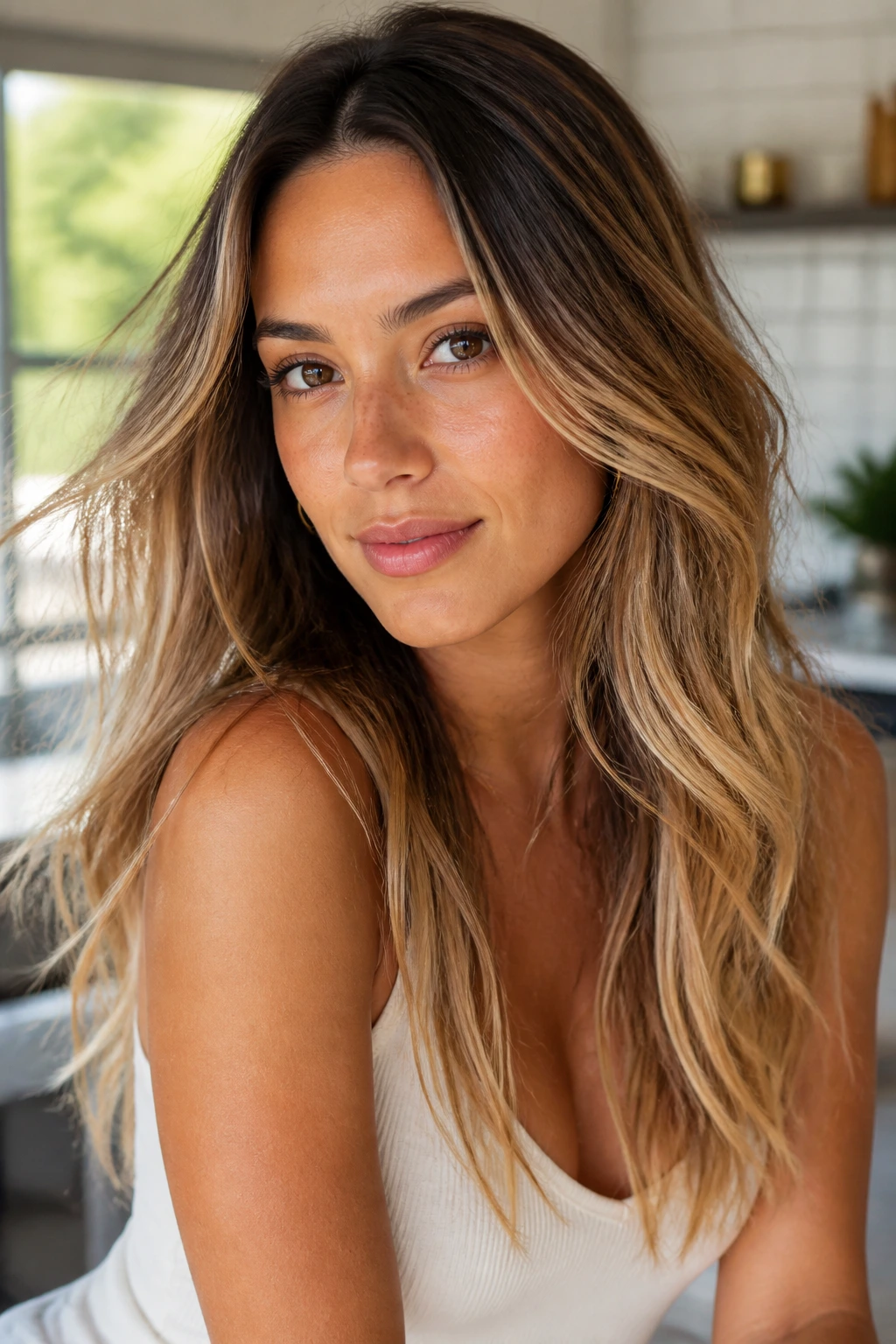
Not every tan skin tone wants beige. Some skin has enough warmth to carry a buttery blonde all the way through the mids and ends, and that’s where this look comes in. The deep root keeps the whole thing grounded, while the golden blonde gives the hair a sunnier edge that plays nicely with dark brown eyes.
The trick is restraint. Butter yellow is not the goal. A clean buttery blonde should look creamy, not brassy, which means the toner has to stay soft and the lightening has to be lifted evenly. If the lift is patchy, golden tones can go loud in the wrong places.
A glossy blowout makes this color sing. The shine is half the appeal. On thick hair, it looks lush and expensive; on finer hair, the contrast between the dark root and lighter lengths creates the illusion of more volume.
If you wear gold jewelry or warm makeup, this is usually the easiest blonde family to live with. It doesn’t ask you to change the rest of your look.
5. Icy Champagne Money Piece for Neutral Tan Skin
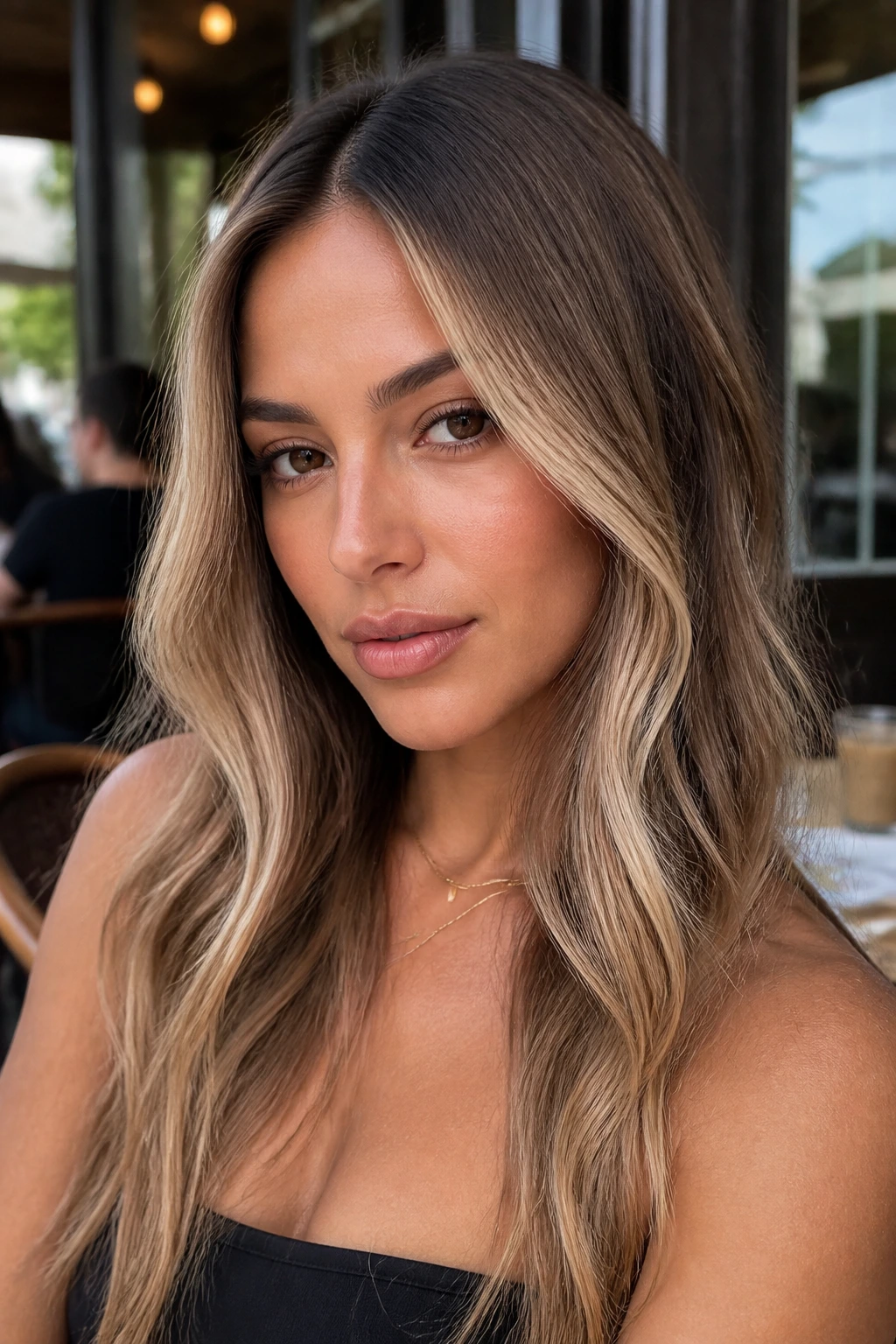
Cold blonde can work here. It just needs a narrow lane. A thick, bright money piece around tan skin can look severe, but a slim champagne strip at the front can make brown eyes pop in a way warm blonde sometimes can’t.
This is the look for neutral or olive tan skin that can handle a little edge. The rest of the balayage should stay beige or soft brown-blonde, while the front pieces go lighter and cooler. That tiny contrast at the hairline lifts the whole face, especially if you wear your hair tucked behind one ear or parted slightly off-center.
Why the Money Piece Matters
The money piece acts like a frame. It doesn’t need to be broad to work. One to two inches of brighter champagne blonde around the face is often enough, and the rest of the hair can stay calmer and deeper so the effect doesn’t go icy all over.
- Best for: neutral or olive tan skin
- Best tone: champagne beige, not silver
- Best placement: hairline, temples, and the first layer around the face
- Maintenance note: the front pieces may need glossing sooner than the rest
If your skin leans very golden, keep the champagne piece softer and more beige than cool. Otherwise it can look like it belongs to a different head of hair.
6. Sandy Beige Balayage for Wavy Hair
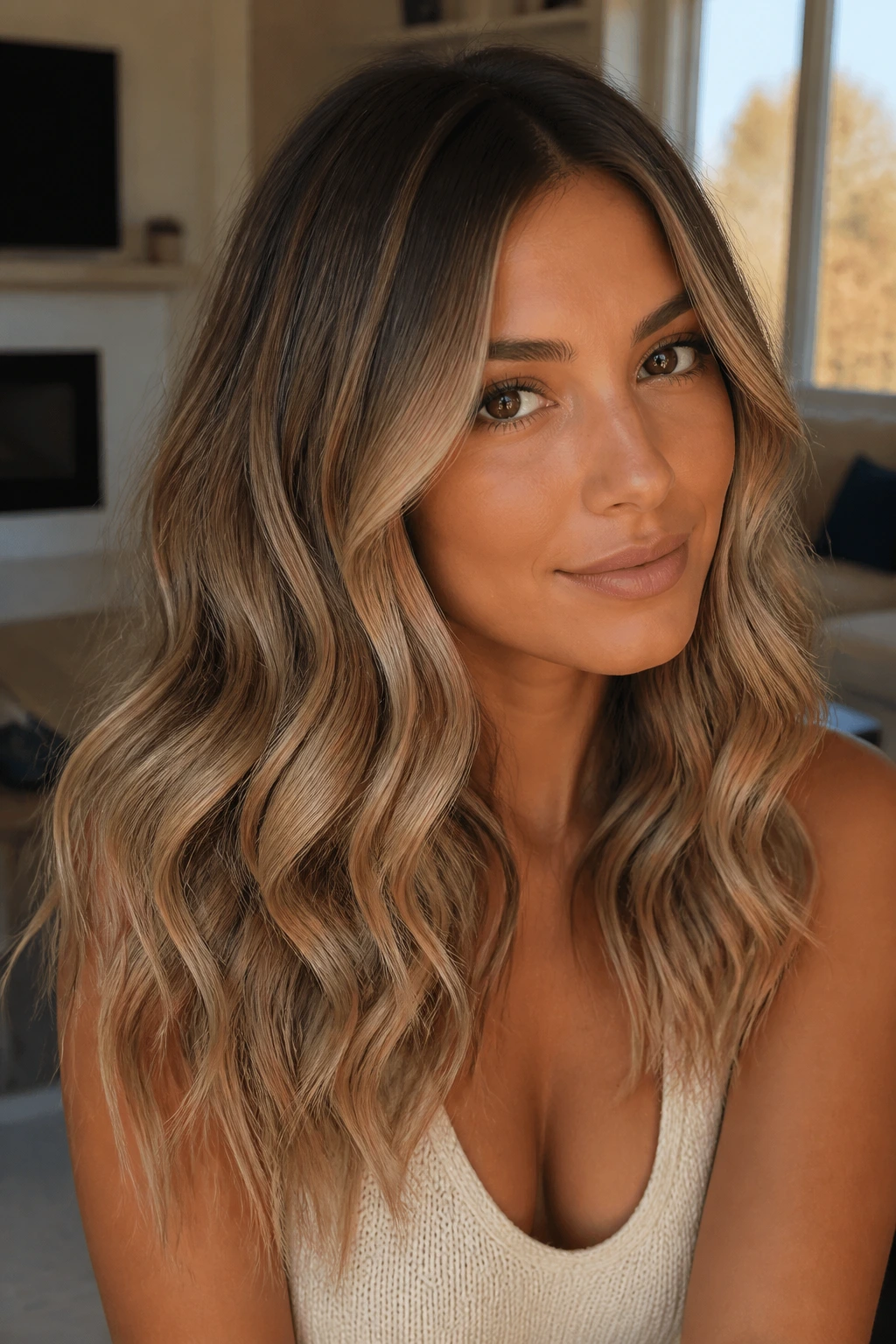
Waves love sandy blonde. The bends in the hair catch the lighter pieces and scatter them around, so the color looks like it was built by movement instead of paint. On brown eyes and tan skin, that effect is flattering because it never turns harsh at the edges.
This is the kind of balayage that looks easiest when the hair is slightly undone. A loose wave, a bent-under blowout, or even a brushed-out curl will show the light and dark pieces much better than pin-straight hair. Straight styling can still work, but the color reads flatter.
Ask for sandy beige pieces concentrated from cheekbone level down. That keeps the top part of the hair grounded and prevents the blonde from flooding the face. If you’re not sure how light to go, stop one level darker than you think you want. Sandy blonde is often prettier when it has a little grit to it.
A texture spray at the mids and ends helps this color move. Not a heavy one. Just enough to keep the waves from collapsing by lunchtime.
7. Toffee and Almond Dimension on Long Layers
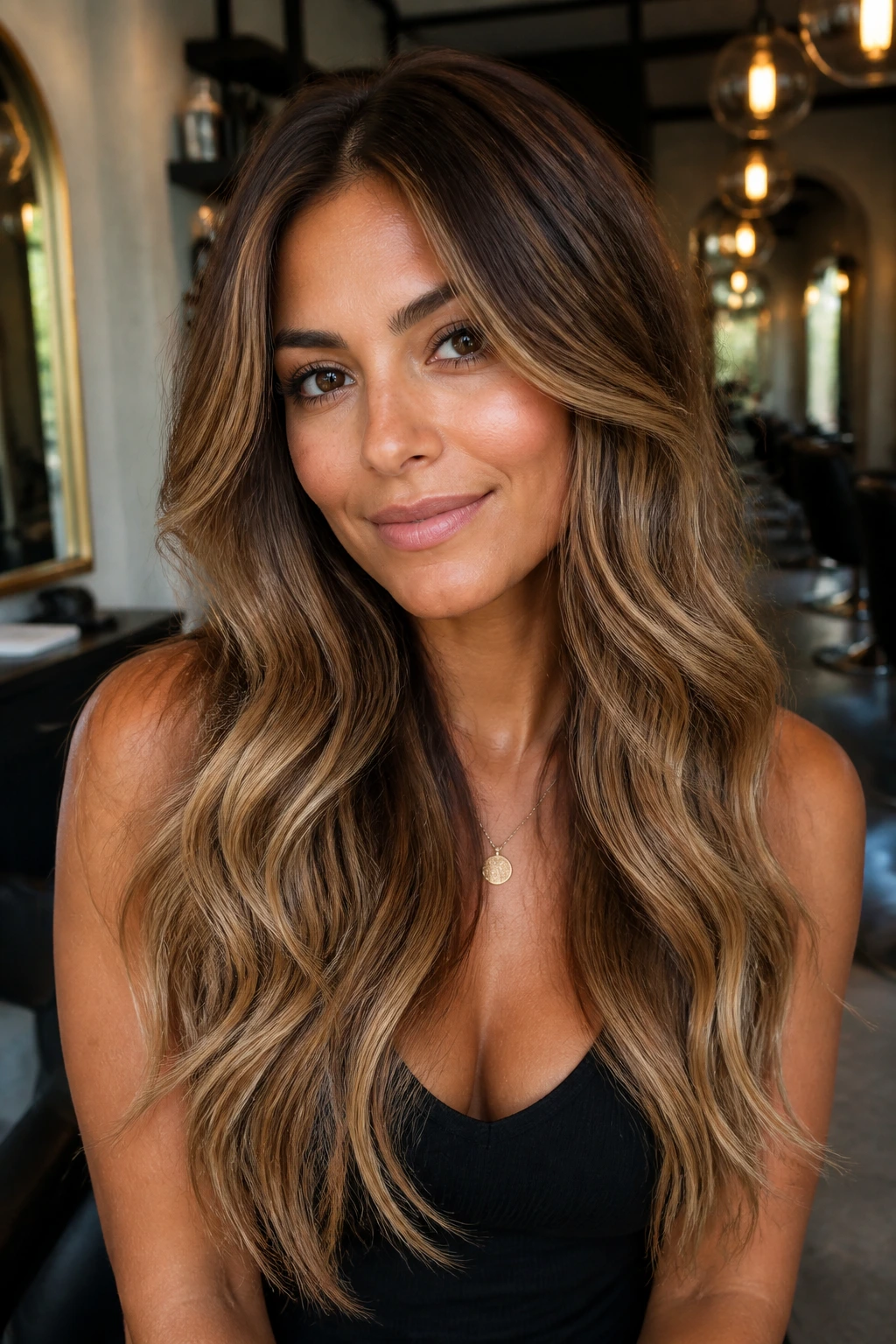
Toffee and almond are the kind of tones that make brunette hair look expensive without making it look bleached. They sit comfortably beside tan skin, and on brown eyes the effect is subtle but obvious in a good way: the eyes look warmer, the hair looks fuller, and the whole face gets a soft lift.
This version shines on long layers because each layer can carry a slightly different tone. The top layers can stay a touch deeper, the mid-lengths can hold the almond pieces, and the ends can take the lightest toffee-blonde. That gradient reads like depth, not striping.
A Good Chair Request
Tell your colorist you want dimension first, brightness second. That phrase matters. It keeps the placement from becoming too dense, which is how a lot of brunettes end up with blonde that looks one-note instead of woven through the hair.
A beige or warm-neutral gloss after the lightening service helps the toffee pieces stay rich. Without it, they can dry out toward orange. With it, they look like the blonde version of toasted sugar.
This is one of my favorites for thick hair. The layers show off every shift in tone.
8. Ash Beige Balayage for Neutral or Olive Tan Skin
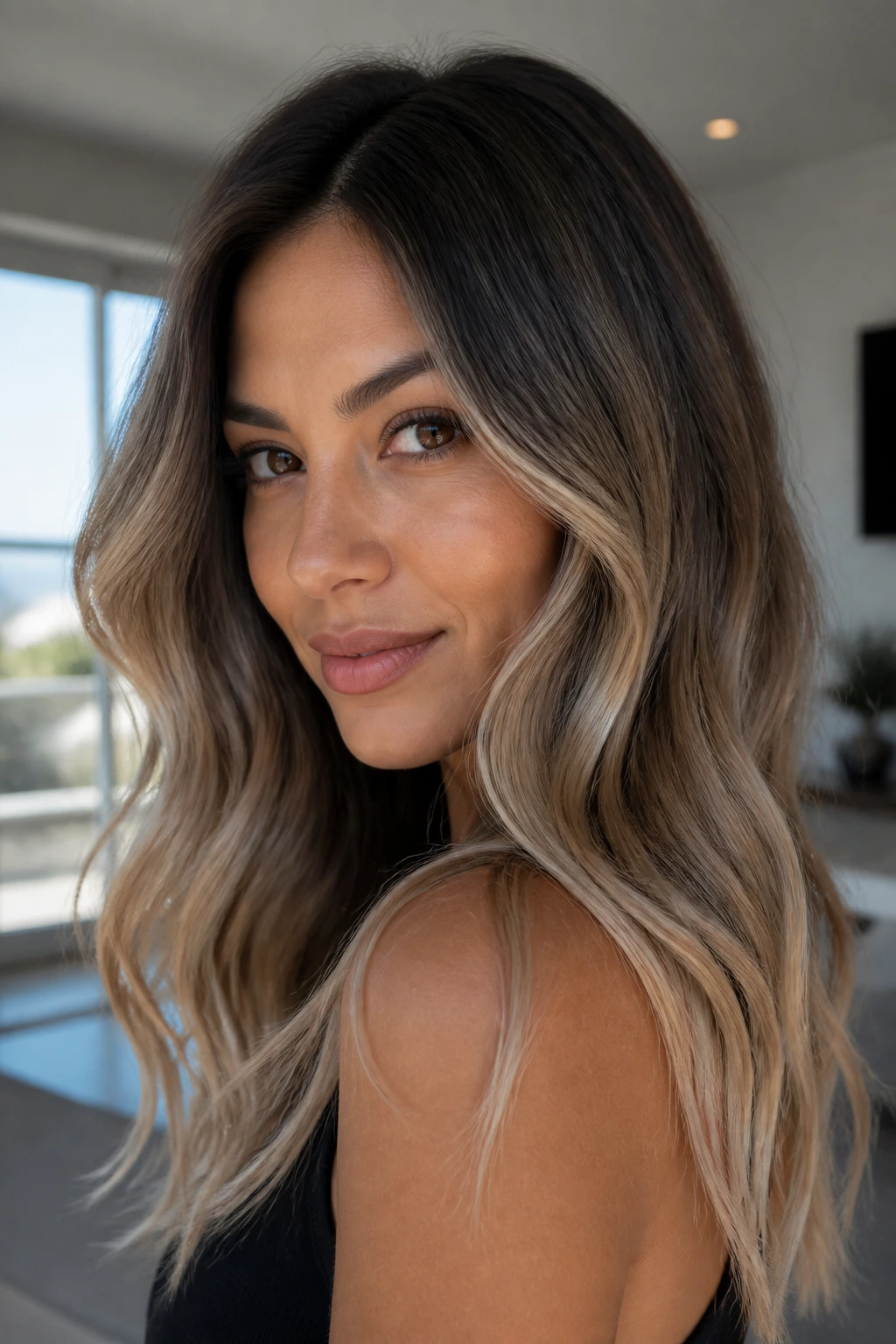
People get nervous about ash blonde on tan skin, and I get why. Too much ash can go flat fast. But when it’s mixed with beige and kept away from the roots, ash-beige balayage can look sharp and modern on neutral or olive undertones.
The key is balance. You want smoke, not chalk. The lighter pieces should still have a hint of beige so they don’t turn gray against the skin. Brown eyes, especially very dark ones, stand out more when the blonde has a cooler edge, because the contrast feels cleaner.
This look works best when the hair is healthy and glossy. Ash tones can look dry if the ends are fried or porous. That’s not a color problem; it’s a hair condition problem. A bond-building treatment and a deep conditioner keep the cool tone from going dull.
If you like silver jewelry, black clothing, or a crisp makeup look, this is the blonde to consider. It has a little more edge than honey or caramel, but it still belongs with tan skin when the beige balance is right.
9. Cream Soda Balayage on Long Hair
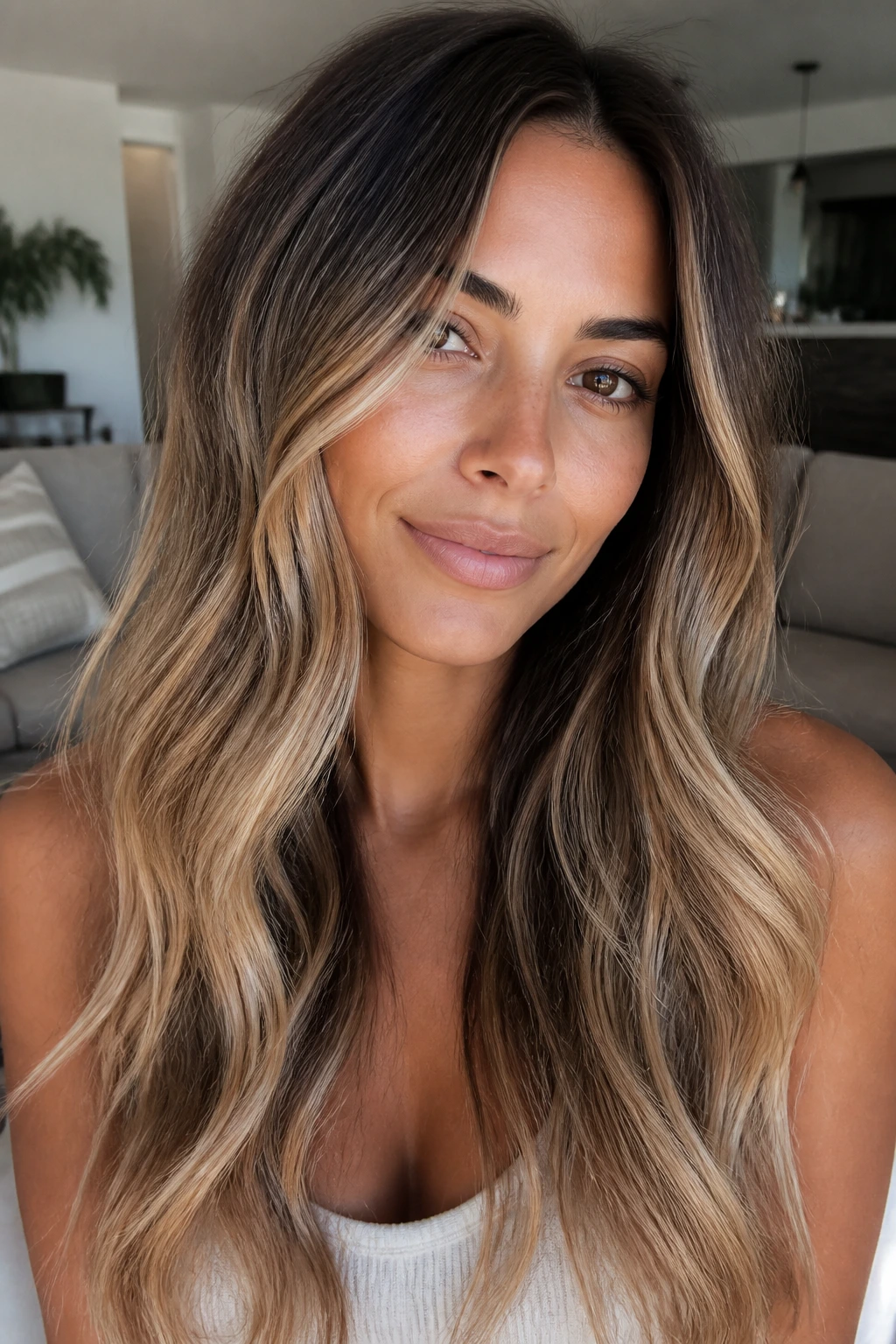
Cream soda blonde has a soft, milky glow that sits somewhere between beige and vanilla. On long hair, that tone can look plush rather than loud, which is exactly why it works so well on brown eyes and tan skin. It brightens the lengths without making the scalp area scream for attention.
The best version starts with a deeper brunette base and a gentle lift through the mids. The ends can carry the lightest cream soda pieces, but they shouldn’t go brittle or stark. That gentle fade matters. Without it, the blonde starts to look pasted on.
Long hair gives you room to play with the gradient. The top section can stay a shade darker, the middle can carry the main blonde tone, and the ends can hold the softest vanilla reflection. That structure keeps the style from collapsing into one color block.
A center part makes this look feel sleek. A side part makes it feel a little softer. Either way, the cream soda tone has to stay creamy, not white.
10. Cinnamon-Cream Balayage with Warm Glow
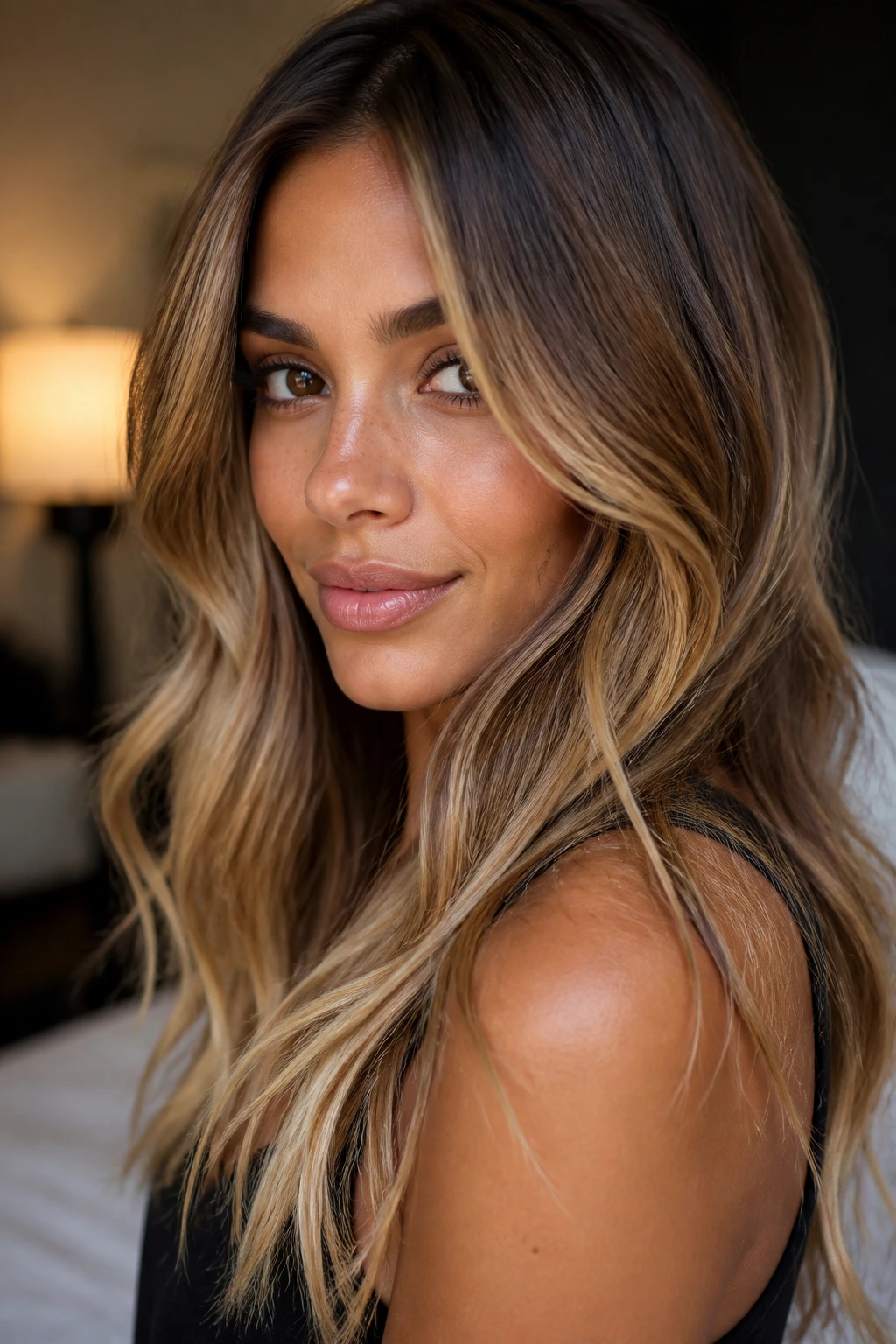
Some tan skin tones want warmth turned up, not down. Cinnamon-cream balayage gives you that. It starts with brunette depth, adds cinnamon-brown warmth through the mids, and finishes with creamier blonde ends that stop the whole thing from reading too dark.
Brown eyes love this kind of warmth because it creates a natural echo. If your eyes are dark chocolate or have a reddish-gold cast near the pupil, the cinnamon pieces pick that up and make the eyes look more layered. Not brighter in a loud way. Just more alive.
What Makes It Different
This is not a summer-bright blonde. It’s richer. That makes it useful for tan skin that looks washed out by very pale tones. The cream pieces should be narrow and feathered, not chunky, so the warm base can keep doing its job.
- Best for: warm tan skin, thicker hair, layered cuts
- Best tone: cinnamon, beige blonde, cream
- Finish: glossy, not matte
- Watch out for: over-toning the cinnamon out of the hair
If you like warm makeup — peach blush, bronze shadow, terracotta lipstick — this color family fits right in without making the hair and makeup fight each other.
11. Sun-Kissed Chestnut Gradient with Soft Gold Ends
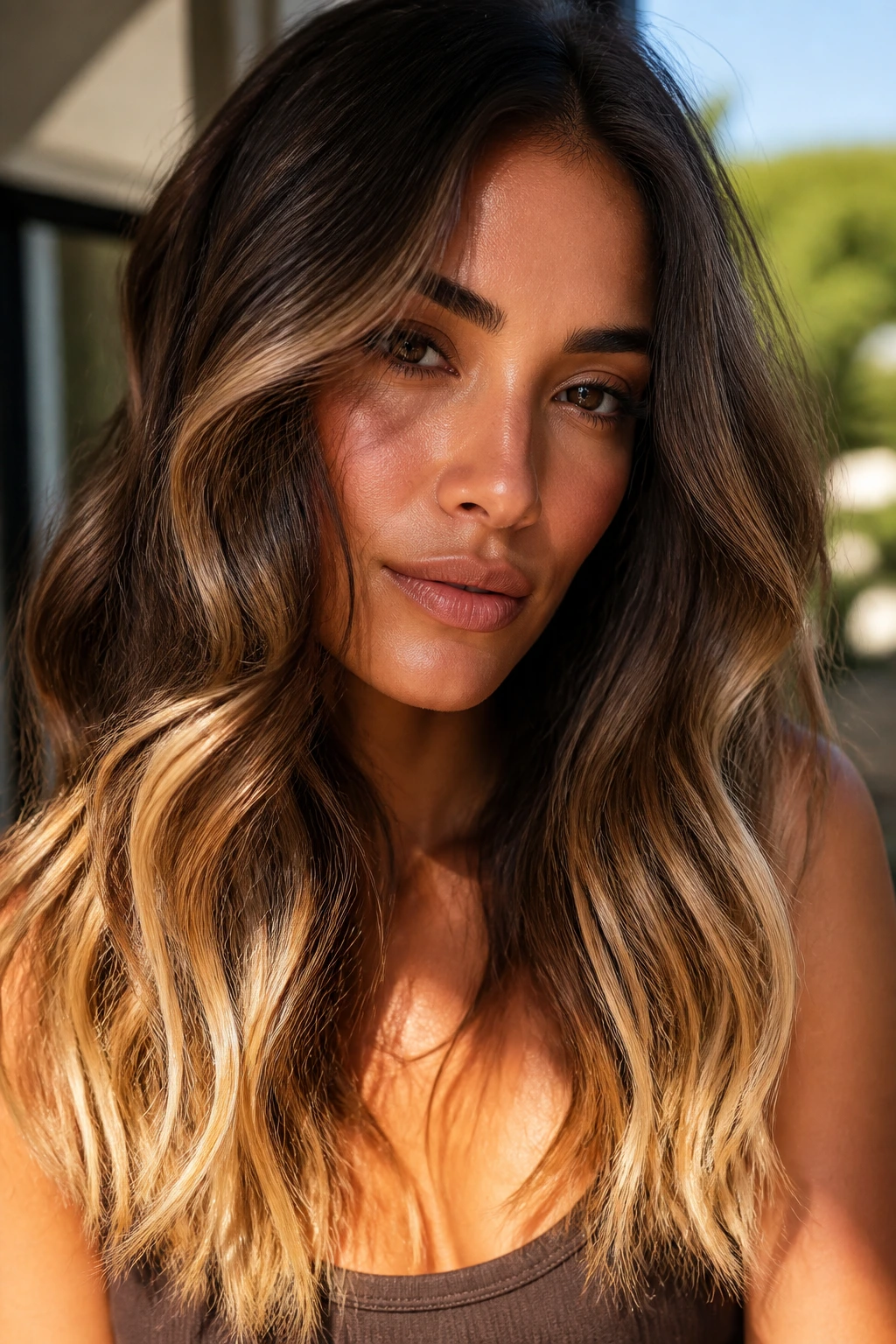
What happens when you don’t want a dramatic blonde shift? You get a chestnut-to-gold gradient that still gives you light, but keeps most of the hair in brunette territory. It’s the quietest look in this list, and it can be one of the prettiest on tan skin because the contrast stays controlled.
The chestnut base keeps brown eyes from looking too dark against the hair. The gold ends catch light at the bottom, which is where balayage often looks strongest anyway. This is especially good for people with long, layered cuts or natural waves.
A lot of readers ask for more blonde than they actually need. This is the counterweight. If your hair is already dark brunette, the prettiest result may be a gradual lift that only becomes noticeably blonde from the mid-lengths down. It’s a softer read, but that’s the point.
This also grows out well. Very well. The root line stays part of the design, not a problem you have to hide every few weeks.
12. Vanilla Babylights and Painted Ends for a Soft Final Lift
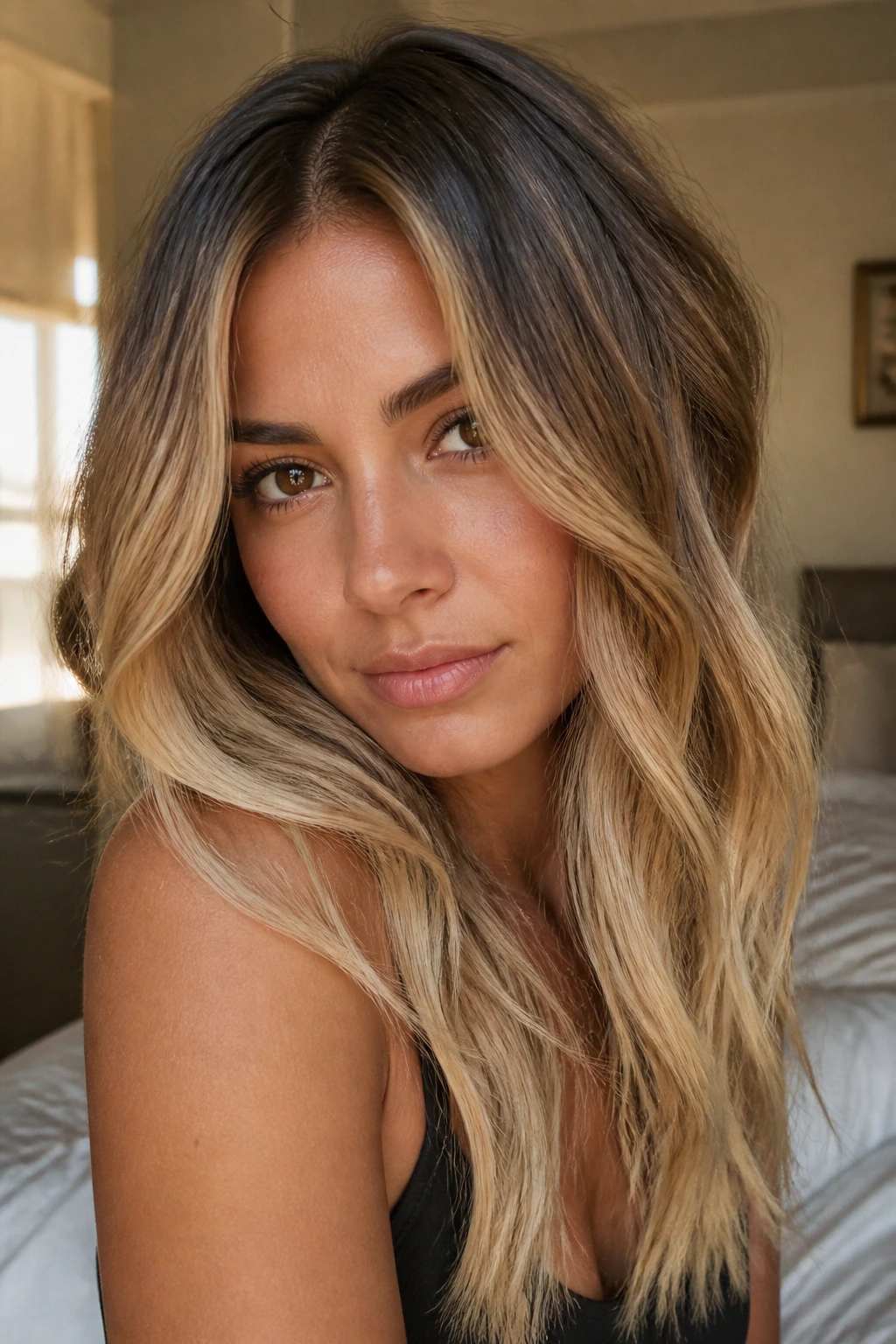
Vanilla blonde can look too pale on tan skin if it’s overdone. Used carefully, though, it gives the hair a soft, sunlit finish that doesn’t rely on big chunks of color. Babylights at the crown and a few painted ends are enough to make brown eyes look more defined.
This is the best option for someone who likes delicate color, not a loud transformation. The babylights should be fine enough to blur into the brunette base. The ends can be a touch lighter, but they should stay creamy and soft, not white.
How to Keep It Elegant
The secret is keeping the contrast small. A little brightness around the crown and face gives lift, while the ends carry the pale vanilla tone in a way that feels airy instead of stripy.
- Best for: fine to medium hair, softer features, low-drama color requests
- Best tone: vanilla-beige, not icy white
- Best cut pairing: long layers or a blunt lob
- Best styling move: a loose bend through the mids so the baby lights separate slightly
This is the version I’d pick when someone says they want blonde but still want their hair to look like hair.
Why the Right Blonde Tone Matters More Than Going Extra Light
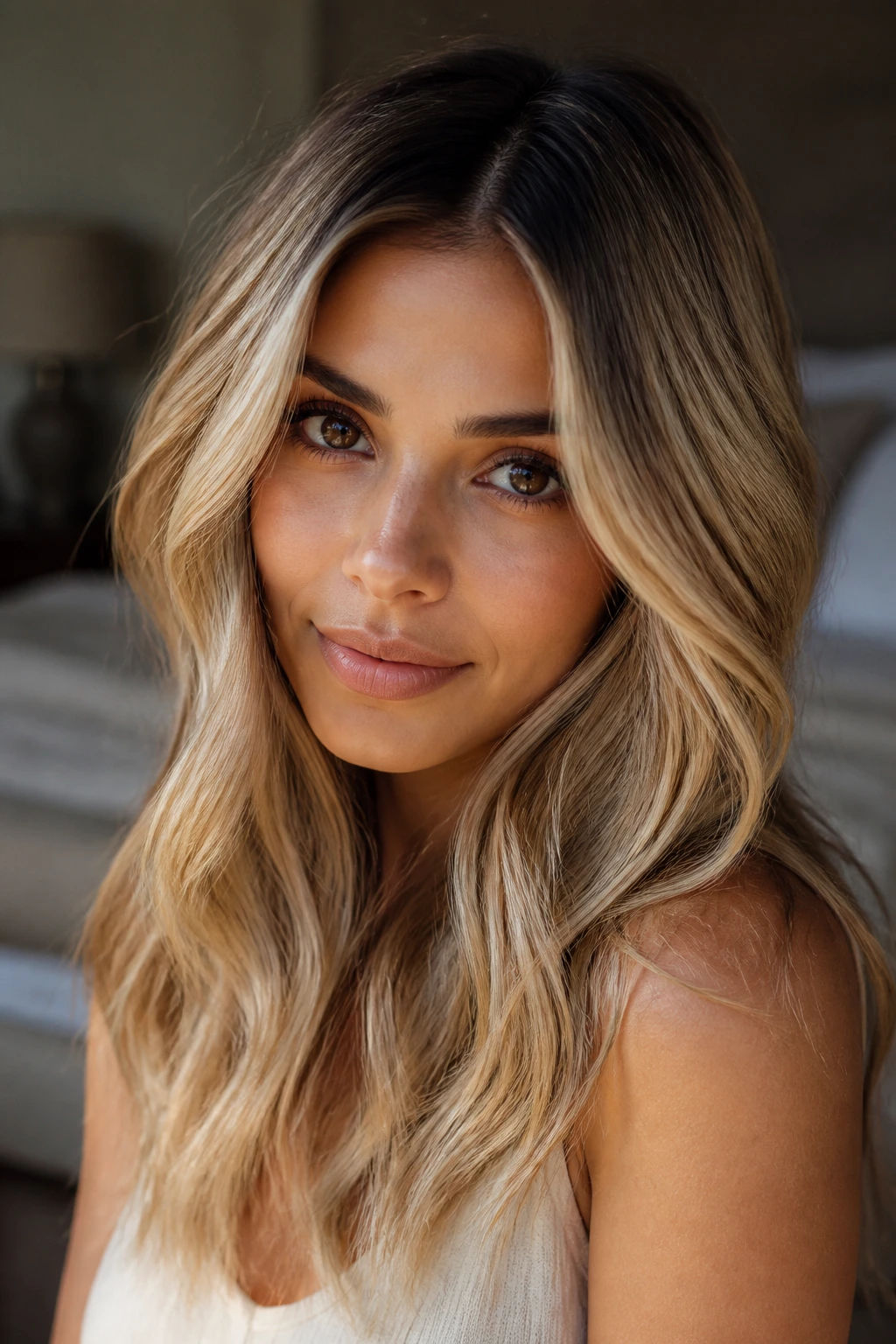
A lot of bad blonde balayage happens because someone chases brightness before tone. That’s backward. On brown eyes and tan skin, a level 8 beige blonde can look richer than a level 10 pale blonde if the pale one turns chalky or too yellow.
Tone controls the mood. Honey and caramel feel warm and soft. Beige reads balanced. Champagne leans polished. Ash beige can feel sharper. Vanilla looks delicate. The level matters, sure, but the finish is what your eye registers first.
Placement matters too. If the lightest pieces sit only at the ends, the face can look heavy. If they sit only around the face, the rest of the hair can look disconnected. The best balayage usually lives in both places, with a root shadow connecting the two.
I also like to think about clothing and makeup here. Gold hoops, warm blush, a bronzy eye, or a cream sweater can make honey and caramel tones look even better. Black eyeliner and cool-toned lipstick can pull ash and champagne blondes into sharper focus. Hair color does not exist alone. It sits in a whole picture.
Choosing Warm, Neutral, or Cool Blonde by Undertone
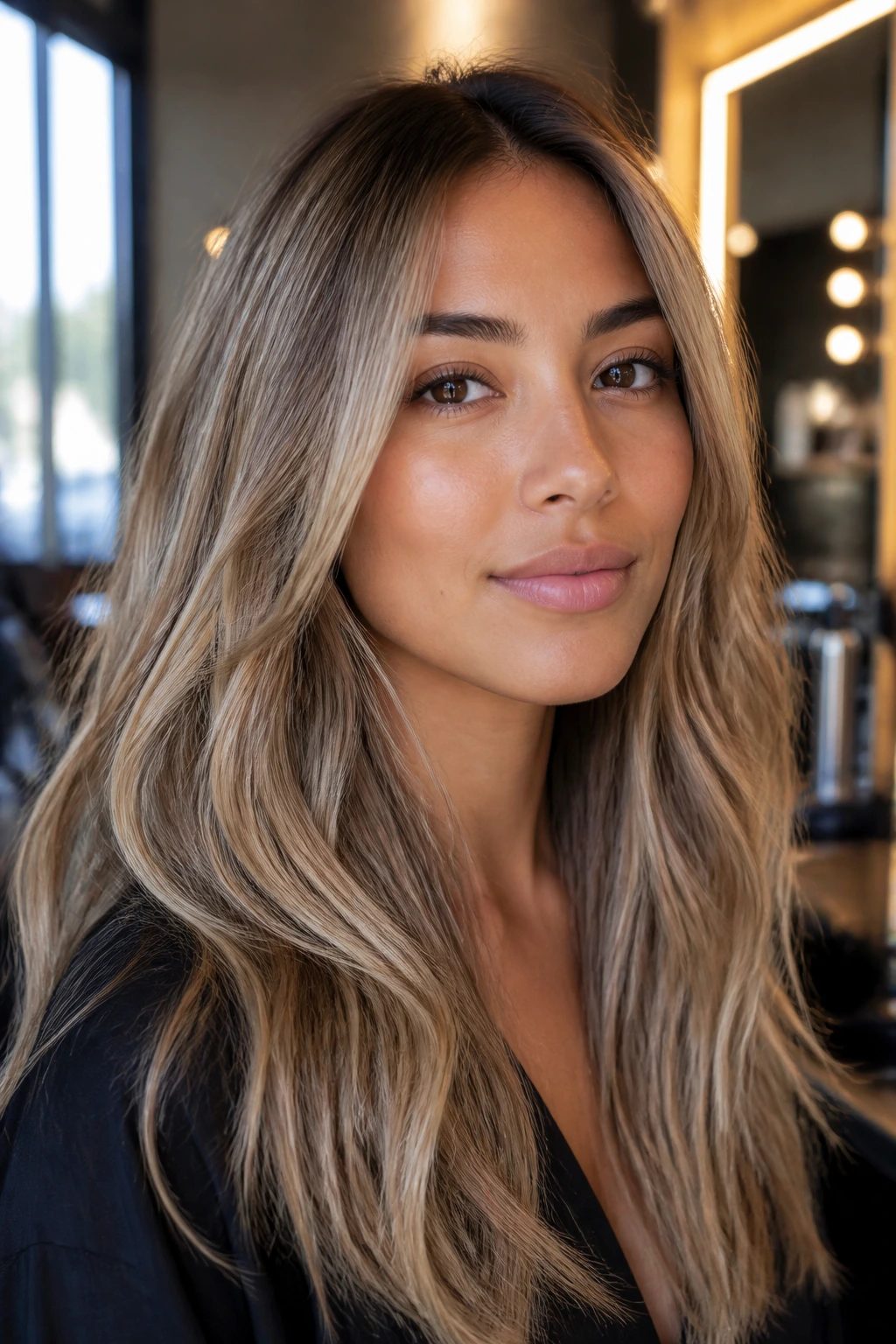
Tan skin is not one thing. Some tan skin is golden. Some leans olive. Some is neutral with a touch of peach. That’s why the same blonde can look dreamy on one person and flat on another.
Warm undertones usually like honey, caramel, butter, and toffee. Those shades echo the natural warmth in the skin instead of fighting it. If your veins lean green and your skin tans easily with a golden cast, warm blonde usually feels safest.
Neutral undertones can move both ways. Beige, champagne, cream soda, and soft vanilla often work because they don’t push too far toward yellow or gray. That flexibility is useful if you change makeup tones often or wear both silver and gold jewelry.
Cooler or olive-leaning tan skin can handle ash beige, champagne, and icy money pieces better than people expect. The trick is keeping the cool tone soft, not metallic. Pure silver blonde on warm tan skin is a gamble; beige-cool hybrid tones are far more forgiving.
If you’re unsure, start by asking for a gloss rather than a full shift in tone. Glosses are easier to adjust, and they let you see whether the blonde sits well next to your skin before you commit to another lightening session.
What to Ask for at the Salon Chair
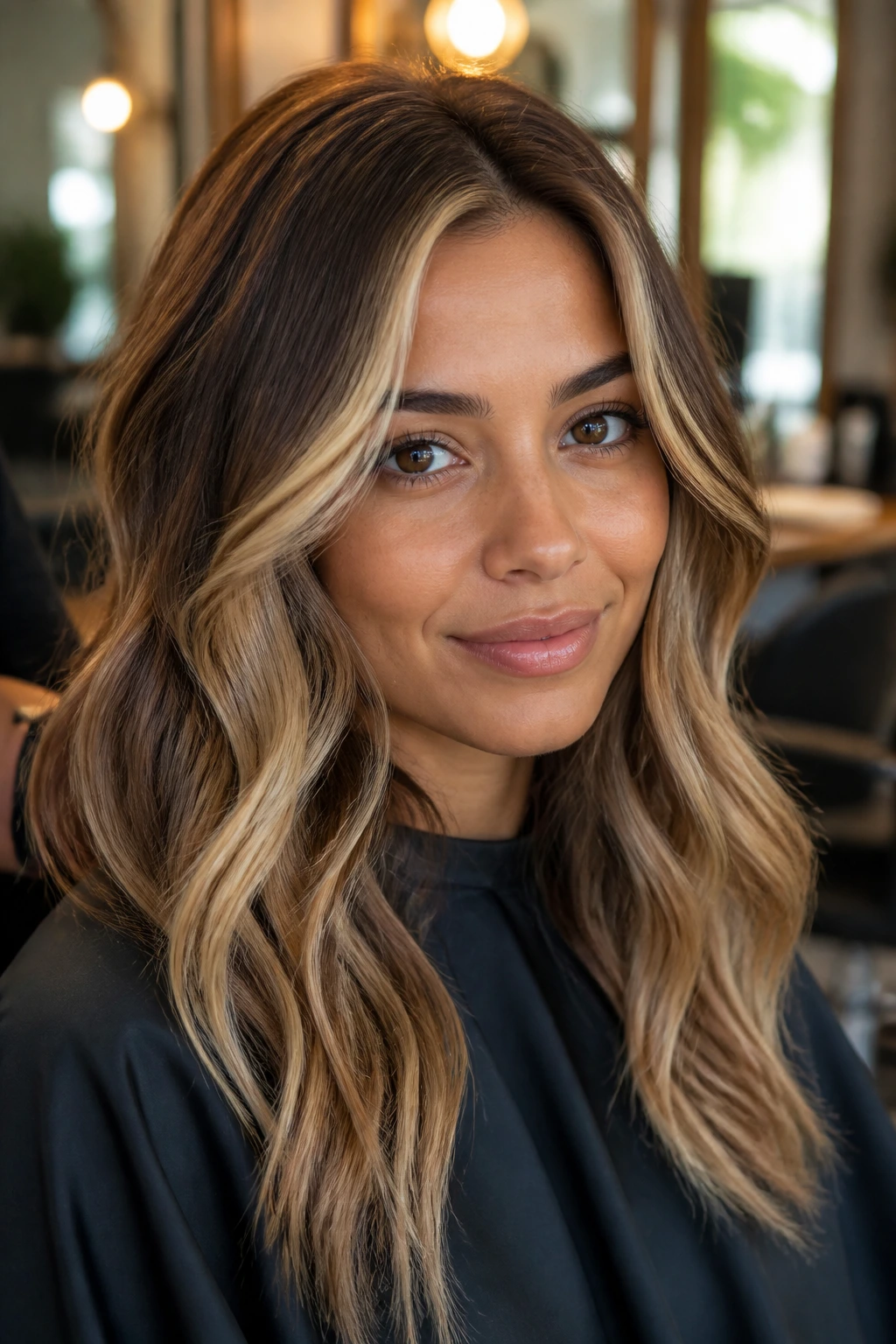
Bring pictures, yes, but say something useful too. A picture without language can leave too much room for guesswork, and balayage lives in the details: where the light starts, how bright the face frame is, and what kind of tone the blonde carries.
Tell your colorist the following, in plain words:
- How much brightness you want: soft, medium, or noticeable
- Where you want the lightest pieces: face frame, ends, crown, or all three
- How warm or cool you want the blonde: honey, beige, champagne, ash beige, or vanilla
- How often you’re willing to maintain it: low, medium, or high upkeep
- What your skin does in sunlight: golden, olive, peachy, or neutral
If you have dark brown hair, ask whether your hair can safely lift to the level you want in one appointment. Sometimes the answer is yes. Sometimes the hair needs a slower path with a glossed balayage first and a second lightening session later. That’s not a setback. It’s how you keep the ends from snapping off like dry straw.
Also mention the way you wear your hair most often. A center part, a side part, tight curls, loose waves, and straight blowouts all show color differently. A good placement map should match your real life, not an editorial photo.
Tools, Products, and Salon Gear That Pull Their Weight
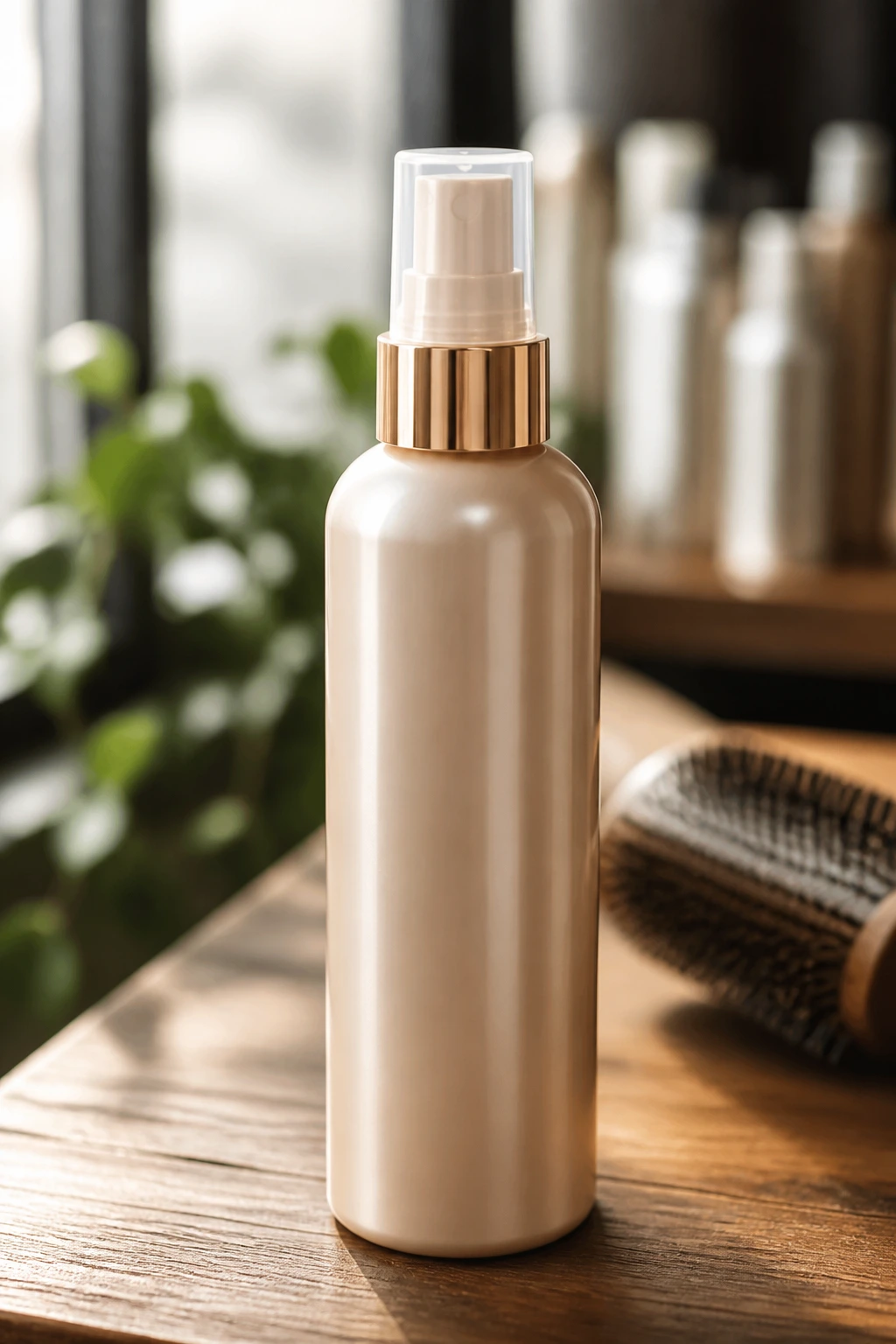
Balayage is a salon service, but the aftercare is half the battle. These are the tools and products that actually matter.
- Sulfate-free shampoo: Keeps the blonde from stripping too fast and helps the toner last longer.
- Moisturizing conditioner: Lightened hair drinks this up; use it on the mids and ends every wash.
- Purple or blue shampoo: Use purple for yellow brass, blue for orange warmth, and don’t overdo either one.
- Color-safe gloss or toner conditioner: Good for extending salon tone between appointments.
- Heat protectant spray: Non-negotiable if you blow-dry or curl your hair.
- Wide-tooth comb: Less breakage on wet, lightened strands.
- Microfiber towel or soft T-shirt: Cuts friction and helps keep the cuticle smoother after washing.
- Bond-building mask: Helpful if your hair has been lightened more than once.
- 1-inch curling iron or wand: Best for showing ribboned dimension without frying the ends.
- Sectioning clips: Useful at home when you’re styling or applying a mask evenly.
If you only buy three things, make them heat protectant, a good mask, and the right shampoo for your toner. Everything else helps, but those three do the most work.
How to Style the Color So the Dimension Shows
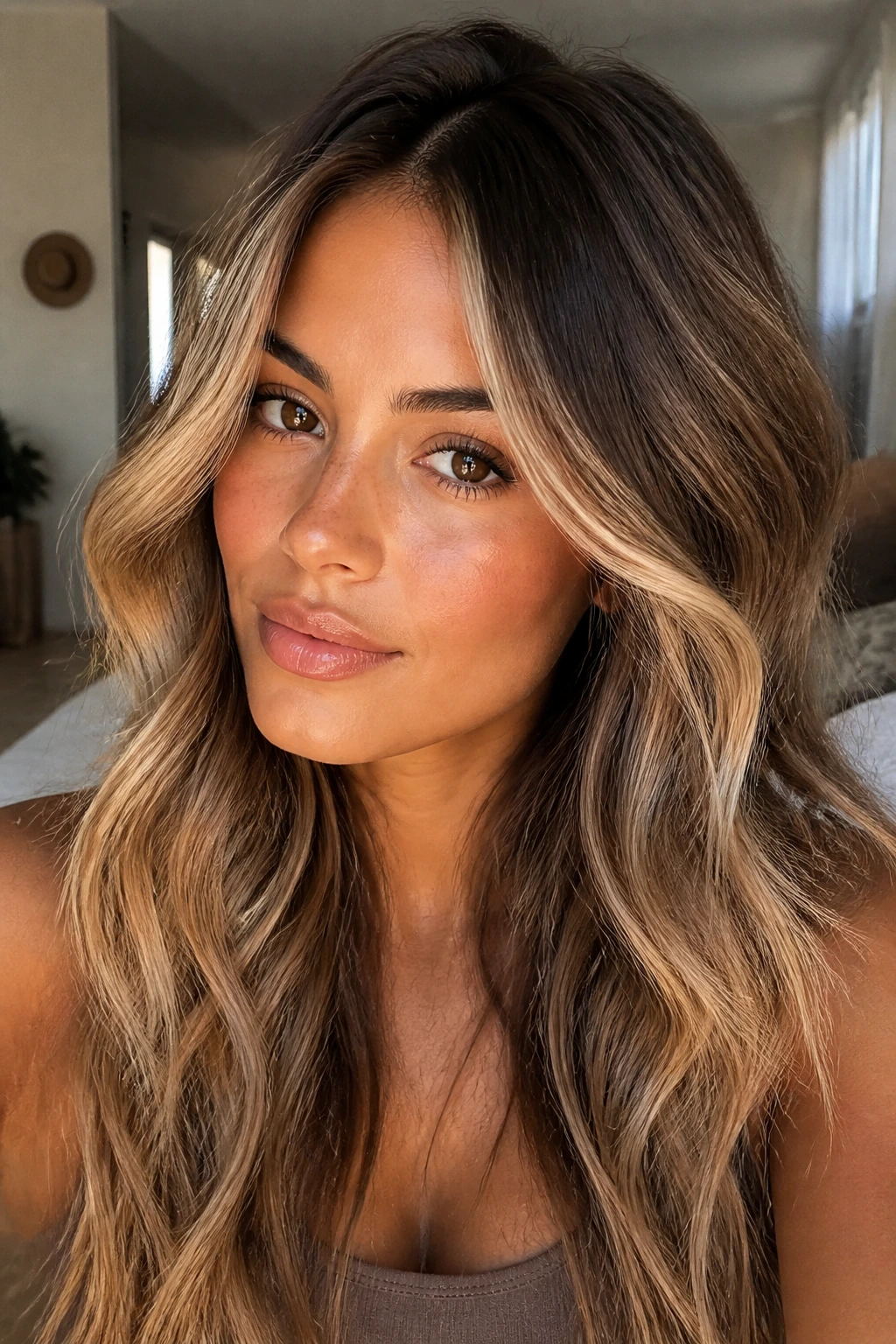
Presentation: Loose waves are the easiest way to show balayage. Curl away from the face with a 1-inch iron, leave the last inch of the ends out if your hair is long, and brush the curls out once they cool so the ribbons separate instead of clumping together.
Accompaniments: Gold hoops, cream tops, warm blush, and a soft bronzer make honey, caramel, and toffee tones look richer. If you go cooler with champagne or ash beige, silver jewelry and a neutral lip keep the whole look clean.
Placement: A middle part gives a balanced, modern frame. A side part pushes the brighter pieces to one side and can make the face frame look more dramatic, especially if the money piece is a shade lighter than the rest.
Finish: Use a light shine spray on the mids and ends, not the roots. Heavy oils near the scalp can flatten the lift and make the blonde look darker than it is.
Air-drying can work if you have natural wave, but the color usually shows best once the hair has a little bend in it. Straight hair is fine too, though. In that case, keep the face frame a touch brighter so the dimension still reads.
Common Mistakes That Flatten the Look
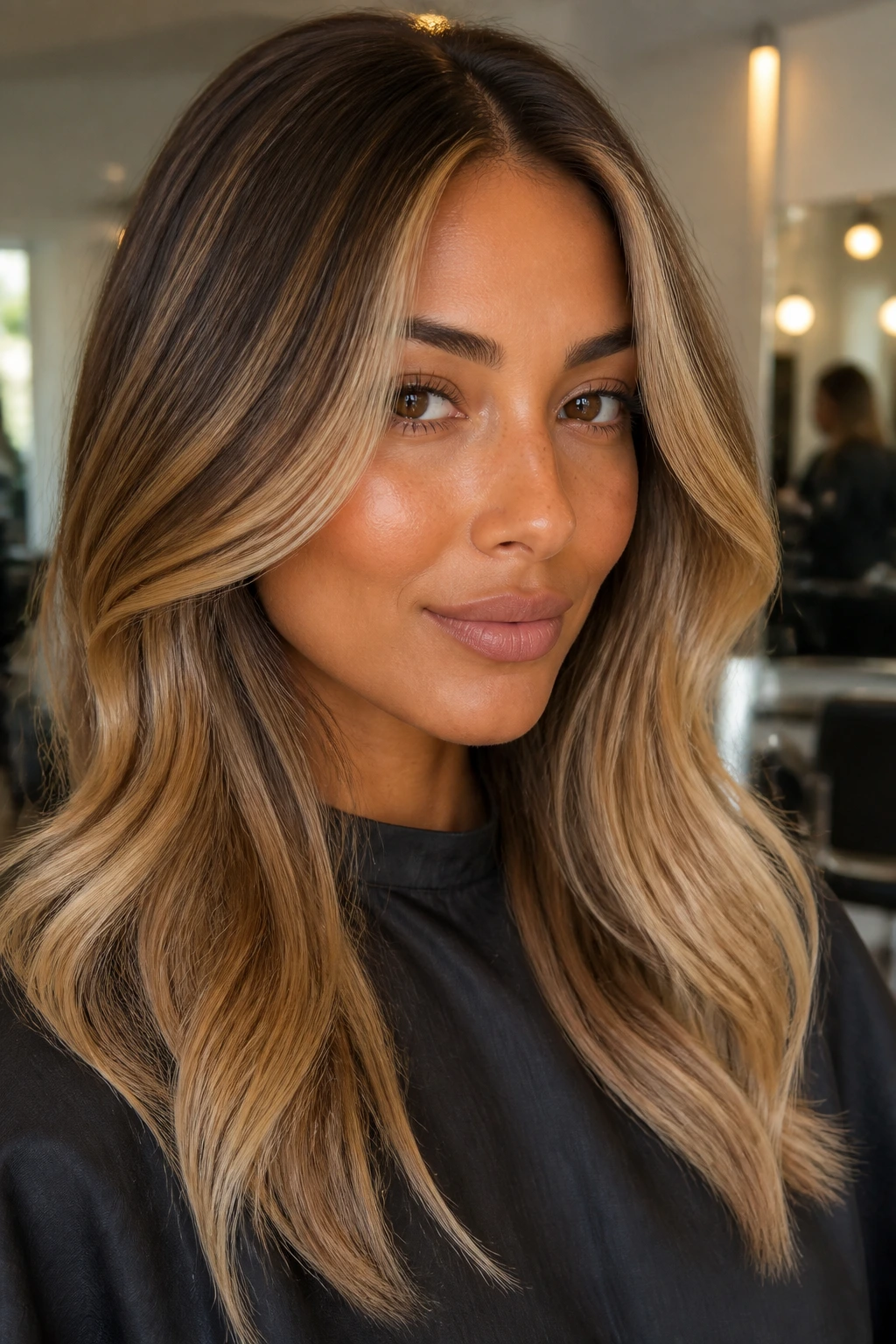
Going too pale too fast is the big one. When the blonde jumps straight to pale platinum on tan skin, the color can look detached from the face. The fix is usually a softer beige or champagne tone, plus a deeper root for contrast.
Ignoring undertone makes the color look wrong even when the blond itself is pretty. A yellow blonde on peachy tan skin can look muddy; an overly ash blonde on golden tan skin can look dusty. Match the blonde family to the skin first, then refine the brightness.
Over-toning the hair is sneaky. Too much purple shampoo or a toner that’s too cool can take the life out of the balayage and leave it matte and gray. If the blonde starts looking flat, step back from the purple shampoo and use a moisturizing gloss instead.
Making the money piece too thick can turn a soft balayage into a chunky highlight job. A broad front stripe is harder to blend and often grows out in a way that feels loud. Narrower, feathered face-framing pieces are easier to wear.
Skipping moisture is another common miss. Lightened hair loses slip fast, and dry ends make any blonde look cheaper. A weekly mask, a lower-heat blow-dry, and a decent leave-in conditioner keep the blonde moving.
Letting the roots go too warm or too dark can throw off the whole balance. A root shadow should blend, not stain. If the root gets muddy, the contrast can swallow the lighter pieces.
Ways to Adapt These Looks Without Losing the Glow
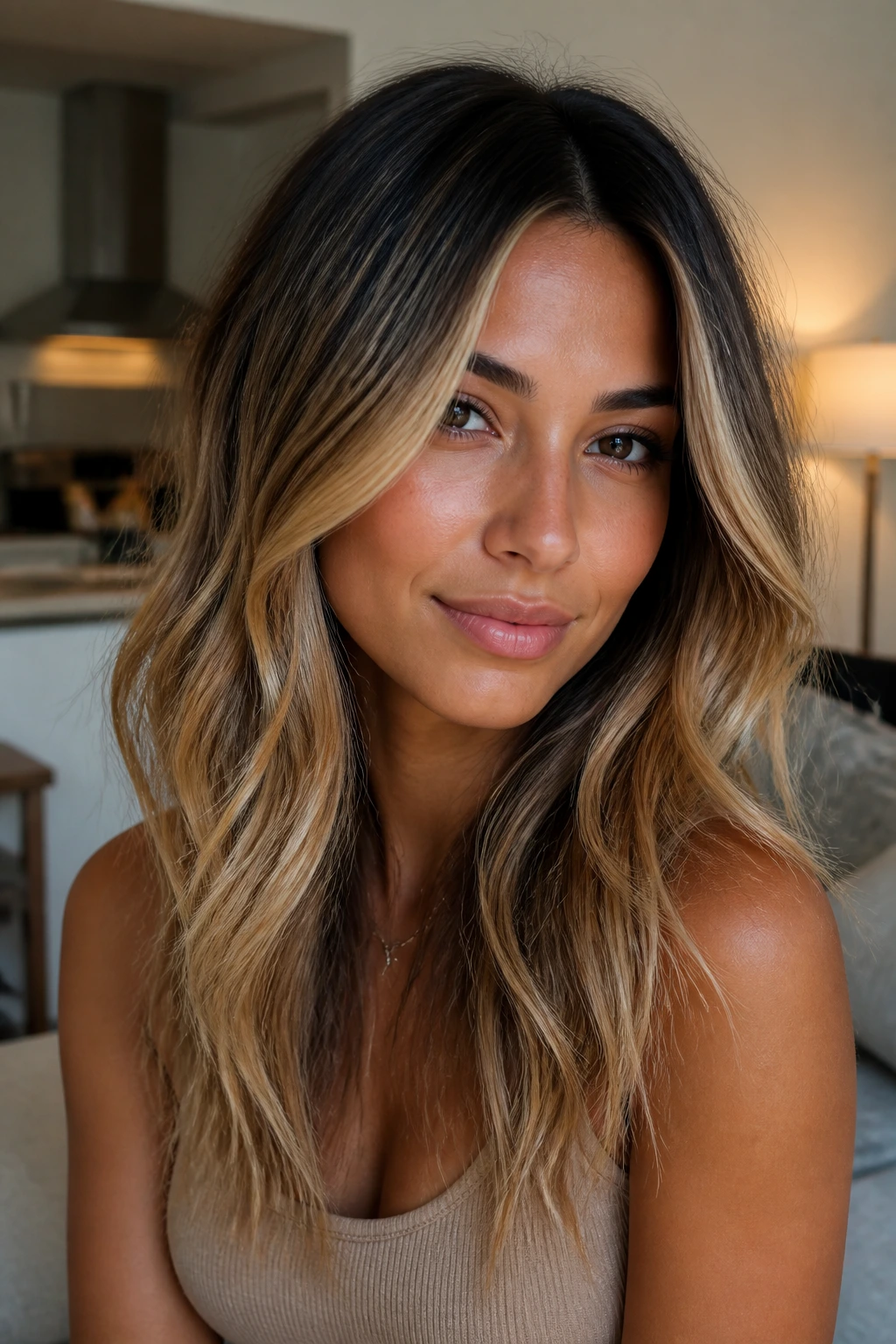
The Low-Maintenance Rooted Version: Keep the root two shades deeper than the mids and ends, and ask for wider gaps between the light pieces. You’ll still get brightness around the face, but the grow-out will stay soft for longer.
The Curly-Hair Version: Paint the lightest pieces where the curls actually separate — usually around the outer curve of the curl pattern and the top layers. That keeps the blonde visible when the hair shrinks and moves.
The Bob-and-Lob Version: Concentrate the light from cheekbone level down, with a small amount at the front. Shorter cuts can look too wide if the blonde starts too high, so the balance matters more than the number of light pieces.
The Cooler Beige Version: If warm blonde makes your skin look too yellow, shift the toner toward ash-beige or champagne. Keep a little softness in the formula so the blonde still feels wearable, not metallic.
The Ultra-Soft Baby Light Version: Use micro-fine highlights with hand-painted ends instead of larger ribbons. This is the quietest approach, and it’s good when you want dimension that people notice after a second glance.
The High-Contrast Face Frame Version: Keep the base darker and lift only the front sections a full shade lighter than the rest. Brown eyes get more emphasis this way, but the rest of the hair still feels grounded.
Maintenance That Keeps the Blonde Looking Intentional
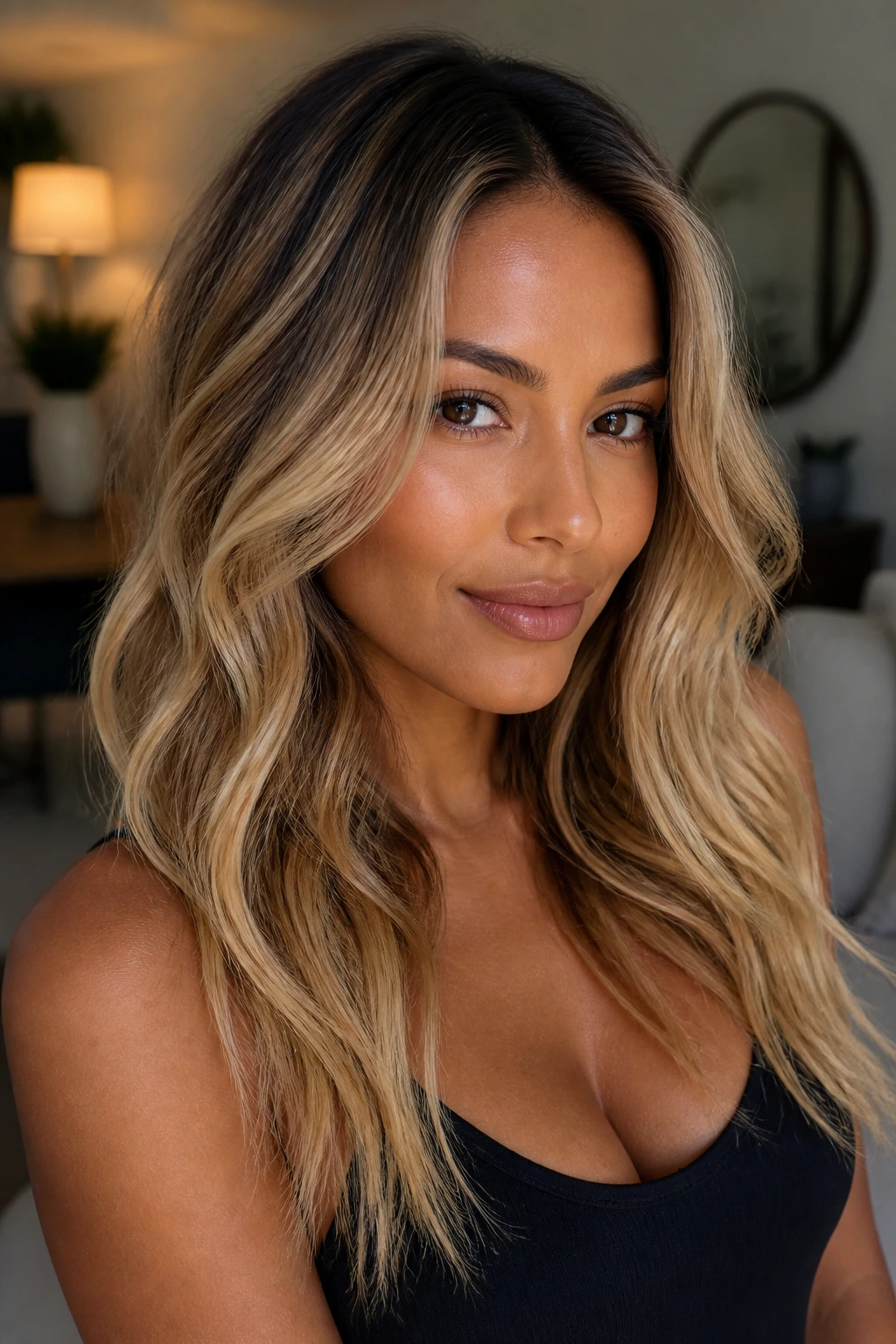
Balayage is forgiving, but it still needs a rhythm. The root shadow means you can usually stretch salon visits longer than with full highlights, yet the tone still fades if you ignore it. Most blonde balayage looks best with a gloss or toner refresh every 6 to 10 weeks, depending on how porous the hair is and how often you wash.
Wash less often if you can. Two to three times a week is plenty for most hair types, especially if you use dry shampoo between washes. When you do shampoo, keep the water lukewarm. Hot water opens the cuticle and lets the tone escape faster, and the blonde can go dull before it should.
Purple shampoo is useful, but it’s not a religion. Use it when the blonde starts to lean yellow, not every time you wash. Once every one to two weeks is often enough for beige and honey blondes. Cooler champagne and ash-beige shades may need it a little more often, but they still need moisture more than they need pigment.
At home, a bond-building mask once a week and a leave-in conditioner after every wash make a real difference. Lightened ends get thirsty. Fast. If the hair feels rough when you slide your fingers down it, the tone will never look as nice as it could.
Frequently Asked Questions
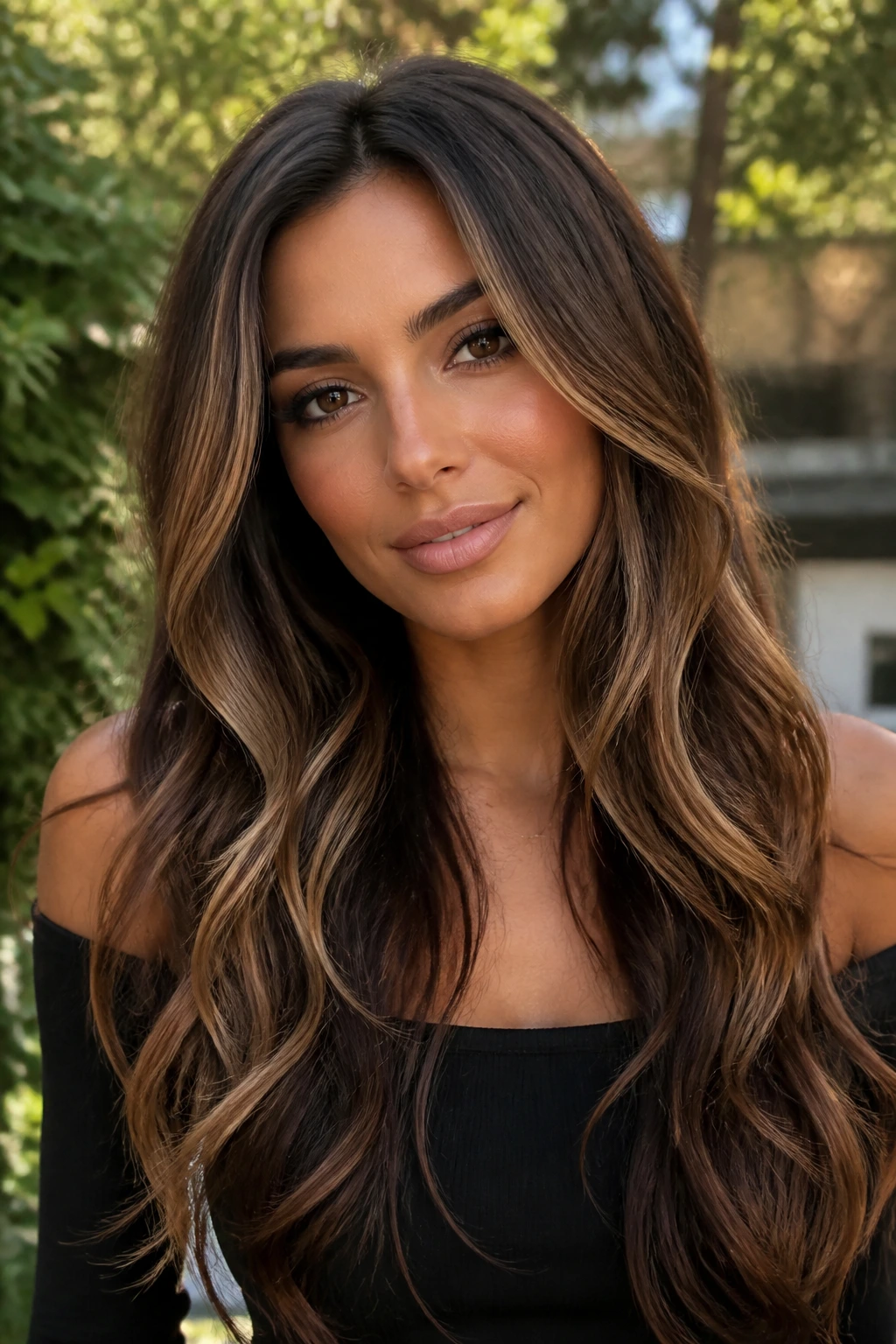
Will blonde balayage work on very dark brown eyes?
Yes, and it often works better than people expect. Dark brown eyes need contrast, and beige, honey, or champagne balayage can create that contrast without washing out the face. The key is keeping some depth in the base so the eyes still have something dark to sit against.
Is warm blonde or ash blonde better for tan skin?
Warm blonde is usually the safer starting point, but ash beige can look excellent on neutral or olive tan skin. The right answer depends on undertone, not just how tan the skin is. If you wear gold jewelry easily and look better in cream than crisp white, warm or beige tones usually make more sense.
How often does blonde balayage need maintenance?
A gloss refresh every 6 to 10 weeks is a solid range for most balayage. If the blonde is very light or your hair pulls warm fast, you may need toner sooner. The grow-out itself can last longer than that, which is part of why balayage is so popular.
Can balayage work on curly or textured hair?
Absolutely. Curly hair often looks especially good with balayage because the painted pieces show up as ribbons through the curl pattern. The placement just has to follow the curl movement, not sit on top of it like a flat stripe.
What if the blonde turns brassy after a few washes?
That usually means the toner faded or the hair is porous enough to grab warmth from water and product. Start with a color-safe shampoo, use purple shampoo sparingly, and book a gloss instead of piling on more pigment at home. If the brass is orange rather than yellow, a blue shampoo may help more than purple.
Does balayage damage hair less than full highlights?
Usually, yes, because the lightener is painted where it’s needed instead of saturating the whole head. That doesn’t make it harmless. Lightened ends still need moisture, and overprocessing can happen if the hair is lifted too far in one go.
Can I ask for a money piece if I want a subtle look?
Yes, but keep it narrow and soft. A subtle money piece should frame the face, not announce itself from across the room. Ask for a beige or champagne tone rather than a stark white strip.
What if my hair is already warm and orange at the ends?
Your colorist may need to neutralize that warmth before adding blonde. Otherwise the balayage can read too golden or muddy. A clean gloss on top of balanced lightening usually gives a much better result than trying to cover orange with a single toner.
How do I keep the blonde from making my skin look washed out?
Don’t go too pale at the root, and don’t make every blonde piece the same tone. Keep depth near the scalp, use a face frame that suits your undertone, and choose beige or honey if your skin has warmth. That balance does more than a brighter blonde ever could.
A Blonde That Lets the Features Stay in Charge
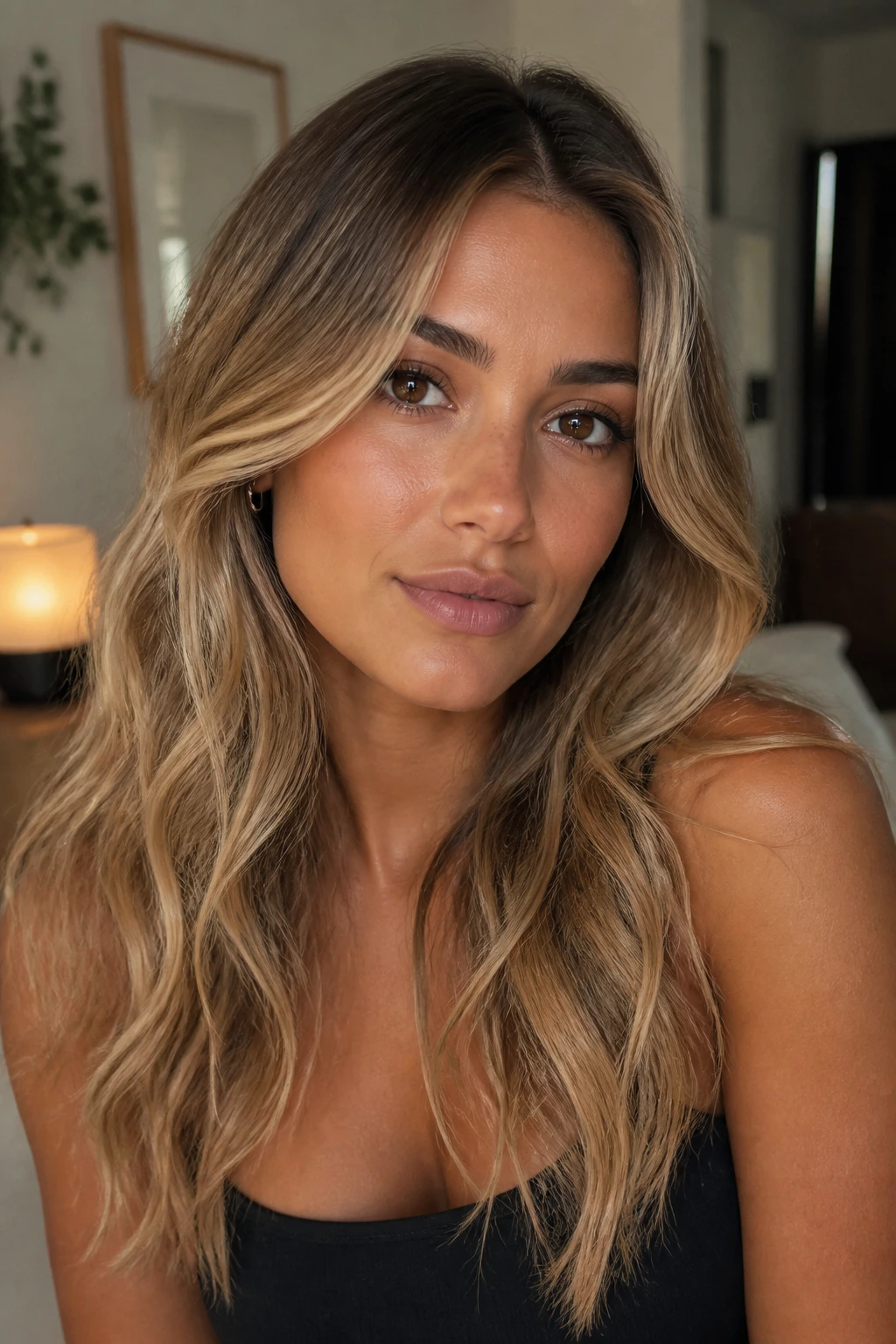
The best blonde balayage for brown eyes and tan skin doesn’t try to erase the brunette base. It uses it. That depth around the scalp and through the lower layers is what makes the lighter ribbons look deliberate instead of random, and it’s what keeps brown eyes from getting lost in the rest of the color.
If you remember one thing, make it this: tone and placement matter more than chasing the palest blonde possible. Beige, honey, caramel, champagne, ash-beige, and vanilla all have their place, but the winner is the shade that sits next to your skin without looking separate from it.
The nicest part is that once the balance is right, the hair does most of the talking on its own. You do not need a giant color change to get that effect. You need the right blonde in the right places, and that’s a much better deal.