



Platinum blonde balayage for dark hair with thin hair works best when the light is placed like a whisper, not a shout. Too much blonde too close to the scalp and the whole head can start to look see-through; too little brightness and the color disappears under the dark base. The sweet spot is a hand-painted lift through the places hair moves most — the front, the mid-lengths, the outer layer — while leaving enough brunette underneath to keep the strands from reading sparse.
That balance matters more on fine hair than it does on thick hair. Fine hair has less individual strand diameter, so every bleach stroke shows more clearly, every brass tone shows faster, and every heavy style product weighs more. A good balayage on this hair type does not try to make the whole head pale in one pass. It uses contrast, shadow, and placement to fake density.
The looks below lean into that idea in different ways. Some are soft and airy. Some are high contrast and cool. Some give you the icy brightness you want without stripping the crown bare. And a few are for the people who want that dramatic platinum feel but still want their hair to look like there’s enough of it.
Why These Looks Work Better on Dark, Fine Hair
-
Shadow keeps the crown looking fuller: A soft root melt or shadow root preserves depth at the part line, which is where thin hair gives itself away fastest.
-
Brightness near the face pulls attention forward: Platinum pieces around the cheekbones and jawline make the eye land on movement, not on the fact that the back is still dark.
-
Painted ribbons beat blanket lightening: Narrow, strategic balayage pieces let brunette hair stay visible between the lighter sections, so the whole style reads denser.
-
Cool tones keep the blonde from going brassy: Ash, pearl, and beige-platinum shades hold that icy feel longer on dark hair than a yellow blonde does.
-
Waves hide the gaps: Soft bends make lighter and darker pieces overlap, which gives fine hair more visual width than pin-straight styling ever will.
-
Less saturation usually means less stress: On fragile hair, a technique that lightens select panels instead of every strand can be easier to manage between trims and toning appointments.
1. Shadow-Root Platinum Melt
A shadow-root melt is the safest place to start if you want platinum brightness but hate the idea of your scalp looking exposed. The dark root stays about a half-inch to an inch deep, then the blonde softens through the mid-lengths and turns icy at the ends. That little band of darkness at the top does a lot of work.
On thin hair, this style keeps the crown from reading flat and over-processed. I like it on shoulder-length cuts and longer bobs because the transition has room to breathe. If the melt is done well, the blonde looks expensive in a quiet way, not stripy or patched in.
Best for
- Hair that parts cleanly down the middle
- Brunettes who want low-maintenance grow-out
- Fine strands that need visual depth near the scalp
Ask for a soft root shadow with the brightest platinum placed from mid-length to ends, not packed right up against the roots. That detail changes everything.
2. Face-Framing Ice Pieces
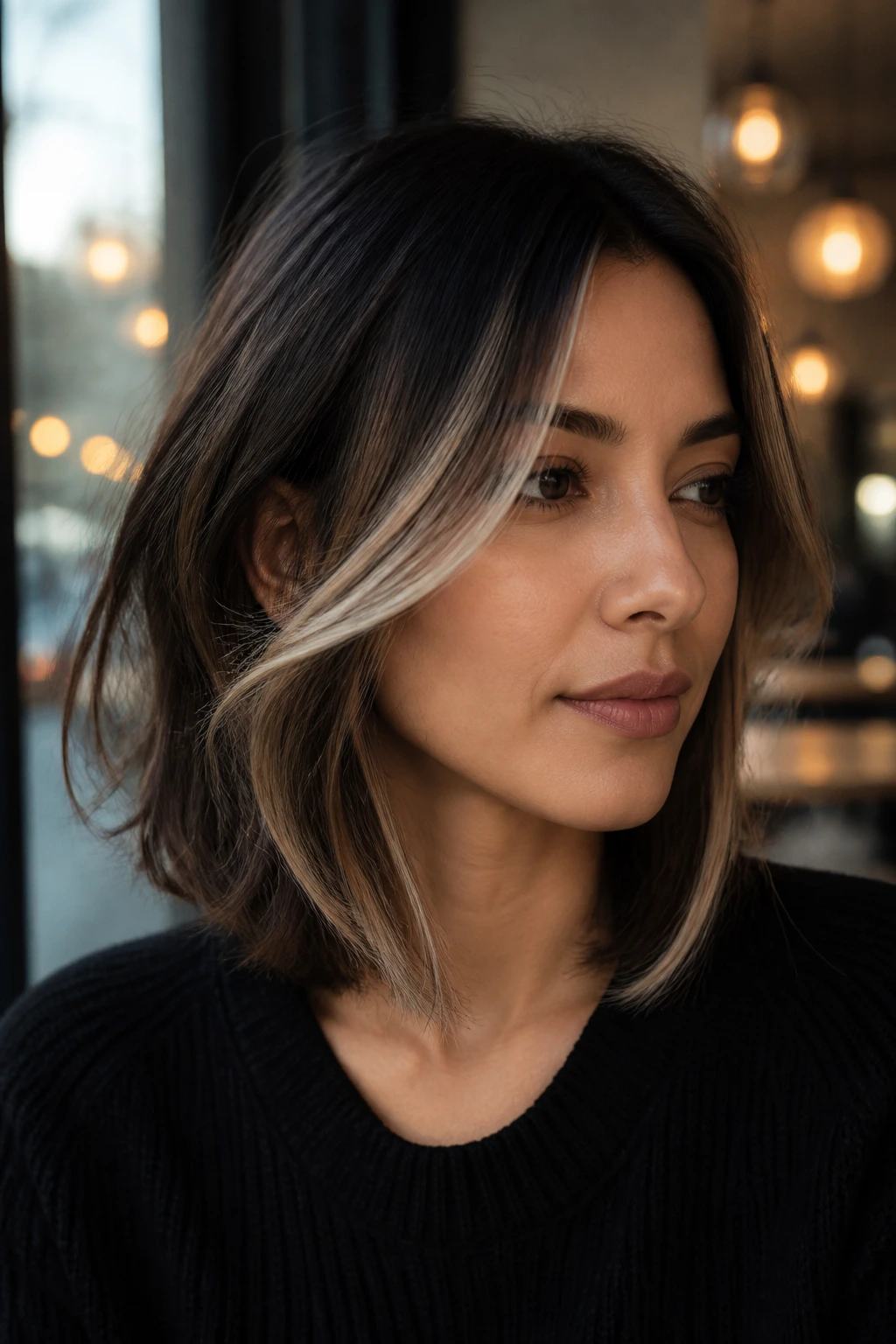
If you want a fast visual lift, face-framing ice pieces do the job without lightening the whole head. The front sections start around the cheekbone or just below the temple, then taper down toward the jaw. On dark hair, that contrast can make the face look brighter and the hair look lighter in movement.
Thin hair benefits because the rest of the head stays dark and full. You get a bright frame up front and preserve density everywhere else. I’d call this the least risky platinum move for someone who’s nervous about bleach.
The trick is keeping the pieces narrow. Chunky front streaks can look harsh on fine hair, but thin ribbons around the hairline read soft and deliberate. The best versions have a little root shadow and a cool toner that keeps the blonde from turning gold after a few washes.
3. Soft Ribbon Balayage
Soft ribbon balayage is what I recommend when someone says, “I want it lighter, but I do not want to look like I lost half my hair.” The colorist paints thin, curved ribbons through the top layer and mid-lengths, then leaves plenty of the dark base untouched. It’s airy. Not busy.
This placement works beautifully on slightly wavy hair because the ribbons catch the bends and show up in motion. Straight hair can wear it too, but the effect is more subtle unless you add a bend with a large iron. That’s the catch with fine hair: the color often looks better once there’s a little shape in the cut.
What to ask for
- Thin, hand-painted ribbons instead of broad panels
- A cool beige or pearl toner, not yellow platinum
- Brightness concentrated on the outer layer and face frame
The result is less “blonding service” and more “sunlight slipped through the top layer.” That’s the good version.
4. Platinum Ends on a Long Bob
A long bob gives platinum ends a lot of help, because the cut itself makes the hair look fuller than it would at a longer length. When you keep the top and roots dark, then brighten just the bottom third, the eye reads weight at the top and sparkle at the bottom. Fine hair needs that kind of trickery.
This is one of my favorite styles for dark brunettes who want change without a full blonding journey. The ends can go icy or pearl-toned, while the crown stays espresso or mocha. The contrast makes the bob feel sharp, not flat.
The only thing to watch is the finish. A blunt or slightly beveled edge holds the look together better than wispy, shredded ends. If the perimeter is already sparse, ask your stylist to avoid over-lightening the very tips.
5. Curved Contour Lights
Curved contour lights follow the shape of your face instead of sitting in straight, mechanical stripes. The bright sections arc around the temples, sweep past the cheekbones, and soften near the jaw. On dark hair, that curved placement can act almost like makeup for the haircut.
Thin hair likes this because the color is doing visual lifting where the cut needs it most. If your sides fall flat, those bright arcs create movement without forcing you into heavy layers. It’s a smart choice for people who wear their hair tucked behind one ear or parted slightly off-center.
H3: Where this looks strongest
This style really wakes up a lob, a butterfly cut, or any cut with face-framing layers. If the hair is pin-straight and long, the contour pieces still work, but they benefit from a soft bend at the ends. A flat iron is fine. Just don’t clamp the life out of it.
6. Peekaboo Platinum Layers
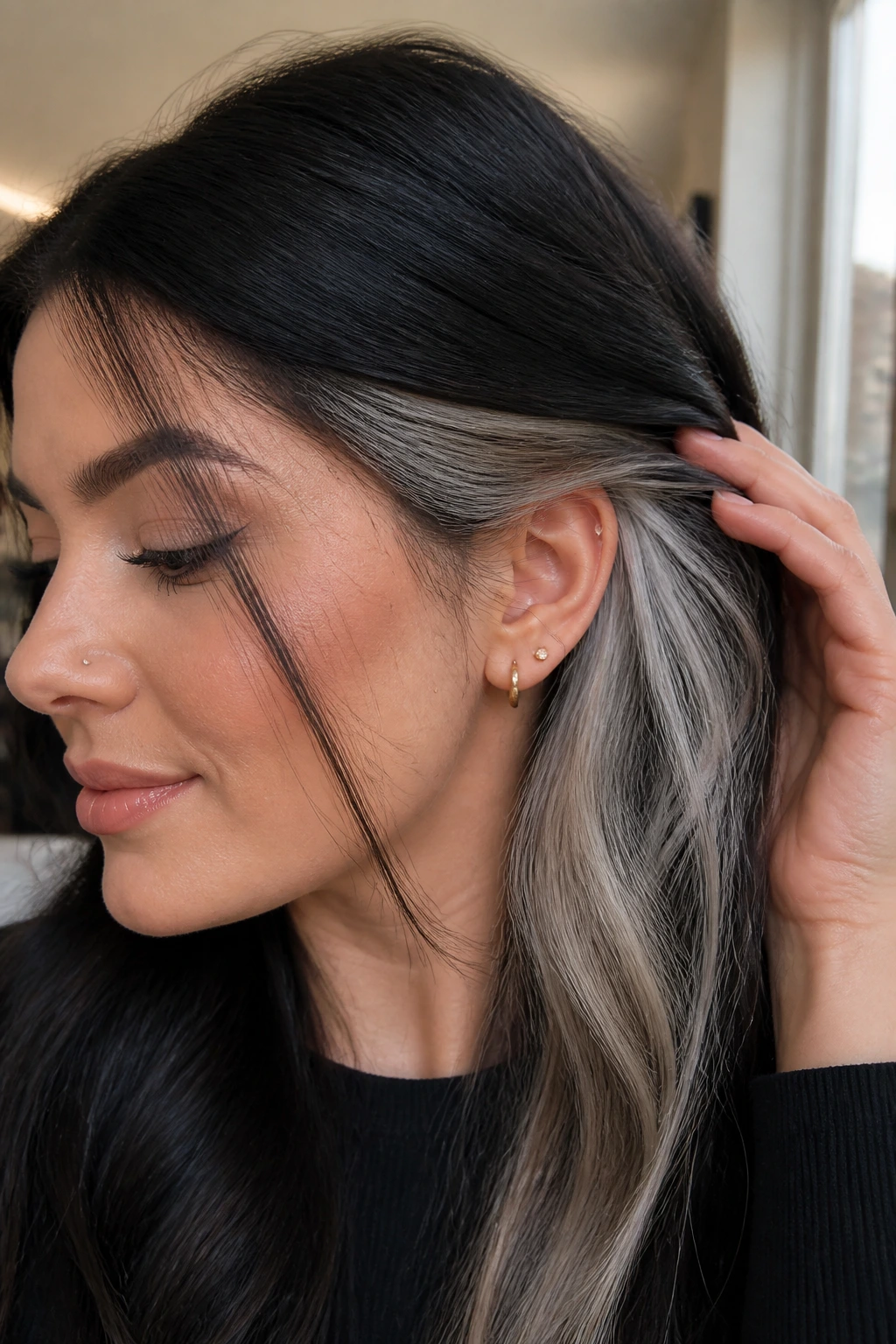
Peekaboo platinum layers hide the brightest pieces underneath the top curtain of dark hair. You catch flashes of platinum when the hair moves, when wind hits it, or when you tuck the top layer behind your ear. That hidden-light effect is useful on thin hair because it keeps the surface looking dense.
I prefer this for people who want contrast but worry about obvious bleach lines. The darker top layer masks the scalp and gives the impression of thicker coverage, while the platinum underneath adds dimension. It’s a little sneaky. That’s the appeal.
Keep the bright underlayers concentrated around the nape and lower sides, not every hidden section. Too much underside lightening can make the hair look hollow when it’s pulled back.
7. Micro-Balayage for Fine Strands
Micro-balayage is exactly what it sounds like: tiny, closely placed painted sections that create a soft overall lift without obvious stripes. On dark, thin hair, this is often the smartest route because it respects how fragile the strands can be. You get brightness. You do not get the heavy-handed look.
What makes it different is the scale. Instead of wide pieces, the colorist uses very fine sections and builds pale blonde gradually. The result is misty and blended, which is ideal if your hair is fine enough that chunky highlights start to look thick and artificial.
This is the version I’d point to for anyone with hair that tangles easily or snaps when brushed too hard. The finer the placement, the less rough the grow-out tends to look. It also pairs well with a gloss every few weeks.
8. Smoky Espresso-to-Ice Fade
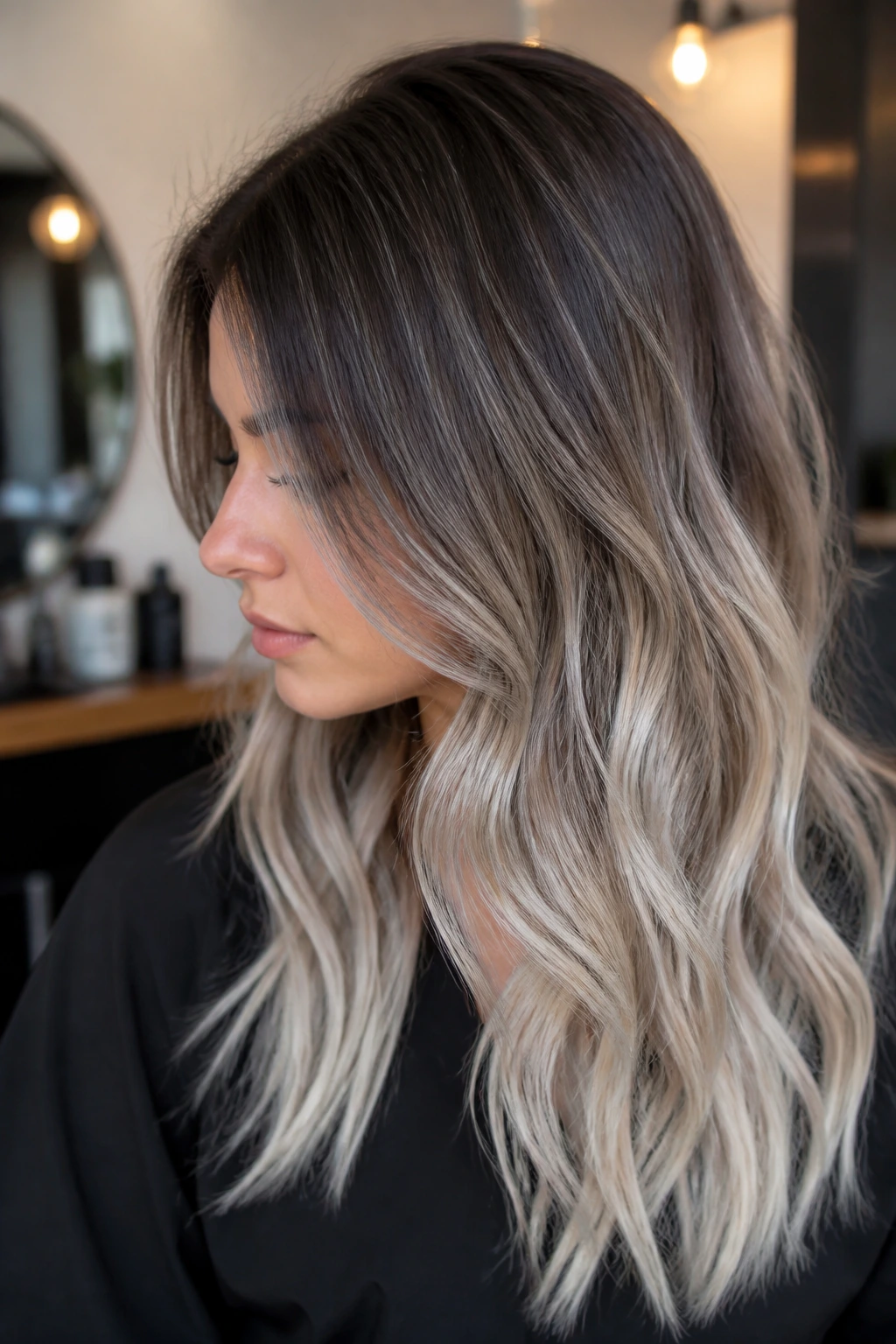
A smoky espresso-to-ice fade gives you drama without making the hair look bare at the root. The base stays deep brown or espresso, the mids move into cool taupe, and the ends go pale platinum. The transition matters here. If it jumps too fast, the whole thing looks streaky.
This style suits dark hair that can handle a little contrast and has enough movement in the cut to show the blend. Fine hair benefits because the dark base anchors the look. You’re not trying to erase the brunette. You’re using it.
A toner with ash and pearl in it keeps this fade from turning muddy. If the blonde goes too yellow, the whole gradient loses its point. Keep the brightness icy, not warm.
9. Curtain Bang Brightener
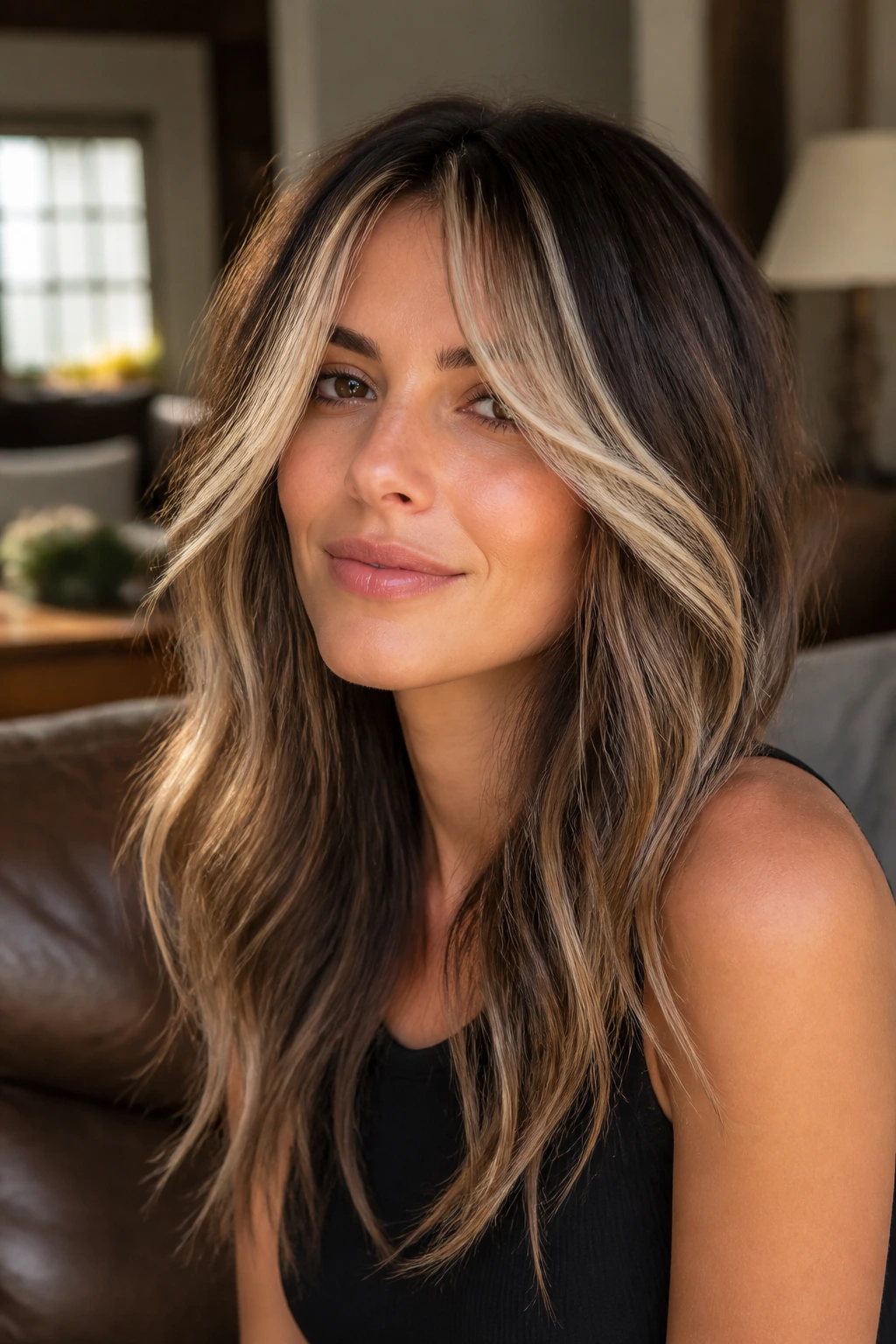
Curtain bangs are a gift to thin hair because they create instant softness around the face without requiring a full heavy fringe. Add platinum balayage through those bang pieces, and the whole front of the head looks lighter and more lifted. It’s a small move with a big visual payoff.
The color placement should start just below the brow area or around the cheekbone, then taper into the front layers. That keeps the bangs from looking like two stiff white strips. The blonde should feel woven in, not pasted on.
This look works especially well if the rest of the hair stays darker through the back and sides. The contrast makes the bang area feel lively while the lengths keep their shadow. That’s the piece many people miss.
10. Platinum Halo at the Crown
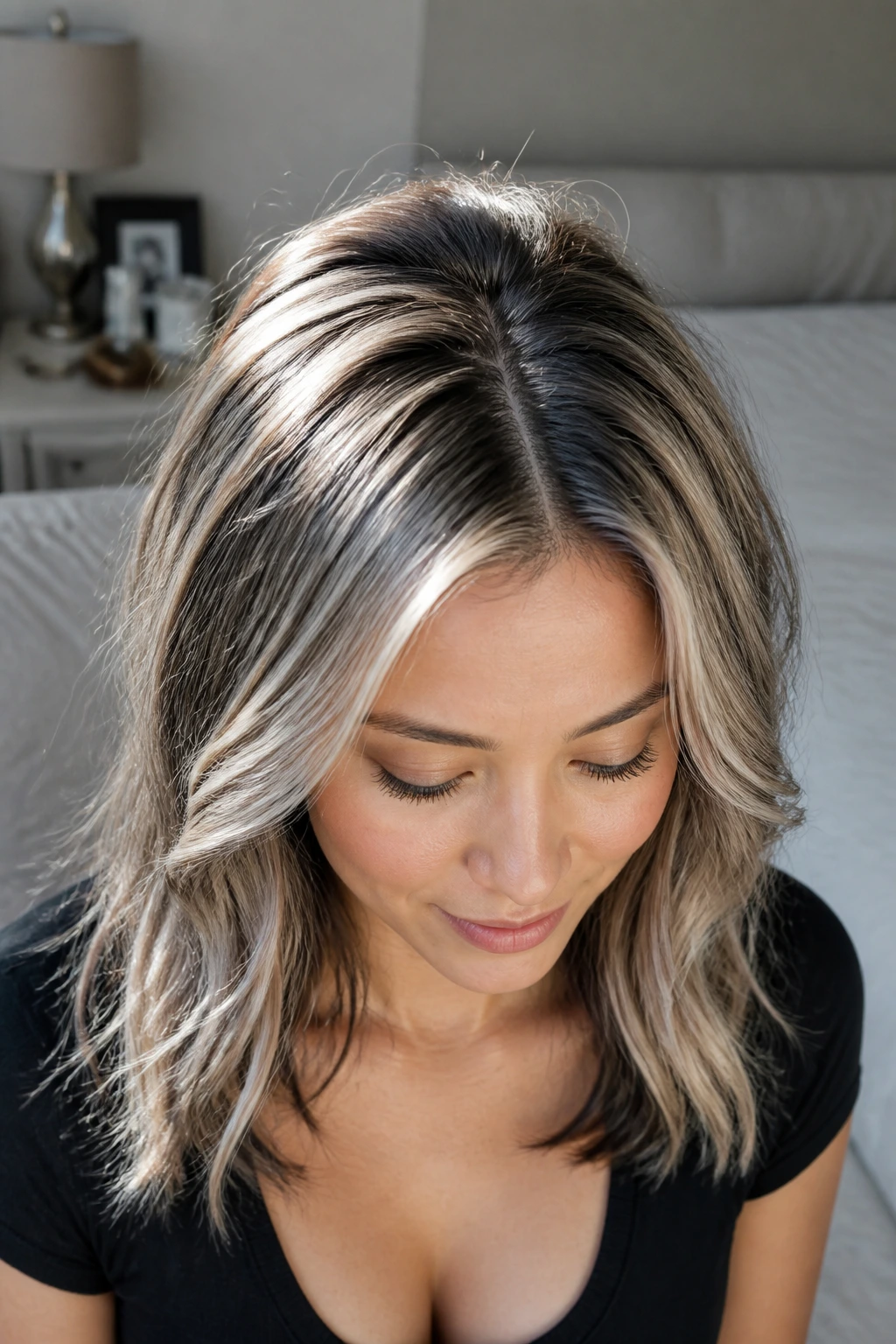
A platinum halo at the crown is a little more technical, and I like it most on hair that goes flat at the top no matter what you do. The brightest pieces sit just under the surface around the crown and upper parting area, so when light hits, the top appears fuller and more lifted. It’s not about bleaching the scalp white. That would be a mistake.
On thin hair, the crown is where you want precision. Too many bright pieces there can expose the part line, but a few softly placed platinum accents can make the head look rounder and more voluminous. Think of it as strategic shimmer.
If your hair is very fine, keep the halo soft and pair it with a root shadow. The blend should hide the seams. That’s the whole point.
11. Choppy Bob with Frosted Tips
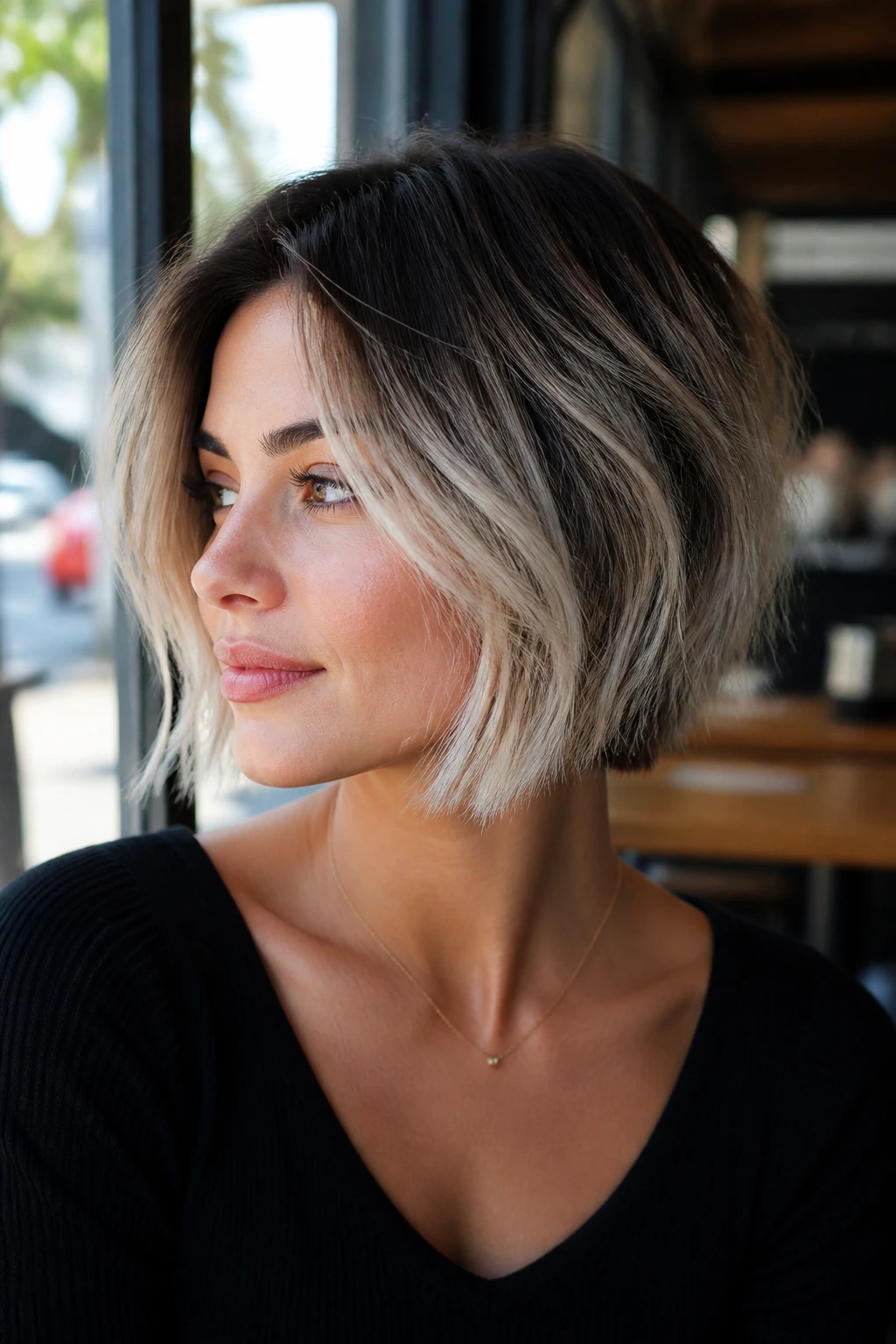
A choppy bob already brings texture, and frosted tips push that texture into focus. The ends are lightened just enough to break up the outline of the cut, so the bob feels airy instead of blunt in a heavy way. Dark roots at the top keep the density.
This works because short, piecey hair benefits from contrast at the perimeter. Fine hair often goes wispy at the ends, and a pale frost can make those tips look intentional rather than sparse. It’s one of those styles that looks sharper the second day, after the texture settles.
I’d keep the lightest pieces near the outer edge and front, not all through the interior. That way the bob keeps a solid center of gravity. A little pomade or texture spray at the ends helps the cut show off the color.
12. Butterfly Cut with Airy Brightness
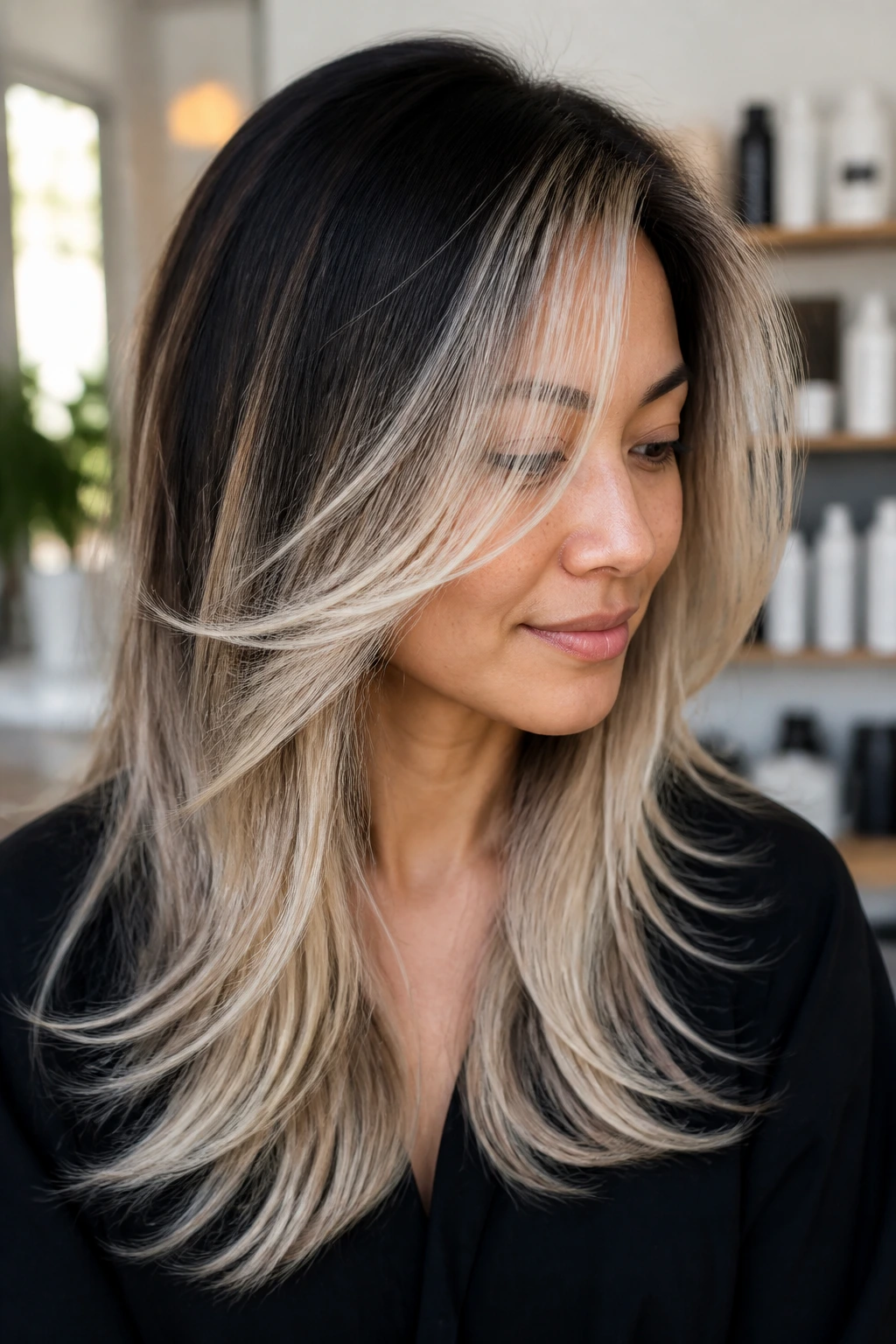
The butterfly cut has those long face-framing layers that fall away from the face while the length stays in place, and that makes it a strong fit for platinum balayage on thin hair. You can brighten the long front sections, the outer layer, and the mid-lengths without sanding down the whole silhouette. The result looks fuller because the layers and color both move.
What I like here is the sense of shape. The brightness emphasizes the swoop of the layers, so the hair looks like it has width at the cheekbones and softness at the ends. Dark hair underneath keeps the whole thing grounded.
How to wear it
Loose bends work better than tight curls. You want the layers to separate enough to show the platinum, but not so much that the ends look stringy. A 1.25-inch iron or a large round brush usually gives the right amount of bend.
13. Side-Part Spotlight Balayage
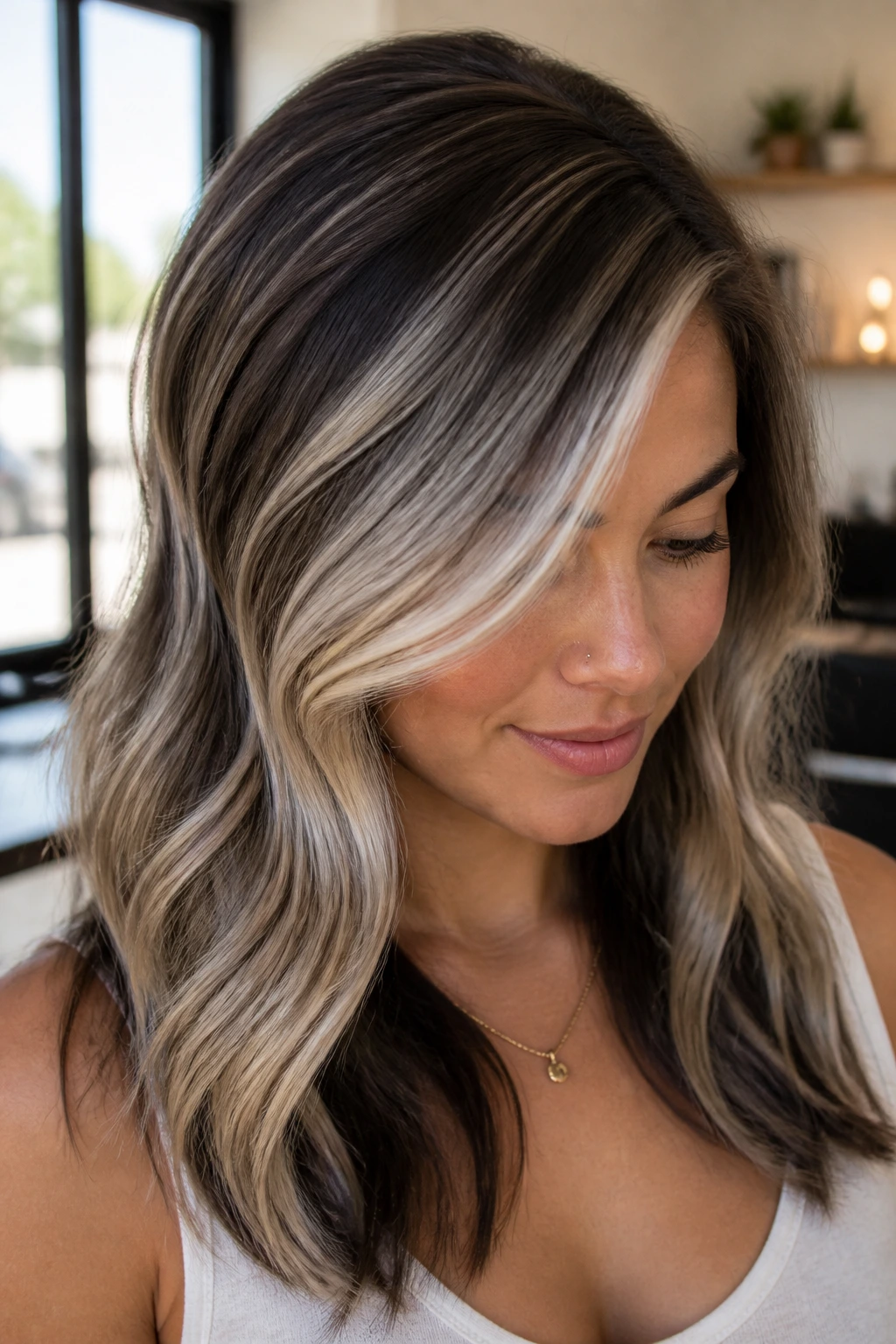
A deep side part can make thin hair look instantly fuller, and platinum balayage can push that effect even further. Brighten the heavier side of the part, then let the lighter ribbons fall through the front and upper surface. The imbalance creates lift. The eye reads volume where the hair is actually being given more shape.
This style is especially useful if one side of your hair naturally lies flatter than the other. The brighter section becomes the visual anchor, and the darker side helps the style keep depth. It’s a neat little cheat.
I like this look on medium-length hair because the part has enough space to show off the contrast. On very long hair, the parting can feel a bit too serious unless you add movement. A soft wave fixes that fast.
14. Foilyage for Extra Lift
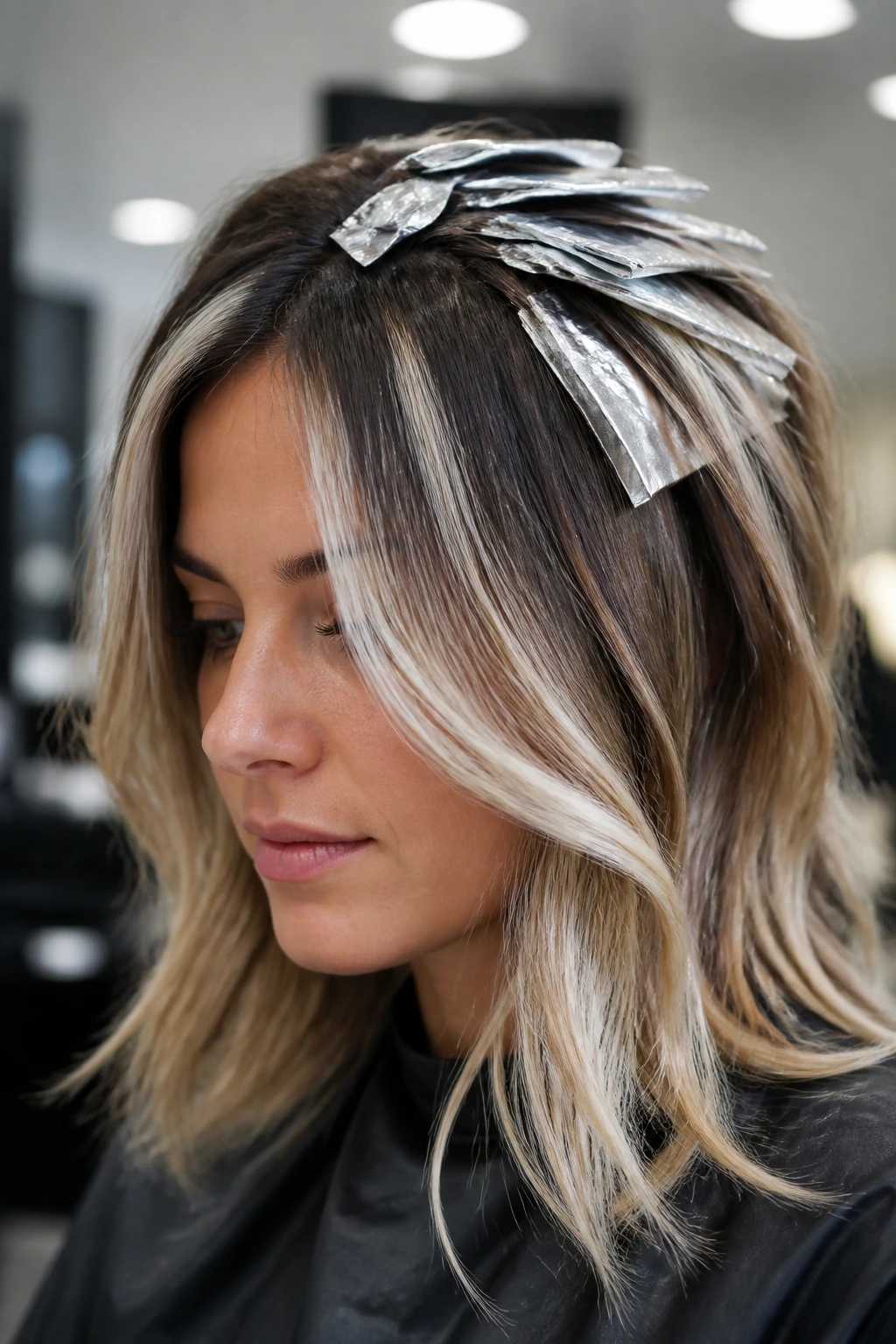
Foilyage blends balayage painting with foil placement, and on dark hair that refuses to go pale, it’s often the cleaner route. The foils give extra lift where the hair needs it most, while the hand-painted sections keep the overall look soft. Fine hair benefits because you can get a brighter platinum result without covering every strand.
This is the style to think about when the base is very dark and the goal is a real icy blonde, not just brown with lighter tips. It usually needs more control than freehand balayage alone. That’s not a flaw. It’s the point.
If your hair is thin, ask the colorist to keep the foils finely sliced and concentrated around the top and front. Heavy foils all over can flatten the hairline and make the finish look overdone. A controlled lift reads much cleaner.
15. Cool Beige-Platinum Blend
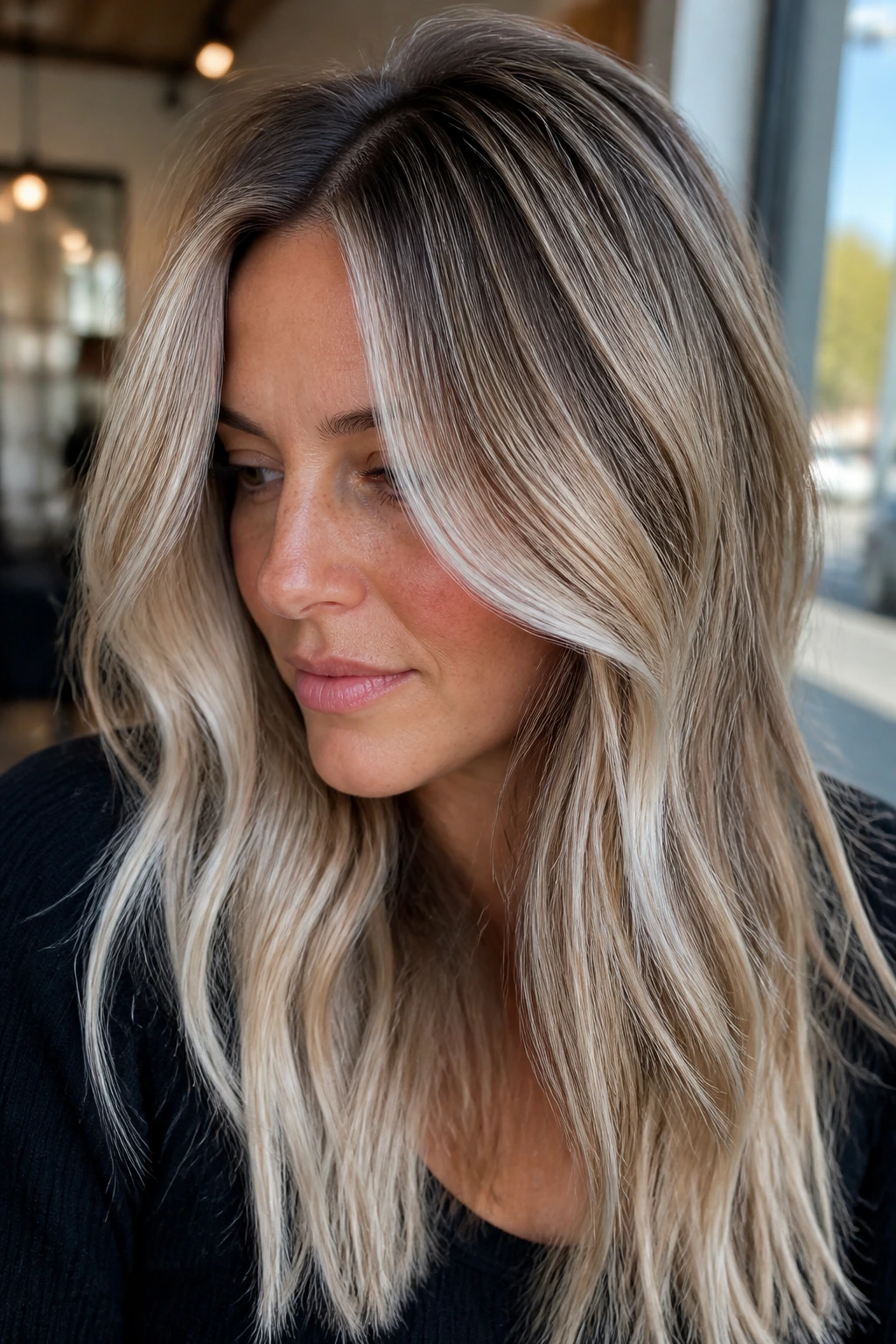
Not every platinum blonde has to look silver-white. A cool beige-platinum blend softens the contrast just enough that dark fine hair keeps some gentleness. The blonde still reads icy, but it has a creamy edge that can make the hair look thicker than a stark white tone.
This version is good for people who want something polished without the hard, bright striping that some platinum looks create. Beige tones blur the line between brunette and blonde a little better, which helps when the hair is naturally sparse. It’s less harsh on the eye.
The trick is not drifting too warm. Beige should sit in the ash-and-pearl family, not the yellow family. If the tone gets buttery, the whole look loses that crisp lift.
16. Straight-Hair Veil Highlights
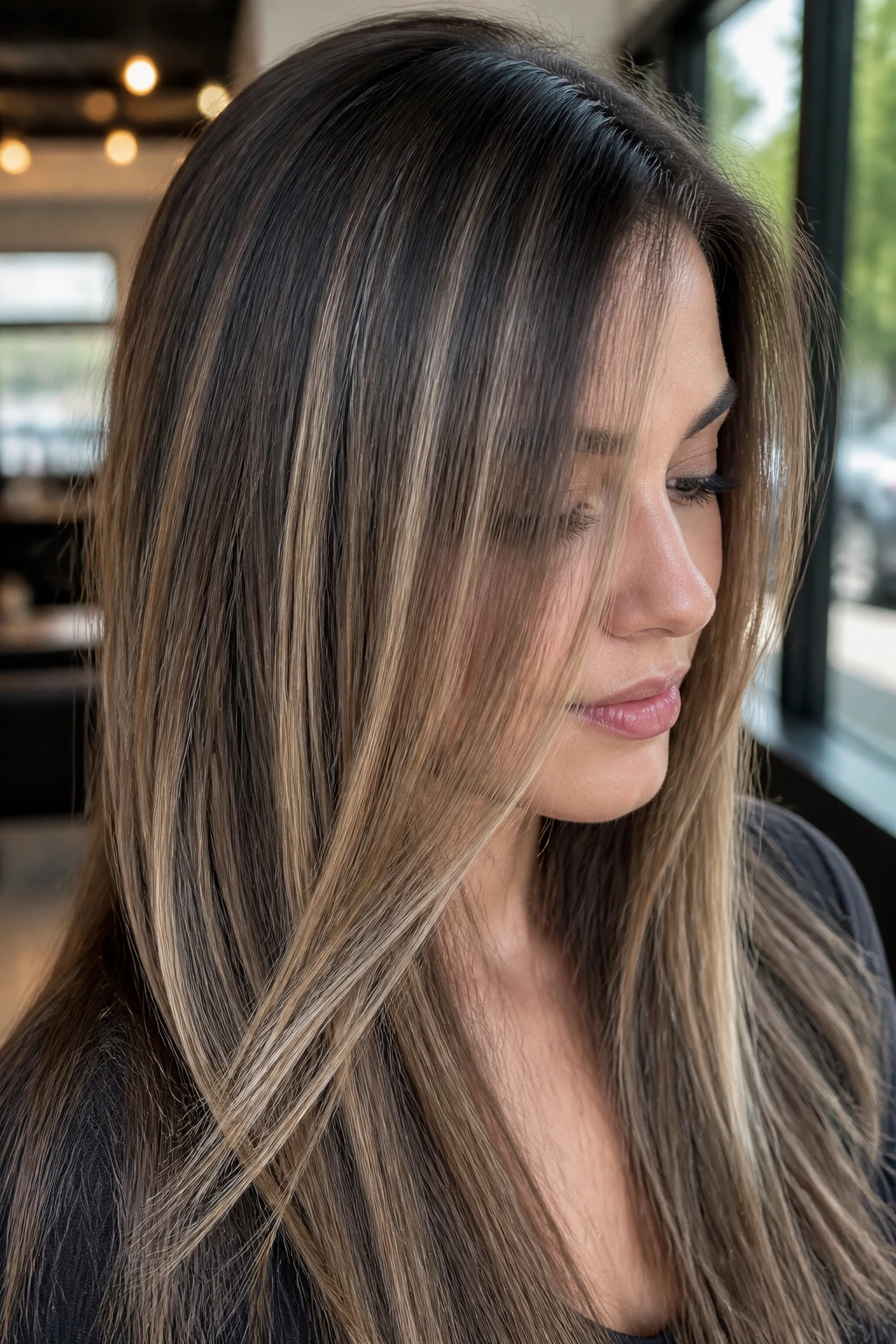
Straight hair can make balayage look either sleek or brutally obvious, depending on how the pieces are placed. Veil highlights solve that by using very thin, nearly transparent ribbons that sit over the top layer like a light veil. You see the brightness when the hair shifts, not as a bold block.
On thin hair, this is useful because the highlights do not carve out big gaps between strands. The dark base stays dominant, and the platinum flashes on movement. That gives you dimension without shouting about it.
This style asks for restraint from the colorist. Thin slices, cool toner, soft graduation. If the sections get too wide, the veil turns into a set of streaks, and that’s a different look entirely.
17. Dimensional Pixie-Bob Frosting
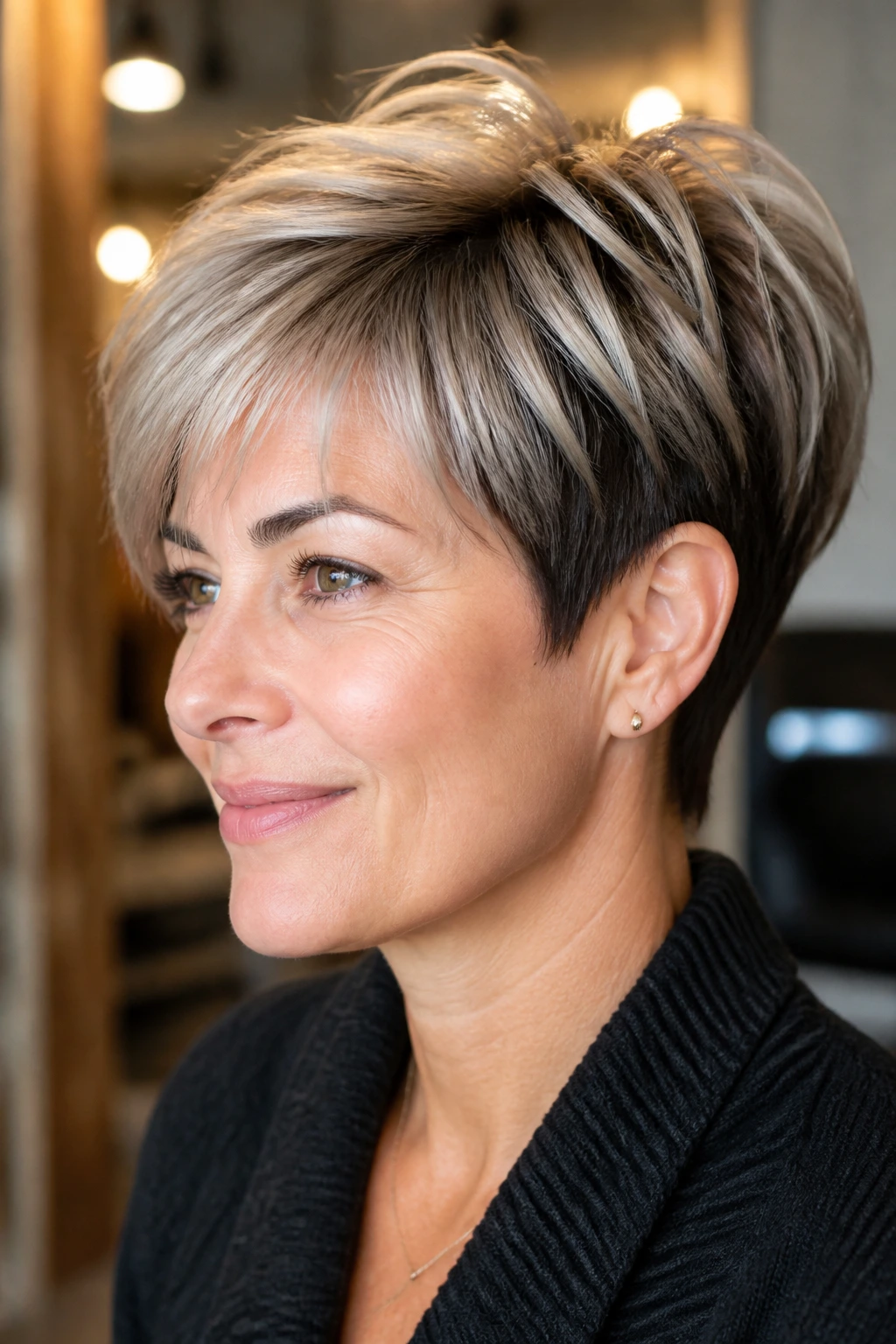
A pixie-bob can take platinum much better than people expect, especially when the top gets frosted and the sides stay darker. The short length gives fine hair more natural lift, and the platinum accents on the crown and fringe make the cut feel piecey instead of soft and round. It’s a sharp little look.
I’d use this for anyone who wants the brightness to do some of the work that layering would normally do. The light pieces make the top surface pop, while the darker sides keep the style from looking too exposed. A fine hairline can actually benefit from that contrast.
Keep the lightest color away from the very bottom edges if the hair is already delicate. You want frosted movement, not a bleached shell.
18. Ice-Tip Layers for Long Hair
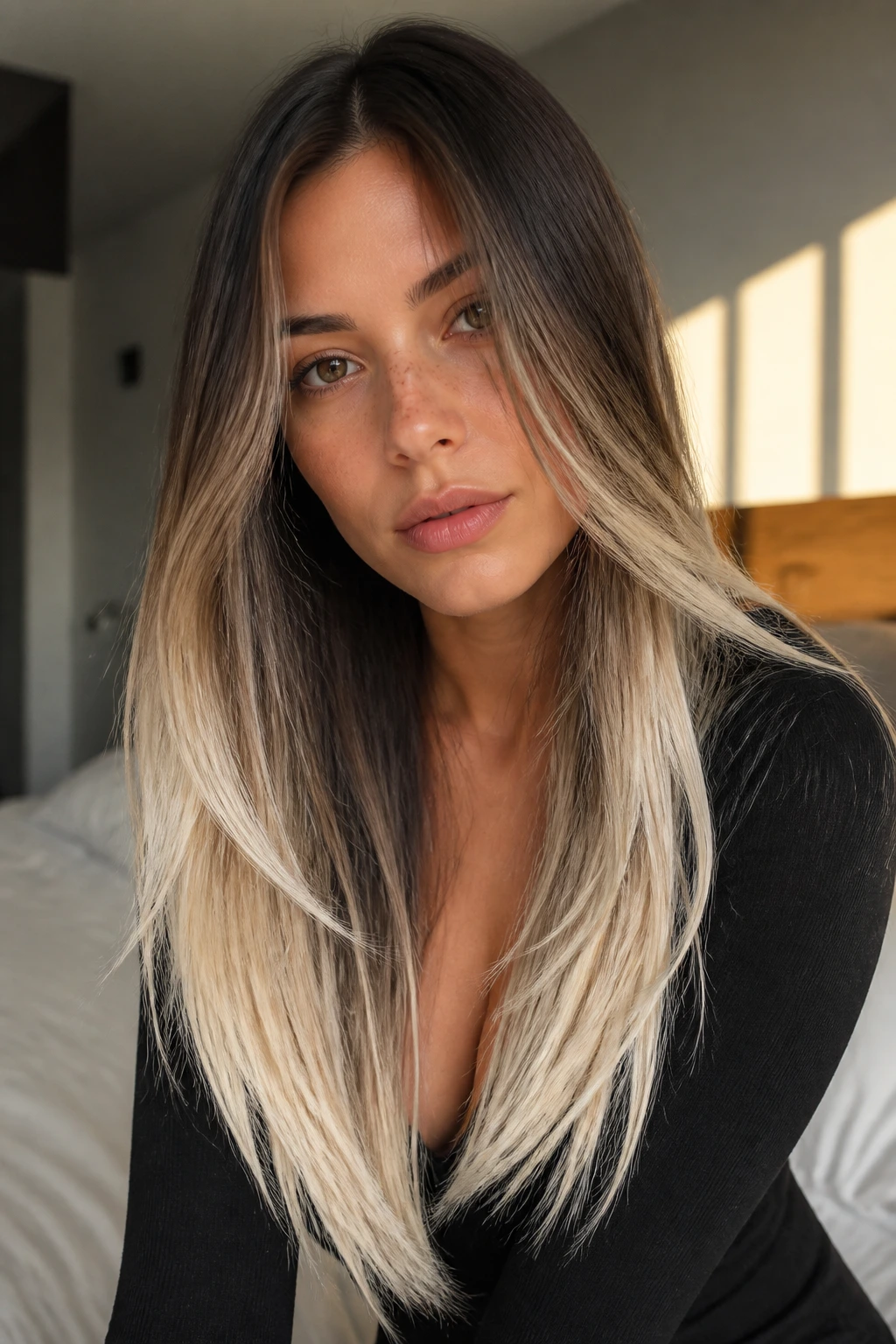
Long thin hair can get dragged down fast, especially when every strand is the same dark color from root to tip. Ice-tip layers fix that by concentrating platinum on the longest ends and a few floating layers, while the upper section stays brunette. The color gives the illusion that the hair is lighter and more lifted than it really is.
This approach is a good compromise if you love length and do not want to sacrifice it for a blunt blonde overhaul. The bottom pieces catch the most light, which makes the overall style read airy. Dark roots and mids keep the scalp area visually dense.
I’d pair this with soft layers rather than heavy thinning shears. Too much texturizing on already fine hair can leave the ends wispy. The color should support the cut, not replace it.
19. Root Smudge with Thin Face Pieces
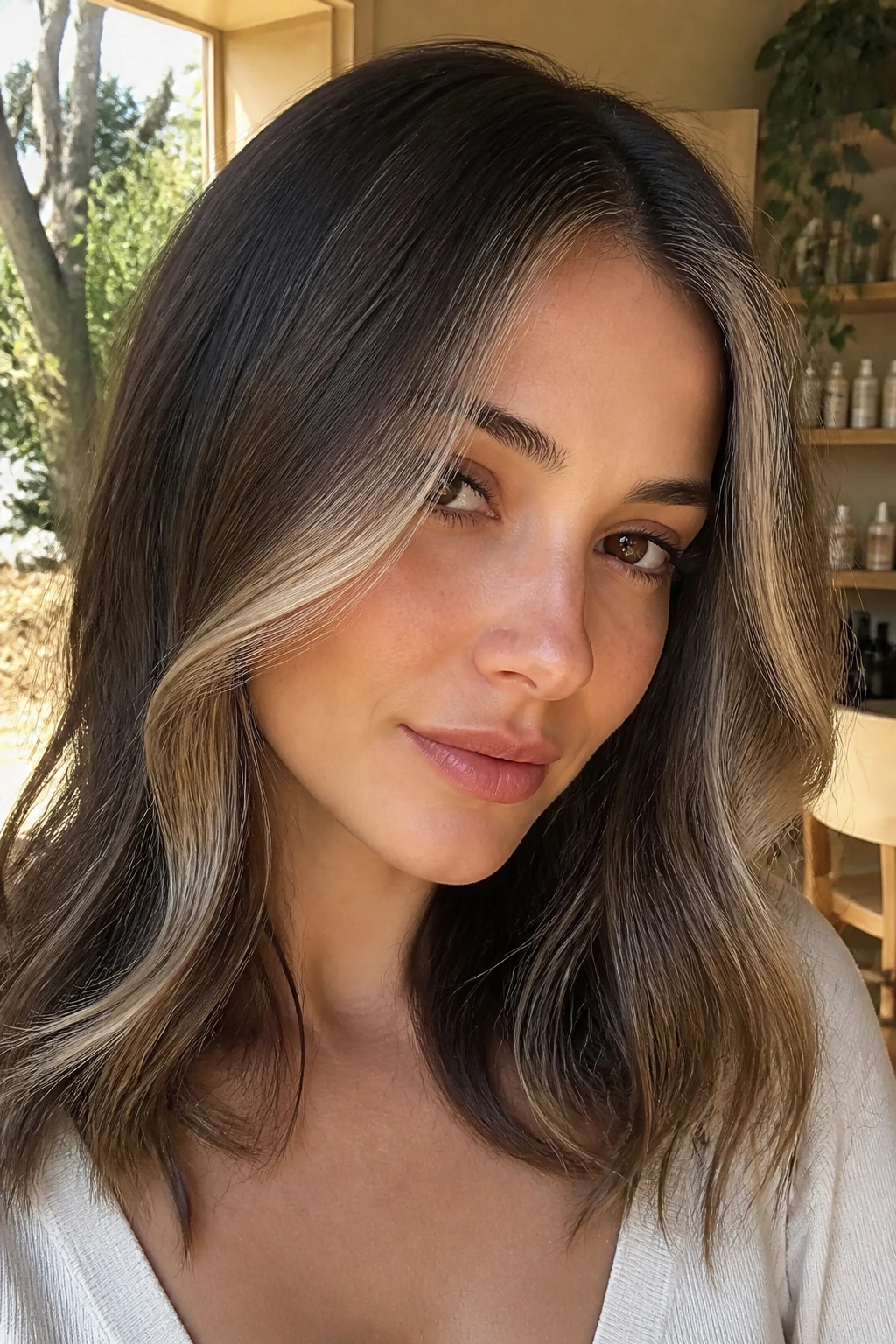
A root smudge is one of the easiest ways to keep platinum balayage wearable on dark fine hair. The darker root, usually about a inch or so blended down, keeps the hair looking anchored. Then you add thin platinum pieces around the face and maybe a few through the top layer for movement.
This is a good low-maintenance option because the grow-out line stays soft. It’s also less likely to make the crown look see-through, which is a real risk when dark hair gets lifted all over. The contrast stays where you want it.
If you like your hair worn down most of the time, this setup is especially useful. The dark underneath helps the style retain body even when the lighter pieces are tucked behind the ears or clipped back.
20. Mushroom Brown to Platinum Drift
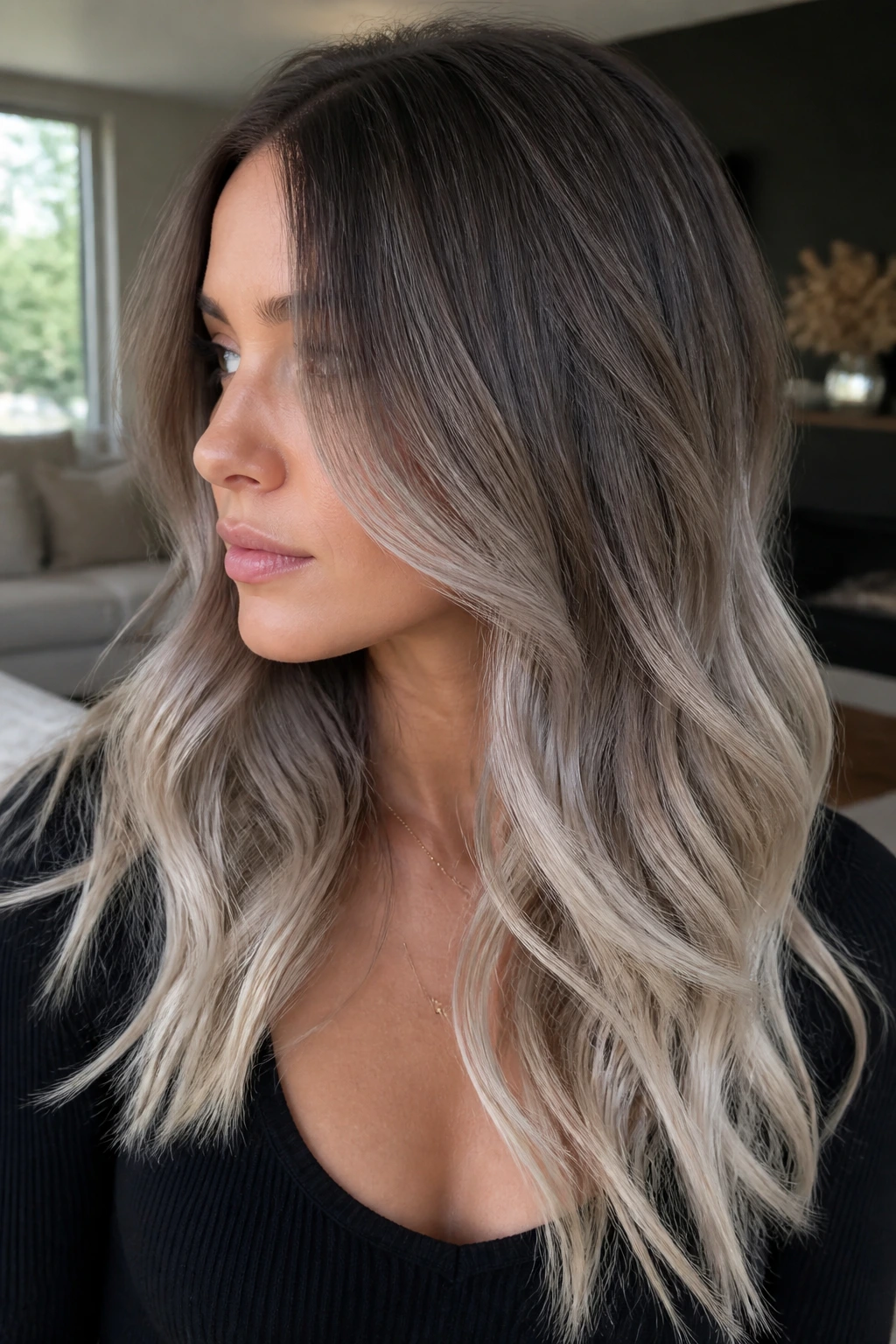
Mushroom brown isn’t a warm brunette, and that matters. The cooler base gives platinum a bridge to stand on, which makes the transition look smoother on dark hair with thin density. Instead of jumping from dark brown to white blonde, the color drifts through smoky taupe and soft ash before it reaches the ends.
I like this because it looks more layered and less painted. Thin hair often benefits from any tone that helps the eye travel slowly through the color. A hard jump can make the head look smaller. A drift feels fuller.
What to ask for
- Mushroom brown or cool mocha at the root area
- Ashy mid-lengths
- Pearl-platinum ends with a gloss finish
That tonal progression is what keeps the style from looking flat or striped.
21. Wavy Lob with Ribboned Brightness
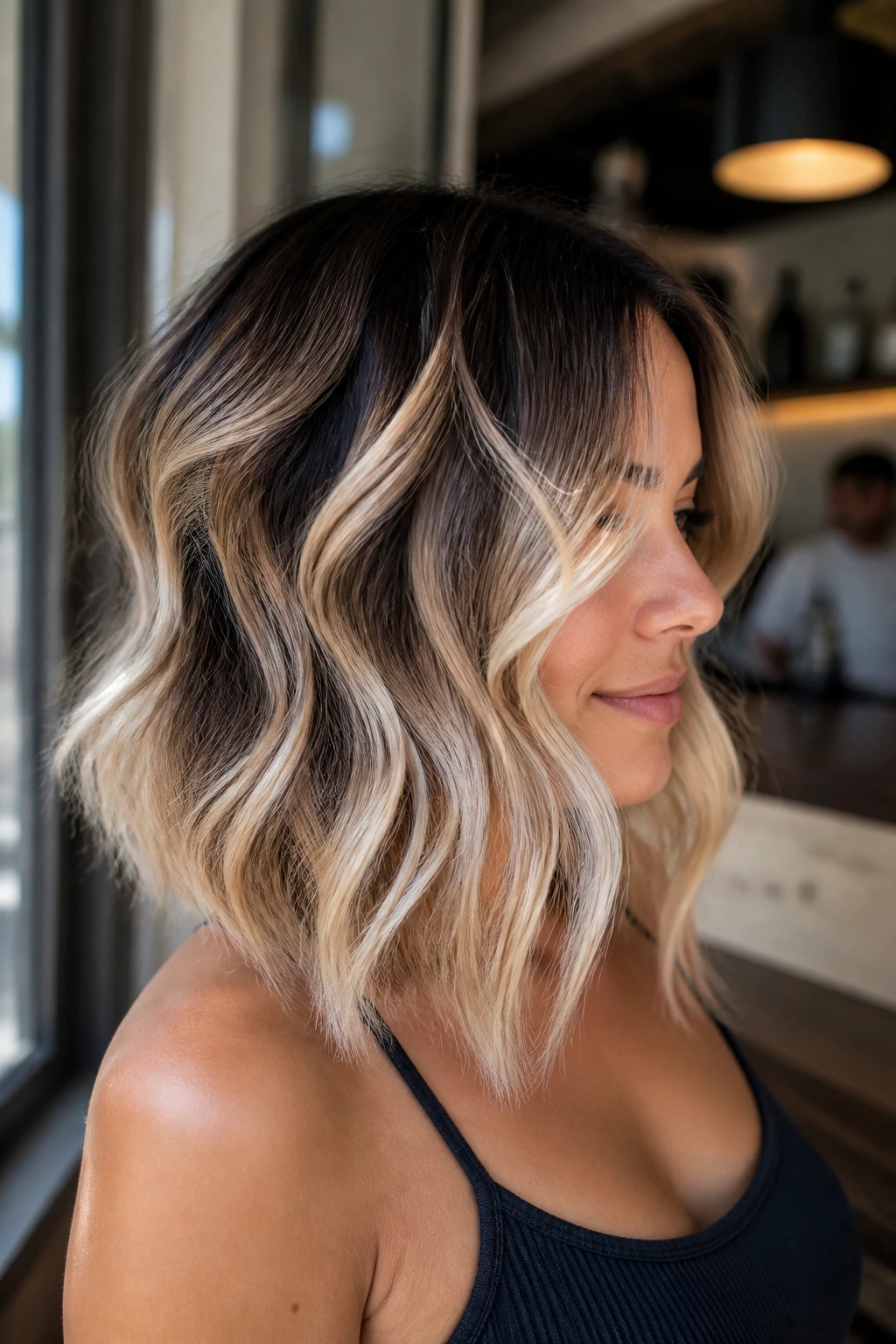
A wavy lob is one of the easiest cuts to pair with platinum balayage because the bend in the hair naturally exposes the ribbons. The bright pieces sit along the wave pattern, so every curve catches light. Fine hair gets a fuller look without needing dense layers all over the place.
This is a look I’d recommend to people who want a soft, beachy finish but do not want the color to look random. The ribbons should follow the hair’s shape, not fight it. When that happens, the blonde looks woven in.
A side note worth keeping: if you wear a lob straight most days, this still works, but the effect becomes cleaner and slightly more graphic. If you like a more obvious highlight map, that’s a bonus. If not, add a loose wave and it softens right back up.
22. Airy Money Piece and Shadow Ends
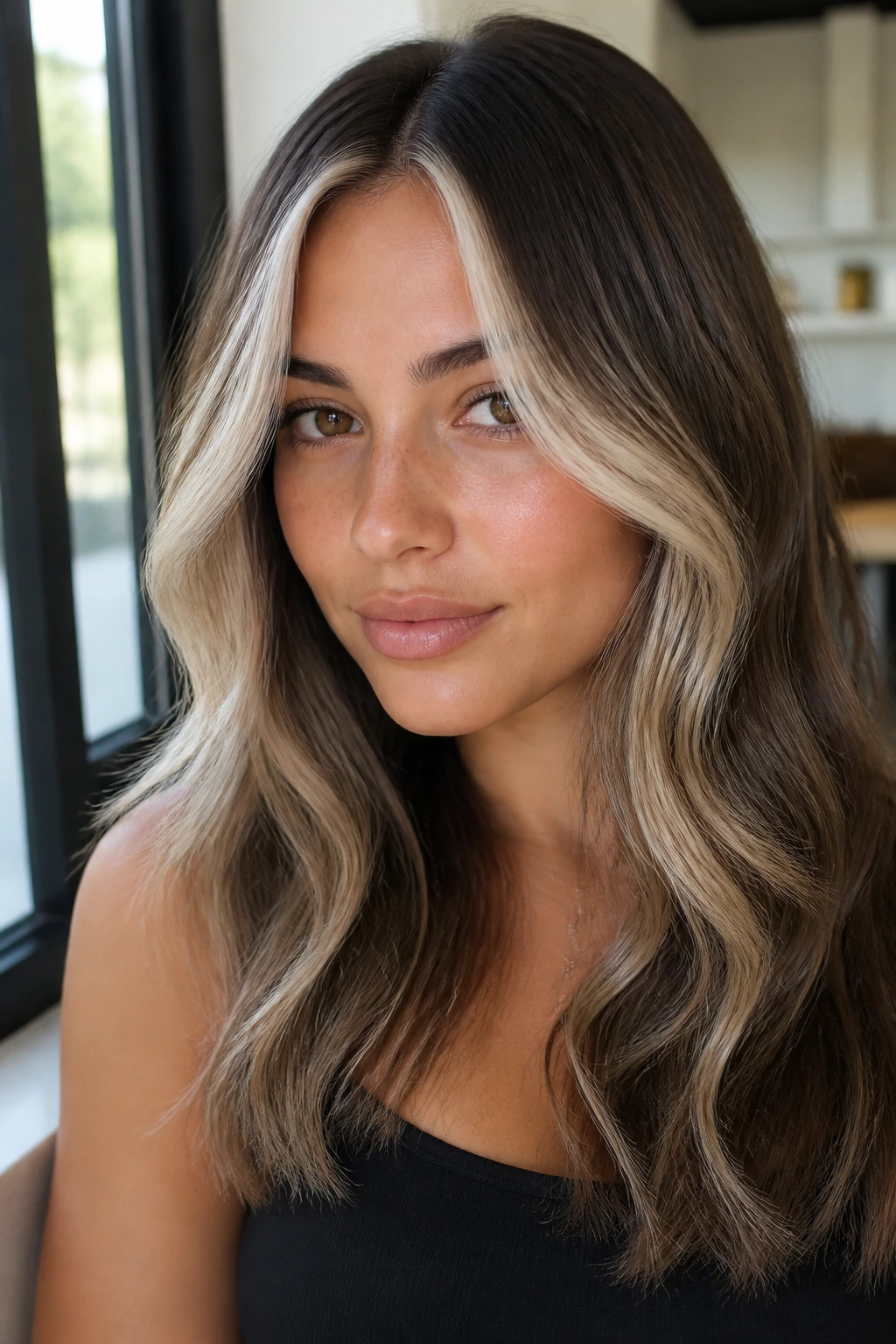
A bright money piece can look loud on thick hair and oddly hollow on thin hair if the rest of the head is overlightened. The fix is to keep the ends and interior shadowed while giving the face frame a strong platinum lift. The front becomes the headline; the rest of the hair stays quiet and full.
This style gives you a big visual payoff without asking the whole head to carry the weight. It’s a good match for people who wear their hair in loose waves, half-up styles, or clips. The money piece stays visible, which means the effect lasts even when the rest of the hair is tucked away.
Keep the face pieces soft at the edges. Hard lines around the front can look harsh on fine hair. You want brightness, not a cutout.
23. Baby-Light Balayage for Maximum Softness
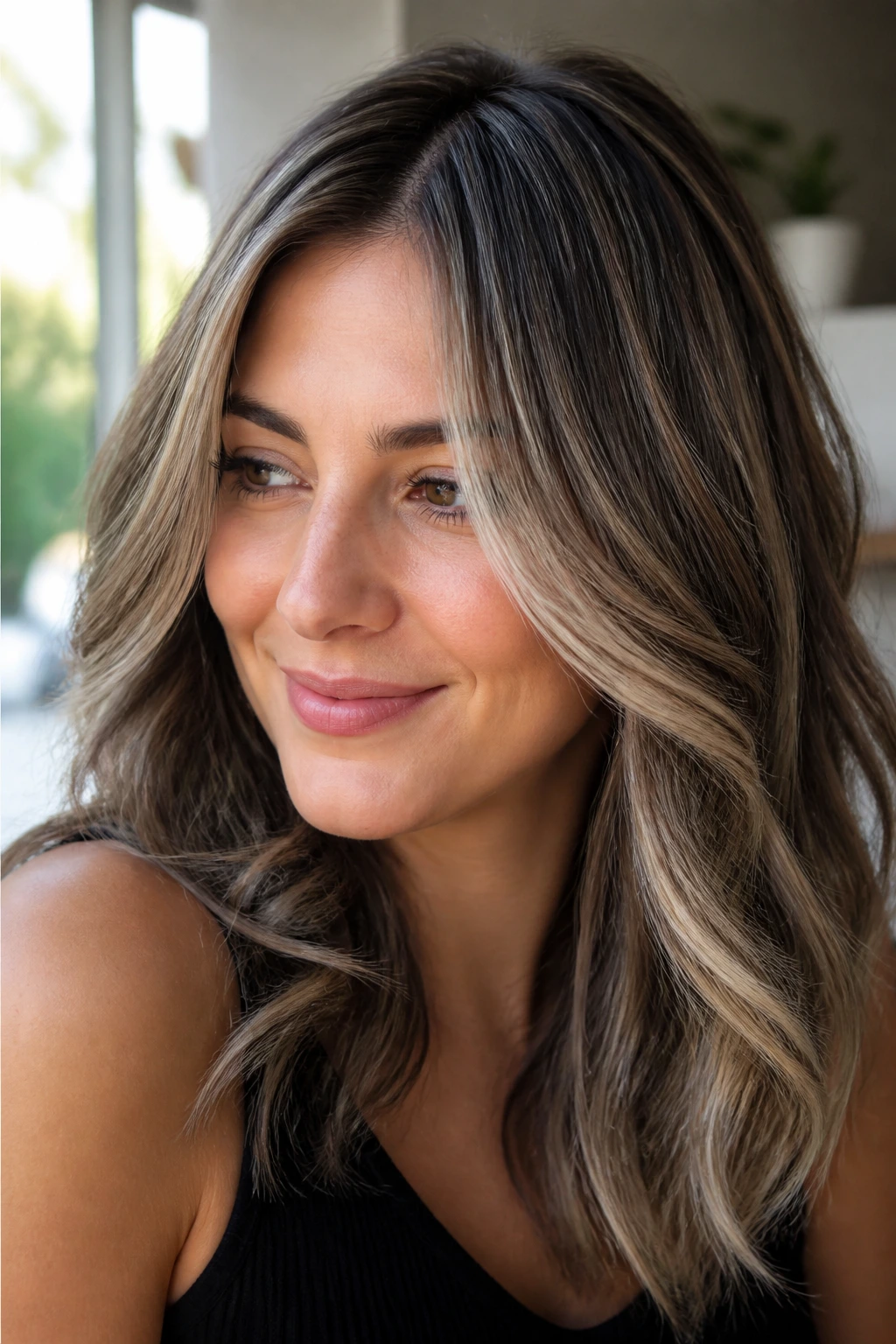
Baby-light balayage uses very fine highlights blended over a balayage base, and that softness can be a real advantage on dark thin hair. The tiny light pieces break up the solid brunette without exposing too much scalp or scalp line. It looks expensive in the sense that nothing yells for attention.
This is the style for someone who hates seeing clear highlight stripes. The pieces are delicate enough that the hair still reads like one object rather than a stack of sections. That matters on fine strands, where chunkier placement can separate too much.
If you want to keep the finish airy, ask the stylist to keep the brightest pieces near the top surface and around the face, with fewer lights buried underneath. The whole effect stays lighter, but not busy.
24. Angled Bob with Frosted Perimeter
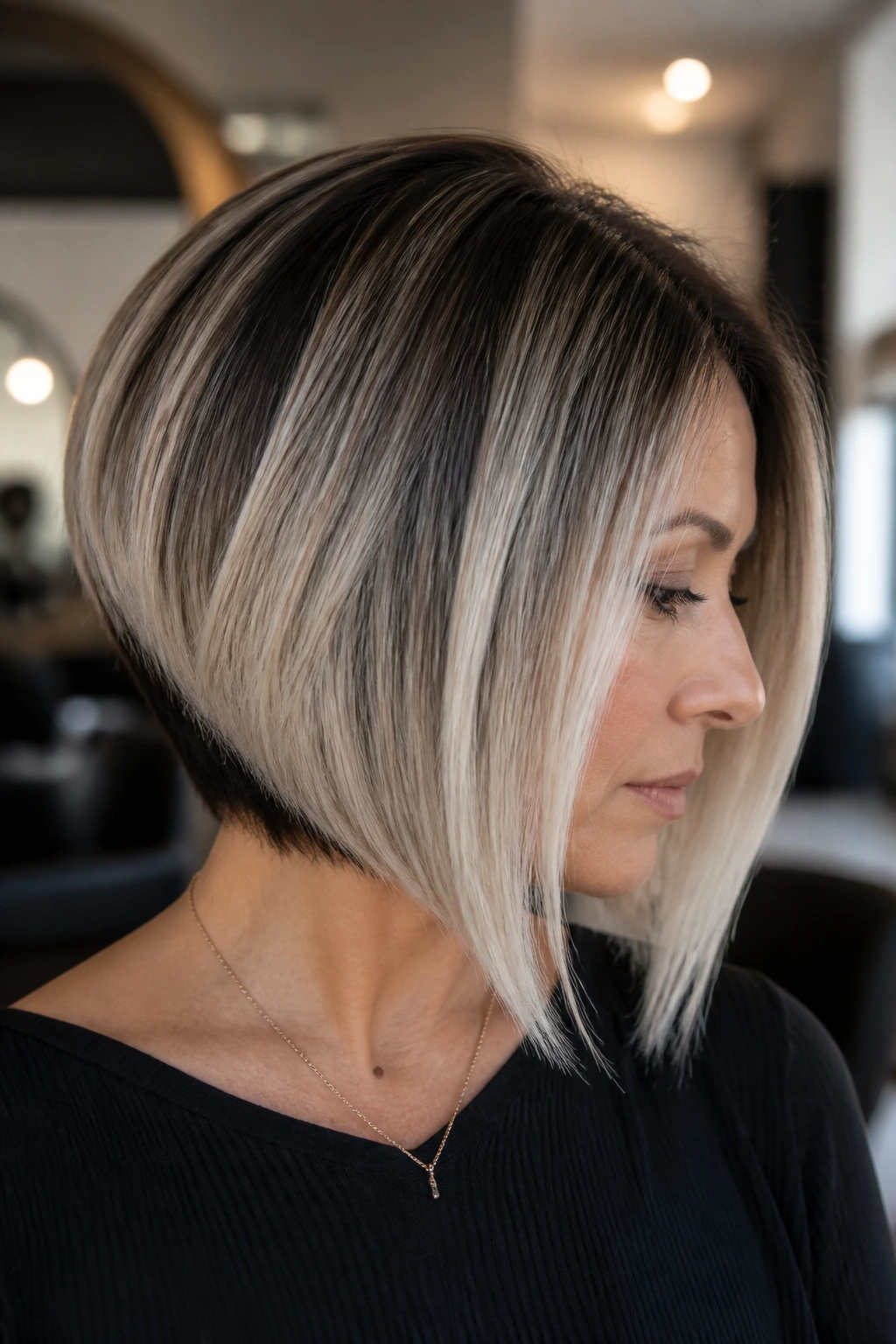
An angled bob gives you built-in shape: shorter at the back, longer toward the front. Add a frosted perimeter and the edge of the cut looks sharper and fuller at the same time. The blonde sits where the line of the haircut lives, so the eye reads structure first and thinness second.
I like this because it makes fine hair look intentional. The brighter front pieces pull attention forward, while the back keeps enough shadow to maintain depth. It’s clean. It’s modern. And it doesn’t need much styling if the cut is precise.
If the perimeter is too heavily bleached, though, the shape can go soft in a bad way. Keep the tips pale, not brittle. That distinction matters more than people think.
25. High-Contrast Espresso and Snow
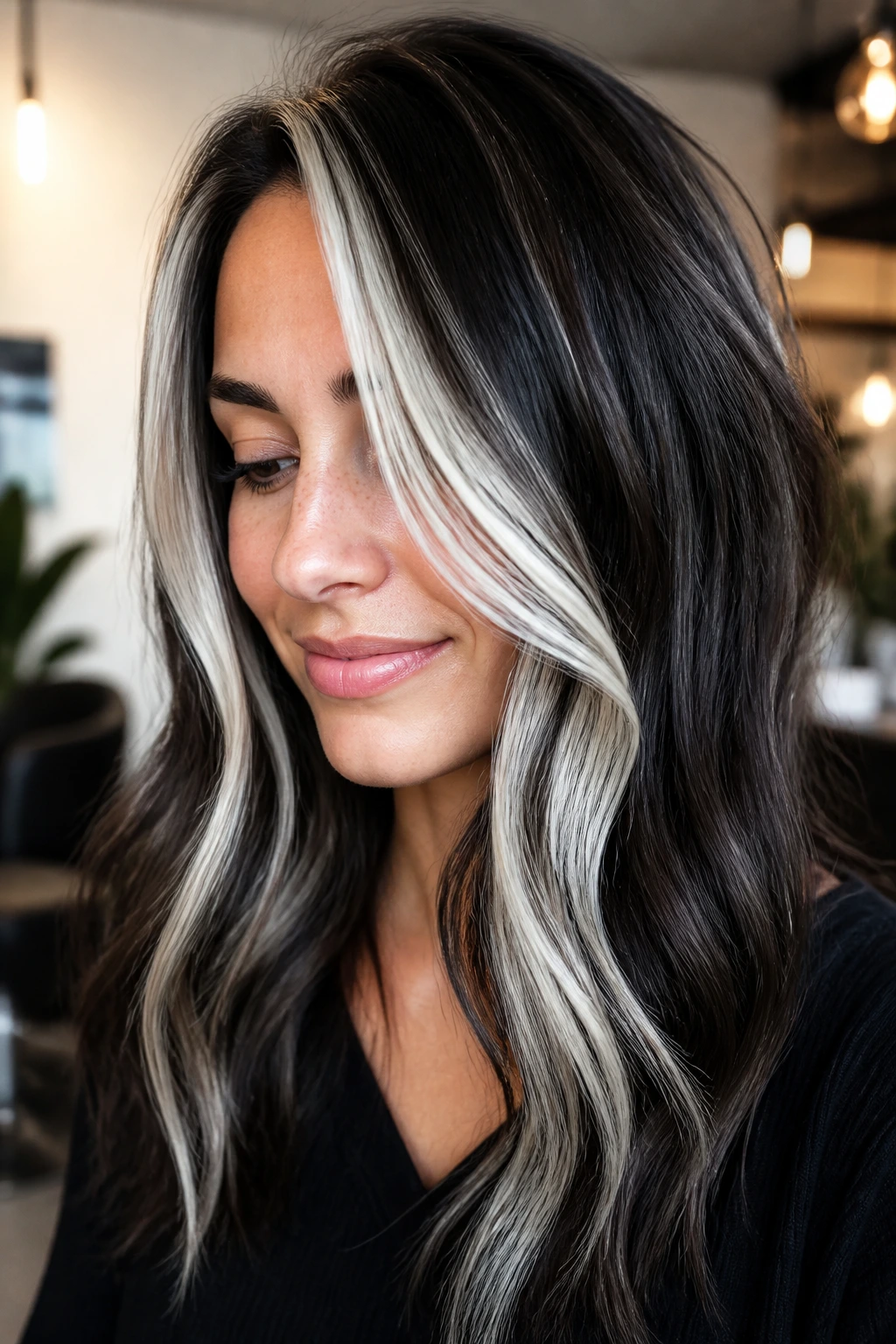
High-contrast color is risky on thin hair if it’s done lazily, but when the placement is careful, it can look striking. The espresso base stays strong underneath, while select top pieces and the face frame go pure snow-platinum. The darkness left behind becomes part of the style, not a leftover.
This is for the reader who wants edge. The key is restraint in the right places: bright near the front and top surface, dark underneath and through the interior. If you bleach every visible strand, the whole thing can turn wispy fast.
I’d only go this route with a stylist who understands how to keep thickness visually intact. It’s not the easiest platinum option, but when it lands, it has a clean, graphic feel that suits dark hair beautifully.
How to Choose the Right Platinum for Your Dark Base
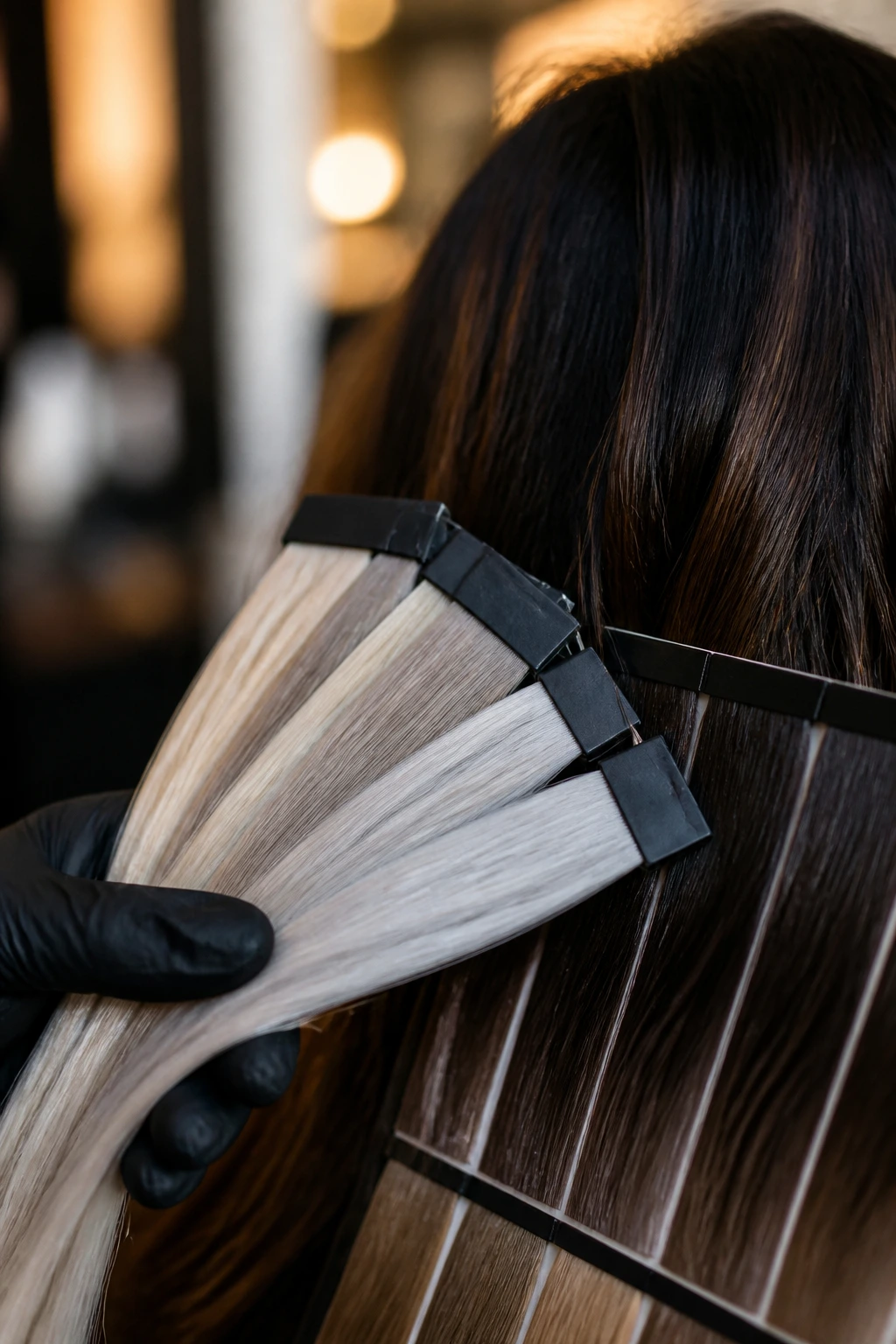
The first decision is tone. Dark hair lifted to platinum can land anywhere from icy white to pearl, silver-beige, or ash blonde, and that tone changes how full the hair looks. Pure white can look sharp, but on very thin hair it sometimes exposes too much of the texture underneath. Pearl and beige-platinum soften the edges.
Then there’s the lift level. Most dark brunette hair does not jump straight to clean platinum in one smooth pass without some serious planning. It usually passes through orange, then gold, then pale yellow before toner pulls it cool. If your hair is fragile, asking for a softer lift and a more blended finish can keep the ends from feeling like straw.
I’d also think about where your hair is weakest. If the ends are already sparse, keep the light away from the last half-inch. If the crown is the weak spot, use root shadow and brighter face pieces instead of trying to brighten the whole top evenly. The placement should solve the problem your hair already has.
What to Tell Your Colorist Before the Foils Come Out
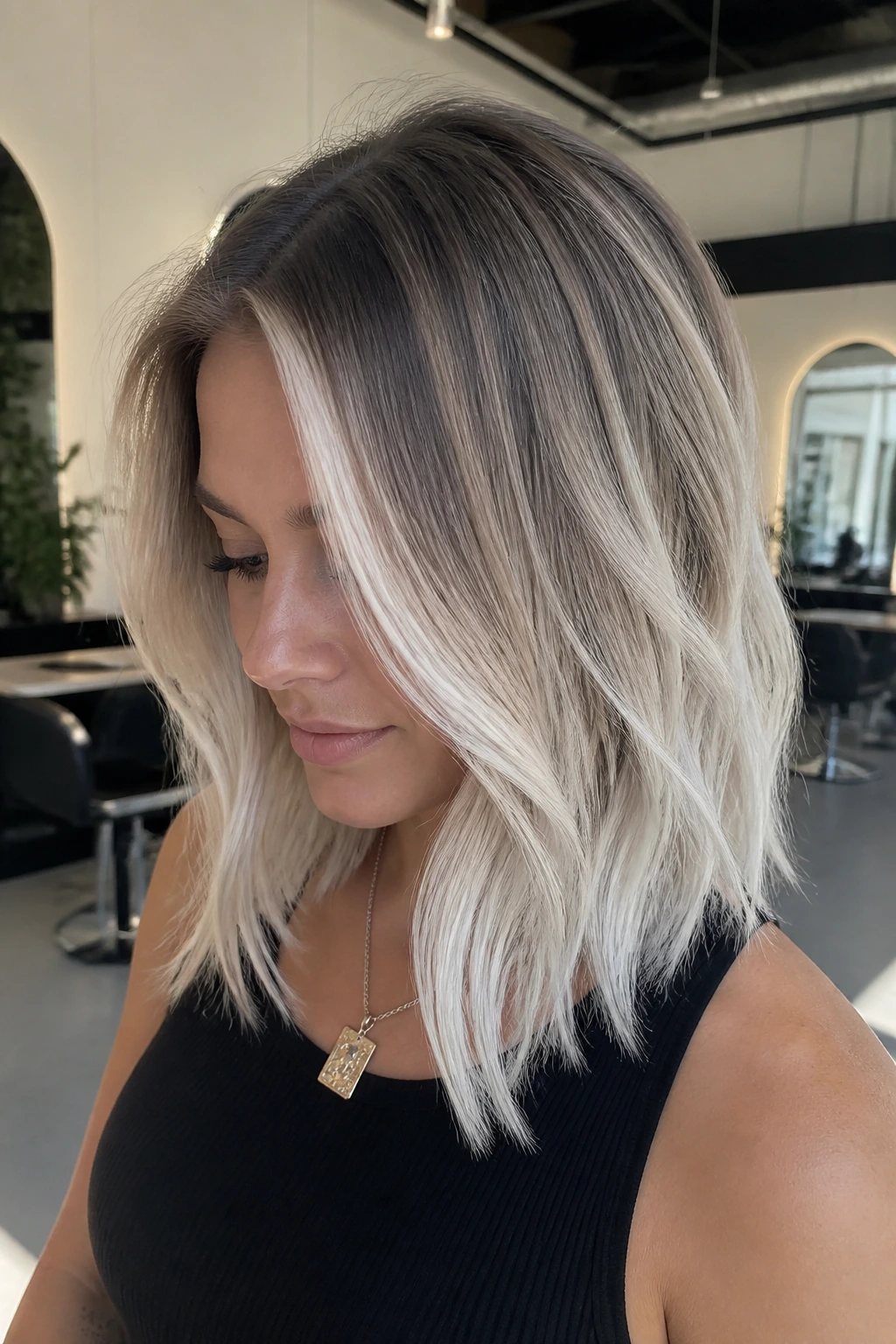
Bring photos, but bring the right photos. A good reference shows the front, the side, and the back, because balayage placement changes dramatically from one angle to another. One front-only photo is not enough.
Say the actual words that matter. Tell them you want dimension, not all-over lightness. Tell them to keep a shadow root if you want density at the scalp. Tell them whether you like a soft beige tone, an icy silver tone, or a cooler ash tone. Those details keep everyone honest.
A useful script sounds something like this: “I want platinum brightness on my dark hair, but my hair is fine and I don’t want it to look see-through. Keep the root soft, use finer pieces, and leave enough brunette showing to hold the shape.” That sentence tells a colorist almost everything they need.
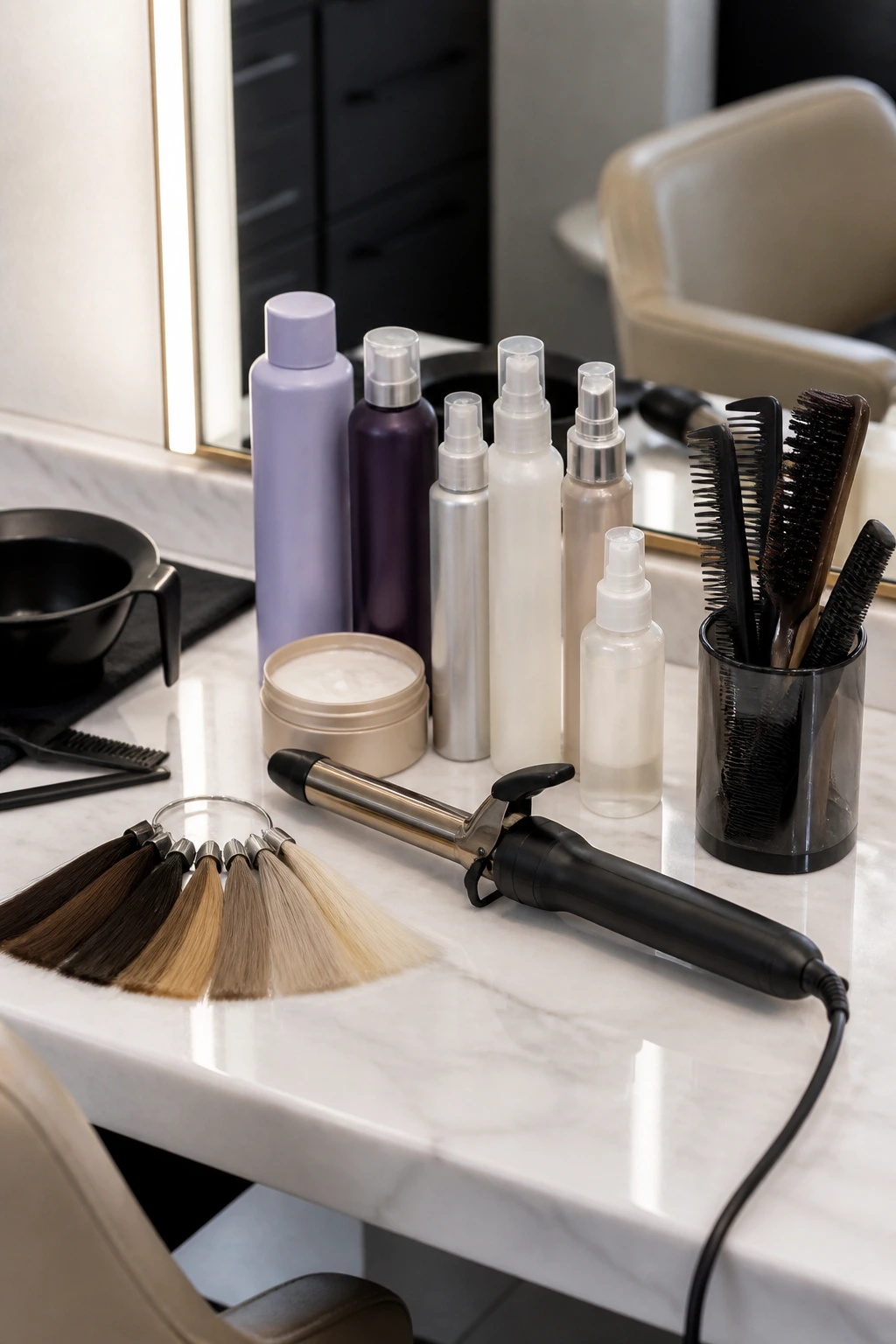
Essential Tools and Products for These Looks
-
Inspiration photos from more than one angle: Bring front, side, and back shots so placement can be mapped, not guessed.
-
Color-safe shampoo and conditioner: A sulfate-free formula helps keep toner from slipping out too fast and keeps dry ends calmer.
-
Purple shampoo or mask: Use it sparingly to control brass, especially if your blonde leans yellow after a few washes.
-
Heat protectant spray: Fine hair shows heat damage fast, and platinum pieces can go frizzy if you flat-iron them naked.
-
Volumizing mousse or root spray: A light lift at the roots makes balayage look fuller, especially on straight styles.
-
1-inch or 1.25-inch curling iron: Bigger bends create overlap between dark and light pieces, which helps the hair read denser.
-
Wide-tooth comb and sectioning clips: Useful for styling and for keeping the hair from tangling while you work through toner or masks.
-
Bond-repair mask: If your hair is lightened, this matters more than another glossy styling product.
Styling Tricks That Keep Fine Hair From Looking Flat
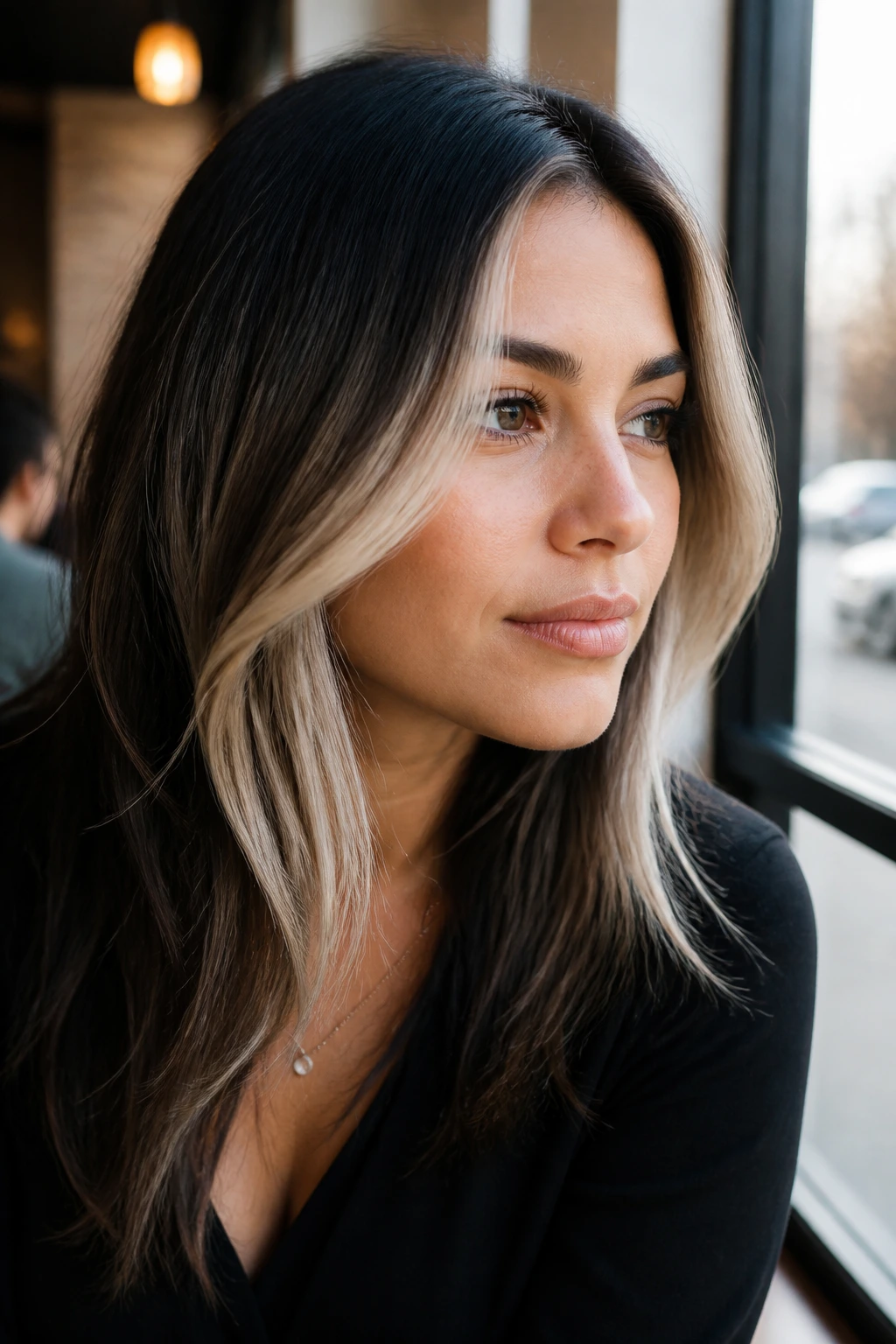
The best styling trick is not a product. It’s shape. A little bend through the mid-lengths makes platinum ribbons stack on top of dark base pieces, and that overlap is what gives the illusion of fullness. Straight hair can look sleek, but on thin hair it often lays the color out too cleanly.
I like a side part on this kind of color because it gives the roots somewhere to lift. If your hair falls limp in the middle, try shifting the part by an inch or so and clip the heavier side up while it dries. That tiny change can make the whole head look taller.
Product-wise, keep it light. A pea-sized amount of serum on the ends is enough for most fine hair, especially once it’s been lightened. Too much oil or cream and the platinum pieces go greasy in a hurry. The blonde loses its crispness, and the cut loses its shape.
Additional Tips and Color Boosters
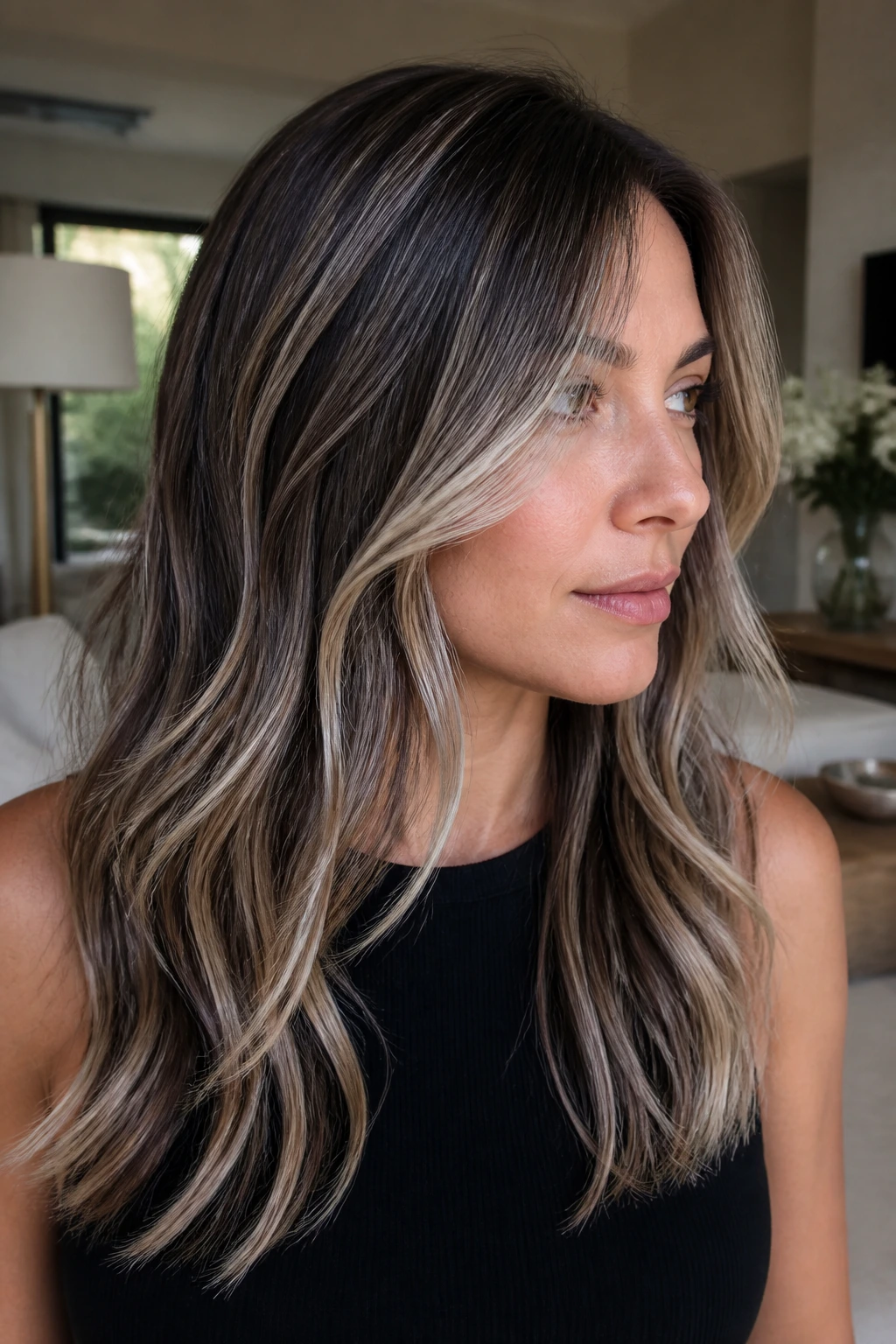
Tone Control: Ask for a toner that sits in the ash, pearl, or beige family instead of a flat silver glaze. Silver can look harsh on some dark bases; pearl usually softens the blend better.
Texture Trick: Add loose bends with a curling iron, then shake them out with your fingers. Fine hair needs the bends to be soft enough that the pieces separate without turning frizzy.
Root Lift: A root spray or mousse at the crown helps the darker base look intentional instead of heavy. A little lift there keeps the platinum from dragging the whole look downward.
Finish It Right: A light shine spray on the mid-lengths and ends gives the blonde a cleaner surface, but keep it off the roots. Shine near the scalp can make fine hair look even thinner.
Common Mistakes to Avoid
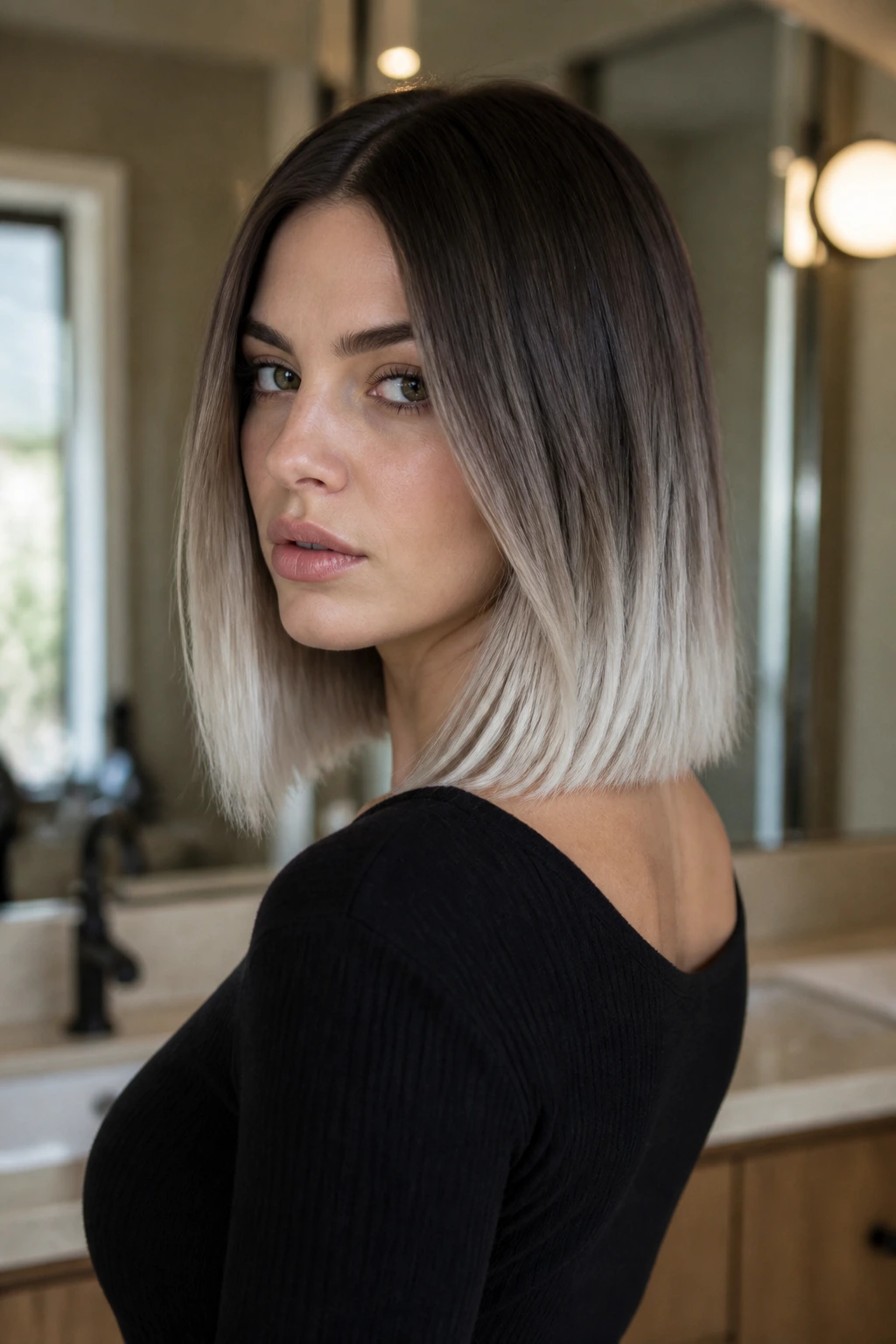
Going too light at the roots: Platinum all the way to the scalp can expose thin density fast. A soft shadow root keeps the top looking fuller and grows out in a cleaner way.
Using chunky highlight sections: Wide platinum panels can separate the hair into visible strips. Fine hair usually looks better with narrower, more delicate placement.
Letting the blonde go yellow: Dark hair lifts warm first, and if you stop too early, the brass will show every time the light hits it. A good toner matters here, and so does the right shampoo.
Flat-ironing the hair to death: A pin-straight finish can make the gaps between strands more obvious. If you want sleekness, use a round brush or a soft bend at the ends to keep the hair from reading sparse.
Skipping trims: Wispy ends make platinum look fragile, even when the color is fine. A trim every 8 to 10 weeks helps the whole style hold its shape.
Variations and Adaptations to Try
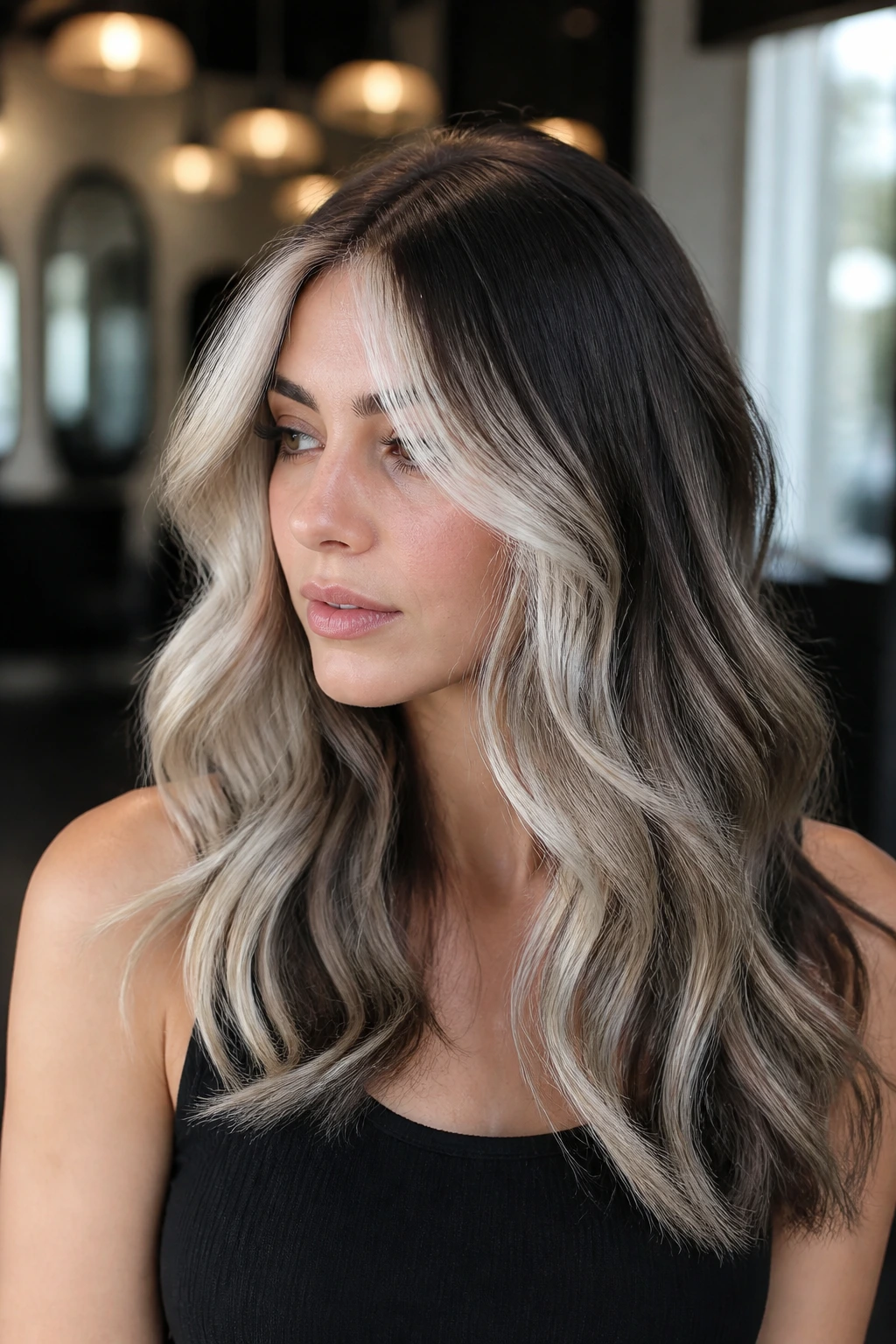
The Ash-Only Version: Keep the blonde strictly cool with an ash toner and a deeper root shadow. This version works if you want the ice-blonde feel without any creamy warmth sneaking in.
The Pearl Softener: Swap a stark silver tone for a pearl gloss. The finish is gentler, and on thin hair it can look a little fuller because the brightness is less severe at the edges.
The Low-Commitment Front Light: Brighten only the face frame and a few top ribbons, then leave the back mostly dark. This is the easiest option if you want platinum movement without a high-maintenance grow-out.
The Foilyage Boost: Add foils to the balayage in the top and front where the hair needs more lift. Good when the base is very dark and the blonde needs to reach a cleaner level.
The Dark-Root Drama Edit: Keep a deeper espresso root and make the ends nearly white. It’s the boldest choice, but the darkness left behind helps thin hair keep its outline.
Maintenance, Toning, and Grow-Out Care
The first rule is simple: don’t overwash platinum. Fine, lightened hair usually does better with two or three washes a week, not daily shampooing. Use lukewarm water, because hot water opens the cuticle and can pull toner out faster than you’d expect.
Purple shampoo helps, but it isn’t a miracle. Once a week is usually enough for maintenance; any more and the blonde can start to look dull or gray. If your hair pulls warm quickly, a purple mask can do a better job than a strong shampoo because it deposits tone more evenly.
Glossing appointments and toner refreshes usually matter every 4 to 8 weeks, depending on how pale the blonde is and how much brass your hair naturally exposes. If the ends feel rough, add a bond-repair mask once a week and keep heat styling on the lower side. Fine hair shows damage early, and platinum does not forgive neglect.
Hard water can also mess with this color. If your shower water leaves a film on glass, it’s probably doing the same thing to your hair. A clarifying or chelating wash once or twice a month can stop the blonde from turning muddy.
Frequently Asked Questions
Can platinum balayage work on very dark hair without frying it?
Yes, but usually not in one careless pass. Dark hair often needs controlled lightening, bond support, and a toner that keeps the final blonde from looking yellow. If the stylist respects the hair’s condition and leaves some depth at the root, the result can stay wearable.
Does balayage or foils work better for thin hair?
Balayage usually looks softer, while foils give more lift. On thin hair, a mix of both often works best: balayage for blend, foils for the pieces that need to reach a cleaner platinum level. Foilyage is a common compromise when the base is dark and stubborn.
Will bright platinum make my hair look thinner?
It can if the whole head is lightened evenly. The fix is to keep some darkness underneath and near the roots so the hair still has visual structure. That shadow acts like volume on the page.
How often will I need touch-ups?
That depends on how bright the blonde is and how visible you want the root line. A shadowed balayage can stretch longer between salon visits, while a high-contrast platinum look usually needs more frequent toning and refreshing. The grow-out is part of the style.
What if my dark hair turns orange instead of blonde?
That means the hair has lifted into the warm stage but hasn’t reached a pale enough level for platinum toner yet. A colorist may need another controlled lightening session or a stronger lift strategy. Orange is common on dark bases; it is a stage, not the end result.
Can I get this look on a bob or pixie-bob?
Absolutely. Short hair can hold platinum balayage well, especially around the front, crown, and perimeter. The key is not over-lightening the entire cut, or the shape can lose its density.
Is purple shampoo enough to keep the blonde cool?
Usually not by itself. Purple shampoo helps between salon visits, but toner, glossing, and gentle washing matter just as much. If the blonde keeps drifting yellow, the solution is usually in the salon, not the shower caddy.
The Right Kind of Bright
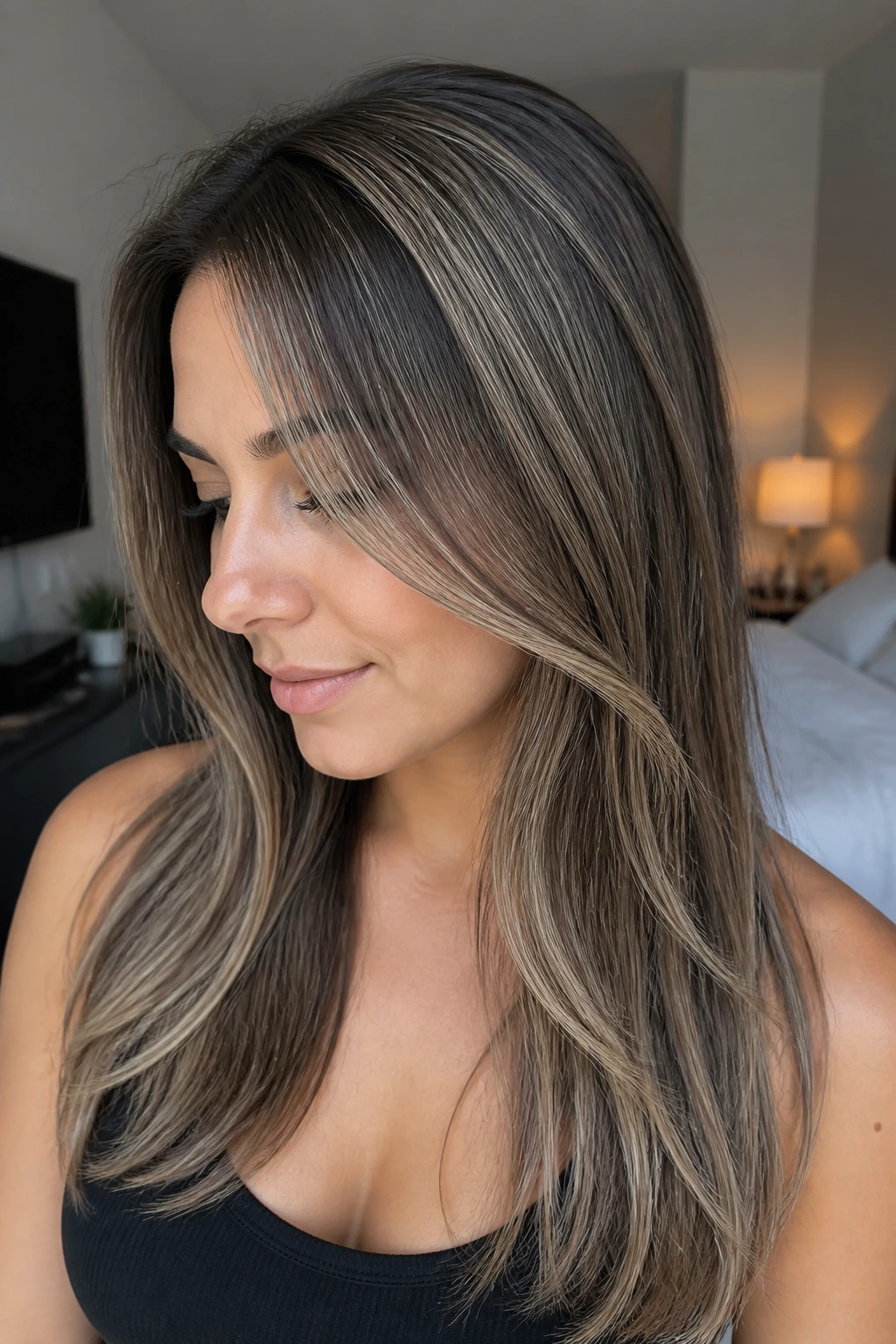
The smartest platinum blonde balayage on dark hair with thin hair is the kind that leaves some darkness alone. That darkness is not a problem to erase. It’s part of what keeps the style looking full, soft, and believable when the light changes.
If you want the look to last, think in terms of placement first and brightness second. A few icy ribbons in the right places will do more for fine hair than a whole head of pale ends ever could. And once you see how much shape a good shadow root and a careful toner can add, it gets hard to go back to one-note blonde.