



Blonde brown highlights for cool skin tones work best when the blonde stays ash, pearl, or beige and the brown stays neutral—never red, never copper, never that sticky gold that makes a cool complexion look flushed. That sounds picky. It is picky. And that’s the whole point.
The prettiest versions of this color family don’t scream “I got highlights.” They look like your hair has depth, movement, and a little frost around the edges. On cool undertones, that matters more than sheer brightness. Honey-heavy streaks can fight with pink or blue skin and make the face look tired. Ash, mushroom, taupe, silver beige, and pearl blonde do the opposite. They clean things up.
What makes this mix worth paying attention to is the range. You can go whisper-soft with babylights, or make the front pieces bolder and keep the rest dim. You can build it on a dark brunette base, a light brown base, or a cool blonde base that needs more dimension. The 28 looks below cover all of that—subtle, glossy, lived-in, high-contrast, short hair, long hair, curls, thick hair, fine hair. The trick is picking the version that flatters your skin and your haircut.
Why These Blonde Brown Highlights Work on Cool Skin
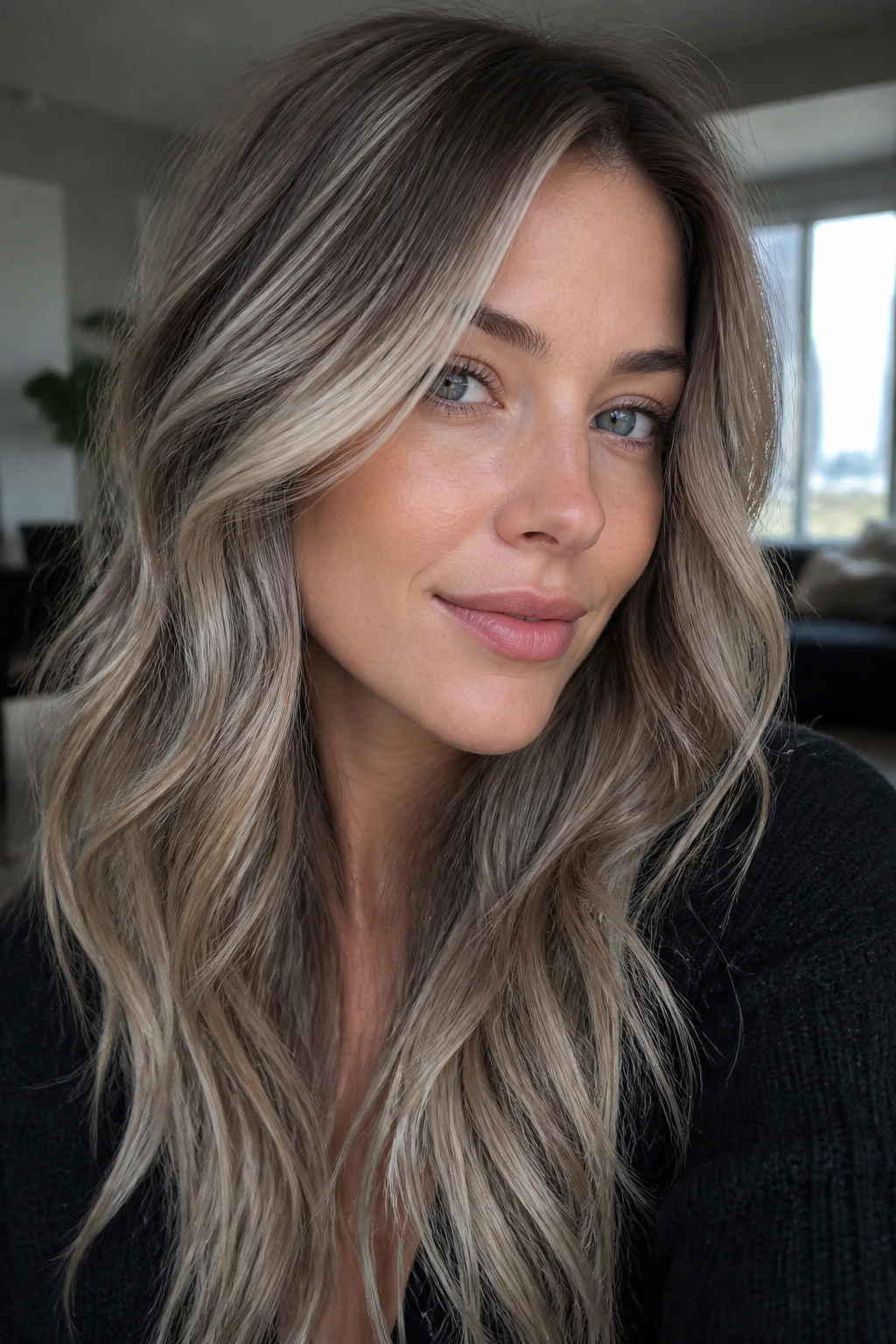
Cool tones need cool light: ash, pearl, mushroom, and silver-beige highlights sit cleanly against pink, rosy, or blue undertones, so the face looks fresh instead of ruddy.
Brown depth keeps the color from flattening out: a neutral brown base at level 5, 6, or 7 gives the blonde somewhere to land, which is why bronde reads richer than all-over lightness.
Root shadow matters more than people think: leaving a soft root for even half an inch keeps the grow-out from turning harsh and gives the style that lived-in edge that cool complexions wear well.
Placement changes the whole mood: thin babylights, chunky ribbons, money pieces, and peekaboo layers can all live inside the same cool palette, but they won’t read the same in daylight.
Maintenance can stay sane: most of these looks only need a gloss or toner refresh every 4 to 8 weeks, which is a far cry from bleaching the whole head every time the shine fades.
The Shade Map: Ash, Beige, Mushroom, Pearl, and Smoke
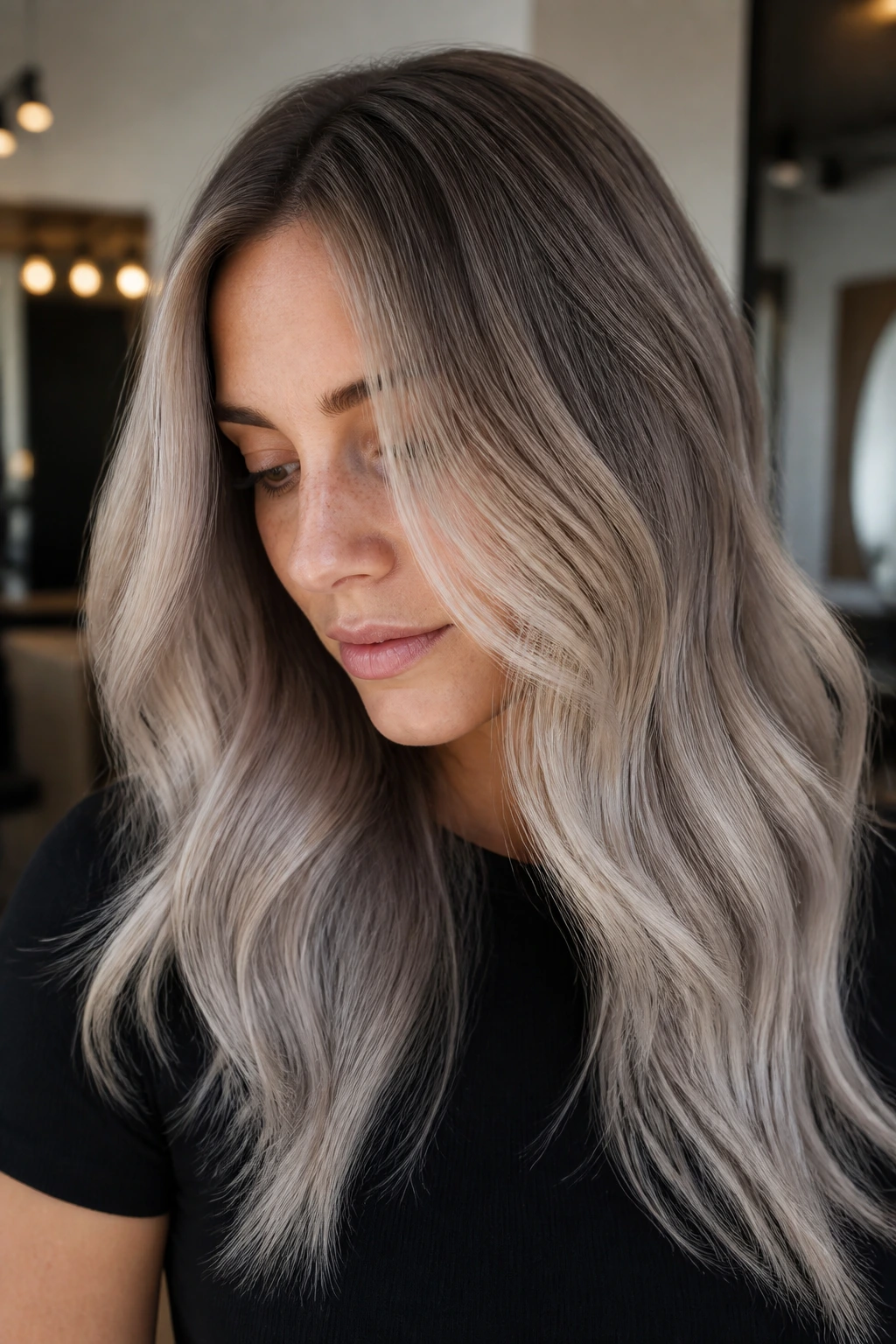
Color names get sloppy fast. A stylist might say “beige blonde” and mean one thing, while you imagine something warmer or brighter. On cool skin, the safest route is to think in families rather than labels. Ash is the anti-brass shade. Beige sits in the middle. Mushroom and smoke lean cooler and slightly earthy. Pearl and silver step lighter and crisper.
Ash
Ash is the shade family that keeps yellow and orange from running the show. It usually has blue or blue-violet undertones, which is why it looks so clean on cool skin. If your hair lifts fast or pulls warm at the salon, ash is the toner family that usually brings it back into line.
Beige
Beige is softer and a little more forgiving than hard ash. It still belongs in the cool-neutral lane, but it won’t push the hair toward gray the way a heavy ash formula sometimes can. Beige works well if you like dimension, not frost.
Mushroom
Mushroom brown lives in that taupe-gray-brown middle ground that sounds strange on paper and looks expensive in person. It’s the tone I reach for when a brunette base needs depth, but not warmth. On cool skin, mushroom keeps the whole look grounded.
Pearl and Smoke
Pearl and smoke are the lightest end of the map. Pearl gives that soft reflective blonde finish without the brass. Smoke is a little darker and moodier, especially on the mids and ends. If you want brightness near the face but don’t want to lose the brunette feel, this is the lane.
1. Ash Beige Balayage with Soft Root Shadow
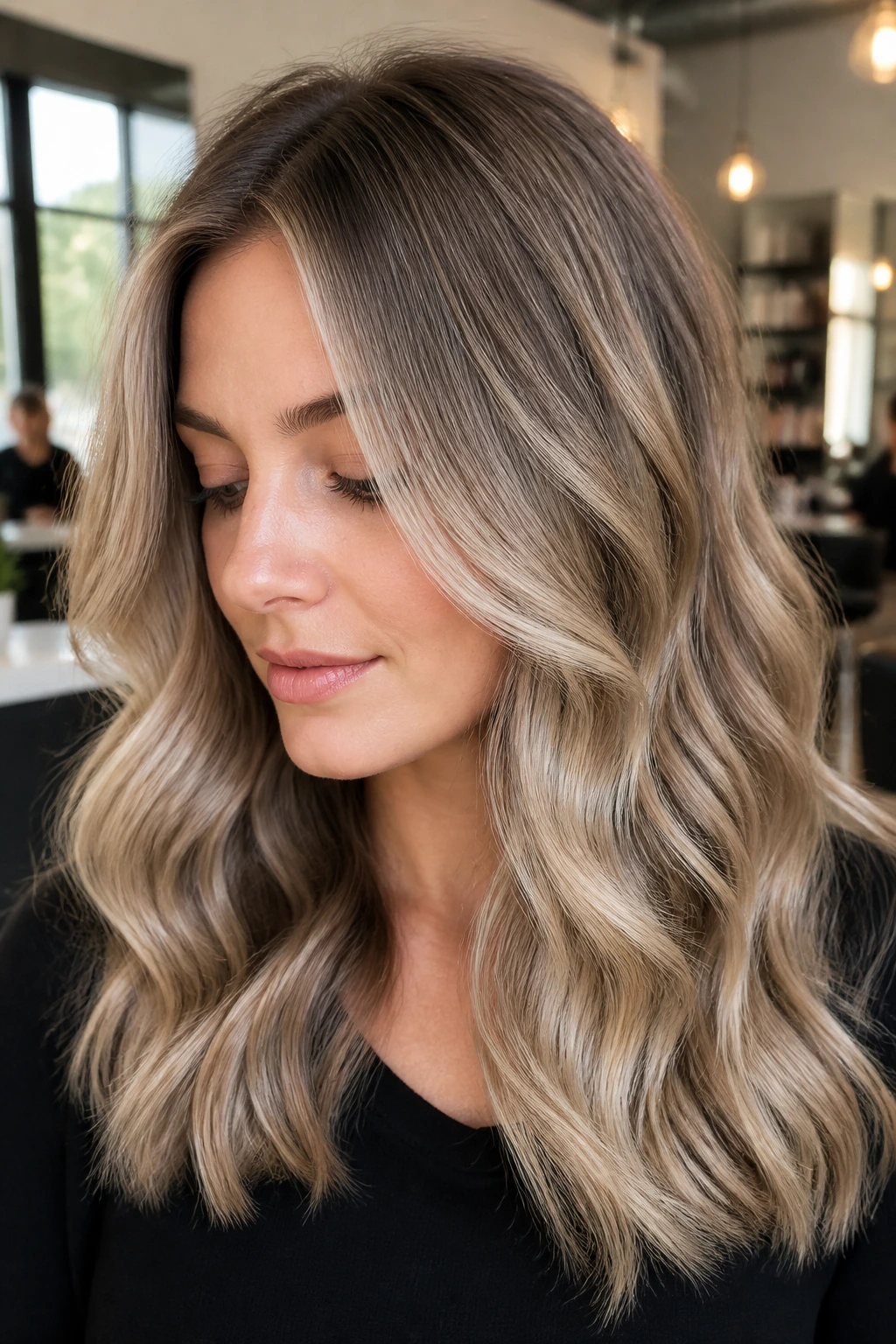
Ash beige balayage is the calmest way to add blonde to a cool complexion. The ribbons sit in the level 7 to 8 family, so they show up in daylight without turning the hairline yellow under bathroom lights. The soft root shadow keeps the whole thing from looking pasted on.
This works especially well on medium-brown and dark-blonde bases. The balayage placement lets the lighter pieces bend around waves or a loose blowout, and that movement matters. On straight hair, the ribbons look sleek; on wavy hair, they look a little more dimensional and expensive. Ask for a beige gloss rather than a gold one, and keep the brightest pieces around the cheekbone rather than all the way into the fringe.
2. Smoky Bronde Ribbons on a Neutral Brown Base
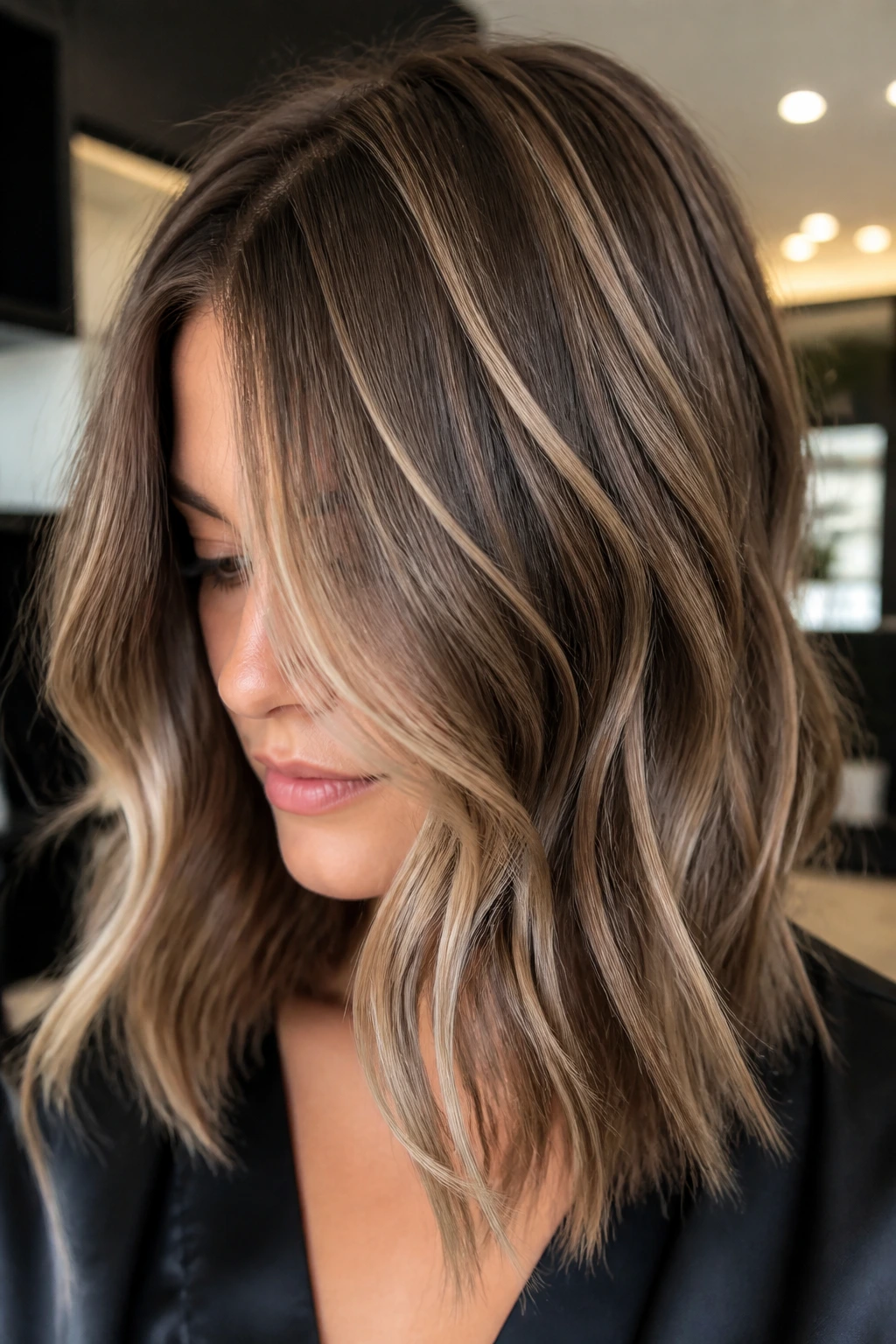
Smoky bronde is the look that says you like blonde, but you don’t want to pretend you’re a full-time platinum person. The brown stays visible. The blonde sits in thin ribbons, and the toner keeps the whole thing quiet instead of sunny. That quietness is exactly why it works on cool skin.
I like this best on shoulder-length cuts and long layers. The ribbons can fall through the mids and ends without crowding the face, which keeps the color from reading stripey. If your natural base is neutral brown, you only need enough lift to create contrast—usually one or two levels lighter, not four. The result is polished without looking overworked. If you wear silver jewelry, this shade family tends to sit beside it nicely.
3. Pearl Blonde Money Piece with Mushroom Ends
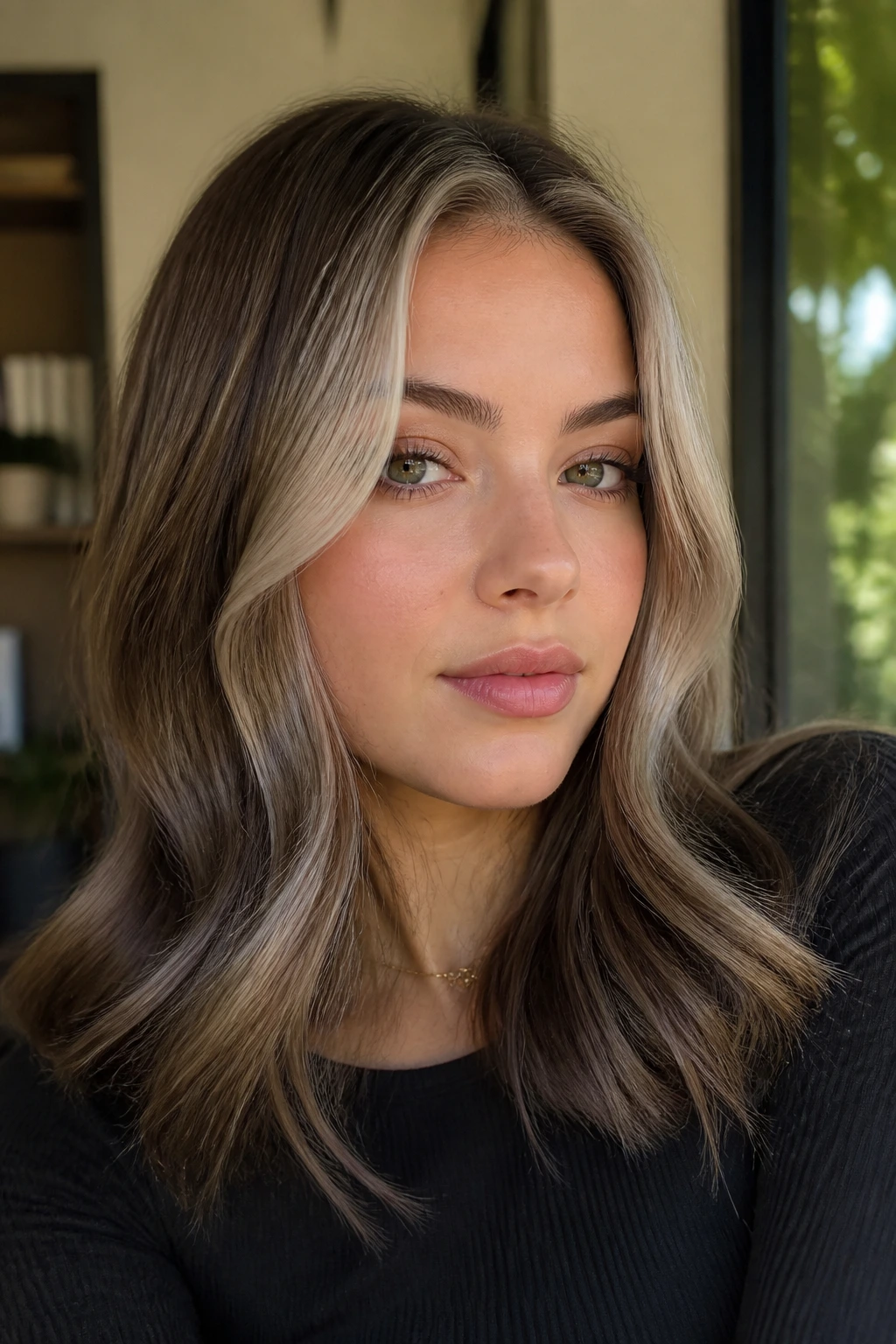
Need a brighter face frame without turning the whole head into a bleach job? Pearl blonde at the front does that job very well. The key is keeping the ends mushroom brown or smoky beige, so the brightness has somewhere to stop.
This is a smart pick if your skin leans cool but your features need a little lift around the eyes. The money piece can be narrow and soft near the part, then widen slightly near the cheekbones. Too wide, and it starts to feel loud. Kept clean and pearl-toned, it looks crisp. The mushroom ends stop the contrast from becoming harsh, especially on long hair that moves a lot.
4. Cool Mocha Babylights with Icy Crown Lift
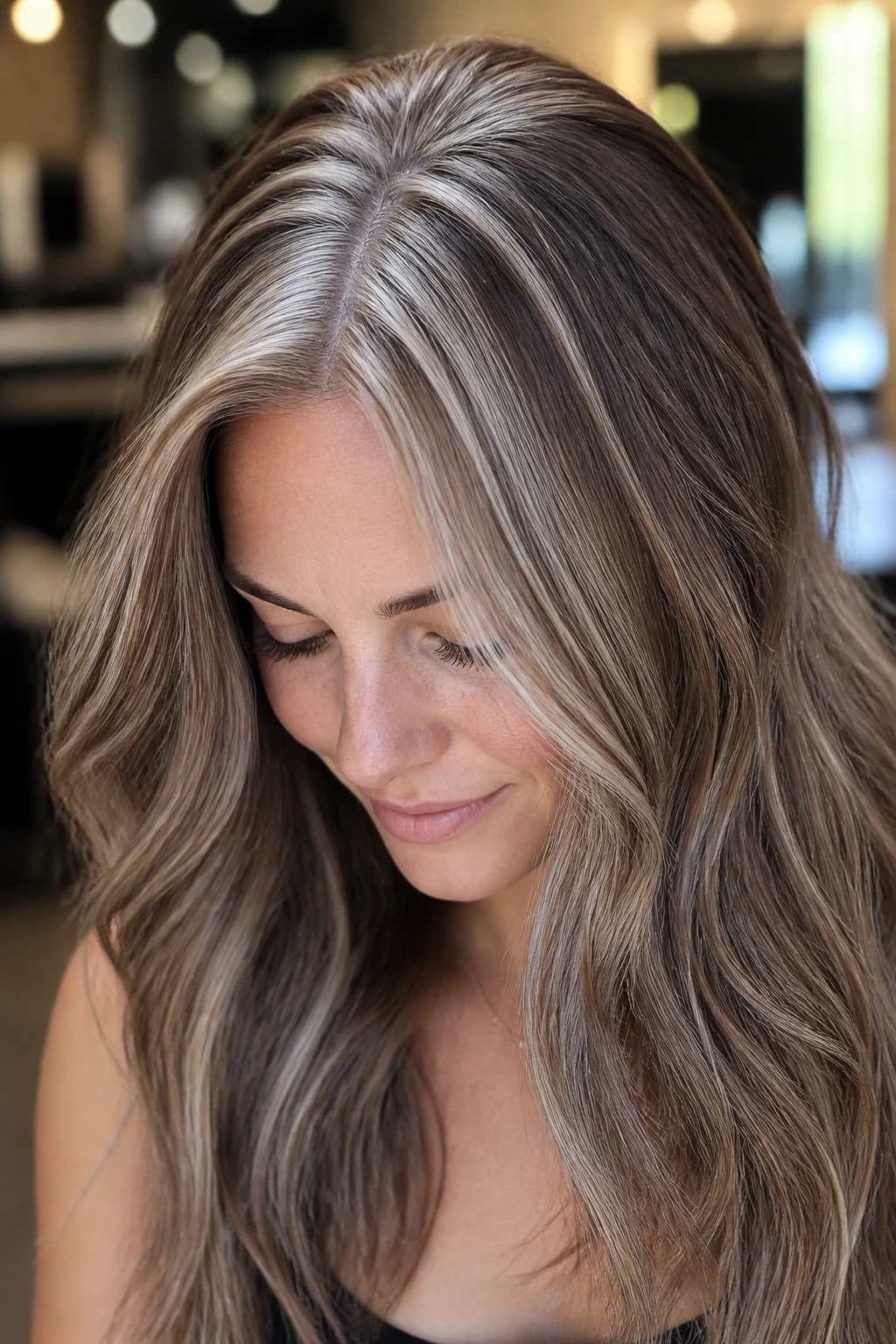
Babylights are tiny for a reason. On fine hair, they make the surface look fuller without drawing obvious lines through the head. Cool mocha babylights with a little icy lift at the crown give that effect without the chunky highlight look that often goes wrong on cooler complexions.
This style is a good match for people who part their hair the same way every day. The crown can get brighter where the part opens, while the lower sections stay mocha and soft. That keeps the style from going flat. Ask for a toner that sits ash-beige rather than golden beige. If the crown is lifted too high, it can start to look patchy; the best version has tiny points of light, not a stark white cap.
5. Taupe Blonde Face Frames on Dark Blonde Hair
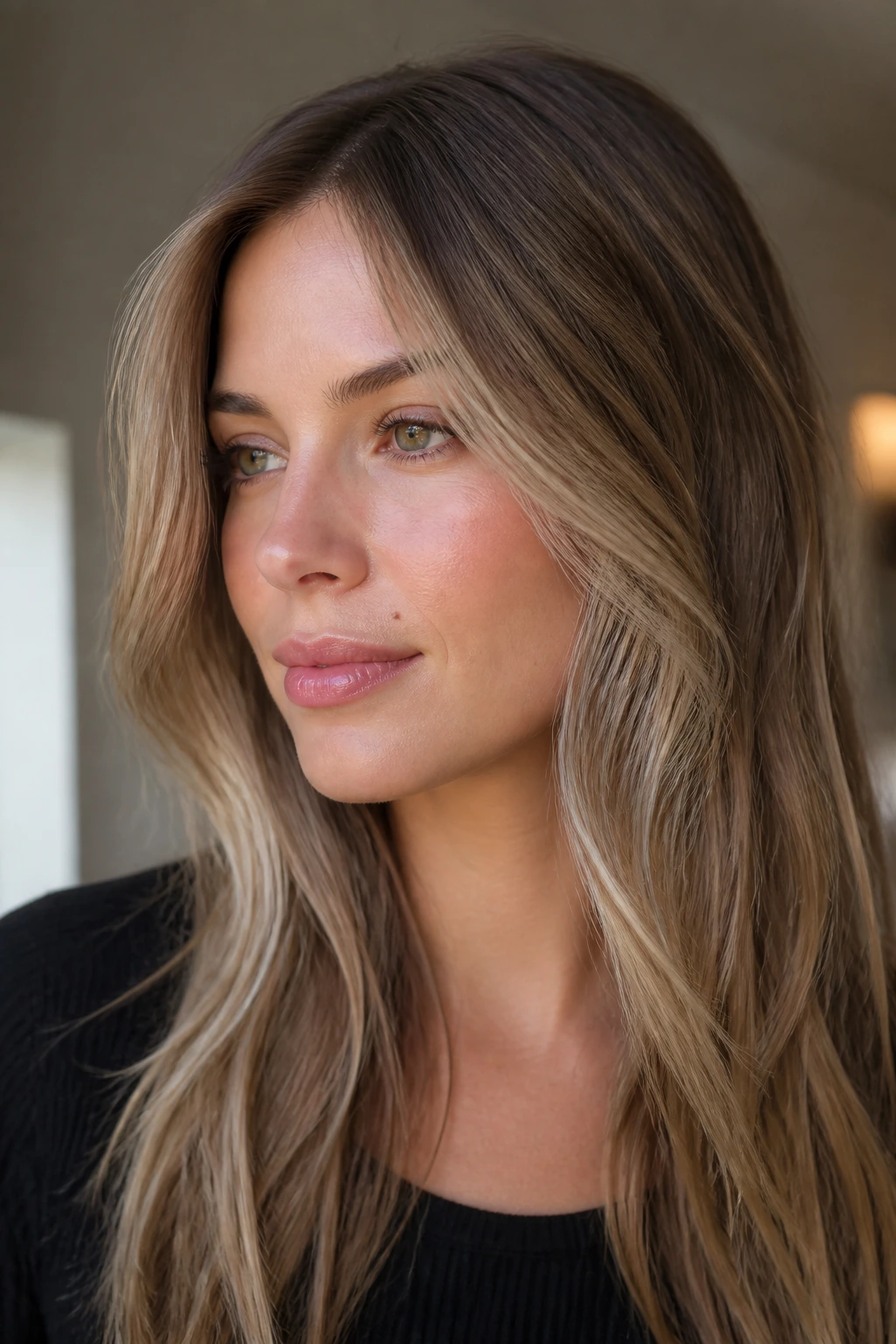
Taupe blonde is one of those shades that doesn’t get enough credit. It’s not flashy. It doesn’t need to be. On dark blonde hair, taupe face-framing pieces brighten the face without making the skin look washed out or yellow.
This look works especially well if your base already lives near level 6 or 7. The stylist can place the brightest pieces at the temples and just below the cheekbones, then keep the rest of the hair much softer. That creates a gentle frame instead of a spotlight. I’d choose this if you want the effect of highlights but not the maintenance of a full blonde grow-out. It’s understated, but not in a boring way.
6. Champagne Ash Ombré with a Smudged Root
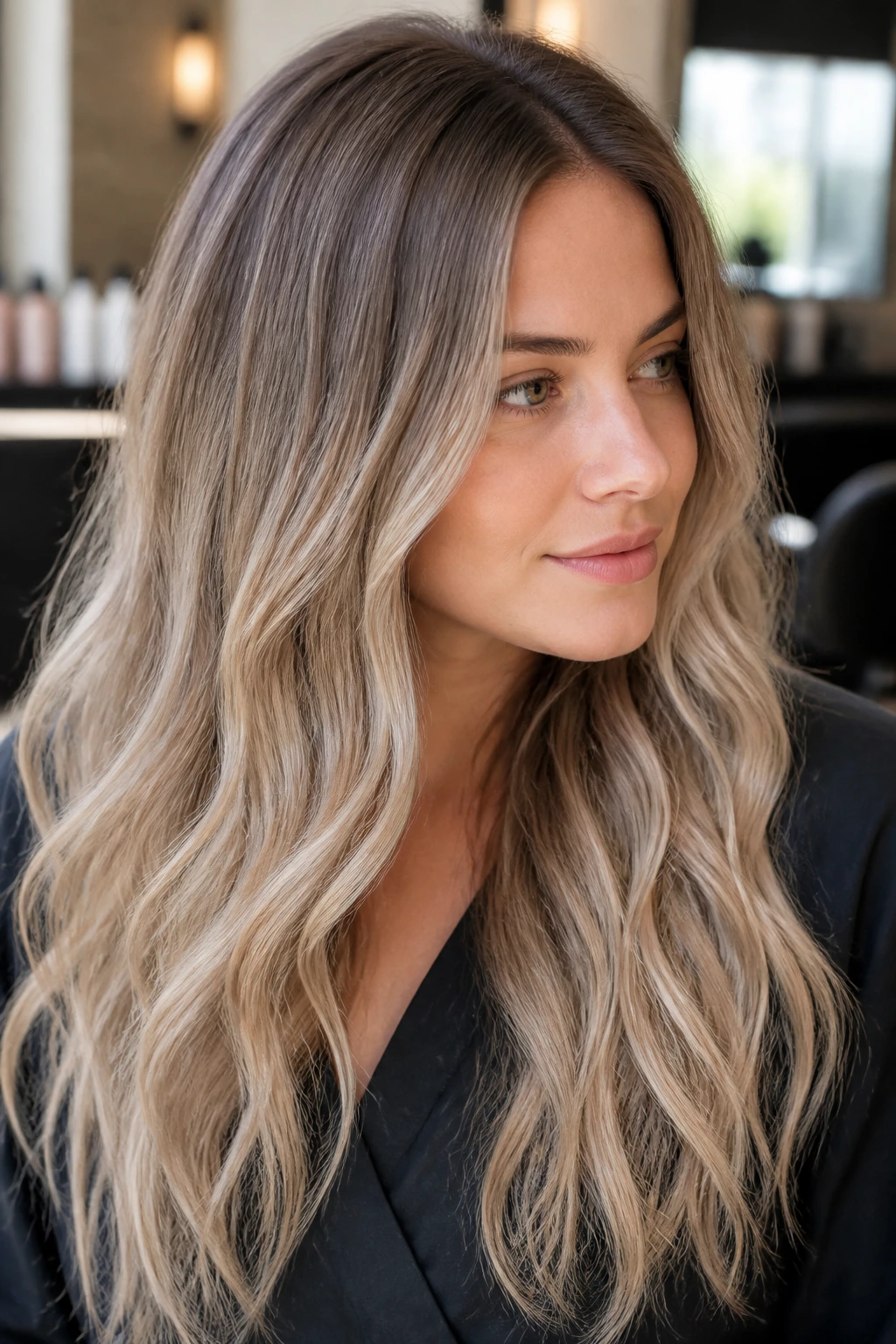
Champagne can go warm fast, which is why the ash part matters here. A cool champagne ombré starts with a neutral or smoky root, then fades into a pale blonde that still has beige and pearl notes. The smudged root keeps the fade smooth instead of banded.
This style suits longer lengths. Ombré needs space to breathe, and on short hair it can feel cramped. On long hair, though, the transition from brown to champagne ash can look soft and deliberate. The trick is not to over-brighten the ends. A good toner should make them luminous, not yellow or chalky. If your hair tends to pull orange, this is a situation where blue-violet correction earns its keep.
7. Silver Beige Ribbon Highlights on Medium Brunette
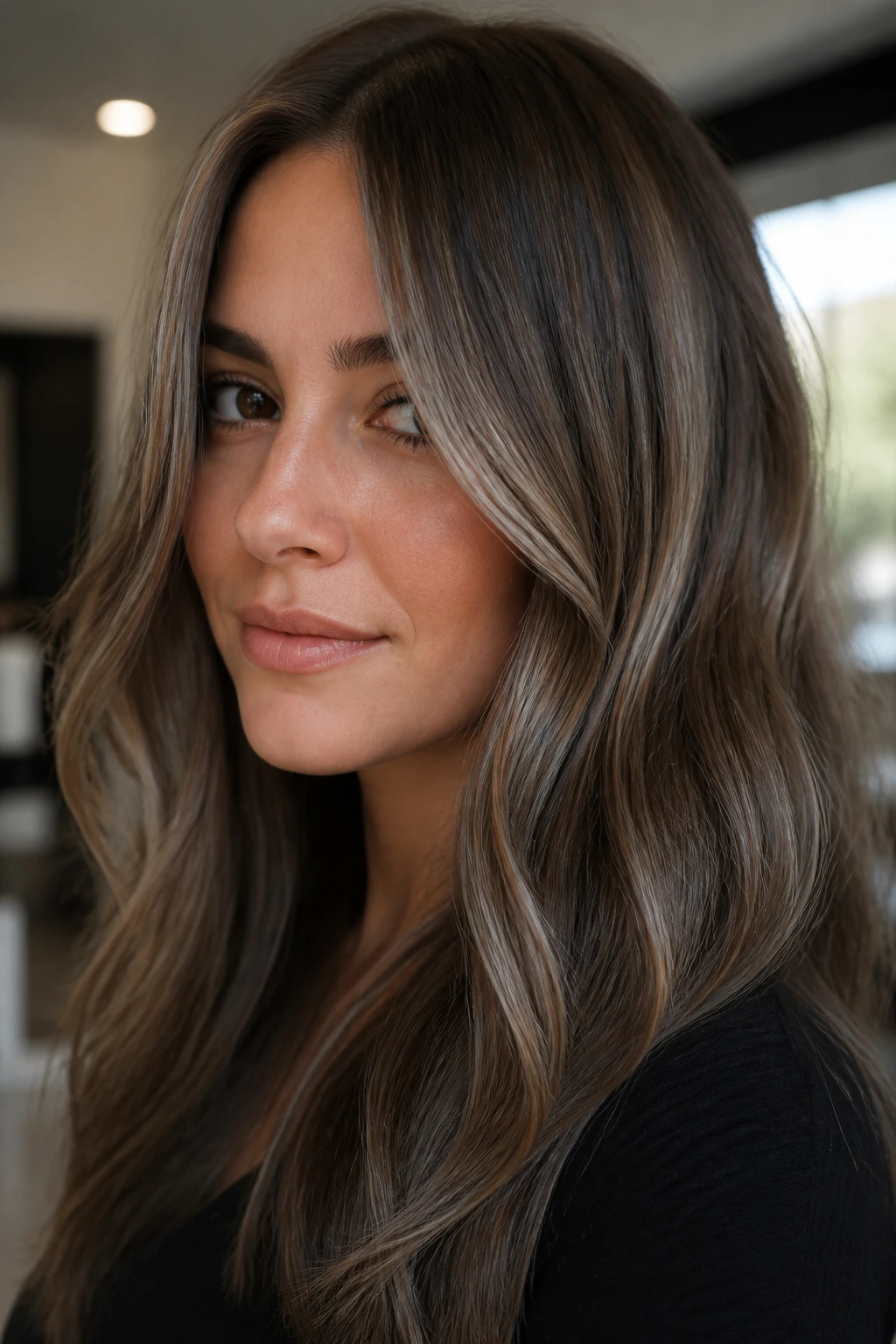
Silver beige ribbon highlights are the kind that look most interesting when the hair moves. They’re not blocky. They’re not obvious from across the room. They catch light in narrow, reflective strands, especially on medium brunettes with a cool base.
This is one of my favorites for layered cuts because the ribbons separate as the hair swings. On blunt cuts, they can still work, but the dimension shows less. Ask for a level 8 to 9 lift in thin sections, then keep the toner on the silvery-beige side, not white blonde. Too much silver can look flat if the hair is porous. A little sheen goes a long way.
8. Mushroom Brown Lowlights with Pale Blonde Veils
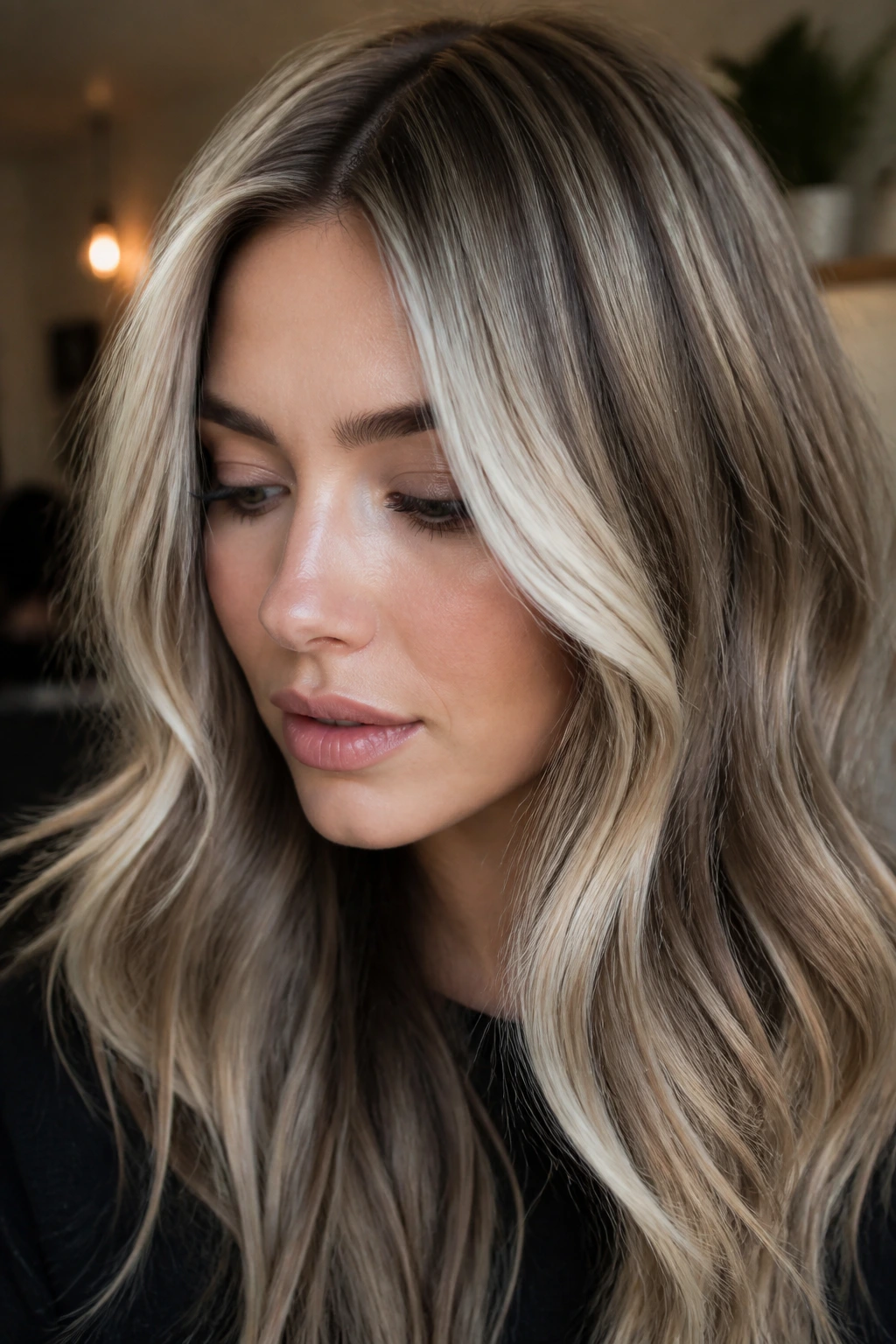
Sometimes cool skin doesn’t need more blonde. It needs better contrast. Mushroom brown lowlights underneath pale blonde veils can fix a lightened head that has gone too soft, too fluffy, or too one-note.
This is a very useful move when your hair has drifted lighter over time and the color stopped having shape. The lowlights reintroduce shadow through the mids, while the pale veils stay near the top and around the face. The whole result reads more expensive because it has depth. If you’re already blonde and thinking you need another round of lightening, pause. A few cool lowlights often do more than another swipe of bleach.
9. Nordic Blonde Peekaboo Pieces on Cool Brunette
Ever had a haircut that looked fine from the front and then suddenly got interesting when you turned your head? That’s the appeal here. Nordic blonde peekaboo pieces sit underneath a cool brunette top layer, so the brightness shows in motion instead of shouting from the crown.
This is the kind of color that suits people who wear their hair in half-up styles, loose buns, or tucked-behind-the-ear looks. The hidden pieces catch light when they move, and the brunette layer keeps the overall effect grounded. Because the blonde is tucked inside the hair, you can go a little lighter without the look becoming high-maintenance. It’s a smart option if you want edge but still need the color to behave at work or in a conservative setting.
10. Vanilla Ash Highlights with Soft Curtain Bangs
Curtain bangs can make or break a color plan. Put the wrong tone there, and the bangs turn brassy first. Put vanilla ash highlights through the fringe and front layers, and the whole face softens.
This style works because the lightest pieces sit right where your eyes land. The bangs don’t need heavy contrast; they need a cool lift that blends into the rest of the haircut. I’d keep the lengths around a neutral brunette or dusty beige so the bangs don’t float separately from the rest of the head. If the fringe is fine, ask for finer weaves through the front. Chunky placement can look patchy fast.
11. Beige Ice Balayage for Wavy Shoulder-Length Hair
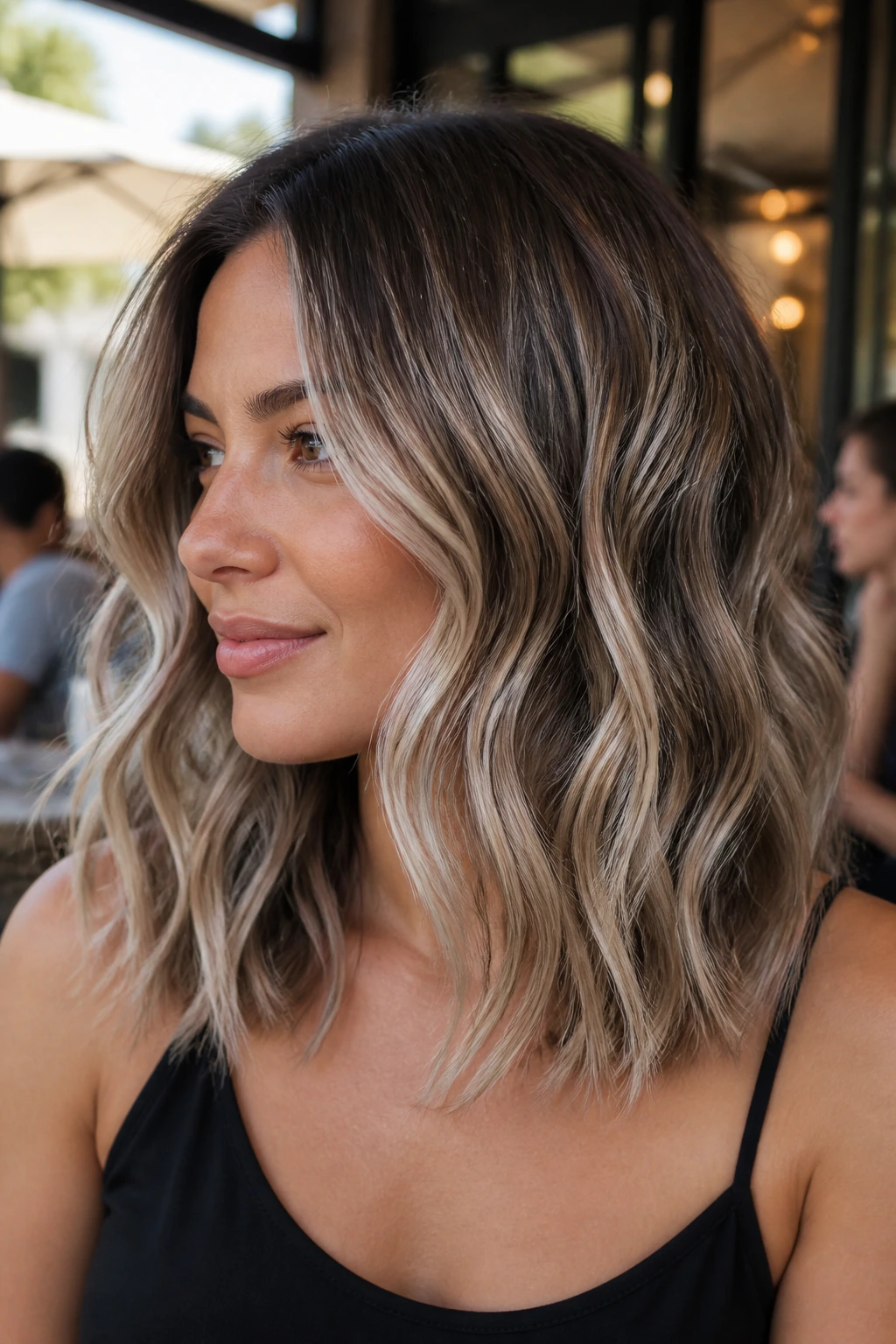
Waves and beige ice balayage get along unusually well. The movement in the hair breaks up the color naturally, so the highlights don’t need to be loud to be seen. Cool skin likes that. It wants dimension, not yellow.
Shoulder-length hair is enough length to show off a smooth transition between the brunette base and the lighter beige ice ribbons. The stylist can keep the highlights concentrated from the cheekbone down, which keeps the top from looking too light. On a wavy cut, the pieces catch at the bends. On a more polished blowout, they lie sleek and reflective. Either way, the tone should stay in the neutral-cool lane, or the whole thing starts looking warm by accident.
12. Frosted Espresso Contrast on Long Layers
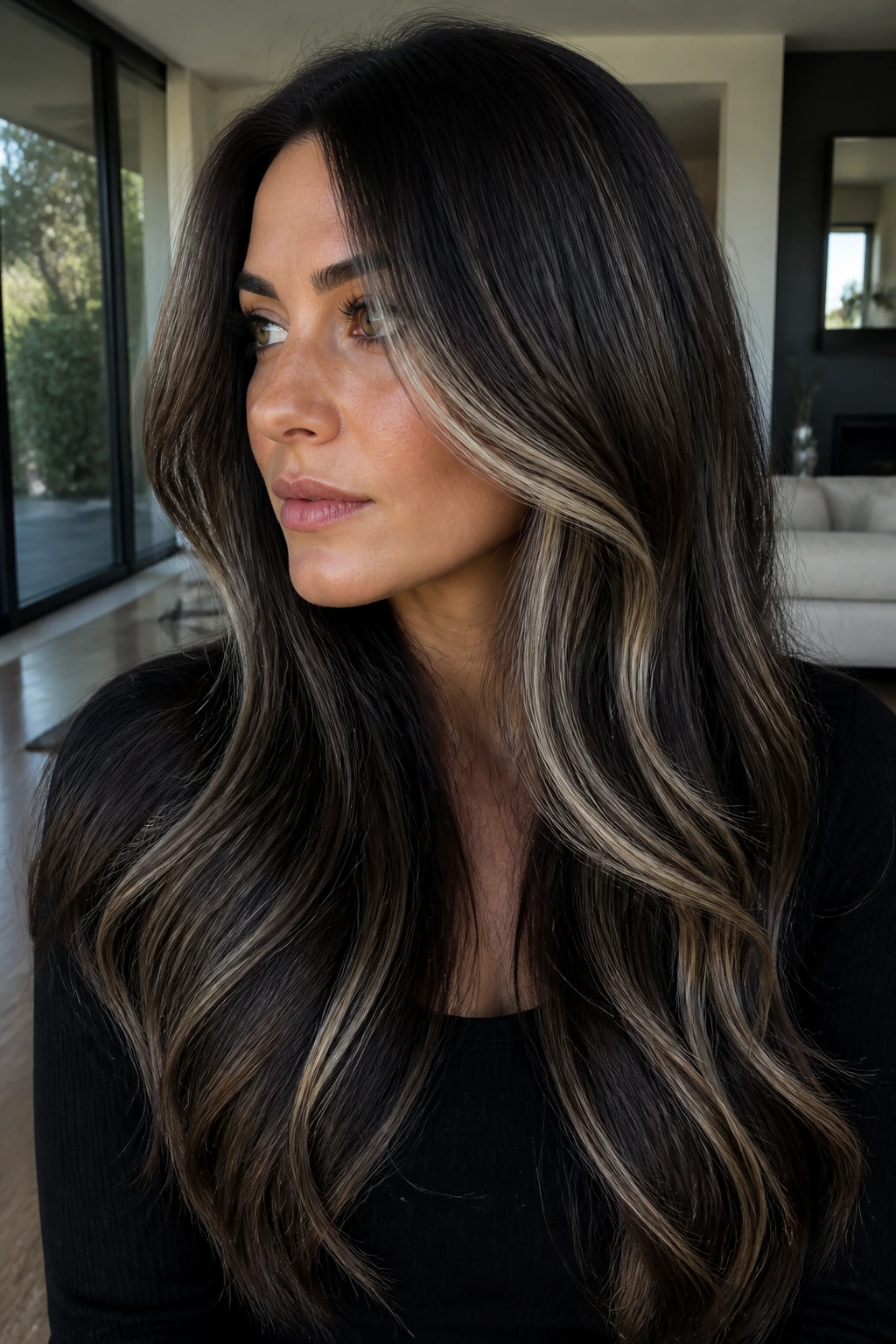
Frosted espresso contrast is for someone who likes a darker base but still wants the blonde to be visible. The espresso keeps the hair rich and deep, while the frosted ribbons stay pale enough to show up through long layers.
This is not a whisper-soft look. It’s cleaner and a little bolder. Cool skin can handle that if the blonde stays icy-beige rather than buttery. Long layers help because they let the ribbons separate as the hair falls. Without layers, the contrast can feel blocky. If you want drama without brass, this is the route. Ask for the highlights to be focused around the outer layers and the front lengths so the effect doesn’t disappear when the hair is pulled back.
13. Foggy Beige Highlights on a Soft Lob
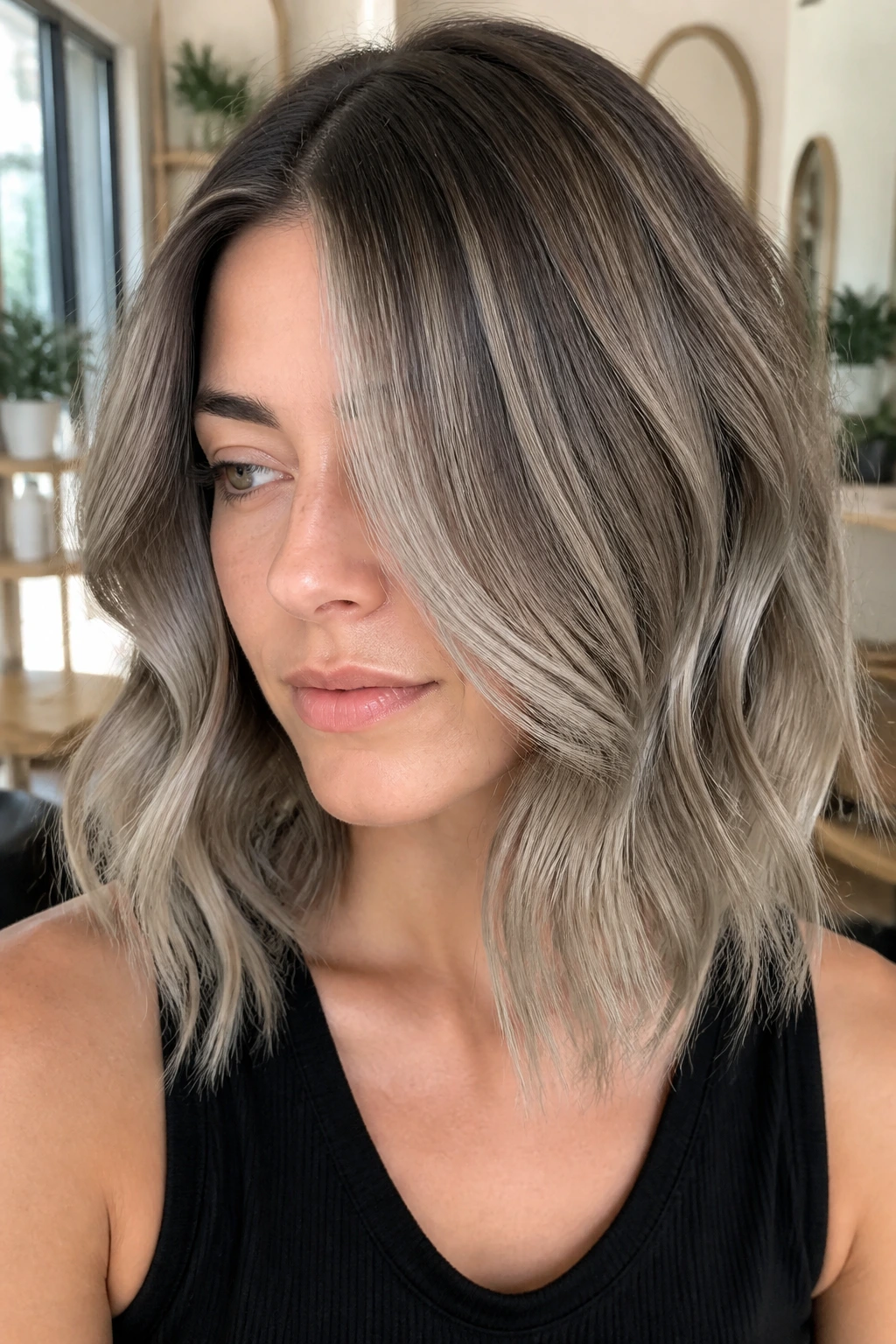
A lob needs movement more than it needs a giant contrast story. Foggy beige highlights are perfect for that because they sit in the middle—light enough to brighten, muted enough to stay cool. They don’t fight with the face the way warm caramel can.
This look is especially good if your hair is fine or medium and you want the ends to look fuller. The beige light catches the line of the lob and makes the cut feel cleaner. Ask for soft weaving rather than thick slices. On a blunt lob, the highlights can sit a little higher around the surface; on a textured lob, they can spread more loosely through the mids. Keep the tone smoky, not creamy.
14. Smoky Beige Money Piece with Dimensional Ends
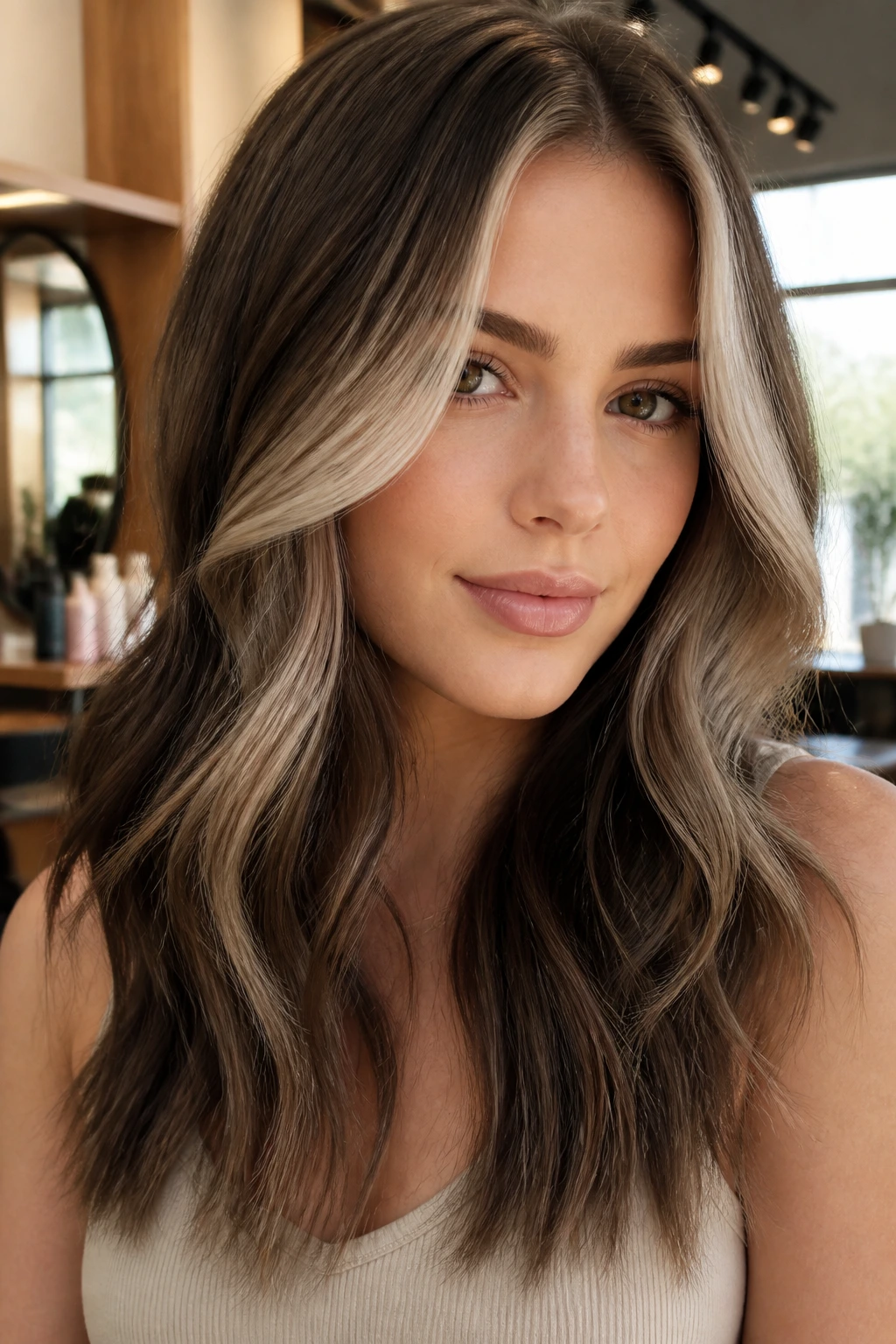
A money piece is only useful if the rest of the hair supports it. Smoky beige at the front with dimensional ends gives you that balance. The face gets the lift. The rest of the hair keeps its depth, which is why cool skin can wear this without looking drained.
The best version is soft at the root and brighter near the cheekbone, not a hard stripe from scalp to ends. If the front pieces are too wide, the effect turns costume-like fast. Thin pieces can still be bright. That’s the trick. Leave the mids and ends a few shades deeper, and the beige reads reflective instead of yellow. This is a strong choice for rounder faces because the front light draws the eye vertically.
15. Arctic Beige Babylights for Fine Hair
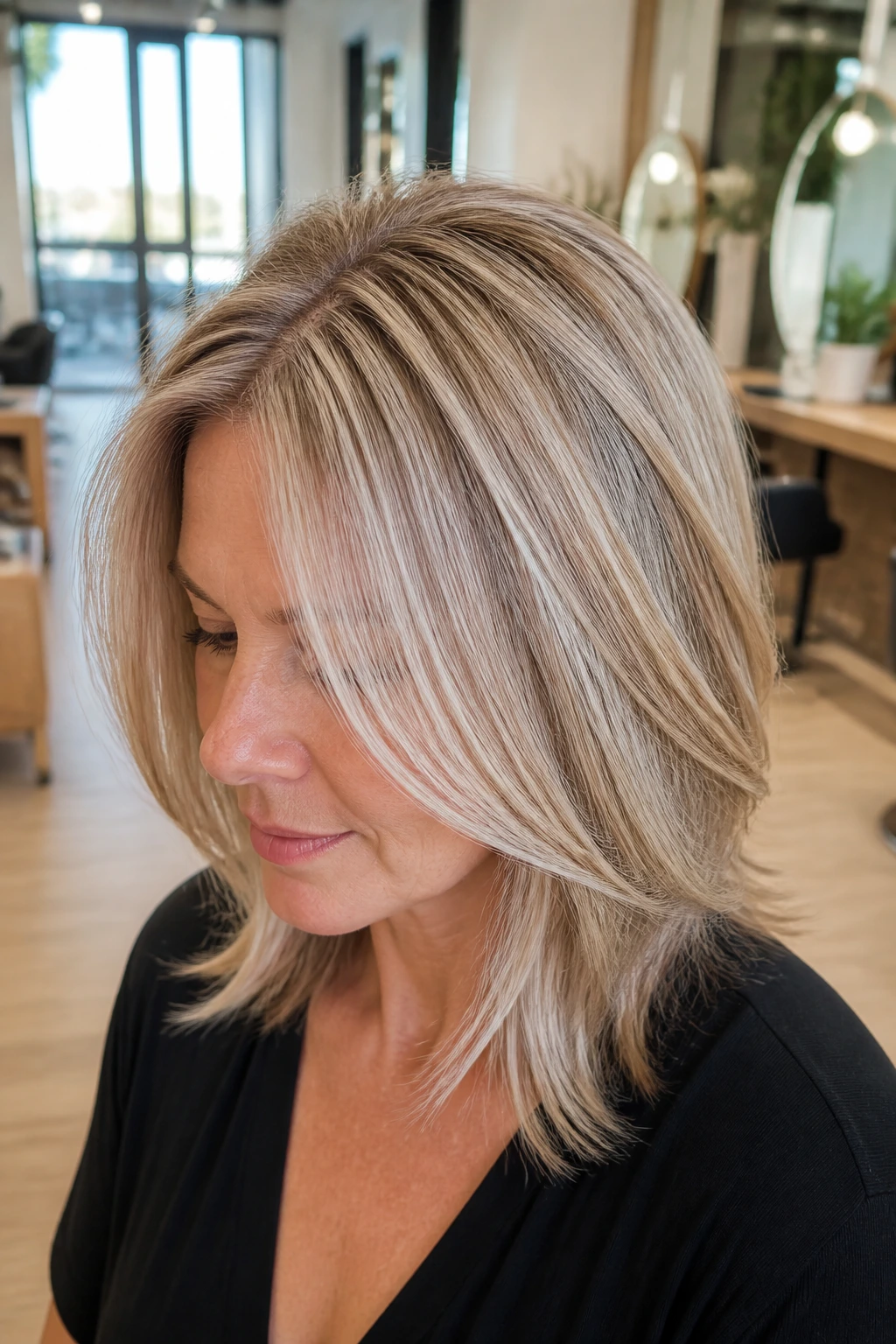
Fine hair hates heavy highlight blocks. They look striped. They show every line of regrowth. Arctic beige babylights, though, can make fine hair feel airy and fuller without giving away the trick.
The strands are tiny enough to blend into one soft shimmer, especially when the hair is blown smooth. The arctic part of the tone matters because cool skin tends to look clearer when the blonde is crisp instead of golden. I’d keep the babylights concentrated through the crown and outer layers so the hair gets lift where light naturally lands. Don’t ask for too much contrast here. The whole point is a mist, not a pattern.
16. Cool Walnut and Pearl Blonde Melt
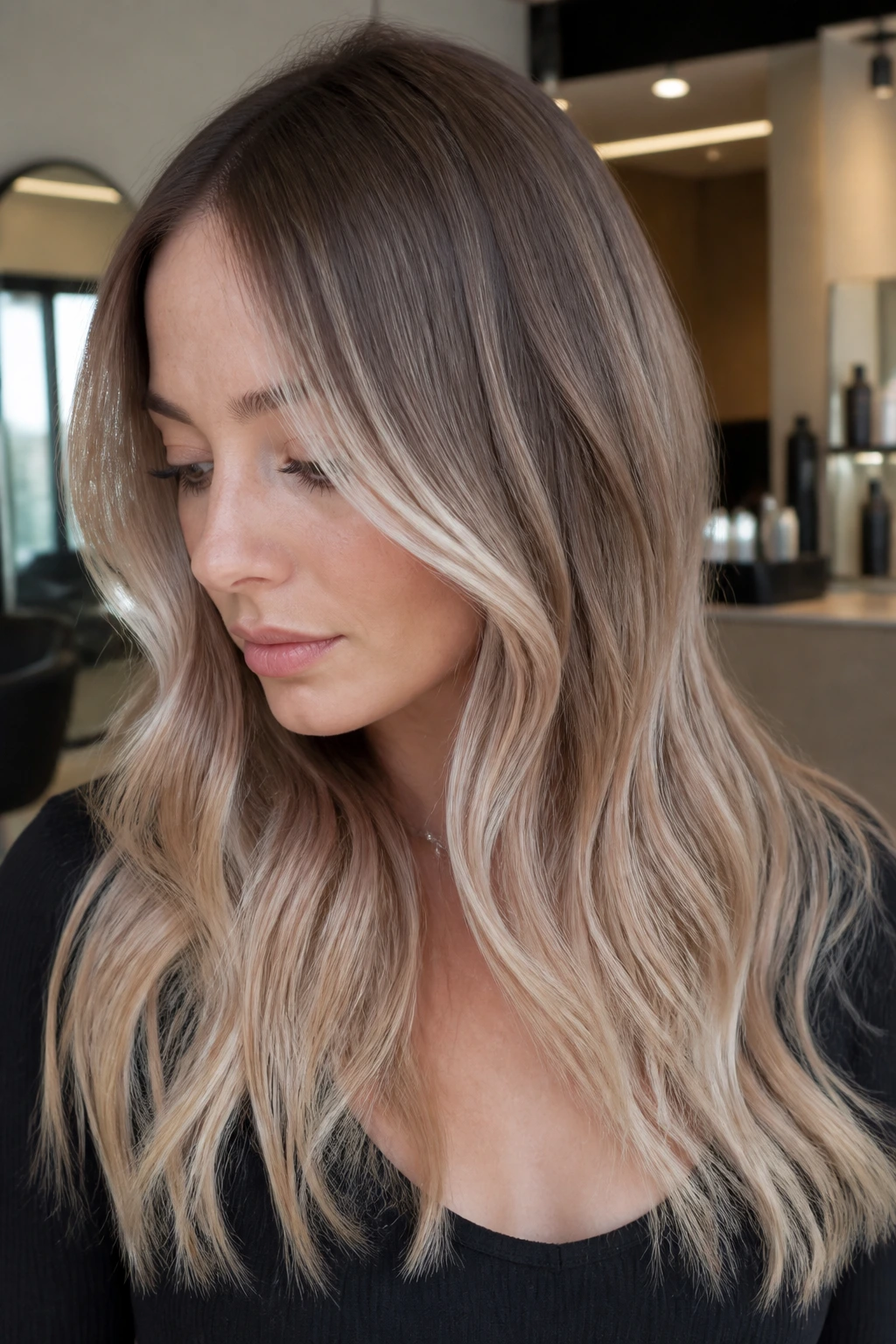
Walnut brown is one of the best brown bases for cool skin because it has depth without copper. Blend that into pearl blonde, and you get a melt that feels polished rather than loud. There’s no hard line where one color ends and the other begins.
This works particularly well on medium to long hair, where the transition can stretch enough to feel smooth. The walnut keeps the base grounded near the scalp. The pearl lightens as it moves through the lengths, but the tone stays clean. If you’ve been stuck between brunette and blonde and don’t want either extreme, this is the sweet spot. A clear gloss between appointments helps the pearl stay reflective instead of dulled down.
17. Silver Taupe Highlights for Short Bobs
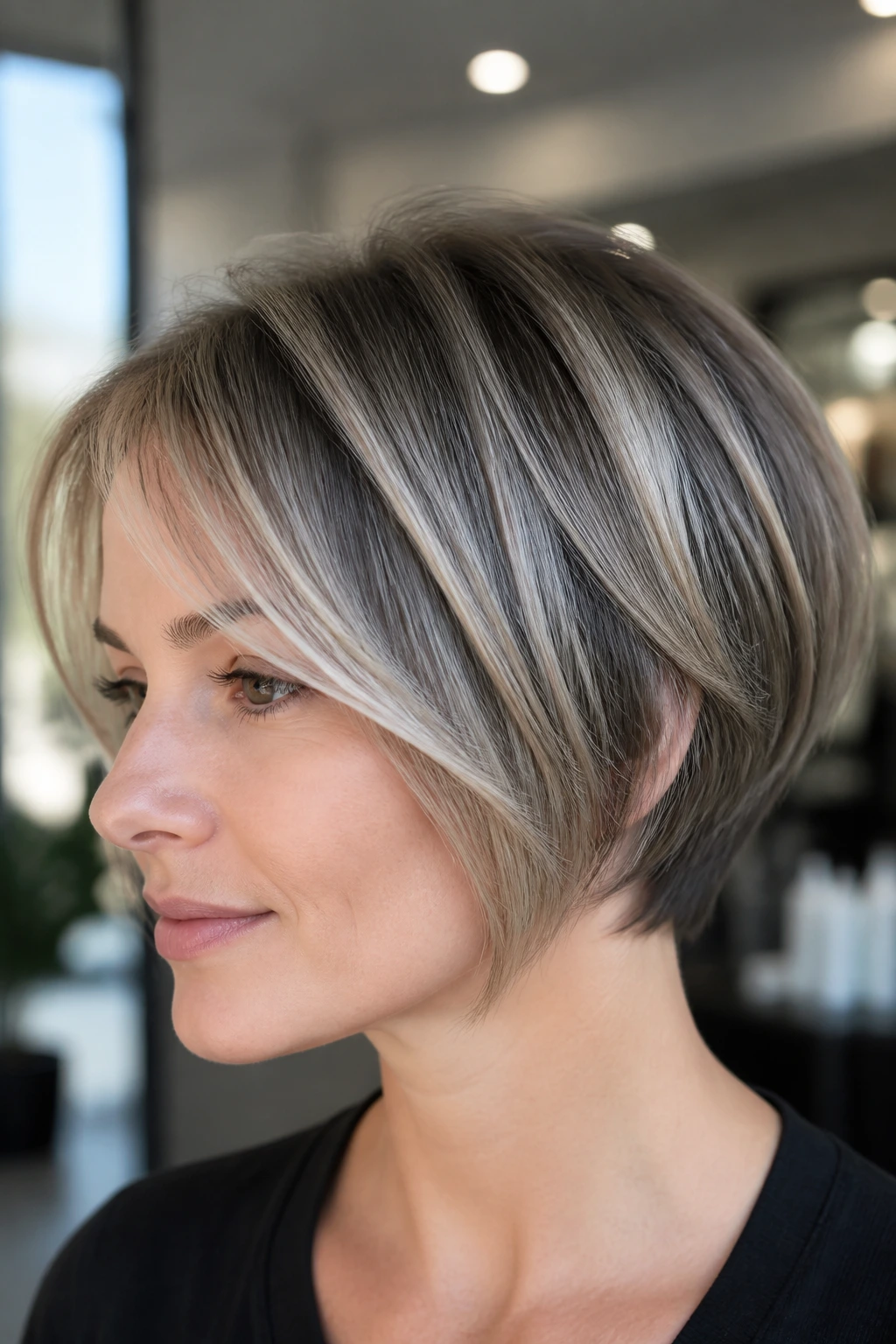
Short bobs don’t give you much room to hide bad color. Every line shows. That’s why silver taupe highlights make so much sense here—they’re neat, cool, and visibly intentional without needing a lot of length.
On a bob, the highlights can be placed just above the ears, around the crown, and through the top third of the head. The result is clean movement, not streaks. Silver taupe is especially nice if your skin has a pink or porcelain cast, because it keeps the overall image sharp. If the cut is blunt, keep the highlights fine. If the bob is textured, you can afford slightly chunkier pieces. Either way, the tone needs to stay smoky.
18. Icy Ribbon Highlights on Curly Hair
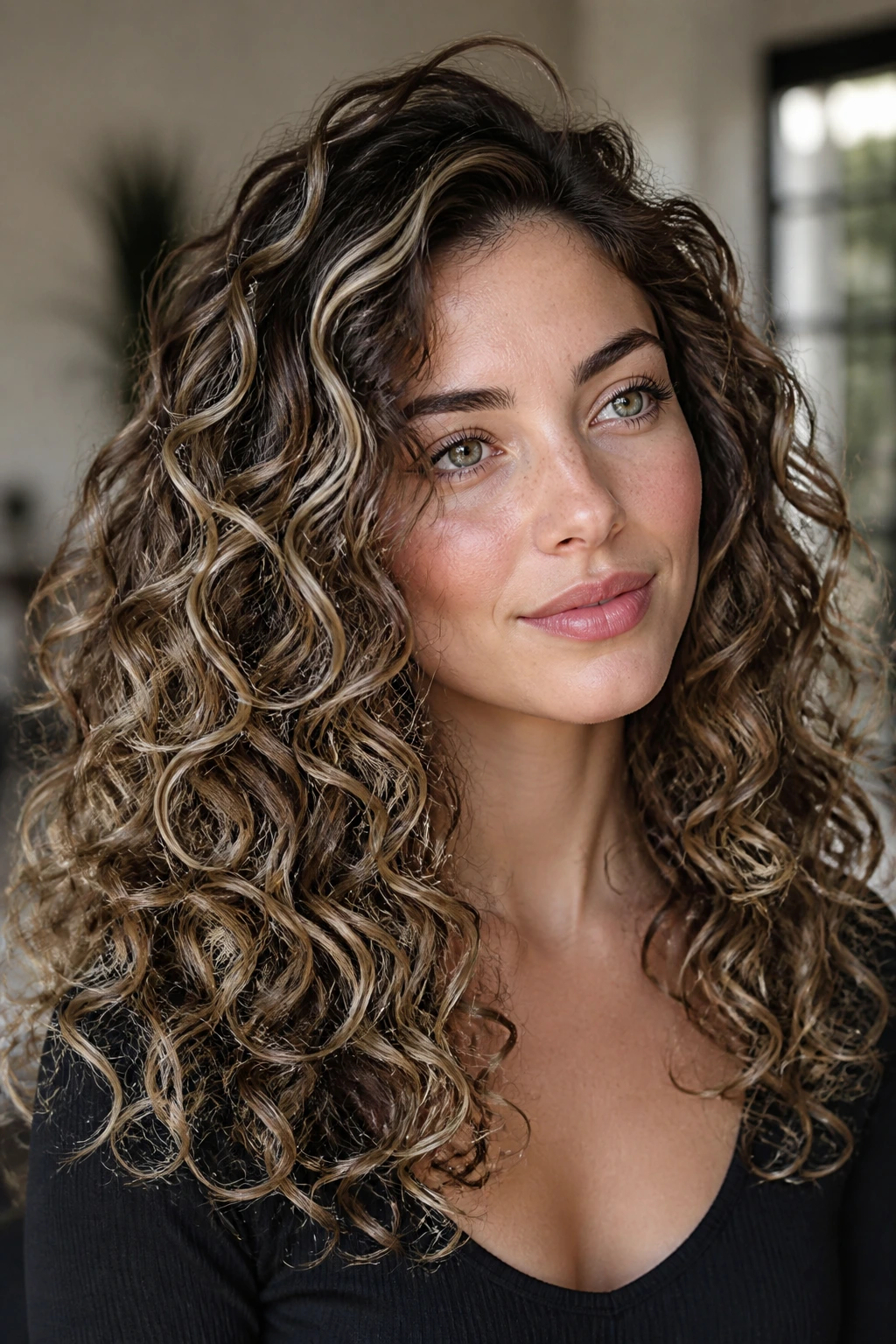
Curly hair changes the rules a bit. You can’t place color like you would on straight hair and expect the same result. Icy ribbon highlights on curls should sit on the outer curve and the surface, where the curl catches light naturally.
That placement keeps the dimension visible without turning the pattern into a zebra effect. Cool skin tends to like this because the icy blonde lights up the curls without going yellow at the edges. The brown base should stay visible in the interior so the shape doesn’t vanish. If your curls are tight, the ribbons need to be thinner and more strategic. Loose curls and waves can handle slightly broader placement. Either way, ask for a cooler gloss at the sink. It matters.
19. Cool Bronde Face-Frame with Lived-In Ends
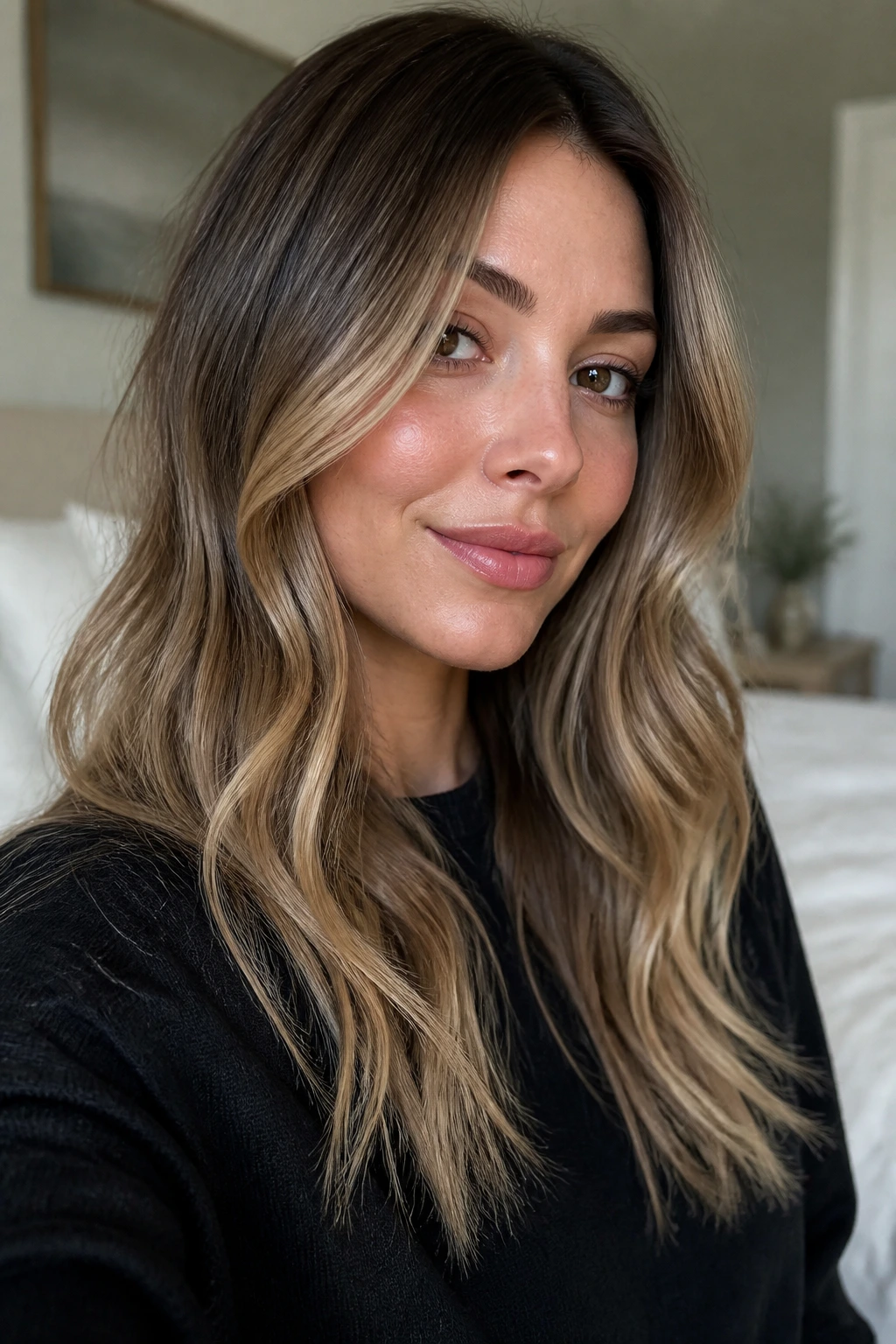
This is the one people ask for when they want a low-drama grow-out and still want to see themselves in the mirror. Cool bronde at the face frame, with lived-in ends, gives you brightness where it counts and softness everywhere else.
The face frame should be visible but not glaring. Around the ends, the color can drift deeper and more beige, which keeps the whole head from looking too blond too soon. I like this on medium to long hair, especially if you usually wear it with loose bends. The bronde balance keeps cool skin from going flat, and the lived-in ends make the maintenance feel less punishing. If you hate constant salon visits, start here.
20. Ash Blonde Peekaboo Layers for Thicker Hair
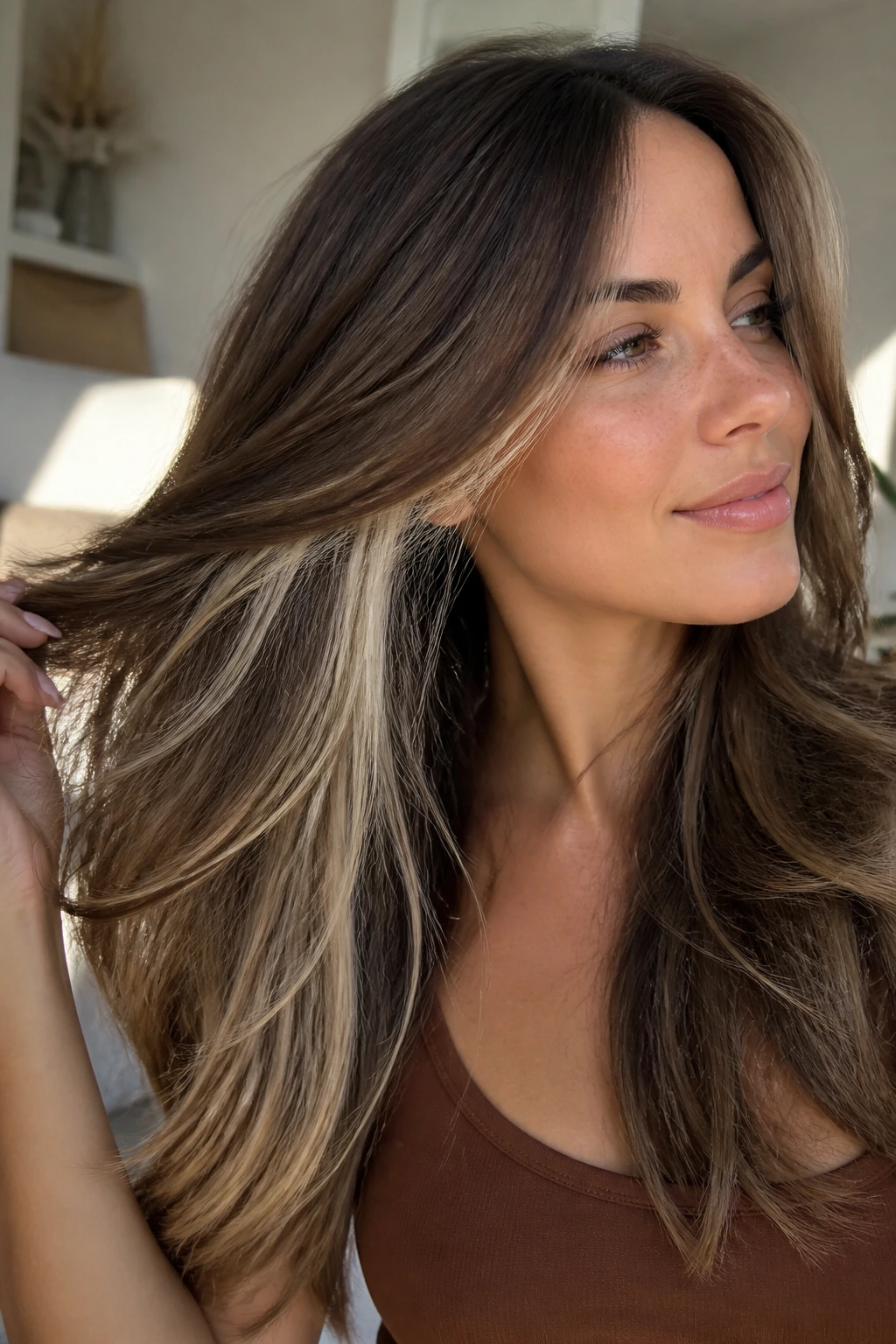
Thick hair can swallow lighter pieces if the placement isn’t smart. Peekaboo layers solve that by tucking ash blonde into the interior, where it flashes through movement instead of sitting on top like frosting.
The ash tone matters because thick hair often reads warmer once it gets a little depth and texture. A cooler blonde inside the layer breaks that up. This look is especially good when you tie the hair back or half-up, because the hidden pieces reveal themselves in little flashes. If the hair is very heavy, the stylist can open the top layer just enough to let the lighter pieces breathe. Too much exposure on thick hair and the effect loses its secret. Keep it tucked. That’s what makes it interesting.
21. Mushroom Blonde Balayage on a Shag Cut
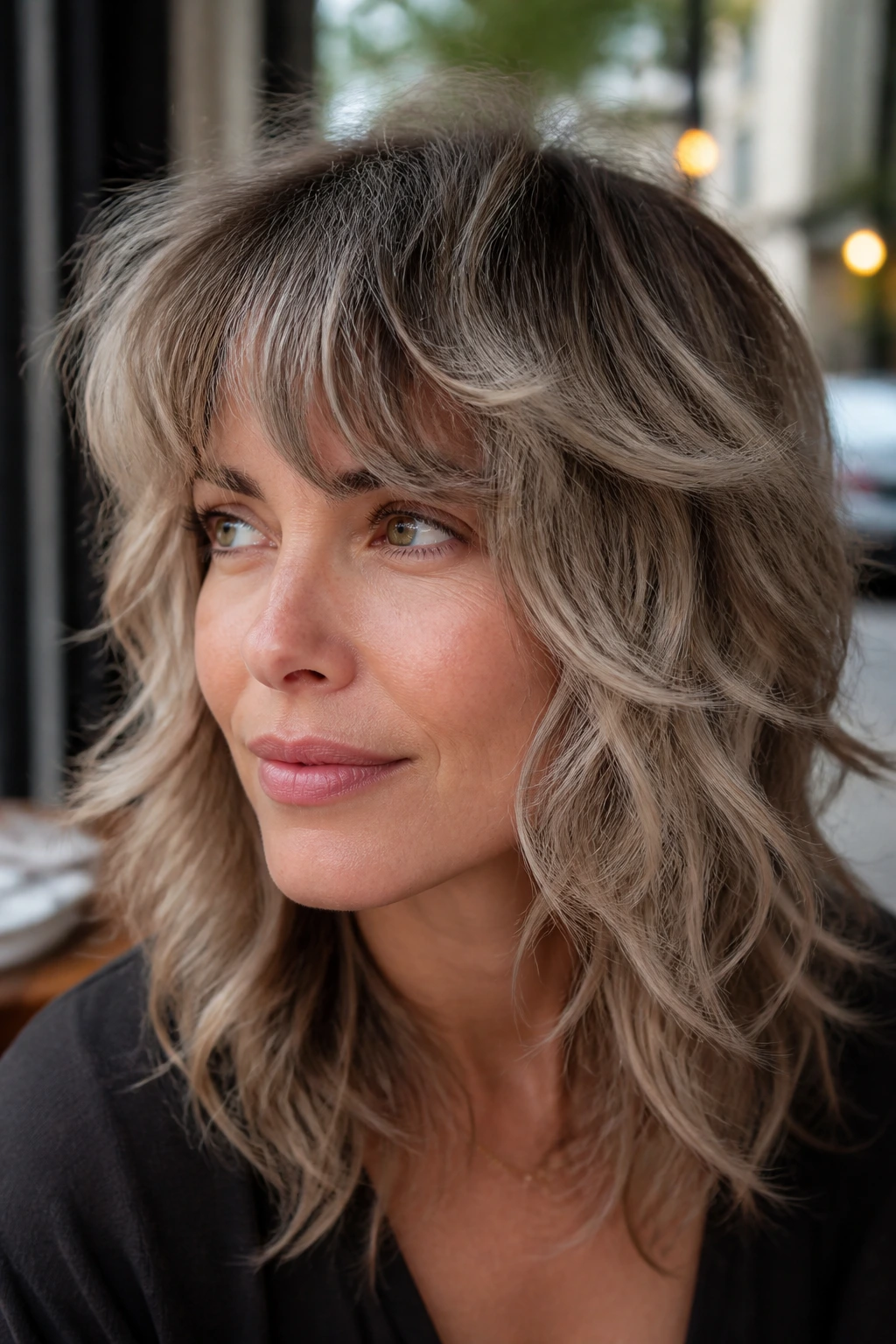
A shag cut already has attitude. Mushroom blonde balayage respects that without making the hair look yellow or frosted in the wrong way. The texture does the work; the color just supports it.
This is one of the best pairings for cool skin if you like airiness around the face and movement through the ends. Mushroom blonde has enough gray-beige tone to stay grounded, which keeps the shag from reading too sunny. The layers can take the blonde through the top and around the cheekbones, then keep the lower sections a shade deeper. That contrast makes the cut look messy on purpose. It’s a good one if you like hair that looks better a little undone.
22. Pale Linen Highlights on a Center-Part Lob
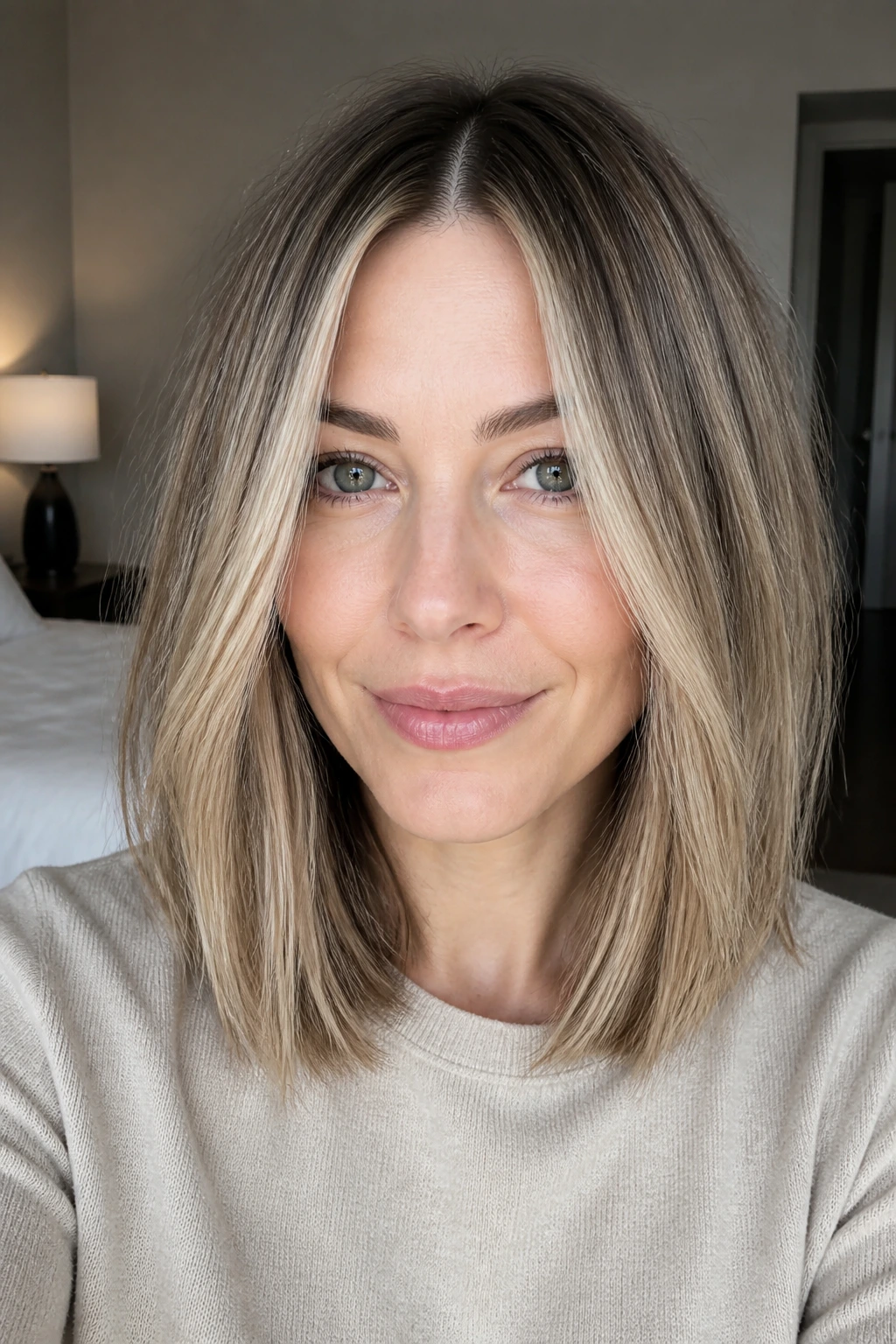
A center part can be unforgiving if the color is wrong. Pale linen highlights fix that by putting a clean, even light on both sides of the face. Linen sounds soft, and that’s exactly the right mood here.
This style is especially useful on a lob because the line of the cut stays crisp while the highlights soften the front. Keep the pieces thin near the part and a touch wider near the cheekbones so the frame doesn’t look too precise. Cool skin likes the linen tone because it stays neutral instead of going yellow. If your base is light brown or dark blonde, this is one of the easiest ways to brighten without abandoning brunette depth.
23. Pearl Ash Ombré with Soft Ends
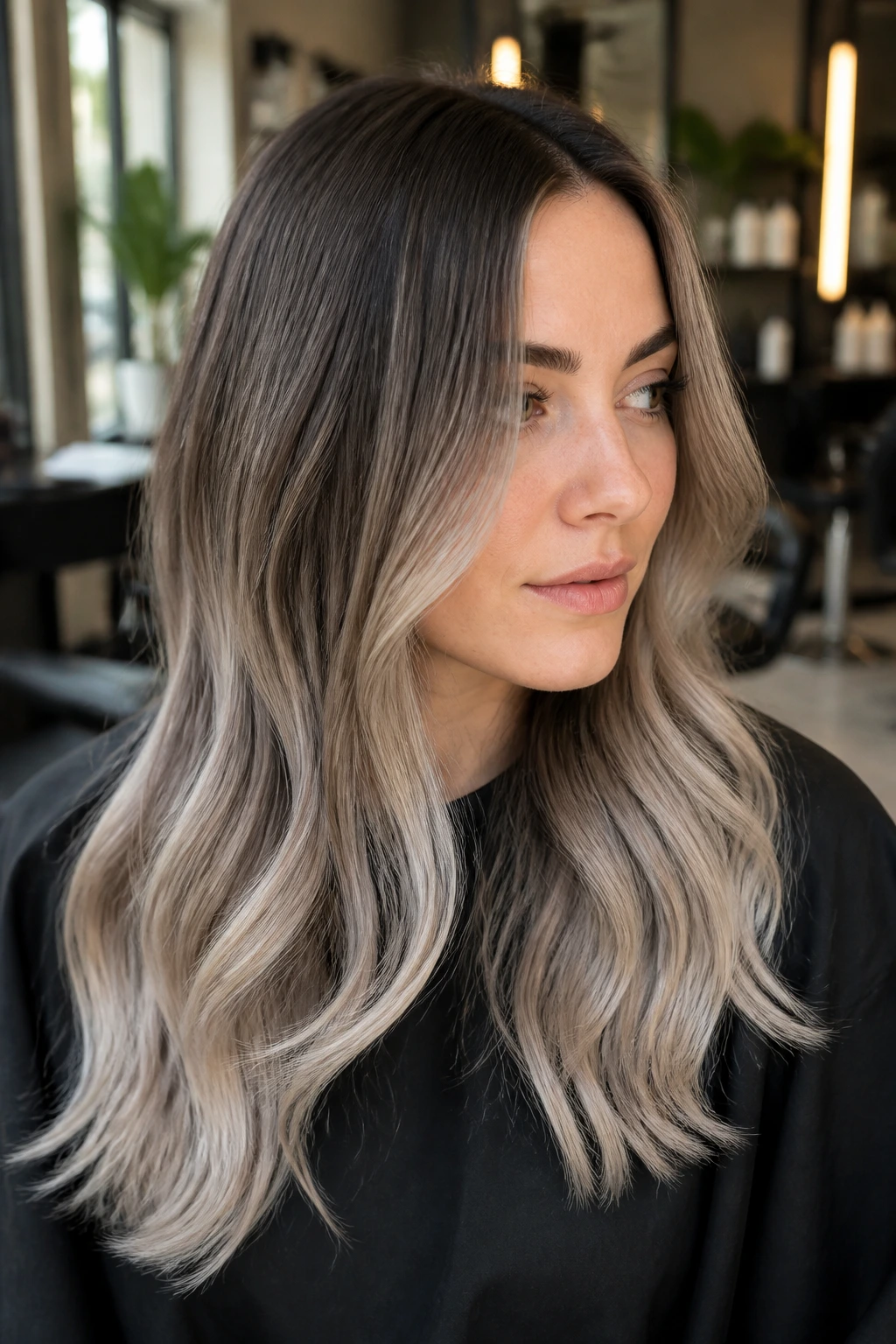
Pearl ash ombré is a good answer when you want lighter ends but don’t want the usual warm fade. The color starts deeper at the roots, moves through a smoky brown midsection, and lands in a pearly ash finish near the bottom.
It’s a forgiving look for people who don’t want to visit the salon every few weeks. The grow-out stays soft because the root is part of the design. The ends need a gloss to keep that pearl finish alive, but they don’t need constant lifting. This is one of the safer choices for cool skin if your natural hair pulls orange, because the ash tones keep the whole gradient from warming up. The only real risk is over-toning the ends until they go dull. That’s easy to avoid with the right gloss timing.
24. Cool Mocha Ribbons on Dark Brown Hair
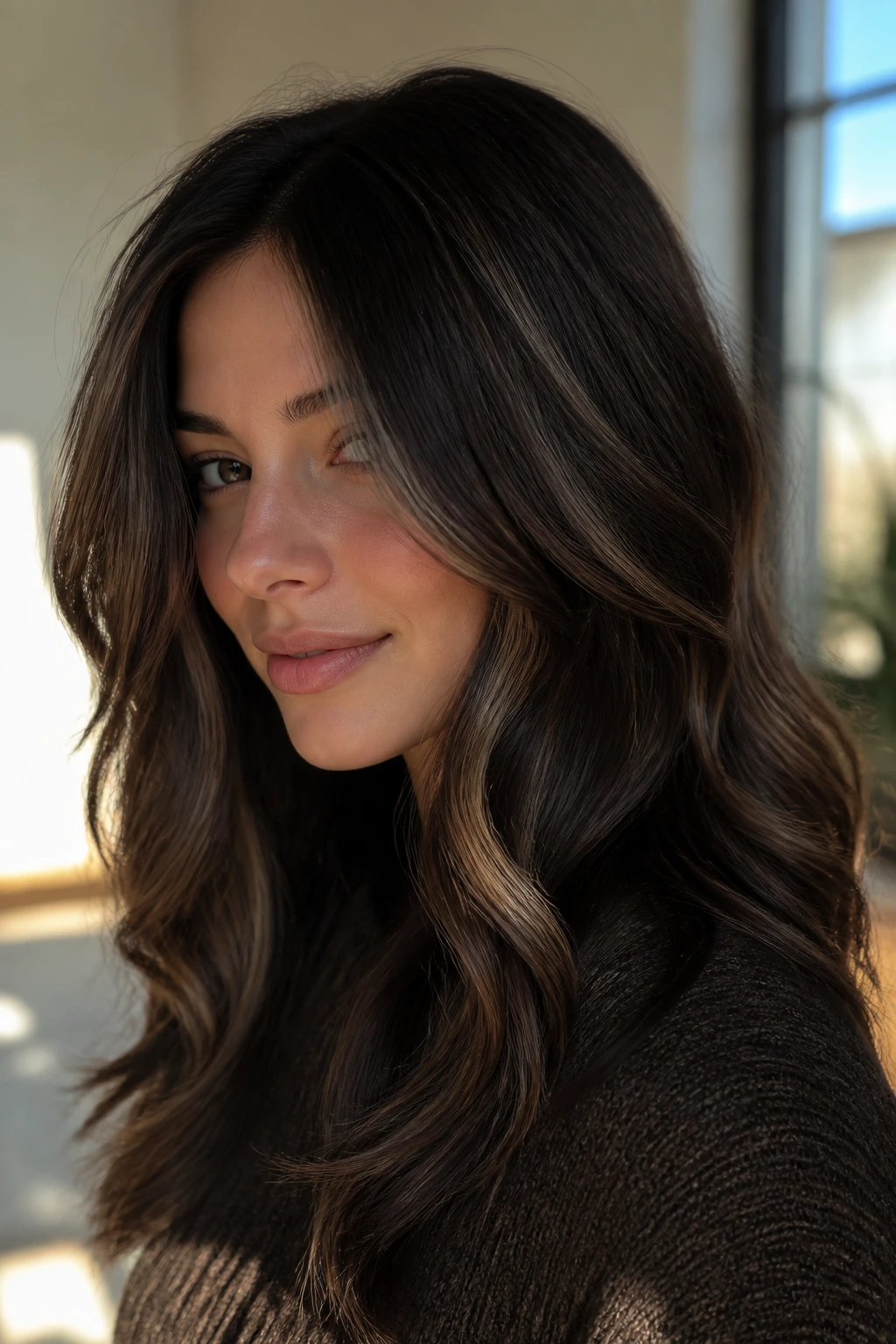
Dark brown hair can take a cool blonde ribbon beautifully, but only if the lift is handled with a light touch. Cool mocha ribbons make the hair look dimensional instead of streaked. The mocha base keeps depth; the blonde pieces stay narrow and clean.
This look works best when the highlights are concentrated where the light naturally hits—around the face, on the outer layers, and through the top. If the ribbons get too wide or too gold, the whole thing starts shouting. Keep the blonde more beige than honey. On a dark base, even a small amount of light can show up strongly, so the placement matters as much as the color. For cool skin, this is a very reliable route because it gives warmth in the shape of dimension, not in the tone itself.
25. Frosted Beige Highlighting for Gray Blending
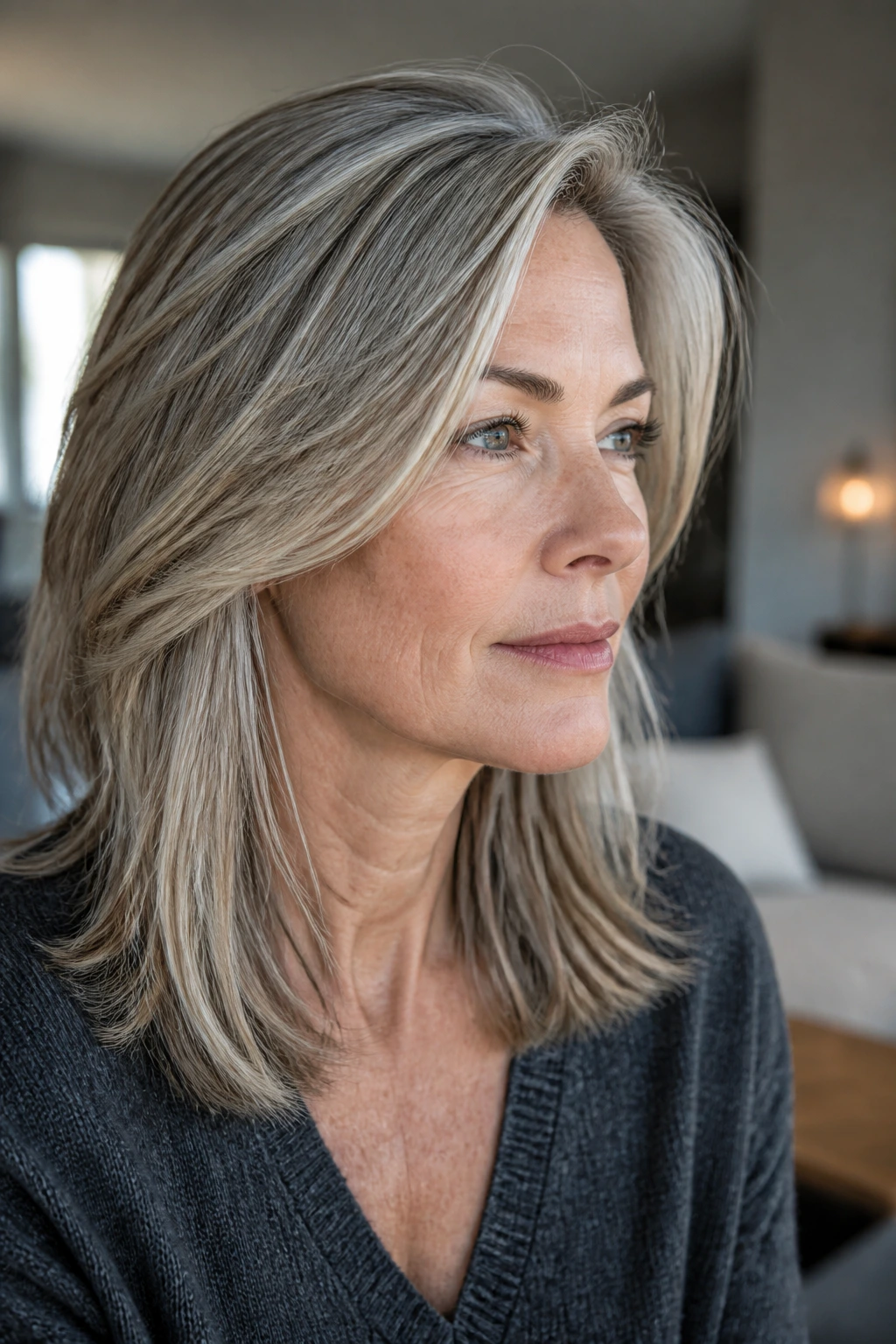
Gray blending gets messy when the blonde is too yellow. Frosted beige highlights avoid that. They sit beside silver strands instead of fighting them, which is why this approach works so well on cool skin and cool natural grays.
The goal is not to hide every gray hair. It’s to blur the transition so the grow-out looks intentional. Frosted beige pieces around the temples, crown, and part line can soften the contrast without turning the whole head flat. If there’s a lot of silver, the stylist may leave more natural depth underneath so the highlights don’t look washed out. This is one of those looks where the gloss matters almost more than the lightening. Keep it cool, keep it soft, and don’t chase gold.
26. Smoke-and-Slate Money Piece with Long Curtain Layers
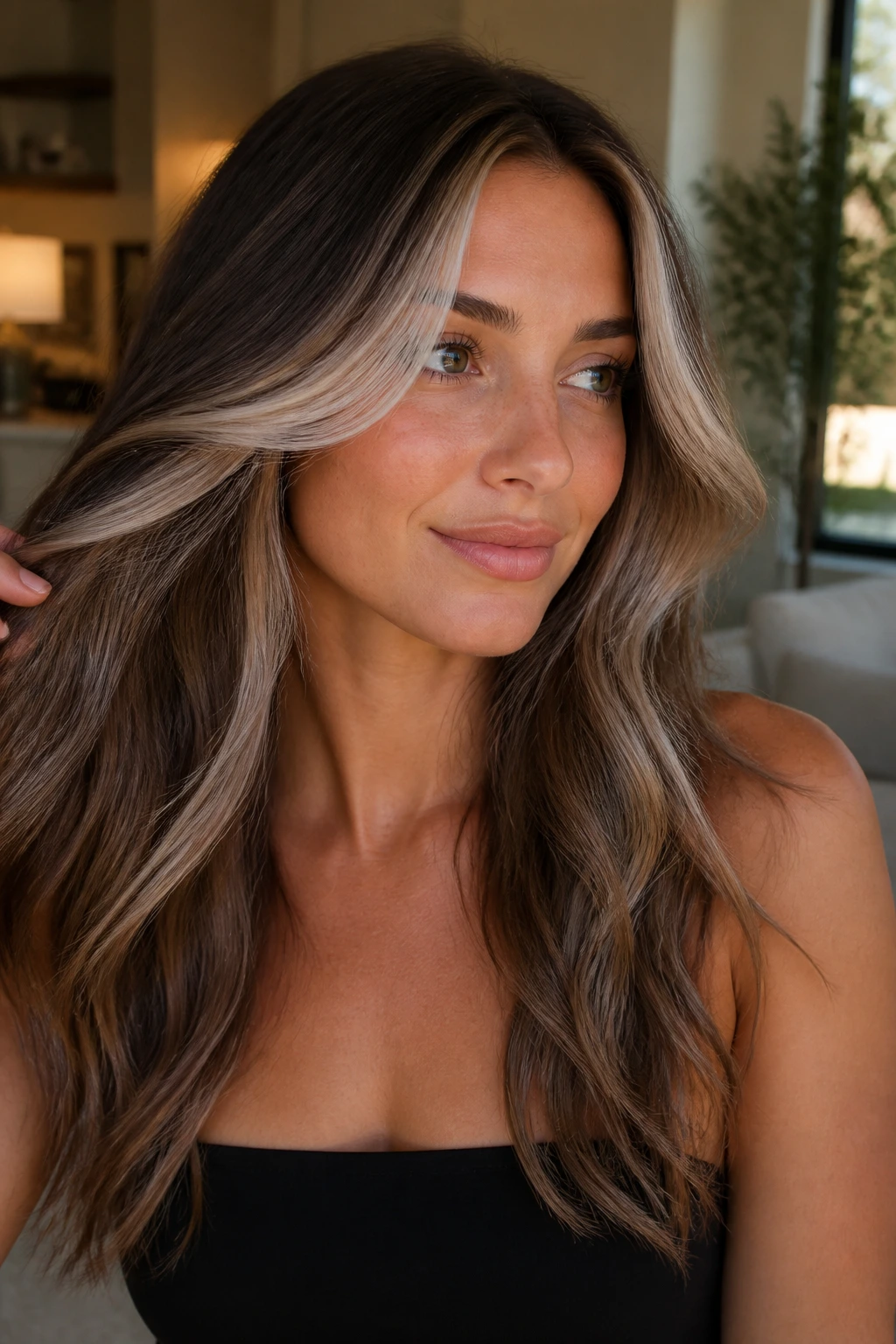
Long curtain layers love a money piece because the front pieces have somewhere to swing. Smoke-and-slate gives you brightness at the face without losing the brunette feeling that keeps cool skin looking balanced.
This is a bolder choice than the softer face-frame looks above. The lightest pieces can sit right at the front and through the curtain bang area, while the rest of the hair stays slate brown with smoky highlights through the lengths. The color looks especially good when the hair is blow-dried away from the face or worn with a loose bend. If you want contrast but not brass, ask for the money piece to stay cool-beige, not icy-white. That keeps the front from looking disconnected.
27. Slate Brunette with Soft Blonde Veils
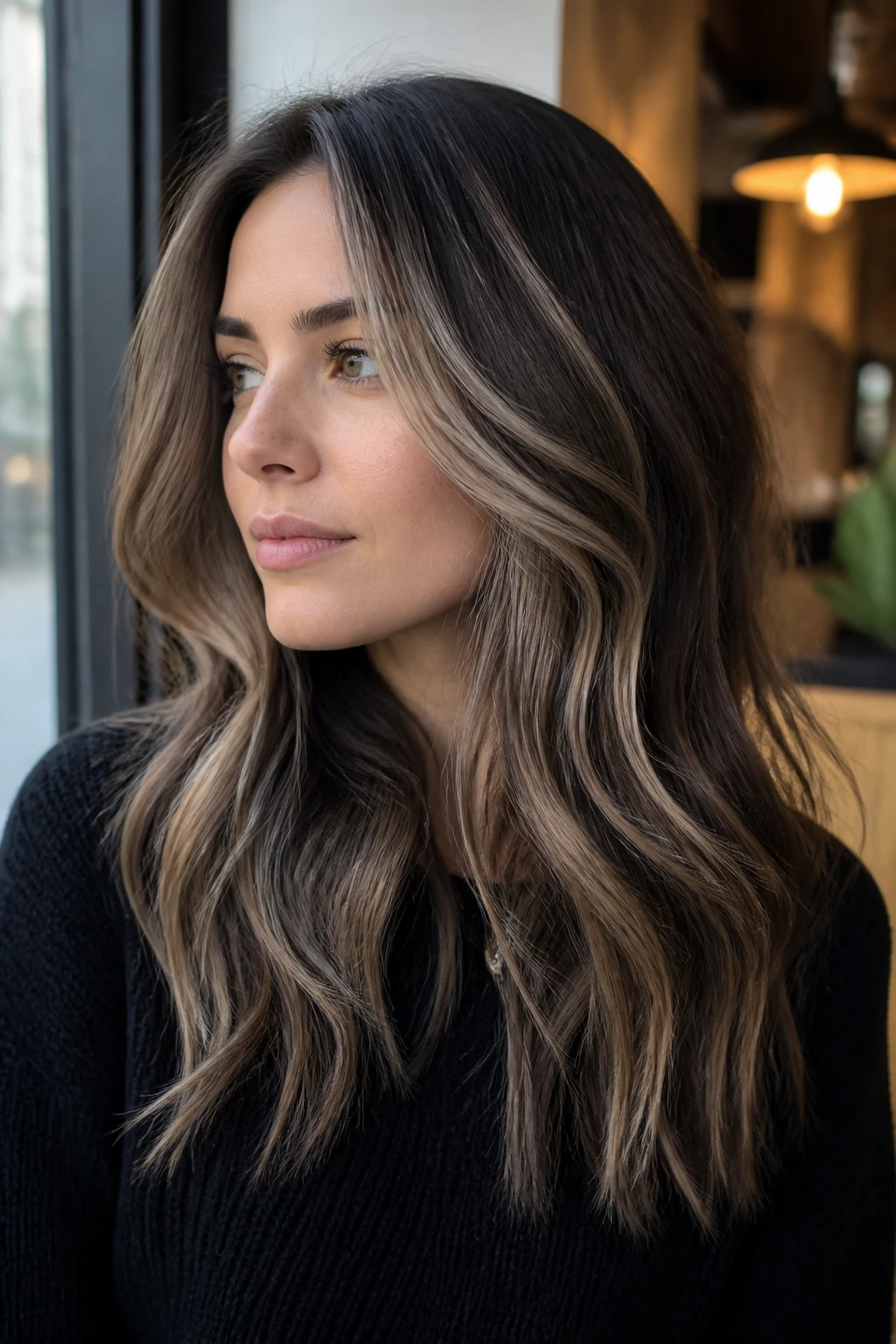
Slate brunette is for the person who wants the brunette identity to stay intact. The blonde veils are there to breathe a little life into it, not to take over. That restraint is exactly why cool skin wears it so well.
The veils should be thin enough that you notice them in motion, not as a block of brightness from a distance. On long hair or dense hair, that subtlety makes a big difference. The slate tone at the base keeps the color fresh and a touch moody. If your style leans minimal, this may be the cleanest option in the bunch. It gives dimension without the high-contrast drama that some highlights bring along for the ride.
28. Neutral Platinum Face Lights with Brown Depth
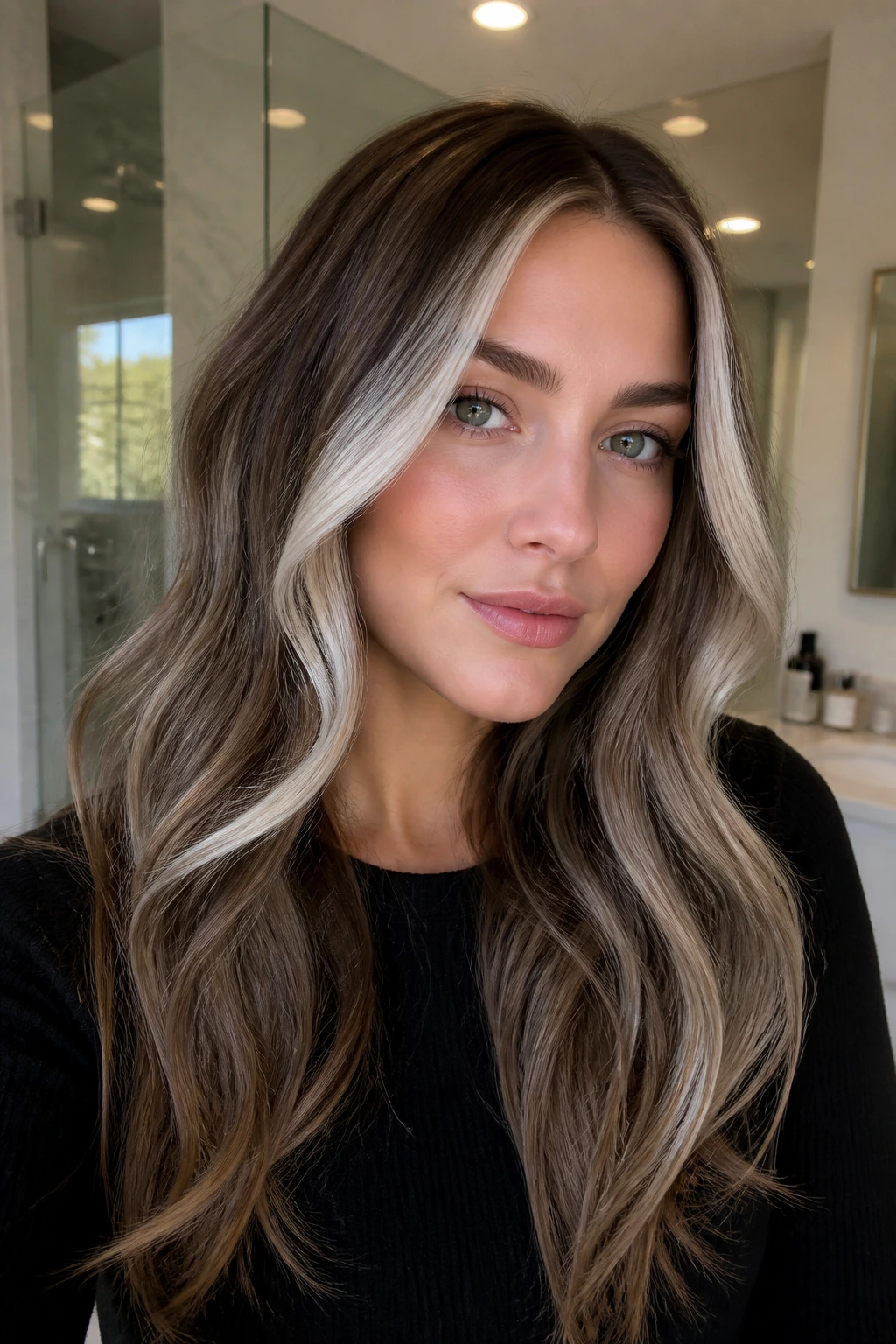
Neutral platinum face lights are the strongest brightness option here, but they still work on cool skin because the brown depth underneath keeps them from floating away. Think of this as a high-contrast frame, not a full blonde conversion.
The face lights should be narrow enough to soften the cheeks and brighten the eyes without creating a solid block. Around the rest of the head, leave enough brown depth to keep the style from going brittle or flat. This is the version I’d choose if you love a cleaner, more dramatic finish and you’re willing to keep up with glosses. It’s not low-maintenance. It does, however, look sharp when the tone stays clean. Platinum without warmth can be stunning on cool undertones. Platinum with brass is another story entirely.
How to Pick the Right Highlight Pattern for Your Hair
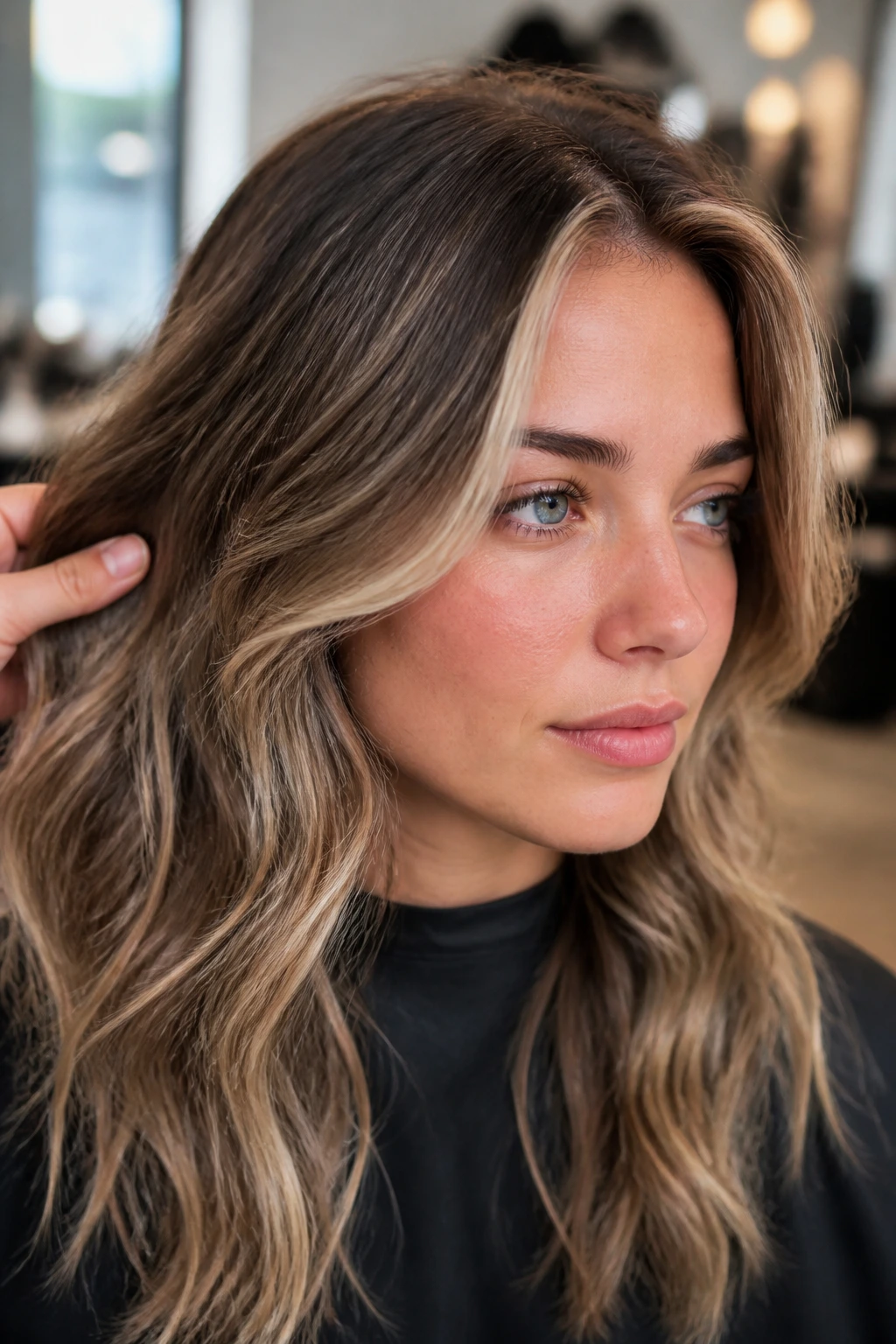
Cool skin tones don’t all need the same level of brightness. The base color, haircut, and texture change how the highlights land. A level 5 brunette with thick layers needs something different from a level 8 lob with fine hair. If you choose the tone without thinking about placement, the whole result can feel off, even if the shade is right.
Fine hair: go for babylights, pearl veils, or narrow face-framing pieces. Fine hair can look stringy with chunky highlights, and the gap between sections shows too much scalp. Tiny placement makes the hair look fuller.
Thick hair: ribbons, peekaboo layers, and underlights help thick hair move. A few stronger pieces can be better than a hundred tiny ones because they stop the color from disappearing inside the density.
Short cuts: bobs and lobs love contrast near the face and crown. You don’t need light everywhere. You need the right light where the haircut bends.
Curly or wavy hair: place the highlights where the hair naturally swells and curves. That’s where the light catches. If the color is painted too evenly, it can vanish under the curl pattern.
Essential Tools and Products to Keep the Tone Clean
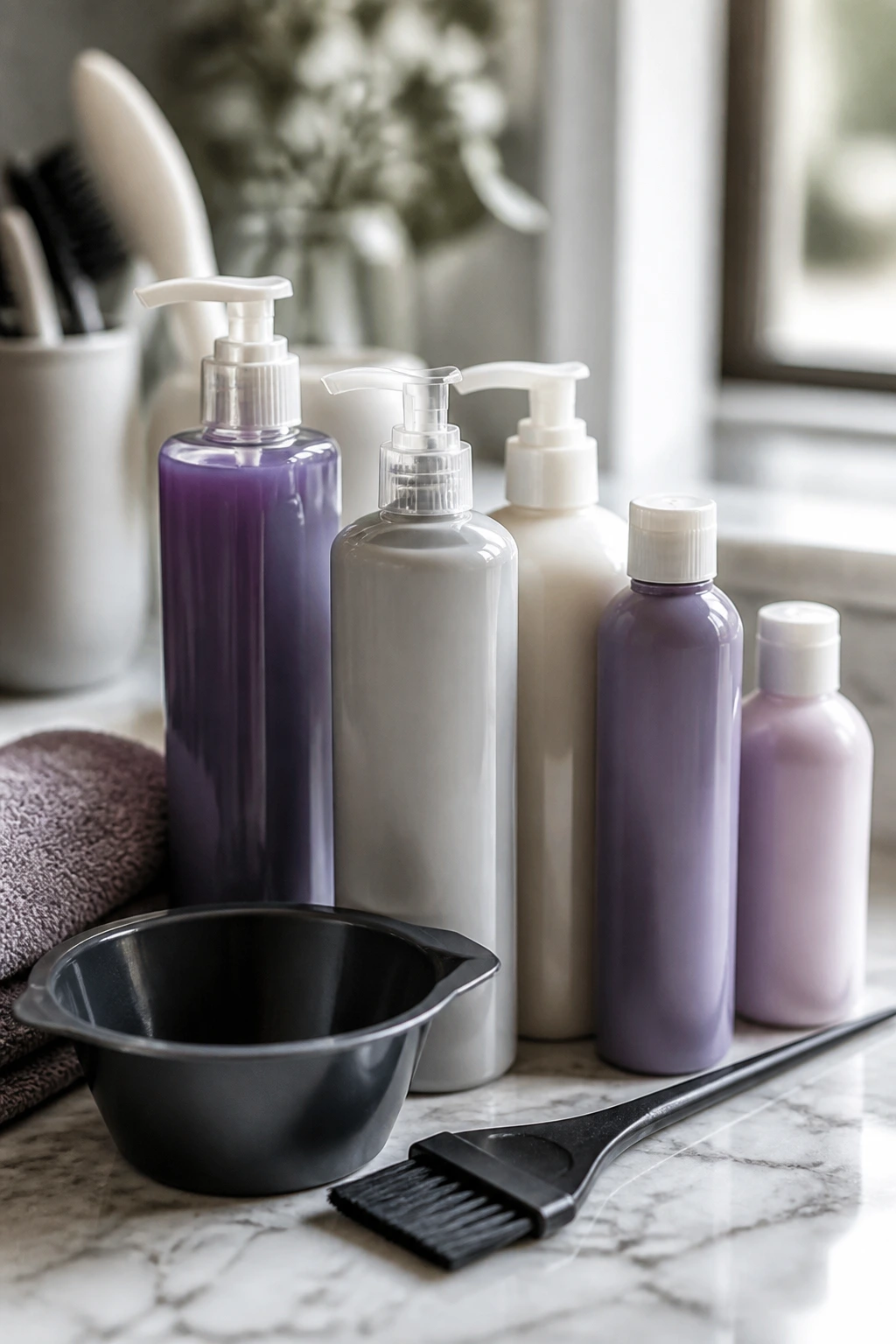
You do not need a suitcase full of products, but the right few make these highlights last much longer.
- Purple shampoo: useful for ash, beige, and pearl blondes; use it once a week or every other week, not daily.
- Blue shampoo: the better pick if your brunette base keeps shifting orange between salon visits.
- Color-safe shampoo: gentler washing keeps toner from disappearing too fast.
- Heat protectant spray: use it before any blow-dry or iron; keep hot tools around 300-375°F.
- Microfiber towel or soft T-shirt: cuts frizz and stops lighter pieces from looking rough after washing.
- Shine serum or lightweight oil: one pea-size amount on the mids and ends gives the color a smoother finish.
- Wide-barrel curling iron or round brush: both help show off ribbon highlights and face-framing pieces.
- Tint brush and clips: useful if you’re refreshing a gloss at home or sectioning hair before styling.
How to Keep Blonde Brown Highlights Cool Between Visits
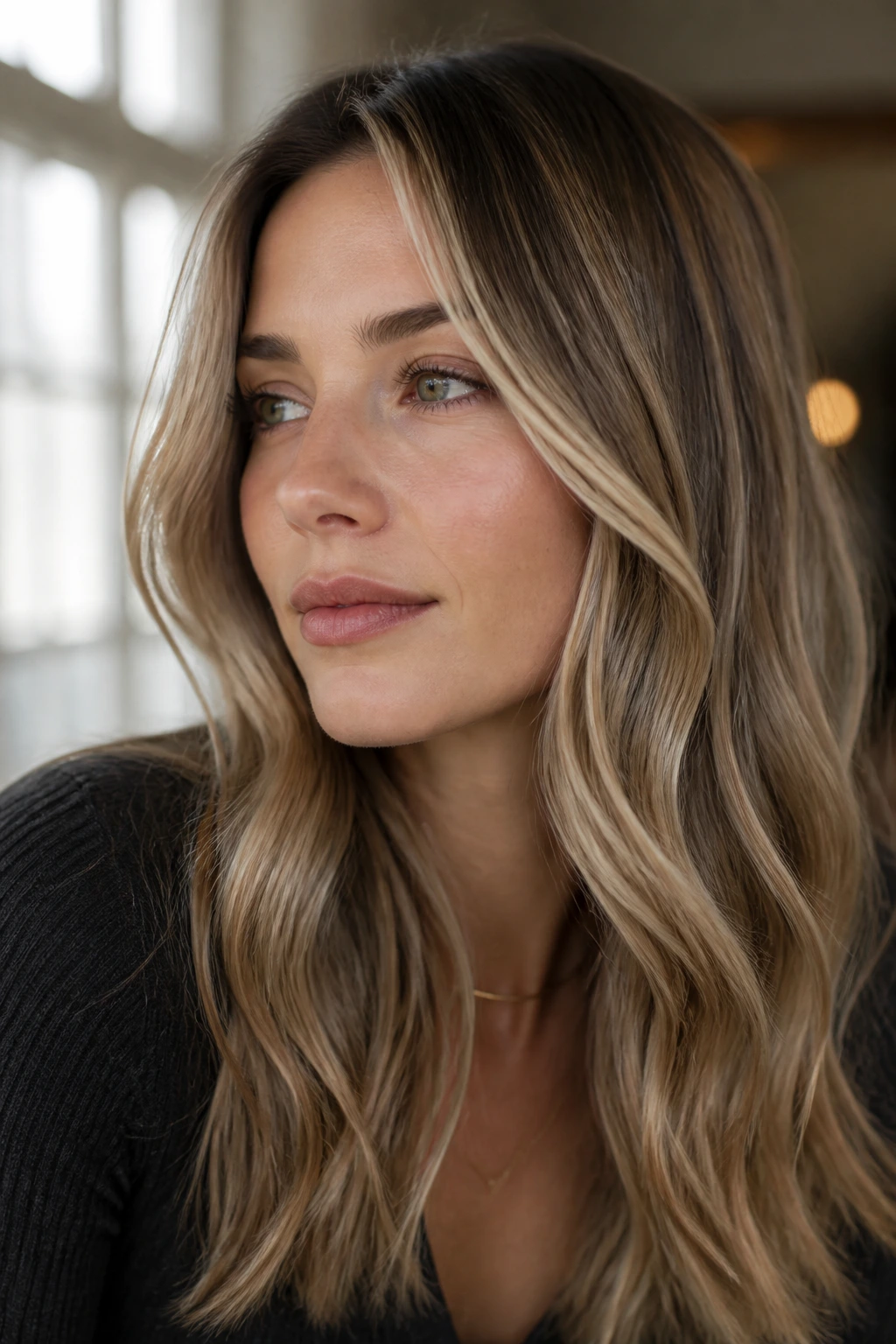
Cool-toned highlights live or die by maintenance. The good news is that most of the upkeep is about tone, not full recoloring. If you let ash and pearl shades sit too long without a refresh, they slide toward beige-gold. That doesn’t sound dramatic until you see it under daylight.
For most balayage or bronde looks, a gloss every 4 to 6 weeks keeps the blonde clean. If the hair is very porous or the style leans silver or platinum, that window can shrink to 3 to 4 weeks. Root-shadowed looks and lived-in bronde can stretch longer—sometimes 8 to 12 weeks before a partial touch-up feels necessary.
At home, wash with cool or lukewarm water, not hot water. Hot water roughs up the cuticle and makes the toner fade faster. Use purple shampoo sparingly; leave it on for 1 to 3 minutes on the light pieces, then rinse. If you leave it on too long, porous ends can go dull or violet-gray. Deep-condition once a week, and if you heat-style often, keep a protectant on every single time. That part isn’t optional.
Common Mistakes That Pull the Color Warm
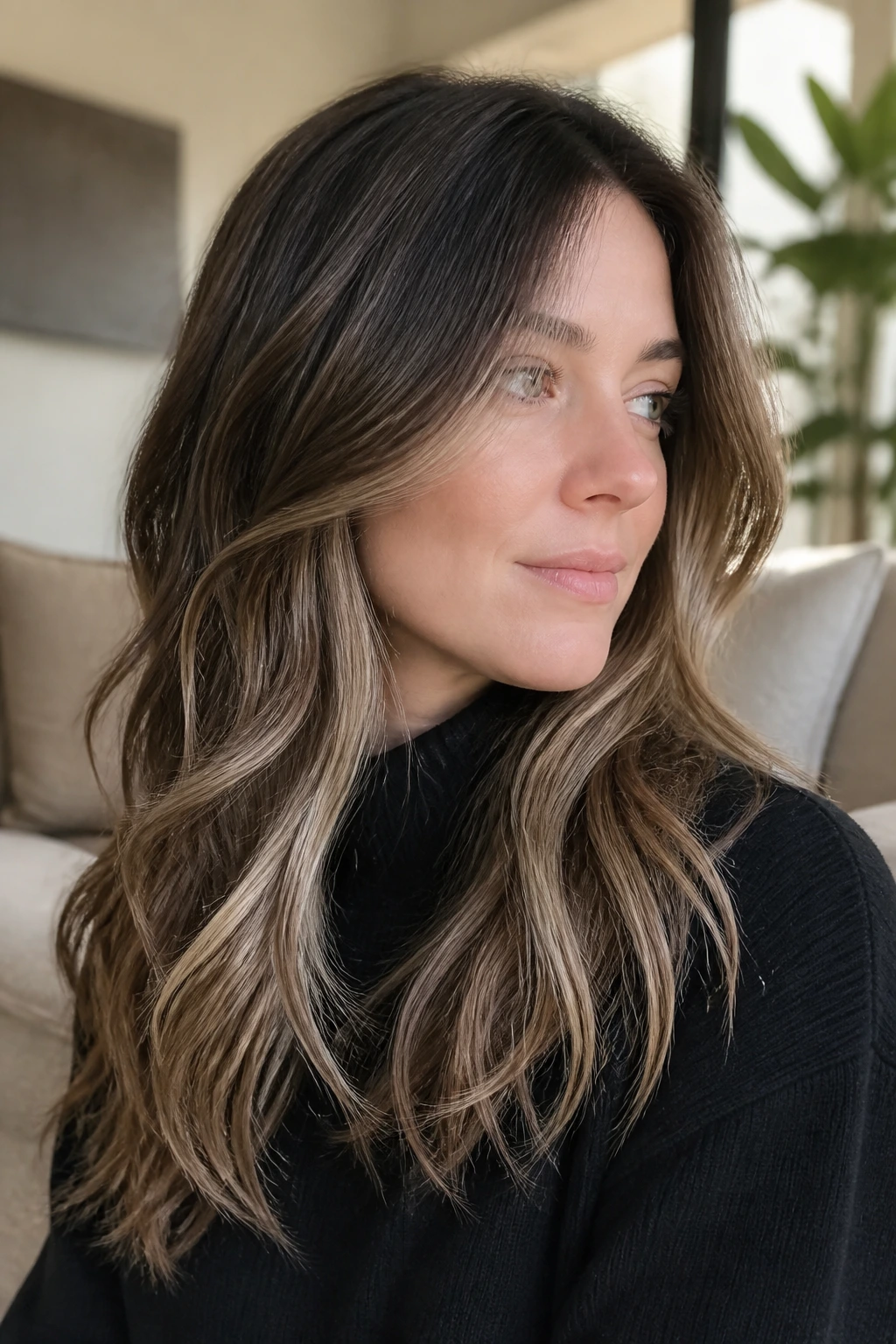
Going too golden at the toner stage: the hair may be light enough, but the finish reads yellow or honey. The fix is simple: ask for ash, pearl, beige, or smoky toner, not gold-beige unless you want a warmer result.
Putting chunky highlights on fine hair: the stripes show, and the scalp can look wider. Babylights or narrow ribbons are the safer call.
Ignoring the base level: a dark brunette lifted only halfway can turn orange if you stop too early. The color needs either enough lift or enough toning to stay in the cool lane.
Over-toning porous ends: the blonde starts looking flat, muddy, or grayish. Shorter processing time and a clear gloss on the ends usually fix it.
Skipping lowlights entirely: too much light can make the hair lose shape. A few mushroom or mocha pieces bring the structure back.
Different Ways to Wear the Same Cool Palette
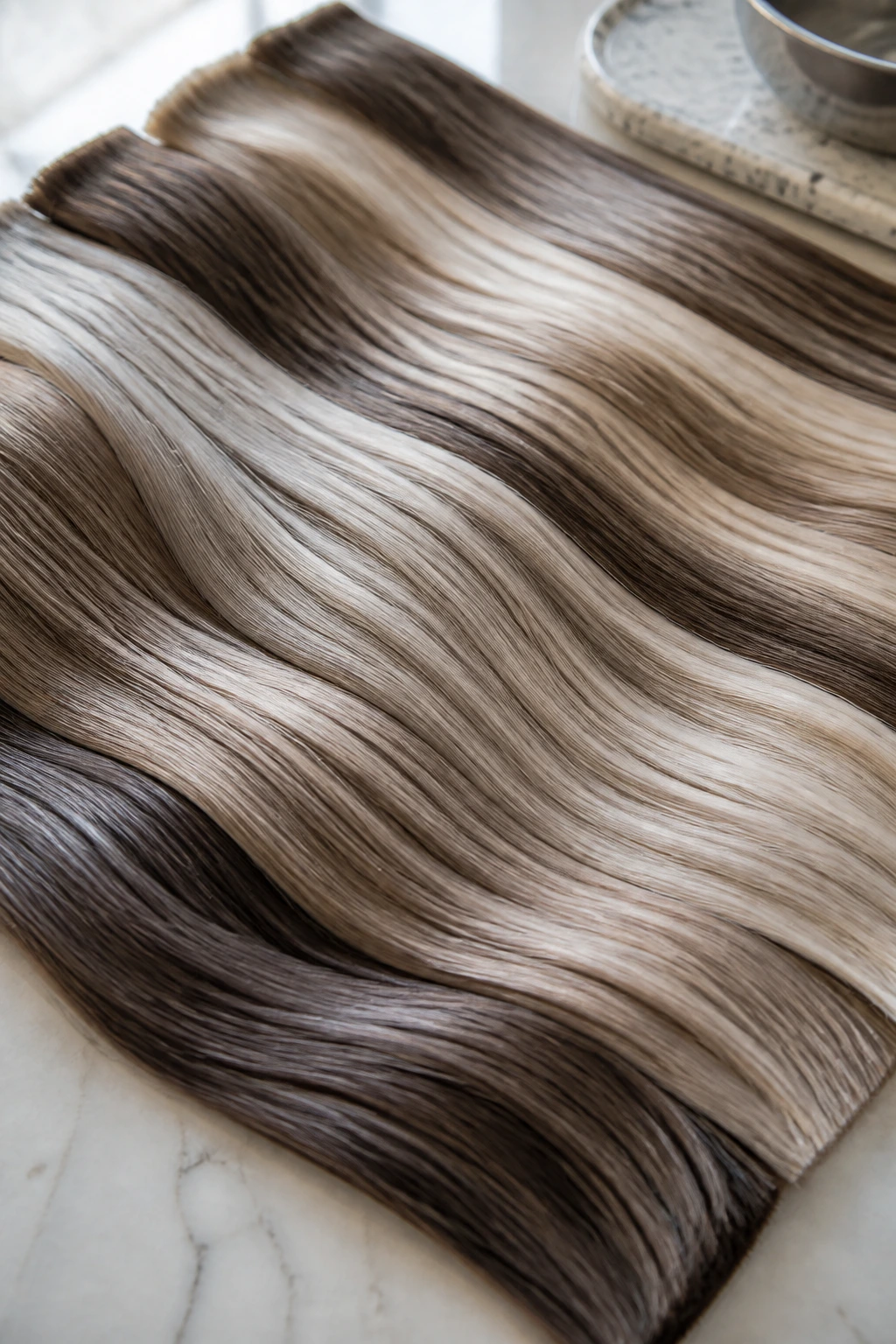
Soft Bronde Drift: keep the highlights only one to two levels lighter than the base. This is the easiest version to maintain and the least likely to feel stark.
Icy Front Frame: make the money piece brighter than the rest of the hair, then keep the mids and ends smoky. This is the version that gives the strongest face lift.
Mushroom Melt: use neutral-cool brown at the root and midlengths, then let the blonde appear as fine ribbons. It’s subtle, moody, and very workable on cool skin.
Gray-Blend Glow: use beige and taupe highlights to soften natural silver. This works best when the goal is blending, not hiding.
Curly Halo Lightening: focus the blonde on the outer curl layer and around the top edge. It gives curls shape without turning the interior of the hair into a blur of light.
Frequently Asked Questions About Cool-Tone Highlights
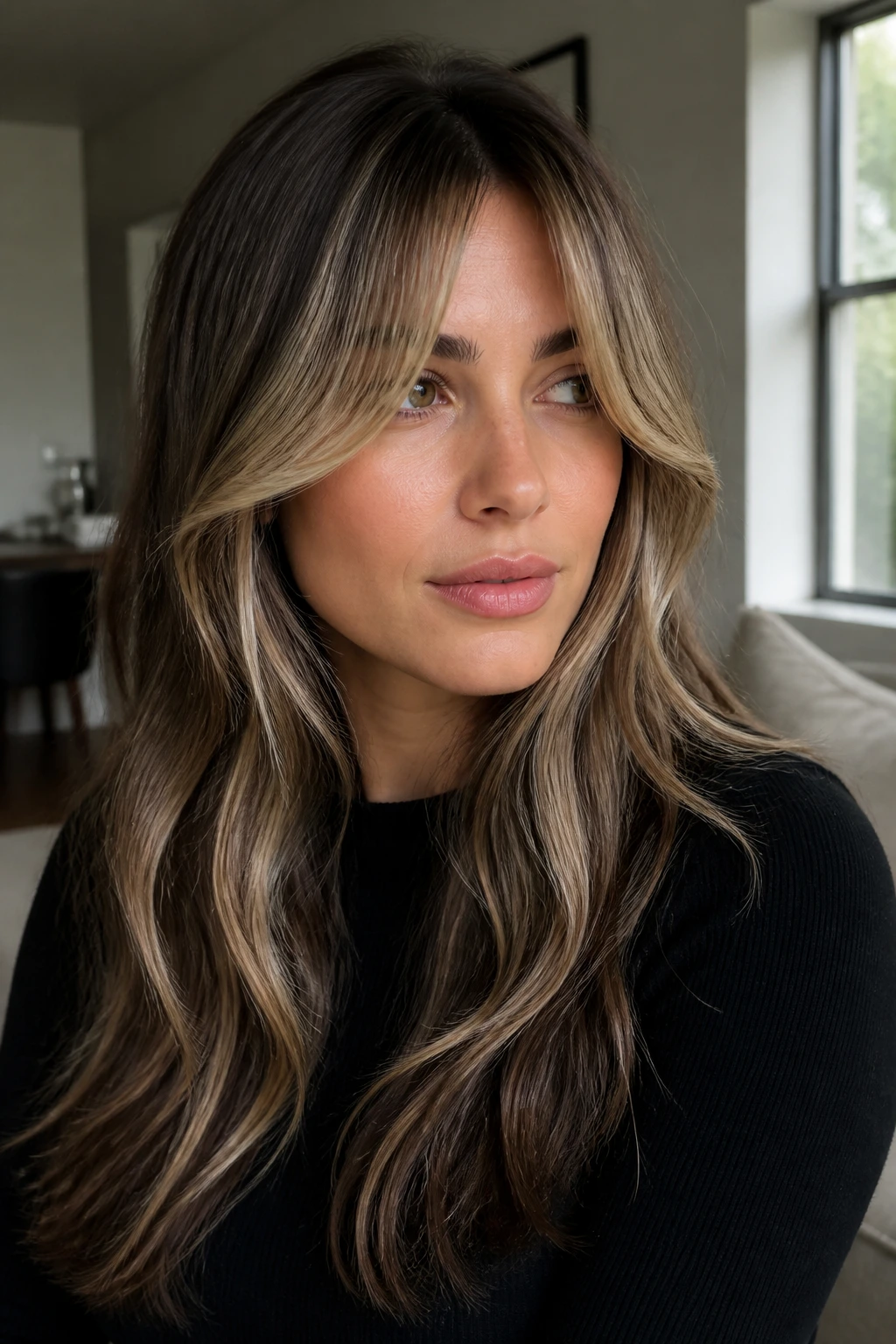
What blonde shades flatter cool skin tones most?
Ash blonde, pearl blonde, beige blonde, and silver beige usually sit best on cool undertones. They keep the face from going red or yellow the way warmer blondes sometimes do.
Can cool skin wear bronde?
Yes, and in many cases it’s the easiest option. Bronde lets the brown stay visible while the blonde stays cool and soft, which is a good balance if you don’t want full blonde upkeep.
Is ash blonde better than beige blonde?
Not always. Ash is cooler and more anti-brass, while beige has a little more softness. If ash makes you look a bit gray, beige is often the better fit.
How often do these highlights need toning?
Most cool blonde-brown mixes need a gloss every 4 to 6 weeks. Platinum, silver, or very porous hair may need tone refreshing sooner.
Will these styles work on dark brown hair?
Yes, but dark brown hair usually needs more lift and more careful toning. Cool mocha ribbons, smoke-and-slate money pieces, and frosted espresso contrast are better bets than trying to jump straight to pale blonde everywhere.
What if my hair keeps turning orange?
That usually means the lift stopped too early or the toner is too warm. Blue shampoo helps a little at home, but the bigger fix is asking for a cooler toner and, if needed, a stronger lift next time.
Can I use purple shampoo every wash?
I wouldn’t. Too much purple shampoo can dull the shine and make the lightest pieces look chalky. Once a week is plenty for most cool-toned highlights.
The Cool-Tone Sweet Spot
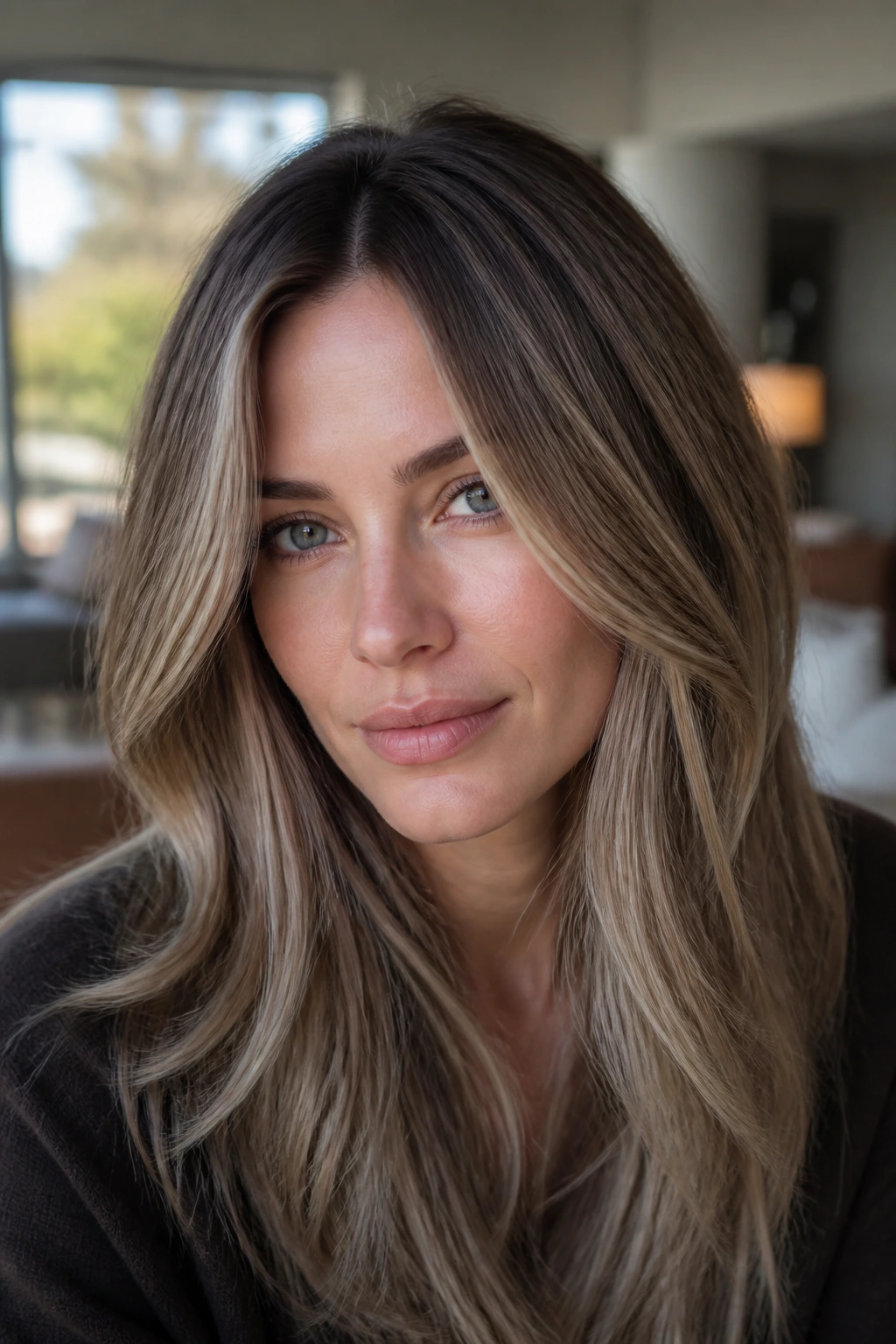
The prettiest blonde brown highlights for cool skin tones are the ones that look deliberate from the chair and easy from a few feet away. Ash, pearl, mushroom, taupe, and smoky beige keep the color in balance. Strong root shadows and smart placement keep the maintenance from becoming a second job.
If you’re booking an appointment, pick one photo for tone and another for placement. That tiny bit of clarity saves a lot of guesswork. And if your hair has a stubborn warm streak in it, don’t fight it with more gold. Push it cooler, soften the root, and let the dimension do the work.