



A fine lob can do a lot of heavy lifting on a round face. Keep it too short and it sits right where the face is fullest; keep it too wide and the cheeks take over the whole silhouette. Drop the length to the collarbone, angle the front a touch, and place a money piece where the light naturally hits the cheekbone, and the shape starts pulling the eye exactly where you want it.
Fine hair changes the equation. Heavy layers can make the ends look see-through, but a blunt-ish perimeter with a little internal movement holds its line and still moves when you bend it. The color matters just as much as the cut—bright front pieces can fake lift, but only when they’re placed with enough restraint to avoid a stripe across the face.
Some of the prettiest versions here are sleek. Others are messy in the good way: waved, flipped, lightly shagged, or tucked behind one ear. They all share the same goal, though—make fine hair look fuller, keep a round face from reading wider, and let the color do a little facial sculpting without turning the whole look into maintenance homework. The first few are the safest place to start.
Why These Fine Lobs Earn Their Keep
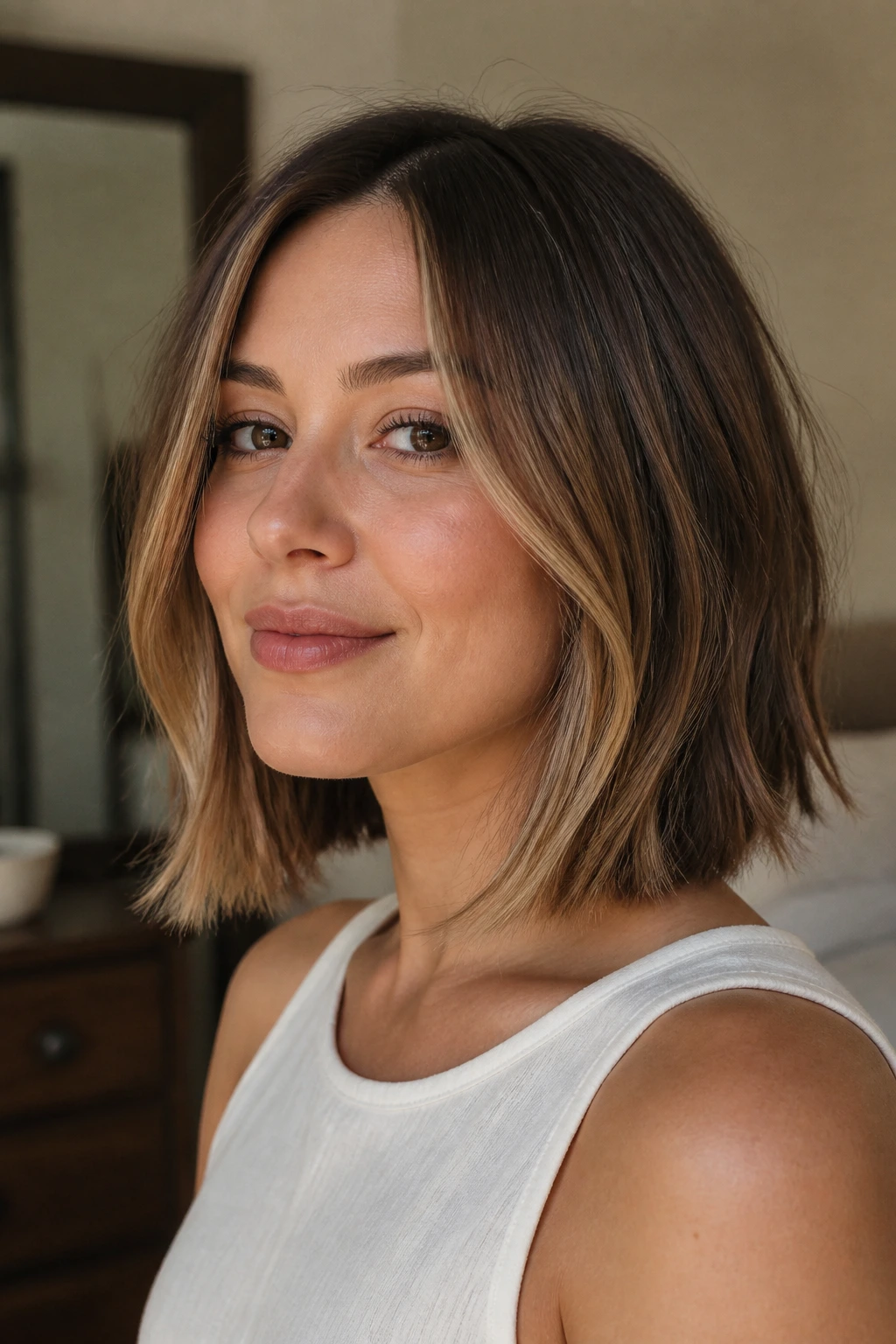
-
Face-lengthening lines: The best versions stop below the cheekbone or angle forward, which keeps the widest part of the face from being the visual stop sign.
-
Volume without fluff: Fine hair gets more body from a blunt-ish perimeter and a little crown lift than from layers hacked all through the ends.
-
Money-piece placement that matters: A narrow, bright front panel around the cheekbone catches the eye before the roundness does.
-
Lowlights do real work: A few deeper ribbons under the surface make the bright front pieces look richer and keep the hair from reading thin.
-
Easy grow-out: Lob length survives a little neglect; a good one still looks deliberate when the ends hit the collarbone instead of perfect salon-day polish.
-
Styling range: These cuts can go smooth, waved, flipped, or air-dried without losing the shape, which is why they keep showing up on real people, not just on mood boards.
1. Collarbone Center-Part Lob with a Narrow Platinum Money Piece
This is the cleanest starting point if you want the face to look longer without making a fuss about it. The lob lands right around the collarbone, so it skims past the cheeks instead of stopping on them, and that alone changes the whole balance. A narrow platinum money piece at the front adds lift, but it stays thin enough that fine hair doesn’t start looking striped.
The center part keeps the shape honest. On a round face, that straight line down the middle works like a quiet frame, especially when the front pieces are beveled just enough to bend inward at the ends. Keep the finish smooth, not pin-straight flat; a soft round-brush bend at the bottom gives the cut a little movement and stops it from feeling severe.
2. Angled Caramel Lob with a Soft Side Part
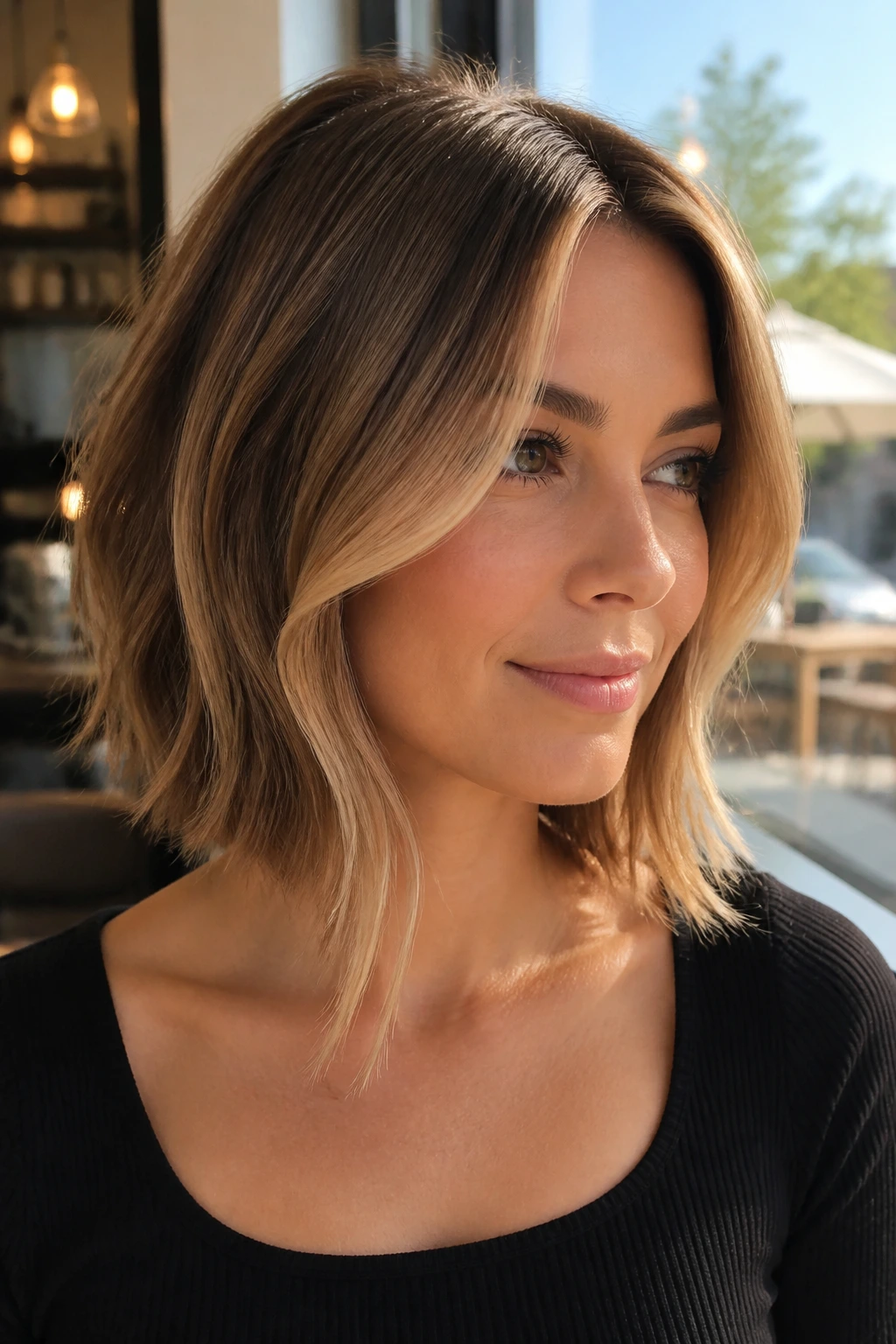
Need a little more cheekbone camouflage? A gentle A-line lob does it without looking obvious. The back sits slightly shorter, the front drifts longer toward the jaw, and that diagonal line pulls the eye down and forward instead of across the face. Caramel money pieces soften the front edge so the color looks warm, not harsh.
The side part matters here. Even a modest off-center part creates asymmetry, and asymmetry is your friend when the face shape is round. I like this version on fine hair that needs a visual boost but doesn’t want a lot of layers, because the angled front keeps the perimeter looking full while the longer side gives the illusion of length.
3. Blunt Blown-Out Lob with Honey Brightening at the Front
A blunt lob can be a very smart move on fine hair. The straight perimeter gives the ends more visual weight, which is half the battle when the strands themselves are delicate. Add honey-bright face framing at the front, and the whole cut looks thicker than it really is.
This one works best with a bouncy blowout, not a limp air-dry. Wrap the top section over a medium round brush, lift at the roots, and curve the ends under just a bit so they graze the neck instead of sticking out. The front highlight should start softly near the hairline and get brighter near the cheekbone. That’s where the eye naturally lands, and that’s where the lift happens.
4. Feathered Lob with Curtain Bangs and Soft Dimension
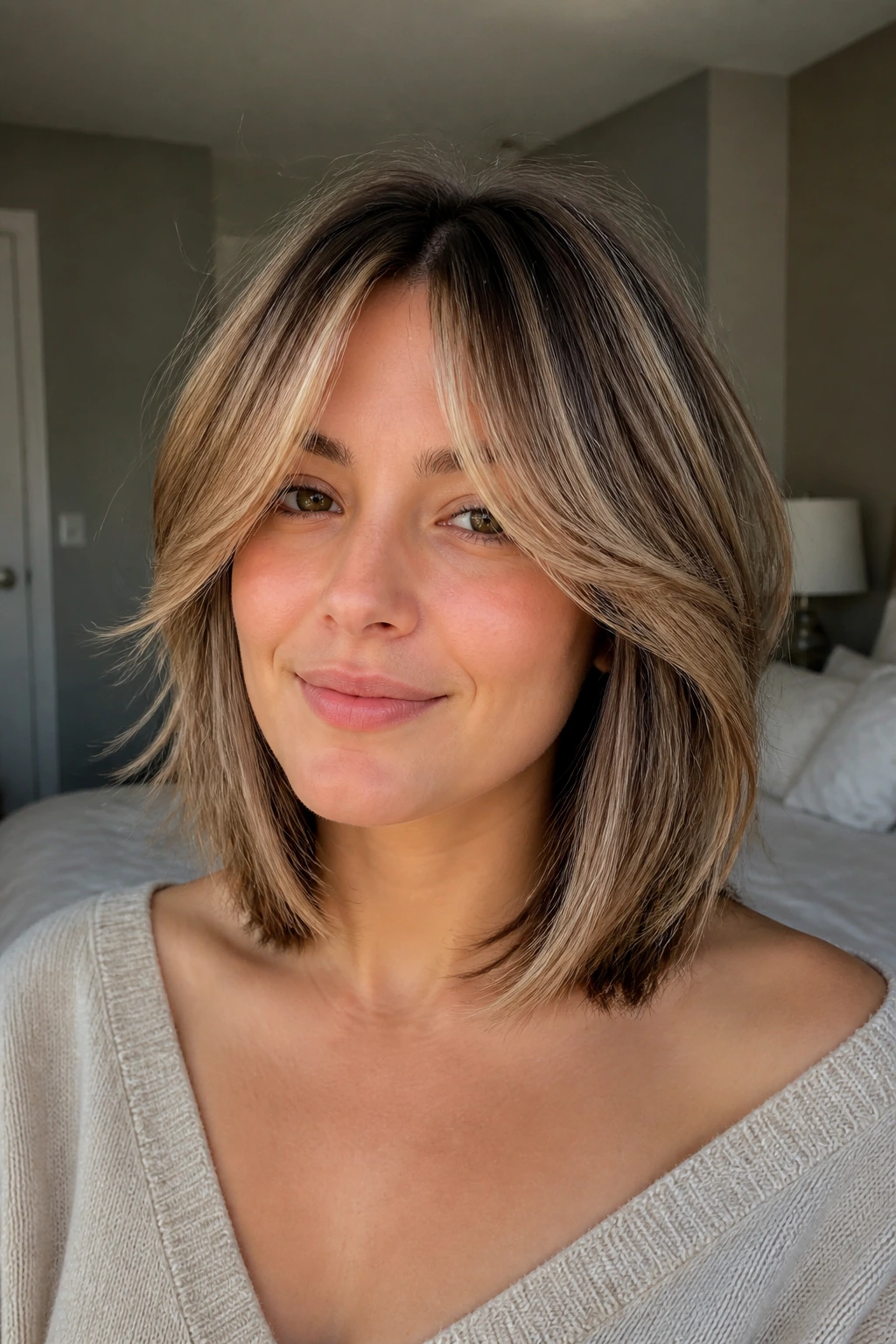
Curtain bangs can be lovely on a round face, but only when they stay long enough to open around the cheekbones. Short bangs that hit high on the forehead can make the face look broader; the longer, feathered version splits the difference and gives you movement without chopping the face in half. Pair that with a lob that brushes the collarbone, and the silhouette gets softer in a good way.
The money piece here should blend into the curtain fringe rather than fight it. Think of it as a light gradient at the front, not a strip of bright paint. A few lowlights underneath the top layer keep fine hair from going translucent, which matters more than people think. Without that depth, the bright pieces can float awkwardly on top.
5. Sleek Glass Lob with a High-Contrast Front Stripe
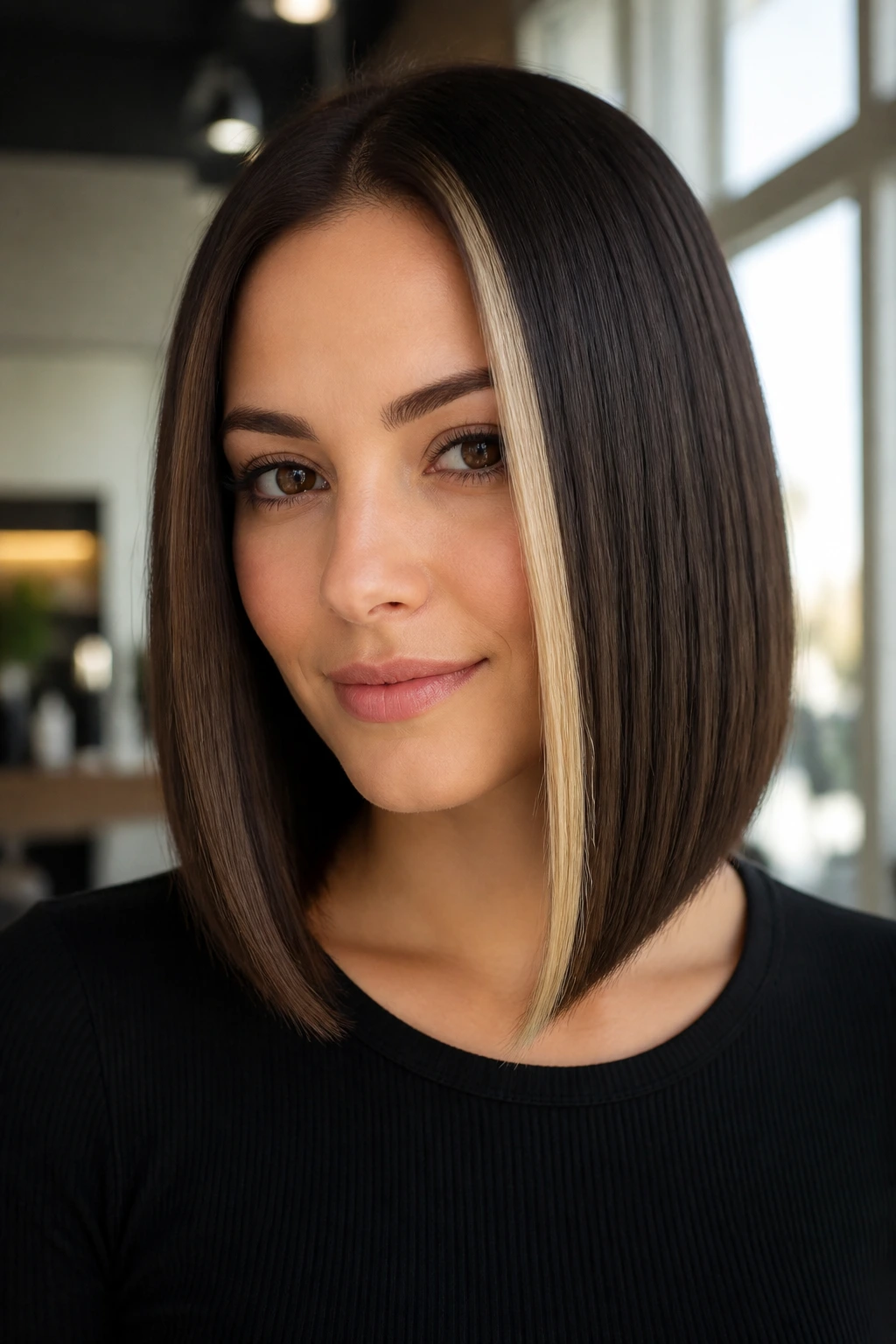
This one is for the person who likes a sharper finish. The lob sits just below the chin-to-collarbone zone, the part is clean, and the surface is polished enough to show off every line. On a round face, that straightness can be powerful because it creates a long, uninterrupted vertical feel.
High contrast only works if the stripe stays narrow. A chunky money piece on fine hair can look costume-y fast; a slim bright panel, especially against a deeper brunette base, gives you that crisp front framing without widening the face. Seal the ends with a tiny amount of serum and flat iron only the very bottom inch or two. Too much heat near the crown will flatten the whole thing.
6. Shaggy Lob with Root Shadow and Broken Ends
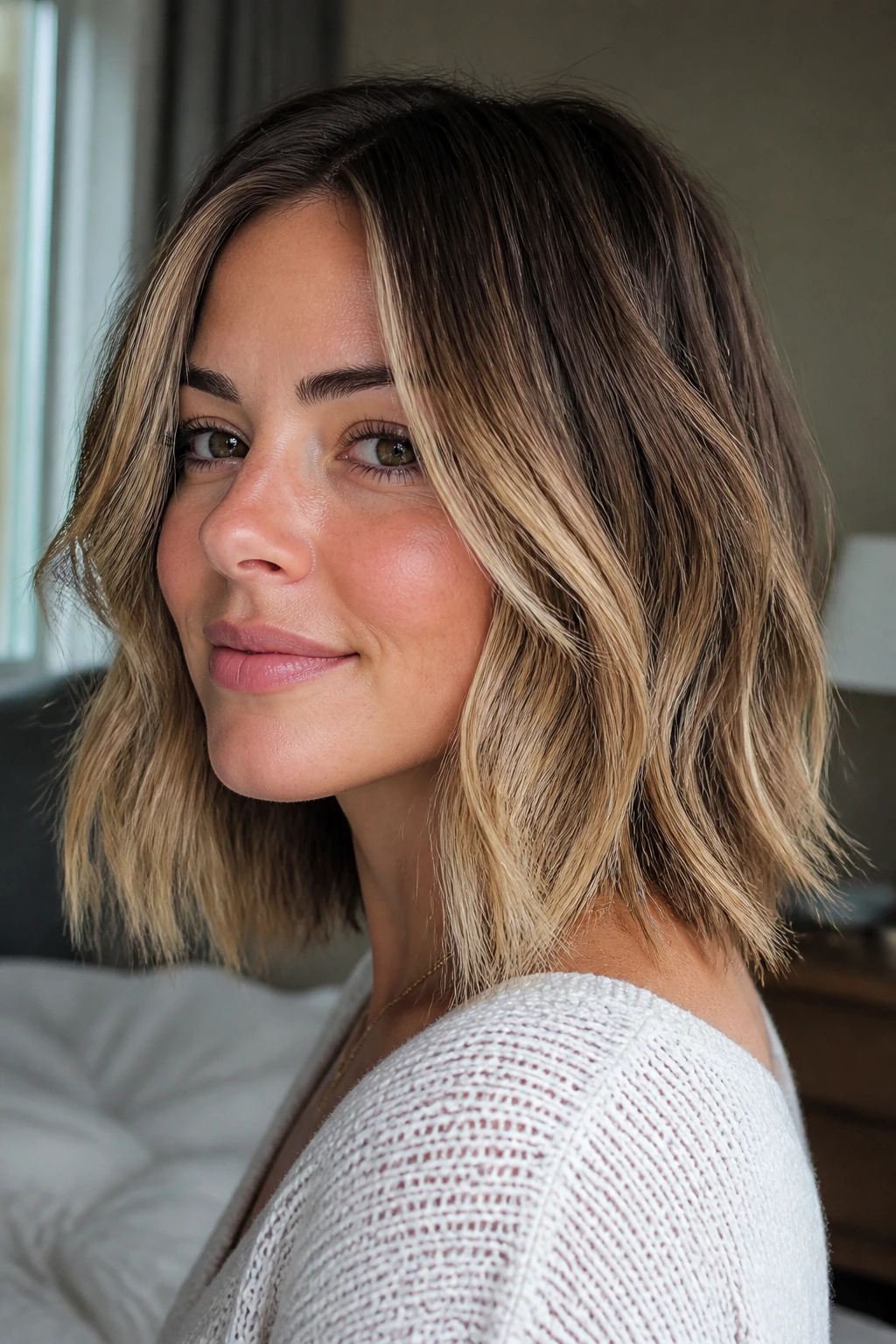
This is the cut for anyone whose fine hair falls flat the minute it dries. Long, broken-up texture around the ends creates air between the strands, which makes the whole lob look fuller. The trick is keeping the layers soft enough that you still have a perimeter. If the whole shape gets thinned out, it stops looking like a lob and starts looking tired.
Root shadow is the unsung hero here. A slightly deeper root, paired with a bright face frame, gives the illusion of thickness at the scalp and brightness where it counts. I’d keep the money piece soft and a touch warmer here—beige, caramel, or soft copper—so the shaggy movement doesn’t get too edgy. A little grit is enough.
7. Wavy Lob with Sunlit Ribbons and a Deep Side Part
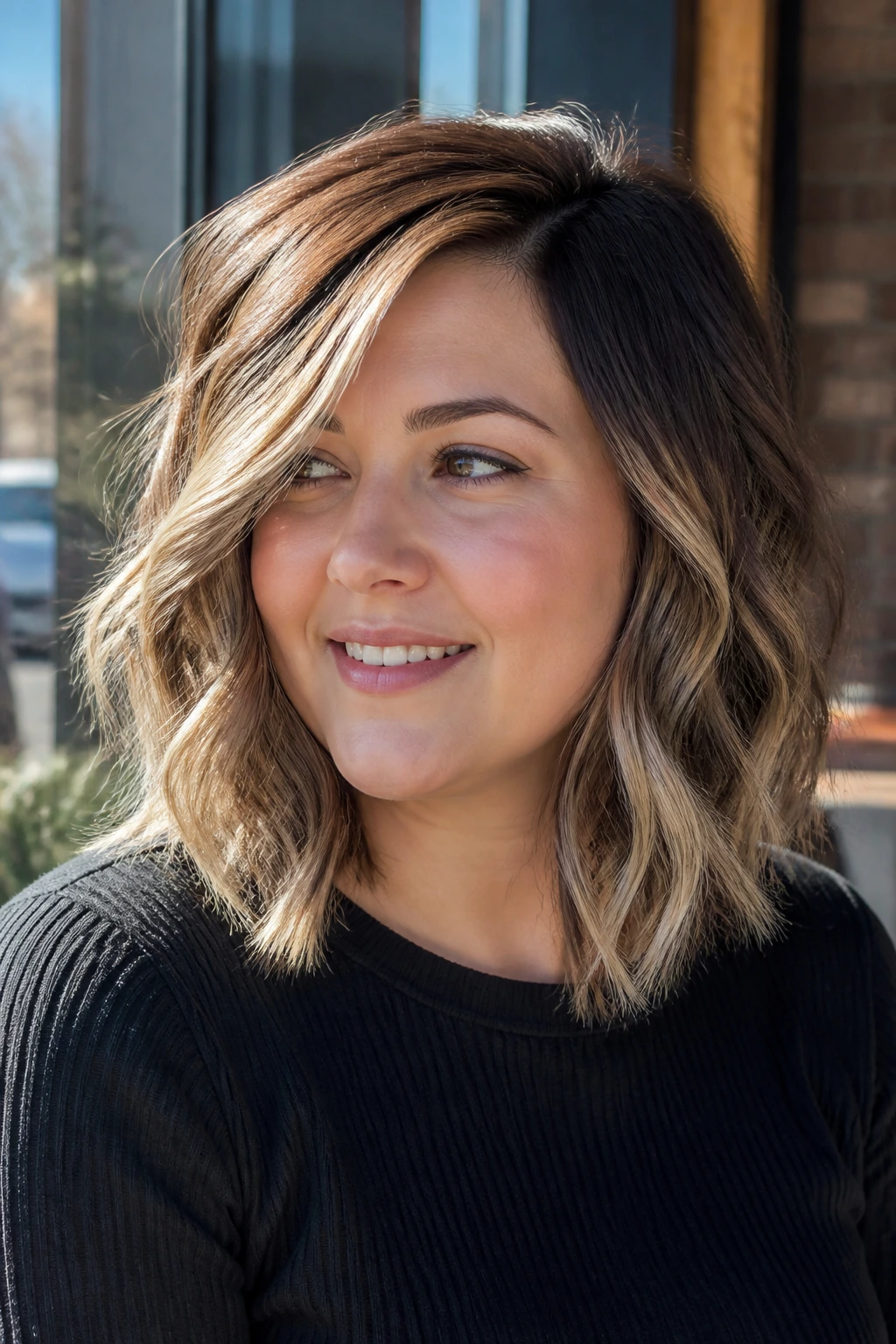
A deep side part can do more than people give it credit for. On a round face, it creates a long diagonal line across the forehead, which changes the balance before the hair even hits the shoulders. Add loose waves and a few sunlit ribbons around the front, and the shape starts to feel airy instead of wide.
The waves should be loose and uneven, not uniform curls marching in rows. Wrap some sections away from the face, leave a few ends straighter, and let the front pieces fall a little more softly than the rest. Fine hair likes contrast like this. The money piece catches the light, but the deeper base underneath keeps the style from going flat.
8. Curved-In Blowout Lob with Face-Slimming Ends
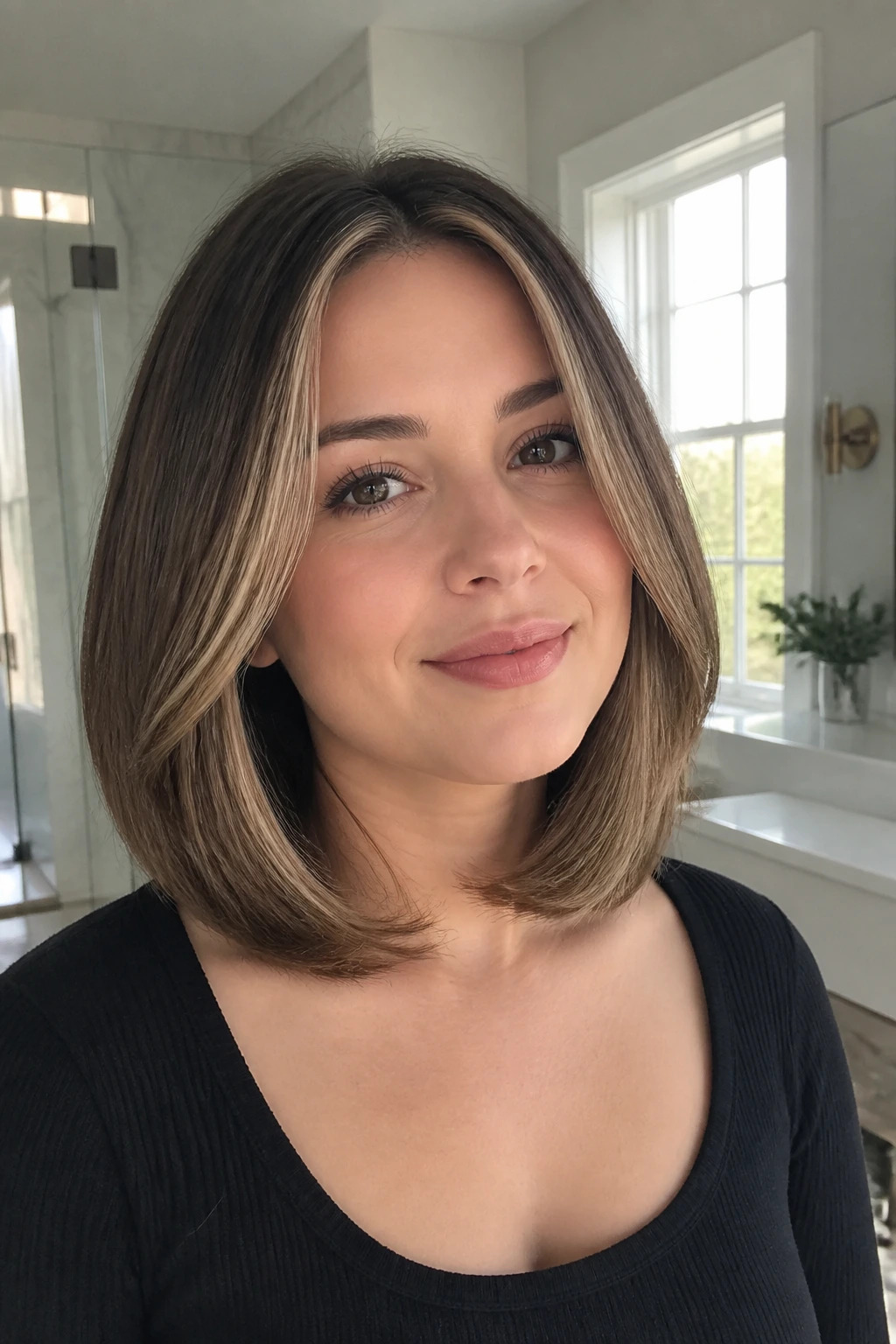
There’s a reason so many good salon blowouts pull the ends inward. That curve makes the bottom of the haircut look neat, and on a round face it narrows the overall shape just enough to matter. The cut should still sit at the collarbone or slightly below it; any shorter and the inward bend can make the face look boxed in.
This version is especially kind to fine hair because the blow-dry gives the illusion of more body at the perimeter. Ask for a soft money piece that lights up the temple and cheekbone area, not the chin. One bright panel too low can drag attention to the widest part of the face. Keep the color higher, and the shape looks cleaner.
9. French Lob with Chunky Front Highlights
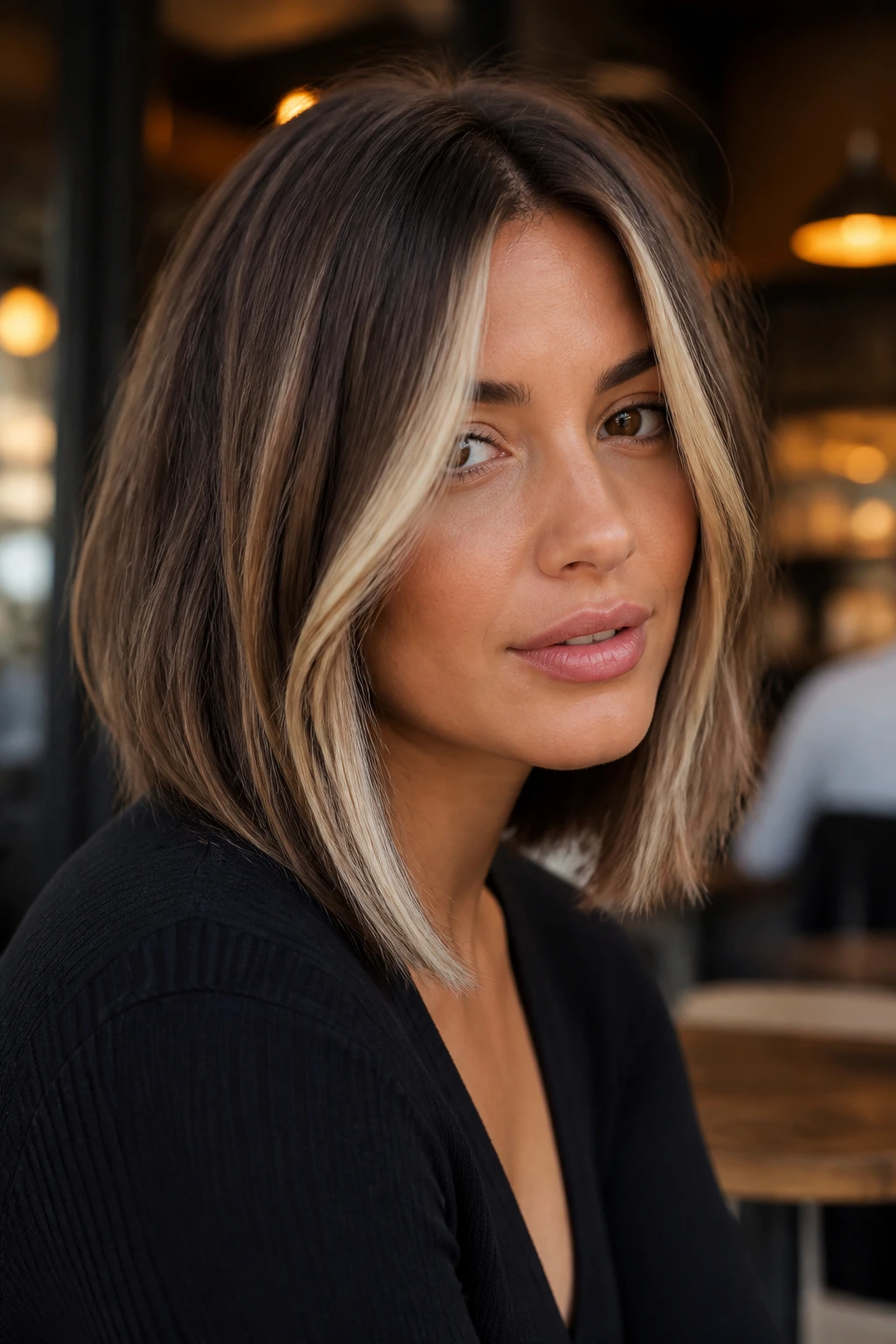
This one has a little attitude. The texture is lived-in, the ends are softly blunt, and the front pieces are brighter and bolder than on the softer styles above. On a round face, that chunkier front light works when the lob itself stays long enough to stretch the silhouette. Short and chunky is a harder sell. Long and chunky can be very good.
The appeal is contrast. Fine hair often needs a little visual drama to keep from disappearing, and a French-style lob with a bigger face frame gives it exactly that. Keep the back un-fussy and let the front pieces do the talking. A small bend from mid-length down keeps the brightness from reading as a solid block.
10. Tucked Lob with Bright Temples and Soft Lowlights
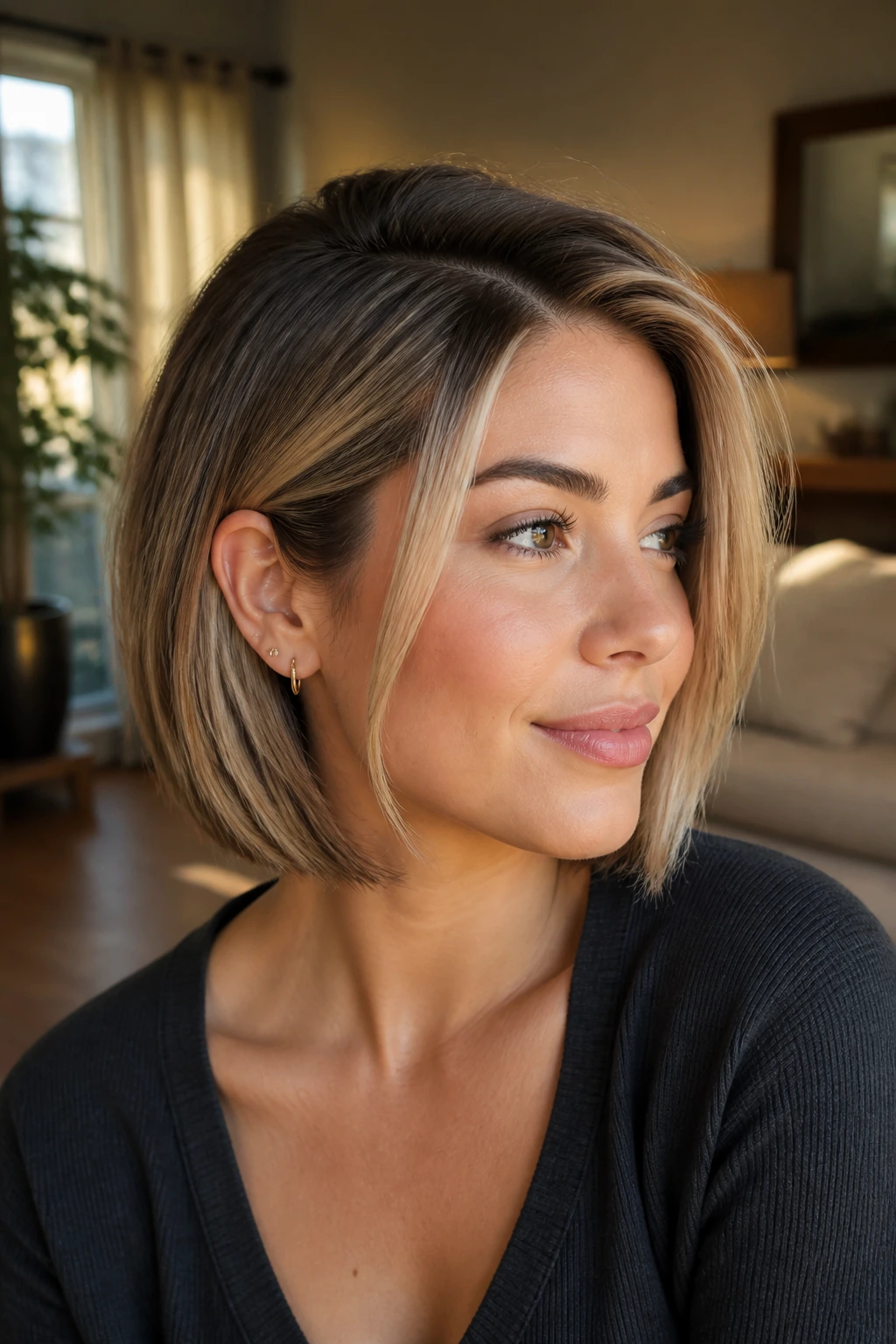
Sometimes the smartest styling move is a tucked side. It shows off one cheekbone, opens the neck, and breaks up the roundness in a way that feels casual instead of engineered. Bright temples help that effect because they draw the eye up and forward, right where the face starts to narrow.
Soft lowlights underneath the top layer are not optional here. On fine hair, a bright front without depth in the back can look thin and a little separated. The darker ribbons give the lob a richer base, which makes the money piece pop without stealing the whole show. If you like a neat ear tuck and a crisp collar, this cut has your name on it.
11. Razor-Soft Lob with Wispy Perimeter
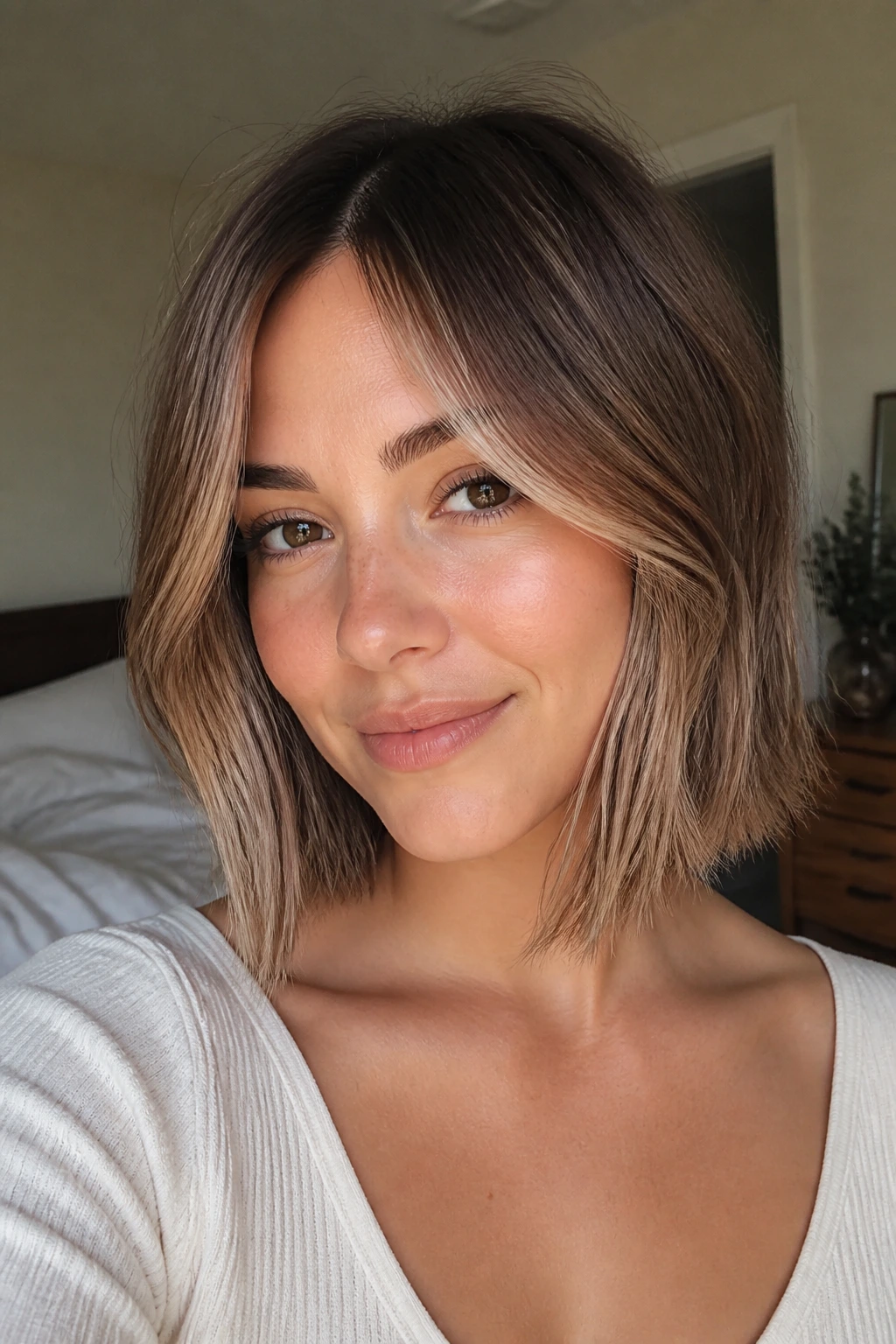
A razor cut can be dangerous on fine hair if it gets too aggressive. Nobody needs see-through ends. But a soft razor finish, used only to skim the perimeter, can give a lob a little swing and prevent it from looking blocky. On a round face, that movement helps the hair fall around the jaw instead of sitting like a shelf.
The face-framing highlight should stay delicate and broken up, not thick. A wispy money piece blends into the rest of the cut and keeps the face from looking boxed in. This is a good choice if you like your hair with a bit of bend and don’t want a rigid, salon-perfect edge every morning.
12. Bottleneck Bang Lob with Lift at the Crown
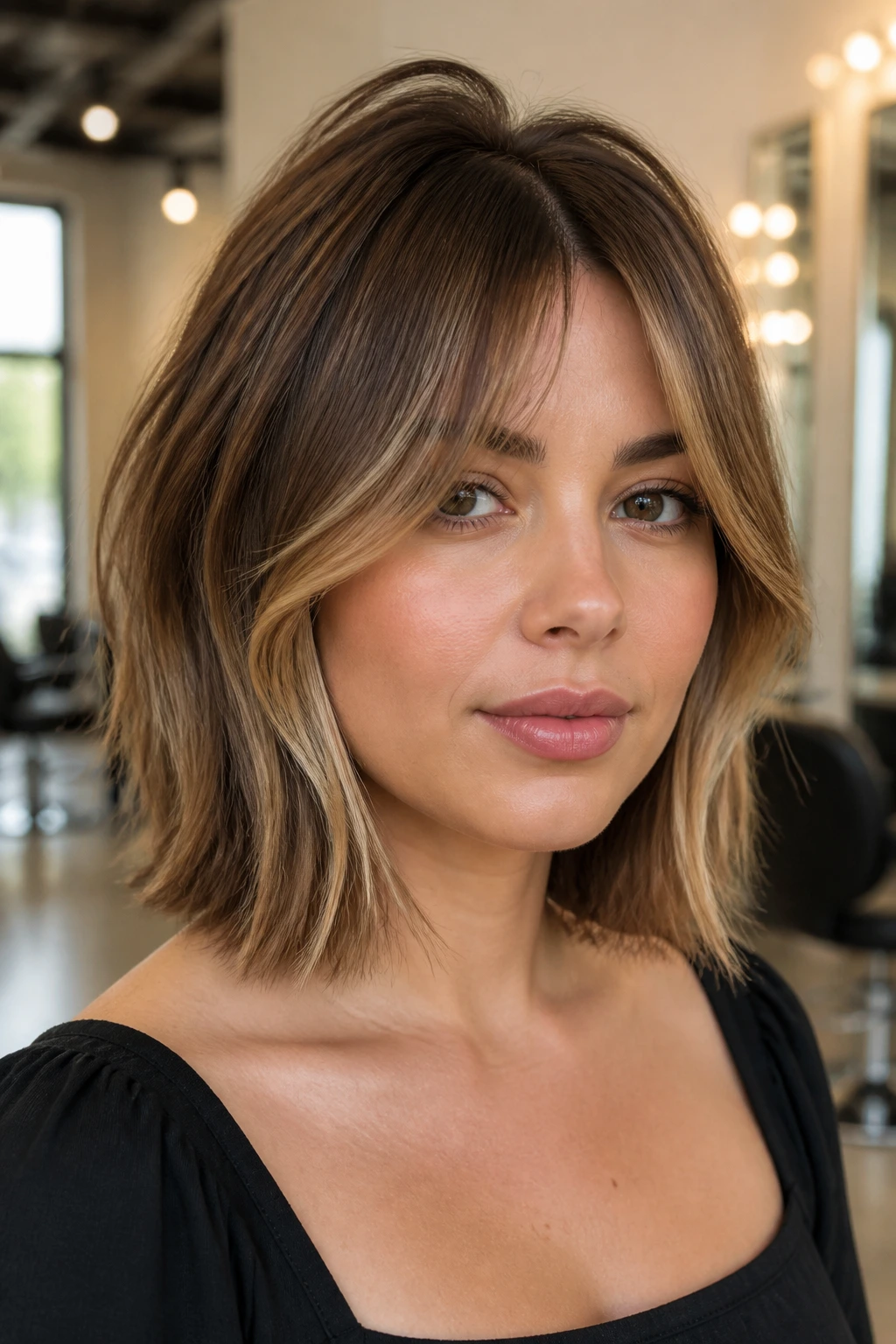
Bottleneck bangs are a clever middle ground. They open at the center, skim fuller near the brows, and swing out at the sides, which means they don’t carve a hard horizontal line across the forehead. On a round face, that shape helps the front of the haircut feel lifted instead of wide.
Pair them with a lob that keeps enough length to stay lean below the cheeks. The crown needs a touch of lift here—nothing dramatic, just enough to stop the top from collapsing. The money piece can thread into the bang edges so the whole front looks unified. When that works, the cut feels intentional in a way a plain one-length lob rarely does.
13. Retro Flip Lob with Bright Corners
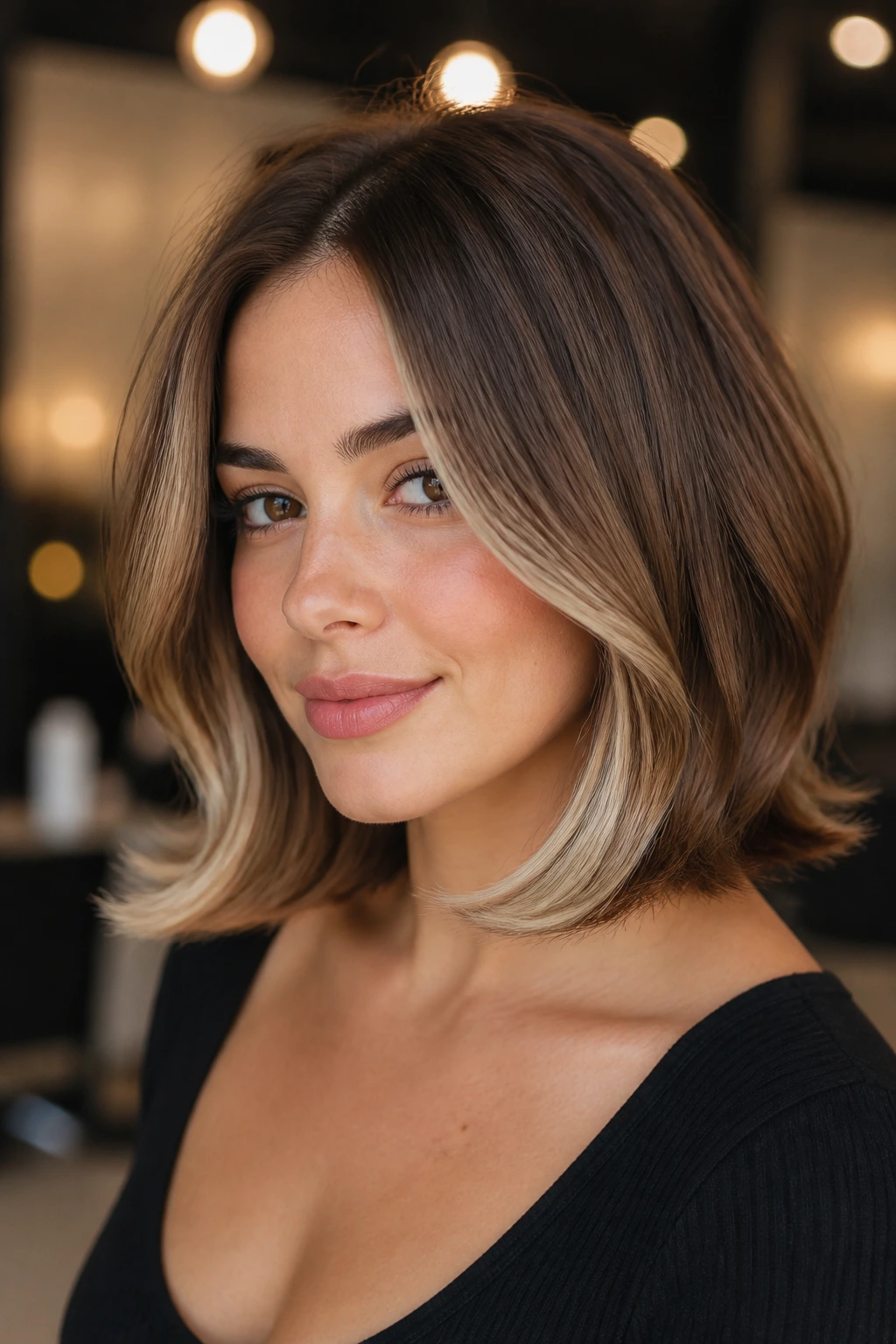
There’s something charming about a lob that flips outward at the ends. The trick is keeping the flip at the bottom edge, not around the cheekbones. Put the bend too high and you widen the face. Put it low, right at the collarbone or just beneath, and you get lift without bulk.
Bright corners make the style pop. A lighter front panel at the jawline, blended into the flip, creates a little visual angle that works especially well on round faces. Fine hair likes this shape because the flipped ends hide thinness at the edge. It feels a touch playful and still looks polished enough for a blazer.
14. A-Line Lob with Longer Front Pieces
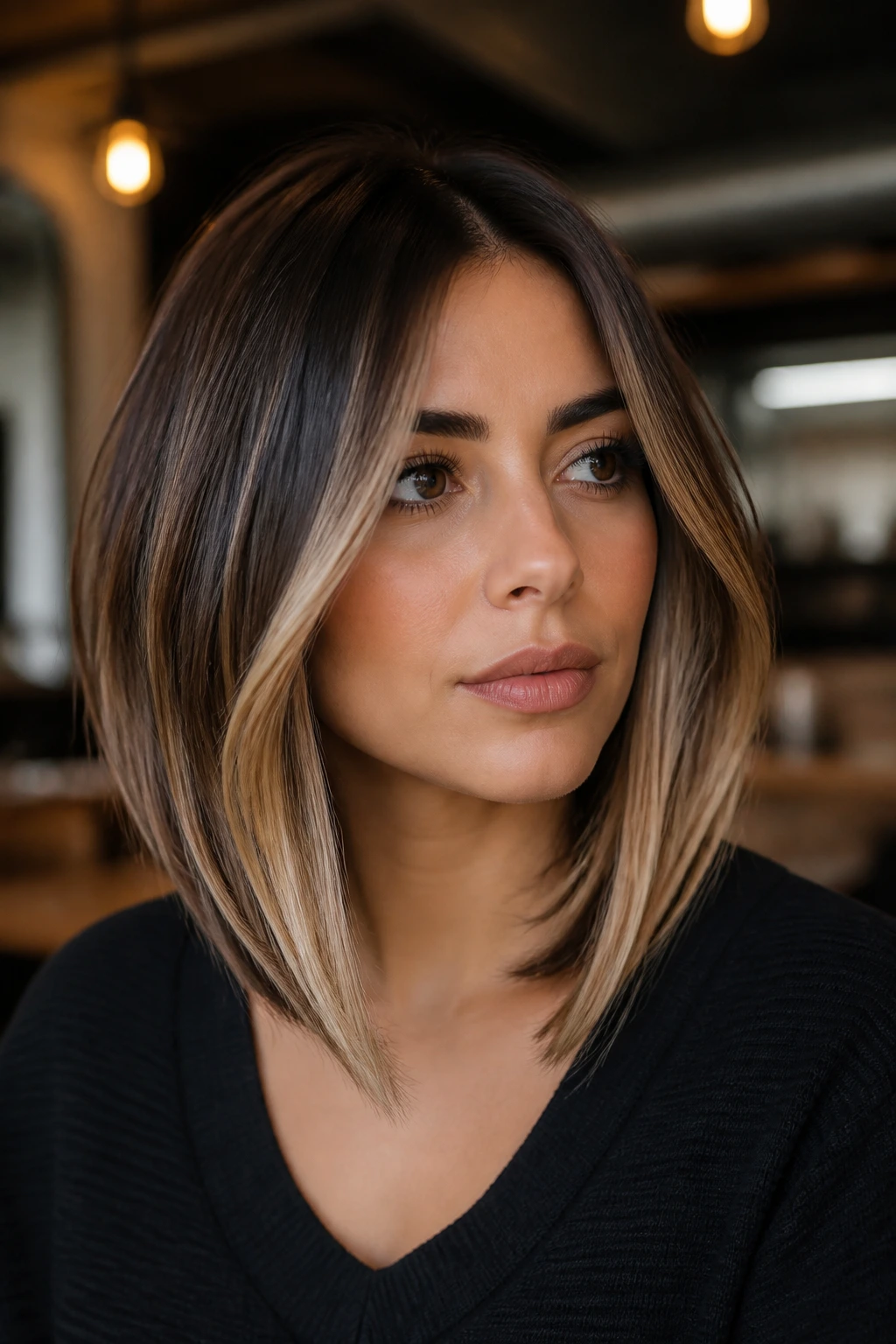
If you want a clear face-lengthening shape, this is one of the most dependable options. The back stays tidy and slightly shorter, while the front corners dip longer toward the collarbone. That forward pull changes the silhouette in a way a round face can use immediately.
The money piece should travel with the angle, not fight it. Brightness at the front corners gives the eye a path to follow, which matters when the goal is less width and more length. Keep the layers light and subtle. Heavy stacking can create too much volume at the sides, and that’s the one thing this cut does not need.
15. Curly Lob with Front Lightness and Hydrated Finish
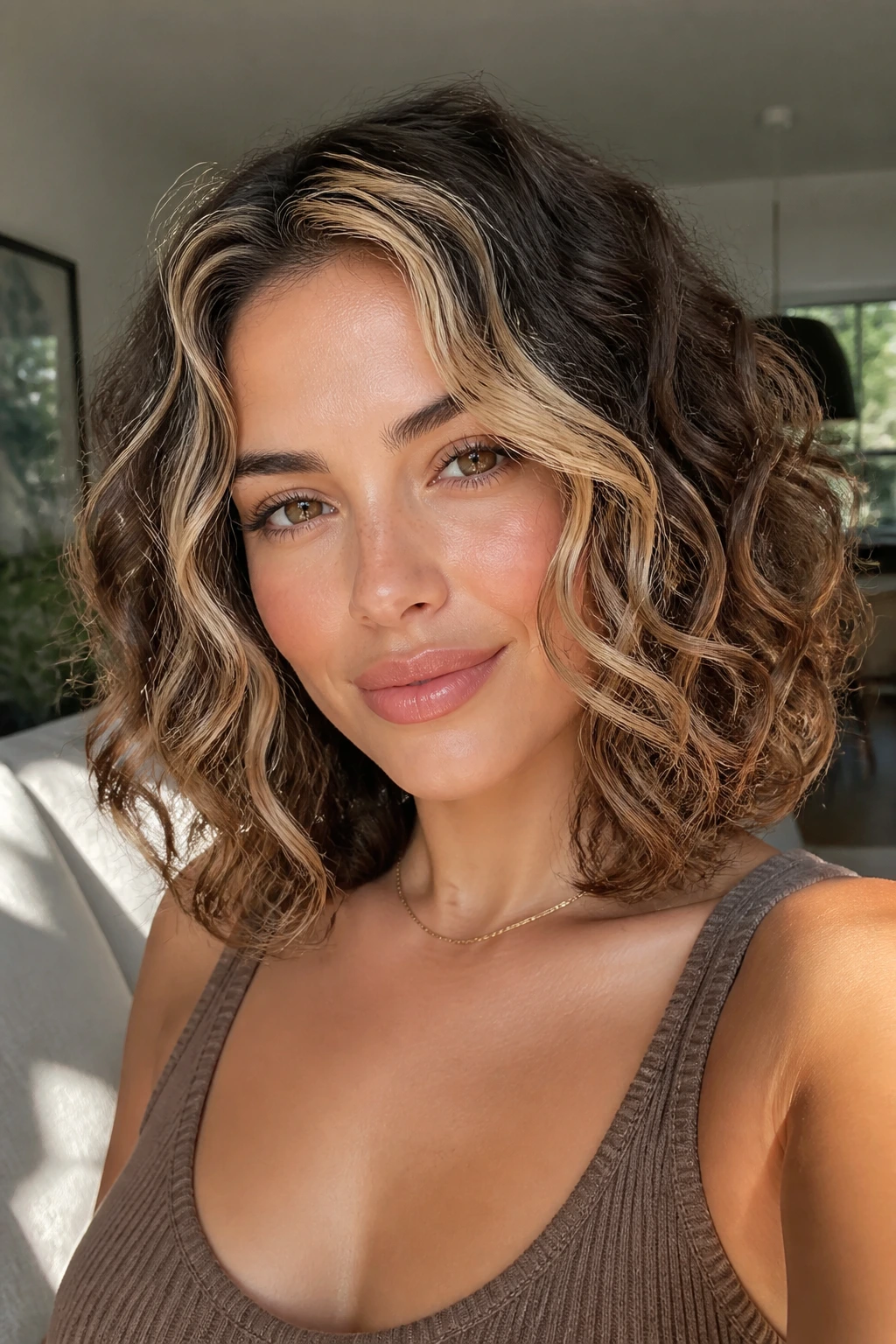
Curly hair and round faces can be a gorgeous match when the lob is cut with enough room to let the curls drop. The shape needs length—usually collarbone or a touch longer—so the curls don’t spring up and sit at the cheek. A brighter front section helps define the face without requiring a dramatic shape around the sides.
Hydration matters here more than shine spray. Fine curls can frizz fast, and frizz adds width in a way nobody asked for. A lightweight cream on damp hair, then a diffuser with low heat, keeps the curl pattern defined while the money piece stays visible. If the front curls are soft and bright, the whole cut feels lifted.
16. Bronde Shadow-Root Lob with Gentle Contrast
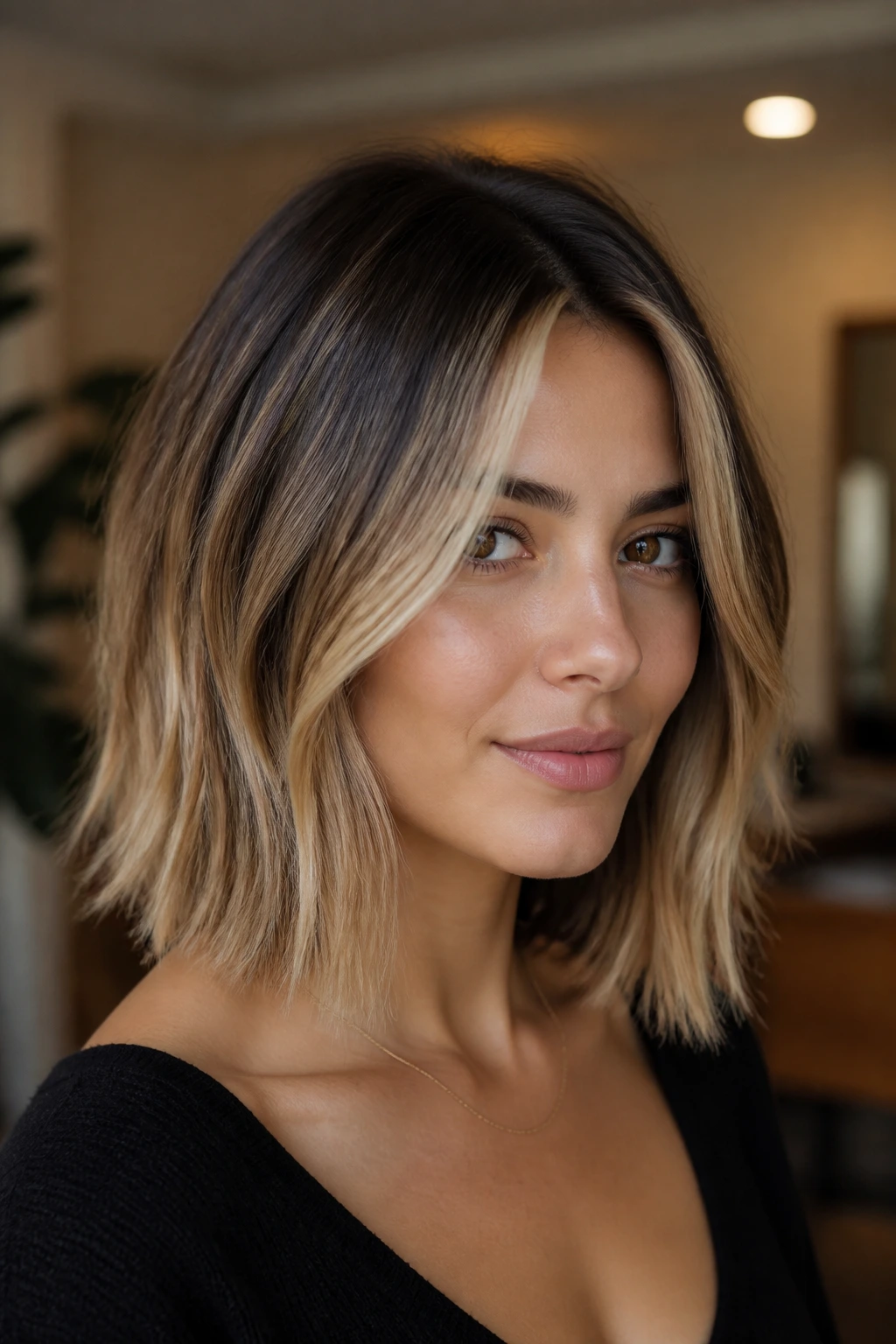
Bronde is a smart color choice when you want dimension without a harsh grow-out line. The shadow root keeps the top area darker, the mid-lengths carry softer beige or caramel notes, and the money piece gives the face the spark it needs. On fine hair, this layered color story makes the hair look denser than a flat single-process shade.
The cut itself should stay fairly clean. Too many choppy layers can make a bronde lob look frayed at the ends. Let the color do the texture work. A few deeper ribbons under the surface and a brighter front frame are enough to keep the eye moving and the face from feeling too round.
17. Piecey Lob with Micro-Lowlights and Midsize Bends
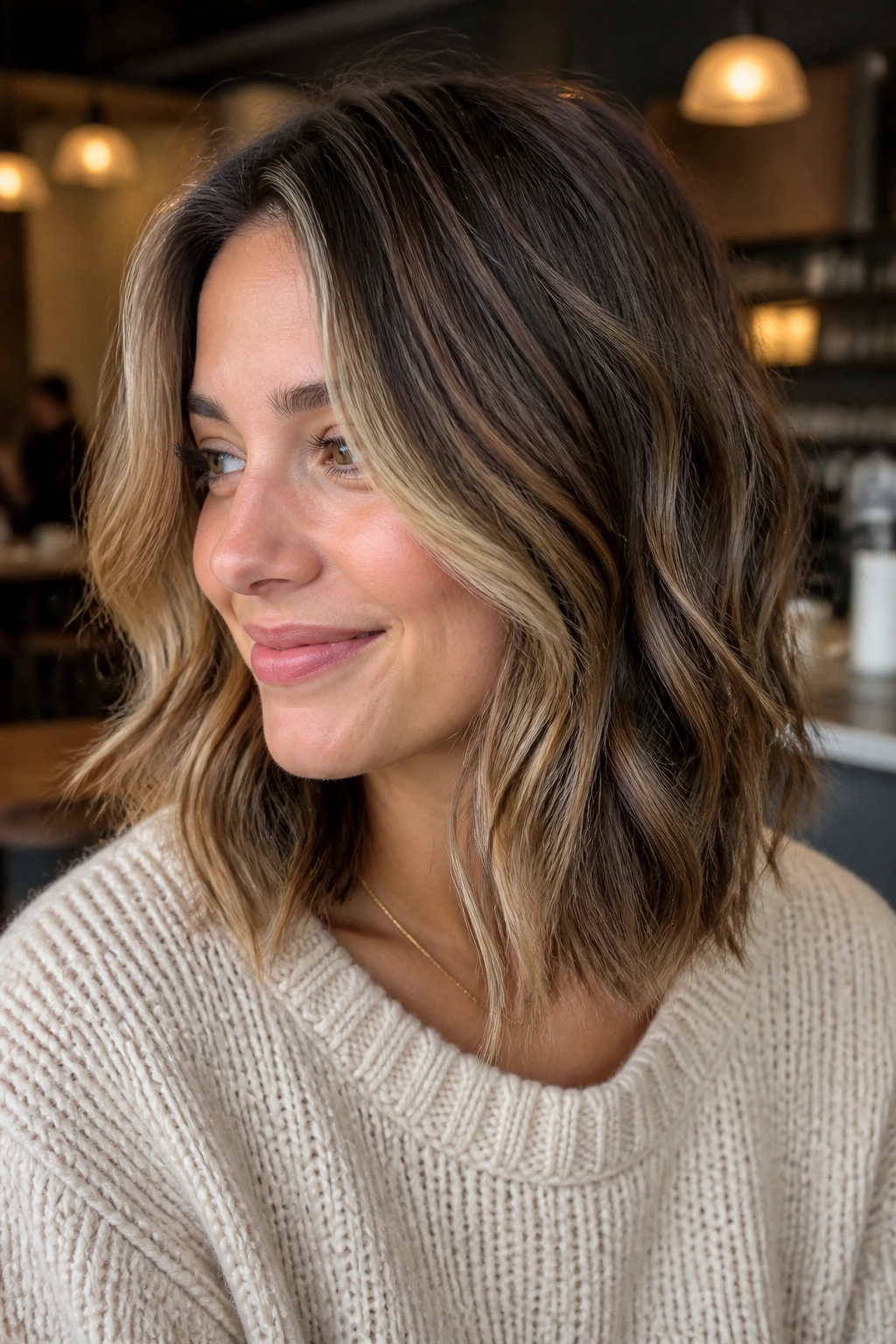
This is the lob for someone who wants separation, not fluff. Midsize bends keep the ends from clumping together, while micro-lowlights hide in the interior and give the hair more depth. On fine hair, that mix is useful because it creates shape without making the hair look overdressed.
The money piece should be broken up just a little so it doesn’t read as a single ribbon. Tiny shifts in tone near the temple and cheekbone make the front look softer and more expensive, if we can use that word carefully. It’s less about shine and more about believable depth. That’s what keeps this version from looking thin.
18. Air-Dry Lob with Soft Face-Framing Light

Not everyone wants to heat-style every morning. An air-dry lob can work beautifully on fine hair if the cut is tailored to where the natural wave wants to fall. The front pieces should still stay long enough to lengthen the face, and the money piece should land where the bends naturally gather near the cheekbones.
A mousse or foam at the roots helps, but keep it light. Fine hair goes soggy fast if you overdo product. Scrunch the lengths, tuck one side behind the ear once it’s dry, and let the front pieces separate on their own. The result looks easy in a real way, not a fake “I woke up like this” way.
19. Glassy Lob with Minimal Layers and a Sharp Edge
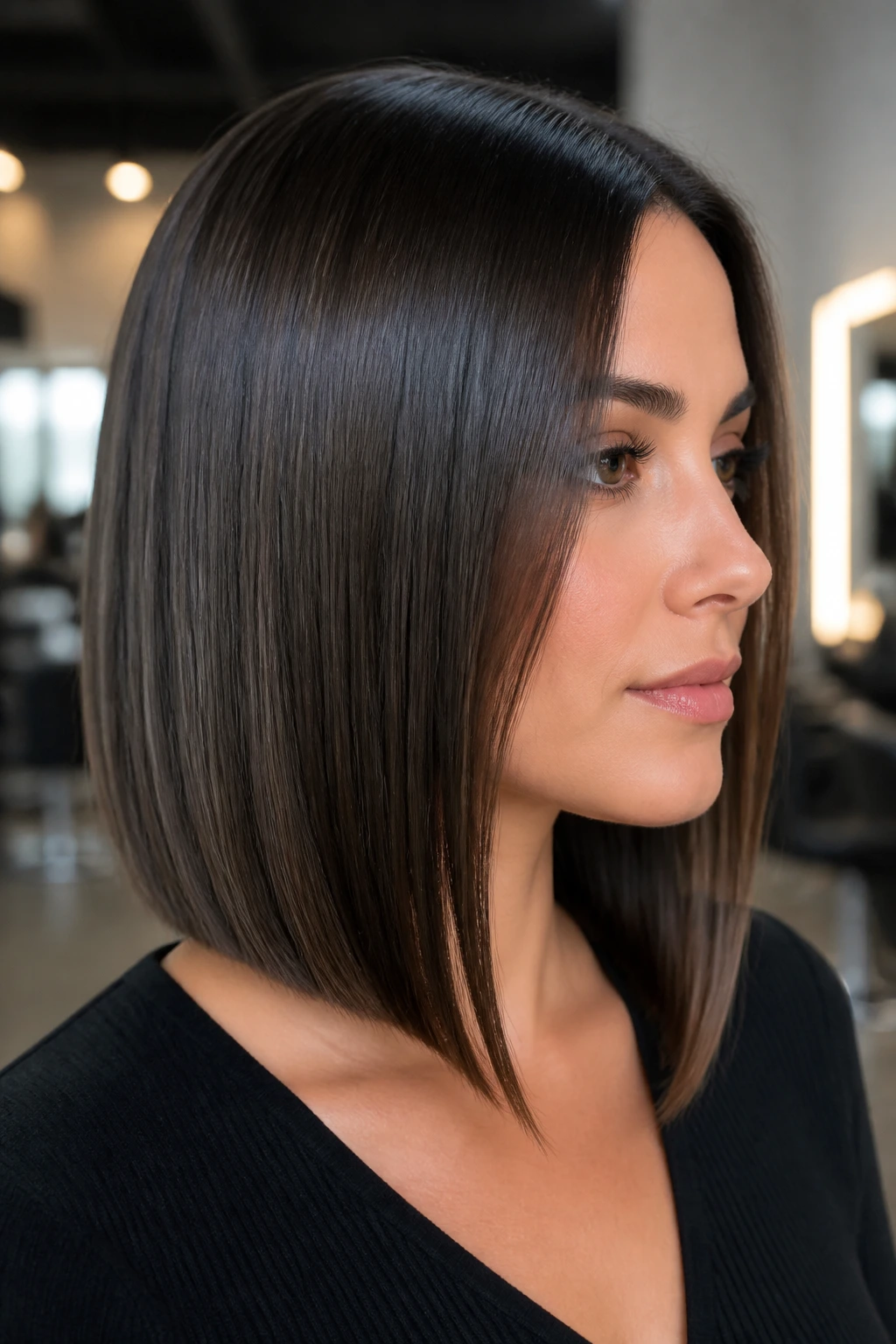
Minimal layers can be a gift on fine hair. The shape stays solid, the ends look deliberate, and the lob keeps a clean edge that holds the eye in a long line. On a round face, that straight perimeter works best when the front pieces are slightly longer than the back and the part is neat.
The glassy finish is the point here. A smooth blow-dry, a flat iron pass only where needed, and a tiny amount of serum on the mids and ends keep the cut sleek without turning it greasy. The money piece should be polished, too—bright enough to read, soft enough to blend. Think gleam, not glare.
20. Beachy Lob with a Rooty Blonde Money Piece
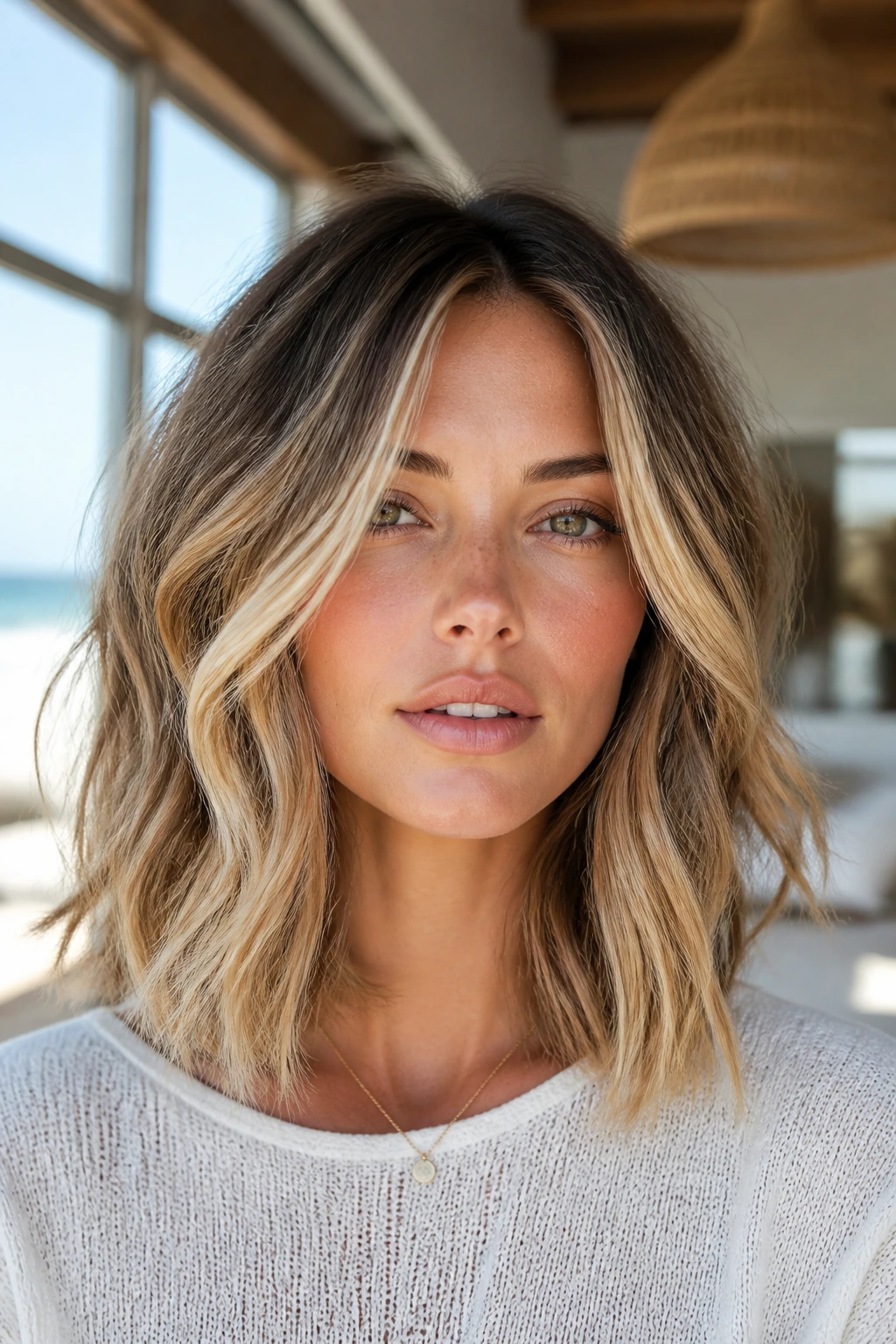
Beachy does not have to mean messy. On fine hair, it’s usually better when the waves are loose and the ends stay relatively smooth. A rooty blonde money piece keeps the front looking lifted, while the deeper root prevents the color from looking patchy as it grows out.
This version has a little more relaxation built in. The face-framing pieces can sit a touch longer, and the bends can start below the jaw so they don’t puff out around the cheeks. A salt spray by itself can make fine hair feel rough and too dry, so I’d lean on mousse first, then a small amount of texture spray only where you need it.
21. U-Shaped Lob with Long Corners and Soft Internal Layers

A U-shaped perimeter is underrated on a round face. The center stays slightly shorter, the corners get longer, and the result is a soft frame that points the eye downward. It’s subtle. That’s the charm.
The internal layers should be gentle, almost invisible, so the haircut doesn’t lose its mass. Fine hair needs those ends to look present, not wispy. A soft money piece near the front corners adds brightness where the shape already wants to pull the gaze. If you like hair that moves when you turn your head but doesn’t collapse by lunch, this is a good pick.
22. Lightweight Lob with Airy Internal Debulking
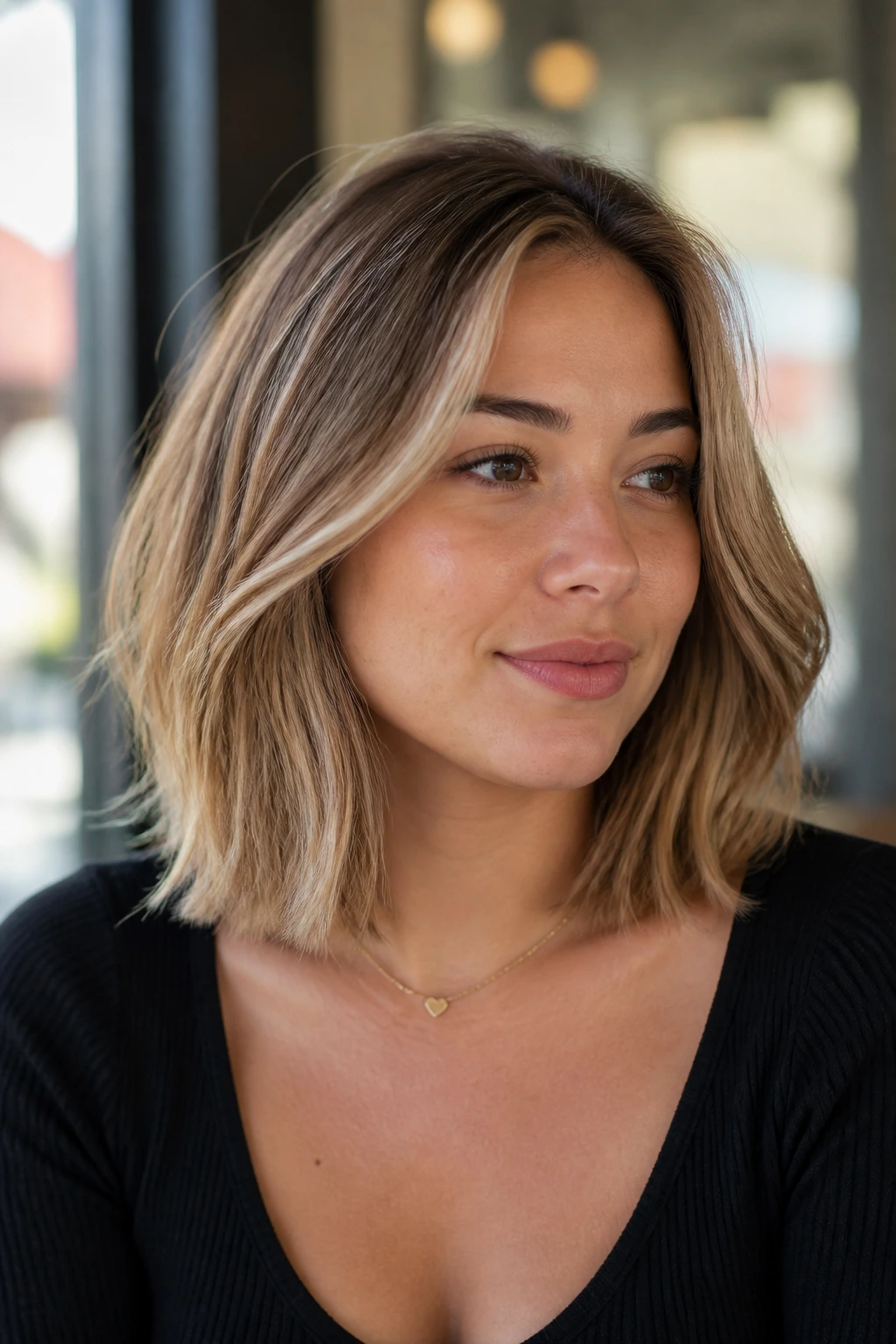
Some fine hair is fine in texture but dense in amount. That’s where a lightweight lob helps. The stylist removes bulk from inside the shape, not from the ends, so the perimeter still looks full while the hair moves better. On a round face, this keeps the silhouette from feeling too puffy at the sides.
The money piece should stay neat and not get over-blonde. When the cut has internal lightness, the color doesn’t need to shout. A softly bright front panel and a slightly deeper underside create contrast without stealing density from the whole head. It’s a disciplined cut, and that discipline pays off.
23. Side-Swept Lob with a Soft Forehead Sweep

A soft sweep across the forehead changes the face shape fast. It breaks the roundness, makes the forehead look a little longer, and gives the rest of the hair a direction to follow. This works especially well if you hate the feeling of a perfect center part but don’t want a dramatic side swoop.
The lob itself should stay smooth through the mid-lengths and slightly beveled at the ends. Face-framing light should follow the sweep, not sit independently from it. That little visual connection makes the haircut feel intentional. On fine hair, a side-swept front also hides a slightly flatter root on the non-part side, which is a nice bonus.
24. Flip-Out Lob with Collarbone-Grazing Ends
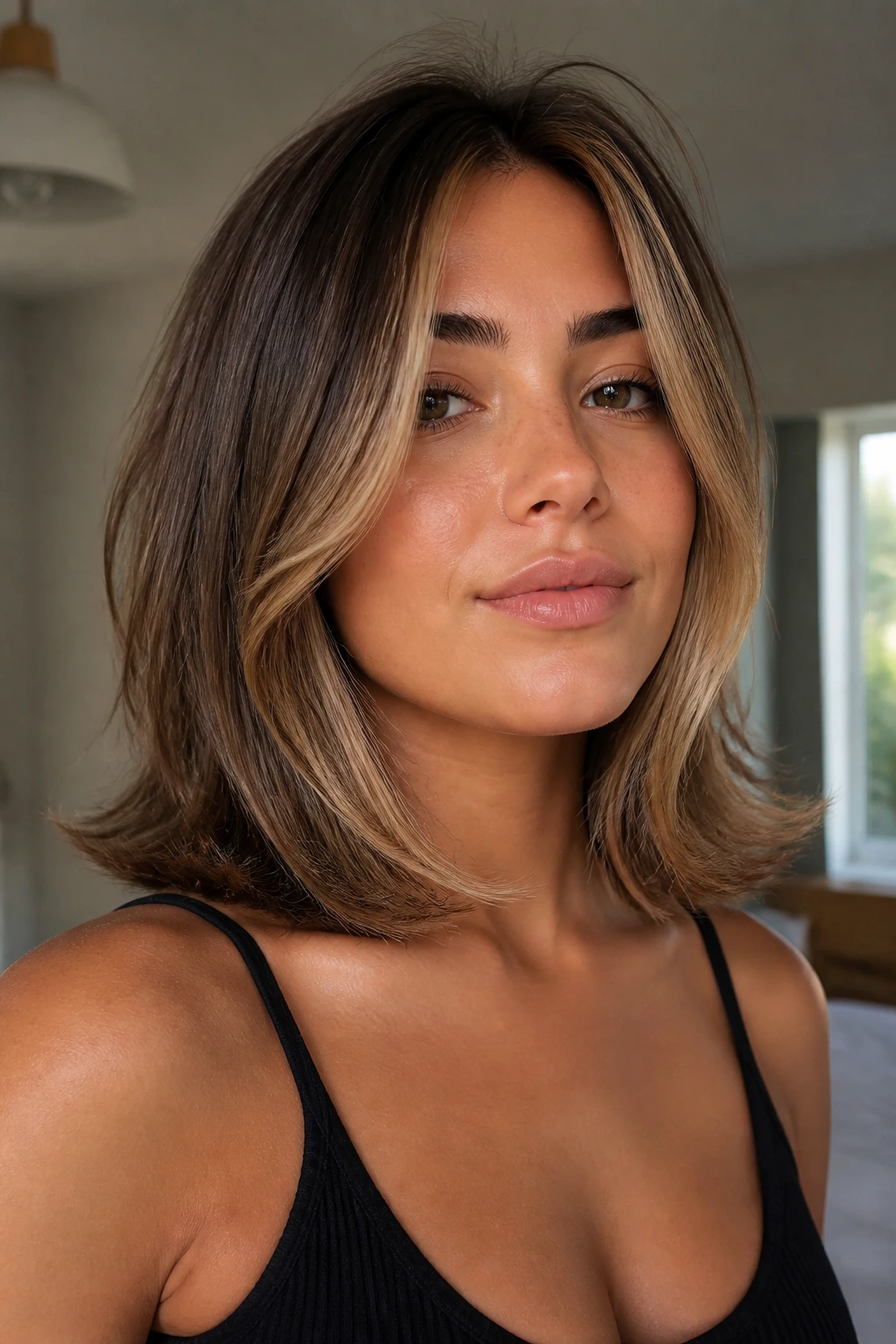
This version has more lift than the retro flip and a cleaner shape than a full shag. The ends flick outward just enough to create movement, but they still graze the collarbone so the overall line stays long. That matters on a round face. You want motion, not width.
A bright front panel makes the flip look crisp. Keep it narrow near the hairline and a touch brighter near the cheekbone, then let the flip-out finish the shape at the bottom. Fine hair can hold this style surprisingly well if you set the bend with a dryer or curling iron and let it cool before touching it.
25. Low-Maintenance Grow-Out Lob with Blended Front Pieces

This is the one for people who do not want to babysit their hair. The length sits long enough to stay flattering as it grows, the layers are blended instead of choppy, and the money piece is softened so the grow-out line doesn’t look loud. Round faces usually benefit from that kind of restraint.
The color should include a little root shadow and maybe one or two deeper ribbons underneath, because fine hair looks better when the base has depth. The front pieces can still be brighter, but they should fade into the rest of the hair instead of stopping abruptly. It’s the least fussy option in the group, and it might be the smartest one.
Why the Lob and Money Piece Work So Well on Round Faces

A round face does not need hiding. It needs lines. That’s the difference most hair advice misses. A lob gives you a vertical path from the jaw to the collarbone, and the money piece gives you a lighter frame near the eyes and cheekbones, which changes where the viewer looks first.
Fine hair adds another layer to the puzzle. Too much layering and the ends disappear. Too much bulk and the head starts looking helmet-shaped. A lob keeps enough perimeter weight to stay visible, while the front color creates brightness without requiring a lot of extra hair. That’s useful. Very useful.
The lowlight part matters too, especially for fine hair. When everything is the same lightness, the cut can look washed out and flat. A few deeper ribbons inside the shape make the bright front pieces feel earned instead of pasted on. That little bit of contrast is what keeps the style from going bland.
What to Tell Your Stylist Before the First Snip
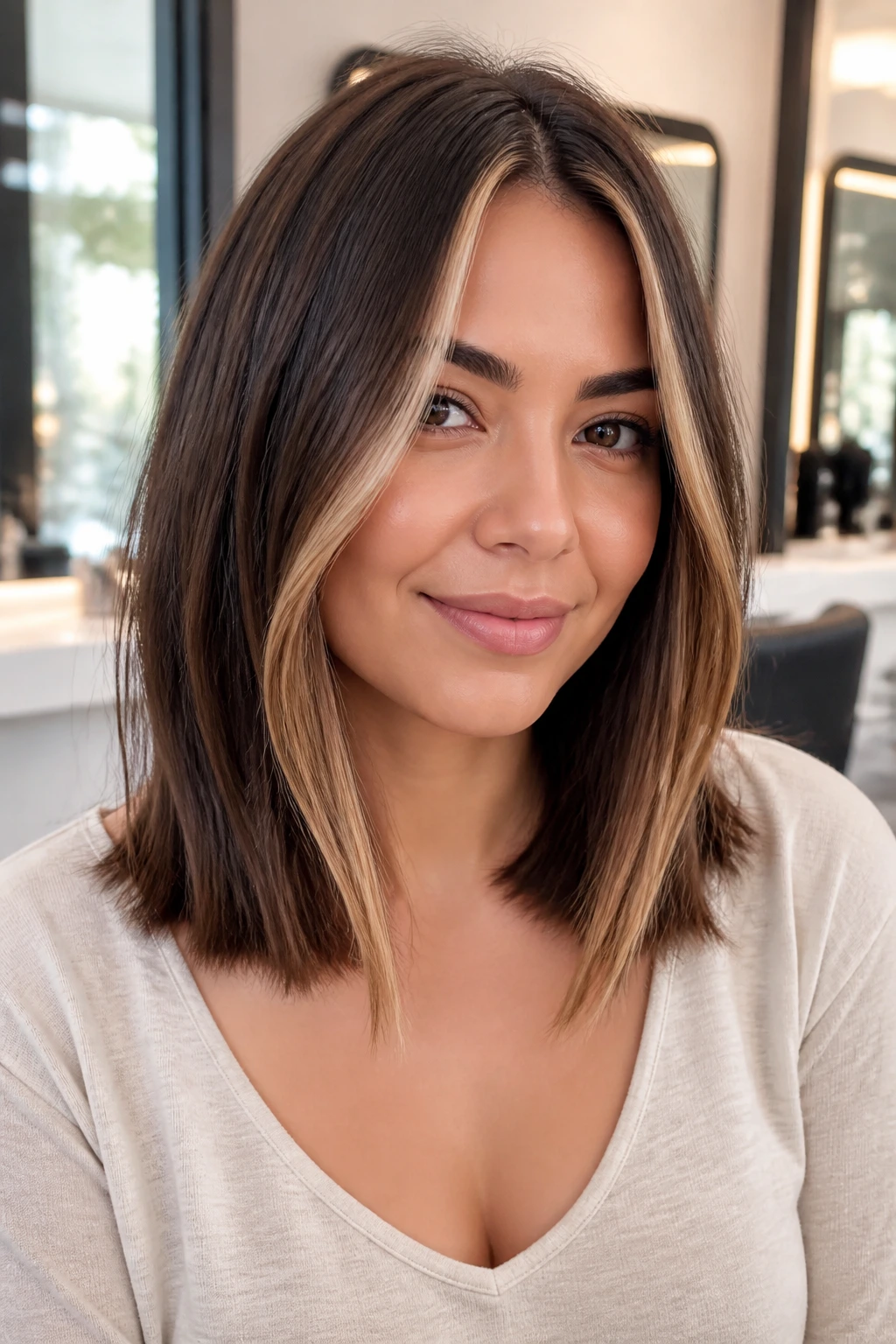
Bring photos, but bring the right photos. One front view, one side view, and one shot that shows where the length lands on the collarbone or just below it. If you only show a tight face shot, your stylist has to guess where the perimeter sits. That guess matters more than people think.
Say the words out loud: collarbone length, soft face framing, and a narrow money piece. If your hair is truly fine, ask for a blunt-ish outline with minimal thinning through the ends. If you have a little more density than texture, ask for soft internal layers instead of choppy graduation. That keeps the shape from looking see-through.
For the color, ask for the bright front pieces to start softly at the hairline and hit their lightest point around the cheekbone. Then ask for lowlights under the top layer if the hair tends to look flat. That one detail keeps the bright pieces from floating alone on the head.
How to Wear the Cut So the Face Frame Does the Work
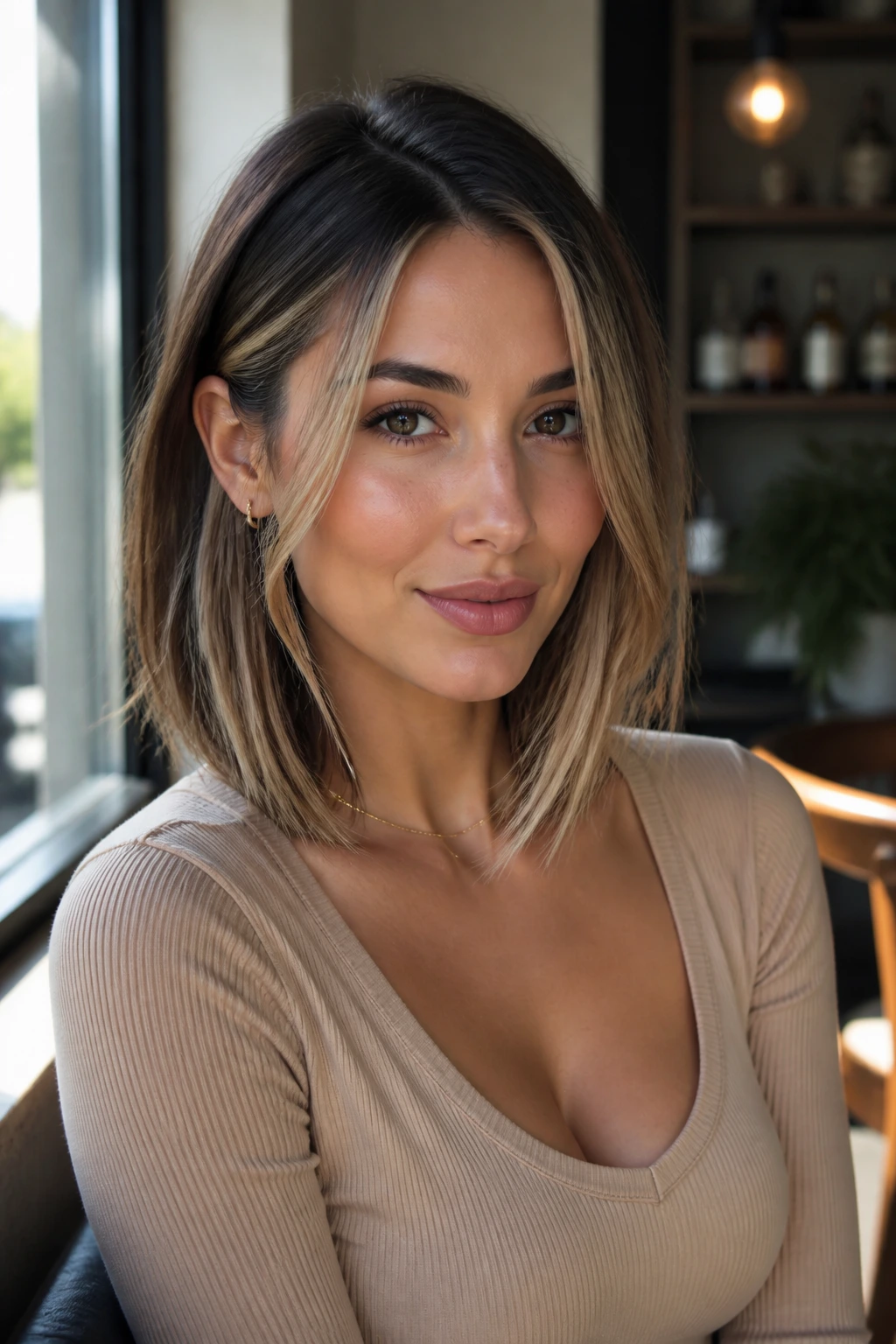
Presentation: Wear the front pieces where they can move. A center part gives symmetry, but an off-center part or a soft tuck on one side adds the diagonal line that round faces usually need. If the cut is sleek, keep one side tucked behind the ear for a few hours and let the other side fall forward. It changes the whole outline.
Accessories: Hoops, slim clips, and small earrings sit well with this shape because they echo the clean lines of the lob without crowding the face. Heavy headbands can push the hair back too far and make a round face look fuller. Skip the bulky stuff unless the cut is long enough to keep moving around it.
Outfit Balance: V-necks, open collars, and square necklines all work because they leave space under the hair. High necks can work too, but keep the front pieces longer and a little softer so the cut doesn’t press against the jaw. The haircut should frame the clothes, not compete with them.
Finish: Glossy, waved, or lightly textured all make sense here. Just keep the front lightness visible. If the money piece disappears under too much dry texture spray, you lose the part of the cut that’s doing the most facial work.
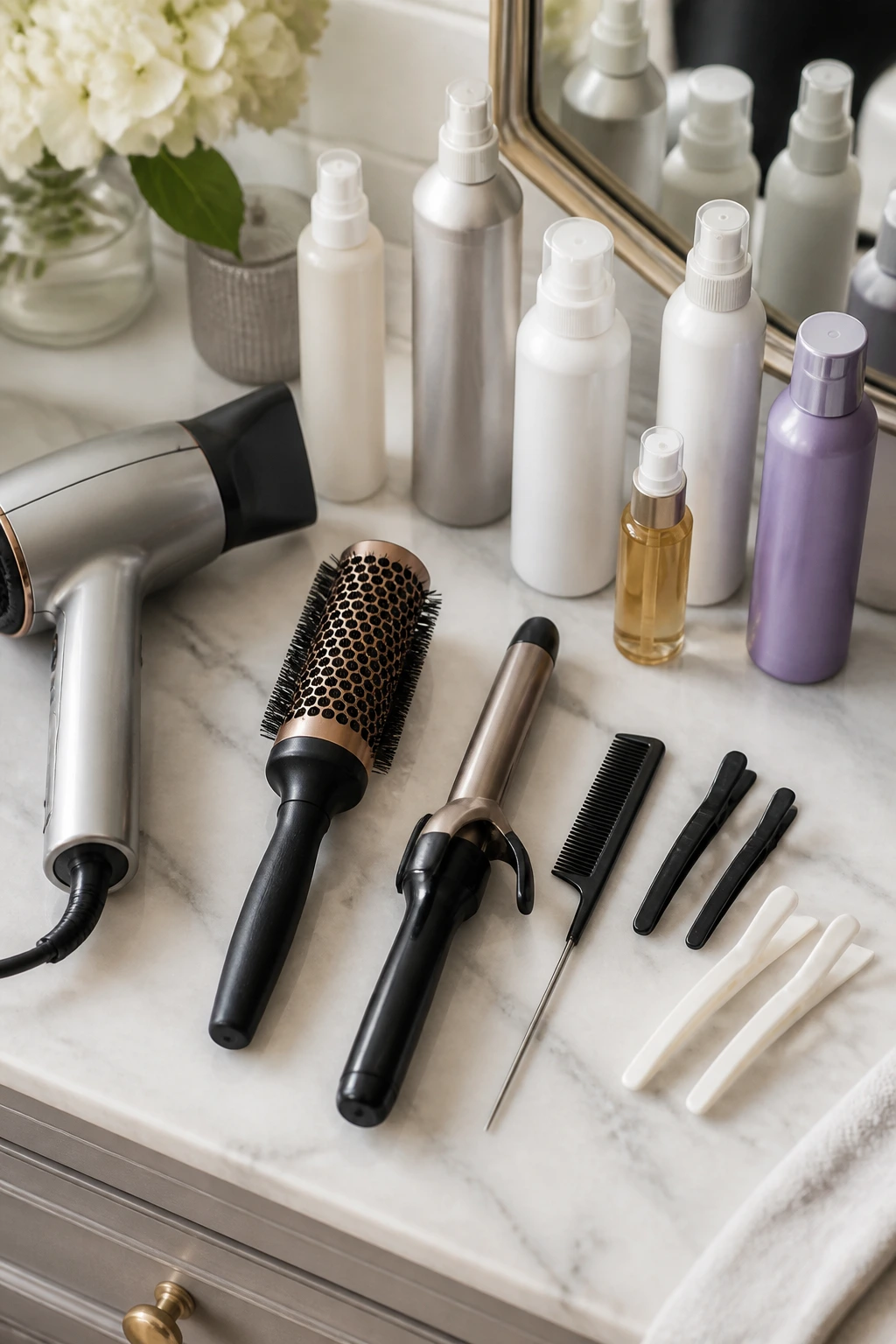
Essential Tools and Products for Fine-Hair Lobs
-
Blow dryer with a concentrator nozzle: Helps keep the lob smooth and directs the roots where you want them.
-
Medium round brush: Gives the ends a soft bend without making the hair curl under in a stiff way.
-
1-inch or 1.25-inch curling iron or wand: Best for loose, believable bends that flatter a round face.
-
Root-lifting spray: Use it at the crown and around the part before blow-drying; that’s where fine hair needs support.
-
Light mousse or foam: Good for air-dried or blown-out styles that need body without crunch.
-
Heat protectant: Non-negotiable if you’re using a brush, iron, or flat iron.
-
Rattail comb: Makes a clean part and helps place the money piece exactly where it belongs.
-
Duckbill clips: Useful for setting waves or holding the crown while it cools.
-
Dry shampoo: Helps preserve lift on day two and day three, especially at the roots.
-
Light serum or shine cream: A tiny amount on the ends keeps the finish polished without collapsing fine hair.
-
Color-safe shampoo and conditioner: Keeps the money piece bright and the lowlights from getting muddy.
-
Purple shampoo, if the front pieces are blonde: Use sparingly; too much can leave pale hair looking dull and dry.
Small Tweaks That Add Lift, Shine, and Depth
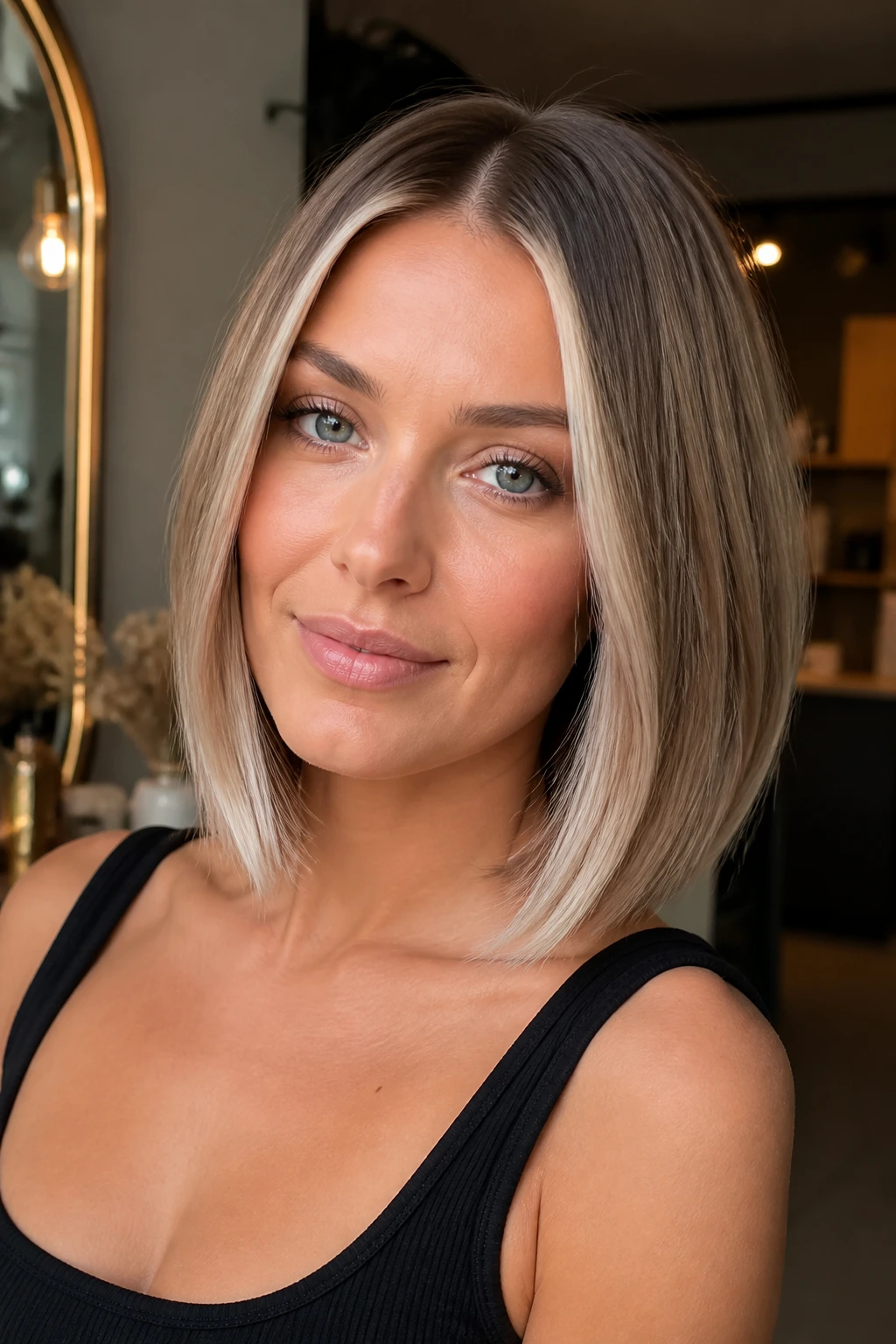
Root Lift: Spray a light root-lifter at the crown, then blow-dry that section first with the nozzle pointed upward. Fine hair gets volume from the root more than from the ends, and this is where the cut either wakes up or falls flat.
Color Boost: Ask for a gloss or toner between highlight appointments if the front pieces start to look brassy or washed out. A clean tone around the face makes the whole lob look fresher, even if the cut itself hasn’t changed.
Texture Boost: Use a curling iron only through the mid-lengths, then leave the last inch straight. That tiny inconsistency makes the style look more natural and keeps the ends from puffing out around the cheeks.
Depth Boost: If the hair is looking thin, add one or two lowlights under the top layer. Darker ribbons at the interior create the illusion of density, which matters more than extra shine when the hair is fine.
Make-It-Yours: For a softer look, tuck one side and leave the other loose. For a sharper look, straighten the front panels and bend only the ends. The same lob can read polished, easy, or a little glamorous just from those small changes.
The Mistakes That Make a Round Face Look Wider
-
Stopping the cut right at the chin: That’s the fastest way to widen the face visually. Keep the lob at the collarbone or let the front fall slightly below it so the line travels downward.
-
Making the money piece too thick: A wide bright stripe can overpower fine hair and draw attention straight across the cheeks. Narrower is smarter; it looks cleaner and blends better as it grows out.
-
Over-layering the ends: Too many short layers make fine hair look wispy and leave the perimeter weak. Ask for soft internal shaping instead of choppy texturizing through the bottom.
-
Curling the ends outward at cheek level: That creates width right where you don’t want it. If you want a flip or wave, keep the bend low and let the front pieces stay closer to the face.
-
Using heavy creams all over the hair: Fine hair can get greasy and limp fast. Put richer product only on the ends, and keep the root area light.
-
Ignoring lowlights: Bright money pieces without depth can look flat and obvious. A few darker ribbons under the surface make the whole style feel richer and fuller.
Variations and Alternatives to Try Next
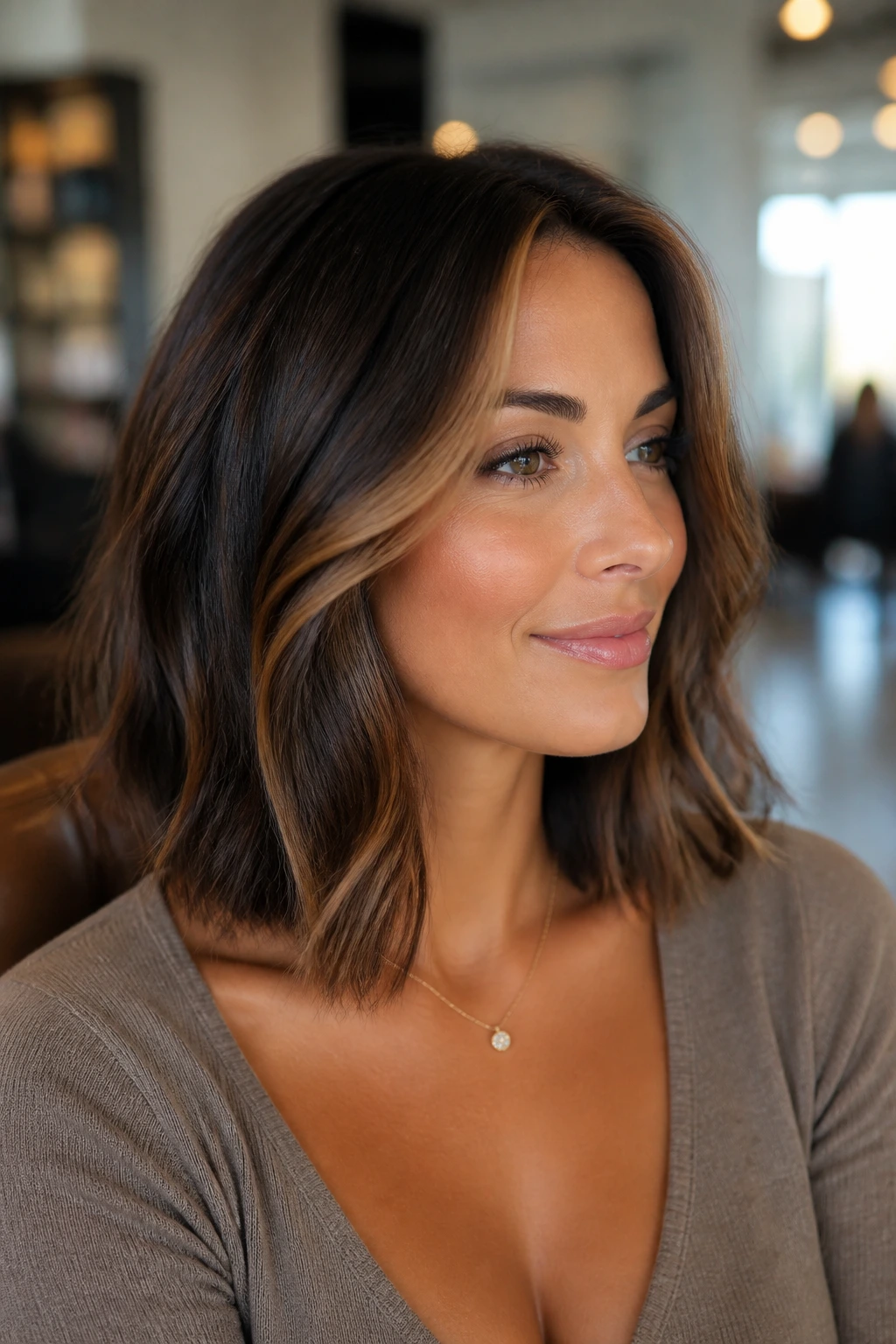
Mocha Shadow Lob: Keep the base deep mocha and ask for a caramel money piece that starts soft near the temple. This works well if you like contrast but don’t want the front to shout across the face.
Pearl Blonde Lob: A cool blonde front frame with a beige or ash base gives a crisp, bright finish. It’s a good choice if your hair lifts warm and you want the money piece to read clean instead of yellow.
Copper Glow Lob: A copper or soft apricot face frame warms up the complexion and looks especially nice when the lob is smooth and slightly flipped. Use this when you want color to be the main event.
Curly Coil Lob: Keep the length long enough for curls to fall below the cheekbone, then brighten the front curl group near the temple. That keeps the face open without cutting away too much bulk.
Soft Bronde Lob: Blend brunette and blonde with a shadow root, then keep the front pieces just a shade lighter. It’s the most forgiving version if you want dimension without a hard maintenance schedule.
Keeping the Cut and Color Fresh Between Appointments
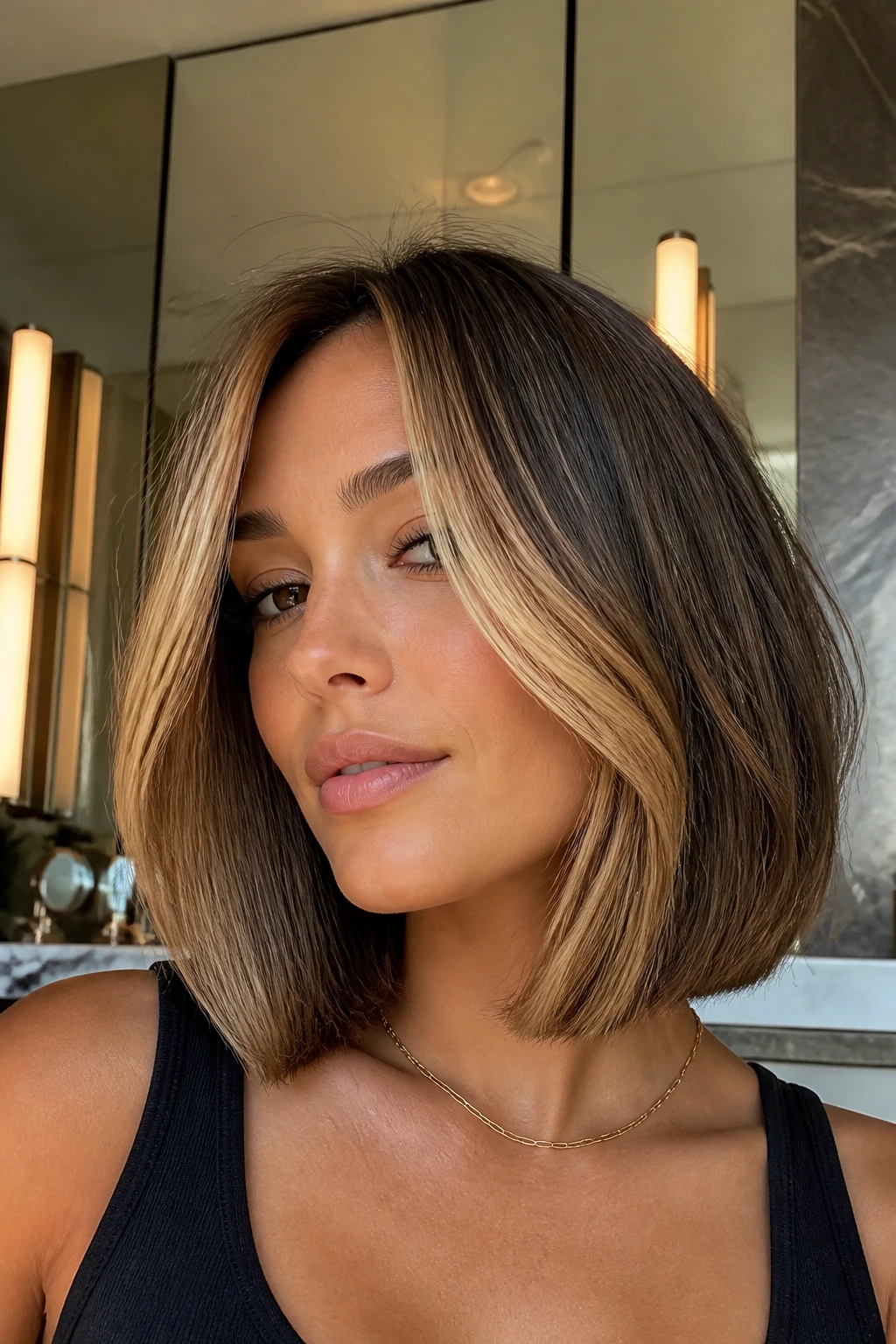
A good trim every 6 to 8 weeks keeps the lob from slipping past its shape. Fine hair shows split ends fast, and once the perimeter frays, the whole style starts to look smaller. If the cut is angled or blunt, do not wait until it’s shaggy to clean it up.
Color needs a separate rhythm. Bright money pieces usually hold up best with a gloss or toner every 4 to 6 weeks if you like them crisp, or a little longer if you prefer them softened. Root shadow can stretch longer, especially if the front pieces are narrow and blended well. The goal is a deliberate grow-out, not a brassy surprise.
On wash days, keep conditioner mostly from the mids to the ends. Fine hair collapses fast when the root area gets too slick. Dry shampoo between washes helps preserve lift, but use it before the hair looks greasy—not after.
Questions People Ask Before They Book the Cut
Will a lob make a round face look wider?
Not if the length and front shape are right. A lob that lands at or below the collarbone, plus a slightly longer front, usually does the opposite and stretches the face visually.
Should the money piece be blonde?
No. It can be caramel, copper, beige, or cool pearl blonde. The better choice is the one that gives contrast against your base without turning the front into a hard stripe.
Can fine hair handle layers?
Yes, but keep them soft and mostly internal. Too many short layers can thin out the perimeter and make the ends look weak.
Is a center part bad for a round face?
Not bad. It depends on the cut. A center part with longer front pieces and a clean collarbone line can look very balanced; if you want more lift, a soft side part adds diagonal movement.
How often do I need highlights touched up?
If the money piece is bright, plan on a refresh every 6 to 10 weeks, depending on how fast your hair grows and how crisp you like the front to stay. A gloss can stretch the life of the color between full highlight sessions.
Can I wear this cut if my hair is naturally curly?
Absolutely. The main rule is length. Leave enough room for the curl to drop below the cheekbone, and brighten the front curls without over-thinning the shape.
What if my hair is very straight and flat?
Choose a blunt or slightly angled lob and rely on root lift, not lots of layers. Straight fine hair usually looks best when the perimeter stays strong and the styling adds the movement.
Do lowlights help fine hair?
They do. A few deeper ribbons give depth and make the bright front pieces look richer, which helps the hair read as fuller.
The Shape That Keeps Its Lines
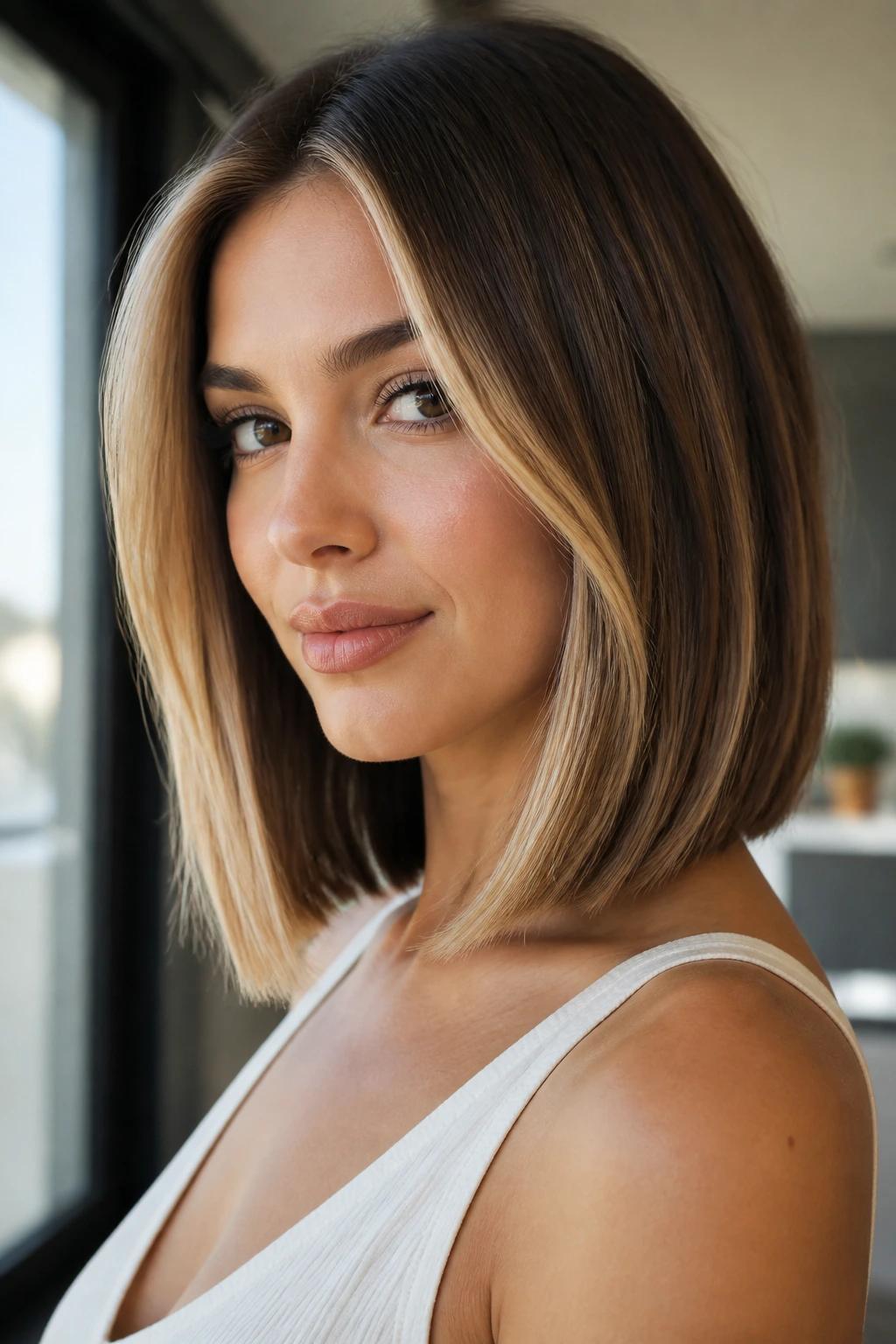
A good fine lob on a round face does not need tricks. It needs the right length, the right front angle, and a money piece that brightens the face without flattening the rest of the cut. Once those three pieces line up, the haircut starts doing the work for you.
The nicest part is how forgiving these shapes are. You can wear them smooth, bent, waved, tucked, or a little undone, and the silhouette still holds. That’s the real strength here: a cut that behaves on busy mornings and still looks deliberate when you catch your reflection later in the day.