



Curly hair changes the rules the second it leaves the sink. A blunt line that looked neat when it was wet can puff into a triangle, a bob can turn into a mushroom, and a long shape can swallow the neck if the layers were placed without respect for shrinkage. That’s exactly why curly haircuts with caramel highlights hold up so well: the cut gives the curl room, and the color maps the movement instead of fighting it.
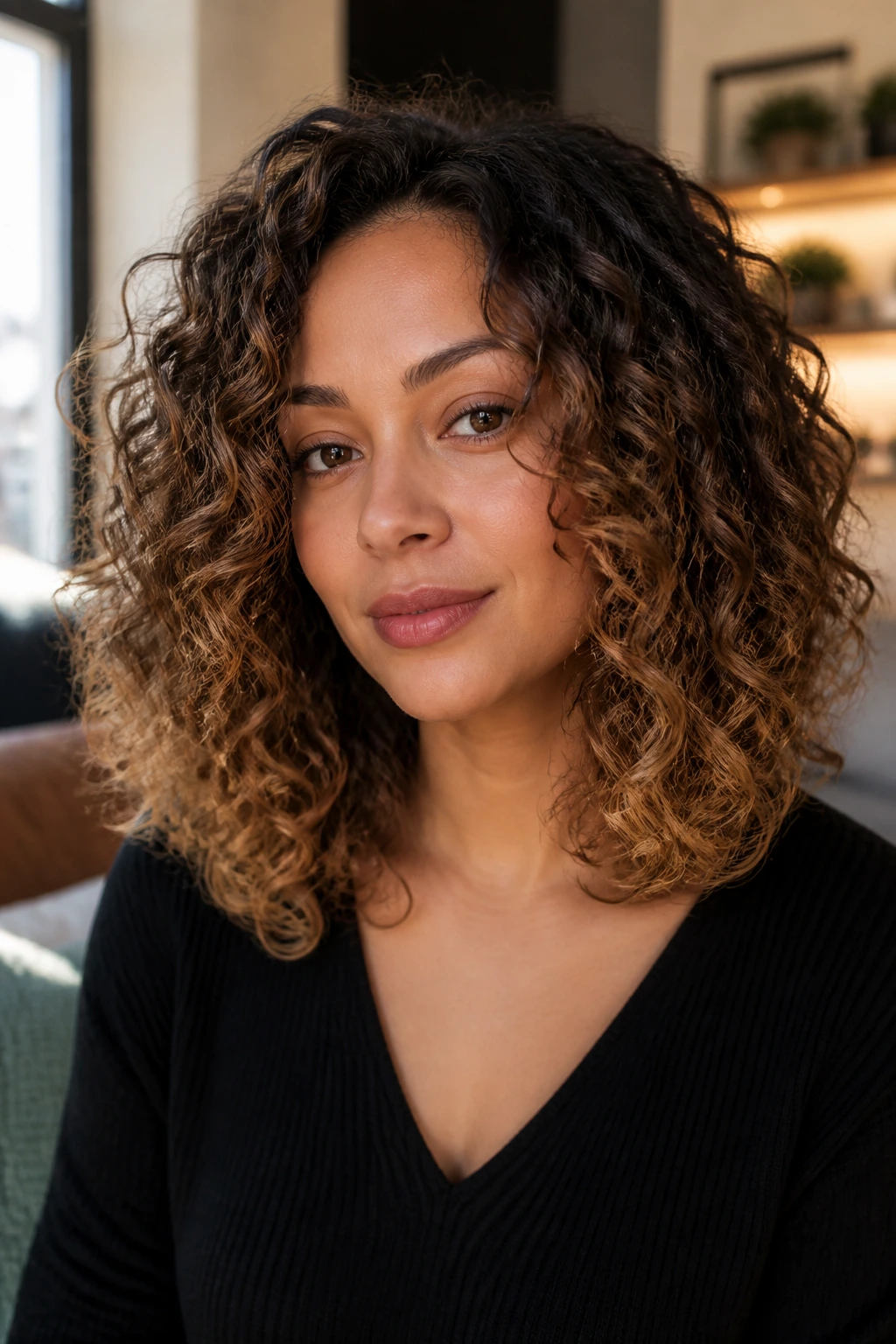
Caramel is a smart shade for curls because it can read warm, glossy, and dimensional without looking harsh against the coil pattern. Go lighter and you get honey and toffee. Stay deeper and the color slips into chestnut and bronze territory, which is often kinder to dark bases and tighter textures. When the highlight placement is thoughtful — a ribbon at the face, a few painted pieces on the canopy, some lighter ends — the whole head looks more awake.
The trick is not “more color.” It’s better color in the right places, on the right shape, at the right length. Some curls want a shag that floats. Some want a bob that stops at the jaw. Some need stacked weight in the back, and some want long layers that move like springs. Caramel highlights can sharpen all of those decisions if you know where to put them.
Why These Curly Cuts Deserve a Screenshot
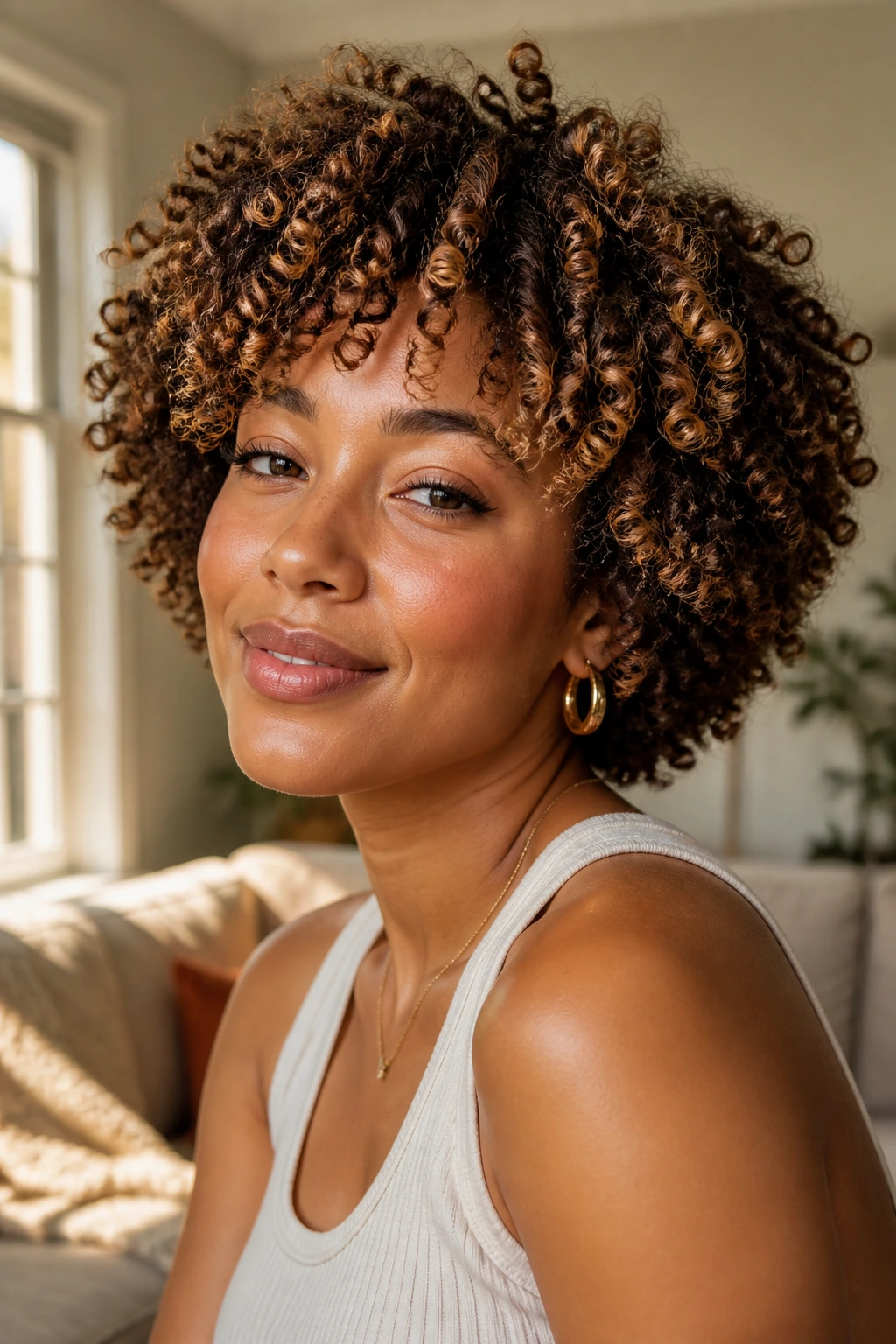
-
Shape first, color second: The cut has to handle shrinkage and density before the caramel can do its job; otherwise the color just sits on top of a bad outline.
-
Caramel softens bulk: Warm ribbons break up heavy sections, especially around the crown and sides, so dense curls stop reading as one solid block.
-
Grow-out is gentler: A warm highlight line usually blurs more gracefully than a stark blonde stripe, which matters when curly hair lives a little longer between salon visits.
-
The face frame does a lot of work: Even two or three lighter pieces near the cheekbone can change how the whole cut feels, especially on medium and long curls.
-
These cuts work with air-drying: That’s the part I like most. If the shape holds without a round brush and a 20-minute wrestling match, the haircut earned its place.
1. The Curly Shag with Soft Caramel Ribbons
The curly shag is the one I reach for when someone wants movement without losing personality. The layers start high enough to release weight at the crown, then taper through the sides so the hair doesn’t balloon outward like a triangle. Caramel ribbons scattered through the top and face frame make every bend of the curl easier to read.
What works here is the mismatch between texture and precision. The cut looks relaxed, but the shape has to be intentional, or the whole thing goes fuzzy. Ask for soft internal layers, not a choppy chop job, and keep the caramel narrow rather than blocky. A few 1/8-inch painted ribbons around the front can be more useful than a full head of highlights.
This is one of the best choices for medium to dense curls that need lift at the root. It also wears well on second-day hair, which is where curly shag cuts either look charmingly undone or flat-out messy. The right caramel placement helps keep the top lively even after the curl clumps relax a little.
2. Rounded Shoulder-Length Layers with Honey Caramel Ends
Shoulder-length curls need shape or they turn into a shelf. Rounded layers fix that by letting the ends swing inward and stack softly around the head instead of jutting out at the sides. Honey caramel concentrated through the lower third of the hair gives the cut a little glow without forcing brightness near the roots.
This is the kind of haircut that feels calm. Not boring. Calm. It gives you enough structure to wear down all day, but it still ties back without looking like it lost the plot. The caramel at the ends is especially useful if your mids are darker; it creates a gentle fade that keeps the perimeter from looking heavy.
I like this shape for people who want curl definition without a lot of styling drama. Diffuse it for extra lift, or air-dry with a leave-in and a cream if you want the curls to settle into a more relaxed halo. The outline stays soft either way.
3. The Deva Cut with Fine Caramel Veils
A Deva cut is built curl by curl, usually on dry hair, so the stylist can see the real pattern instead of guessing at it while the hair is stretched wet. That matters. A lot. Curly hair lies when it’s wet, and caramel highlights look best when they’re placed to follow the natural bends, not the temporary length.
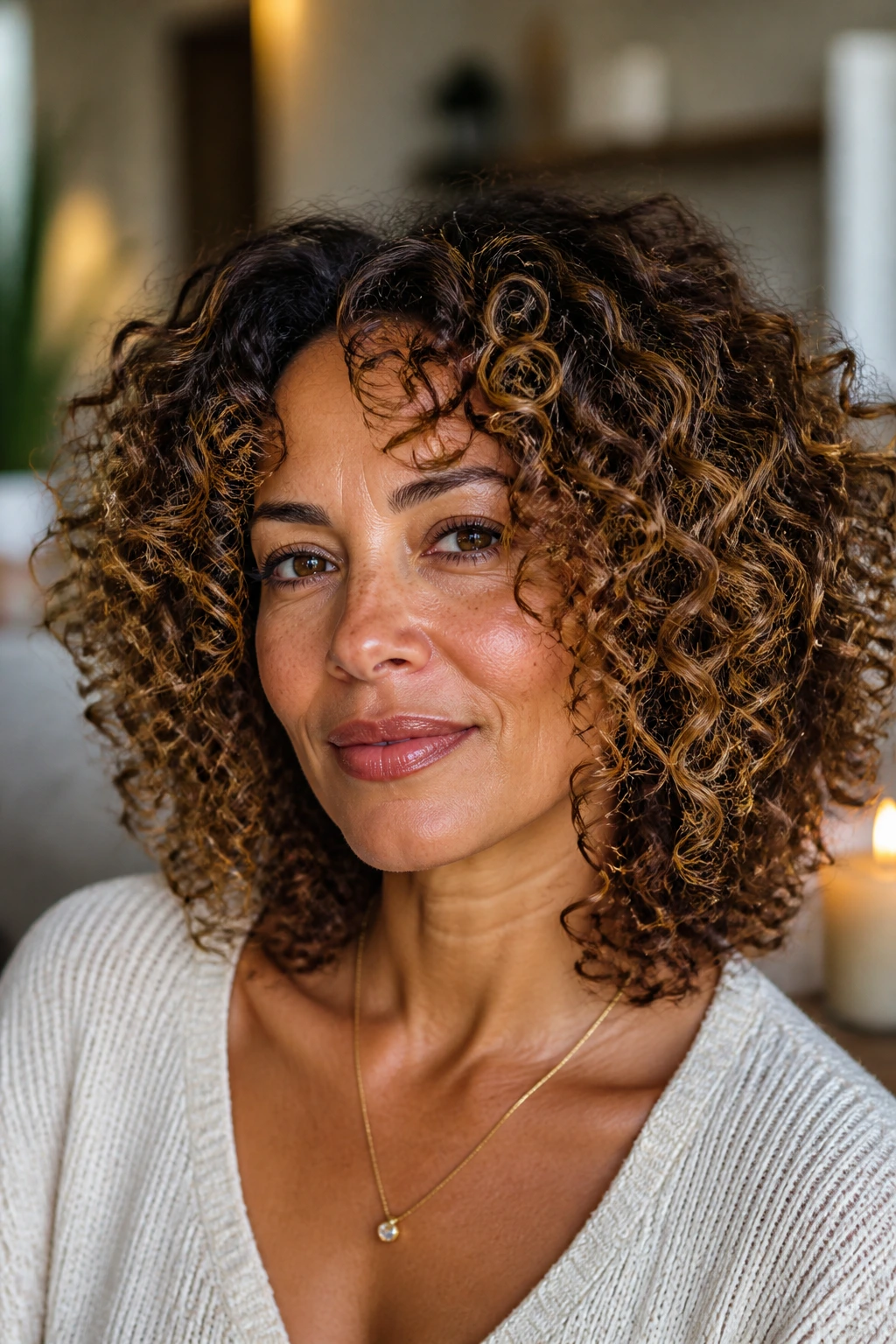
Fine veils of caramel work here better than chunky stripes. Think narrow, controlled pieces that thread through the top layer and around the face. On tight spirals, a veil can catch the shape of the curl without turning the whole look streaky. If the base is deep brown or black, a toasted caramel or bronze-caramel tone often reads richer than a pale blonde.
This cut is for someone who cares about curl-by-curl definition and doesn’t mind a little salon time. The payoff is a shape that grows out in a civilized way. No harsh edge. No weird shelf. Just curls that sit where they’re supposed to sit.
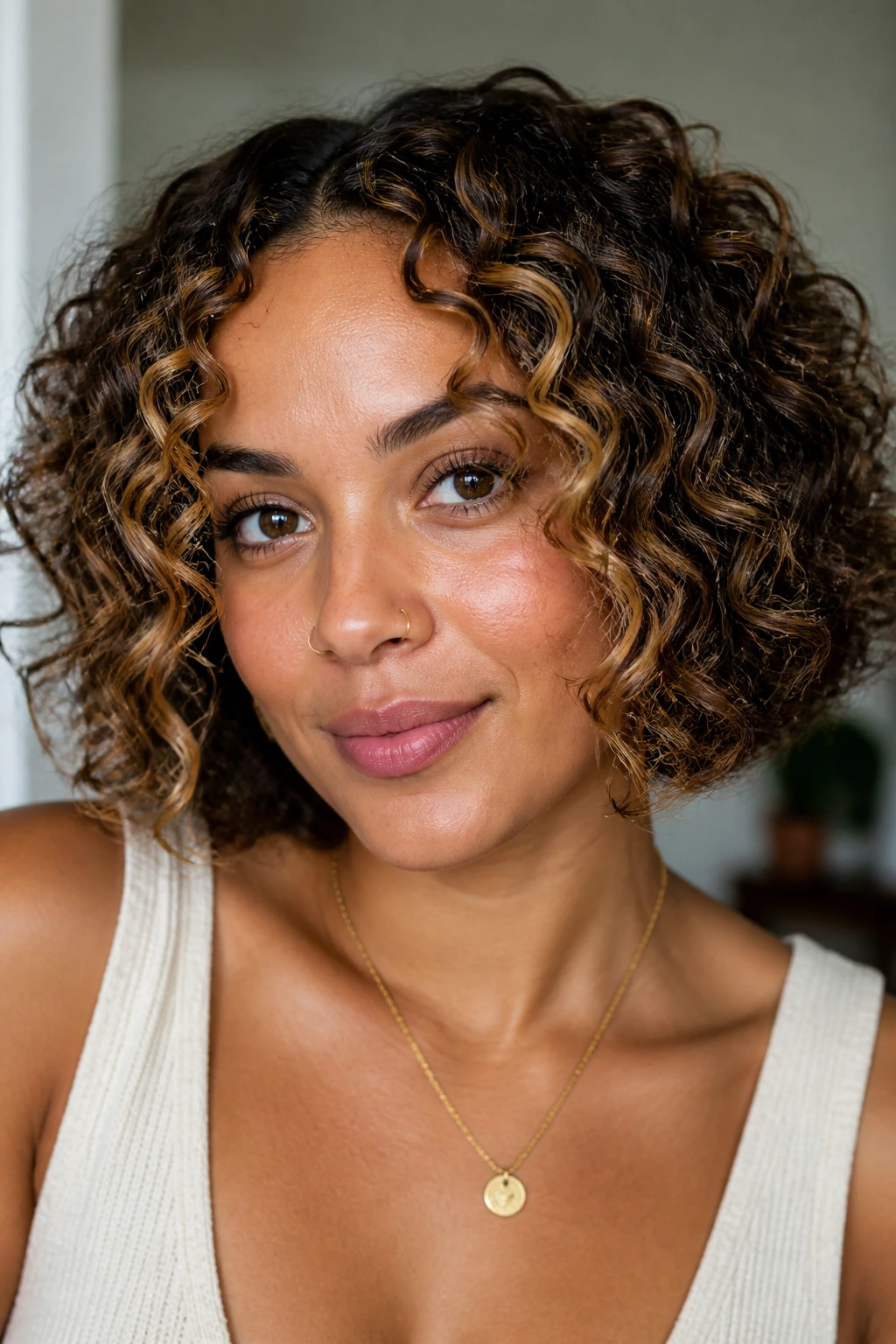
4. Chin-Length Curly Bob with Toffee Face-Framing Pieces
A chin-length curly bob is a bold little haircut. It shows the jaw, it shows the neck, and it shows whether the stylist understood shrinkage. If they didn’t, the result can sit too high and feel puffy. If they did, the shape looks crisp and alive, especially with toffee pieces framing the face.
I like this cut when someone wants bounce. The bob gives the curls a place to spring, and the face-framing pieces pull attention upward so the whole shape feels lifted. Keep the layers subtle through the back and a touch longer in front if you want a slight angle without making the bob look severe.
The caramel should live near the cheekbones and underlayers, not just on the outermost surface. That’s what keeps the color from reading flat in photos and real life. It’s a small detail, but it matters. Hair like this is all about the line where the curl turns.
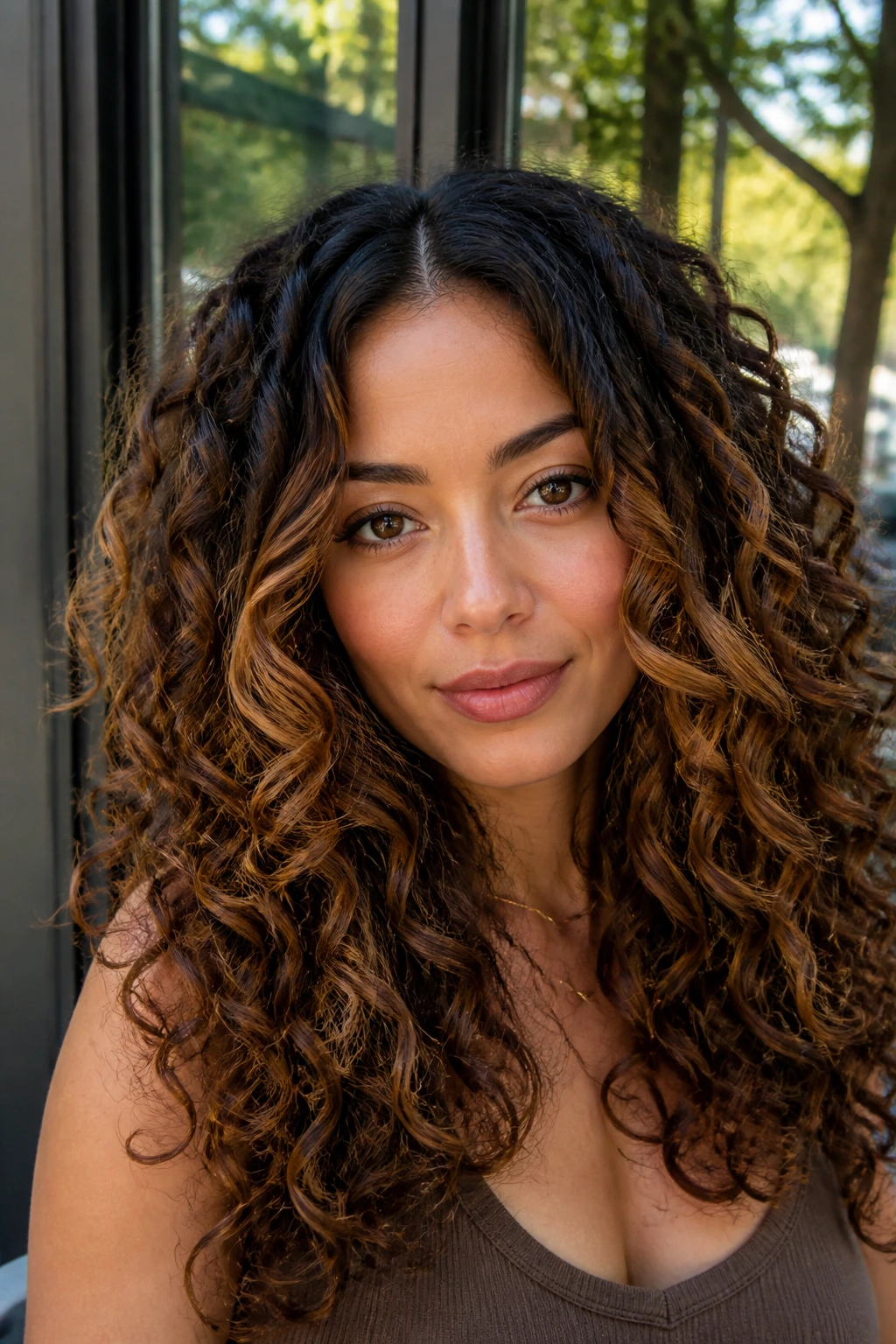
5. Long Layers and a Center Part with Cinnamon Highlights
Long curls can get lazy. Not the hair — the shape. When the weight sits too heavy at the bottom, the top goes flat and the ends carry the whole story. Long internal layers fix that without sacrificing length, and a center part gives the curl pattern a clean, symmetrical frame.
Cinnamon highlights are a smart choice if you want warmth but not a bright blonde effect. They read a little spicier, a little deeper, and they usually play nicely with medium brown bases. The best placement starts around the cheekbone and drifts down through the ends, which keeps the top from looking striped.
This style works when you like your hair to look long, loose, and a little dramatic without daily heat styling. A diffuser can give the roots a lift, but a lot of the appeal comes from the cut itself. The layers keep the curls from hanging in one heavy curtain.
6. The Curly Wolf Cut with Lived-In Caramel Contrast
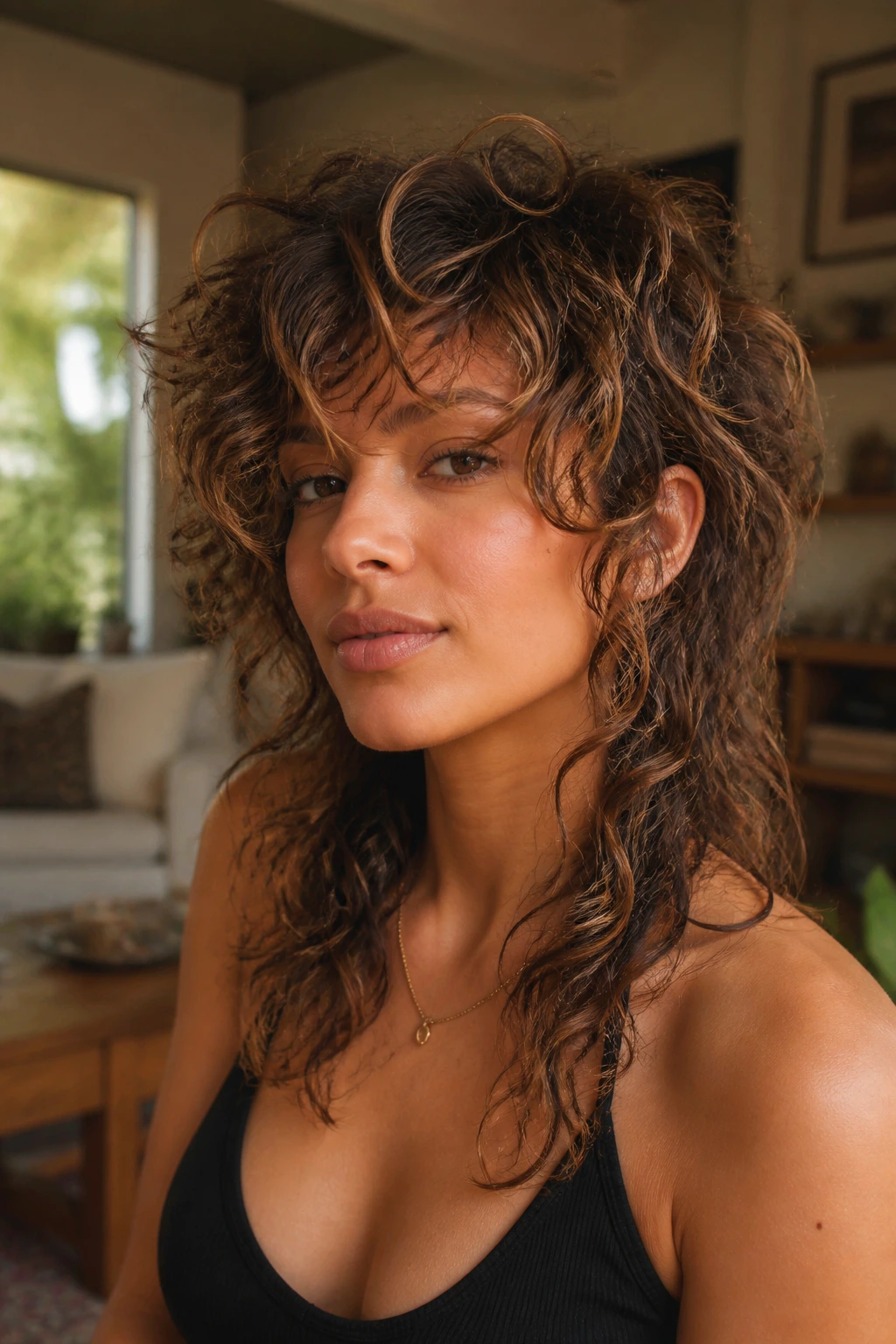
The wolf cut has attitude, but on curls it needs restraint. Too much chopping and you get a halo that sticks out in every direction. Done right, the wolf cut uses shorter crown layers, longer perimeter pieces, and a little roughness around the edges. Caramel contrast gives that shape a lived-in edge without making it look harsh.
This cut is strongest on looser curls and wavy-curly textures that can hold separation. The caramel should not be painted in one even blanket. I prefer a few brighter pieces around the crown and front, then softer, darker caramel through the mid-lengths. That unevenness is what makes the shape feel cool instead of precious.
It’s a low-fuss choice if your styling routine is simple. Scrunch in cream, diffuse for 10 to 15 minutes, and let the shape do the rest. The cut itself does the heavy lifting.
7. A Tapered Crop with Warm Bronze Threads
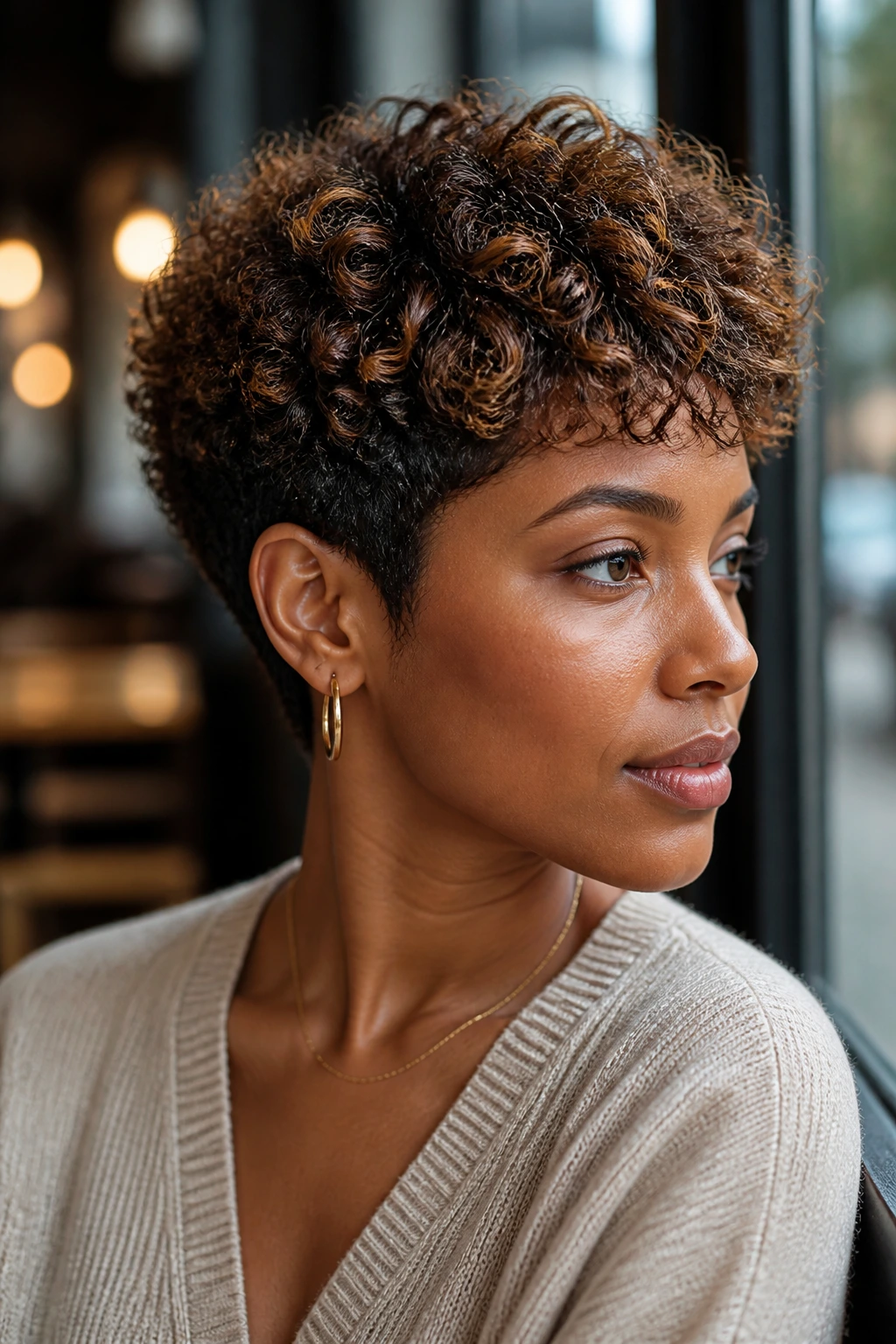
Short curly cuts live or die by the back view. A tapered crop keeps the nape close and clean while leaving enough length on top for curls to pop. Warm bronze threads on the top layer and around the fringe keep the whole thing from looking too dark or too helmet-like.
This is one of my favorites for tighter textures that want shape without bulk. The tapered sides make the face feel open, and the longer top gives you room to play with parting or volume. Bronze is a smarter choice than pale caramel here if the natural color is deep, because it reads warm instead of brassy.
A crop like this needs a stylist who understands curl shrinkage and machine work together. The line around the ears has to stay soft. Too hard, and the cut loses that curly finish. Too soft, and the taper disappears. There’s a narrow middle ground, and it’s worth finding.
8. The Butterfly Cut for Big Curl Volume
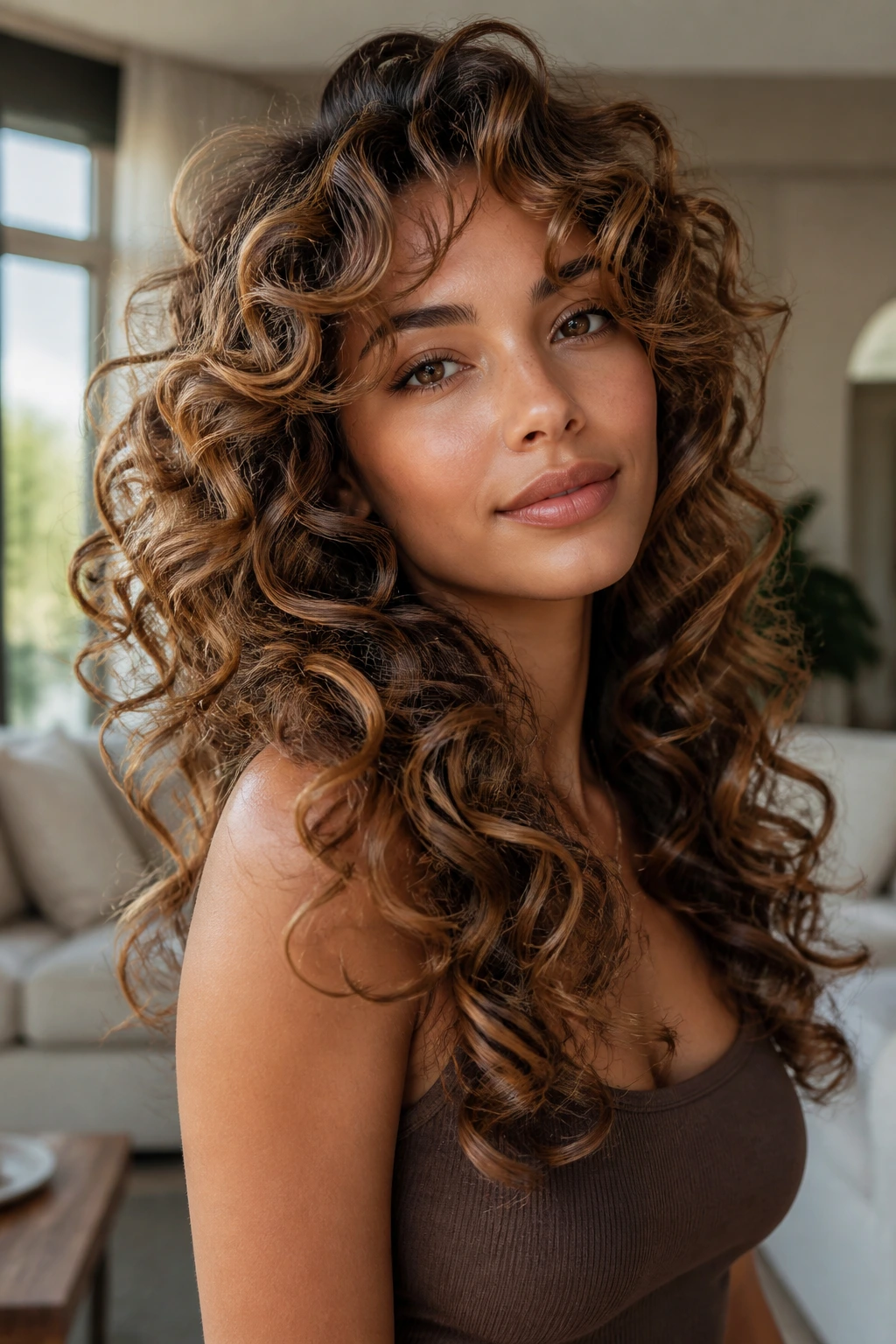
The butterfly cut is all about illusion. Shorter layers float around the face and crown while longer layers stay underneath, so the hair seems fuller and lighter at the same time. On curls, that means the top gets air and the bottom keeps its length. Caramel highlights can trace that difference and make the shape read even bigger.
This cut is great for people who like a lot of volume but don’t want the bulk sitting in one place. The layers should be soft and staggered, not razor-sharp, or the curl clumps can split in odd ways. Put the caramel on the upper canopy and through the front pieces, and leave some depth underneath so the contrast has room to breathe.
It’s a flattering shape on medium and long curls because it changes when the hair moves. Over one shoulder, it looks different. Pushed back, it looks different again. That’s half the fun.
9. The Asymmetrical Curly Bob with Bright Caramel Slices
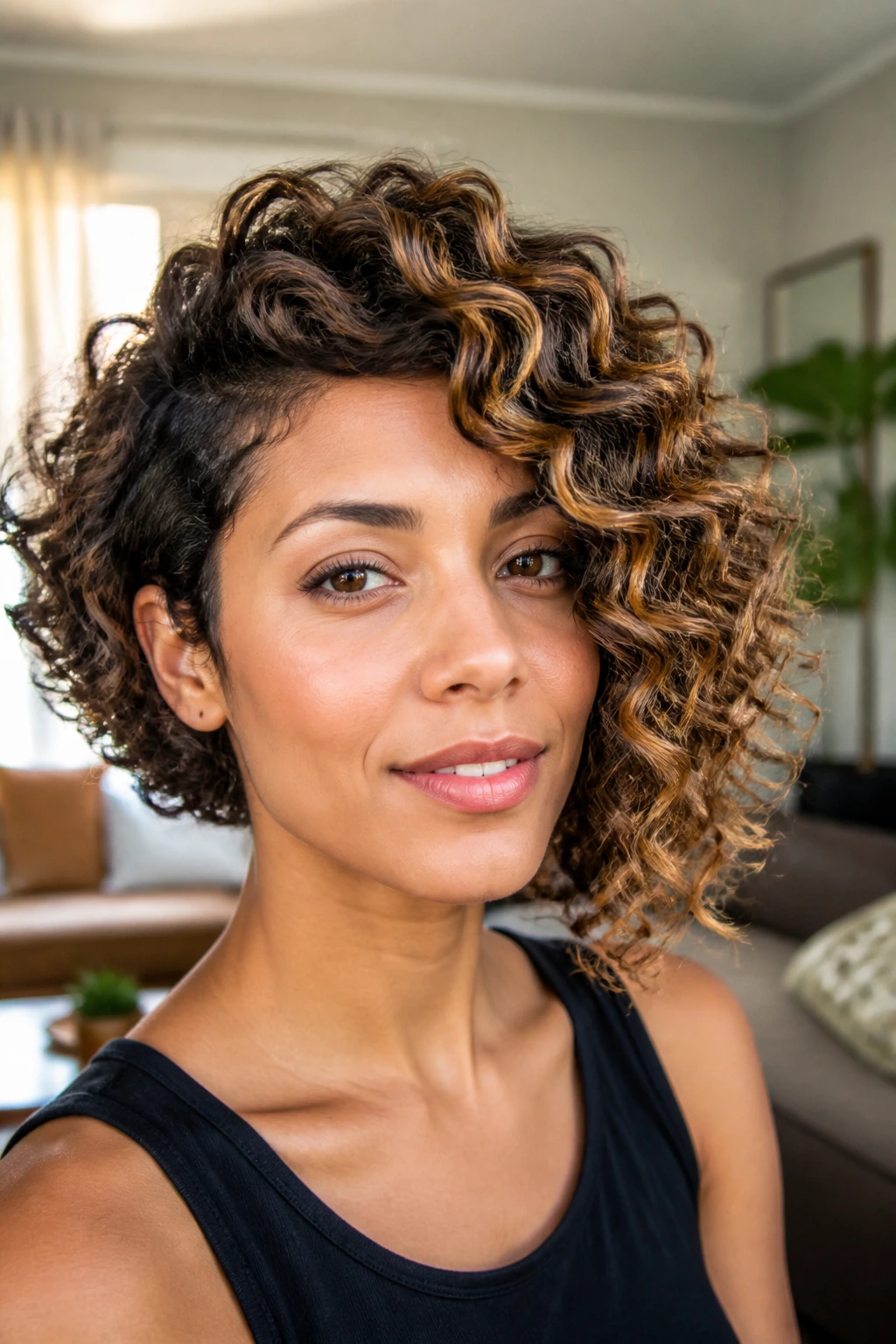
An asymmetrical curly bob is for someone who doesn’t want their hair to sit politely. One side sits a little longer, the other side lifts a little higher, and the result is a cut that feels deliberate even when it’s a little wild. Bright caramel slices make the angle easier to see, which is useful because curl texture can blur a shape fast.
This cut works best when the asymmetry is subtle enough to survive shrinkage. A one- to two-inch difference is usually plenty. Push it too far and the curls on the shorter side can spring up so much that the balance disappears. Bright slices should be placed to mark the line, not flood the head.
The charm here is in the movement. Every turn of the head changes the shape. If you like hair that looks different from every angle, this one delivers without needing a complicated styling routine.
10. U-Shaped Length with Balayage Through the Ends
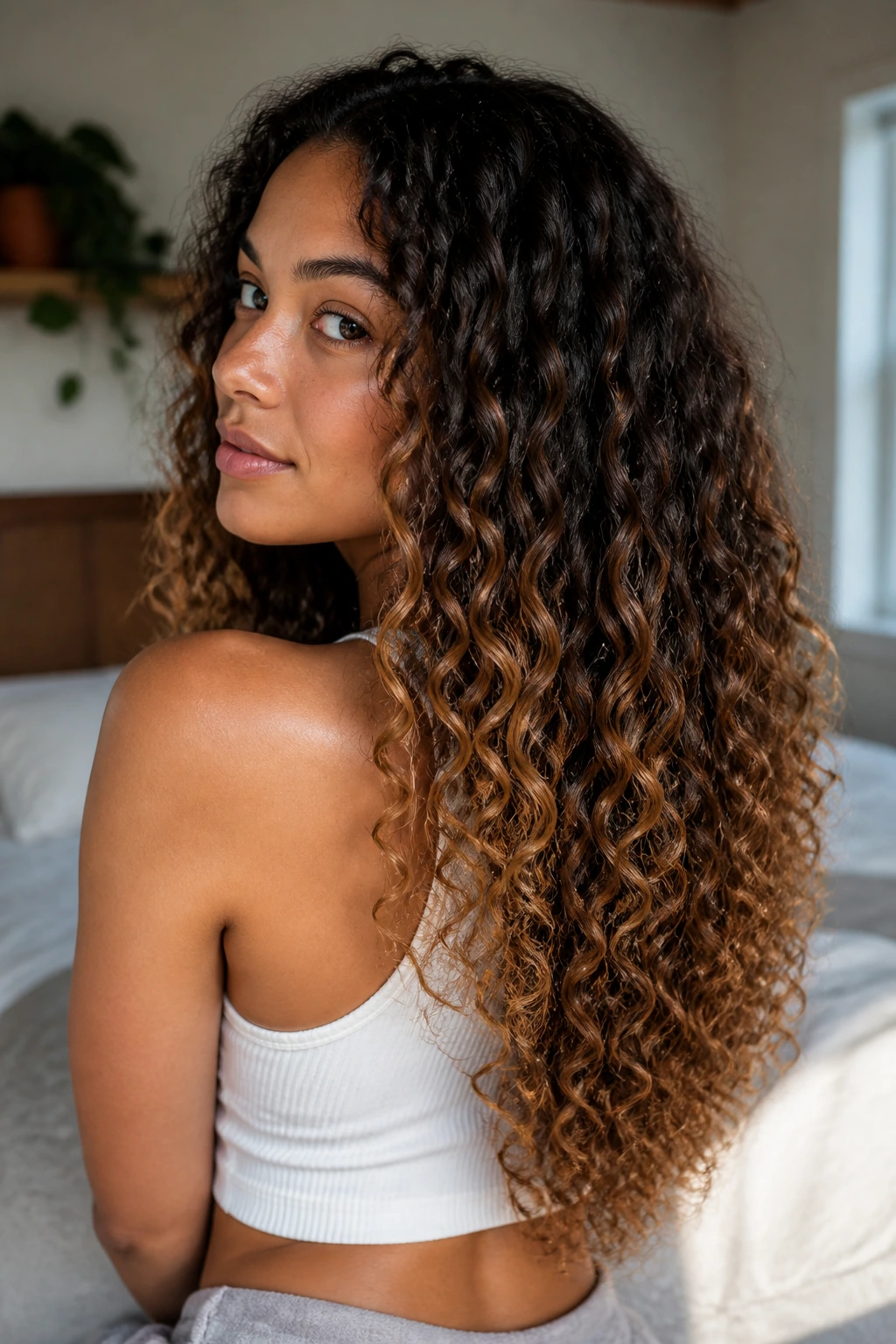
A U-shaped cut keeps the perimeter rounded and soft, which is a nice match for long curls that need a little direction. The back sits slightly fuller than a straight line, and the sides taper in a way that keeps the length from feeling boxy. Balayage through the ends gives the lower half of the hair a warm, sunlit look without flooding the roots.
This is one of the easiest long curly shapes to live with. You still get length, but the U shape keeps the ends from looking like a heavy curtain. I especially like it for people who want to wear their hair down most days and still pull it back when needed.
Ask for balayage that starts below the mids if your curls are dry or porous. That keeps the lighter pieces from feeling thirsty and rough. The ends are where curls usually need the most softness, so the color should support that instead of making it drier.
11. The Curly Pixie with Golden Edge Lighting
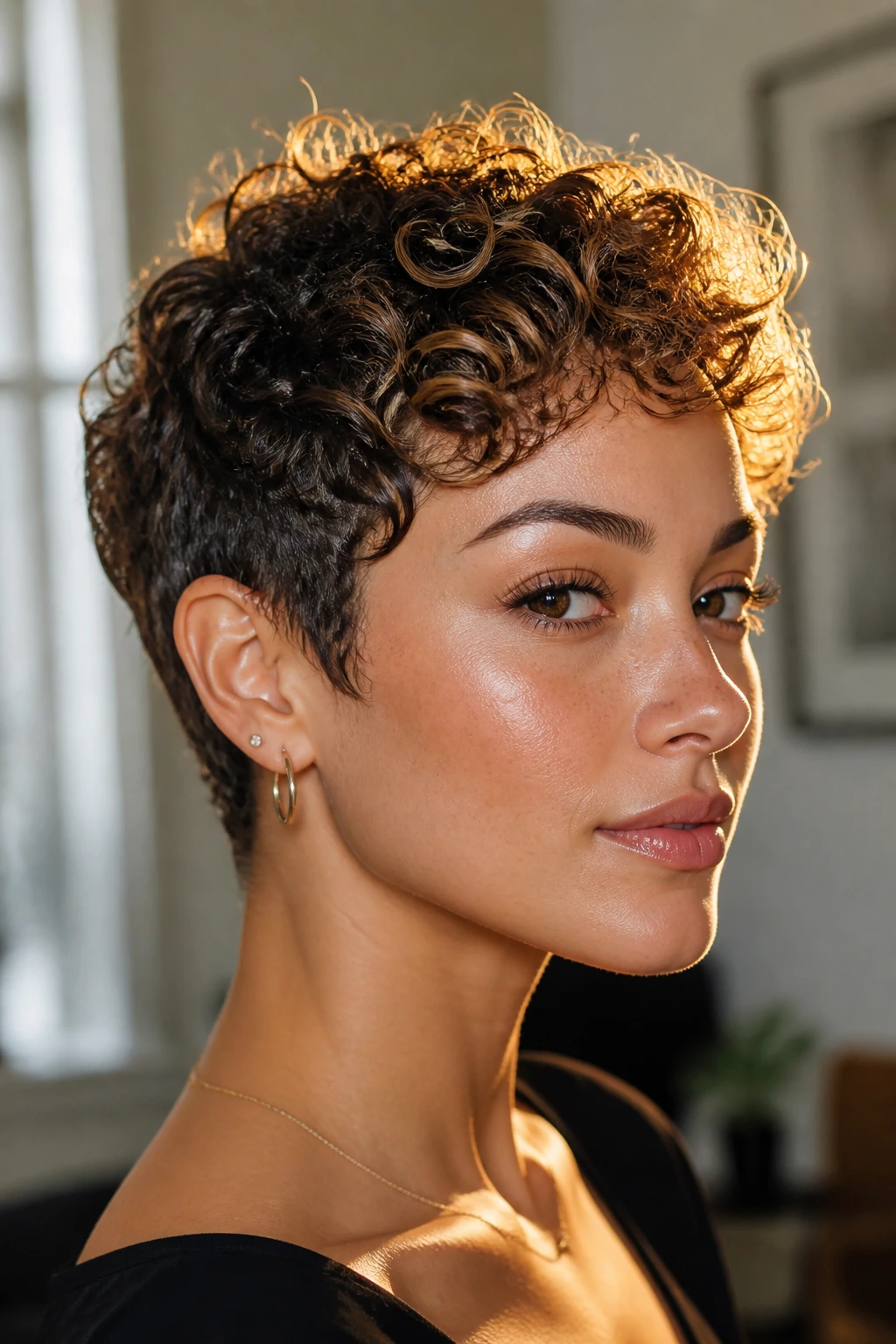
A curly pixie is tiny on paper and surprisingly expressive in real life. The top stays long enough to form curls, while the sides and nape sit close and neat. Golden edge lighting around the fringe, temples, and upper top gives the cut warmth and keeps it from looking flat against the scalp.
This cut has a lot to say with very little hair. The outline matters more than length, so the stylist needs to respect the curl pattern and the growth direction around the crown. Golden pieces work especially well if the base is naturally dark, because they show up without needing to be pale or icy.
It’s a strong choice for someone who wants less styling time and more facial structure. A dab of curl cream, a quick diffuse, and a finger fluff at the roots can be enough. Short hair like this shouldn’t feel fussy. If it does, something’s off.
12. Collarbone Layers with Curtain Bangs
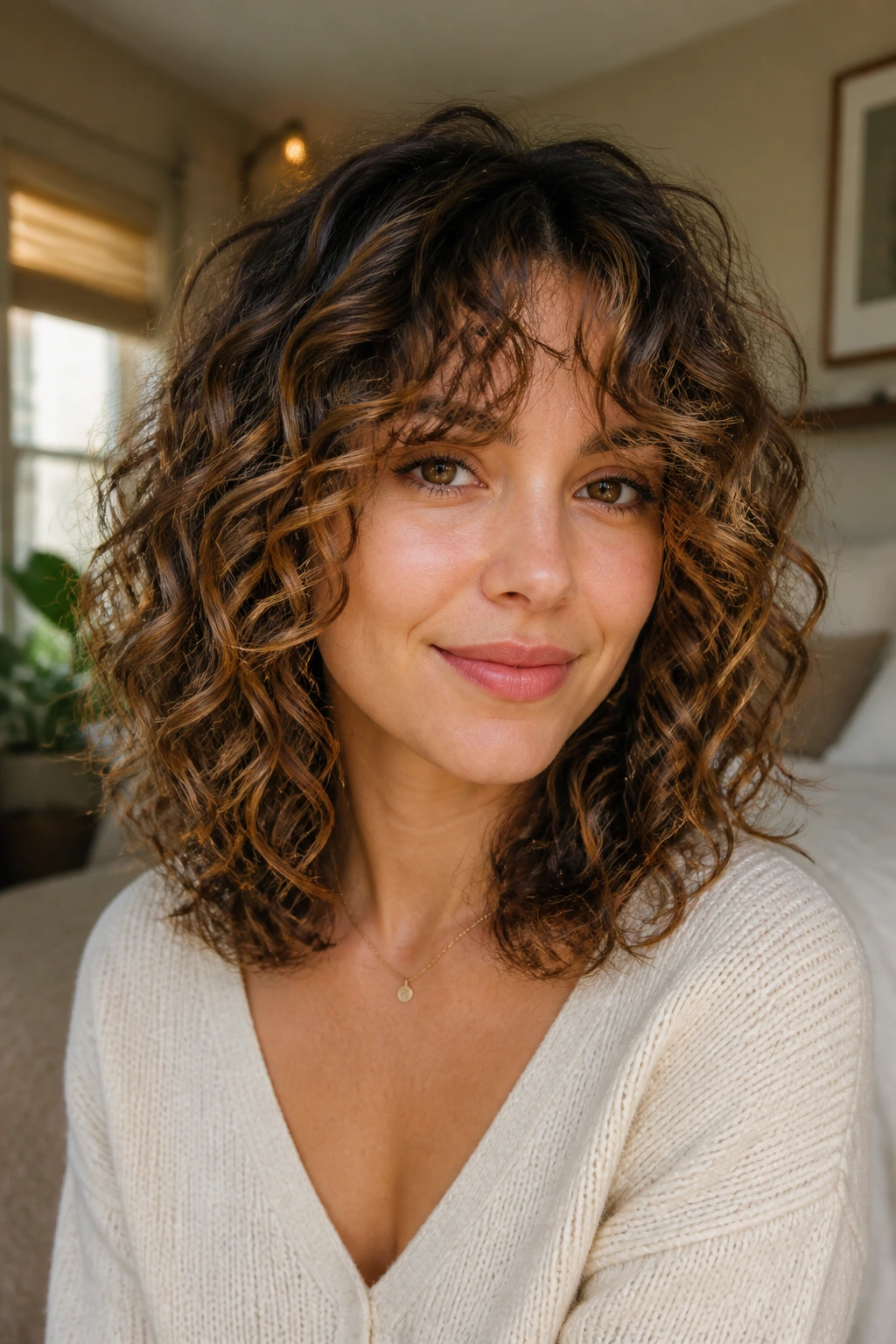
Collarbone-length curls sit in a sweet spot. Long enough to feel versatile, short enough to keep bounce. Add curtain bangs, and the whole cut starts framing the face in a softer, more relaxed way. Caramel placed around the fringe and front layers gives those bangs a little spotlight without making the whole front piece lighter than the rest of the head.
The danger with curtain bangs on curls is over-thinning. You want separation, not see-through strands that disappear once they dry. Keep the bangs long enough to split naturally, and let the layers around the face feed into them. That’s what makes the shape feel intentional instead of chopped in.
This haircut is easy to wear with a middle part or a slight off-center part. It’s flexible. That matters more than people think. A cut that only works one way gets old fast.
13. A Stacked Curly Bob That Lifts at the Nape
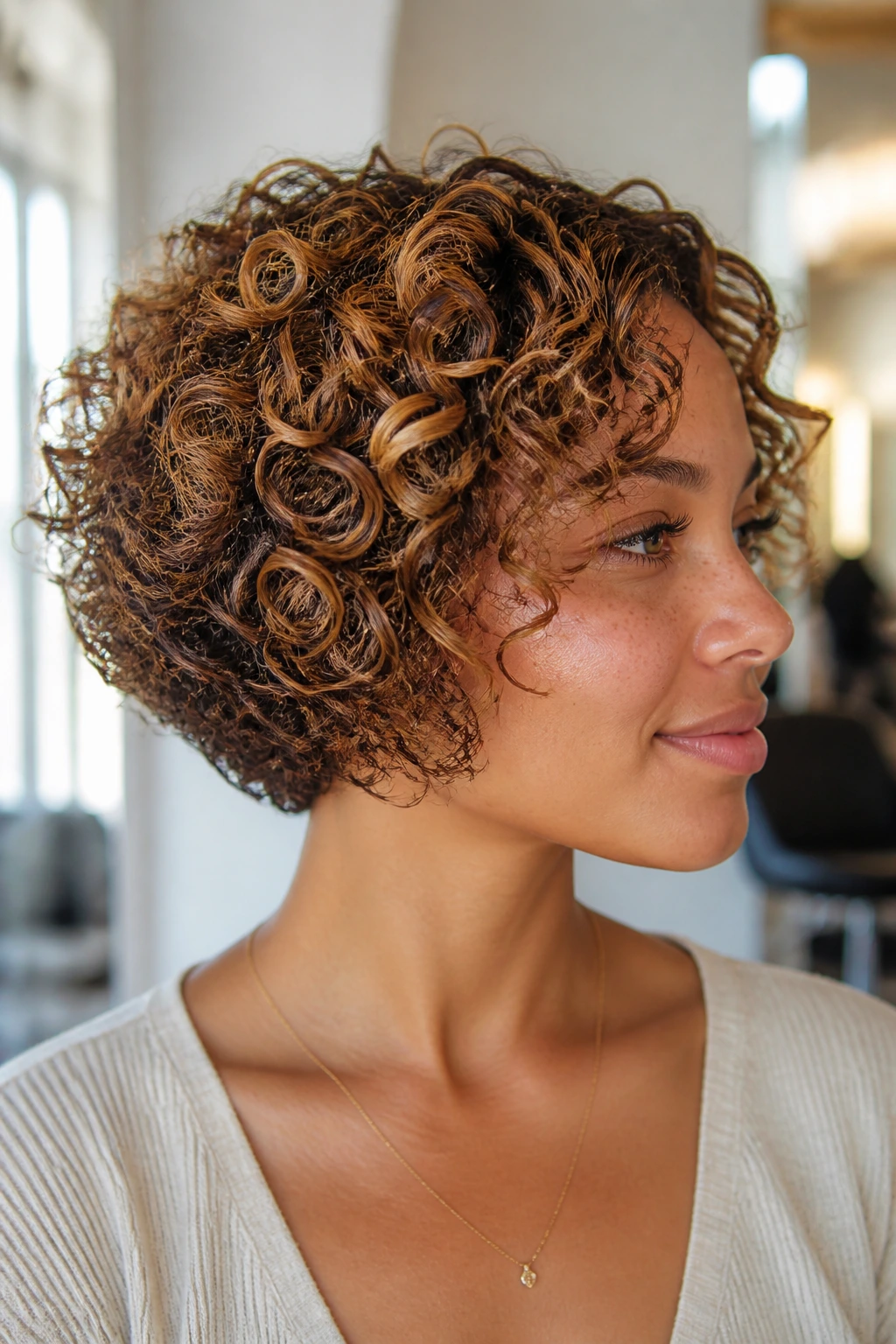
Stacked bobs can go stiff on straight hair. On curls, they can look alive if the stacking is done with a light hand. Shorter layers at the back lift the nape and create a rounded silhouette, while the front stays slightly longer so the shape doesn’t puff out like a bell. Caramel pieces on the crown help show that lift.
This is a smart cut for dense hair that needs weight removed in the right place. The stacking should be visible but not blocky. If the back is carved too hard, the curls at the nape can spring up awkwardly and the line loses softness. Keep the caramel closer to the upper curve of the bob so the lift feels dimensional.
A little root volume spray can help, but the cut should not depend on it. A good stacked curly bob stands on its own. That’s the point.
14. Side-Parted Medium Layers with Soft Caramel Pop
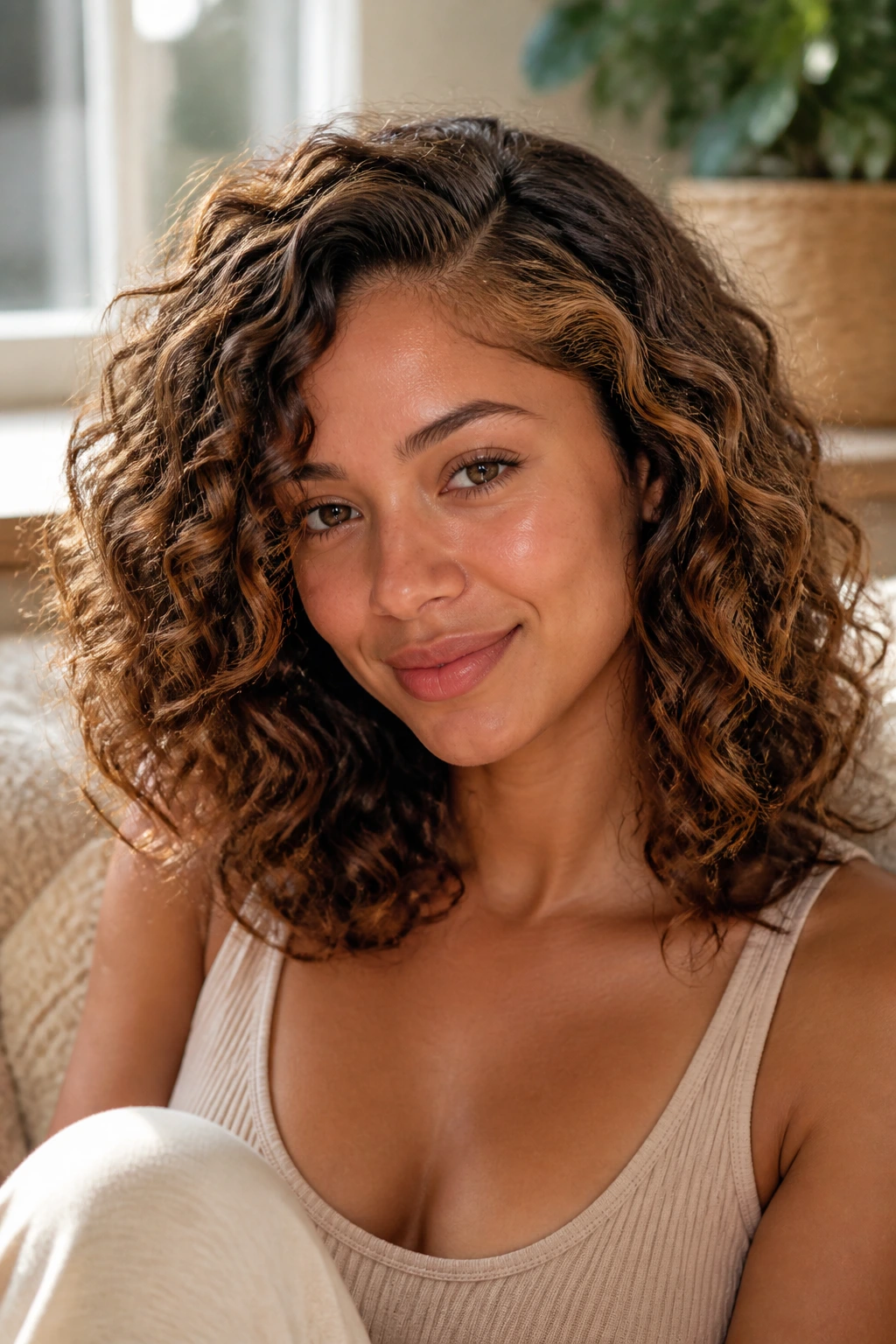
A side part can change everything. It pushes volume toward one side, opens the face, and gives curly hair a more sculpted shape without altering the length much. Medium layers keep the curls from bunching in the middle, and a soft caramel pop near the heavier side adds a little lift where the eye lands first.
This cut is easy to wear if you like a shape that feels relaxed but not careless. The side part works well on rounder faces, though honestly it’s useful on almost anyone if the curl pattern has enough body. The caramel should live near the part, temples, and upper mids, where it can catch the shape of the hair instead of sitting low and disappearing.
The best thing here is the simple change it creates. Same hair. Different attitude. That’s a good haircut.
15. The Halo Cut for Dense Coily Texture
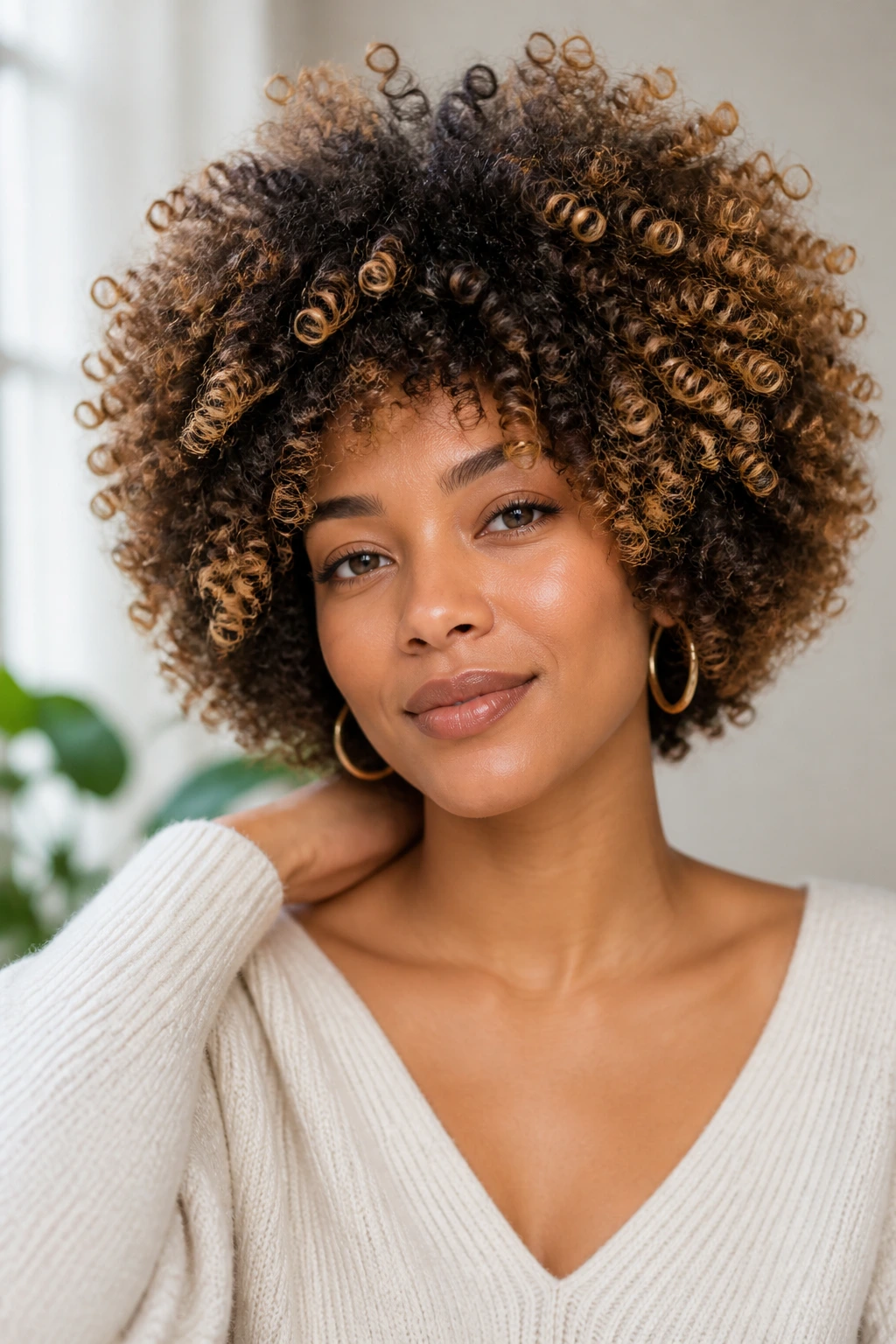
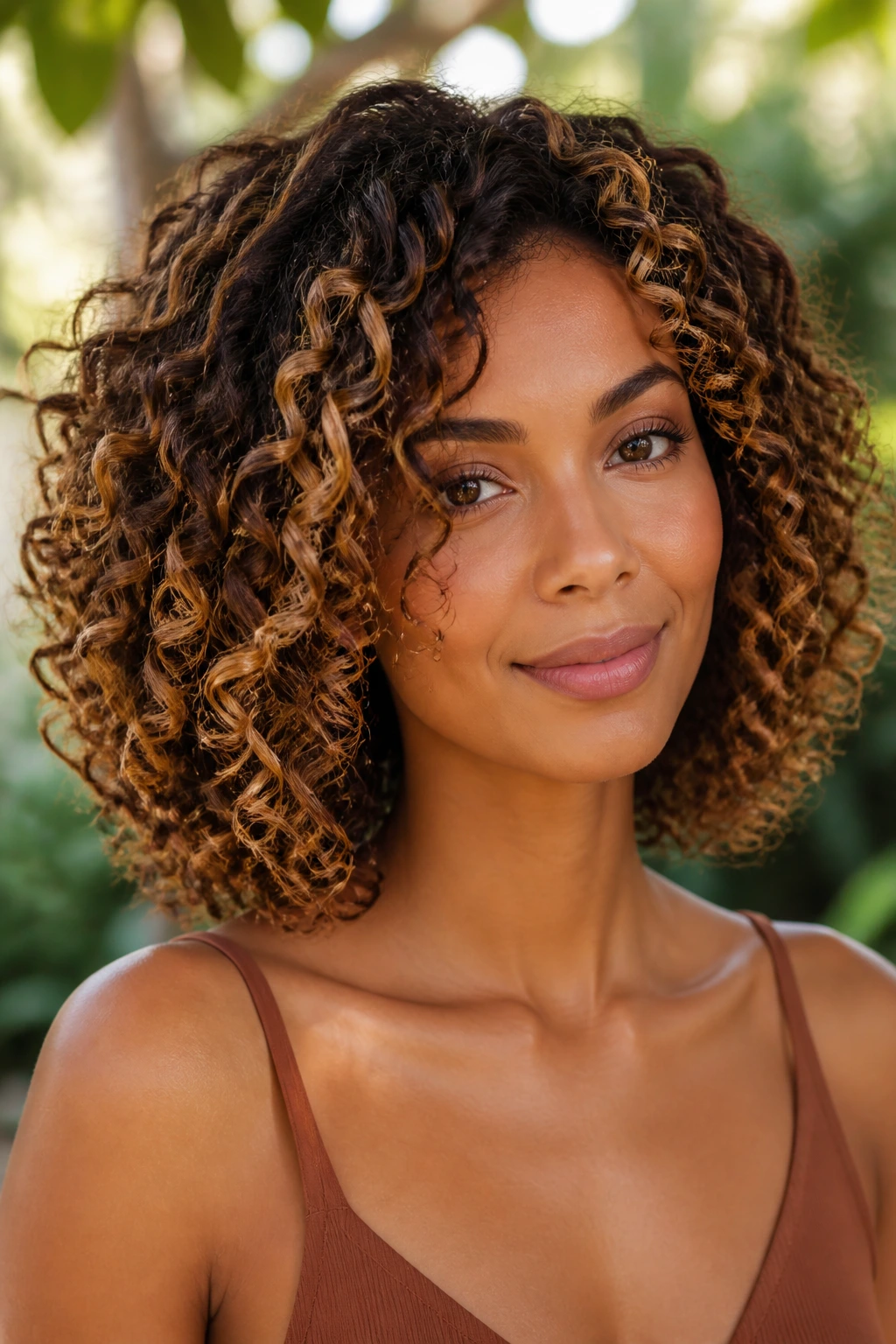
The halo cut is a circle with purpose. It rounds the silhouette of coily hair so the shape floats away from the head in a controlled way instead of building into a square. Caramel tipping around the outer ring of curls adds a warm edge that helps the outline show up.
This cut is particularly useful for dense coils that need weight removed from the crown and sides without losing fullness. The shaping happens in layers that support the curl pattern, not against it. If the caramel is placed only on the very surface, the color can look like a cap. Better to scatter it around the outer halo and at a few face-framing points.
The result is bold but not loud. There’s plenty of texture, plenty of shape, and enough warmth in the color to keep the cut from reading too stark.
16. Shaggy Mid-Length Curls with Toasted Caramel
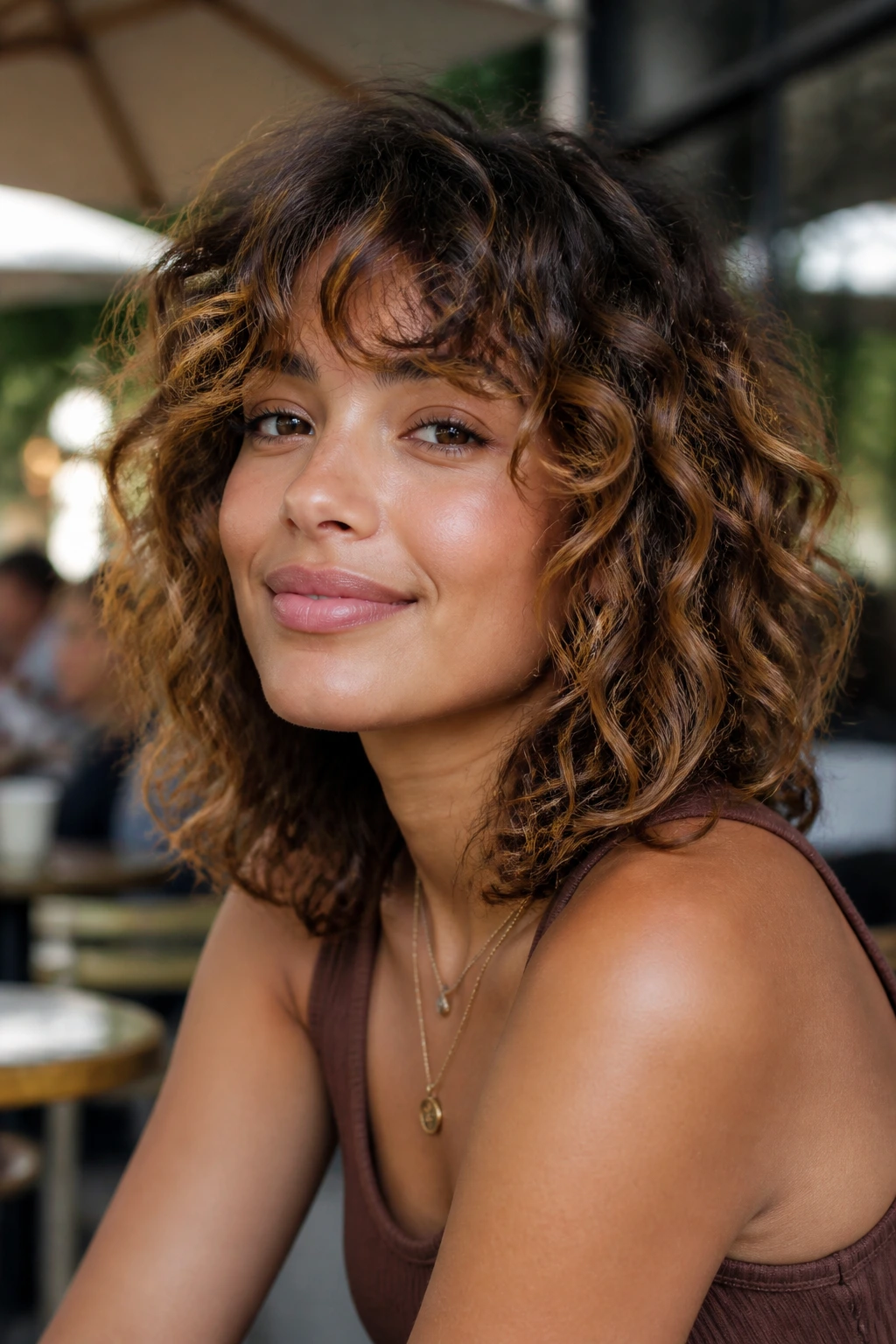
Mid-length curls can feel stuck between two personalities. Too short and they bounce everywhere; too long and they slump. A shaggy cut solves that by breaking the length into active pieces that move independently. Toasted caramel gives the shape a warm, slightly smoky finish that works especially well on medium and dark bases.
I like this cut for people who don’t want a polished, salon-perfect finish every single day. It benefits from a little mess. The layers should be irregular enough to keep the ends light, but not so choppy that the curl clumps separate into weird little bits. Toasted caramel around the front and upper mids adds depth where the layers stack.
It’s a cut that gets better when you touch it less. That may be the most useful thing about it.
17. The Bixie with Sweeping Highlighted Fringe
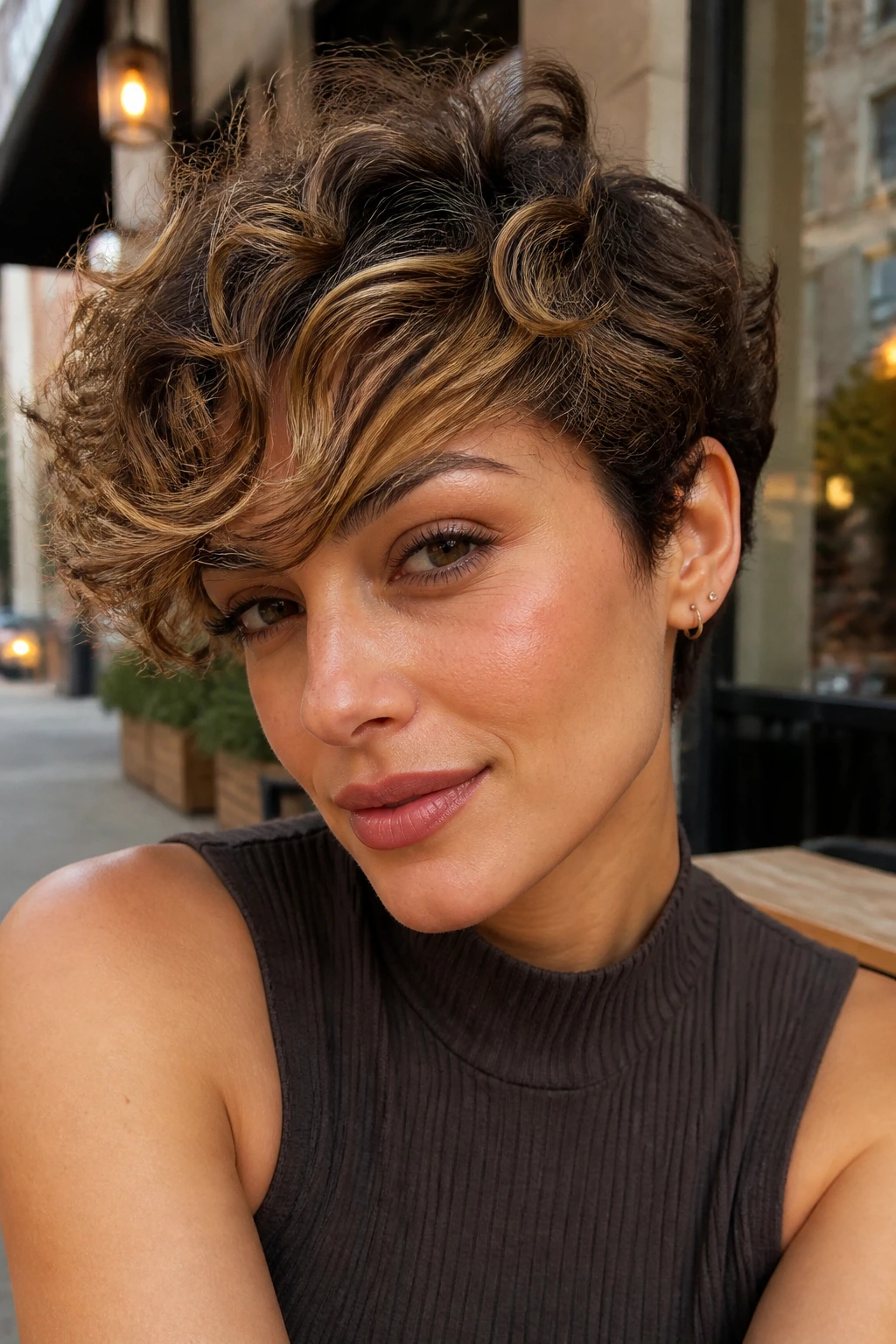
The bixie sits between a bob and a pixie, and curly hair makes that in-between space interesting. There’s enough length to curl, but the outline stays short enough to feel fresh and cropped. A sweeping fringe with lighter caramel through the front creates a clean line across the forehead and keeps the cut from collapsing into the cheeks.
This is a good pick if you want something playful without going full short crop. The key is keeping the back and sides tight enough to support the top length. Caramel in the fringe should be slightly brighter than the rest, because the front carries most of the visual weight. A dull fringe can flatten the whole style.
The bixie is a little less predictable than a standard bob. That’s part of the appeal. It moves, it flips, it changes with the part.
18. Long Ringlets with Face-Framing Money Pieces
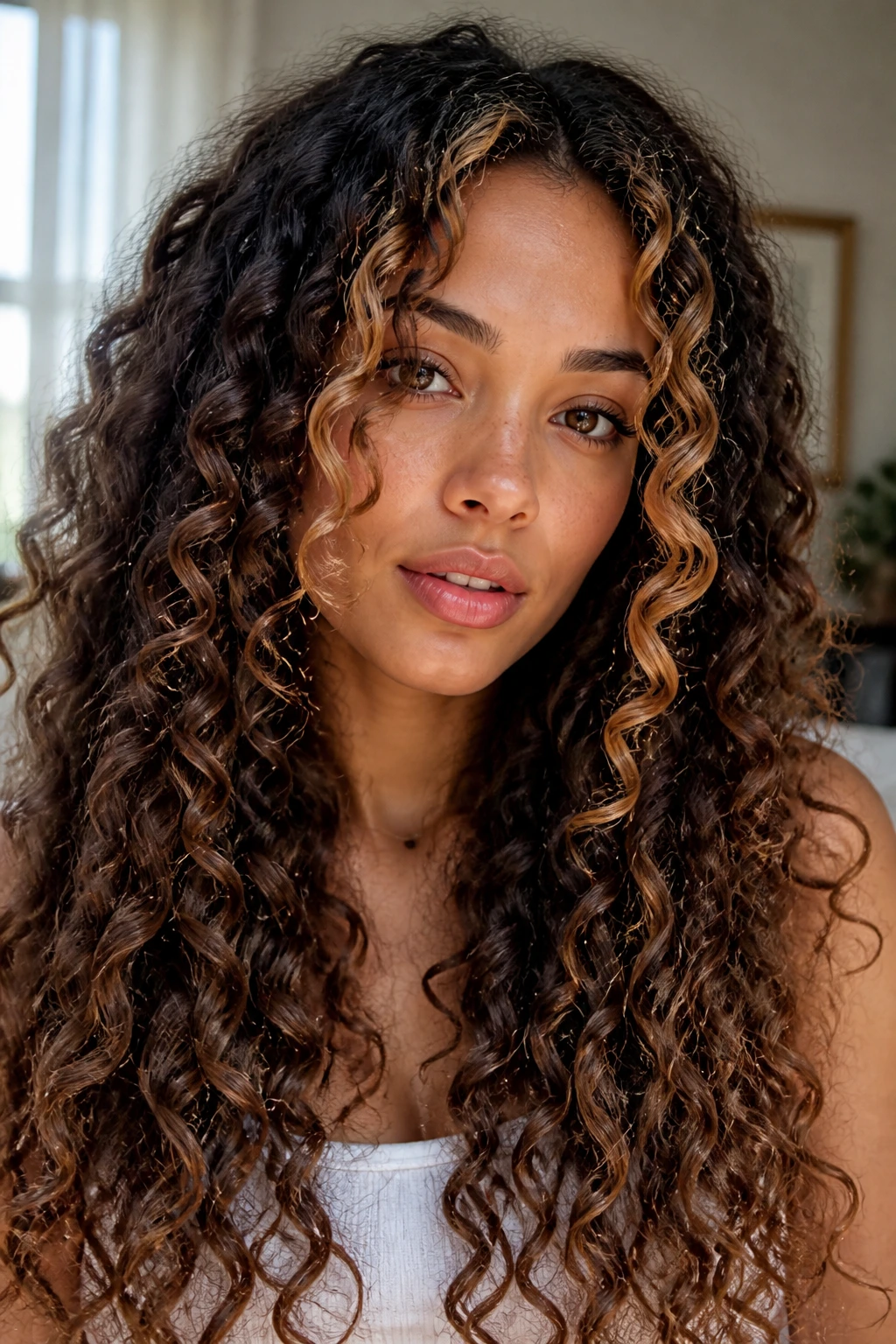
Long ringlets can look luxurious or heavy, depending on where the layers land. If the shape is sound, they fall in vertical lines that feel elegant without being stiff. Money pieces at the face — lighter caramel ribbons right by the cheeks — bring the focus upward and keep the length from taking over the whole look.
This cut is for someone who loves long hair but wants the front to do some work. The face-framing pieces should start high enough to be seen when the hair is worn down and low enough not to fray into fuzz. With ringlets, the highlight should wrap with the curl, not sit on top like paint.
A side part can make this shape feel more dramatic, while a center part keeps it softer. Either way, those front caramel pieces carry a lot of the style.
19. Rounded Afro with Subtle Caramel Tipping
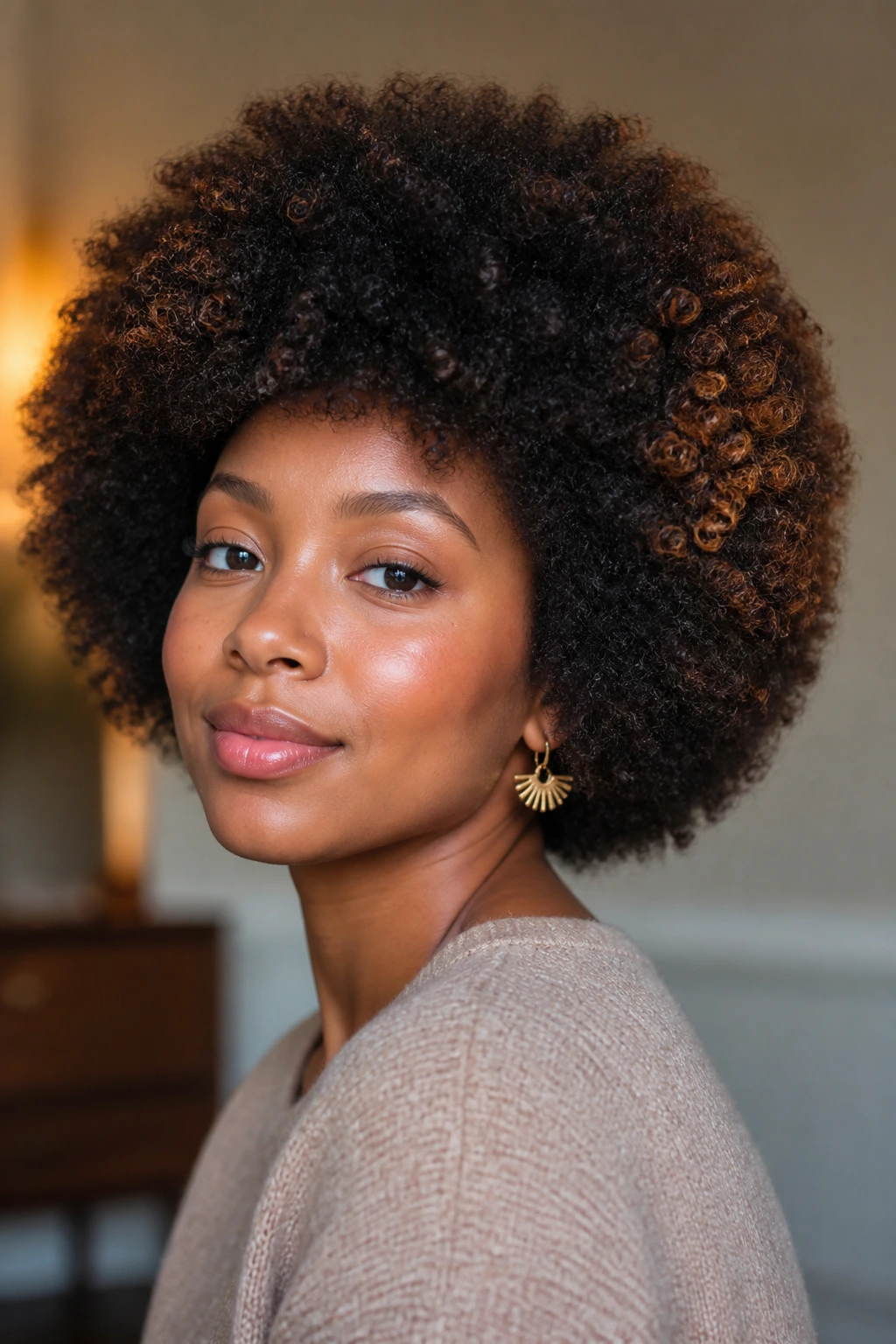
A rounded afro has one job: keep the silhouette balanced. The cut should preserve the fullness while shaping the edges into a clean, intentional curve. Subtle caramel tipping on the outer coils gives the shape a warm edge without pulling the eye away from the roundness.
This is not the place for streaky lightening. The color should look like it belongs to the hair, not like it was laid on top to prove a point. A few lighter tips around the perimeter and crown can define the shape better than a lot of bright pieces. That’s especially true on coily textures where the pattern itself is already visually rich.
The rounded afro is one of the strongest examples of cut and color working together. The cut gives the line. The caramel gives the outline. That’s all it needs.
20. Shoulder-Grazing Layers with a Deep Side Part
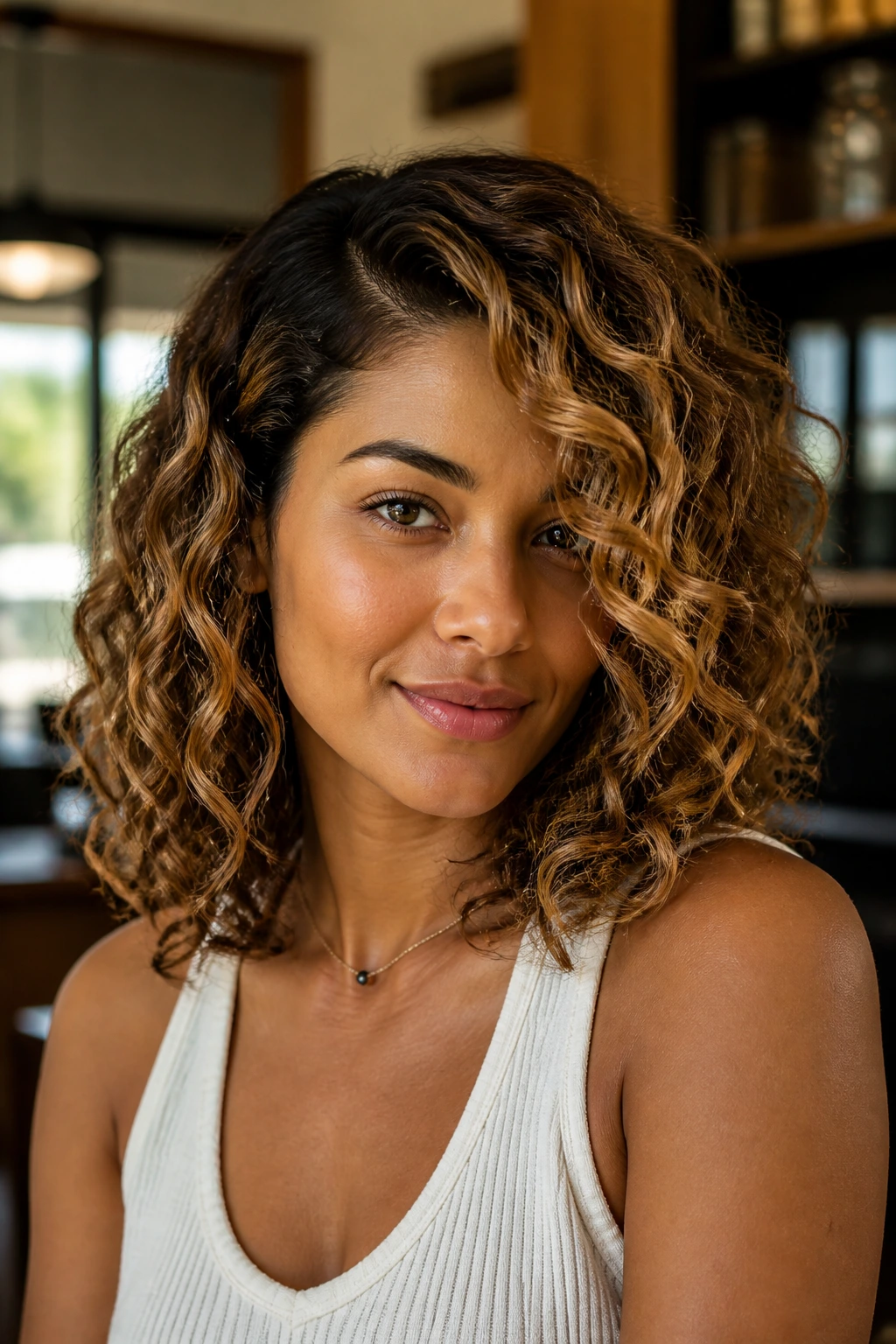
Shoulder-grazing curls have range. They’re long enough to tuck behind the ears, short enough to dry faster than a long mane, and easy to shape with a side part that shifts the whole mood. Deep side parts create lift at the crown, and caramel pieces around the heavy side keep the shape from feeling lopsided.
The cut should have enough internal layering to stop the ends from hanging in one thick block. I like a few lighter strands near the part and cheekbone, then a softer hand through the rest. The result is flattering without trying too hard. That’s a rare thing in hair.
If your curl pattern tends to collapse at the roots, this length can help. The weight isn’t so long that it drags everything down, but it’s not so short that it balloons. It sits in a useful middle zone.
21. The Curly Mullet with Controlled Caramel Contrast
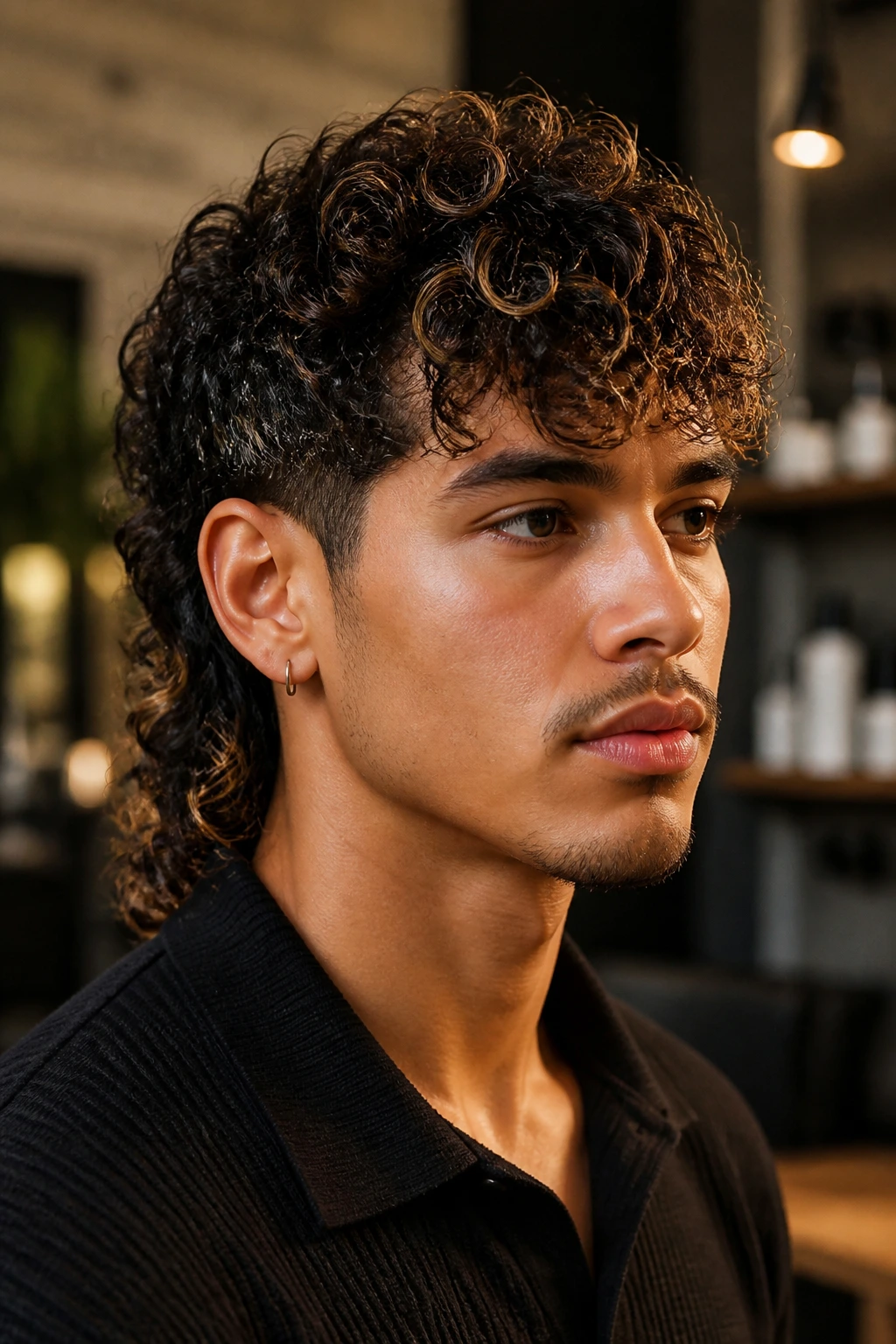
Yes, a curly mullet can work. When the top and sides are shaped with care, the cut reads edgy rather than messy. Shorter pieces around the face and crown keep the front active, while the back stays longer and looser. Controlled caramel contrast — not random brightness — makes the structure easier to read.
This style is best when the wearer likes a little attitude. It’s not trying to be polite. The color should follow the front and crown pieces so the eye tracks the shape. If the lightness is spread too evenly, the mullet loses its punch and starts looking unfinished instead.
The trick is restraint. Keep the contrast warm and targeted. That’s what makes the cut feel deliberate instead of like it grew in sideways.
22. Soft Layers for Fine Curls and Delicate Highlights
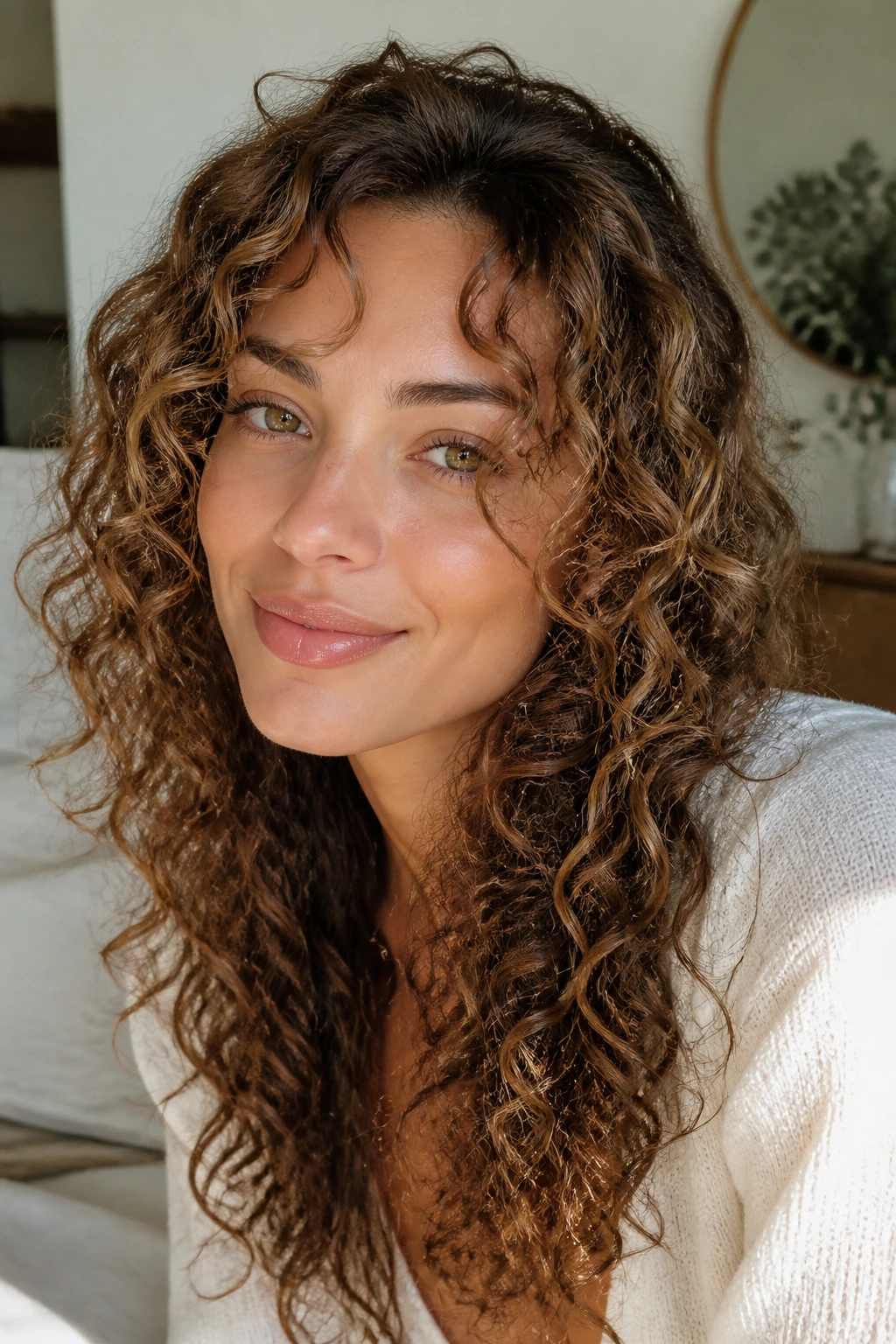
Fine curls need a gentle hand. Too many layers and the ends go see-through. Too few and the shape sinks. Soft, long layers keep movement in the hair without stripping away the density that makes the curls visible. Delicate highlights in a narrow caramel range give dimension without exposing every sparse area.
This is one of the more practical cuts on the list because it doesn’t overpromise. It works with what the hair already does. The highlights should be thin, slightly blurred, and placed where the curls naturally separate. That avoids the zebra effect that fine hair often gets when the lighter pieces are too wide.
If your curls are fine, less is more — but not in a vague, hand-wavy way. Less means narrower highlight sections, less aggressive layering, and a lighter touch on the ends. That’s the formula.
23. The Curly Lob with Invisible Layers and Warm Stripes
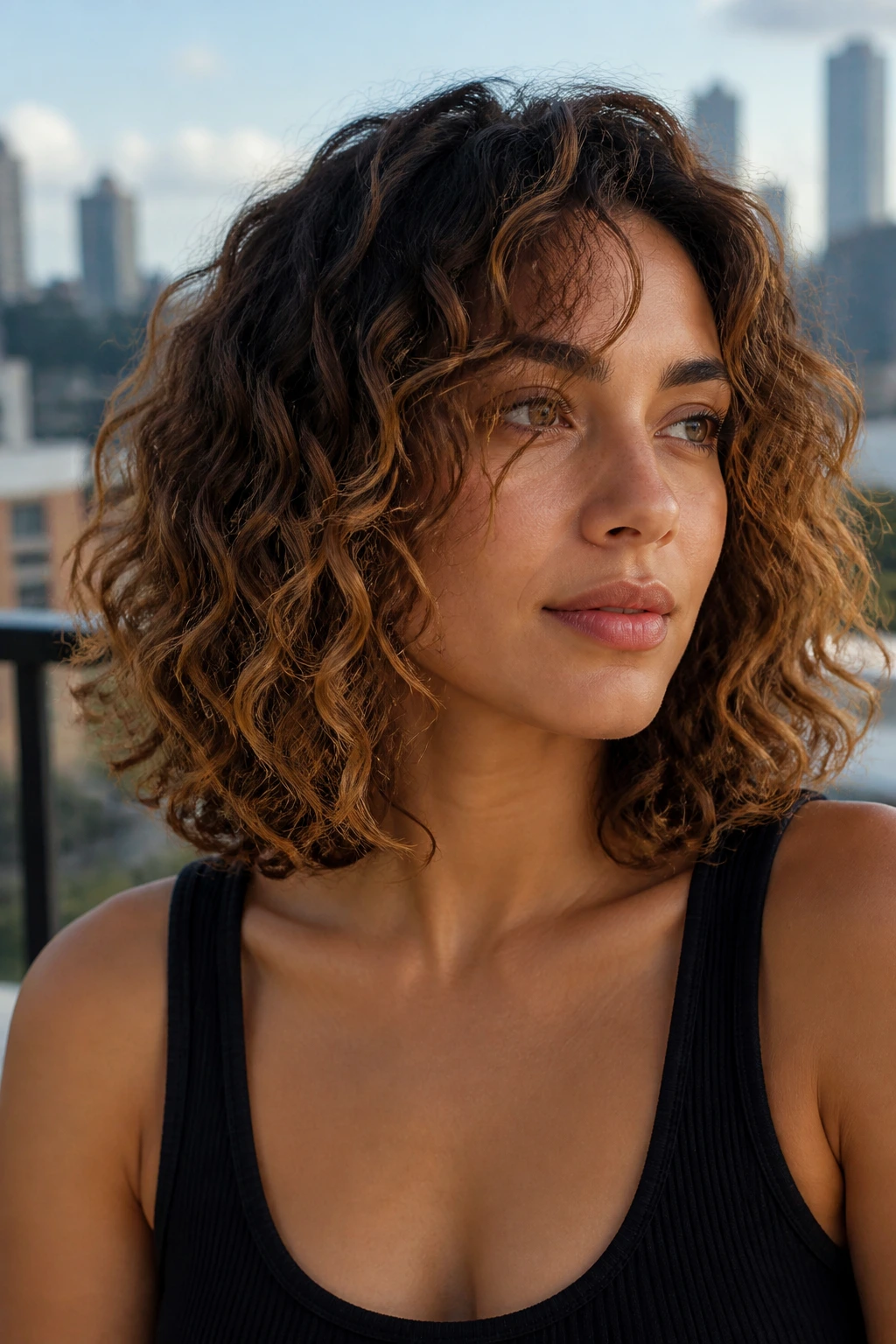
A curly lob is one of those cuts people keep returning to because it’s hard to mess up when the layers are handled well. Invisible layers mean the shape stays clean on the surface while the bulk is removed inside the cut. Warm caramel stripes, placed sparingly, give the lob enough detail to feel styled without looking busy.
This is a strong choice for medium curls that want structure but not a full short haircut. The ends should sit around the collarbone or just below, depending on shrinkage. Highlights placed through the mid-lengths and front can make the lob move visually, which is helpful when the curl pattern is dense enough to hide the cut line.
There’s a reason this shape keeps showing up. It wears well with a middle part, a side part, or a tucked-behind-the-ear look. That flexibility earns its keep.
24. Boho-Length Curls with Multi-Tone Caramel Balayage
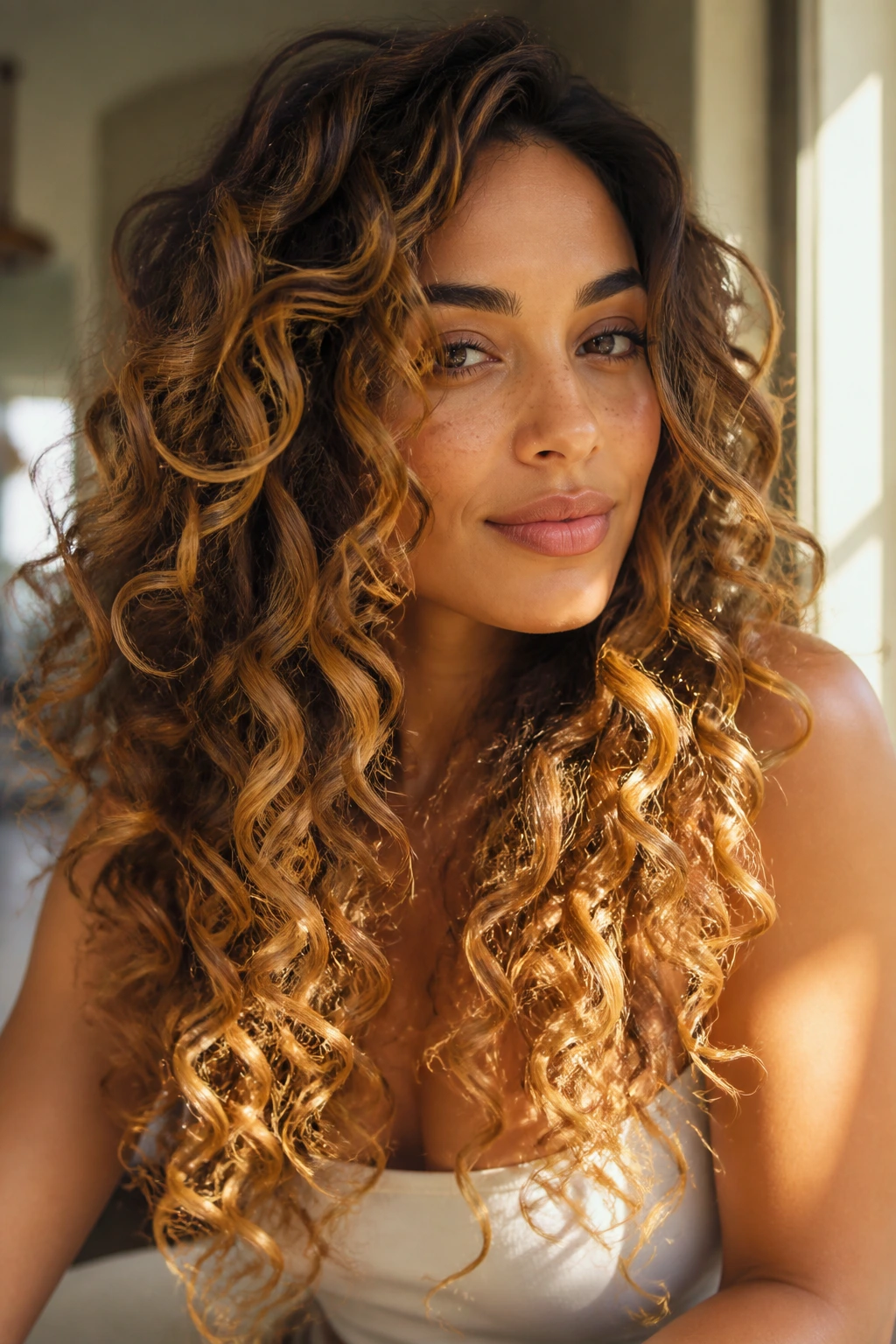
Long boho curls need depth, or they can look like a single curtain. Multi-tone balayage fixes that by mixing a few caramel notes — honey, toffee, and a slightly deeper bronze — so the color shifts as the curls move. It feels richer than one flat shade and keeps the length from disappearing into one block.
The cut itself should be layered enough to stop the bottom from feeling heavy, but not so layered that the length loses its sweep. The color works best when it starts around the mids and becomes a little lighter toward the ends. That creates a soft fade that suits long curls better than hard stripes do.
This look is for someone who likes a more relaxed, romantic finish. It’s also a good option if you want color that can grow out without screaming for attention every six weeks.
25. Soft V-Cut with Scattered Caramel Pieces
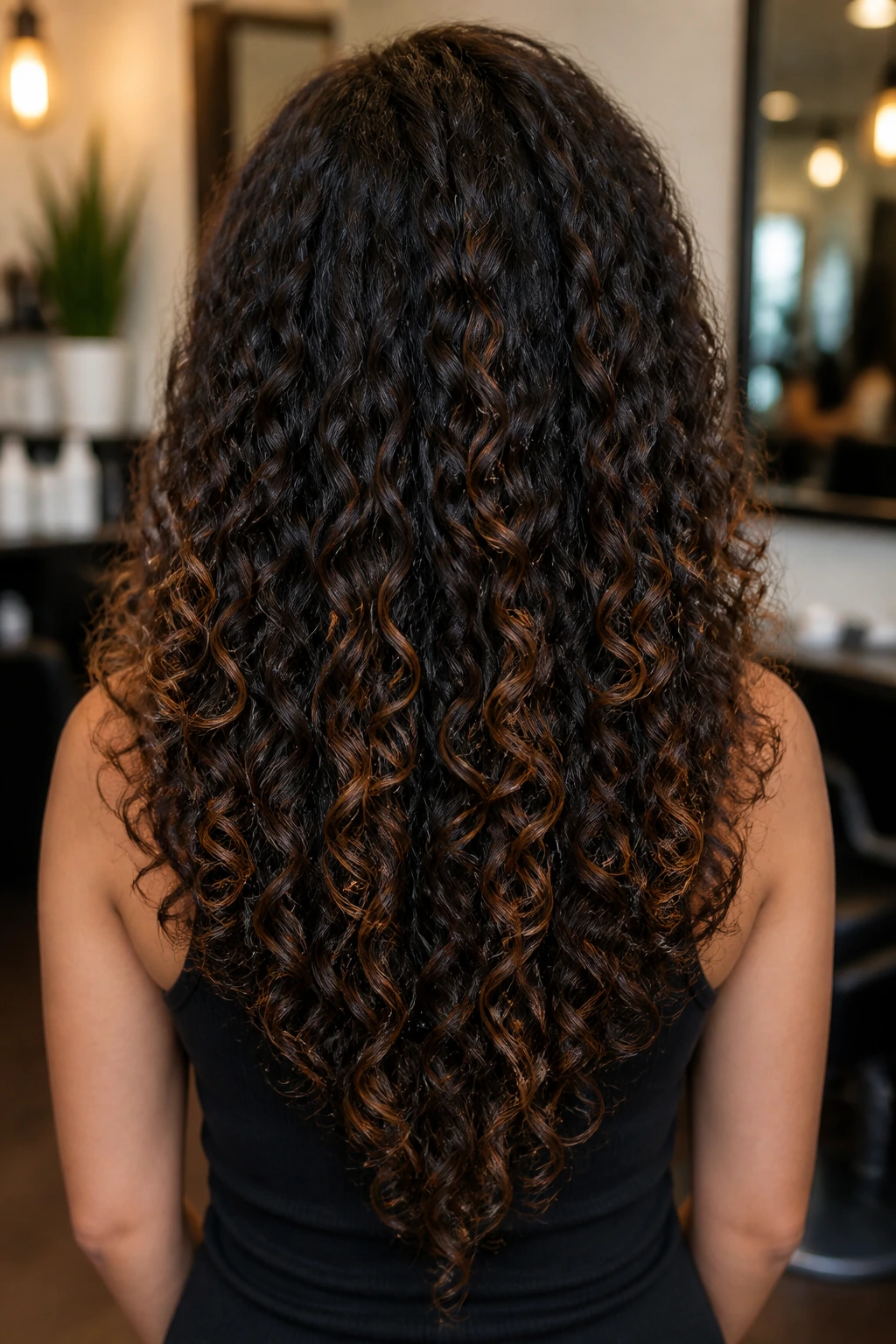
A V-cut gives long curly hair a pointed back shape that keeps the length from feeling blunt. On curls, that point softens as the hair dries, which is exactly why the shape works. Scattered caramel pieces through the lower mids and ends show off the line without making the whole head bright.
This is a nice finish if you love length and need the ends to stay light. The V shape keeps the bottom from building too much weight in the center, and the scattered highlights stop the perimeter from going dark and dense. It also plays well with half-up styles, where the pointed back shows up more clearly.
I like this cut for people who have been growing their curls out and want a cleaner shape without losing inches. It’s familiar, but not dull. That’s a useful thing.
The Cutting Logic That Makes Curls Sit Better
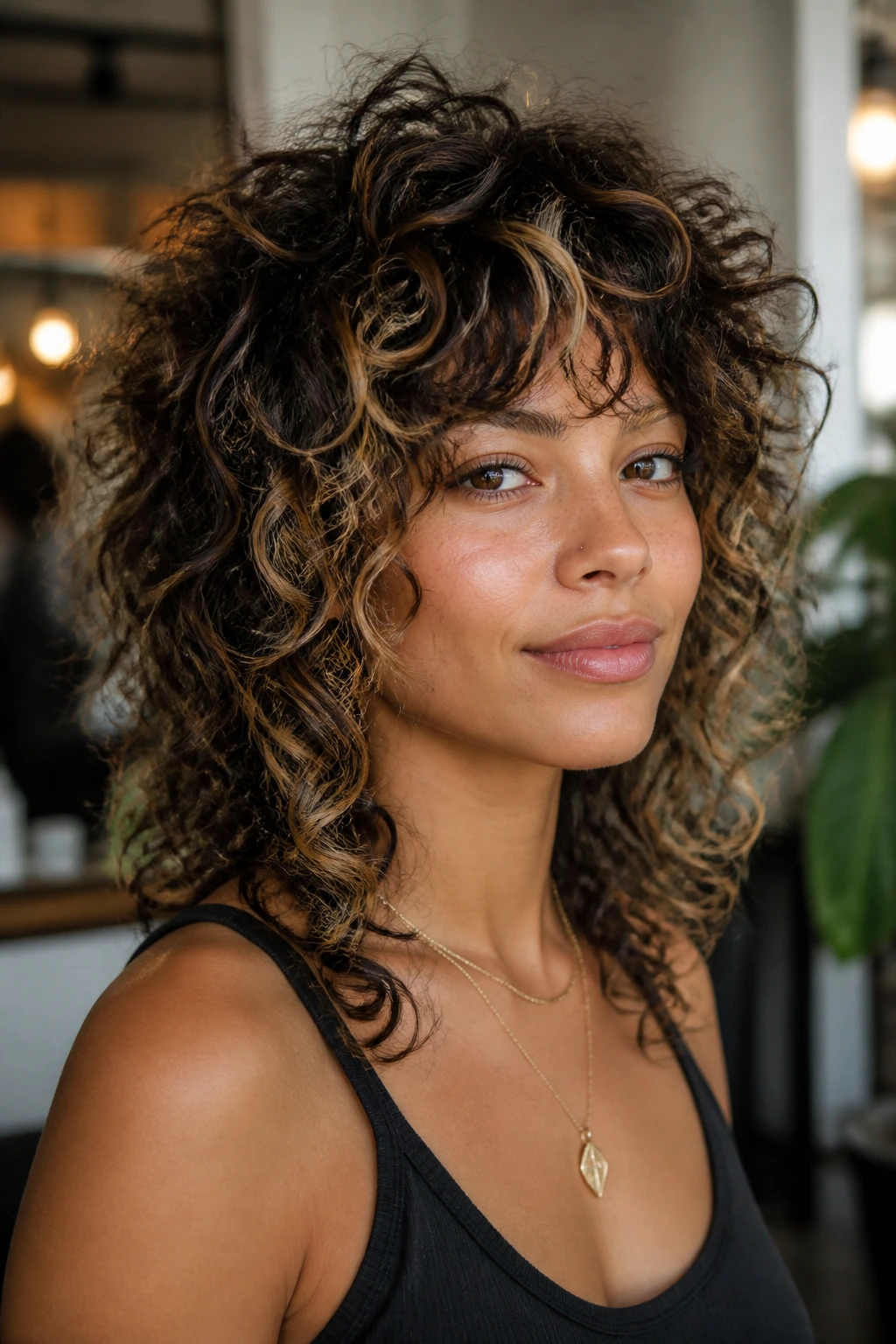
Curly hair does not behave like straight hair with a twist. It contracts, expands, and shifts depending on humidity, product, and how much weight is hanging from the ends. A good haircut respects that. The right layers remove bulk where the curl is fighting itself and leave length where the shape needs anchor.
Caramel highlights work because they show the contour of the cut. A lighter ribbon on the raised part of a curl makes the bend easier to read. A softer piece near the face gives the style a focal point. A little depth at the roots keeps the color from turning into a helmet line. None of that happens by accident.
Dry cutting helps in many curly textures because the stylist can see the real fall of the hair. Wet cutting still has its place, especially for some looser patterns, but whoever is shaping the cut needs to know where the curl lands once it dries. That’s the difference between “shorter than expected” and “exactly right.”
Tools That Help the Cut and Color Stay Honest
-
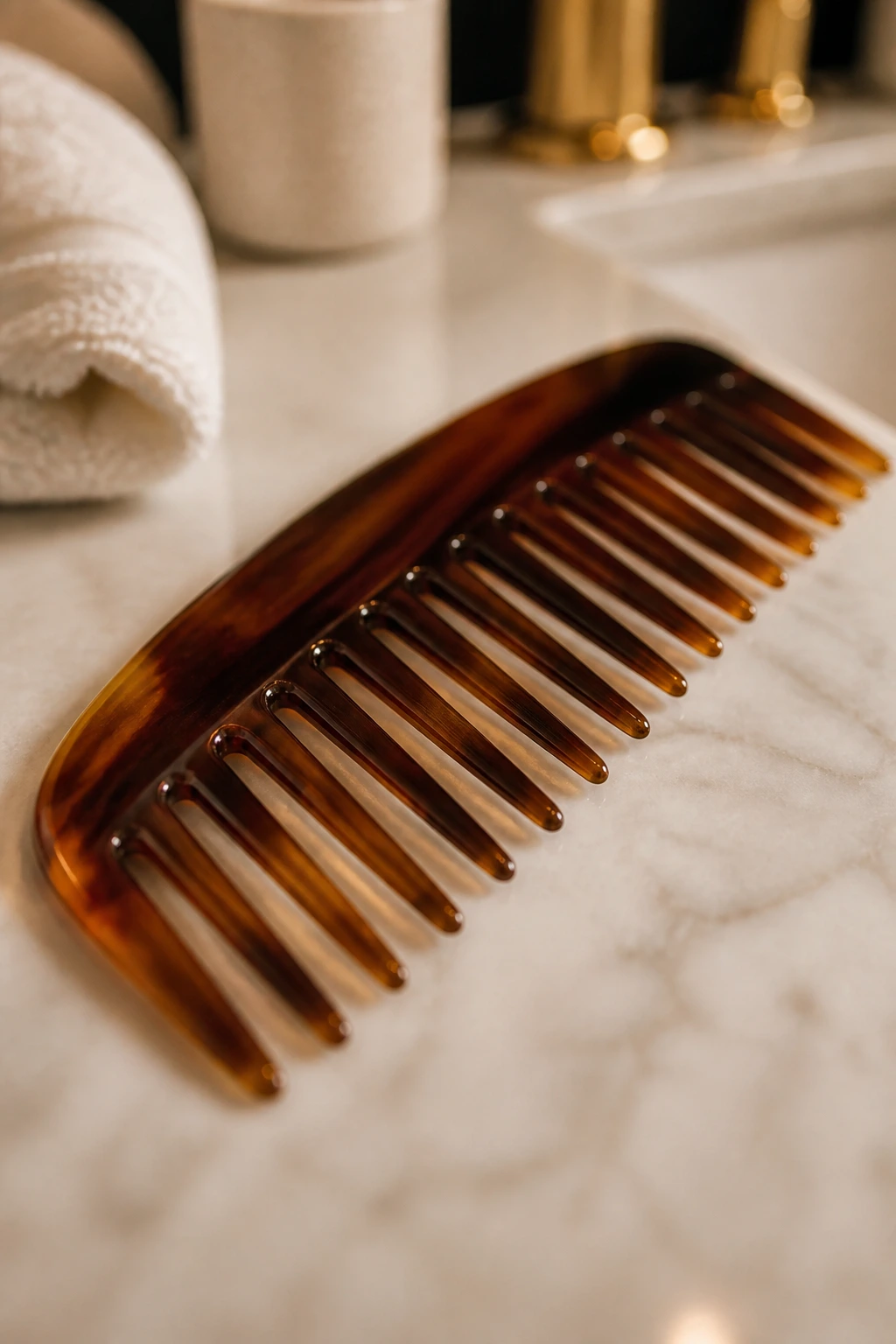
Wide-tooth comb: Use this in the shower with conditioner to detangle without stretching the curl pattern too hard.
-
Curl clips: These lift the roots while the hair dries and stop the crown from collapsing flat against the scalp.
-
Microfiber towel or cotton T-shirt: Regular terry cloth roughs up the cuticle and can make the caramel pieces look frizzy before they’ve even dried.
-
Diffuser attachment: A diffuser lets you dry the roots without blasting the curl into a puffball; medium heat and low speed are the sweet spot.
-
Leave-in conditioner: This keeps the highlighted sections from feeling dry, which matters because lightened curls lose moisture faster.
-
Curl cream or gel: Pick one that gives hold without a crunchy shell if you want the cut line to stay visible.
-
Color-safe shampoo: Caramel tones fade fast when the shampoo is too stripping, so use something gentle between color visits.
-
Silk pillowcase or bonnet: Friction scrambles the shape overnight and roughs up the highlighted ends first.
How to Choose the Right Caramel Tone for Your Base Color
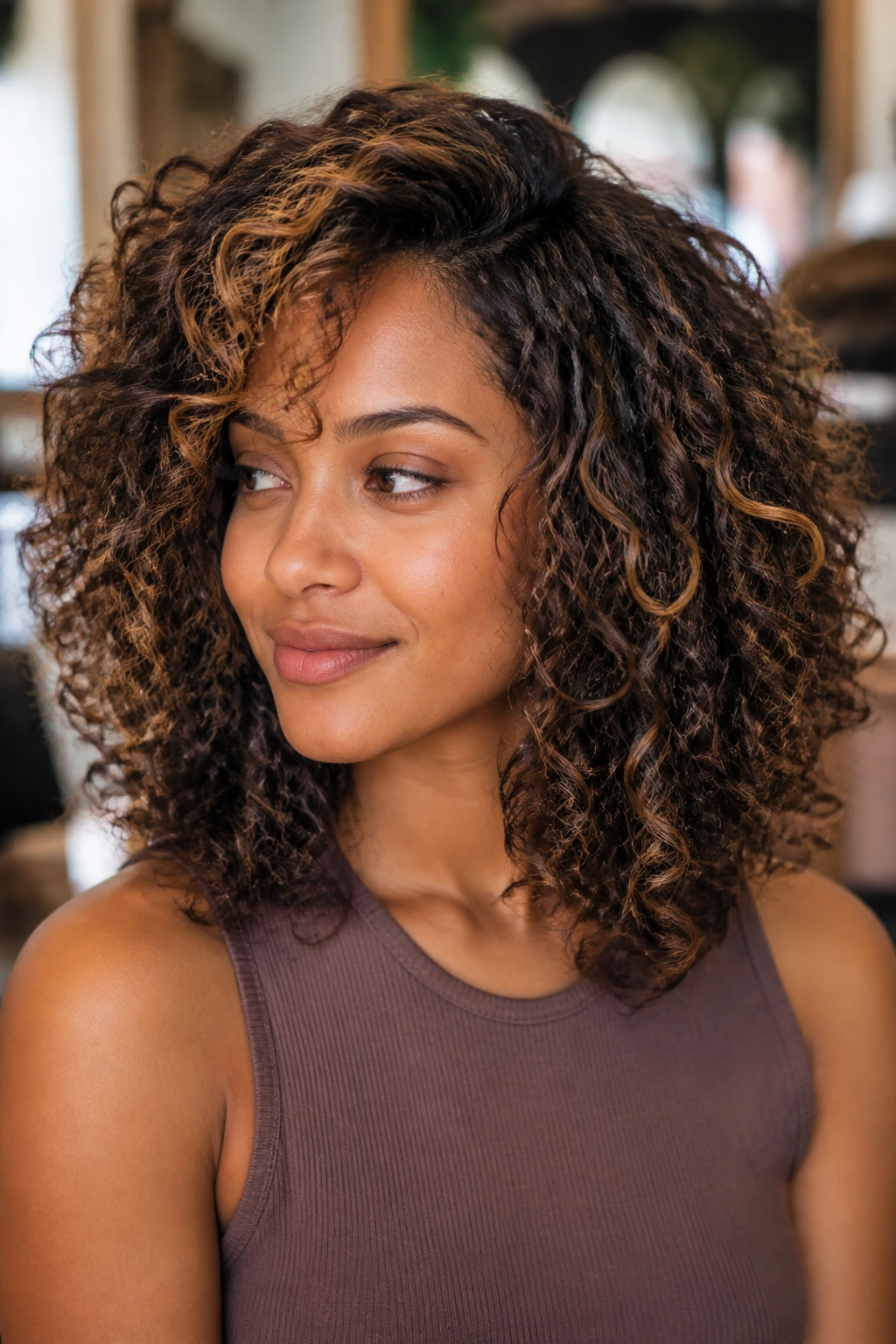
Base color matters more than people want to admit. On dark brown hair, pale caramel can go loud fast, which is not always the goal. A toasted caramel or bronze-caramel blend often looks richer and keeps the curls from appearing outlined in chalk. On medium brown bases, honey caramel can lift the whole shape without turning it brassy.
If your hair is black or very deep brown, ask for low-contrast ribbons first. You can always go brighter later. The safest caramel tones for deeper bases tend to sit one to three levels lighter, with warmth that feels golden rather than yellow. That keeps the color from reading stripy against the curl pattern.
Fine curls usually need thinner highlight sections than dense coils. Coily textures can support a little more contrast on the outer layer, but the interior still needs depth. If every strand is the same brightness, the shape stops having shadows, and curly hair needs those shadows to show movement.
Small Tweaks That Change the Whole Look
Color Enhancement: A clear gloss or warm toner between full highlight services keeps caramel from drifting muddy or turning too gold. That one step can change the whole mood of the cut.
Shape Adjustment: Ask for a little more length at the perimeter if you like softness, or a bit more crown layering if you want lift. Two inches in the right place matter more than ten extra layers.
Volume Control: Fine curls usually look better with fewer, longer layers, while dense curls can handle more internal shaping. The wrong layer count is where a lot of “it looked better on the model” disasters start.
Face-Framing: A few lighter pieces near the cheekbone can do more than a full set of global highlights. That’s the move I’d spend money on first if the budget is tight.
Make-It-Yours: If you prefer low maintenance, choose a deeper caramel root melt. If you like a brighter edge, ask for slightly lighter ends and keep the root shadow soft.
Keeping the Cut and Color Fresh Between Appointments
Curly hair looks best when the shape is trimmed before the ends get stringy. For most of these cuts, an 8- to 12-week trim cycle keeps the outline clean. Shorter cuts like the pixie, bixie, and stacked bob may need attention a little sooner because even a half-inch of growth can change the balance.
Caramel highlights hold their tone better when you treat them like colored fabric. Wash with lukewarm water, not hot. Use a gentle shampoo, and don’t strip the hair every day if you can help it. A gloss or toner refresh every 6 to 10 weeks can keep warm caramel from fading into a dull beige.
Sleep care matters more than people think. A silk pillowcase cuts down on friction, and a loose pineapple or bonnet keeps the curl clumps from breaking apart. If the ends start looking dry, a tiny bit of leave-in on damp hands goes a long way. Heavy oil is usually too much; it sits on top and makes the lightened pieces look flat.
Common Mistakes That Flatten the Curl Pattern
The biggest one is cutting curls as if they’ll dry smaller in a neat, predictable way. They won’t. If the stylist doesn’t account for shrinkage, the cut can end up too short or oddly round. The fix is simple: talk through how much your hair bounces up when it dries, and if possible, ask for a dry or mostly dry curl check before the final snip.
Another problem is placing caramel too evenly. Uniform highlights can make curls look stripy or helmeted, especially on dense hair. Better to cluster the brightness around the face, canopy, and a few ends so the eye gets movement instead of wallpaper.
Over-layering fine curls is a classic mistake. The ends go thin, the shape gets stringy, and the whole cut loses strength. On the flip side, under-layering dense curls leaves you with a heavy pyramid. Neither extreme is helpful. The right amount of layering depends on density, not just length.
Finally, don’t ignore how much maintenance you’re willing to do. A bright caramel pixie or highly layered shag looks sharp only if you refresh it often enough to keep the outline from slipping. If you want something quieter, pick a cut that grows out softly. That’s not settling. That’s choosing well.
Variations and Alternatives Worth Trying
Soft Honey Melt: Keep the cut the same but shift the color toward honey and beige caramel. This is a good move if your skin tone leans cooler or if you want the highlights to look gentler in indoor light.
Deeper Toffee Shadow: Ask for a shadow root and a deeper caramel through the mids. It adds contrast without making the grow-out line obvious, which is handy if you don’t want frequent salon visits.
Chunkier Face-Frame: Instead of scattered highlights, use a few thicker front pieces that start near the temple. This works especially well on bobs, lobs, and shags when you want the face frame to be the main event.
Bronze-Glow Finish: Add bronze and amber tones to the caramel mix for dark bases or coily textures. The result reads warm and dimensional without going too light.
Soft Copper-Caramel Blend: If you like a little more edge, push the caramel toward copper. It gives curly hair extra warmth and can make layered cuts look sharper, especially around the fringe.
Questions People Ask Before Sitting in the Chair
Should curly hair be cut wet or dry?
Dry cutting lets the stylist see shrinkage and curl pattern, which is useful for shags, bobs, and layered cuts. Some stylists still combine both methods, and that can work well too, as long as they check the final shape in its natural state.
Do caramel highlights damage curly hair more than darker color?
Any lightening service can dry the hair if it’s overdone, but curly hair usually feels the effect faster because the pattern already loses moisture more easily. A careful lift, proper toner, and a good conditioning routine keep the hair in much better shape.
What if my curls are fine and I’m afraid of losing density?
Choose longer layers, narrow highlight sections, and avoid carving too much out of the ends. Fine curls need the illusion of fullness, not a lot of internal removal.
Will caramel highlights work on very dark hair?
Yes, but the tone matters. On deep brown or black hair, bronze-caramel or toasted caramel usually looks richer than a pale golden shade. Start with softer contrast if you want a more natural result.
How often should I trim a curly bob or shag?
Every 8 to 10 weeks is a good target for short and medium shapes. Long layers can sometimes stretch to 12 weeks, but once the curl line starts getting bulky or uneven, the shape is asking for help.
Can I keep the highlights low-maintenance?
Absolutely. A root shadow, balayage placement, and a caramel tone close to your natural depth make the grow-out softer. The more you chase a pale blonde effect, the more upkeep you buy.
What if my highlights make my curls look frizzy?
That usually means the lightened sections need more moisture and gentler styling, not more product piled on top. A leave-in, a lighter cream, and a diffuser on low heat usually fix the rough look faster than heavy oils do.
A Cut That Still Looks Like Hair, Not a Helmet
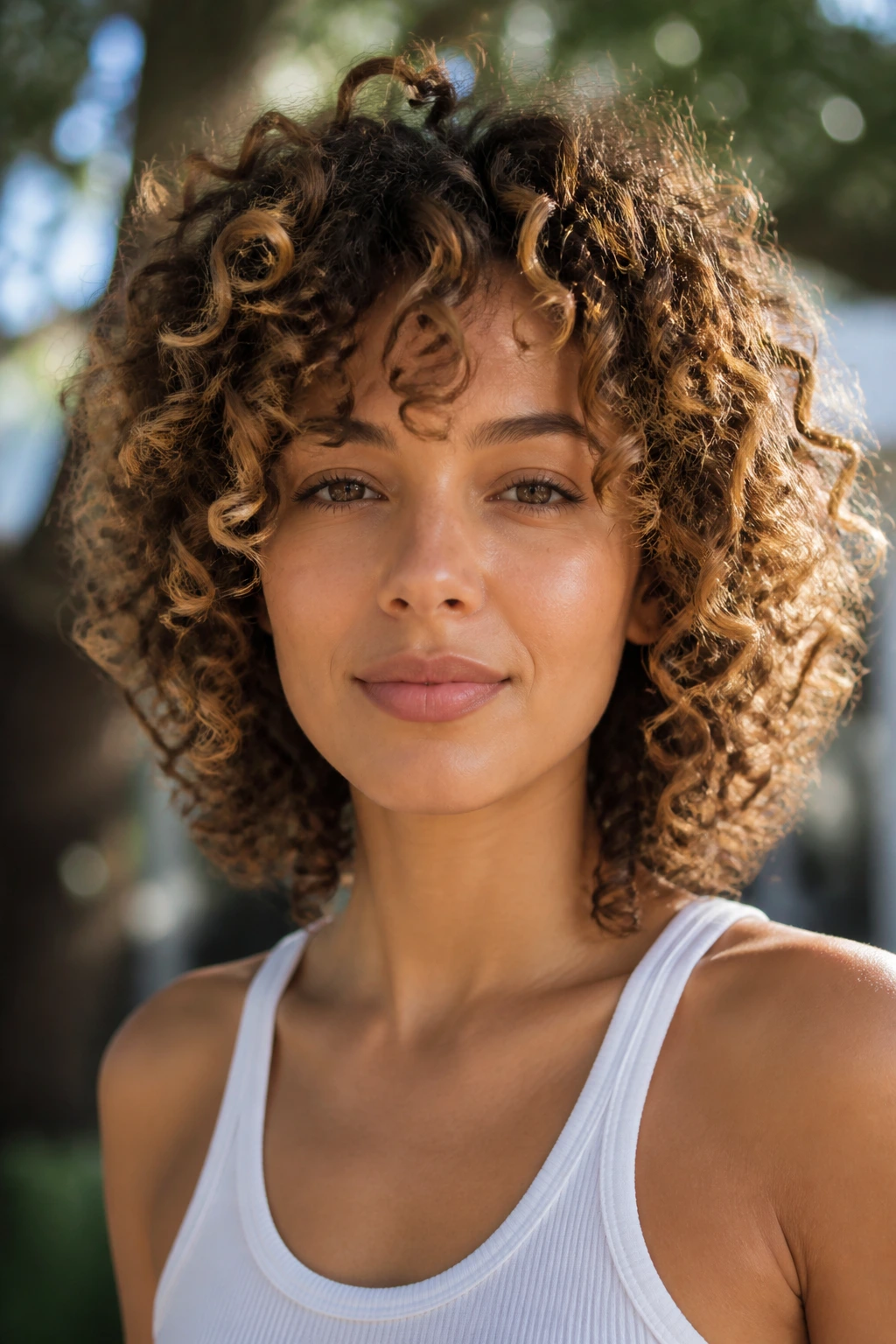
The nicest thing about curly haircuts with caramel highlights is that they let the curl do what it already wants to do, then sharpen the shape just enough to make that movement visible. No rigid shell. No stripey streaks pretending to be dimension. Just curls with a better outline and color that follows the bend instead of fighting it.
If you’re heading to the salon with one of these looks in mind, bring photos that show both the cut and the color placement. That part matters more than people think. A stylist can copy a vibe faster than they can guess at a vague description, and curly hair rewards clarity.