



Fine hair gets blamed for flatness too quickly. Usually, the cut is the real culprit, not the strand itself. Pair the right shape with caramel highlights, and fine hair can look airier, thicker at the ends, and a lot more deliberate — not limp, not stringy, not overworked.
Caramel is the sweet spot for this job. It sits between blonde and brunette, which means it adds warmth and movement without slicing harsh, high-contrast stripes through delicate strands. On fine hair, that matters. Chunky blonde can make the gaps between hairs show more; softer caramel ribbons tend to blur the outline and make bends, waves, and blowouts read as fuller.
The best looks below rely on that idea: keep the perimeter strong where you need density, add movement where the eye wants it, and place the highlights with a light hand. If your hair is fine but dense, you can usually handle a little more texture. If it’s fine and sparse, the smarter move is a cleaner line, smaller highlight sections, and less slicing at the ends. That distinction changes everything.
Why These Cuts Work on Fine Hair
-
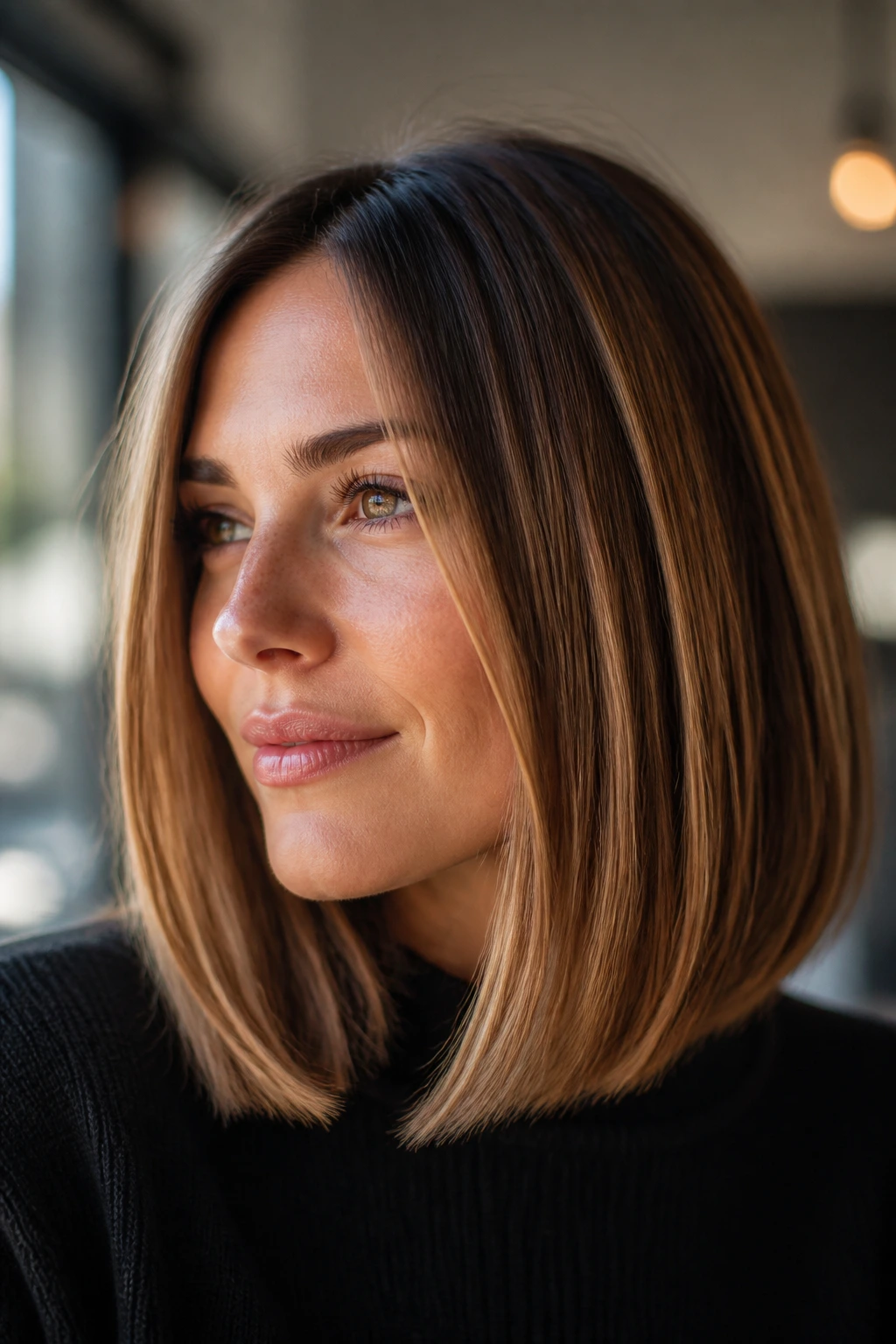
A blunt edge creates a thicker-looking hem. Fine hair often looks best when the bottom line is clean, because a strong outline gives the ends more presence than a heavily feathered finish.
-
Caramel adds depth without loud contrast. Warm ribbons soften the shape and keep fine strands from looking see-through the way bright platinum streaks sometimes do.
-
Placement matters more than quantity. A few carefully painted highlights around the face, part line, and top layer usually do more for dimension than packing the whole head with light pieces.
-
These cuts keep movement where it helps. Soft bends at the cheekbones, crown lift at the roots, and light face framing can make hair look more lifted without stripping away too much weight.
-
Most of them grow out cleanly. That matters on fine hair, because a harsh grow-out line can make the shape collapse faster than the style itself.
1. Blunt Collarbone Lob with Caramel Ribbons
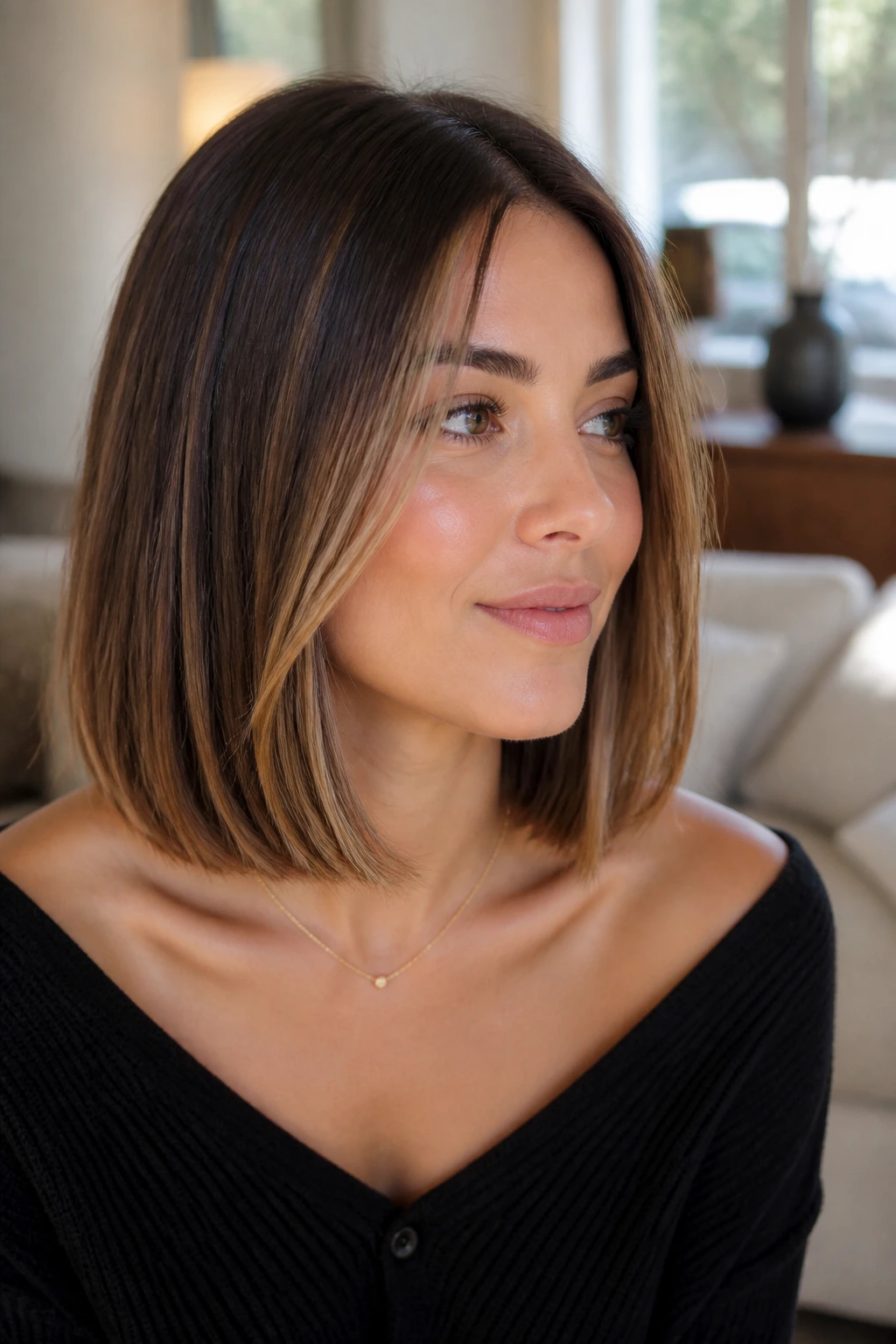
A blunt collarbone lob is the haircut I reach for when fine hair needs instant structure. The straight perimeter at the collarbone gives the ends a denser look, and the caramel ribbons keep the cut from feeling boxy or heavy. I like the color to start below the cheekbone so the front keeps its shape while the light catches in motion.
Why it works on fine hair
This length is long enough to tuck behind the ear, clip up, or bend into a soft wave, but short enough to hold volume better than waist-grazing hair. Ask for the caramel in thin, painted ribbons rather than chunky blocks; that keeps the finish soft.
- Best on fine hair with medium density
- Strongest when the ends stay blunt, not razored
- Looks especially good with a center part and one soft bend near the jaw
- A 1.25-inch iron gives the nicest bend without making it puffy
My opinion: if you only try one cut from this list, make it this one.
2. French Bob with Side-Swept Caramel Lights
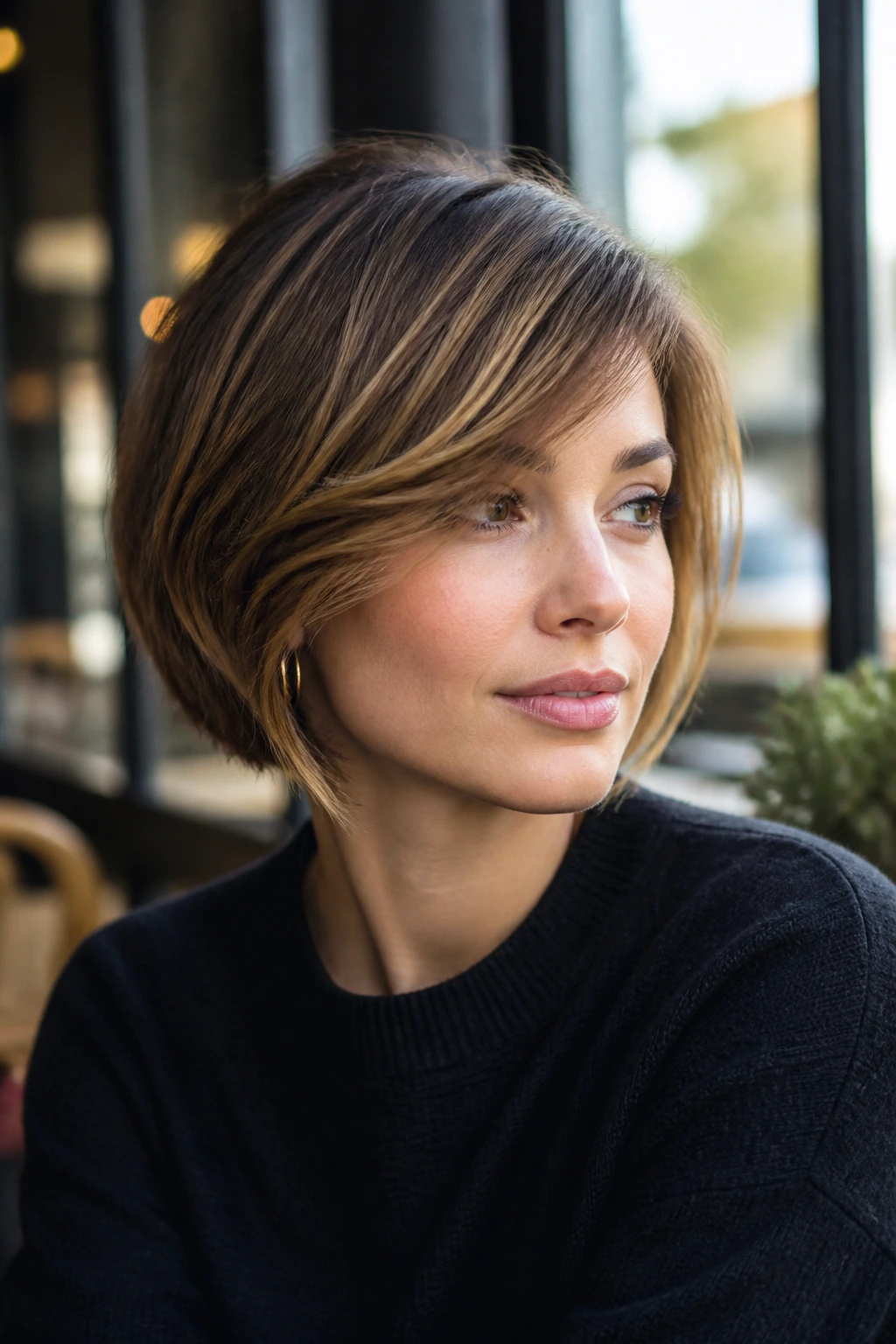
This bob has a little attitude, but not the fragile kind. It usually sits around the jawline, with a soft side part and ends that flip in or out depending on how you dry them. The caramel lights should sit around the temple and cheek area, where they break up the shape and give fine hair a fuller-looking frame.
A French bob works because it does not ask the hair to do too much. Keep the line tidy, let the side-swept pieces fall naturally, and avoid overtexturizing the back. That back section needs weight. If you remove too much, the whole cut starts looking thin by noon.
Styling note
A round brush and a quick blast at the roots are enough. Finish with a light mist of texture spray only on the mid-lengths.
3. Chin-Length Bob with Tucked Ends
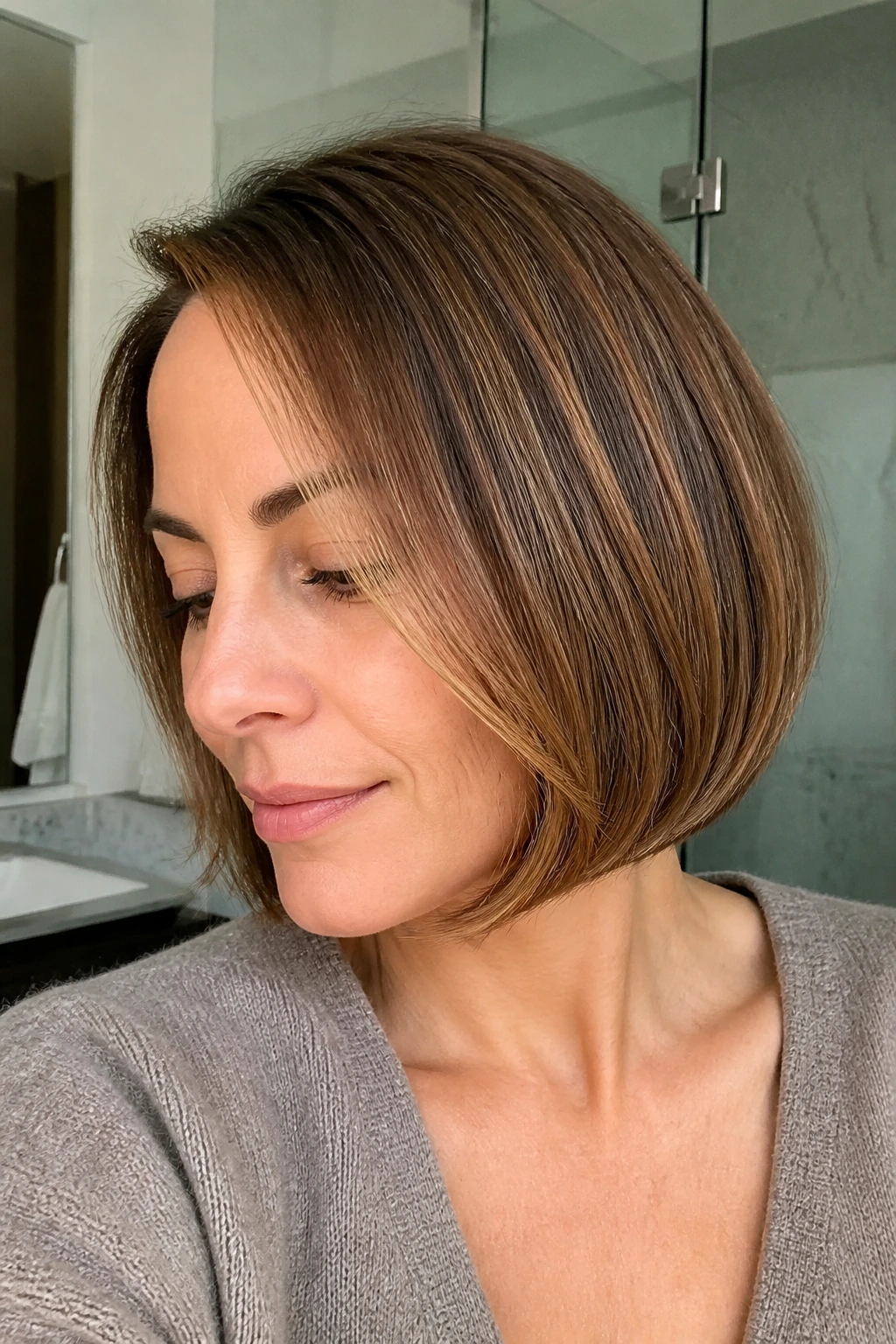
Want a short cut that still feels polished? This is the one. Chin-length bobs can be unforgiving on fine hair if they’re cut too airy, but when the ends are kept full and the color is placed in soft caramel veils near the front, the result looks crisp rather than skimpy.
The tucked-end finish matters. It pulls the shape inward, which makes the hair read thicker at the jaw. If your hair is naturally straight, this cut is especially good with a clean side part and a tiny bit of bend under the ends. No need to make it fussy.
Quick wear guide
- Best for straight to softly wavy fine hair
- Ask for light internal layering only
- Keep caramel concentrated around the face and top layer
- Use a paddle brush for a smooth, tucked finish
4. Classic Pixie with Caramel Micro-Highlights
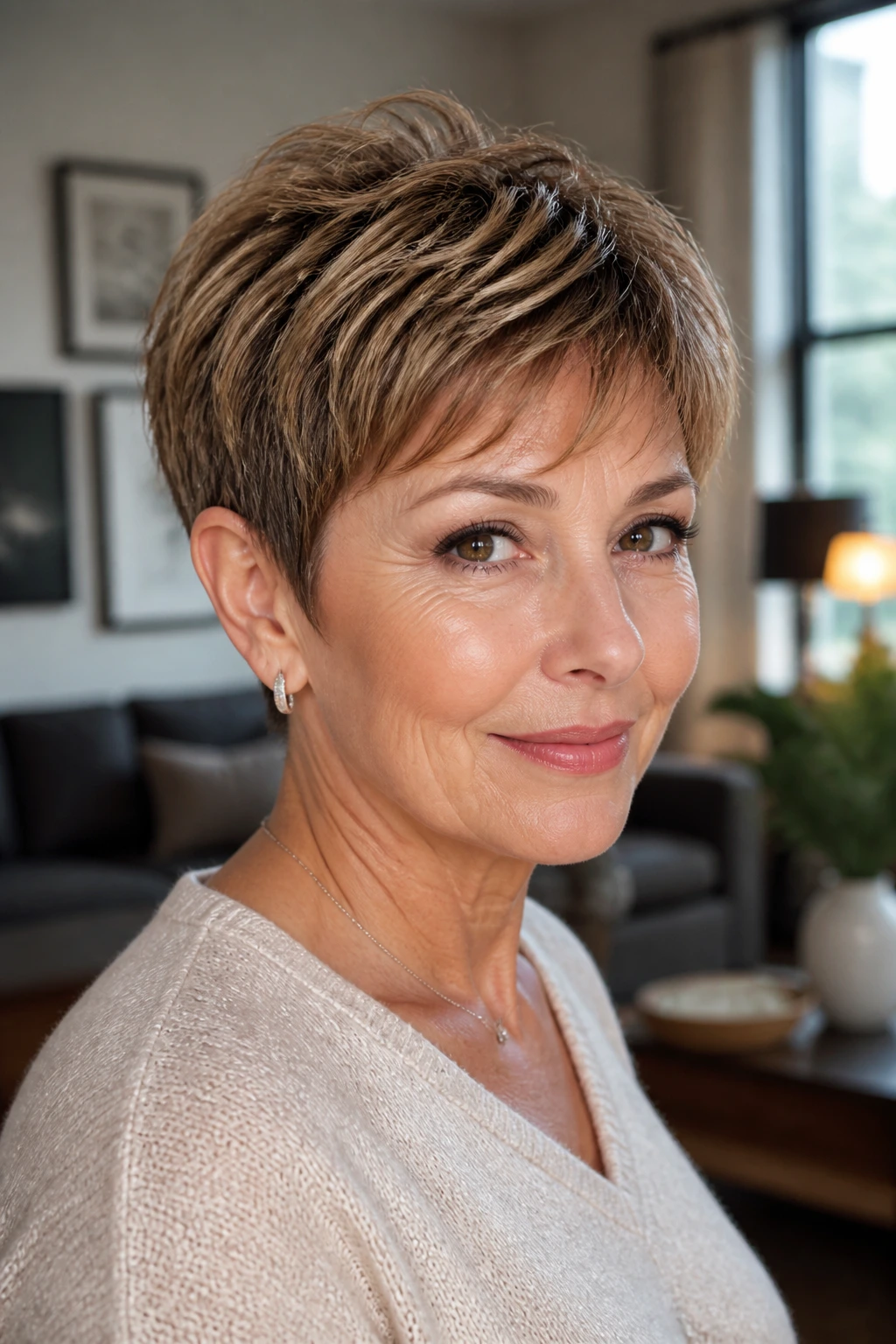
A pixie on fine hair can be sharp and elegant, but only if the top has enough lift. I prefer micro-highlights here — tiny caramel pieces through the crown and fringe, not broad strips. That gives the short shape a little shimmer without making the hair look busy.
The cut itself should stay soft around the ears and nape, with most of the movement happening on top. Fine hair loves this. The shorter length removes weight, while the highlights create the illusion of texture where the eye lands first.
You do need a stylist who knows when to stop cutting. Over-thinning a pixie is a fast way to make fine hair look wispy in all the wrong places.
5. Bixie Cut with Soft Caramel Piecey Texture
The bixie sits between a bob and a pixie, and that middle ground is useful. You get enough length at the top to play with, enough shape around the sides to feel intentional, and enough swing to keep fine hair from looking chopped to bits. Caramel works best here as piecey accents through the top and fringe.
This cut is for people who want movement without the maintenance of a full shag. The top can be pushed forward, swept to one side, or tousled with a pea-sized amount of cream. Keep the layers soft. If they get too short and choppy, fine hair loses its body fast.
Best for
- People who want short hair with some styling options
- Fine hair that has at least moderate density
- Warm caramel tones that sit one or two shades lighter than the base
6. Long Layers with Face-Framing Money Piece
Long hair and fine hair can coexist, but the cut has to behave. Long layers are the answer when you want to keep the length while making the hair feel lighter around the face. The money piece — those brighter caramel sections at the front — gives you the lift, while the length keeps enough weight through the back to avoid that scraggly feel.
The trick is restraint. Layers should start low, usually below the chin or even at the collarbone, so the ends still look full. If you carve layers too high, fine hair can collapse around the shoulders and expose every thin spot.
This is one of the easiest styles to wear with a center part, loose waves, or a quick blowout. It does not need a lot of fuss to look finished.
7. Shoulder-Grazing Shag with Feathered Streaks
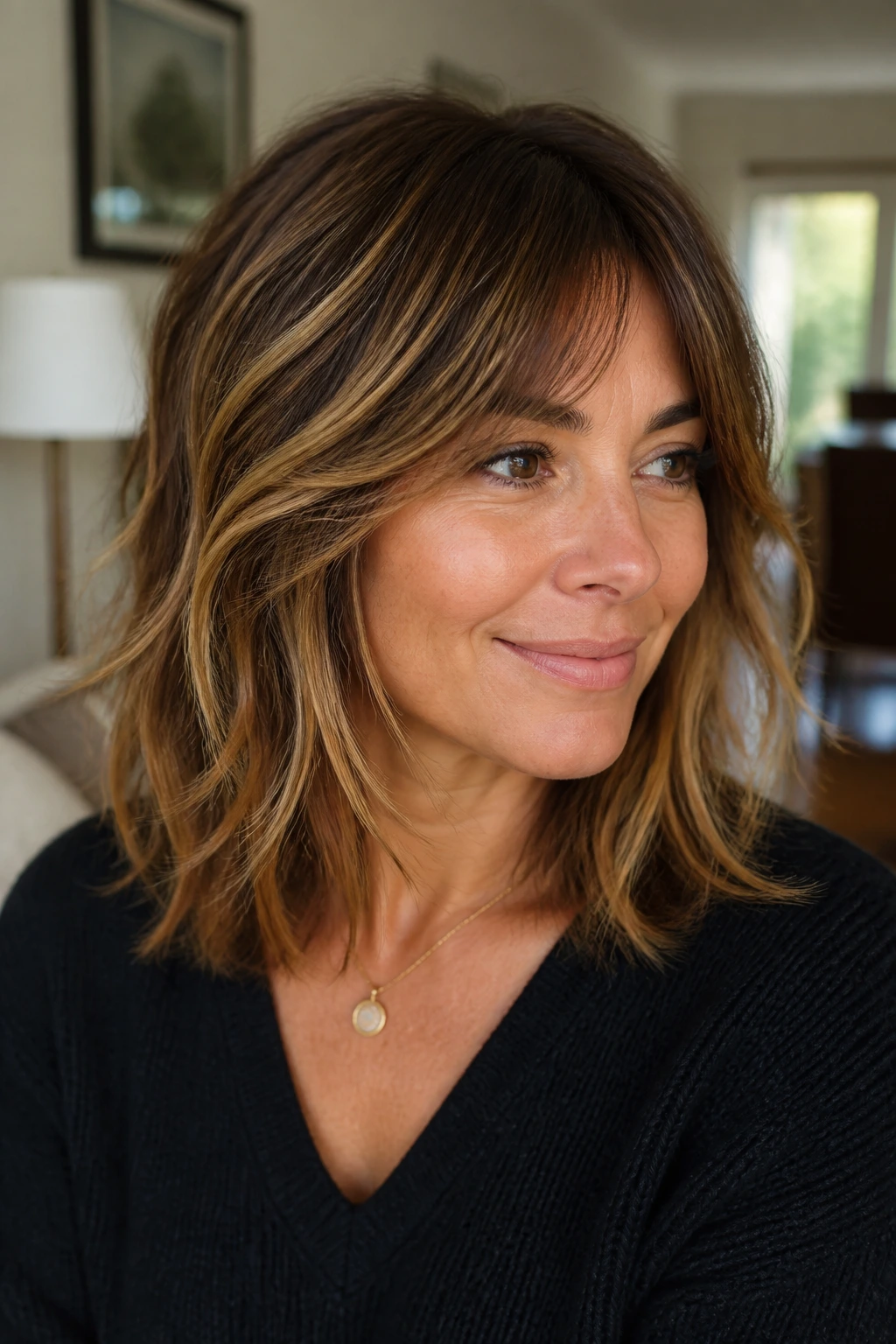
A shag can be brilliant on fine hair, but only when it’s soft enough to keep some bulk. I mean soft. Not shredded. The shoulder-grazing version gives you movement around the face and crown, and the caramel streaks should be feathered through the top layers, not packed into the underlayers.
What makes this cut work is the balance between lift and weight. You want some airy pieces around the cheekbones, then a stronger perimeter around the shoulders. That prevents the style from turning into a puffball or, worse, a frayed outline that looks thinner than it is.
Styling cue
Use a light mousse at the roots and scrunch only the ends. That preserves the shag texture without making the whole head look fuzzy.
8. A-Line Bob with Sleek Caramel Underlights
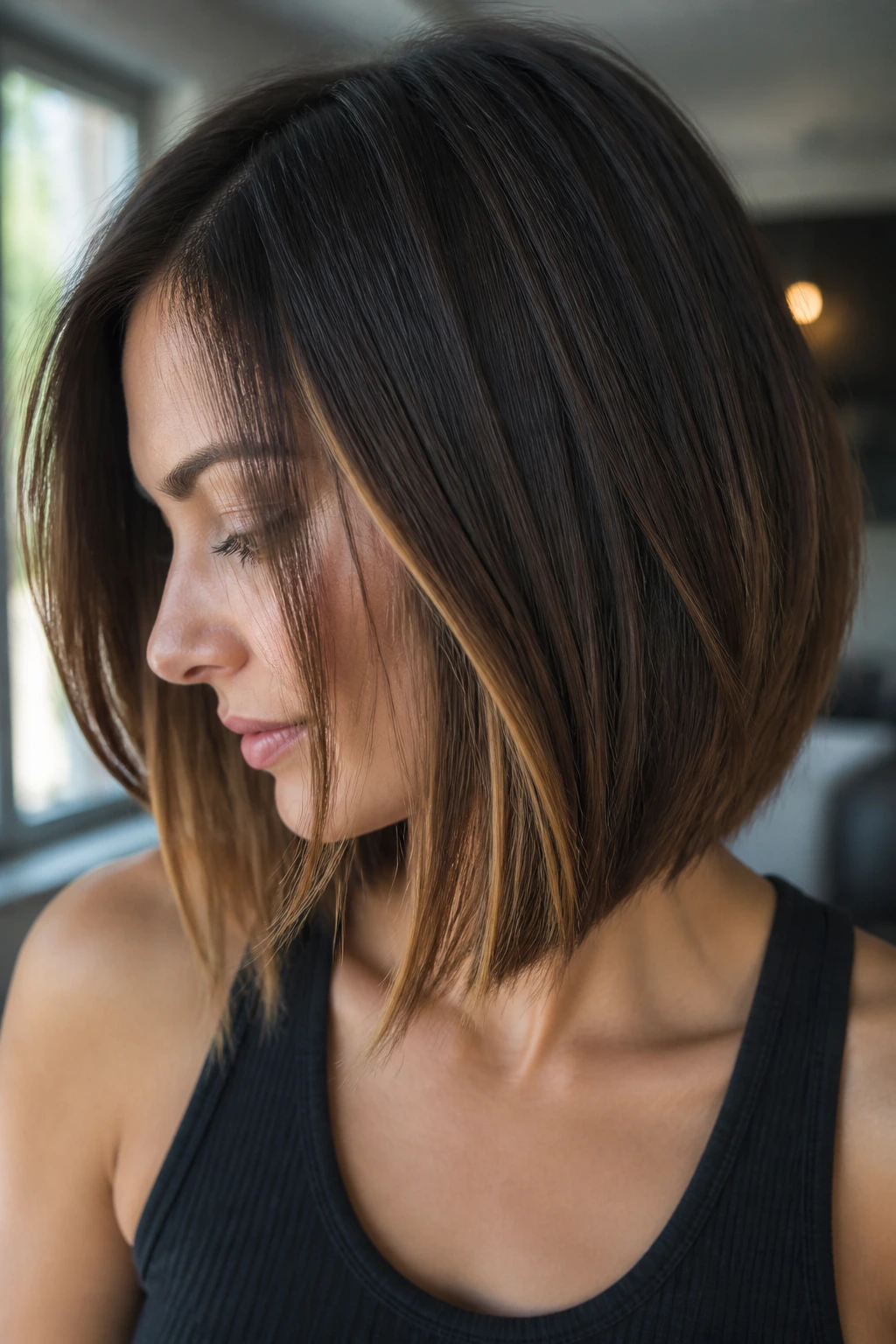
The A-line bob is quietly clever. It’s shorter in the back and a little longer in front, which nudges the eye forward and makes the jawline look sharper. On fine hair, that forward angle gives the illusion of body because the ends layer over each other instead of hanging in one flat curtain.
Caramel underlights work especially well here. They peek out when the hair moves, but they’re not all over the surface, which keeps the top smooth. That means the color adds depth without messing with the clean geometry of the cut.
If your hair falls flat near the nape, this is one of the easiest ways to fake a more lifted shape.
9. Textured Lob with Curtain Bangs
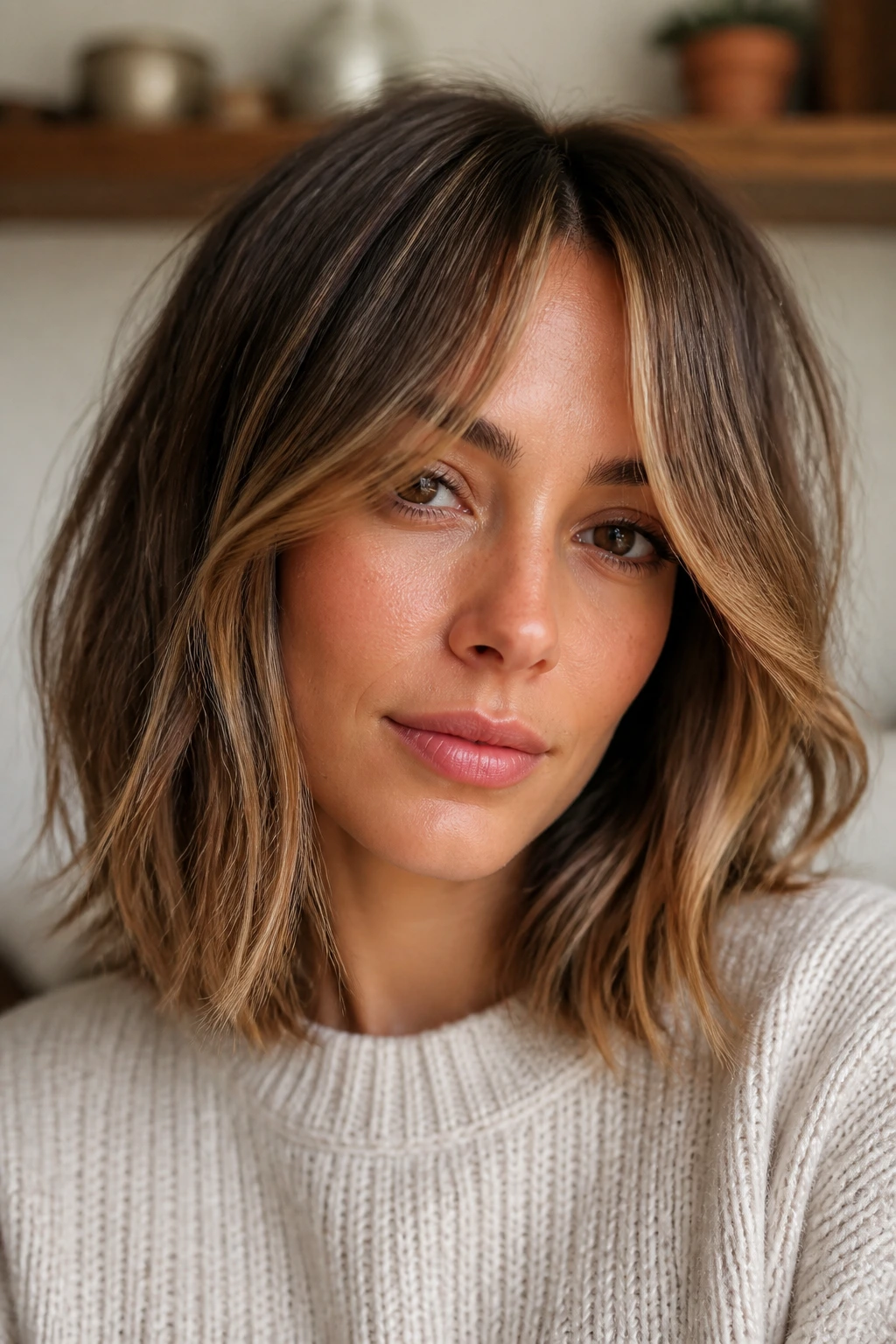
Curtain bangs can be a disaster on fine hair if they’re too dense or too short. Kept soft, though, they’re excellent. A textured lob with curtain bangs gives you face framing, some movement around the eyes, and enough length to wear the hair straight, wavy, or tucked back without looking overdone.
The caramel should follow the flow of the bangs. Think soft framing pieces around the eyes and cheekbones, then lighter touches through the mid-lengths. That draws the eye upward and keeps the front from looking sparse.
This cut is ideal if you like options. You can part the fringe in the center, sweep it to one side, or pin it back on busy days. Easy. Useful. Not boring.
10. Butterfly Cut with Wing Layers
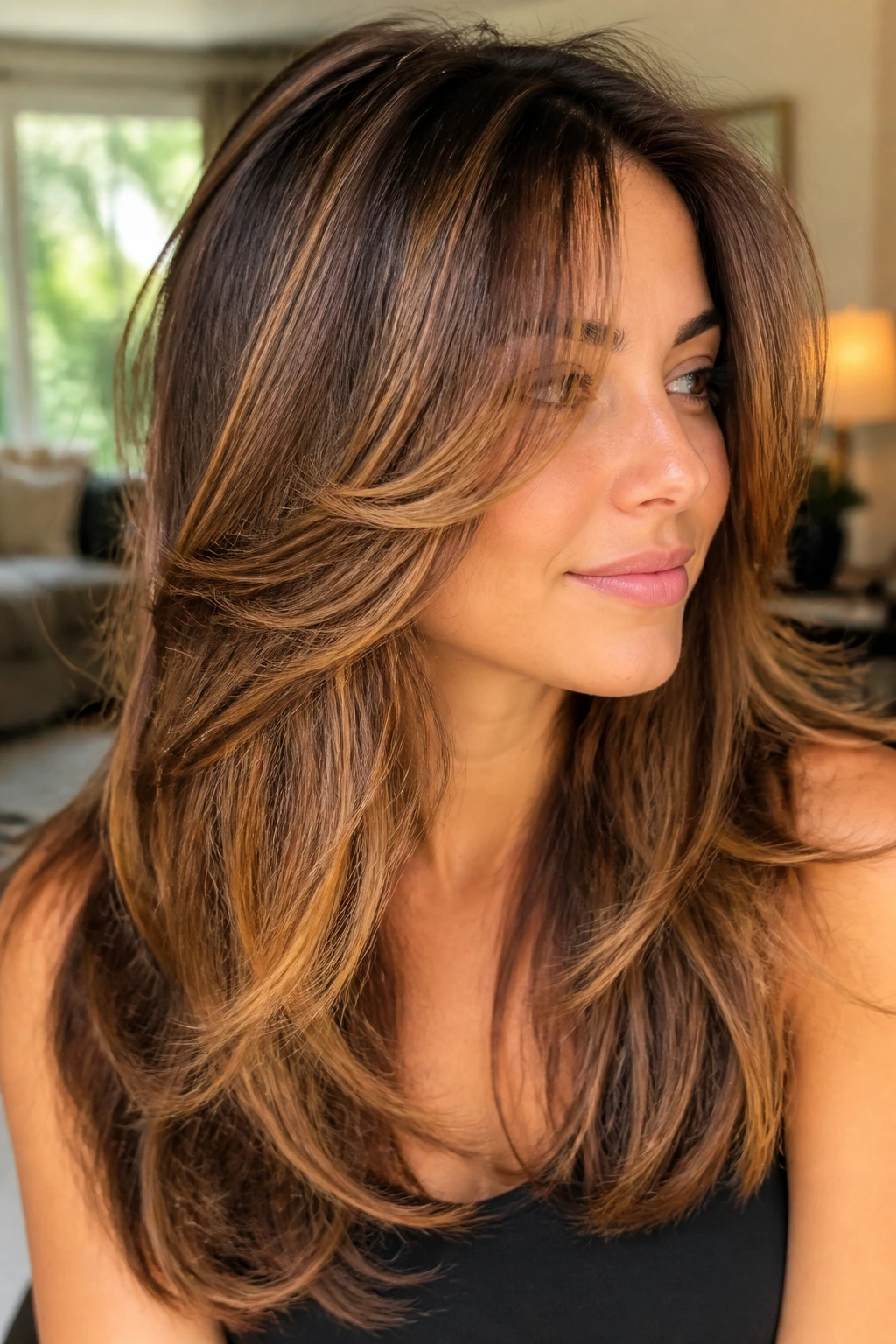
The butterfly cut can be gorgeous on fine hair, but it needs discipline. The shorter “wing” layers around the front create lift and movement, while the longer length underneath preserves fullness through the back. Caramel highlights belong on those upper pieces and face layers, where they catch the light and make the cut read more dimensional.
Too many short layers will weaken the shape. That’s the trap. For fine hair, ask for soft transitions, not hard stair-steps. You want the illusion of fullness, not a chopped-up shape that falls apart after one brush-through.
How to wear it
Loose waves make this cut shine, but a round-brush blowout is just as good. The key is letting the top layers move while the lower length stays calm.
11. Sleek One-Length Lob with Glossy Caramel Veil
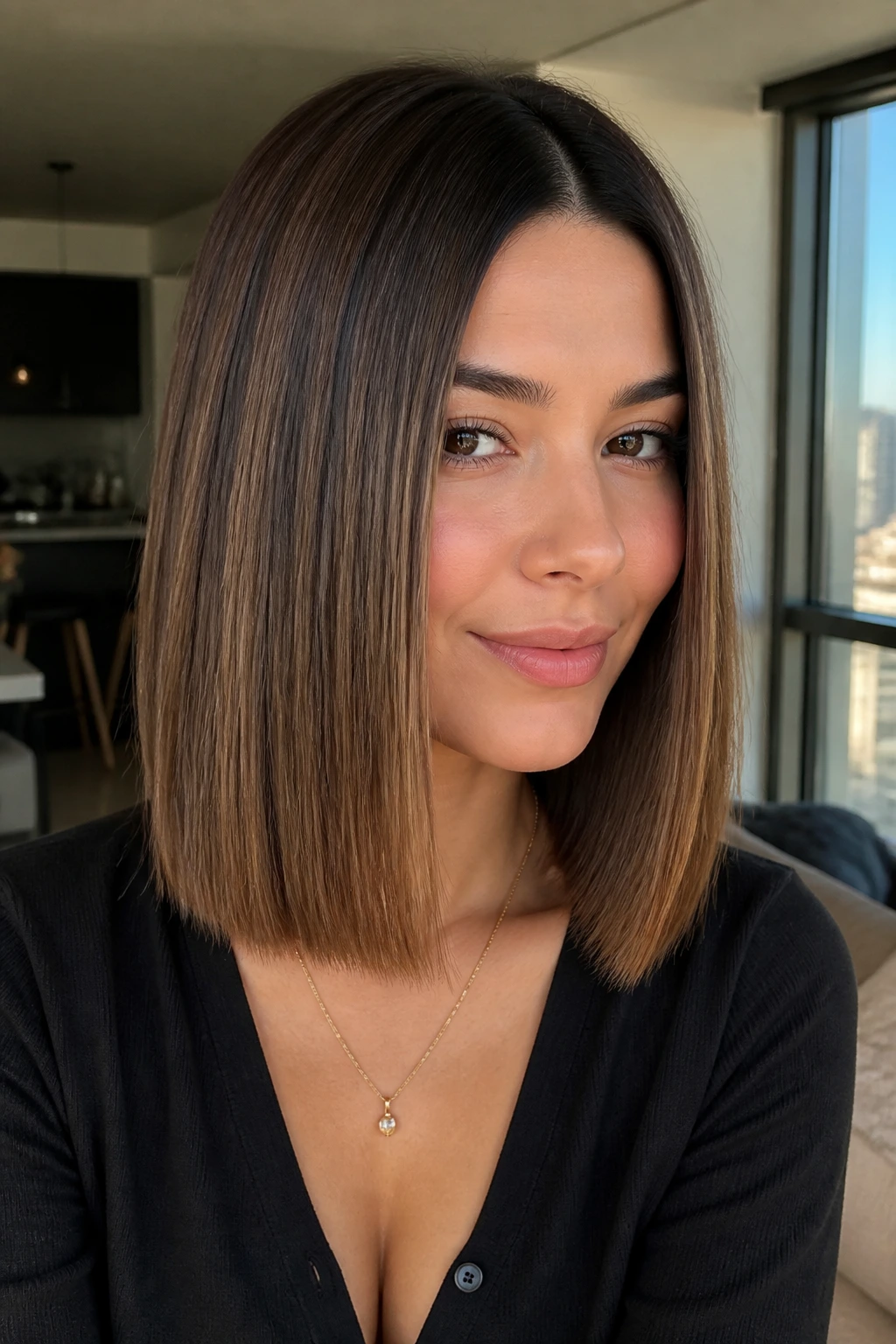
This is the minimalist’s answer to fine hair. A one-length lob has a clean line that makes the ends look thicker than they are, and the caramel is used as a veil — subtle, glossy, and spread with a light hand. No striping. No zebra effect. Just enough warmth to keep the cut from looking flat under indoor light.
I like this look on naturally straight hair because it behaves with very little effort. A center part, a smoothing cream, and a quick pass with a flat iron through the mid-lengths is usually enough. The cut does the heavy lifting.
If your hair tangles easily, this is also one of the easiest styles to keep neat between washes.
12. Soft Wolf Cut with Muted Tipping

A real wolf cut can be too much for fine hair. A soft wolf cut, though, can be smart if the stylist keeps the crown light and the ends from getting shredded. The caramel works best as muted tipping and face-framing pieces, not as a heavy all-over highlight job.
The reason I like this version is simple: it gives a little chaos, but not the kind that looks accidental. The top gets energy. The bottom keeps enough length to hold shape. That balance matters when the strand itself is fine and needs help staying visible.
If you want edge without looking like you wrestled with scissors yourself, this is the safer route.
13. Wispy Midi Cut with Invisible Layers
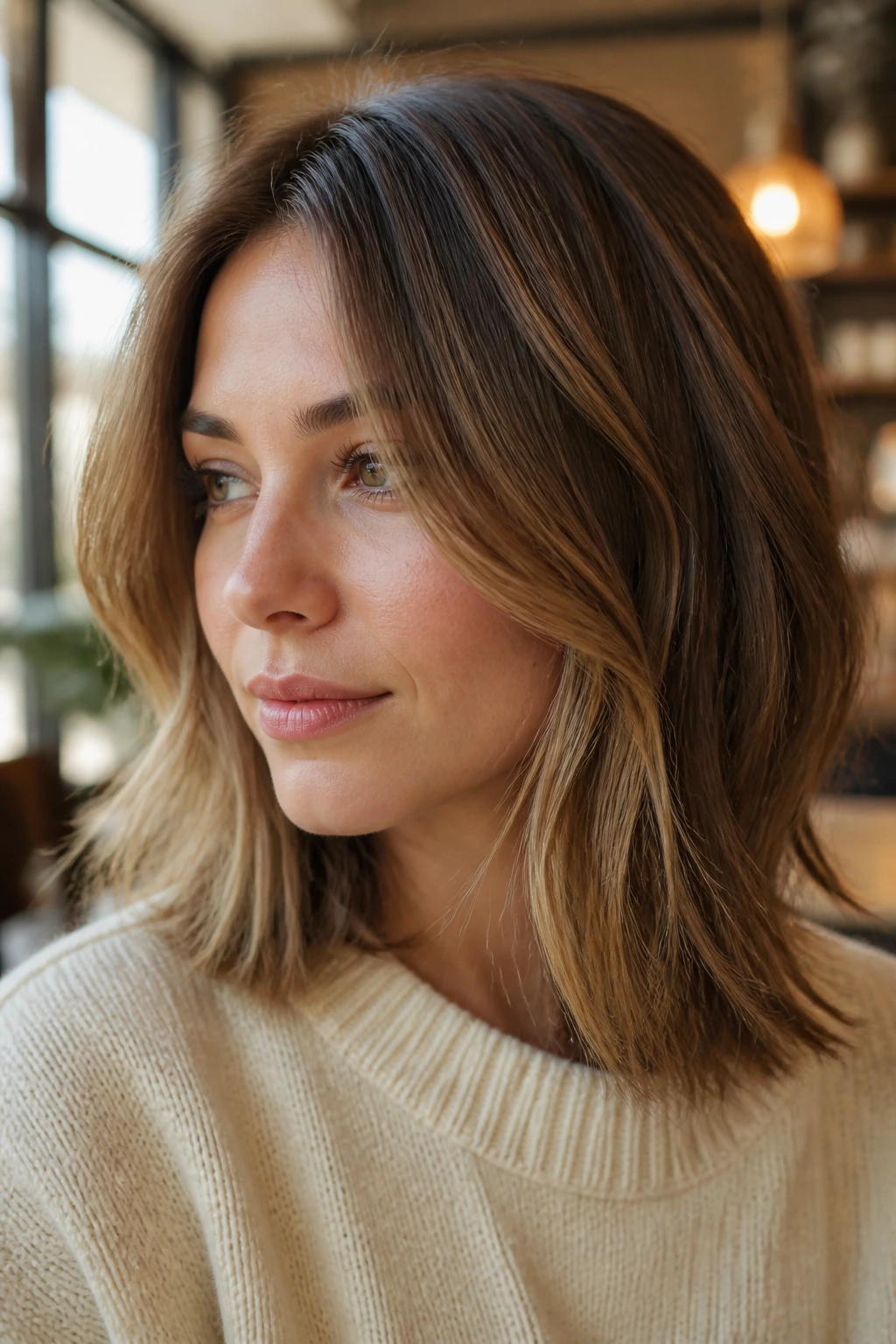
A midi cut sits around the shoulders, and on fine hair that can be a sweet spot. It’s long enough for ponytails and clips, short enough to keep some life in the shape. Invisible layers keep the silhouette smooth while still letting the hair move. The caramel should be soft and scattered, almost like light catching the surface rather than obvious stripes.
This cut suits someone who wants fullness without a lot of obvious texture. It’s cleaner than a shag, softer than a lob, and less demanding than a full layered look. If your hair has a gentle wave, even better.
The best thing about this one is the grow-out. It usually stays decent longer than sharper styles.
14. Ear-Length Crop with Tapered Nape
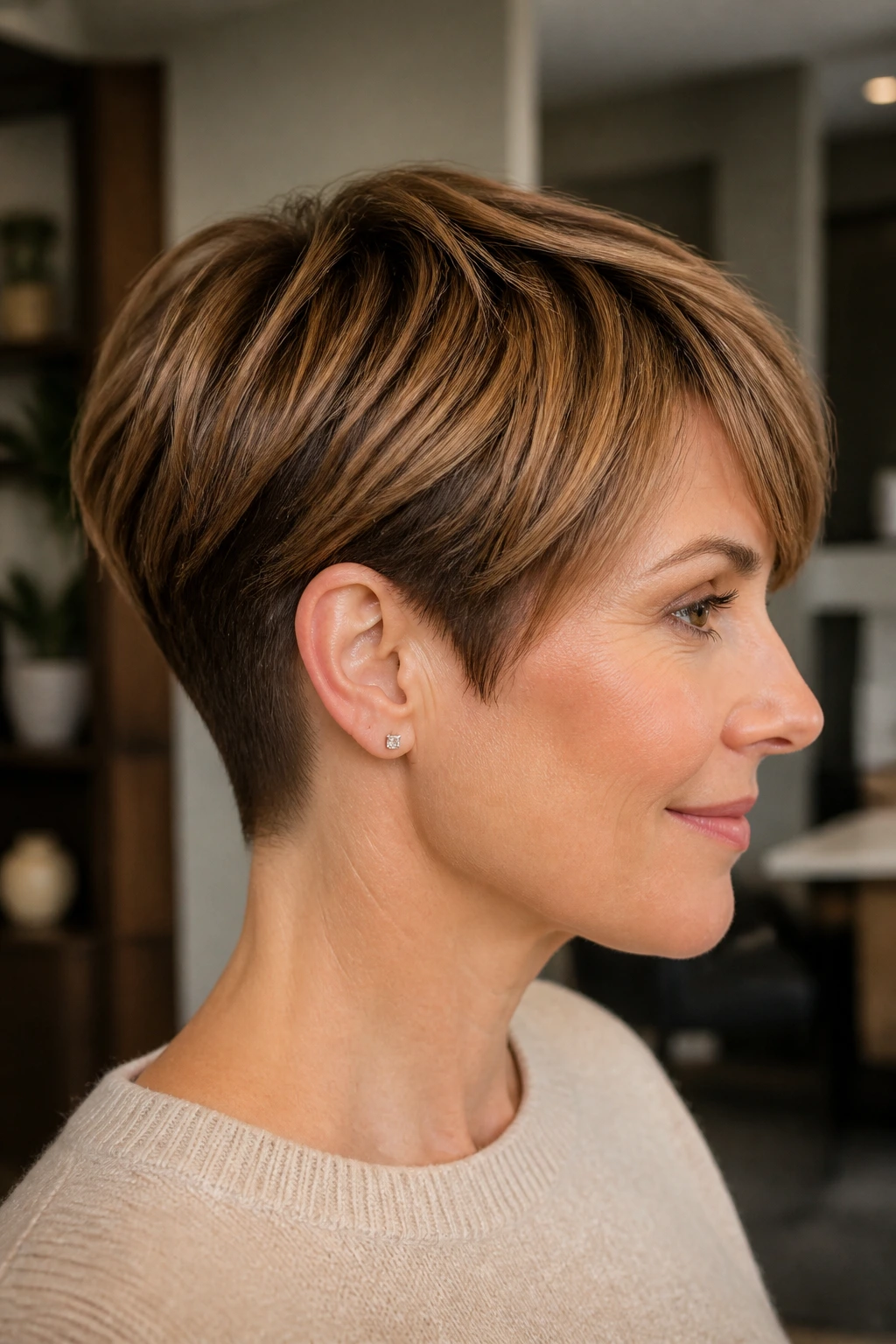
Short hair can be a gift for fine strands. An ear-length crop removes the weight that drags hair down, and the tapered nape keeps the back neat. Caramel belongs mostly at the crown and fringe here, where a few tiny pieces can create a lifted effect without cluttering the whole cut.
The shape should stay soft around the ears and sharp enough at the bottom to feel intentional. Too much texture in the wrong place can make fine hair look thin, so I prefer a crop that leans polished rather than punky.
If you like seeing your neckline and jawline clearly, this is a strong choice.
15. Side-Swept Bang Bob with Warm Toffee Ends
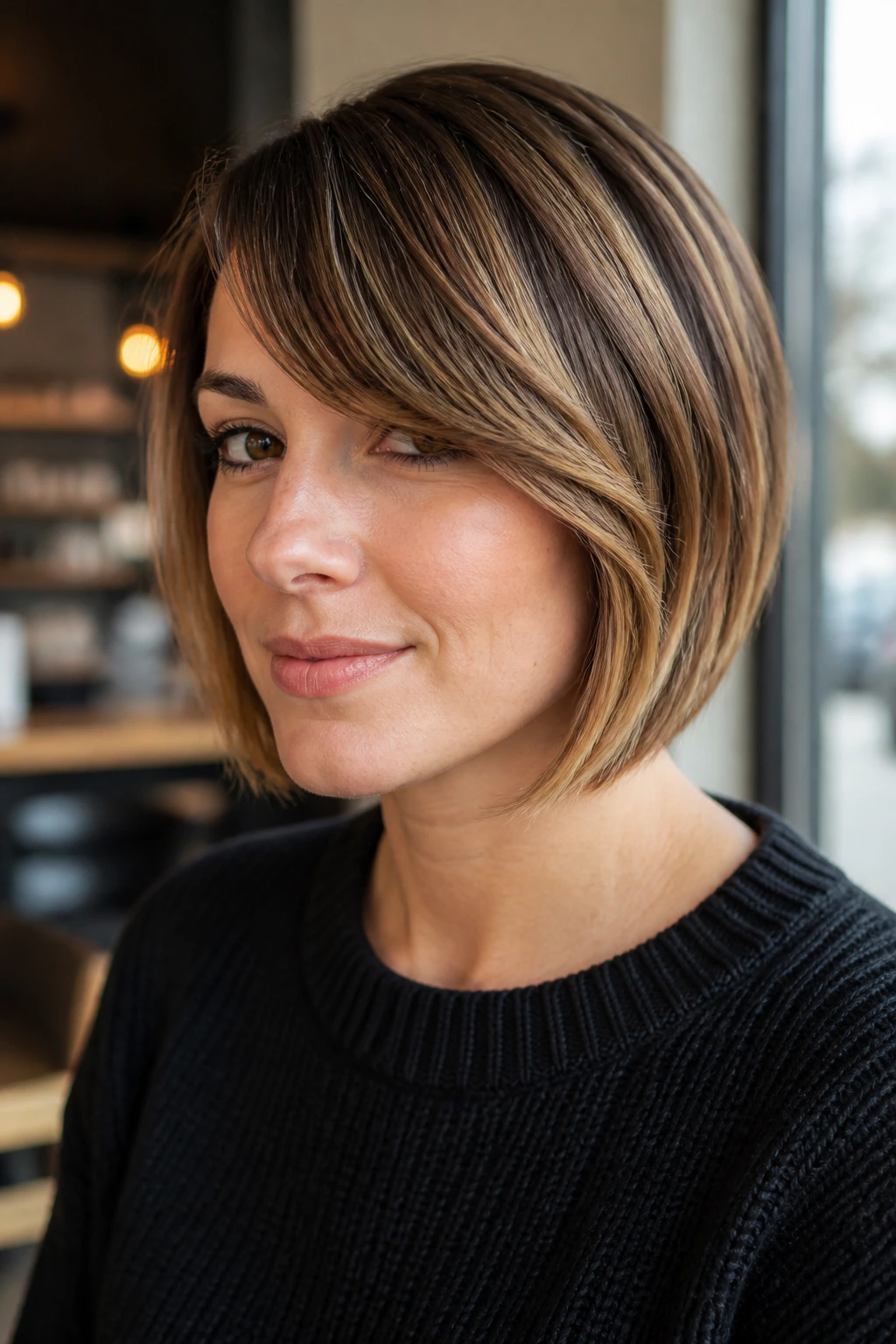
Side-swept bangs are underrated on fine hair. They let you keep some forehead coverage without the heaviness of blunt fringe, and they sweep across the face in a way that makes the top section feel fuller. The warm toffee ends add depth and keep the bob from looking too tidy.
This cut is good when you want softness around the face but not a lot of visible layering. The bob itself should stay full at the bottom, with the bangs blended enough to avoid a hard disconnect. That transition is the whole point.
A little root lift at the bang area goes a long way here. Don’t drown it in product.
16. Layered Pageboy with Rounded Caramel Paneling

The pageboy is back in quieter form, and I like it for fine hair because the rounded shape keeps weight where it counts. The ends curve inward, the outline stays smooth, and the caramel can be placed in rounded panels that echo the haircut instead of fighting it.
This is a smart option if you want something a little retro but not costume-like. The shape gives the illusion of density, especially when the hair is worn sleek. If you have a cowlick at the nape, the rounded finish can help tame it better than a blunt bob.
The color should stay soft and controlled. Too much contrast ruins the effect.
17. Razored Lob with Airy Ends

A razored lob is not for every head of fine hair. I’ll say that plainly. But if your fine hair is also fairly dense, a light razor finish can remove bulk and let caramel highlights peek through the layers in a softer way than scissor-cut edges do.
The danger is overdoing it. Razor too much, and the ends start looking frayed. The answer is to keep the perimeter strong and use the razor only where the hair needs a little air. Think polish with movement, not shredded texture.
This style works nicely if you want a lived-in feel and don’t mind a bit of bend or bendy texture on the ends.
18. Rounded Bob with Hidden Layers
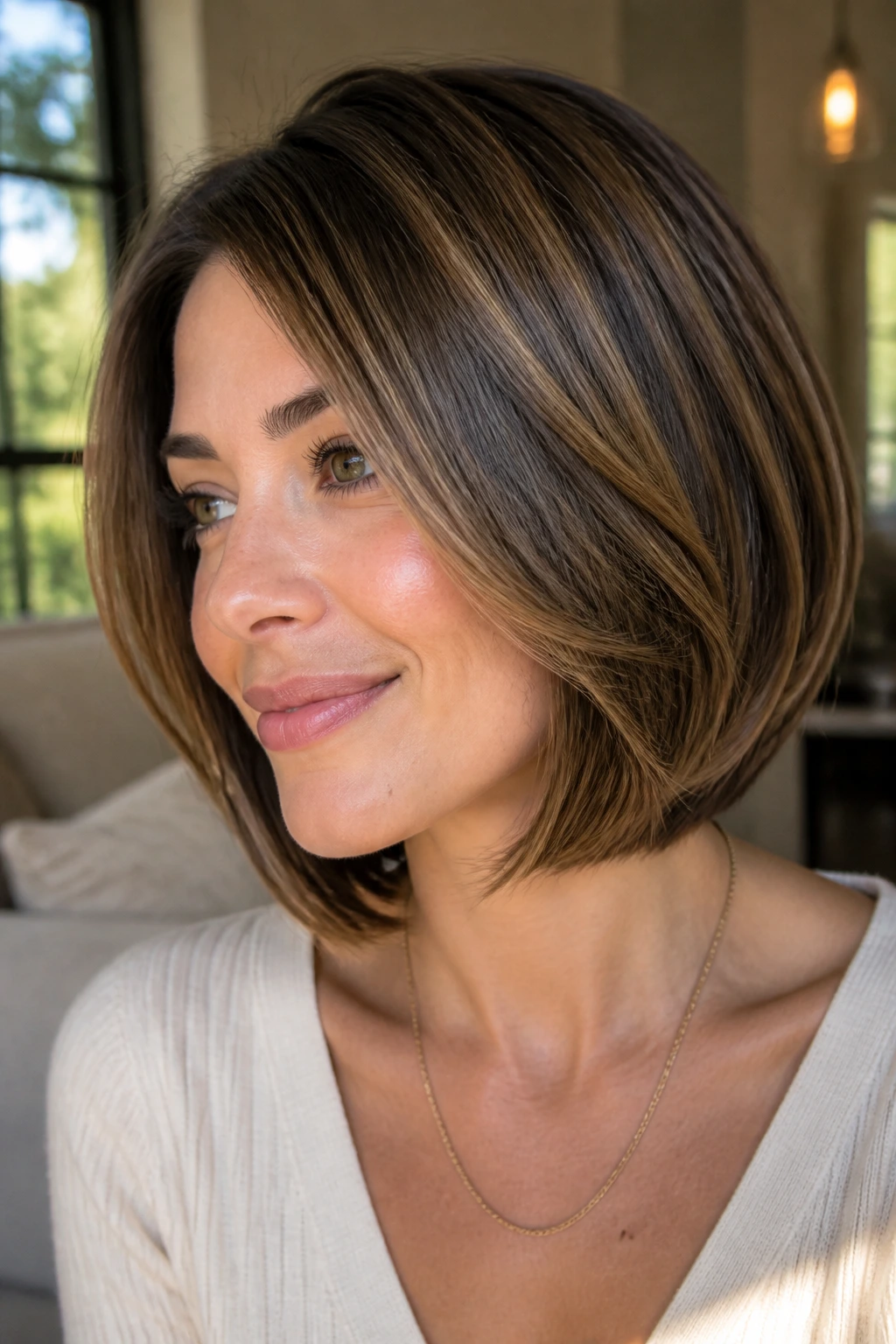
A rounded bob gives fine hair a really useful shape: fuller through the body, smoother at the hem, and naturally curved toward the face. Hidden layers can help support that roundness without exposing choppy sections. Caramel highlights should stay near the surface and around the front so the color reads as soft depth rather than bands.
I like this cut on hair that tends to puff at the sides. The round shape reins that in. It also makes straight fine hair look more intentional, which is harder than it sounds. A lot of fine hair looks “done” only when it’s quietly, strategically cut.
It’s one of the easiest bobs to keep polished with a round brush.
19. Mid-Length U-Cut with Caramel Sweep
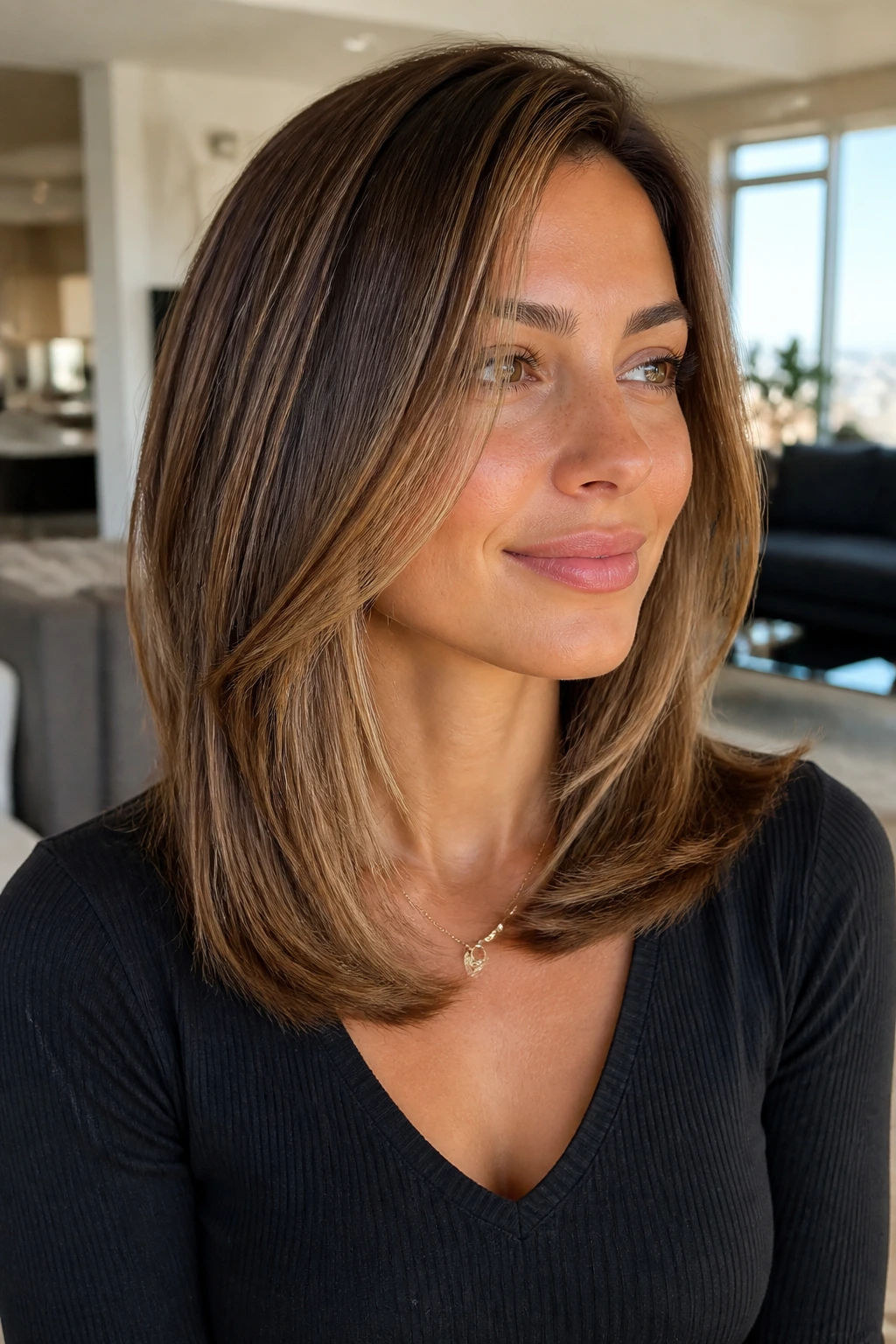
The U-cut is a quiet fix for people who want length but hate the blunt heaviness of a straight line. It curves gently at the back, which helps the hair fall in a fuller shape while still keeping the ends soft. On fine hair, the U gives a little movement without dismantling the perimeter.
Caramel sweep highlights work well because they follow the curve. You don’t need aggressive lightening here. A sweep through the mid-lengths and front panels is enough to make the shape read richer and more layered.
If you wear your hair in low ponytails or half-ups, this cut has a nice payoff. The shape still shows when the hair is pulled back.
20. Piecey Shaggy Pixie with Cinnamon-Caramel Dimension
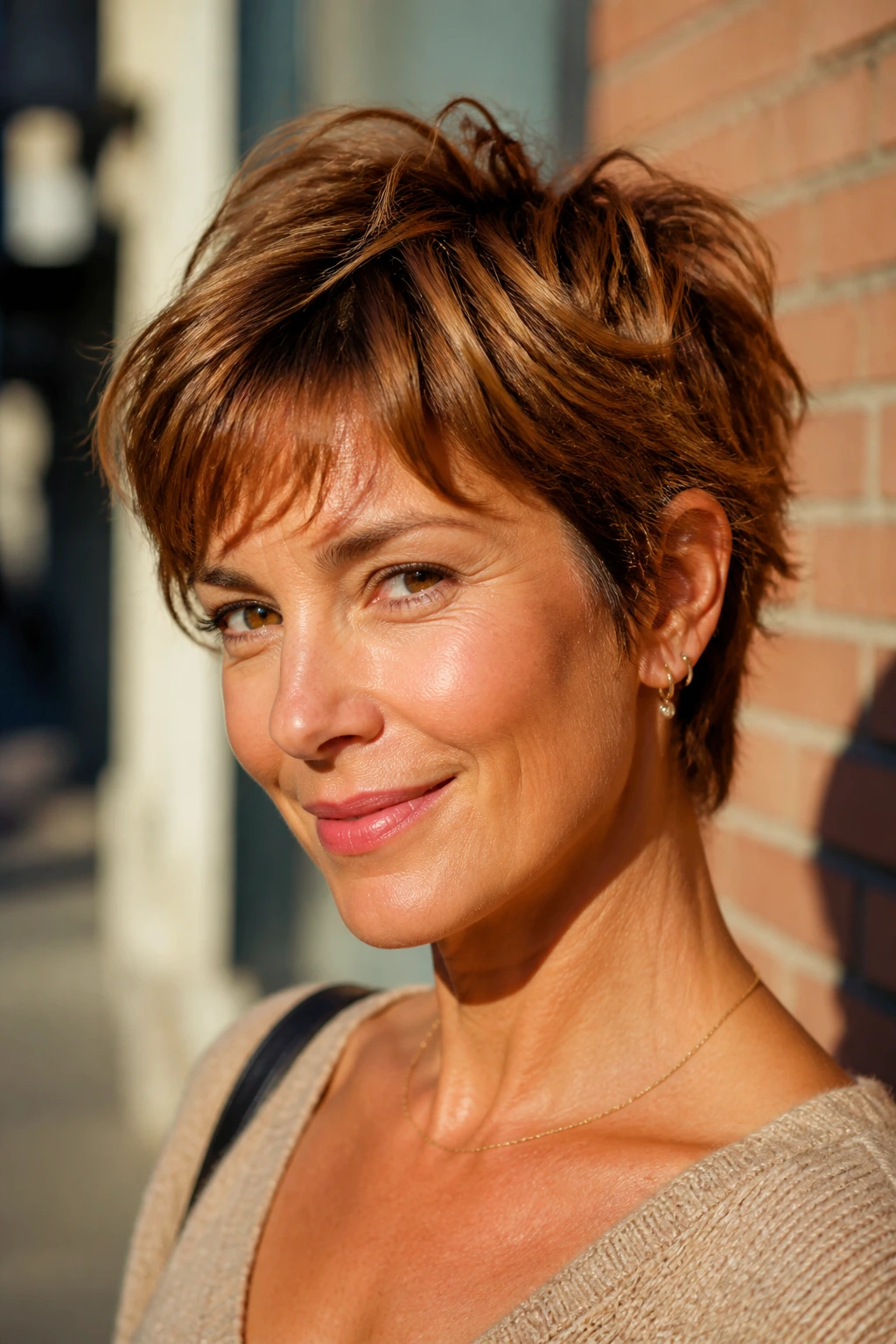
This is the playful short cut in the bunch. A piecey shaggy pixie gives you texture, lift, and a little edge, but it has to be cut with care so the crown doesn’t end up stringy. Cinnamon-caramel dimension through the top and fringe gives the cut a warmer, more finished look.
The best version has slightly longer pieces at the forehead and crown, with the sides kept soft. That way the hair can be pushed forward or lifted up without feeling sparse. Fine hair often benefits from this kind of short shape because it removes dead weight without demanding too much density.
It’s a good pick if you like to style with your fingers instead of a brush.
21. Long Pixie with Tucked Sides
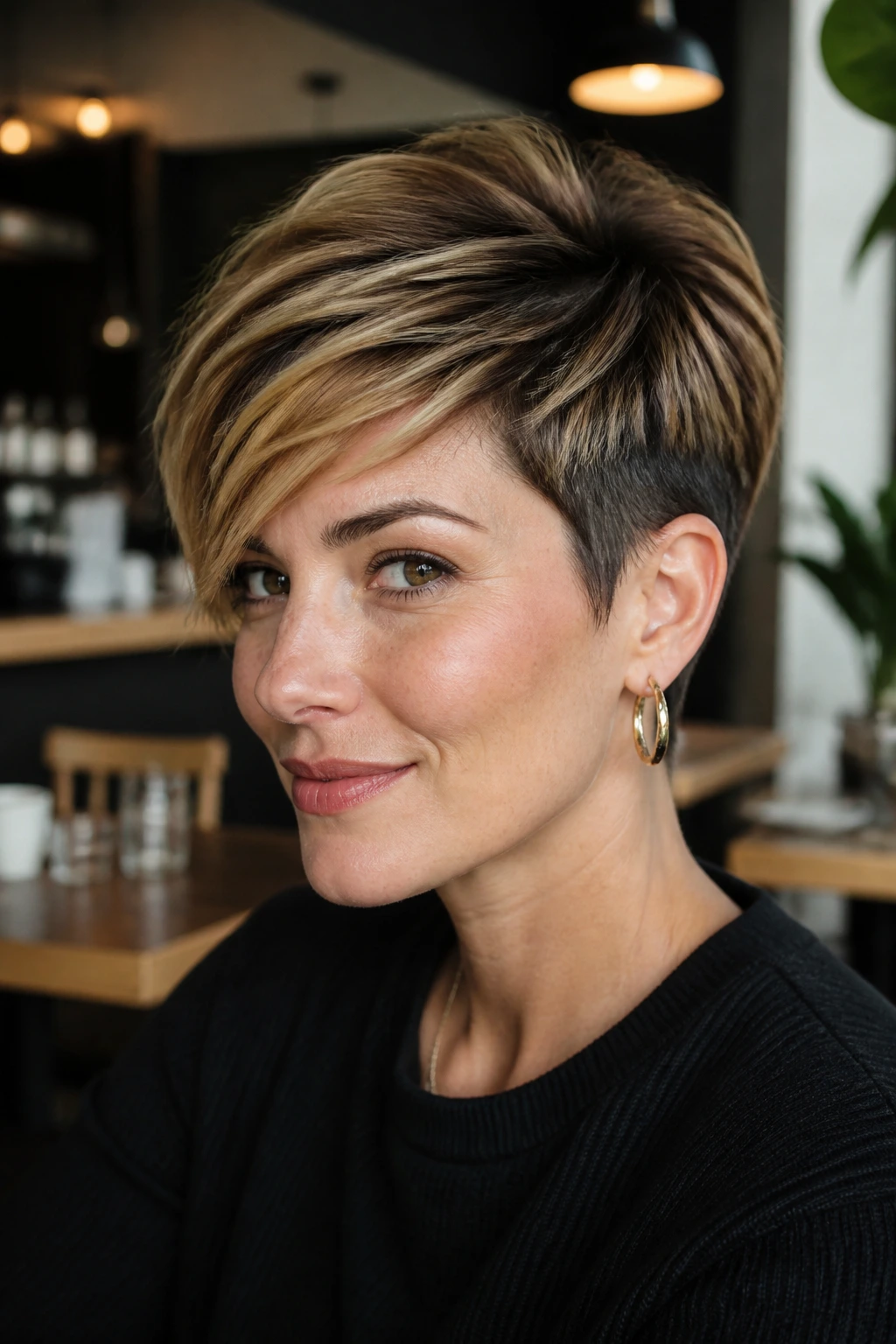
A long pixie is the more polished cousin of the cropped cut. The sides stay tucked, the top stays long enough to sweep or spike, and the caramel can live mostly at the crown and fringe. That keeps the eye up where the lift belongs.
This works well for fine hair that needs shape around the head without a heavy silhouette. The longer top gives you a bit of styling range, which is useful if you want to move between neat and messy during the week. It also grows out gracefully, which is not a small thing.
If you are nervous about going short, this is the gentler entry point.
22. Collarbone Cut with Bottleneck Bangs
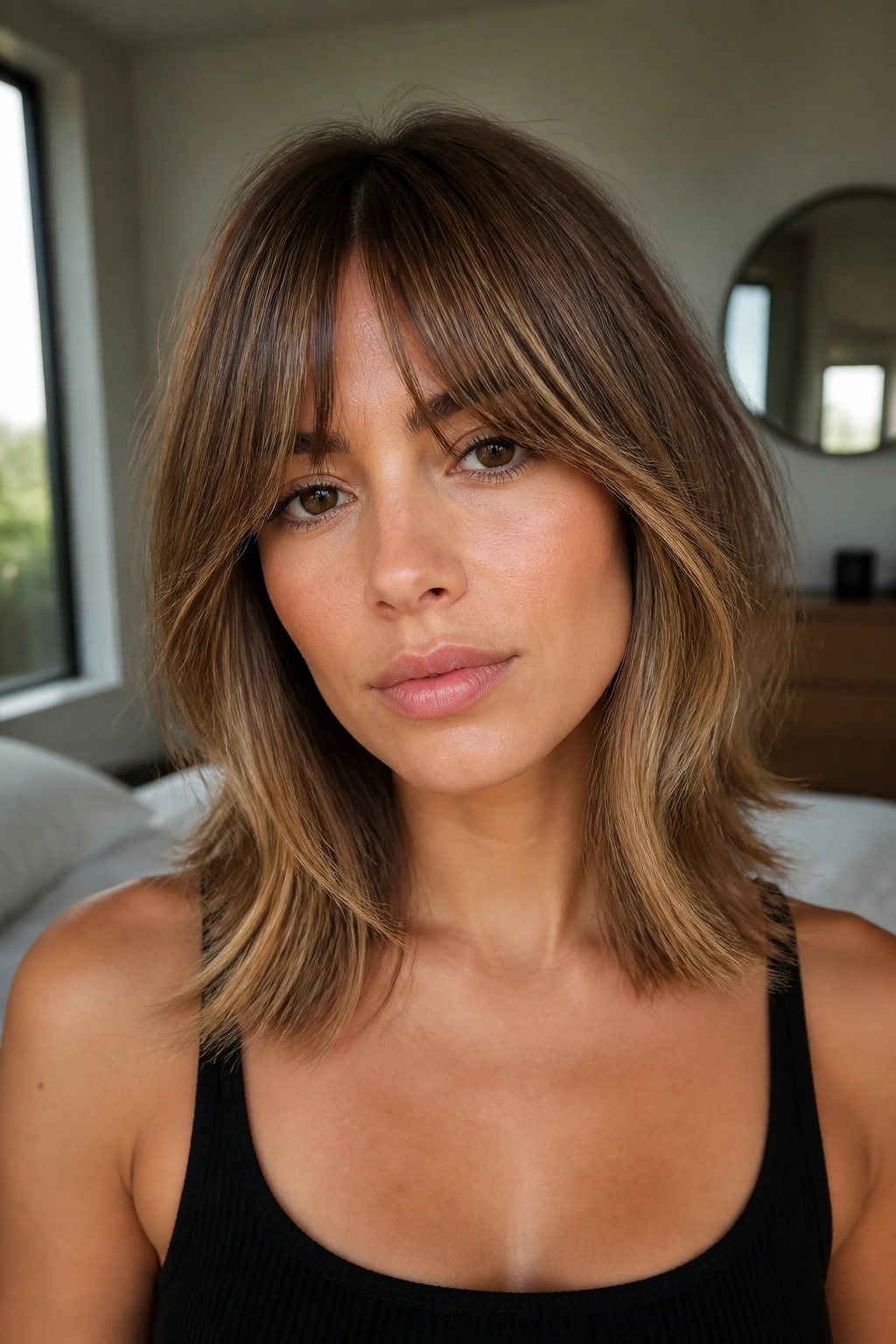
Bottleneck bangs are a nice middle path between blunt fringe and curtain bangs. They’re shorter in the center and longer toward the sides, which makes them friendlier for fine hair than a dense straight-across bang. Paired with a collarbone cut and caramel framing, they create shape without swallowing the face.
The real advantage here is movement. The fringe opens the forehead, the front pieces sweep outward, and the length below stays soft. Fine hair likes that balance because it avoids a heavy top and a too-sparse bottom.
If your hairline is a little uneven or your forehead is on the broader side, this cut can be surprisingly flattering.
23. Swoopy Shoulder Cut with Diagonal Placement
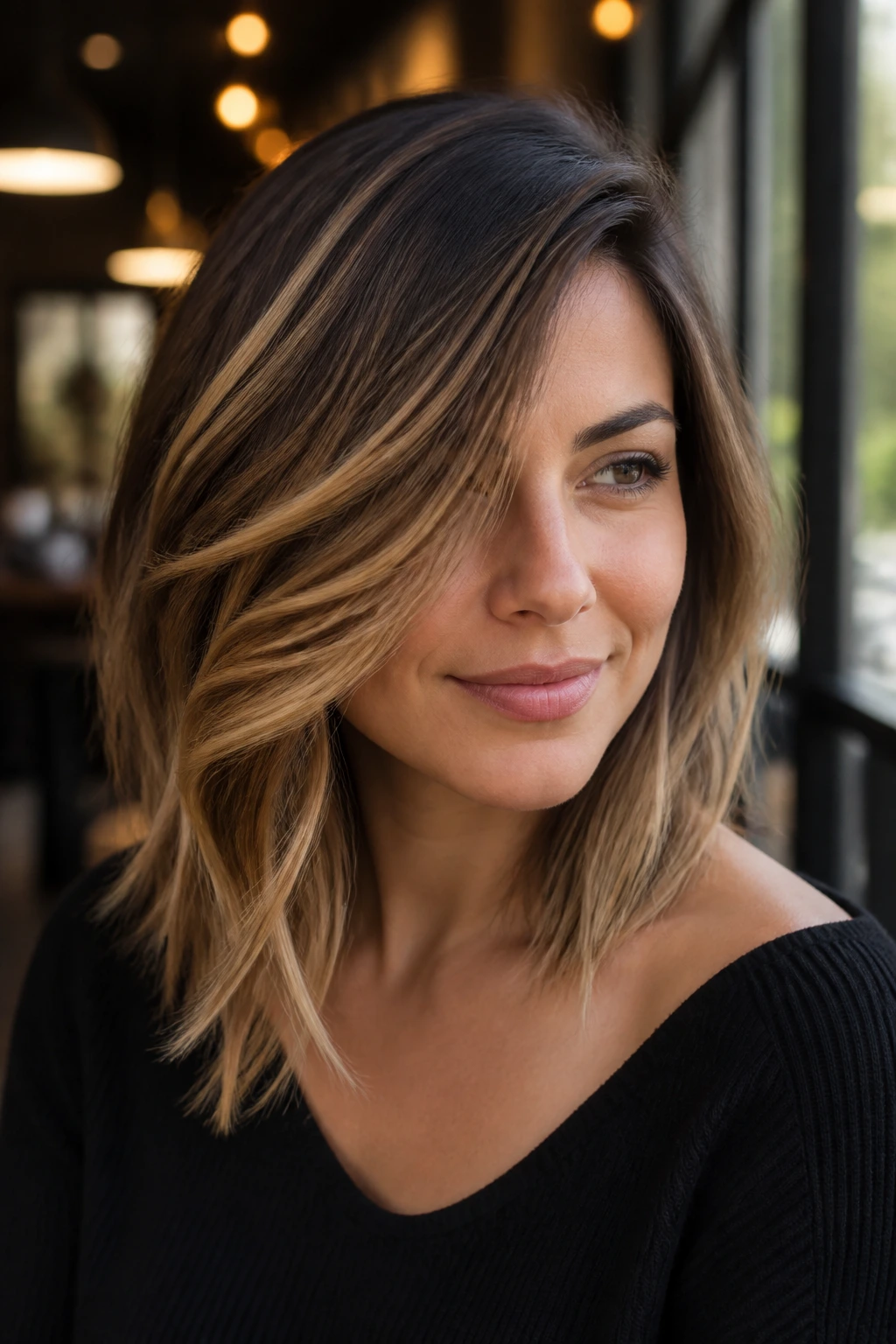
A swoopy shoulder cut is all about direction. Instead of sitting dead straight, the hair is cut to fall with a sideward bend that makes the whole shape look more animated. Diagonal caramel placement supports that movement, because the light pieces travel across the head instead of sitting in rigid blocks.
I like this option for fine hair that needs a little glamour without a lot of maintenance. A medium-barrel iron or a big round brush is enough to make the shape show. You are not chasing perfect waves here. You’re just giving the hair a curve.
The diagonal placement also helps the highlights blend out as the hair moves. That keeps the finish soft.
24. Feathered Layers with Deep Side Part
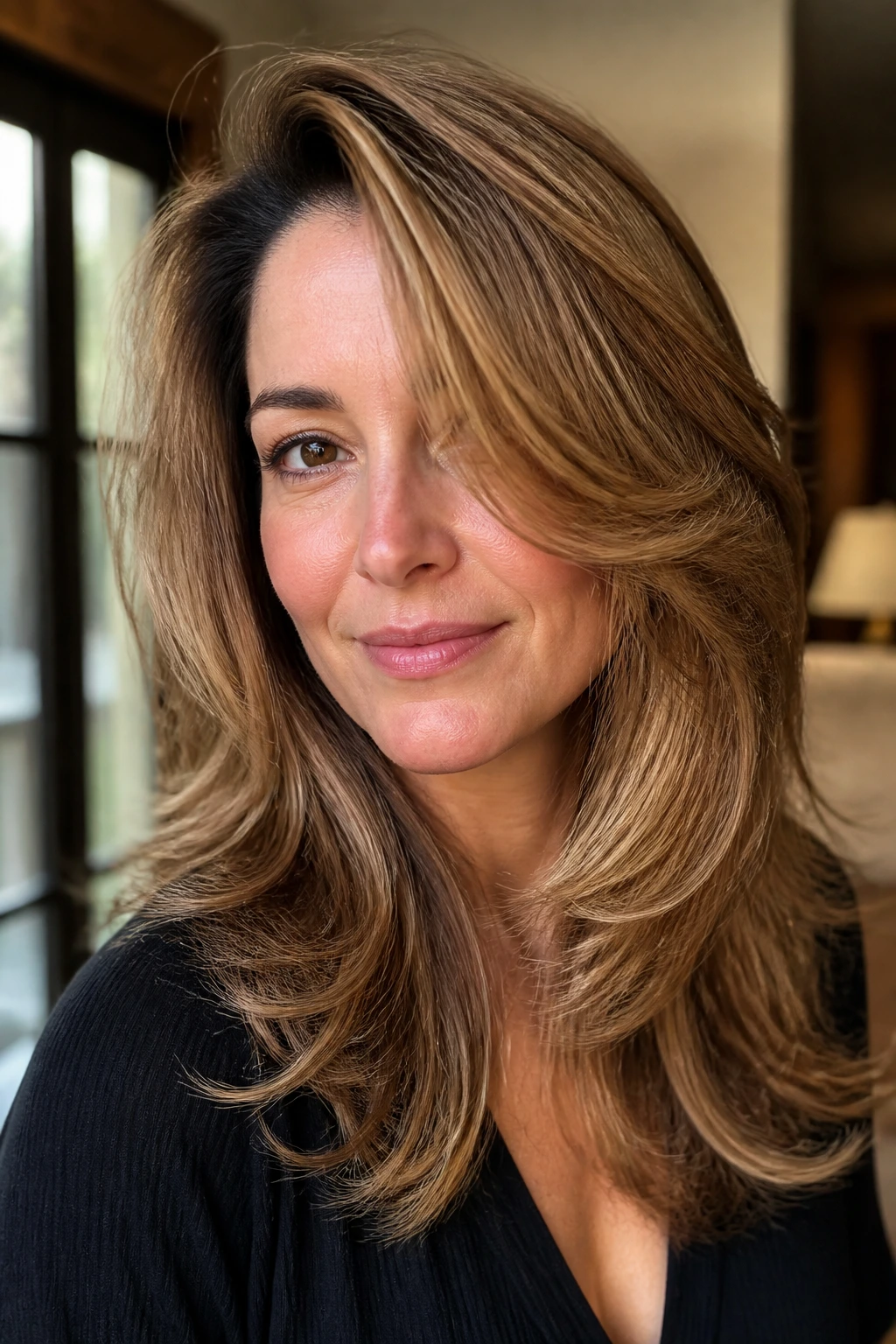
Feathered layers can be beautiful on fine hair when they’re done with restraint. The deep side part gives the roots immediate lift, and the feathering around the face creates movement that feels airy rather than thin. Caramel highlights belong on the topmost layers, where they catch light and make the part look fuller.
This style has a bit of a 70s feel, but it doesn’t have to read retro. Keep the layers smooth, not choppy, and the effect stays modern. Fine hair often responds well to a side part because it breaks the scalp line and gives the top more body.
It’s one of the best choices if your hair wants to fall flat at the crown.
25. Soft Inverted Lob with Lightened Front Corners
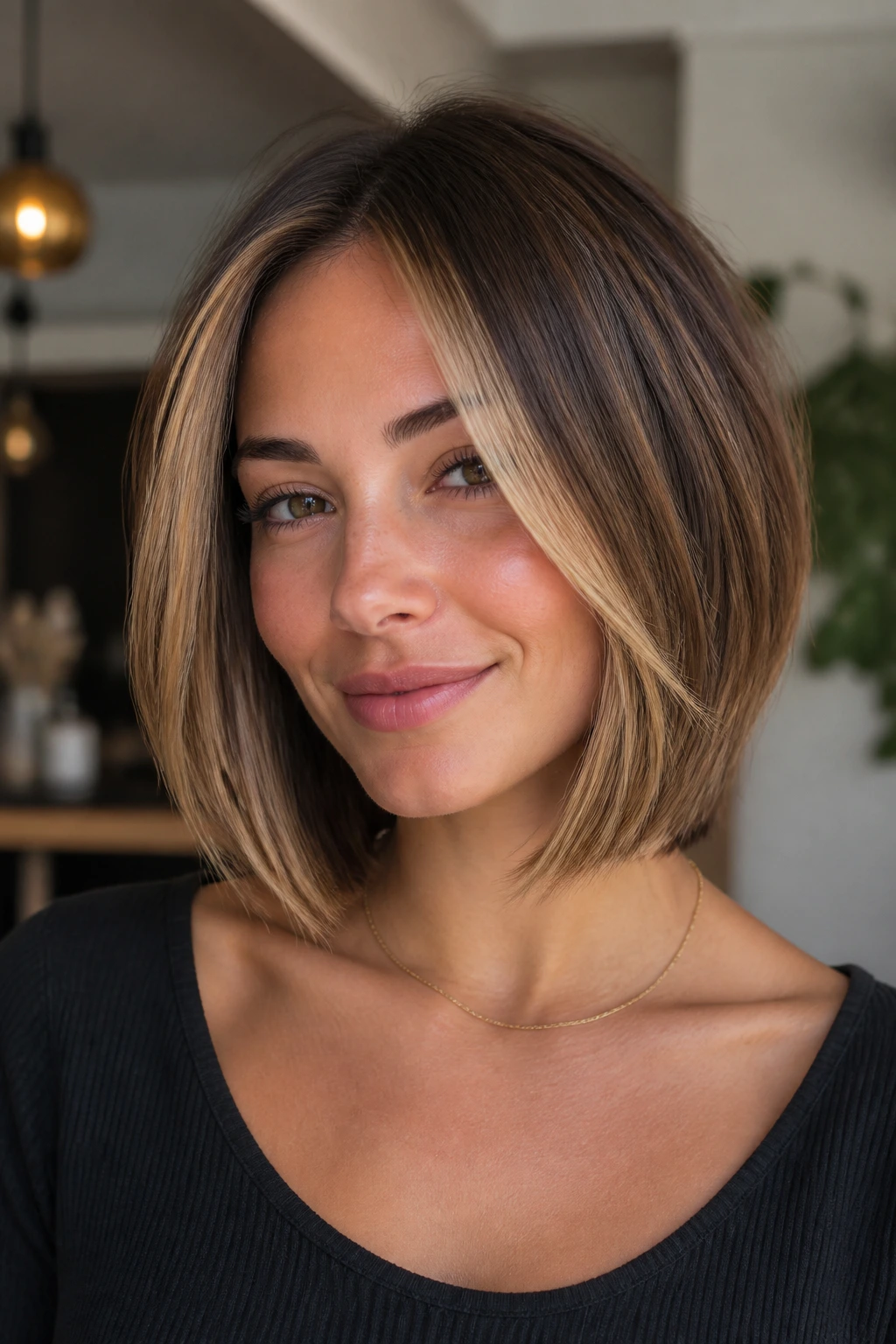
A soft inverted lob gives you a little lift at the back and a longer, face-framing front. That shape makes fine hair look more sculpted without asking it to do something impossible. The lightened front corners are the part I like most — they pull the eye forward and brighten the face without turning the whole head into a highlight map.
The inversion should stay gentle. Too steep, and the cut looks dated; too mild, and you lose the point of the shape. For fine hair, subtle wins. Every time.
This is a strong final option because it’s neat, flattering, and easy to style straight or wavy.
Why Fine Hair and Caramel Highlights Play So Well Together
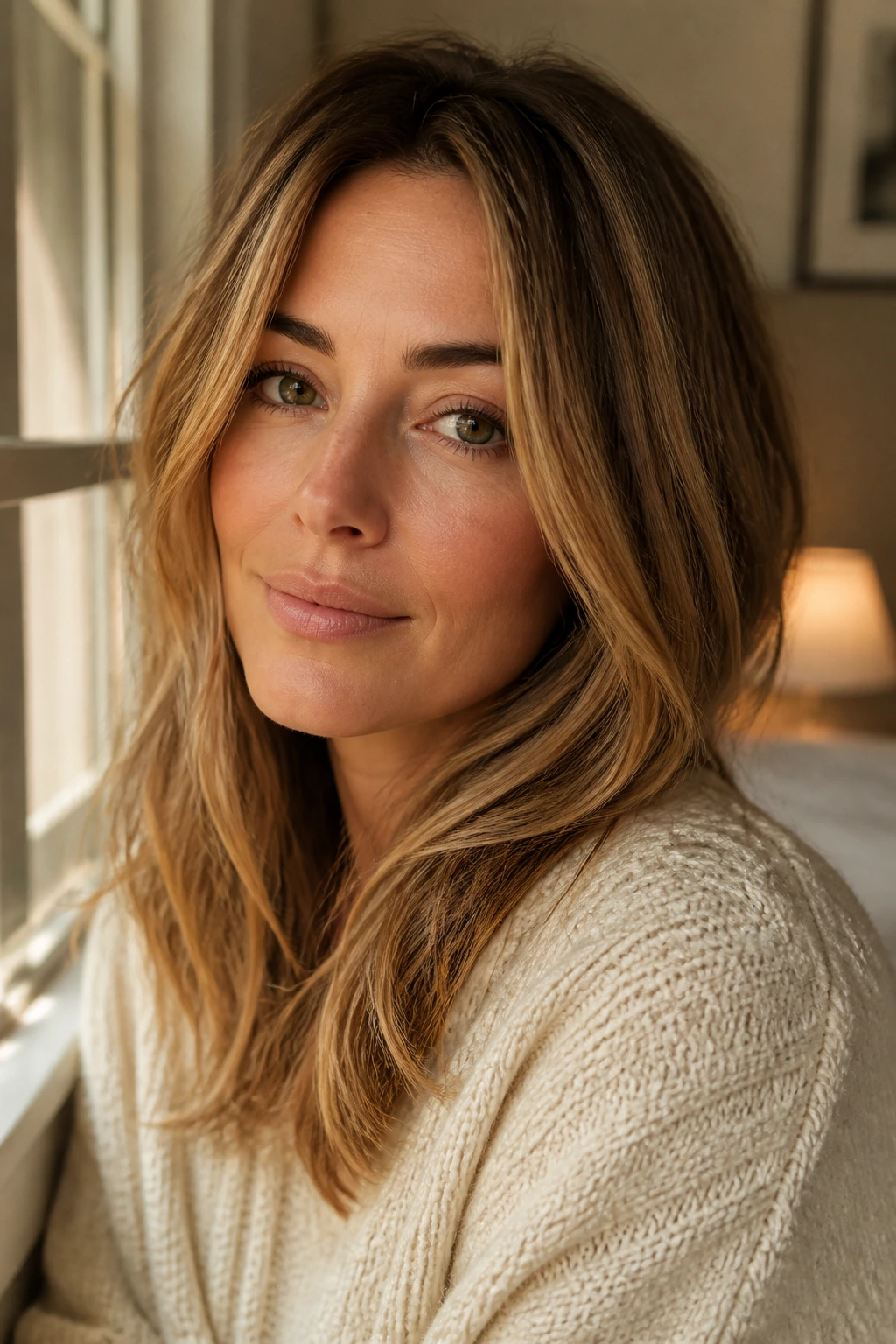
Fine hair and caramel highlights are a smarter pair than people give them credit for. The color is warm enough to soften the scalp line and the shape of the cut, but not so light that it breaks the hair into obvious pieces. That middle-ground warmth gives you depth without the harshness that can make fine strands look even thinner.
There’s also a practical reason this combo works: the eye follows contrast. When caramel is placed around the face, crown, and top layer, it creates small visual shifts that make the whole haircut feel busier in a good way. Not messy. Just fuller. That’s especially useful on fine hair, where a flat monochrome color can make every shape look more obvious than it should.
Essential Tools for Styling and Care
-
Tail comb: Good for clean parts and lifting small sections at the root without making the hair look teased out.
-
1-inch or 1.25-inch curling iron: Best for soft bends on bobs, lobs, and layered mids; smaller barrels can make fine hair look frizzy fast.
-
Round brush, medium size: Useful for blowouts that need lift at the crown and a slight inward curve at the ends.
-
Blow dryer with concentrator nozzle: Directs air where you want it, which matters a lot on fine hair that collapses under rough drying.
-
Lightweight mousse or root spray: Gives grip without the crunchy helmet effect.
-
Heat protectant spray: Non-negotiable if you use a flat iron or curling iron more than once a week.
-
Duckbill clips: Great for setting crown lift while the hair cools.
-
Color-safe shampoo and conditioner: Keeps caramel highlights from turning dull or muddy.
-
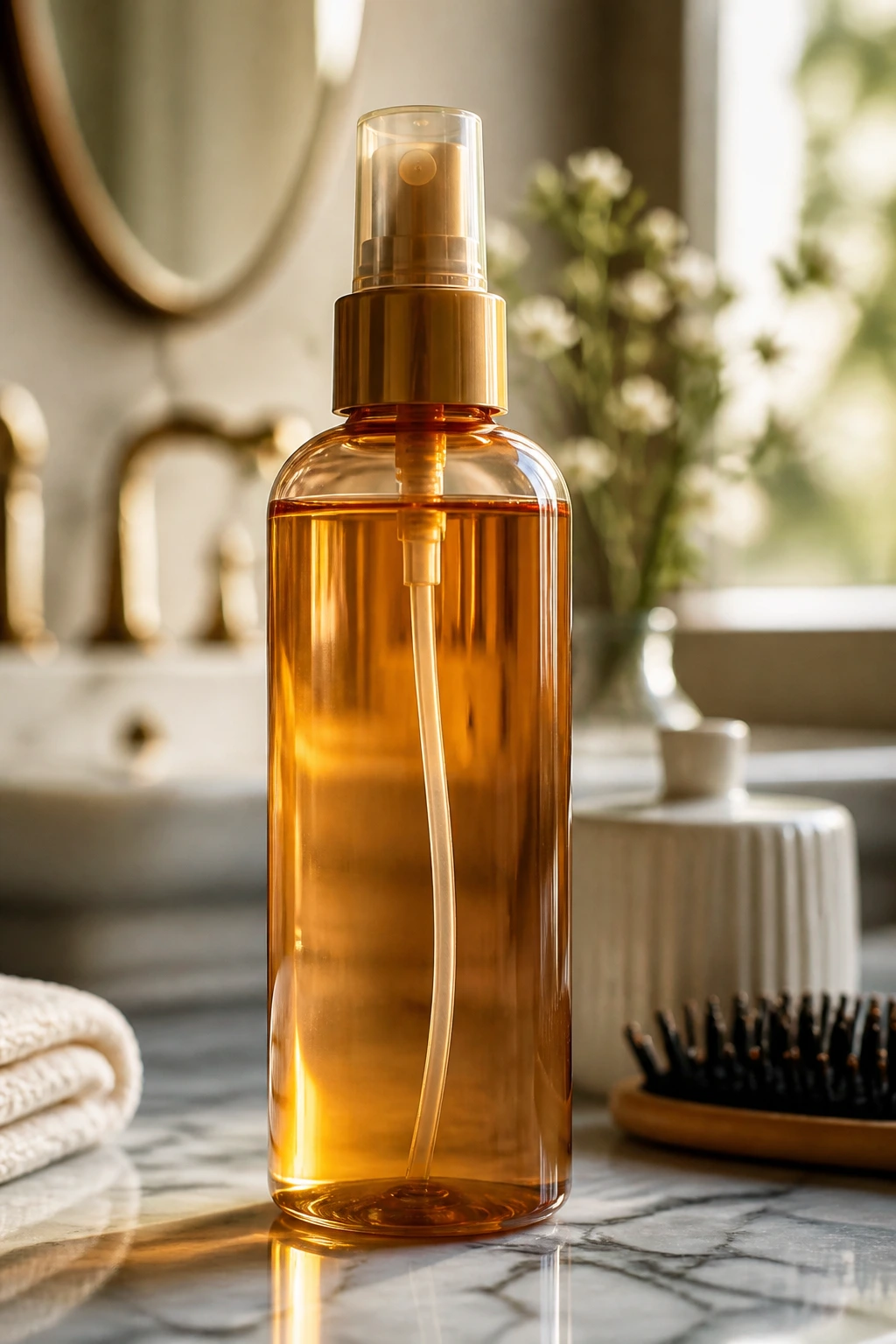
Texturizing spray: Use a small amount on the mid-lengths and ends, not near the scalp.
Smart Cut, Color, and Consultation Notes
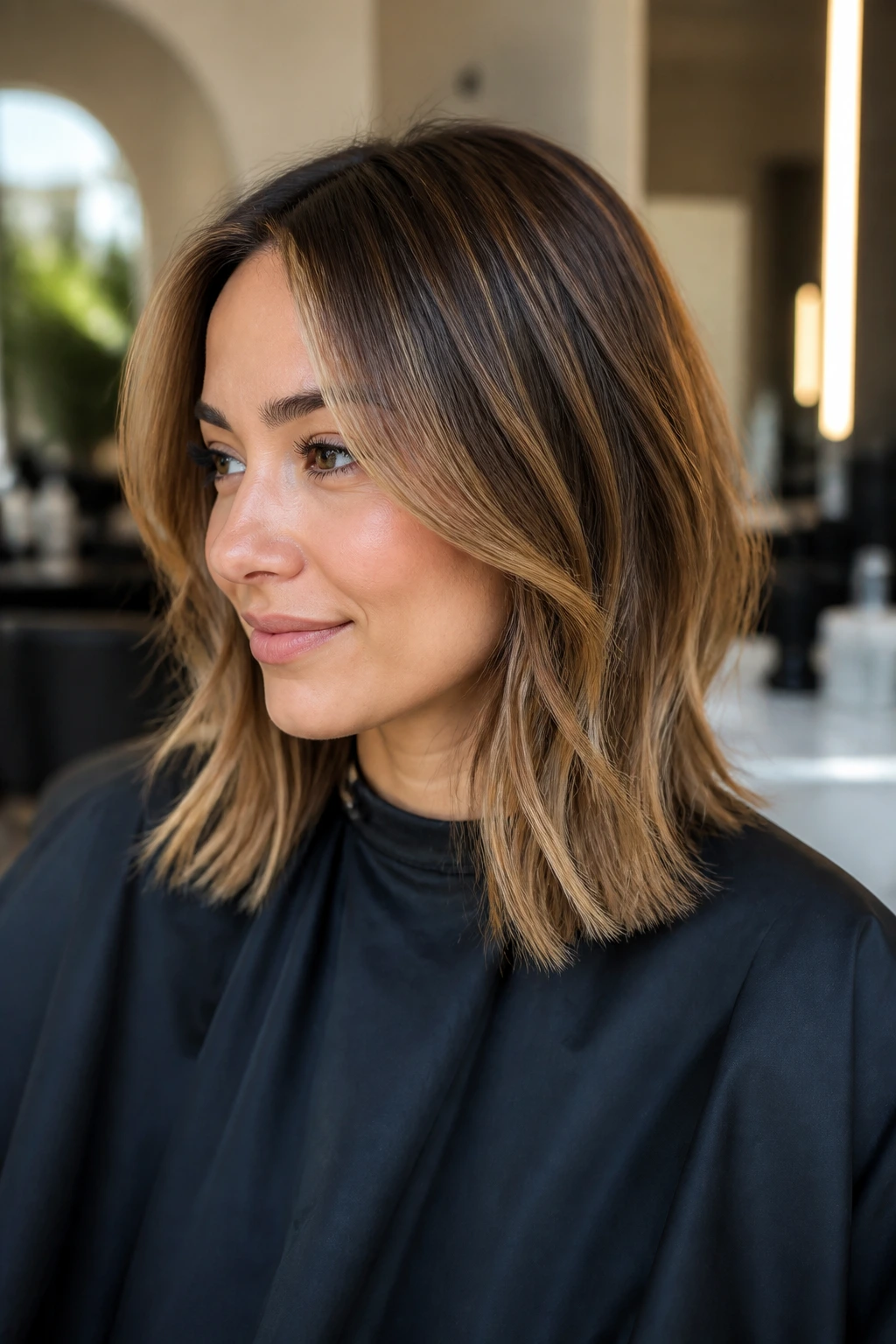
The best haircut on fine hair starts with an honest conversation. Tell your stylist whether your hair is fine in strand thickness, low in density, or both. Those are not the same thing, and the wrong assumption leads to bad layering fast. Fine but dense hair can take more movement. Fine and sparse hair usually needs cleaner lines and less internal cutting.
For the color, ask for caramel placement instead of blanket lightness. That usually means babylights, ribbons, or face-framing pieces around the part and hairline, not broad blonding from root to tip. If your base color is dark brown, a toffee or toasted-caramel lift usually blends more naturally than a pale blonde stripe. If your base is dark blonde, a beige-caramel gloss can be enough.
One more thing: ask where the highlights should start. That detail matters. Starting too high can make the grow-out harsh; starting a little lower often keeps the shape softer and the ends fuller-looking. If the goal is density, the stylist should protect the perimeter, not carve it apart.
How to Style and Show Off the Dimension
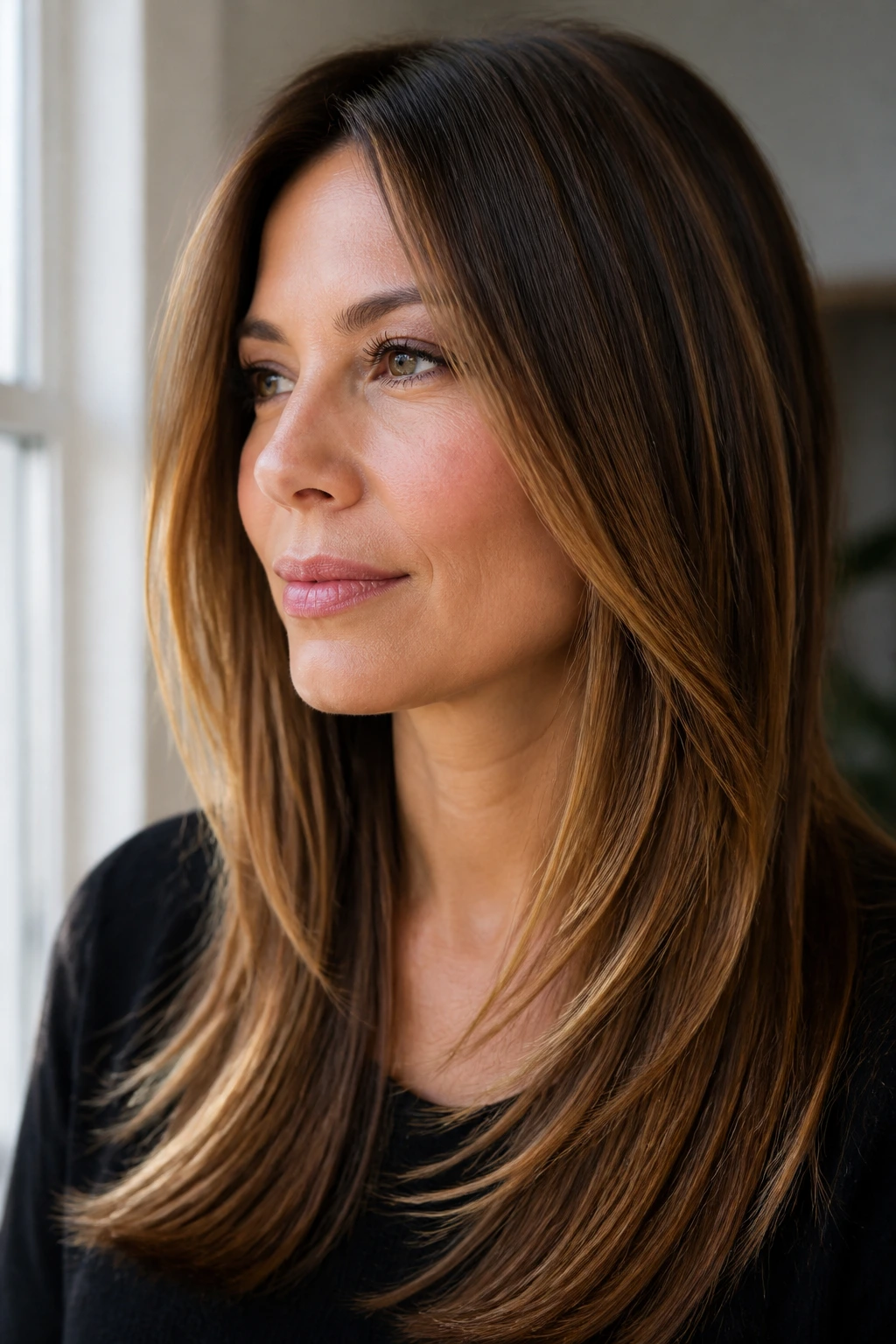
Straight and smooth:
Use a blow dryer and round brush, then finish with a flat iron only on the last inch or two of the ends. That keeps the outline crisp, which helps fine hair look denser.
Soft waves:
Wrap sections away from the face with a 1.25-inch iron, leave the last half-inch out, and brush through after cooling. The caramel pieces will show better once the bend loosens.
Air-dry texture:
Work mousse through damp roots, twist a few face-framing pieces, and let the hair dry with a center or deep side part. Fine hair usually needs some support at the roots if you want it to hold shape on its own.
Second-day reset:
Mist the roots with a little water or dry shampoo, then re-bend only the front sections. Don’t re-curl everything. That’s how fine hair starts looking fuzzy instead of finished.
Additional Tips and Lift Boosters
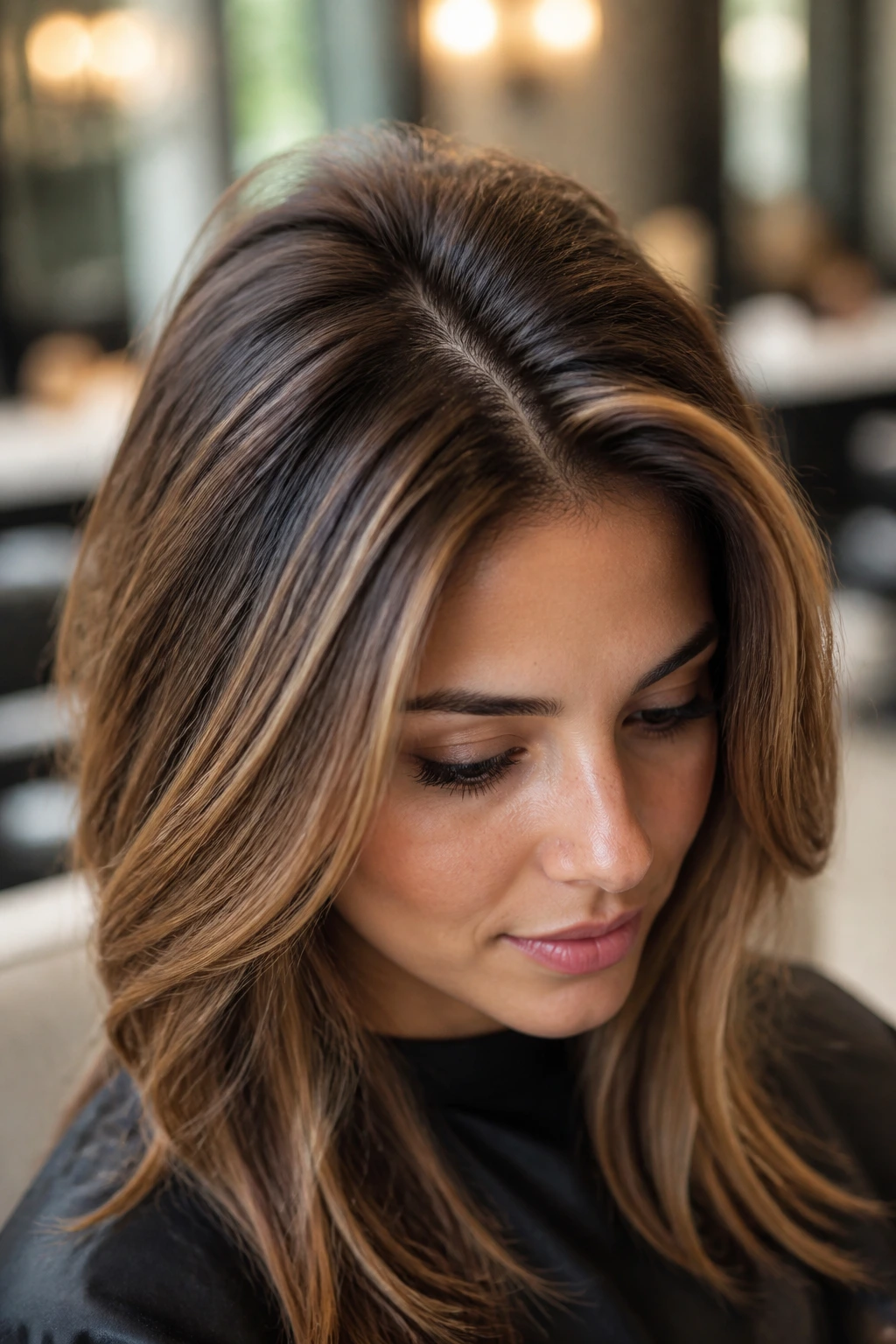
Root Lift: Blow-dry the roots in the opposite direction of your part for the first few minutes. It’s a tiny trick, but on fine hair it changes the whole silhouette.
Color Boost: A clear gloss or warm toner every so often keeps caramel from going flat or muddy. The shine matters as much as the shade.
Parting Trick: Switch your part by half an inch every few days. Fine hair remembers where it lives, and a small move can stop a ridge from forming.
Product Choice: Use less conditioner near the roots than you think you need. Heavy product at the scalp is the fastest route to collapse.
Finishing Touch: Tuck one side behind the ear or clip back the front section. That little asymmetry shows off the highlight placement and gives the cut a more finished look.
Common Mistakes That Make Fine Hair Look Thinner
-
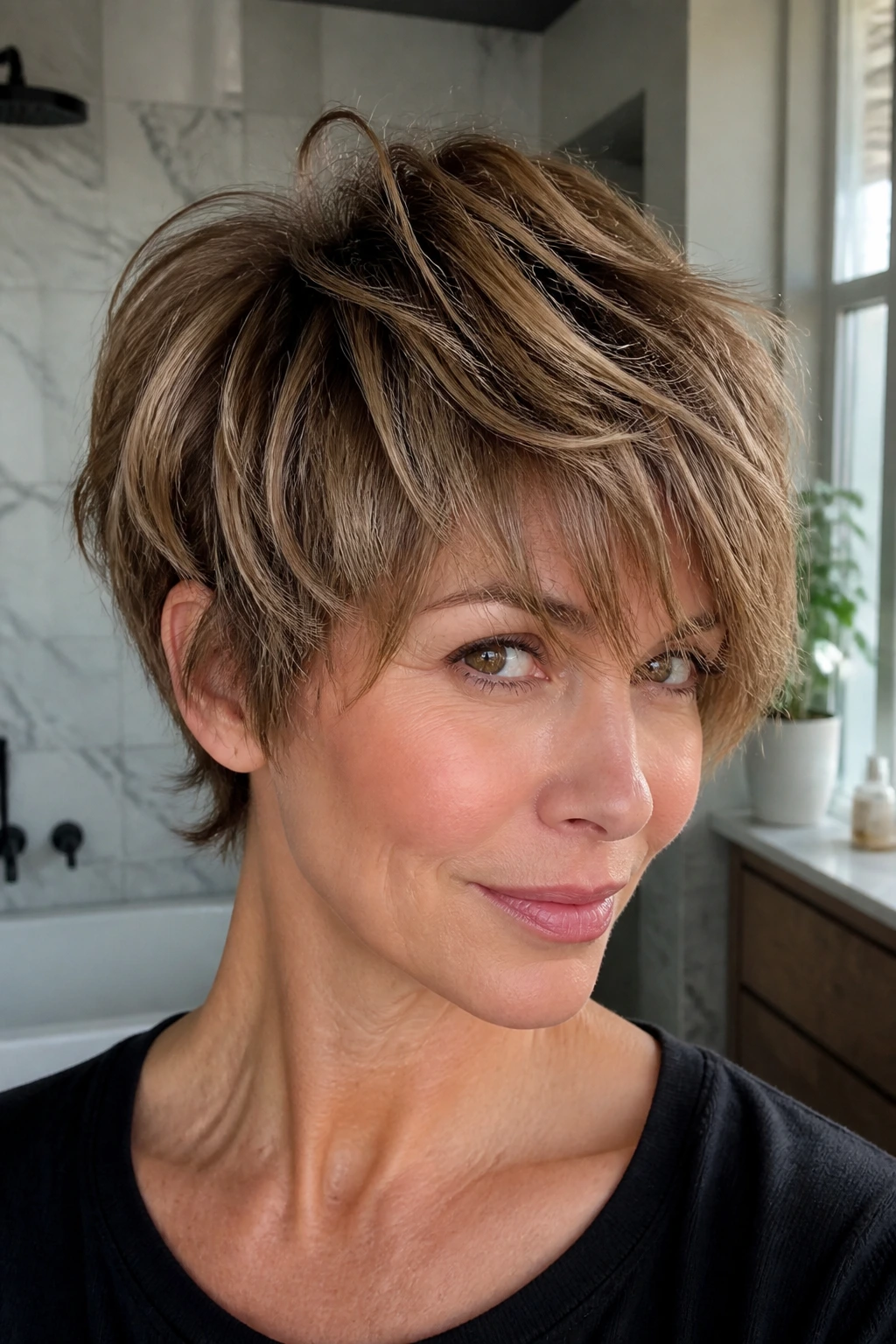
Over-layering the ends: If the perimeter gets too thinned out, the haircut loses its edge and starts reading wispy. Ask for softer internal movement and keep the bottom line fuller.
-
Choosing highlights that are too chunky or too pale: Big blonde blocks can make fine hair look separated instead of dimensional. Micro-babylights and soft caramel ribbons blend better.
-
Using heavy oils or thick creams at the crown: The shine may look nice for ten minutes, then the hair collapses. Keep richer products on the mid-lengths and ends only.
-
Texturizing every section: A little texture adds life; too much makes the hair look eaten away. This is especially bad on fine pixies and bobs.
-
Ignoring density when choosing layers: Fine hair with lots of strands can take more shape than fine hair with little density. If the hair is sparse, the haircut should protect weight, not chase movement everywhere.
Variations and Adaptations to Try
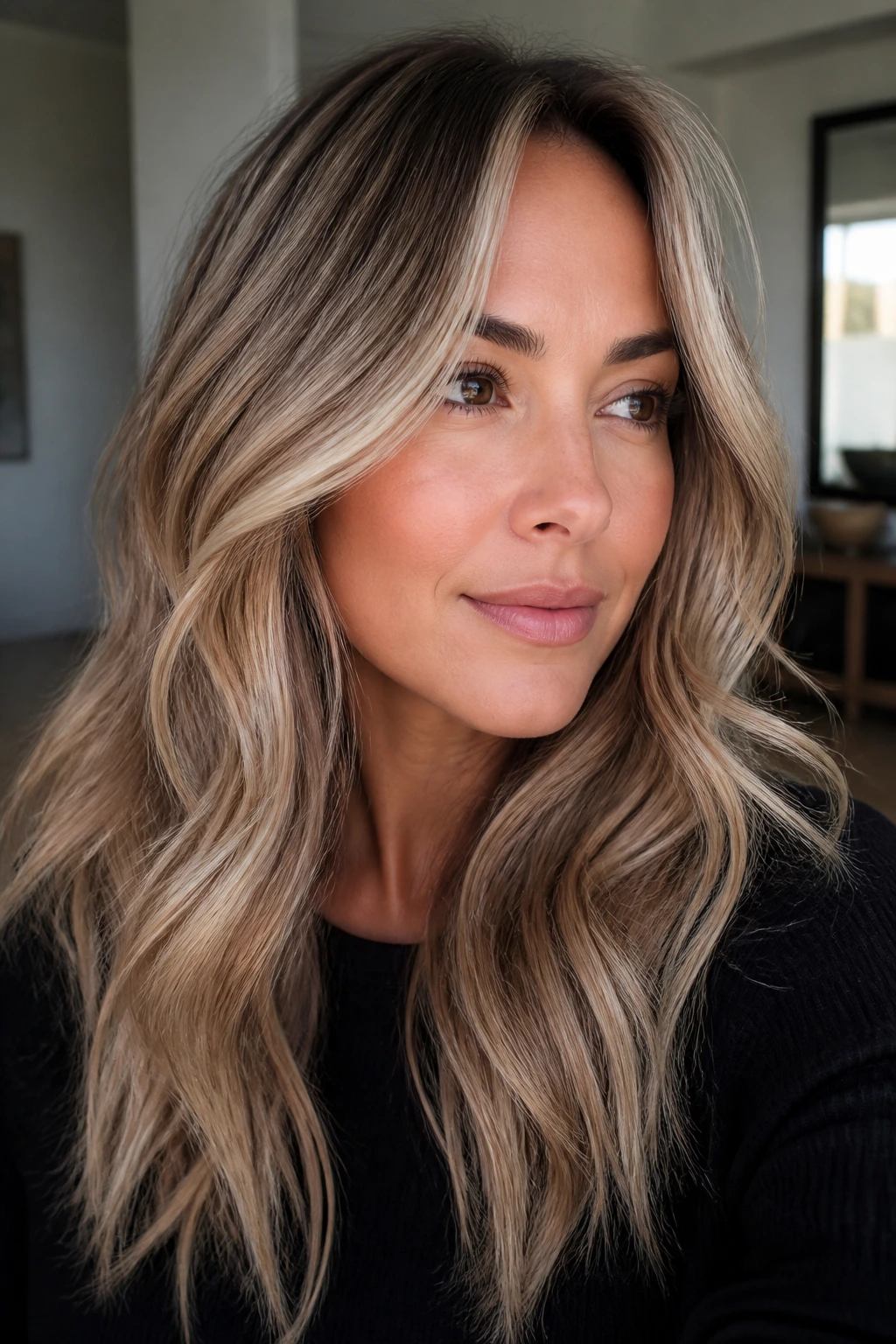
Cooler Caramel Blend:
If warm tones pull too orange on your skin, ask for a beige-caramel or mushroom-caramel finish. The haircut can stay the same, but the tone will feel quieter and less golden.
Shadow-Root Grow-Out:
Keeping the root slightly deeper — even just for a couple of inches — makes the highlights blend more softly. This is a smart choice if you do not want obvious maintenance lines.
Curly-Fine Friendly Version:
On fine curls or waves, keep the layers longer and let the caramel sit where the curl clumps naturally fall. Too many short layers can break up the curl pattern and make the hair frizzier.
Bright Front-Frame Version:
If you want more impact, keep the rest of the color subtle and brighten only the money piece and temple area. That gives you face framing without flooding the whole head with lightness.
Low-Maintenance Bob Version:
Choose a blunt bob or one-length lob with soft caramel veils only on the top layer. It grows out cleanly and needs less styling, which is a relief if you hate daily round-brushing.
Keeping the Cut Sharp and the Caramel Bright Between Visits
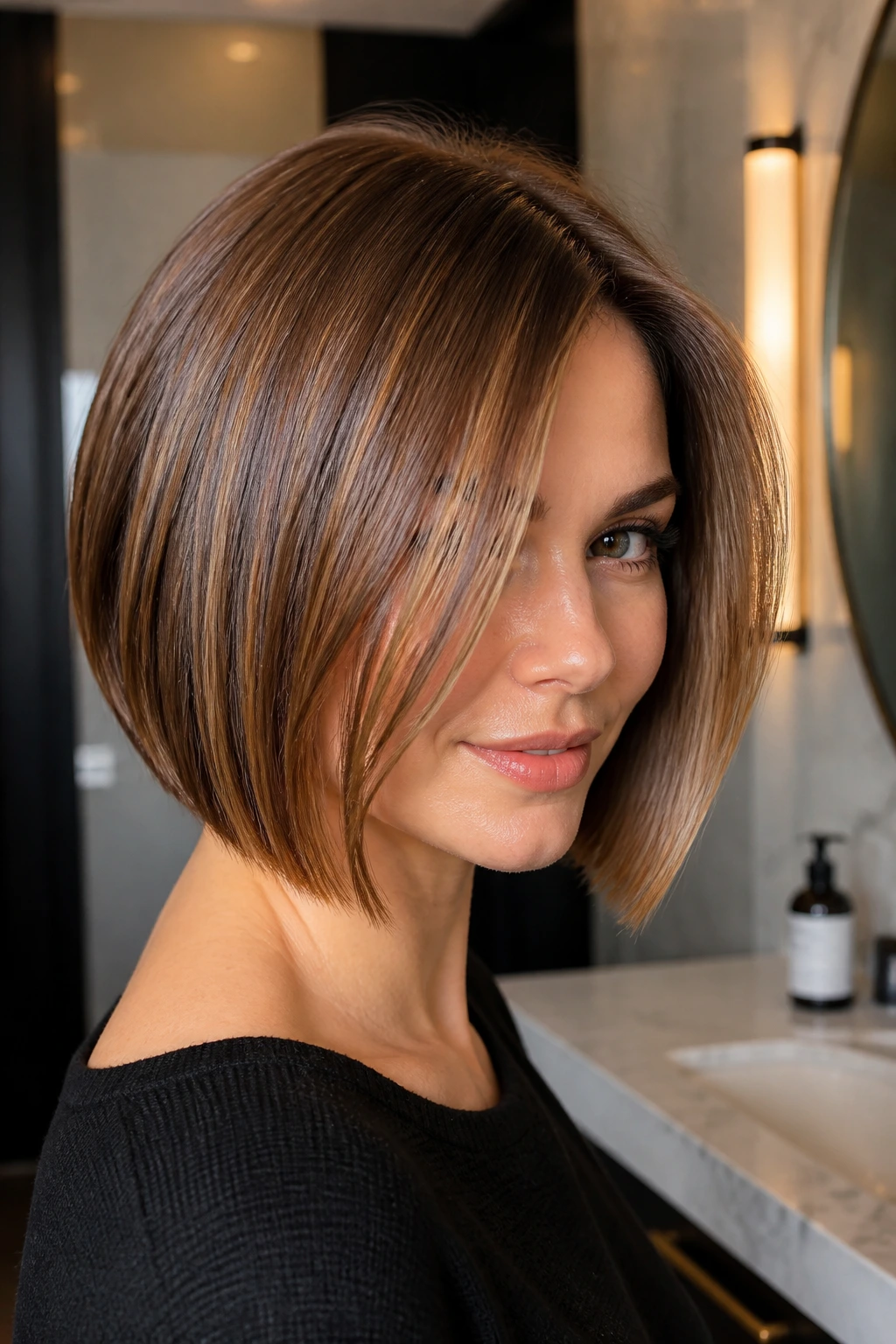
Trim timing matters more than people think. Short bobs and pixies usually need a cleanup every 4 to 6 weeks if you want the shape to stay crisp. Lobs and shoulder-length cuts can usually wait 6 to 10 weeks, depending on how fast your hair grows and how picky you are about the outline.
For color, the goal is to keep caramel warm, not brassy. A gloss or toner refresh every 6 to 8 weeks is usually enough for many highlight placements, especially if the front pieces are doing the visual work. Use a color-safe shampoo most washes, and if the caramel starts drifting too yellow, a mild toning product once every week or two can steady it without dulling the shine.
Sleeping habits matter too. A satin pillowcase or loose silk scrunchie can keep the cut from bending flat overnight. Fine hair shows every crease. That’s just the deal.
Frequently Asked Questions
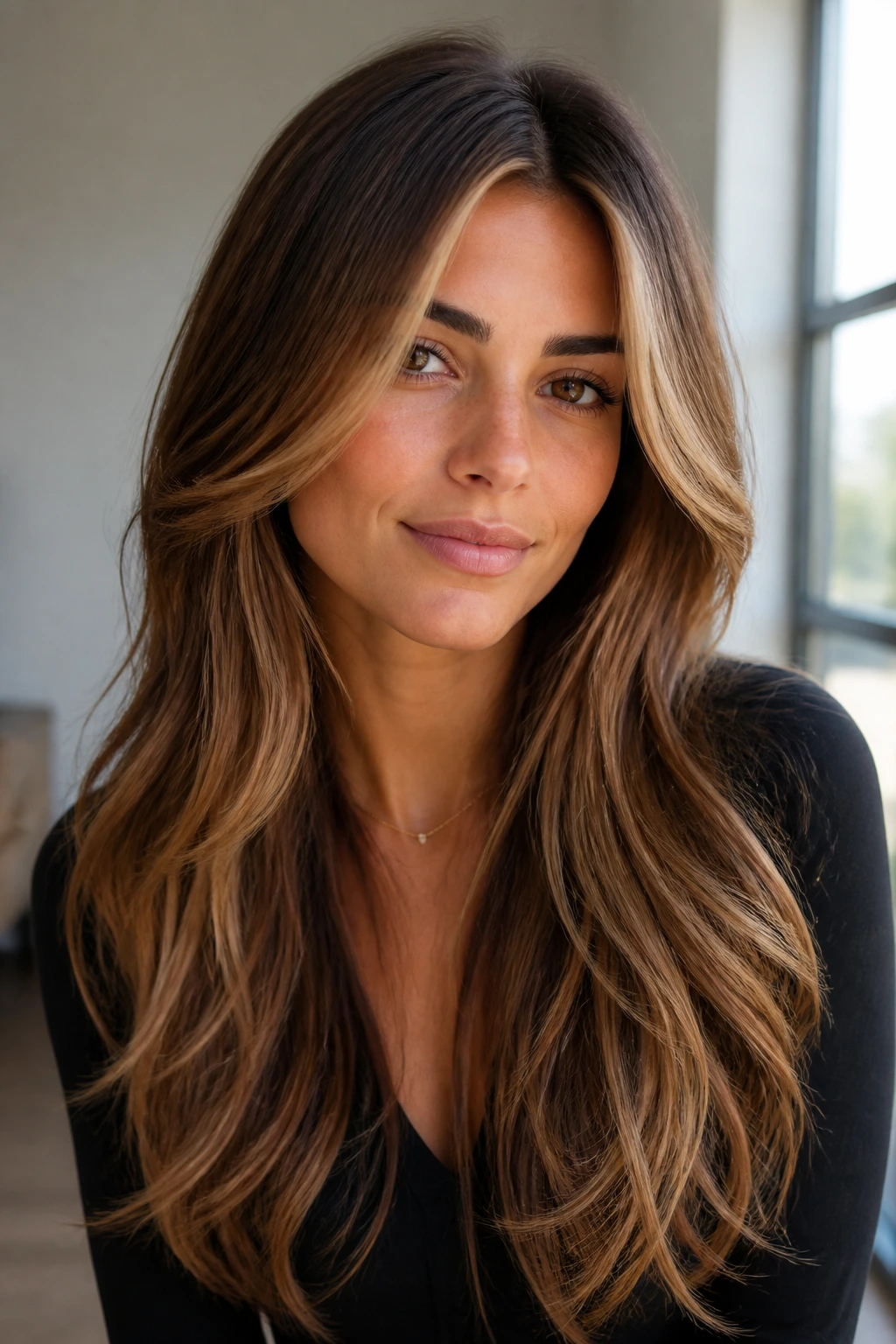
Which haircut makes fine hair look thickest?
A blunt bob, collarbone lob, or one-length midi cut usually gives the strongest density illusion because the ends stay full. If your hair is very sparse, skip heavy layering and let the perimeter do the work.
Are caramel highlights better than blonde for fine hair?
Often, yes. Caramel usually blends more softly with fine strands and avoids the hard contrast that can make the hair look separated. Blonde can still work, but it needs careful placement and a softer hand.
Can fine hair handle layers at all?
Yes, but they need to be chosen with care. Long layers, invisible layers, or soft face framing usually work better than aggressive stacking or razor-heavy ends.
Is balayage or foiling better for caramel highlights on fine hair?
Babylights and fine foils tend to work best when you want control and softness. Balayage can look lovely too, but the painted sections should stay delicate so the color doesn’t turn stripey.
What if my hair is straight and flat every single day?
Pick a cut with a strong outline: blunt lob, chin-length bob, or inverted lob. Then use root-lifting spray and a round brush or velcro rollers at the crown for a few minutes after drying.
Do bangs work with fine hair?
They can, but blunt heavy bangs are risky. Side-swept bangs, bottleneck bangs, or curtain bangs that stay light usually work better because they don’t steal too much density from the front.
How often should I trim fine hair with highlights?
If the cut is short, every 4 to 6 weeks is usually the sweet spot. For longer lobs and mids, 6 to 10 weeks keeps the ends from looking stringy and the color from feeling tired.
Can I wear these cuts if my hair is fine but dense?
Absolutely. Fine strands with a lot of hair can handle more texture and layering than fine, sparse hair. That’s when shags, butterfly cuts, and longer pixies start making sense.
Soft Ends, Strong Shape
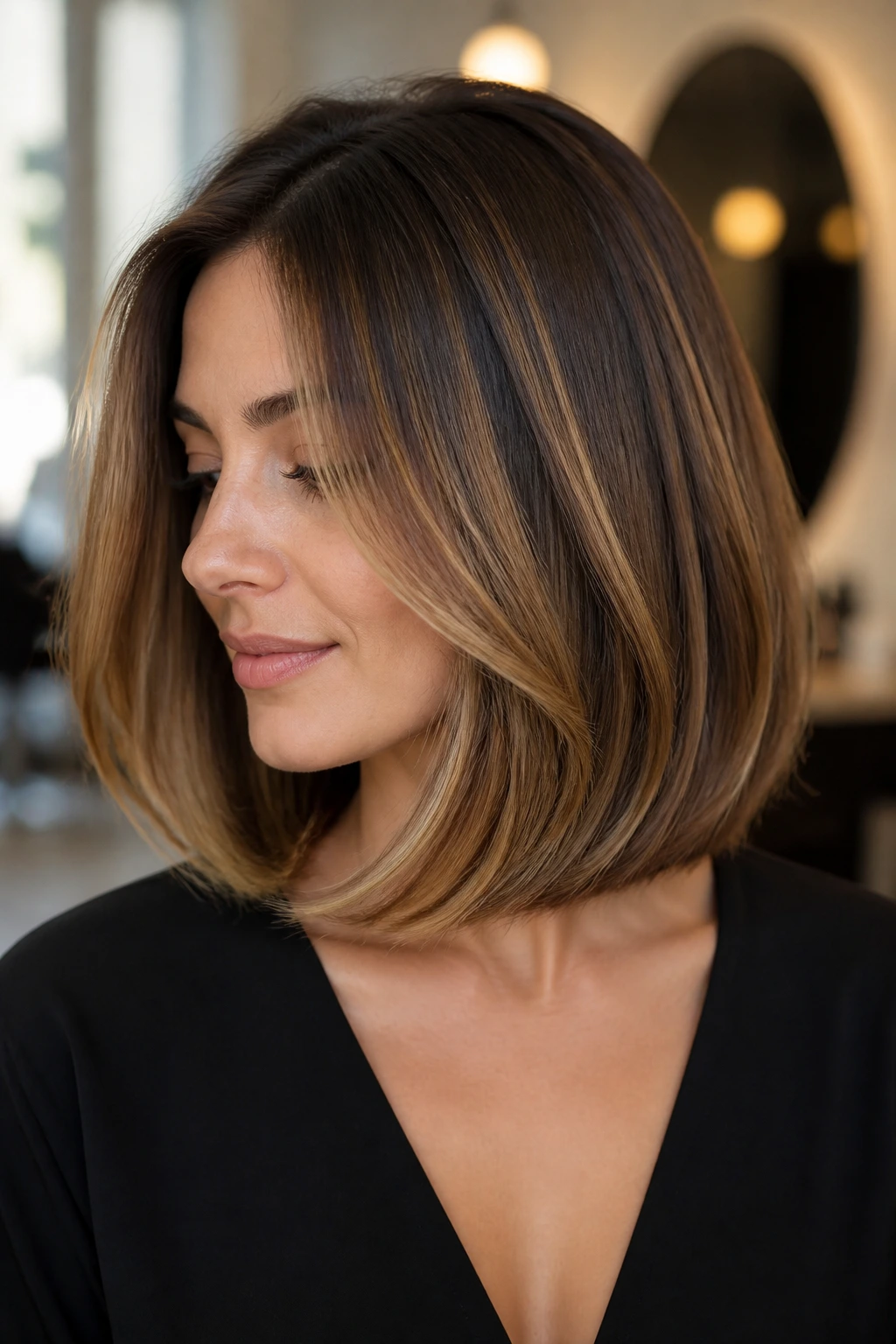
Fine hair does best when the cut respects what it already has instead of trying to fake a lot of volume with a lot of slicing. That’s the part people miss. A clean hem, a smart layer pattern, and caramel placed where light naturally lands can make even the thinnest-feeling hair look more awake.
The easiest way to choose is to decide what matters most to you: a crisp bob, a little movement, or enough length to clip back without fuss. Bring that photo to the salon, bring a second photo showing the caramel tone you want, and ask for the perimeter to stay full. That tiny bit of clarity saves a lot of regret later.