



Medium skin tones are where balayage can look especially lush, especially if the placement and tone are doing the right job. A ribbon of honey around the face can wake up olive skin in a way that platinum never will. A smoky beige melt can calm down warmth that wants to shout. The difference is not subtle when you see it in daylight.
That’s the part people miss. Balayage is not just “light pieces painted on.” On medium skin, it works best when the lift level, the gloss, and the placement are all talking to the same undertone. Golden, neutral, and olive medium complexions each pull different shades forward. Get the tone wrong and the color reads muddy, brassy, or flat. Get it right and the hair looks expensive in that frustratingly simple way that’s hard to fake.
The 28 balayage techniques below lean into that reality. Some brighten the face without turning the top section stripey. Some build depth back into hair that’s gone too light. Some are warm and glossy, some are cooler and smoked out, and a few sit right in that middle zone where medium skin tends to look the richest. Tiny changes. Big payoff.
Why These Balayage Techniques Work So Well on Medium Skin
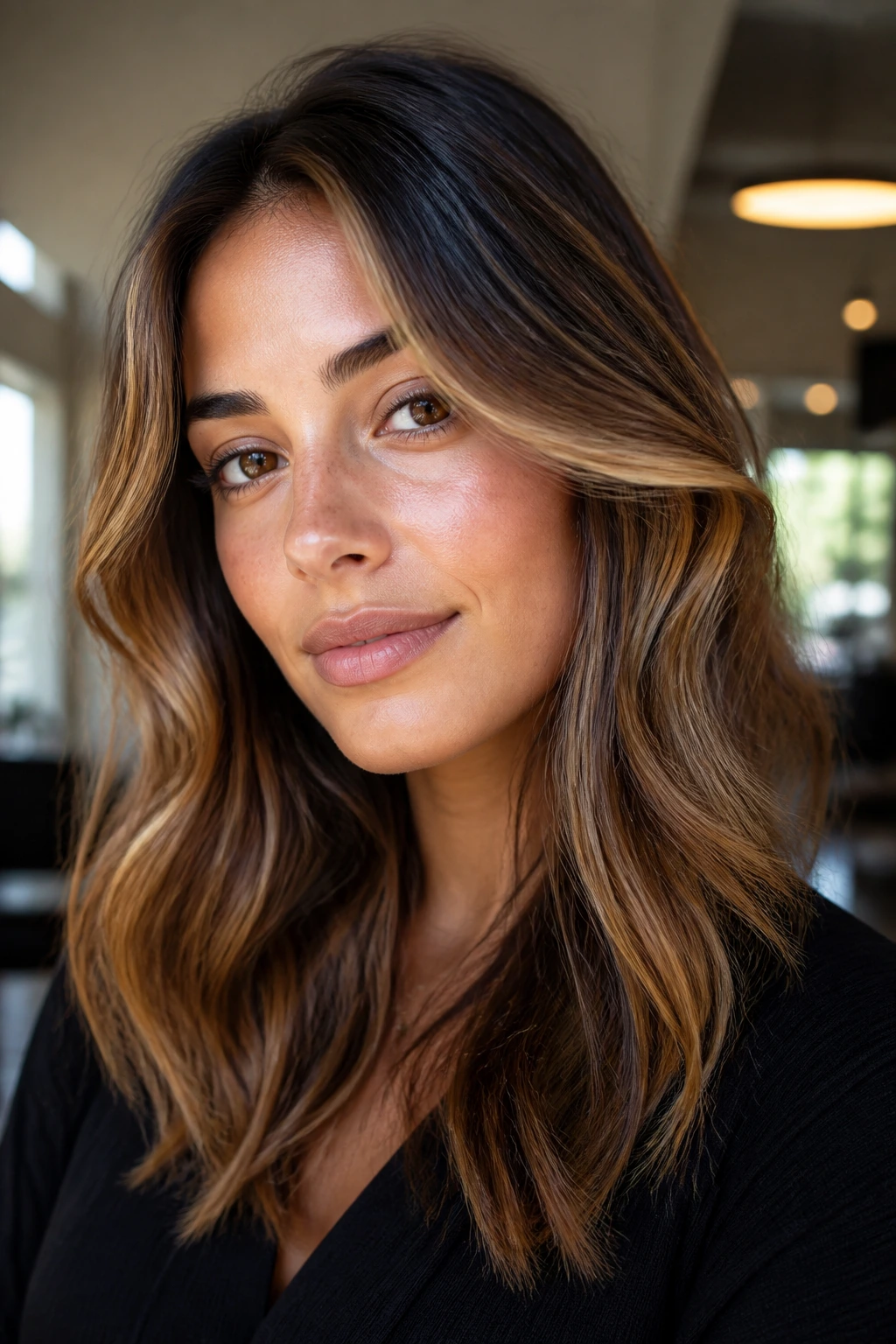
Undertone matching matters more than “blonde” or “brunette.” Medium skin can carry caramel, bronze, beige, copper, and muted ash, but the shade has to sit close to the skin’s undertone or it starts fighting the face.
Placement changes the whole mood. A few lighter ribbons at the cheekbone can soften the jawline and brighten the eyes, while the same shade spread too evenly can flatten the haircut.
Gloss is doing more work than most people realize. A beige or amber gloss turns raw lightening into one color story, which matters on medium skin because harsh contrast can look patchy fast.
You don’t need maximum lift. Most of the best-looking balayage on medium skin lands around level 7 to 9, not icy level 10 blonde. That range keeps dimension visible without bleaching the life out of the style.
Grow-out is part of the appeal. Medium skin tends to look good with a little depth at the root, which means shadow roots, melts, and lowlights usually age better than hard, high-contrast highlights.
1. Honey Face-Framing Ribbons
Honey face-framing ribbons are the easiest way to brighten medium skin without making the hair look streaky. Keep the front pieces around one to two levels lighter than the base, then feather the color from the cheekbone down so the light sits where the face actually needs it. On warm or golden medium skin, this reads sunlit rather than yellow.
I like this technique on shoulder-length cuts and soft waves. The bend in the hair catches the lighter ribbons, and the result looks far more natural than a chunky money piece ever does.
Placement note
Ask for the lightest pieces to sit closest to the eyes and temples, not just the hairline. That tiny shift makes the face look brighter even when the rest of the hair stays quietly dimensional.
Best on: warm, golden, and neutral medium skin.
Skip if: you want a dramatic contrast line. This one is about glow, not drama.
2. Caramel Root Melt
A caramel root melt keeps the top dark enough to feel grounded while the mids and ends soften into a warm brown-caramel finish. On medium skin tones, especially neutral or olive ones, that dark-to-light fade avoids the hard “helmet highlight” effect. The root shadow should be soft, not painted like a stripe.
This technique is a lifesaver when you want low maintenance. New growth blends into the melt instead of shouting across the crown. If the hair is naturally level 5 or 6, caramel is usually the sweet spot; any lighter and it can start looking too yellow against the skin.
What to ask for
- A root shade only one shade deeper than your natural base
- Caramel on the mid-lengths, not the scalp
- A beige-gold gloss to keep the warmth polished
3. Beige Bronde Sweep
Beige bronde is the middle lane that a lot of medium skin tones live in comfortably. It is not blonde enough to feel icy, and not brunette enough to disappear. The color sits in that beige-taupe zone that flatters neutral medium skin especially well, because it softens warmth without draining the complexion.
This is one of my favorite techniques for layered hair. The sweep of lighter pieces through the top layers gives movement, and the beige gloss keeps the finish from turning too orange or too ash.
How it behaves
On straight hair, beige bronde looks cleaner and more polished. On waves, it reads softer and more expensive-looking because the lighter pieces break up against the darker base. That’s the whole trick.
4. Bronze Ribbon Balayage
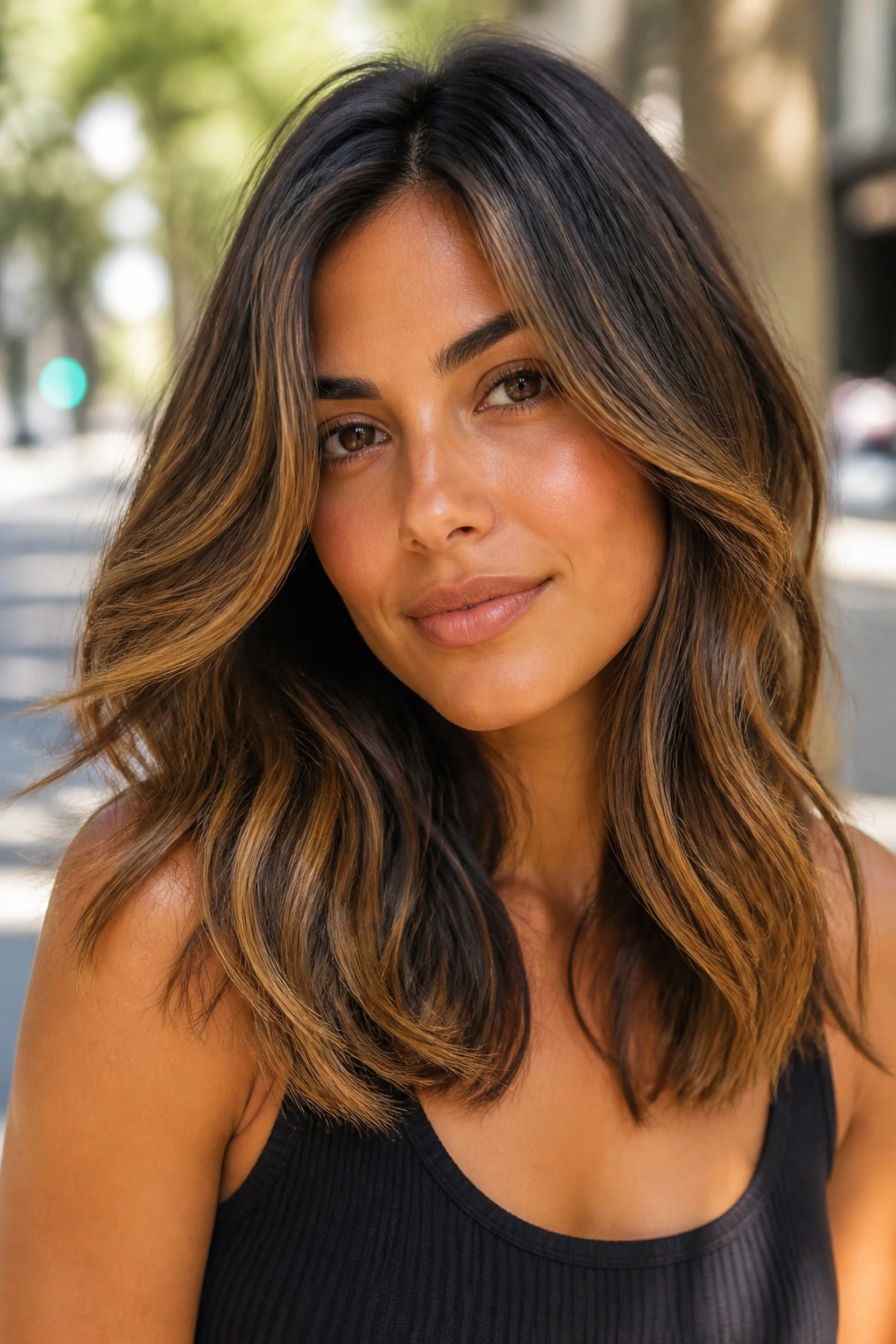
Bronze ribbons are what I reach for when medium skin needs depth, not brightening. Bronze has that warm-metal finish that sits beautifully on golden and olive undertones, especially when the base color is medium brown or dark blonde. The effect is less “highlight” and more “shine.”
Paint the ribbons in a loose V shape through the mid-lengths and ends. Too much at the crown makes the color loud in a bad way. Too little near the face makes the whole thing disappear in photos and in daylight.
Why it works: bronze catches light without going pale. That keeps the complexion looking alive instead of washed out.
5. Chestnut Dimension Lows
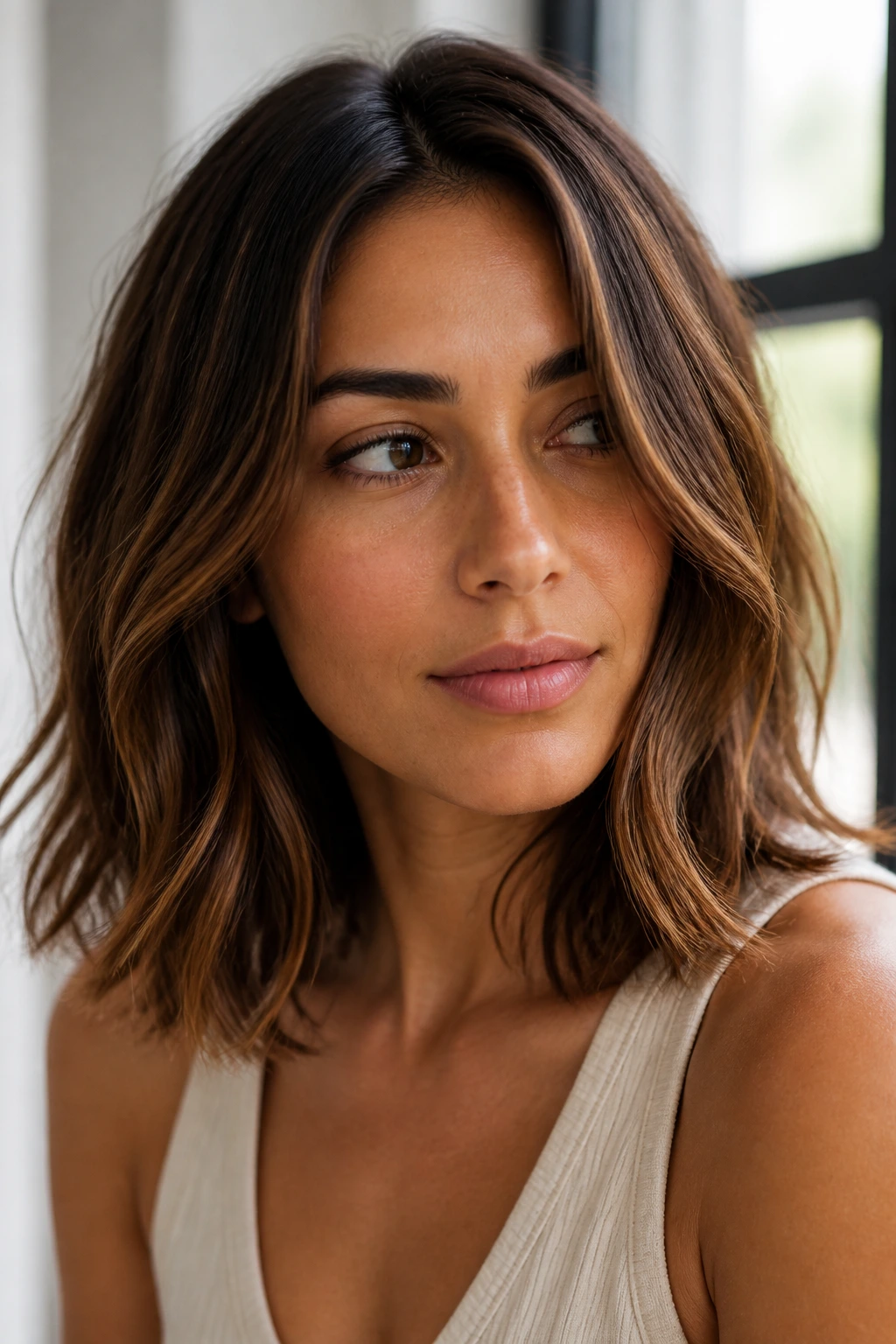
Sometimes balayage means adding depth, not just light. Chestnut dimension lows place soft lowlights back into hair that has gone too blonde or too flat. On medium skin, chestnut keeps the color from floating too far away from the face.
I use this look when the skin has warmth that looks better beside brown-red undertones than beside ash. The result is richer, heavier, and easier to wear than a high-contrast blonde.
Small detail that matters: keep the lowlights thin and irregular. If they look too striped, the whole thing turns dated fast.
6. Copper Contour Ends
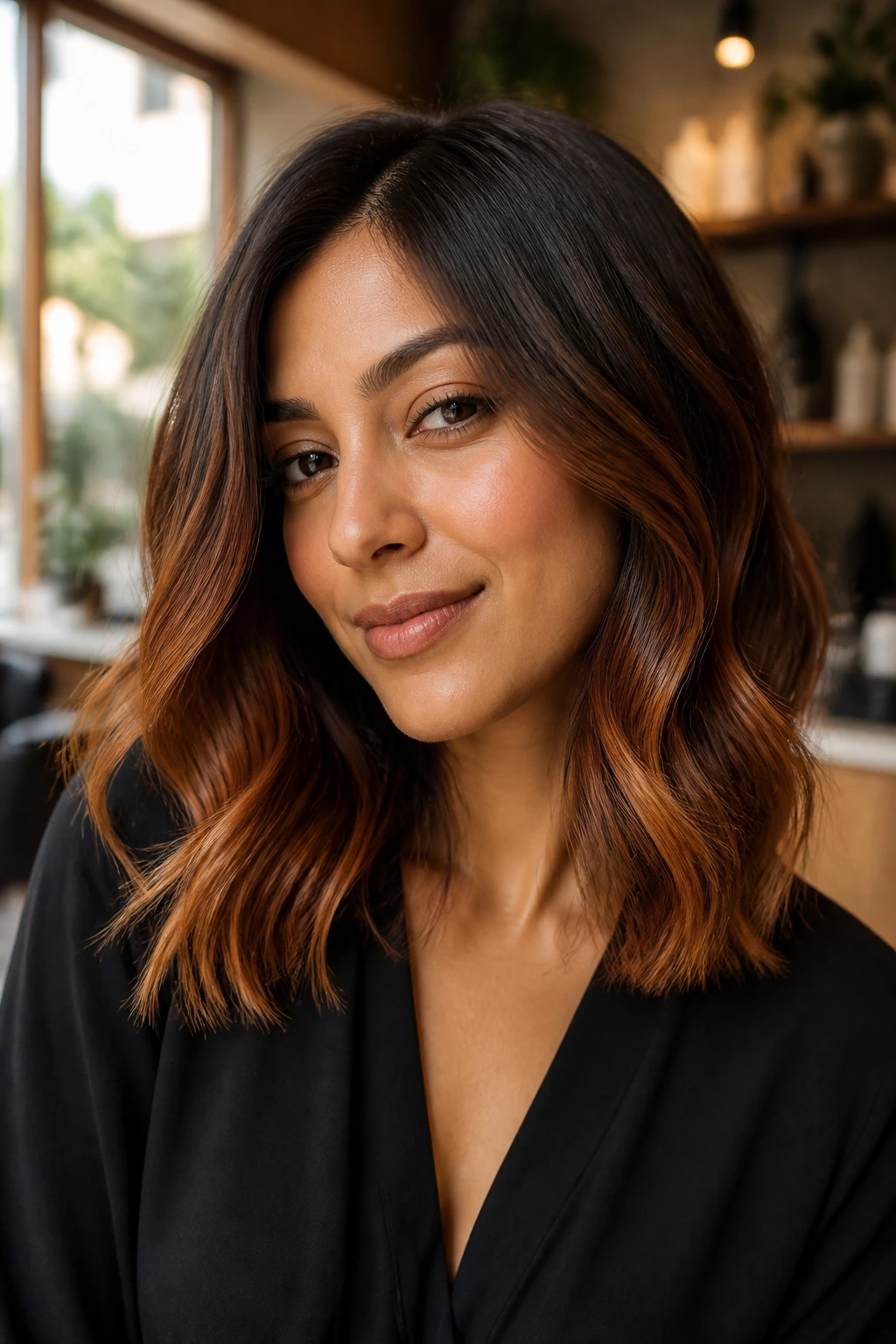
Copper contour ends are for medium skin that can handle a little heat. The copper doesn’t have to be fire-engine bright; in fact, I prefer a muted copper-gold that starts around the mid-lengths and becomes warmer toward the ends. That keeps the face from looking red while still giving the hair a noticeable glow.
This is a strong choice for layered lobs and wavy cuts. The ends pick up the most movement, so the warmer tone ends up looking intentional rather than accidental.
Good match for
- Golden medium skin with freckles
- Neutral medium skin that needs warmth
- Brunettes who want something warmer than caramel but less intense than red
7. Mushroom Brown Neutralizer
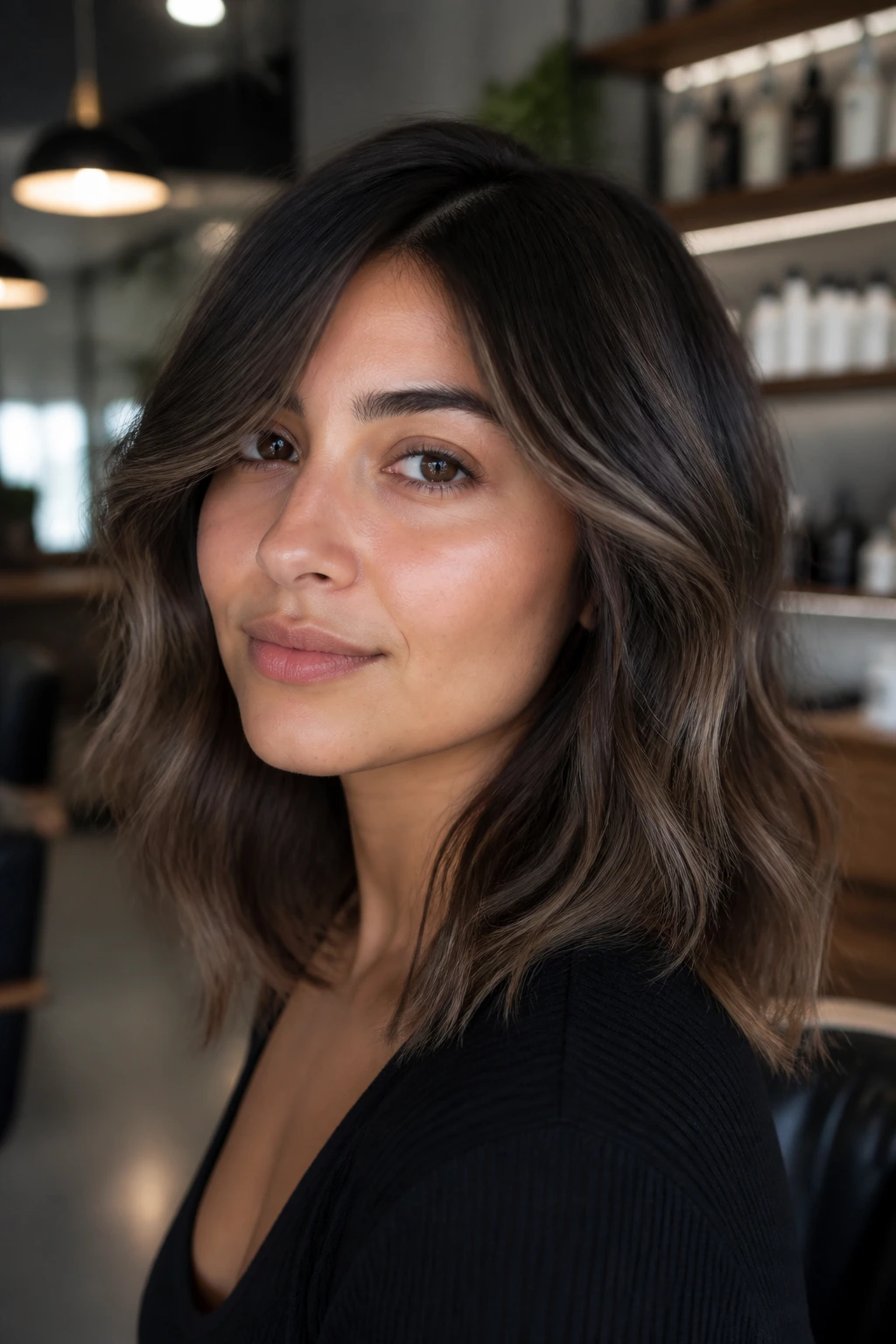
Mushroom brown is the cool-kissed answer for medium skin that runs olive or neutral. The key is restraint. You want a brown with taupe and smoke in it, not flat gray. Too much ash can make the skin look tired; too little and brass comes back the minute the toner fades.
This technique works especially well on thicker hair, where the cooler ribbons help break up bulk without making the ends look light and fuzzy. The finish feels modern without trying too hard.
A good mushroom brown balayage usually sits around level 6 to 8, with the gloss doing the heavy lifting. Skip anything too silver. It can turn chalky against medium skin.
8. Toffee Money Piece
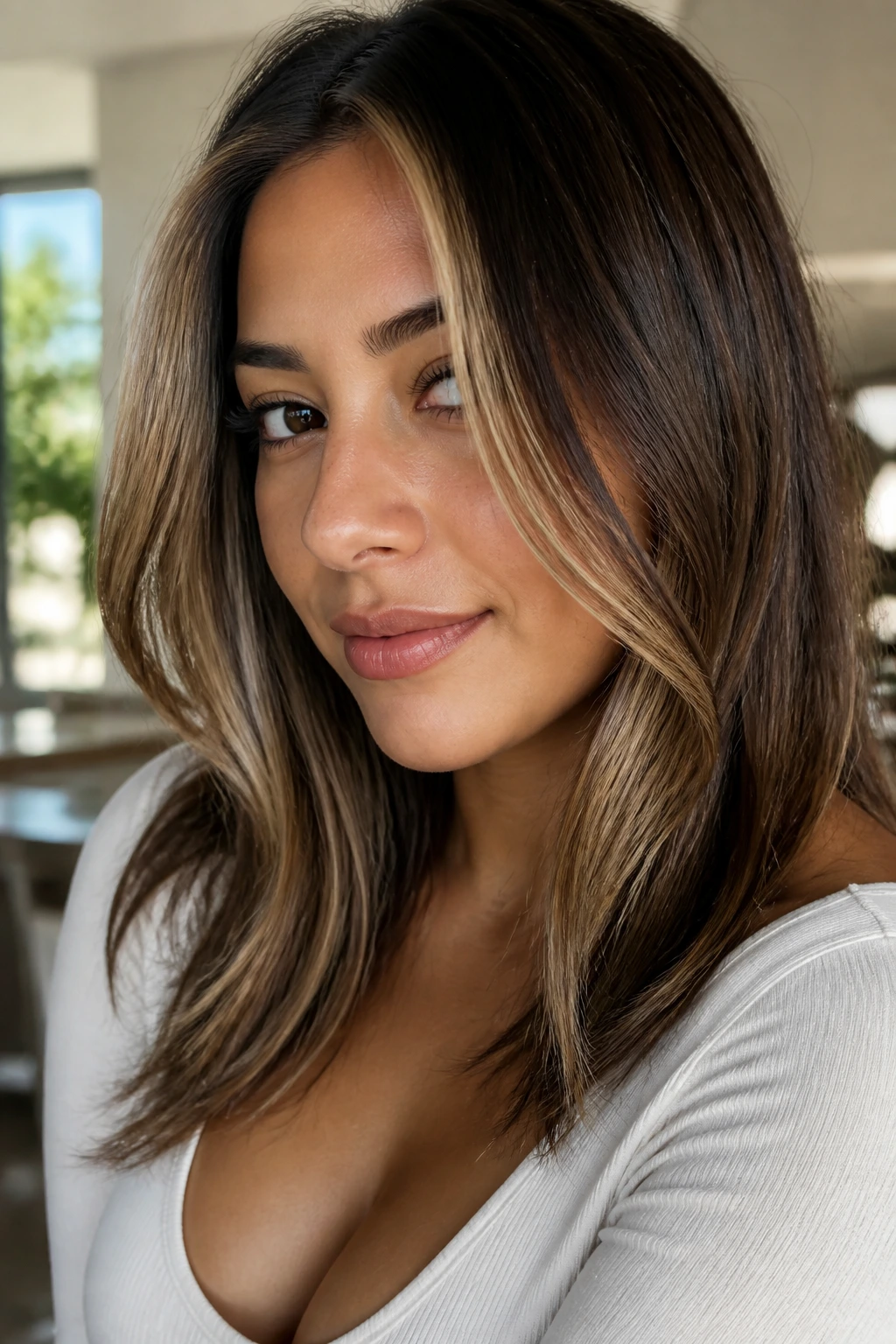
Toffee money pieces brighten the front without asking the whole head to go lighter. On medium skin, toffee sits in that friendly zone between blonde and caramel. It gives the face definition, especially around the cheekbones and brow line, and it grows out more gracefully than a full blonde frame.
I prefer this on medium-length layered cuts where the front pieces can drape instead of sticking straight out. The color should be softer near the root and slightly brighter toward the ends, never blocky from scalp to tip.
Quick rule
If the money piece is wider than your thumb, it starts reading costume-y. Keep it slim, soft, and blended.
9. Amber Glow Foilayage
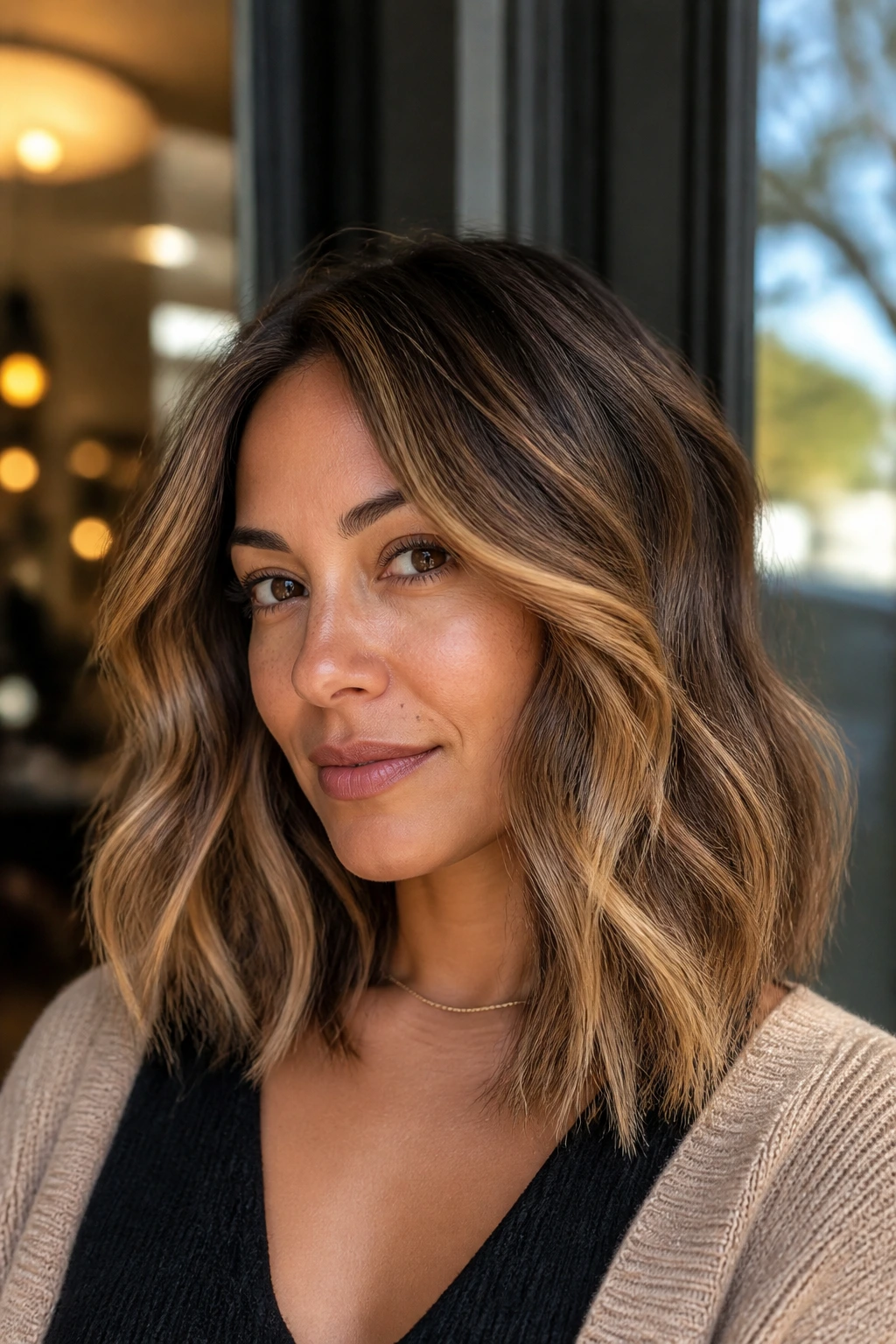
Foilayage gives you a touch more lift than open-air balayage, and that matters when medium skin needs lightness without losing warmth. Amber glow foilayage is built for hair that sits at a medium brown base and needs a brighter finish through the mids and ends.
The foil helps push the lift a little further, while the amber gloss keeps the result from turning pale or flat. This technique is especially good if your hair resists lightening. Open-air painting alone can leave the ends too dark.
Best use: when you want a lifted look with real shine, not a dusty finish.
10. Espresso-to-Mocha Gradient
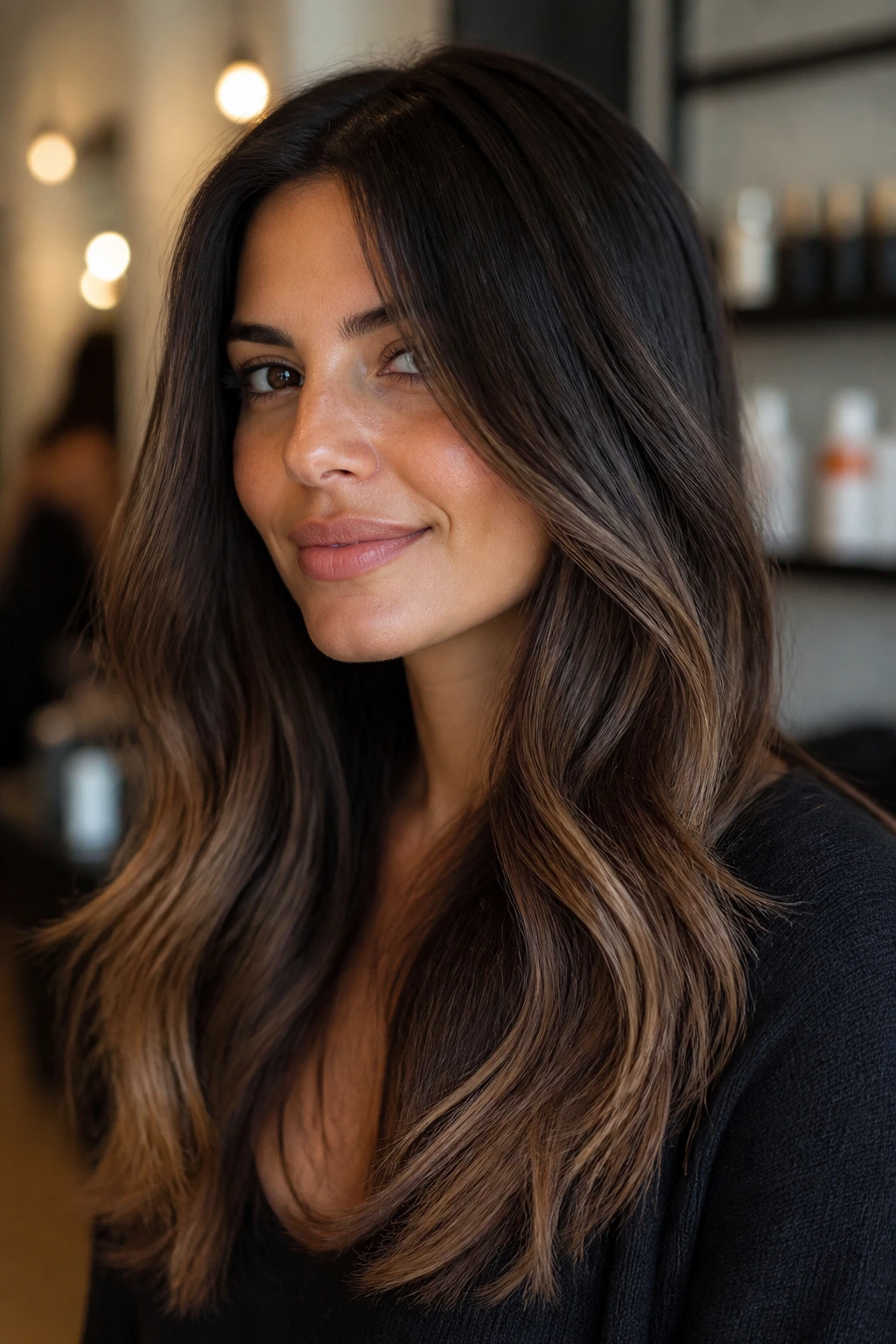
This is the dramatic brunette version, and it is underrated. Espresso at the root melting into mocha on the ends creates movement without forcing the color into blonde territory. On medium skin, especially deeper medium tones, the contrast gives the complexion structure.
The gradient should feel smooth. No obvious line. No “dark here, light there” effect. If the transition is done properly, the hair looks thicker and the ends catch light without looking bleached.
Who should try it
- Brunettes who want dimension but hate blonde maintenance
- Medium skin with neutral or warm undertones
- Hair that already has a healthy shine and doesn’t need a huge lift
11. Cinnamon Ribbon Pop
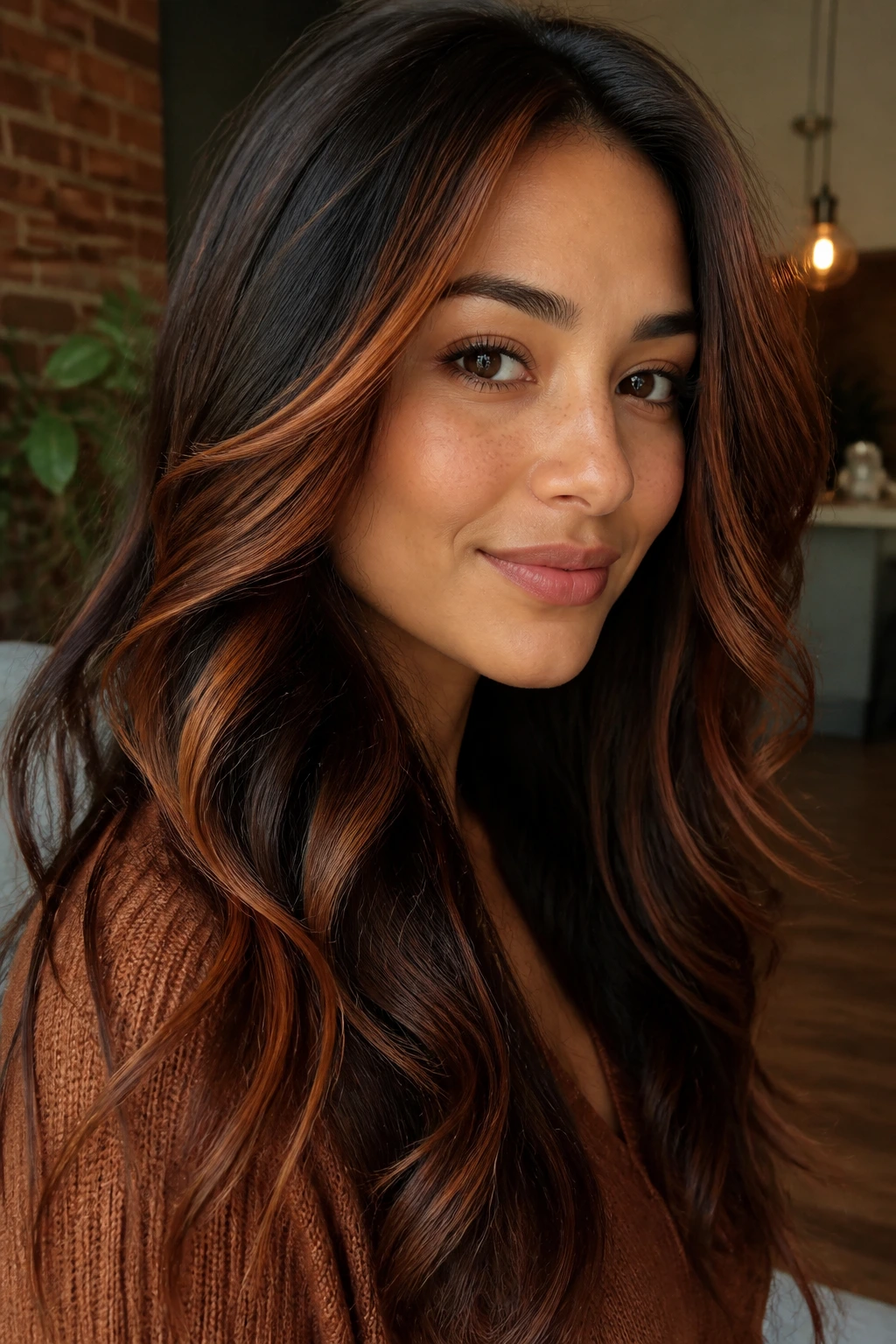
Cinnamon ribbons bring warmth without the orange panic that comes from overdoing copper. This technique is a good fit for medium skin with golden undertones, because the soft red-brown notes make the face look warmer and more awake. The trick is using thin, irregular ribbons so the color feels textured.
I especially like cinnamon on long layers. It breaks up the dark base just enough to keep the hair from reading heavy, but it doesn’t slide into bright red territory.
Tip: ask for a cinnamon gloss over pre-lightened pieces rather than a strong all-over copper formula. The gloss looks finer and wears better.
12. Sand Beige Lived-In Lift
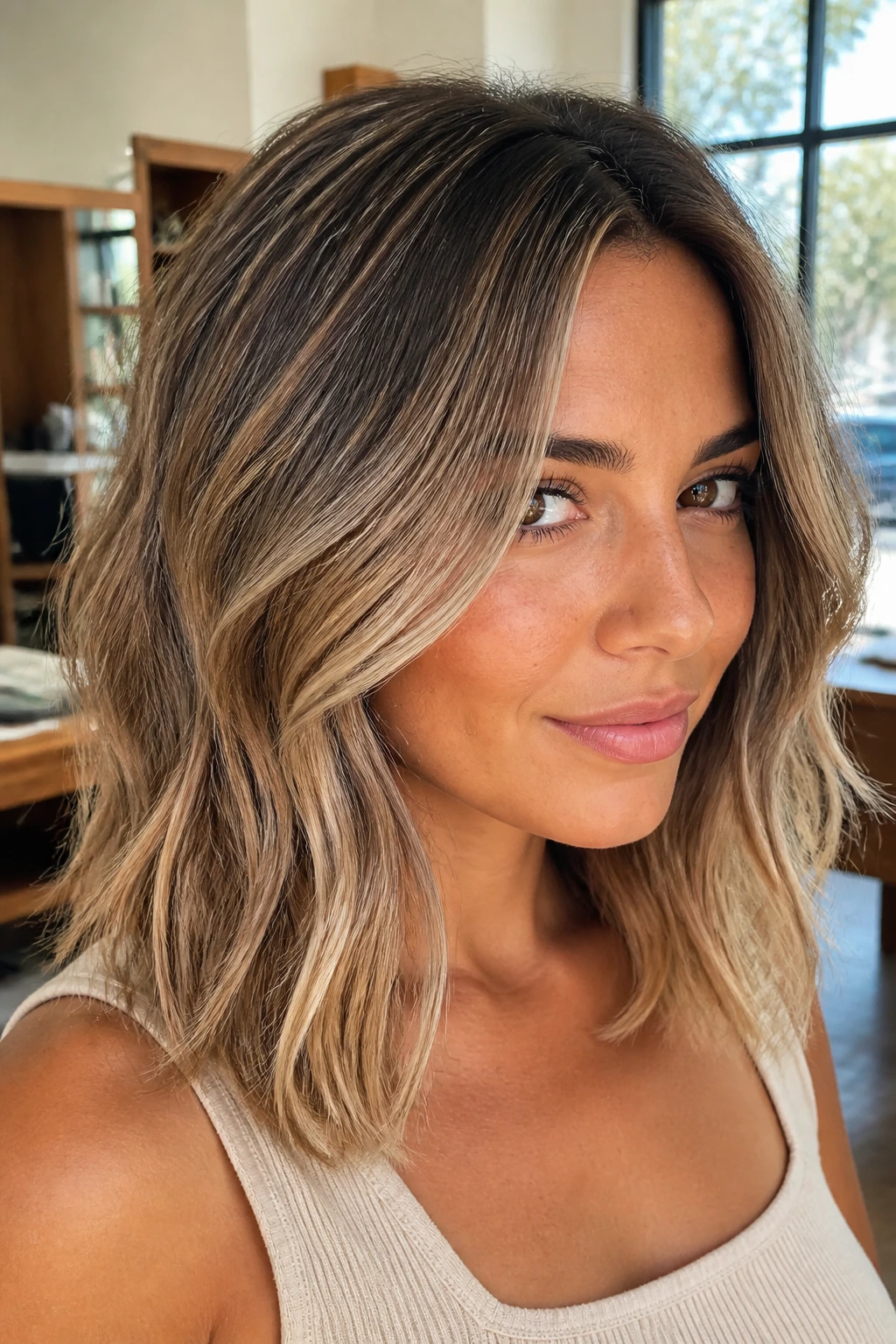
Sand beige is the low-drama, high-payoff choice. It’s lighter than brunette, softer than blonde, and far less likely to clash with medium skin than a very cool ash blonde. This one works when you want your hair to look naturally sunkissed without the obvious highlight line.
The best version usually keeps the root a shade or two deeper and paints the beige pieces through the mid-lengths only, letting the ends stay a little stronger. That gives the color a lived-in feel that grows out cleanly.
A good sign
If you have to squint to find the highlight line, the placement is probably right.
13. Warm Auburn Balayage
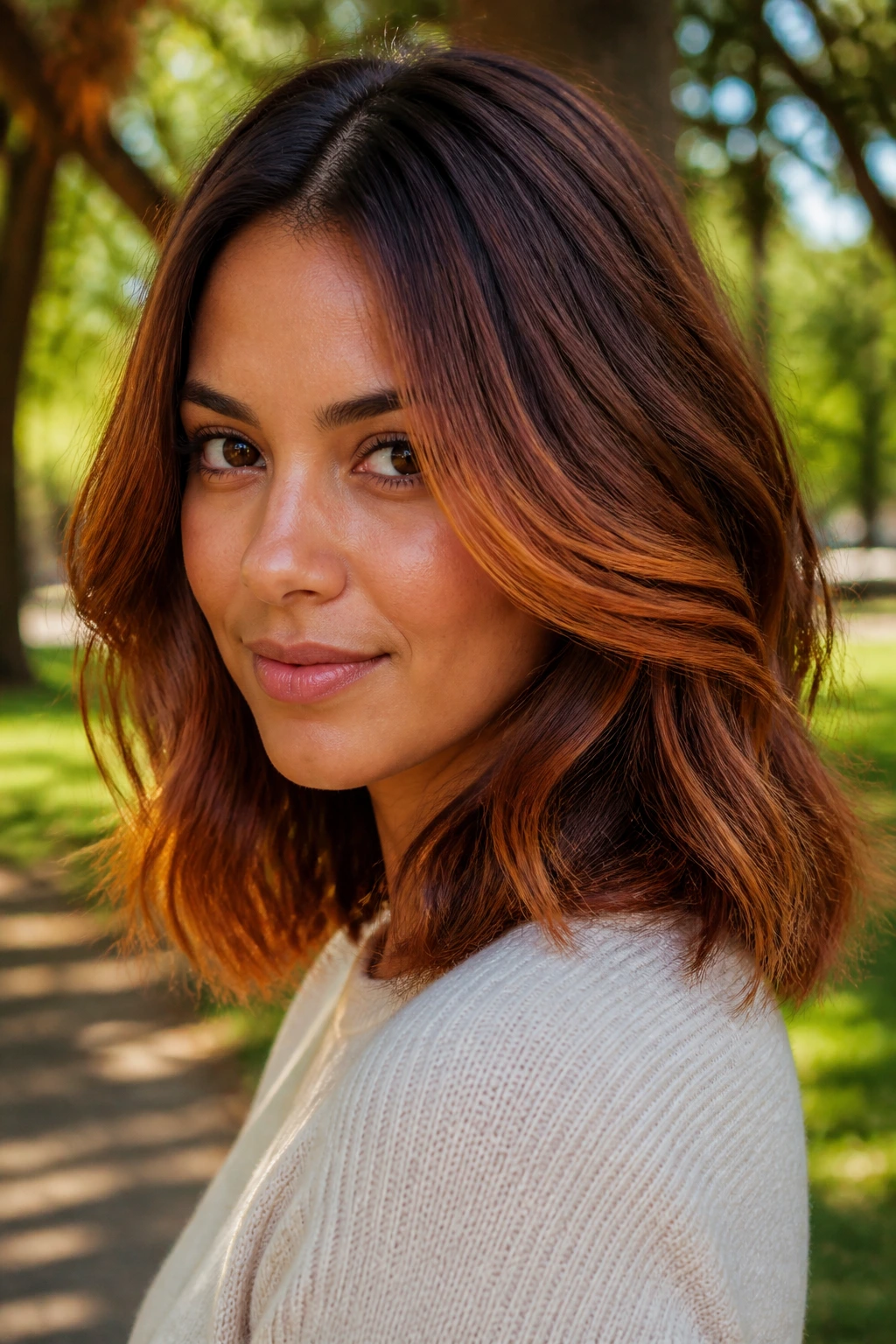
Warm auburn balayage brings out the red and gold already living in medium skin. It’s bolder than caramel but still grounded enough to wear every day if the placement stays soft. I like it best on chest-length hair or anything with movement through the ends.
Auburn can turn loud fast, so the placement matters. Keep it painted through the lower half of the hair and around the face, not plastered at the root. The deeper base should still show through.
Best on: golden medium skin, tan medium skin, and brown eyes that need a little spark.
14. Smoke-Brown Reverse Balayage
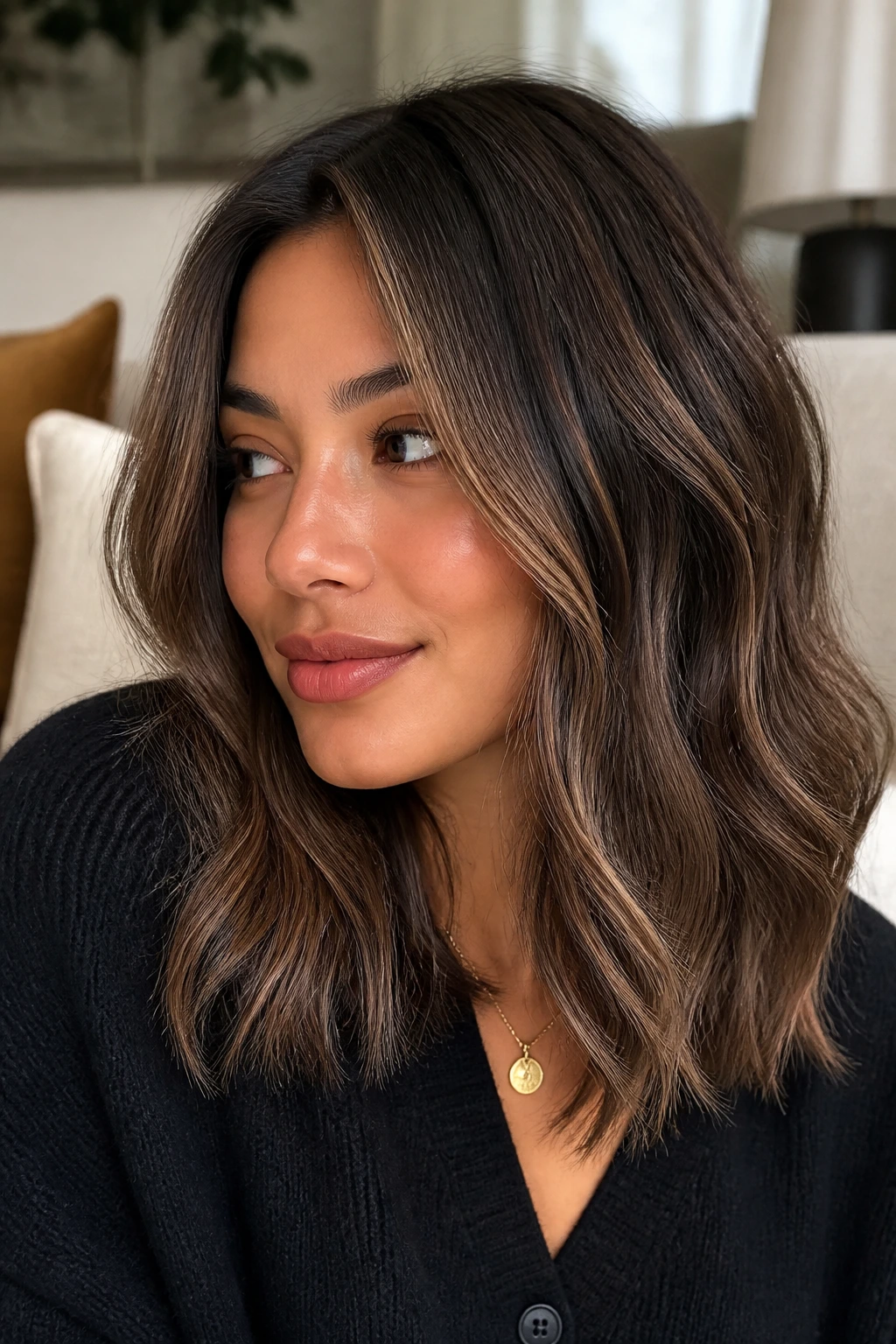
Reverse balayage is the fix for hair that went too light, too flat, or too sandy. Instead of lifting more pieces, you paint depth back in. Smoke-brown is the version I like for medium skin because it adds cool-brown shadow without dragging the complexion down.
This technique can be a relief if your hair already has highlights that are growing out awkwardly. The added depth makes the lighter pieces look intentional again. It also helps curls and waves look denser.
Why it’s useful
- Restores dimension
- Softens over-lightened ends
- Gives medium skin something richer to sit against
15. Champagne Dusting on a Dark Blonde Base
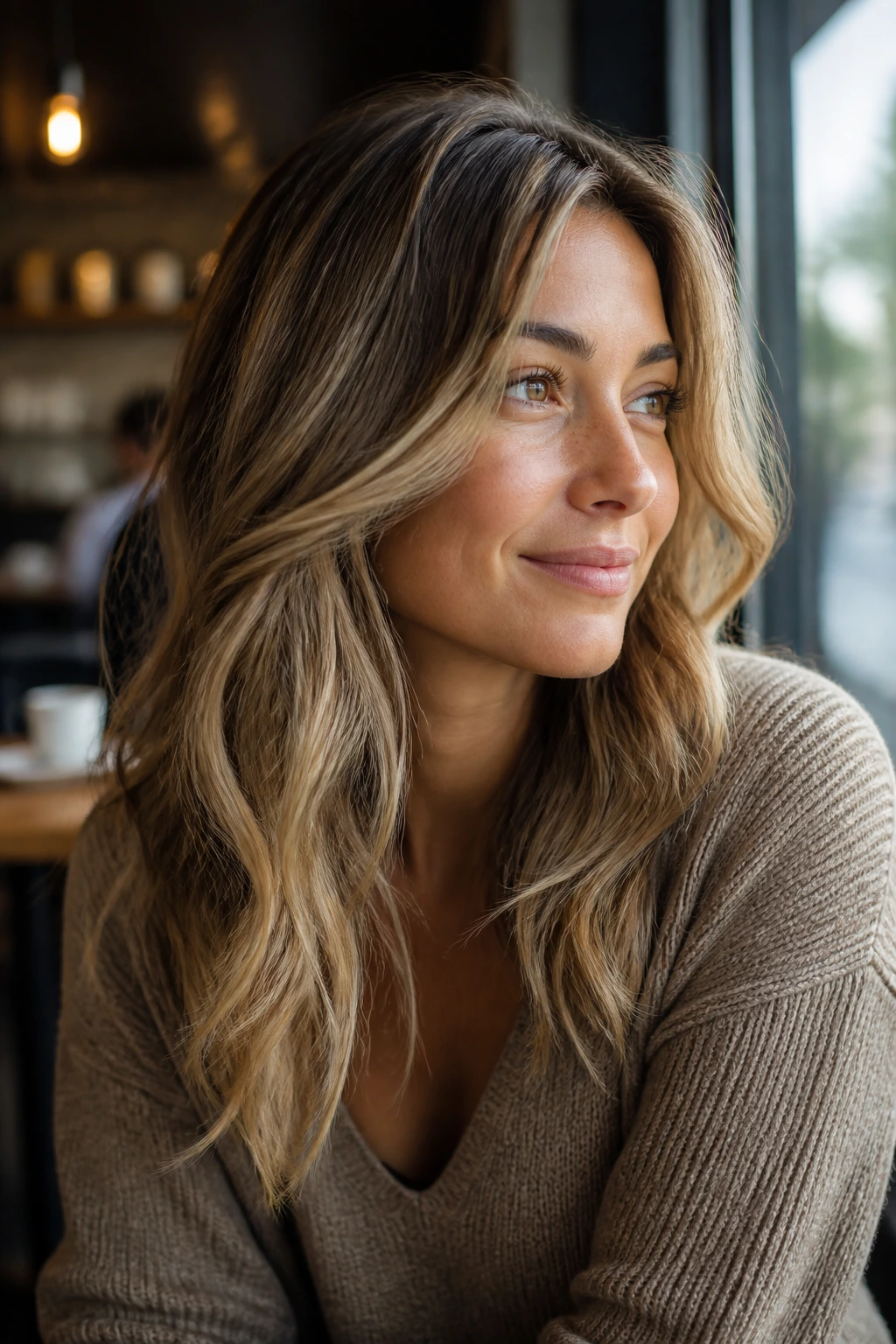
Champagne is one of the few lighter tones that can work on medium skin without looking icy, provided the base stays dark blonde or light brown. The trick is keeping the champagne muted, with more beige than silver.
I like this on finer hair, where a heavy warm highlight can look brassy. Champagne gives a clean sparkle instead of a loud streak. It’s a small amount of lightness, but it changes the whole head.
Watch the tone: if the champagne slips too cool, it starts looking thin and a little flat. Beige keeps it wearable.
16. Walnut Shadow Root
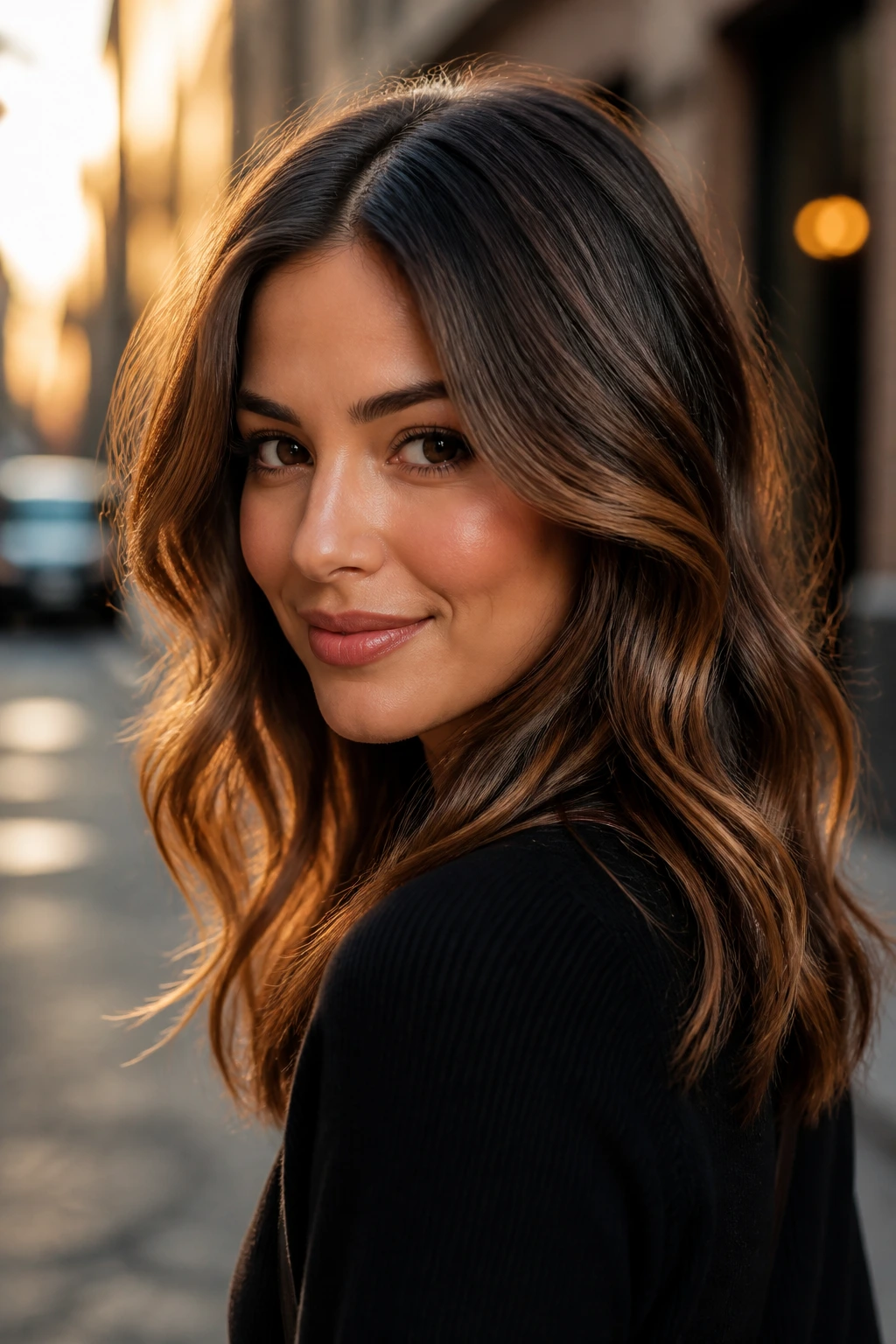
Walnut shadow roots are one of those techniques that quietly solve a lot of problems. The root stays deep and dimensional, while the lower lengths carry warmer brown highlights that sit comfortably on medium skin. The effect is polished, but not stiff.
This is good for people who do not want frequent touch-ups. The shadow at the crown softens regrowth and gives the face some structure. The walnut tone keeps the overall finish in brunette territory, where medium skin often looks strongest.
Best pairing
Loose blowouts and soft bends. Straight hair can flatten the variation if the layers are too blunt.
17. Golden Bronde Curls
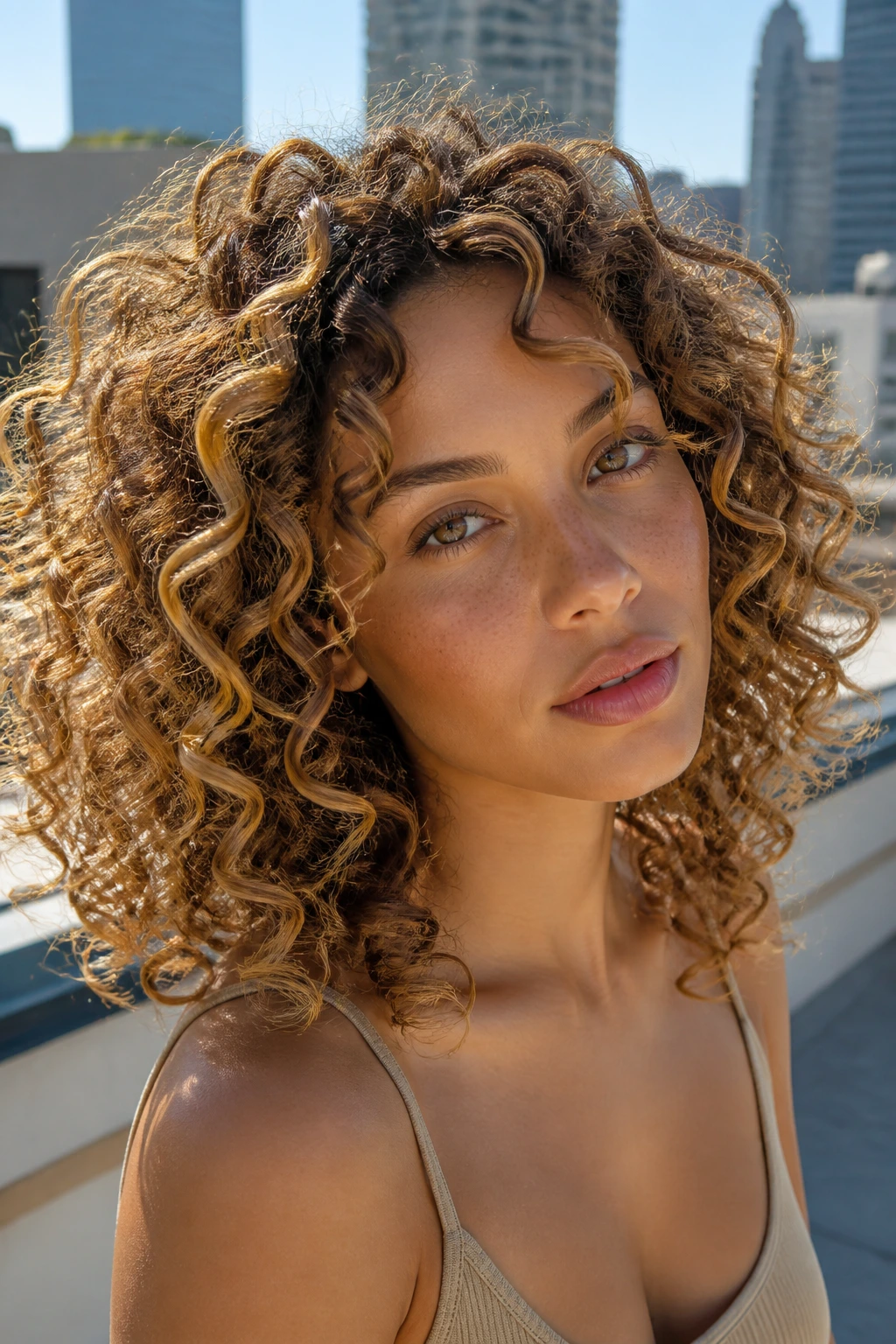
Curly hair needs a different hand. Golden bronde curls work because the lighter pieces sit where the curl naturally opens, so the color shows movement instead of random patches. On medium skin, the golden note keeps the curl pattern looking warm and alive.
This is not a “paint everything evenly” technique. The outer curve of each curl should get more light than the interior, and the root should stay deep enough to keep the pattern defined. If the ends get too light, curls can look stringy.
Placement note
Color the curls in the shape they wear, not the shape they are wet. That one change fixes a lot.
18. Toasted Almond Mid-Length Sweep
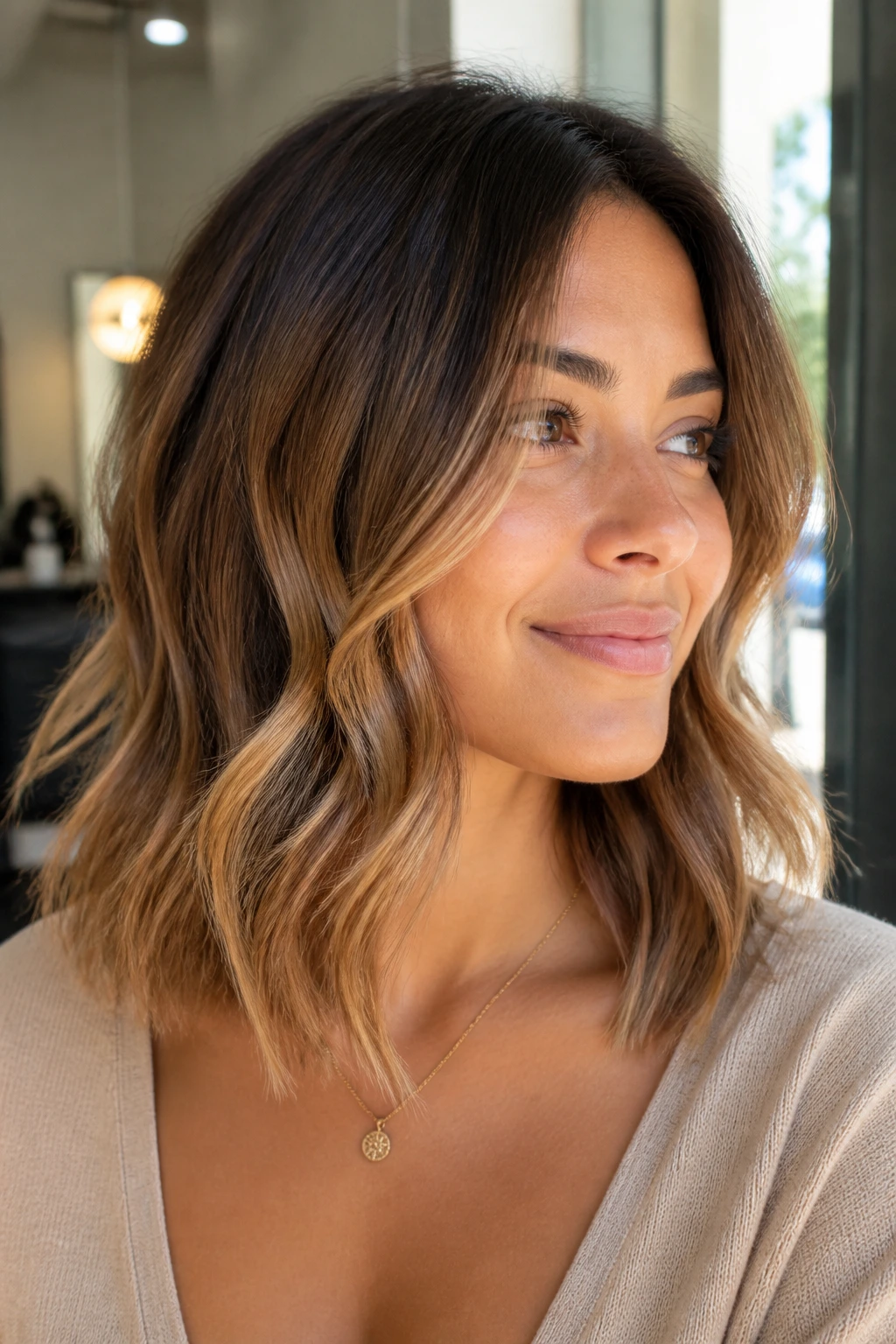
Toasted almond balayage is built for medium-length cuts that need more action through the middle than at the ends. The almond tone sits between beige and gold, which makes it especially friendly to neutral medium skin.
This technique avoids the “blond ends, dark roots, nothing in between” problem. You get a sweep of color through the mid-lengths, where the eye actually travels when the hair moves. The result feels fuller and less chopped up.
A good toasted almond finish should look soft in shade and warmer in light. If it looks yellow indoors, the gloss was probably pushed too far.
19. Rose-Gold Soft Melt
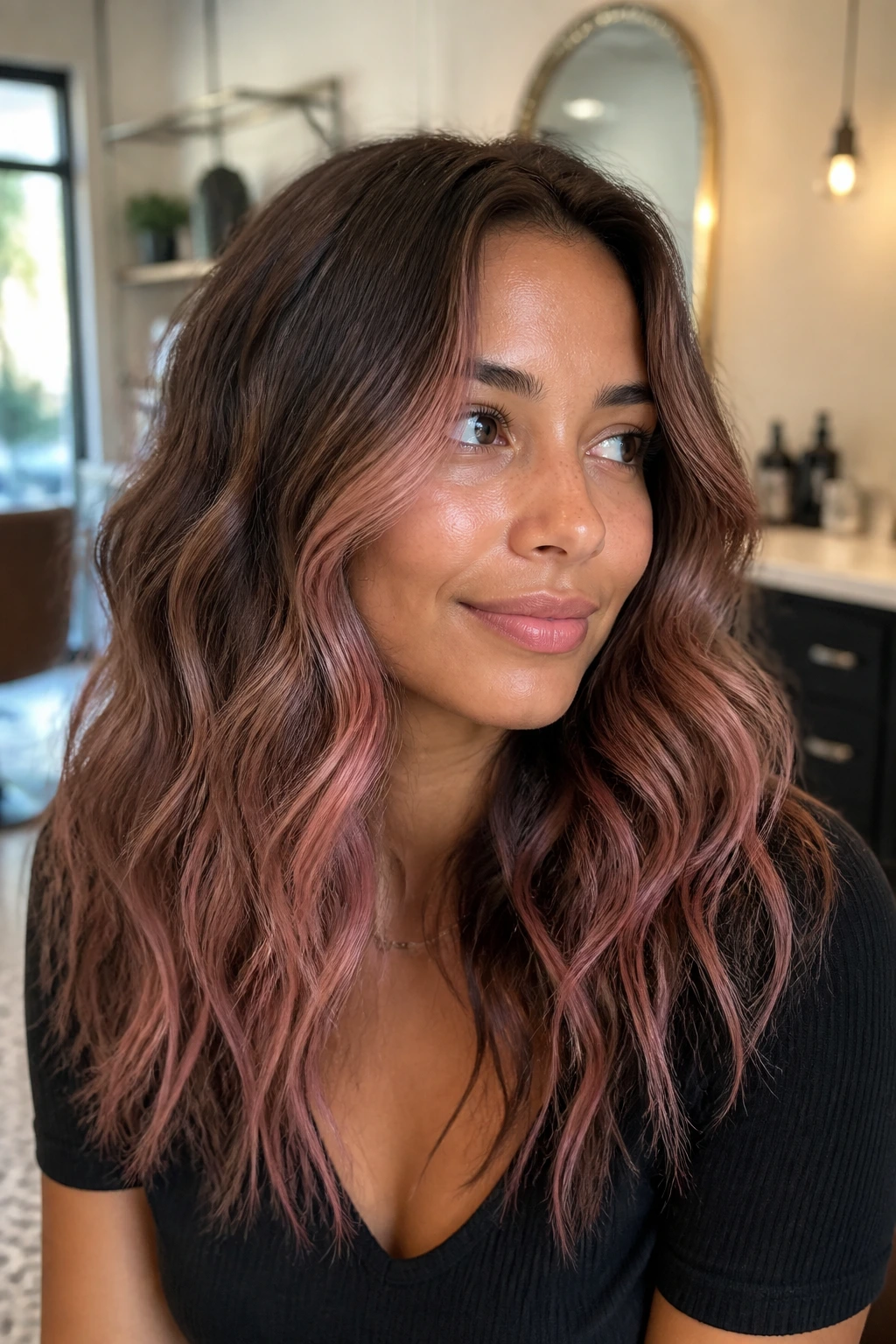
Rose-gold is tricky, but on the right medium skin tone it looks expensive in a sneaky way. Neutral medium skin can carry the pink-beige cast beautifully if the base stays brunette and the pink is kept subtle. Think blush-beige, not bubblegum.
I like this technique for clients who want something different without committing to copper or blonde. It’s especially pretty on wavy bobs and shoulder-length shags, where the movement helps the pink-beige tone flash in and out.
Small warning: too much rose in the formula can pull orange on warm skin. Keep the tone sheer.
20. Olive-Safe Beige Blonde
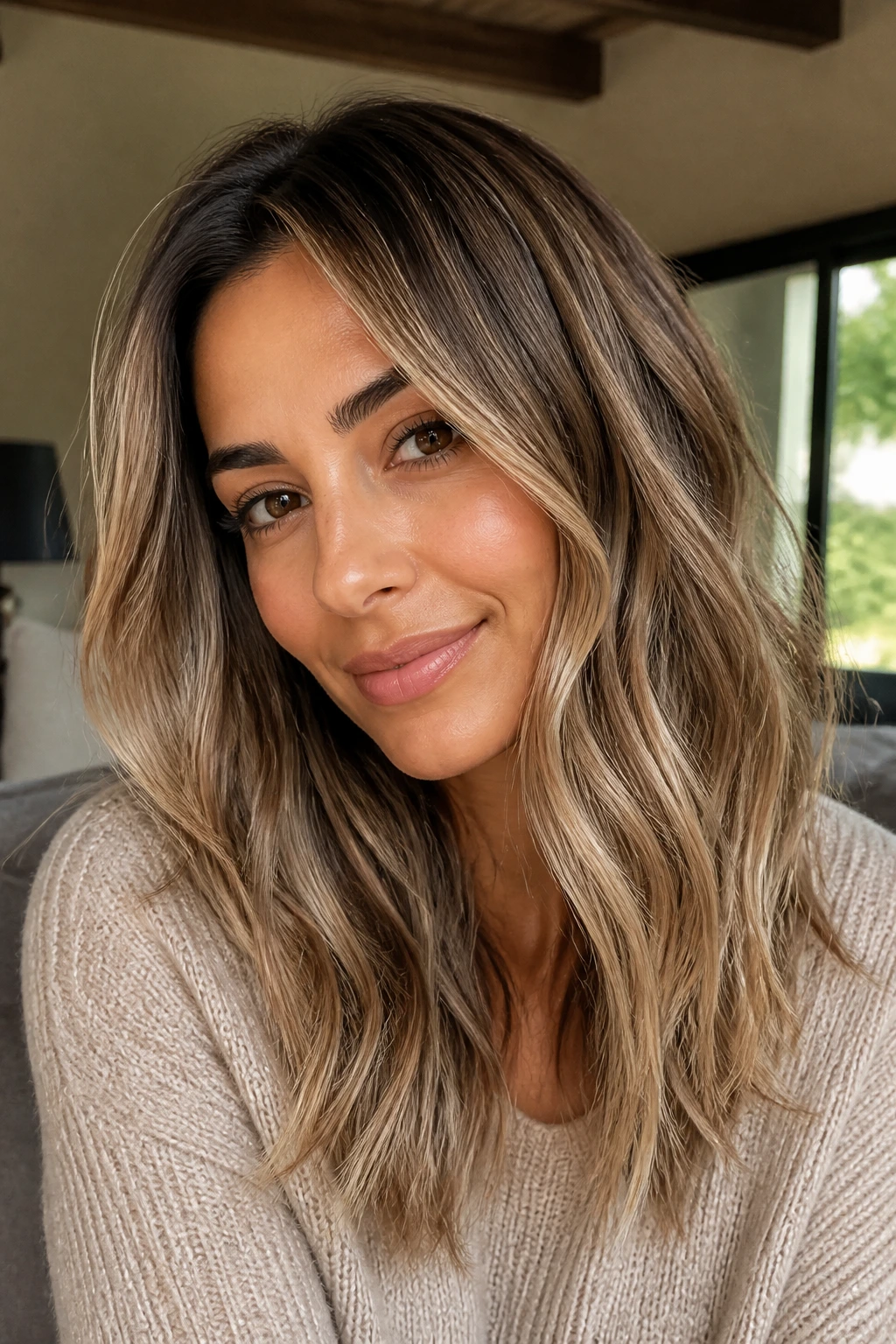
Olive skin can be picky with blonde. Too icy and it turns chalky. Too gold and it looks orange. Beige blonde is the compromise that usually behaves. It keeps enough warmth to flatter medium skin, but the beige base stops it from shouting.
This works best when the blonde is not pushed too high around the face. Leave a bit of depth near the root, then let the beige pieces open up through the lengths. The look stays soft and expensive instead of loud.
Best for
- Olive medium skin
- Hair that lifts unevenly
- People who want blonde without platinum upkeep
21. Honeyed Curly Contour
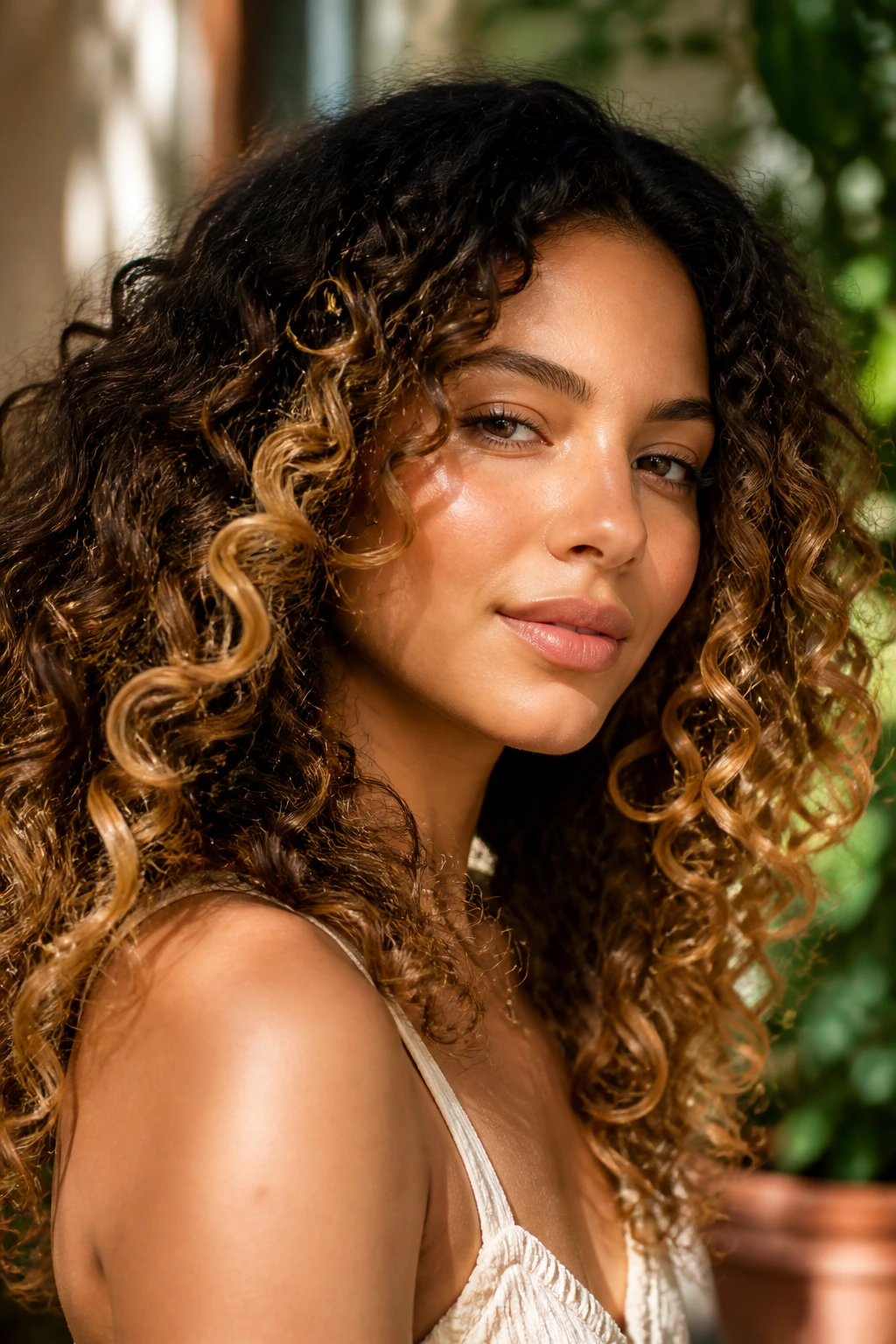
Curly hair and medium skin have a nice relationship when the color is placed around the outer contour of the curl pattern. Honeyed contouring does that job well. It brightens the areas that move most, so the whole shape looks fuller and more intentional.
The honey tone keeps warmth in the hair, which helps medium skin look healthy rather than gray. This is not about brightening every curl. It’s about shaping the cut with light.
Tip: ask for the color to be painted where the curl clumps separate naturally. That gives you depth and avoids the fuzzy, over-lightened halo.
22. Rooted Copper Melt
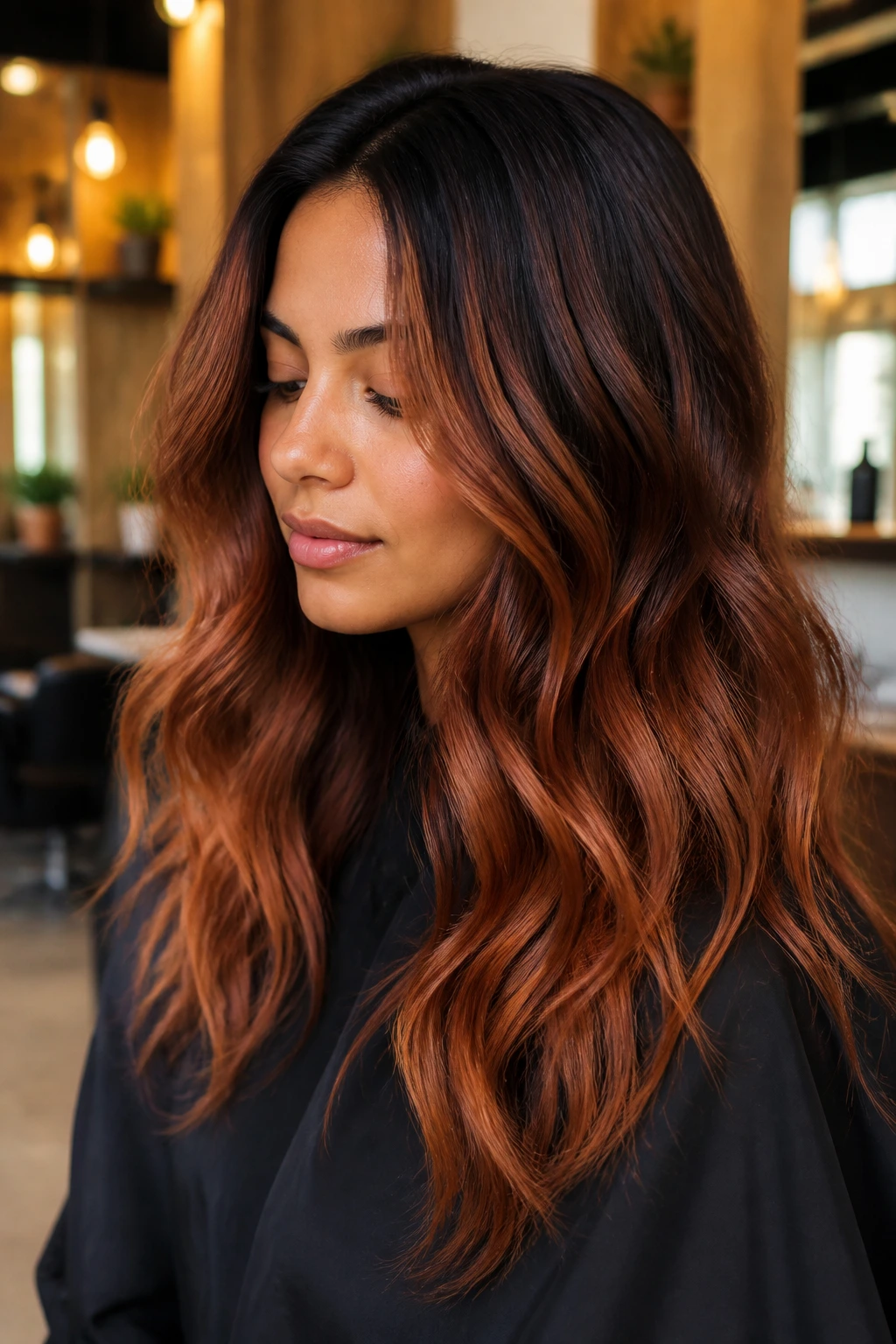
Rooted copper melt is a smarter version of copper for people who don’t want full red maintenance. Keep the root muted and dark, then build copper through the mids and ends. On medium skin, that root contrast keeps the face from looking over-saturated.
This technique works best when the copper is softened with brown. Pure bright copper can be tough to wear day after day. Copper-brown, though, has range.
If the hair is layered, the ends will catch the copper first and give the style movement. That is where the shine shows up.
23. Sandy Caramel Babylights
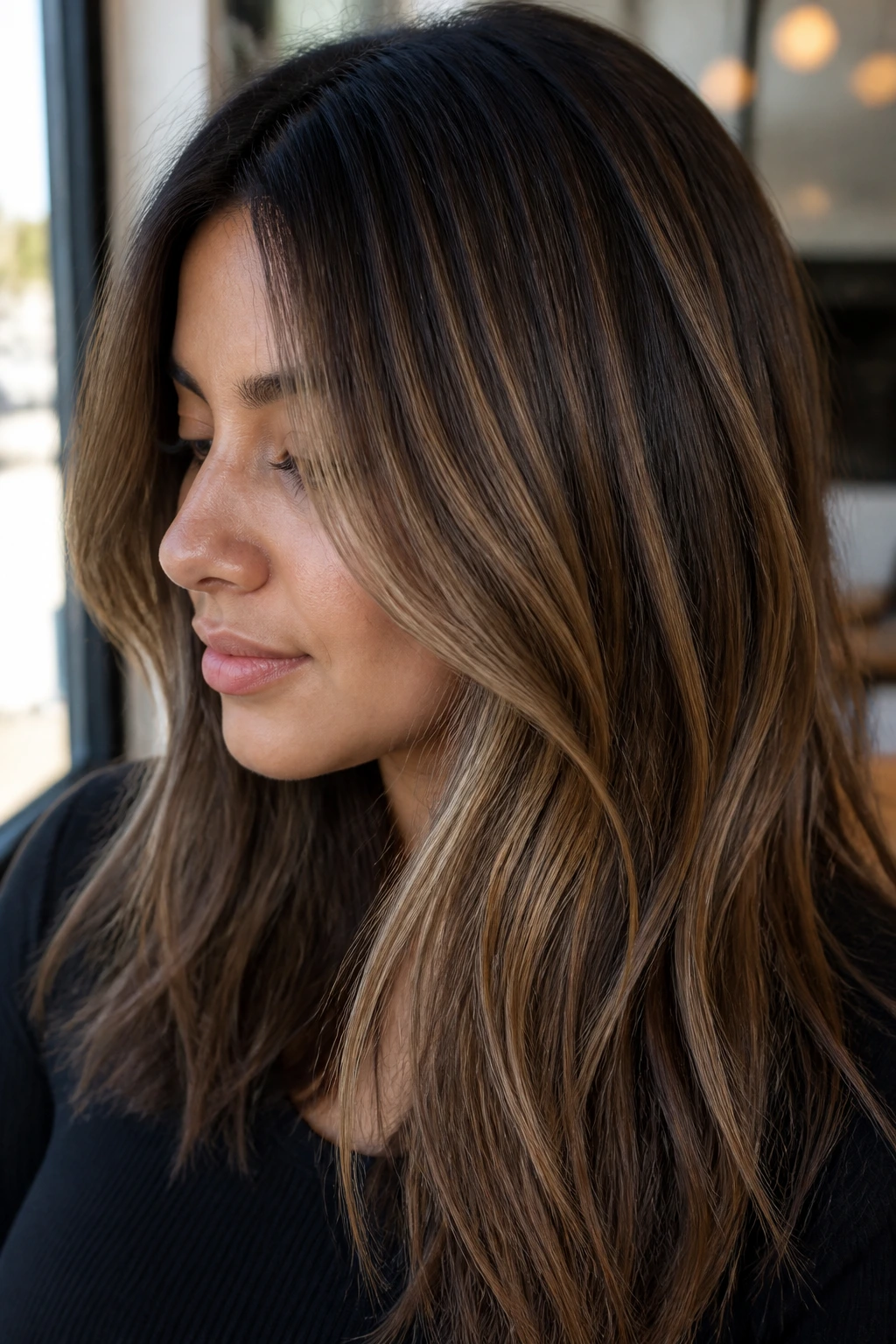
Babylights are tiny, fine highlights that mimic how hair lightens in the sun, and sandy caramel is a very safe tone for medium skin. The pieces should be thin enough that you notice shimmer before you notice stripes.
This is a good choice if you hate obvious highlights. The color stays subtle, especially on medium brown bases, and the sandy caramel keeps the finish soft even as it lightens. It’s also one of the least fussy looks in this whole list.
Quick cue
If the highlights look like a net from across the room, they’re too thick. Babylights should disappear into the hair until the light hits them.
24. Cool Bronde Ribboning
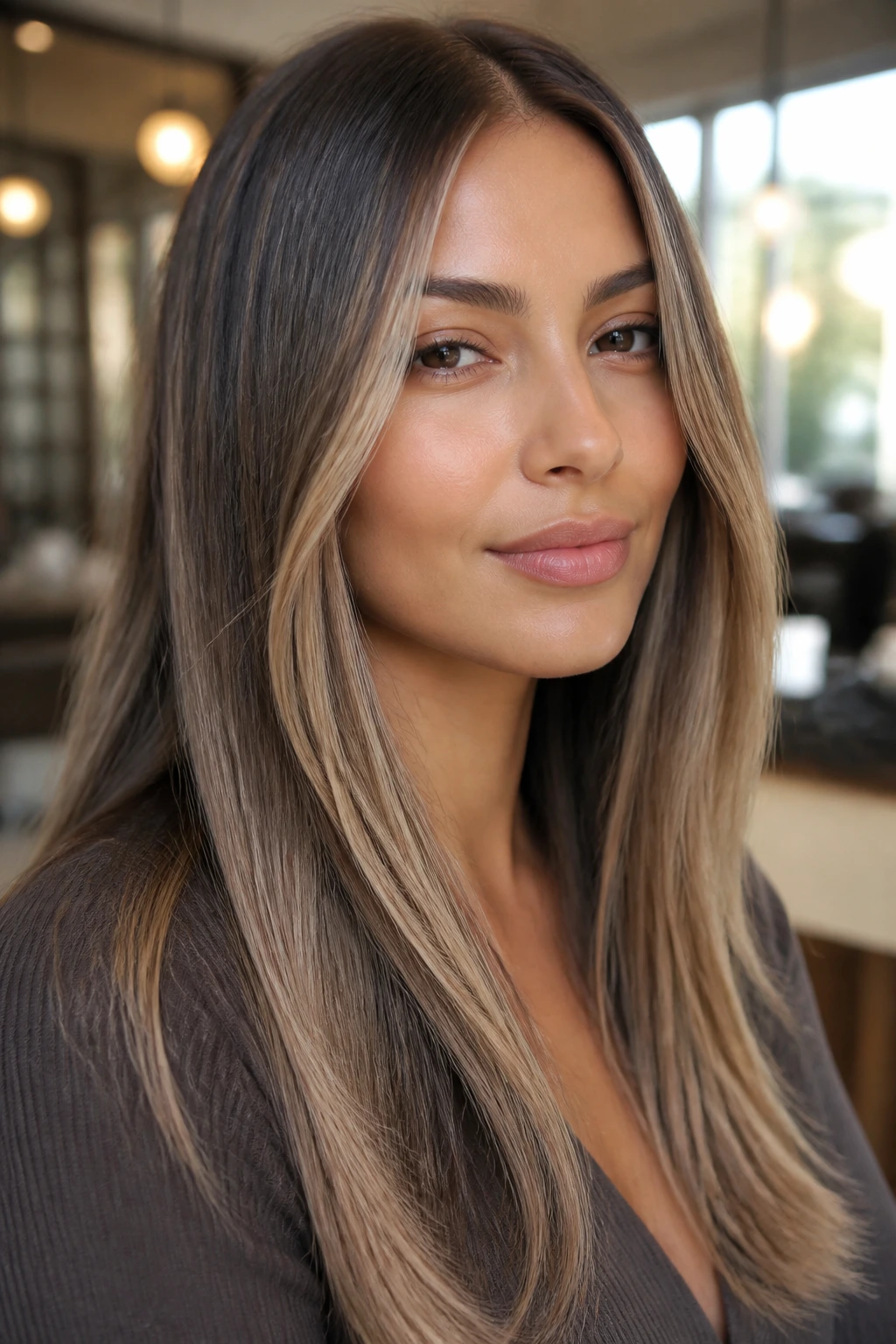
Cool bronde is useful when medium skin runs neutral-to-olive and warm highlights keep misbehaving. The ribbons should be a mix of brunette and blonde with a smoky beige finish, not a flat ash. That keeps the color readable without turning the face dull.
I like ribboning for long hair because it lets the lighter pieces alternate with darker sections. That pattern gives the hair movement even when it’s worn straight.
Best on: medium skin that gets flushed easily or pulls red in strong light.
25. Velvet Mocha Ribbons
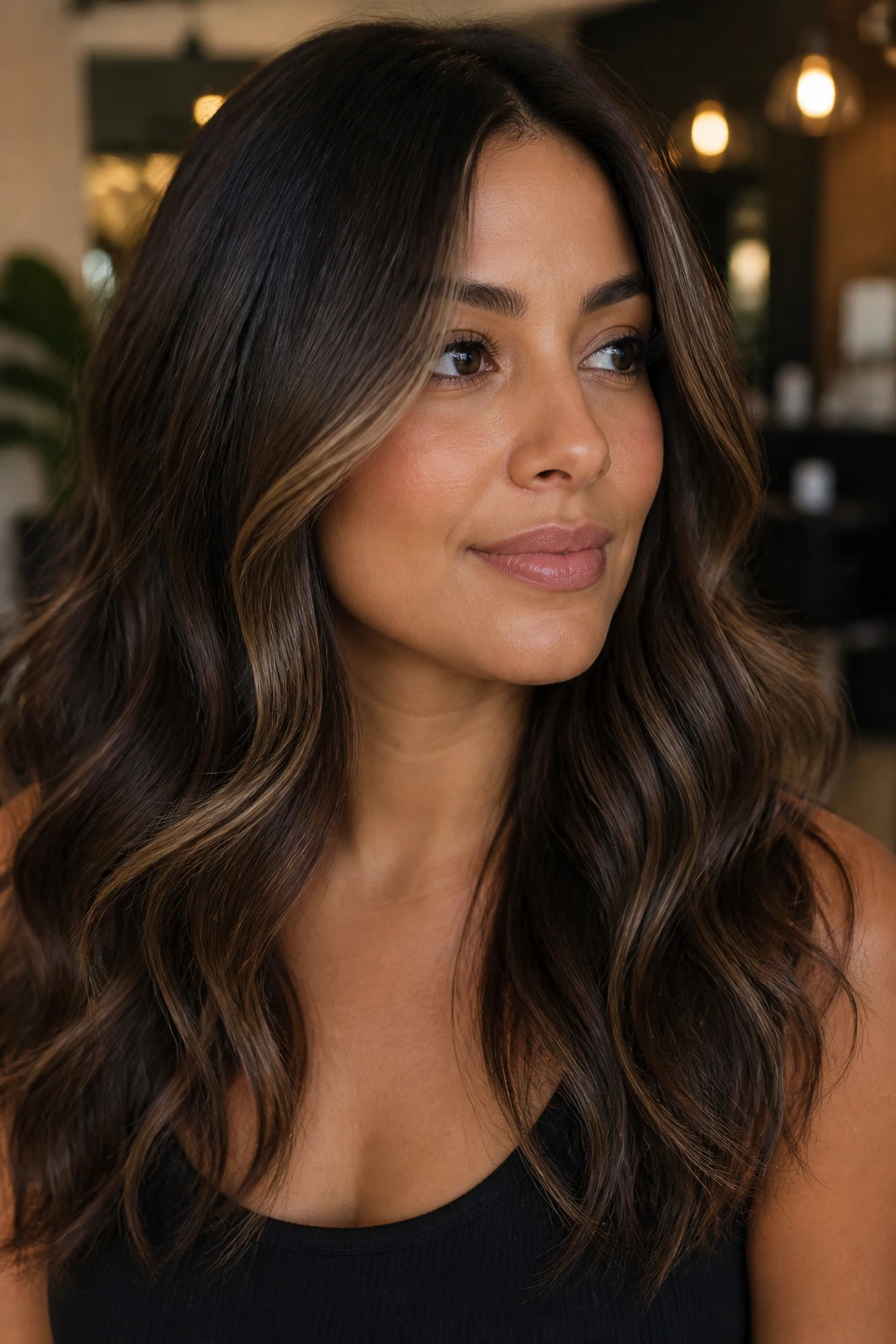
Velvet mocha is one of my favorite brunette-forward balayage looks. The name fits: it should feel soft and deep, not dry or muddy. Medium skin often looks best with this kind of rich contrast because the mocha pieces keep the face from floating away from the hair.
The ribbons should sit through the mid-lengths and ends, with a tiny bit of brightness near the front. Too much light kills the velvet effect. Too little and it becomes just a plain brown.
This is the look you choose when you want shine more than brightness. And honestly, that’s often the better move.
26. Sunlit Chestnut Ends
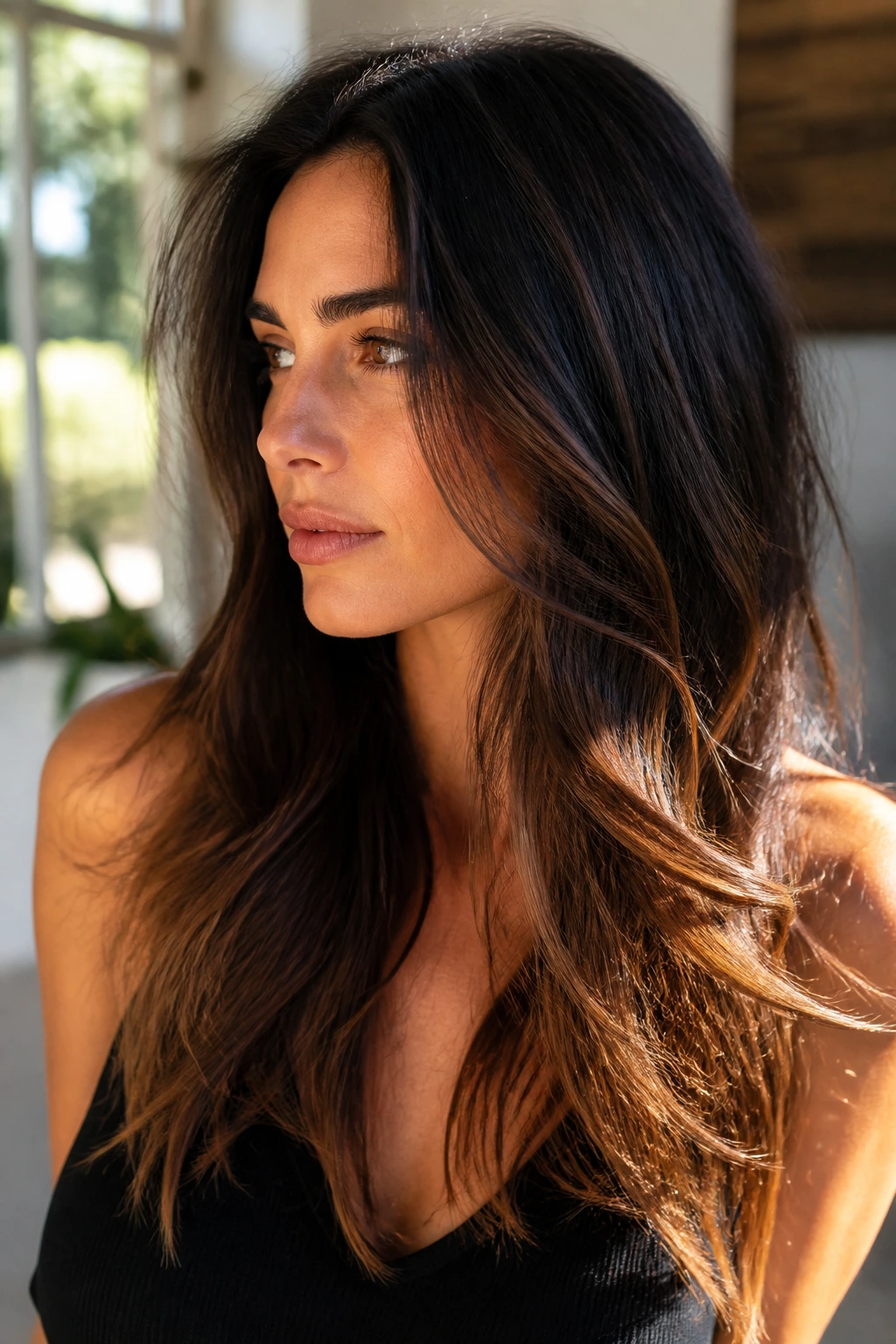
Sunlit chestnut ends give darker hair a gentle lift without changing the whole head. Chestnut carries warmth, but not the orange edge that can turn medium skin muddy. The ends should be the focus, with the top section staying close to the base.
This technique works beautifully on long layers, where the lighter ends move around the shoulders and catch light in pieces. It also grows out with almost no drama, which is a real advantage if you hate sitting in a salon chair every eight weeks.
Good match for
People who want their hair to look touched by light, not obviously dyed.
27. Ash-Beige Shadow Melt
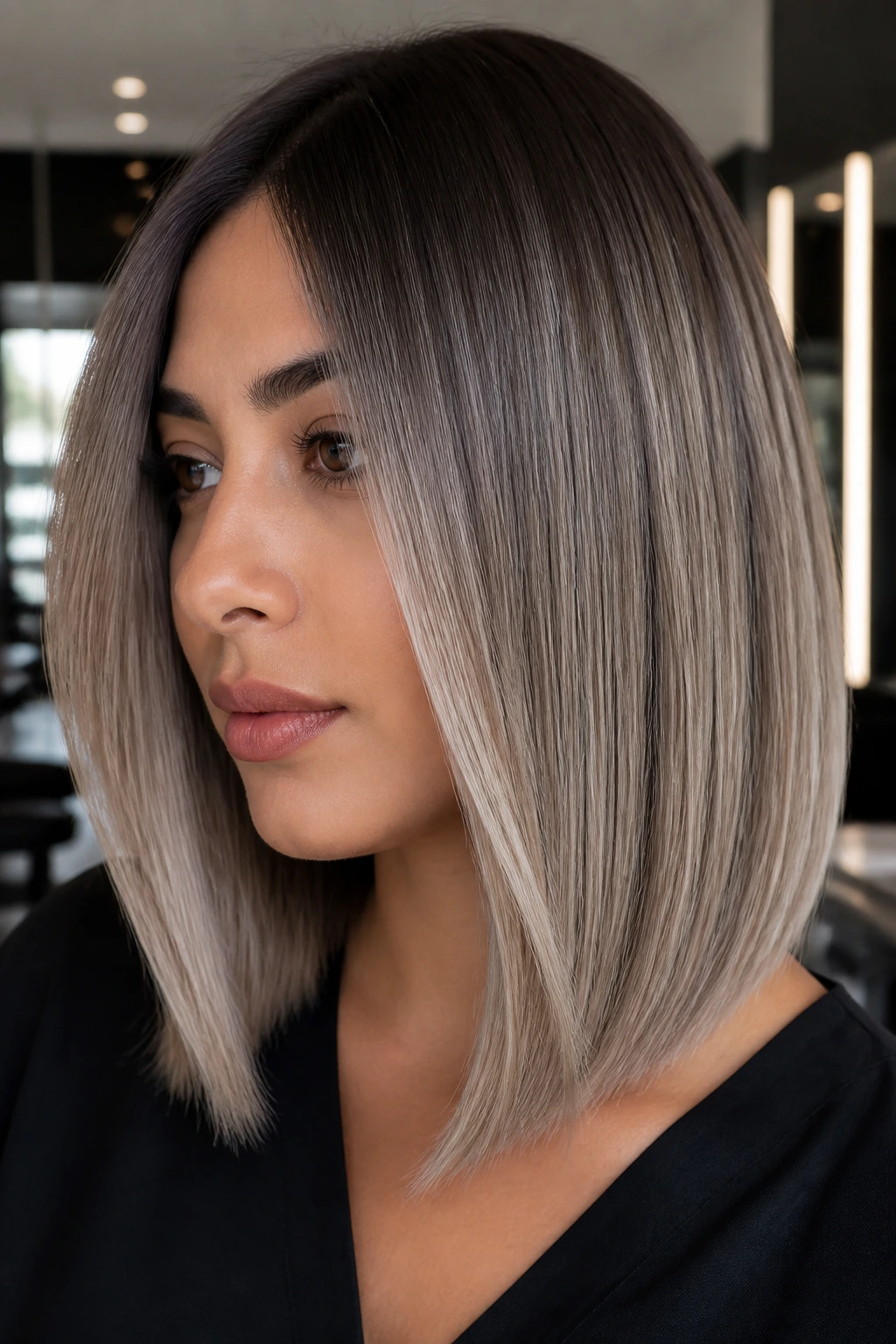
Ash-beige shadow melt is the answer when you want coolness without a gray haze. Medium skin with neutral or olive undertones can take this look well if the beige stays present. I prefer it on sleek cuts or blunt lobs, where the tone lines can be seen clearly.
The shadow root keeps the color grounded. The ash-beige mids stop the warmth from getting brassy. It is a balancing act, and that is exactly why it works when it works.
If the hair starts looking dull, a beige gloss usually fixes it faster than a stronger toner.
28. Soft Ombre Gloss
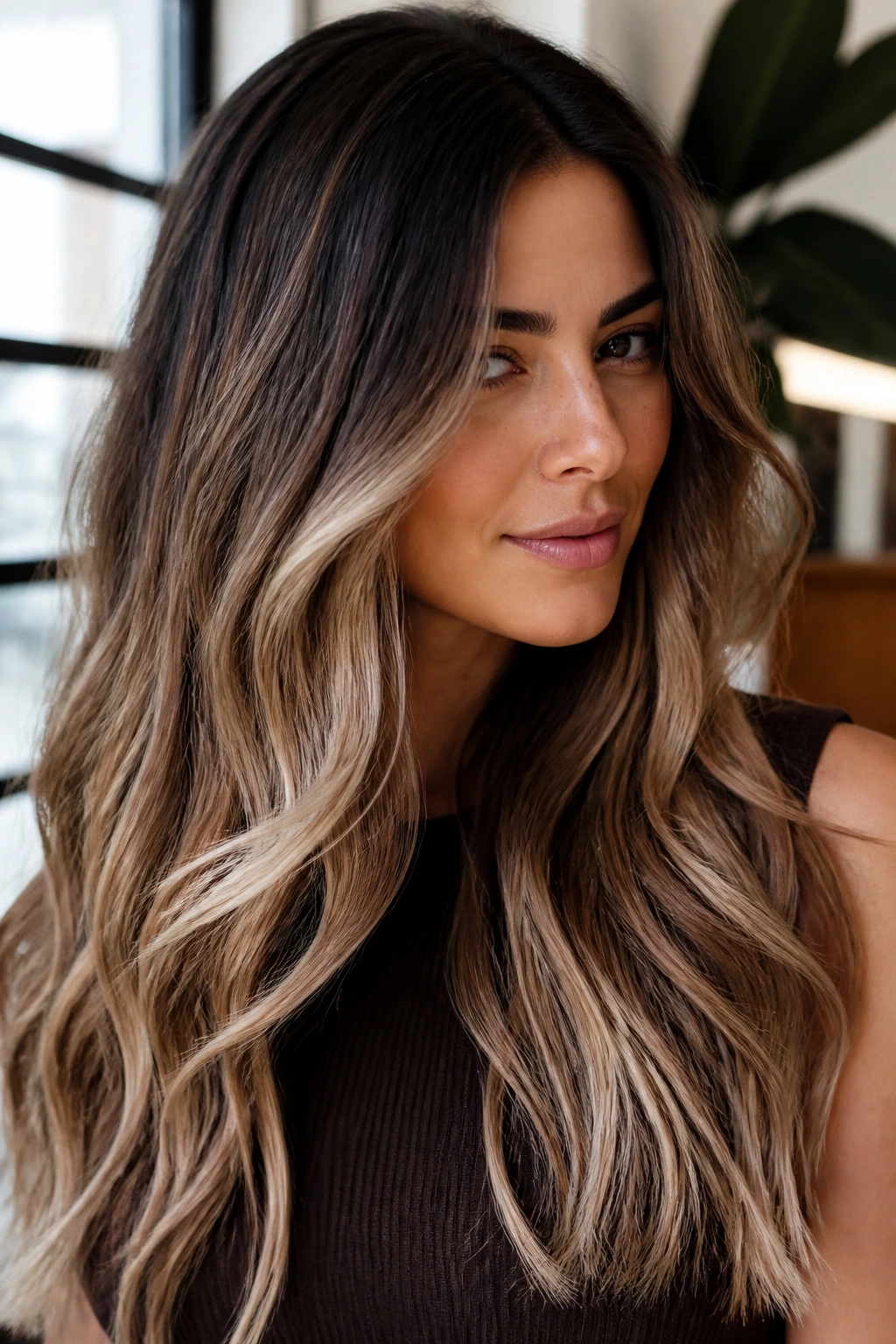
Soft ombre is still useful when it’s handled like a glossed fade instead of a hard dip-dye. Keep the root and upper mids deep, then let the ends drift a shade or two lighter with a clear or beige gloss over the top. On medium skin, that gentle gradient gives shape without a harsh line.
I like this technique on longer hair because the fade has room to breathe. The contrast should be visible, but not theatrical. If someone notices the hair first and the color second, you’ve probably nailed it.
Best when you want: lower upkeep, visible dimension, and a finish that looks better at week six than it did on day one.
What Makes Balayage So Good on Medium Skin Tones
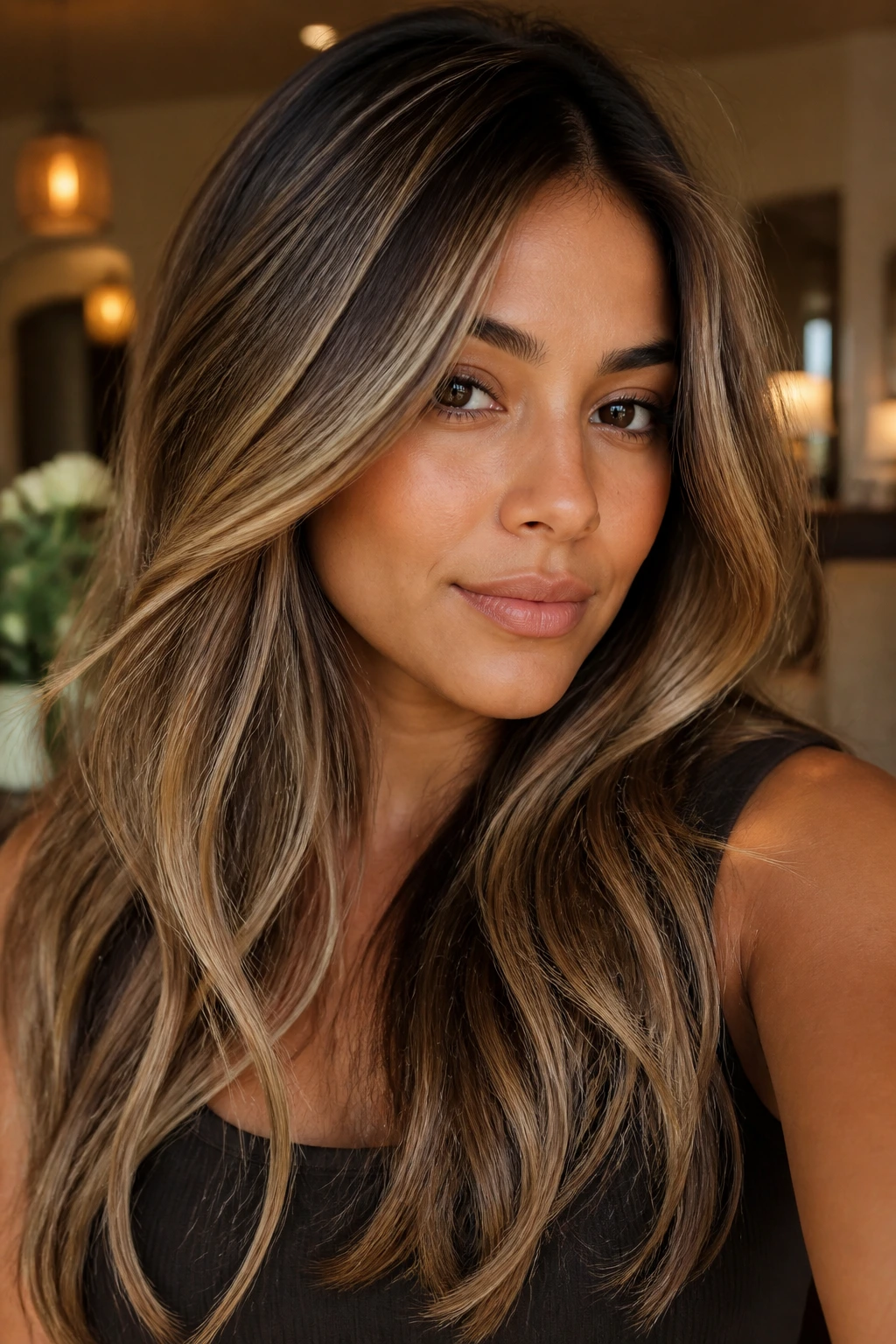
Medium skin tones have a range that gets ignored too often. People talk as if the only choice is “warm blonde” or “cool brown,” and that’s lazy. The better question is what the skin already does in natural light. Does it read golden near the jaw? Olive around the forehead? Neutral with a little pink in the cheeks? That answer changes the entire formula.
The nicest balayage on medium skin usually keeps some root depth. Not because roots are trendy, but because a little darkness near the scalp gives the face a frame. The lighter pieces can then sit where they do real work: around the temples, cheekbones, and lower lengths. If you place the brightest pieces all over the head, the result can flatten out fast.
There is also a practical reason to favor balayage over blunt highlights here. Hand-painted placement grows out softly, which means you get a long stretch of wear before the color looks awkward. The grow-out line stays blurred. That matters when your natural base is somewhere between light brown and dark blonde, because the transition can either look gorgeous or look like you forgot to book an appointment. One is nice. The other is not.
The Brushes, Bowls, and Glosses That Make the Placement Cleaner
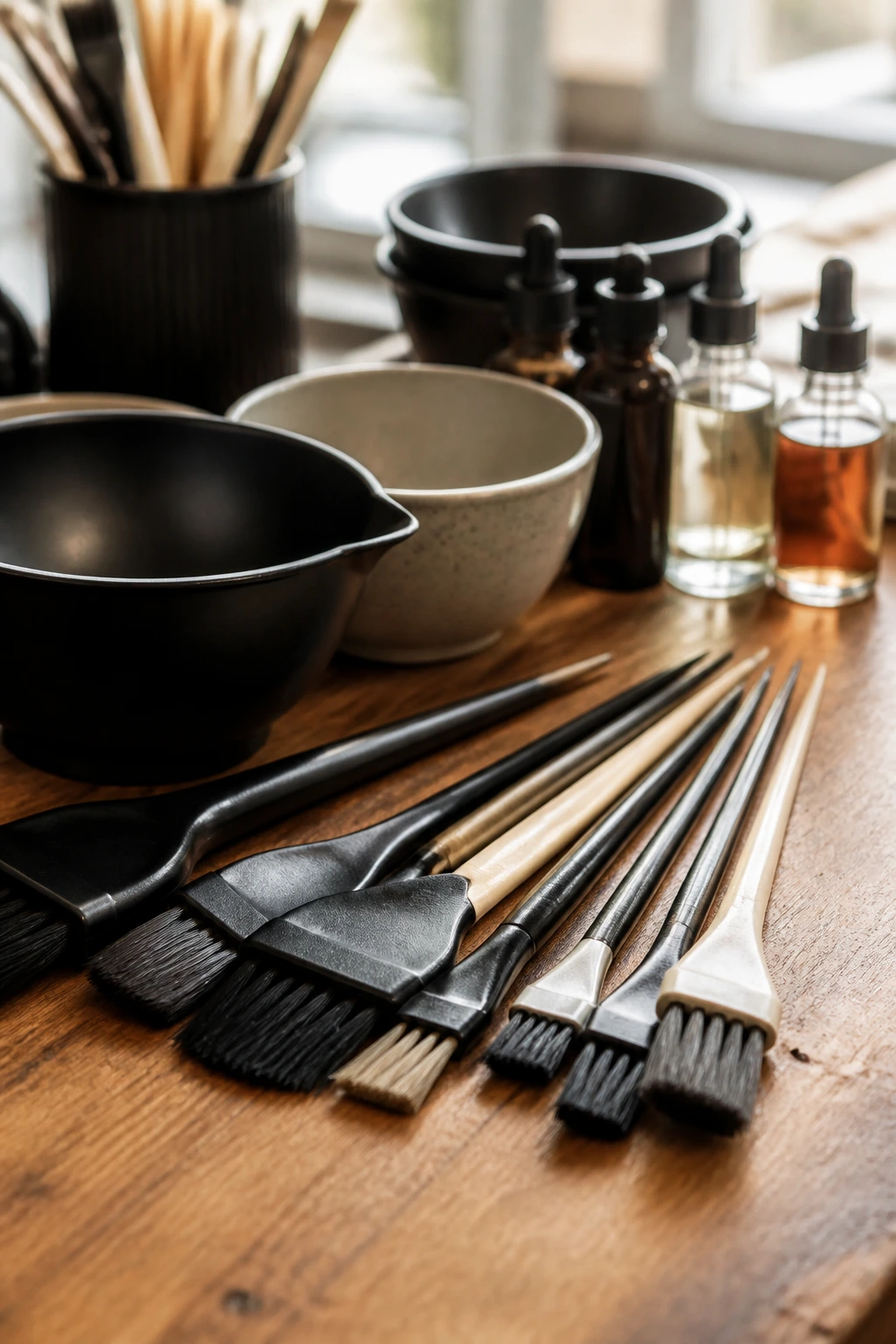
You do not need a salon full of tools to make balayage work, but a few things make the process a lot easier. A balayage brush with flexible bristles gives cleaner feathering than a stiff dye brush. A tint bowl with a wide mouth helps you control the saturation, which matters when you’re trying to avoid harsh stripes on medium skin.
A tail comb is useful for sectioning, not for painting every strand. Foils, when used for foilayage or for a little extra lift at the front, help push some pieces brighter without overprocessing the whole head. Clips with a strong grip keep the crown sections out of the way so the lower layers don’t get muddy.
For products, think in layers:
- Lightener powder: choose a formula that lifts evenly and does not swell too quickly.
- Developer: 20 volume is common for many painted pieces; 10 volume may be enough for glossing or gentle toning.
- Toner or gloss: beige, caramel, amber, taupe, and soft ash are the most useful families here.
- Bond builder: helpful if the hair has been lightened more than once.
- Purple shampoo: use it sparingly on warm balayage; too much can make caramel look dull and flat.
Picking the Right Lift Level and Tone for Medium Skin
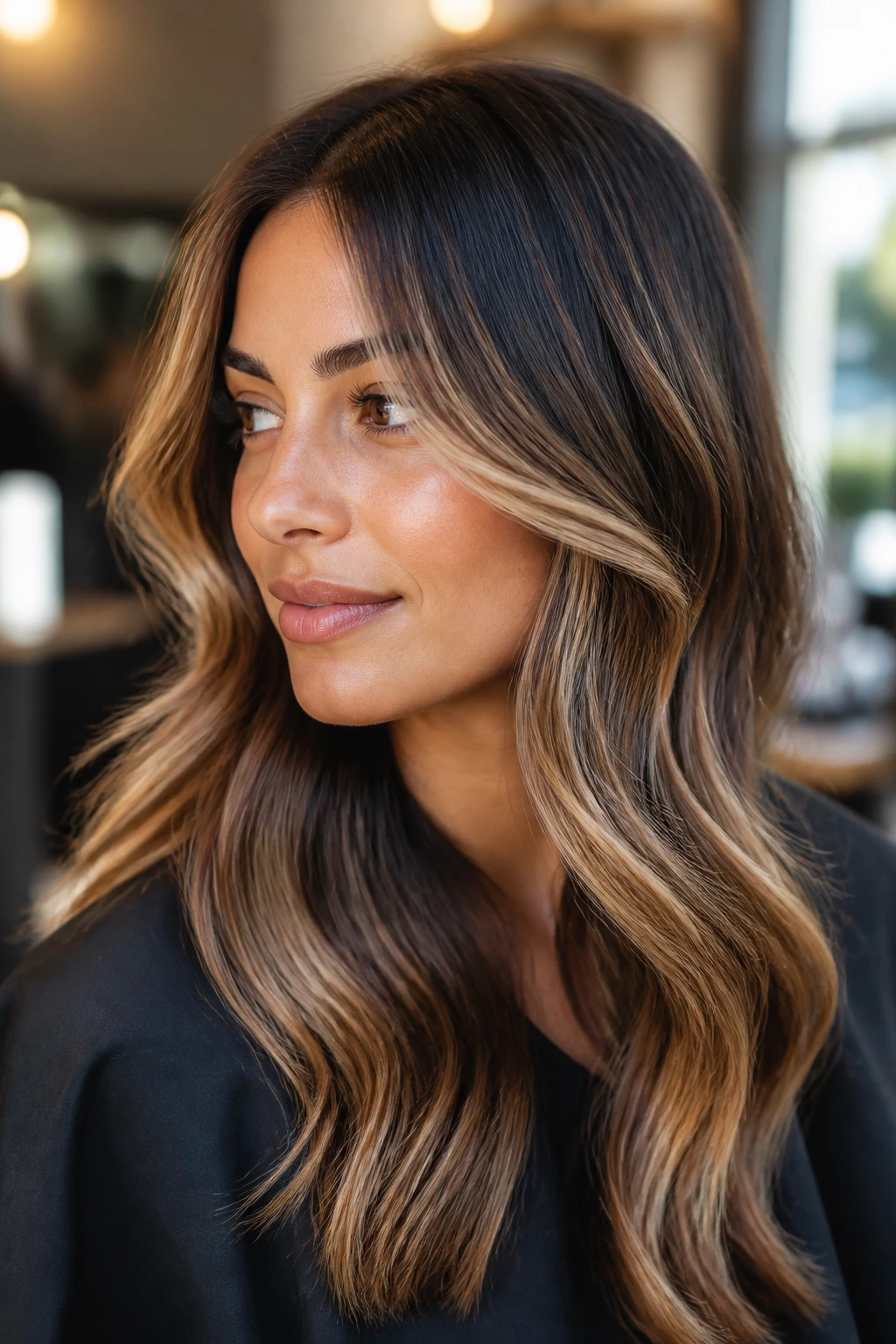
The sweet spot for a lot of medium skin balayage lives around levels 7 through 9. Level 7 gives you caramel and bronze. Level 8 opens the door to beige bronde and soft honey. Level 9 starts moving into brighter blonde territory, which can look beautiful on some medium complexions, but it needs careful toning.
If the skin is warm, lean honey, amber, caramel, or copper-gold. If it is olive, beige, mushroom brown, and smoky bronze tend to sit better. Neutral skin gets the widest range, though I still prefer softer tones over pure platinum. Too much ash can make the face look drained. Too much gold can tip into brass. The answer is usually somewhere in the middle, which is annoyingly unsexy and completely true.
A colorist who works well on medium skin will often keep the lightest pieces away from the crown and concentrate them near the front and lower lengths. That gives the face lift without losing depth at the part. Ask for a gloss after lifting. Raw lightener almost never looks as good on medium skin as the toned version does.
How to Wear the Color So It Looks Intentional
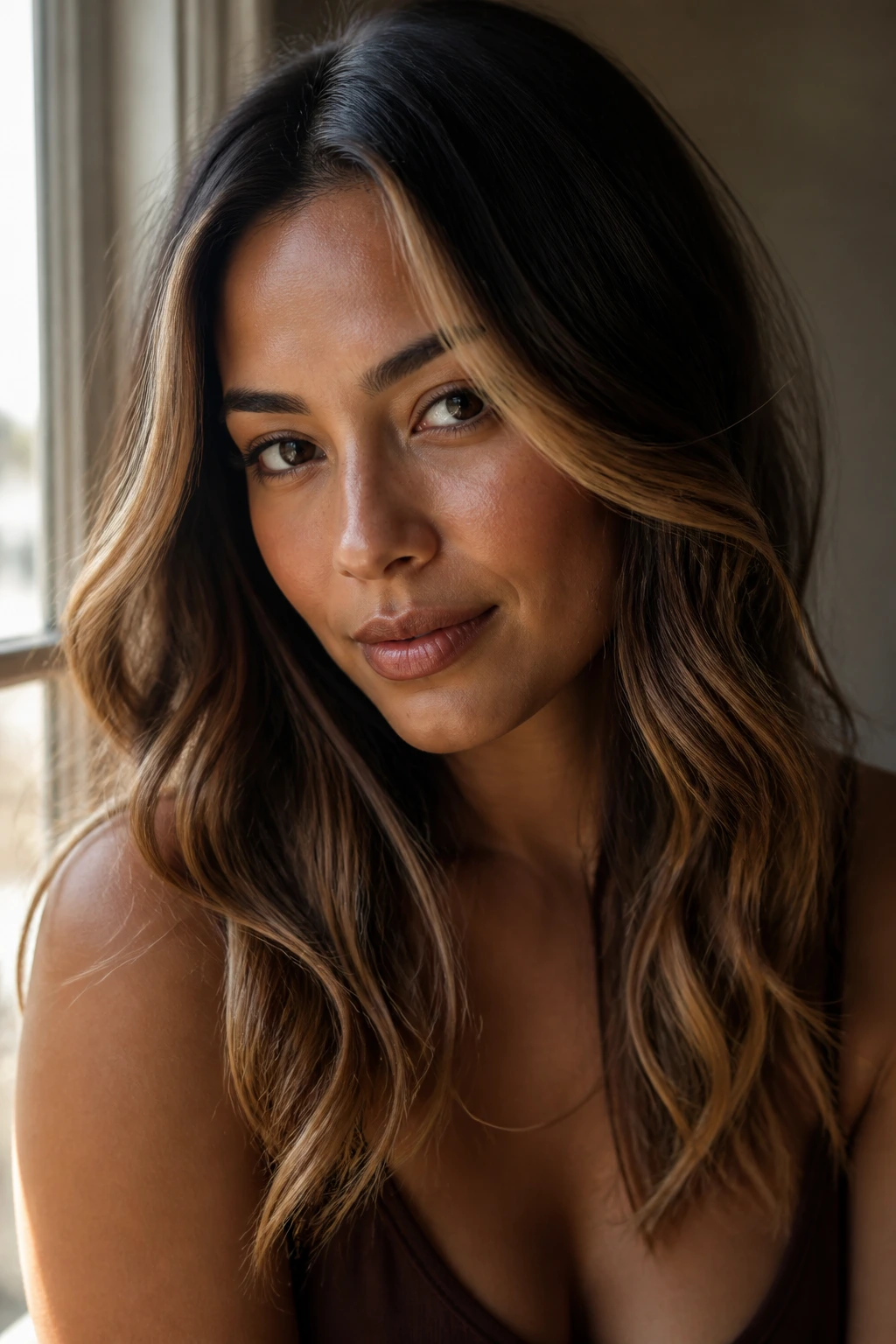
Presentation: The most flattering place for brightness is usually around the face, collarbone, and outer waves, where the eye naturally lands first. A center part emphasizes symmetry, while a slight off-center part softens a stronger jaw or fuller cheeks.
Best styling: Loose bends and soft blowouts show balayage better than pin-straight hair. Straight styling can work, but it needs clean placement and a smooth gloss so the color doesn’t look like disconnected bands.
Outfit pairings: Warm balayage likes rust, cream, chocolate, olive, and gold jewelry. Cooler beige and mushroom tones sit nicely beside black, slate, taupe, and silver. You do not need to match your clothes to your hair, but a little echo in the wardrobe makes the color feel more deliberate.
Wearability: If you want the shade to work for daily life, keep the contrast moderate. If you want a more fashion-forward result, push the money piece brighter and leave the mids deeper. That balance changes everything.
Additional Tips and Tone Boosters
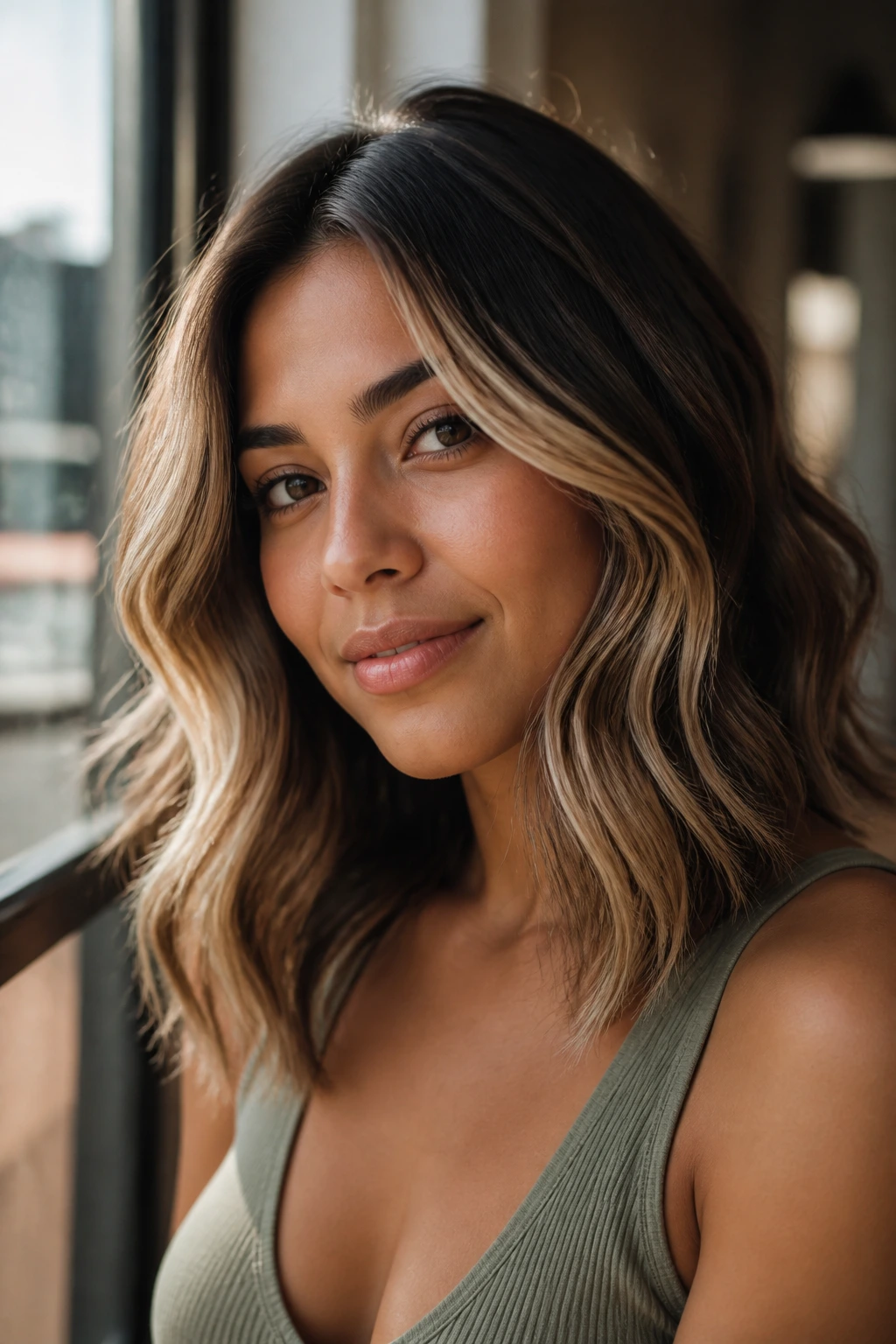
Flavor Enhancement: A clear or beige gloss every 4 to 6 weeks can make a faded balayage look freshly painted again. It does not need to be dramatic; it just has to restore shine and keep the ends from looking dry.
Customization: If your skin leans warm, ask for caramel, amber, or toasted beige. If it leans olive, ask for mushroom, smoky bronze, or beige with a neutral base. That tiny vocabulary shift is what keeps the color flattering instead of random.
Serving Suggestions: Hair oil on the last two inches, a smooth blowout at the roots, and a few face-framing bends are usually enough. You do not need a pile of curls. The color should do the talking.
Make-It-Yours: Fine hair usually looks better with fewer, brighter ribbons. Thick hair can handle more depth and more layers of color. Curly hair usually needs the lightness painted where the curl opens, not hidden under the bend.
Keeping the Color Fresh Between Salon Visits
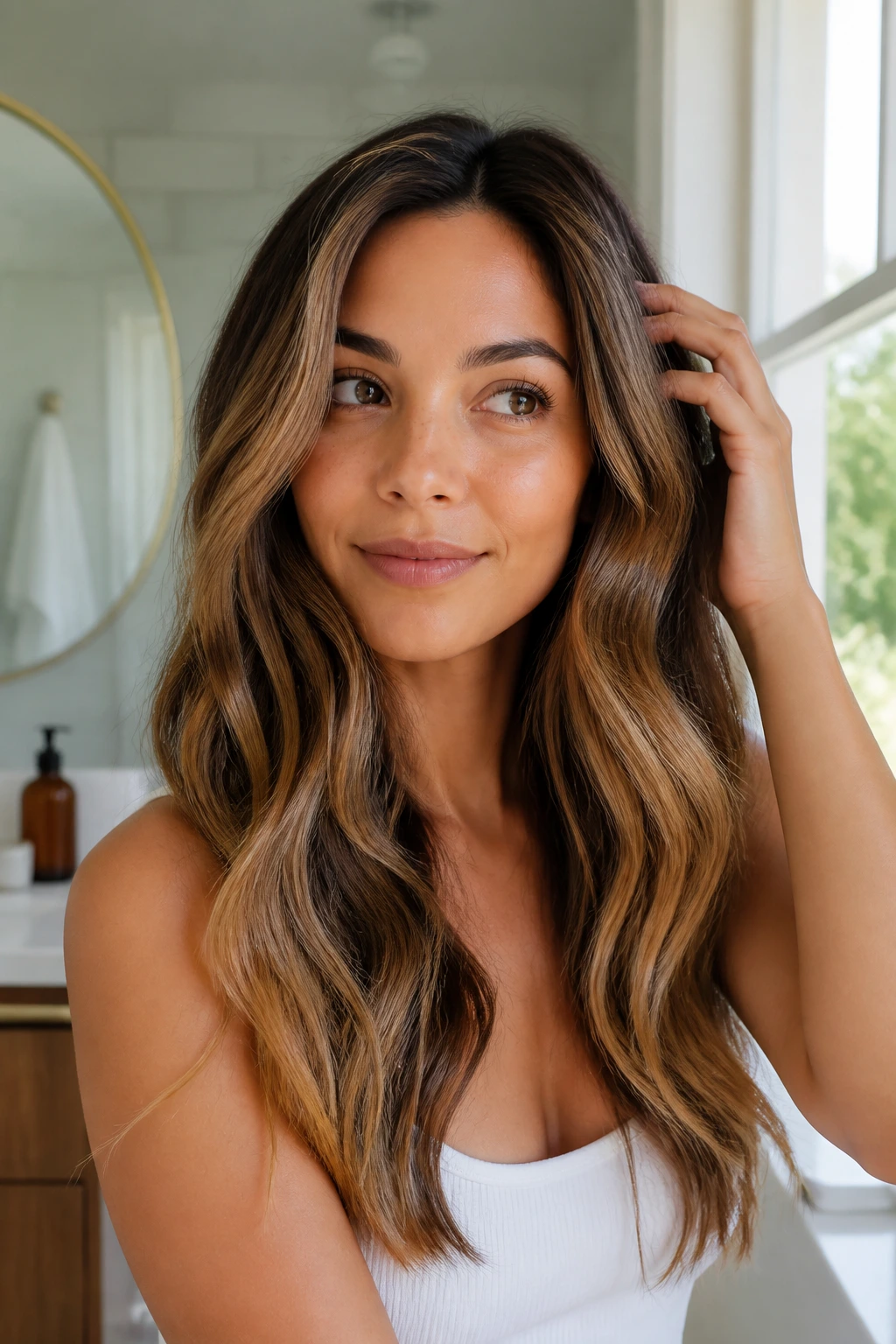
Balayage on medium skin looks best when the gloss stays clean. That does not mean shampooing every day. It means washing with a gentle formula that respects the tone and using a clarifying wash only when product buildup starts making the ends look cloudy. Hard-water residue is a sneaky one; it can turn beige balayage murky faster than people expect.
Most balayage can go 8 to 12 weeks before it needs a serious refresh, but the gloss may need attention sooner if the shade is warm or copper-based. Warm tones fade first. Ash tones can shift greenish or flat if they’re overused. Beige usually behaves well, which is one reason it gets recommended so often.
For heat styling, a protectant matters more than a glamorous serum. Use a lower heat setting if the ends are already lightened. If you press a flat iron over the same section six times, the color will not thank you for it. Let the hair cool in shape. That one habit keeps balayage looking soft instead of fried.
Variations and Adaptations to Try
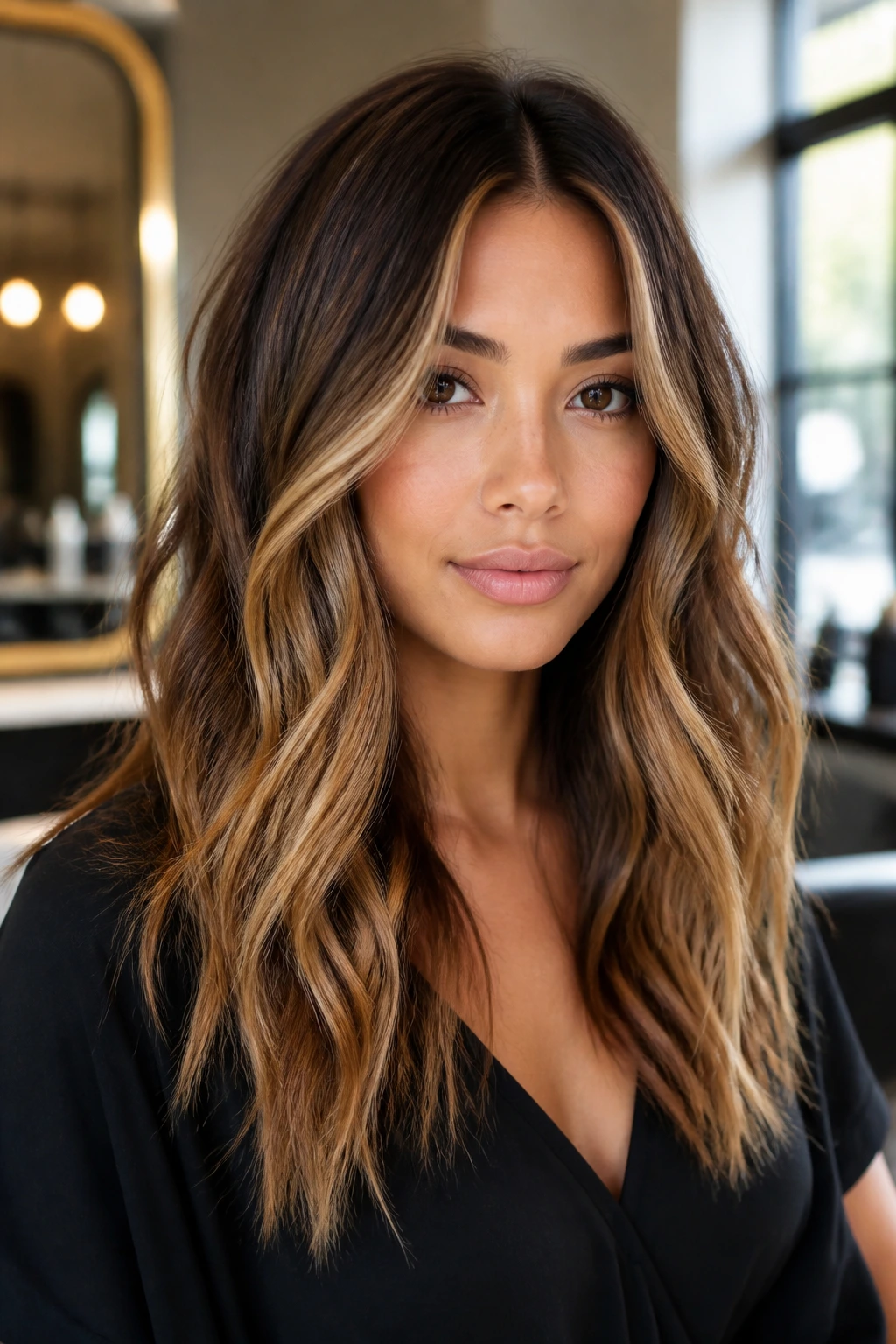
Golden Hour Custom: Keep the base warm and ask for honey, amber, and light caramel ribbons only. This version suits golden medium skin and gives the hair a sunlit finish without turning blonde.
Olive Balance Blend: Use beige, mushroom brown, and muted bronze together so the color stays neutral. This one is a smart pick if your skin pulls olive and bright gold tends to look harsh.
Brunette Shadow Luxe: Leave the root deep, add mocha and chestnut through the lengths, and stop short of heavy blonde. It’s a strong option for people who want dimension without obvious lightening.
Copper Whisper: Replace the caramel gloss with a muted copper-brown glaze. Keep the placement soft and lower on the head so the warmth reads as glow, not red paint.
Curly Ribbon Lift: Paint lighter pieces around the outside of curl clumps and leave the interior darker. This keeps curls from looking frizzy and makes the shape show up better.
Common Mistakes That Make Balayage Fight Medium Skin
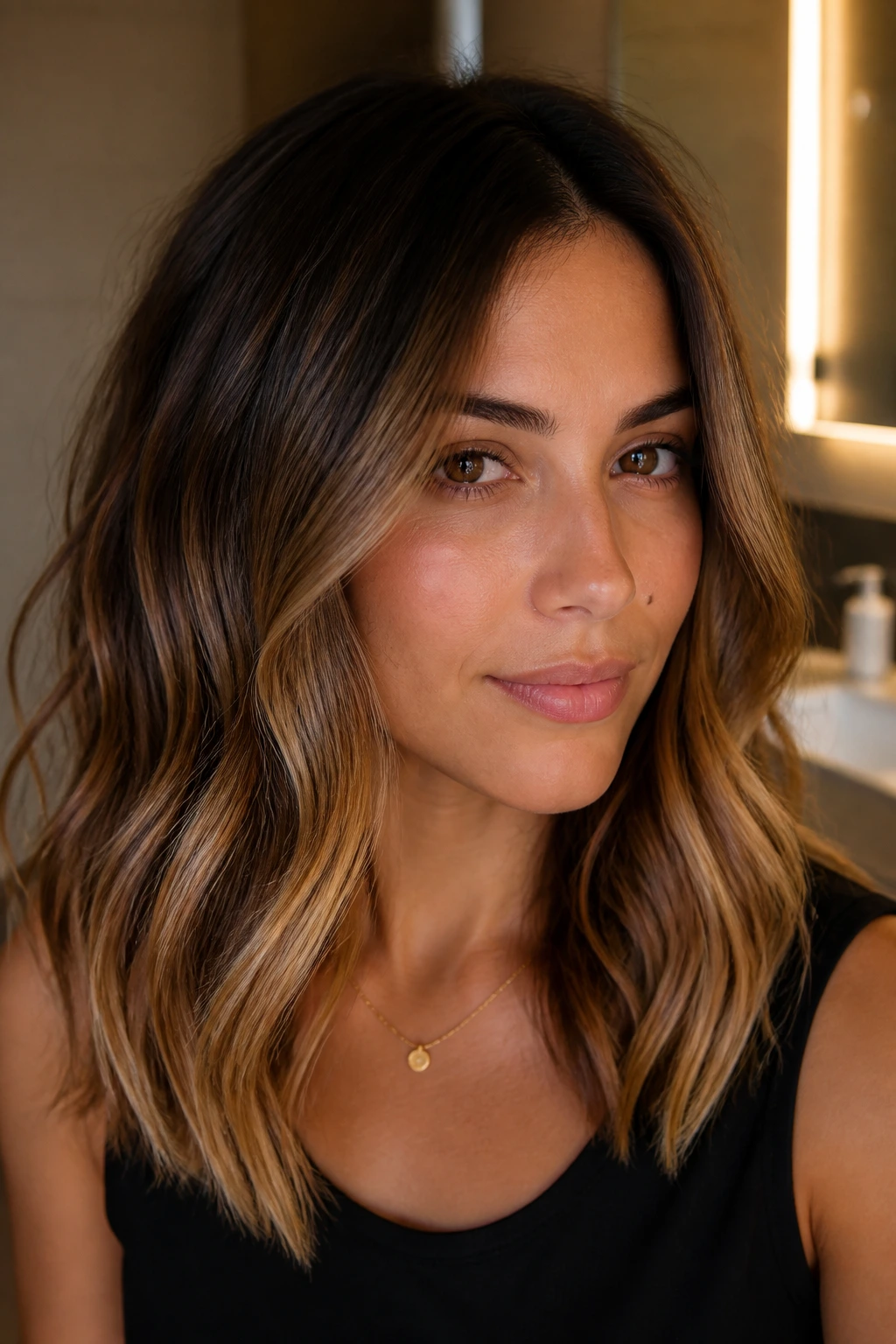
Going too pale too fast is the first mistake. When the hair jumps several levels lighter than the skin’s natural harmony, the face can look washed out or the color can turn fake. The fix is to stop at a softer beige, caramel, or bronze unless the undertone is truly ready for brighter blonde.
Using ash like a hammer is another one. A little ash helps quiet brass; too much makes medium skin look dull or greenish. If the finish feels flat, add beige or gold back in with a gloss.
Painting the crown too heavily can leave the top of the head looking striped and the ends looking unrelated. Keep the brightest pieces where movement happens, not right at the scalp unless you want a very bold result.
Skipping the gloss leaves the lift raw. Lightener without a tone can look orange, yellow, or porous on medium skin. A 5- to 10-minute glaze often fixes what a second round of lifting would only make worse.
Ignoring maintenance is the last trap. Caramel and copper fade faster than beige brown, so if you choose a warm tone, you need a plan for toning and conditioning. That is the bargain. It is worth it when the shade is right.
Frequently Asked Questions
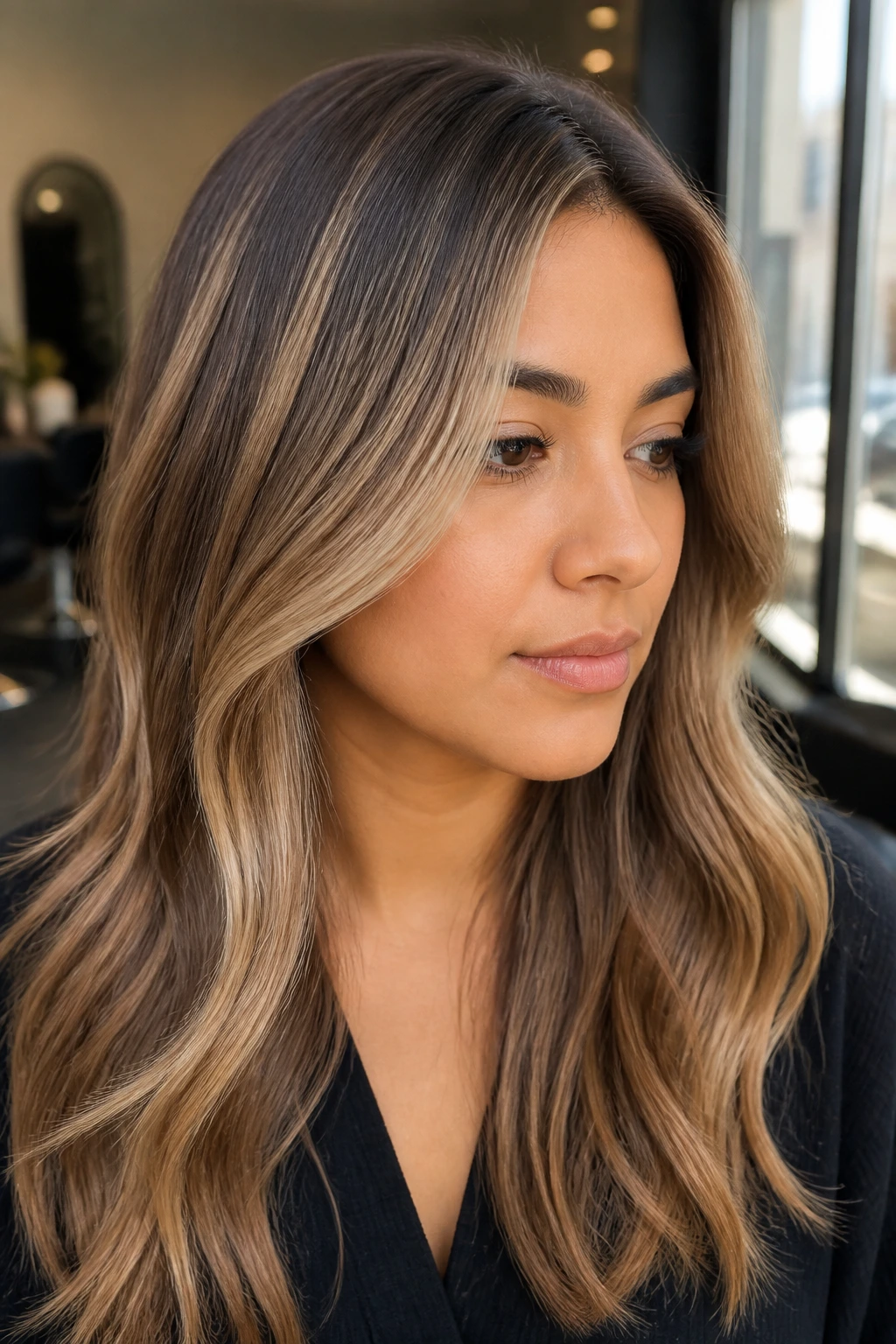
How do I know whether my medium skin is warm, neutral, or olive?
Look at your face in daylight, not bathroom lighting. Warm medium skin usually leans golden or peachy, neutral skin sits between gold and pink, and olive skin often has a soft green-gray cast. If you still cannot tell, a beige-bronde balayage is usually the safest starting point.
Is blonde balayage too light for medium skin tones?
Not automatically. The issue is not blonde itself, but how pale and cool the blonde gets. Beige blonde, honey blonde, and soft bronde can look excellent; icy, high-contrast blonde often needs more careful toning to avoid looking harsh.
What balayage shade looks best on olive medium skin?
Beige, mushroom brown, smoky bronze, and cool bronde tend to behave well. Olive skin often reacts badly to overly gold or overly ash tones, so the safest route is a neutral gloss with a little warmth left in it.
How often does balayage need to be refreshed?
The lightening itself can usually grow out for 8 to 12 weeks, sometimes longer if the root shadow is soft. Glosses and toners may need attention every 4 to 8 weeks, especially on warm shades like caramel, amber, or copper.
Can balayage be done on previously colored hair?
Yes, but it needs more caution. Old box dye, dark permanent color, or uneven prior highlights can affect how the hair lifts, which is why strand testing matters. Sometimes reverse balayage or a gloss refresh is smarter than forcing more light into the hair.
What’s the difference between balayage and ombre?
Balayage is a painting technique; ombre is a fade from darker roots to lighter ends. You can use balayage to create an ombre effect, but the placement is usually softer and less blunt than a classic dip-dye ombre.
Will balayage damage my hair?
Any lightening changes the hair structure a bit. The damage risk goes up when the hair is lifted too much, processed too often, or styled with high heat afterward. Bond builders, gentle shampoo, and realistic lift goals make a noticeable difference.
Can curly hair pull off balayage on medium skin tones?
Absolutely, and the result can be gorgeous when the light pieces are painted with the curl pattern in mind. Curly hair usually looks best with ribbons placed on the outer curve and a deeper root to keep the shape defined.
The Shade Sweet Spot
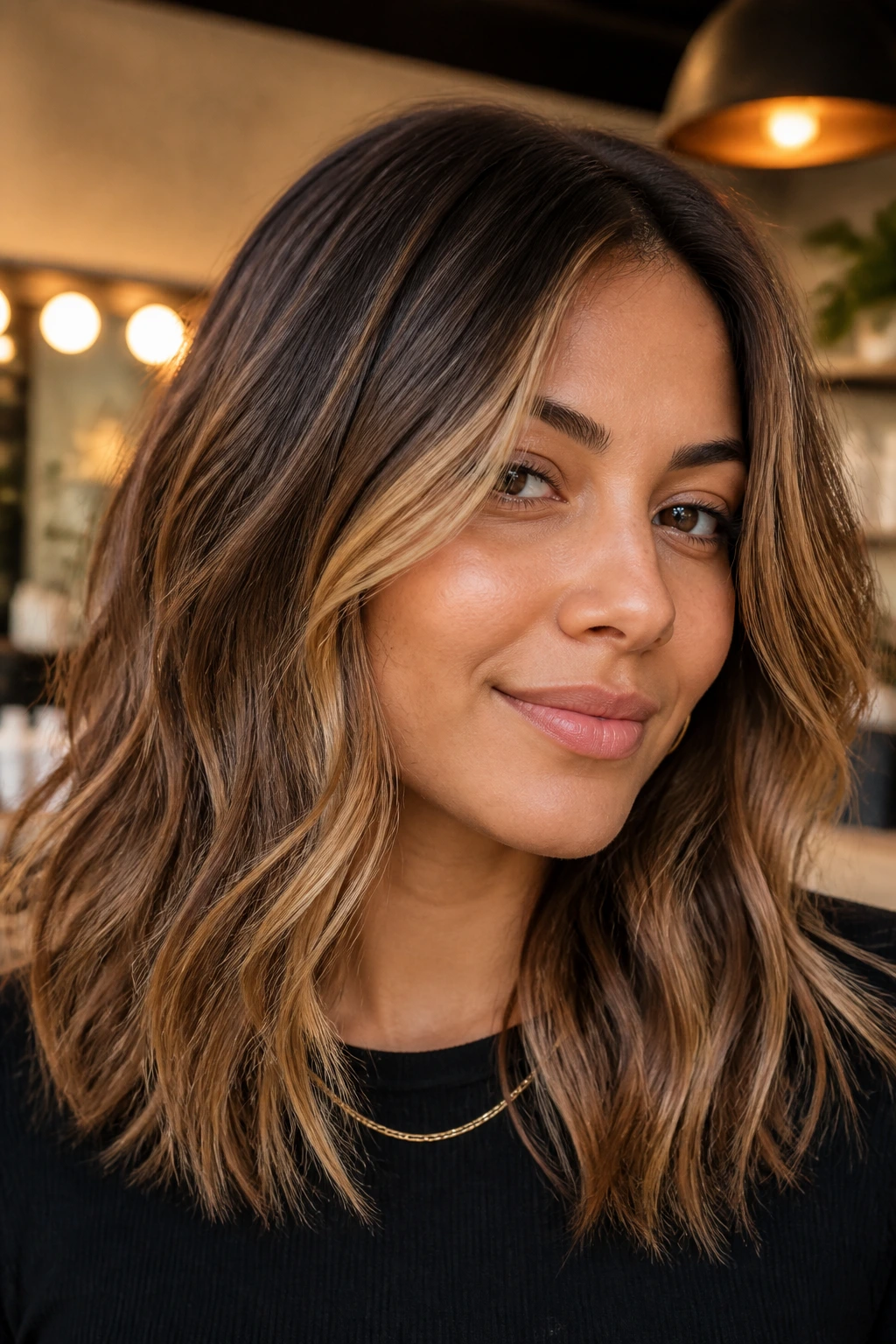
The best balayage for medium skin tones is rarely the loudest one in the room. It is usually the one that knows when to stop lifting, where to place the brightest pieces, and how to stay warm or cool without tipping into brass or ash. That restraint is what makes the color look costly instead of obvious.
If you remember one thing, make it this: medium skin does not need the same shade every time. It needs the right shade in the right place. Honey at the cheekbone, mushroom through the mids, bronze at the ends, a root melt that disappears into the grow-out — those tiny decisions do more than a dramatic lightening job ever could.
Choose the technique that matches your undertone, not your mood board. The hair will be easier to live with, and it will look better when you stop fussing with it in the mirror and just let the dimension do its work.