



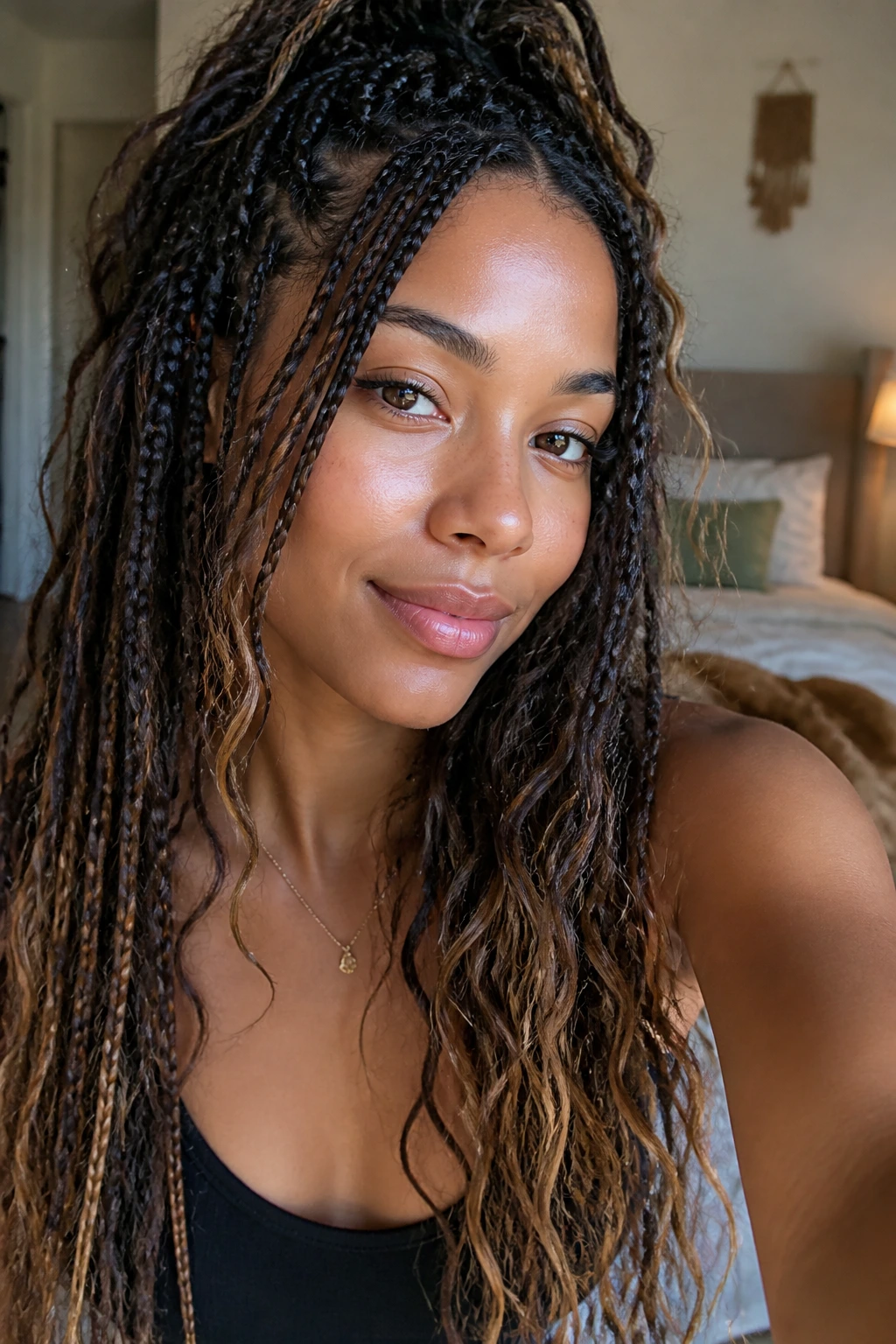
Boho braids have a trick that plain, tight braids don’t: they can look soft on day one and still make sense after you’ve slept on them, run errands in them, and pulled them back with a clip once or twice. The braid base does the work. The loose waves do the flirting. Together, they create that lived-in finish people keep trying to describe with vague words and never quite get right.
The part that matters most is hold. If the roots are too loose, the style slips. If they’re too tight, the whole thing feels hard before lunch. The sweet spot is a braid that stays anchored while the face-framing pieces, ends, or loose lengths keep their bend. That’s where the “boho” part earns its keep, and where the beachy waves stop being decoration and start doing real structural work.
Some of these styles are better for fine hair that slides everywhere. Some are made for dense curls that need a little room. A few use added hair to keep the shape from collapsing by the second night. The good news is that the category is broader than people think, and the difference between a style that looks cute for an hour and one that lasts is usually just a few smart choices at the start.
Why You’ll Love This Collection
-
Longer wear, softer finish: these looks keep the braid base anchored and let the loose pieces carry the texture, so the style still reads on day three instead of turning flat and sleepy.
-
Less hairline strain: many of the strongest versions use medium tension and smart parting, which matters if your temples get sore when braids are pulled too tight.
-
Beachy waves do real work: the loose bends, curl wraps, and face-framing strands make the braid look styled even when the rest of your hair has gone a little lazy.
-
Built for different textures: there are options here for slippery straight hair, dense curls, and everything between, as long as you match the grip to the hair you’re actually working with.
-
Easy to dress up or down: cuffs, beads, ribbons, and a clean middle part can push the same braid from “thrown together” to polished without changing the whole shape.
1. Crown Boho Braids with Face-Framing Waves
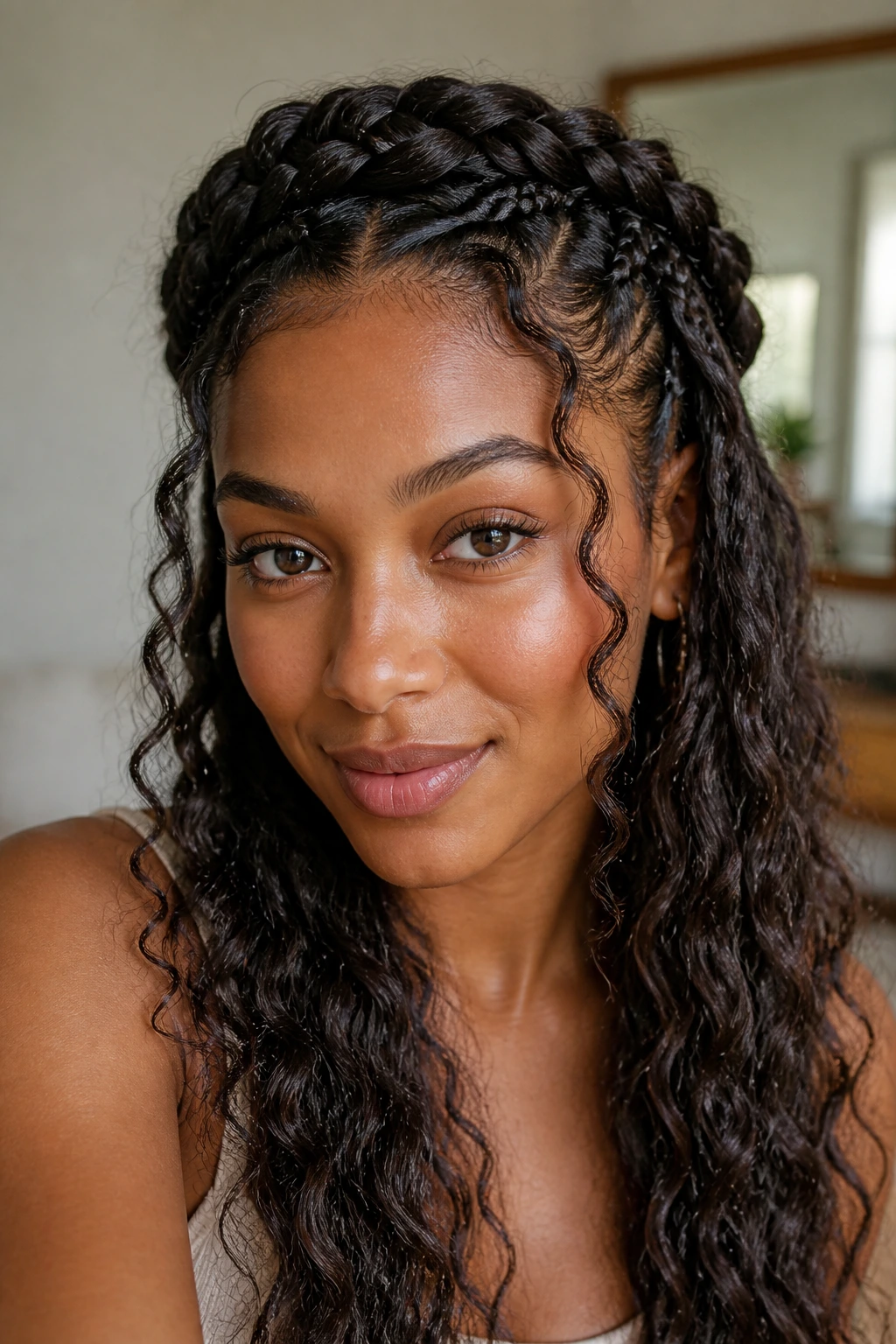
This is the style I reach for when I want the top of the head to stay neat and the sides to soften the whole look. A crown braid gives you a clear shape, then two or four curled pieces at the temples keep it from reading too severe. The waves should start around cheekbone level, not right at the roots, or the whole thing can look puffy in the wrong place.
Why It Lasts
A crown braid holds because the braid is doing the heavy lifting across the hairline, where styles usually start to wobble first. The face-framing pieces are short enough to stay intentional, long enough to move. If your hair is fine, mist the front section with a little mousse before braiding so the crown doesn’t slip apart.
Quick Details
- Best on shoulder-length hair and longer
- Looks strongest with a center part
- Works well with 1-inch iron waves or heatless bends
- Add two small braids near the temples if you want more grip
Best tip: keep the crown braid slightly looser at the back of the head than at the temples. That stops the style from digging in while still locking the front down.
2. Half-Up Boho Braids with Curly Ends
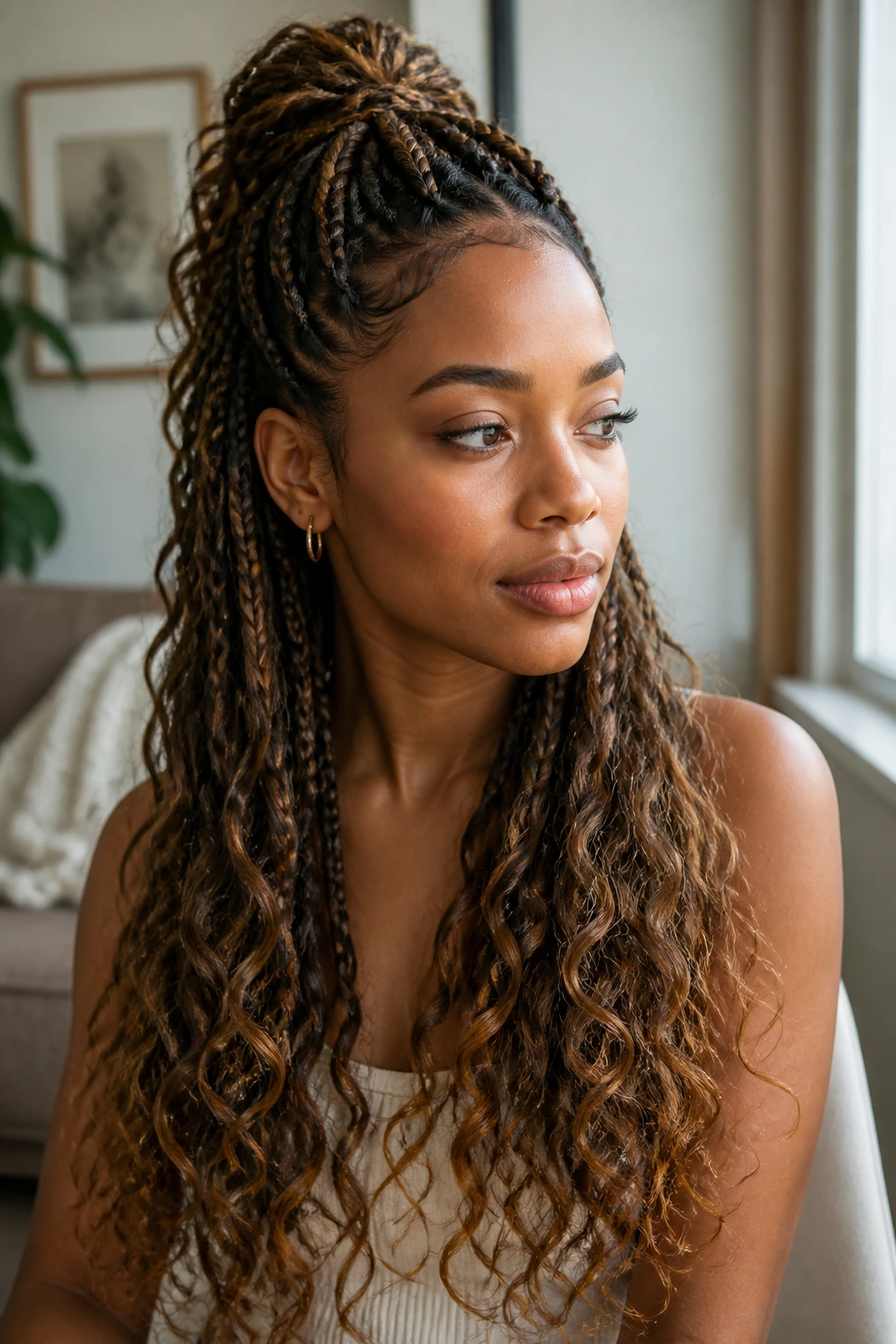
Want a style that looks relaxed without losing shape by the second coffee? This is the one. The top half gets braided or twisted back, while the lower half stays loose and wavy, so the style has enough structure to survive a long day but still moves when you turn your head.
The thing that makes this version work is contrast. The top stays controlled. The bottom stays soft. If the waves start too close to the scalp, the whole style can puff into a cloud, so leave the first inch smooth and begin the bend lower down. That tiny detail changes everything.
How to Ask for It
- Keep the braid anchored from the temples back
- Leave the bottom half in soft S-waves
- Use a little leave-in on the ends, not the roots
- Finish with a light mist of flexible-hold spray
This is also one of the easiest styles to refresh. A few finger coils at the ends and a quick scrunch with mousse usually bring it back.
3. Goddess Box Braids with Loose Wave Pieces
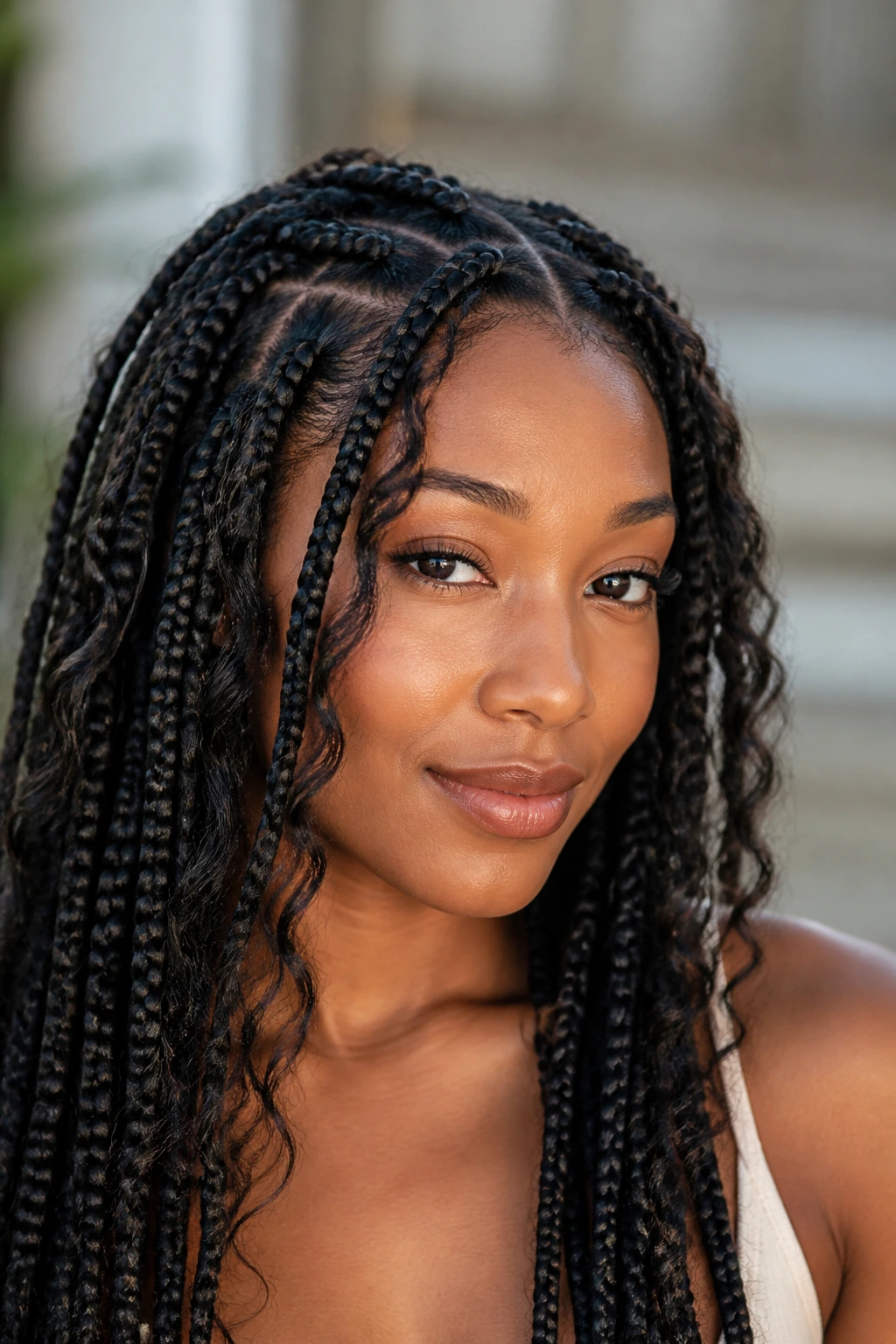
If you like a fuller look with real staying power, goddess box braids hit a nice middle ground. The braid itself stays tidy and protective, while the loose curly strands woven through it keep the style from looking stiff or heavy. When the curly pieces are placed well, the whole head moves in a soft, almost floaty way.
I like this version on long hair because the braids hold their shape even after the loose pieces start to fray a little. That slight fuzz at the ends can actually help. It makes the braid feel less rigid and more wearable. Too many loose pieces, though, and you lose the clean line that keeps the style looking intentional.
- Use pre-stretched braiding hair for smoother sections
- Add curly human hair or heat-resistant fiber for the loose pieces
- Place the curls every few braids, not in every single section
- Keep the parting clean if you want the style to last
Small opinion: the cheaper curly add-ins are fine here. They tangle faster, yes, but they also blend in better once the style settles.
4. Side-Swept Fishtail Braid with Wand-Waved Lengths
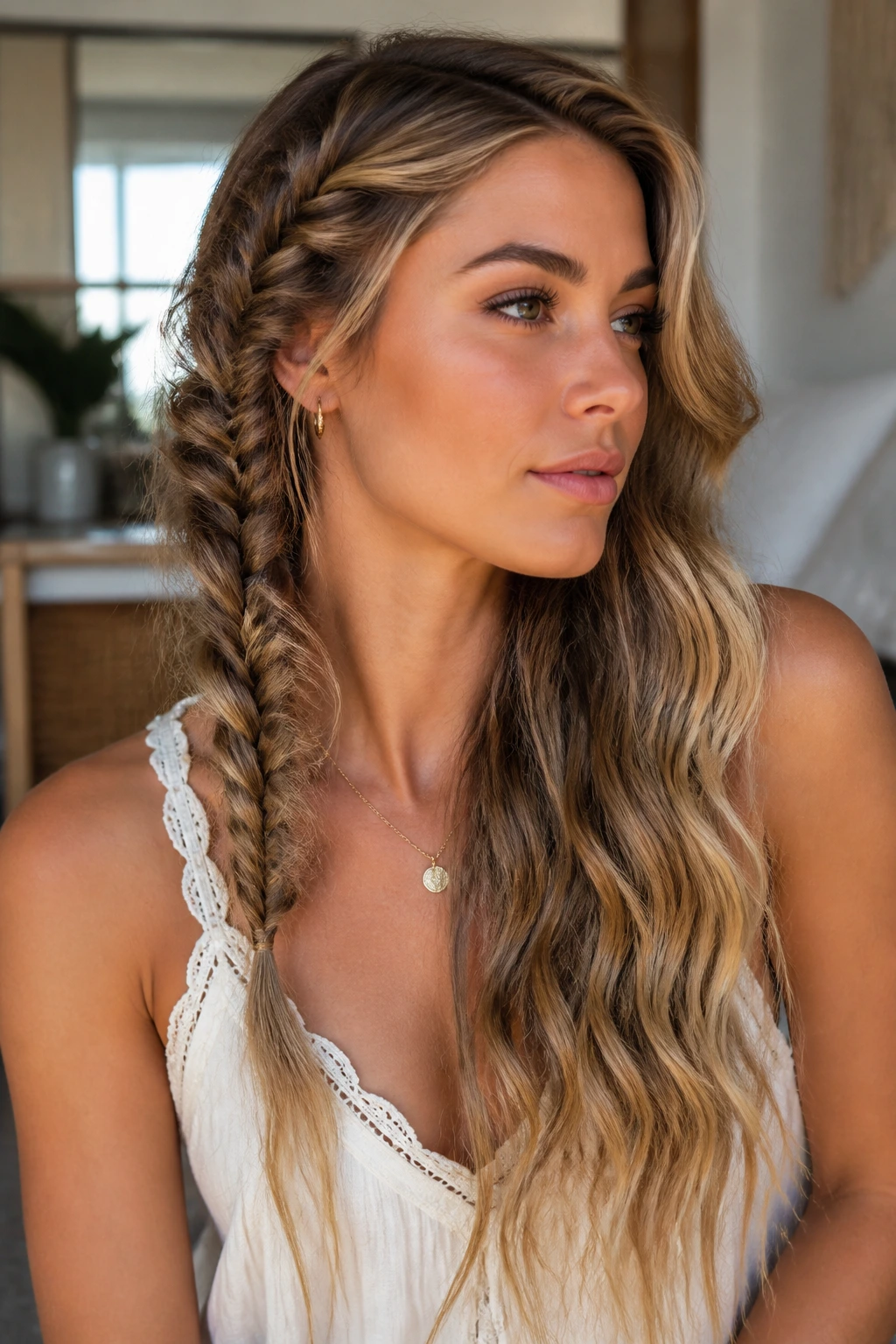
If a regular side braid feels too plain and a fishtail feels too formal, this version sits right in the middle. The fishtail gives you a tight visual pattern, and the wand-waved lengths keep it from looking polished in a stiff, bridal way. It’s soft, but not flimsy.
This style is best when the braid starts just behind one ear and the loose lengths fall over the opposite shoulder. That diagonal line does a lot of work. It opens the face, shows off the waves, and keeps the braid from flattening against the back of the head where nobody sees it.
Best for
- Long hair that holds a curl well
- Day-to-night wear
- Hair that gets greasy fast at the roots
- People who want a braid that looks deliberate, not fussy
A one-inch wand creates a looser, more believable wave than a tight curling iron spiral. That difference matters here.
5. Feed-In Cornrows with Wavy Feed-Through Hair
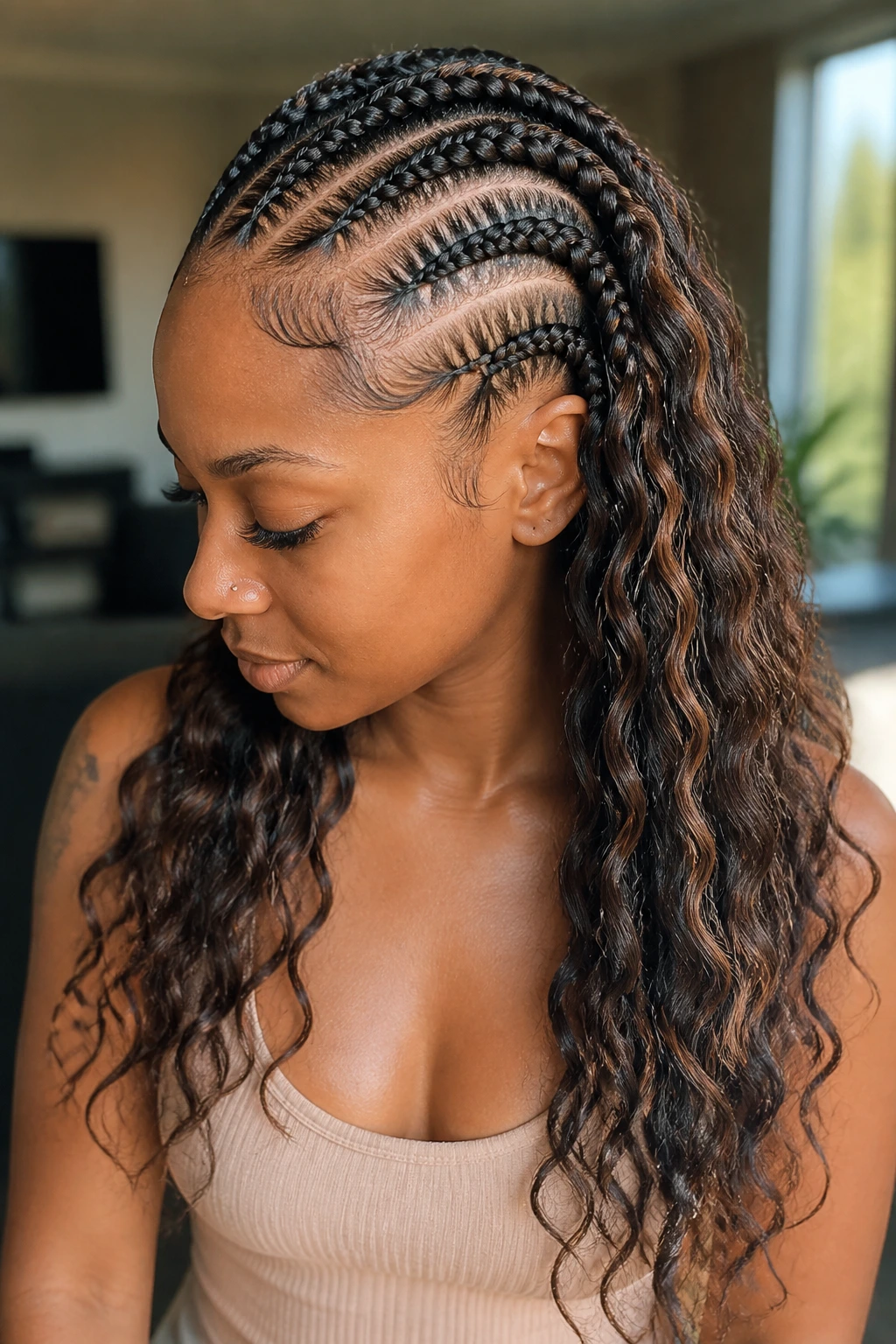
Feed-ins are a good choice when you want the braid to stay put and the texture to show up without the whole style turning bulky. The trick is to start small at the hairline, then add hair gradually so the braid lies flat before the waves take over at the length. That smooth base is what keeps the style wearable for more than a day.
What Makes It Work
The gradual build of the feed-in braid keeps tension distributed instead of yanking in one spot. The wavy pieces can begin halfway down each braid or only at the ends, depending on how soft you want the finish. If your scalp gets tender, ask for a little extra space around the temples and nape. A few millimeters matter more than people think.
How to wear it well:
- Keep the first inch neat and close to the scalp
- Add wave pieces sparingly so the pattern stays visible
- Finish the ends with flexi rods or a soft curl set
- Wrap at night with a silk scarf to protect the part lines
This is one of the most dependable long-wear looks in the whole collection.
6. Waterfall Braid with Beachy Curtain Pieces
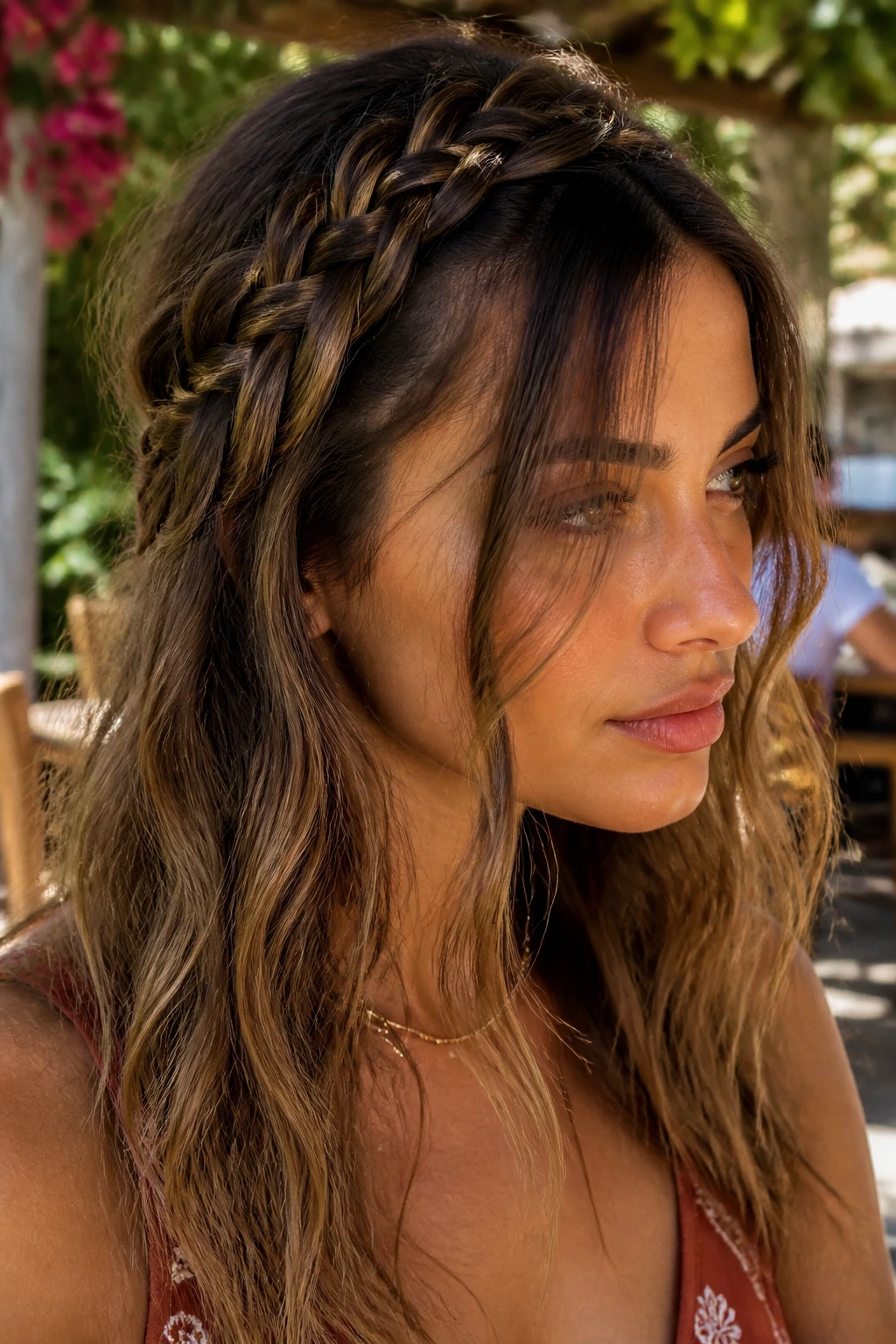
A waterfall braid lives or dies by the way the loose strands fall. If they’re curled into soft curtain pieces, the whole style becomes less formal and more relaxed, which is exactly where boho lives. The braid should sit high enough to show the pattern but not so high that the loose pieces land in your lashes all day.
The nice thing about this style is that it looks more complex than it is. One braid can do the job if the rest of the hair is waved and separated with fingers, not brushed out into frizz. The hair should look touched, not overworked.
When I’d choose it:
- For brunch, showers, or softer dress codes
- On hair that holds a bend for at least a day
- When I want movement without a full updo
- If I’m wearing earrings and want the braid to frame them instead of cover them
A light smoothing cream on the loose pieces helps, but don’t get greedy. Too much product flattens the “waterfall” part.
7. Knotless Boho Braids with Spiral Tips
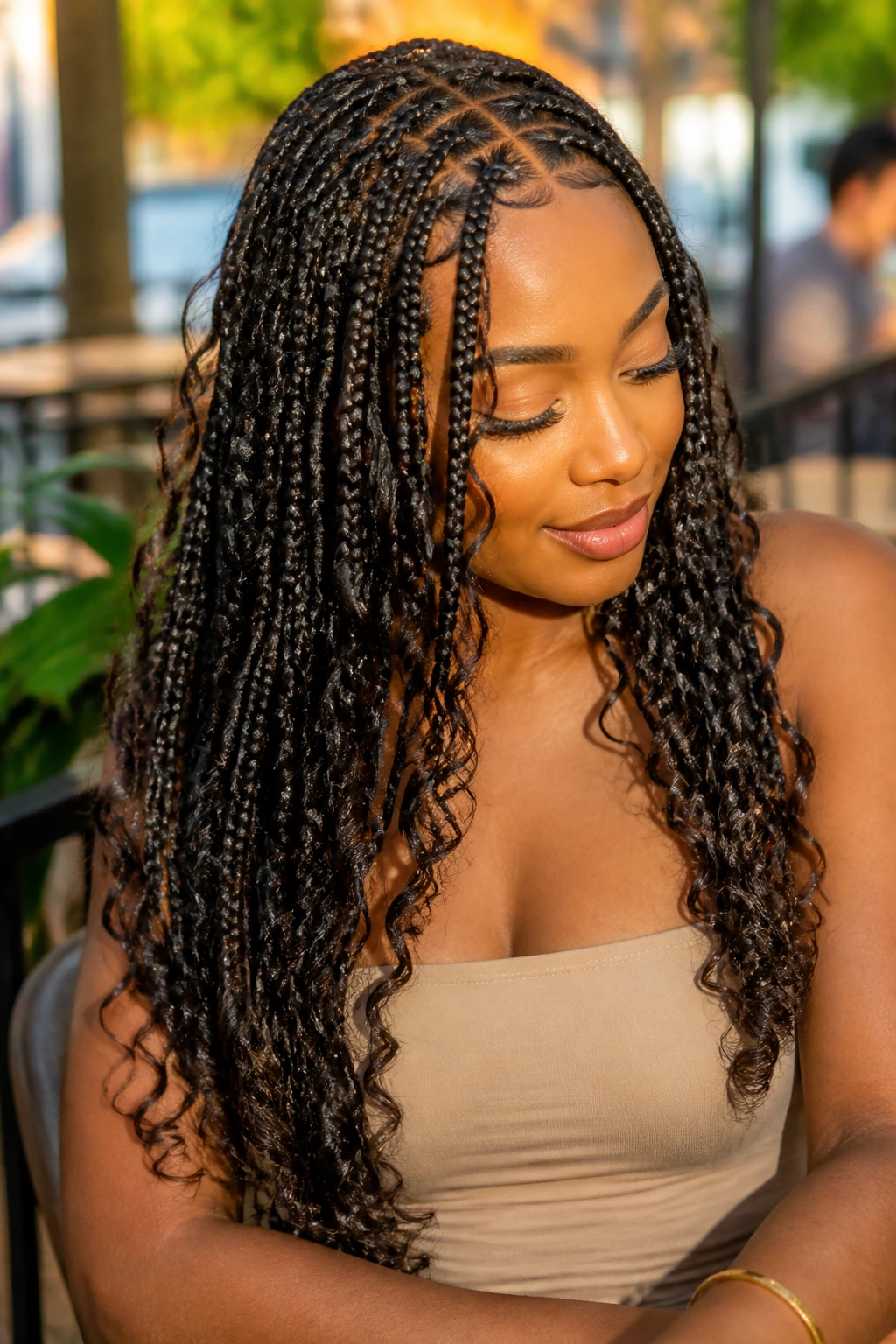
Knotless braids are already easier on the scalp than the old-school kind, and adding boho texture makes them feel even more wearable. The braid starts with your own hair, then grows into the extension hair in a way that looks softer at the root. The spiral tips at the ends keep the style from reading too boxy.
That root transition matters. It’s the reason knotless versions often feel lighter after a few hours. If your scalp gets annoyed by tight starts, this is the style to keep at the top of the list. The loose wave pieces can be placed only toward the front or sprinkled through the whole head if you want more movement.
Useful details
- Use pre-stretched braiding hair for a cleaner start
- Keep the roots medium-small, not tiny and hard
- Curl the ends away from the face for a softer finish
- Secure the ends with hot water set or flexi rods, depending on hair type
The shape gets better once the braids have settled for a day. That’s normal. Don’t panic and redo them too soon.
8. Dutch Pigtails with Messy Wave Pulls
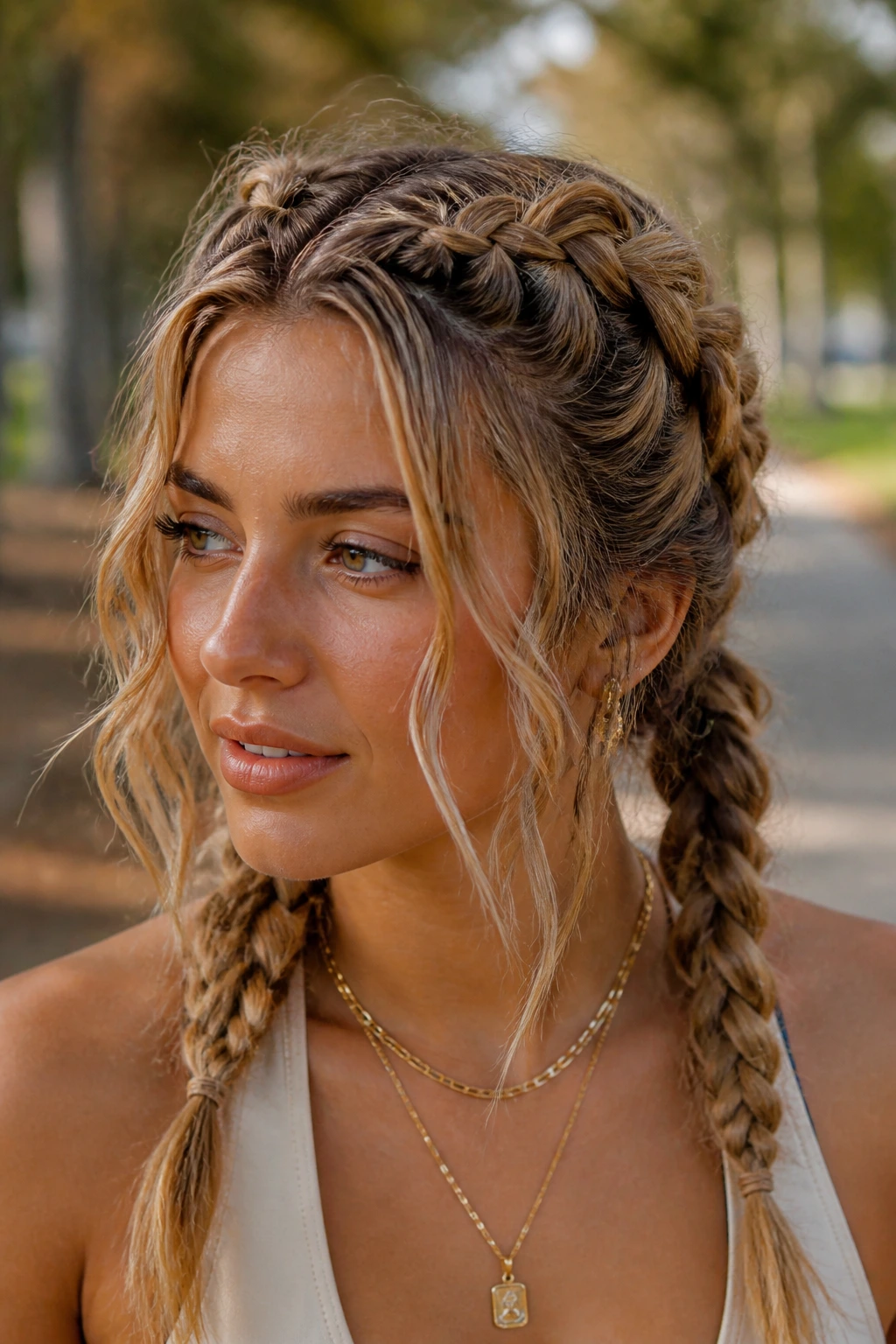
What makes Dutch pigtails feel boho instead of school-uniform neat is the pulled-out texture. The braids sit on top of the hair instead of sinking into it, and the loose wave pulls around the face stop them from feeling too young or too clean. This version likes a little mess. Not chaos. Just enough looseness to breathe.
A lot of people pull the pigtails too tight at the crown and then wonder why the style looks severe. Leave a touch of softness near the part. Then gently tug at the braid loops once they’re secure so the shape widens a bit. That tiny widening is what makes the style read relaxed.
This style works especially well if:
- You want your hair off your neck
- You like the symmetry of pigtails but not the childish look
- Your hair needs a style that survives movement
- You want a quick braid that still has texture
A little dry shampoo at the roots can help the braid grip if your hair is silky.
9. Halo Braid with Airy Face Pieces
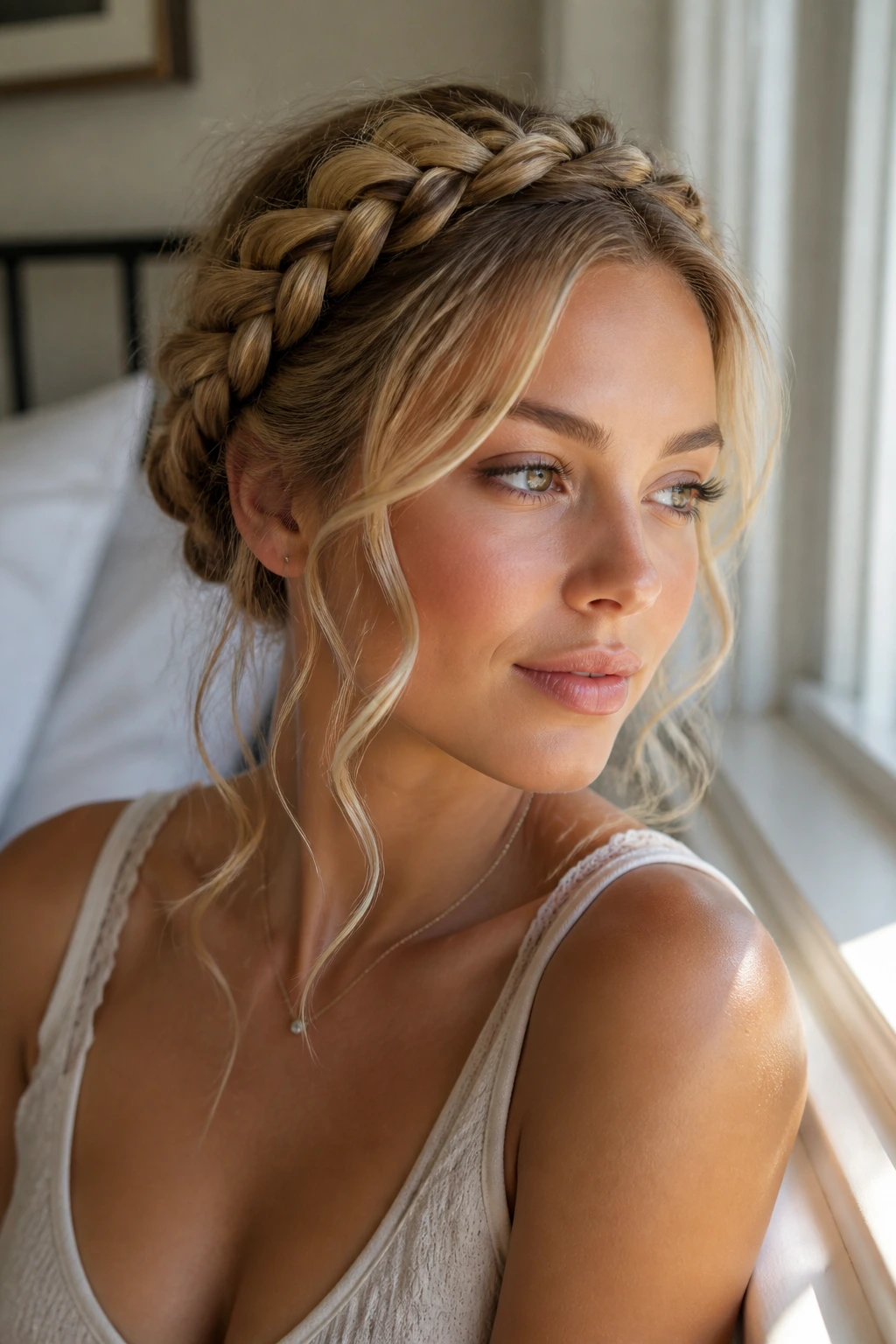
A halo braid can look severe if every strand is pinned up too neatly. Add a few airy face pieces, and the whole thing changes. The braid becomes softer, less formal, more like something you’d wear on purpose instead of something you’d wear to behave.
The best halo braid sits close enough to the head that it stays in place but not so tight that it feels like a band. I like to leave the tiniest amount of room at the crown so the braid doesn’t pinch when you move. The face pieces should be curled away from the face, not toward it. That keeps them from sticking to your cheek by noon.
Small adjustments that help:
- Leave 1 to 2 thin strands out at the front
- Curl those pieces in the same direction on both sides
- Pin the braid under itself instead of stacking too many bobby pins
- Use a flexible spray, not a hard shell
This is one of those looks that gets better with a little softness. Too polished and it loses the point.
10. Braided Ponytail with Piecey Curl Wraps
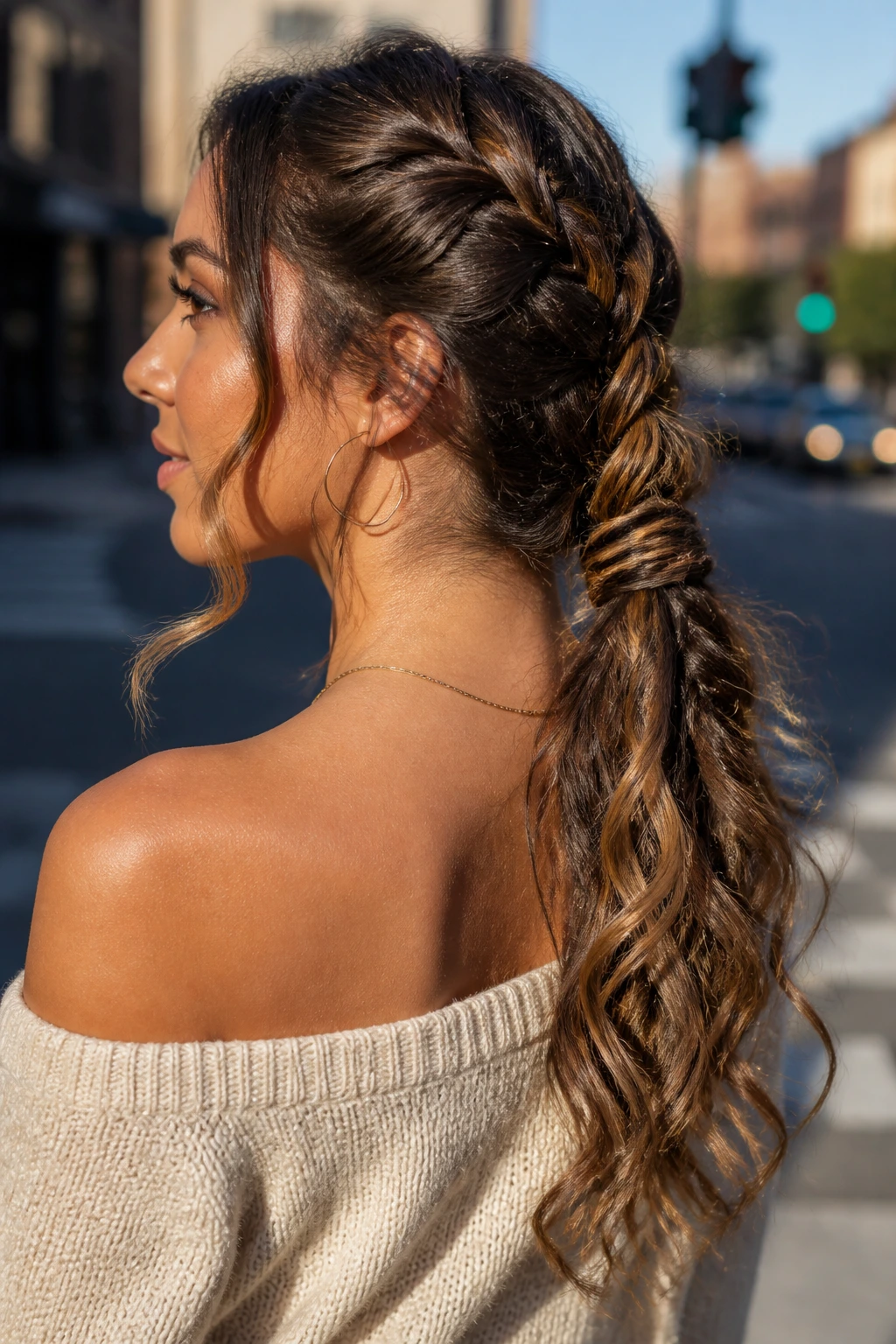
A braided ponytail is the style I pick when I want the hair out of the way but refuse to give up texture. The braid gives the ponytail a clear spine, while the piecey curl wraps around the base or tail keep it from looking blunt. You get structure without stiffness. That’s the whole appeal.
If the ponytail sits too high, the style can start to look sporty. Too low, and it can sag. The sweet spot is usually at the occipital bone, where the head starts to curve. That placement keeps the braid visible from the side and gives the waves space to fall.
Best match for
- Thick hair that needs control
- Long workdays
- A style that can be dressed up with cuffs or wrapped hair
- People who want one style that survives wind better than loose waves do
The braid around the base also hides the elastic nicely, which is one of those tiny details that makes the whole look feel finished.
11. Micro Boho Braids with Layered Waves
Micro boho braids are for people who want texture all over, not just in one or two visible spots. The smaller sections make the style lighter on the eye, and the layered waves woven through the ends keep the finish soft instead of stringy. It’s a lot of work, yes. It also lasts.
Why they’re worth it
Because the braids are small, they move better and blend into the loose pieces instead of fighting them. That means the style doesn’t collapse into a single block of hair when it starts to age. A few layered waves around the front can make the whole head feel more dimensional, especially if your hair is one solid color.
- Best on long, dense hair
- Needs clean parting to avoid looking fuzzy
- Works with curly or wavy extensions
- Holds up well when wrapped in a scarf at night
If you want the style to stay soft, don’t overload the ends with too much curl. A little bend goes farther than a full spiral.
12. Fulani Braids with Beads and Loose Curls
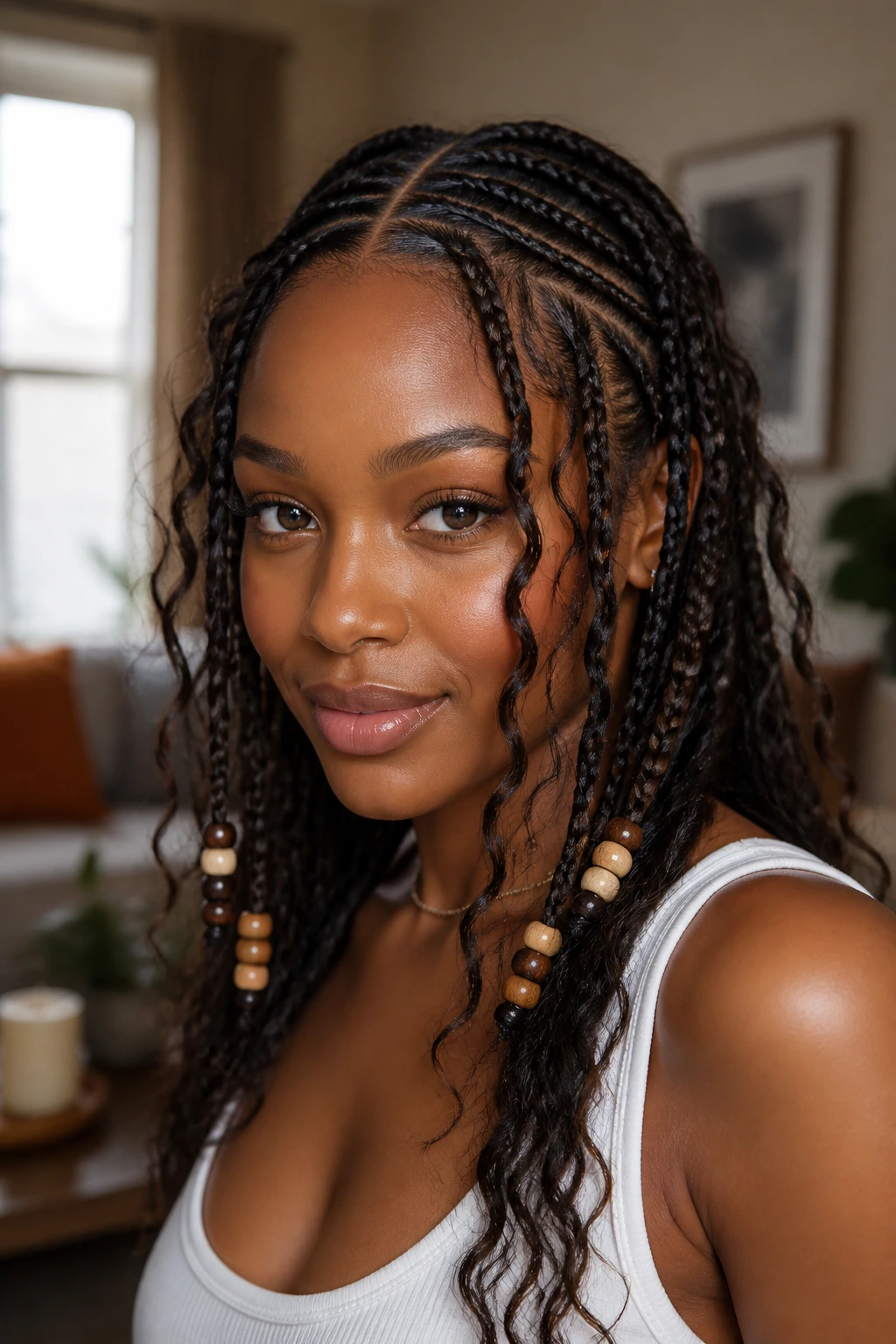
Fulani braids already have a built-in shape: the middle braid, the side braids, the center part, the ornamentation. Add a few loose curls and the style stops feeling ceremonial and starts feeling lived-in. The beads matter, but so does restraint. A few well-placed beads beat a dozen clattering ones every time.
This style shines when the front braids are clean and the curls are placed mostly at the lengths or just behind the ears. That keeps the face open. If the curls start too high, the style can get busy in a way that steals the clean line of the braids.
A good rule:
- Use medium-sized beads near the ends
- Keep the curls softer than the braids
- Don’t bead every single strand
- Let the middle part stay crisp
The beads can help weigh the braid ends down a touch, which keeps them from floating around in humidity.
13. French Braid Low Bun with Wavy Tail
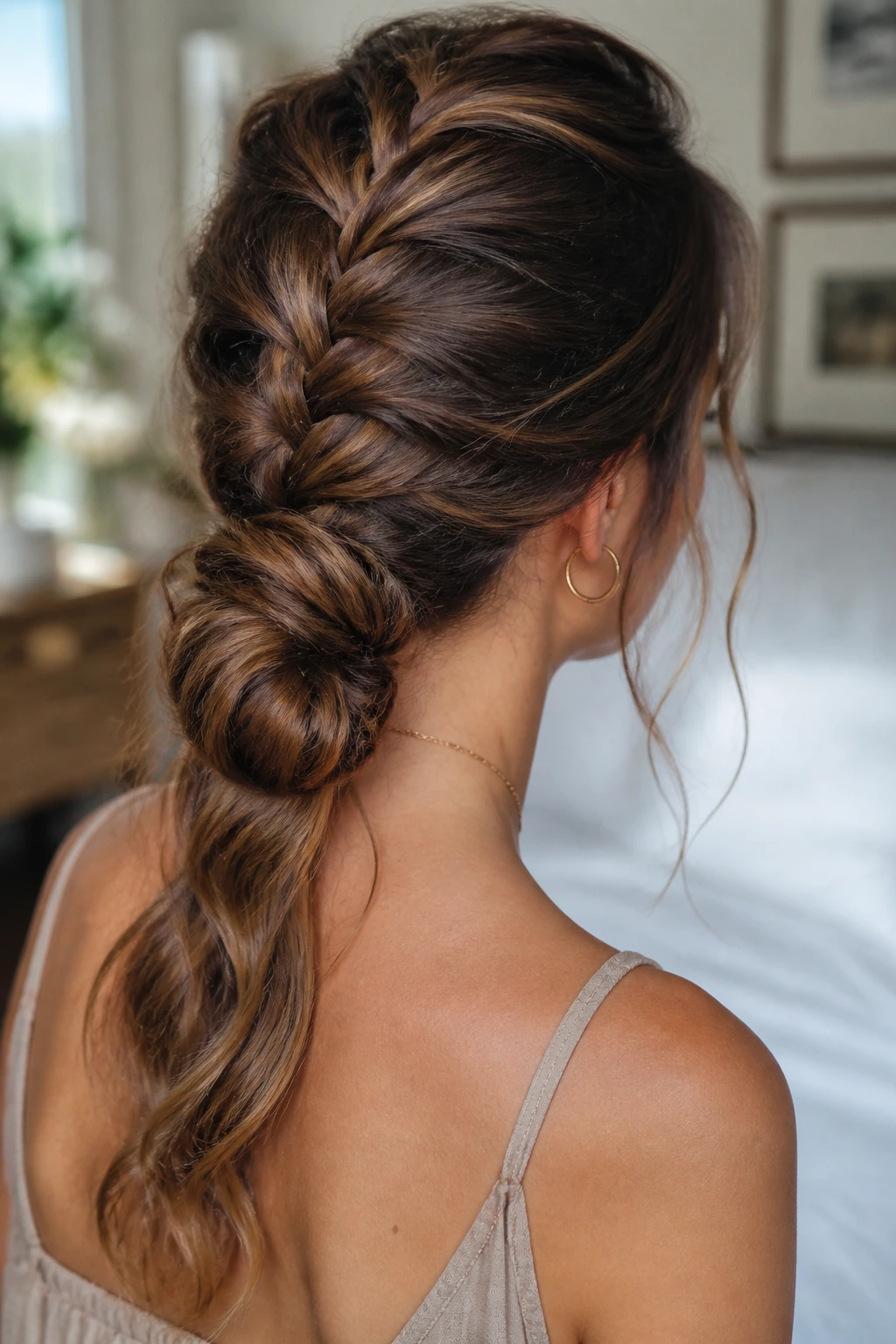
This is the polished cousin of the boho braid family. The French braid keeps the top smooth and anchored, then the low bun gathers the length without killing the texture. A wavy tail or a few loose pieces near the nape keep it from looking too buttoned-up.
The low placement matters. A bun that sits at the middle of the back of the head feels fussy. One that nestles at the nape feels easier, and it’s kinder if you’re wearing it for more than a few hours. Pull the braid a bit looser at the crown and tighter only where it needs to secure the bun.
Good for
- Weddings or dressier days
- Hair that needs to stay off the neck
- Adding pins, combs, or a ribbon
- Long hair that can hold a wave in the tail
A shine spray on the braid itself can look nice here, but keep it off the loose pieces if you want them to stay piecey instead of greasy.
14. Rope Twist Braids with Mermaid Texture
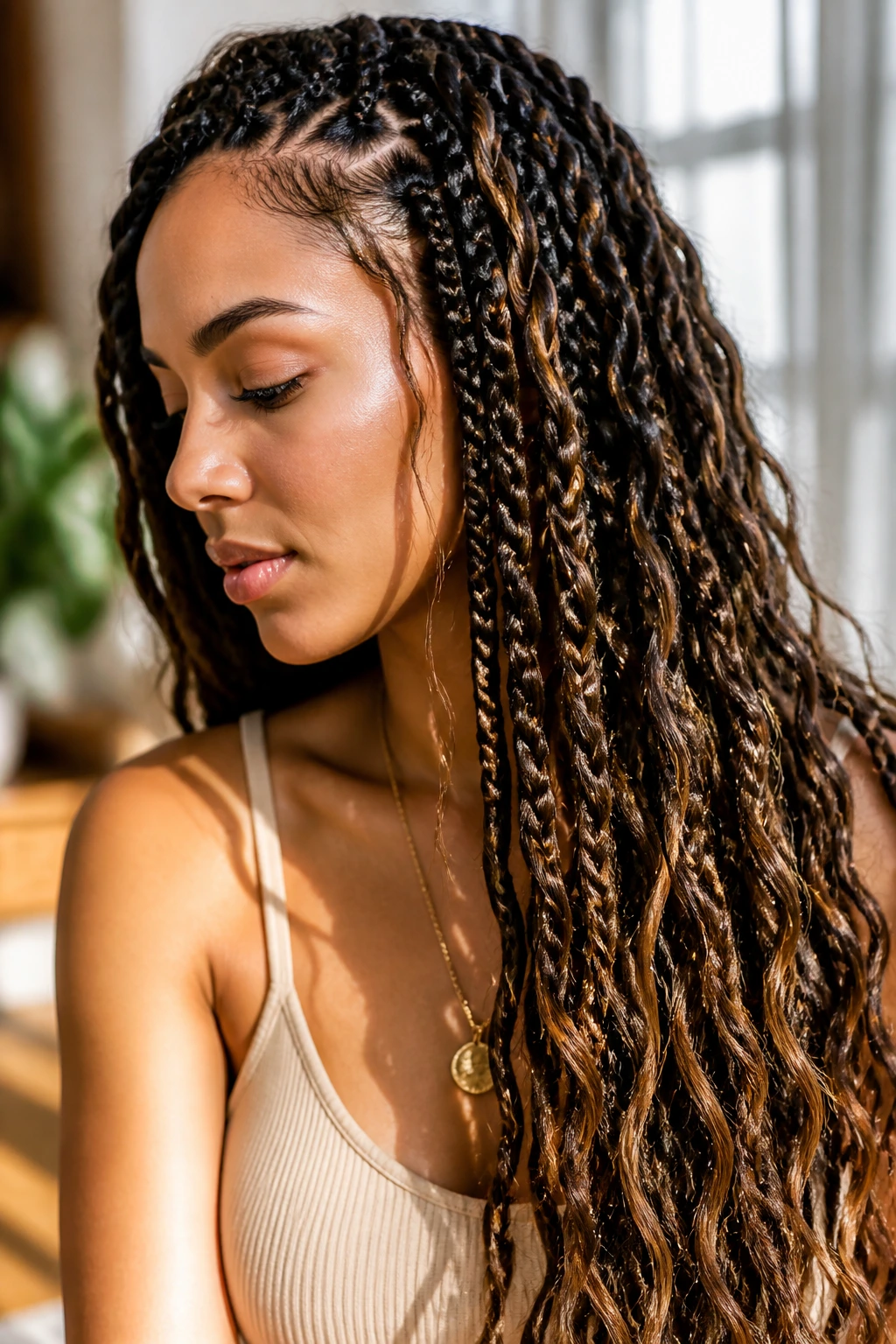
Rope twists give you a different texture than a three-strand braid. The finish is cleaner at a glance, but the twisted shape can still feel soft when you leave out wave pieces or taper the ends into bends. This is one of the more underrated choices for long-lasting wear because twists often hold their shape with less daily fuss.
The mermaid texture comes from layering. Keep the twist closer to the scalp at the root, then let the lengths loosen just a little as they travel down. If you curl the ends in alternating directions, the style gets that imperfect, wind-tossed movement without becoming frizzy.
If you want it to last
- Use a gripping cream sparingly at the roots
- Keep the twist tension even from top to bottom
- Set the ends with foam or flexi rods
- Sleep on a satin pillowcase, not cotton
This style looks especially good on longer lengths, where the twist can unwind a little and still keep its shape.
15. Boho Goddess Locs with Wavy Ends
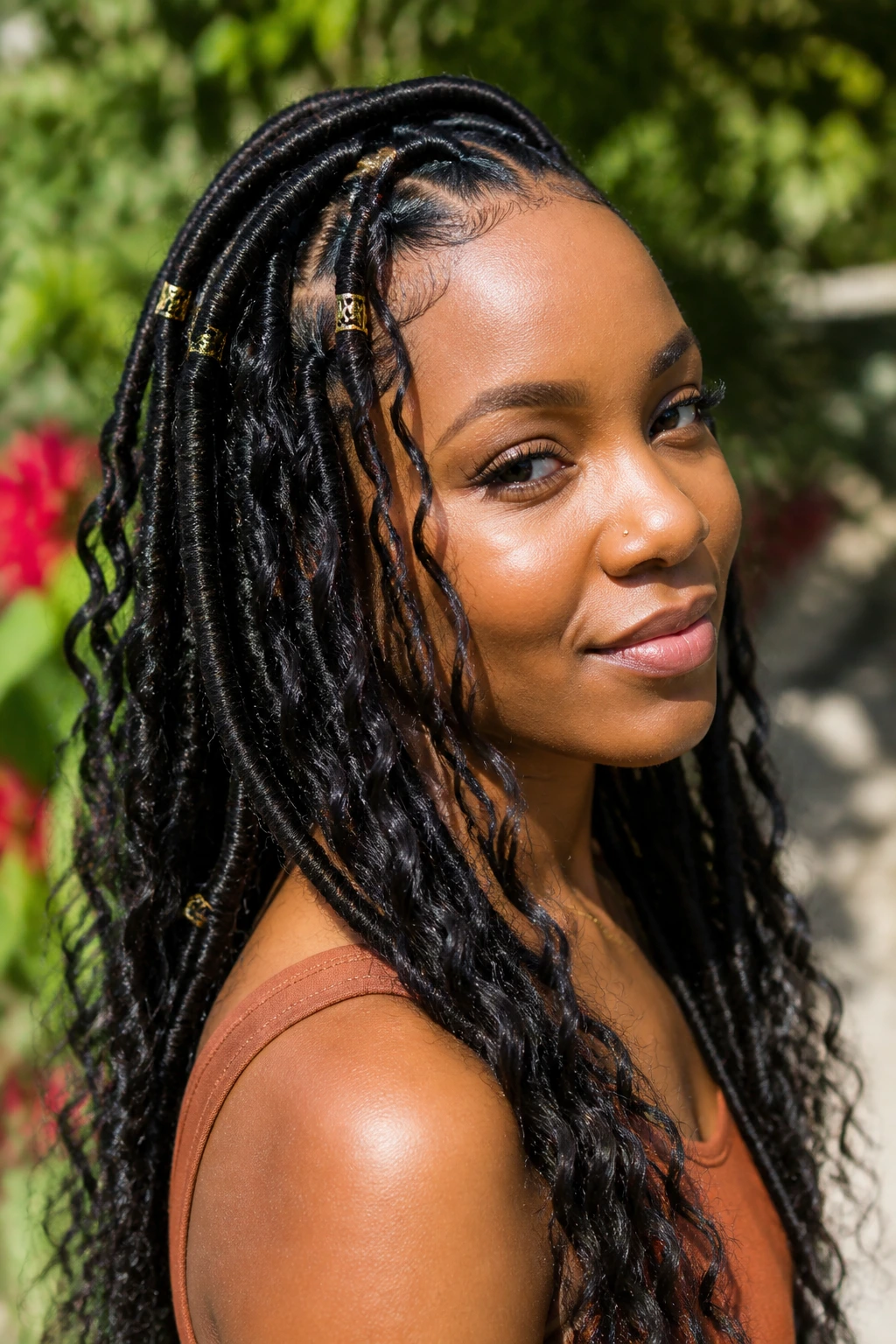
Goddess locs sit somewhere between a braid and a twist in the way they hold texture. They’re a strong option when you want something that can handle a lot of wear without losing its softness. The wavy ends are where the style gets its charm. Without them, the look turns heavy fast.
I prefer this version when the roots are neat and the loose pieces are limited to the front and ends. Too much fuzz can make the style look tired before it’s had a chance to live. Keep the locs medium-sized if you want them to stay moveable.
The best part is how forgiving they are:
- They hide growing roots well
- They can be dressed with beads or cuffs
- The wavy ends soften the overall shape
- They hold up nicely on busy weeks
A quick mist of mousse and a gentle palm-rolling of the ends usually brings them back to life.
16. Accent Braid Stack on Loose Beach Waves
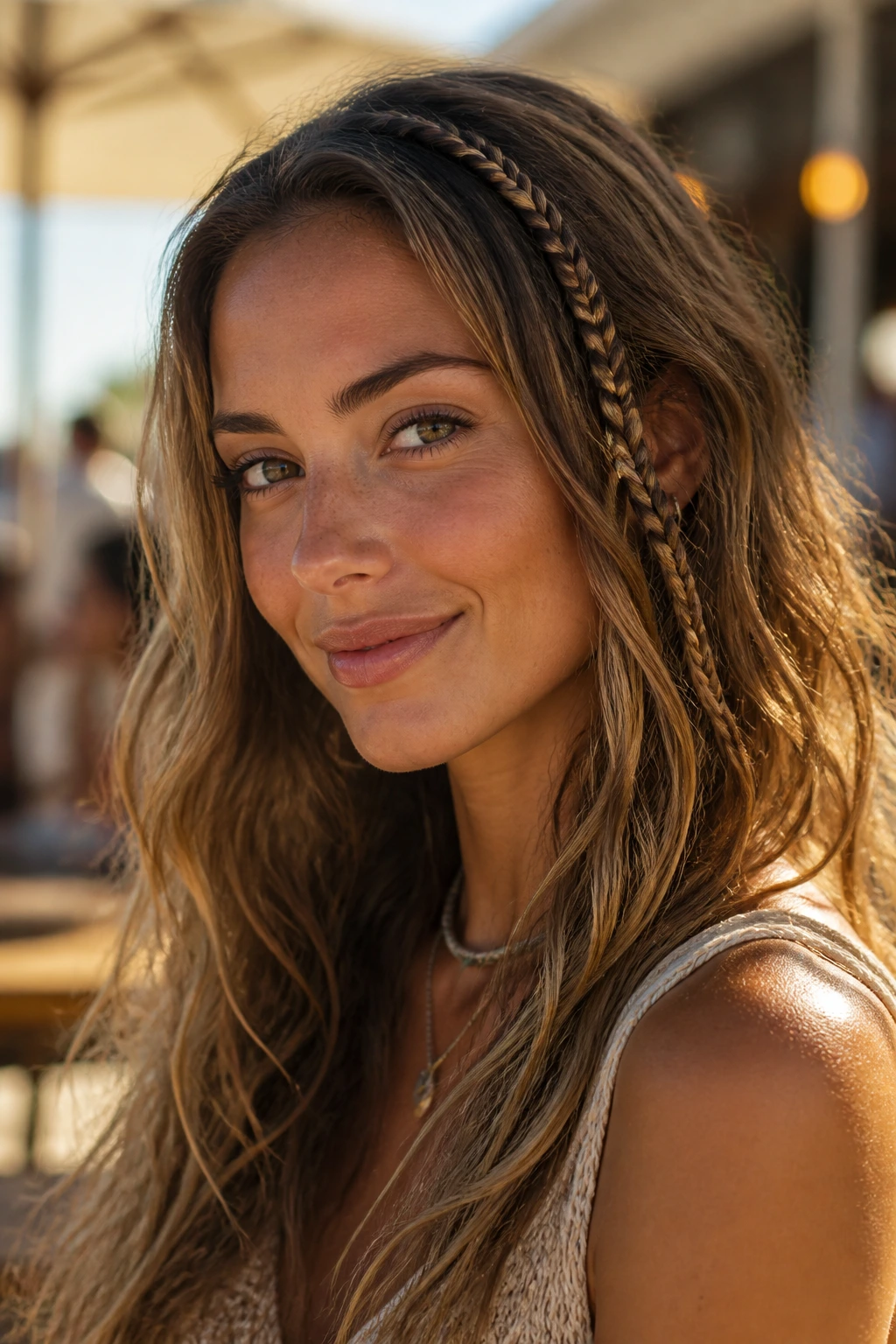
If you like your hair mostly down, this is the simplest boho option that still counts as a braid style. A stack of two or three accent braids tucked into loose beach waves adds structure without stealing the whole show. The braid stack gives the hair a point of interest. The waves do the rest.
This is a smart choice when you want the look to survive a long day but don’t want full-head braids. It works especially well if the accent braids sit on one side and the waves fall over the other. That asymmetry keeps the style from feeling flat.
What to keep in mind
- Keep the accent braids thin enough to blend
- Start the waves below the ear for the softest finish
- Pin the braids where they’re hidden under the top layer
- Refresh the waves with a quick wrap around a wand if needed
This is the style I’d call low effort in the best possible way. Not sloppy. Just smart.
17. Bubble Braid with Soft Pull-Outs
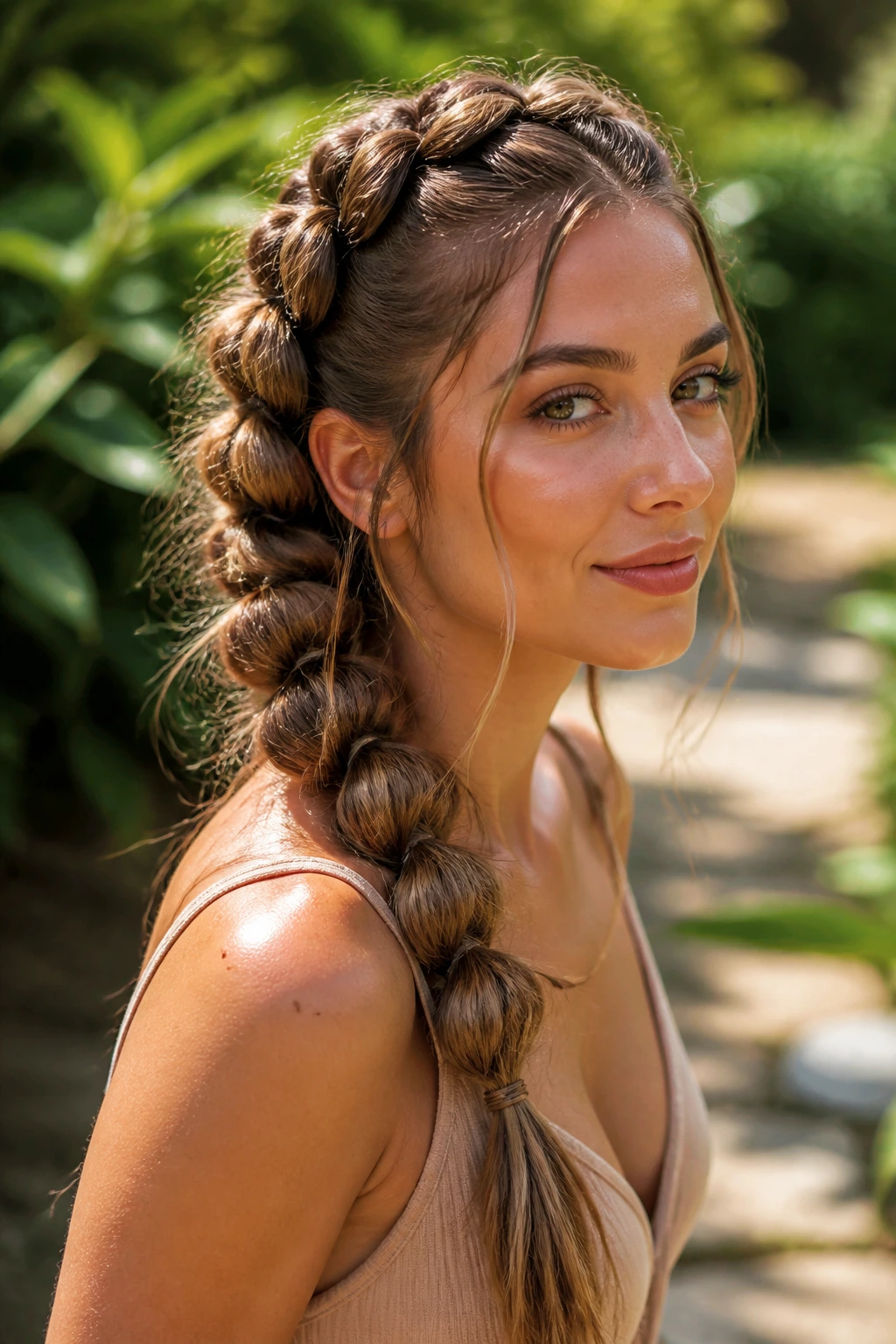
A bubble braid can look sporty or playful, but soft pull-outs at each section change the mood fast. The braid becomes fuller, less rigid, and much more in line with boho texture. This one works best on long hair because the bubbles need enough length to read properly.
What makes it different
The elasticity of the ponytail sections gives you hold, while the pull-outs create the beachy softness. That means the style stays visible even when it starts to loosen. Use small clear elastics every few inches, then gently tug the hair between them until each bubble widens a little. Stop before the section gets wispy.
- Best on long, medium-to-thick hair
- Easy to dress with ribbons or cuffs
- Looks better with a little texture spray
- Can be worn high, mid, or low depending on the mood
This is also a good style for people who like a braid they can redo quickly without starting from scratch.
18. Braided Headband with Long Wavy Lengths
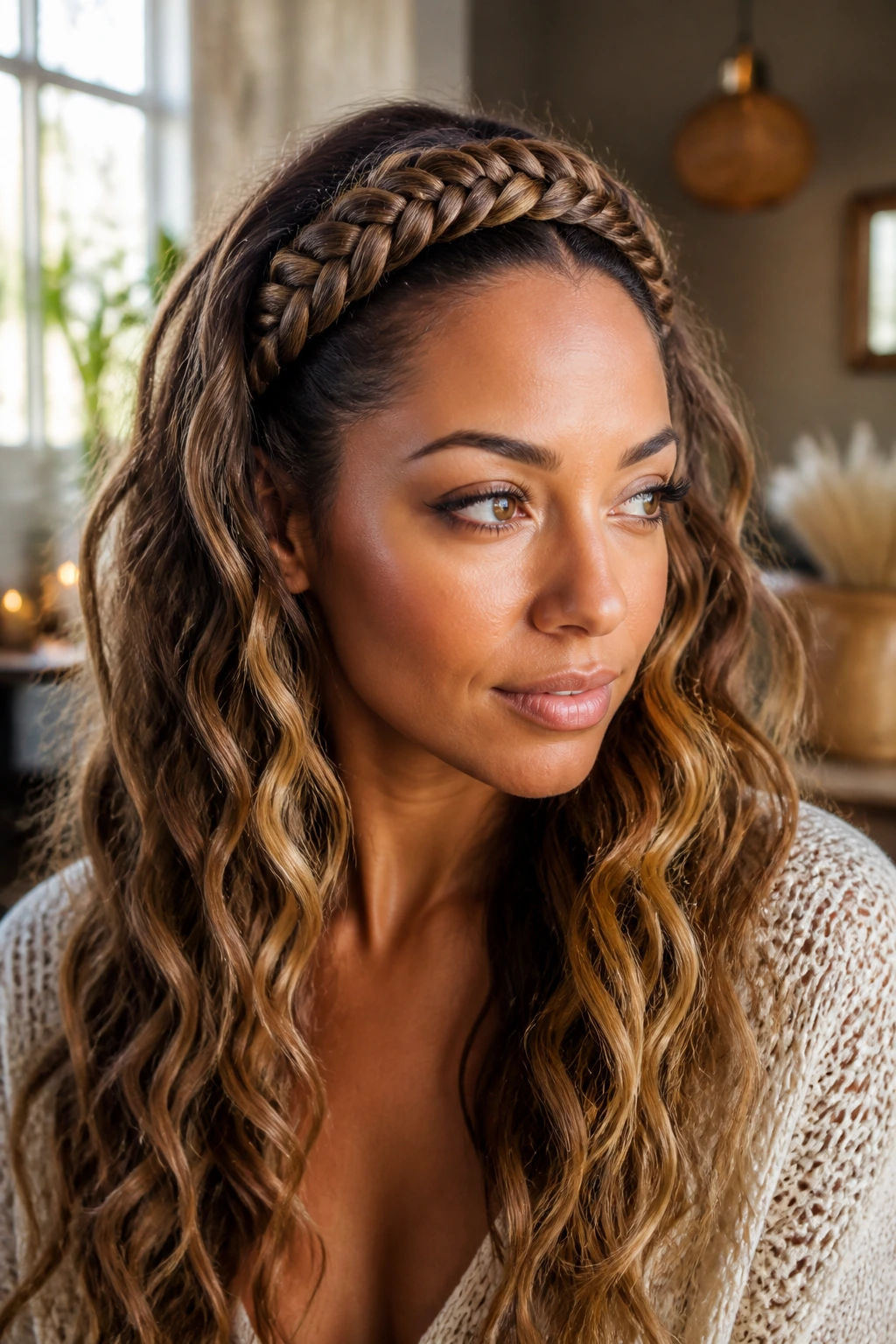
A braided headband is one of those small details that can change an entire hairstyle. It keeps hair off the face, but because the rest of the length stays wavy and loose, it never feels as severe as a full updo. The braid acts like an accessory made from your own hair.
The best version uses a braid that’s wide enough to show from across the room but not so chunky that it competes with the waves. Keep the rest of the length in loose bends, and don’t brush them out too far. Finger separation is enough. Brushing kills the shape.
This works especially well when:
- You want your forehead clear
- You like earrings or a strong neckline
- You need the front secured without pulling all the hair back
- You want a style that sits between casual and dressed up
A few crossed bobby pins under the braid make a huge difference in how long it stays put.
19. Four-Strand Crown with Messy Texture
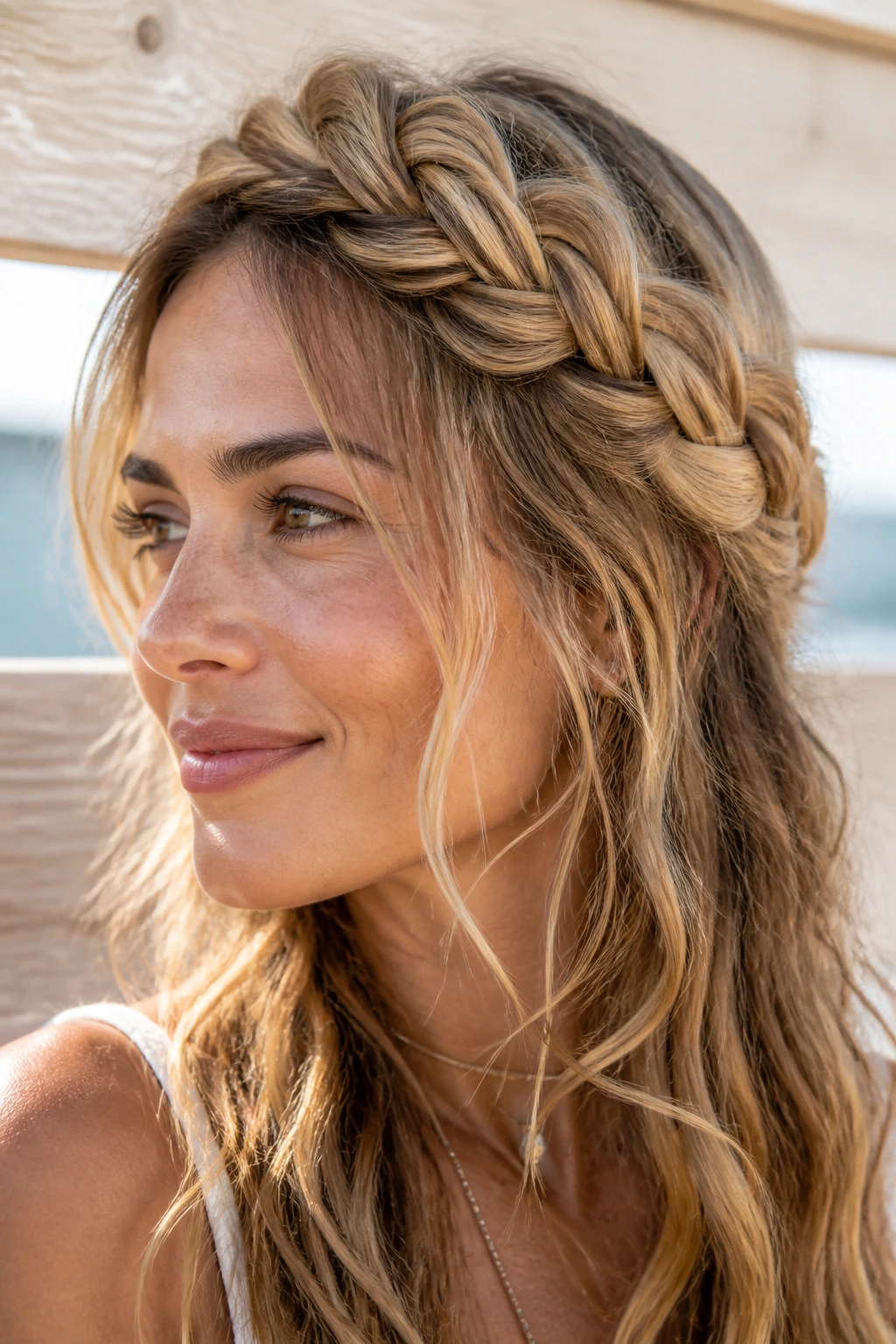
A four-strand braid has more visible pattern than a three-strand braid, which makes it a nice choice when you want the braid itself to be the feature. Add messy texture around the crown, and the whole thing gets softer without losing that woven look. It’s one of the more interesting options in the collection because the pattern is obvious even when the style loosens a little.
The extra strand gives the braid a flatter, wider face. That means it shows up well on long hair and stays readable after a full day of wear. I like this version when the braid wraps around the head and the loose pieces fall behind one ear.
Little details that help
- Keep the sections equal at the start
- Pull the braid out only after it’s secured
- Leave a few wisps around the hairline
- Set the ends with a soft wave, not a tight curl
If you’ve never tried a four-strand braid before, this is the version that makes the learning curve feel worth it.
20. Pull-Through Braid with Airy Volume
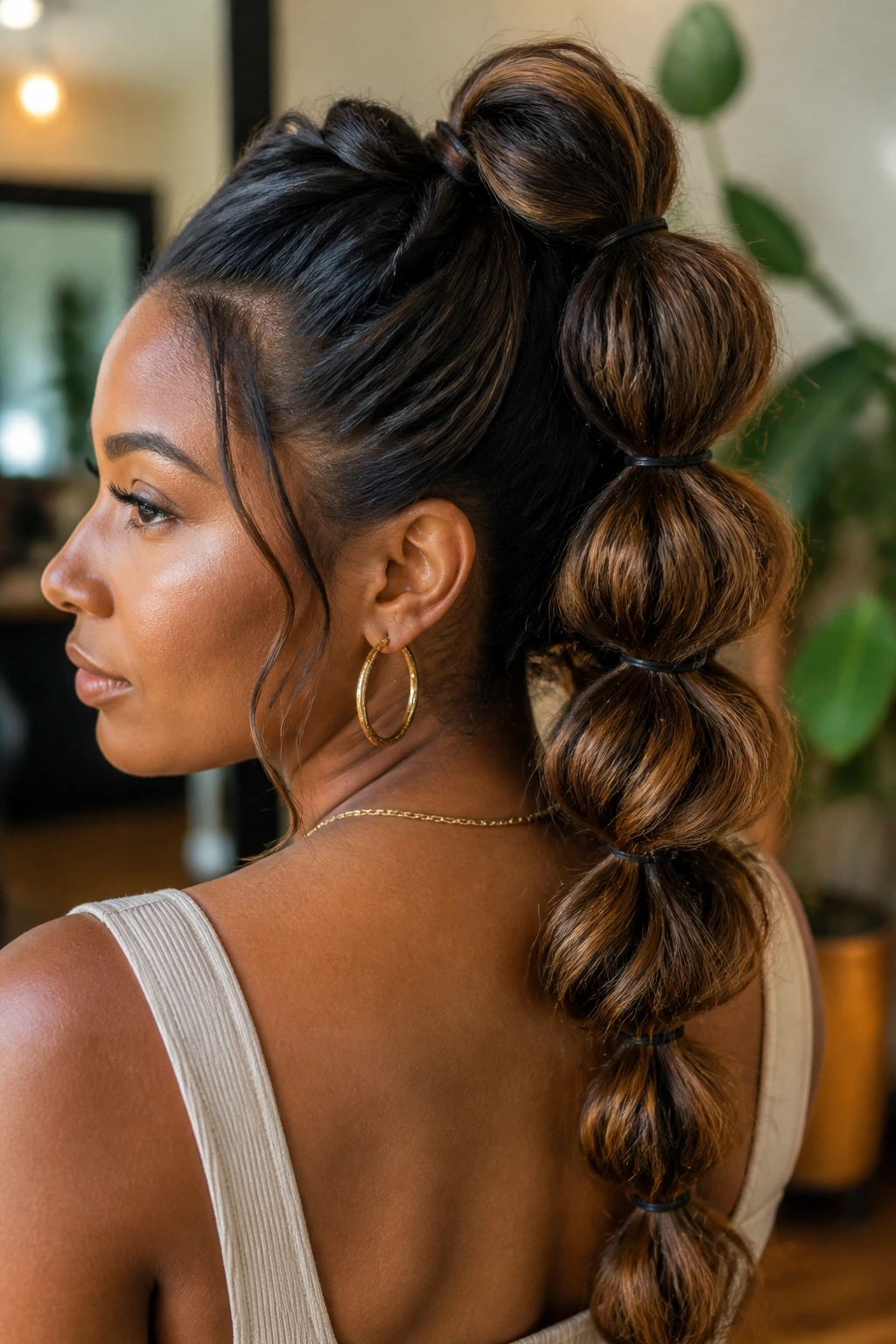
The pull-through braid is a cheat code when you want volume without losing structure. It gives the look of a thick braid by stacking ponytails into sections, which makes it easier to keep the style tidy while still letting the finish feel airy. Add a few soft pull-outs at the crown and ends, and it turns boho fast.
This is one of the best options for hair that doesn’t naturally braid big. The sections fake fullness in a way that looks intentional, not padded. Just keep the elastics small and hidden. Too many visible bands ruin the illusion.
Best for:
- Long hair that needs volume
- Event styles that still have movement
- People who like a fuller braid without heavy tension
- Hair that falls flat in traditional braids
The shape survives movement well, which is why it’s a favorite for long wear.
21. Zigzag Part Braids with S-Wave Finish
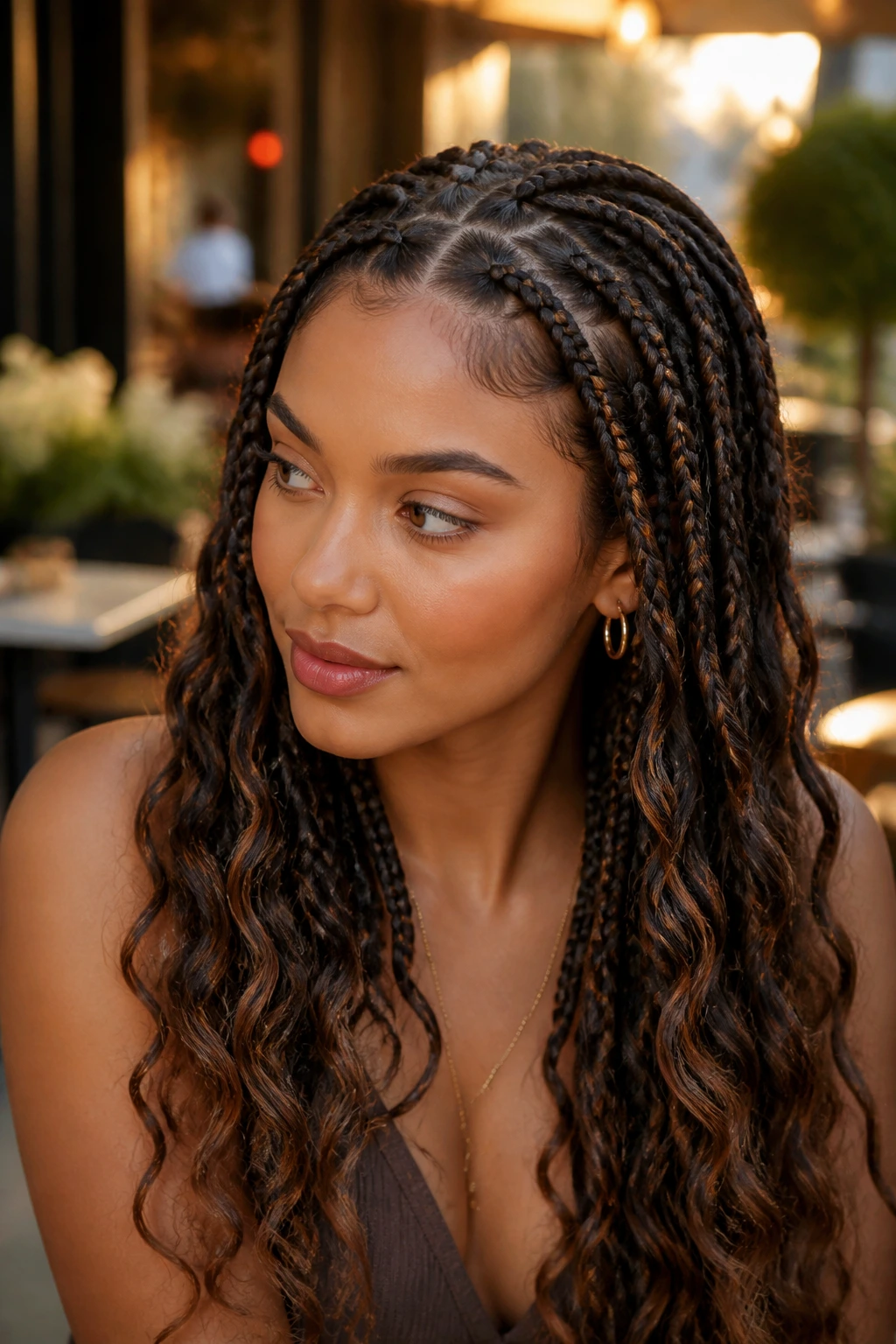
A zigzag part changes the mood immediately. The style stops feeling plain and starts looking hand-made in a good way. Paired with soft S-waves at the lengths, it becomes one of those styles that looks more detailed than the actual braid count suggests.
The zigzag works best when the part is crisp at the scalp and the rest of the texture stays loose. If the waves start too high, the whole thing gets busy. Keep the first inch clean, then let the softness take over lower down. That keeps the braid pattern visible and helps the style last longer because the roots have less friction.
This version is smart on:
- Hair that needs a little personality without a full design
- Styles with medium-length braids
- People who want the part itself to do some of the talking
A rat-tail comb and a steady hand matter more here than fancy products do.
22. Low Milkmaid Braids with Loose Curl Ends
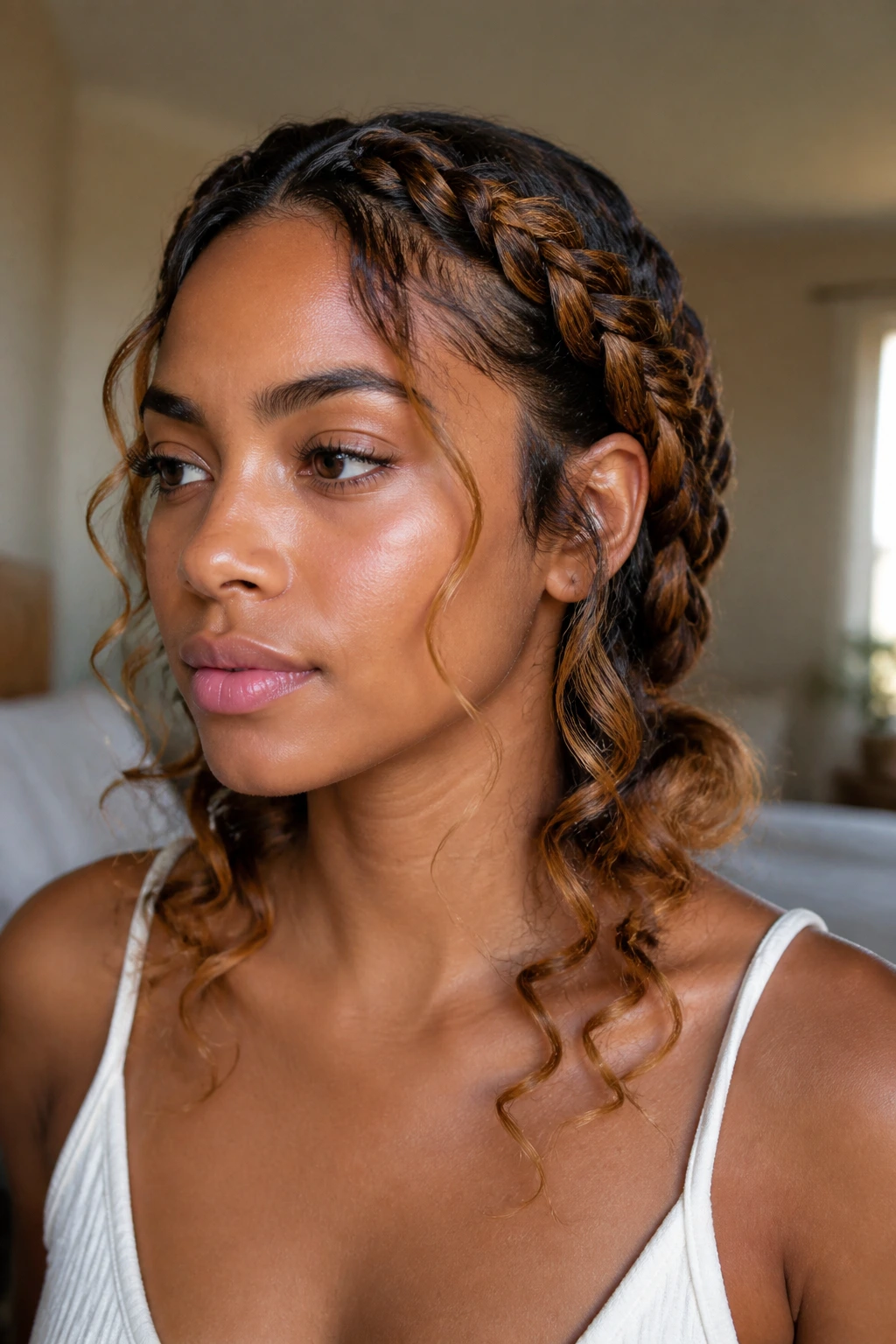
Low milkmaid braids are the quiet finish to the whole collection. They sit lower on the head, stay out of the way, and still leave room for a few loose curl ends to keep the look from becoming plain. This style is especially good when you want something that can survive a full day without needing a mirror every hour.
The low placement keeps the style grounded. The loose ends keep it from feeling old-fashioned. If you want the braids to look softer, pancake them a little after pinning so they widen just enough to feel relaxed. Don’t overdo it. Too much widening makes the pins work overtime.
A good match if:
- You like a softer silhouette at the nape
- Your hair is thick and needs control
- You want a braid that feels calm rather than showy
- You need the style to sit well under a coat collar or scarf
The loose curl ends can be refreshed with a wand twist on day two or three if they start to sag.
What Makes Boho Braids Hold Their Shape Better Than They Look
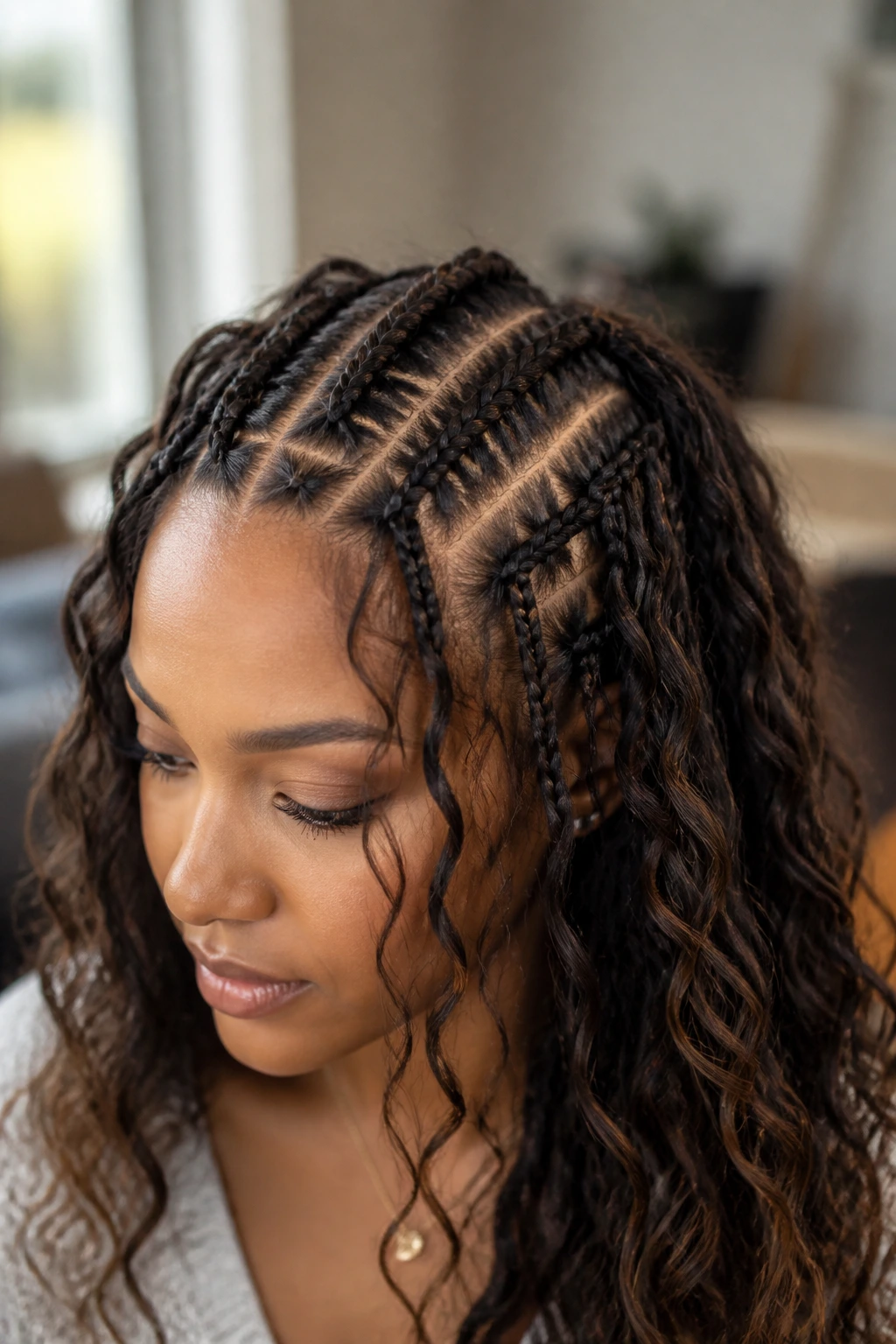
The styles people call boho are often held together by more structure than they admit. A soft braid with beachy waves can look relaxed and still be built on a firm, well-sectioned base. That base matters. If the first inch is sloppy, the style starts sliding. If the first inch is too tight, you’ll feel it in your scalp before you make it out the door.
The best long-wearing versions use tension where it helps and softness where it counts. That usually means a clean part, a secure anchor at the root, and loose texture only after the braid has something solid to stand on. I’m picky about this because it’s the difference between a style that grows prettier and one that just gets fuzzy.
Where the hold comes from
- Braids that start with neat, even sections
- Wave pieces that are added on purpose, not by accident
- Product used lightly at the roots and more generously on the ends
- Night protection that keeps the texture from getting crushed
A little planning beats a lot of fixing. Every time.
Essential Tools for These Looks
-
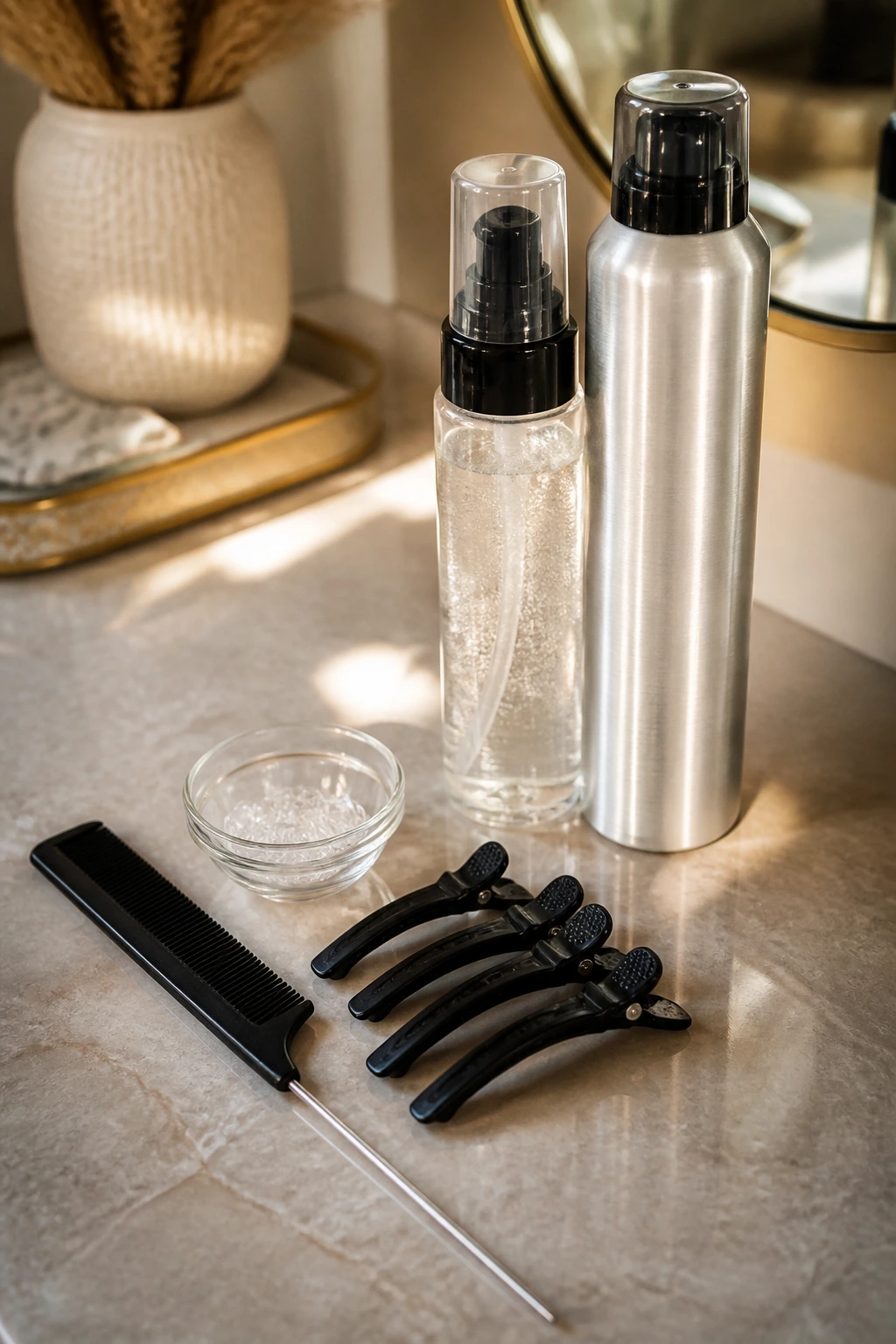
Rat-tail comb: clean parts and sharper sectioning, especially for crown styles and zigzag parts.
-
Sectioning clips: keep hair out of the way while you braid; metal clips grip better than flimsy plastic ones.
-
Small clear elastics: useful for pull-through braids, bubble braids, and quick half-up styles.
-
Lightweight mousse: adds shape and grip without making the roots greasy or stiff.
-
Flexible-hold hairspray: keeps loose waves from puffing up without turning them crunchy.
-
Edge brush: helps smooth the hairline on styles that leave the front visible.
-
Silk scarf or bonnet: protects the style overnight and keeps the part lines from looking worn.
-
Pre-stretched braiding hair: handy for knotless, feed-in, or goddess styles because it reduces bulk at the root.
-
1-inch curling wand or iron: best for the loose pieces, face-framing strands, and spiral ends.
-
Bobby pins and U-pins: good for halos, milkmaid braids, and low buns that need hidden support.
Choosing Hair, Extensions, and Wave Patterns That Match the Style
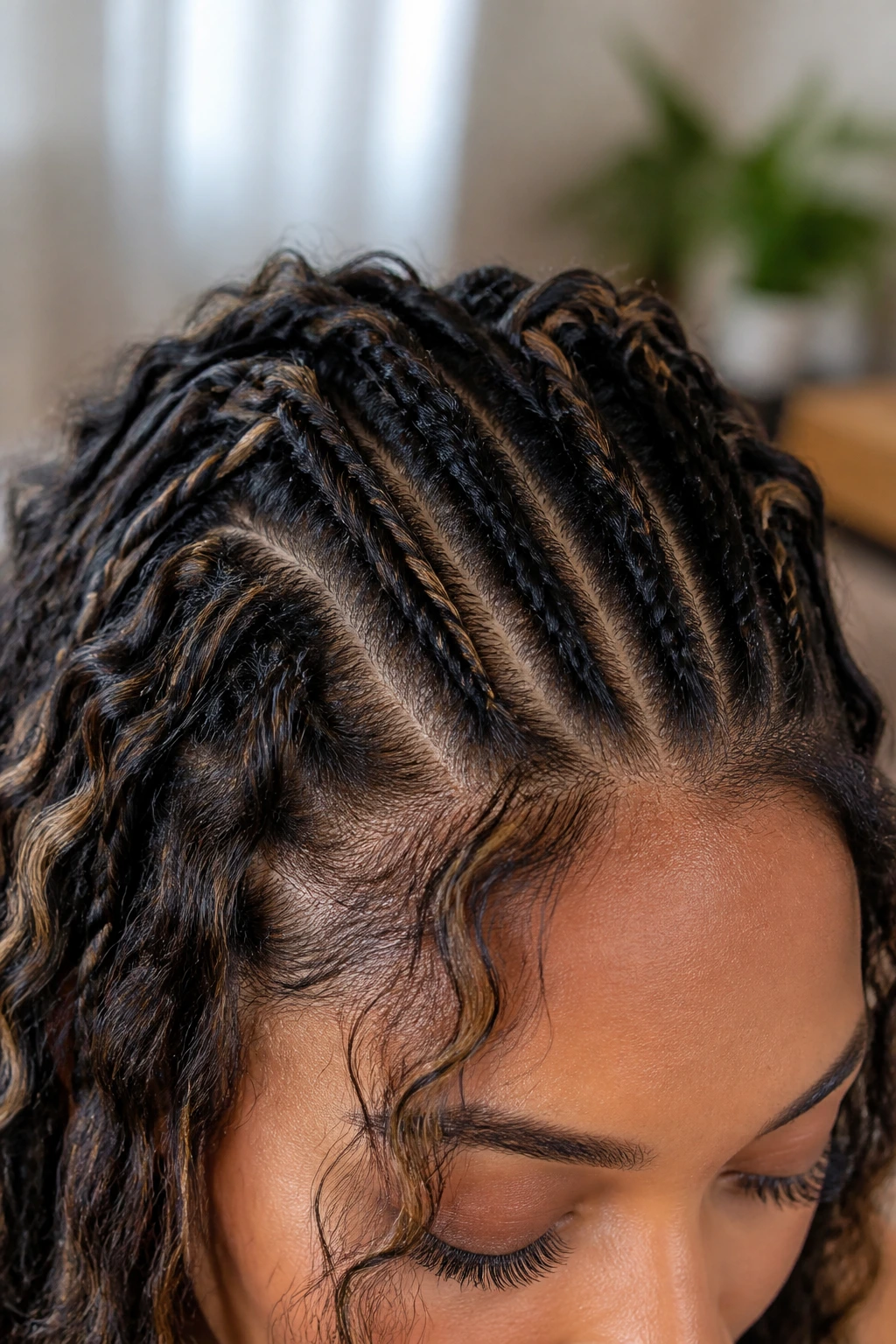
A boho braid is only as good as the texture you feed into it. Silky hair that slips out of every section needs more grip than coarse or coily hair does, so the product and extension choice should change with the texture. If your hair is fine, pre-stretched braiding hair with a slightly rough finish usually behaves better than glossy synthetic hair that slides around like ribbon.
For the loose waves, the best blend often depends on how much of the hair is visible. If the pieces are tucked into a braid and only the ends show, heat-resistant synthetic hair can work fine. If the waves are going to sit around the face or hang over the shoulder, human hair or better-quality fiber usually moves more naturally and tangles less at the ends.
A few rules that save headaches
- Match extension texture to your own hair’s grip level
- Pick a curl pattern one step looser than you think you need; tight curls frizz faster
- Don’t mix ultra-slick hair with very dry natural hair unless you’ve prepped both sides well
- If you want the style to last, avoid heavy butters at the roots
There’s a reason some braids stay handsome for days and others fall apart before dinner. The material matters.
How to Wear Boho Braids So They Frame the Face Instead of Hiding It
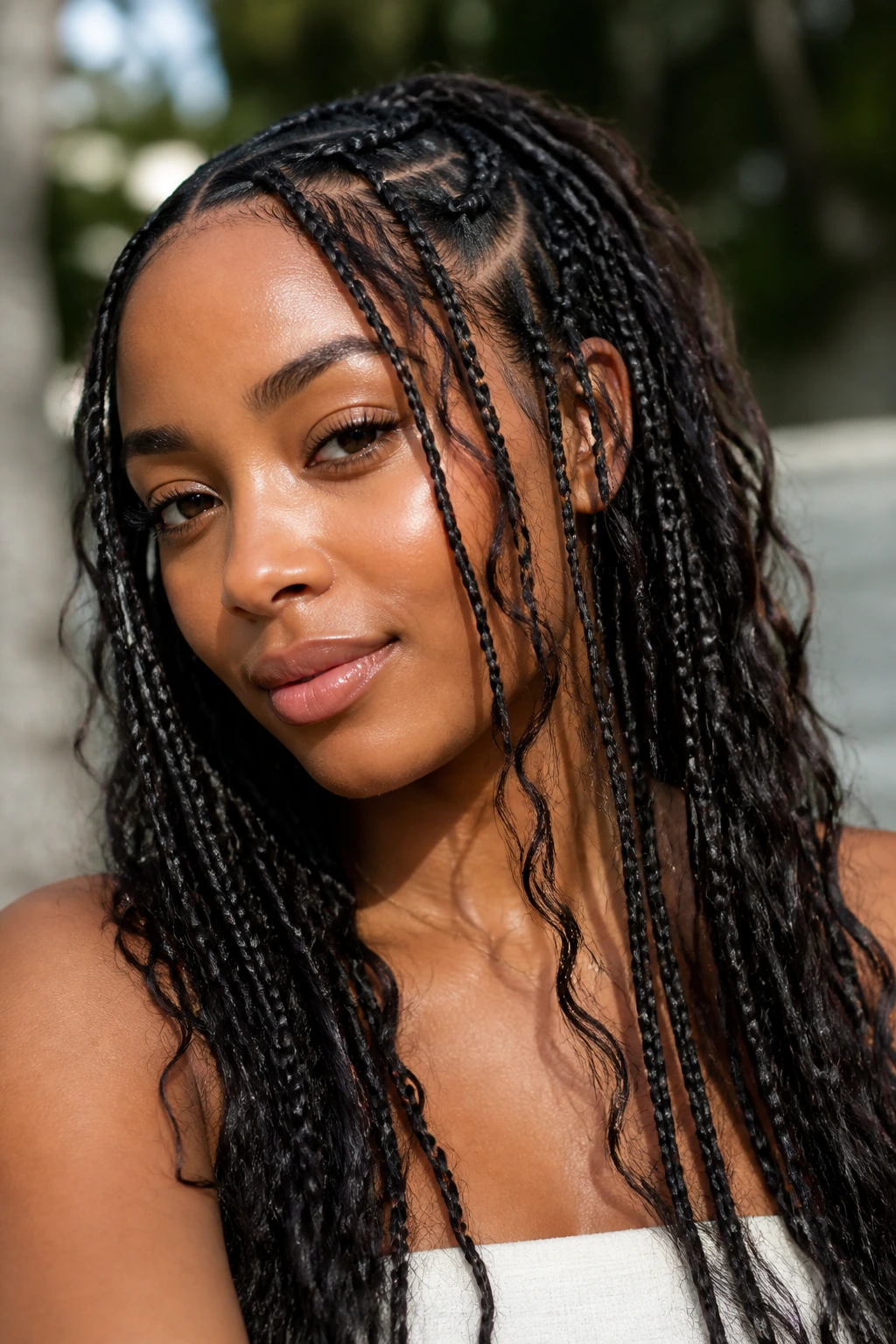
Presentation: keep the braid line visible, but leave enough softness around the temples, cheekbones, or ears so the style doesn’t swallow your face. A clean center part reads modern and calm. A deep side part reads looser and a little more dramatic.
Accessories: small gold cuffs, a few beads, or a narrow ribbon are enough. You do not need to load the head with extras for the style to land. One or two pieces placed near the front usually look better than a pile of decoration at the ends.
Outfit Pairing: these braids sit well with open necklines, denim jackets, ribbed tanks, simple dresses, and anything with a visible collarbone. The braid already brings texture, so you can keep the rest of the outfit plain if you want the hair to carry the look.
Wear Time: some styles here are all-day, some are better for a few days, and the more protective versions can stretch well beyond that if the scalp stays happy. Choose based on how much work you want the style to do for you.
Additional Tips for Grip, Shine, and Movement
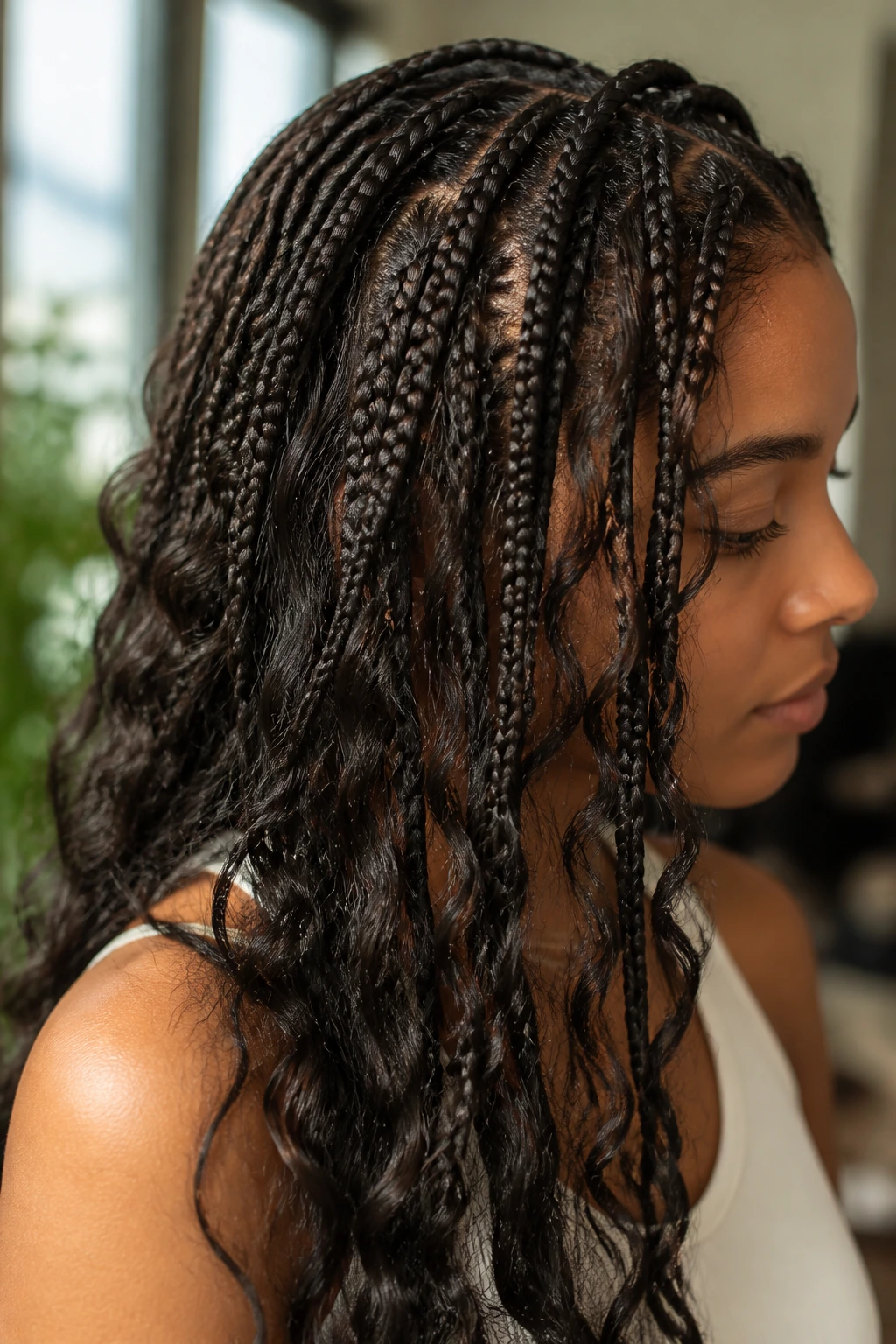
Grip Boost: mist the roots with a light mousse or setting foam before you braid, then let the hair dry until it feels tacky, not wet. That little bit of hold makes a slippery section much easier to control.
Wave Softening: if the loose pieces come out too tight, pull them once with your fingers while they’re still warm from the wand. Don’t brush them out. A brush turns beachy into puffy faster than people expect.
Shine Without Slip: use a drop of light oil on the braid lengths only, not at the scalp. The roots need control. The ends can take a little gloss.
Movement Trick: if the style looks too stiff, tug gently at the outer edges of the braid once it’s secured. Pancaking the braid a touch gives the whole thing a softer, fuller line.
Common Ways Boho Braids Lose Their Shape
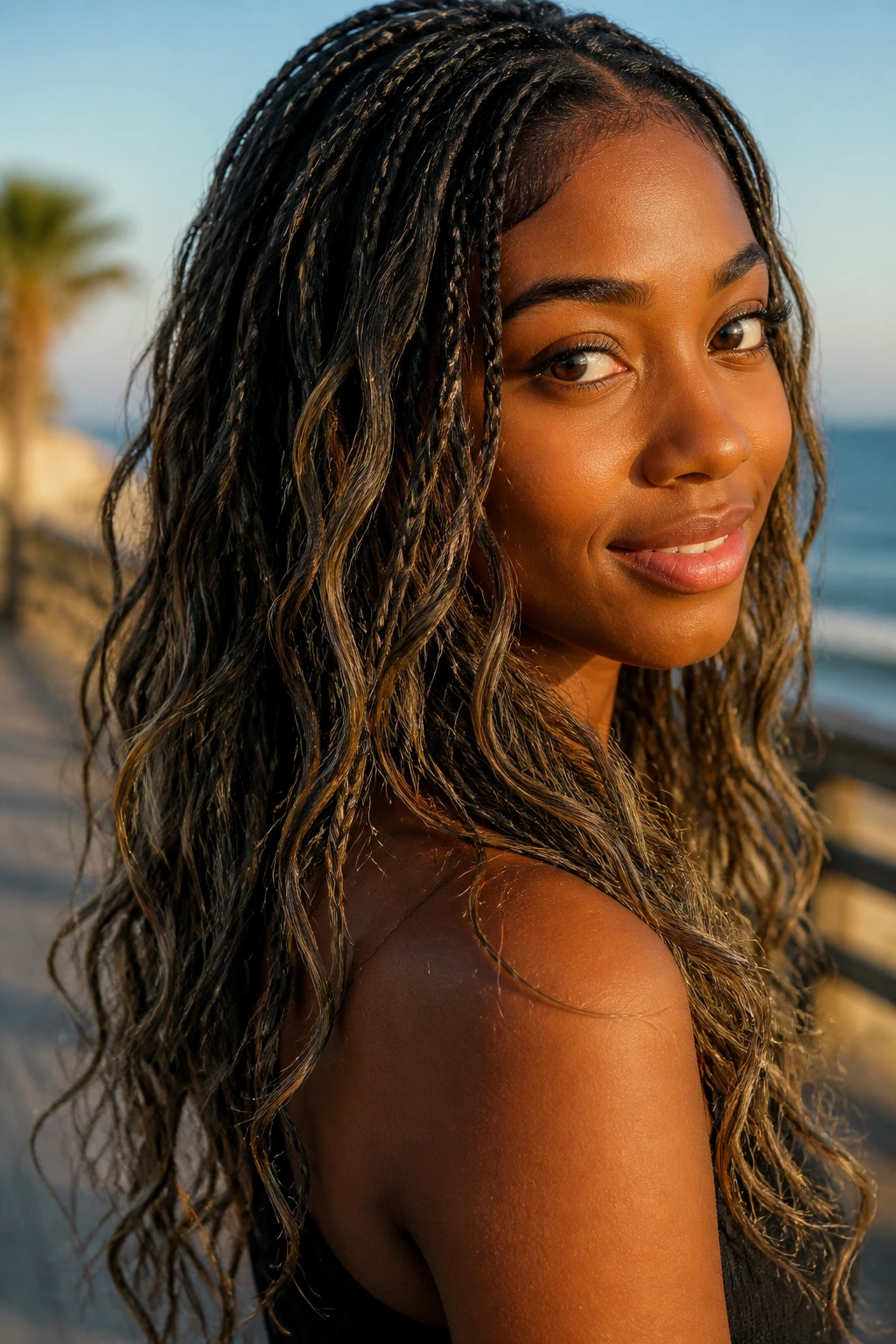
The first mistake is too much tension at the hairline. The symptoms are obvious: a sore scalp, tiny bumps, and braids that feel like they’re pulling whenever you move your head. The fix is medium tension at the front and a firmer anchor only where the braid needs support.
The second mistake is leaving too much loose hair at the crown. That can look romantic for about twenty minutes, then it turns fuzzy. Keep the leave-out intentional and small. If you want softness, curl a piece on purpose instead of relying on accidental frizz.
The third mistake is loading on heavy cream near the roots. The braids get slippery, the parting gets dull, and the style starts sliding. Put richer products on the lengths or ends, not at the scalp.
The fourth is sleeping on the style while it’s still damp. That’s how waves flatten, roots swell, and the whole thing picks up that stale, half-dry smell nobody wants. Dry it properly before bed. No shortcuts there.
Ways to Adapt the Look for Different Hair Types
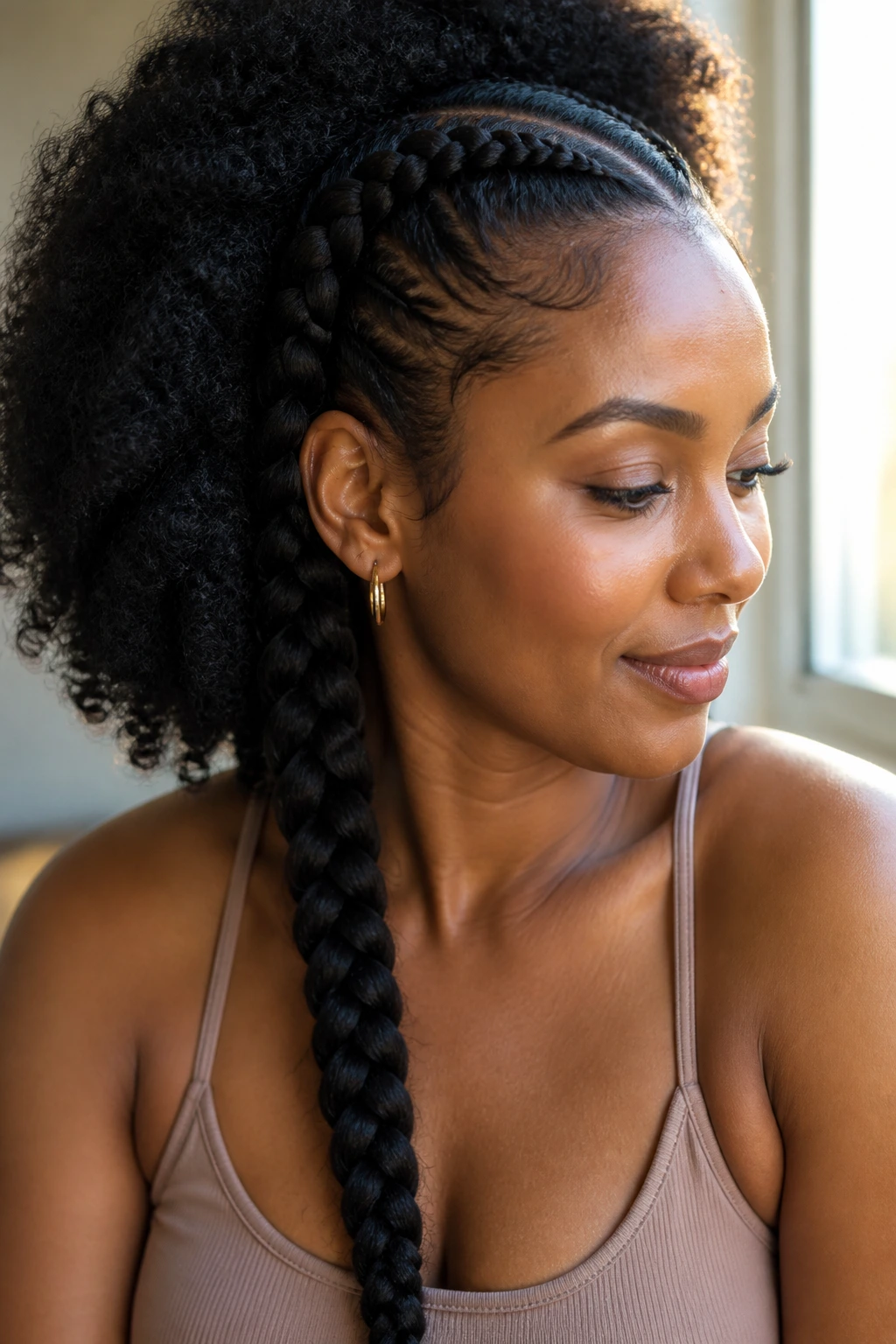
Fine-Hair Version: keep the braids smaller, use mousse for grip, and choose slightly rougher extension hair if you’re adding length. Fine hair usually benefits from less leave-out, not more, because the loose pieces can get stringy fast.
Thick-Coil Version: work in larger sections and choose styles with clean anchors, like feed-ins, knotless braids, or low milkmaid braids. Thick hair gives you density, but it also needs room, so keep the parts neat and don’t overpack the braid with extra wave pieces.
Heat-Free Wave Version: braid damp hair overnight or use flexi rods on the ends instead of a curling wand. The finish is softer and a little less uniform, which can actually help the boho feel.
Low-Tension Protective Version: choose knotless, Fulani, or goddess styles with fewer loose pieces near the front. That keeps the style gentler on the scalp while still giving you the airy texture people want.
Keeping Boho Braids Fresh Overnight and Through the Week
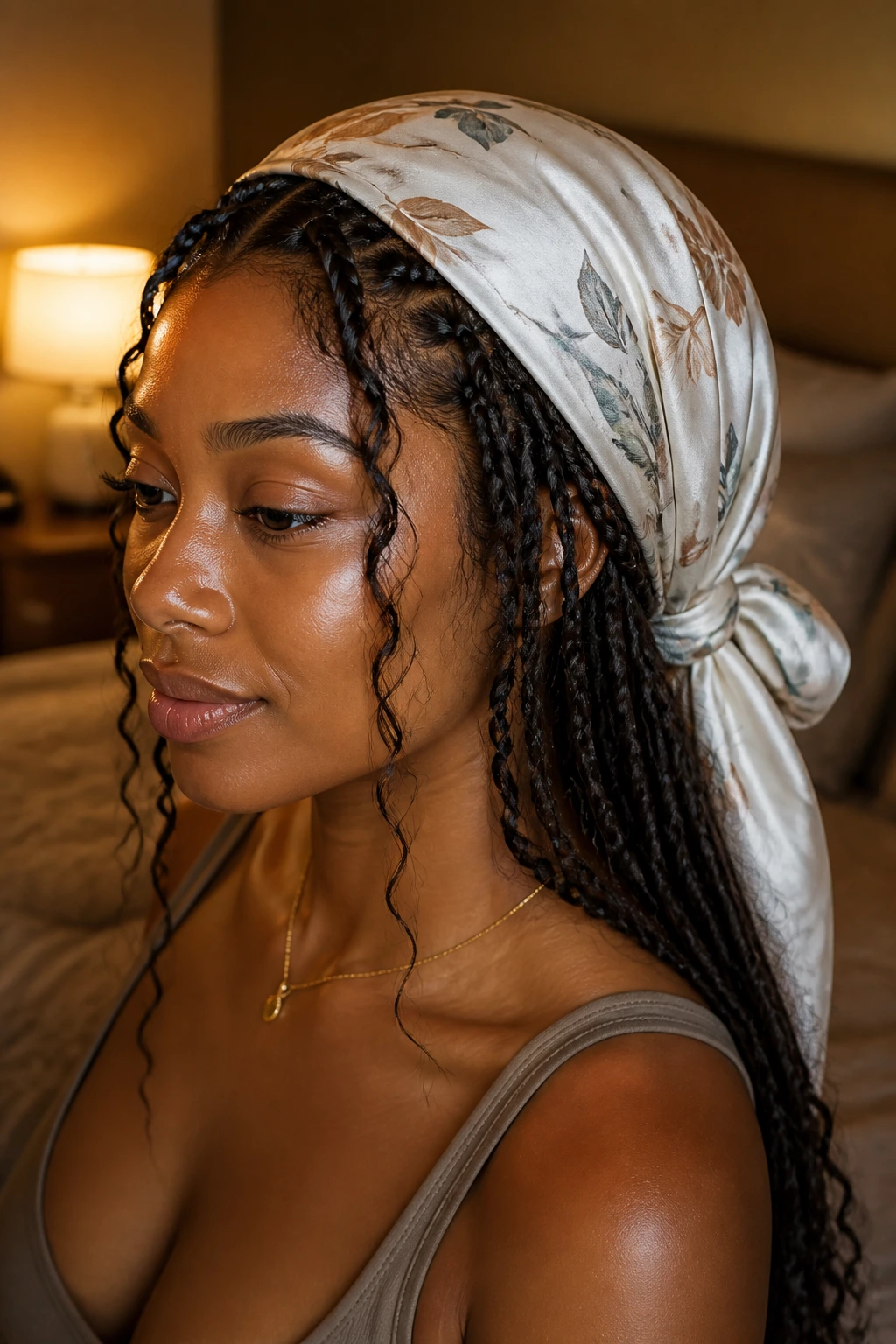
The first night matters more than the fifth. Wrap the hair in a silk scarf or slip on a bonnet, then pile the loose pieces loosely so they don’t get crushed under your pillow. If you’ve got wavy ends, let them hang in the scarf instead of folding them into a tight knot. That keeps the bend from setting in a weird angle.
For styles you’re wearing several days, refresh the loose pieces with a tiny amount of mousse or a water-and-conditioner spray on the mid-lengths only. Don’t soak the roots. If the scalp needs a clean-up, use a cotton pad or applicator bottle with a diluted cleanser along the part lines. Keep it light.
Most knotless, feed-in, or goddess versions can go a few weeks if the scalp stays comfortable and the parts stay clean. Looser halo, waterfall, and crown styles are more of a short-run piece; they look best when worn, refreshed once, and then taken down before they lose their shape. The style should end looking like you chose it, not like it gave up.
Questions People Ask Before Booking or Braiding at Home
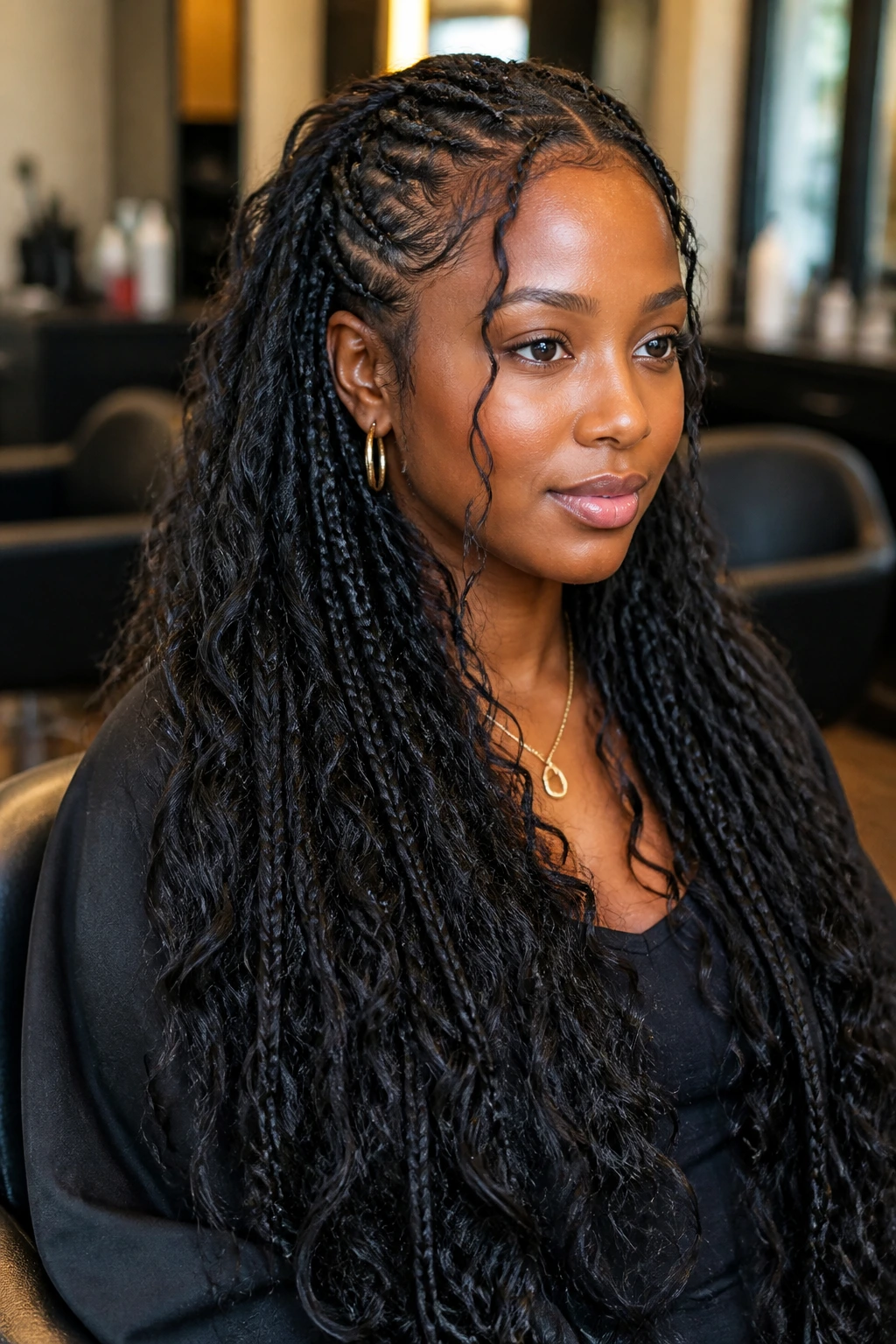
How long do boho braids usually last?
The answer depends on the base. A halo braid or waterfall style might look best for one to three days, while knotless, feed-in, or goddess versions can last much longer if the scalp stays calm and the ends are protected at night.
Are these styles actually protective?
Some are, some are only partially so. The styles that tuck the ends and keep the roots low-tension do a better job of reducing daily manipulation. The ones with lots of loose leave-out are softer and prettier, but they expose more of the hair.
Can I do boho braids on straight or slippery hair?
Yes, but grip matters. Use a light mousse, section carefully, and choose a braid style with a strong anchor. Pre-stretched hair or a slightly textured extension usually helps the braid stay put.
What if the waves frizz after one day?
That usually means the wave pieces were too tight, too brushed, or too overloaded with product. Finger-separate them instead of brushing, then refresh with a little mousse and a quick twirl around a wand if needed.
Can I wash the style?
You can clean the scalp and the exposed parts, but don’t drench the whole thing unless the style is made for that. A diluted cleanser on the roots and a careful rinse is usually enough.
What’s the easiest style for beginners?
Accent braids on loose beach waves or a half-up boho braid are the easiest to start with. They give you the texture without demanding a full head of braiding skills.
Soft Ends, Strong Hold
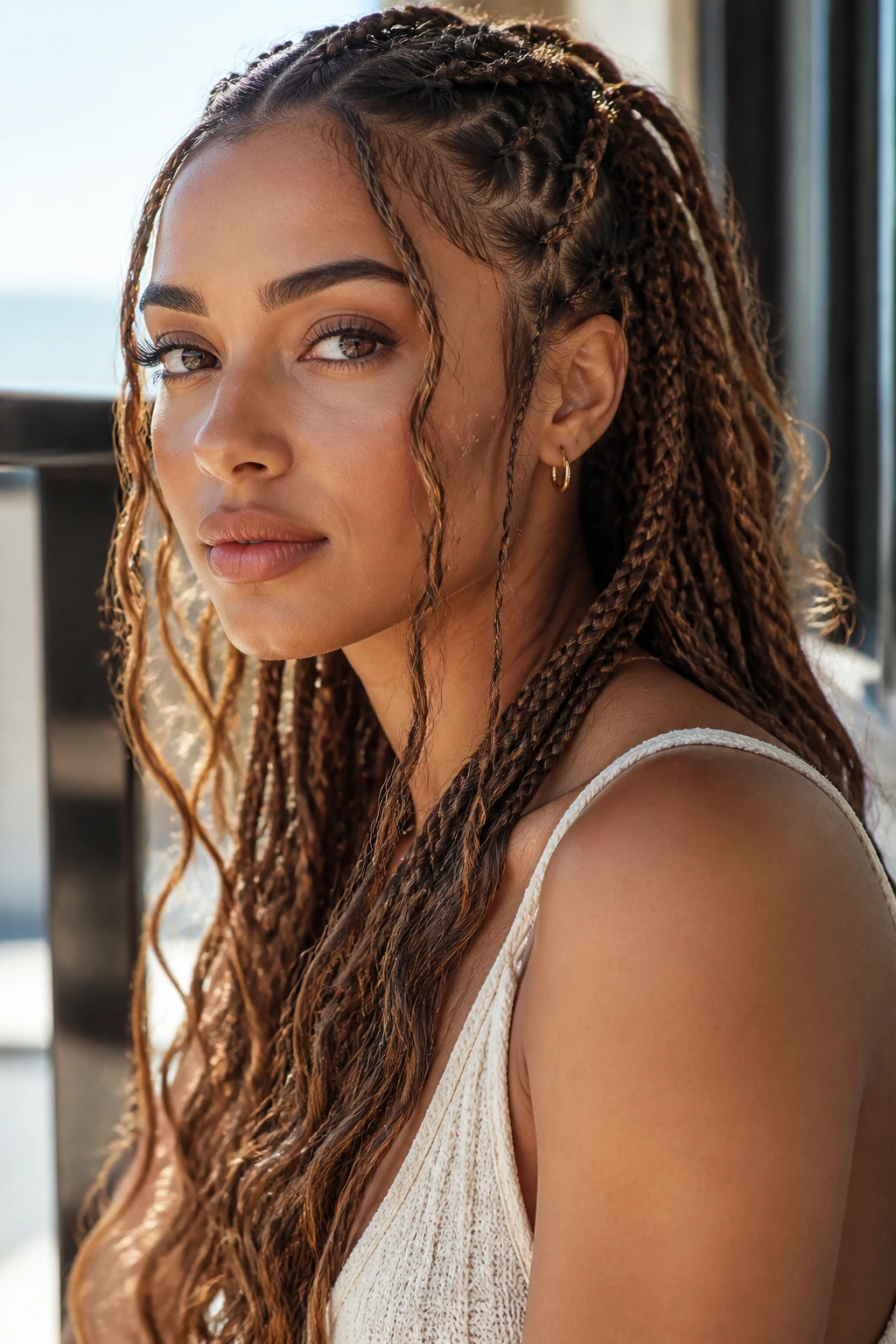
The best boho braid is the one that looks a little relaxed and still survives real life. It should hold its shape when you’re moving around, keep the hairline comfortable, and leave enough texture in the front or ends to make the style feel alive. That balance is the whole point. Without it, you just have a braid. With it, you get something that carries for days.
Pick the version that matches your hair’s grip, how much time you want to spend at night, and how much softness you want near the face. The right style doesn’t need to shout. It just needs to stay put, move well, and look better when the loose waves settle in.