



Brown ombre for medium skin tones with curtain bangs can go muddy fast if the shade family is off by even half a level. Too little contrast and the color sinks into the base. Too much lift and the ends start shouting for attention while the bangs sit there looking like an afterthought.
The good versions are warmer in the right places, cooler where the skin needs balance, and soft enough around the face to make the whole cut feel intentional. Curtain bangs matter more than people think. They don’t just “go with” the color; they change how the color lands, because that split at the forehead and the soft sweep at the cheekbones break up a heavy block of brown.
Medium skin gives you room to play. Golden, olive, neutral, even slightly rosy undertones can all wear brown ombre well — but not the same brown, and not the same brightness. That’s where the interesting part lives. The right placement, the right lift, and a curtain bang that starts at the right point can make a basic brunette look layered and alive instead of flat and safe.
Why This Shade Family Works So Well
-
Warmth stays believable: Brown ombre lets you move from deep roots to lighter ends without jumping into blond territory that can turn brassy or washed out on medium skin.
-
Curtain bangs soften the contrast: The bangs break up the forehead area and keep the transition from root to lighter pieces from feeling blocky.
-
The shade can match your undertone: Honey, caramel, chestnut, mushroom, mocha, and toffee all live in the same family, but each one plays differently on warm, cool, and olive medium skin.
-
Grow-out is kinder: A rooted brown ombre doesn’t scream for a touch-up the way all-over lighter color does, especially if the lighter ends stay two to three levels above the base.
-
Texture matters here: Loose bends, not poker-straight hair, show off the color ribbons and make the curtain bangs fall in a way that frames the face instead of sitting on it.
1. Caramel Ribbon Brown Ombre
Caramel ribbon brown ombre is the first look I’d hand to someone who wants lightness without losing the depth that makes medium skin look grounded. The roots stay a rich brunette, then caramel ribbons thread through the mid-lengths and soften toward the ends. On wavy hair, the color catches in little strips instead of one flat fade, which is exactly why it looks alive.
What makes it work
The caramel keeps the warmth in check. Medium skin with golden or peachy undertones gets a little glow from it, and the curtain bangs can stay one shade deeper so the face frame doesn’t turn blunt. Ask for a root at level 5 and ribbons that lift into level 7 caramel, not pale gold.
Best for: medium skin that leans warm or neutral.
Texture match: loose waves, blowouts, or a soft bend with a 1.25-inch iron.
Watch for: ends that lift too much and turn orange if the hair has been dyed before.
2. Mocha Melt with Feathered Curtain Bangs
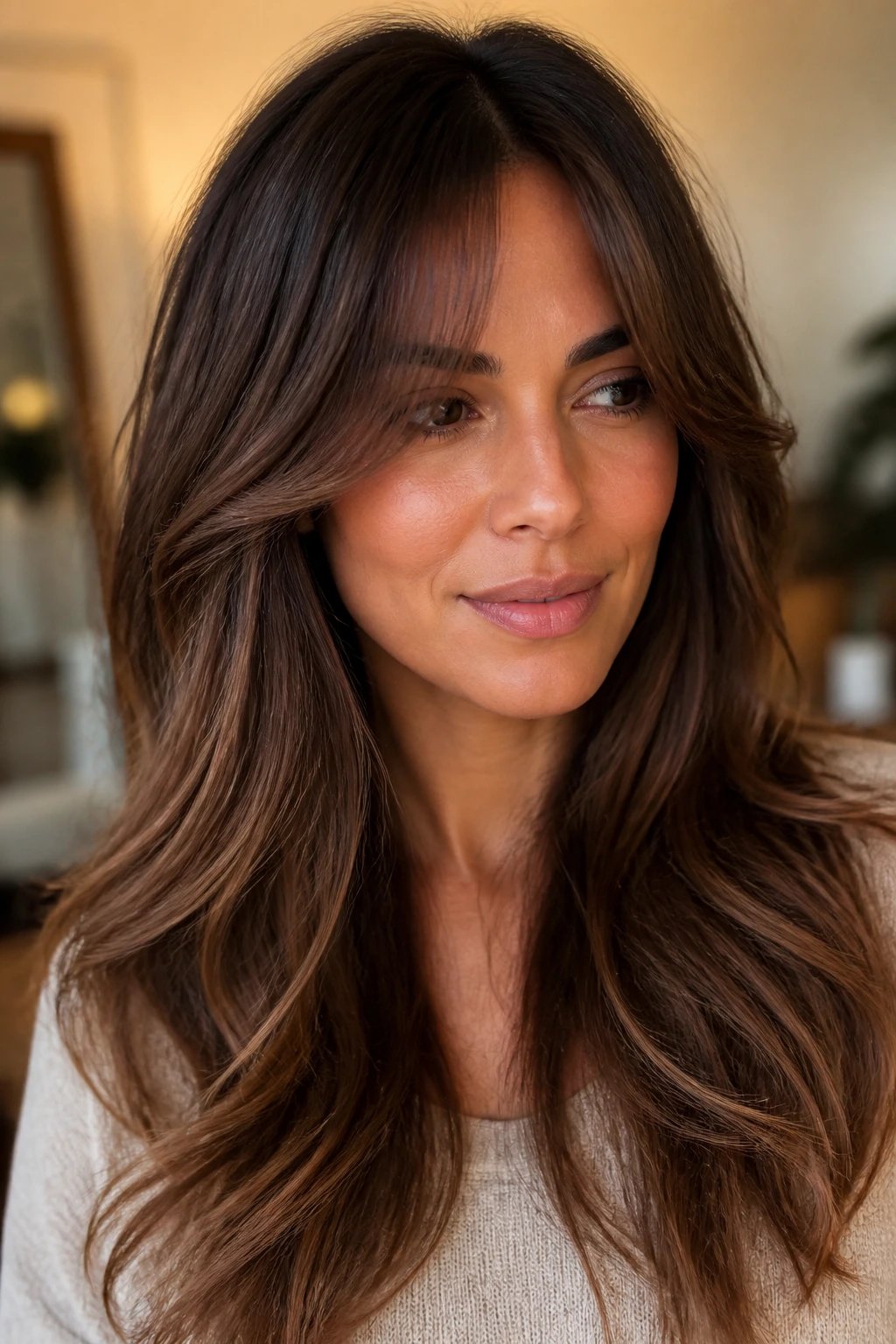
Mocha melt is the quiet one in the group, and I mean that as a compliment. It keeps the whole look in the coffee family — deep mocha at the top, a softer milk-chocolate middle, and barely lighter ends that feel blended instead of striped. Feathered curtain bangs give it movement without stealing the show.
This one works because the contrast is low, but the dimension is still there. Medium skin with neutral undertones tends to love this shade because it doesn’t fight the face; it follows it. If your hair is fine, this is a smart pick, since too much lift can make the ends look thin.
Ask for this at the salon
- A mocha base one or two shades lighter than black
- Soft balayage through the mid-lengths, not chunky highlight lines
- Bangs that open at the cheekbone and taper toward the jaw
3. Chestnut-to-Honey Ombre
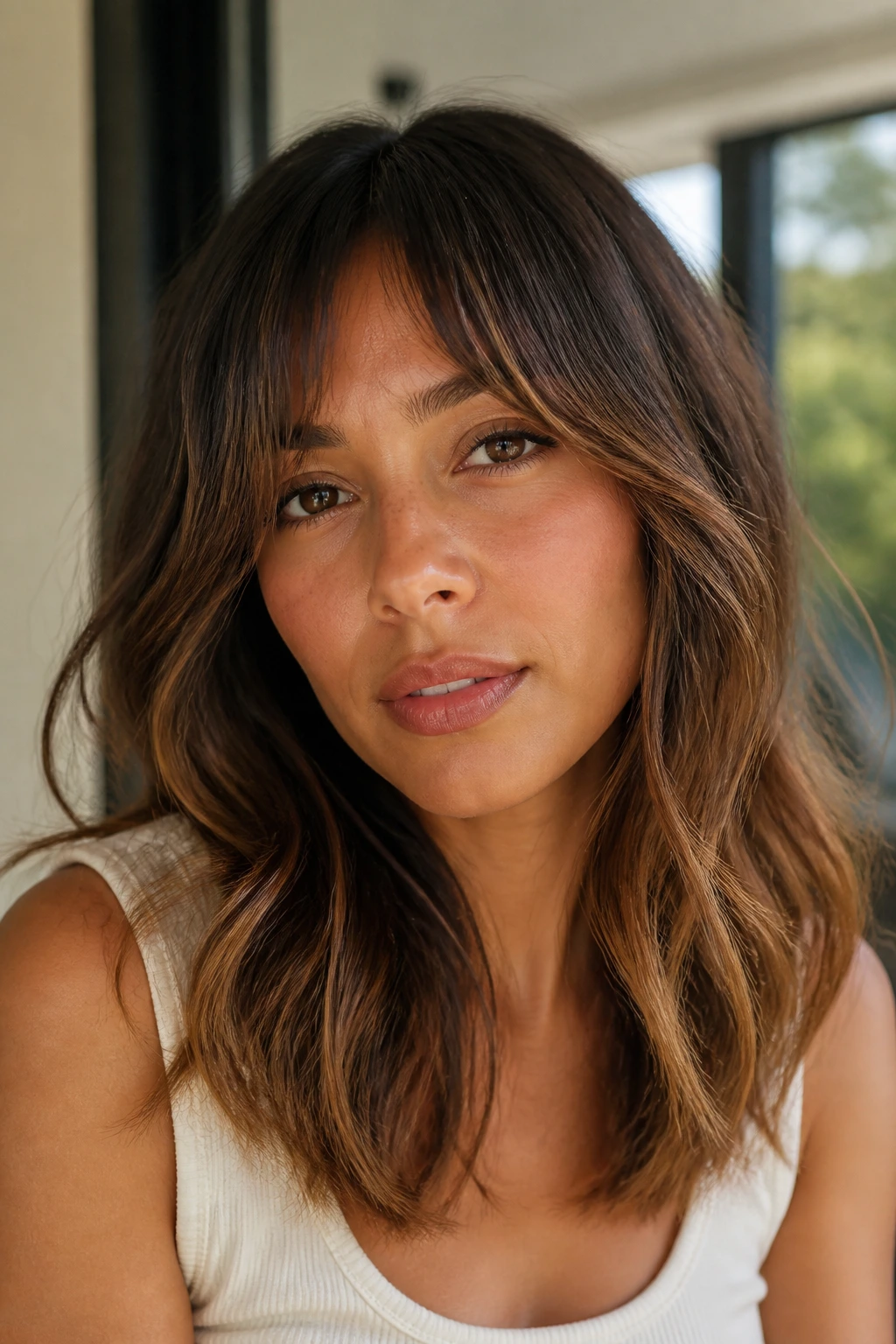
Chestnut-to-honey ombre is warmer and brighter, but it still keeps its shape. The chestnut root gives the hair weight, then honey shows up in the lower half like sunlight caught in fabric. On medium skin, especially skin with golden undertones, the honey ends can make the whole face look less shadowed around the mouth and chin.
The trick is not going too pale. Honey should read as honey, not yellow-blond. If the ends go too light, the contrast starts to look detached from the root and the curtain bangs lose their soft role. Keep the bangs just a touch deeper than the brightest ends, and the whole cut stays cohesive.
A shoulder-length cut loves this shade. So does longer hair with a slight bend, because the honey pieces need a curve to show properly.
4. Espresso Roots and Cinnamon Ends
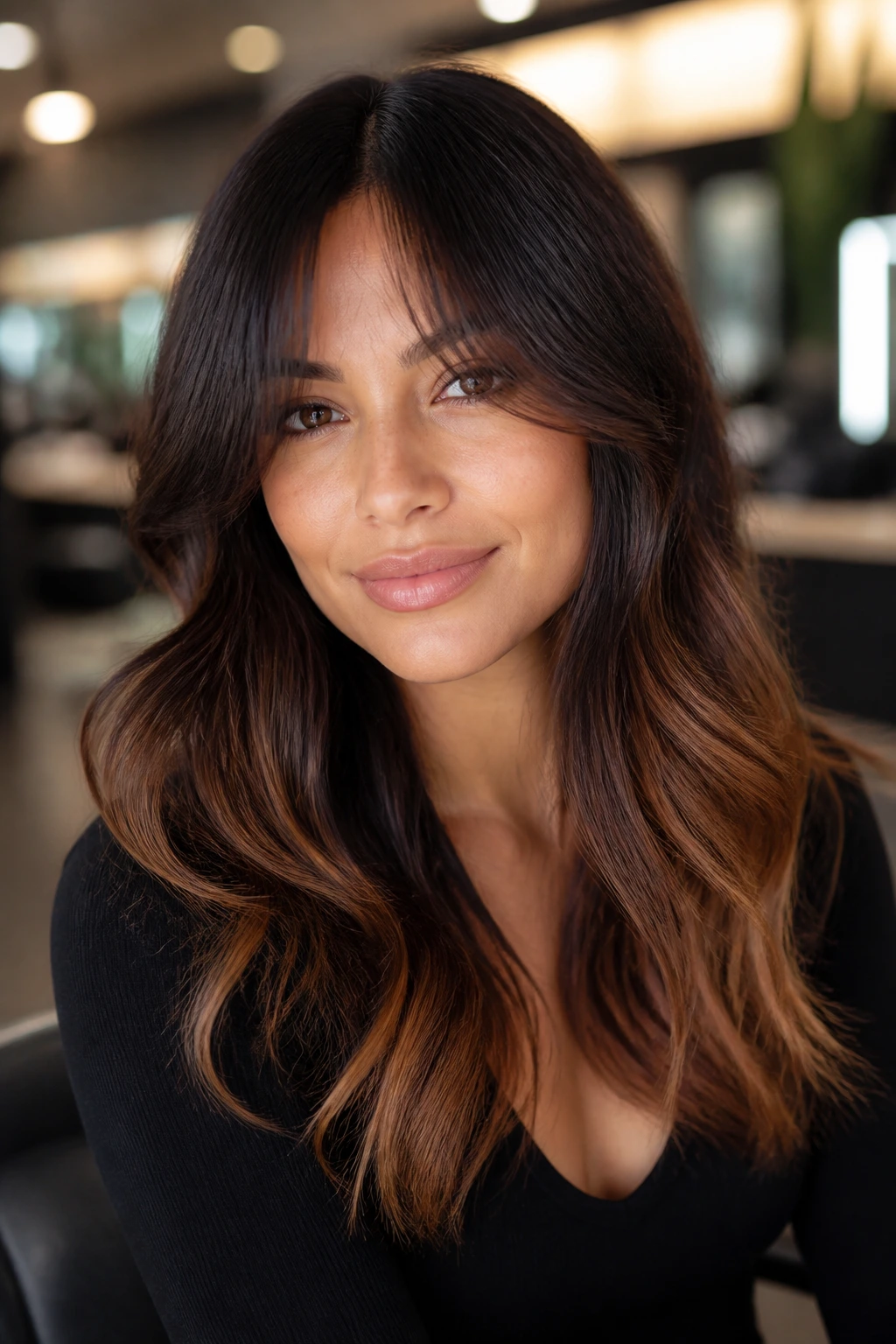
Espresso roots with cinnamon ends have a little heat, which is exactly why they can look so good on medium skin that needs warmth but not orange. The root stays dark and glossy, then the lower half picks up a cinnamon tint that feels spicy rather than coppery. It’s bolder than caramel, less expected than honey.
This one needs restraint. Cinnamon can turn loud if it’s pushed too red, and that’s where people miss. You want a brown-red, not a red-brown. Curtain bangs should stay softly textured, because a blunt bang in this color combo can make the face look heavier than it really is.
How to wear it
Let the bangs skim the brow and blow them away from the face with a round brush. A little root lift at the crown helps keep the espresso from feeling too dense, especially if your hair is thick.
5. Mushroom Brown Contour
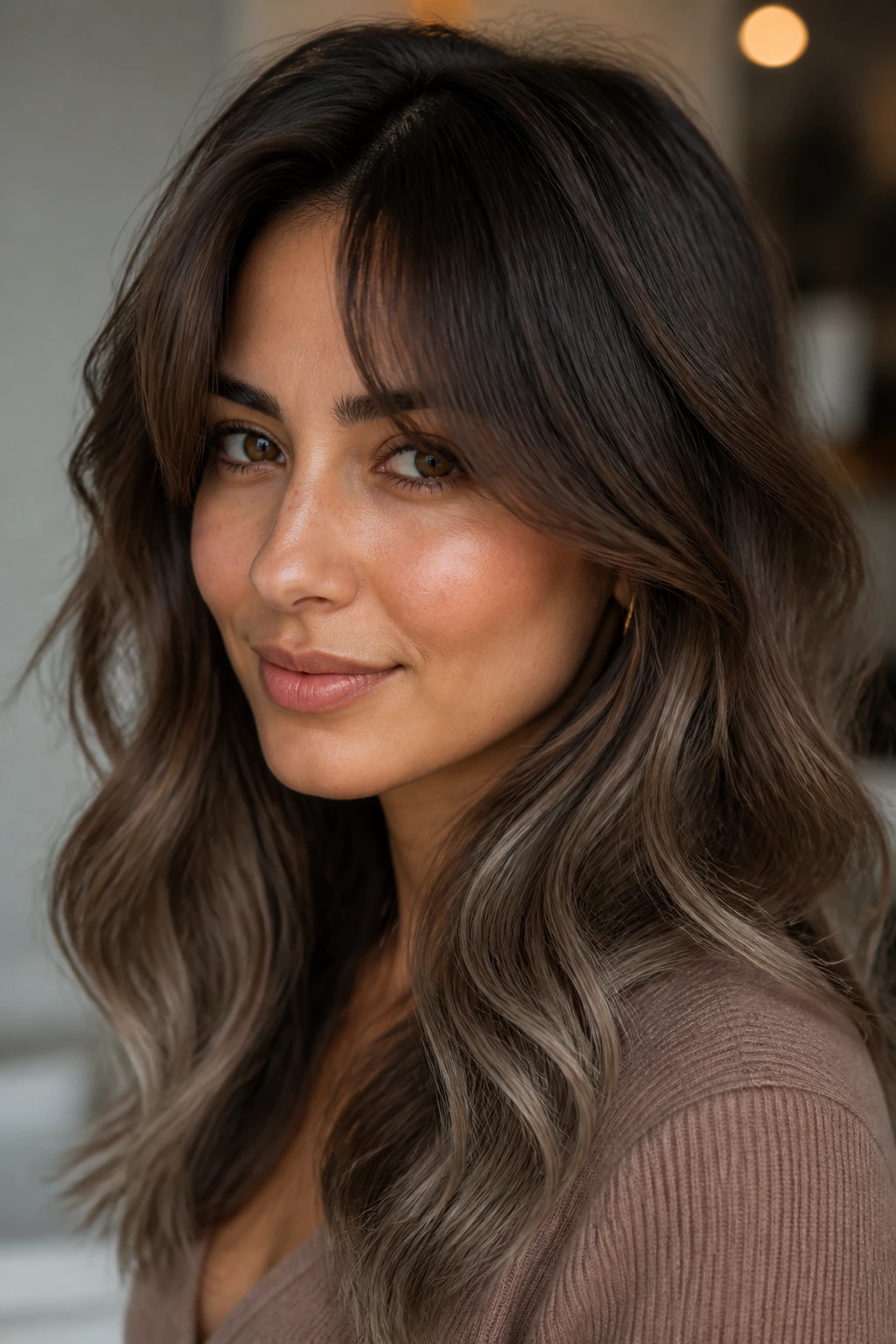
Mushroom brown is one of the smartest choices for medium skin with olive or neutral undertones. It has that smoky, muted base that can keep warm skin from looking too yellow and cool skin from looking washed out. The ombre here is subtle — ashier at the ends, but not silver, not beige-blonde, just soft and earthy.
This shade is not loud, and that is the point. Curtain bangs sit beautifully with it because the color around the face stays controlled. The cut does the framing; the color does the shading. If you’ve ever had brown hair turn brassy after three washes, mushroom brown is the antidote.
The only caution: if your skin leans very golden, too much ash can make the face look flat. In that case, ask for a tiny touch of beige warmth in the mid-lengths so the color doesn’t go chalky.
6. Cocoa-Bronze Sweep
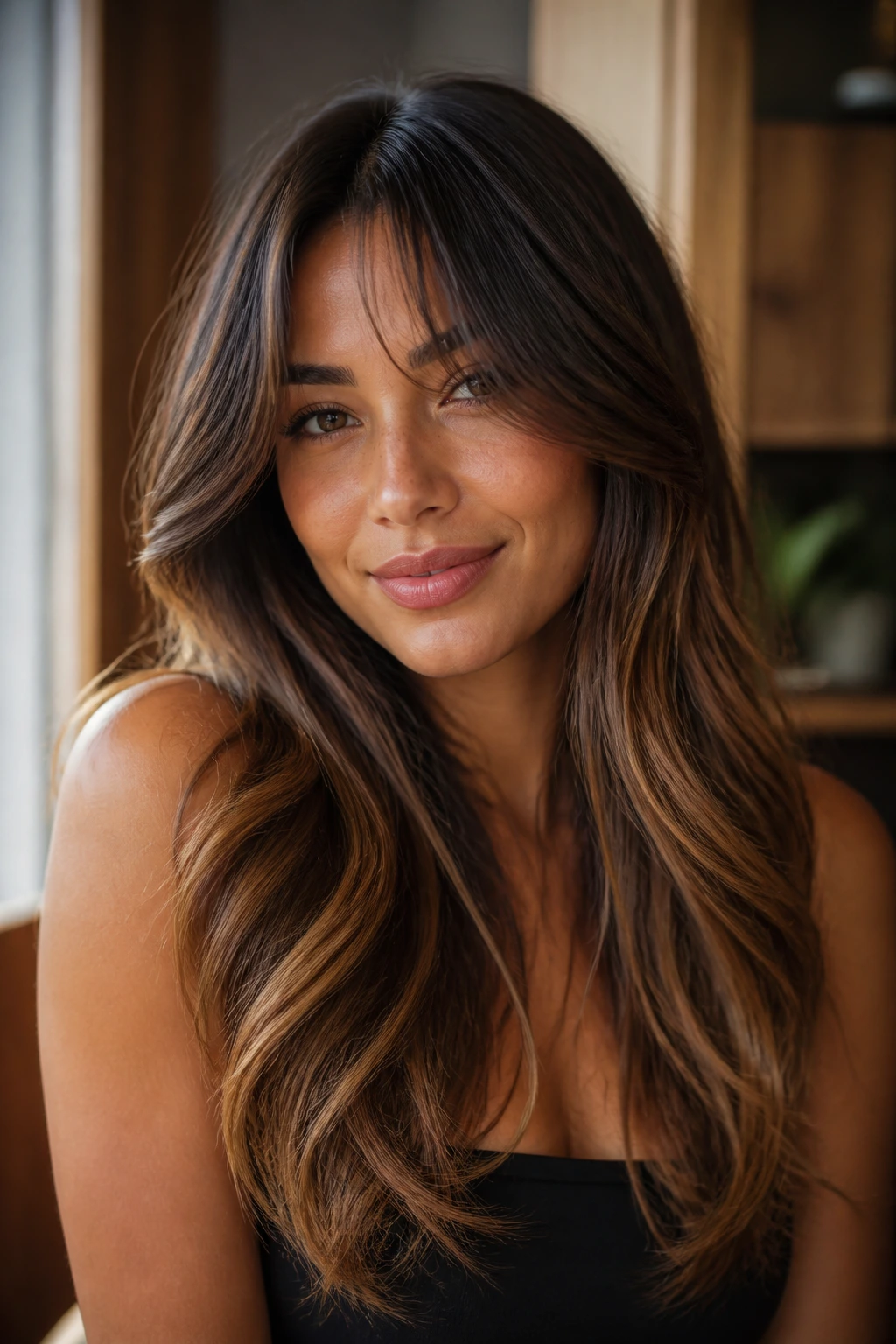
Cocoa-brown roots with bronze through the ends give you shine in a way flat brown never can. Bronze reflects light differently from caramel; it’s less sugary, more metallic. On medium skin, that little shift keeps the color from disappearing under indoor lighting.
This is a good choice if you like your hair to read polished from across a room but still want it to look brown up close. Curtain bangs help because the bronze around the face picks up tiny flashes when the hair moves. It’s the kind of shade that looks best when the hair is brushed, not over-styled.
A middle part plus long curtain bangs is the sweet spot here. The bronze wants space to fall through the front layers, not be trapped in a tight wave pattern.
7. Toffee Fade on a Lob
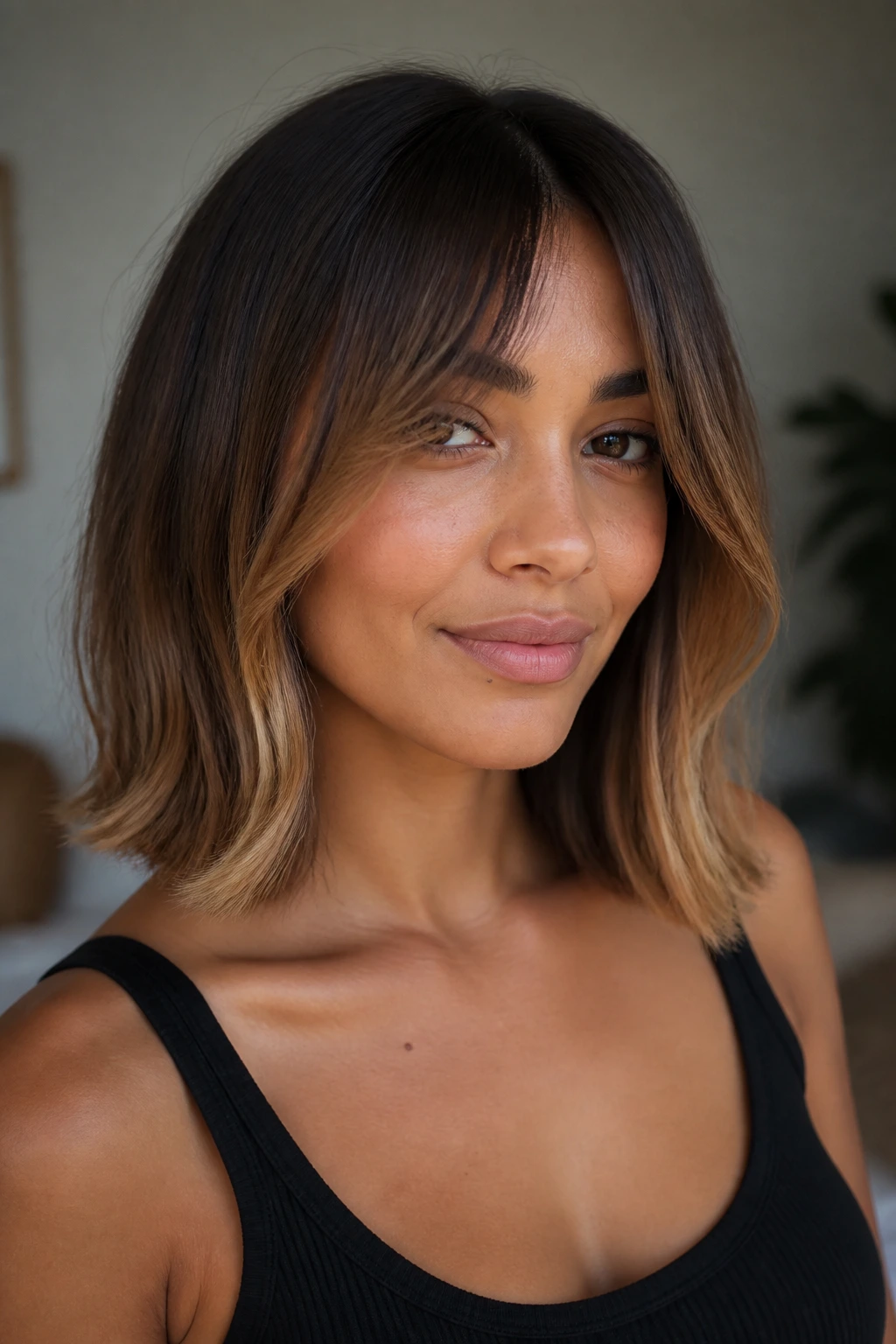
A lob and toffee fade are old friends. The length sits right at the collarbone, which means the ombre shows up fast — no waiting for waist-length waves to reveal the color work. Toffee keeps the warmth creamy and soft, especially on medium skin with golden or peach undertones.
The reason this version stands out is proportion. Shorter hair needs less brightness to read dimensional, so you can stop at a softer level 6 or 7 instead of pushing the ends higher. Curtain bangs balance the bluntness a lob can have at the bottom edge, and they stop the cut from feeling boxy.
Tiny detail that matters
Keep the front pieces a touch brighter than the back. That slight lift near the face makes the whole cut feel custom instead of one-length and heavy.
8. Hazelnut Balayage with Long Curtains
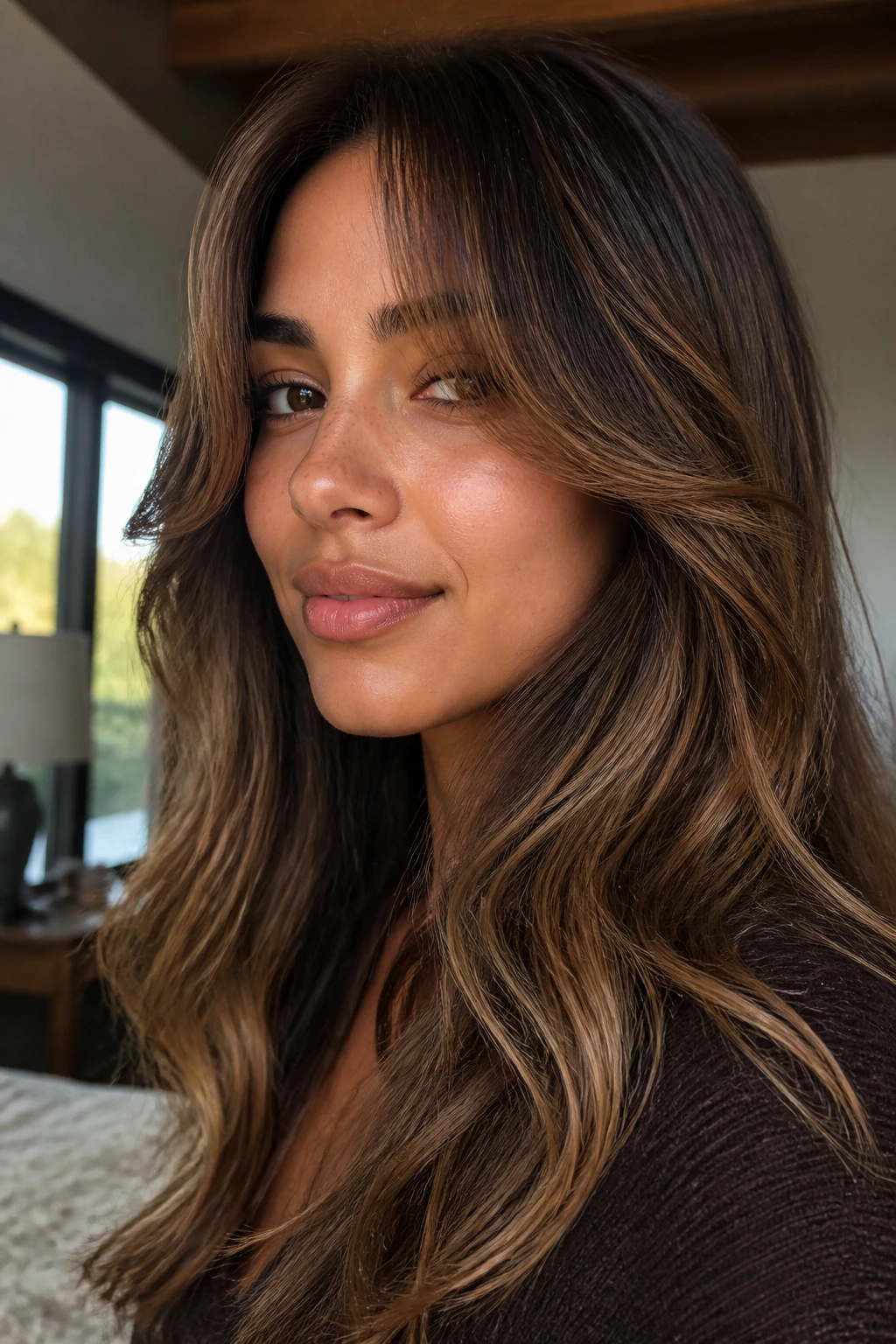
Hazelnut balayage with long curtain bangs sits in the middle of the road in the best possible way. It’s brown, but not dark; warm, but not yellow; soft, but not sleepy. The hazelnut pieces are painted in loose bands, so you still see your base color under the lighter movement.
This one is especially good if you hate harsh regrowth lines. The balayage placement makes the fade less obvious, and the long curtain bangs blend into the side pieces instead of cutting the face in half. Medium skin with neutral undertones can wear this shade without having to pick a side between warm and cool.
A blowout makes it sing. So does a soft wave that bends away from the face around the cheekbone, because that’s where the lighter pieces can really do their job.
9. Ash Brown Ombre for Neutral Skin
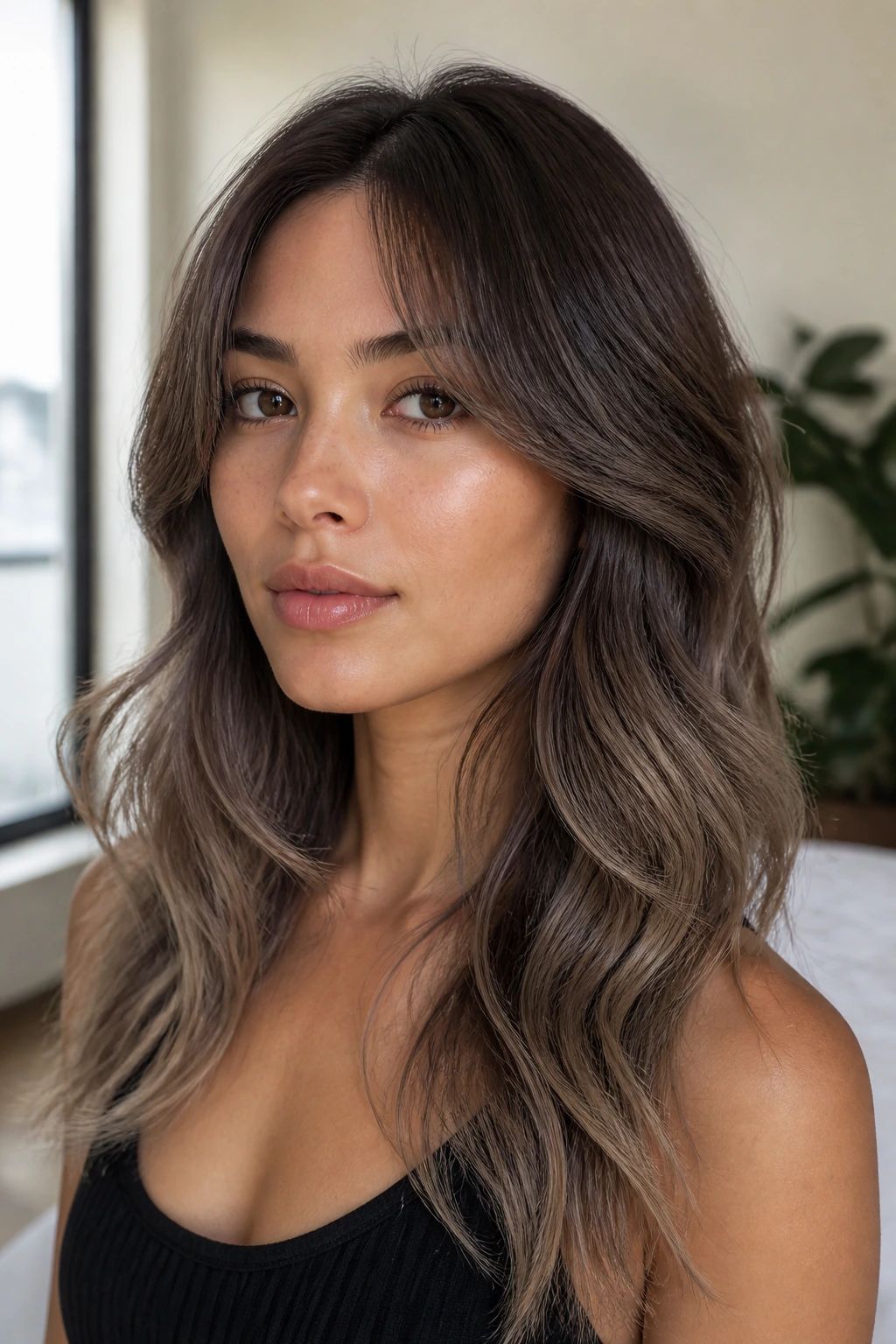
Ash brown ombre gets misunderstood because people think “ash” means dull. It doesn’t. On the right medium skin, especially neutral skin with a little pink or olive in it, ash brown can look crisp and expensive in a low-key way. The ombre here stays cool at the ends, with a brown root that keeps the whole look from going gray.
Curtain bangs are what keep ash brown from feeling severe. They soften the line at the forehead and let a little warmth from the face show through. If you have naturally warm skin, ask the colorist to leave a small beige note in the mid-lengths so the ash doesn’t flatten the complexion.
This is one of those shades that looks best in daylight. Indoors, it can read quieter, which is fine if you like a softer finish.
10. Chocolate Cherry Dimension
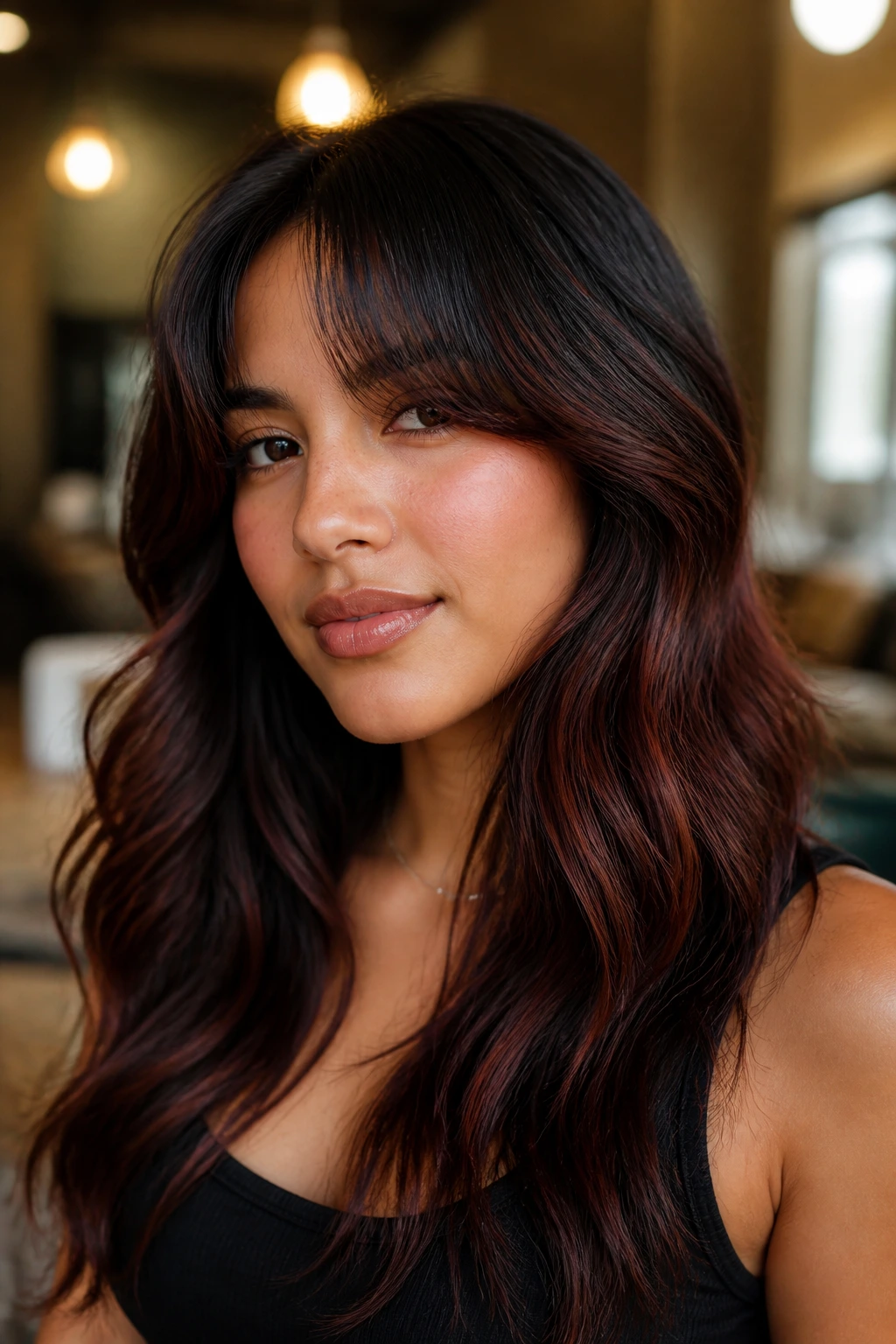
Chocolate cherry is the one for medium skin that can handle a little red. The base stays deep chocolate, then a cherry-brown note slips into the ends and a few face-framing pieces. It’s not red hair. It’s brown hair with a red undertone that shows up when the light hits it.
That undertone is what gives the color depth. On medium skin with rosy or beige undertones, cherry brown can warm the face without making the whole head look copper. Curtain bangs should stay chocolate-dominant so the front doesn’t become too red too quickly.
If you wear a lot of black, this shade is a good one. It has enough richness to hold its own against dark clothes without disappearing.
11. Walnut Brown with Bright Face Framing
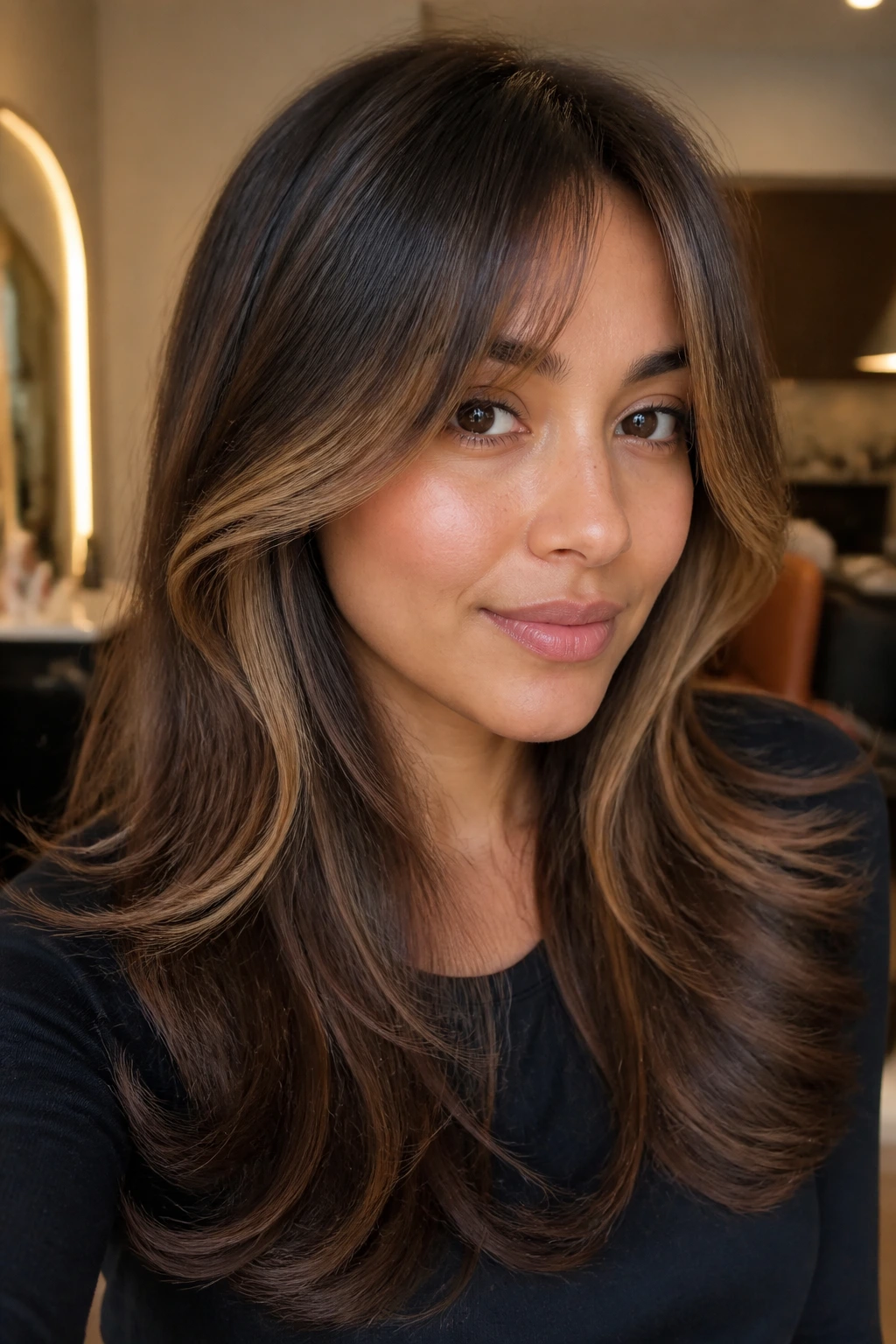
Walnut brown is the practical cousin of the more dramatic ombre shades, and I mean that as a good thing. The overall tone stays deep and nutty, but bright face-framing pieces slide in beside the curtain bangs so the face gets shape without a huge color jump. Medium skin gets definition, not glare.
This is a strong choice if you’re nervous about light ends. Walnut keeps the base healthy-looking, which matters when the hair has some damage or the ends are naturally dry. The lighter frame should sit one to two shades above the base, not five.
The result is subtle but not boring. If you like wearing your hair half up, the brighter frame still shows when the bangs split open.
12. Almond Milk Brown Melt
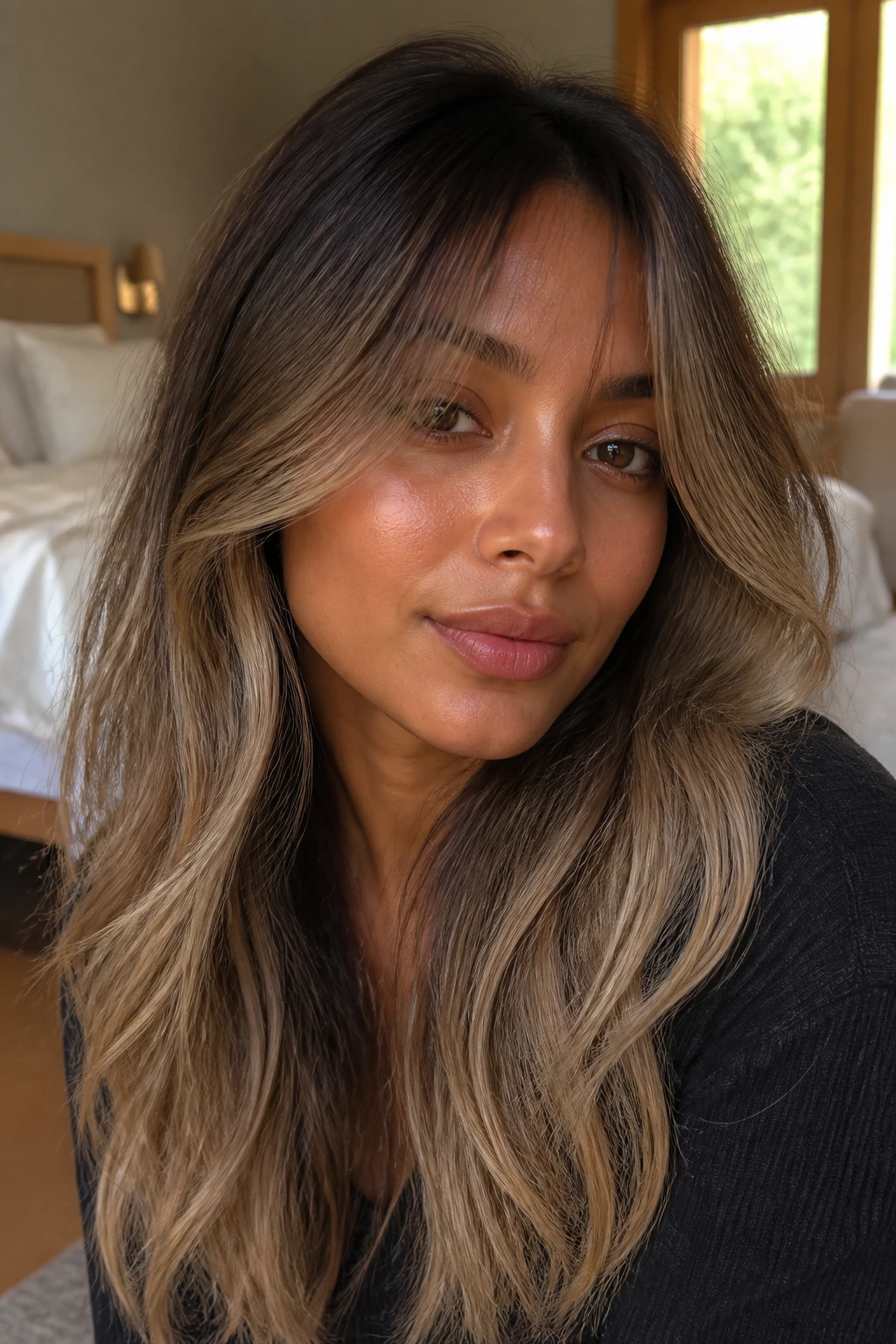
Almond milk brown melt is creamy and soft, with just enough lightness to make medium skin look fresh. The root is a milky brunette, then the color eases into beige-brown ends that feel light without crossing into blond. It’s one of the easier shades to wear if you don’t want a lot of visual noise.
Curtain bangs are part of the reason this works. They keep the lightness from sitting only on the ends, which can sometimes make long hair feel bottom-heavy. Here, the front pieces carry some of that pale, creamy note, so the face looks connected to the rest of the cut.
This is a particularly nice choice for straight or slightly wavy hair. The shade is soft enough that you don’t need a big curl pattern to make it interesting.
13. Maple Brown with Gold-Edged Waves
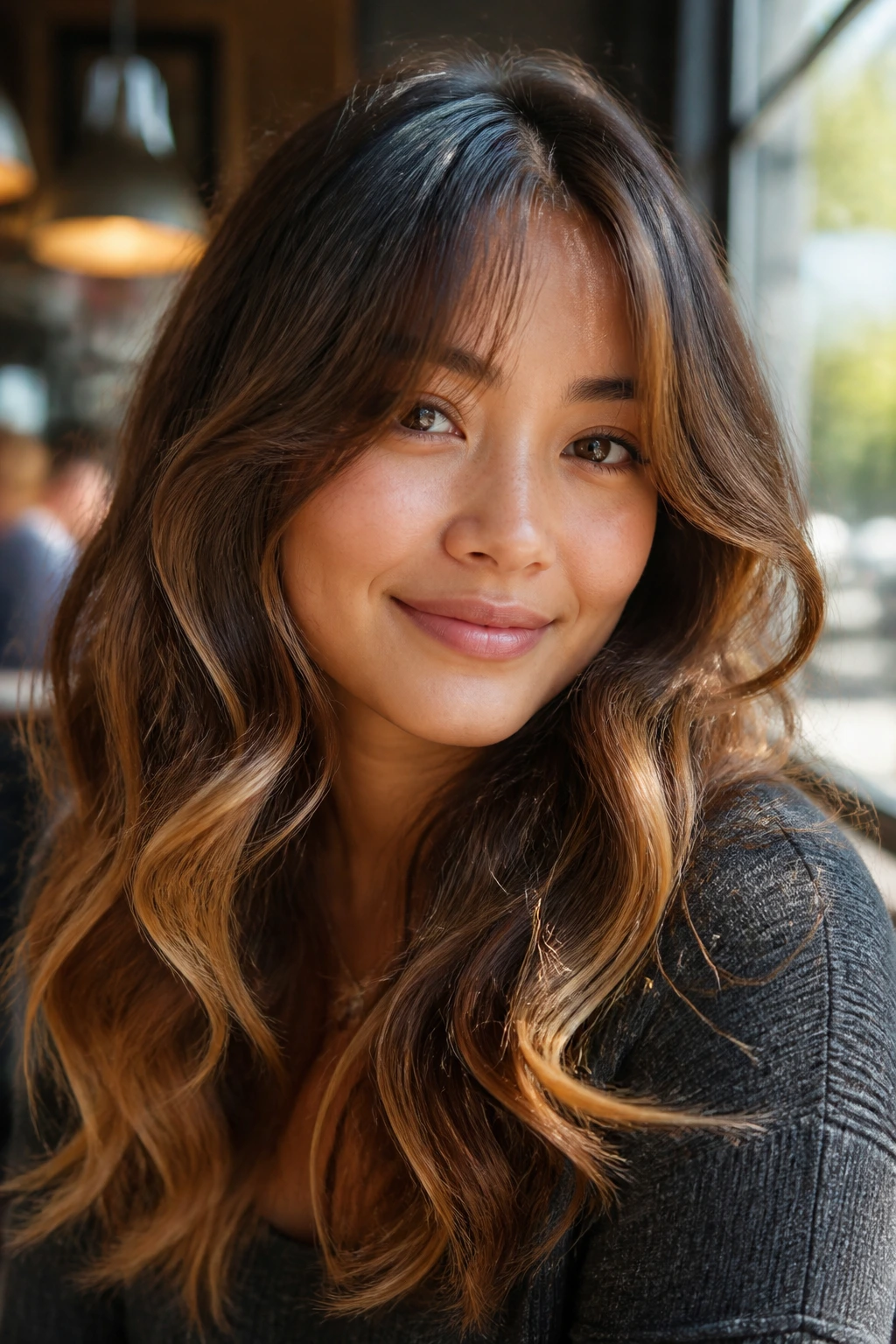
Maple brown has warmth, but not the sticky, flat kind. Think brown sugar with a tiny gold edge. On medium skin with golden undertones, it can bring out the warmth in the cheeks and jaw without going orange. The ombre should stay gradual, with the brightest pieces sitting just below the bangs and around the face.
This color does best when the waves are loose and not over-sprayed. The gold edge needs movement. Curtain bangs, especially if they’re a touch longer, help the whole style feel softer around the eyes.
If your wardrobe leans earthy — creams, olive, denim, rust — this shade fits in naturally. It has a lived-in feel that some brighter browns simply don’t.
14. Sable Brown with Peekaboo Lightness
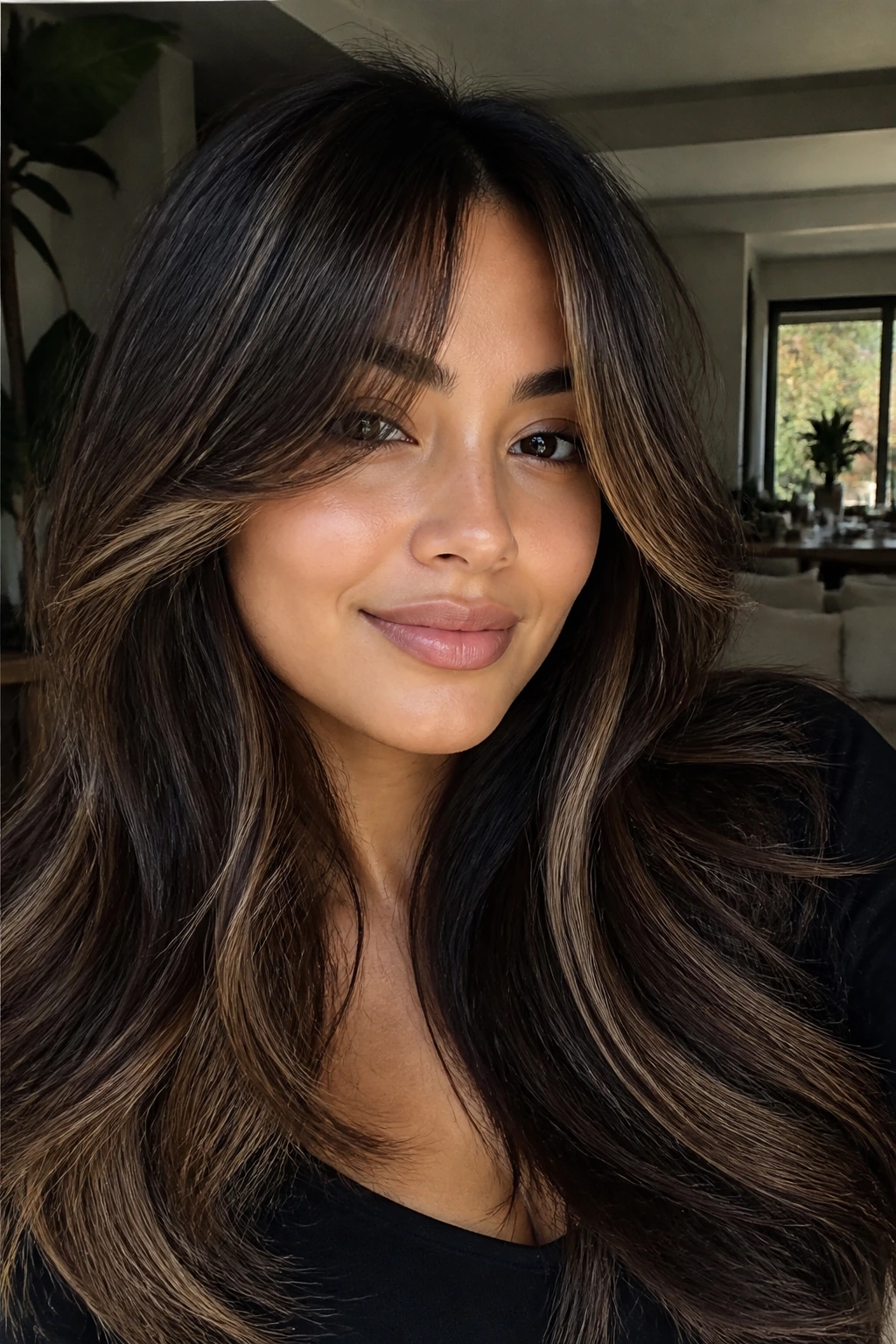
Sable brown with peekaboo lightness is for people who want dark hair first and color second. The base stays deep, almost near-black in some lights, while very selective lighter pieces hide underneath and around the front. Medium skin can wear this beautifully because the strong base gives the skin contrast without forcing the ends to compete.
The curtain bangs are key here. They open the center of the face and reveal enough of the lighter bits to stop the style from reading one-note. This is a good option if you work in a conservative setting but still want something with a little movement.
Do not over-lighten the hidden pieces. The whole point is restraint. If the underside gets too bright, the contrast turns loud when you tie your hair back.
15. Auburn-Tipped Brunette
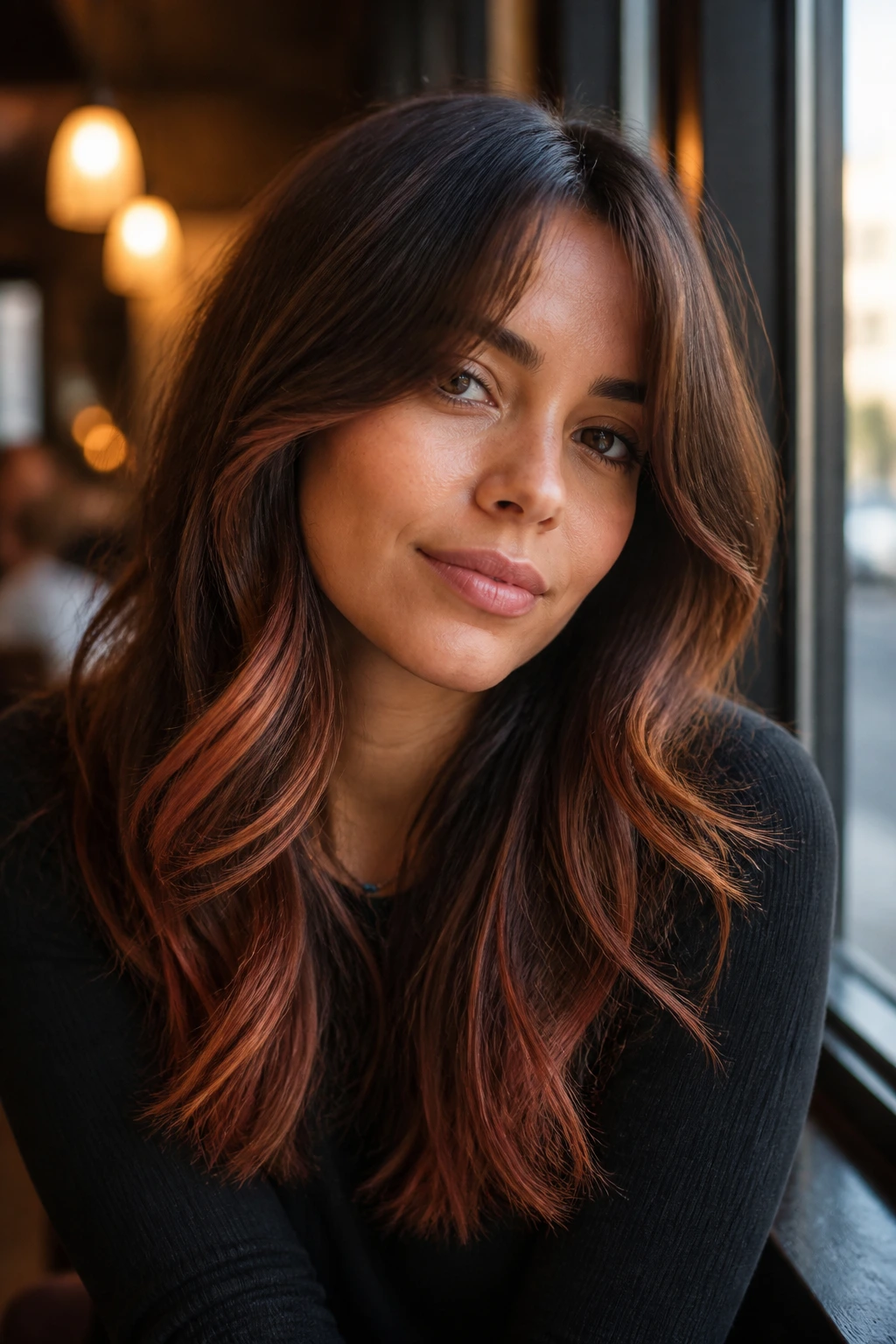
Auburn-tipped brunette is for someone who wants just enough red to make people look twice. The brown stays dominant, but the tips lean auburn, and maybe one or two ribbons near the face catch that same warm note. On medium skin, especially skin with a yellow or beige undertone, the auburn can warm the complexion in a very direct way.
The downside? It can go too copper if the colorist pushes the red. Keep the auburn tipped into brown, not fire-engine territory. Curtain bangs should stay softer and deeper so the forehead area doesn’t become the brightest part of the head.
This shade reads especially well on layered cuts. The different lengths give the auburn a place to show up in small doses instead of one big slab.
16. Bronde Fade with Airy Bangs
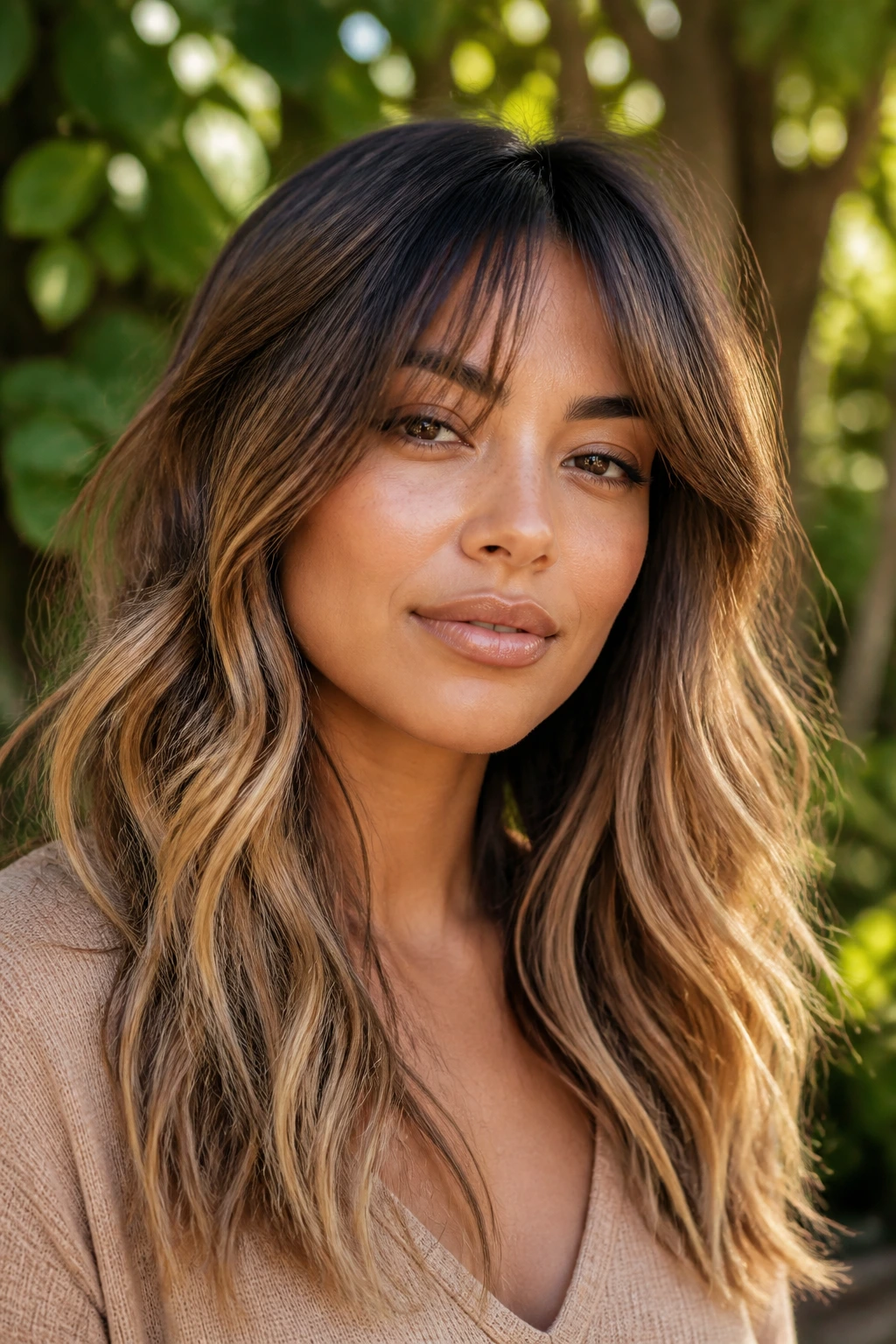
Bronde is the obvious bridge between brown and blond, but it needs judgment. On medium skin, bronde works best when the blond is controlled and the brown remains visible through the mids. Airy curtain bangs help it breathe, which matters because bronde can feel heavy if it’s painted too wide across the front.
This look is best for someone who likes brightness but doesn’t want to commit to full blond upkeep. The fade should live in the lower half and the cheekbone area, not all the way up into the root. A little root shadow keeps it from turning streaky.
I like this one on wavy hair most. The bends break the color into ribbons, and that keeps bronde from looking like one continuous ribbon of pale tone.
17. Dark Chocolate Gloss with Beige Ends
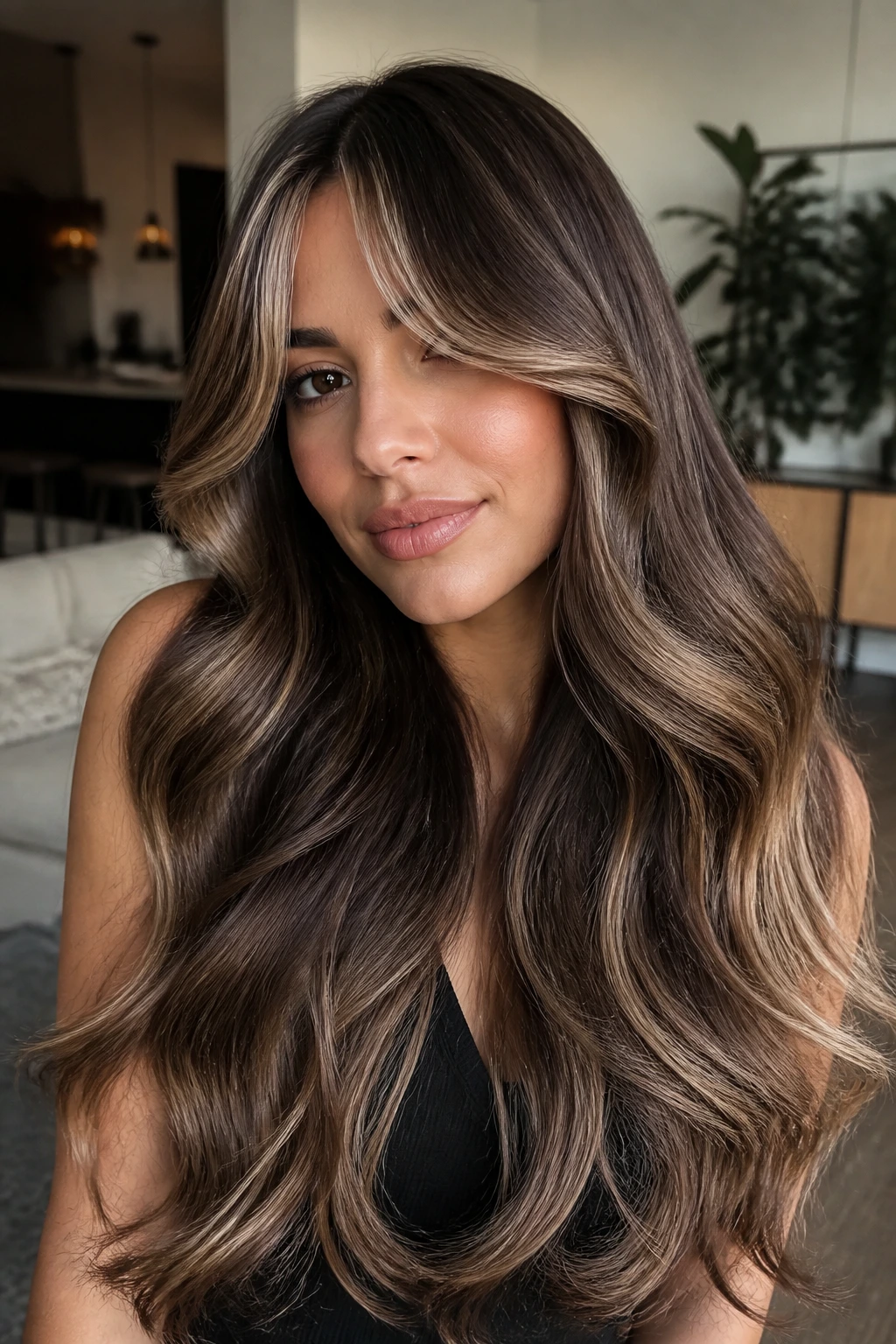
Dark chocolate gloss with beige ends gives you contrast, but not chaos. The top stays dense and shiny, the ends open into a soft beige-brown that feels clean rather than bleached. Medium skin can wear this if the beige stays creamy instead of icy.
The curtain bangs should be treated like part of the color story here. A little of that beige should live in the front pieces, not just the ends, or the bangs can feel detached from the rest of the head. That’s a common miss.
This style is strong on long hair because the length gives the contrast room to stretch. On shorter hair, the beige can show up too quickly and feel sharp.
18. Cinnamon Mocha Waves
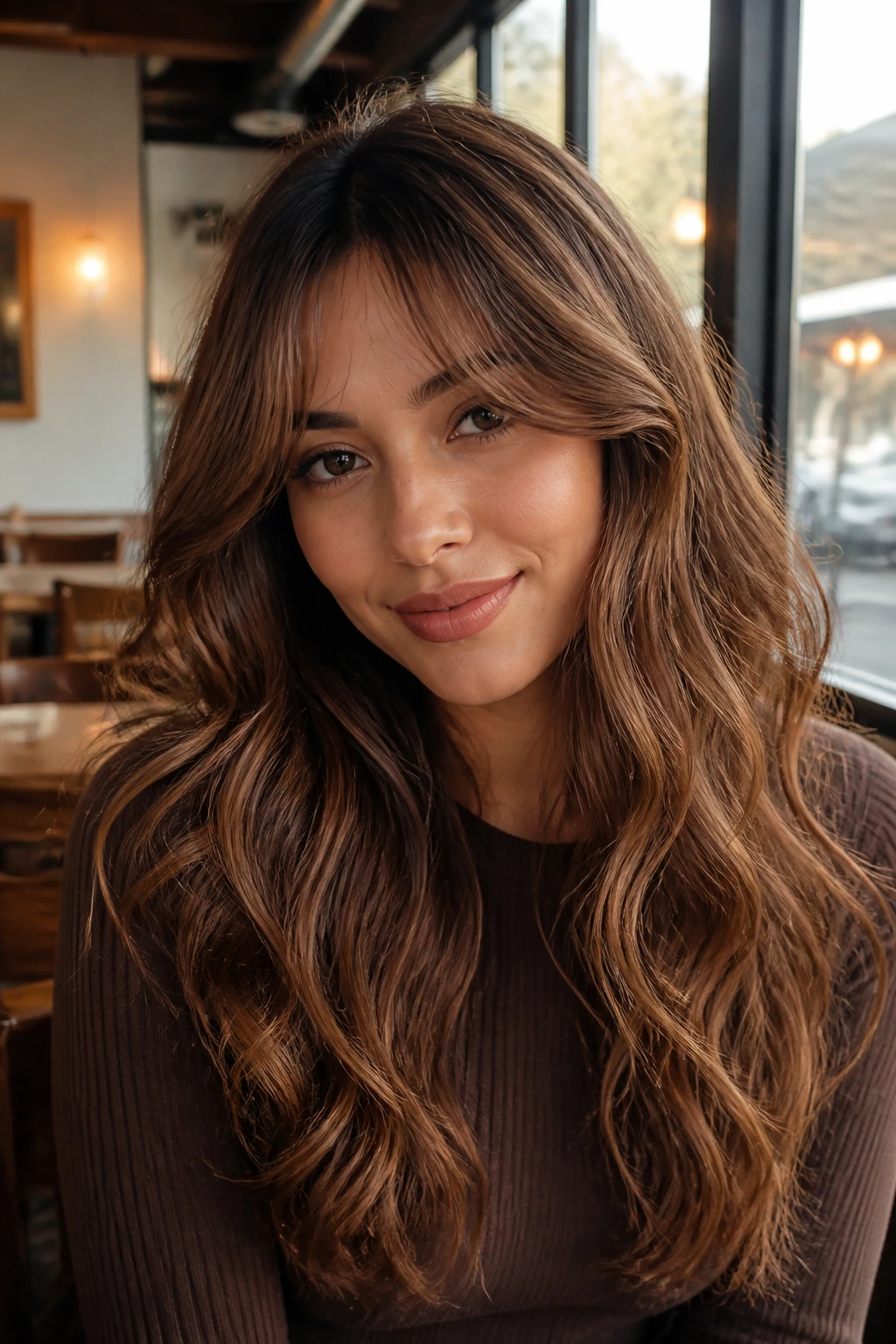
Cinnamon mocha waves are richer than caramel and less red than auburn. The mocha root keeps everything grounded, while cinnamon weaves through the wave pattern in a way that looks warm, not loud. Medium skin with warm or neutral undertones can really carry this one.
The color needs a little bend to make sense. Straight hair can flatten the cinnamon into one tone, but waves break it up. Curtain bangs should fall with a soft middle split so the warmth around the eyes doesn’t feel concentrated in one spot.
This is one of my favorites for cooler months, though the look itself is timeless. It just has that cozy, polished coffee-shop feel without tipping into cliché.
19. Coffee-and-Cream Ombre
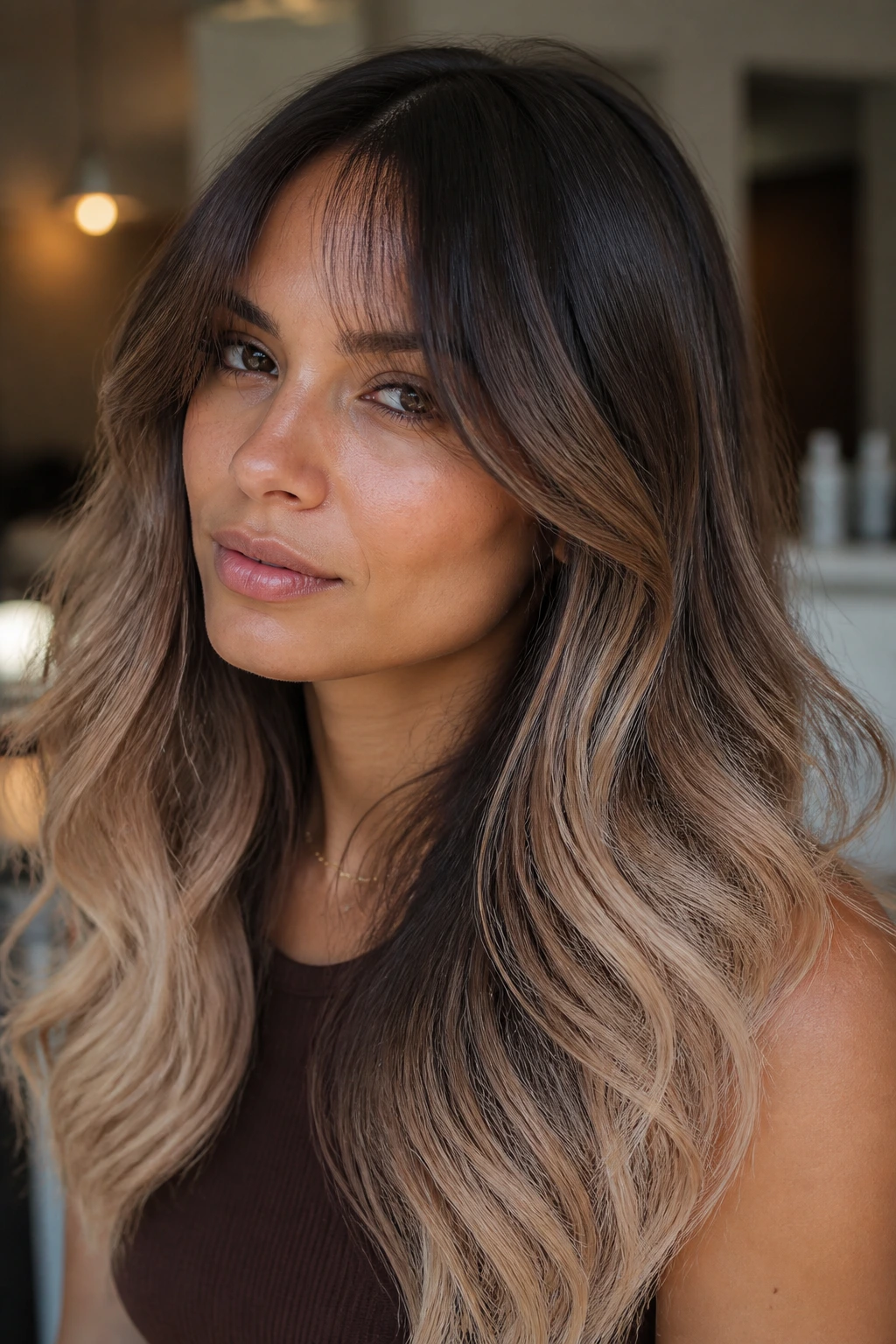
Coffee-and-cream ombre is the clearest contrast in this set, but it still belongs on medium skin when the transition is managed well. The root stays deep coffee, then the ends lighten to a creamy brown-blond blend that looks smooth rather than stark. Curtain bangs are what keep this from feeling too high-contrast.
The bangs should sit in the middle ground — not as dark as the roots, not as light as the ends. That bridge matters. Without it, the eye jumps too fast from forehead to lengths.
This shade works best if the hair has some natural density. Thin ends can make the cream read patchy, and nobody wants that. A good blowout gives the fade a cleaner line.
20. Smoky Truffle Brown
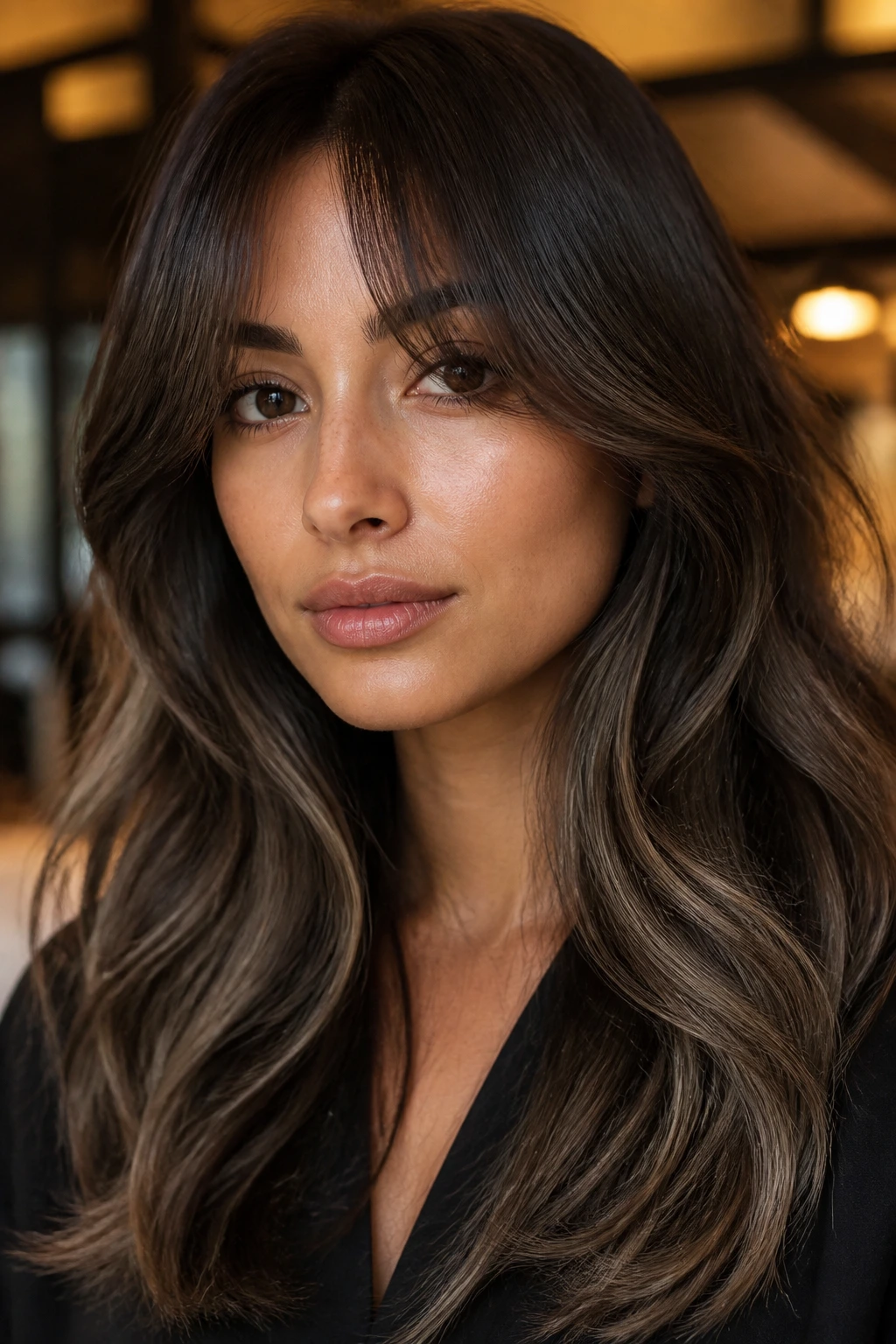
Smoky truffle brown is dark, cool, and a little moody in the nicest way. It has that rich brown base with a smoky finish in the lighter pieces, so the ends never go flat or orange. Medium skin with olive undertones tends to wear this especially well because the cooler note keeps the complexion from looking too red.
Curtain bangs make the whole cut feel less severe. The soft front split keeps the smoky tone from sitting as one heavy sheet around the face. If you want a grown-up version of ombre that still has dimension, this is a strong pick.
Keep the lightest pieces subtle. Smoky brown is about sheen and depth, not obvious lift.
21. Sunlit Chestnut with Face-Frame Pieces
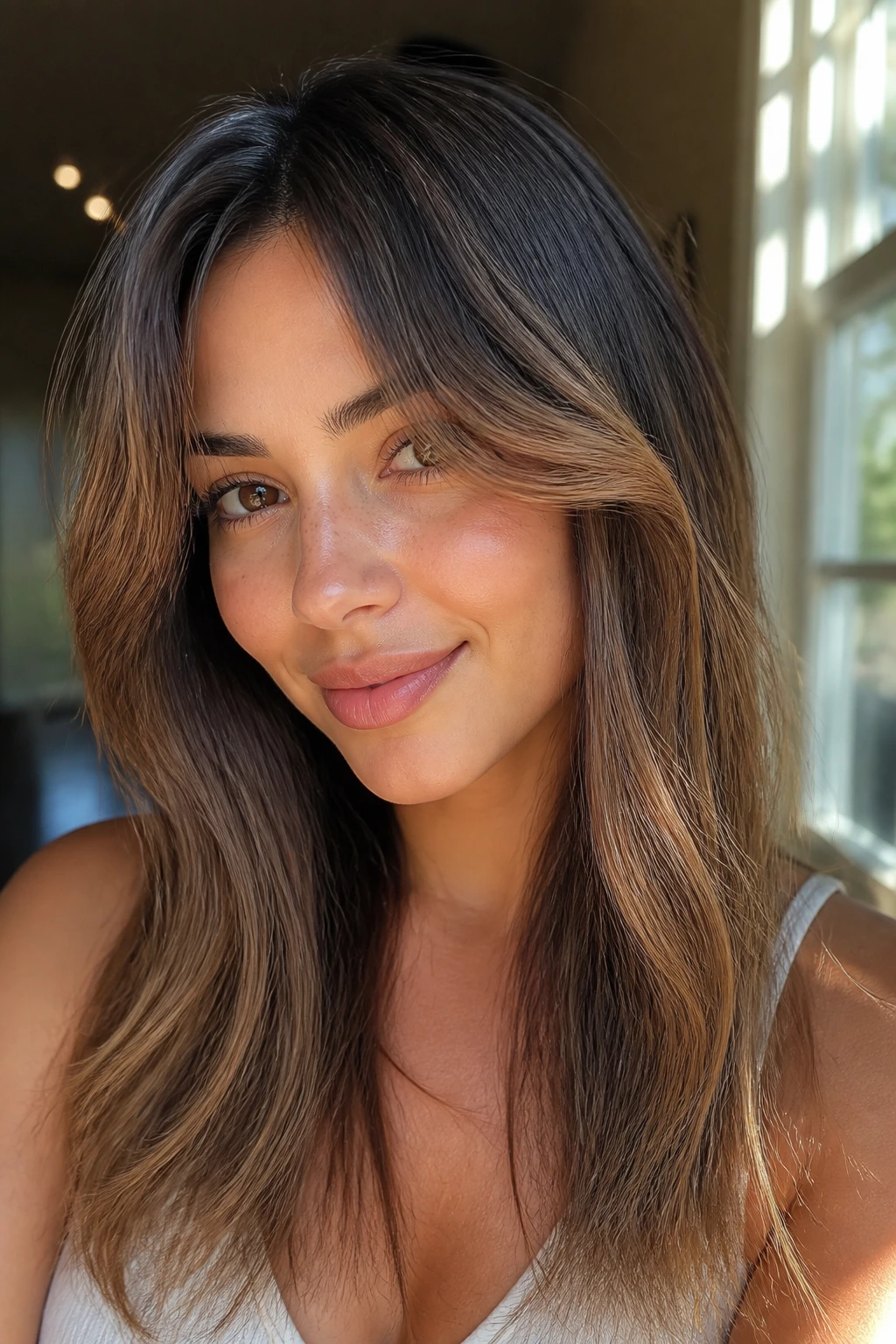
Sunlit chestnut is the easygoing option that still does real work. The chestnut base is warm and rich, and the face-framing pieces carry a faint sunlit lift that makes medium skin look awake without screaming color treatment. Curtain bangs are natural partners here because they let the brighter pieces peek through just enough.
This is a good look if you want something wearable every day. It doesn’t ask for elaborate styling. A loose wave, a bit of bend through the bangs, and a shine spray are enough.
If your face tends to disappear under one-tone brown hair, this is a better answer than going blond. The lift happens exactly where the eye looks first.
22. Velvet Cocoa with Curtain Bangs
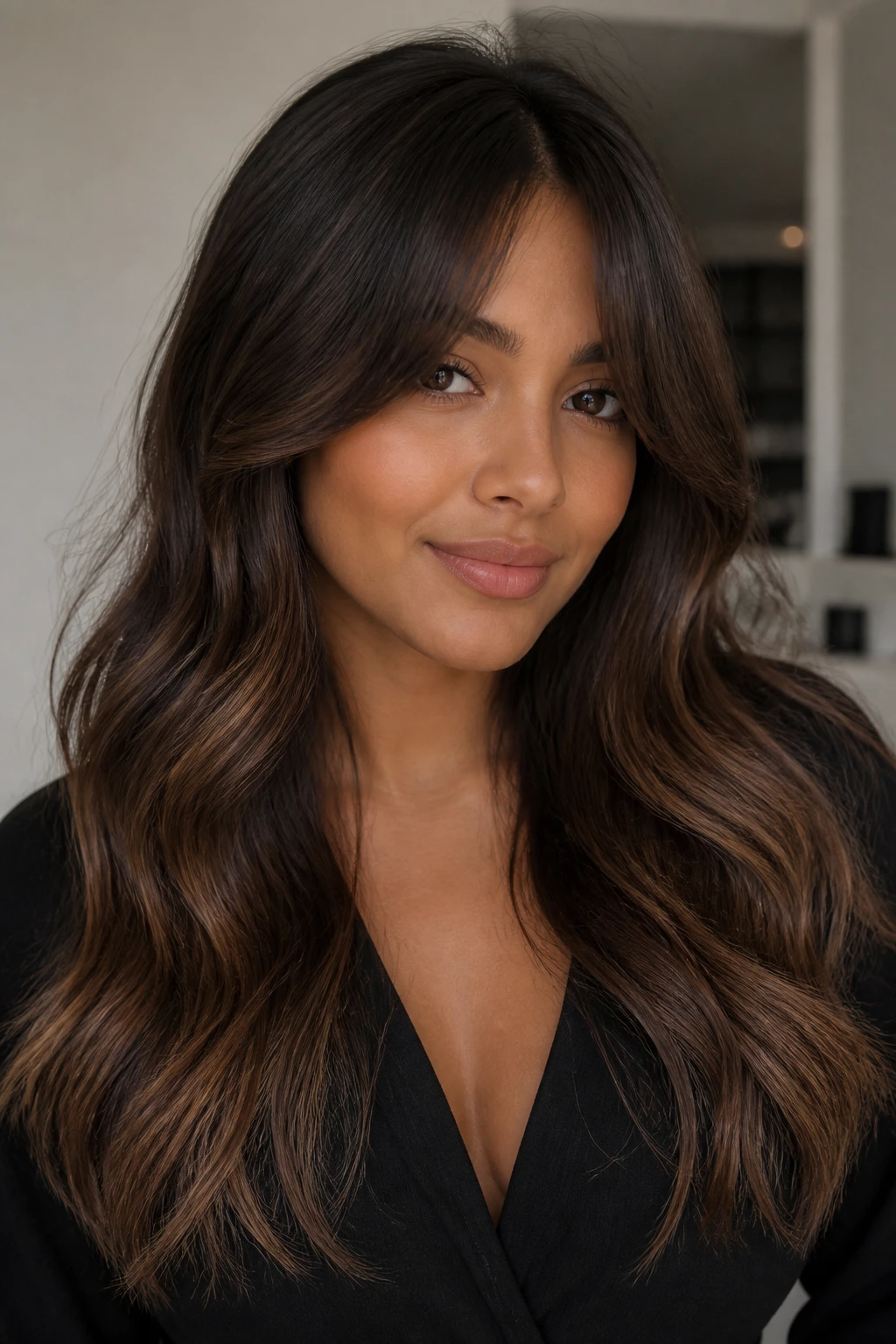
Velvet cocoa is dense, plush, and low-contrast in the best sense. The brown stays deep and smooth, with just enough lighter movement at the ends to keep the hair from reading like a single block. Medium skin gets a lot from this because the tone feels rich without competing with the face.
Curtain bangs matter here more than in almost any other look on the list. They stop the cocoa from settling into the forehead and cheek area too heavily, and they give the color a place to open up. If your hair is thick, this shade can look especially full; if it’s fine, keep the ends softly textured so the color doesn’t look too heavy.
This is the kind of brunette that looks calm from far away and detailed up close. That’s the real appeal.
Why Brown Ombre and Curtain Bangs Keep Working on Medium Skin
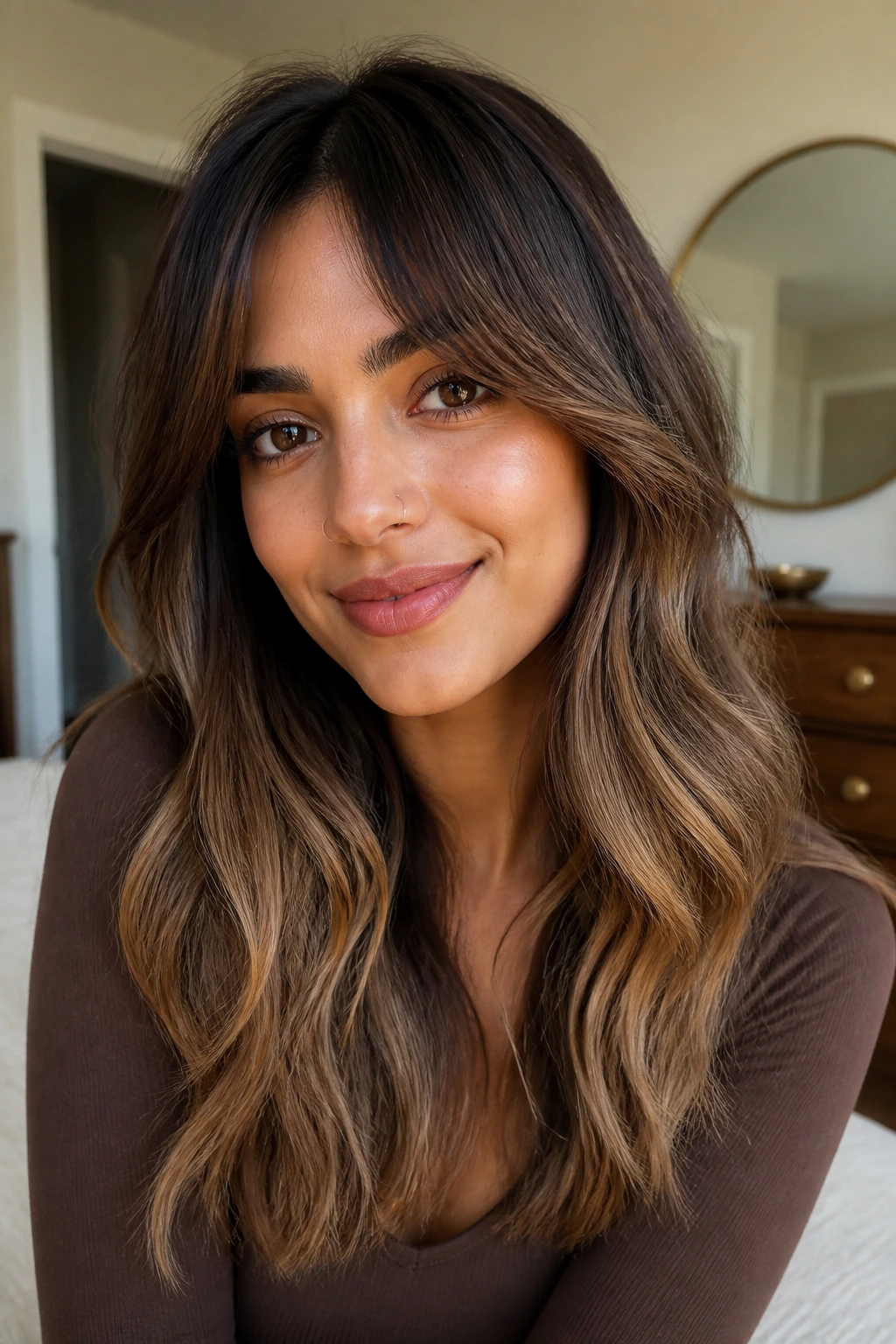
The reason this pairing keeps showing up is not mystery. It’s geometry and tone. Medium skin sits in the middle of the color spectrum, which means it can look great with warm brown, cool brown, or a mix — but it also means harsh blond ends or overly flat espresso can miss the mark fast. Brown ombre gives you room to shift the tone gradually instead of making one hard leap.
Curtain bangs change the balance. They break the color at the top of the face, which is where a lot of brunette color can feel heavy if it’s all one depth. The split at the center and the soft sweep at the cheekbones create a place for the lighter pieces to breathe. That’s why a mediocre brown ombre can suddenly look expensive once the bangs are cut properly.
The other reason is maintenance. Brown shades can be glossed, cooled, warmed, or softened without the grow-out looking dramatic. Medium skin usually benefits from that flexibility, because you can adjust warmth around your undertone instead of changing the whole head every time the season shifts.
Tools That Make the Color and Styling Less Fussy
-
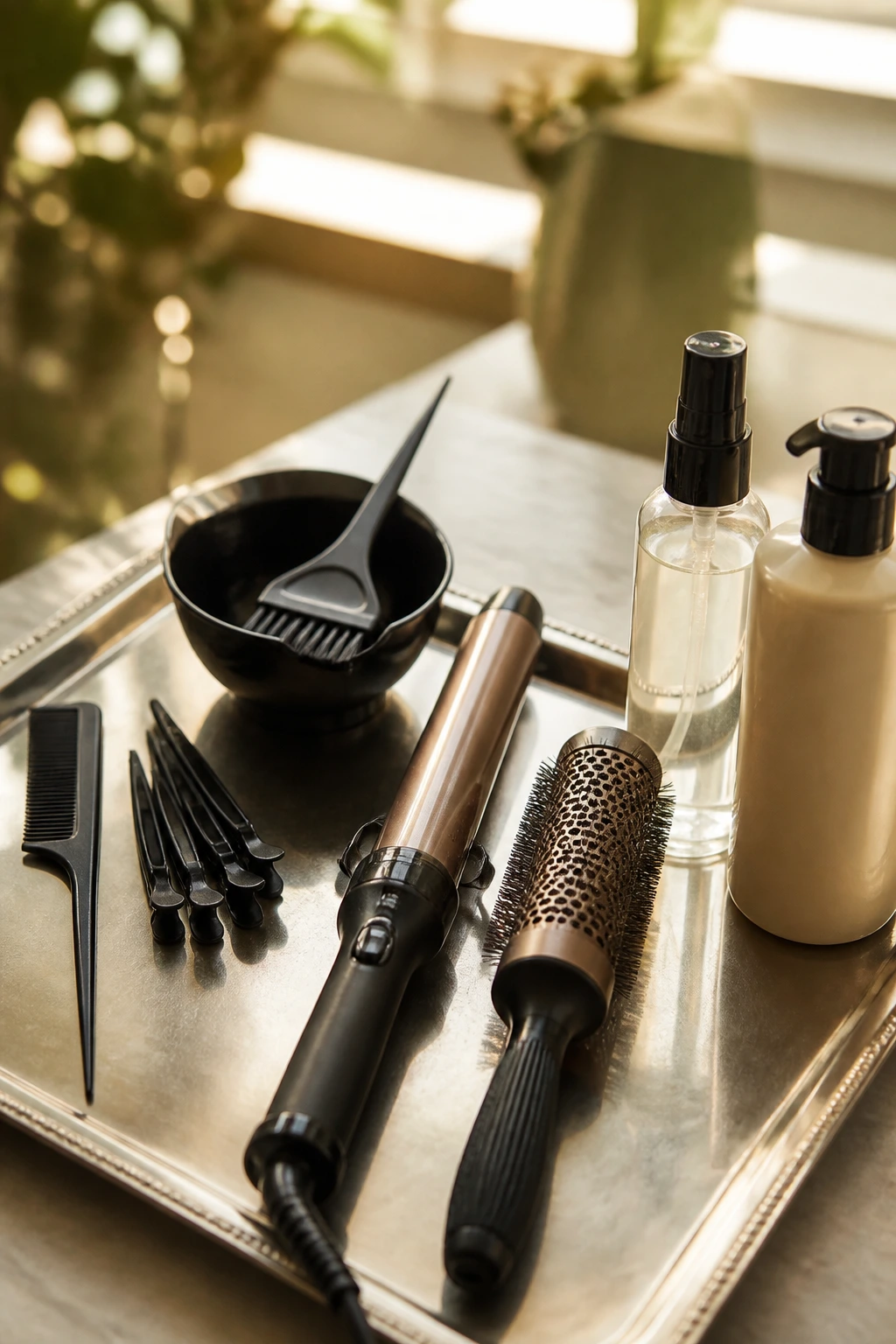
Tail comb: Clean sections matter when you’re asking for a fade that starts at the right place around the bangs and cheekbones.
-
Sectioning clips: They keep the curtain bangs separated while you blow-dry the rest of the hair, which stops the front from flattening.
-
Color brush and bowl: Useful if you’re doing a gloss, toner, or root-smudge appointment and want the product placement neat.
-
1.25-inch curling iron or wand: Best for loose bends that show off the ombre without turning the ends into ringlets.
-
Round brush: A medium round brush lifts the bangs away from the forehead and gives the front pieces that soft, open curve.
-
Heat protectant: Use it every single time you heat-style; the lighter brown pieces show damage faster than the root does.
-
Color-safe shampoo and conditioner: A sulfate-free pair keeps brown gloss from fading and stops the ends from getting dull.
-
Bond-building treatment: Helpful if your hair has been lightened before. It won’t erase damage, but it can keep the ends from snapping off.
-
Microfiber towel: Less friction on the lighter ends means less frizz and fewer rough cuticles.
How to Read the Shade Chart Without Guessing
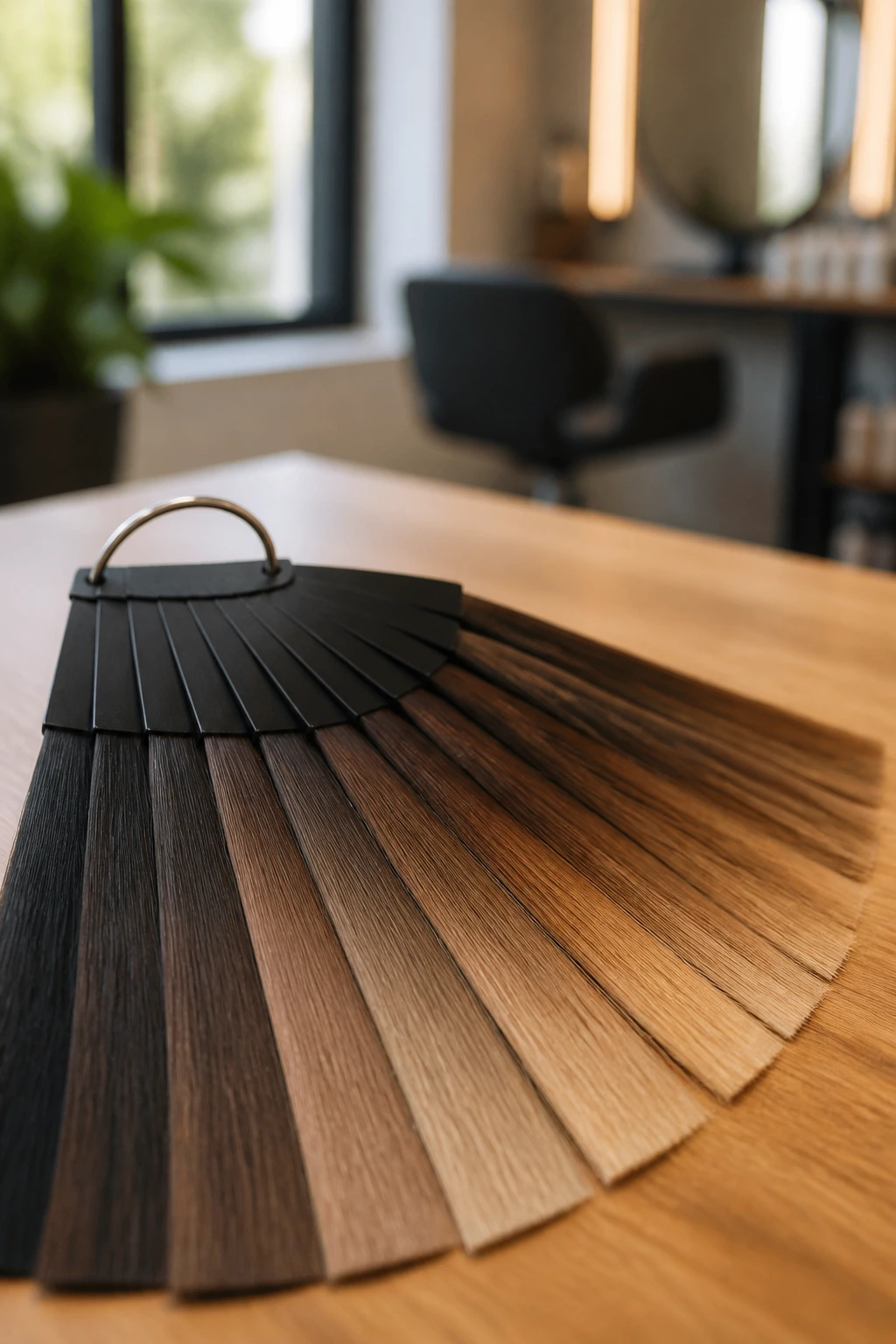
A good brown ombre starts with the right level, not the prettiest photo on your feed. Levels matter because they tell you how far the ends move from the base. On medium skin, a level 4 or 5 root with level 6 to 8 ends is usually the sweet spot. Go much lighter, and the contrast can start fighting the face instead of framing it.
Undertone matters just as much. Golden or peachy medium skin tends to like caramel, honey, toffee, and maple. Olive medium skin usually looks cleaner with mushroom, smoky cocoa, truffle, or ash-brown notes. Neutral medium skin can swing either way, but it often looks best when the color has at least one soft undertone instead of being dead neutral.
Bringing photos to the salon helps, but they need context. Show the colorist where you want the lightness to start, how high you want the curtain bangs to open, and whether you want low-contrast or noticeable dimension. A strand test is worth asking for if your hair is porous or already lightened. Porous ends can grab pigment too dark or too muddy, and that’s a miserable surprise.
How to Wear the Color So the Bangs Actually Matter
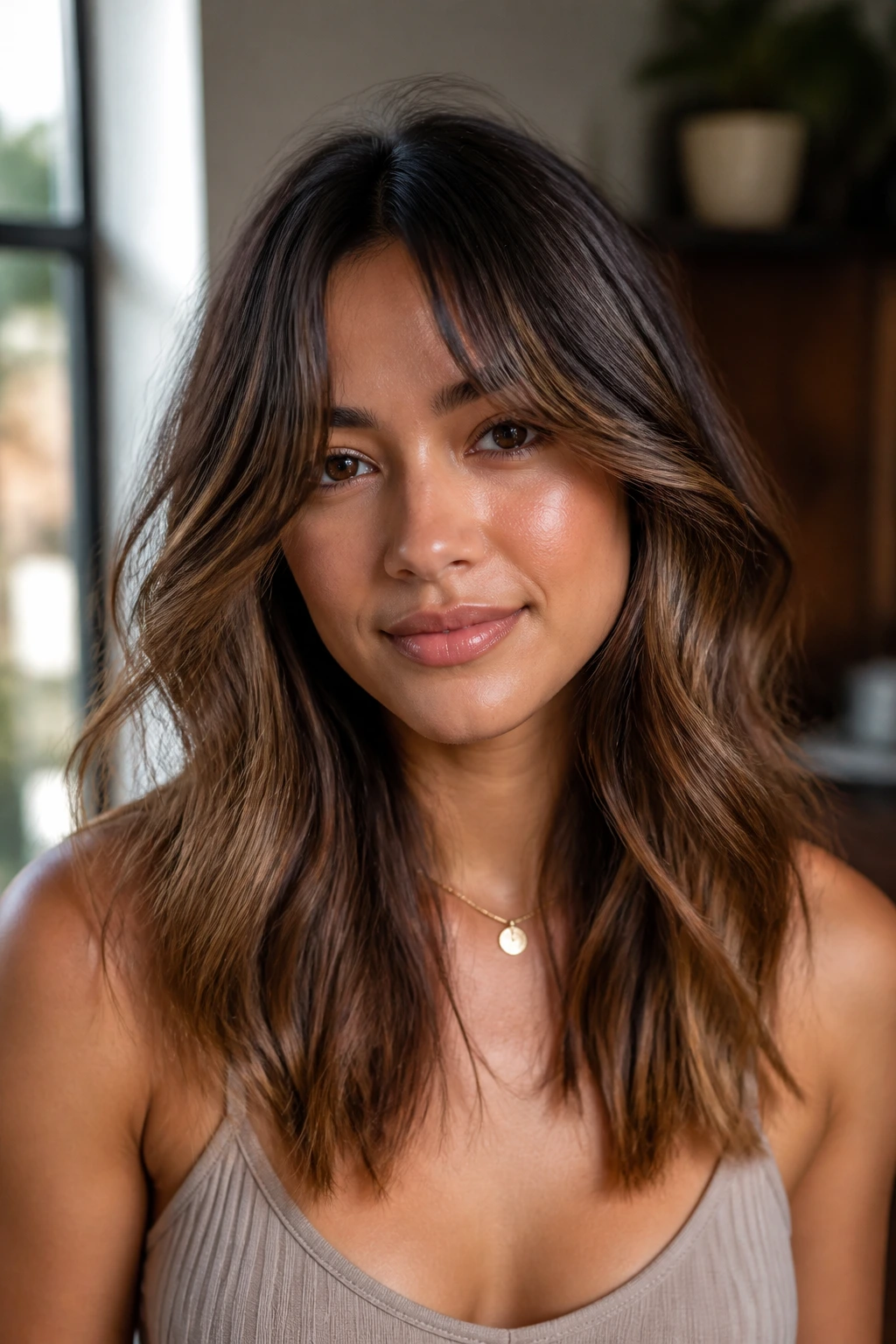
Parting: A middle part keeps curtain bangs symmetrical, but a slight off-center part can be kinder if one side of your face opens faster than the other. The color should still fall like a frame, not like two separate curtains hung on a crooked rod.
Texture: Loose waves are the safest bet because they show the brown-to-light transition in ribbons. Straight hair can work too, but then the ombre needs cleaner placement around the face so it doesn’t disappear.
Finish: Shine serum on the ends, not the roots. Heavy product on the top makes the crown collapse, and curtain bangs lose their shape fast if they’re weighed down.
Clothes and makeup: Medium skin with warm brown ombre usually looks balanced with cream, rust, olive, and gold tones. If your brown leans smoky or ashier, cooler clothes and softer blush shades keep the face from looking red.
Small Tweaks That Change the Whole Mood
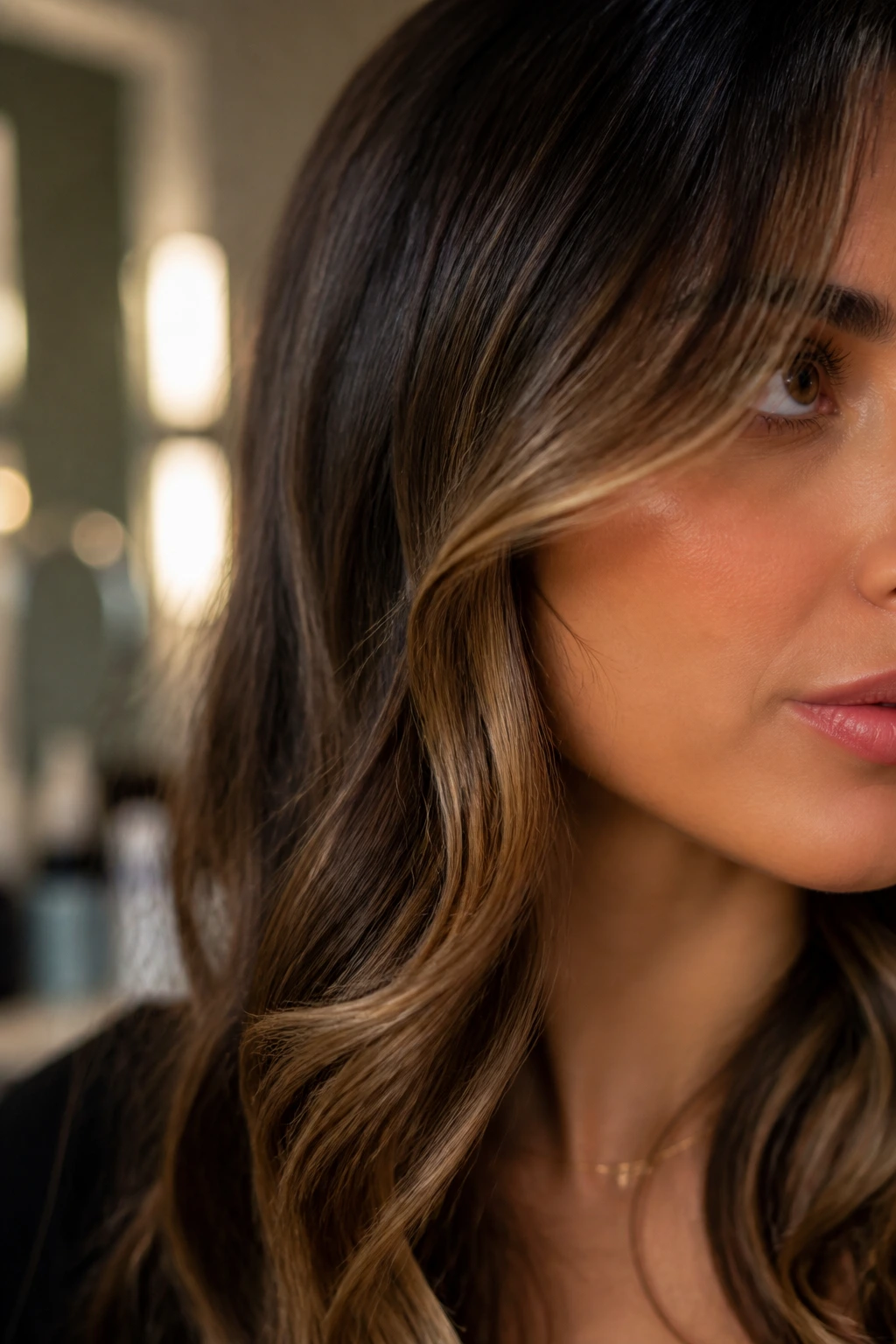
Color Lift: Ask for the brightest pieces to sit one inch farther down if you want a softer grow-out. Move them closer to the root if you want a bolder face frame, but don’t let the lightness crowd the bangs.
Warmth Control: Honey, caramel, and maple suit golden medium skin. Mushroom, truffle, and ash-brown pieces are safer for olive skin. Chestnut and mocha sit in the middle and are easier to wear if you’re unsure.
Bang Shape: Curtain bangs that hit around the cheekbone are usually the most forgiving. Too short and they pop up; too long and they blend into the front layers without doing much.
Shine Move: A clear or lightly tinted gloss every few weeks can keep brown shades from turning dusty. On lightened ends, gloss matters more than shampoo.
Budget Saver: If full balayage is too much maintenance, keep the ombre subtle and spend the money on a good cut. Clean curtain bangs do more for the overall look than an extra inch of lightness ever will.
Mistakes That Make Brown Ombre Look Flat or Brassy
-
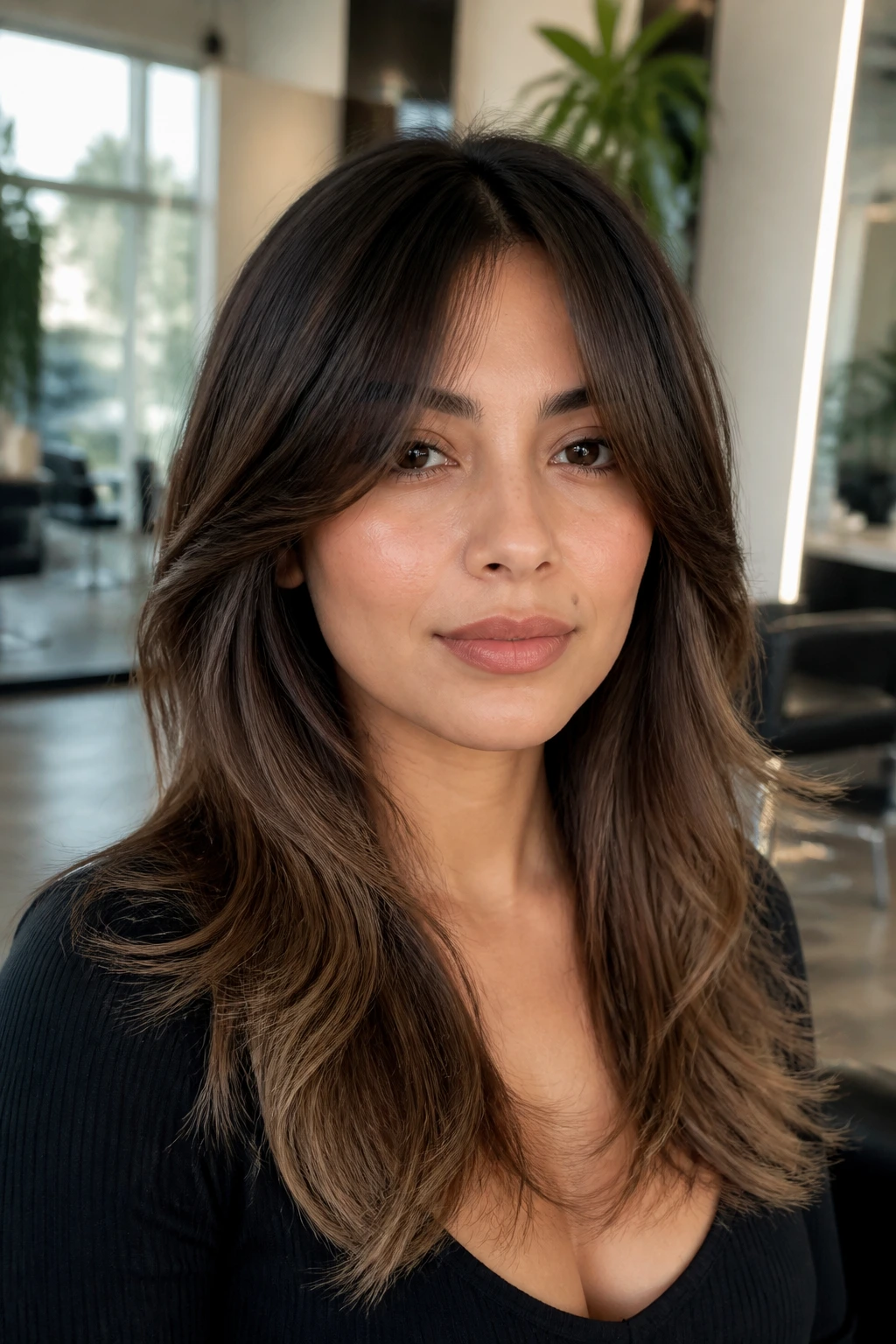
Going too light at the ends: If the ends jump three or four levels above the root, medium skin can look disconnected from the color. Keep the fade controlled unless you want a high-contrast result on purpose.
-
Choosing the wrong undertone: Warm skin with icy ash ends can look tired. Olive skin with heavy orange caramel can look ruddy. The fix is to choose a brown family that matches your undertone instead of chasing a photo with different lighting.
-
Cutting curtain bangs too blunt: Heavy bangs block the face frame and make the ombre feel crowded at the top. The bangs should open softly and blend into the cheekbone area.
-
Ignoring porosity: Lightened or bleached ends grab toner fast and often unevenly. If the hair has been colored before, a strand test and gloss are safer than jumping straight to a stronger lift.
-
Styling everything the same way every day: Straight-down, product-heavy hair hides the dimension. A slight bend, a clean blowout, or a loose wave makes the color placement visible.
Variations and Adaptations to Try
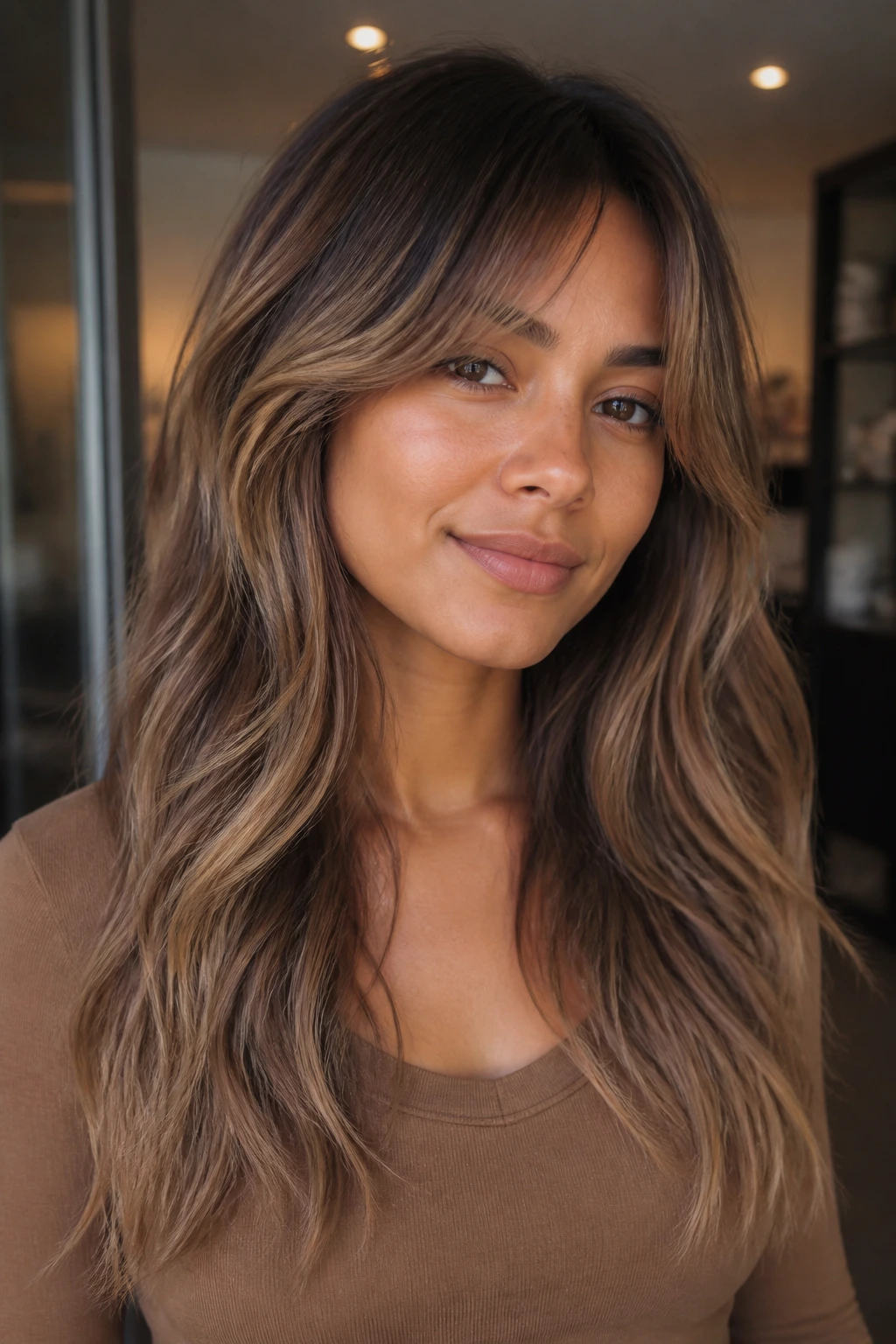
Low-Contrast Latte Melt: Keep the roots close to your natural brunette and lift only one or two levels into a latte brown. This is the easiest version to wear if you like subtle hair that still has movement around the face.
Golden Honey Sweep: Push the lighter pieces toward honey and soft gold for medium skin that leans warm. It looks brighter than caramel, but it still stays in brunette territory, which keeps the grow-out manageable.
Smoky Olive Brown: Pull the tone cooler with mushroom and truffle notes. This version flatters olive medium skin especially well and keeps the ends from reading orange in daylight.
Cherry Cocoa Accent: Add a faint cherry-brown glaze through the lower half if your skin has rosy or neutral undertones. It gives the hair depth without pushing it into obvious red.
Curly Curtain Version: Leave the bangs longer and cut them dry so they can spring up around the eyes instead of sitting too short. The ombre should be painted in broader ribbons so the curls don’t hide the lighter pieces.
Keeping the Color and Curtain Bangs in Shape
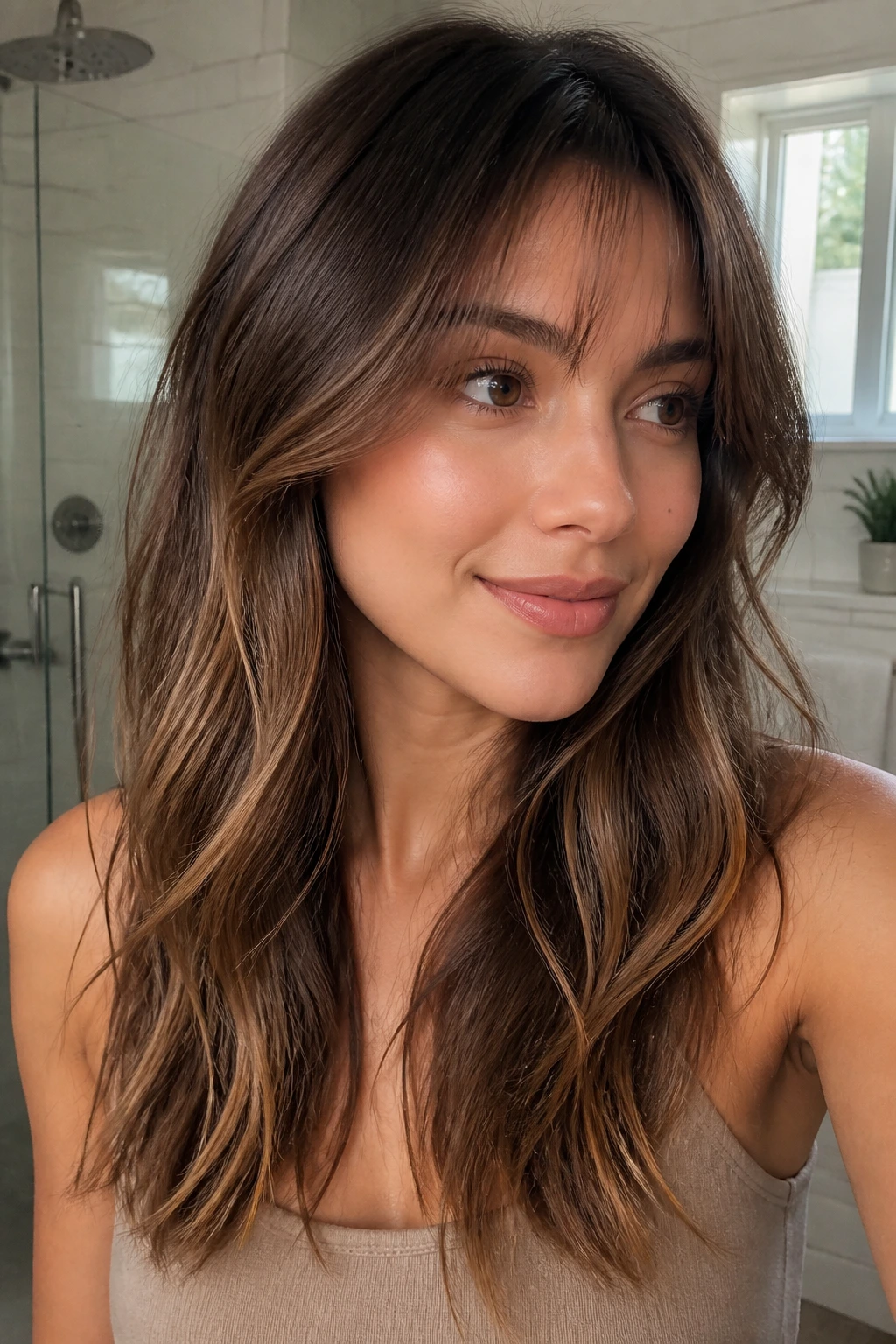
Color like this stays nicest when you don’t wash it to death. Two to three shampoos a week is enough for most medium brunettes, and a sulfate-free formula will keep the brown from turning smoky and flat. If the lighter pieces start to yellow or go orange, use a blue-tinted shampoo every two or three weeks, not every wash. Overdoing it can leave the ends dull.
Curtain bangs need trimming more often than the rest of the cut. Every three to five weeks is the range I’d use, depending on how fast your hair grows and how much face frame you want. If you wait too long, the bangs stop opening and start hanging like long front layers, which defeats the whole point.
Gloss appointments every six to eight weeks keep brown ombre shiny and stop the lighter pieces from looking rough. If your hair is already dry, a weekly mask on the mid-lengths and ends helps more than another styling product ever will. On heat-styled days, protectant is not optional. Use it on the bangs too. They get cooked fast.
Frequently Asked Questions
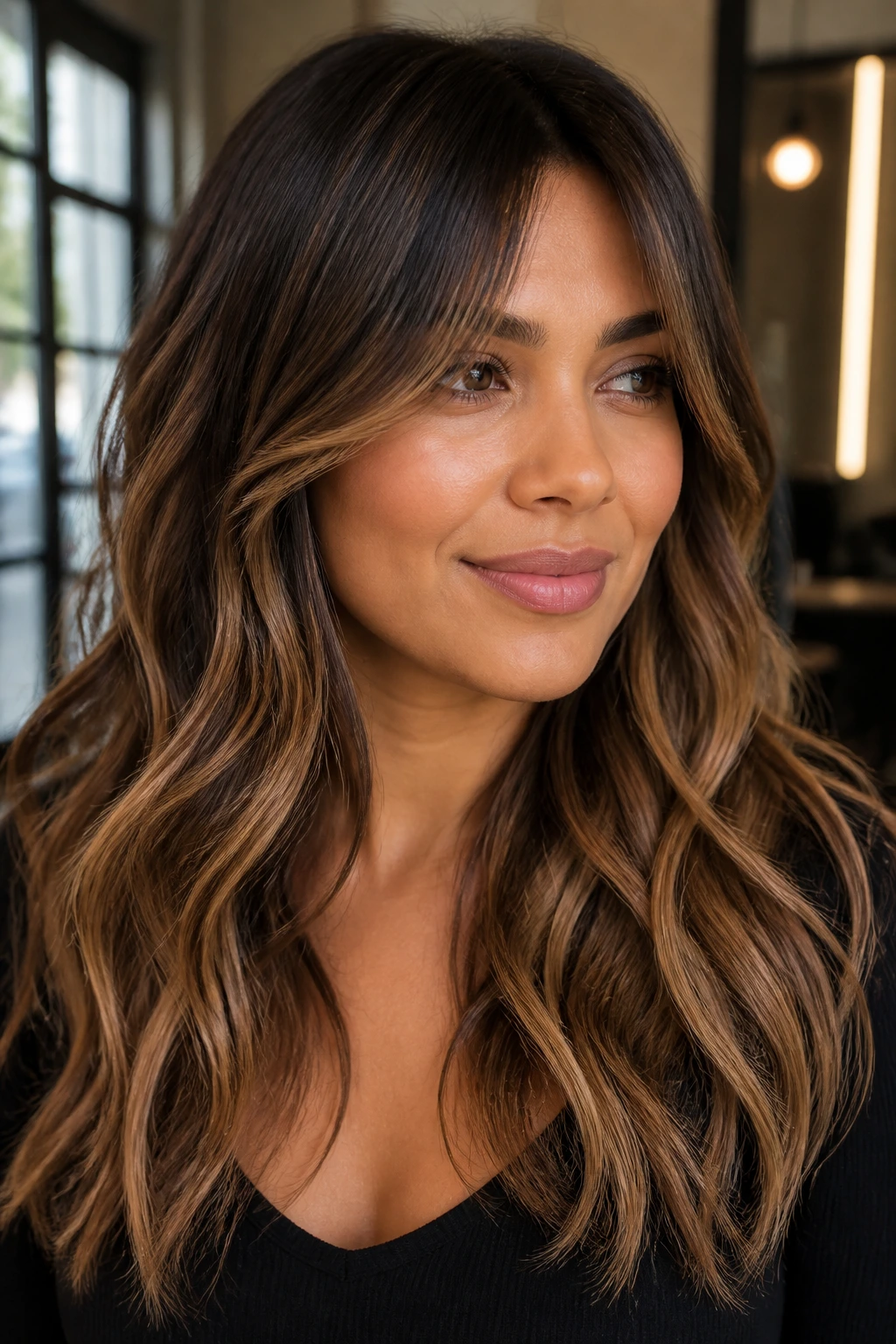
Will brown ombre work on olive medium skin?
Yes, but the brown family has to be chosen carefully. Mushroom, truffle, smoky cocoa, and cooler chestnut shades tend to sit better than orange caramel, which can pull the skin red. If you want warmth, keep it beige or toffee rather than copper.
How light should the ends go?
For most medium skin tones, two to three levels lighter than the base is enough. That usually means a level 5 or 6 root fading into a level 7 or 8 end, depending on your starting color. Once the ends get much lighter than that, they can start reading like a separate blond panel.
Can curtain bangs work with curly or wavy hair?
They can, but they need to be cut with the curl pattern in mind. Curly curtain bangs usually need to be longer and shaped dry so they don’t spring too high. Wavy hair is easier because it already has the bend that helps the bangs split softly.
What’s the difference between balayage and ombre here?
Balayage is painted in selective ribbons, often higher up around the face and mid-lengths. Ombre is more of a gradual dark-to-light fade from root to ends. A lot of these looks sit in the middle, which is why the result feels modern without looking striped.
How do I keep the lighter ends from turning brassy?
Use color-safe shampoo, limit hot water, and ask for a gloss when the tone starts to drift. Blue shampoo can help if the ends go orange, but don’t leave it on too long or the lighter brown can look dull. If the hair was lifted a lot, toner refreshes matter more than more shampoo.
Can I do this on dark virgin hair?
Yes, but the ends may need more than one lightening step if you want real contrast. Dark virgin hair often lifts warm first, so the colorist may need to control the warmth with toner afterward. A strand test is smart here because dark hair can shift unpredictably.
How often should curtain bangs be trimmed?
Every three to five weeks is a good range for most people. If the bangs sit below the cheekbone and stop opening at the center, they’ve usually grown past the sweet spot. Keep the face frame clean or the whole style loses its shape fast.
Does this look need a lot of styling every day?
Not if the cut is done well. A quick blow-dry at the bangs and a loose bend through the front layers is usually enough. Straight hair can wear this look too, but it needs a clean part and a little movement somewhere or the ombre disappears.
Soft Contrast That Actually Holds Up
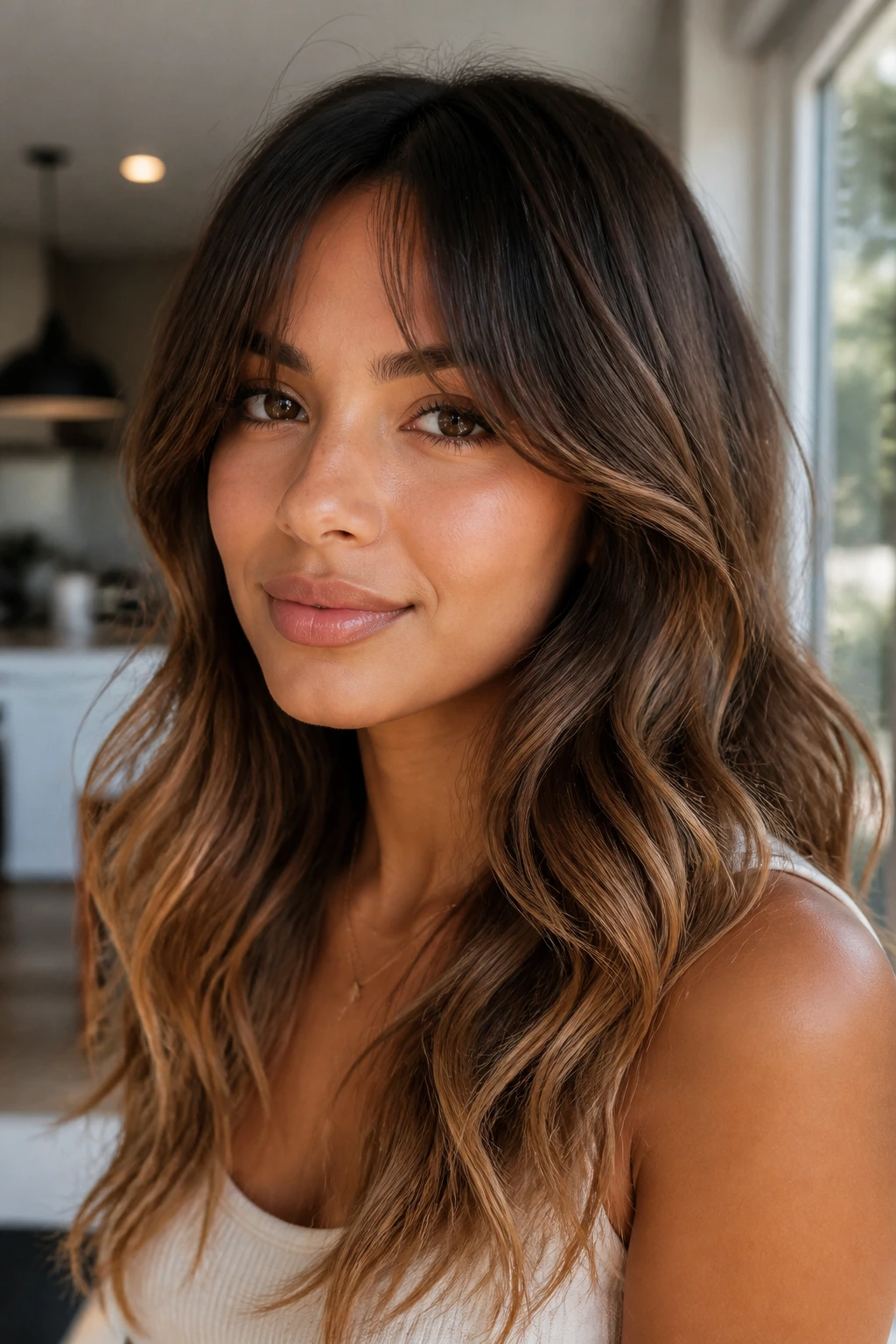
The best brown ombre for medium skin with curtain bangs is the one that still looks like hair, not a filter, when the light changes. The color should follow the face, not chase it. That’s why these shades work when the undertone is respected and the bangs are cut to open, not crowd, the features.
Pick the version that matches how much maintenance you’re willing to keep up with, then give the colorist real instructions about where the light should start. If the root, the face frame, and the ends are planned together, the whole thing falls into place with less drama than people expect — and that’s the part worth copying.