



Curtain bangs and curls have a reputation for drama. Fair enough. Curly hair with curtain bangs does not sit still, and that is exactly why the pairing can look so good when the cut respects shrinkage, face shape, and the way your hair naturally falls instead of trying to bully it into a straight-haired idea of “framing.”
The tricky part is that the best version is rarely the same from one head to the next. A curl that lands at the cheekbone when wet might spring up to the brow once it dries. A fringe that looks soft in the salon chair can turn helmet-like if it’s cut too blunt or loaded with cream. The styles that work have a bit of breathing room. They move. They don’t cling.
And that’s the fun of it. Curtain bangs on curly hair can be polished, shaggy, romantic, messy, retro, or low-key practical, sometimes all in the same week. The front of the cut becomes a small design problem with a lot of answers, which is why this pairing keeps showing up in real life, not just in photos.
Why Curly Hair with Curtain Bangs Keeps Working
-
Face framing without a hard line: The split fringe opens at the center and softens toward the cheekbones, so the curls around your face do the job of contouring without a blunt edge cutting straight across the forehead.
-
Shrinkage works with you, not against you: Curly bangs can sit a little longer than straight bangs and still feel intentional once they dry, which makes them much easier to live with across different curl patterns.
-
They grow out more gracefully: A curtain bang usually blends into layers instead of turning into an awkward shelf, so you can stretch appointments a few weeks longer without looking like you lost a fight with scissors.
-
The front of the style stays flexible: You can wear curly hair with curtain bangs down, clipped back, half-up, or thrown into a bun, and the front pieces still make sense instead of disappearing into the rest of the hair.
-
They give thin spots and dense curls different kinds of help: If your curls are fine, the bangs add lift around the face. If your hair is thick, the split fringe breaks up weight and stops the front from feeling heavy.
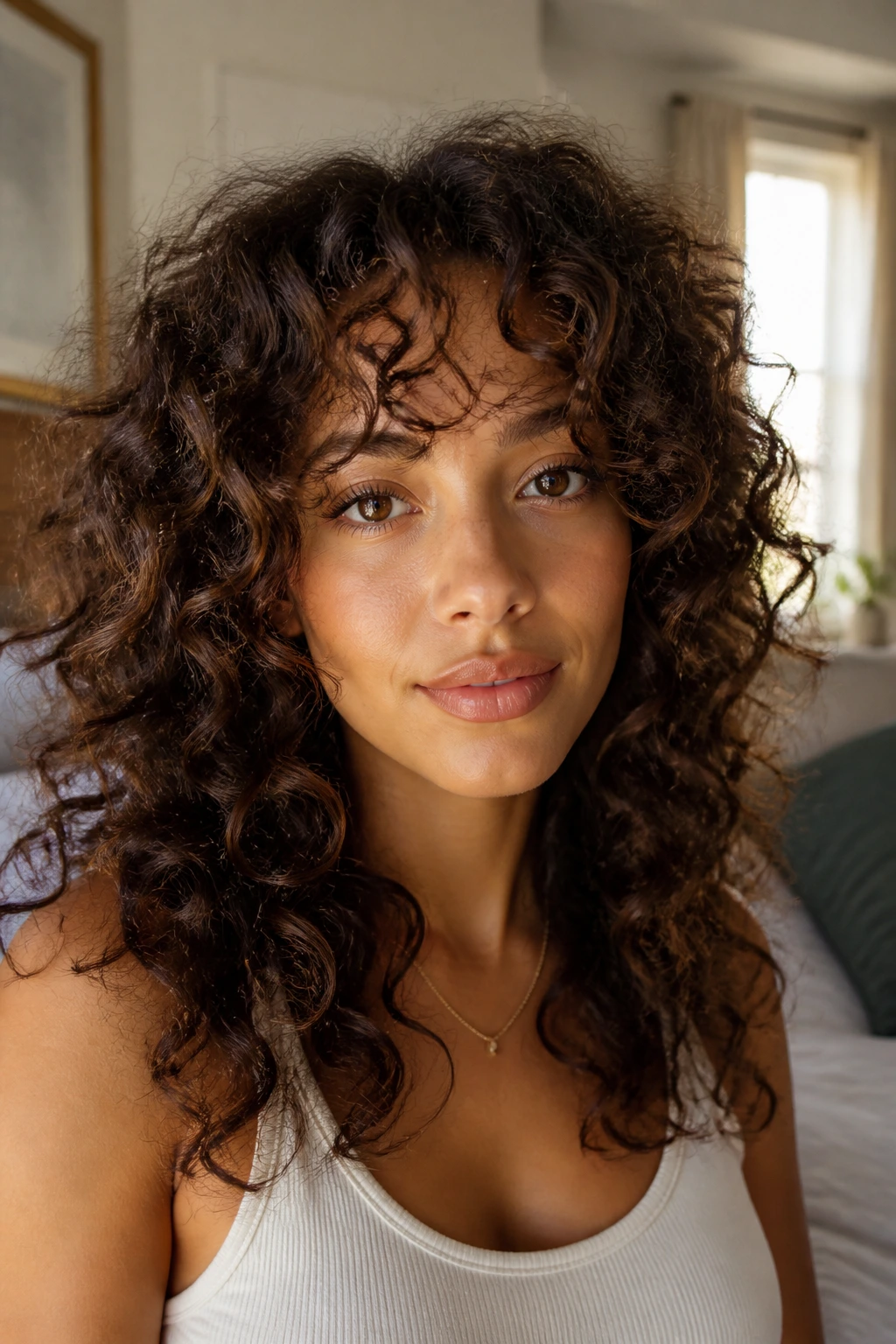
1. Soft Curly Shag with Curtain Bangs
A shag and curly curtain bangs belong together in a way that feels almost annoyingly natural. The layers keep the volume moving upward instead of puffing out at the sides, and the fringe falls into that loose, lived-in shape that makes curls look deliberate even when they’ve dried a little unevenly.
Why it works: The shag gives the curls room to stack without building a triangle at the bottom. Curtain bangs add a soft center part and a little cheekbone length, which keeps the haircut from looking too square. If your curls have a springy bounce, this is one of the easiest ways to make the front look styled without much actual styling.
Best for: Medium to dense curls, especially if you like hair that has shape at the crown instead of hanging flat. It’s also a solid pick if you hate the idea of spending ten minutes forcing every front curl into place.
Styling note: Scrunch in mousse on soaking-wet hair, then diffuse with your head slightly forward so the bangs don’t dry pasted to the forehead. I like to flip the fringe side to side while it’s still damp; it keeps the split from getting too perfect.
2. Chin-Length Curly Bob with Airy Bangs
Short curls can look crisp and expensive when the bob is cut with enough room for shrinkage. Add curtain bangs, and the whole style suddenly stops reading as “round bowl” and starts reading as polished with a bit of attitude. That front split matters more than people think.
What makes it different: A chin-length bob puts the ends near the jaw, which is where curly hair tends to show shape quickly. The curtain bangs echo that line without boxing the face in. If the shortest pieces land around the cheekbone when dry, the haircut feels open instead of heavy.
Who should try it: Anyone with loose curls to springy ringlets who wants less length but does not want to lose softness around the face. It’s especially good if your hair gets bulky at the bottom; a clean bob removes the weight that often makes curls look helmet-shaped.
My take: Keep the front pieces a touch longer than you think. Too-short curtain bangs on a bob can bounce up fast and leave the face feeling exposed in a weird way. A little extra length gives you room to tuck, twist, or let them fall where they want.
3. Long Layered Curls with Draped Fringe
Long curls can swallow your face if the cut is too one-note. Curtain bangs fix that by pulling the eye inward before the hair drops down the sides, and the layers stop the whole shape from turning into one heavy curtain from scalp to ends.
Why people keep coming back to it: Long layers give movement, but the fringe is what keeps the style from feeling plain. The front pieces can be cut to kiss the cheekbone or graze the mouth, depending on how much spring your curls have. That’s the part most stylists need to hear: not the wet length, the dry landing spot.
A good long layered cut also buys you options. On wash day, the front can frame the face with a little bounce. On day three, you can pin one side back and let the bangs do the talking. It’s one of those cuts that doesn’t argue when the rest of your hair is doing something different.
If your curls are loose and elongated, ask for the longest bang pieces to blend into the front layers early. If they’re tighter, leave more length in the fringe and let the shape creep up on its own.
4. Curly Wolf Cut with Airy Curtain Bangs
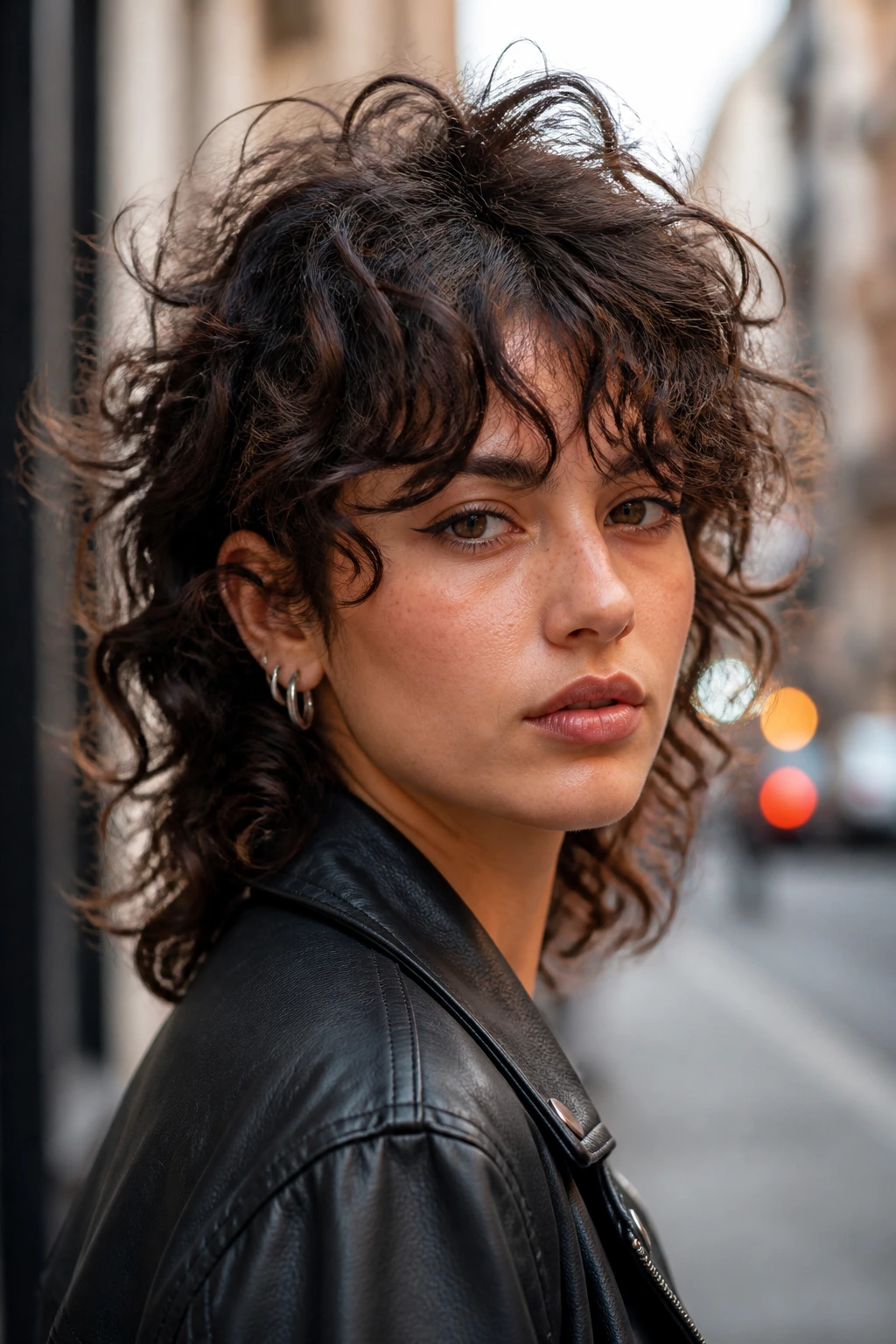
Why does this combo keep showing up in salons and on street-style heads? Because the wolf cut loves mess. Curly hair with curtain bangs takes that mess and gives it a face, which is the whole point.
The wolf cut pushes short layers at the crown and longer lengths underneath, so the silhouette gets wild in a controlled way. The curtain bangs keep the front from looking like a disconnected explosion. Instead of a stiff bang line, you get a split fringe that can fall softly and still hold the shape of the cut.
This one is best if your curls already have personality and you do not want to flatten them into something polite. Use a light curl cream at the ends, then a stronger gel near the fringe so the front pieces don’t frizz before the rest of the head has even finished drying.
What to ask for
- Keep the crown short enough to lift, but not so short it sticks out.
- Leave the bang area long enough to curl back toward the cheekbones.
- Blend the side layers into the fringe instead of cutting a hard step.
- Dry-cut the front if your curl pattern changes a lot from wet to dry.
5. Rounded Shoulder-Length Cut with Face-Framing Bangs

There’s something clean about a shoulder-length cut that curves in just enough to follow the shape of the face. Curtain bangs make that shape feel softer, and curls keep it from looking too tidy, which is exactly why this cut works on so many hair types.
Why this shape holds up: Shoulder-length curls often sit in the awkward middle between too short and too long. The rounded shape prevents bulk from building at the shoulders, and the bangs create a focal point around the eyes and cheekbones. The style looks especially good when the front pieces are slightly lighter than the rest of the cut.
I’m fond of this one for people who want movement without a lot of upkeep. It still needs a diffuser or air-drying routine, but it does not demand the aggressive shaping that a shag or wolf cut does. The result feels calmer. Less theatrical. More easygoing, but not boring.
If your curls are dense, ask for internal layering rather than a lot of surface layers. That keeps the perimeter neat while the fringe does the visual work.
6. High Puff with Curly Curtain Bang Pieces
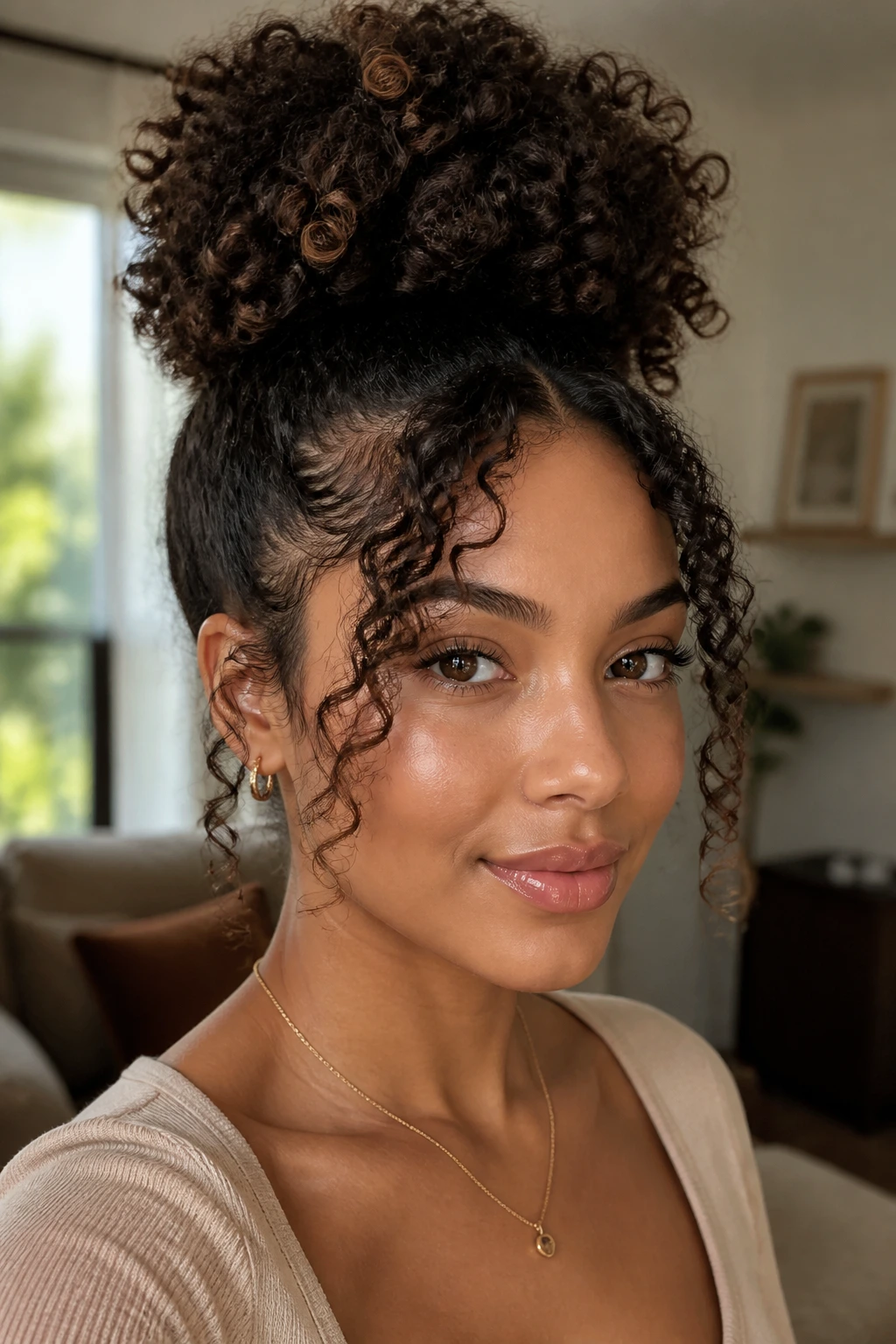
A high puff can look very polished or very thrown-together, and curtain bangs help it land on the polished side. Pulling the bulk upward opens the face, while the front pieces stay loose enough to create shape around the forehead and temples.
Why it works: The puff gives you height, which is useful if your curls tend to collapse at the crown. The curtain bangs bring the attention back down so the style does not look top-heavy. A few front curls left out on purpose make the whole thing feel finished instead of rushed.
This is one of my favorite looks for second- or third-day curls. The roots can be a little lived-in. The front just needs a mist of water and a dab of gel, then a quick twist away from the face so the bangs fall in two clean arcs.
If you wear headbands, this style likes them. A thin satin band or a small scarf can sit behind the bangs and make the whole puff look intentional rather than accidental.
7. Half-Up Half-Down on Defined Curls
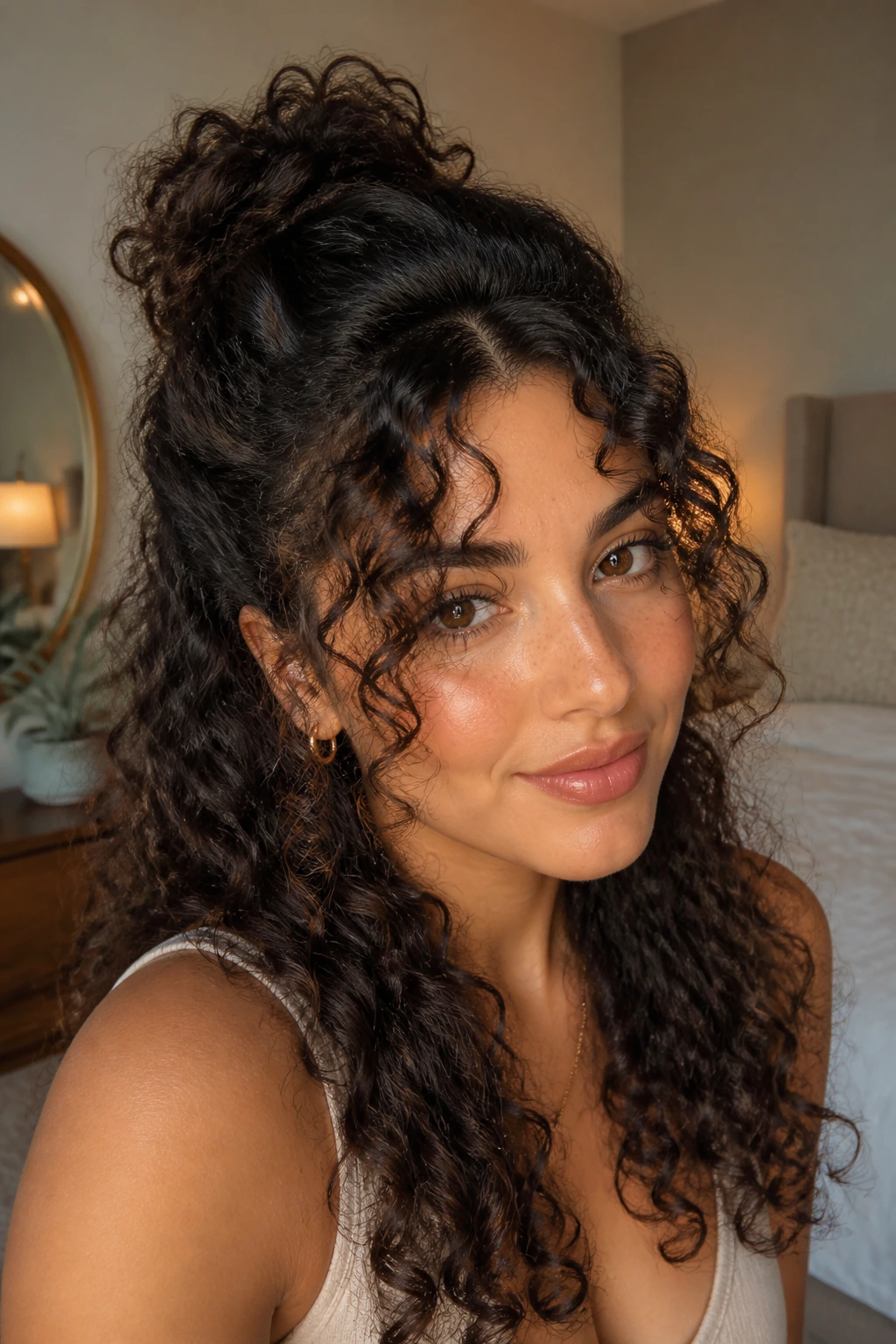
Half-up half-down styles are not new, but curly hair with curtain bangs makes them feel fresher. The top section pulls the crown back, the curls stay visible, and the bangs keep the front from disappearing into the rest of the hair.
This works best when the top half is secured loosely. Tight elastics flatten the crown and can make the whole style look too severe. Use a claw clip, a soft tie, or even two pins crossed behind the crown if you want the top to stay lifted without crushing the shape.
The curtain bangs also give you a useful bit of control. If one side is frizzier than the other, the split fringe can hide the difference. If the front is behaving, you can leave it open. If not, twist the front pieces back a little and let the rest of the curls carry the style.
8. Claw-Clip Twist with Loose Fringe
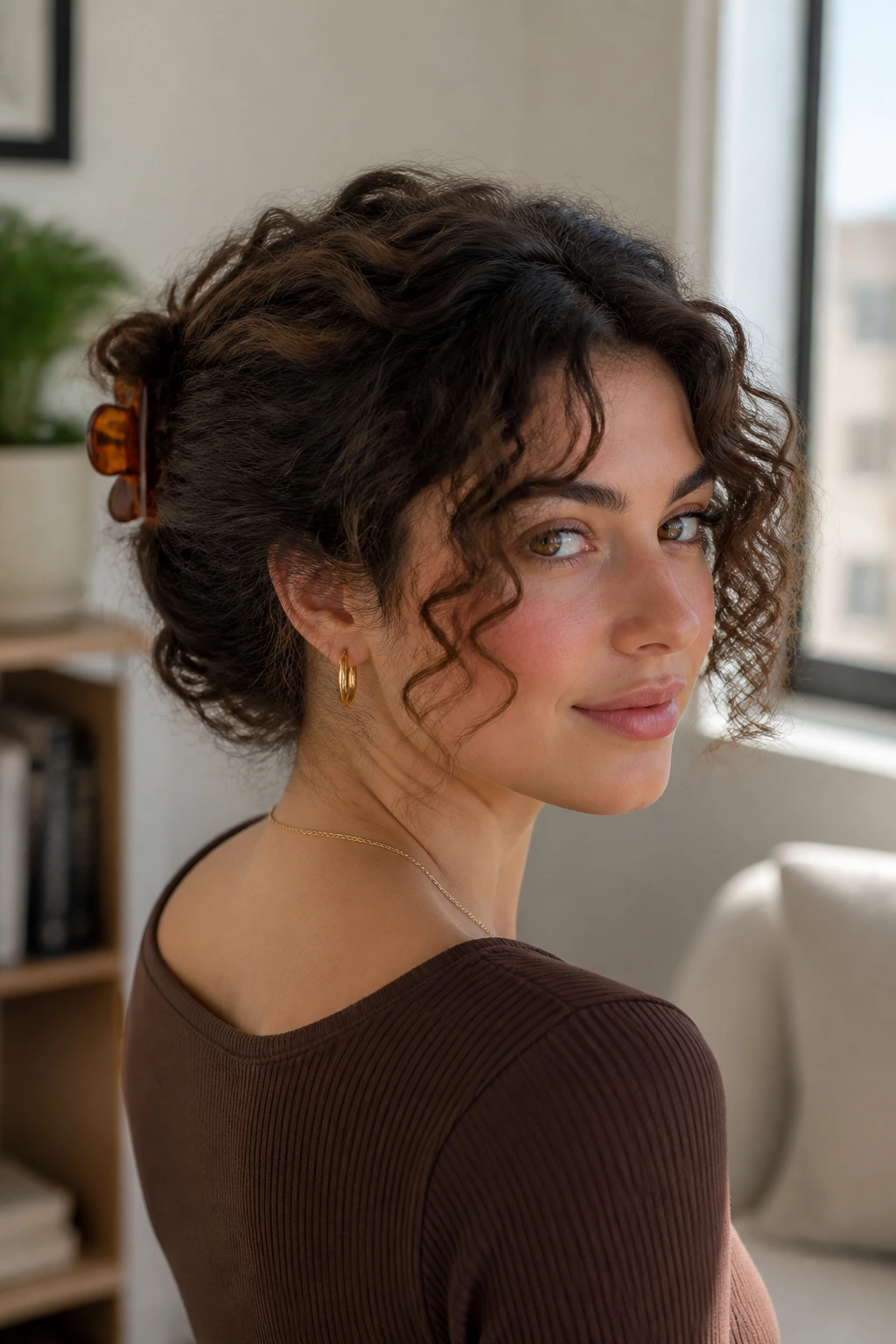
A claw clip can save a bad hair morning, but the style only looks good when the front is shaped on purpose. That’s where curly curtain bangs come in. They make the clip-up feel like a hairstyle instead of a shortcut.
Twist the back section upward and leave the front curls out. Then finger-coil the two front pieces just enough to make them fall in a soft arc. If your curls are thick, clip the hair slightly lower than you think you should; that keeps too much bulk from sticking straight out at the back of the head.
This look is ideal when you want your face open but not bare. It also handles office days well. There’s enough polish to read intentional, but no one is going to mistake it for a full updo.
9. Curly Ponytail with Two Front Tendrils
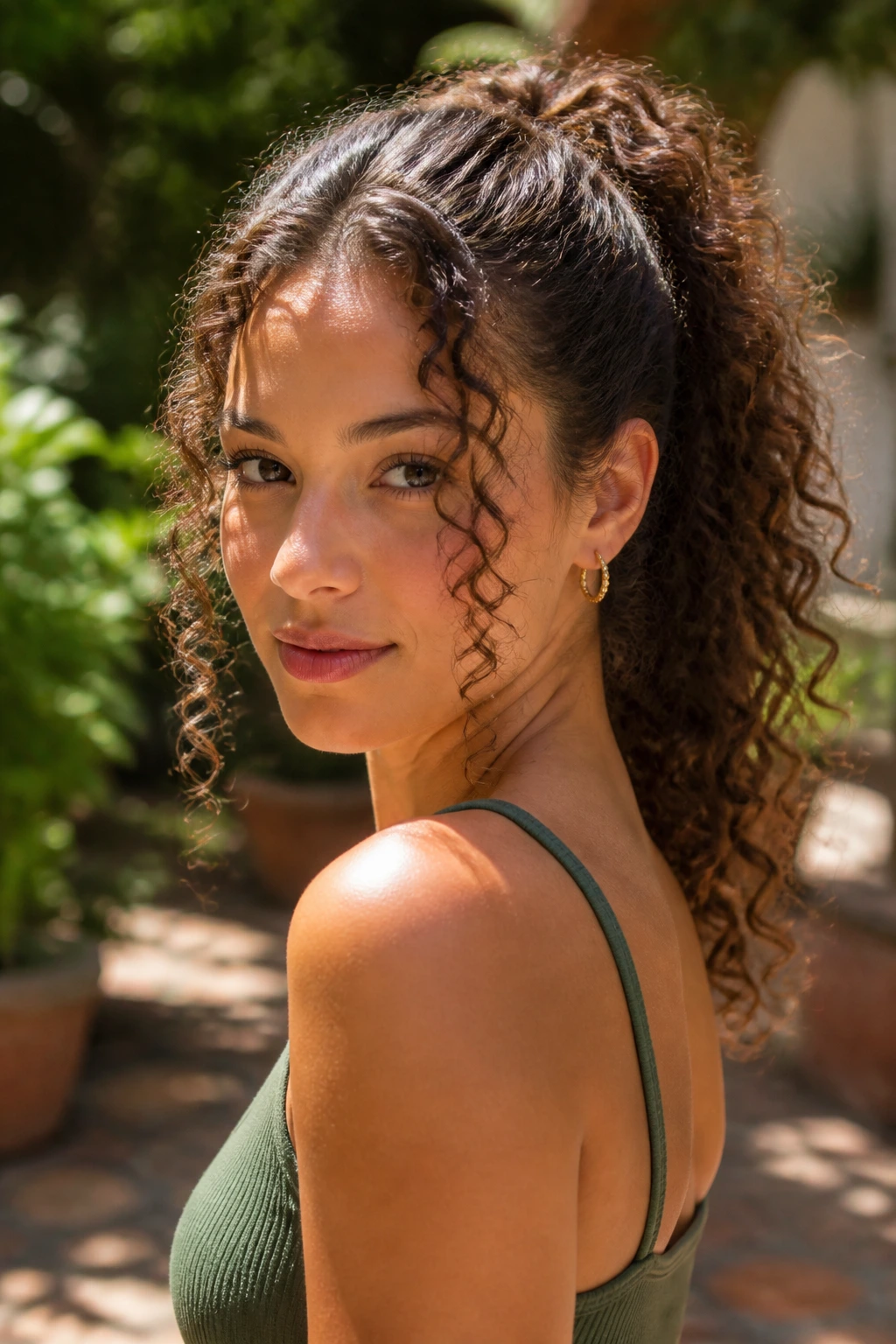
A ponytail with curtain bangs is one of those styles that looks casual until you notice how much the front changes the whole mood. Instead of a plain scraped-back pony, you get softness at the face and movement at the ends.
The trick is balance. If the ponytail sits high and tight, keep the bangs a little looser and longer. If the pony is low and relaxed, the fringe can be more defined. Either way, leave two front tendrils free on purpose; they should look chosen, not forgotten.
I prefer this on days when the curls are cooperating at the mid-lengths but the roots need help. A little root spray, a puff at the crown, and a satin tie keep the pony from sagging. The bangs do the rest. They make the style feel finished from the front even when the back is simply practical.
10. Double Space Buns with Curly Bangs
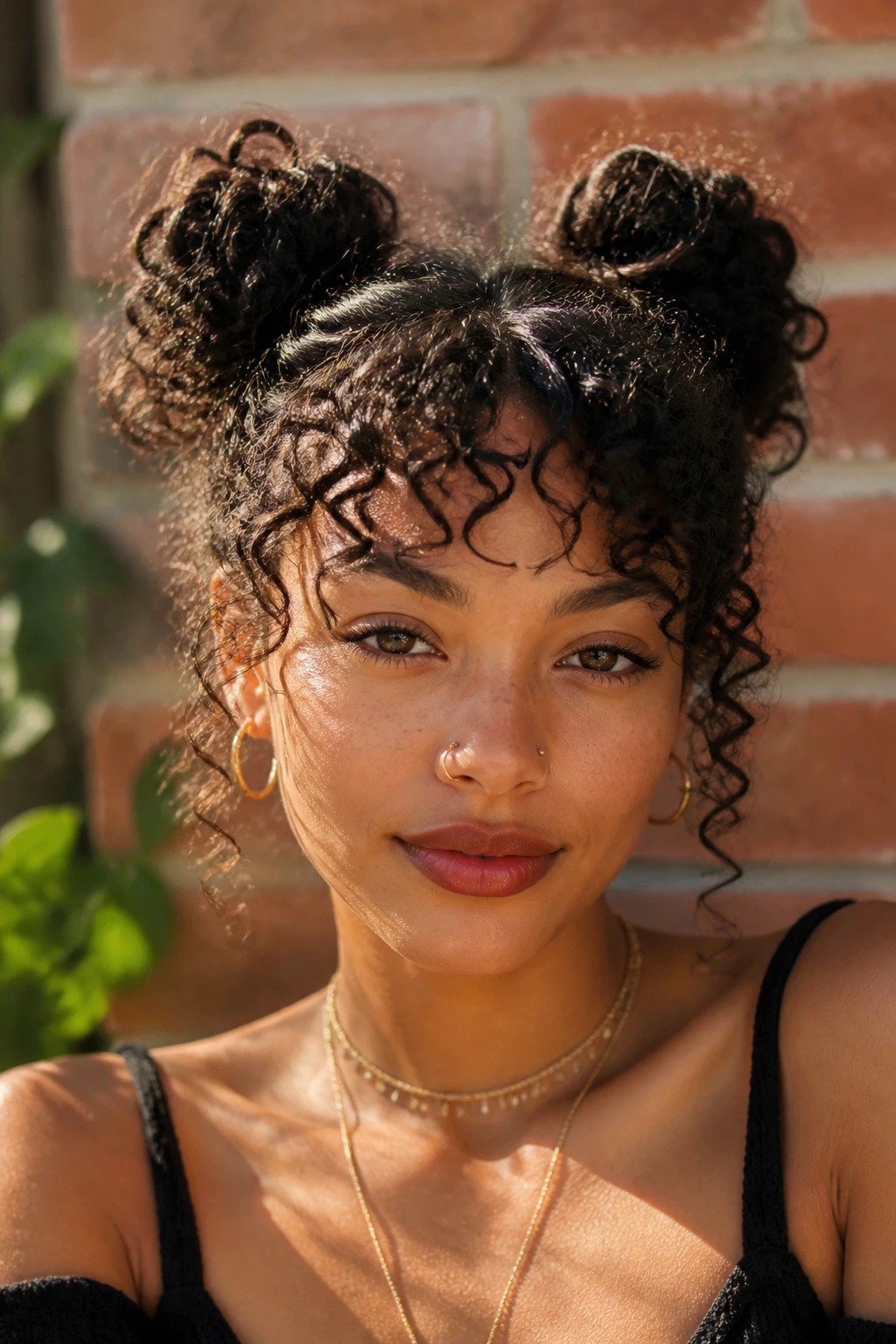
Space buns can veer childish fast. Curly curtain bangs keep them from tipping into costume territory by softening the face and breaking up the symmetry just enough.
Why they work on curls: Curly hair gives space buns texture right away, so you do not need a lot of teasing or product to create shape. The curtain bangs add a little movement around the forehead and cheek area, which keeps the style from looking too round or too stuck in place.
This is a good option for medium to long curls that still have some spring left in them after being gathered. The shorter the fringe, the more playful the result; the longer the fringe, the more relaxed the whole thing feels. I’d avoid slicking the hair down too tightly unless you want a sharper, more graphic look.
A quick style map
- Leave the bangs out before tying the buns.
- Split them while damp and clip each side slightly away from the face.
- Let the ends stay a little frizzy; that texture makes the style work.
- Use bobby pins to tame one or two curls, not every curl.
11. Braided Crown with Free-Falling Curtain Bangs
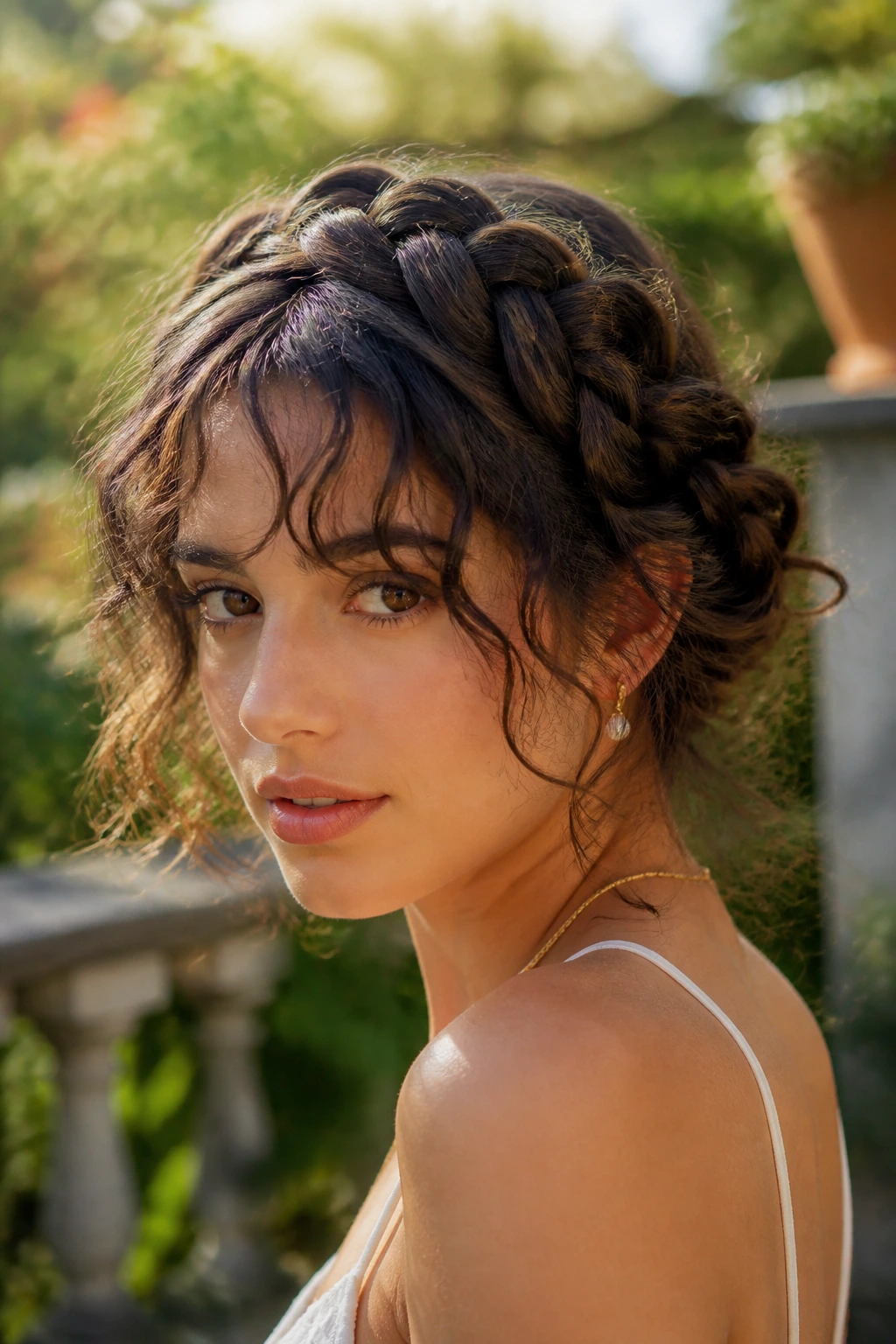
Braids around the crown and curls around the face make a nice little argument for contrast. The braided section gives structure; the curtain bangs stop the style from feeling too formal.
This is especially useful when the top layers are a bit flatter than the rest of the hair. A crown braid lifts the eye line, while the fringe keeps the forehead soft. On looser curls, the bangs can hang in smooth curves. On tighter coils, they can read as more textured, which honestly suits the braid even better.
The style also holds up well when you need the hair off your neck but still want the front to look styled. It’s a strong pick for warm weather, events, or any day when you want the front of your cut to do more than sit there.
12. Deep Side Part Glam Curls
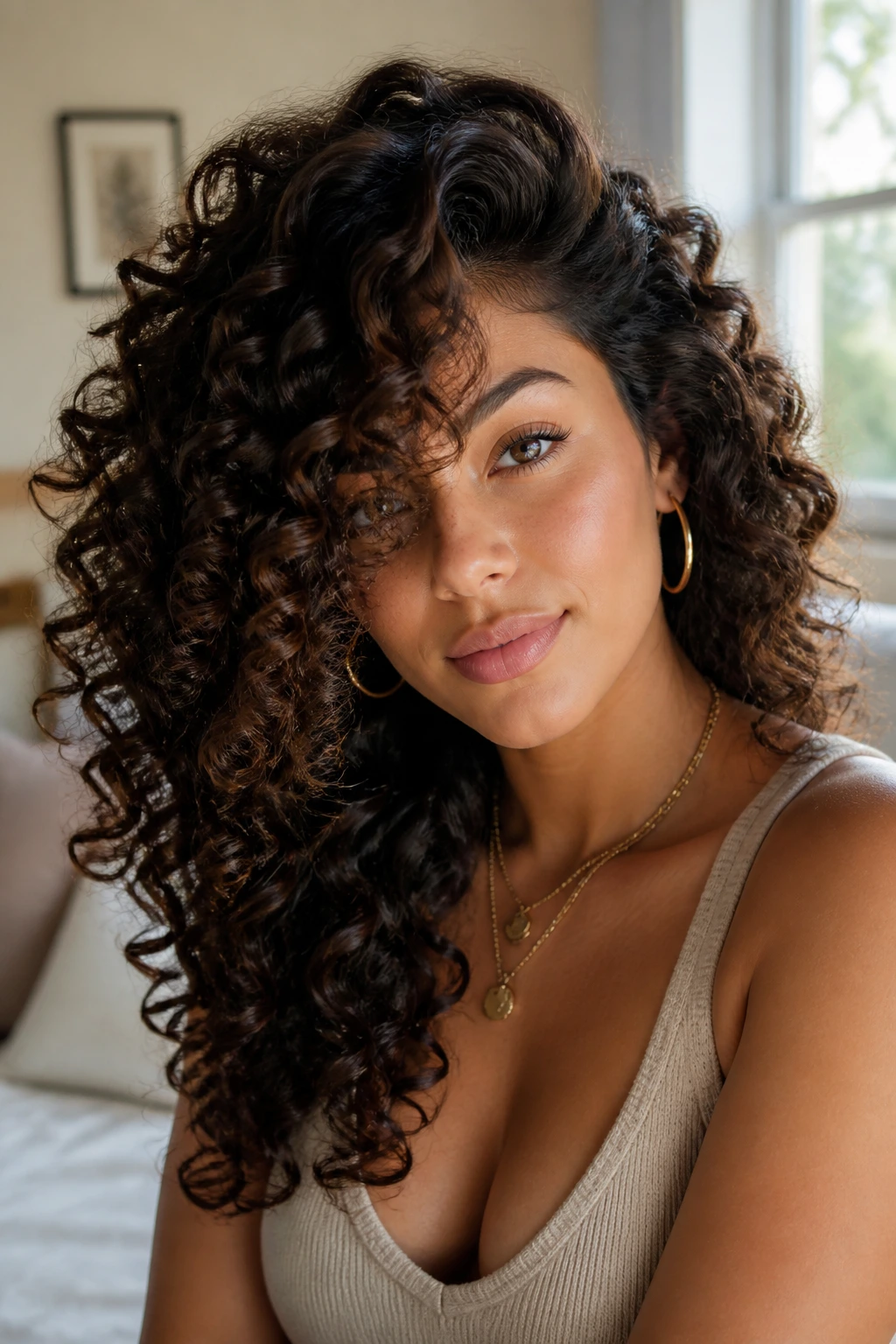
Sometimes the smartest move is not more layers. It’s a different part. A deep side part shifts curly hair over one eye and lets the curtain bangs fall like a soft diagonal frame, which gives the whole style a sharper shape.
Unlike a center part, which can feel open and casual, the side part adds a little drama without forcing the curls into a formal set. The bangs can still split, but the split sits slightly off-center, so the face looks longer and the crown gets instant lift. That matters if your roots tend to lie flat.
This is the curly version of a dressed-up evening style. Use a diffuser or set the curls in sections, then let the bangs dry in the direction you want them to sit. If one side keeps collapsing, pin it for ten minutes while it cools. Oddly enough, that small step can change the whole line of the haircut.
13. Sleek Low Bun with Soft Curly Bangs
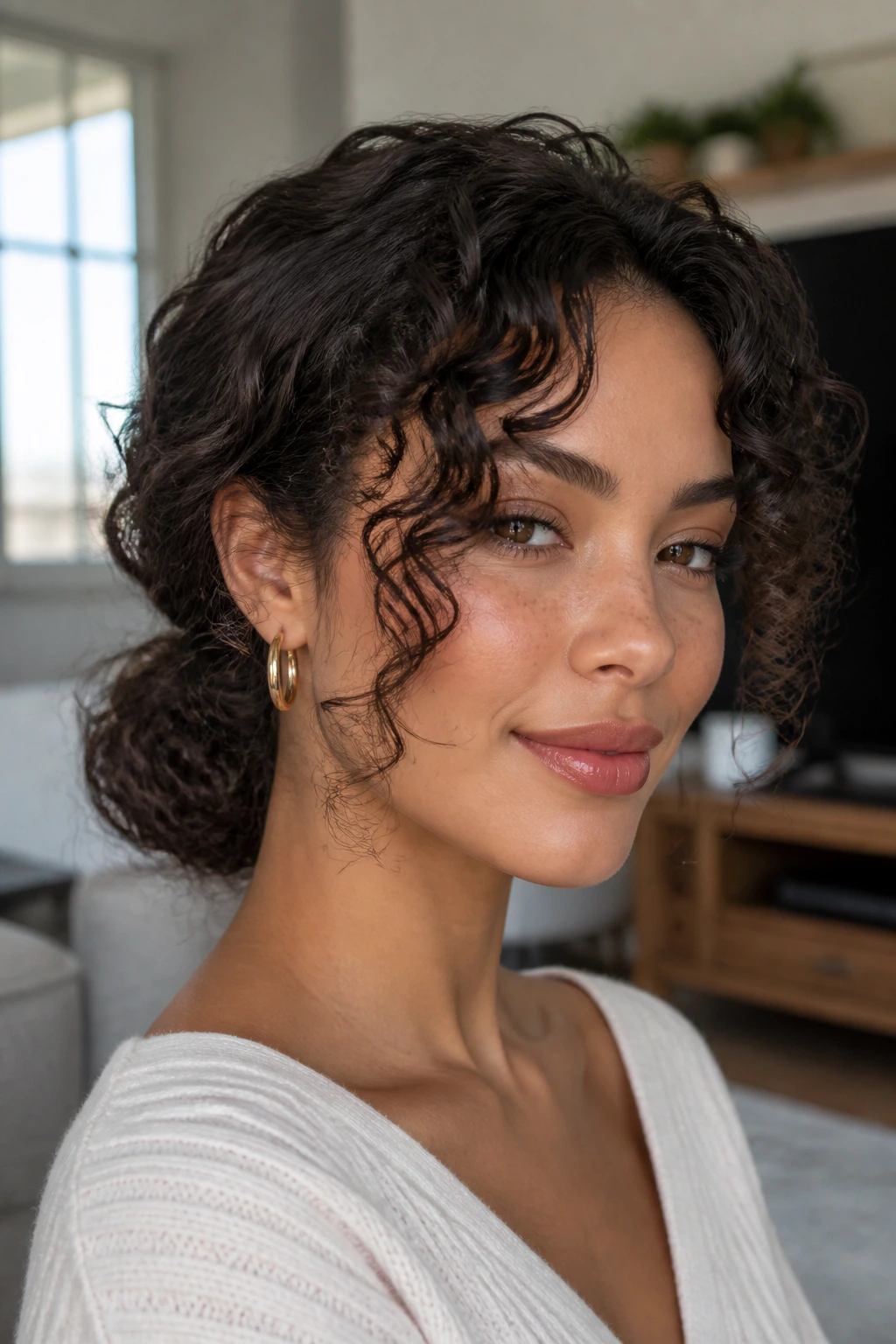
A low bun can look severe on curly hair if every strand is pulled back. Curtain bangs fix that by keeping a little softness in front, so the bun feels elegant instead of tight.
The contrast is the whole appeal. The bun sits low at the nape, neat enough to show the neck and jawline, while the bangs break up the front with two curved pieces. If your curl pattern is strong, don’t flatten the fringe too much; let it keep a bit of volume so it doesn’t look pasted down.
This works best when you want the rest of your hair out of the way but still want the cut to read as a style. A small amount of edge control or gel at the hairline helps, but only at the very front. If you coat the whole head, the bun loses its softness and starts looking stiff.
14. Curly Mullet with Chunky Curtain Fringe
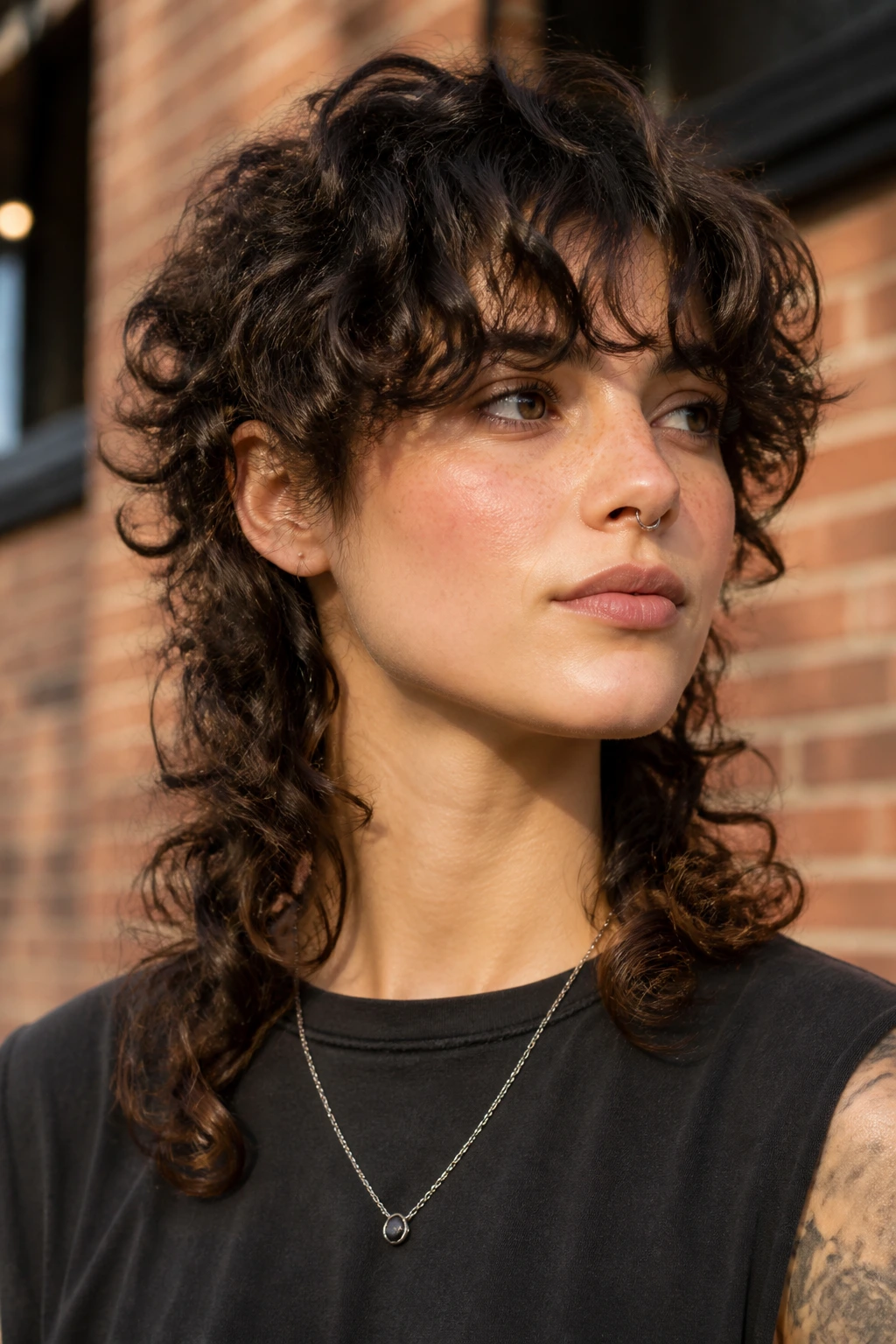
The curly mullet is for people who like shape with teeth. It’s not shy, and it doesn’t try to be. The curtain bangs soften the front just enough that the shorter layers in front and the longer back can coexist without looking accidental.
This cut needs confidence, but it also needs balance. The front fringe should feel airy, not helmet-like. The back can stay longer and looser, while the top and sides get enough layering to keep the silhouette lifted. Curly texture makes the whole thing easier to wear because the movement hides the hard edges that a straight mullet can sometimes show.
I like this version because it refuses to be neutral. It’s one of the few curly hair with curtain bangs styles that looks even better when it’s a bit messy. If you want the front pieces to stand out, define them with a tiny bit more gel than the rest of the head.
15. Tapered Natural Cut with Light Bangs
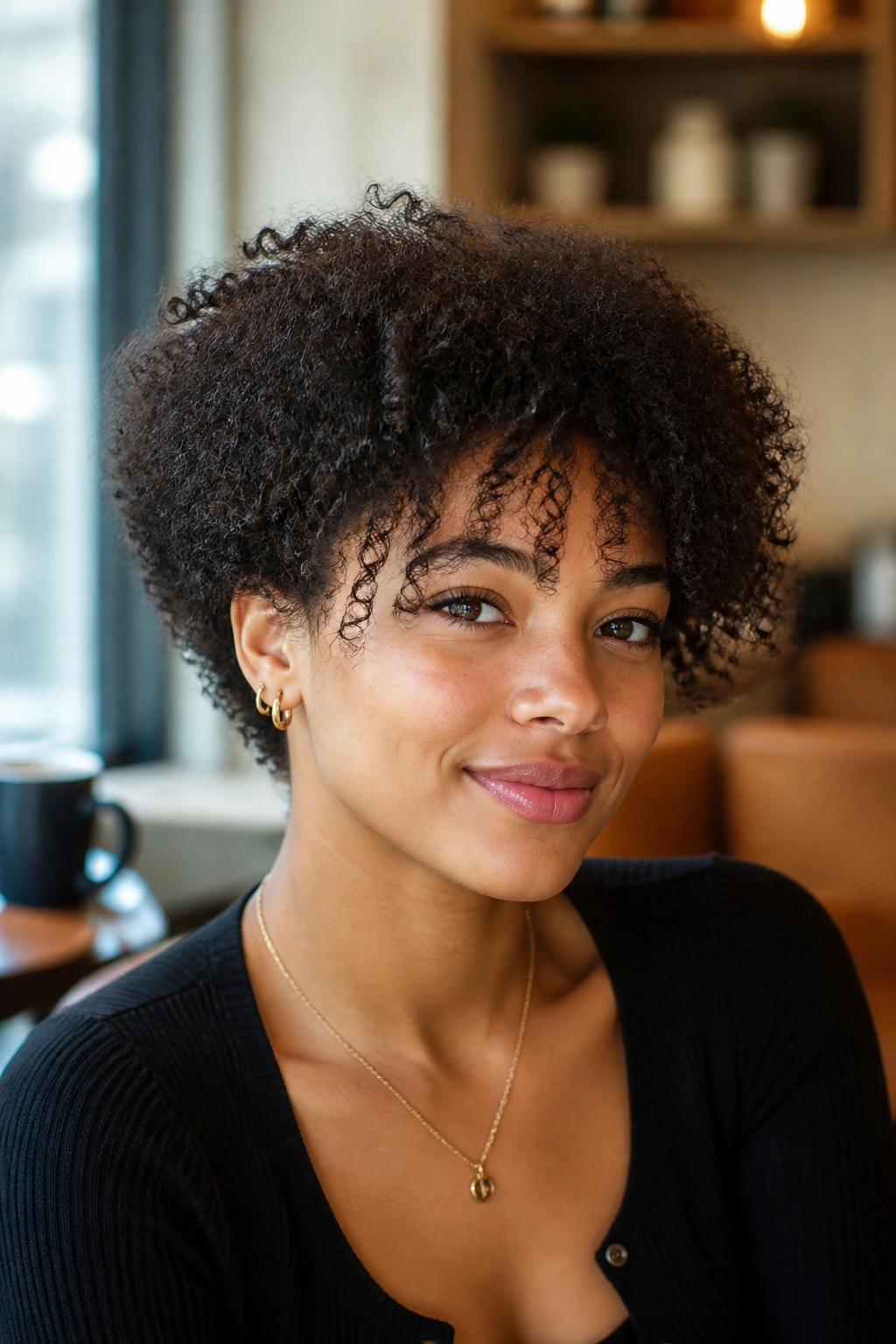
A tapered cut gives natural curls a clean shape at the sides and back, and curtain bangs keep the front from feeling too severe. If you wear your curls in a more coily or tightly textured pattern, this is one of the most satisfying pairings around.
Why it suits tighter textures: The tapered shape removes bulk where it can get puffy, while the fringe leaves enough length at the front to frame the face without shrinking into a stubby bang. That balance matters. Too short, and the bangs vanish. Too long, and the front swallows your features.
When this cut is done well, the head shape looks intentional from every angle. The taper gives clarity to the silhouette, and the curtain bangs soften the forehead. It’s especially good if you like a low-maintenance routine and want your haircut to do most of the work on its own.
A little leave-in conditioner and a curl gel are usually enough. Don’t drown the bangs in cream. Light texture reads cleaner here.
16. Pineapple Updo with Fluffy Bangs
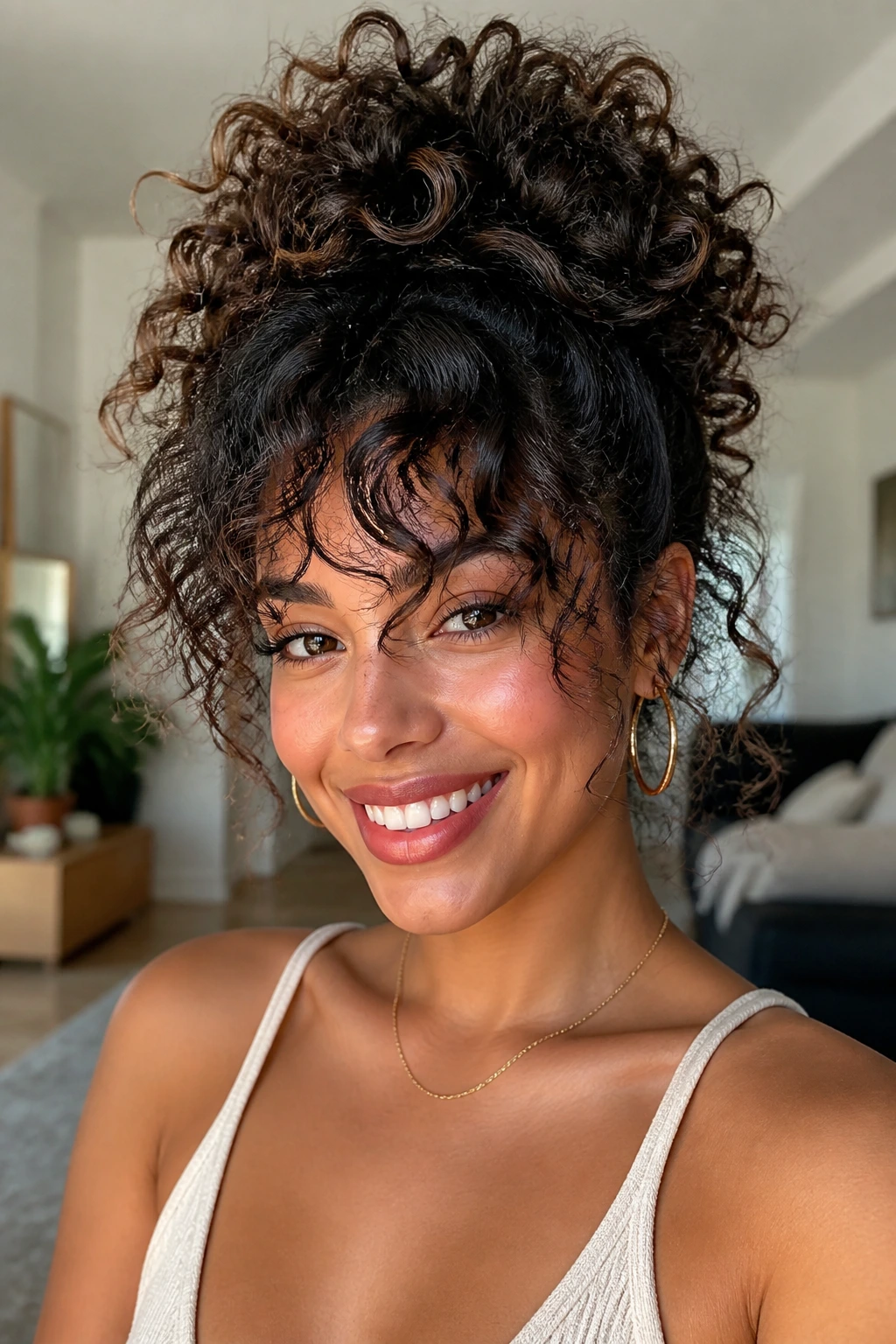
A pineapple updo is usually about preserving curls, but add curtain bangs and it becomes a real style. The high loose pony at the top keeps the lengths lifted, while the front pieces create shape around the face instead of letting everything sit back.
This look is especially useful on day two or three when the curls at the back still look good but the front needs a refresh. Mist the bangs first, then reshape them with your fingers before you touch the rest of the hair. That order matters. If you refresh everything at once, the front tends to lose the shape first.
I like this one for casual days because it still feels styled when the rest of the hair is technically just being protected. The bangs make the difference between “sleep hairstyle” and “intentional messy bun.” Small gap. Huge payoff.
17. Vintage Side-Swept Curls
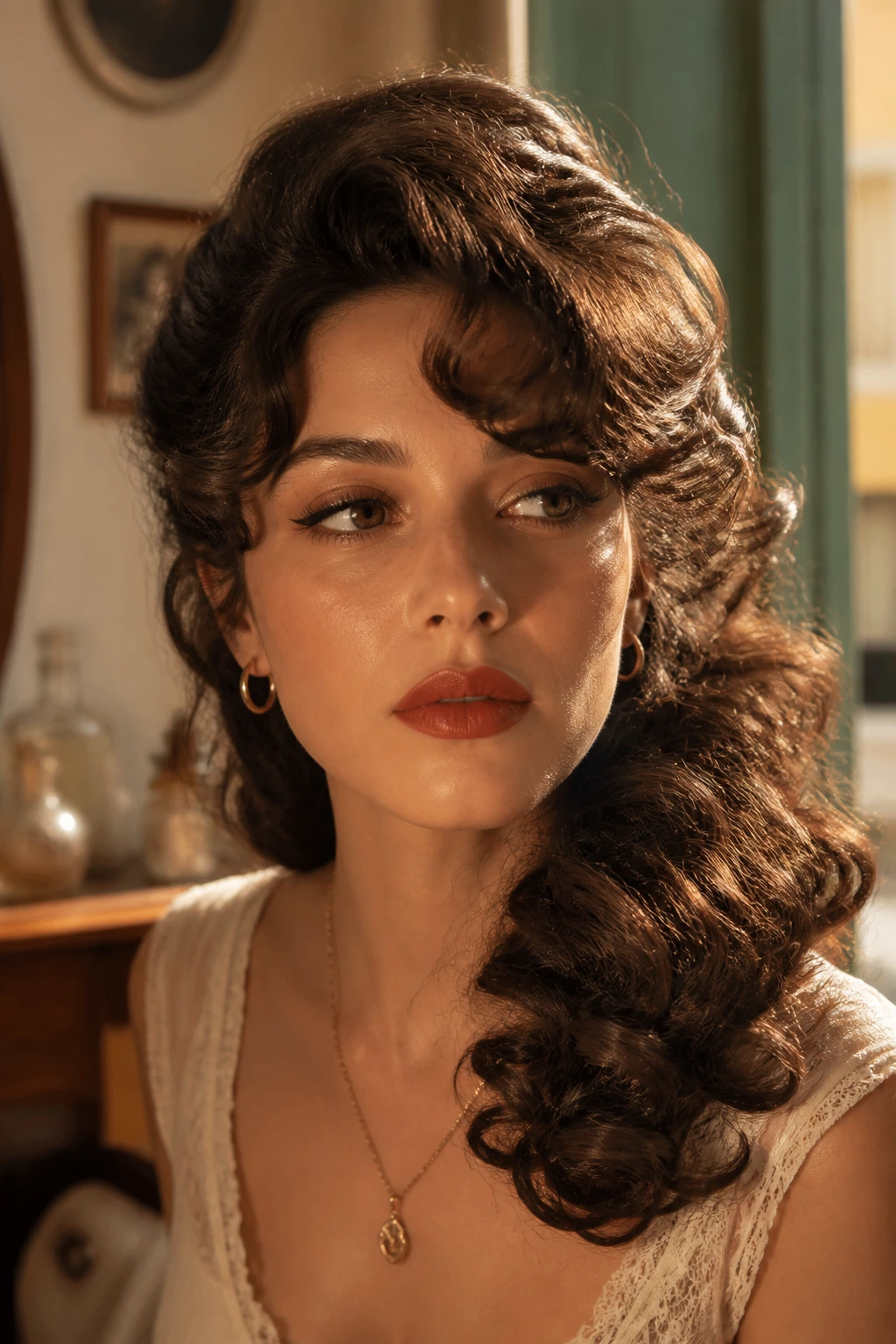
A side-swept front on curly hair pulls from old-school glamour, but curtain bangs keep it from becoming costume-y. The split still exists, only now it leans more softly to one side, which gives the style a little swing and a lot of face framing.
This style works especially well on curls that hold a bend without going rigid. Pin one side back if you want the sweep to stay open, then let the opposite side fall forward in a looser wave. A curl cream with a soft hold tends to work better here than a strong cast, because you want motion, not shellacked ringlets.
The result can look dressy with almost no effort, which I appreciate. Not because effort is bad. Because some days you want the haircut to do the lifting for you.
18. Twist-Out Layers with Curly Fringe
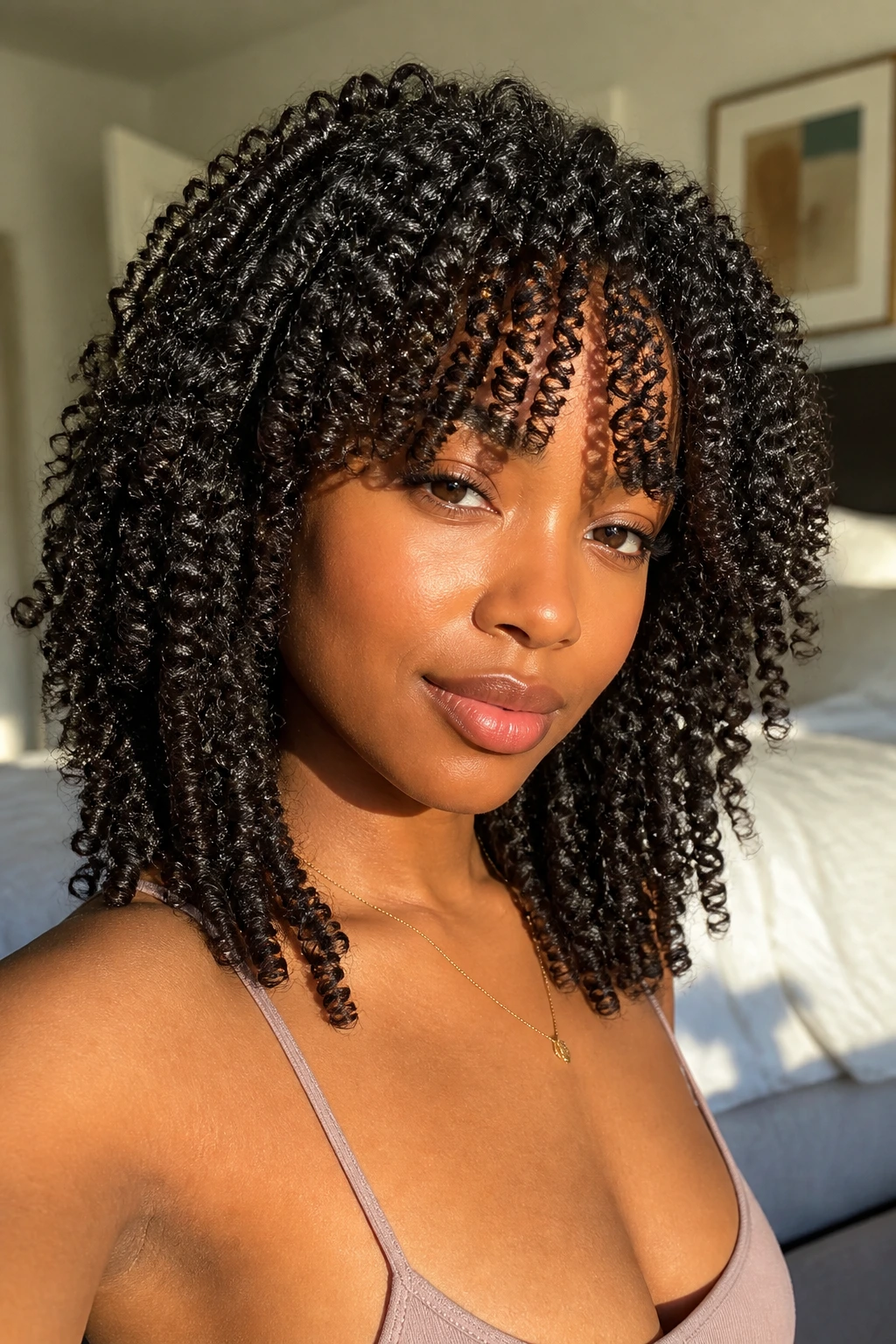
Twist-outs and curtain bangs meet in a very practical place: controlled shape. The twists give you definition, and the layered cut prevents the front from sitting too heavy once everything is unraveled.
If your twist-out tends to puff up at the edges, keep the bang pieces a little longer than the rest of the face-framing layers. That gives you room to separate them after drying without losing the arc. A small amount of setting foam on the fringe before twisting can make the front pieces line up more neatly than the rest of the style.
This is a nice middle ground between a wash-and-go and a more structured set. You get visible pattern, but the bangs stop the front from looking blocky. It also photographs well from the side, which sounds shallow until you realize how often you catch your reflection from an angle and want the cut to make sense there too.
19. Wet-Look Curly Bun with Face-Framing Pieces
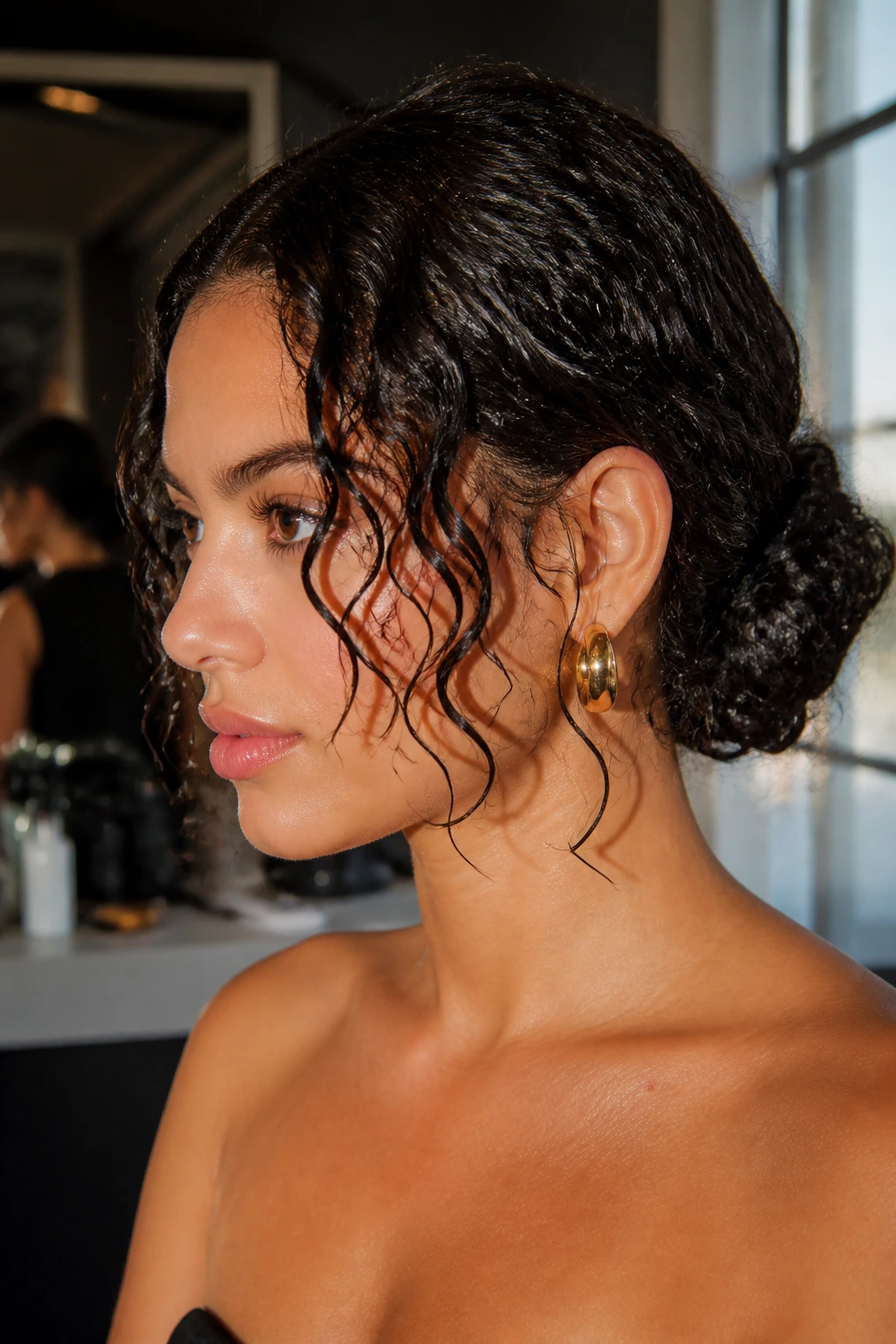
A wet-look bun on curly hair can look sleek or greasy, and the difference is the front. Curtain bangs break up the shine with soft, curled pieces that keep the style from reading like all product and no shape.
The bun itself should sit tight and smooth, usually low or mid-height, while the bangs stay a little softer and less pressed. Use gel at the roots and hairline, then leave the front pieces with just enough natural texture to show the curl pattern. If you slick the bangs back too hard, the whole face disappears into the bun.
This is a strong option for evenings, performances, or any day you want a little shine without losing your curl identity. It’s one of the few slick styles that still lets curly hair look like curly hair.
20. Blunt Shoulder Cut with Curly Curtain Bangs
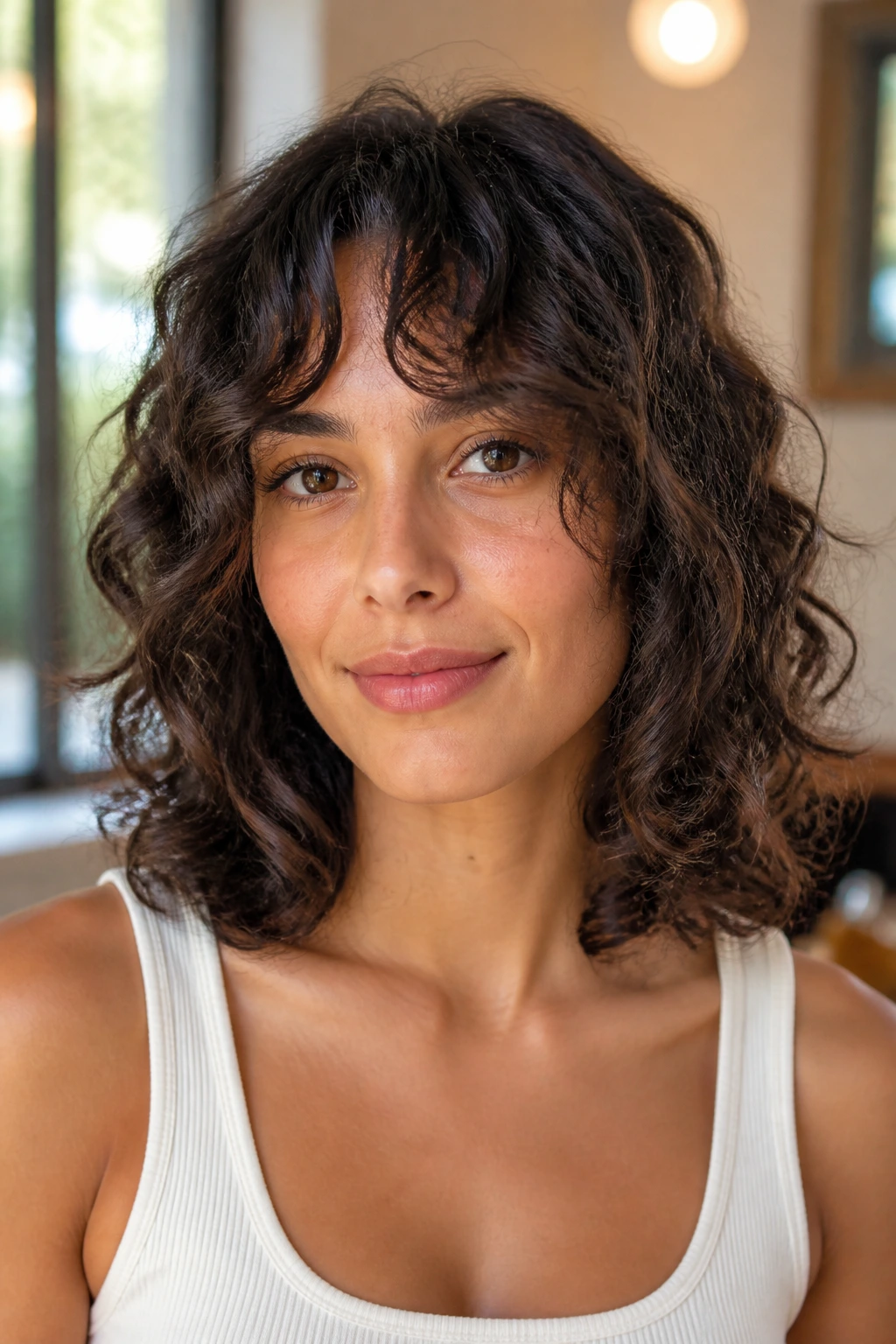
Can blunt and curly live together? Absolutely, if the fringe softens the edge. The shoulder line gives the haircut weight, and the curtain bangs stop that weight from turning into a block.
The blunt shape makes the ends look thick and healthy, which is useful if your curls are fine or medium-density. The bangs carve out a front frame so the look does not feel boxy at the jaw. This cut works best when the curls are defined enough to show the edge of the line, but not so loose that the whole shape collapses by afternoon.
I’d ask for the bangs to sit a little longer than a straight cut would need. Curly blunt cuts can snap up more than expected, and the front pieces need enough length to keep their split visible.
21. V-Cut with Long Curtain Bangs
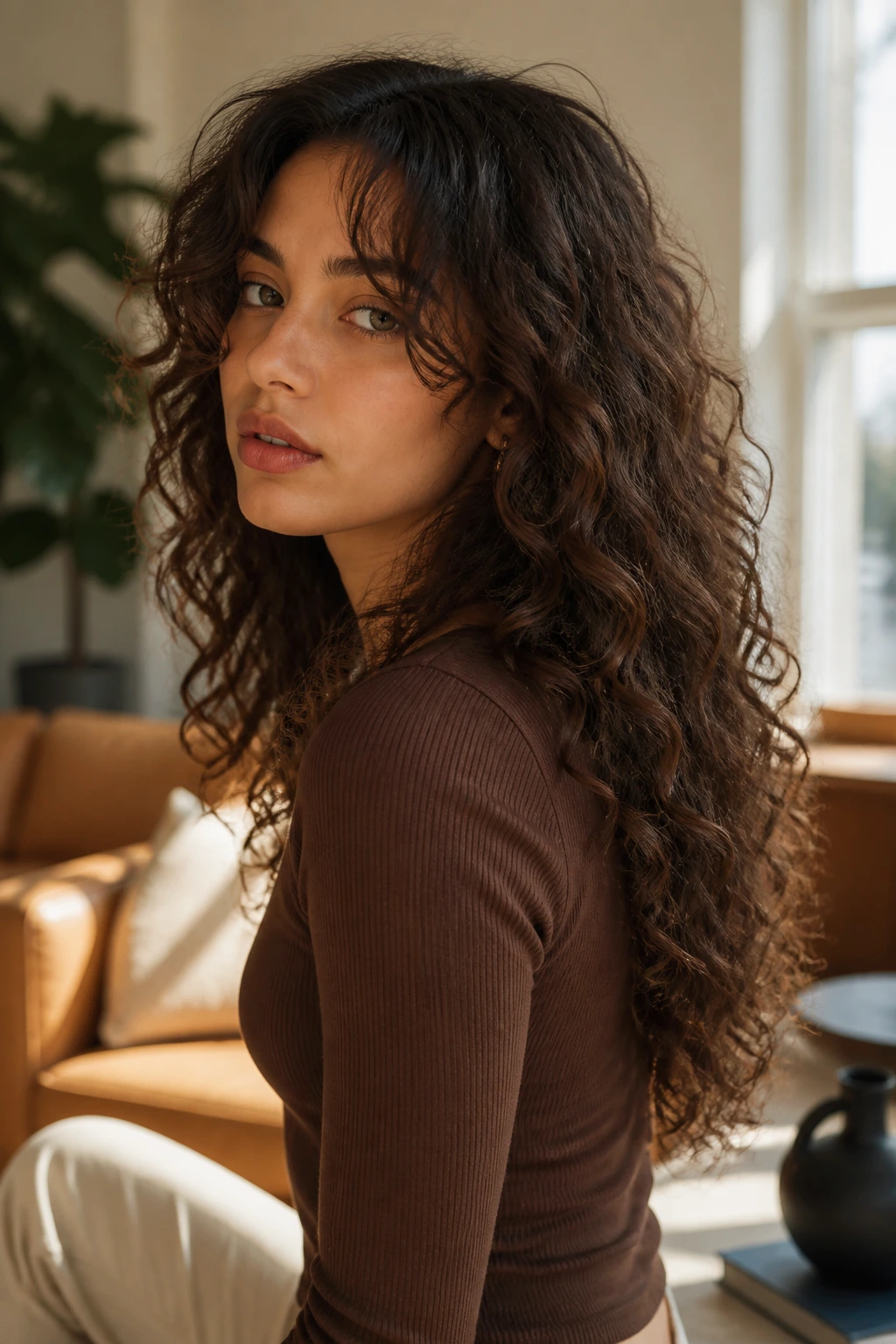
A V-cut gives curly hair a point at the back, which draws the eye down and makes the lengths feel dramatic without adding weight. Long curtain bangs soften the front and prevent the silhouette from looking too sharp.
This shape is useful if you like length but do not want your hair to form one wide sheet. The V creates movement through the ends, while the fringe keeps the front open. If your curls are dense, that combination is especially handy because it breaks the mass up in both directions.
The style has a graceful swing when the hair moves. It’s not the loudest cut in the room, but it does a lot of work quietly. If you need a haircut that looks tidy in a clip and loose down, this is one of the better bets.
22. Festival Braids with Curly Bang Pieces
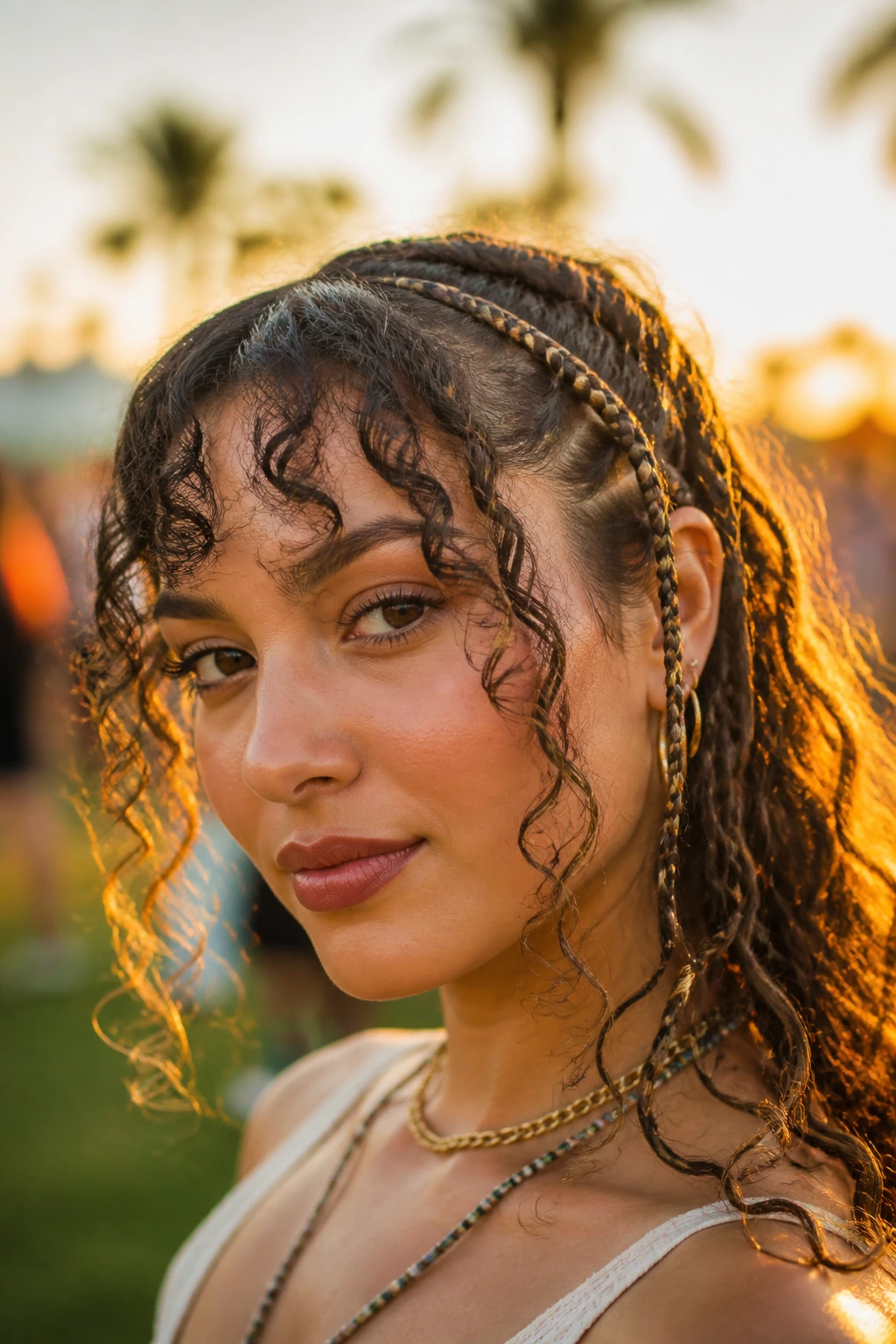
Festival braids are less about a single braid pattern and more about how the front is arranged. Curtain bangs make that front arrangement count. They leave enough curl out around the face so the braids don’t swallow the style whole.
A few small braids through the sides or crown can frame the bangs without taking over. I like this approach when the curls are somewhere between day-two and day-four, because the texture is already there. The front pieces can be defined with a little water and gel, then left loose while the rest of the hair gets braided or pinned.
This style has a playful feel, but it still benefits from structure. If the bangs are too short, the face can look cramped. If they’re too long, the braids lose their outline. The sweet spot is a front piece that bends around the cheekbones and a braid line that sits slightly behind it.
Why Curtain Bangs Make Curl Shapes More Interesting
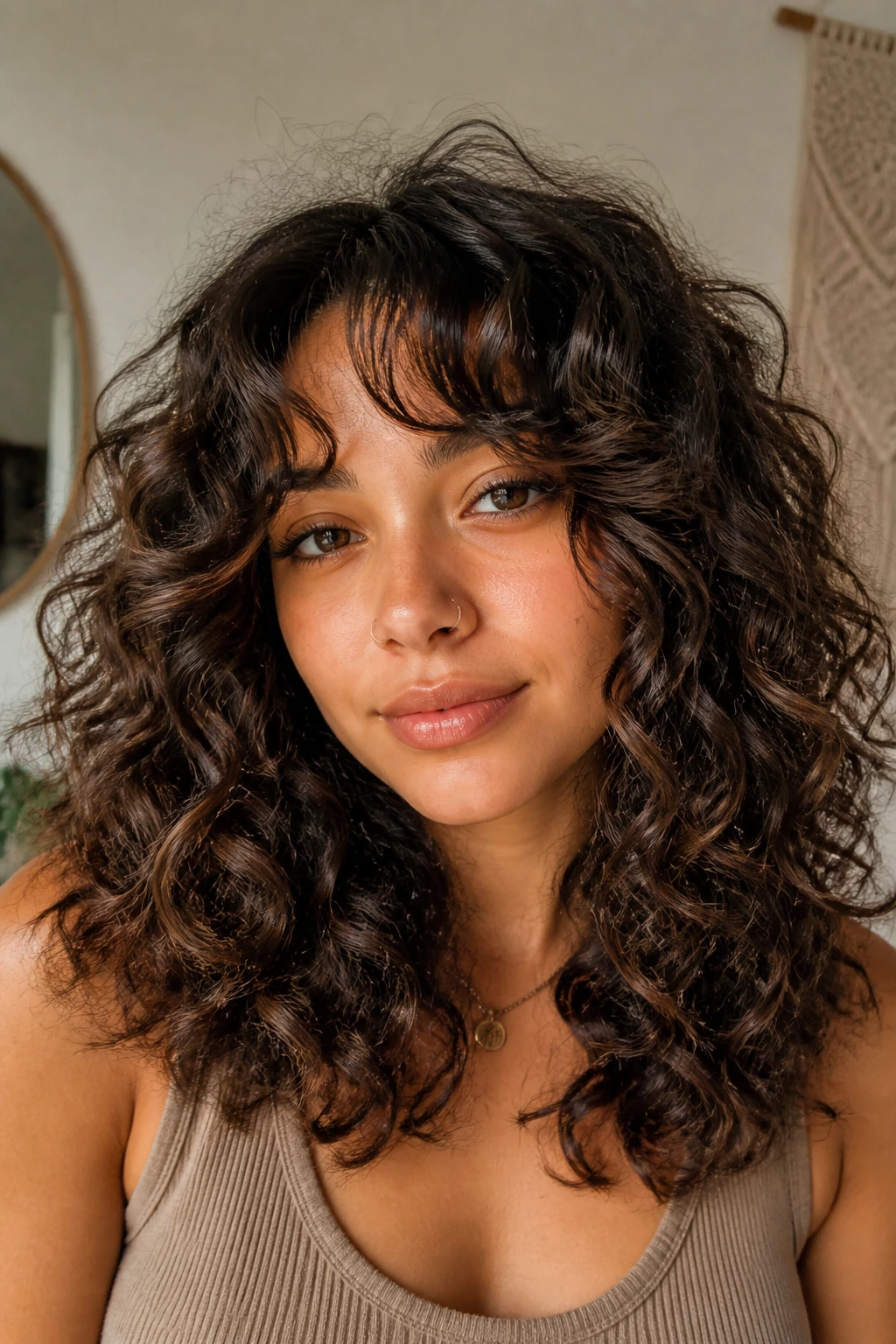
The haircut itself matters more than the styling product. That is the part people miss. Curtain bangs do not rescue a bad shape; they reveal whether the cut was designed around the curl pattern or just copied from straight hair.
On curly hair, the front of the cut has to do a lot of work. It sets the tone for the whole silhouette. A curtain fringe can make a shoulder-length cut look airy, make a shag look deliberate, or make a bun look finished when the rest of the hair is in a hurry. The split in the middle is useful because it gives your curls permission to fall where they want while still directing the eye.
The most useful curtain bangs are rarely the shortest ones. They are the ones with enough length to bend, bounce, and be tucked aside on a bad day. That’s what makes them practical. You can wear them as a real fringe when the curls cooperate, or let them melt into face-framing layers when they don’t.
Essential Equipment for Curly Bang Styles
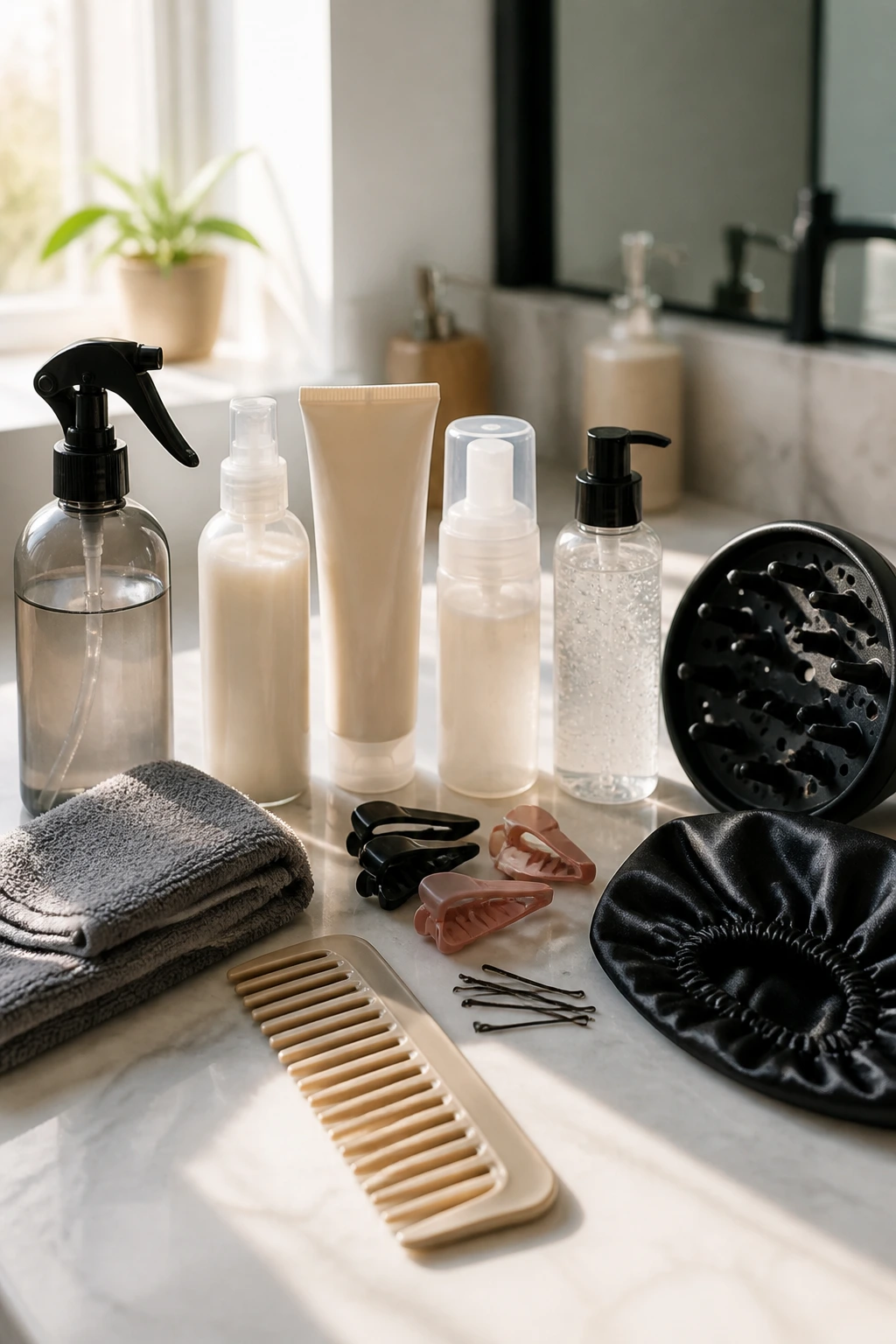
- Wide-tooth comb: Best for detangling wet curls without tearing up the front pieces.
- Spray bottle: Handy for rewetting just the bangs or the crown without starting from scratch.
- Microfiber towel or cotton T-shirt: Cuts down on frizz when you blot the hair after washing.
- Leave-in conditioner: Helps the curls stay soft enough to separate around the face.
- Curl cream or mousse: Cream adds softness; mousse gives lift when the bangs need more shape.
- Hard-hold gel: Useful for keeping curtain bangs from puffing up before they dry.
- Diffuser attachment: The simplest way to dry the front without blasting the curl pattern apart.
- Duckbill clips or small claw clips: Great for root lift at the crown while the fringe sets.
- Satin bonnet or pillowcase: Keeps the front pieces from getting wrecked overnight.
- Bobby pins and no-snag hair ties: Necessary for half-up styles, buns, and quick resets.
Smart Cut, Product, and Trim Choices
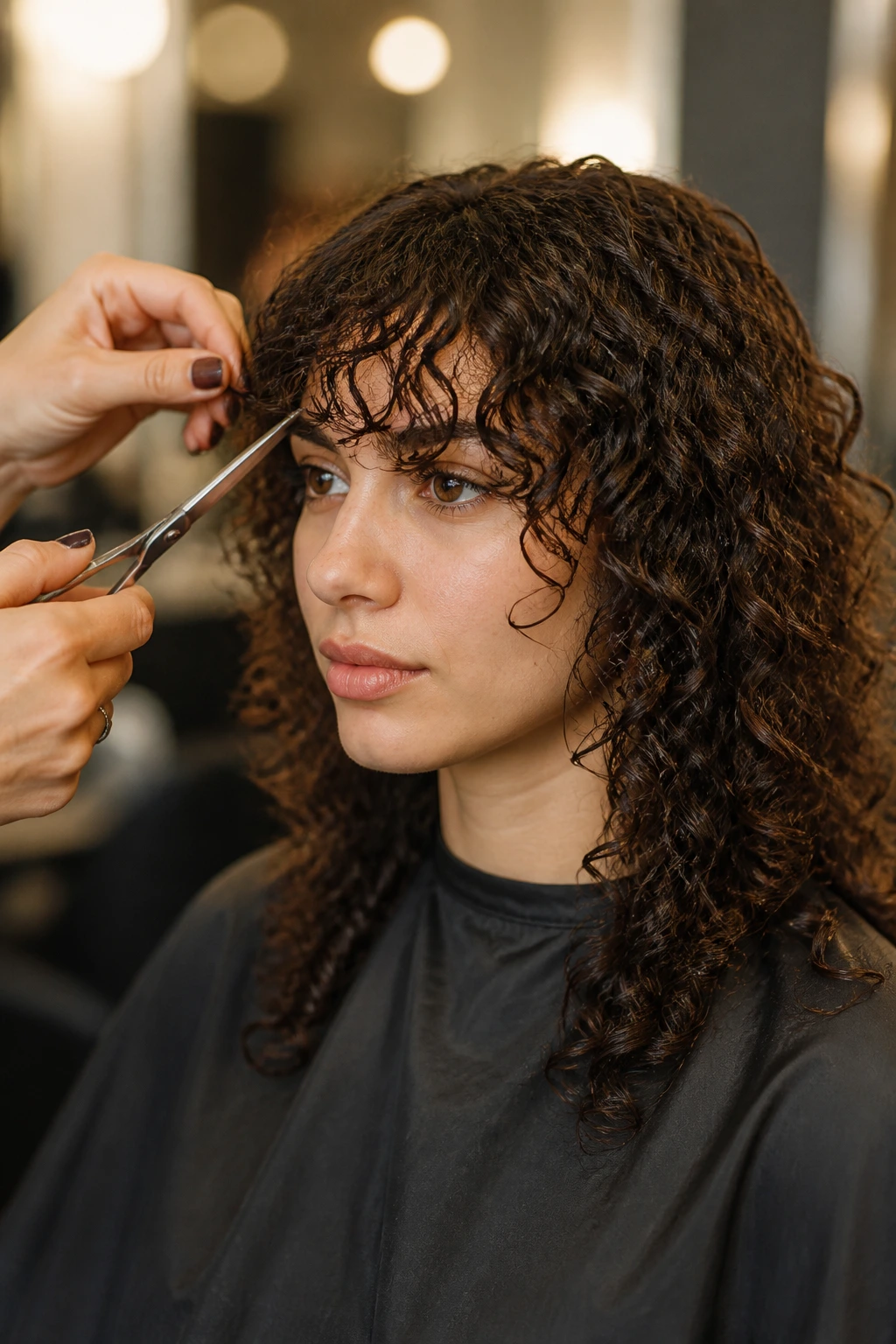
The smartest haircut advice for curly fringe is also the least glamorous: get the cut right first. Product can refine a shape, but it cannot fix bangs that were chopped too short or layered too bluntly. If your curls shrink hard, ask for the front to be cut dry or with the hair stretched to its natural spring, not soaked and pulled straight.
Choose products based on what the front of your hair actually does. If the bangs collapse by noon, a cream alone may be too soft; reach for mousse or a light gel at the root and fringe. If the front frizzes first, a heavier butter can help the ends but usually not the root area, so keep it off the hairline. And if your curls clump too much, especially around the bangs, a lighter styler with a little water can keep them from sticking into one solid rope.
Trim timing matters too. Once the shortest pieces start poking into your eyes every time you breathe, the shape has already gone past useful. I like a bang trim every 6 to 8 weeks for shorter fringe and a little longer for curtain pieces that blend into layers. If you have tighter curls, that stretch can be even more forgiving because the bangs keep a bit more length as they settle.
How to Style These Looks Without Fighting Your Pattern
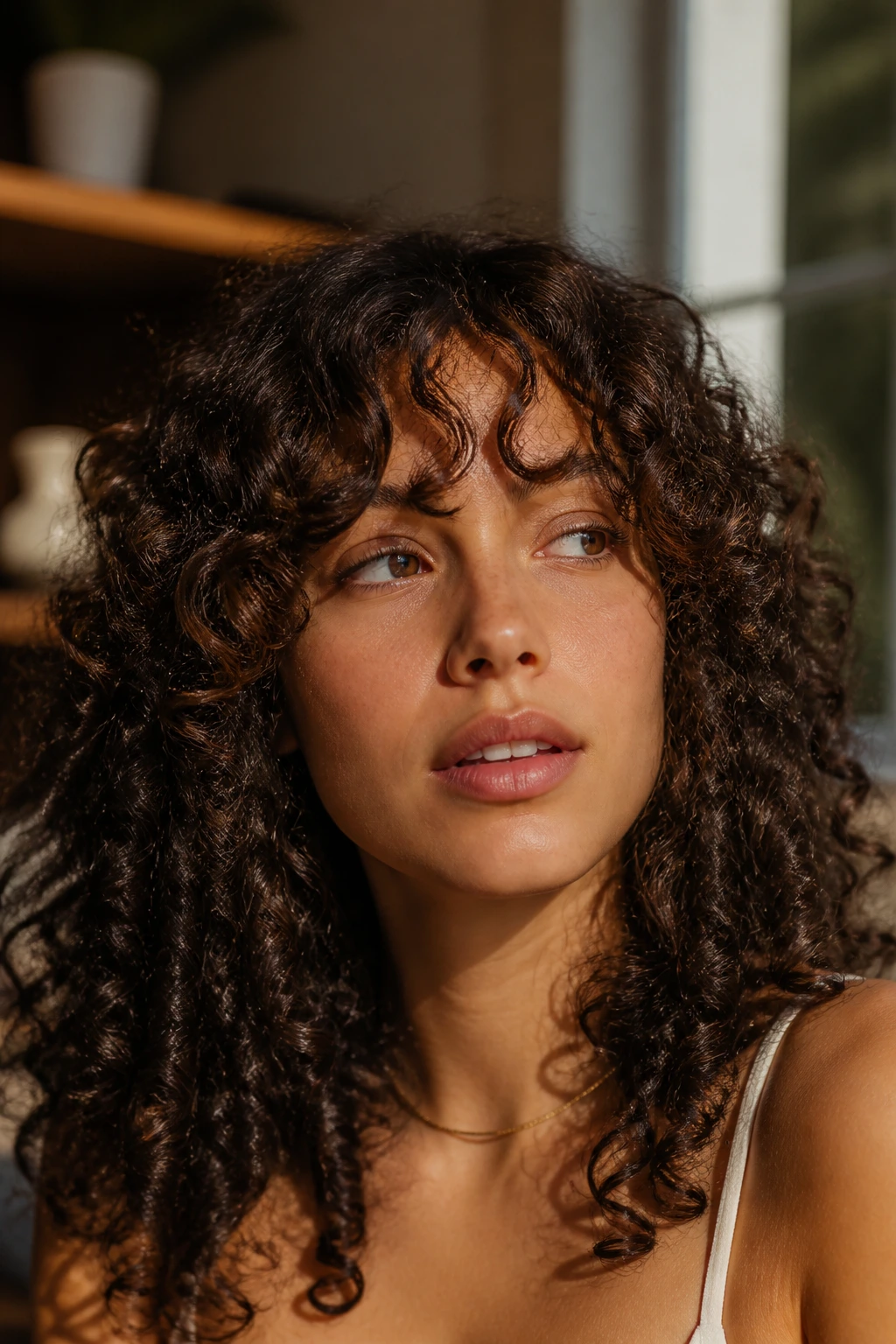
Defined curls: Work on soaking-wet hair, then add a lightweight leave-in, curl cream, and a small amount of gel only at the front. The bangs should be guided into the split with your fingers, not brushed flat, and then diffused until the cast sets. Once dry, scrunch out the stiffness with dry hands.
Fluffier finish: If you like volume more than perfect curl definition, skip the heavy cream at the fringe and use mousse from roots to mid-lengths. Lift the bangs at the root with clips while they dry so they don’t stick to the forehead. The finished shape will feel airier and a little less formal.
Humidity plan: On damp days, the front pieces are usually the first to go. A quick mist of water plus a pea-size amount of gel can reset the curtain shape without soaking the whole head. If the weather is rough, set the bangs under a scarf for 10 minutes while they dry; that small bit of control helps more than endless touching.
Fast morning fix: Pin the bangs away from the face while you shower, then reshape only the front with water and your fingers. Do not rewet the entire head unless you want to spend the whole morning air-drying again. Sometimes the smartest style move is the smallest one.
Extra Tips and Texture Boosters
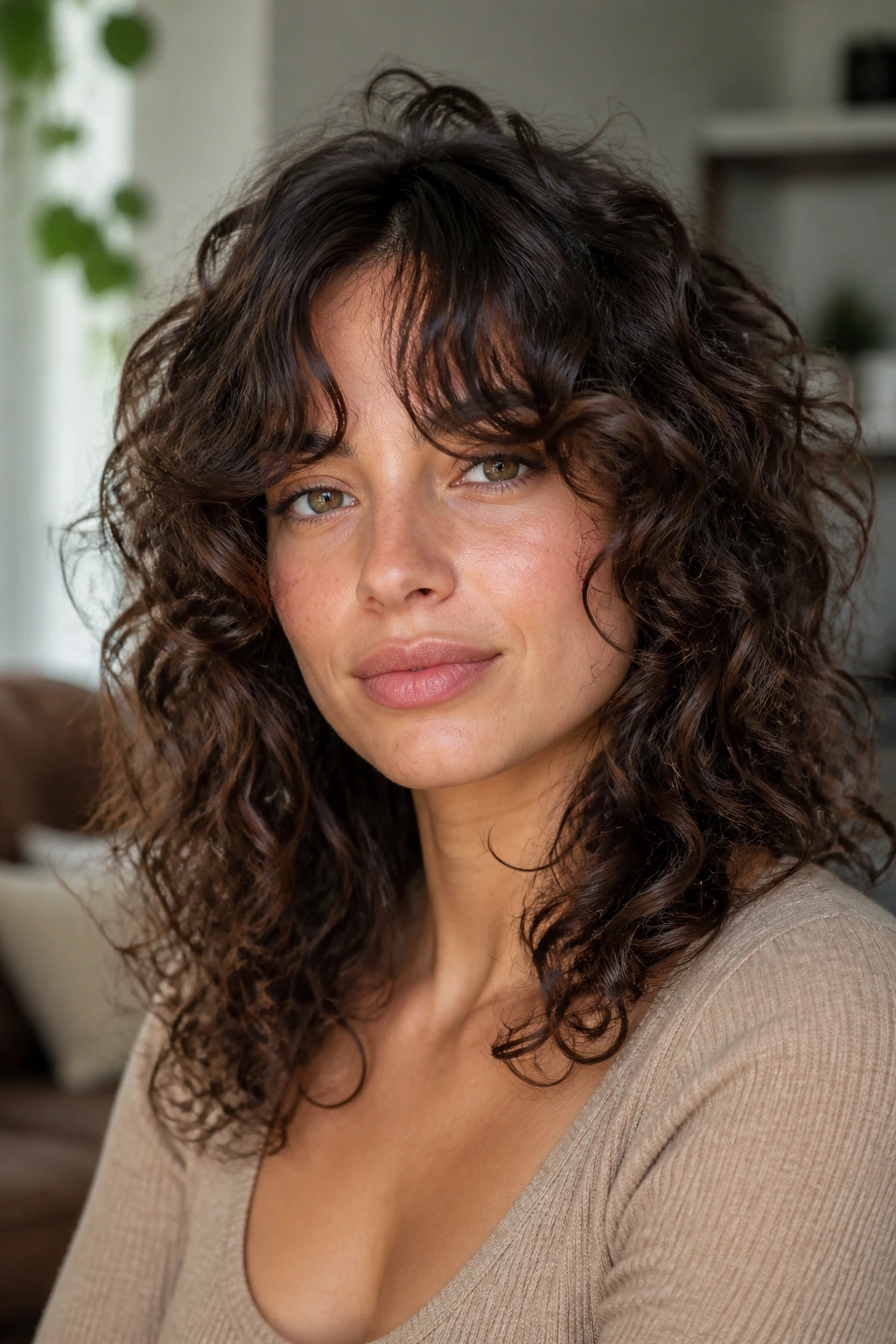
Fringe control: If your curtain bangs separate too much, twist each side once while damp and let them dry that way for a softer bend. If they clump too hard, rake through with wet hands and stop before the curl pattern turns into ropes.
Volume at the root: Clip the front sections up for the first 15 minutes of drying, especially near the part line. That little lift keeps the bangs from sticking flat against the forehead and makes the whole haircut look more alive.
Face balance: Longer curtain pieces suit stronger cheekbones or rounder faces when you want the front to stretch a little lower. Shorter ones can sharpen the eye area, but they need enough curl length to move, or they turn blunt fast.
Accessory pairing: Small clips, a narrow headband, or a silk scarf can all work with curly curtain bangs. The trick is to leave the fringe visible. If the accessory swallows the front, the whole point of the cut disappears.
Keeping the Shape Between Wash Days
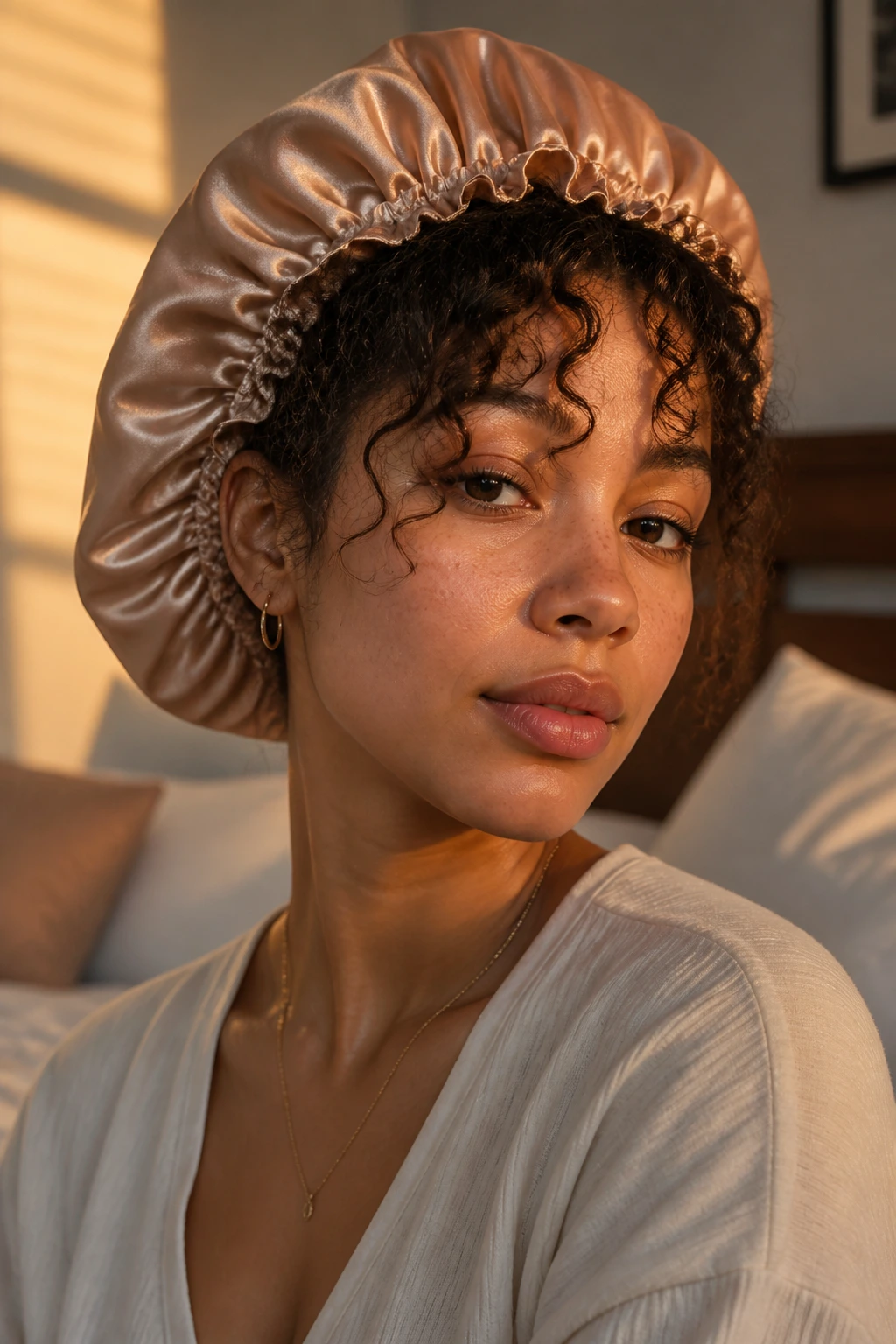
Curly bangs usually need the most attention on day two, not because they fail, but because they show every sleep crease first. A satin bonnet helps, but if that feels fussy, a satin pillowcase and a loose pineapple at the crown will still save most of the shape. Clip the bangs gently to one side if they get crushed overnight.
For refreshing, start with the front. Mist the curtain bangs with water, then add a tiny bit of gel or mousse and reshape them with your fingers. If the curls elsewhere are still fine, leave them alone. Over-refreshing is how people end up with flat roots and overworked ends.
Most curly styles with curtain bangs improve when they have a little texture on day two. The bangs soften, the fringe settles, and the shape feels less freshly constructed. If you like a more defined look, that’s the window to re-coil a few front pieces around your finger. If you prefer volume, shake them out and let the part fall where it wants.
Variations and Adaptations to Try
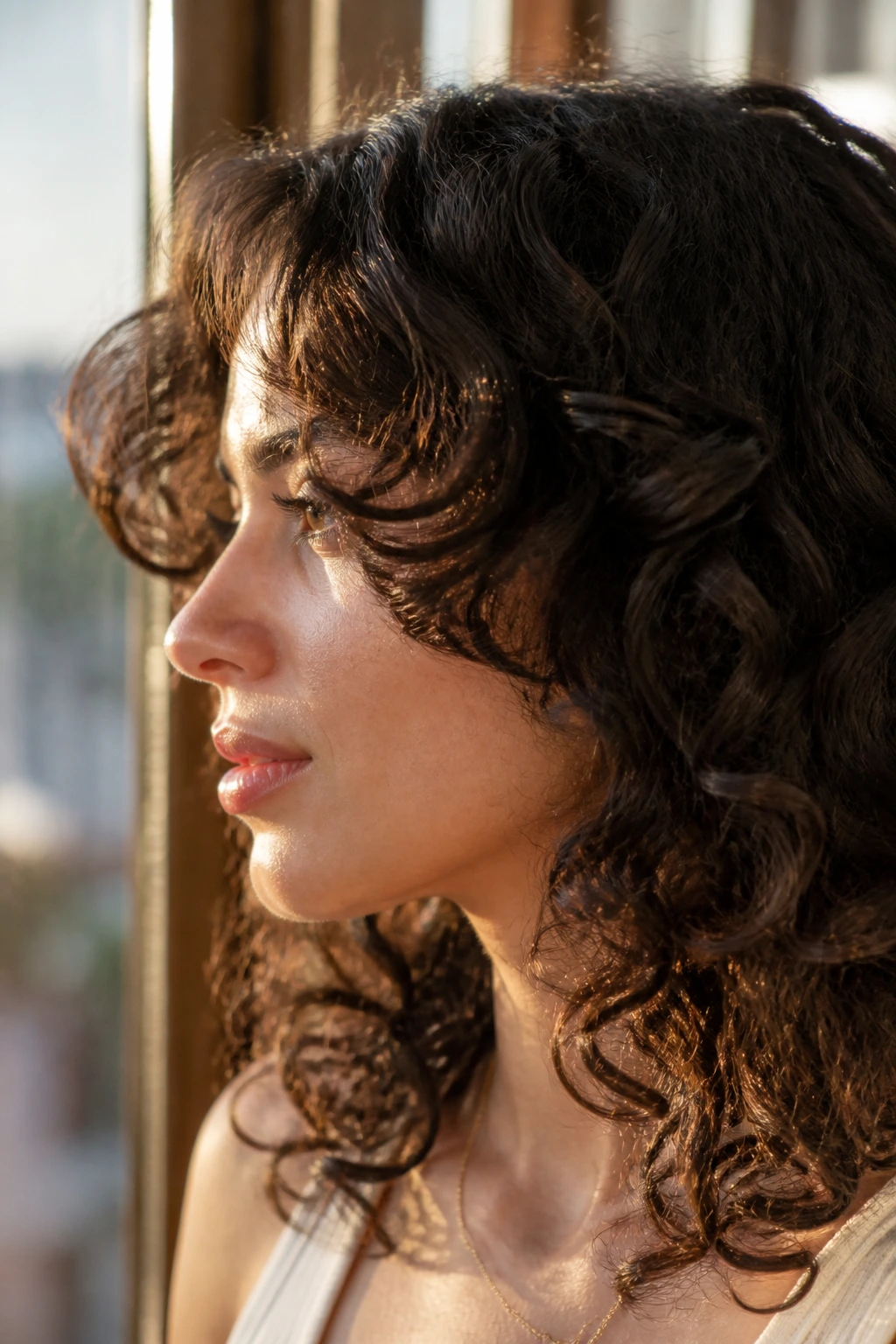
Longer Curtain Sweep: Keep the front pieces below the cheekbone and let them blend into the side layers. This works well if your curls shrink a full inch or more and you want room to tuck the bangs back on low-effort days.
Shorter Face-Frame Bang: Cut the shortest point at about the cheekbone and let the side pieces fall longer. It gives a sharper frame around the eyes and suits curl patterns that stretch nicely without puffing.
Coily Soft Fringe: For tighter curls, keep the bang section a little heavier and let it sit lower on the forehead. The extra length gives the curl room to spring up without vanishing.
Low-Maintenance Blend: Ask for the curtain bangs to blend directly into the front layers so they can disappear when you want them to. This is the quiet option, and I mean that as a compliment.
Statement Volume Cut: Add more crown layers and keep the curtain fringe airy. The front gets lift, the top gets body, and the whole style reads bolder without needing color or extra accessories.
Common Mistakes to Avoid
-
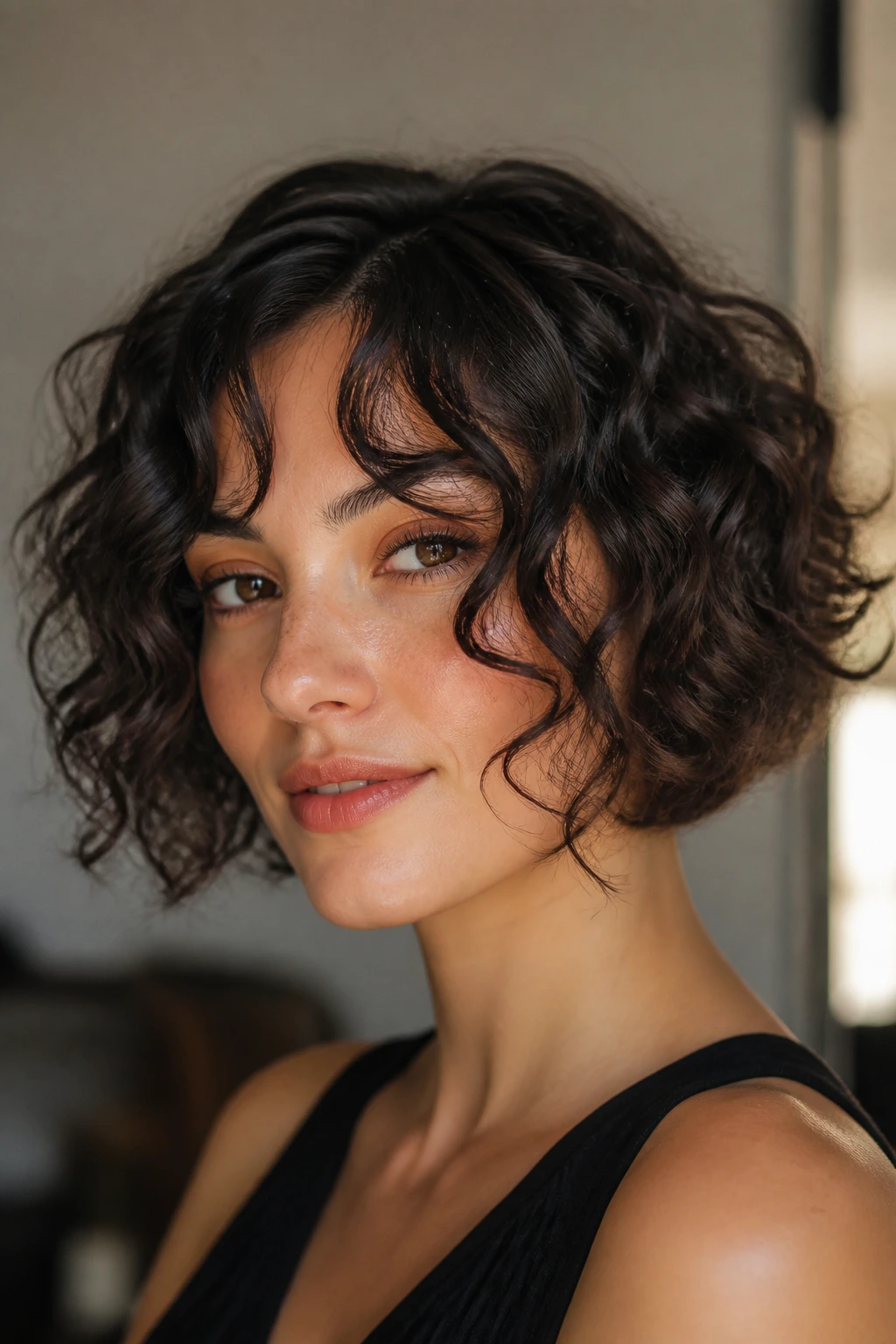
Cutting the bangs too short when wet: Curly hair shrinks, sometimes by a lot. If the front is cut at eyebrow length while soaked, it can bounce right up into the middle of the forehead once dry. The fix is simple: leave more length than feels safe and trim again after the curls settle.
-
Saturating the fringe with heavy cream: The bangs are the first place to go flat when product gets heavy. If the front looks greasy or stringy, switch to a lighter mousse or use cream only on the ends.
-
Drying the bangs in one direction only: Hair that always dries straight forward can split awkwardly or lie too flat. Guide the fringe side to side while it dries so the curtain shape has a softer bend.
-
Ignoring the crown: Flat roots make the bangs look heavier than they are. Clip the crown up while the fringe dries, and the whole front section will sit better.
-
Refreshing the entire head when only the bangs need help: That wastes time and usually adds frizz. Rework the front first, then decide whether the rest of the curls need attention.
Curly Curtain Bangs, Answered
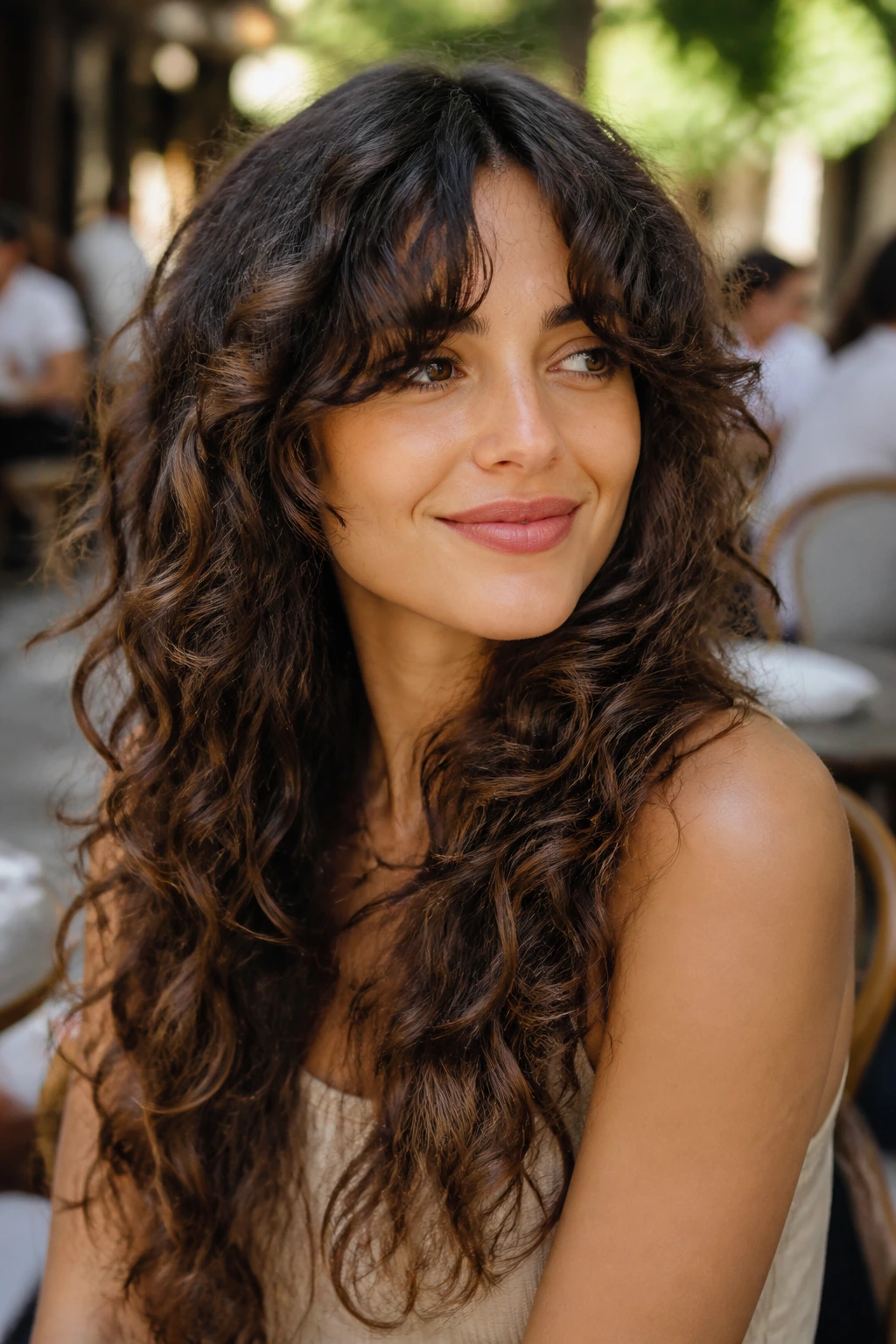
How long should curtain bangs be on curly hair?
Long enough to survive shrinkage. For many curl patterns, that means the shortest point should land somewhere between the cheekbone and the mouth when stretched, not at the brow. The front can always be trimmed shorter later; growing out a bang that was cut too high is the annoying version.
Do curtain bangs work on tight curls?
Yes, but they usually need more length and a little more weight than looser curls. Tight curls spring up quickly, so the bang section should be cut with that bounce in mind. A dry cut helps a lot because you can see where the shape actually lives.
Should curly curtain bangs be cut wet or dry?
Dry cutting is often safer for curly fringe, especially if your curl pattern changes a lot when it dries. Wet cutting can still work in experienced hands, but the margin for shrinkage gets smaller. If in doubt, ask for a dry shaping or a hybrid cut.
How do I keep curtain bangs from frizzing first?
Treat the bangs like their own styling section. Use a little water, a small amount of gel or mousse, and a diffuser or clip set for the root. The front usually frizzes first because it gets touched the most, so stop touching it.
Can I wear curly curtain bangs in a ponytail?
Absolutely, and that’s one of the reasons the style earns its keep. Leave the front pieces out, shape them with a bit of water, and the ponytail suddenly looks intentional instead of like a gym holdback. Low ponies, mid ponies, and high puffs all work.
Will curtain bangs suit a round face?
They usually can, especially when the longest pieces fall below the cheekbone. That vertical line helps lengthen the face a bit. A very short, wide fringe can do the opposite, so keep the front soft and a little longer.
How often should I trim them?
Shorter curtain bangs may need attention every 6 to 8 weeks. Longer fringe that blends into layers can stretch farther, sometimes 8 to 12 weeks, depending on how fast your curls grow and how much shrinkage you get. If the bangs stop splitting where you want, they’re telling you it’s time.
What if my bangs dry awkwardly on one side?
Rewet only the problem area and clip it in the opposite direction for a few minutes. That tiny reset often fixes the bend better than restarting the whole style. Curly fringe usually needs a second opinion from your hands, not a full wash.
The Shape That Moves With You
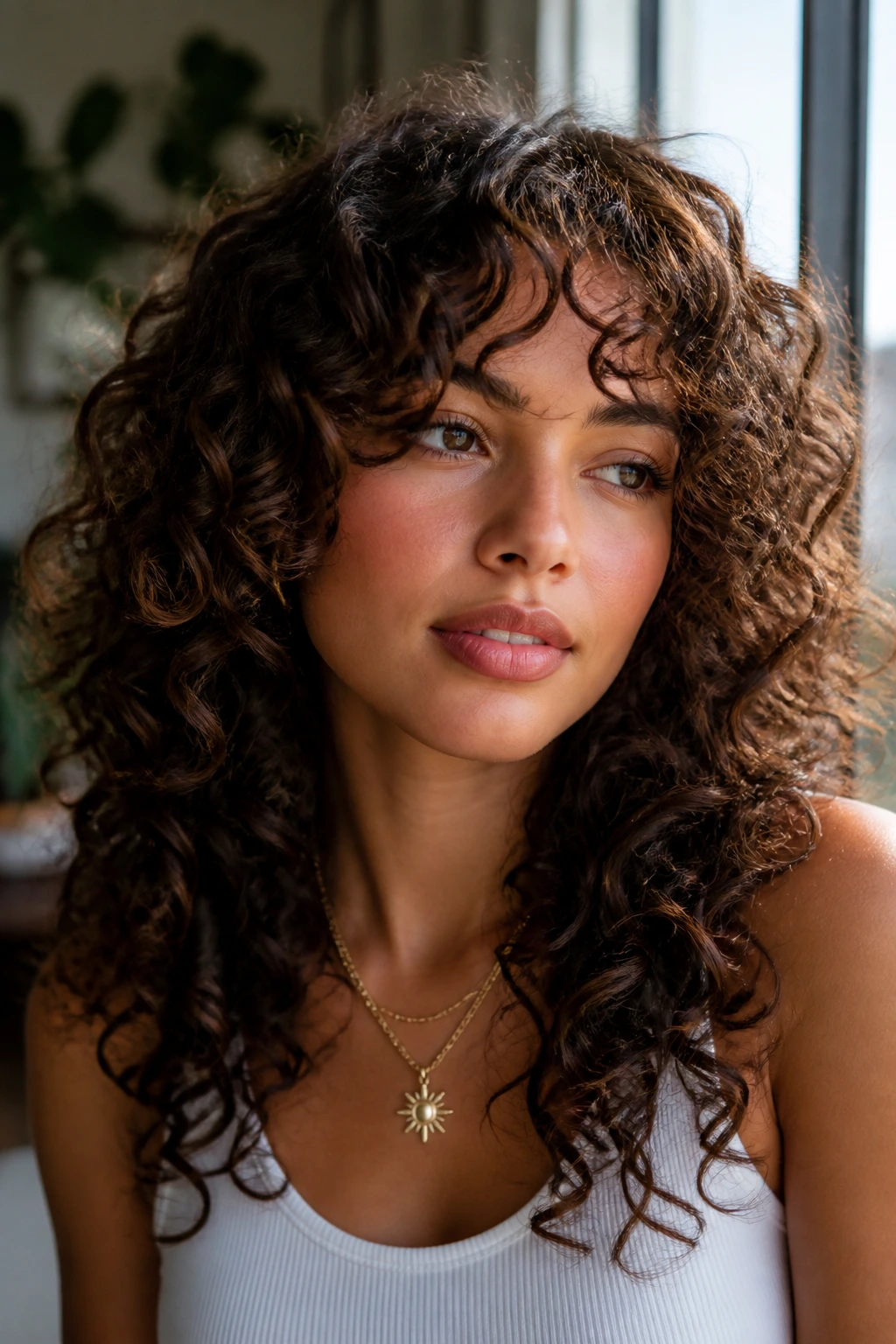
The best curly hair with curtain bangs does not feel forced. It feels like the haircut was designed to let the curl pattern do the interesting part, which is exactly how it should be. When the front pieces have enough length to bend and enough structure to frame the face, the style keeps working even when the rest of the day gets messy.
That’s what makes these 22 looks useful instead of just photogenic. Some are soft, some are sharp, some are lazy-day fixes, and some are for when you want the front of your hair to do a little talking for you. Pick the one that matches how much effort you want to spend at the mirror, then let the curls do the rest.