



Short stacked haircuts for thin hair with curtain bangs solve a problem most one-length cuts never touch: they give the back of the head some real shape while keeping the front soft enough that the whole haircut doesn’t look severe. On fine strands, that matters. A blunt wall of hair can read flat by noon, and long layers can look like they’ve been stretched out and forgotten. A good stack changes the silhouette at the crown, then curtain bangs break up the face line so the cut feels lighter, not thinner.
The trick is balance. Too much layering and the ends go wispy in a bad way. Too little and the shape collapses the minute your roots lose their lift. The best versions of this haircut keep the nape tucked in, the crown slightly rounded, and the fringe loose enough to part cleanly in the middle without splitting into a sad little triangle. That’s the version worth asking for.
If you’ve been trying to make thin hair look fuller without turning it into helmet hair, these cuts are the sweet spot. Some are polished and neat. Some are choppy and lived-in. A few are almost architectural in the back, then feather out around the face so the bangs do the softening work. There’s a lot of range here, which is exactly why the style keeps showing up on real heads instead of just mood boards.
Why These Cuts Give Thin Hair More Shape
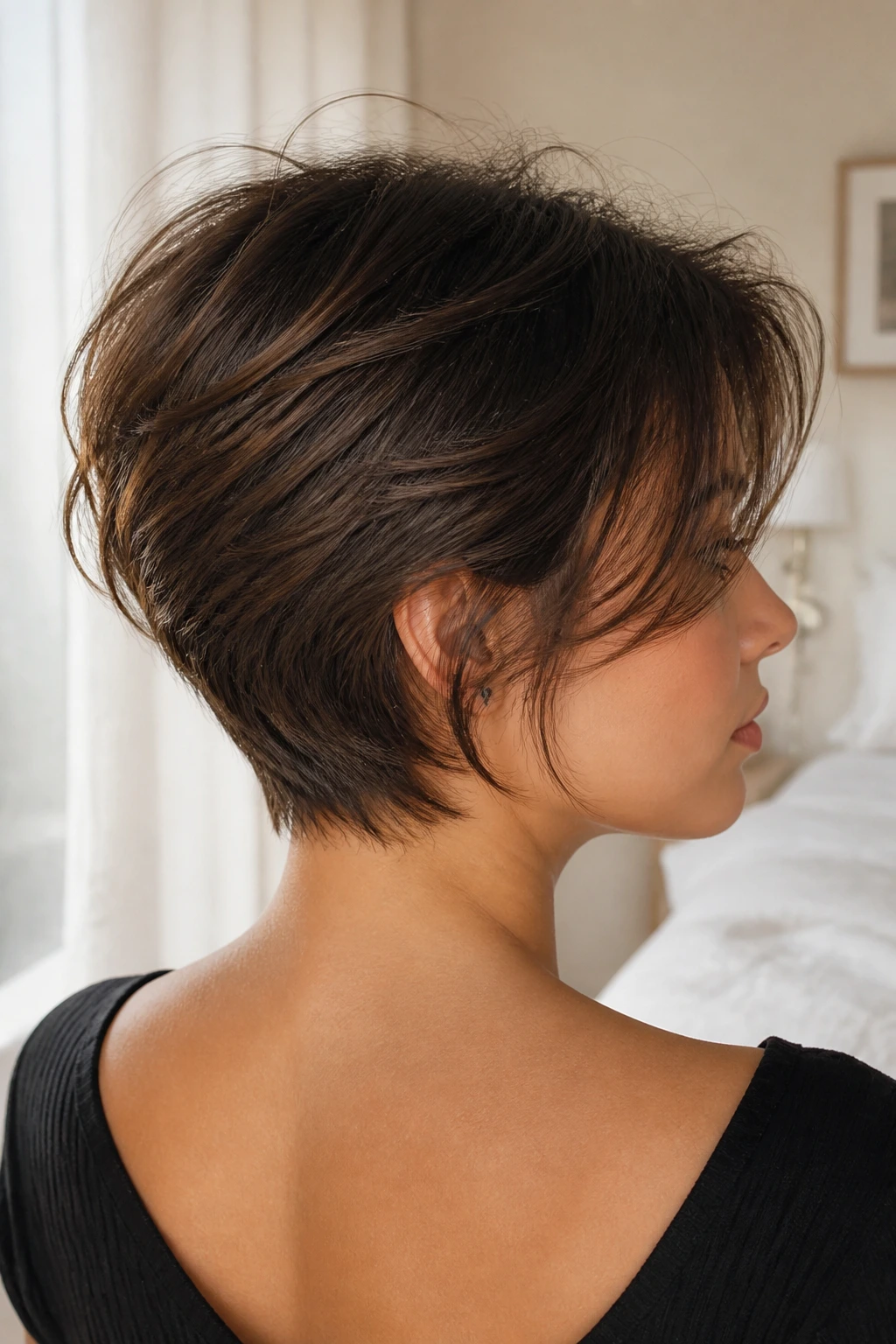
- The stack removes weight where hair sags first: Shorter layers at the nape keep the back from collapsing into a flat line by the second day.
- Curtain bangs open the face without exposing the forehead: A center split with soft pieces at the cheekbone draws the eye outward instead of straight down to sparse ends.
- Shorter lengths make fine strands read denser: A chin-length or jaw-length outline usually looks thicker than hair that hangs past the shoulders and thins out at the tips.
- The shape can be styled with very little heat: A small round brush, a root-lifting mousse, and 5 to 10 minutes of blow-drying can make these cuts look deliberate.
- The grow-out is friendlier than a blunt fringe: Curtain bangs blend into the sides instead of leaving you stuck with a hard line when you miss a trim.
- These cuts work with natural movement: Straight hair gets lift, wavy hair gets structure, and even soft curls can use the stacked outline to keep the shape from spreading too wide.
1. Chin-Length Stacked Bob with Soft Curtain Bangs
This is the version I recommend when someone wants volume but not drama. The length hits right at the chin, so the weight stays up instead of dragging the face down, and the stacked back gives the haircut a little lift at the crown. The curtain bangs are soft enough to tuck behind the ears on lazy days, which is a bigger deal than people think.
Why it works
The chin-length outline is short enough to make thin hair look more compact, but not so short that it turns into a pixie’s cousin. Ask for the back to be graduated in small, tidy layers, then keep the front pieces a touch longer so the bangs can bend away from the cheekbones.
A 1.25- to 1.5-inch round brush is enough to build the shape. Dry the roots first. The whole cut falls flat if you spend all your time curling the ends and ignore the crown.
Styling note
A light mousse at the root and a pea-size cream through the ends is usually enough. If your hair is fine-fine, skip heavy oils. They sink the whole thing by lunchtime.
2. Rounded French Bob with Airy Center Split
This one has a little café-window romance to it, but the useful part is practical: the rounded perimeter gives thin hair a fuller edge. The center split is not severe here. It’s soft, and the bangs skim the brows before falling into the sides.
The shape matters more than the fringe. If the outline curves in slightly under the jaw, the hair looks thicker from the front and side. That rounded finish also keeps the cut from reading boxy, which is the fastest way to make fine hair look sparse.
Best for
- Straight hair that needs curve at the ends
- Oval and heart-shaped faces
- Anyone who likes a polished shape that still moves
Ask your stylist to keep the weight line clean around the bottom. Too many internal layers will rob this cut of the crisp outline that makes it work.
3. Collarbone Stacked Lob with Long Curtain Fringe
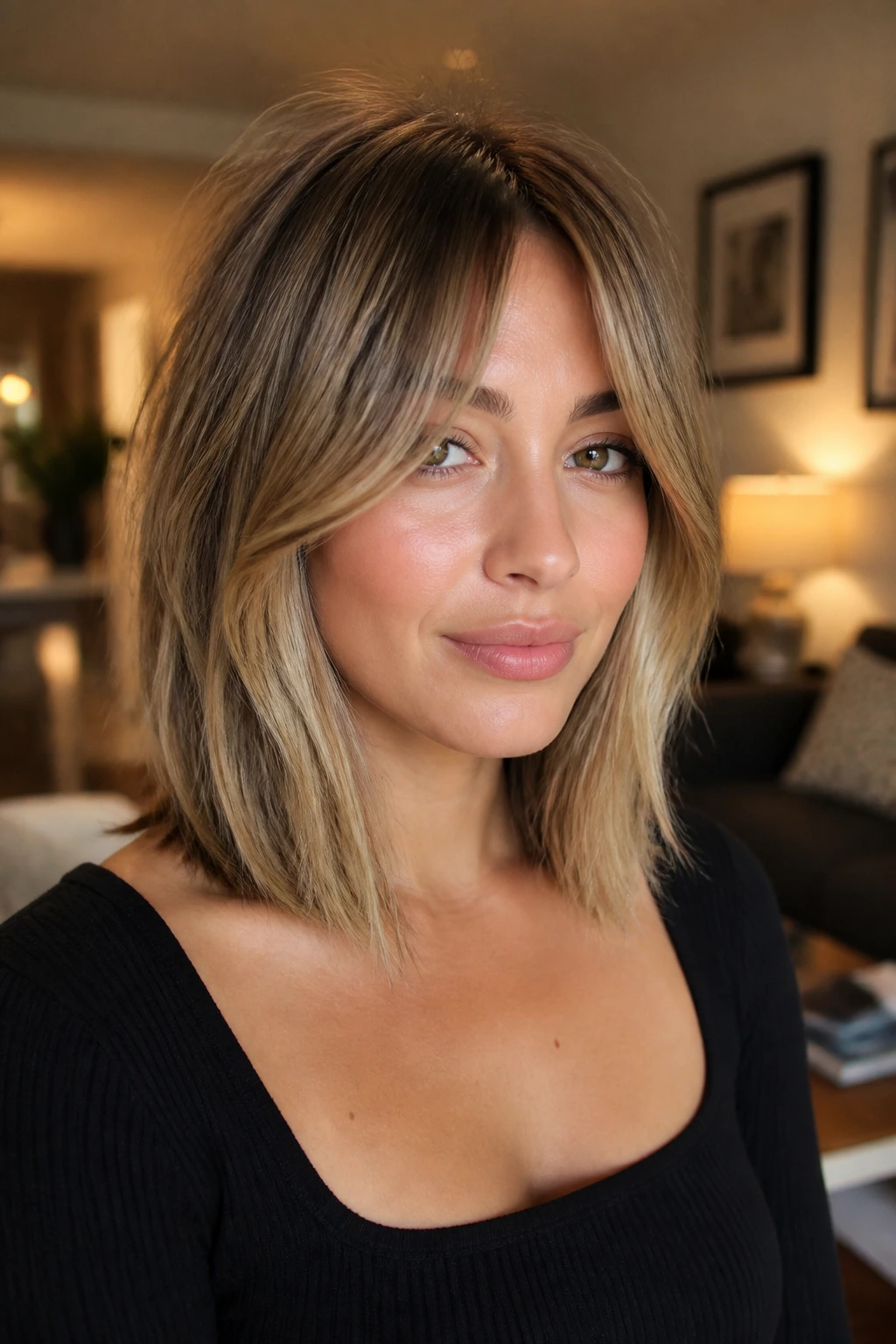
If you’re not ready to go as short as a bob, this longer stacked lob sits in a useful middle ground. The nape still gets graduated, so the back has lift, but the front reaches the collarbone and keeps enough length for ponytail days and hair-tuck days. That extra length can help thin hair feel less exposed.
The long curtain fringe is the quiet hero here. It gives you face-framing movement without taking too much density away from the front hairline. On finer hair, that matters because short fringe pieces can disappear if the cut is too airy.
Styling tip: blow-dry the fringe away from the face first, then sweep it back down the middle with your fingers. That keeps the part from looking stamped into place.
4. Jawline Wedge Bob with Feathered Bangs
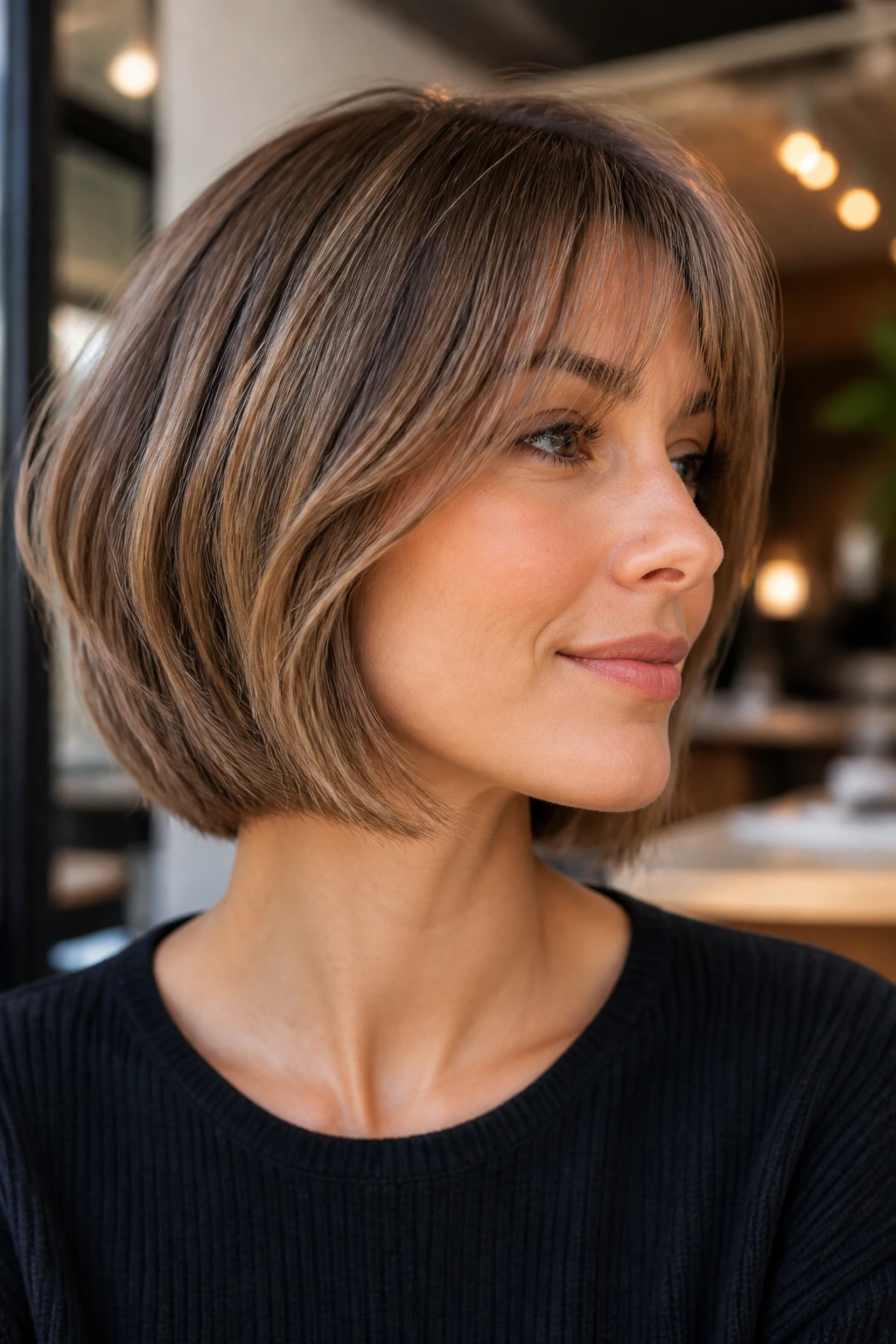
A wedge bob sounds sharper than it is. On thin hair, a soft wedge shape gives the back a tucked-in profile while the sides fall closer to the jaw, which makes the overall head shape look fuller. Feathered bangs keep the front from feeling too blocky.
This cut works because the wedge angle creates the illusion of density where the hair is shortest. Thin hair benefits from that kind of trick. The eye reads the outline first, and if the outline is clean, the strands inside can be a little lighter.
What to tell your stylist
Ask for a tighter nape, a modest stack, and soft feathering through the curtain bangs. If the bangs are too blunt, the style starts looking heavy in the wrong places.
5. Piecey Micro-Stack with Bottleneck Curtain Bangs
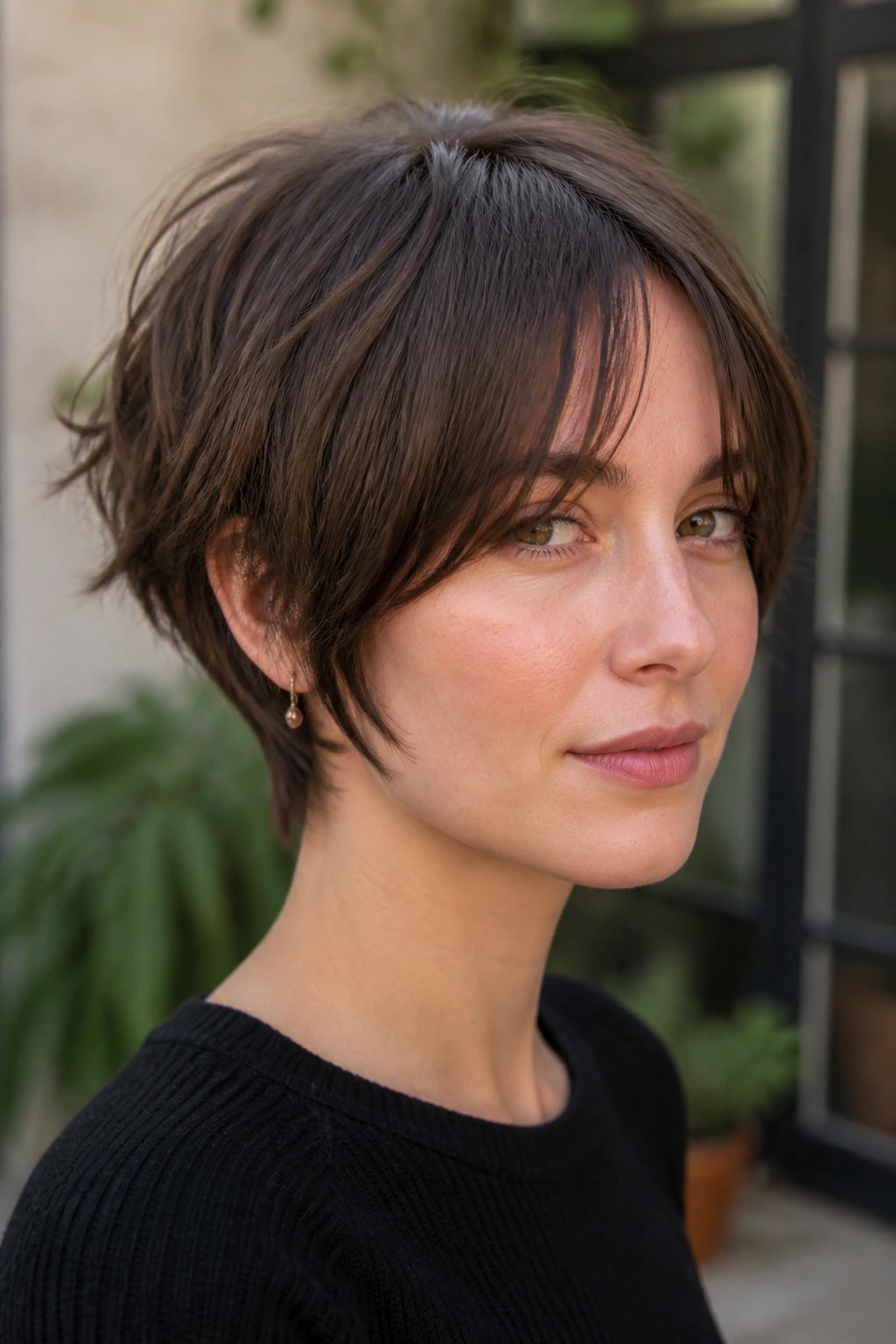
This is a sharper, more modern version. The stack is short and tight in the back, and the bangs narrow at the top before opening around the cheekbones, which is what gives bottleneck bangs their name. On thin hair, that shape can be useful because it doesn’t swallow the forehead or leave too much bulk at the temple.
The piecey finish matters. A little separation around the crown and ends keeps the cut from turning into a smooth helmet. That said, don’t overdo the texturizing spray. One or two light passes are enough.
A dry paste at the ends can help if your hair slips apart too easily. Use less than you think you need. Then stop.
6. Inverted Bob with Cheekbone-Grazing Curtains
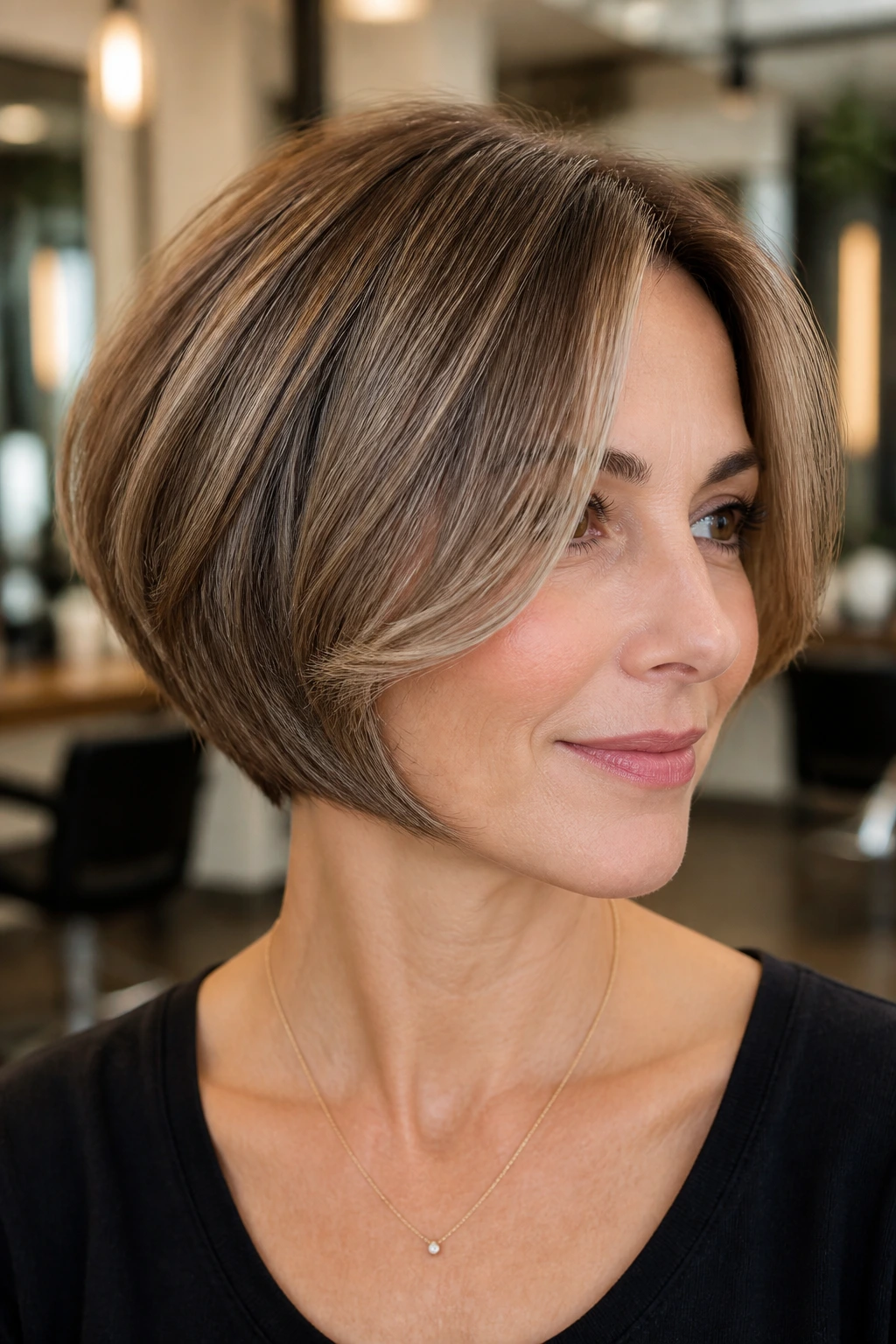
The inverted bob gives you a stronger angle from back to front, and that angle can make thin hair look built-in rather than hanging there. The cheekbone-grazing curtain pieces are long enough to soften the line but short enough to keep the front from looking stringy.
This is one of those cuts that looks best when the blow-dry is slightly imperfect. A little bend through the bangs and a smooth curve through the side sections gives it shape. Pin-straight hair can work too, but only if the nape is clean and the layers are precise.
Good for
- Hair that lies flat at the back of the head
- People who want a visible side profile
- Fine hair that loses body fast in humidity
7. Choppy Bob with Swept-Back Curtain Fringe
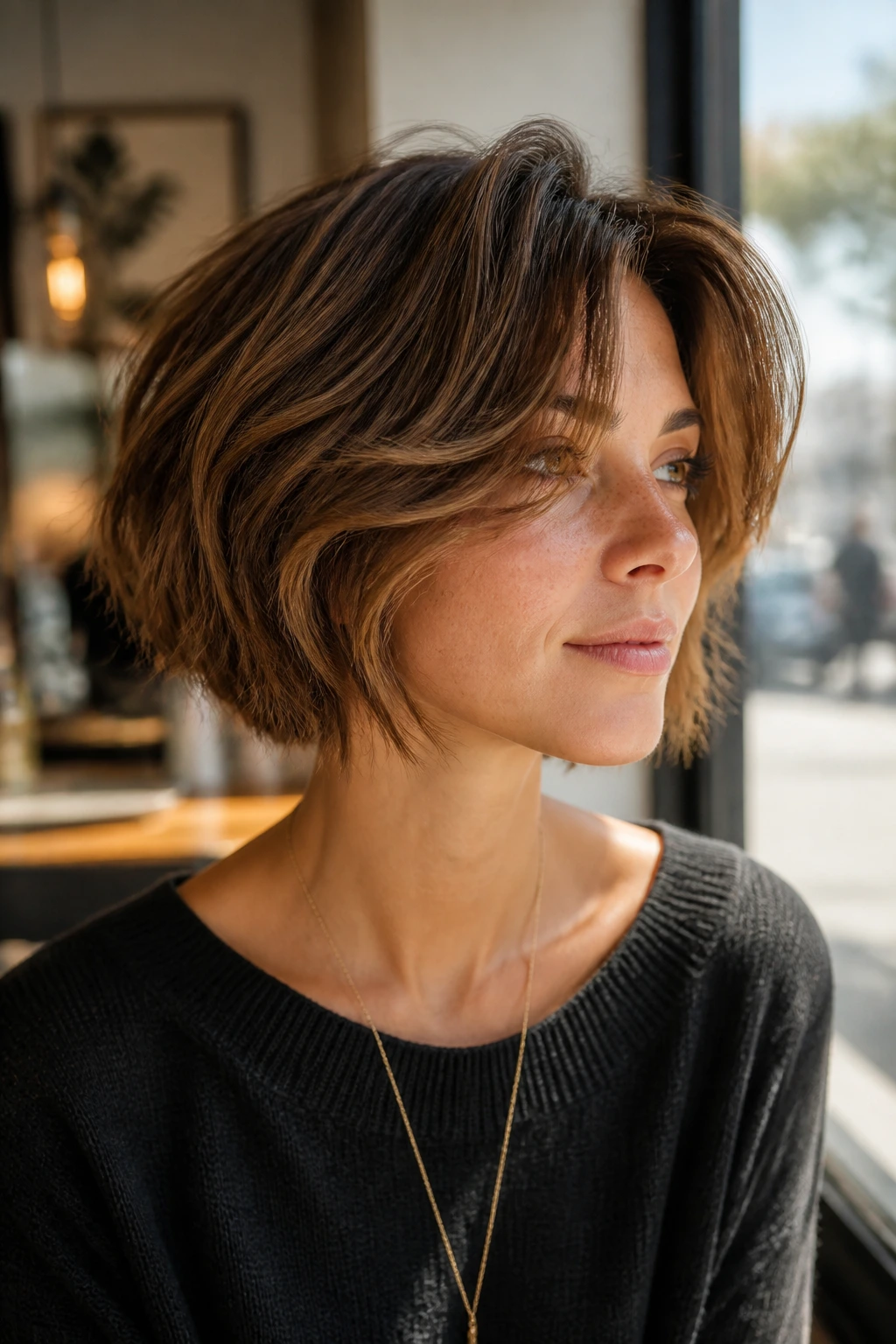
This version leans less polished and more lived-in. Choppy ends create movement, and the swept-back curtain fringe keeps the front open without removing too much density. On thin hair, that’s a smart trade. You want motion, not frizz-shaped fluff.
The choppiness should live mostly at the perimeter and through the face frame. If the layers go too high into the crown, the shape can start to fray out. That’s the wrong kind of texture.
A matte volumizing spray works better here than a shiny serum. Shine tends to show every thin spot. Texture hides them.
8. Angled Stack with Hidden Crown Layers
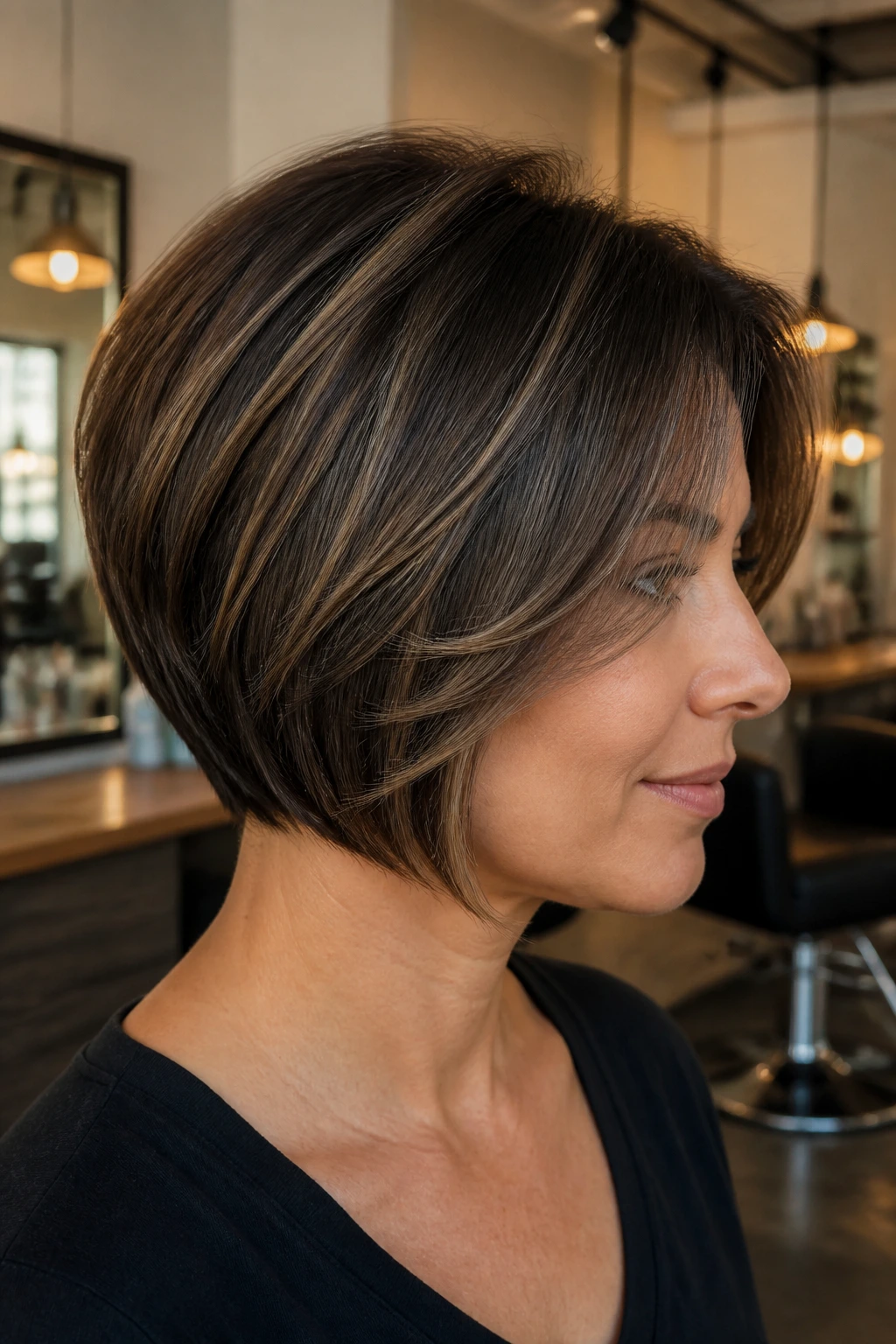
This one is sneaky in the best way. The silhouette looks simple from the outside, but the crown has short hidden layers that lift the top section just enough to stop the head from looking flat. The angle toward the front keeps the haircut from feeling boxed in.
It’s a strong choice if your hair is thin on top but you still have decent density through the sides. The hidden layers create a little push at the roots without leaving obvious stairs in the shape.
Ask for this
Say you want lift at the crown without obvious choppy layers. That wording matters. A lot.
9. Razor-Soft Bob with Wispy Curtain Bangs
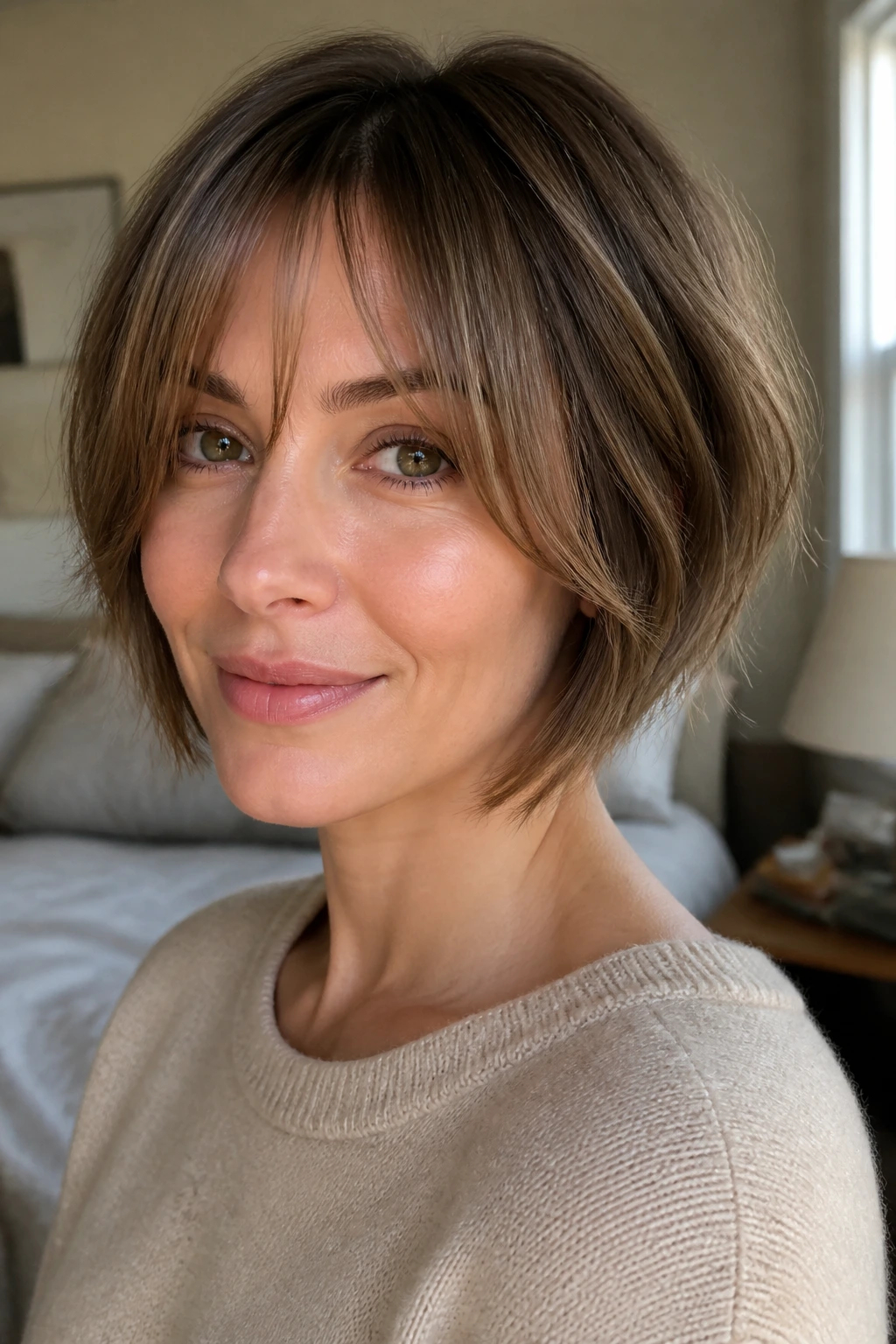
Razor-soft ends can be useful on very fine hair, but only when they’re handled lightly. The goal is not shredding. The goal is a softer edge that doesn’t look blunt and sparse at the same time. Wispy curtain bangs keep the forehead area airy and stop the cut from feeling too strict.
This style works best on hair that already has some movement. If your hair is stick-straight and slippery, too much razor work can make the ends look see-through. In that case, ask for scissors with point-cutting instead.
One short warning: this cut looks best when it’s fresh. If you go too long between trims, the softness can tip into scraggly.
10. Graduated Pixie Bob with Long Temple Pieces
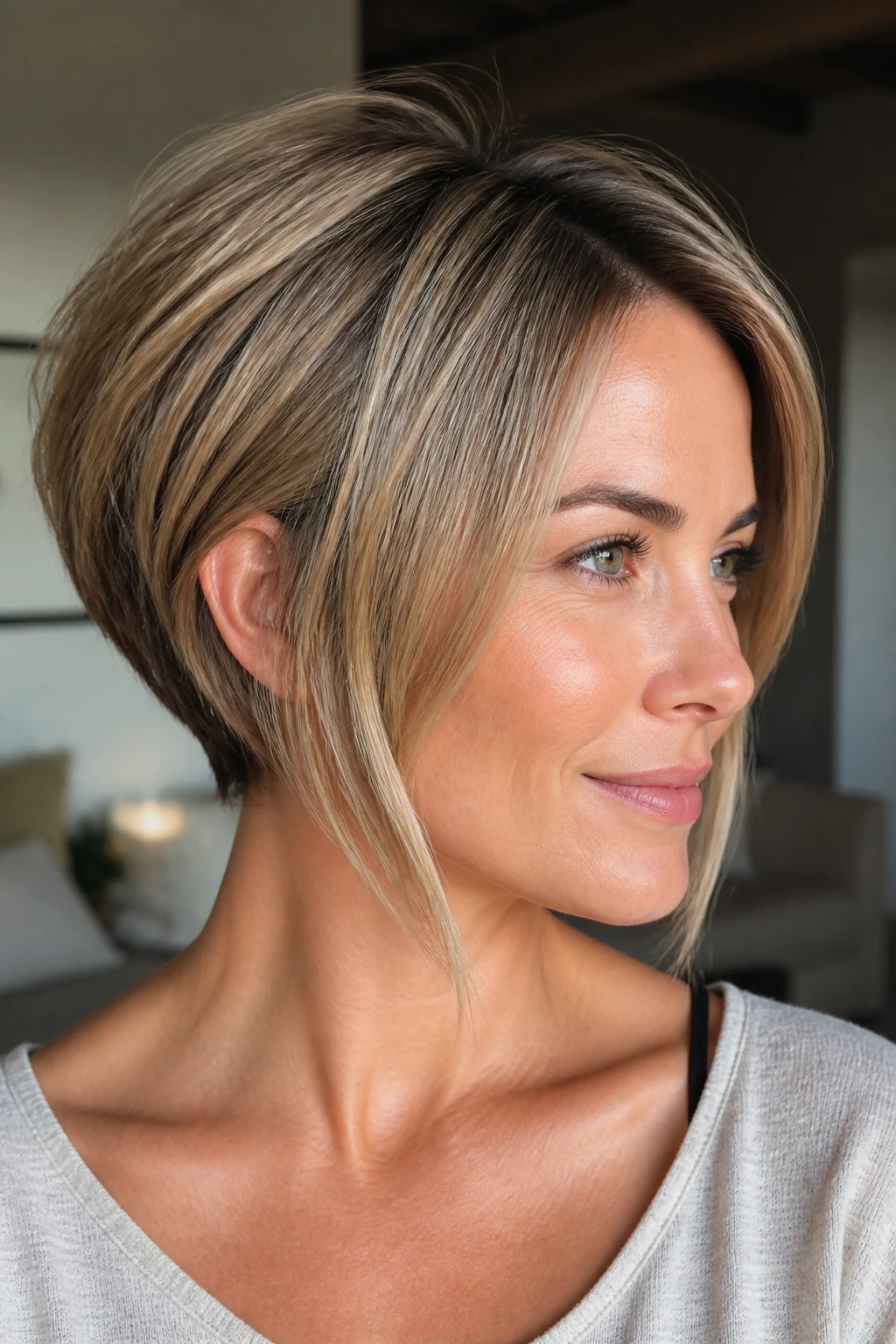
A pixie bob can be a lifesaver for thin hair because it keeps the back snug and the top controlled. The long temple pieces are what make it friendly. They act like mini curtain bangs and give the haircut a little face-framing movement without stealing too much volume up top.
This is a good choice if you want a lighter head shape and don’t want hair touching your neck all day. It’s also easier to dry than longer bobs. Five minutes with a round brush can do a lot here.
Best for
- Petite faces
- Fine hair with a flat crown
- People who want less weight around the nape
11. Wedge Stack with Tapered Nape
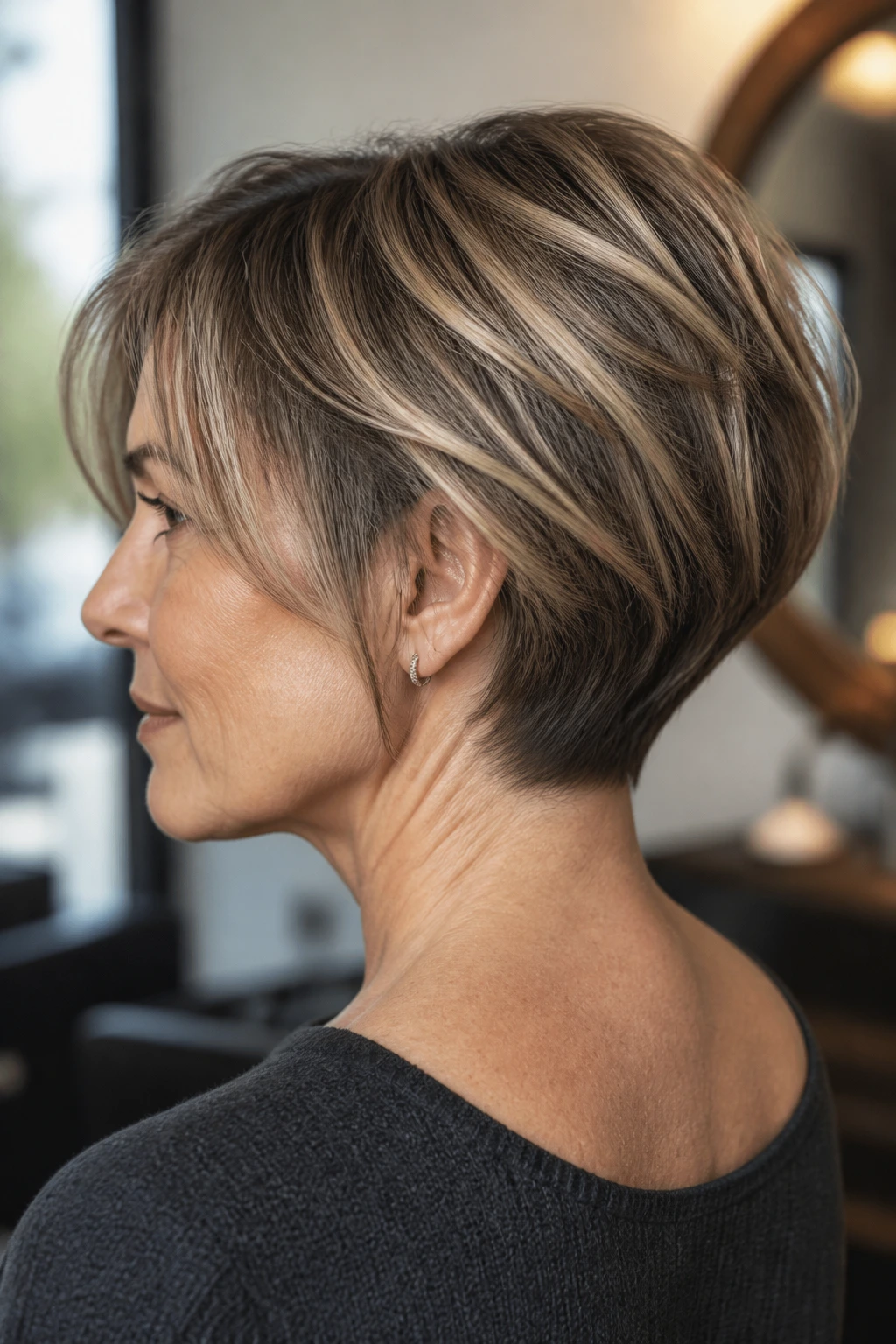
The tapered nape is the point of this cut. It hugs the neck cleanly and makes the back look intentional, not bulky. The wedge stack gives the head a rounded profile that can make thin hair look fuller from the side, which is where many people notice flatness first.
The curtain bangs should stay soft and movable, not stiff. Ask for them to start a little farther back than you think. If they begin too far forward, they can crowd the face and leave the rest of the cut feeling narrow.
This style has a little retro energy, but it’s practical. That’s why it works.
12. Blunt Bob with Invisible Internal Layers
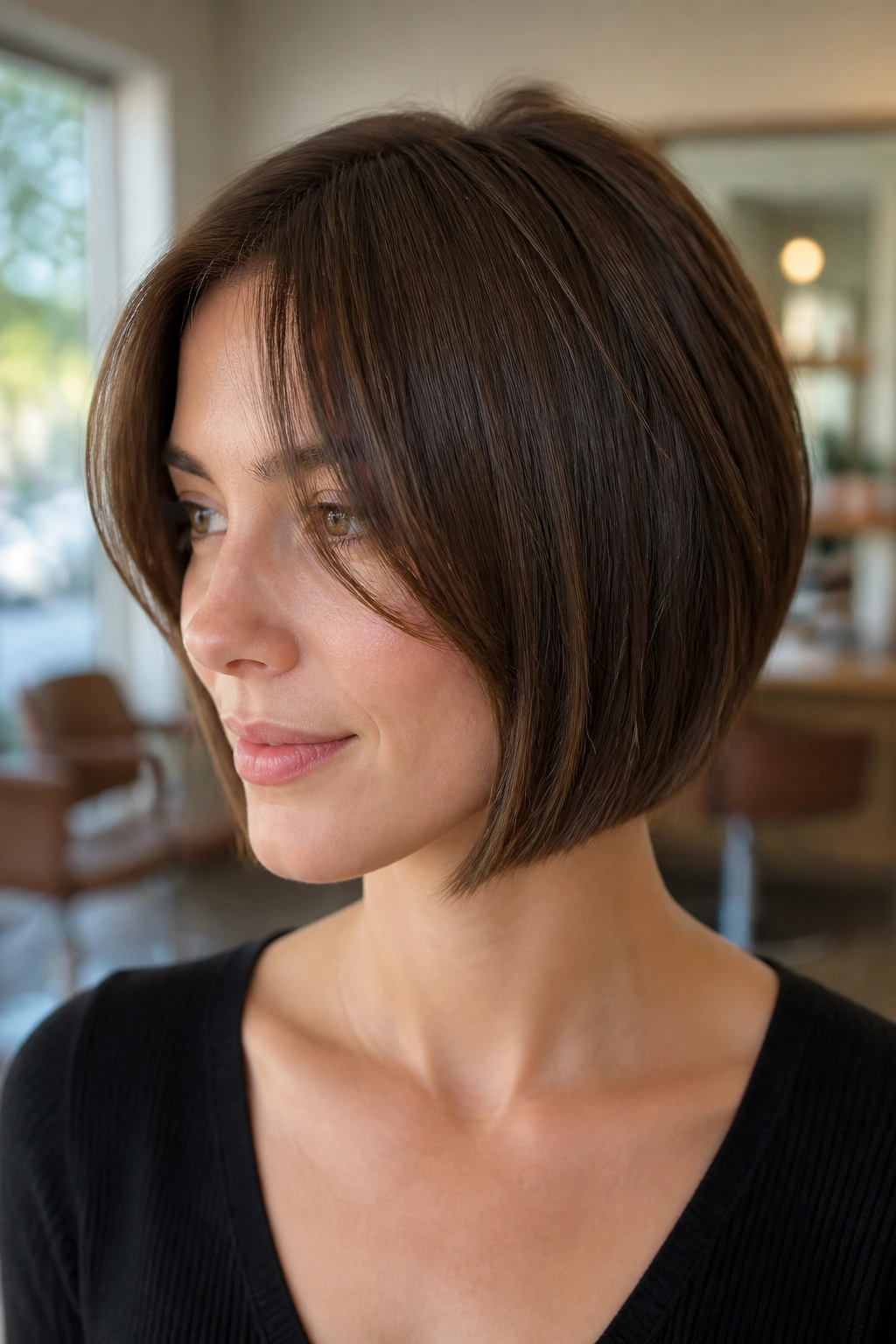
Here’s the contradiction: a blunt bob can work on thin hair if the inside is handled quietly. The outside line stays clean, which makes the ends look dense, while hidden internal layers keep the crown from collapsing. The curtain bangs do the softening so the blunt edge doesn’t look severe.
This is one of my favorites for fine hair that frays at the bottom. Keep the perimeter crisp. Let the movement happen inside the cut, not on the outside where it can look stringy.
Styling rule
Use a smoothing cream only on the bottom half-inch of the hair. Put anything heavier higher up and you’ll flatten the lift you’re trying to build.
13. Airy Shag-Bob with Center-Split Bangs

The shag-bob sits between polished and undone. Thin hair often benefits from a little lived-in texture because it keeps the shape from looking too neat and too sparse at the same time. The center-split bangs lighten the front without needing a heavy fringe.
The key is restraint. Too much shag turns into fuzz. Too little and it becomes a basic bob with bad layers. You want feathered movement around the crown and sides, but enough length at the ends to keep the shape together.
This is a strong air-dry candidate. Scrunch in mousse, twist the front pieces away from the face, and let it dry with a soft bend.
14. Sleek A-Line Stack with Long Front Corners
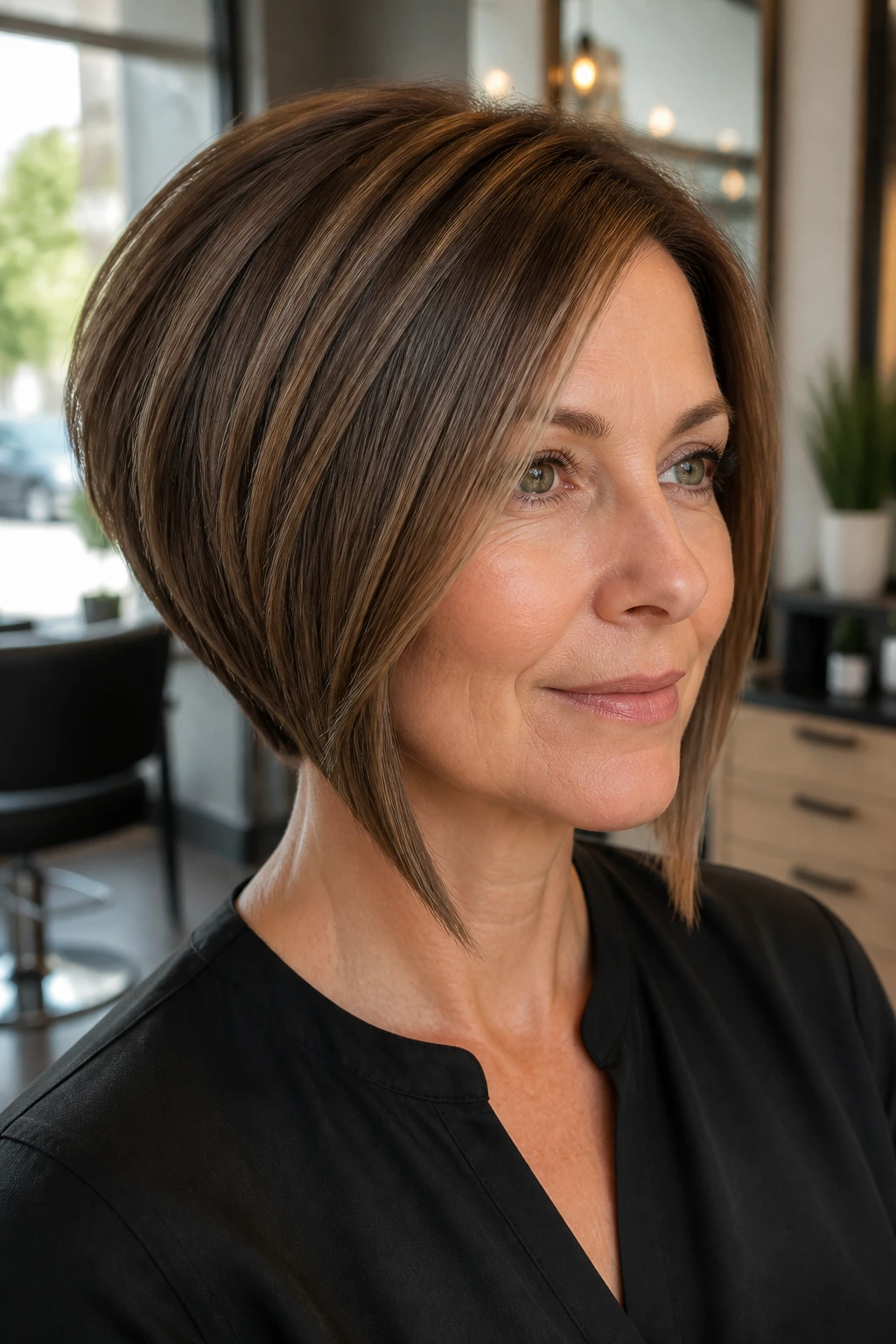
The A-line stack is all about the front corners. They’re longer than the back, which creates a clean diagonal that can make thin hair look denser along the jawline. The stack at the nape gives the crown enough lift to keep the whole cut from drooping.
This one likes a smooth finish. If the ends are too piecey, the angle loses clarity. A flat iron pass through the front corners can sharpen the line, but keep the movement in the bangs. Curtain pieces that open near the cheekbone keep the cut from feeling too formal.
It’s elegant in the practical sense, not the fussy one. Easy to wear. Easy to style. Hard to mess up if the cut is precise.
15. Curly Stacked Bob with Curved Curtain Bangs

Curly hair and stacked bobs can be a good match when the graduation is handled with care. Thin curly hair often needs shape more than length, and a controlled stack can stop the back from puffing out while keeping the top from lying flat. The curtain bangs curve with the curl pattern instead of fighting it.
Ask for the cut to be shaped on dry hair if your stylist works that way. Curl shrinkage changes everything. Wet curls can look like one length and dry curls can land two inches shorter.
Watch for
If the bangs are cut too short, they spring up and expose the forehead more than you wanted. Keep the longest pieces at the cheekbone or just below it unless your curl pattern is very loose.
16. Tapered Bob with Longer Sides and Short Back
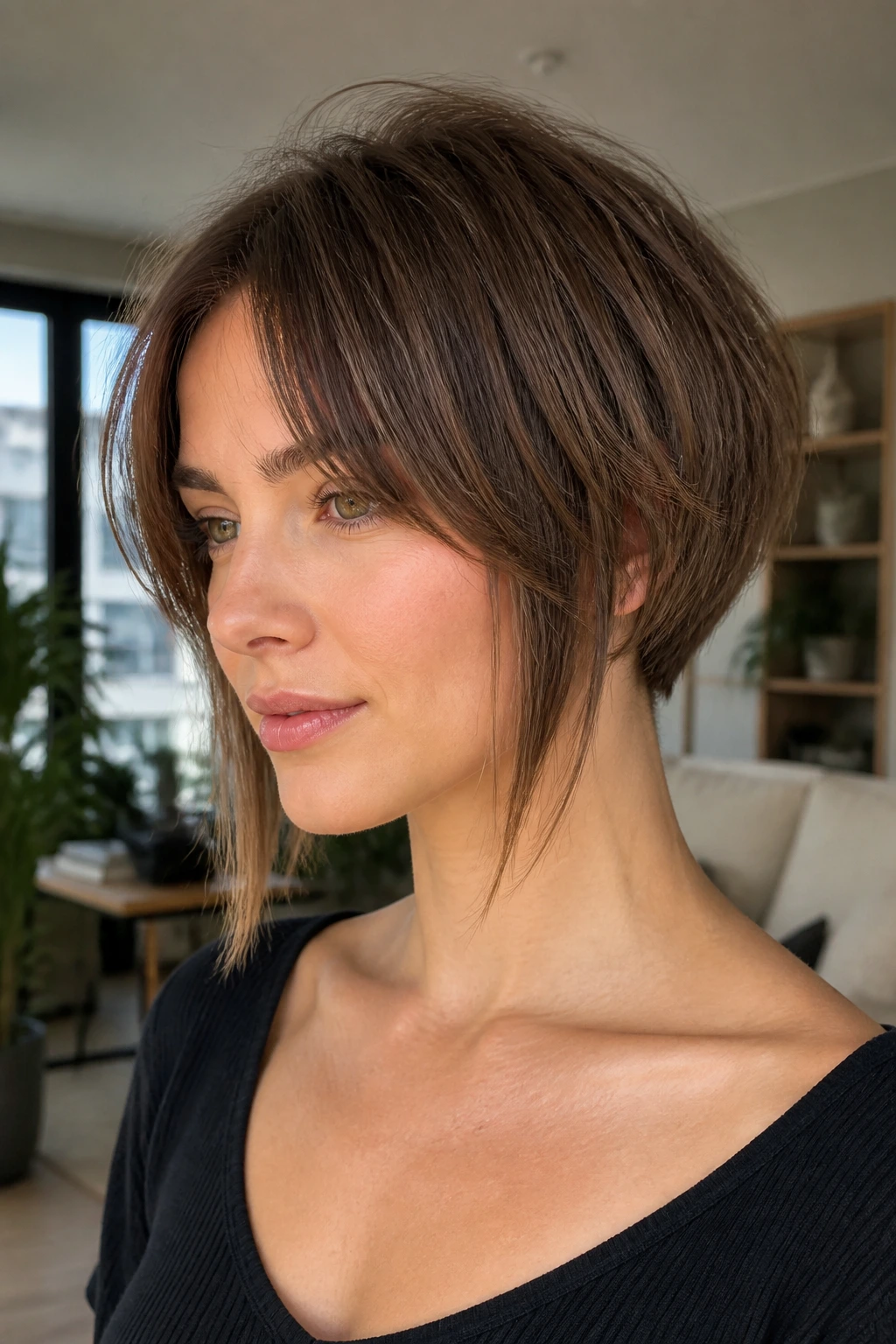
This cut makes the back work harder than the front. The nape stays short and neat, while the sides hang a little longer and create the illusion of more material around the face. On thin hair, that extra side length is useful because it widens the visual frame without adding weight where you don’t want it.
The curtain bangs should connect into the longer side sections with a soft drop, not a hard line. That connection is what keeps the cut from looking like three separate ideas stitched together.
A round brush or even a large Velcro roller at the side sections can help. The back sets the shape; the sides finish it.
17. Brushed-Out Stack with Old-Hollywood Fringe
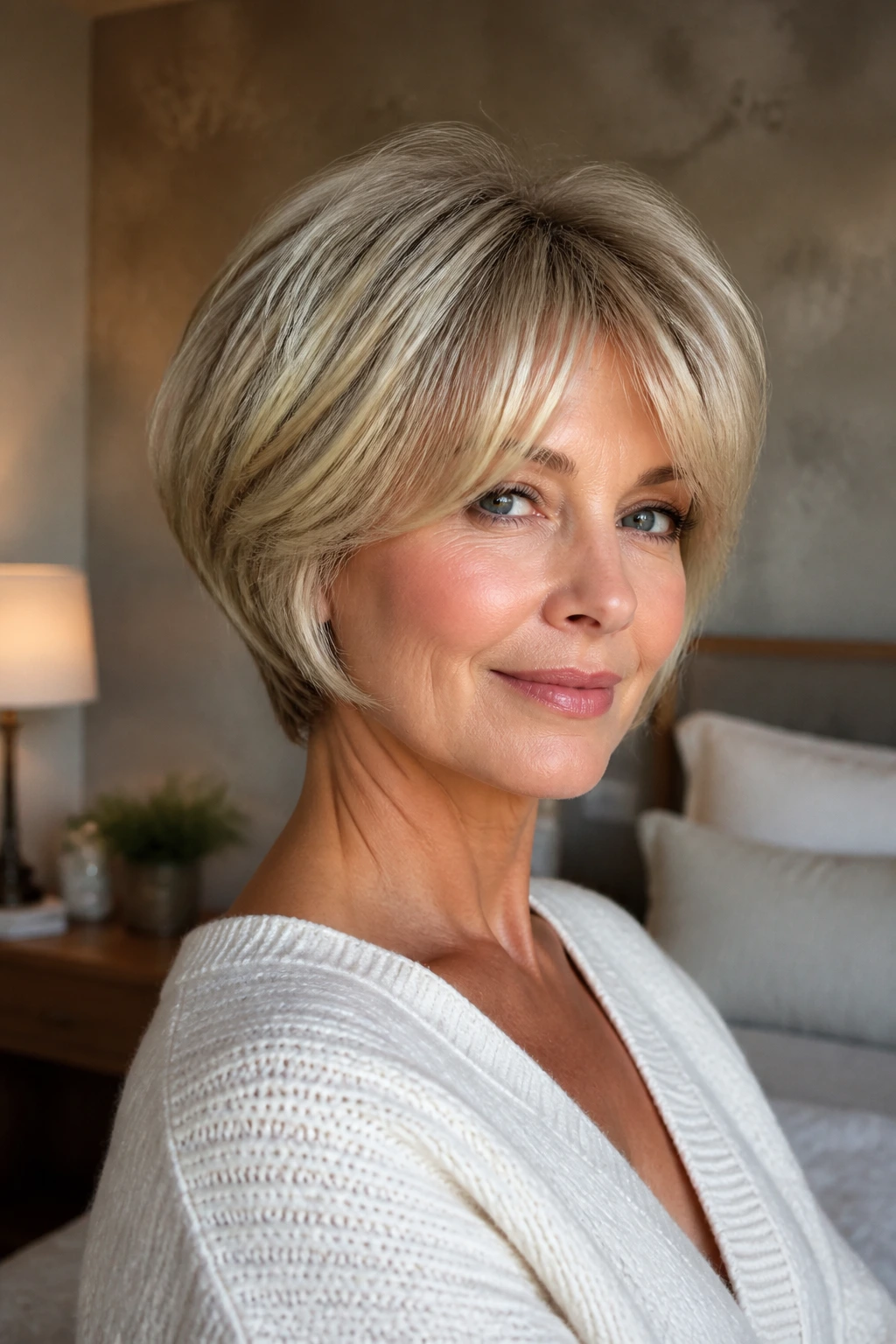
This one has movement and polish in the same cut, which sounds more dramatic than it is. The stacked back stays tidy, but the bangs are brushed out and split gently so they fall like a soft frame rather than a hard fringe. Thin hair can handle this because the shape is built into the cut, not dependent on huge amounts of styling.
A soft wave through the ends helps a lot here. Not curls. Just a bend. The old-Hollywood part is about line and finish, not volume that looks overworked.
Style note
Use a medium-hold spray on the bangs after blow-drying. Too much and they stick. Too little and the split disappears by noon.
18. Soft Mushroom Bob with Split Bangs

A mushroom bob sounds bold, but the soft version is friendlier than the name suggests. The top is rounded, the edges tuck in, and the split bangs keep it from reading too heavy across the forehead. For thin hair, that dome-like shape can make the crown look fuller than a flatter bob would.
It’s not for everyone. If you hate the idea of width around the sides, skip it. But if your hair looks pinched near the top and wide at the bottom, this shape can rebalance the whole head.
The split bangs should stay light and mobile. No heavy fringe. That would ruin the clean curve.
19. Undercut Nape Bob with Long Curtain Pieces
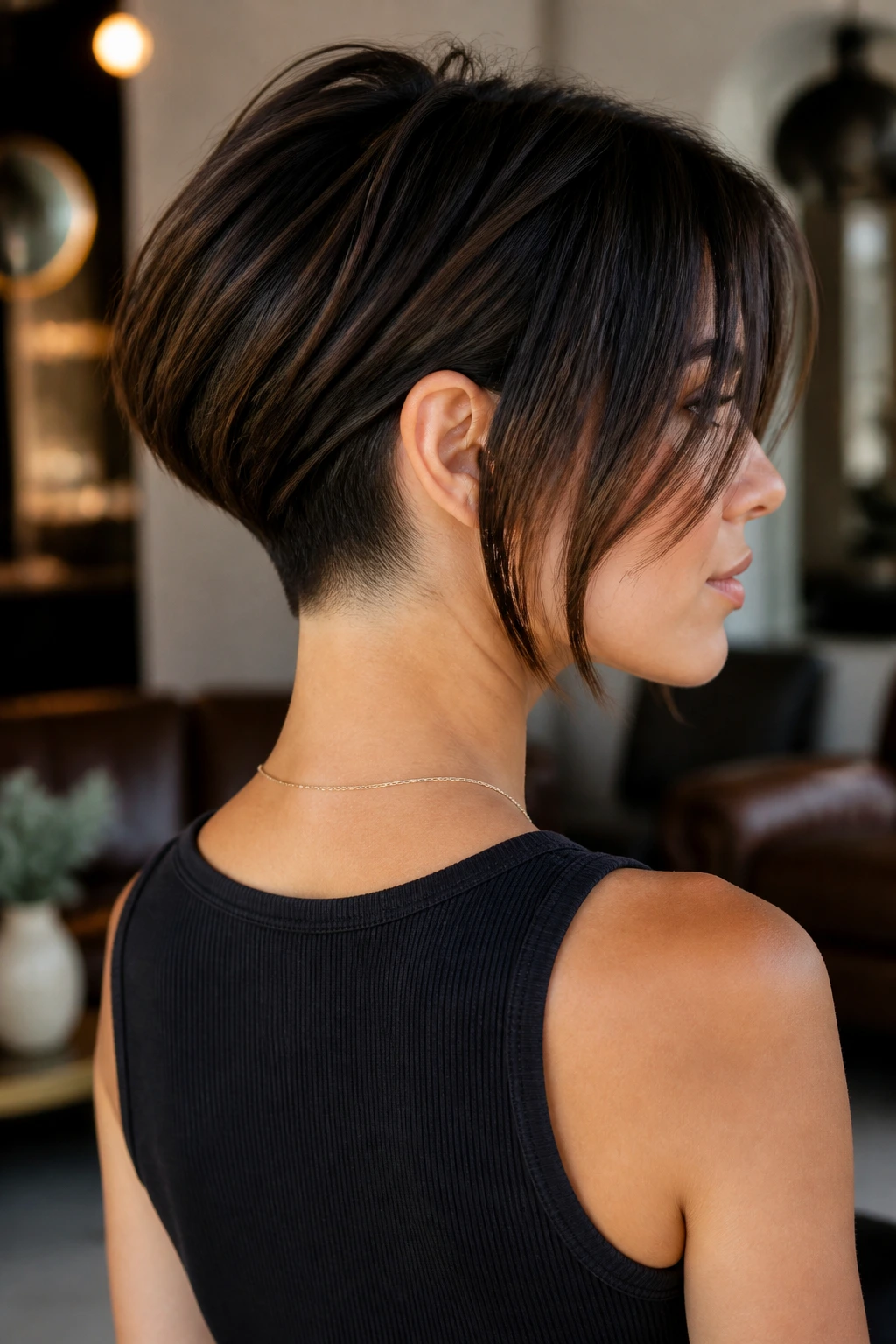
The undercut nape is a move for people who want to remove bulk where the hair sits flat anyway. On thin hair, that can sound odd, but it works when the crown and sides need freedom to lift. The long curtain pieces offset the short back and keep the style soft around the face.
This cut is especially handy if your neckline gets fuzzy or bulky fast. The undercut keeps that area tidy for longer, and the rest of the bob can sit more cleanly.
Practical note
Ask how much hair is being removed. A light undercut is one thing. A dramatic strip at the nape is another, and the grow-out is not the same conversation.
20. Mini Stacked Bob with Brow-Grazing Bangs

The mini stacked bob keeps everything compact. That compactness is the point. Fine hair often looks denser when it’s cut into a tight, controlled shape, and brow-grazing curtain bangs keep the front open without eating up too much length.
This cut is neat, quick to style, and easy to wear with earrings or glasses because the face frame stays controlled. If your hair tends to separate into wispy sections, the shorter perimeter can help it read fuller.
A light root spray and a quick blow-dry are enough. Don’t overcomplicate it.
21. Feathered Bob with Loose Face Framing

Feathering can go wrong fast on thin hair. Here, it works because the feathering stays around the front and lower half of the cut, not all over the crown. The result is softness without losing the bob shape.
The loose face framing should fall like a soft frame, not like broken pieces. That means the longest front sections need enough weight to bend, not float away from the cheekbones like dryer lint. Harsh, but true.
If you like hair that moves when you turn your head, this one deserves a look. If you want hard edges, pass.
22. Short Shag Stack with Curtain Bangs
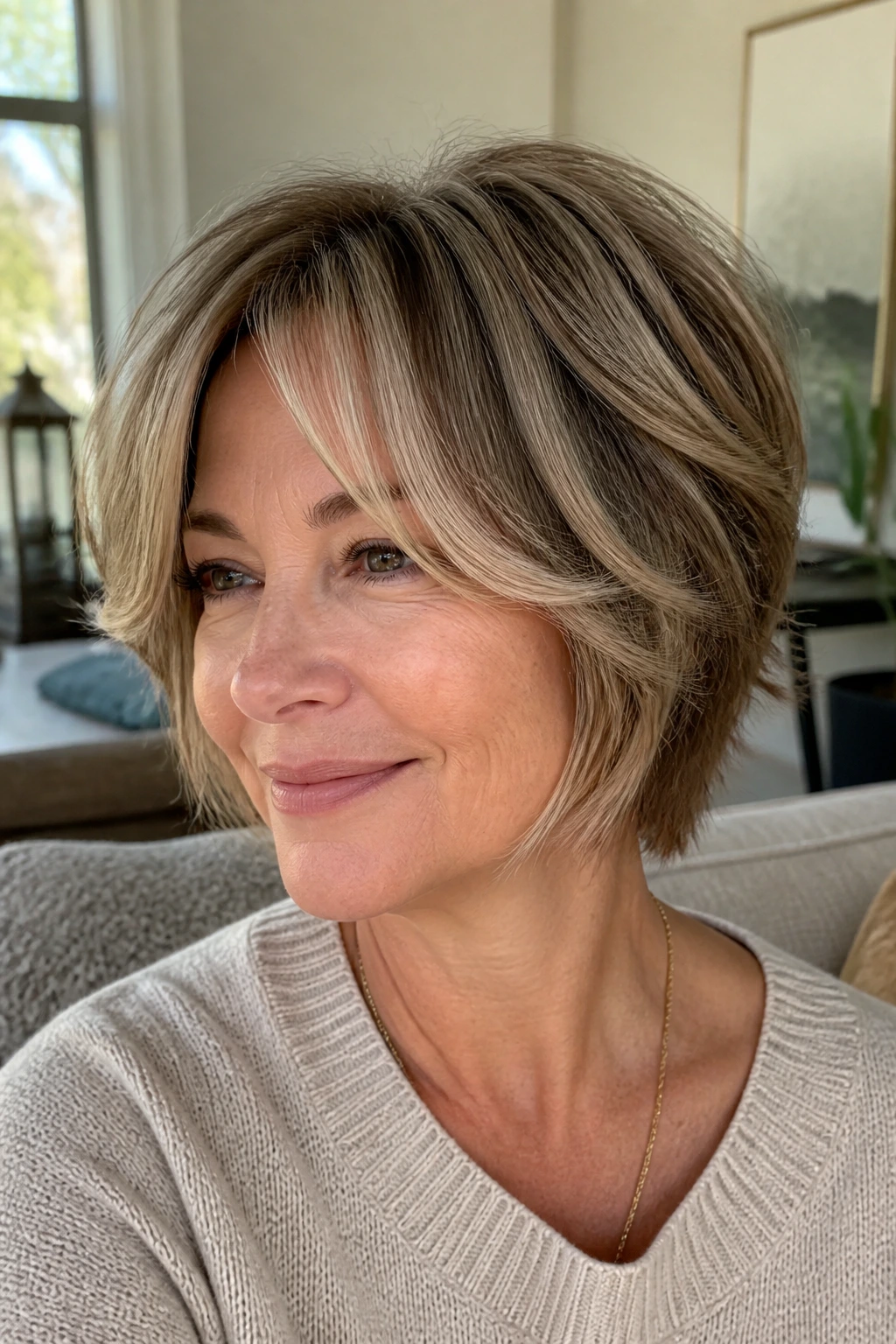
This cut has texture first and structure second. The stack keeps the back lifted, while shag layers break up the surface so fine hair looks a little fuller and less see-through. Curtain bangs are the stabilizer. They keep the face frame soft enough that the shag doesn’t get too edgy.
It’s a useful cut if you hate spending twenty minutes smoothing every strand into place. A bit of lived-in movement actually helps it. A light salt spray, a rough dry, and maybe a finger twist around the bangs can be enough.
Best for
- Slightly wavy fine hair
- People who like a casual finish
- Hair that loses shape when it’s too polished
23. Side-Weighted Stack with Off-Center Fringe
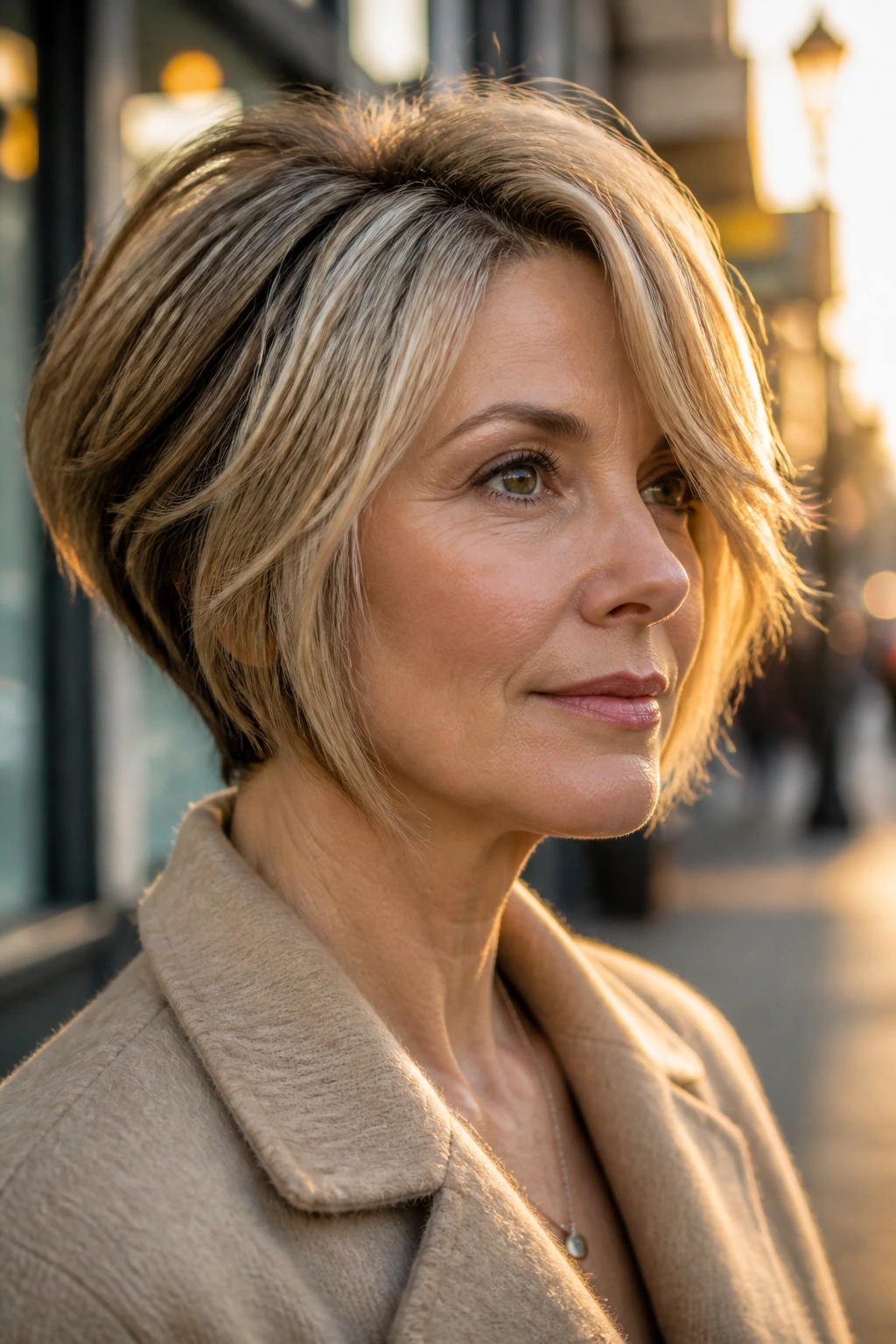
A center part is not mandatory, and this cut proves it. The side-weighted stack gives a little more volume on one side, which can help if your hair naturally falls flatter on one temple. The off-center fringe keeps the forehead open while still giving a curtain-bang effect.
This is one of the better options if your face isn’t symmetrical in the way salon diagrams pretend faces are. Most aren’t. A slight side bias can make the whole haircut feel more alive and less copied.
A root-lifting powder works well here, but use it sparingly. Too much and the part gets gritty.
24. Polished Stack with Razor-Clean Ends
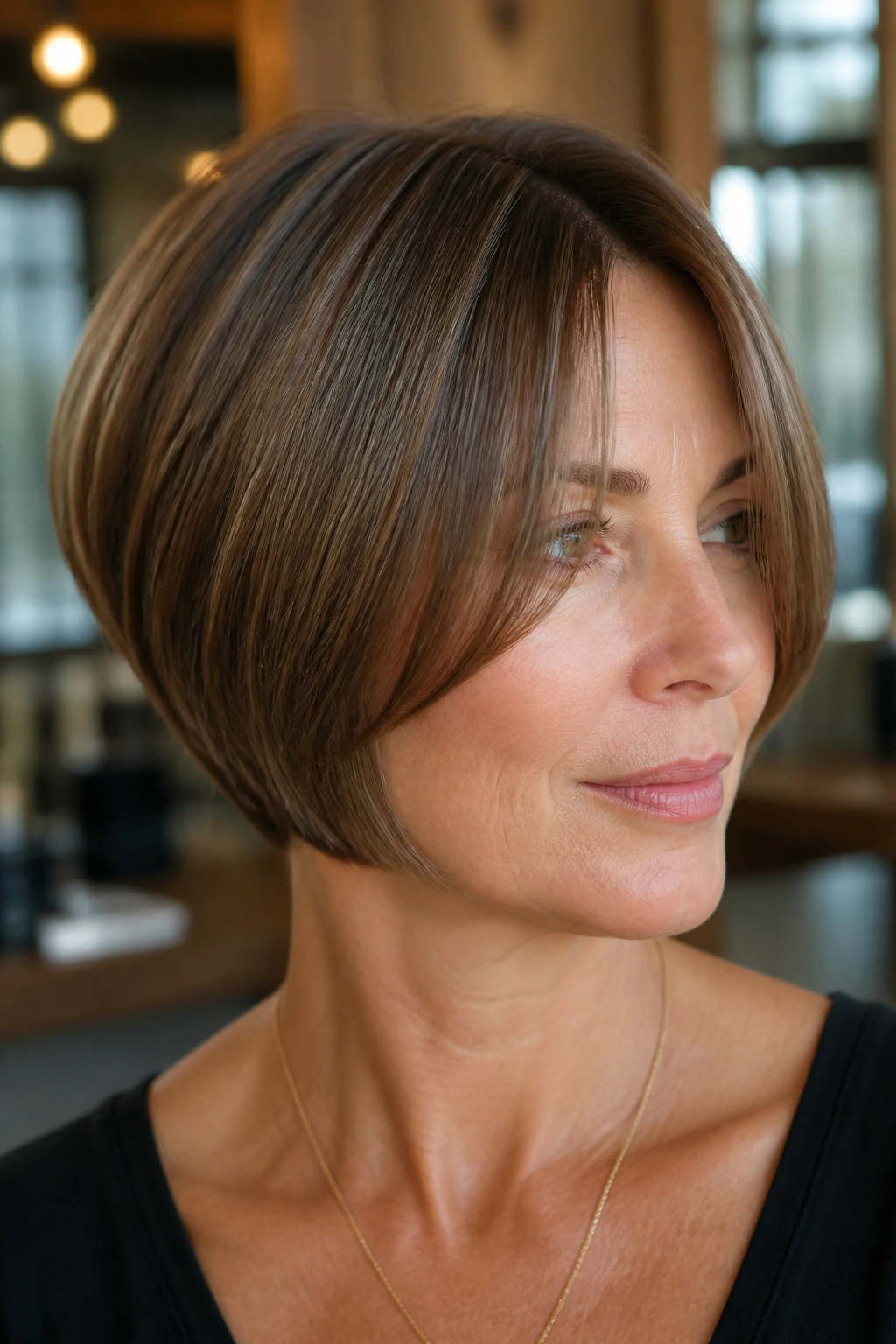
Not every short stacked haircut has to be messy or textured. A polished version can look denser because the outline is so clean. Razor-clean ends give the bob a crisp edge, and the curtain bangs are kept sleek enough to move without separating into thin wisps.
This cut depends on precision. If the stack is uneven, you’ll see it immediately. If the bangs are too short, the polish disappears. Done well, though, it looks sharp and expensive in the old-fashioned sense: tidy, controlled, and not trying too hard.
A smoothing blow-dry with a concentrator nozzle helps the most. Then stop touching it.
25. Precision Stacked Bob for Very Fine Hair
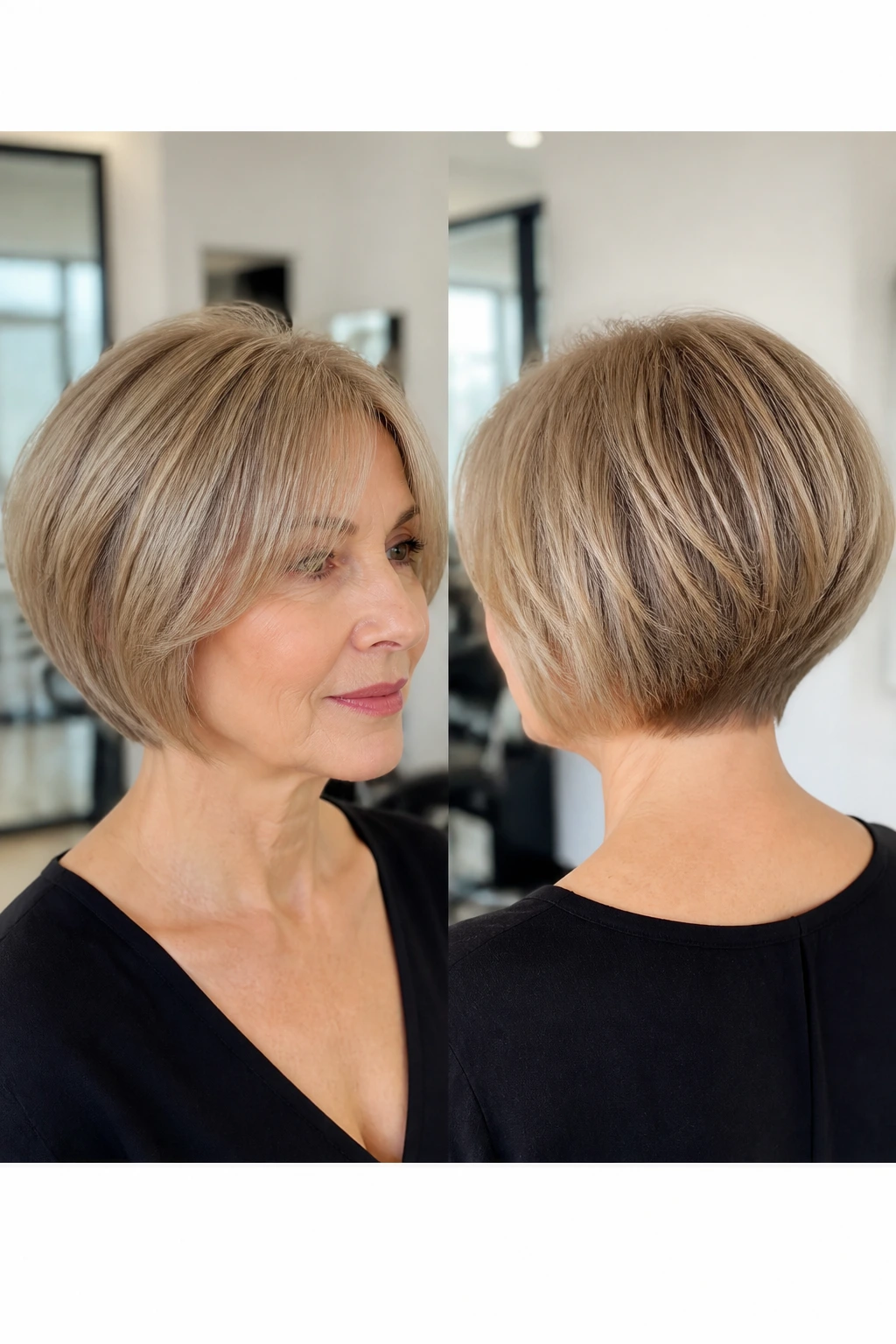
This is the serious version. No fluff, no excess length, no extra layers wandering around the crown. The back is cleanly graduated, the sides are controlled, and the curtain bangs are cut to open the face without stealing the density you need elsewhere. For very fine hair, that discipline matters.
What makes it work is restraint. Every line has a job. The nape supports the shape, the crown gets just enough lift, and the fringe softens the front without asking the hair to do more than it can.
If your hair has always looked thinner at the ends than at the roots, this is the cut that finally works with that reality instead of pretending it isn’t there.
Why the Stack Gives Thin Hair a Backbone
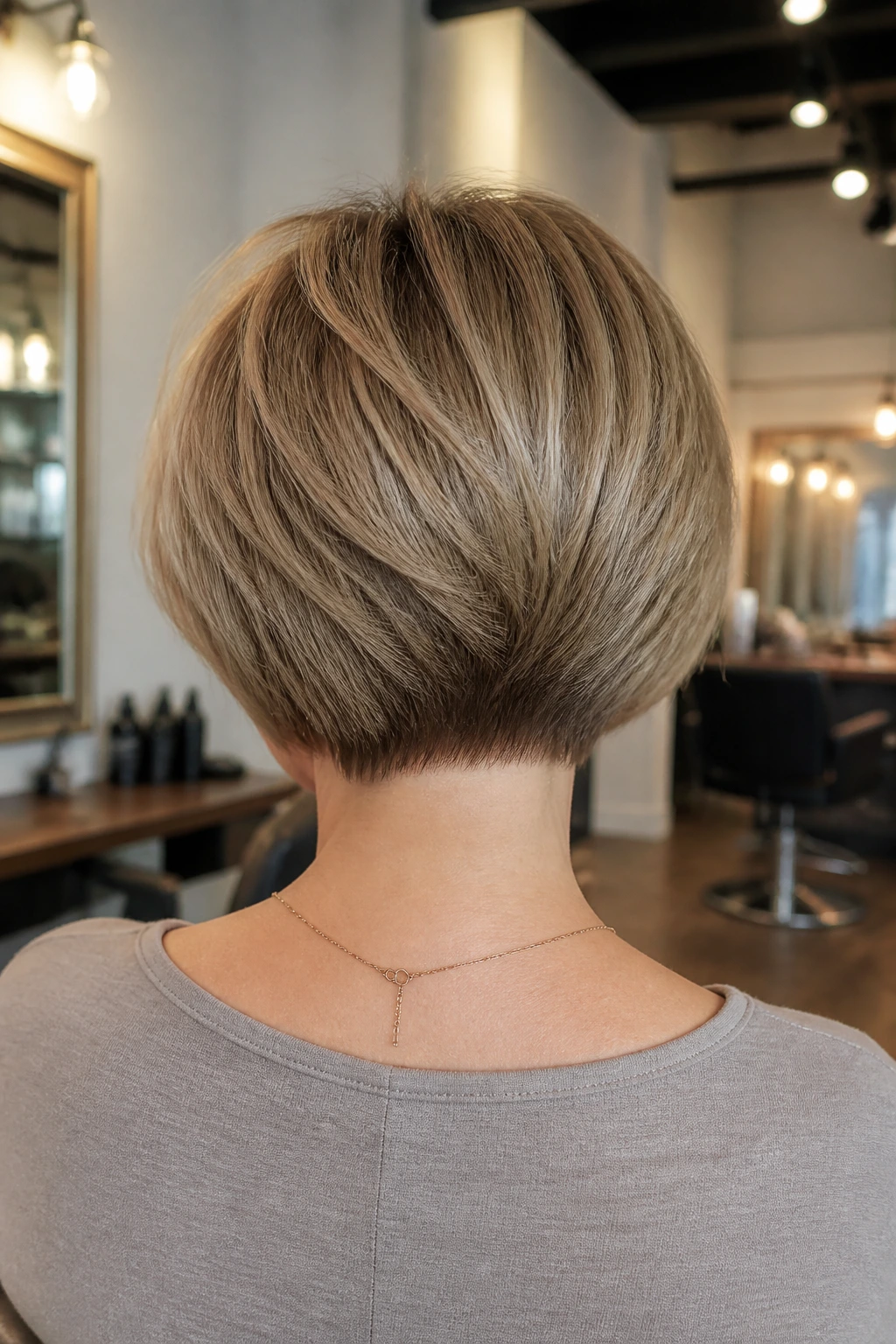
A stacked cut isn’t magic. It’s geometry. The back is cut shorter and layered upward, so the hair at the nape doesn’t drag the whole shape down. On thin hair, where the weight is already limited, that graduated shape creates a stronger silhouette with less material.
The best stacks don’t look chopped. They look engineered. You should see a smooth shift from short at the back to slightly longer at the sides, with enough internal structure to keep the crown from lying flat against the head. That lift is what makes the cut read fuller in real life, not just in a mirror selfie.
There’s also a practical side to it. A stacked bob often survives a little more grow-out than a blunt, one-length bob because the shape is built into the back. Once the weight line starts to drop, though, the haircut loses its edge fast. That’s why a trim schedule matters so much.
How Curtain Bangs Change the Front of the Cut
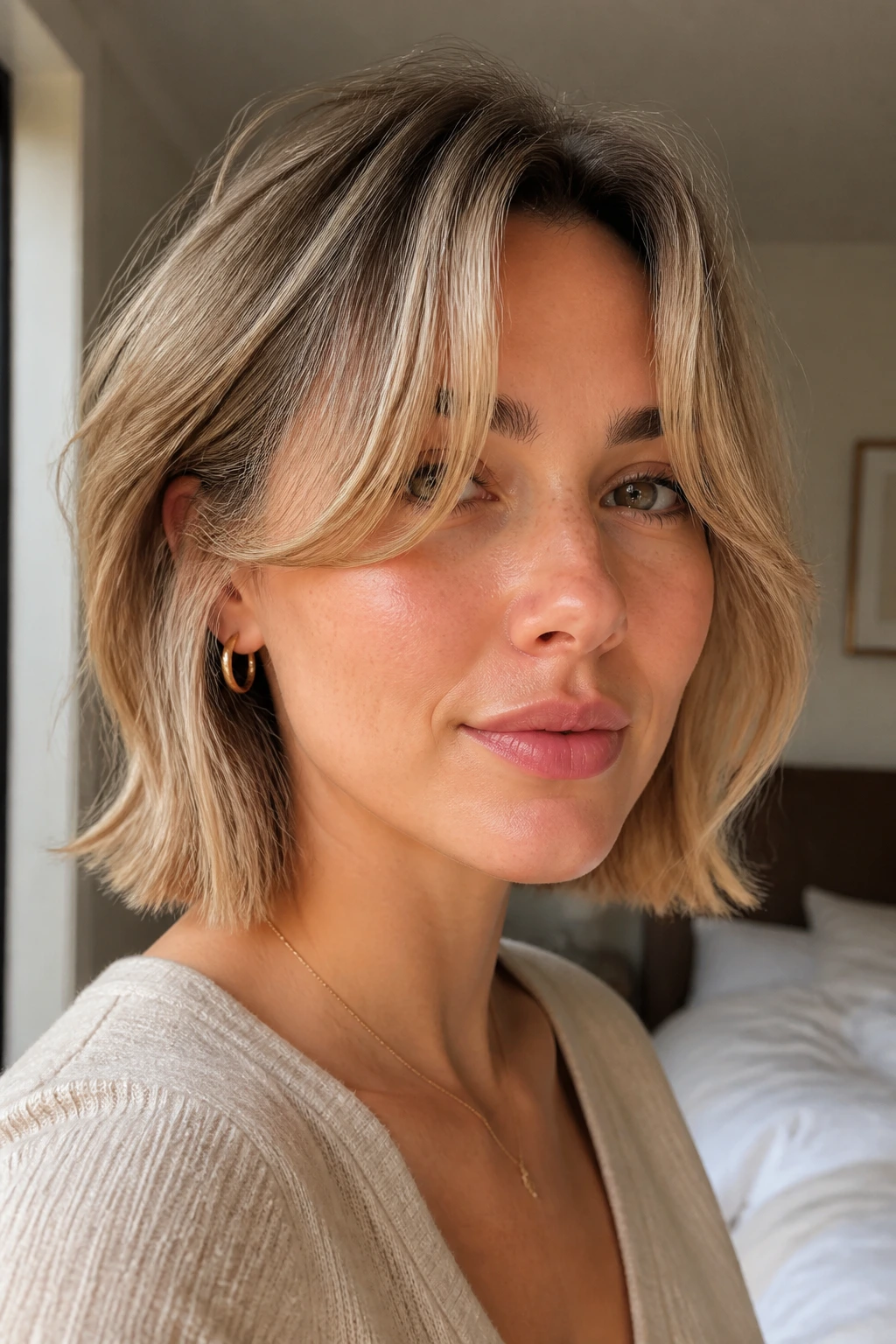
Curtain bangs keep a short haircut from feeling heavy at the face. They split down the middle, then fall away toward the cheekbones, which means the forehead isn’t buried under a solid block of hair. That matters for thin hair because a thick-looking fringe can make the rest of the cut seem emptier by comparison.
They also buy you some flexibility. You can wear them centered, pushed to the sides, tucked behind an ear, or pinned back on humid days. Full bangs don’t give you that kind of escape hatch, and on fine hair, escape hatches are useful.
The only catch is density. If the bangs are cut too thin, they can disappear. If they’re too heavy, they swallow the face. The sweet spot is a soft front section that starts a little farther back than a classic fringe and opens at the cheekbone instead of the middle of the forehead.
Choosing the Right Stack Height for Your Density
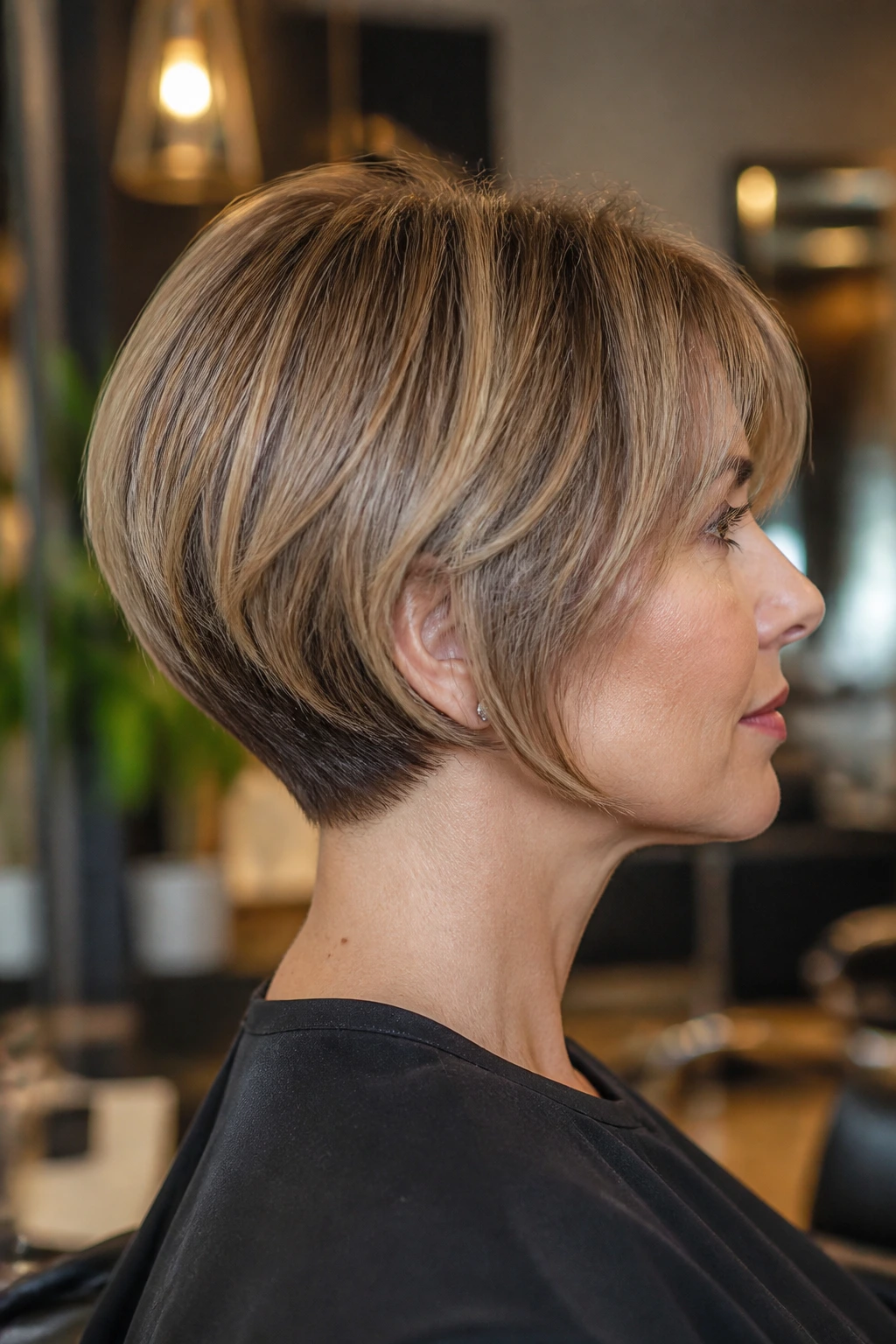
Not every thin head of hair needs the same stack. Some hair is fine but plentiful. Some is sparse and soft. Those are different animals.
If your hair is fine but dense, you can handle a stronger stack and a tighter nape. If your hair is sparse, keep the graduation softer and let the perimeter stay a little fuller. The point is to create support without over-slicing the ends.
Use this rough rule
- Soft stack: best when you want movement and can’t afford to lose much length
- Medium stack: the safest choice for most thin hair
- High stack: useful for flat crowns and very short bobs, but it needs maintenance
Ask your stylist where your hair naturally collapses. Crown? Nape? Temples? The answer changes the cut.
Tools and Products That Make These Cuts Behave
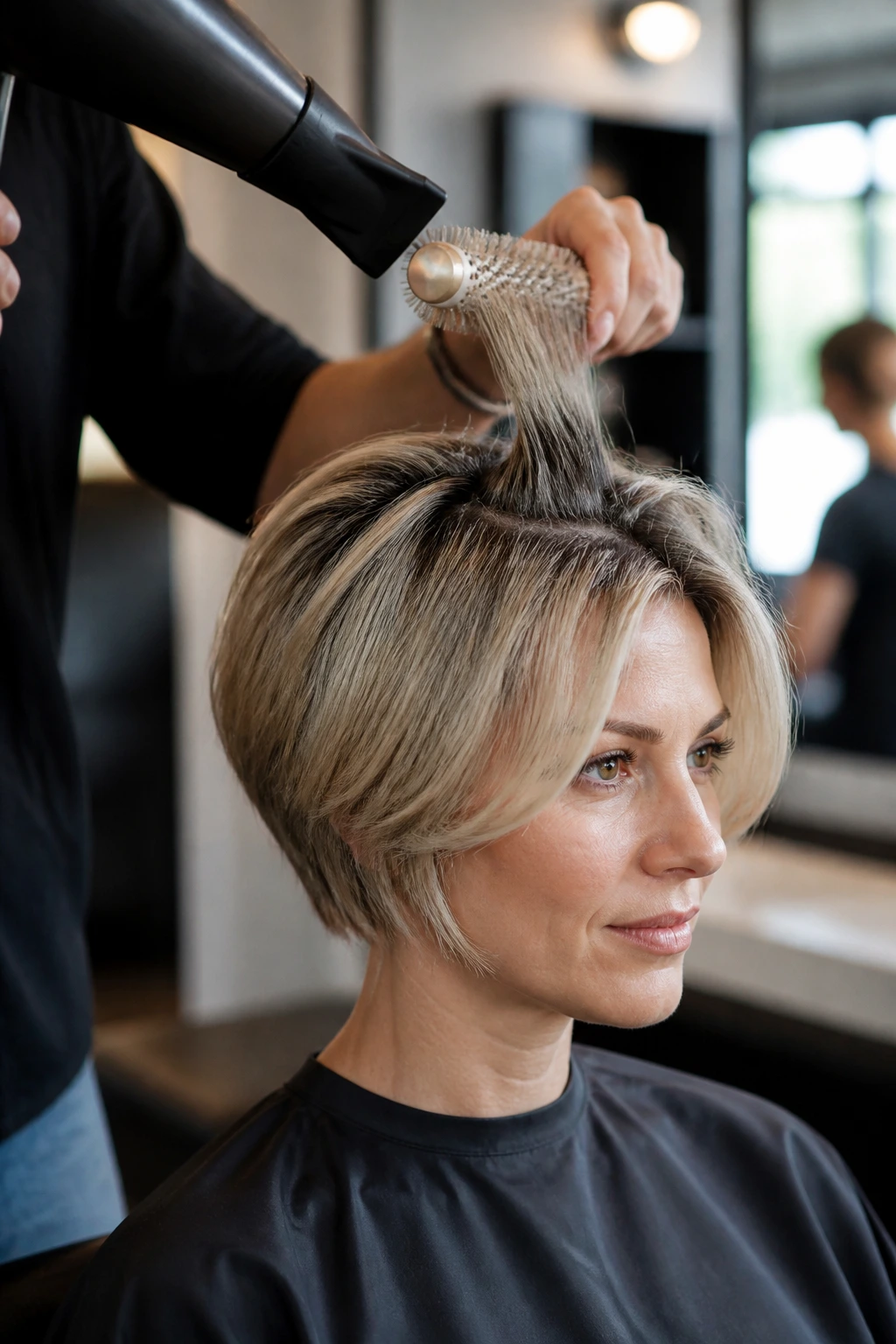
- A 1.25- to 1.5-inch round brush: This gives curtain bangs a clean bend and lifts the crown without making the ends too round.
- Blow dryer with a concentrator nozzle: The nozzle helps push roots in the direction you want instead of blasting the cut apart.
- Lightweight volumizing mousse: Apply it at the roots on damp hair; heavy creams tend to flatten thin strands.
- Texturizing spray: A few sprays at the mids and ends can stop the cut from looking too smooth or limp.
- Small flat iron: Useful for polishing curtain bangs or sharpening a front corner, especially on stubborn hairlines.
- Tail comb: Good for sectioning bangs cleanly and lifting the crown section before drying.
- Duckbill clips: Handy for setting the bang bend while the rest of the hair cools.
- Light finishing hairspray: Look for flexible hold, not shellacked stiffness.
How to Ask for the Cut at the Salon
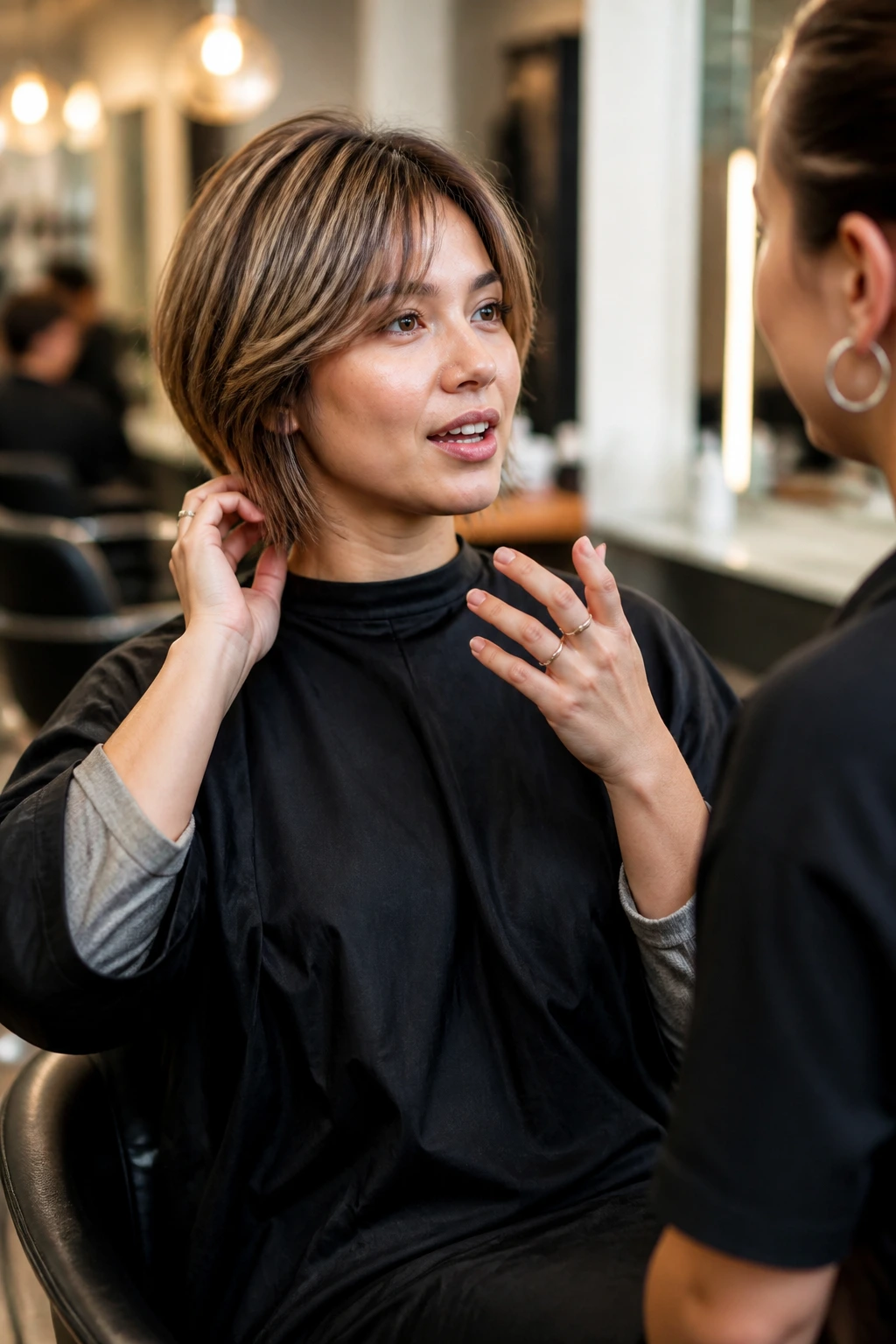
Say what you want in plain language. “I want a short stacked shape that keeps lift in the back, but I don’t want the ends thinned out too much” is better than asking for “movement” and hoping for the best. Bring a photo, then point to the nape, the crown, and the bang length separately. Those are three different decisions.
Tell your stylist whether you wear your part in the middle, slightly off-center, or wherever your hair falls on its own. Curtain bangs live or die on that choice. If you usually air-dry, say so. If you blow-dry every morning, say that too. A cut that needs a round brush every day is a different haircut from one that can dry on its own and still sit decently.
And be blunt about maintenance. If you hate trims every five weeks, don’t ask for a super-tight stack and expect it to stay crisp forever.
How to Style It on Day One and Day Three
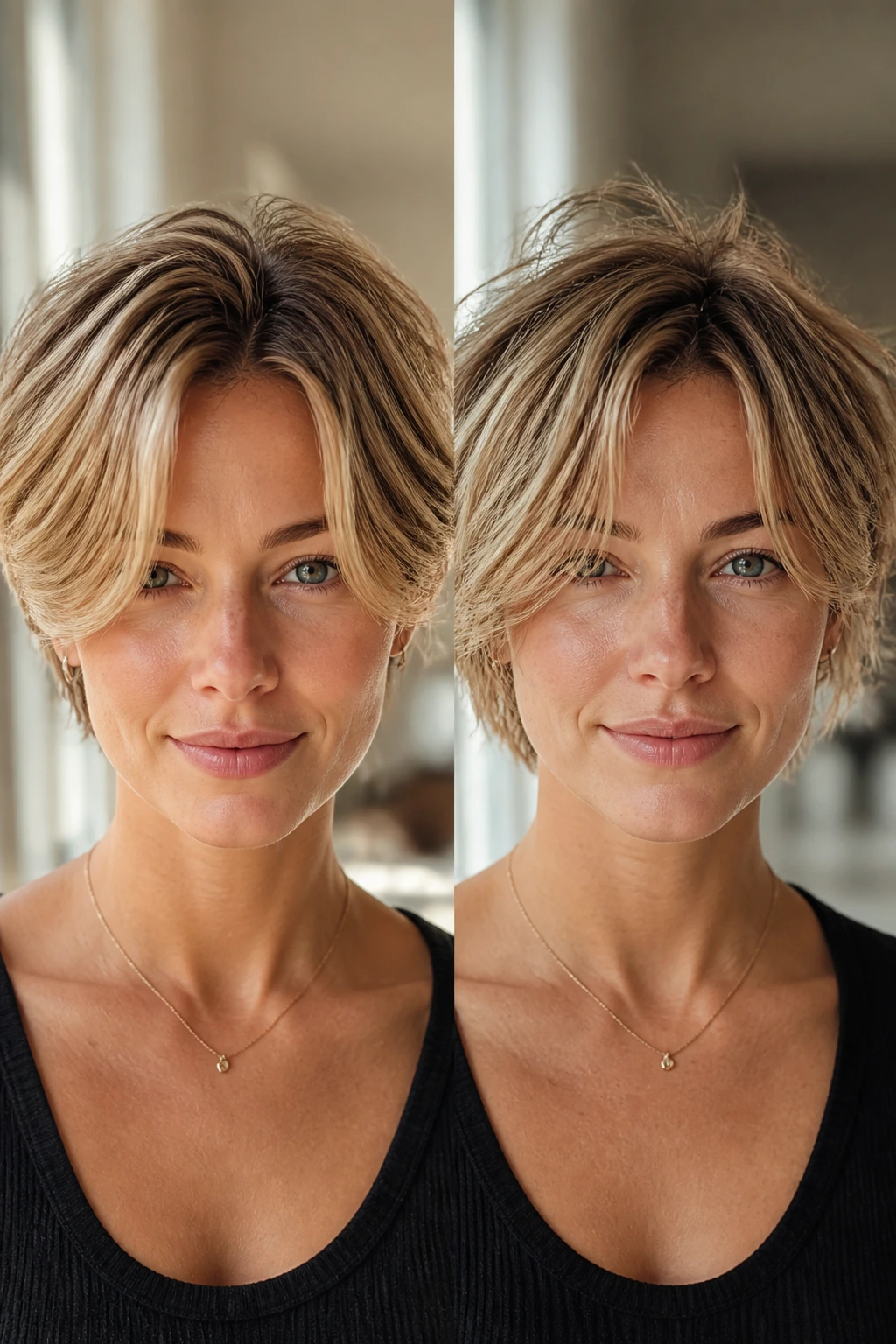
Day one is easy. Day three is where the truth shows up.
On fresh hair, rough-dry the roots first, then use the round brush only on the crown and the curtain bangs. That gives the top section lift without turning the whole head into a blown-out poodle. If the ends are already sitting well, leave them alone.
By day three, the roots usually need help more than the ends. A mist of water or a dry shampoo at the crown can wake the shape back up, but don’t soak the bangs. Damp fringe often collapses into the forehead and stays there. If the front has gone weird, re-bend just the bang pieces with a small brush and a cool shot of air.
A tiny bit of texture at the nape can save the whole cut. Weirdly, that’s where the shape can die first.
Common Mistakes That Make the Shape Fall Flat
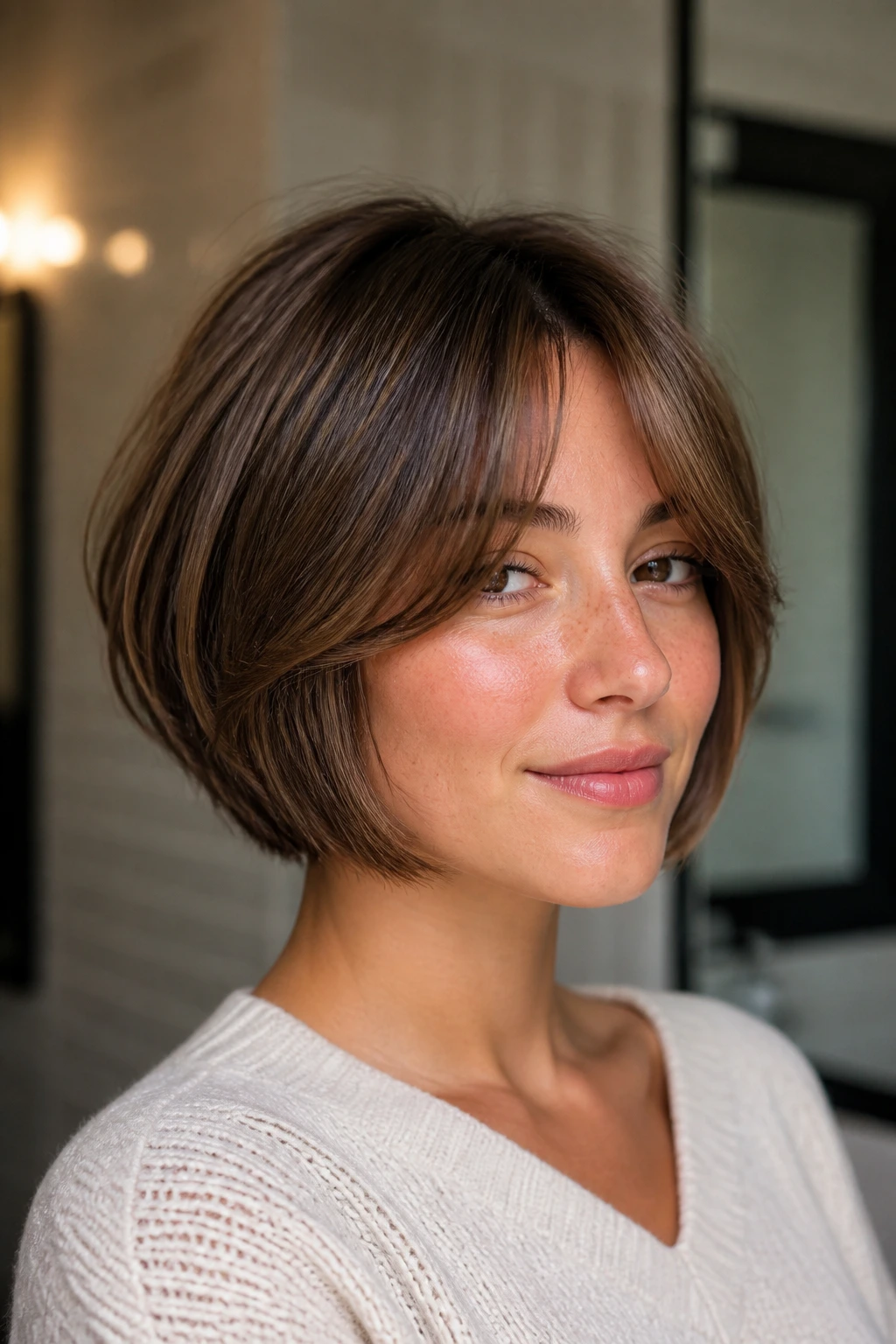
- Taking too much weight out of the ends: The haircut starts looking airy in the wrong way. Fix it by asking for a cleaner perimeter and less aggressive texturizing.
- Cutting curtain bangs too short: They spring up and expose more forehead than you wanted. Keep them long enough to graze the cheekbone or brow.
- Ignoring the crown: If the top is left flat, the stack can’t do all the work by itself. You need root lift in the styling step.
- Using heavy oils near the roots: Fine hair drinks up product fast, and the whole shape can collapse by lunchtime.
- Waiting too long between trims: The stack grows out first. Once the nape loses its tuck, the silhouette turns blunt and tired.
- Over-blending the fringe into the sides: The bangs disappear, and the haircut loses the soft frame that makes it flattering in the first place.
Variations and Alternatives When You Want a Different Mood
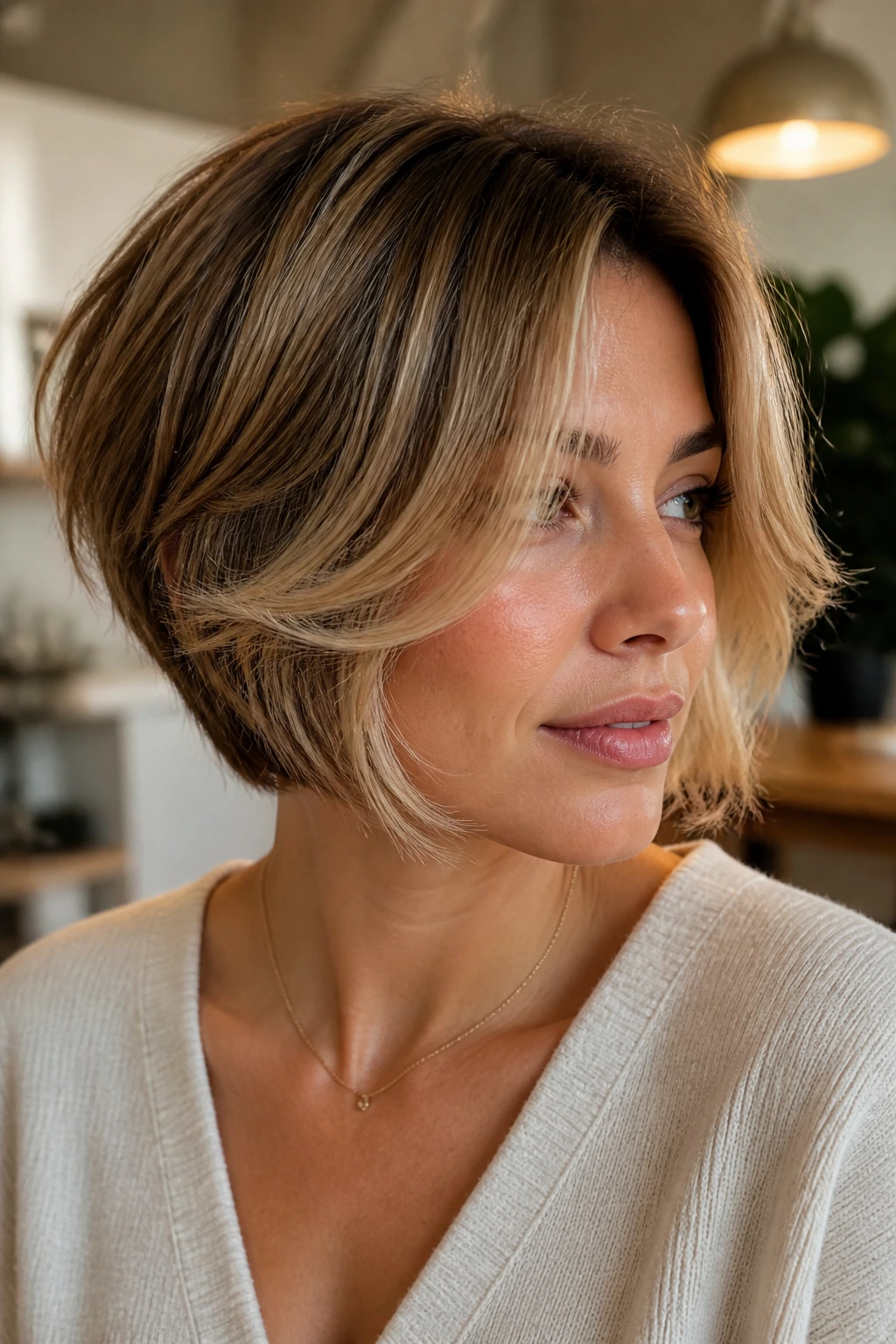
The Softer Grow-Out: Keep the same stacked base, but leave the curtain bangs longer so they blend into face-framing layers. This works if you want a cut that survives a missed trim better than a sharper bob.
The Sharper Editorial Version: Raise the stack slightly and clean up the front corners. The result is more angular, with a cleaner side profile and a stronger jawline effect.
The Air-Dry Friendly Version: Ask for less internal layering and a little more length around the perimeter. The hair should still bend on its own without needing a perfect blow-dry.
The Curly Adaptation: Keep the graduation lower and let the curtain bangs live a little longer. Curly hair shrinks, and the front pieces need room to fall instead of jumping up.
The Minimal-Product Version: Choose a blunt perimeter with only subtle stacking in the back. That gives you shape without asking for a cabinet full of sprays and creams.
Maintenance, Trims, and Grow-Out Notes
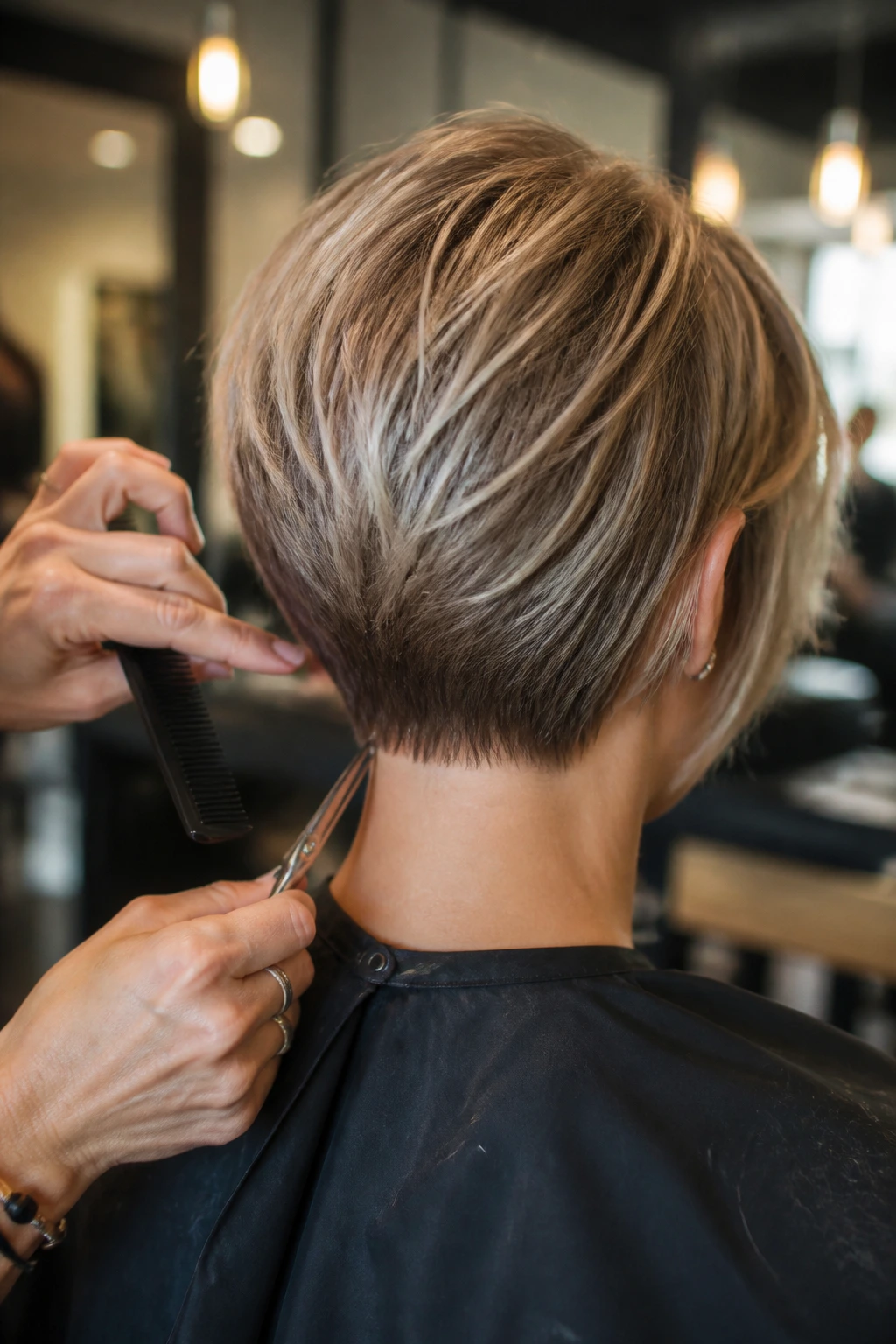
These cuts need trims more often than long layered hair, and pretending otherwise is how the shape disappears. Most stacked bobs look their best with a tidy-up every 5 to 7 weeks. Curtain bangs may need a dusting sooner if they start poking into the eyes or splitting awkwardly around the center part.
If you want to grow the cut out, ask for slower changes rather than one dramatic shift. Let the nape get a little longer, soften the stack, and keep the bangs moving toward cheek length. That way the haircut turns into a lob instead of a mullet-shaped accident.
A note for anyone with very fine hair: avoid waiting until the shape is completely gone. By the time the back looks mushy, the fix usually requires more length removal than you wanted in the first place.
Frequently Asked Questions

Will a stacked haircut make thin hair look even thinner?
Not if the stack is balanced. The back should be graduated, not shredded, and the perimeter should stay strong enough to hold an outline. Thin hair looks thinner when the ends are too wispy or the crown is overloaded with layers.
Do curtain bangs work on very fine hair?
Yes, but they need enough density to hold a split. If the fringe is cut too short or too sparse, it can vanish into the rest of the haircut. Longer curtain pieces usually behave better than short, feathery fringe on fine strands.
How short should the back be?
Short enough to remove weight, not so short that the shape turns puffy at the nape. For most people, that means a clean graduation at the back of the head with the shortest point sitting above the neckline, not shaved into it.
Can I air-dry this cut?
You can, especially if your hair has a little wave. The crown and bangs still usually need a quick bit of styling to keep the shape from going limp, but the rest can dry naturally if the cut is built well.
What if my crown is flat and my hair is thin at the top?
Ask for lift at the crown without heavy thinning through the upper layers. A root-lifting mousse plus a round-brush dry on the top section can do more for the shape than extra layers ever will.
How often do curtain bangs need trimming?
Usually every 4 to 6 weeks, sometimes sooner if they’re hitting your eyes. If you want a softer grow-out, keep them a touch longer so they can be tucked aside between trims.
Does this cut work with glasses?
Yes, especially the versions with longer curtain pieces or cheekbone-length fringe. Those shapes leave room for frames and keep the front from crowding the face.
What’s the biggest mistake people make with stacked cuts for thin hair?
They thin out the ends too much and then wonder why the bob looks stringy. A stacked cut needs structure at the outline. Without that, the haircut loses the very density it’s supposed to create.
The Shape That Holds Its Own
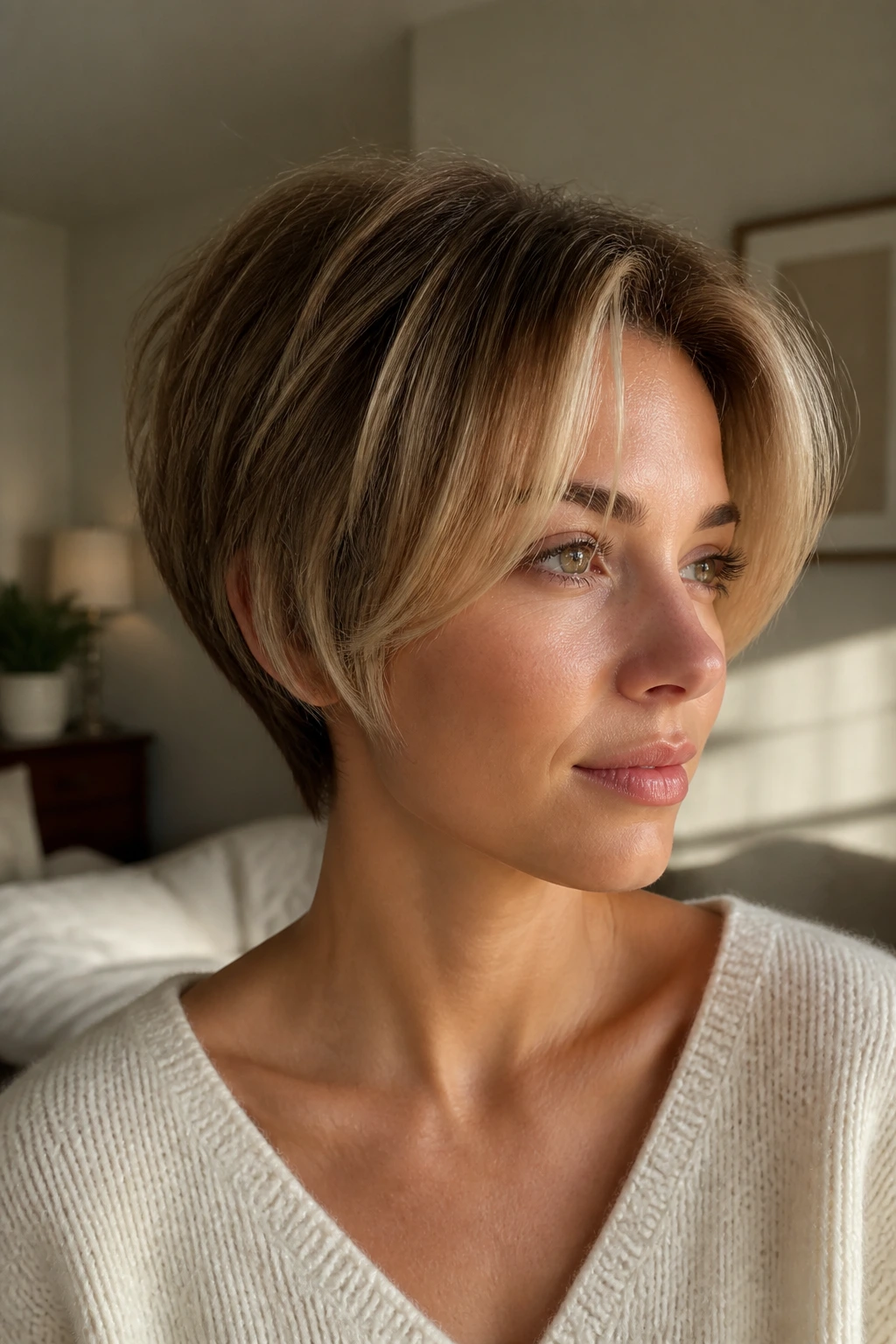
Short stacked haircuts for thin hair with curtain bangs work because they respect what fine hair actually does. They don’t fight gravity with a pile of product. They change the cut line, keep the crown honest, and let the bangs soften the front without stealing all the density.
The best version is the one that suits your hair’s habits, not the one that looks dramatic in a photo and falls apart at 3 p.m. Get the stack right, keep the fringe soft, and protect the outline with regular trims. That’s where the payoff lives.