



Straight hair is brutally honest. Give it a bad cut and every line shows; give it the right cut and the whole shape looks crisp, expensive, and a little bit effortless in the best way. That’s why layered hairstyles for straight hair with curtain bangs keep showing up on salon chairs: the layers stop the length from hanging like a flat sheet, and the bangs break up the forehead without boxing the face in.
The trick is that straight hair needs movement built into the cut, not begged out of it with a dozen products. Curtain bangs help, but only when they’re placed with some thought. Too short, and they spring up like a shelf. Too heavy, and they sit there like a helmet fringe. Get the balance right, though, and they frame cheekbones, soften a strong jaw, and make even a simple blow-dry look intentional.
I’ve always thought this pairing is one of the few that works across a ridiculous range of hair types. Fine hair gets lift without losing too much length. Thick hair gets shape without turning puffy. Long hair gets some actual architecture. And a blunt one-length cut with curtain bangs? That can look chic on paper, but in real life it often needs a little movement underneath to keep the front from doing all the work alone.
Why These Cuts Work on Straight Hair
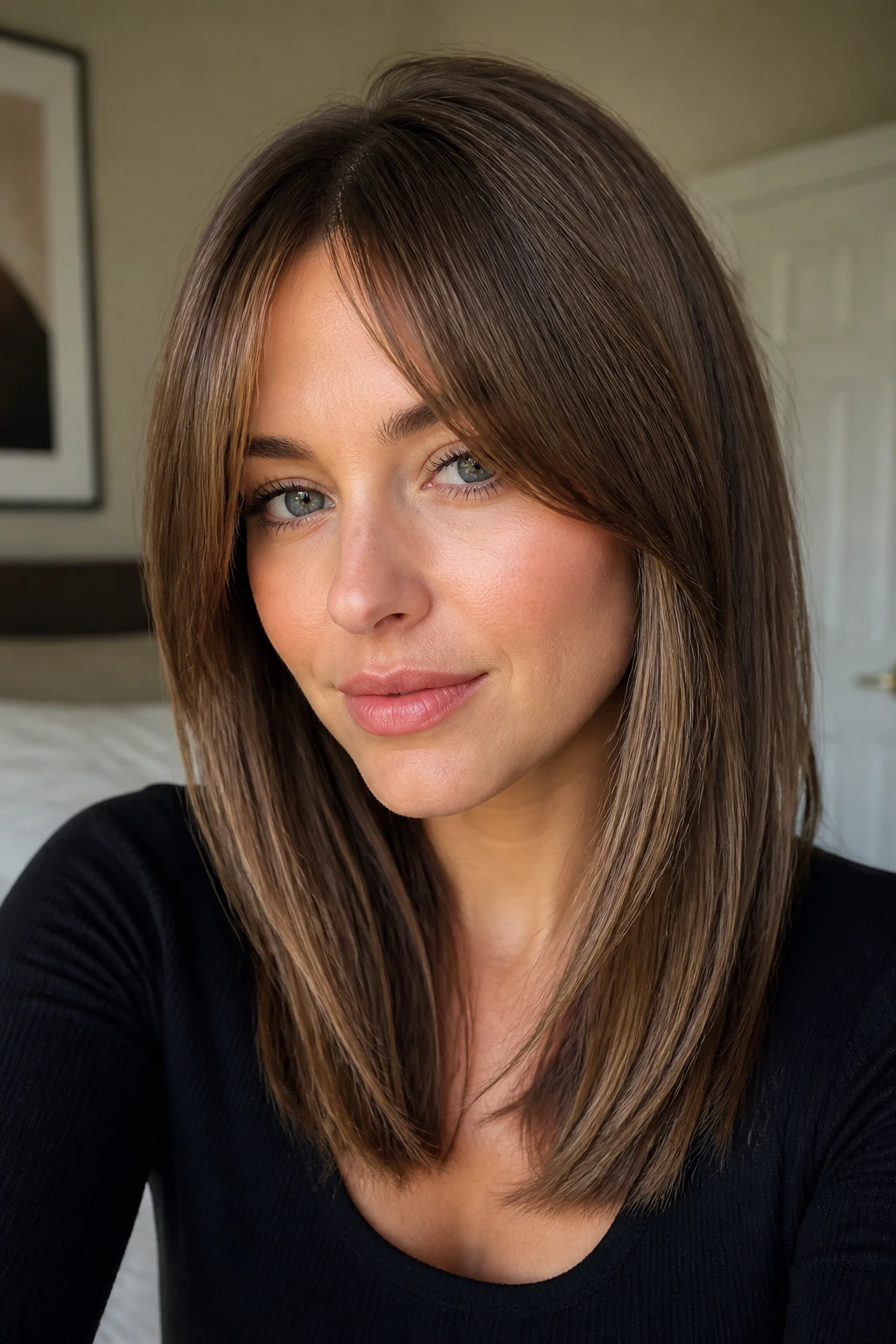
- Straight hair shows the cut first: You don’t get much camouflage from bend or wave, so layers have to be placed well, not just “added.”
- Curtain bangs soften the center part: The fringe opens away from the face, which makes a middle part feel less severe and more lived-in.
- Internal movement matters more than obvious choppiness: On straight hair, hidden layers usually look better than aggressive, visible steps.
- The shape grows out cleanly: The best layered cuts here still make sense six to eight weeks later, when the bangs have lost their fresh-snipped sharpness.
- You can change the whole mood with one brush and one bend: A little root lift at the crown and a soft curve at the ends is often enough.
- This combo flatters movement at the cheeks: Curtain bangs draw attention upward without stealing the whole show from the rest of the cut.
1. Long Invisible Layers with Feathery Curtain Bangs
Long hair can get heavy fast, and straight hair makes that weight obvious. Invisible layers solve the problem without turning the ends stringy. The length still looks full, but there’s enough movement around the shoulders that the cut doesn’t just hang there.
Why It Works
The shortest layers stay low, usually below the chin and often closer to the collarbone, so the perimeter keeps its strength. That matters on straight hair, because blunt-looking ends are what stop the whole cut from reading as thin. The curtain bangs should open somewhere around the cheekbone, not cut off too high.
Ask for this: layers that start low, soft point-cutting around the face, and a bang that lands longer when dry than it looks when wet. Straight hair barely shrinks, so there’s no need to gamble.
2. Collarbone Lob with Chin-Hugging Pieces
If you want shape without giving up length, this is the easy answer. The collarbone lob sits in that sweet spot where it can swing when you move but still tuck behind the ear without fighting you.
What makes it work is the chin-hugging front. The curtain bangs open at the center and drape into those front pieces, so the whole haircut feels connected instead of chopped into separate parts. On pin-straight hair, that connection matters. Otherwise the fringe can feel pasted on.
I like this cut for people who wear their hair down most days but don’t want the maintenance of very long layers. It gives you a clean line under the jaw and enough softness around the face to keep it from looking severe.
3. Butterfly Cut with Airy Curtain Bangs
The butterfly cut is the version people ask for when they want volume without losing length. It uses shorter face-framing layers and longer pieces underneath, so the top lifts and the bottom still stays dramatic.
What Makes It Different
The whole point is that the top layer almost acts like a built-in blowout. On straight hair, that’s useful because the crown can go flat in a hurry. With curtain bangs, the front pieces connect to that lifted top layer and create a shape that opens out from the face instead of dropping straight down.
It’s best when you like a little glamour in your hair but don’t want a shag that feels too broken up. This one still looks polished.
4. Blunt Perimeter with Hidden Internal Layers
This is the cut for someone who loves a clean edge but hates the helmet effect. From the outside, the length looks one-length and neat. Underneath, the stylist removes enough weight to stop the ends from dragging.
That hidden movement is the whole point. Straight hair loves a strong perimeter because it shows off shine and keeps the finish sharp. But without internal layers, the shape can sit like a curtain. Curtain bangs soften the front just enough, then the hidden layers keep the rest of the hair from going rigid.
It’s a smart choice if you wear structured clothes, like collars, blazers, or heavier knits. The haircut gives the same kind of clean line.
5. Soft U-Shape with Swoopy Fringe
A U-shaped cut is one of those styles that sounds minor until you see it on straight hair. The back keeps more length, the sides come forward a little, and the outline curves gently instead of forming a hard shelf.
That curve matters when curtain bangs are in the mix. The fringe opens the face, and the U-shape mirrors that softness through the rest of the hair. You don’t get the abrupt stop that a blunt hem sometimes creates.
If your hair is medium density, this is one of the safest cuts to ask for. It gives shape without overcommitting, and it grows out gracefully. Not glamorous, maybe. But very practical.
6. Polished Mid-Length Blowout Layers
Some cuts are made to look good air-dried. This is not that cut. The polished mid-length blowout layer wants a round brush, a blow dryer, and five to ten focused minutes around the front pieces.
The reason it works so well on straight hair is simple: the layers are placed to catch a bend. When you blow-dry the curtain bangs away from the face and smooth the mid-lengths under slightly, the whole head looks lifted. Not curled. Lifted.
I’d choose this if you like a sleek finish and don’t mind touching up the front every few days. It feels a little old-school salon, which is exactly why it still looks good.
7. Soft Shag for Straight Hair
A shag on straight hair needs a careful hand. Too much texture and it turns choppy in a bad way; too little and it loses the point. The soft shag sits in between, with broken-up layers that still respect the shape of the head.
Curtain bangs are almost mandatory here. They connect the crown layers to the front and keep the cut from looking like a random pile of angles. The fringe should be soft, not blunt, and the ends should move instead of sticking out.
Best for people who want a little edge
If you hate hair that feels too neat, this one has some attitude without trying too hard. It looks best with a slight bend, not a polished curl.
8. V-Cut Layers for Long Lengths
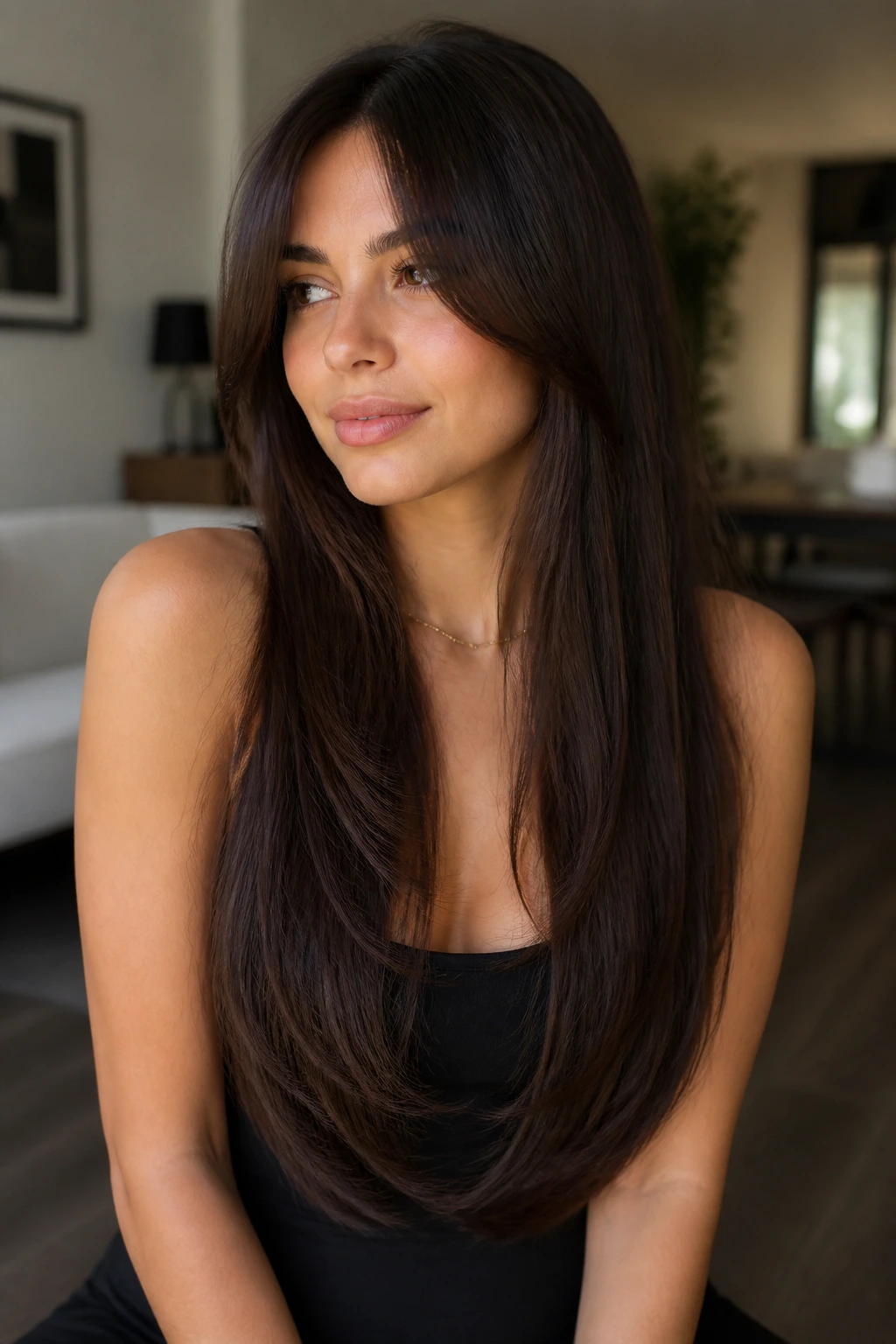
A V-cut is exactly what it sounds like: the back falls to a point, and the layers fan down from there. On long straight hair, that shape keeps the ends from looking like one giant block.
Curtain bangs make the front feel deliberate, which is important because a V-cut can otherwise read as all length and no framing. With the right fringe, the haircut feels designed from the front to the back. The movement concentrates low, near the hemline, which keeps the top from puffing out.
This is one of the best options if you’re attached to long hair and don’t want to sacrifice that length. It’s also one of the easiest to keep sleek with a flat iron pass on the very ends.
9. Shoulder-Grazing Lob with Center-Part Fringe
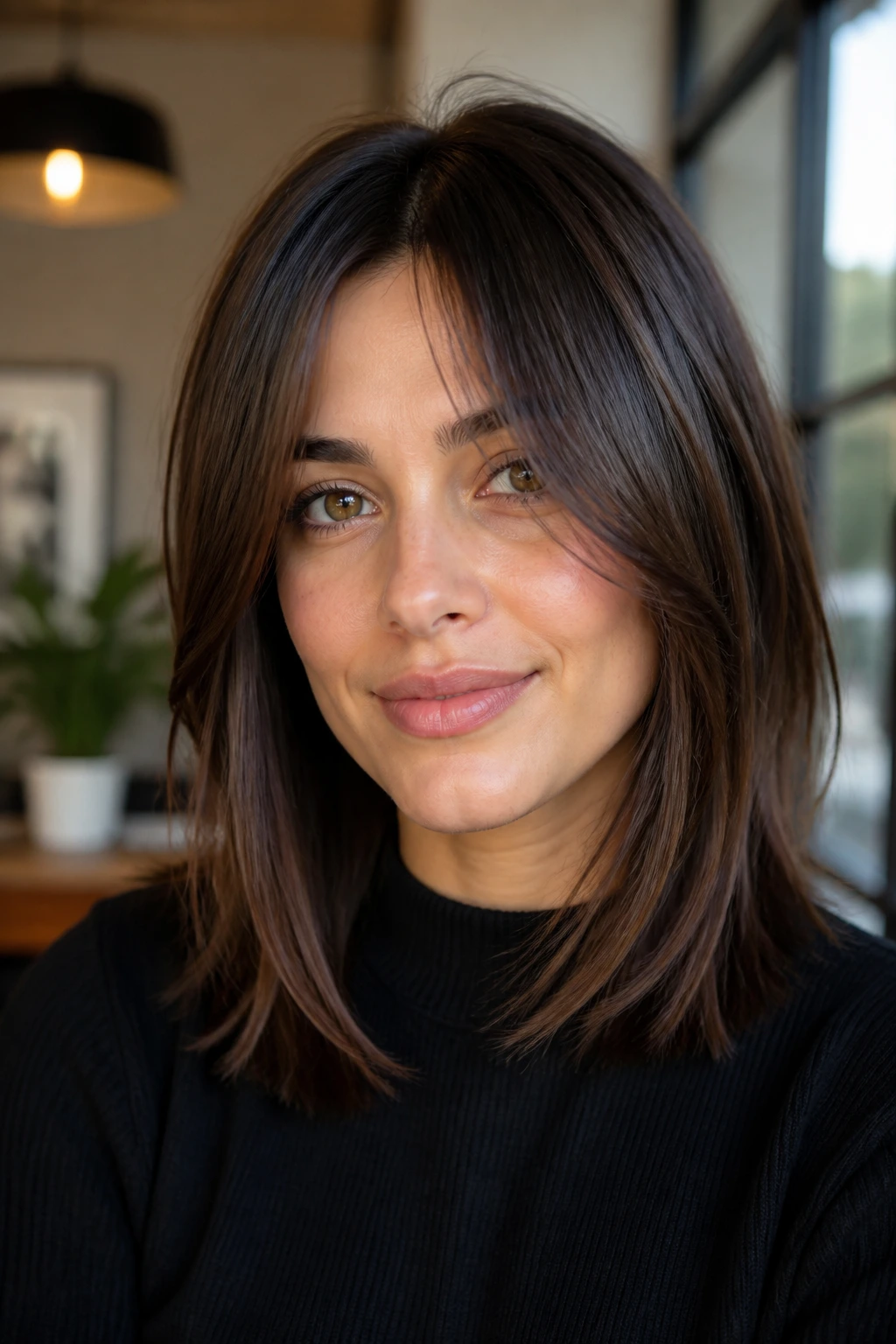
The shoulder-grazing lob is the haircut that makes straight hair look tidy without feeling stiff. It sits right where the collarbone and shoulders can do a little work for the silhouette, which helps the shape look fuller than it really is.
The curtain bangs are longer here, often grazing the cheek or lip line when dry. That gives the front enough weight to blend into the lob instead of floating above it. If the bangs are too short, the style loses that smooth transition.
It’s a good pick if you want something office-friendly that still feels current without being trendy in the fragile, here-today-gone-tomorrow sense. The shape does the talking.
10. Rounded Layers for Thick Straight Hair
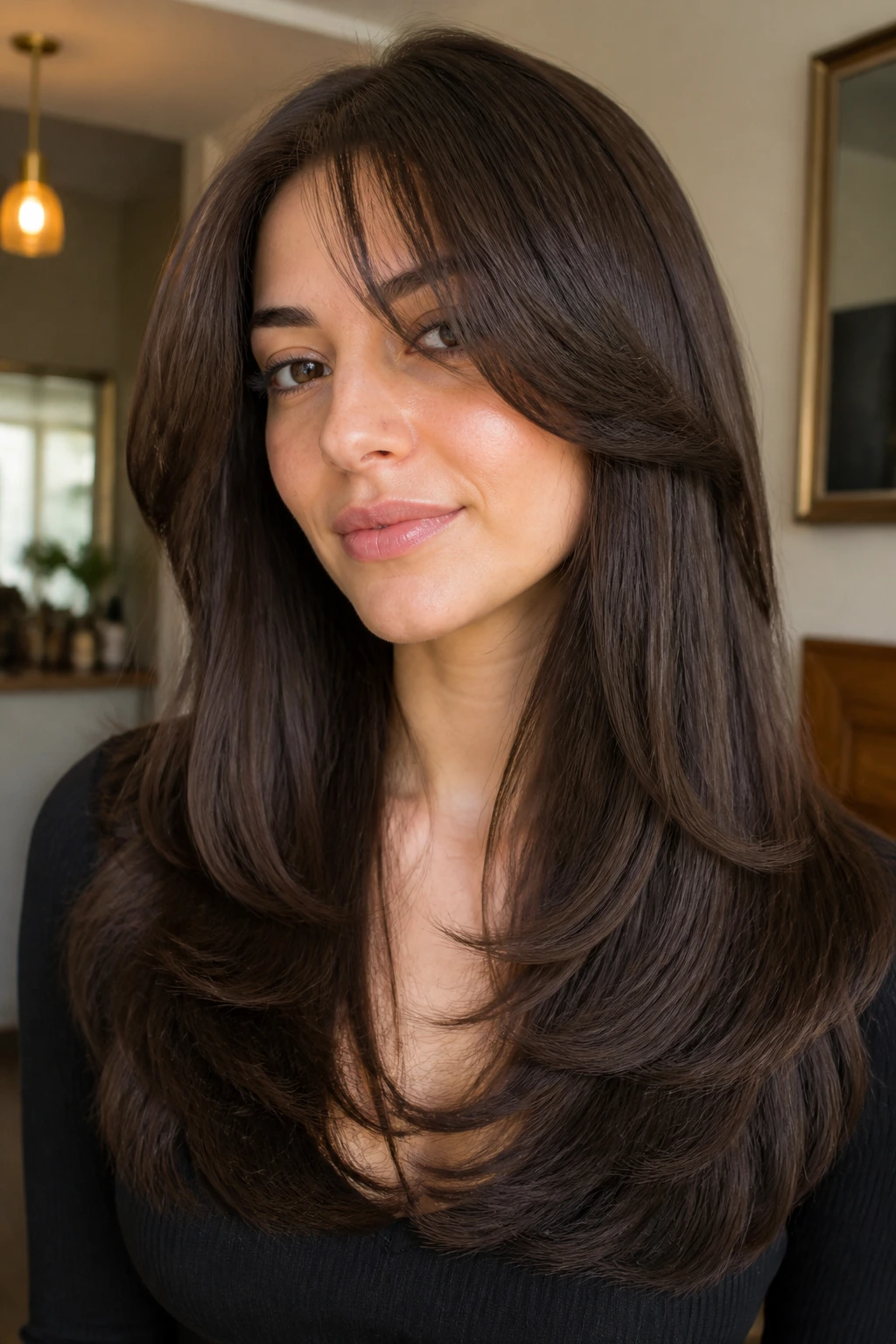
Thick straight hair can look gorgeous, but it can also get wide. Rounded layers bring the bulk inward so the cut follows the head instead of ballooning out from it.
The curtain bangs help by breaking up the front weight. They stop the thick fringe line from looking blocky and give the haircut a lighter entrance. On hair like this, I’d rather see the weight removed under the top layers than hacked away at the ends.
A round brush is your friend here. So is patience. Thick hair often needs to be dried in sections so the layers sit the way they’re meant to.
11. Fine-Hair Lift Layers with Wispy Bangs
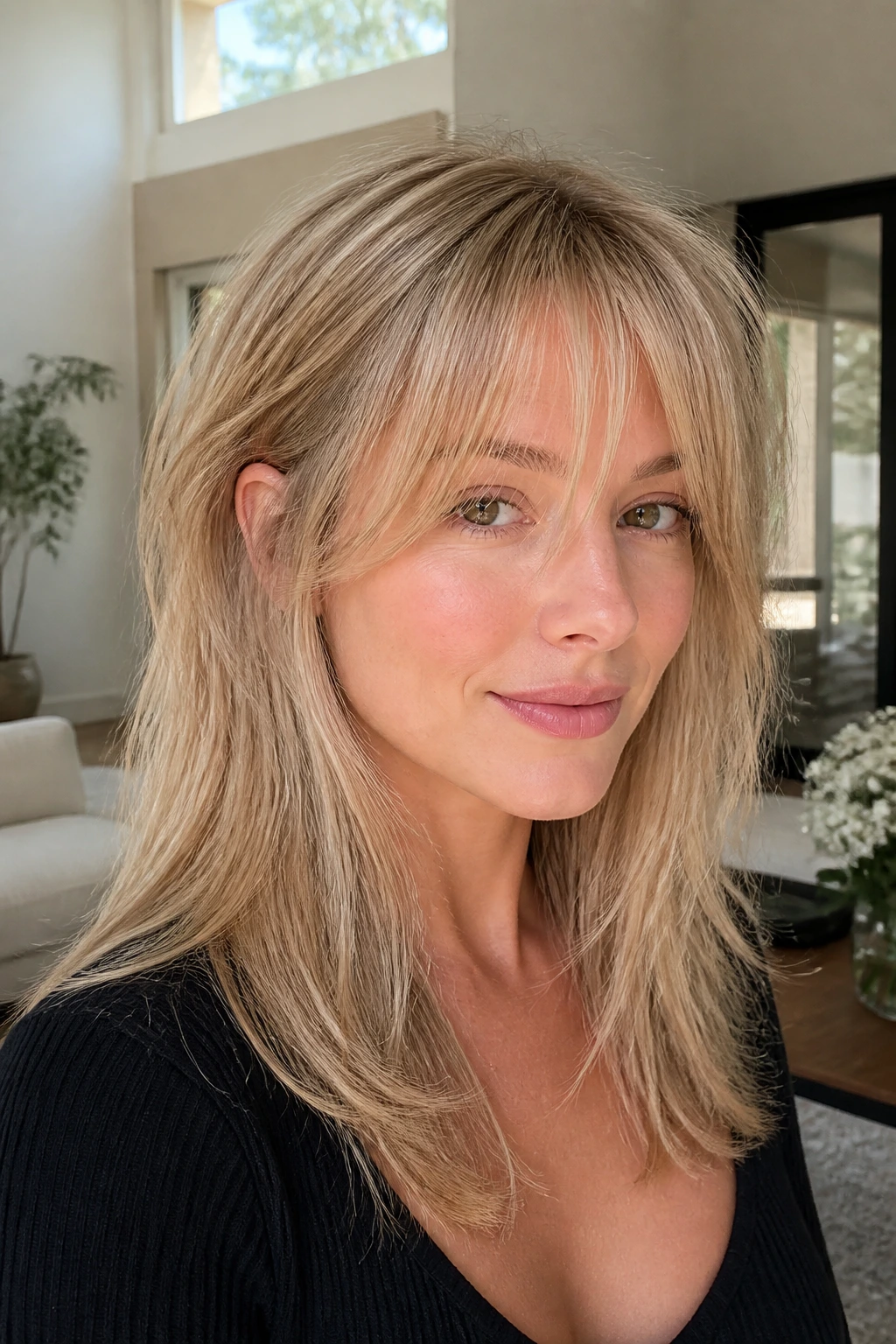
Fine straight hair needs restraint. Too many layers and it starts to look thin at the ends, which is the opposite of what you want. The trick is to keep the layers light and place most of the movement around the face and crown.
Wispy curtain bangs are the right companion because they don’t steal density from the perimeter. They open up the center part and give the front a little softness, but they still let the rest of the hair stay blunt enough to look full.
This cut is best when you’re willing to style it with a root spray or a tiny bit of volume mousse. Not a mountain of product. Just enough to keep the crown from collapsing by noon.
12. Face-Frame Revival Cut
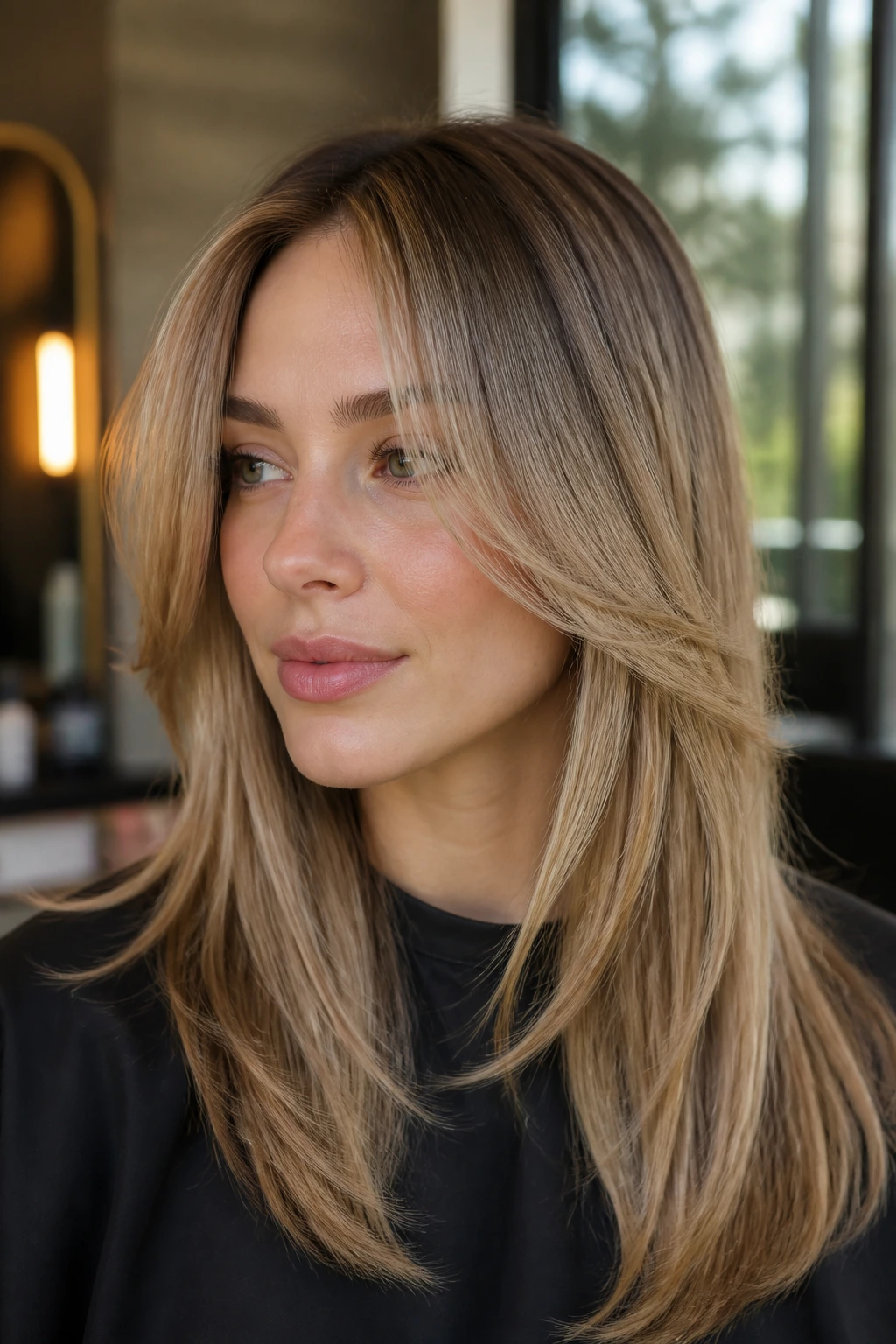
There’s a reason people go back to face-framing layers after every bad haircut experiment. They’re easy to live with, and they make straight hair look less one-note.
This version keeps the overall length intact but starts the front pieces closer to the cheekbone or jaw. The curtain bangs sweep into those layers, which gives the face more contour without asking the rest of the hair to do anything dramatic.
Who it suits
It’s especially good if you’ve been growing out a blunt cut and want movement without a full reset. You keep most of the length, but the shape stops feeling flat and boxy.
13. Razor-Lite Shag with Straight Ends
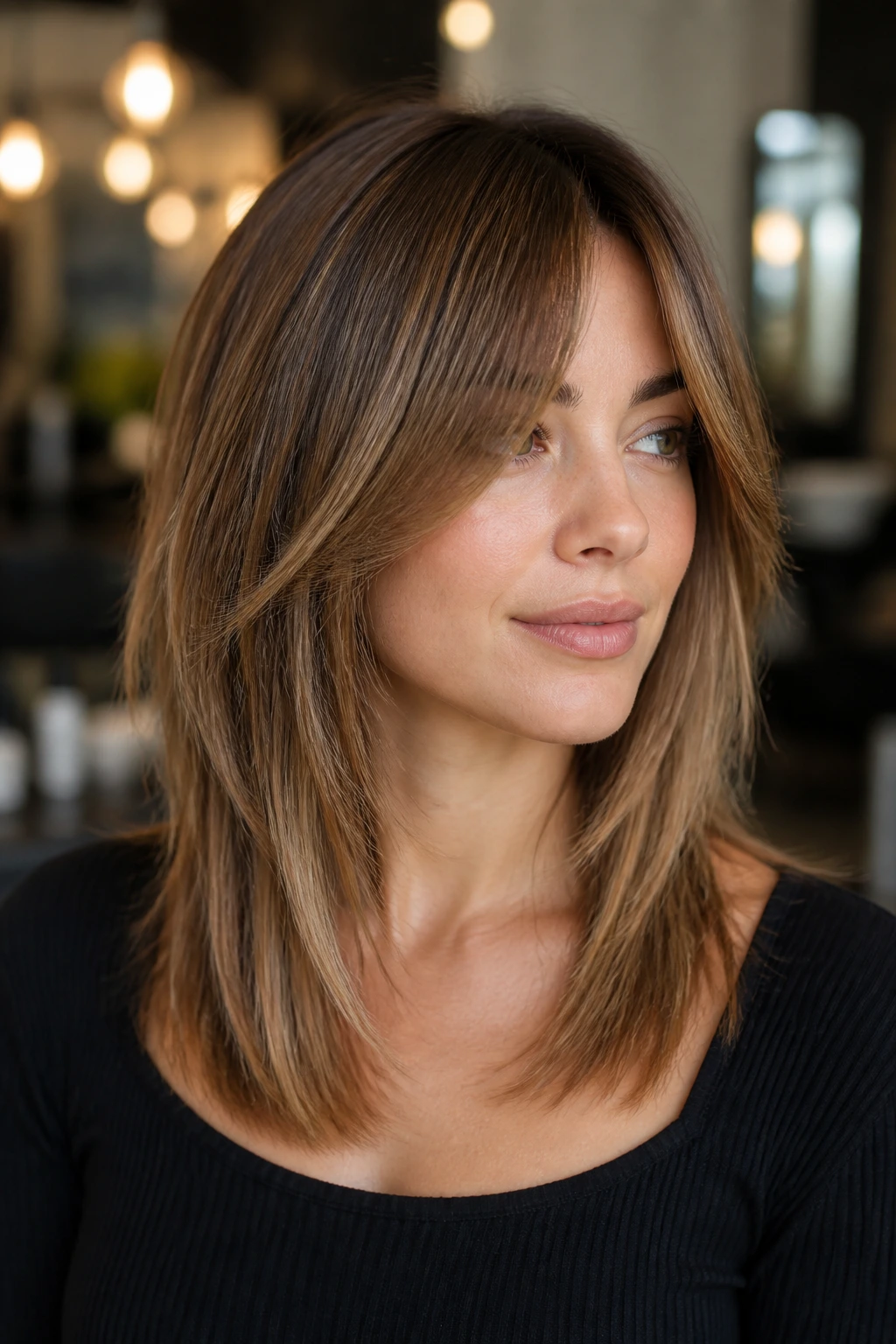
A razor cut on straight hair is a gamble if the hair is fine or frizzy. On dense, healthy straight hair, though, a light razor finish can soften the ends and keep the layers from feeling too heavy.
The trick is “razor-lite,” which is my way of saying don’t let anyone go wild with it. You want soft edges, not shredded pieces. Curtain bangs are the anchor point here; they keep the face looking finished even if the lower layers feel a little undone.
This style works best for someone who likes texture but still wants some polish. If the ends start sticking out instead of falling, the cut was probably taken too hard.
14. Chin-Skimming Lob with Long Bangs
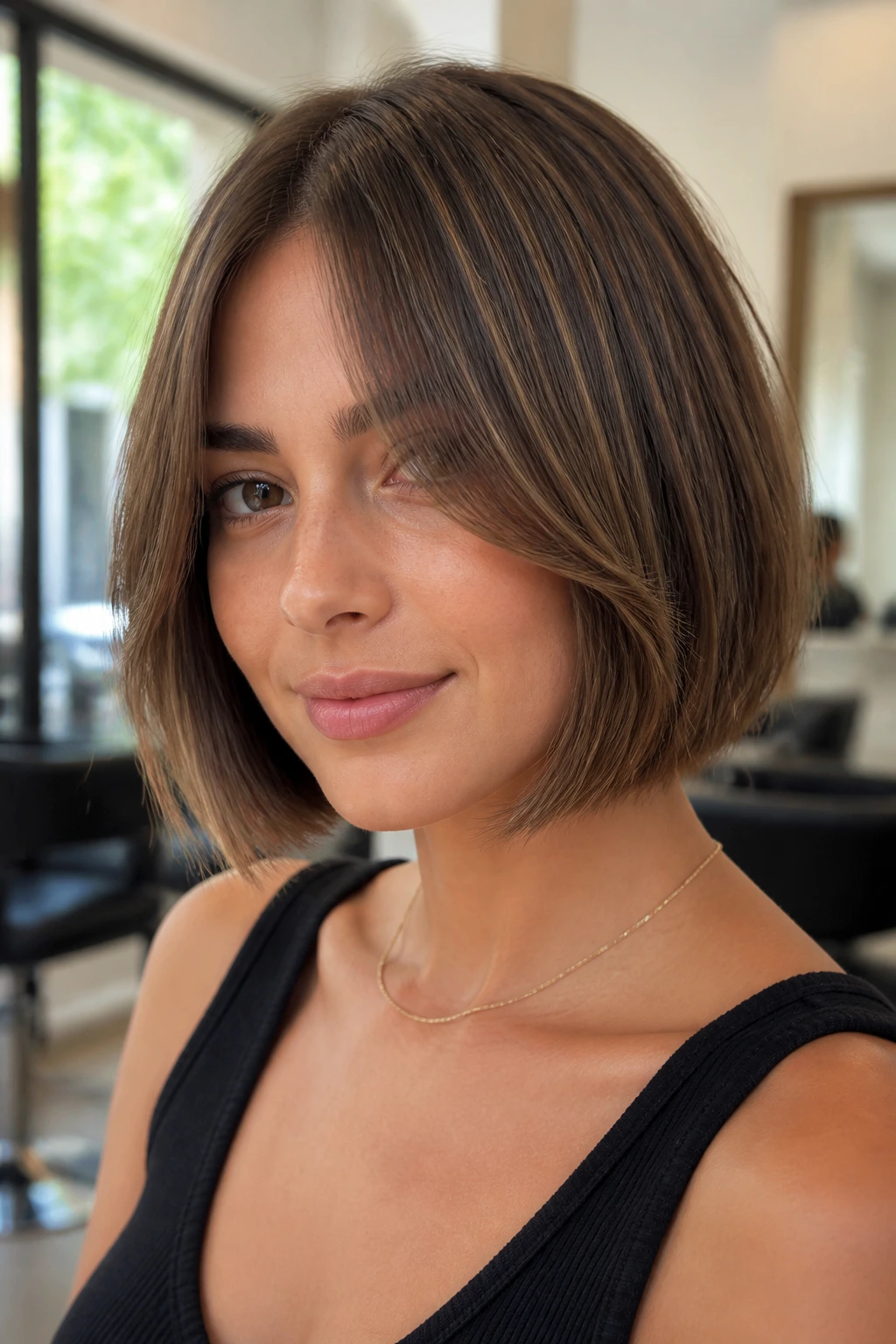
A chin-skimming lob gives the jawline a little more presence. On straight hair, that can be flattering in a very clean, unfussy way.
The long curtain bangs are the detail that changes the whole mood. They land around the cheek and sweep down toward the chin, so the haircut feels elongated rather than boxy. If you want your face to look a touch narrower, this is one of the more reliable shapes.
The cut also grows out well. A month later, it still looks intentional, which is more than I can say for a lot of “trend” haircuts.
15. Internal Layers with Glossy Finish
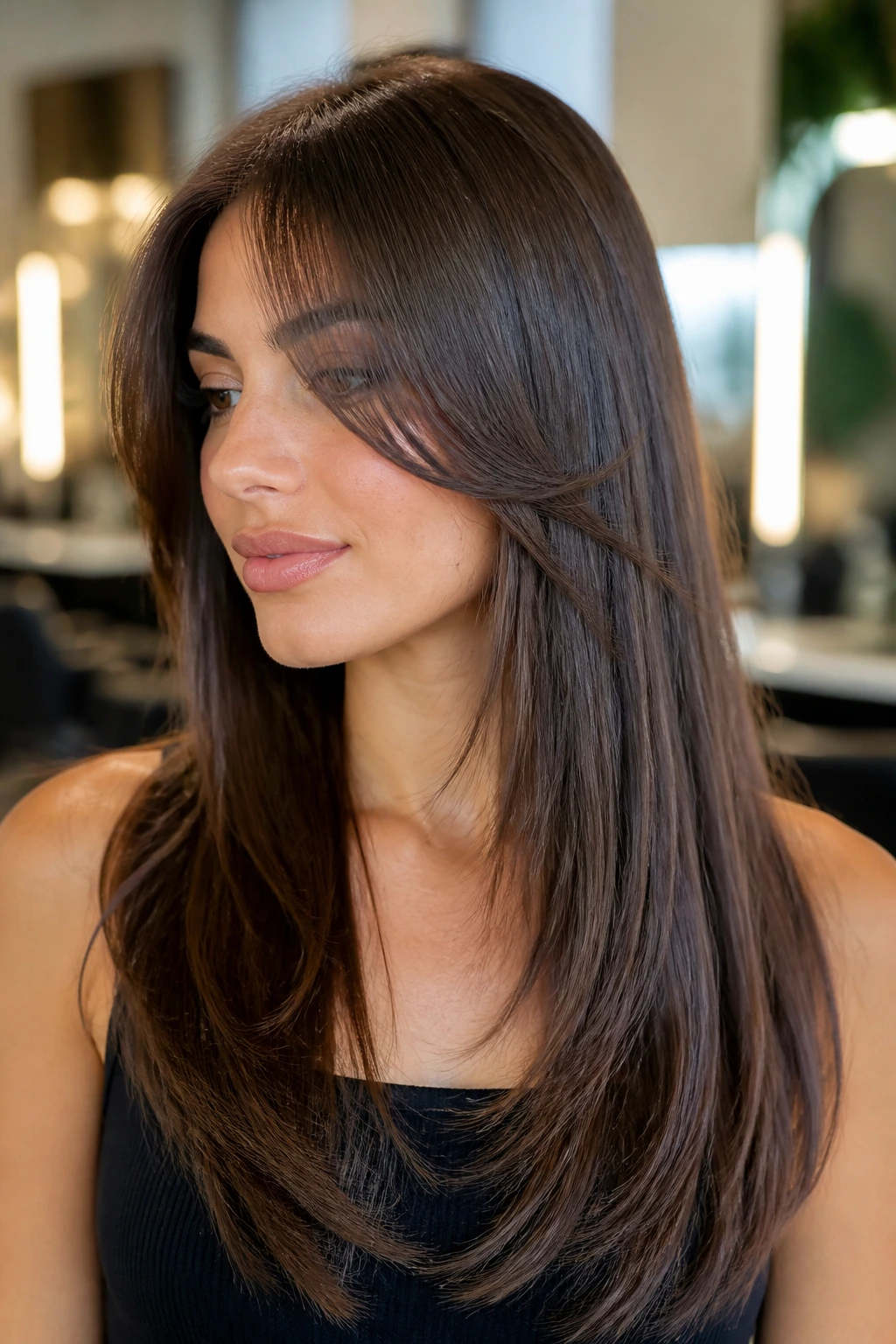
This one is about subtlety. The layers aren’t supposed to announce themselves. They’re there to remove weight, give the hair a little bend, and let the gloss do the rest.
Straight hair shines best when the cut doesn’t fight the surface. Curtain bangs open the face, the internal layers stop the length from sitting like a block, and the finish stays smooth. If you like hair that looks expensive without looking fussy, this is a strong choice.
Use a light serum on the ends and keep it off the roots. Too much product near the scalp kills the whole effect.
16. Bottleneck Bangs with Long Layers
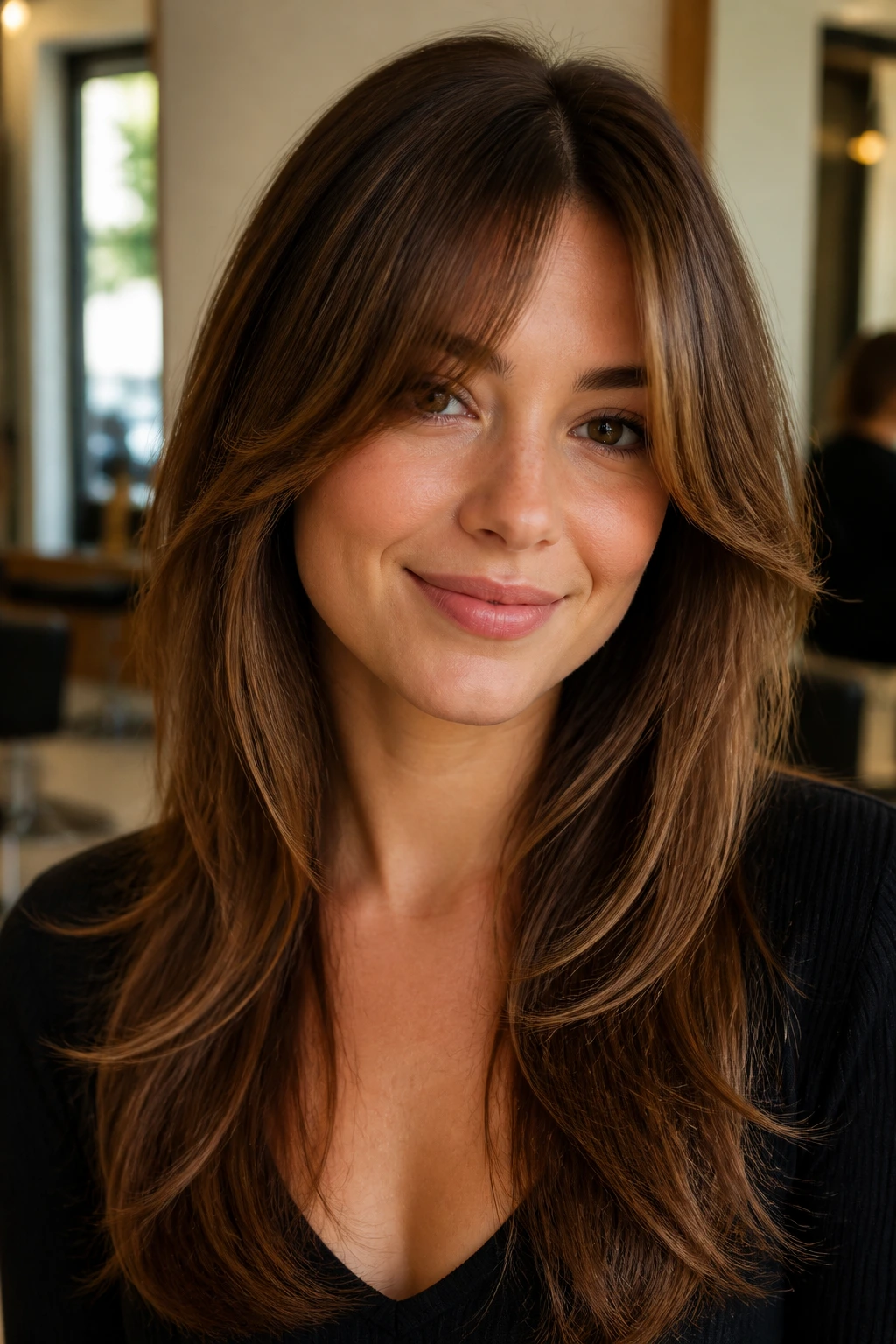
Bottleneck bangs narrow at the center and flare softly near the cheekbones. On straight hair, they’re a nice middle ground between full curtain bangs and something thinner and more delicate.
The long layers keep the style from feeling front-heavy. That matters because bottleneck bangs already do a lot of work around the eyes and cheeks. The longer lengths behind them keep the haircut calm.
I like this cut on people who want fringe but don’t want a lot of daily bang maintenance. It still grows out into a curtain shape instead of turning into a hard line.
17. Shoulder-Length Cut with Tucked Ends
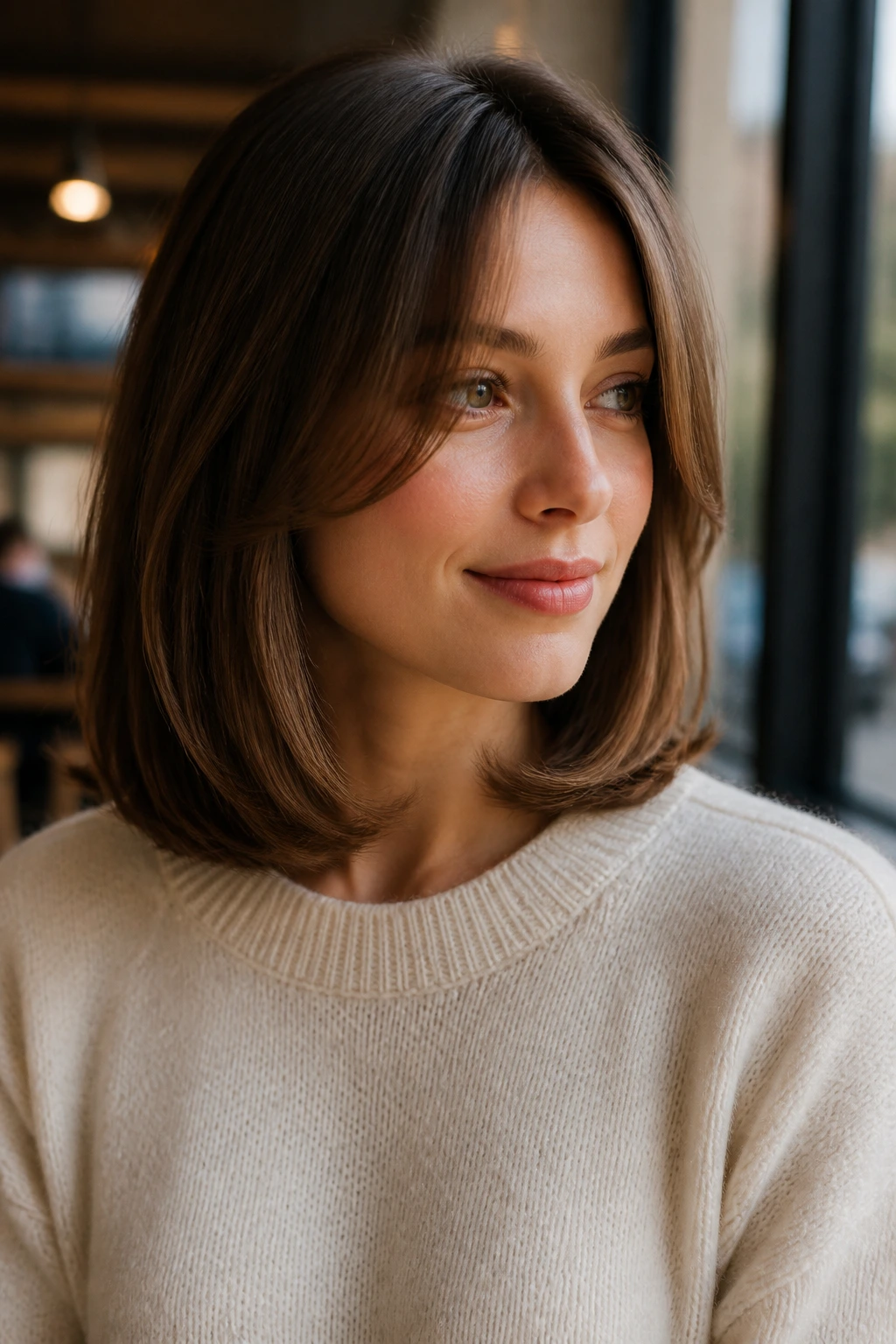
Shoulder-length straight hair can fall into the “neither here nor there” zone if the ends are too blunt and the bangs are too short. This cut fixes that by softening the ends enough to tuck, flip, or bend under.
Curtain bangs are left longer so they blend into the front and move with the rest of the style. If you wear earrings, glasses, or high necklines, this cut is especially nice because it clears the face without looking severe.
The whole thing reads clean and easy. Which is often exactly the point.
18. Grown-Out Curtain Bangs with Low Layers
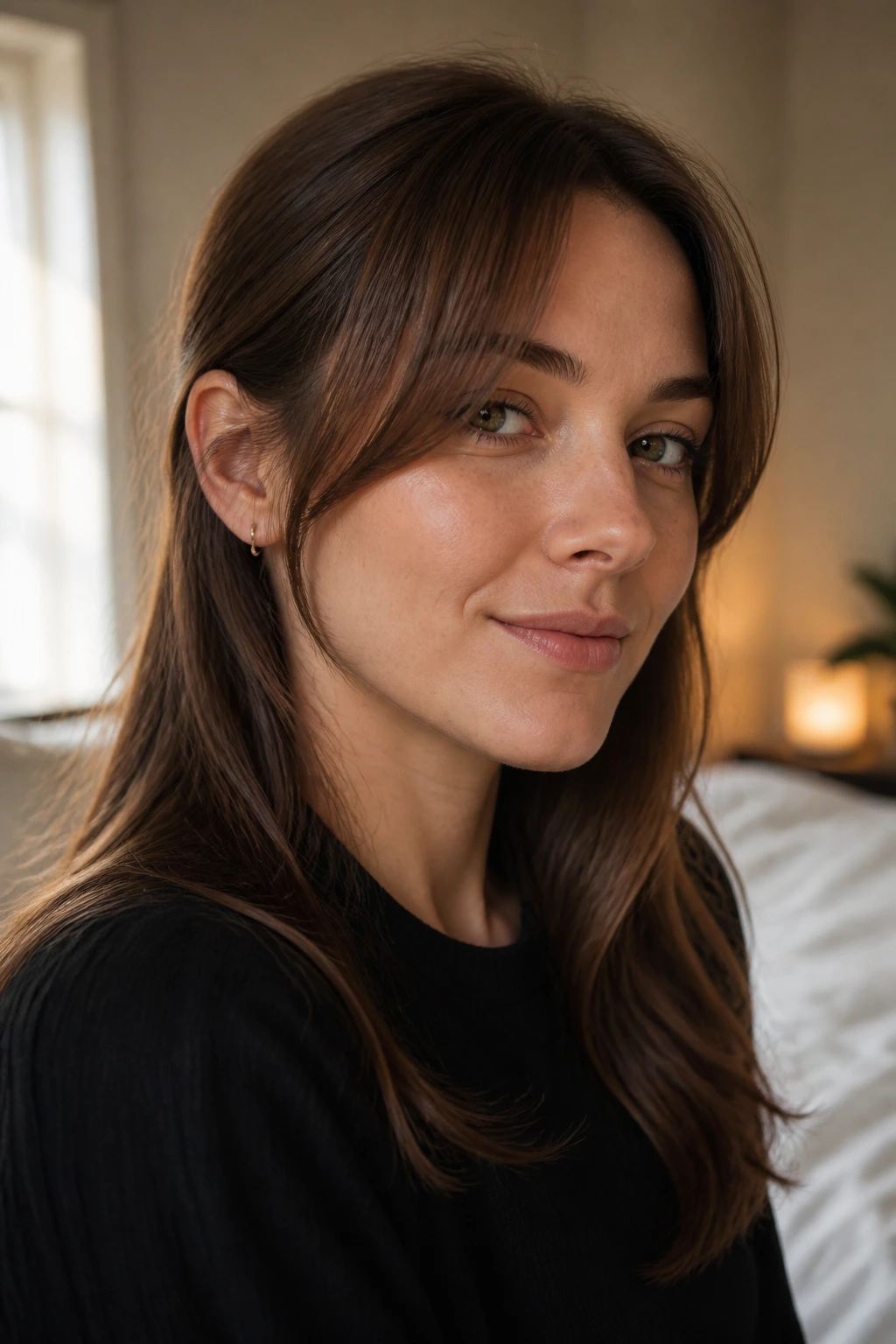
Sometimes the best curtain bang is a grown-out one. Sounds lazy, but it isn’t. Longer curtain bangs are easier to blend into low layers, and on straight hair they often look more chic than a freshly cut, short fringe that sits too high.
The shape here is relaxed. The layers start low, the fringe opens softly, and you can tuck the front pieces behind the ears without breaking the style. That makes this one a favorite for people who don’t want to visit the salon every few weeks.
It’s also the easiest option if you’re testing fringe for the first time. Less commitment. Less drama.
19. Statement Cheekbone Frame with Length Left Intact
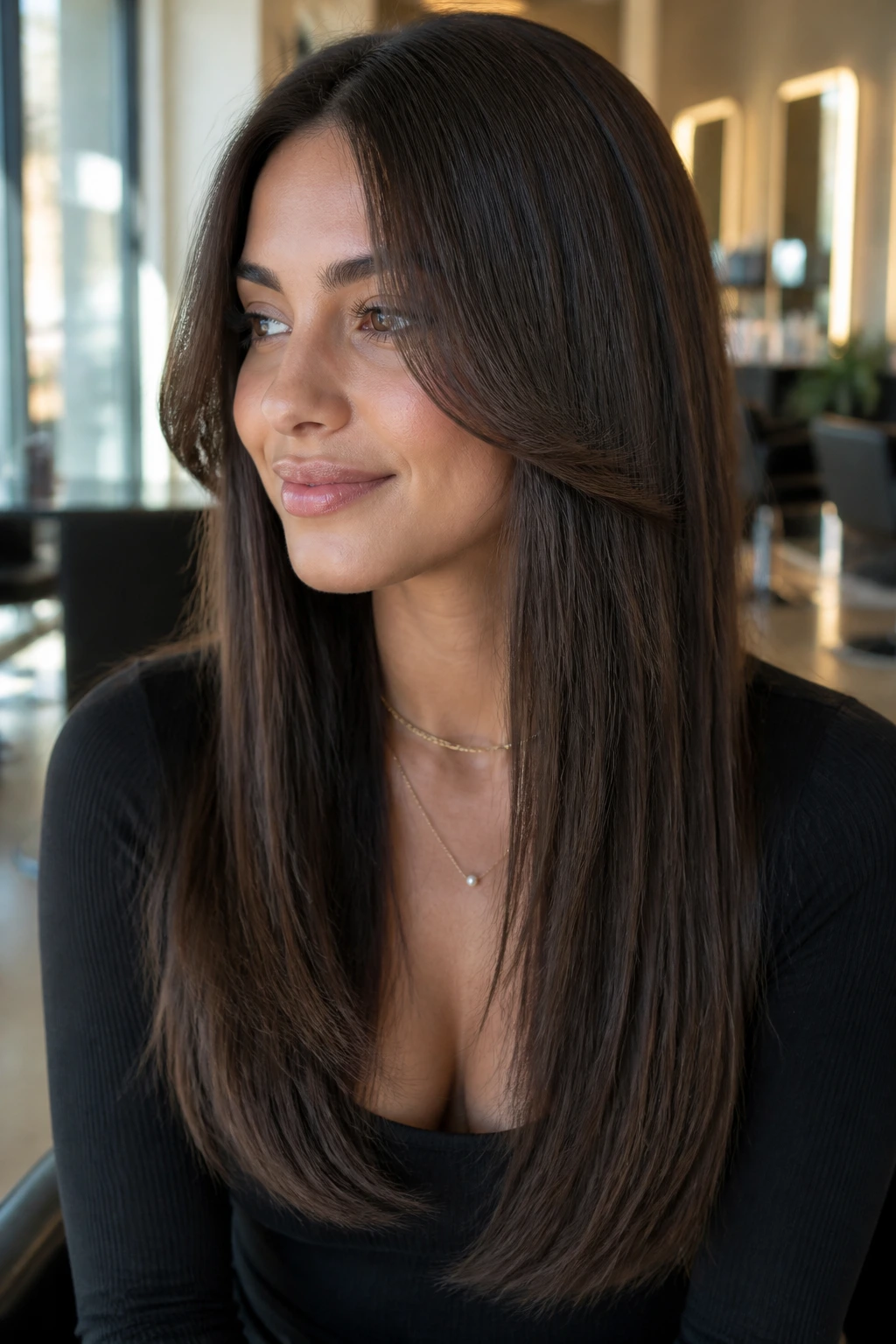
This cut leaves the body of the hair long and lets the front do the work. The shortest face-framing pieces land near the cheekbone, which creates shape without sacrificing length through the rest of the head.
That’s smart on straight hair because the eye naturally follows the front edge. If the bangs and face frame are good, people assume the whole cut is good. A little unfair, but true.
A good fit for long faces
The cheekbone frame gives the face width where straight hair sometimes removes it. If you want the front to feel softer without losing inches, this is a strong move.
20. Airy Mini-Shag for Straight Texture
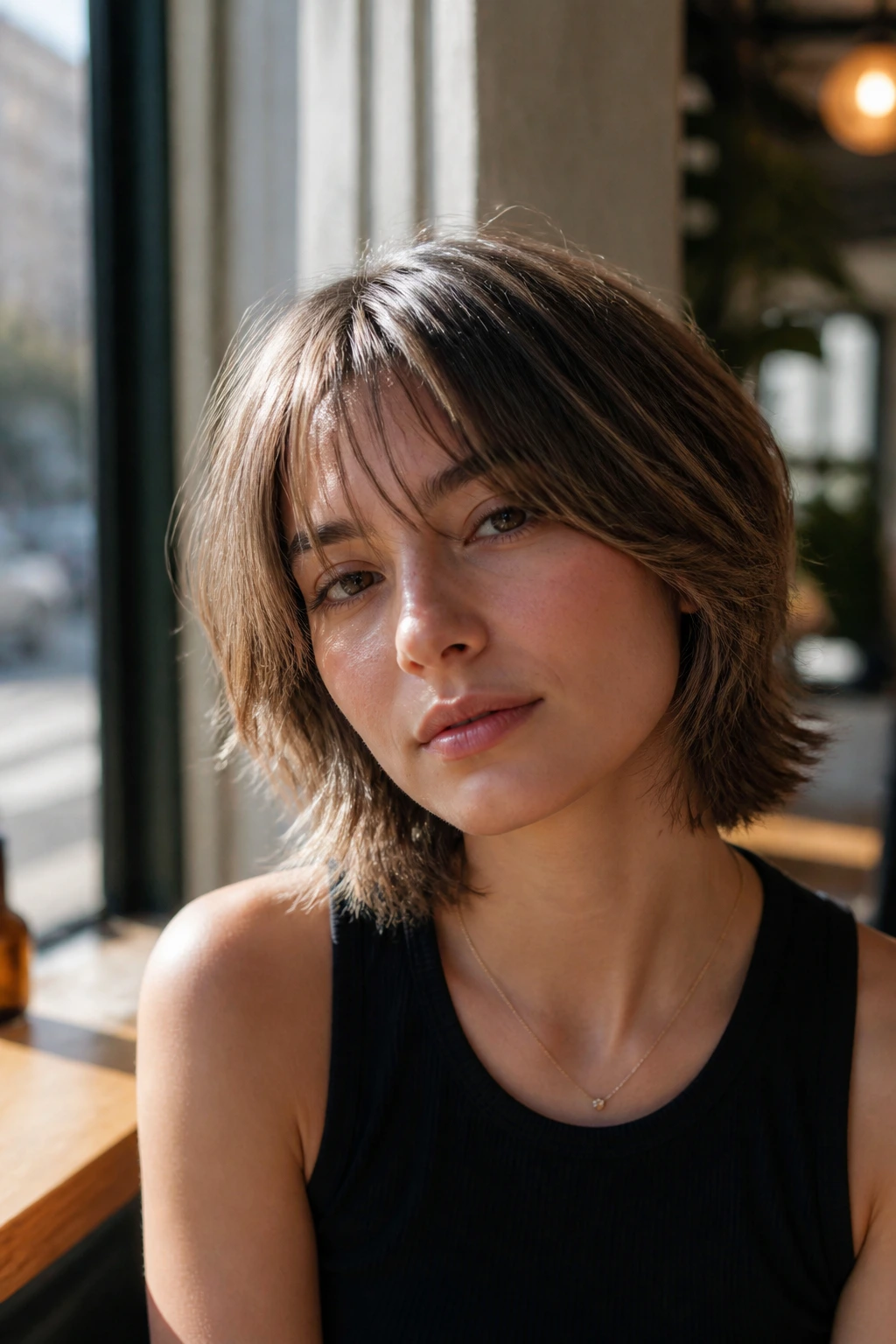
This is the cut for people who want texture but don’t want a full shag cloud around the head. The layers are shorter and lighter, but they stay controlled enough that straight hair doesn’t puff out.
Curtain bangs are kept soft and piecey. The style should feel breezy, not feathery in that overworked salon way. If a cut needs too much product to behave, it’s usually not the right one for straight hair.
This version works best on younger-looking, casual styles, or on anyone who likes the slightly undone front and cleaner back. It has personality without being messy.
21. Off-Center Curtain Bangs with Layered Sides

Center parts get all the attention, but a slight off-center part can be more forgiving on straight hair. It softens the symmetry a bit and keeps the bangs from splitting too cleanly down the middle.
The layered sides help the front move into the rest of the cut, so the whole style feels less formal. If your hair naturally falls a little to one side, this is often the better choice. Fighting a natural part is a waste of time and mood.
It’s a small change, but small changes matter here. The difference shows up every morning.
22. C-Curve Layers Around the Cheekbones
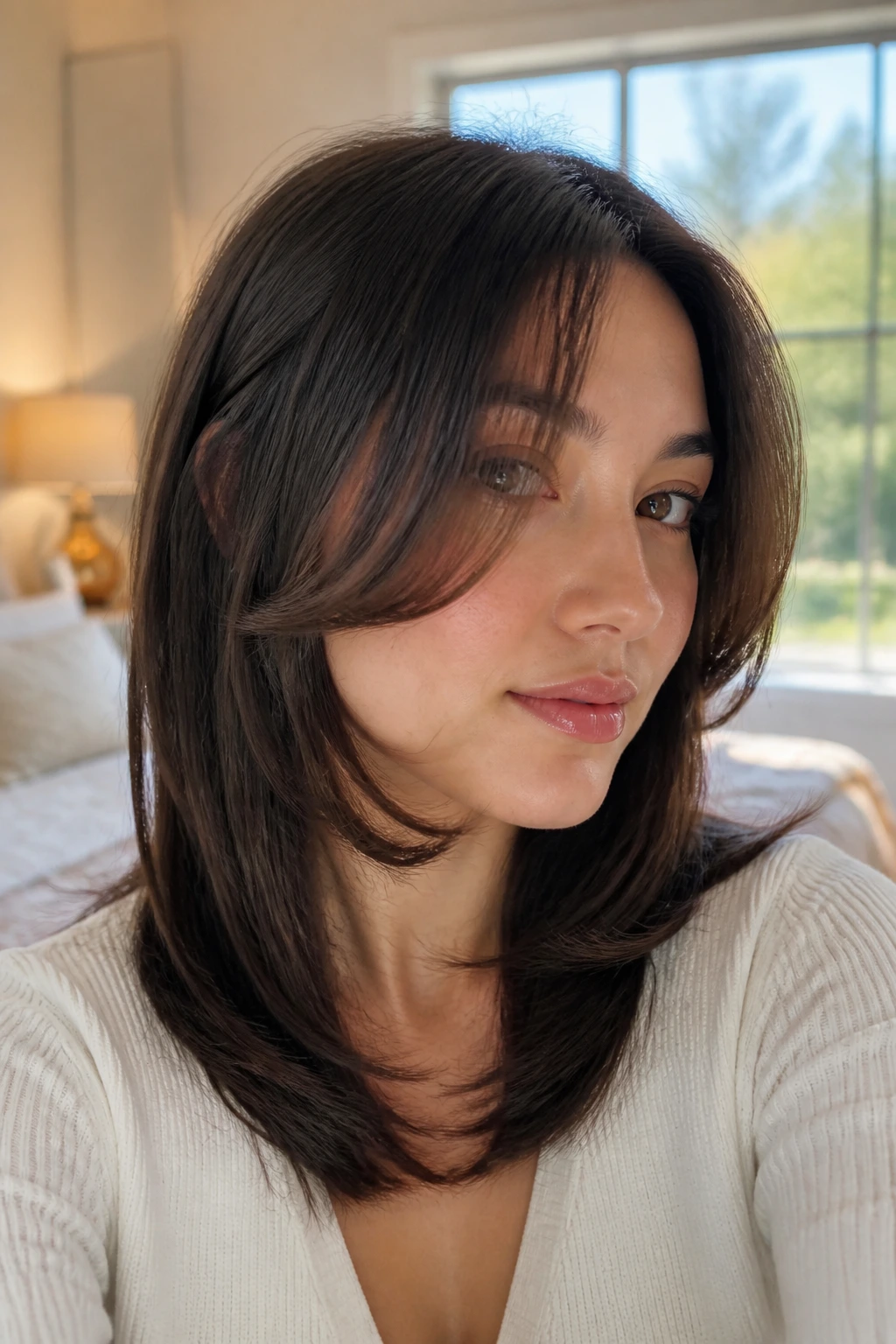
These layers curve inward like the letter C, which gives straight hair a more sculpted front. Instead of dropping straight down, the hair sweeps around the cheekbones and slightly under the jaw.
That shape is especially nice if you want your curtain bangs to blend into the sides instead of sitting on their own. The haircut feels finished from every angle. You turn your head, and the shape follows.
It’s neat without being stiff. That’s the sweet spot.
23. Deep U-Shaped Layers for Dense Hair
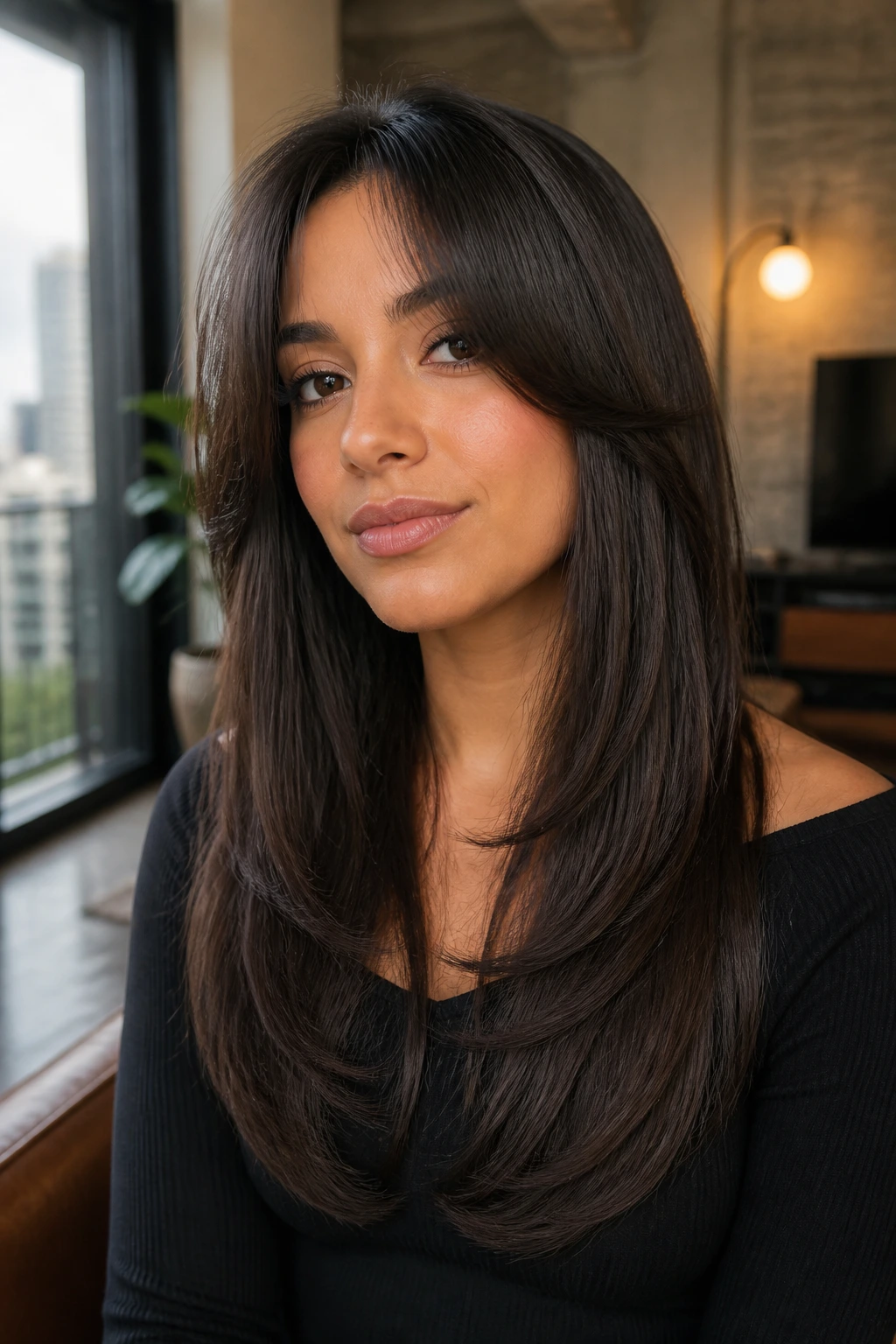
When straight hair is dense, the weight tends to sit at the bottom and sides. Deep U-shaped layers help by removing bulk underneath while keeping the outline soft and feminine, if that’s the word you want, or just clean if it isn’t.
Curtain bangs are useful here because they take some of the attention off the mass of hair behind them. The front opens, the back lightens, and the shape stops feeling like a sheet of hair with no direction.
This cut needs a good stylist, not a rushed trim. Dense straight hair can look amazing when it’s shaped properly. It can also look triangular in about ten seconds if the weight is removed in the wrong places.
24. Minimalist Layered Cut for Low Maintenance
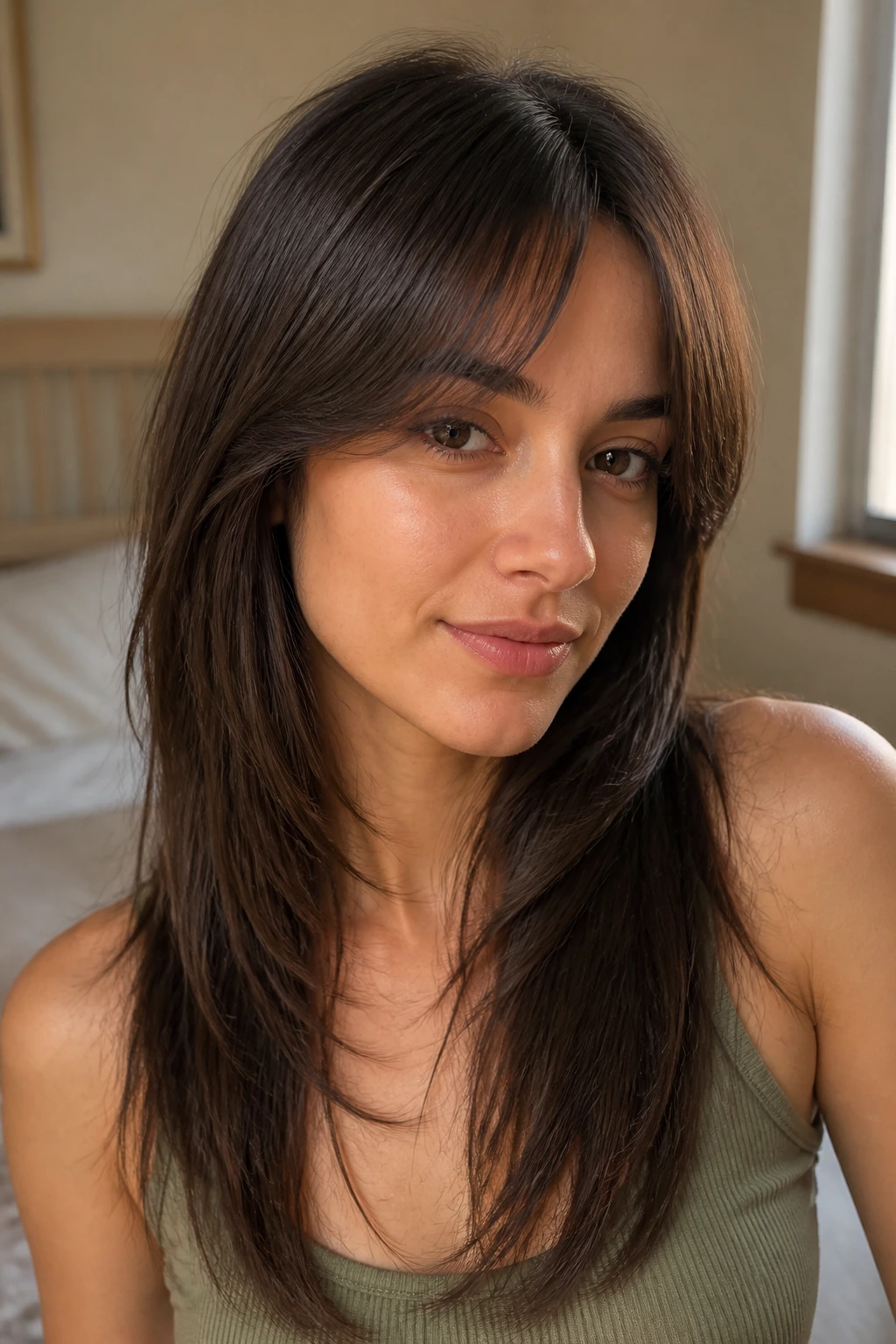
Not every straight-haired layered cut has to shout. The minimalist version keeps the layers subtle and the curtain bangs soft, so the style can air-dry without looking half-finished.
This is one of the best choices if you want movement but don’t want to babysit your hair every morning. The bangs still frame the face, the ends still move a little, and the overall effect stays calm.
I’d choose this for someone who wants the idea of layers more than the drama of layers. Quiet hair. No apology needed.
25. Full-Body Blowout Layers with Bold Curtain Bangs
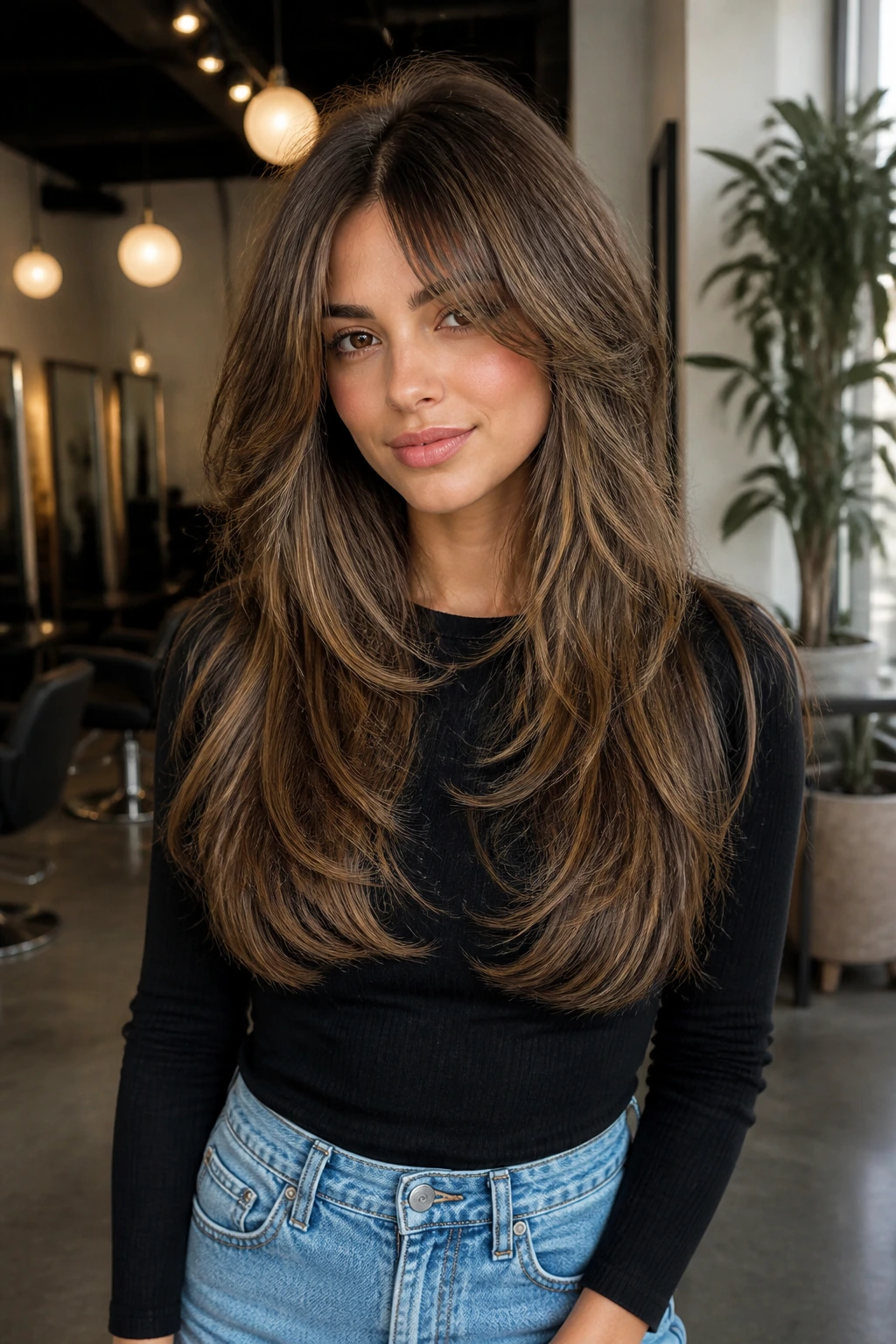
This one is for people who like their straight hair to look lifted, polished, and a little glamorous. The layers are arranged so the blow-dry does most of the shape work, especially around the crown and front.
The curtain bangs are bolder here, usually with enough weight to drape properly and enough opening to keep the face clear. The result is a haircut that looks like it has been styled, even when you’ve only used a round brush and ten minutes.
It’s a strong finish for the list because it shows what layered straight hair can do when the cut and styling work together. No mystery. Just structure.
What Makes Layering and Curtain Bangs Click on Straight Hair
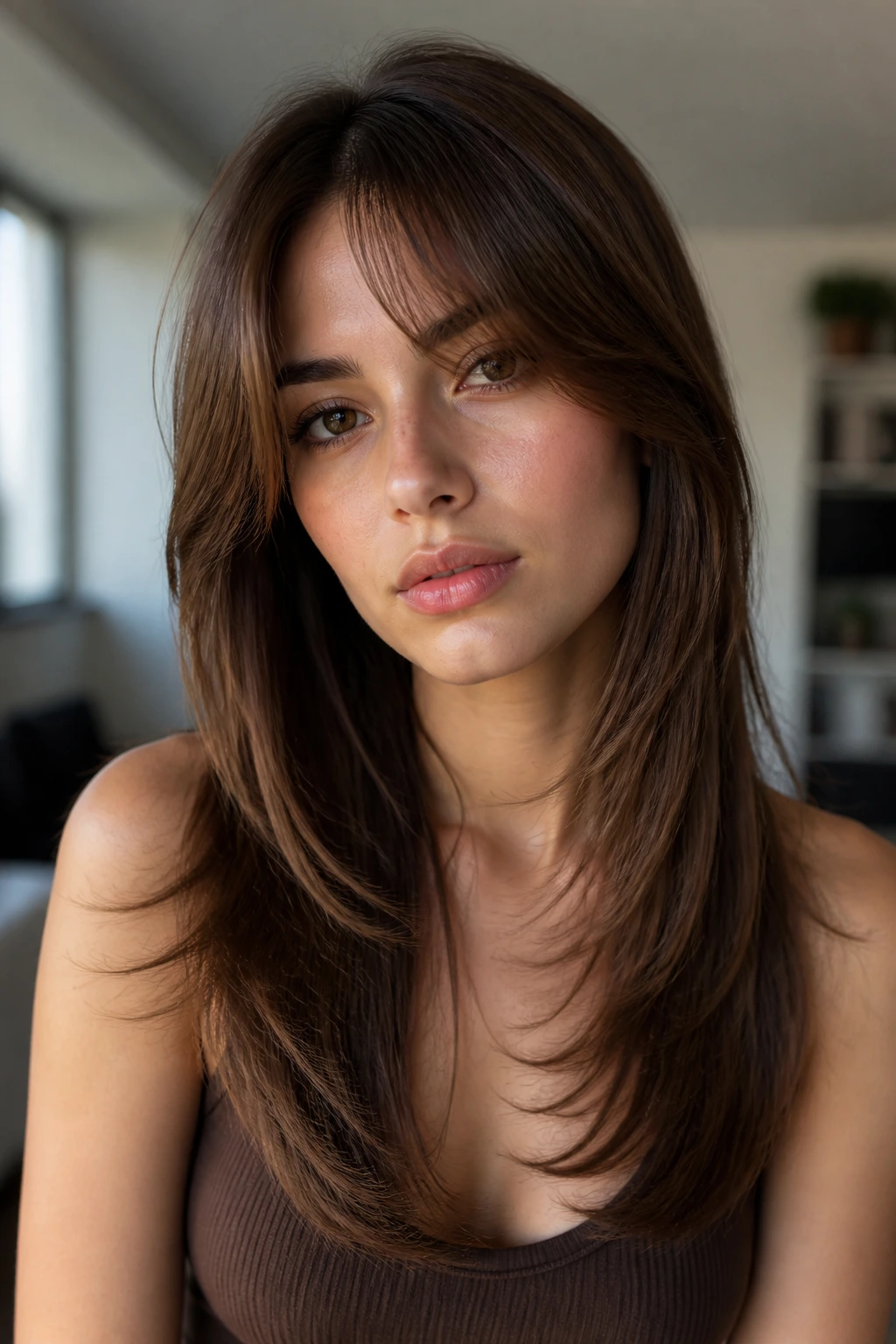
Straight hair doesn’t hide bad decisions, which is exactly why the haircut has to do the heavy lifting. Layers create motion where the hair would otherwise sit flat, and curtain bangs give the front edge a softer start so the whole style feels easier to wear.
The best versions usually keep some strength at the perimeter. That’s the part a lot of people miss. If you remove too much from the ends, straight hair can start looking sparse or wispy in all the wrong places. A good cut builds movement inside the shape, then leaves enough weight at the edge so the finish still looks deliberate.
Curtain bangs help because they work with a center part instead of fighting it. They can soften sharp features, balance a wider forehead, and make long straight hair feel less severe. But they need the right length and the right fall. Too short and they kick up. Too heavy and they turn into a curtain in the literal, unhelpful sense.
What to Tell Your Stylist Before the First Snip
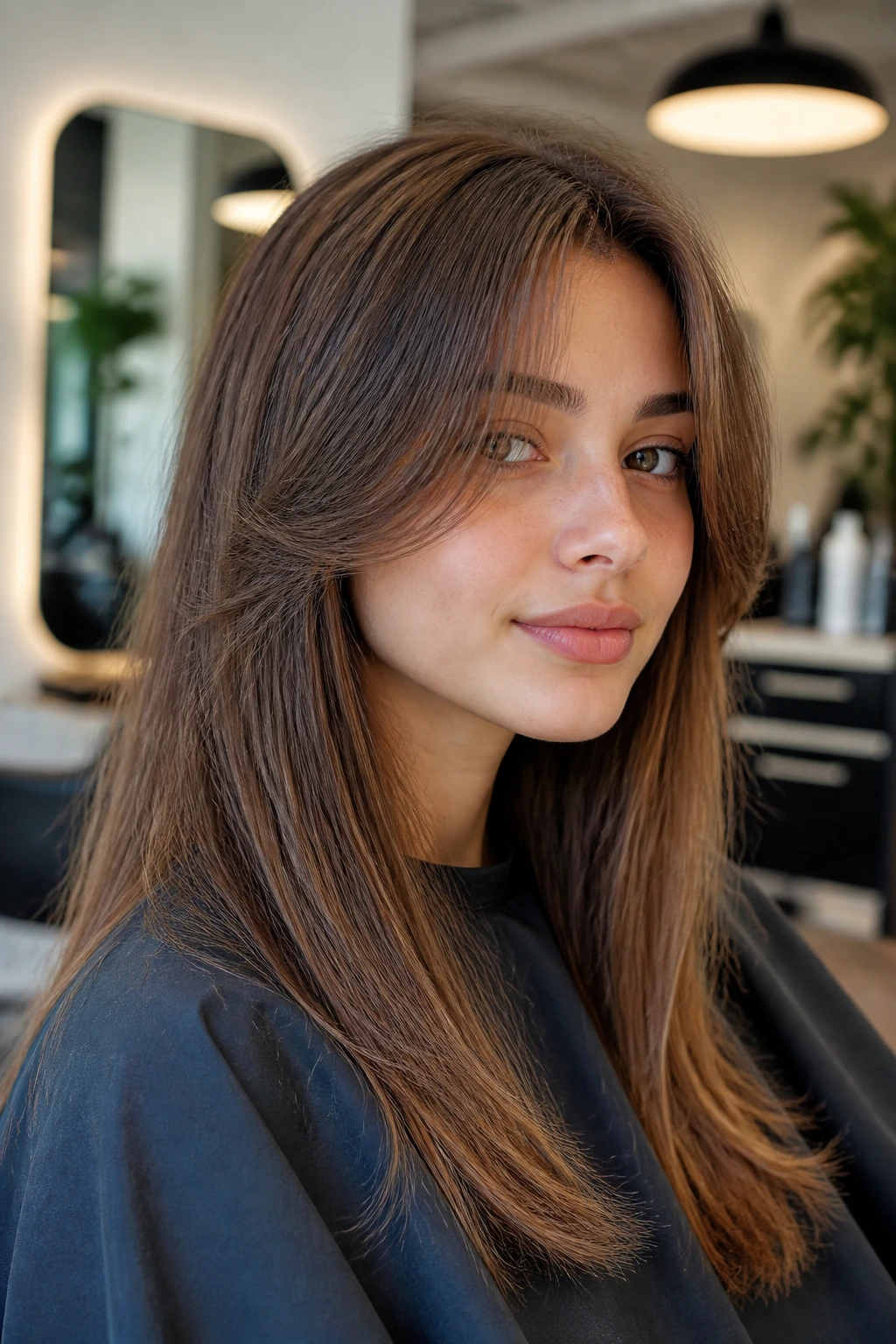
Bring photos, yes, but bring the right kind. A picture of a celebrity with waves won’t tell your stylist much if your hair is pin-straight and the density is completely different. Look for examples with the same length range and the same kind of parting you wear every day.
Say where you want the shortest face-framing pieces to land. Cheekbone? Chin? Lip line? That one detail changes the whole haircut. If you wear glasses, say so. If your hair cowlicks at the front, say that too. Those little details matter more than a vague request for “soft layers.”
Ask for these specifics:
- Curtain bangs that are cut a touch longer than the final target
- Layers that begin low enough to keep the perimeter full
- Point-cut or slide-cut ends if you want movement without choppiness
- A plan for how the bangs should grow out over the next few weeks
If you air-dry most days, admit it. Some cuts only work after a blowout. Better to know that upfront than discover it at home with wet bangs stuck to your forehead.
Essential Tools for Styling These Cuts
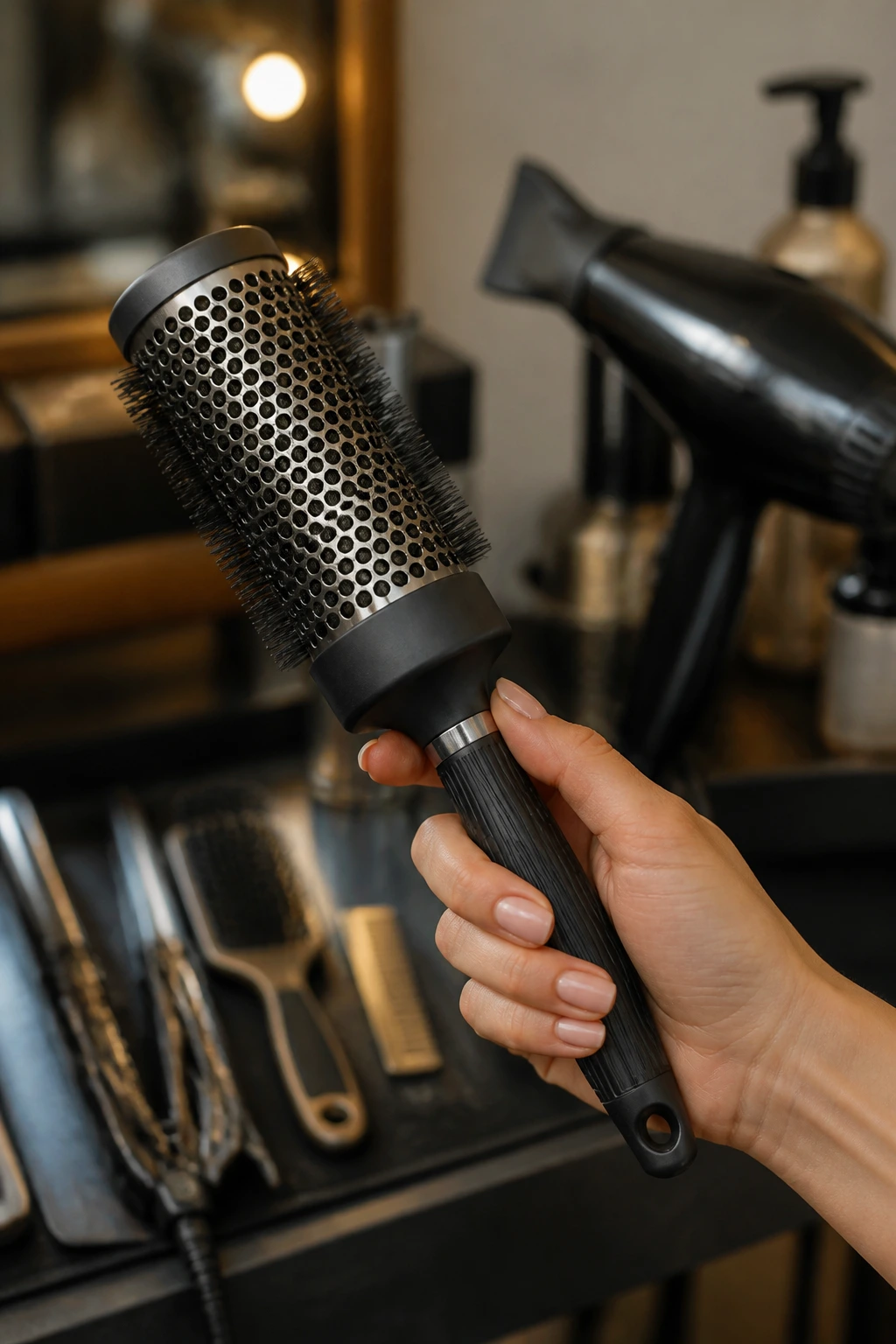
- 1.5-inch round brush: The safest size for bending curtain bangs and flipping the front pieces away from the face.
- Hair dryer with a concentrator nozzle: Directs air where you want it and keeps the crown from puffing up.
- Heat protectant spray: Straight hair still gets damaged, and the front pieces take the most styling heat.
- Flat iron with adjustable temperature: Useful for polishing the ends or adding a soft bend to the face frame.
- Sectioning clips: They keep the bangs, crown, and sides separate while you dry one area at a time.
- Lightweight mousse or root lift spray: Best at the crown if your hair is fine or collapses quickly.
- Dry shampoo: Not a luxury. A genuine fix for bangs that get oily first.
- Texturizing spray: Good on shaggy or mid-length layered cuts when you want a bit of separation.
- Fine-tooth comb: Helps part the curtain bangs cleanly and smooth the roots before drying.
How to Wear These Cuts Day to Day
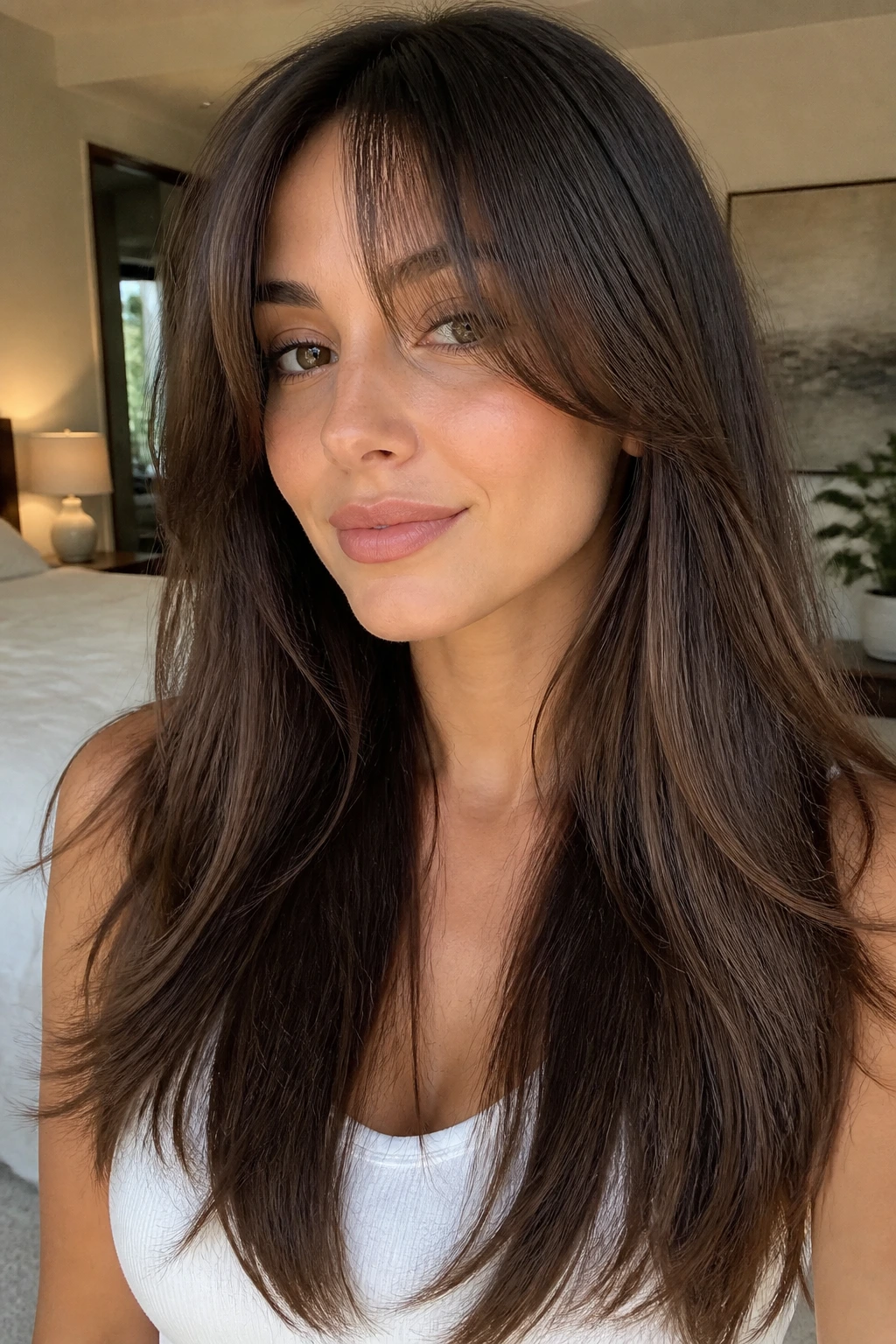
Presentation: The cleanest look is usually a soft center part with the curtain bangs blown away from the face and the front layers tucked just enough to show the cheekbones. If you want a slightly less formal feel, shift the part a half-inch off center and let one side fall forward.
Pairings: These cuts look especially good with hoop earrings, slim glasses, square frames, and necklines that don’t crowd the fringe. Turtlenecks can be a little fussy if the bangs are too short; longer curtain pieces handle them better. High collars and polished layers also make each other look sharper than they have any right to.
Wearability: For polished styles, keep the surface smooth and use a light serum on the ends. For shaggier versions, leave a little break in the texture and don’t chase perfect symmetry. The cut should still look like hair, not a salon diagram.
Finish: Glossy suits the blunt, long, and blowout-heavy cuts. Matte or slightly lived-in suits the softer shags and airy lobes. Mixing the wrong finish with the wrong cut is how a good haircut starts looking tired.
Extra Styling Moves That Change the Whole Look
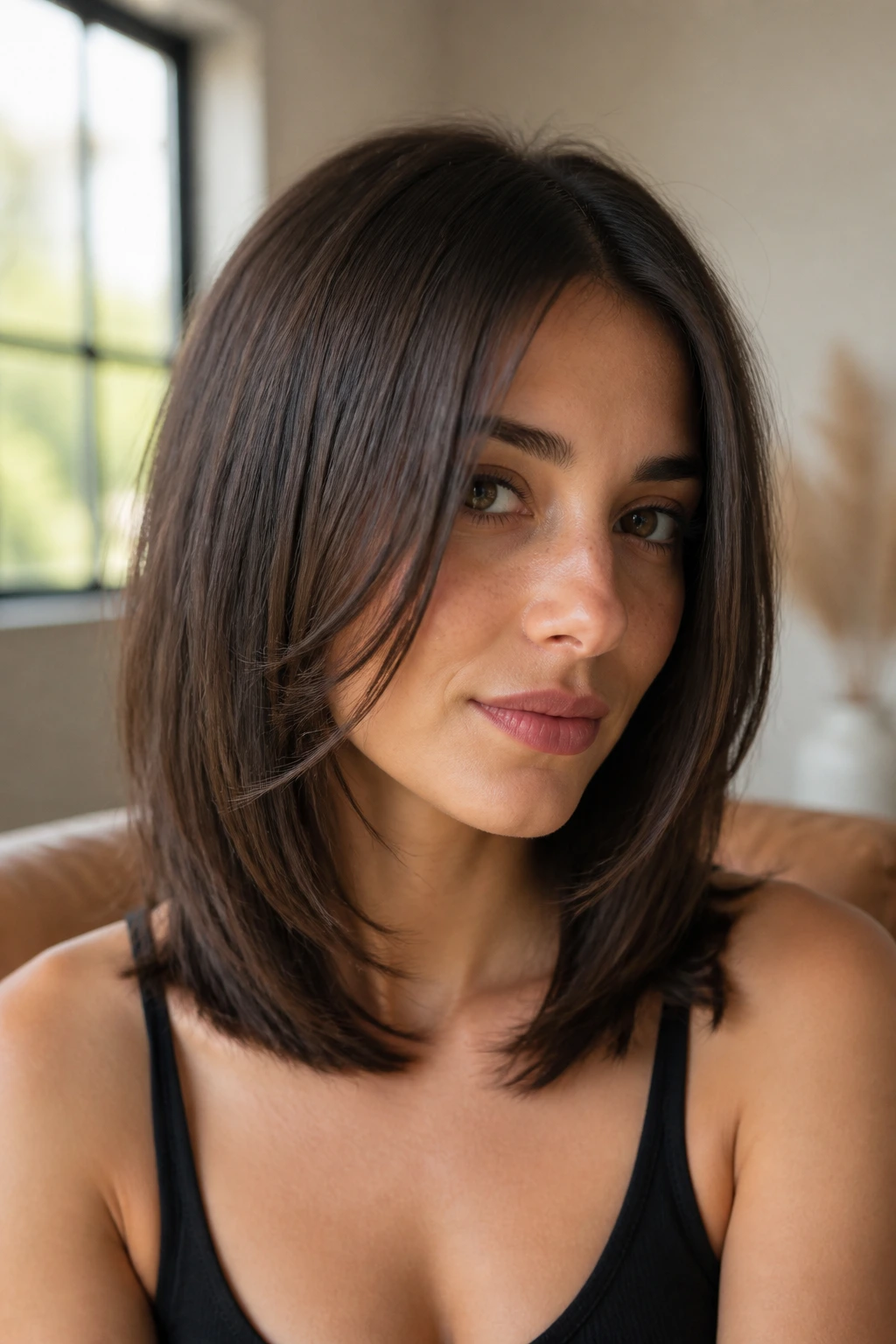
Shape Boost: Blow-dry the curtain bangs first, not last. Dry them from damp to almost dry while they’re still easy to redirect, then smooth the side pieces afterward so the front sits cleanly.
Texture Boost: If the ends look too straight and heavy, wrap only the last two inches around a flat iron or large curling iron for a single bend. That tiny curve changes the silhouette more than people expect.
Customization: Want the layers to feel softer? Ask for the first face-framing pieces to start closer to the lips. Want more lift? Start nearer the cheekbone and keep the crown layers a touch shorter.
Make-It-Yours: Fine hair usually looks better with fewer layers and a blunt edge. Thick hair often needs more internal removal and a little more length taken out around the sides so it doesn’t balloon. Straight hair is honest about density. Use that honesty.
How to Keep the Shape Between Salon Visits
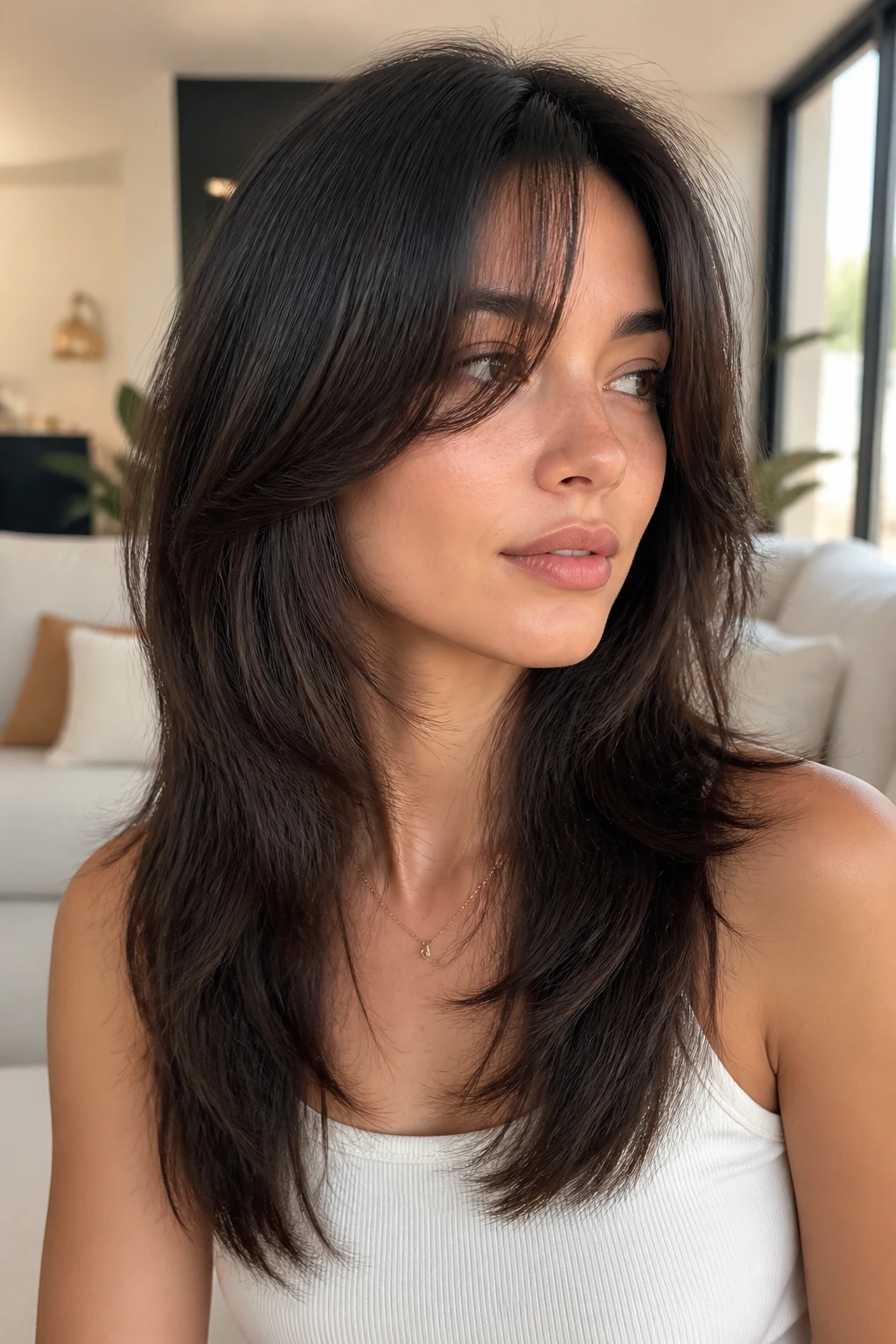
Curtain bangs are the first thing to lose their neat line, so don’t judge the whole haircut by day seven if the fringe has started to split a little wider. A 30-second re-blow with a round brush or a quick pass of a flat iron on low to medium heat usually resets the front enough to carry you through the day.
Most curtain bangs need a trim every 4 to 6 weeks if you want them sitting right at the cheekbone or lip line. Layers can usually go 8 to 12 weeks before they start losing shape, depending on how fast your hair grows and how polished you like the finish. If the cut is intentionally softer and grown out, you can stretch that longer.
Sleeping on a silk pillowcase helps the front pieces stay smoother. So does clipping the bangs back loosely before bed if they want to bend awkwardly. Straight hair can crease in odd places overnight, and it’s easier to prevent that than fix it.
On wash days, focus the conditioner from mid-length to ends only. If you load conditioner too high, the bangs and crown lose lift and the whole haircut starts sliding toward flat by lunch. Annoying. Fixable, though.
Variations and Adaptations to Try
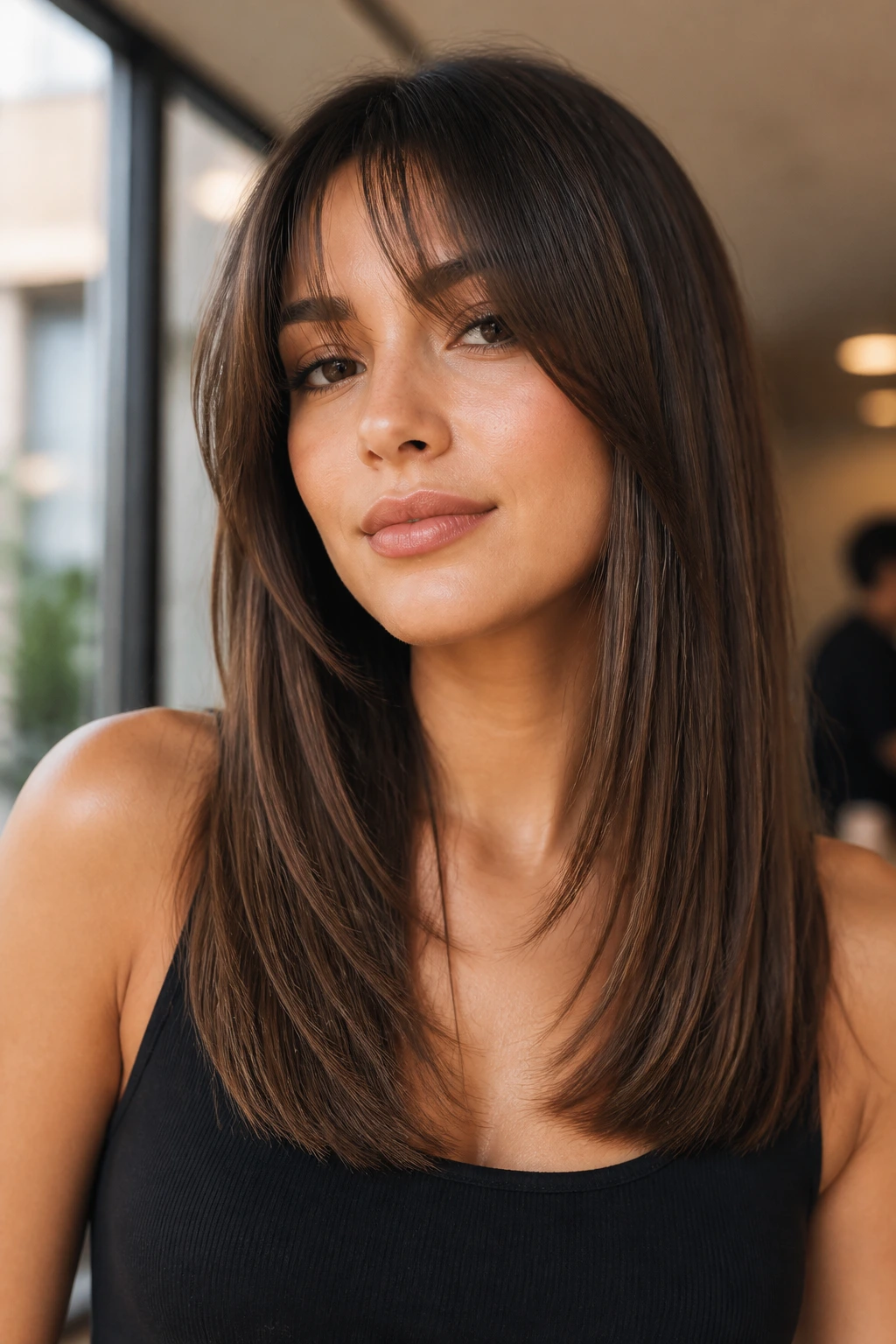
For Fine Hair, Keep the Perimeter Blunt: Ask for a soft face frame with very light internal layers and a fuller hemline. That keeps the ends from looking stringy while the bangs still open up the face.
For Thick Hair, Remove Weight Underneath: Keep the outline controlled and ask for weight removal inside the haircut, especially through the back and lower sides. The curtain bangs should still be long enough to blend, not cropped short and bulky.
For Round Faces, Stretch the Frame Longer: Longer curtain bangs that hit around the cheek or lip line help pull the eye downward. Pair them with layers that sit below the chin so the shape doesn’t widen at the cheeks.
For Long Faces, Add Width at the Cheekbones: Shorter face-framing pieces and fuller curtain bangs can bring the balance back toward the center of the face. Don’t stack too much volume at the crown if you don’t need it.
For Low-Maintenance Routines, Choose the Grown-Out Version: Keep the bangs long, the layers soft, and the styling simple. This version can survive a lazy air-dry day without looking like you gave up.
Common Mistakes to Avoid
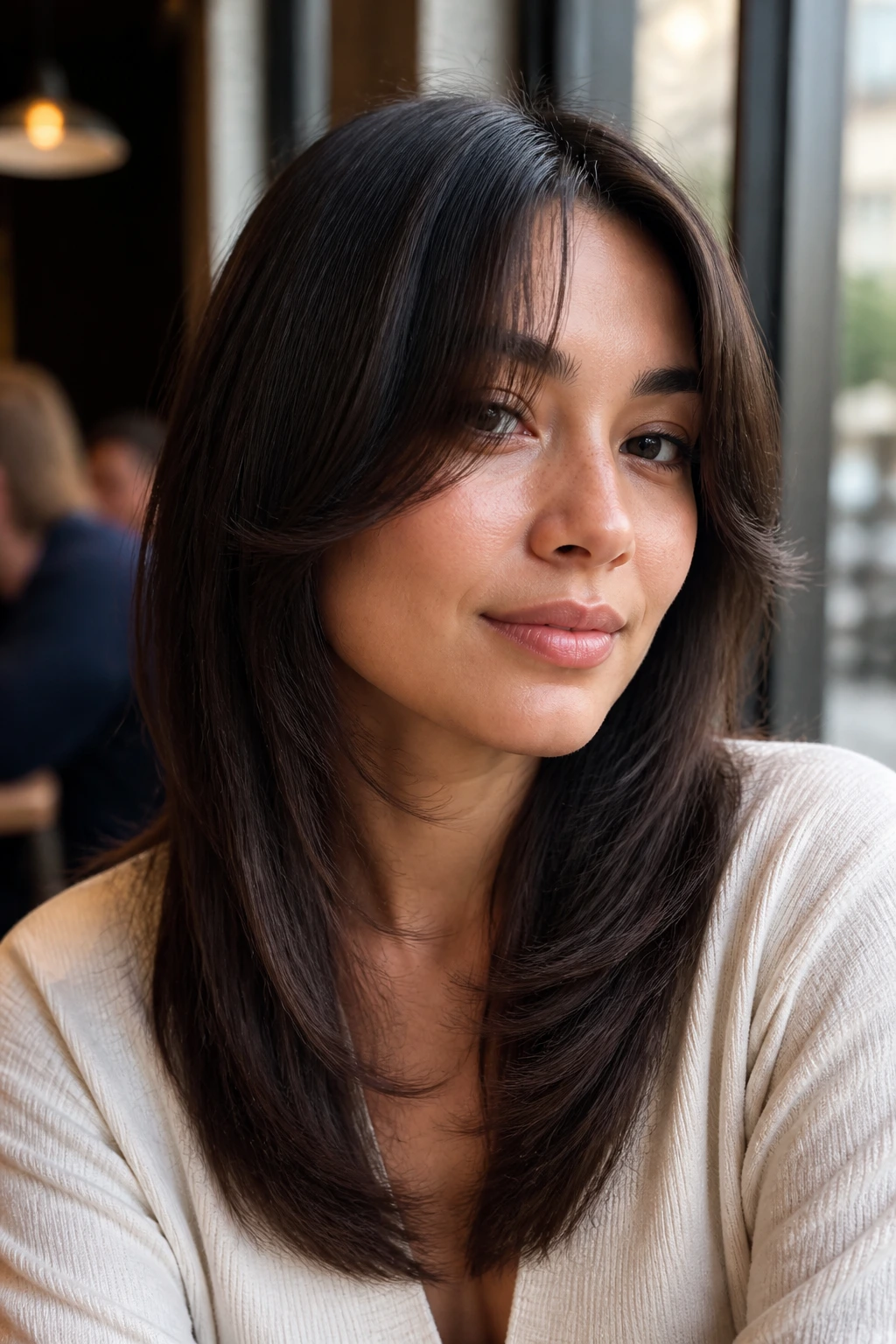
- Cutting the curtain bangs too short: On straight hair, short fringe often kicks up and feels severe. Ask for longer than you think, then refine after the first blow-dry.
- Layering fine straight hair too aggressively: Too many short pieces can make the ends look see-through. Keep the movement low and the hemline strong.
- Using too much thinning or razor work on dense hair: That can create frizz at the ends or weird wispy pockets that never lie flat.
- Ignoring your natural part: If your hair naturally splits slightly off center, forcing a dead-center curtain can create a gap that never closes properly.
- Styling the bangs after the rest of the hair is dry: By then, the front has usually set in the wrong direction. Dry the fringe first while it’s still damp and cooperative.
- Applying heavy oils near the roots: Straight hair shows grease fast, and curtain bangs lose their airy shape almost immediately.
Frequently Asked Questions
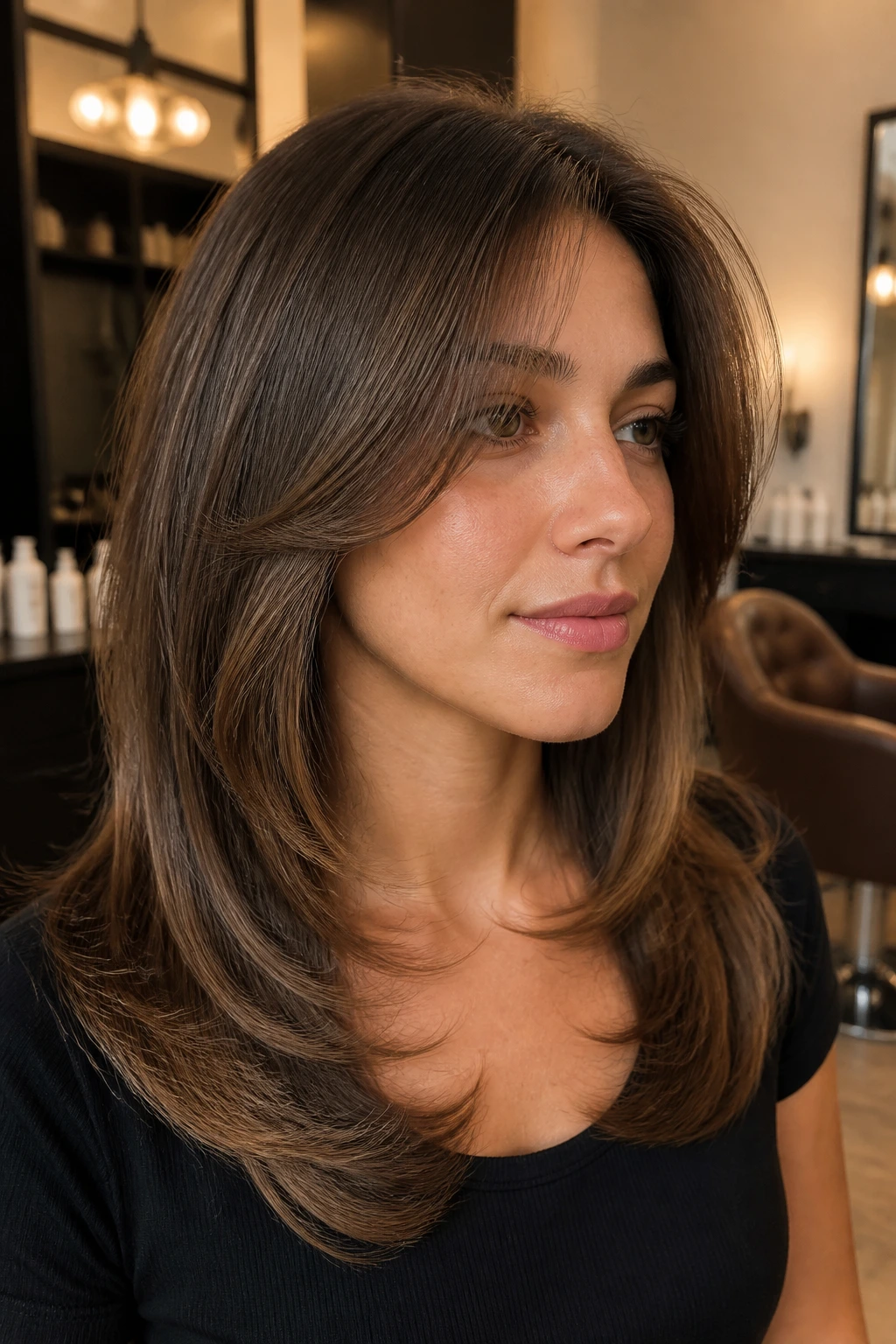
Do curtain bangs work on pin-straight hair?
Yes, but they work best when they’re cut a little longer and styled with a bend away from the face. Straight hair needs the fringe to be placed carefully, because there’s no wave to hide a bad starting point.
Will layers make my straight hair look thinner?
They can if the cut is too aggressive. The safer move is to keep the perimeter fuller and add movement inside the shape, especially if your hair is fine.
How short should curtain bangs be on straight hair?
A good starting point is cheekbone to lip length when dry, depending on your face shape and how much styling you want to do. Shorter than that can be tricky unless you like a more dramatic front.
Can I air-dry this kind of cut?
Sometimes, but the result depends on the style. Softer, longer layers usually air-dry better than polished blowout cuts, which need heat to show their shape.
How often should I trim curtain bangs?
Usually every 4 to 6 weeks if you want them to stay crisp and face-framing. If you’re happy with a grown-out look, you can stretch that a bit longer and tuck them more often.
What if my bangs split too wide in the middle?
That usually means they’re too heavy, too short, or cut to fight your natural part. A stylist can thin the weight slightly or shift the start point of the fringe so it falls more naturally.
Are these cuts good for thick hair?
Yes, especially the versions with rounded layers or deeper internal removal. Thick straight hair needs shaping, not just length trimming, or it tends to sit wide at the bottom.
Can I wear curtain bangs with glasses?
Absolutely, but longer fringe is usually easier. Keep the shortest pieces above the frame line, not directly into it, or the bangs can keep getting trapped and bent in annoying ways.
Should I choose a shag if I want low maintenance?
Only if your hair likes texture and you’re comfortable with some movement. A softer layered lob or a minimalist layered cut is easier if you want less styling and fewer surprise flips.
The Shape That Does the Work
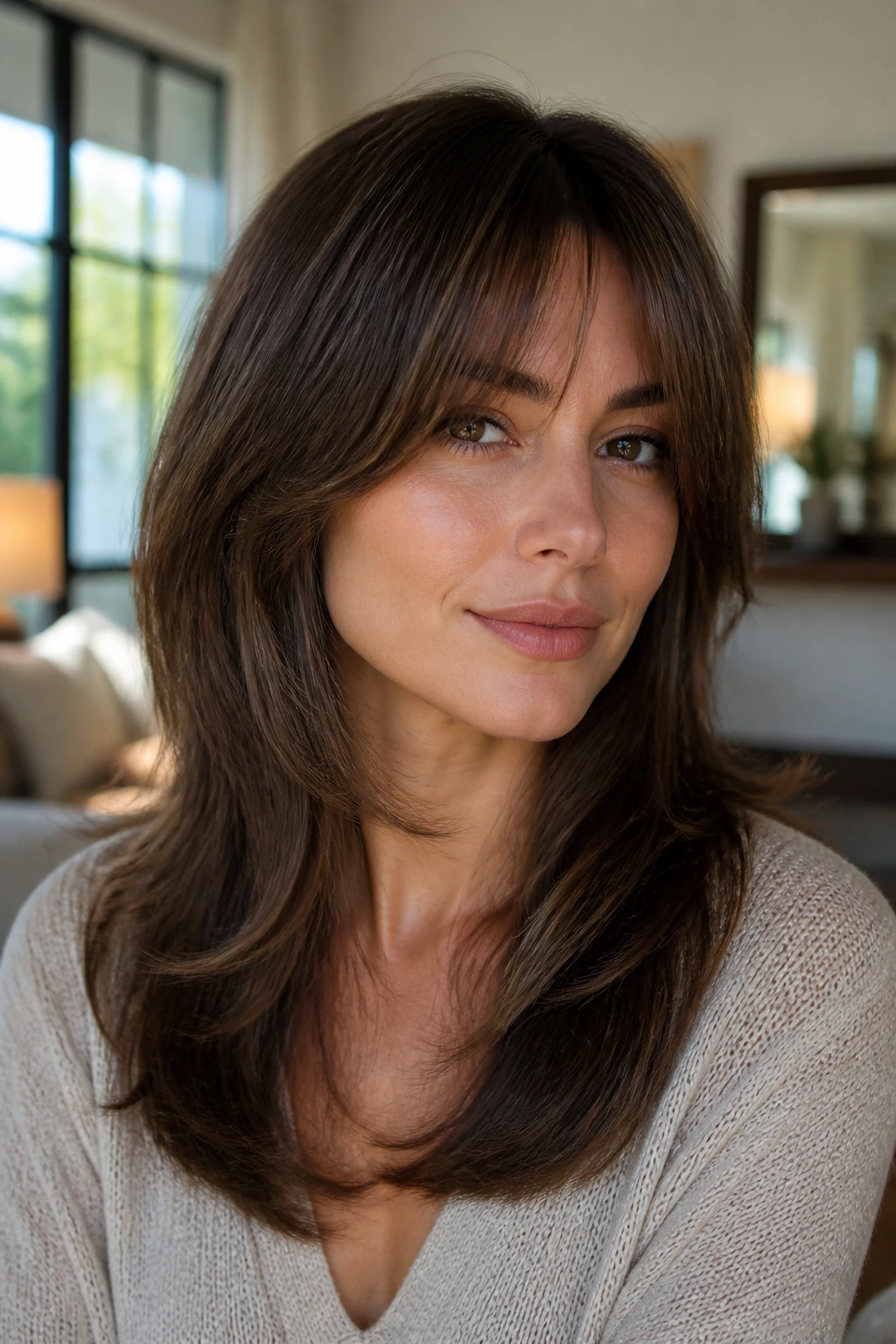
The best layered hairstyles for straight hair with curtain bangs don’t try to fight the hair type. They work with it. That means a clean perimeter, a smart amount of internal movement, and curtain bangs that open the face instead of sitting on it like a panel.
If you’re choosing between dramatic texture and a cut that behaves on a random Tuesday morning, I’d usually lean toward the version that leaves the ends strong and lets the front do the framing. Straight hair rewards precision. Give it that, and the haircut does half the styling for you.