



Thin hair gets blamed for bad bangs more often than it should.
Usually the haircut is the problem. The wrong fringe can eat up density at the front and leave the whole head looking flatter than it is, especially when the color sits in one pale, even sheet.
Blonde long layered bangs for thin hair work when the front pieces stay soft and the layers keep the ends with some weight. The trick is not making everything lighter. It is making the eye think there is more hair than there really is.
That is where shape does the heavy lifting. A curtain that opens at the cheekbone, a side sweep that skims the brow, a layer that starts low enough to keep the hemline full — those details matter more than people think. And on blonde hair, the difference between flat and full is often just contrast: a root shadow here, a whisper of lowlights there, a bang that doesn’t look too heavy to move.
Why These Cuts Work on Thin Hair
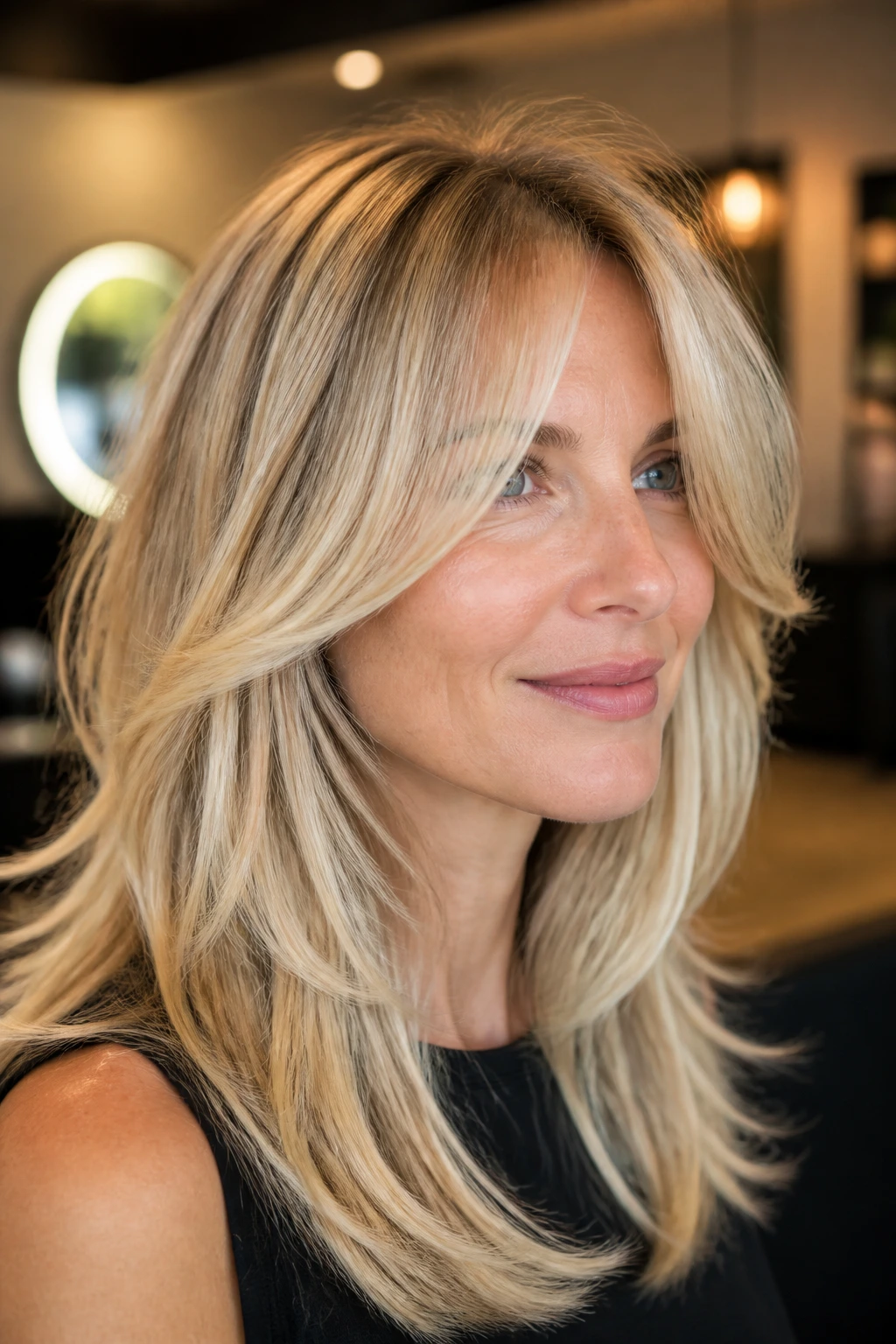
-
Long bangs keep the front light: Short, thick fringe can break apart and expose scalp; longer pieces skim the face and still look intentional when they separate a little.
-
Layers add motion without stealing too much bulk: If the first layer sits around the cheekbone or collarbone, the ends keep their body instead of turning wispy and see-through.
-
Blonde dimension creates the illusion of density: Root shadow, babylights, and soft lowlights stop the hair from reading like one flat sheet.
-
Soft edges are kinder to fine strands: Point-cutting and feathered shaping tend to move better than blunt, heavy lines on slender hair.
-
The grow-out is more forgiving: These shapes can slide from fresh-cut to slightly grown-out without turning awkward at the brow.
1. Soft Curtain Layers With Champagne Blonde Ends
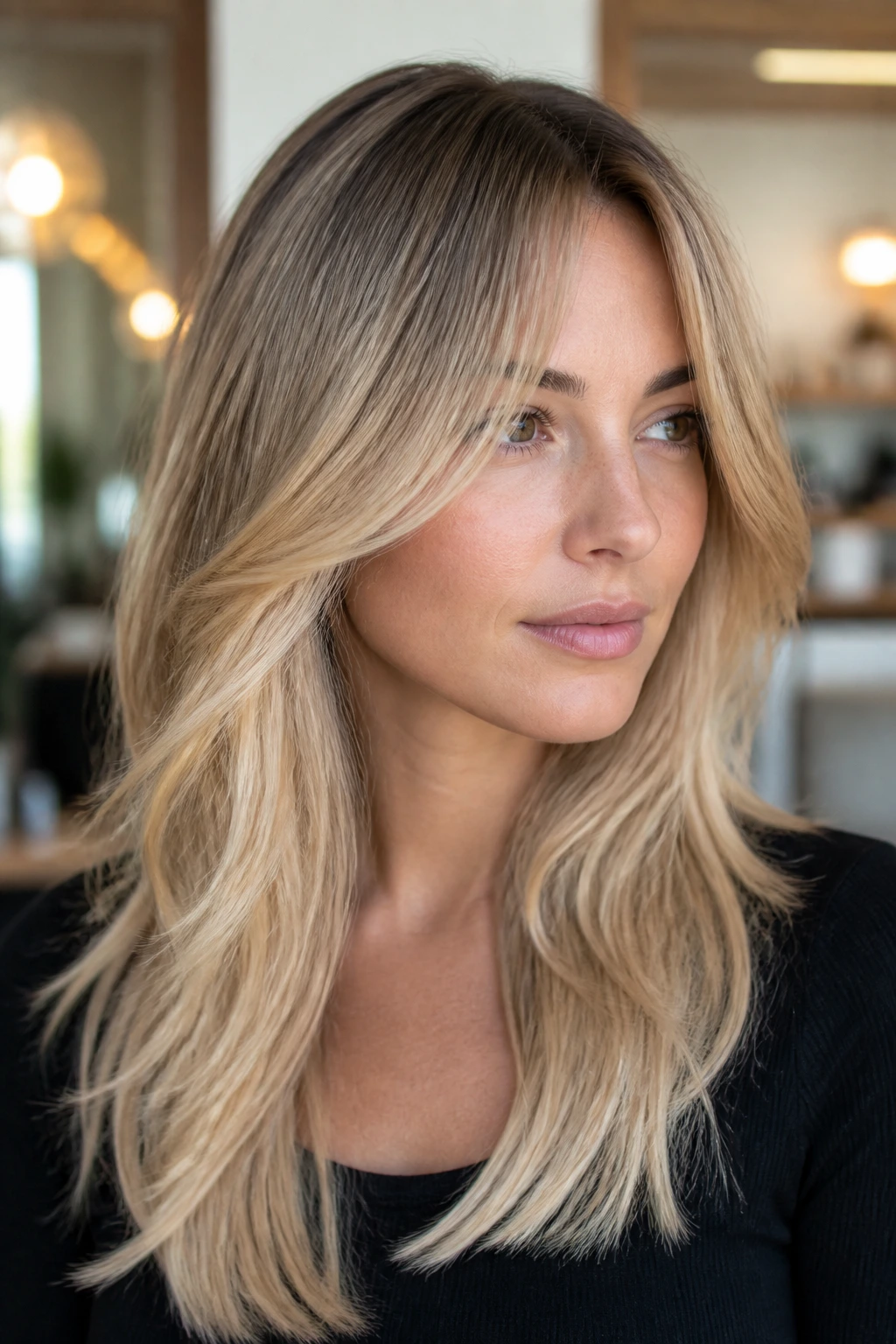
This is the easy entry point if you want bangs but do not want to feel like your forehead is wearing a curtain. The center part opens cleanly, the longest fringe pieces hit around the cheekbone, and the champagne blonde ends keep the look airy instead of heavy.
Why it flatters fine strands
The curtain shape uses less density right at the hairline, which matters when every strand counts. The blonde tone at the ends keeps the perimeter bright, so the haircut still has movement even when the rest of the hair falls straight.
A quick round-brush bend through the front is enough. No helmet hair, no overworked styling.
2. Bottleneck Bangs and Feathered Crown Volume
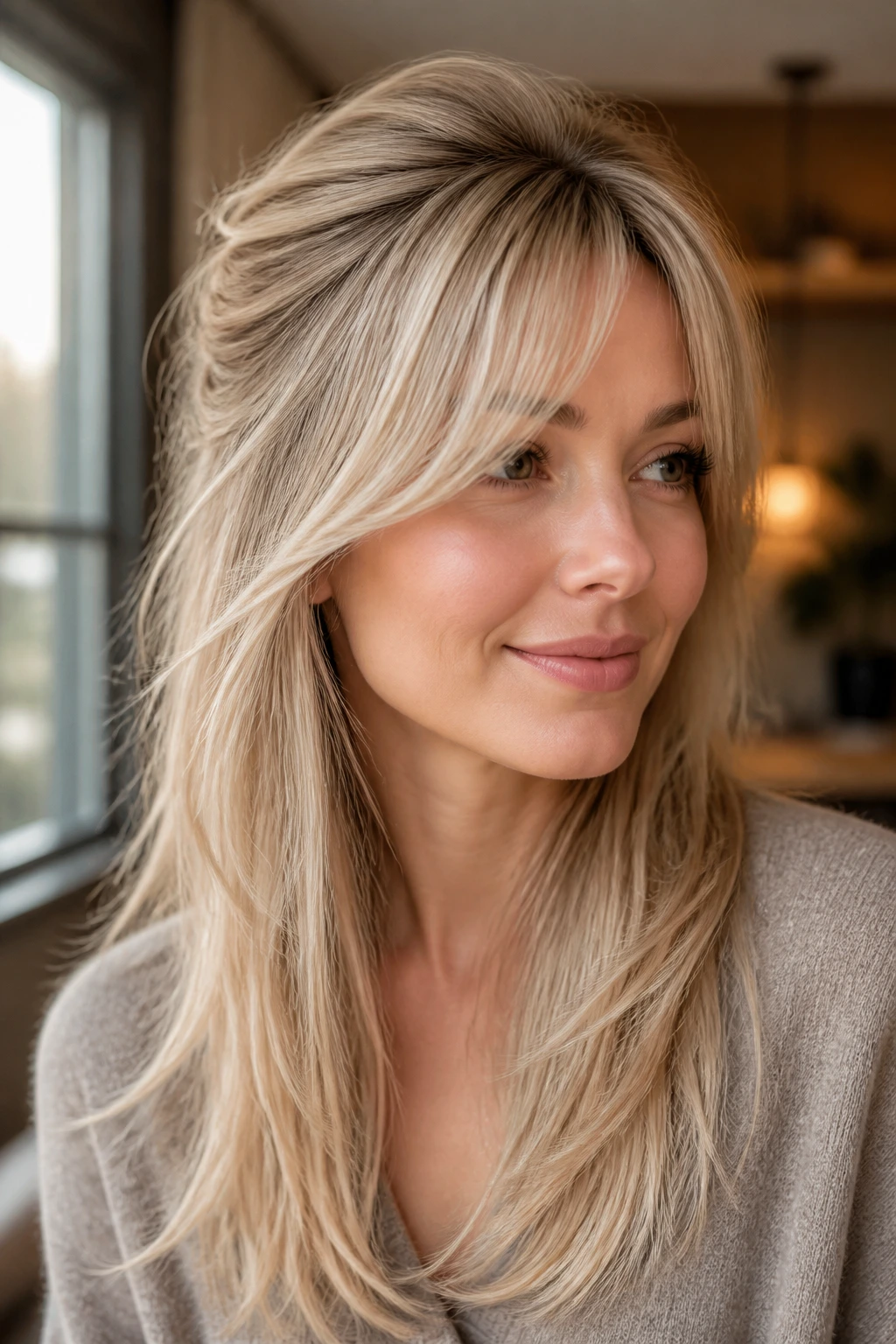
Bottleneck bangs narrow at the center, then open out toward the temples, and that shape is a small miracle on thin hair. It gives you forehead coverage without building a thick wall across the front, which is where a lot of fine-haired bangs go wrong.
Why I like it
The feathered crown keeps lift near the roots without making the top look chopped up. Champagne or beige blonde suits this cut well because the softer tone makes the fringe feel lighter and less blocky. If your hair falls flat by lunch, this is one of the smarter shapes to try.
3. Beige Blonde Face Frames That Start at the Cheekbone
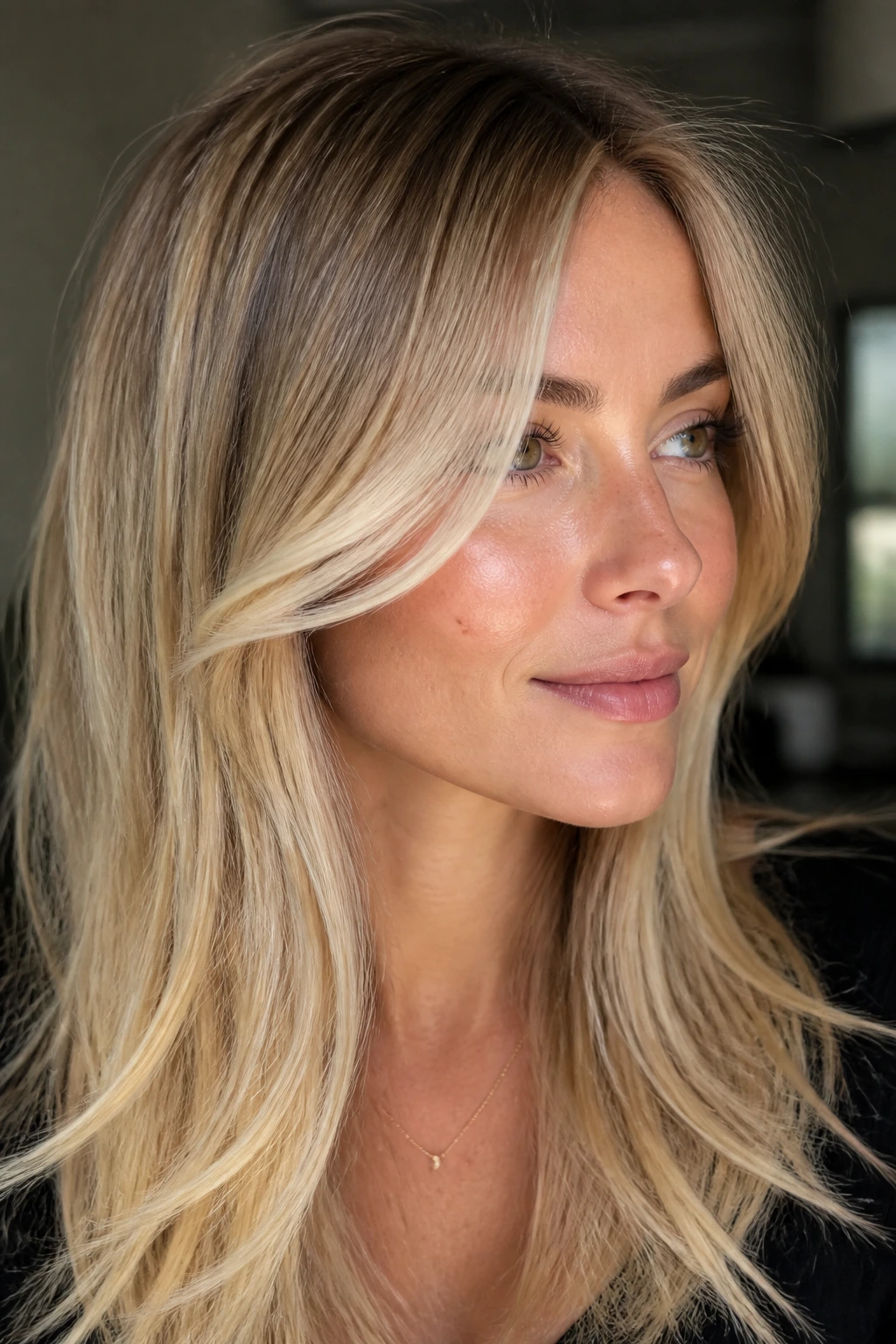
If you want brightness near the face without losing the feeling of fullness, start the shortest face-framing pieces at the cheekbone and let them melt into longer layers. Beige blonde is a good match because it gives lightness without that striped, over-processed look.
The cheekbone placement matters. It lifts the eye upward and makes the front look deliberate, not sparse.
4. Side-Swept Bangs Over Collarbone Layers
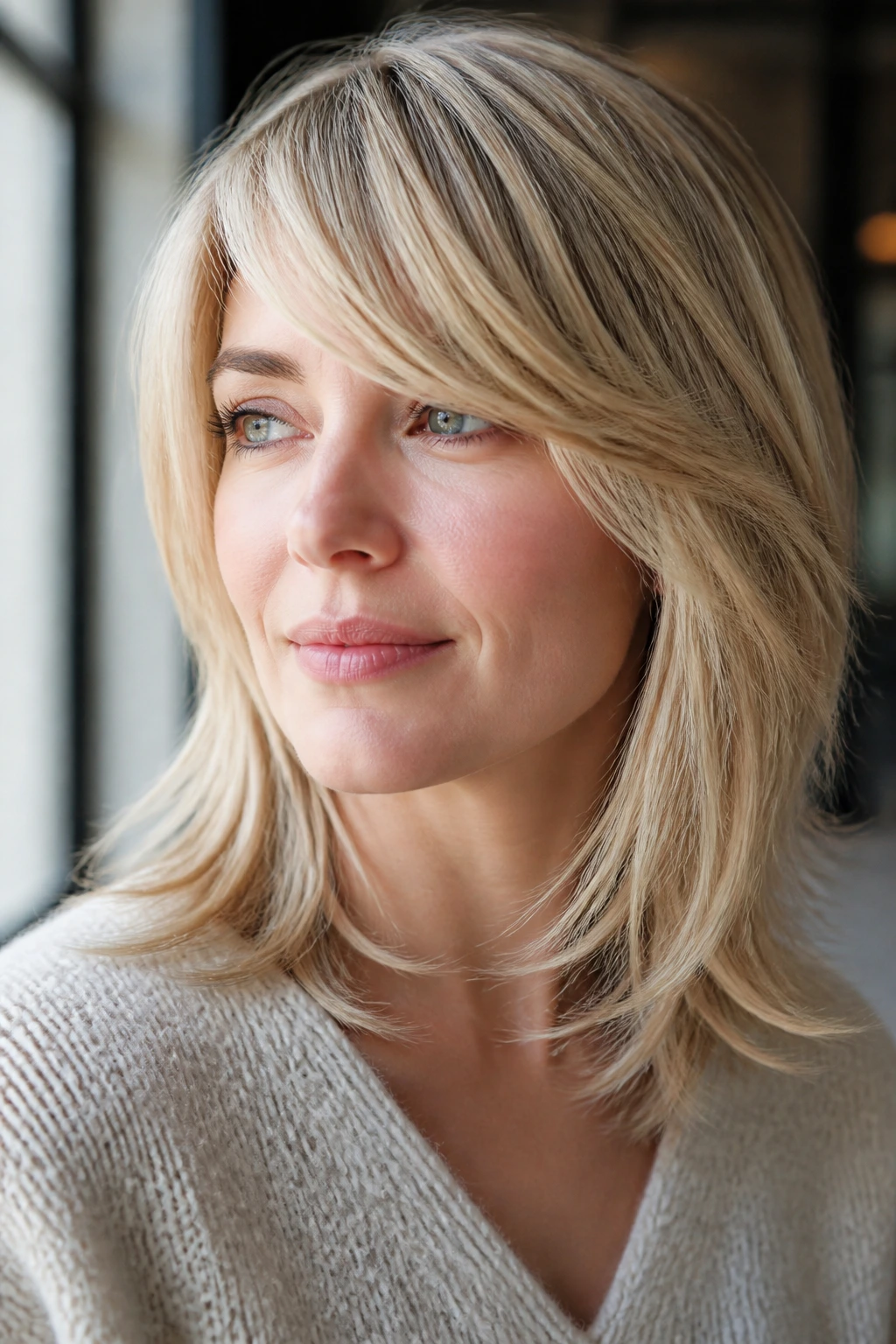
A side-swept bang is old-school in the best way. It softens a high forehead, covers a stubborn part line, and gives thin hair a diagonal shape that feels fuller than a straight-down fringe.
The collarbone layers keep the ends from puffing out at the wrong places. I like this cut for anyone who wants movement but hates the feeling of too much hair sitting on the face.
5. Invisible Layers Under a Butter Blonde Gloss
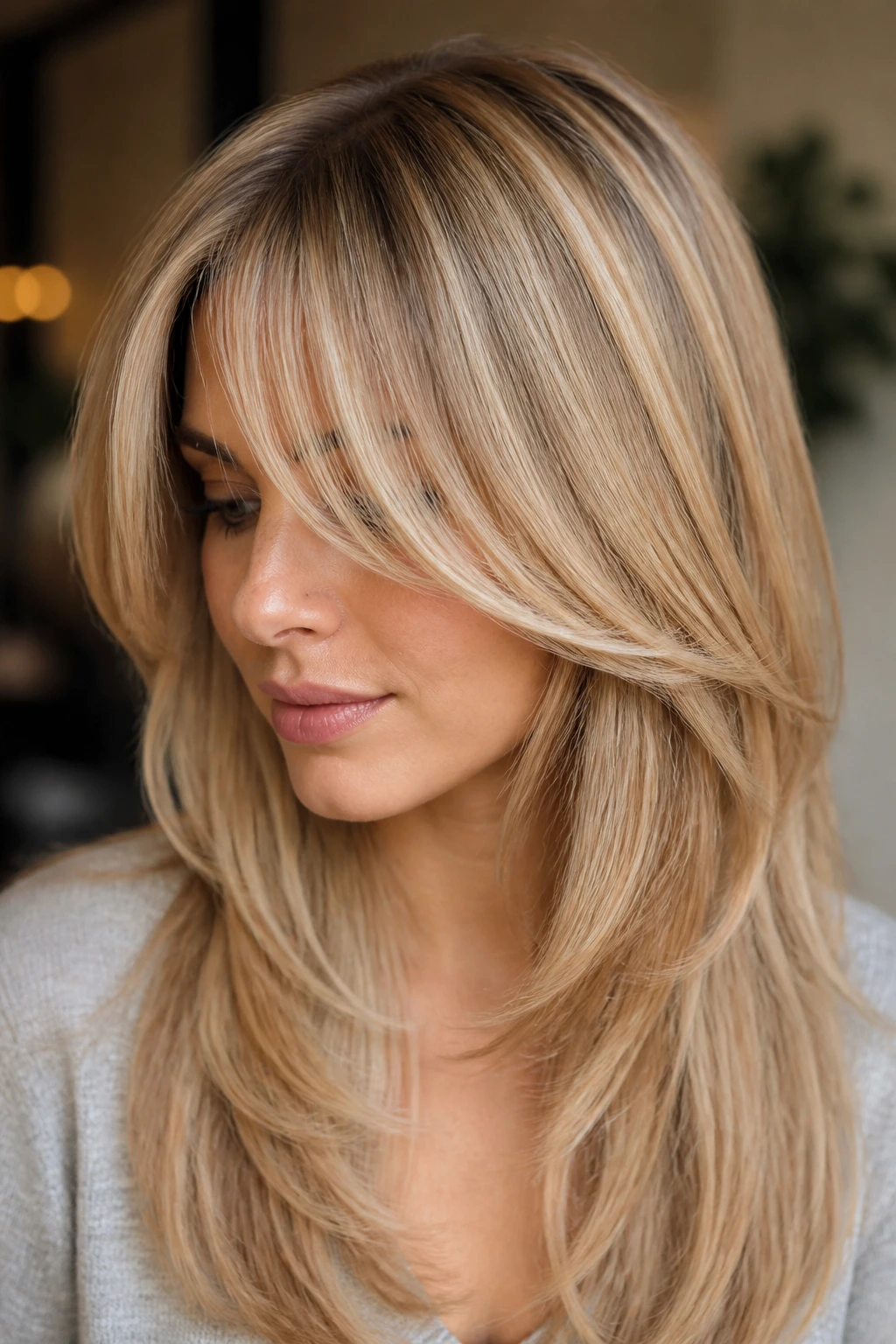
Invisible layers live underneath the top surface, so the cut keeps a smooth outer shape while the interior gets enough movement to stop the whole thing from collapsing. On thin hair, that is a smart trade.
Butter blonde works here because the tone is warm enough to look soft, but not so yellow that it turns brassy under indoor light. The result is subtle. That is the point.
6. Razored Ends and Wispy Fringe
A light razor finish can be useful on straight, fine hair that tends to hang limp. The ends split into tiny pieces instead of forming a blunt shelf, and the wispy fringe keeps the front from looking heavy.
What to watch
This one needs a careful hand. Too much razor work and the ends fray into nothing. Done well, though, it gives you that breezy, piecey look that reads as thicker than it is because the hair moves instead of sitting in one flat line.
7. U-Cut Length With Center-Part Curtain Bangs
A U-shaped perimeter keeps a little more length in the back and softens the sides as they come forward. That shape feels especially good on thinner hair because it protects the visual weight at the bottom while the curtain bangs handle the face frame.
The center part keeps the style modern without pushing the hair back too far from the face. If your hair likes to split naturally in the middle, this is a low-drama way to work with it.
8. Warm Honey Blonde With Pillow-Slip Waves
Honey blonde has a thickness trick built into it. The warmer tone creates depth around the strands, and when you bend the hair into soft, brushed-out waves, the whole cut looks fuller from root to tip.
This is one of those styles that looks expensive without acting precious. The waves should be loose, almost like the hair has been put in rollers for ten minutes and then finger-combed out.
9. Choppy Ends and Micro-Babylight Ribbons
Tiny babylights scattered through the lengths help thin hair look denser because they break the surface into little pieces of light and shadow. Pair that with lightly choppy ends, and the whole cut gets more texture without turning ragged.
What makes it different
The pieces are small on purpose. Big highlights can make fine hair look stripy; micro-babylights blur the line and make the hair read as more abundant. I’d reach for this if you want dimension but hate obvious color placement.
10. Sleek Length and Expansive Side Bangs
Some thin hair looks best when it is not trying too hard to be fluffy. A sleek finish with long side bangs can be sharper than a lot of layered looks, especially if the hair is naturally straight and reflective.
The side bang gives the front some drama, and the long length keeps it from feeling chopped up. It is polished, but not stiff. That balance matters.
11. Vanilla Blonde With Soft Wolf Layers
A soft wolf shape can work on thin hair if the layers stay long enough to keep the perimeter from looking stripped bare. Vanilla blonde helps the texture read as soft rather than harsh, which keeps the cut wearable.
The crown gets a little lift, the sides get movement, and the bangs drift into the rest of the haircut instead of sitting on top of it. This is the style for someone who likes a bit of edge but still wants to tuck the hair behind one ear.
12. Rooty Balayage and Swoopy Fringe
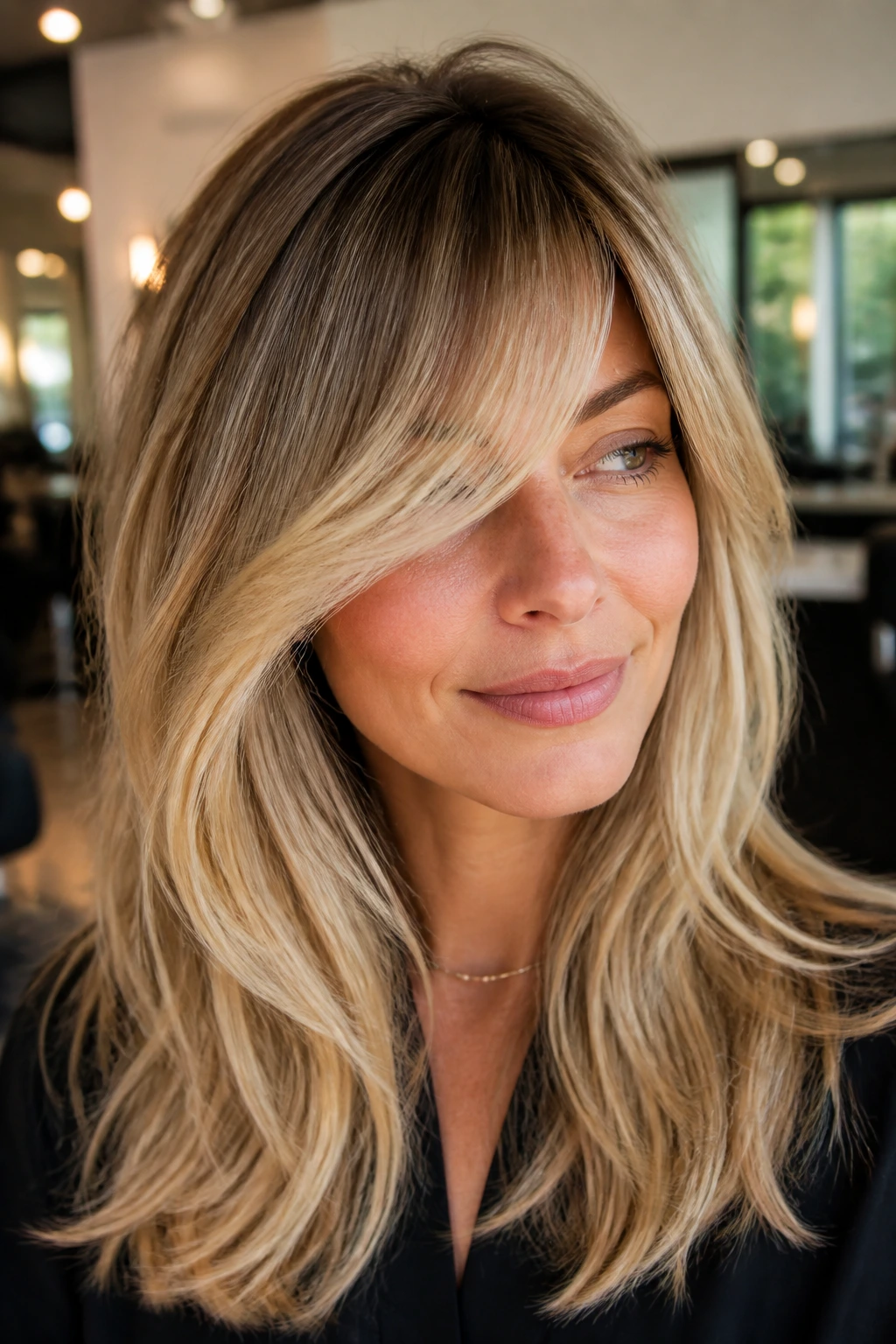
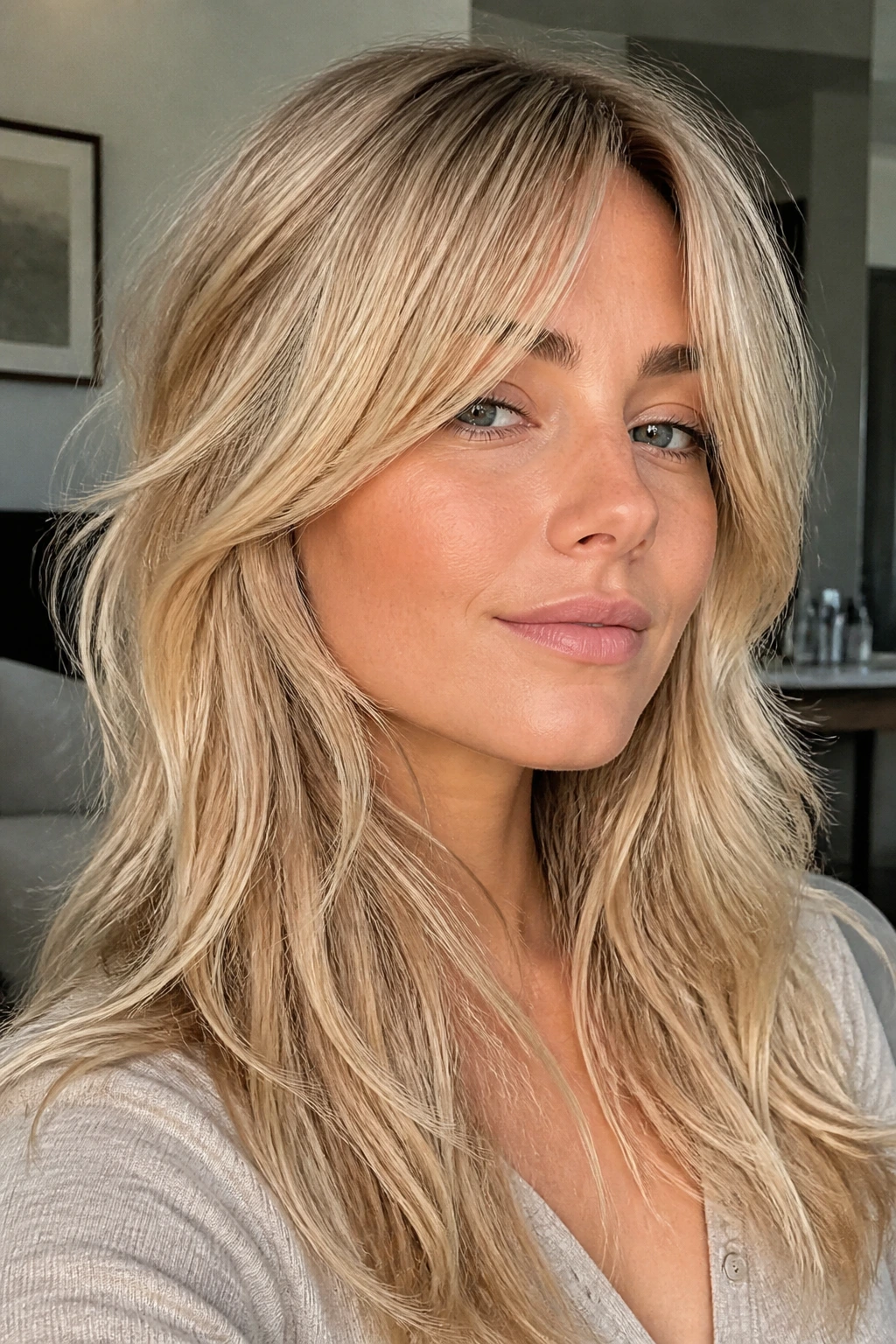
Rooty balayage is one of the easiest ways to fake density. The darker root gives the scalp line some depth, and the lighter mids and ends keep the whole shape from getting heavy.
The swoopy fringe does the rest. It curves across the forehead in a long line, which is much kinder to fine hair than a short, blunt bang that has to be perfect every single day.
13. Rounded Layers That Open the Face
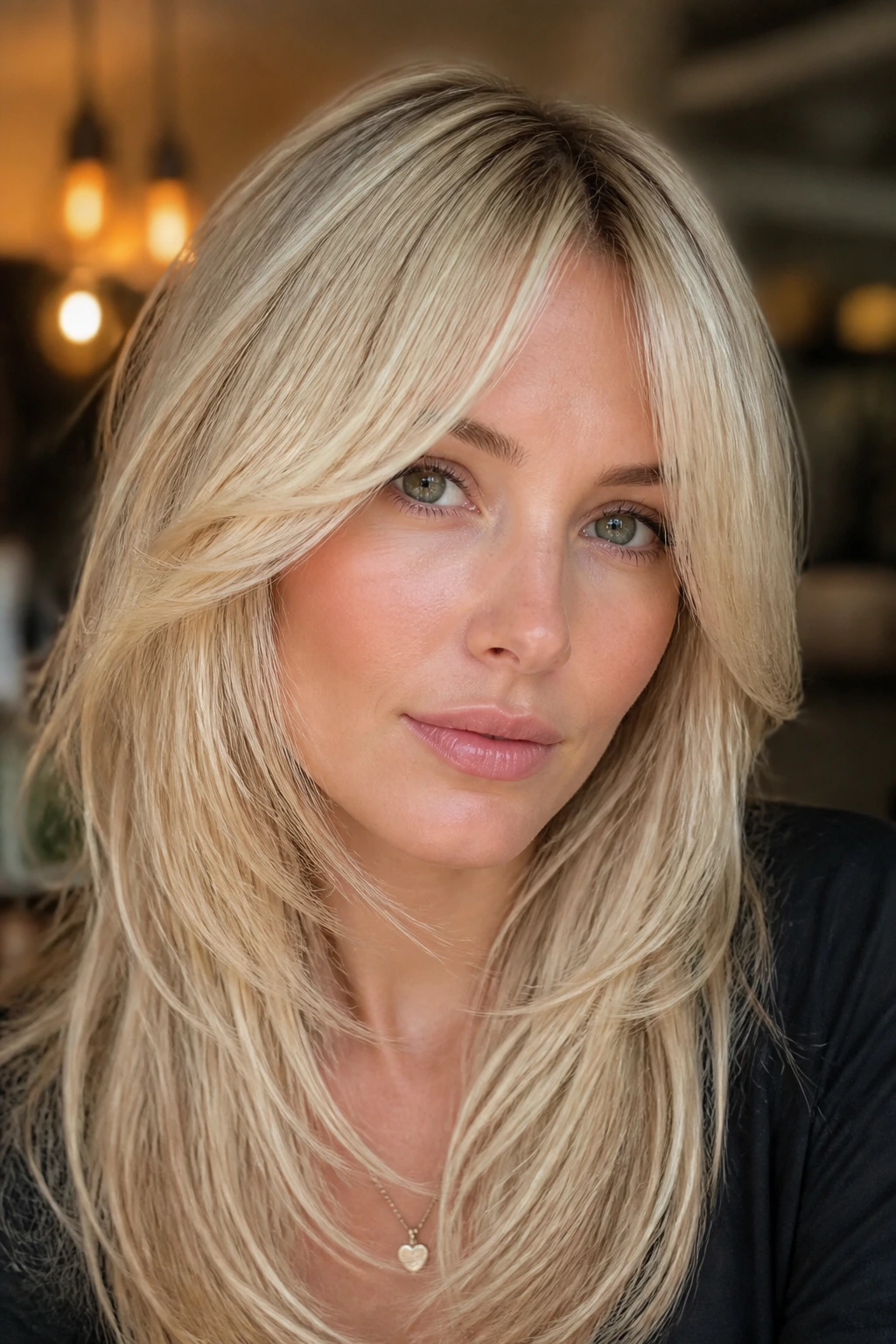
Rounded layers can make thin hair look fuller because the shape follows the head instead of hanging straight down. The hair curves softly around the cheek and jaw, and that creates the feeling of width where you want it.
A pale blonde tone is nice here, but I would not strip it to the point of chalkiness. The cut already has enough shape; the color just needs to support it.
14. Butterfly Layers That Keep the Perimeter Thick
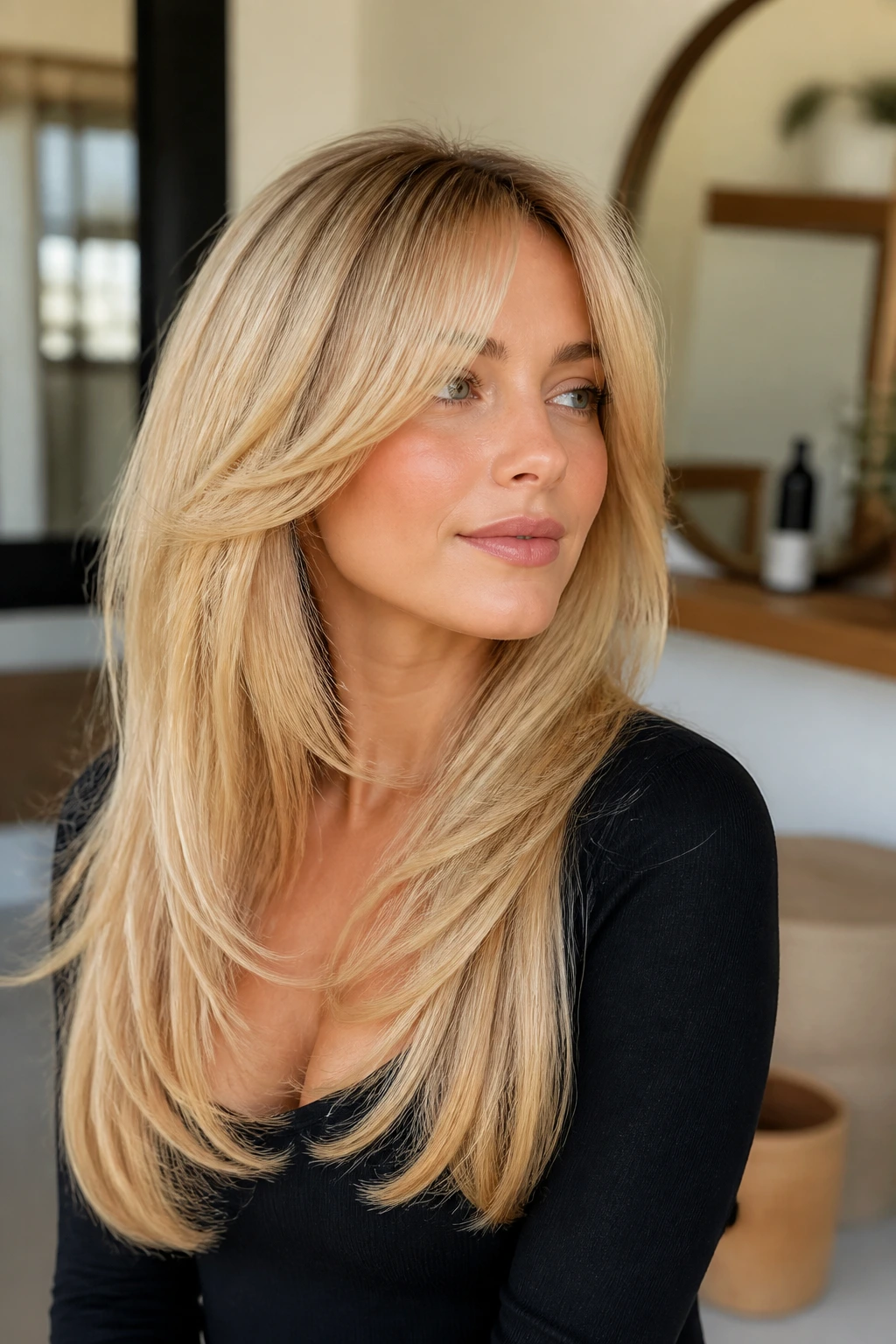
Butterfly layers give you that lifted top section and the long, sweeping face frame, but they leave the bottom length intact. On thin hair, that is the whole game. You want volume near the front and crown without robbing the hemline.
The long bang pieces can blend into the first layer so the haircut looks soft when it moves. If you like blowouts and face-framing drama, this one earns its keep.
15. Ash Blonde Dimension and Blended Bangs
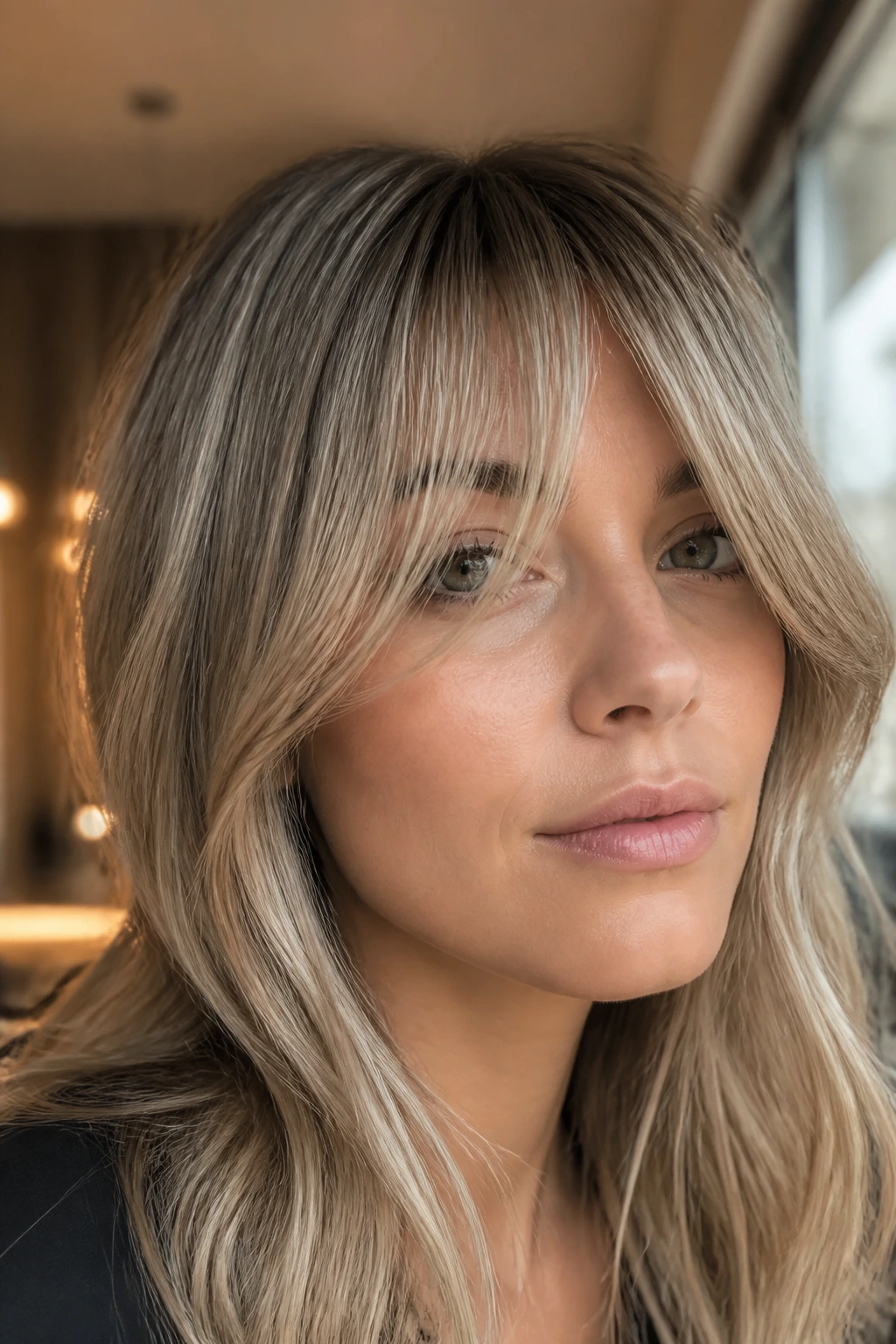
Ash blonde can be tricky on thin hair if it goes flat and dull, but with blended bangs and a little lowlight depth, it can look crisp instead of washed out. The cooler tone keeps the color line clean, and the blended fringe avoids that hard shelf across the forehead.
Best tone pairing
I like ash blonde with a soft root smudge. It gives the color room to breathe and keeps the part line from looking exposed. If your hair is naturally very fine, this is one of the better options because the tonal contrast does some of the visual thickening.
16. Grown-Out Bardot Bangs With Long Side Panels
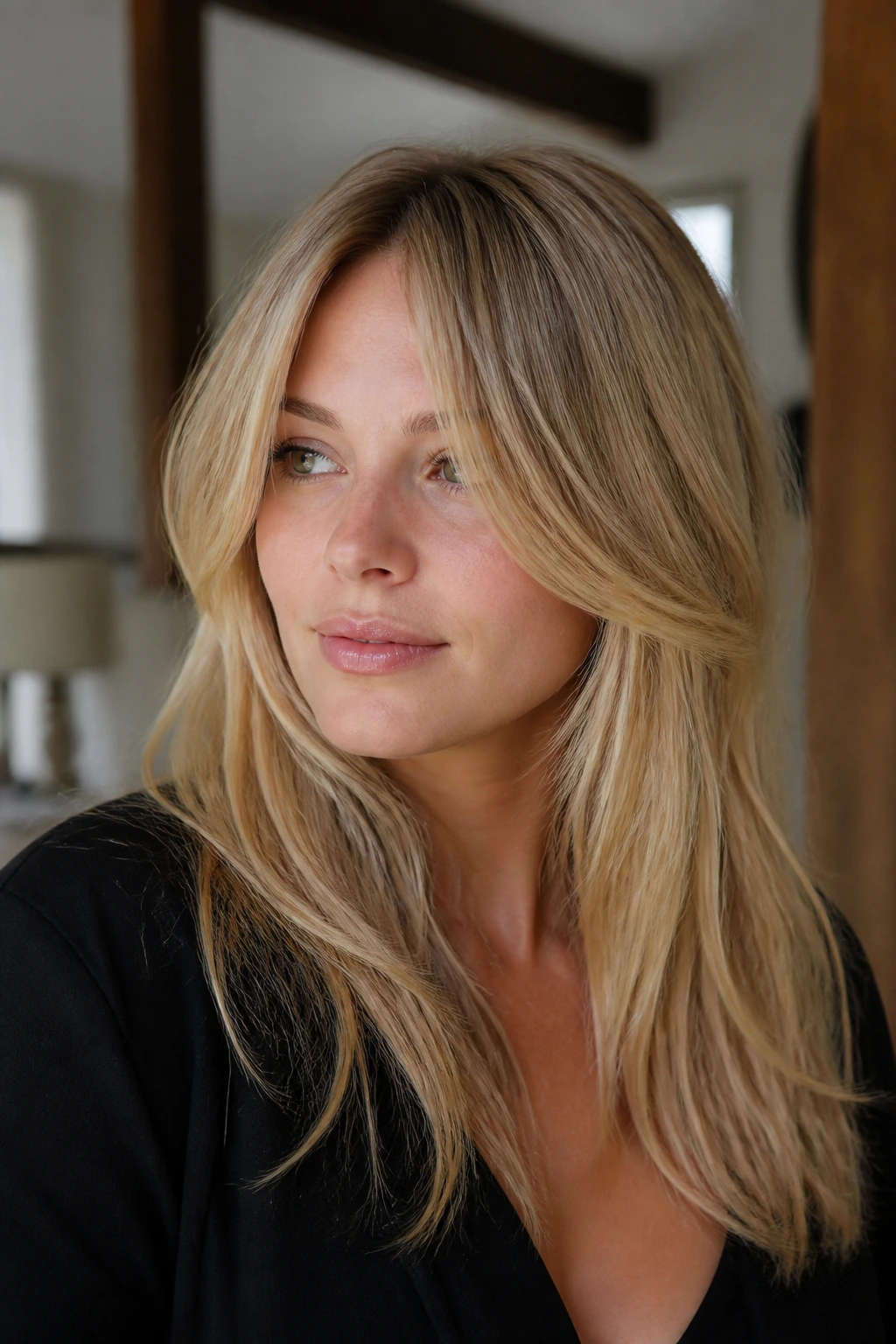
Bardot bangs are basically the graceful cousin of a full fringe. They split in the middle, sweep wide, and leave plenty of face showing, which keeps them from overwhelming thin hair.
The long side panels help the cut hold shape as it grows. That means fewer awkward in-between weeks, which I always appreciate. Hair should not feel like a hostage situation between trims.
17. Feathered Layers and a Shadow Root
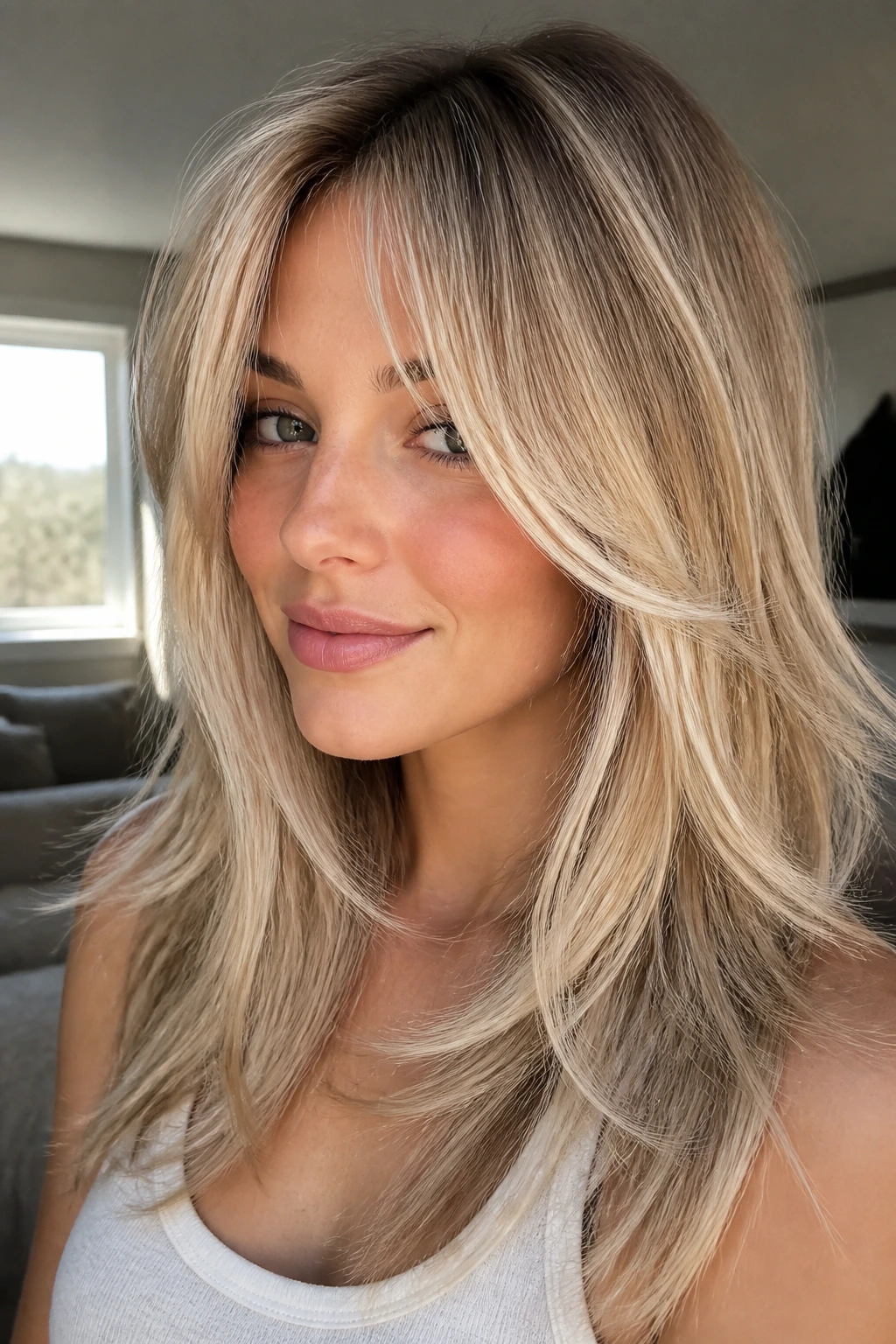
A feathered finish can be a gift to fine hair because it softens the line where one layer ends and the next begins. Add a shadow root, and the top of the head gains some depth that makes the blonde lengths look richer.
This works especially well if your hair tends to separate into stringy pieces. The feathering and root depth give it enough visual noise to read as fuller.
18. Air-Dried Waves With a Split Fringe
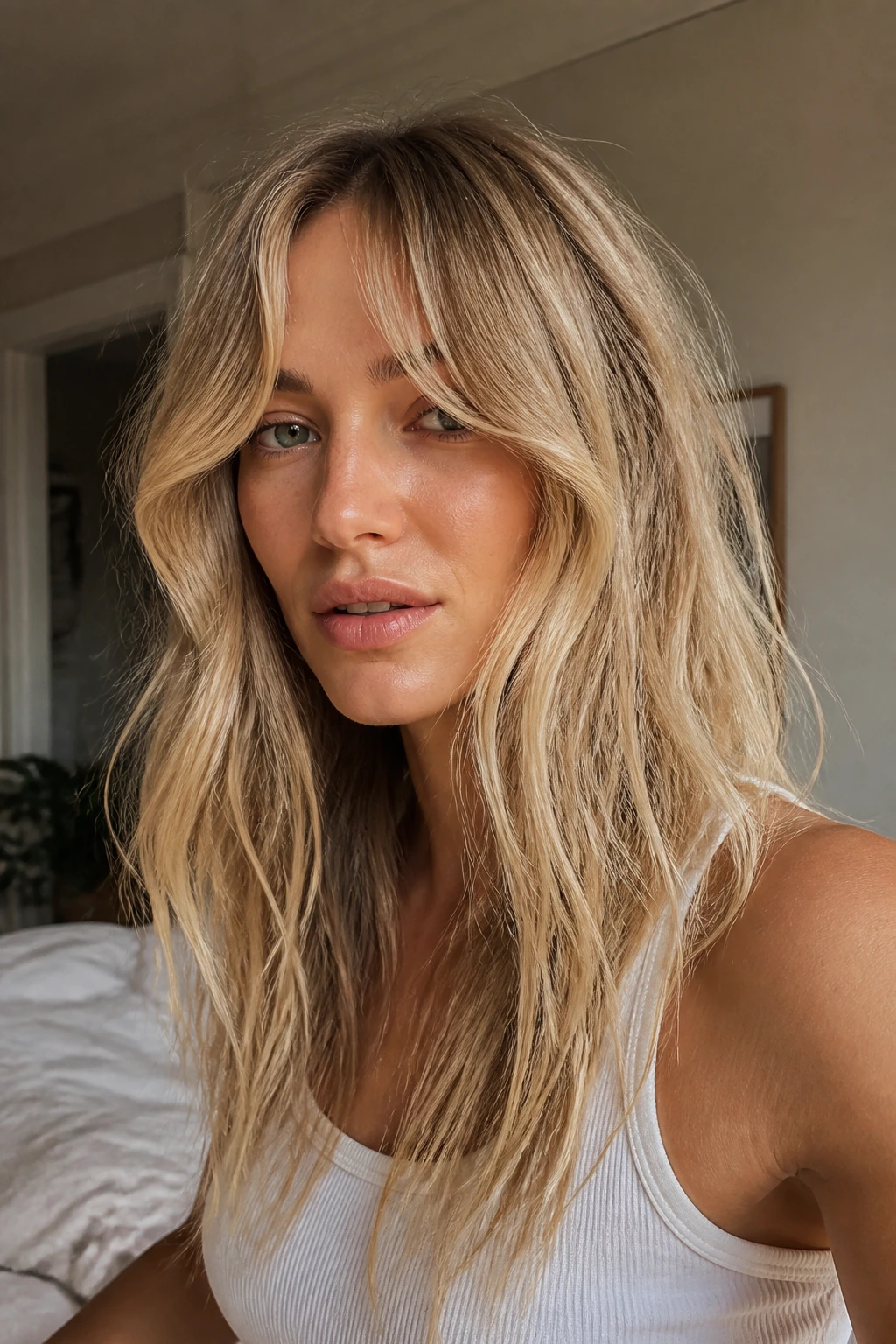
If heat styling feels like too much effort, a split fringe with air-dried waves can still look finished. The key is keeping the bang pieces long enough to settle on their own, not spring up too short.
A light mousse at the roots and a touch of curl cream on the ends are enough. Let the texture do the work. Thin hair often looks better when it’s not being bullied into a shape it does not want.
19. Glassy Blonde and Point-Cut Ends
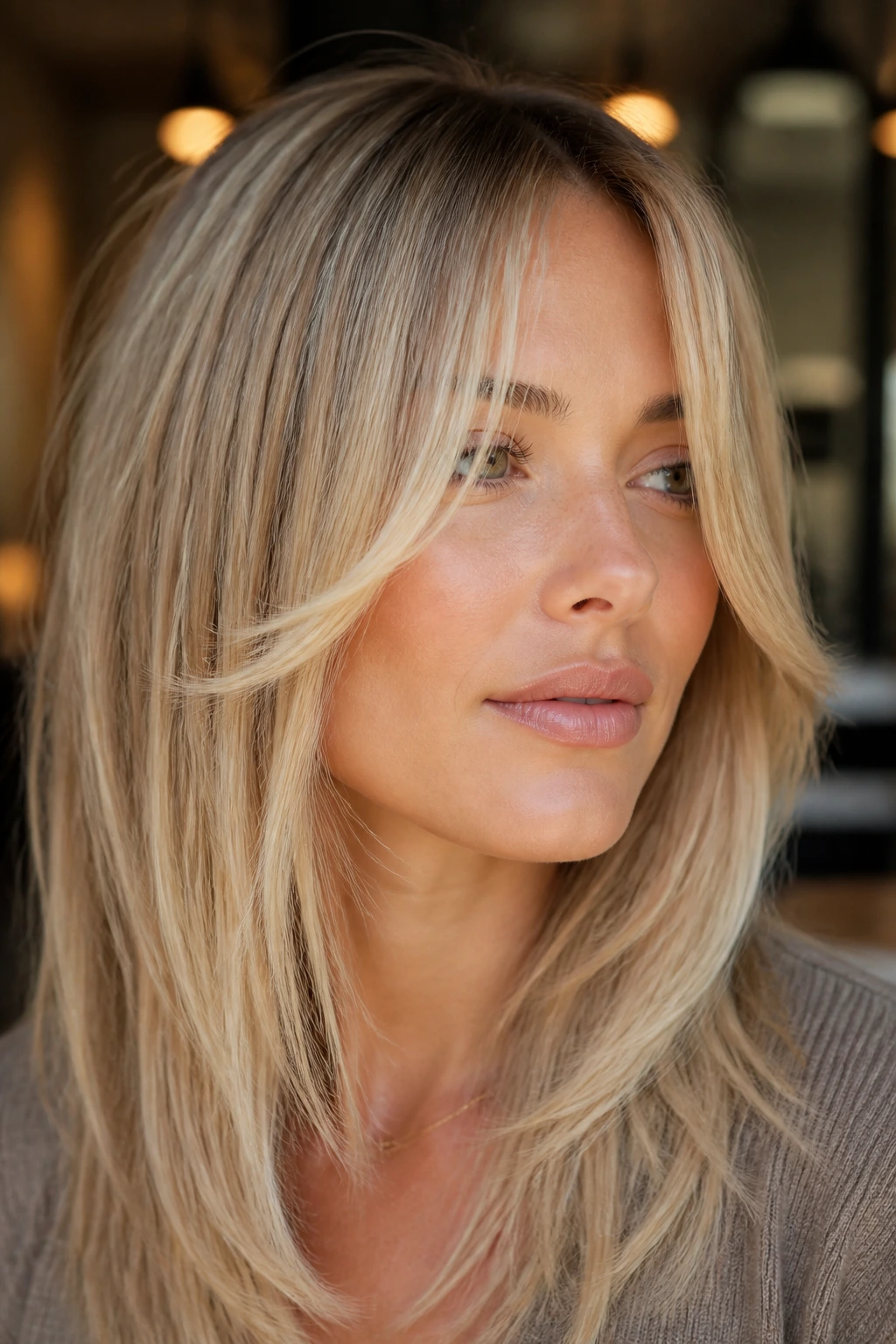
A glossy blonde finish can look thin if the cut is blunt and one-note. Point-cut ends fix that. They break the edge into softer pieces so the hair reflects light in a less severe way.
The bang line should stay long and loose here. Think cheekbone, not eyebrow stamp. The glassy surface gives you shine; the point-cut keeps it from turning into a flat sheet.
20. V-Cut Length With Long Curtain Fringe
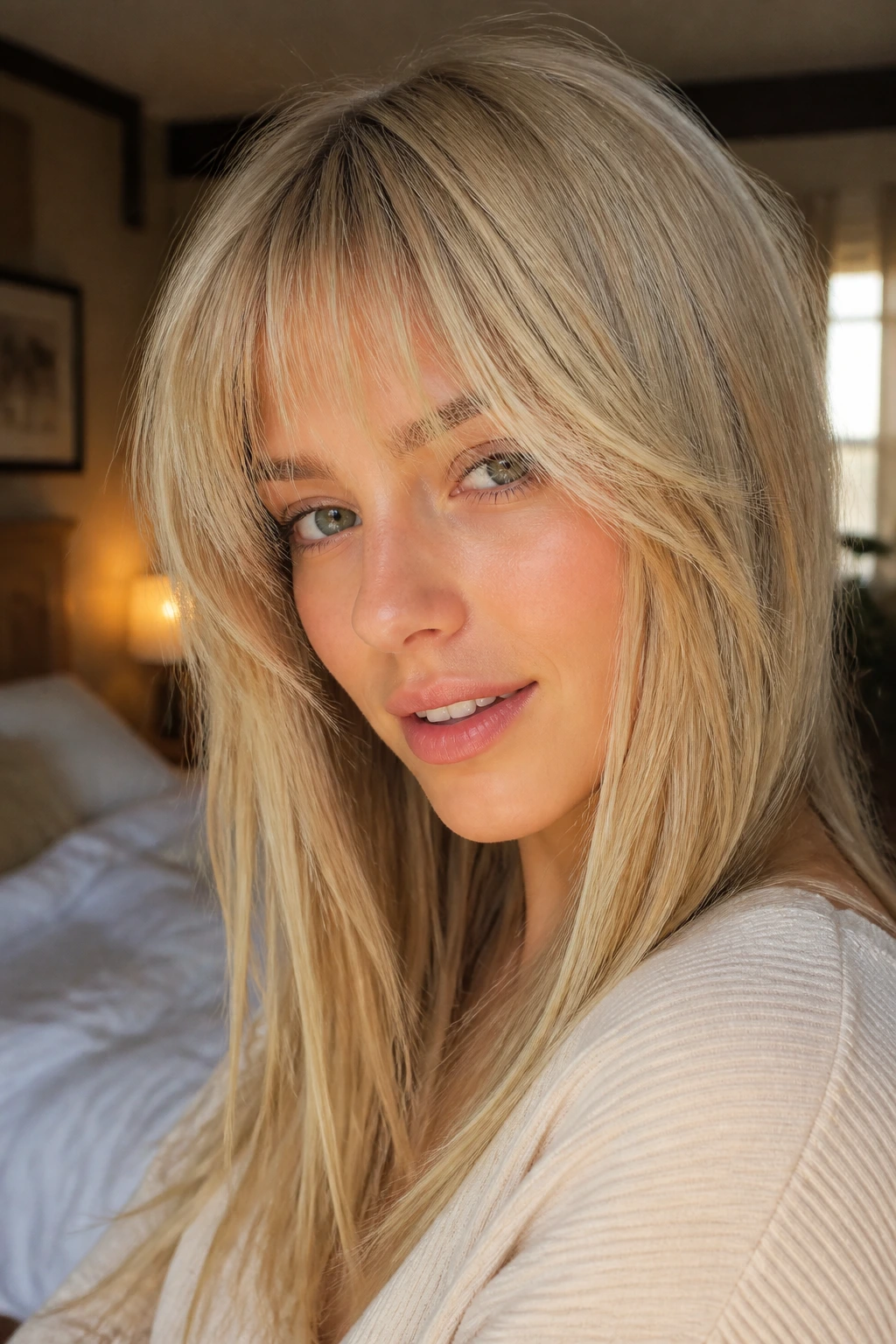
A V-cut leaves the back with a little more length in the center, which is useful if the sides feel sparse. It gives the illusion of more hair flowing down the back while the front curtain fringe frames the face.
This is not the chop for someone who wants blunt, heavy edges. It is for the reader who likes movement and a softer silhouette that still looks thick enough to matter.
21. Piecey Platinum With Tapered Front Sections
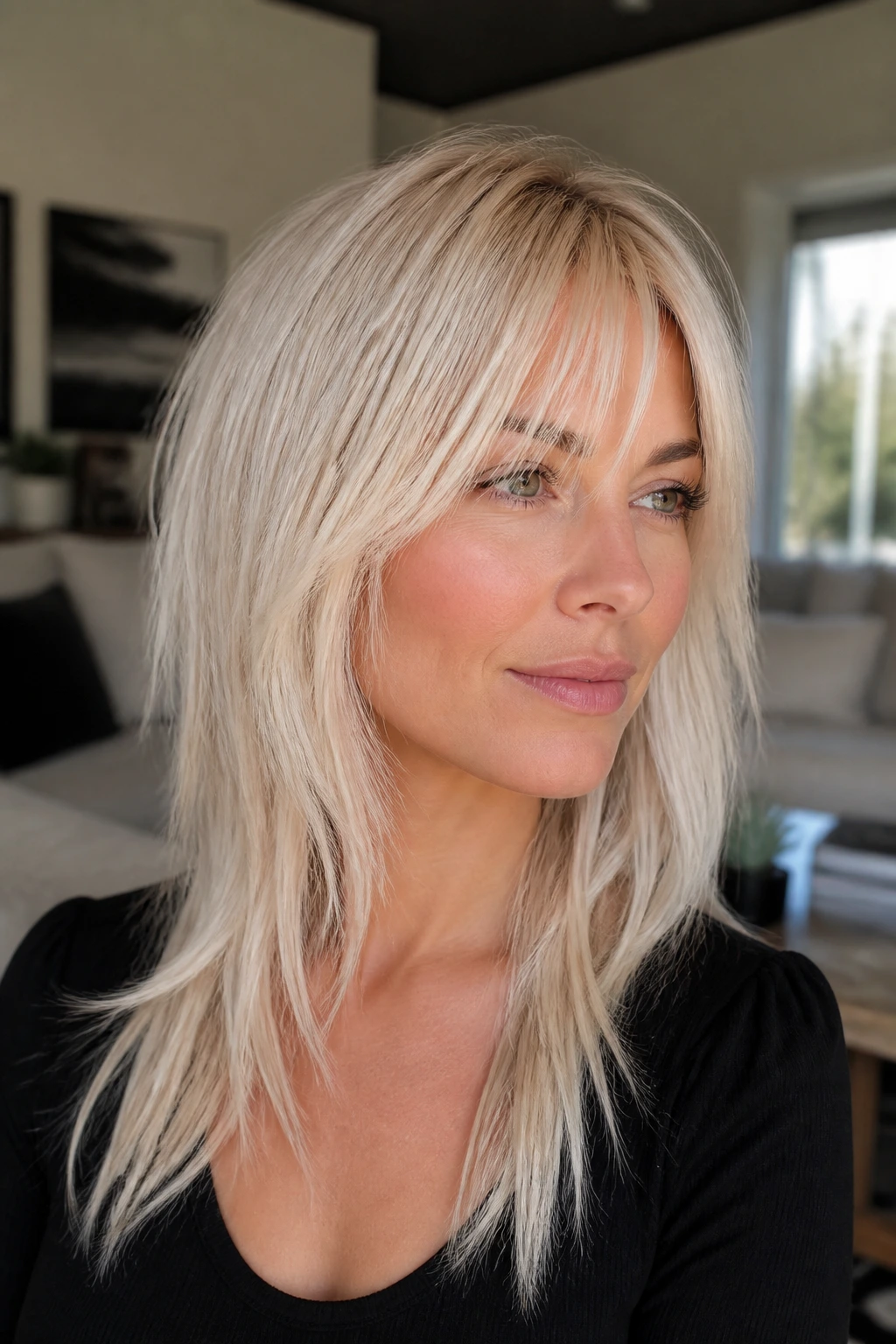
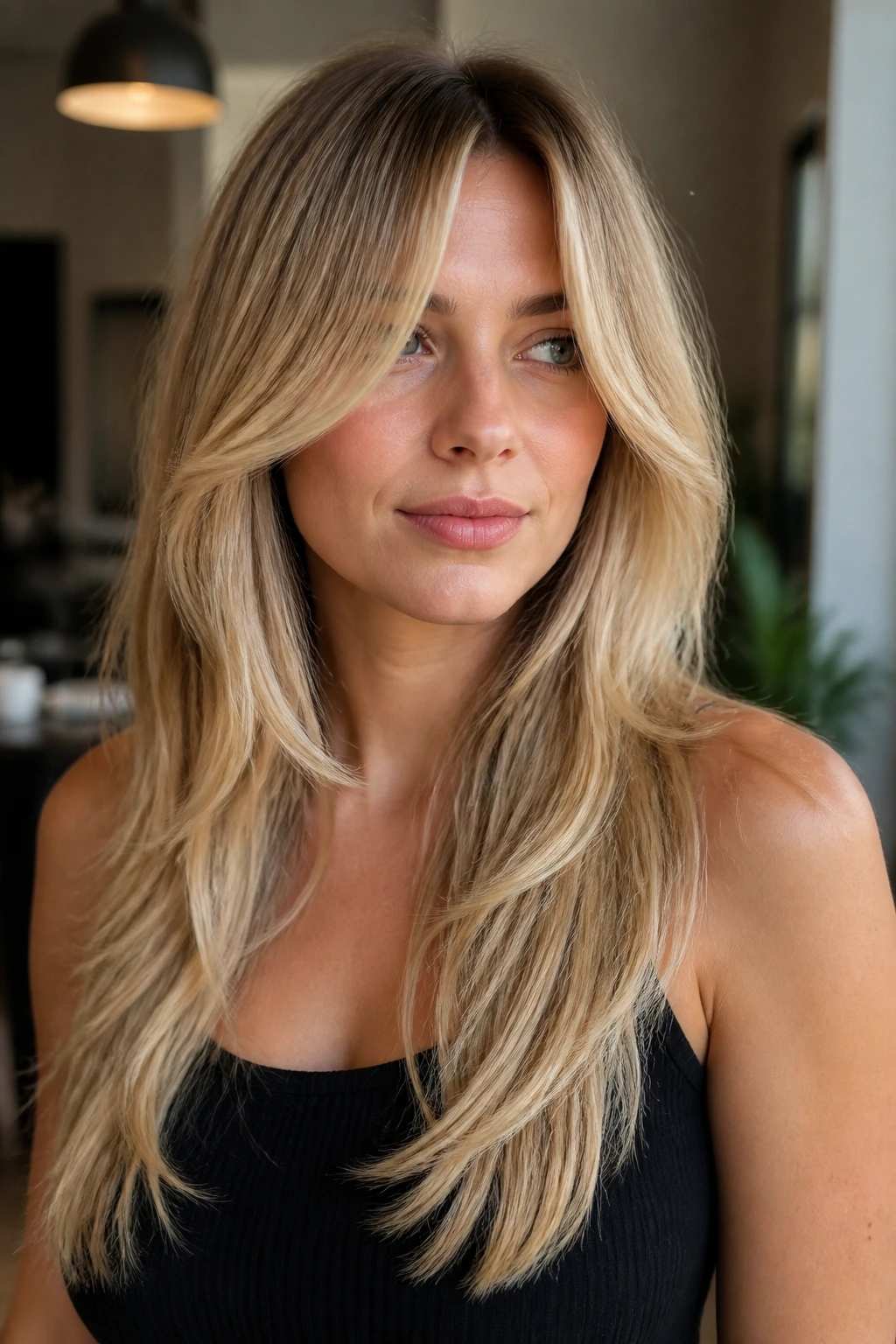
Platinum can be brutal on thin hair if the cut is heavy and the tone is too flat. Keep the front sections tapered and piecey, though, and the style starts to feel sharp instead of fragile.
The tapered front lets the bangs split into clean little sections. That separation is useful. It gives the hair texture and keeps the platinum from reading as a single bright block.
22. Sunlit Balayage and Bottleneck Bangs
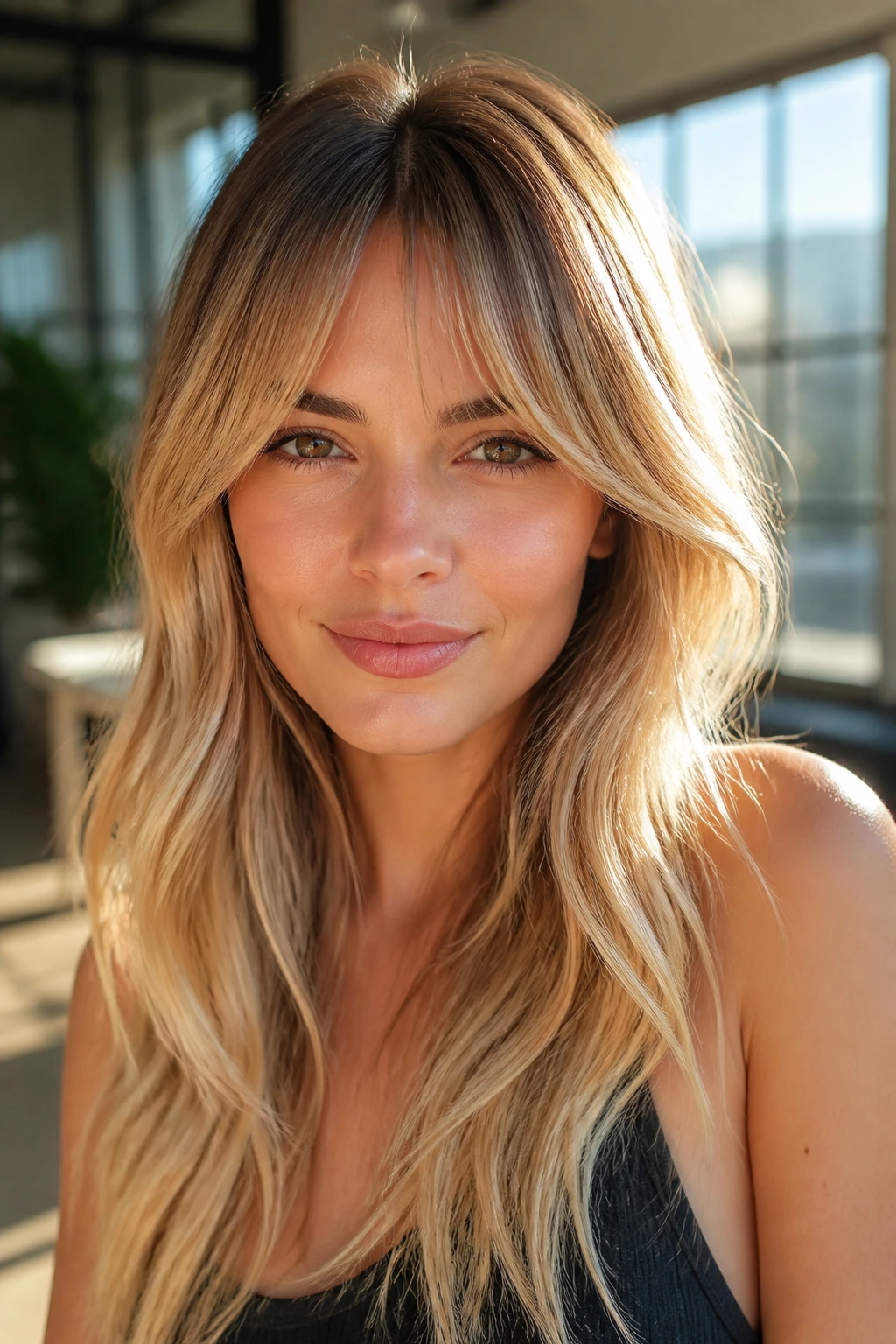
Sunlit balayage gives you brightness where the light hits first, which is usually enough to make thin hair look more alive. Bottleneck bangs sit neatly in front without taking too much hair away from the sides.
This pairing feels easy because the color and cut are doing the same job. They both direct the eye toward the face and away from any see-through spots at the crown.
23. Feathered Shag Layers for Fine Blonde Hair
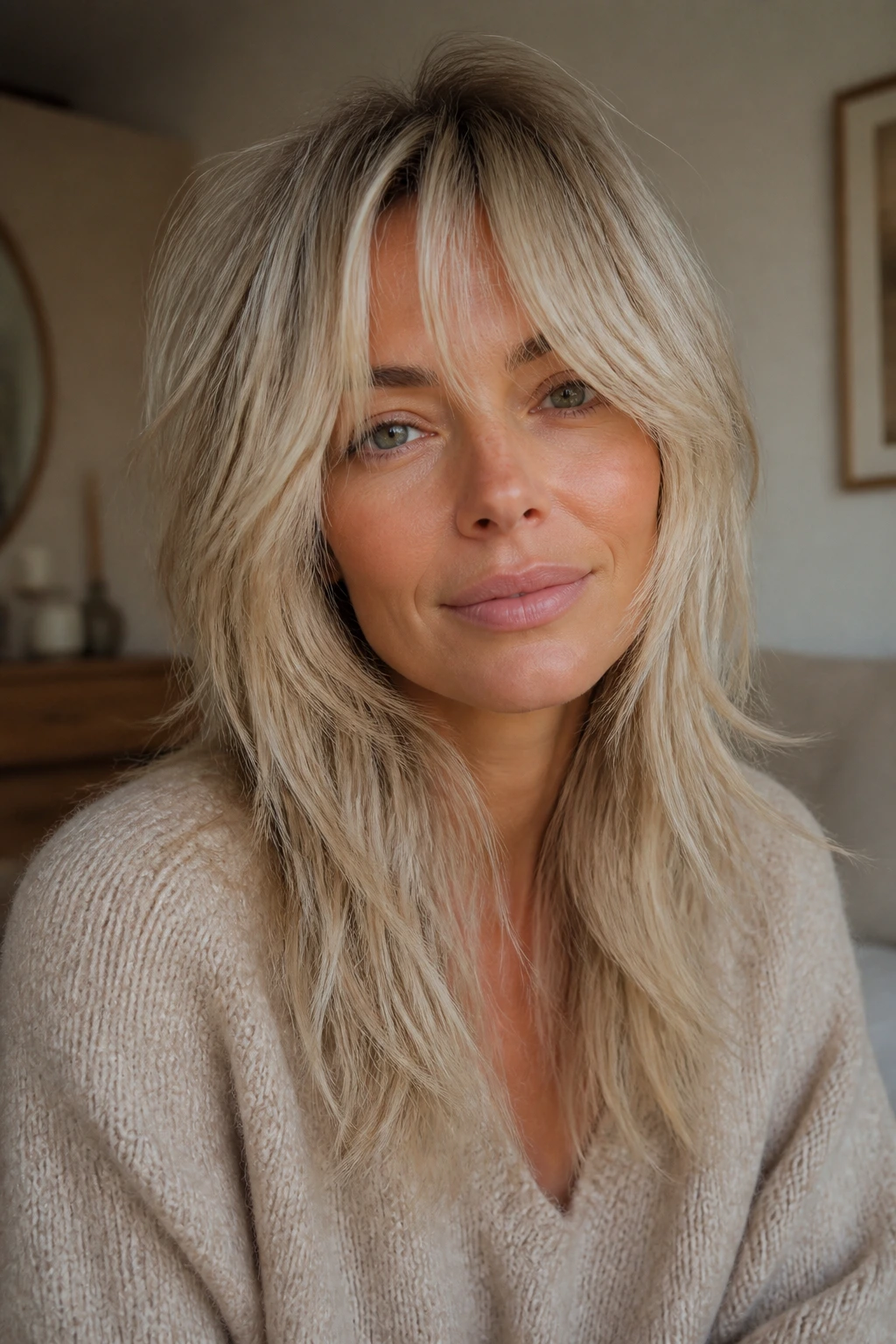
A shag does not have to mean chaos. On fine blonde hair, a feathered shag with long layers can add enough edge to keep the style interesting while still preserving some fullness at the ends.
The fringe should stay long and broken up, not heavy and boxy. If you want a cut that looks good a little messy, this is a strong contender.
24. Side-Parted Layers Starting at the Cheekbone
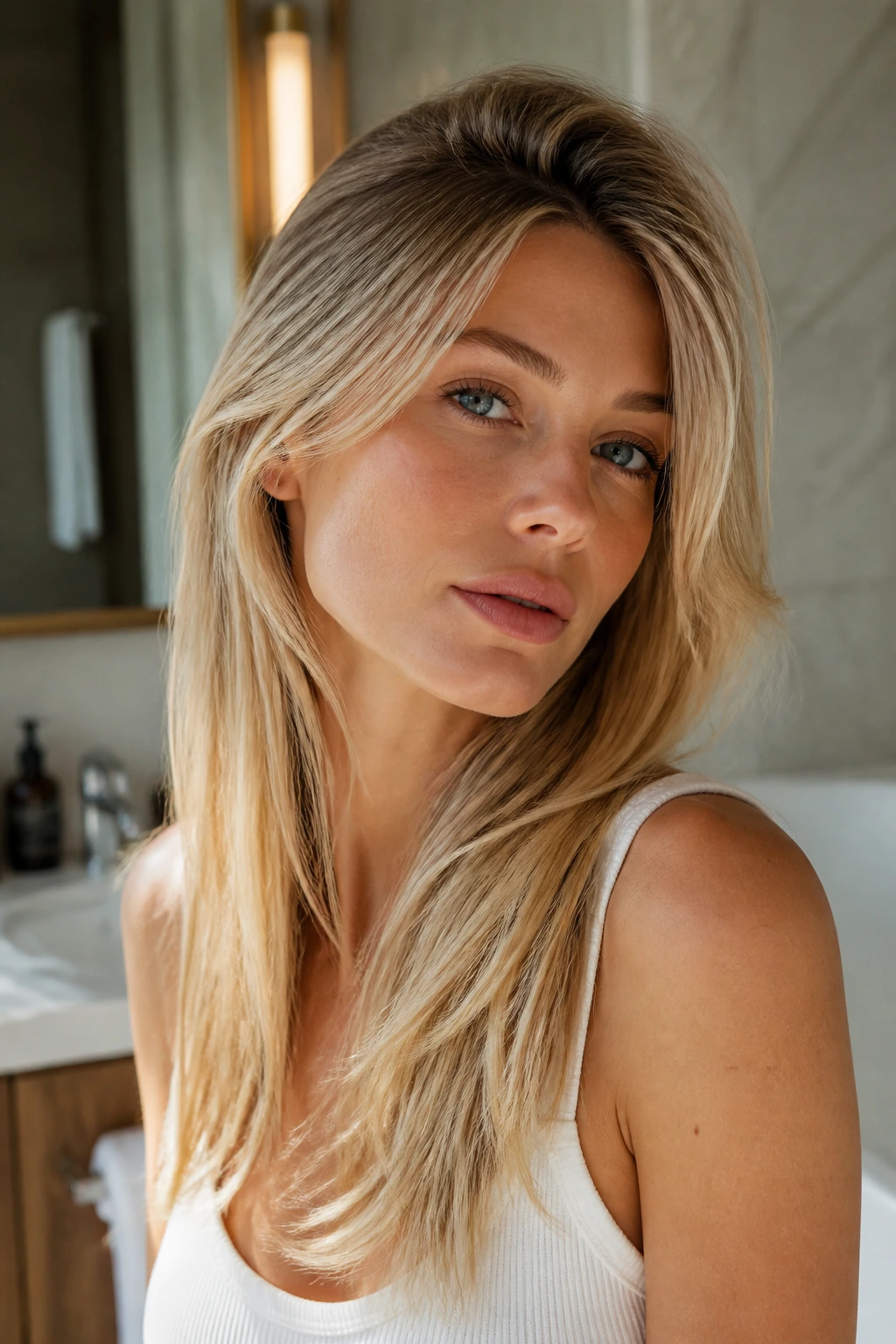
A side part lifts the roots on one side and creates a little asymmetry that thin hair often needs. The layers start near the cheekbone, which gives the front some softness without stripping too much from the length.
This is one of the easier styles to wear on a busy morning. The part does some of the styling work for you, and that is never a bad thing.
25. Champagne Ribbon Highlights and Airstyler Bend
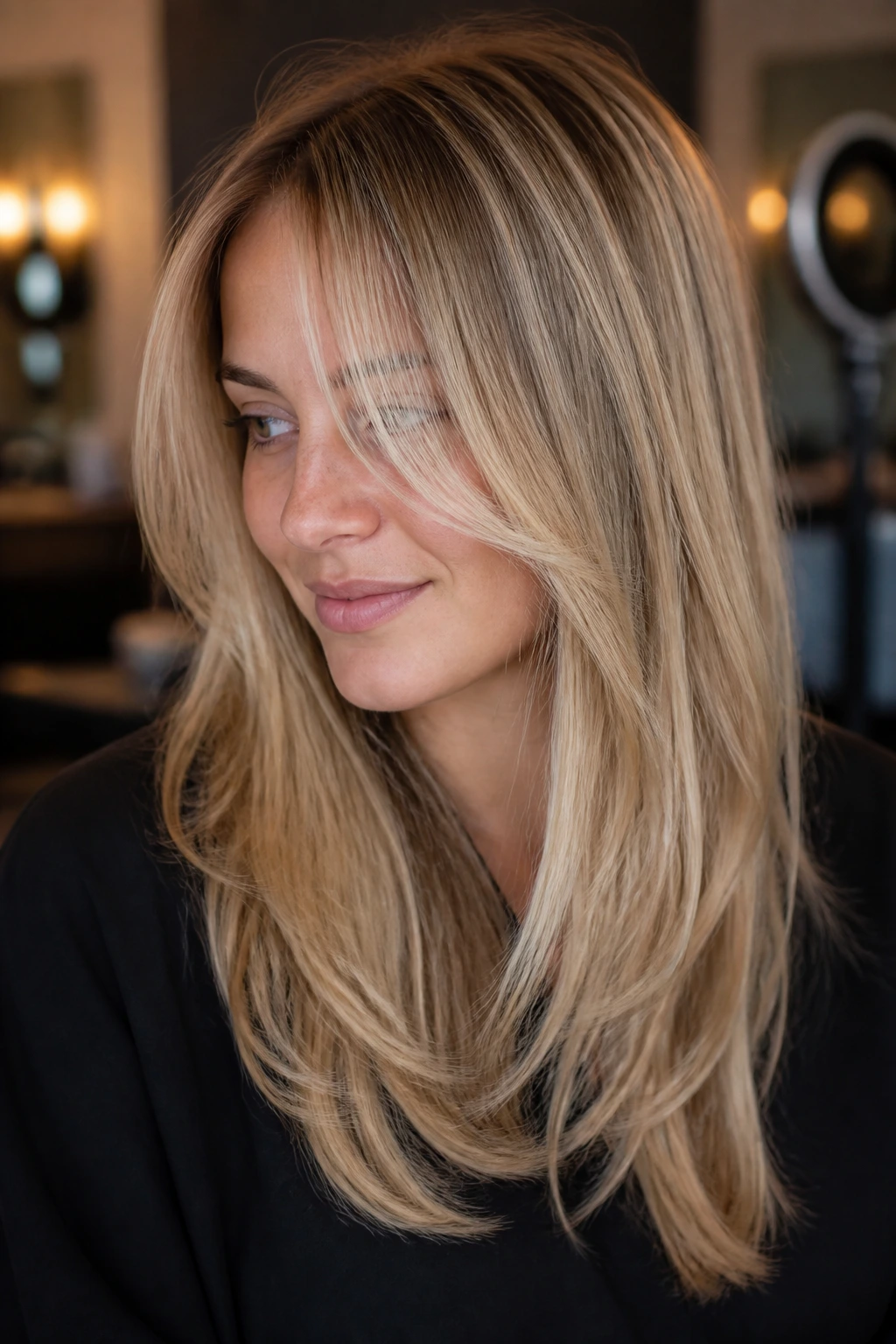
Ribbon highlights add thin, blended streaks of brightness that make the hair feel textured without looking chunked out. Pair them with a soft bend from an airstyler, and the whole cut looks fuller because nothing lies perfectly straight.
How to get the most from it
Keep the bend loose and stop before the ends curl under too much. A slight wave with a light finish spray is enough. If you over-style the ends, the haircut loses that easy, airy feel that makes it work.
26. Soft-Blunt Ends With Peekaboo Fringe
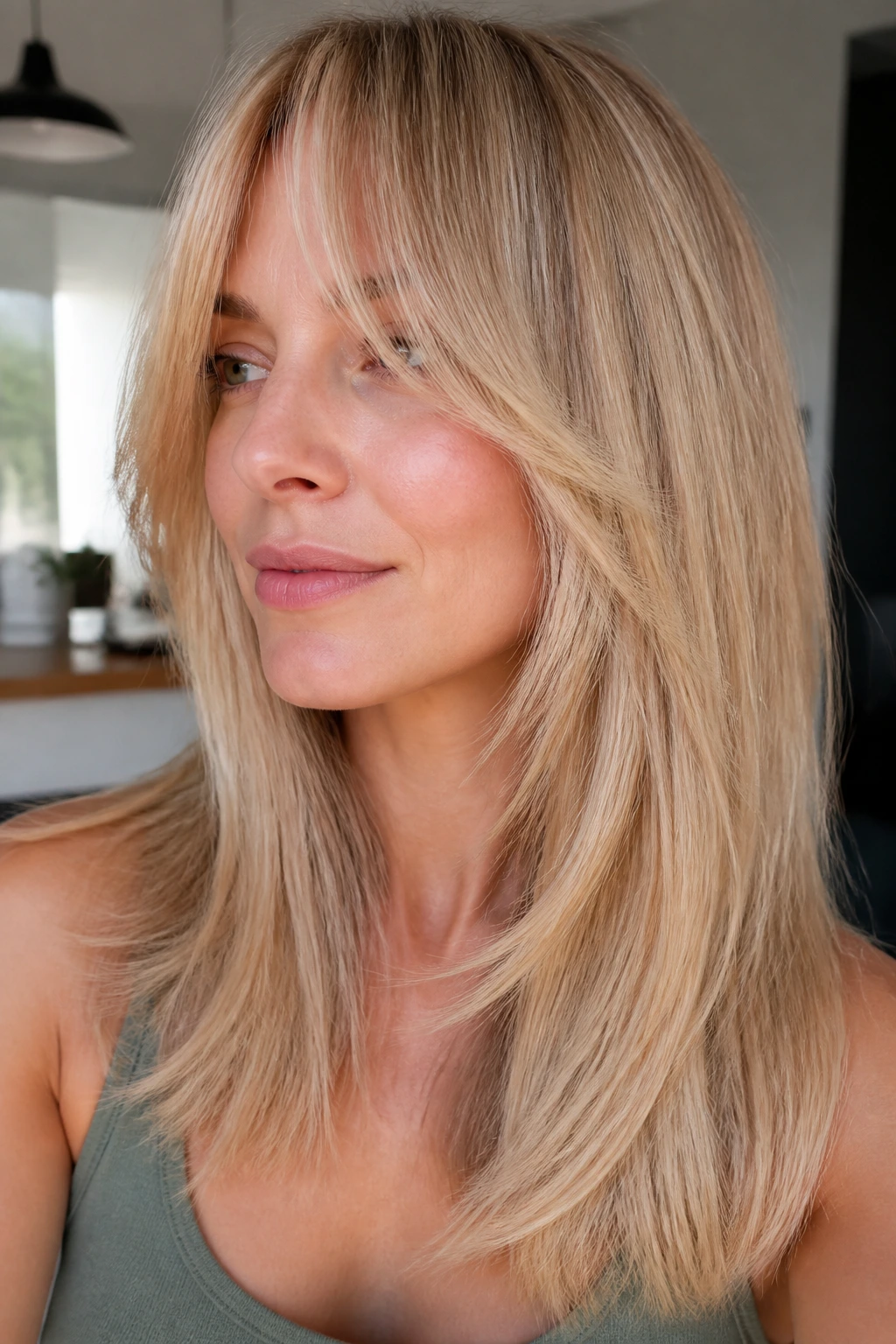
A soft-blunt edge can be a sweet spot for thin hair. It keeps a strong perimeter line, but a little internal softness stops the ends from feeling harsh. The peekaboo fringe drops into the face just enough to create shape without taking over.
This is the cut I’d hand to someone who wants structure but hates looking over-layered. Clean. Simple. Still soft around the eyes.
27. Loose Curls and a Layered Bang Sweep
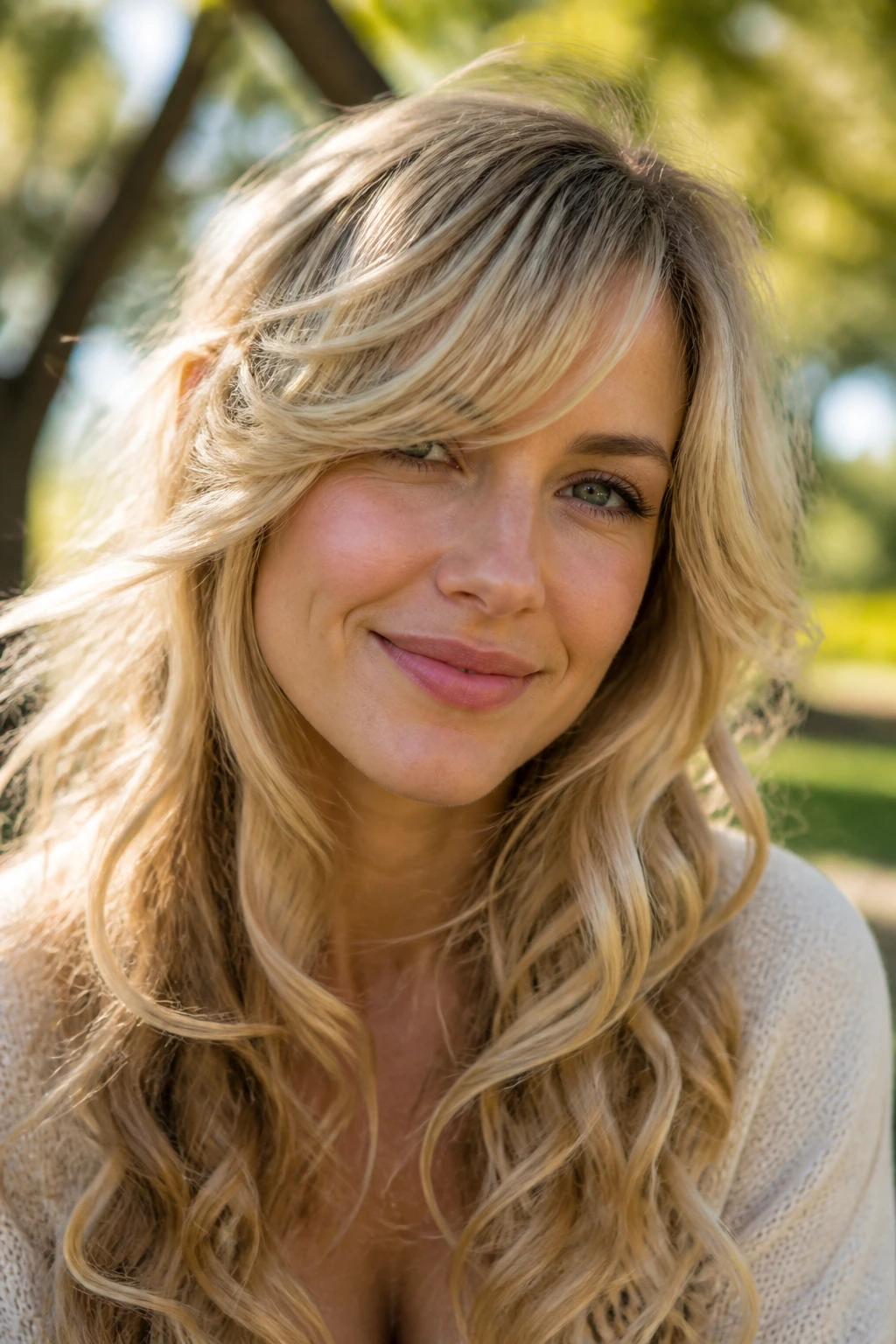
Loose curls are useful on thin hair because they create width without requiring a ton of product. When the bangs are layered and swept to one side, they blend into the curl pattern and stop the front from feeling too dense.
A 1-inch iron or a medium wand works well here. Wrap the hair loosely, leave the ends out if you want a more modern finish, and let it cool before you rake your fingers through it.
28. A Low-Maintenance Grow-Out Cut With Seamless Bang Blend
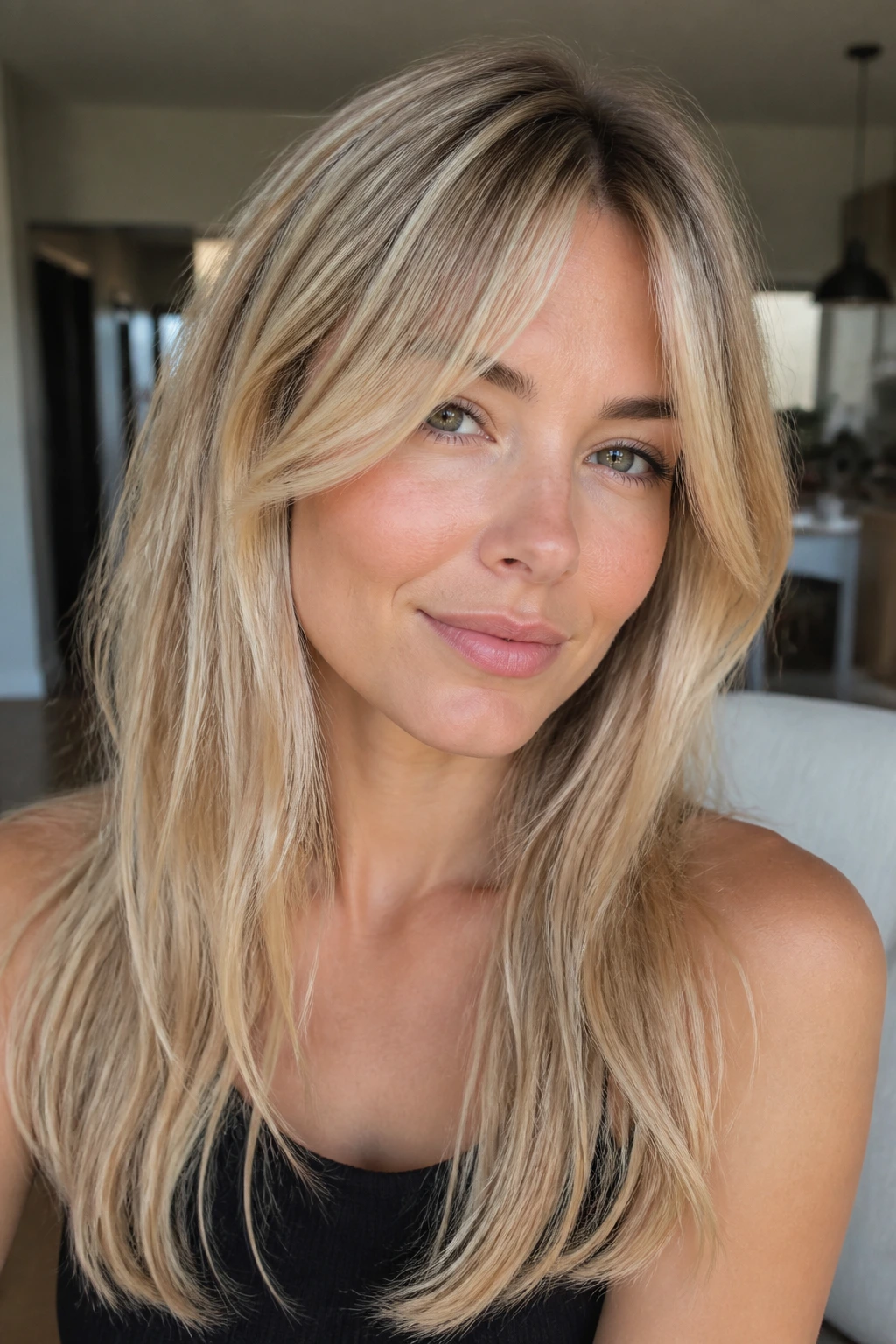
Some cuts are made for the salon chair. This one is made for the weeks after. The bangs blend into the face frame, the layers stay long, and the grow-out feels intentional instead of messy.
That matters when your hair is thin, because harsh regrowth lines show fast. A seamless blend lets you stretch the time between trims without losing the shape. It is the quietest look in the group, and maybe the smartest one.
What to Ask for at the Salon
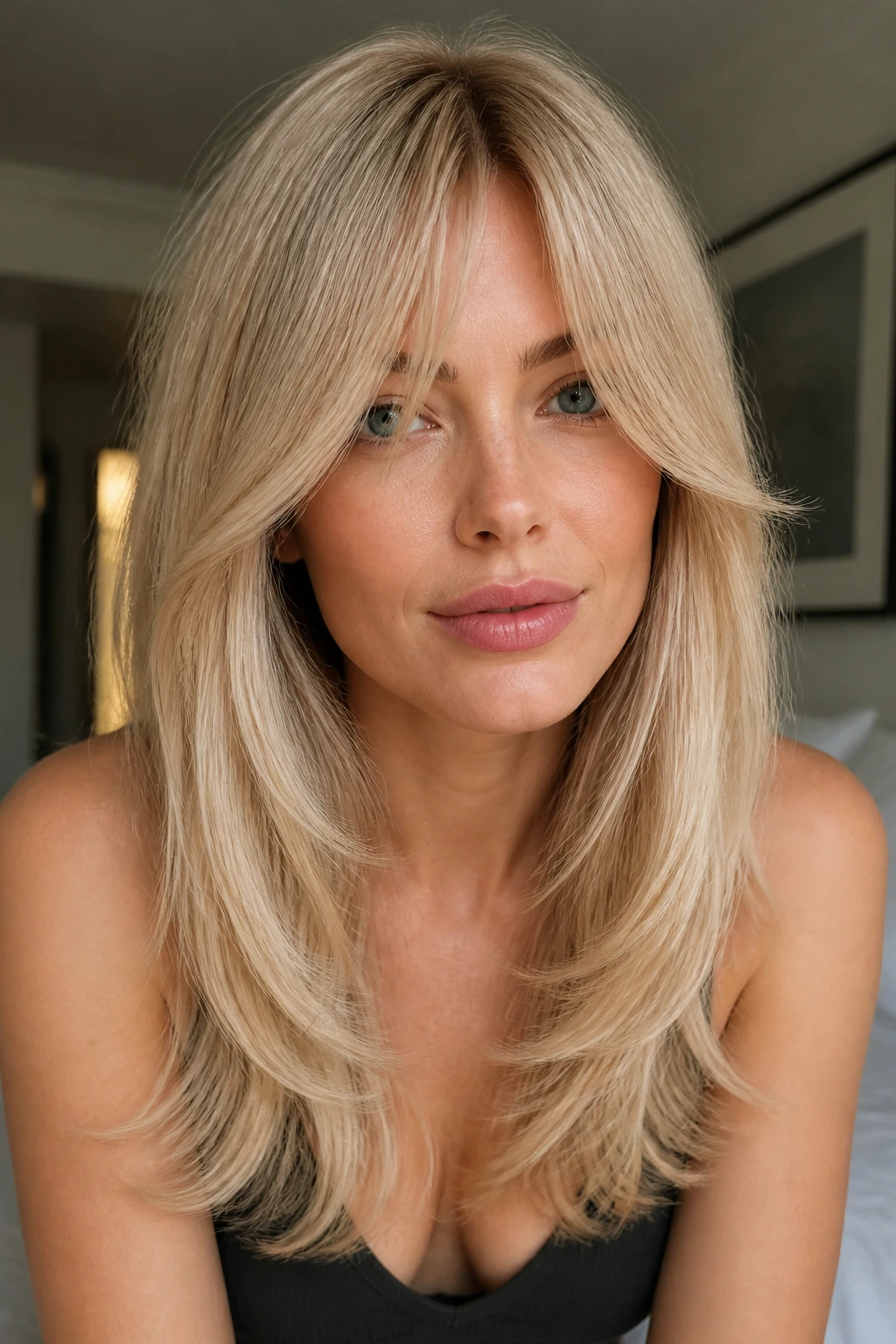
Thin hair needs a haircut conversation with actual details, not a vague request for “more layers.” Say where you part your hair, how often you heat-style, and whether you want the bangs to live in the middle or sweep to the side. If your stylist knows your routine, they can keep the front pieces long enough to move instead of cutting them into something that only works on day one.
Bring photos that show the front, the side, and the back if you can. One picture is fine for inspiration, but three tell a better story. A stylist can see whether the layer starts are too high, whether the bangs are too dense, and whether the blonde has enough depth to make the cut hold together visually.
Useful salon phrases
- “Keep the perimeter weight.” That tells the stylist not to over-thin the ends.
- “Start the face-framing pieces around the cheekbone or lip.” That gives thin hair room to stay full near the jawline.
- “I want bangs that can part or sweep.” That keeps the fringe flexible.
- “Use soft point cutting, not heavy thinning shears.” Heavy texturizing can make fine hair look frayed.
- “Leave me room to grow this out gracefully.” That one sentence saves a lot of regret later.
The Blonde Shades That Make Fine Hair Look Fuller
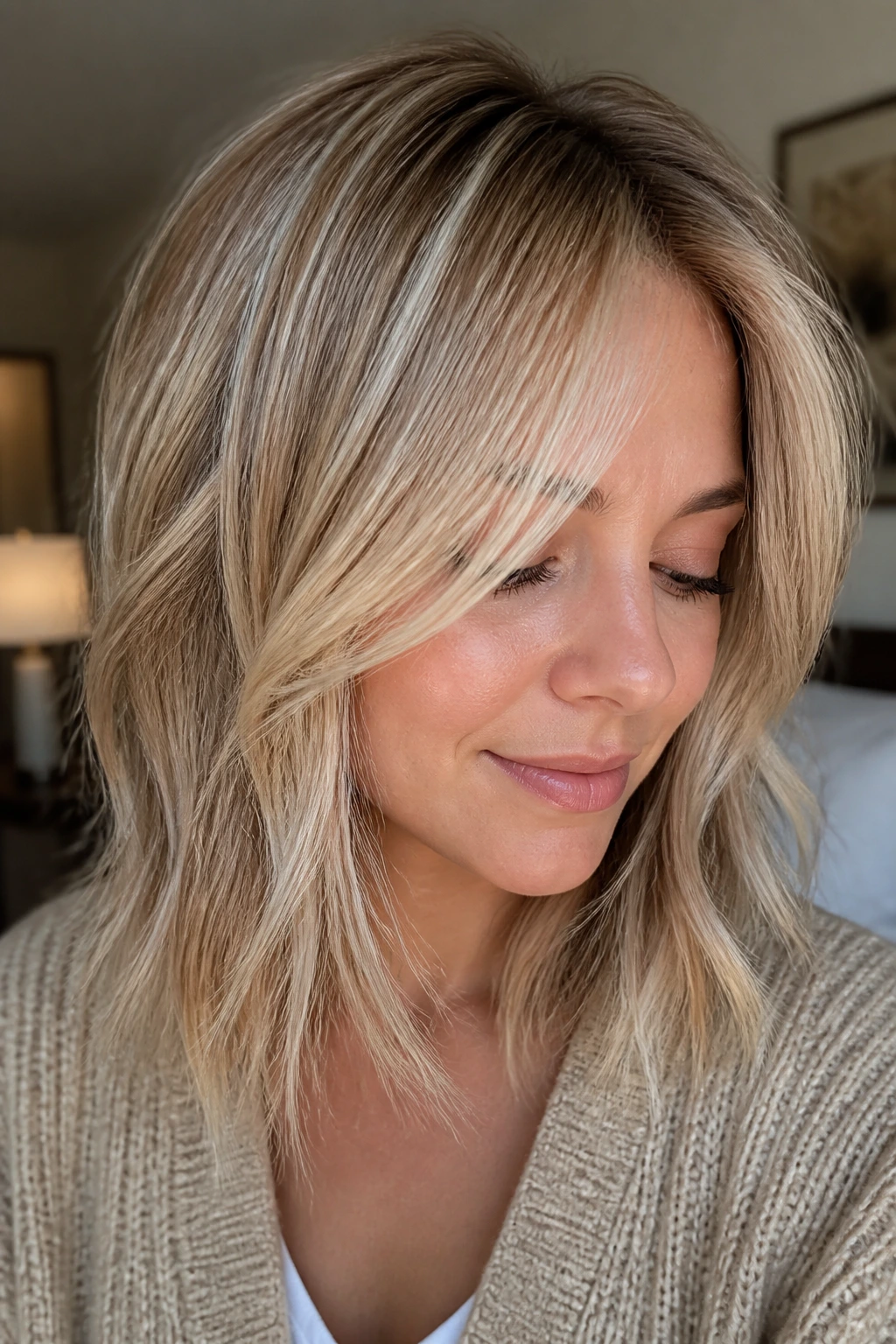
Color does more than people give it credit for. A single-process blonde can look clean, but it can also make thin hair look washed out if there is no depth left anywhere in the cut. A little variation at the root, through the mids, and around the face creates the shadow and lift that make the whole style feel thicker.
Beige blonde is a good middle ground. Champagne blonde has enough light to brighten the face, but enough softness to avoid glare. Honey blonde brings warmth and makes the strands feel fuller, which is useful if your hair tends to disappear against pale skin or bright light.
Ash blonde can work too, but it usually wants a root shadow or lowlight so it doesn’t flatten out. Platinum is the most demanding shade; it looks best when the cut has strong shape and the ends are kept healthy. If the hair is fragile, I would rather see a slightly darker blonde with dimension than an overlightened sheet that shows every gap.
Color choices that help
- Root shadow: Adds depth right where thin hair can look most sparse.
- Babylights: Tiny highlights blur the surface and avoid chunky stripes.
- Lowlights: A few darker ribbons make the blonde read as denser.
- Warm blondes: Honey and butter tones can make fine strands look fuller.
- Cool blondes: Beige and ash need softness around the root so they do not look flat.
Tools and Products That Keep the Front Pieces Lifted
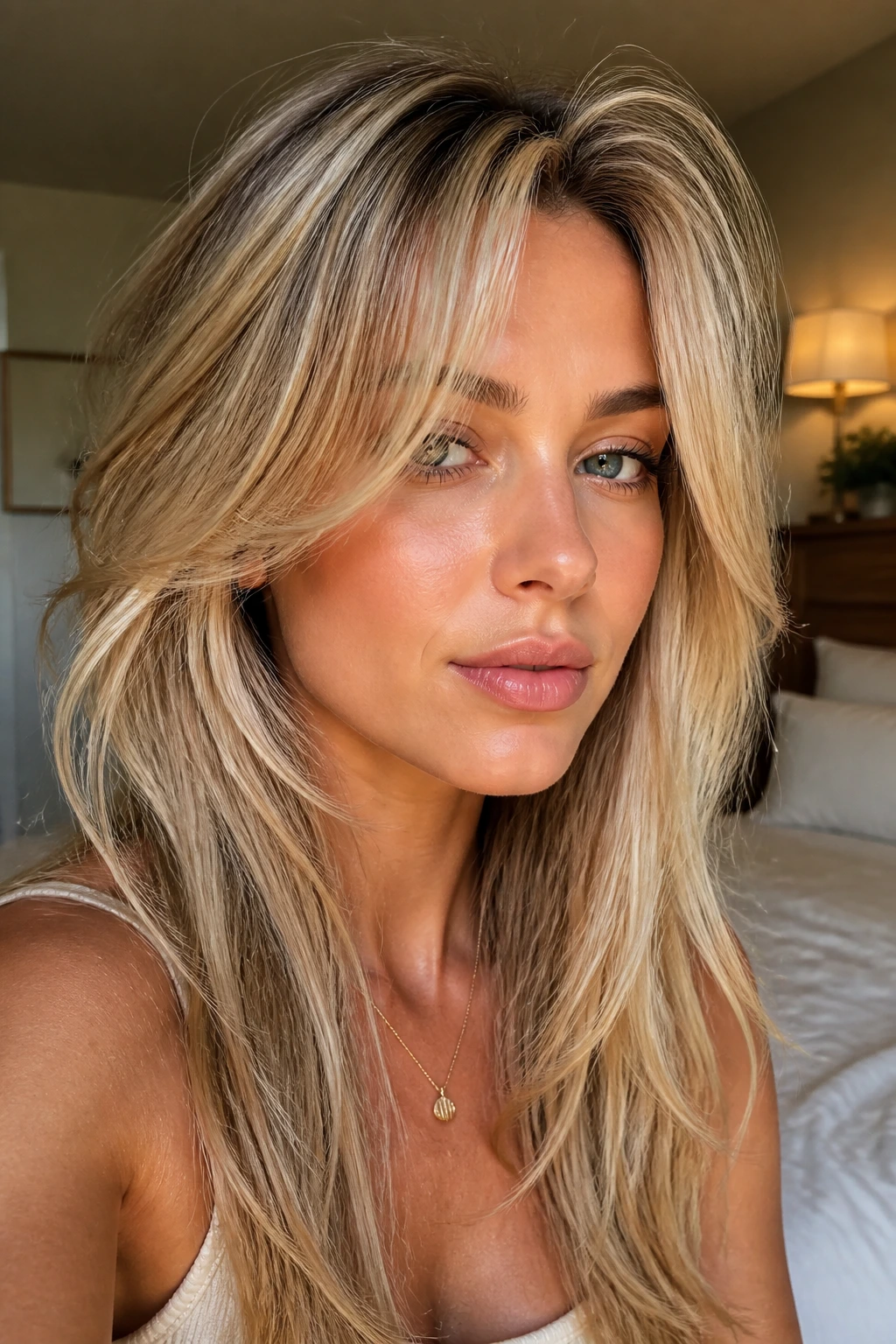
A thin-haired blonde does not need a cabinet full of product. It needs the right few things in the right order.
- Lightweight volumizing mousse: Use it at the roots on damp hair; it gives the front some body without stickiness.
- Heat protectant spray: Blonde hair shows heat damage fast, and the bangs get the most styling traffic.
- 1-inch or 1.25-inch round brush: This gives curtain bangs and side sweeps a soft bend without making them too curled.
- Blow dryer with a nozzle attachment: The nozzle matters more than people think; it directs air so the root dries with lift.
- Dry shampoo: A small amount at the part line absorbs oil and keeps the crown from collapsing.
- Texturizing spray: Use it lightly on the mids and ends, not at the scalp.
- Lightweight oil or serum: A pea-sized amount on the ends stops frizz without flattening the layer shape.
- 1-inch curling wand or straightener with rounded edges: Good for a quick bend through the front pieces.
- Duckbill clips: These help set the fringe while it cools after blow-drying.
- Wide-tooth comb: Useful for distributing mousse and avoiding breakage in fine strands.
How to Style the Cut Without Flattening It
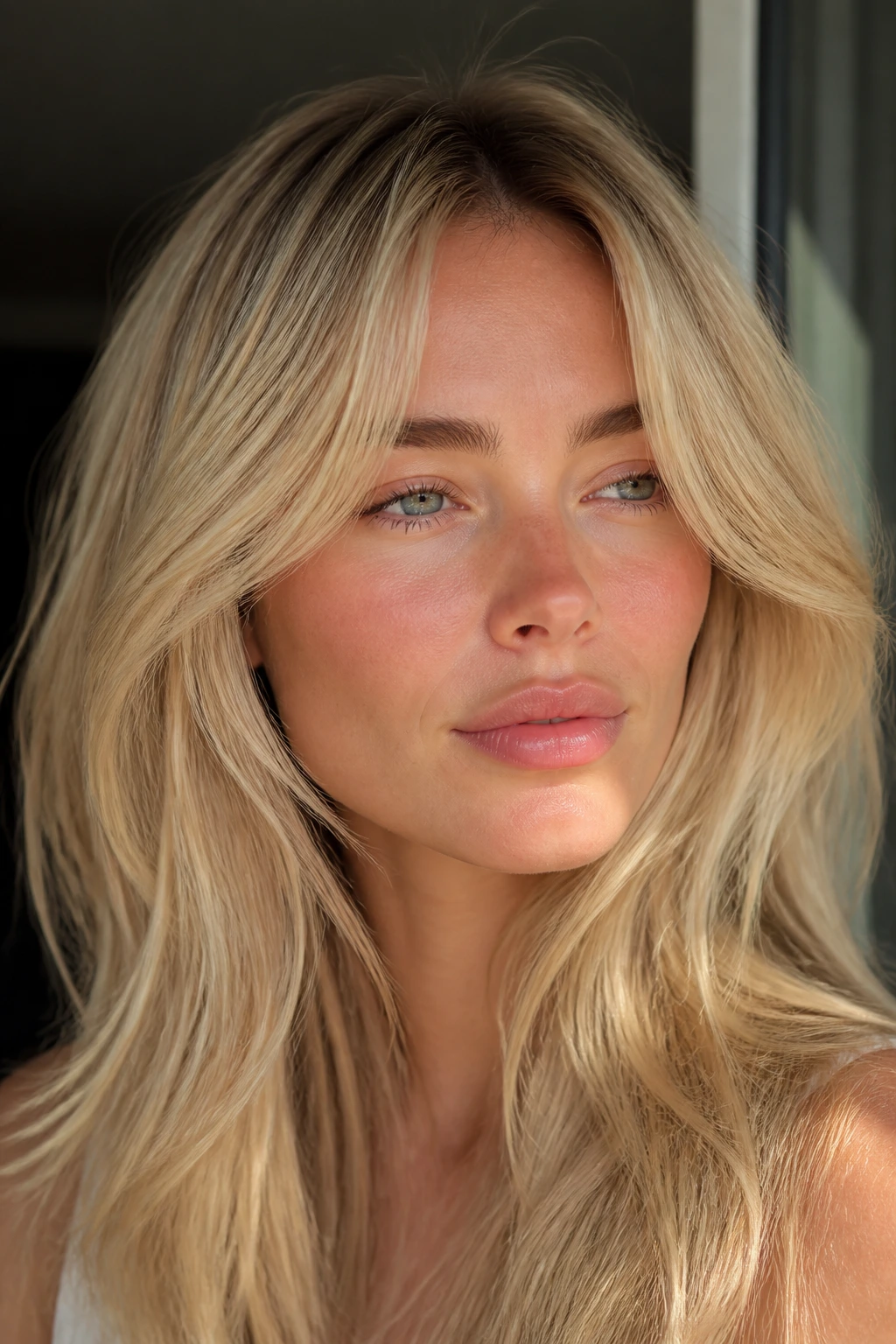
Thin hair usually collapses when it gets too much cream, too much brushing, or too much heat on the wrong section. Start with damp hair and a light mousse at the roots, then rough-dry to about 70 percent before you touch the fringe. That first rough-dry step matters. It gives the hair a base so you are not forcing shape into wet strands that want to lie flat.
For curtain bangs and side sweeps, wrap the front around a small round brush and direct the hair away from the face, then back toward it. The movement should be soft, not over-curled. Let the bangs cool on the brush or clip them in place for a minute. That little cooling step helps the bend hold longer.
Quick styling rules
- Dry the bangs first if they go flat fast.
- Keep products off the crown unless they are root-specific.
- Bend, do not curl, the front pieces.
- Use cool air at the end to lock in shape.
- Finish with a mist of texturizing spray from mid-length to ends.
If you like a more natural finish, air-dry the lengths and only style the fringe. That usually gives the best result with the least effort.
How to Keep the Cut Fresh Between Salon Visits
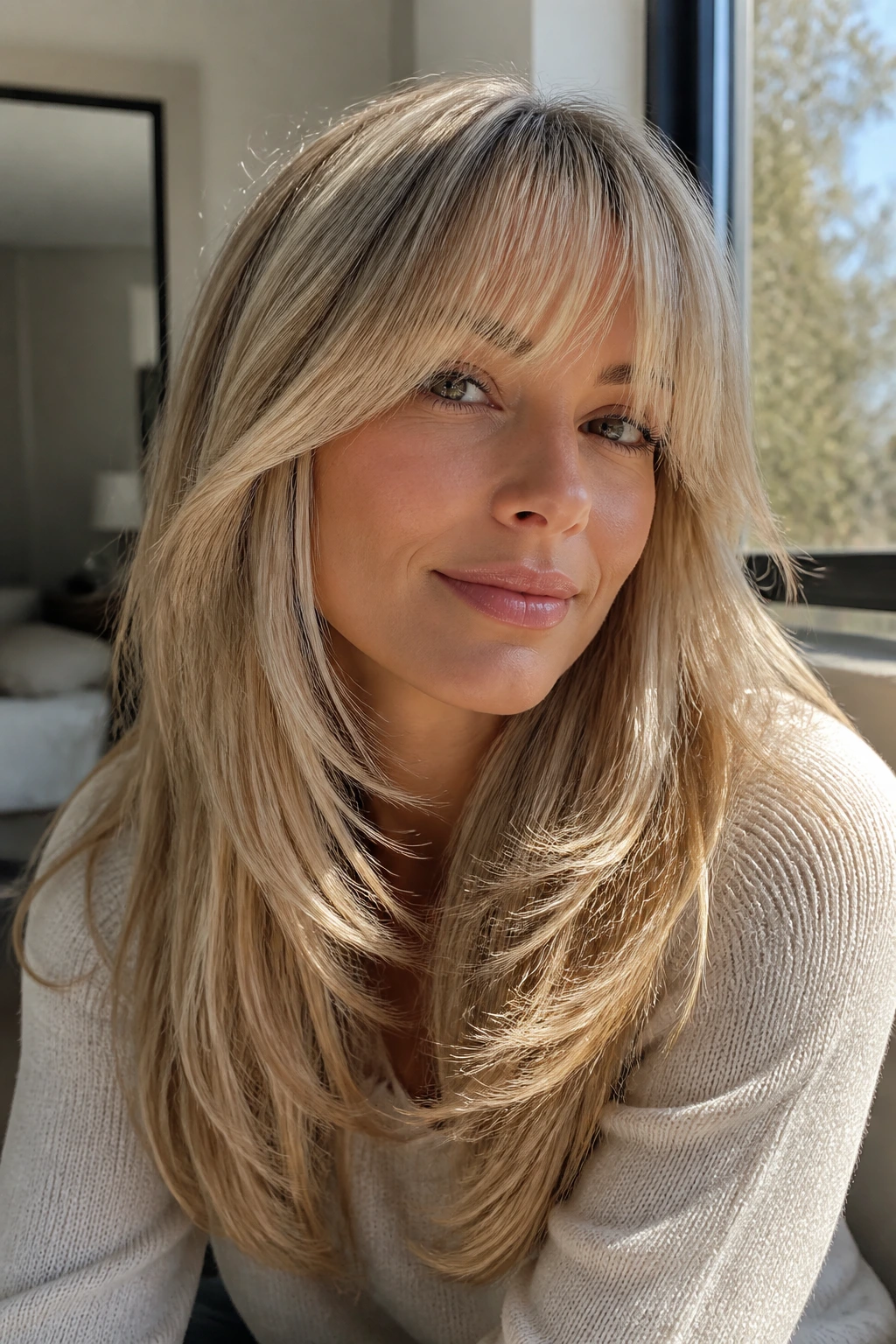
Bangs and long layers need a little upkeep if you want the shape to stay readable. Fringe grows fast, and on thin hair a half-inch can change the whole face frame. If the bangs are cheekbone length, a trim every 4 to 6 weeks keeps them from sliding into your eyes. If they are longer and blended into the layers, 6 to 8 weeks is usually enough.
The blonde itself needs care too. A gloss or toner refresh every 6 to 8 weeks keeps beige, champagne, and ash tones from drifting muddy or brassy. Purple shampoo helps cool blondes, but it should not run your haircare routine. Once every 1 to 2 weeks is usually enough for most people; more than that can leave fine hair dry and dull.
Maintenance habits that help
- Clarify once every 2 to 3 weeks if you use dry shampoo, mousse, or texturizing spray.
- Trim the fringe before it covers your eyes. Waiting too long makes the whole cut harder to style.
- Dust the ends every 8 to 12 weeks so the layers keep their shape.
- Use heat protectant every time because blonde fine hair shows damage quickly.
- Sleep on a silk or satin pillowcase if your bangs frizz up overnight.
- Refresh the front with a water mist and a round brush instead of rewashing the whole head.
Small Tweaks That Make the Shape Feel More Yours
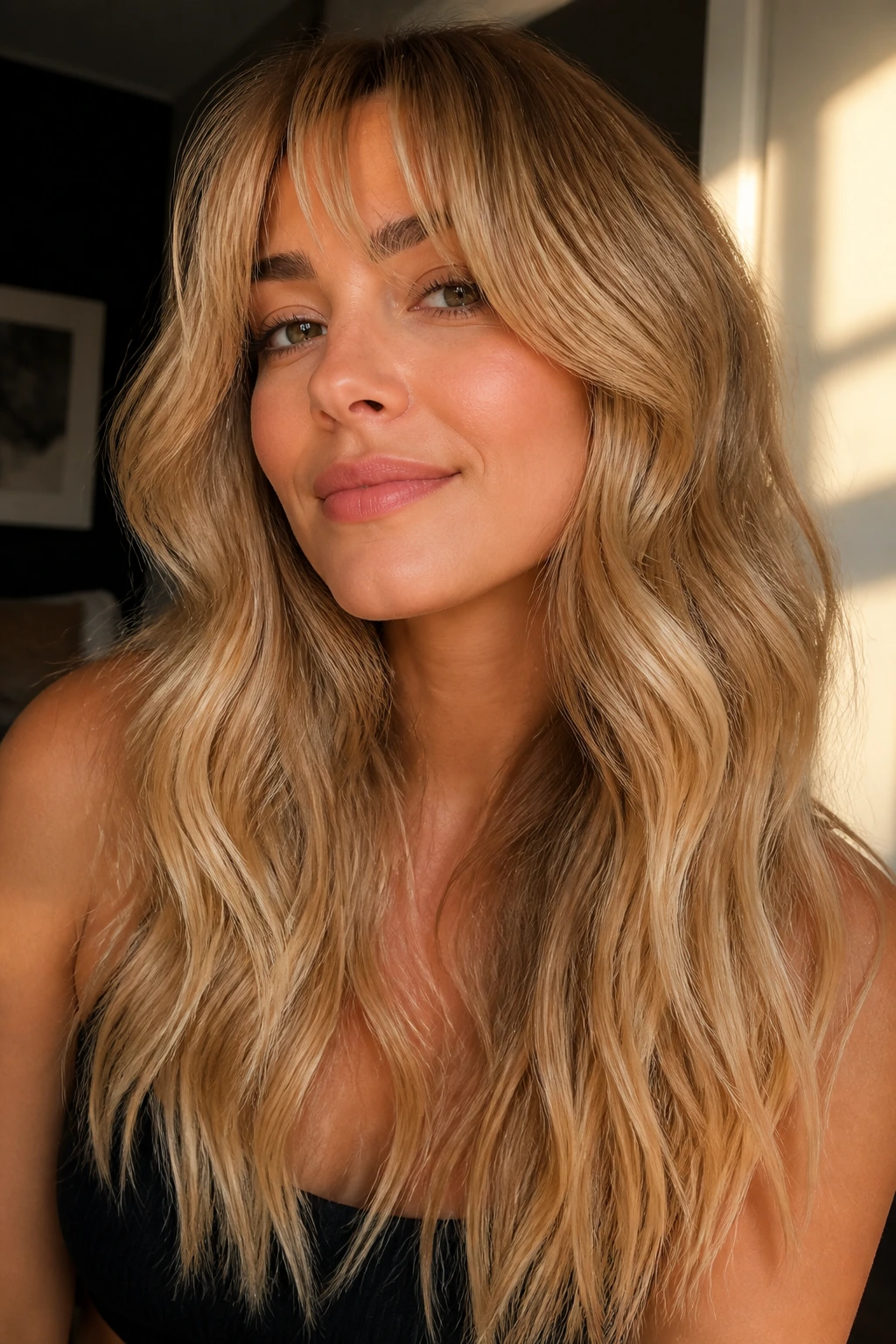
Flavor Enhancement: A tiny root shadow is one of the simplest ways to make blonde layers look fuller. It gives the hair depth at the scalp and keeps fine strands from reading like one bright block.
Customization: If your hair is pin-straight, ask for softer point-cutting through the ends. If it bends naturally, keep the layers a touch more defined so the movement doesn’t disappear.
Serving Suggestions: A face-framing bend at the cheekbone and a little gloss through the mids make the whole cut look finished, even on a plain T-shirt morning.
Make-It-Yours: If you like low effort, choose a longer fringe that can tuck behind the ear. If you like a bit more attitude, go for a more broken-up bang line and let the front pieces skim the lashes.
Common Mistakes That Flatten the Whole Look
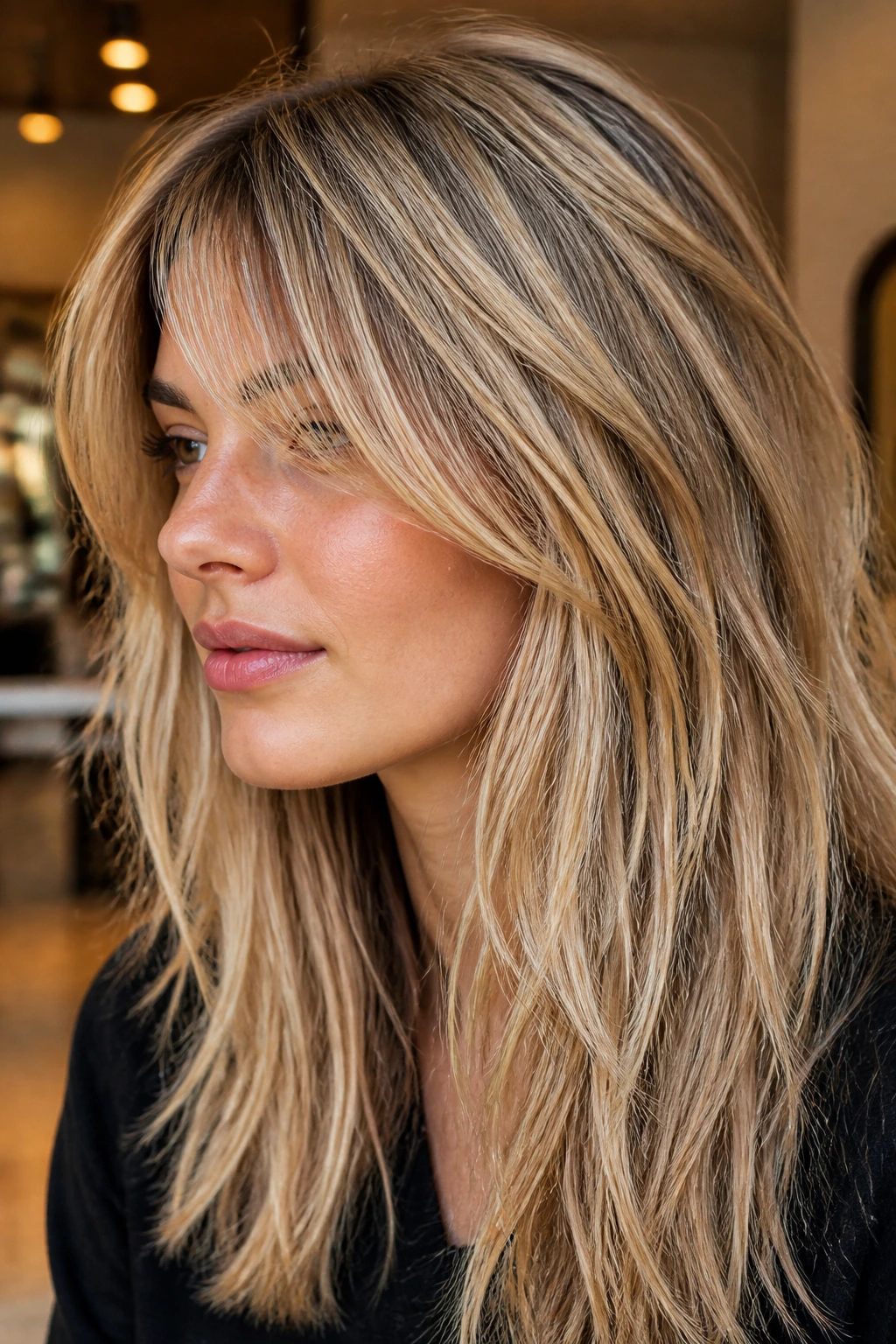
The first mistake is cutting the bangs too thick. A dense fringe can look good in the chair, then split into see-through pieces once the hair dries. The fix is simple: ask for longer, softer fringe sections that can part or sweep instead of sitting like a shelf.
The second mistake is starting the first layer too high. That removes too much weight from the top and leaves the ends looking thin and tired. If the hair is already fine, the first layer usually behaves better when it begins lower, around the cheekbone or below.
The third mistake is loading the hair with heavy cream or oil. Fine blonde hair absorbs product fast, and one extra pump can flatten the crown in minutes. Use the smallest amount possible, and keep richer formulas on the mid-lengths and ends only.
The fourth mistake is a one-tone blonde with no depth. It can make the whole cut look airy in the wrong way — airy as in sparse. A root shadow, a few lowlights, or even micro-babylights keep the surface from reading flat.
The last one is over-styling the bangs. If the fringe is curled too tight, it springs too short and exposes the forehead more than you wanted. A soft bend does the job better.
Variations and Adaptations to Try
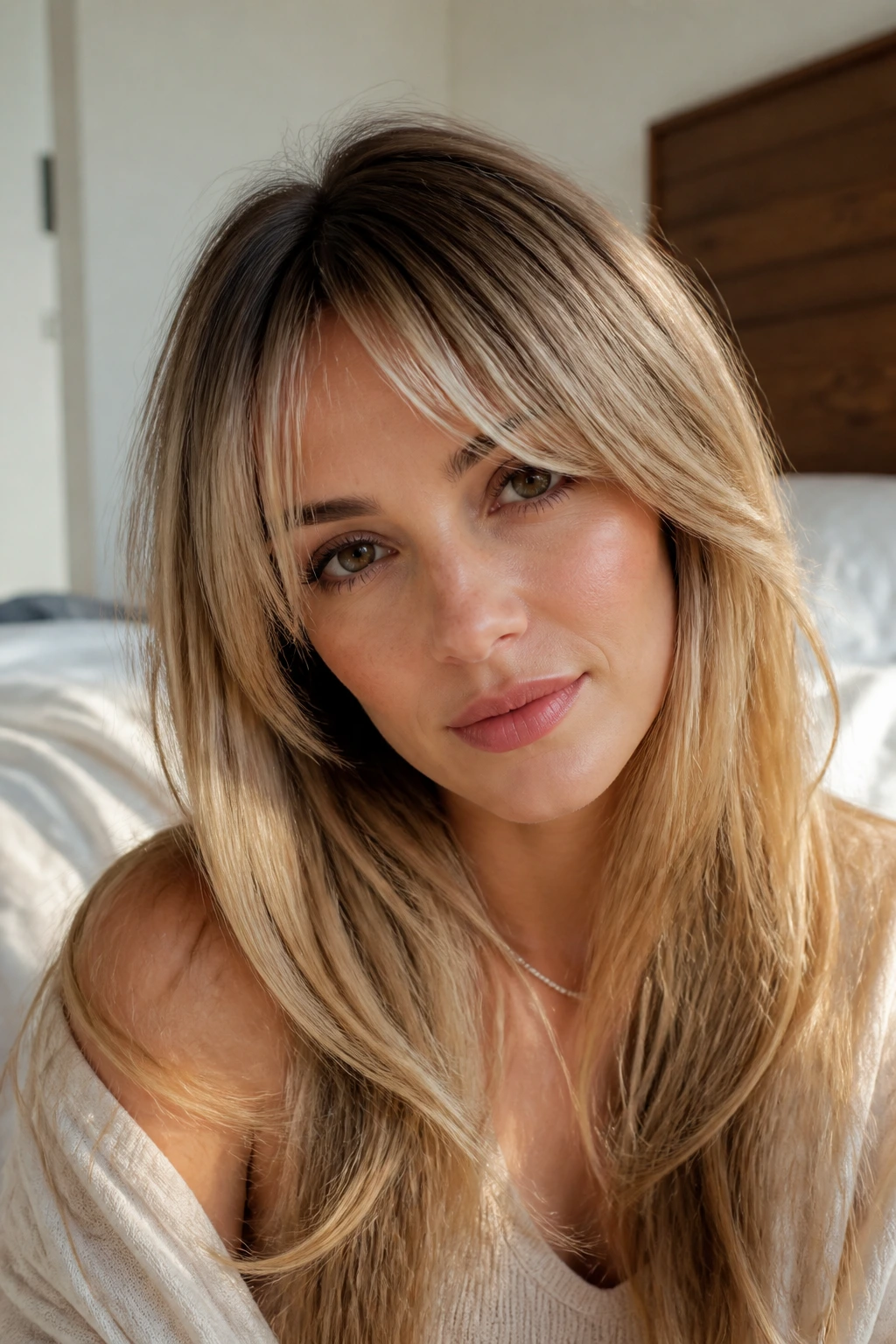
Soft Bronde Reset: Add a little brunette depth at the root and keep the lengths warm beige. This version is useful if you want less upkeep and more visual thickness, especially when your hair has been lightened a few times and needs some breathing room.
Icy Blonde With Shadow Root: Keep the ends pale, but let the root sit a shade or two darker. The contrast gives the haircut more shape, and the shadow root stops the icy finish from looking flat against fine strands.
Air-Dry Friendly Shape: Keep the layers long, the fringe split, and the ends lightly textured. This version works when you do not want to style every morning; it leans into natural bend instead of fighting it.
Curly Fine-Hair Version: Ask for longer face-framing layers and a fringe that can separate into soft pieces. Curly thin hair usually needs less slicing through the interior and more careful shaping at the front so the curl pattern still has room to puff.
Low-Maintenance Grow-Out Blend: Keep the bangs below eyebrow level and let the first layer melt into the rest of the haircut. This one stretches the time between trims and keeps the shape looking intentional even after a few weeks.
Frequently Asked Questions
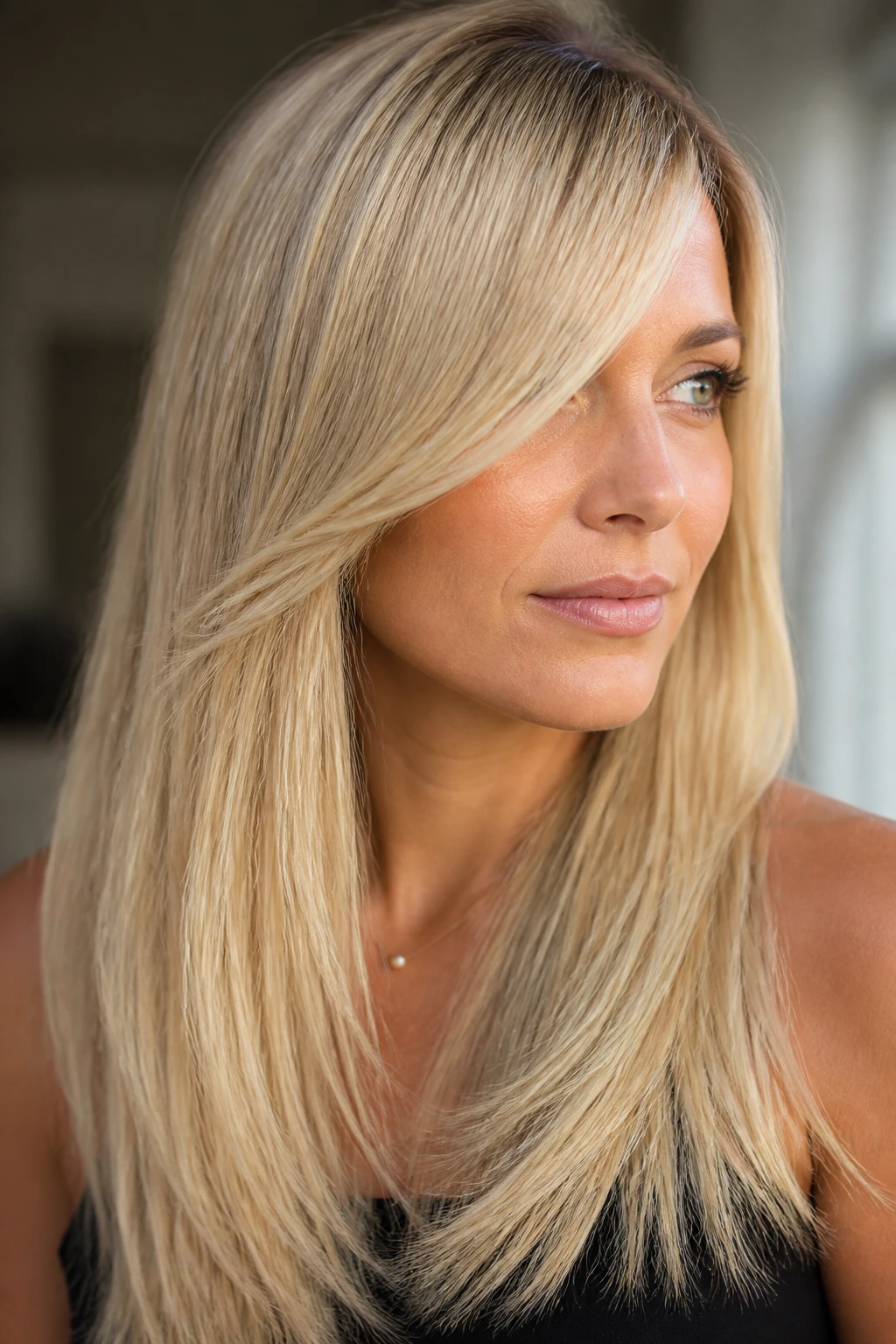
Are long layers good for thin hair, or do they make it look thinner?
Long layers can work very well on thin hair when they start low and keep the perimeter full. The trouble comes from layers that are cut too high and remove the weight the ends need.
Are curtain bangs better than blunt bangs for fine hair?
Usually, yes. Curtain bangs use less density at the front, so they move more easily and grow out with less drama. Blunt bangs can look striking, but they need more hair and more styling to stay full.
What blonde shade makes thin hair look thickest?
A blonde with some depth — beige, champagne, honey, or a soft bronde — usually reads fuller than a single pale tone. A little root shadow or lowlight keeps the strands from looking washed out.
How often should I trim long layered bangs?
If the fringe sits around the eyes or cheekbones, plan on a trim every 4 to 6 weeks. If it is longer and blends into the layers, 6 to 8 weeks is usually enough.
Can I wear this cut if my hair is straight and flat?
Yes, and straight hair often shows off the shape best. The key is keeping the bangs soft and the layers long enough to preserve movement, then using root lift and a bend through the front.
What if my cowlick pushes the bangs apart?
Ask for a longer fringe and a side or center part that works with the cowlick instead of fighting it. Short, dense bangs usually make the problem louder.
Will this style still work if I let it air-dry?
It can, as long as the layers are not cut too aggressively and the bangs are long enough to settle. A little mousse at the roots and a light scrunch through the mids helps the shape hold.
Do I need highlights, or can I keep one blonde shade?
You can keep one shade, but a touch of dimension usually helps thin hair look thicker. Even subtle babylights or a root smudge can make a big difference in how full the style reads.
Is this cut high maintenance?
It can be, if you choose a short fringe and a very pale blonde. A longer bang, blended layers, and a softer blonde tone make the whole thing easier to live with.
The Shape That Keeps Its Movement
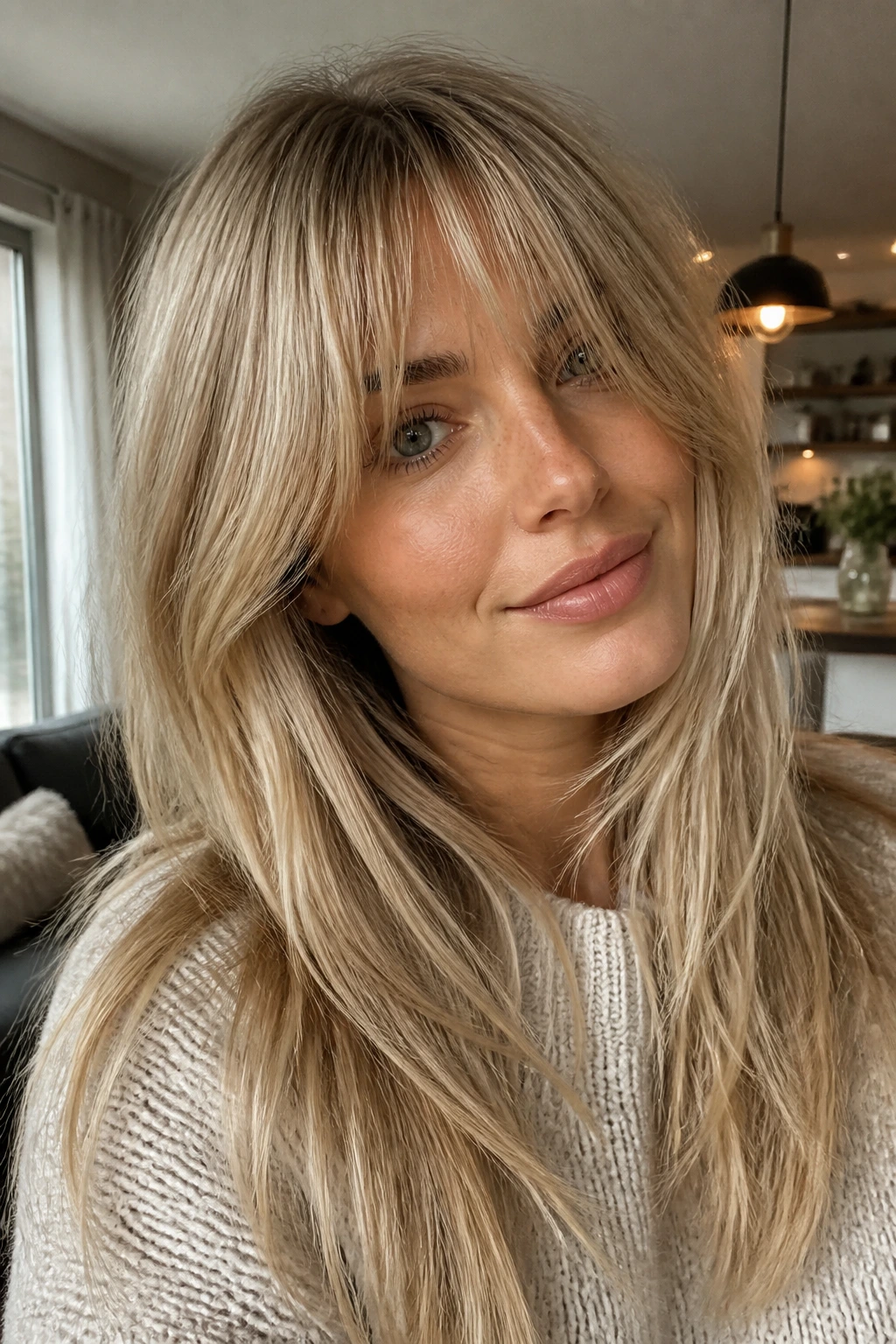
The best version of these blonde layered bangs does not try to bully thin hair into a bigger personality. It gives the hair a smarter outline. Long fringe pieces frame the face, layers hold the weight where it matters, and blonde dimension keeps the finish from turning flat under indoor light.
That is why this haircut keeps showing up in so many good forms. It is not one look. It is a family of looks that know how to work with fine strands instead of against them. Start with the version that matches your part, your texture, and how much styling you actually want to do — then let the cut earn its keep every time you walk past a mirror.