



Textured bangs for women over 40 with wavy hair work best when the fringe bends with the pattern you already have instead of fighting it. That’s the whole trick, and it’s the reason some bangs look soft, expensive, and lived-in while others puff out, split weirdly, or sit there like a helmet with opinions.
Wavy hair has a mind of its own. It pushes forward at the crown, flips at the cheeks, and shrinks more than you expect once it dries. Add bangs to that mix and you get one of two results: a front section that looks effortlessly broken up and modern, or a line that spends all day asking for a flat iron.
After 40, the shape matters even more. Not because anything suddenly “goes wrong,” but because hair often changes texture, density, and how much time you want to spend wrestling it every morning. A good fringe should work with those changes. It should soften the face, open up the eyes, and still behave when you tuck one side behind your ear or let it air-dry on a humid morning. The best versions don’t hide the hair’s wave. They make it the point.
Why This Collection Works on Wavy Hair After 40
-
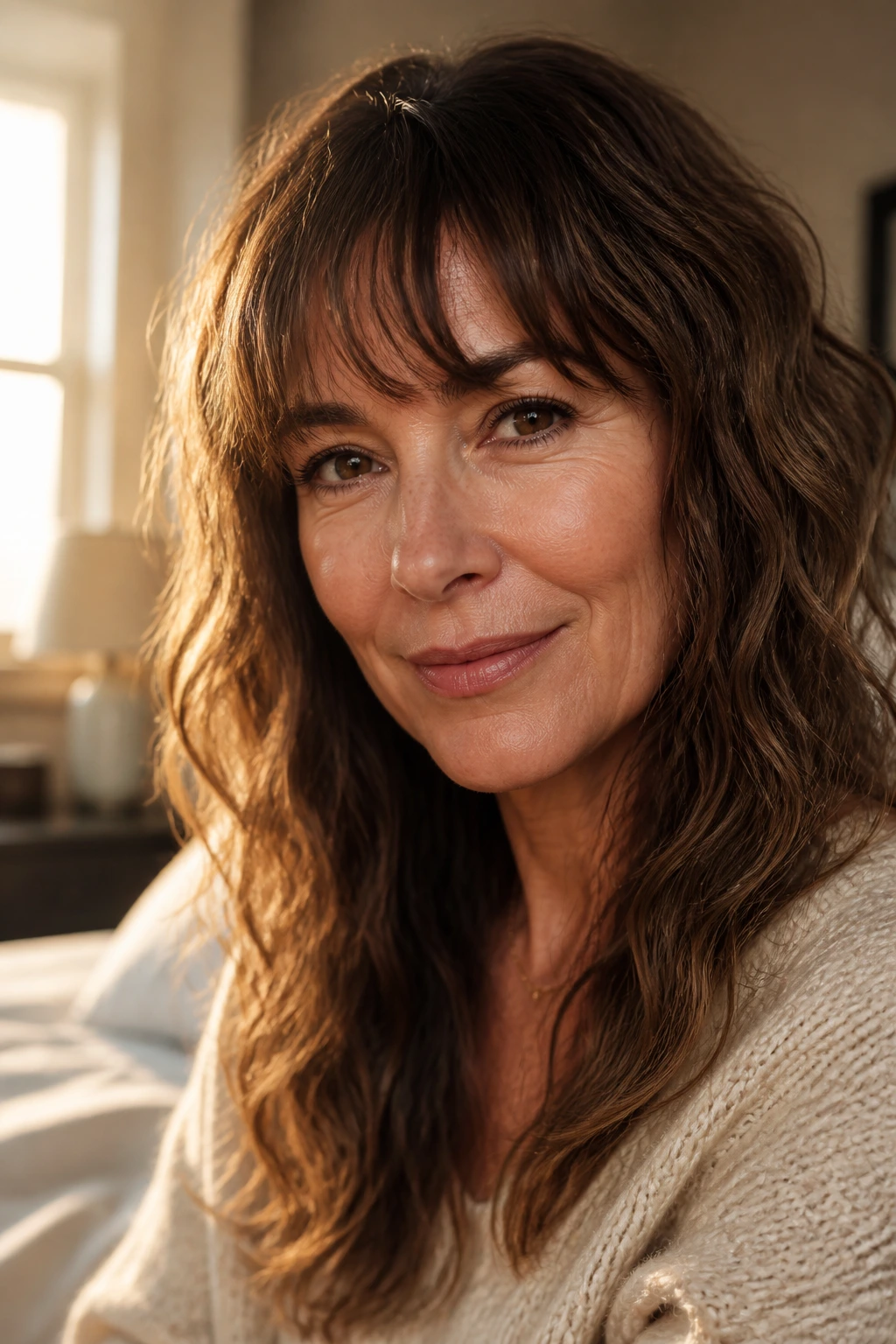
The cuts use movement, not bluntness: A textured fringe breaks the front line into softer pieces, so the wave can bend instead of bouncing off a hard edge.
-
They grow out in a civilized way: Wispy, layered, or side-swept bangs can live through six to eight weeks without looking like you missed your appointment.
-
They play nicer with changing density: If your hair is finer at the temples or fuller through the crown, a textured fringe can be adjusted without making the front look heavy.
-
They flatter glasses and strong features: A bit of separation around the brow keeps frames from fighting the fringe and gives the eyes room to breathe.
-
They cut the morning routine down: Most of these styles need a quick mist, a finger dry, and maybe a 30-second round-brush pass at the root. That’s it.
-
They don’t demand a perfect finish: Wavy bangs look best with a little bend and a little mess. The shape wants texture. If it’s too polished, it starts to look stiff.
1. Long Curtain Bangs with Carved Ends
Long curtain bangs are the safest place to start if you want fringe without committing to a big front chop. The length lands around the cheekbone or lip line, so the pieces can split open naturally as your waves dry. The ends need to be carved, not chopped blunt, or they’ll sit like two flat strips instead of folding into the rest of your hair.
Why It Works
The center part gives your wave room to move. The longer length also means you can tuck the pieces behind your ears on busy days and still have a soft face frame left behind. Ask for the shortest point to hit around the top of the cheekbone, then let the outer edges drift longer. That shape keeps the front from feeling heavy.
A little root lift matters here. Blow-dry just the first inch away from the forehead, then let the rest air-dry. You want bend, not a full round-brush blowout every morning.
2. Brow-Grazing Piecey Fringe
Brow-grazing fringe has a sharper attitude, but the texture keeps it from feeling severe. The pieces sit just on or above the brows, with enough separation that you can still see skin between the strands. That tiny gap makes a huge difference.
What Makes It Work
This cut depends on irregular ends. If the line is too even, the hair bunches and puffs. If it’s piecey, each wave can settle into its own lane. It’s a smart choice when you like the idea of bangs but don’t want them swallowing your face.
Ask for This
- Length: Aim for just touching the brows when dry.
- Texture: Point-cut the ends so they don’t form a shelf.
- Styling: Use a pea-size amount of mousse at the roots only.
A brow-grazing fringe looks best when it’s not over-brushed. Push it side to side with your fingertips. Let it fall where it wants.
3. Bottleneck Bangs with a Soft Center
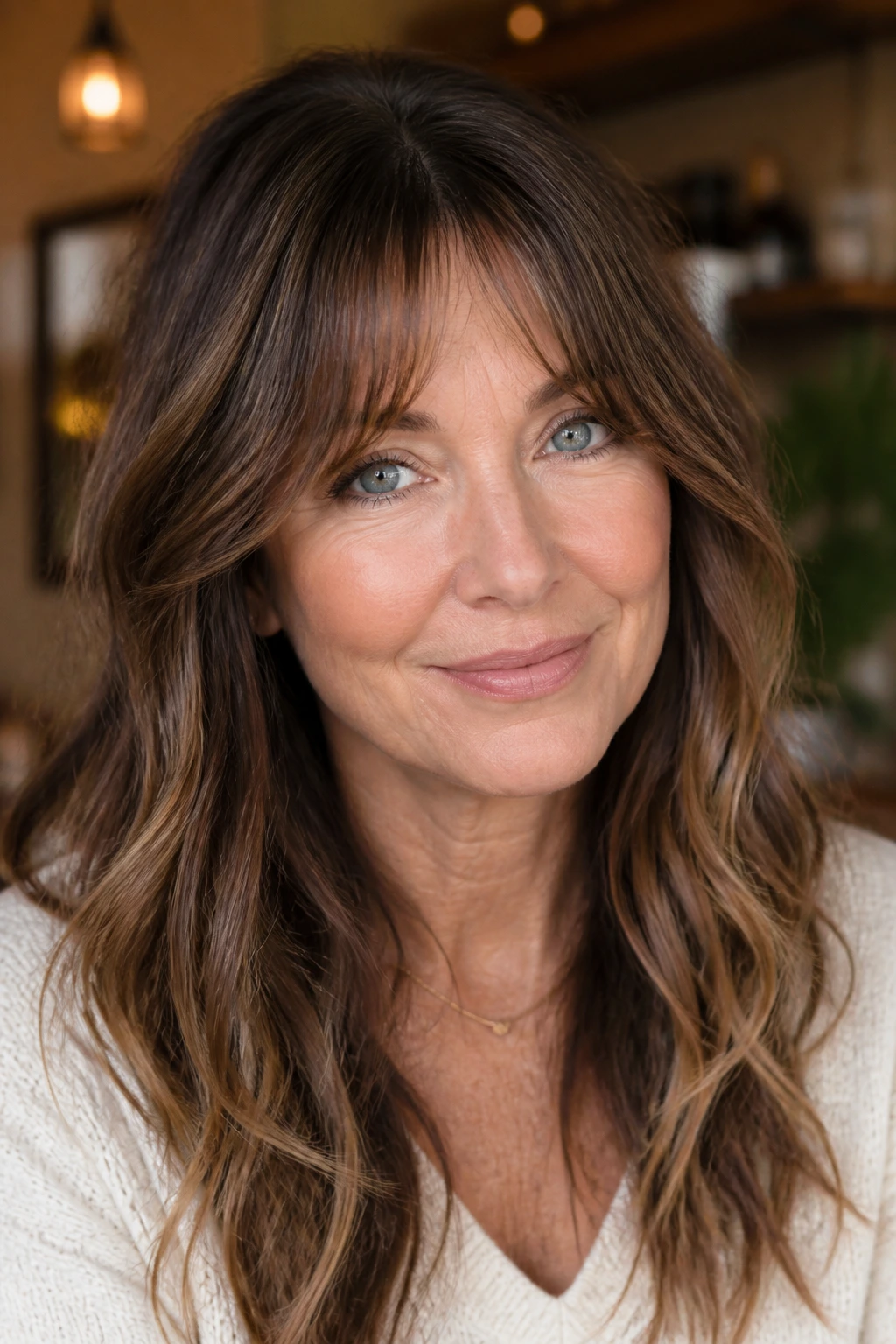
Bottleneck bangs start narrow between the brows and open out around the temples, almost like a curtain that got a little smarter. On wavy hair, that shape is gold. It gives you face framing without the full weight of a straight-across fringe.
Why It Suits Wavy Texture
The center section can stay a touch shorter so the eyes stay visible, while the longer side pieces blend into the rest of the cut. That means the wave pattern has different lengths to land on, which makes the whole front look intentional instead of accidental.
This shape is especially useful if your waves cling at the forehead but go fluffy at the sides. The shorter middle keeps the front from collapsing, and the longer edges stop it from feeling boxed in.
4. Side-Swept Feathered Fringe
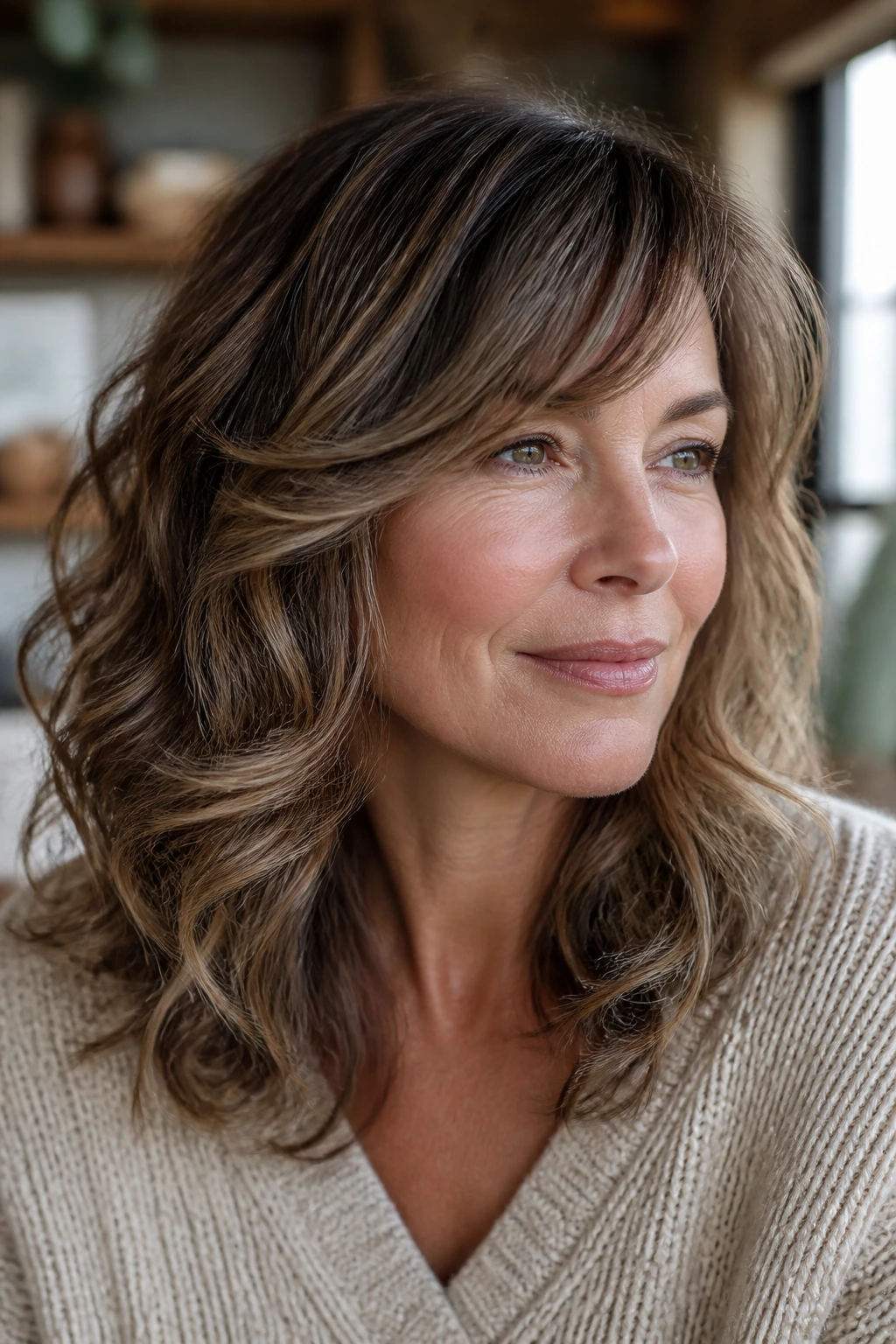
A side-swept fringe is the old reliable of the group, but feathering changes everything. Without that soft taper, side bangs can go dated fast. With it, they look airy, mobile, and easy to push back when you need them out of the way.
I like this one for anyone who hates seeing hair sit directly on the forehead. The sweep gives the face a diagonal line, which is useful if your wave pattern tends to expand outward near the temples.
Styling note: blow-dry the fringe in the opposite direction first, then sweep it across once it’s about 80% dry. That tiny reset at the root keeps the bang from falling flat by noon.
5. Choppy French-Girl Bangs
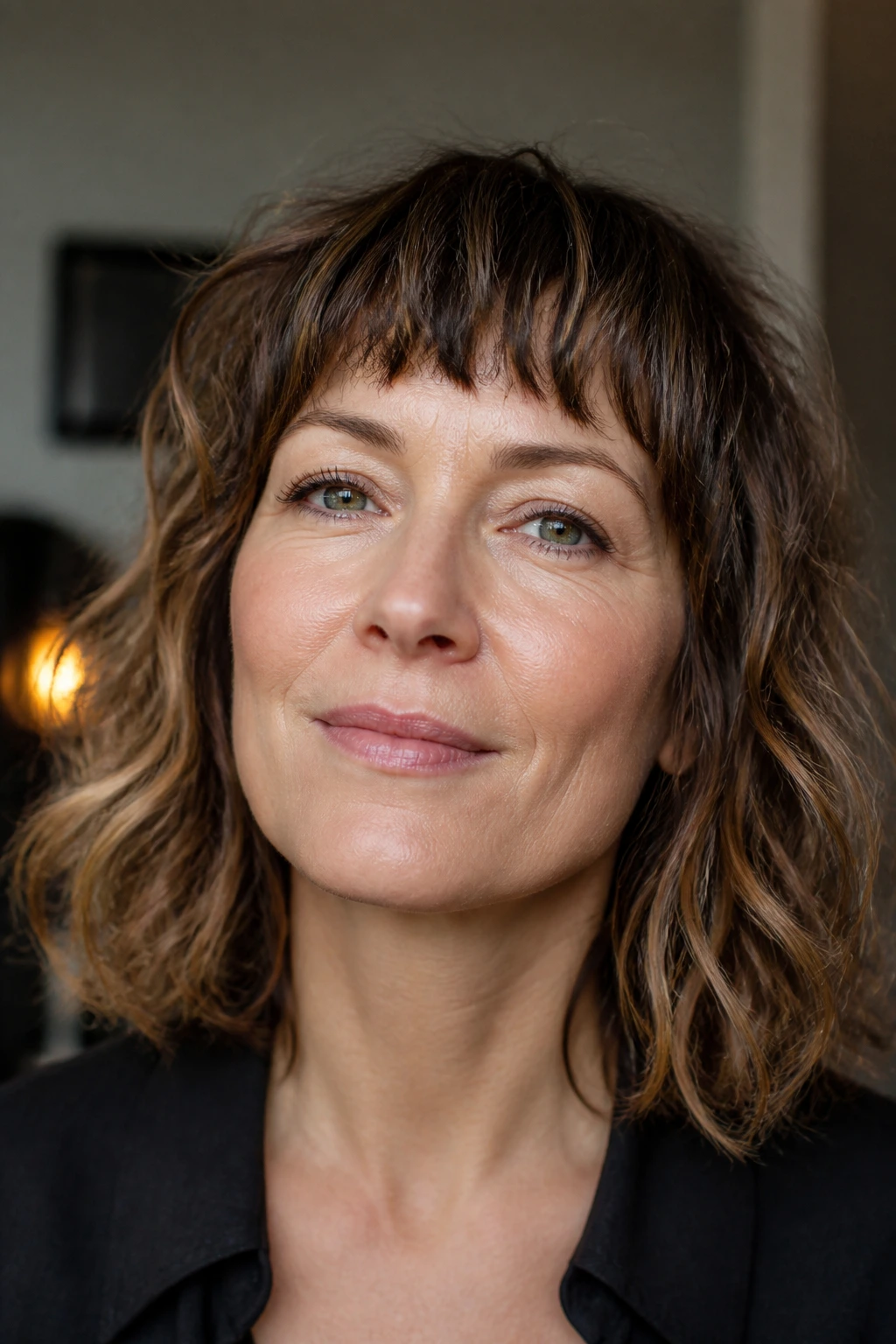
These bangs have a little bite to them. Not a hard edge. Just enough unevenness to make the front look cool instead of fussy. On wavy hair, choppiness works because the natural bend softens the corners before they ever feel sharp.
The Look in Real Life
This is not a perfectly symmetrical fringe. It sits in small, irregular pieces that separate as they dry. That makes it a good fit if your hair does better with air-drying than with heat tools. A quick scrunch of light cream at the ends is often enough.
If you want this style, ask for broken-up density rather than a thick slab of hair across the forehead. That phrase matters. It tells the stylist you want movement and space, not a heavy line.
6. Wispy Air-Dried Fringe
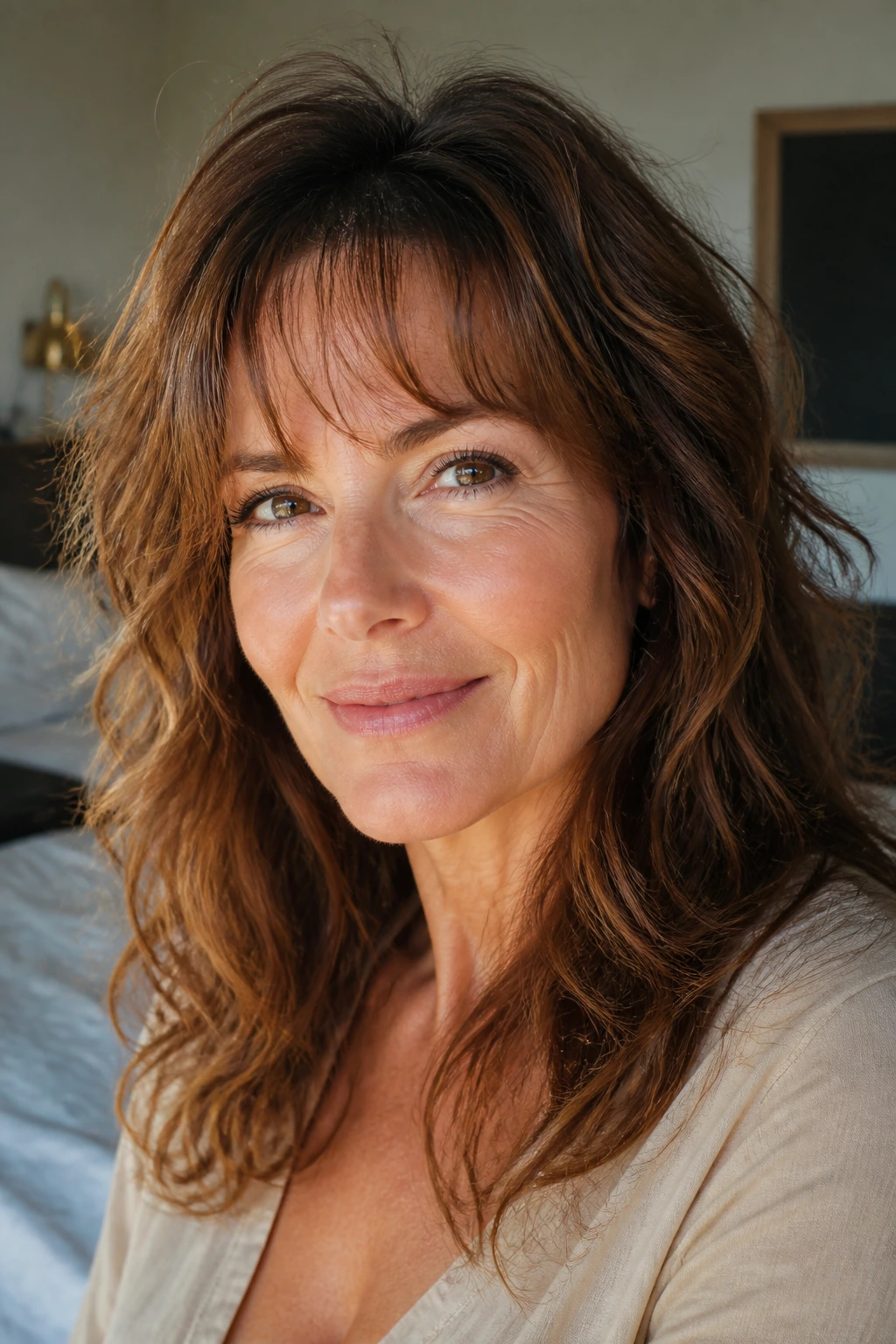
Wispy bangs are what you reach for when you want softness more than structure. The strands are fine enough that they dry quickly and don’t fight the rest of your wave pattern. That’s useful if your mornings are more “coffee and go” than “round brush and section clips.”
A wispy fringe is also kind to a forehead that feels more exposed than it used to. It doesn’t hide everything. It just blurs the line a little.
The downside? They can disappear if your hair is very dense or coarse. In that case, keep the density light but ask for a touch more length so the ends don’t vanish into the wave.
7. Rounded Fringe with Face-Framing Sides
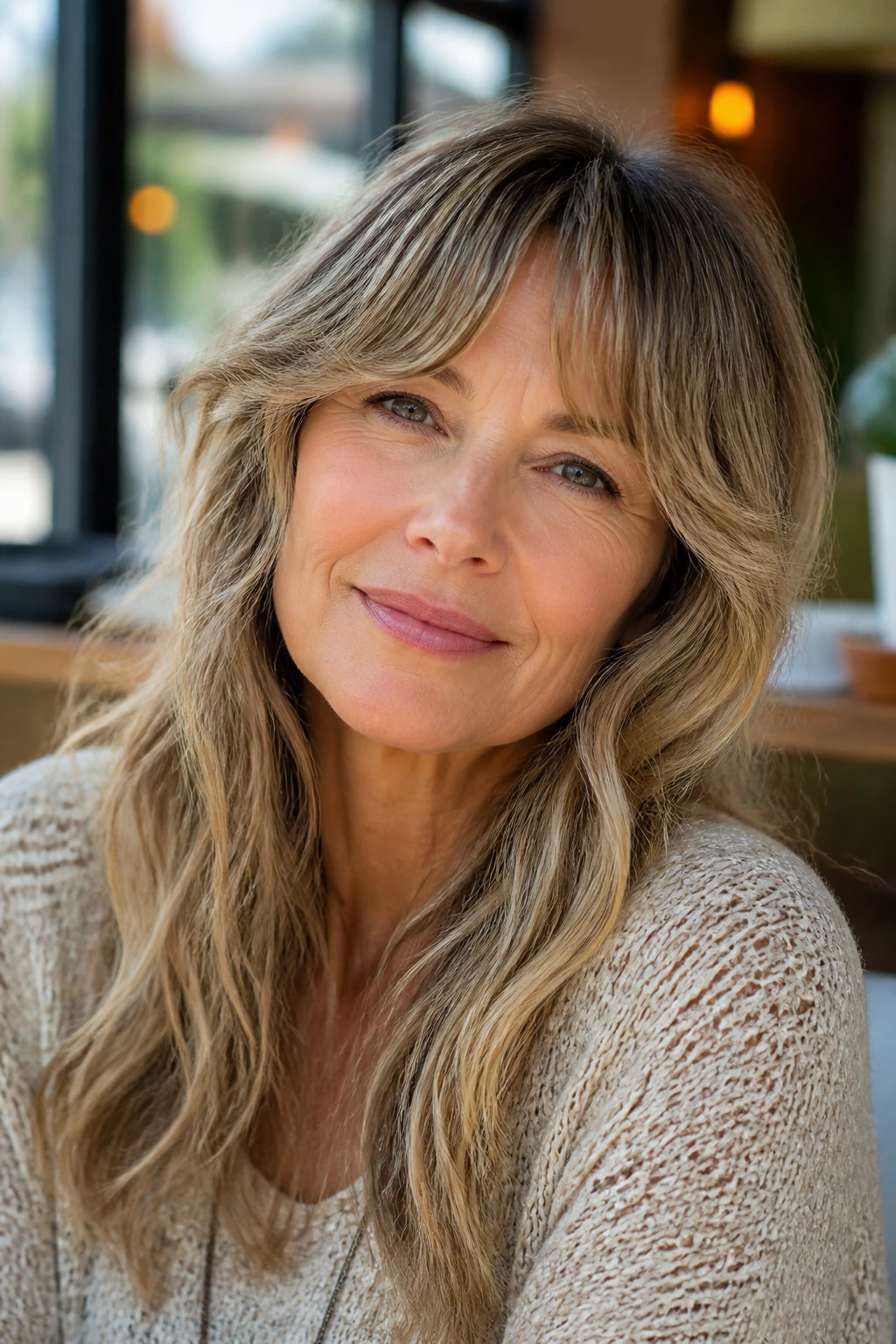
Rounded bangs arc gently in the middle and taper toward the sides. On wavy hair, that curve gives the front a built-in softness you do not get from a blunt line. It’s a smart shape if your face feels a little long or if you want the eyes and cheekbones to sit at the center of attention.
Why It Flatters Wavy Hair
The round shape mirrors the natural spring in many wave patterns. Instead of flattening the hair into a sheet, it lets the bend show up where it matters. You’ll usually want a stylist to cut this dry or nearly dry, because wet waves lie about their final length.
The face-framing sides are the part I like best. They prevent the fringe from looking like a decorative add-on. It becomes part of the haircut, not a separate piece stuck on top.
8. Razor-Textured Shag Bangs
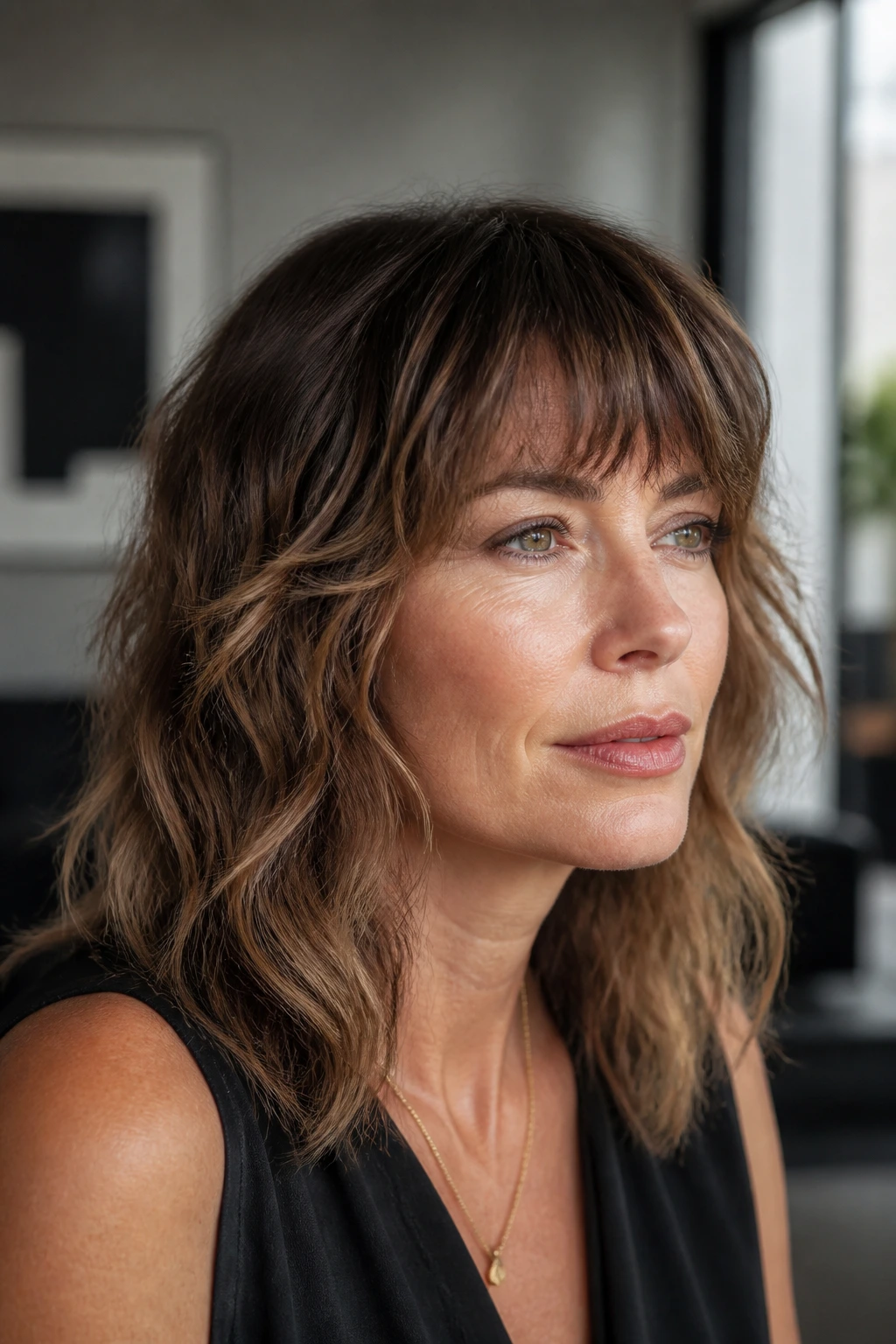
Razor-textured bangs bring a little edge, and the shag cut gives them a place to live. If your waves are medium to strong, this can be a very good match. The front pieces break up naturally, and the rest of the hair falls into soft layers instead of one bulky shape.
This is one of those styles that looks better a little messy. Too much brushing kills it. Too much product weighs it down. A light spray and finger-drying usually do the job.
Quick points to ask for
- Face-framing layers that start around the cheekbone
- Bangs that are thinned, not thinned to wisps
- A soft perimeter, not a hard corner at the temples
9. Grown-Out Curtain Fringe
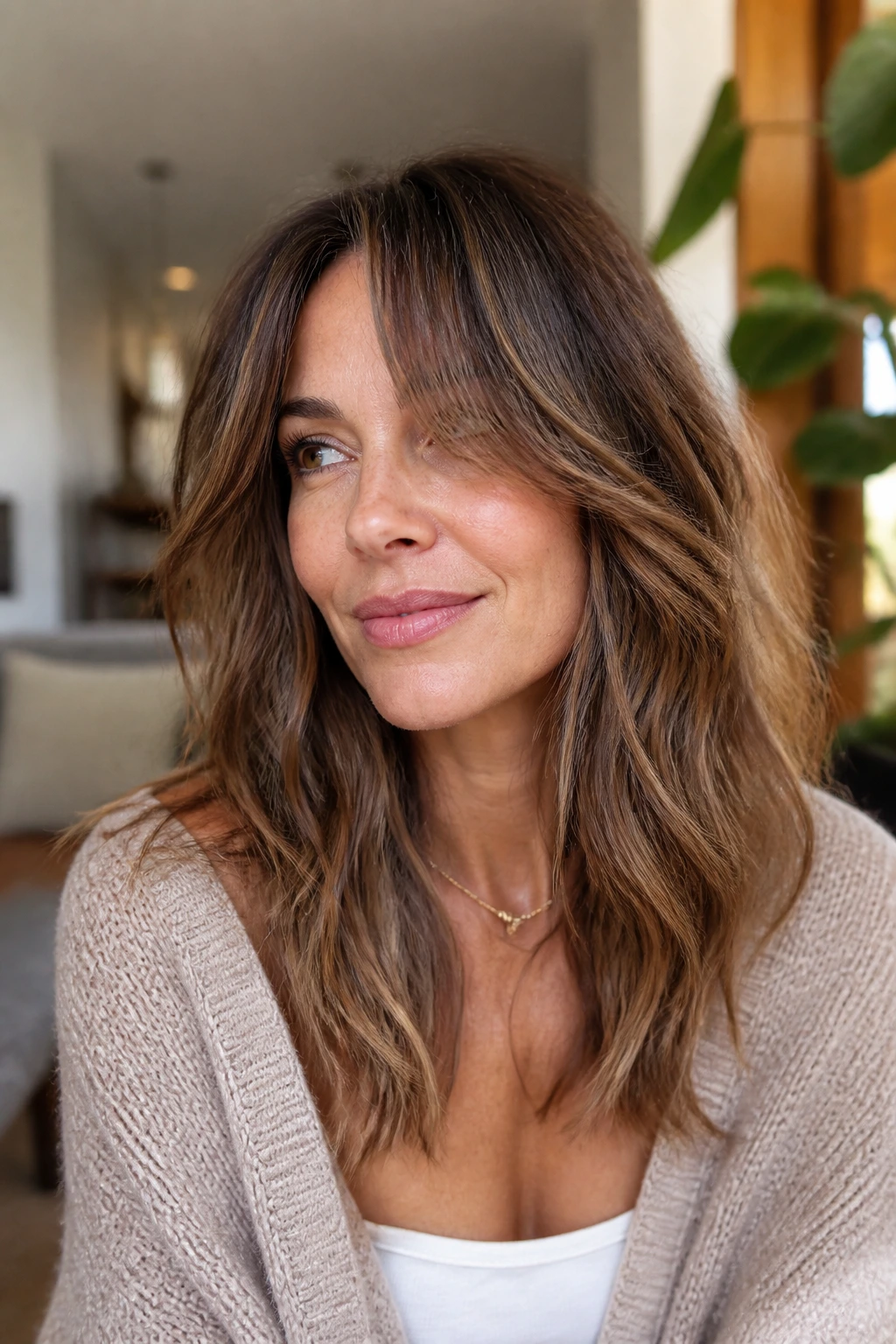
Some people want bangs. Others want the idea of bangs without the strict maintenance. Grown-out curtain fringe lives in that middle zone. It sits long enough to split open, tuck away, or sweep across the cheek with a wave.
That length is useful if your hair changes from smooth to puffy depending on weather. Short fringe can turn into a daily negotiation. Longer fringe gives you room to adjust.
The best part is how well it survives between salon visits. A little trim around the eyes may be needed, but the shape can drift for weeks without looking sloppy.
10. Bardot Bangs with Wavy Layers
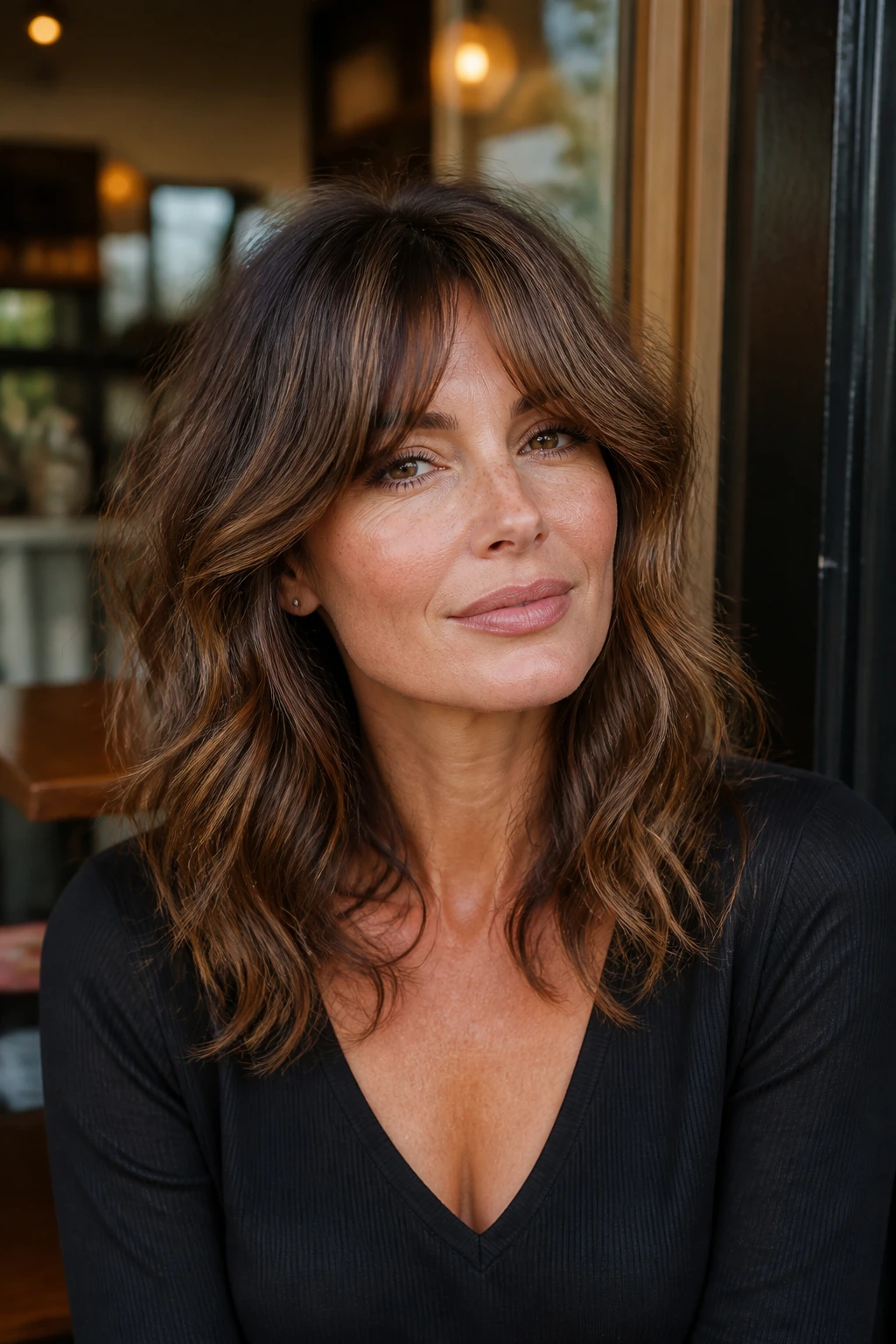
Bardot bangs have that soft, slightly glamorous shape that starts fuller in the middle and opens toward the sides. On wavy hair, they look rich in texture rather than stiff. The style works because it borrows from the wave instead of trying to iron it into order.
There’s a specific sweetness to this fringe when it’s paired with shoulder-length layers. The bangs sit near the brows, then the rest of the hair moves around the face with a loose, undone finish.
Use a medium round brush only at the roots if needed. The ends should still move. If the bangs look too perfect, shake them out with your fingers before heading out the door.
11. Layered Sweeping Bangs for Glasses
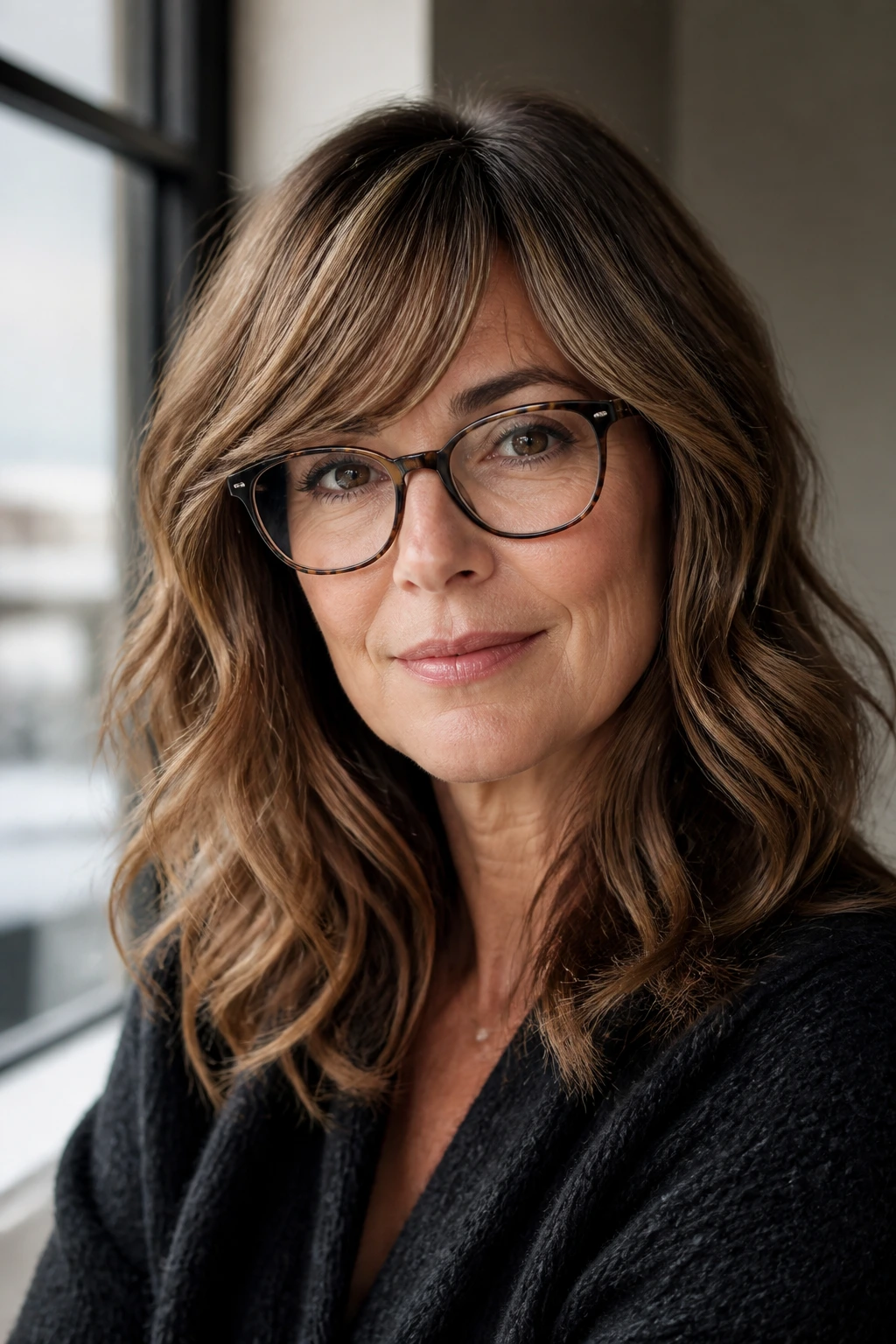
Glasses and bangs can be excellent together if the fringe doesn’t fight the frames. Layered sweeping bangs solve that problem by giving the hair a diagonal path instead of a straight curtain. The edge skims the brow, then drifts away from the lens line.
Why This One Is Clever
The layers prevent the fringe from sitting on top of the frames like a lid. That matters more than people admit. A bang that keeps sliding into your glasses will make you reach for pins by lunch.
Keep the shortest piece slightly above the brow and the longer pieces near the outer eye. That gives your frames room and keeps the face from getting boxed in.
12. Piecey Lob Fringe
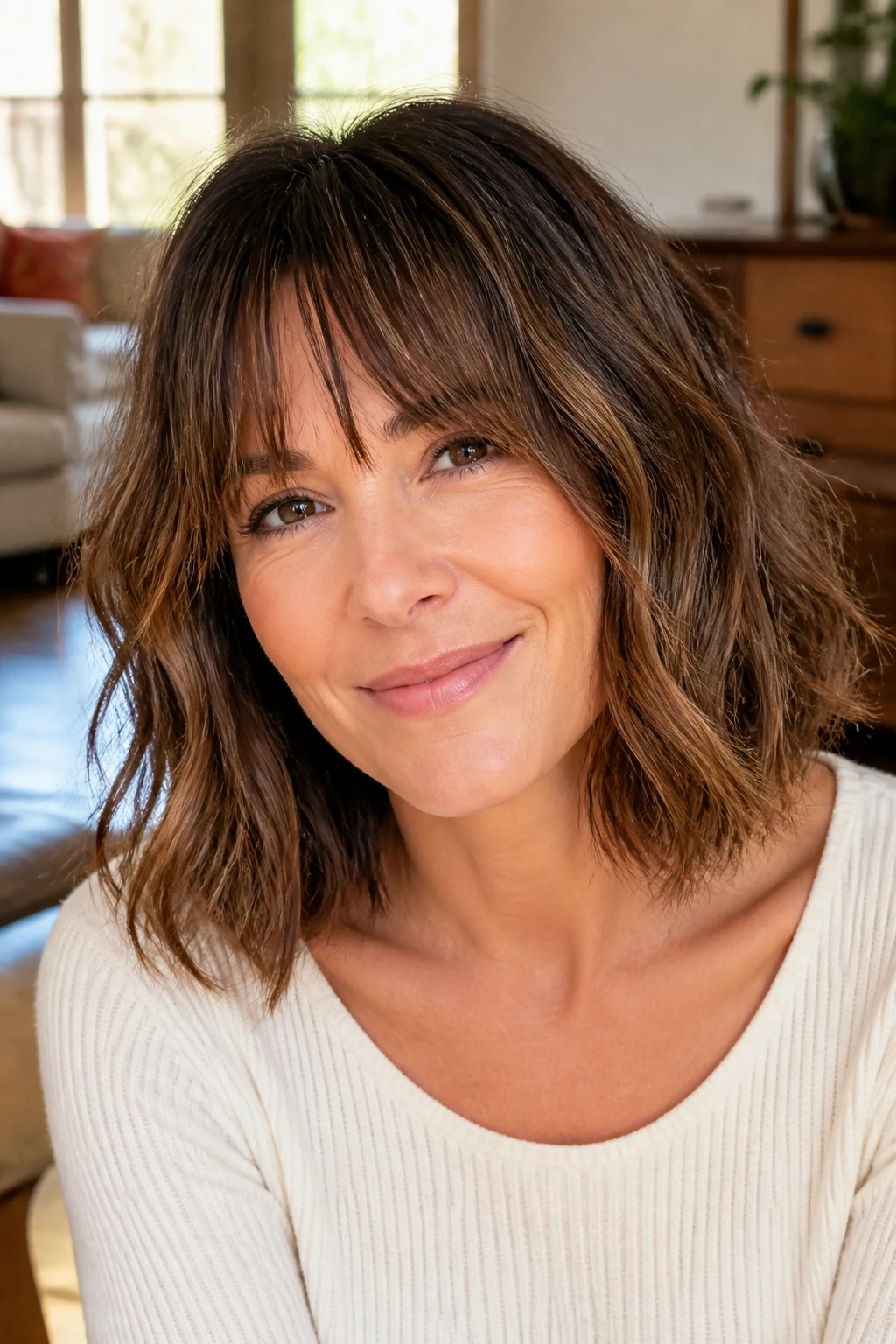
A lob with piecey fringe is one of my favorite low-drama combinations. The haircut already has a shoulder-length swing, and the fringe adds movement at the front without making the whole shape heavy. On wavy hair, the pieces land where they want, which is half the battle.
If your waves are fine and get weighed down easily, this is a nice balance. The fringe doesn’t need to be dense. A few separated pieces are enough to frame the face and keep the cut from feeling plain.
A little salt spray through the middle lengths can help connect the bangs to the rest of the lob. Not too much. Salt spray can turn soft waves crunchy in a hurry.
13. Feathered Peekaboo Bangs

Peekaboo bangs are the ones that hide, then show, then hide again as the wave settles. Feathering gives them that flicker of movement. They’re excellent if you want fringe that feels lighter around the forehead but still gives you shape.
How They Work
The center is usually the most controlled part, while the side bits feather out and merge with the front layers. That means the bangs can move with your head instead of sitting like a fixed strip. If your hair has a loose S-wave, this shape can look almost custom-made for it.
A good stylist will keep the density softer underneath and leave the top layer slightly longer. That prevents the fringe from looking thin from every angle.
14. Soft Arched Bangs
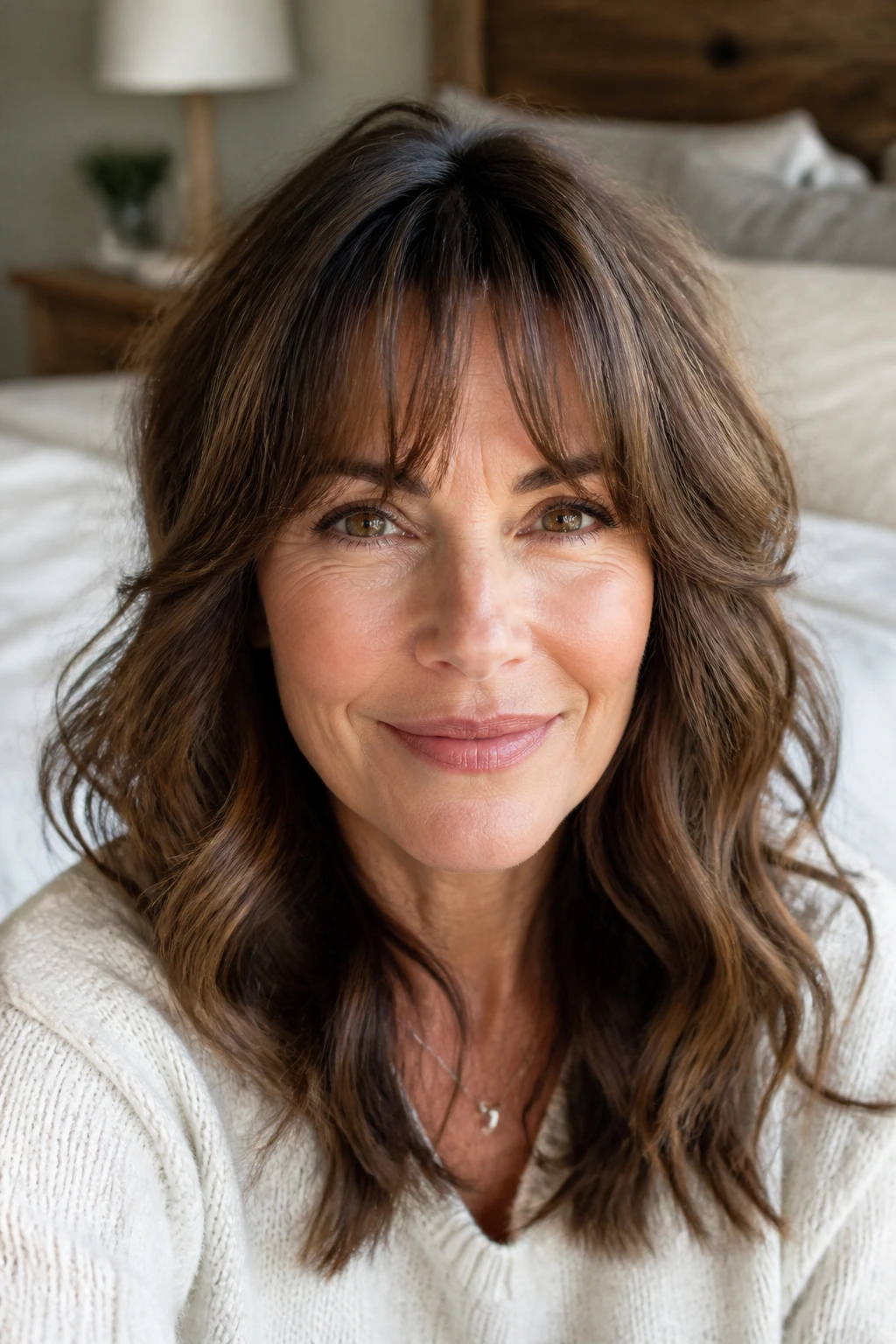
Soft arched bangs have a subtle curve that rises a little in the middle and falls gently toward the corners. They’re less severe than a classic blunt arch and more forgiving when your waves dry a touch unevenly. I like them on faces that need a bit of lift without a harsh line.
The shape also helps if your wave pattern is stronger at the temples than at the center. The arch gives the front enough contour to keep the whole thing from collapsing into one flat strip. That tiny detail makes the cut feel more deliberate.
Ask for the arch to be soft, not theatrical. You want shape, not a cartoon curve.
15. Split Fringe with Center Lift
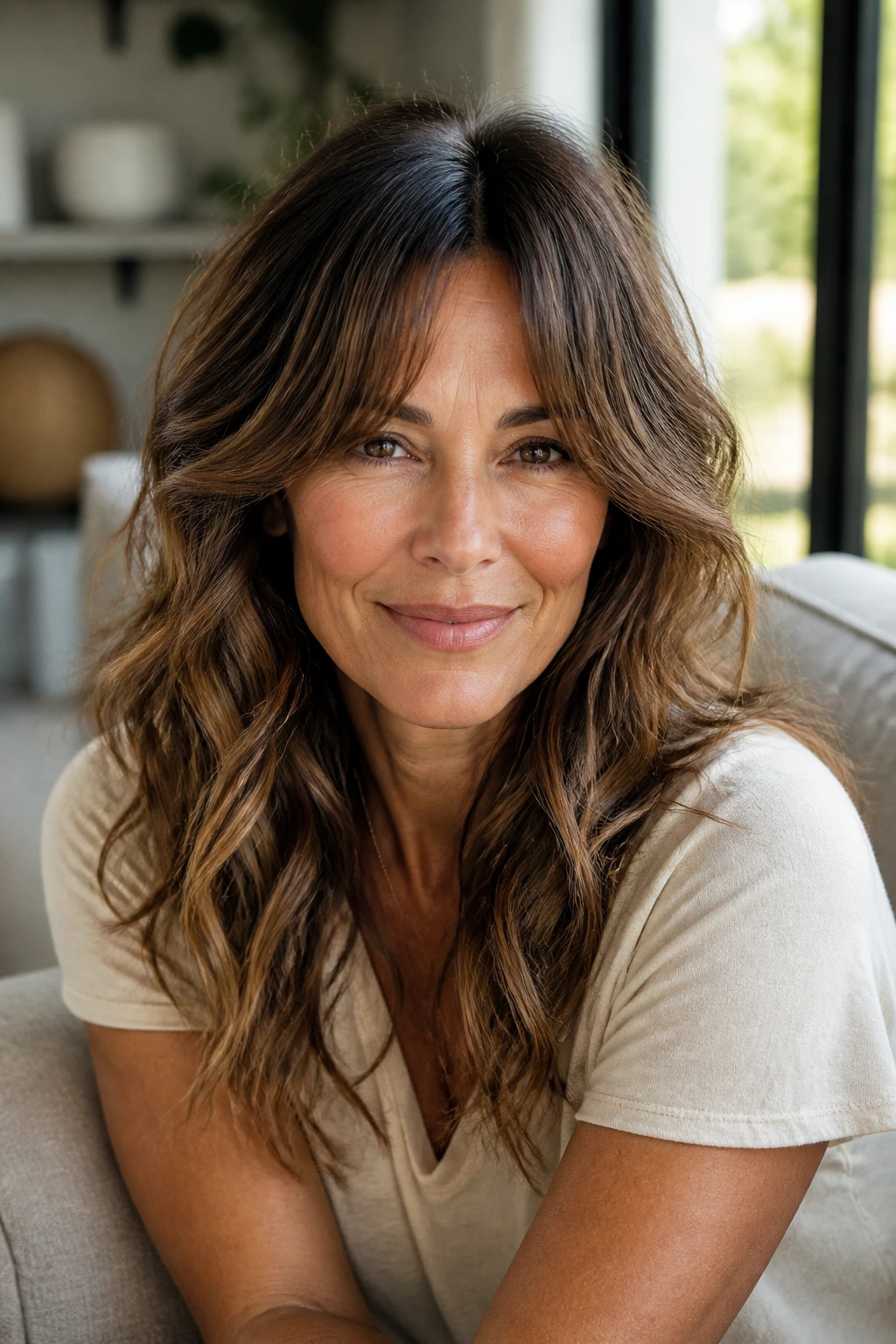
Split fringe is built for wavy hair that refuses to sit still. The center lift opens the face, while the two sides fall away from the middle in a loose split. It can be very pretty on hair with a natural bend near the root.
Why does it work so well? Because it uses the wave’s tendency to separate. Instead of resisting that behavior, the cut lets it happen in a controlled way.
Best for:
- Slightly finer waves that need lift
- Faces that look better with more openness at the brow
- Anyone who wants a fringe that can be pushed aside fast
A little root mousse and a quick blast of warm air at the center are usually enough.
16. Collarbone Shag Bangs

The collarbone shag is not shy, and the bangs shouldn’t be either. This cut wants texture all over, so the fringe can be broken up with choppy ends and soft layering. On wavy hair, the whole shape comes alive when the top is a bit shorter and the front is left playful.
This is a good choice if you like hair that looks better after it’s been touched. Not overstyled. Just moved around. The bangs can sit forward in the morning, then loosen as the day goes on, which sounds messy but often looks great.
If your hair is thick, ask for internal weight removal. Without it, the bangs can get bulky fast.
17. Textured Baby Bangs

Baby bangs are the boldest cut in the group, and I’m not going to pretend they suit everyone. But textured baby bangs on wavy hair can be sharp in a good way when they’re cut with enough softness to move. The ends should look broken, not blunt.
This is best if you like contrast. The short fringe gives the face a strong top line, while the waves below keep the look from feeling rigid. That tension is the point.
Here’s the catch: if your hairline is cowlick-prone, this needs a careful stylist and a realistic plan. Baby bangs do not forgive bad growth patterns. They just don’t.
18. Curved Side Fringe
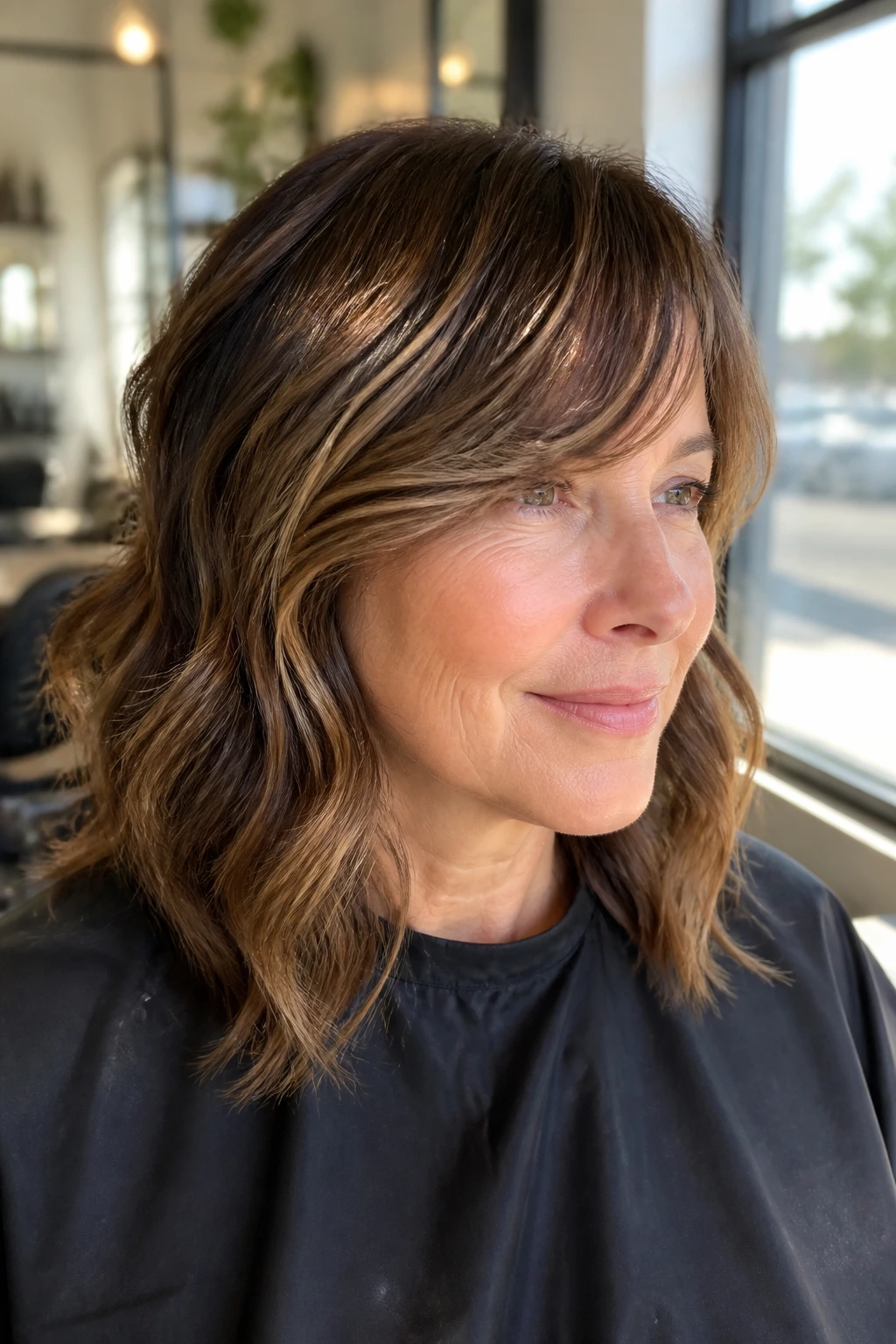
Curved side fringe has a wider sweep than a standard side bang, which helps the hair blend into your cut instead of sitting on top of it. The curve is especially useful if your face has a strong jaw or if you want a gentler line across the forehead.
The first thing I notice about this style is how easy it is to tuck, pin, or reset. That matters. Hair that can be redirected without looking like it had a bad day is worth keeping.
A soft cream or leave-in on the ends keeps the curve from frizzing outward. Use less than you think. Too much product makes the front cling in weird places.
19. Brushed-Forward Wavy Fringe

Brushed-forward fringe sounds simple, but the texture is doing a lot of work. The hair is directed toward the forehead, then broken up just enough to keep the front from turning into a solid wall. On wavy hair, that forward motion can look fuller and more modern than a strict side sweep.
A small trick that helps
Dry the fringe forward first, then use your fingers to split it in two or three places while it’s still warm. That stops the front from drying into one chunk. If you skip that step, the wave may choose its own split in a place you didn’t mean.
This style is nice when you want coverage without heaviness. It gives shape quickly, which is why it works so well on busy mornings.
20. Invisible Bangs
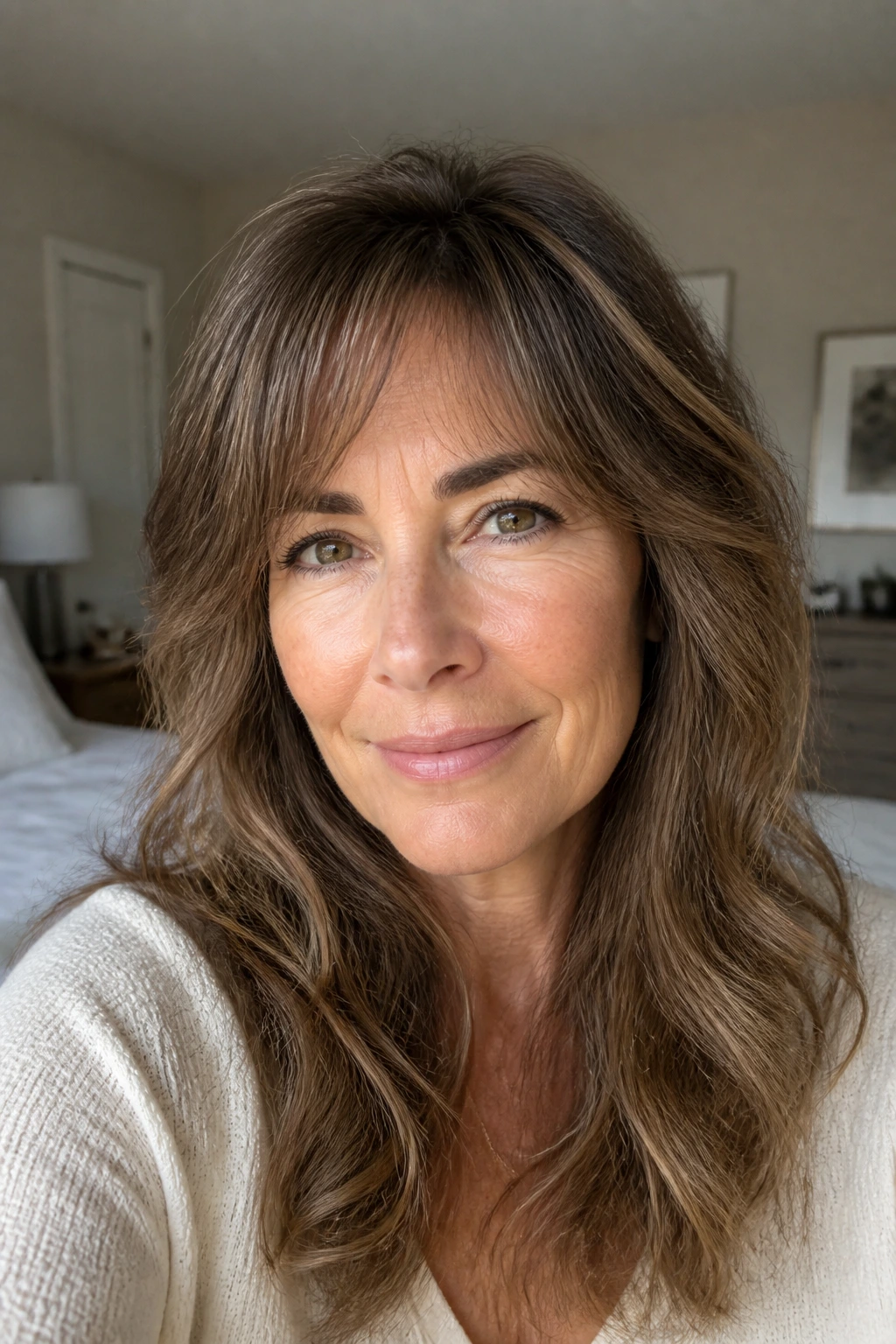
Invisible bangs are the shy cousins of full fringe. They sit in the front layer, but they’re so softly cut that they dissolve into the rest of the hair. On wavy hair, that soft fade can be more flattering than a defined bang line.
They’re especially good if you’re fringe-curious but nervous. There’s no hard commitment here. The front can fall over the brow one day and slip into the side layers the next.
This is also a good match for people who wear their hair up often. The bangs still do something when the rest of the hair is in a clip or low twist. That makes them earn their keep.
21. Heavy-Lite Hybrid Fringe
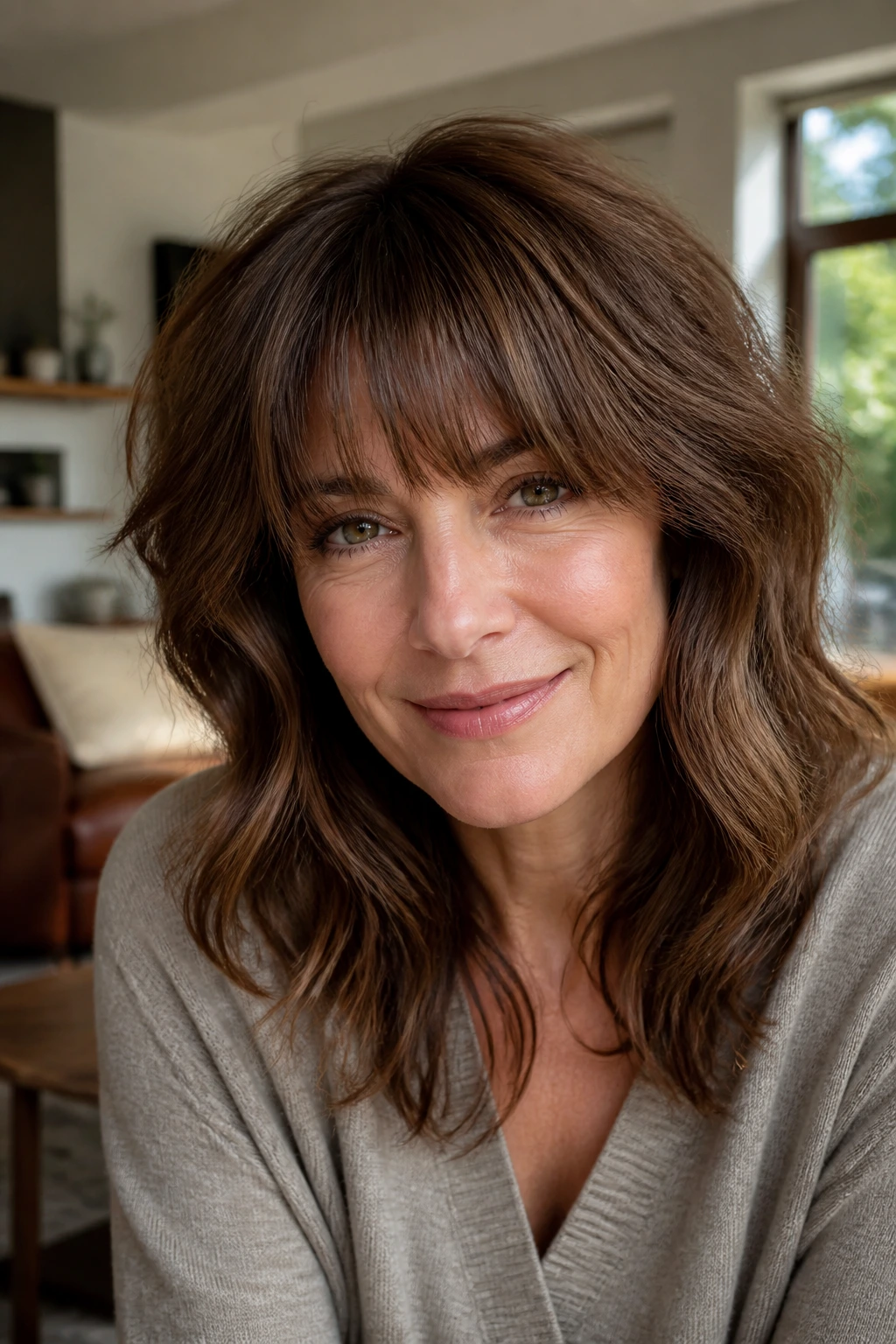
A heavy-lite fringe sounds contradictory, and that’s what makes it interesting. You keep enough density for coverage, but the ends are softened so the bang doesn’t sit like a solid block. On wavy hair, that balance can be the difference between “haircut” and “hair helmet.”
It’s useful if your forehead feels very open without bangs, but you still want the front to move. You get more presence than wispy fringe, less rigidity than blunt bangs.
What to ask the stylist
- Keep the center fuller than the sides
- Remove bulk underneath, not just on top
- Leave enough length for the wave to fold, not spring short
22. Razor-Cut Swept Bangs
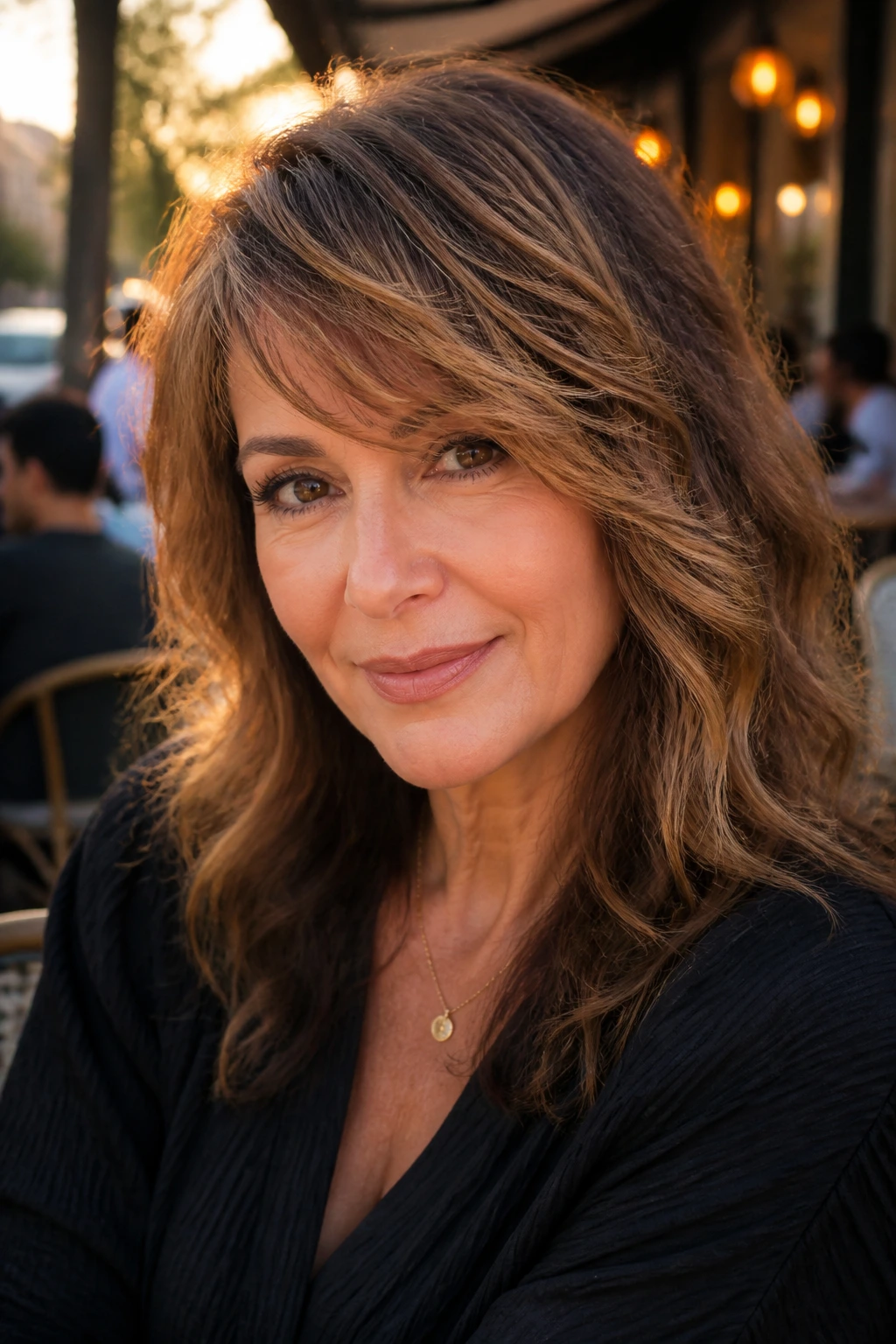
Razor-cut bangs can look airy and modern, but only when the texture is controlled. The sweep keeps the front away from the eyes, and the razor finish lets the wave separate into soft edges. If your hair is medium-density, this can be a very nice middle ground.
The cut is not about precision in the stiff sense. It’s about movement. The line should feel free, almost a little loose, but still shaped enough to sit where you place it.
Don’t overdo the product. Razor-cut fringe can go stringy fast if you pile cream on top. A light mist and a quick rake through with your fingers is enough.
23. Deep Side Bangs with a Lob
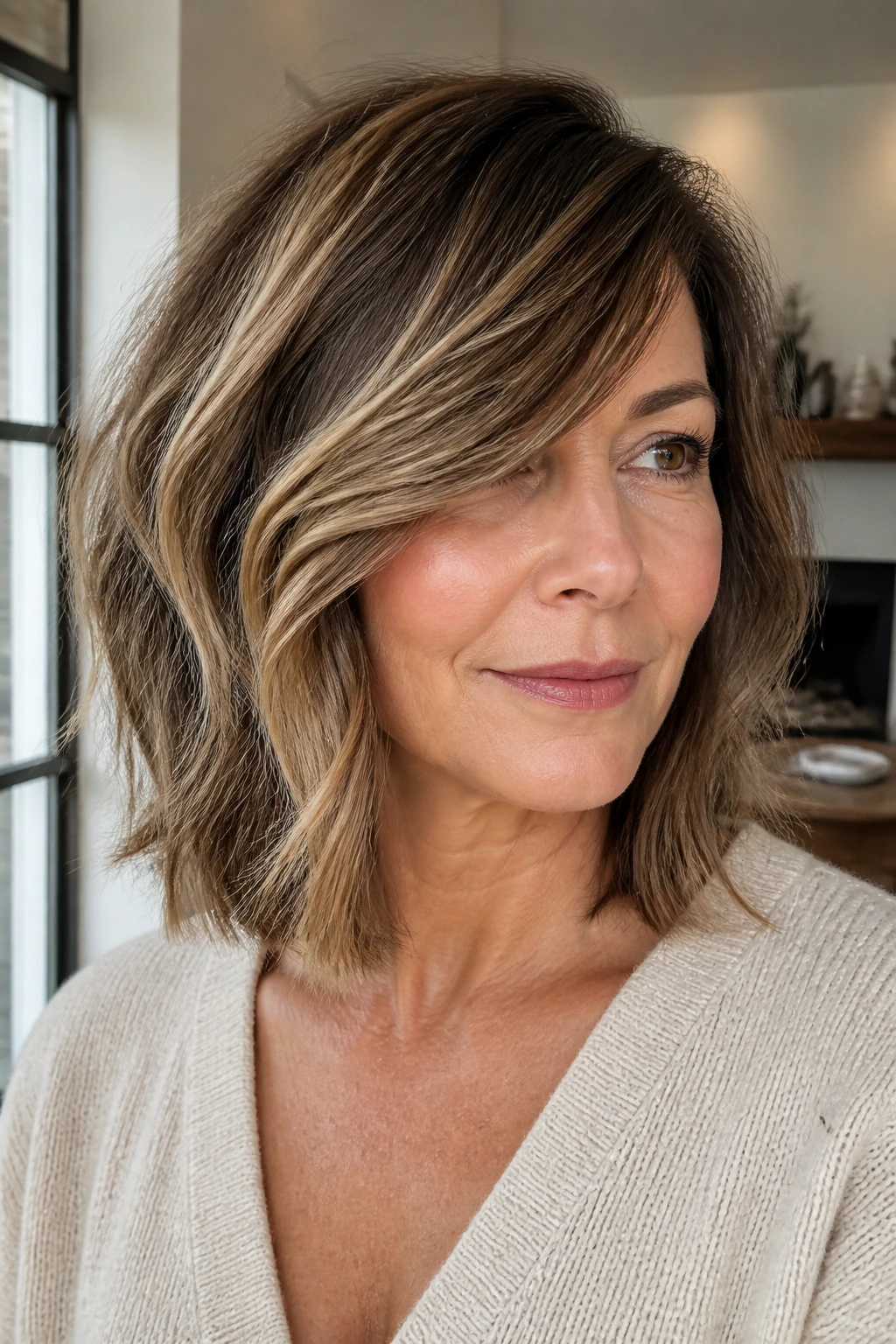
Deep side bangs make a strong sweep from one temple across the forehead, which pairs well with a lob because the length below keeps the overall shape grounded. On wavy hair, the contrast between the long line and the soft fringe can be very flattering.
This cut is especially good if you want your eyes to stand out. The sweep creates a diagonal that leads the gaze upward. It also gives you an easy escape route on days when you want the bangs off your face entirely.
If your waves split at the front, let them. The style actually looks better with a few broken pieces rather than one polished ribbon.
24. Tousled Bixie Fringe
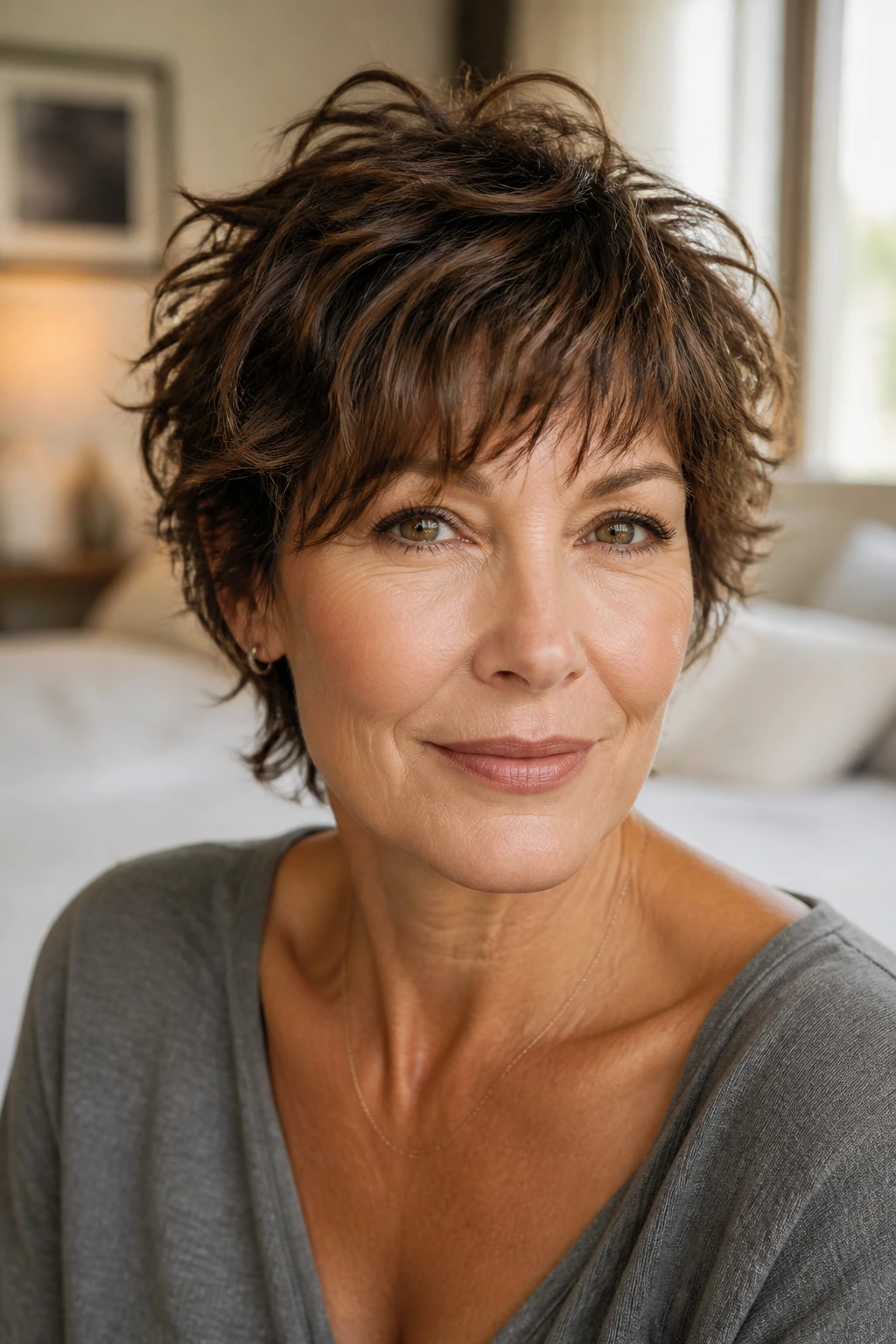
A bixie — that in-between shape between a bob and a pixie — gets a lot of its personality from the fringe. Tousled bangs keep the cut from feeling too neat. On wavy hair, the texture is the whole point. You want movement around the forehead and ears, not a crisp little outline.
I like this one for anyone who wants less hair to manage but doesn’t want to lose softness. The fringe can be short enough to show the brows, then broken up with a small dab of paste or cream. It dries fast, too.
The maintenance is real, though. Short textured fringe grows out quickly, and the shape needs trimming more often than longer curtain bangs.
25. Soft S-Curve Bangs
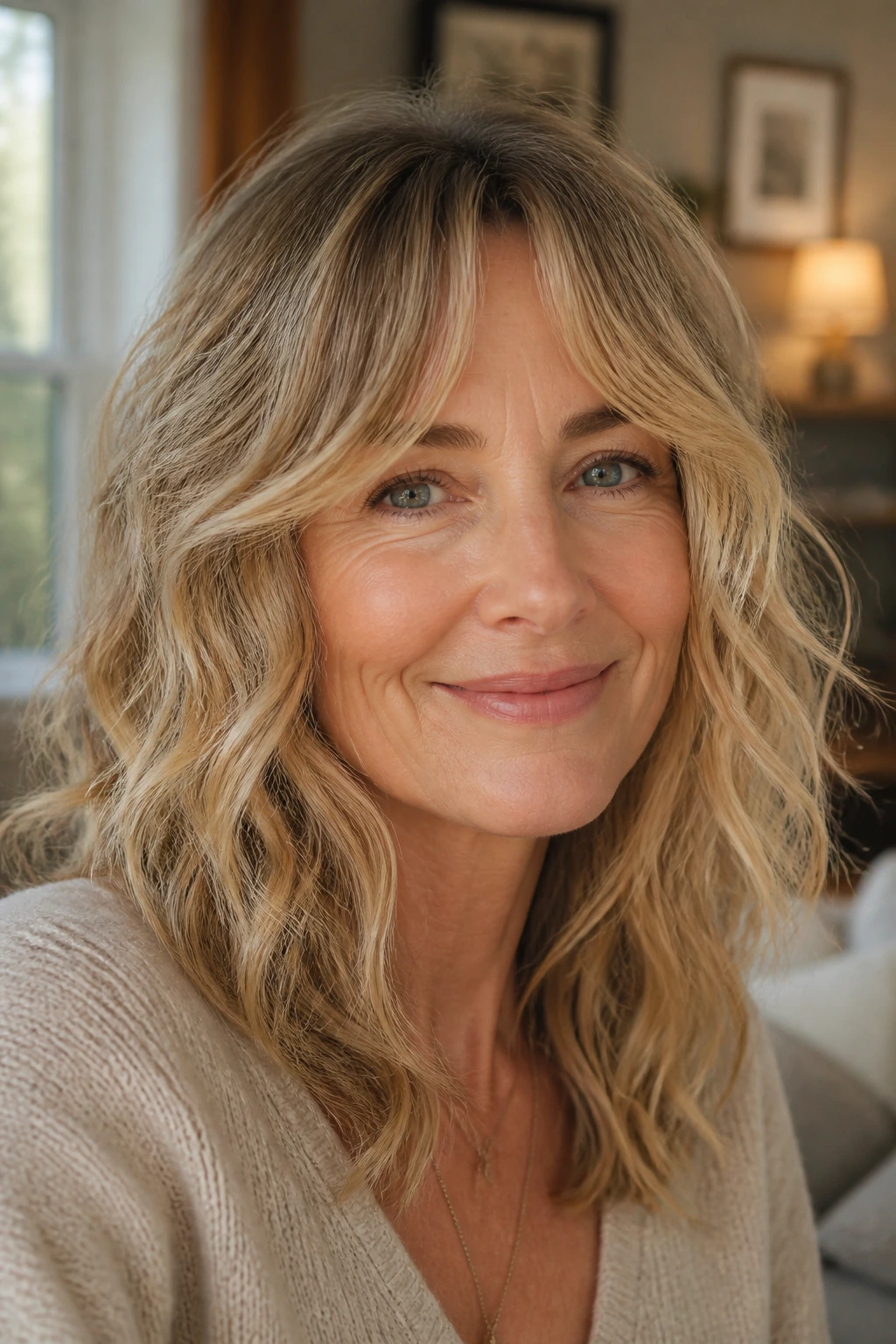
Soft S-curve bangs follow the wave pattern instead of flattening it. The center bends slightly one way, then the other, creating a loose S shape that feels natural on hair with a visible wave. It’s a very nice option if you want movement without obvious separation.
The key is restraint. The curve should look found, not forced. A good cut leaves enough length for the wave to settle into its own bend after drying.
That’s what makes this style so good on mature wavy hair. It has shape without shouting, and it can sit with everything from a tidy bob to a looser layered cut.
Why Textured Bangs Behave Better Than Blunt Ones on Wavy Hair
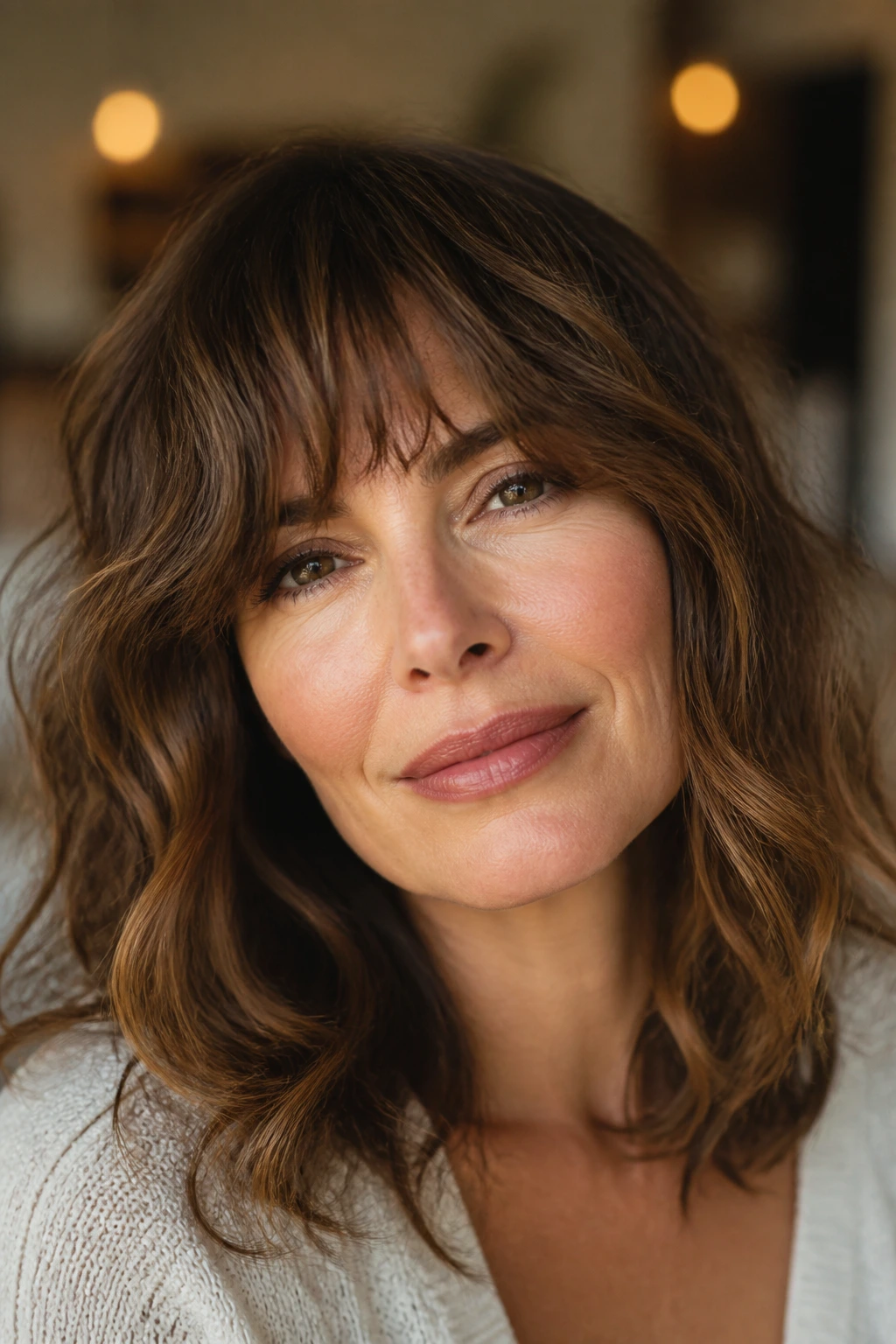
Blunt bangs ask wavy hair to be something it is not. They want a straight line across the forehead, and waves hate that kind of demand. The result is usually puffiness at the root, a little flip at the corners, and a fringe that seems to change shape the minute you walk outside.
Textured bangs work because they build in room for movement. A point-cut edge, a softer perimeter, or a layered finish lets the wave expand and contract without breaking the whole shape. That matters even more when the hair is slightly finer at the front or a little coarser near the crown.
Dry cutting helps, too. Wet waves can shrink more than most people expect, especially when there’s any bend from the temple down. A stylist who cuts the fringe dry, or at least checks it dry before finishing, can leave enough length to avoid that too-short, springy look. That one detail saves a lot of regret.
Humidity plays a role whether we like it or not. Soft texture gives the hair somewhere to go when the air gets heavy. A blunt line gives it nowhere to go except outward.
What to Tell Your Stylist Before the Scissors Come Out
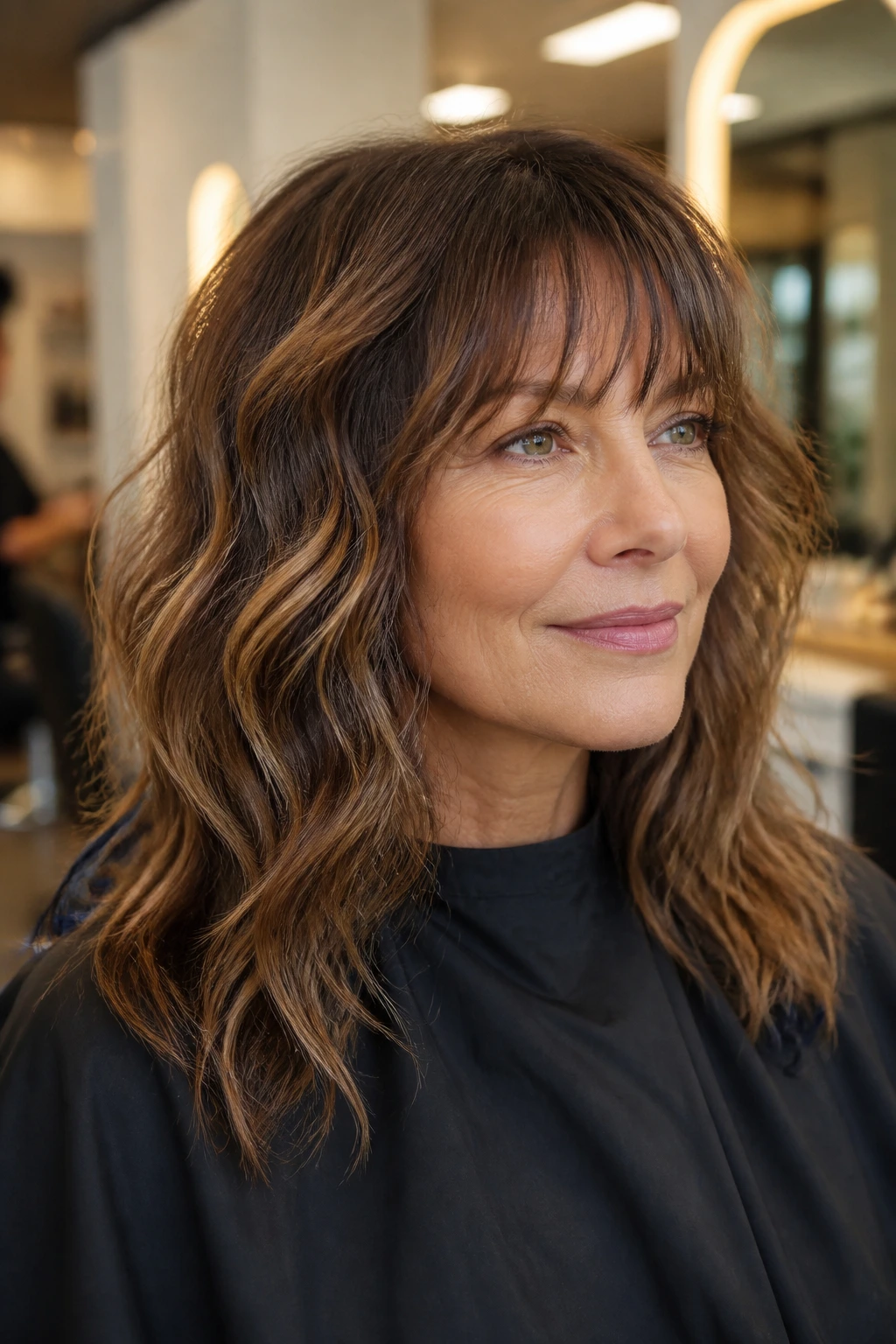
Do not walk in and say “just bangs” unless you enjoy surprises. Bring a photo, yes, but also explain how your wave behaves on a normal day. Does it bend at the cheekbone? Puff at the root? Split around a cowlick on the right side? Those details matter more than the picture.
Ask for the length in dry terms. A bang that looks good wet can jump much shorter once it dries. If you wear glasses, say so. If you tuck hair behind your ears, say that too. If you hate styling with a round brush, say it early and plainly.
A few useful phrases help a lot:
- “Cut it with my natural wave, not against it.”
- “Keep the density light at the center.”
- “Leave room for shrinkage when it dries.”
- “I want movement, not a straight shelf.”
That last one is my favorite. It gets the idea across fast.
Tools That Keep Fringe From Falling Flat
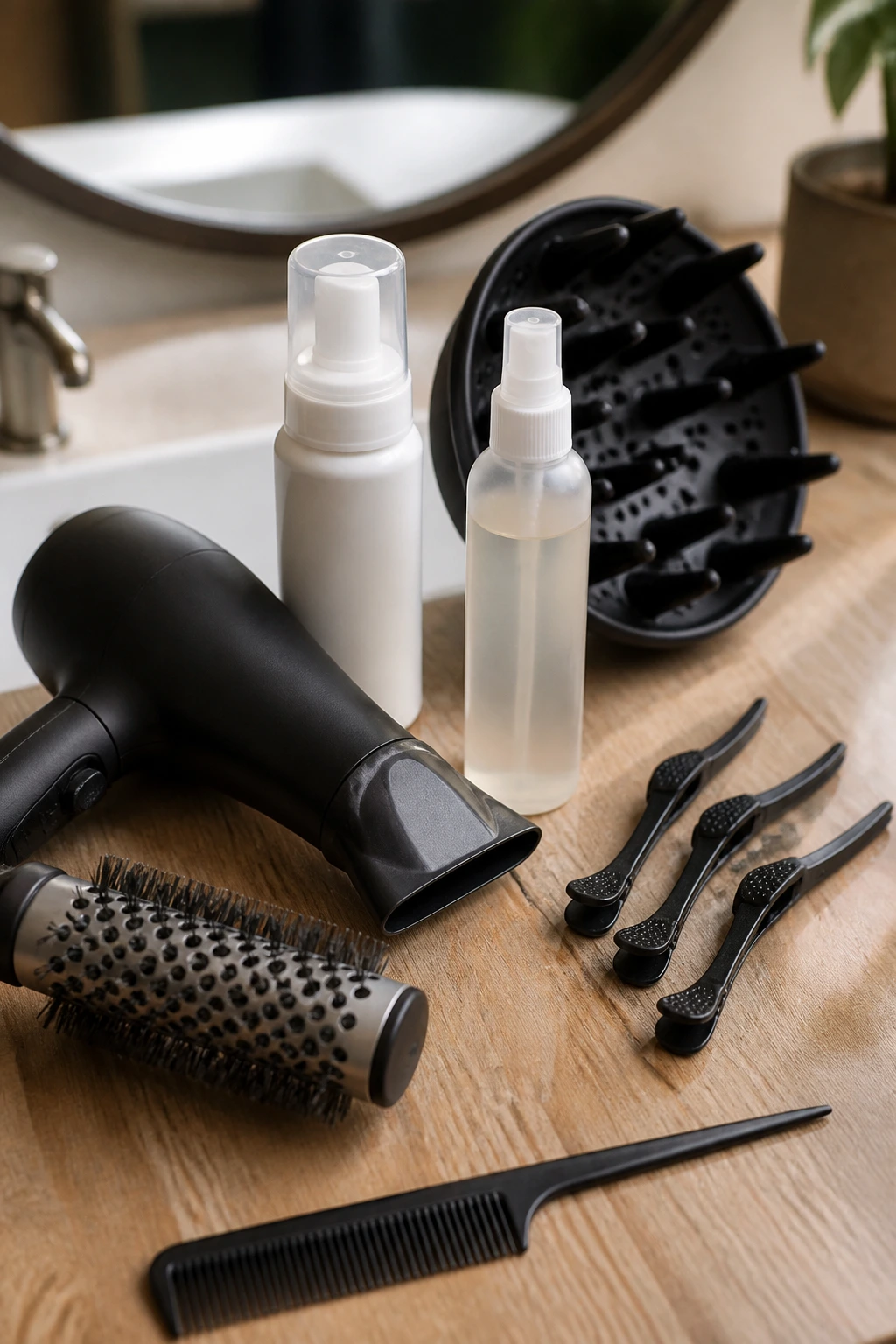
A textured fringe does not need a drawer full of gadgets, but a few tools make life easier.
-
Small round brush: Useful for lifting the roots of curtain or side-swept bangs without flattening the wave below.
-
Blow-dryer nozzle: Narrows the airflow so you can dry the front in the direction you want.
-
Diffuser: Best if you air-dry most of the head and just want the bangs to keep their wave instead of going frizzy.
-
Light mousse: A walnut-size amount at the roots gives hold without stiffness.
-
Texturizing spray: Good for piecey fringe that needs separation after drying.
-
Duckbill clips or small rollers: Handy for setting the front while it cools, especially after a blow-dry.
-
Fine-tooth comb: Useful at the root, but only if you use it lightly. Heavy combing can erase the bend.
How to Style Textured Bangs Without Fighting Your Waves
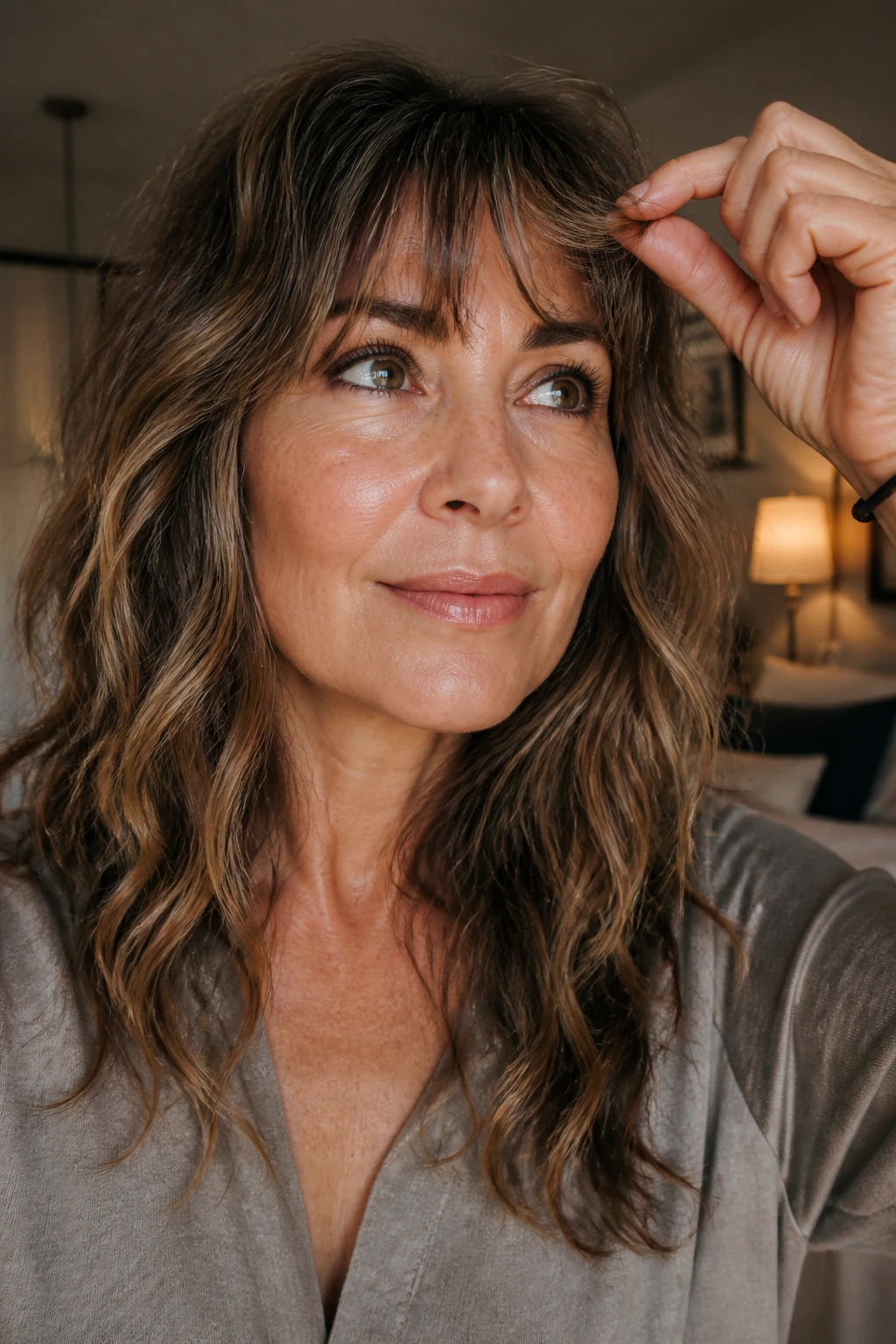
The front section should be the first thing you dry, not the last. Bangs that are left to their own devices for ten minutes tend to dry in a shape you did not choose. Start with the fringe, shape the root, then let the rest of the hair follow.
Air-Dry Route: Scrunch a small amount of mousse into damp bangs, then separate the pieces with your fingers every few minutes as they dry. This works well for wispy, piecey, or shaggy styles.
Blow-Dry Route: Use a nozzle and a small round brush to lift the roots away from the forehead, then bend the ends forward or sideways depending on the cut. Stop before the hair looks fully polished. A little softness is the goal.
Second-Day Fix: Mist the bangs lightly with water, not a soaking spray. Then rework the root with one warm pass of the dryer or a quick Velcro roller set for five minutes.
Humidity Plan: Keep a travel-size texture spray in the bag, but use it sparingly. Too much product in humid air makes the fringe sticky instead of controlled.
Common Mistakes That Make Wavy Bangs Look Frizzy or Choppy
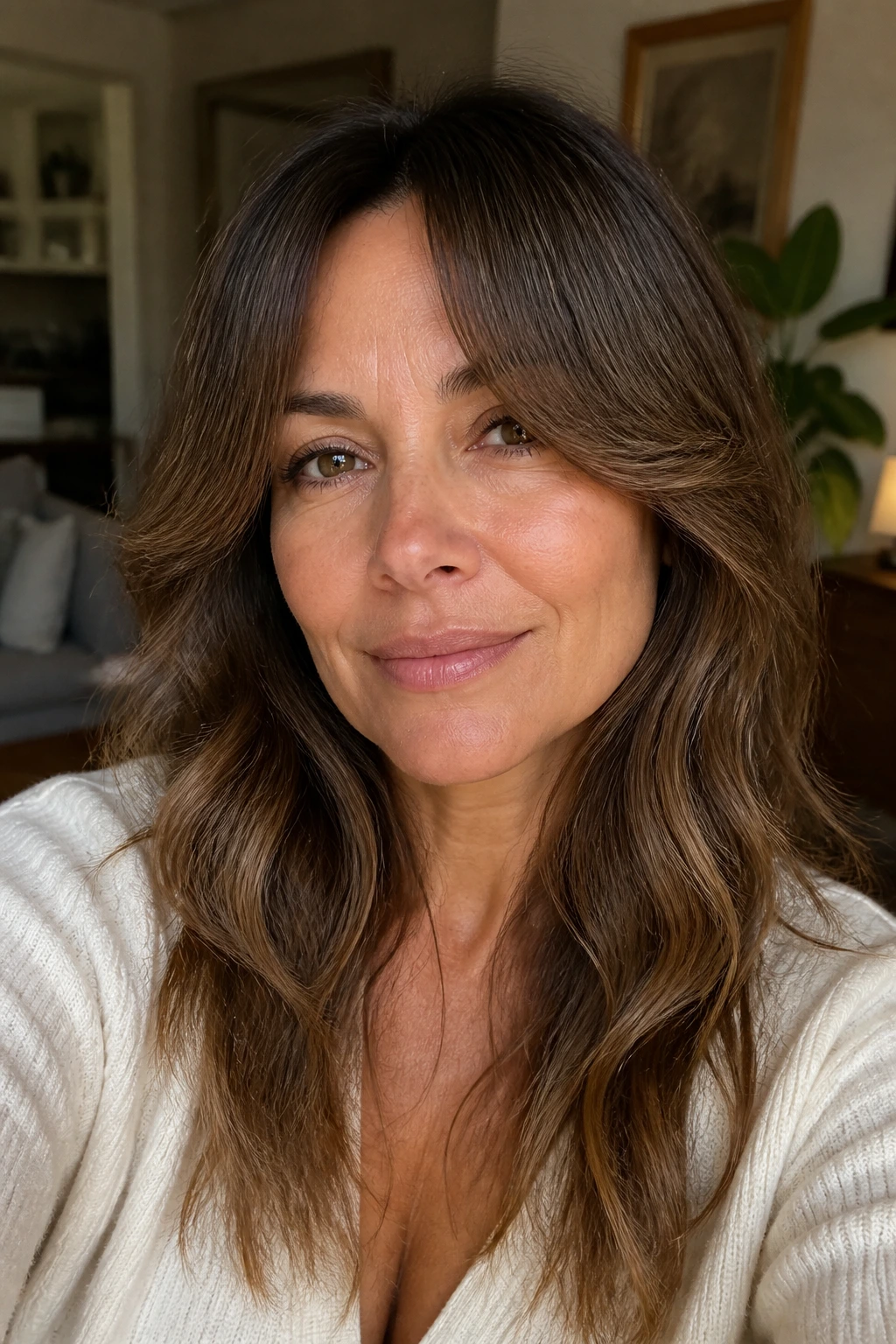
The biggest mistake is cutting the fringe too blunt. Wavy hair needs some broken edge to move through. A hard line often swells at the corners and looks wider than planned.
The second mistake is chasing perfect symmetry. Wavy bangs rarely sit like twin brothers. They sit like cousins. If you keep adjusting them every five minutes, you make the front frizzier and train it to separate in weird places.
The third mistake is loading on heavy cream or oil. A little product helps. Too much makes the fringe limp at the roots and stringy at the ends. Start with less than a pea-sized amount and build only if the hair needs it.
Cowlicks are another trouble spot. If the front hair grows in a strong swirl, the cut must respect that. Fighting a cowlick with a short, dense bang is a fast way to create daily annoyance.
Variations and Adaptations to Try
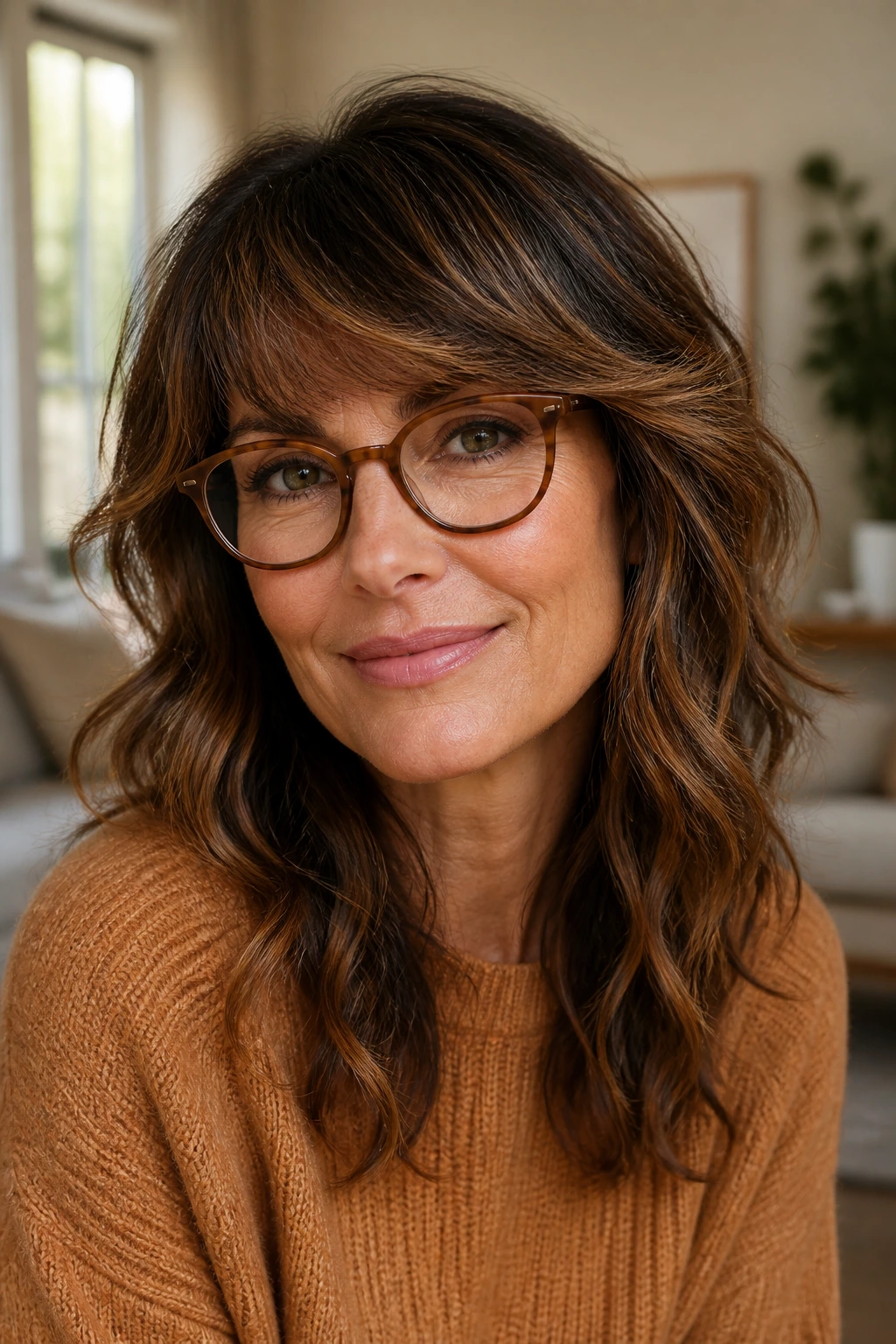
The Glasses-Friendly Sweep: Keep the fringe a touch longer at the outer corners and lift it away from the lens line. It gives you softness without constant brushing.
The Low-Maintenance Air-Dry Cut: Ask for more separation, less density, and a length that still looks good if you never touch a round brush. This is the easiest path for wavy hair that dries on its own.
The Fuller Forehead Cover: Choose a heavier center with textured ends if you want more coverage across the forehead. The trick is softening the perimeter so it doesn’t feel boxed in.
The Soft Shag Blend: Match the fringe to layered lengths around the cheekbone and jaw. This keeps the bangs from looking detached from the rest of the haircut.
The Shorter Statement Fringe: Go for textured baby bangs or a cropped brow line if you want the front to feel sharper and more graphic. It’s bolder, and it needs more trimming.
Keeping Bangs Looking Intentional Between Trims
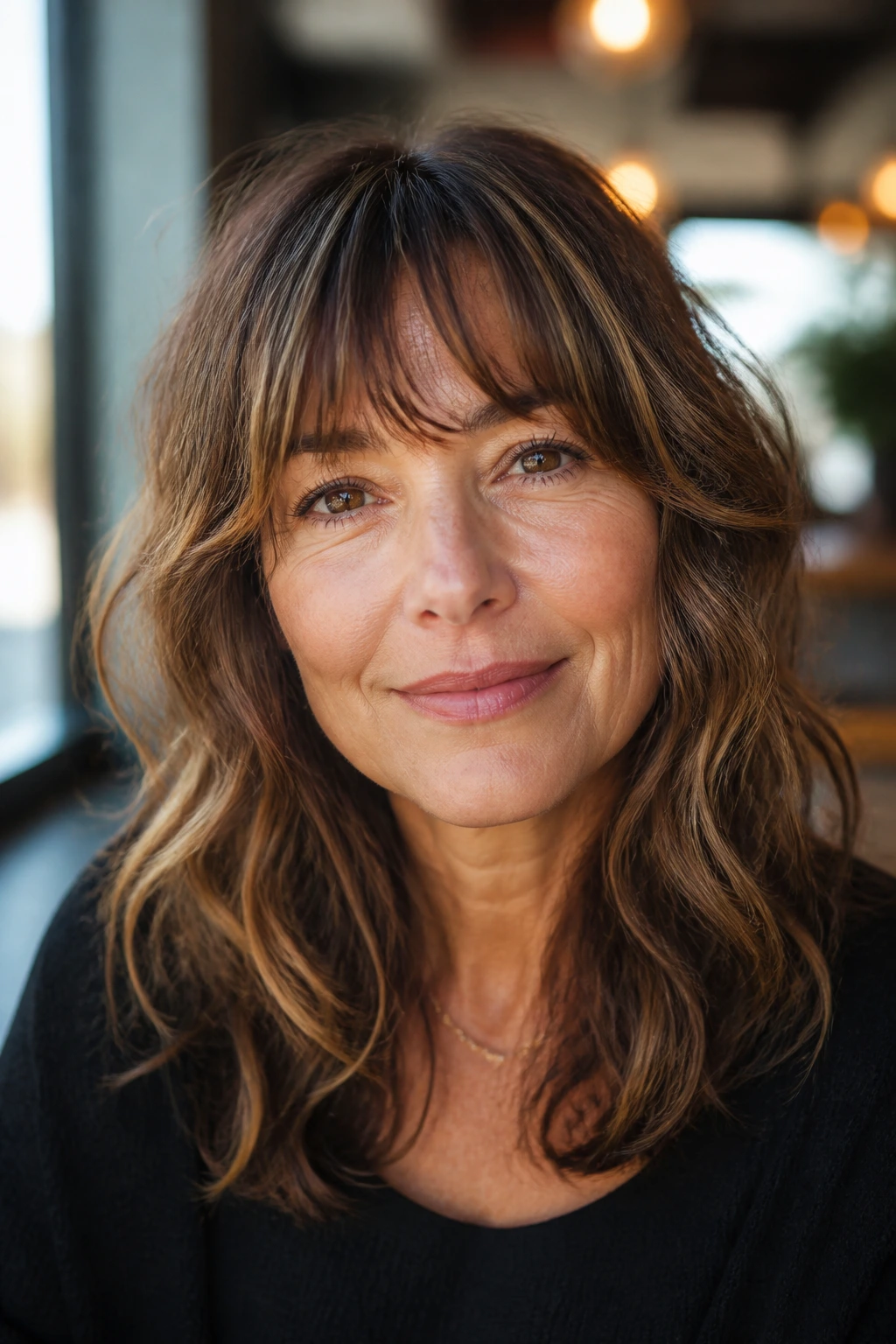
A textured fringe usually needs a trim every 4 to 6 weeks if you want it to keep its shape. Longer curtain styles can stretch to 6 to 8 weeks, especially if the ends are carved and the front opens naturally.
On non-wash days, water is enough to reset most fringes. You do not need a full shampoo every time the front misbehaves. A mist, a finger re-shape, and a 30-second blow-dry at the root often fixes the problem.
Sleep can flatten the front fast. If your bangs are the first thing to go rogue in the morning, clip them out of the way before bed or let them rest on a satin pillowcase. It sounds fussy. It works.
When a fringe starts to feel too short, don’t panic and start hacking at it yourself. That usually creates a choppy line that’s harder to blend. A tiny cleanup around the eyes is one thing. A home trim that takes off half an inch is how people end up wearing pins for three weeks.
Questions People Ask Before They Cut the Fringe
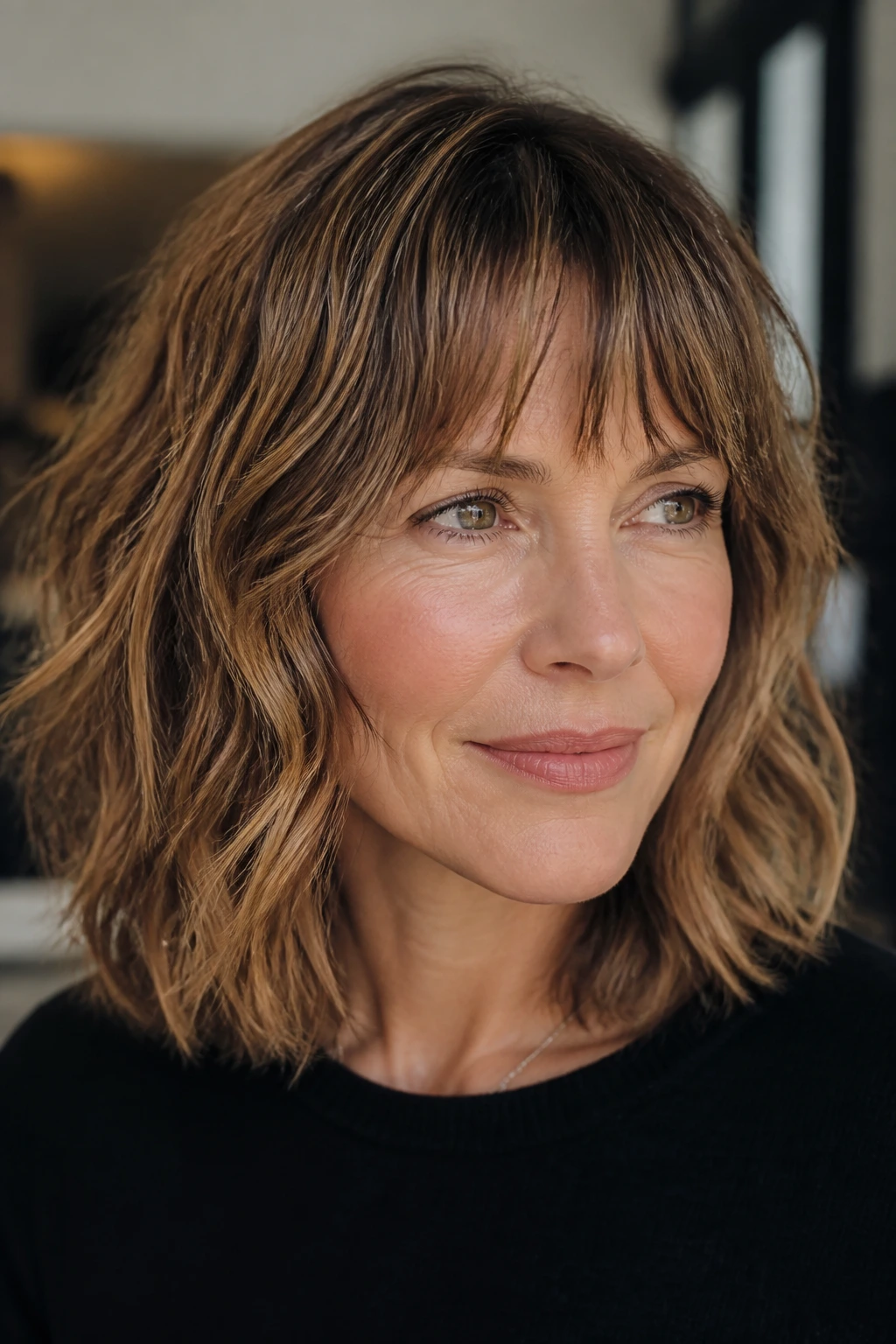
Will textured bangs make my wavy hair look frizzier?
Not if they’re cut with enough softness and styled with light hold. Frizz usually comes from blunt cutting, too much handling, or heavy product that dries in patches.
Do I need to blow-dry them every day?
No. Many of these styles are built for air-drying or a quick root reset. You may need heat for special occasions, but daily hot-tool duty is not the point.
What if my waves are fine and thin?
Go for lighter density, longer lengths, and pieceier ends. Heavy bangs can swallow fine waves, while airy fringe keeps the front from collapsing.
What if my hair is thick?
Ask for internal weight removal and a fringe that is textured underneath, not just on top. Thick wavy bangs can turn bulky fast if the stylist leaves too much mass at the center.
Can I wear textured bangs with glasses?
Yes, and some styles are made for it. Side-swept, bottleneck, and layered curtain bangs are usually the easiest because they stay away from the frame line.
How do I know if baby bangs will work?
Check your cowlicks first. If the front hairline pushes in several directions or the hair springs up sharply when dry, cropped fringe will need more maintenance than it’s worth.
Should bangs be cut wet or dry?
For wavy hair, dry or nearly dry is usually safer. Wet cutting can hide shrinkage, and that’s how you end up with a fringe that jumps two inches shorter than planned.
What if the bangs separate in the middle all day?
That can be fixed with a little root lift and a change in drying direction. If the split keeps happening, the cut may need more density at the center or a softer shape around the cowlick.
A Fringe That Moves With You
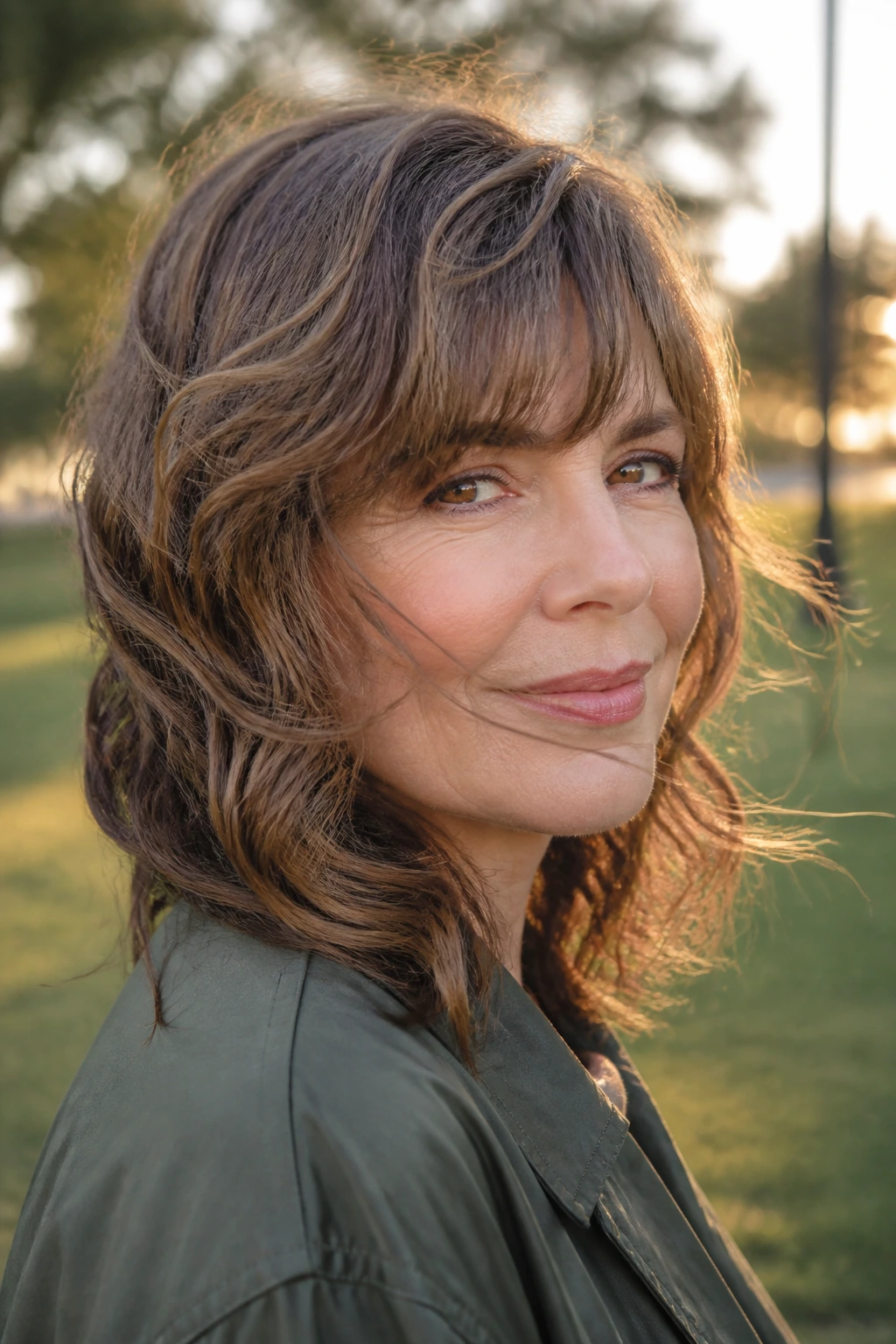
The best textured bangs for women over 40 with wavy hair are the ones that feel like they belong to the haircut, not the other way around. They leave room for shrinkage, room for movement, and room for a life that does not revolve around a blow-dryer.
Some days you’ll want the softness of curtain bangs. Other days you’ll want the edge of a piecey brow-grazing fringe or the easy drift of a side sweep. That flexibility is the whole point. A good fringe should make the front of your hair easier to live with, not more precious.
Pick the shape that matches your wave pattern, your patience level, and the amount of time you’re willing to spend in front of the mirror. The right one will start behaving the moment it dries.