



Fine hair can look gorgeous in loose curls—right up until the bend drops, the roots lie flat, and the whole shape starts clinging to the sides of the face. That’s where wispy layers earn their keep. The right cut doesn’t fight your hair’s texture or weight. It gives the curls somewhere to sit, lifts the face frame off the cheeks, and keeps the ends from looking like they were trimmed with a ruler.
The trick is restraint. Too many layers on fine hair can turn the bottom half see-through, which is how you end up with length that feels stringy instead of soft. Wispy layered hairstyles for fine hair with loose curls work because they borrow from two places at once: a little removal at the crown and around the face, plus enough length at the perimeter to keep the shape believable. That balance matters more than people think. A loose curl pattern adds width. A blunt edge adds weight. Put the two together and the whole head reads fuller, even when the strand count itself never changed.
Some of these looks are salon cuts. Some are styling tricks that make an already-good cut look twice as full. A few do both. That mix is useful, because fine hair usually needs options. Some mornings it wants a side part and a fast wave. Other days it needs a half-up lift and a couple of face-framing pieces doing the heavy lifting for you. Start with the shape that fits your life, not the one that sounds fanciest.
Why These Wispy Looks Work So Well on Fine Hair
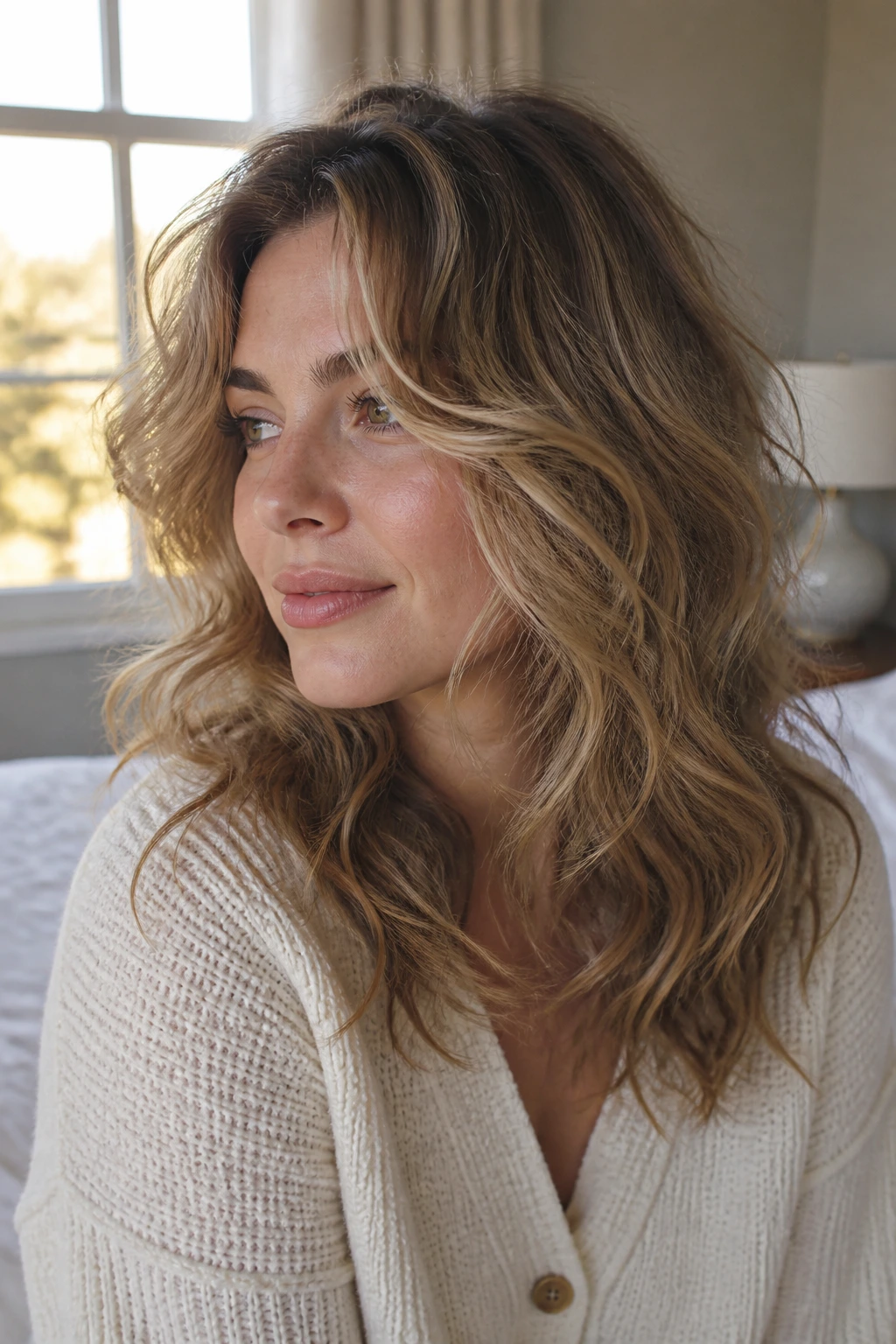
-
They keep the bottom line from disappearing: A little weight at the ends makes the cut look intentional instead of airy in a bad way, which is the difference between “soft” and “sparse.”
-
They put movement where the eye wants it: Shorter pieces around the cheekbones, jaw, or collarbone pull attention upward, so the hair looks fuller right where it frames the face.
-
Loose curls do more visual work than straight strands: A brushed-out wave takes up more space than a pin-straight section of the same length, and that extra width is doing a lot of the flattering here.
-
They grow out without a harsh line: Wispy layers soften as they lengthen, so you don’t get a blunt shelf or a chopped look two weeks after the salon visit.
-
They play nicely with part changes: Shift the part half an inch and you can change the root lift, the cheekbone emphasis, and the whole mood of the style without touching the scissors.
1. Collarbone Layers with Soft Brushed-Out Waves
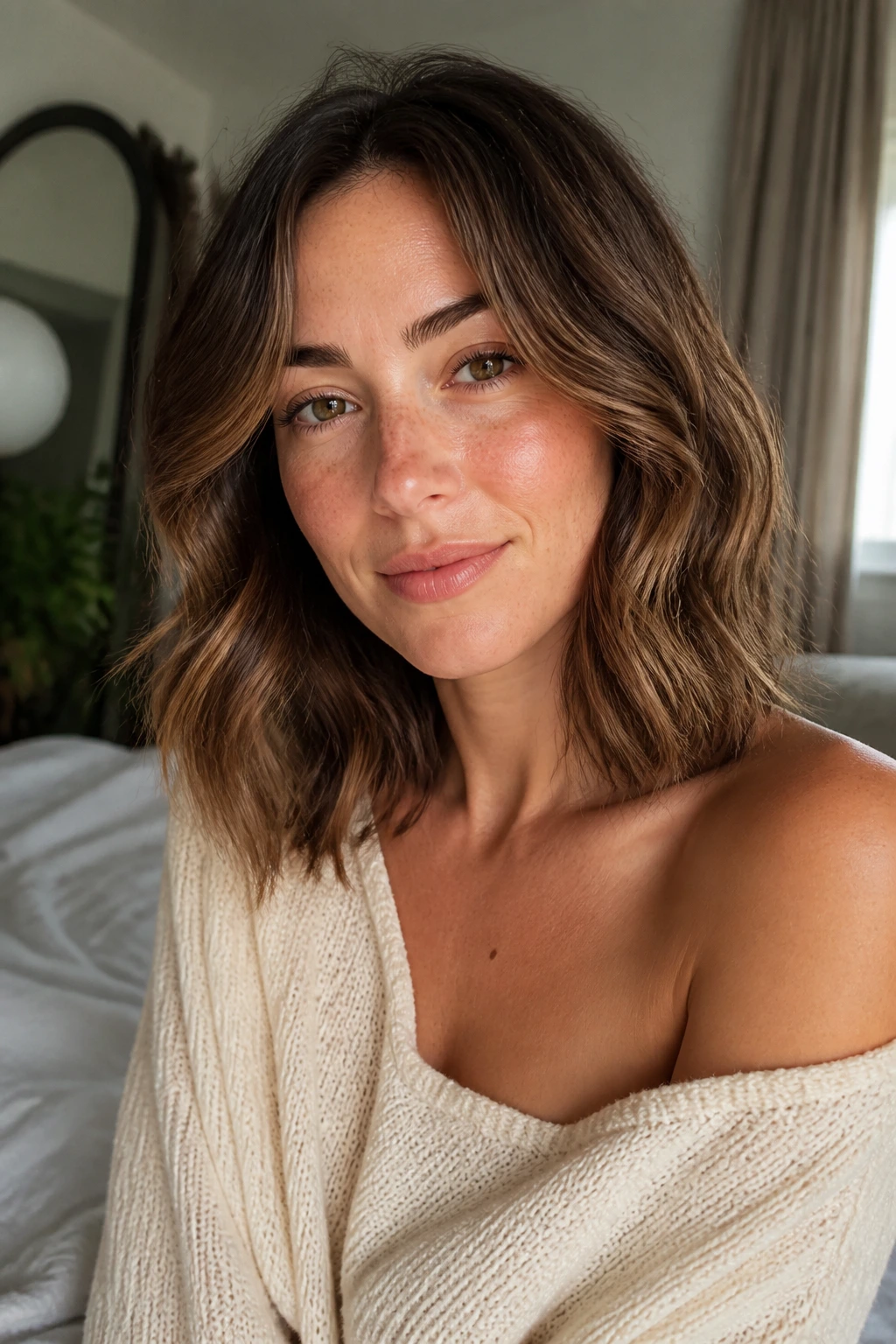
A collarbone cut is one of the safest places to start if your hair is fine and you want loose curls that don’t collapse by lunch. The length lands where the shoulder starts interfering with movement, so the wave can breathe instead of being crushed by your clothes. Keep the layers soft and let the ends stay a touch fuller than you think. That little bit of weight keeps the silhouette from looking wispy in the wrong way.
Why this shape helps fine hair
The collarbone gives the curls a ledge. That sounds small, but it changes the whole feel of the haircut. When the ends hit that point, the hair swings instead of hanging.
A 1-inch curling iron, used from mid-length to the last inch, creates a loose bend that brushes out into a thicker-looking wave. Don’t wrap the whole head into uniform spirals. That’s how fine hair starts looking dated and flat at the same time.
If you like a middle part, this cut takes one easily. If you live with a side part, even better. The face-framing layers can be kept a little longer near the cheek so they don’t spring up too high.
A good rule: keep the perimeter just blunt enough to show density, and let the layers do their work above it.
2. Butterfly Layers That Open Up Around the Cheekbones
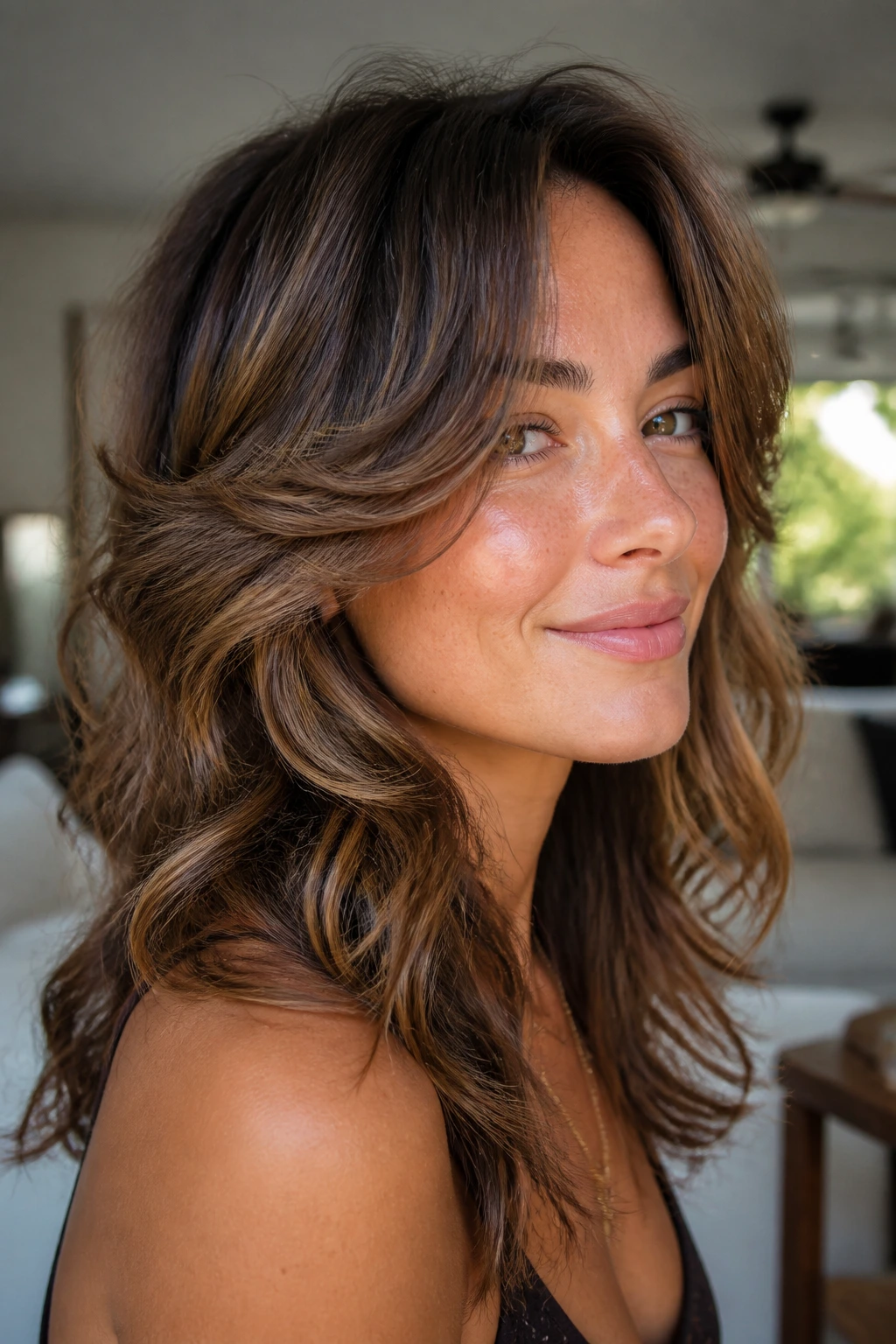
This one earns its keep fast. Butterfly layers are built for people who want the feeling of shorter hair around the face without losing the length in back, and on fine hair that can be a very smart trade. The shorter front sections lift away from the cheeks, the longer back sections keep the bottom line full, and the loose curls make the whole thing look airy rather than chopped.
When done well, this cut gives the illusion of two haircuts in one. The top reads bouncy. The bottom stays smooth and soft. That contrast is what makes it useful on finer strands.
The curl placement matters. Wrap the front pieces away from the face and set them in larger sections, then use a brush or your fingers to soften the curl once it cools. If you brush them out too soon, the front pieces lose their shape and the whole effect goes limp. If you leave them too tight, they can look ringleted and fussy. Aim for that in-between bend that falls around the cheekbone.
Best for: people who want obvious face-framing lift without chopping off length.
3. Long Shag with Curtain Bangs and Soft Ends
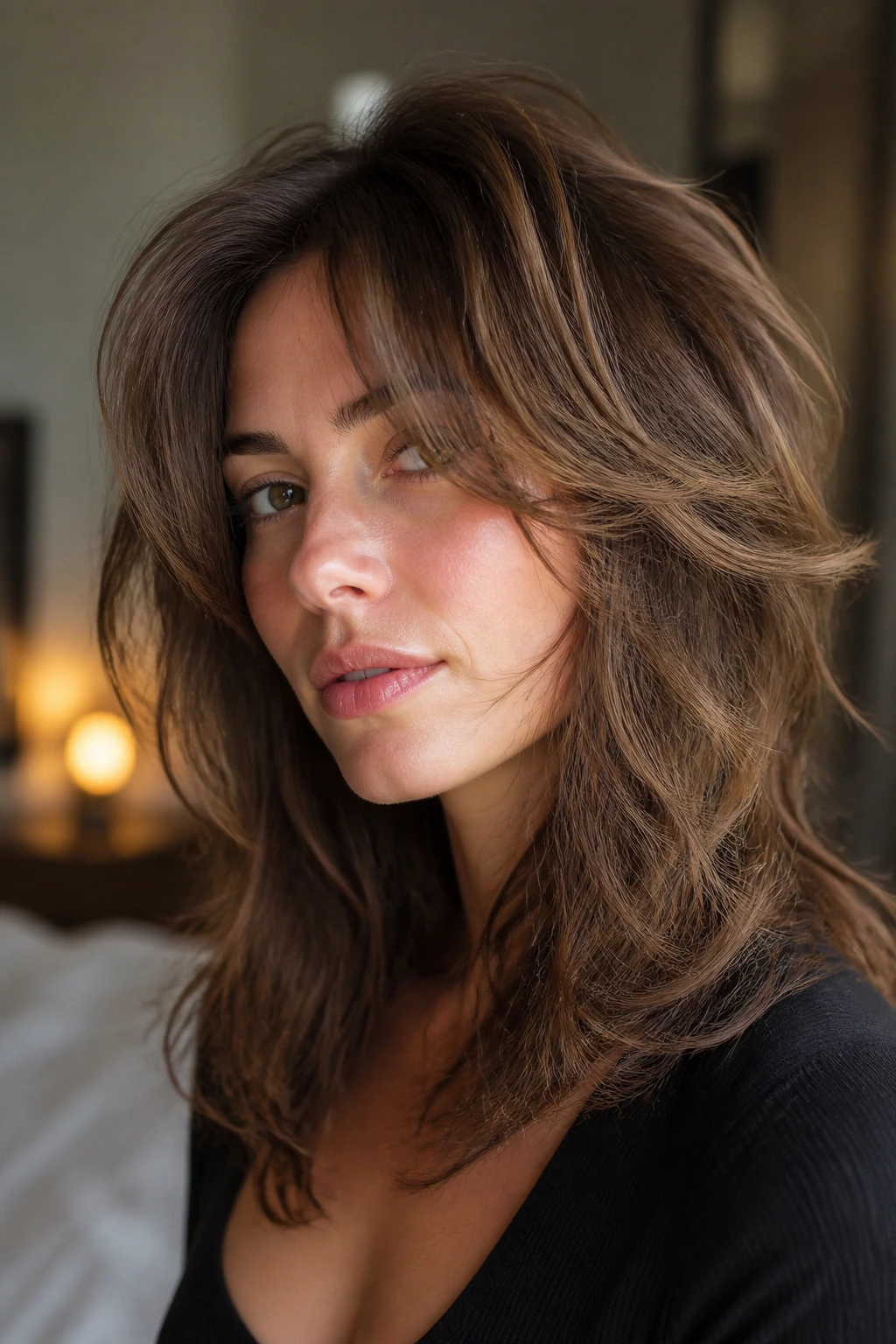
Can a shag work on fine hair without turning ragged? Yes. The version that works has soft edges, not shredded ones. A long shag with curtain bangs gives you movement at the front, a little lift at the crown, and enough length through the back to keep the curls from looking thin at the tips.
The curtain bangs should start around the bridge of the nose and open near the cheekbones. That shape gives the forehead a little softness without swallowing the face. Keep the layers below that loose and piecey, not over-texturized. Fine hair can hold a shag shape, but it can’t afford to lose too much mass in the wrong places.
Styling note
Work a small amount of mousse through damp roots, then rough-dry the crown with your fingers before you touch the bangs. The bangs are easiest to shape with a round brush or a quick bend from a flat iron. Once the hair cools, break the wave with your fingertips and leave some separation at the ends.
That separation is the point. Not every strand needs to join the party.
4. Feathered Wolf Cut with Crown Lift
A wolf cut can look brilliant on fine hair if it’s softened and kept under control. The scary version—too many short layers, too much razor work, too little perimeter—can leave the ends whisper-thin. The polished version is different. It keeps a little length at the bottom, builds lift through the crown, and lets the face-framing pieces feather out instead of sticking straight out.
This style is for the hair that falls flat the moment you leave the bathroom. The shorter crown layers create a little internal lift, and the loose curls give those layers somewhere to rest. The result is a cut that looks full at the top and airy at the sides, which is a very nice trick if your hair tends to hug the head.
Keep the texture products light. A heavy cream will make the crown collapse, and then the whole thing loses its shape. A spray mousse or a soft texturizing spray works better because it grips without coating every strand.
One blunt thought: if your ends are already see-through, don’t ask for a severe wolf cut. Ask for a softer version with the same lift and a calmer perimeter.
5. U-Shaped Length with Invisible Interior Layers
The U-shape is underrated because it doesn’t look dramatic in a salon mirror. That’s exactly why it works. Instead of stacking obvious layers all over the head, the cut keeps a gentle curve in back and hides the movement inside the shape. On fine hair, that means you get a little lift without losing the clean line that makes the ends look full.
Unlike choppier styles, this one doesn’t scream “layers.” It whispers them. The inside is doing the work, especially once you add loose curls through the mid-lengths and brush them into a wave. The outside line stays calm. The inside moves.
Who it suits
- People who want to keep length but stop the ends from looking stringy.
- Anyone who wears their hair down more often than up.
- Fine hair that tangles easily when over-layered.
Ask for the shortest layers to stay low, usually below the chin, and keep the bottom edge soft enough to read as one shape. The more the cut moves in the curl pattern, the less it needs to look chopped on its own.
6. Textured Lob with Face-Framing Ribbons
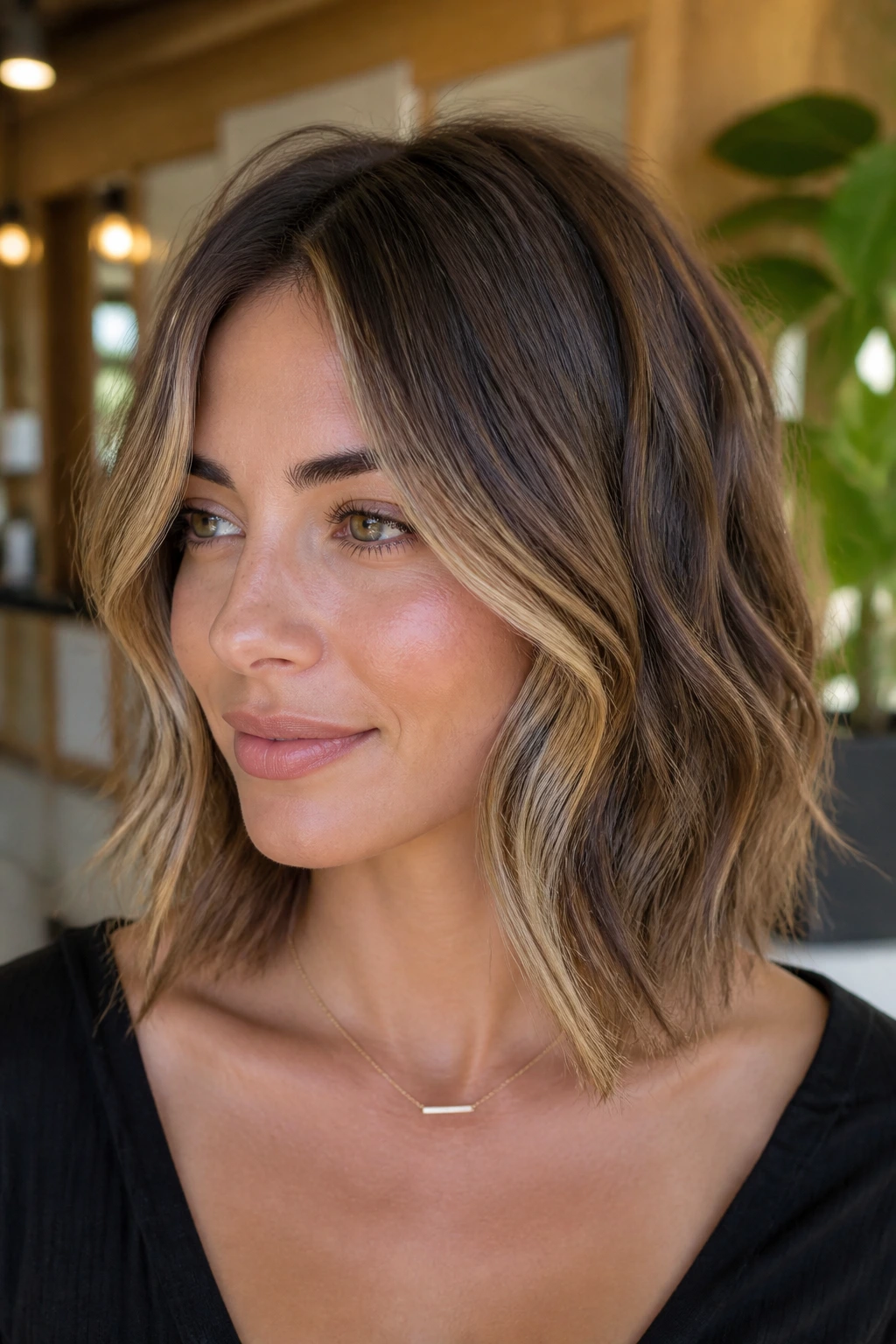
A textured lob can be the sweet spot for fine hair because it lands in that useful band between jaw and collarbone. It’s long enough to feel feminine and versatile, short enough that the curls don’t need to fight gravity all day. Add two face-framing ribbons in front—long, soft pieces that curve from the cheekbone to the jaw—and the style starts looking deliberate instead of accidental.
This cut is especially good if your hair has a little natural bend but not enough body to hold a full curl for long. A lob gives the bend some structure. The face pieces keep the eye busy around the face, which makes the sides look fuller.
The trick is not to over-layer the body of the bob. Fine hair in a lob shape wants a little weight at the bottom. You can still texture the ends with point cutting, but don’t thin them until they vanish. That’s the fastest way to turn a flattering lob into a skimpy one.
If you wear glasses, this cut is especially nice. The face-framing pieces can sit just outside the frame line, which keeps the look soft instead of crowded.
7. Feathered Mid-Length Cut with a Deep Side Part
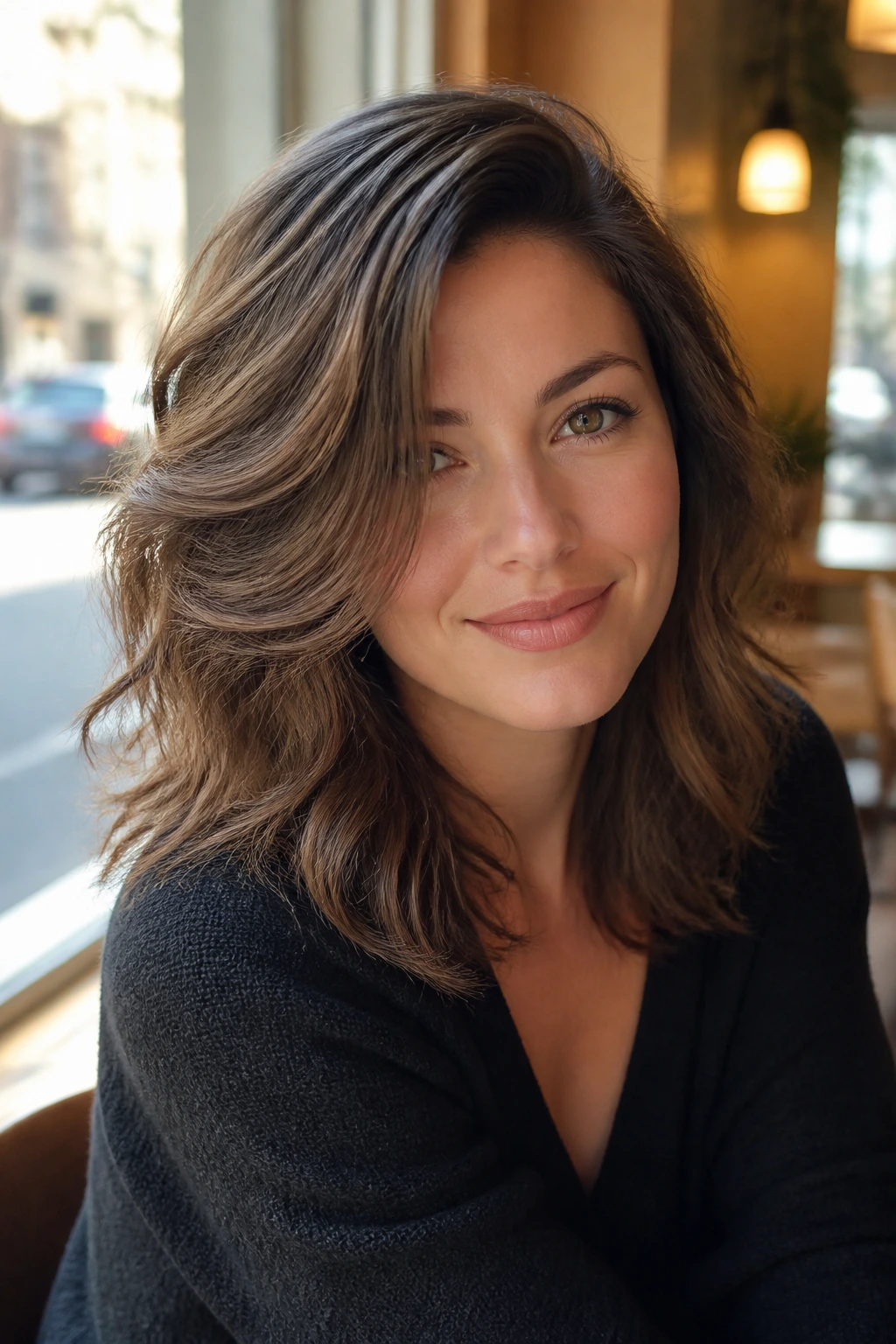
The deep side part does a lot of work here. It lifts the root on one side, drops a little softness over the other, and makes fine hair look like it has more room at the crown. Add feathered layers through the mid-lengths and you get a shape that moves when you walk, which is one of the easier ways to fake fullness.
This is a good cut if you like hair that feels styled even when it isn’t perfectly done. The feathering softens the line around the cheeks and jaw, while the side part gives you instant volume without teasing the crown into a helmet.
A round brush or large hot roller can help at the front, but don’t get precious about every section. The charm of this shape is its looseness. Let the ends curve a little, let one side sit slightly fuller, and leave the movement uneven on purpose.
A polished side part on fine hair can look expensive without trying too hard. That’s the appeal. It’s controlled, but not stiff.
8. Bottleneck Bangs and Gentle Wave Ends
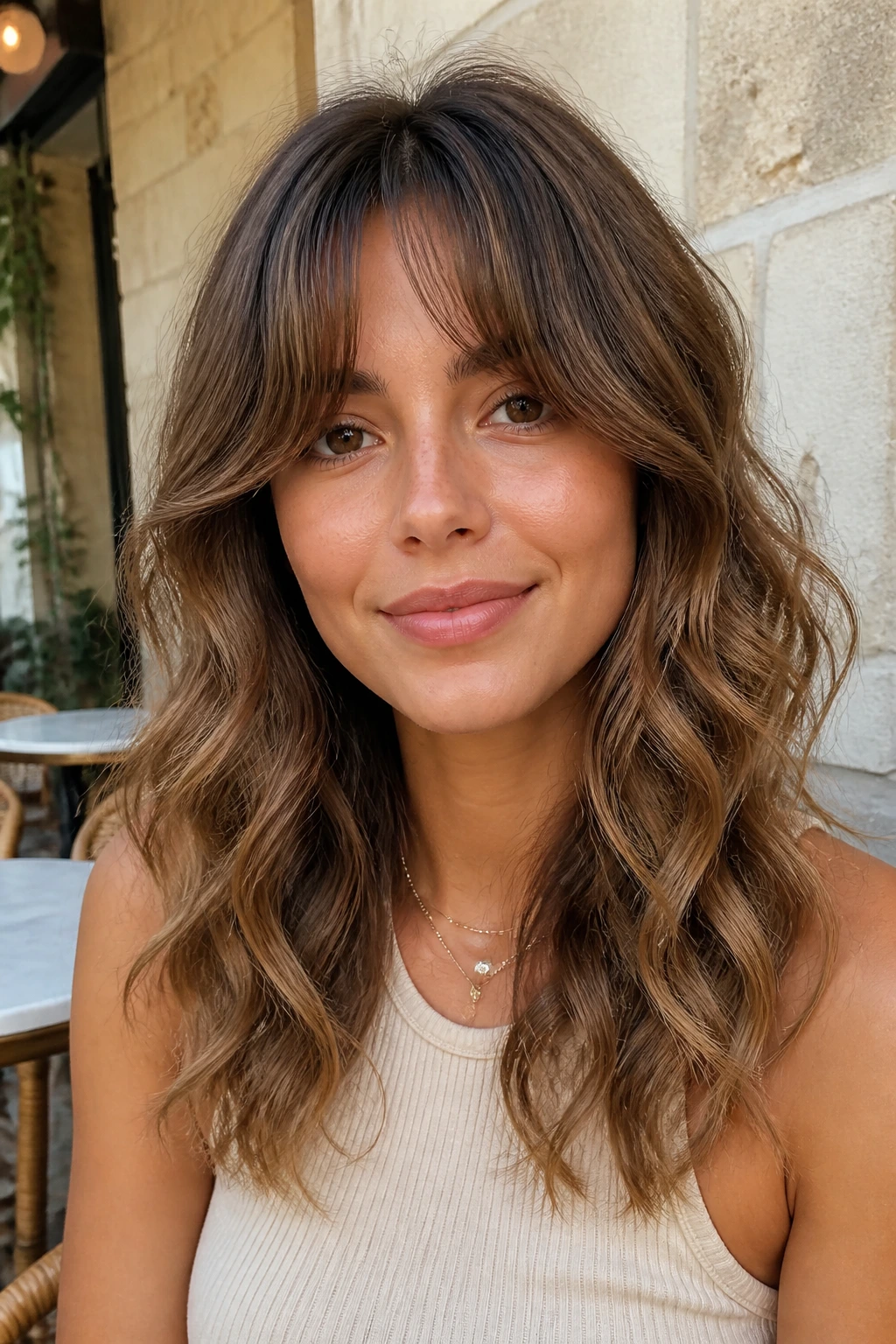
Bottleneck bangs are a good move if you want fringe but don’t want a heavy wall across the forehead. They start narrow near the center and widen as they curve toward the temples, which gives fine hair a little front-end drama without choking off the face. Paired with loose curls through the ends, the whole style feels light and soft.
What the fringe does
The middle portion is short enough to show the brow area. The side pieces are long enough to blend into the cheekbones. That taper matters because it keeps the front from feeling bulky.
For styling, dry the bangs first. Seriously. If they stay damp too long, they separate in odd directions and the rest of the curl pattern has to work around them. A tiny round brush or a quick bend with a flat iron is enough. Then go back and curl the lengths in medium sections so the wave stays loose and not too polished.
This style is a good answer if you want face frame and forehead coverage but hate the bluntness of full bangs. It has shape. It has air. It does not sit there like a slab.
9. Rounded Layers with Flipped-Out Tips
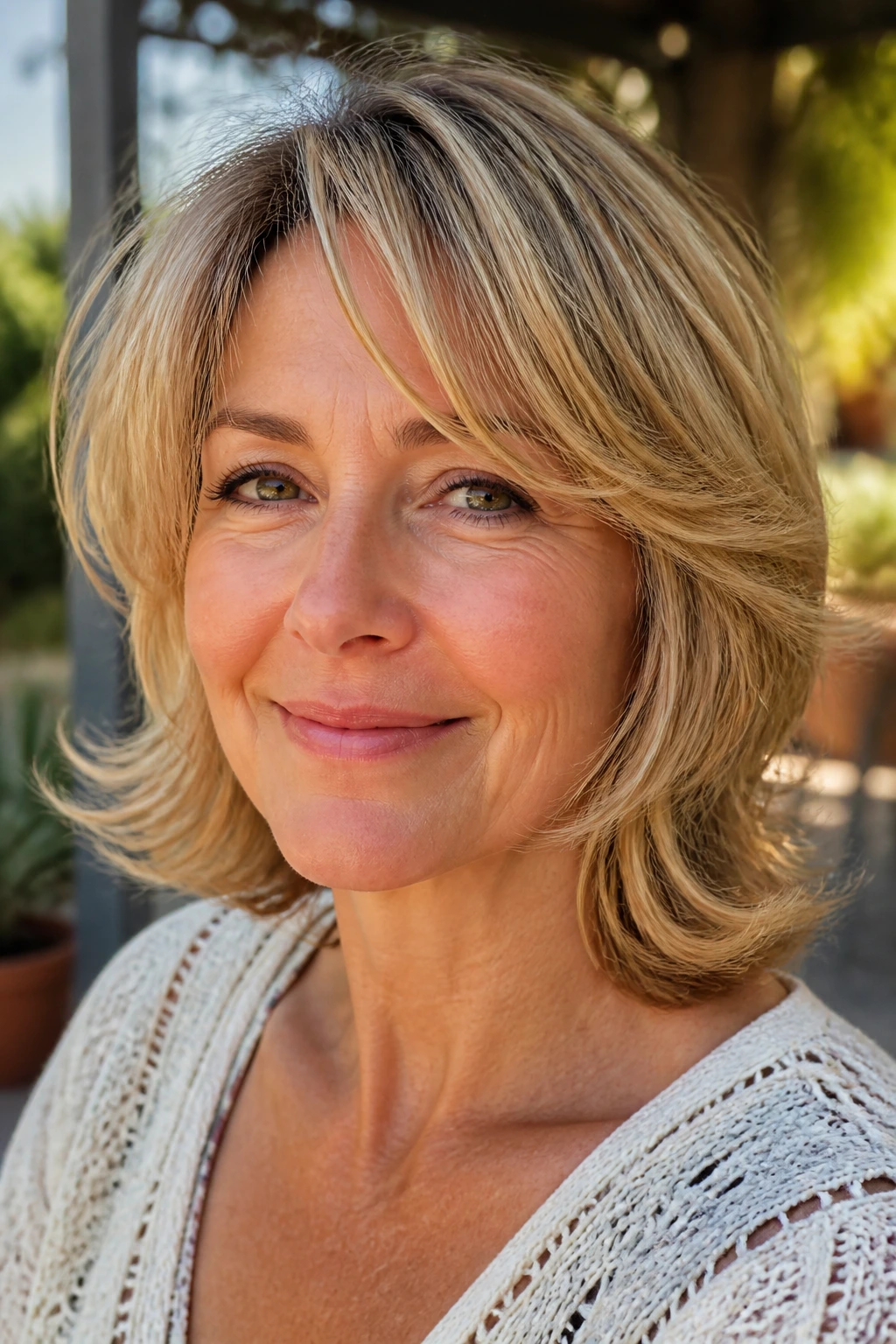
There’s something satisfyingly old-school about rounded layers on fine hair. The shape widens gently through the mid-lengths, then the ends flip away from the neck and shoulders instead of clinging to them. With loose curls, that rounded outline becomes soft and touchable rather than formal.
The key is the curve. You want the haircut to follow the contour of the head and jaw, not fight it. Rounded layers help the hair feel fuller because they redistribute the visual weight instead of leaving everything hanging straight down. A light flip at the ends exaggerates that effect.
A medium round brush or the curve of a flat iron can create the tip flip in a couple of passes. Don’t overdo it. One or two turns are enough. If the ends curl like corkscrews, the style loses its easy feel and starts looking overworked.
This one is especially good for anyone whose fine hair goes limp near the neck. The outward movement at the ends keeps the shape from getting swallowed by clothing.
10. Piecey Bob with Loose Curl Definition
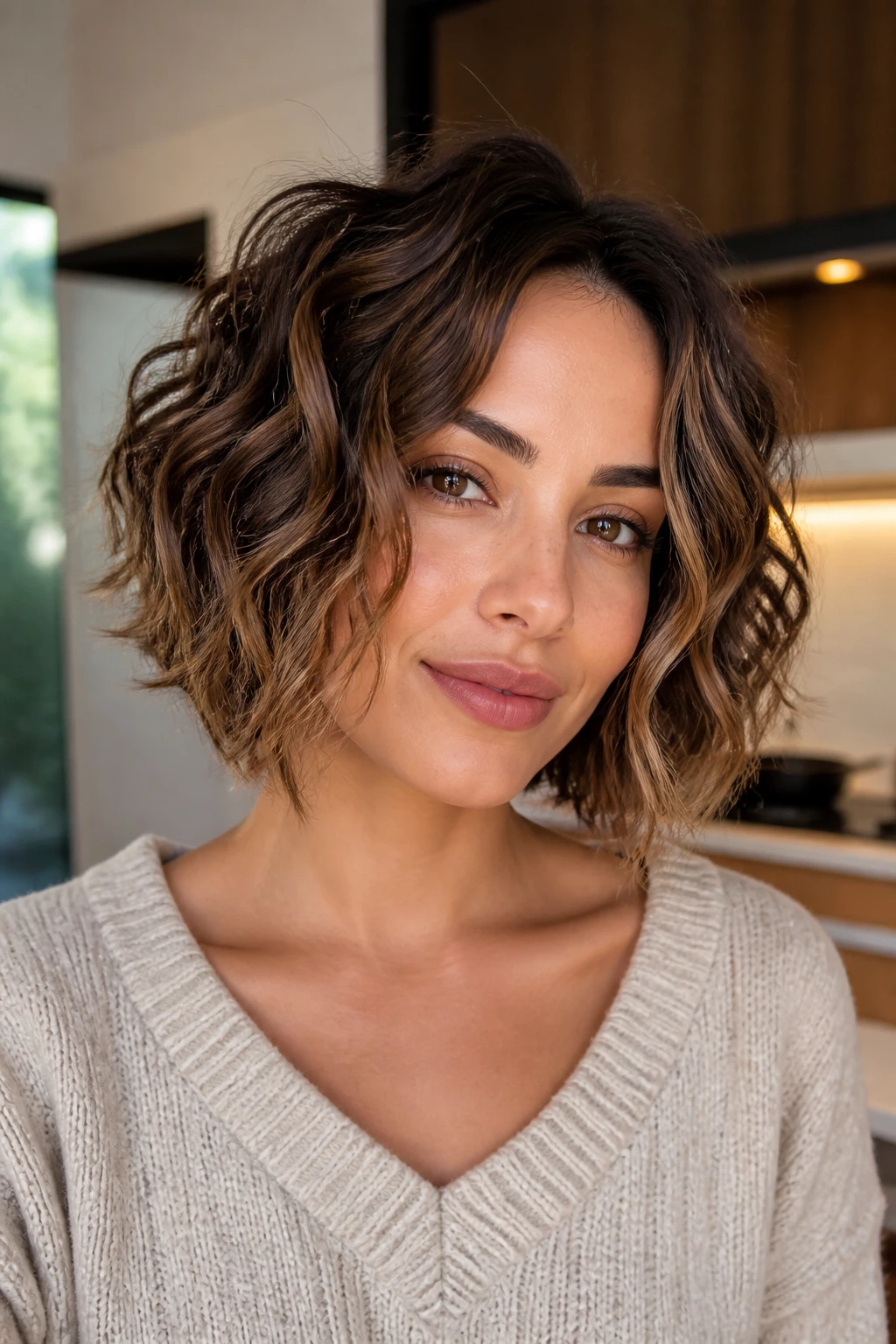
A bob on fine hair needs discipline. Too short, and it starts to puff at the sides. Too soft, and it can go flat around the jaw. A piecey bob with loose curl definition lives in the middle. It uses a clean cut line for density, then adds a few separated waves to keep the shape from feeling boxy.
The best version usually sits somewhere between the chin and just below the jaw. That length gives the curl enough room to spring without shrinking into the face. Keep the layers minimal and let the texture show up in the styling rather than in a heavy cut.
A little mousse at the roots and a curling iron with a medium barrel can do more for this bob than a pile of product. Fine hair only needs a small nudge. Once the wave is set, separate a few pieces near the front and leave the rest alone. That contrast—some pieces smooth, some bent—keeps the bob from looking too neat.
This is a good haircut when you want structure first and romance second.
11. Long Layers with a Side-Swept Fringe
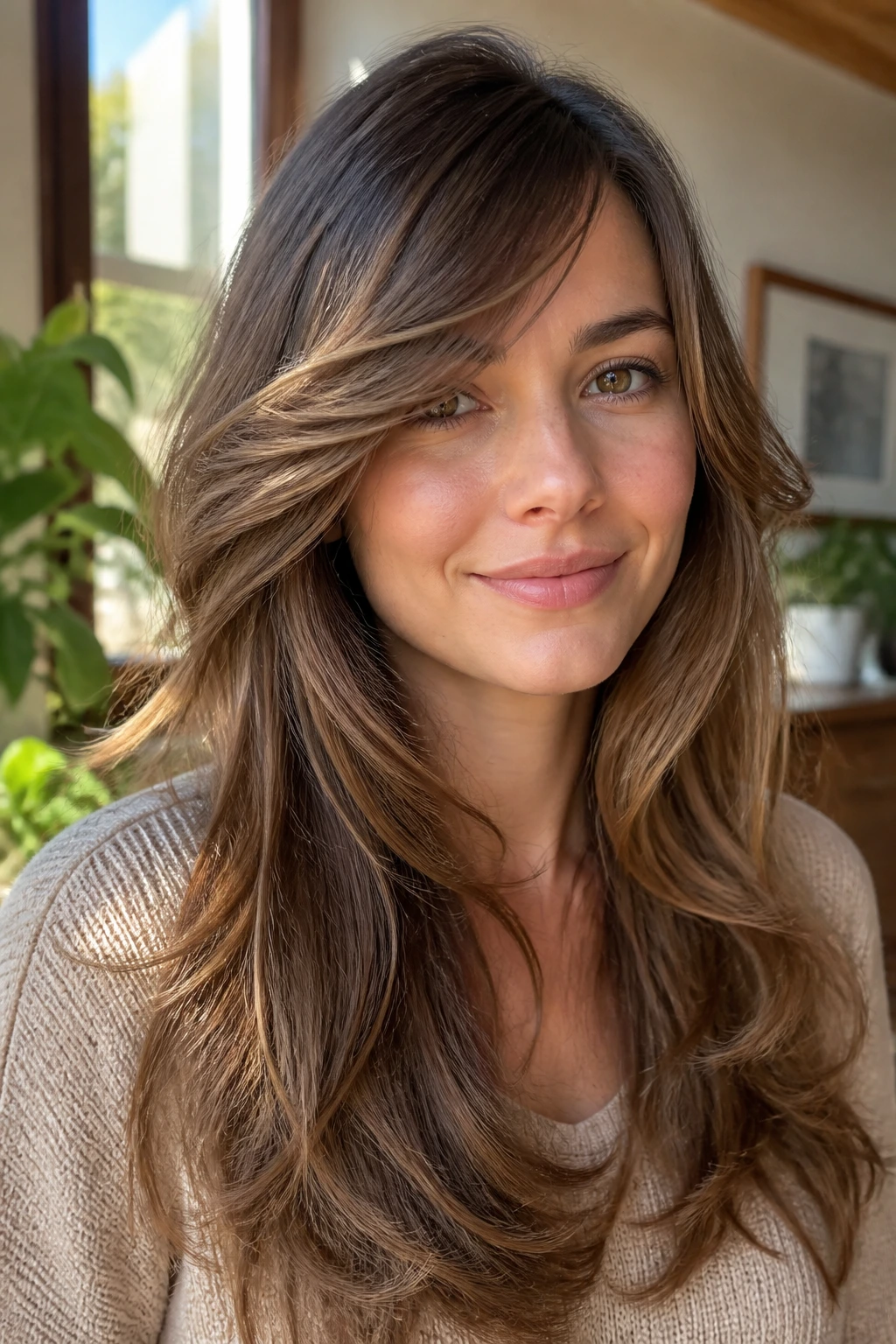
Long layers can work on fine hair if you keep them generous and avoid cutting them too high. That’s the part people get wrong. If the layers start at the cheekbone and continue all the way down in thin steps, the ends can disappear. If they stay longer and the fringe carries the face-framing job, the result looks much fuller.
The side-swept fringe is doing a lot here. It draws the eye diagonally, which lengthens the face and gives the illusion of body at the front. Loose curls through the rest of the hair keep the shape soft, so the fringe doesn’t feel separate from the cut.
This is one of those styles that works when you want to keep your length but still feel like you changed something. It’s a modest haircut. Quiet. Useful. Not boring, though. The wave pattern gives it enough life.
If your hair tends to split flat at the part line, the side sweep can hide a little of that while making the crown look less honest in the best way.
12. Airy Mermaid Length with Tapered Ends
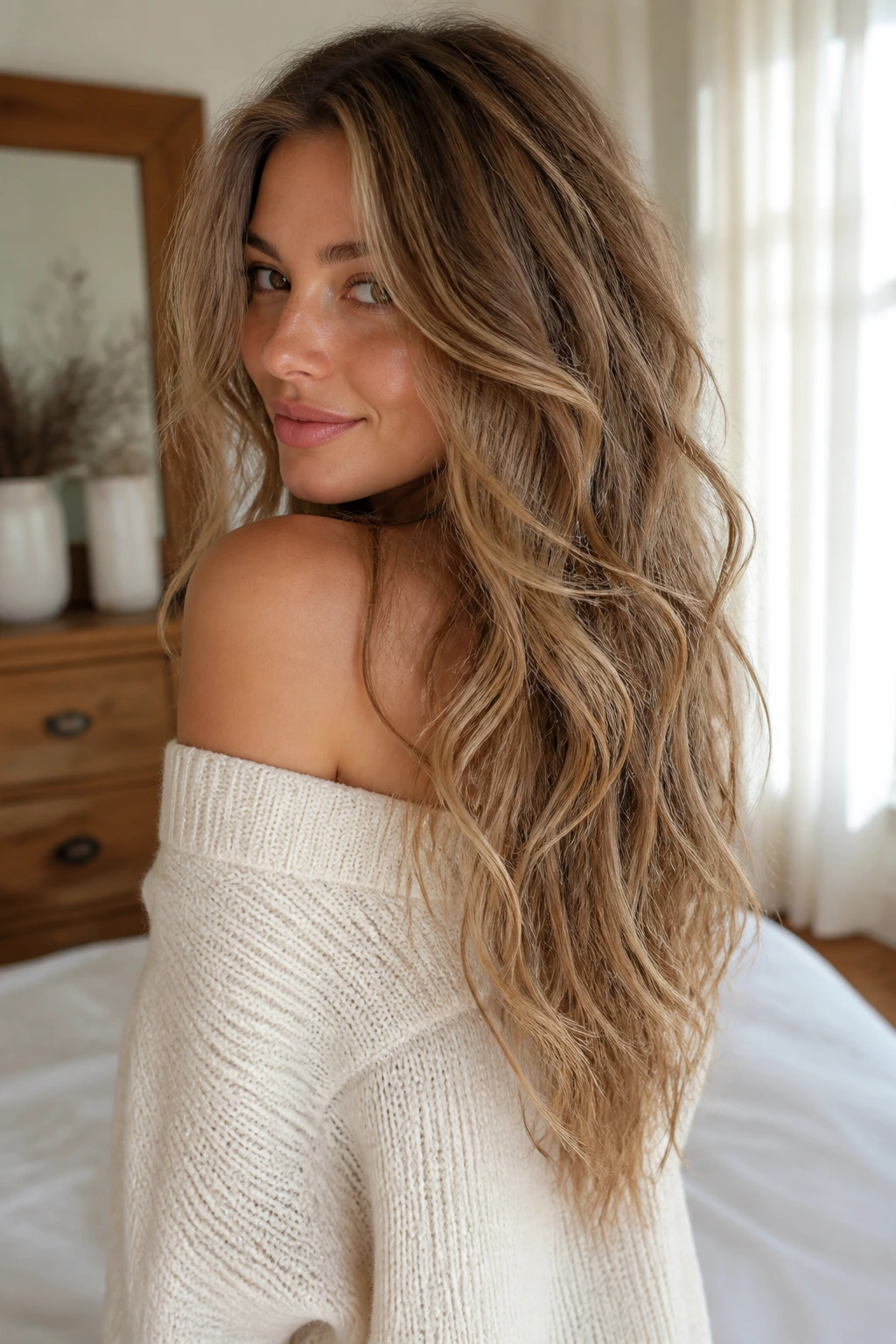
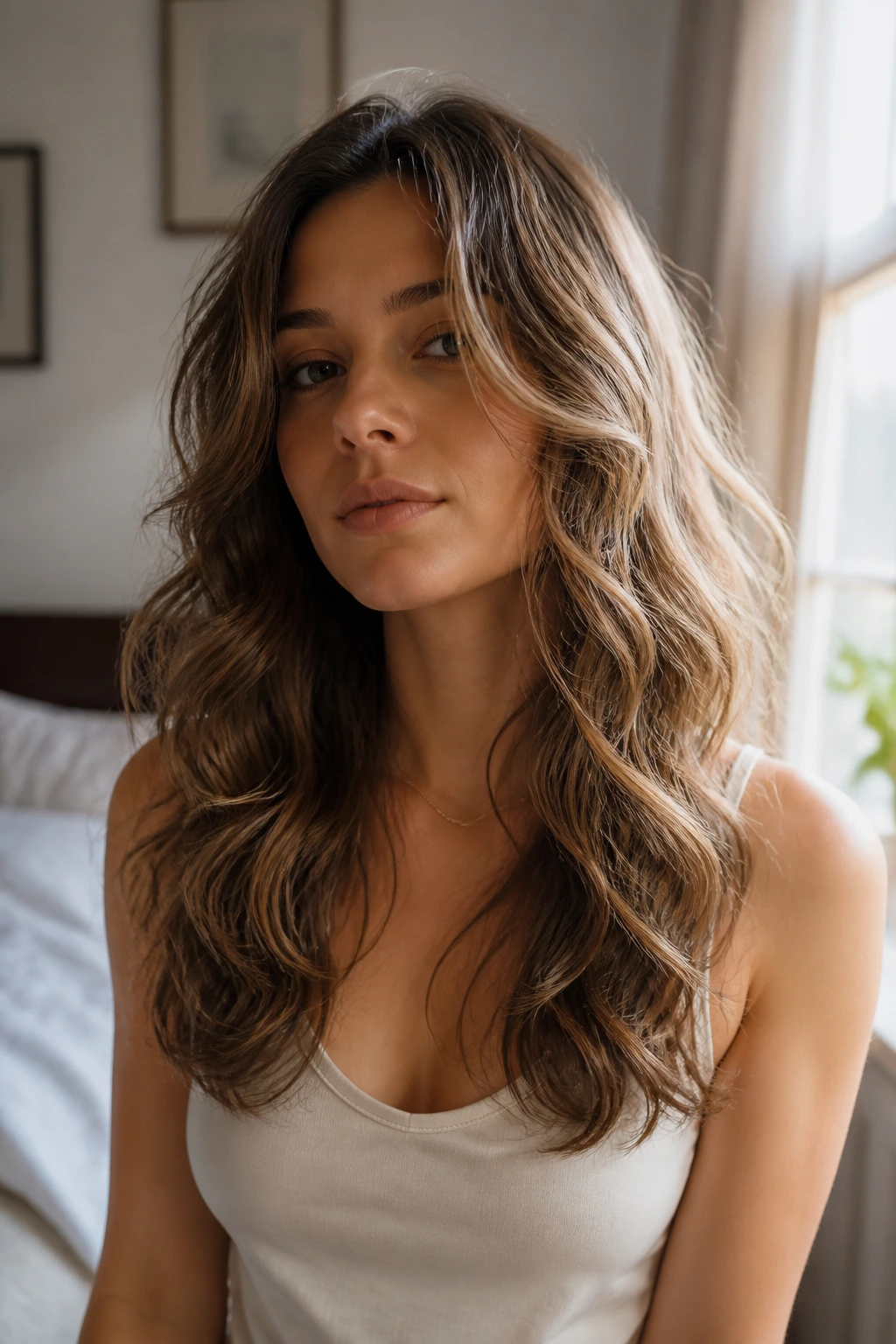
Long fine hair needs a little strategy. If you let it grow without any shape, the ends can get thin and the whole length starts reading as curtain-like. An airy mermaid length solves that by keeping the bottom soft and slightly tapered while giving the mid-lengths enough movement to catch loose curls.
The tiny taper at the bottom
You don’t want the ends thinned into nothing. You want them nudged. That means soft graduation, not aggressive debulking. The taper keeps the perimeter from feeling thick and blocky, but it still lets the hair look like it has actual substance.
Loose curls through this length work best when they’re brushed out after cooling. That’s where the mermaid feeling comes from: wave, length, and a little slip through the ends. Add a center part if you want calm symmetry. Shift to a side part if you need more lift at the top.
This style rewards people who are patient with their hair. It looks beautiful when it moves, not when it’s stiffly set. If you like that sort of soft, nearly-floating finish, this is one of the cleaner ways to get it.
13. Soft Mullet with a Polished Finish
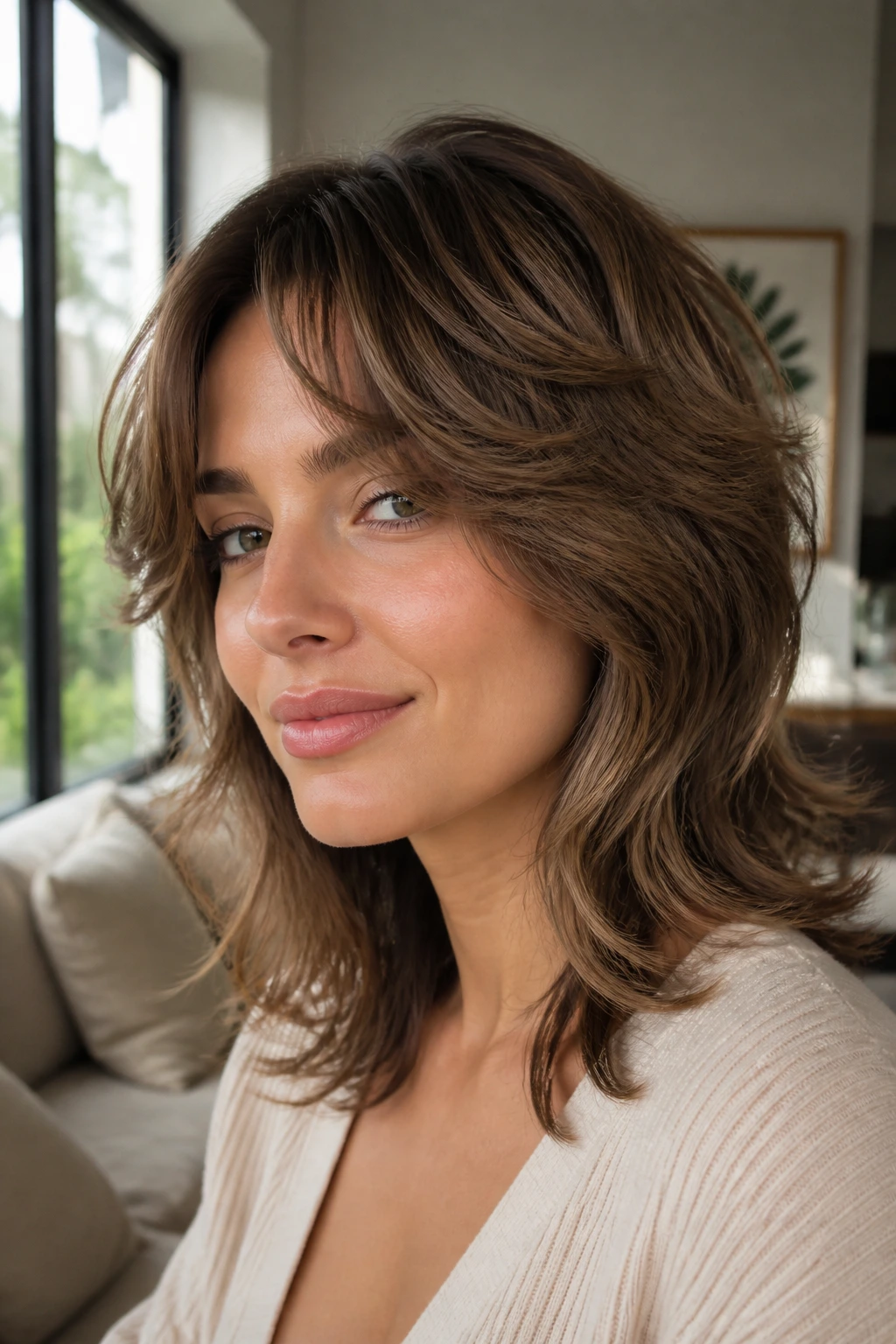
The soft mullet has a reputation problem, and most of it comes from bad versions. On fine hair, the cut needs restraint. You want shorter crown pieces and a slightly longer nape, but the line between them should be smooth, not jagged. The finish matters too. Loose curls and a glossy blow-dry take the edge off the shape so it feels modern instead of costume-like.
This is a good pick if you like a bit of attitude in a haircut. The crown can sit lifted. The sides can stay soft around the cheekbones. The back can hang a little longer, which keeps the cut from looking over-layered. Fine hair often needs something that creates shape without depending on thickness alone, and this does that.
Keep the texture light. A soft hold spray or a small amount of styling cream on the ends is enough. If the crown gets crunchy, the whole thing loses the point.
Not every fine-haired person wants this shape. Fair. But if you like movement and don’t mind a little edge, the polished version is far easier to wear than the heavy, shaggy one people often imagine.
14. C-Cut Layers That Curve into the Jawline
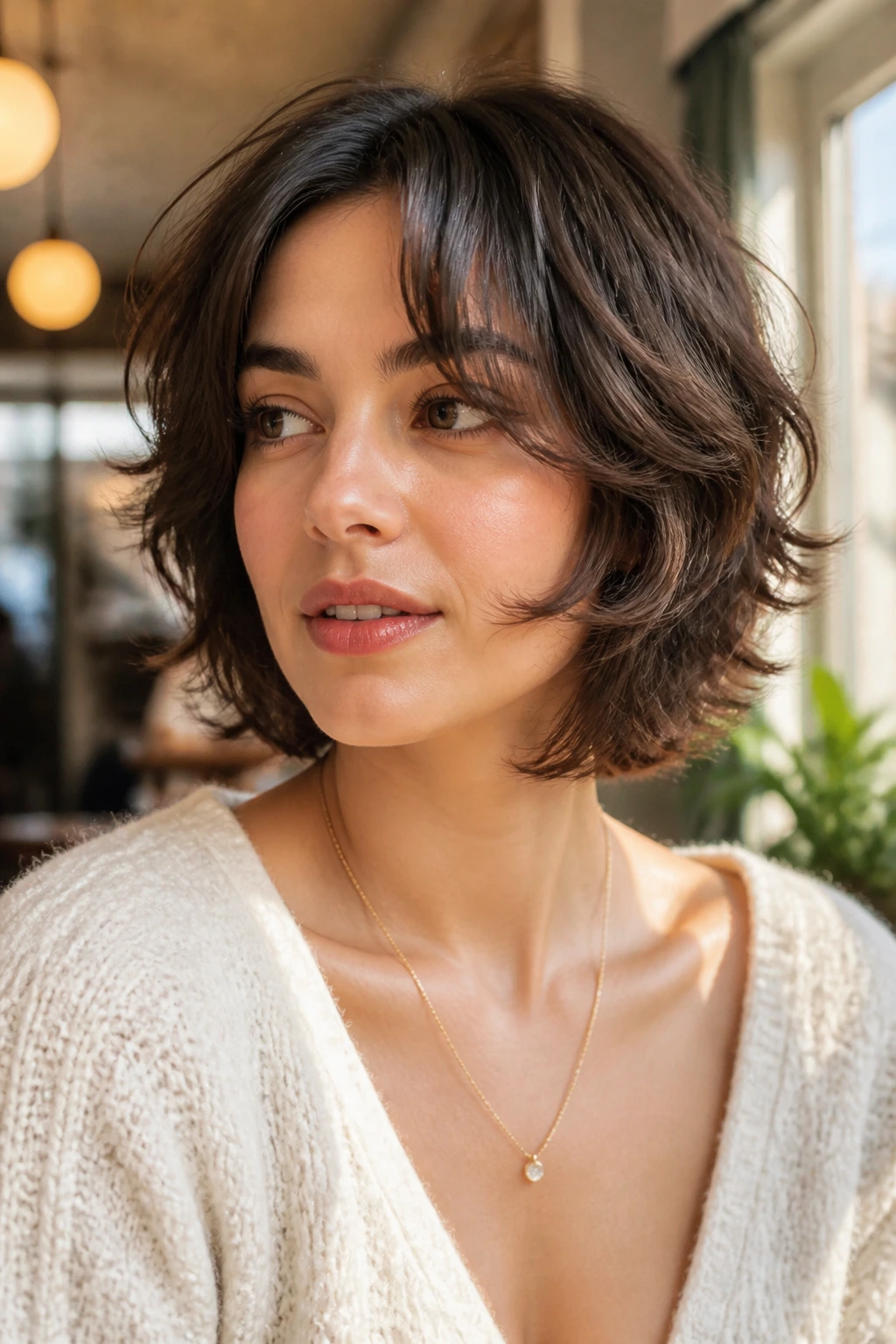
The C-cut is one of my favorite shapes for face-framing because it feels smooth without being bland. The layers arc around the face in a soft C shape, starting near the cheekbone and curving down to the jaw. On fine hair, that curve gives structure to loose curls without making the head look overbuilt.
The haircut is especially flattering if you want the face to look a little slimmer or if your hair tends to fall flat against the sides. The curve creates space. It also gives the front pieces somewhere to move, which helps when you brush the curls out.
What to ask for
- A soft C-shaped frame that starts around the cheekbone.
- Length kept below the chin in back.
- Light internal layering, not heavy razoring.
- Ends that stay dense enough to show thickness.
The style works with a middle part, but it looks especially pretty with a slight off-center part. That tiny shift keeps the curve from feeling too symmetrical. And on fine hair, symmetry can be a little harsh.
15. Tucked-Behind-the-Ear Layers for Everyday Wear

Some hairstyles are meant for a photo. This one is meant for actual life. Tucked-behind-the-ear layers are practical, clean, and a little softer than they sound. The front pieces are cut long enough to tuck without popping out immediately, and the loose curls keep the shape feminine instead of severe.
If you wear glasses, earrings, or both, this style is worth a look. It keeps the sides from crowding the face. It also creates a little width at the temples, which is useful when fine hair falls too close to the head.
The trick is to keep the layers soft enough to move but not so short that they escape every time you turn your head. Ask your stylist to leave a few face-framing pieces that graze the cheek or jaw, then curl them away from the face before tucking one side back.
A style like this makes fine hair look neat without looking stiff. That’s a useful lane.
16. Deep Side-Part Waves with Glam Lift
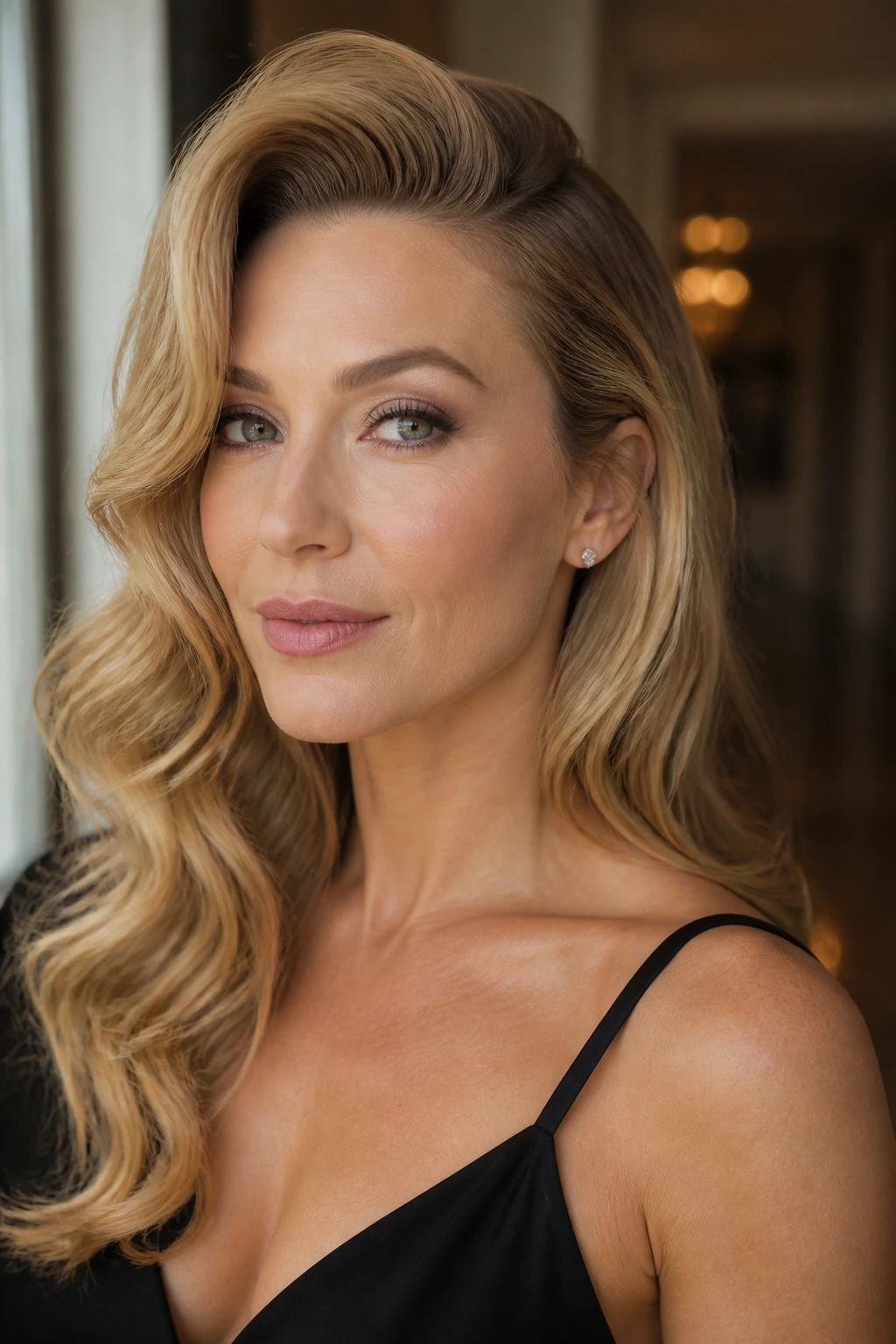
A deep side part can rescue flat roots faster than almost anything else. Combine it with loose waves and you get that old-Hollywood shape that looks dressed up but not frozen. The larger section on top gives the illusion of more hair at the crown, and the waves through the lengths create width through the middle.
This works best when the waves are broad. Tight curls shrink the length and can make fine hair look overdone. Larger sections, a 1.25-inch iron, and a cool brush-out keep the shape soft. Clip the heavier side at the root while it cools if you want extra lift. That one move matters more than most people realize.
The style pairs well with side-swept face-framing layers, especially if the ends are kept clean and not too chopped. It is one of the few glamorous looks that still behaves on fine hair when the humidity shifts a little.
If you want a look that can move from dinner to event without feeling hard, this is a strong option.
17. Half-Up Crown Lift with Loose Tendrils
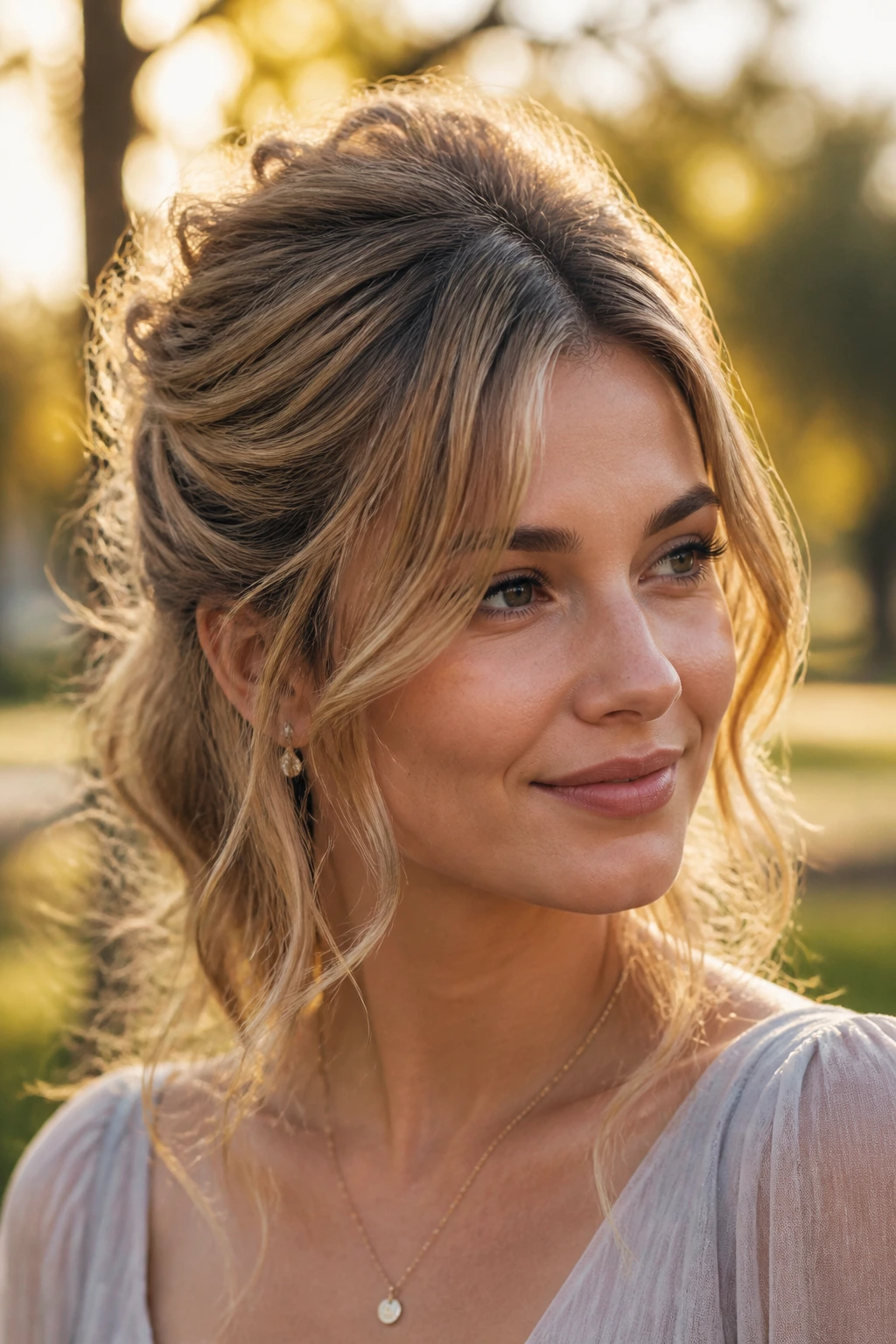
A half-up style can make fine hair look fuller because it changes where the weight sits. Instead of letting all the hair hang from the crown, you take a small top section, secure it loosely, and let the rest of the curls fall. The face-framing tendrils stay out, which keeps the front soft and flattering.
The important thing is not to pull the top too tight. Fine hair loses its charm fast when the top is scraped flat. Leave a little lift at the crown, and use a small clip or a soft elastic instead of yanking the hair back hard. The goal is body, not control.
This style is useful on second-day hair or on days when the roots are a little tired. The top section can hide flatness, while the loose curls below keep the look from feeling sporty.
A few face pieces around the cheekbones make the whole thing feel intentional. Without them, the style can look too pulled away from the face. With them, it reads soft and airy.
18. Loose Curl Ponytail with Wispy Pieces
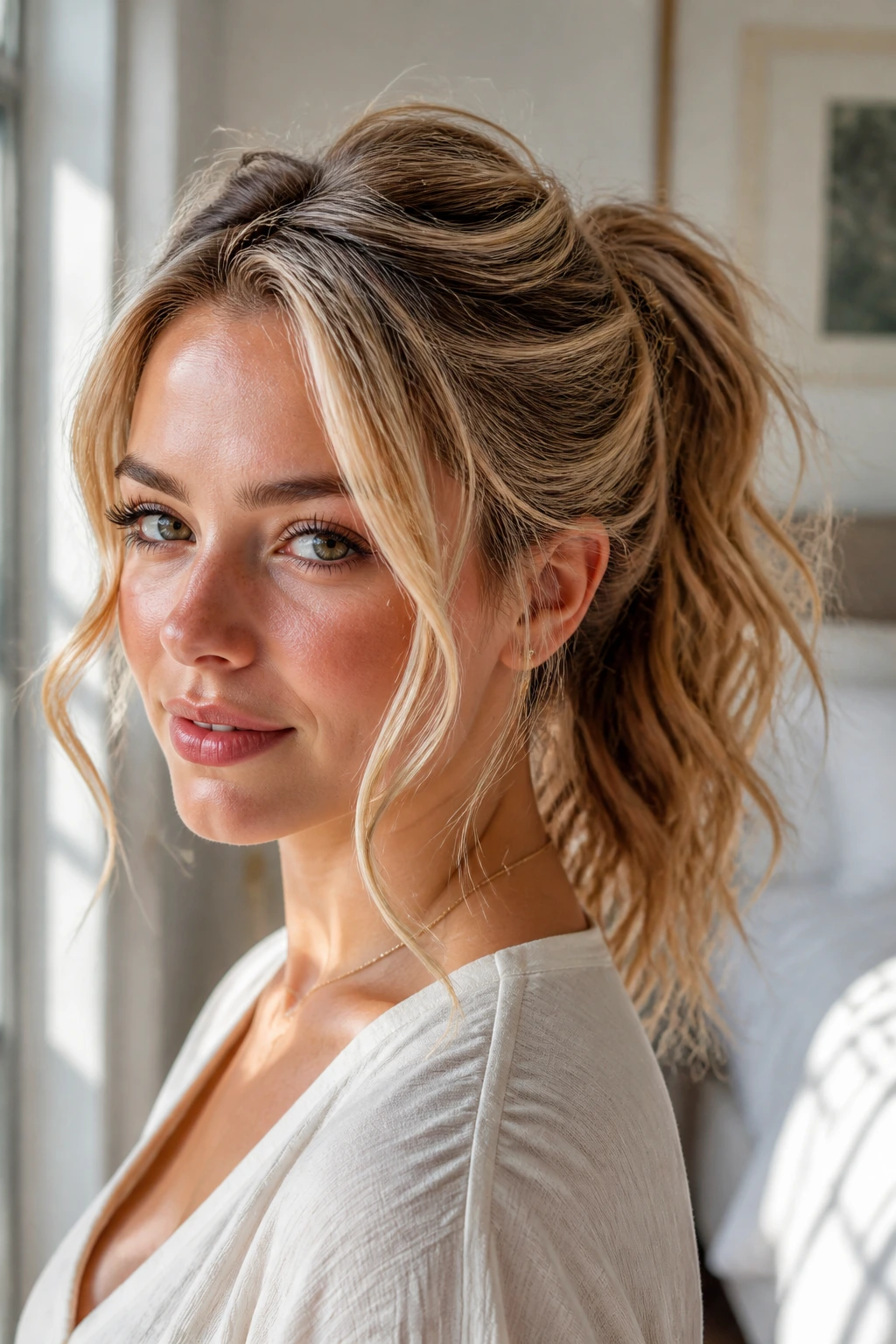
A ponytail is not a backup plan here. It’s a shape. On fine hair, a loose curl ponytail with wispy pieces can look better than a fully down style because it pulls the crown up and lets the lengths cluster together. That clustering is what gives the ponytail visual thickness.
The trick is to leave a few front pieces out before you secure it. Curl those pieces away from the face and let them fall across the cheekbones. Then curl the ponytail itself in two or three larger sections, not in tiny ringlets. That keeps the tail from looking frizzy or sparse.
A low ponytail feels softer. A mid-height ponytail gives a little more lift. If your hair is especially fine, wrap a small strand around the elastic to hide the tie and make the base look thicker. That tiny detail helps more than people admit.
This is an easy choice for humid days, gym-to-dinner situations, or any morning where the idea of wearing hair down feels like too much work.
19. Romantic Low Knot with Curled Sides
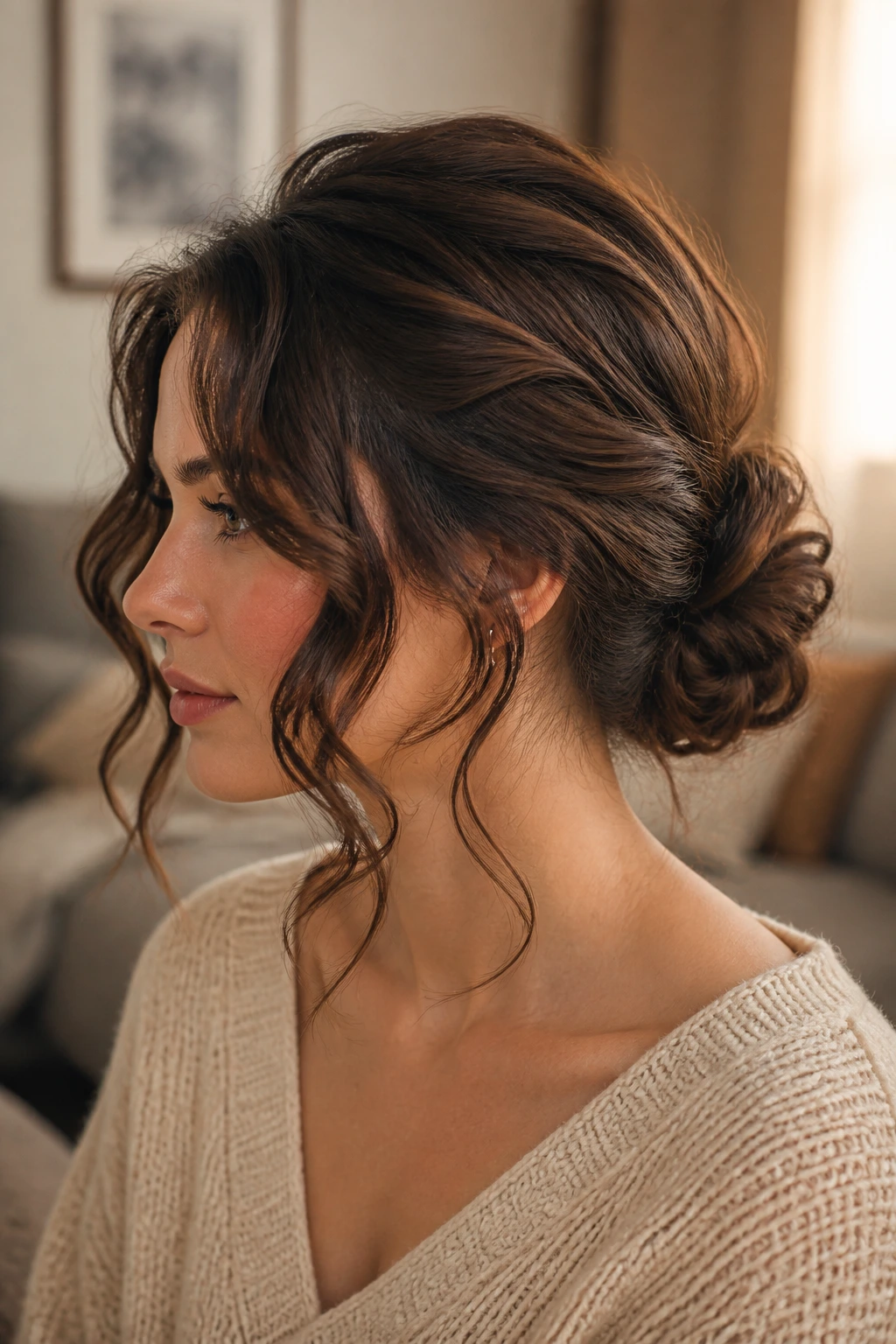
The low knot can feel too severe on fine hair unless you leave softness around it. With loose curls and wispy side pieces, it turns gentle fast. The knot sits low at the nape, while the face-framing strands stay loose enough to soften the jaw and cheekbones.
What makes this work is texture at the roots. A little volume at the crown stops the style from looking pasted down. Then the curled side pieces create movement around the face, which matters because a sleek bun can make fine hair look even finer than it is.
Keep the knot slightly undone. Not messy. Just not too tight. A tiny amount of separation around the bun gives the impression of more hair because the eye sees more texture. And that’s half the game with fine hair: creating the sense of density without pretending the strand count changed.
This is one of the better formal options if you want softness instead of polish.
20. Off-Center Curtain Fringe with a Soft Bend
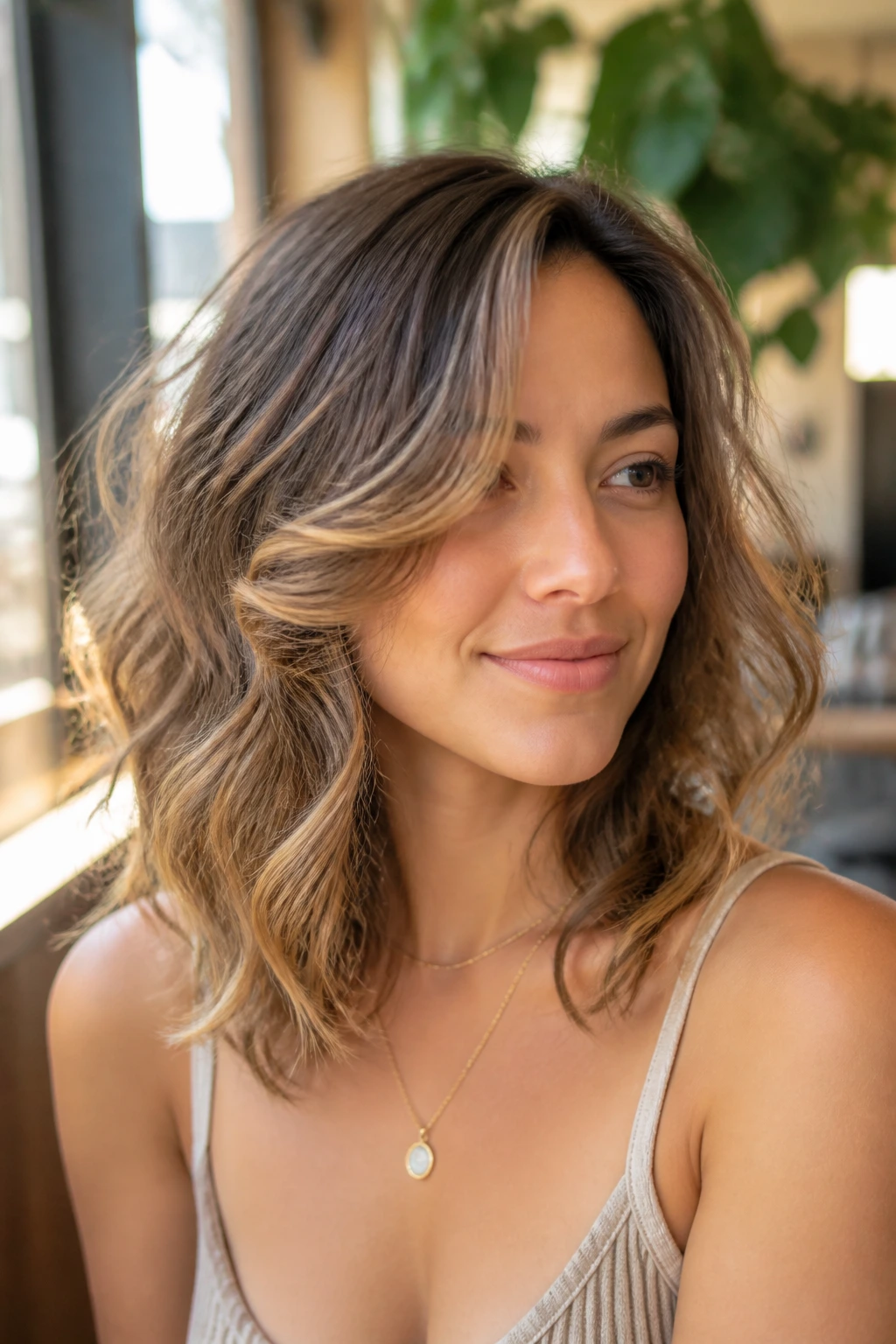
A curtain fringe doesn’t have to sit perfectly in the middle. In fact, on fine hair, an off-center version often looks better. Shifting the part slightly lets one side of the fringe carry more volume, and the soft bend in the lengths keeps the front from feeling too symmetrical or too neat.
The fringe should be light enough to split naturally but long enough to blend into the face frame. If it’s too short, it can float awkwardly above the brows. If it’s too heavy, it drags the whole cut down. The sweet spot is a soft bend that opens near the cheekbone and melts into the rest of the hair.
This style is good if you like the idea of bangs but don’t want a full commitment. The bend can be styled fast with a brush and a quick twist. It also grows out in a forgiving way, which is useful if you’re not planning a trim every few weeks.
It’s subtle. That’s the point.
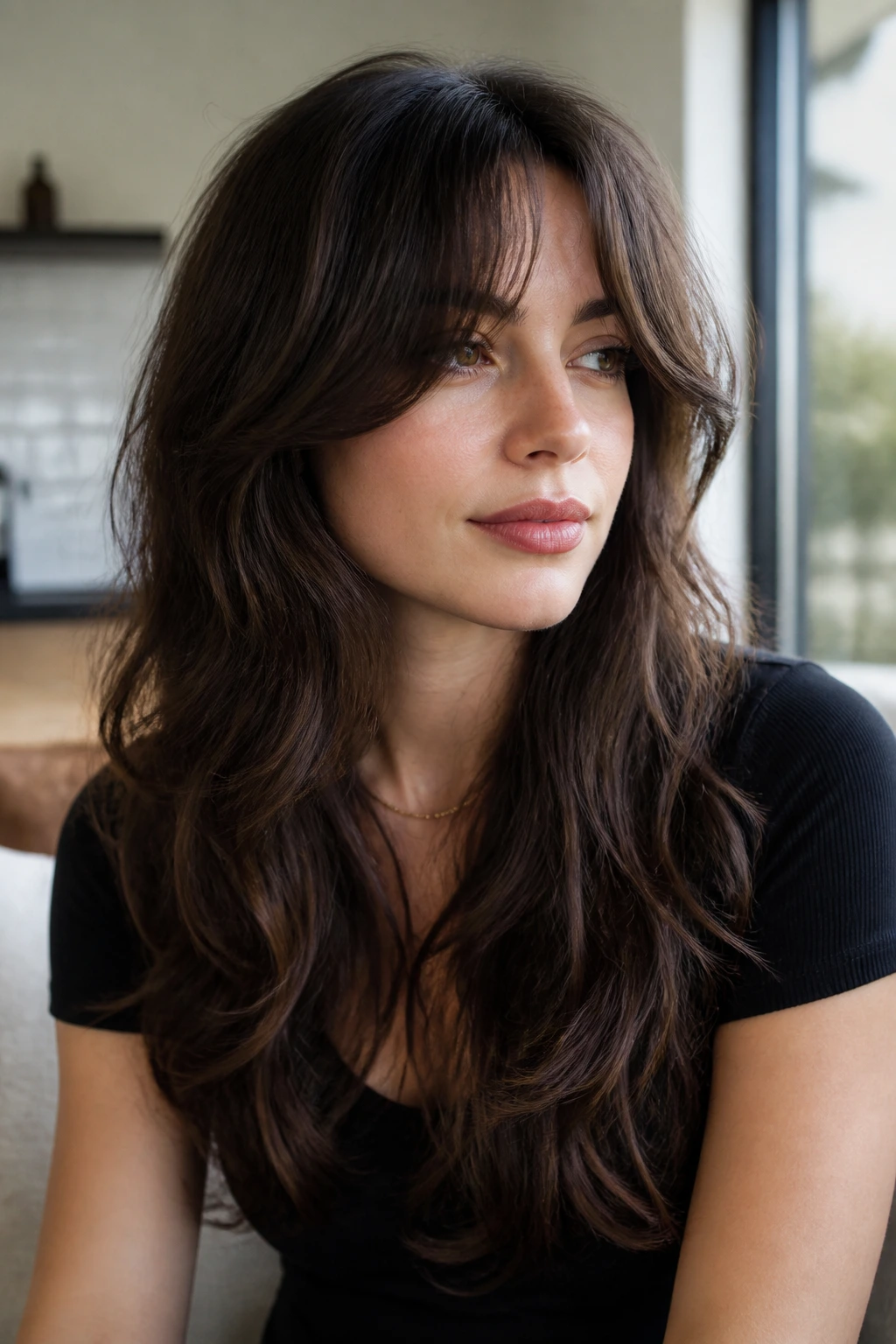
21. Invisible Internal Layers for Long Fine Hair
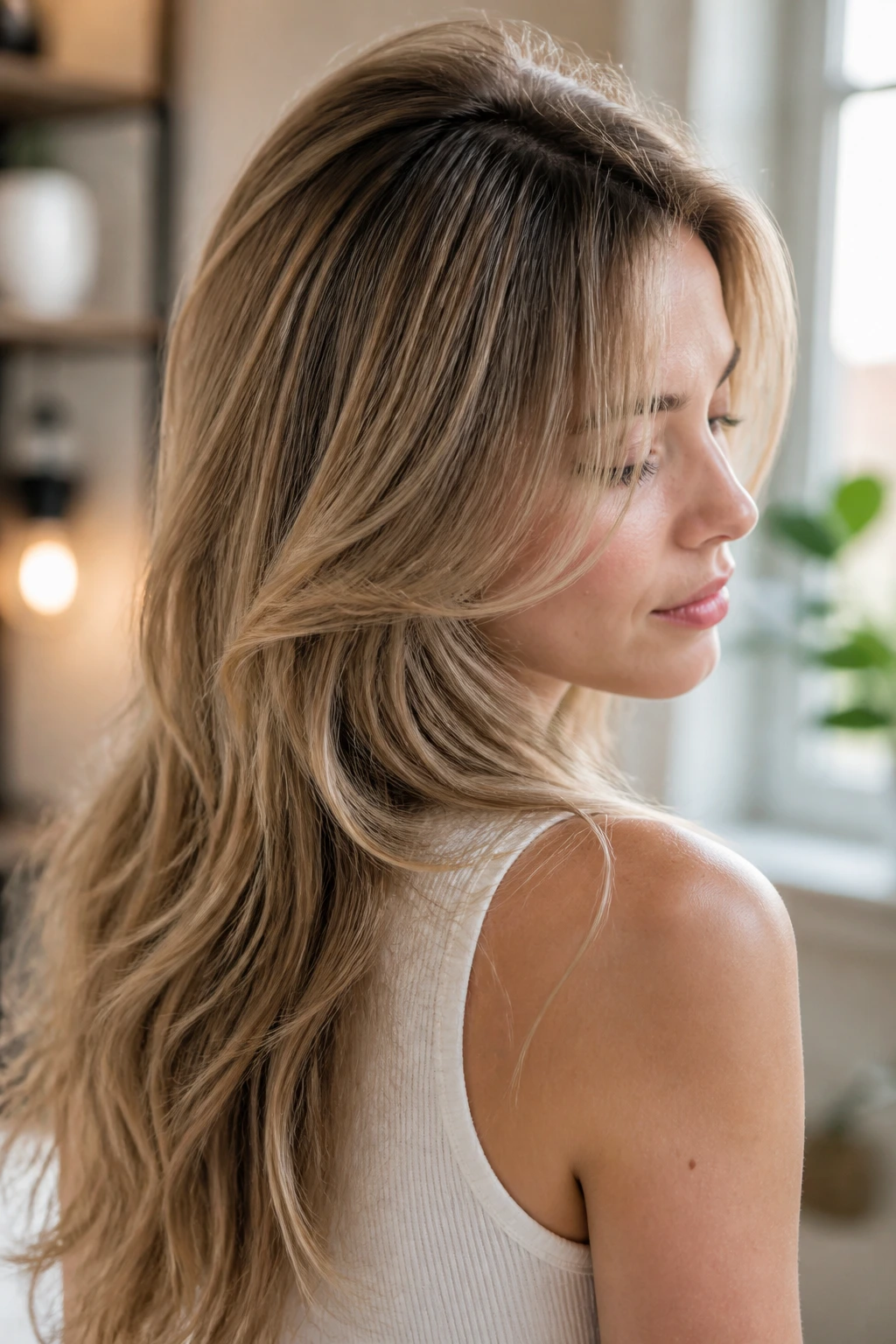
Long fine hair can get stringy fast, which is why invisible internal layers are such a useful trick. The outside line stays mostly one length, so the ends look full. Inside the cut, though, a few well-placed layers give the hair room to move and keep loose curls from collapsing into one flat sheet.
This is the cut for people who love length and don’t want to lose it. The layers are hidden enough that the hair still reads as long, but the shape gets enough lift to avoid that hanging curtain effect. That’s especially important if your hair is naturally straight at the root and a little wavy on the ends.
Ask for the shortest layers to stay under the surface and away from the very ends. If the ends are thinned too much, the curl pattern starts to look transparent. You want movement above the perimeter, not a featherweight bottom line.
Long hair like this can look luxurious without being heavy. The secret is the hidden structure.
22. Tapered Ends with Light Crown Layers
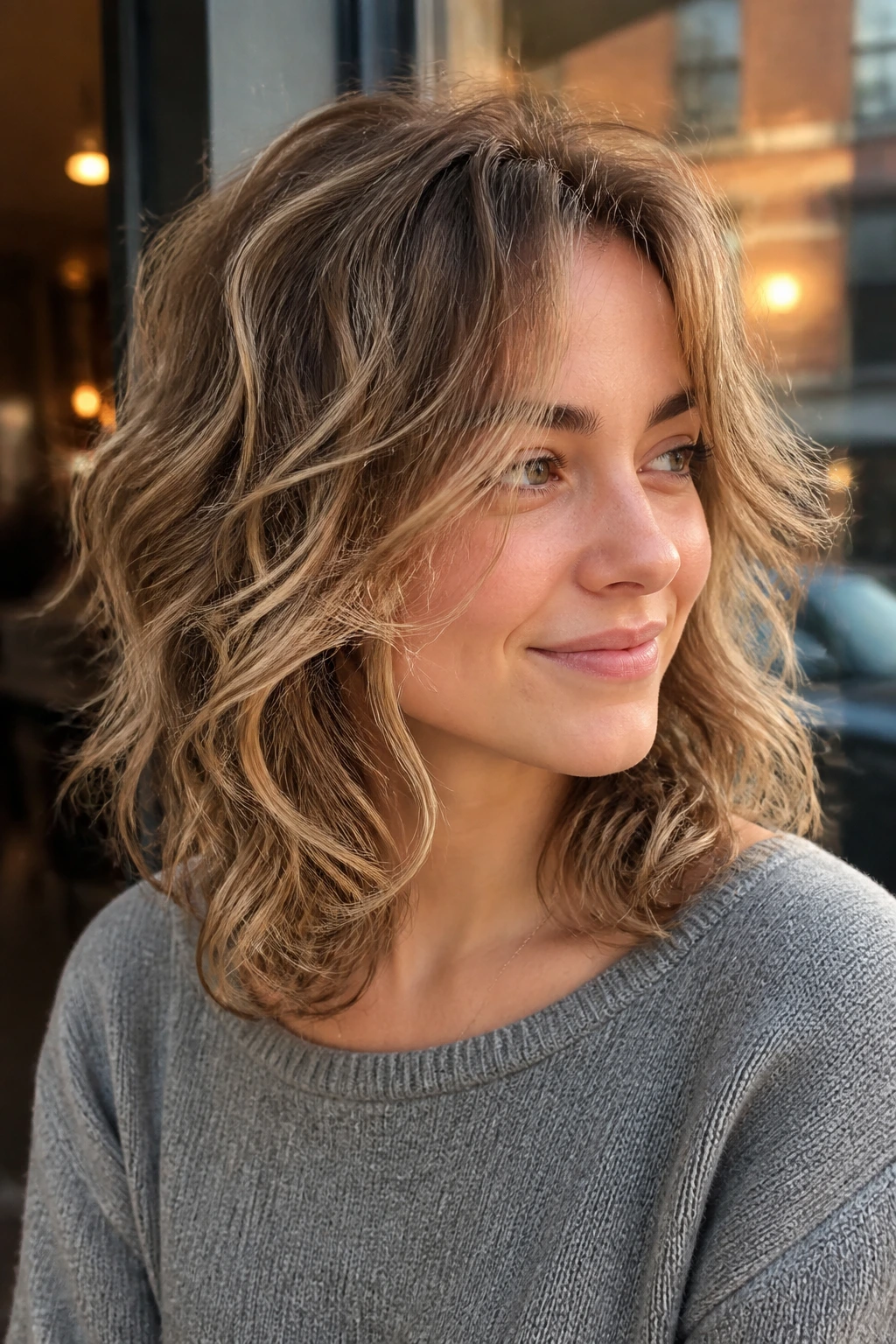
When the crown is flat and the ends are too blunt, fine hair can feel oddly boxy. Tapered ends with light crown layers fix that by redistributing the shape. The crown gets a bit of lift, the mid-lengths gain movement, and the ends narrow gently without vanishing.
The taper should be soft. Not razor-thin. Think of it as a careful narrowing, not a haircut full of holes. Loose curls help because they break up the line and make the taper look intentional instead of sparse.
This style is smart if your hair is dense enough in the middle but needs more shape at the top and bottom. It gives you a more balanced silhouette, especially in profile. The side view matters more than people think. A lot of fine hair looks flat from the front and better from the side; this cut helps both.
A little root spray at the crown and a brushed-out wave through the lower half is usually enough. It doesn’t need a lot of fuss.
23. Swept-Back Blowout with Wispy Volume
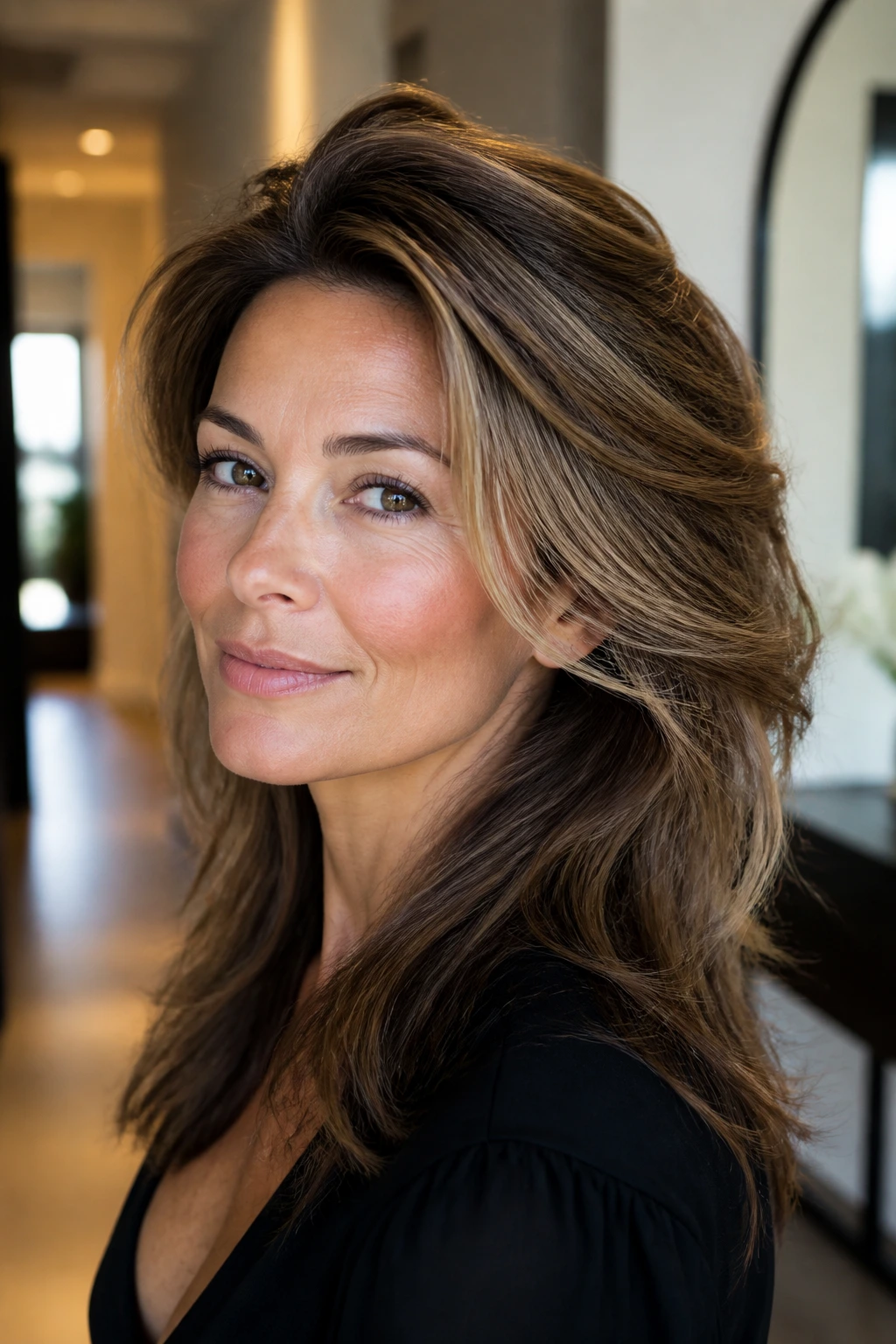
This one has a different energy. The hair is swept away from the face, the roots are lifted with a round brush, and the loose curls are brushed into a soft blowout shape instead of a defined wave. Fine hair likes this because the sweeping motion opens the face and makes the crown look fuller without visible teasing.
The front sections are the important part. Pull them back and away from the face as you dry, then set them in a loose direction that stays open at the temples. A medium round brush or large rollers can help, but the finish should stay light. You’re not building a pageant curl.
What I like about this shape is how clean it looks after a day or two. Once it loosens up, it still keeps some lift at the front. That makes it practical, which is not always true of polished blowouts.
If you need a style that feels a little more pulled-together than beach waves, this is the lane to use.
24. Soft Tousled Waves That Grow Out Gracefully
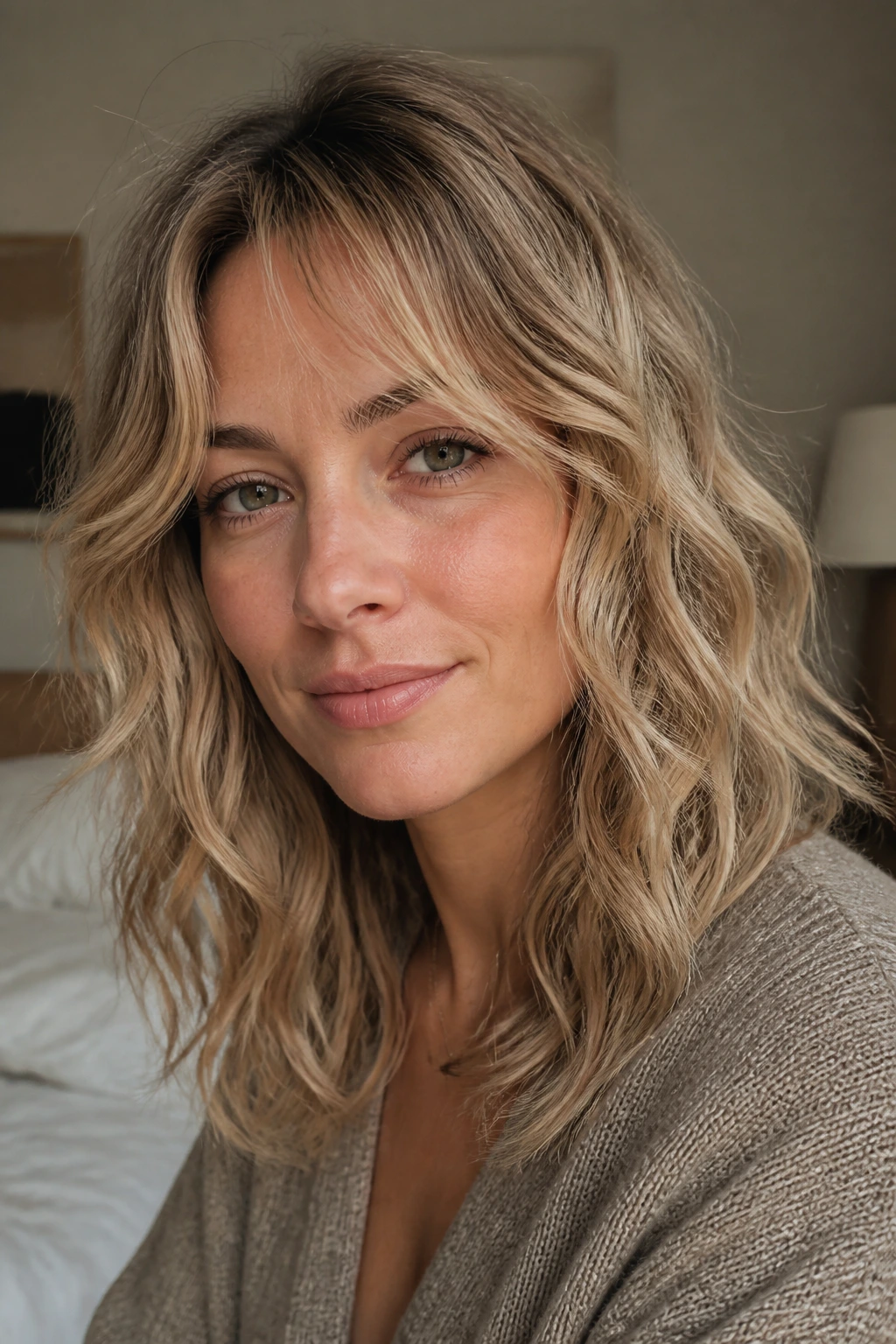
Some haircuts look lovely on day one and awkward by week three. This isn’t one of them. Soft tousled waves with modest layers tend to get better as they settle because the shape softens, the curls loosen, and the ends stop looking too styled. Fine hair often behaves this way when the layers are spaced sensibly and the curl pattern is loose enough to blur the lines.
The key is not to overbuild the style with product. A light mousse, a little heat protectant, and a soft hold spray are plenty. Let the hair air-dry or rough-dry it until it’s about 80 percent dry, then use a few quick bends from a curling iron where it needs help. Don’t curl every piece. The unevenness is part of the look.
This style is for people who want movement without spending half the morning with hot tools. It’s easy, but not lazy. There’s a difference.
25. Soft Bixie with Longer Top Pieces
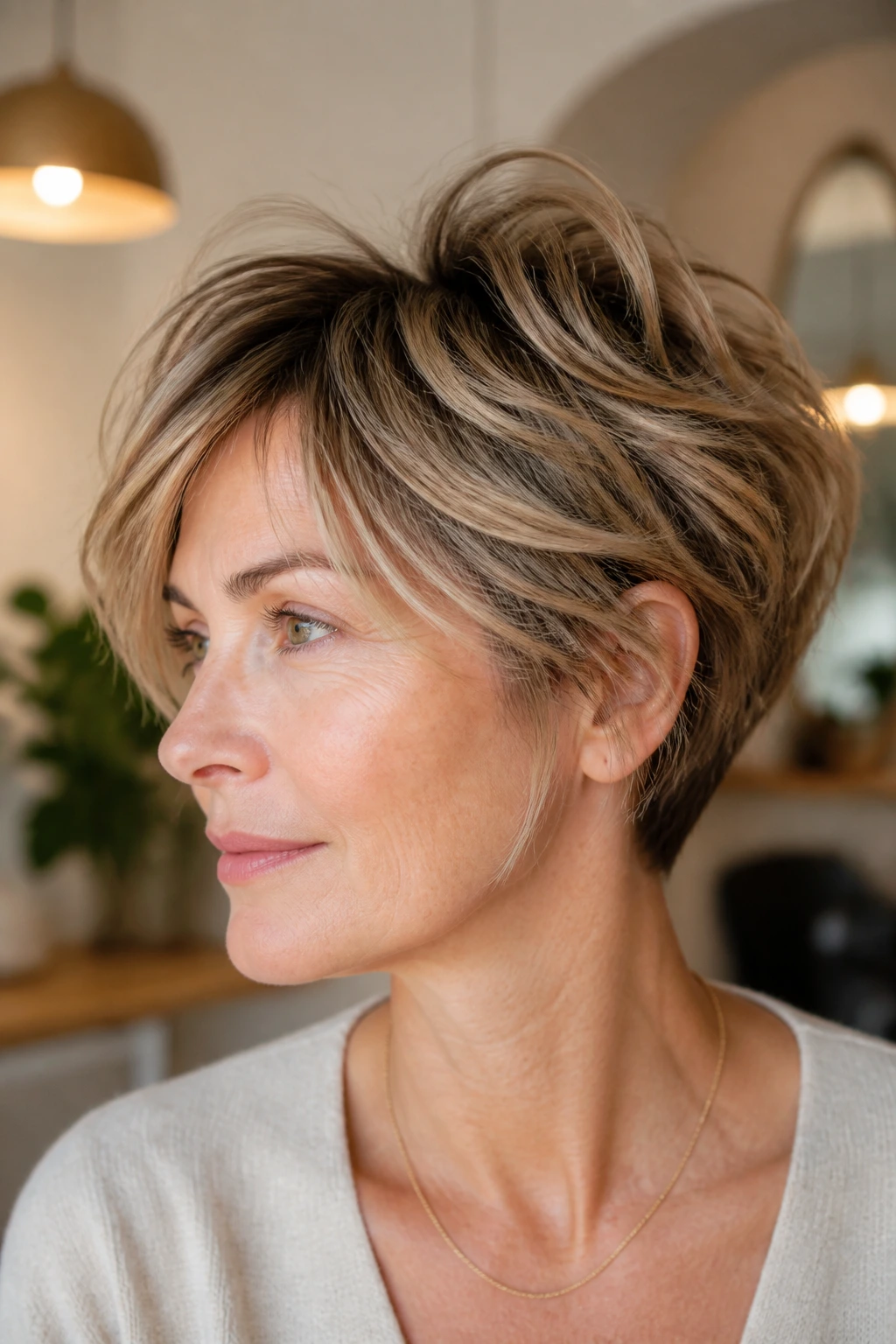
A bixie—somewhere between a bob and a pixie—can be a very good haircut for fine hair if it stays soft. The longer top pieces keep the head from looking too small, and the wispy layers around the temples and crown give loose curls something to grab onto. The back stays light, but not overthinned.
This cut works best when the top is left long enough to tuck, bend, or sweep to one side. That flexibility matters. Fine hair can look wonderful in shorter cuts when it still has a little movement, and the bixie gives you that without demanding a lot of length.
It’s a confident cut. No pretending otherwise. But if you want something lighter, easier to dry, and less dependent on shoulder length, this is a very smart place to land.
The big win: the shape looks deliberate even when it’s a little messy, which is about as good as short fine hair gets.
Why Wispy Layers and Loose Curls Work on Fine Hair
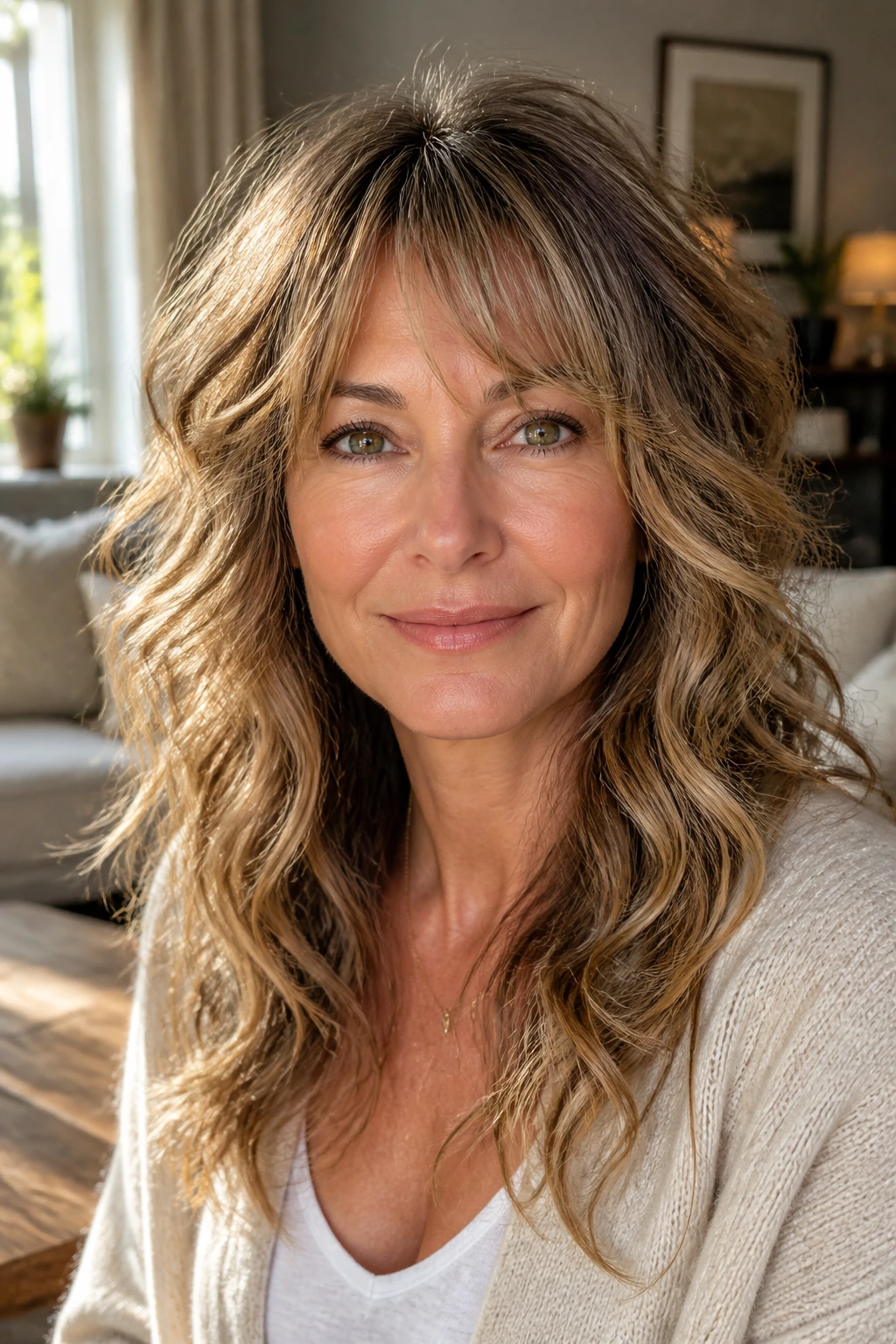
Fine hair is mostly about diameter, not density, and that distinction changes everything. A head of fine hair can have plenty of strands and still look flat if the cut removes too much perimeter weight. Wispy layers help because they place movement where the eye wants it—around the face, through the crown, and along the mid-lengths—without stripping the bottom edge bare.
Loose curls matter for the same reason. A soft wave expands the visual width of each section. A 1-inch barrel or a large round brush creates a bend that reads fuller than straight hair, even if the actual amount of hair hasn’t changed at all. That’s why these styles work better than heavy layering alone. The shape and the curl are cooperating.
The other piece is grow-out. Fine hair can be unforgiving when the cut line gets too sharp. Wispy layers soften instead of turning blunt, and that makes the style easier to live with between trims. A little controlled movement beats aggressive texturizing almost every time on this texture.
What to Tell Your Stylist Before the First Snip
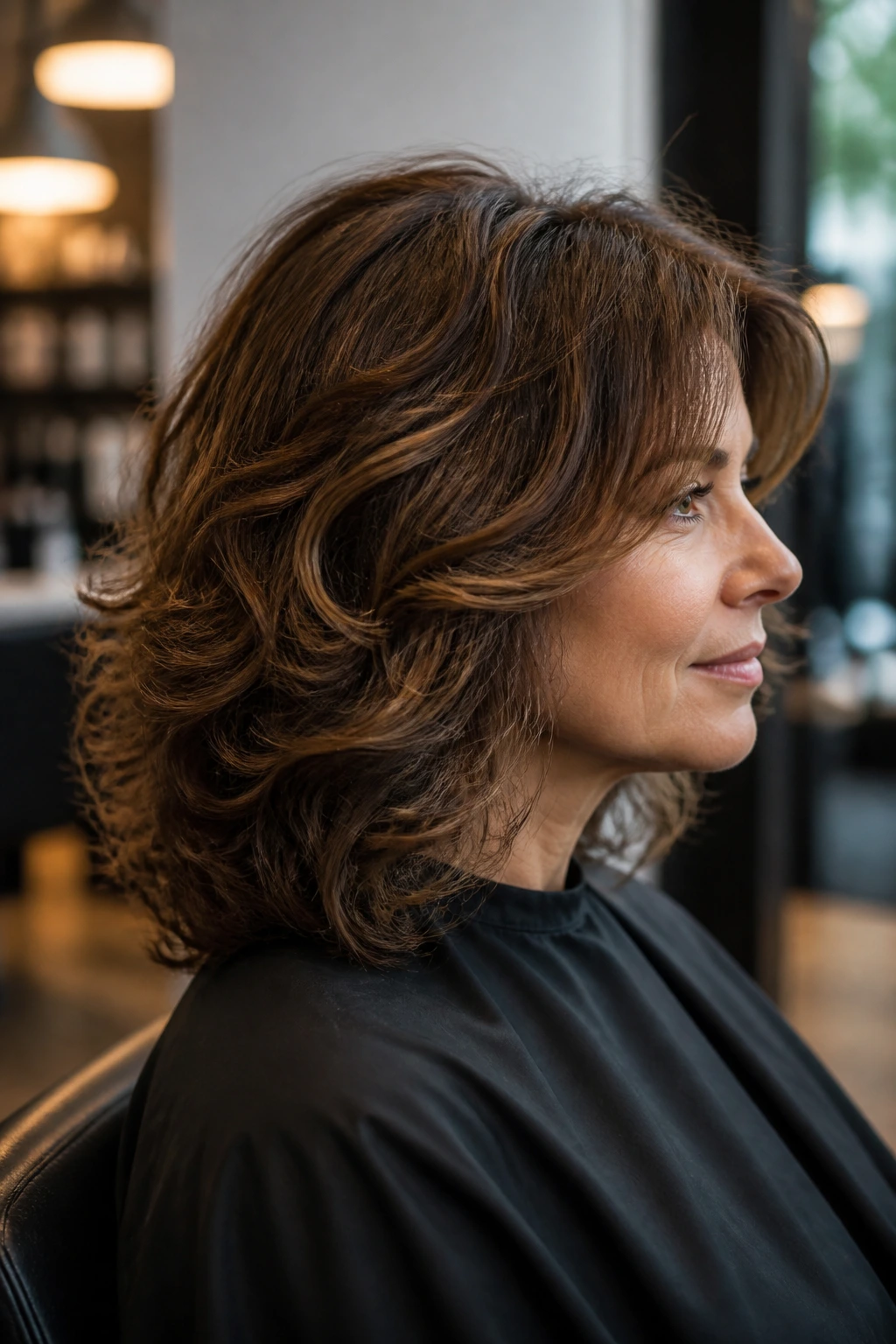
Bring more than one photo. One front view and one side view usually tell the story faster than a whole phone full of screenshots. Fine hair changes shape a lot depending on where the shortest layer starts, so the side profile matters more than people think.
Ask for layers that keep the perimeter full. That phrase alone can save you from getting too much weight removed at the ends. If you want face-framing pieces, say where you want them to start: cheekbone, jaw, or collarbone. Those are not interchangeable, and on fine hair the difference is obvious.
Be blunt about your routine. If you air-dry most days, say so. If you use a 1-inch iron and stop after ten minutes, say that too. A haircut that only works after a salon blowout is not a practical haircut for most people.
A good stylist will also ask where you part your hair and whether it tends to fall flat at the crown. If they don’t ask, volunteer the answer.
The Brushes, Clips, and Products That Help Fine Hair Hold Shape
-
A 1-inch curling iron or wand: This gives loose curls that brush out into a soft wave instead of collapsing into tiny ringlets.
-
A medium round brush: Useful for lifting the crown and curving the front pieces away from the face while you blow-dry.
-
Lightweight mousse: A little at the roots and mid-lengths adds grip without making fine hair feel coated.
-
Heat protectant spray: Fine hair can get crisp fast if the heat is too hot or the product layer is too heavy.
-
Root clips or sectioning clips: These help set lift at the crown while the hair cools, which matters more than most people expect.
-
Dry shampoo: Best used at the roots, not the ends. It adds grit and can make day-two hair behave.
-
Soft-hold hairspray: Keep it flexible. If the spray turns the curls stiff, the style loses its wispy feel.
-
A silk or satin pillowcase: This won’t create volume on its own, but it keeps the curl pattern from getting roughed up overnight.
How to Style Fine Hair Without Flattening It
Prep lightly. Start with a small amount of mousse at the roots and mid-lengths, then add heat protectant through the rest. If the hair feels slippery before you even dry it, you’ve probably used too much. Fine hair needs grip more than slip.
Set the shape while it’s hot. Curl the front sections away from the face and let them cool before you touch them. Pinning the curls for five to ten minutes can help the bend hold longer, especially around the crown and fringe area.
Alternate direction in the back. Curling every section the same way can make the hair look uniform and a little stiff. Alternating the direction in the back gives the loose curls a softer fall and more natural movement.
Break it up with fingers, not a brush. Once the curls cool, loosen them by shaking the roots and separating only the biggest pieces. A brush can wipe out the shape before it settles. If you want extra softness, bend the ends once with a flat iron and stop there.
Finish where fine hair usually fails: at the roots. A tiny bit of dry shampoo or root-lifting spray at the crown can keep the style from folding into the head by midafternoon.
Common Mistakes That Make These Cuts Look Sparse
The biggest mistake is over-layering the ends. Fine hair doesn’t need to be thinned everywhere. If the bottom starts to look see-through, the whole cut loses weight and the curls have nothing to sit on. Keep the perimeter honest.
Another one: using too much heavy conditioner or oil near the roots. That makes the hair slide flat, which is brutal on loose curls. Use richer products from the ears down, and keep the roots light.
Tiny curls on a small barrel can backfire too. They shrink the length and make fine hair look overdone, almost like the hair is trying too hard. Larger waves give more body and hold shape longer.
And then there’s brushing before the hair cools. That’s a fast way to flatten the wave and create frizz at the same time. Let the curls cool fully, then break them apart.
One more: cutting the face frame too short. On fine hair, short front pieces can spring higher than expected. If the goal is softness, not bangs, keep those pieces a little longer than your first instinct.
Variations and Adaptations to Try
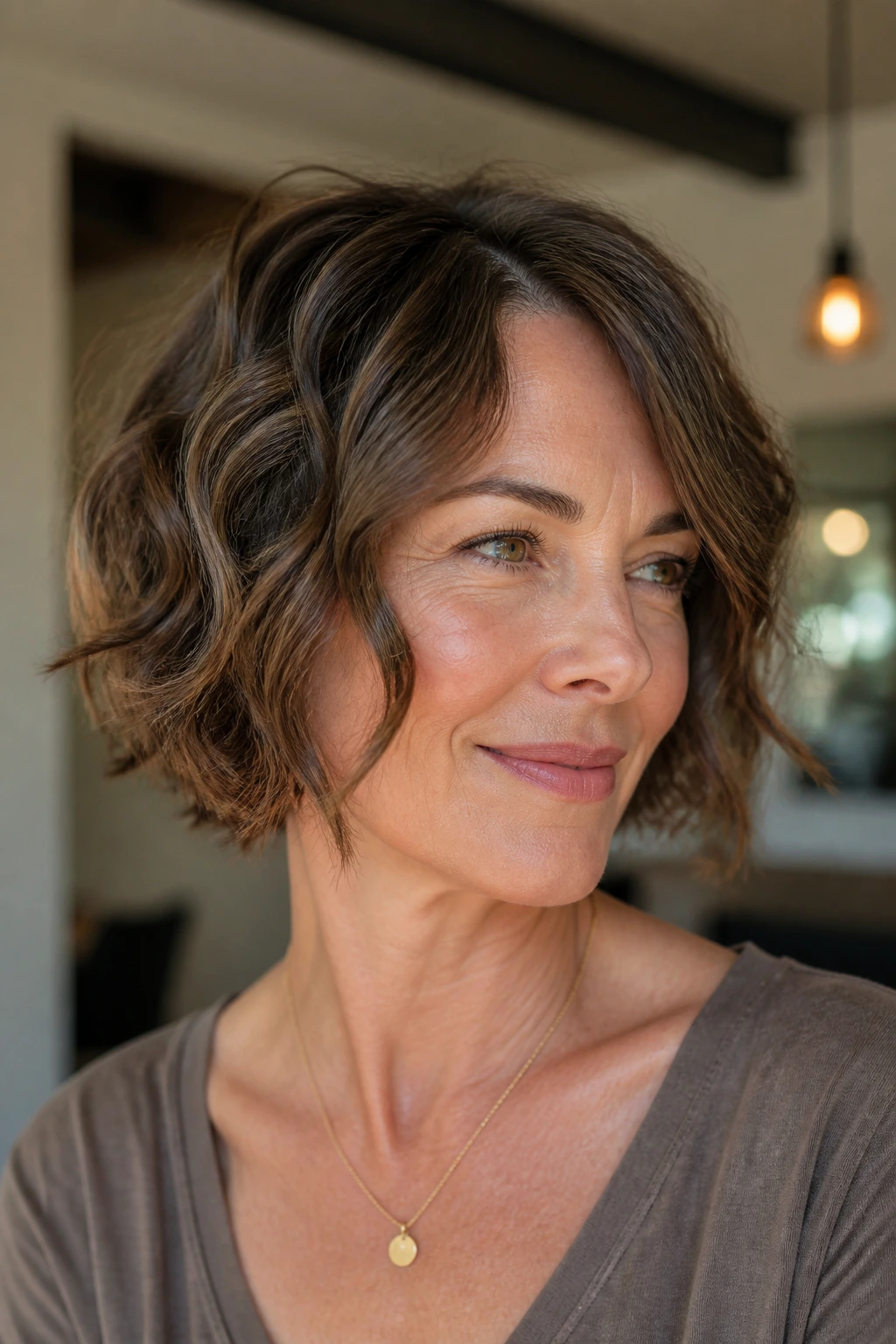
The Round-Face Brightener: Ask for a side part, cheekbone-length face pieces, and a little extra length below the jaw. That combination pulls the eye diagonally and keeps the sides from feeling wide.
The Low-Maintenance Air-Dry Version: Keep the layers longer, skip the most severe texturizing, and let the natural bend do the work. A small amount of curl cream on the ends can help the wave dry in a softer shape.
The Humidity-Safe Version: Use fewer short layers and more medium-length ones so the hair doesn’t balloon or frizz at the crown. Finish with a flexible spray, not a crunchy one.
The Shorter Swingy Version: Choose a lob or bixie with longer top pieces and a stronger perimeter line. Short hair on fine strands needs at least one area of visible density, or it starts reading too light.
The Event-Ready Version: Add a deep side part, large waves, and a pinned crown for lift. This one looks polished without needing a severe updo.
The Grow-Out Friendly Version: Go for a U-shape or invisible internal layers. The haircut stays softer as it lengthens, which means fewer awkward in-between weeks.
Maintenance, Refresh Days, and Grow-Out
Fine hair usually loses volume at the roots first, not the ends, so maintenance should focus there. For shorter shapes like bobs, bixies, and shaggy cuts, trims every 6 to 8 weeks keep the layers from turning wispy in a tired way. Longer cuts can often go 8 to 12 weeks, especially if the perimeter is kept full and the face-framing pieces are not cut too high.
Day two is where good habits pay off. A little dry shampoo at the roots, a quick bend with a curling iron on the front pieces, and a light shake through the crown can revive the whole style in under ten minutes. You do not need to re-curl every section. You just need to wake the shape back up.
At night, use a satin pillowcase or gather the hair loosely at the crown with a soft scrunchie if the length allows it. Tight elastics leave dents, and dents are harder to hide on fine hair than on thicker textures. If you wear a fringe, clip it loosely aside or let it fall as naturally as possible.
The grow-out phase matters too. Wispy layers age better when they’re kept clean. If your ends start feeling stringy, don’t wait too long. A small trim often saves the whole shape.
Frequently Asked Questions
Will wispy layers make fine hair look thinner?
They can, if they’re cut too aggressively. The safer version keeps density at the bottom and adds softness around the face and crown, which gives movement without making the perimeter see-through.
Are loose curls better than tight curls for fine hair?
Usually, yes. Loose curls keep more length, look fuller after brushing out, and don’t shrink the silhouette as much as tight ringlets do. Tight curls can work for special occasions, but they tend to lose the airy look that makes fine hair feel soft.
Should I ask for a razor cut?
Not automatically. Razor cutting can create lovely softness on some textures, but on very fine hair it can also fray the ends too much. Scissors with careful point cutting are often safer if your hair is already delicate.
What if my hair is pin-straight and refuses to hold a wave?
Then the cut matters, but the prep matters more. Use a lightweight mousse, set each curl with heat while it’s still warm, and let the hair cool before brushing. A side part and root clips can help a lot too.
Can I wear these styles with a middle part?
Yes, and several of them are built for it. Butterfly layers, U-shapes, long layers, and invisible internal layers all tend to work well with a center part if the face-framing pieces are cut in the right place.
How short can I go if my hair is very fine?
Shorter can work, but the shape needs density at the bottom or the whole cut starts to look airy in a weak way. A lob, soft bob, or bixie with longer top pieces is usually easier than a heavily layered short cut.
How often should curtain bangs or face-framing pieces be trimmed?
Fringe and face pieces usually need attention sooner than the rest of the haircut. Every 3 to 6 weeks keeps them from dropping into your eyes or losing the soft curve that makes the style flattering.
What if my curls fall out by noon?
That usually means the curl was too hot, too small, or not cooled long enough before being handled. Use bigger sections, let them set fully, and finish with a flexible spray instead of a heavy cream that weighs the hair down.
Soft Final Thoughts
Fine hair doesn’t need to be bullied into volume. It needs a shape that respects its weight, then a curl pattern that adds a little width where it counts. That’s what wispy layered hairstyles do when they’re cut and styled with some discipline. The face frame softens. The crown lifts. The ends stay present.
The smartest versions of these looks are rarely the most dramatic. They’re the ones that keep a believable edge, a soft bend, and enough movement to survive real life. Pick the version that fits your mornings, your part line, and how much length you want to keep. Then let the curls do the rest.