



Shoulder hairstyles for fine hair with soft layers have one job: make hair look fuller without turning the ends into a sad little fringe. That sounds simple until you sit in the chair and realize how easy it is to overdo the wrong thing. Too blunt, and the cut can look flat at the sides. Too heavily layered, and the bottom half starts to fray into see-through wisps that need a wind machine to behave.
The sweet spot lives around the collarbone. There’s enough length to swing, tuck, twist, or wave, but not so much that fine strands get dragged down and lose all their lift. Soft layers do the quiet work here. They keep the perimeter from looking boxy, give the face a little shape, and let a bend or a round-brush finish look intentional instead of accidental. If you’ve ever had hair that looked great at 9 a.m. and limp by lunch, you already know why this matters.
I’m picky about this category because fine hair gets mistreated in salons all the time. It’s either thinned to death or cut so bluntly that the ends look like a ruler. The better versions live in the middle: clean lines, weight in the right places, and layers that start low enough to preserve density. That’s where these shoulder-length looks earn their keep.
Why These Shoulder-Length Cuts Work So Well
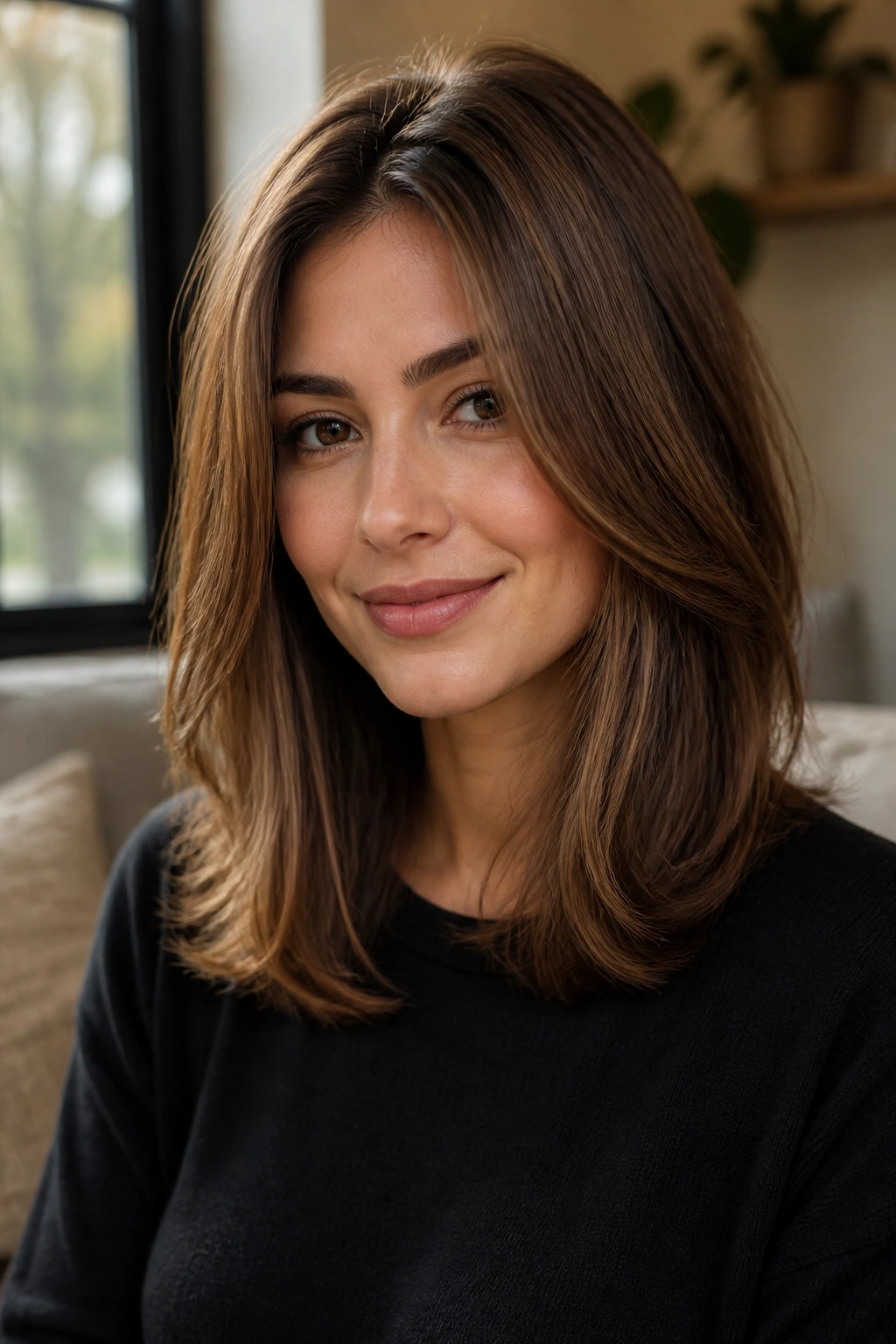
- They keep the ends looking dense: A shoulder-grazing length holds enough weight at the bottom to avoid that see-through, stringy finish fine hair gets when it’s pushed too long.
- They add movement without eating volume: Soft layers create bend and swing, but they don’t carve out so much interior hair that the style collapses.
- They work with both heat styling and air-drying: A collarbone cut can look polished with a round brush or easy and lived-in with a mousse and a scrunch.
- They frame the face instead of hiding it: The best versions place shorter pieces around the cheekbone, jaw, or collarbone so the hair feels shaped, not shapeless.
- They stretch a blowout longer: Fine hair often falls faster than thicker hair, and a shoulder-length shape usually holds a bend better than longer lengths do.
1. The Soft Blunt Lob with Hidden Layers
A soft blunt lob is the cut I reach for when fine hair needs to look fuller fast. The outline stays clean at the collarbone, but the inside gets just enough movement to keep it from feeling like a helmet. It’s the kind of shape that looks expensive in a quiet way. Not flashy. Just solid, dense, and easy on the eyes.
Why It Flatters Fine Hair
The blunt perimeter gives the illusion of thicker ends, which is half the battle with fine strands. Hidden layers inside the shape stop the cut from getting heavy and stiff, especially if your hair bends a little at the ends on its own. That means you can wear it straight, tuck one side behind the ear, or add a soft wave without losing the base shape.
Ask your stylist to keep the lowest line around the collarbone and avoid aggressive texturizing at the bottom. Fine hair does not need to be shredded to move.
- Length to ask for: Collarbone to just above the shoulders.
- Layer placement: Internal only, starting below the cheekbone.
- Best styling tool: A 1-inch or 1.25-inch iron for a loose bend.
- Best finish: A light shine spray, not a heavy cream.
Pro tip: If your hair gets wispy at the front, keep the face frame longer than you think. Short front pieces can make the whole cut look thinner.
2. Curtain Bangs and Collarbone Flicks
Curtain bangs can save a shoulder-length cut that feels too plain. They open the face, put movement right where people look first, and help fine hair look styled even when the rest of it is doing something simple. The trick is to keep the bang area soft, not chopped into a blunt curtain that sits like a shelf.
When these bangs are paired with soft layers that flick out around the collarbone, the whole style starts to feel lifted. That little outward movement at the ends matters more than most people think. It keeps the cut from hanging straight down and looking narrow through the bottom.
I like this look for people who want shape but do not want to live with a full fringe. Curtain bangs grow out in a forgiving way, and the side pieces can blend into the rest of the cut after a few weeks. That makes them less fussy than a strict bang line.
Best for: Faces that need a little framing around the eyes and cheekbones.
Watch for: Bangs that are cut too short; fine hair shows that mistake immediately.
Style with: A round brush at the front and a small bend through the ends.
3. Deep Side Part Waves with a Soft Edge
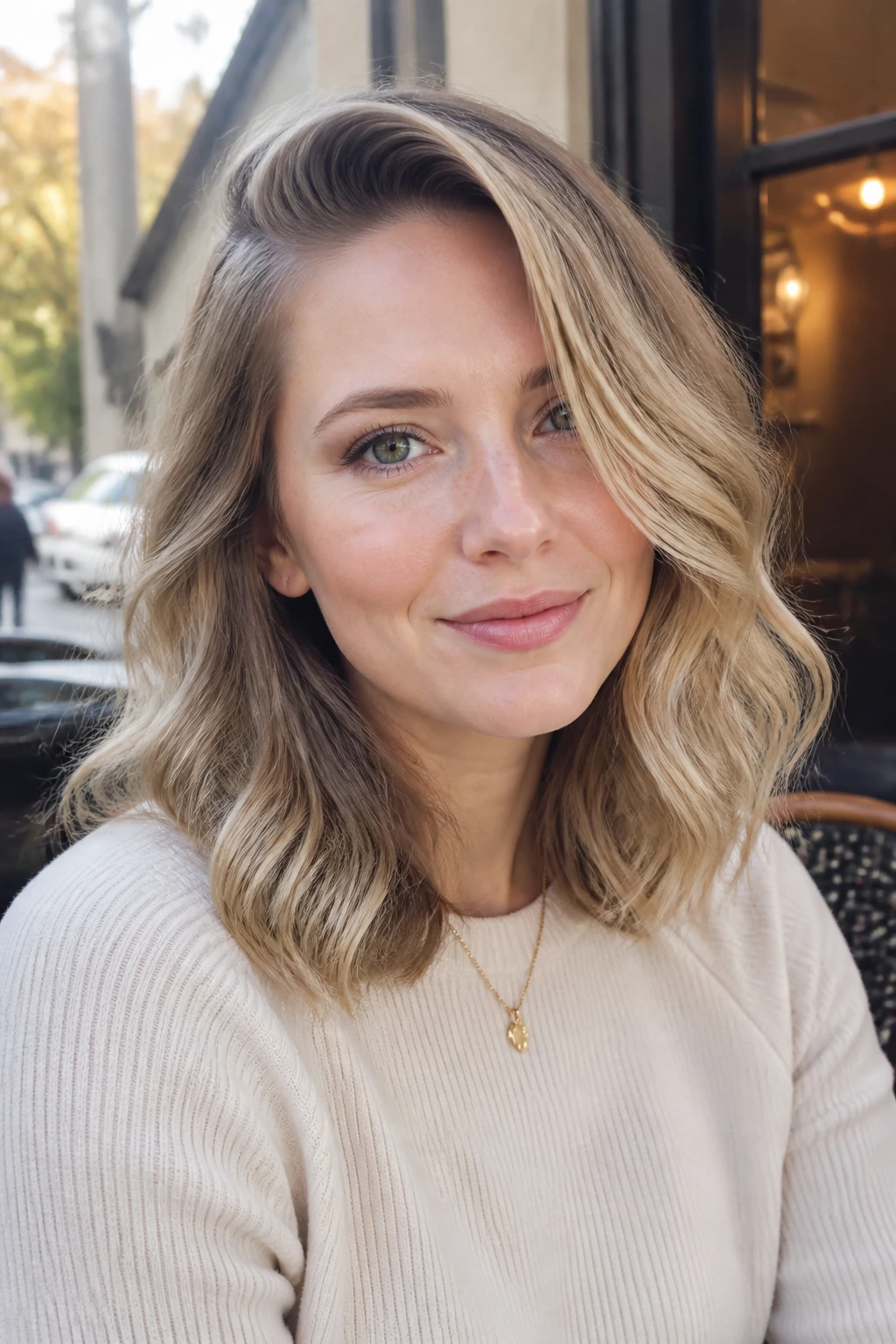
A deep side part changes the whole mood of fine hair. Same cut, different lift. The heavier side creates a built-in volume point at the crown, and the wave pattern that follows gives the hair a thicker feel through the mid-lengths.
Unlike a perfectly centered part, which can sometimes expose every little bit of scalp on the top of fine hair, a side part throws the weight off-center in a flattering way. The result looks fuller without needing a mountain of product. If your hair tends to fall flat at the roots, this is one of the easiest fixes in the book.
Keep the layers soft and the waves loose. Tight curls can make shoulder-length fine hair look smaller, not bigger, especially if the barrel is too tiny. The sweet spot is a gentle bend with a few straight pieces left in on purpose.
How to Wear It
- Spritz root lift at the crown before blow-drying.
- Clip the front section across the top while it cools.
- Bend the mid-lengths away from the face with a 1.25-inch iron.
- Finish by brushing everything out with your fingers, not a paddle brush.
One-liner: If you only change the part, you can change the whole haircut.
4. The Feathered Flip-Out Lob
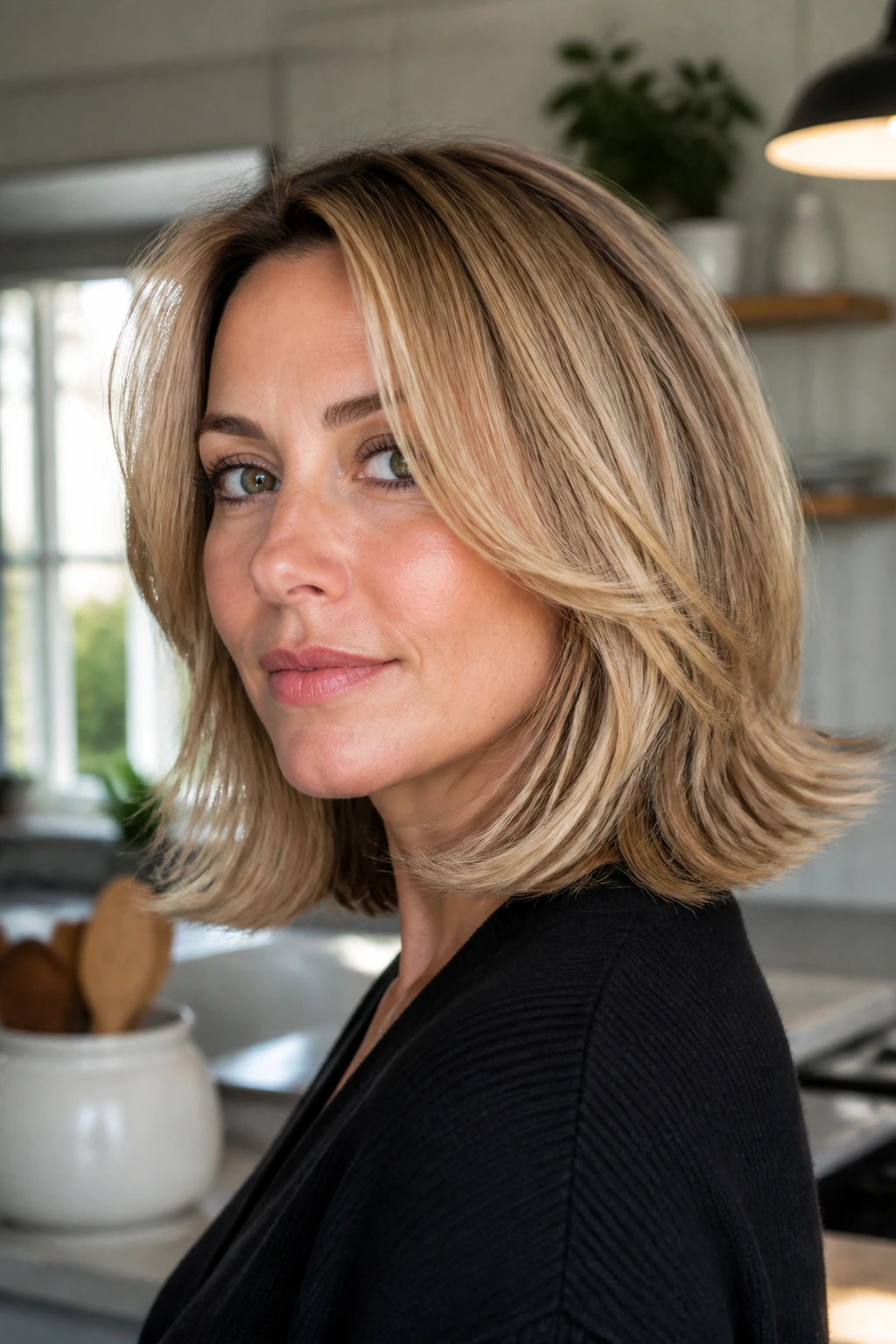
This one has a little 70s attitude, and I mean that as a compliment. The feathered flip-out lob gives fine hair shape through the ends, where it needs help most. Instead of letting the hair hang straight and narrow, the ends turn outward just enough to create movement and width.
The best part is that the style looks good with a quick blow-dry. You do not need perfect curling. A round brush, a medium barrel brush, or even a flat iron turned slightly outward at the ends can make the shape happen. That kind of flexibility matters on busy mornings, because the style still reads as styled even if you only spent twelve minutes on it.
I’d keep the layers soft and the perimeter clean. A feathery finish at the bottom can help, but it should never look shredded. Fine hair already has enough fragility without being sliced into pieces.
- Use: A round brush with a blow-dryer for lift at the roots.
- Avoid: Heavy leave-in creams near the ends.
- Looks best with: A center or slightly off-center part.
- Bonus: It hides flatness at the jawline better than a straight lob does.
5. Sleek Center-Part Lob with Internal Movement
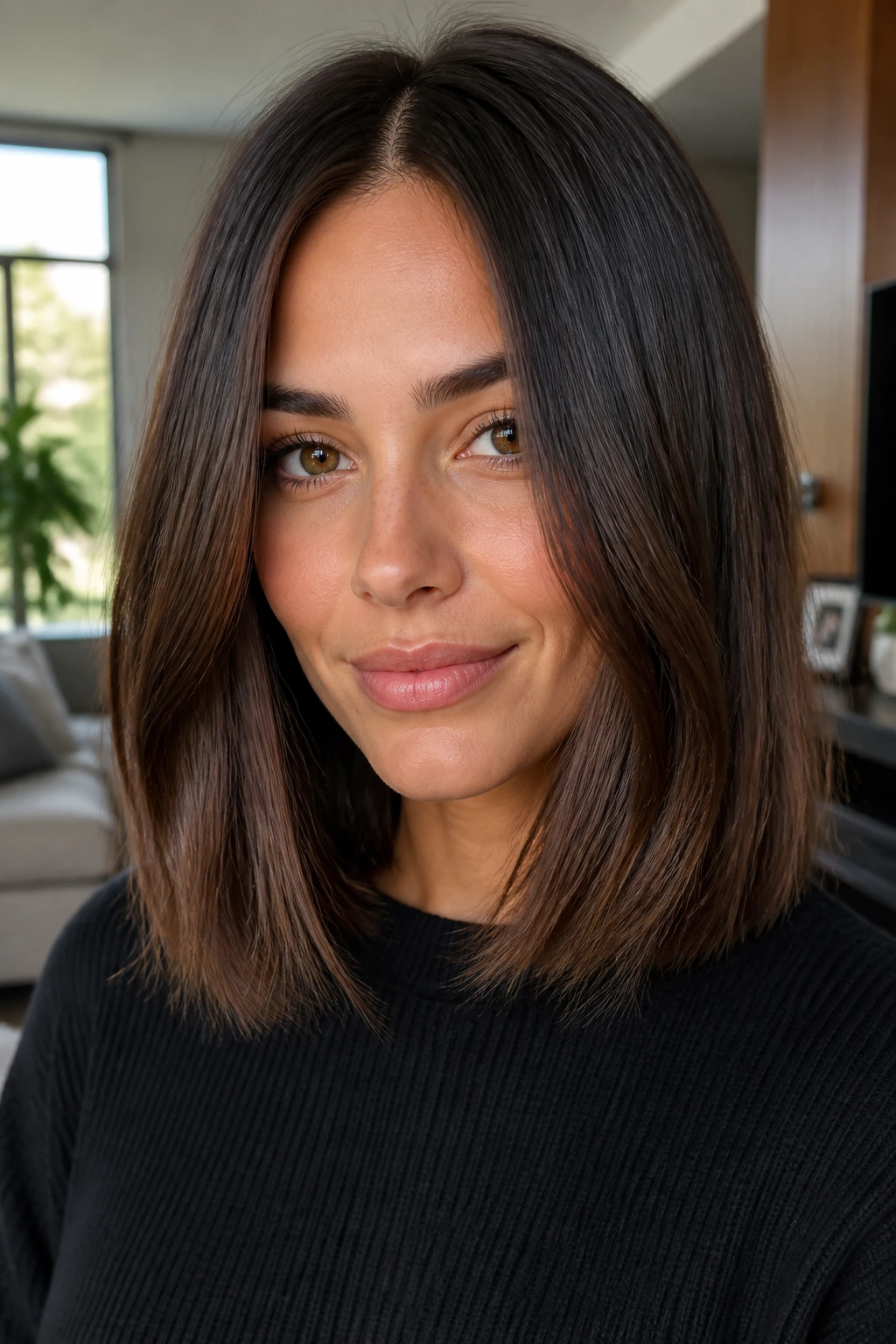
A sleek center-part lob is not boring when it’s cut correctly. In fact, on fine hair, the clean line can be the thing that makes the style look thicker. The key is internal movement, not exterior fluff. The surface stays smooth, but the inside has enough softness to keep the ends from looking hard.
This is the version for someone who likes neat hair. Not stiff hair. There’s a difference. Neat hair has a tidy outline and a little bend through the lengths; stiff hair looks like it was ironed into submission and never touched again. The best center-part lob sits right between those extremes.
I like this style on hair that naturally falls straight or only slightly wavy. If your hair already wants to lie flat, keeping the cut around the shoulders gives it enough balance that the roots don’t have to do all the work. Add a lightweight smoothing serum only on the last two inches, and leave the crown alone.
What Makes It Different
The center part keeps the face open and symmetrical. The hidden layers keep the bottom line from feeling too blocky. Together, they make fine hair look orderly and fuller at once.
6. The Soft Shag Lite
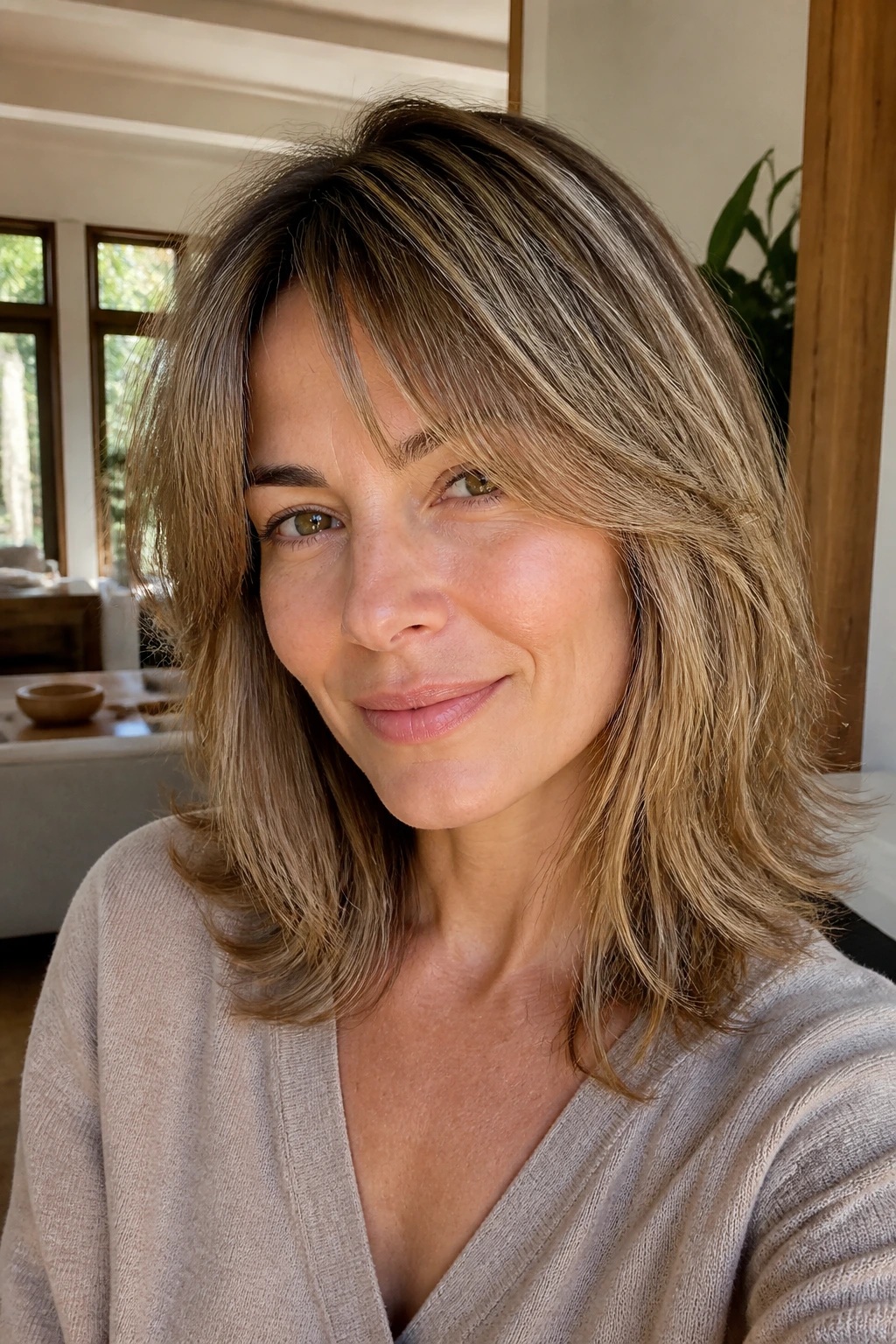
A full shag can chew through fine hair too fast. A soft shag lite keeps the movement and skips the hole-punching. That means the layers are there, but they’re longer, rounder, and less aggressive. You still get the airy shape around the cheekbones and the crown, only without the ragged bottom edge that can make fine hair look even thinner.
This is the cut for people who want texture with a little personality. It works especially well if your hair has a gentle wave or if you’re willing to scrunch in a mousse and let it dry on its own. The whole point is to make the cut do some of the work, instead of depending on the styling iron every single time.
Keep the face frame soft and the shortest layers below the chin. That leaves enough weight in the outline to stop the cut from floating away from the head.
Best detail to ask for: “Shaggy shape, but keep the perimeter full.”
Why that matters: It keeps the hair from looking airy in the wrong places.
7. Tucked-Behind-Ear Glassy Lob
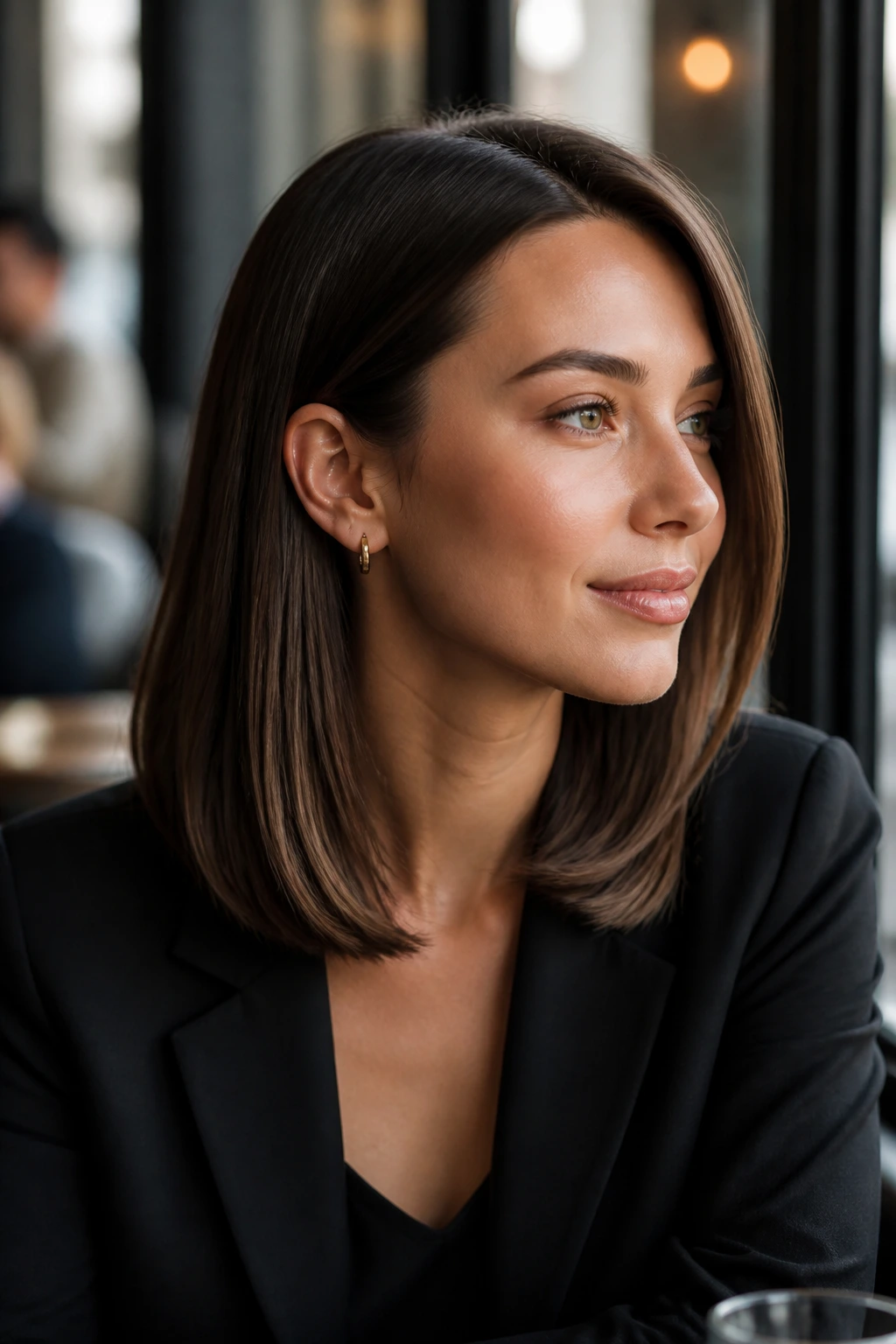
This one is almost irritatingly simple, which is why it works. A glassy lob with one or both sides tucked behind the ear gives fine hair a polished shape without asking it to be bigger than it is. The tucked side exposes the jawline, while the other side keeps enough length to hold the silhouette.
The finish matters here. You want the surface smooth, but not over-flattened. A lightweight heat protectant, a quick pass with a flat iron, and a tiny drop of shine serum on the ends are enough. Heavy oils can turn this style greasy in an hour, which is exactly what nobody wants.
It’s also a very good style if your hair is fine but fairly straight. The cut stays close to the head, so there’s less chance of it puffing out in weird places. And because the line is still at the shoulders, it doesn’t disappear into your neck the way an ultra-short cut can.
Pairs well with: A side part, a strong lip, or a big pair of earrings.
Not ideal if: Your crown gets flat and oily fast. You’ll need dry shampoo at the roots.
8. Bottleneck Bangs and Soft Face Frame
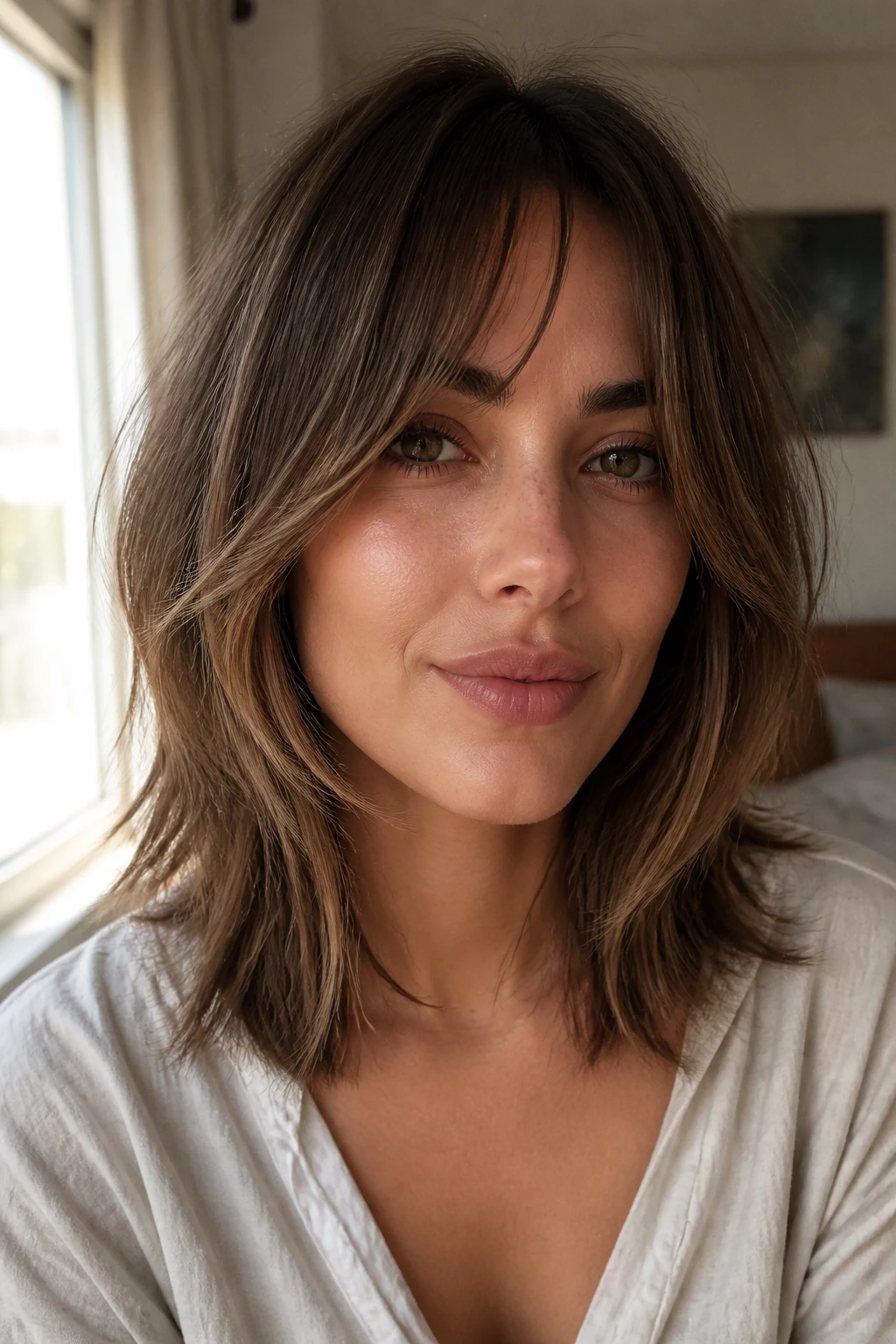
Bottleneck bangs are a smart move when you want face-framing without committing to a heavy fringe. They start narrower at the center, then open wider at the sides, which gives the forehead some breathing room and the cheekbones a soft outline. On fine hair, that matters because heavy bangs can swallow the face.
The shoulder-length layers underneath should stay relaxed and slightly curved toward the front. You want the hair to guide the eye inward, not disappear into a straight line down the sides. That small bend around the jawline keeps the cut from feeling severe.
This style is especially good if your hair is fine but plentiful enough to support a little bang density. If your bangs are too sparse, they can separate and show scalp. So keep the shortest pieces soft and let the rest of the fringe blend rather than stand alone.
How to Get the Most From It
Dry the bangs first. Always.
If they’re damp while the rest of your hair is styled, they’ll shrink and split in strange directions. A small round brush or even a Velcro roller can help them sit with a little curve instead of a sharp line.
9. Loose Hollywood Bend at Shoulder Length
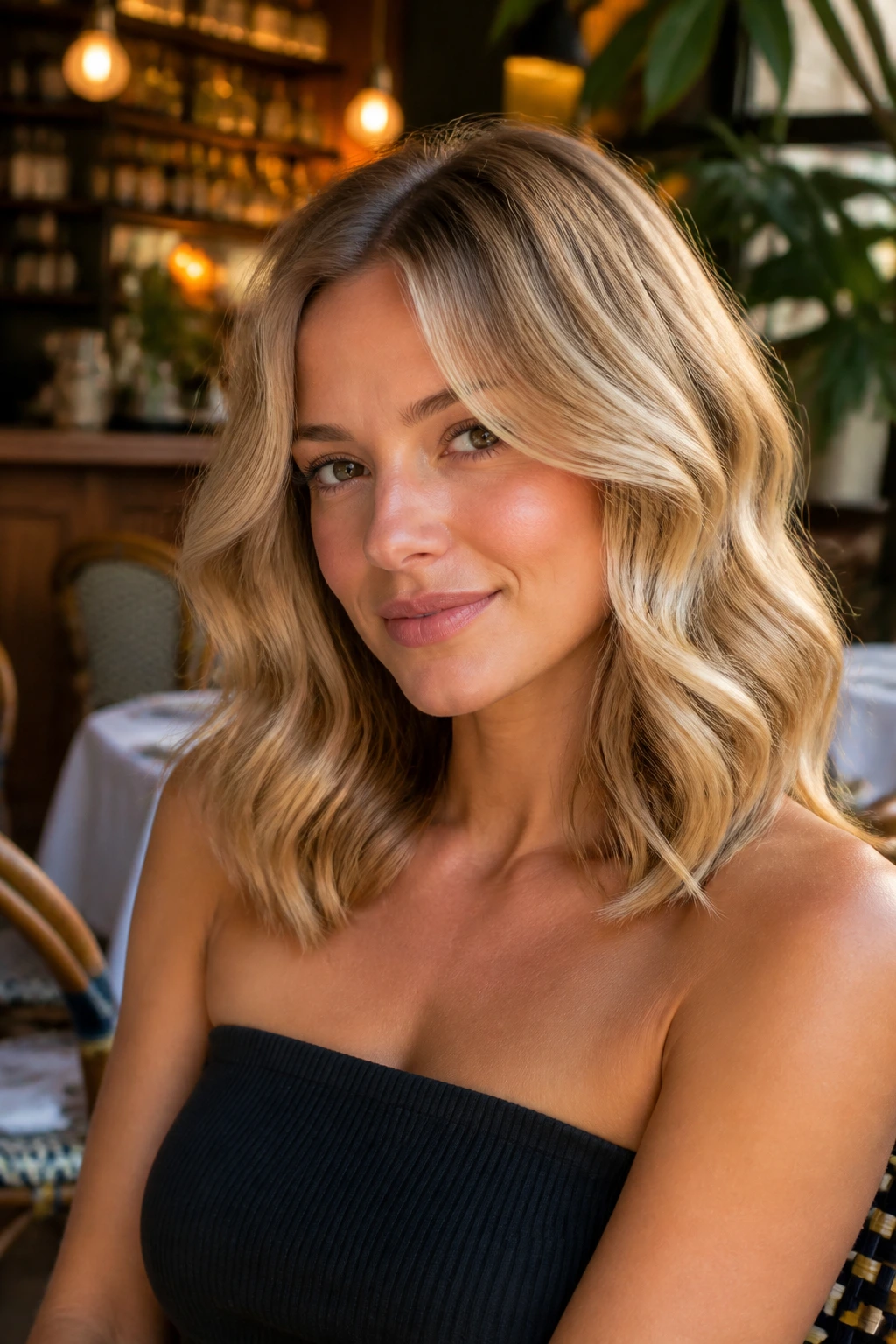
If you want fine hair to look dressed up without looking overdone, loose Hollywood bends are a reliable move. The shoulder length keeps the curl from dragging down, and the soft layers let the bend fall in a wide, shiny wave instead of a tight ringlet. That wide wave is what makes the hair look fuller from top to bottom.
Use a larger barrel than you think you need. A 1.5-inch iron or curling wand gives a bend that feels grown-up and soft, not crunchy. Leave the last inch or so out of the iron if your ends are fragile. That keeps them from looking fried and helps the style breathe.
This is one of those looks that benefits from brushing the curls out once they cool. The first version may feel too neat. The second version—the brushed-out one—has the softness you want.
Good for: Events, dinners, photos, or any day you want your shoulder-length cut to look richer.
Watch out for: Hair that holds a curl too well and turns puffy. Use less heat, not more.
10. The Rounded Blowout Lob
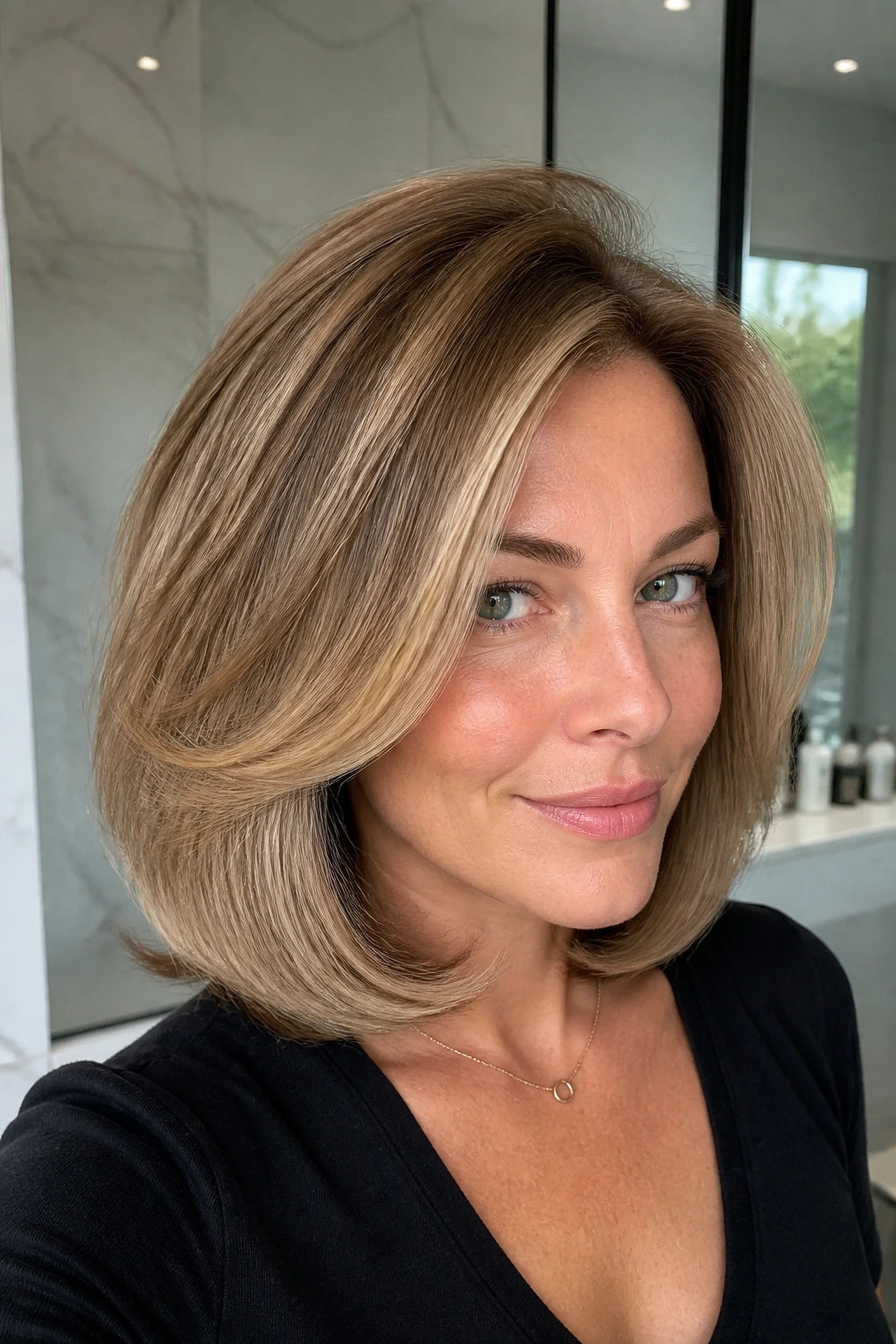
A rounded blowout lob gives fine hair a soft halo through the sides and ends. The shape is smoother than a shag and softer than a straight cut. That middle ground is where this style lives, and it’s why it can make fine hair look fuller without looking teased.
The biggest volume stays around the crown and cheekbones, then tapers toward the shoulders. That shape is flattering because it widens the hair where the eye wants to see fullness. It also keeps the ends from hanging lifelessly in a single line.
This style is easier than it looks if you break the blow-dry into sections. Dry the roots first, then wrap the mid-lengths around a round brush and roll the ends under. A cool shot at the end helps the bend hold. If your hair refuses to keep volume, clip the top section up while it cools. That little trick makes more difference than another spray bottle ever will.
What to Ask For
Ask for soft layers that support a round shape, not chopped layers that stick out. The difference shows up the first time you blow it out.
11. Air-Dried S-Curve Layers
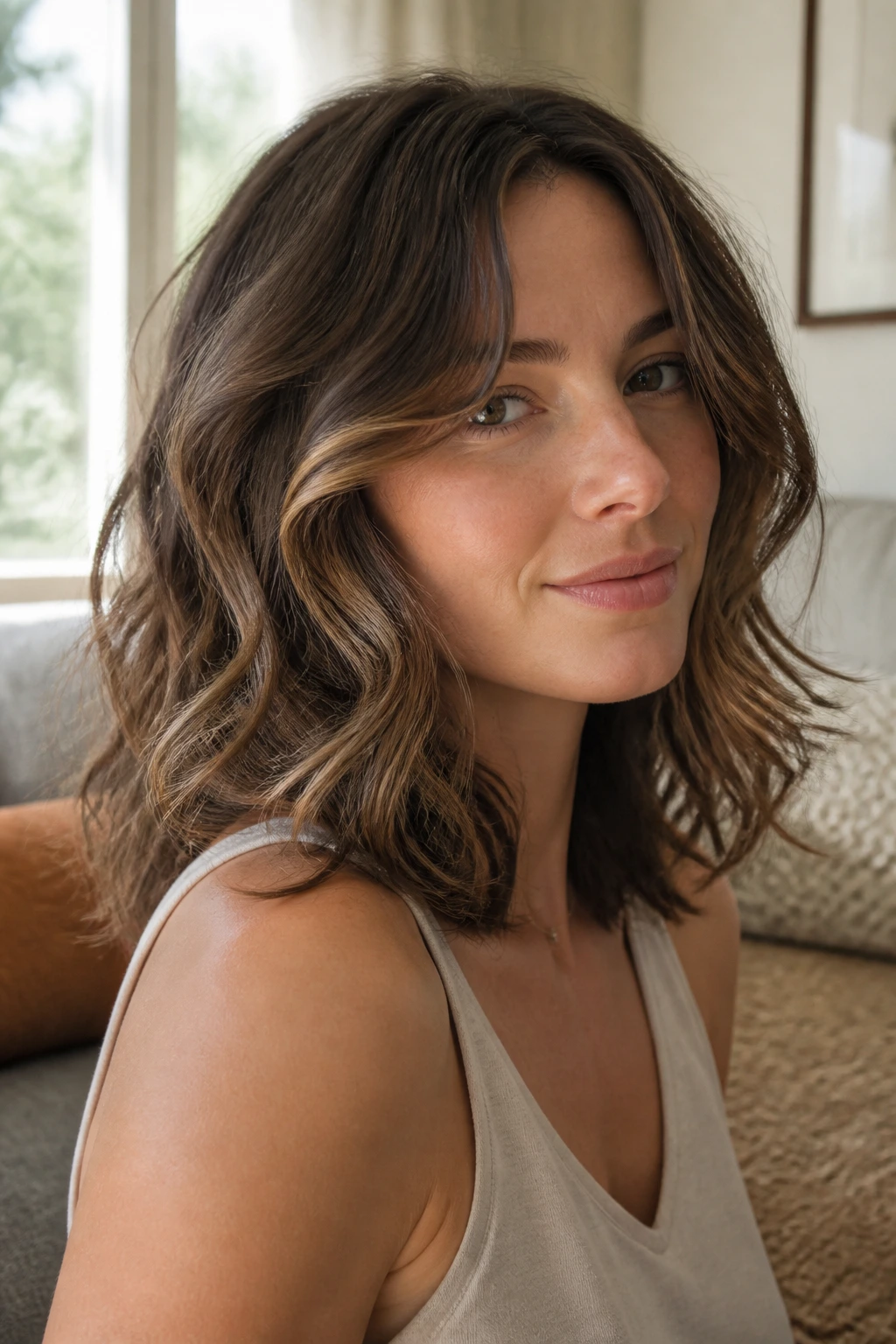
Air-dried S-curves are a blessing when you do not want to heat-style fine hair every day. The layers should be long enough to encourage a bend, not so short that they spring into fuzzy bits. With a good mousse or a light curl cream, the strands can dry into soft waves that look casual rather than flat.
The shape comes from how the layers sit around the shoulder line. If they’re cut to follow the natural bend of your hair, the ends curve in one direction and then the other—an S-shape that looks like movement, not frizz. I like this better than a beach wave on some fine hair because it feels less busy.
How to Set the Bend
Scrunch with a microfiber towel.
Then leave it alone. Really.
If you keep touching air-drying hair, the surface breaks up and the wave loses definition. A diffuser helps if your hair tends to dry limp, but even then, keep the heat low and the airflow gentle. Fine hair is easy to rough up. It does not need much.
12. Wispy Fringe with Side Volume
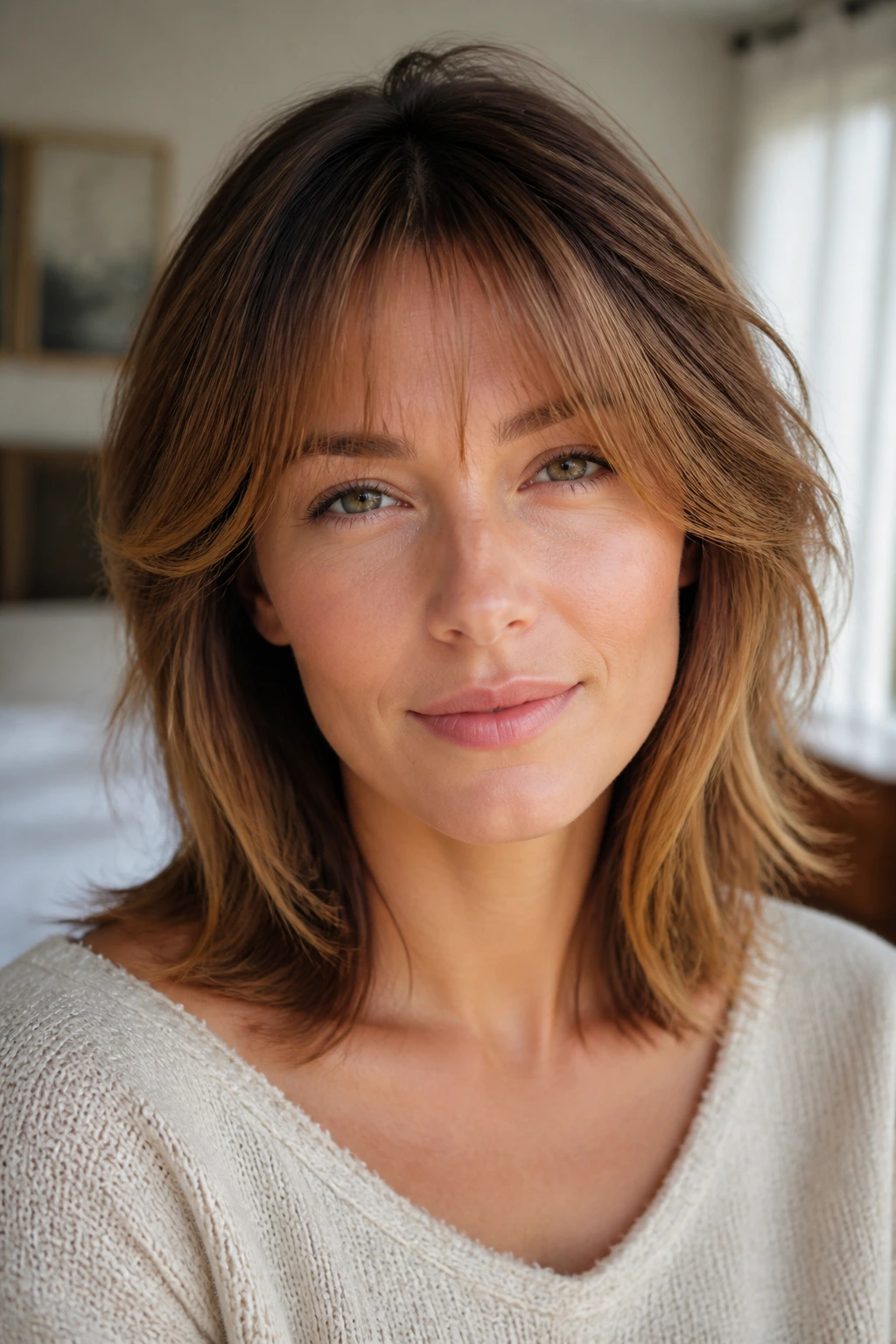
Wispy fringe is the fringe version of soft layers: light enough to move, soft enough not to dominate the face, and useful enough to make shoulder-length fine hair look styled. When paired with side volume, it gives the cut a little lift around the temples, which is one of the easiest places to cheat fullness.
The trick is restraint. A wispy fringe should look airy, not sparse. If the front is cut too thin, it can separate into little strings that make the hair look even finer. Ask for a fringe that still has some width through the middle, then let it break apart naturally when you style it.
I like this on oval and heart-shaped faces, but it can work on plenty of others if the side layers are kept soft. The fringe draws attention up front, while the shoulder-length pieces keep the overall style grounded.
If your hair is pin-straight: Mist the fringe with a little root spray and set it with a low heat blow-dry for a few seconds.
If your hair bends easily: A few finger-combed waves around the sides are enough.
13. The Half-Up Claw Clip Lift
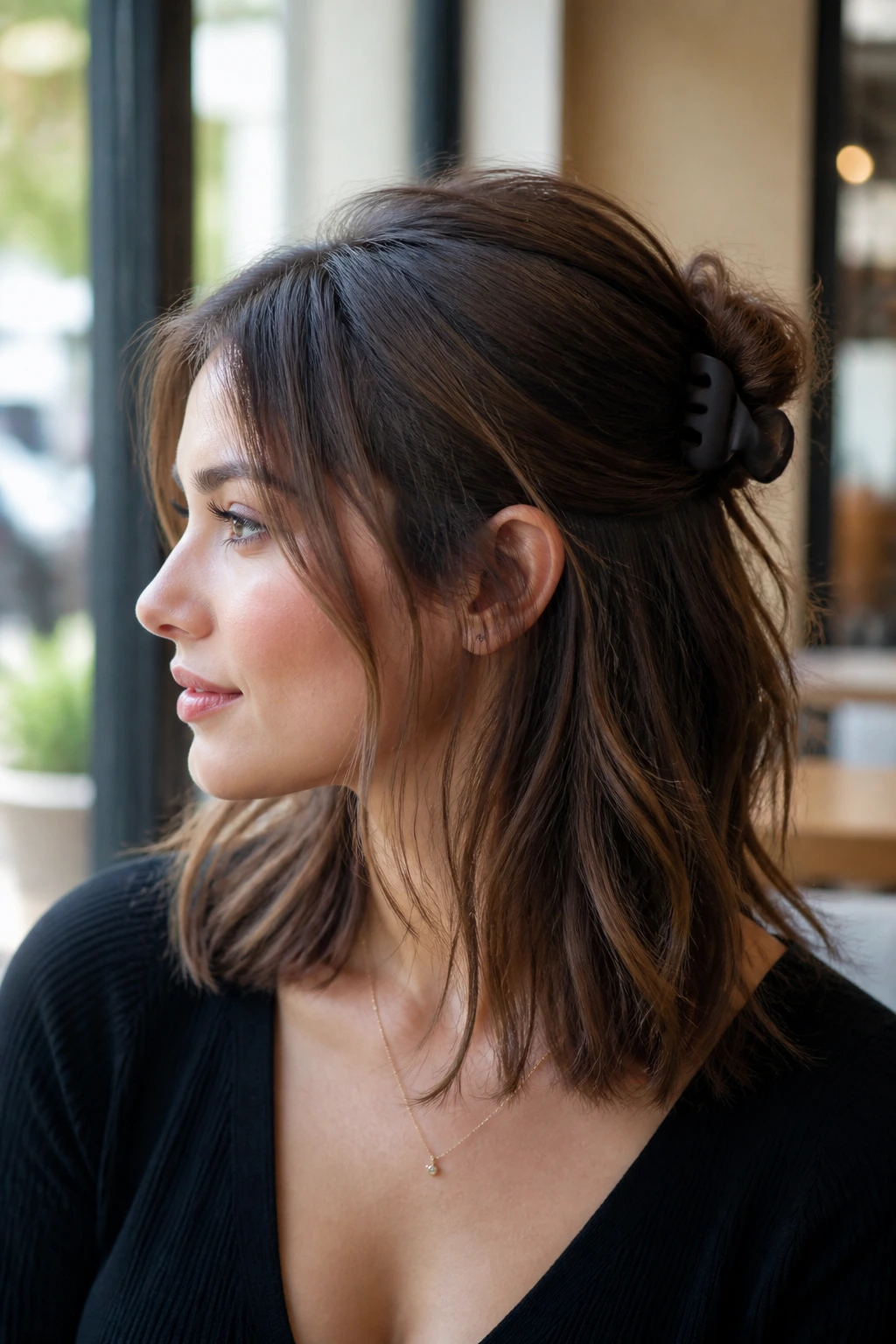
A half-up claw clip style sounds casual because it is, but that’s part of the appeal. On fine shoulder-length hair, it creates lift at the crown, keeps the face frame visible, and gives the lower layers room to swing. The style works especially well when the hair has soft layers because those shorter pieces escape the clip in a flattering way.
The key is not pulling too much hair up. If the top section is too small, the clip has nothing to grip and the style looks flimsy. Too much hair, and the lower half collapses. The sweet spot is usually the top third of the head, gathered loosely so the roots stay soft.
I prefer a matte clip over a slick plastic one. Matte finishes grab better and don’t scream for attention. That matters when the whole point is to make fine hair look easy, not forced.
What Makes It Different
This is one of the few up-style options that still shows off shoulder-length layers. The ends remain visible, so the haircut itself still reads.
14. The Low Pony with Crown Volume
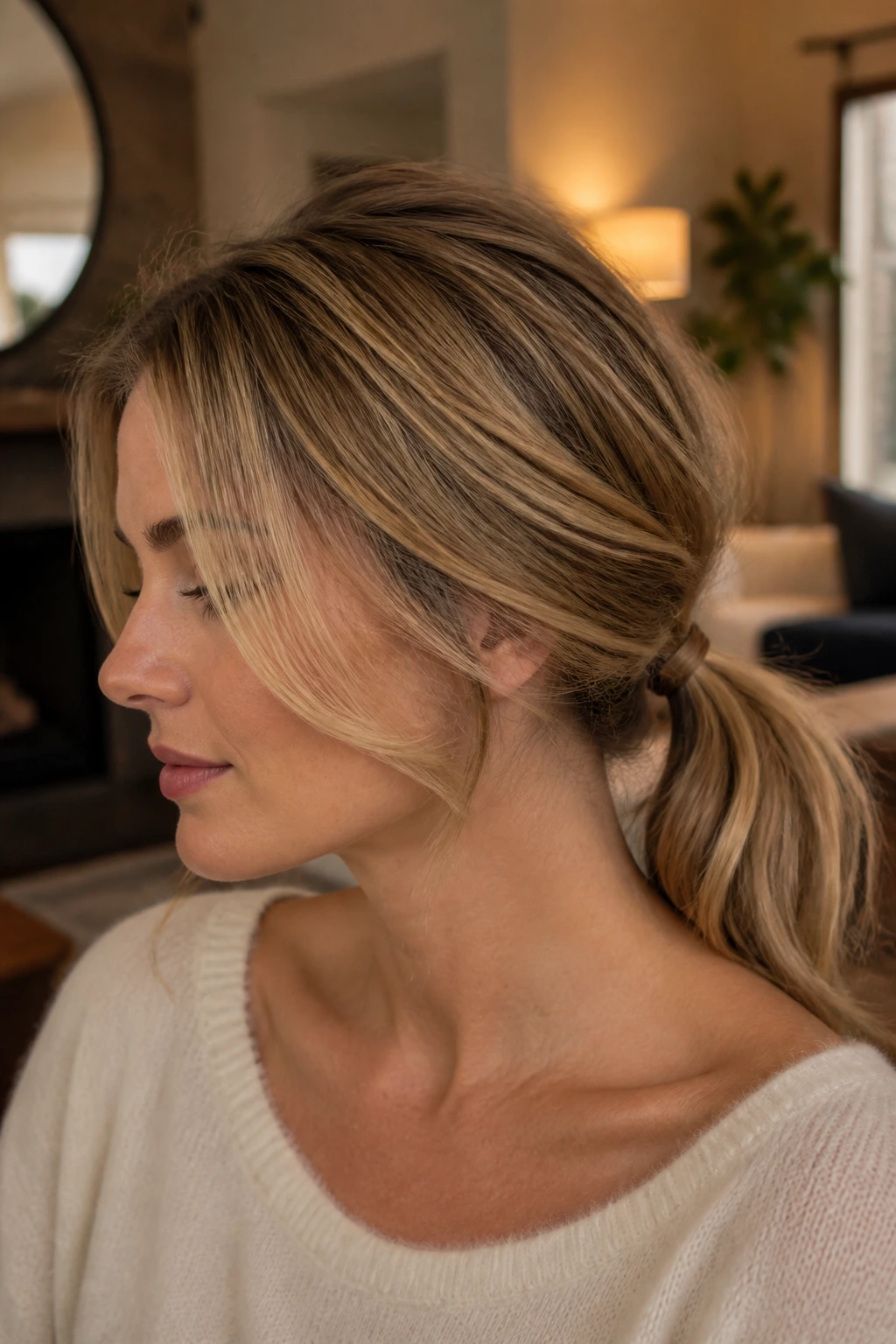
A low ponytail can look flat on fine hair if you tie it and walk away. But when you add crown volume and let a few soft layers slip around the face, it becomes one of the neatest shoulder-length options in the bunch. The pony sits low enough to keep the ends together, which makes the tail look thicker than loose hair sometimes does.
The crown lift is what changes the game. Gently pinch the roots at the top after blow-drying, or use a small velcro roller for ten minutes while you get dressed. That slight lift prevents the pony from sticking too close to the scalp.
I also like leaving the tail softly bent, not perfectly straight. A small wave or a loose wrap around the base hides the elastic and makes the whole thing feel finished.
- Best tied with: A covered elastic or a small strand of hair wrapped around the base.
- Best match: Side-swept layers or curtain pieces.
- Style note: Keep the pony low at the nape, not midway up the head.
15. The Bubble Braid for Shoulder-Length Fine Hair
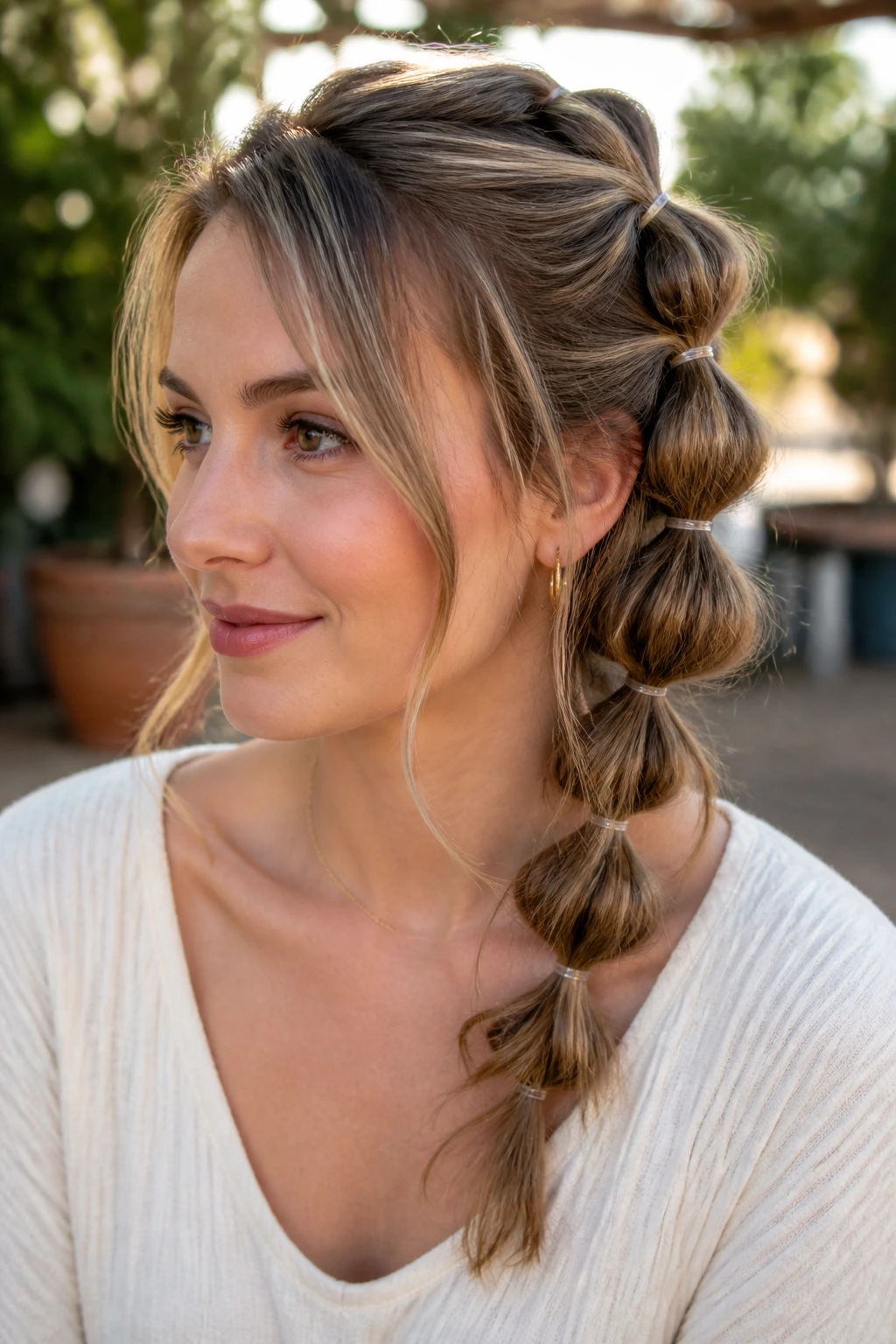
Bubble braids work better on fine hair than people expect. The reason is simple: they create visual fullness using bands and spacing, not sheer hair density. At shoulder length, the braid sits neatly and the “bubbles” give the impression of thicker sections without needing a lot of length.
This is a smart option when your hair feels too limp for a traditional braid. Add a little texture spray first so the strands grip each other. Then secure the braid with clear elastics every few inches and gently tug the sections outward. That tugging is what builds the puffed shape, so don’t be timid about it.
The style is friendly to soft layers, too. The shorter front pieces can be left out around the face, which keeps the braid from looking severe. And if a few pieces fall loose, that usually looks better than trying to force everything into a perfectly neat plait.
Tip I’d keep: Start the first elastic lower than you think. The braid looks more balanced when the bubbles have room to form.
16. Twisted Half-Up with Loose Ends
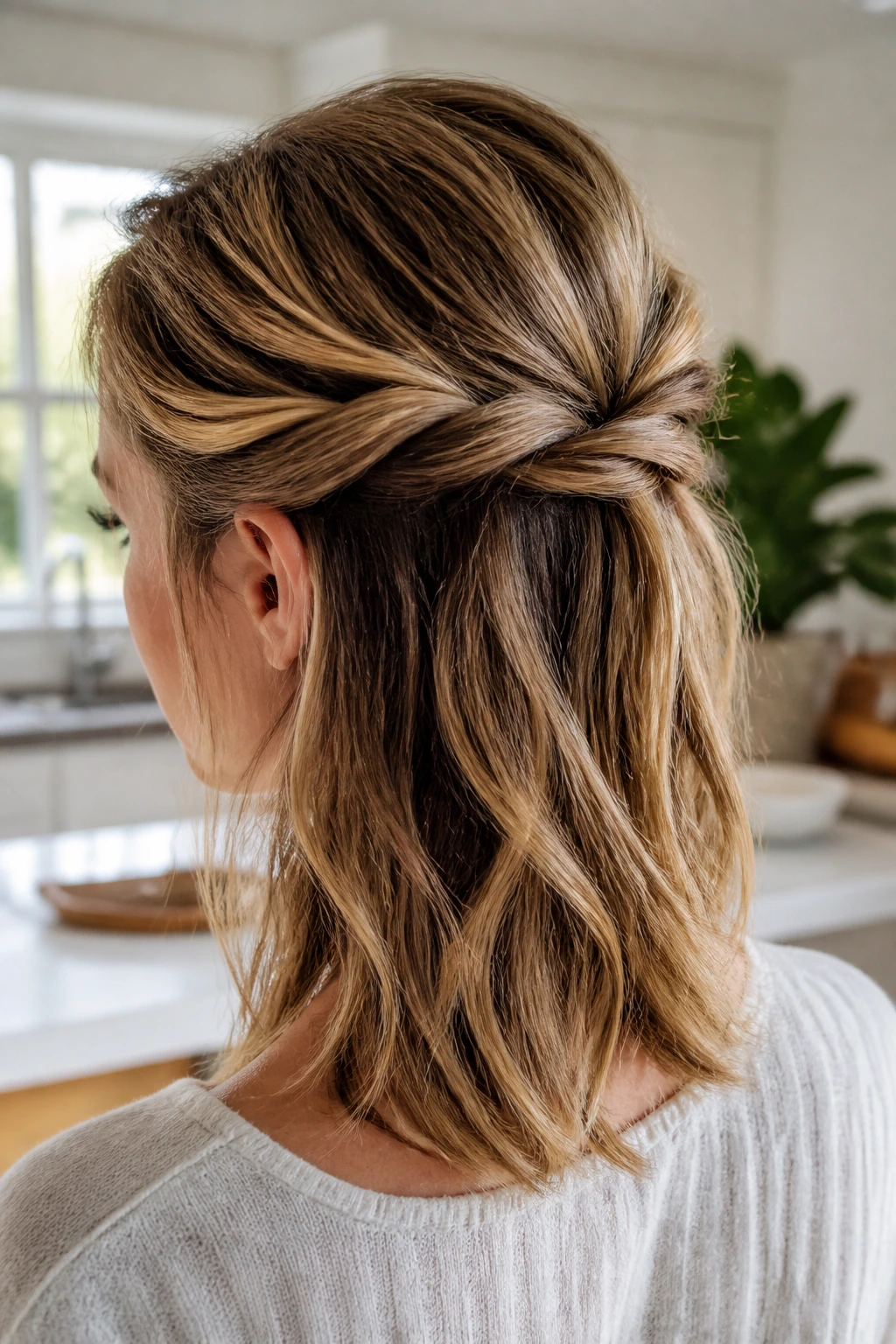
A twisted half-up style is the kind of thing I keep recommending because it solves several fine-hair problems at once. It lifts the crown, keeps layers from falling into your face, and leaves the ends loose so the shoulder-length cut still shows. That matters. Hiding the length defeats the whole point of the haircut.
The twist should be gentle, not tight. Fine hair can show every pin and every crease if you yank it back too hard. Two loose sections twisted toward the back and secured with one or two bobby pins usually look better than a complicated knot that pulls at the scalp.
This works nicely on second-day hair, when the roots have a little natural grip. If the hair is too clean, it can slip. A light mist of dry shampoo at the roots gives the style something to hold onto.
Why It Works
It keeps the face open, but not bare.
That’s the balance fine hair styles need most.
17. The Soft Wolf Cut Lite

A wolf cut can be too much for fine hair if it’s cut with a heavy hand. The softened version keeps the edge and skips the shredded mess. Think longer layers through the back, gentle texture around the crown, and face-framing pieces that don’t vanish into nothing.
This cut has a bit more attitude than the classic lob. It looks best on people who like some mess in their hair and don’t mind a little unpredictability. But it should still look deliberate. A good soft wolf cut lite has shape; a bad one just looks like you got overconfident with thinning shears.
For fine hair, the main rule is to keep enough length at the bottom so the silhouette stays full. The texture belongs in the middle, not all the way through the ends. That’s what keeps the style from getting sparse.
Best if: Your hair has some wave or you like diffused texture.
Skip if: You want a clean, polished outline every day.
18. The Chin-to-Collarbone Sweep
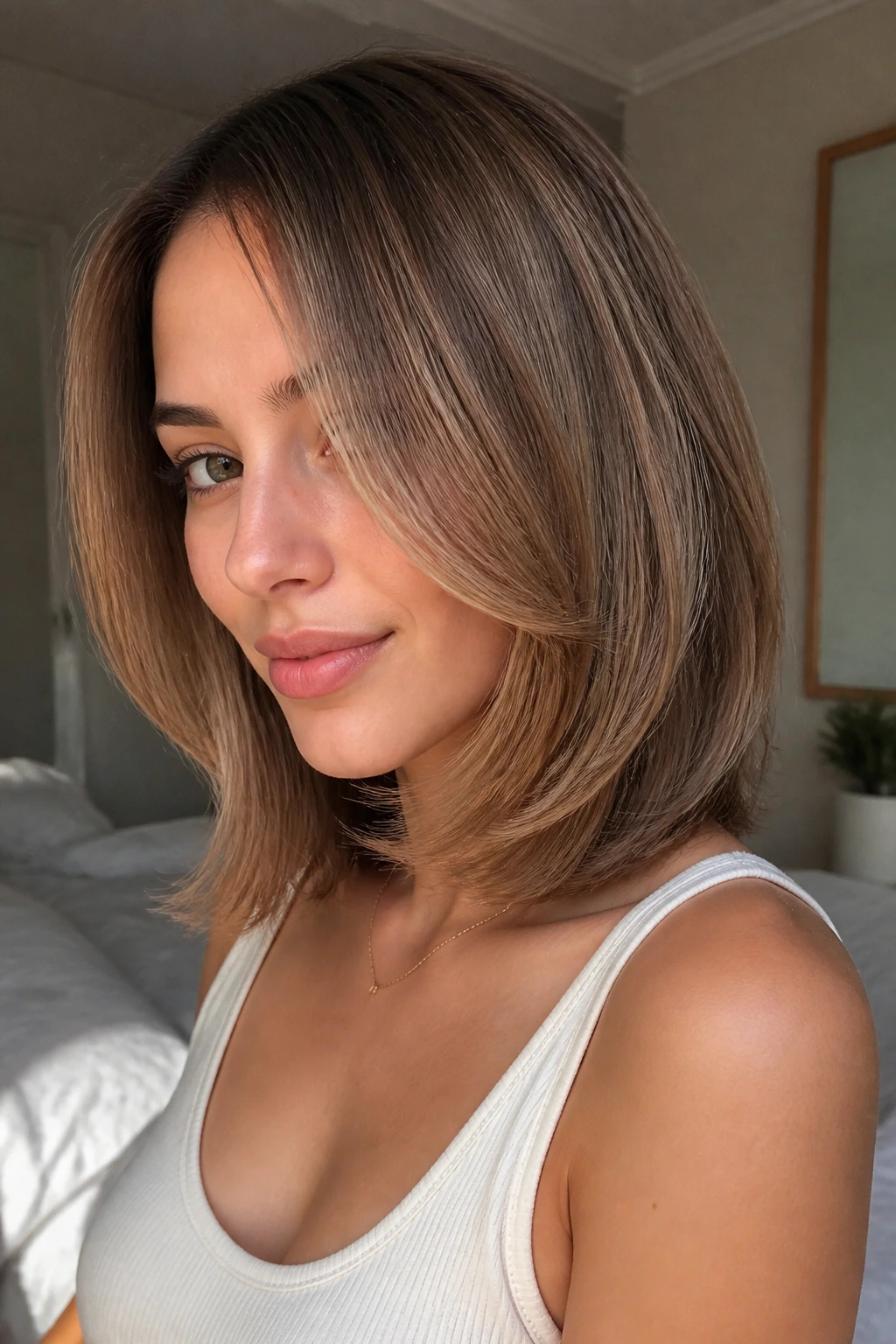
This style is all about the line. The front pieces sweep from the chin down to the collarbone, creating a long face frame that makes fine hair feel more dynamic. The back stays slightly fuller, so the cut doesn’t collapse into a narrow triangle.
It’s a very flattering shape if you want to soften a strong jaw or draw attention to the eyes. The sweep gives the hair a directional flow, which makes the style feel more expensive than a straight all-over cut. There’s a reason stylists reach for these long face-framing pieces so often. They do a lot of work without stealing density from the rest of the head.
Keep the shortest pieces long enough to tuck. If they’re too short, they can stick out at odd angles and make the hair feel choppy. That little detail matters more on fine hair because the eye sees every interruption.
What to Watch For
If your stylist gets enthusiastic with the layering, ask them to stop before the face frame turns into a ladder. You want sweep, not stairs.
19. Retro Flipped Ends at Shoulder Length
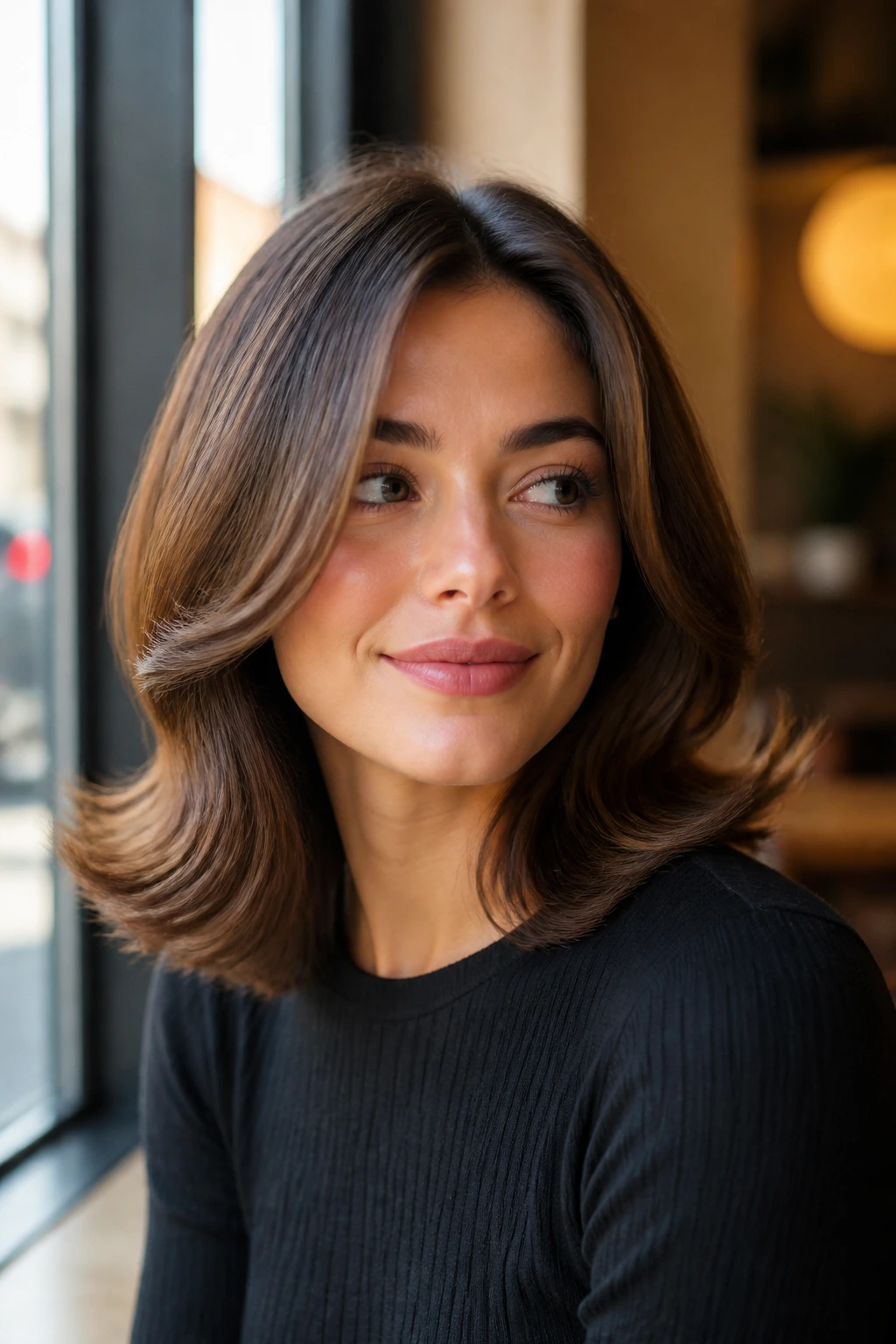
Retro flipped ends bring instant shape to fine hair. The turn at the bottom widens the silhouette and gives the illusion of more movement through the whole cut. It’s the sort of style that looks intentional even when it’s only the ends that did the work.
I like this look with soft layers because the bend at the bottom has somewhere to land. The layers support the flip instead of fighting it. Use a round brush under the ends, or turn a flat iron slightly outward as you glide down the last two inches.
This style can read polished or playful depending on the rest of the finish. A clean center part makes it feel sharper. A side part makes it softer. Either way, the flipped edge keeps it from looking like “just hair down,” which is the complaint I hear most about fine shoulder-length hair.
Best with: Hair that can hold a little shape at the ends.
Best not with: Heavy oils or butter creams. They flatten the flip fast.
20. The Layered Straight Style with a Deep Side Part
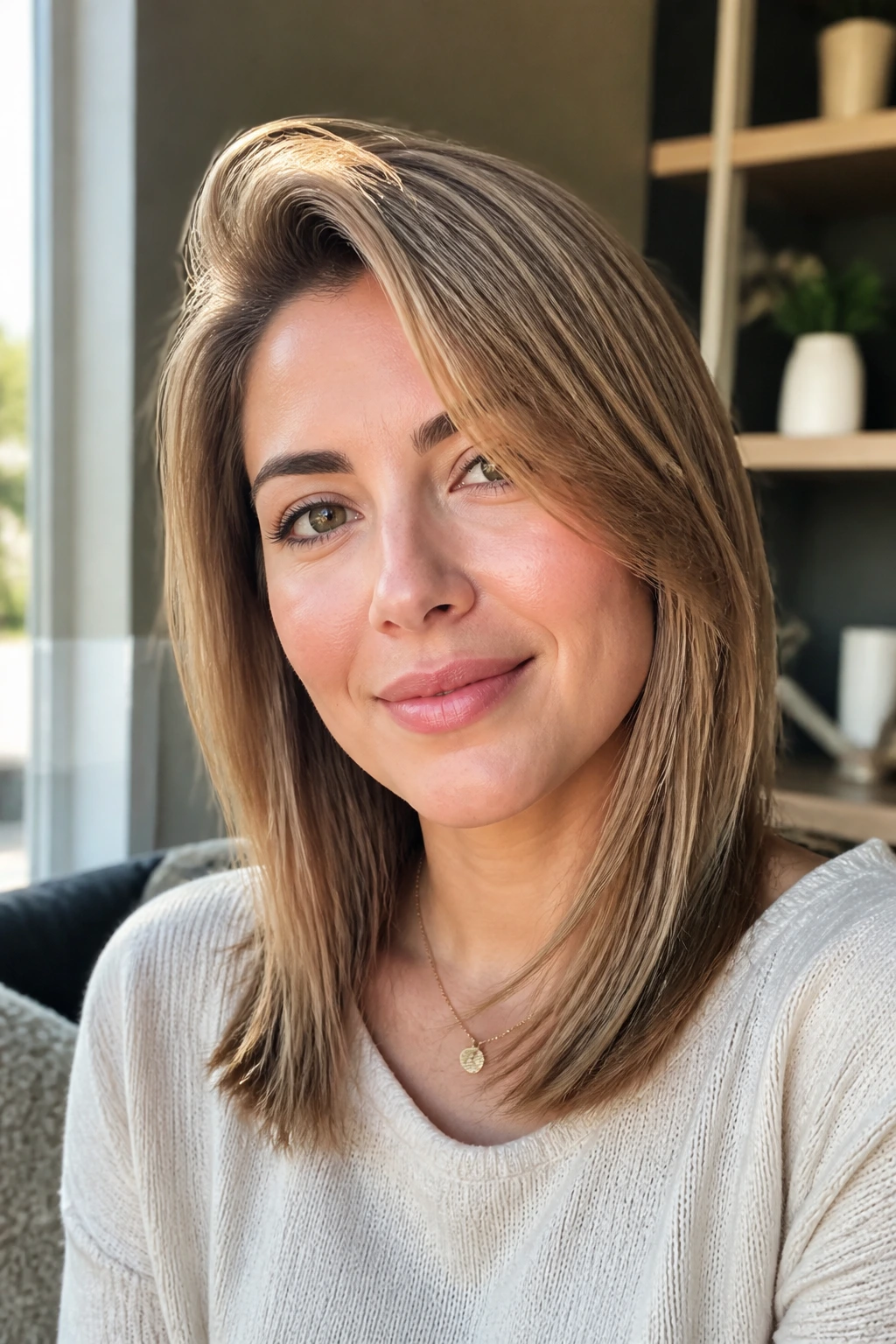
Straight hair does not have to mean flat hair. With a deep side part and carefully placed soft layers, shoulder-length fine hair can look sleek and full at the same time. The side part gives the roots a lift on one side, while the layers keep the ends from looking like one flat sheet.
The thing I like most about this style is how low-maintenance it can be. If your hair naturally dries straight, you can get away with a simple blow-dry and a touch of serum. If it bends at the ends, even better. The cut will look softer with almost no effort.
A lot of people mistake “straight” for “no shape.” Not here. The difference lives in the layering. Keep it subtle, keep it long, and keep the line around the shoulders crisp enough to show density.
- Do: Use a rat-tail comb for a clean side part.
- Do not: Load the roots with heavy cream.
- Do: Tuck one side behind the ear for asymmetry.
21. The Polished Shoulder-Length Blowout
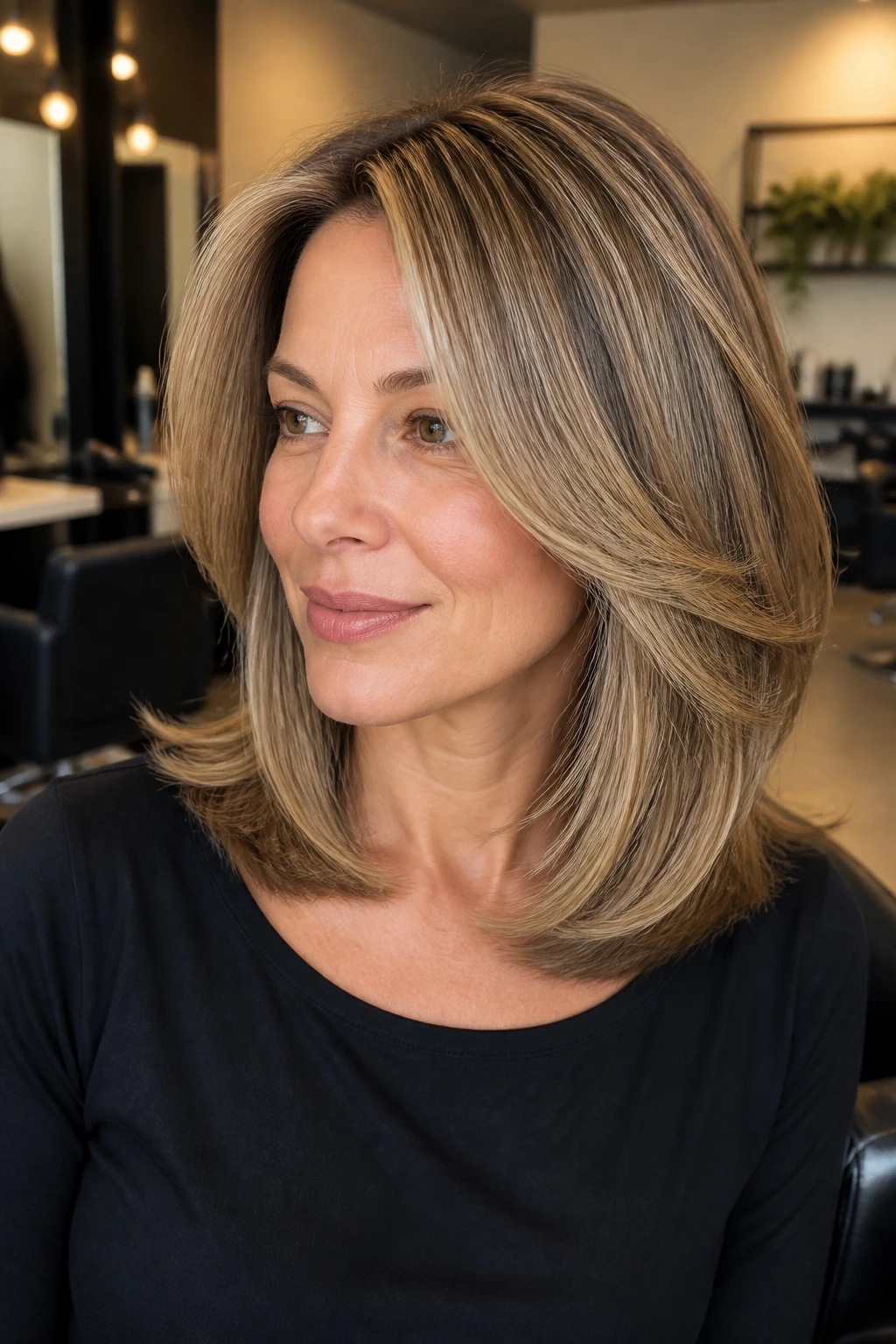
A polished blowout is the style that makes fine hair look like it has a little more money and a little more time than it really does. The shoulder-length cut gives the blowout structure, while the soft layers keep the finish from turning puffy. You end up with movement, bounce, and shape at the same time.
This one is all about sectioning. Clip the top half out of the way, work in small horizontal sections, and smooth each piece over a round brush from root to end. Finish each section with a cool shot so the bend sets. If the hair is very fine, don’t overload it with product before you dry it. That’s how you lose the volume before it starts.
I think this is the prettiest version of shoulder-length fine hair when someone wants a “done” look without harshness. It flatters the collarbone, opens the face, and still feels soft when you move.
How to Get the Most From It
A small amount of root spray at the crown beats a full head of mousse.
Less product, better lift. It’s that plain.
22. Pinned-Back Waves with Exposed Layers
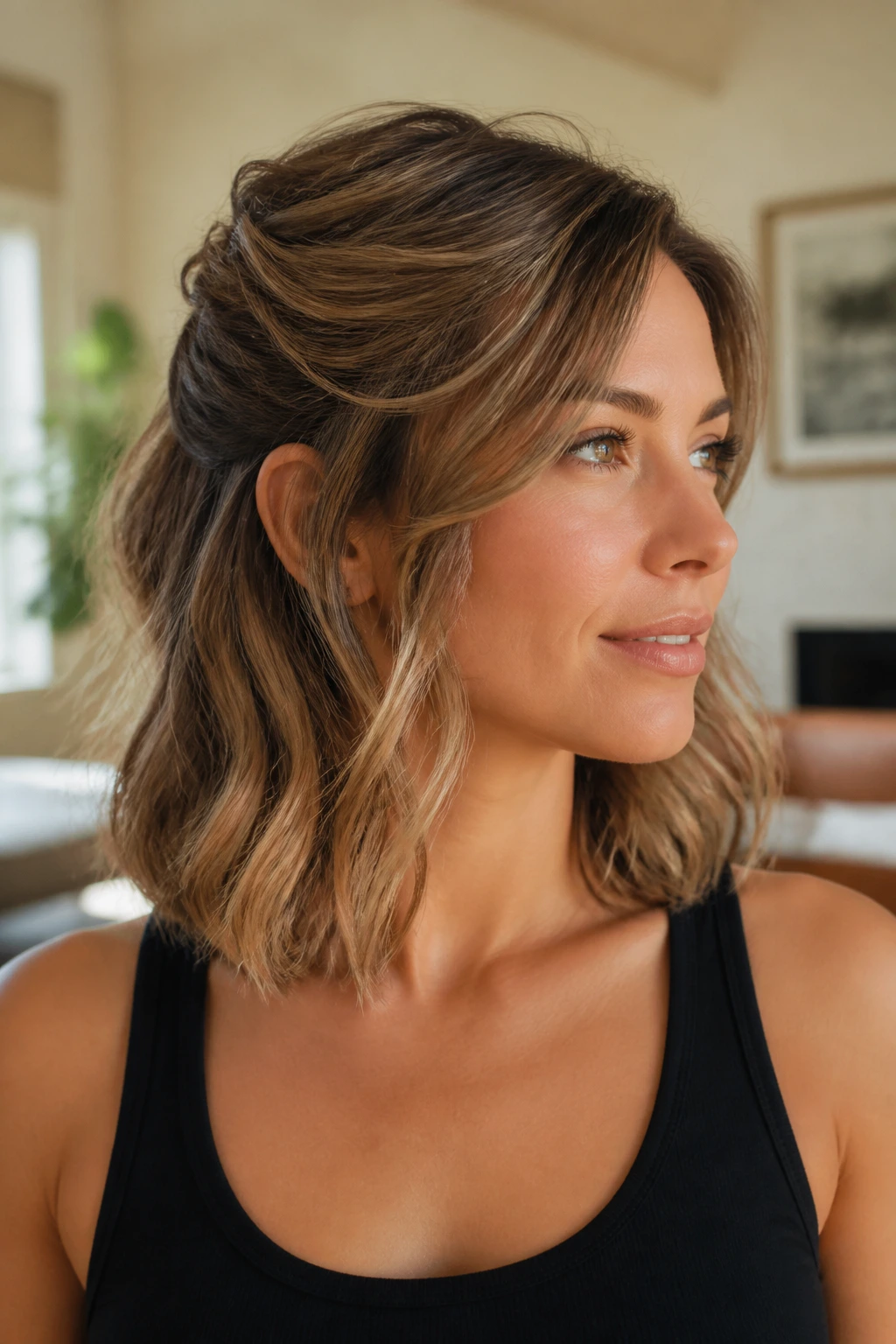
Pinned-back waves are a quiet way to show off soft layers without losing length. You wave the hair lightly, then pin back just enough from one or both sides to reveal the cheekbones and keep the front from falling in your face. On fine hair, that shape gives the illusion of fullness where the viewer can actually see it.
The look is especially good when the front layers are designed to sweep back naturally. If the shortest pieces are too short, they stick out around the pins and make the style fussy. Longer face-framing layers behave better. They tuck, blend, and soften the pinned section instead of fighting it.
I like this for days when you want the hair off the face but still want to keep the shoulder-length silhouette. It has more polish than a messy tuck and less effort than a full updo. That’s a useful lane to live in.
Best finishing move: A single bobby pin hidden behind the ear and a light mist of flexible hairspray.
Avoid: Over-spraying the waves into a stiff shell. Fine hair goes crunchy fast.
Why Shoulder Length and Soft Layers Stay Friendly to Fine Hair
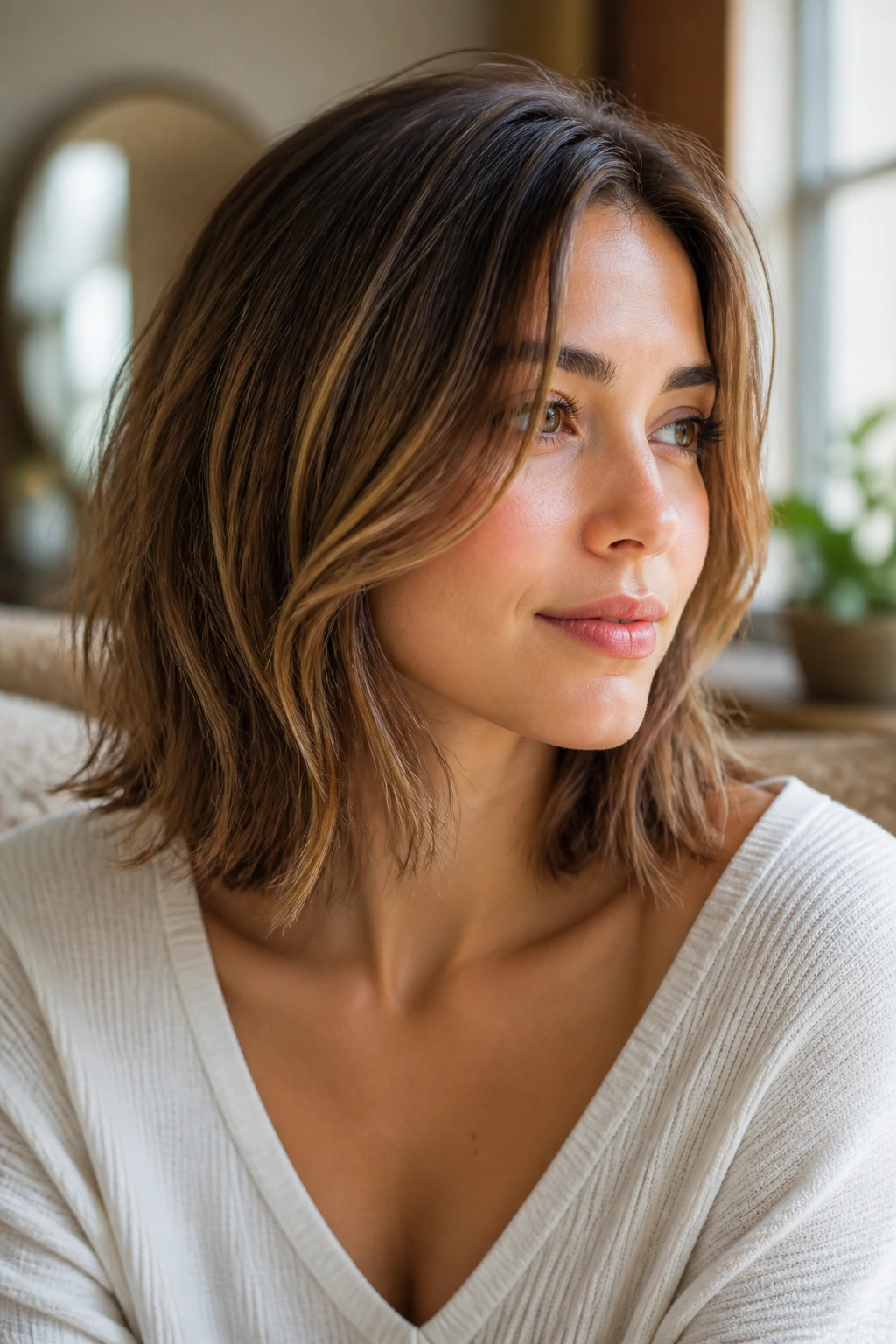
The reason this haircut category works is not mysterious. Fine hair needs shape more than it needs drama, and shoulder length gives that shape a place to land. If the hair goes much longer, the weight starts pulling the roots down and the ends get thinner and thinner. If it goes much shorter, you lose the swinging length that makes soft layers useful.
Soft layers are the real fix, though. They let the hair move without stealing too much bulk from the perimeter. That distinction matters. A good layer should create a bend, a tuck, a flip, or a face-framing curve. A bad layer just removes hair. One helps the cut live. The other makes you wonder why your ponytail feels half the size it used to be.
Where the Layers Should Start
For fine hair, I usually like the shortest layers to begin somewhere around the cheekbone, jawline, or lower. Starting them too high can leave the crown looking airy and the ends looking sparse. That’s not a trade I’d make lightly.
Why the Collarbone Is Such a Good Anchor
The collarbone acts like a visual shelf. Hair that hits it can curve, rest, or flip, and that tiny bit of structure makes a style feel finished. It also gives shoulder hairstyles for fine hair with soft layers a bit of variety. You can wear them straight one day, waved the next, and pinned back the day after that without losing the cut’s shape.
The Tools That Make These Styles Behave
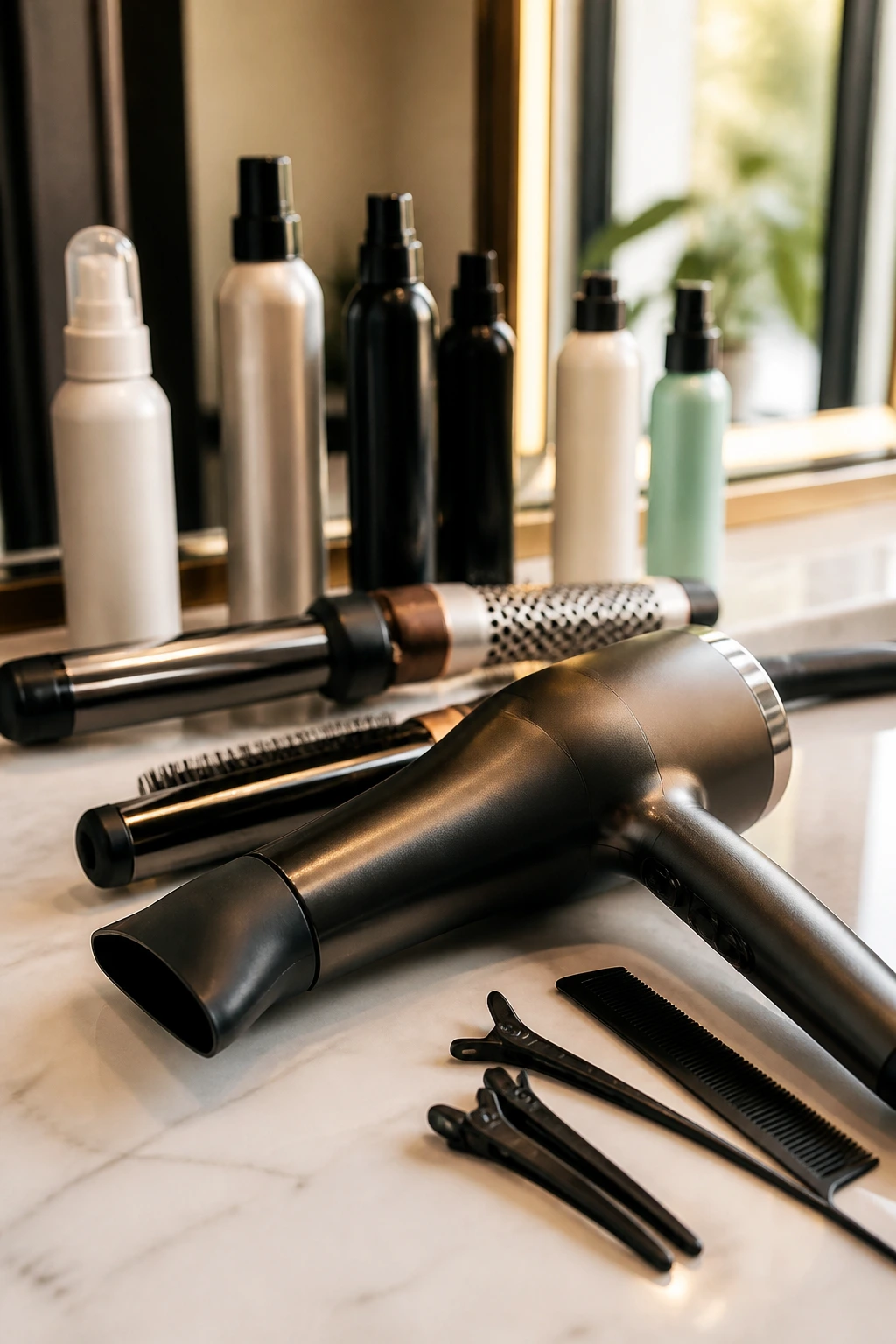
- Blow-dryer with a concentrator nozzle: Directs airflow so fine hair doesn’t fly everywhere while you’re trying to smooth it.
- 1-inch curling iron or 1.25-inch wand: Best for loose bends and soft waves that won’t overwhelm shoulder-length cuts.
- Medium round brush: A 1.5- to 2-inch barrel gives lift without creating giant curls.
- Root-lifting spray: Use it at the crown before blow-drying for extra height where fine hair usually collapses.
- Lightweight mousse: Good for air-dried styles and blowouts that need a little body without stickiness.
- Flexible-hold hairspray: Keeps movement in place instead of freezing the hair stiff.
- Texturizing spray: Adds grip for braids, twists, and clipped styles.
- Dry shampoo: Useful even on clean hair if the roots need grit and lift.
- Fine-tooth comb and tail comb: Handy for crisp parts and sectioning.
- Duckbill clips or sectioning clips: These make blow-drying and curling much easier, especially when your hair is fine and easy to tangle.
How to Choose the Right Cut and Products
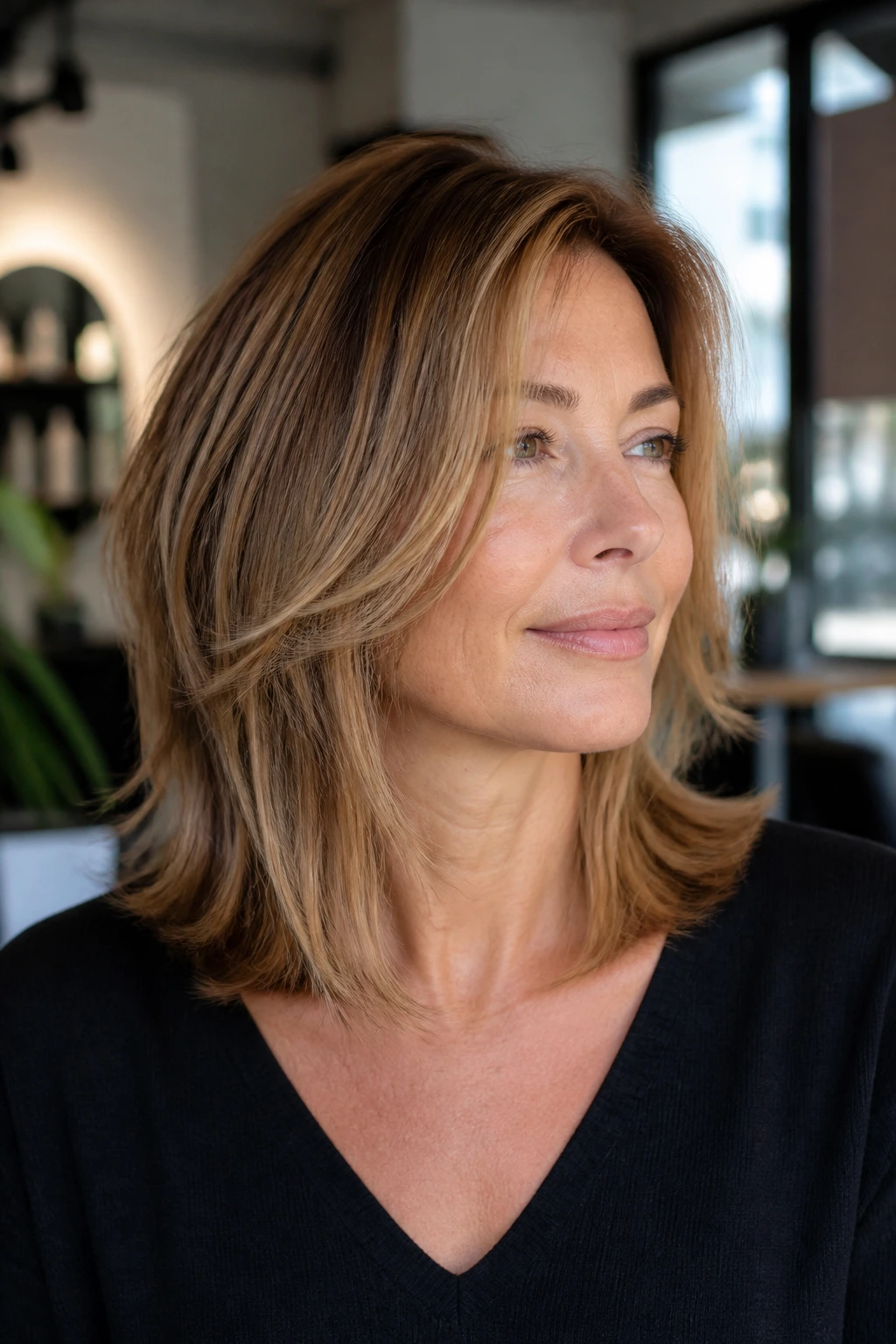
The smartest move with fine hair is to think about density first and trend second. You can wear almost any shoulder-length style on this list, but the line between full and flimsy is thin. If your hair is sparse through the ends, ask for a fuller perimeter with soft internal layers. If your hair is fine but dense, you can take a little more movement through the inside without losing the shape.
Bring photos, yes, but bring the right ones. One photo should show the silhouette you want. Another should show the fringe or face frame. A third should show the finish—straight, bent, or waved. Too many people hand over one glossy picture and expect the stylist to guess the rest. That’s how you end up with a cut that’s pretty in theory and wrong on your head.
Product choice matters more on fine hair than most people want to admit. Heavy creams and thick oils sink the root and smother the body. Lightweight mousse, root spray, and flexible spray are the better trio. If your hair is especially slippery, a little dry shampoo at the roots before styling can give the strands something to grab.
And one more thing: ask where the shortest layer will land when the hair is dry, not wet. Fine hair can spring up or shrink down in strange ways, especially if it has any natural wave. That tiny detail saves a lot of regret.
How to Wear These Styles Without Overstyling Them
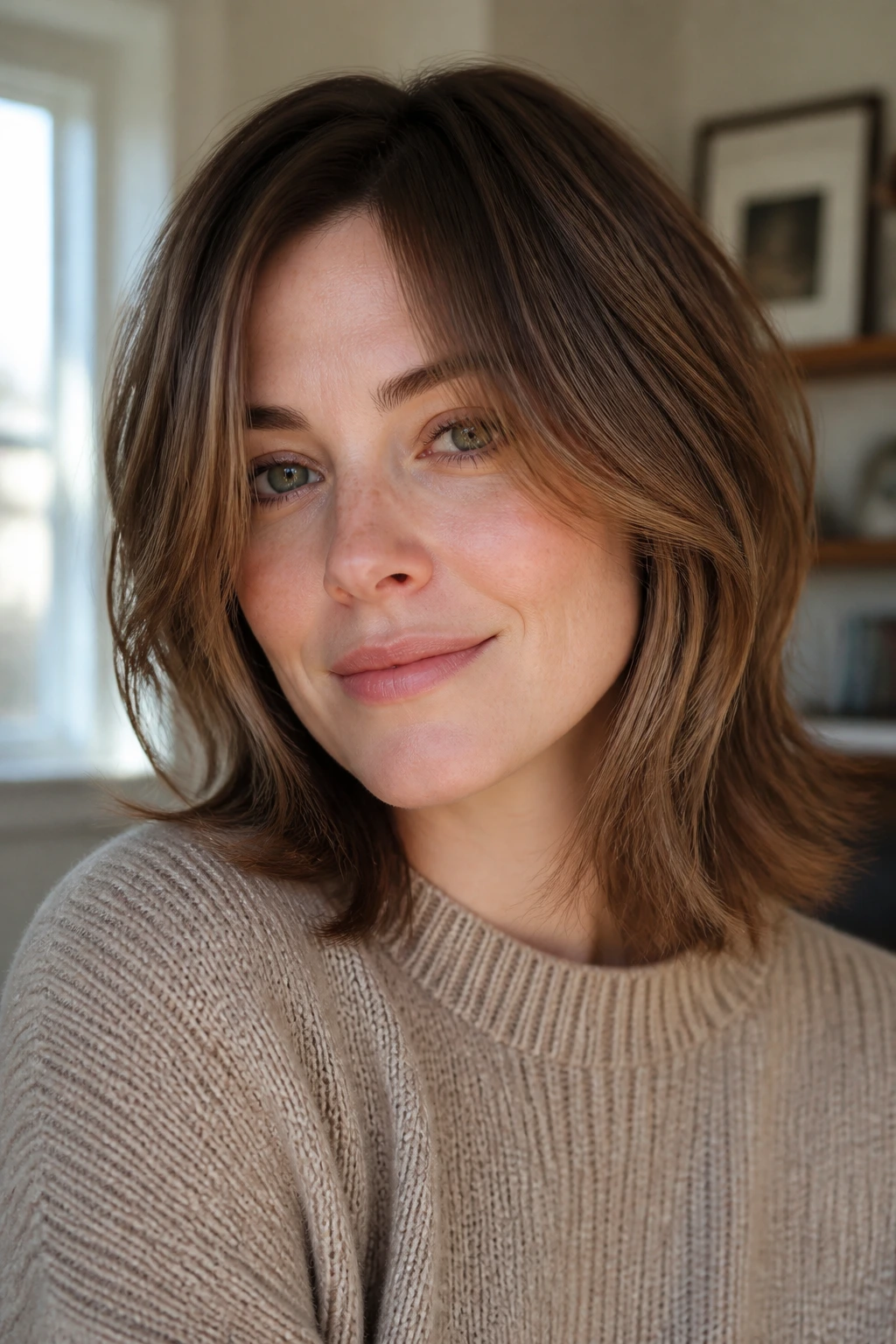
Everyday wear: Keep the finish soft and let the cut do the work. A simple blow-dry, a slight bend at the ends, or a middle part with tucked sides is enough on most days.
Event-ready: Pick one focal point and stop there. Either go glossy and straight, or go wavy with a strong side part, or add a clipped-back side. Trying to do all three at once usually makes fine hair look busy.
Best face-framing choice: If you want more softness around the cheeks, choose curtain bangs, bottleneck bangs, or long front layers that land at the jaw. If you want more lift at the crown, choose a side part or a clipped-back front.
Quick rescue move: When the roots flatten halfway through the day, flip the part, mist the crown with dry shampoo, and lift the top with your fingers. That takes about thirty seconds and often buys you another few hours of shape.
Texture Boosters and Small Styling Tweaks
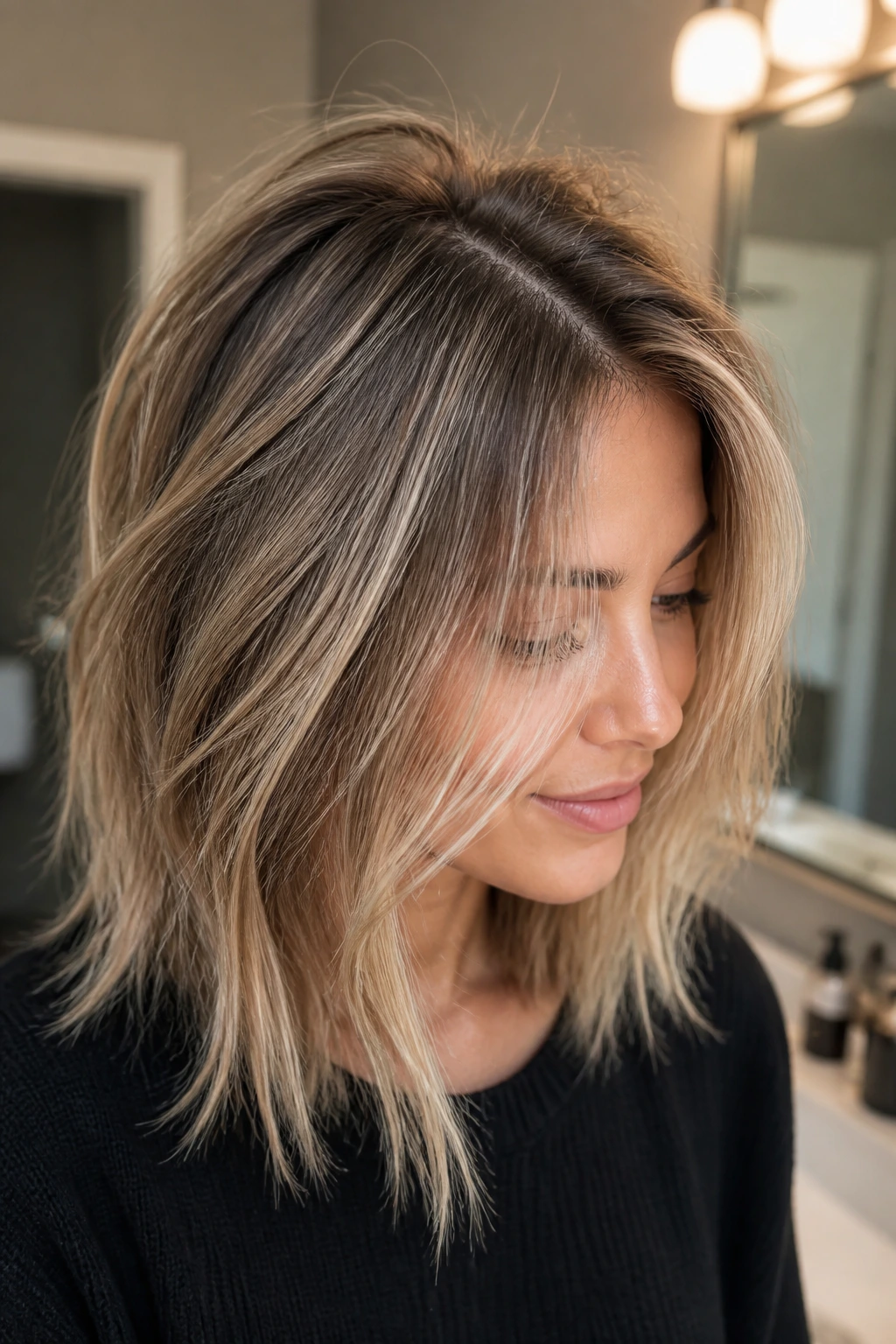
Root Lift: Spray the roots before drying, then direct the nozzle upward as you lift the hair off the scalp. That gives fine strands more body than spraying after the fact.
End Movement: Roll the last two inches of the hair under or out, but not both on the same side of the head. Mixed directions can look accidental. Choose a direction and let the bend read as a choice.
Parting Tricks: A deep side part adds lift. A center part gives symmetry. A zigzag part can hide flat spots if your scalp shows easily. Don’t overthink it, but do test a few. Tiny changes at the part can change the whole silhouette.
Finishing Touches: A pea-sized amount of shine serum on the ends, not the roots, can make fine hair look smoother without flattening the crown. If you need grip instead of gloss, swap the serum for a dusting of texture spray at the mid-lengths.
Mistakes That Make Fine Shoulder-Length Hair Look Thinner
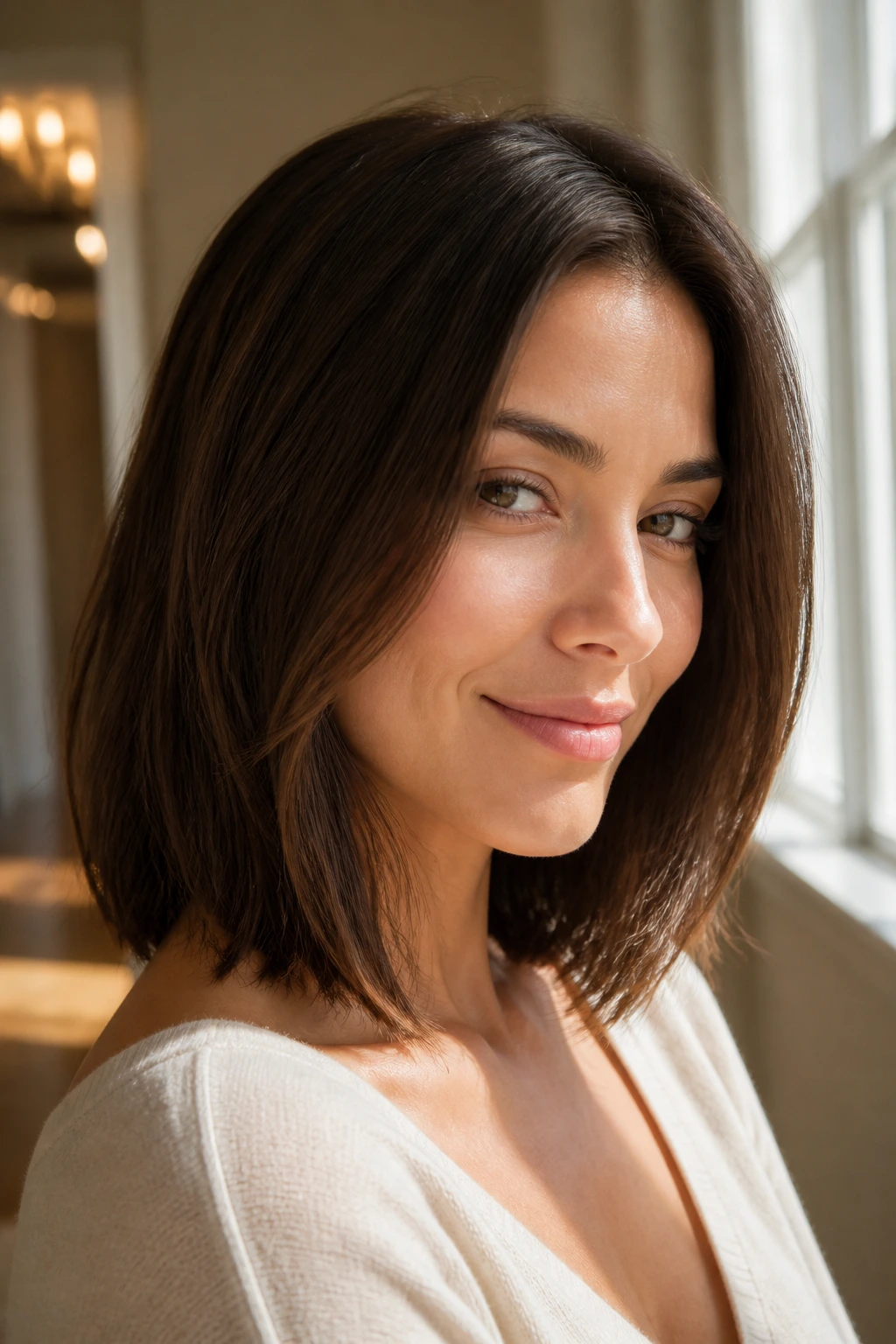
The first mistake is over-thinning the ends. Hairdressers sometimes reach for texturizing shears when they should reach for restraint. The symptom is ends that look airy in the chair and see-through in daylight. The fix is simple: ask for soft layers, not a shredded finish.
The second mistake is starting the shortest layers too high. That creates lift on top, yes, but it can leave the bottom half looking hollow. If your hair has a weak density line, the layer should begin lower—around the jaw or collarbone—so the perimeter stays solid.
The third mistake is using products that are too rich. Heavy masks, smoothing creams, and oil blends can collapse the crown in under an hour. Fine hair wants lightness. Use just enough product to control frizz and keep the ends from sticking out.
The fourth is curling everything the same direction. That creates a tube of hair instead of movement. Alternate the direction of a few front sections or leave the ends straighter so the wave reads softer and less stiff.
Variations and Adaptations to Try
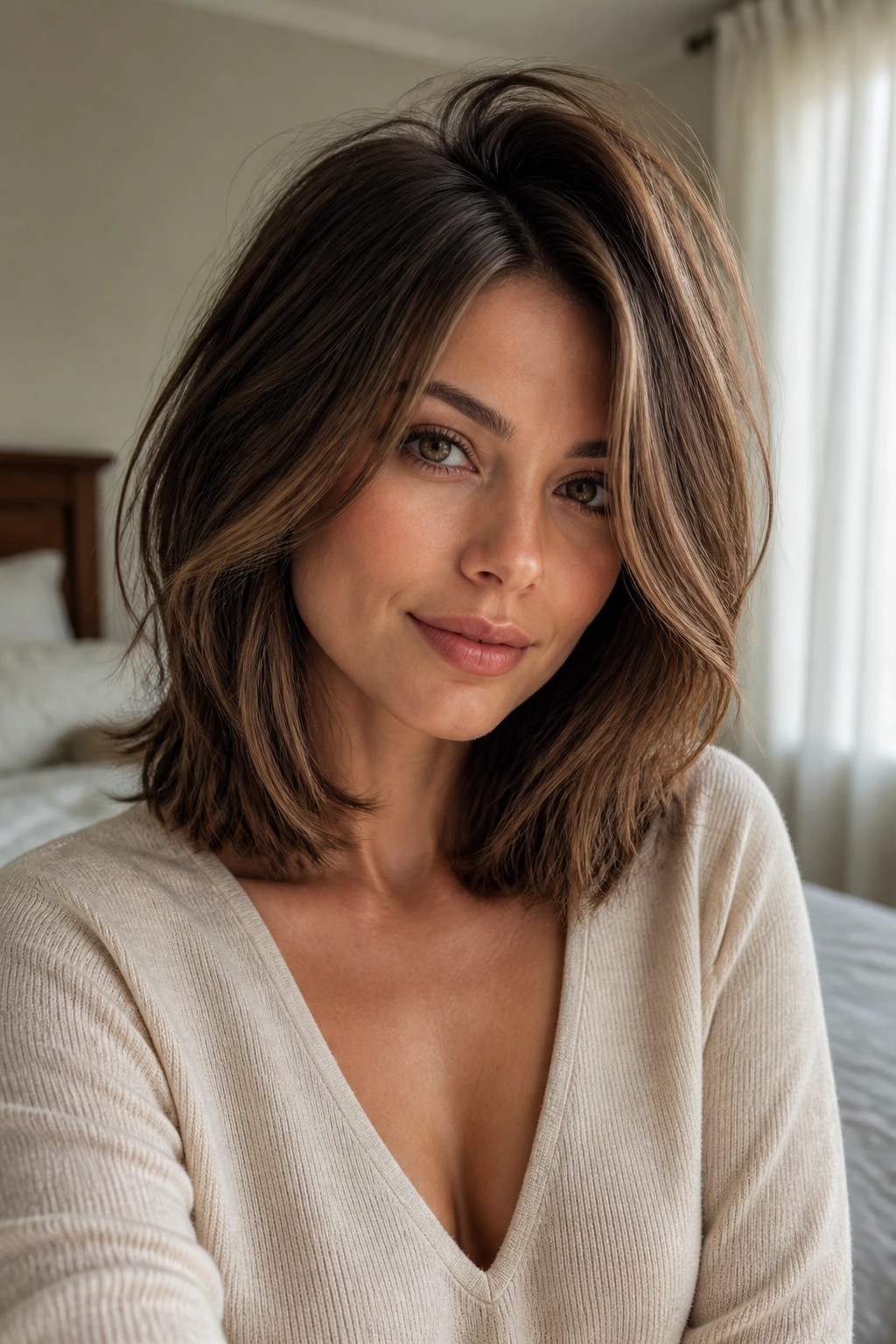
For Pin-Straight Hair: Keep the layers longer and the ends clean. A blunt-ish lob with a subtle bend holds its shape better than a heavily textured cut that depends on wave.
For Naturally Wavy Hair: Lean into the bend and ask for soft face-framing layers that follow your wave pattern. The cut should support the texture, not fight it.
For Extra Crown Lift: Add a slightly deeper side part, then set the top section with a velcro roller while you do your makeup. That little bit of lift changes how the whole style sits.
For Low-Maintenance Days: Pick a cut that looks good air-dried—soft shag lite, S-curve layers, or a rounded lob. The less you depend on a curling iron, the easier your mornings get.
For Sleeker Taste: Choose a center part, tucked-behind-ear styling, or a polished blowout. Fine hair can look elegant when it’s smooth and clean-lined.
For a Stronger Face Frame: Add curtain bangs, bottleneck bangs, or long sweep layers that sit around the cheekbones. That gives the cut more shape without sacrificing length.
Maintenance and Refresh Guidance
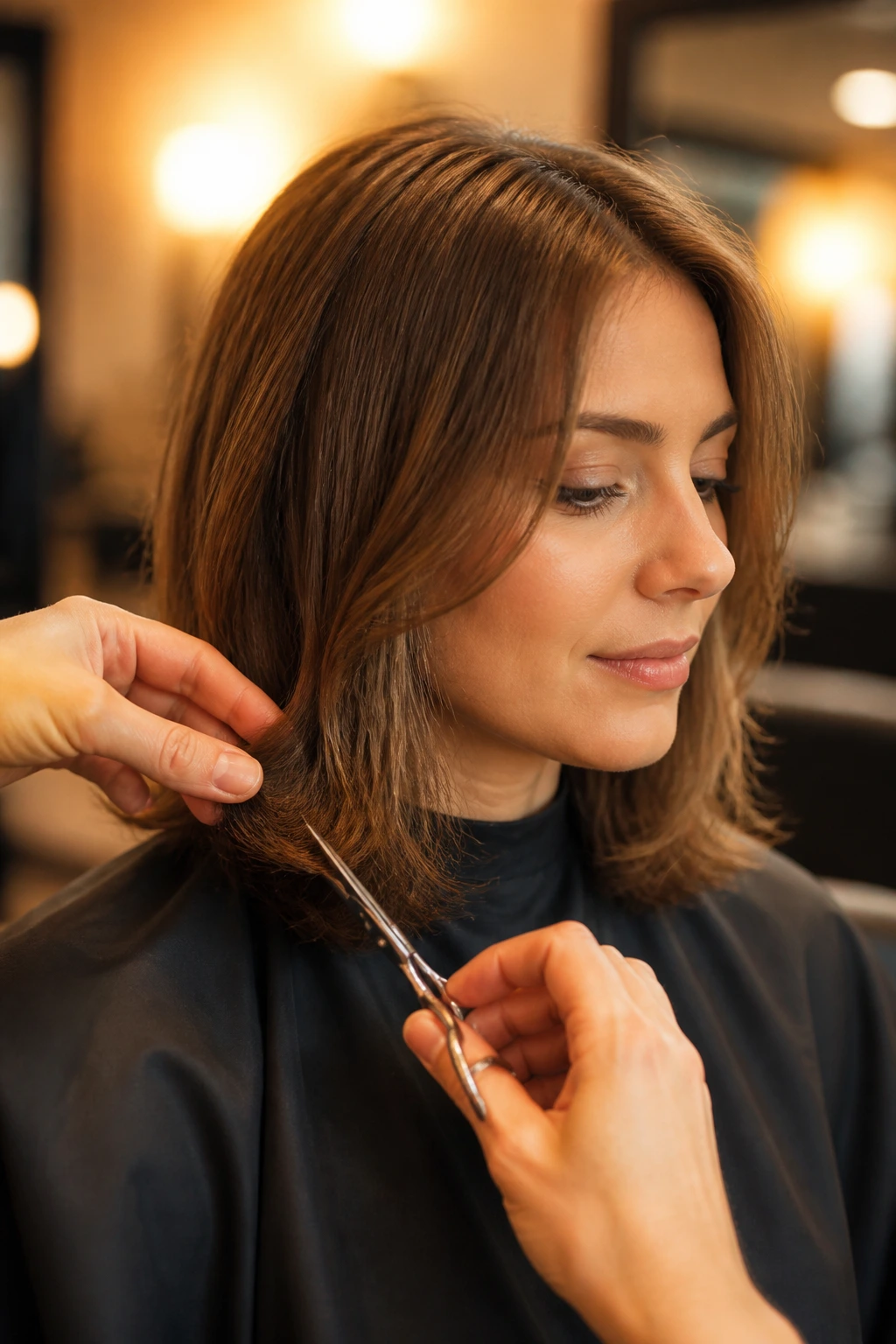
Fine hair usually looks best when the shape is fresh. That doesn’t mean you need a haircut every three weeks, but it does mean the silhouette needs regular cleanup. For most shoulder-length cuts, a trim every 6 to 8 weeks keeps the ends dense and prevents the layers from drifting too low.
If you style with heat often, use a heat protectant every time. Fine strands show damage fast—split ends, roughness, a little loss of shine. It does not take much for a polished lob to start looking tired. A trim is cheaper than trying to fake healthy ends with more product.
Overnight care matters more than people expect. A loose silk scrunchie, a low braid, or a silk pillowcase keeps the shape from getting bent flat while you sleep. If you wake up with a halo of crushed roots, mist the crown lightly with water or leave-in spray and re-blow the top section for 60 seconds. That’s usually enough to wake the style back up.
If you wear the half-up or pinned-back looks often, rotate your part and pin placement. Repeated tension in the same spot can flatten the roots on one side and make the style harder to revive.
Frequently Asked Questions
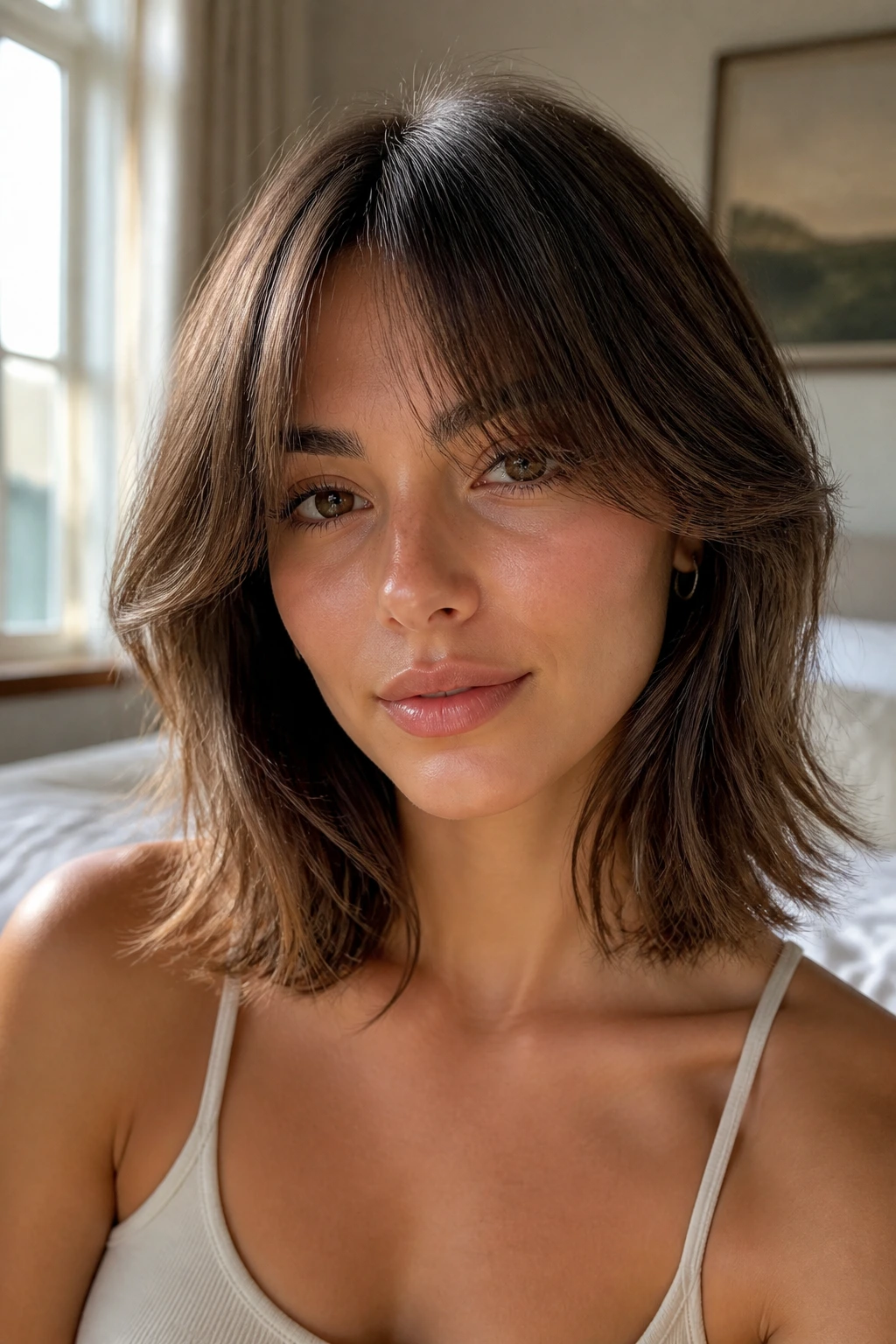
Are layers bad for fine hair?
Not when they’re soft and placed well. The problem is not layers themselves; it’s layers that start too high or get thinned too aggressively. Fine hair usually looks better with long, controlled layers that preserve the outline.
Should fine hair be cut one length or layered?
A full one-length cut can make the ends look thicker, but it can also fall flat if the hair is very fine and straight. A soft layered shoulder cut usually gives you more movement while keeping enough weight at the bottom. That balance is why this length works so well.
What’s the best curling iron size for shoulder-length fine hair?
A 1-inch to 1.25-inch barrel is the safest range. Smaller barrels can make the wave too tight and shorten the look of the hair, while larger barrels are better if you want a loose bend or blowout finish.
How often should I wash fine hair if I want volume?
Many people with fine hair do better washing every 1 to 3 days, depending on oil and product use. If the roots get flat fast, dry shampoo can stretch the style a bit, but a clean root usually lifts better than a coated one.
Can I air-dry shoulder-length fine hair and still make it look styled?
Yes, if the cut supports it. Air-dried S-curves, soft shags, and layered lobs can all look good with a little mousse and a hands-off dry. The trick is not touching the hair while it sets.
Do curtain bangs make fine hair look thinner?
Only if they’re cut too sparse. A proper curtain fringe should have enough width to frame the face and enough softness to blend with the layers. The bang should help the cut, not sit there looking threadbare.
What if my hair goes flat even after styling?
Focus on the crown and part line. Flip the part, use less conditioner at the roots, and keep product off the top section. A root-lifting spray plus a quick blast with the blow-dryer is usually more useful than another full restyle.
The Shape That Makes Fine Hair Behave
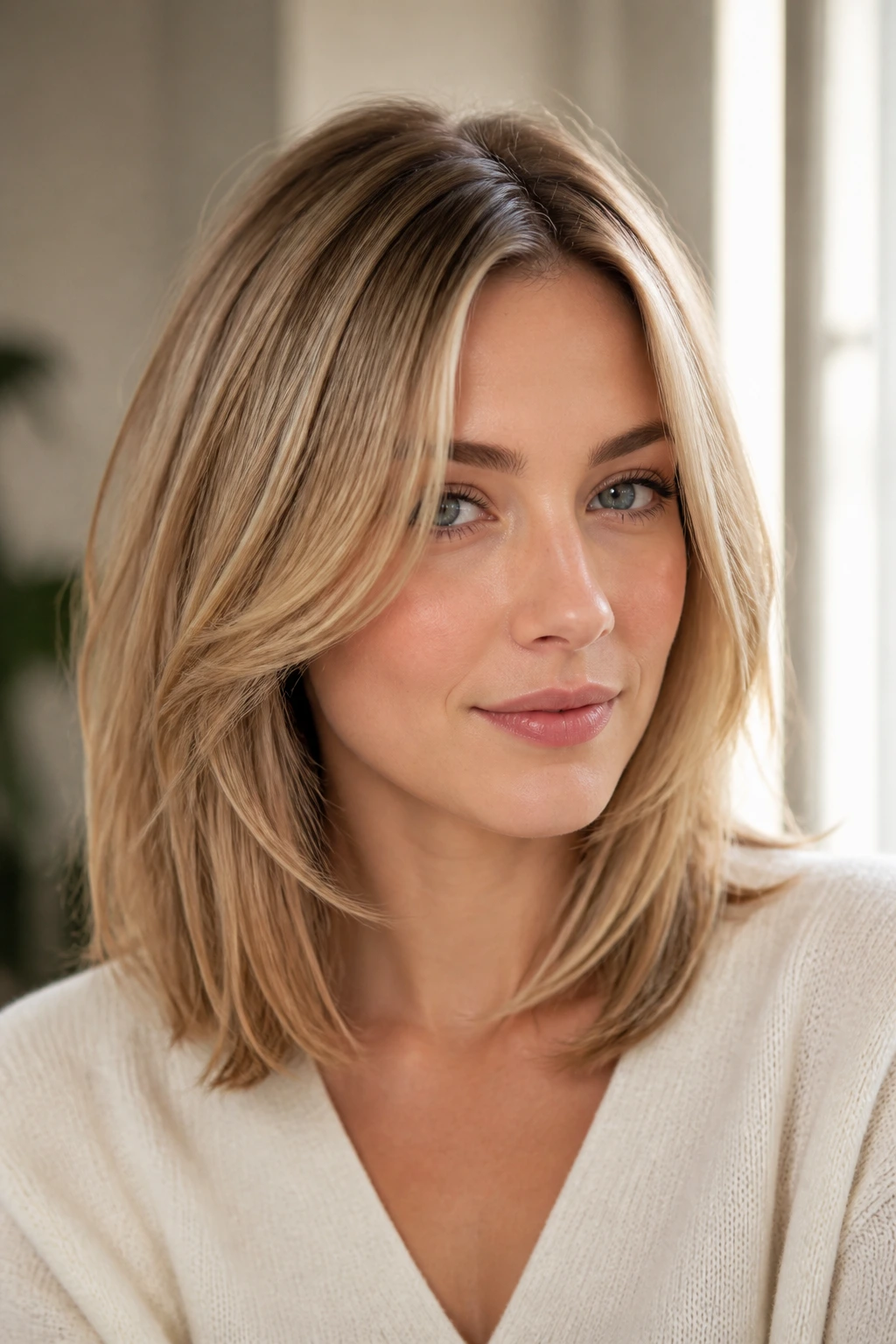
The nicest thing about shoulder hairstyles for fine hair with soft layers is that they do not ask your hair to be something it isn’t. They work with the amount of hair you have, the way it falls, and the places where it naturally needs help. That’s a rare kind of haircut. Most of the bad ones fight the hair until it gives up. These cut with the grain.
If you want the simplest takeaway, it’s this: keep the perimeter honest, keep the layers soft, and keep the styling light enough that the hair still moves. Fine hair usually looks its best when it has a shape to follow, not a pile of product to carry.
The next time your hair feels limp or vague, start with the cut before you blame the texture. That’s where the real difference lives.