



Shoulder-length hair can go boxy fast if the cut is too blunt. Long layers fix that by removing weight where the hair wants to puff and keeping enough fullness at the ends so the whole shape still moves. On the right head of hair, you notice it the first time you turn sideways in the mirror: the front pieces swing, the perimeter stops looking heavy, and the cut feels like it has air inside it.
That’s why long layered hairstyles for shoulder length hair keep getting a place in salon chairs. The length is long enough to show off shape, but short enough that every layer matters. One wrong snip and the silhouette goes floppy or triangular. One good one, though, and the hair starts behaving in a way blunt cuts usually refuse to.
The sweet spot is placement. Some of these cuts lean on a soft face frame, some lift the crown, some take bulk out of thick hair, and some give fine hair a little more visual movement without making the ends look thin. The details are small. They’re also everything.
Why This Collection Stands Out
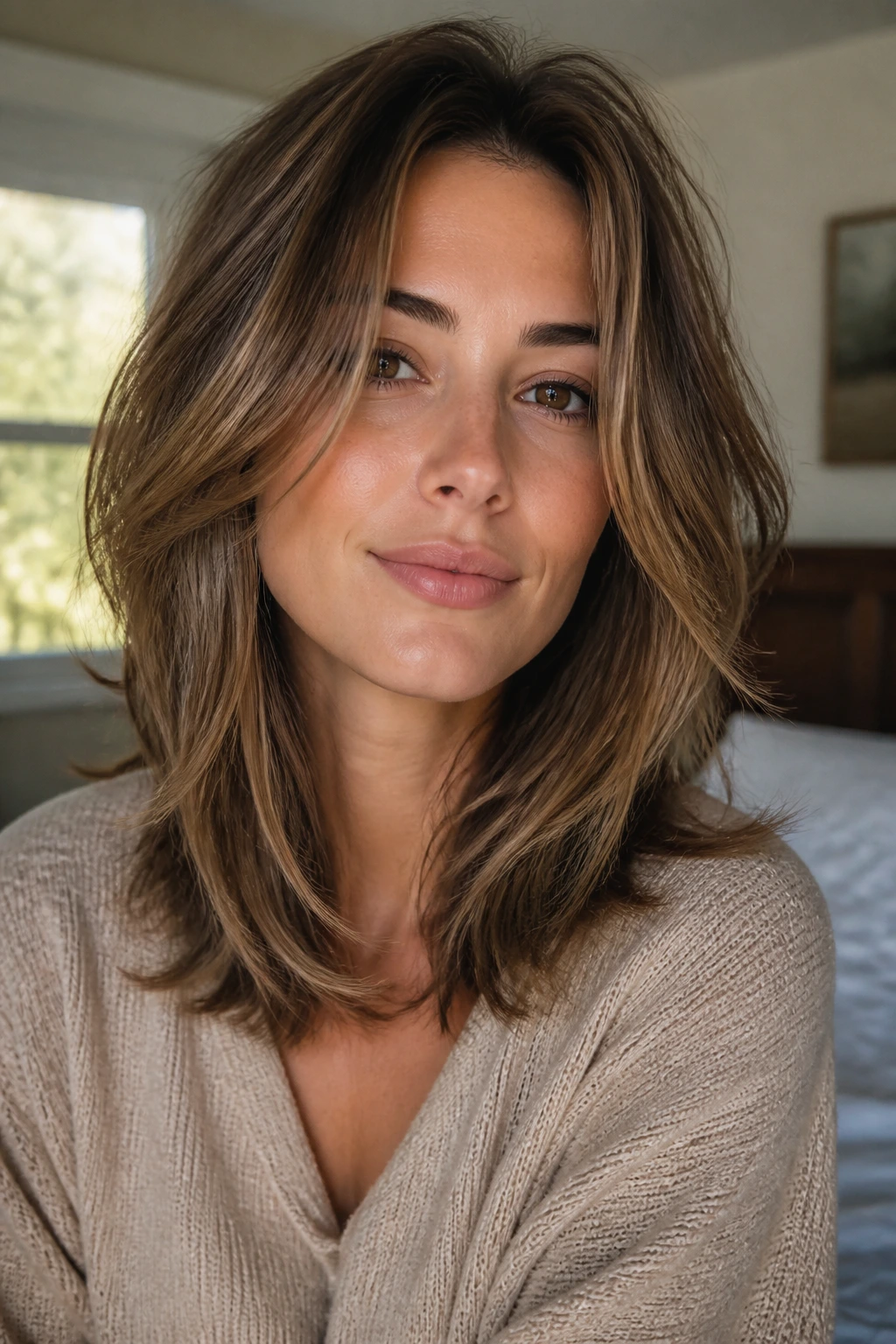
- Face shape control: Long layers can pull attention to cheekbones, jawline, or eyes without chopping the whole cut shorter.
- Grow-out grace: A smart layer pattern keeps looking intentional for weeks, not days, because the length below the shoulders still carries the shape.
- Texture-friendly: Straight, wavy, and curly hair all need different layer placement, and these cuts respect that instead of pretending one formula fits all.
- Styling range: You can wear these looks smooth, bent, or undone, and the cut still reads cleanly in each finish.
- Volume without puff: Layering can lift the crown and release the midlengths without making the ends look feathered to death.
- Low-regret haircuts: If you like movement but hate losing length, this is one of the safest places to live.
1. Soft C-Shape Layers with a Center Part
Soft C-shape layers are the kind that make shoulder-length hair stop looking like one heavy block. The front pieces curve inward at the cheekbones, then drift down toward the collarbone, so the cut feels open without turning choppy. It’s a quiet shape. Not boring. Just controlled.
Why it works
The C-shape gives the eye a path to follow, which matters a lot on hair that hits the shoulders and wants to flip outward. By keeping the shortest front pieces around the cheekbone and the longest around the collarbone, you get movement without a big jump in length. That keeps the cut from puffing into a triangle.
This is one of the easiest styles to live with if you like a middle part and a clean outline. Ask for layers that blend into the perimeter instead of sitting on top of it like separate pieces.
A round brush and a quick bend at the front are enough. The rest can air-dry with a dab of cream.
2. Butterfly Layers with Big Face-Framing Pieces
Butterfly layers look like they were made for hair that wants drama in the front but still wants to keep length in the back. On shoulder-length hair, the trick is restraint. You want the front to lift and float, not to turn into a short shag with commitment issues.
The cut gets its shape from longer, face-framing sections that start around the cheekbone and drop toward the chest, while the back stays fuller and closer to the shoulders. That split is what makes the style feel lighter without losing the sense of hair. It’s a useful trick if your hair is dense, or if you like a blowout that reads from across the room.
I’d only choose this if you’re willing to style the front a bit. A large round brush, a hot setting, and a cool shot at the end keep the layers from folding flat by lunch.
3. Curtain Bangs and Long Layered Ends
Curtain bangs change the whole mood of shoulder-length hair because they break up the forehead and pull the eye straight to the face frame. When they’re paired with long layers, the cut stays soft instead of feeling like a bang-heavy haircut that never got to finish growing out.
Best part of the shape
Curtain bangs are one of the few fringe options that still play nicely with a shoulder-length cut. They can part in the middle, brush to either side, and blend into layers that start near the cheekbone. The result looks lighter around the face, but the body of the hair still holds onto its length.
That matters if you do not want to be trapped in daily bang styling. These can be blown dry with a small round brush or bent with a large curling iron. No precision helmet work required.
If your hair sits flat around the crown, ask for the curtain pieces to connect into long, soft layers instead of stopping bluntly at the brow. That small difference keeps the style from feeling disconnected.
4. The Shag-Lite With Breezy Texture
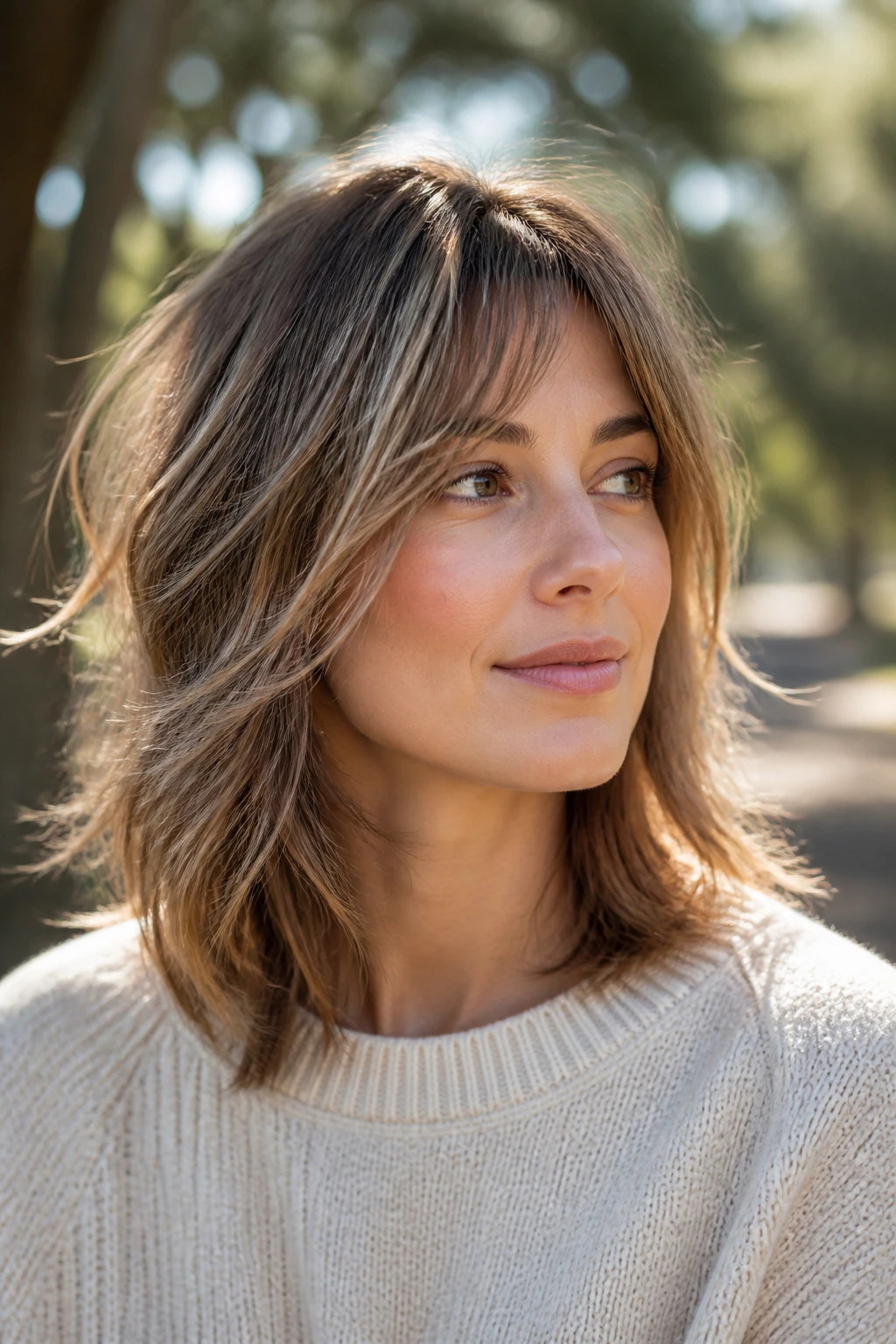
Why do some layered cuts feel playful and others just look messy? Usually, it’s the crown and the ends fighting each other. A shag-lite solves that by borrowing the movement of a shag without giving up the polish that shoulder-length hair needs.
This version keeps the layers long enough to avoid a choppy wedge, but short enough to create bend through the midlengths. It works well if your hair has a little natural wave or if you like texture spray more than a round brush. The crown gets a touch of lift, the front opens up, and the ends stay soft.
What to ask for
- Long, blended layers through the sides
- A little lift at the crown, not a stacked back
- Face framing that starts around the cheekbone
- Texture that is piecey, not razor-thin
If you want hair that looks better after it’s been slept on, this is one of the easier paths.
5. U-Shape Layers That Keep the Length
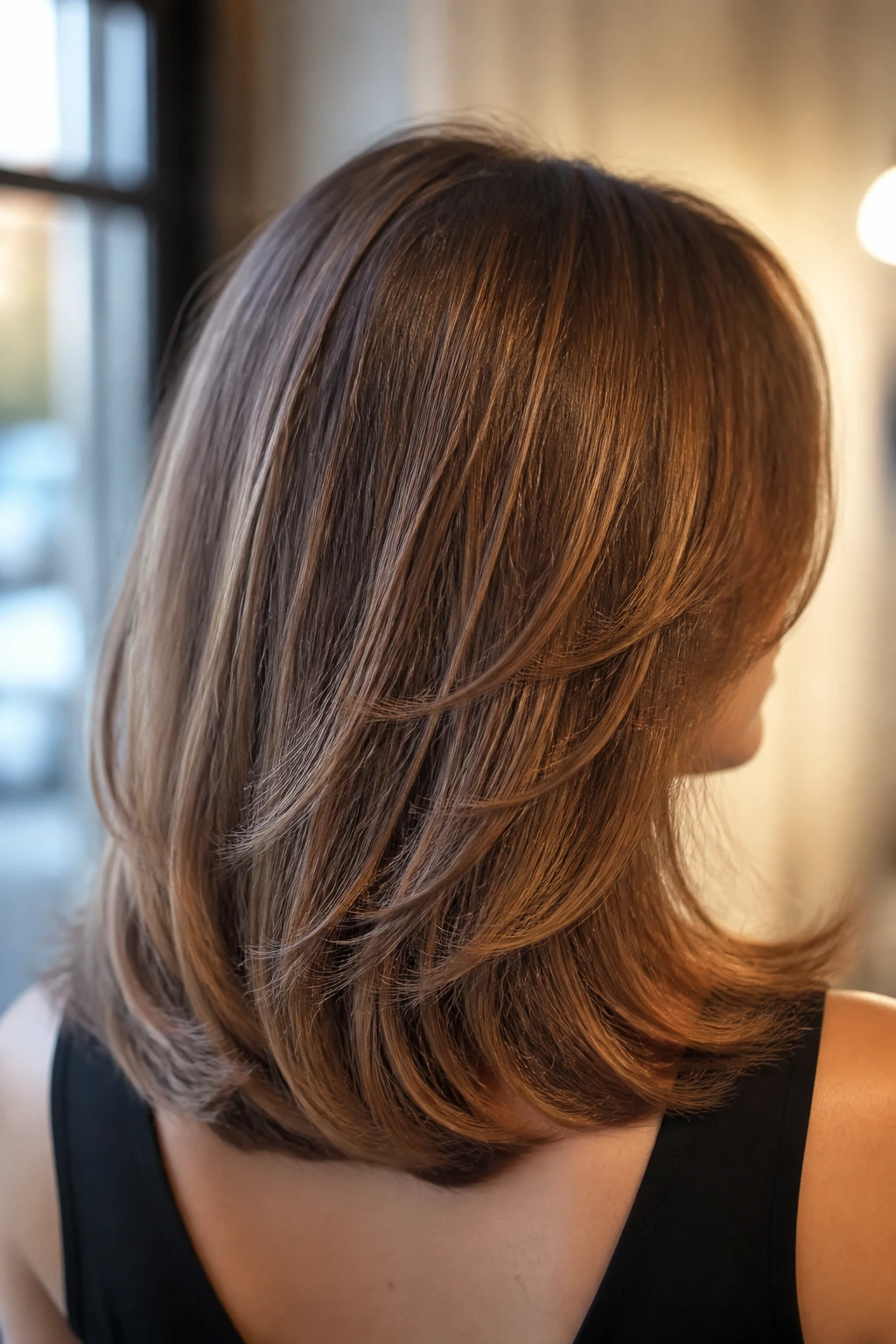
A U-shape is the calmest way to wear layers at shoulder length. The back keeps a gentle curve, the sides taper slightly, and the overall outline stays full. If you like your hair to feel thick when you grab it in a ponytail, this cut protects that feeling.
It’s also one of the better choices for people who hate obvious layering. The movement is there, but the perimeter still reads as one clean shape. That makes it useful for straight hair that tends to look stringy when the layers are too short.
This style doesn’t demand much from you. A smoothing cream, a paddle brush, and a little bend at the ends are enough. If your hair grows fast or you skip trims more than you should, the U-shape hides the grow-out better than a sharper layer pattern.
6. Side-Part Layers With a Strong Sweep
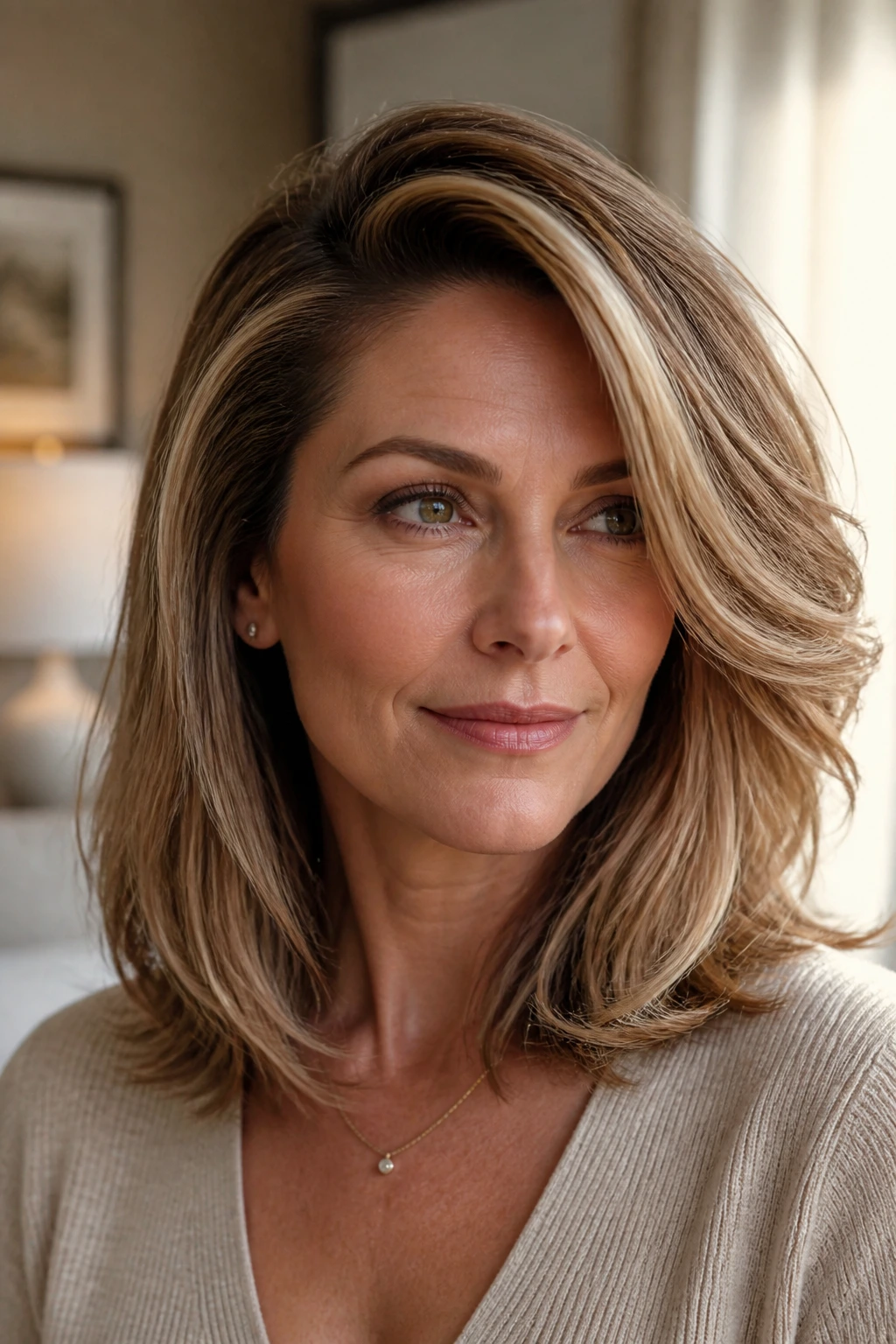
A deep side part can make shoulder-length layers look fuller in about ten seconds. It lifts one side at the root, lets the opposite side fall across the cheek, and gives the cut more movement than a center part can manage on its own.
This is the one I reach for when hair lies too close to the head and refuses to cooperate. Shift the part, blow-dry the roots in the opposite direction first, then flip them back. You get a little built-in lift without teasing the hair into a nest.
The layers should be long enough to sweep, not so short that they jump out from the side part. Ask for soft face framing near the chin if you want extra shape around the jaw. It’s a small detail, but it keeps the style from looking flat on one side and overdone on the other.
7. Feathered Blowout Layers
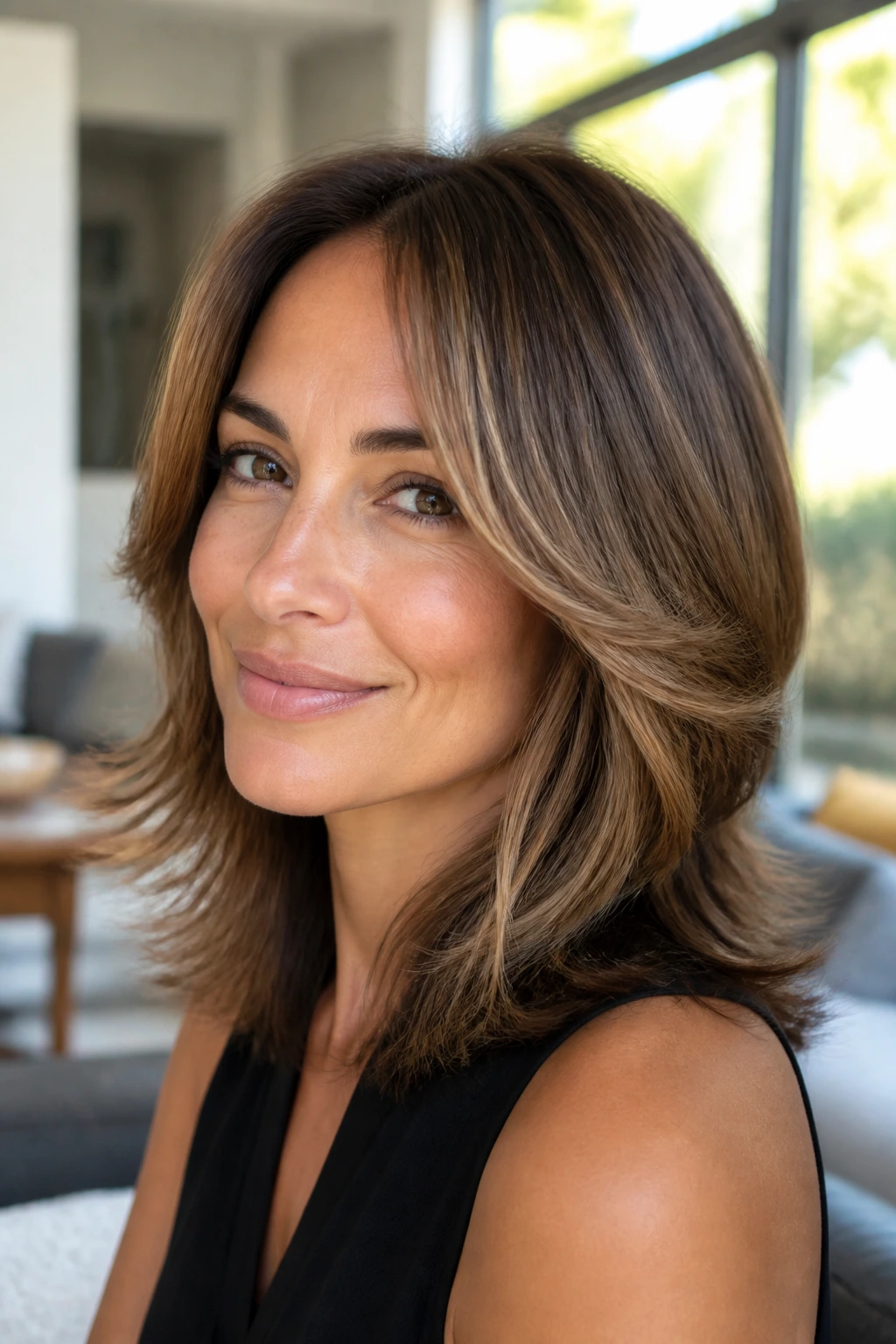
Feathered layers are about motion, not blunt edges. On shoulder-length hair, they make the ends look light and brushed, almost like the hair has been lifted by warm air and a round brush for fifteen minutes.
The best version is smooth at the root and airy through the lower half. That means the layers should be blended enough to move together, not sliced into separate chunks. If the cut is done right, the style flips softly at the ends without turning into those hard, over-bent curls that scream effort.
Why I like it on shoulder length
Because the length sits right at the shoulders, feathering has room to show. The cut can bounce without collapsing. A 1.5-inch round brush, a nozzle on the dryer, and a small amount of mousse at the roots are usually enough.
If your hair is fine, keep the feathering long. If it’s dense, the interior can be opened up more aggressively.
8. Razor-Cut Layers for a Lighter Edge
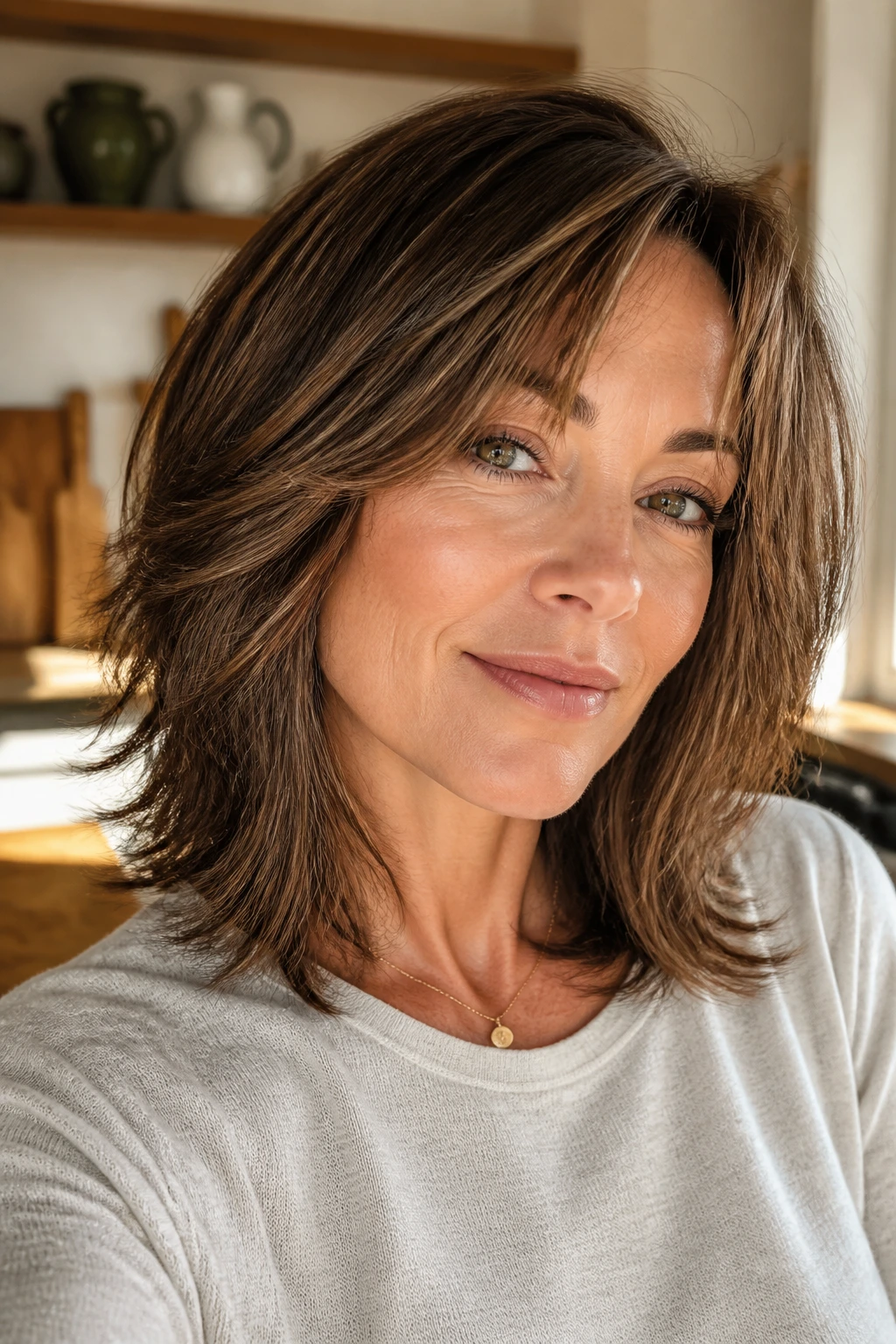
Razor cuts have a particular feel: a little airy, a little soft, and sometimes a little dangerous if the person doing them goes too far. Used well, they give shoulder-length hair a wispy edge that works especially nicely on thick or coarse hair.
The razor removes weight in a way scissors do not. That means the ends can look less blunt and more fluid, which is useful if your hair wants to sit like a shelf. But this is not the cut for weak, split, or frizzy ends. A razor can make that situation worse fast.
A good razor layer should still leave the shape intact. You want movement, not shredded ends.
Use a smoothing serum on the final inch of hair, and keep the cutting conversation honest. If you want softness but not fray, say so. Very few people need more texture than they think they do.
9. Collarbone Flip Layers with Bent Ends
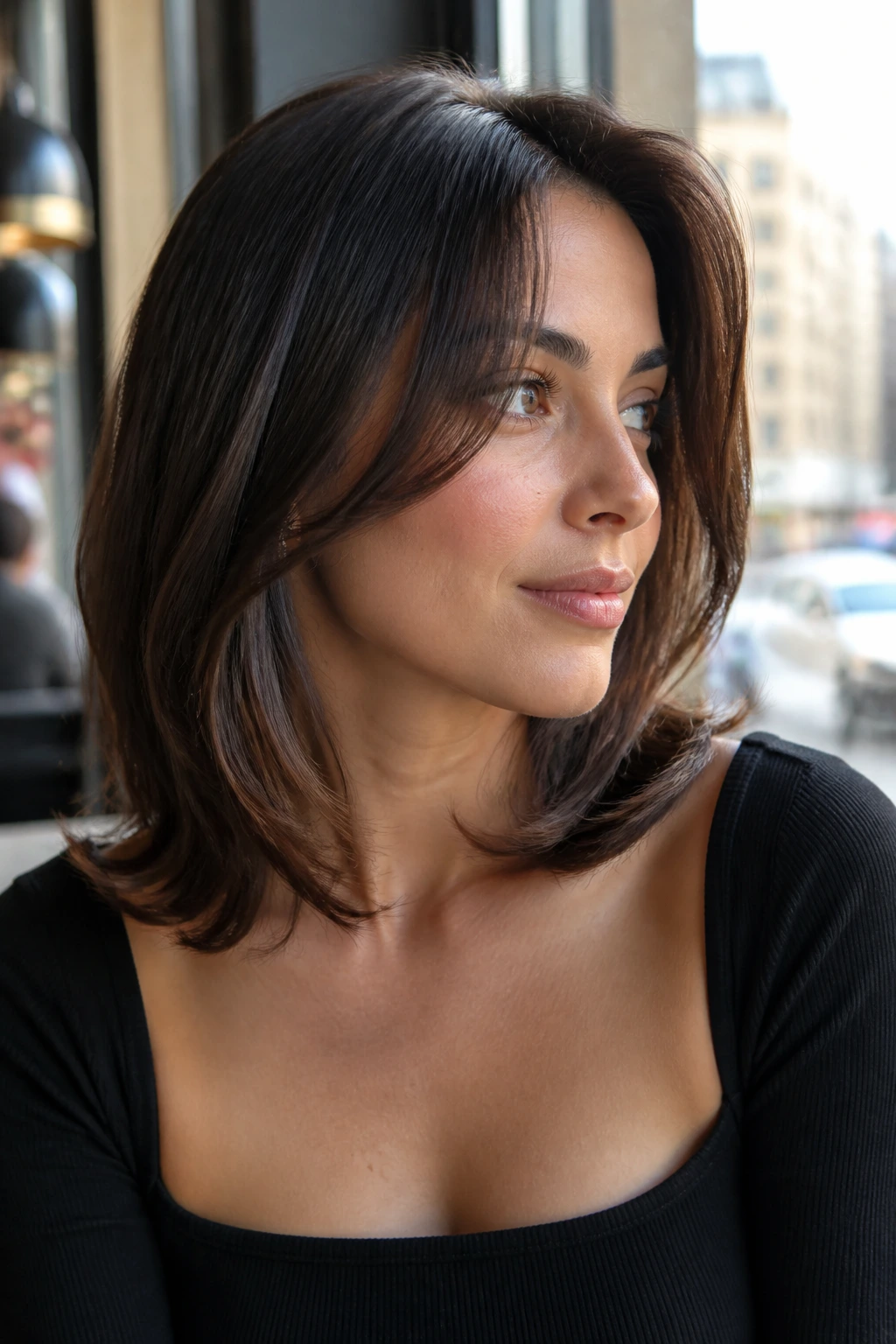
Some hair flips out at the shoulders and people act as if that’s a flaw. It isn’t, unless the flip lands in the wrong place. A collarbone flip layer turns that bend into part of the design, which is a far better use of the hair’s natural behavior.
The front pieces should graze the collarbone and turn slightly away from the face. That gives shoulder-length hair a shaped finish instead of a stubborn outward kick at the hem. A flat iron or round brush can create the bend in a few passes, and the movement looks best when it is not perfectly even.
Styling note
- Bend the ends in alternating directions for a softer line
- Keep the shortest face frame around the lip or cheekbone
- Use a light mist of flexible hairspray, not a stiff shell
- Skip heavy oil near the ends unless your hair is coarse
This one is quietly polished. It does not shout, but it does look finished.
10. Piecey Air-Dried Layers
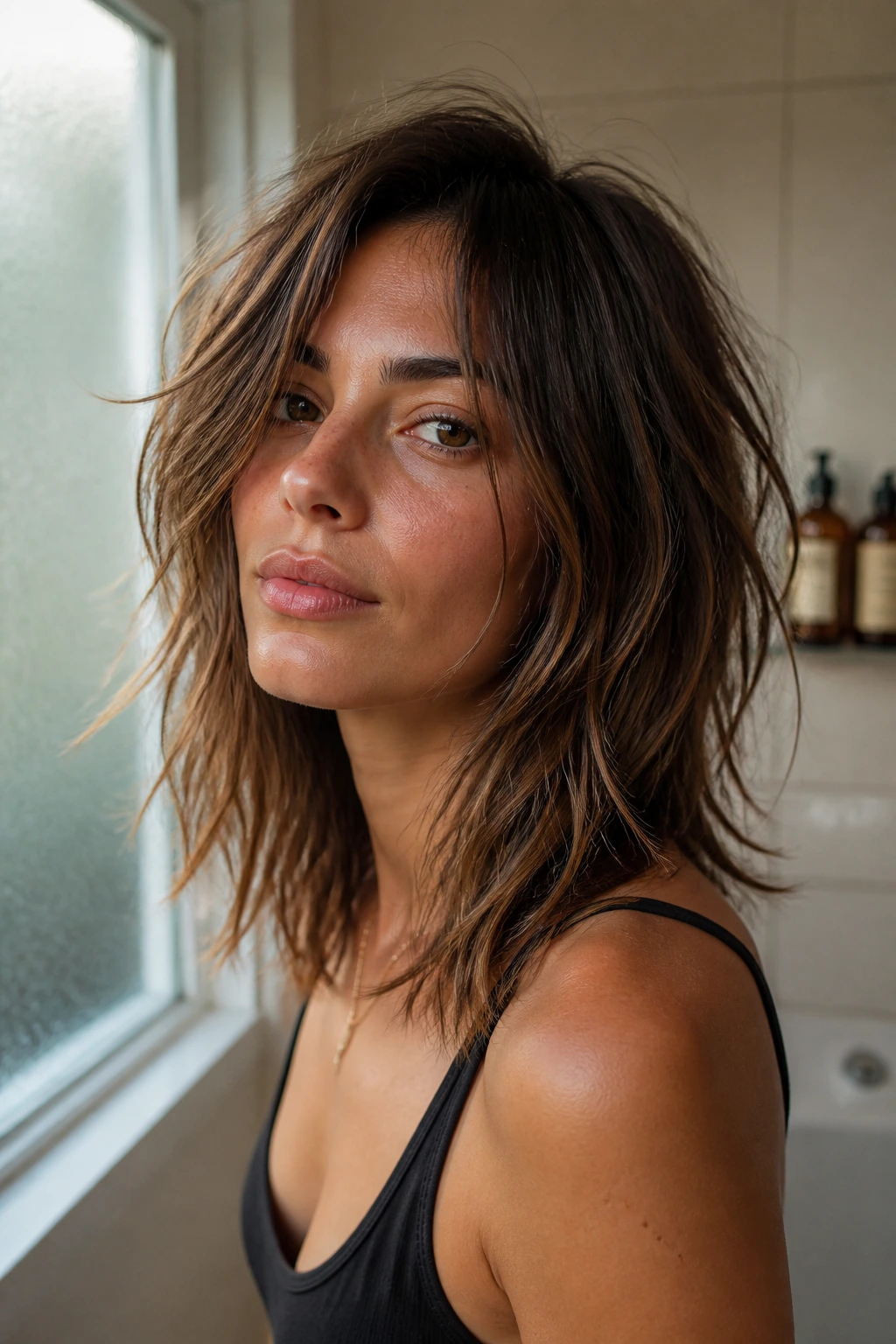
If you love hair that looks better when you stop fussing with it, piecey air-dried layers are worth a close look. The cut should be soft enough to dry naturally, with long enough pieces to separate instead of puffing into a fuzzy outline.
The magic comes from the balance. You want enough internal layering to keep the sides from ballooning, but not so much that the ends turn see-through. Wavy hair tends to do well here, and straight hair can fake it with a little curl cream or a bendy braid before bed.
A leave-in conditioner, a small amount of styling cream, and scrunching while the hair is still damp usually gets you there. No heroics. Just enough structure to keep the pieces from clumping in the wrong spots.
11. Layered Lob With Subtle Crown Lift
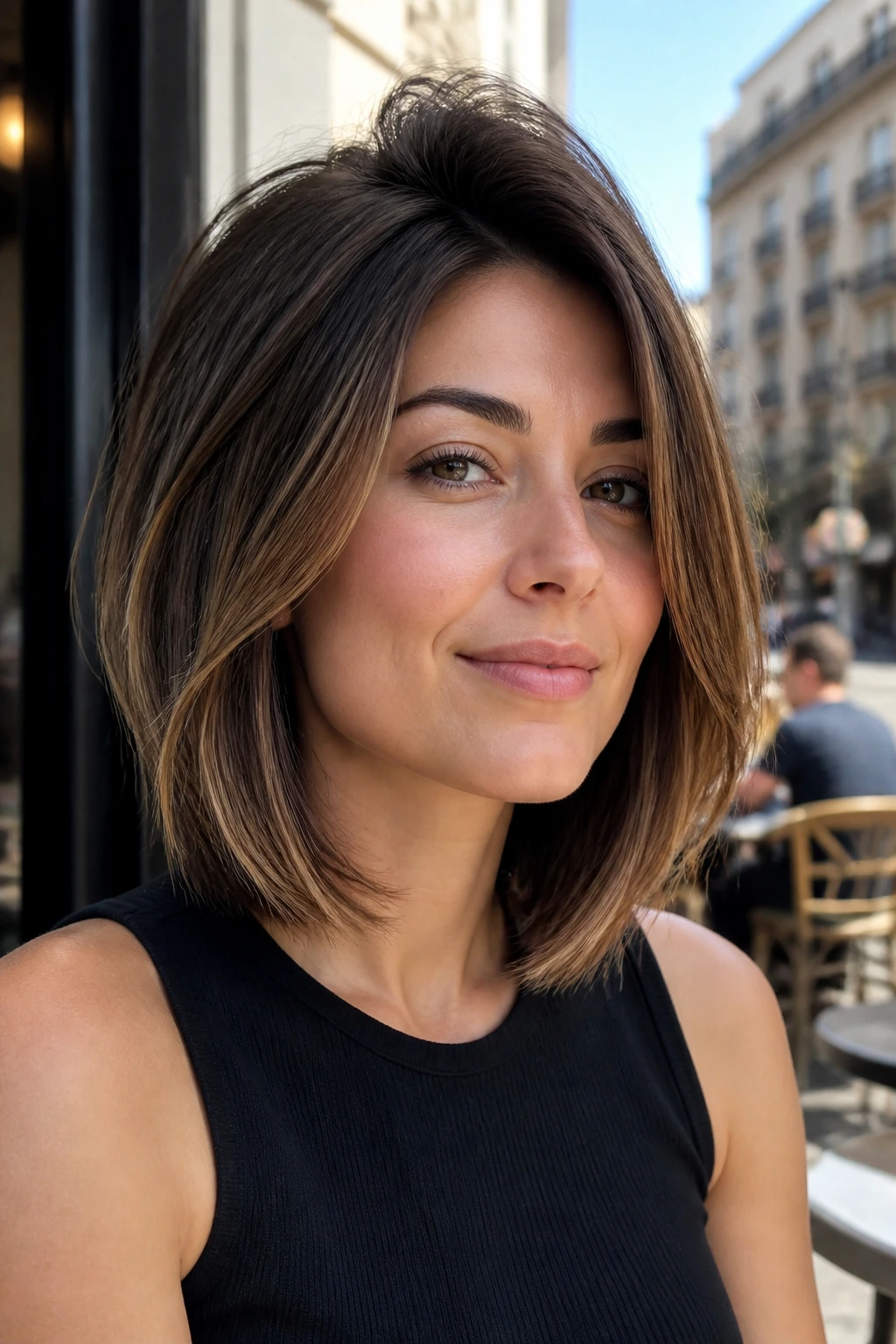
A layered lob is still shoulder-length, but it behaves like a haircut that has had a better night’s sleep. The crown gets a little lift, the sides drop in a cleaner line, and the whole thing avoids the helmet shape that lobs can slide into when they’re cut too blunt.
This cut is useful if your hair is fine to medium and you want height without obvious teasing. A bit of volume at the roots changes the silhouette more than people expect. The top should rise, not spire. That’s the difference between airy and dated.
Ask for layers that begin just below the crown, then blend softly into the sides. The front can stay longer if you like your hair to brush the cheekbones. It’s a tidy look, but not rigid.
12. Rounded Layers with Soft, Floating Ends
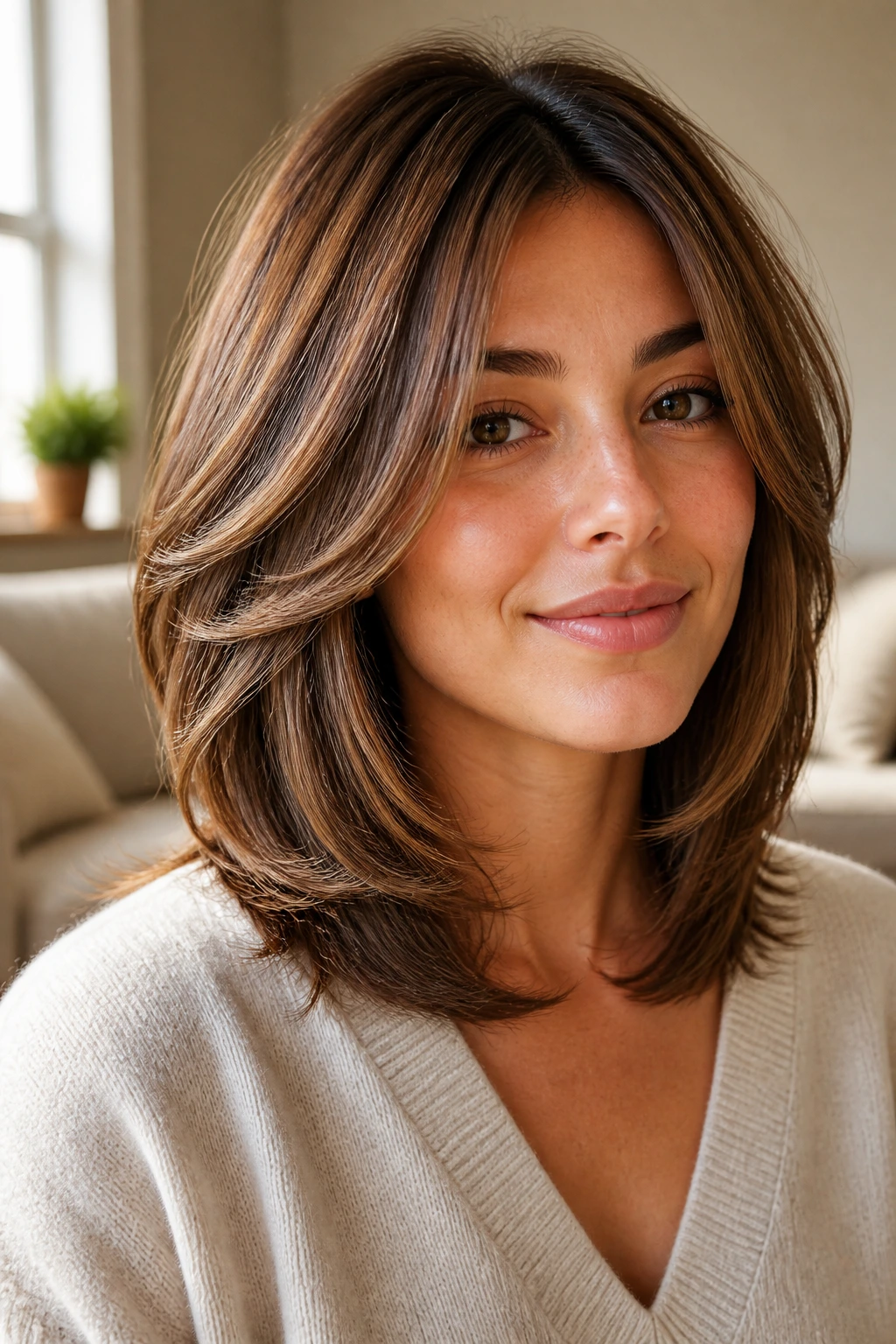
Rounded layers make shoulder-length hair feel lighter in motion, not just shorter in weight. The ends follow a gentle curve instead of sticking out in hard corners, which is a lifesaver if your hair naturally grows wide at the sides.
This shape is subtle, and that’s the point. The silhouette should feel like a soft oval when it’s down, with the longest points near the collarbone and the inner layers tucked in just enough to avoid bulk. It works especially well when you want your hair to look expensive without looking styled to death.
Best for
Hair that grows fast, hair that puffs near the shoulders, and people who hate obvious steps in a haircut. It also grows out politely, which saves you from awkward mid-cycle hair that feels stuck between two lengths.
A round brush helps, but the cut should do most of the work.
13. Deep Side Part With Cascade Layers
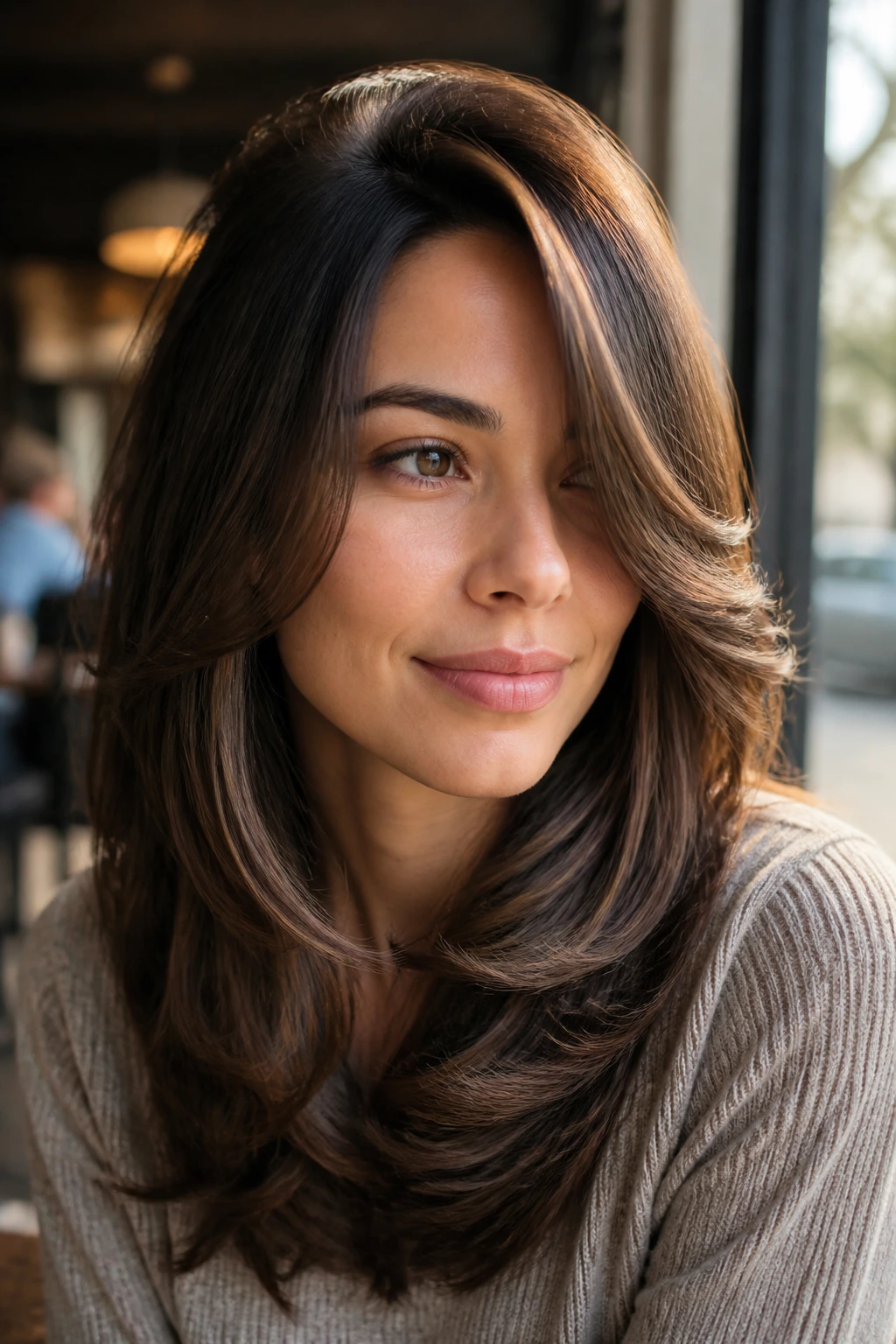
A deep side part changes the whole geometry of shoulder-length hair. One side stacks a little more volume near the crown; the other side falls into a longer cascade that can skim the cheek and jaw. That asymmetry is the point.
It’s especially useful if your hair feels too narrow or too straight after a fresh cut. The off-center part builds lift without adding products that turn the roots sticky. The cascade through the front keeps the style soft, not severe.
If you want this look to hold, dry the root on the heavy side first, then clip it in place for a few minutes while it cools. That helps the side part stay where you put it. A little dry shampoo at the crown makes the lift last longer than it should.
14. Soft Wavy Layers for Naturally Textured Hair
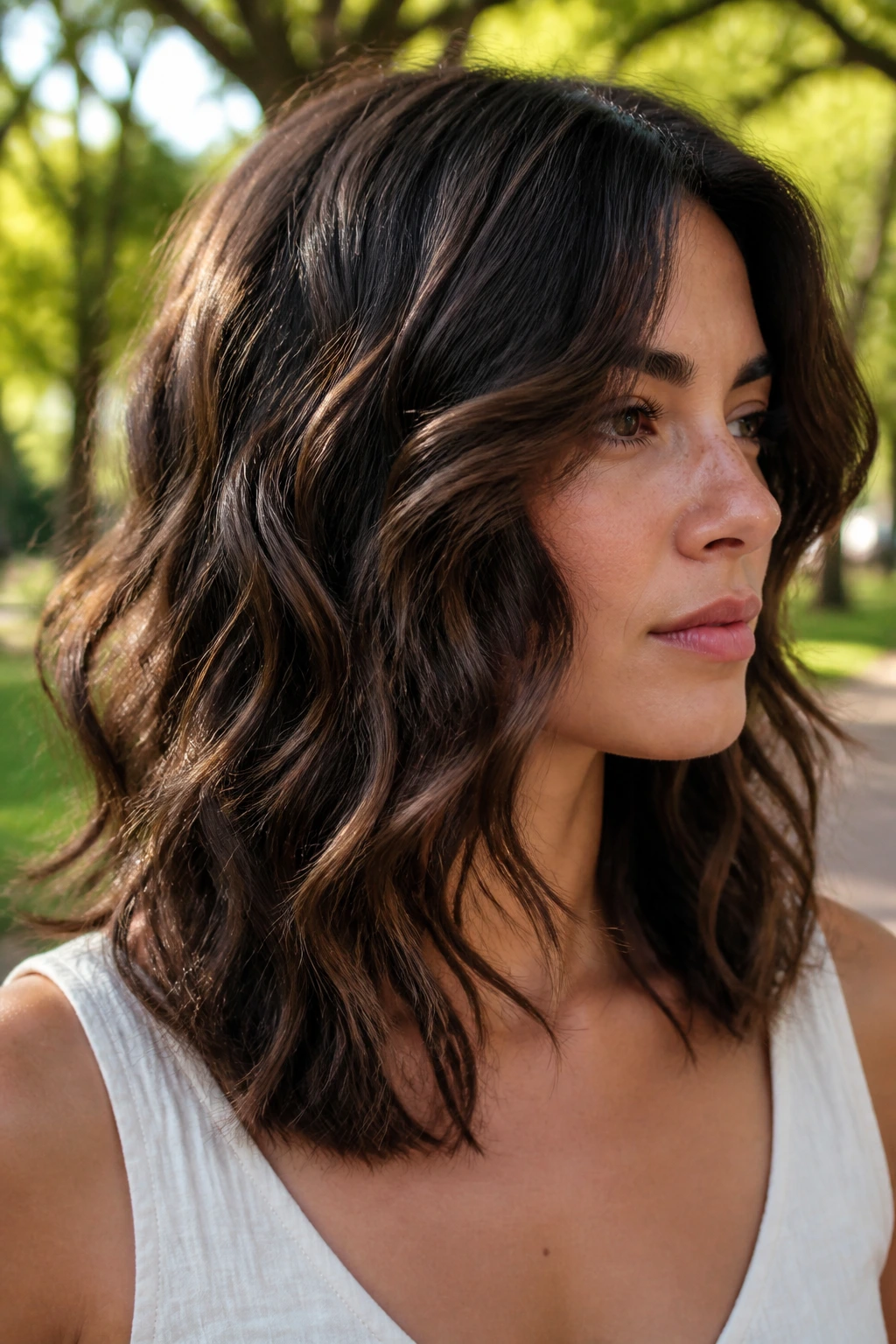
Curly and wavy hair need layers that respect the pattern, not fight it. On shoulder length, that usually means longer layers with careful face framing, so the shape can move without losing its curl groups.
The biggest mistake here is overcutting the top. Short layers on textured hair can make the crown bounce up while the bottom drifts out, and the result looks lopsided. Keep the shortest pieces long enough to curl properly, and let the shape build from there.
Air-drying with gel or diffusing on low heat usually shows the cut better than rough blow-drying. If the hair is frizz-prone, put product on soaking-wet hair. That matters more than people think.
This style should look touched, not tamed.
15. Choppy Long Layers With a Modern Edge
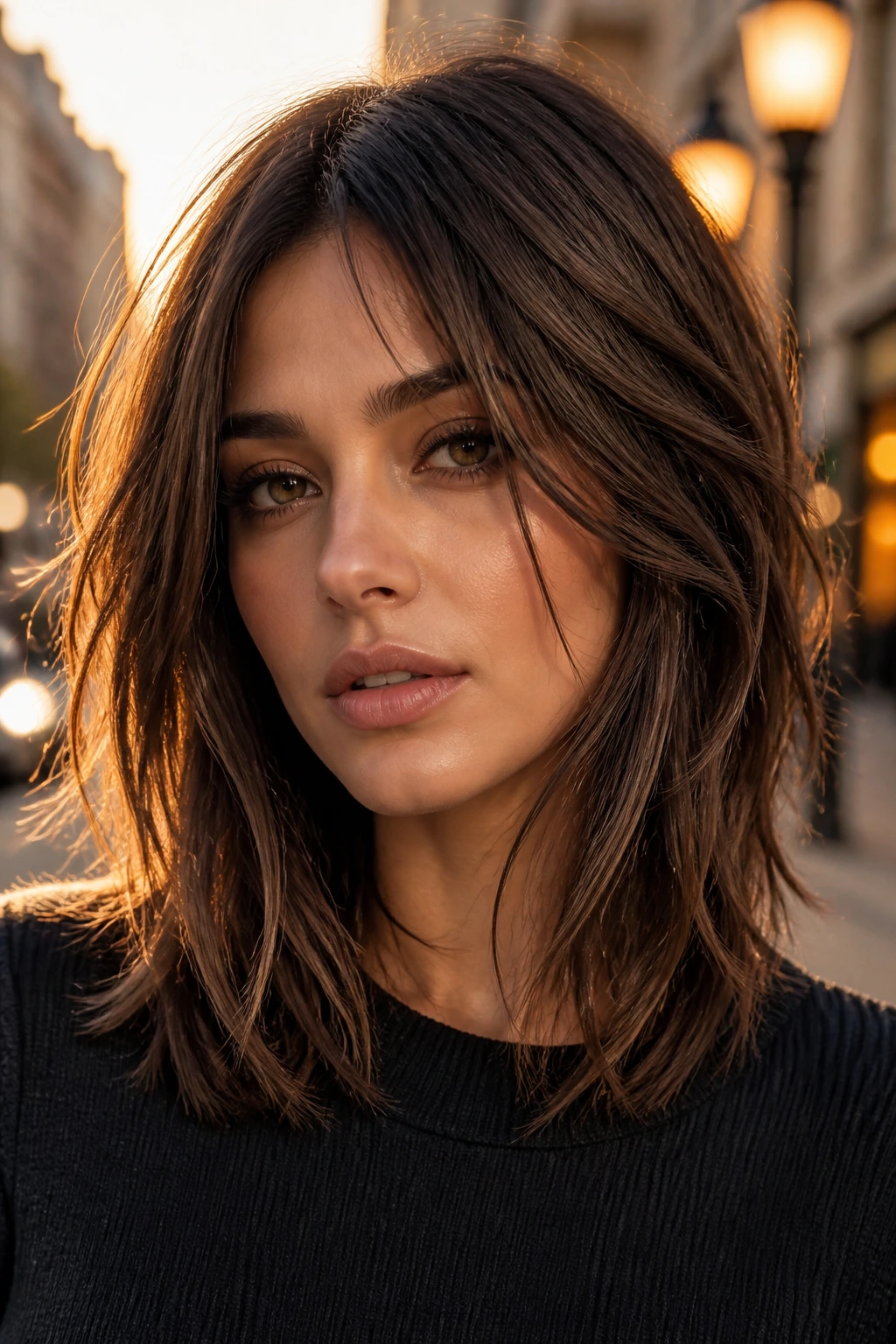
Choppy layers can look sharp on shoulder-length hair when the pieces are long enough to stay connected. The modern version is less about heavy texture and more about separation around the face and through the ends.
The key is not to overdo the chopping. If every layer is a different length, the cut starts to feel scattered. Keep the lines loose, but let the face frame and the bottom edge talk to each other. That gives the style edge without making it look like a home haircut gone wild.
What keeps it working
- Long enough pieces to move together
- Texture spray at the midlengths, not the roots only
- A slight bend in the ends for separation
- Enough length left under the chin to keep the shape balanced
Best on medium to thick hair. Fine hair can wear it too, but the layers need to stay longer.
16. Bottleneck Bangs and Blended Length
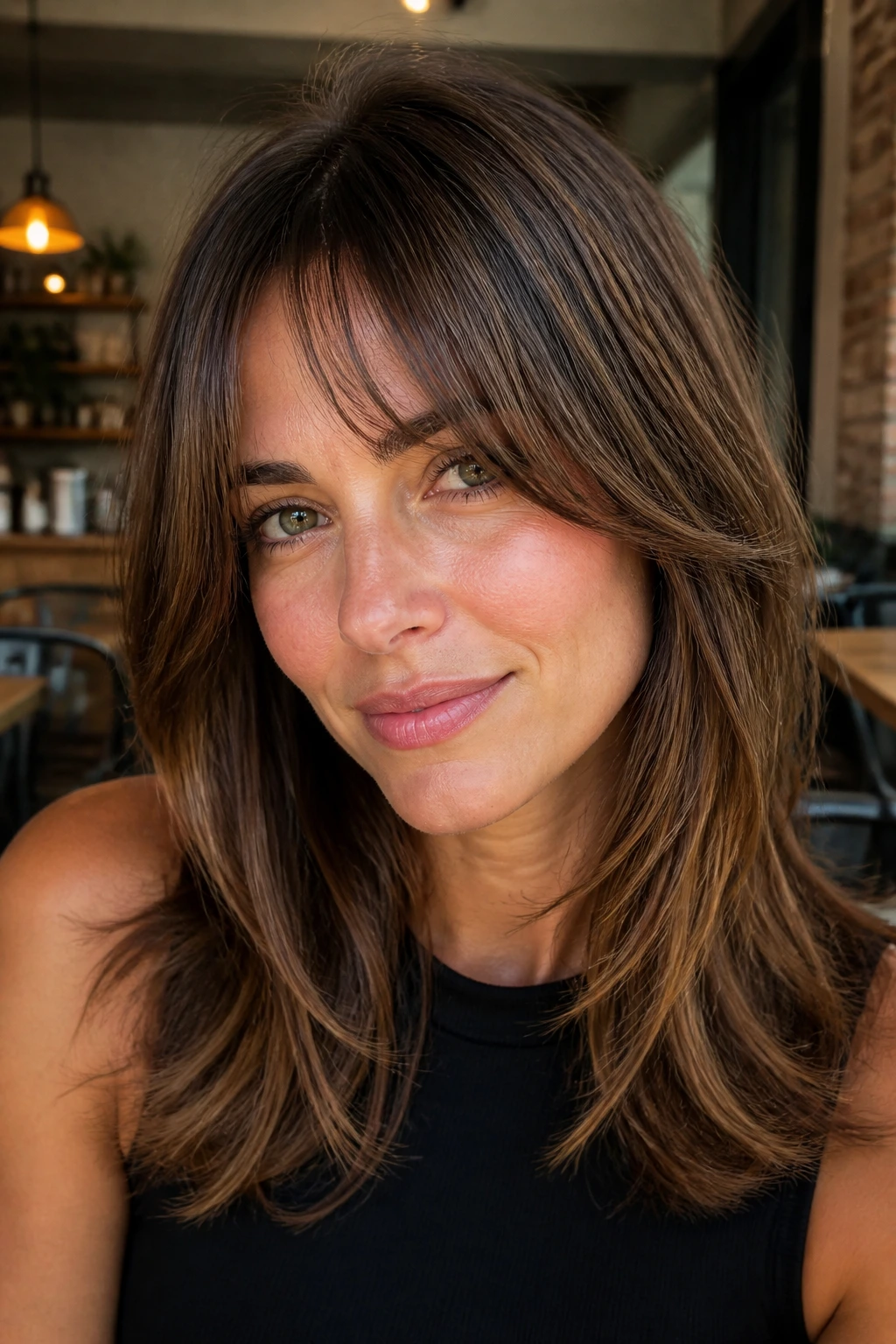
Bottleneck bangs are narrower at the center and softer as they sweep out toward the temples, which makes them easier to live with than blunt fringe. Paired with shoulder-length layers, they create a frame that looks deliberate even when the rest of the hair is a little undone.
This cut is good when you want movement around the face without giving up much length. The bangs draw attention upward, while the layers around the sides keep the outline from feeling heavy. If you wear glasses, this can be a useful shape because the fringe doesn’t fight the frames.
The ends of the layers should stay soft and connected. If the bangs are cut too short or too square, the whole look loses that easy flow. Keep the fringe skimming the brow or just below it, then let it taper into the face frame.
17. Sleek Glass-Hair Layers
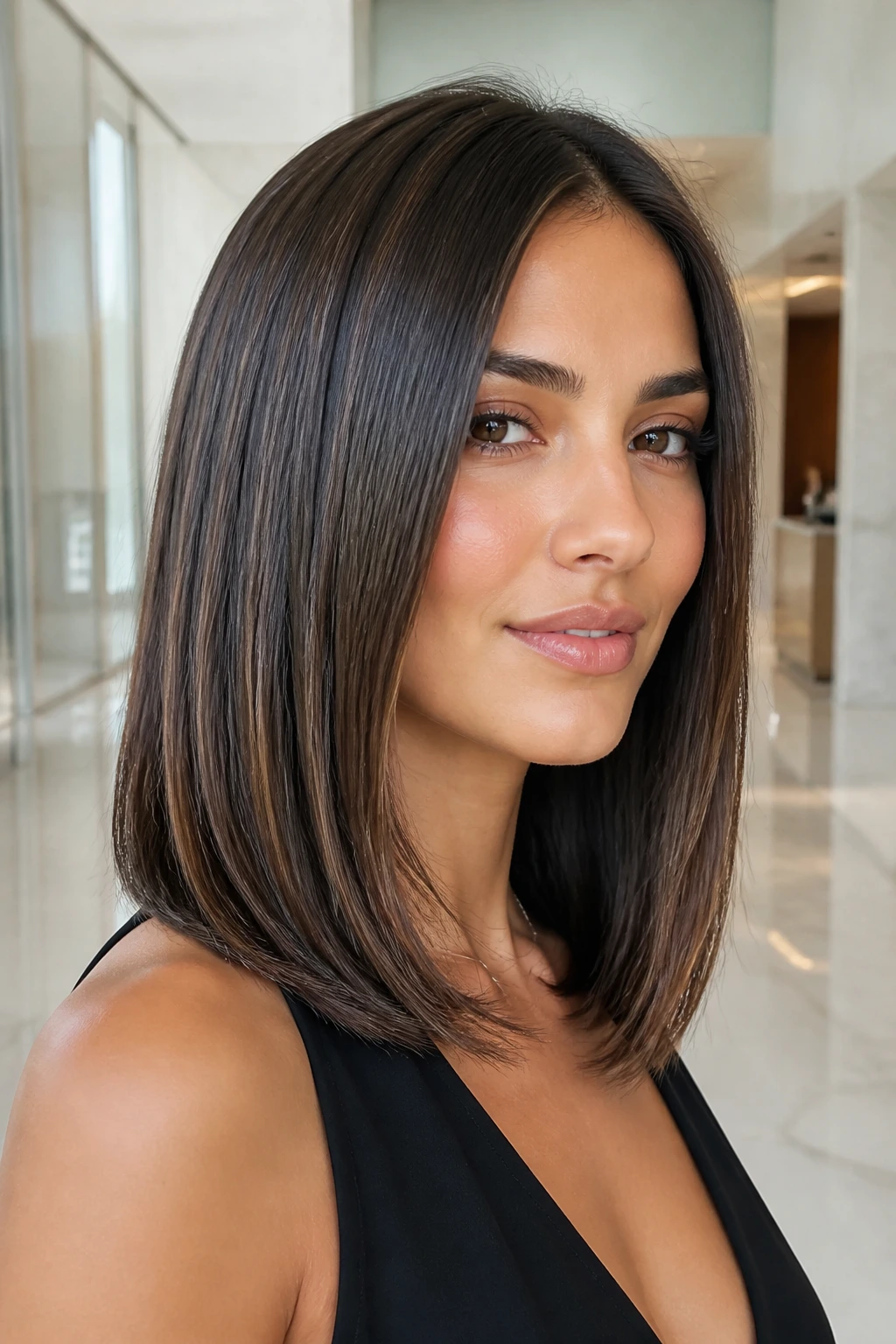
Can layers look polished instead of piecey? Yes, if the layers are long, the blend is clean, and the finishing is careful. Glass-hair versions of shoulder-length cuts rely on shine and line, not visible texture.
This is a good option for straight hair that tends to lie flat but still needs some shape. The interior layering should be subtle. You want the perimeter to stay crisp while the midlengths lose just enough weight to keep the ends from kicking out. A boar-bristle brush, heat protectant, and a flat iron set to the right heat can make this finish look expensive without making it stiff.
The trick is not to overdo product. Shine spray belongs on the surface, not in the roots. Too much serum and the cut collapses. Too little and you lose the whole point.
18. Old-Hollywood Layered Volume
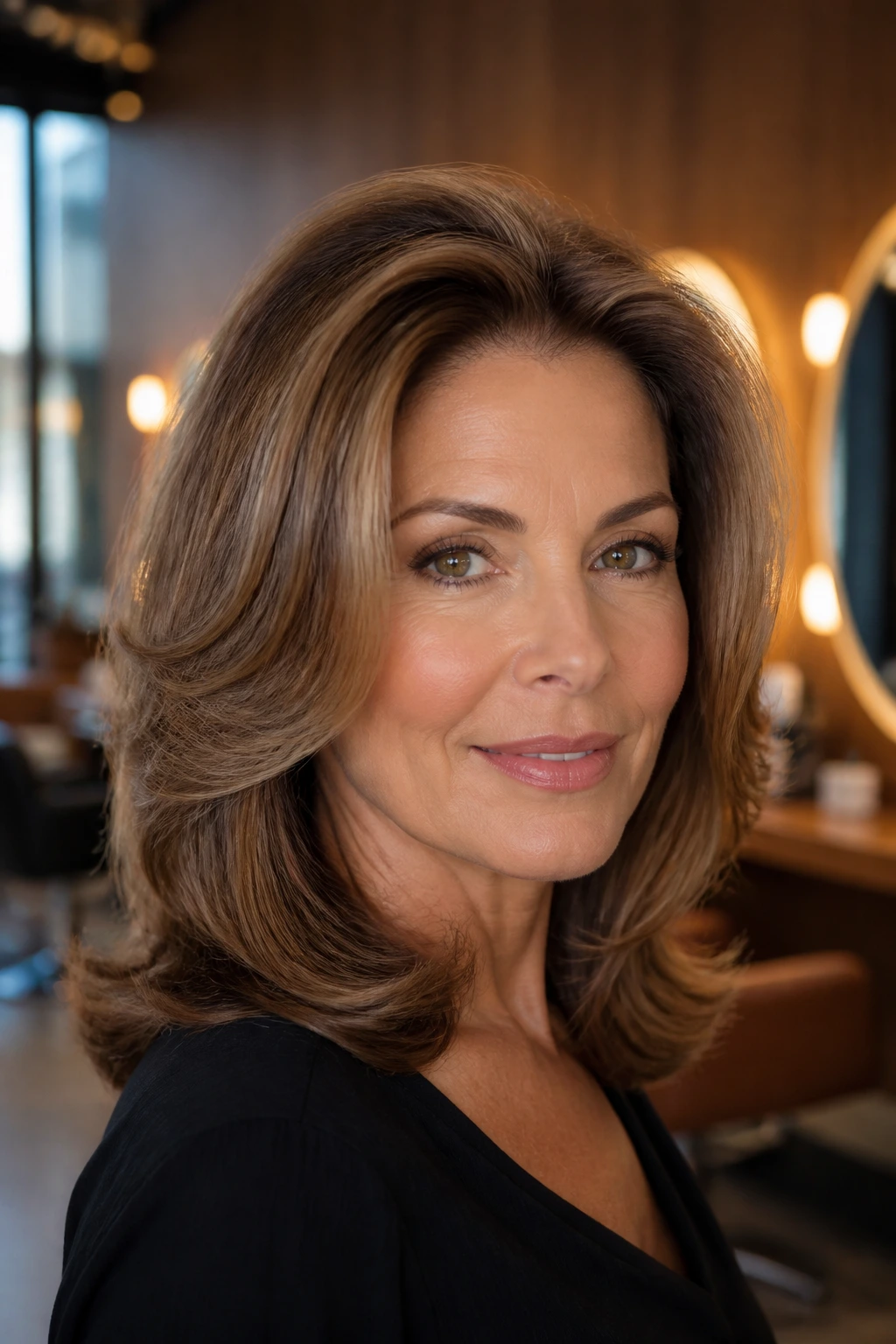
This style leans into curves, not beach texture. Think polished volume at the crown, a soft sweep away from the face, and ends that roll under or out in a controlled way. On shoulder-length hair, the effect looks deliberate rather than costume-y.
It works best when the layers are long enough to support the shape of the blowout. If the cut is too short or too choppy, the style turns fluffy instead of full. A large-barrel curling iron or hot rollers can help build the bend, but the root lift is what makes the whole thing read correctly.
This is one of those styles that likes a little ceremony. Set the front pieces with clips while they cool. Brush them out only after the hair has settled. That tiny delay makes a real difference.
19. Mullet-Inspired Layers, Dialed Way Down

A soft mullet influence can work on shoulder-length hair if you keep it restrained. The back stays lightly layered, the front gets more shape, and the crown has a touch of lift without pushing the cut into punk territory.
What makes this version wearable is balance. The front should still frame the face nicely, and the back should never feel disconnected. This is not about a dramatic business-in-front-party-in-back split. It’s about a hint of edge that keeps the haircut from looking too safe.
Best on people who like texture and are bored by soft one-length cuts. If you wear the hair tucked behind one ear or half-clipped up, this shape has a nice amount of attitude.
20. Minimal Layers With Big Face-Framing Pieces
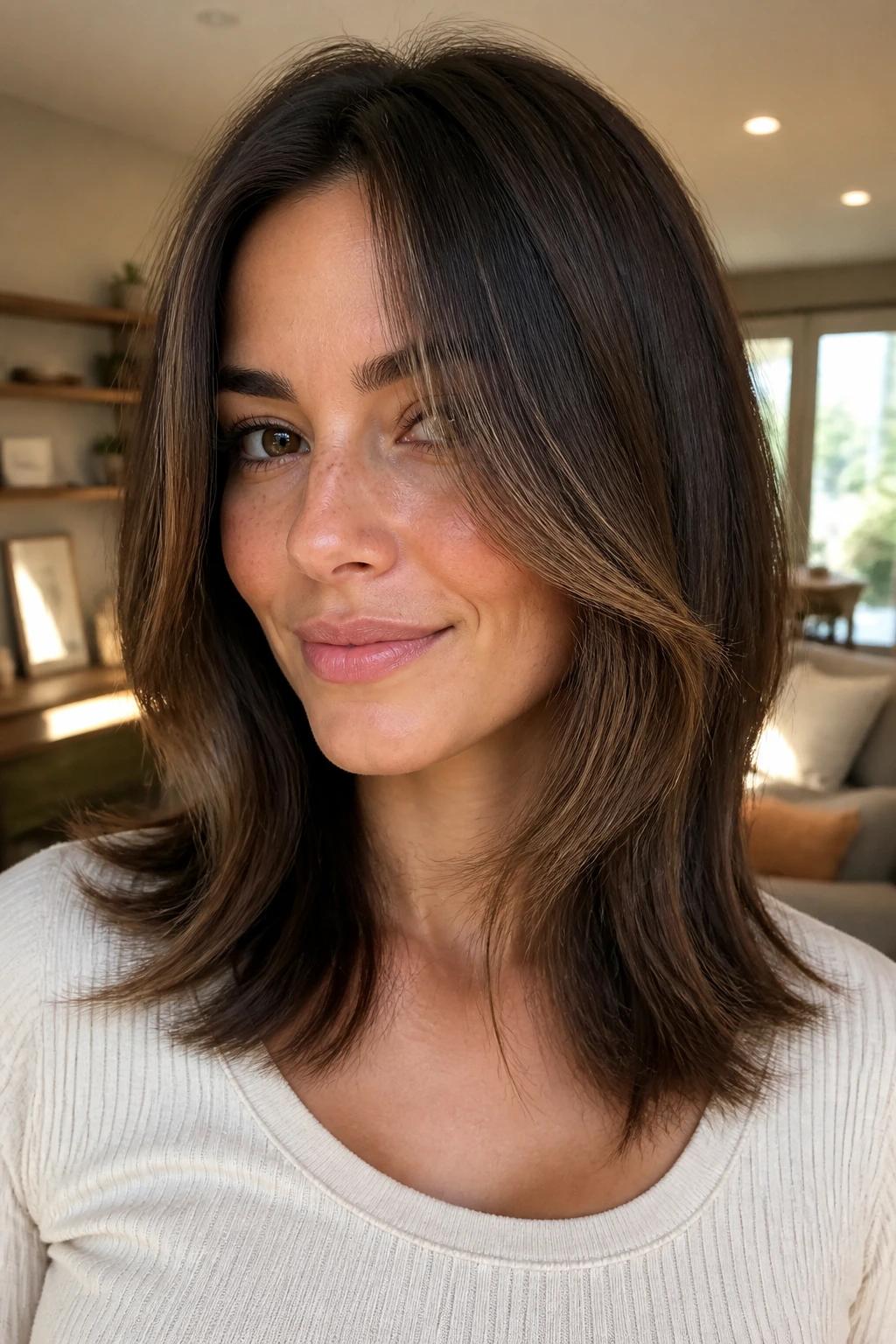
Some people do not want a lot of layer action through the back. They want the front to do the work. Fair enough. This style keeps the perimeter full and focuses the movement around the cheekbones, jaw, and collarbone.
That makes it a smart choice if you like shoulder-length hair that still feels dense in a ponytail. The face frame adds shape where it matters, but the lower half remains strong and clean. It’s also forgiving if you don’t style every morning. A little bend in the front pieces and you’re done.
Ask for the back to stay mostly intact, with long face-framing layers that connect softly into the rest of the cut. That connection is the whole trick. If the front pieces look detached, the haircut starts to feel like two different styles arguing in the mirror.
21. Curly Shoulder-Length Layers
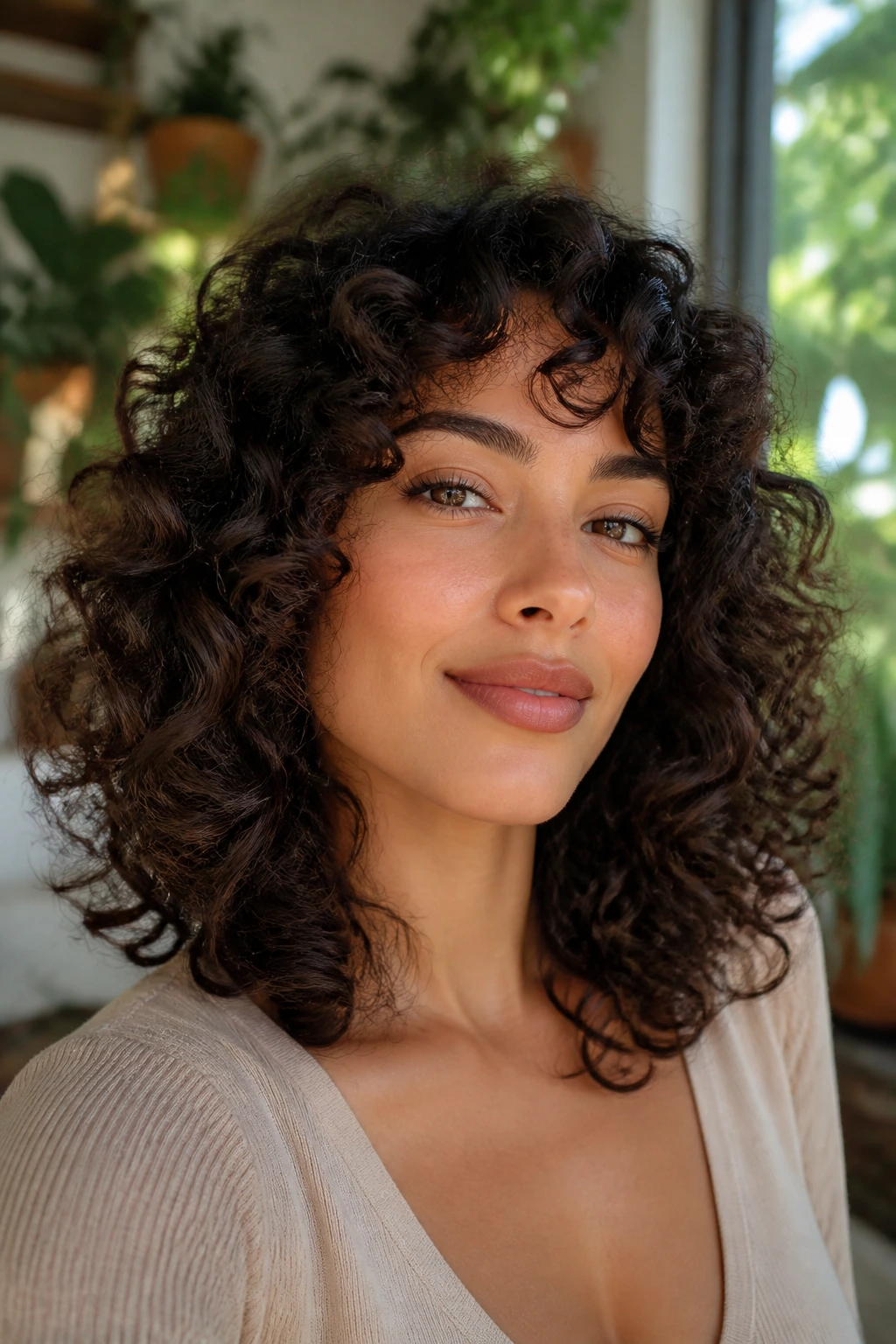
What happens when curls hit the shoulders? They often need more room than blunt cuts give them. Long layers create that room, letting the curl pattern spring instead of stacking into a triangle.
Cutting note
Curly hair is usually best layered with its shrinkage in mind. If the stylist cuts too much when the curls are stretched, the final shape can come up shorter than expected. Ask how the hair behaves dry, not just wet. That conversation saves a lot of regret.
The front pieces can start around the chin or lower cheek if you want the face to open up. Use gel or curl cream while the hair is very wet, then diffuse without roughing up the curl clumps. Frizz loves friction. So do not scrub the hair dry with a towel.
This is a cut that rewards patience. Not perfection. Patience.
22. Airy Layers for Fine Hair
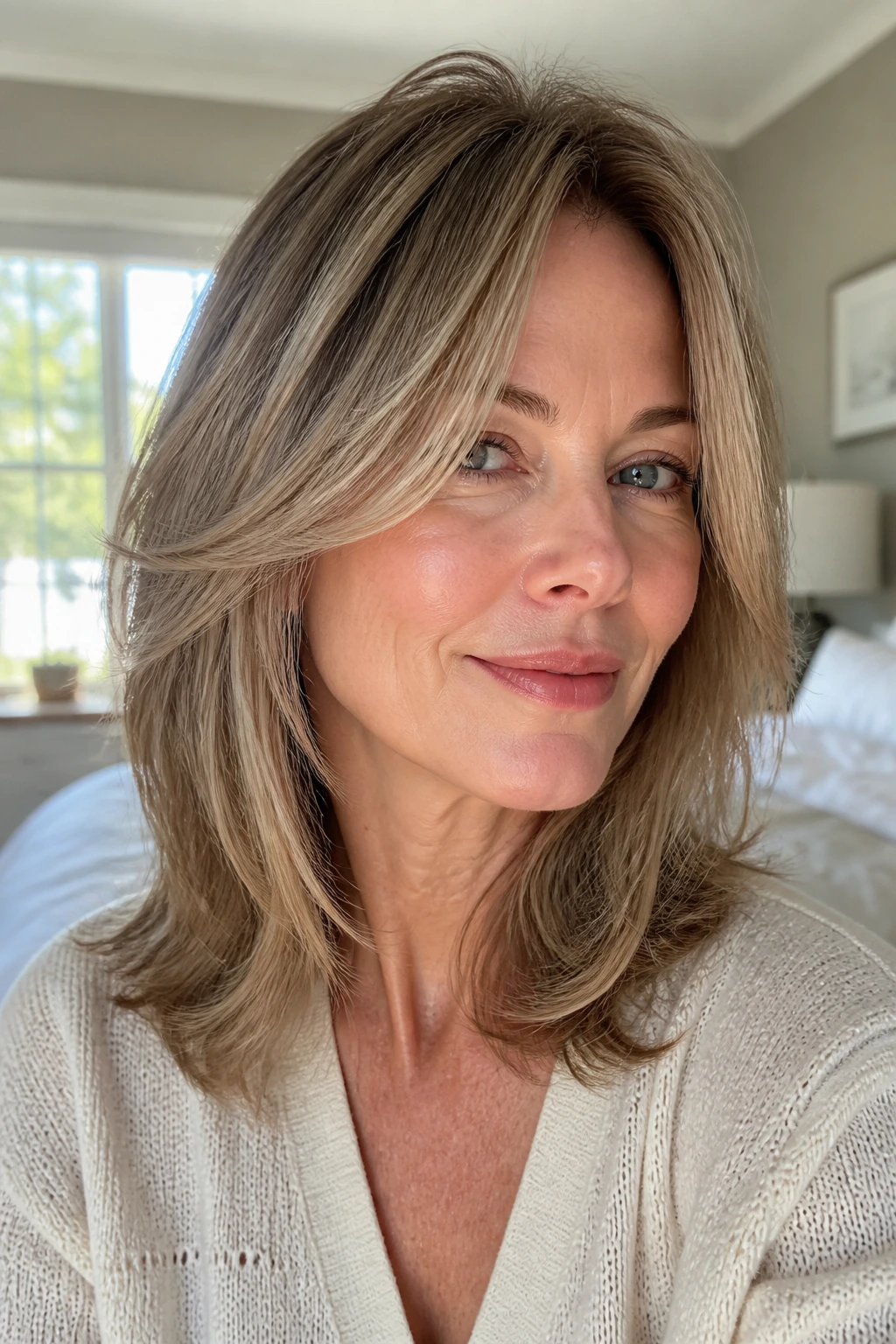
Fine hair can wear layers, but it cannot wear sloppy layers. The difference is how much weight you leave behind. Shoulder-length fine hair needs enough structure to keep the ends from looking see-through, and enough lift to keep the roots from lying flat by noon.
The shortest layer usually works best if it starts lower than people expect — around the chin or just below — so the density stays in the lower half. Too many short pieces can make the ends wispy and the whole cut look tired. A light mousse at the roots, not a thick cream, helps the shape hold.
What to skip
- Heavy oils on the midlengths
- Too much thinning at the ends
- Razor work if the hair is already fragile
- Overloaded conditioners that flatten the crown
This is one of those cuts that looks best when it breathes a little. Not airy in a vague way. Airy in the sense that the shape still has body when you run your fingers through it.
23. Heavy-Duty Layers for Thick Hair
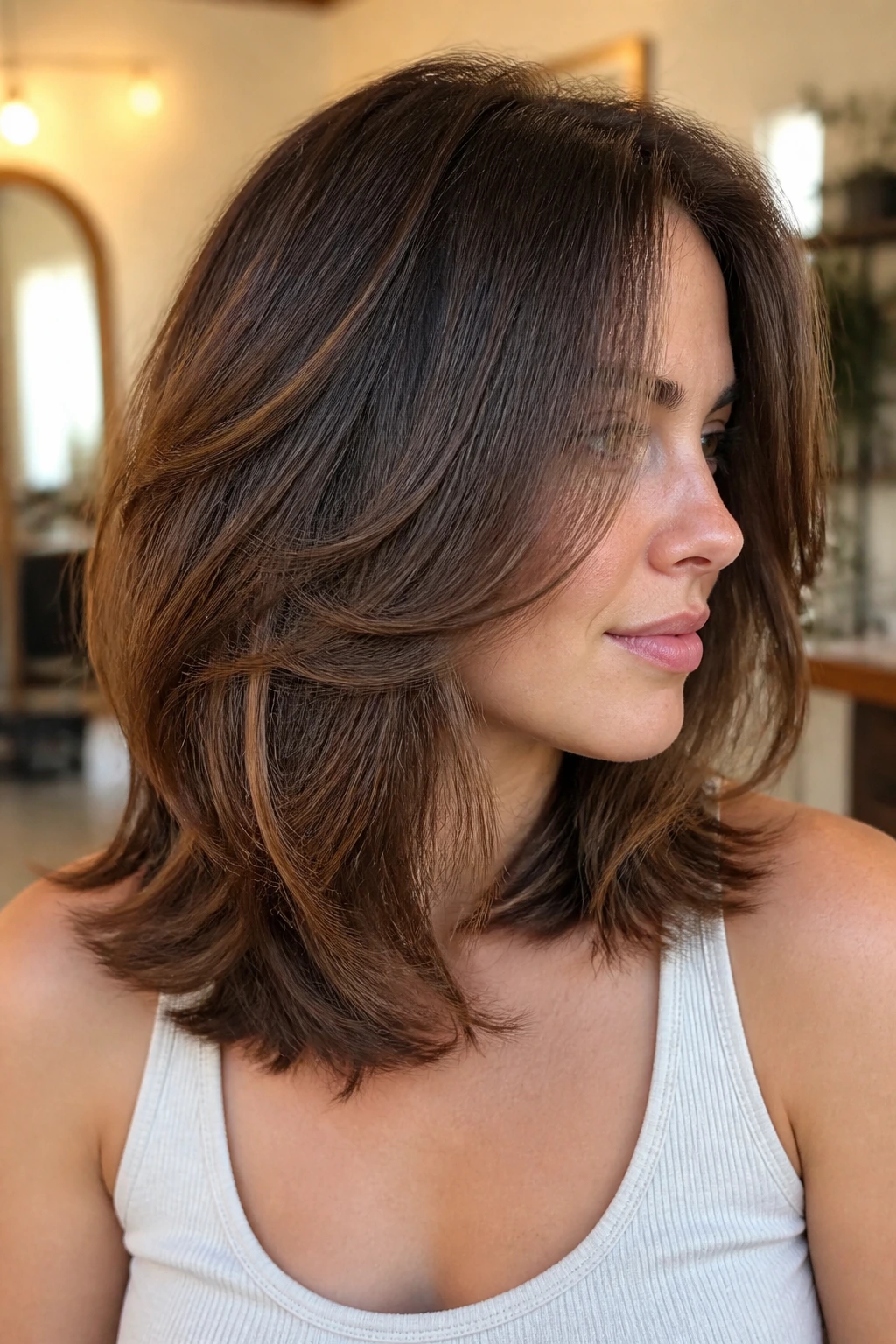
Thick hair can look like a lot of hair and not much shape if the layers are timid. Shoulder-length cuts need internal weight removal here, or the hair sits like a dense wall around the head.
Long layers through the interior let the hair collapse more naturally and keep the bottom from kicking out in a shelf. The face frame can be a little stronger, because thick hair can carry it. I’d rather see one clean, well-placed layer than six little ones that fight each other.
Blow-drying thick hair section by section matters more here than it does on finer hair. Clip the top away. Dry the underneath first. Use a big brush and let each section cool before you touch it again. Thick hair does not like being rushed. It answers back.
24. French-Girl Fringe With Tapered Layers
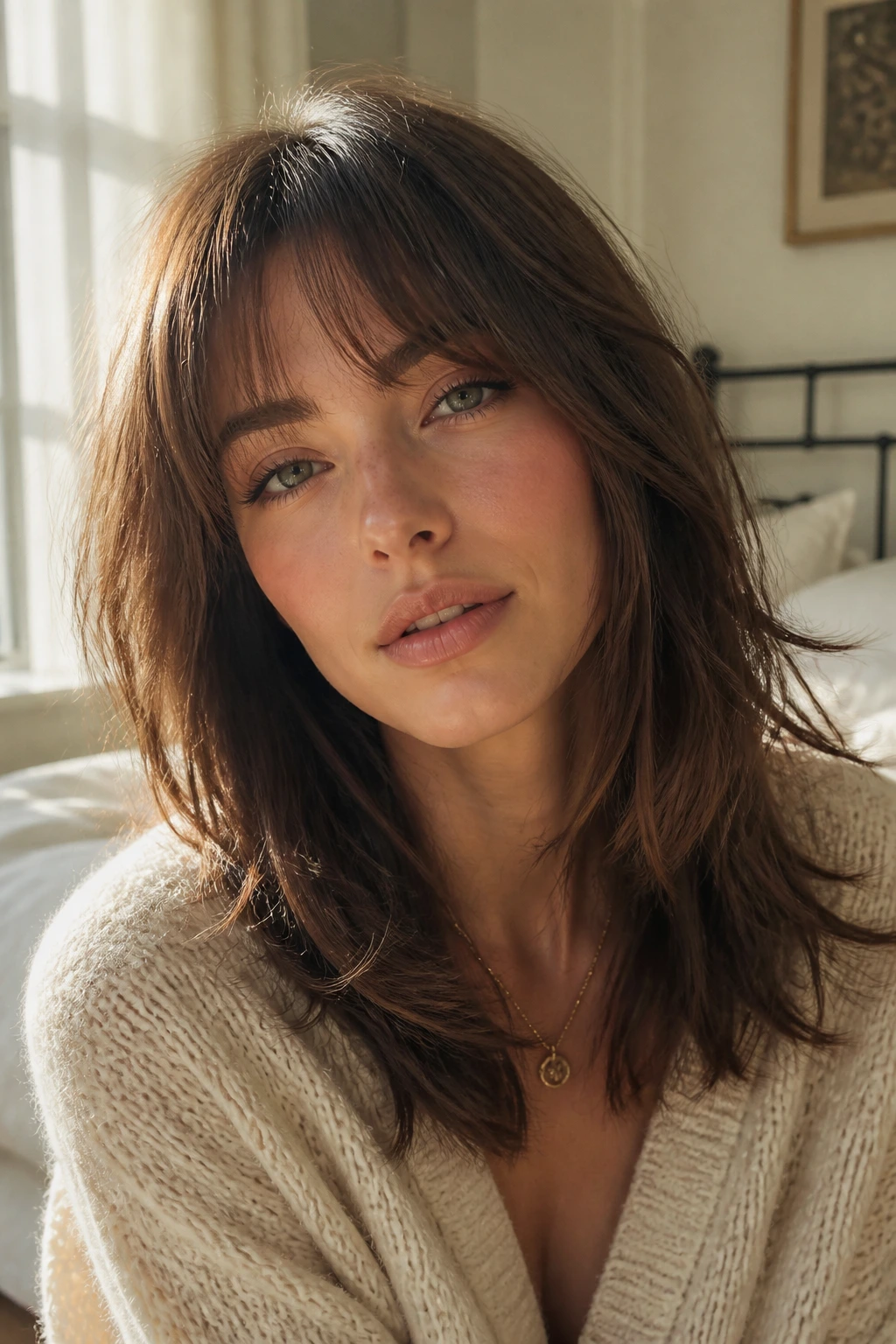
A soft fringe can make shoulder-length hair look lived-in in the best way. The French-girl version is not a blunt wall of bangs. It’s a lighter fringe with tapered sides that melt into long layers around the face.
This works especially well when you want the eyes and cheekbones to do more of the talking. The fringe adds interest up top, and the layers keep the lower half from looking blunt or heavy. It’s also one of the more forgiving fringe choices if you like to tuck your hair back now and then.
A small round brush or even a quick finger-dry can shape the fringe. If your hair is prone to cowlicks, tell your stylist before the scissors start moving. Bangs are not the place to be vague.
25. Softly Flicked Ends With Cheekbone Framing
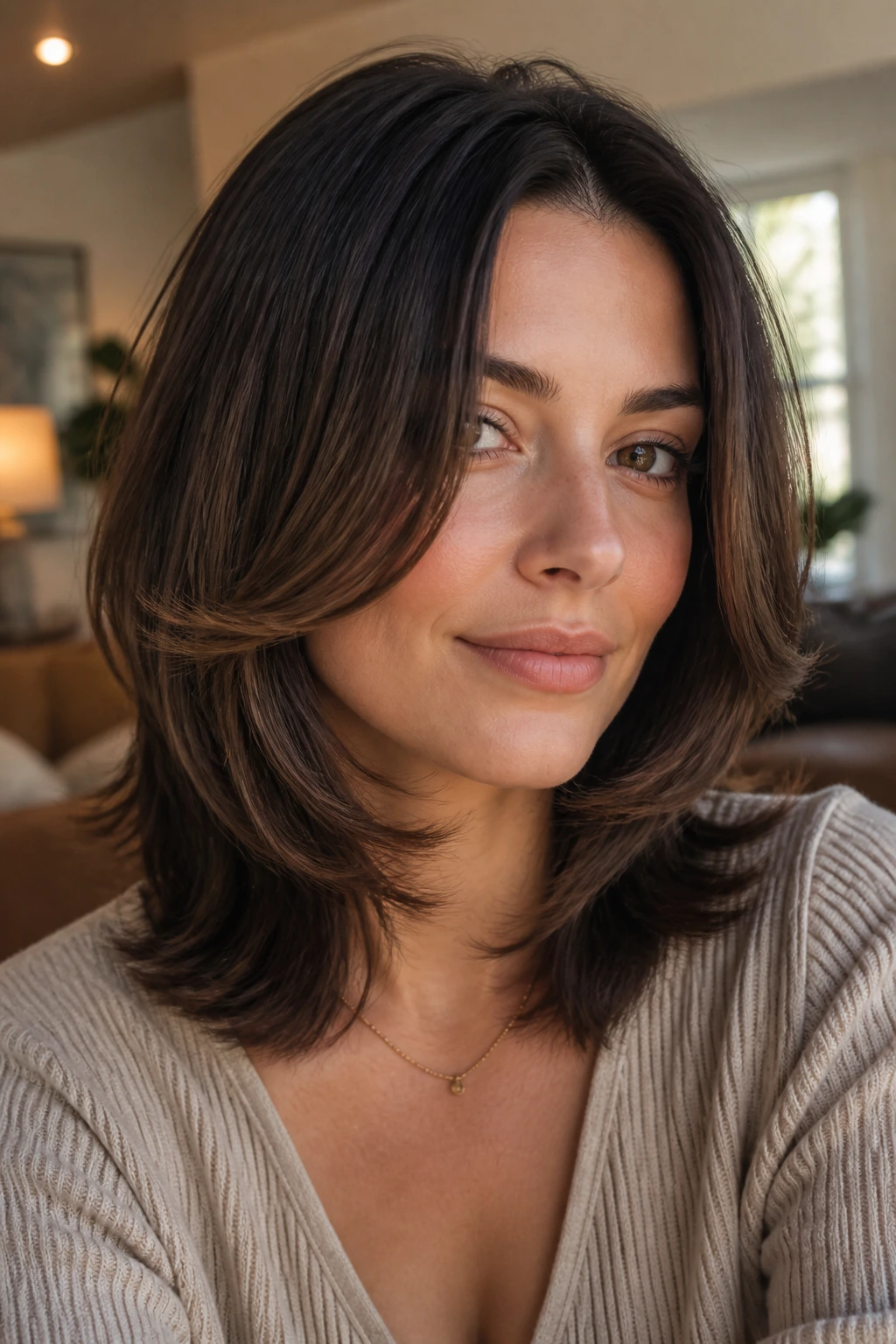
A little flick at the ends changes the entire feel of shoulder-length layers. The cut lands softly, the face frame pulls attention upward, and the movement happens at the very edge instead of all through the body of the hair.
This is a good finishing shape if you want layers that feel elegant without going high-maintenance. The cheekbone-framing pieces should be the first thing the eye notices. Everything below that can stay quieter. A 1-inch iron or a small round brush can create the bend, but the important part is the placement of the layers themselves.
If I had to describe the mood in one line: clean, lifted, and not fussy. That’s a useful lane to live in.
Why Long Layers Behave So Well at Shoulder Length
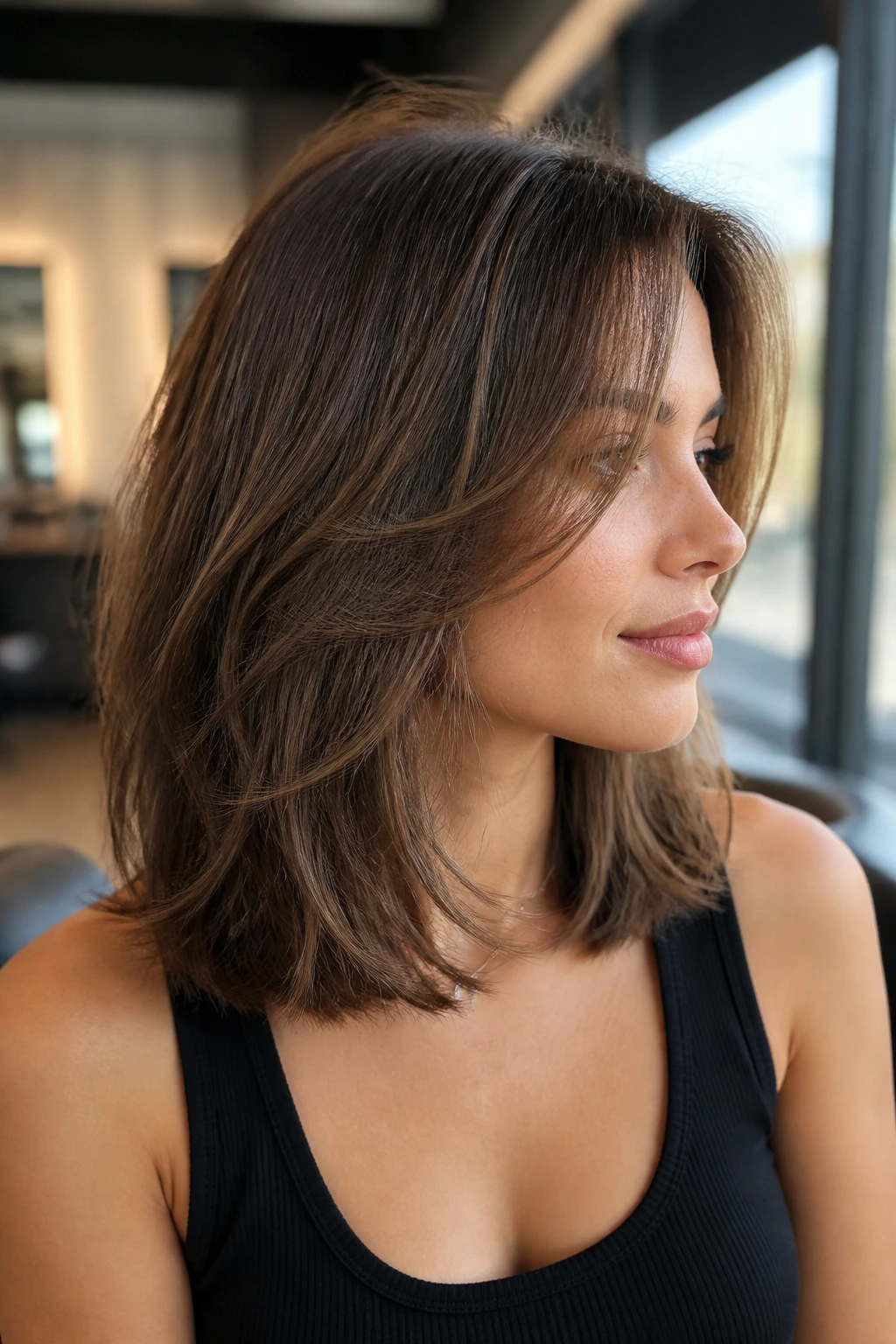
Shoulder-length hair sits in a strange little zone. It’s long enough to show movement, but short enough that every layer changes the outline fast. A blunt cut at this length can look heavy at the top and flicked out at the ends. Long layers fix that by giving the hair room to fold, bend, and fall in more than one direction.
The other reason they work is weight. Hair that lands on the shoulders gets caught, flipped, and pushed around all day. Long layers soften that contact point, so the cut doesn’t keep fighting gravity in the same blunt line. That matters more on thick hair, but fine hair benefits too, because the layers can make the shape look deliberate instead of limp.
There’s a sweet spot, though. Too many short layers and the shape gets wispy. Too few and you’re back to a square silhouette that needs constant heat styling to behave. The good versions sit in the middle and let the hair move without showing every single cut line.
How to Ask for Long Layered Hairstyles for Shoulder Length Hair
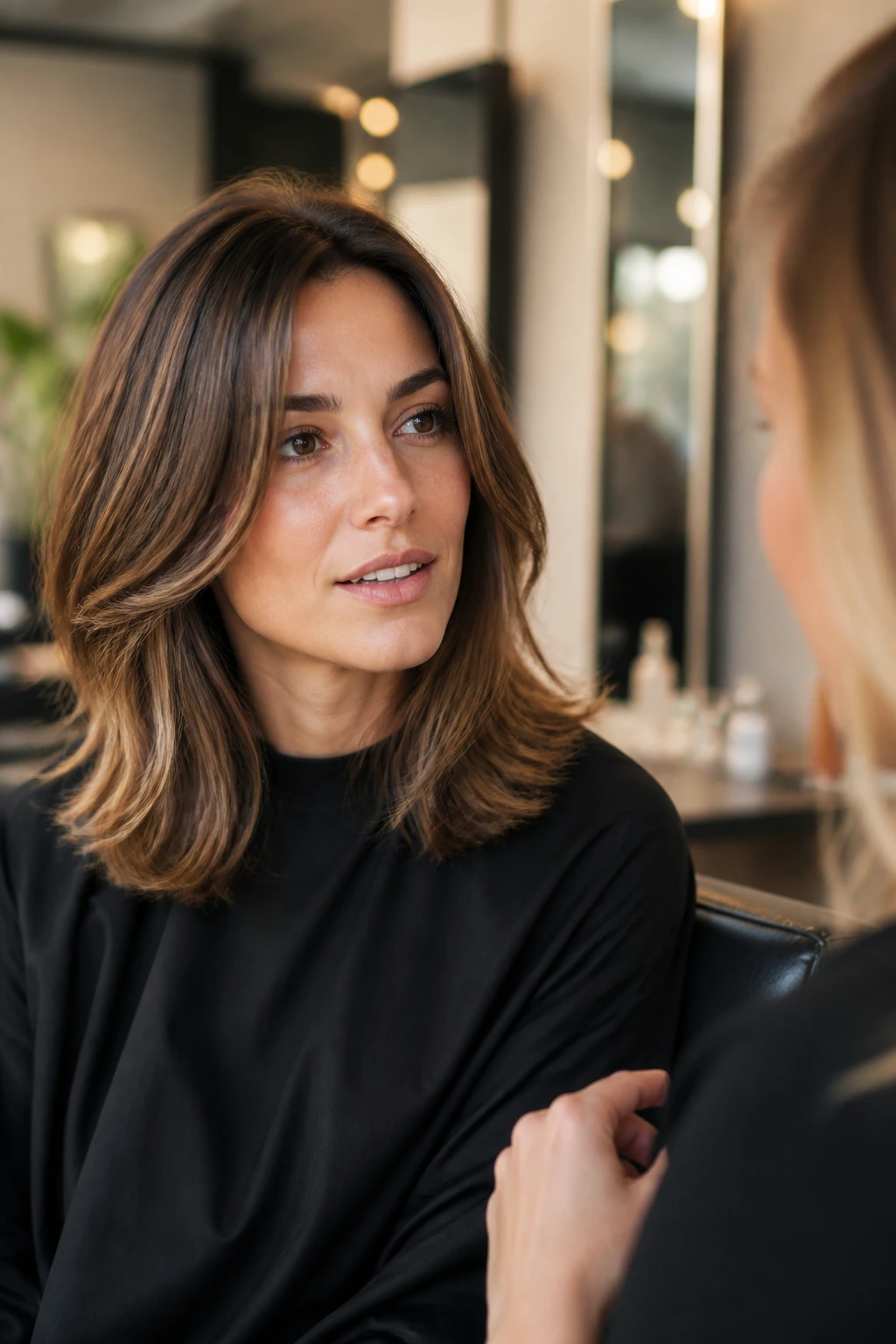
Bring photos, yes, but bring the right ones. Choose examples with hair that looks like yours in density and texture, not just a celebrity cut that was finished with a team and three hot tools. A photo of the silhouette helps more than a famous face ever will.
Say how you wear your hair most days. If you air-dry, tell them. If you blow it out once a week and ignore it after that, say that too. Layer placement changes depending on how much styling you actually do, and a good stylist will adjust the shortest pieces and face frame around that routine.
Be precise about length. If you want to keep the hair brushing the shoulders, say where you want the longest pieces to land: collarbone, top of shoulder, or just below. If you like to tuck it behind the ears, mention that. Tiny habits like that affect whether the cut works or annoys you every morning.
Tools That Make These Styles Behave
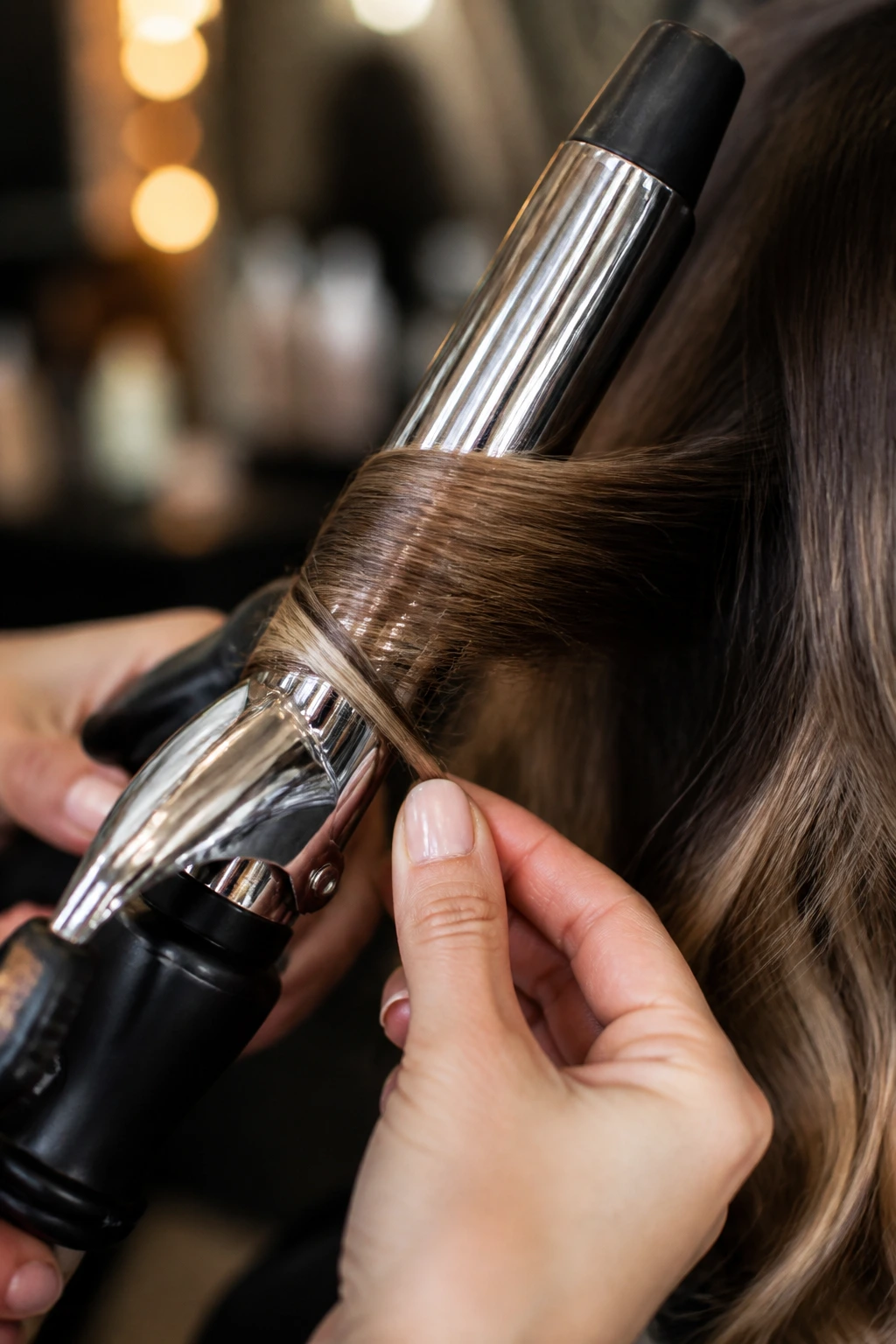
- Blow dryer with nozzle: Directs the air so the layers bend the right way instead of frizzing outward.
- 1-inch and 1.25-inch curling irons: Good for bent ends, face-framing waves, and the soft flips used on shoulder-length cuts.
- Medium round brush: Helps shape the front pieces and give the crown a little lift without overpolishing the whole head.
- Boar-bristle brush or paddle brush: Useful for smoother finishes and for brushing out blowouts once the hair cools.
- Sectioning clips: Keep the top away while you dry the underneath; this matters more on thick hair than people expect.
- Heat protectant: Non-negotiable if you use hot tools more than once a week.
- Volumizing mousse: Works well at the roots for fine hair and layered lobs.
- Texturizing spray: Better than heavy hairspray when you want separation and a little grit.
- Dry shampoo: Helps keep crown lift and stops soft layers from collapsing on day two.
- Wide-tooth comb: Safer than a brush for wavy or curly layers when the hair is damp.
How to Wear the Cut Smooth, Wavy, or Air-Dried
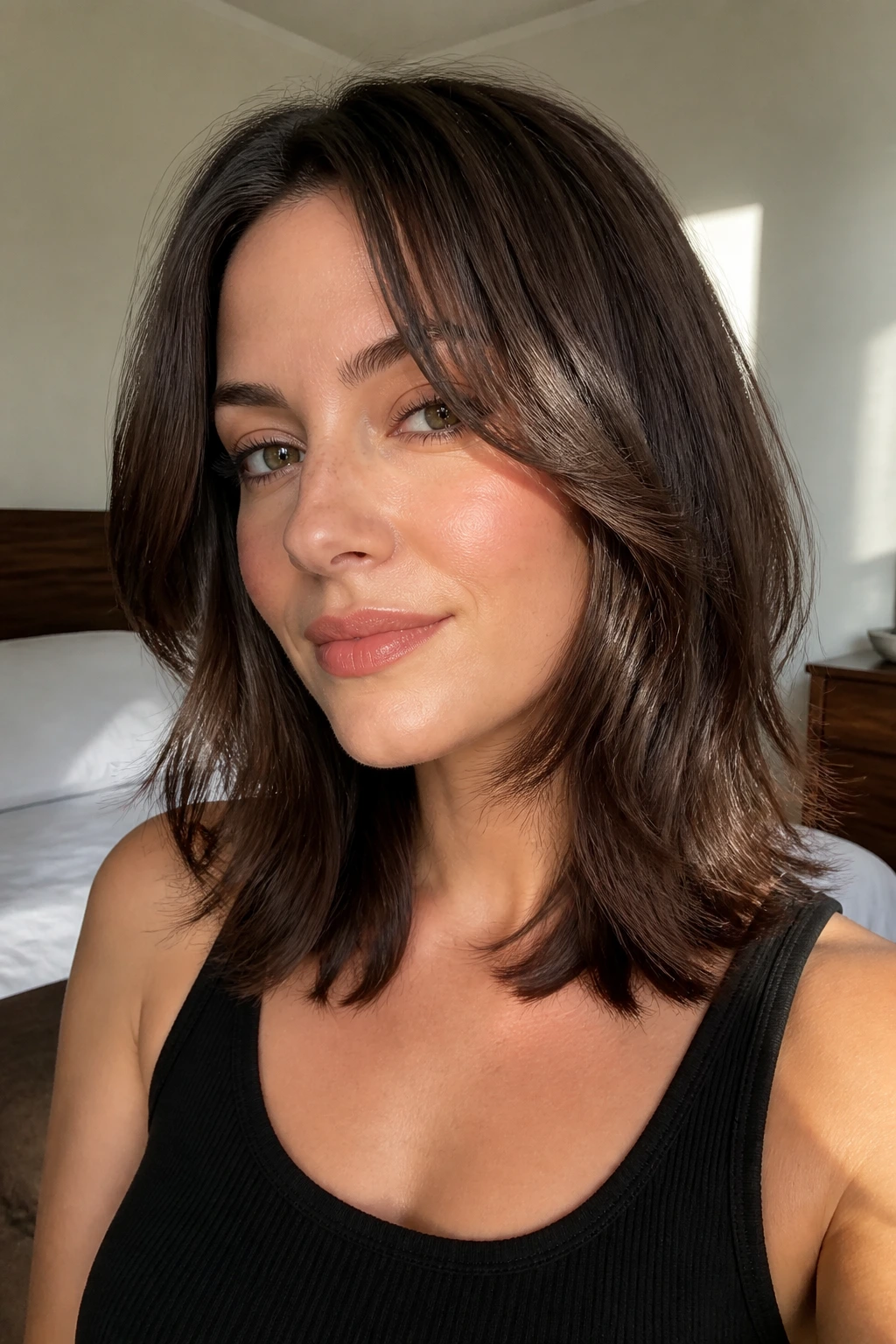
Presentation: Wear the front pieces curved toward the face if you want softness, or flip them away if you want more lift at the cheekbones. On shoulder-length hair, that front decision changes the whole read of the cut.
Product Pairing: Smooth styles like heat protectant, a pea-size serum, and a light mist of flexible spray. Wavy or air-dried styles like leave-in conditioner, curl cream, or a texture spray with enough hold to keep the layers from fraying.
Length Balance: Keep the longest pieces near the collarbone if you want to preserve fullness. If you like a lighter outline, the shortest face frame can move up to the cheekbone, but don’t go so high that the ends lose density.
Best Setting: Sleek versions work best for office days, photo days, or anywhere you want the outline to look sharp. Air-dried versions fit weekends, humid weather, and hair that refuses to be bullied.
Extra Shape Boosters That Matter More Than You’d Think
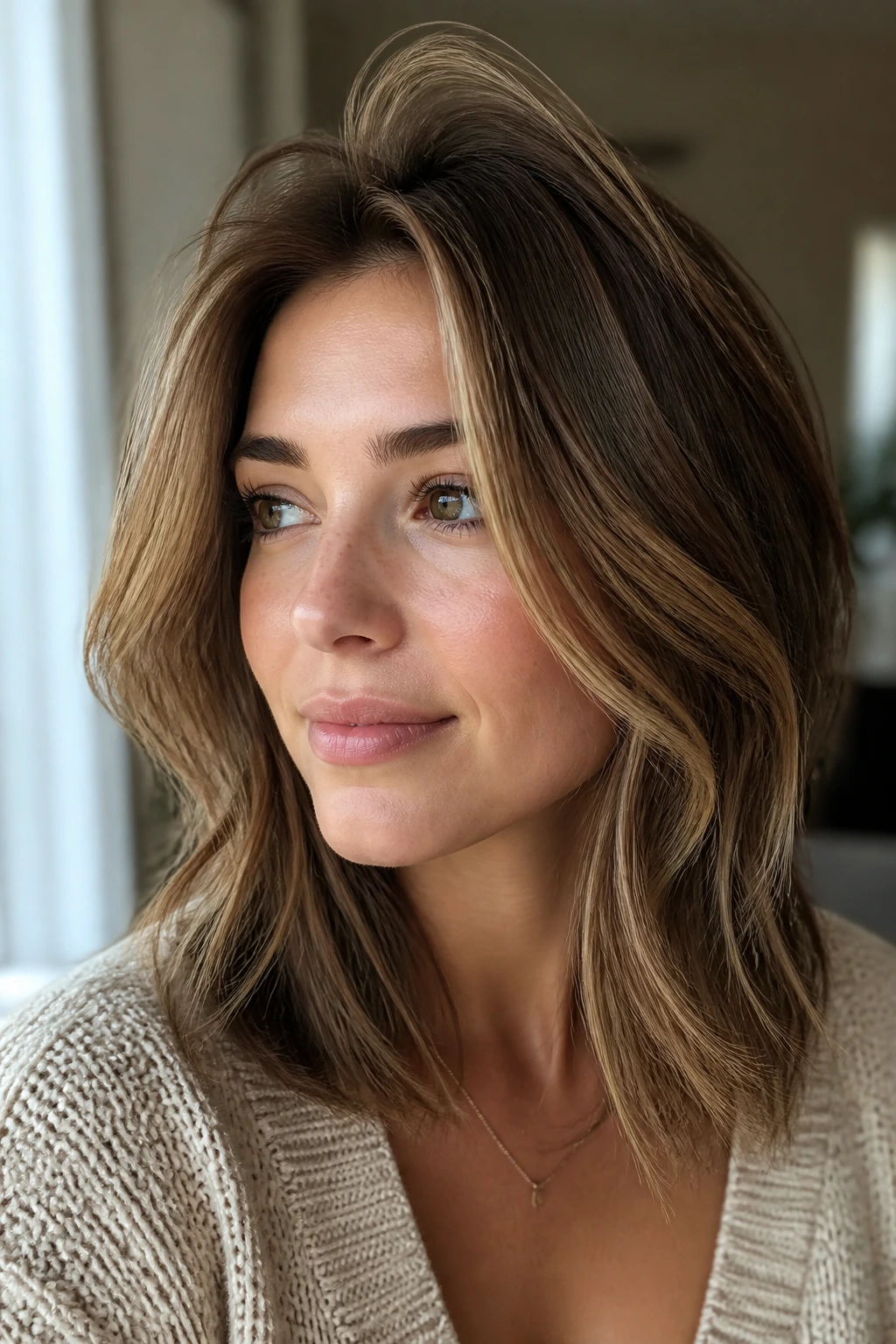
Shape Boost: Clip the crown at the roots for ten minutes while the hair cools after blow-drying. It gives shoulder-length layers a little lift without visible teasing, and the shape usually lasts longer than it should.
Texture Boost: Put texture spray only where the layers need separation — usually the midlengths and ends. Spraying the roots can make fine hair dry and sticky before it ever gets airy.
Time-Saver: If you are short on time, focus on the front two layers and the crown. Those are the parts people see first, and a quick bend there does more than spending twenty minutes on the back.
Make-It-Yours: For straight hair, try a clean side part and bent ends. For wavy hair, scrunch in product and let the shape do the work. For thick hair, smooth the interior first and worry about polish at the very end, after the bulk is under control.
Keeping Shoulder-Length Layers Fresh Between Trims
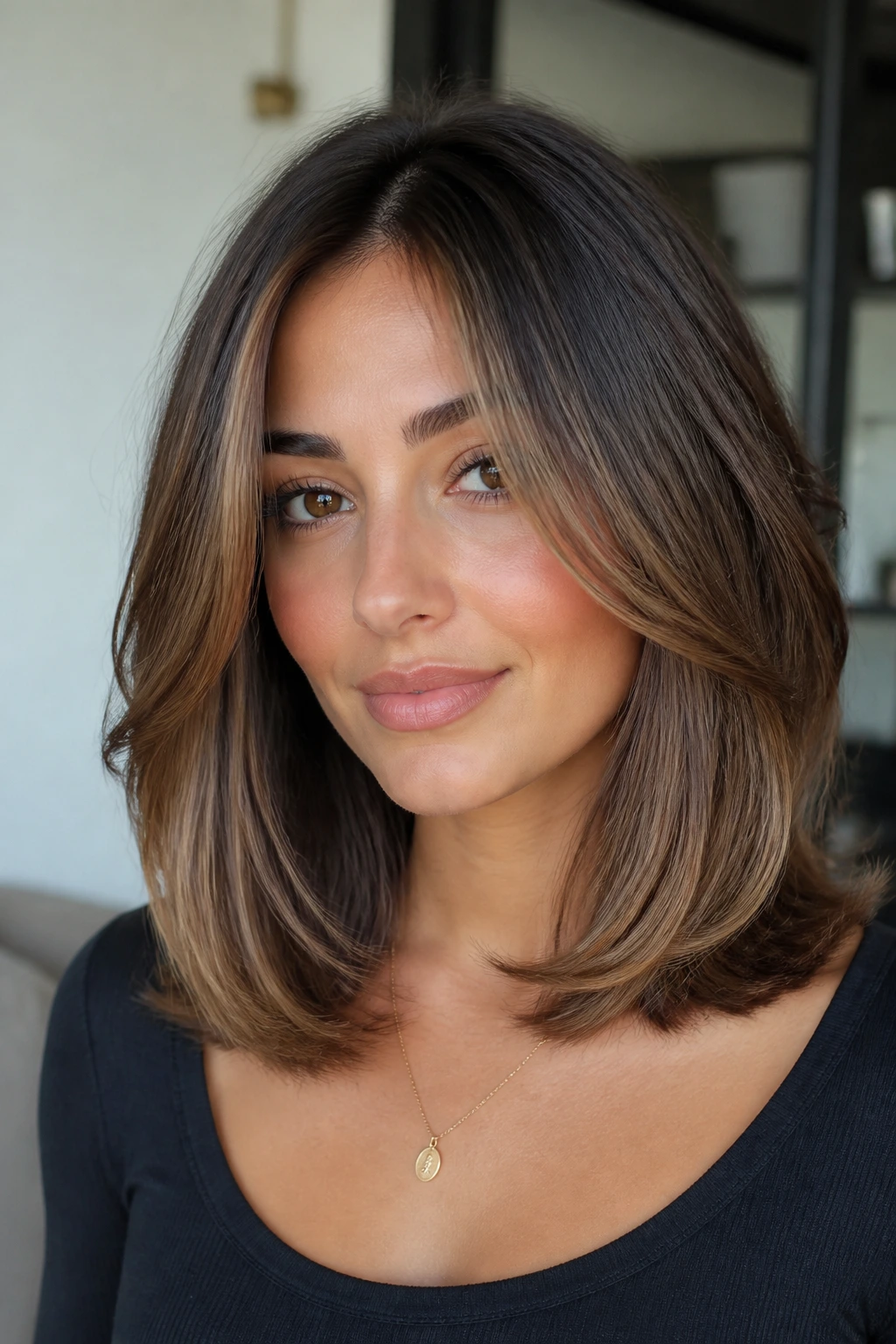
Long layers grow out better than short choppy cuts, but they still need maintenance. Most shoulder-length layered hair looks best with trims every 8 to 12 weeks, depending on how fast your hair grows and how sharply the face frame was cut. If the shortest pieces start hitting an awkward spot between the cheek and jaw, that’s usually your cue.
Between washes, dry shampoo at the roots keeps the crown from collapsing. A small amount of lightweight cream on the ends can tame frizz, but don’t pile it on. Shoulder-length layers are easy to overload because the hair is short enough that one extra pump of product can flatten the whole thing.
At night, a loose clip or a silk pillowcase helps preserve the bend in the front pieces. If your hair flips awkwardly, tuck the ends under loosely before bed instead of sleeping with them piled on top of your head like a squirrel’s nest. Morning shape starts at night more often than people admit.
Common Mistakes That Flatten the Whole Cut
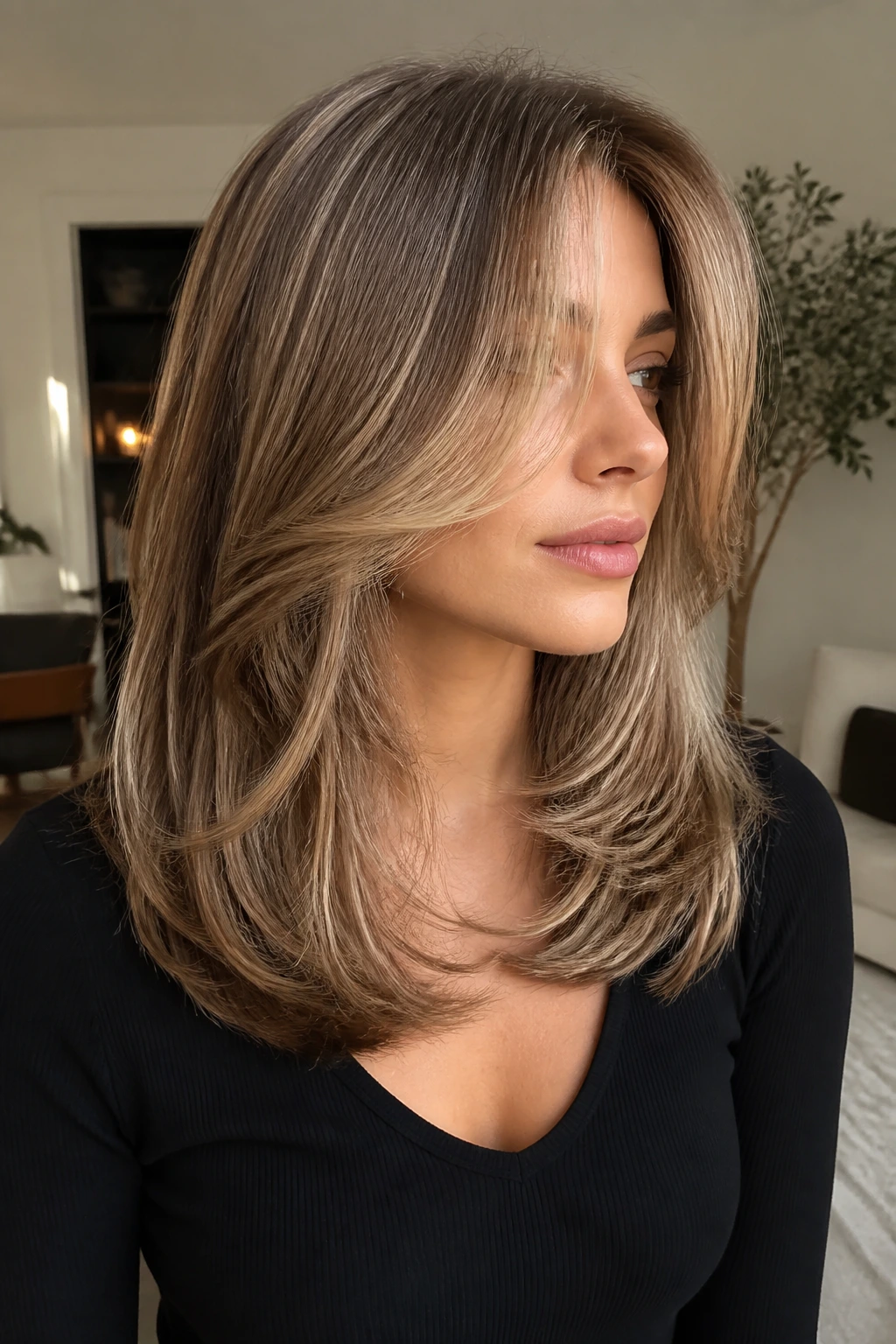
Cutting the shortest layer too high: The symptom is wispy ends and a haircut that looks thin from the side. The fix is simple: keep the shortest face frame lower unless you have thick hair that can handle the loss of density.
Over-thinning fine hair: If the hair suddenly looks see-through at the bottom, too much weight was removed. Fine hair needs long, gentle layers, not aggressive slicing.
Ignoring the shoulders themselves: A shoulder-length cut gets snagged and flipped by the shoulder line all day. If the perimeter lands exactly where your shirt collar or jacket hits, ask for a shape that either clears that point or embraces it with a soft bend.
Using heavy oil everywhere: The hair goes flat, the crown disappears, and the layers lose their movement. Use oil on the last inch or two only, especially if your hair is fine.
Styling all the layers in the same direction: Everything starts to look stiff. Alternate the bends around the face and leave some ends straighter so the cut still feels alive.
Variations and Adaptations to Try
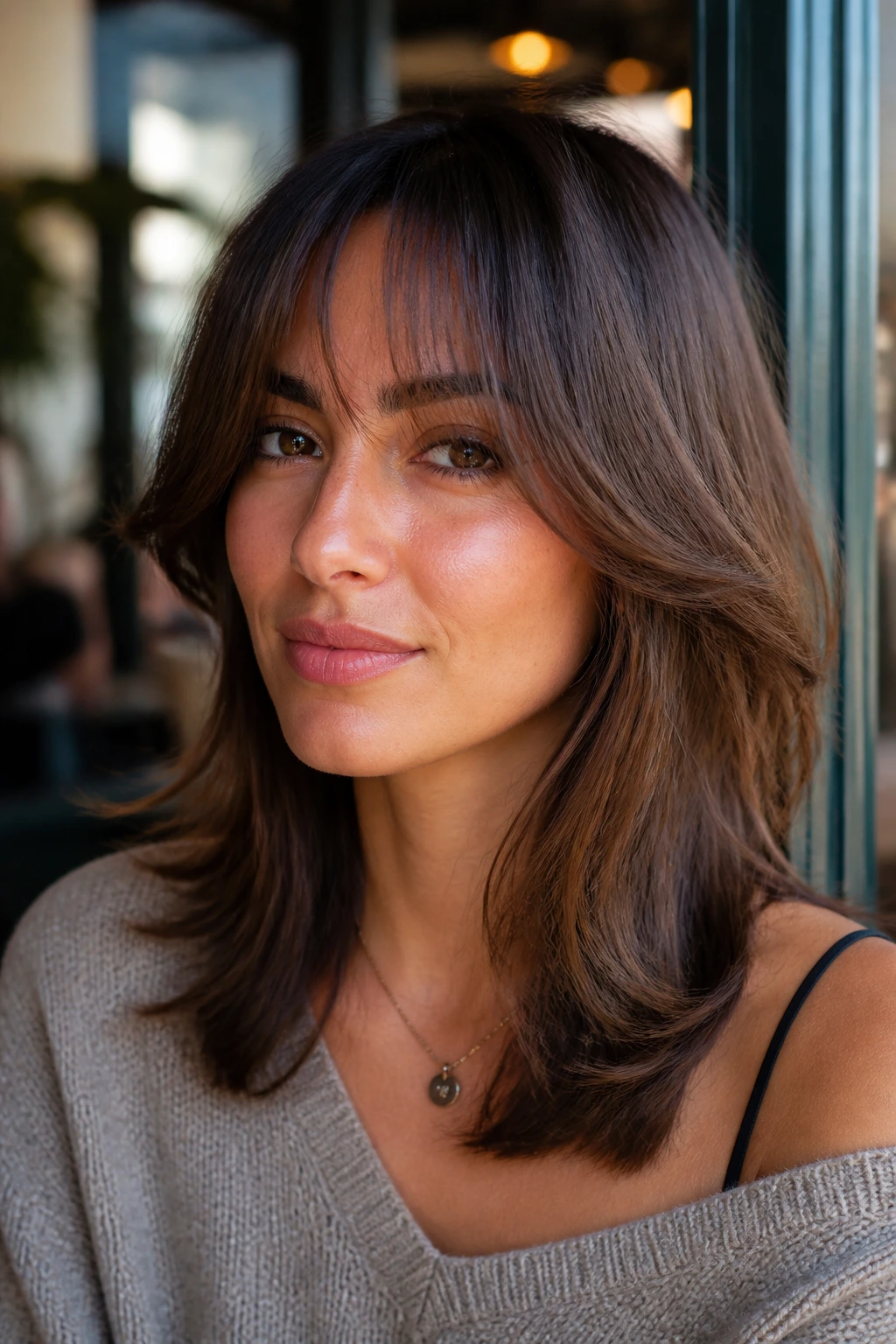
Fine-Hair Float Version: Keep the layers long, the face frame gentle, and the crown lightly lifted with mousse. This version gives movement without exposing too much scalp or making the ends look ragged.
Thick-Hair Weight-Release Version: Ask for interior layering and a fuller perimeter. It removes bulk where the hair stacks up while keeping enough mass at the ends to stop the cut from looking frayed.
Air-Dry-Friendly Version: Keep the layers soft, skip the razor, and ask for pieces that still look good once the hair dries on its own. This works best on wavy textures and on anyone who hates hot tools.
Fringe-Forward Version: Pair long layers with curtain bangs or bottleneck bangs. The fringe does the face-framing work, so the rest of the cut can stay cleaner and easier to manage.
Blowout-Only Version: Build the shape around a round brush and large-barrel iron. This is the one for people who like a polished finish and don’t mind spending a few extra minutes on the front pieces.
Frequently Asked Questions
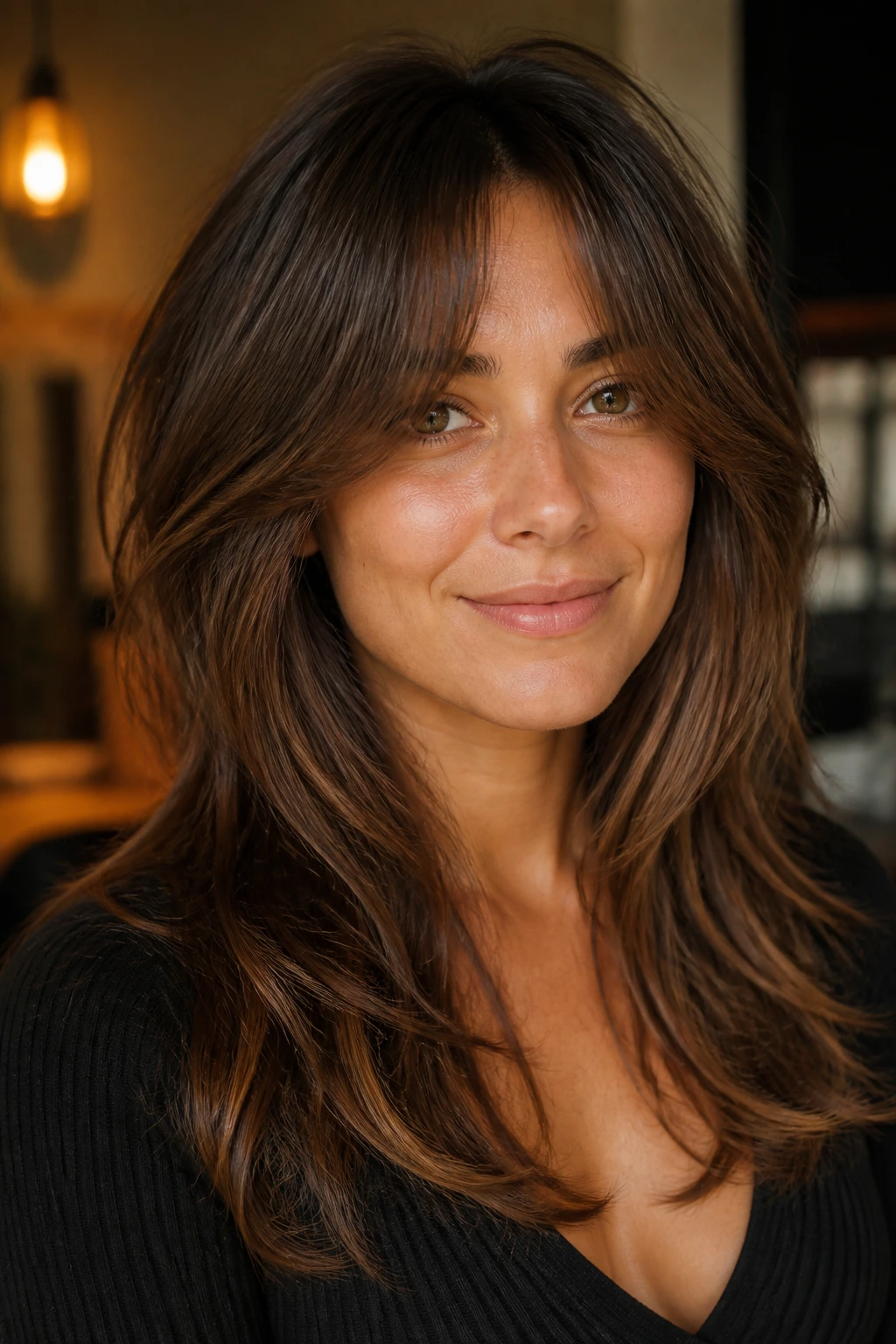
Will long layers make shoulder-length hair look thinner?
Not if they’re placed well. The problem comes from layers that are too short or too close together, which strip out density and leave the ends looking scratchy. Long layers keep enough weight in the perimeter to avoid that.
Can I keep my length and still get layers?
Yes. That’s the whole point of this haircut. You can ask to keep the longest pieces at the collarbone or shoulders while adding softer layers through the front and interior.
Are long layered cuts good for fine hair?
They can be, but only when the layers stay long and gentle. Fine hair usually needs movement, not too much removal of weight, or the ends start to look sparse.
What if my hair flips out at the shoulders?
That flip can become part of the shape. Ask for a collarbone bend or softly flicked ends so the cut looks intentional instead of accidental.
How often should I trim shoulder-length layers?
Every 8 to 12 weeks is a sensible range for most people. If your face frame grows into your eyes or the ends start feeling ragged, go sooner.
Can curly hair wear these styles without looking bulky?
Yes, as long as the layers respect the curl pattern and the stylist accounts for shrinkage. Curly cuts usually need a dry or curl-by-curl check so the shape stays balanced.
Should I ask for layers wet or dry?
That depends on texture. Straight and wavy hair can be cut wet in many cases, but curls often benefit from a dry or mostly dry approach so the final shape is easier to judge.
What if I hate the shape after the cut?
Styling usually changes the verdict more than people expect. Try a different part, add a bend to the front pieces, or blow-dry the roots in the opposite direction before deciding the cut is wrong.
The Shape That Keeps Moving
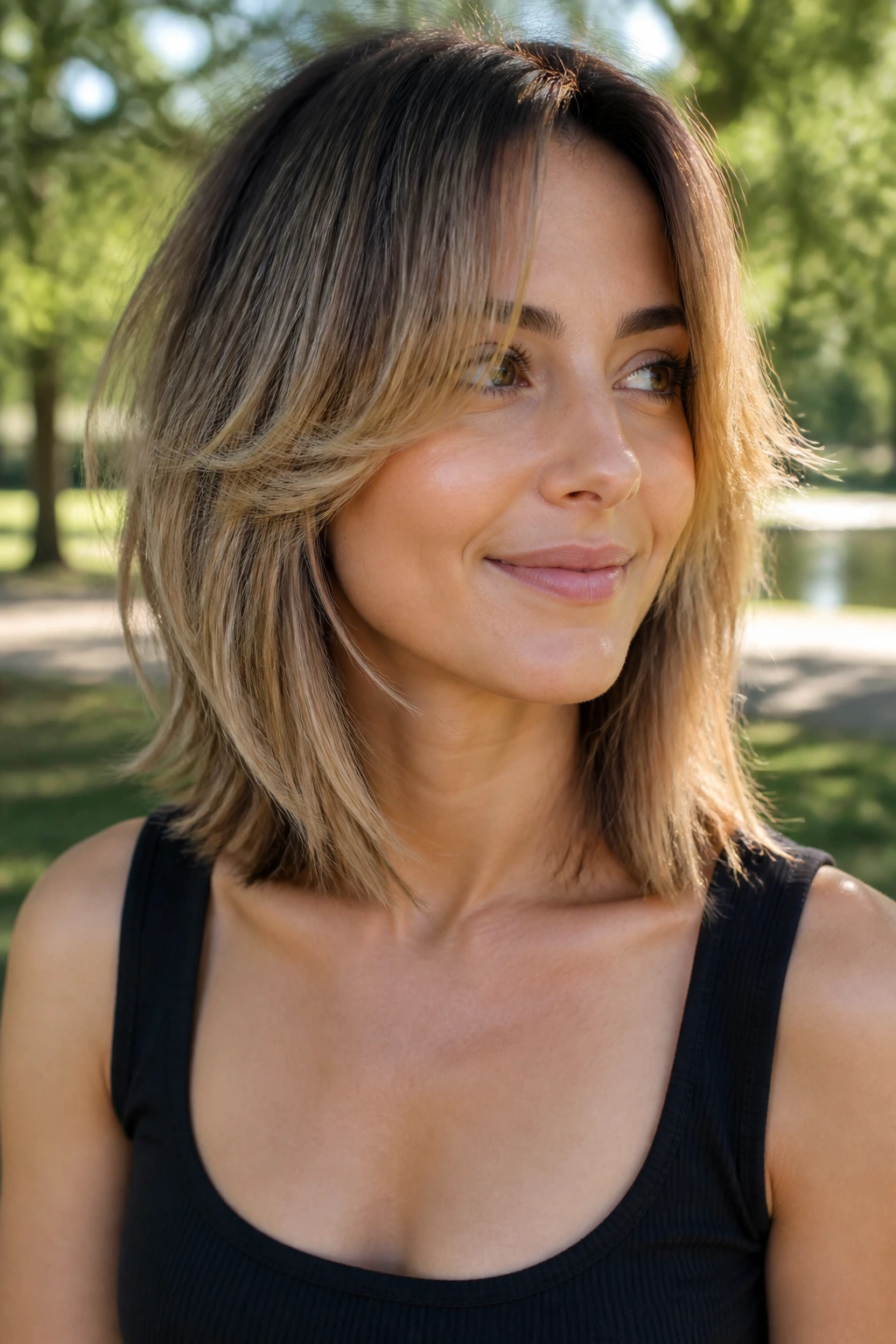
Long layers at shoulder length do something blunt cuts almost never do: they keep the hair looking like it has a point of view. The outline stays full enough to feel like real hair, but the movement around the face and through the ends stops the shape from turning stiff or square.
The best part is how many directions the cut can go. Smooth and polished. Air-dried and loose. Bouncy and blown out. If the layer placement is right, the haircut can shift with your mood without falling apart.
That’s the kind of cut worth asking for carefully. Bring a photo, say where you want the longest pieces to land, and be honest about how much styling you’ll actually do. The good versions grow out cleanly. The great ones make you stop checking whether your hair is behaving, because it already is.