



Wavy layered hairstyles for medium hair hit a sweet spot that blunt cuts keep missing. The hair has enough length to show movement, enough weight to stay polished, and enough shape to keep face-framing layers from looking like a random accident from the nape up.
The catch is balance. Cut the layers too high and the bottom goes wispy fast. Leave the shape too heavy and the wave turns into a box with a nice attitude. The best medium-length layered cuts work with the hair’s bend instead of wrestling it, which is why a cheekbone start can change the whole face, and a collarbone finish can keep the ends from puffing out.
What I like most about these cuts is how differently they can behave from one head of hair to the next. Fine hair gets lift from invisible layers. Thick hair gets relief from internal weight removal. Loose waves get a cleaner outline. And if you’re the kind of person who likes to air-dry and go, there are still several cuts here that won’t punish you for being practical.
Why These 25 Cuts Keep Medium Waves Moving

- They keep the outline strong: Medium hair looks better when the ends still have enough weight to sit neatly, even after the wave loosens.
- They frame the face on purpose: The best front layers start at cheekbone, lip, or collarbone level instead of cutting the face in half.
- They work with real mornings: Some of these shapes air-dry well, some diffuse fast, and some only need a quick bend on the front pieces.
- They adapt to hair density: Fine hair needs softer, longer layers; dense hair can handle more internal movement without losing shape.
- They age well between trims: A good medium layered cut should still look like a haircut after six to ten weeks, not like a grow-out emergency.
1. Collarbone Layers with Air-Dried Bend
The collarbone is a useful place for medium waves to land. It gives the ends enough room to swing, but not so much length that the style droops into a straight curtain by lunchtime.
Why It Works
The shortest face-framing pieces can start near the lip, while the rest of the shape stays long and gentle. That keeps the front open and the perimeter full, which is a better trade than chopping the whole head into short pieces.
A little mousse at the roots and a soft scrunch through the mid-lengths is usually enough. Let the wave dry with as little touching as possible. Small motion. Big payoff.
- Best for medium-density hair that bends without much help
- Ask for layers that begin below the cheekbone and soften toward the ends
- Keep the perimeter at the collarbone or just below it
- Use a microfiber towel, not a rough bath towel
Pro tip: if the ends puff out, don’t cut the layers higher. The shape needs more weight, not more scissors.
2. Curtain Bangs That Split Cleanly at the Cheekbones
Curtain bangs do a lot of face work without stealing length from the rest of the haircut. When they’re cut to split at the cheekbones, they soften the forehead and fold neatly into medium waves instead of sitting there like a separate idea.
The trick is length. Too short, and the bangs kick out in a weird little flip. Long enough to brush the cheek and skim the mouth, and they start behaving like part of the layer pattern. That’s the sweet spot.
A round brush or large rollers can help the front fall away from the face instead of sticking straight down. Keep the root area light. Heavy product up front will make the whole fringe collapse.
3. Face-Framing Layers with a Middle Part
Why do some middle parts look flat while others make the whole haircut feel deliberate? The front pieces.
When the layer line starts around the chin or just below it, the middle part gets room to breathe. The waves sit on either side of the face, and the shape opens the cheekbones instead of boxing them in.
How to Wear It
The front pieces should be long enough to tuck behind the ears without breaking the line. That matters. A middle part with too-short face layers can look chopped in a way that medium hair rarely forgives.
Use a 1.25-inch wand if you want a bit more bend, then brush it out with fingers for a softer finish. If your face is long, keep the front layers a touch shorter, around lip level. If it’s round, let them drift lower.
4. Choppy Shag with Soft Ends

If your medium hair goes flat at the crown and fluffy at the sides, the shag fixes the ratio. It builds movement up top and keeps the bottom from feeling too heavy.
This version stays softer than the classic rock-and-roll shag. The crown gets short layers, but the ends are still blended enough to avoid a hard mullet line. That matters on medium hair, where a harsh disconnect can look more costume than style.
- Best on medium-to-dense waves that need lift
- Ask for point-cut ends so the perimeter stays broken up, not blunt
- Diffuse on low heat if you want the texture to stay separated
- Use texture spray only through the mid-lengths and ends
A shag like this lives or dies by restraint. Too much thinning, and the ends turn frizzy. Too little, and the whole shape goes helmet-shaped by noon.
5. Butterfly Layers for Medium Hair

The butterfly cut makes a medium-length wave feel like two stories at once: lift near the face, length through the back. That contrast is the whole point.
The shortest upper layers sit around the cheekbones and jaw, then melt into longer length underneath. When the hair moves, the front pieces float and the back keeps its weight. It’s one of the few layered styles that can look full and airy at the same time.
This cut is especially kind to people growing out fringe. The front pieces can hide the awkward in-between stage better than straight-across bangs ever do. If your hair is very fine, keep the top layers longer; if it’s dense, the upper pieces can come up a bit more.
6. Soft U-Shape with Loose Waves
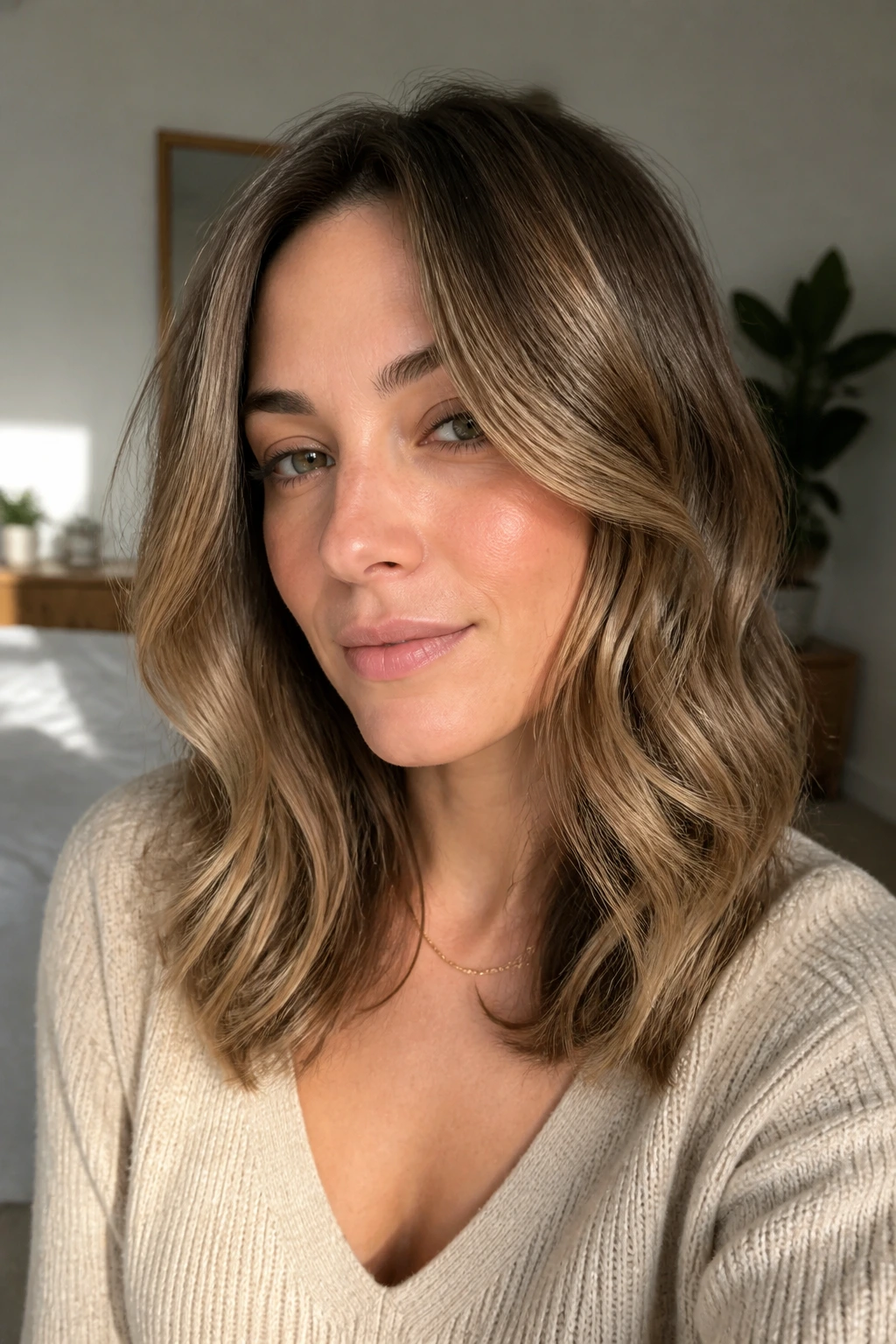
A blunt line can make medium waves feel boxy. A soft U-shape changes that without stealing the thickness from the bottom.
The sides stay a little longer than the center back, so the shape curves instead of stops. On wavy hair, that curve reads as movement even when you’ve done almost nothing to it. It’s a quiet cut. Not boring. Quiet.
This is one of the better choices for thick hair that tends to flare out at the shoulders. The U gives the style direction. Keep the face frame subtle, though. Too much front layering can fight the clean outline and make the cut look scattered.
7. Layered Lob with an Internal Lift
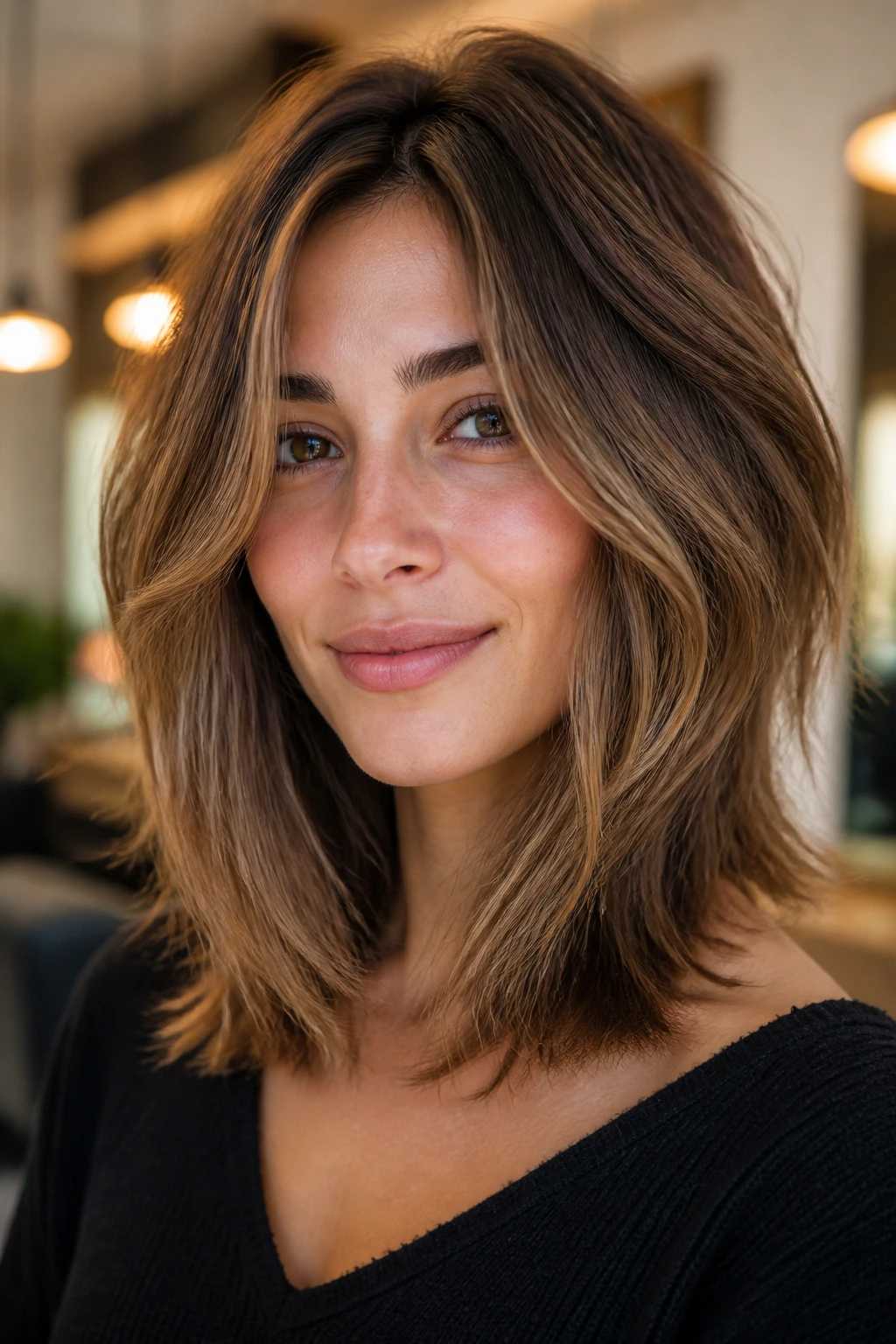
The best thing about an internal lift is that nobody can point at it. They just see a lob that doesn’t collapse.
That’s what happens when the stylist removes weight from under the top layer instead of carving up the outline. The top sheet stays smooth, the wave sits on top of some real structure, and the ends still feel solid.
What to Ask For
Ask for long layers inside the cut, not short chopped layers at the perimeter. If your hair is fine, this approach keeps the ends from going see-through. If your hair is dense, it removes some bulk without turning the whole shape fuzzy.
A big round brush or a large barrel iron can bend the last inch of the hair under just enough to keep the line tidy.
8. Rounded Layers with a Deep Side Part
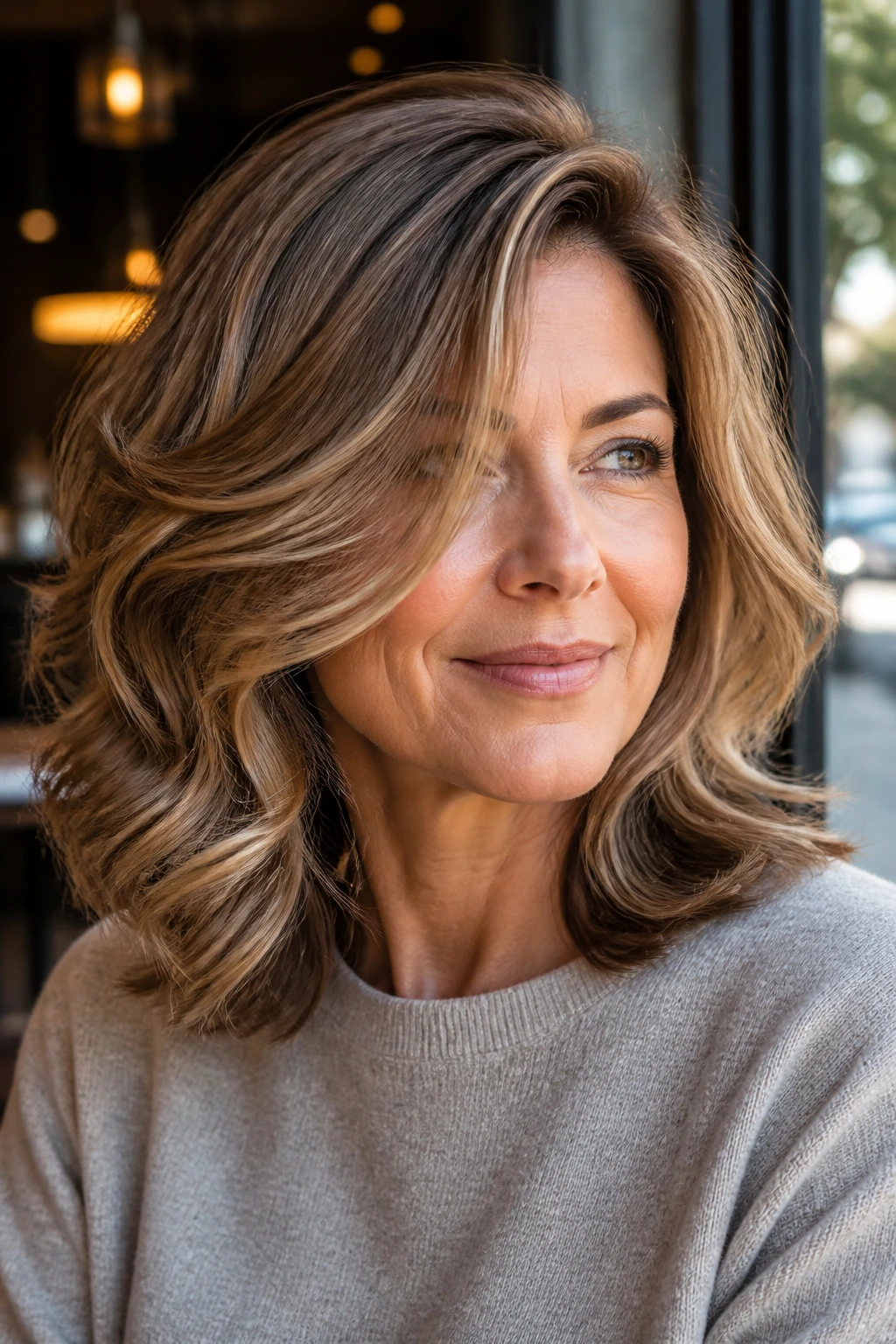
A deep side part can rescue a cut that feels too symmetrical. It moves the weight, lifts the crown, and lets the layers fall in a rounder shape around the face.
This is a good match for square or long faces because the side part breaks up straight lines. The curve through the layers softens the jaw, while the lifted root keeps the style from lying flat on one side. Medium hair needs that lift. Otherwise the part can look severe.
Pin the heavier side back while the hair cools if you want the volume to hold. And yes, the part can feel awkward the first few times. Hair remembers where it likes to sit. You can train it.
9. Razored Ends and Piecey Waves
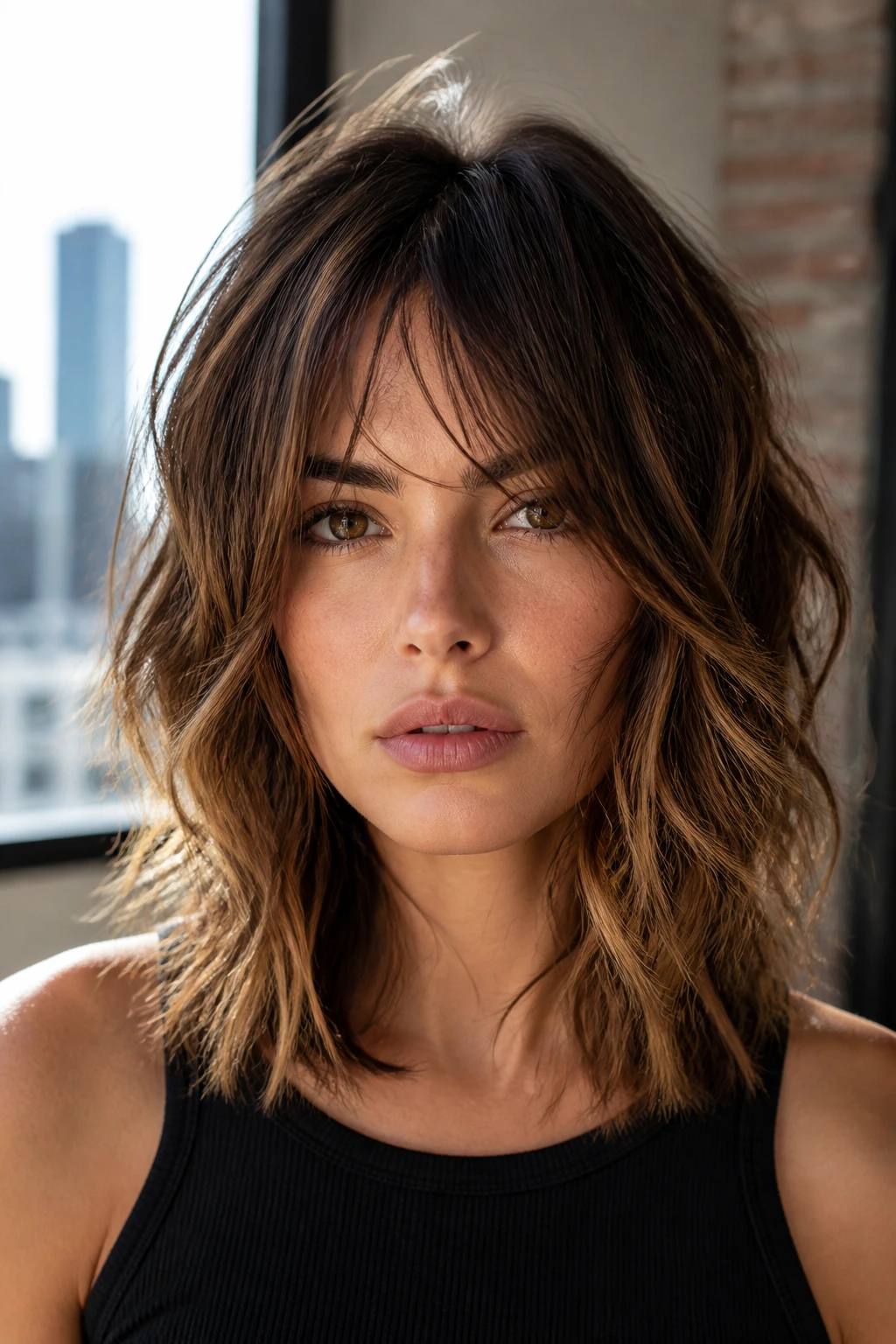
Razor work is not for every head of hair. On medium waves with decent density, though, it can make the ends feel lighter and more separated without losing the overall shape.
The idea is broken texture, not shredded ends. A light razor pass through the last inch or two can soften a heavy edge and help the wave fall into pieces instead of clumping. If the hair is already fragile or dry, skip this one. It can get frayed fast.
Use a small amount of styling cream on the mid-lengths, then pinch a few strands with your fingers after drying. That piecey finish should look deliberate, not crunchy.
10. Polished Blowout Waves with Bouncy Layers
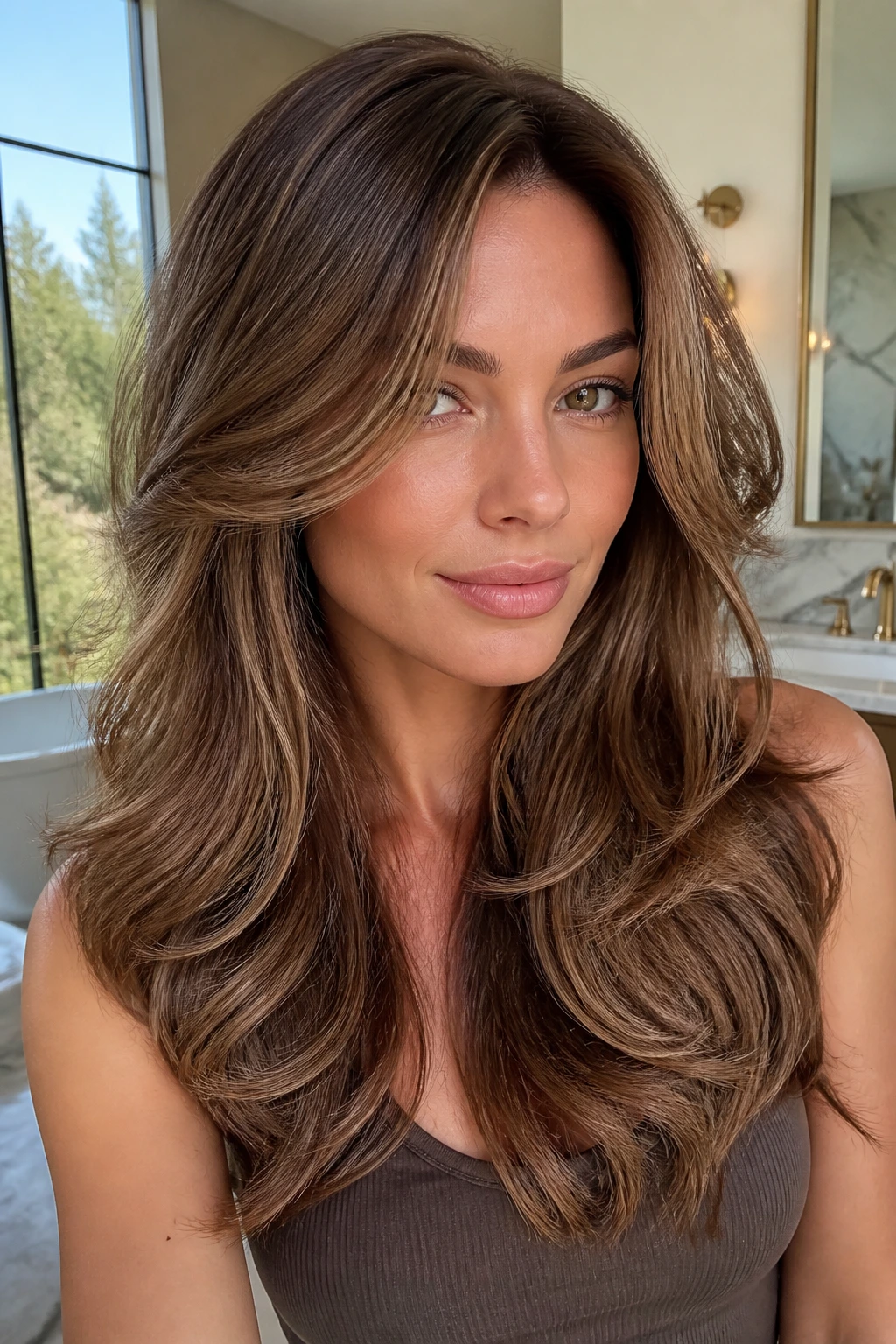
This is the cleanest version of wavy layered medium hair. The wave still bends, but the finish is smoother and more controlled.
A round brush, a decent blow-dry, and long blended layers do most of the work here. The root stays lifted, the mid-lengths curve gently, and the ends tuck under just enough to keep the style from looking busy. It’s a good match for people who want movement without a lot of mess.
Use heat protectant from roots to ends. Then focus your brush on the front and crown first; those are the parts people notice before the back of the head ever enters the conversation. A quick cool shot at the end helps hold the shape.
11. Deep Side-Part Glam Layers
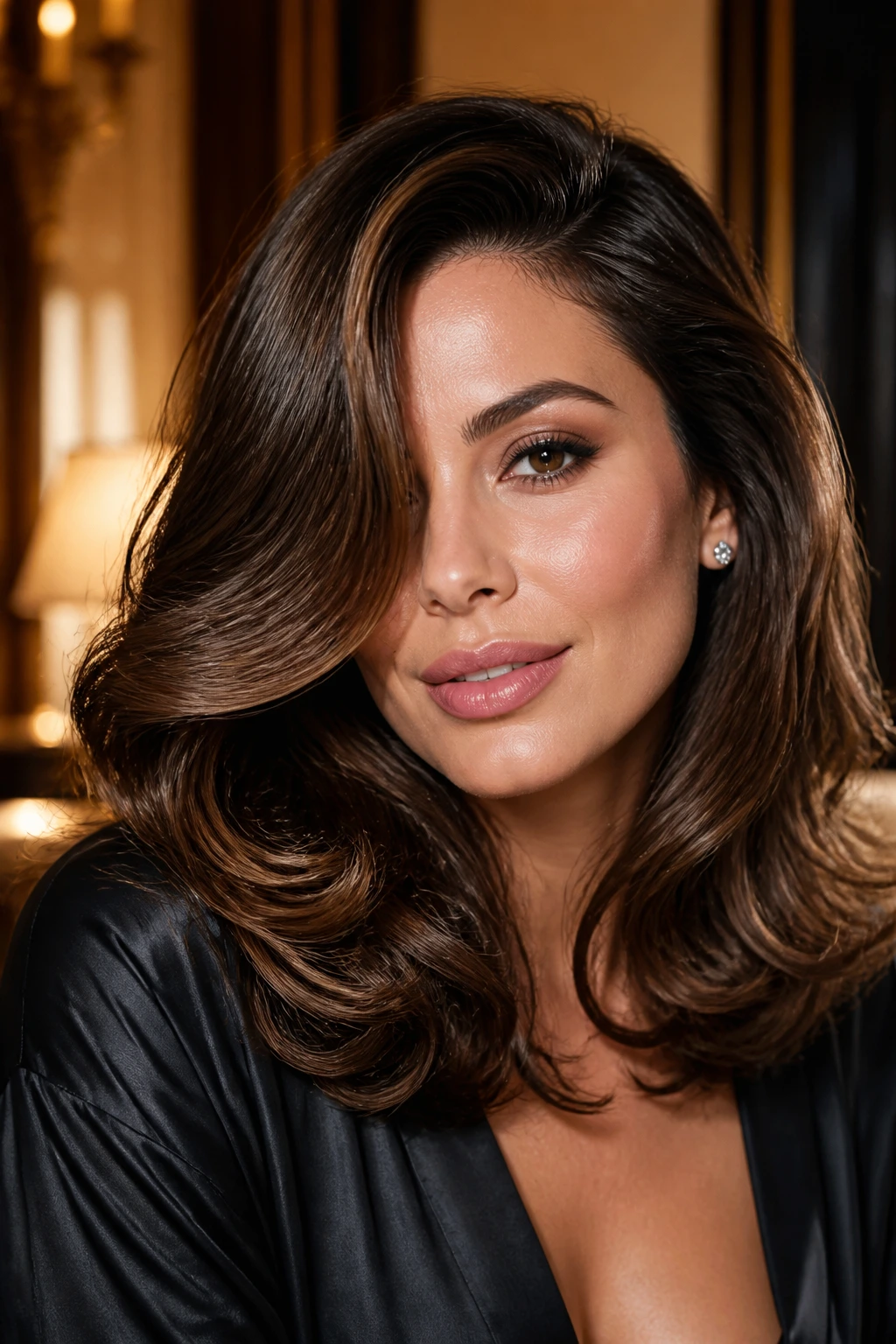
A side part with real drama changes the silhouette more than a trim does. One side falls heavier, the other side opens up, and the whole cut takes on that glossy, swept feel that works nicely for evenings or sharper outfits.
The layering should support the movement, not compete with it. Keep the longer front pieces on the heavy side and let the layers fall in soft arcs. If the cut is too choppy, the glamour disappears and you’re left with a lopsided mess.
A shine spray on the ends helps here, but don’t overdo it. You want light reflection, not greasy hair that looks like it lost a fight with a salad dressing bottle.
12. Tousled Beach Layers with Salt Spray

Salt spray is a tool, not a personality. Used well, it gives medium waves a dry, separated texture that feels casual without looking limp.
The best place for it is mid-lengths and ends, never the crown. Put too much near the roots and the hair can go stiff or dusty fast. If your hair is already dry, add a bit of leave-in first so the salt doesn’t suck every ounce of softness out of it.
Scrunch, twist a few sections with your fingers, and leave it alone while it dries. That’s the whole game. The result should look like the wave had room to move, not like it was forced into place.
13. Invisible Layers for Fine Hair
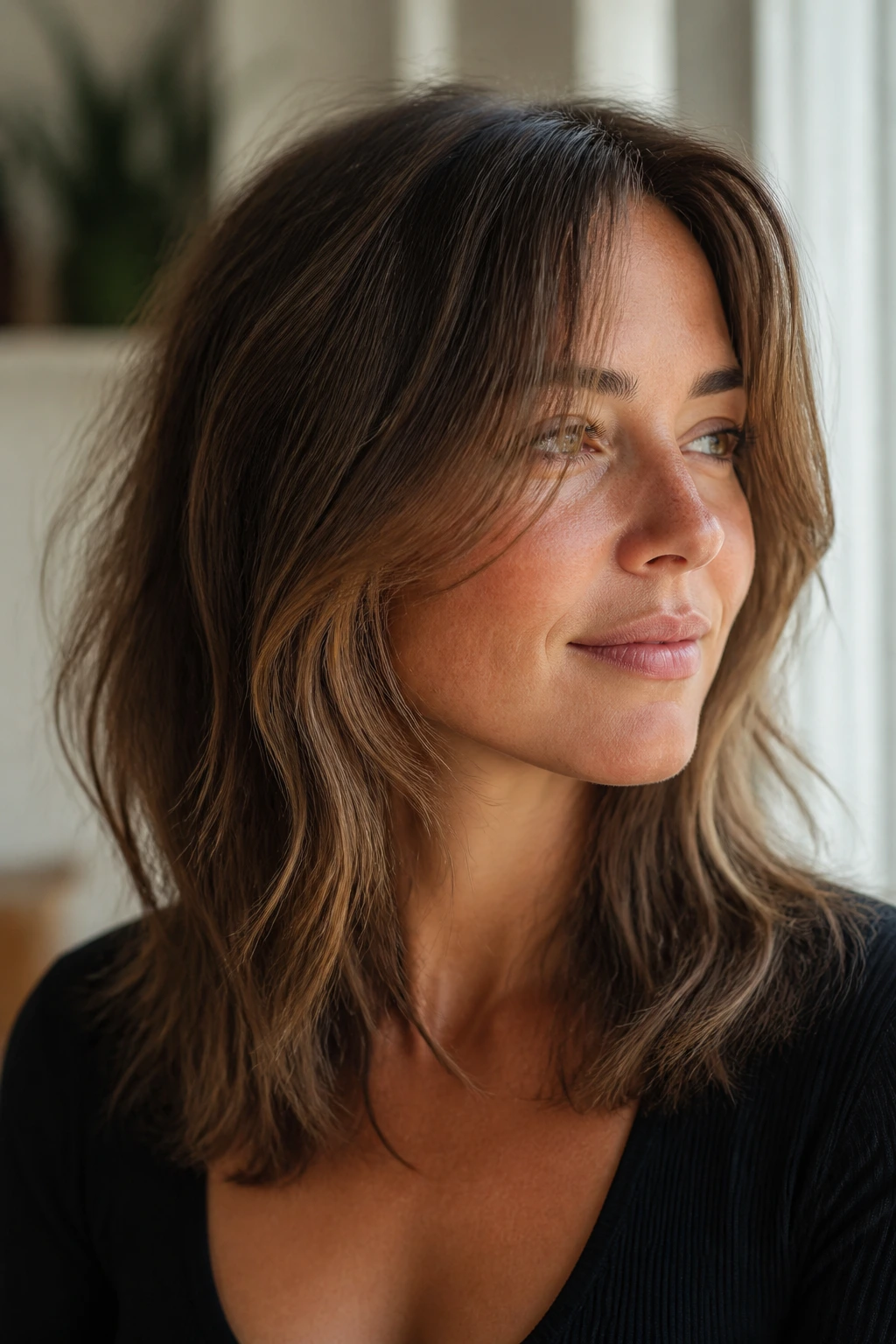
Fine hair needs layers that hide inside the haircut. If they announce themselves, the ends can go see-through in a hurry.
Invisible layers, sometimes called ghost layers, remove weight from underneath while keeping the outline full. That means the hair still looks thick at the edge, but it doesn’t sag in the middle. It’s one of the smartest moves for medium hair that goes flat after a few hours.
Keep the face frame long and blended. Short choppy front pieces tend to steal density from the places fine hair can least afford to lose it. A light mousse and a little root lift at the crown are usually enough to wake the shape up.
14. Crown-Lift Layers with Tapered Ends
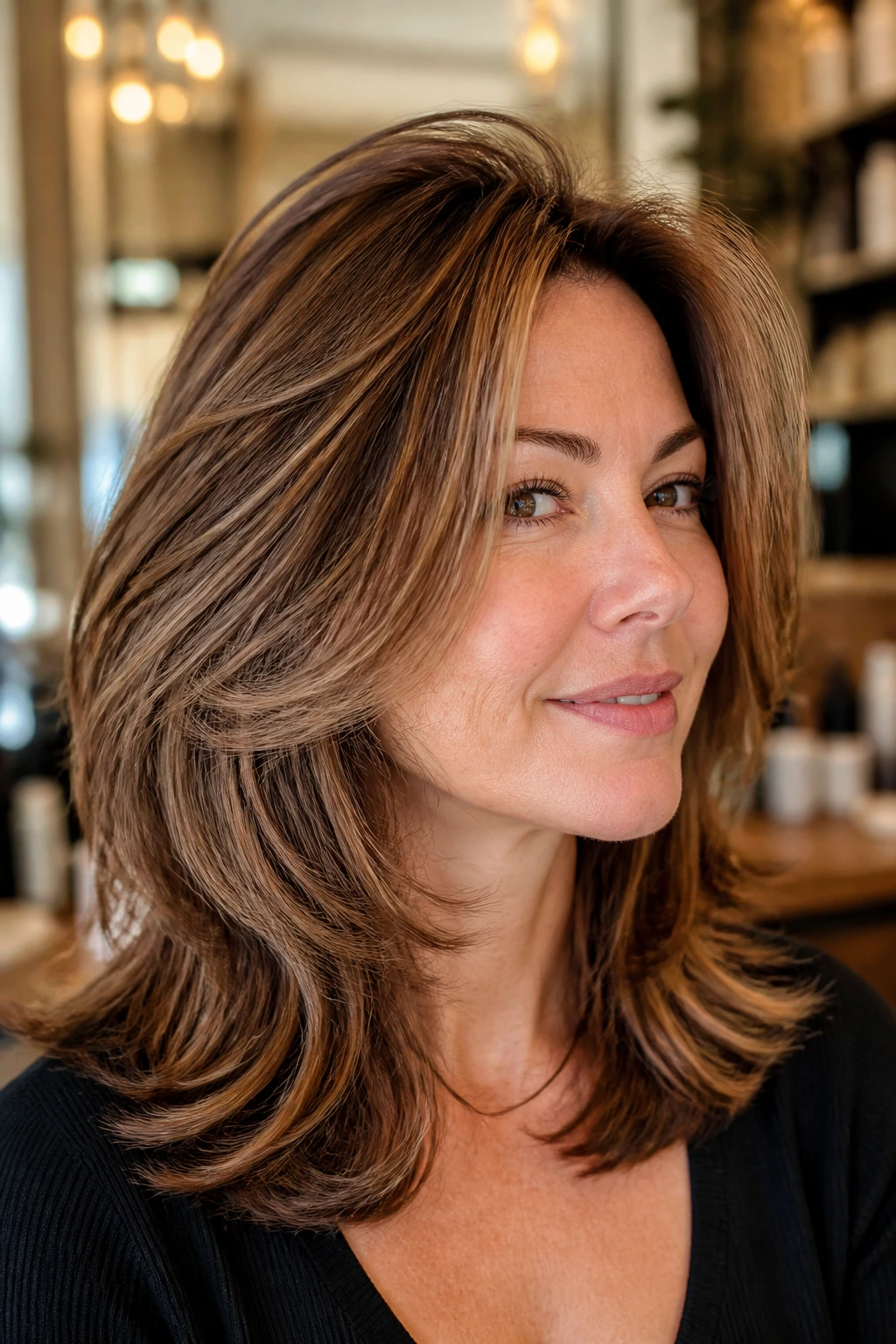
If your roots lie flat like they’re trying to disappear, crown-lift layers change the whole head shape.
The shortest pieces sit high enough to create movement at the top, while the ends taper softly so the bottom doesn’t look blunt or heavy. It’s a good cut for people whose hair falls straight at the crown but bends in the lengths. That contrast is common. Nothing weird about it.
Use clips at the root while the hair cools if you want the lift to last. Skip thick cream near the top. The crown doesn’t need help sitting down.
15. Soft Wolf Cut for Medium Hair

A soft wolf cut gives you the edge without the hard disconnect that makes some versions hard to wear. Medium hair carries this shape well because there’s enough length for the layers to show, but not so much that the style drags down.
The crown stays shorter, the nape stays longer, and the face frame blends into the rest instead of shouting from the front row. It’s a smart choice if you want something a little messy, a little shaggy, and still wearable with a plain T-shirt or a blazer.
Diffused waves suit this cut. Air-dried texture works too. What doesn’t work is over-smoothing the top and leaving the ends wild; that just makes the haircut look undecided.
16. Flipped-Out Layered Lob
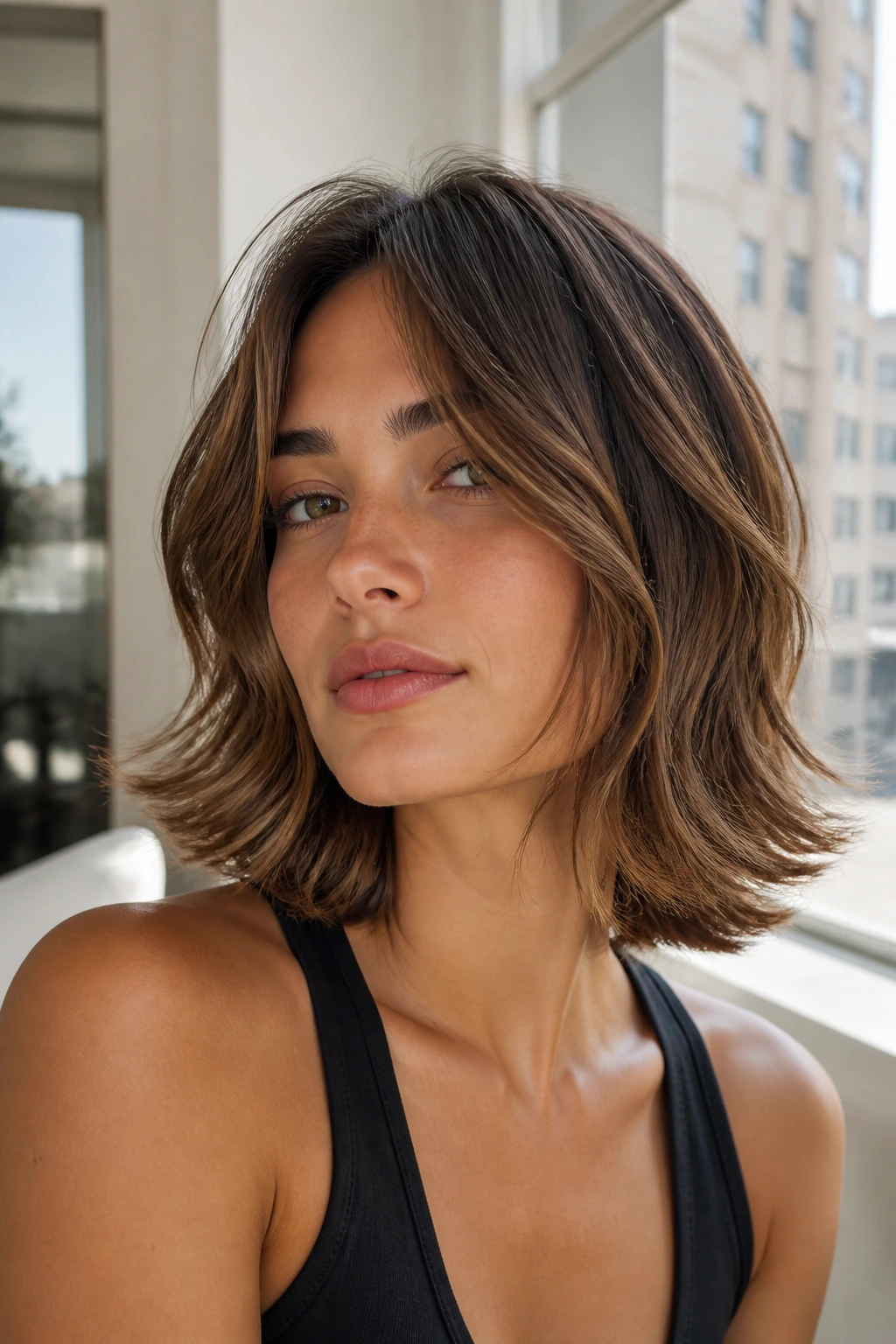
The flip at the ends keeps the haircut from sinking into itself. It gives the lob a bit of movement and a little attitude without needing a full curl pattern.
Ask for layers that sit neatly through the mid-lengths, then use a round brush or a flat iron twist to push the ends out away from the face. That outward bend can make the jawline look more open and the whole cut feel lighter.
It’s a good look if you like a retro edge but don’t want the hair to look overly styled. Keep the flip soft, not pageant-big. Medium hair can handle the shape, but it looks best when the finish stays loose.
17. Mermaid Waves with Long Face Frames
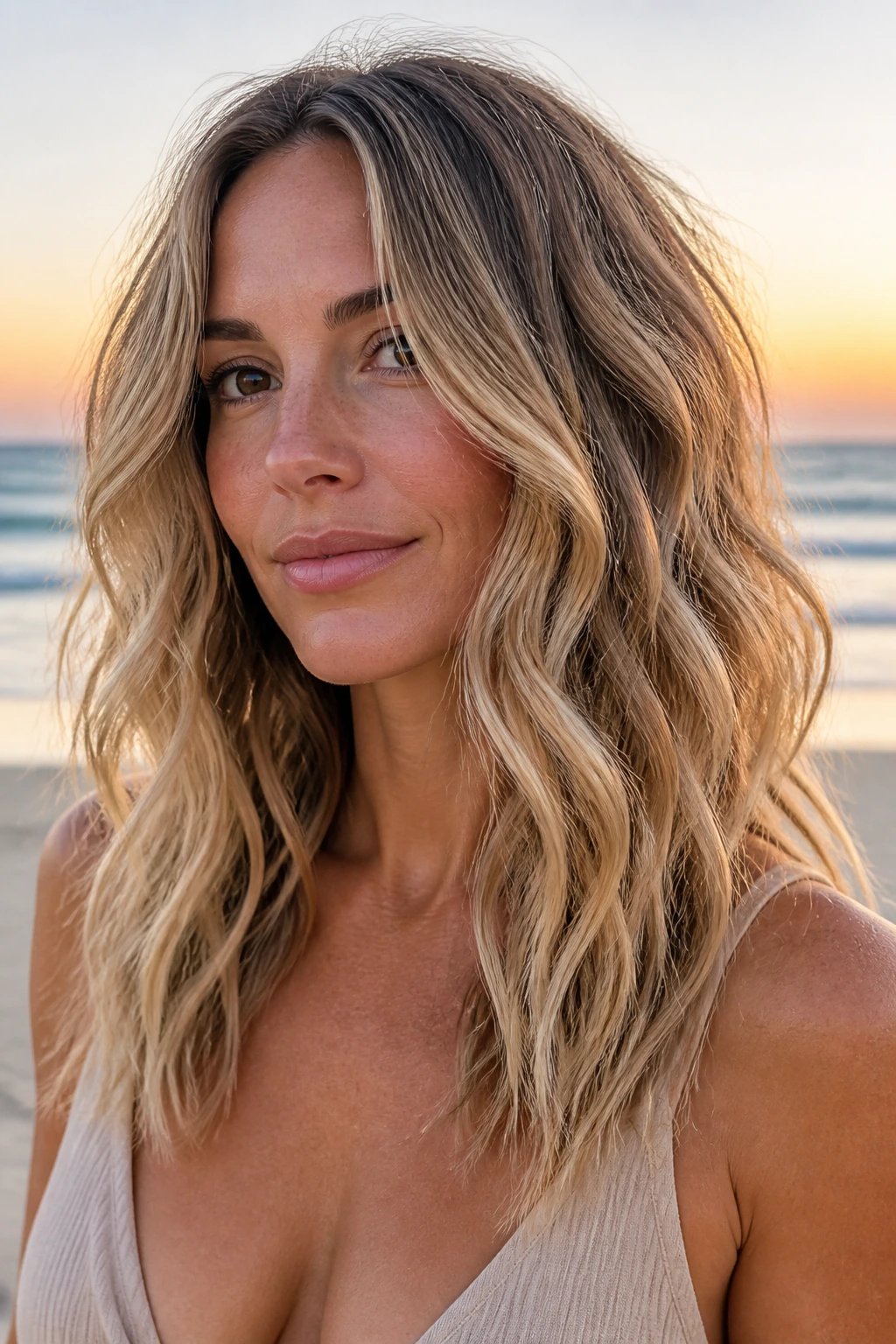
Long face frames and brushed-out waves give medium hair a longer, softer read. The shape feels romantic without turning into costume hair.
The front pieces should be long enough to move past the cheekbone and still touch the collarbone when they fall. That length helps the face frame blend into the rest of the cut instead of sitting on top of it. Wave the hair with a 1.25-inch wand, alternate directions, and brush it out only after it’s cool.
This style is kind to fuller medium hair because the loose wave pattern keeps the shape soft. Fine hair can wear it too, but it usually needs a little root lift first so the lengths don’t steal all the volume.
18. Softly Stacked Layers in the Back
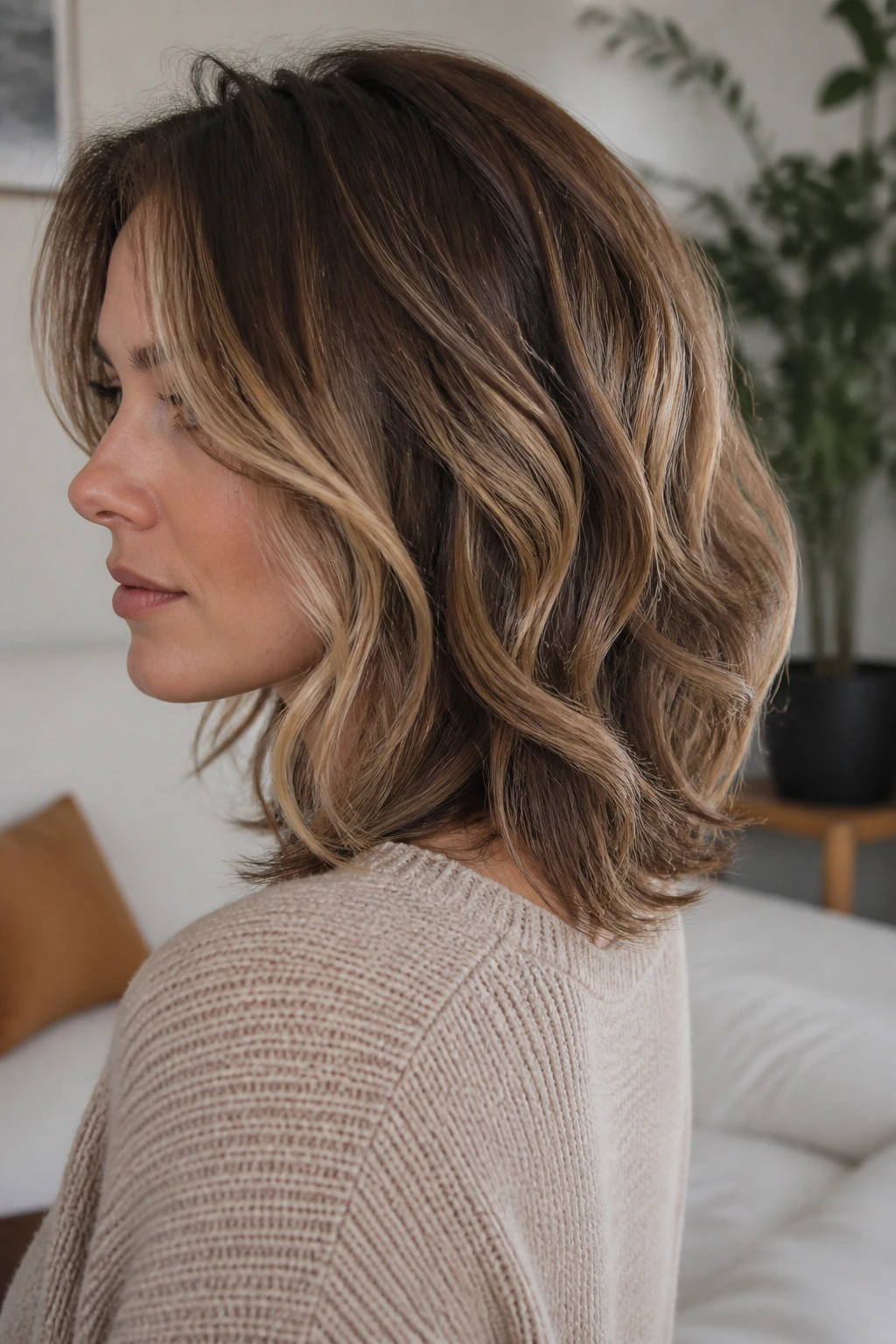
A little stack in the back gives the cut a more finished profile from the side. Not short. Not obvious. Just enough lift so the nape doesn’t feel heavy and flat.
This works well when medium hair tends to collect weight near the collar. The back gets a small rise, the front keeps its frame, and the whole shape sits better in a coat collar or a crew-neck sweater. That sounds like a tiny detail. It is not tiny when you live with the haircut.
Keep the stacking subtle. Too much and you start sliding into bob territory, which changes the mood fast.
19. Wavy Layers for Curly-Textured Hair
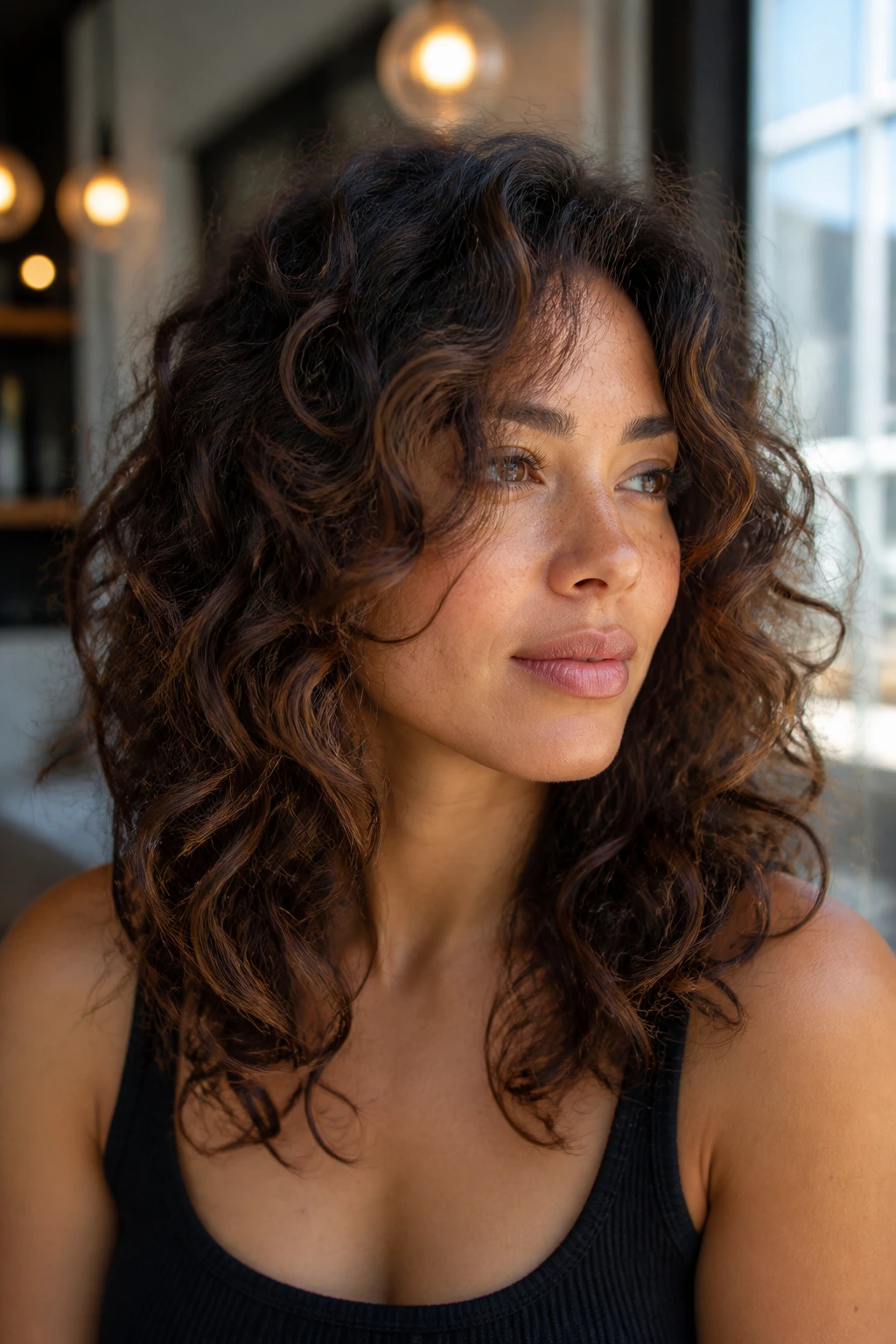
Wavy layers change once a curl pattern enters the room. The same cut that looks loose on someone else can spring tighter on you, which is why curl pattern matters more than the photo on the salon wall.
Dry cutting helps the stylist see where the hair sits when it’s not stretched. The face frame should usually be longer than you think, because curls rise when they dry. Medium hair with curls or strong waves often needs that extra length at the front to avoid a puffed-up triangle.
Diffuse on low heat and stop touching the hair once the curl clumps form. Brushing it out dry can turn a good shape into a halo in about six seconds.
20. Dimensional Face-Framing Layers with Soft Highlights
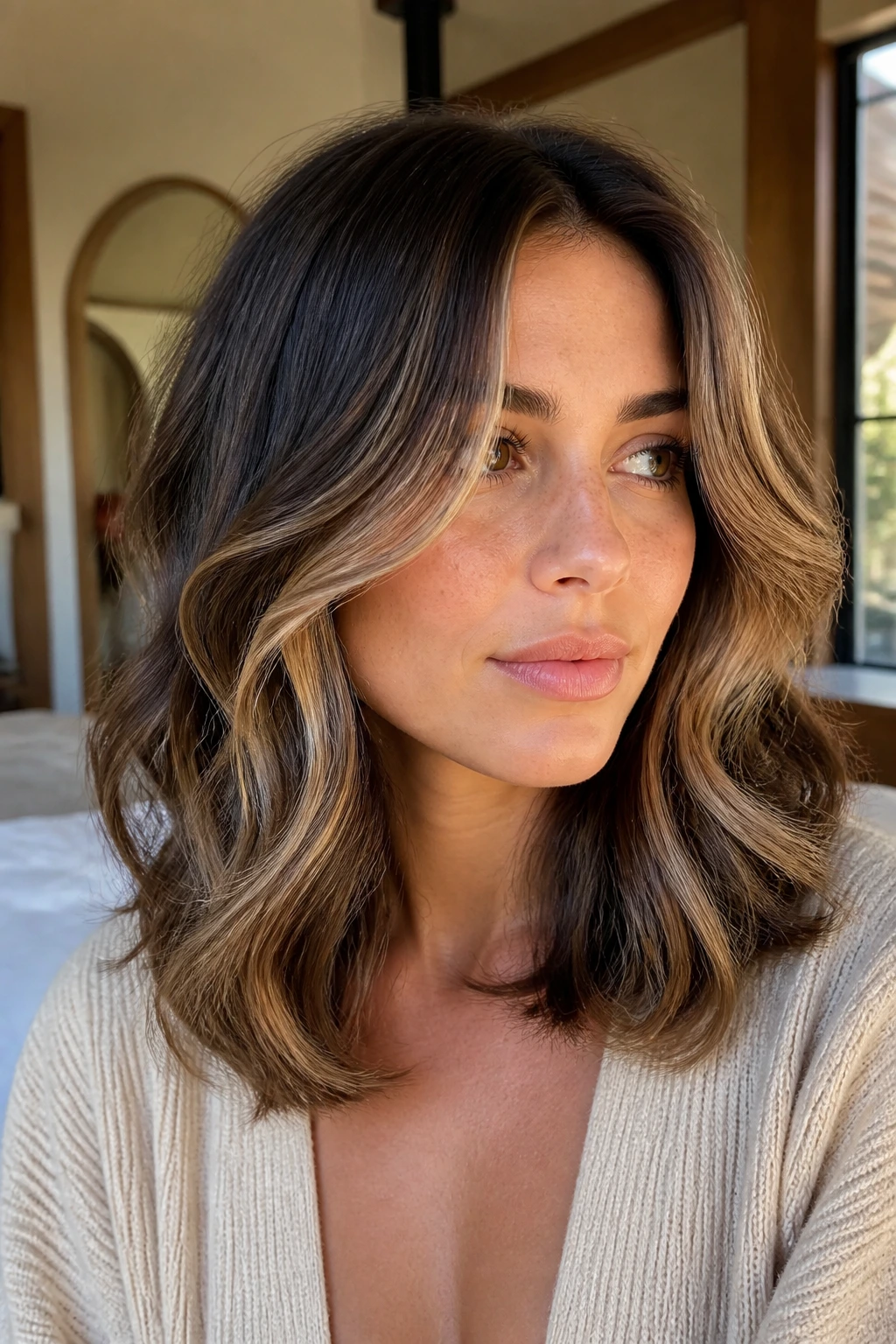
Color can make the layers easier to read, but the haircut still has to do the heavy lifting.
Soft highlights around the face and through the ends catch the movement of the layers and keep the front from disappearing into the rest of the hair. The best version is subtle: a few lighter pieces near the cheekbone, a little light through the lengths, and enough depth underneath to keep the shape grounded.
If you skip color entirely, the cut still works. The highlights just sharpen the outline a bit more. Medium wavy hair with layers already has motion; a little dimension makes the movement easier to see from across the room.
21. Minimal Layers for Thick Wavy Hair
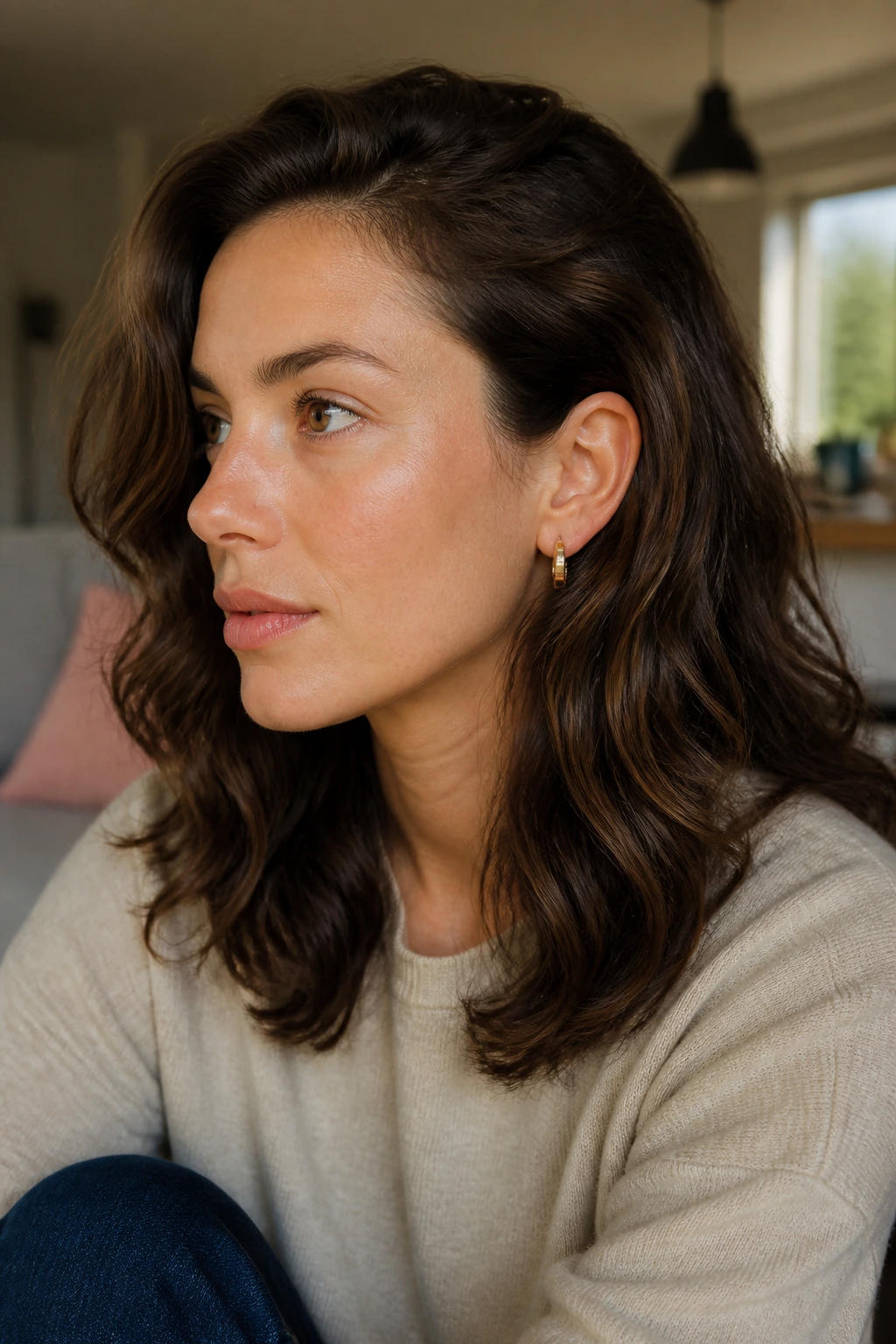
Thick hair does not need to be thinned into surrender. It needs the right layers in the right places.
This is where restraint pays off. Keep the perimeter strong, remove some bulk inside the shape, and leave enough weight at the bottom so the waves don’t explode outward. If the layers are too short or too many, thick medium hair can turn into a frizzy halo that takes forever to settle.
A minimal-layer cut still gives motion, just not a lot of breakup. That’s a good thing if you like hair that feels full, sits well tucked behind the ear, and doesn’t need constant product to look deliberate.
22. Shoulder-Grazing Layers with a Blunt Perimeter
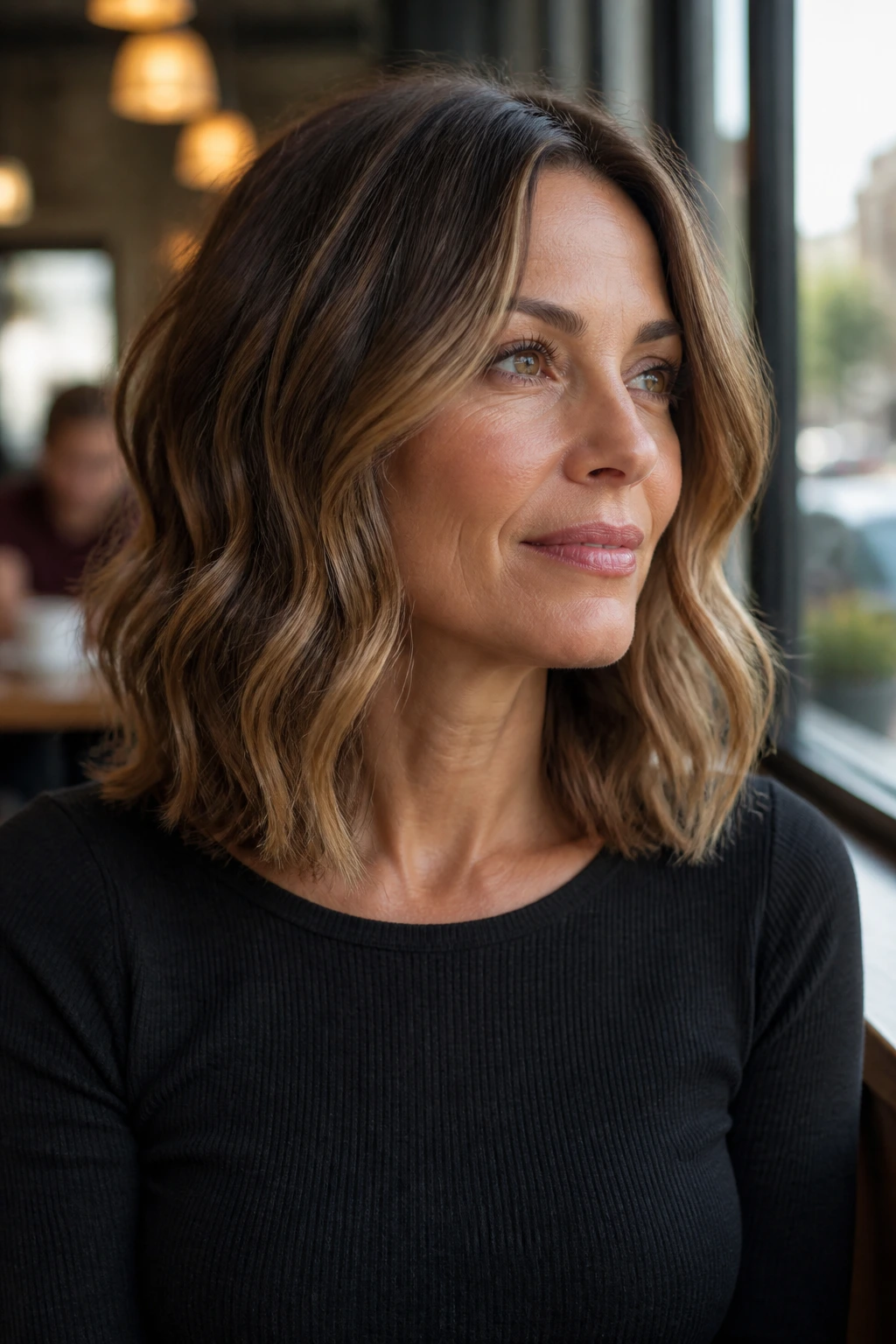
The blunt edge stops medium waves from turning fluffy. That alone makes this cut worth a serious look.
The shoulder-grazing length gives the wave a place to land, while the blunt perimeter keeps the outline tidy. Only the face frame and a few internal layers do the softening. That balance is useful if your hair flips oddly at the shoulders or puffs out at the sides when it dries.
This shape works well for people who want polish without a lot of visible layering. It also ages nicely between cuts because the perimeter keeps holding the line even after a few weeks of grow-out.
23. Feathered Layers with Retro Movement

Feathering gives the haircut air. The pieces around the face and through the ends bend back softly instead of sitting in a heavy block.
A large round brush helps here, especially if you want the layers to flip away from the cheekbones. The movement is gentle, not sharp. Think soft swing, not hard ends. Medium hair can carry this shape without much trouble if the layers are cut with enough blend.
This is a good look for someone who likes a little shine and a little movement, but not much texture spray. Too much grit flattens the feathered shape and makes it feel stiff.
24. Low-Maintenance Lived-In Layers
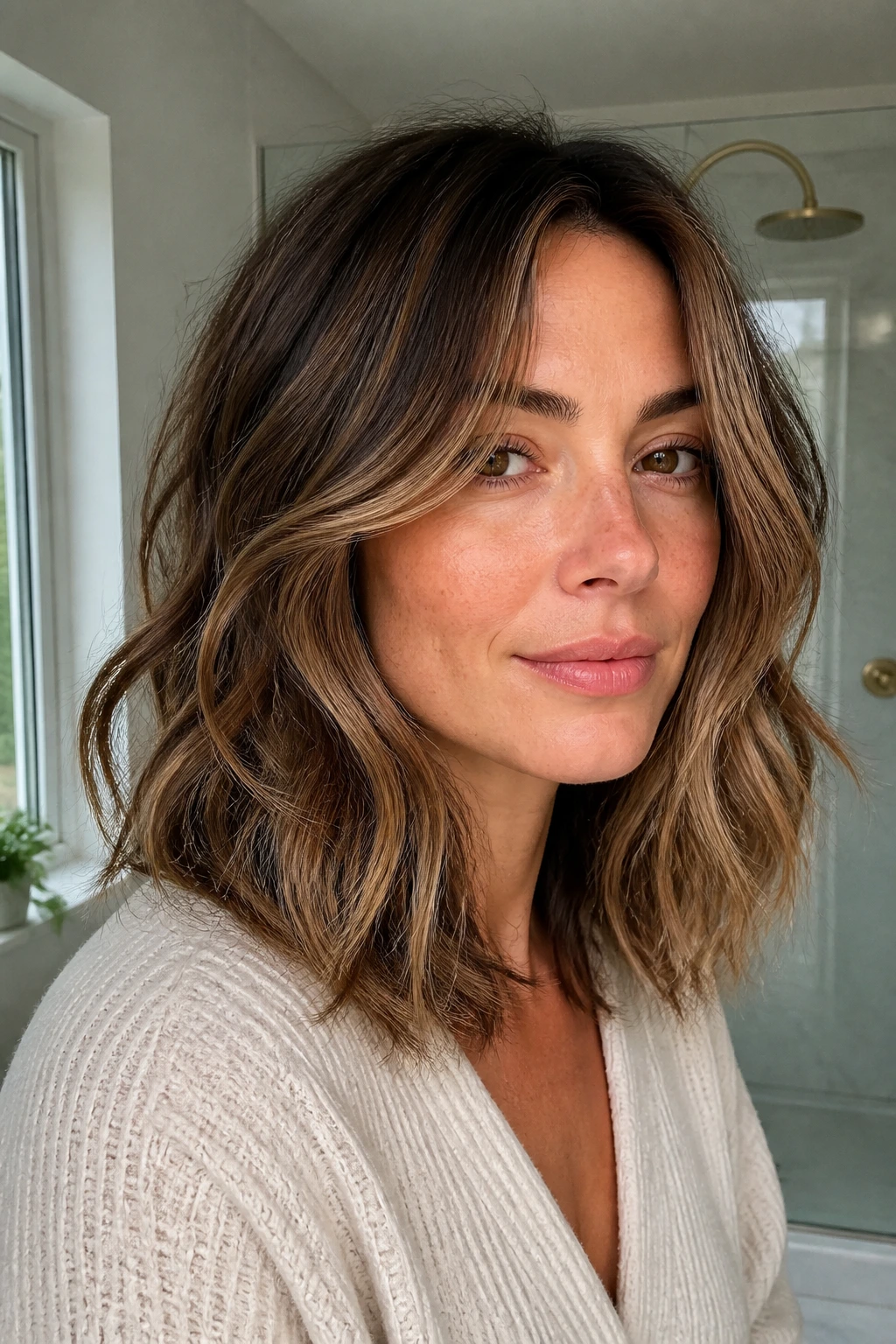
Some cuts are made to look better after the first wash, and this is one of them.
The layers are soft, the front frame is easy, and the shape doesn’t collapse when you skip a full styling routine. That makes it useful for medium hair that gets worn half-up, clipped back, or air-dried more often than not. You still want the cut to be precise at the salon, though. “Low-maintenance” does not mean “vague.”
Dry shampoo at the roots and a quick bend through the face frame on day two can bring the whole shape back without starting over. This is the haircut for people who want the style to keep up with them.
25. Salon-Ready Polished Medium Waves
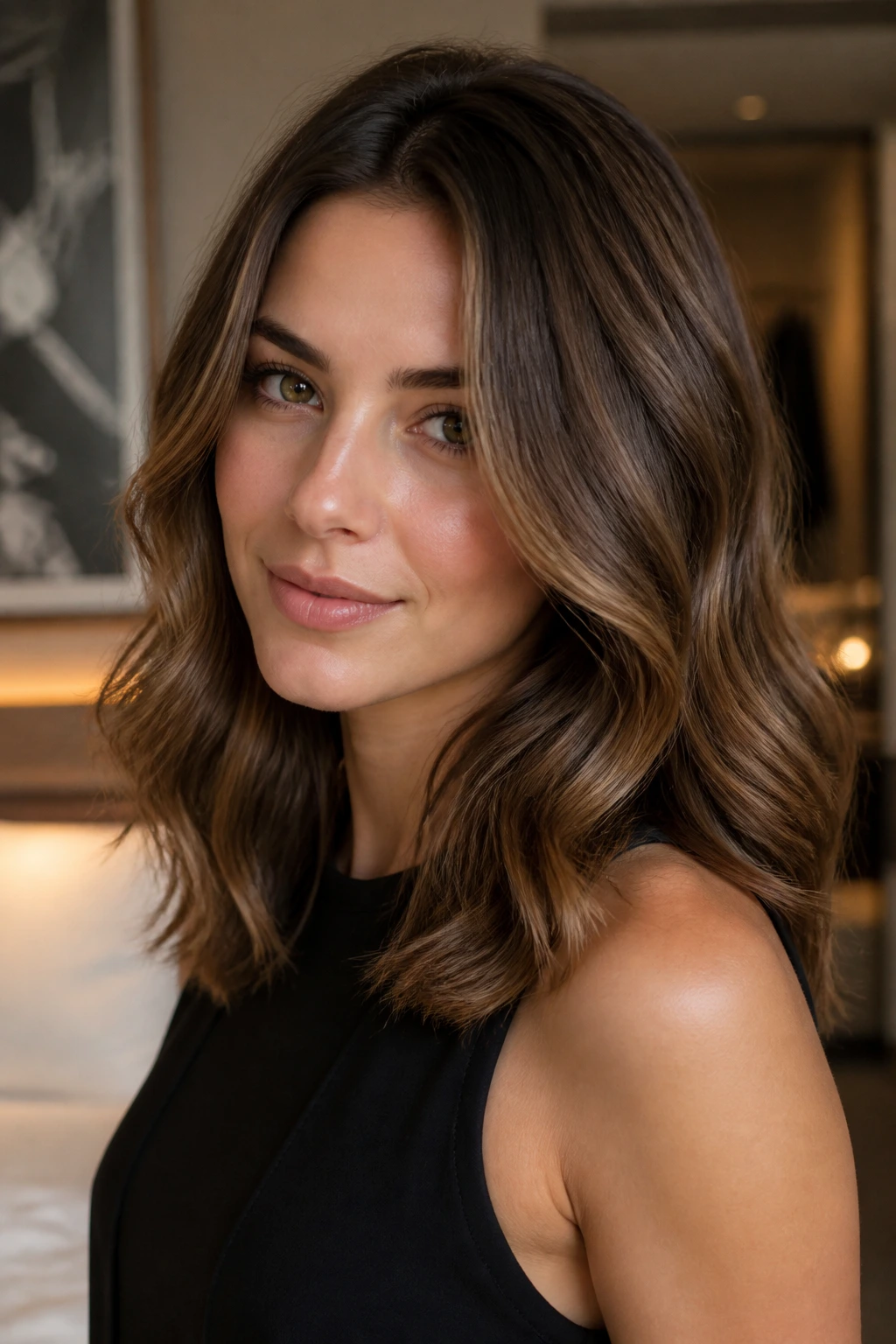
This is the grown-up version of wavy layered hair: smooth, controlled, still soft.
The face frame opens the cheekbones, the layers move in a clean line, and the wave sits in a way that looks deliberate rather than accidental. It’s the cut you reach for when you want the hair to hold up under bright light, close conversation, and a jacket collar rubbing against the nape.
Use a blow-dry or a large barrel wand for the finish, then keep the last pass light. Too much heat makes medium hair lose its swing. A little polish goes a long way here.
Why Medium Hair and Waves Play So Nicely Together
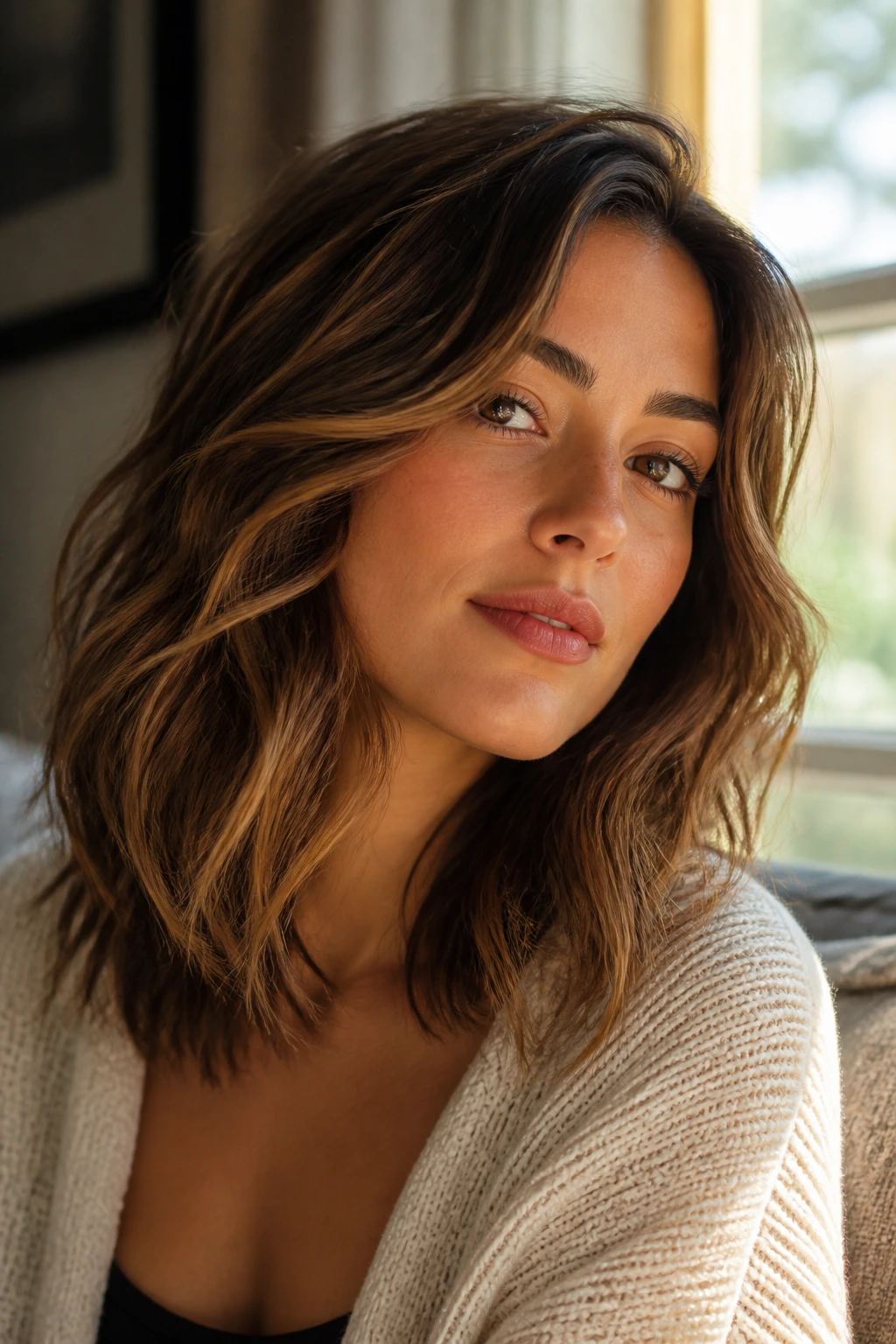
Medium-length hair has a useful amount of weight. Enough to keep the wave from floating off into frizz, not so much that the bend gets dragged straight by gravity.
That middle ground is why layered cuts work so well here. A blunt medium cut on wavy hair can puff out at the sides or stack into a boxy shape. Layers break that line up, but the length still keeps the whole thing from looking shredded. The haircut gets movement without losing its backbone.
Face-framing layers matter even more at this length because the eye lands on them fast. A cheekbone start pulls attention upward. A chin-length front piece softens the jaw. A collarbone finish gives the style a slower, richer fall. Change that front line by an inch or two, and the mood changes with it.
What to Ask for at the Salon Chair
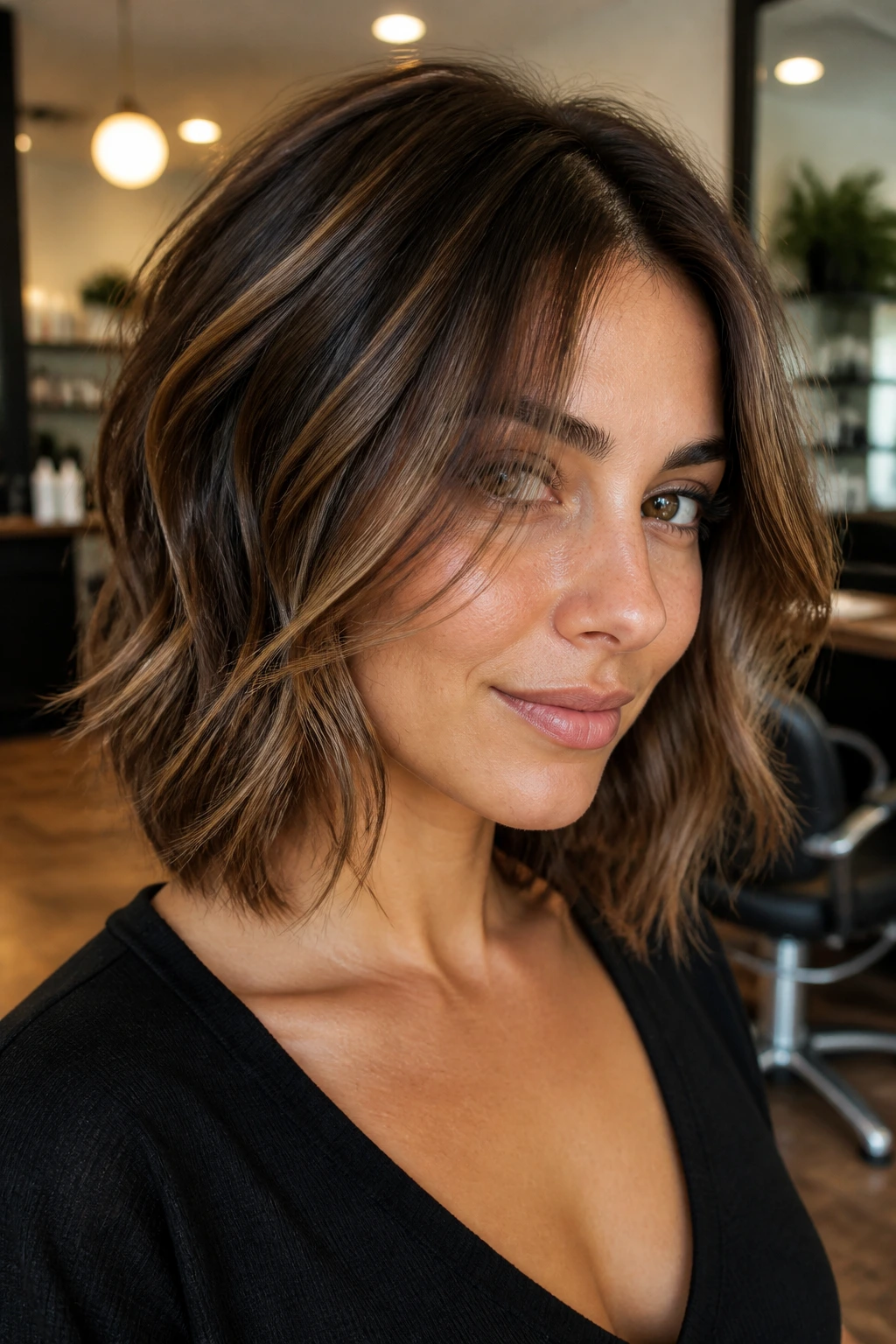
Bring the words that matter, not just a photo from the internet. Photos help, but the haircut lives in the details.
Length: say where you want the overall perimeter to sit. Collarbone, top of shoulder, or just grazing the shoulders are all different jobs.
Face Frame: point to the shortest pieces you want near the front. Cheekbone, lip, and chin length each create a different effect.
Weight Removal: if your hair is thick, ask for internal removal. If your hair is fine, ask to keep the ends fuller and the layers soft.
Layer Depth: long blended layers give movement without a choppy finish. Shorter layers create more lift and more edge.
Texture Work: mention whether you want point-cut ends, light razor work, or a clean scissor finish. That tiny decision changes the whole vibe.
Parting: show where you wear your hair. A cut that ignores your part often looks wrong the second you leave the chair.
Tools That Make Styling Easier
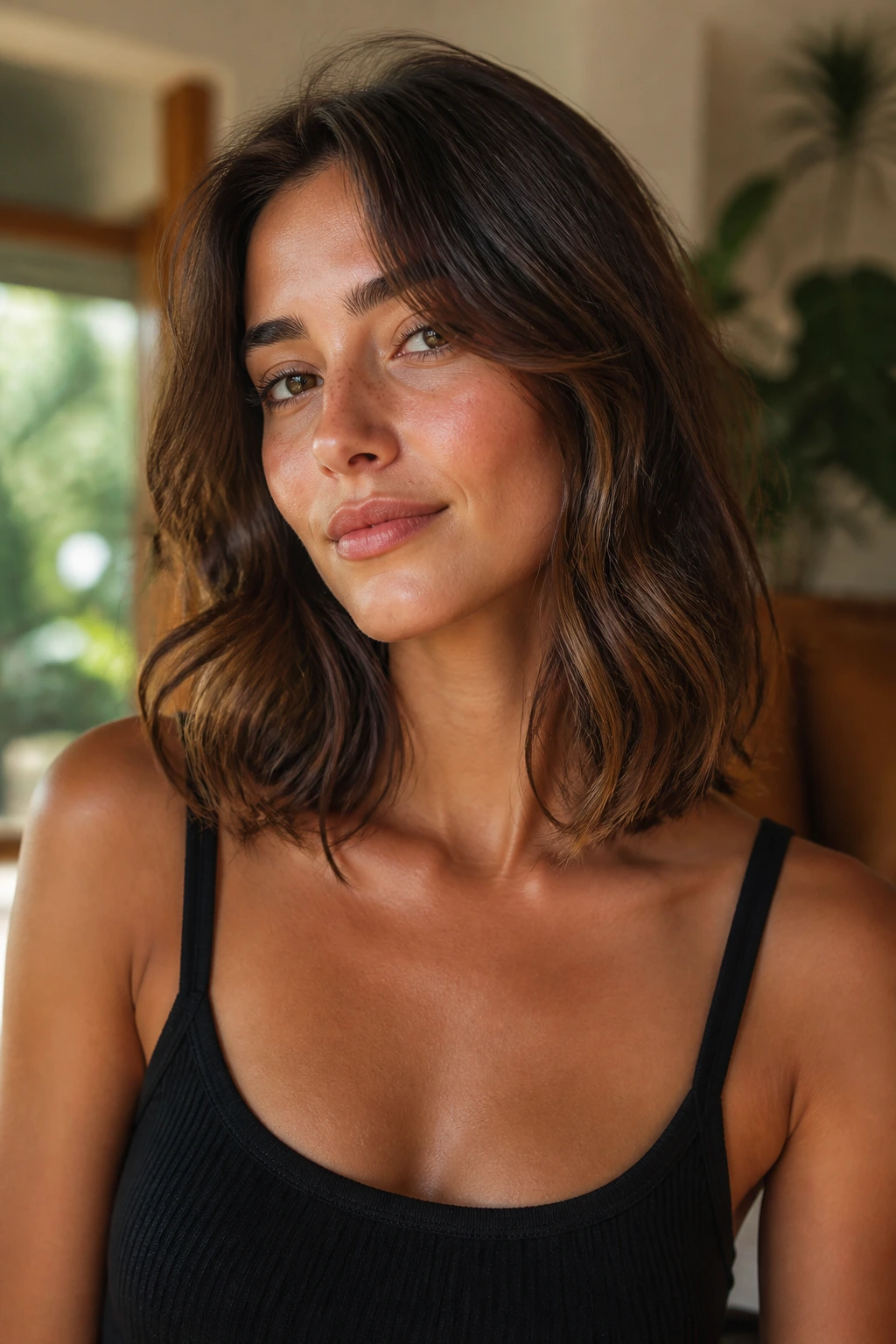
- 1.25-inch curling wand: gives medium waves a bend that reads soft, not ringleted.
- Large round brush: useful for curtain bangs, blowout layers, and flipped ends.
- Diffuser attachment: keeps wave pattern intact while drying on low heat.
- Heat protectant spray: helps the ends survive regular styling without feeling fried.
- Lightweight mousse or foam: adds lift at the roots without weighing medium hair down.
- Texturizing spray: builds separation through the ends, especially on shag and wolf shapes.
- Microfiber towel or cotton T-shirt: cuts frizz from the start by drying hair more gently.
- Sectioning clips: make face-framing pieces easier to set while the rest of the head dries.
- Dry shampoo: extends the shape on day two or three and keeps the crown from going slick.
How to Style Wavy Layers Without Flattening Them
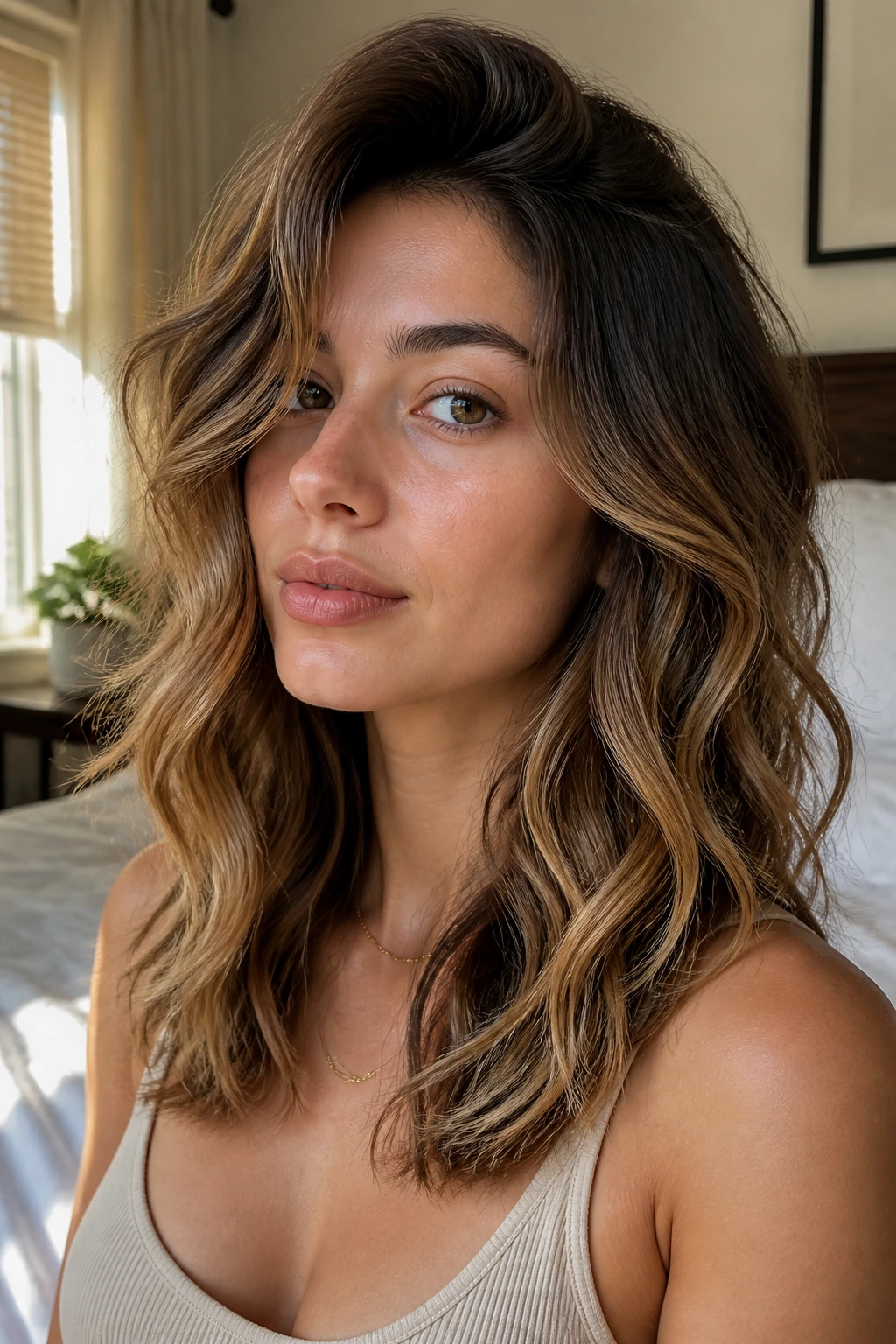
The biggest mistake with wavy medium hair is loading all the product in the wrong place. Roots need lift. Ends need control. The middle needs a light touch.
Start on damp hair with mousse or foam near the crown, then use a small amount of cream through the mid-lengths and ends. If you put cream all the way up to the roots, the wave loses spring before it even dries. If you skip the ends, they frizz and snag. Balance matters here more than quantity.
Drying is where the shape is won or lost. Air-dry if you can, or diffuse on low heat in sections. Don’t rough-dry the whole head until it’s half dry and then wonder why the cut looks fuzzy. Let the wave form first. Then touch it.
Once the hair is dry, break any cast gently with your fingers. If you used a wand, brush it out only after the curl cools. The difference between soft movement and a puffy mess is often one unnecessary pass of the brush.
How to Keep the Shape Between Haircuts
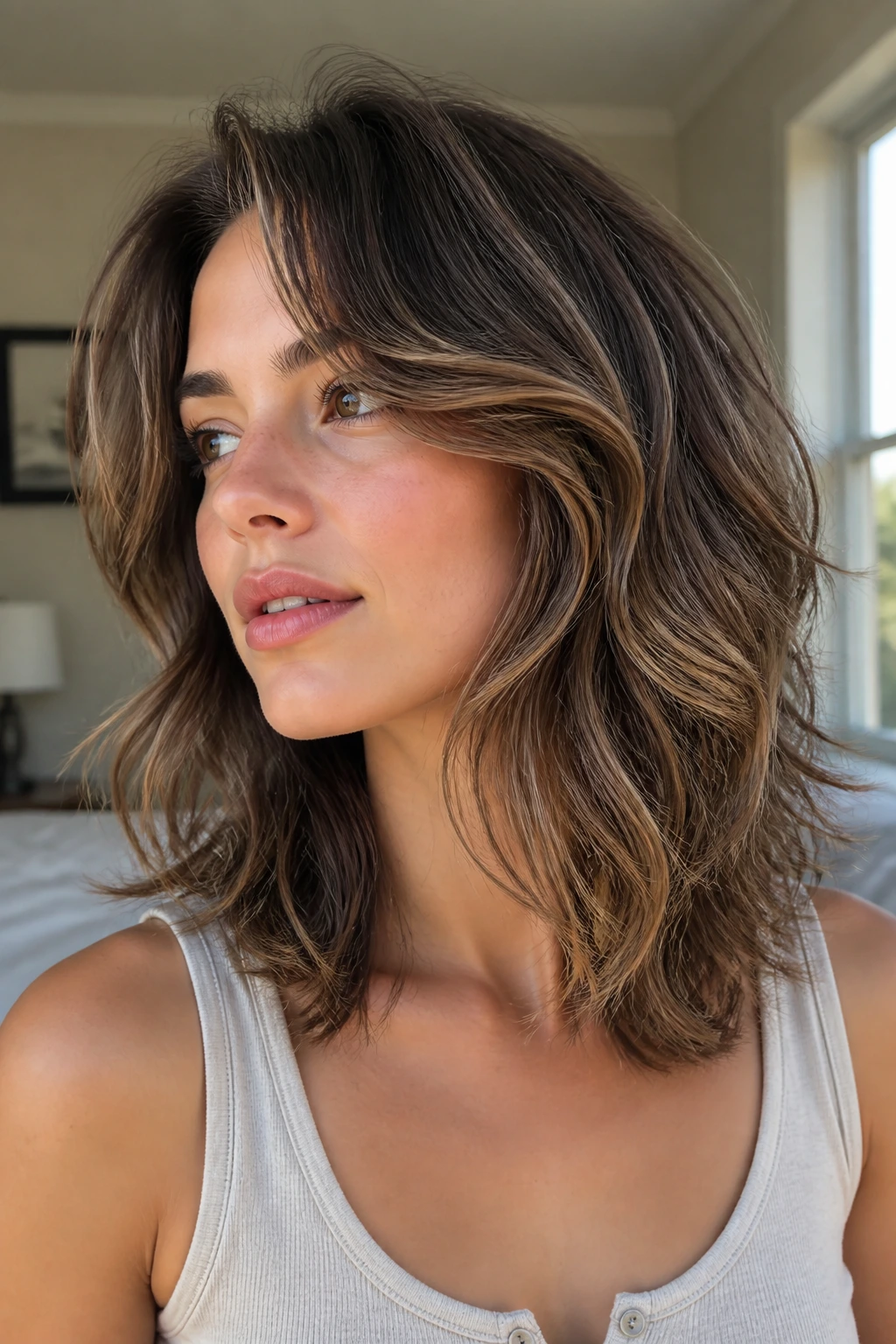
Medium layered hair usually holds its shape better than very short or very long cuts, but it still needs a trim schedule. Curtain bangs and shaggy layers often need a touch-up every 6 to 8 weeks. Softer lobs, U-shapes, and minimal-layer cuts can stretch closer to 8 to 12 weeks.
Sleep on a silk pillowcase if your waves tangle easily. A loose braid or a soft clip at the crown can keep the front from flattening overnight. Don’t pack the hair tight. That creates weird dents that are annoying to fix in the morning.
On day two, mist the hair lightly with water or a leave-in spray, scrunch the front pieces, and add dry shampoo only where the roots need it. Heavy refresh sprays can make medium hair limp. A little moisture plus a little lift usually does more.
Small Styling Tweaks That Change the Finish
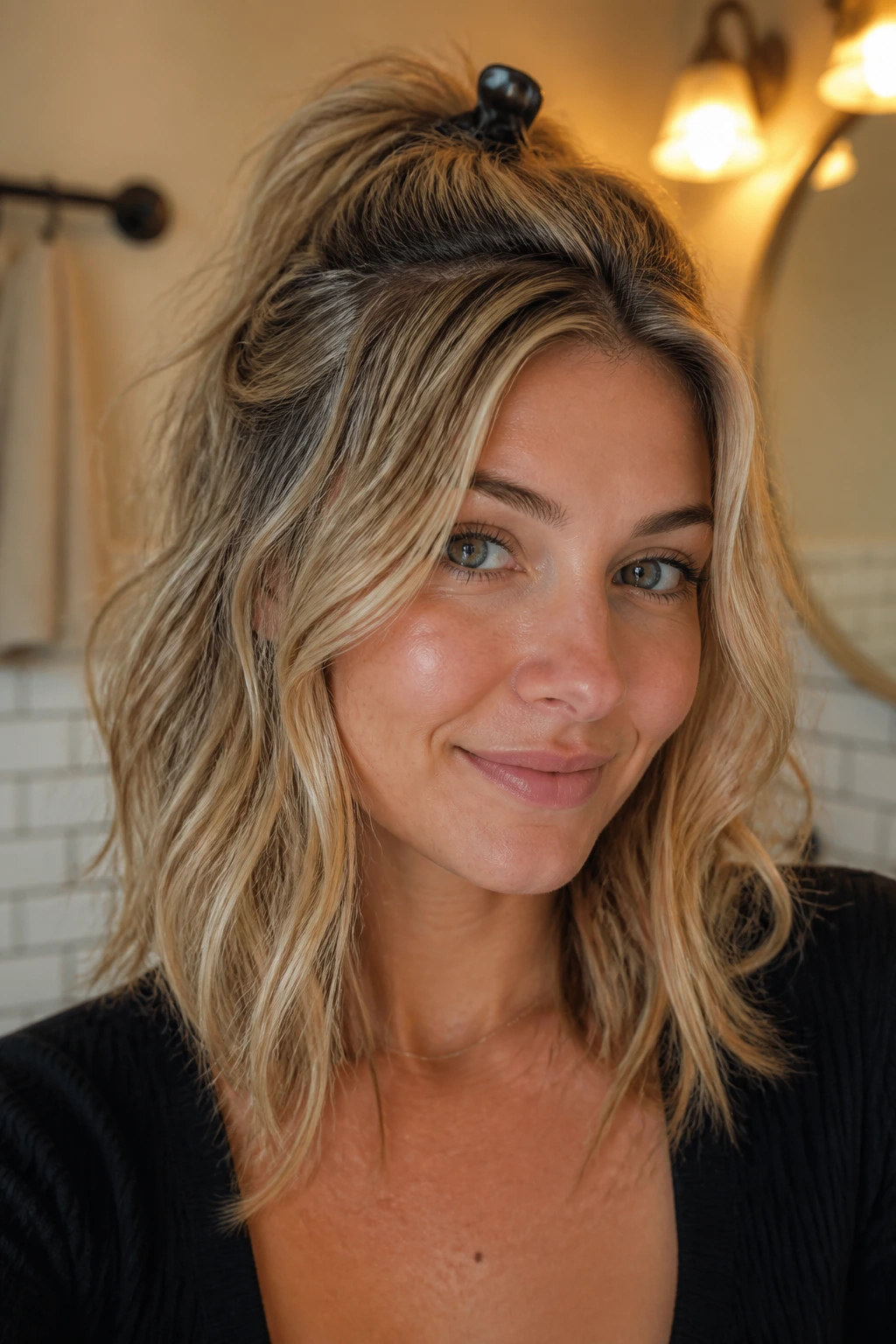
Root Lift: clip the crown for ten to fifteen minutes while the hair cools, then remove the clips and let the lift settle in place. It’s a tiny move that changes the head shape fast.
Face Frame: direct the front pieces away from the face while drying. That opens the cheekbone area and stops the hair from hanging straight like a curtain.
Texture Balance: use mousse if you want airy volume, cream if your hair feels coarse, and keep both products away from the roots unless the hair is very dense.
Finish: use one drop of serum on the ends only. If you smooth it over the whole head, the wave goes flat and the style loses its edge.
Common Mistakes That Make Wavy Layers Misbehave
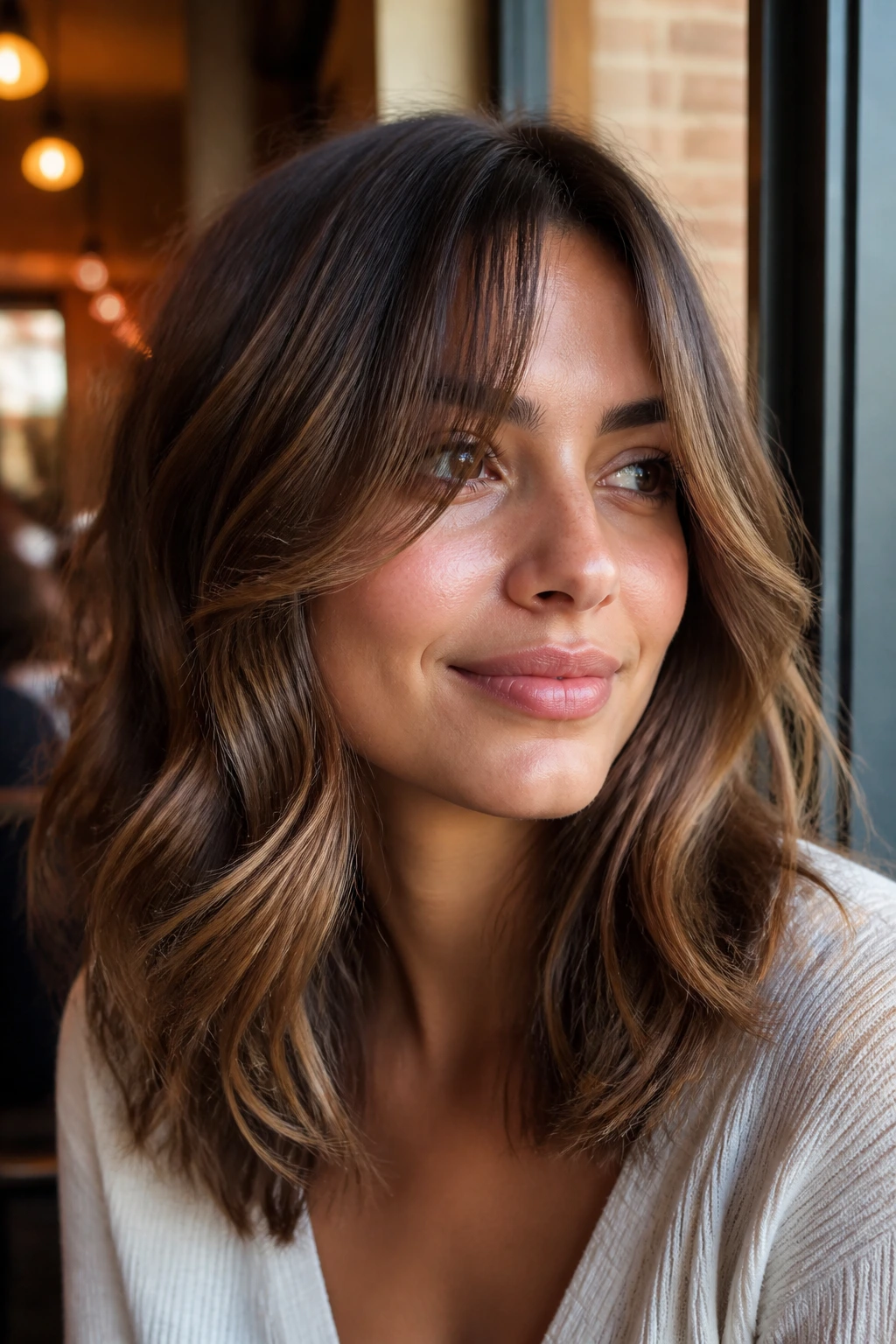
- Starting layers too high: the symptom is thin, see-through ends. The fix is to keep the shortest face frame lower and let the perimeter hold some weight.
- Over-thinning thick hair: this shows up as a halo of frizz and a cut that expands at the sides. The fix is internal weight removal, not aggressive texturizing on the edge.
- Using too much product near the roots: the crown goes flat, the shape sinks, and the ends try to carry the whole haircut. Put lift products at the root and cream only through the lengths.
- Curling every section the same direction: the wave starts looking too neat, almost helmet-like. Alternate directions and leave the last inch out for a softer fall.
- Cutting loose waves too short when wet: the hair shrinks up and lands above the intended length. Ask for a conservative first pass or a dry check if your wave pattern is springy.
Variations for Fine, Thick, Curly, and Straight Hair

Fine-Hair Float: Keep the layers long and soft, with a blunt edge that doesn’t disappear. A light mousse and a root clip give the cut the lift it needs without draining the thickness out of the ends.
Thick-Hair Release: Use a stronger internal shape and a longer perimeter. This version keeps the haircut from turning into a triangle while still preserving the fullness that thick hair naturally has.
Curly-Wavy Blend: Have the cut shaped with the hair dry or mostly dry, then keep the face frame longer than you first expect. That protects against shrinkage and keeps the front from springing too high.
Straight-Hair Wave Build: Choose a medium-length layered cut with a clear face frame, then set waves with a wand or flat iron bend. The haircut needs enough movement in the bones so the styled wave doesn’t look pasted on.
Fringe-Friendly Version: Pair medium layers with curtain bangs or a longer split fringe. The bangs need regular trims, but they change the whole front of the haircut more than people expect.
Frequently Asked Questions
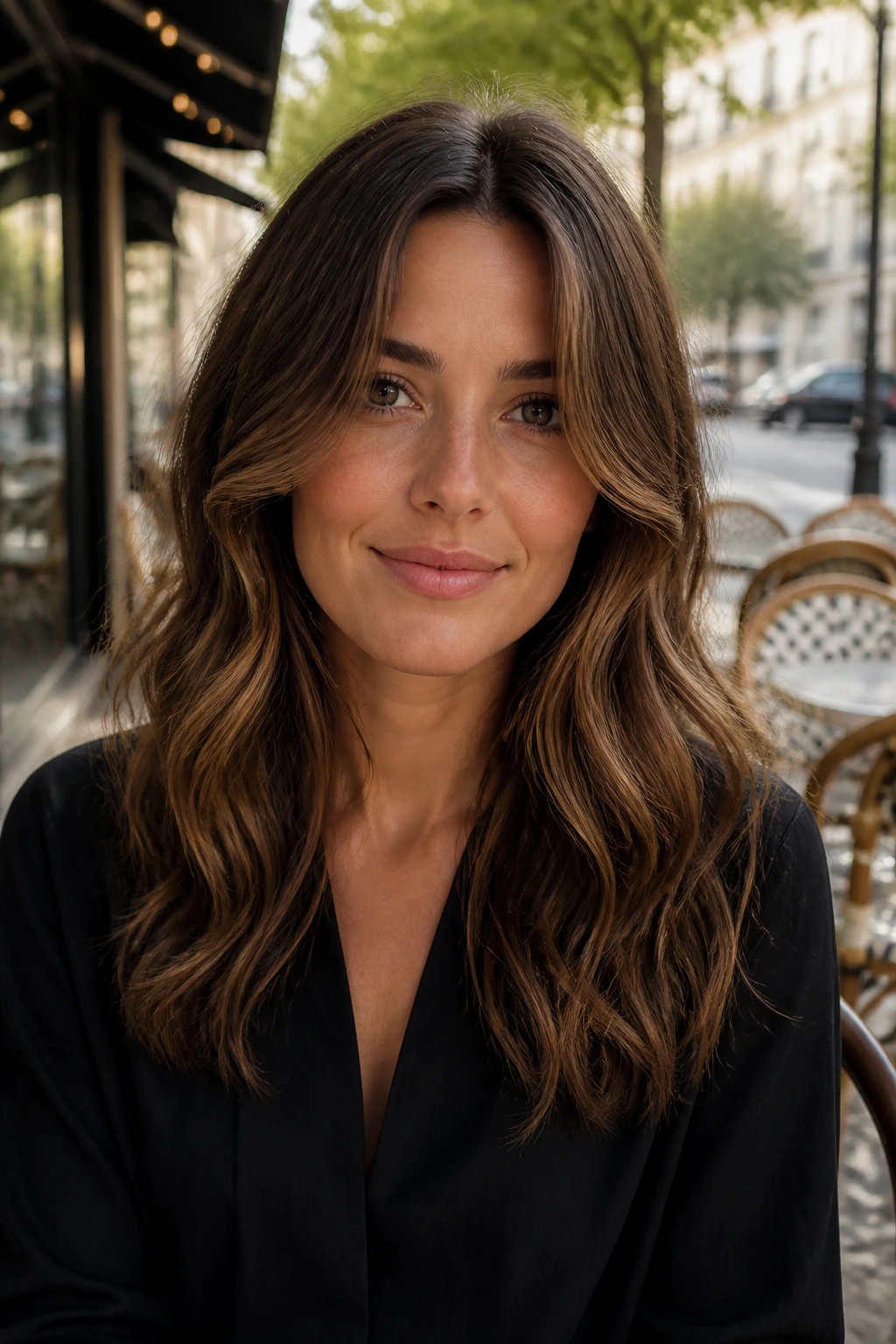
Which of these looks best on fine medium hair?
Invisible layers, the layered lob, and soft collarbone layers usually do the least damage to density. They keep the ends full while still giving the crown enough lift to avoid that flat, tired look.
Will layers make my medium hair look thinner?
They can, if the layers start too high or the ends are over-thinned. A better cut keeps the perimeter strong and moves weight from the inside instead of slicing away the outline.
What should I ask for if I want face-framing layers but not bangs?
Ask for long front pieces that start around the cheekbone or lip and blend into the rest of the cut. That gives you face framing without committing to a fringe that needs constant trimming.
How often should medium wavy layers be trimmed?
Curtain bangs and shags tend to need shape work every 6 to 8 weeks. Softer layered lobs, U-shapes, and minimal-layer cuts can usually stretch closer to 8 to 12 weeks before the shape starts to drift.
Can I wear these cuts straight sometimes?
Yes, but the best versions for that have a clean perimeter and long blended layers. A choppy shag still reads as a shag when it’s straight; a polished lob or U-shape moves more easily between straight and wavy.
What if my waves fall flat by midday?
That usually means the crown is overloaded or the layers are too heavy. Use less product near the roots, add lift at the crown while drying, and keep the face frame from carrying too much weight.
Do curtain bangs work with a cowlick?
They can, but the center usually needs to stay a bit longer so it doesn’t spring up awkwardly. The sides can still split at the cheekbones and give you the framing without fighting the cowlick too hard.
Which cut grows out the best?
Soft U-shapes, low-maintenance lived-in layers, and collarbone layers tend to keep their shape for the longest stretch. They stay tidy even when the edge has grown out a little, which is not something every layered cut can brag about.
The Cuts That Keep Their Shape
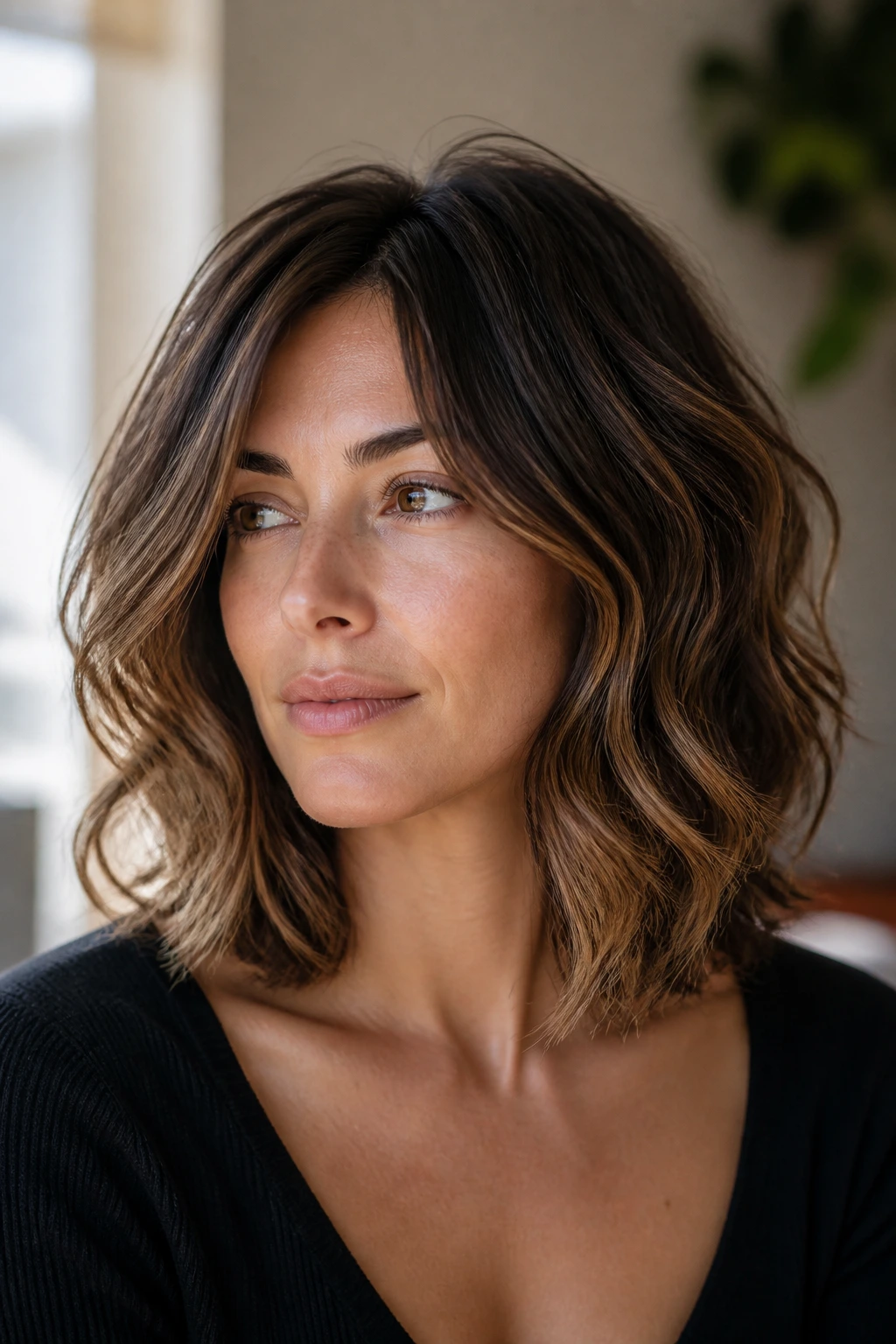
The best wavy layered hairstyles for medium hair do not fight the hair’s natural bend. They leave room for it. That’s why the outline matters just as much as the layers themselves.
Fine hair usually wants longer, softer layers. Thick hair usually wants smarter internal removal. Curly-wavy hair needs shrinkage respect. Once you start matching the cut to the texture instead of the photo, the whole thing gets easier.
Pick the version that suits your density, your face, and the amount of styling you’re willing to do on a Tuesday morning. The haircut should carry some of the work for you.