



Thick hair can turn fringe into a shelf if the weight lands in the wrong place. On a heart-shaped face, that shelf often sits right across the widest part of the forehead, which is exactly where you want softness, not a hard line. The best wispy fringe for thick hair and heart-shaped faces doesn’t look thin because it was left unfinished; it looks light because the cut removes bulk with intent.
I almost always prefer fringe that moves a little. Not wispy in the sad, undercut way. Wispy in the way that lets a few pieces fall toward the brow, lets the temples breathe, and gives the eye somewhere to travel other than straight across the forehead. Thick hair needs that kind of restraint. Heart-shaped faces need it too, because a fringe that’s too full at the center can make the upper face feel wider while leaving the chin area looking even narrower.
The 25 shapes below cover the useful territory: curtain variations, side-swept versions, shag blends, airy straight cuts, curl-friendly fringe, and a few very quiet options for people who want less commitment. Some sit just under the brows. Some graze the cheekbones. A few are built for hair that refuses to behave unless it’s cut dry. Good fringe is a shape problem, not a courage problem. And the details matter.
Why These Fringe Shapes Work So Well on Thick Hair and Heart-Shaped Faces

-
Bulk gets controlled, not erased: Thick hair only looks airy when the stylist removes weight from the right zones, usually the center or the interior, instead of shaving everything down to a wispy halo.
-
The forehead gets softened without being buried: Heart-shaped faces usually carry more width up top, so the best fringe brings a little break in the forehead line without creating a heavy wall.
-
The cheekbones stay visible: A good wispy fringe doesn’t hide the face; it frames the cheekbones and leaves the lower half open enough that the chin area doesn’t look tiny.
-
Growth-out is less painful: Pieces that already live in a soft curtain or side sweep can blend into face-framing layers when they grow, which means fewer awkward months.
-
Texture gets room to do its thing: Thick straight hair, thick wavy hair, and thick curly hair each need a different amount of bend and separation, but all of them can wear fringe when the cut respects the texture.
-
Styling stays flexible: You can blow it smooth, let it dry with a little bend, tuck one side back, or split it down the center. That flexibility is the whole point.
1. Brow-Grazing Curtain Wisps
This is the cleanest place to start. A brow-grazing curtain fringe gives thick hair somewhere to go without burying the forehead in one solid line, and the soft split keeps a heart-shaped face from feeling top-heavy. I like this shape when the hair has enough density to hold form, but not so much that it swallows the eyes.
Why It Flatters a Heart-Shaped Face
The center stays open, so the widest part of the forehead doesn’t feel boxed in. The longer sides drift toward the cheekbones, which pulls attention down and out instead of straight across. That little shift matters more than people think.
- Keep the shortest point just under the brow, not at the brow line.
- Let the side pieces fall closer to the outer eye corner.
- Ask for point-cutting, not a blunt edge.
Best cue: if the fringe sits on your forehead like a flap, it’s too heavy. It should hover and break into pieces.
2. Bottleneck Fringe with a Light Center
Bottleneck fringe is one of the smartest shapes for dense hair because it starts narrow in the middle and opens wider toward the temples. On thick hair, that narrower center keeps the fringe from becoming a thick block. On a heart-shaped face, the wider sides ease the forehead width without dragging the eye upward.
The shape looks best when the center lands just below the brows and the side pieces skim the upper cheek. You do not need a ton of length. You need controlled contrast. That’s what makes this style feel tailored instead of accidental.
If your hair grows fast or has a strong cowlick, this shape is still worth it. Just leave the center a touch longer at the first cut. Thick hair shrinks when it dries, and bottleneck fringe can go from soft to stubborn in a single blow-dry if it starts too short.
3. Side-Swept Feather Fringe

What if you want fringe, but you do not want to feel locked into a center part every morning? Side-swept feather fringe is the answer. It moves across the forehead in one soft sweep, which is useful when thick hair has too much natural body to sit still in a split curtain shape.
The feathered edge matters here. Ask for a little texture through the ends, not so much that the fringe turns stringy, but enough that the sweep looks light. A heart-shaped face gets a nice visual offset from the diagonal line, and that diagonal line is doing a lot of work. It shortens the forehead without squaring it off.
How to Wear It
Blow-dry the fringe in the direction you want it to fall, then give the roots a tiny lift with a round brush or a vent brush. If you tuck the heavier side behind one ear, the whole cut gets more relaxed. Not sloppy. Relaxed.
4. Cheekbone-Skimming Split Fringe

Picture a fringe that opens just enough to show the center of the forehead, then bends outward and lands near the cheekbones. That’s the charm of a cheekbone-skimming split fringe. It is especially good on thick hair because it uses length to subtract weight. Sounds backwards. Works every time.
The split keeps the face from feeling crowded at the top, while the longer outer pieces echo the cheekbone line on a heart-shaped face. I like this shape best when the front layers are cut to flow into the fringe, not after it. If the bangs are isolated from the rest of the haircut, thick hair tends to puff at the seam.
This one wears well with air-drying too, as long as you keep the ends separated with your fingers while it’s still damp. Let the pieces set where they want, then guide only the frontmost section.
5. Soft Arched Fringe
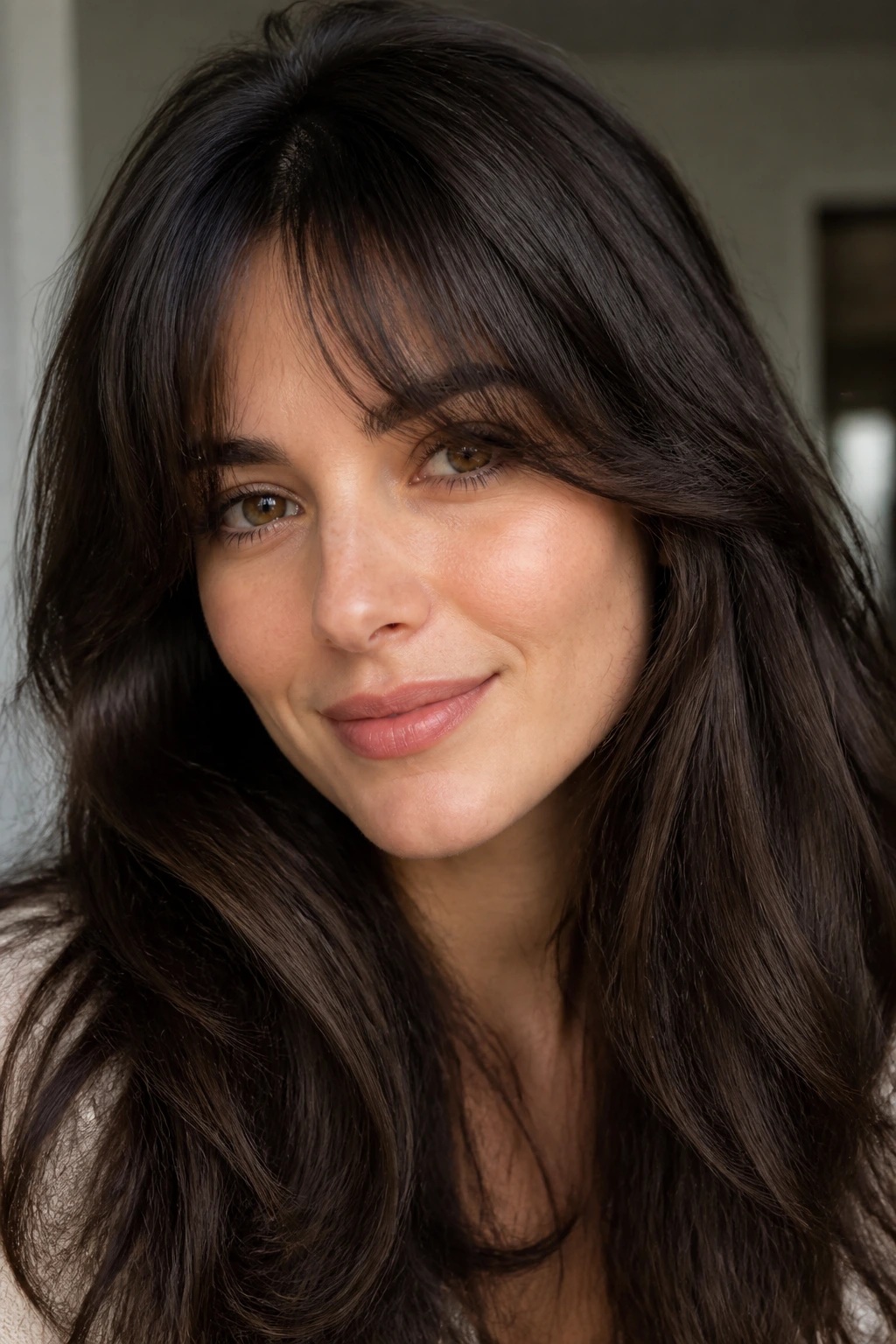
The soft arch is for someone who wants a visible fringe but doesn’t want the forehead chopped into a hard line. The curve is gentle, almost lazy in the best sense, with the center slightly shorter and the outer corners a little longer. That shape can be excellent on thick hair because it distributes the weight evenly instead of stacking it in one spot.
Why I Like It on Heart-Shaped Faces
It follows the brow line without crowding the upper face. It also avoids the harsh rectangular feel that can make a heart-shaped face look broader through the forehead than it really is. There’s a calmness to it. A very useful calmness.
Keep the center soft and the side edges feathered. If the arch is too precise, it can look like a helmet. If it’s too broken up, it loses the point of the shape. This is one of those cuts that lives or dies by a good point-cut.
6. Piecey Air-Dry Fringe
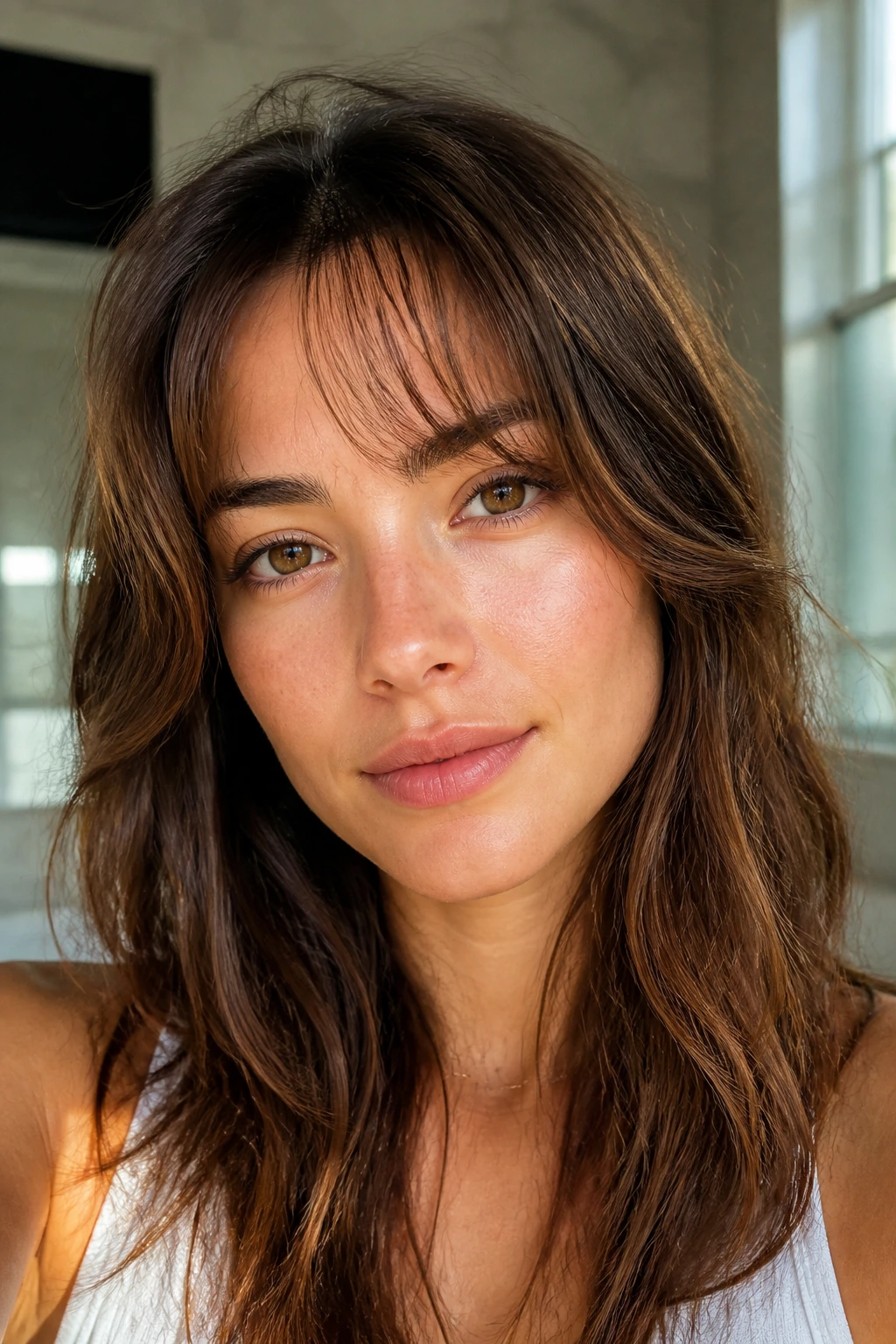
Don’t confuse airy with weak. Piecey air-dry fringe is built to separate, not to lie flat, and thick hair often does this naturally once the right amount of weight is removed. This shape works especially well if your hair has a little wave or wants to bend on its own.
A pea-sized amount of mousse or lightweight cream through the damp fringe is usually enough. More than that and the pieces clump. Let it dry while you shape a few strands with your fingers, then stop touching it. The face shape benefit is real here: the broken pieces soften the forehead without creating a dense wall, and the eye reads movement instead of mass.
If you’ve got a strong cowlick, start with a side part for the first few minutes of drying. It helps train the root before the fringe decides to split on its own terms.
7. Shag-Blend Fringe
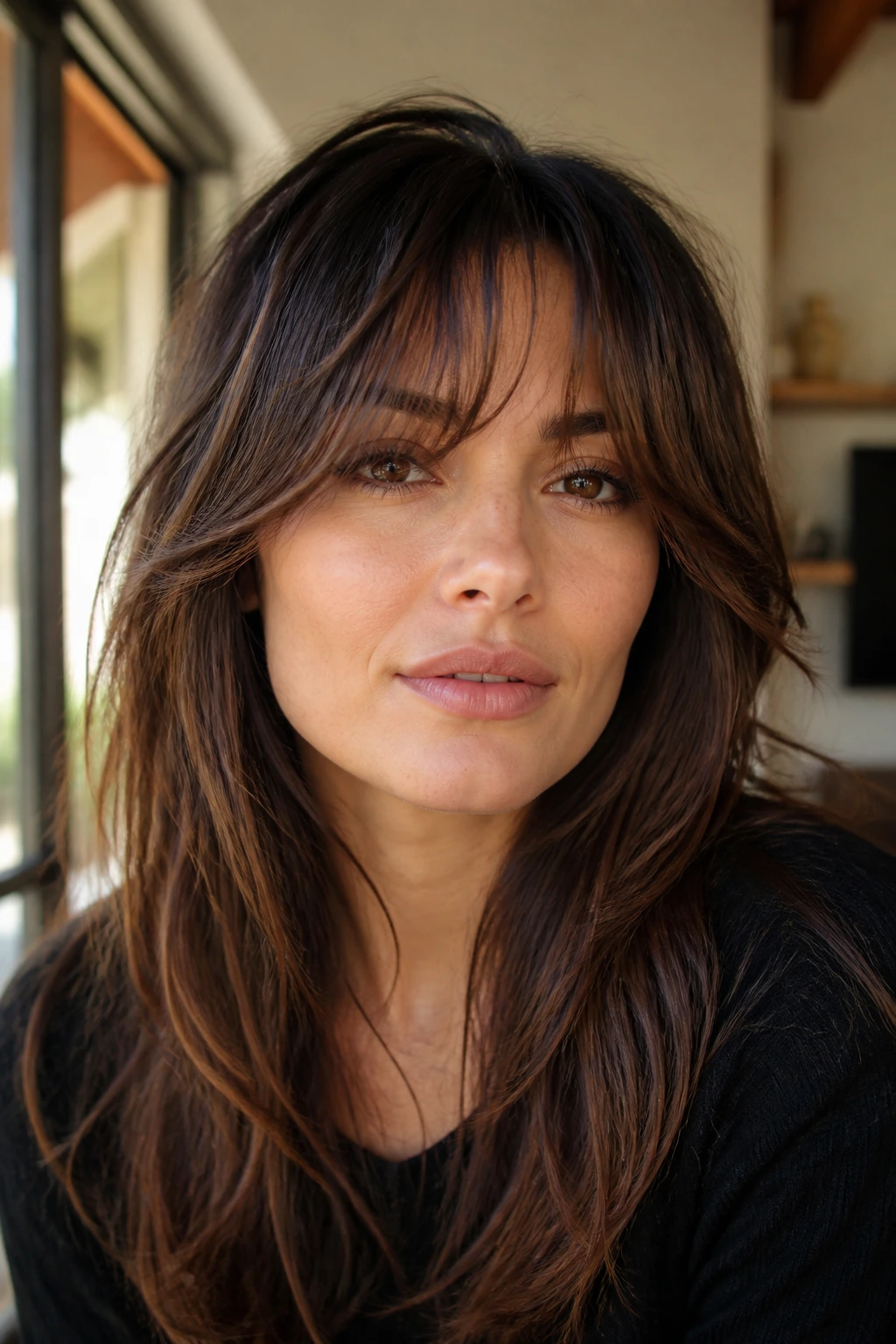
A shag-blend fringe is what happens when the bangs and the layers agree to work together. Thick hair likes this because the weight is spread through the haircut instead of sitting in one dramatic front section. On a heart-shaped face, that blending helps soften the top width and keeps the lower face from looking visually smaller.
The best part is how forgiving it is. As the fringe grows, it does not turn into a hard line. It just becomes part of the shag. That makes this one of the least annoying options for people who hate frequent trims.
What Makes It Different
The fringe should not look separate from the haircut. If you can tell exactly where the bangs stop and the layers begin, the connection is too sharp. Ask for a soft merge through the temples and cheekbone area. That seam matters more than the fringe itself.
8. Rounded Wisps with a Center Gap
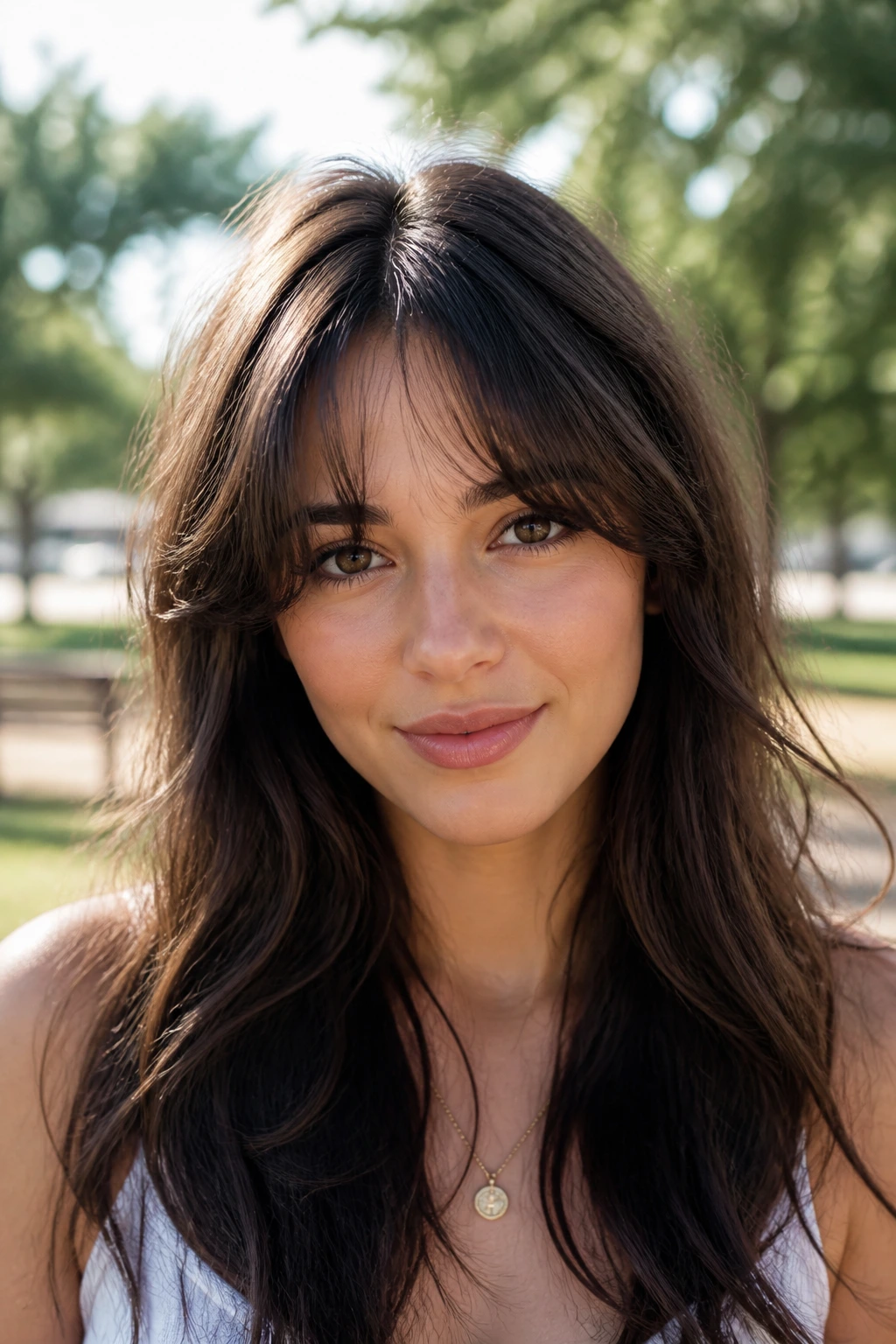
This is the fringe that hides in plain sight. Rounded wisps with a center gap give you a soft frame across the forehead while leaving a little breathing room right at the middle. On thick hair, that gap is helpful because it breaks up density before the cut can feel heavy. On a heart-shaped face, the rounding keeps the upper face from looking boxy.
The silhouette is subtle, but it is not boring. The sides need enough length to bend toward the temples, and the center needs enough space to show skin. That contrast makes the cut feel light even when the hair itself is dense.
If your forehead is especially broad, this is one of the safer shapes. It softens rather than hides. And that’s usually the better move.
9. Temple-Tapered Fringe
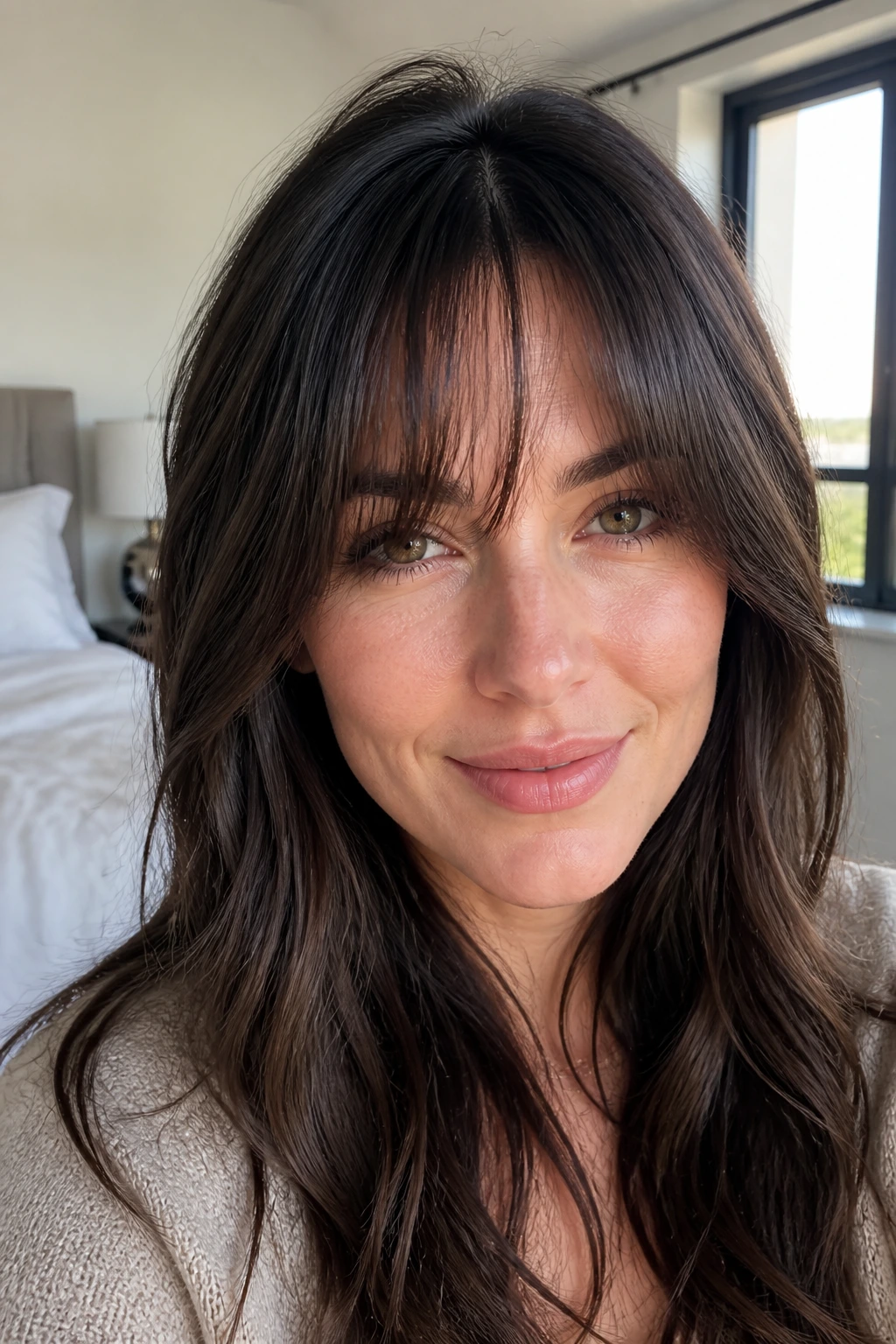
On thick hair, the temple area is where the shape gets corrected. Temple-tapered fringe keeps the center fuller than the sides, then reduces weight as it reaches the temples and upper cheek. That taper pulls focus toward the middle of the face and away from the widest part of the forehead.
Where to Remove Weight
- Remove bulk just behind the fringe line, not only on the ends.
- Keep the sides longer enough to skim the temple.
- Ask for a dry cut if your hair springs up a lot.
A heart-shaped face benefits because the fringe narrows the forehead visually while the sides soften the transition toward the cheekbones. It is a practical shape, not a dramatic one. And honestly, that’s why it holds up so well over time.
10. Micro Curtain Fringe

Micro curtain sounds tiny, but the real trick is keeping the edges soft enough that the cut doesn’t shout. On thick hair, this style works only if the center is trimmed with restraint. Too short, and the fringe balloons. Too blunt, and it loses the airy feel that makes it useful on a heart-shaped face.
The sweet spot is usually a little above or right at the brow, with the sides lengthening fast enough to create a small opening in the middle. That opening keeps the top of the face from feeling crowded. It also lets you wear the fringe with a middle part or push it slightly off-center when you want a change.
This is a good option if you want fringe, but you’re not ready for the full emotional cost of it. A fair number of people land here and never leave.
11. Long Grown-Out Fringe
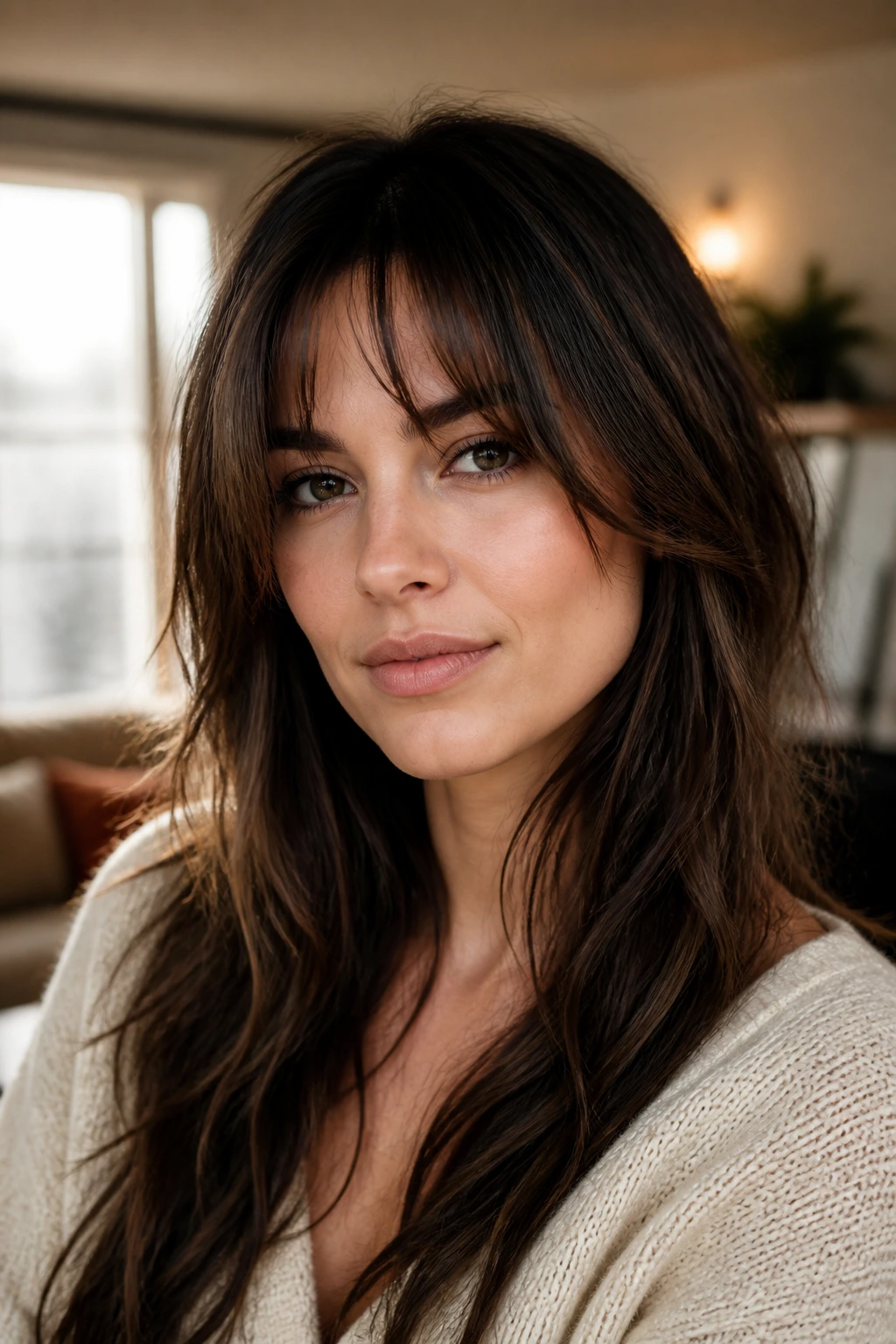
A grown-out fringe is not a failed cut. It’s a shape with a built-in exit plan. Thick hair tends to grow into long fringe with good body, and a heart-shaped face can use that extra length to keep the forehead soft without making the lower face vanish.
The key is keeping the pieces intentional. If the fringe is grown out but not blended, it can start looking like you forgot your haircut. So ask for the front to drift into the cheekbone layers, with enough separation to keep the eyes visible. That gives you a fringe that can be worn down, tucked back, or split open with almost no drama.
This is the low-maintenance choice for anyone who knows they’ll miss appointments. It buys time. Time is underrated.
12. Barely-There Fringe Edge
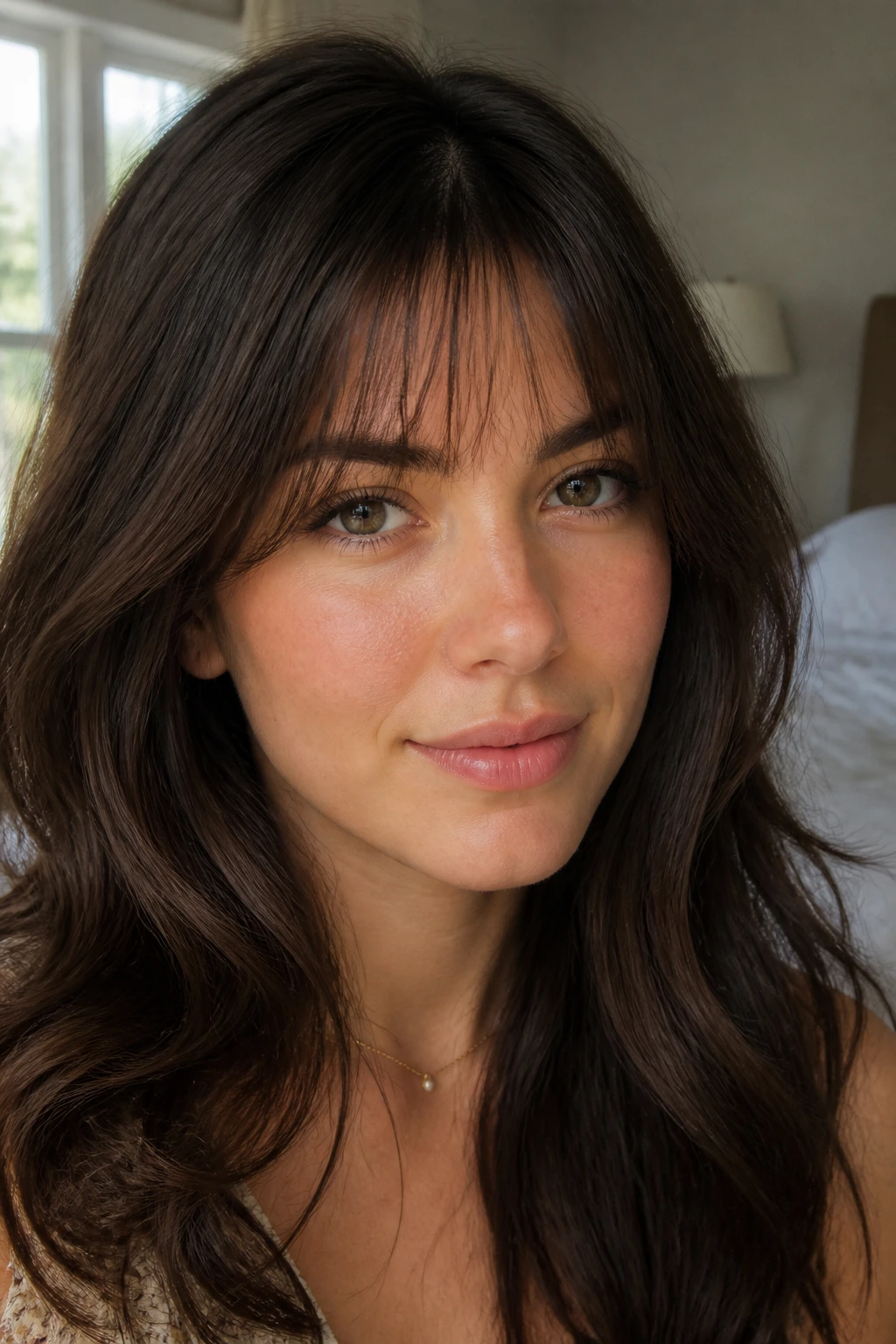
The barely-there edge is for people who want a whisper, not a statement. It is soft enough that most of the forehead still shows, but the front line is broken up just enough to take some visual width off the top of a heart-shaped face. On thick hair, that lightness only works if the hair is debulked from beneath.
I like this shape when someone is fringe-curious but nervous. It doesn’t commit too hard. It also grows out with less annoyance because the front stays so soft. You can pin it, part it, or let it fall naturally after a few bends with a brush.
If your hair is dense but fine, this can be a smart compromise. You get movement without a heavy mass of hair eating up your brow area.
13. Blended Bottleneck Layers
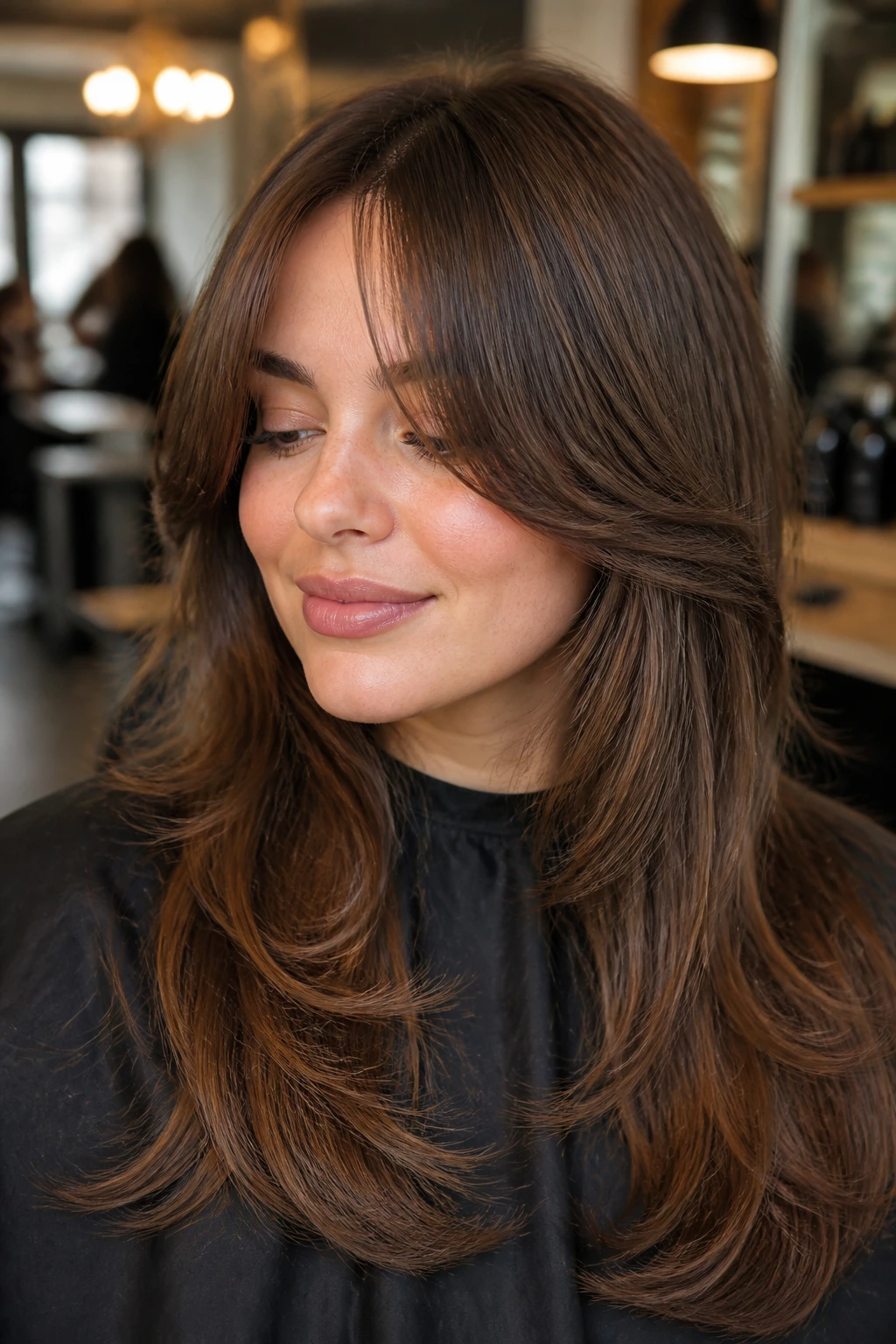
When the center is too heavy, the whole haircut starts to droop. Blended bottleneck layers fix that by letting the fringe disappear into the front layers instead of ending in a hard line. The shape is similar to a bottleneck fringe, but softer through the transition zone, which matters when thick hair needs movement more than it needs a statement bang.
Ask for a Soft Merge, Not a Shelf
The stylist should keep the center controlled, then let the outer fringe melt into the face frame. If the layers are cut too separately, thick hair can create a ledge. That ledge is the enemy. On a heart-shaped face, the blend helps keep the top from feeling wide while leaving the chin area open.
This is the version I recommend when someone wants fringe but also wants long hair to keep doing most of the talking.
14. Wavy S-Curve Fringe

Wavy hair changes the rules a little. A wispy fringe on a thick wave pattern should not fight the bend; it should follow it. The S-curve fringe does exactly that. It has enough length and softness to fold into the natural wave, which prevents the front from puffing up or splitting in an ugly way.
The best version is cut a touch longer than you think, then styled with a light cream or mousse so the waves form without freezing. That softness works well on heart-shaped faces because the forehead stays broken up and the eyes get framed by motion instead of a solid block.
If your wave pattern gets stronger when humidity rises, this one is still workable. Just keep the ends light and resist the urge to overload it with product. That’s where fringe starts acting strange.
15. Glasses-Friendly Wisps

Glasses and fringe can get along, but only if the length is planned. Glasses-friendly wisps sit just high enough that the frame doesn’t crush them, then fall in soft pieces around the lenses instead of directly onto them. Thick hair helps here because the fringe can hold shape even when the roots are lifted slightly above the brow line.
The goal is clean spacing. Leave enough room above the frame, and keep the side pieces long enough to sweep around the temples. On a heart-shaped face, that side movement softens the forehead without crowding the upper half of the face. It’s practical. Which, in hair, is often the same thing as flattering.
If you wear bold frames, this version usually works better than a dense curtain. The face already has a strong line from the glasses. Don’t make the fringe fight it.
16. Root-Lift Blowout Fringe

If you like a blowout, this is the fringe that pays rent. A root-lift blowout fringe depends on lift at the base, a smooth bend through the body, and soft ends that don’t collapse by lunchtime. Thick hair is good at holding this shape because it has enough mass to stay curved once set.
A 1-inch round brush, a nozzle on the dryer, and a quick blast of cool air are the whole game. Roll the fringe forward, then slightly back at the roots so it clears the forehead. A heart-shaped face gets a nice top-of-face softening from that bend, but the fringe still stays open enough to keep the face bright.
This one is polished without being stiff. That matters. A fringe that is too controlled starts to look like it’s trying hard.
17. Razored Coarse-Hair Fringe

Coarse strands need different thinning than silky ones. A razored fringe can work on thick coarse hair, but only if the stylist knows where the blade helps and where it frays the ends. If the fringe is cut too aggressively, coarse hair can puff at the tips and catch air in the worst way.
When a Razor Helps
- The hair is thick but soft enough to separate cleanly.
- The stylist uses the blade to reduce bulk, not to carve the whole shape.
- The finish is checked dry, not left to chance.
A heart-shaped face can benefit from the extra softness at the edges, but this is not the place for a heavy-handed blade. If your hair tends to frizz at the fringe line, ask for shears or point-cutting instead. Better a clean edge than a fuzzy one.
18. Airy Straight Fringe with Hidden Weight Removal

A straight fringe can still look soft when the weight is removed from underneath. That’s the whole trick. Thick straight hair often wants to sit flat and full at the same time, which is why the front can look blunt even when the ends are textured. Hidden weight removal solves that by taking density out of the interior, not the face line.
The cut should look deliberate from the front and lighter once it moves. On a heart-shaped face, that gives you a softer forehead line without making the fringe look sparse. I prefer this version when the goal is clean and uncomplicated rather than shaggy.
If you want it to behave, dry it from side to side first, then settle it where it belongs. Straight fringe gets stubborn when you blow it straight down from wet to dry in one pass. It sets too hard.
19. Curly Thick-Hair Fringe
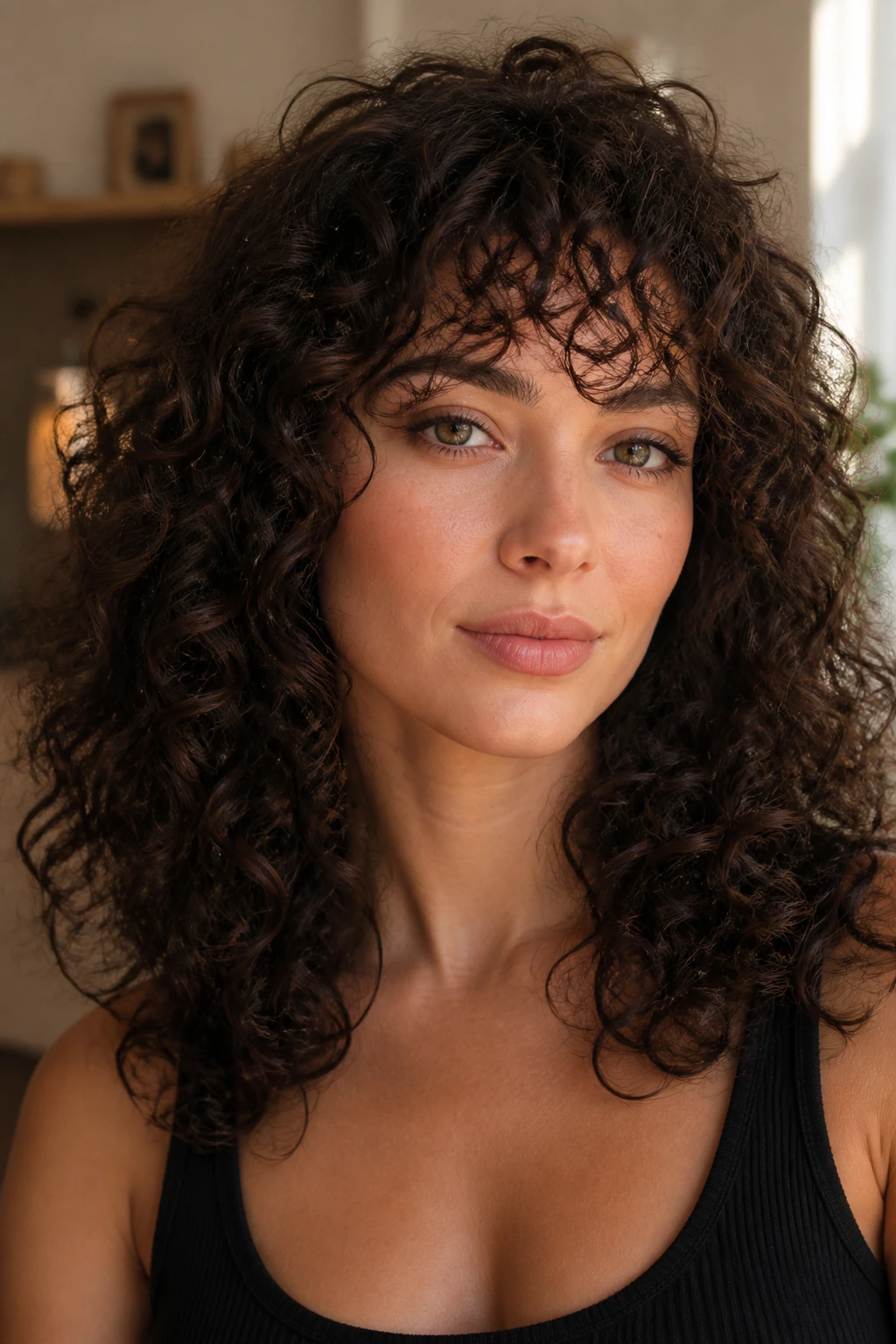
Curly thick hair can wear fringe. It just cannot wear a lazy cut. The fringe needs to be cut dry or at least stretched to see the true length, because curl shrinkage can turn a soft eyebrow-skimming shape into a tight little coil sitting mid-forehead.
Leave more length than feels safe at first. That is not cowardice. That is accuracy. Heart-shaped faces can look lovely with a curly wispy fringe because the texture breaks up the top of the face and keeps the cut from feeling heavy. But the curls need room to spring.
A little curl cream or gel through the front, then a gentle scrunch, is usually enough. Avoid brushing it once it’s dry unless you want puff. And nobody wants puff in the fringe.
20. Deep Side-Part Fringe
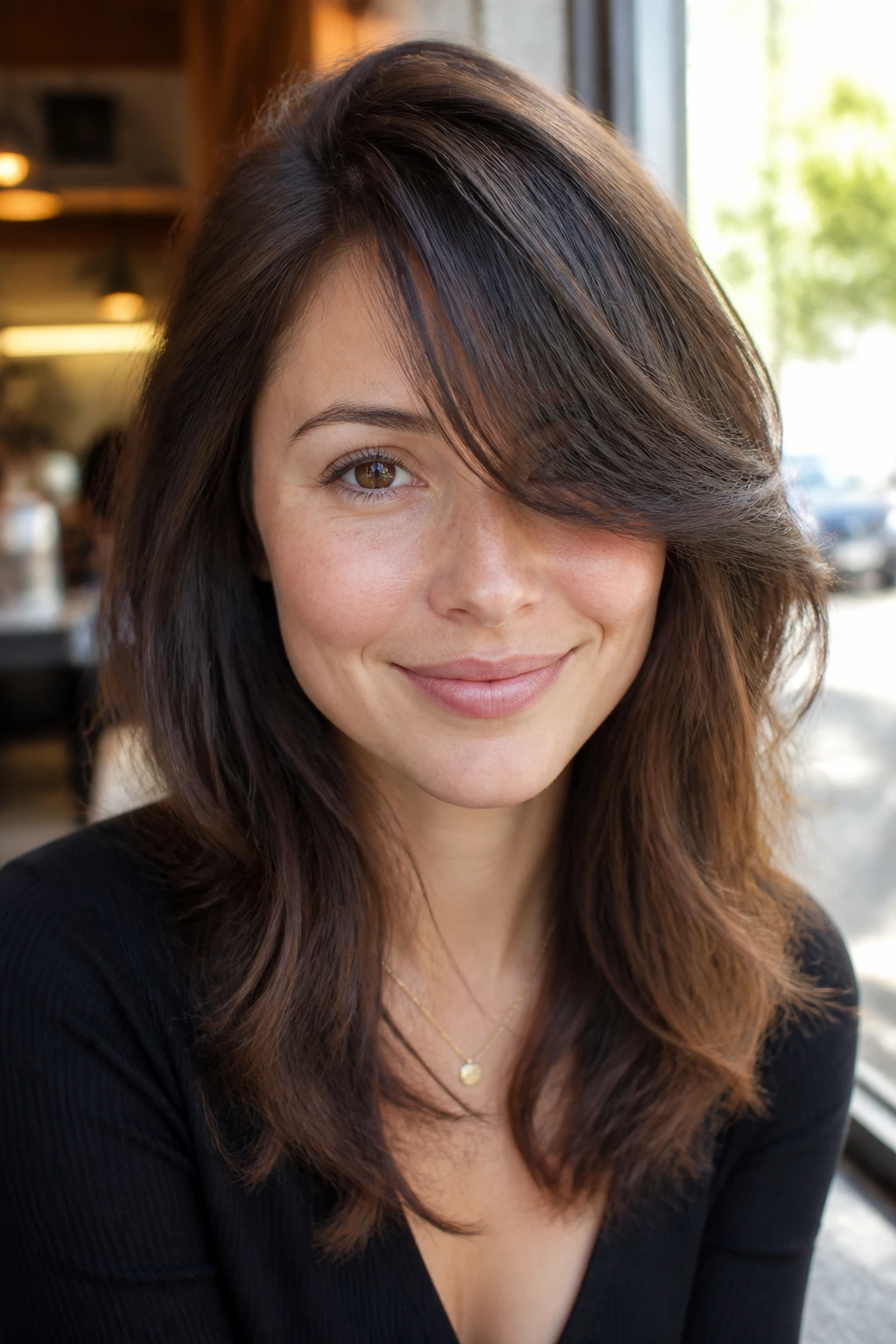
A deep side part can save you from a forehead-heavy shape. This fringe sweeps from a far-off part across the front and tapers toward the cheek, which gives a heart-shaped face a diagonal line right where it needs one. Thick hair handles the sweep well because the density keeps the fringe from disappearing.
This is the easiest shape to flip when you need a change. Wear it full across the forehead one day, tucked and loose the next. The part does a lot of the visual work, so the cut itself can stay soft rather than overworked.
If you have a strong cowlick near the hairline, this might be the best fringe to start with. You’re working with the natural push of the hair, not against it.
21. Half-Moon Fringe
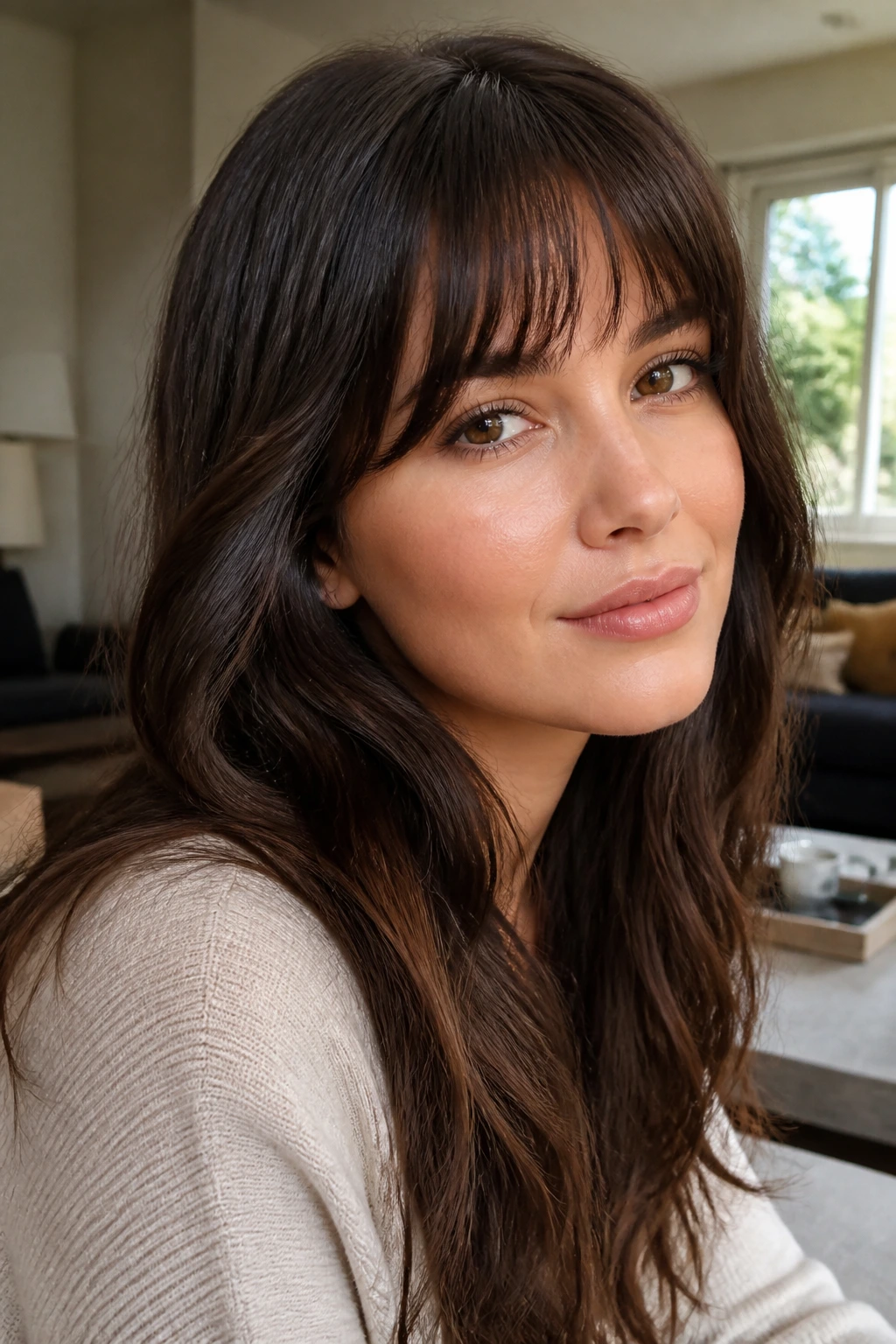
The half-moon shape is softer than a blunt arch and more precise than a curtain. It curves gently across the forehead with the center a little fuller and the sides tapering down. On thick hair, the shape gives structure without creating a slab, and that is a rare combination.
Why the Curve Matters
The line leads the eye upward just enough to frame the eyes, then lets it fall toward the cheekbones. That makes it useful on heart-shaped faces, where you want the forehead softened but not flattened.
- Keep the center slightly longer if your hair springs up.
- Use a round brush only at the roots.
- Finish with a touch of lightweight spray, not heavy cream.
This fringe works best when the curve looks natural rather than drawn on.
22. Choppy Lived-In Fringe

Choppy fringe works when you want movement at the forehead without too much width. The trick is to make the choppiness deliberate. Random short bits are not the same thing. The cut should break up thick hair into pieces that fall at different points, which helps a heart-shaped face look less top-heavy.
I like this shape when someone styles their hair with fingers more than tools. It looks better a little imperfect. A bit of separation gives the fringe a relaxed feel, and thick hair usually supports that texture without falling apart.
A dry texture spray at the roots can help, but keep it light. Too much product turns choppy into crunchy. That’s not the look.
23. Long Curtain Fringe with Face-Framing Layers
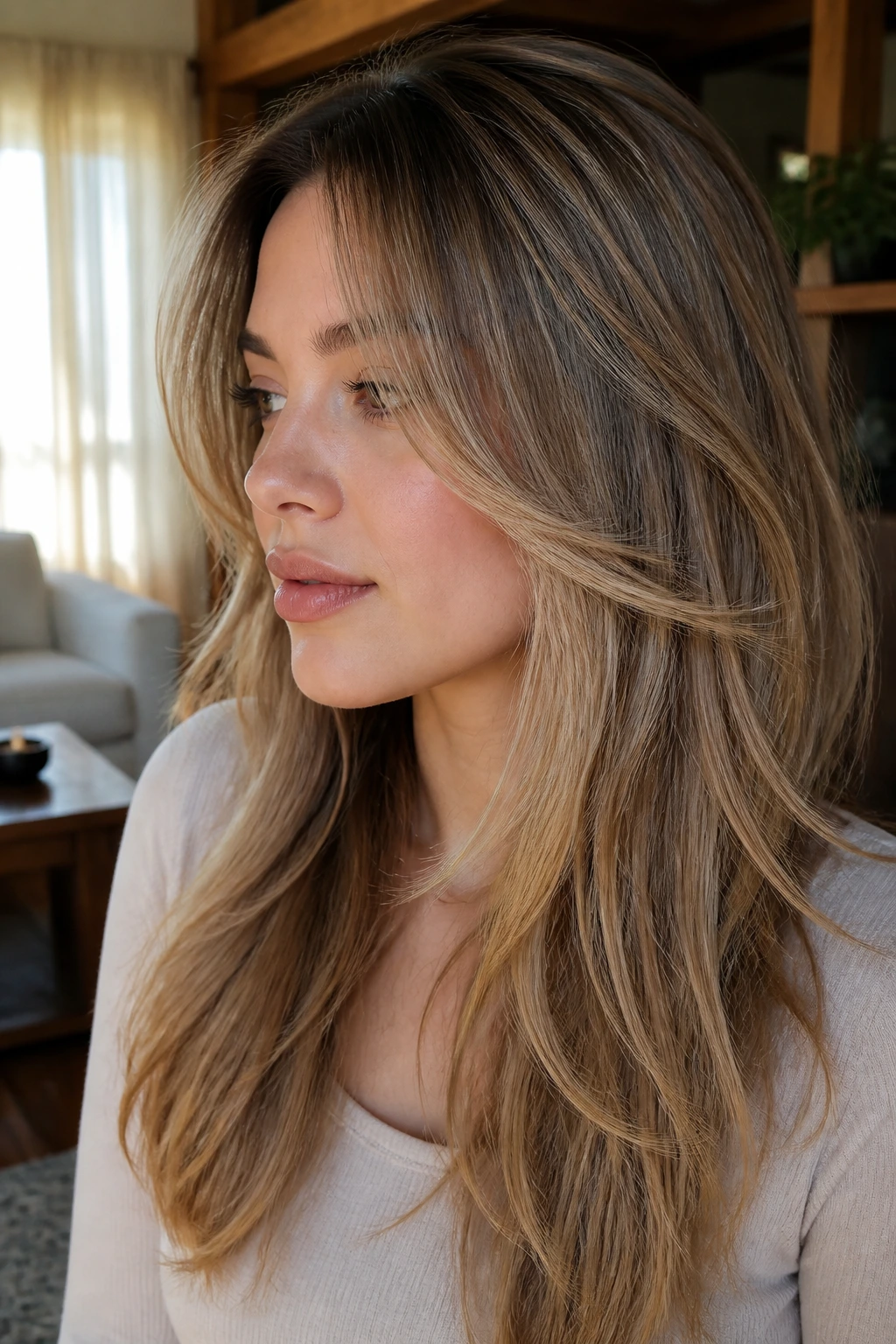
Long curtain bangs are the workhorse here. They hold up in thick hair, they frame a heart-shaped face without boxing it in, and they grow out into something useful instead of something annoying. The long length gives you options: center part, side sweep, tucked behind the ear, or blended into layers.
The important part is the face frame. If the front pieces stop too soon, the haircut can feel top-heavy. Keep the outer lengths flowing toward the cheekbone or even the jawline, and the whole shape relaxes. The fringe stops being a separate event and starts acting like part of the haircut.
This is the one I’d hand to someone who wants fringe but also wants the rest of the hair to stay in charge.
24. Feathery Side Veil
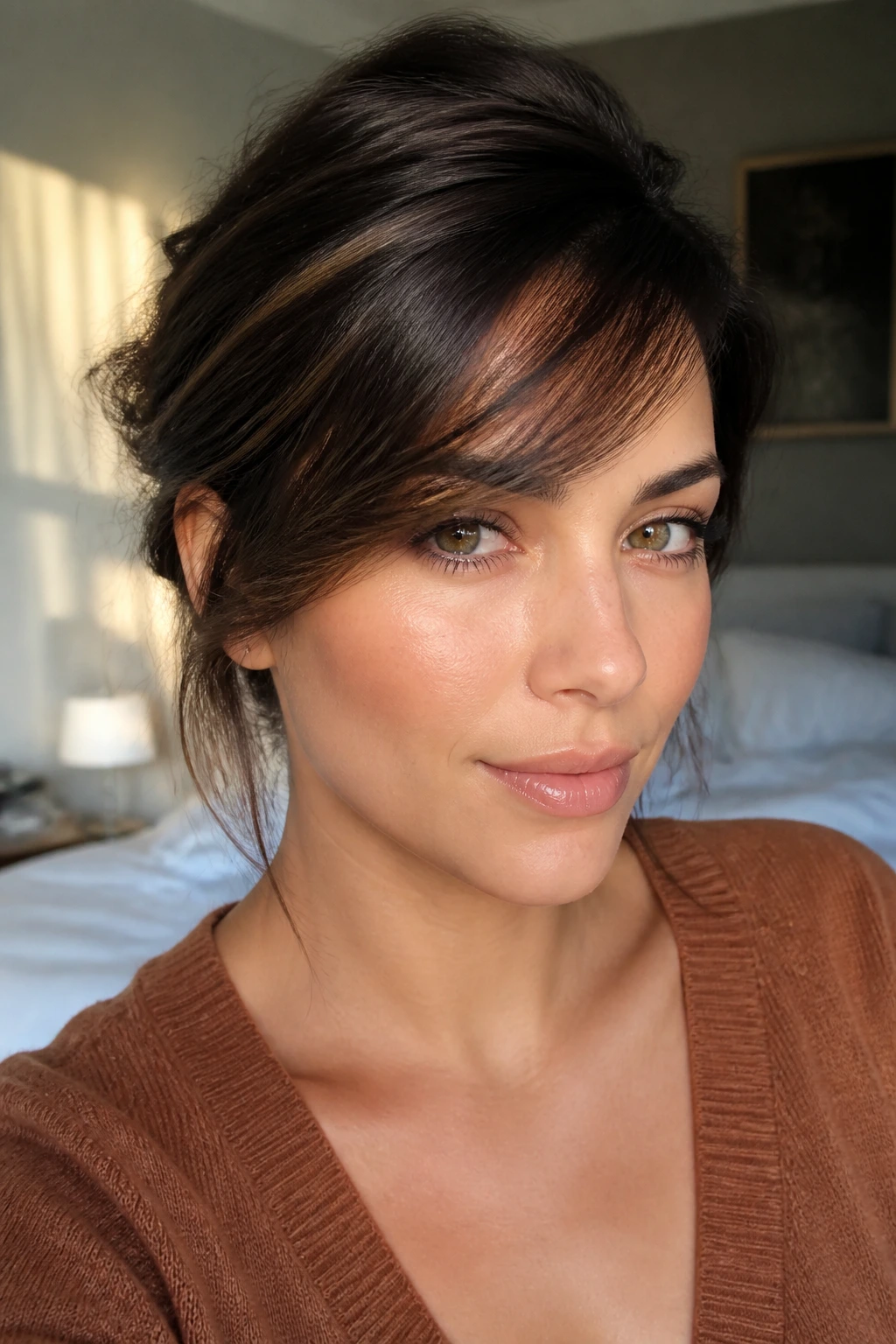
The side veil is a fringe for people who never want to feel trapped by a center section. It falls across one side of the forehead in a soft sweep, then fades into the longer front pieces. Thick hair gives it enough body to stay in place, and a heart-shaped face gets the benefit of that diagonal line moving across the widest area.
This style feels elegant in the practical sense, not the fussy sense. It’s easy to tuck, easy to pin, and easy to grow out. If one side starts to bother you, it slides behind the ear and keeps going. That kind of flexibility matters more than people admit.
If you want movement without a full commitment to curtain bangs, this is a strong place to land.
25. The Softest Brow Whisper

Sometimes the best fringe is the one that only says hello when you move. The softest brow whisper barely covers the forehead at all, but it breaks the line enough to soften thick hair and keep a heart-shaped face from reading overly wide at the top. The effect is subtle, which is the whole point.
For the Fringe-Skeptical
This is the cut for someone who wants a hint of change, not a declaration. The pieces should be light, separated, and longer than a micro bang, with enough softness that they can disappear into the rest of the hair on a lazy day. If you’re nervous, start here.
It’s also one of the easiest shapes to live with because it doesn’t demand perfect styling. A quick blow-dry or even a little root bending with your fingers is usually enough.
Why Wispy Fringe Needs a Different Cut on Thick Hair
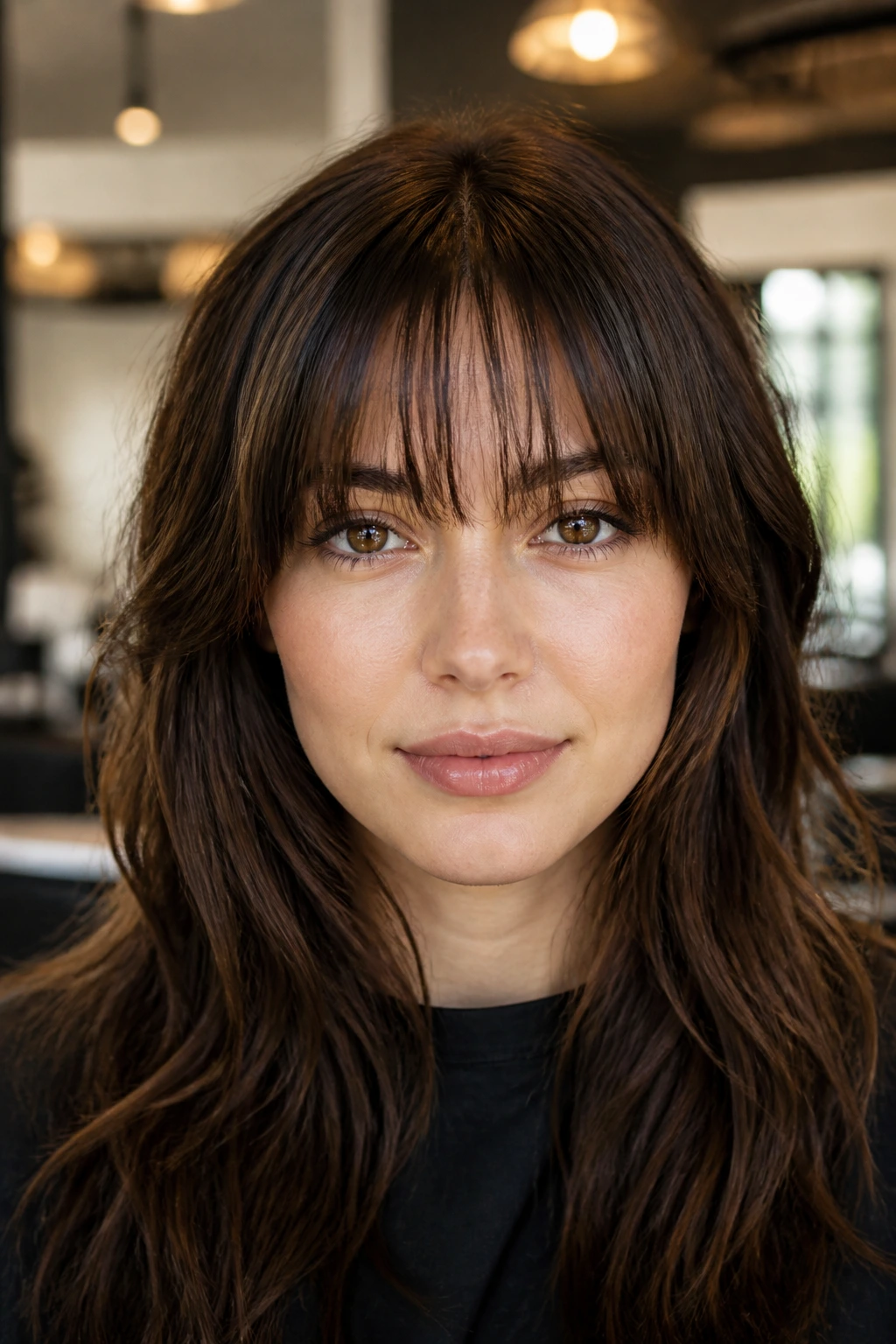
Thick hair does not behave like fine hair with extra volume. It holds shape, sure, but it also holds bulk, and fringe lives at the worst possible place for bulk: right in the viewer’s direct line of sight. That’s why wispy fringe on dense hair needs internal weight removal, not just a few snips at the ends.
The face shape part is just as important. A heart-shaped face usually carries more visual width at the forehead and a narrower lower half, so the fringe should soften the top without making the chin look even slimmer. That’s where curtain splits, side sweeps, and temple tapering earn their keep. They guide the eye outward and downward. They don’t trap it at the brow.
I also think thick hair gets ruined fastest by over-thinning at the wrong spot. If the stylist slices too much from the surface, the fringe can fray and puff. If they leave all the weight in the center, it sits like a blanket. The sweet spot is somewhere in between, with enough density to look intentional and enough movement to avoid that brick-like front edge.
What to Tell Your Stylist Before the First Snip
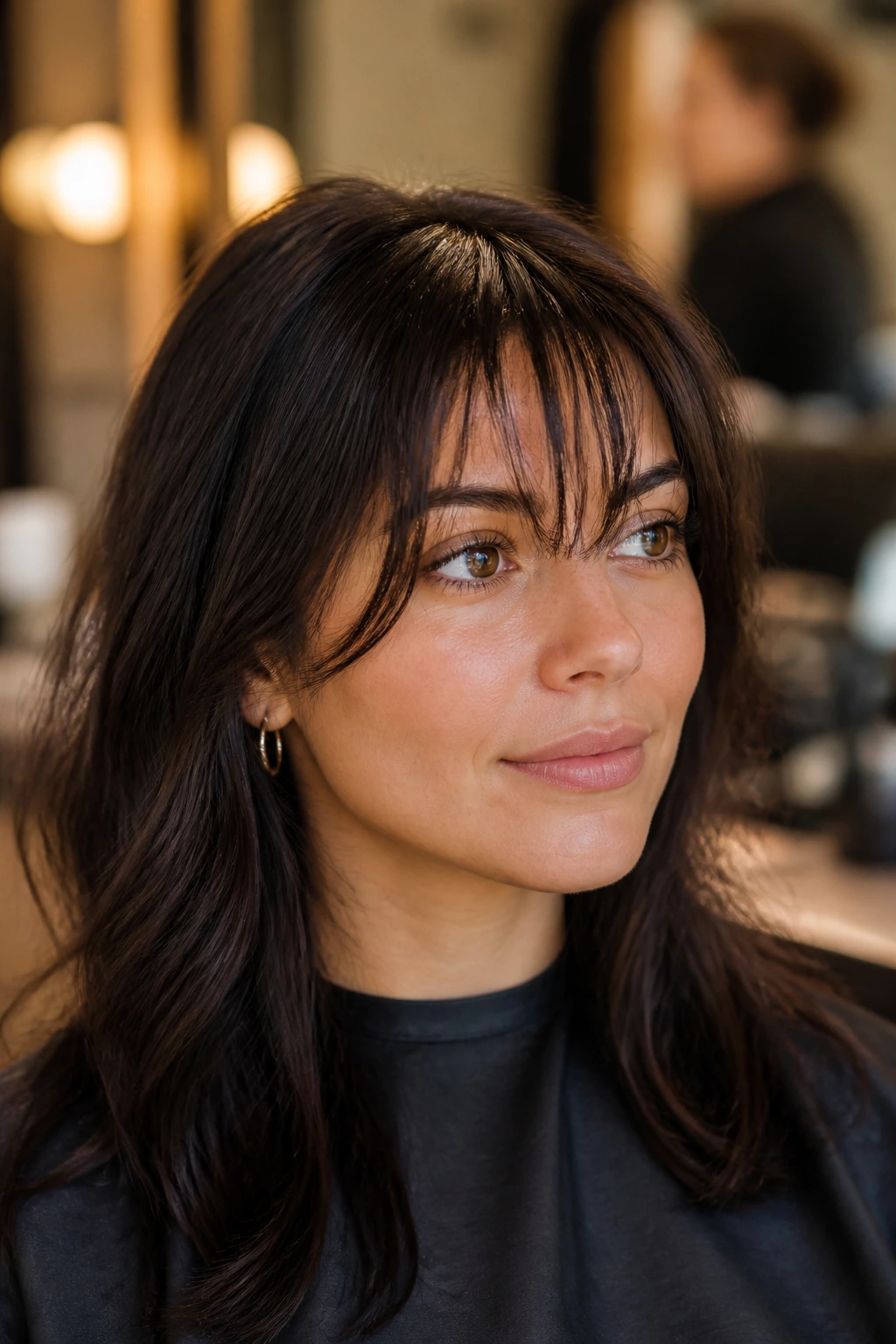
Be annoyingly specific. It saves everyone time.
- Ask for point-cutting or interior weight removal: That tells the stylist you want softness without a blunt shelf.
- Say where you want the shortest point to sit: Just below the brows, at the brow, or above it all change the shape a lot.
- Mention your hair’s behavior when dry: Thick hair that shrinks, waves, or splits at the center needs a different starting length.
- Point out cowlicks or a strong growth pattern: A fringe that ignores a cowlick will spend its life fighting it.
- Bring photos of people with similar density and face shape: Same fringe on different hair can look like a different haircut.
If your hair is coarse, say that out loud. If it’s dense but fine, say that too. Those two things are not the same, and they do not need the same thinning strategy. One more thing: if you’re unsure, ask for a slightly longer first cut. A fringe can be shortened. It cannot be uncut.
The Tools That Keep Fringe Light Instead of Limp
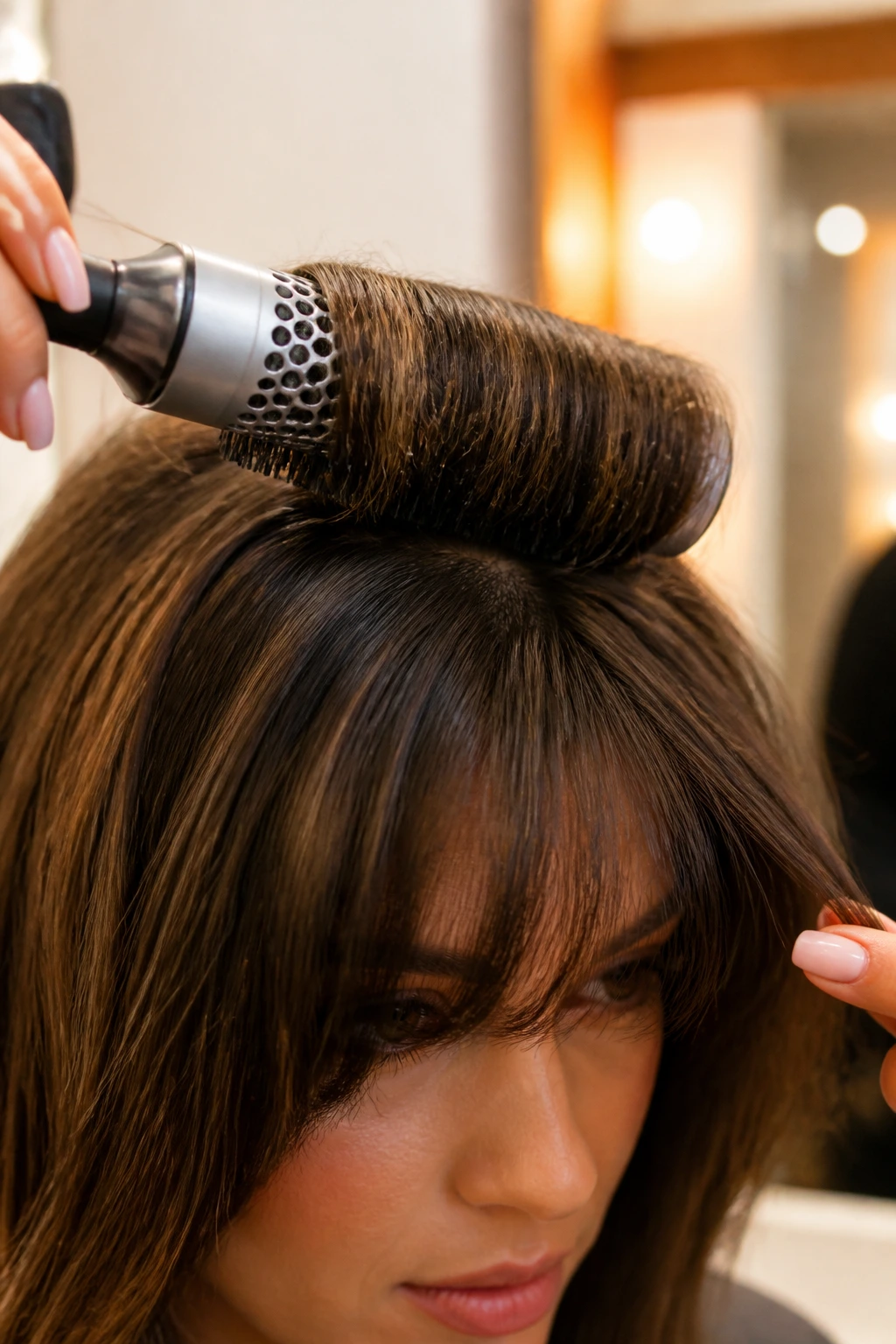
- Tail comb: Parting the fringe cleanly matters more than people think, especially if you wear a center gap or side sweep.
- 1-inch round brush: Small enough to bend fringe at the roots without overcurling the ends.
- Blow dryer with a concentrator nozzle: Pushes air where you want it and helps keep thick hair from frizzing at the front.
- Lightweight mousse or root spray: Useful for thick or wavy fringe that needs lift without heaviness.
- Heat protectant: Non-negotiable if you use a brush, flat iron, or hot tool on the fringe.
- Mini flat iron: Good for stubborn cowlicks and short fringe sections that need a quick bend.
- Duckbill clips: Handy for holding the side pieces out of the way while you dry the center.
- Dry shampoo: Saves a fringe that turns oily at the roots before the rest of the hair does.
- Texturizing spray: Best used lightly on piecey or shagged fringe; too much turns separation into grit.
How to Style Wispy Fringe So It Stays Soft
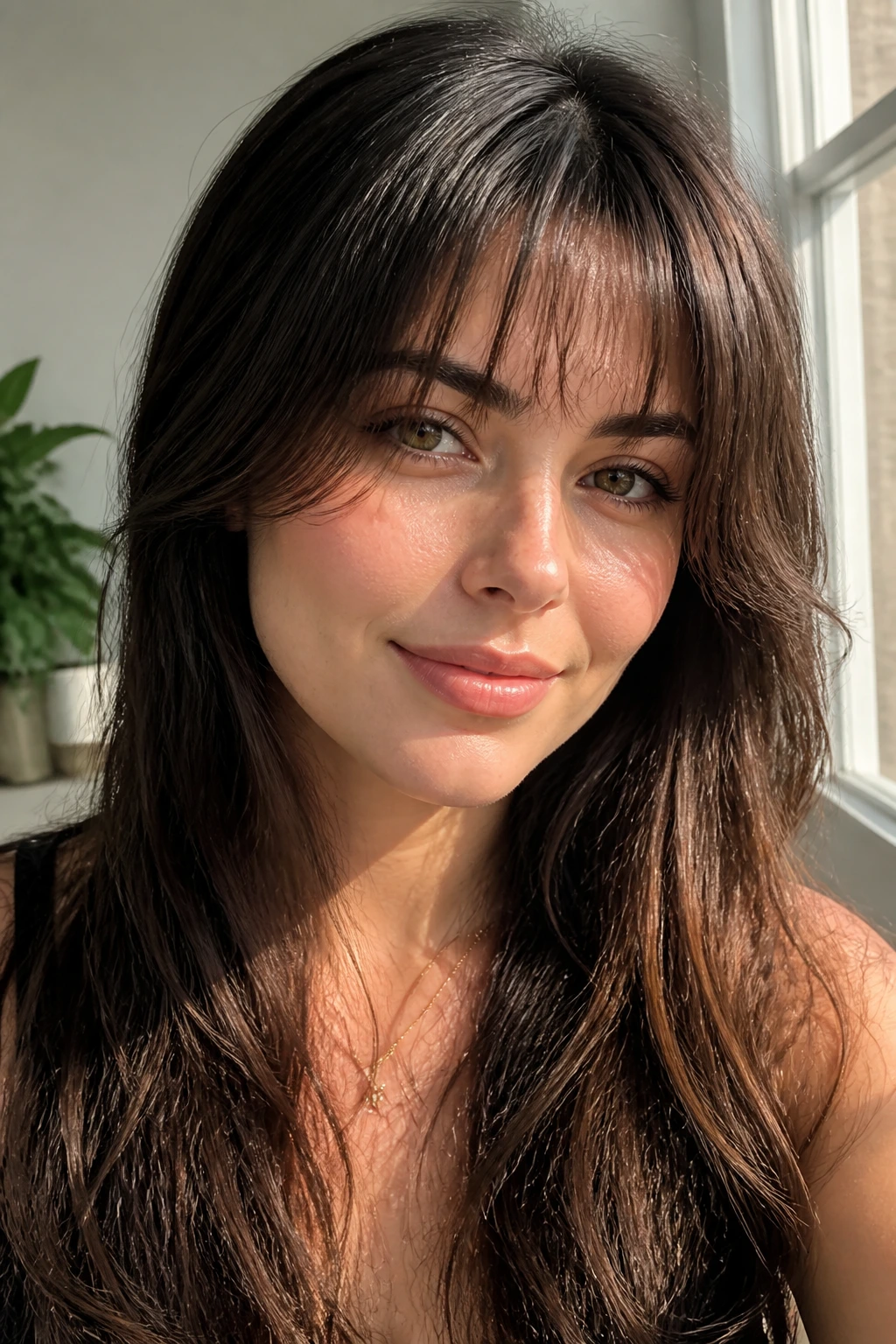
Blow-Dry Direction: Start with the fringe damp, not dripping. Direct the airflow side to side first, then settle it into the shape you want. That keeps thick hair from setting in one stiff direction.
Product Amount: Use less than you think. A pea-sized amount of mousse or a light mist of spray is usually enough for a fringe section. Heavy creams can make wispy fringe collapse and stick together.
Root Lift: Clip the fringe up for a minute while it cools if you need height. That tiny pause can keep the front from flattening onto the forehead by noon.
Day-Two Refresh: Dry shampoo at the roots, then a fingertip’s worth of water or styling mist on the ends if they’ve gone stringy. Don’t re-soak the whole section.
Pinned Back Moments: If you’re exercising, cooking, or dealing with humidity, pin the fringe loosely to one side rather than smashing it under a headband. Thick hair comes back better when it isn’t creased flat.
Trim, Grow-Out, and Sleep Habits That Keep the Shape Soft

A wispy fringe on thick hair stays nice only if you treat it like a regular appointment, not a one-time event. Micro curtain and brow-grazing shapes usually need a tidy every 4 to 6 weeks. Long curtain fringe can stretch to 6 to 8 weeks. If you’re wearing a grown-out shape on purpose, 8 to 10 weeks is workable, but the temple pieces still need small adjustments now and then.
At night, let the fringe dry fully before bed. Sleeping on damp front pieces is how you wake up with a strange bend in the middle and a split at the ends. If your hair grabs shape easily, pin the fringe back very loosely or clip it to the side while you sleep. A silk pillowcase helps, but the real win is not going to bed with wet roots.
When you’re growing it out, ask for blending trims instead of full bangs trims. That keeps the fringe from suddenly dropping into your eyes while still softening the forehead and upper face. The goal is not to erase the fringe. It’s to let it become front layers without a clumsy middle stage.
Mistakes That Make Fringe Puff Out or Collapse
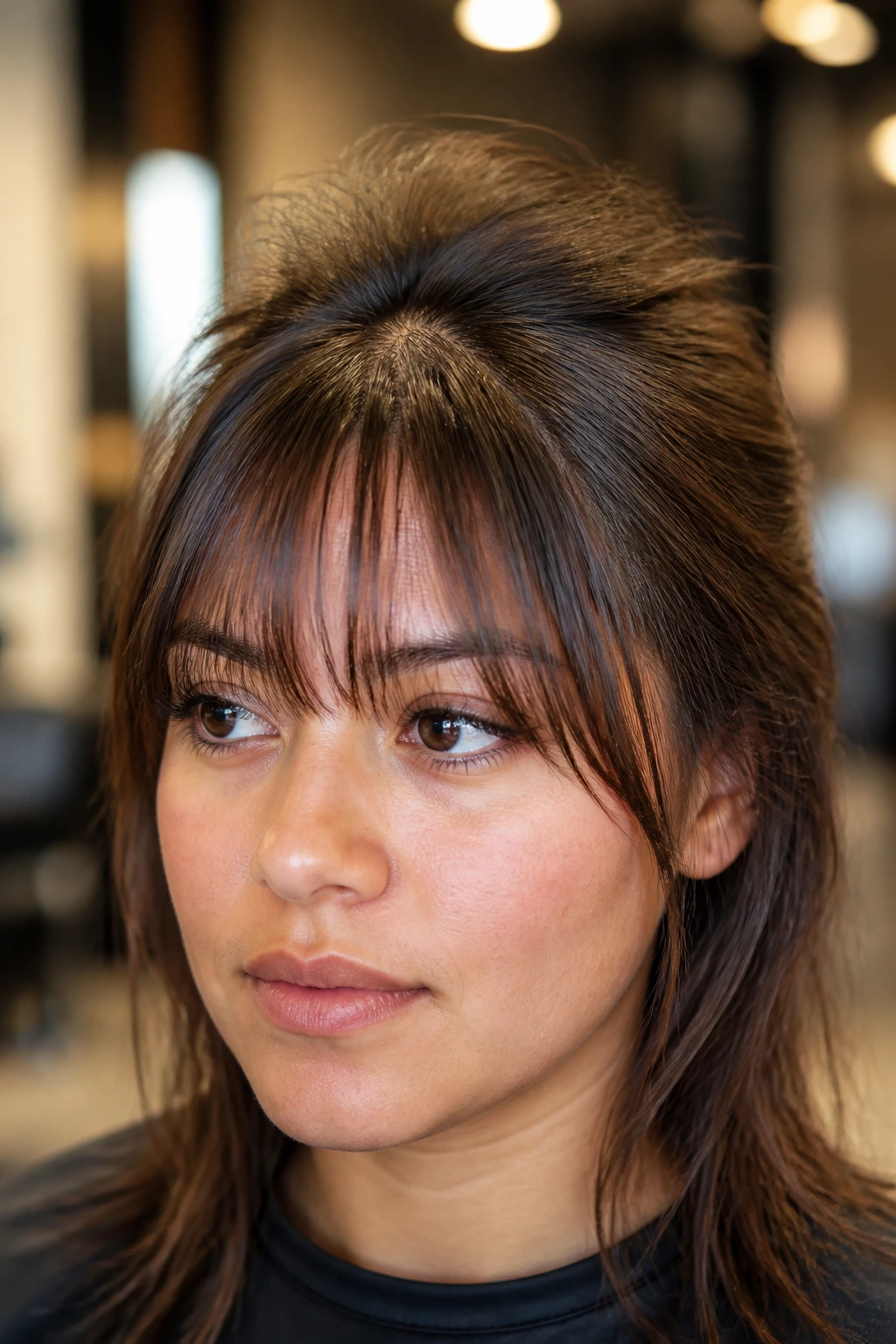
The first mistake is leaving too much density in the middle. The fringe looks heavy, then the root pushes it forward, and suddenly it sits like a little wall. The fix is simple: remove bulk internally and keep the center slightly lighter than the sides.
The second mistake is over-thinning coarse or very dense hair. That can make the ends look scraggly instead of airy. If the fringe starts looking see-through at the tips but still bulky near the root, the cut needs better balance, not more texturizing.
Another one: cutting it too short because thick hair springs up when dry. It’s a very common trap. Leave a little extra length at the first cut, especially if the hairline has a strong wave or cowlick.
Finally, too much product can ruin a wispy fringe fast. Oils and heavy creams make separated pieces cling together and lose their lightness. Use the smallest amount that keeps the hair smooth. You’re trying to shape the fringe, not glaze it.
Variations and Tweaks to Try

-
For Wavy Hair: Let the fringe keep a small bend and use a lightweight cream instead of a straightening blowout. The wave adds movement that works especially well on heart-shaped faces.
-
For Coarse Density: Ask for shears and point-cutting rather than aggressive razor work. Coarse hair often frays if the ends are too feathered.
-
For Glasses Wearers: Choose longer temple pieces and a shorter center so the frame doesn’t crush the fringe against the lenses.
-
For Short Foreheads: Go with a deeper split or a long curtain shape. A short, full fringe can crowd the face too much.
-
For Grow-Out Phases: Keep the fringe longer at the corners and blend it into cheekbone layers. That way the cut still looks intentional while it’s changing.
-
For High-Maintenance Avoiders: Pick the long grown-out curtain or side veil. Both forgive missed trims better than micro fringe or a precise arch.
Frequently Asked Questions
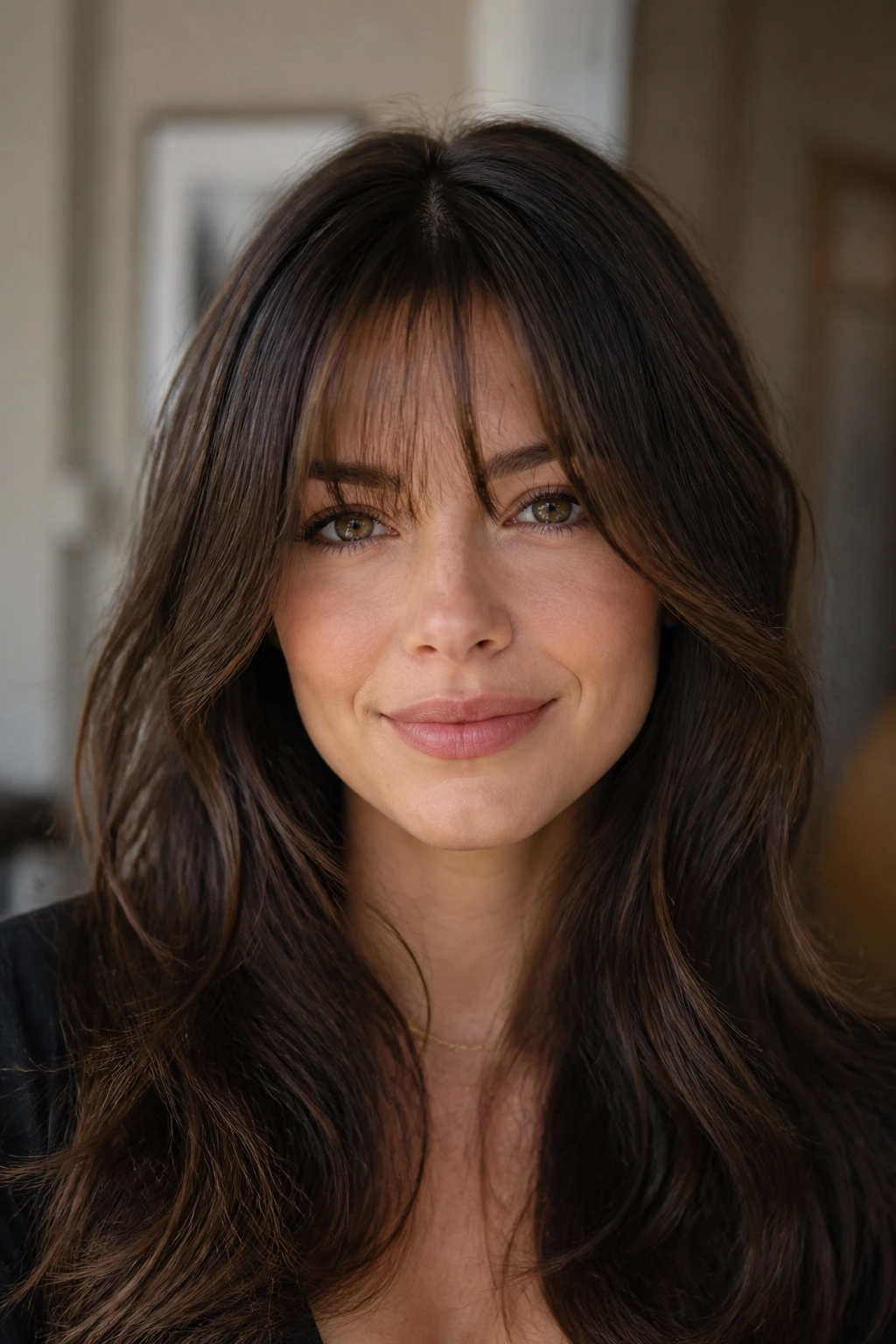
Can thick hair actually wear wispy fringe without looking bulky?
Yes, but only if the stylist removes weight in the right places. Thick hair doesn’t need to be thinned everywhere; it needs a controlled shape through the center, sides, or interior so the fringe falls in pieces instead of as one slab.
What fringe shape is most flattering for a heart-shaped face?
Curtain shapes, bottleneck fringe, and side-swept fringe usually work best because they soften the forehead and keep the lower face visible. The main goal is to avoid a dense line that makes the top of the face feel wider than it is.
Should I cut wispy fringe dry or wet?
For thick, wavy, or curly hair, dry cutting or cutting with the hair stretched can be more accurate because shrinkage changes everything. Straight dense hair can be cut damp, but the stylist still needs to account for how much the hair swells once it’s dry.
How often should I trim wispy fringe?
Shorter, more precise fringe usually needs a trim every 4 to 6 weeks. Longer curtain styles can go a bit longer, often 6 to 8 weeks, before the shape starts drifting.
What if my fringe keeps splitting in the middle?
That usually means the growth pattern wants a center or off-center part, or the fringe is too short at the center. A slightly longer middle section and a bit of root lift while drying often fix the split.
Can I style wispy fringe with a flat iron instead of a blow dryer?
Yes, but use a very small pass and keep the heat low enough that the fringe doesn’t go flat and stiff. A blow dryer gives more root lift, which thick hair usually needs.
Will fringe make my forehead look smaller?
Usually yes, if the shape is right. A soft curtain, side sweep, or bottleneck fringe breaks up the width of the forehead without boxing it in, which is the visual trick most heart-shaped faces are after.
How do I grow fringe out without looking messy?
Ask the stylist to blend the corners into the front layers, then keep the center soft rather than blunt. During grow-out, tuck one side back, split the fringe differently on some days, and trim the temple pieces before they start hanging into your eyes.
A Softer Line at the Brow

Wispy fringe works on thick hair when the cut respects density instead of fighting it. That’s the real lesson here. The fringe should land with shape, not weight; with movement, not puff; with enough softness to flatter a heart-shaped face without making the forehead disappear.
The best part is how many ways you can wear it. Curtain, side sweep, shag blend, airy straight, curly, long, or nearly invisible — there’s room here for people who want a change and people who want only a hint of one. If you pick the shape that matches your hair’s actual behavior, not the one that looks good from ten feet away on someone else, the fringe tends to cooperate.
And that’s the version worth keeping.